


Who has the authority to construct history—and what is left outside its frame? At a time when narratives are constantly rewritten, Margins turns toward the periphery, where omissions and silences shape how the past is understood.
Across the exhibition, Uladzimir Hramovich engages with histories that never fully materialized—tracing what was imagined, suppressed, or left unresolved. His works exist in a state of “no-time”: contemporary, yet detached from a fixed historical moment. In doing so, they reflect a broader condition in Eastern Europe, where memory and representation remain contested and actively shaped.
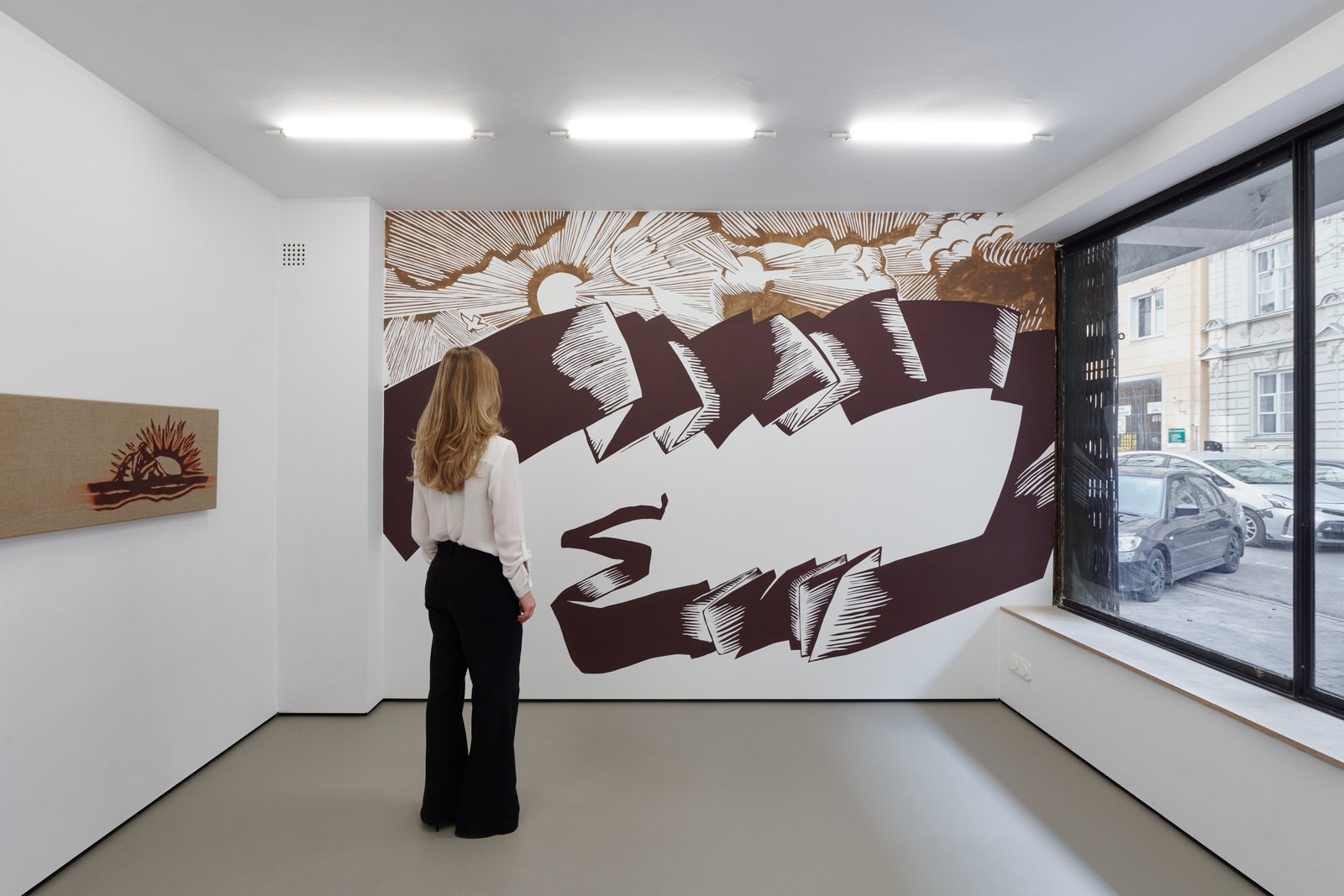
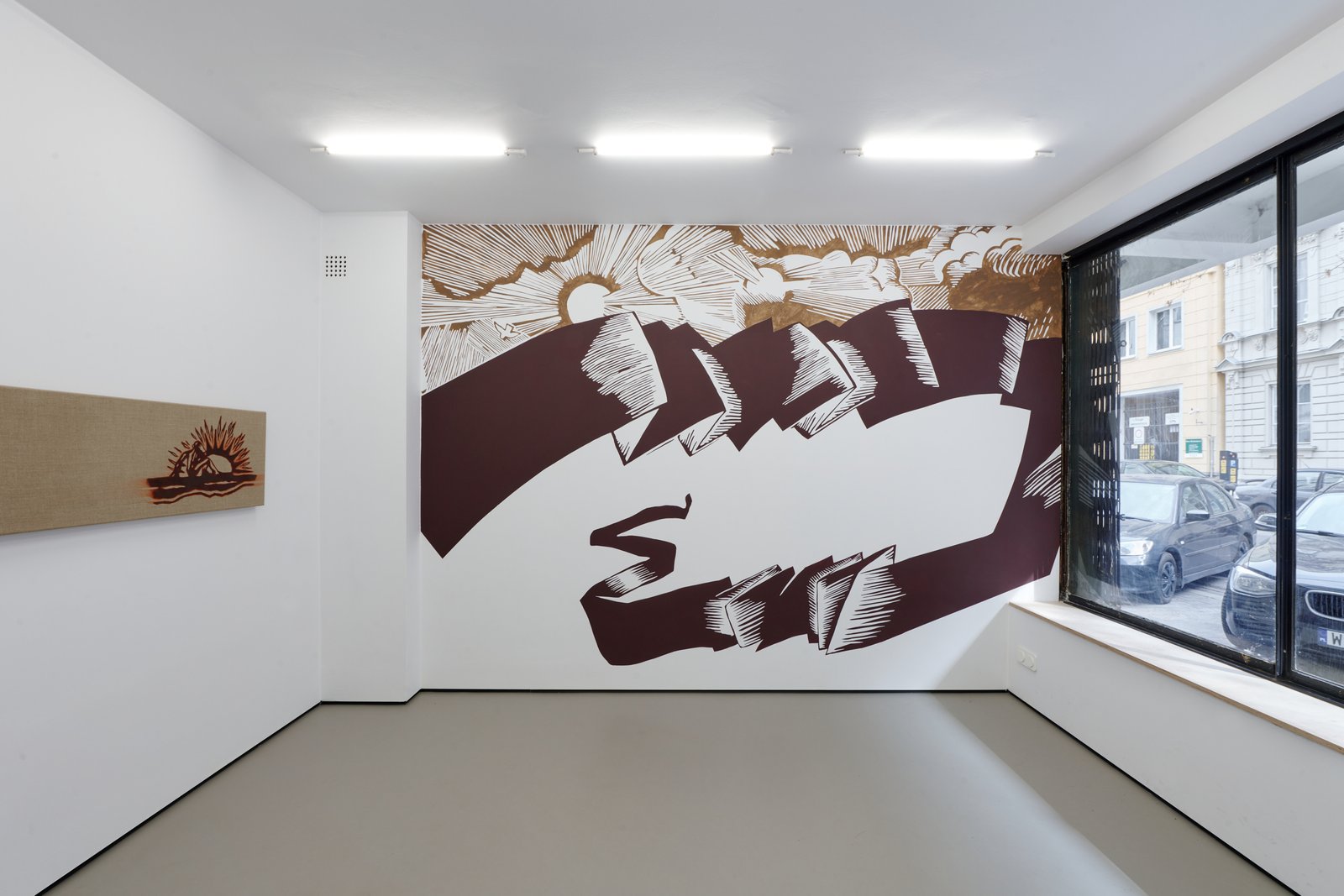
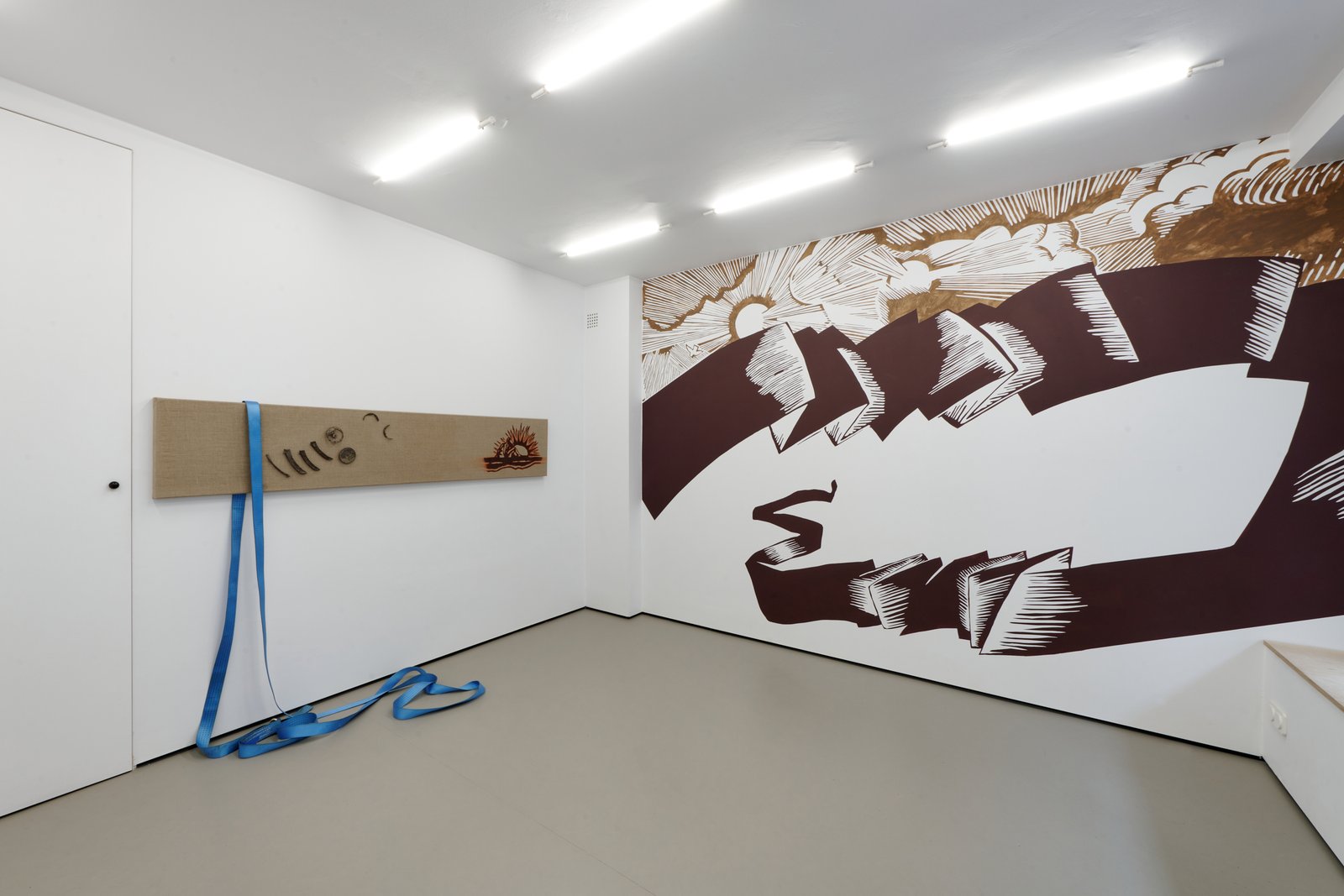
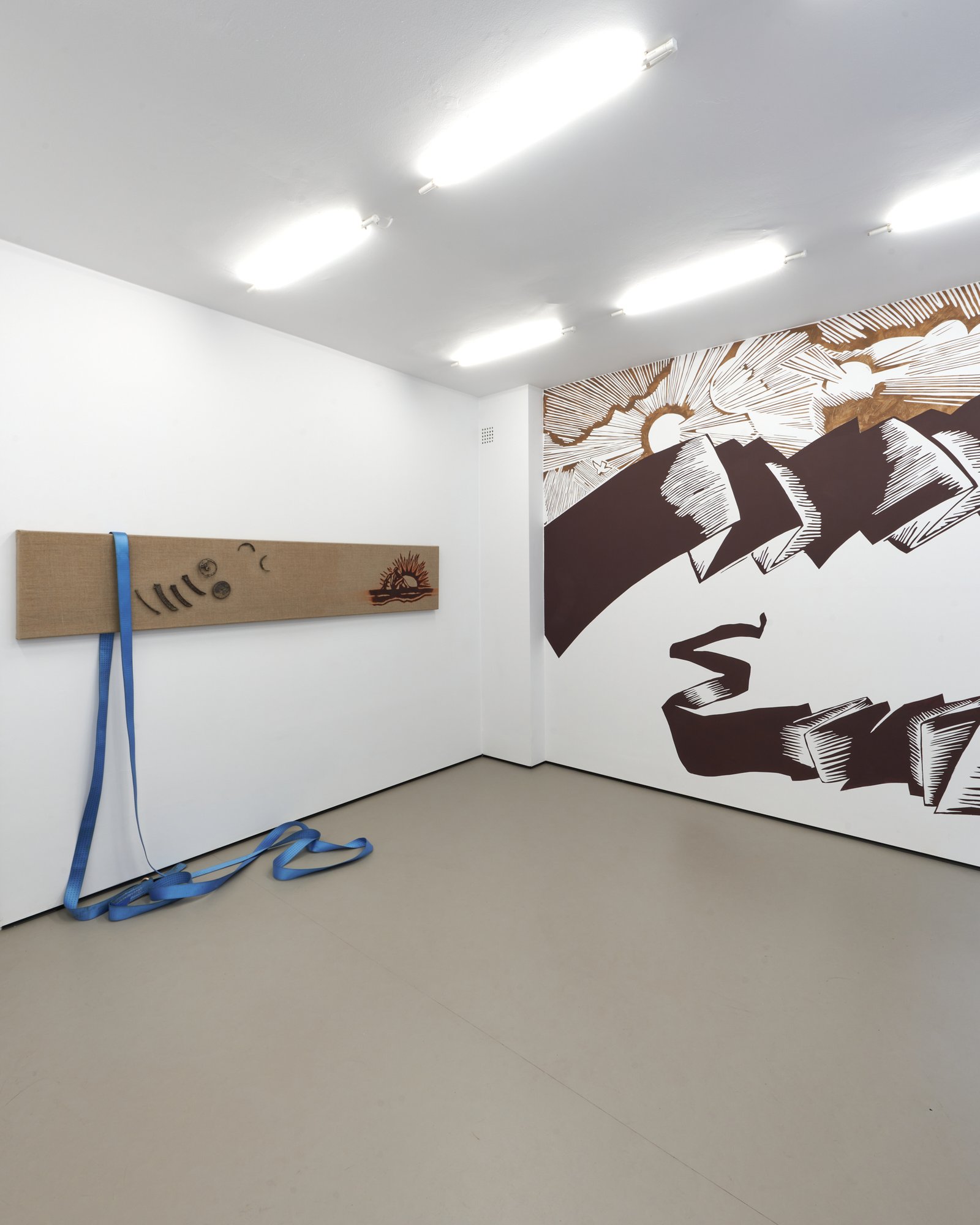
At the center of the exhibition is the fresco When the banner becomes a landscape, developed specifically for the space. It appears as if it had always been there uncovered rather than produced. Positioned between image and erasure, it presents a scene that is both familiar and unstable: a drifting banner without inscription and two suns suspended between reality and fiction. It is not a fixed narrative, but its trace something partially lost or never fully formed.
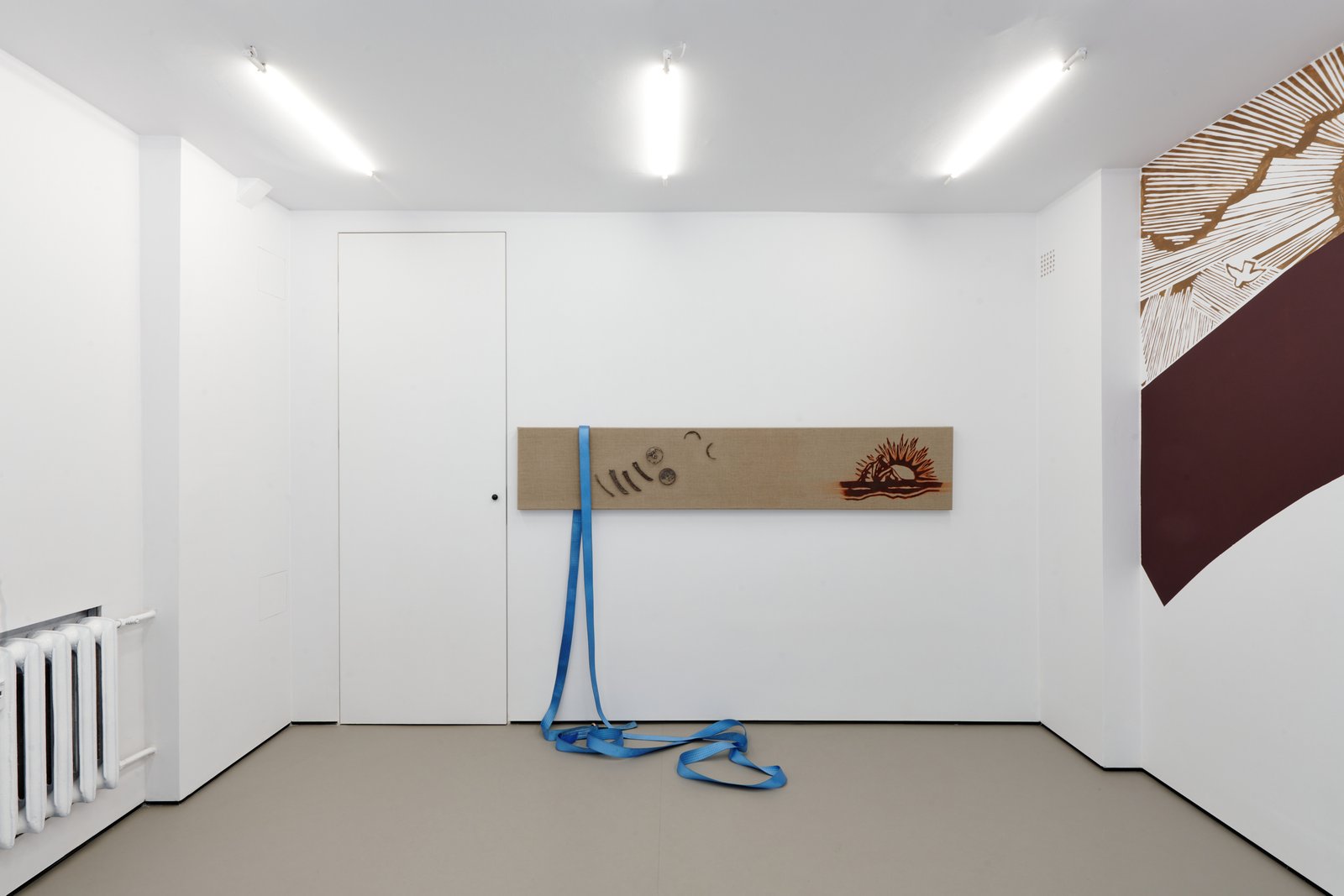
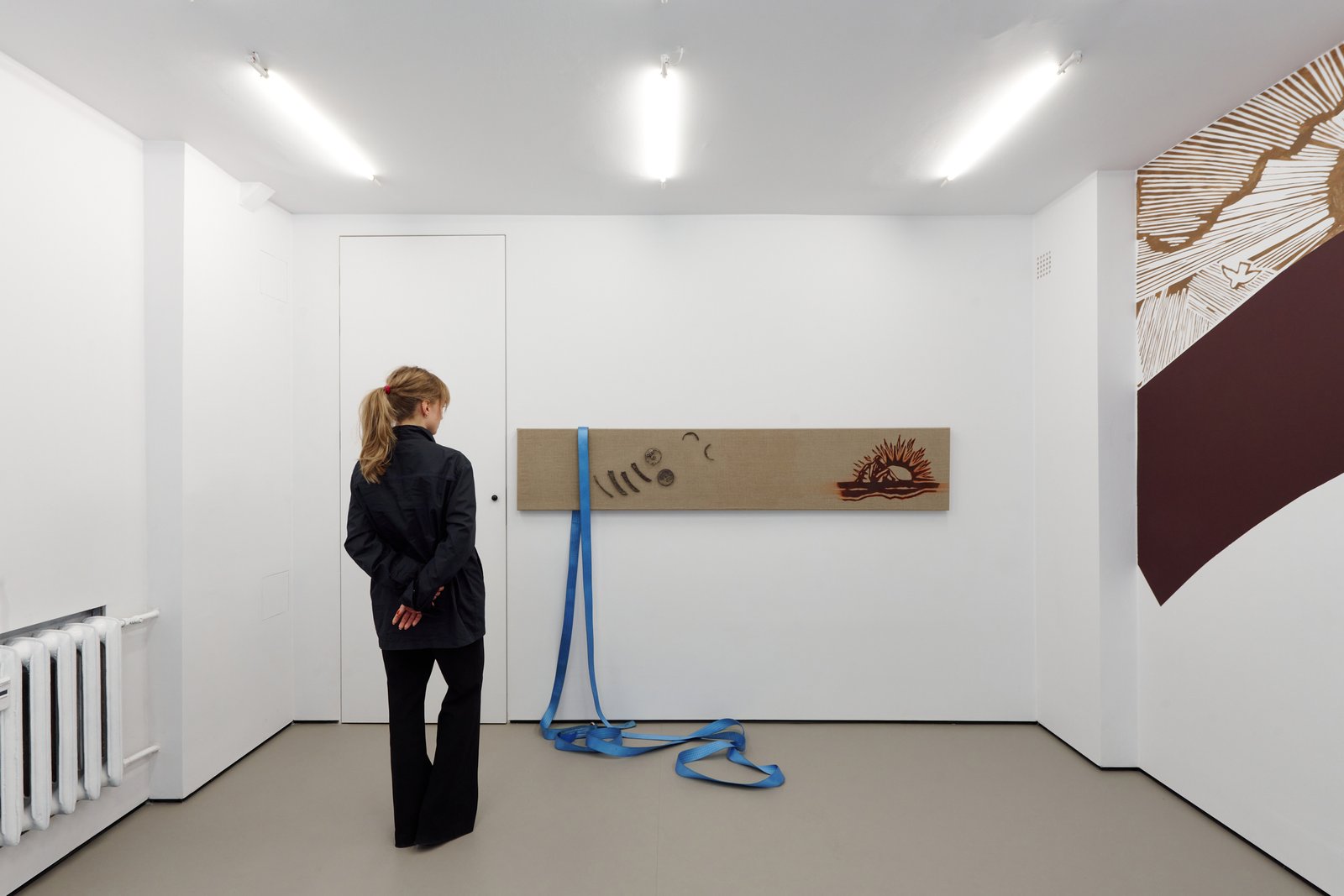
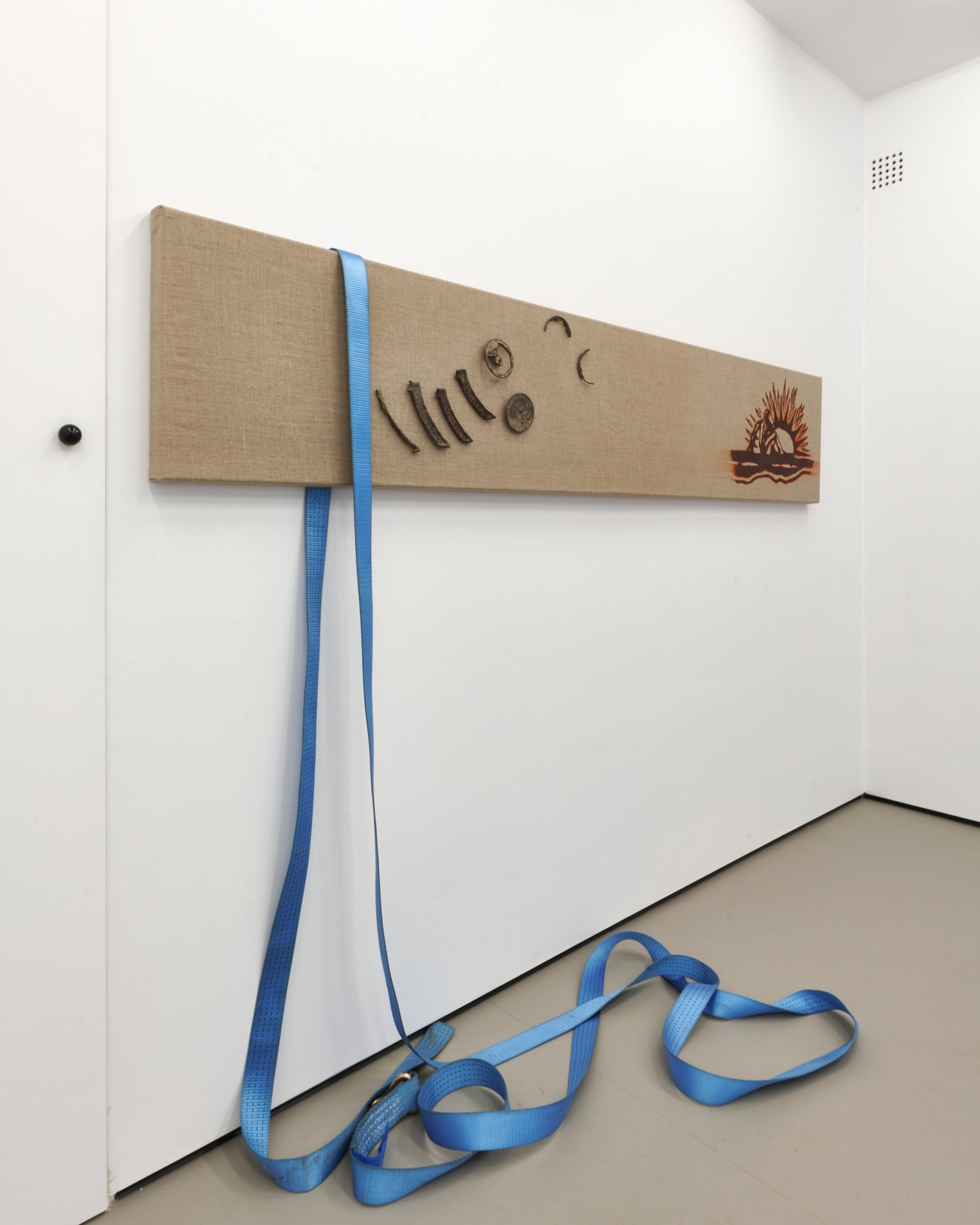
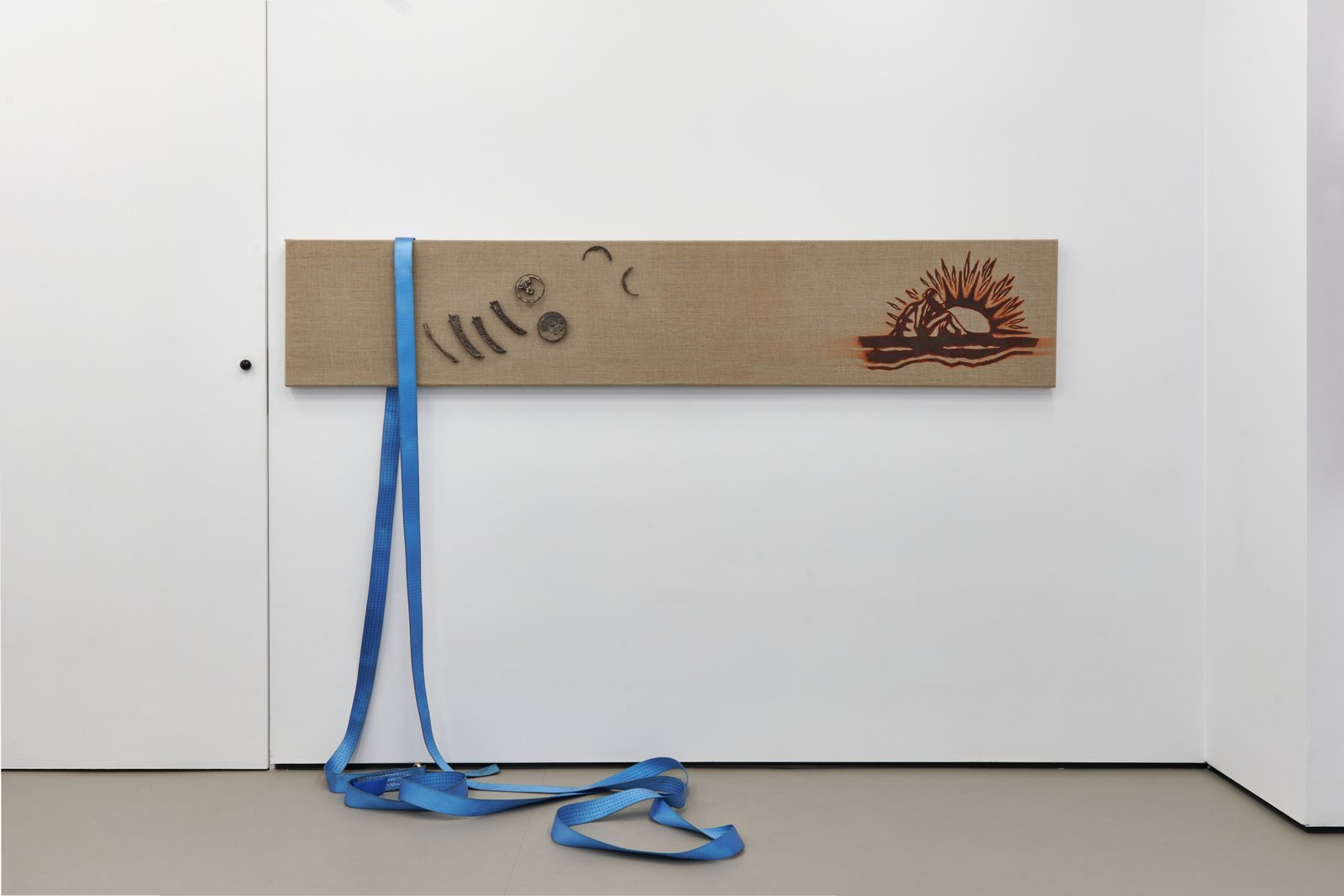
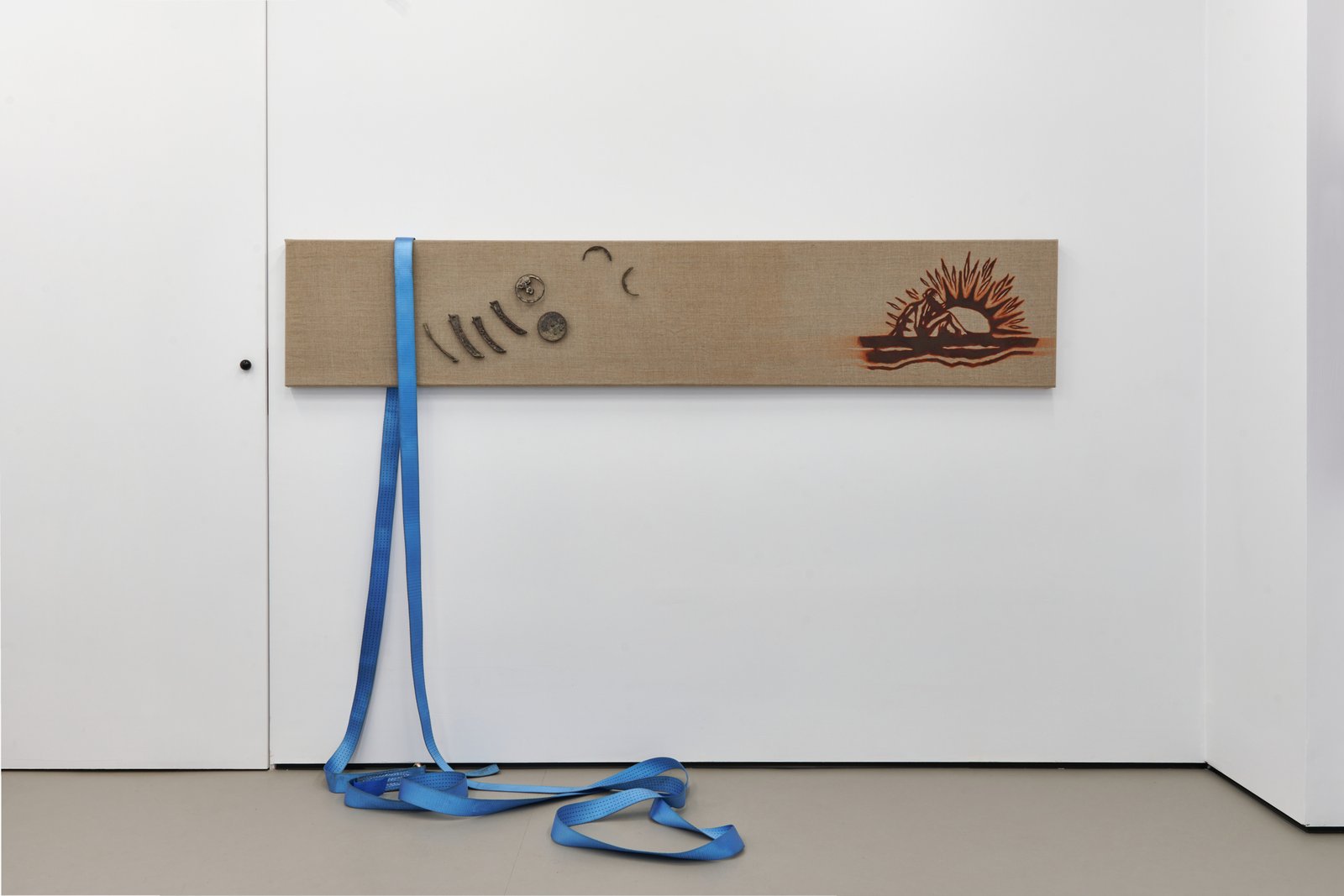
This instability continues in The never had any weapons or jewelry. Drawing on the visual language of regional museums and imagined prehistoric artifacts, Hramovich constructs objects that resemble historical evidence but resist verification. They exist between authenticity and fabrication, exposing how easily historical meaning can be staged, fragmented, or imposed.
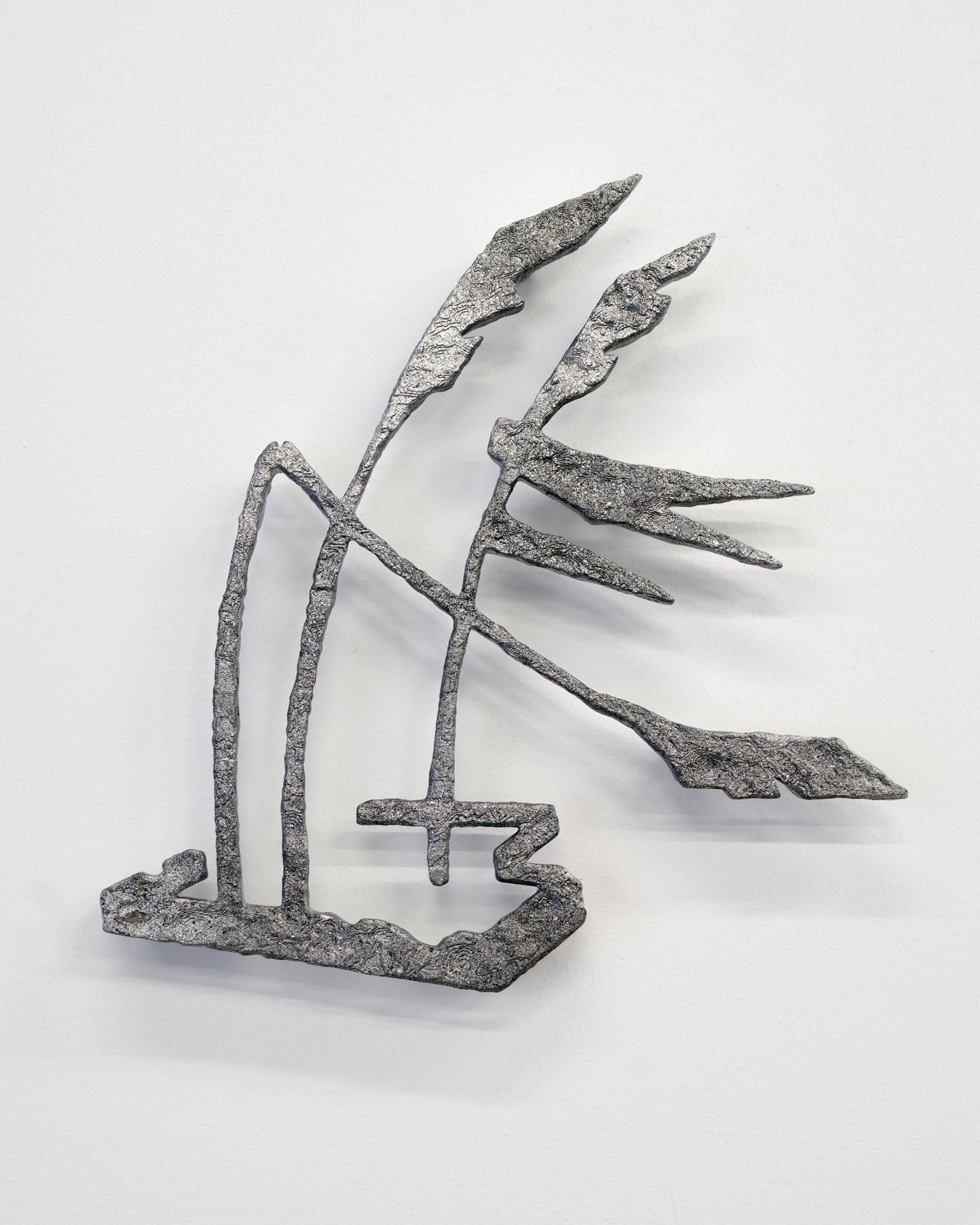
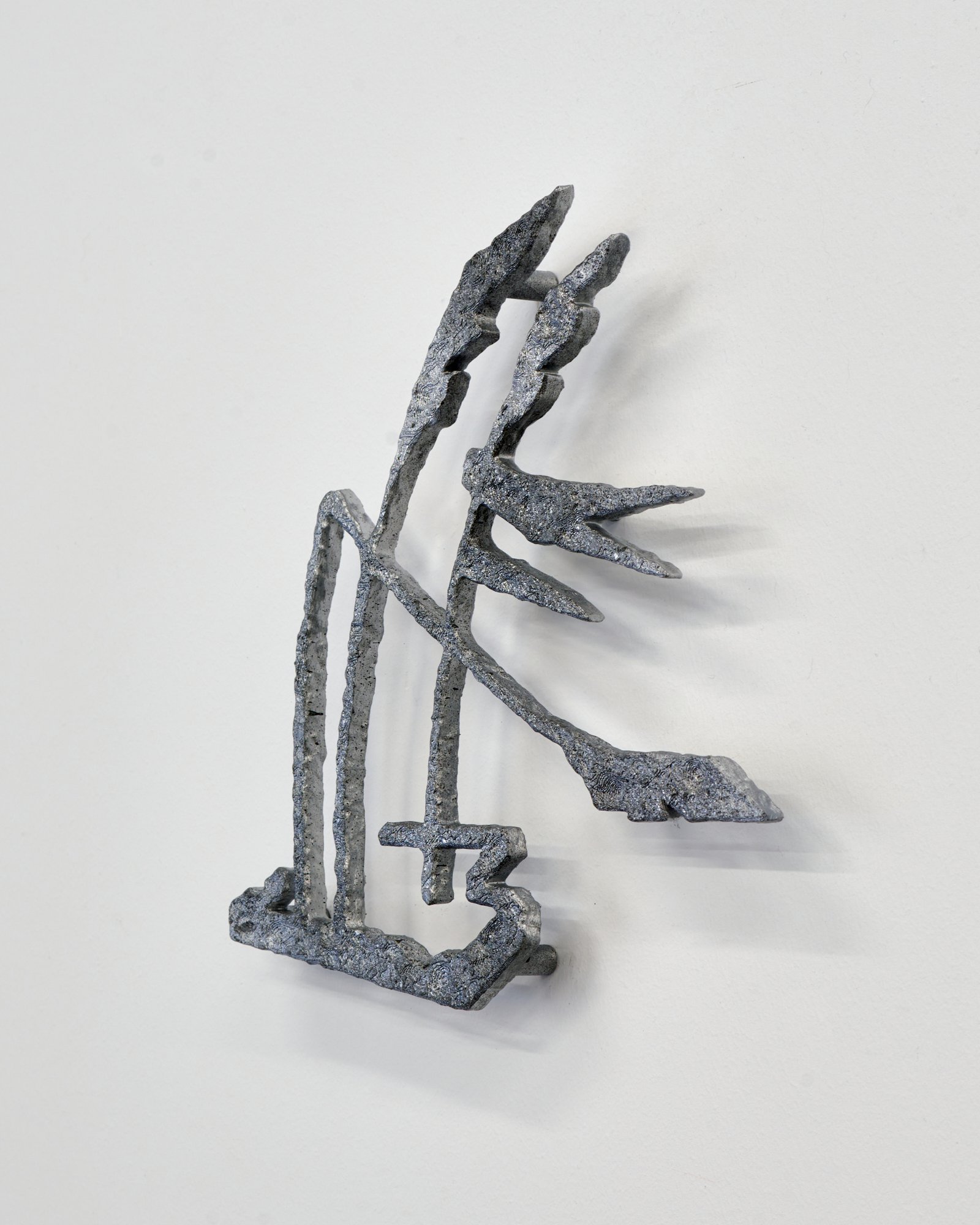
In Field Studies no. 1, the process becomes more intimate. A small archival image is expanded into a spatial form, shifting from sketch to object. What begins as observation turns into reconstruction, emphasizing how even the smallest fragment can be extracted, altered, and recontextualized.
Rather than illustrating this condition directly, the show focuses on the mechanisms behind it. It reveals how narratives are constructed, and how absence itself can function as a form of control. The exhibition becomes not a reconstruction of history, but a space where its instability is made visible.
Margins is not only about what has been forgotten. It is about how forgetting is produced—and how looking at the edges may offer another way of understanding the present.