


An archaeological excavation never yields a story that has already been written. It yields evidence: ceramic fragments, structures, occupation layers, traces of use, materials, and stratigraphic relationships. These elements acquire meaning through their position, their relationships with one another, documentation, and interpretation. Between evidence and its interpretation lies a process of inquiry involving observation, comparison, hypotheses, and verification. Every archaeological reconstruction necessarily remains partial: it depends on what has been preserved, what has been identified and documented, and the possibility of establishing connections between different pieces of evidence. A gap is not simply what is missing, but a component of the context, a condition that determines what can be known and interpreted.
It is within this condition of partial knowledge that Le parole che si intrecciano tra i ricordi i ricordi che si intrecciano tra le parole, an installation by Roberto Maria Lino conceived for the Villa Augustea in Somma Vesuviana and developed from his experience of the local residency, takes shape. The project approaches archaeology as a framework for dialogue and addresses one of its central questions: the transition from evidence to narrative, and the ways in which multiple traces can be brought together to construct a possible interpretation.
The Villa Augustea provides a particularly significant context. Excavations have revealed a complex arrangement of structures and materials, while the history of the site still contains unresolved questions and room for interpretation. Alongside archaeological documentation are the narratives that have developed around the site over time and those belonging to the collective memory of the local area. Material evidence, research, and oral memory contribute in different ways to the construction of what a community recognises as heritage and to the ways in which that heritage is recounted.
Lino begins with the oral transmission of memory. As a story passes from one person to another, some elements are preserved, others forgotten, and still others added or altered. The narrative retains a recognisable structure while simultaneously transforming. The title of the work introduces this dynamic into language itself: the same phrase is repeated in reverse order, without punctuation, creating a structure with no single, unequivocal direction. Words generate memories, and memories generate words; the relationship between the two unfolds through a movement of return, overlap, and transformation.
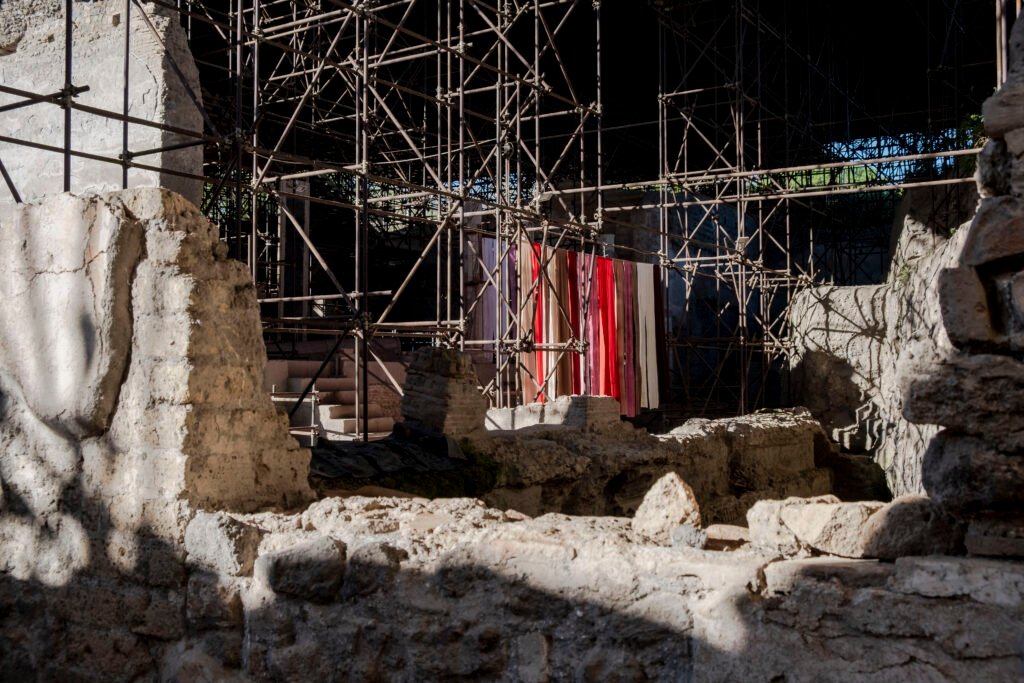
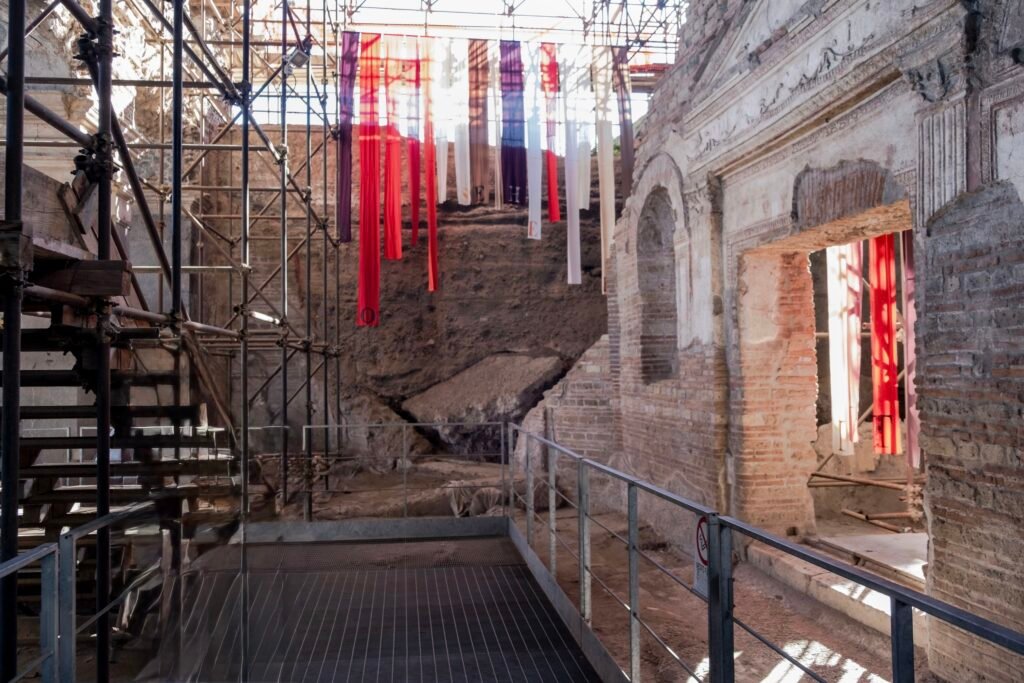
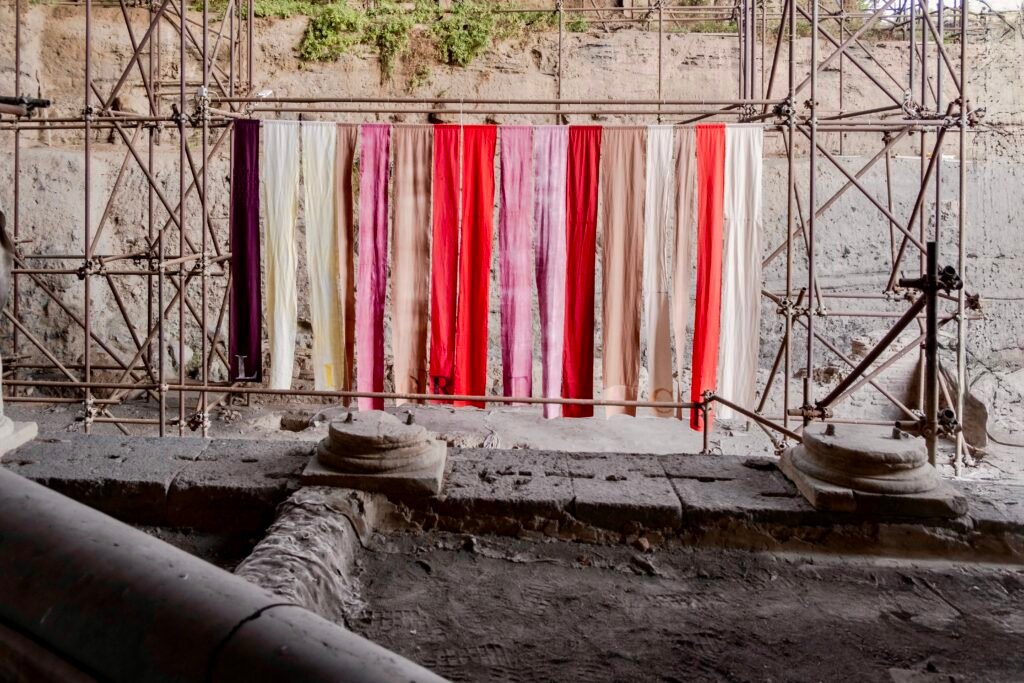
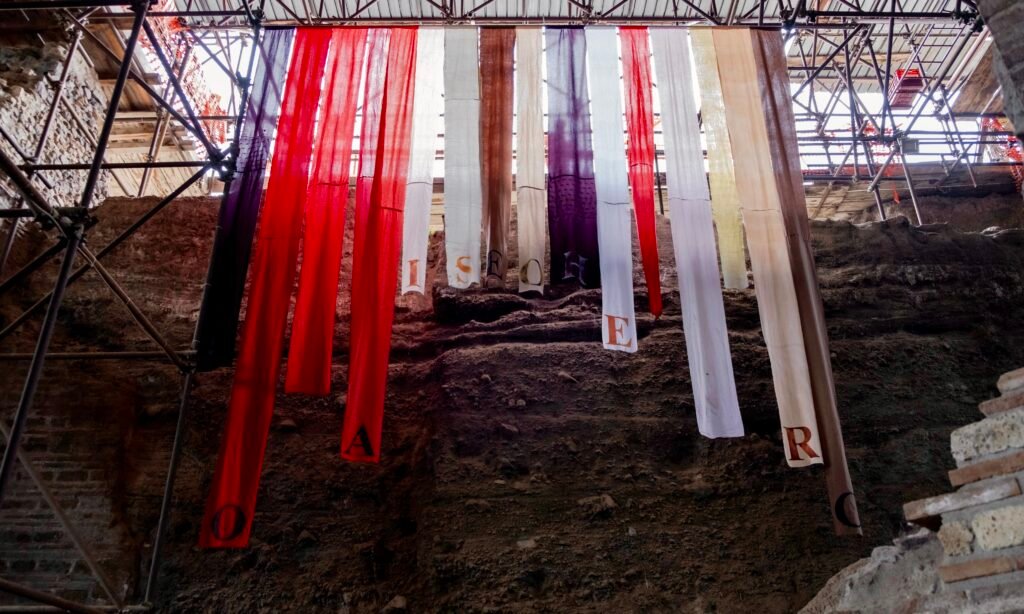
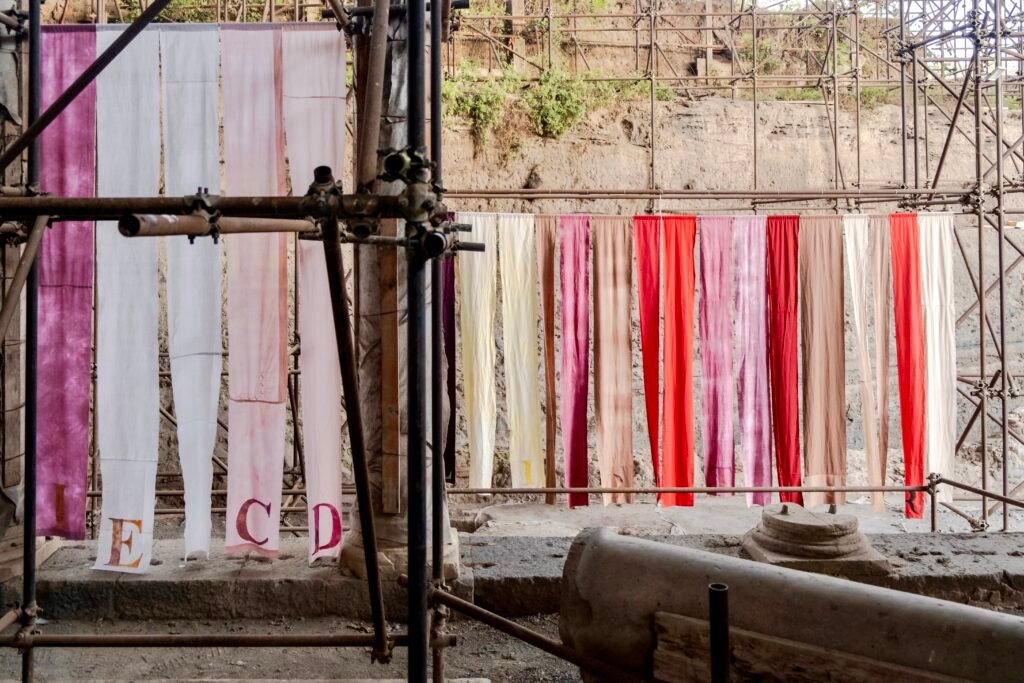
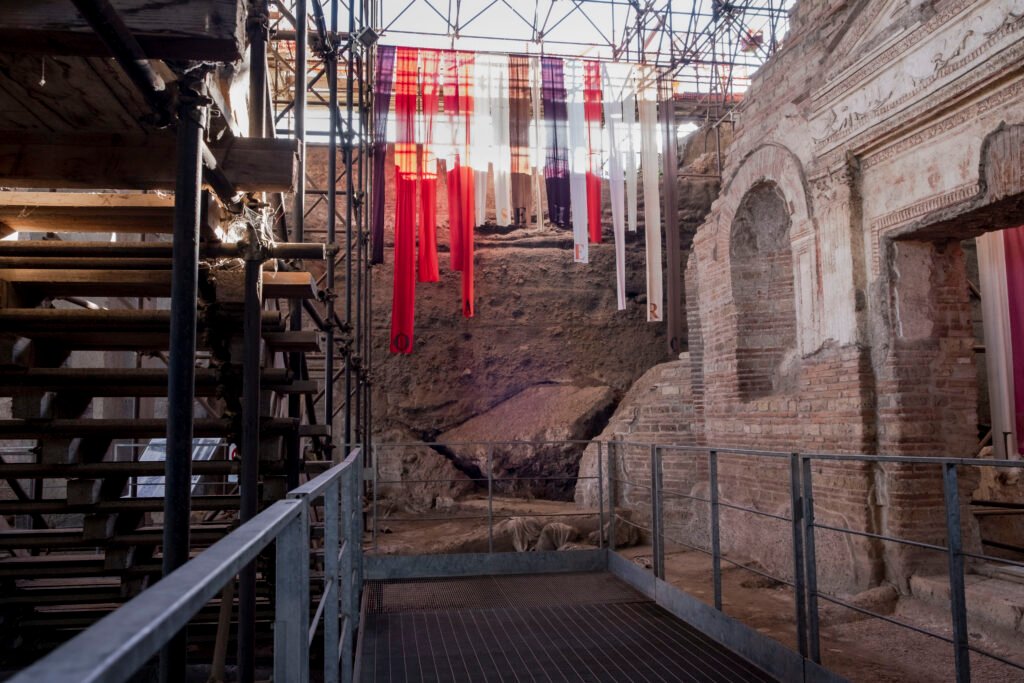
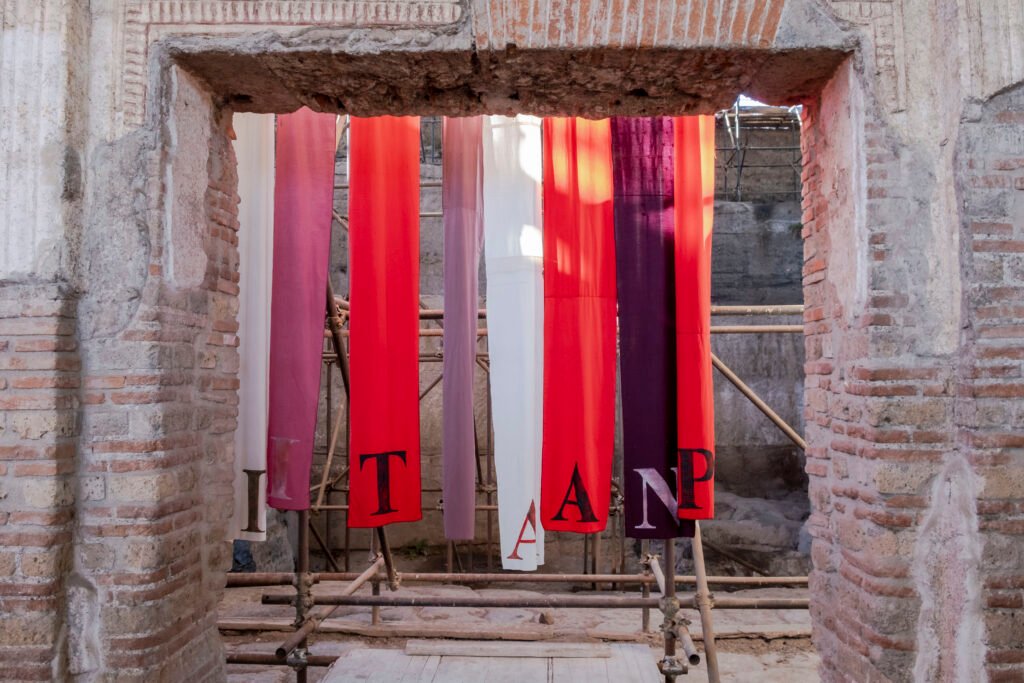
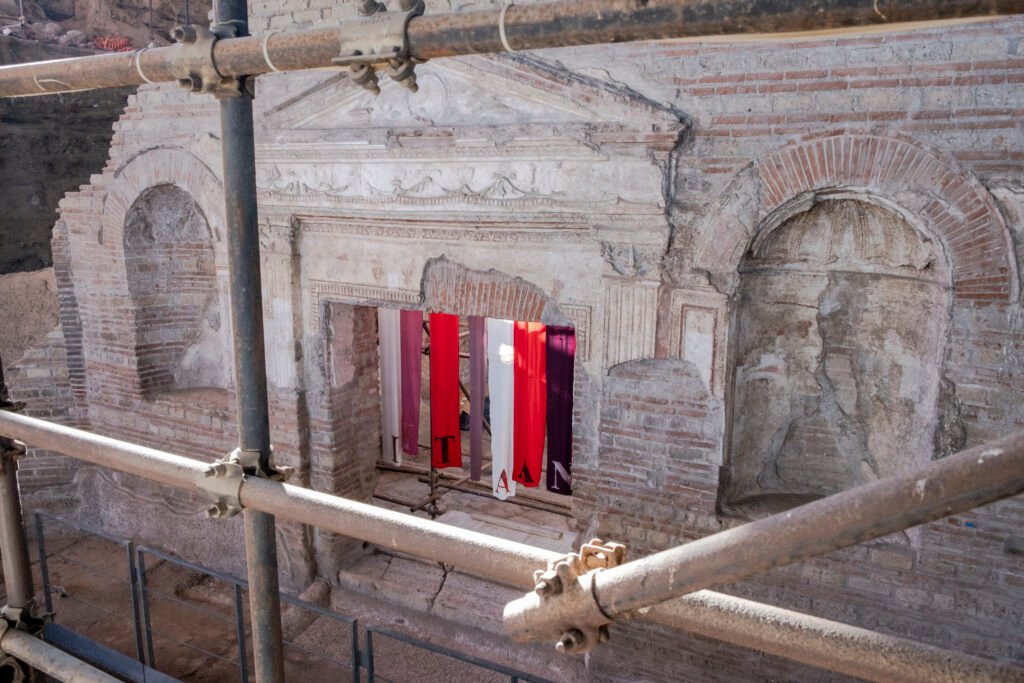
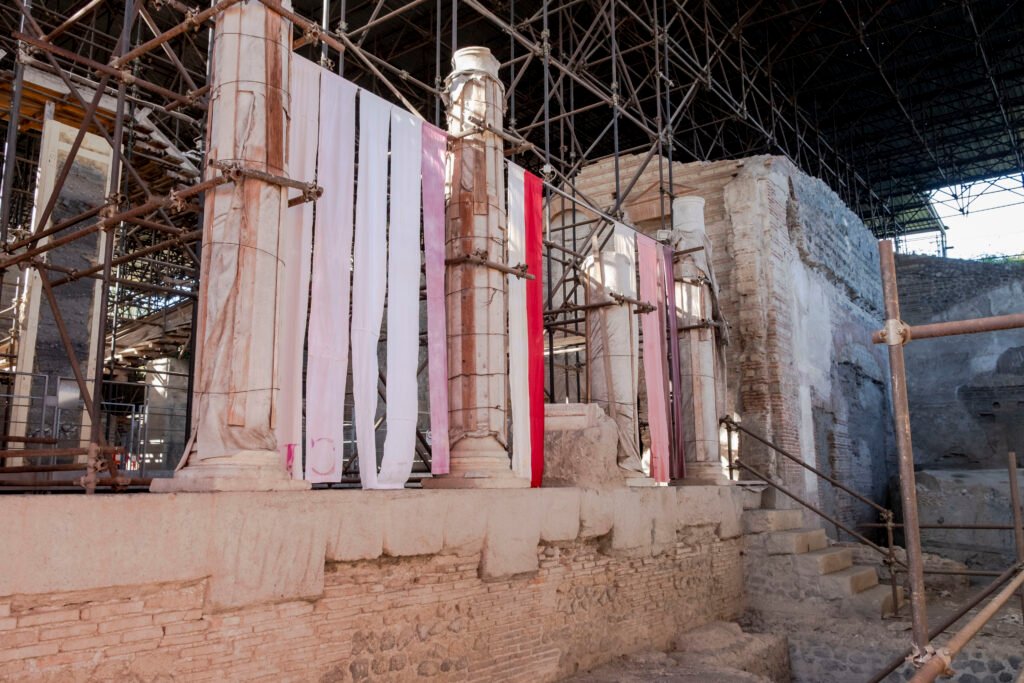
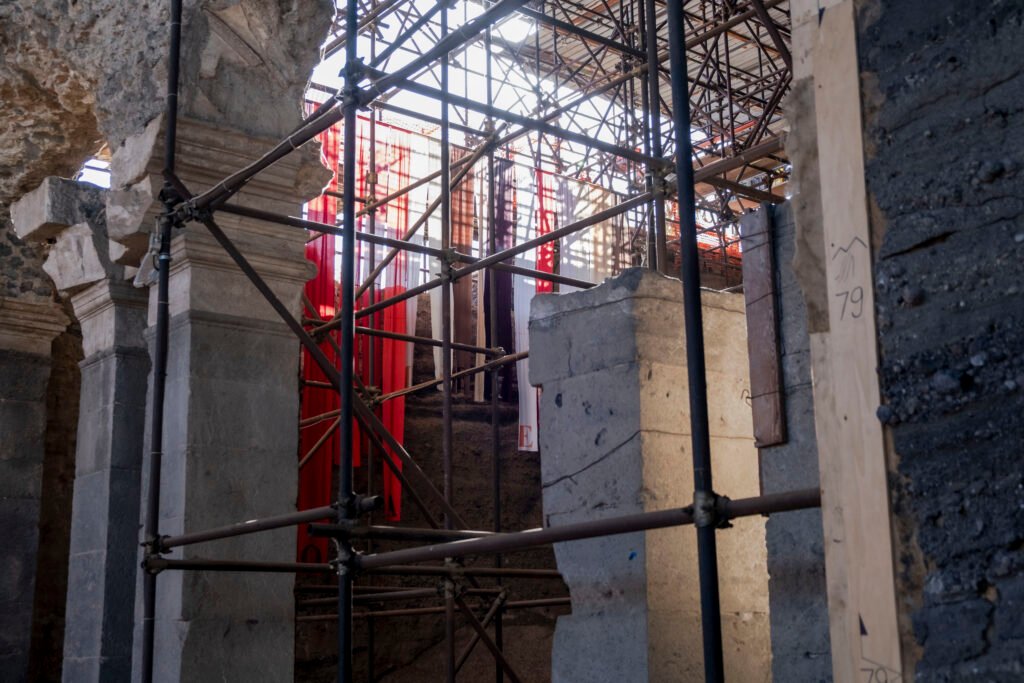
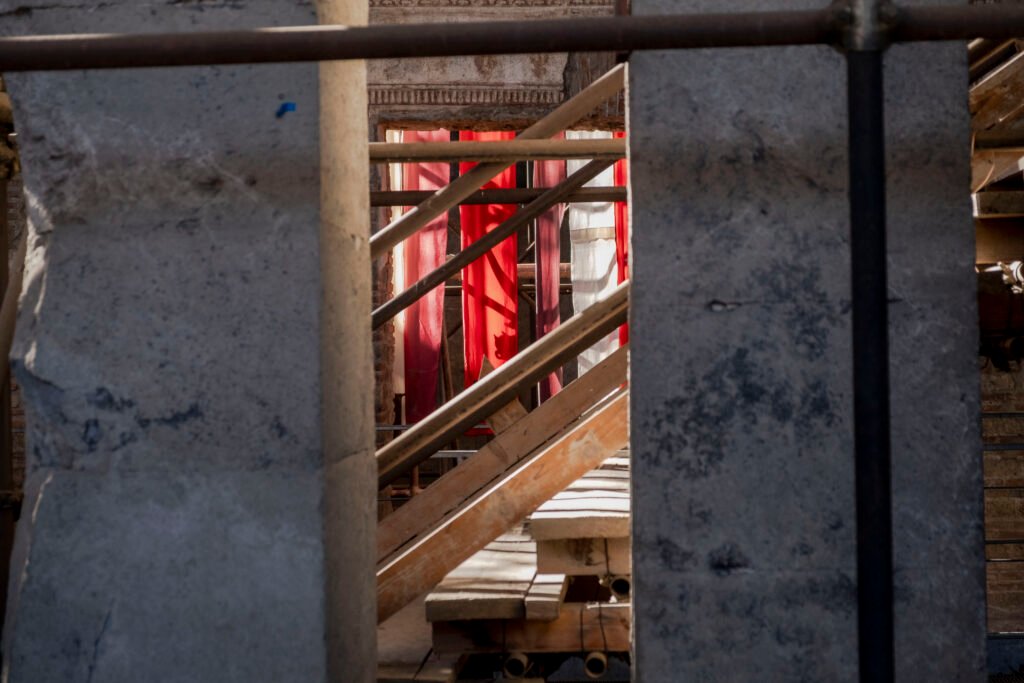
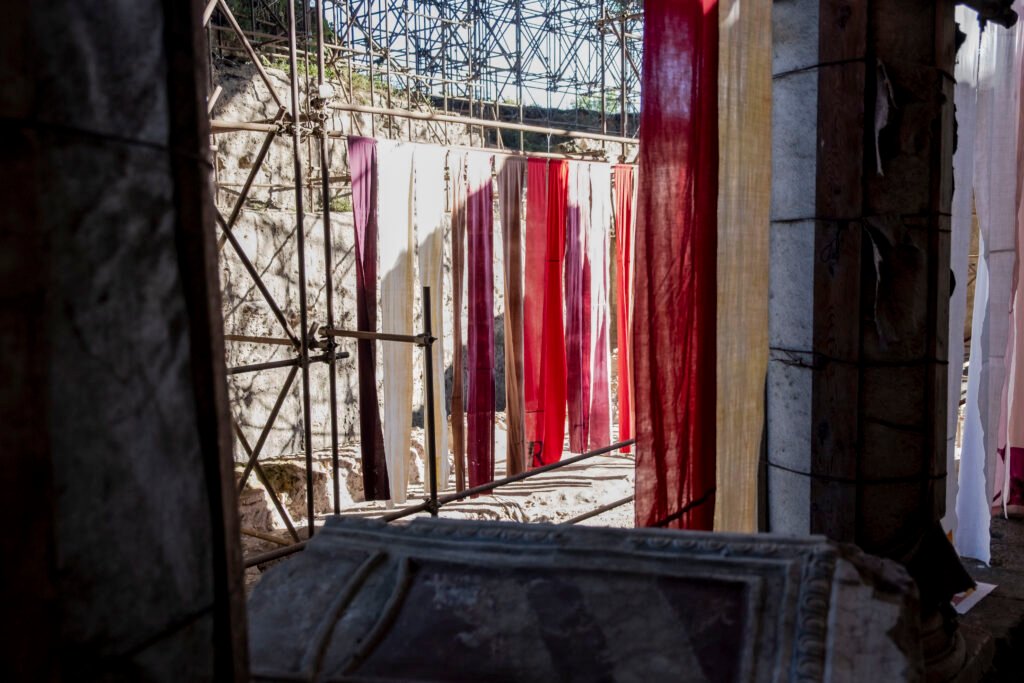
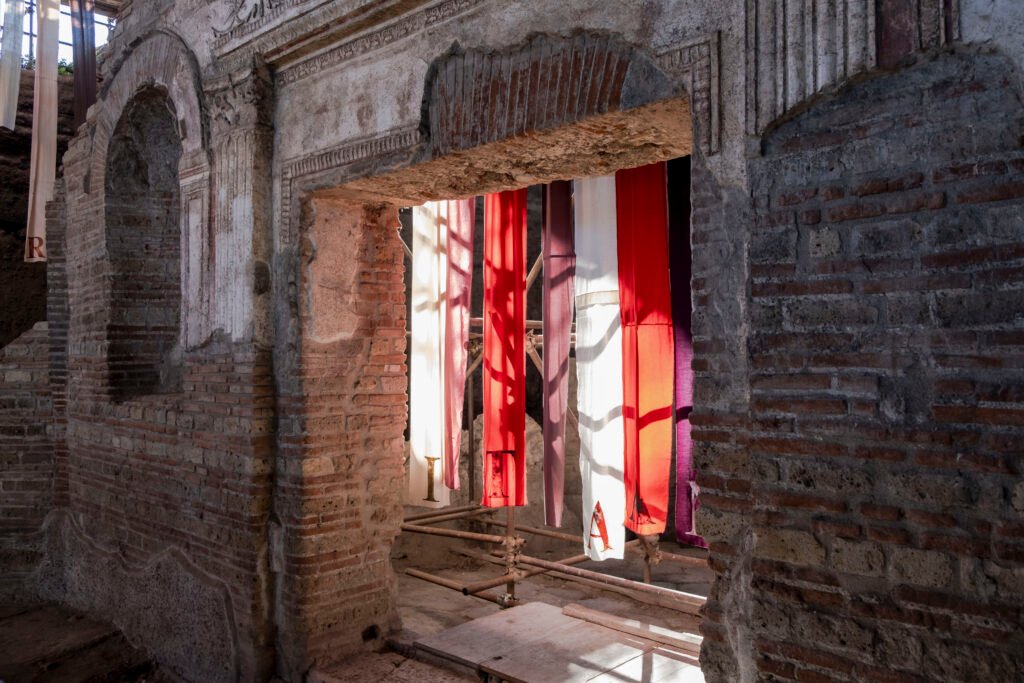
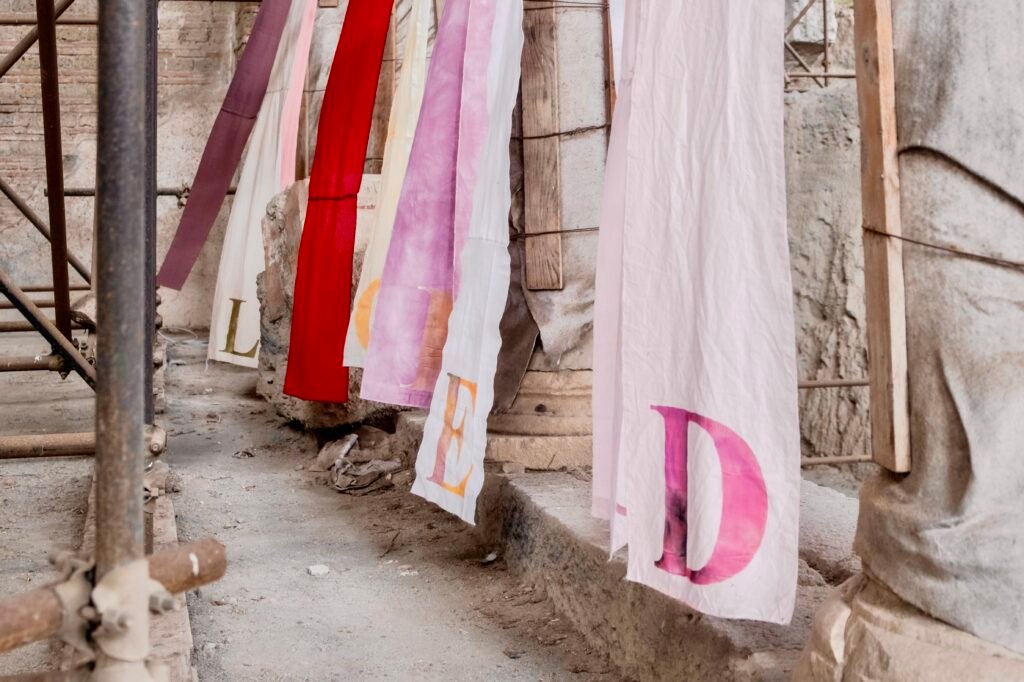
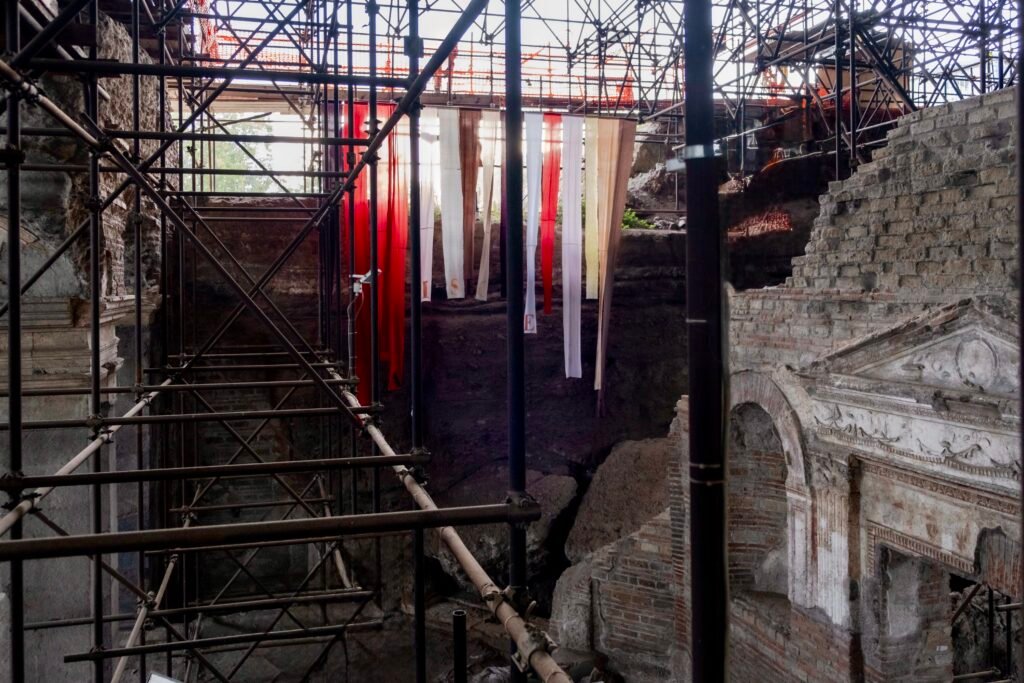
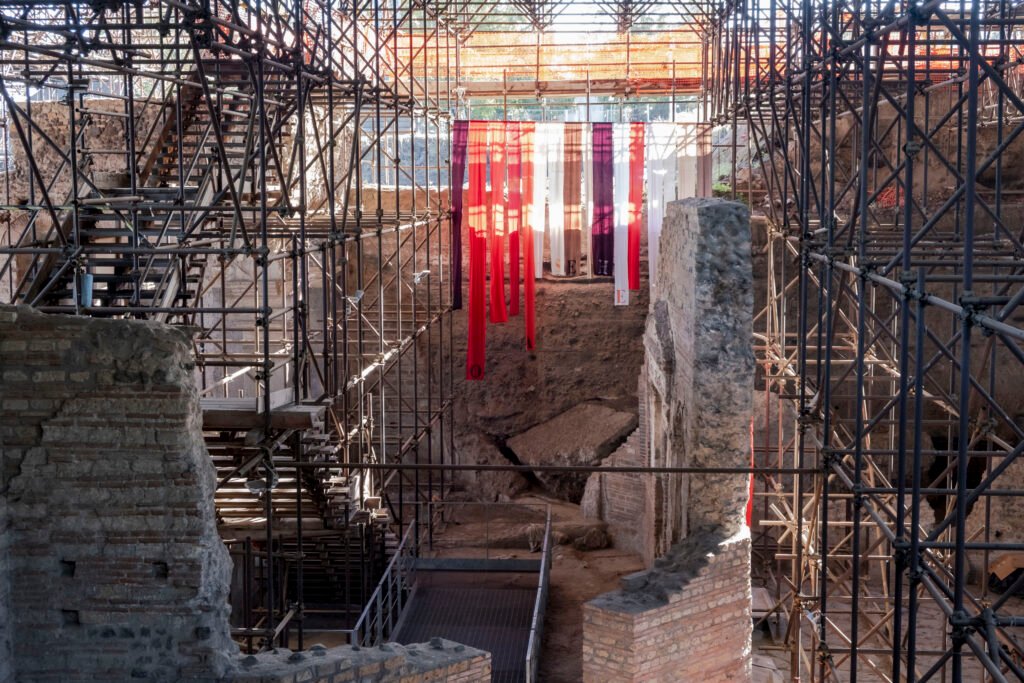
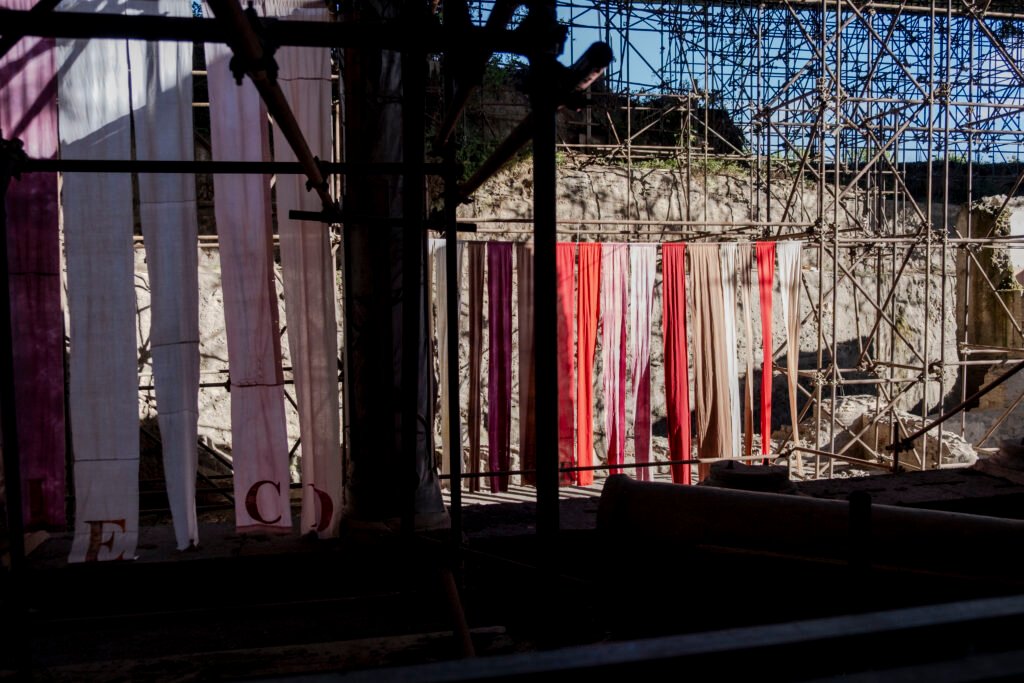
The structure of the installation translates this logic into space. Rectangular strips of fabric, made from reclaimed textiles, are distributed across different sections of the archaeological site, using the scaffolding surrounding the excavation as supports. Suspended in space, they cross the visitor’s path without interfering with the reading of the structures and finds. Some of the strips bear the letters that make up the title. The phrase exists, but is not immediately accessible: it is fragmented, dispersed, and legible only through the reconstruction of the relationships between its parts.
An isolated letter, like an isolated archaeological find, cannot convey the meaning of the whole on its own. It is the relationship with other elements and with the surrounding context that makes it interpretable. Visitors are invited to identify traces, orient themselves within the space, establish connections, and formulate a possible reconstruction. They may reassemble the original title or use the letters to create new words and associations. Reconstruction thus becomes an act of research and imagination.
The work can be understood as a counter-survey: not a graphic representation of the archaeological context, but a perceptual rendering of its fragmented and layered nature. While a survey makes what is observed legible through a system of recording, the installation allows visitors to experience the process through which a series of elements can be brought together into a possible configuration. The context is not illustrated, but experienced as an interpretative problem.
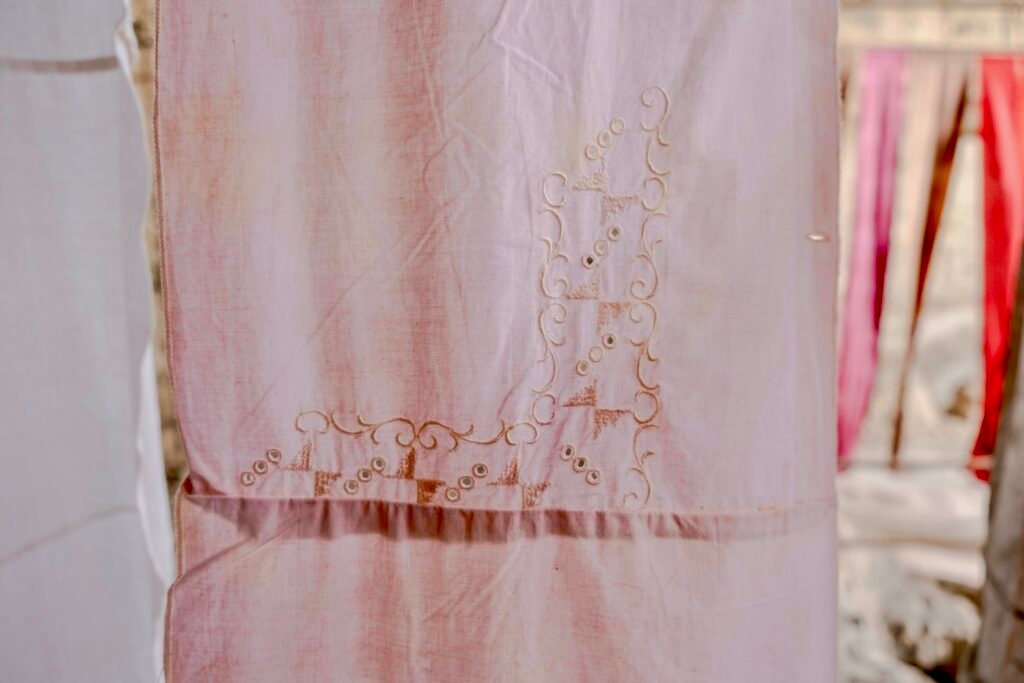
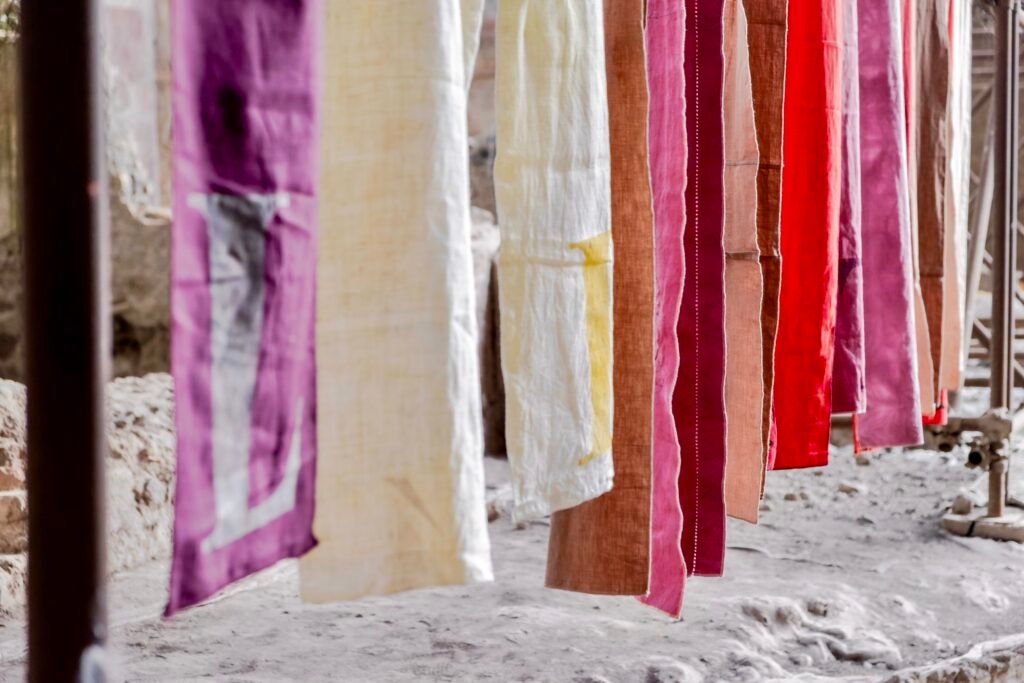
The choice of materials introduces a further level of stratification. The strips are made from reclaimed textiles sourced in Campania through markets, donations, and word of mouth. Each textile has a previous history, connected to its uses and to the people through whom it reached the artist. The act of cutting it and transforming it into a strip carries this provenance into a new system of relationships.
The fabric is further transformed through natural dyes, including turmeric, wine, and earth, creating a palette ranging from red to burgundy that engages with the Dionysian dimension of the site. Colour establishes a tangible relationship with the territory the artist explored during the residency and with the historical and symbolic dimensions of the Villa Augustea. It thus takes on a relational function, bringing reclaimed materials into dialogue with the Vesuvian landscape and the archaeological context in which the work is situated.
The intervention engages with the site’s present condition, shaped by material evidence, structures under investigation, research infrastructure, and spaces that remain open to interpretation. The scaffolding, already in place and serving the needs of archaeological research, is also used as a narrative support without losing its original function. The work becomes part of the excavation system, occupying its suspended and available spaces and accompanying the visitor’s route rather than imposing itself upon it.
The project is also conceived as a process that will continue to develop in the months following its opening. Further testimonies, sound materials, and opportunities for encounters may be added to the initial arrangement of fabric strips. Each new element settles over those that came before, producing a gradual stratification of experience. Participation becomes a way for the work to continue generating material and knowledge: alongside the letters dispersed throughout the space come the words of those who visit the Villa and of those who live in Somma Vesuviana and carry its everyday memories.
Le parole che si intrecciano tra i ricordi i ricordi che si intrecciano tra le parole examines the process through which a story is constructed, transmitted, and interpreted anew. The fabrics preserve traces of their provenance, the site preserves traces of its history, and personal testimonies preserve traces of a shared yet ever-changing memory. As in an excavation, the work brings together what remains, what is missing, and what can still be told.