


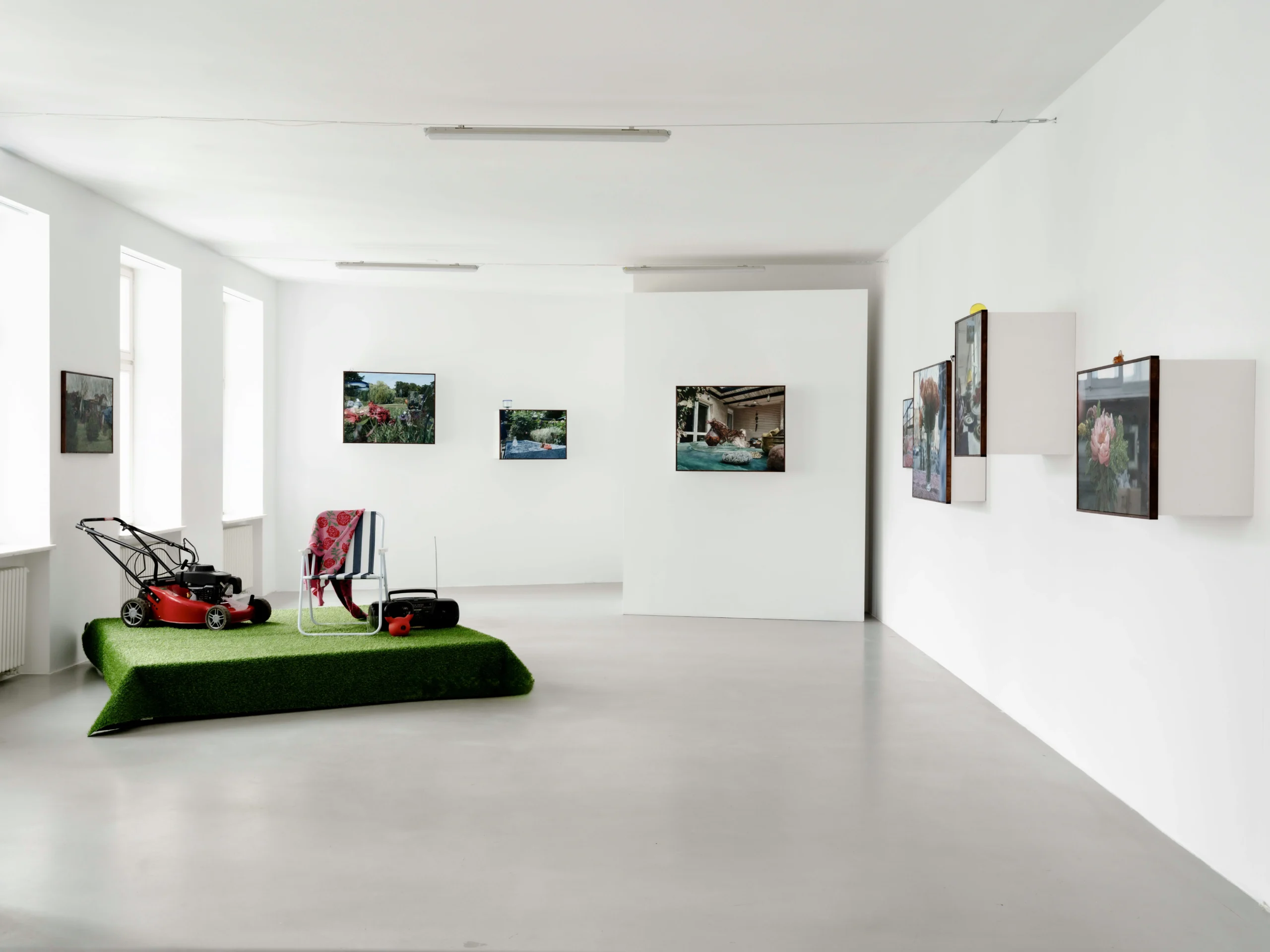
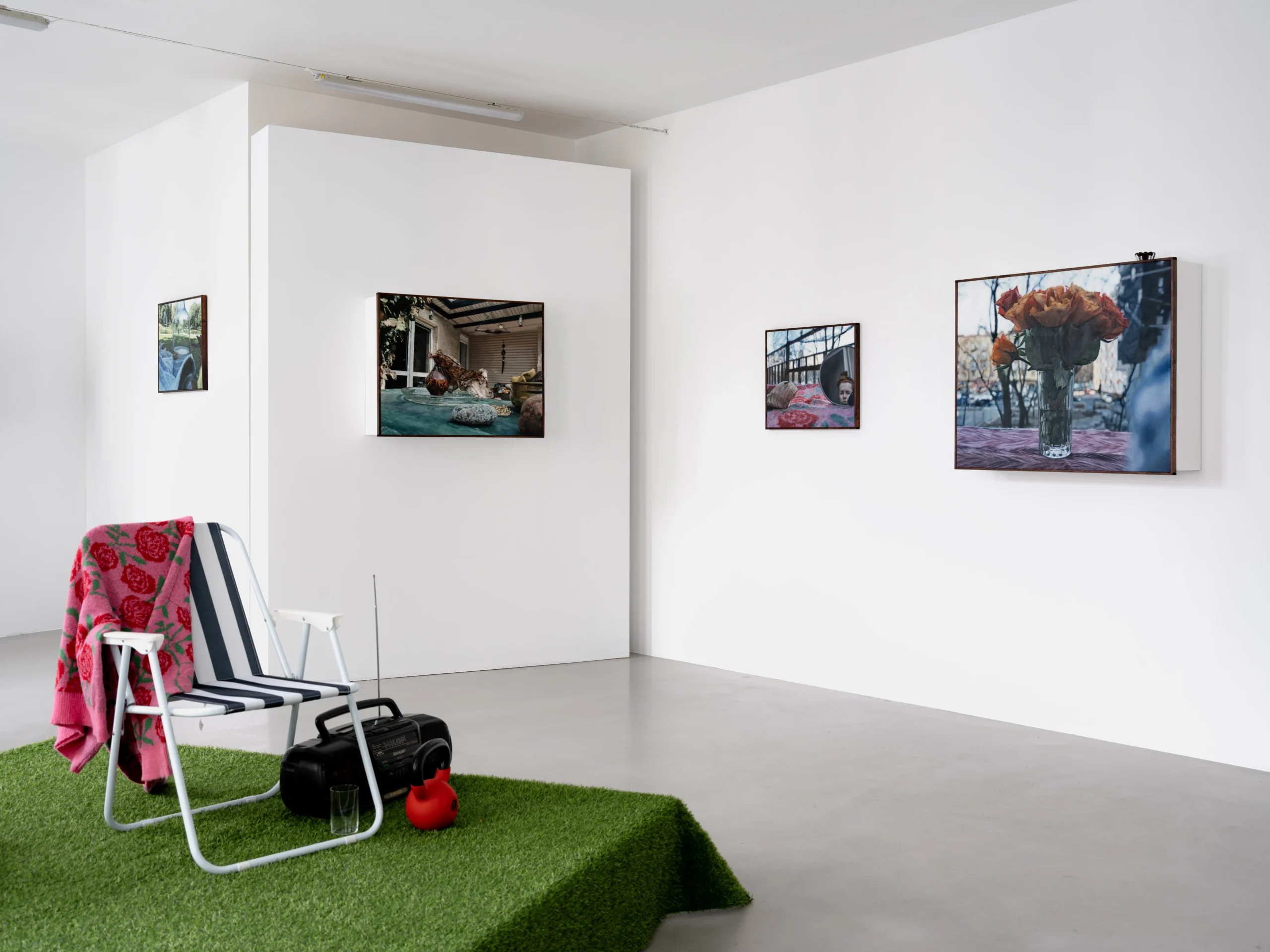
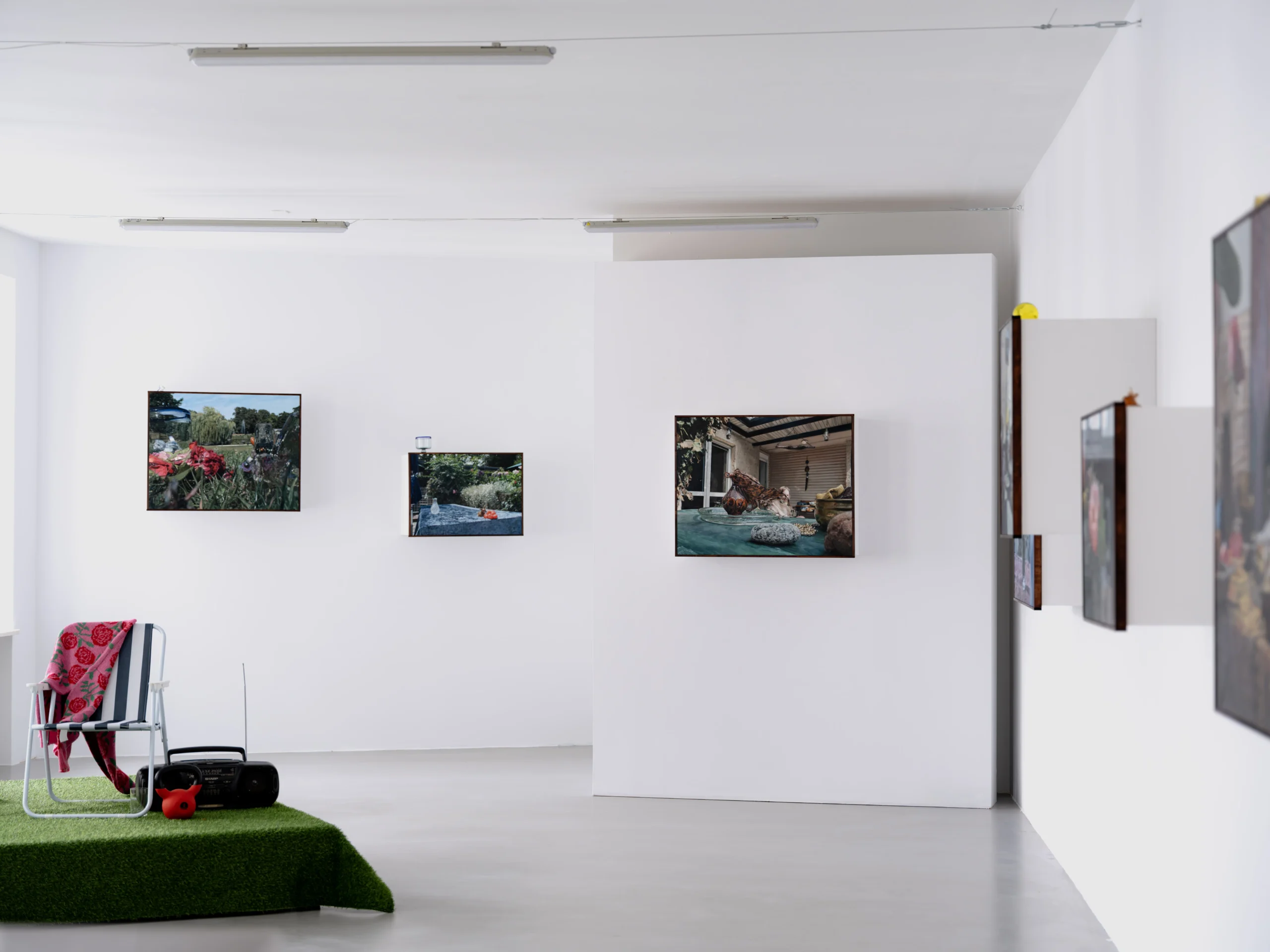
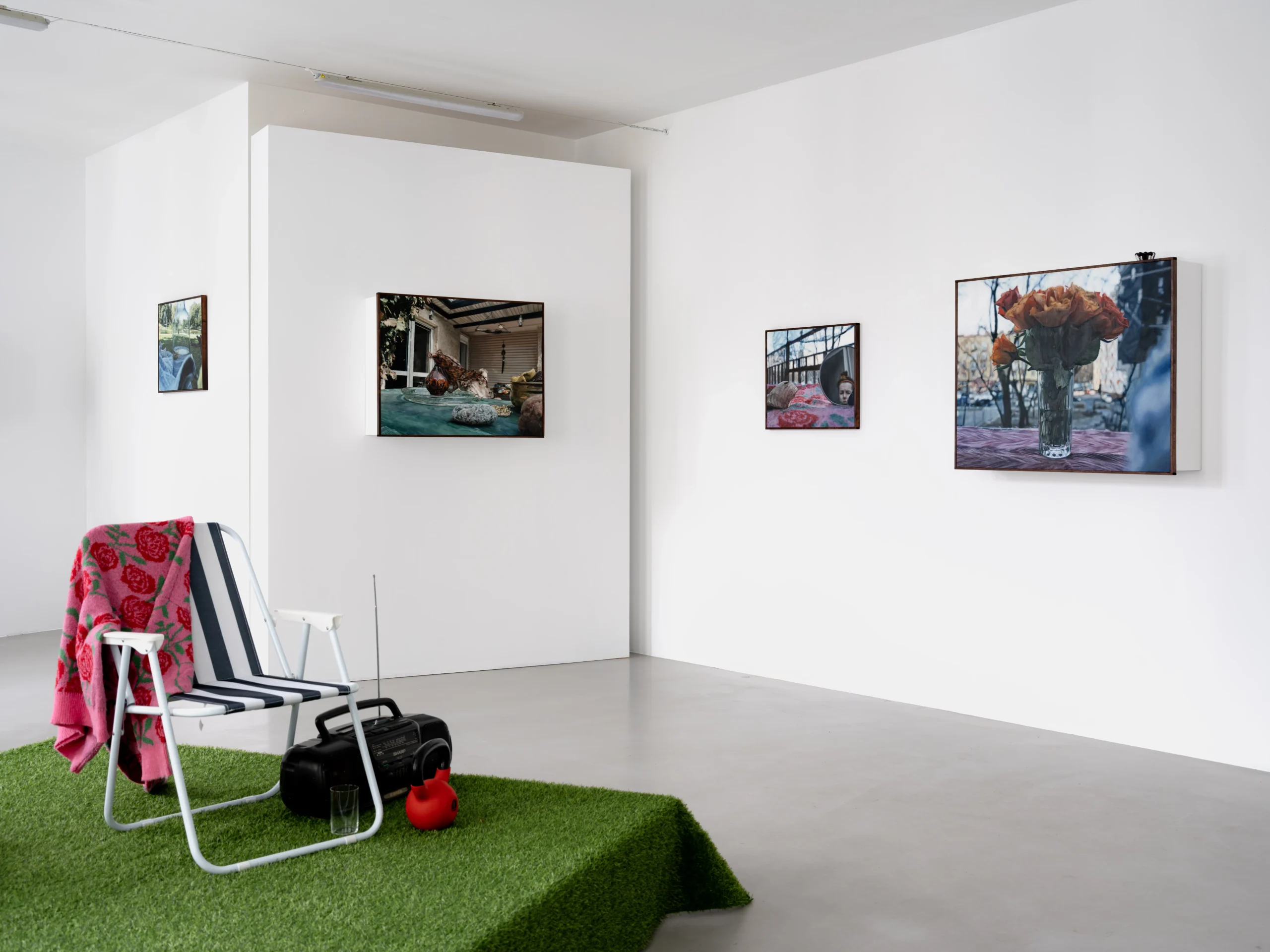
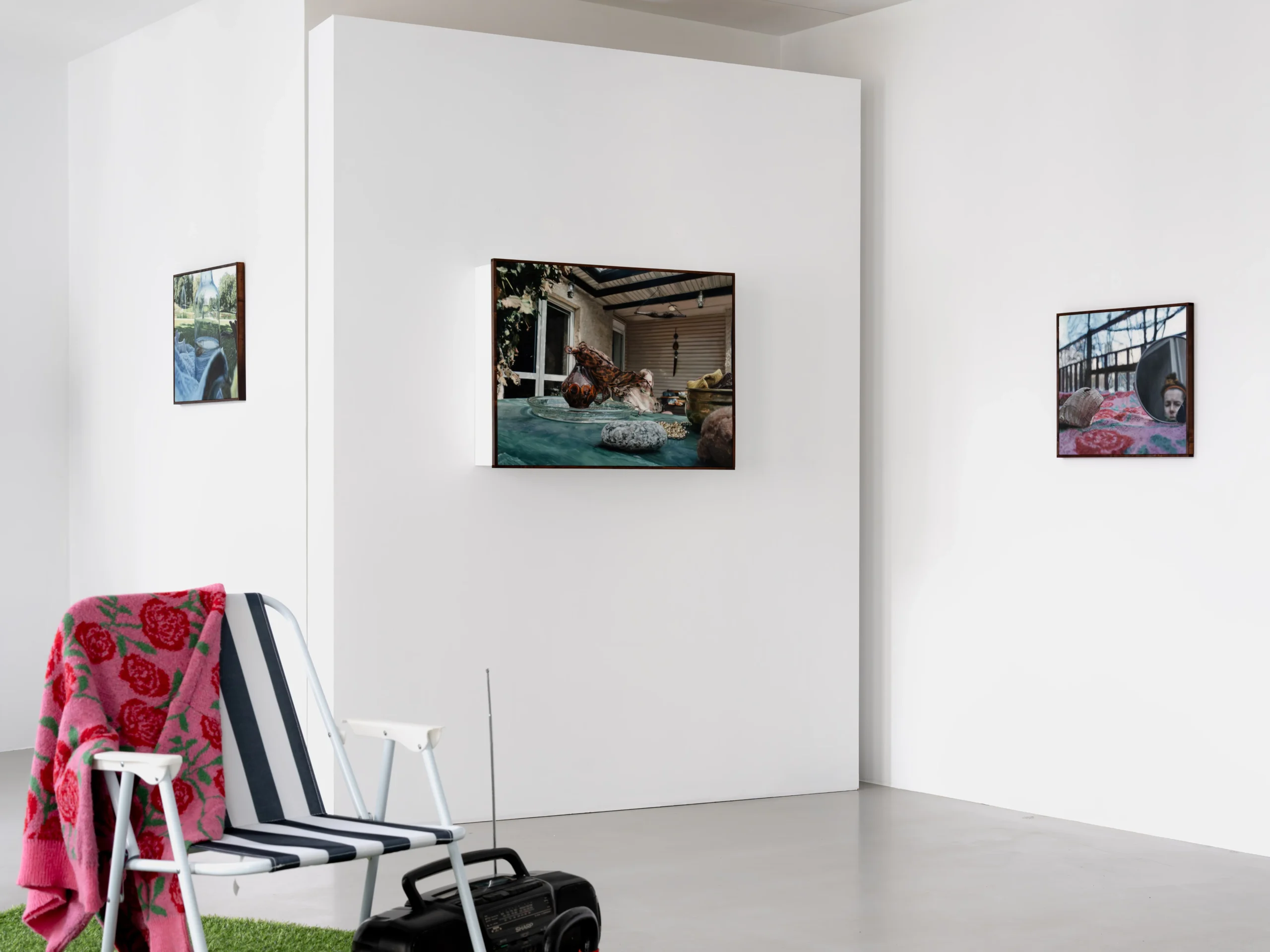
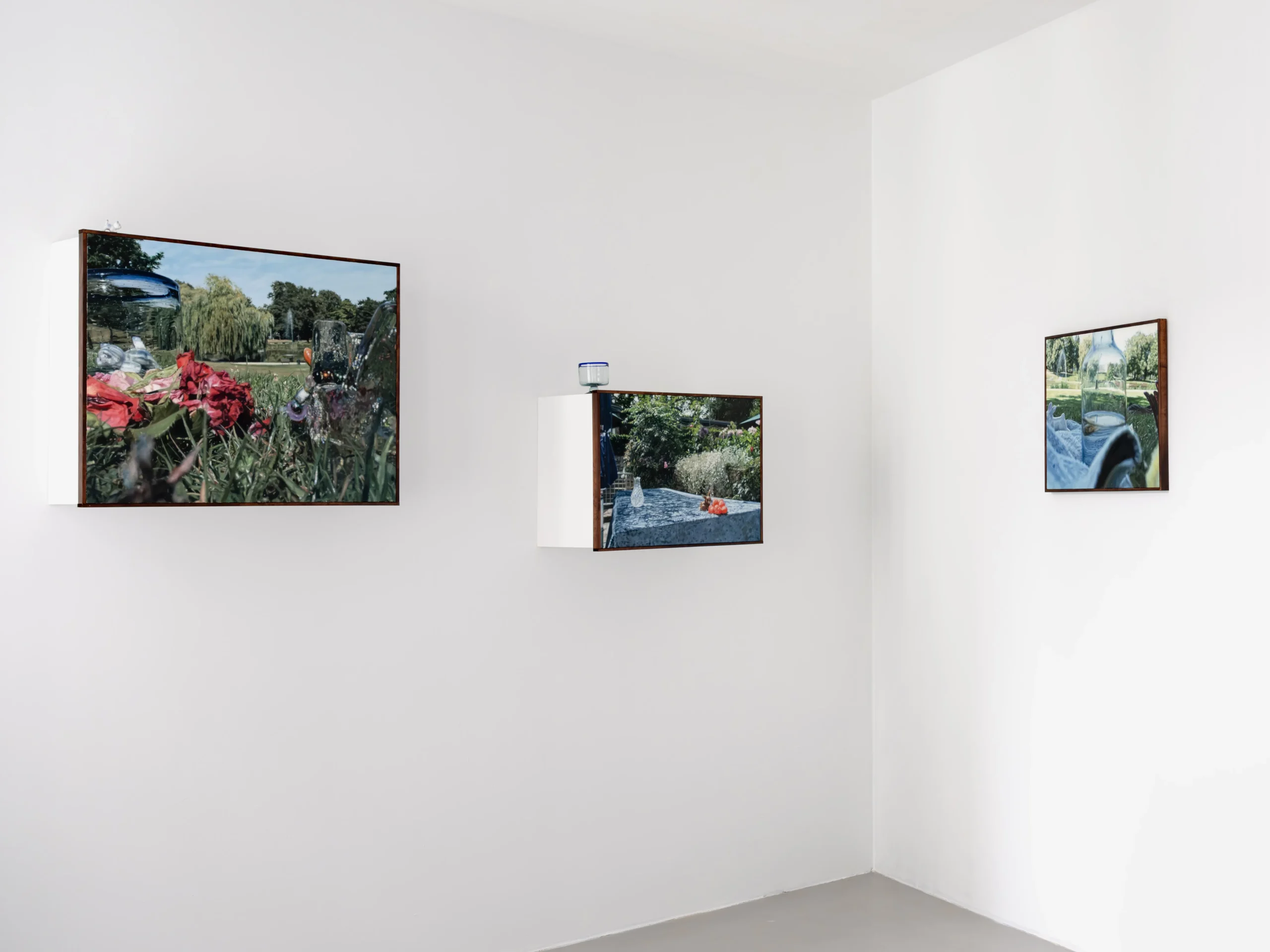
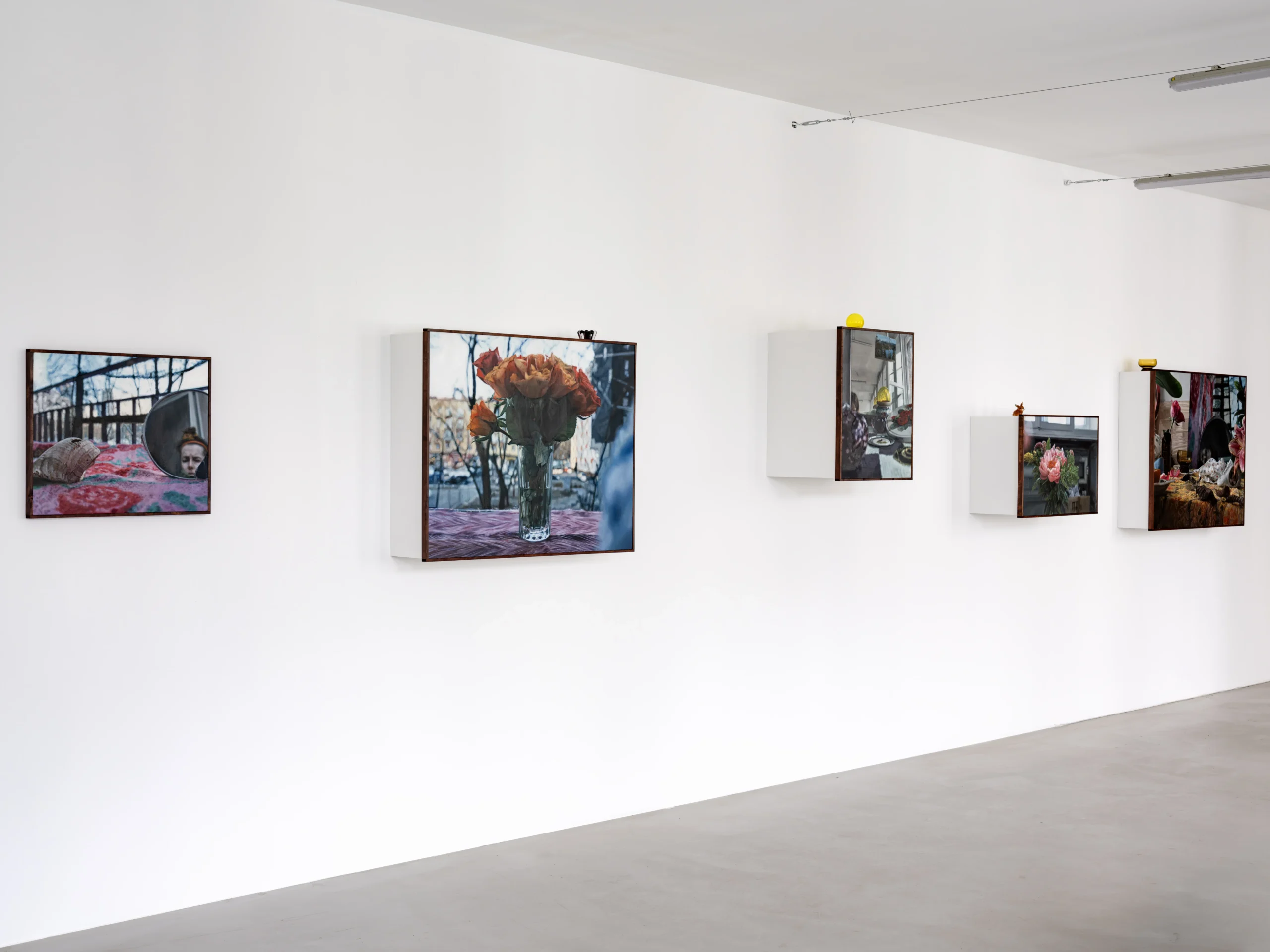
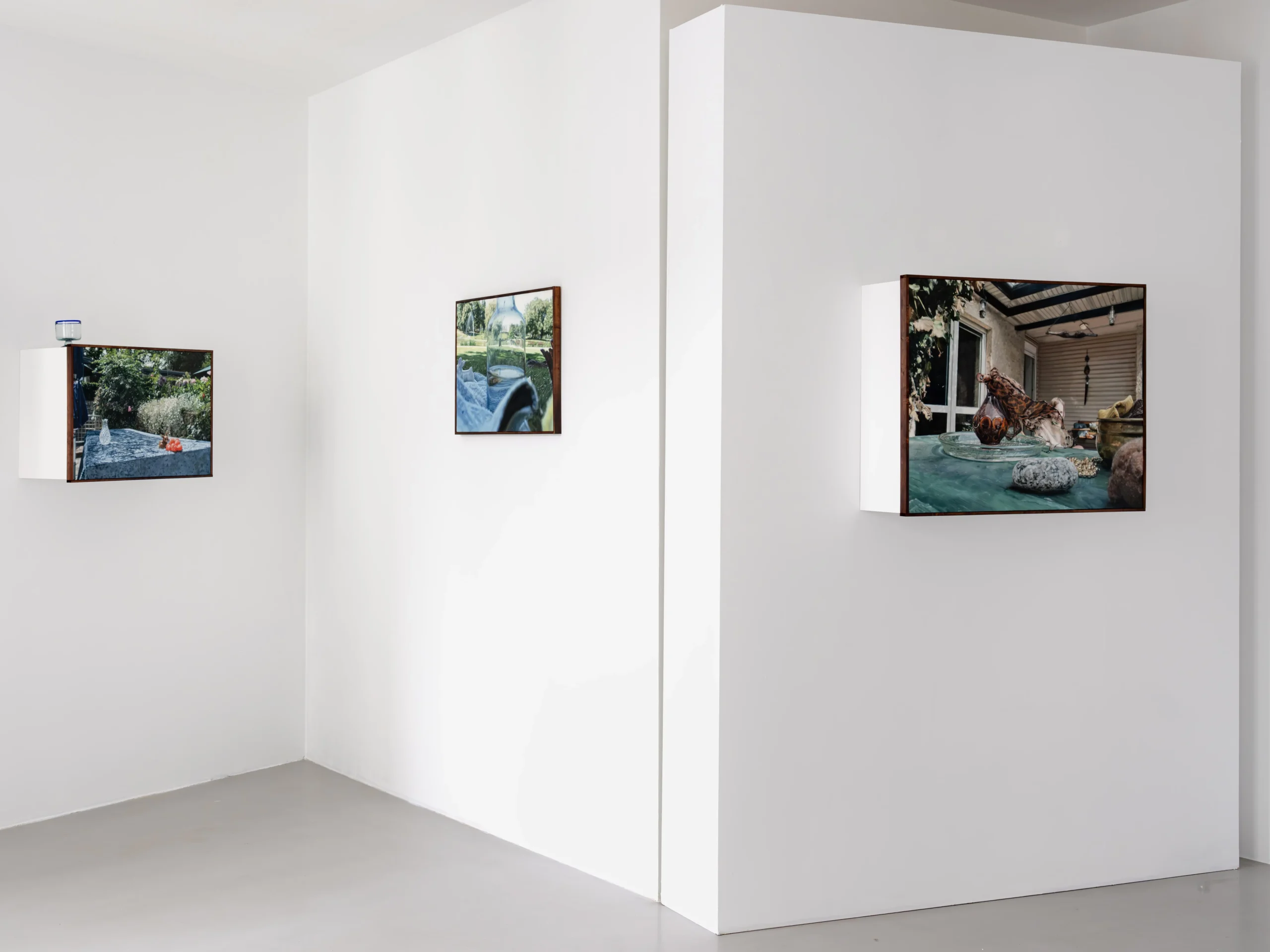
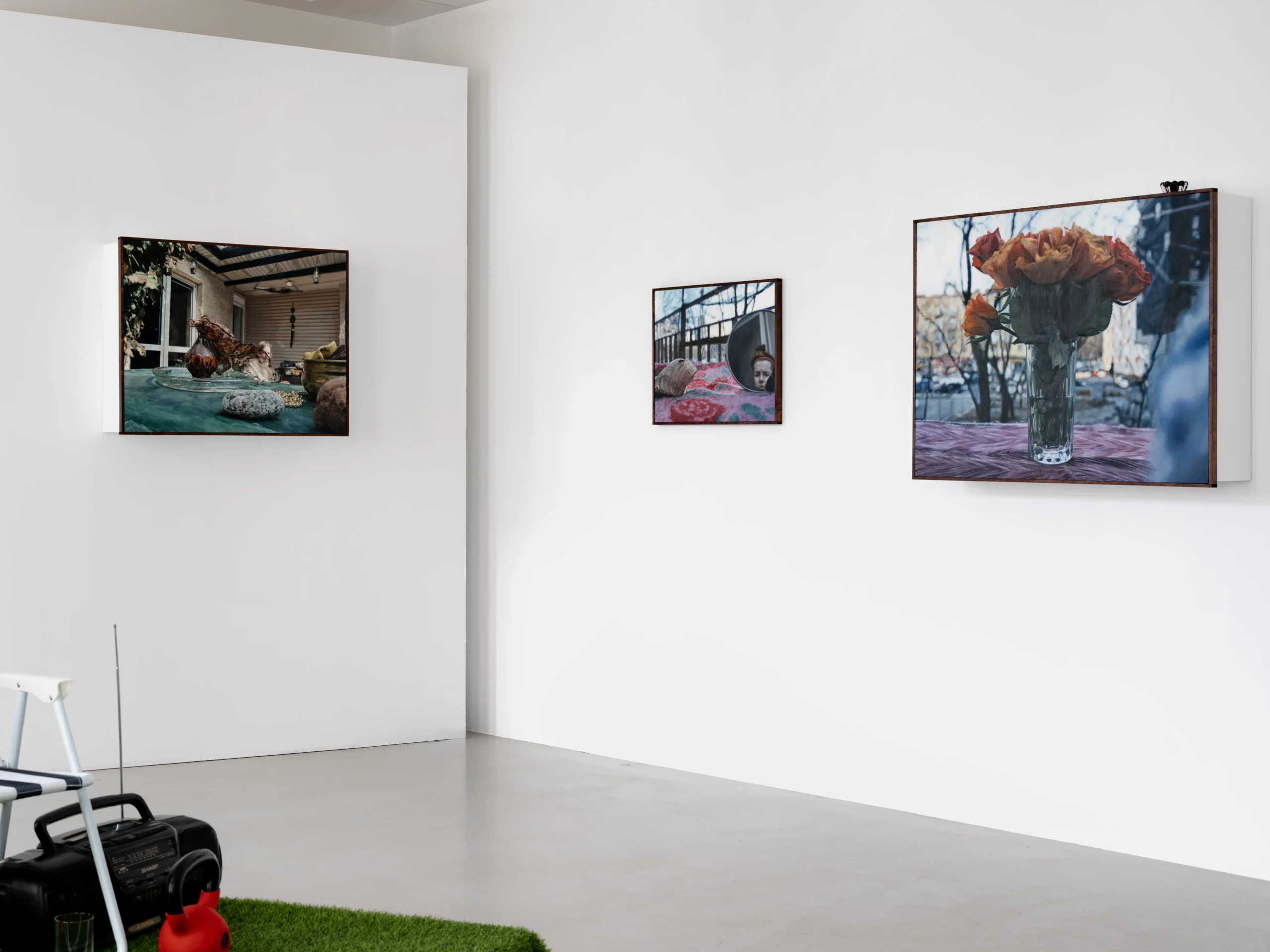
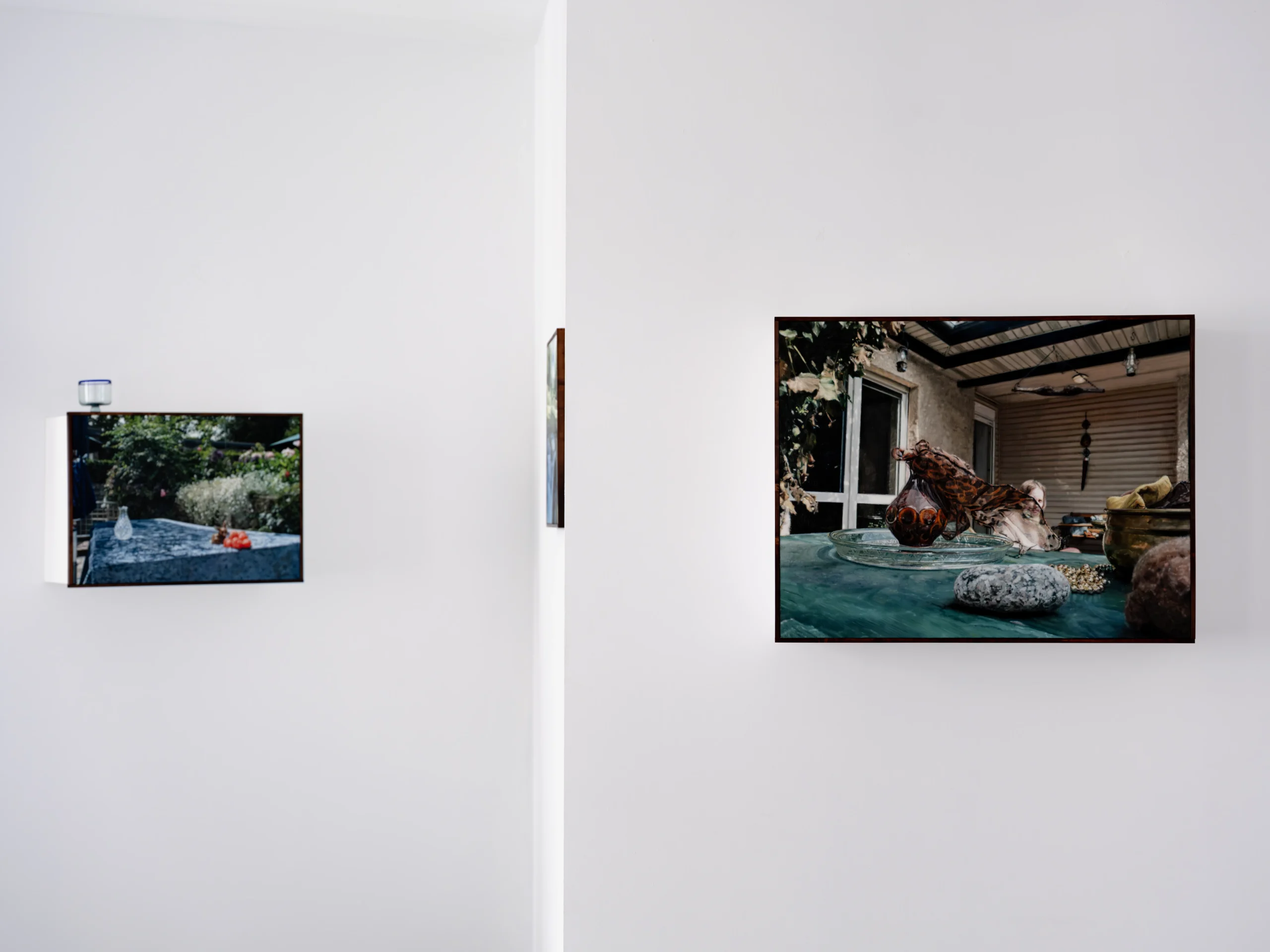
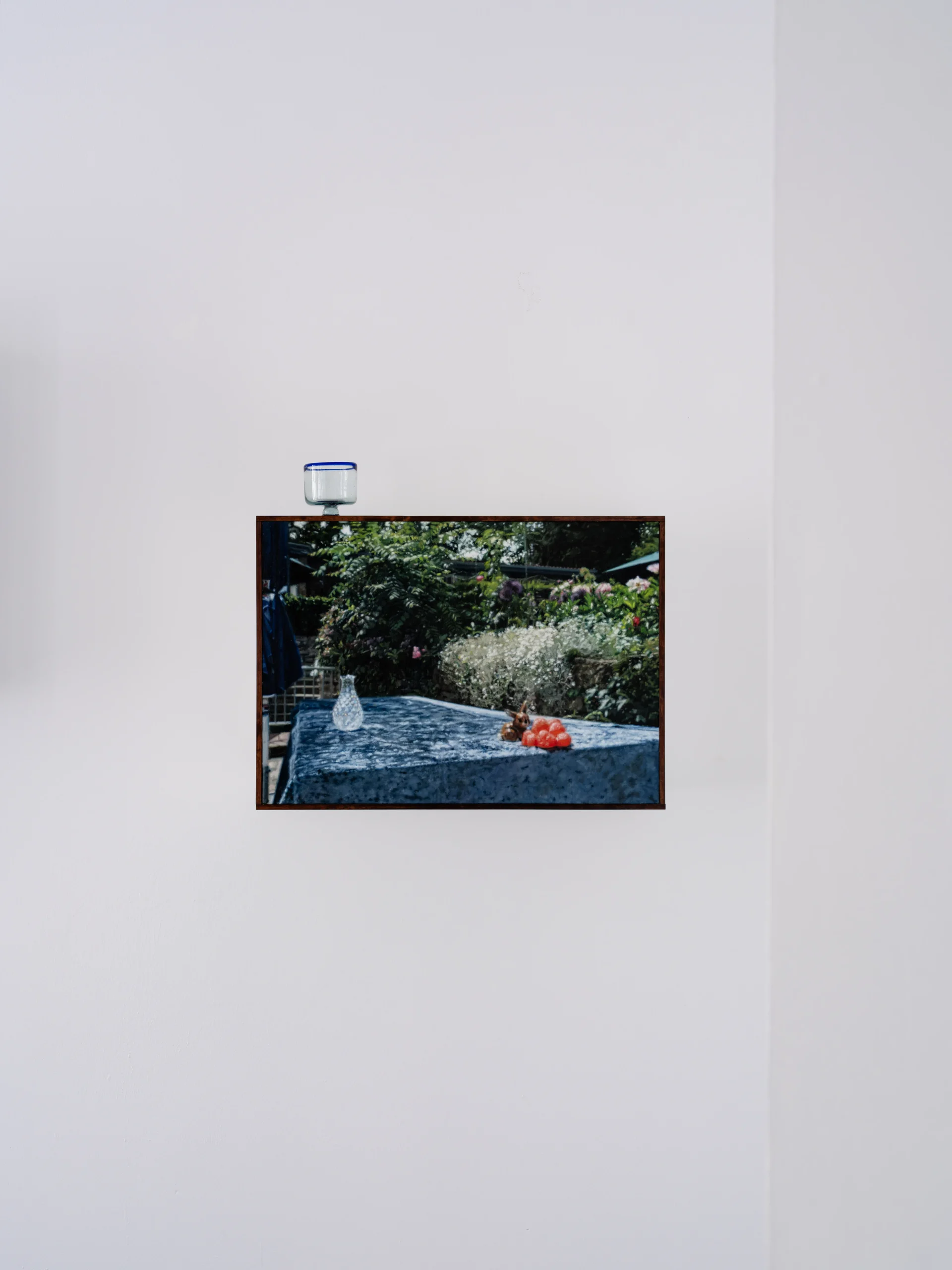
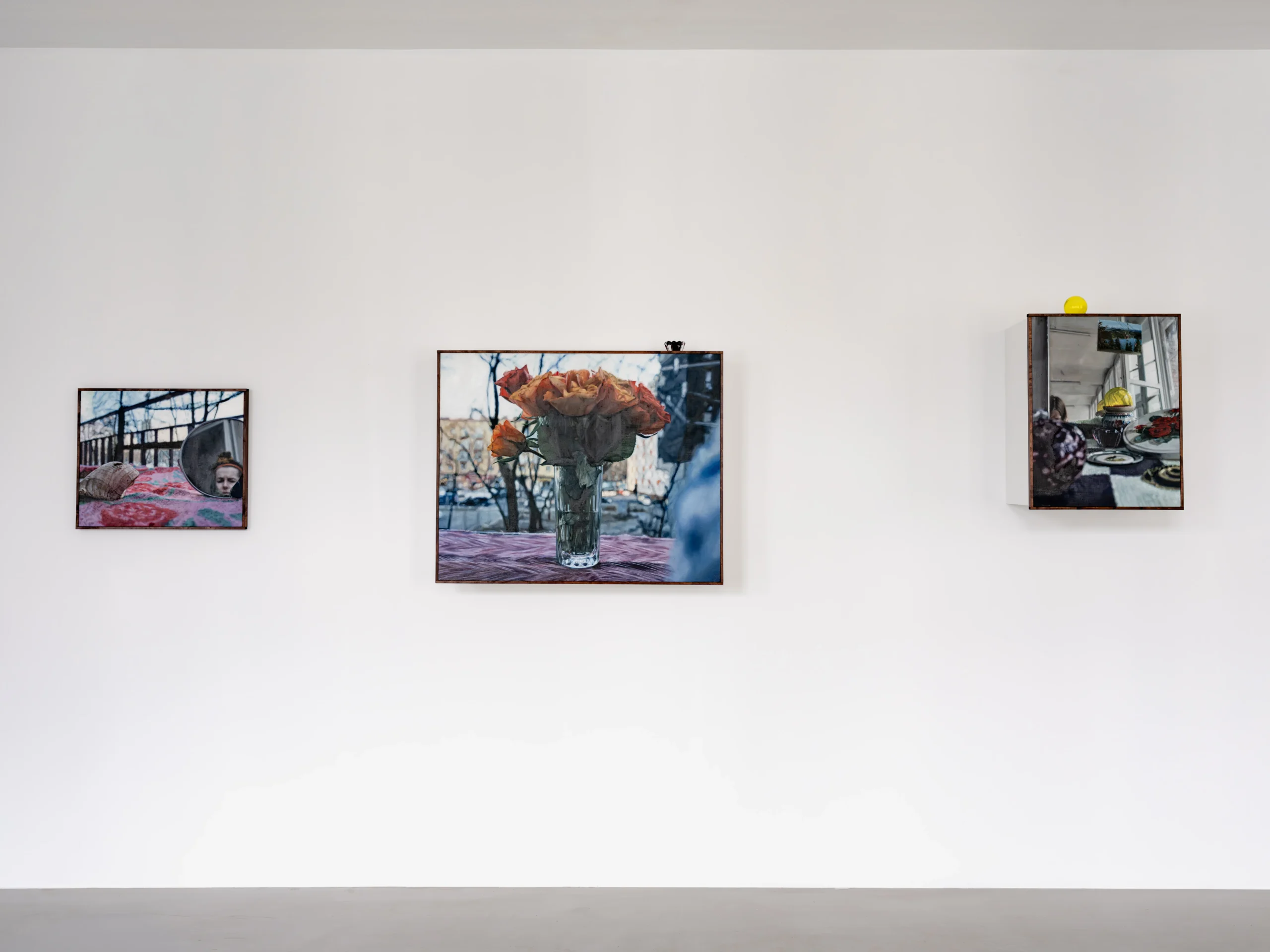
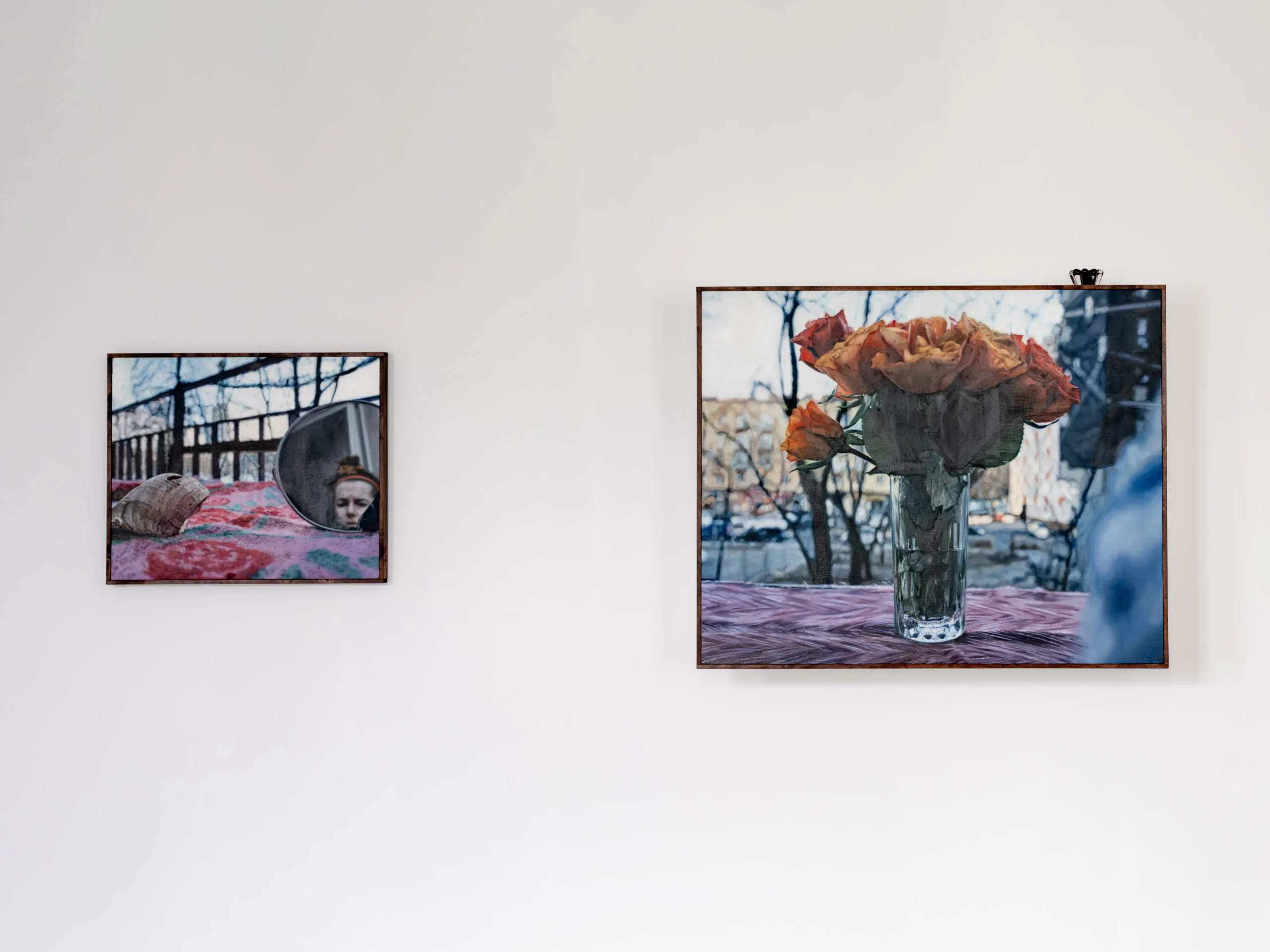
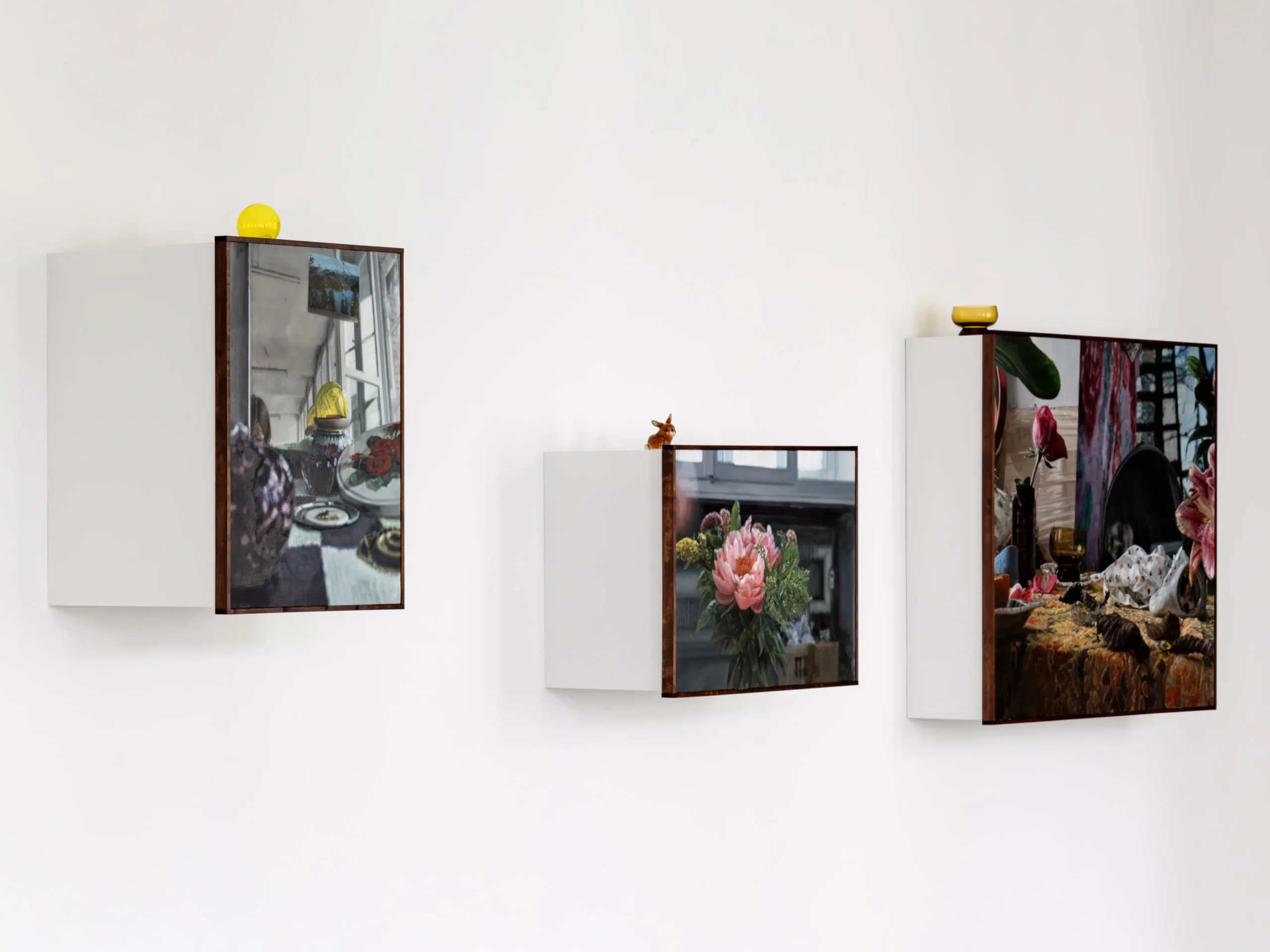
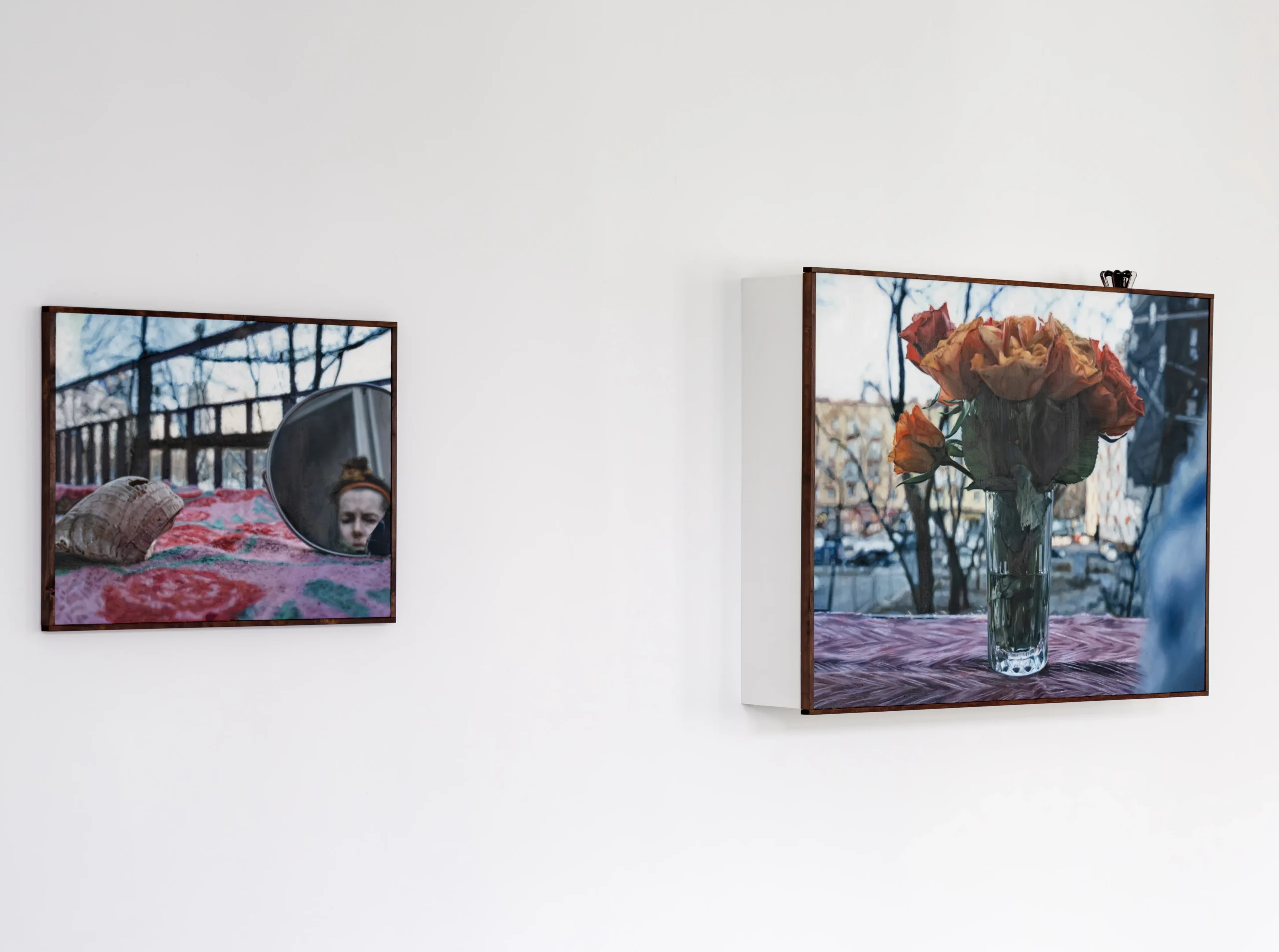
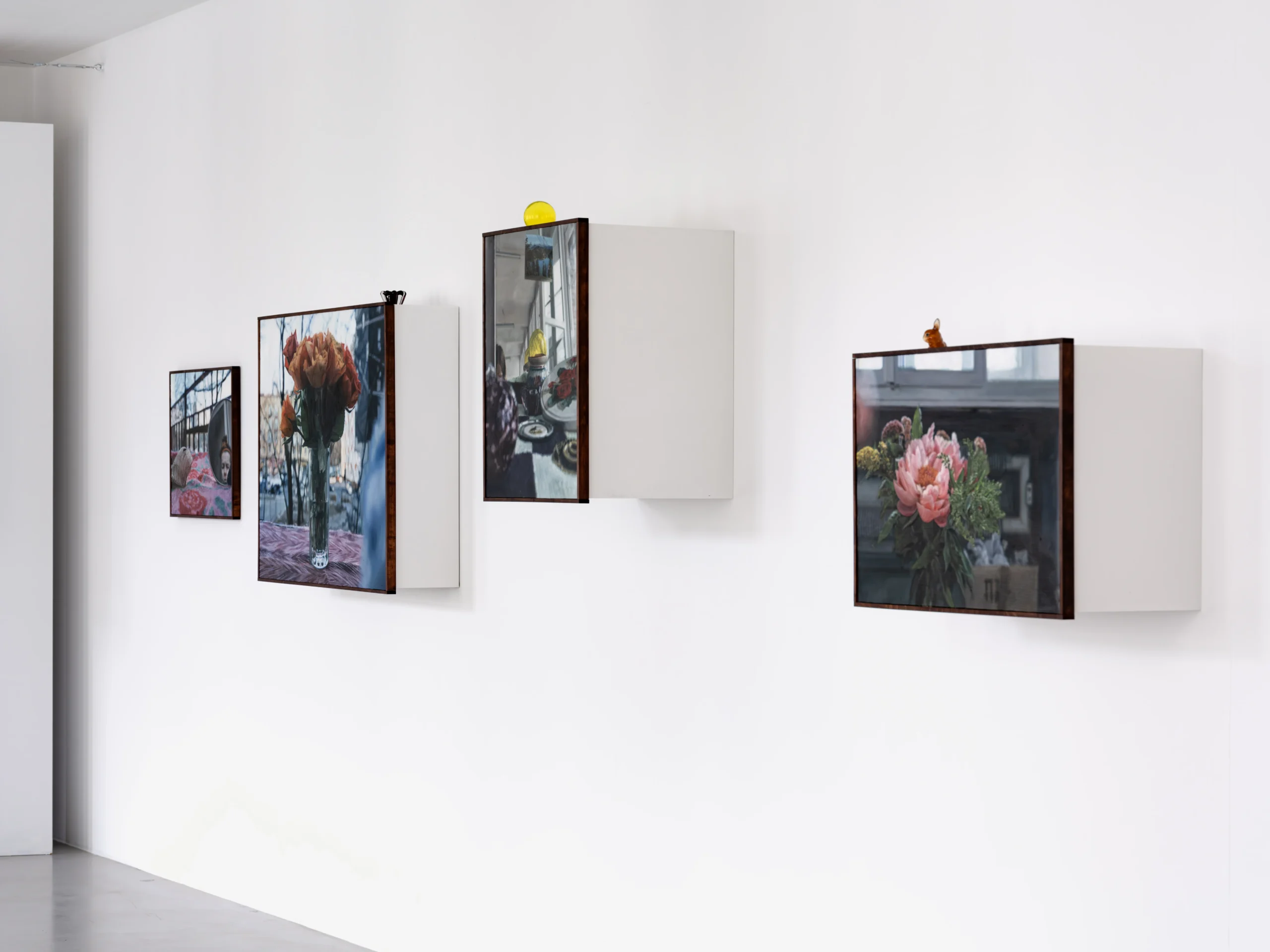
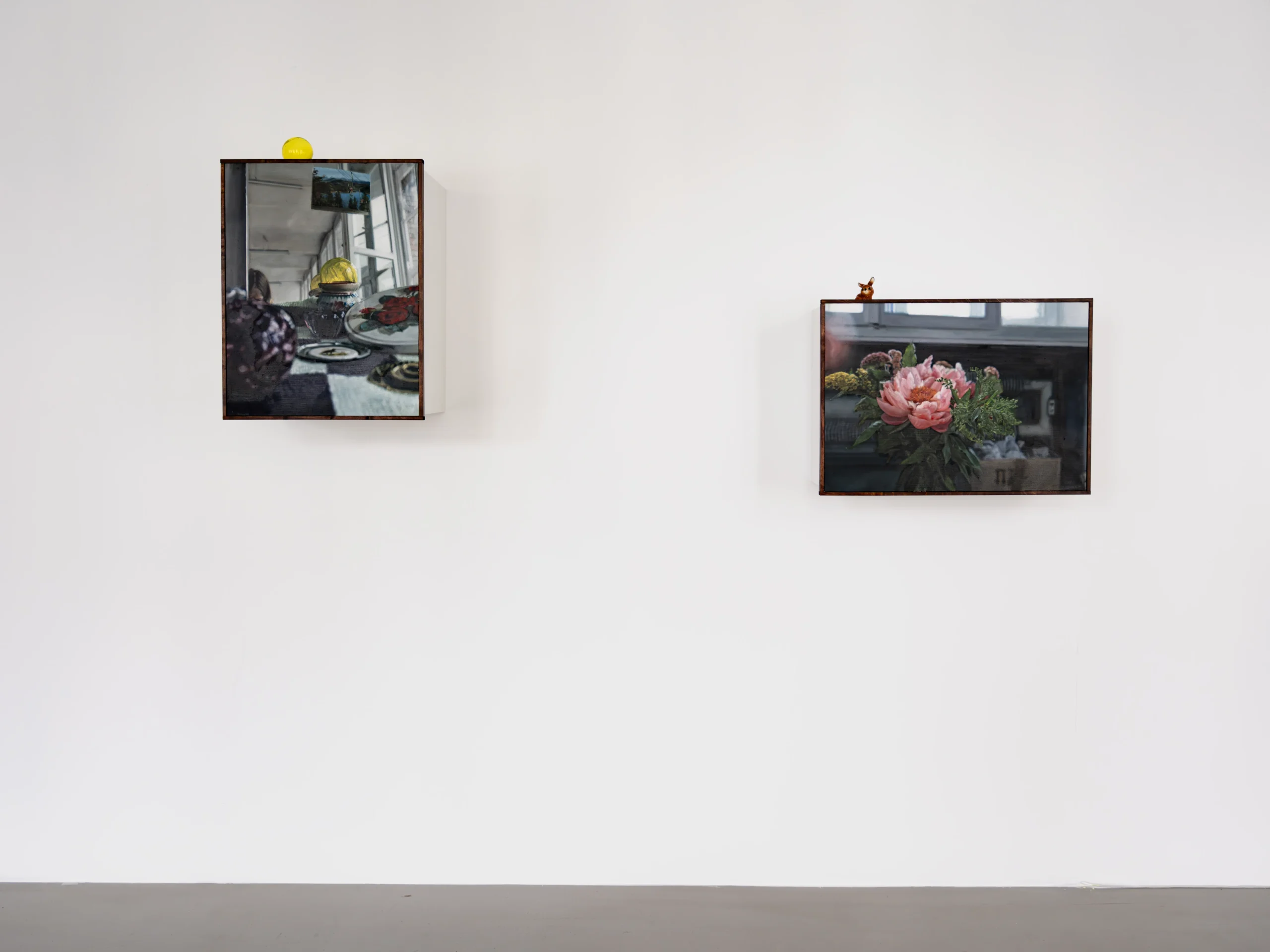
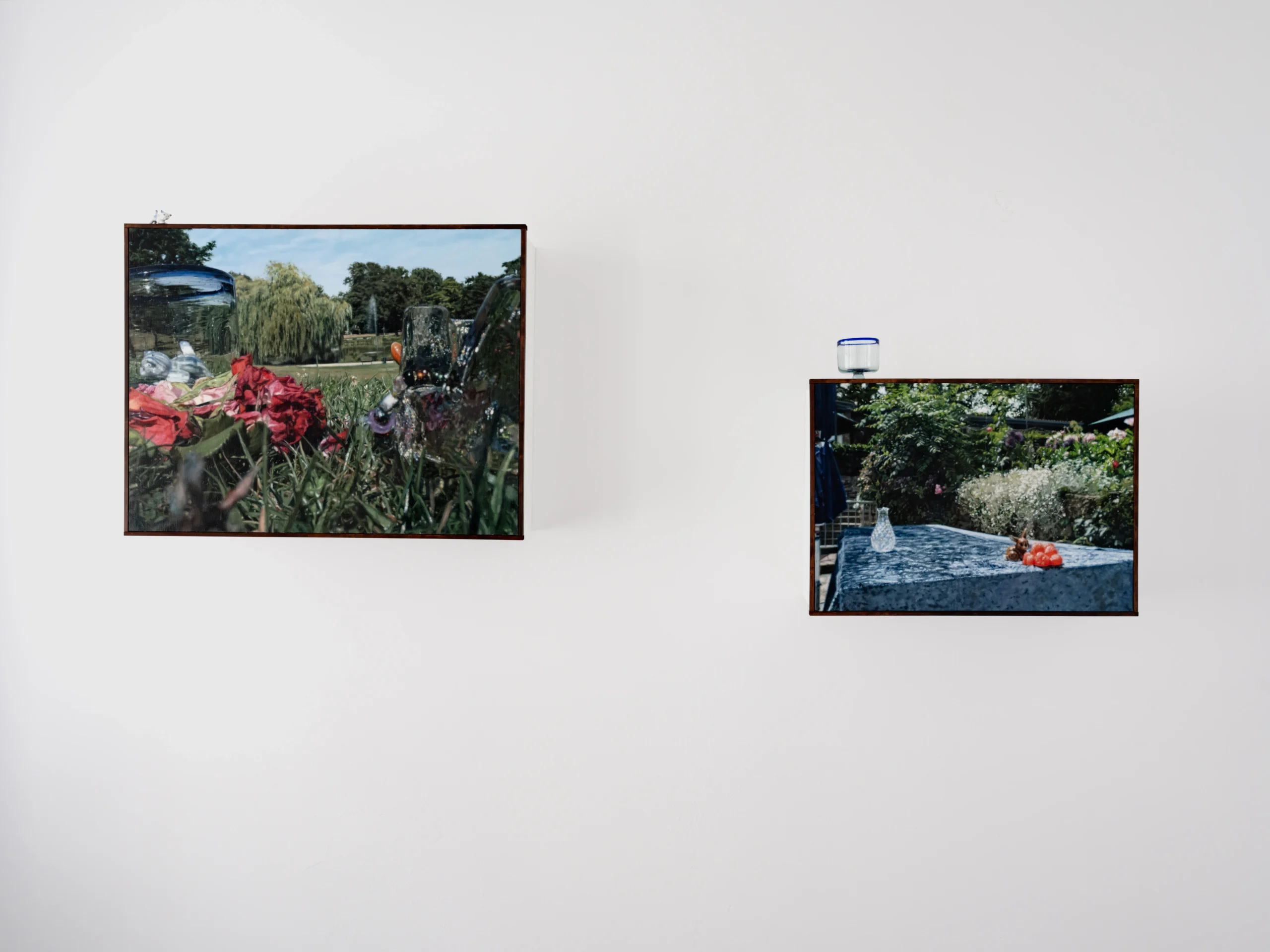
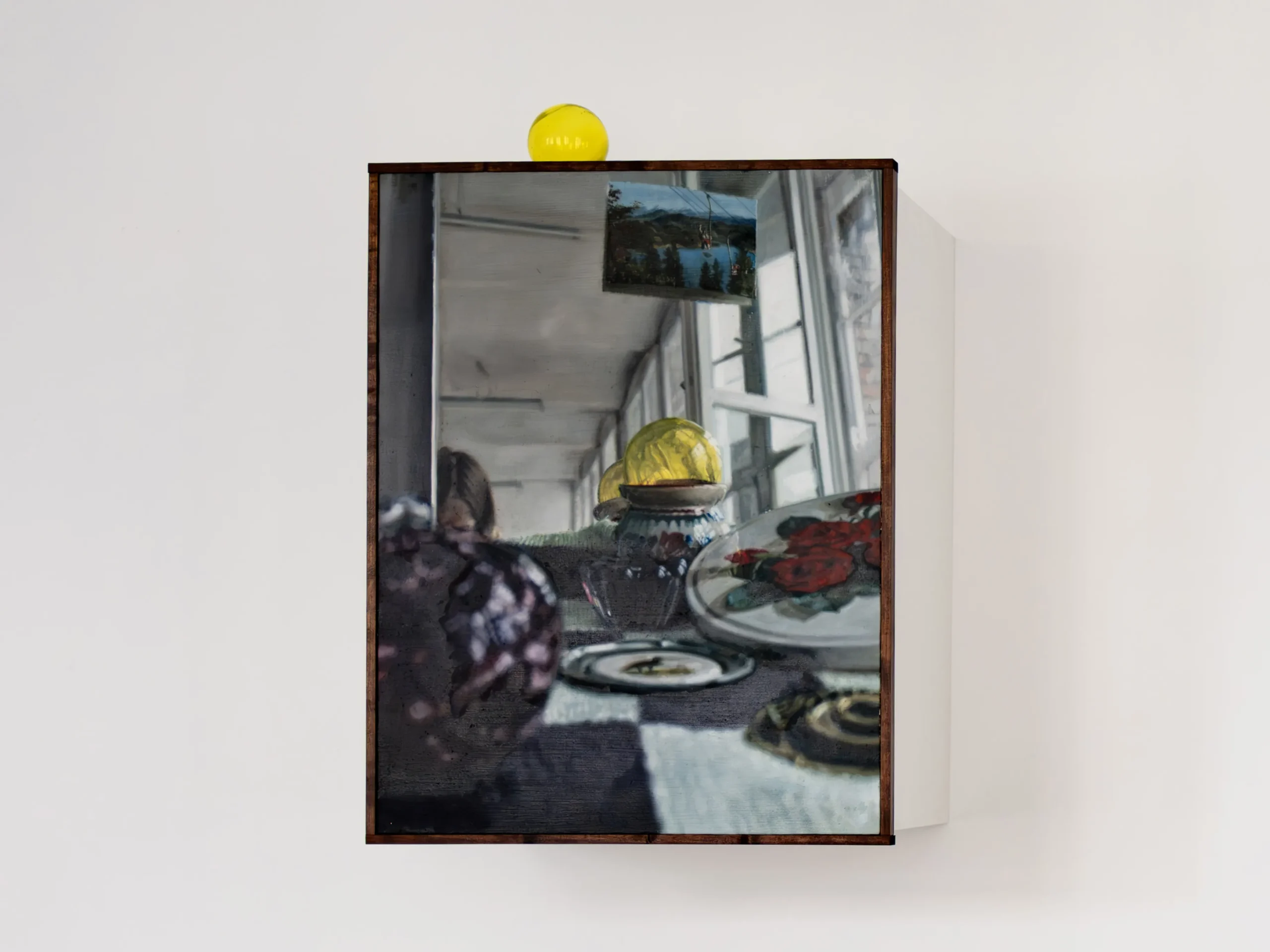
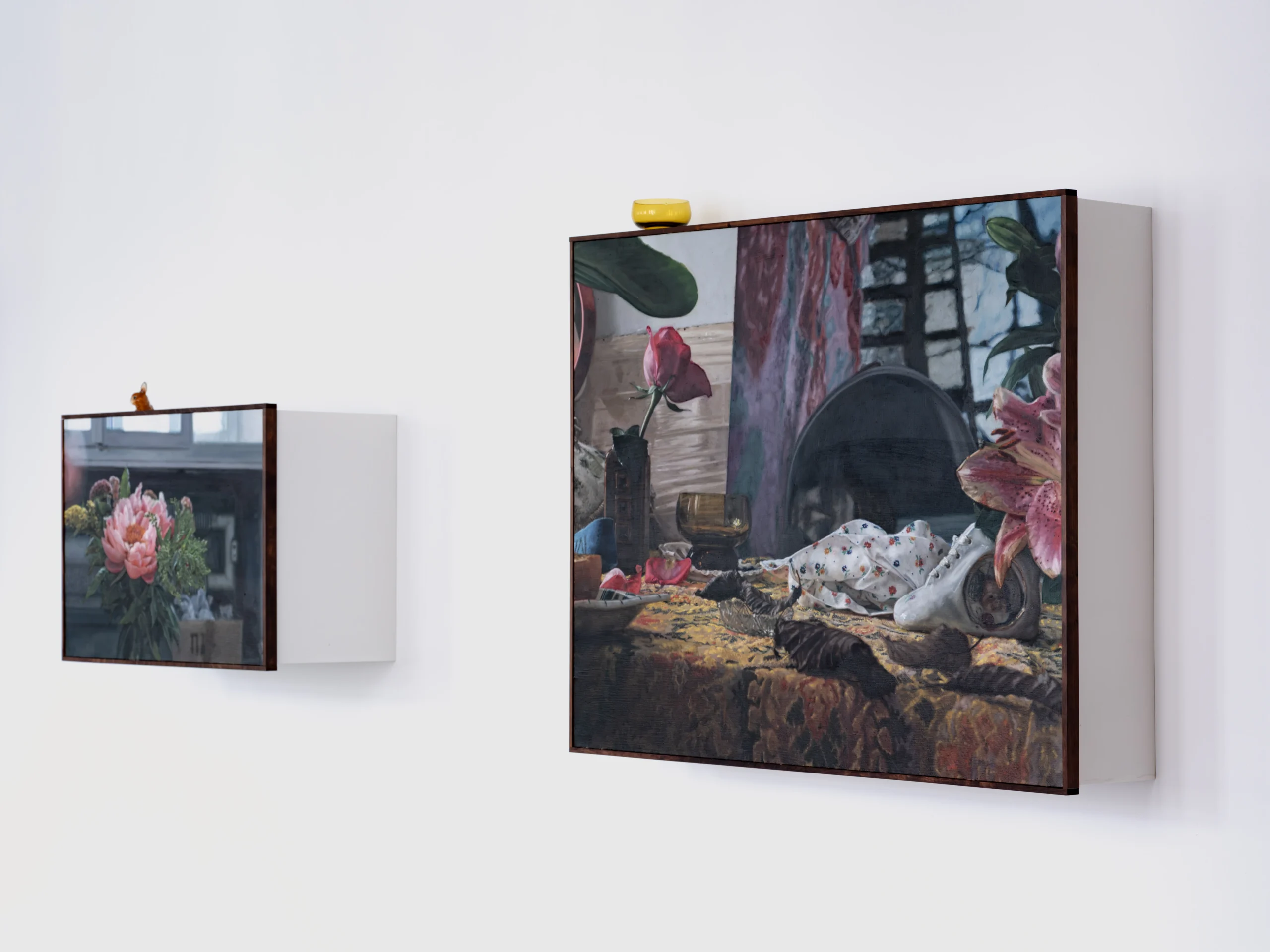
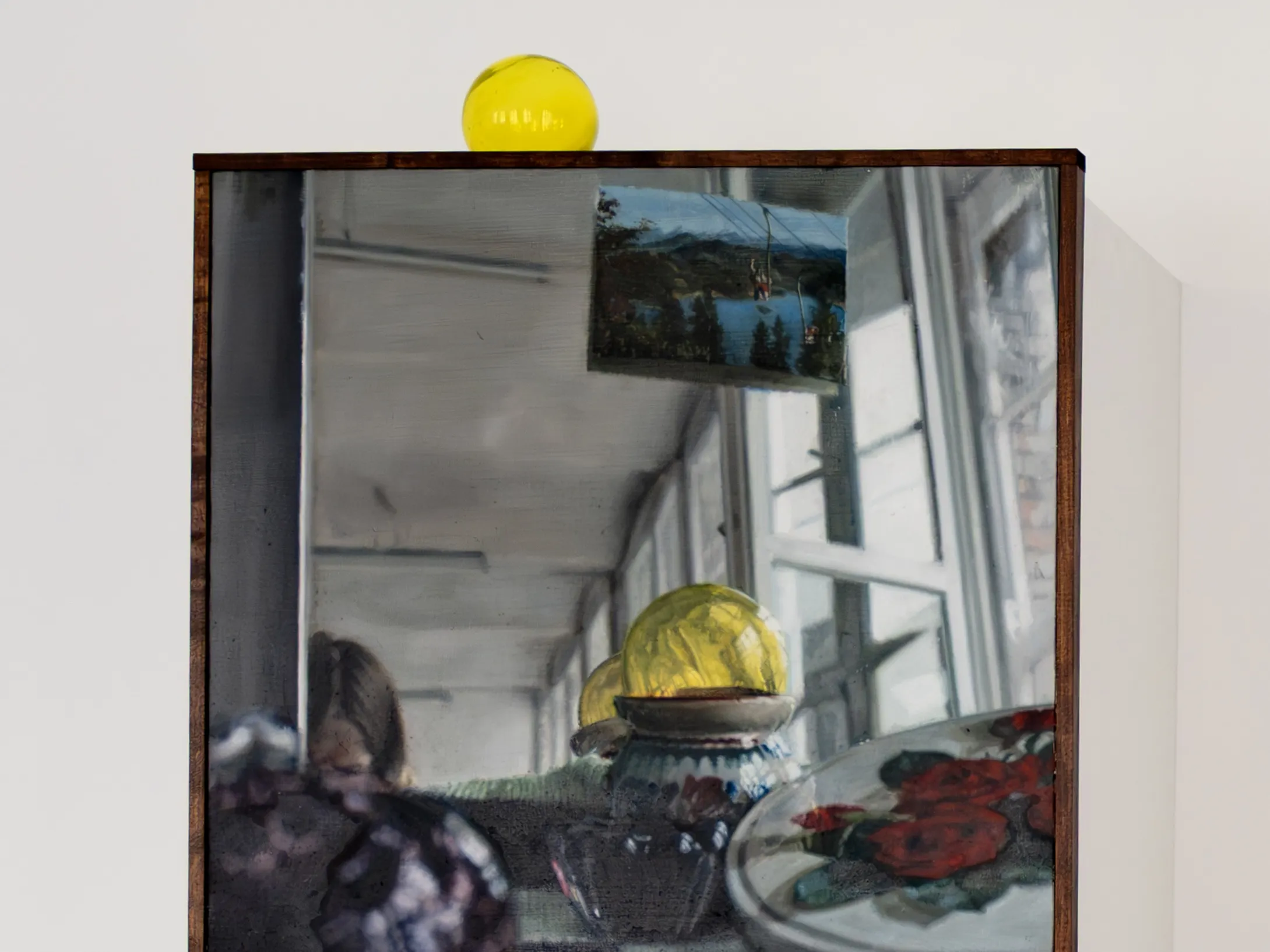
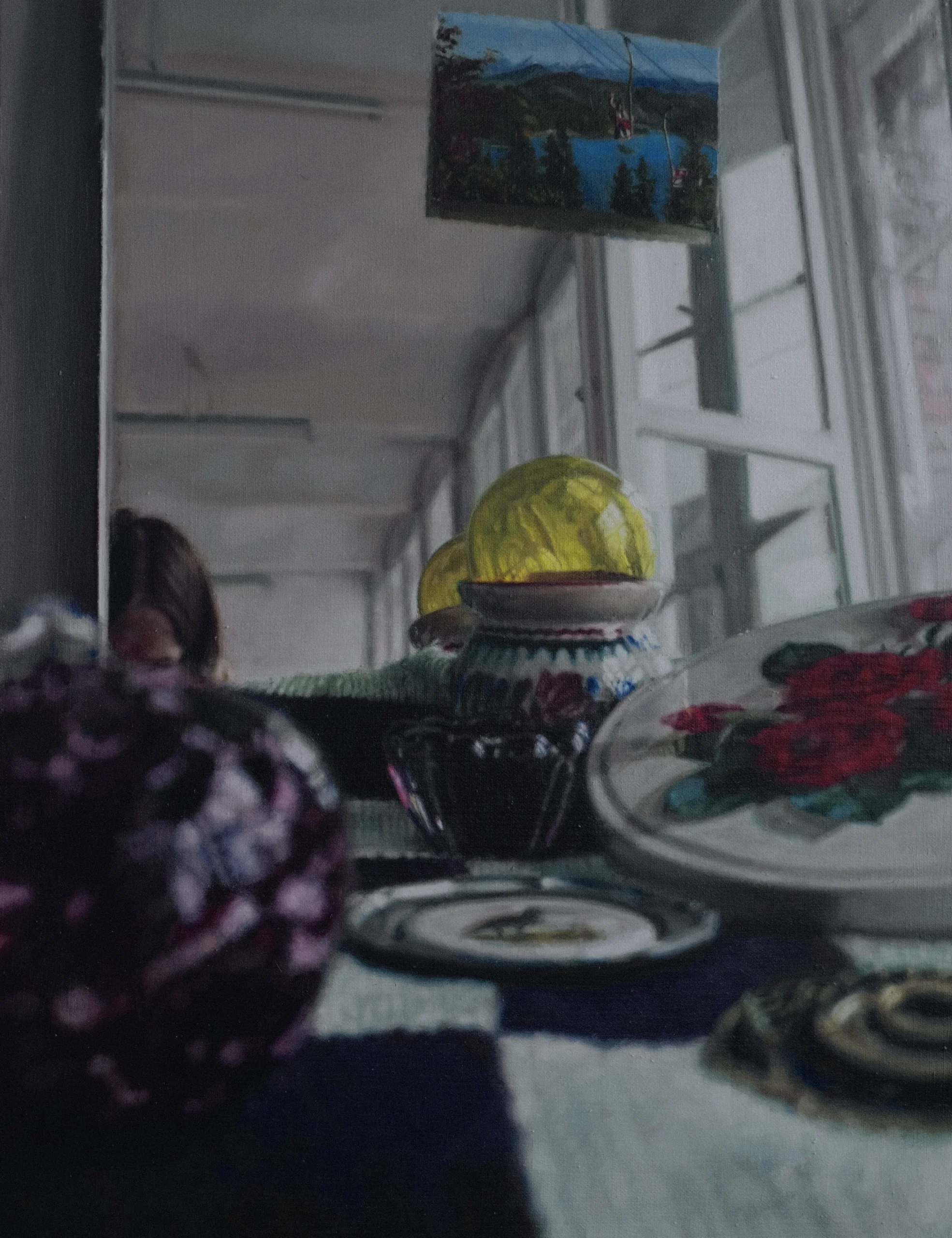
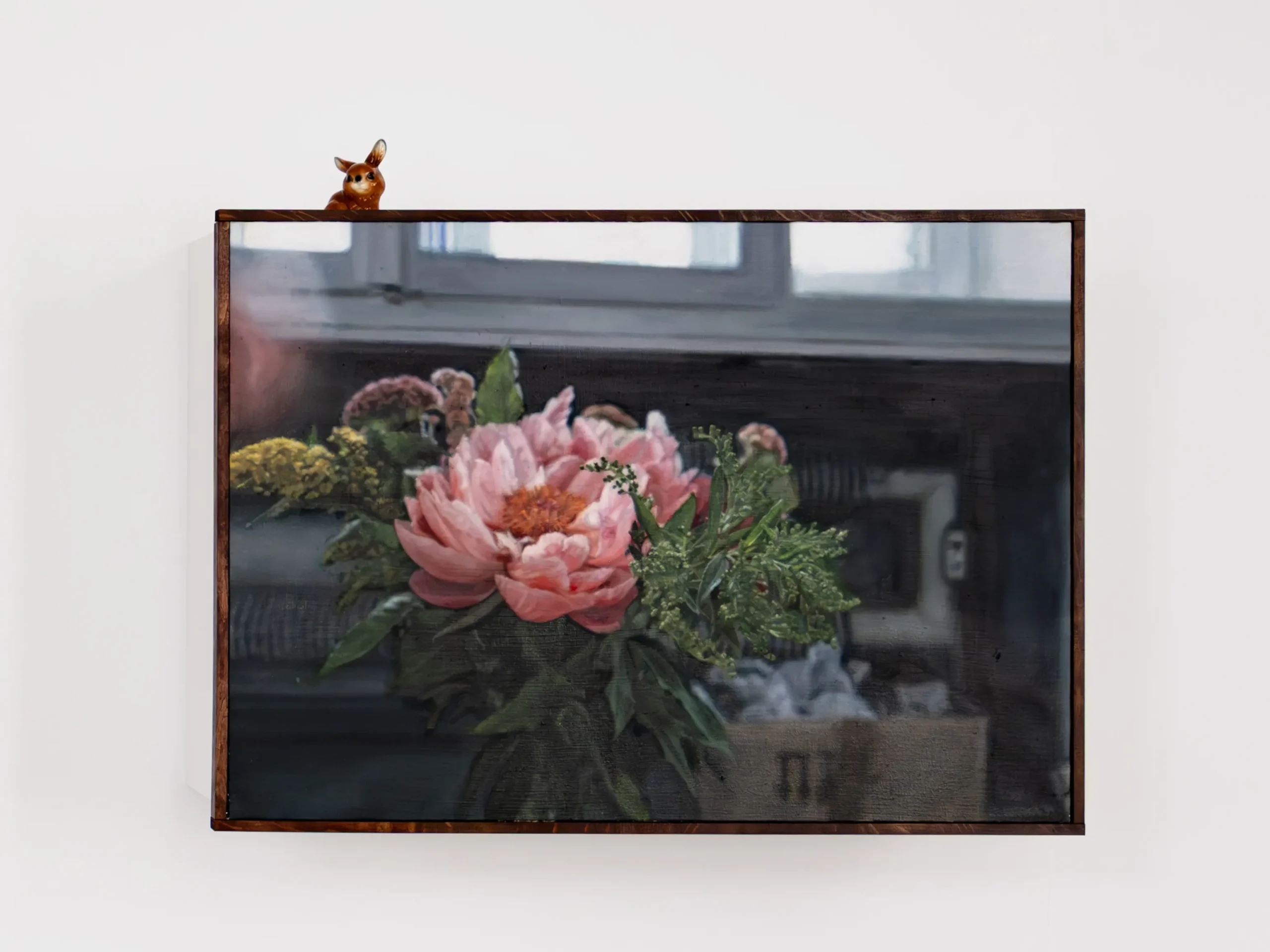
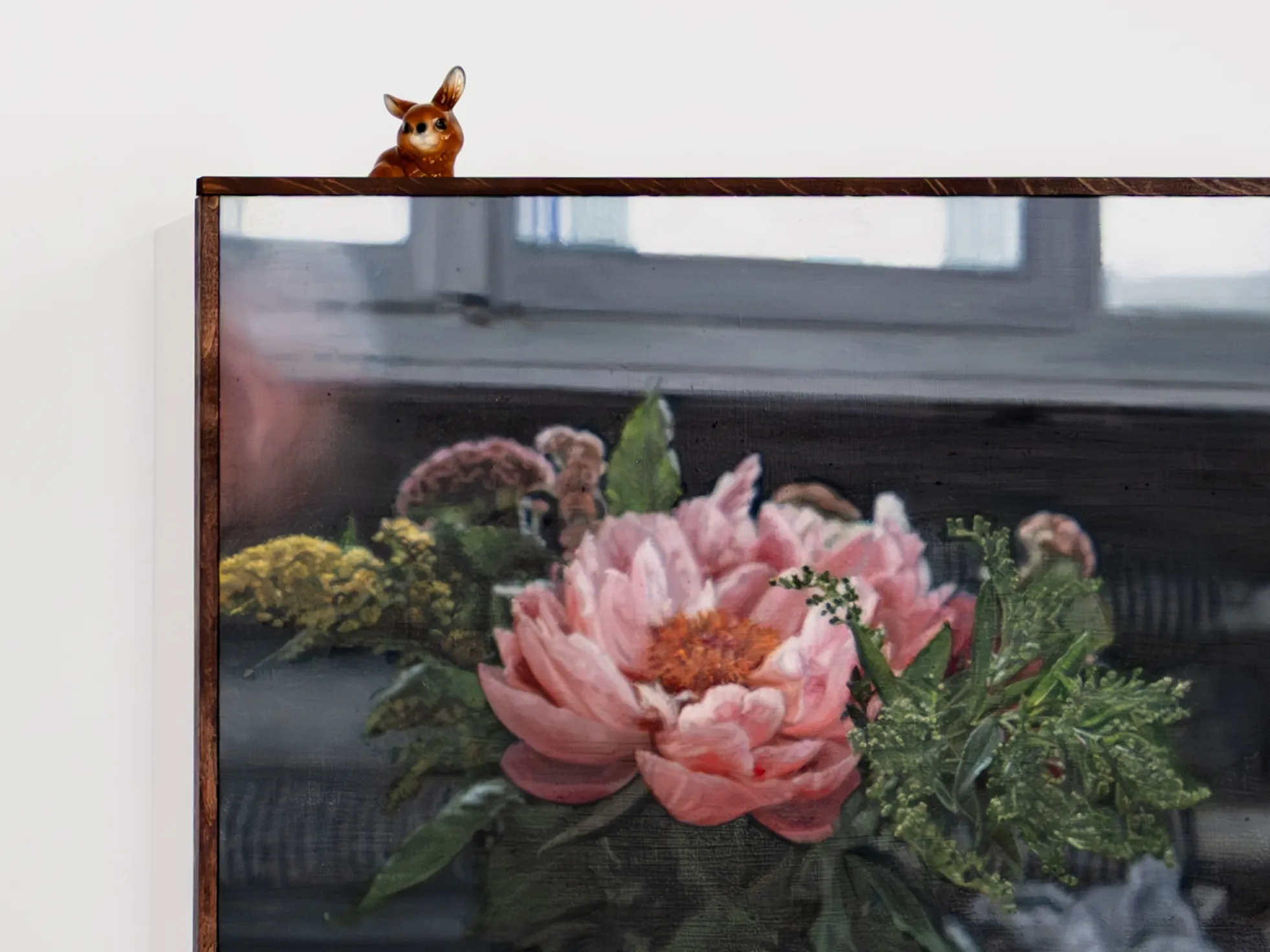
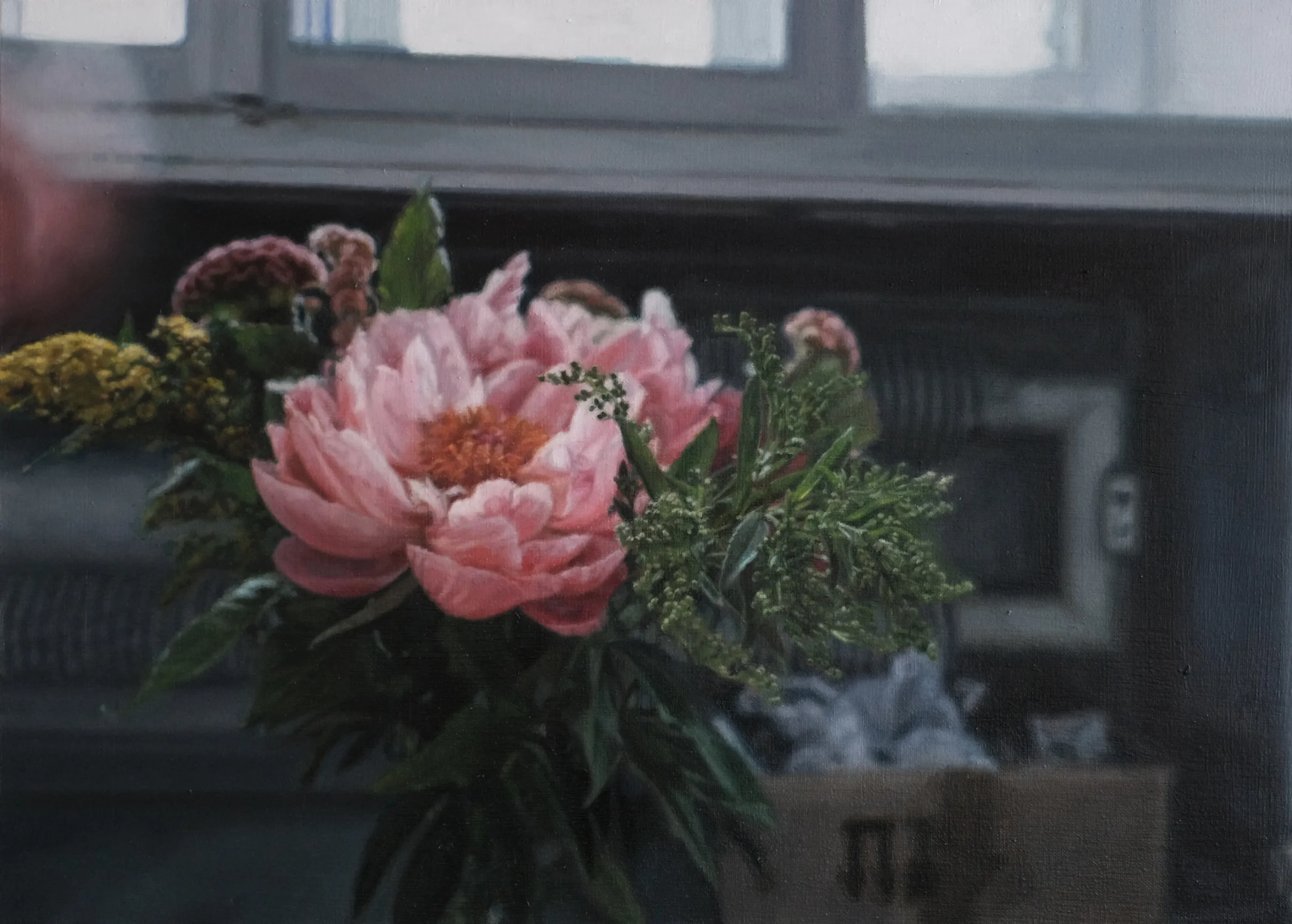
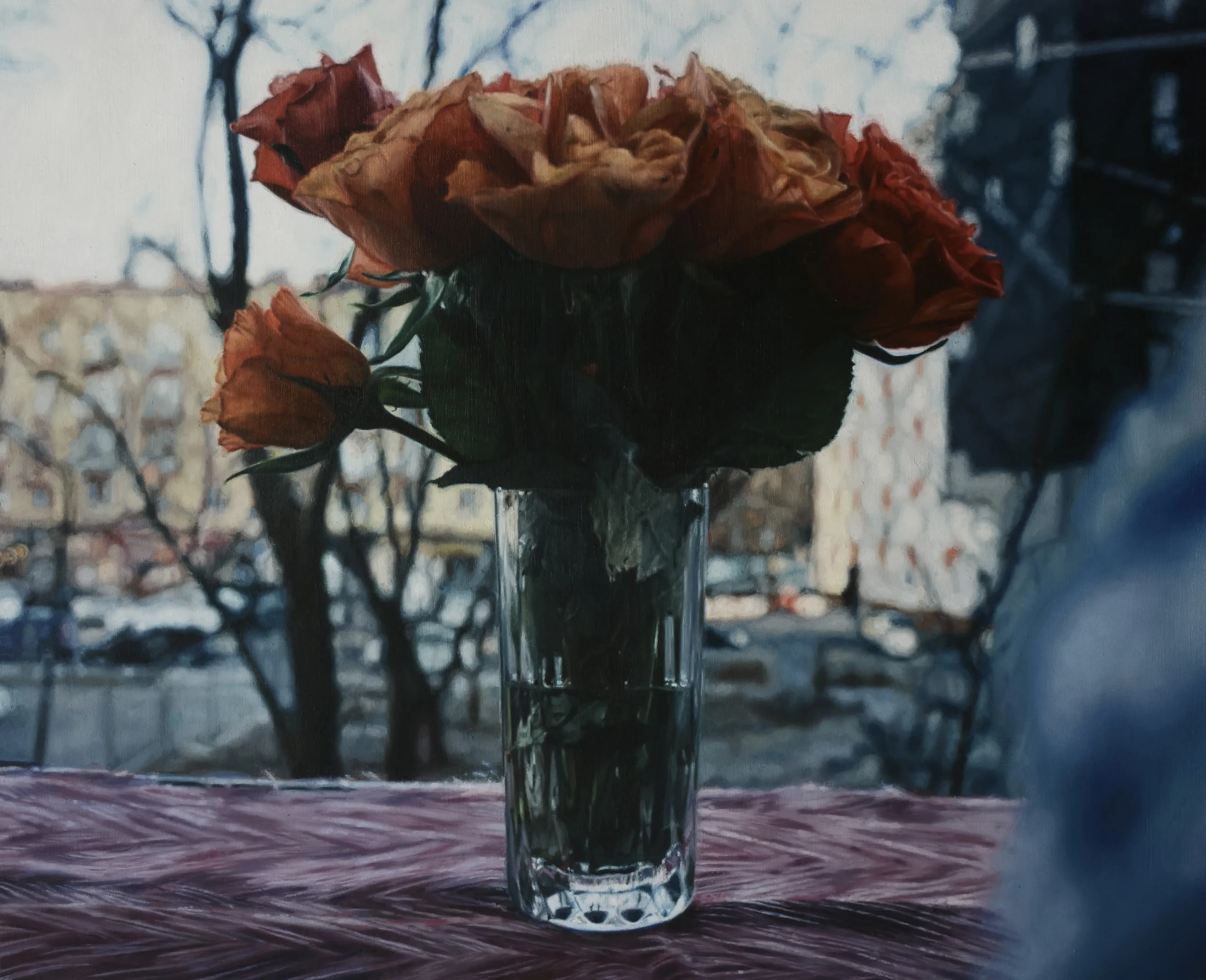
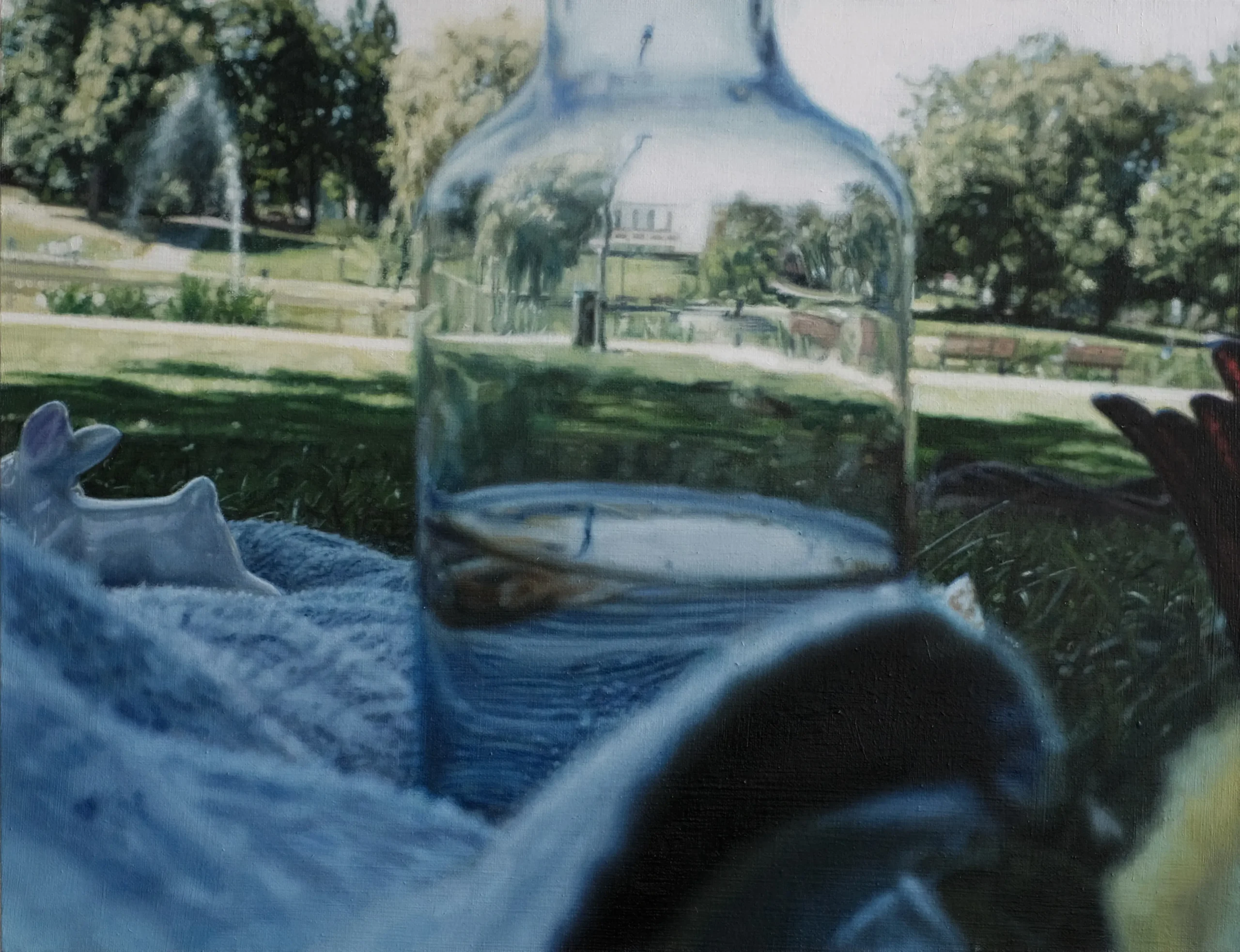
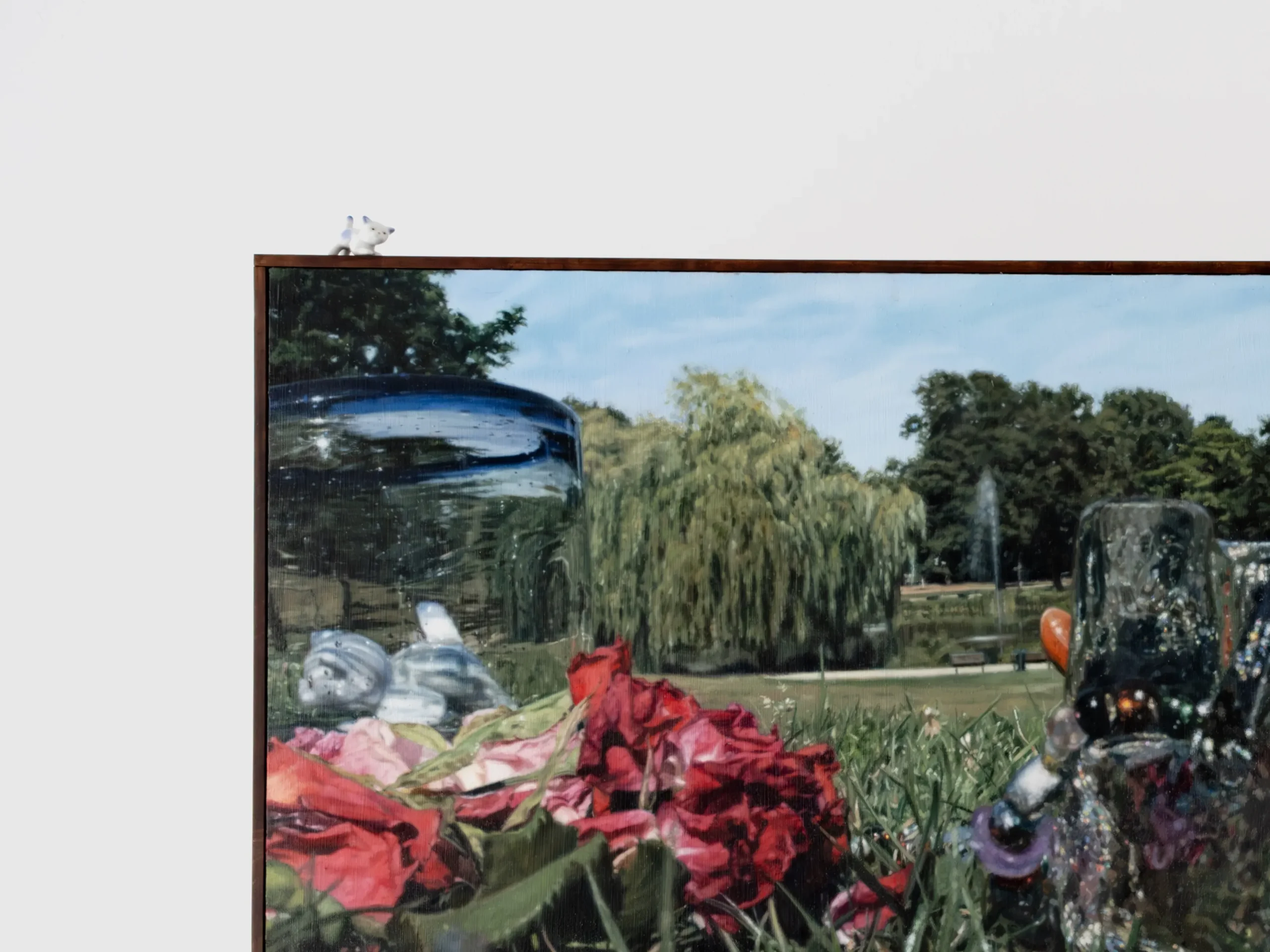
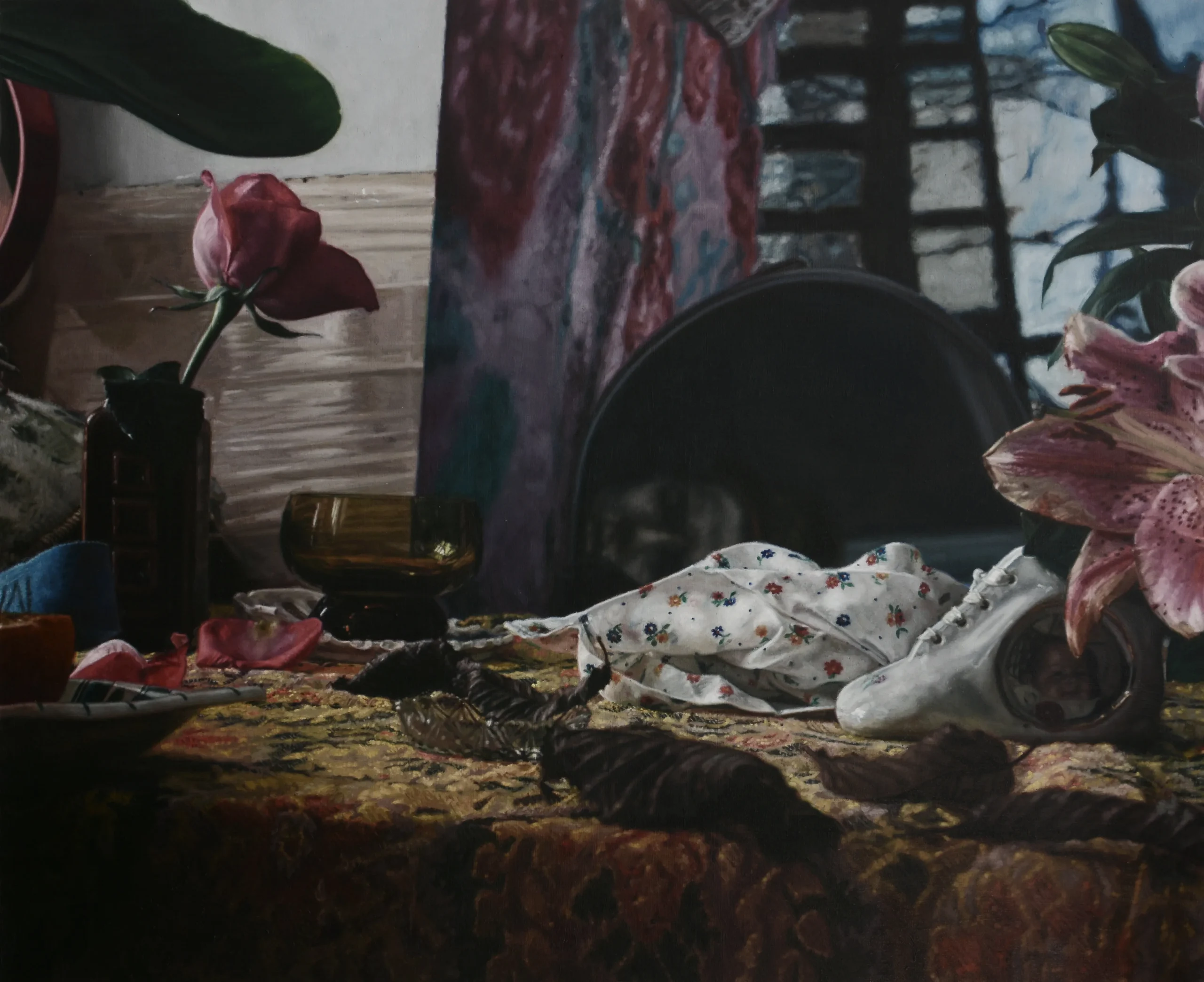
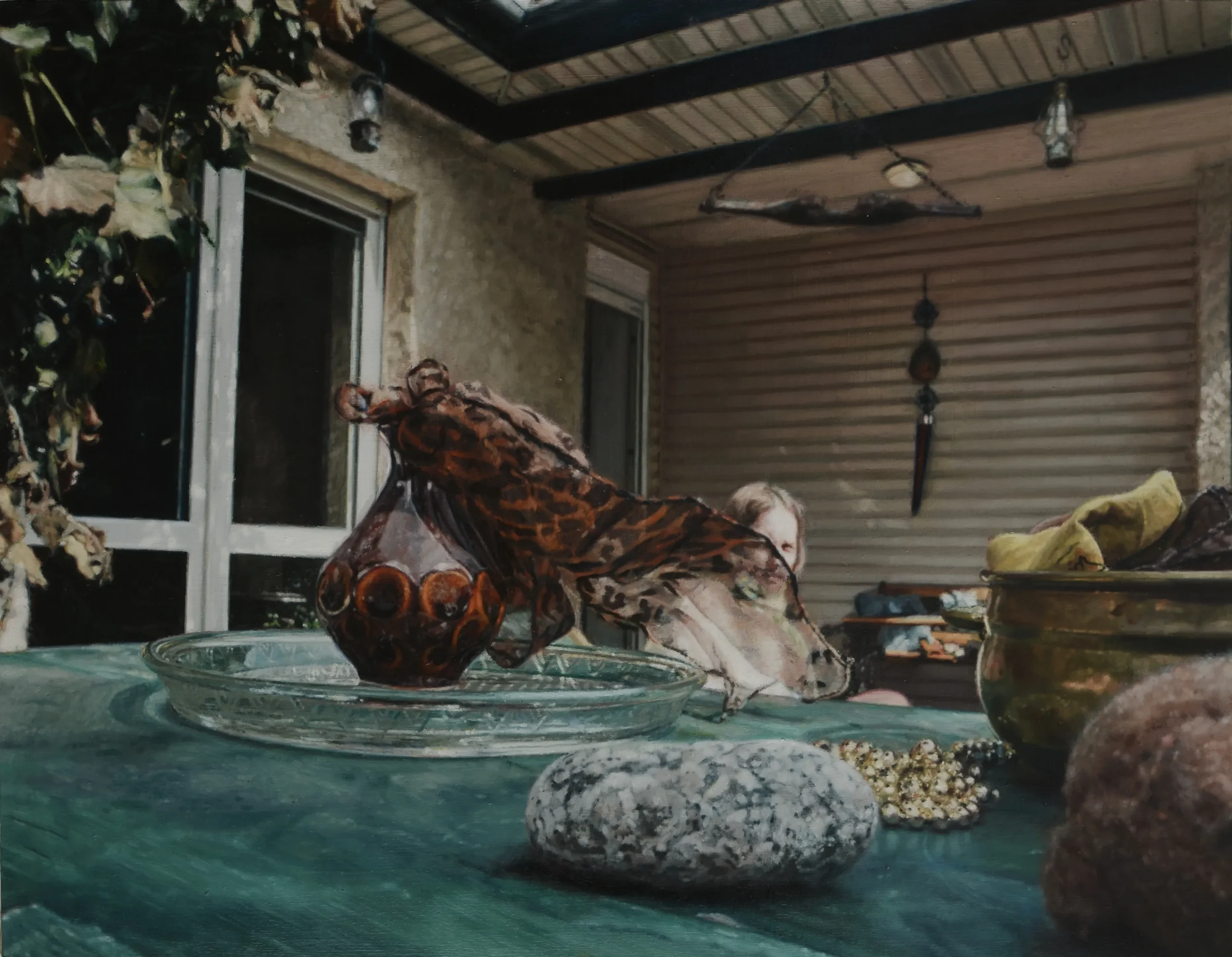
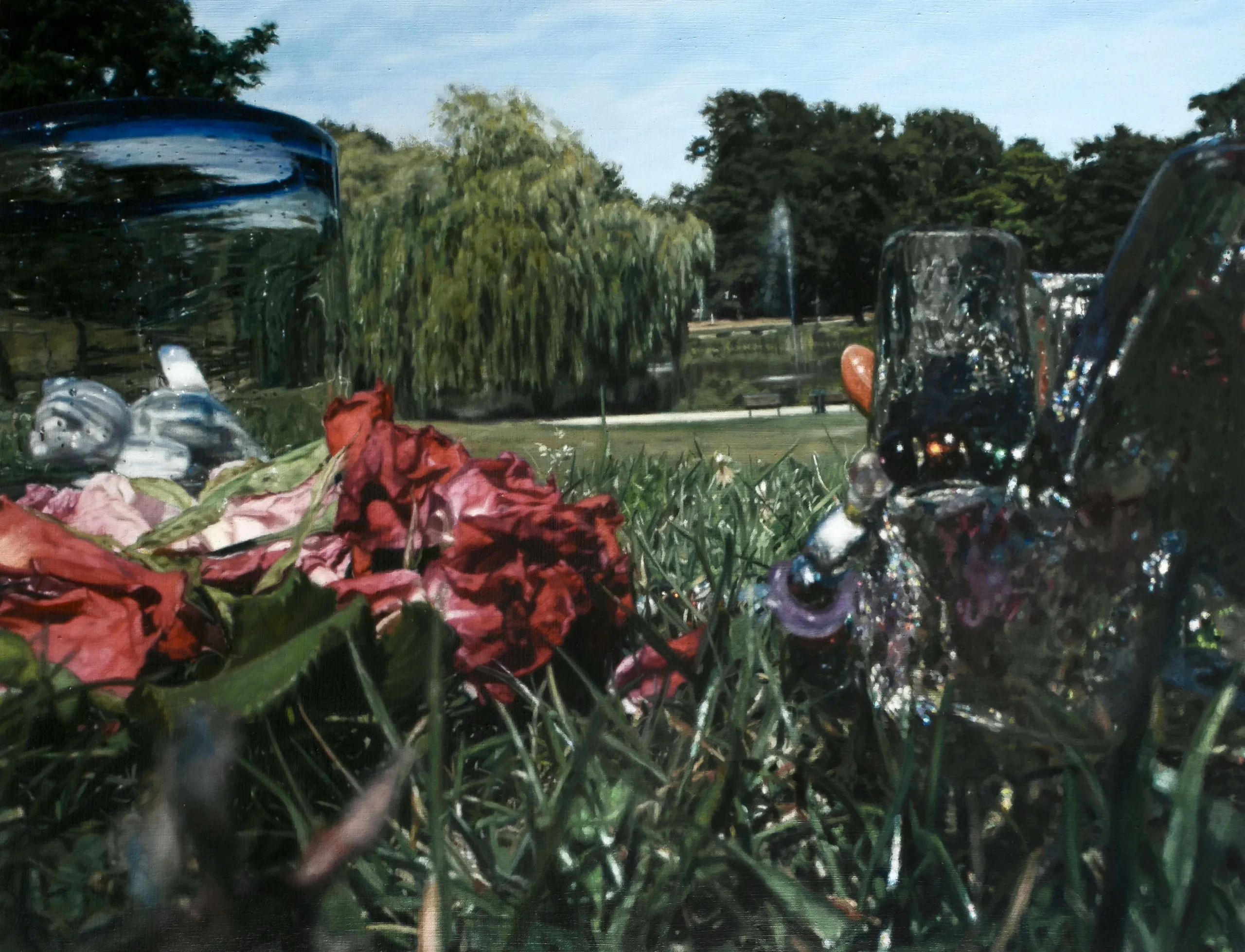
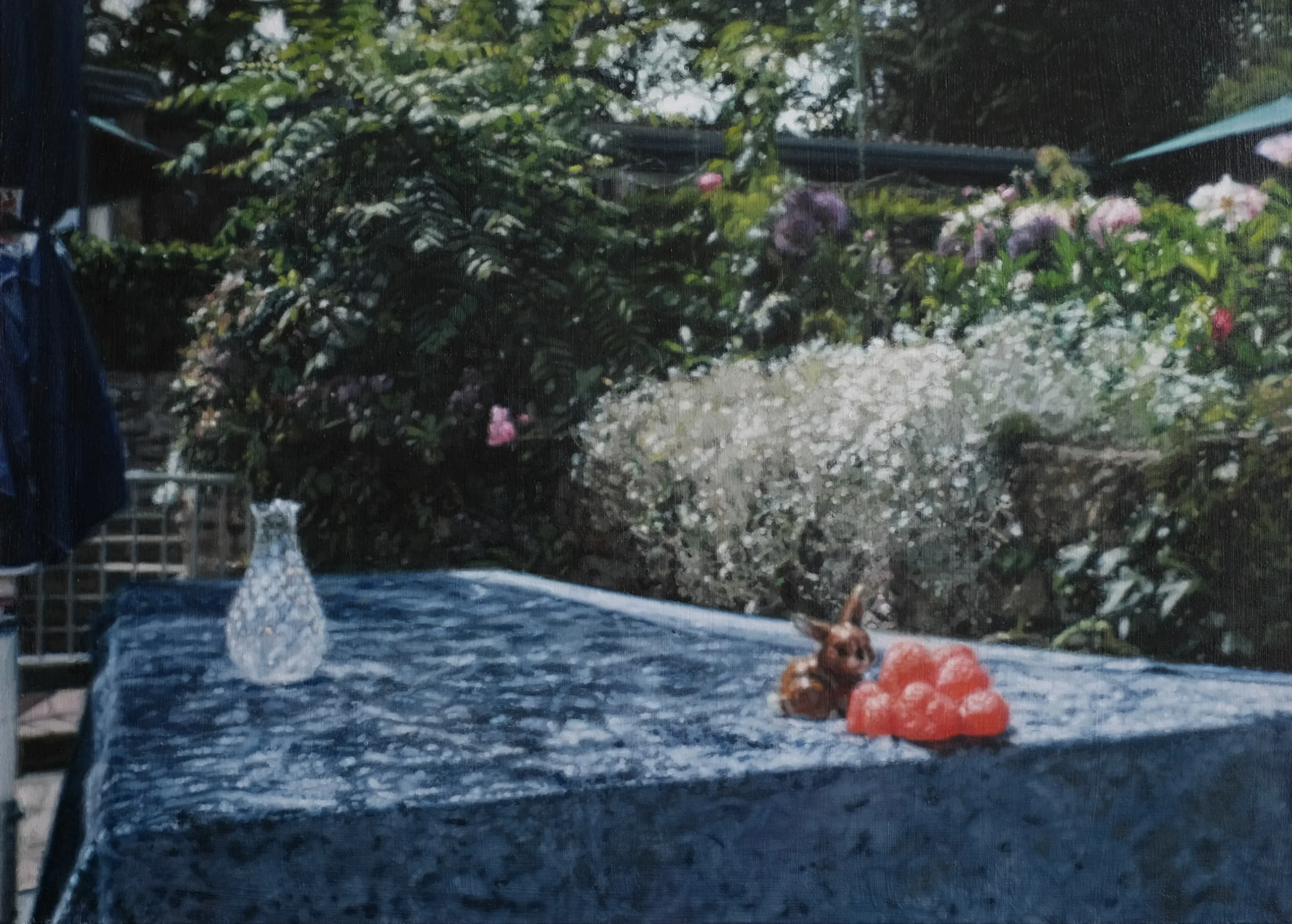
In her latest painting series, Julia Platt confronts her past and the difficult passage into adulthood, shaped by her mother’s long, incurable illness. Being caught in loops of time, attached to the same objects from the past and returning to them again and again, no longer brings comfort; instead, it gives rise to anxiety and exhaustion. The artist tries to break free from the trap of memory through formal devices borrowed from the old masters and through a poignant exploration of different textures.
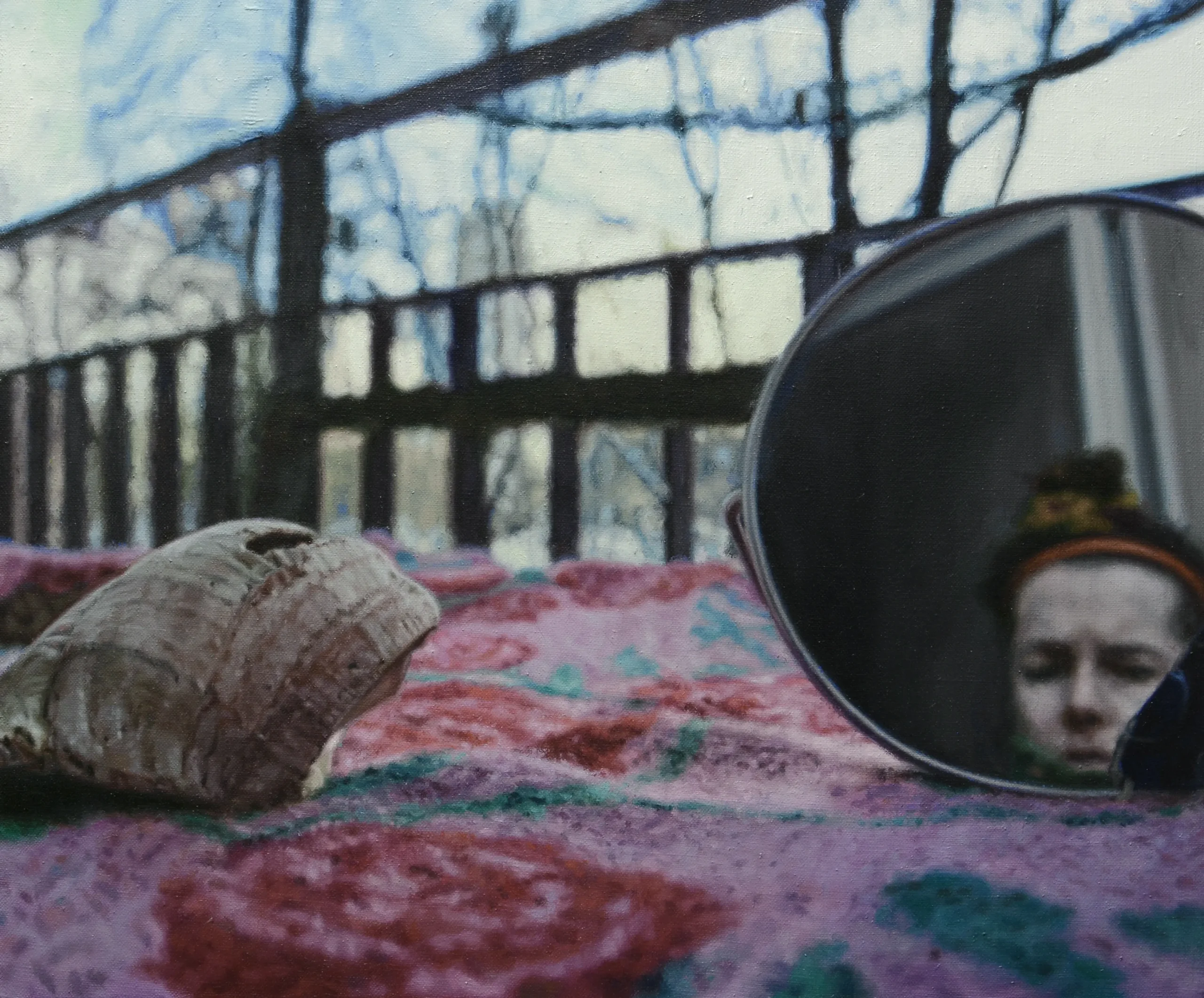
In “The Thaw,” a soft child’s blanket appears, its surface already slightly worn and pilled. Set against it is the artist’s face, reflected in a mirror and captured with an almost incidental, distinctly cool detachment. The picture-within-a-picture device employed by the painter in another work strips the blanket of its softness and, along with it, of its sentimental and intimate character. It is transformed instead into a heavy, soiled curtain—a fragment of an image pushed into a corner, serving merely as the backdrop for a new one.
The atmosphere of the series, in which one of the central motifs is the rose – a symbol of sudden death and misfortune – does not immediately evoke unease. It recalls the set of a film adaptation of Maria Krüger’s “Godzina pąsowej róży” (“The Hour of the Crimson Rose,” 1960). Yet contemporary, uncanny elements, such as a faience child’s shoe with a child’s portrait inserted into it, make the air grow heavy. We become witnesses to a therapy unfolding over time, empathetic companions in the process of mourning.