


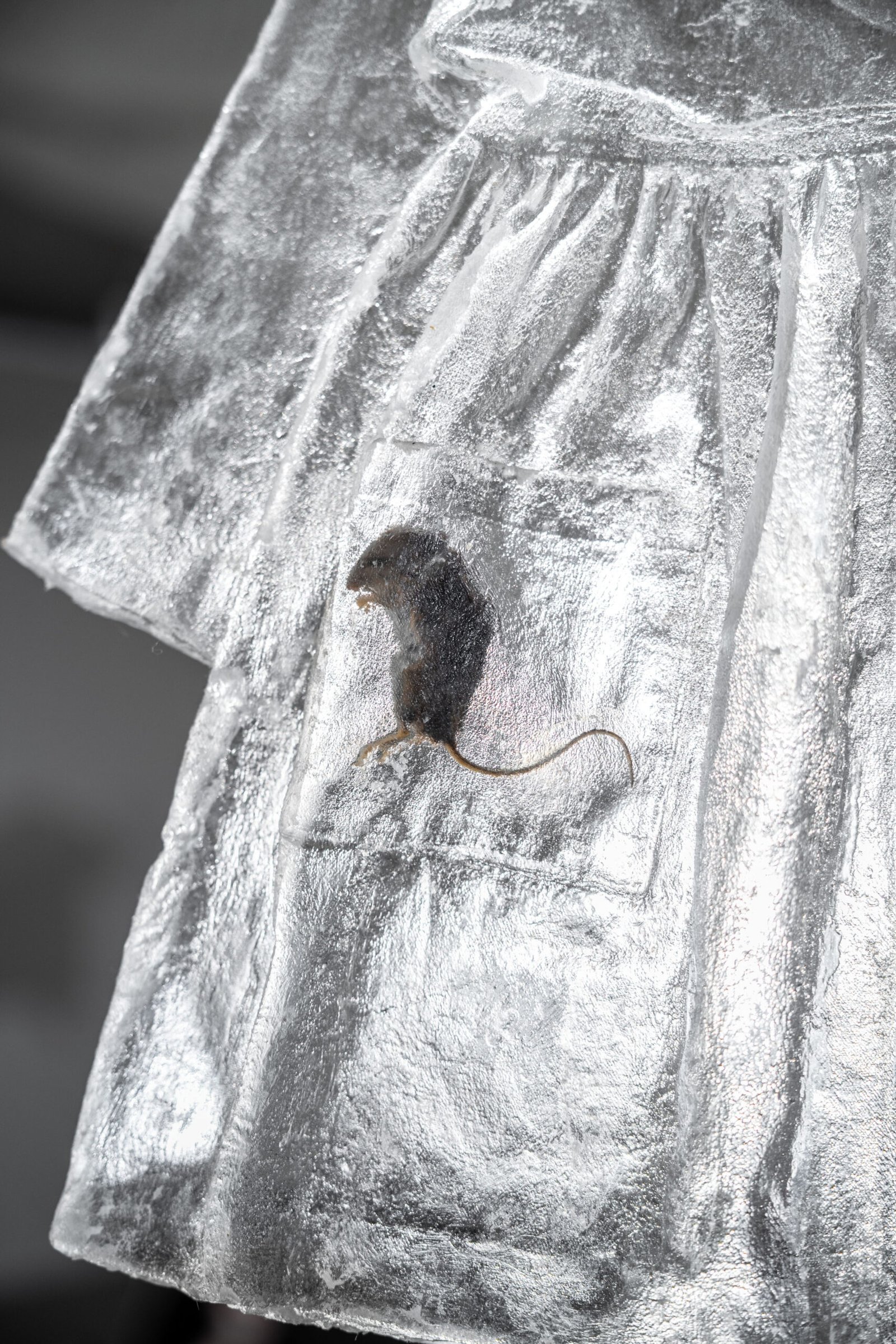
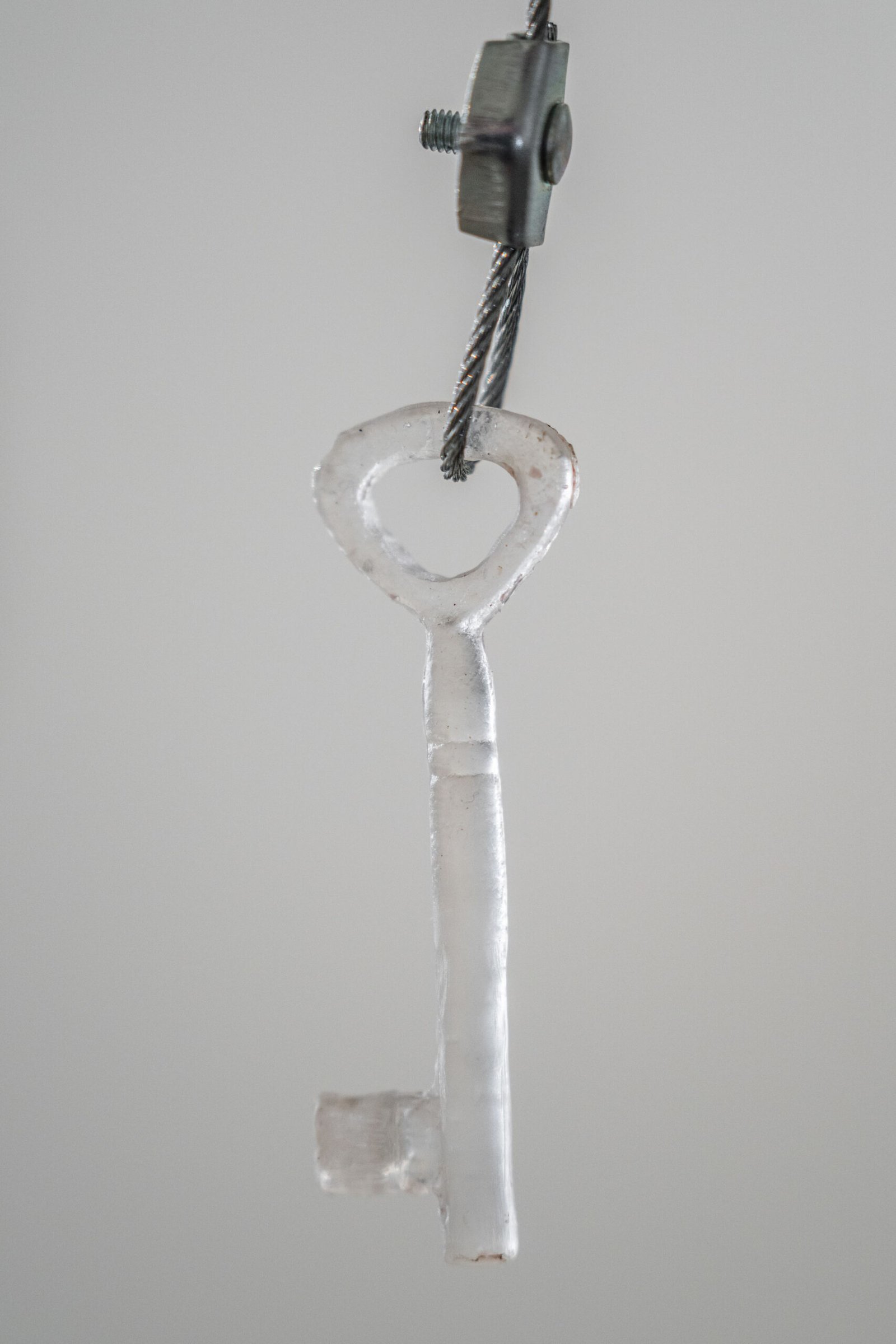
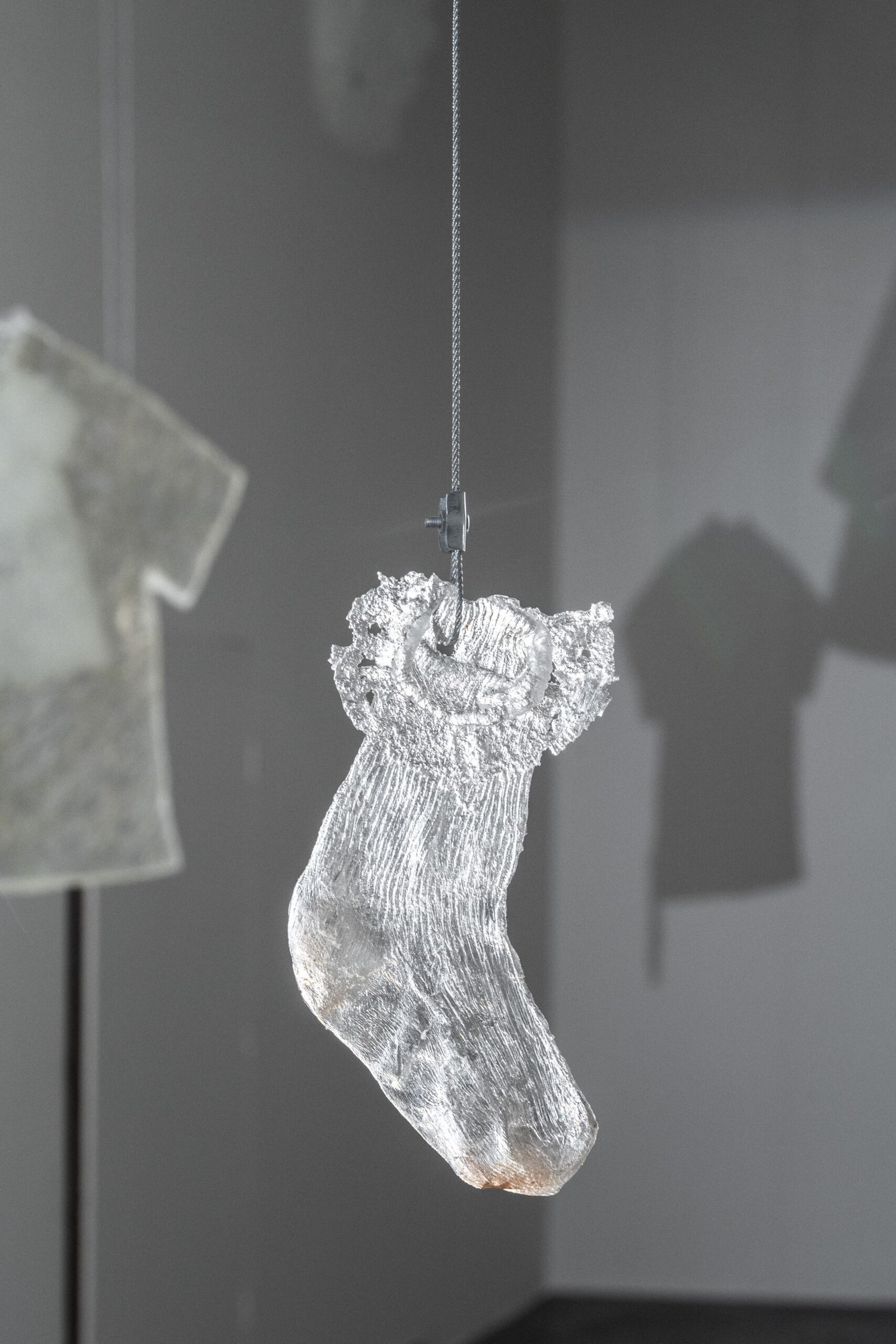
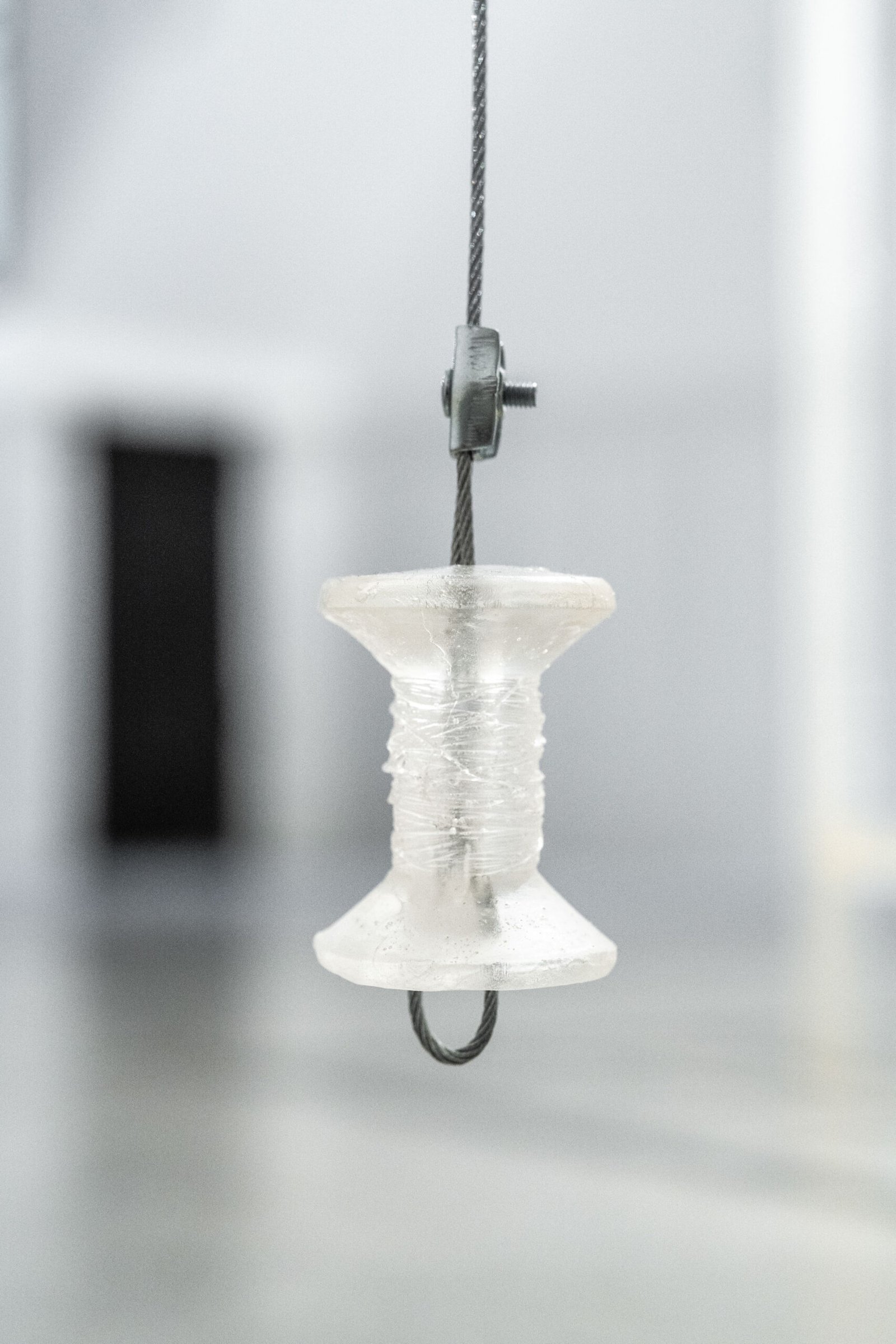
You can’t return, you are here. This simple sentence contains a paradox within itself. It permeates not only the entire exhibition, but its very origin. You cannot return, because what you are returning to is already in front of you. The past reappears again and again in gestures, looks, and objects. The past is not merely an archive of stored images, but something that can re-enter the present – for instance, as the question of who we have become in the meantime. Our body is the living epicenter of this step forward.
You can’t return, you are here. Can we be certain that the past has definitively stayed behind us?
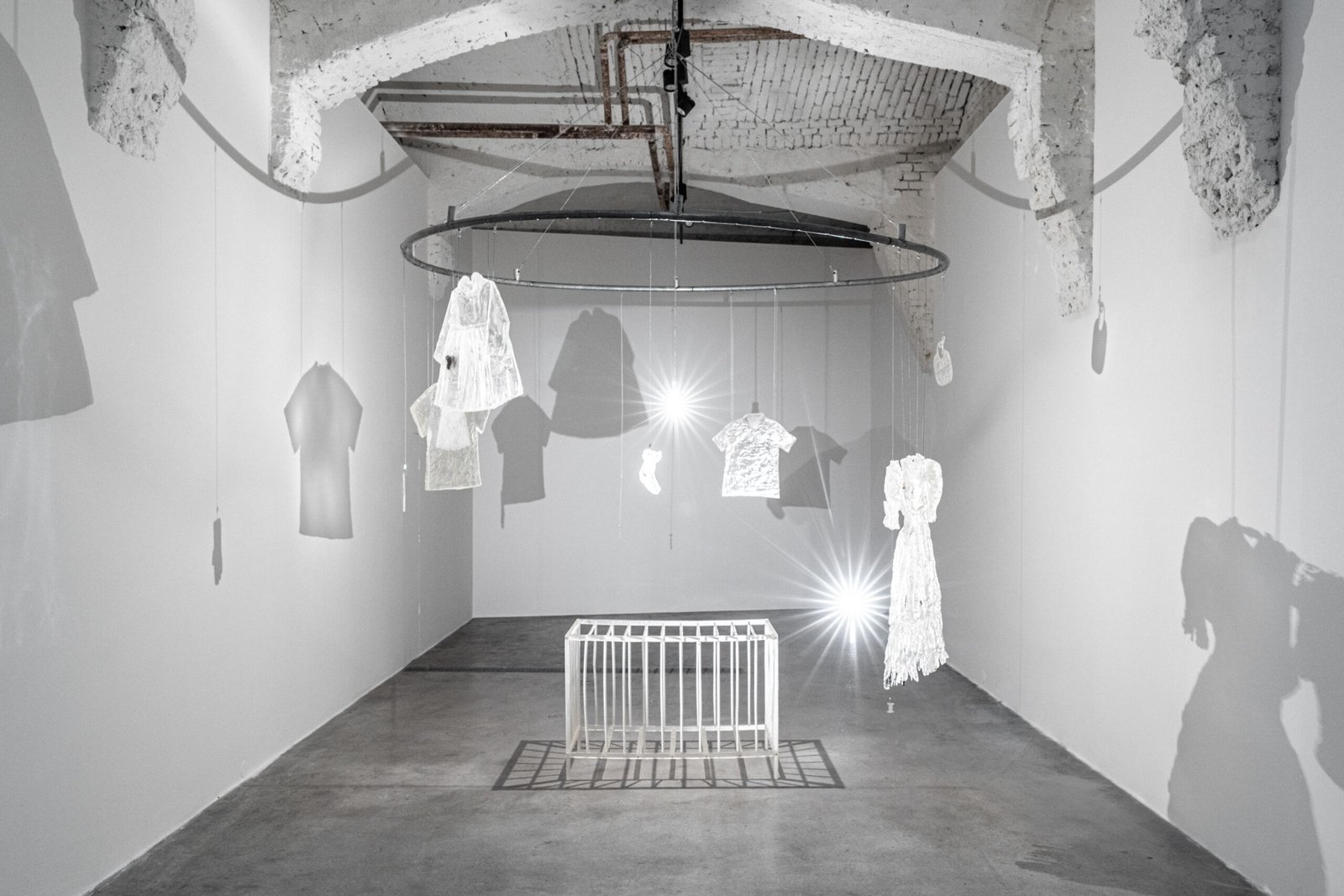
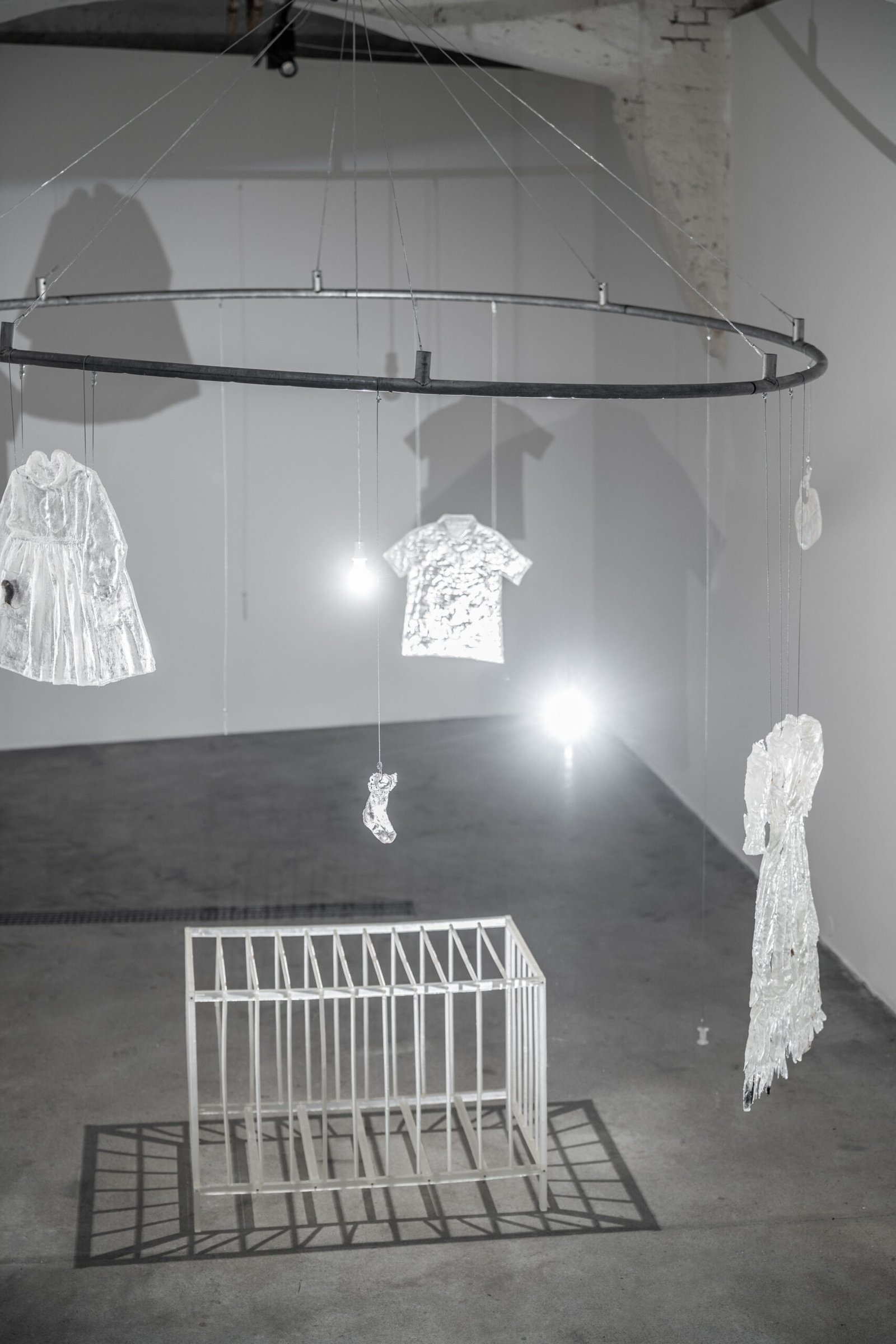
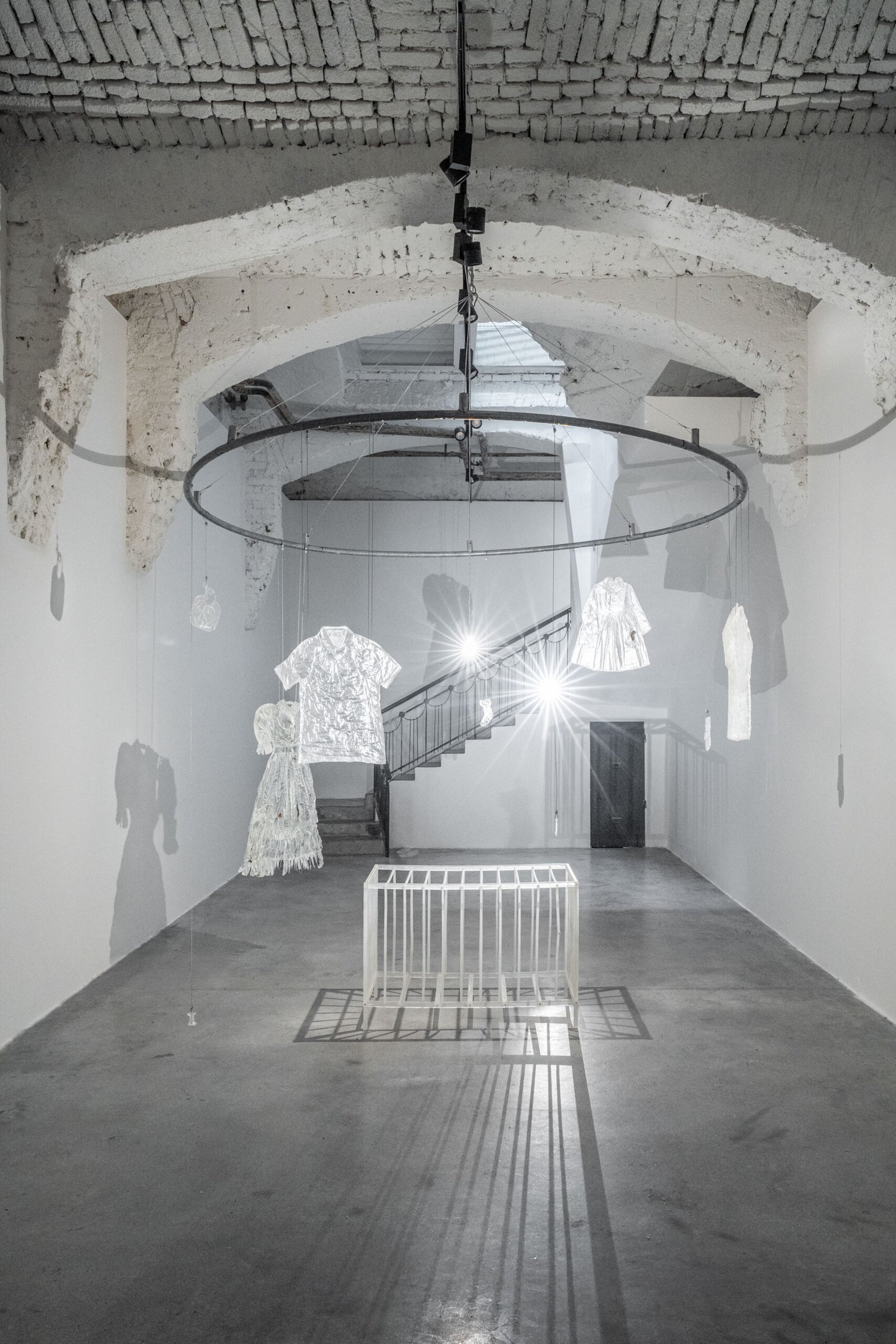
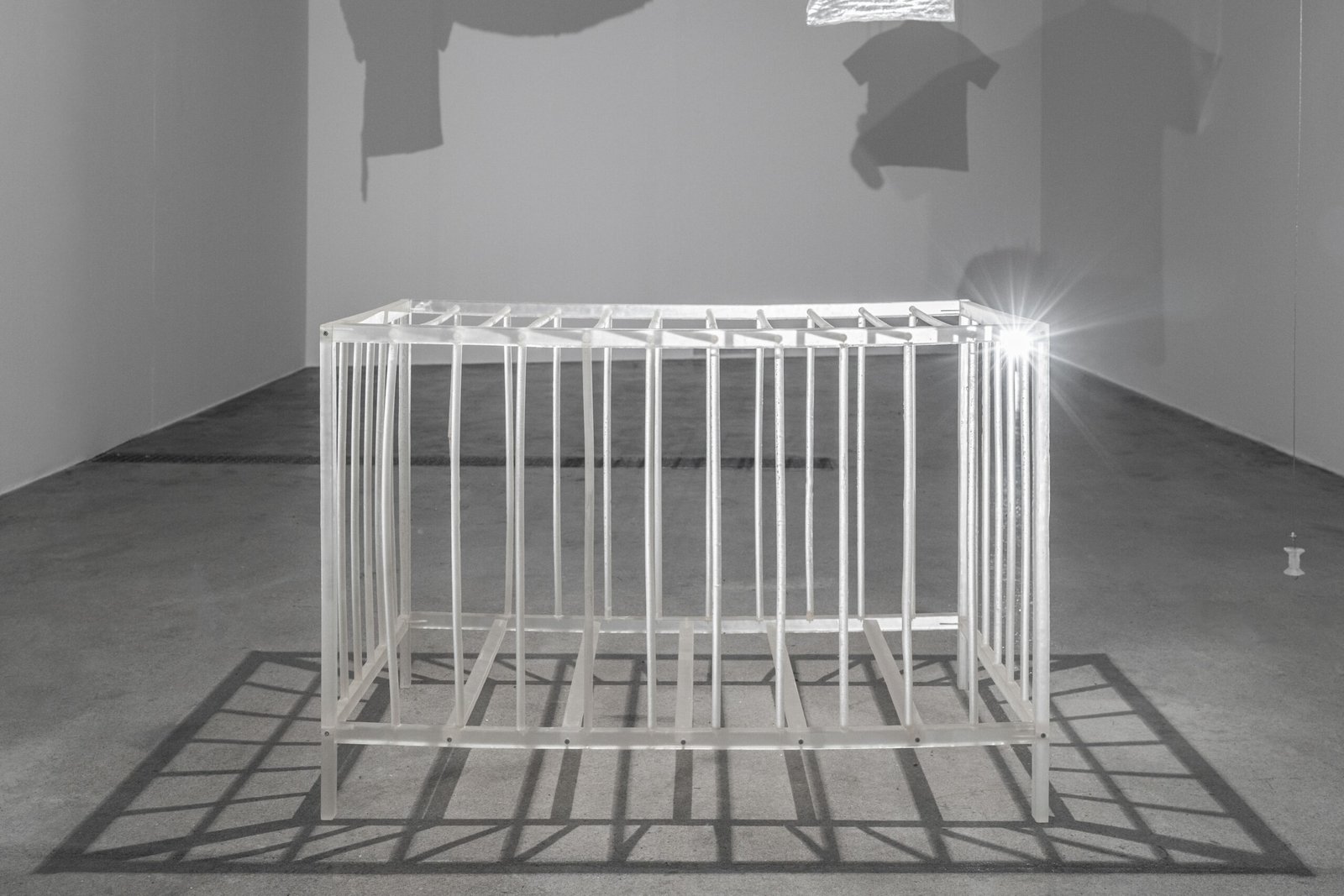
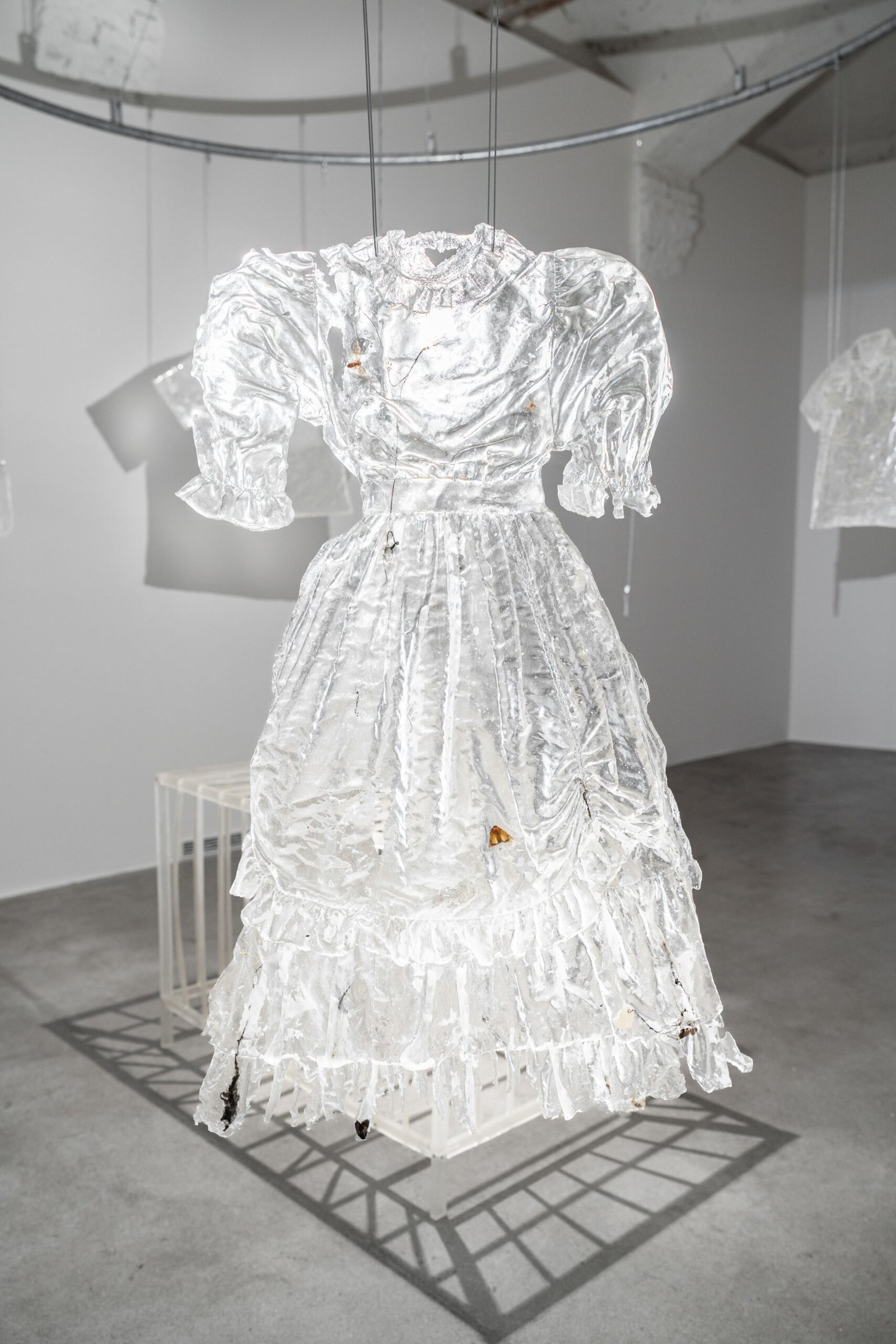
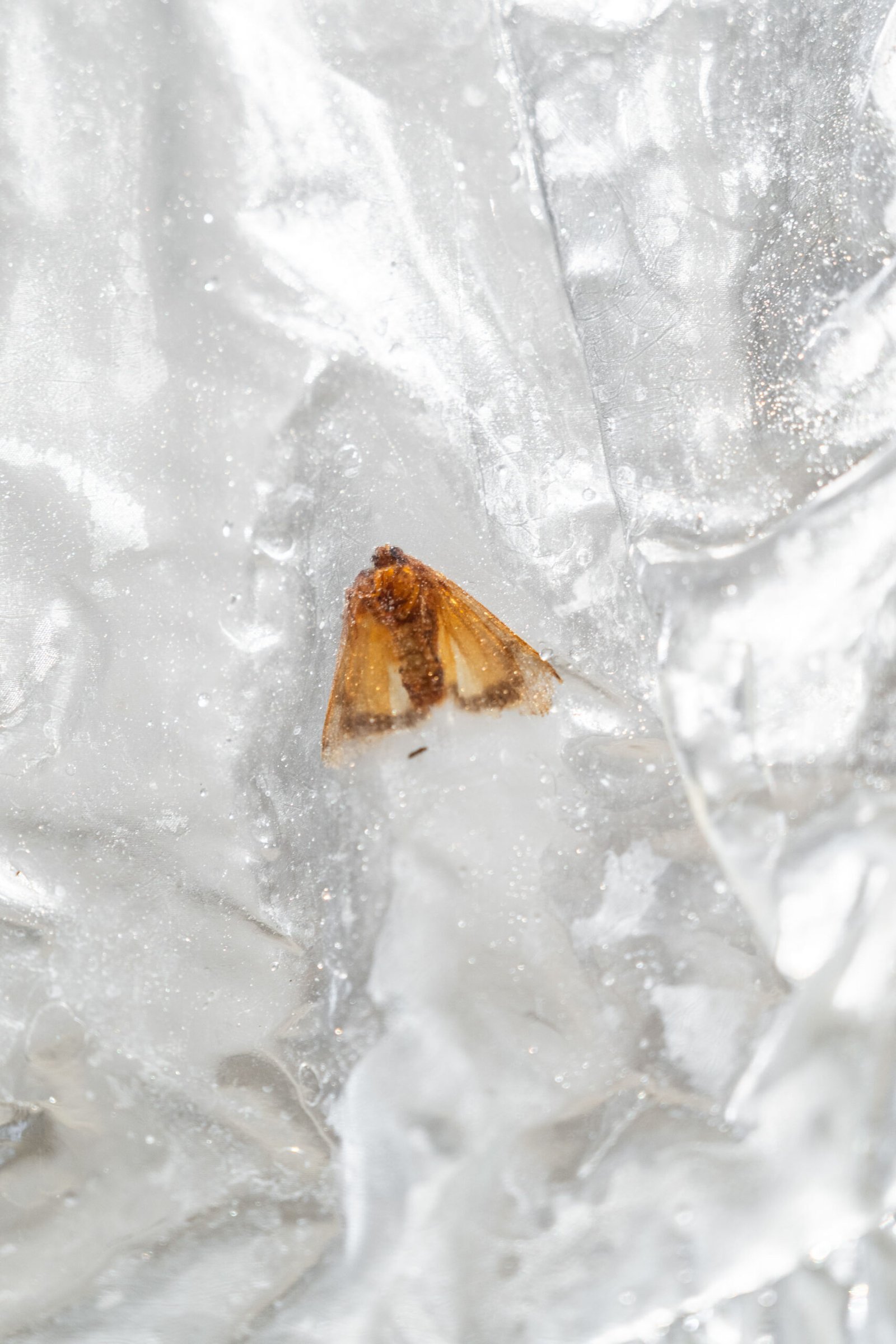
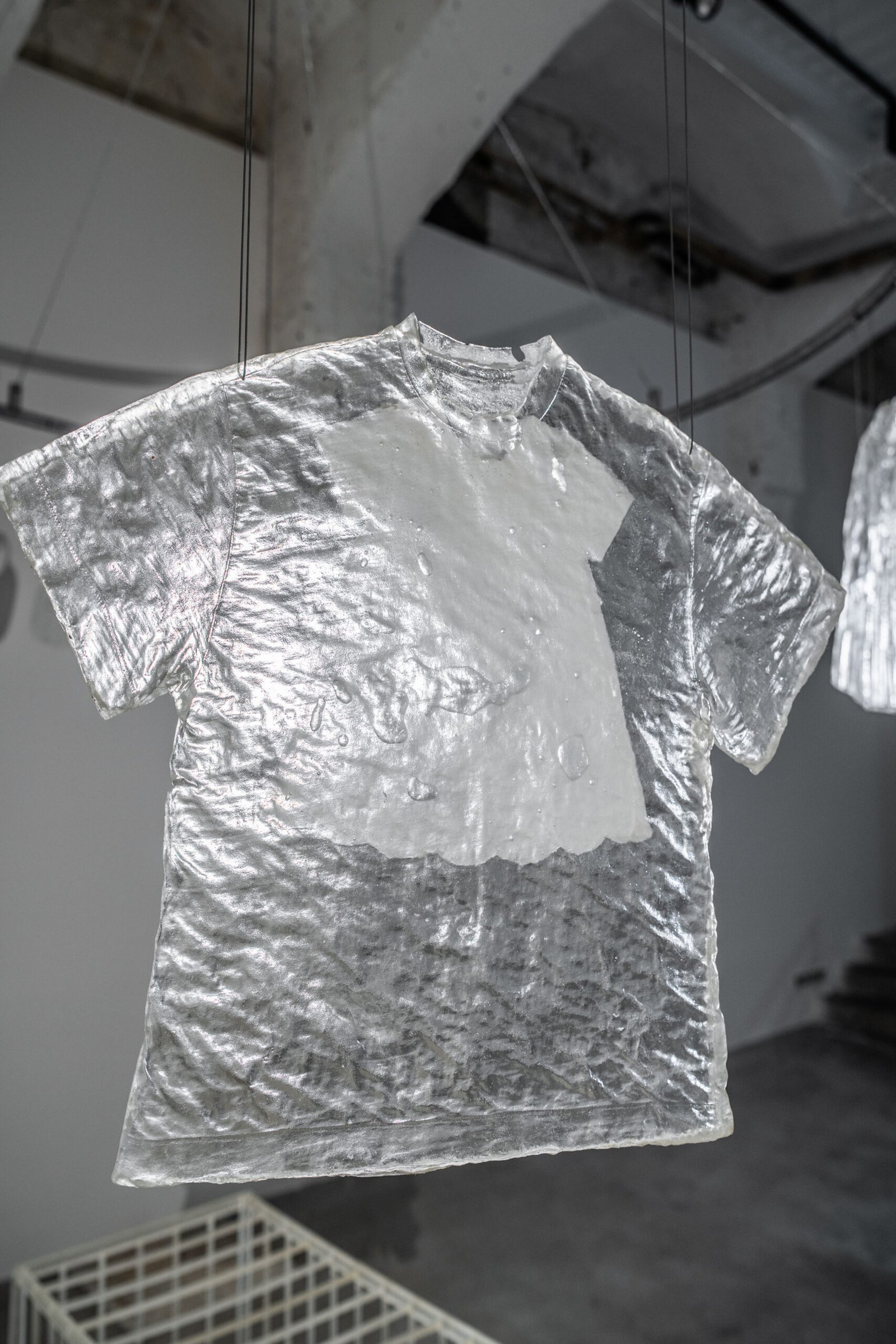
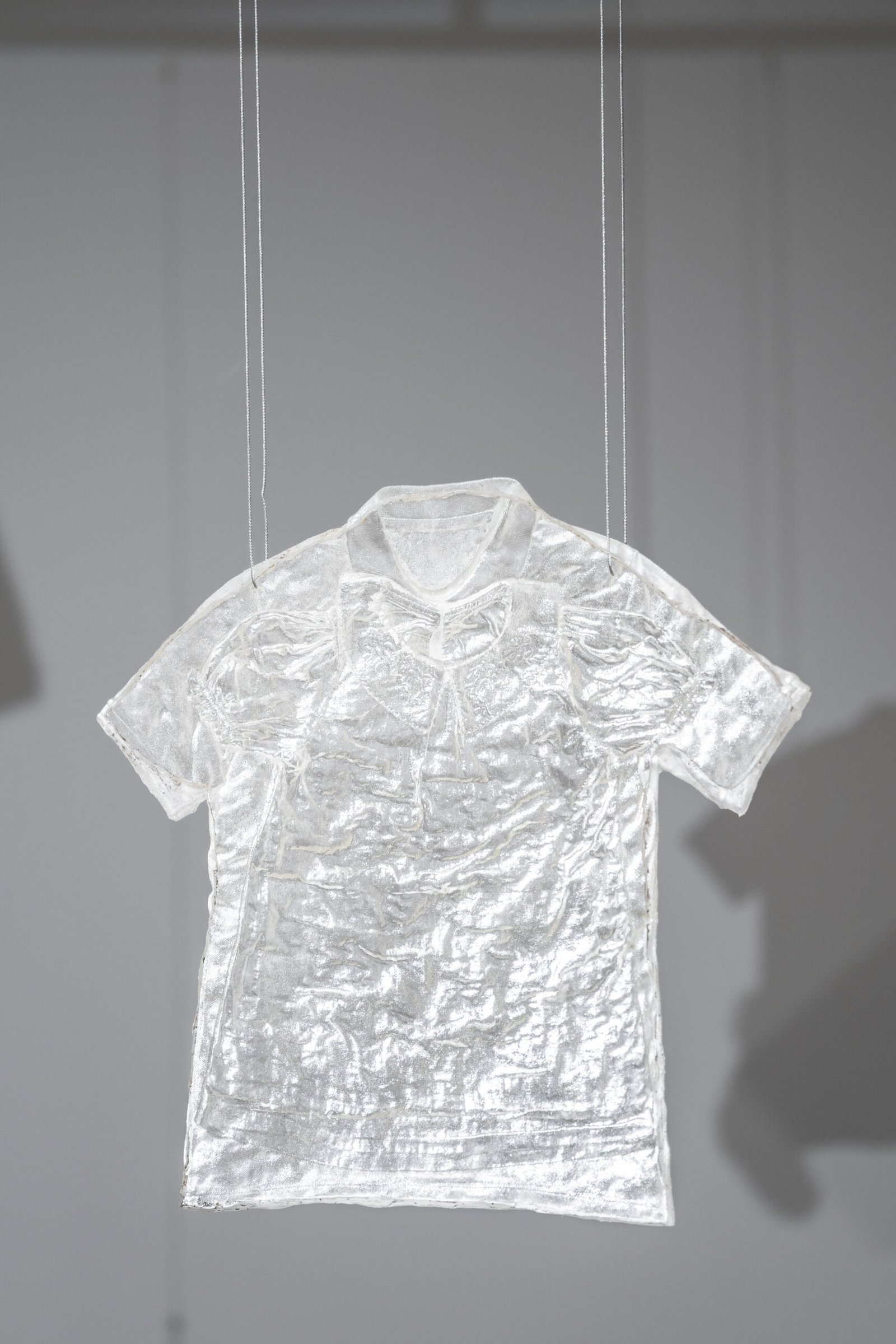
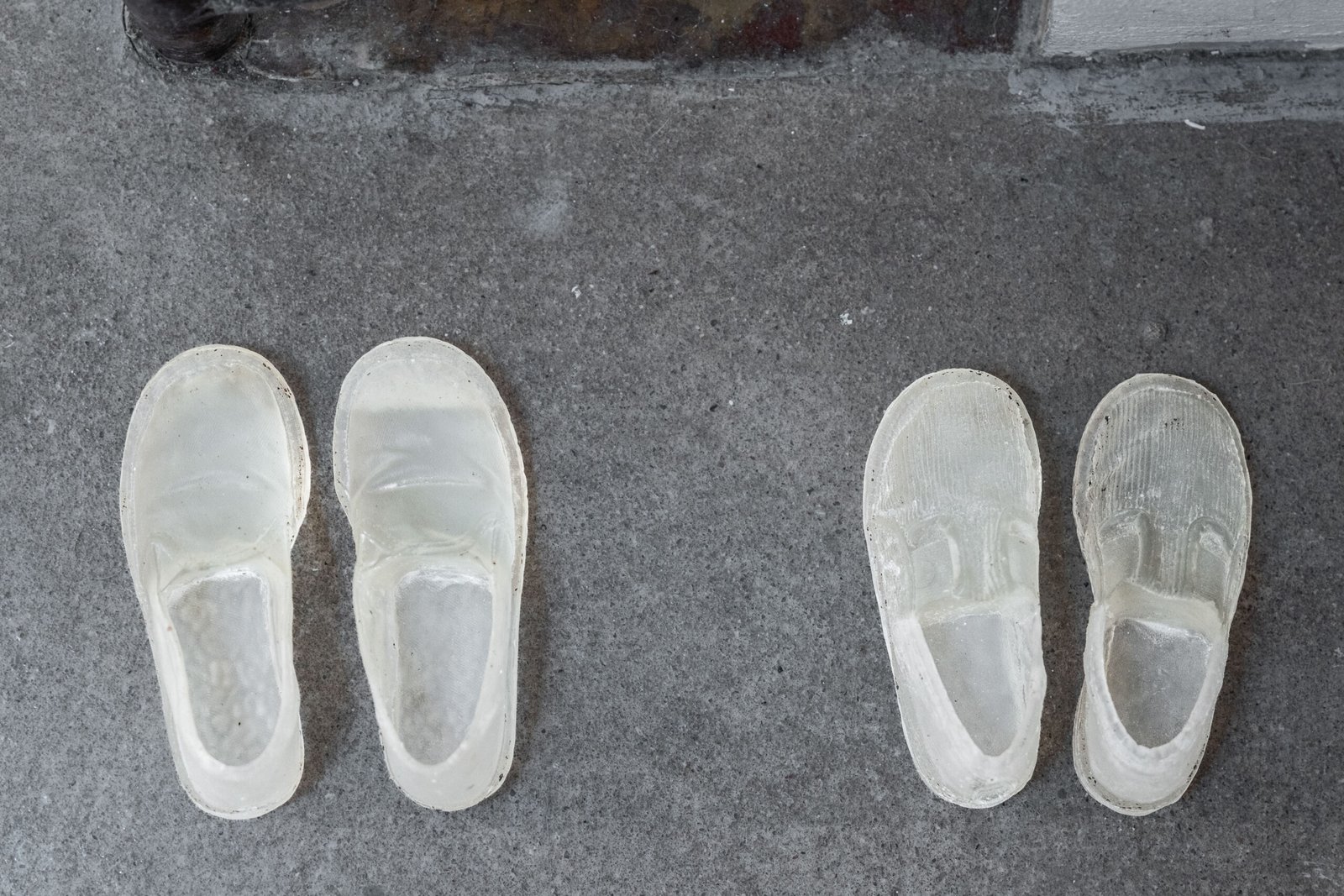
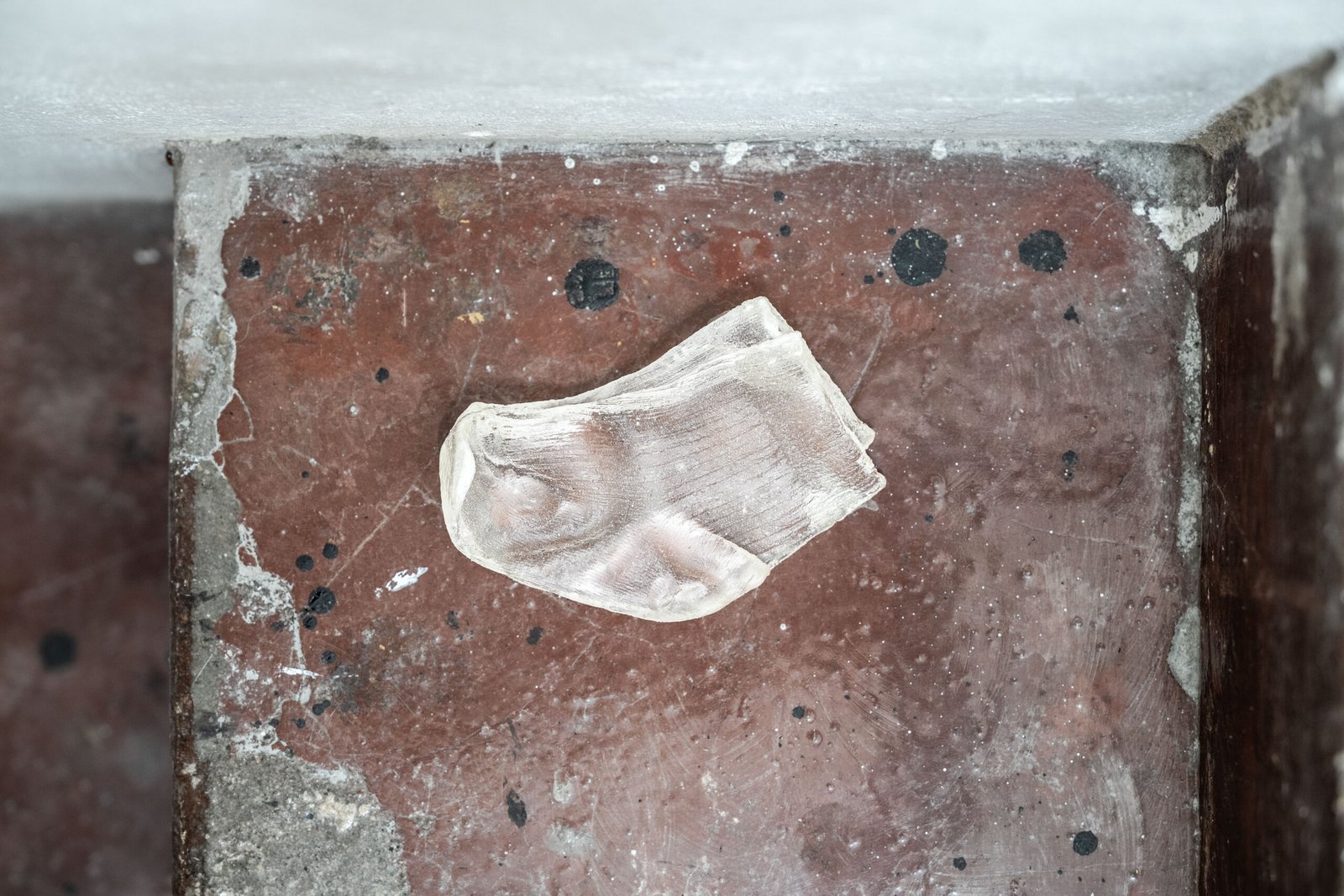
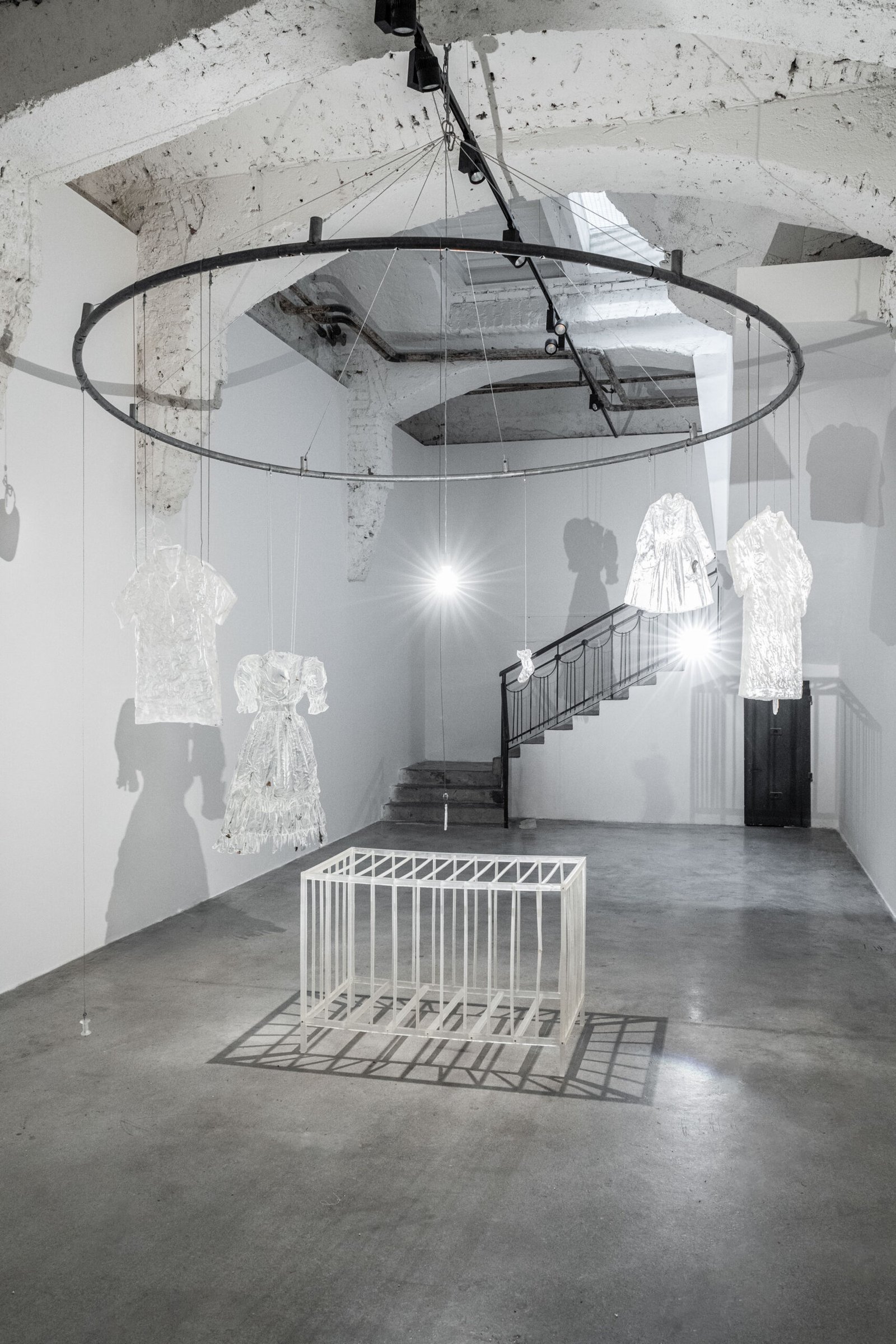
Both artists work with cast textiles as a material metaphor. Clothing acts here as the material memory of something that once belonged to someone, something they cherished, because it was both ceremonial and everyday. Resin simultaneously preserves and alters this trace. In the individual works, layers of time literally fold into one another. A child’s dress is enclosed within a more mature garment. One abandoned space remains sealed inside another. It is still present within who we have become in the meantime. The past is not yet a closed chapter; the casts make this situation visible in a unique way. They bring into the present bodies that are no longer there. It is not a matter of reconstruction, and certainly not of nostalgia.
You can’t return, you are here. This exhibition is meant to be the image of a genuine encounter. Both artists work separately, each in her own private space and solitude. Yet they speak a common language and employ a approach that allows their individual expressions to enter into a mutual relationship. Here, individual elements leave their isolation without losing their autonomy. Let us not count individual components, but rather perceive the space between them as something no one can create alone. After all, we are not self-contained beings who only subsequently connect with others; our existence unfolds from the very beginning in relationships and in mutual presence.
You can’t return, you are here is a temporary, shared configuration that did not exist before and will likely disappear again after the exhibition ends.
The artists’ previous joint exhibition, You can return but no one will be there, opened up the possibility of return: it was possible to re-enter a place one used to know, but whatever had made it home was already gone. That return unfolded within the space of tension between presence and memory, between what we can still recognize and what can no longer be revived.
The new exhibition shifts this dynamic forward. This time, it no longer matters who remains or does not remain in that place. The past re-enters the present not as something we wish to restore, but as a confirmation of who we have become in the meantime.
You can’t return, you are here.