


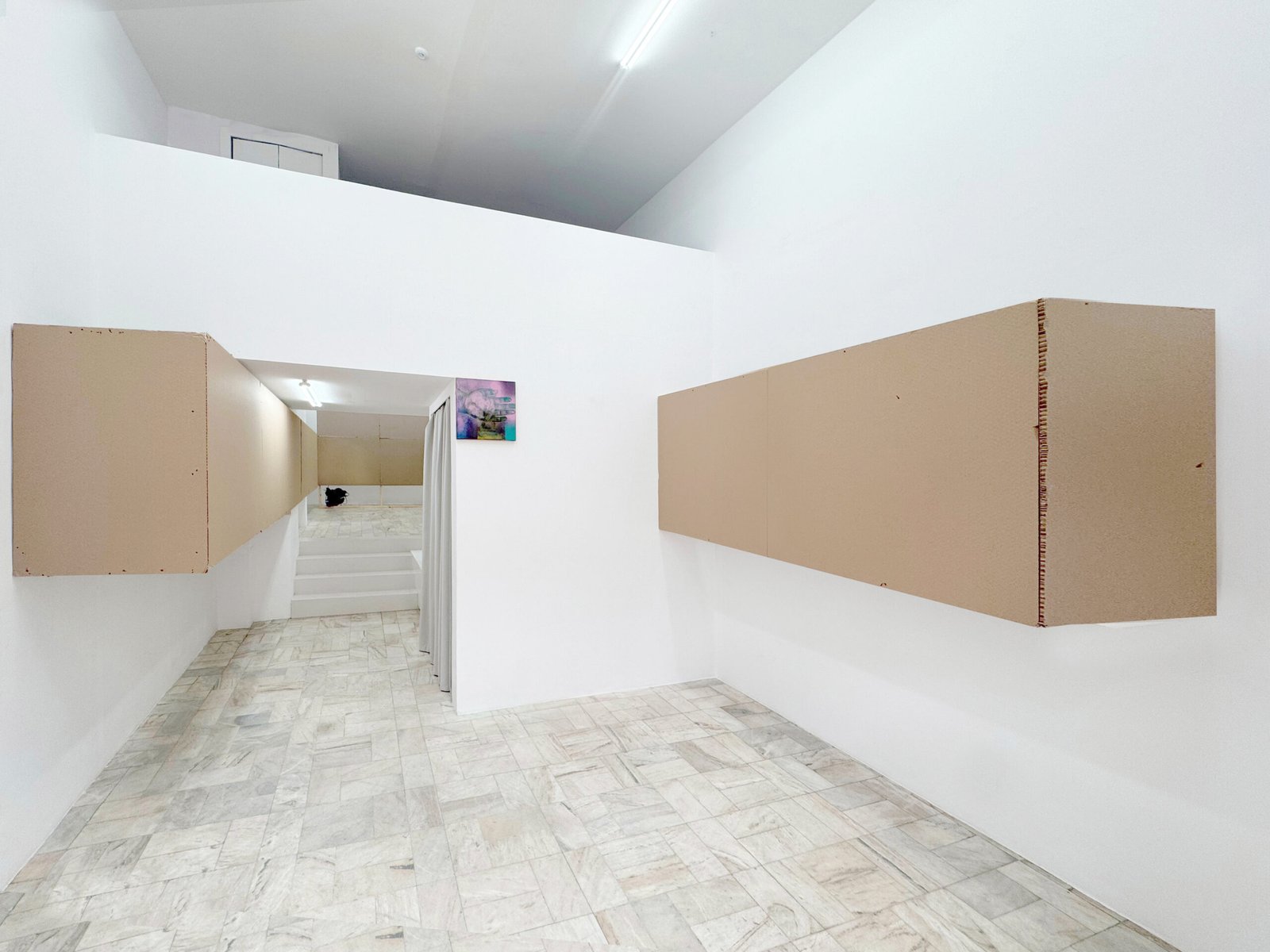
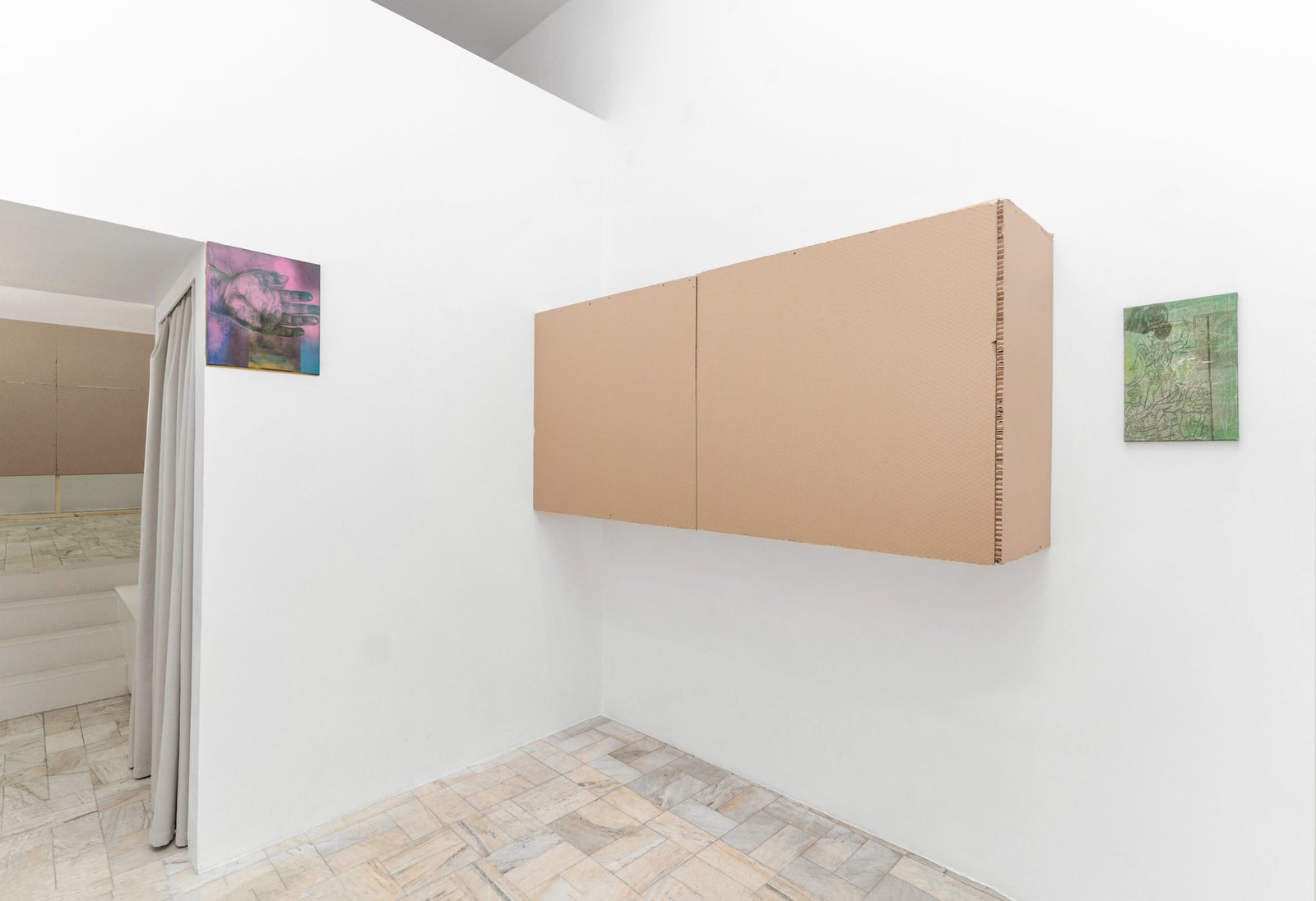
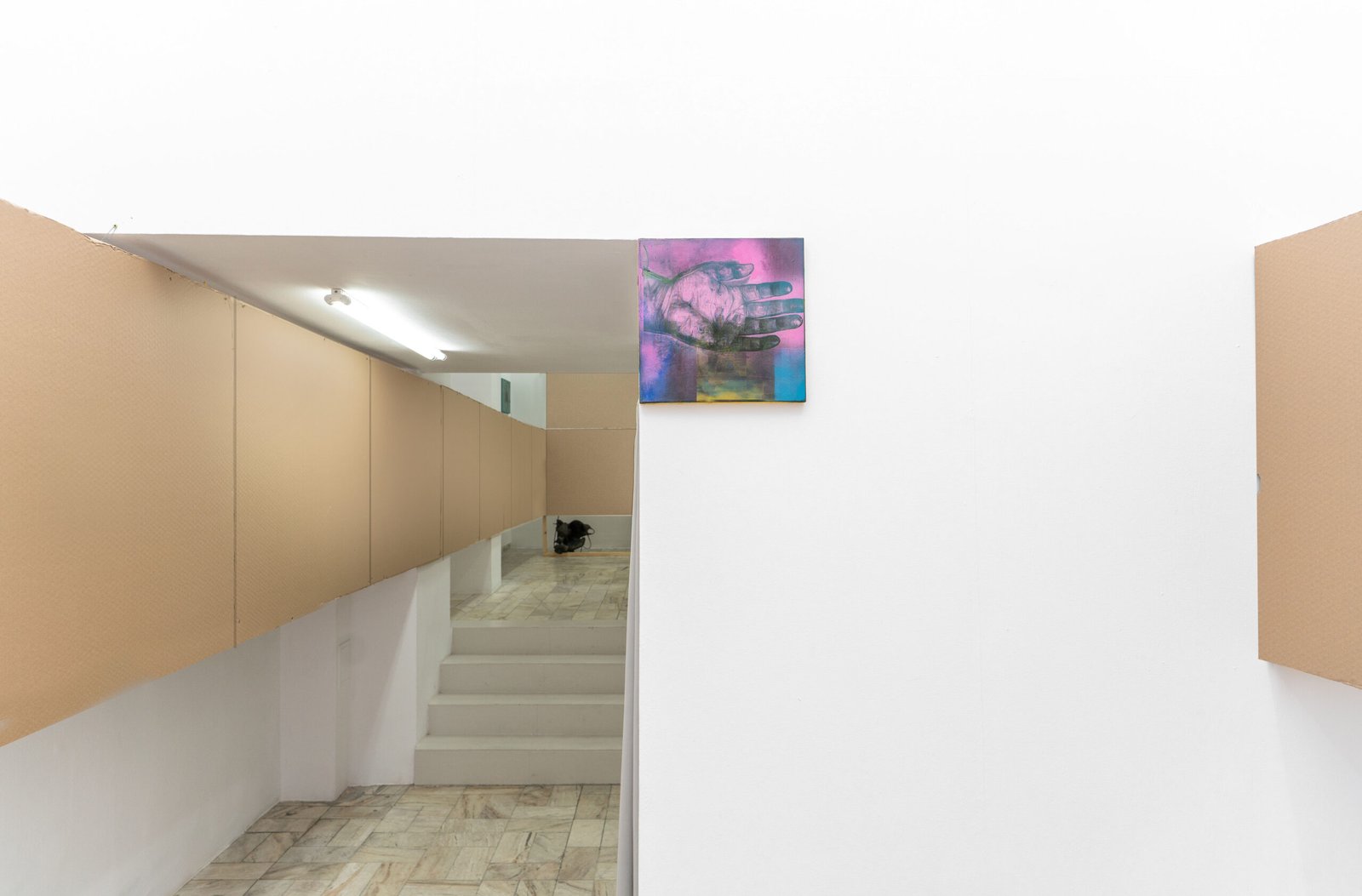
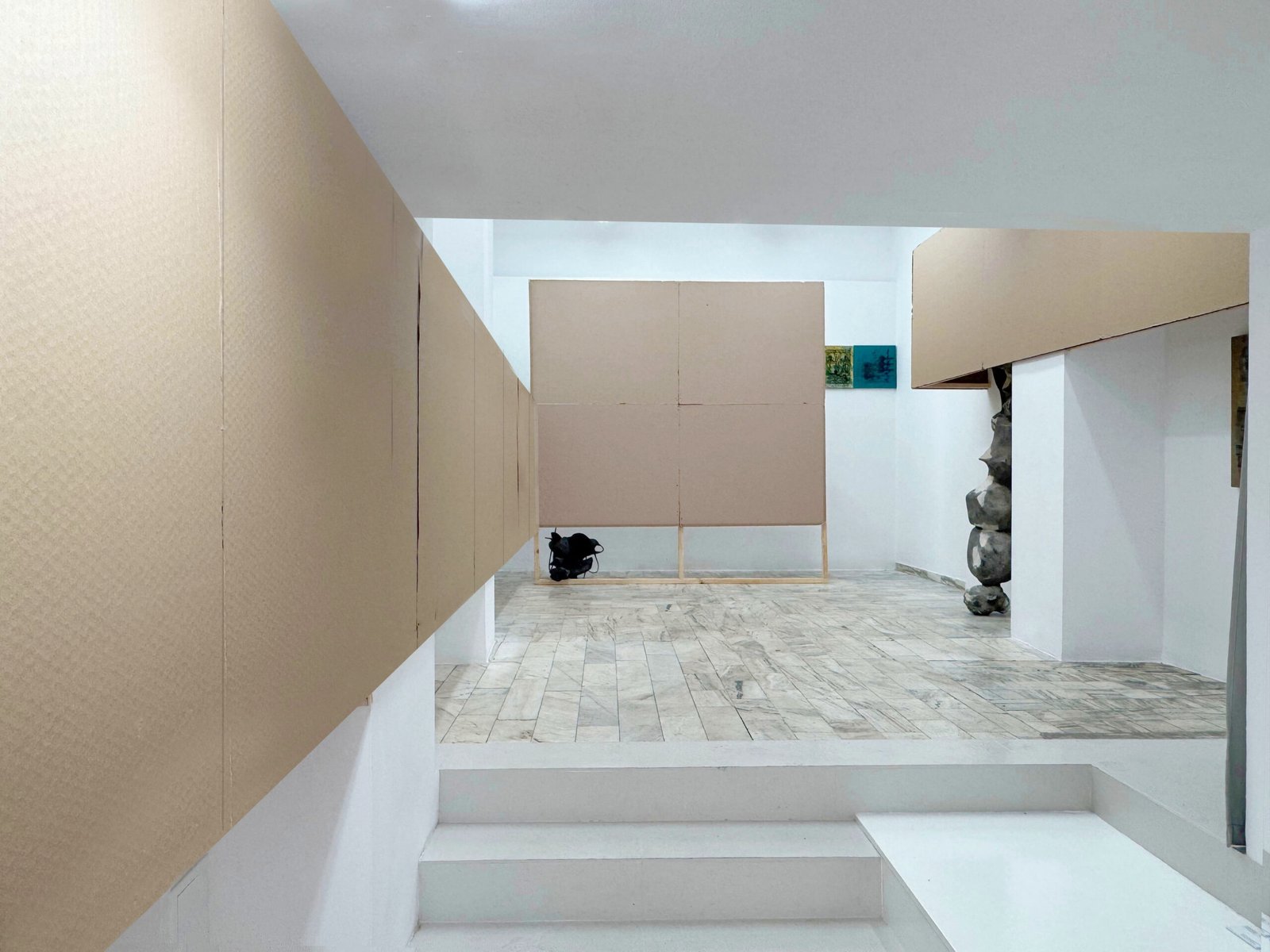
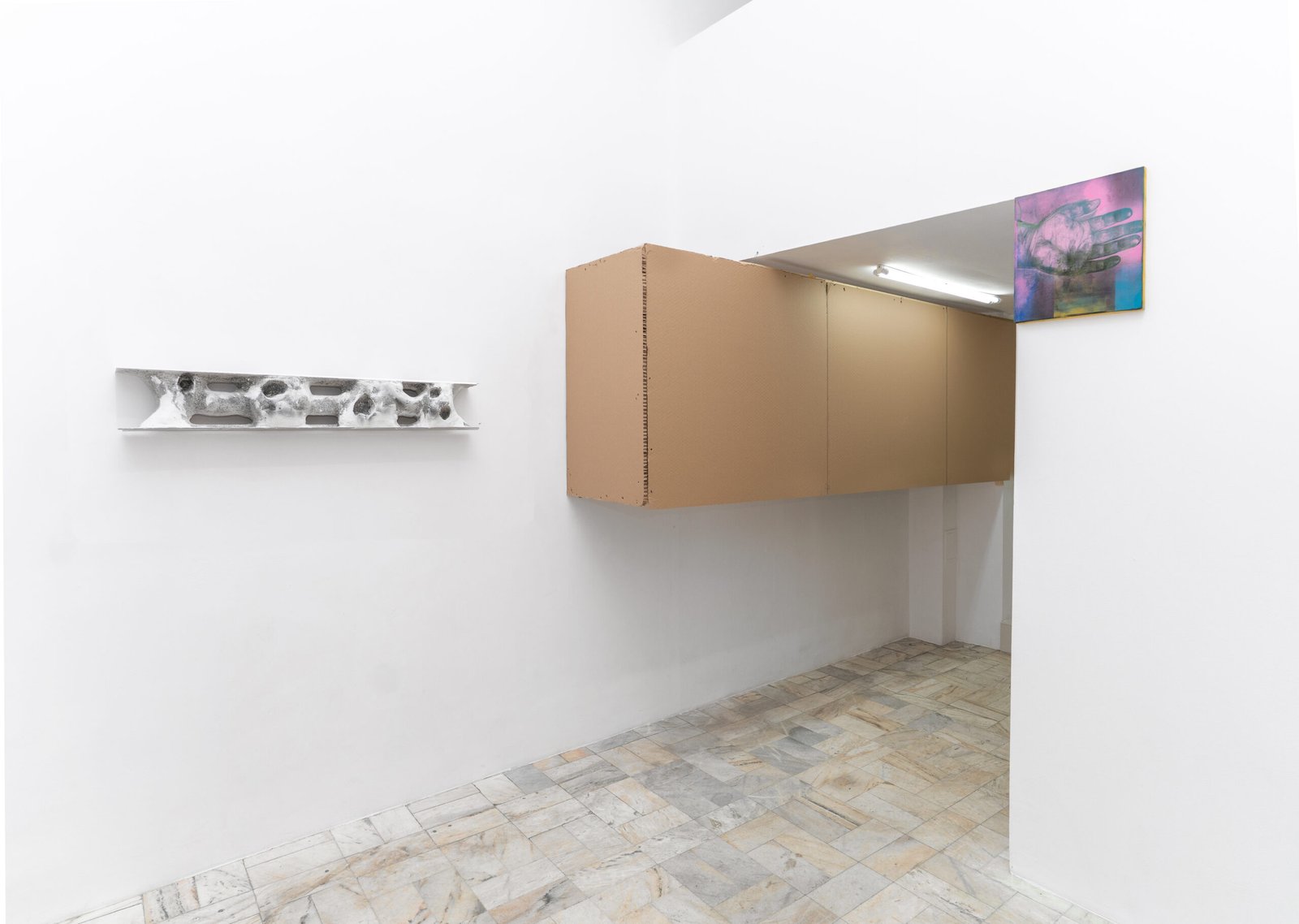
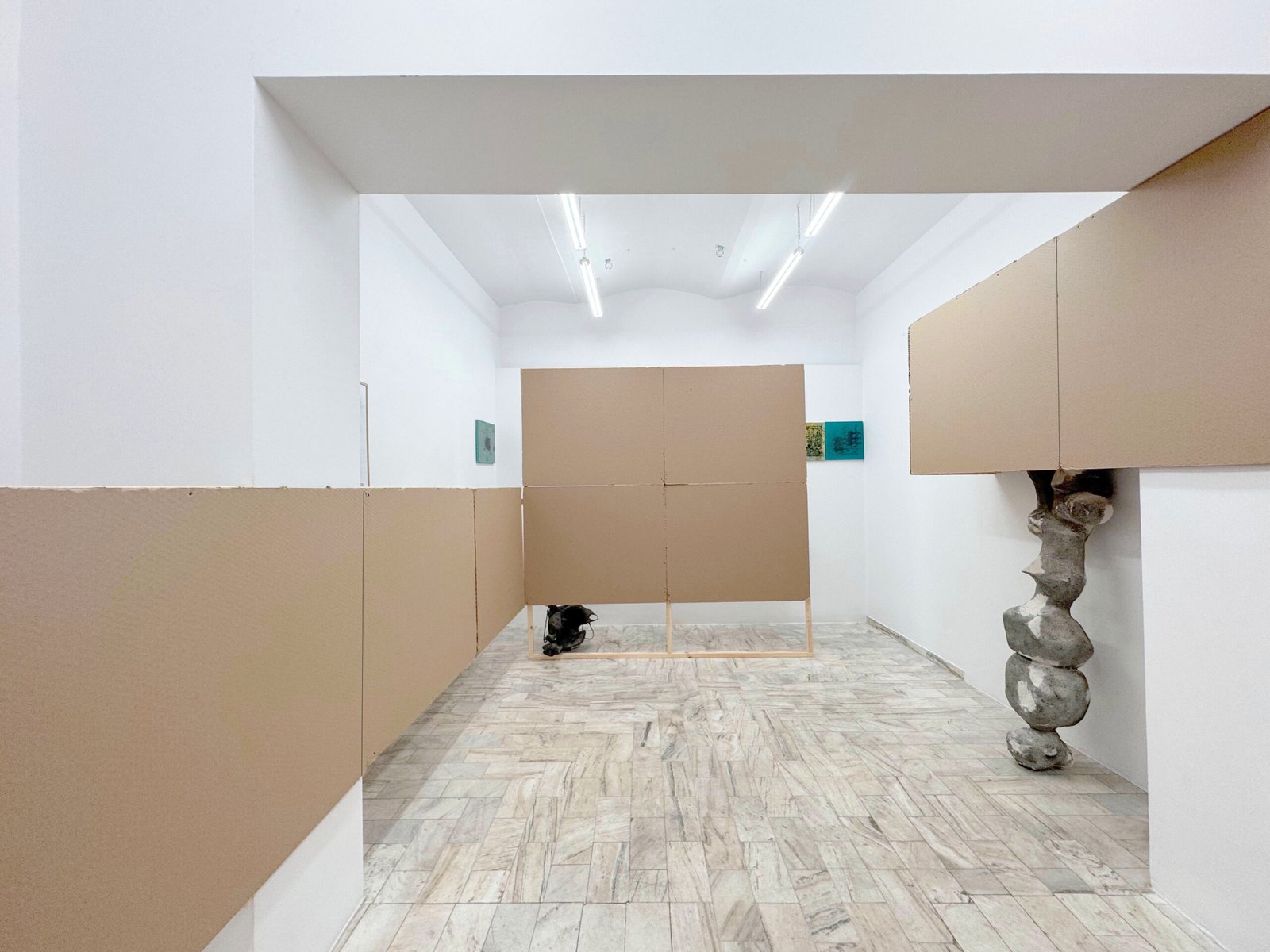
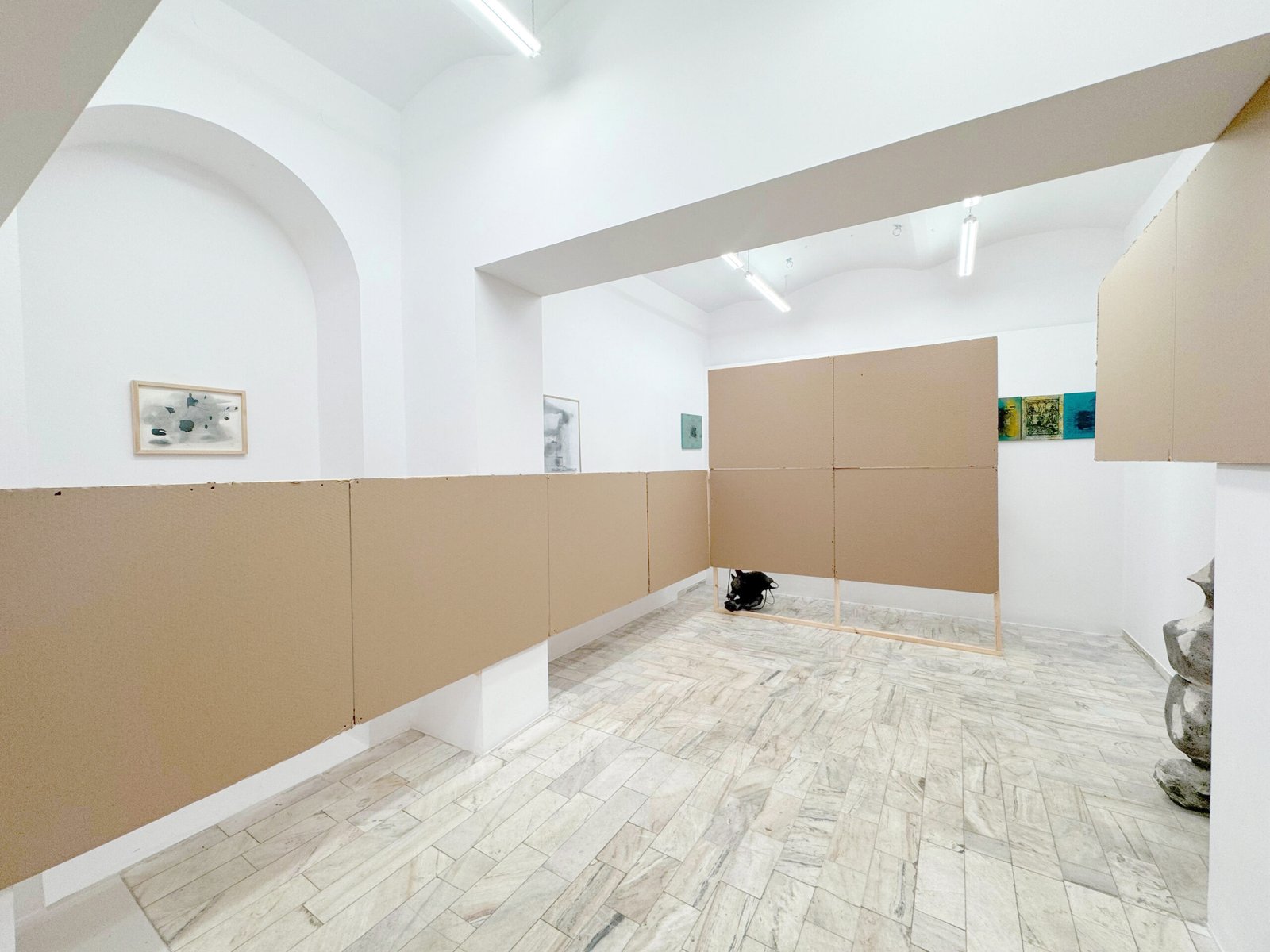
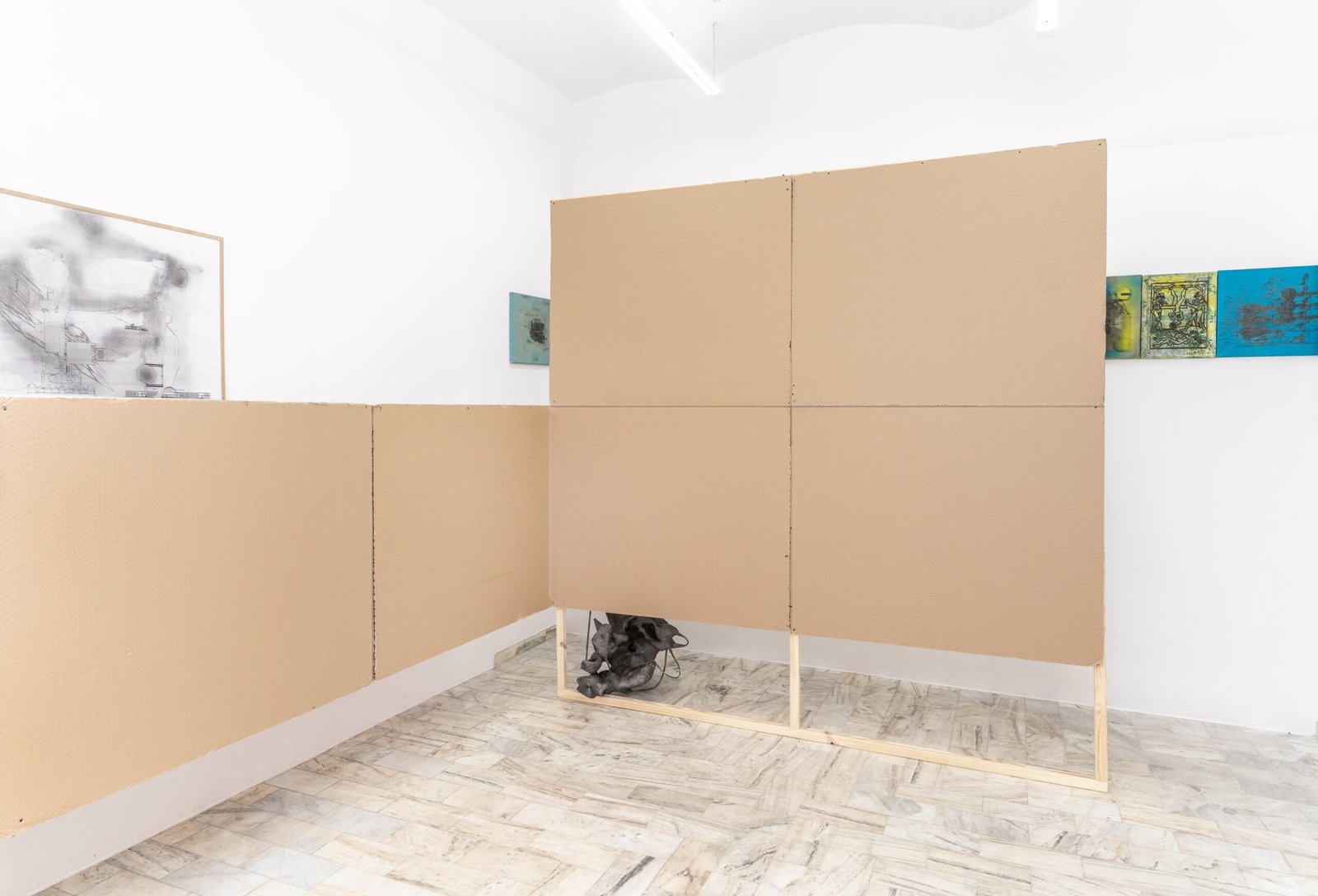
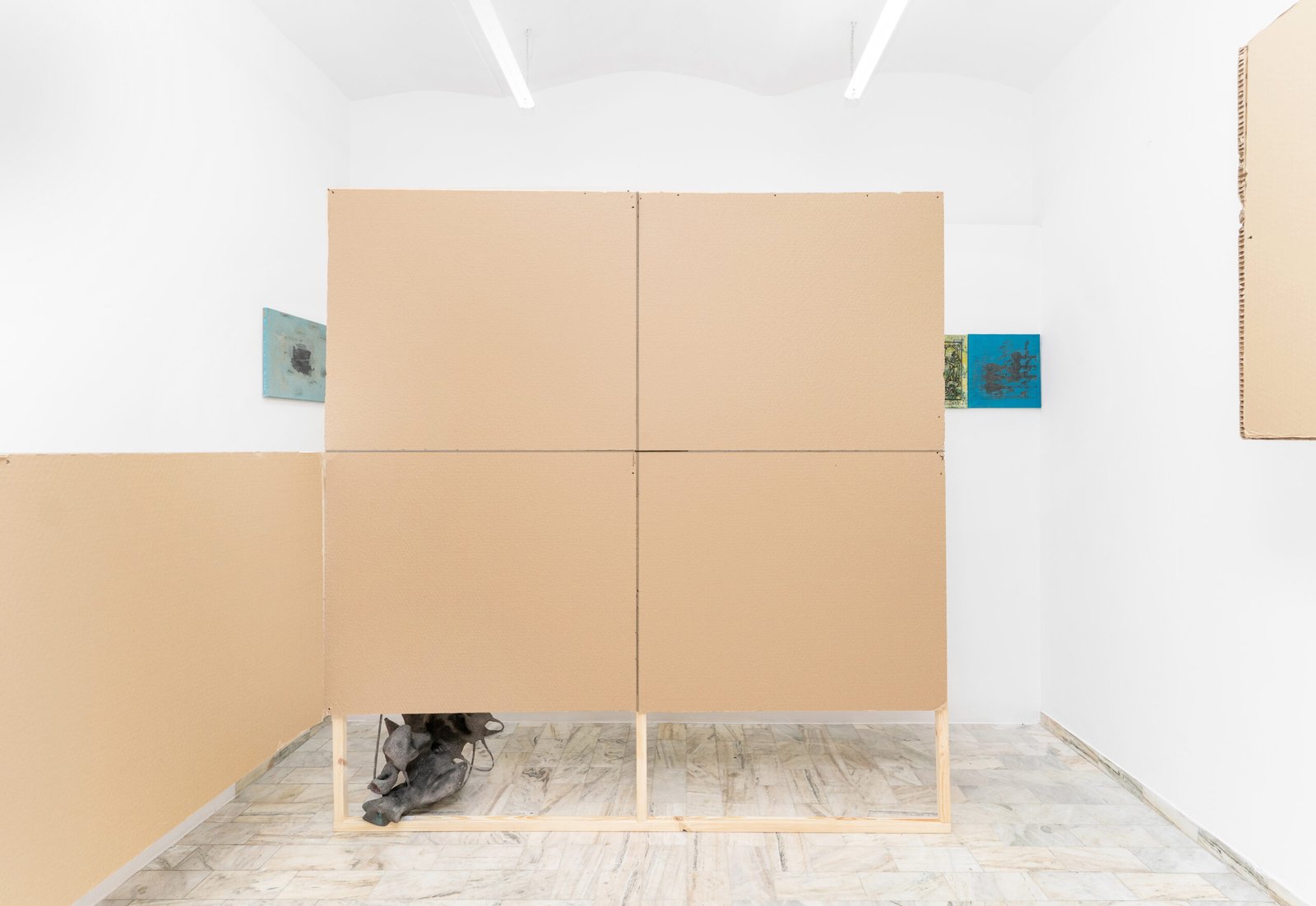
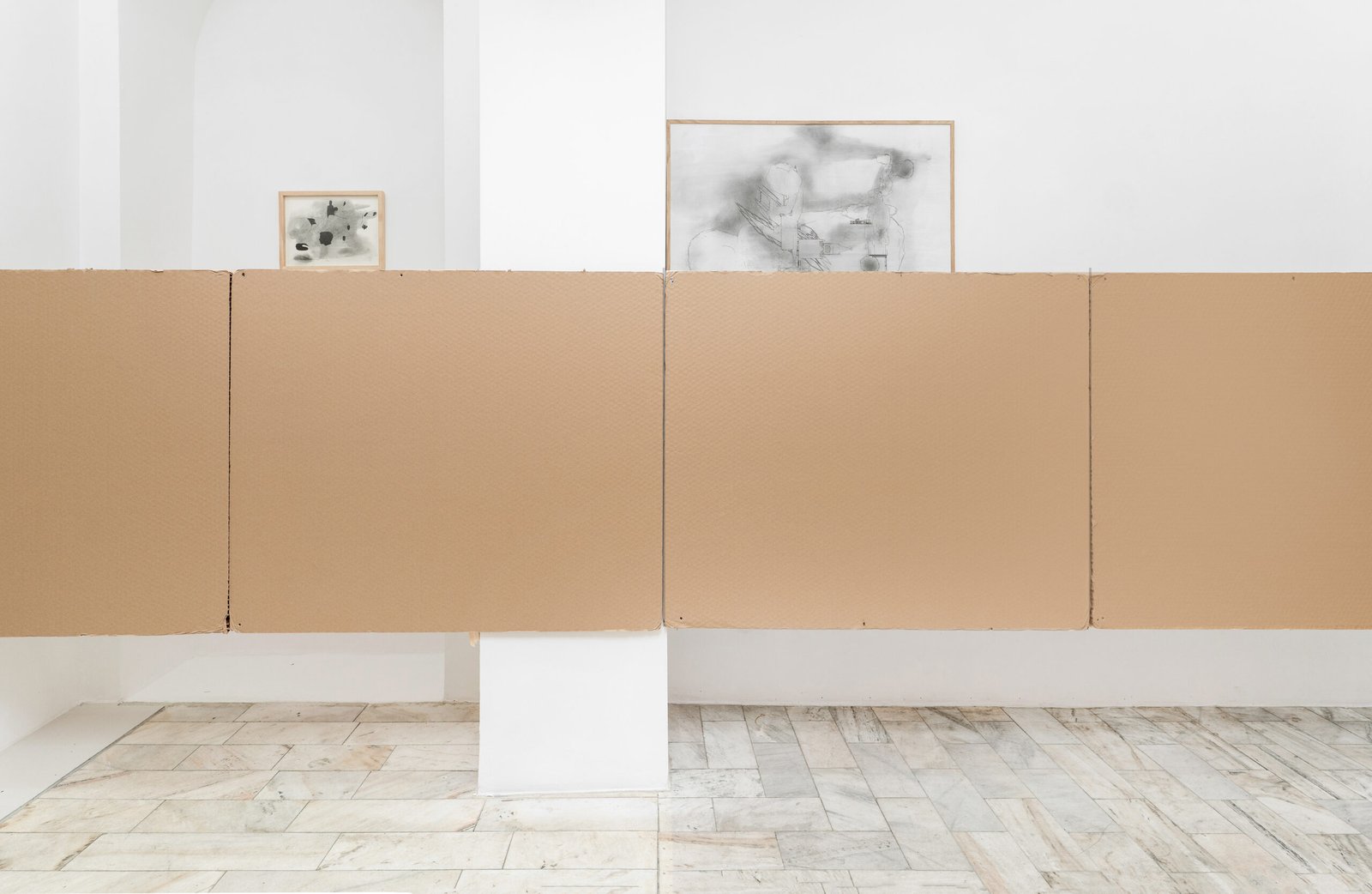
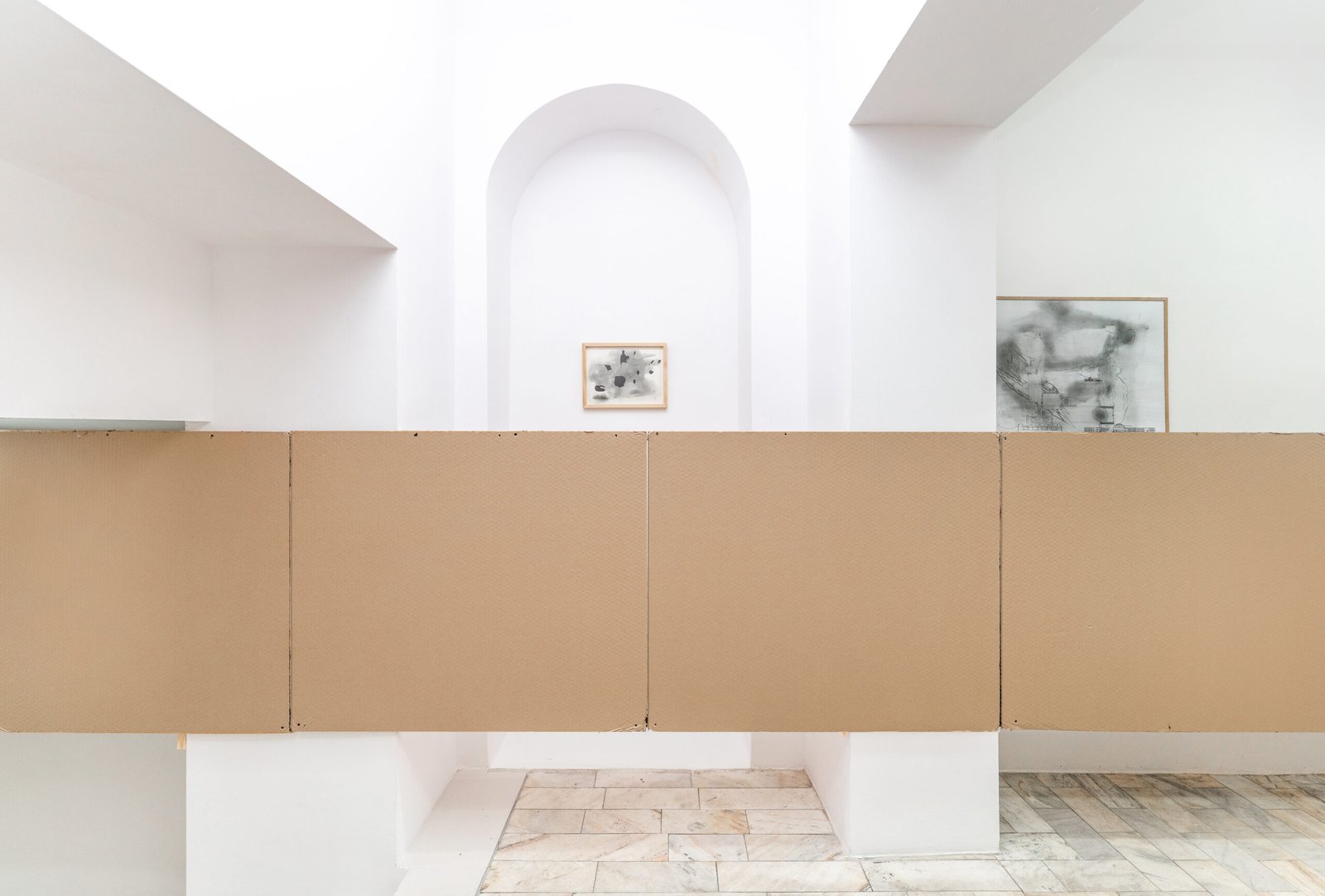
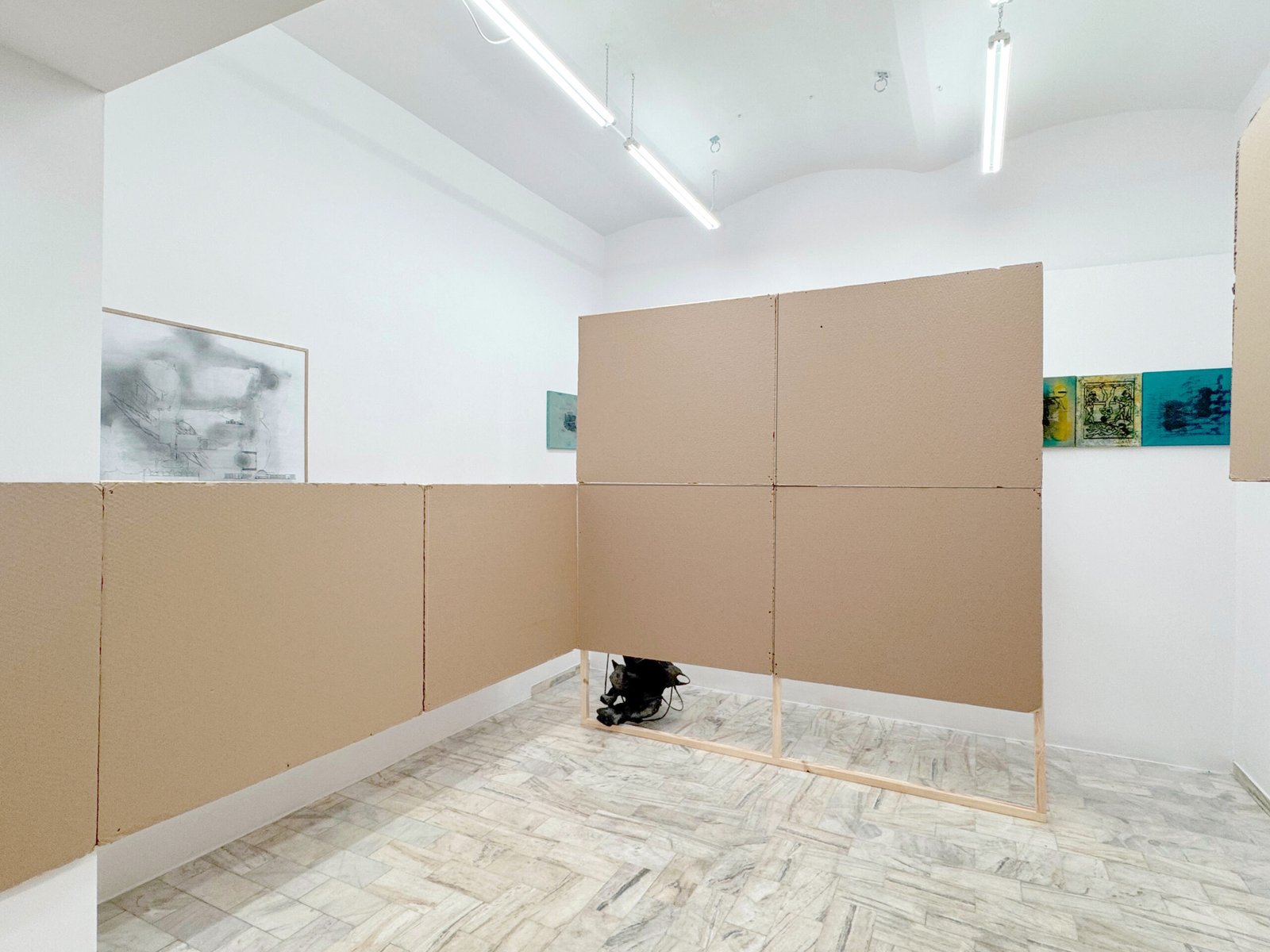
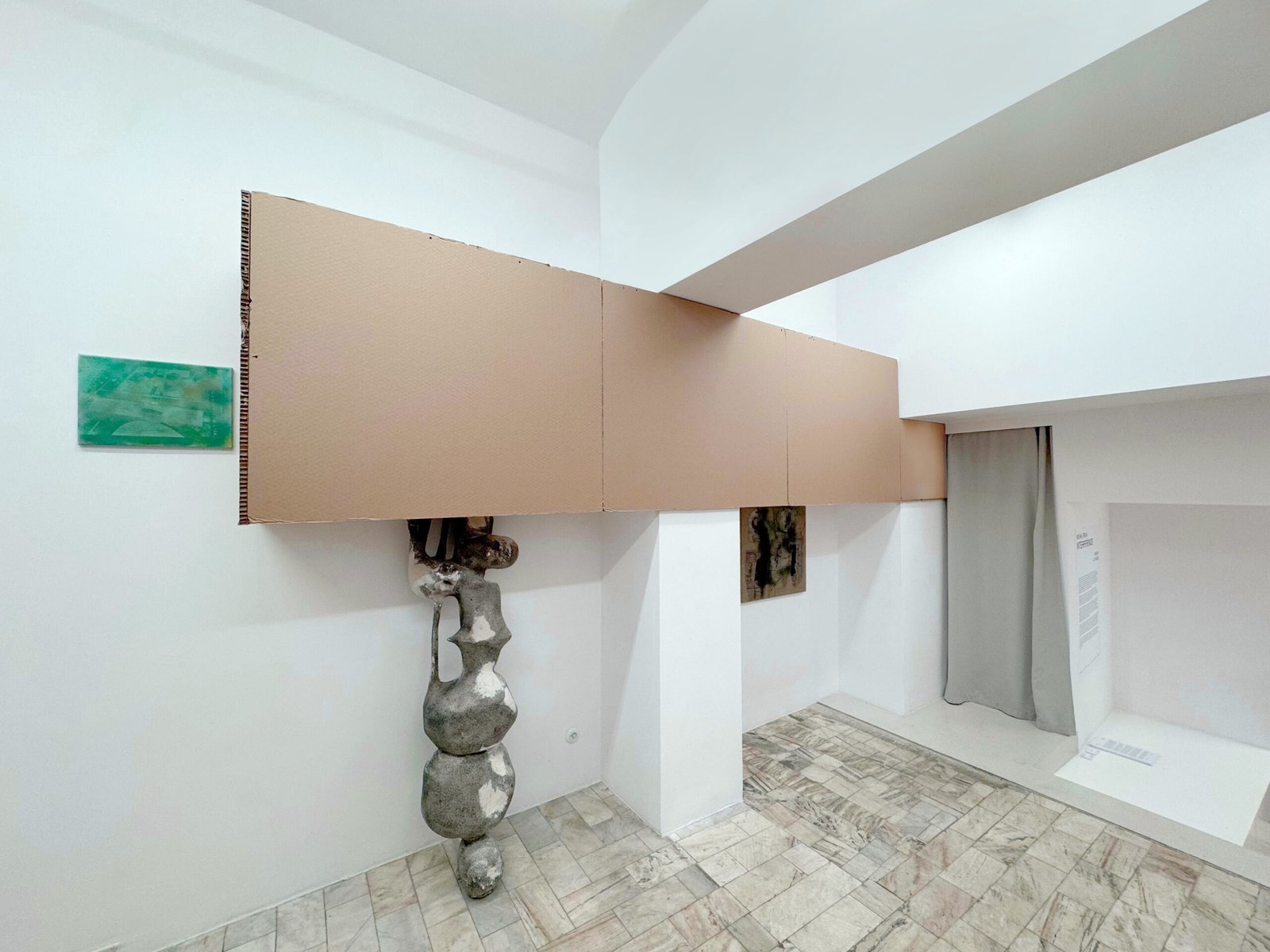
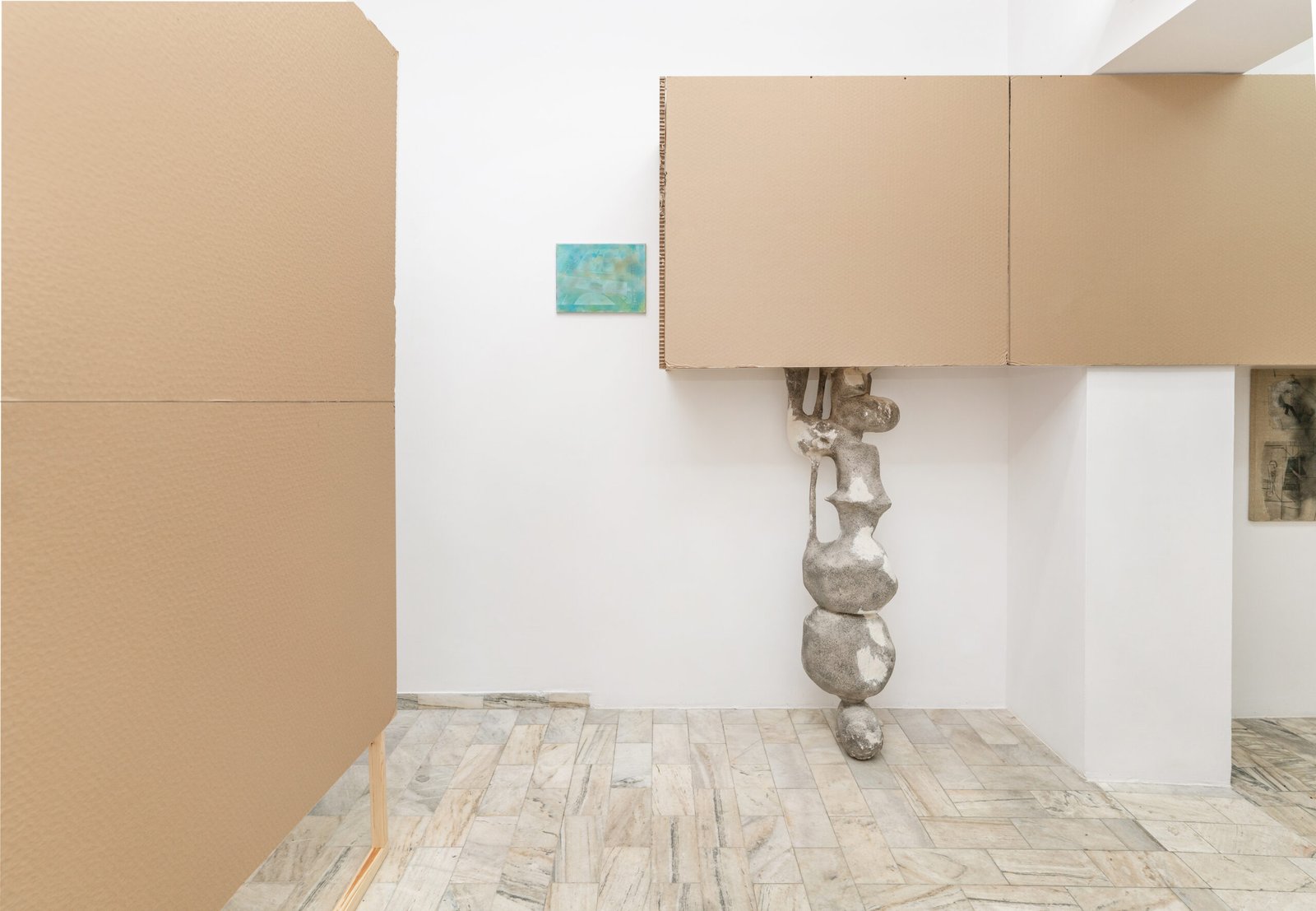
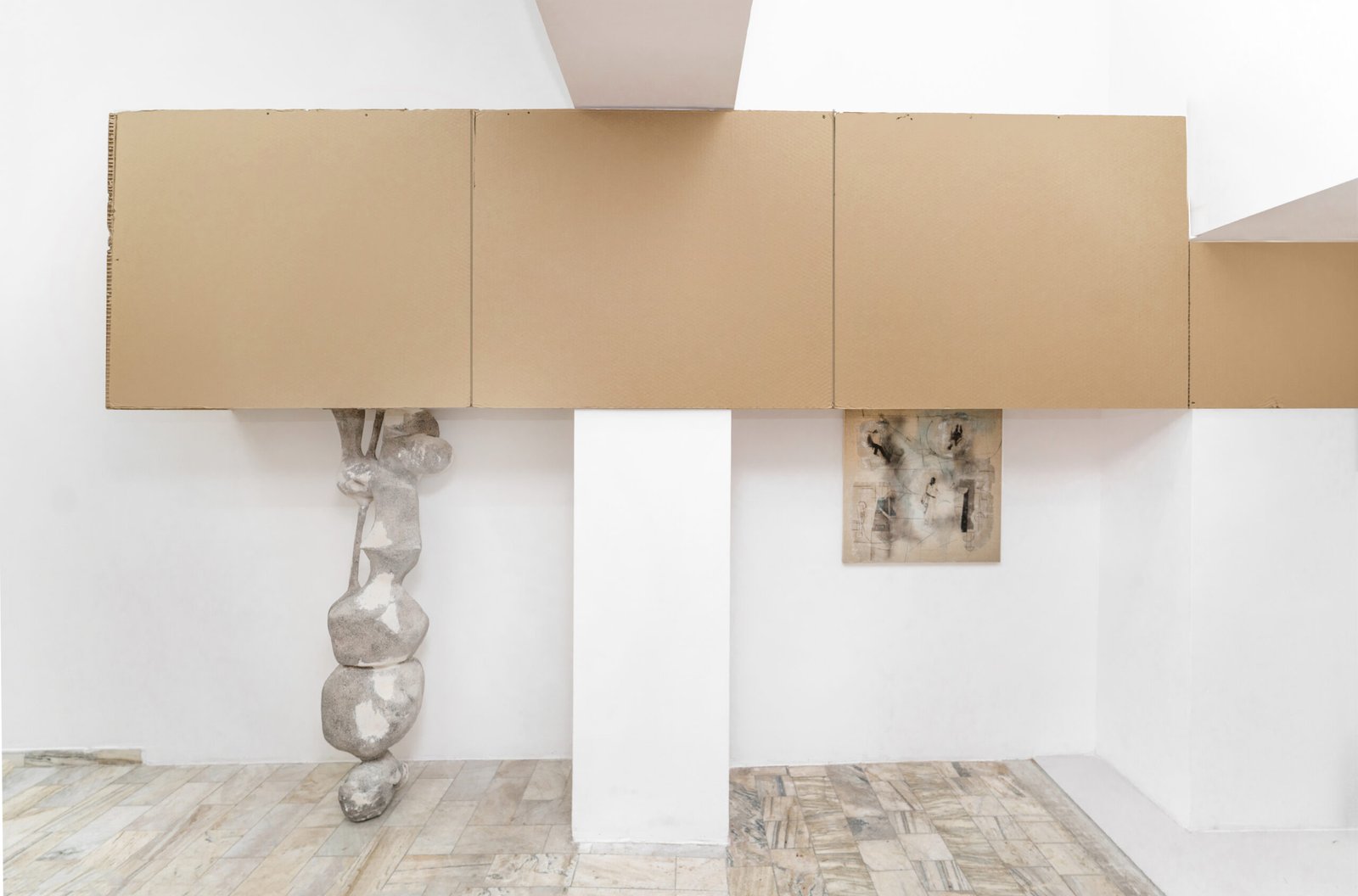
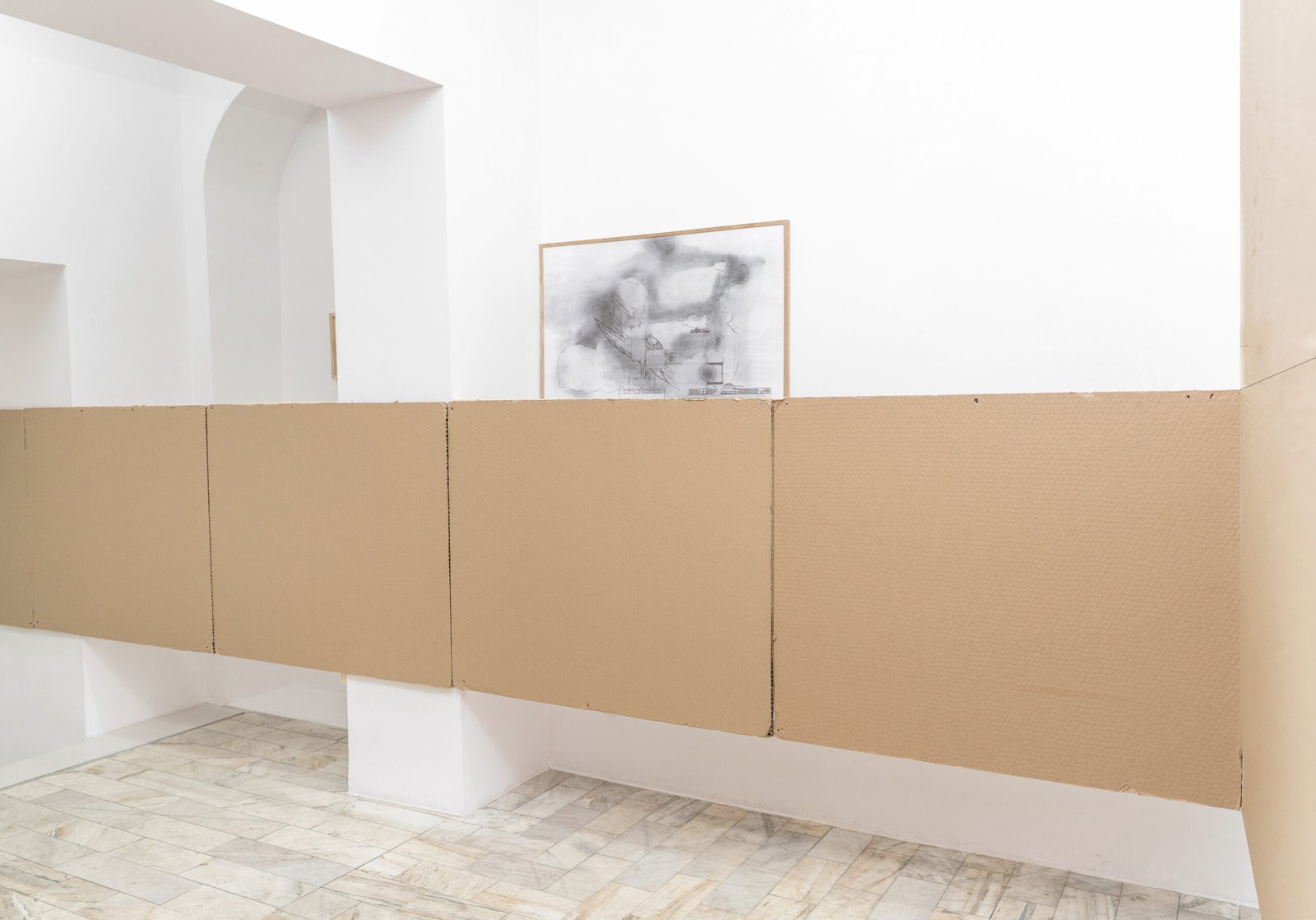
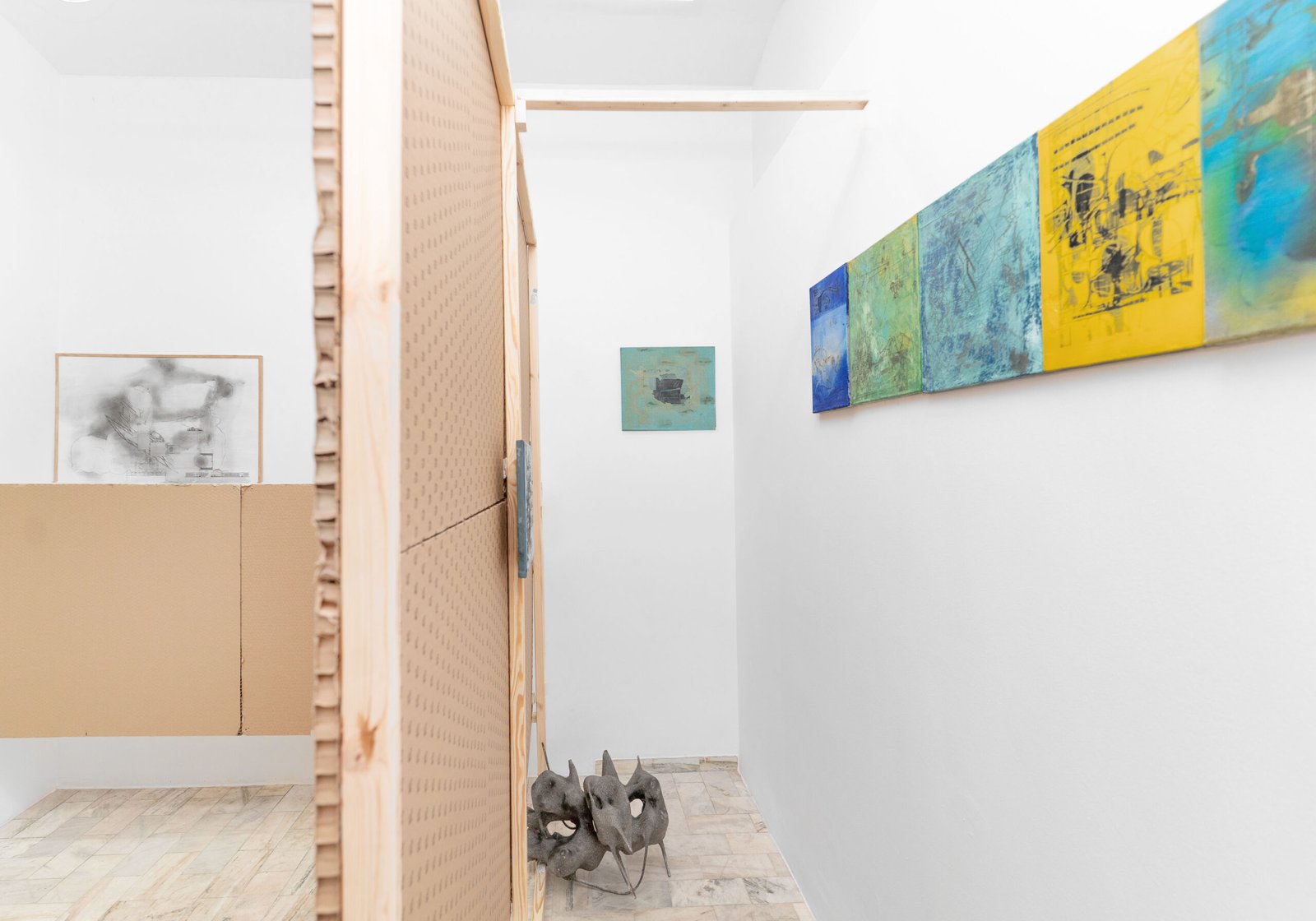
Interference is a phenomenon in which two systems overlap, producing at the point of their encounter a third one that cannot be reduced to either of them. It is not a simple sum of two orders, but a new quality that emerges only at the moment of their contact and disappears once the two systems separate. In Michał Sroka’s exhibition, the first system is the architecture of Piana: its walls, openings, the rhythm of its rooms, and the lines of sight they establish. The second is a light, modular cardboard structure introduced by the artist, which does not attempt to replace the architecture but passes through it according to its own logic, at times disregarding its divisions and at other times reinforcing them. Where the two orders overlap, interfere with one another, or accidentally begin to cooperate, a third, mutable space emerges: the space in which the exhibition actually takes place and in which the viewer moves not through one map, but through two superimposed maps at once.
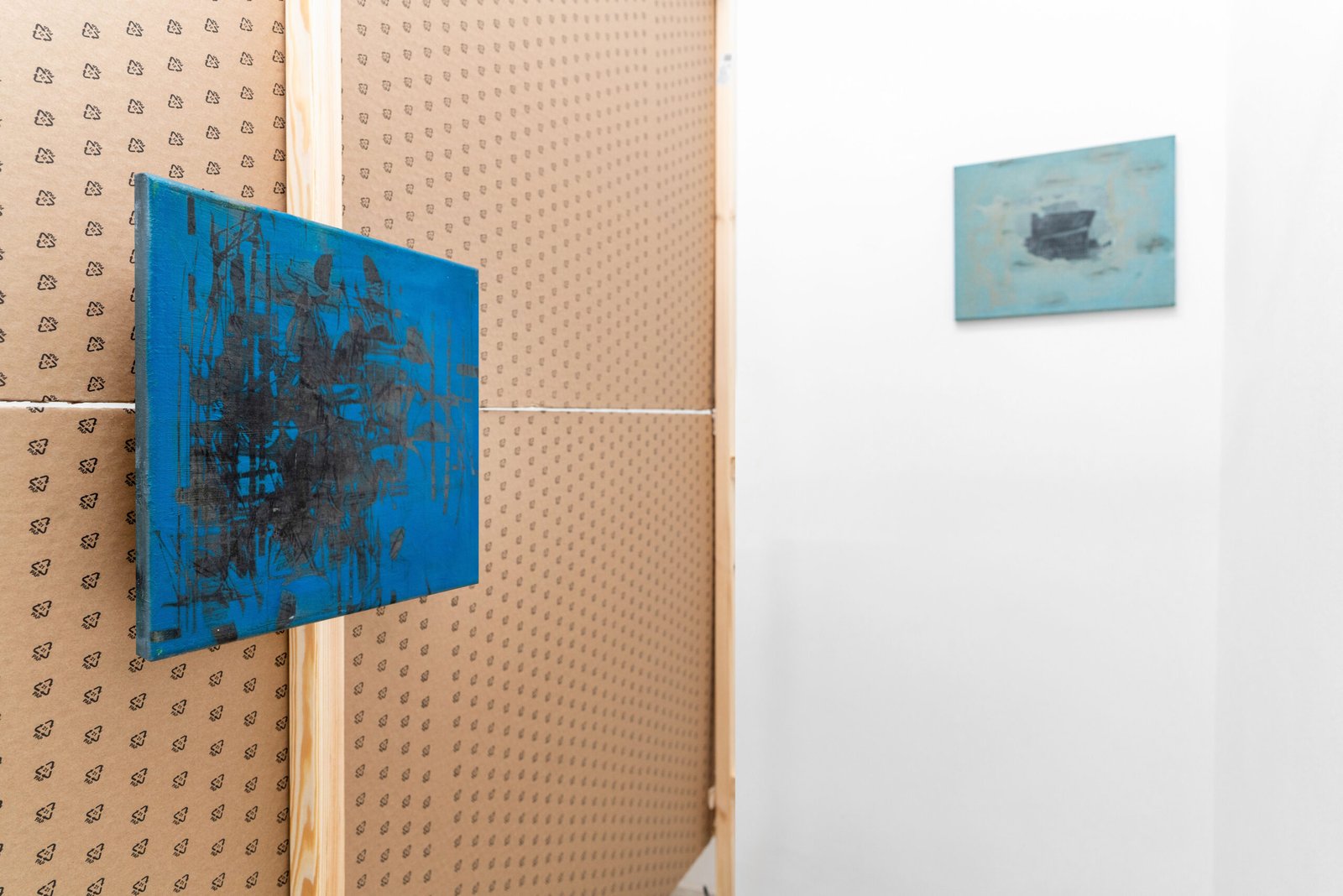
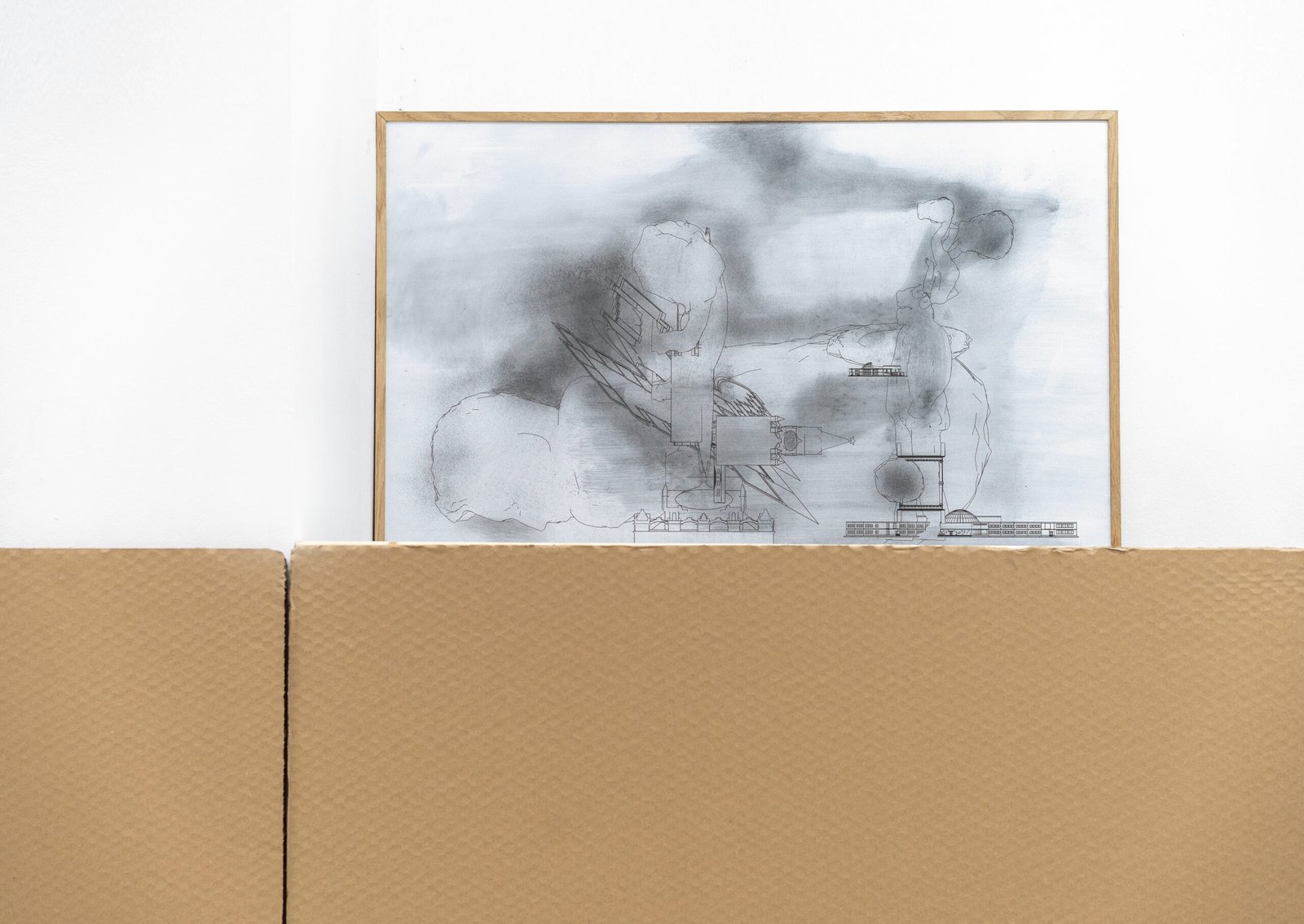
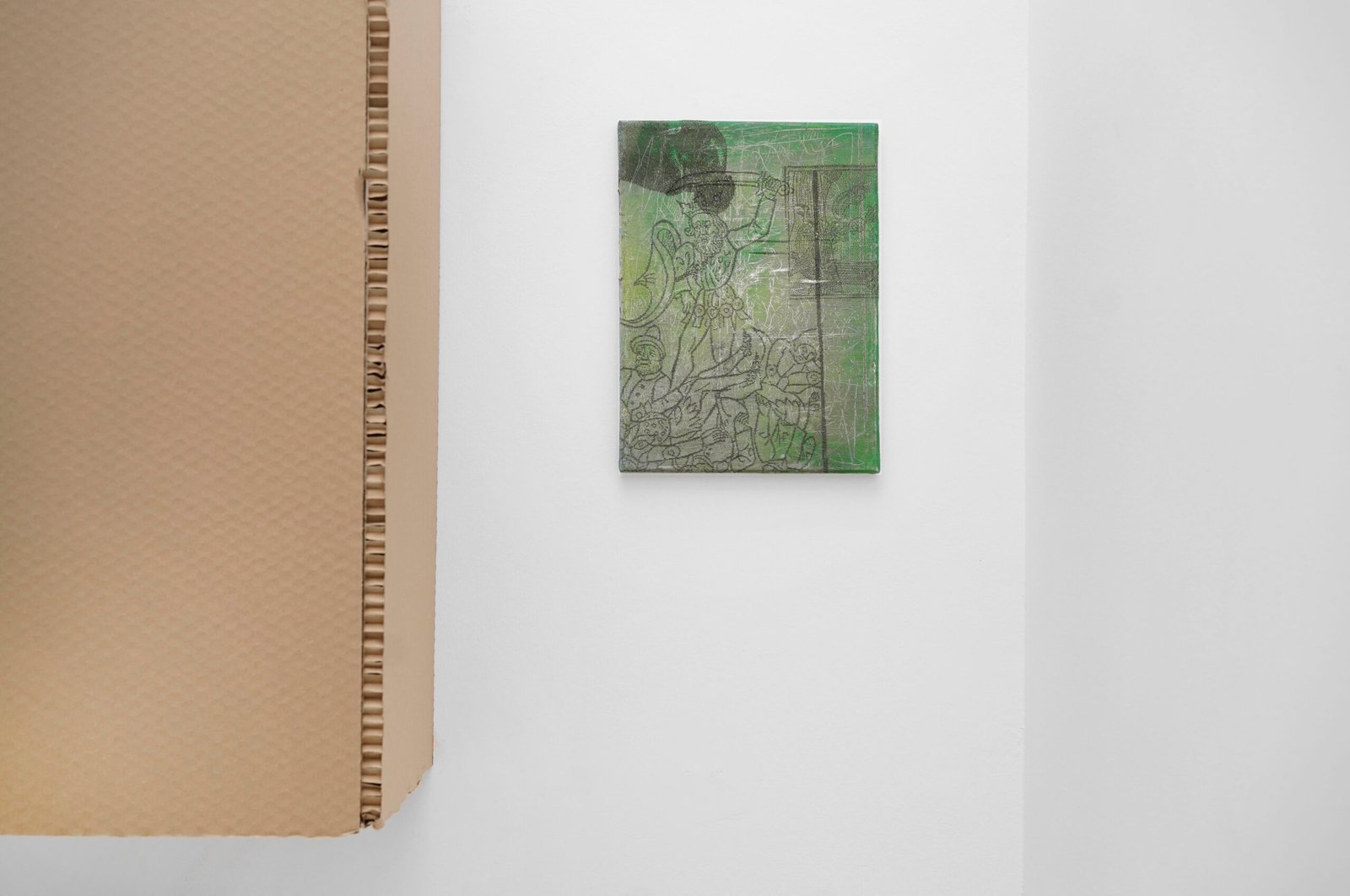
A functional and temporary material, usually associated with transport, storage, and protection, becomes here an element that organises space. Long horizontal planes pass through the architecture of Piana independently of its divisions: at times they run parallel to the walls, reinforcing their direction, while elsewhere they cut across them at an angle, establishing new, provisional axes of vision. Fragile cardboard, conceived as disposable by nature, is juxtaposed with the permanent concrete structure of the gallery. This encounter itself becomes a form of interference: two materials of radically different status and durability are required, for a moment, to coexist on equal terms.
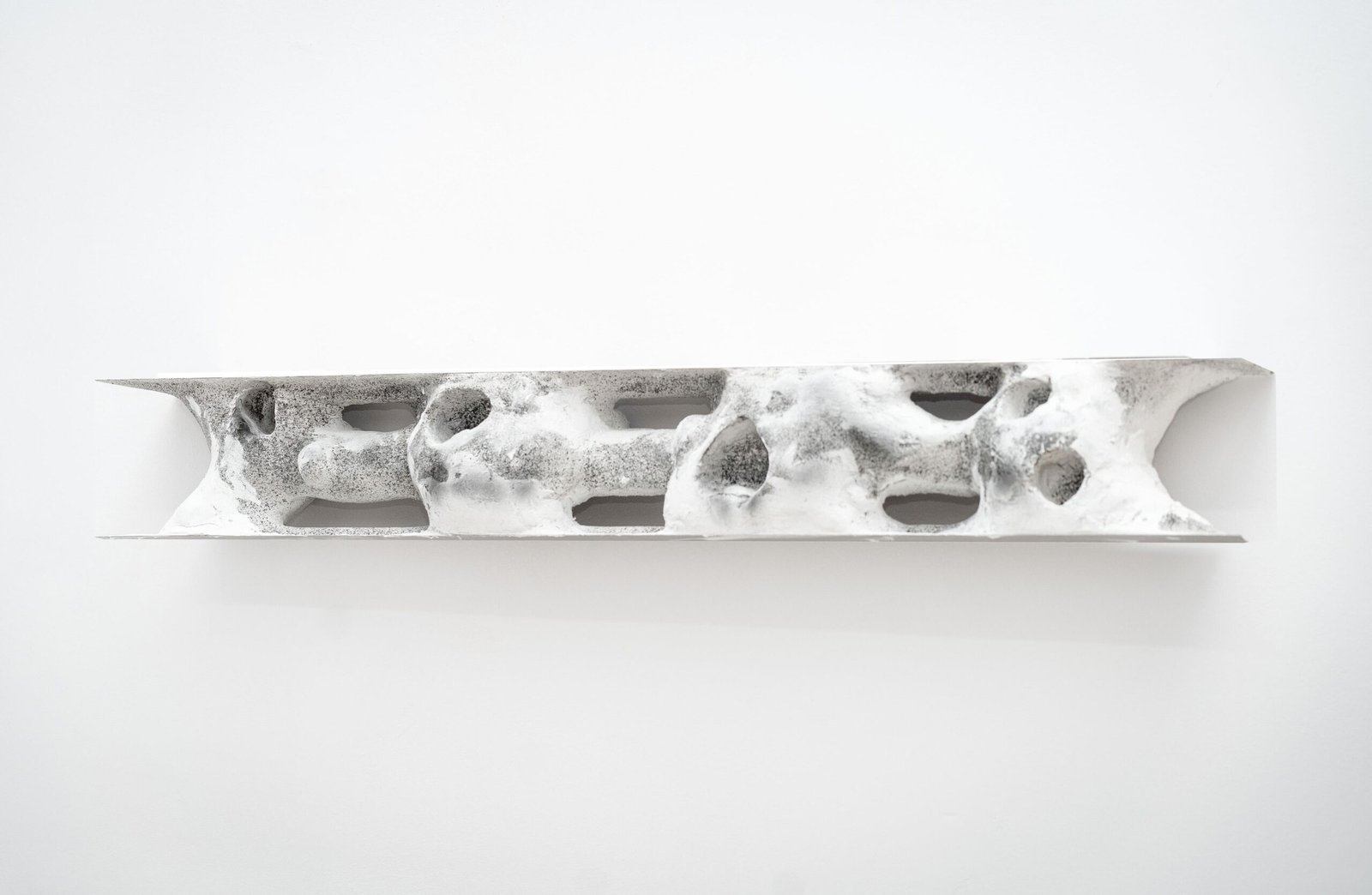
Within the space imposed by the cardboard structure appear objects that register the same mechanism on a smaller scale. The forms created by Sroka evoke fused bones, coral growths, or cellular structures: porous, filled with depressions, openings, and irregular protrusions, as though they had emerged through a natural process rather than been shaped by hand. The matte, cream-coloured or pale grey surfaces of these forms are repeatedly interrupted by foreign elements: a delicate trace of blue, pink, or yellow pigment entering a fissure; a smooth black sphere held by the porous mass like a natural nest; a thin, rusted wire winding around the form and creating an irregular, open frame. In each of these arrangements, the foreign material does not simply sit beside the organic structure but enters into direct contact with it, occupying its interior and resting against its edges. It is precisely the same gesture that, on the scale of the entire exhibition, the cardboard performs in relation to the architecture. The objects become interference in miniature, demonstrating that the phenomenon described at the outset operates at every scale, from the room to a single form held in the hand.
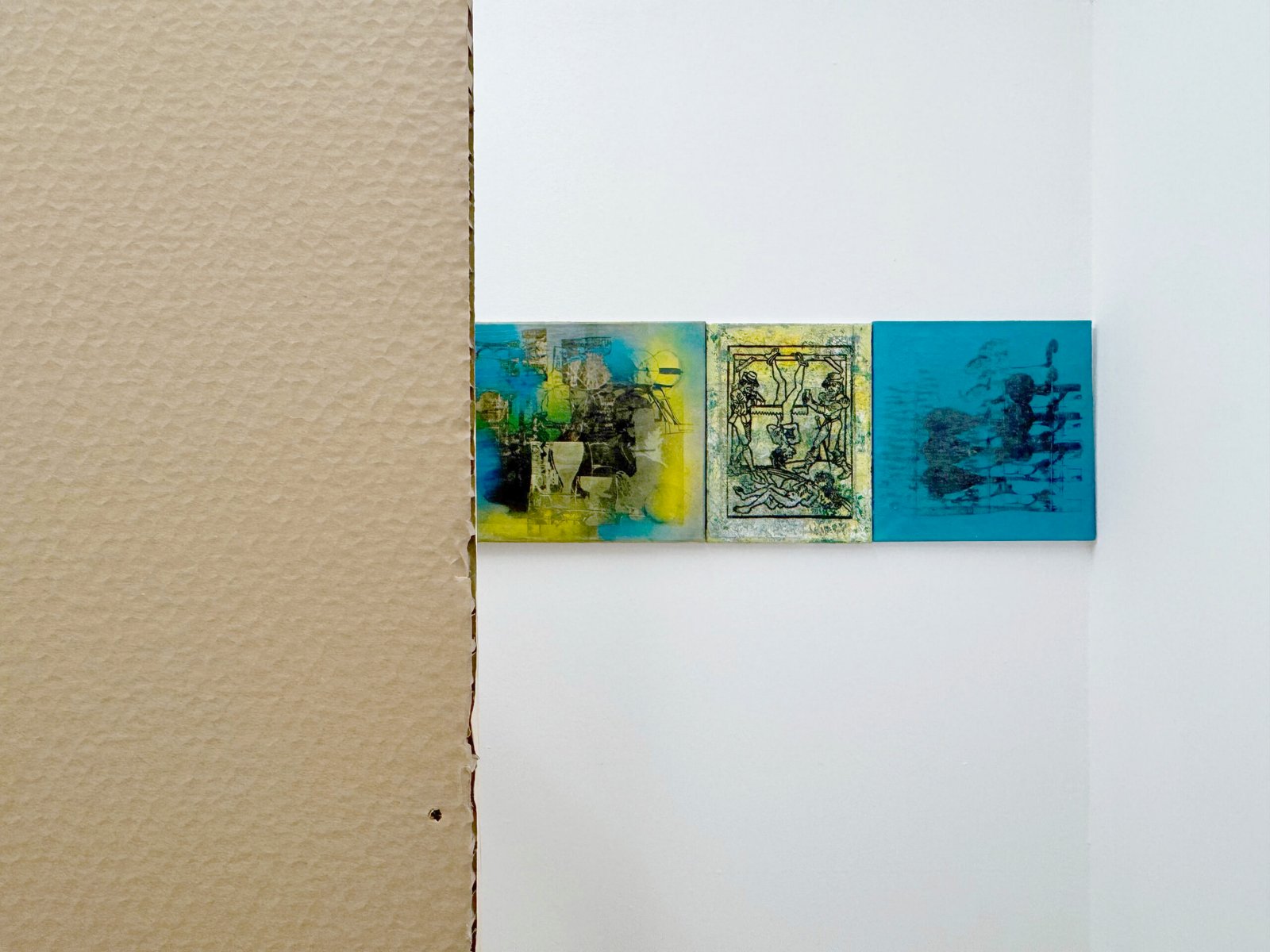
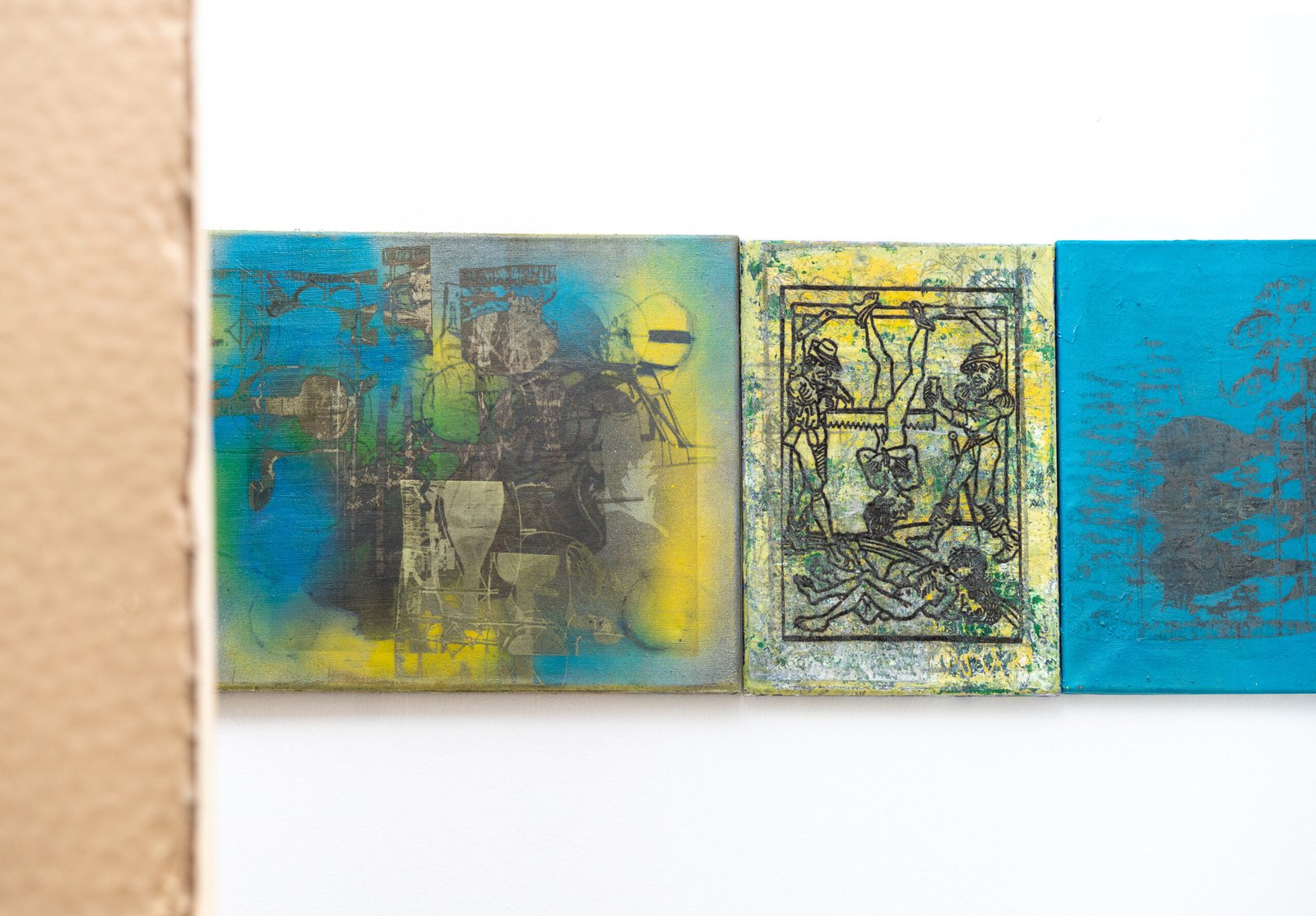
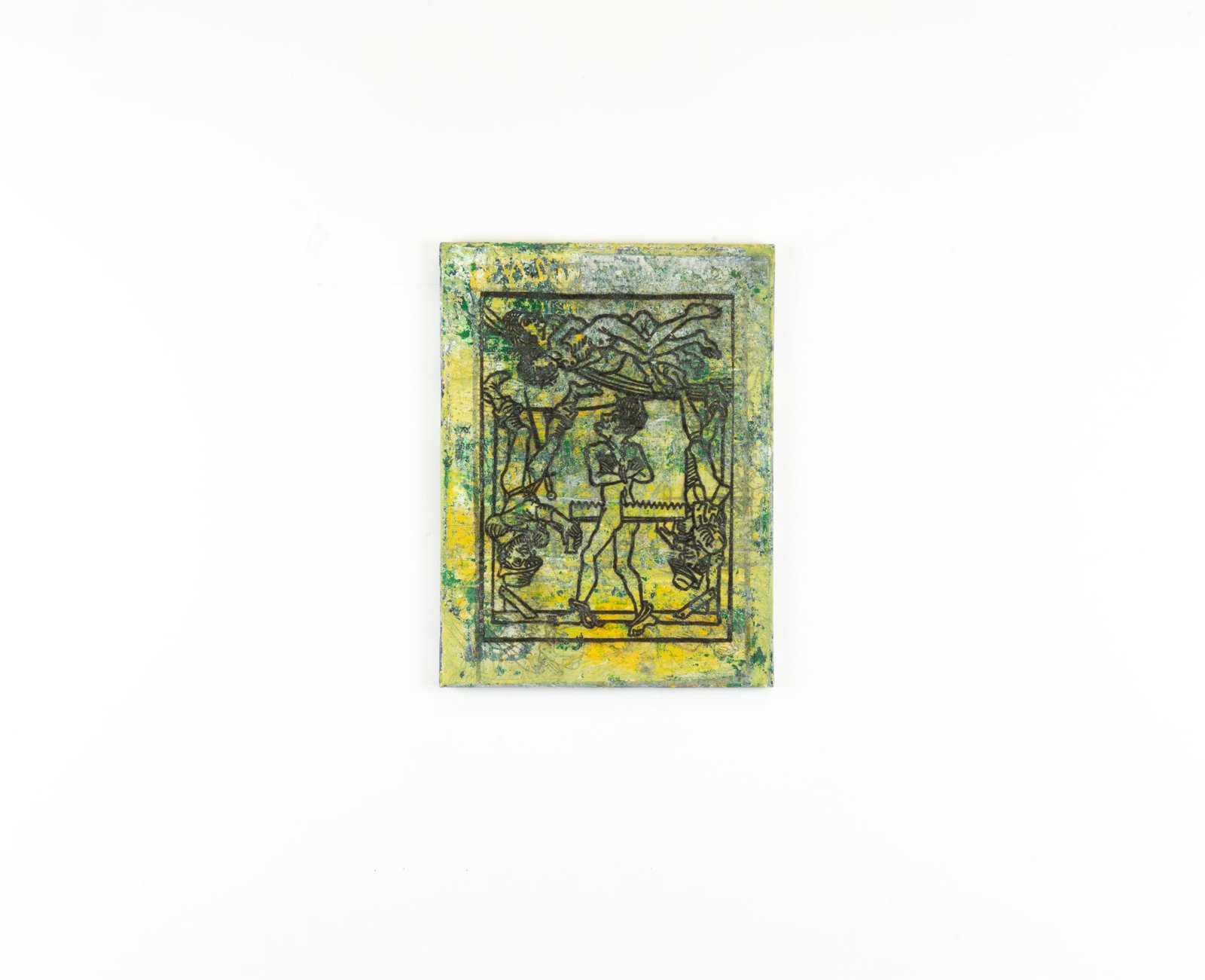
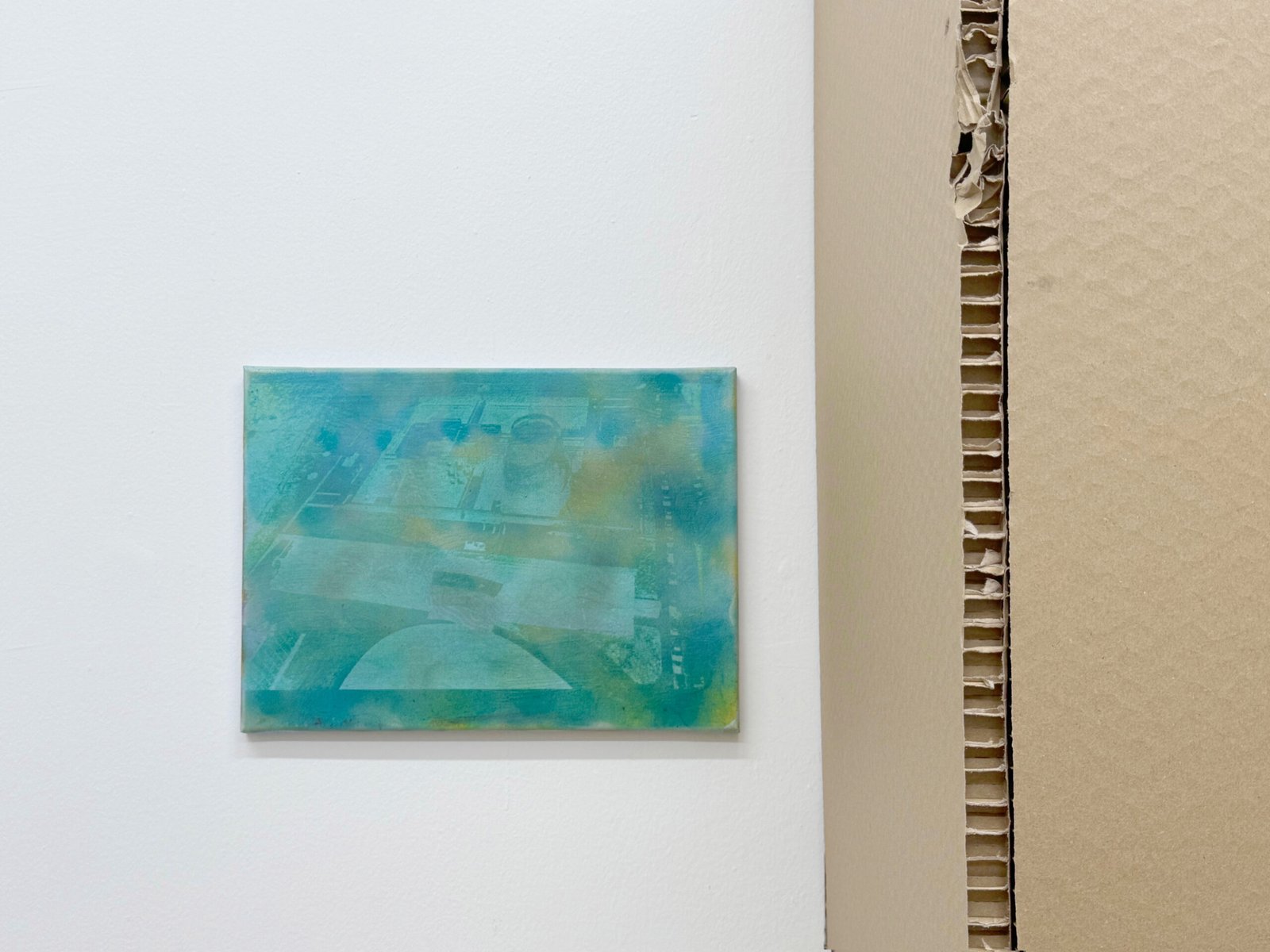
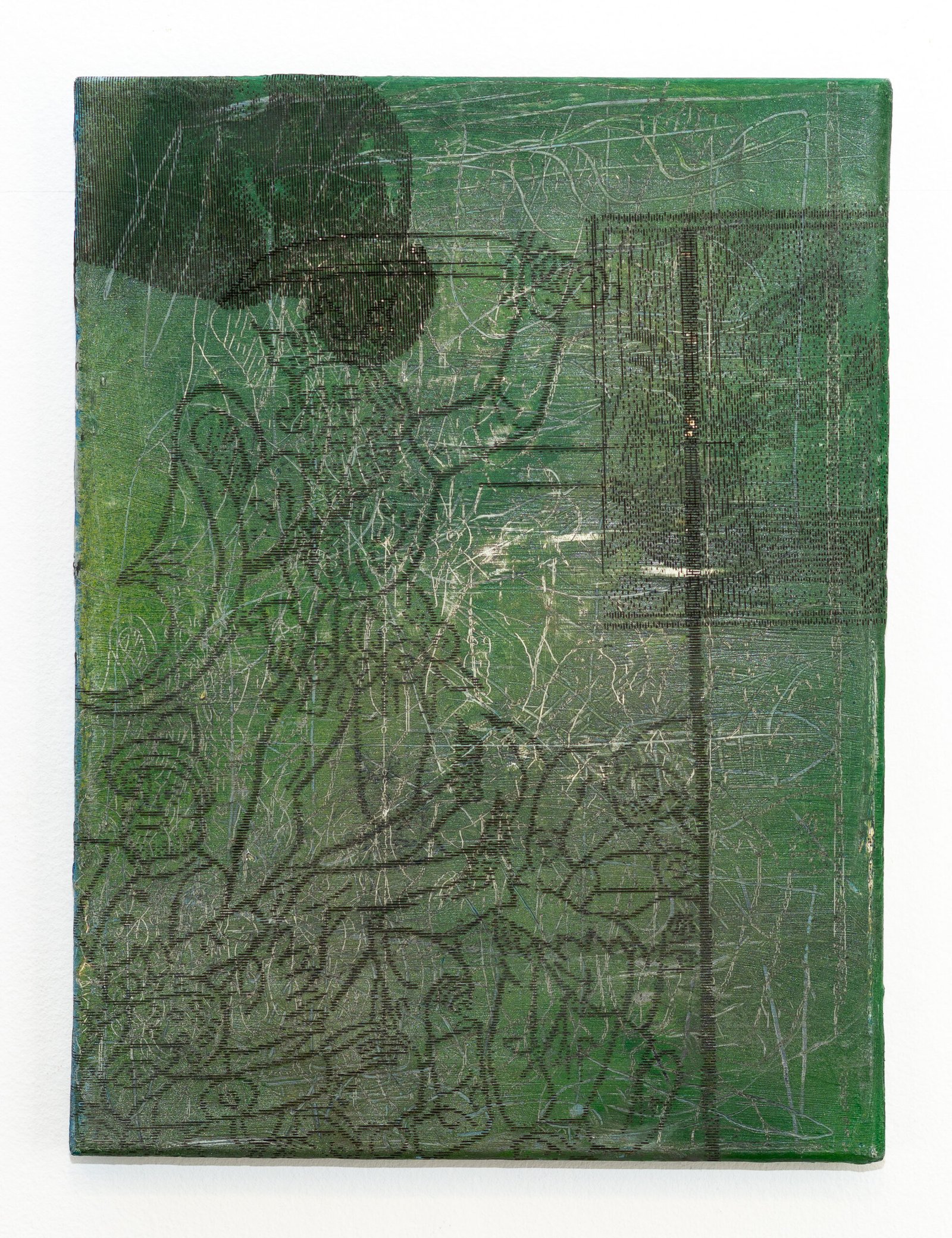
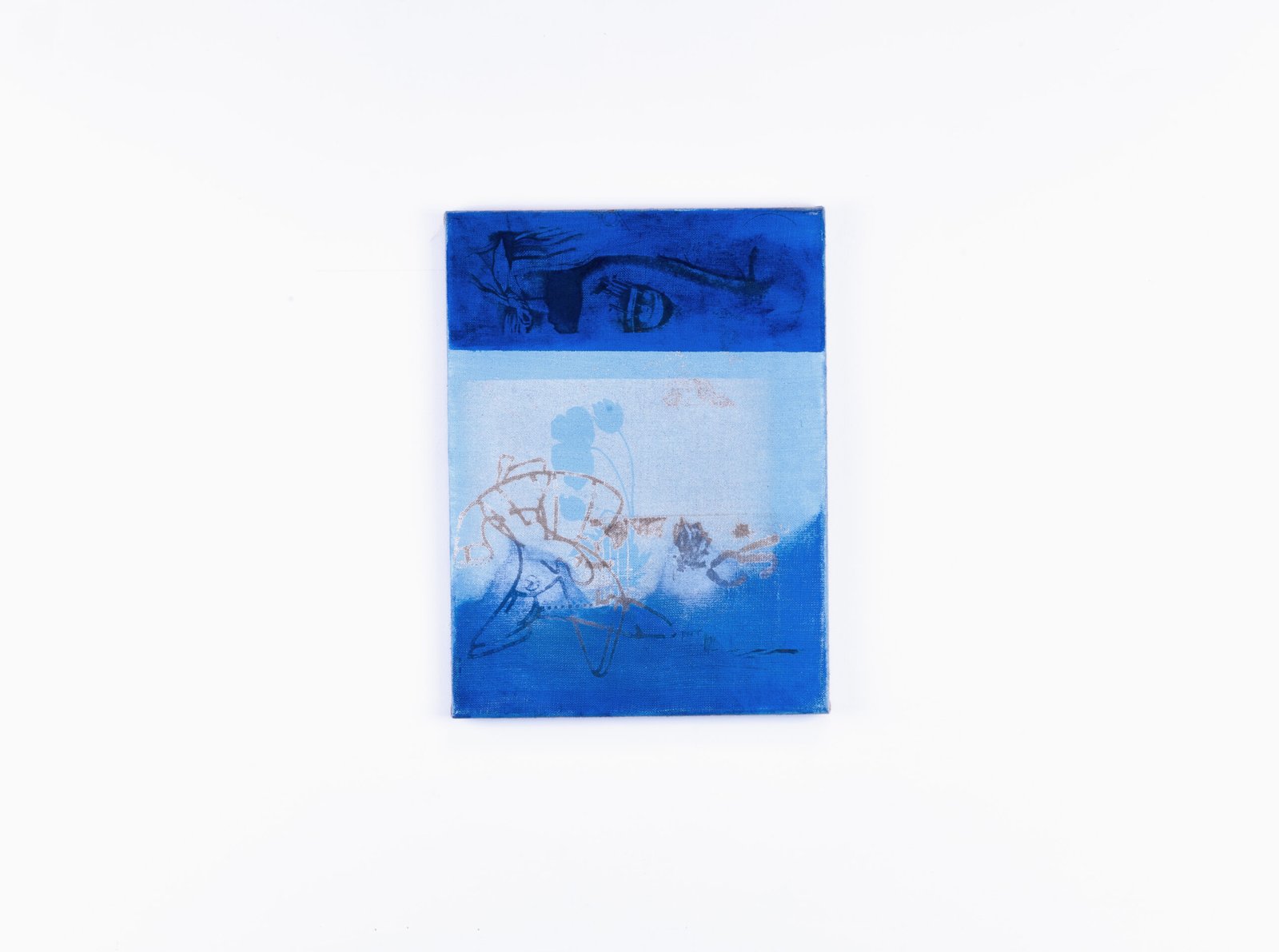
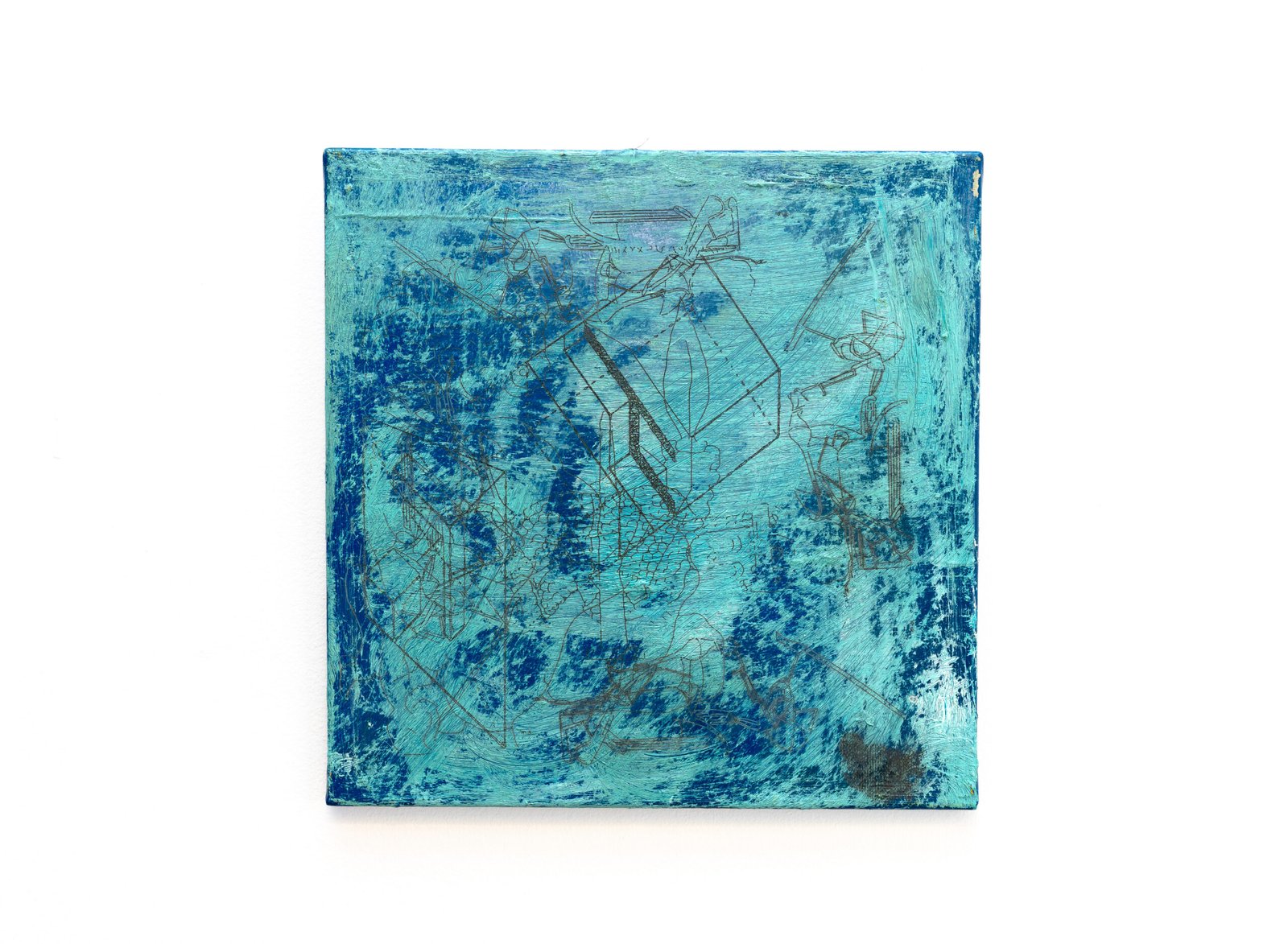
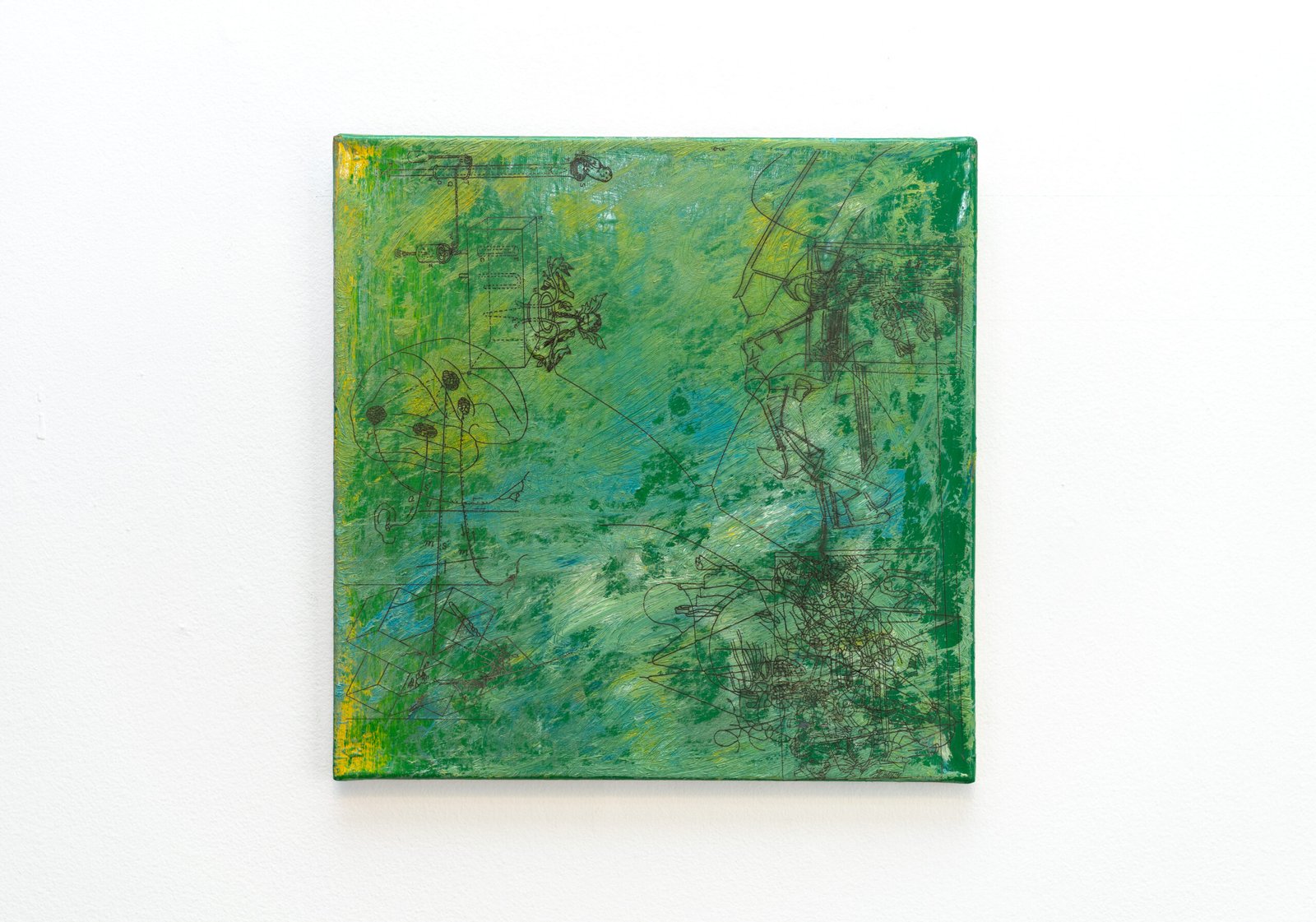
Another level of this interplay unfolds within painting. Sroka’s canvases do not illustrate either the space of the cardboard structure or the porous objects, but enter into dialogue with them on their own terms. They repeat their rhythms, colours, and at times even their formal motifs, though always with a shift, as if seen through tracing paper. A figure that appears to be the main protagonist of one composition may reappear elsewhere as a minor technical component, a background element, or part of a construction, almost imperceptible. This shift in hierarchy is crucial: nothing in the exhibition has a fixed status. Depending on the context, each element may move into the foreground, recede into the background, and then emerge once again.
The final level of interference unfolds within the act of looking itself. As the viewer moves between the cardboard planes, objects, and paintings, they themselves become the site at which these three orders meet: the architectural, the material, and the painterly. Their route, their angle of vision, and their decision to approach or step back determine which relationships become activated at a given moment. Perception ceases to function as a neutral medium registering a completed whole and instead becomes another system entering into interference with the others.
This is why none of these elements functions merely as a background. Architecture, cardboard, porous objects, paintings, and the viewer’s own perception begin to modify, overlap, and interrupt one another. The exhibition exists precisely within these moments of superimposition, rather than within any single order on its own.