



Paratext
By Eugenia Roldán and Manuel Molina
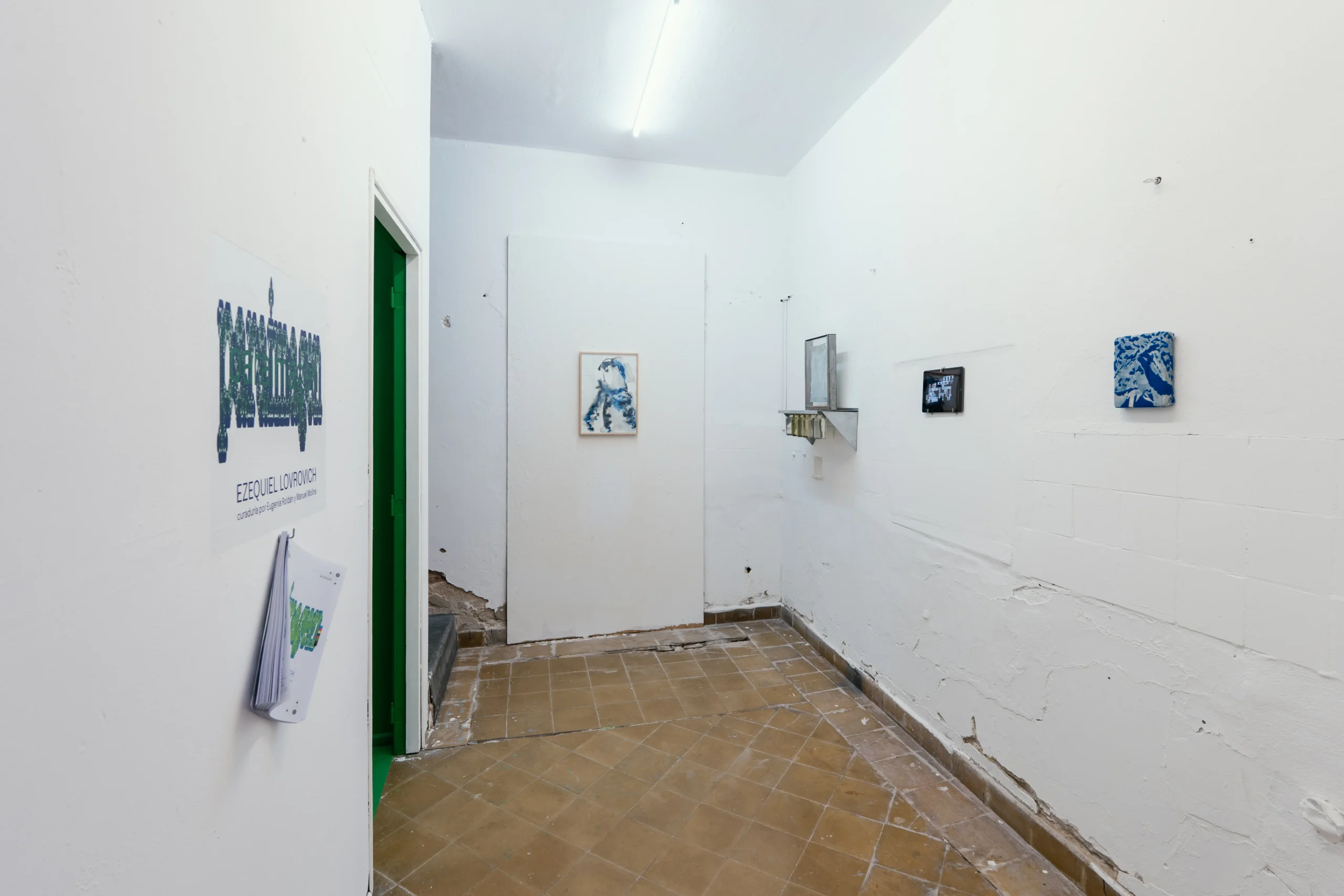
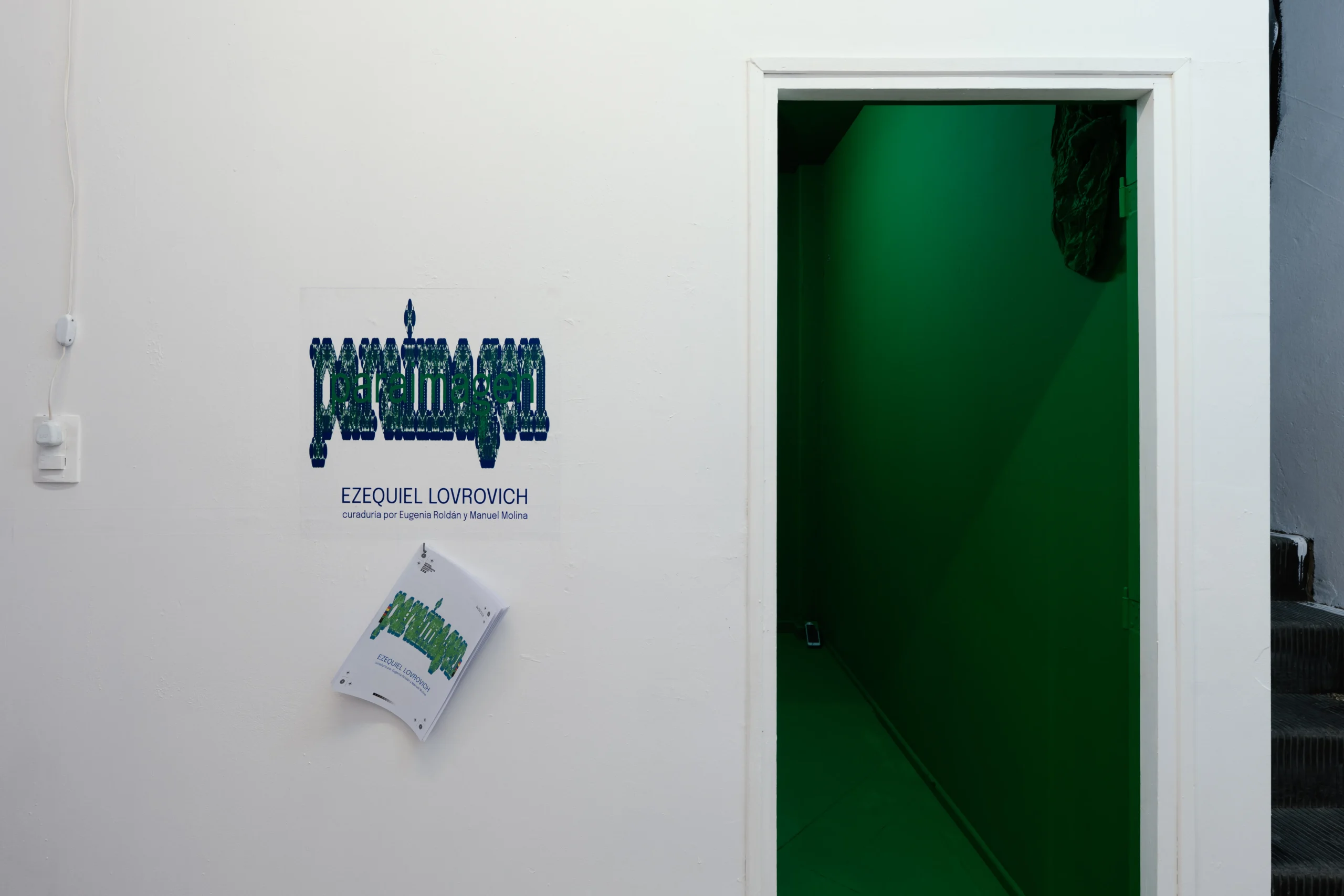
This exhibition, simultaneously a senior thesis for the public University of Córdoba, formulates a notion that places the visible and the invisible of digital images into dialectical relation. Paraimage is both the theoretical concept and the artistic procedure that Lovrovich risks here.
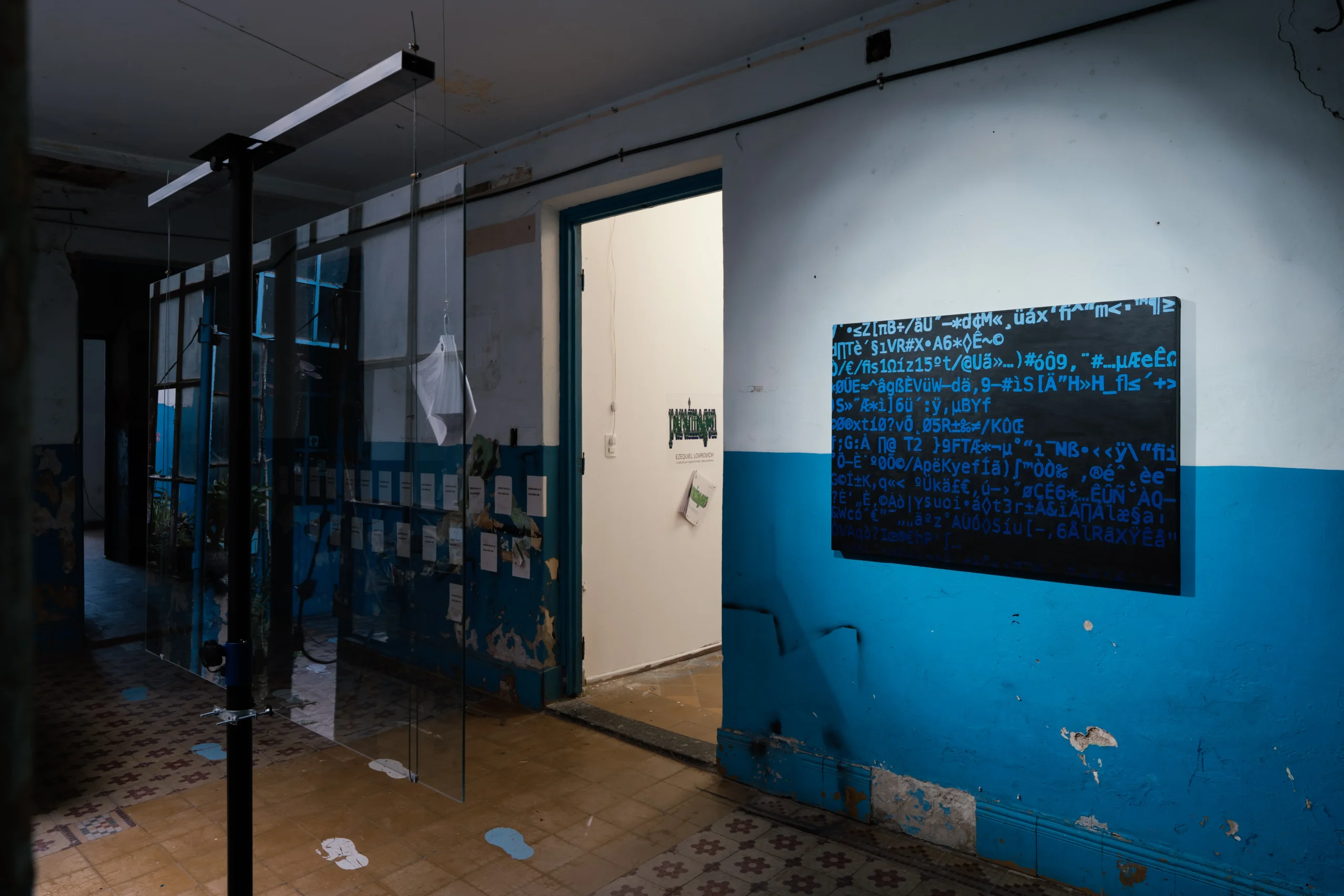
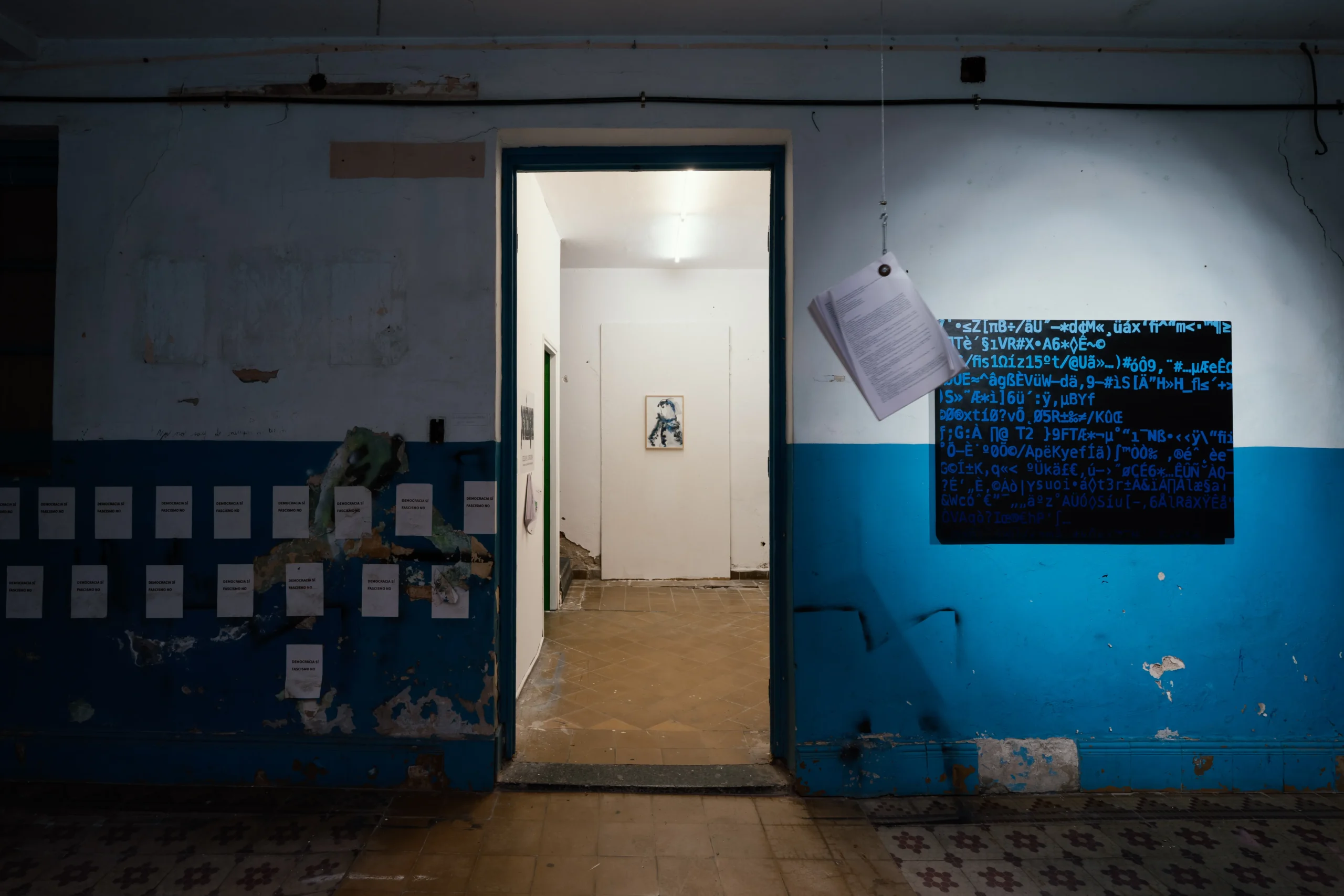
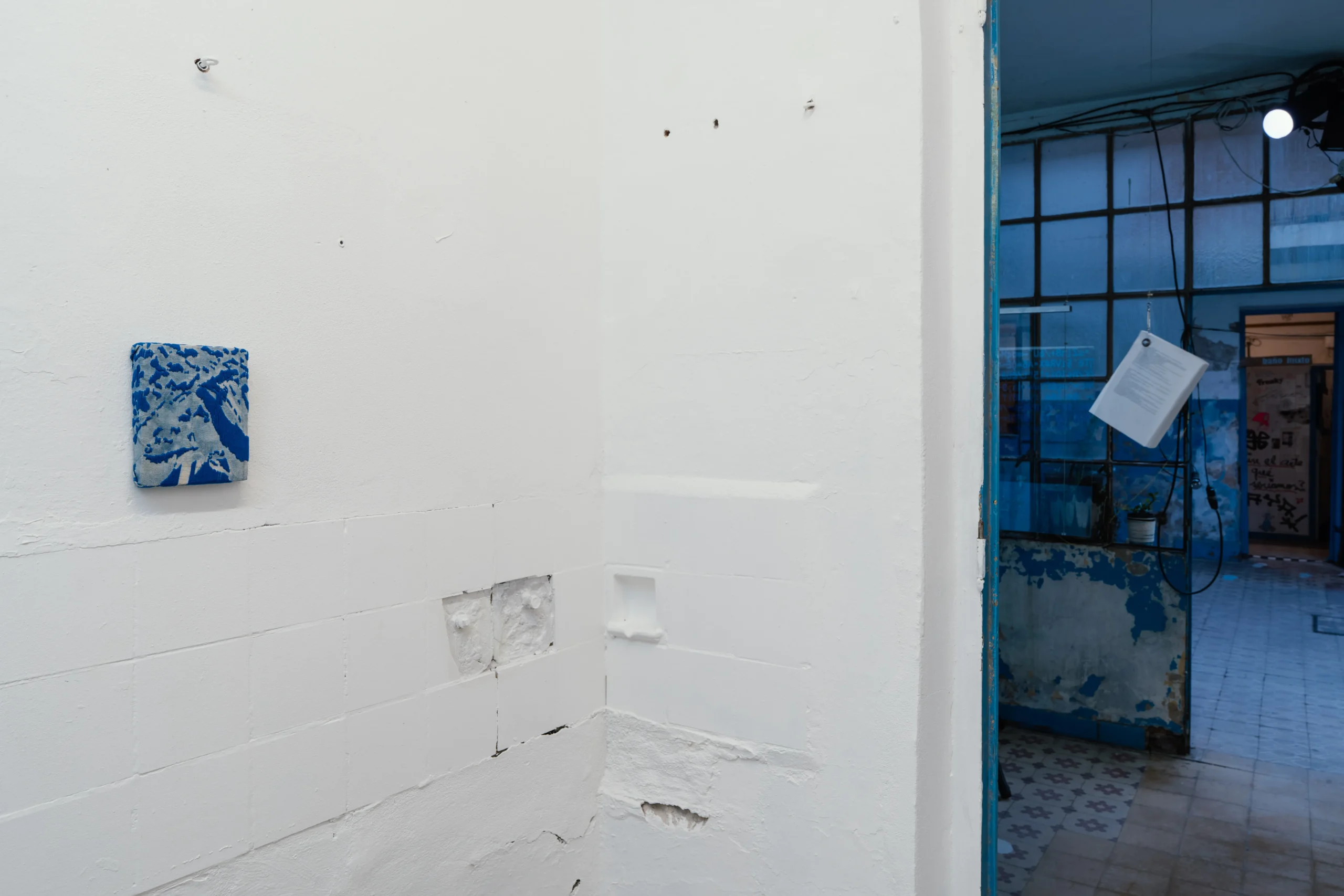
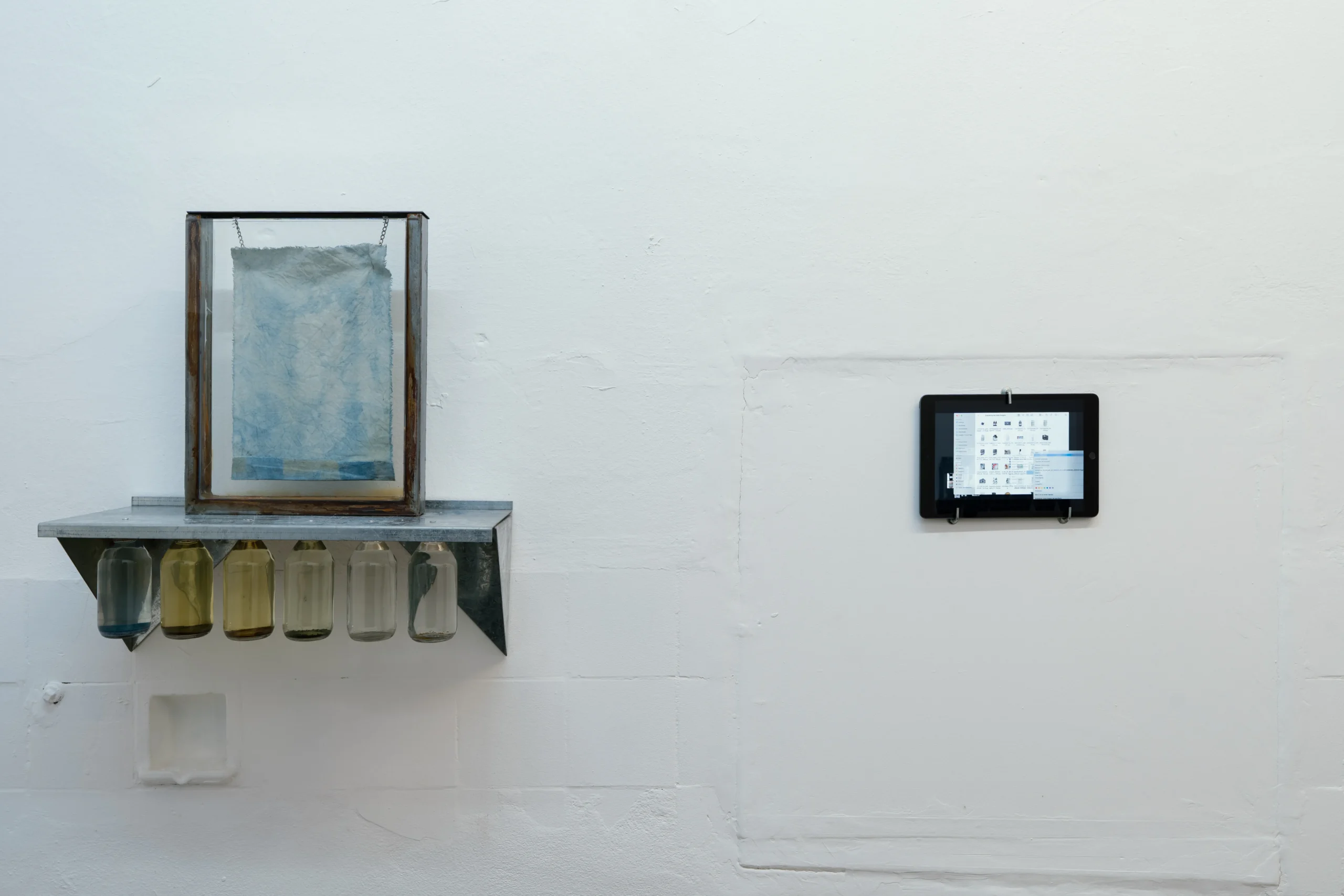
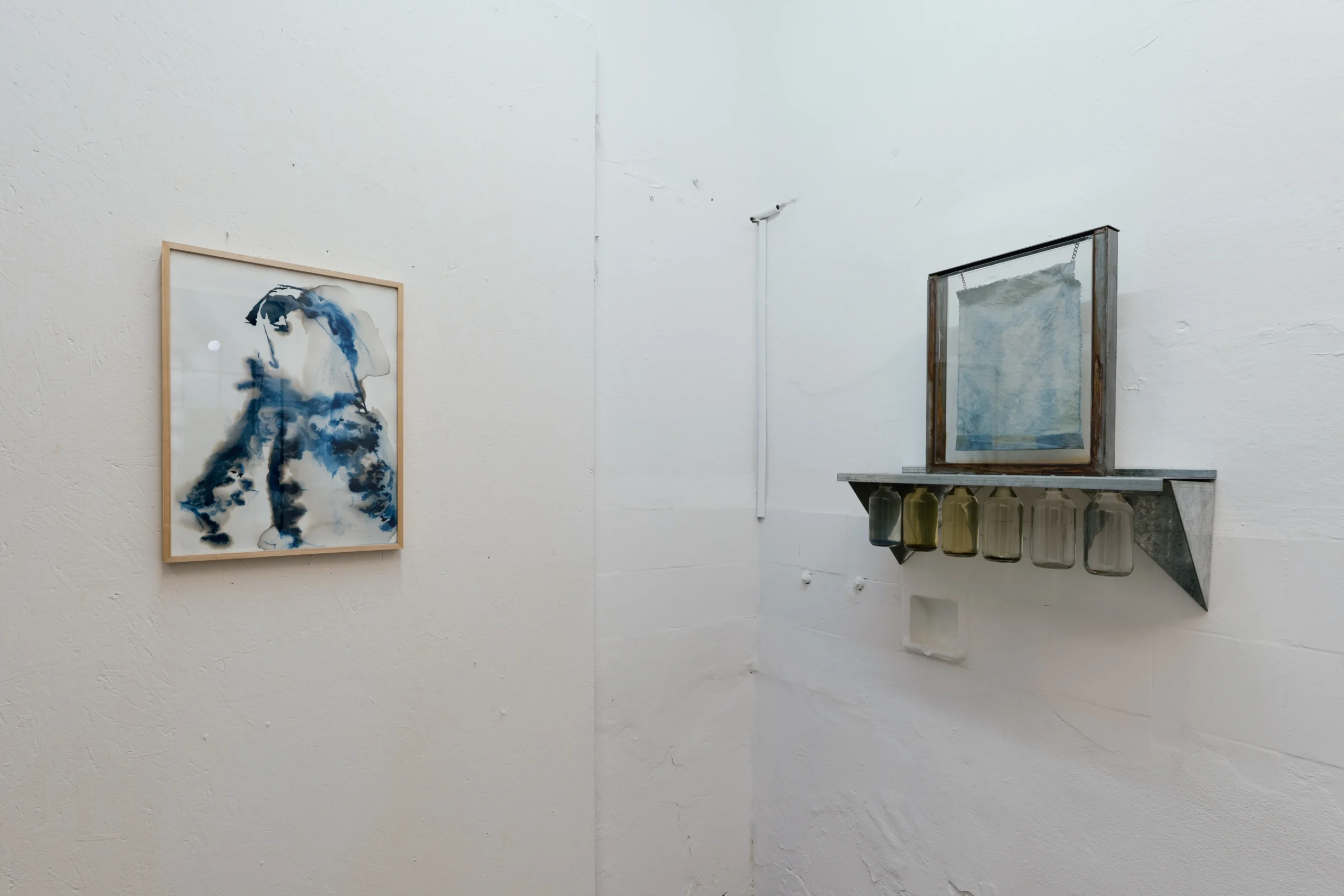
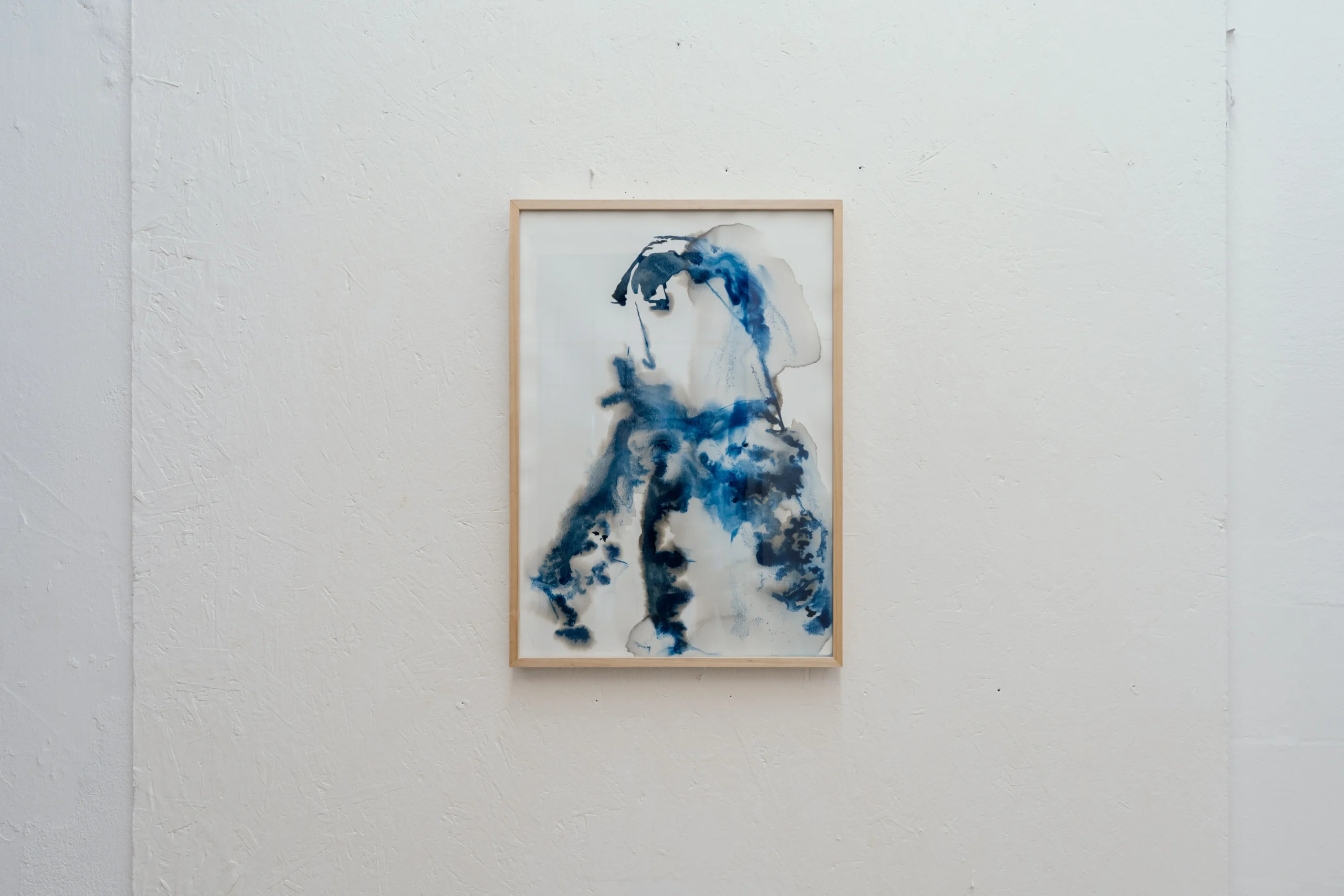
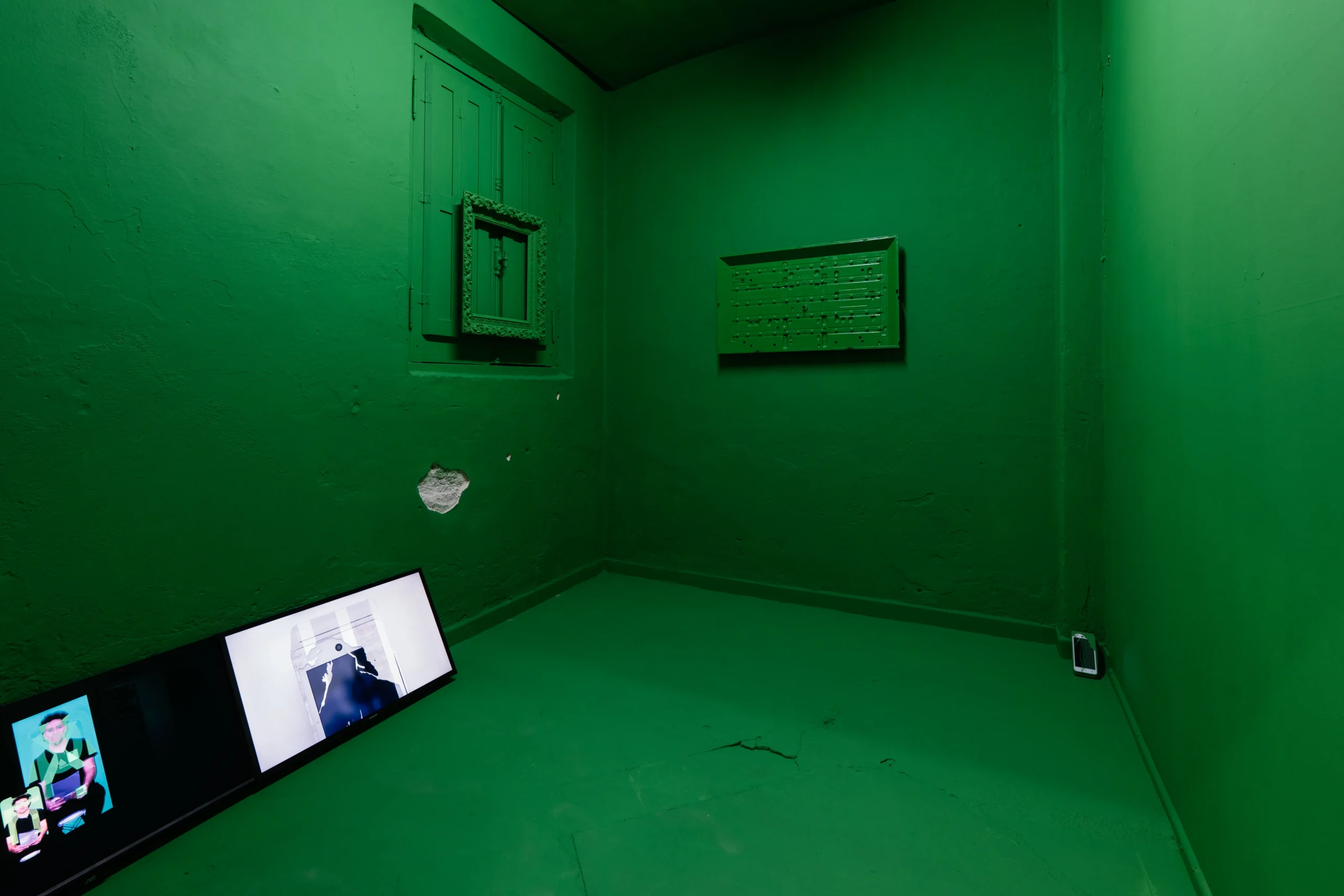
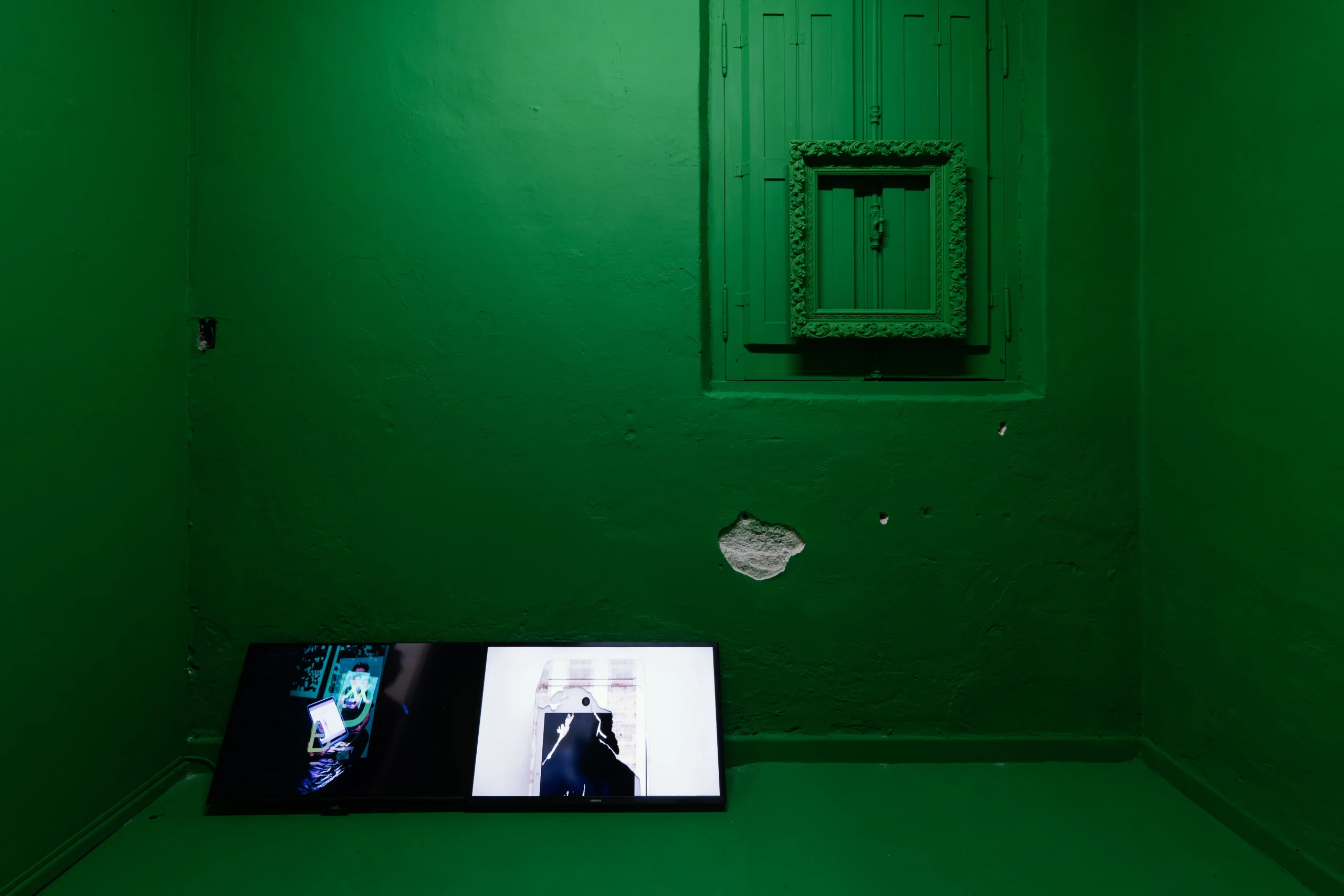
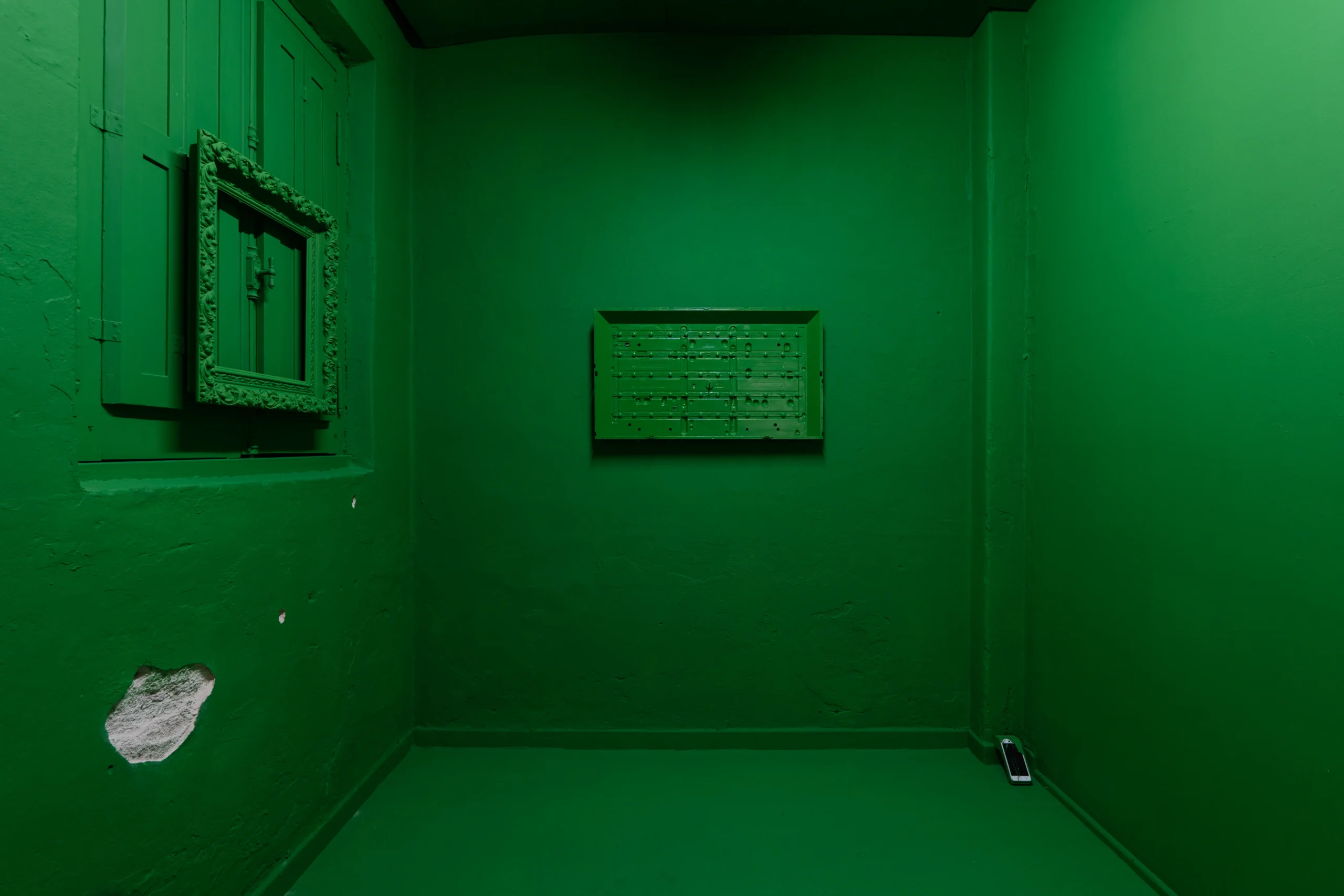
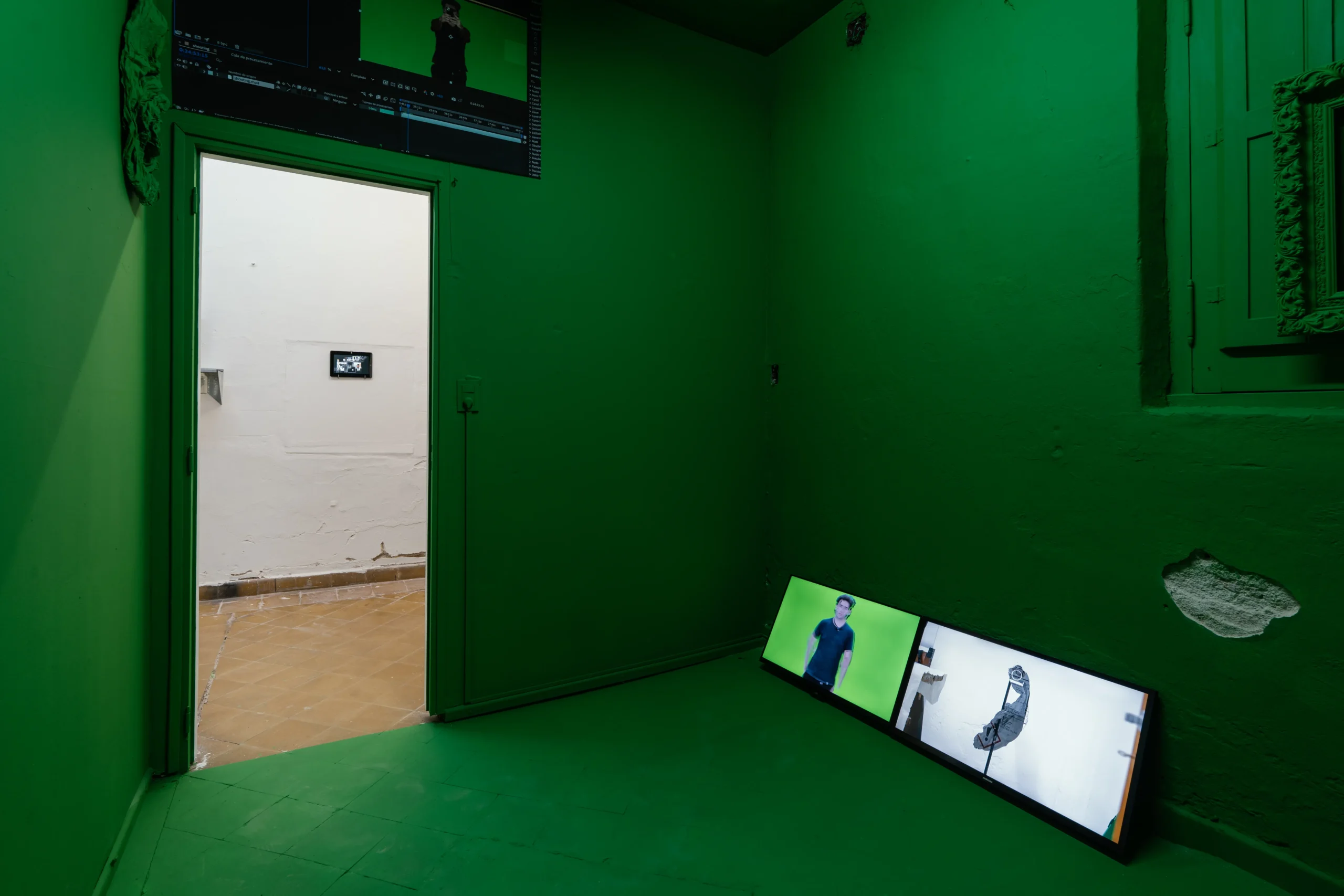
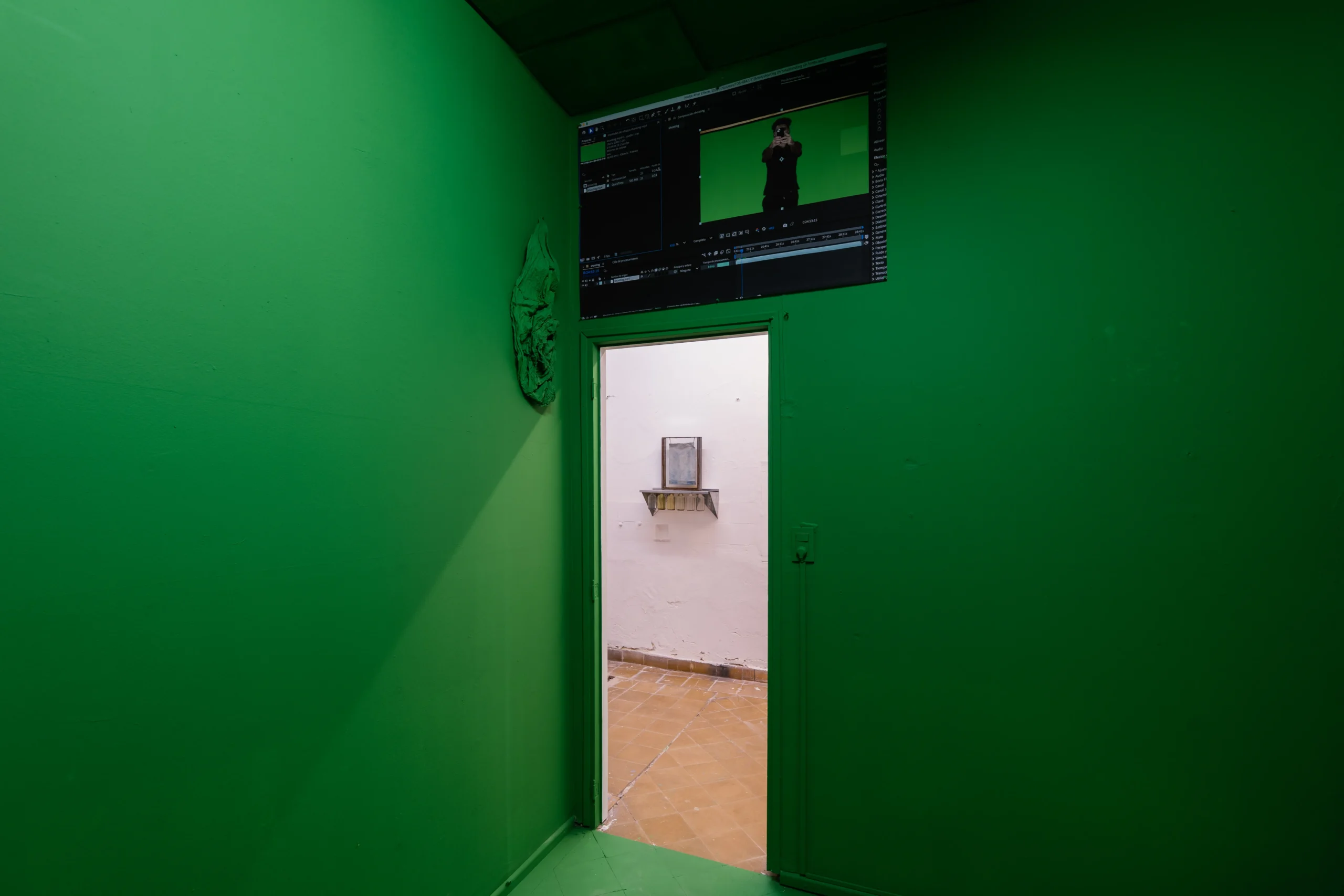
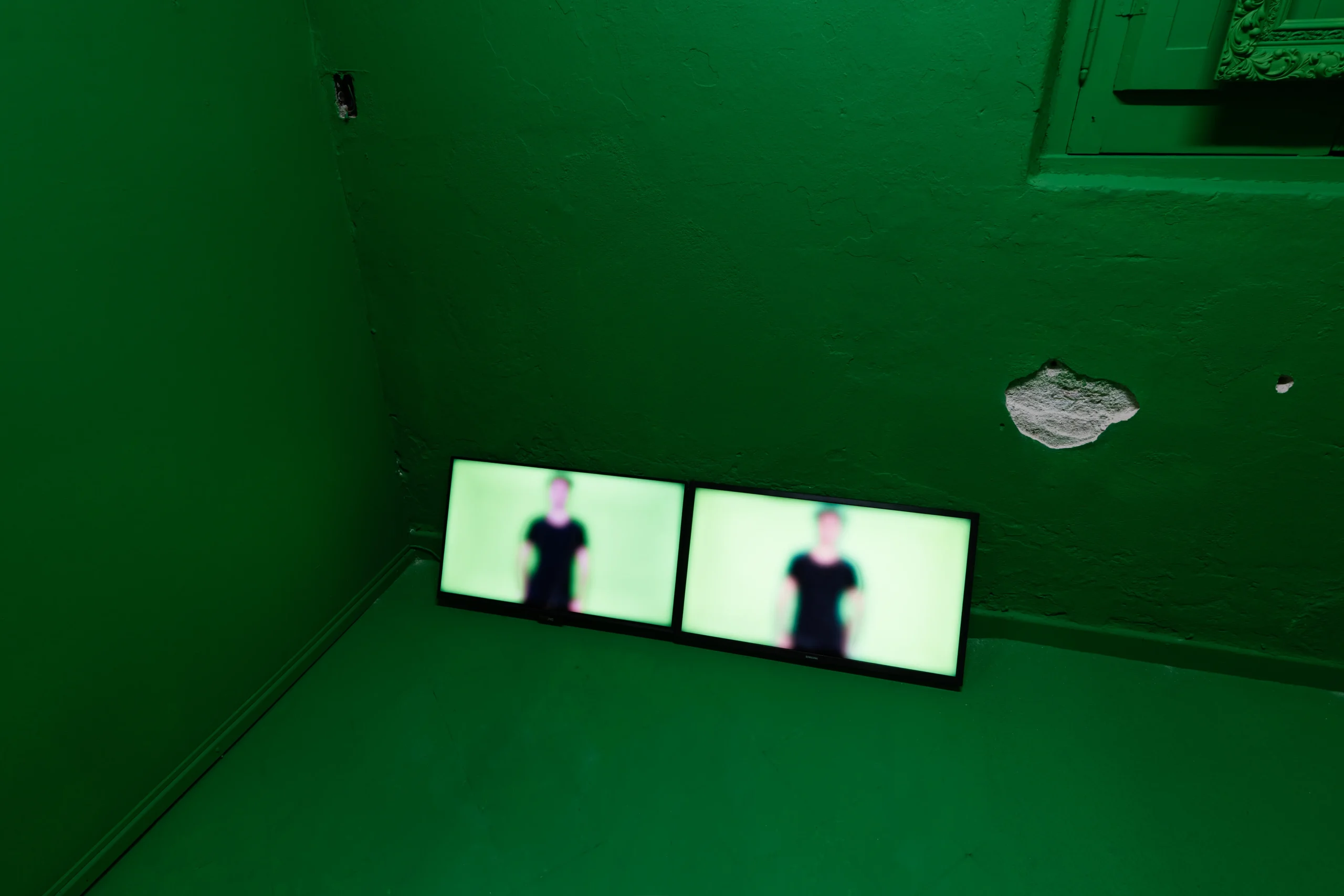
As a theoretical concept, paraimage dives into the discussion around the almighty impact of digitization on the contemporary world, exposing its algorithmic composition, bound to an encoded mathema. As a work of art, paraimage reinvents the way the digital interface is used, exposing its binary and “unvisual” vertebra. The system of 0s and 1s returns as a contrast of colors between two visual regimes that precede the Internet: between painting and cinema, between the blue of landscape and chroma green. Blue links back to the materiality of modern images: cyanotype printing, looms, and the tradition of painting. Chroma key green, meanwhile, and the pull of an entire room saturated in it, reminds us of both The Matrix and Hito Steyerl’s video essays, as well as of the first technical hallucinations brought on by the turn of the millennium. A green that mocks both the visual arts and the aesthetics of programming, a green that floods the world in order to flood screens with other landscapes.
What, ultimately, are digital images? Ontologically, they are nothing more than information, data, an inhuman language insofar as it is unpronounceable and unfathomable. Paraimage also posits the “algorithmic frame” of the visible on smart screens as an epistemological parable: the subject/object relation is redefined as a user/device subjection.
In Paraimage, the representation of the image—its iconic condition, but also its imaginary one—tends to disappear under the overdetermination of the programmed machine. But Lovrovich does not merely register and describe the undermined state of the visual before the infinity of the screen; he also intervenes there, reconfiguring and even reprogramming the relation of forces: images are no longer alone; they are now accompanied by the prefix “para,” which indicates “alongside,” “around,” or “against.”
Paraimage works the image-as-code in multiple ways: through the visual representation of code, through the recursion of the images themselves, by running code through the body, by turning toward chroma. On screens, and outside of them.
Like any new proposition, this one is part of a collective dialogue. It invokes Trevor Paglen’s critiques of “invisible images”—images made to be “seen” by machines yet incapable of seeing humanity reduced to a mass of users. This “machinic vision,” in the words of Chilean philosopher Claudio Celis Bueno, introduces an operative power that answers to the tradition of Harun Farocki and to the propositions of Jussi Parikka. “Instructional layer” is the technical concept Lovrovich develops within this debate, prompting us to wonder: what can we do while we are being made by screens? In what other way can we see while being seen, as we look at screens?
Lovrovich unfolds the reflexive hybridity of a practice that runs through both artistic production and theoretical research, moving as fluidly through conceptual work as through the practical exploration of making. The concepts and arguments of his writing point back to his creative processes, though never joined by arrows—the works, in turn, also interrogate the thinking. Lovrovich’s amphibious existence between research and production allows him to decipher “drop by drop”—in his own words—the encrypted condition of digital images. In the end, a piece, an academic essay, proves capable of expressing the fate of contemporary platform capitalism. And of bending it.