


TEILS TILES — 44flavours
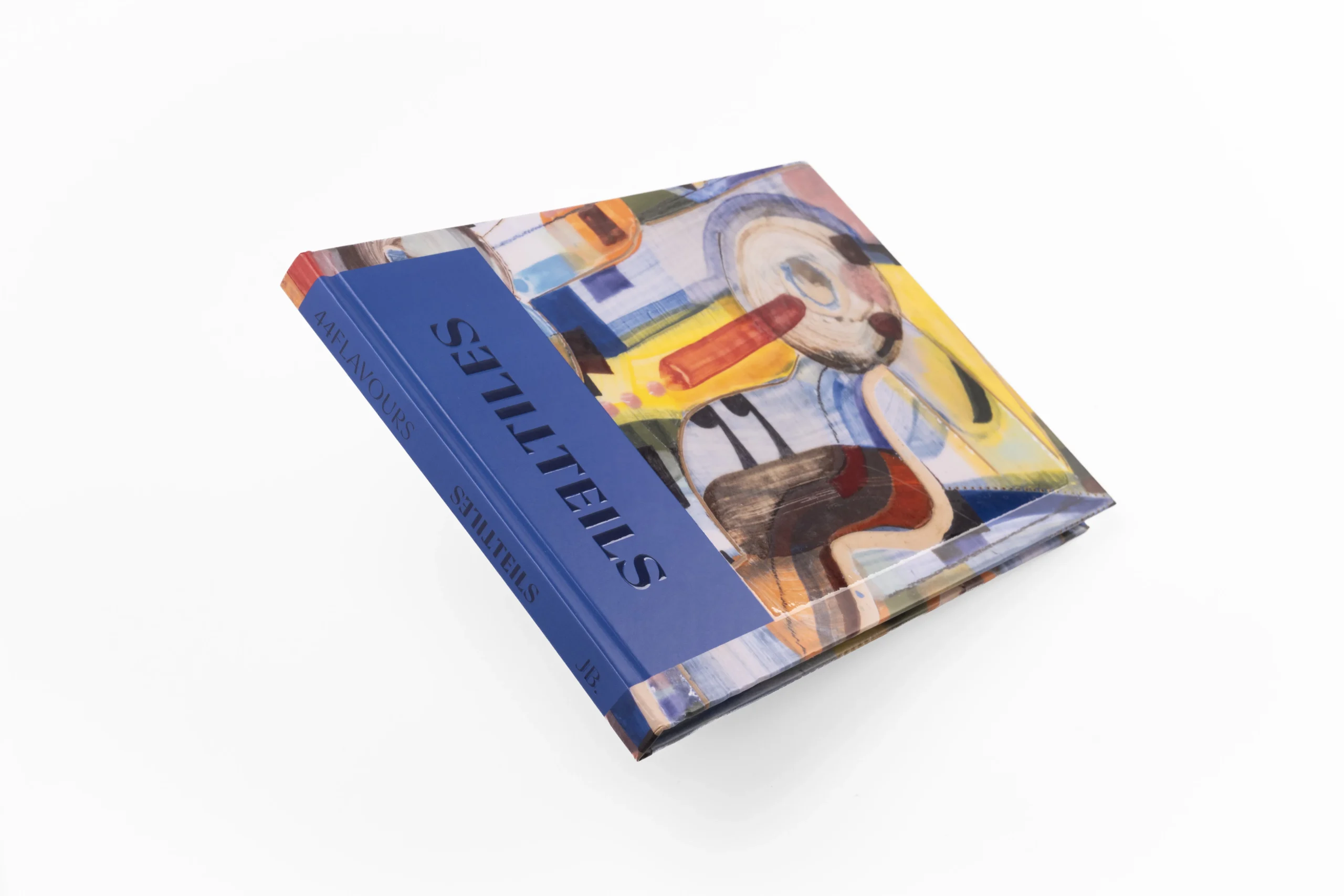
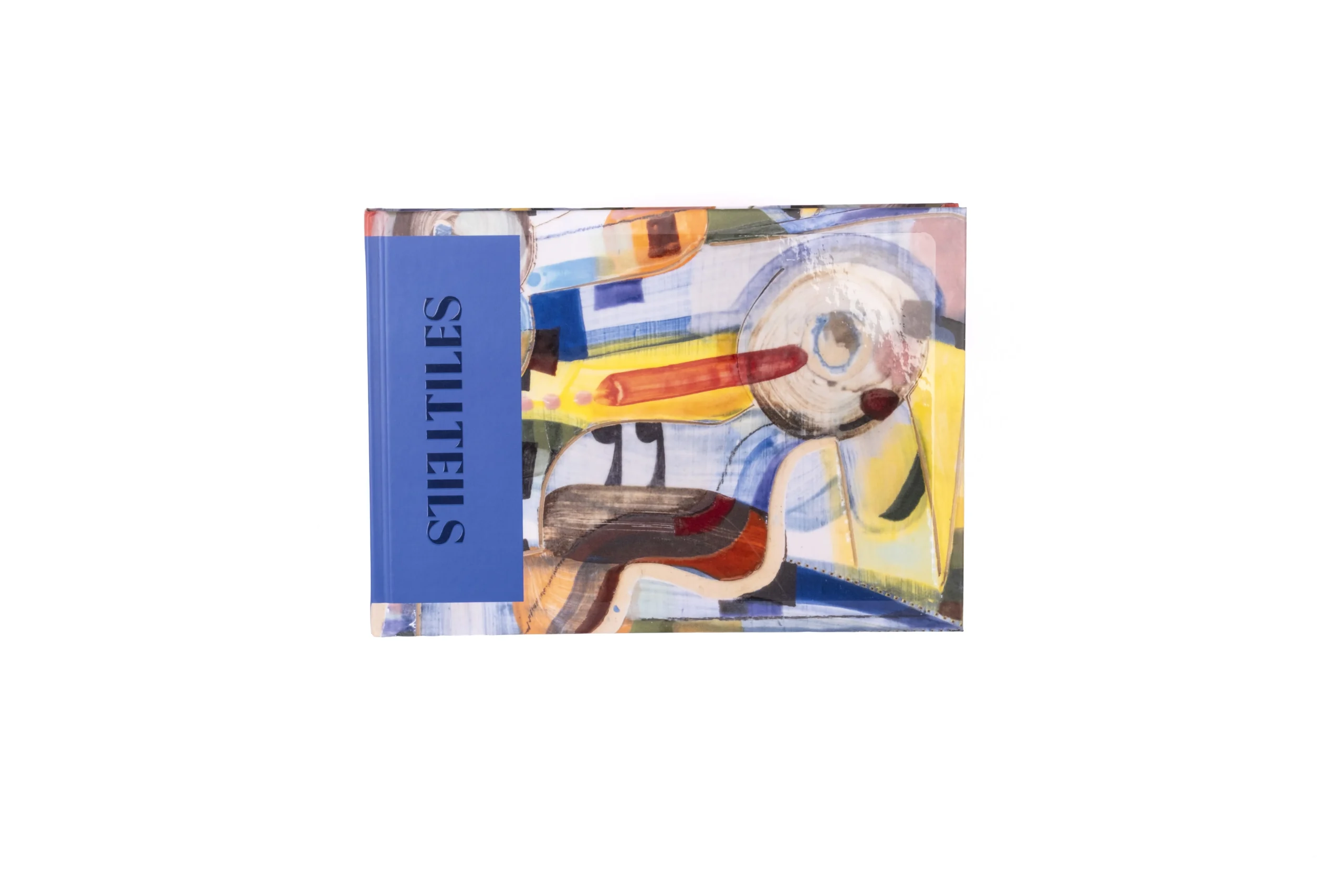
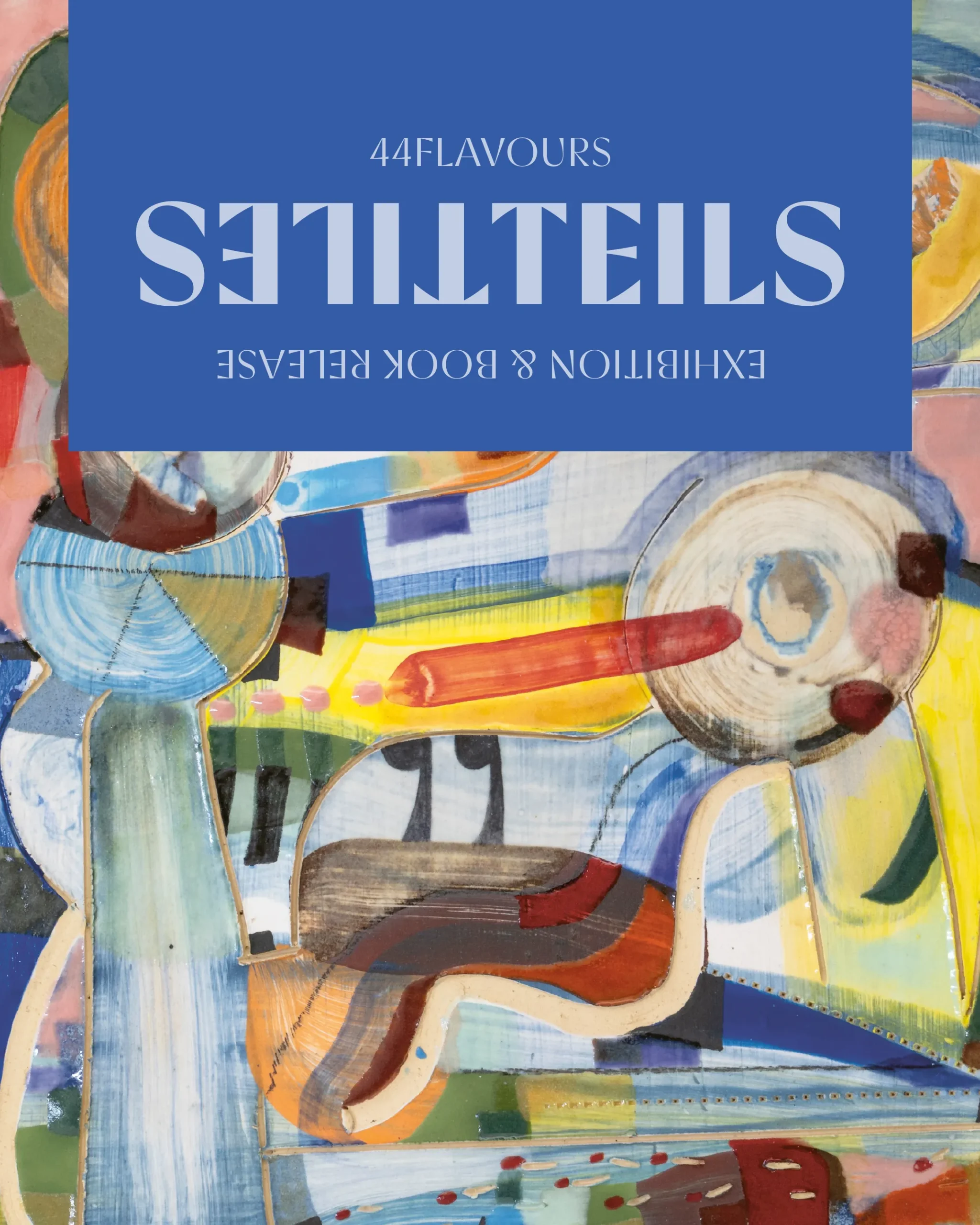
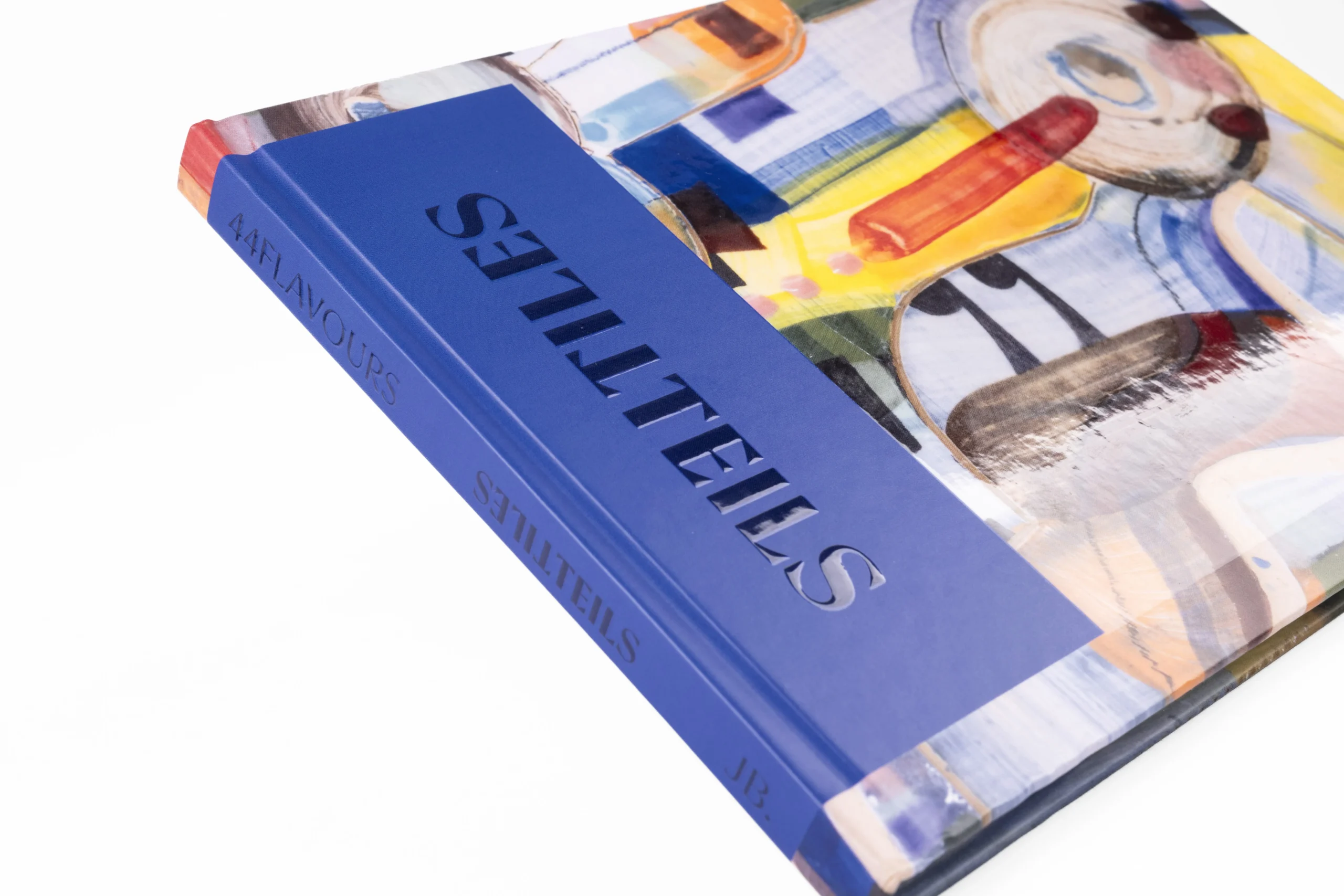
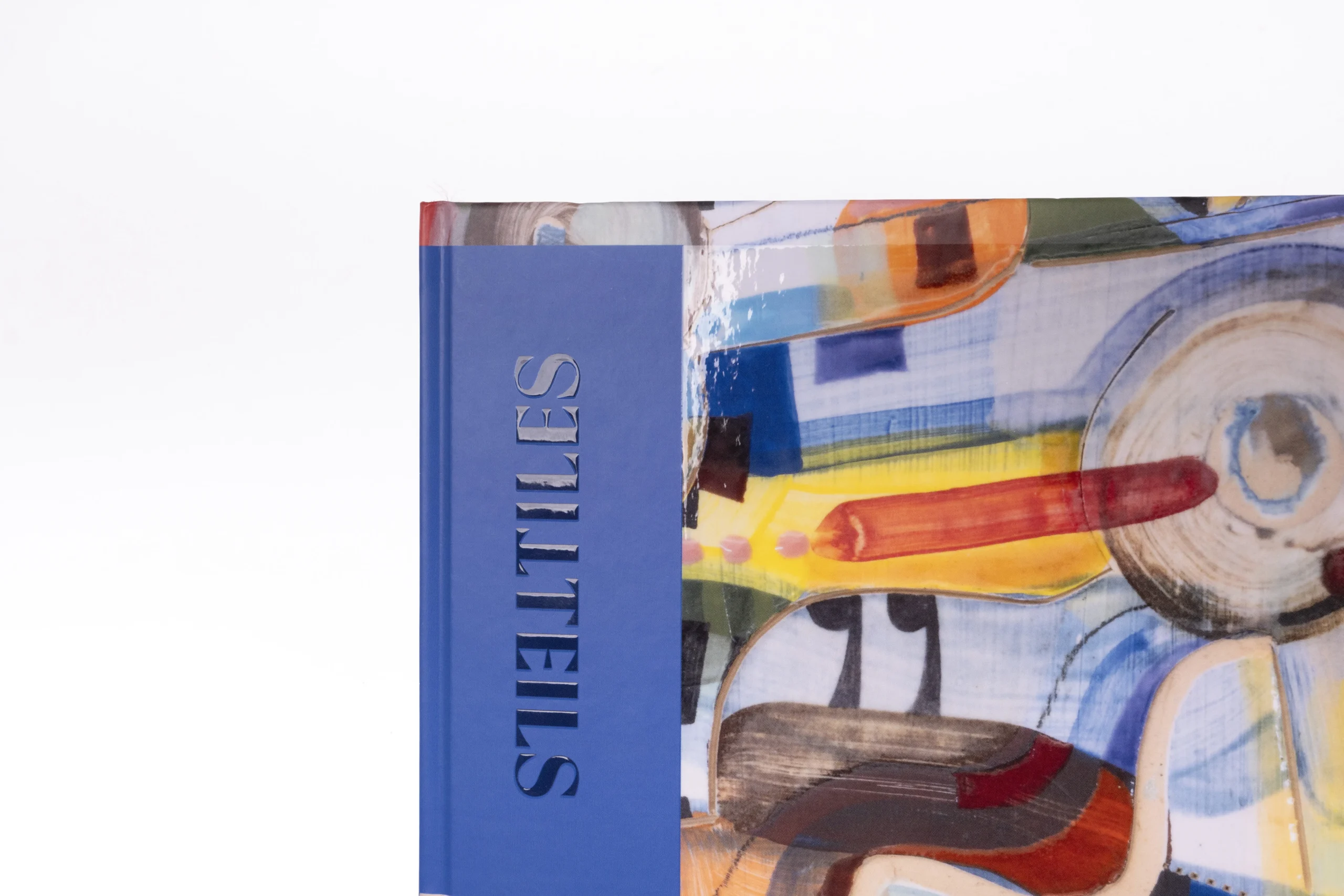
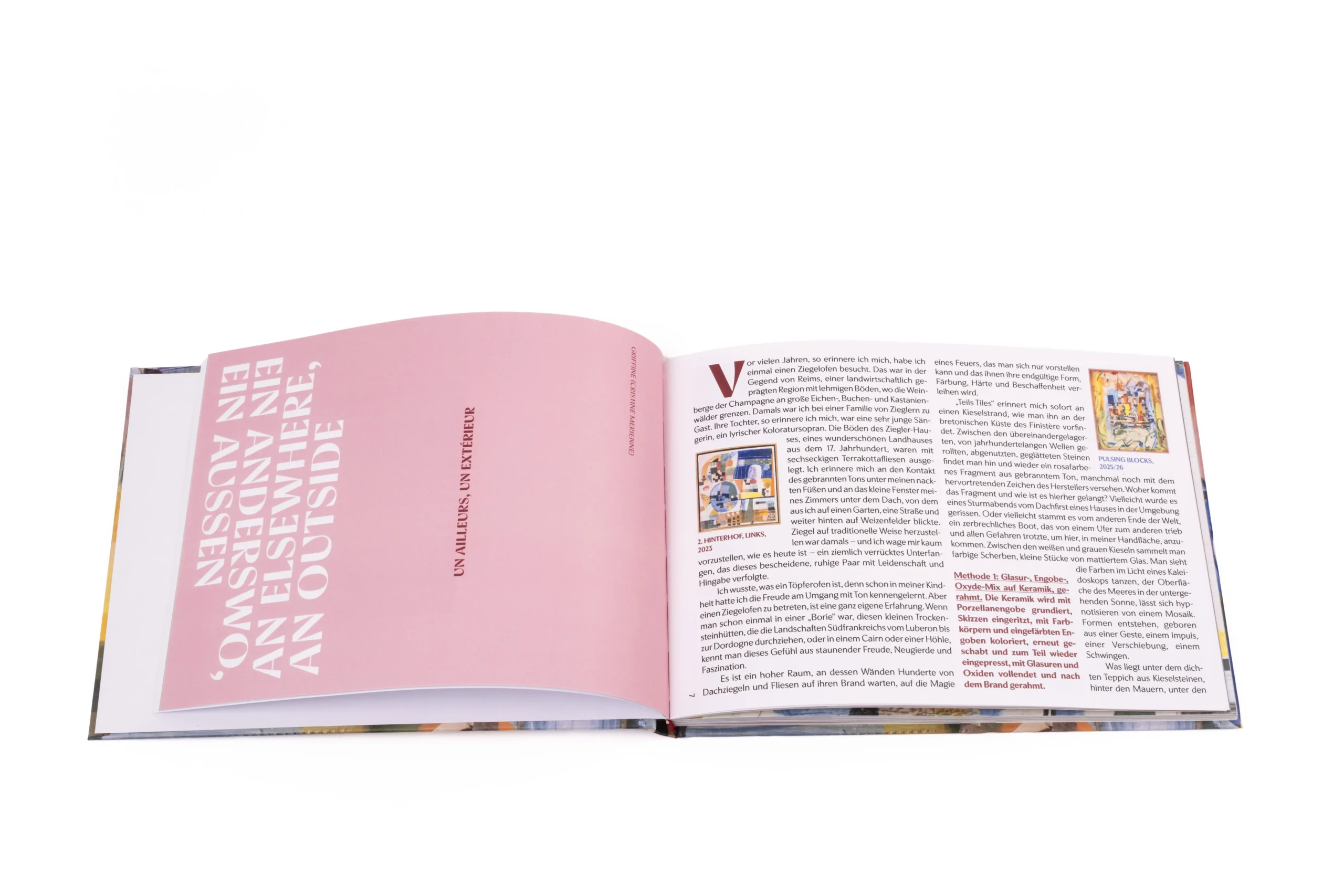
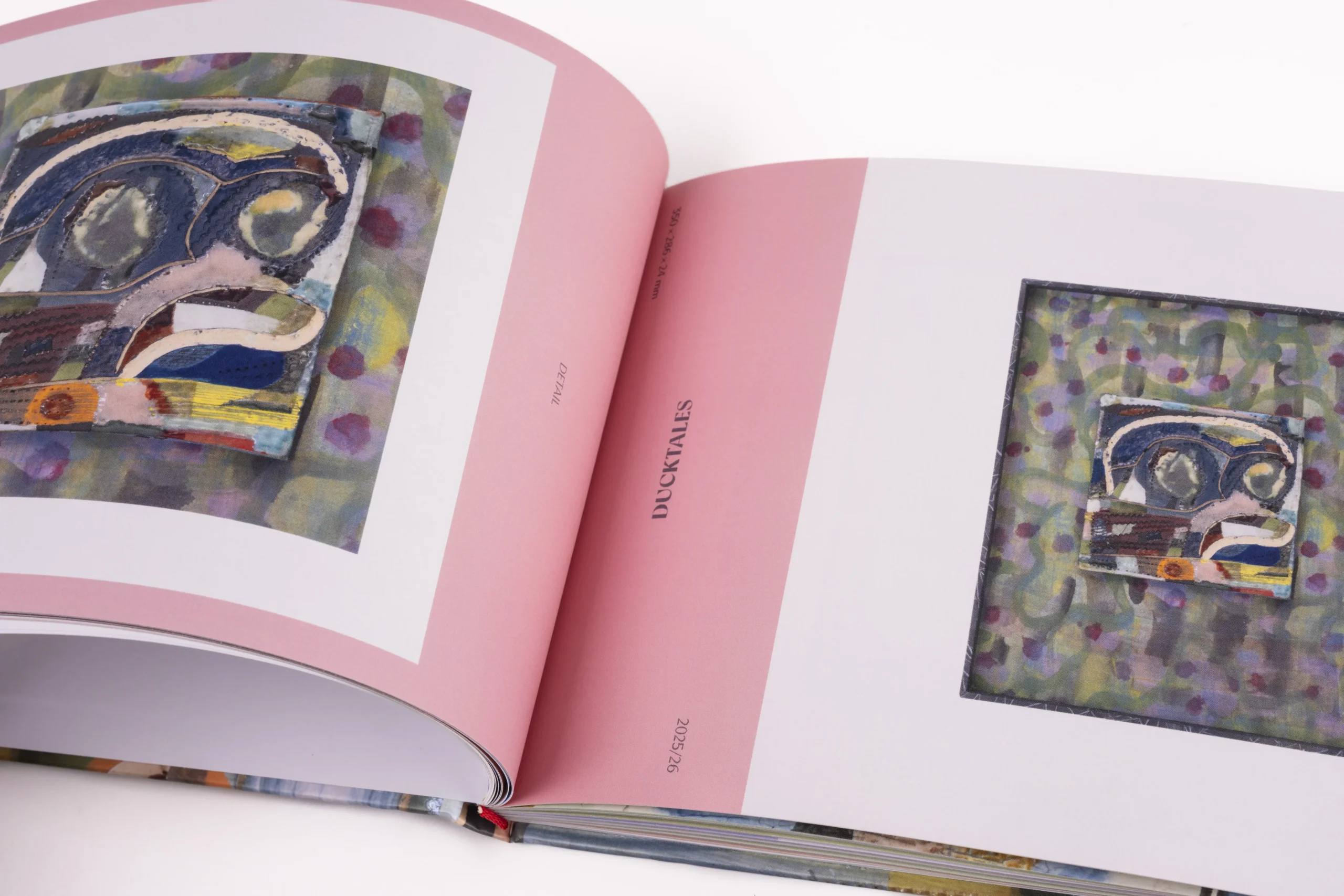
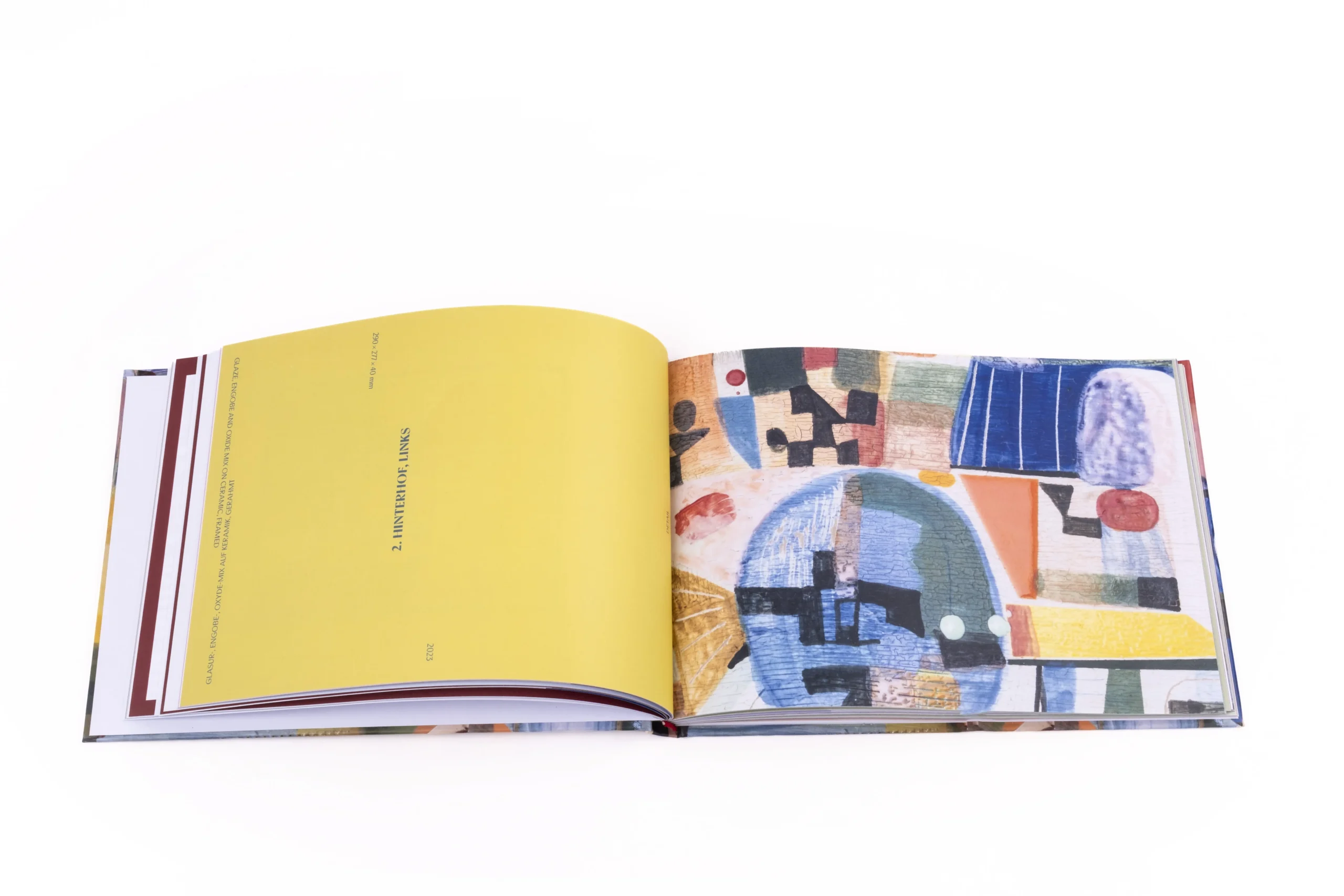
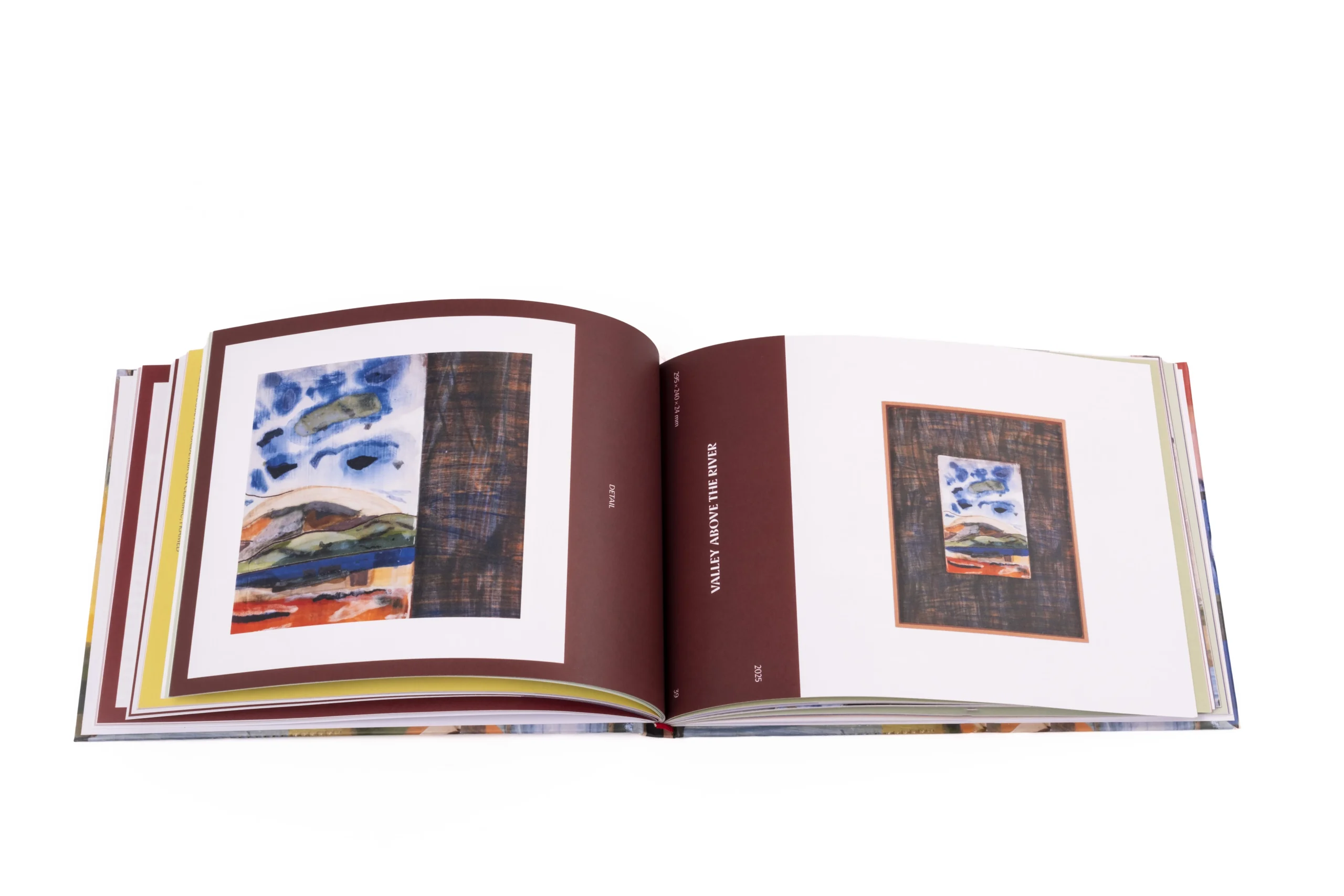
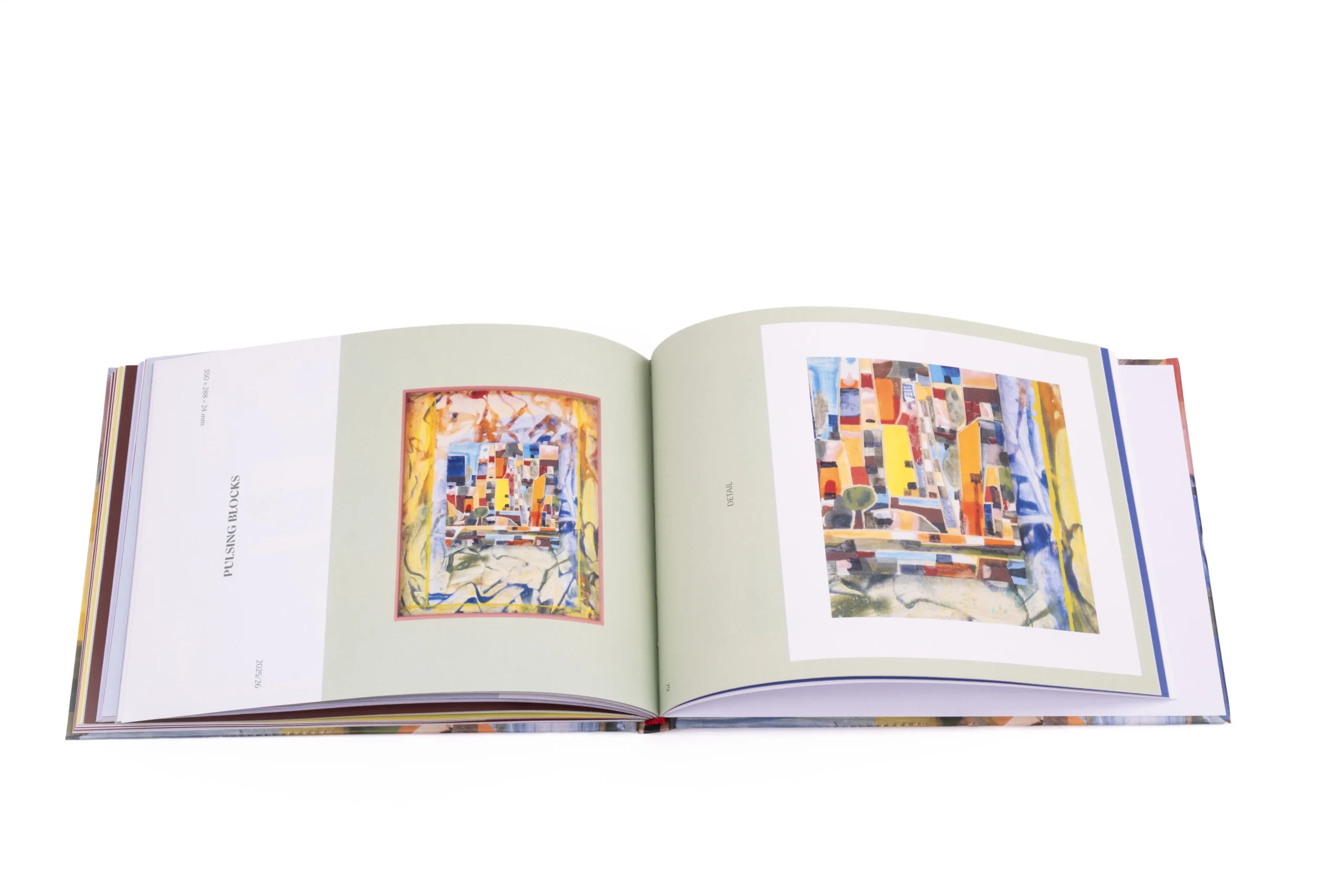
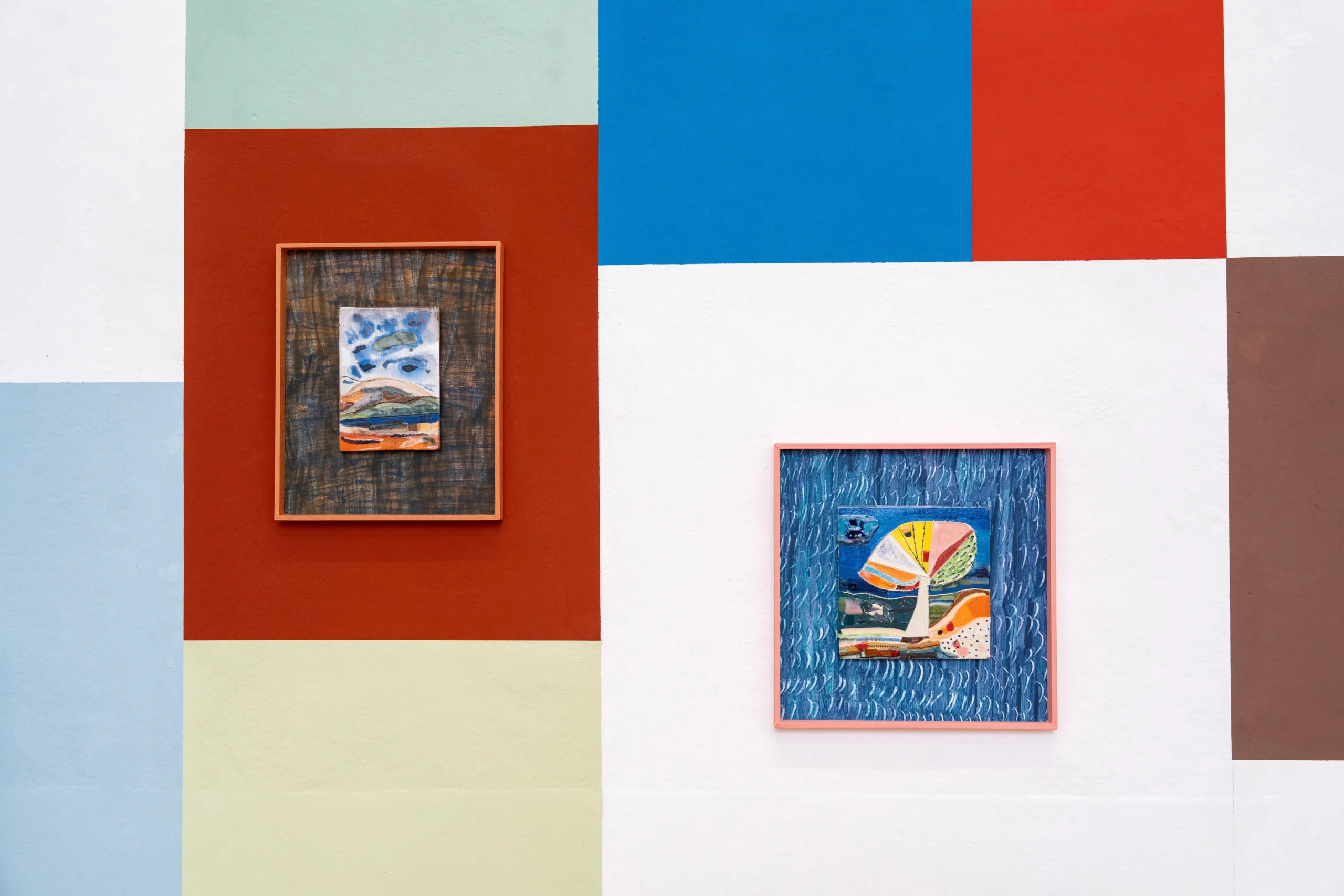
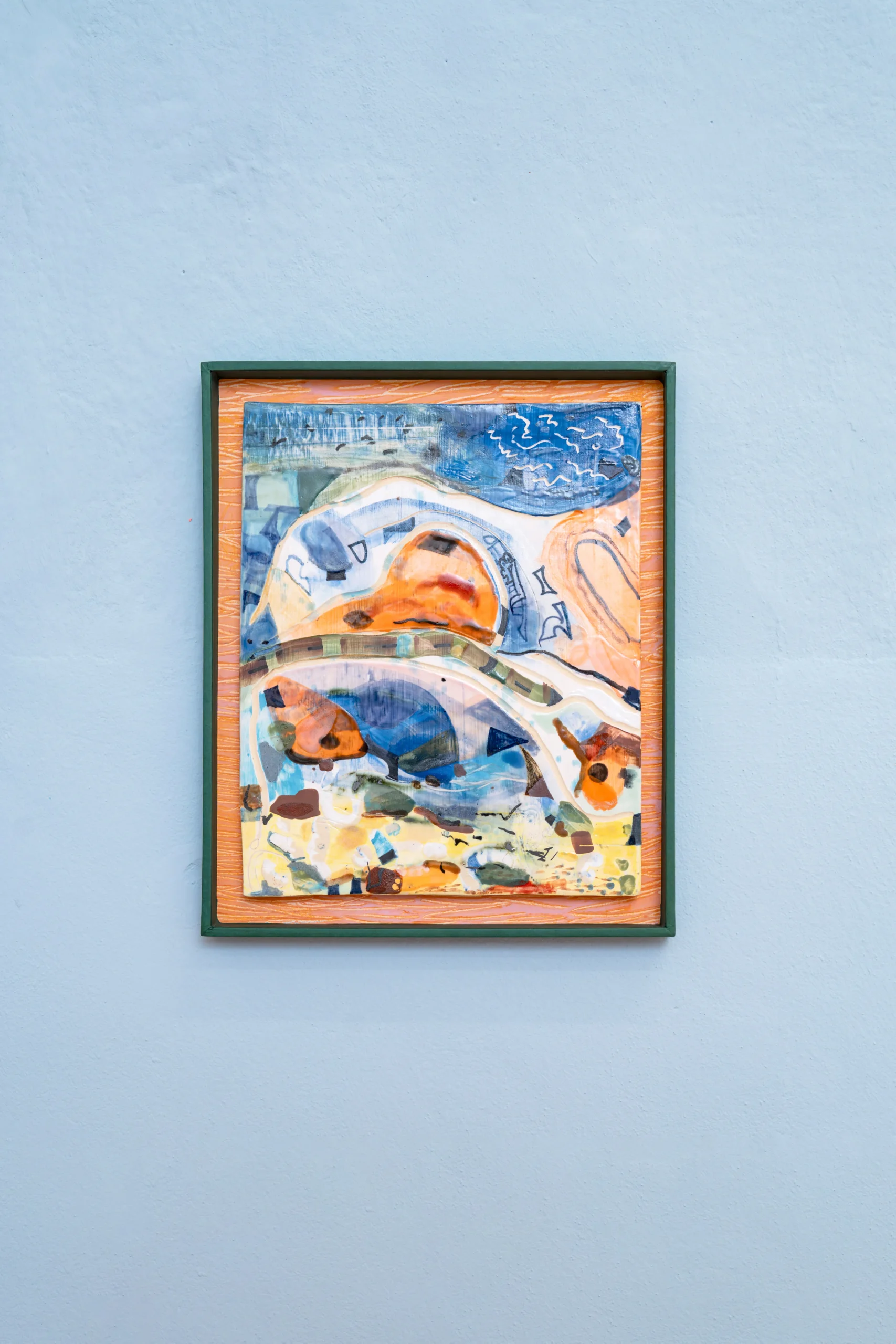
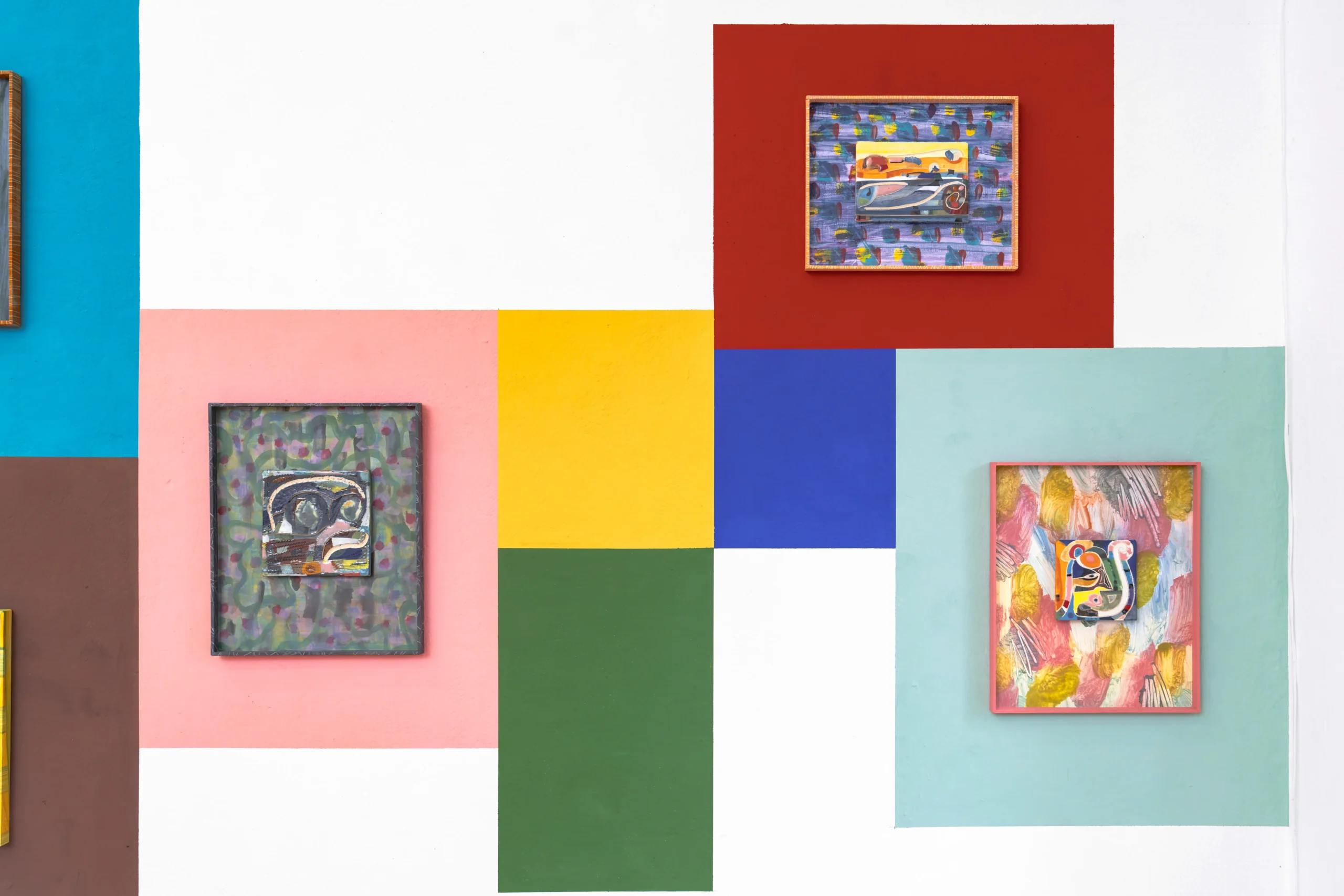
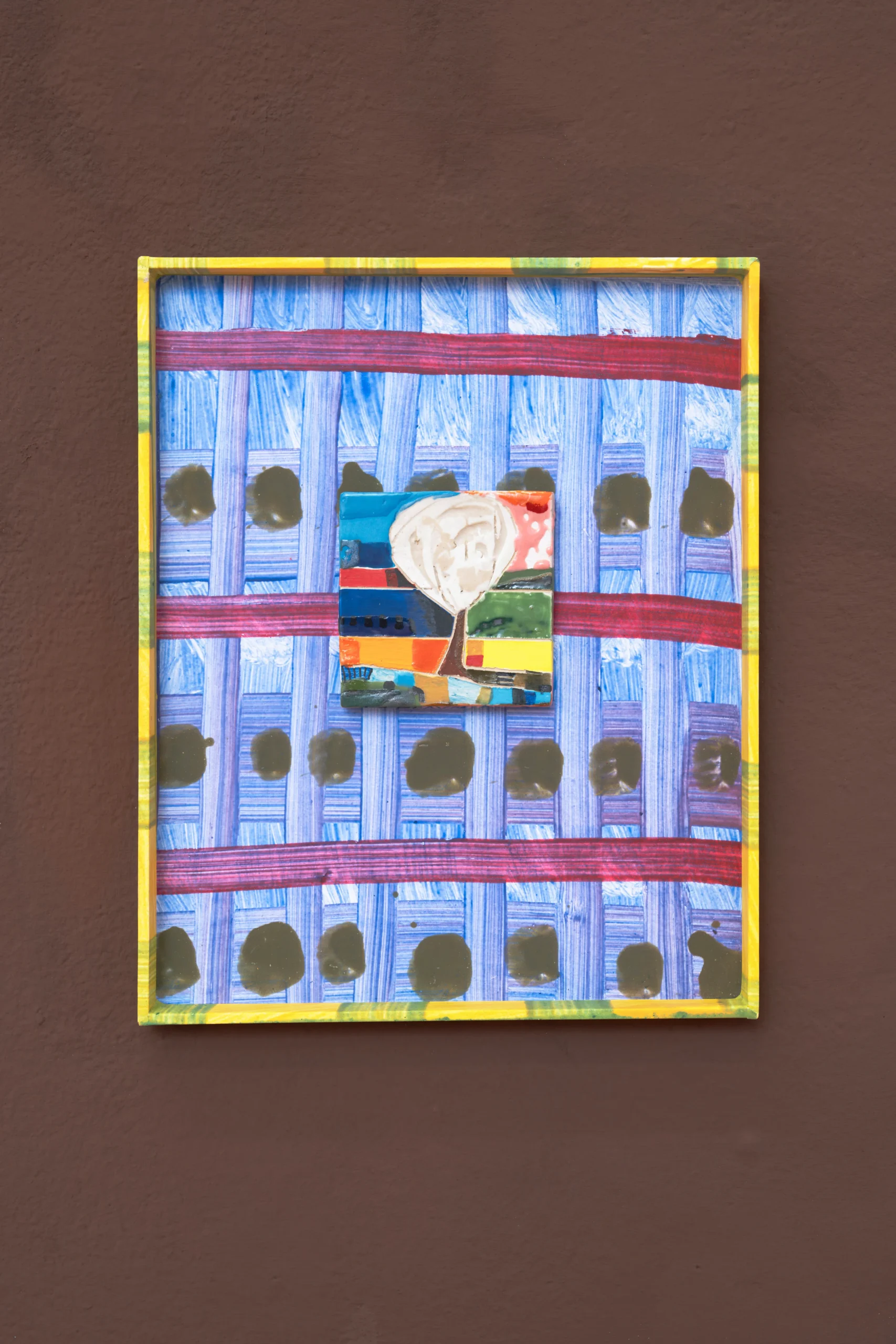
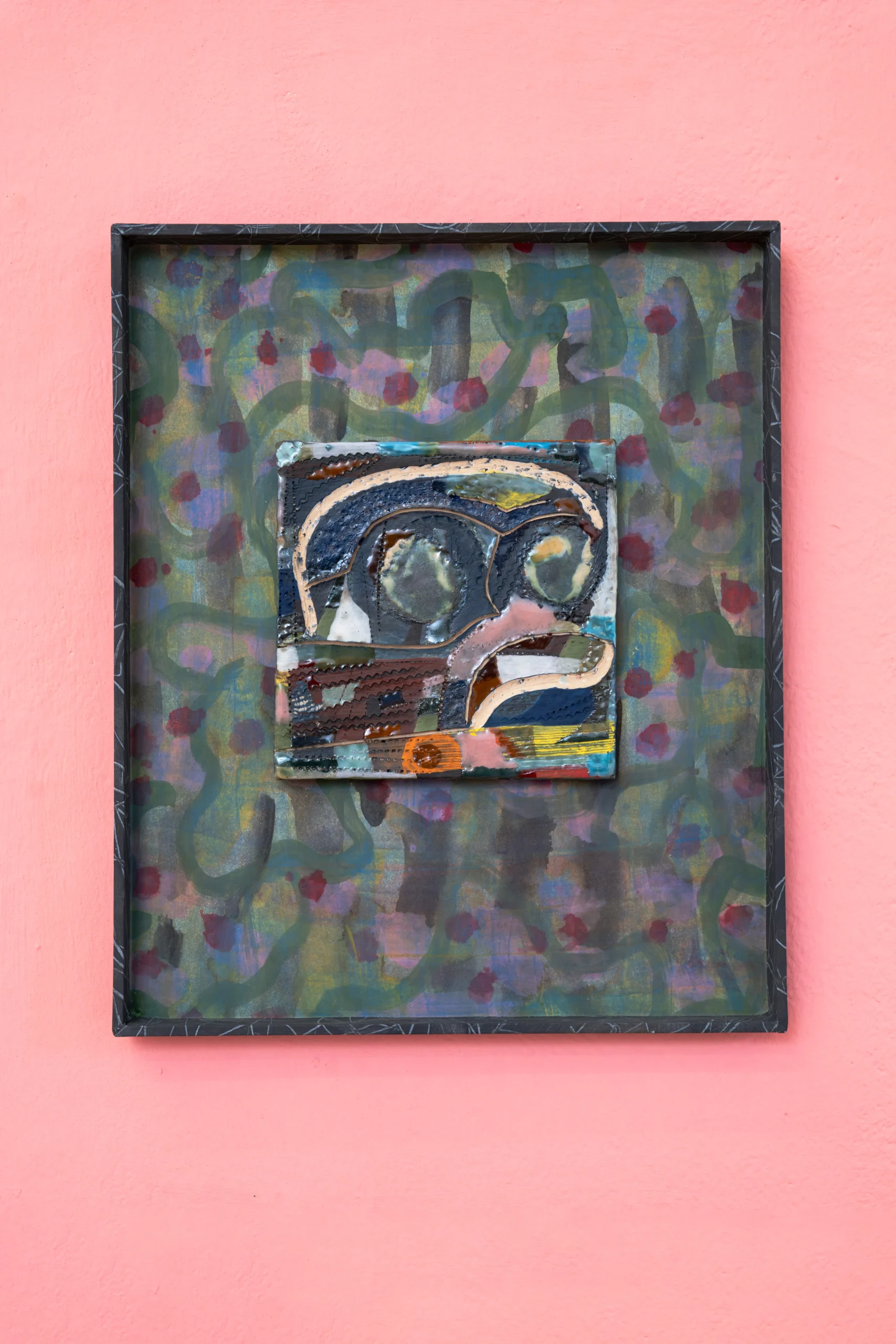
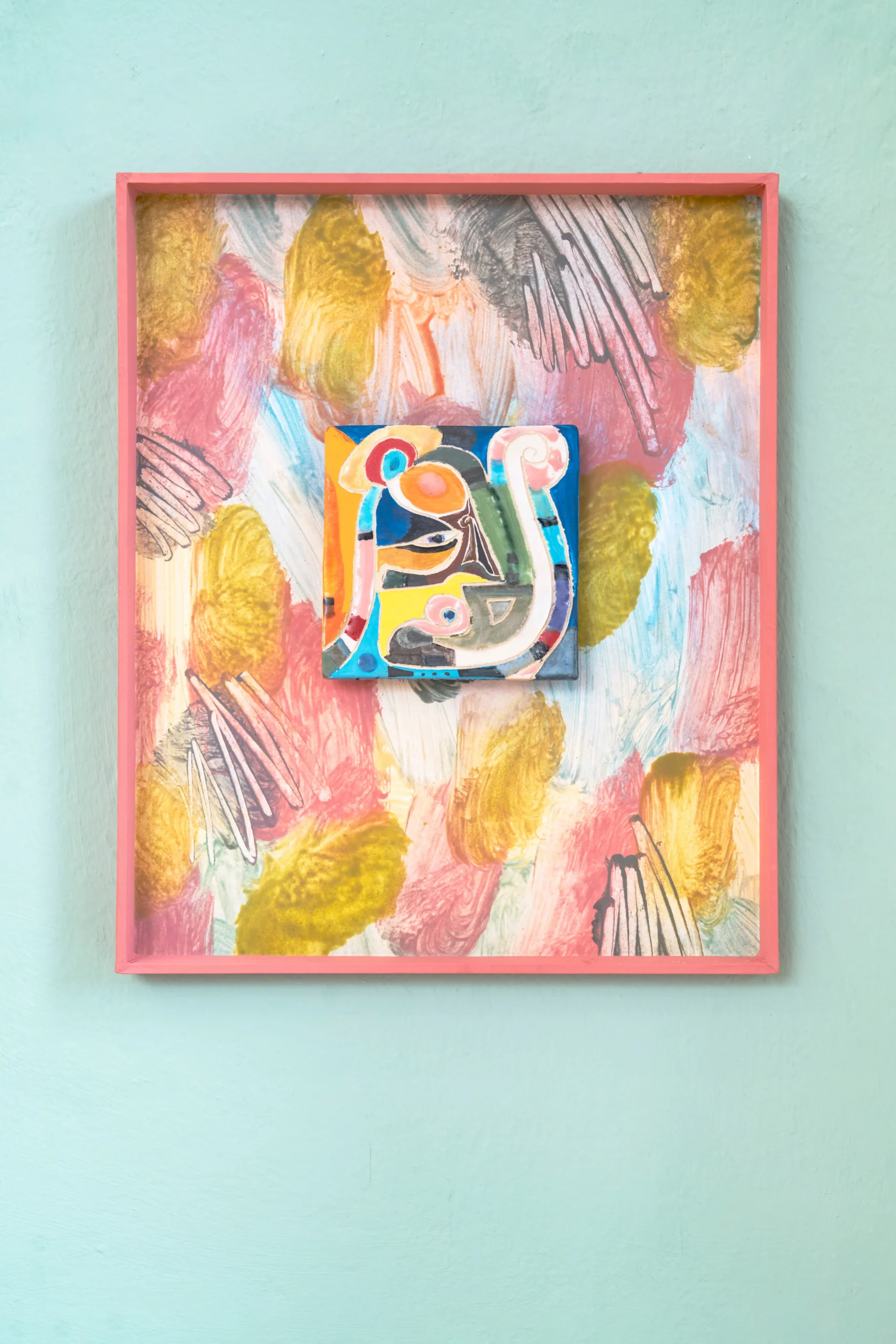
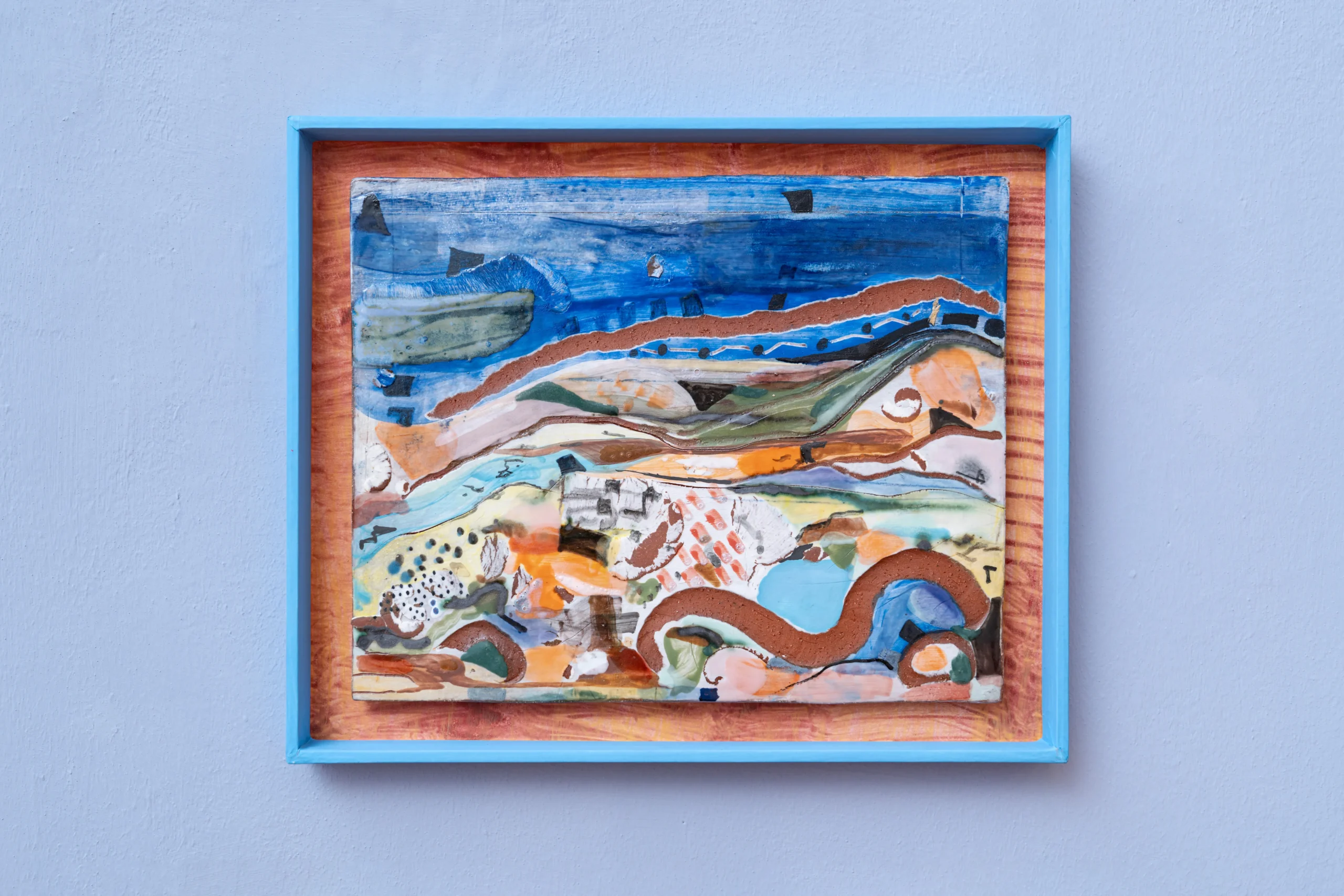
The ceramic reliefs do not only reveal themselves through their motifs, but also through their surfaces. Lines are traces of movement, of pressure and withdrawal: incised, scraped, and worked over again in the leather-hard clay. With each additional layer of engobe, glaze, and oxide, the relationship between foreground and background shifts. Ceramic, glaze, and surfaces faced with painted paper enter into a material contrast that comes together as a deliberate exaggeration. Intuition and precision, spontaneous movement and slow, concentrated work meet and overlap.
Elements of typography, architecture, landscape, and figure appear, remain fragmentary, and move between representation and abstraction. From writing, arches, counters, and serifs remain; from architecture, openings, walls, and passages. Landscapes become surfaces, lines become movements, figures become possibilities.
The works do not tell clear-cut stories. Instead, each relief develops its own pictorial space, its own language, and its own tension between surface, line, and material. Within it, something shifts, appears, and withdraws again.
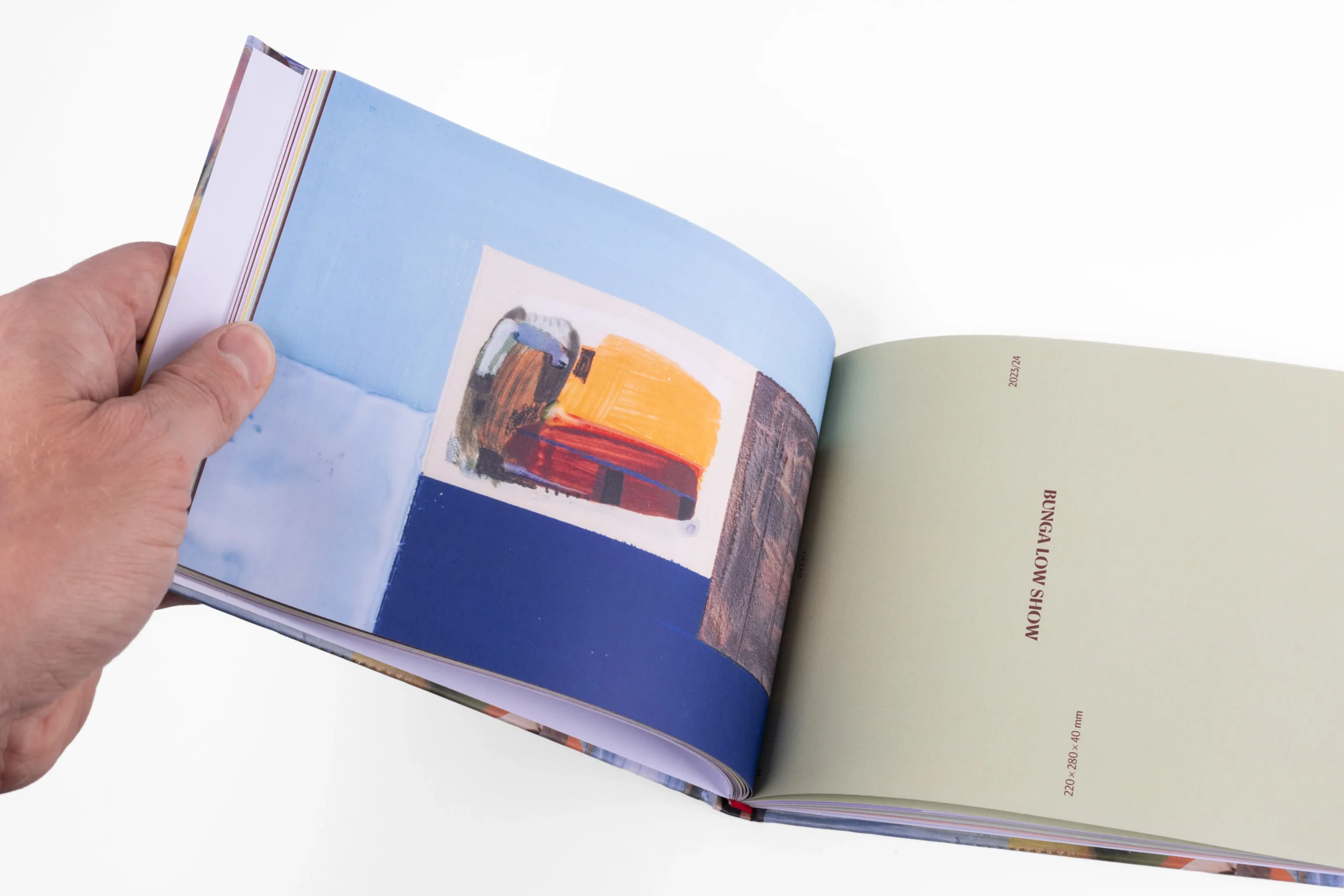
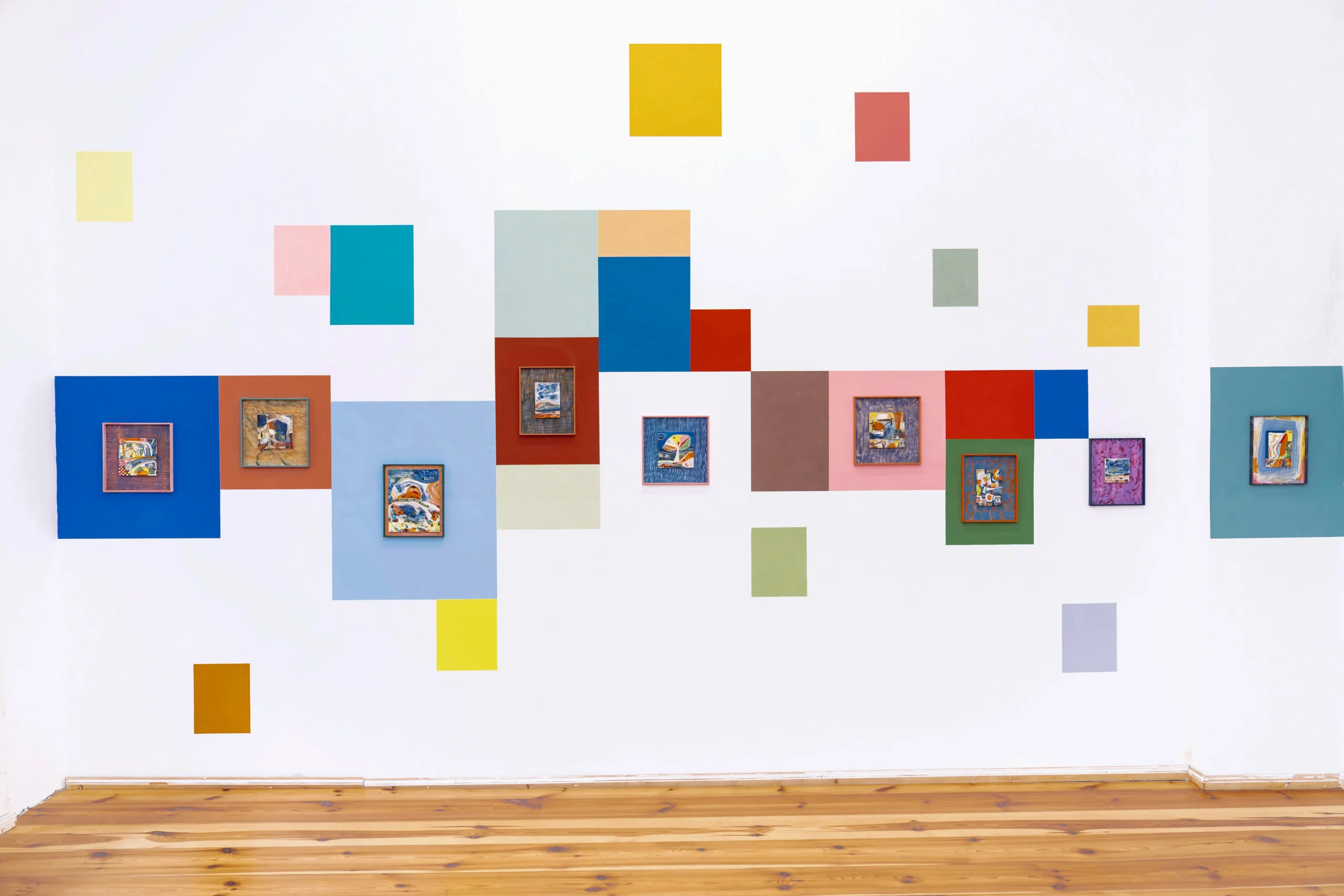
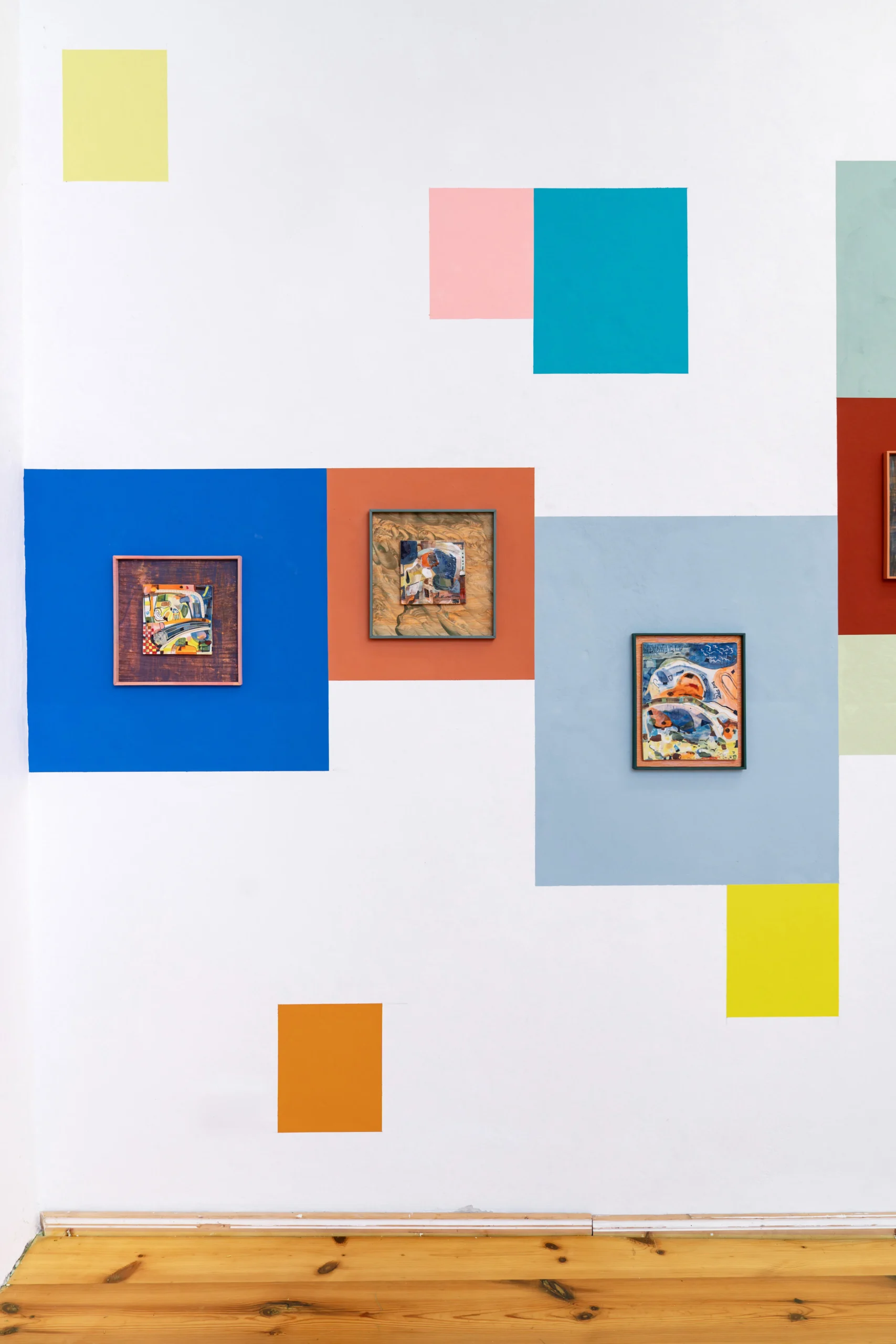
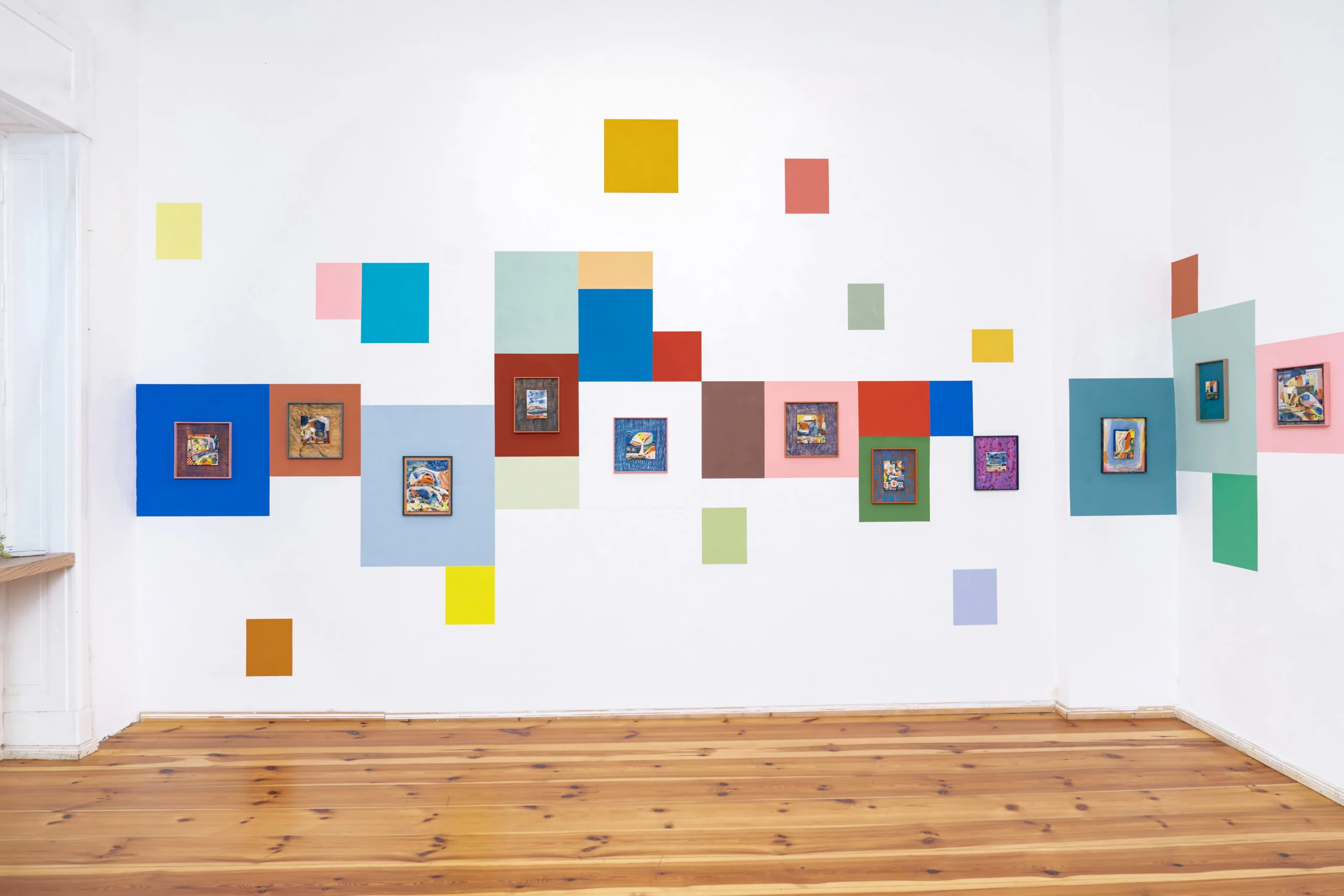
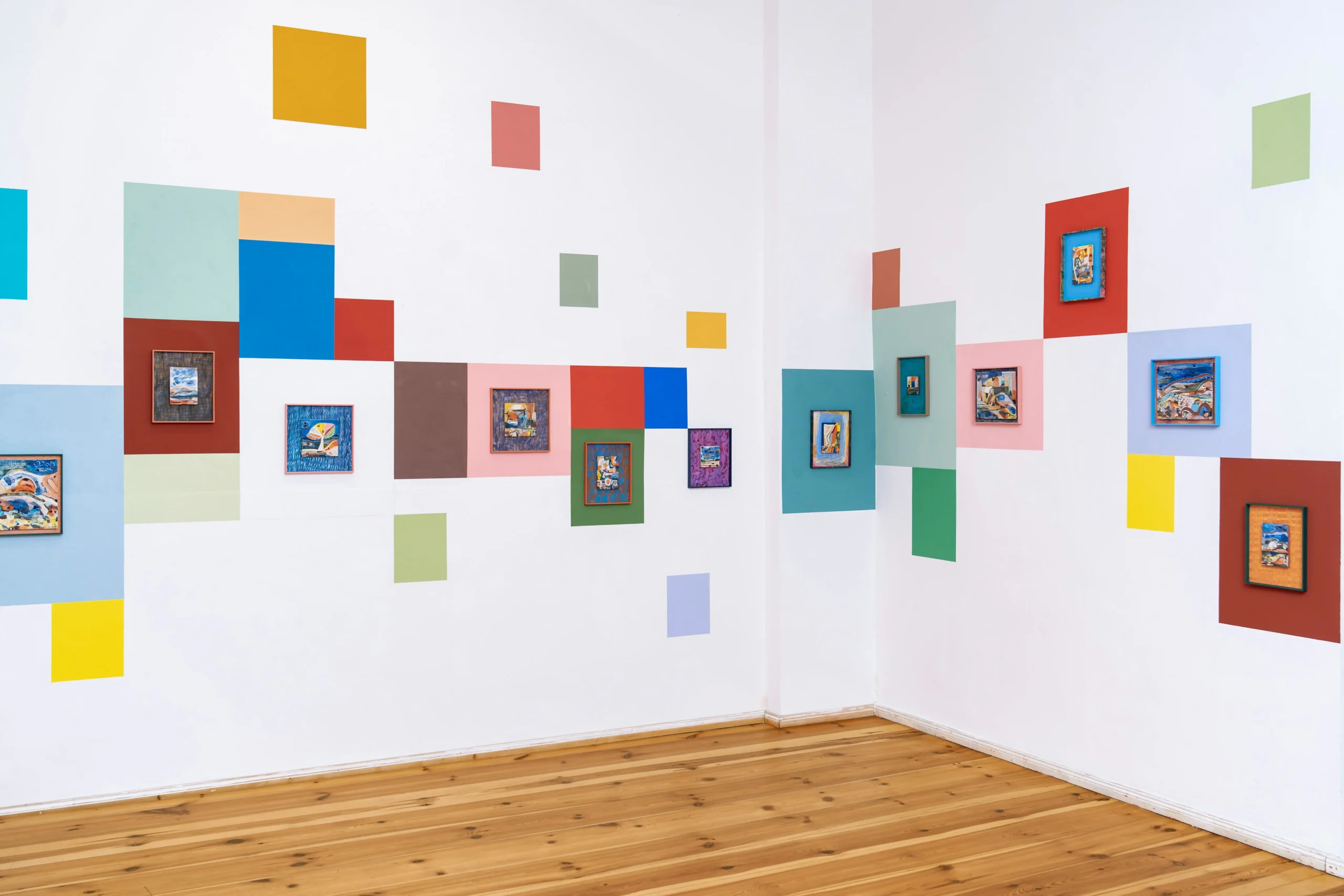
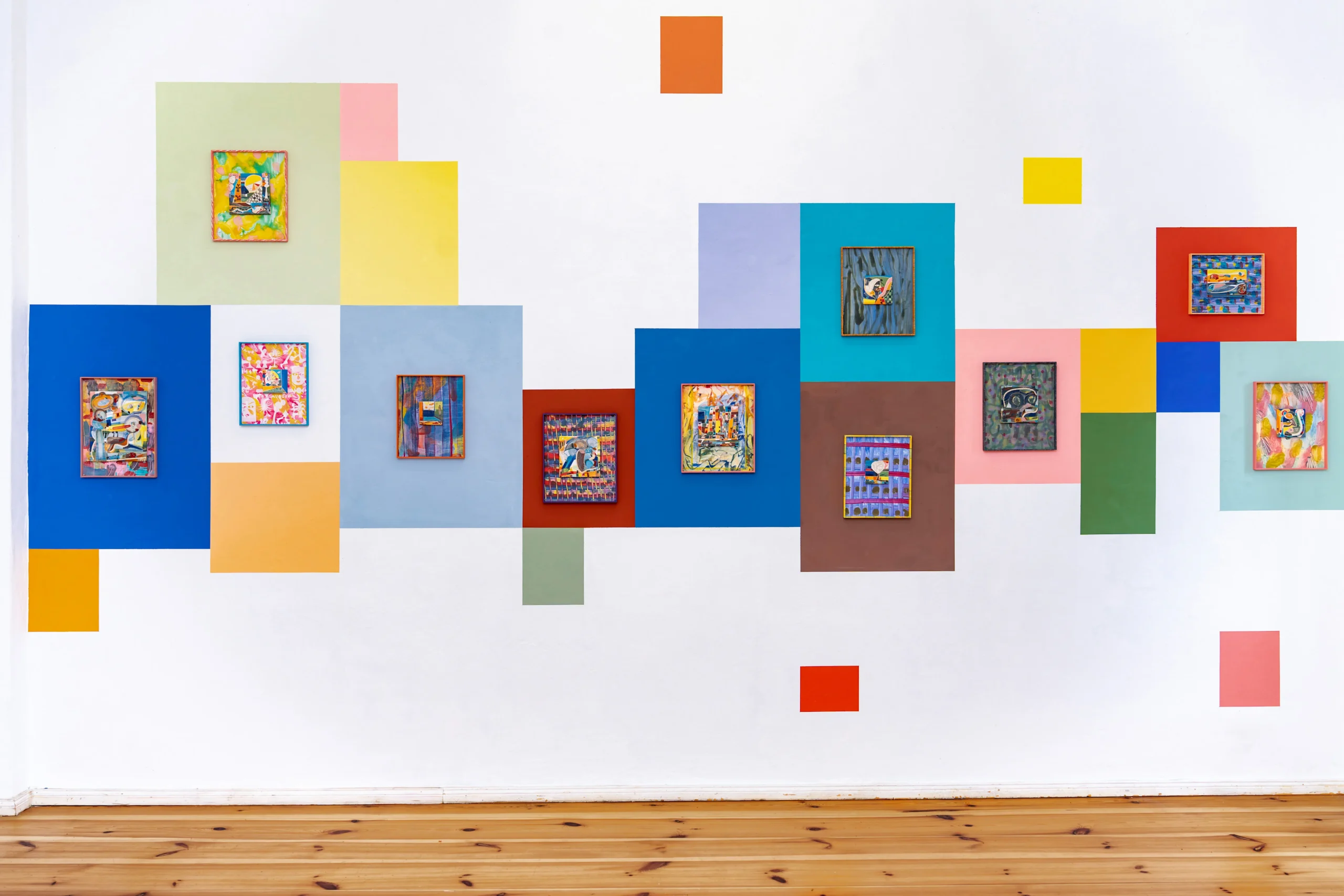
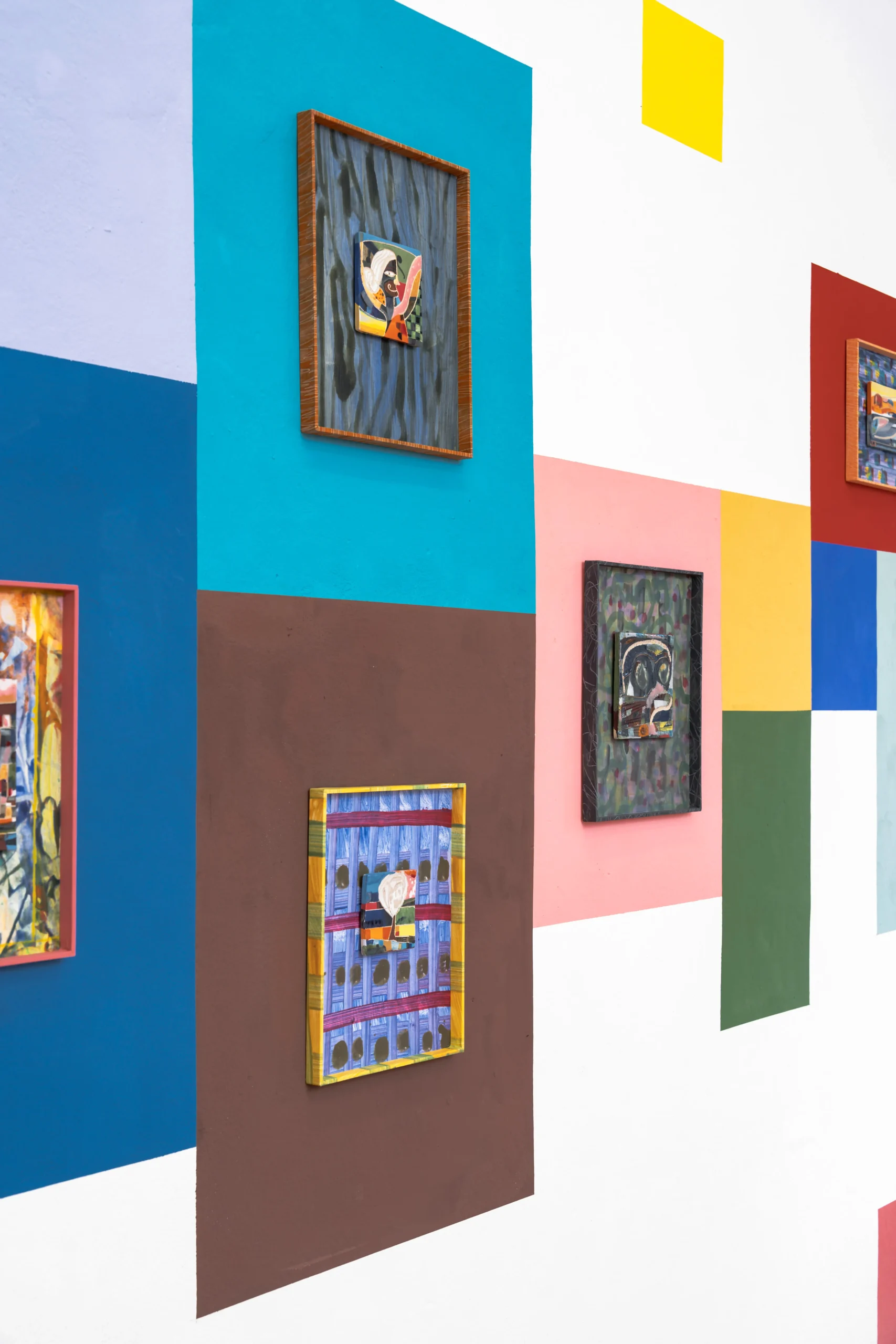
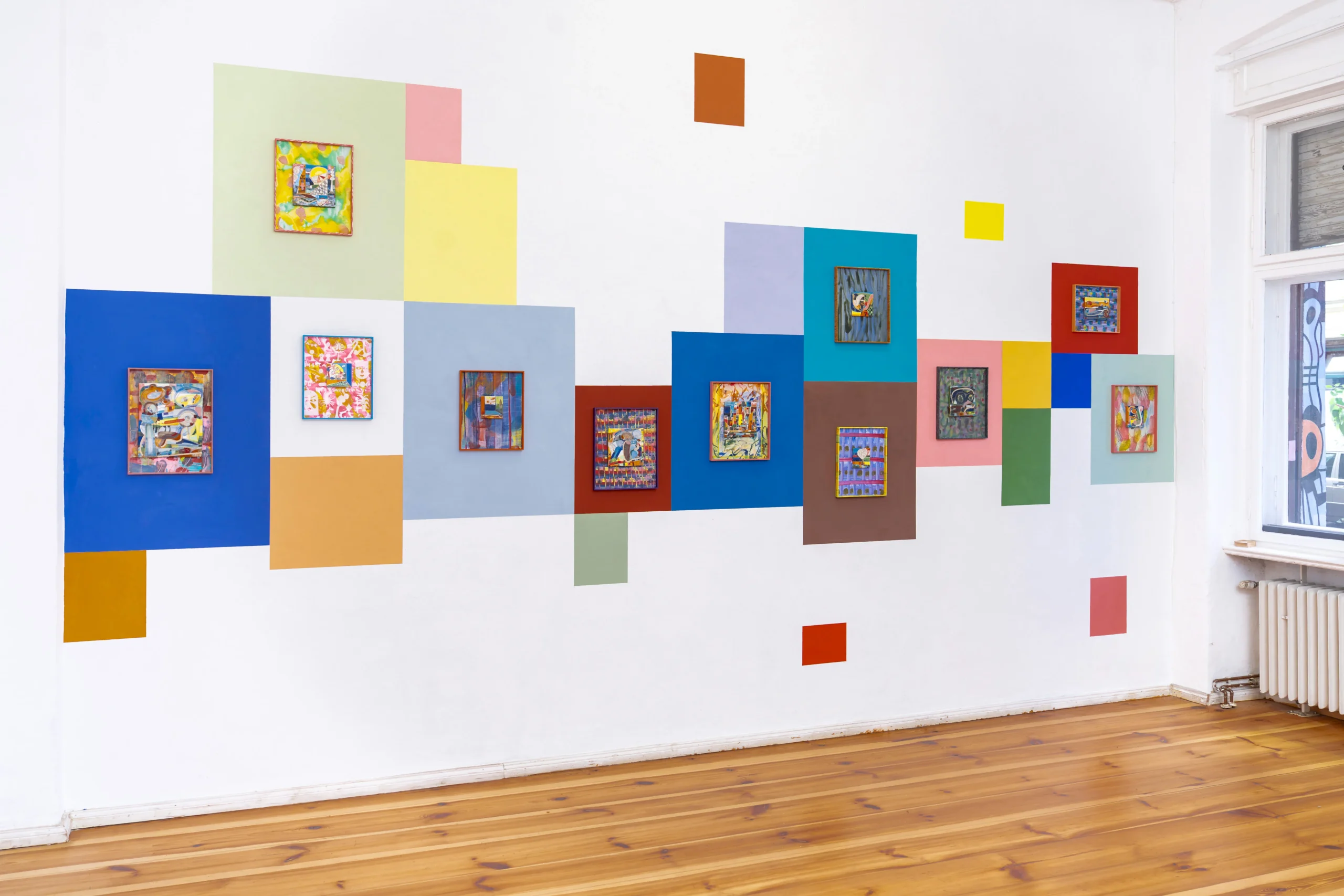
In the exhibition, these self-contained pictorial spaces are brought into relation with one another within the space. Each work receives its own colored field on the wall, a kind of aura that gives the relief additional room while also setting it apart from the neighboring works. These color fields do not simply form a background; across the walls, they develop a rhythmic structure of their own.
Seen up close, each relief is encountered as an independent work: a concentrated pictorial space with its own materiality, rhythm, and visual language. As distance increases, perception shifts. The individual color fields begin to communicate with one another, the spaces between them become visible, and rhythms carry across the walls. The works enter into a larger context, and the exhibition begins to read as a spatial composition in its own right.
Two scales thus exist at once: the individual work and the installation as a whole. The relationship between part and whole, already present within each individual relief, continues into the space. The reliefs retain their independence while becoming part of a larger spatial movement. What appears within a single image as a relationship between surface, line, and layer continues in the room as a relationship between image, color, wall, and interval.
The eye keeps moving between these levels: drawing close to a single relief, catching on a line or surface, following a color, discovering an opening, and finally stepping back again. Out of many individual pictorial spaces, a shared space emerges. What matters is not only what is seen, but how the eye moves—and how perception shifts between part and whole.