



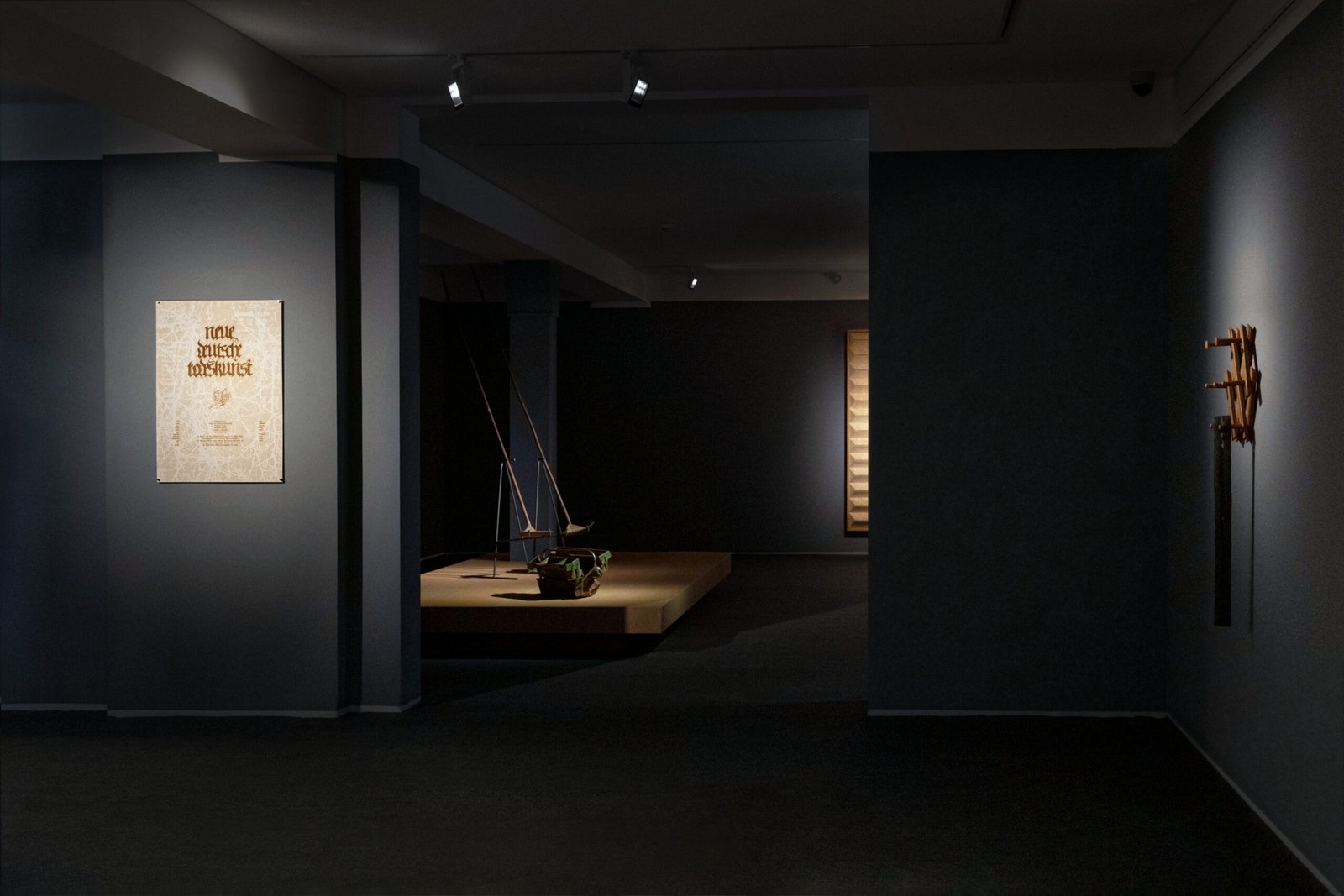
The exhibition Neue Deutsche Todeskunst at the Kunstmuseum Heidenheim presents new works by Fabian Reetz, deepening his long-term series East German Gothic Studies. Drawing on subcultural formations, Reetz investigates social dynamics emerging from political and economic upheavals. He traces the connections between German-speaking Gothic bands and Romanticism, analyzing them as a symptom of the radicalized movements of the 1990s. Through the montage of archival material from music magazines, elements of traditional slate craftsmanship, industrial found objects, and objects of domestic everyday life, temporal layers of nation-state formation, the period of reunification, and the present overlap within his works.
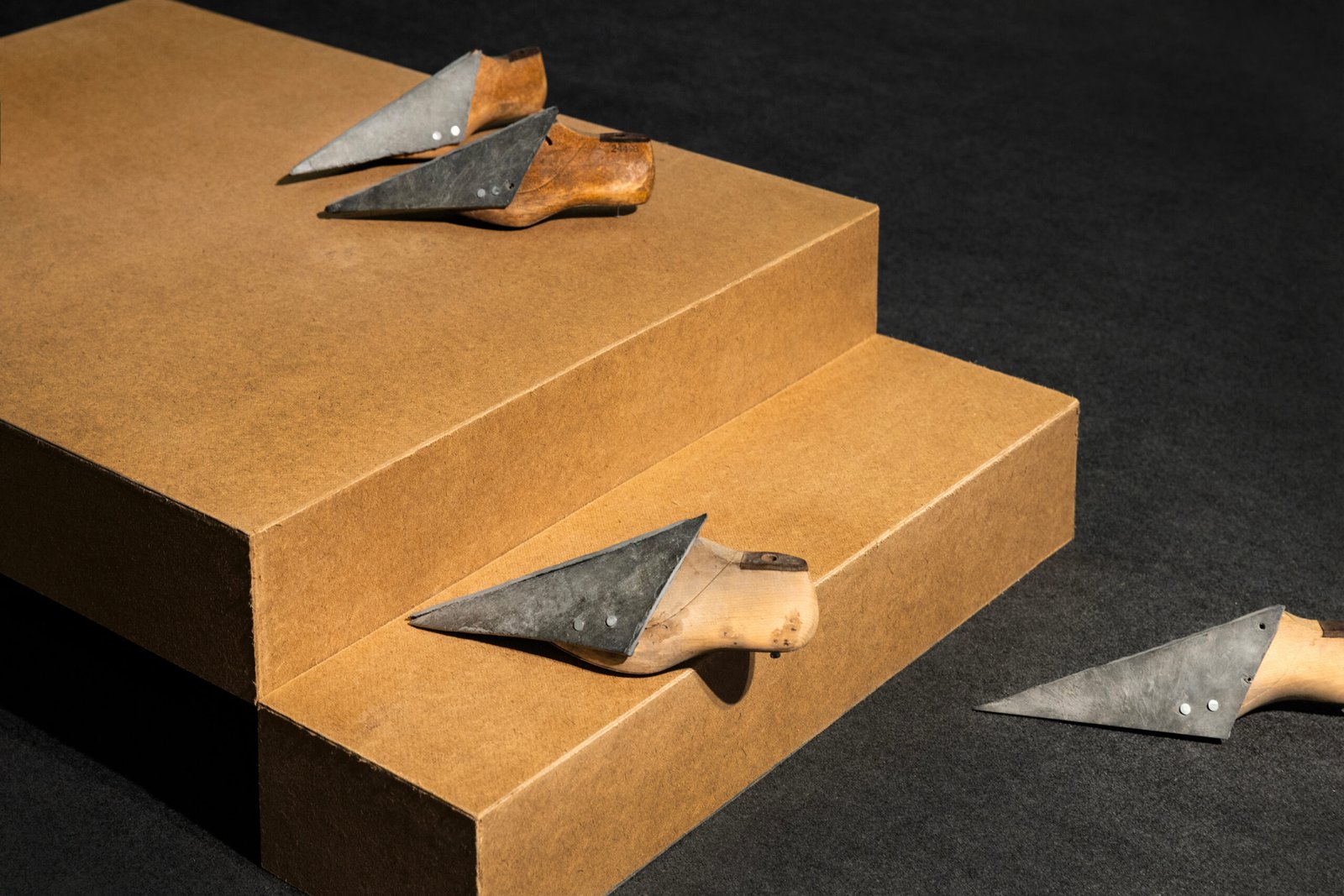
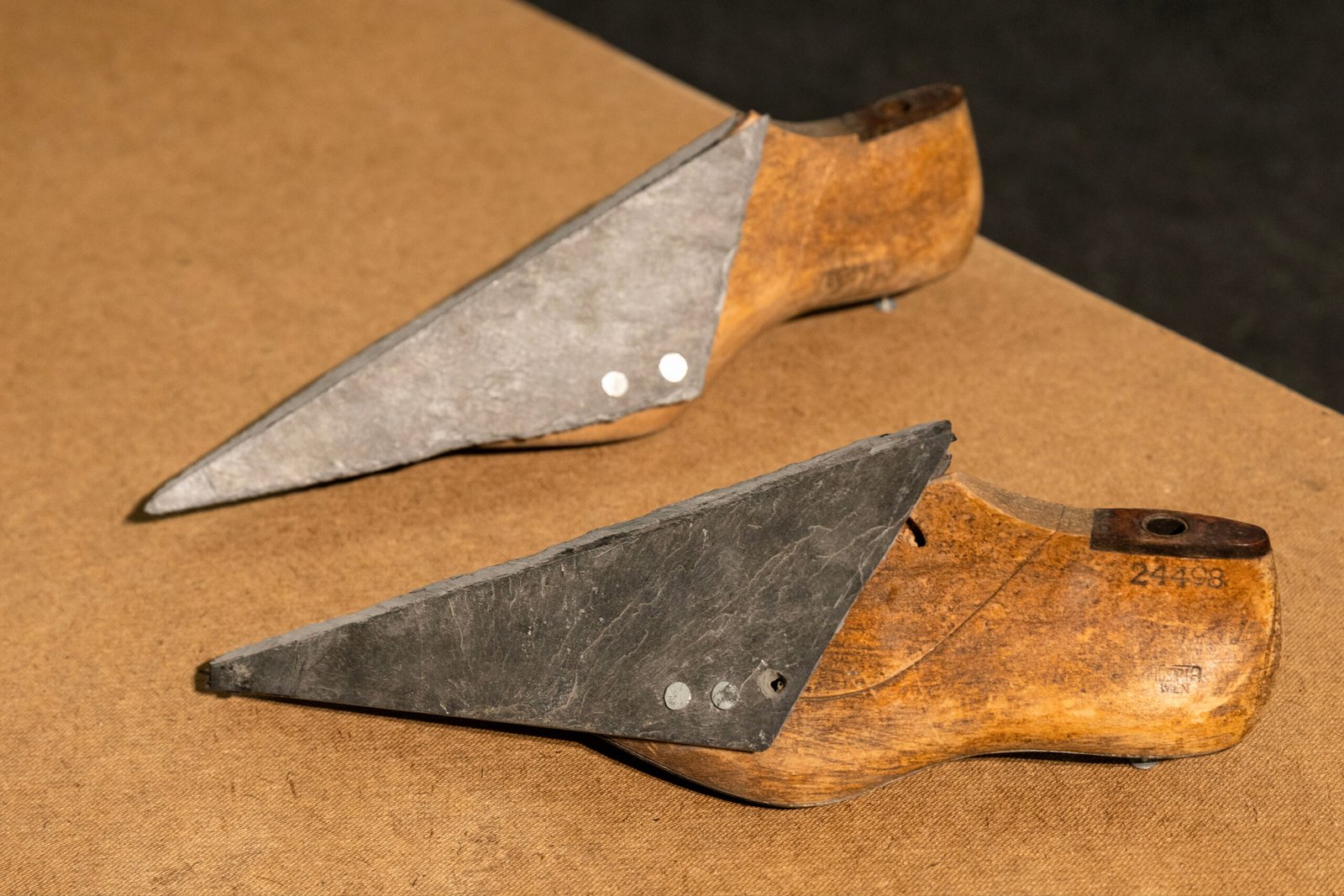
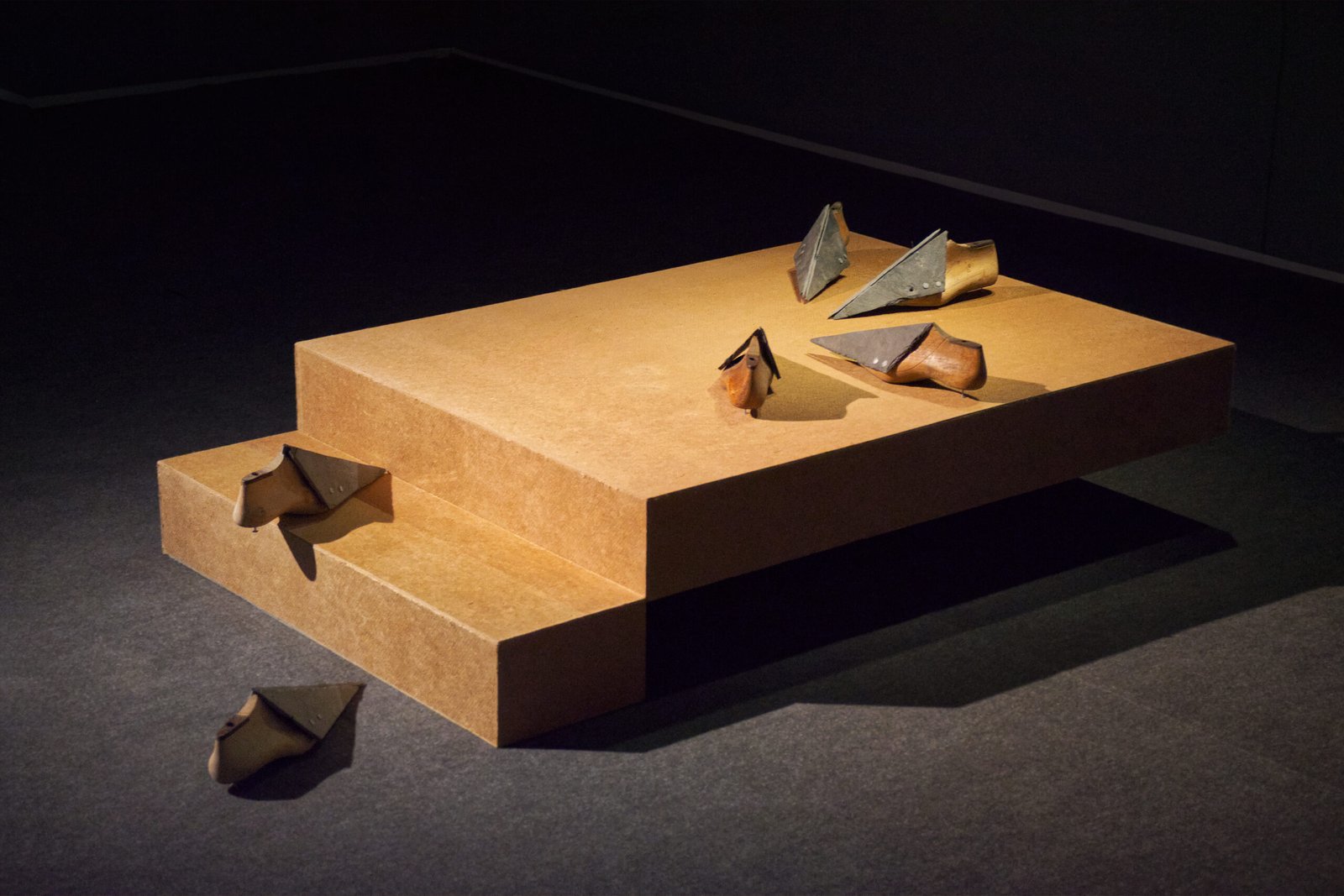
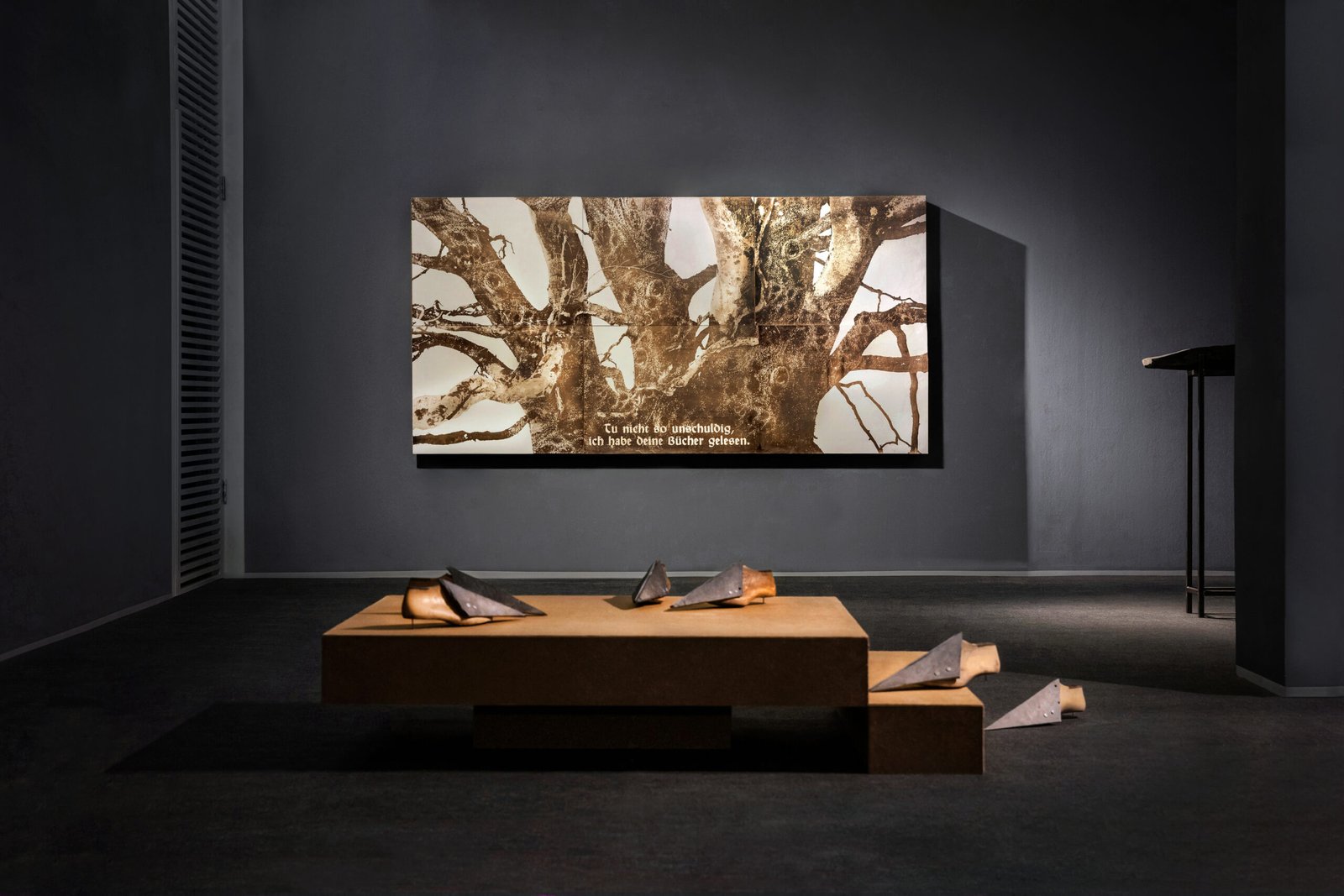
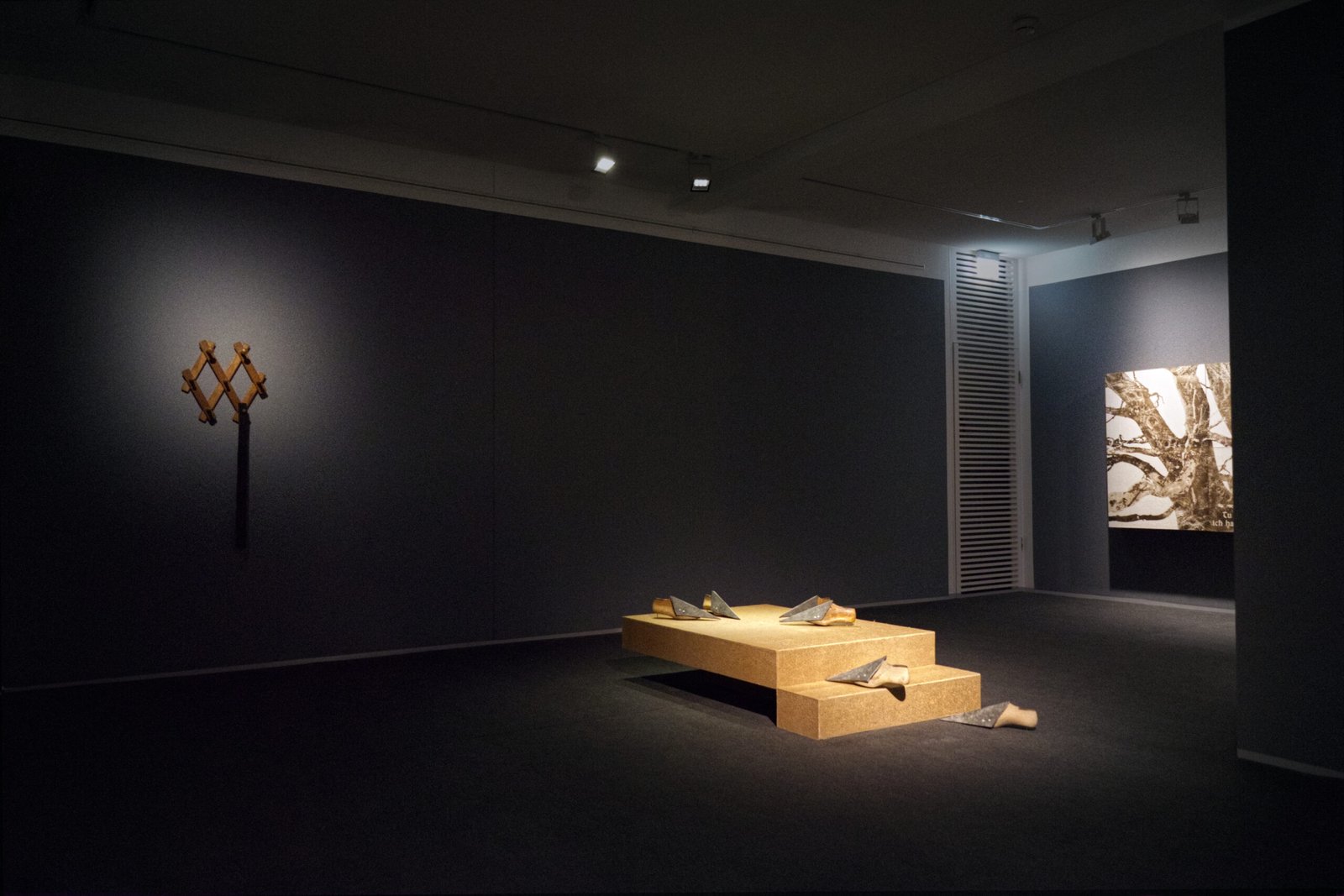
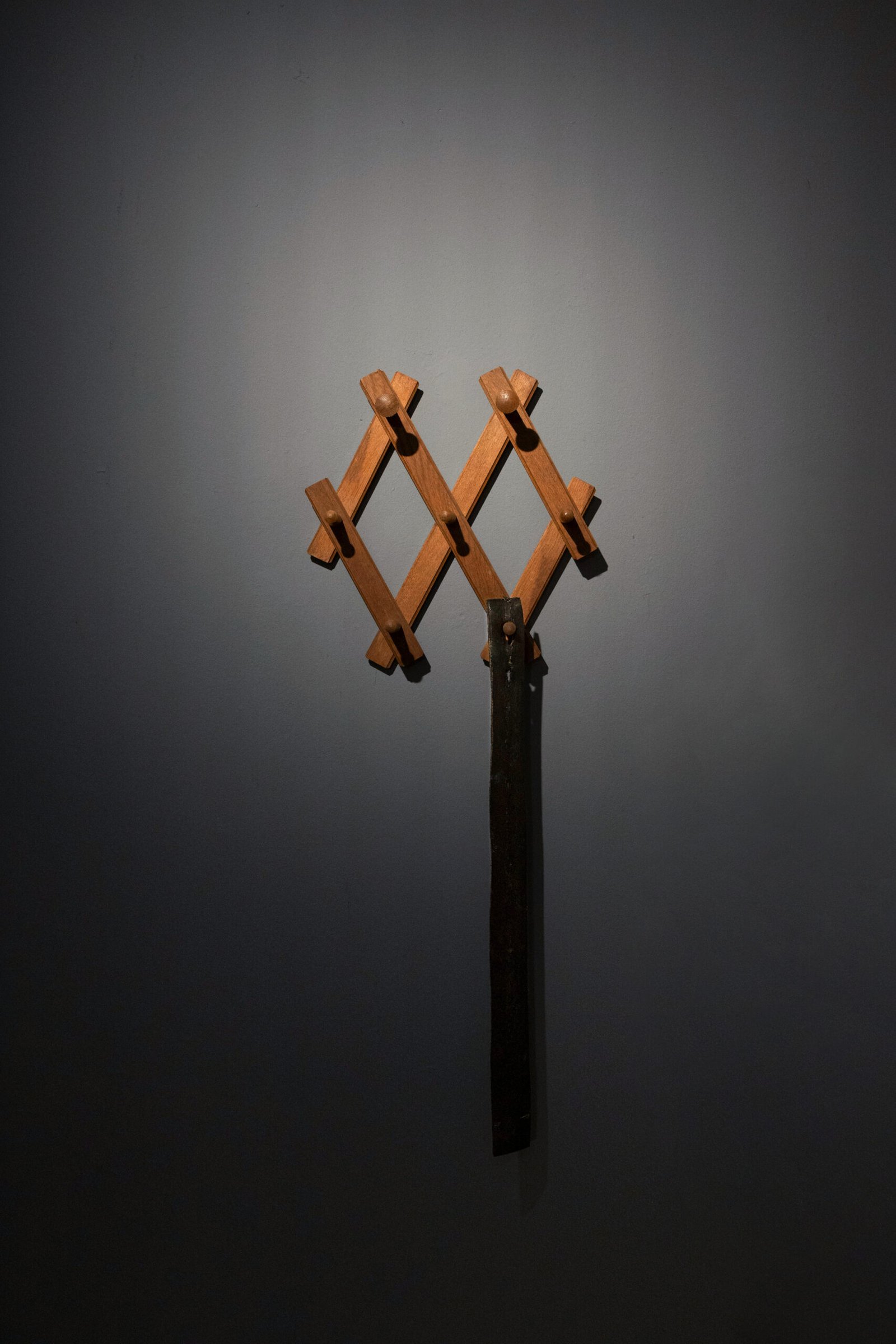
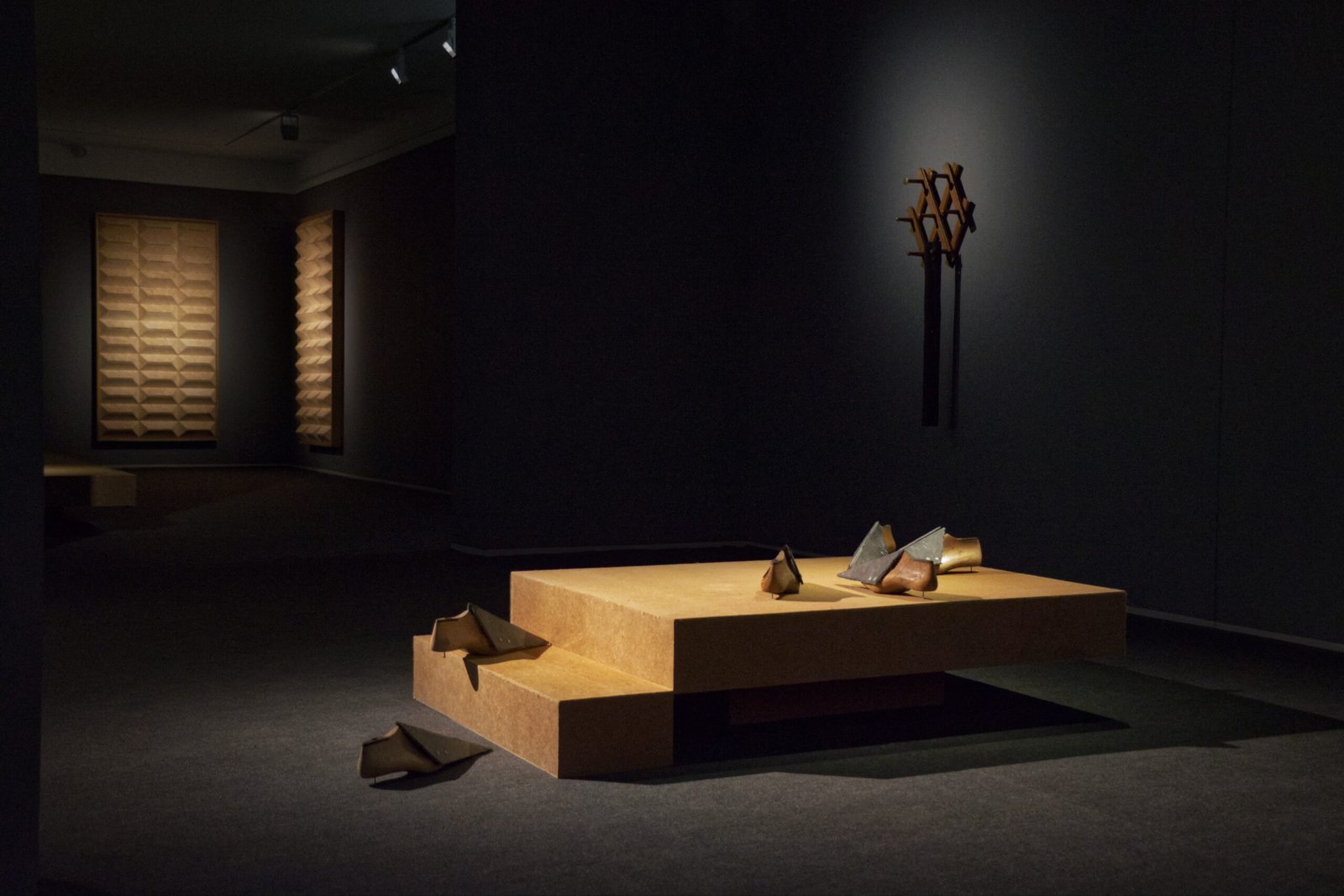
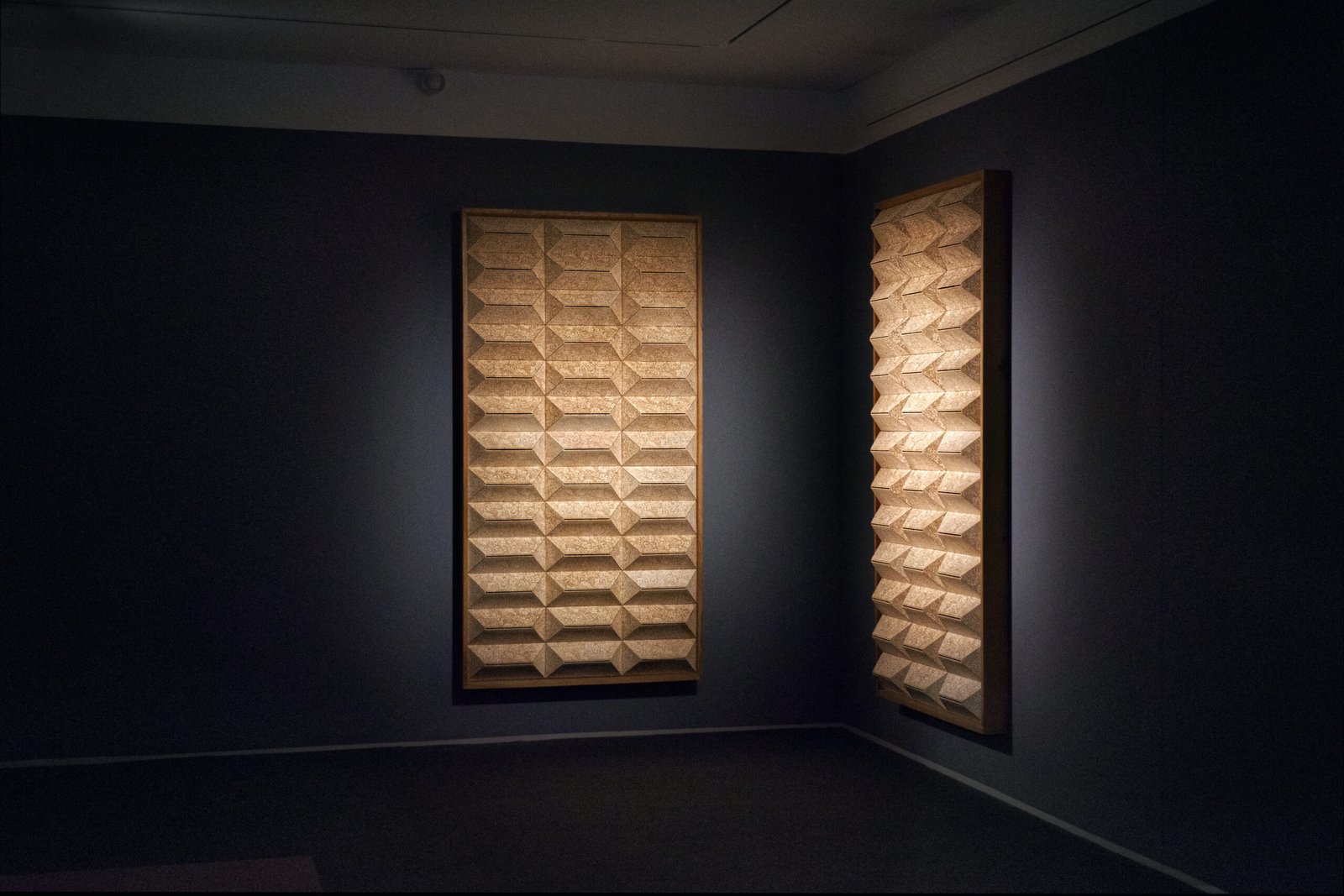
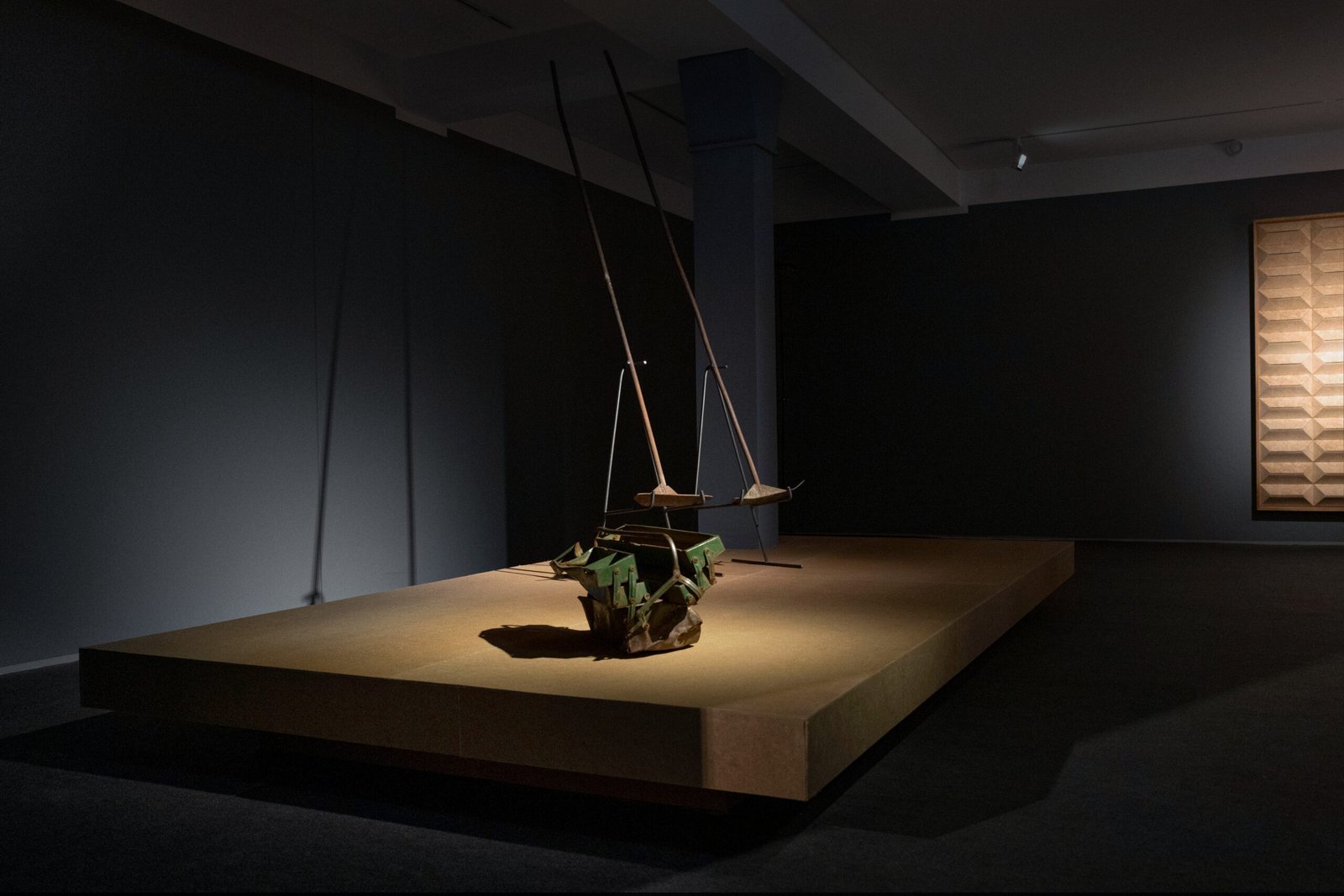
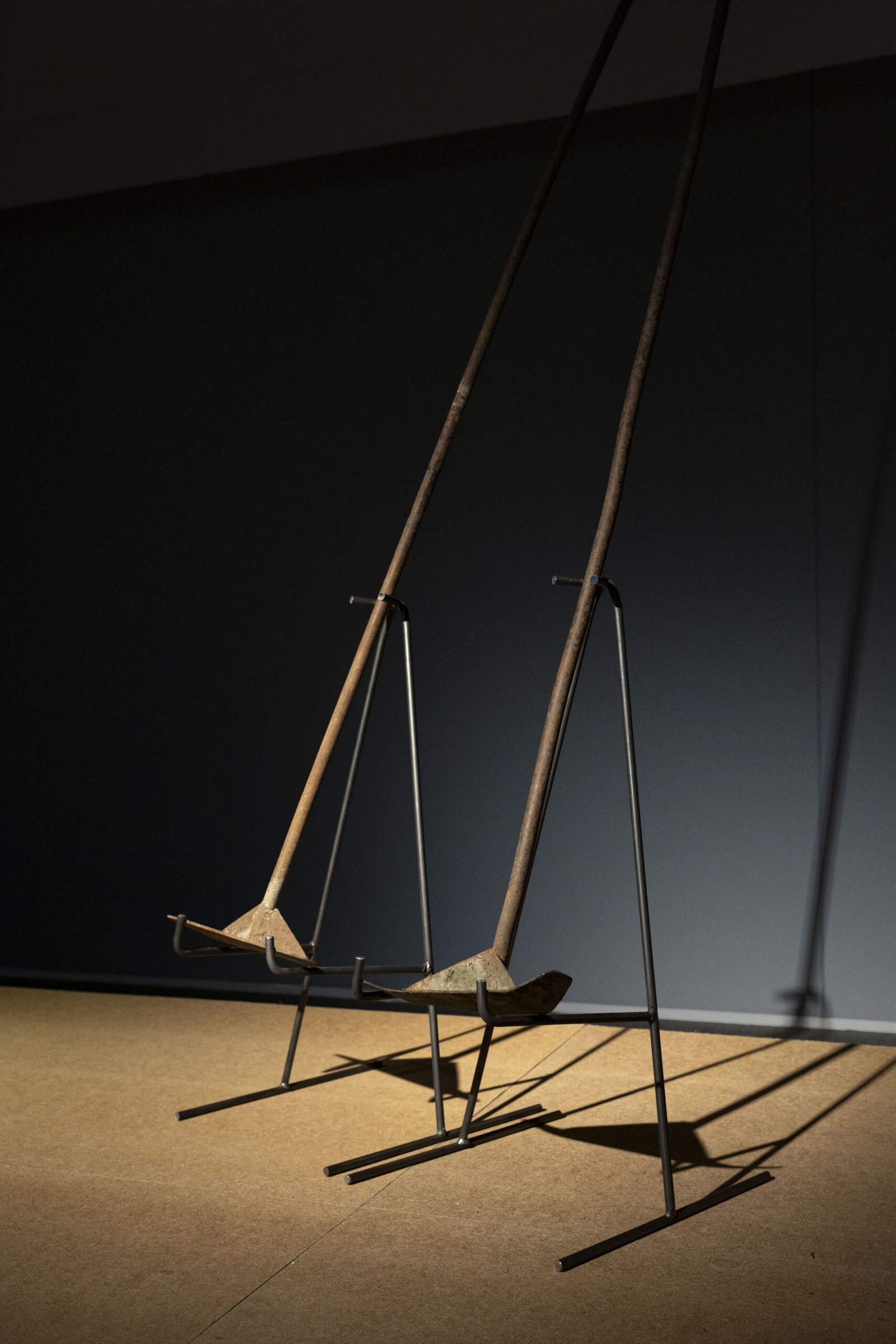
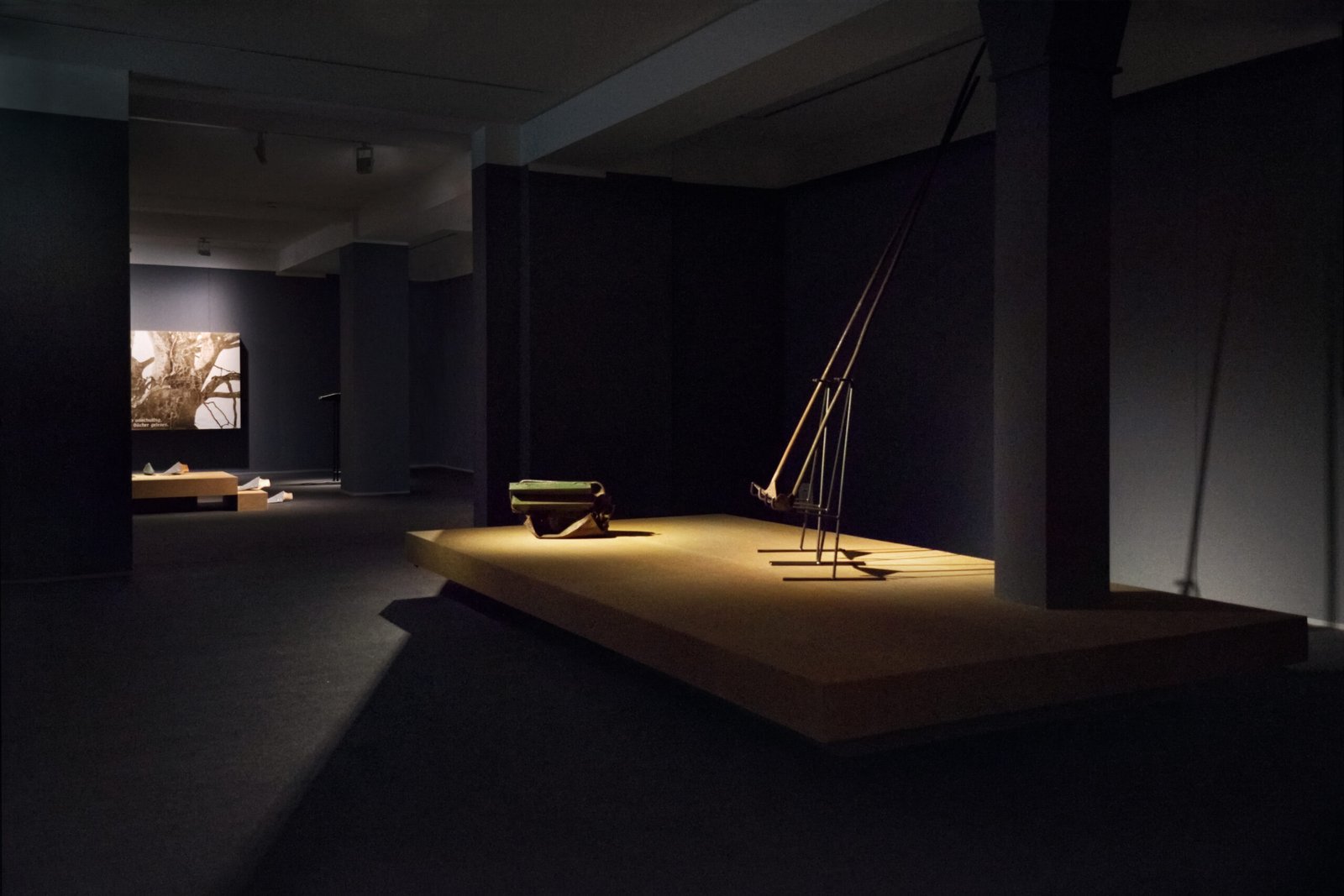
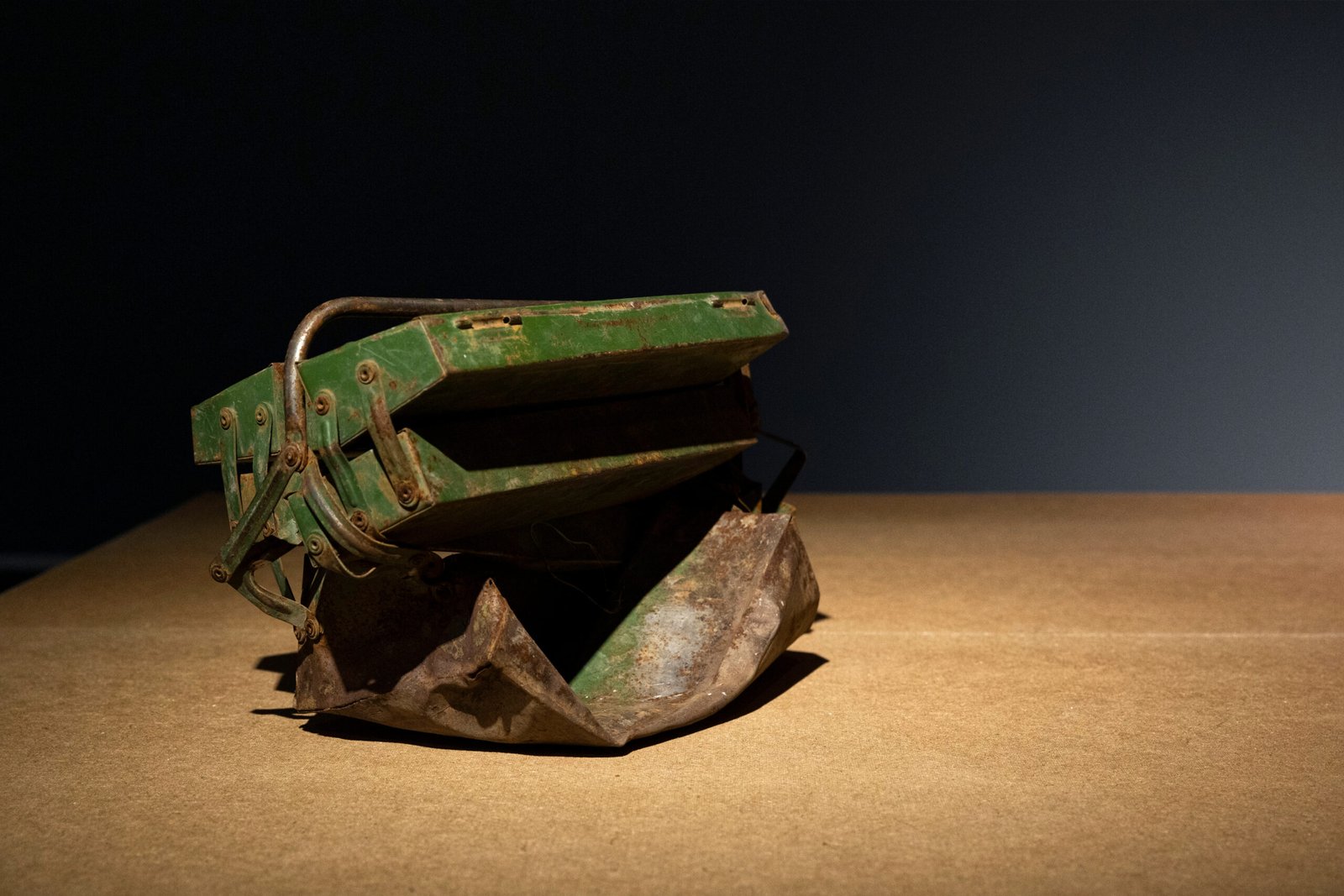
The exhibition is divided into two rooms. The first is dedicated to the relationship between the domestic environment and resistant Goths operating under conditions of scarcity immediately before and after reunification. Shoe lasts covered in slate are arranged in reference to shoegaze dance steps. A turned oak wooden frame for hanging clothing is fitted with a conveyor belt. In the second room, analogies between music production and the socio-economic consequences of systemic transition come to the fore. Tools from a decommissioned mine appear staged like instruments on a stage, while behind them, panels reminiscent of a recording studio isolate sound.
Engaging with the musical movement known since the 1980s as Neue Deutsche Todeskunst, Reetz develops multilayered installation works. Gothic and dark wave bands such as Das Ich, Relatives Menschsein, and Goethes Erben staged themselves in theatrical settings and processed influences from the Baroque, Romanticism, Existentialism, and German Expressionism in their German-language lyrics. Recurring motifs in their texts include death, decay, mortality, and emotional extremes.
The transition from a socialist planned economy to a new, ostensibly free capitalism confronted the population of the East German federal states with far-reaching consequences across political, social, and private life. For the Darkwave scene, this meant, on the one hand, an end of state restrictions and the possibility of greater visibility; on the other, it entailed the loss of subtlety and of its capacity to generate communal symbolism. At the same time, increasing commercialization of music set in. Many East German underground bands of the late GDR operated between new wave, dark wave, punk, and electronic music and were grouped under the collective term Die anderen Bands. They disbanded either because they lost their system-critical relevance or were excluded from the commercialized music industry. In reunified Germany, they largely disappeared from cultural memory.
The threshold period between the systems appears stretched in Reetz’s works. This is also the case with relics from the Thuringian mining industry, which experienced a rapid decline after 1990. In the work you could say we’re a team, traditional tools appear as instruments. By staging obsolete, no longer needed tools in this way, the work documents both the onset of deindustrialization and the difficulty many projects shaped by socialism faced in finding resources, frameworks, and strategies for producing their own music.
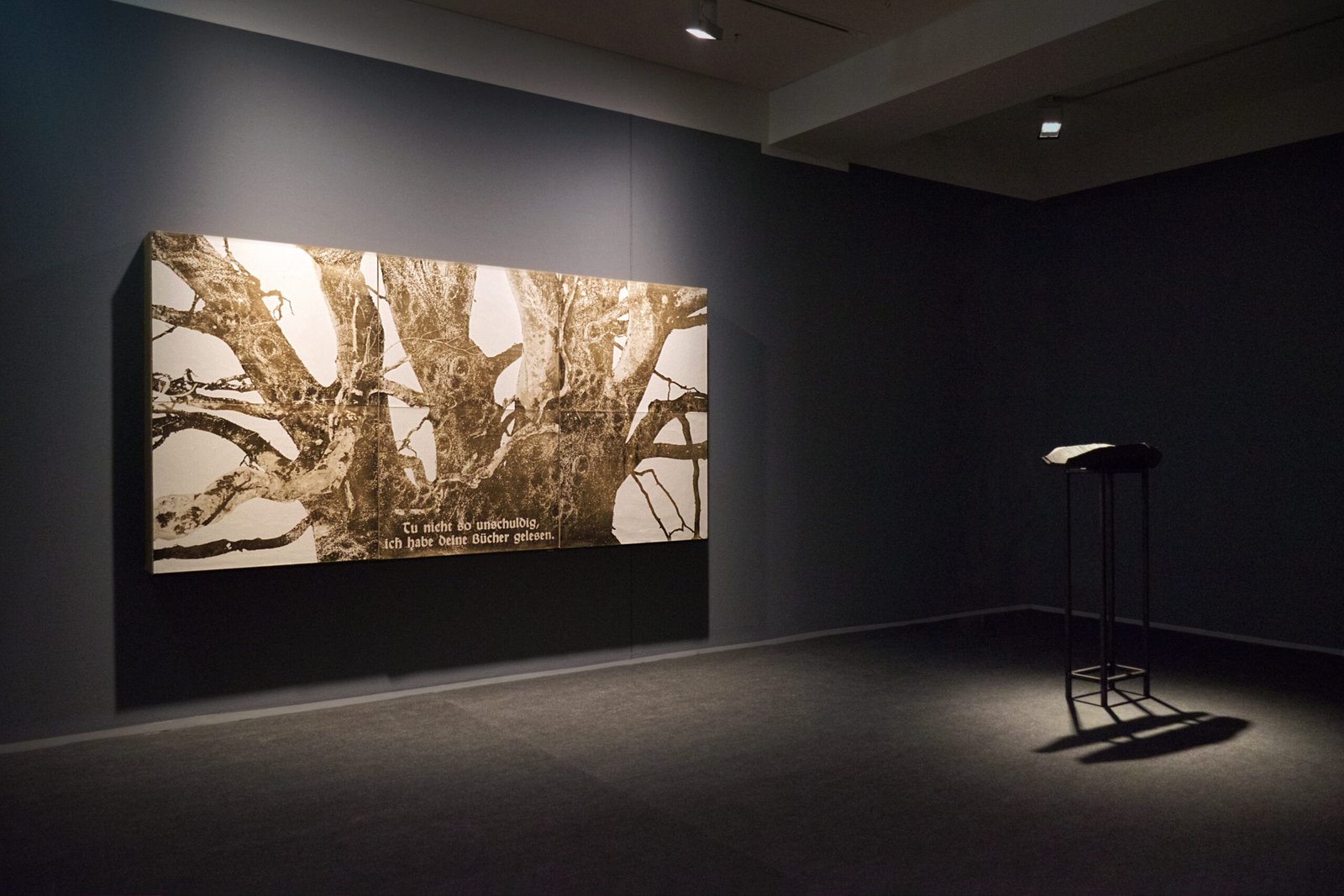
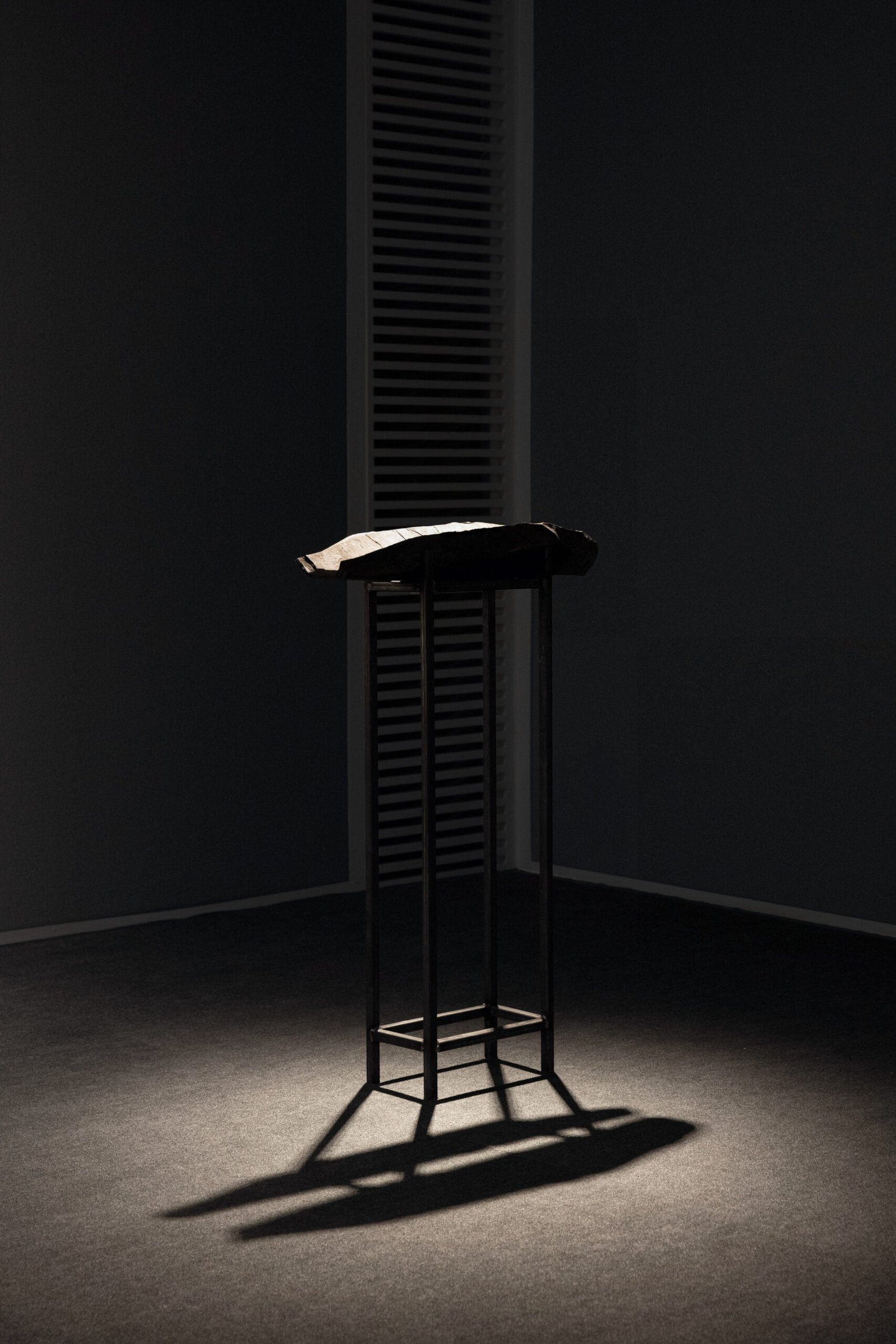
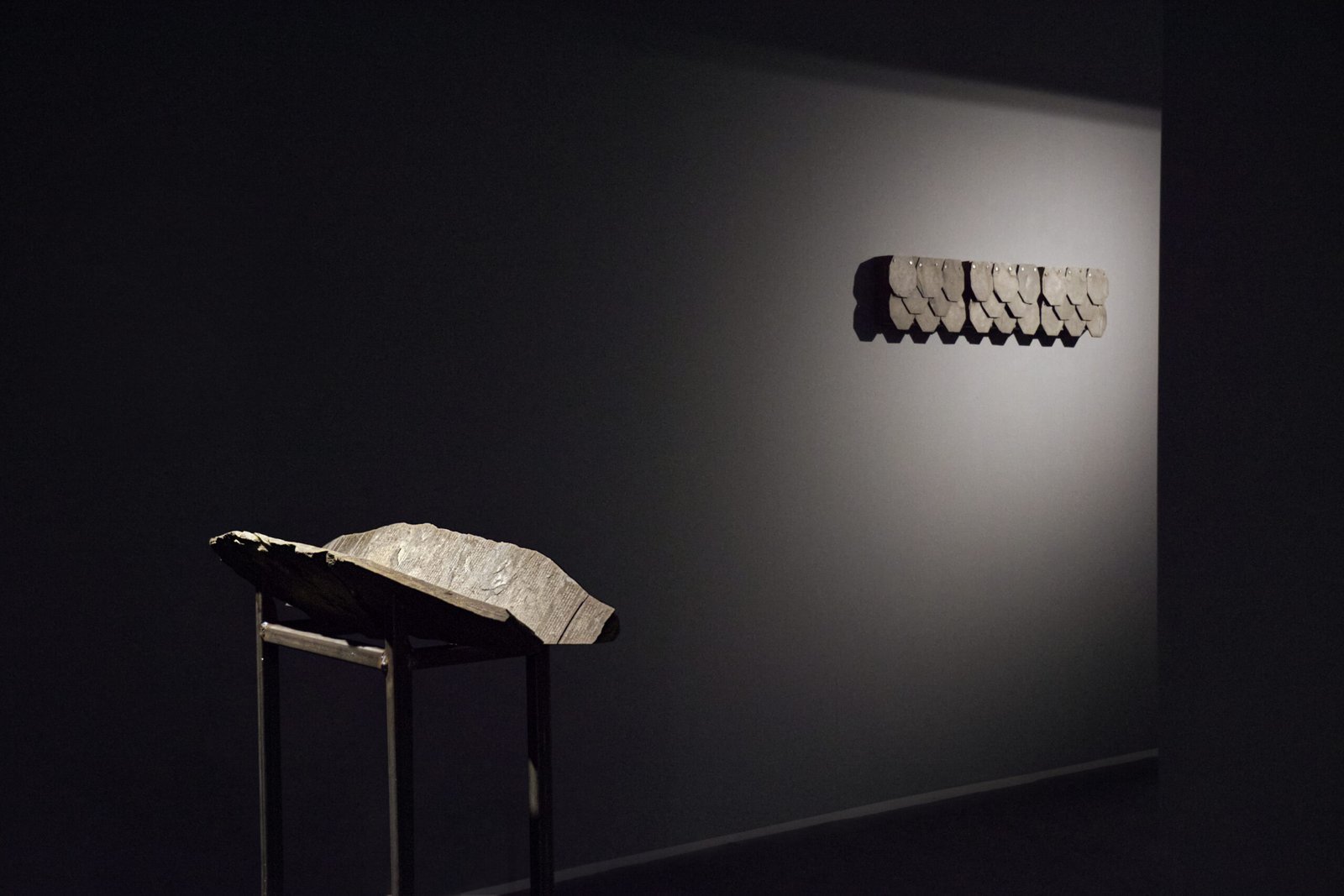
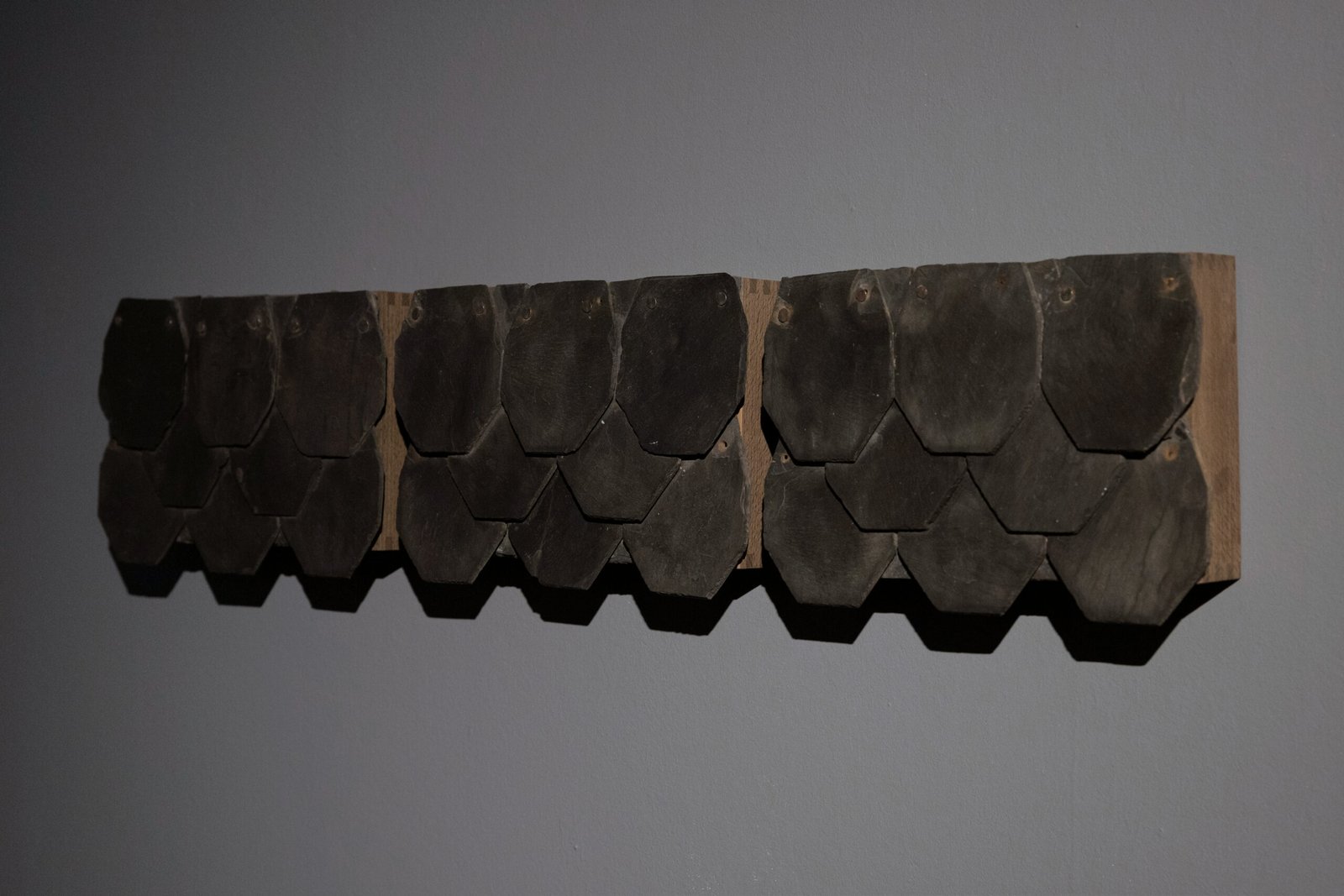
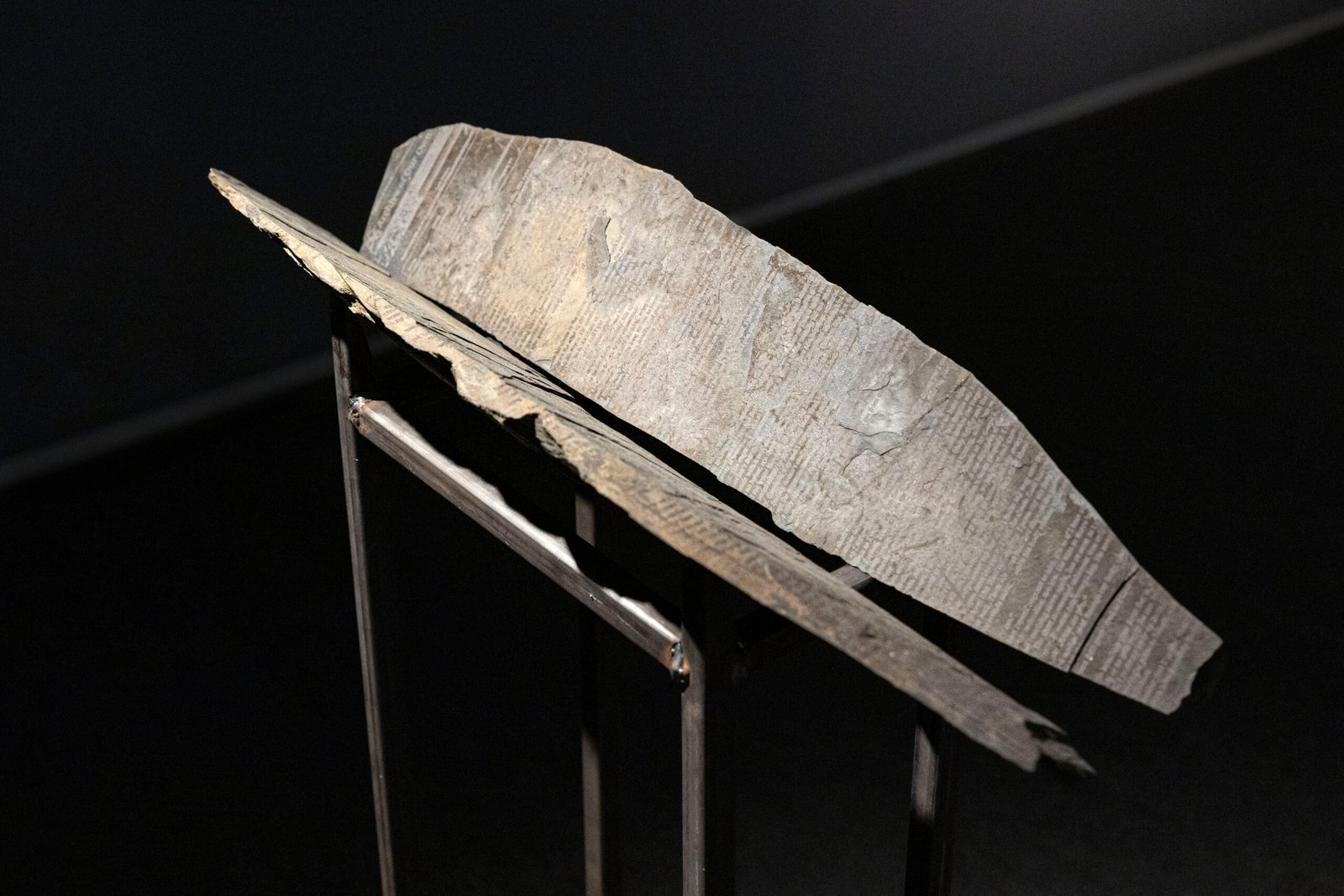
As a central material, the artist uses slate typical of the former inner-German border region in southern Thuringia. During the GDR, it was used in foreign currency trade with West Germany; in the 1990s, extraction ended, marking a profound economic transformation. danse macabre consists of shoe lasts traditionally covered in slate, formally recalling buckle shoes and poulaines. The series Schlotheim I–III takes up fragments of traditional slate roofing, while Robin Gallith III renders visible the material foundations of slate processing. The split stone slab resembles an opened book; a passage from a text by Gallithious, taken from a piece of fan fiction published on Archive of Our Own, has been laser-engraved into it.
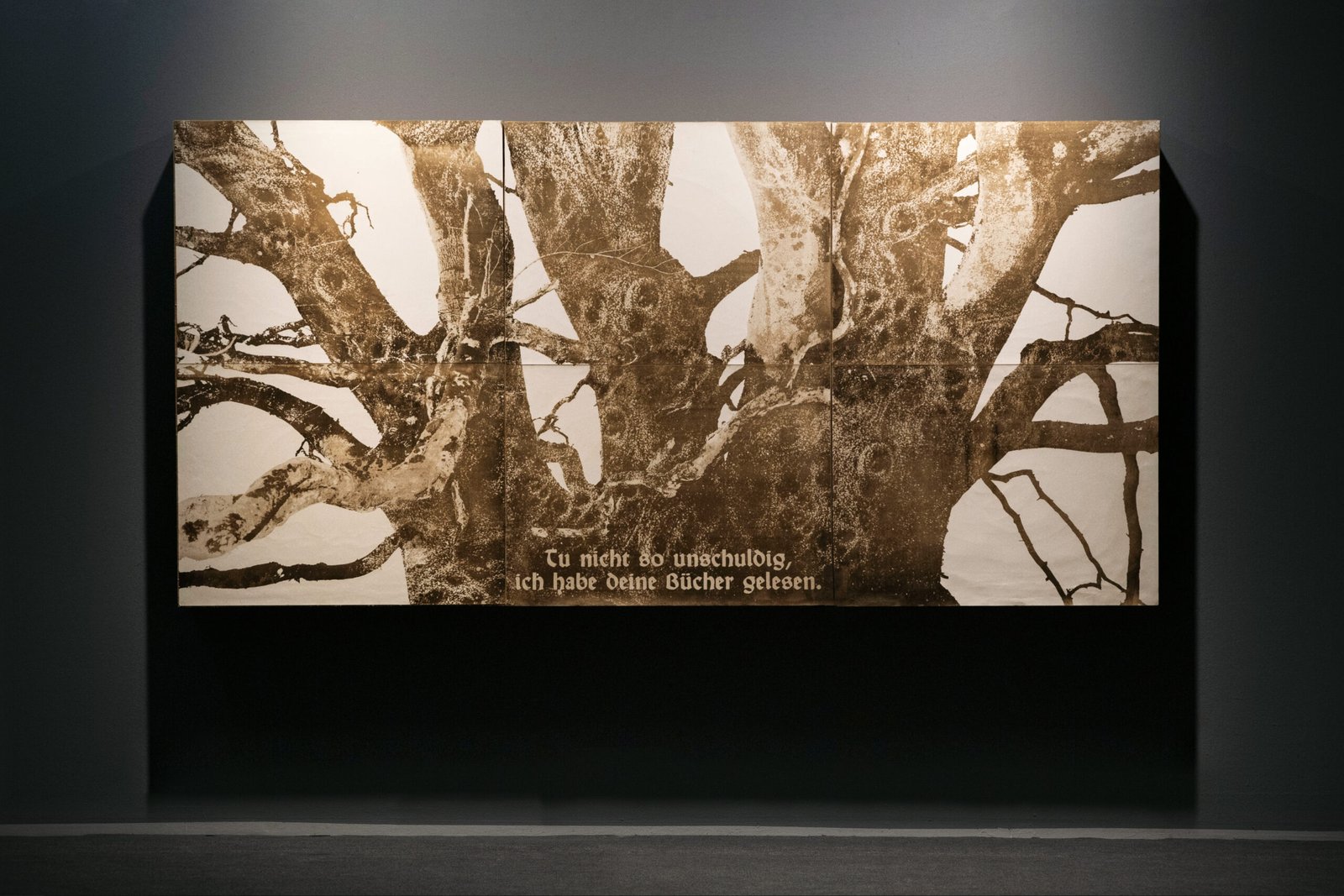
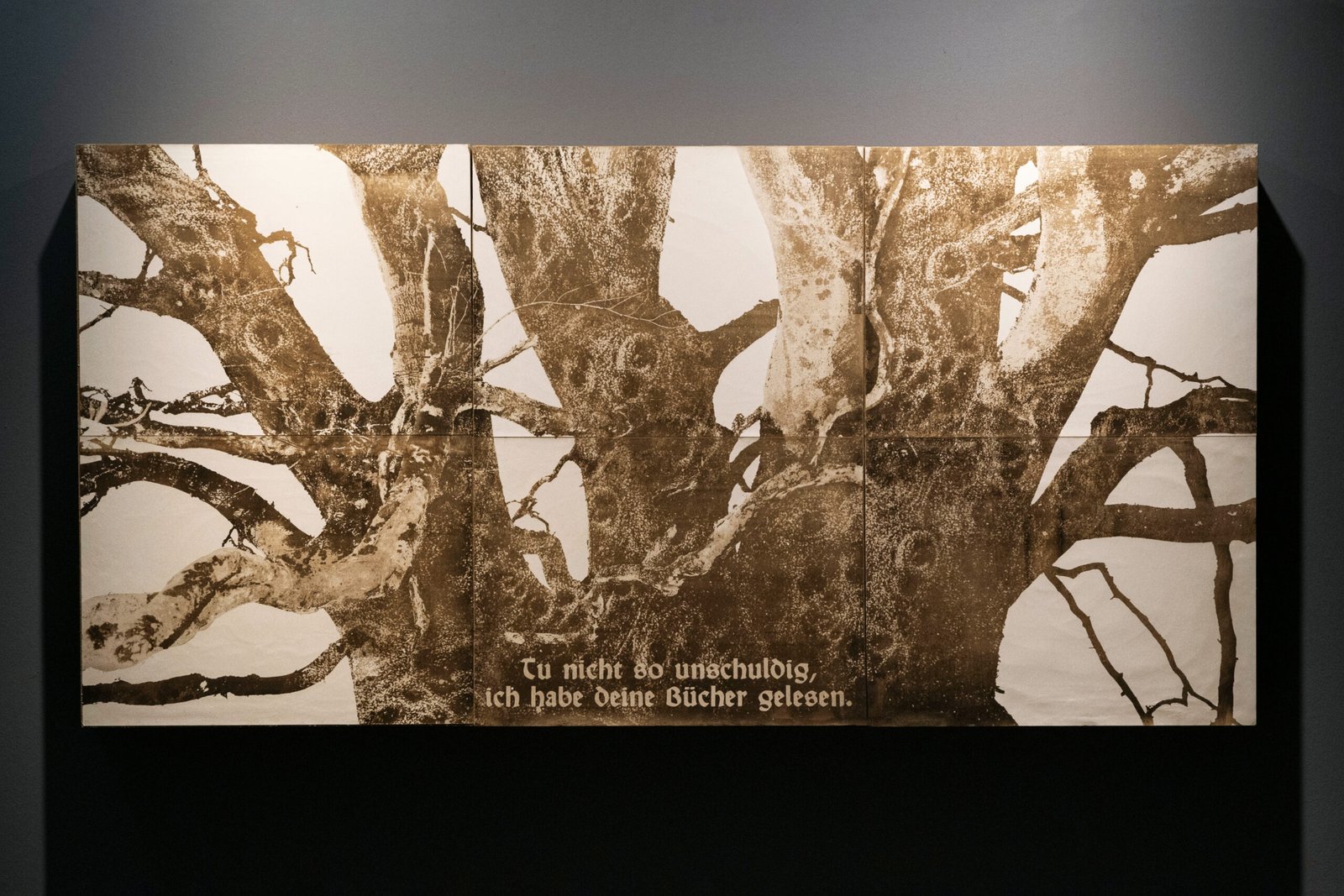
In Reetz’s works, traditional craftsmanship is repeatedly unsettled through reinterpretation and the introduction of hidden or opaque elements. Autobiographical aspects recur throughout his practice. “tu nicht so unschuldig, ich habe deine Bücher gelesen” bears witness to this. It shows a tree that—much like dark wave bands stylistically did—refers to Romanticism. The accompanying text quotes lyrics by the US band Low: “Don’t act so innocent / I’ve seen you pound your fist into the earth / And I’ve read your books.” The underlying structure imitates the ebony veneer of a cabinet that the artist’s parents purchased in the 1990s after reunification.
Through the combination of domestic motifs, Romantic quotation, and song lyrics, Reetz touches upon what the German dramatist and poet Heiner Müller described as the “German disposition.” Müller used this term to describe a particular inclination among Germans, especially in moments of submission and extreme idealization—an inclination that proved decisive for the catastrophic course of the 20th century. Among his well-known formulations is: “Of course ten Germans are more foolish than five Germans,” articulating his skepticism toward the “German people” as a mass. Stylistically, Müller frequently worked with montage, quotation, and intertextual layering. Reetz proceeds in a similar manner, bringing together and overlaying multiple motifs in order to develop a new resonance.
The work Die Anderen Bands, created in collaboration with Juro Carl Anton Reinhardt, leads into the private sphere. The objects, reminiscent of sound absorbers, refer to music production and are based on an ornament the artists discovered in a photograph taken in the bedroom of a teenage Goth in 1991. The pattern was digitally reconstructed and engraved onto paper. In his research on archiving subcultures, Reetz encountered numerous photographs of young people who made their affiliation with the Gothic scene visible through self-made clothing and posters. At the same time, these stagings appear embedded in conservatively shaped domestic interiors with heavy furniture and floral wallpaper. It is precisely in this tension that the social structures against which these youths directed themselves become visible—and how strongly these forms of protest remained bound to the private sphere. The bedroom becomes a space of retreat, self-staging, disorientation, and resistance. The exhibited sound-insulating panels recall Die anderen Bands, which often operated under conditions of relative secrecy.
An emblematic work for Reetz’s strategy is the exhibition poster, developed together with Reinhardt. Based on extensive research into album covers and the visual language of the Gothic movement, a typeface was first created analog in ink, then digitized and engraved onto paper. The poster brings together different historical layers: one date refers to an incident at the Jena Planetarium during a concert by Goethes Erben, where attacks by right-wing extremists occurred; another marks a meeting of the early Romantics in Jena. It also cites a poem by Caroline Schlegel-Schelling.
In this way, Reetz draws attention to the intellectual-historical connections between German Romanticism and the “end-time Romantics” of the Gothic movement. In the background, a rosehip bush—echoing Romantic conceptions of nature—overlays the design of an issue of the music magazine Zillo, long considered a mouthpiece of the scene and, at the same time, a sign of its increasing commercialization. Upon closer inspection, the words “Musikmagazin” and “von der Szene für die Szene” can be discerned.