

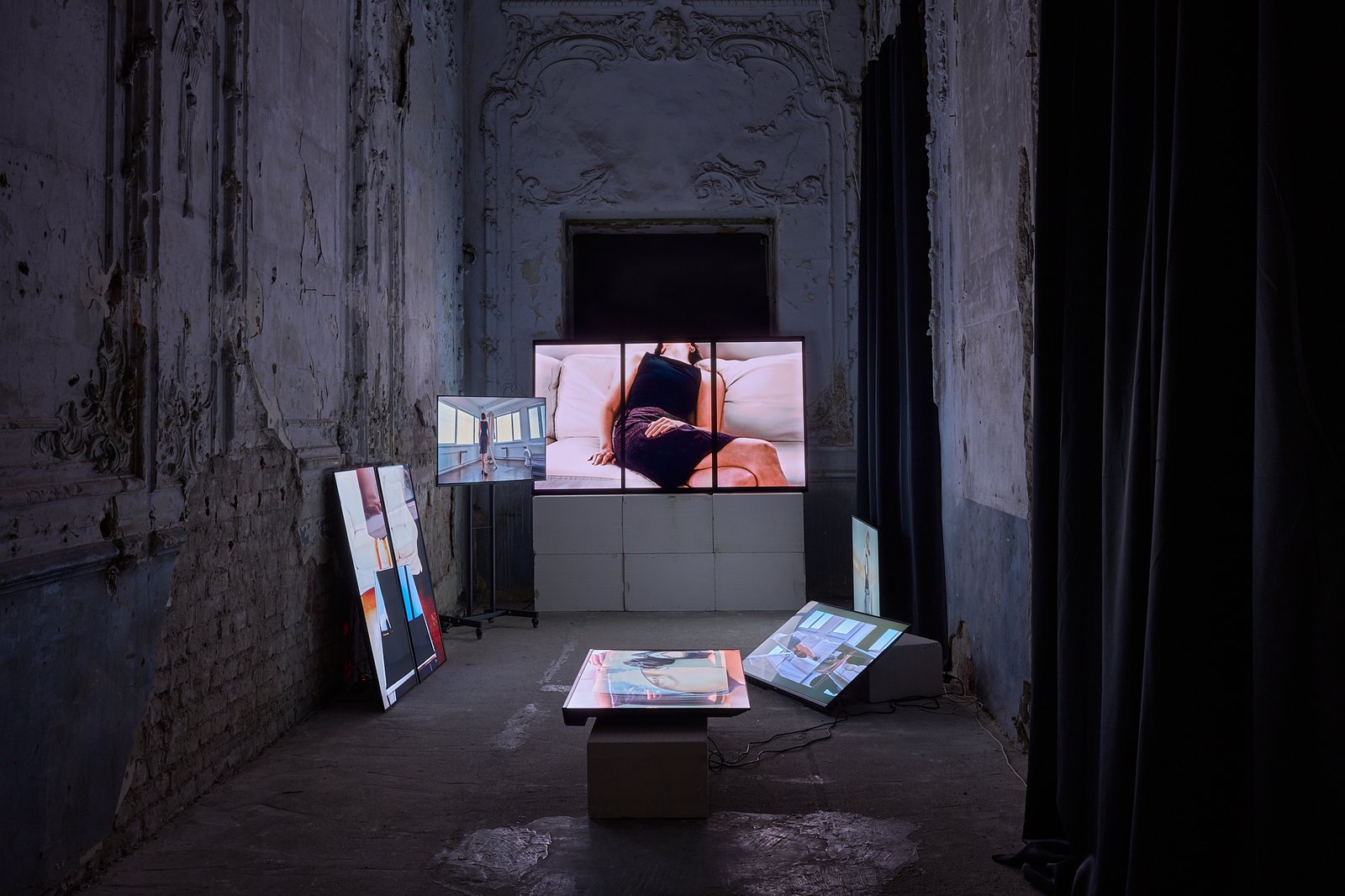
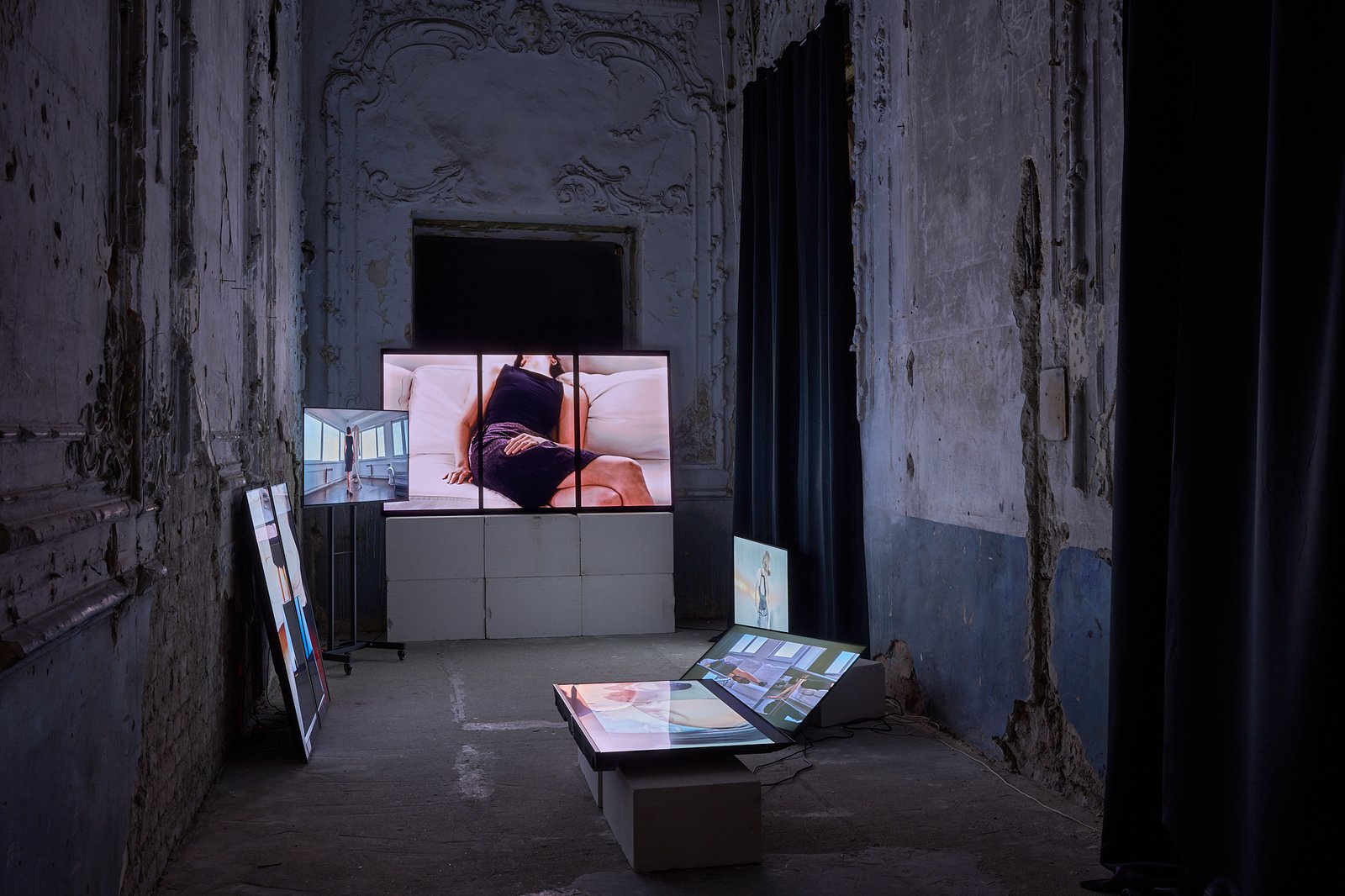
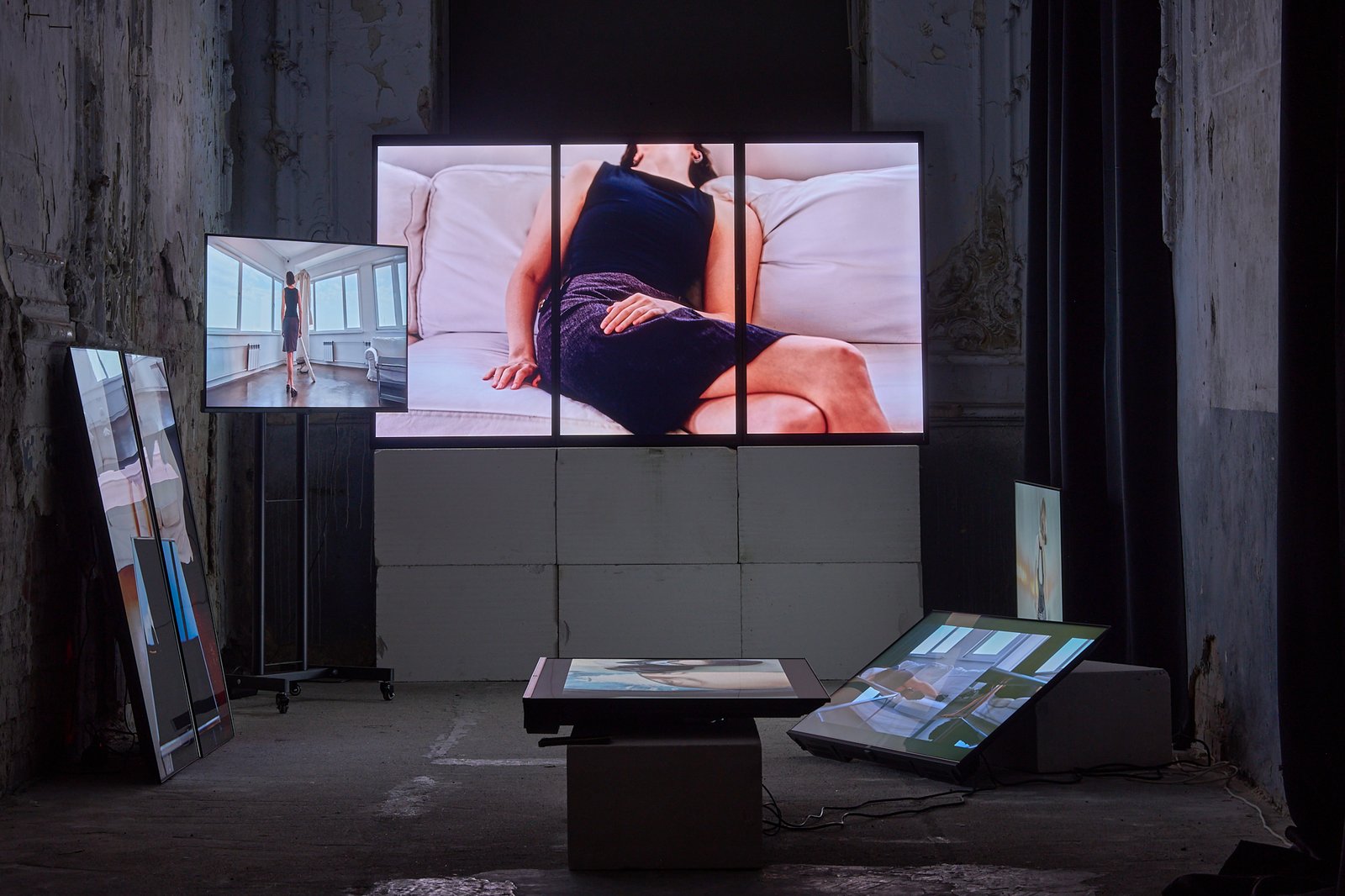
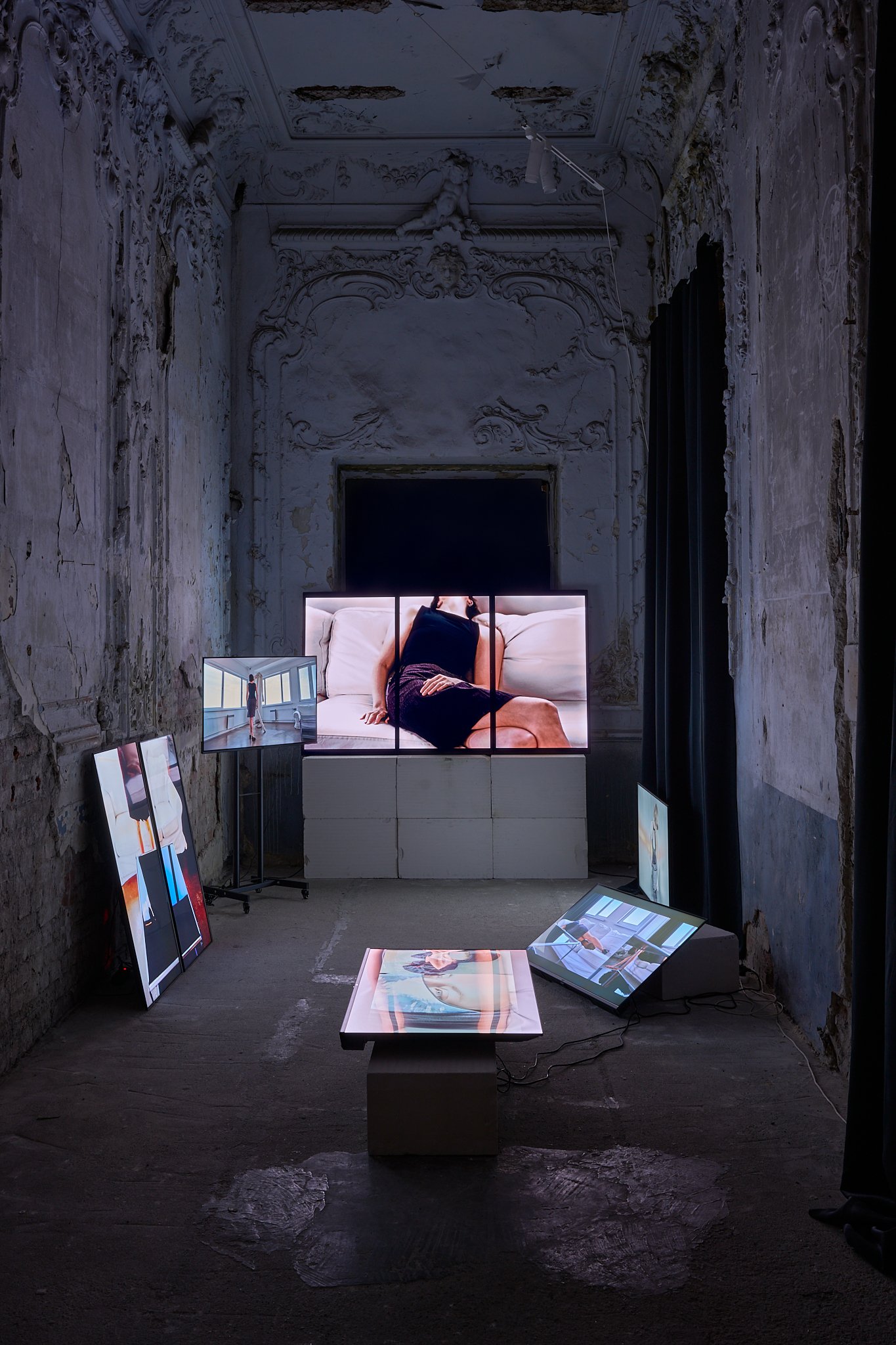
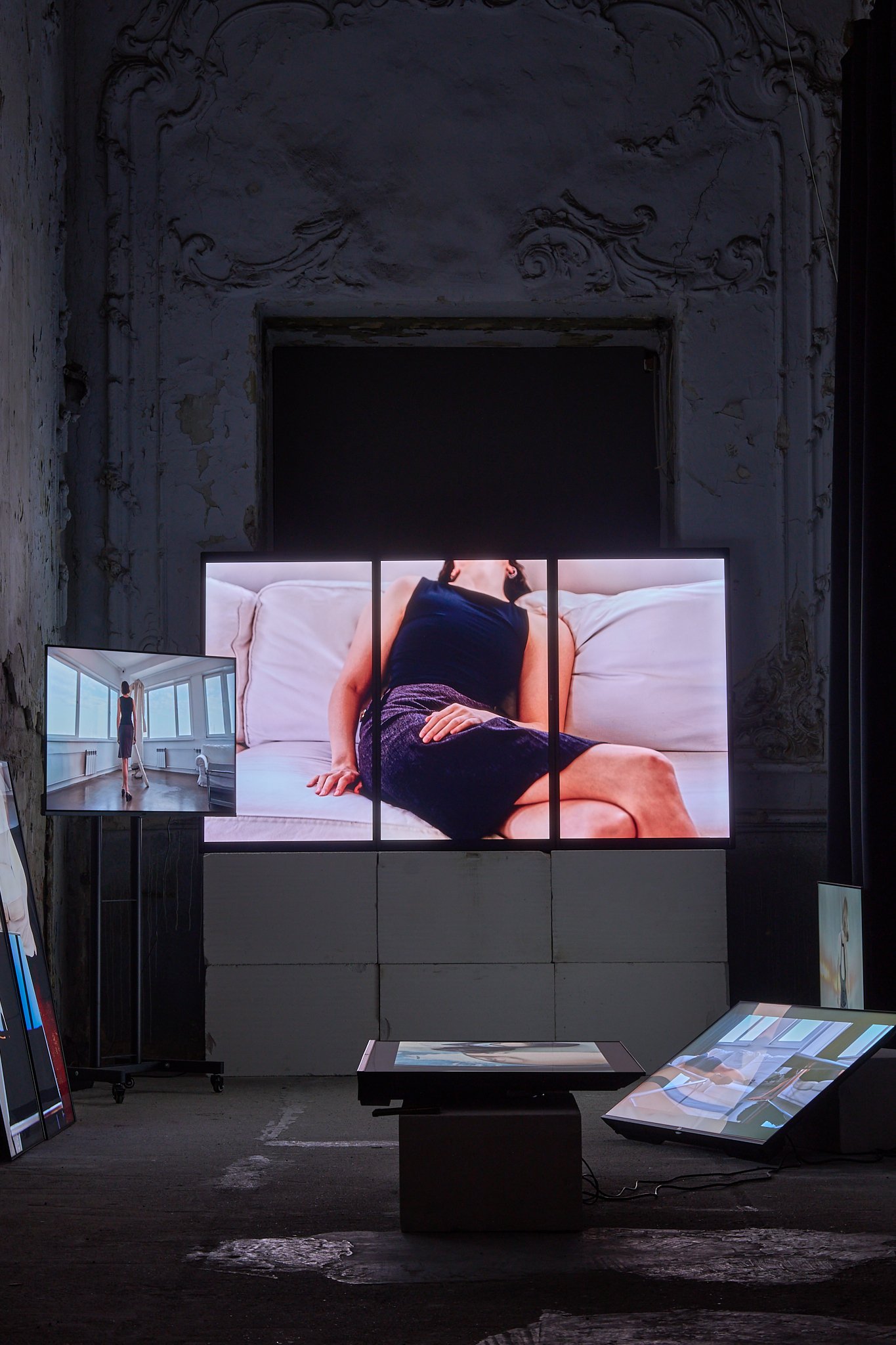
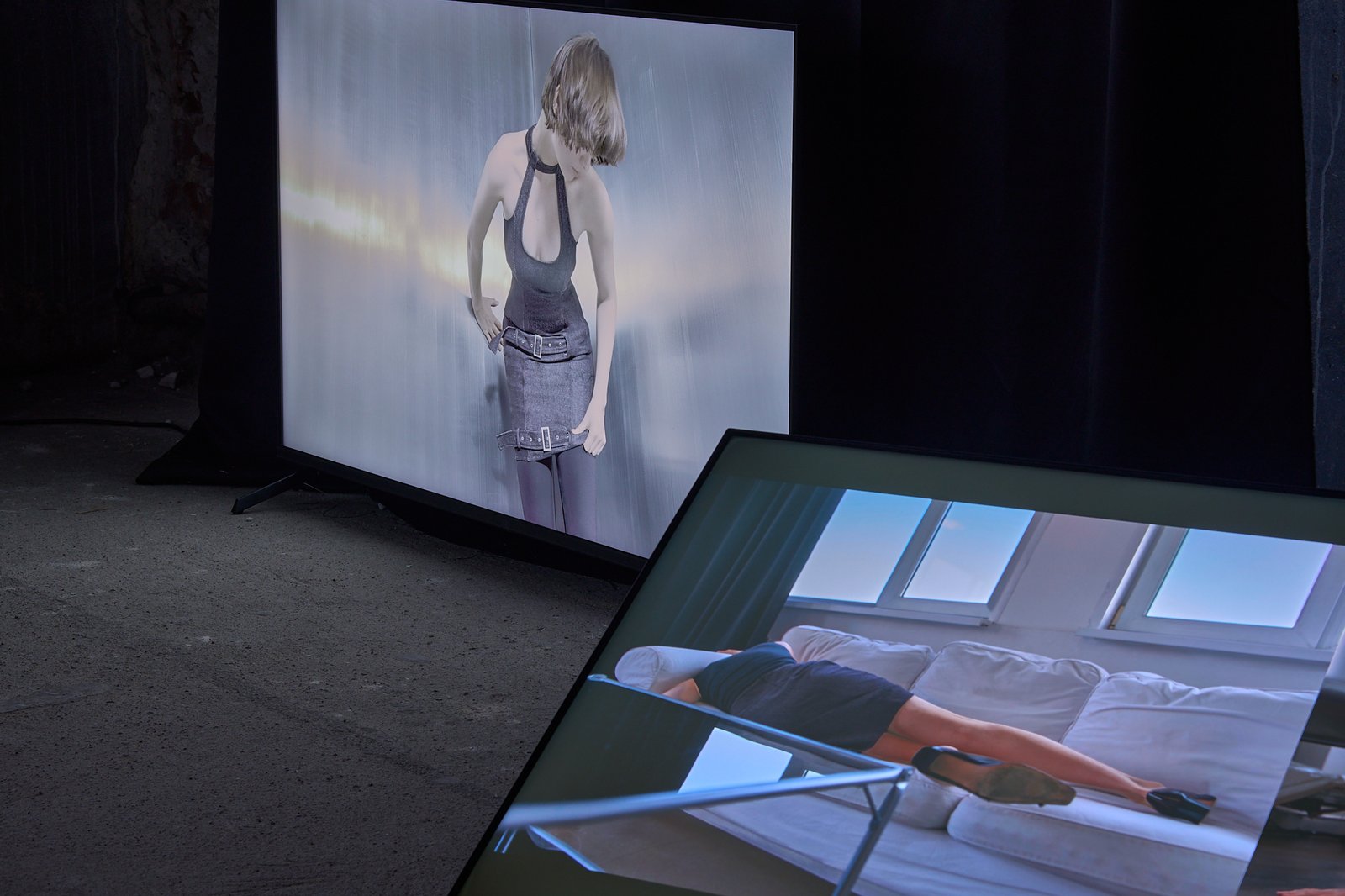
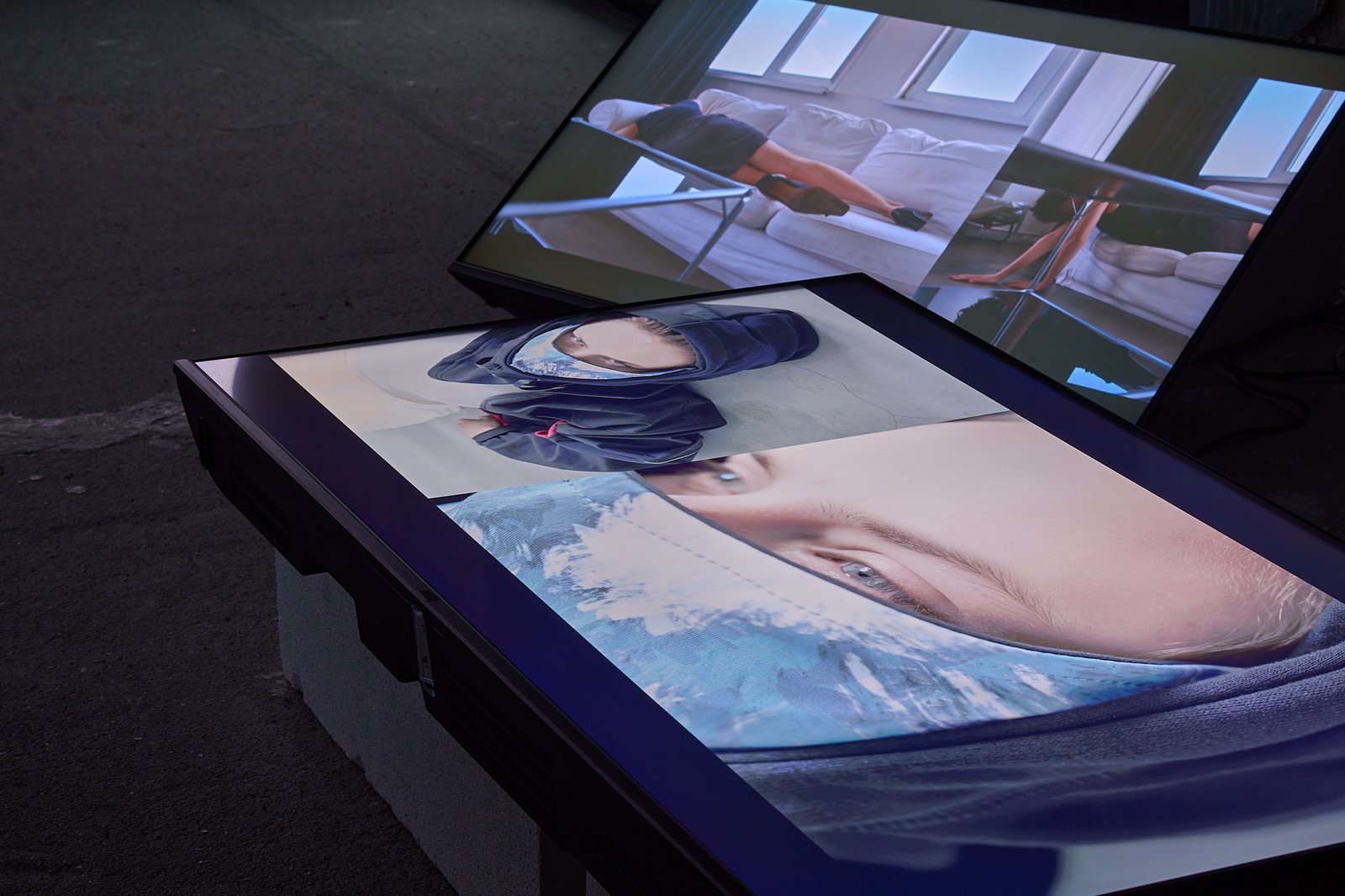
Black Mirror
The evening darkness, devouring window reflections, shop windows, and eventually entire houses, transforms the street with its corridors and nooks into a seamless landscape without clear boundaries. Clinging to familiar order and structure—any frame—becomes uncomfortable. The disappearance of visible borders does not guarantee an external perimeter elsewhere.
A faint light slices through the darkness in narrow strips. I once accidentally captured this effect on Ilford film—its ISO “caught” two silhouettes and a 24-hour roadside shop. Now, the same light, reflected in the damp asphalt, multiplies potential routes, playfully reaching out and inviting you to follow any of them. But this multiplicity paradoxically doesn’t bring happiness; instead, it intensifies the feeling of being lost. A panoramic vacuum, where with a visible horizon, all directions become meaningless.
This walk is less of a quest than a drift, heightened by a shared background boredom that sharpens hearing: phantom sounds from silent passing cars. Ashamed of my own “magical insight”—detecting a melody (which, damn it, turned out to be a cliché)—I realize that, out of habit, it’s better to pretend I never heard it, to avoid seeming older than I already am.
Lonely in this landscape, a primitive desire arises for the subject of the Other, unconsciously signaling through a photo/post/note—a blind search, hoping to glimpse the reader, a distant silhouette. Social networks allow existence everywhere and nowhere at once, giving Narcissus the best mirror, and each person a desert for asceticism. But self-production—capitalist fuel for content—frustrates, draining energy.
Shadows, stretching and contracting, are most persistent at these hours: enveloping, whispering old jokes, tossing random “cloud memories,” offering promo codes to a shoe store I’ve only visited once—yet sometimes, they get my number. All this, in short, doesn’t really matter, but now clings stubbornly like claws to a tangled ball of thoughts, familiar to any late-night outing. I wonder—how appropriate is it to repeat curse words? Is it even normal to entertain these thoughts? At such moments, even the inner “self” seems to morph into that stylish velvet shadow of a whisper, but I guess I’m still here. But where exactly is “here”?
The present is handed over to the power of the media landscape, which resembles Eden: containing everything, and aimed at every individual. For this reason, thePersonal “scope” of the landscape appears monospectatorial: “I am yours,” it says, “you can take whatever you want.” That abundance of space—vast enough for a single person—combined with nostalgia for artifacts, creates a view close to romanticism. Ruins, a weathered shack, or an old tree—natural equivalents—serve as shelters, focal points, portals within this environment. But where to find refuge from omnipresent surveillance inside an entirely sterile, flat space?
A sacred pit-stop—an area where a pause amidst endless renewal could occur—might be a zone of sanctity, with a meditation or trans-prayer form that reconnects us with analog rhythms, shedding digital overload. Yet, virtuality is ready to claim this space too: TikTok dance, in its absorption (both during performance and viewing), imitates a pristine space where consciousness, in its reset clarity, finds refuge. Virtuality establishes its equal claim to reality by asserting a quasi-religious nature of its origin—an instinctual response for those born into the internet age.
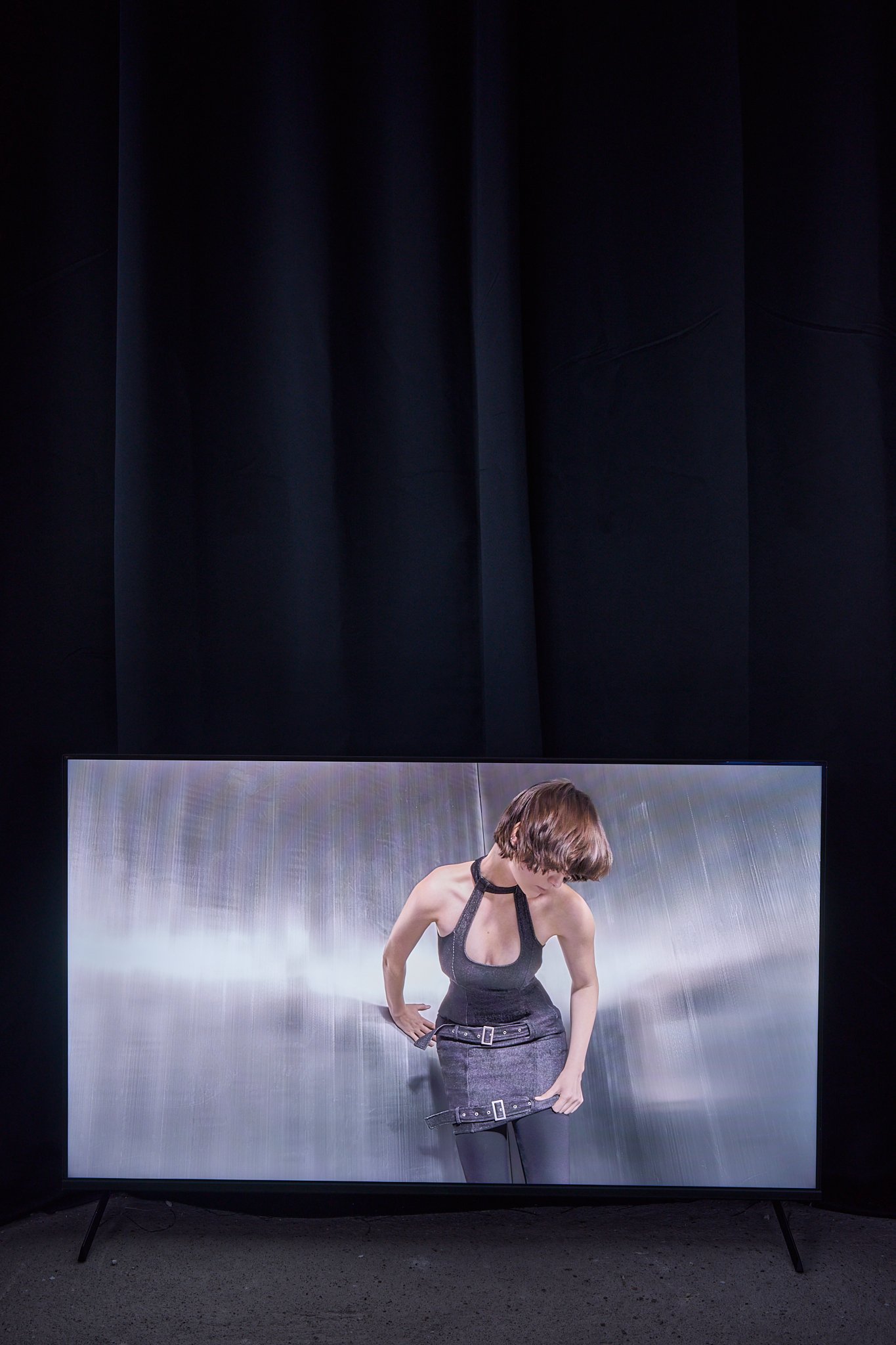
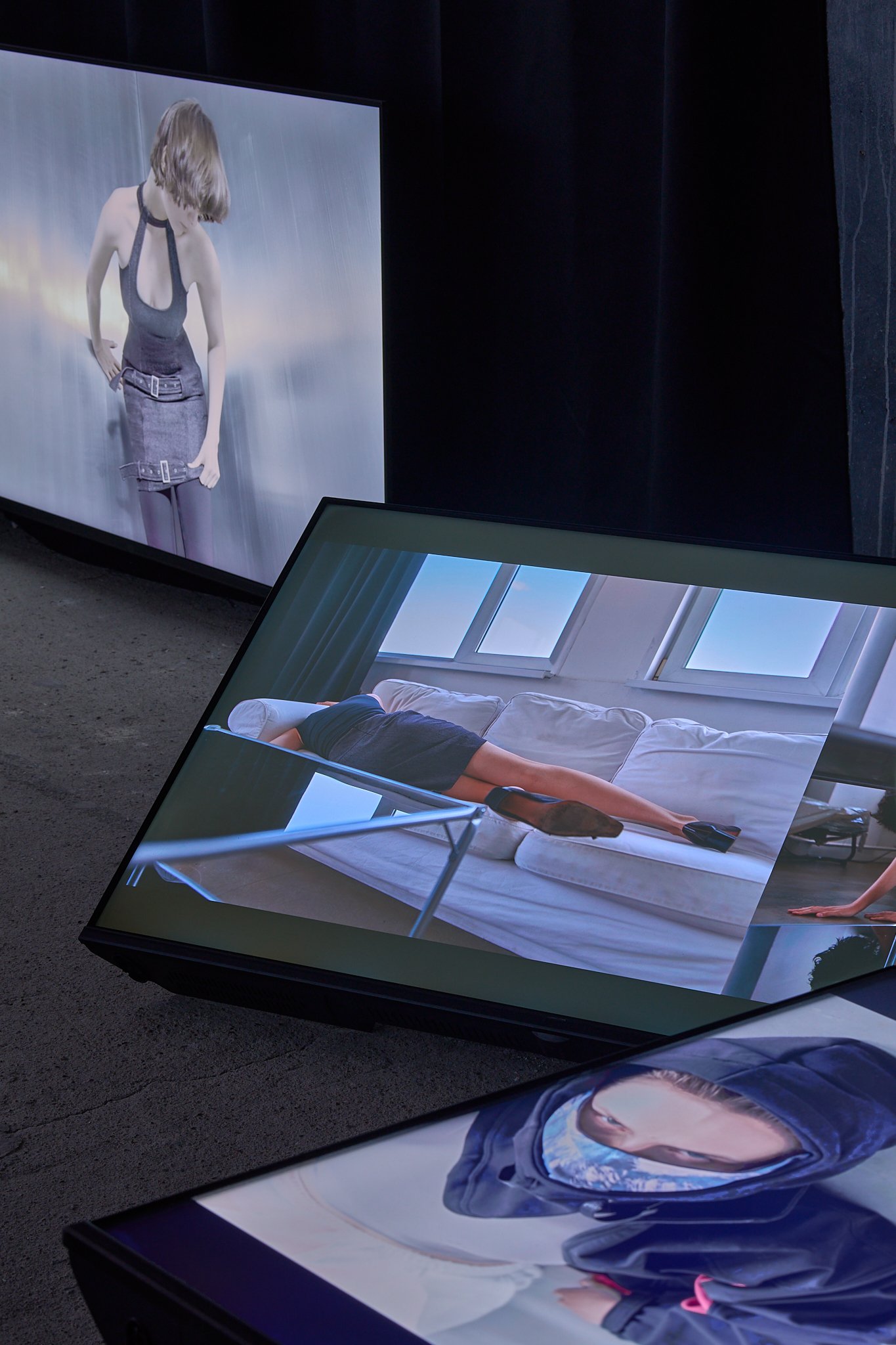
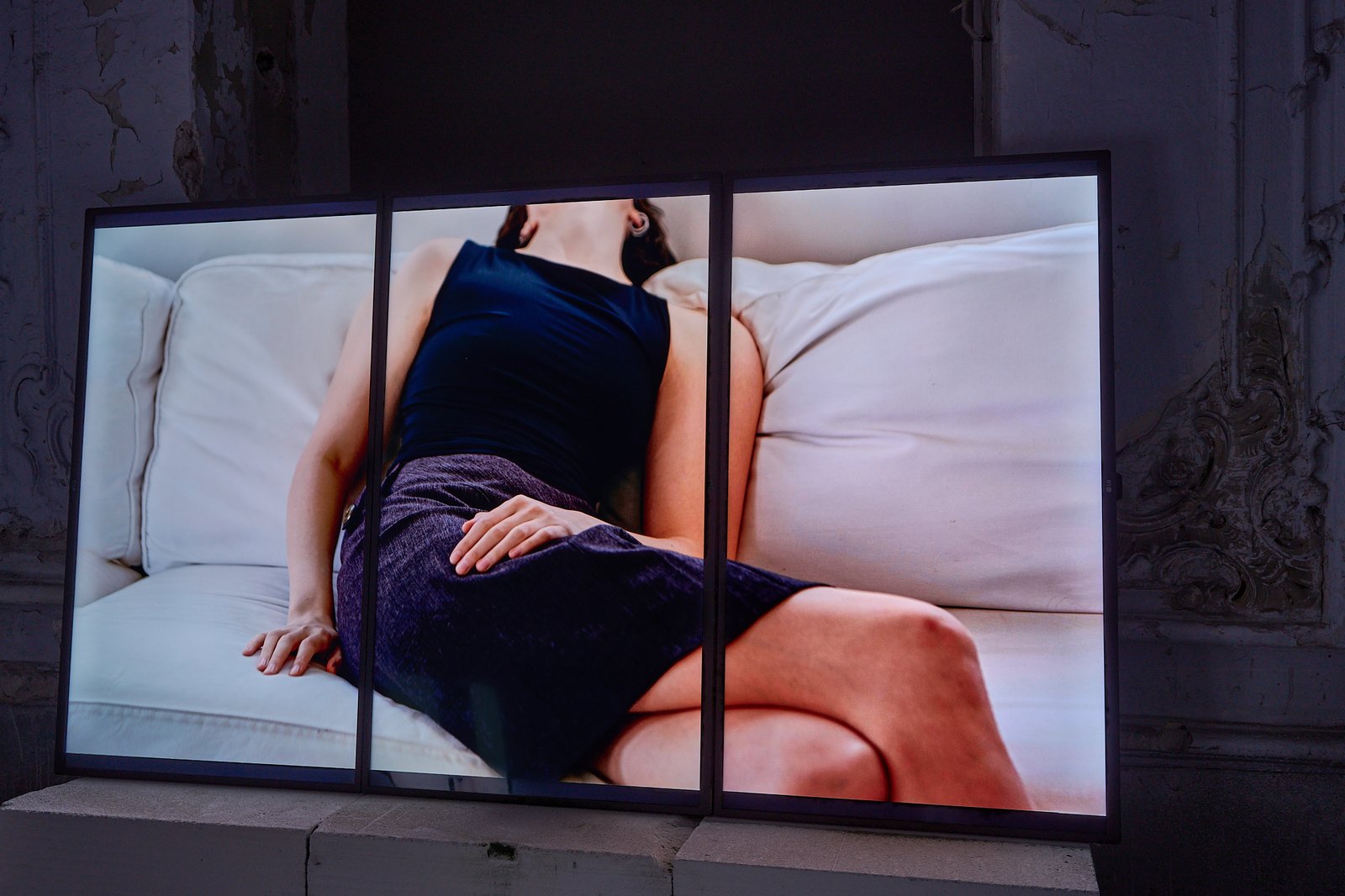
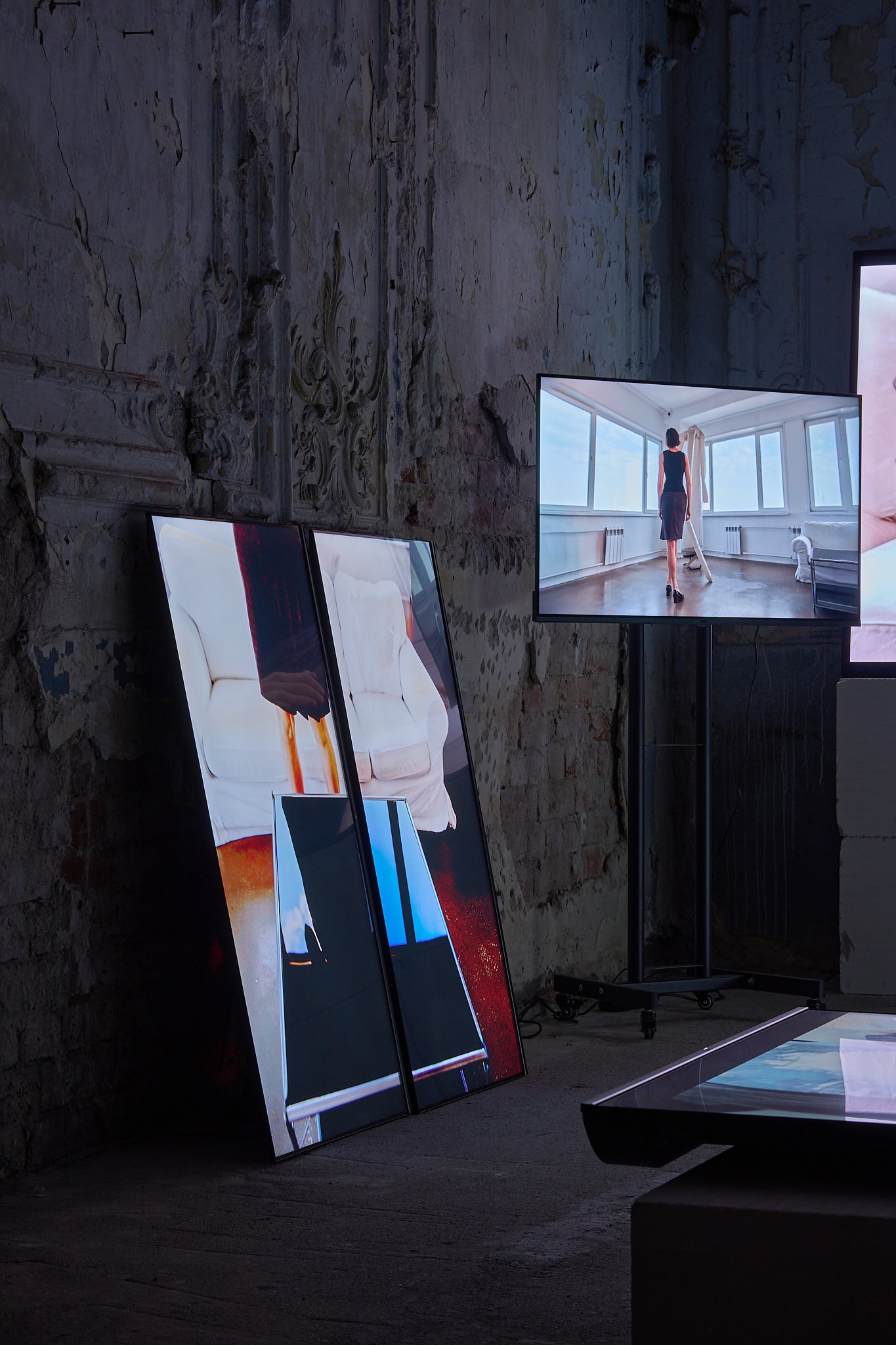
Stream, selfie, dance—these forms imply an exaggerated mirror. With a smooth, alluring surface—far from the clarity of glacial waters and close to a viscous oil slick—they absorb every gaze. This surface doesn’t just reflect a face; it creates an illusion that the person watches themselves from the outside, constantly adjusting their suit, hairstyle, bra, or mask. Such a mirror signals: “I am still visible,” and reality remains under control. We believe we’re in charge—peering into it, choosing a proper look for the world or ourselves. But every movement is part of a script dictated by unseen algorithms, compelling us to update, reconfigure, and rehearse again and again. This routine becomes ritual.
In messengers and chats, repetitions of phrases, ideas, and echoes of the same thoughts are ubiquitous. Most messages strip away the “I,” giving way to crafted images. Virtuality is no longer merely a space for freedom but an arena of constant boundary refinement, rebuilding, and deconstruction of identity. Interface architecture imposes navigation rules akin to a city’s streets or the “allowed/forbidden” rules of school hallways. Algorithms shape our worldview, generate new behavioral models, and, ultimately, influence perceptions beyond the digital realm.
And when the polarity between real and virtual becomes so blurred that the division is erased, the very question of “here” seems pointless. In this context, the current situation resembles a quantum superposition: where the act of observation “chooses” one of the possible states, turning potential into reality. In other words, the question only concerns two equally valid realities: whichever one sends the first request—and we respond instantly—becomes prioritized, leaving the other in permanent standby, ready to seize us next time.
Roman Kruglov