


The central scene of W.R.: Mysteries of the Organism (1971), directed by Dušan Makavejev, takes place in the shared apartment of two female comrades. One evening, they host a touring Soviet ice-skating champion. During a heated debate on the emancipation of love and sexuality, the wall of the room suddenly gives way under the force of a drunken worker bursting in. The collapsing wall bears a portrait of Wilhelm Reich–the film’s central figure–who believed that sexual energy was a tangible, revolutionary force. Reich argued that repressed sexual energy forms a kind of “body armor,” producing conditions in which human subjectivity becomes fertile ground for fascism and Stalinism.
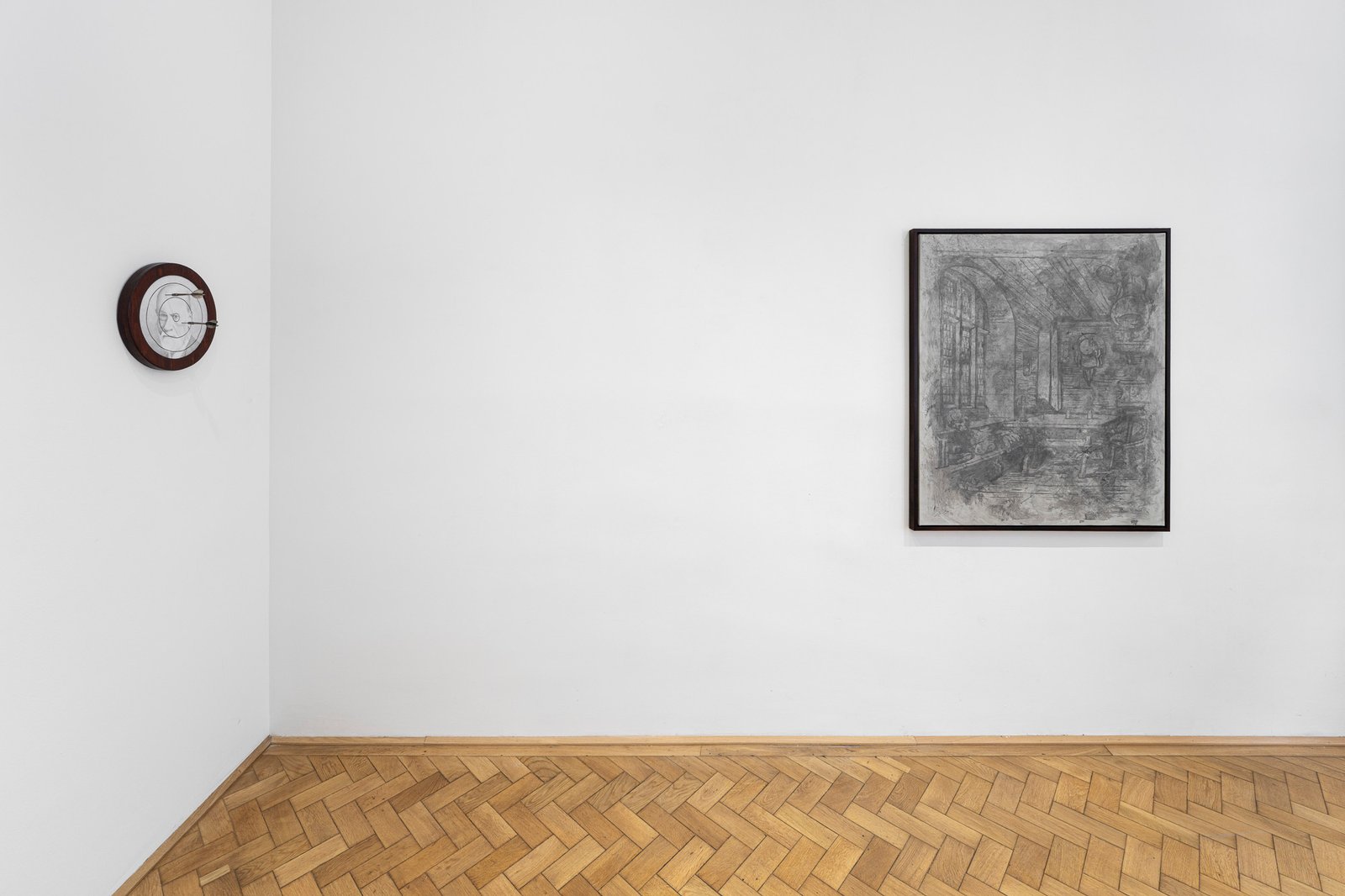
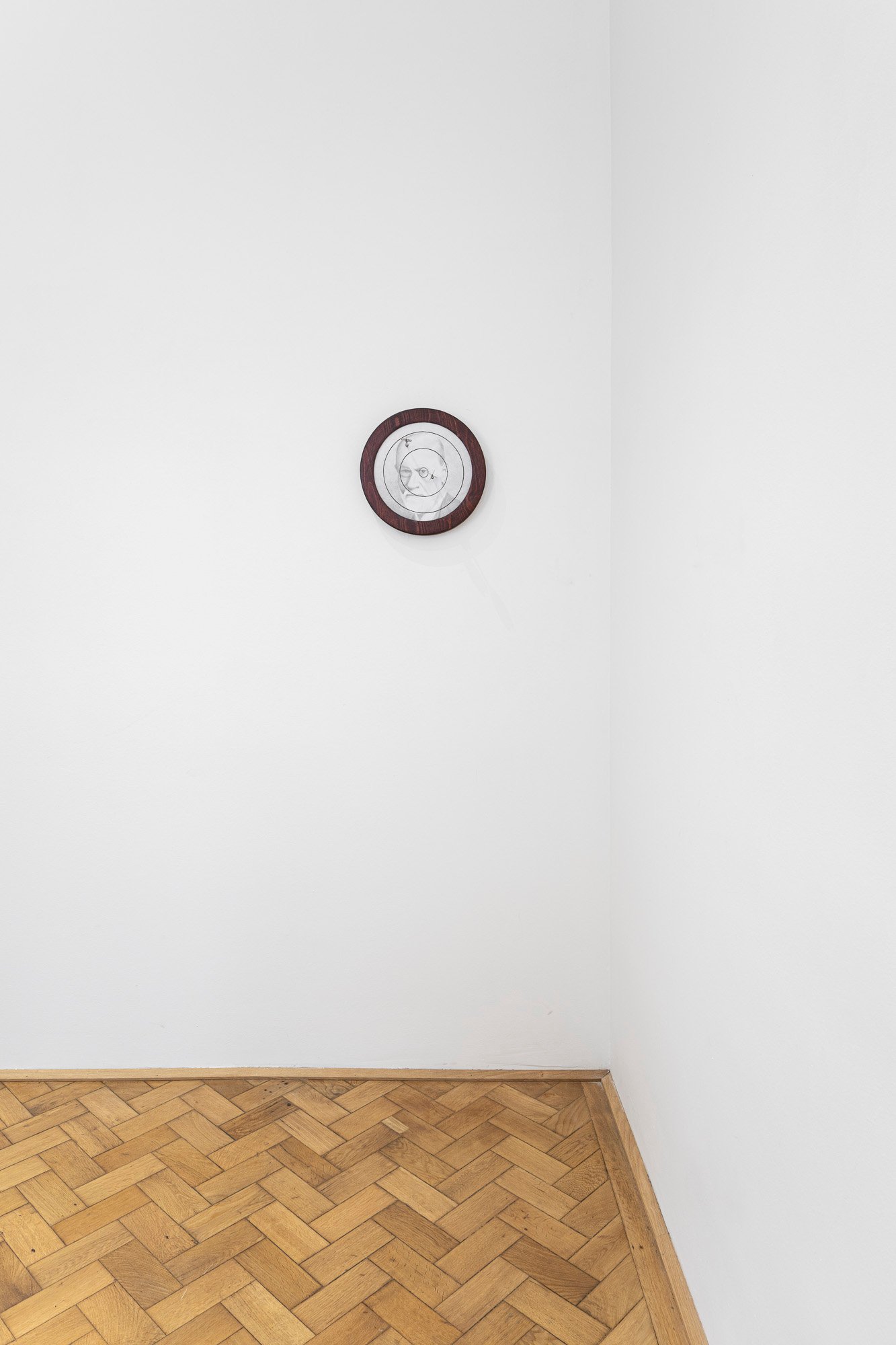
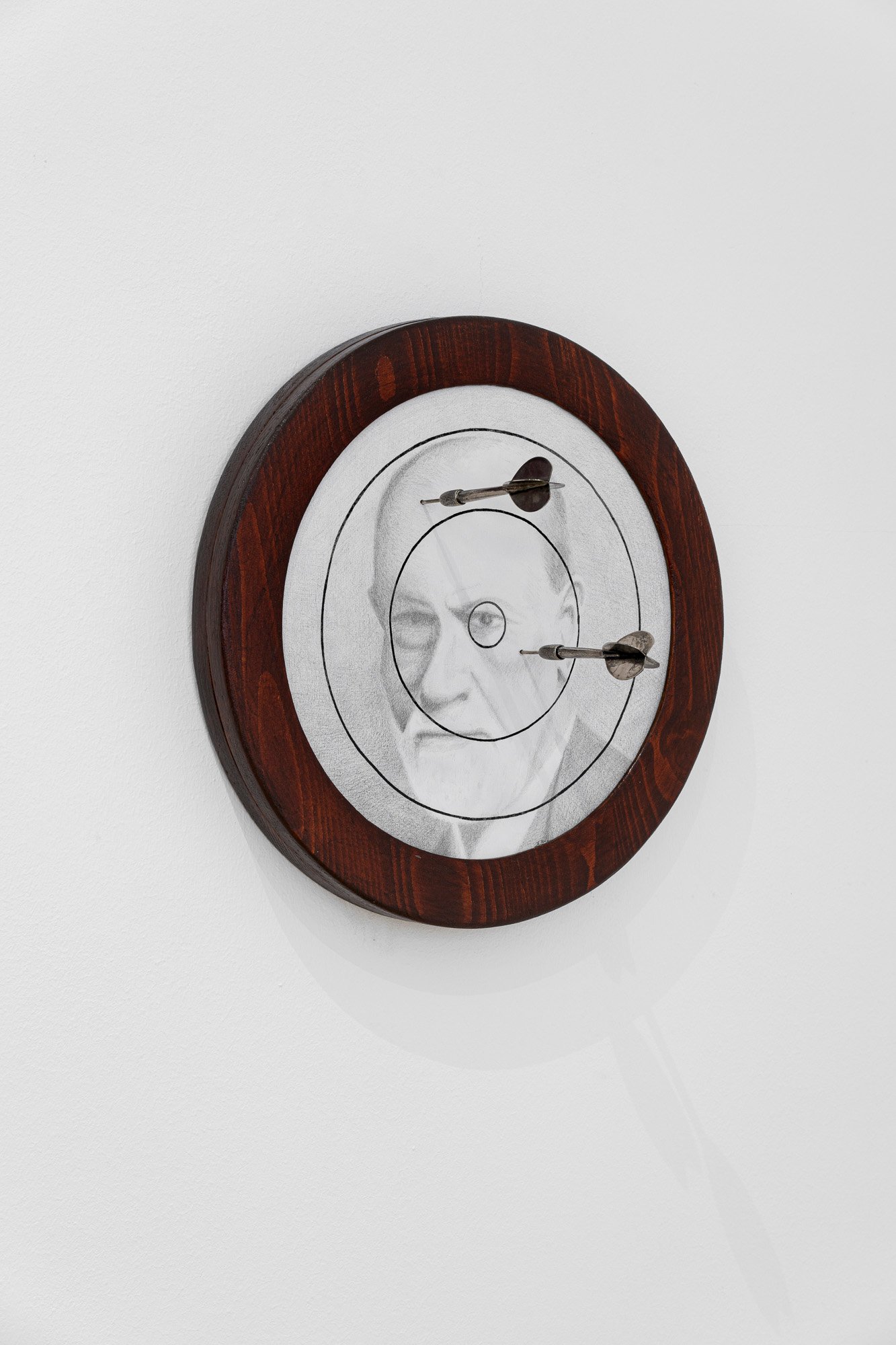
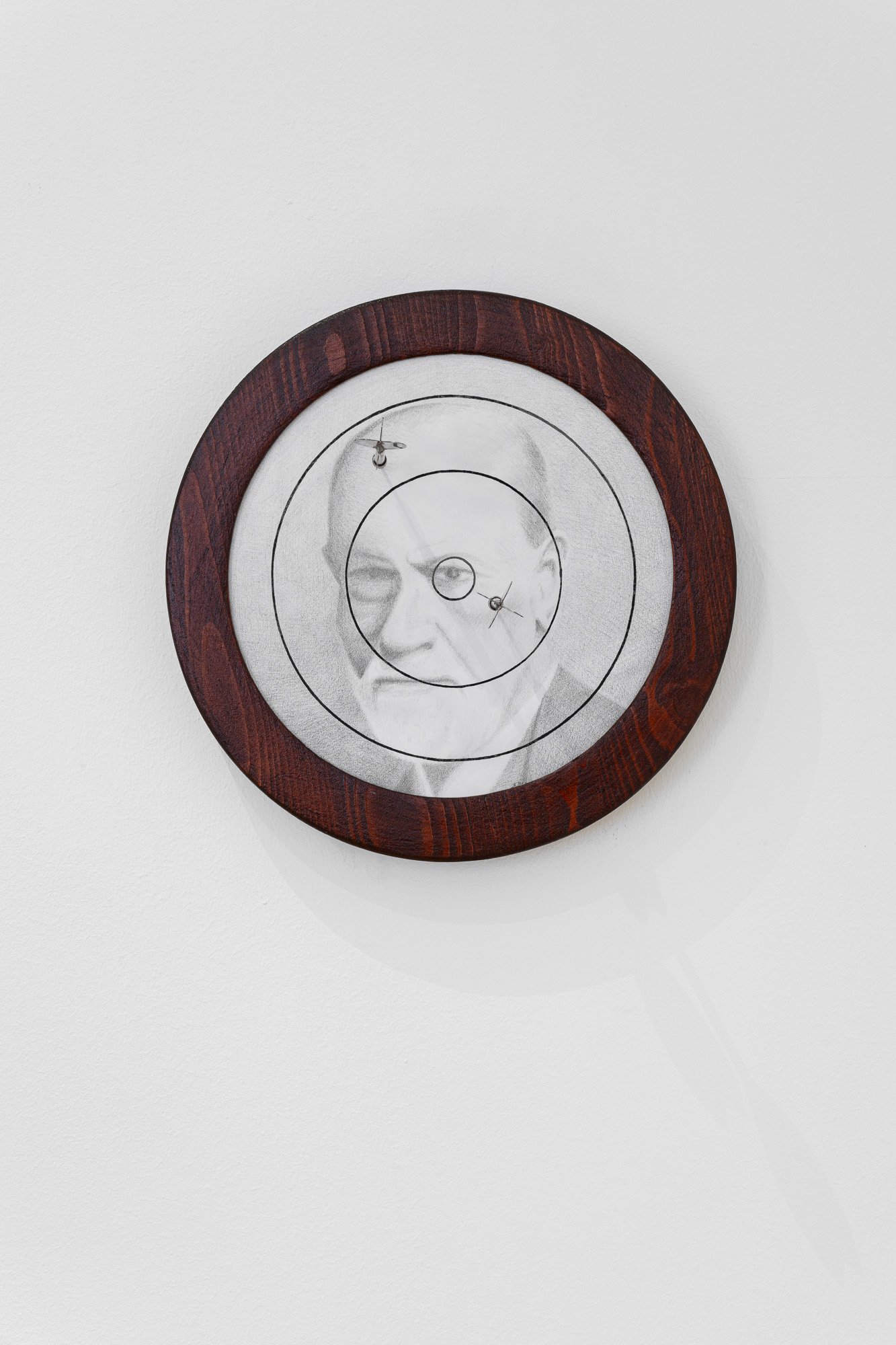
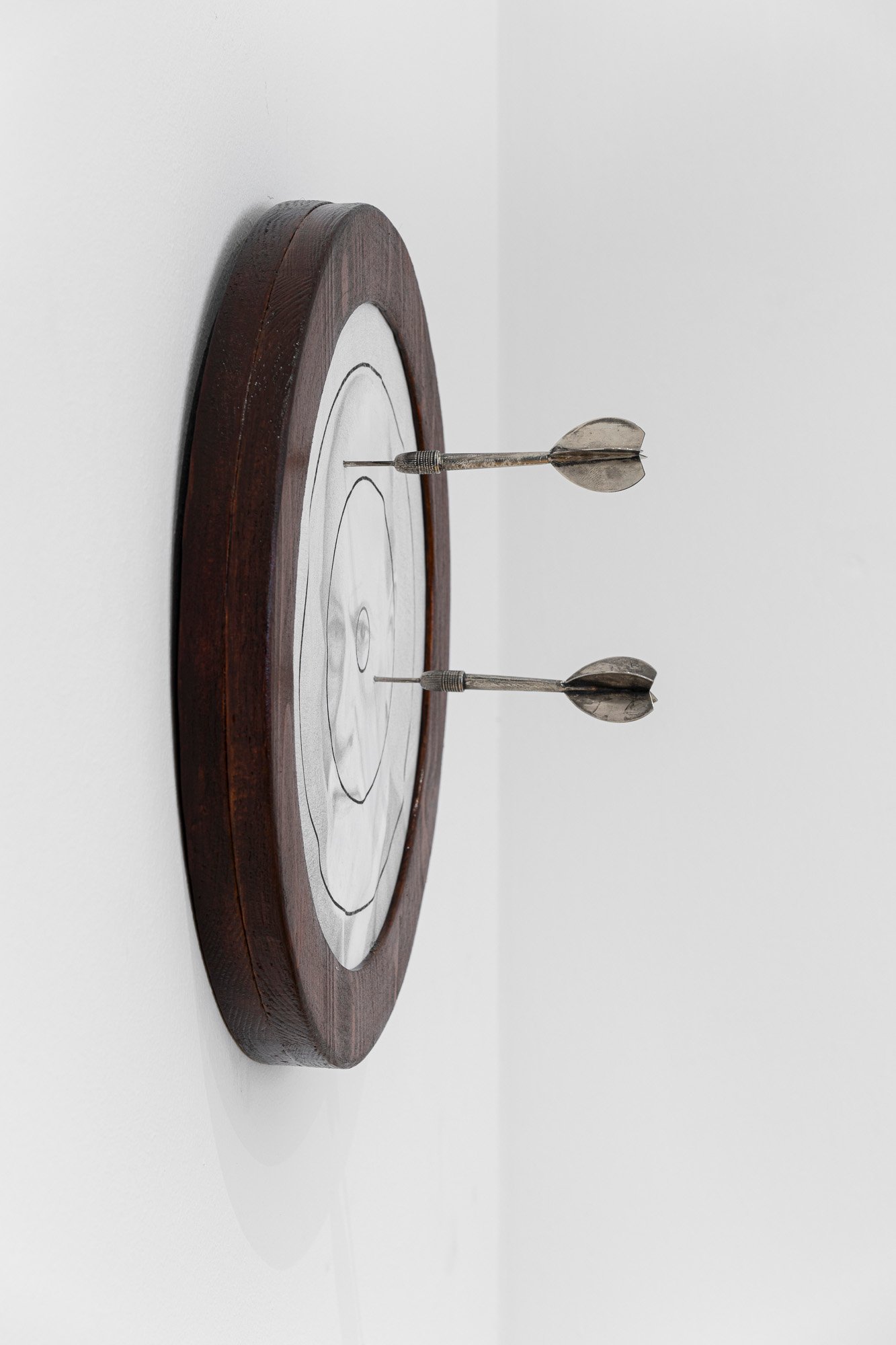
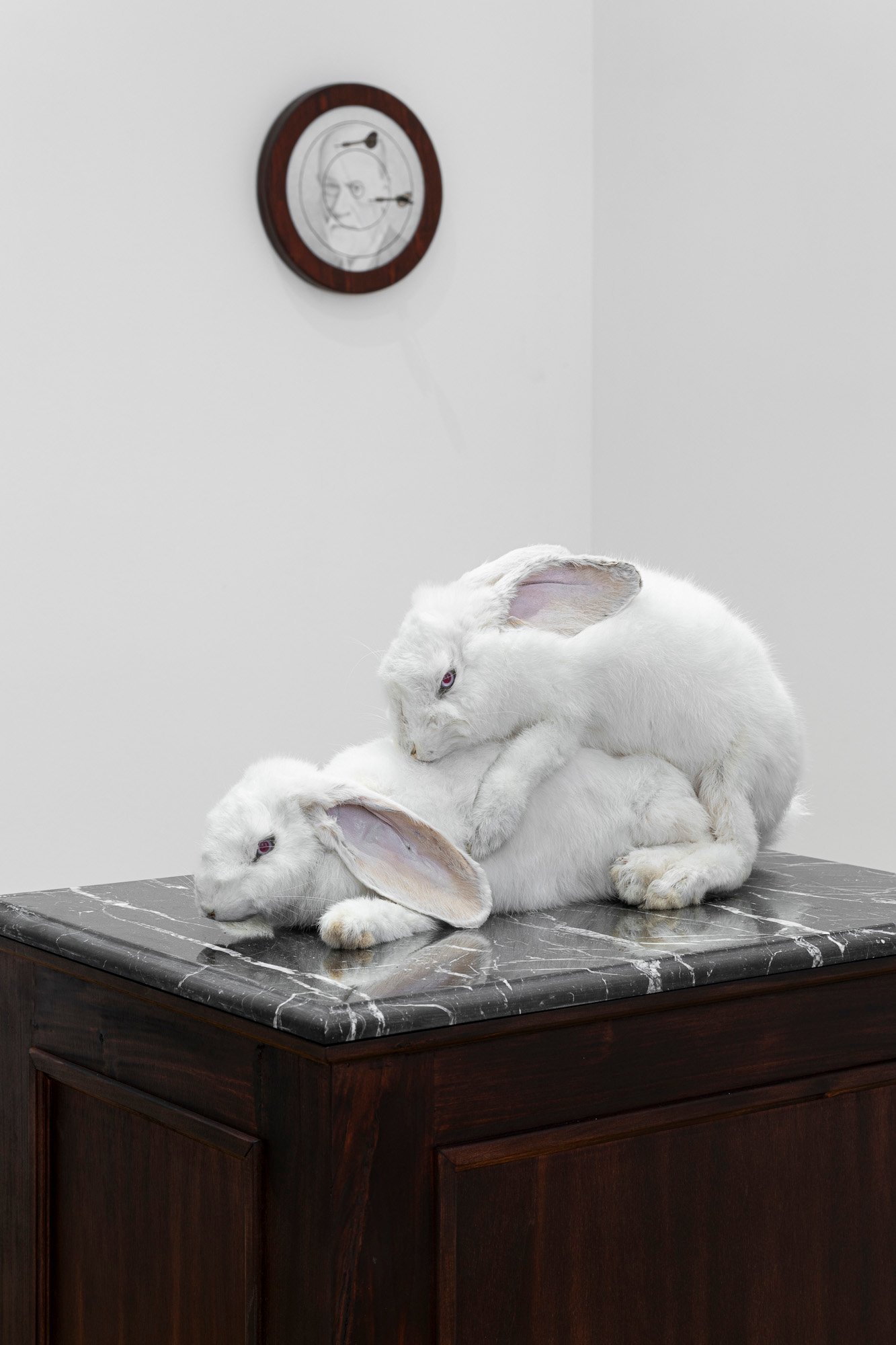
Set “between utopian exuberance and melancholy resignation” (Richard Porton), the film’s manic montage oscillates between some of the driving forces of modernity and geopolitics: Stalinist repression of sexuality, Western U.S.commodification, and Yugoslav aspirations for a “third way.”–the film figurates this sex-pol tension. Alongside Reich’s portrait appears another—that of Freud—transformed into a dartboard pierced with darts. This image reappears in the exhibition of Tudor Ciurescu as a central leitmotif and point of reference, guiding the viewer through the artist’s methodology. Ciurescu draws on “cursed,” turbulent, and visceral images circulating through internet circuits and visual culture, where the death drive and sexuality are flattened into a hoax-like form of desire. The film features multiple Reichian inventions—from orgone machines to bioenergetic therapies to rain-making devices—which merge class-based revolutionary politics with New Age sensibilities.
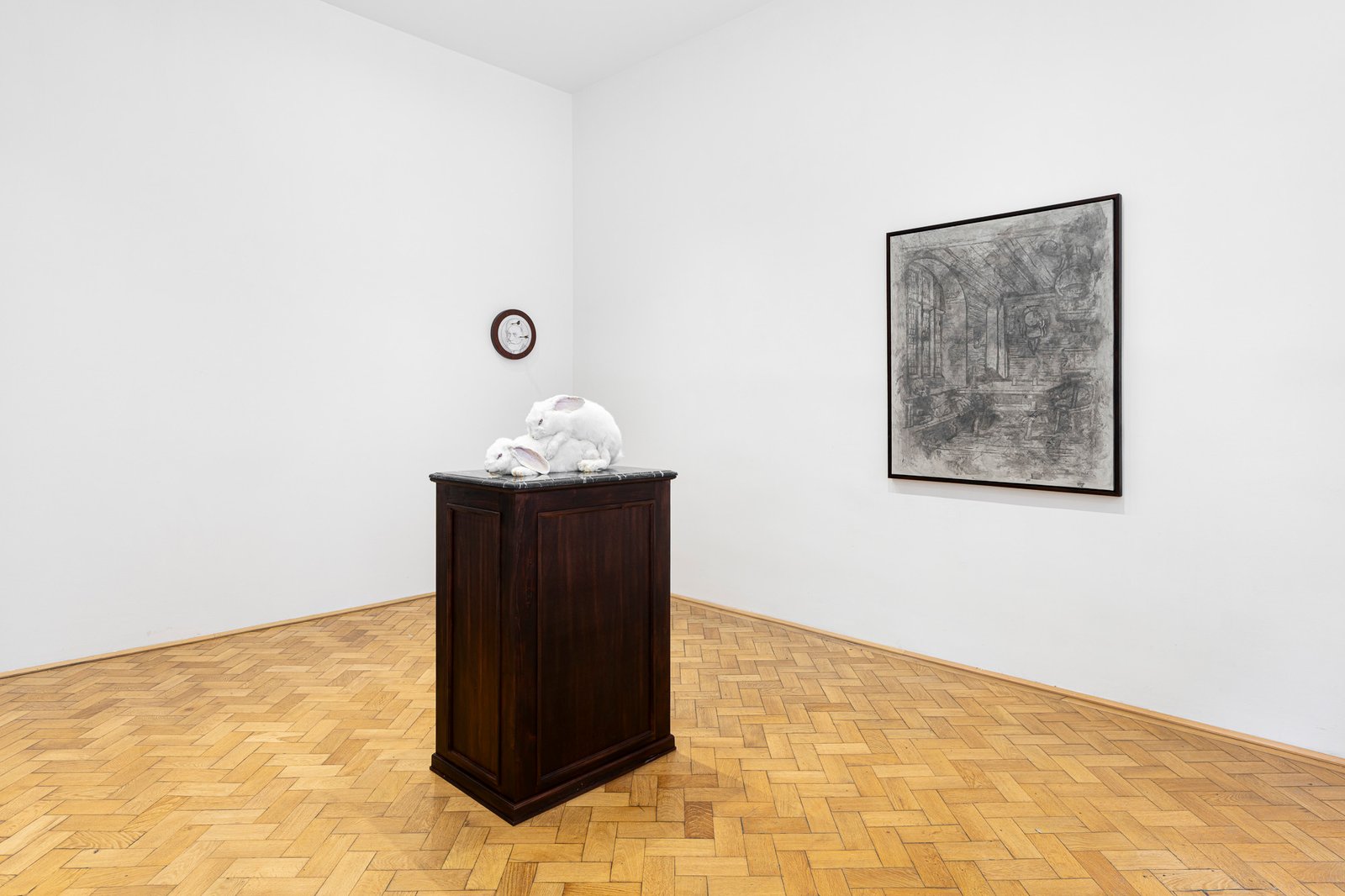
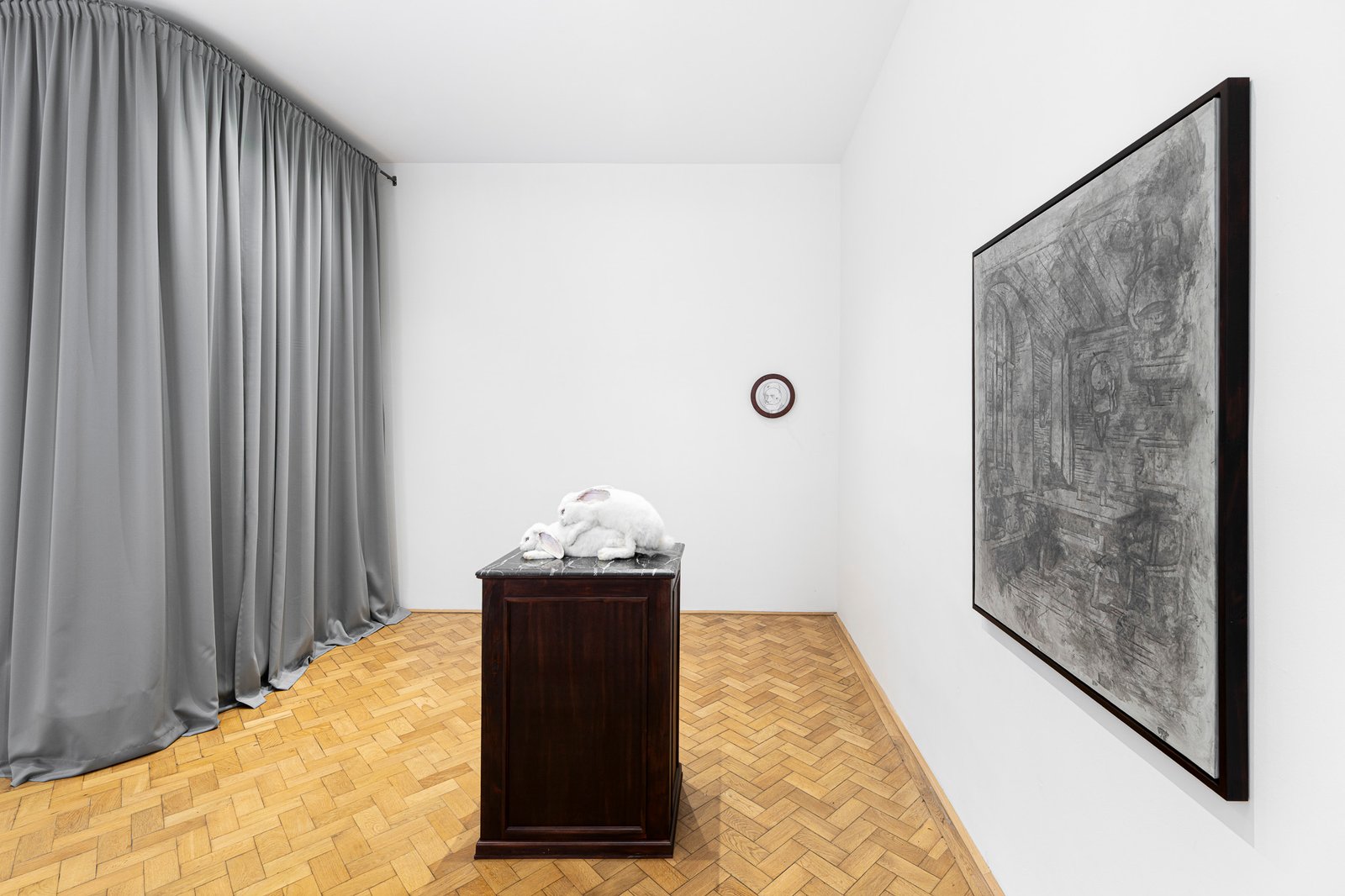
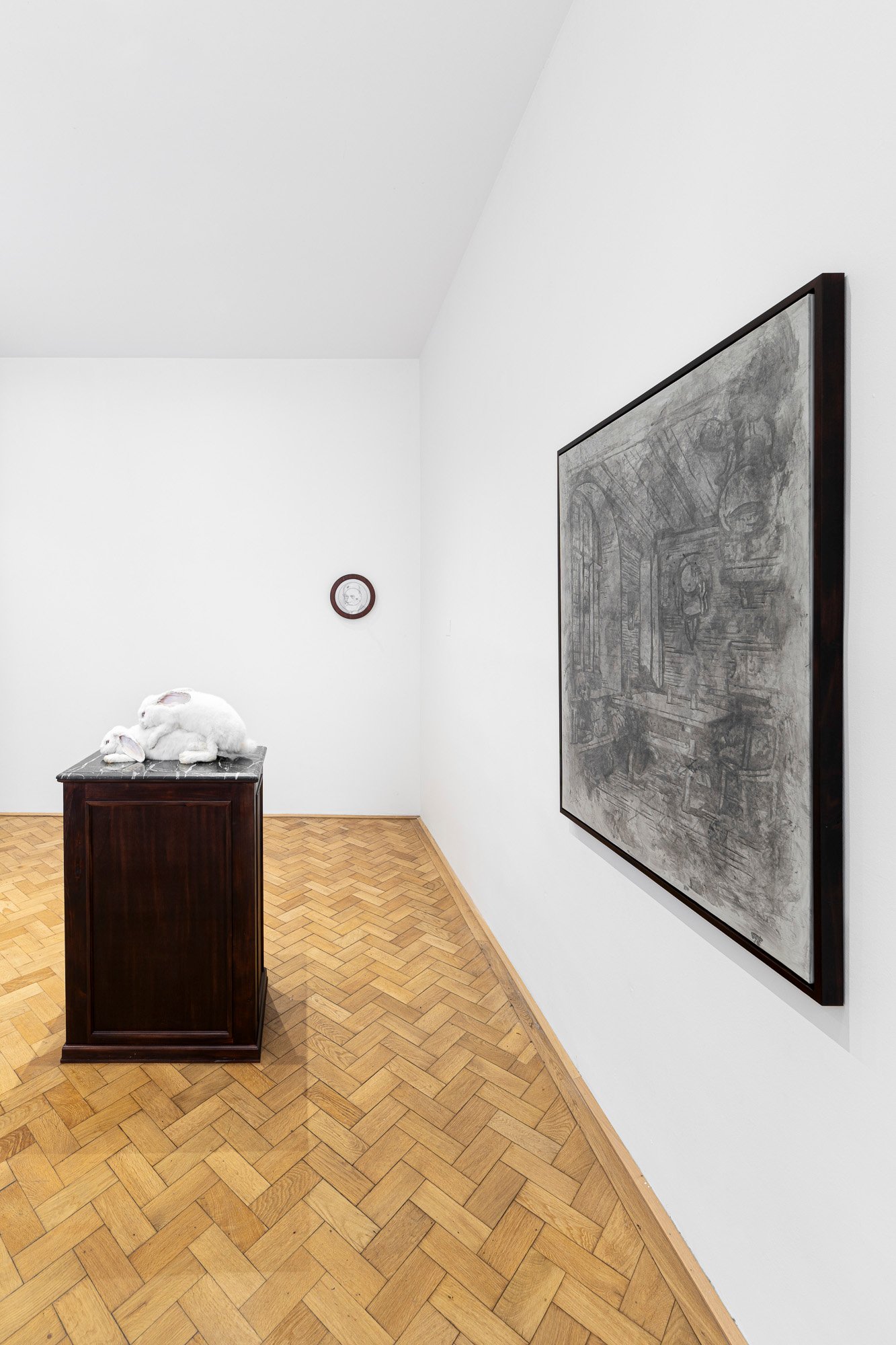
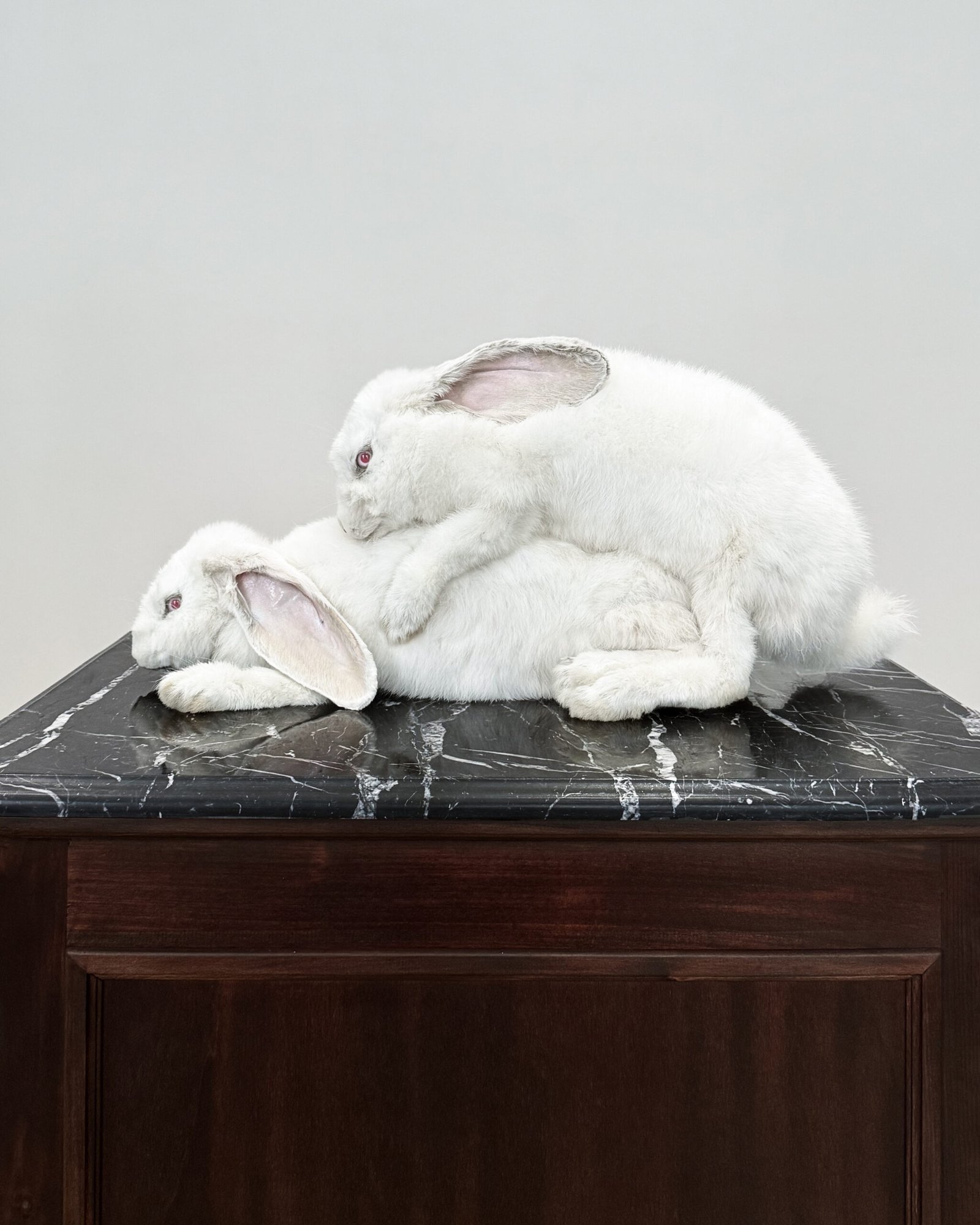
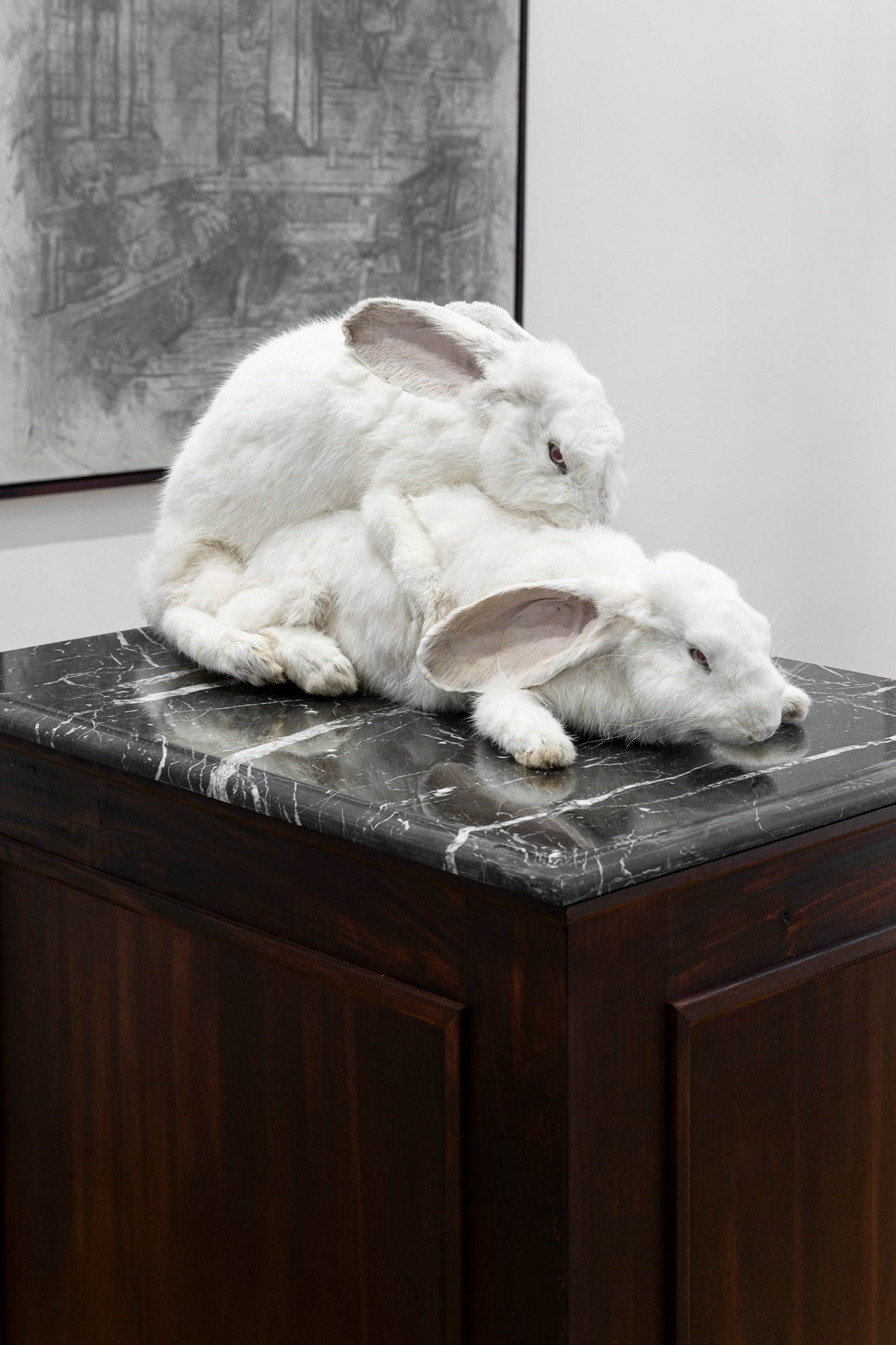
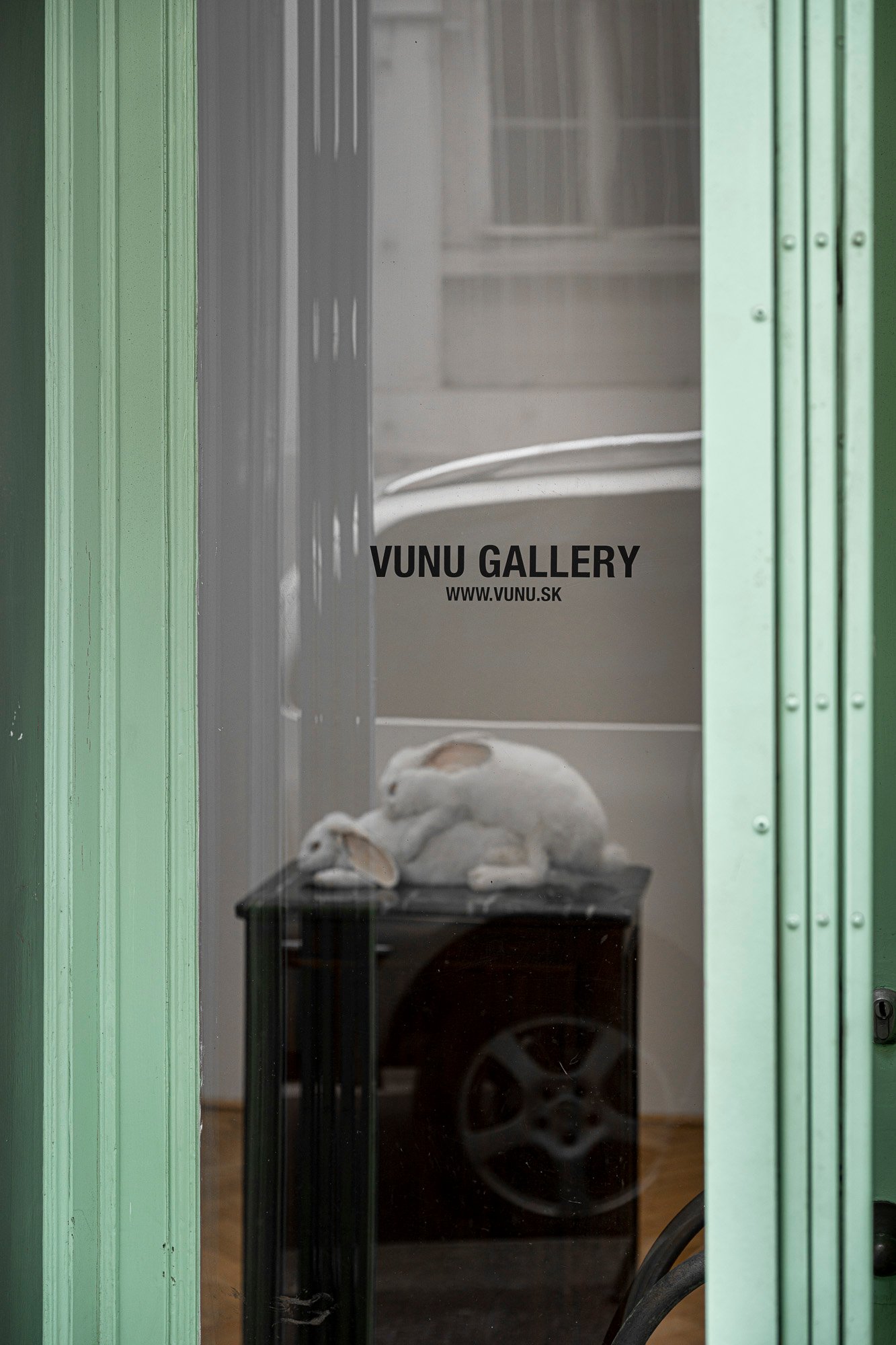
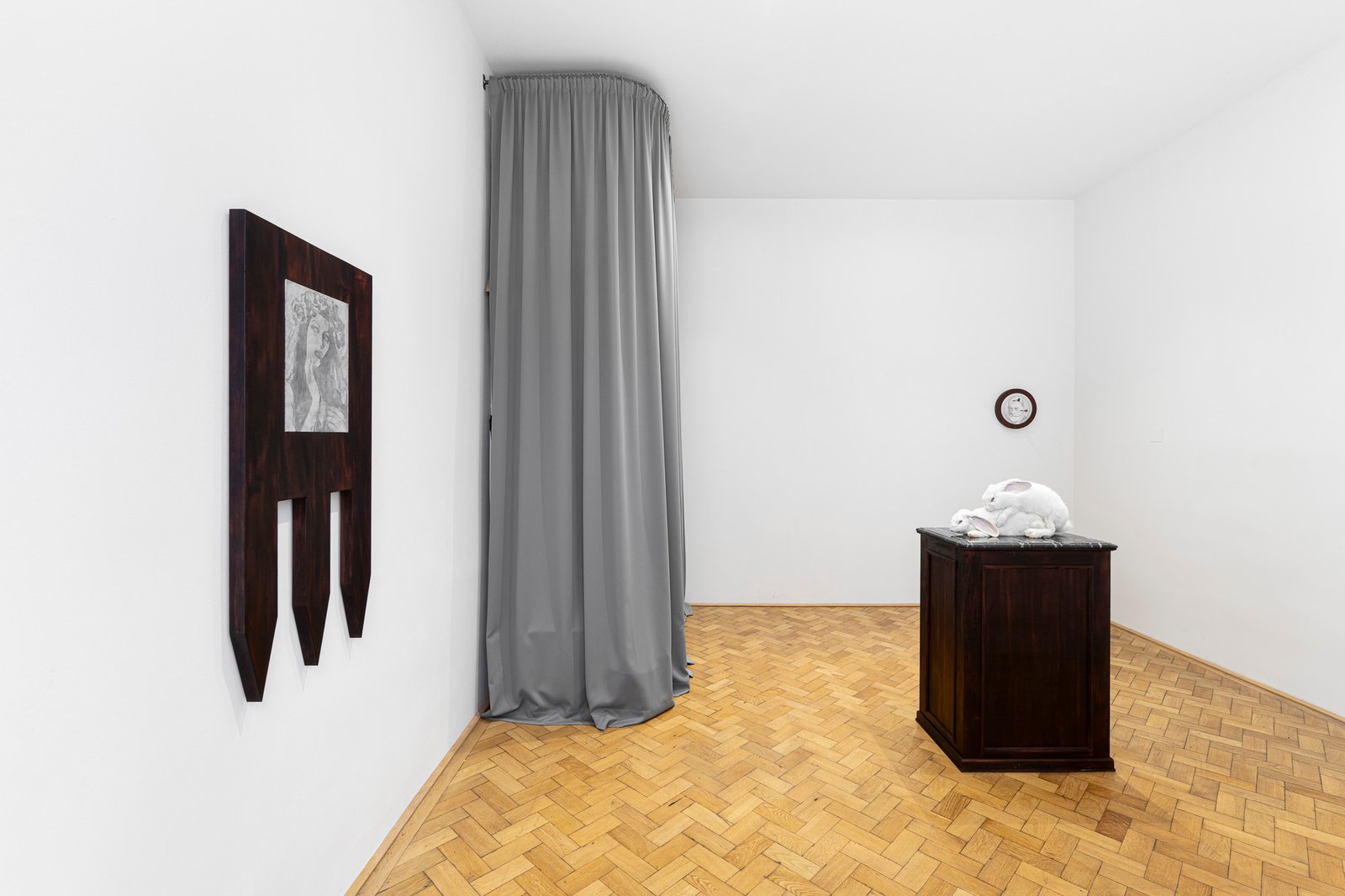
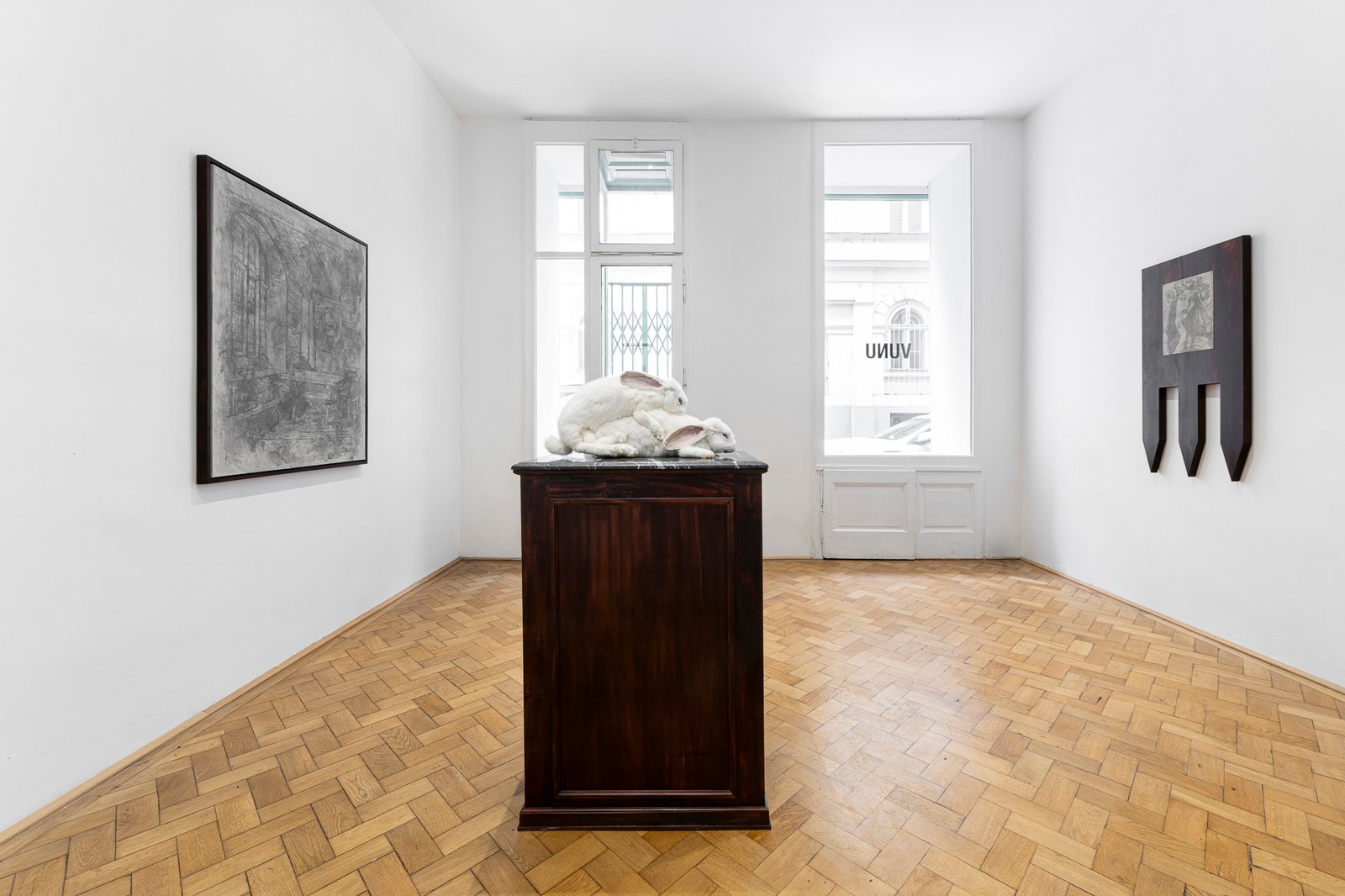
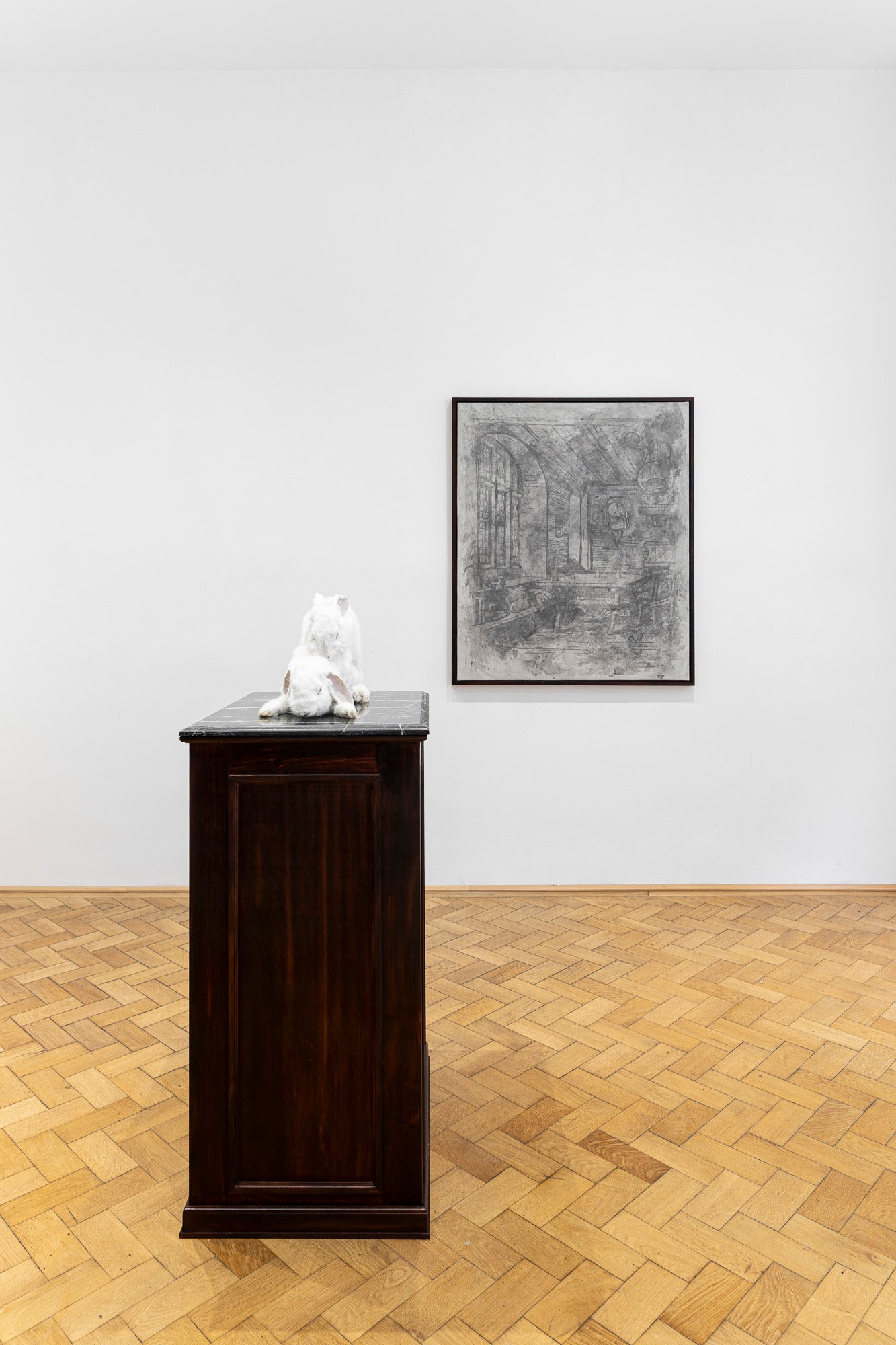
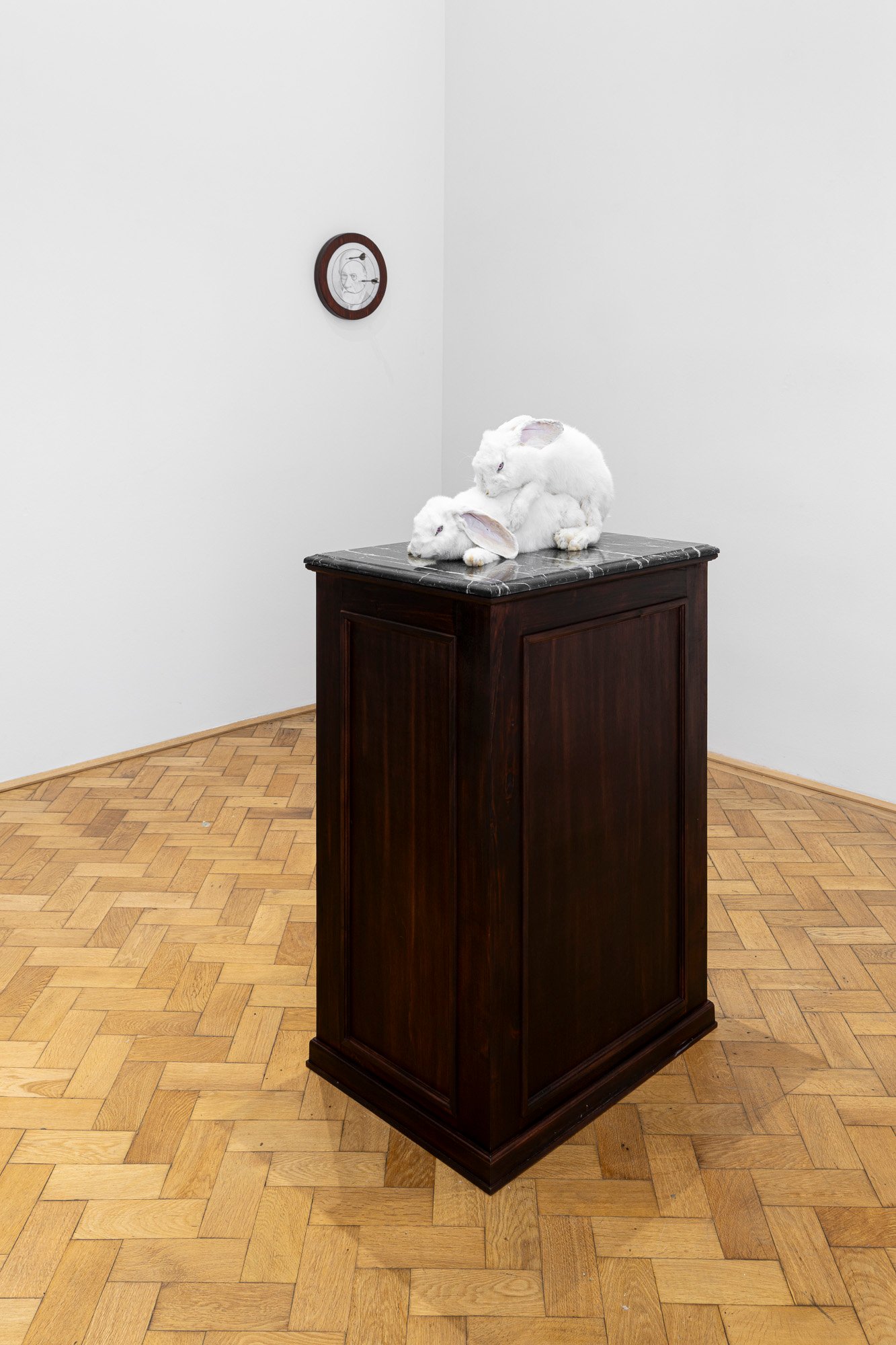
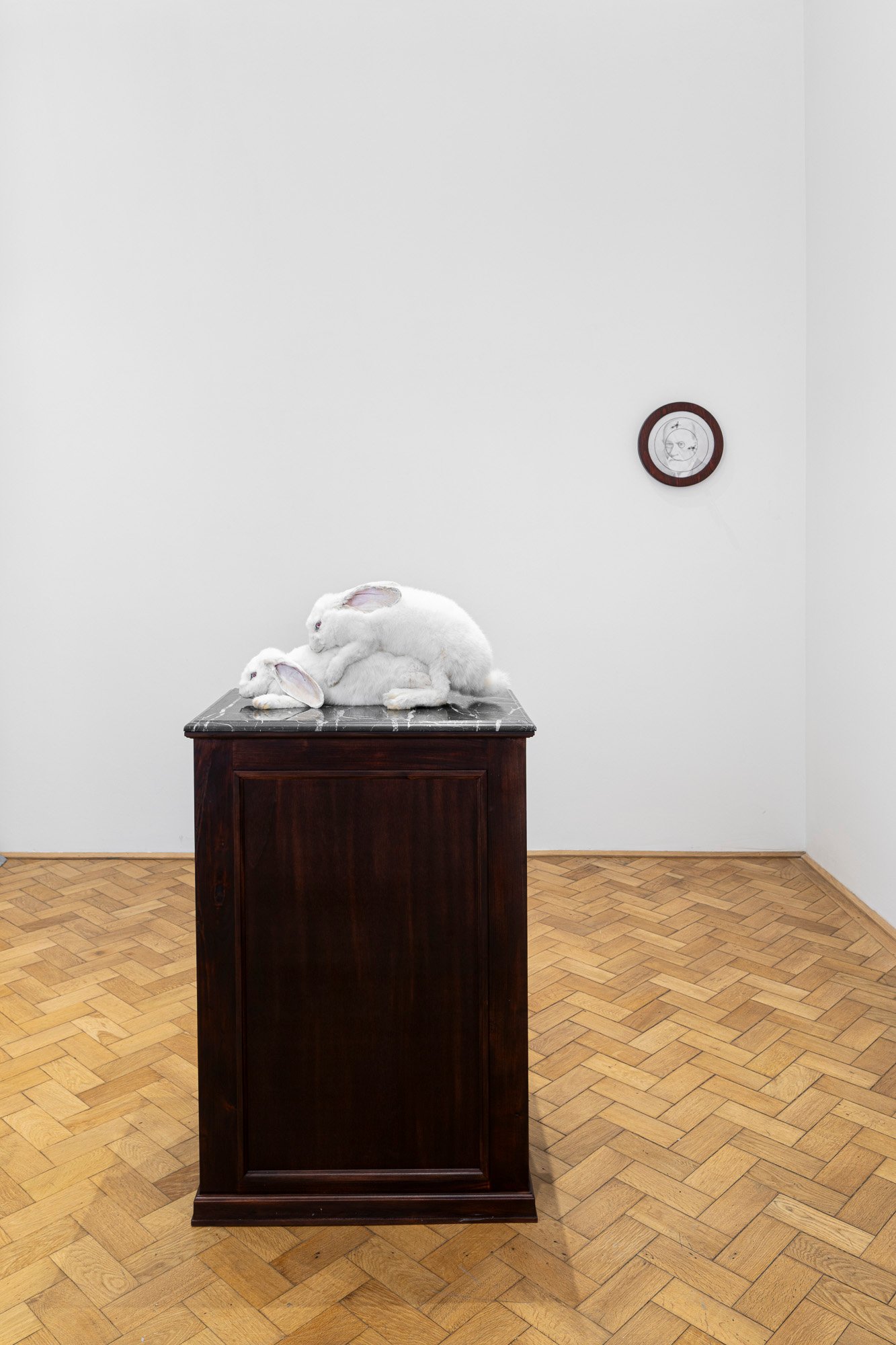
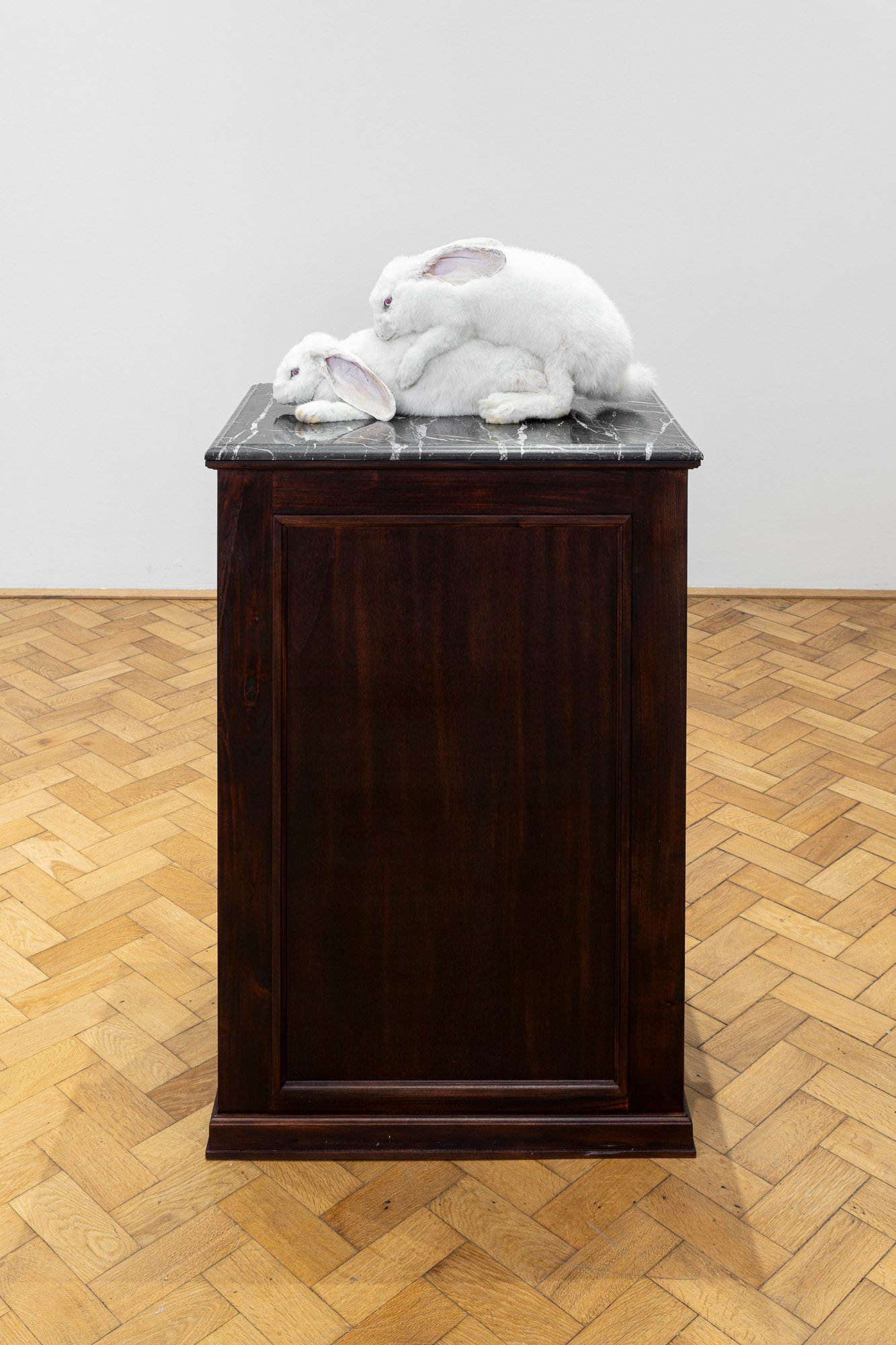
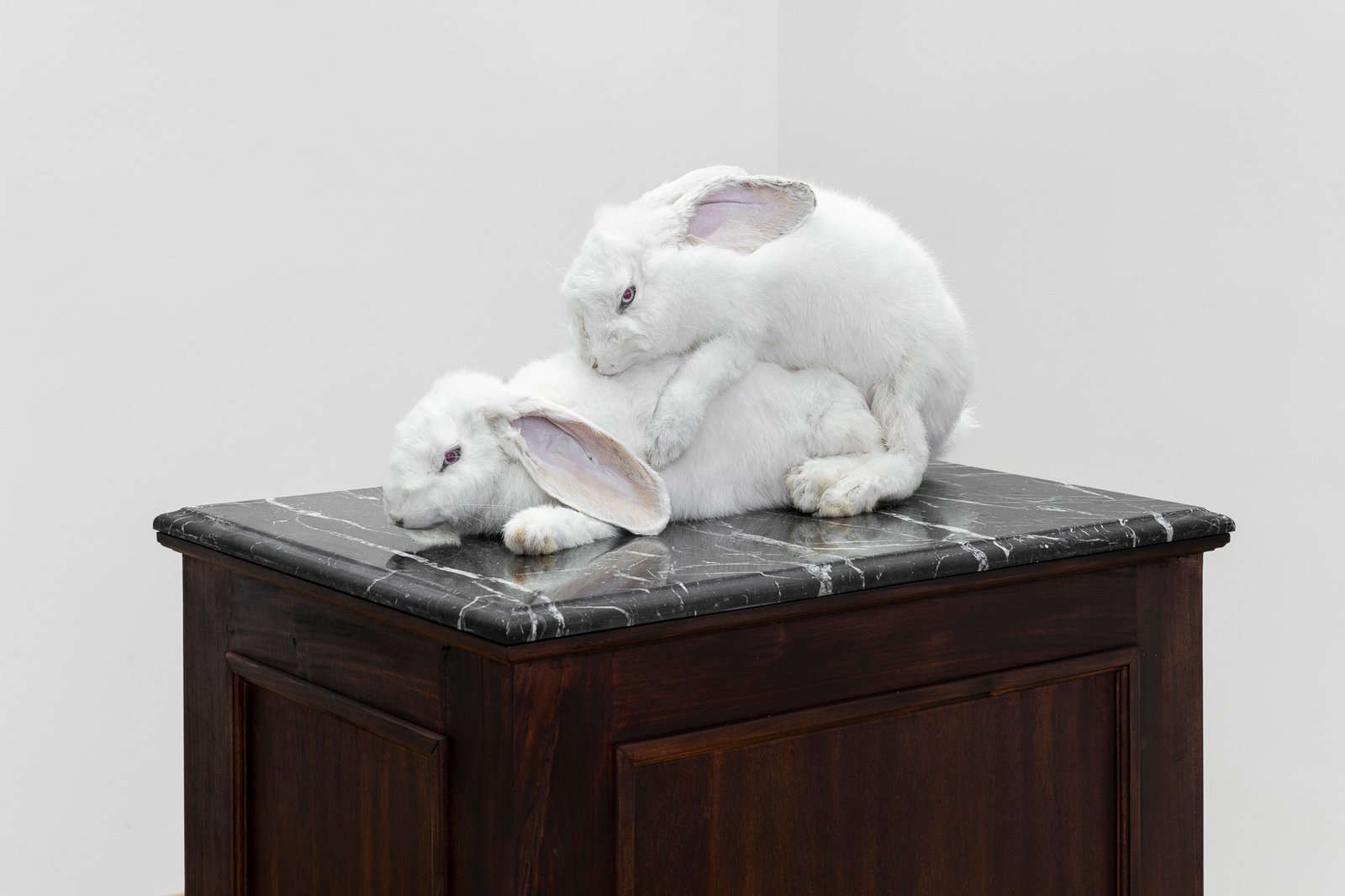
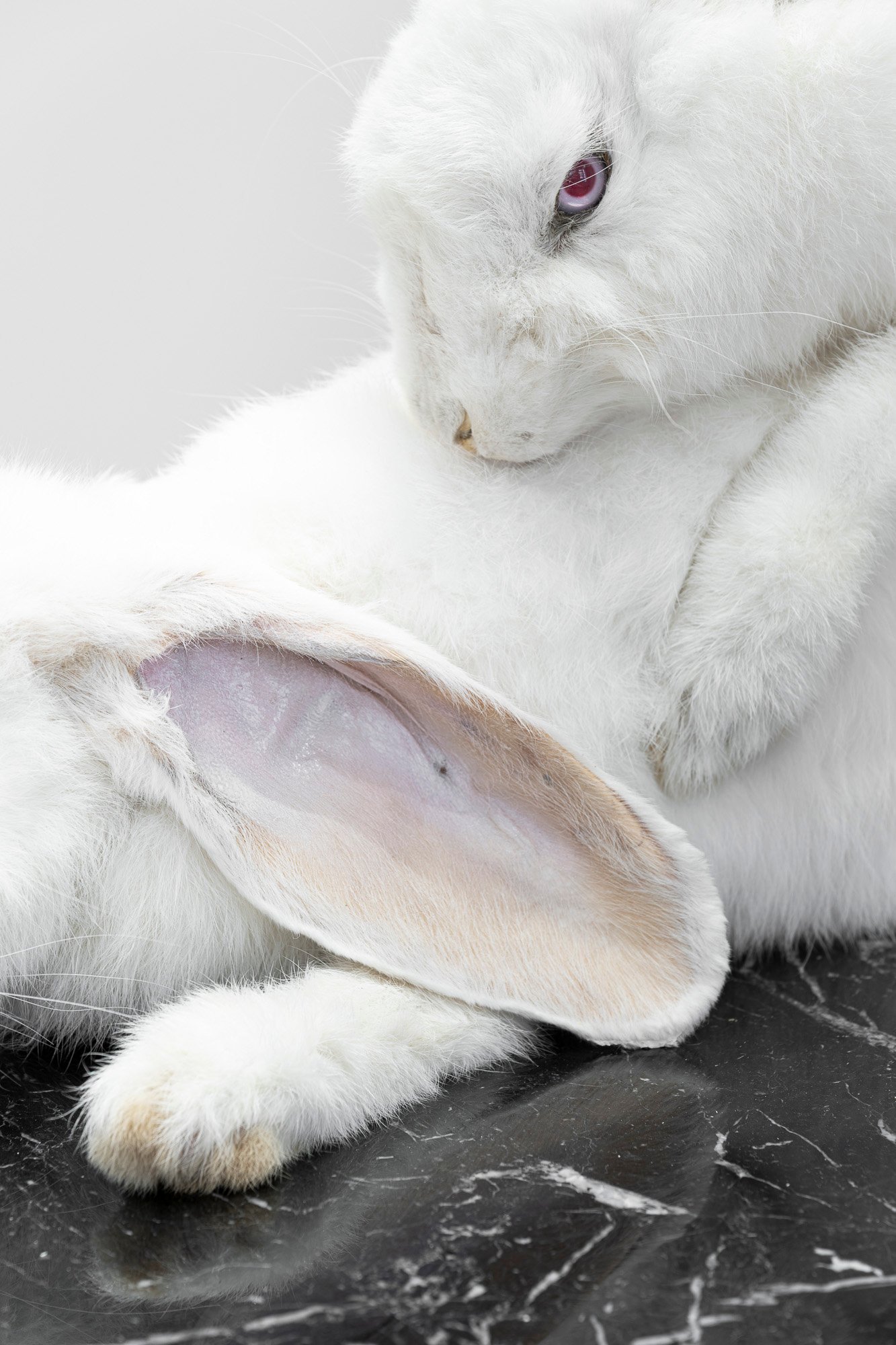
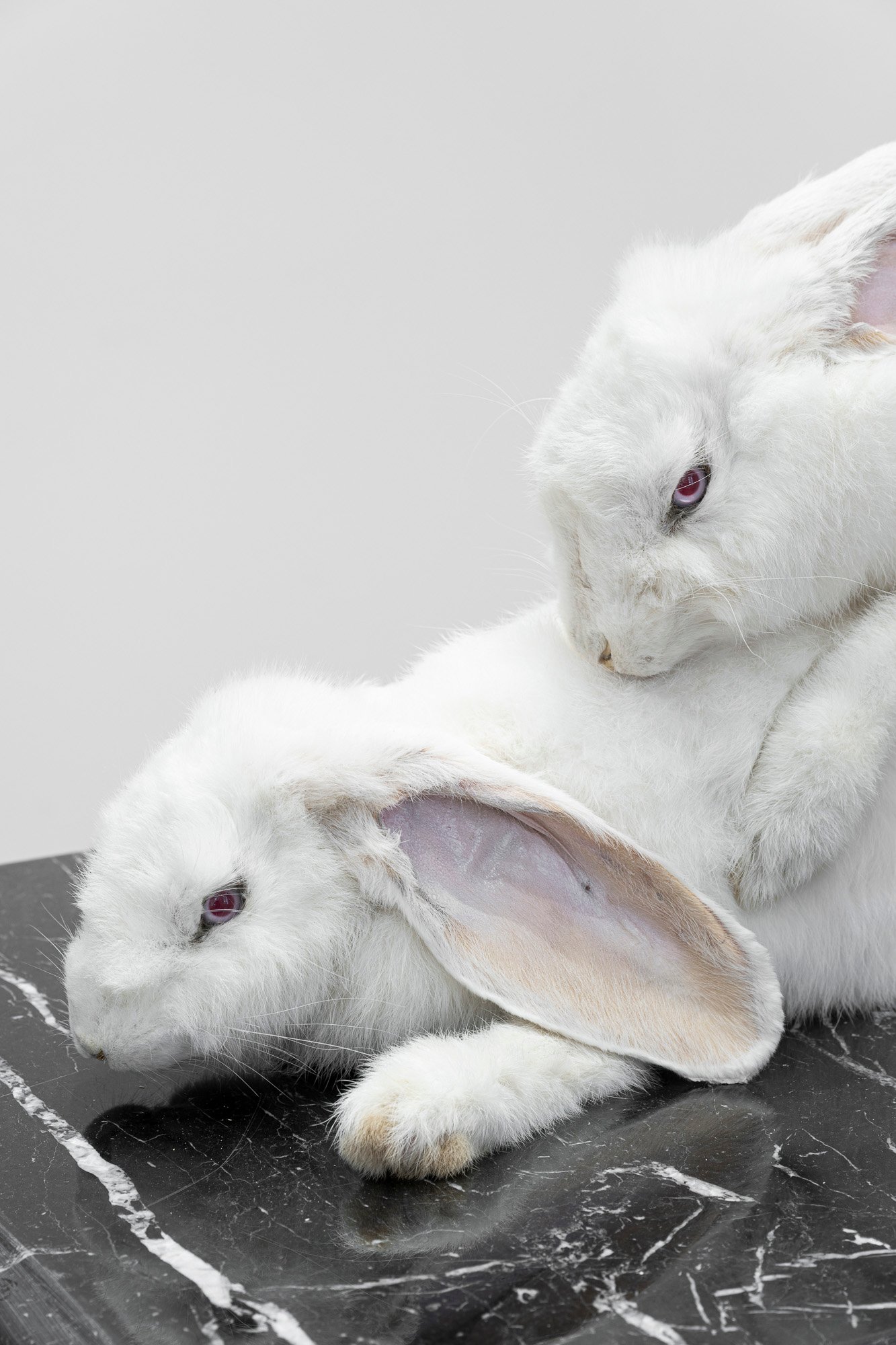
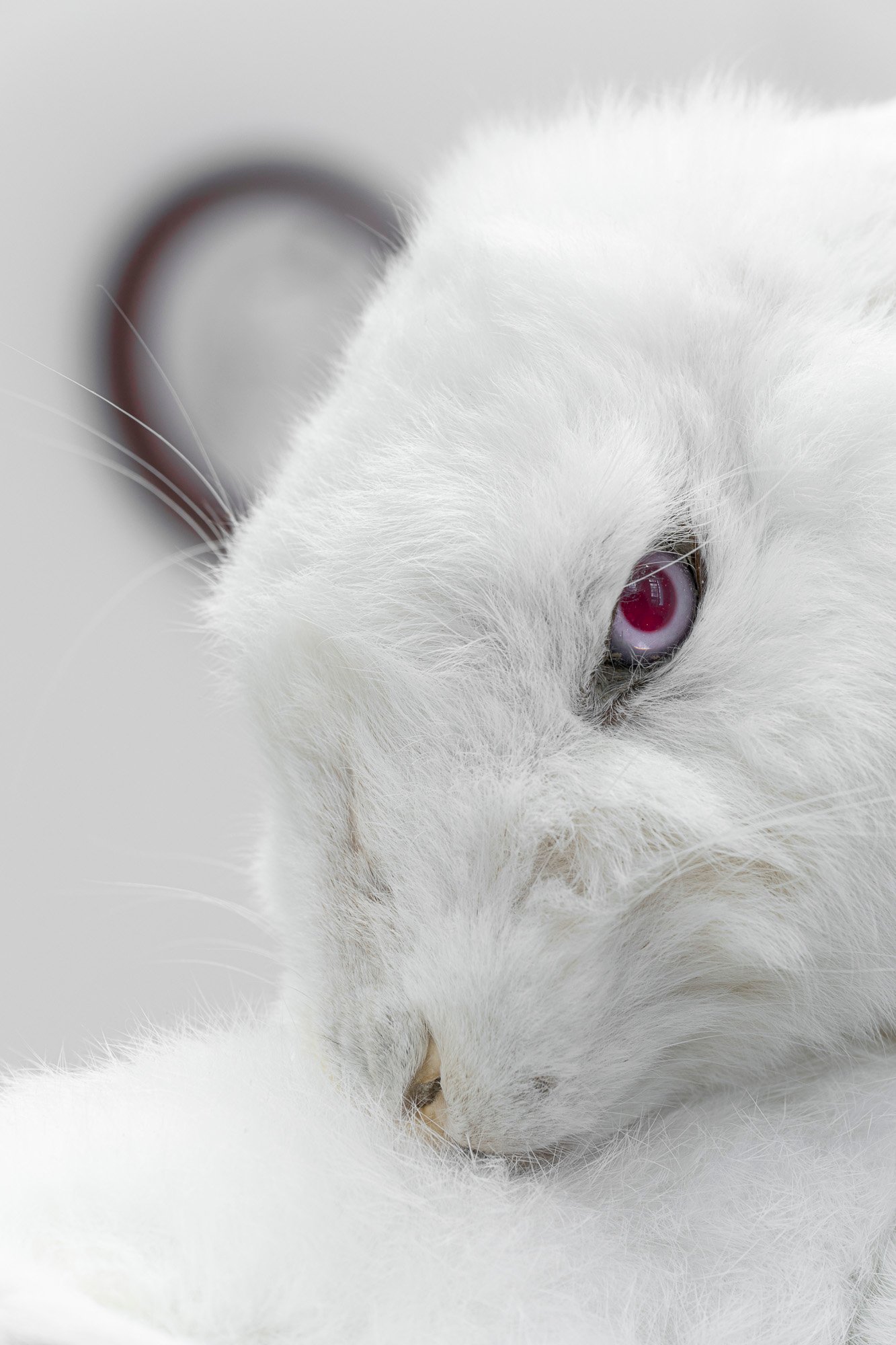
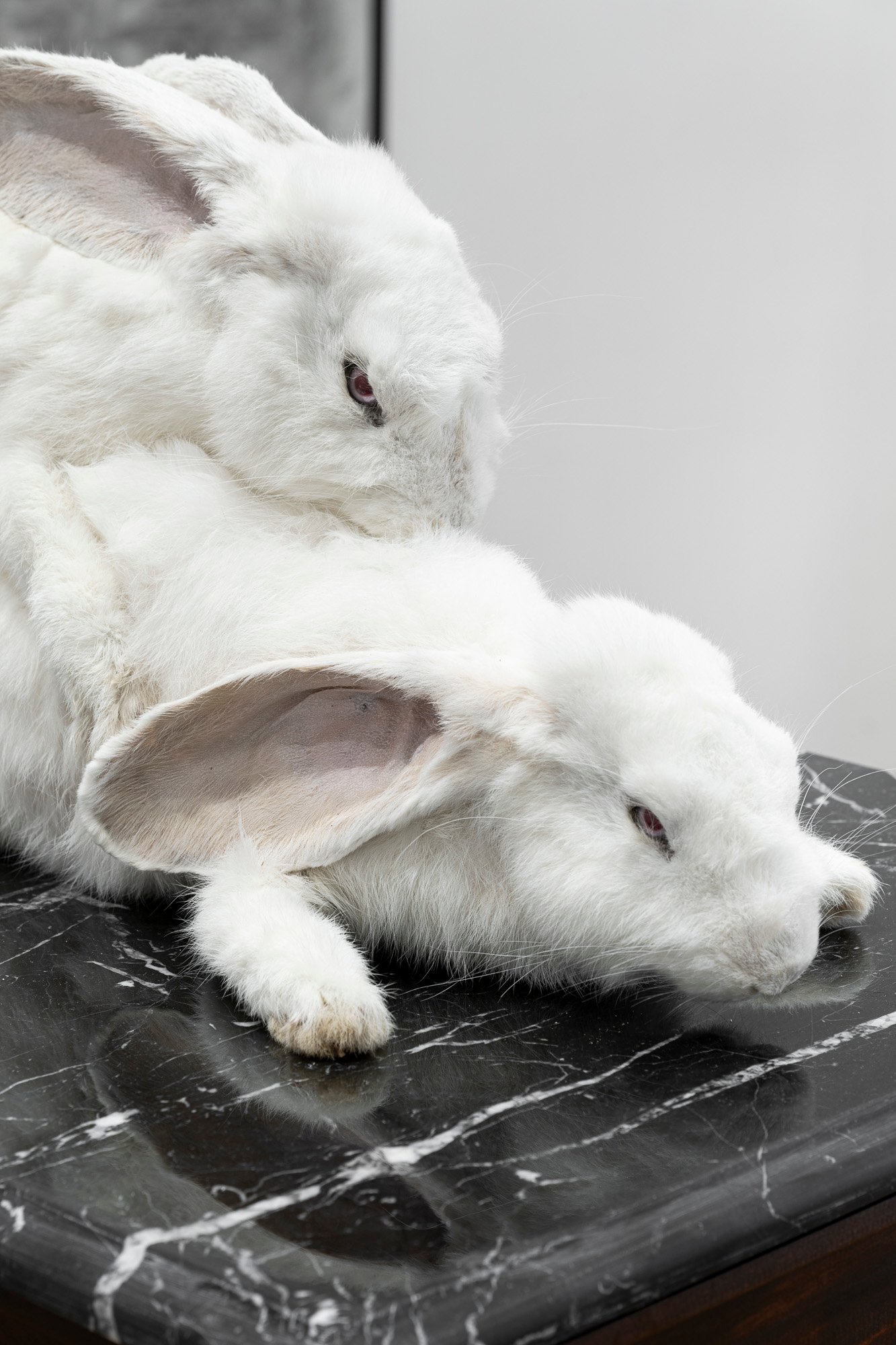
It is at this juncture that Ciurescu’s interest likewise emerges. He assembles a constellation of eerie images drawn from disparate contexts—Eastern Europe and the West, religious iconography, psychoanalysis, and corporate culture. The artist is particularly interested in moments when power becomes undisciplined—when it exceeds or overstimulates itself, losing its direct authority while remaining embodied. This dynamic is evident in the disturbing work L’urgenza Eterna (2026), a sculpture depicting two rabbits in the act of copulation, staging a scene of animal obscenity and profanation within a space that is at once theatrical, scientific, and mundane.
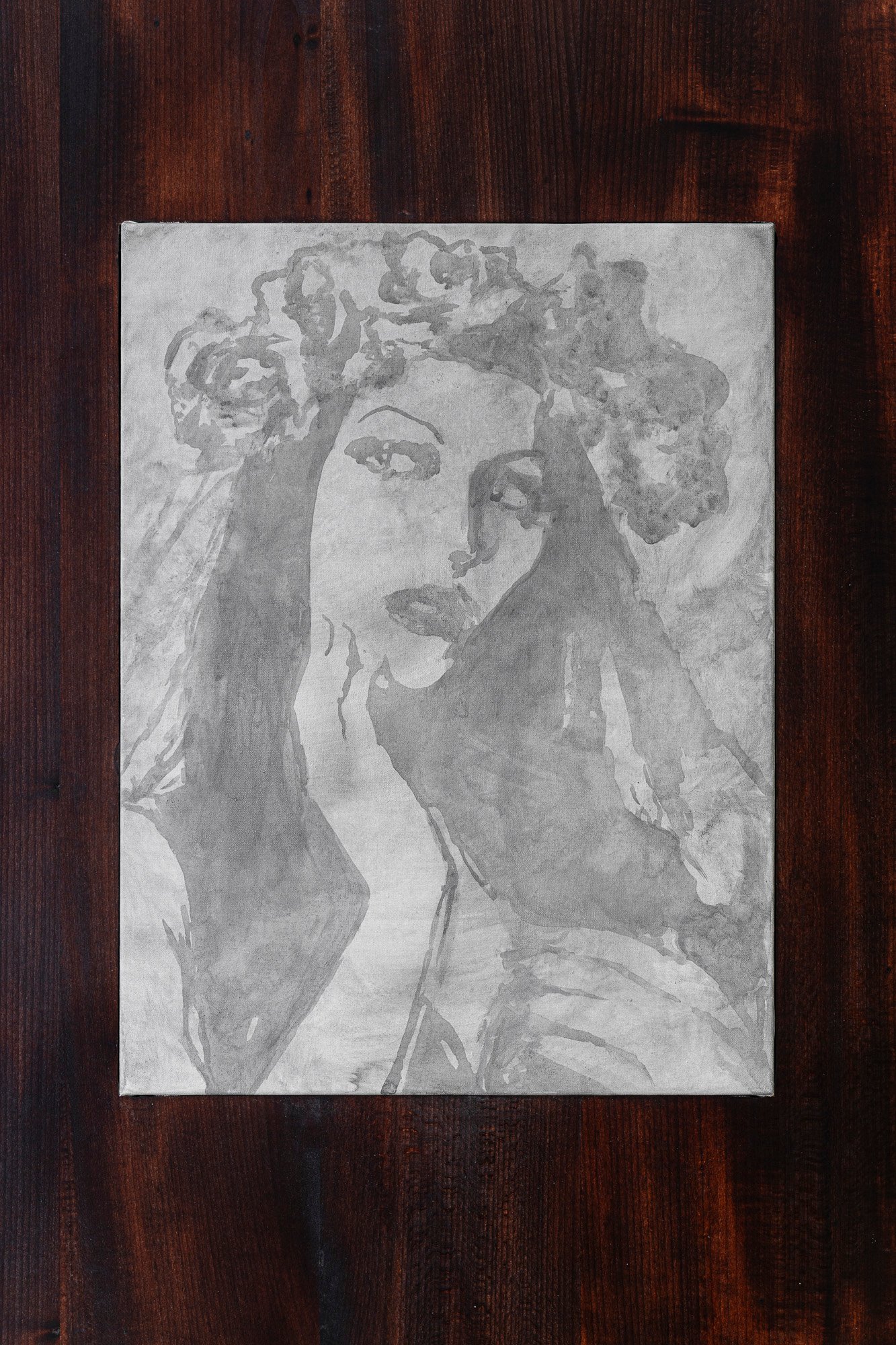
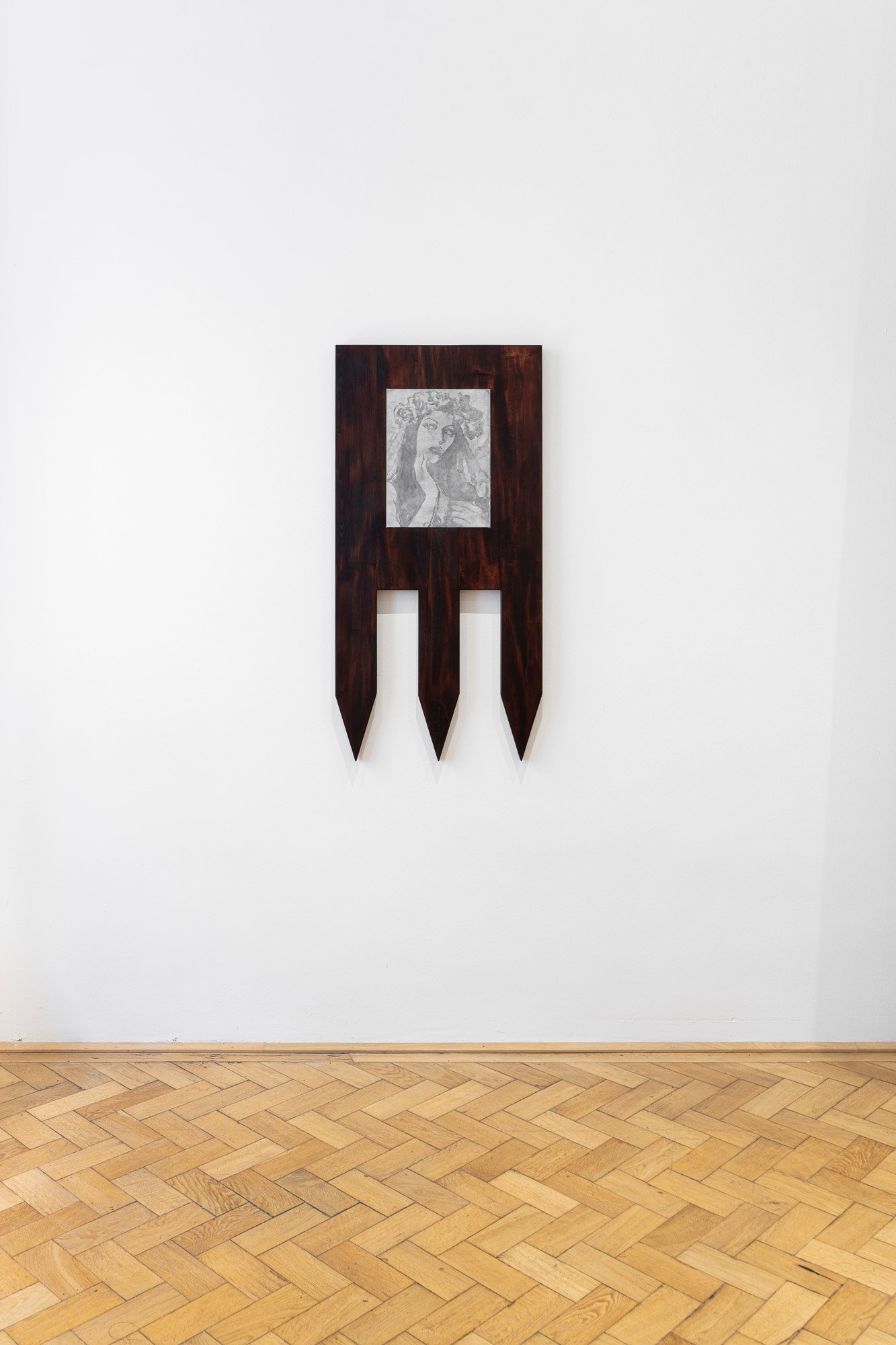
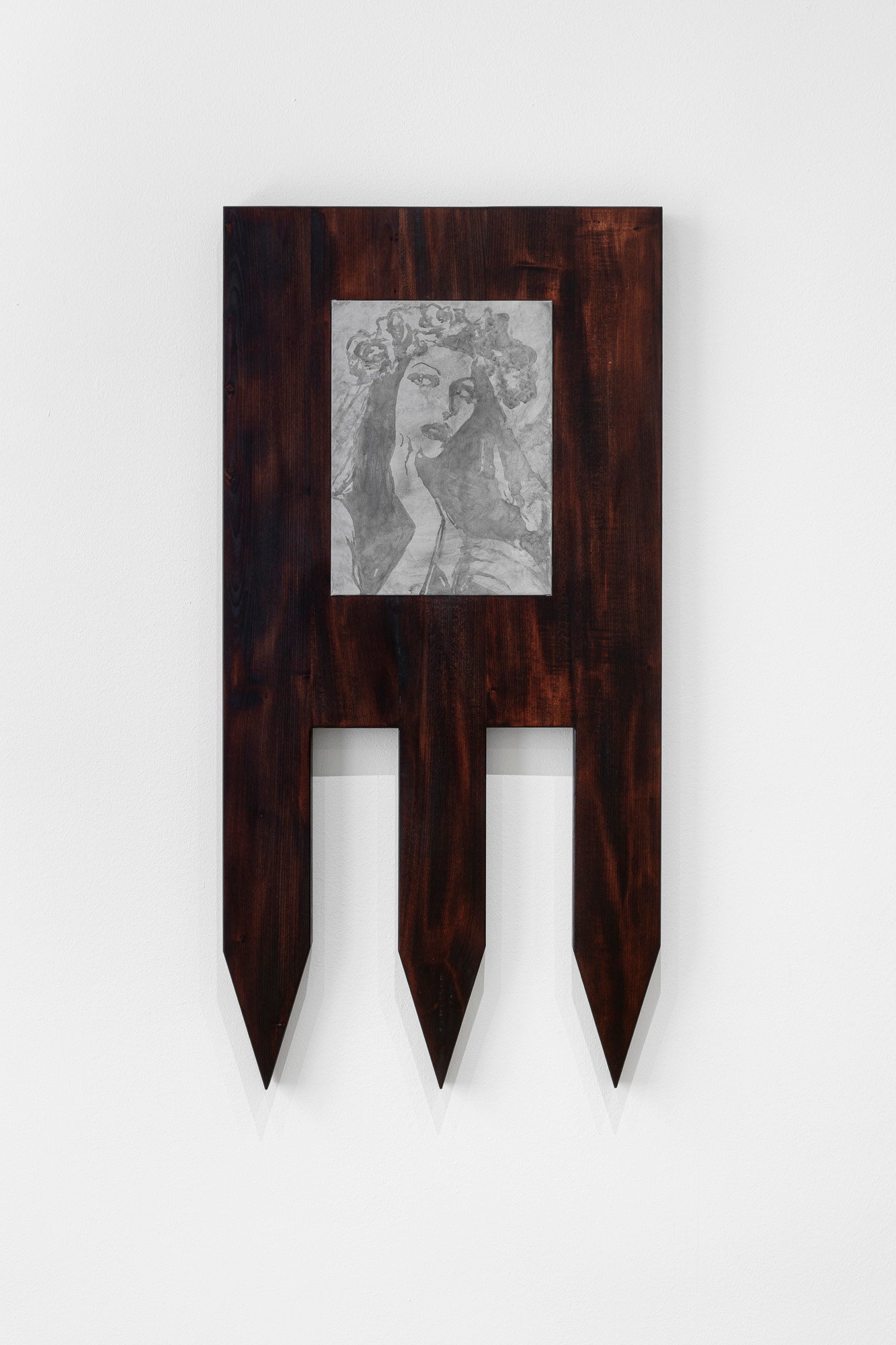
The Prapor / Vera Renczi (2026) introduces the image of Vera Renczi–a Romanian woman believed to have killed around thirty-five men in the 1920s by poisoning them with arsenic. Her husband and lovers all vanished within months or weeks after becoming romantically involved with her. It is believed, she took pleasure in sitting in her basement surrounded by the coffins of her former lovers. Her portrait, rendered in acrylic on linen, is framed within a Romanian Orthodox prapor—a religious form used in liturgical processions. By subverting this religious format through a controversial narrative, Ciurescu foregrounds neurosis and mania as symptomatic forces of society. The body of work presented at ELEGIA is set within wooden frames and pedestals made of dark brown wood, evoking a bourgeois coldness: a space of impenetrability and sexuality grounded in the private sphere. These materials frame controversial images and objects, generating tensions between coldness and exposure, power and liberation, the sacred and the profane, the static and the dynamic.
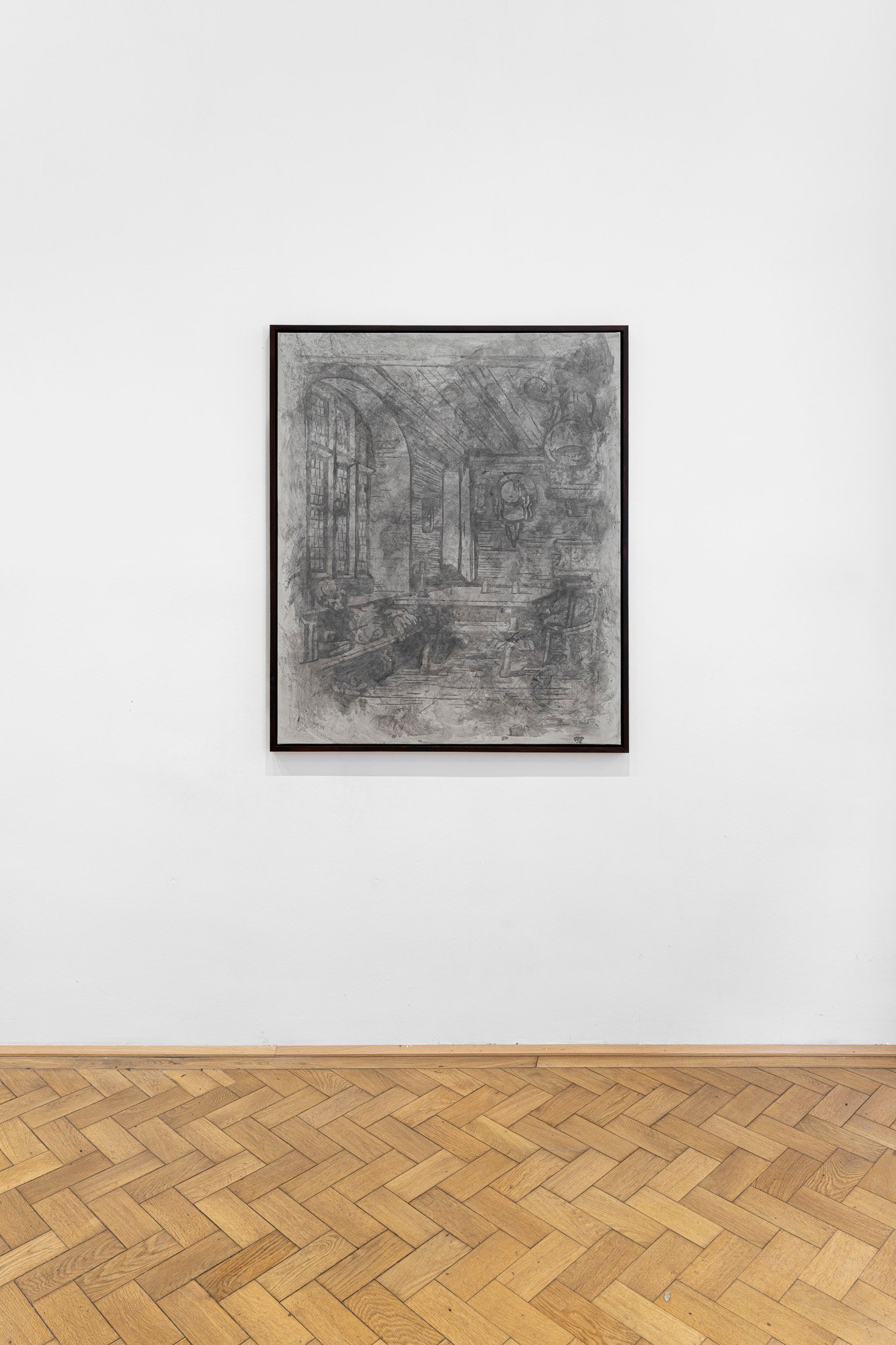
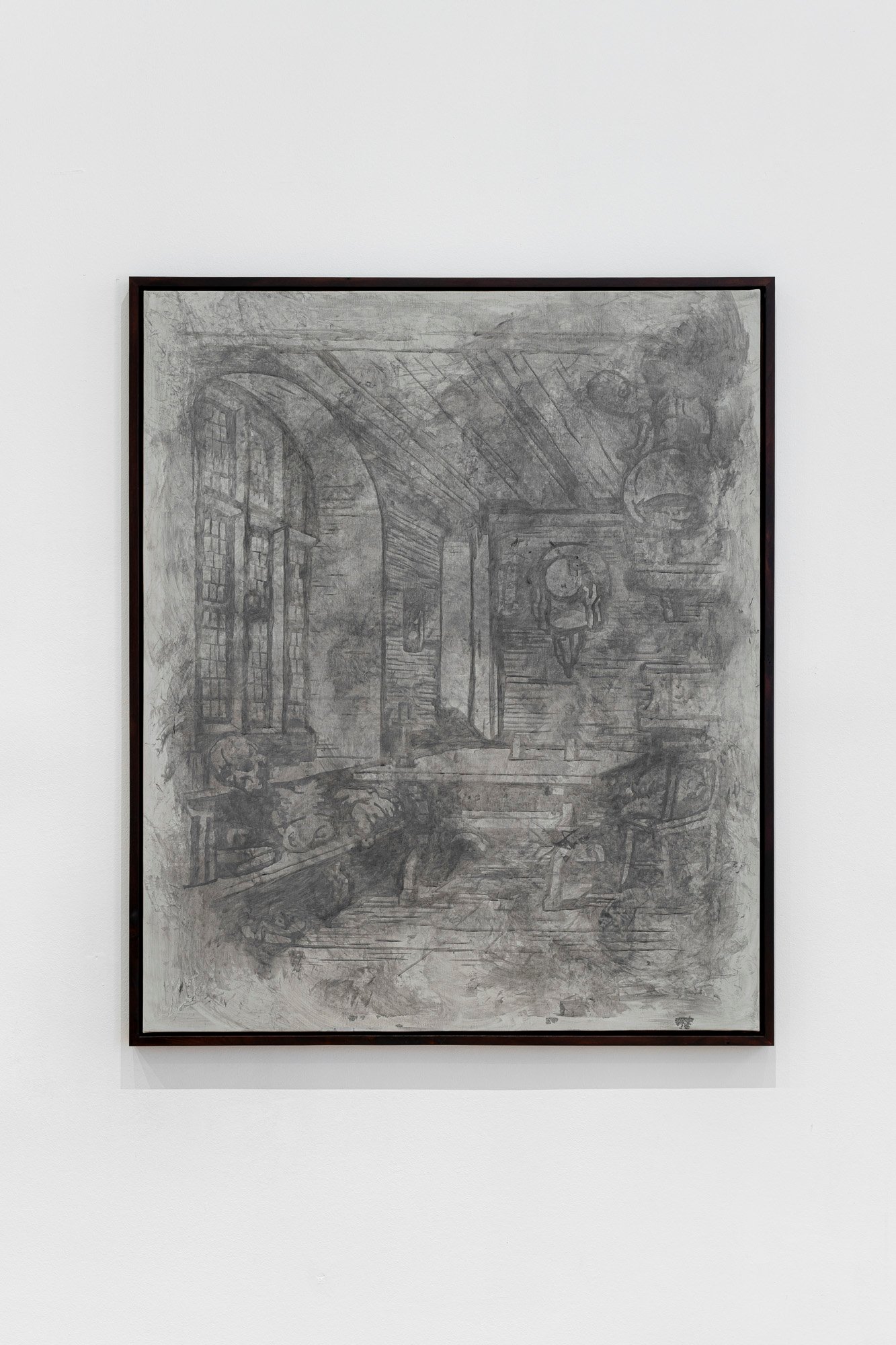
These images speak to the ways in which desire and the death drive operate in a society devoid of emancipatory projects, where fascism proliferates and male fantasies of domination take root. Subjects once considered stable centers of the world begin to disappear—as in Albrecht Dürer’s woodcut Saint Jerome in His Study (1514), which, in Ciurescu’s interpretation Sfântul Ieronim a Plecat (Saint Jerome Has Left) (2026), is rendered without its central figure. The stable subject is thus eroded, as labor, research, and discipline recede.
While not included in the exhibition, this work nonetheless functions as a key point of reference—a navigational device within Ciurescu’s practice. Elegia Capensis—a flower that gives the exhibition its title, and which appears in the work of the same name—features a silver-coated 3D scan of the plant, framed within a wooden panel.This work highlights the artist’s strategy: neither iconoclasm nor affirmation, but rather a wandering through the dark forest of the internet, with its crooked algorithmic terrains and digital gardens. The assemblage of images and references forms a magnetic field that both attracts and repels, producing a melancholic resignation without stable ground. It resonates with a moment in which fascism proliferates and emancipation dissipates, while offering a disorienting map of these sombre sex-pol forests. Its walls are indeed lined with portraits of Freud and Reich—punctured or fading—where desire appears unsettled and entangled. Text by Aleksei Borisionok