


Laureta Hajrullahu, in her video-based practice and immersive installations, draws on speculation, digital folklore, and the emotional residues of online life. She approaches identity as an entity in a constant state of editing, compression, translation, and measurement according to algorithmic architectures. Hers is a borderland practice: she grew up in Preshevë, a town at the intersection of Kosovo, Serbia, and North Macedonia, while simultaneously coming of age on the internet. Questions of privacy, gender, and online identity are therefore central to her work, as are issues related to a post-internet future in which borders are increasingly fluid.
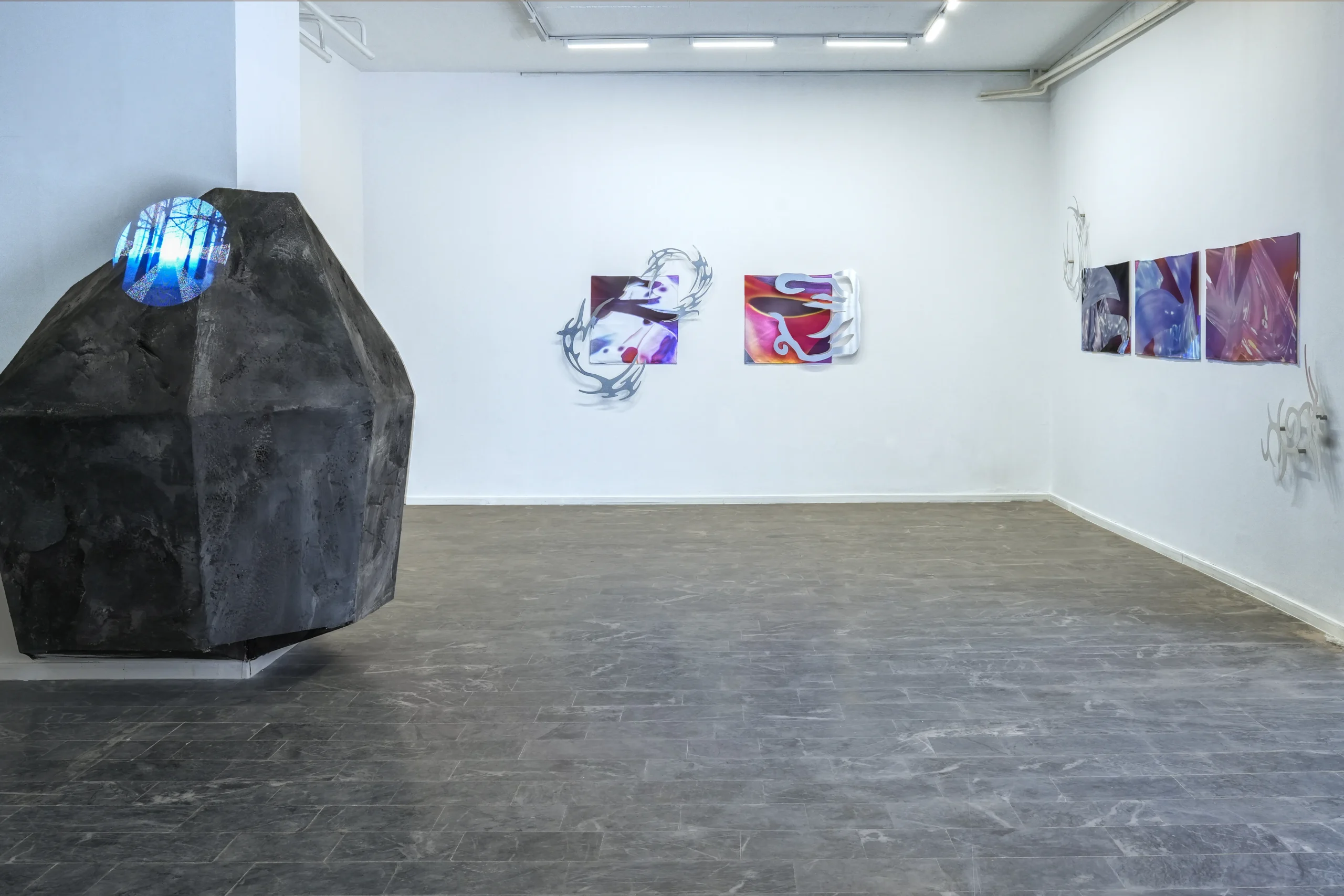
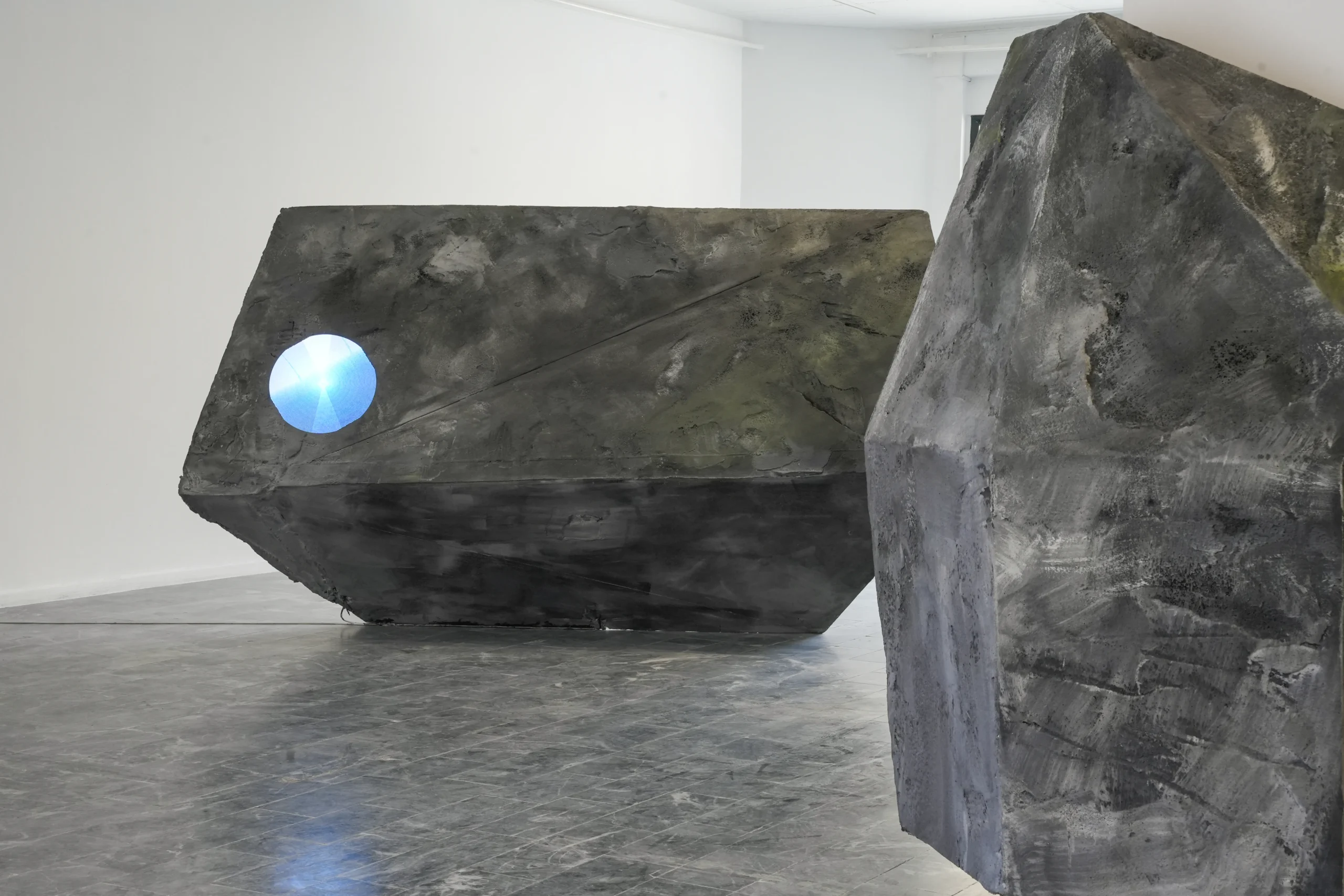
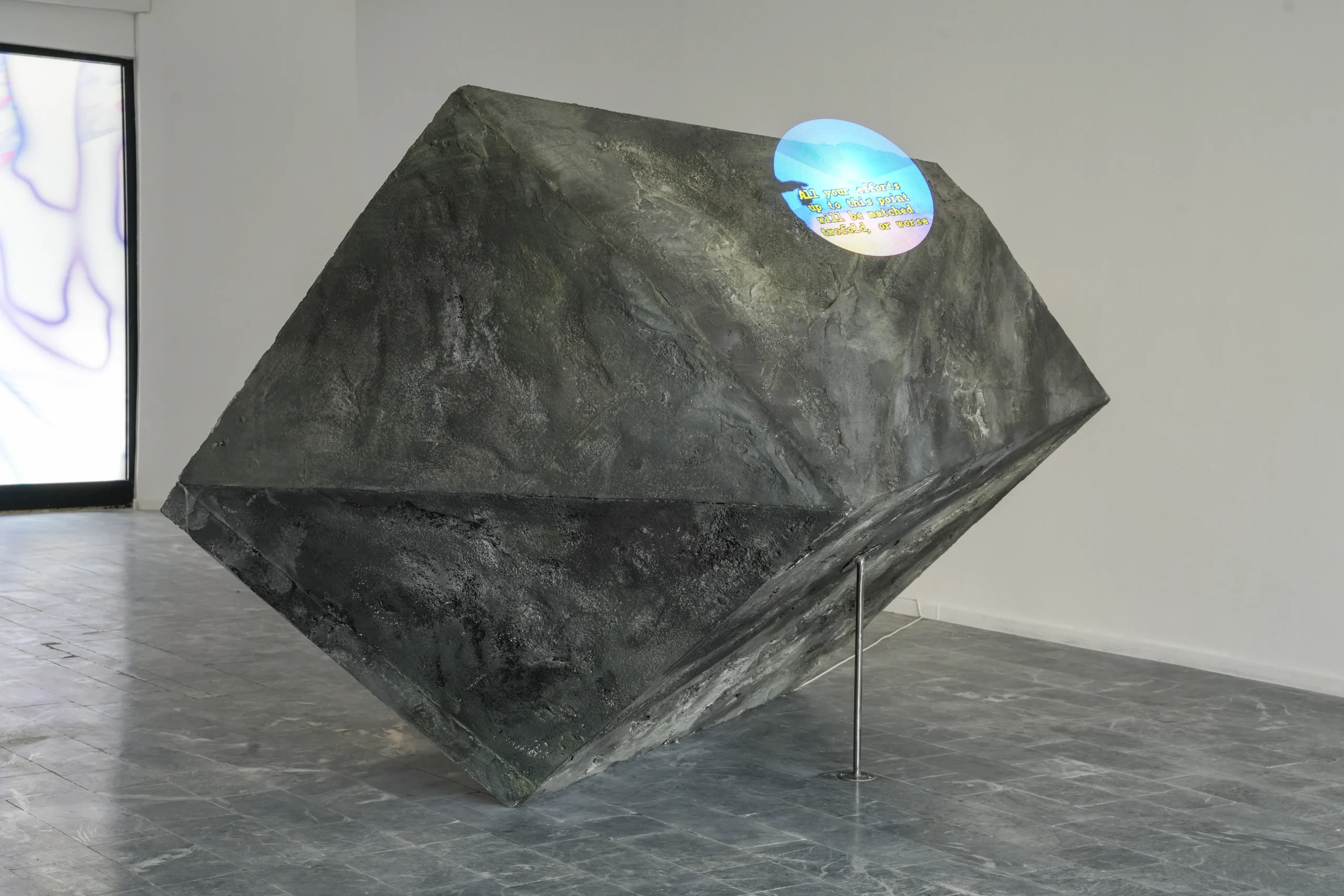
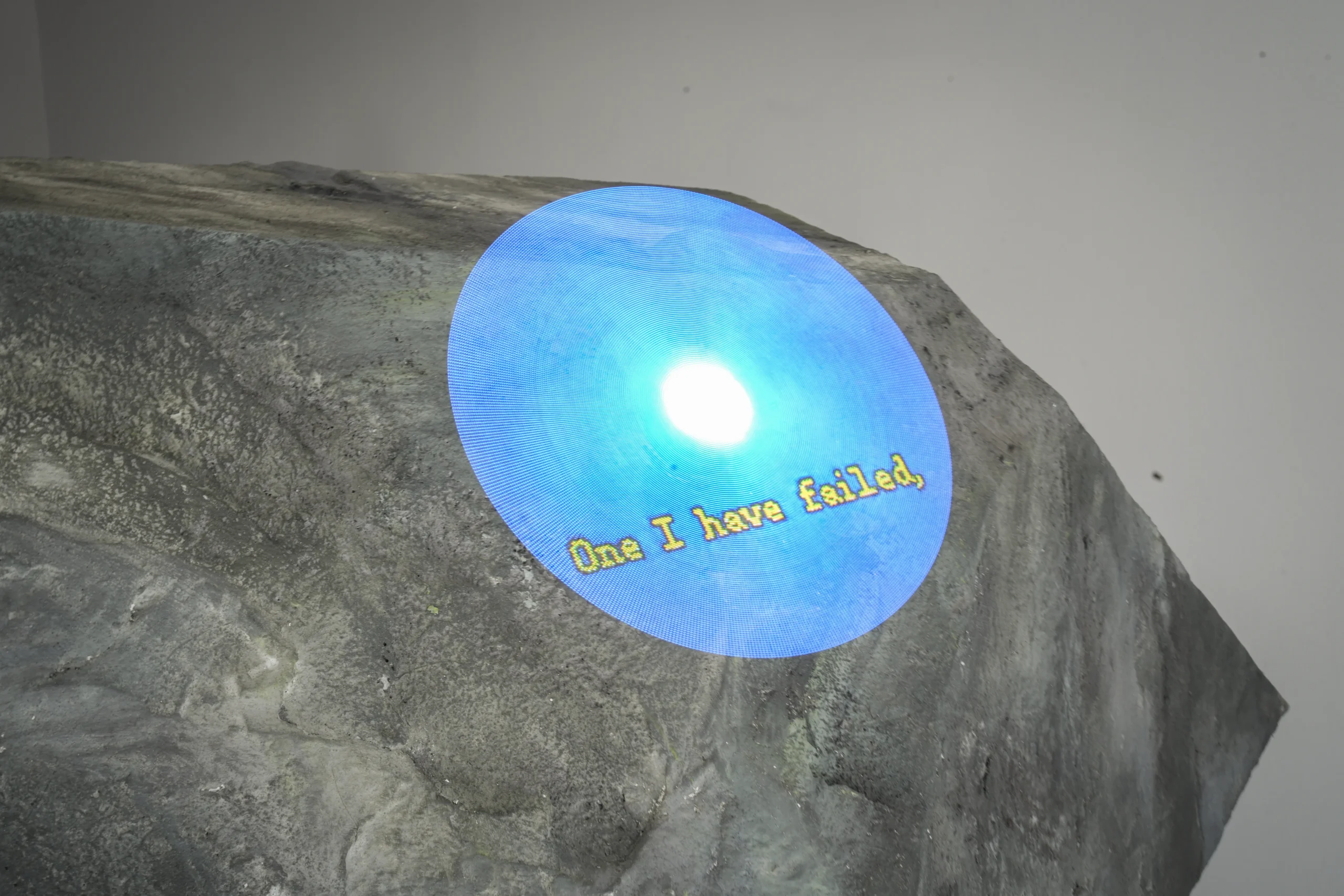
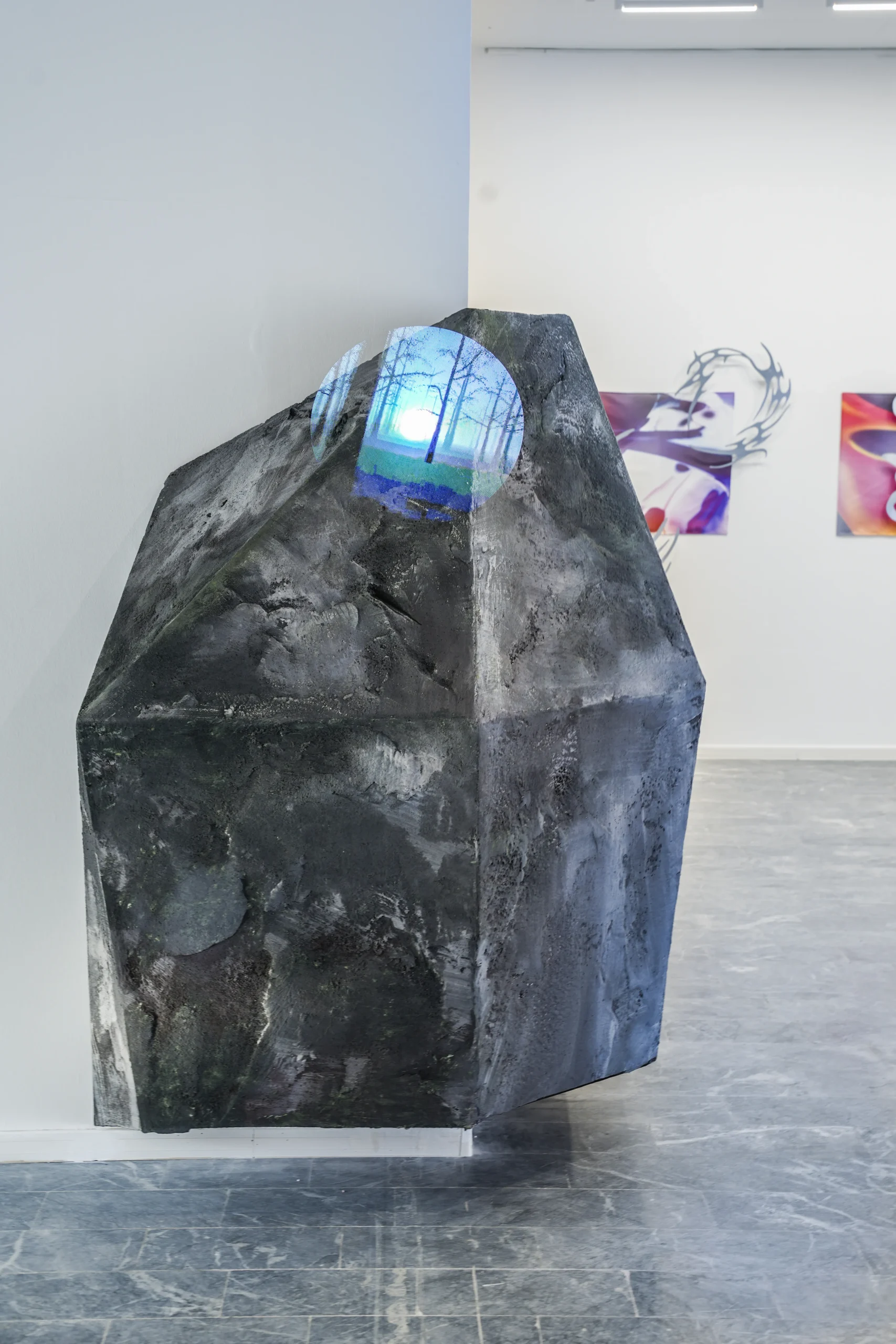
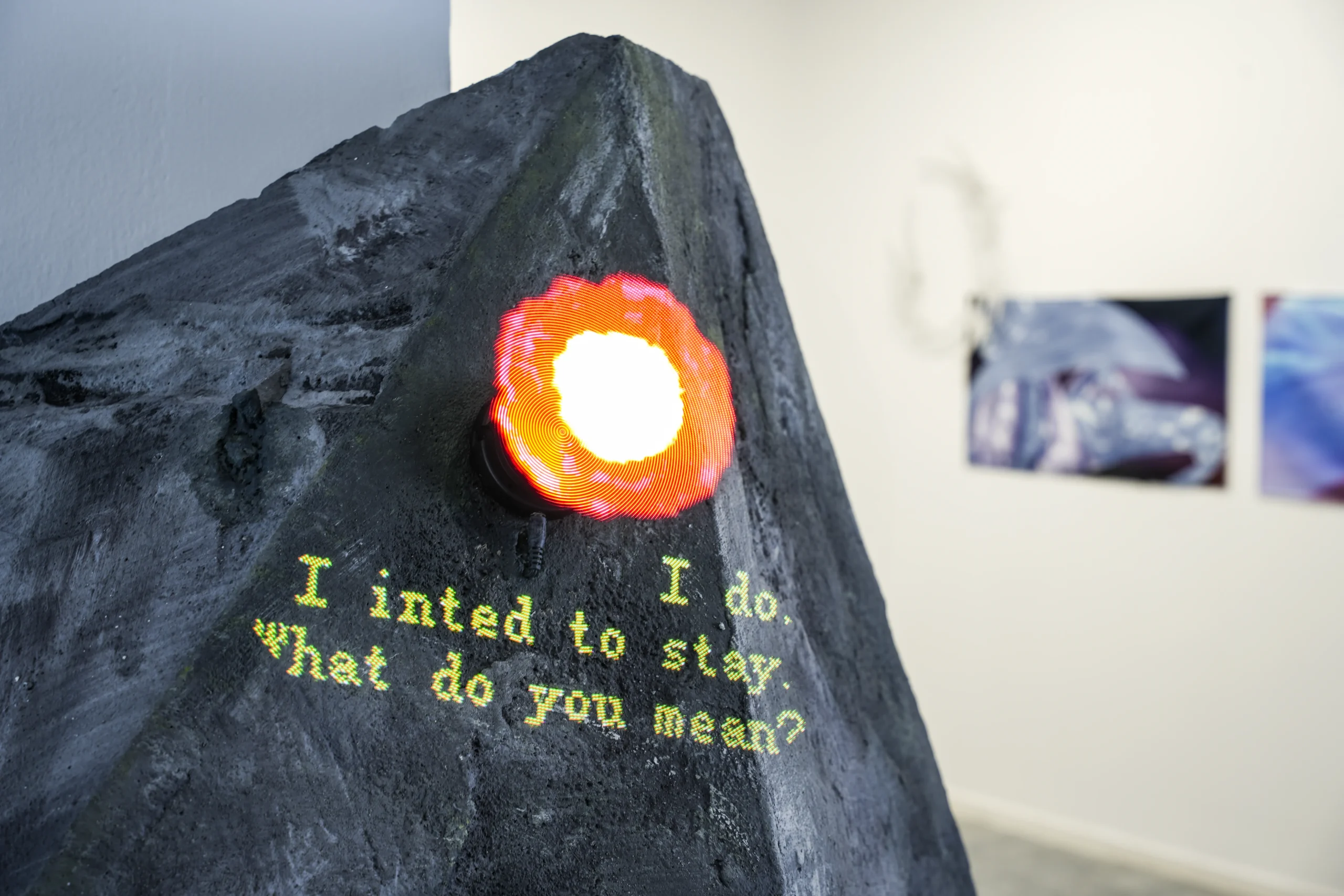
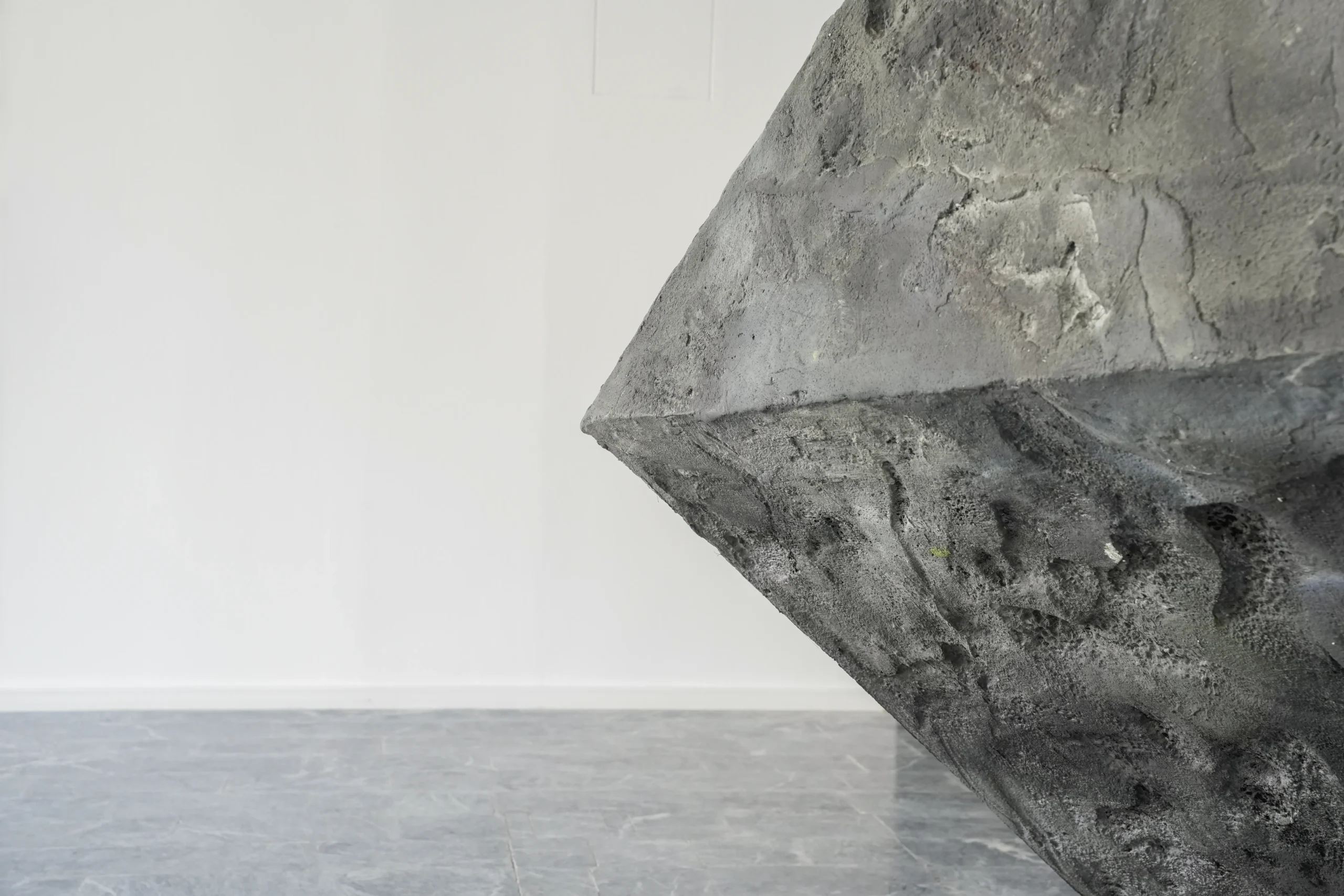
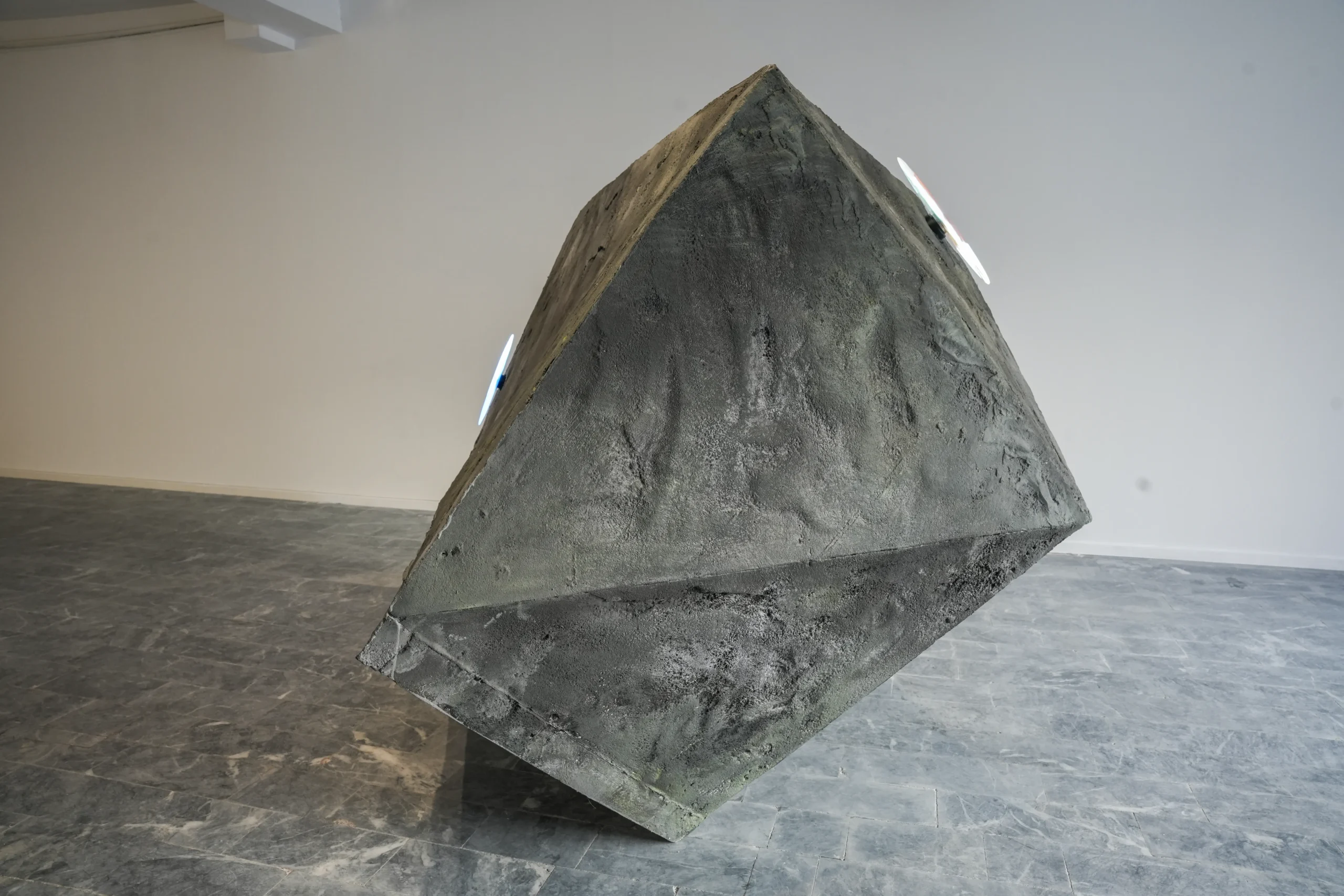
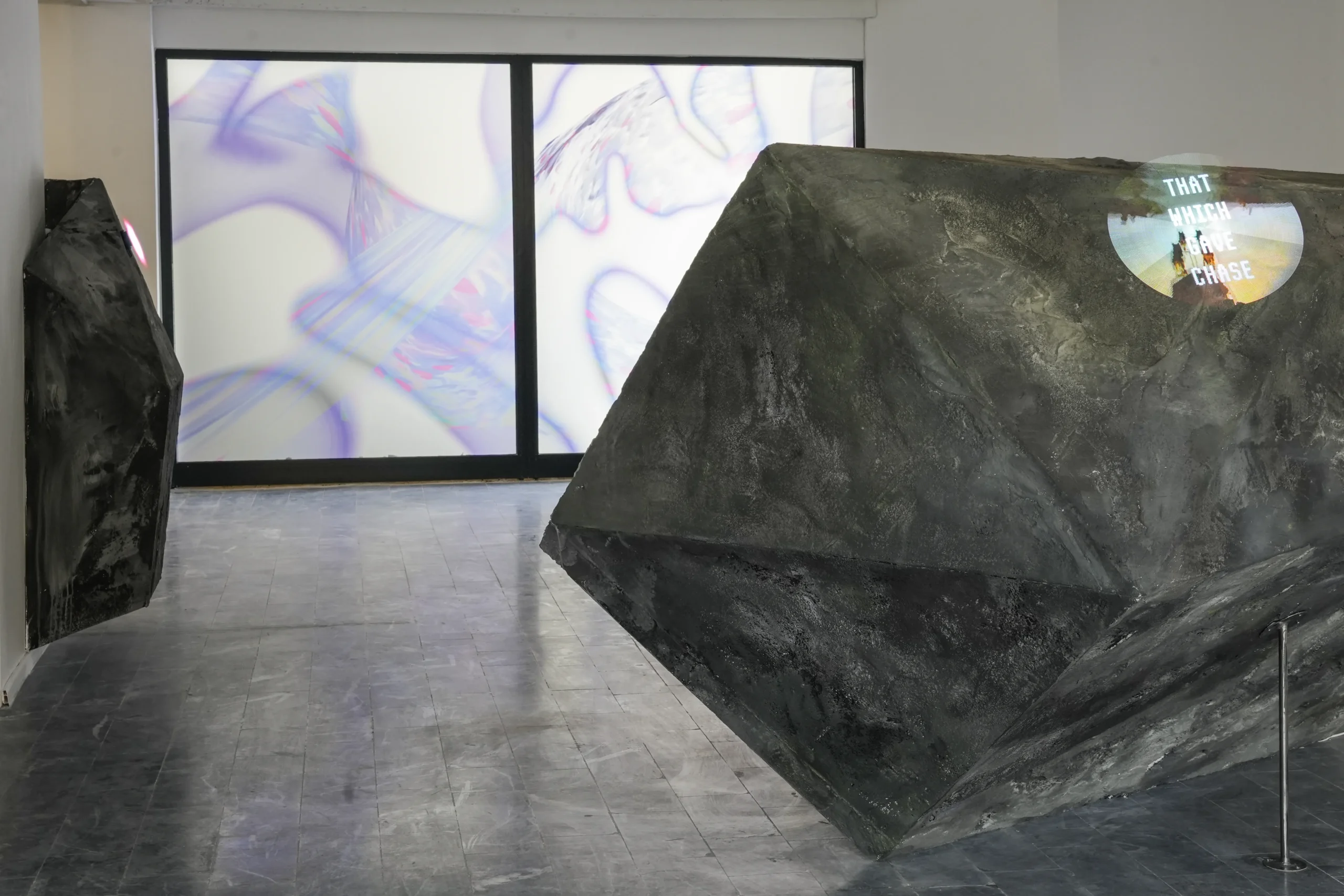
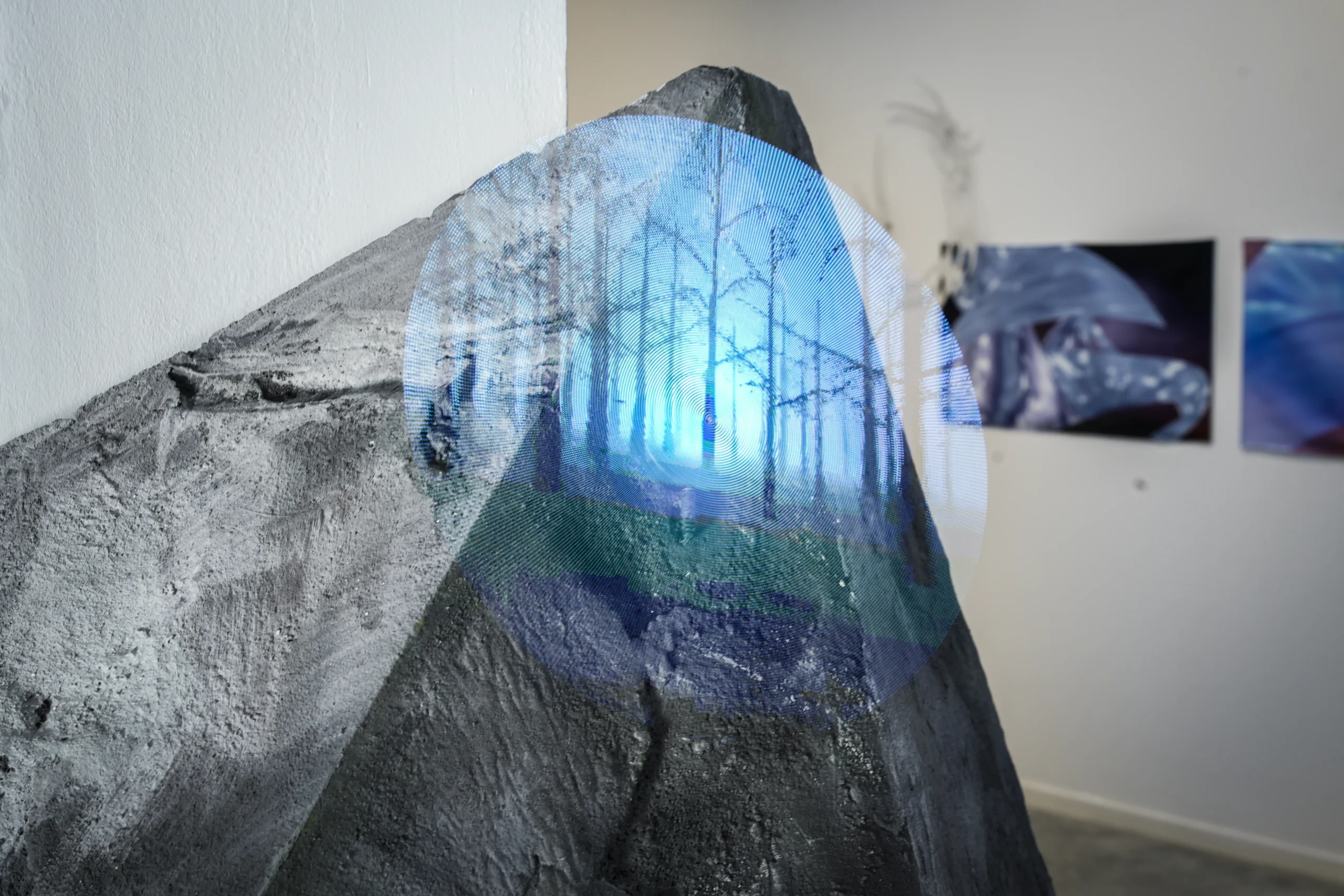
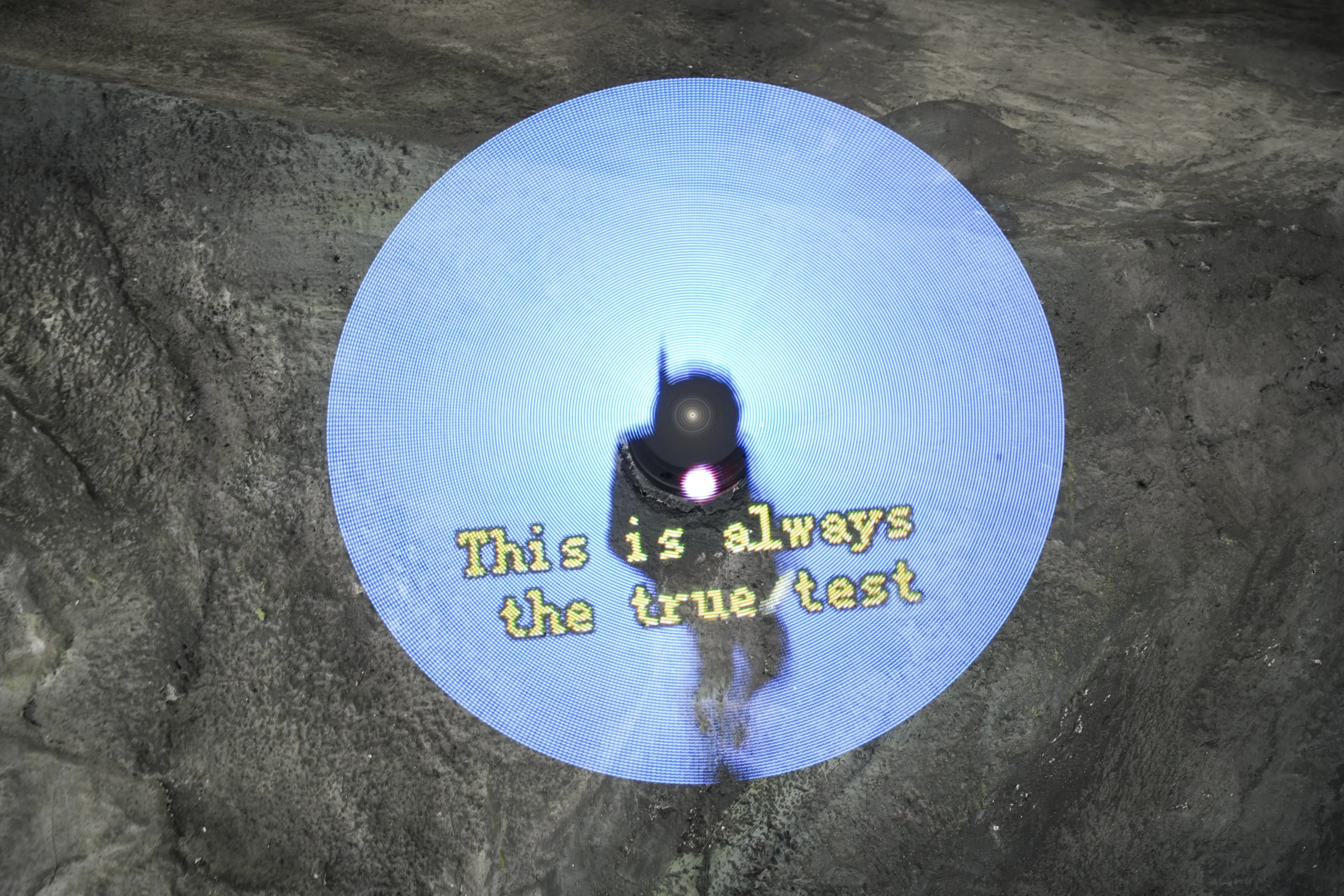
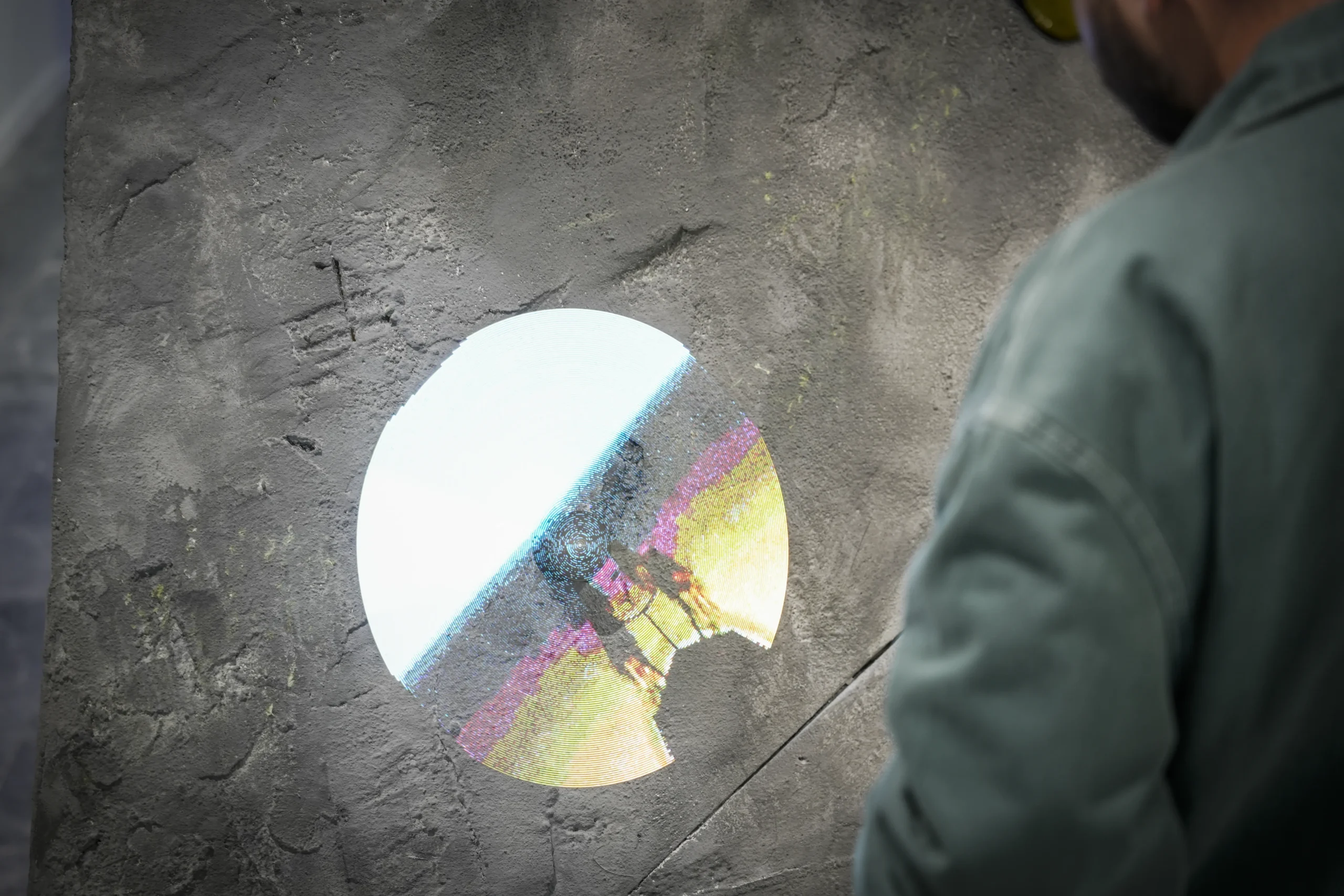
Her installation here at the National Gallery of Kosovo QAFA, places at the center two oversized objects resembling pixelated stones with holographic video projections appearing on their surfaces. For centuries, stones have marked the boundaries of fields and territories. As a durable material, they symbolized the permanence of order and law—once set in place, a stone was meant to guarantee that a border would remain fixed for years.
Through this gesture, she foregrounds not only the question of the border as margin, but also the status of inanimate objects in video games. In doing so, she points to the phenomenon of inanimate object roleplay—taking on the role of tools, everyday objects, or elements of the landscape. This phenomenon, alongside lurking, constitutes one manifestation of an “aesthetics of withdrawal”: the deliberate limitation of presence, a removal from visibility, silence, or the minimization of expressive means. It is a strategy of refusal in the face of a culture of excess, incessant content production, and the imperative of hypervisibility imposed by digital capitalism.
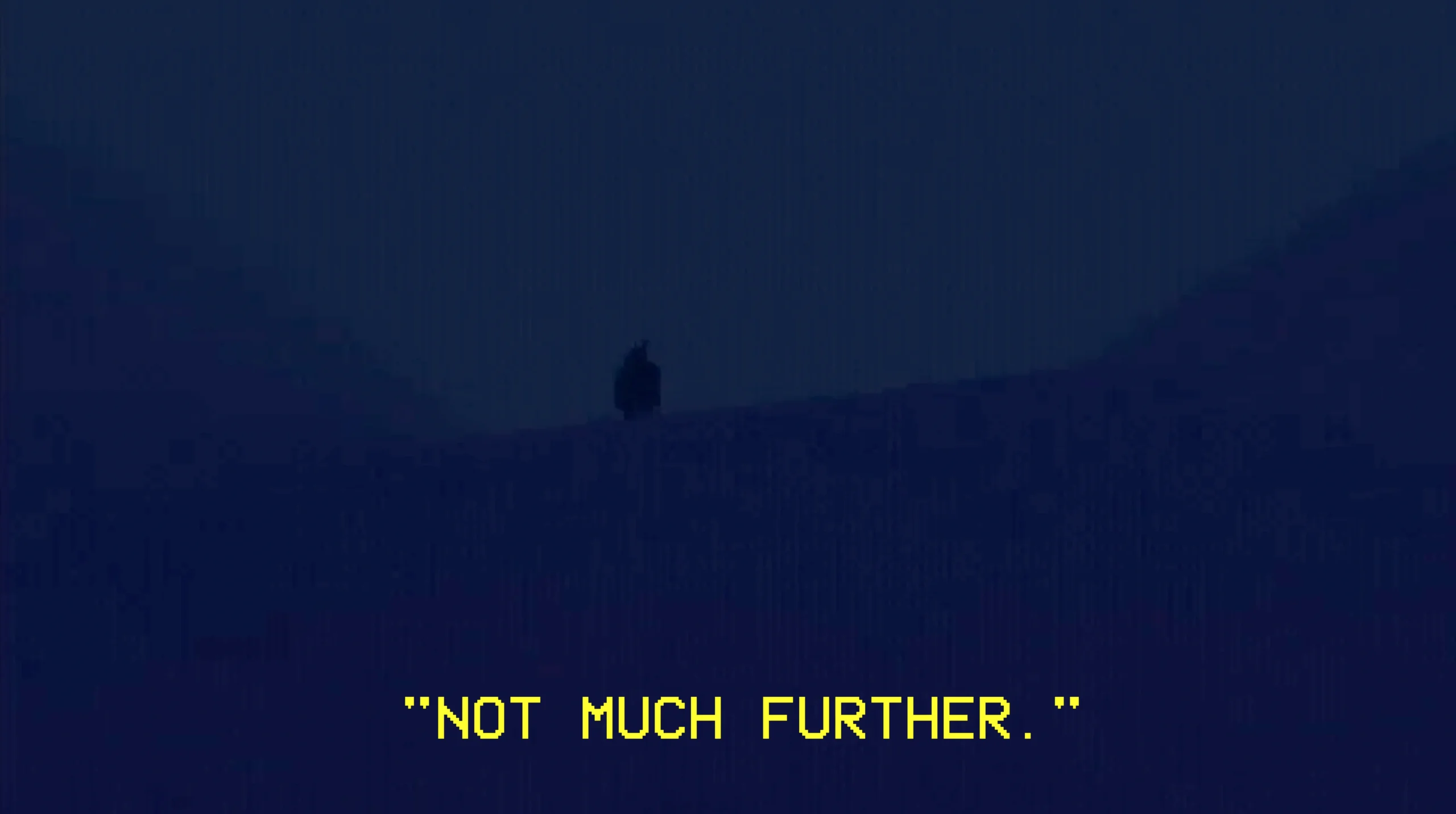
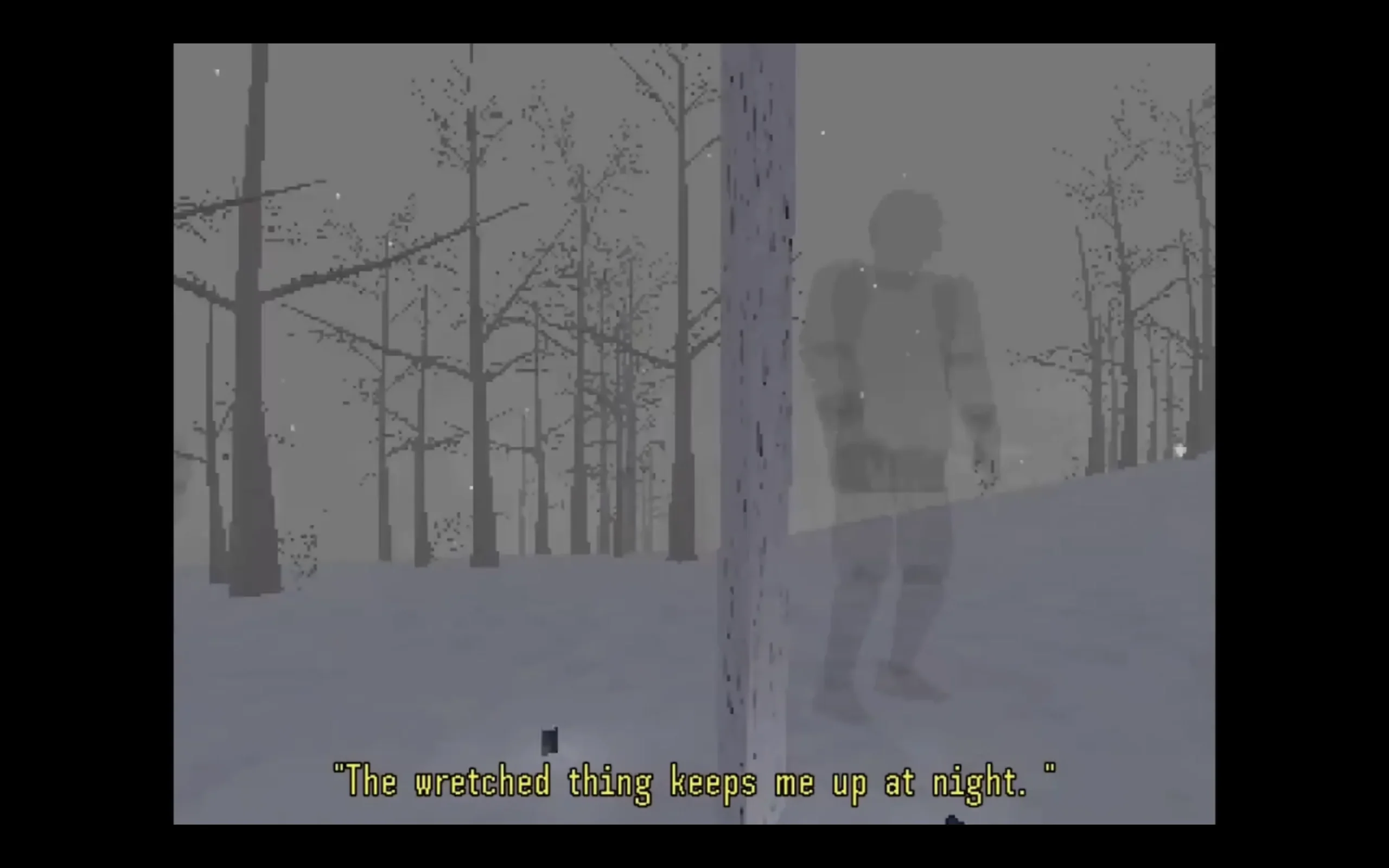
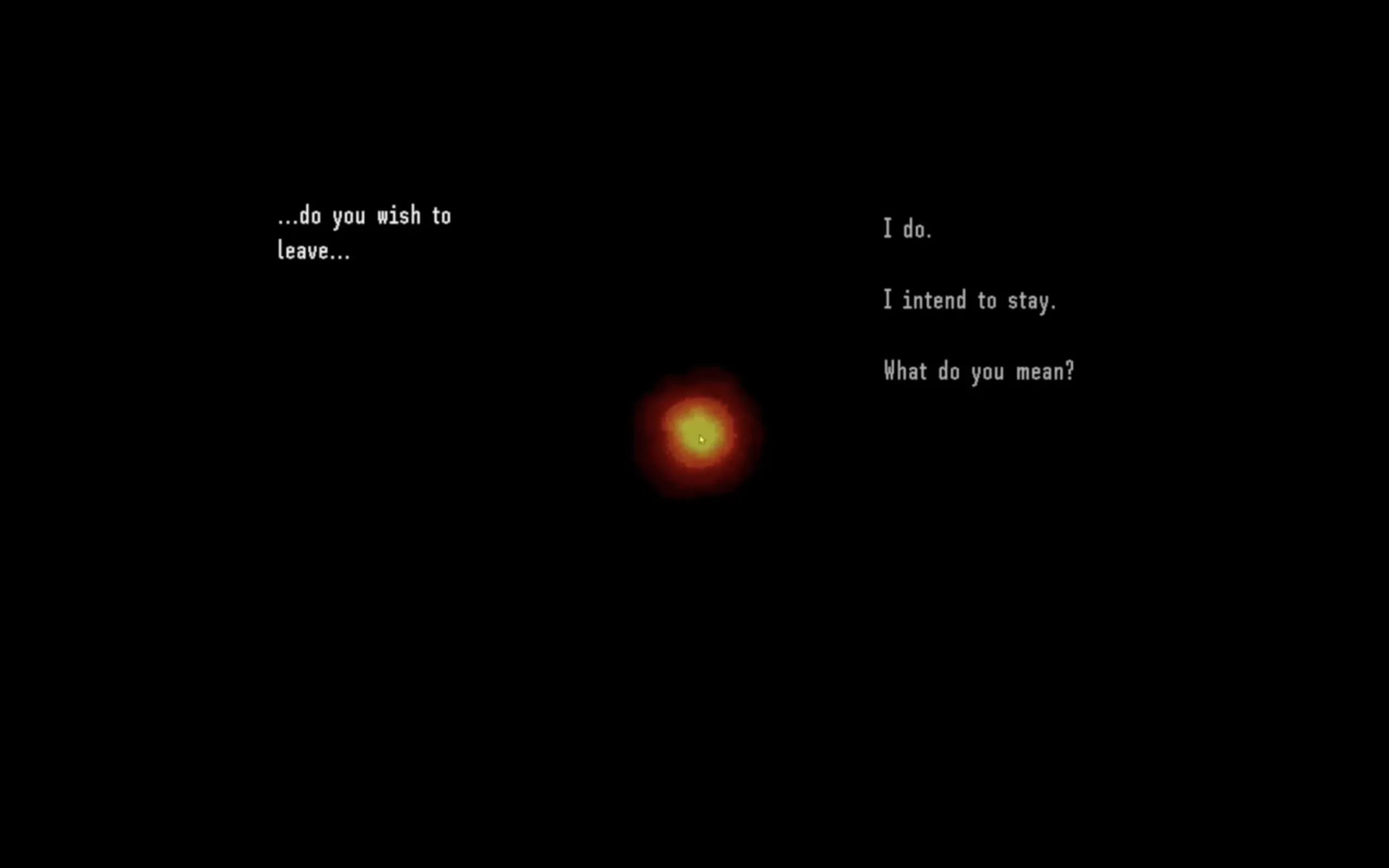
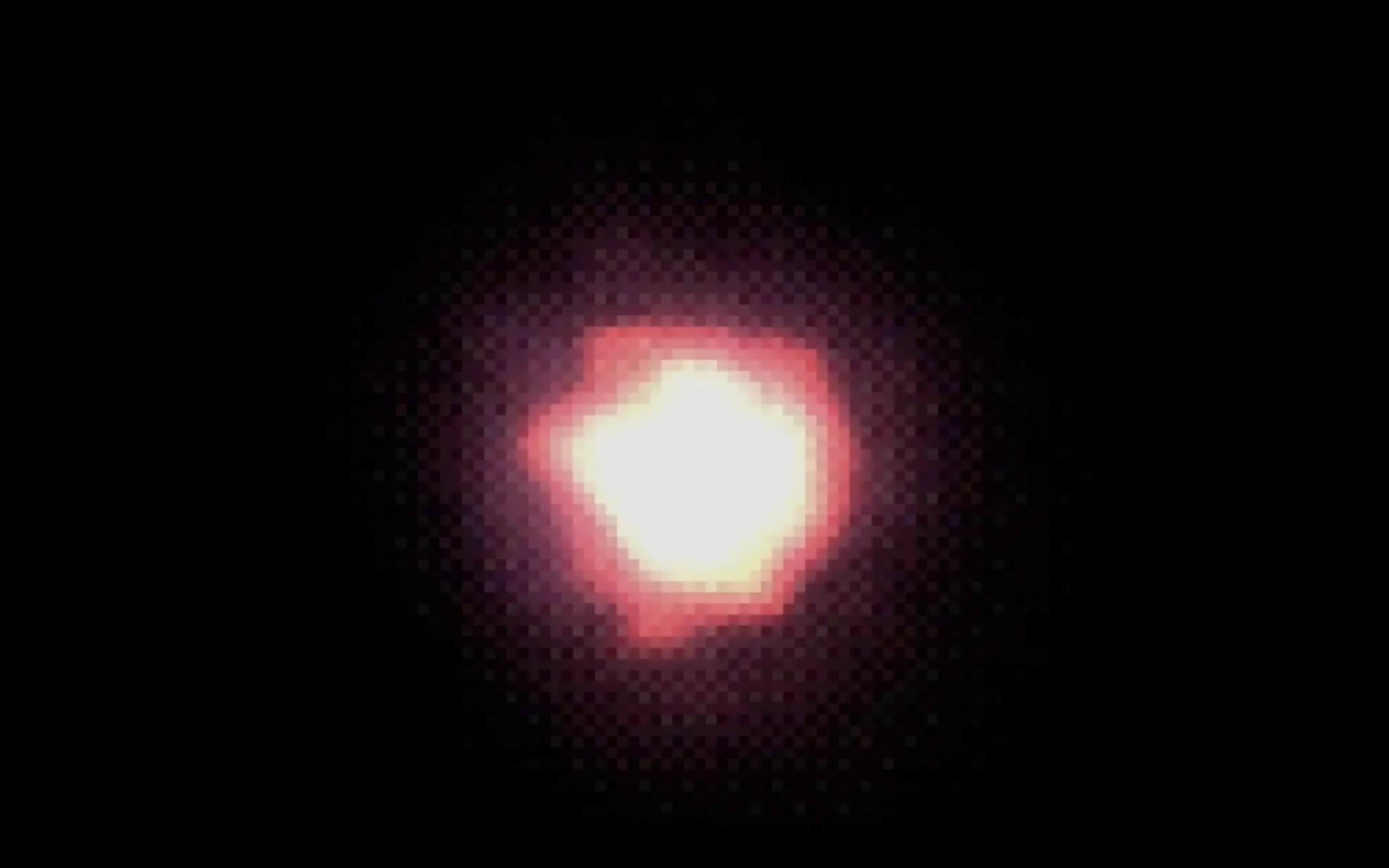
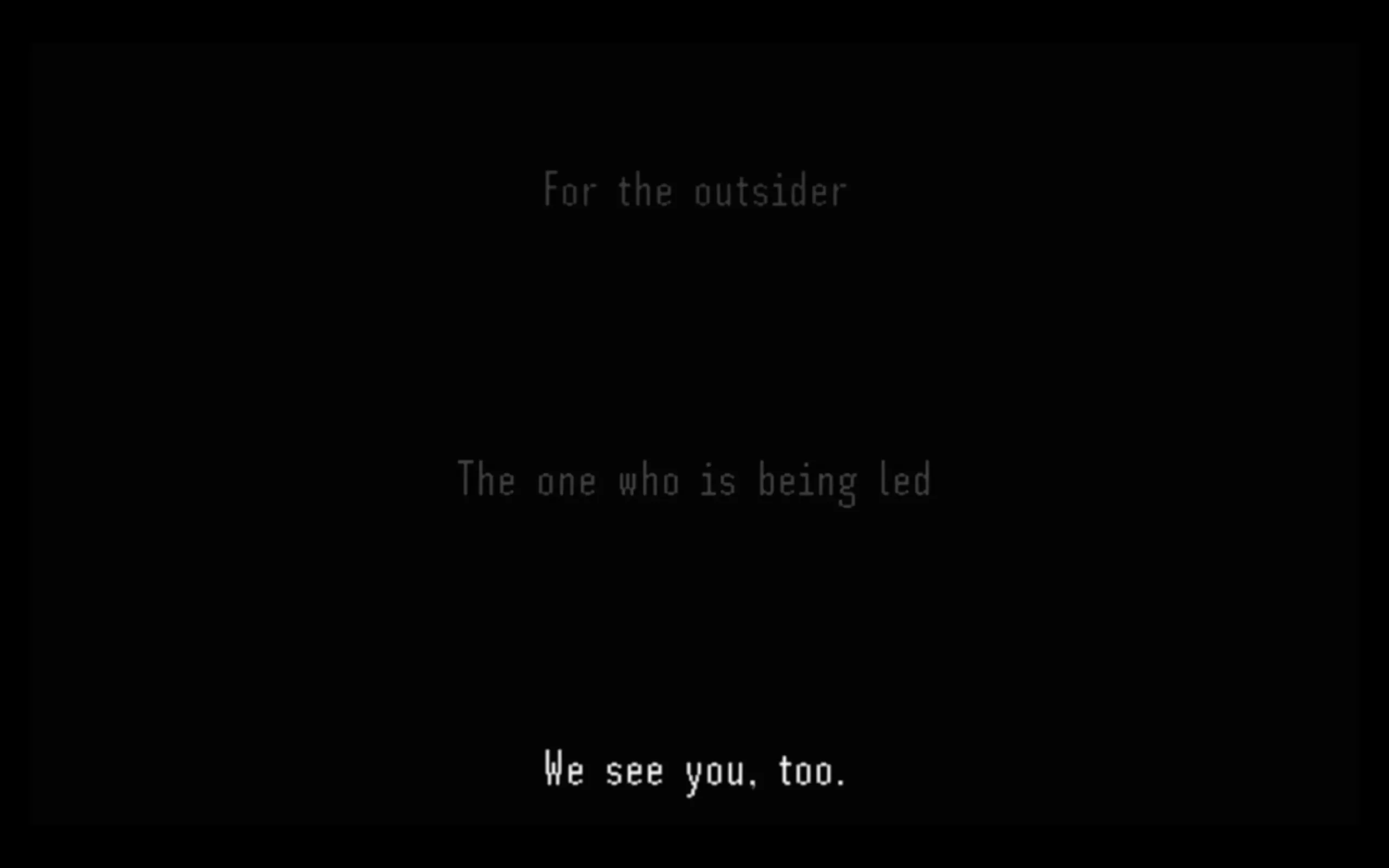
The video projected onto fans, divided into three parts and titled That Which Gave Chase, presents a protagonist trapped in a game as if in a dream from which he cannot awaken. Forced to continuously perform the identity of the hunter, he traverses blurred, desolate landscapes. Although the work evokes a range of contemporary socio-political tensions—from violence in games and online spaces, through models of male socialization, to experiences of political alienation—what mattered most to Laureta was conveying the sense of powerlessness intrinsic to a limbo state: an existence caught in a loop with no exit. The game, conceived as a space of escapism, becomes a trap.
As in many of her previous projects, Laureta Hajrullahu deliberately conflates orders: she combines a sweet, almost candy-like aesthetic with brutal content; internet kitsch, New Aesthetics, and plastic with serious political reflection. By inserting two monumental “boulders” into the gallery space, she operates through absurdity and humor. She transforms immaterial objects familiar from video games, such as obstacles, textures, elements of landscape, into heavy, physical masses. Background and inanimate objects assume the role of protagonists. At the same time, the artist questions the very idea of fixed principles and borders, revealing their conventionality in the face of a reality that is fluid and entangled, structured less by rigid dividing lines than by membranes and semi-permeable systems.
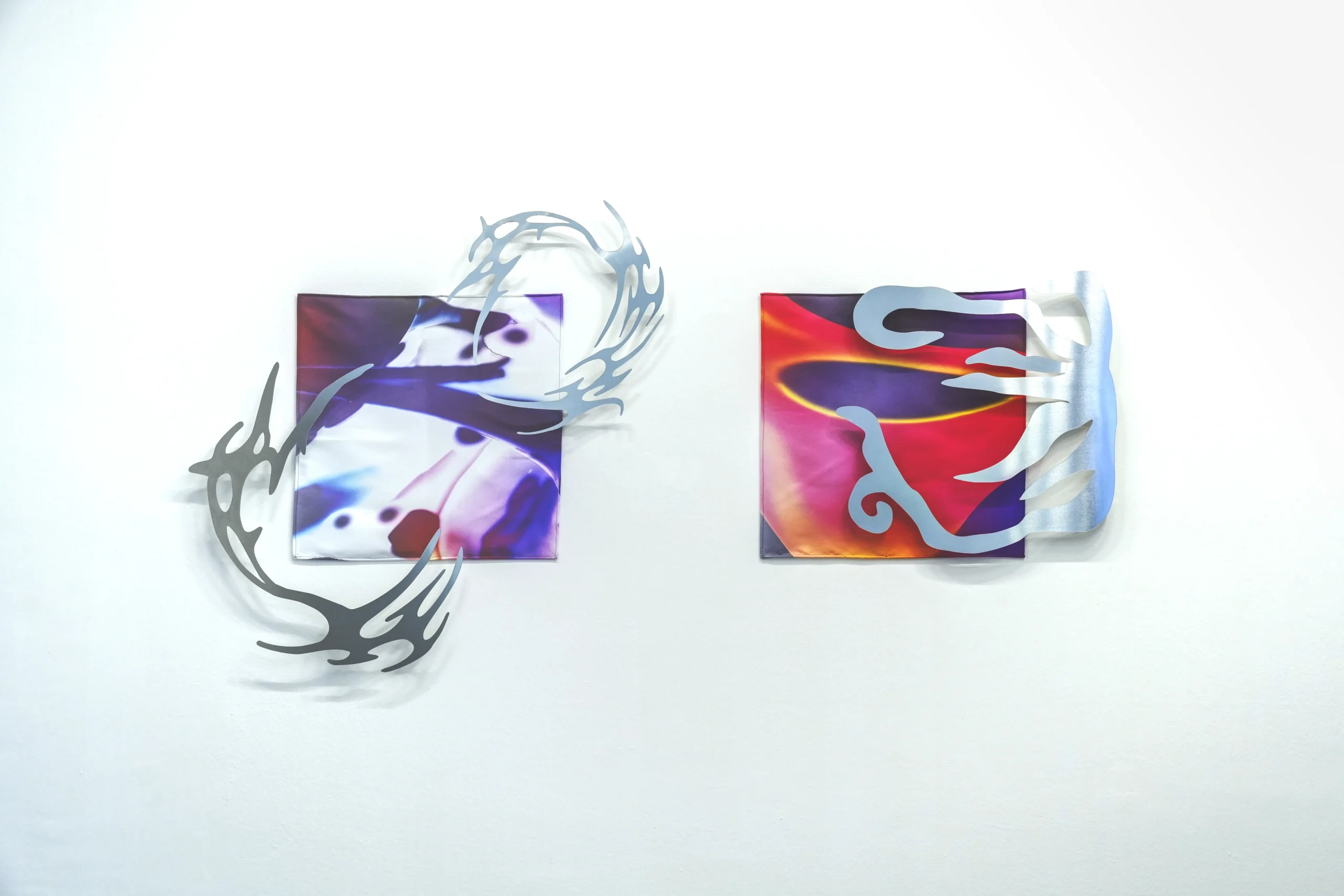
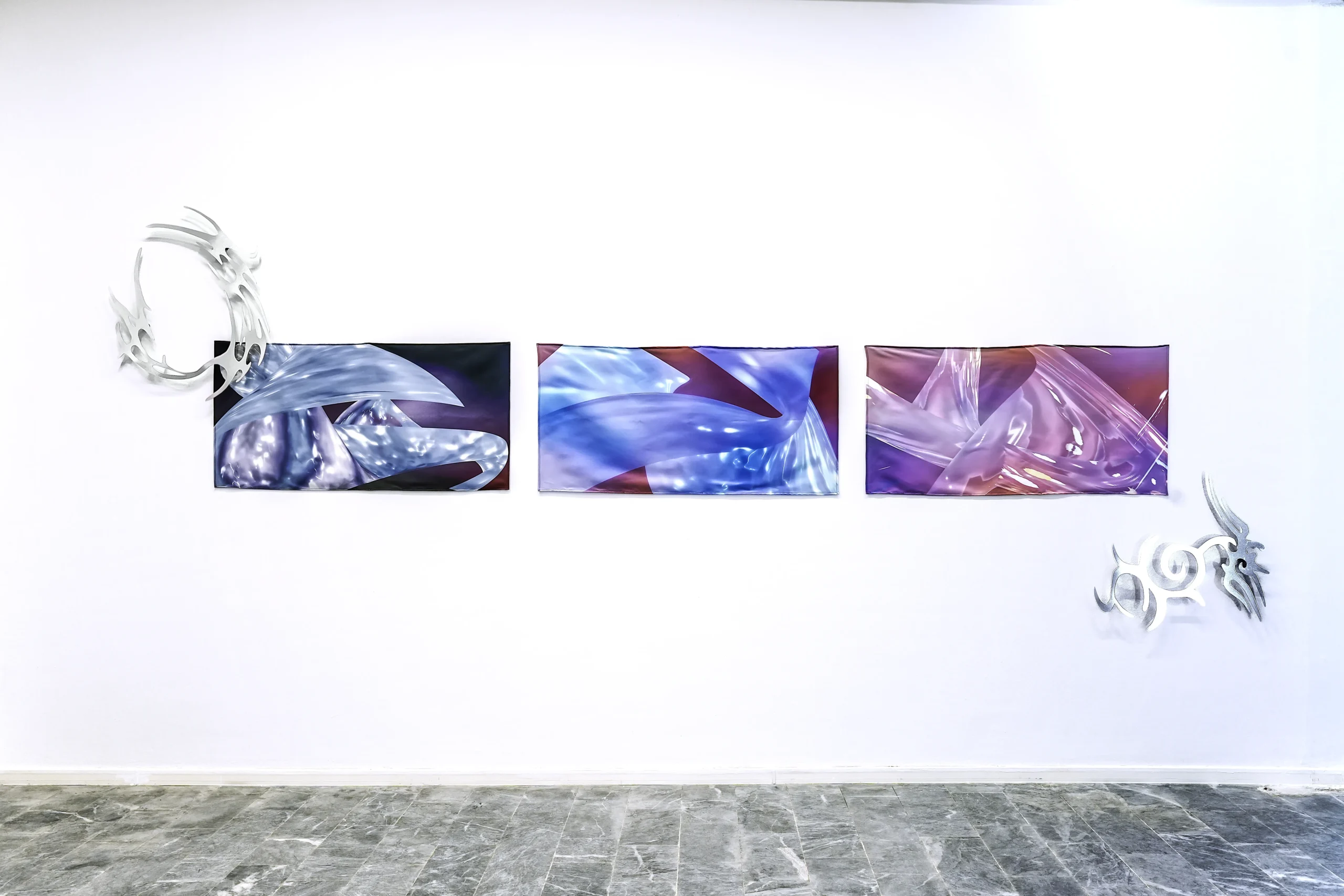
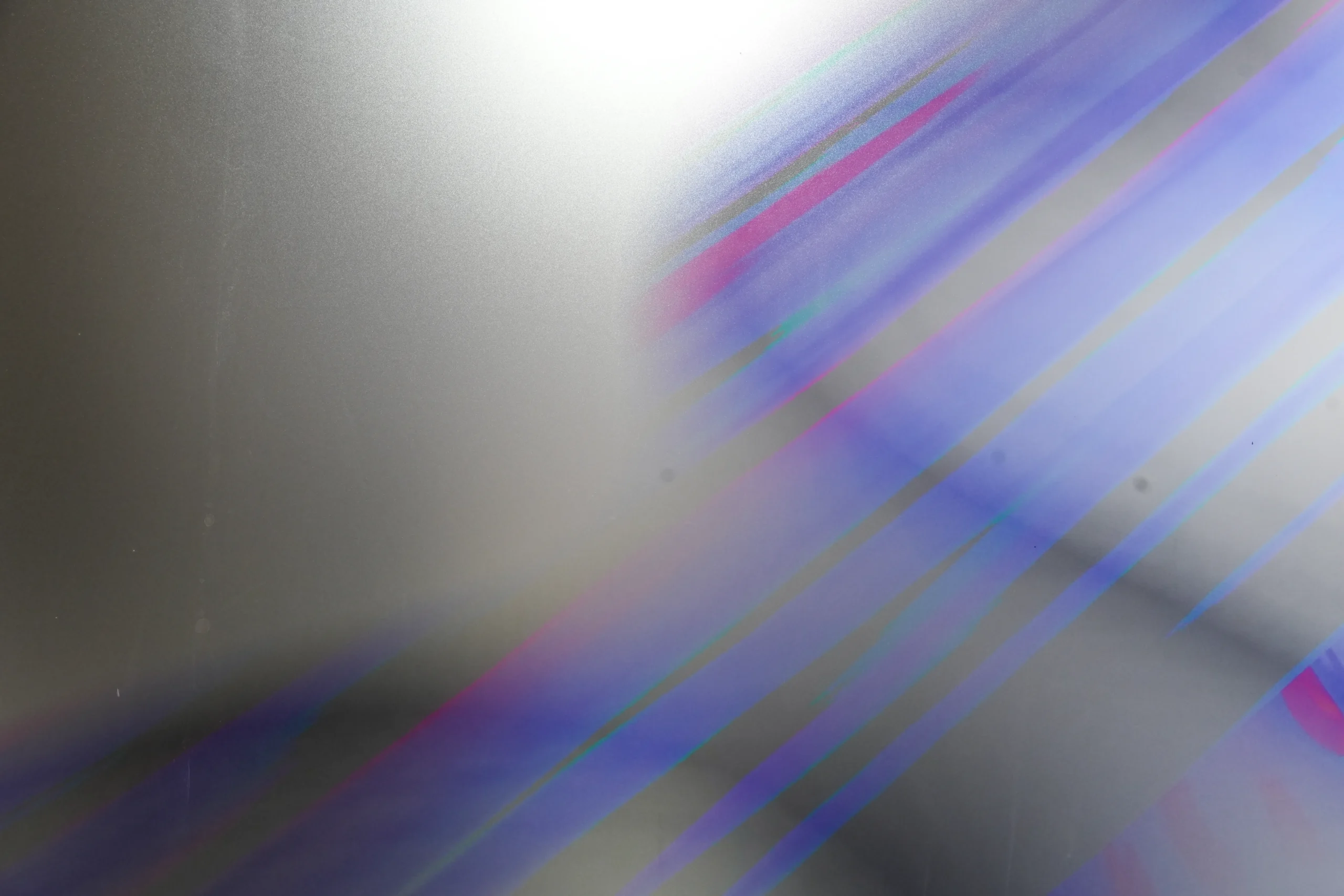
This mode of thinking returns both in her works on silk and in the installation that subtly intervenes in the gallery window. The graphics evoke the well-known motif of slime from internet culture—a sticky, elastic, formless substance that appears in satisfying reels and relaxing games, hypnotizing viewers with its plasticity. Slime offers no resistance; it yields to touch, dissolves, and continually reshapes itself. In Laureta’s work, however, this aesthetic ceases to be merely a visual pleasure. It becomes an existential figure. It signifies a way of being in a world devoid of distinct identities and easily graspable boundaries—a world structured less by hard contours than by relationality and responsiveness to its surroundings.
Laureta returns to an aesthetic that today appears almost nostalgic: the aesthetics of Y2K and poor images, expressing the egalitarianism and digital optimism of the early 2000s. She turns toward the internet of our childhood—a space that promised freedom, subcultures, queer identities, and unrestrained avatars. For her and her peers, the web was a site of escape, of worlding—the construction of alternative worlds in which the boundary between online and IRL remained distinct. One could log in and log out. Today, the vector of escape has often reversed. We seek refuge from doomscrolling, from the flood of AI slop, from the sense of permanent surveillance.
The artist proposes the strategy of “undo” as a gesture of resistance against forces that flatten complexity and transform users into data points or idealized images. She searches for new speculative coalitions within which an alternative intelligence—and a solidarity dispersed across bodies, machines, and objects—might emerge. A withdrawal from the performance of particular identities, and an attempt to look at the world more broadly.