Where Do We End?
—Perhaps we never truly stop being: we simply continue elsewhere—
There are questions that cannot be exhausted by an answer.
They do not belong to the realm of solutions, but to that of persistence.
They return. Sometimes as a barely perceptible thought, sometimes as a deeper tension that moves through perception and experience, quietly weaving itself into the forms through which we attempt to understand the world.
One such question, deceptively simple, keeps resurfacing: where do we end up?
This is not merely a question about limits. It is not only concerned with the point at which something comes to an end, but rather with that uncertain region where a form ceases to fully coincide with itself. It is within this interval — fragile, shifting, difficult to locate — that identity becomes exposed to the possibility of transformation. What we call an ending may therefore not coincide with exhaustion, but with a threshold: a point of passage where forms crack, shift, and open themselves to unforeseen configurations.
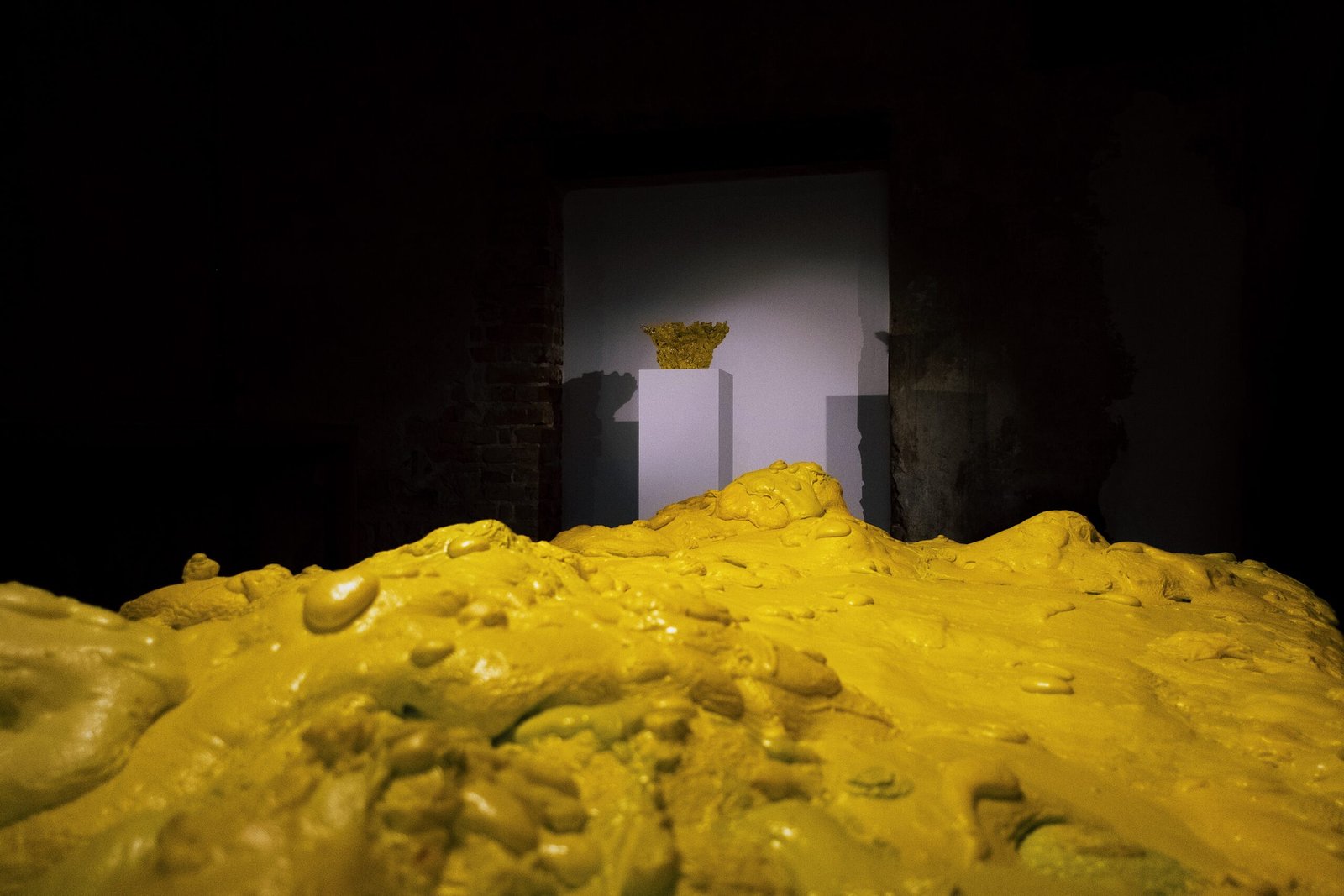
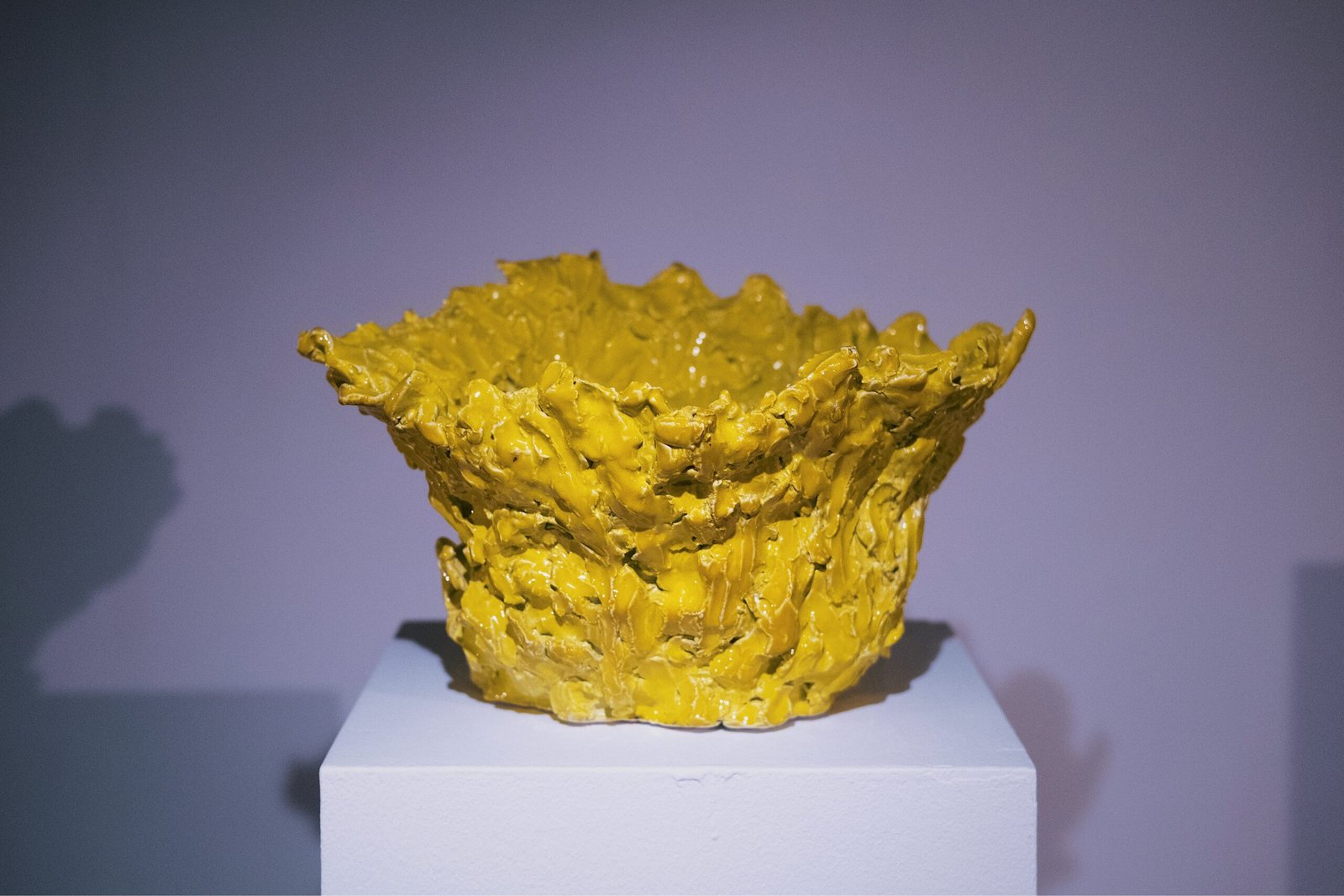
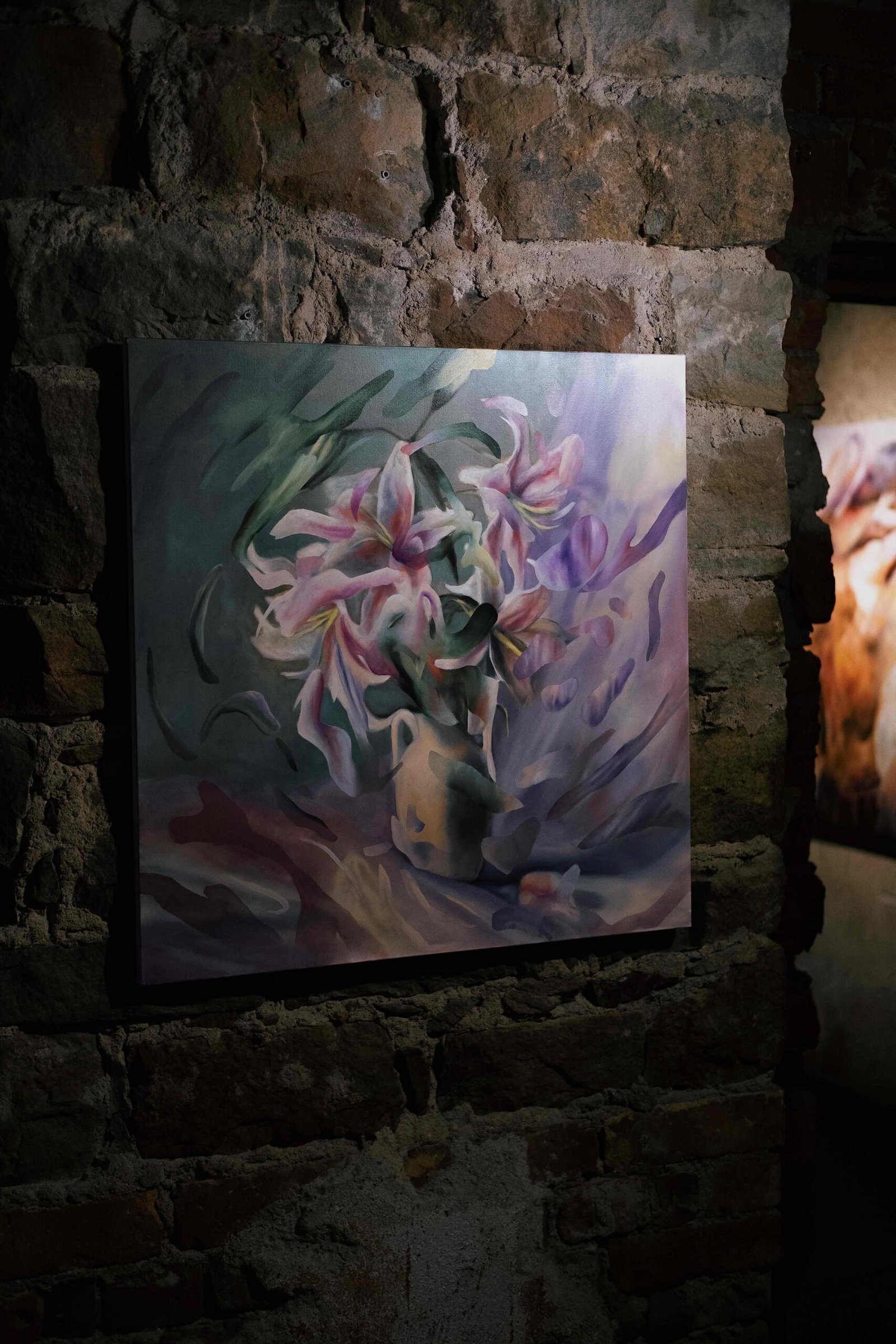
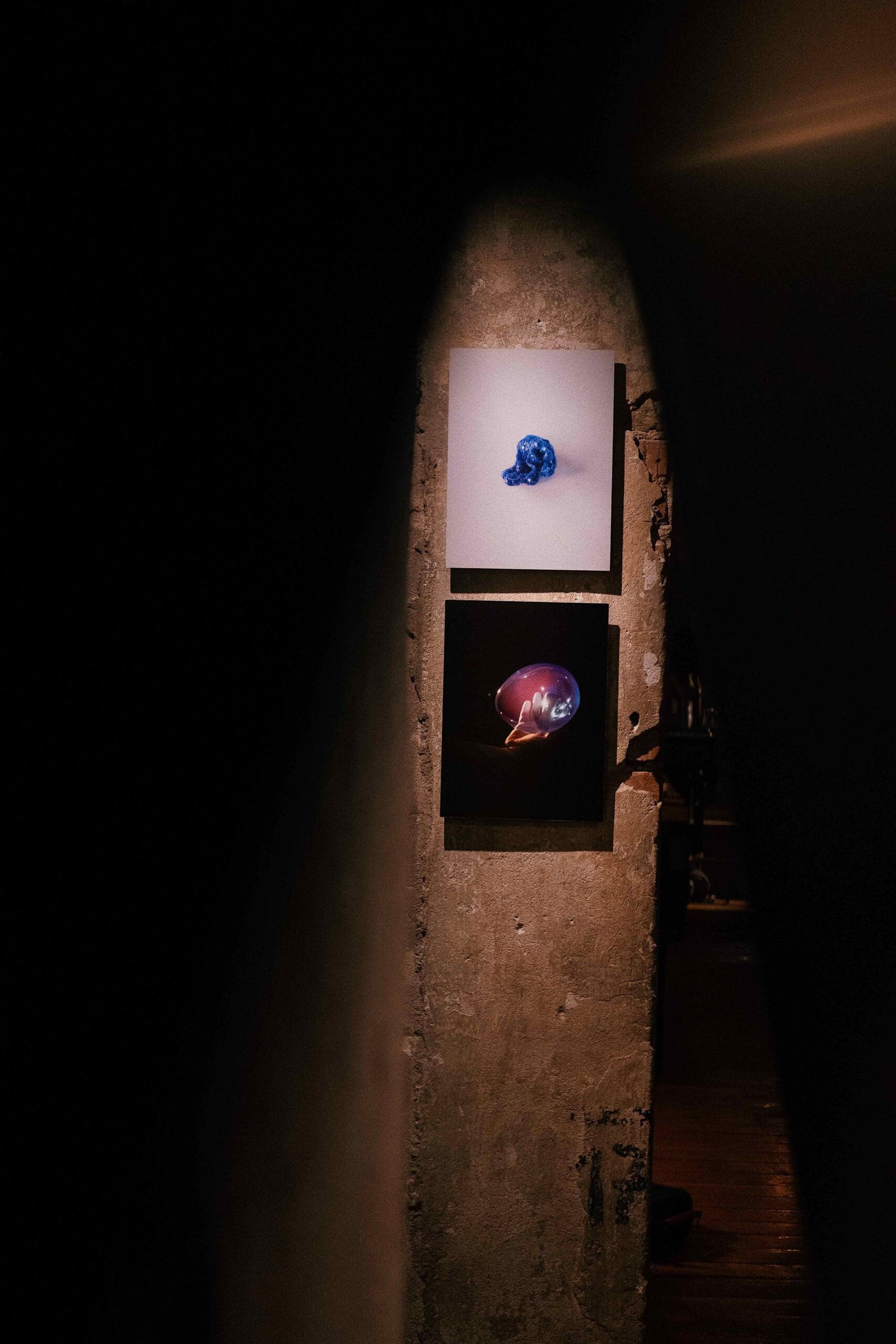
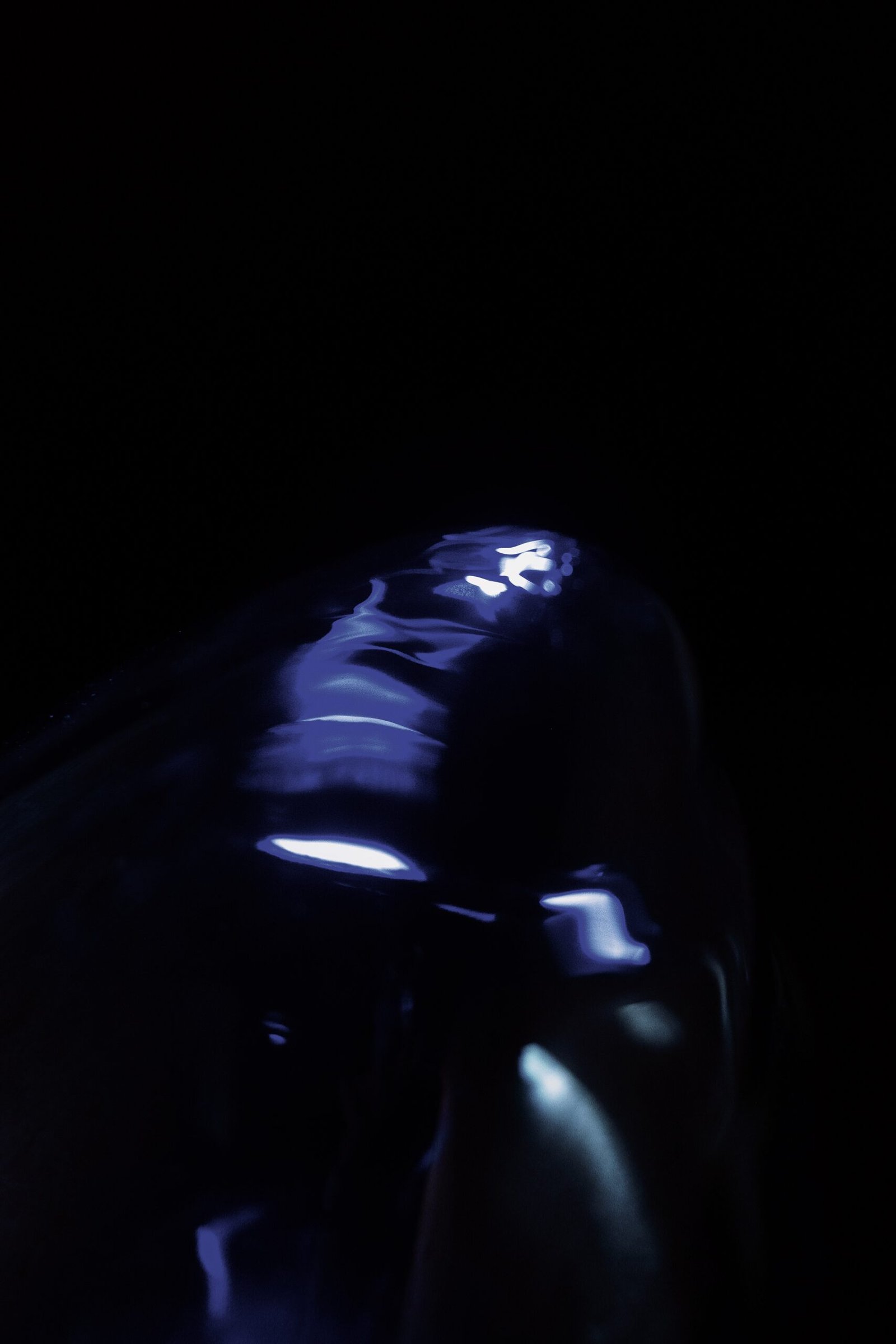
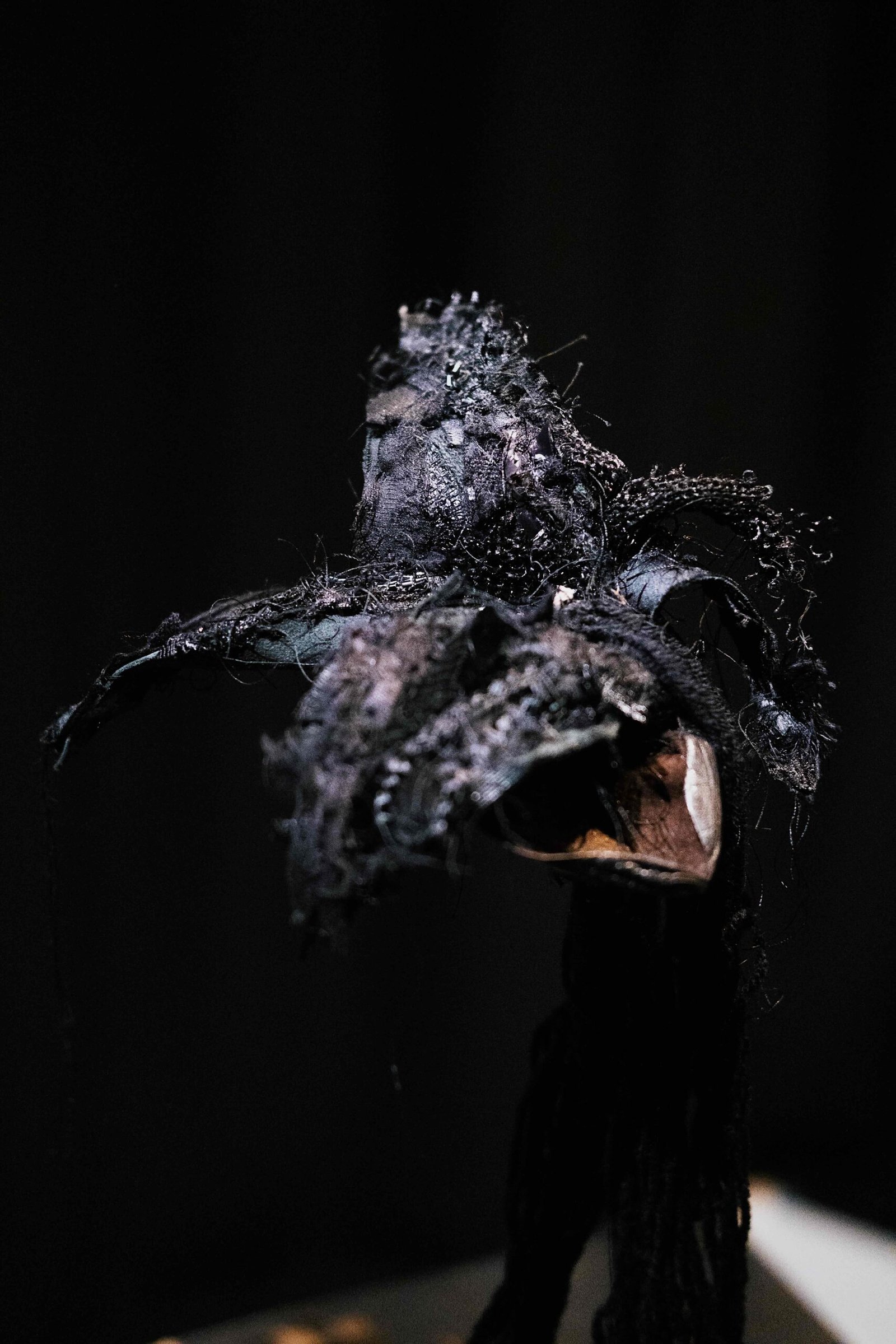
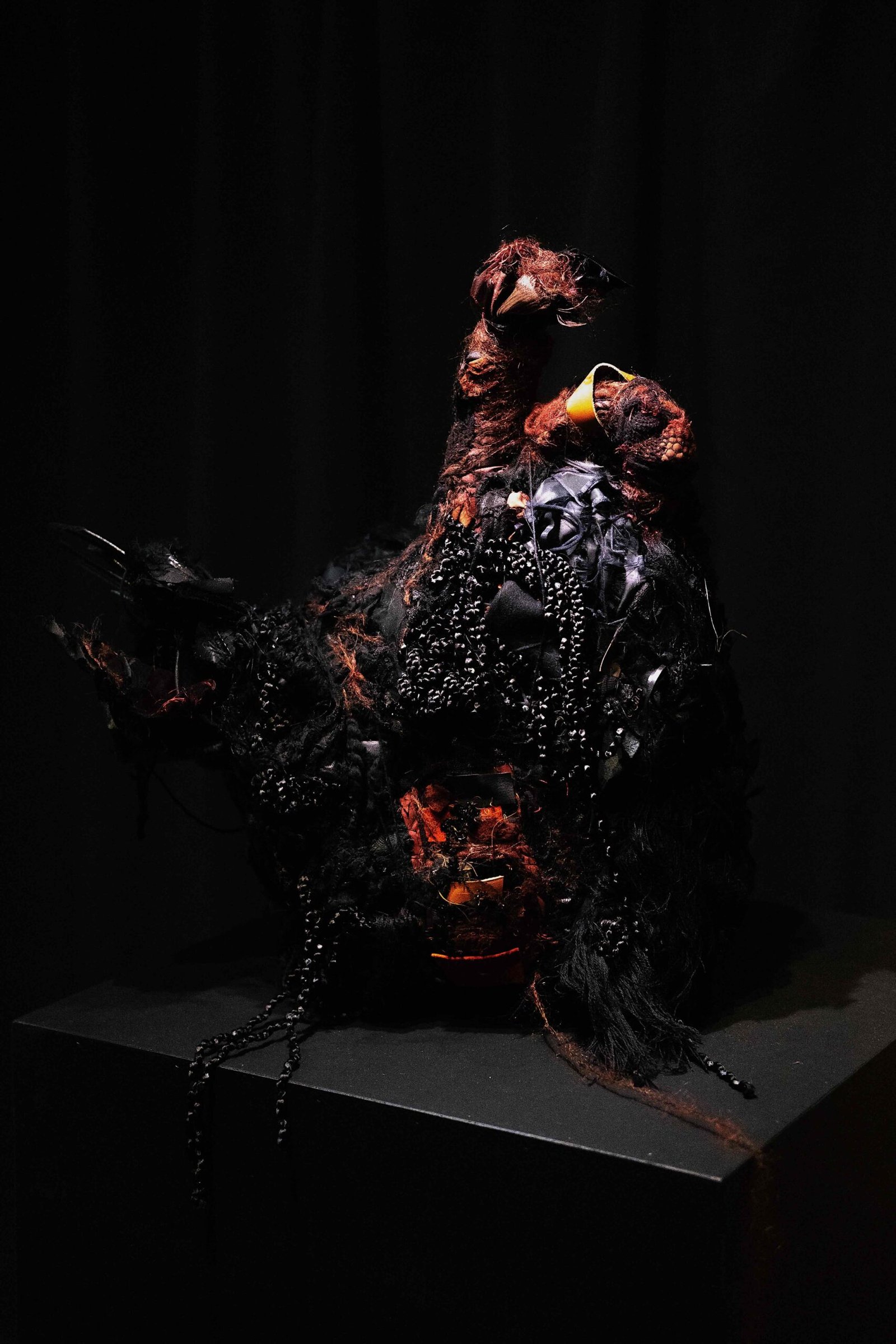
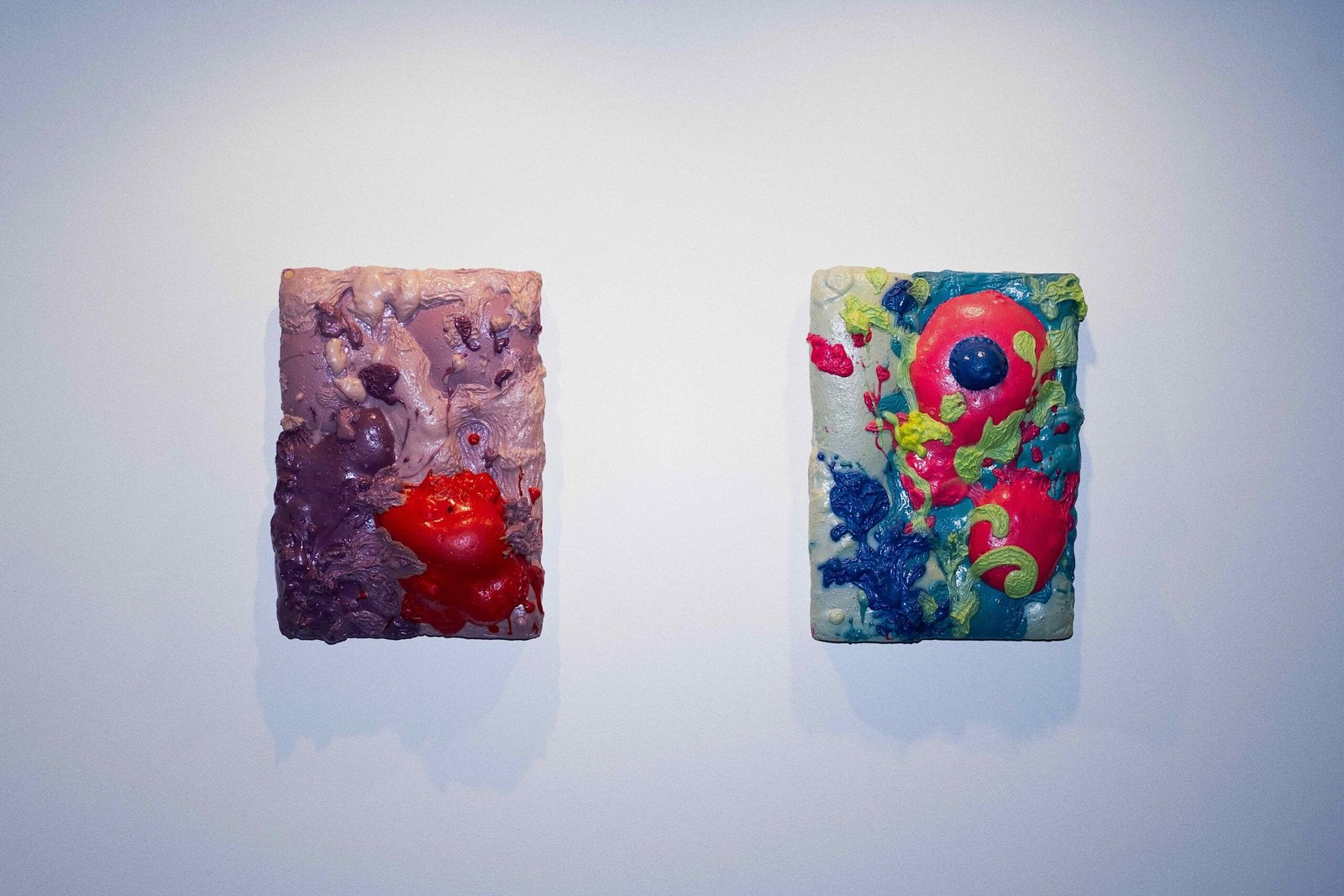
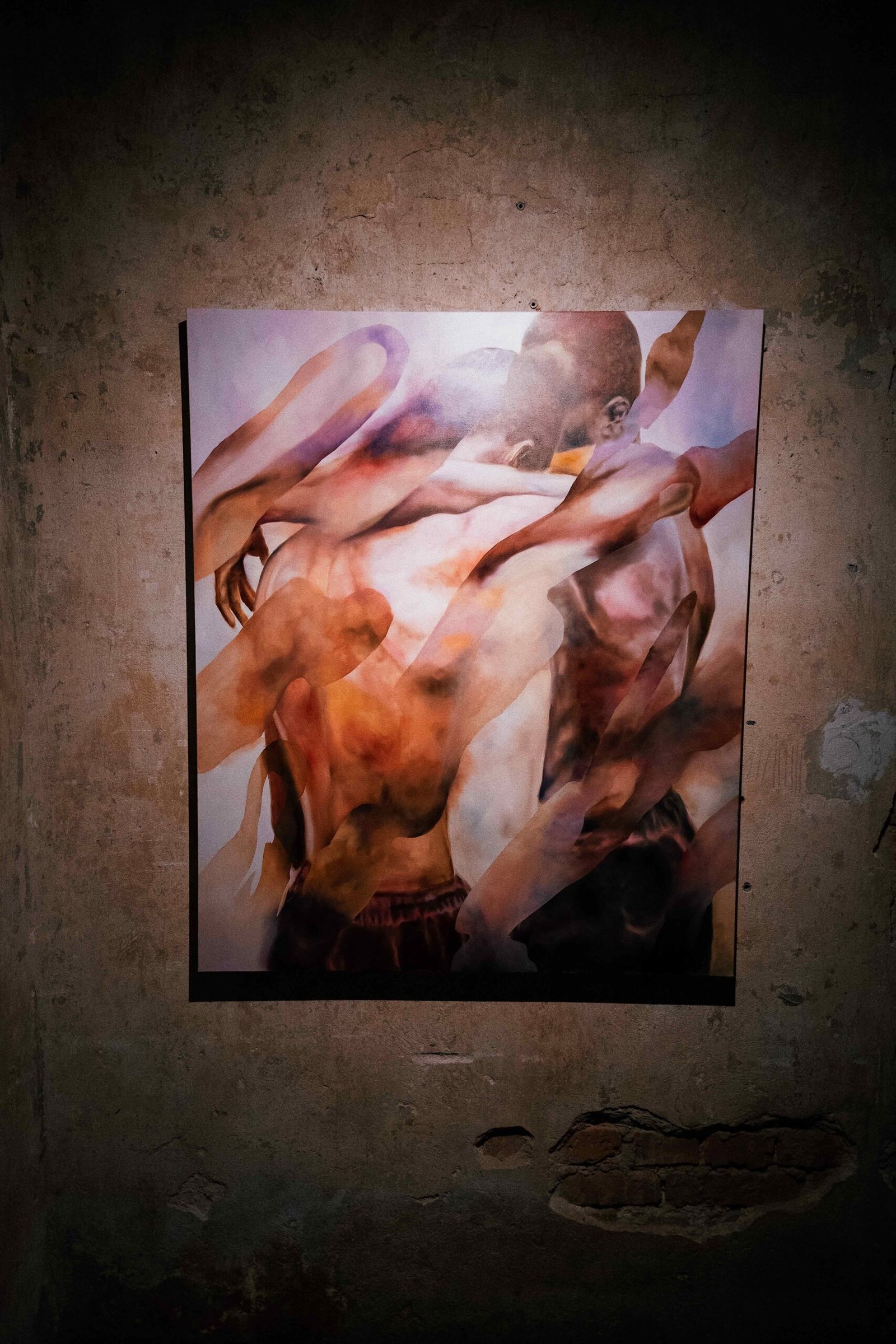
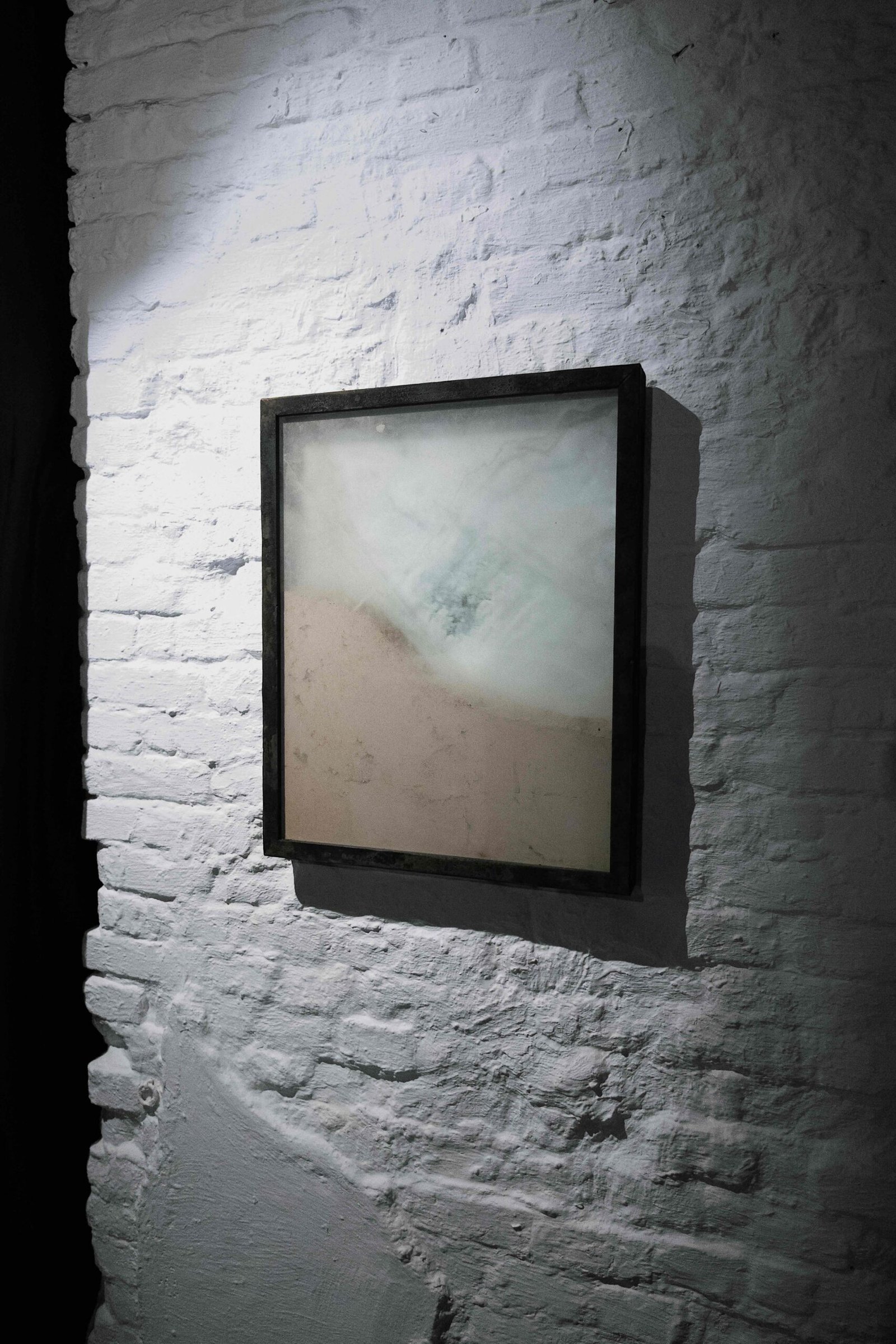
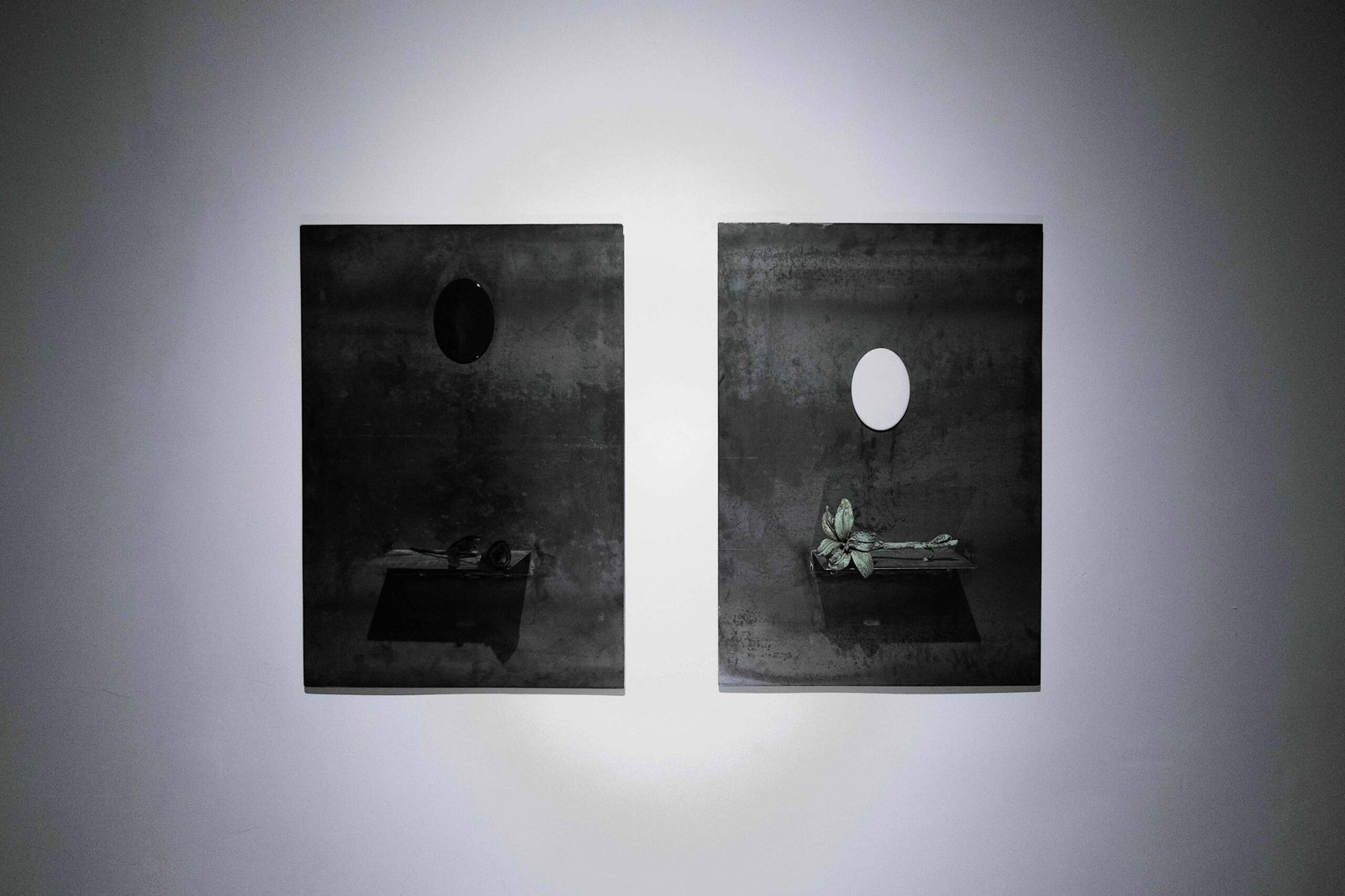
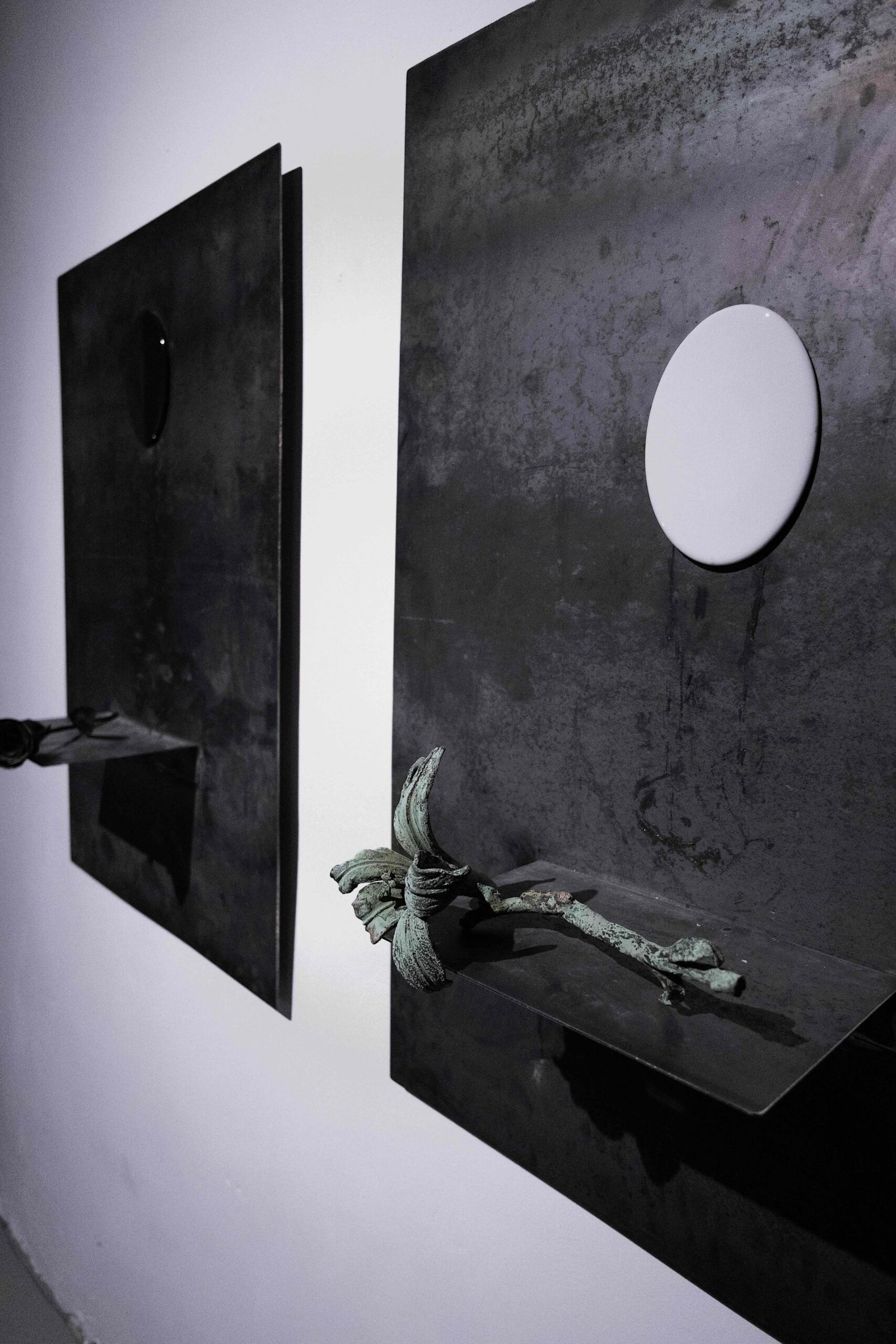
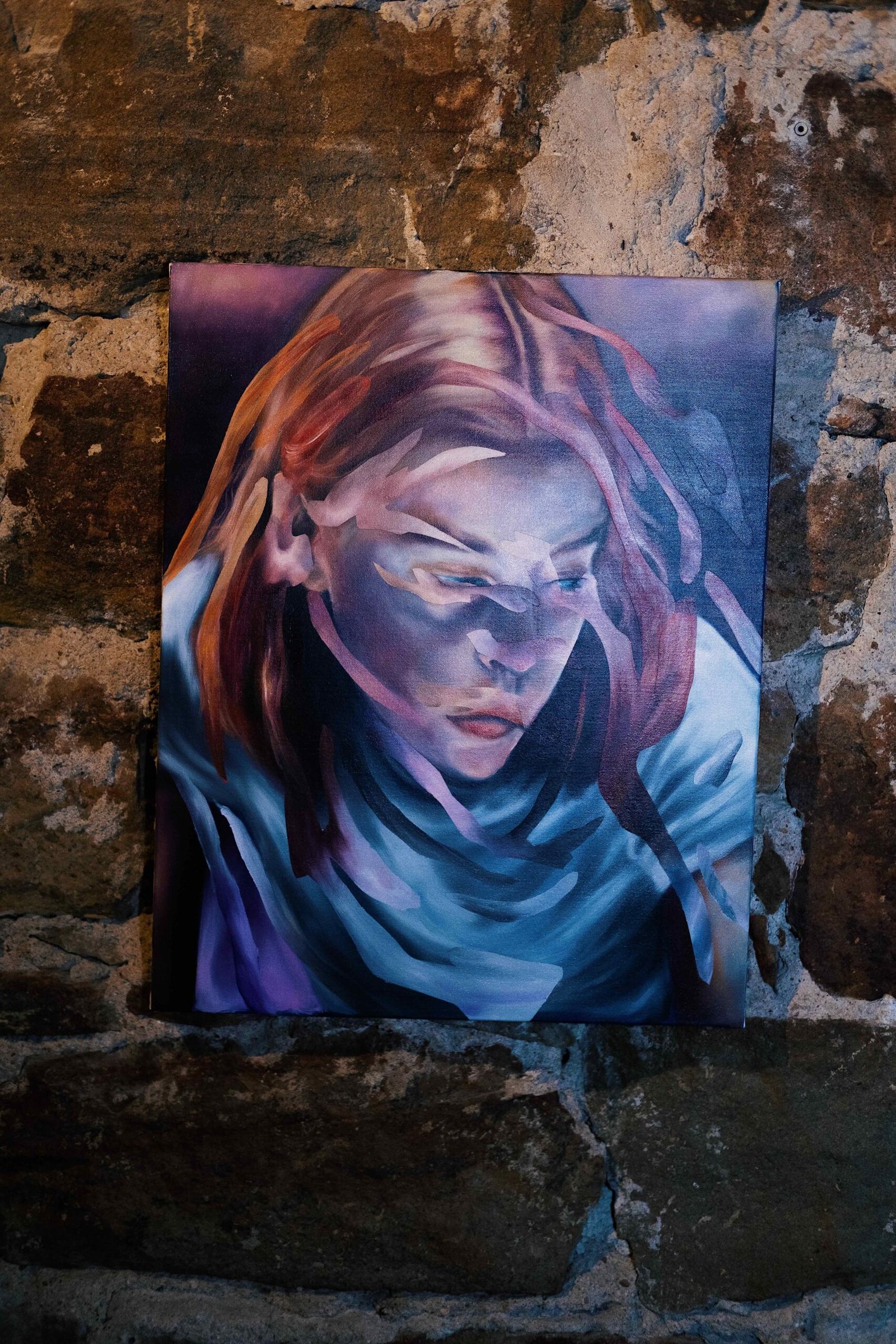
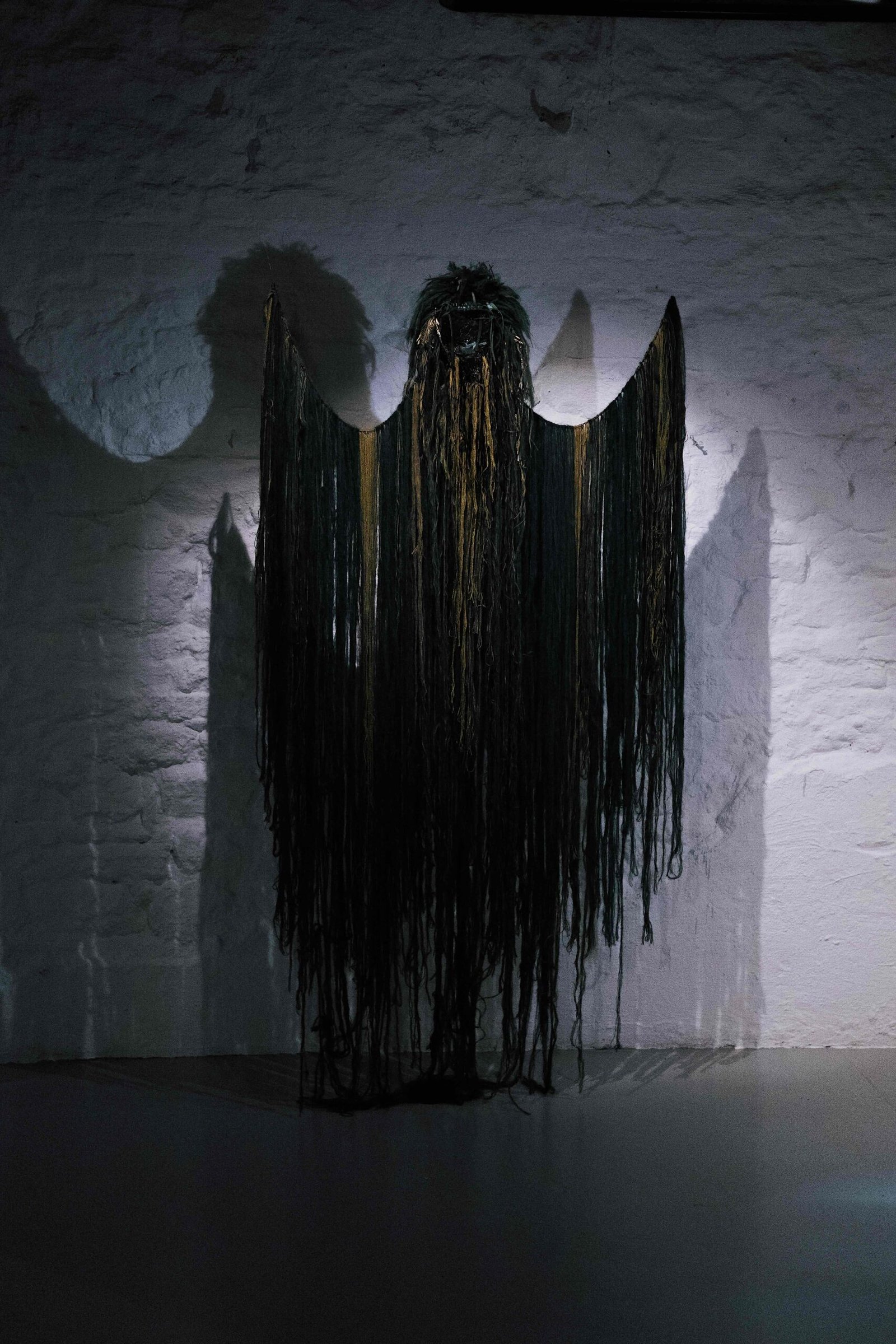
The works gathered in this exhibition seem to move precisely within this liminal space. They do not simply represent a condition, nor do they attempt to establish a definitive meaning. Instead, they operate as subtle mechanisms of displacement: sensitive surfaces where matter, image and thought enter into dialogue with what exceeds their immediate form. It is within this same tension that the following text takes shape. More than an interpretative essay or an explanatory framework, it unfolds as a field of resonances: a discursive texture traversed by multiple voices, where curatorial reflection intertwines with the artists’ own thoughts without establishing any fixed hierarchy between those who question and those who respond.
Words emerge here as brief surfacings — moments when the argument pauses, diverts, opens itself to further possibilities of meaning. What gradually comes into view is not a linear narrative, but a constellation of perspectives. Each voice occupies a different position within this field, yet all seem to gravitate around the same tension: attempting to understand where the boundary lies between what we are and what, over time, becomes something other than ourselves.
Perhaps such a boundary cannot be fixed once and for all. Perhaps identity itself is not a stable territory, but a continuous process of passage — a zone of contact in which subjectivity is constantly reshaped through its encounter with what lies beyond it.
This text situates itself precisely within that space of indeterminacy. Not in order to definitively clarify the meaning of the works, but to remain beside them, allowing thought to move through the same field of tensions in which forms come into being and, at the same time, begin to transform. In this sense, writing does not attempt to resolve the question. It simply accompanies it.
Where Do We End Up? It is a question that returns often. Not always when I look for it. Sometimes it appears on its own, from the side, like a thought that takes shape without having been summoned. Where do we end up? I do not believe there is a precise point. No clear line capable of separating what we are from what we cease to be. Perhaps an ending is not a place. Perhaps it happens gradually. Each time we come into contact with something that does not entirely belong to us. A breath brushing against another breath. A word that suddenly stops in silence. A form that yields almost imperceptibly to its own weight. It is in that moment that something shifts. And then the thought returns, persistent: where do we truly end?
Erica Bardi
I have always had the feeling that, in the end, we will return to where we came from. Not the earth. Something far more distant. The dust of stars. Wandering matter, scattered by an unimaginably ancient explosion that continues to travel through space within our bodies. Perhaps we still carry its memory, even if we no longer know how to recognise it. If this is the case, then our limit does not truly coincide with the body we inhabit. Perhaps we are already elsewhere, without realising it. And yet the end does not belong only to the vertigo of the cosmos. It also happens much closer to us. At the fragile point where a form ceases, for an instant, to fully coincide with itself. Perhaps it is precisely there that something begins to end.
Federica Vesprini
The end reveals itself in the crack. In the precise moment when a form fractures and allows to seep through what until a moment before remained outside. A fracture does not destroy. It opens. Within that tension something remains standing: not bent, not hidden, but exposed. To be a threshold, perhaps, means this: to remain where something trembles. To hold the fragments without insisting on putting them back together. To allow fragility to become a form of resistance. Perhaps ending does not mean disappearing. Perhaps it means crossing. But where does this passage truly take place?
Ilaria Bellomo
The word end, in Latin, is finis. It means limit. Boundary. But perhaps we can dwell precisely in that act: to feel the exact moment in which something ends without entirely ceasing. It is there that the limen appears. The threshold. To cross it requires a particular kind of courage: the willingness to move forward without knowing what awaits. When this happens, the boundaries between inside and outside become uncertain. Time bends. Space loses its orientation. For a brief instant something of the invisible mingles with the material of the world. And we find ourselves suspended: a narrow isthmus between what we do not yet know and what, slowly, dies within us. If the threshold is this, then perhaps identity is not something we possess. Perhaps it is something we move through. Perhaps we end each time the world passes through us.
Lorenzo Montinaro
Perhaps we do not truly exist. Perhaps we are only sensitive vessels. Bodies crossed by images arriving from elsewhere. Simple humans. Lovers. Thieves. And in the end, perhaps, we will all end in the same way: beside newly born flowers, while the stems of sunflowers will seem to us as tall as skyscrapers. And then there is the matter of the world. That silent place where gesture encounters something that refuses to be controlled.
Guglielmo Maggini
Before giving form to something one must learn to listen to it. Between the gesture and the resistance of matter a subtle space opens. It is there that the work truly happens. Not in the finished object. But in the uncertain path through which something takes shape without yet being defined. A little like what happens in dreams. First they exist. Only afterwards do we attempt to interpret them. Perhaps the end is precisely this. A continuous passage. An unstable territory where something disintegrates and, at the same moment, begins again. And so the question returns. More quietly. Almost in a whisper.
Where does what we are end? The works do not ask to be explained. They ask for something rarer. To pause. To remain even for a moment within that subtle vibration that lingers when meaning loosens. A fragile field where different imaginaries brush against one another. And where the gaze ceases to be only a gaze. Perhaps we end exactly there. At the very point where form begins to breathe again. And the world enters. Slowly.