


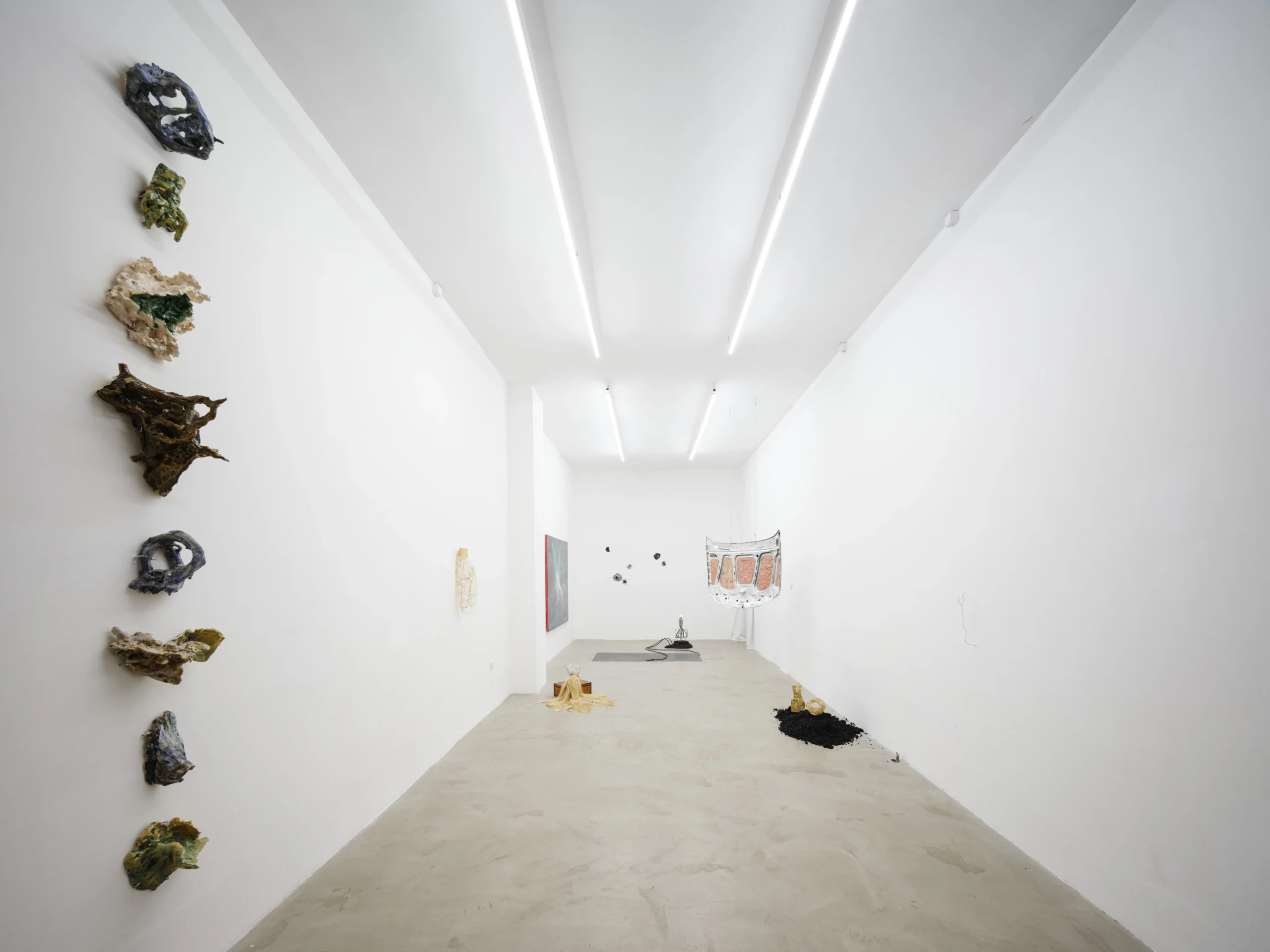
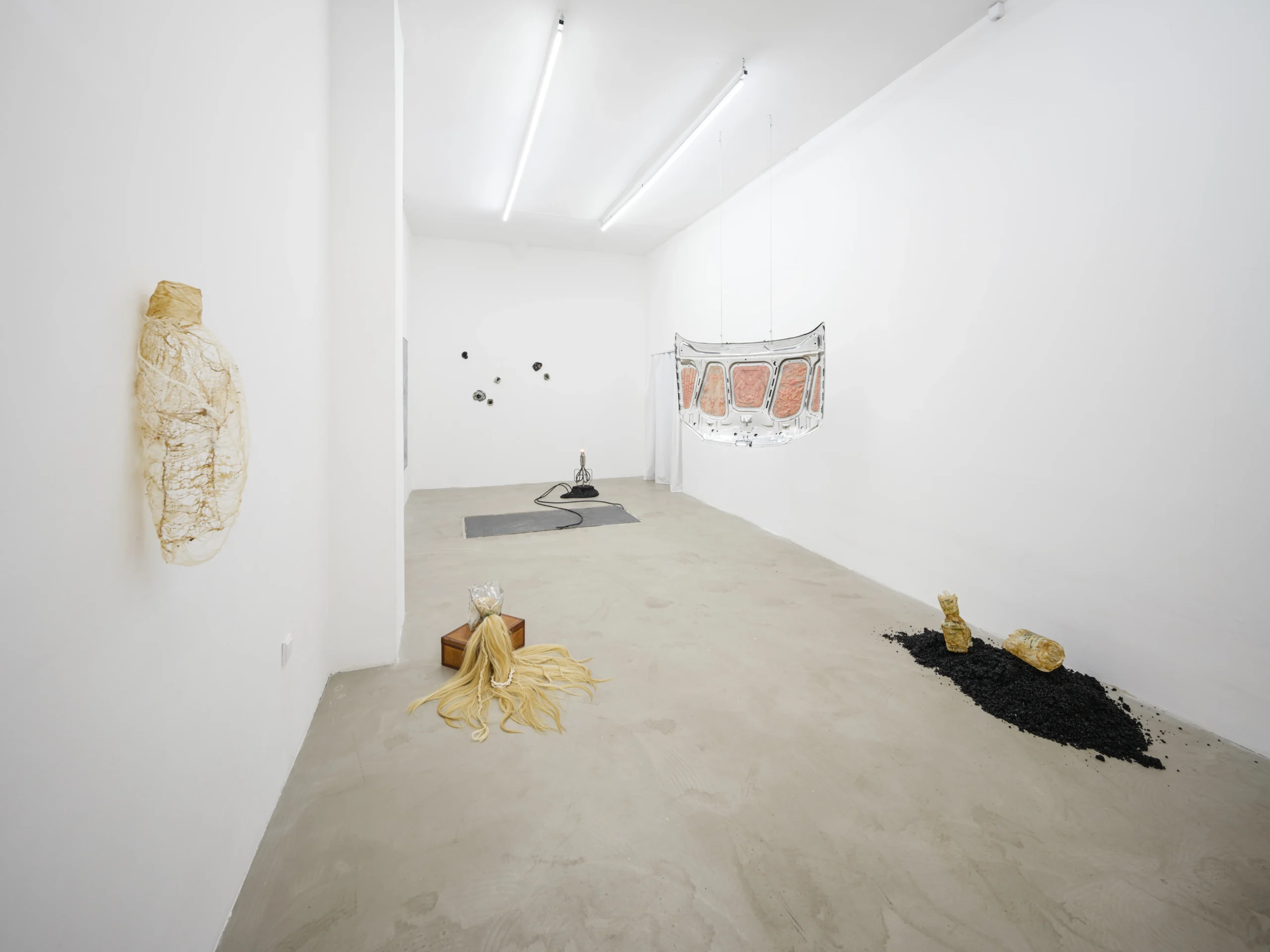
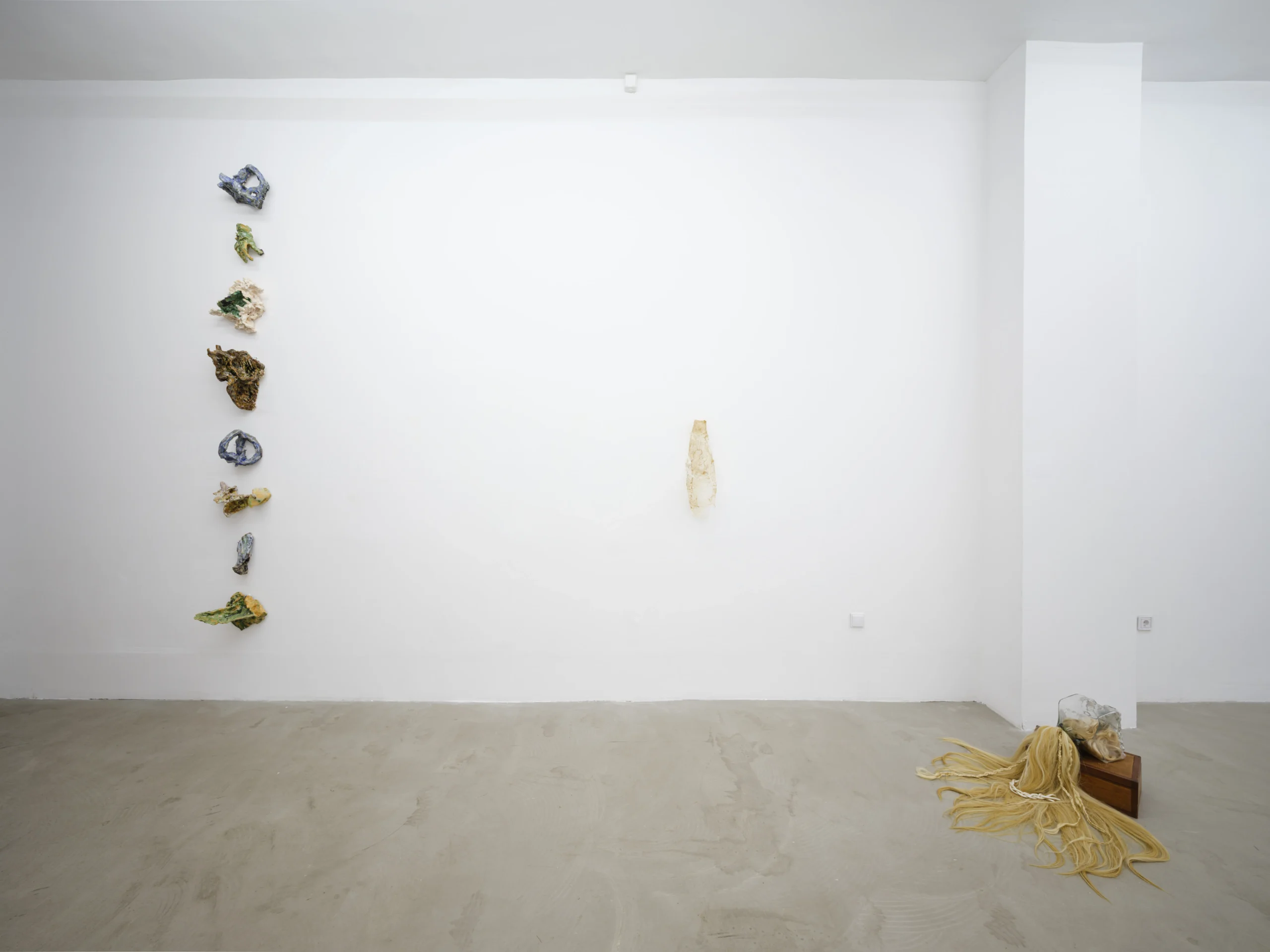
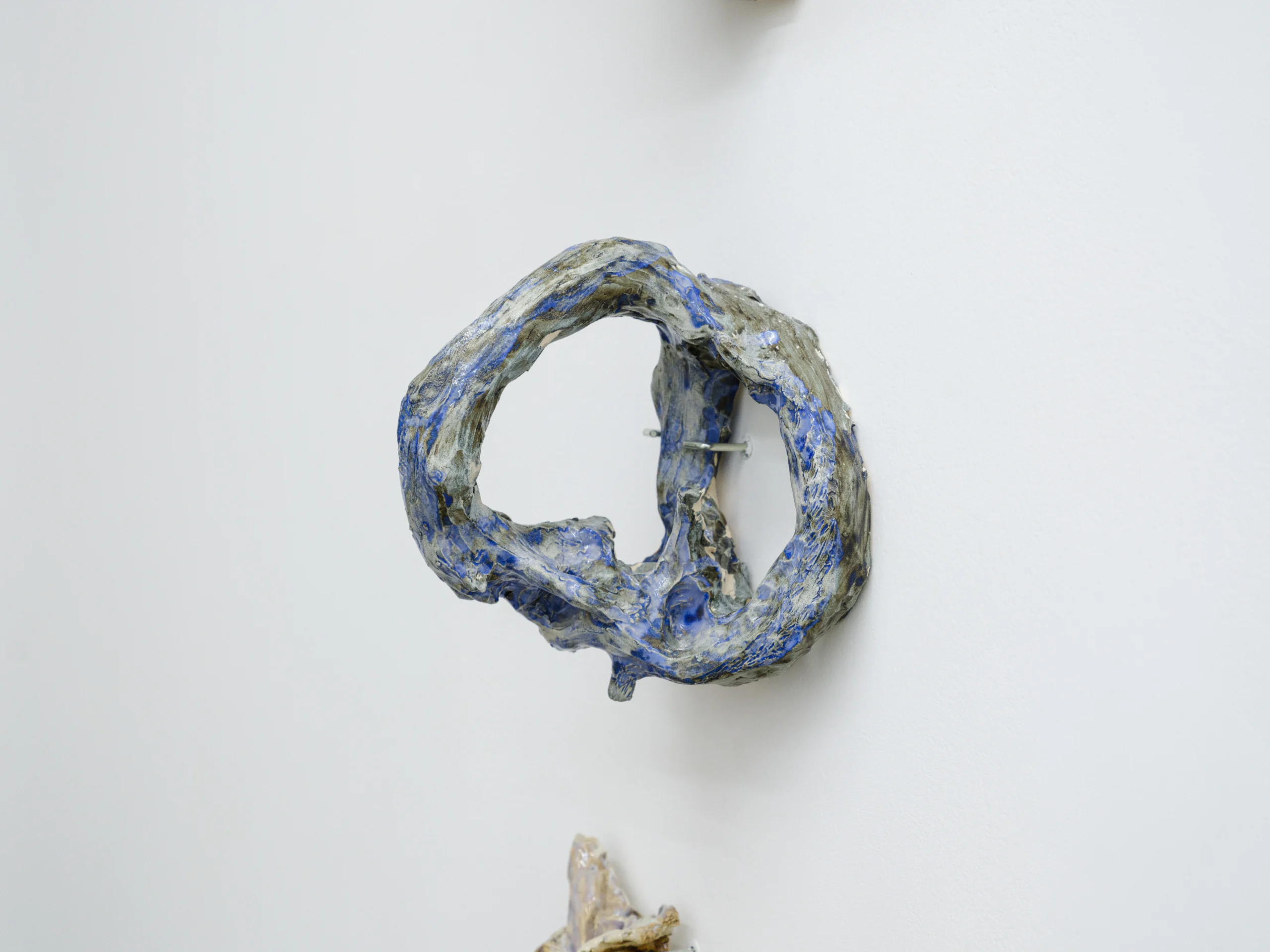
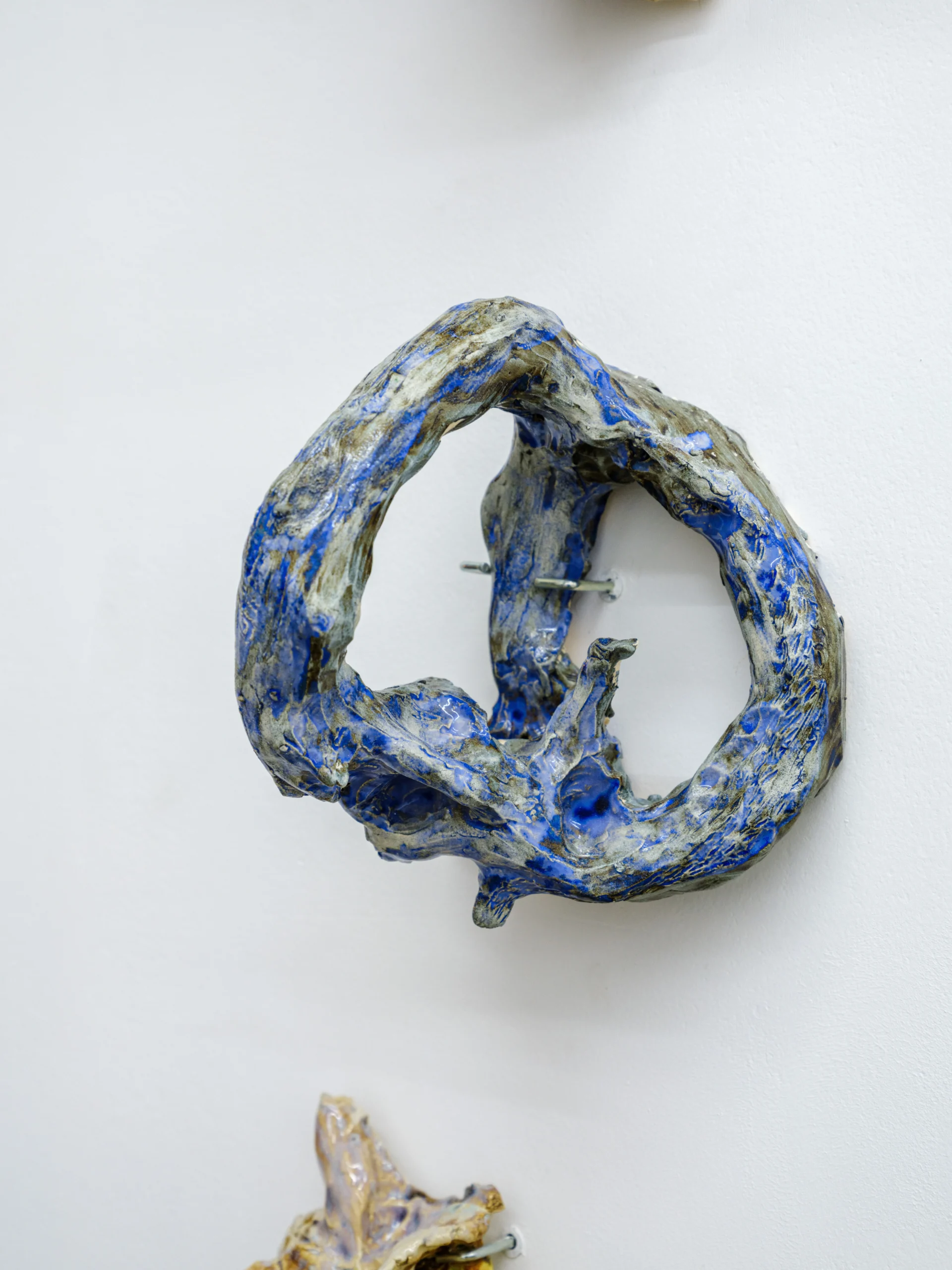
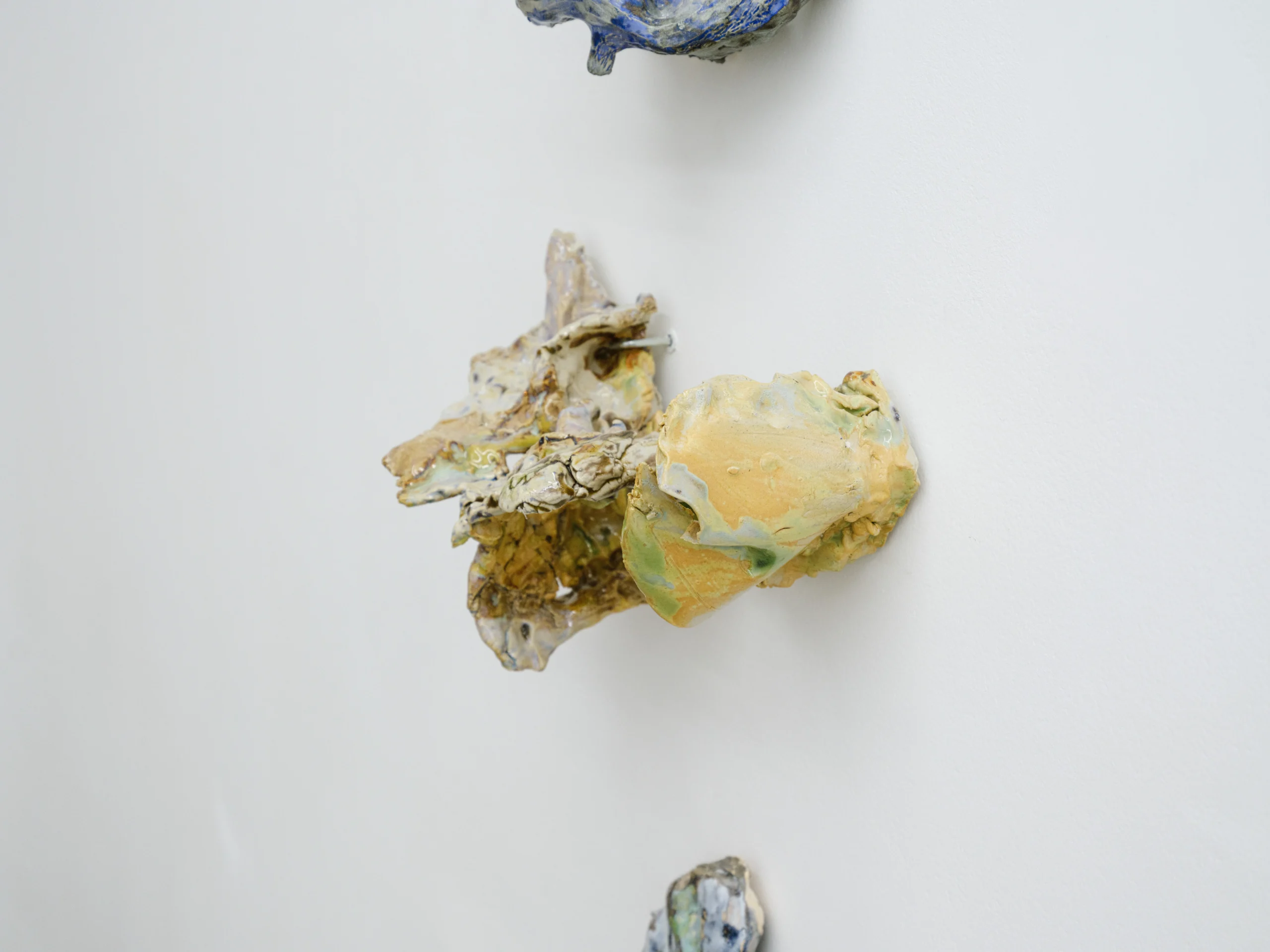
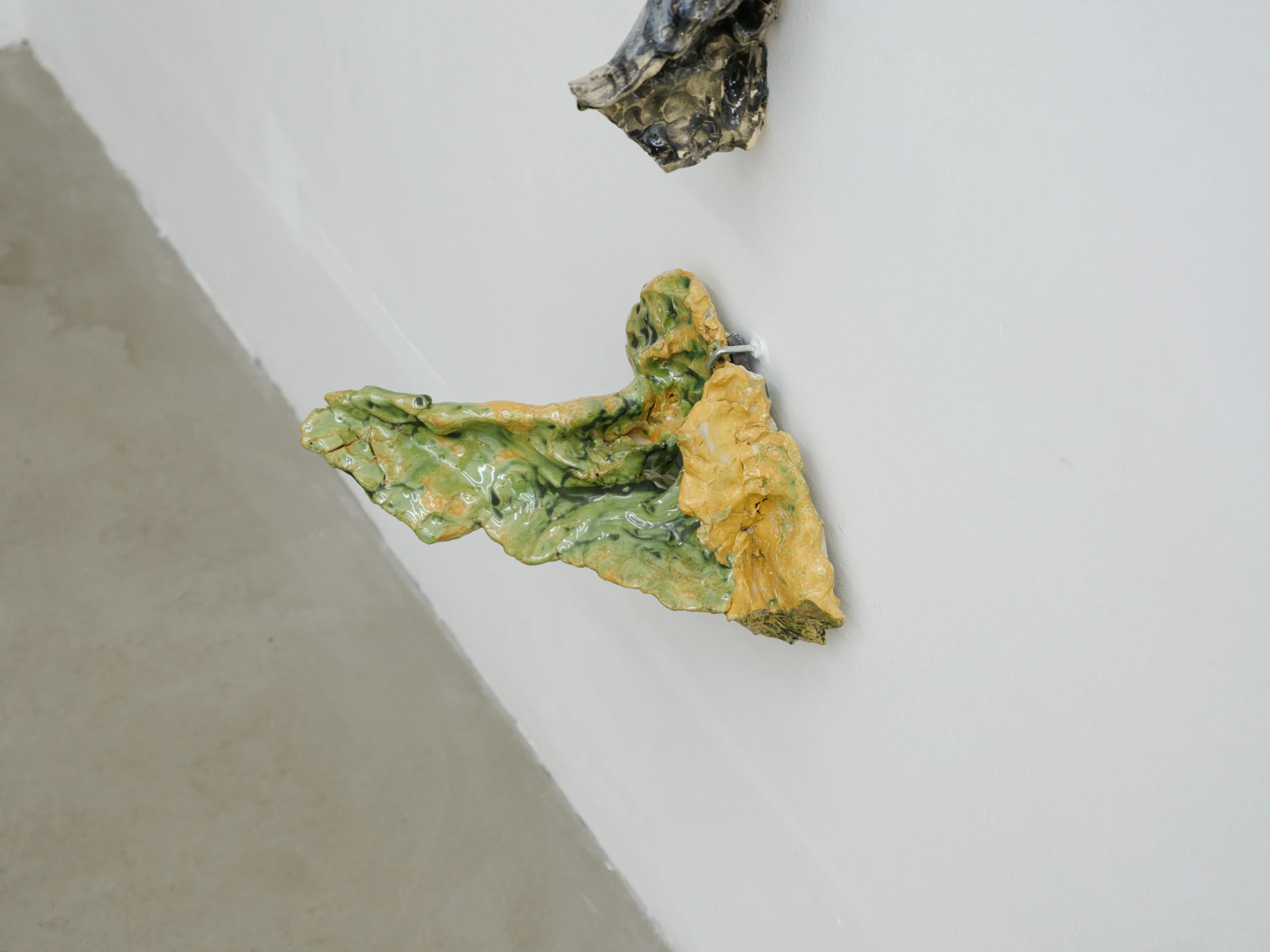
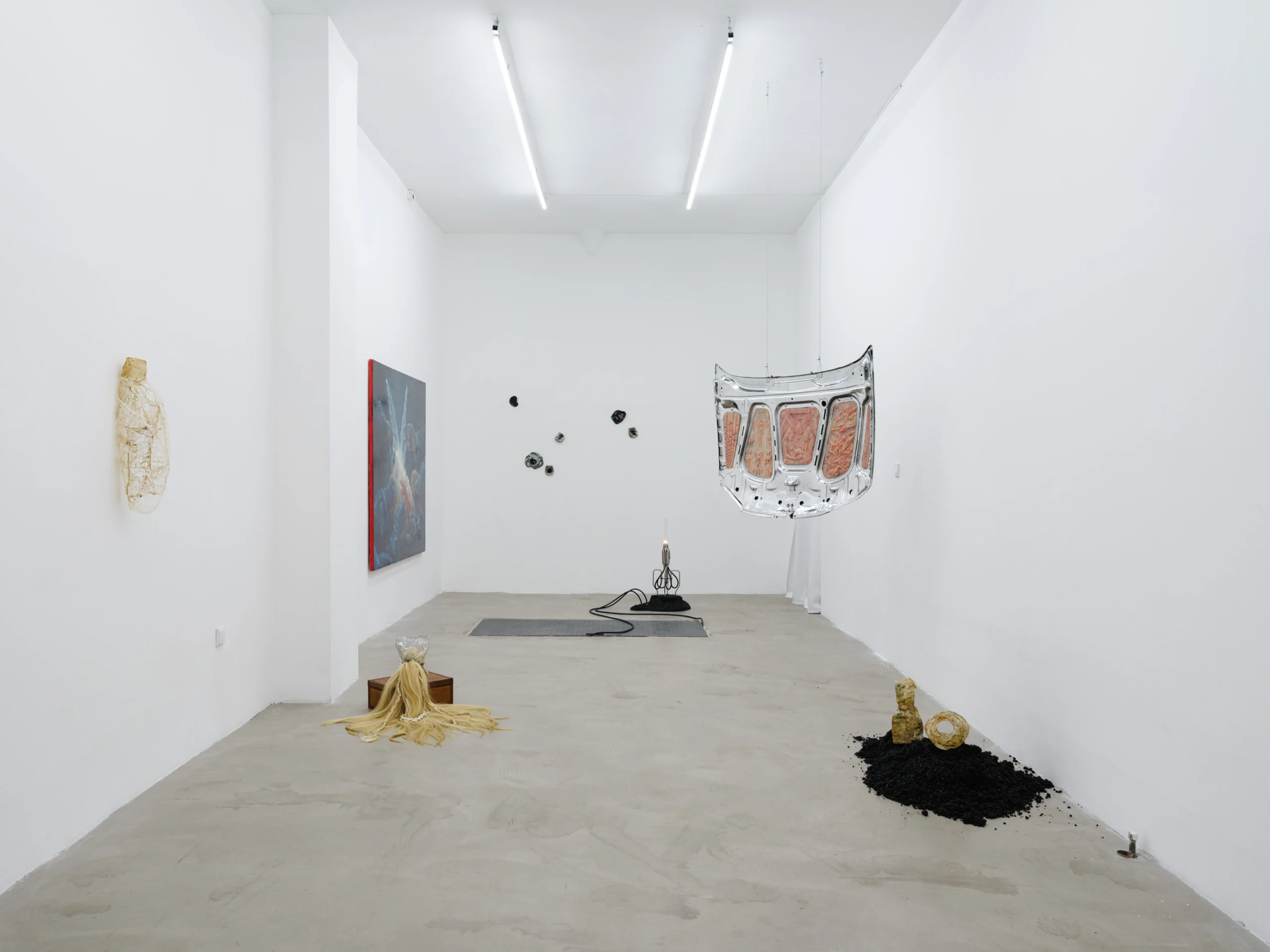
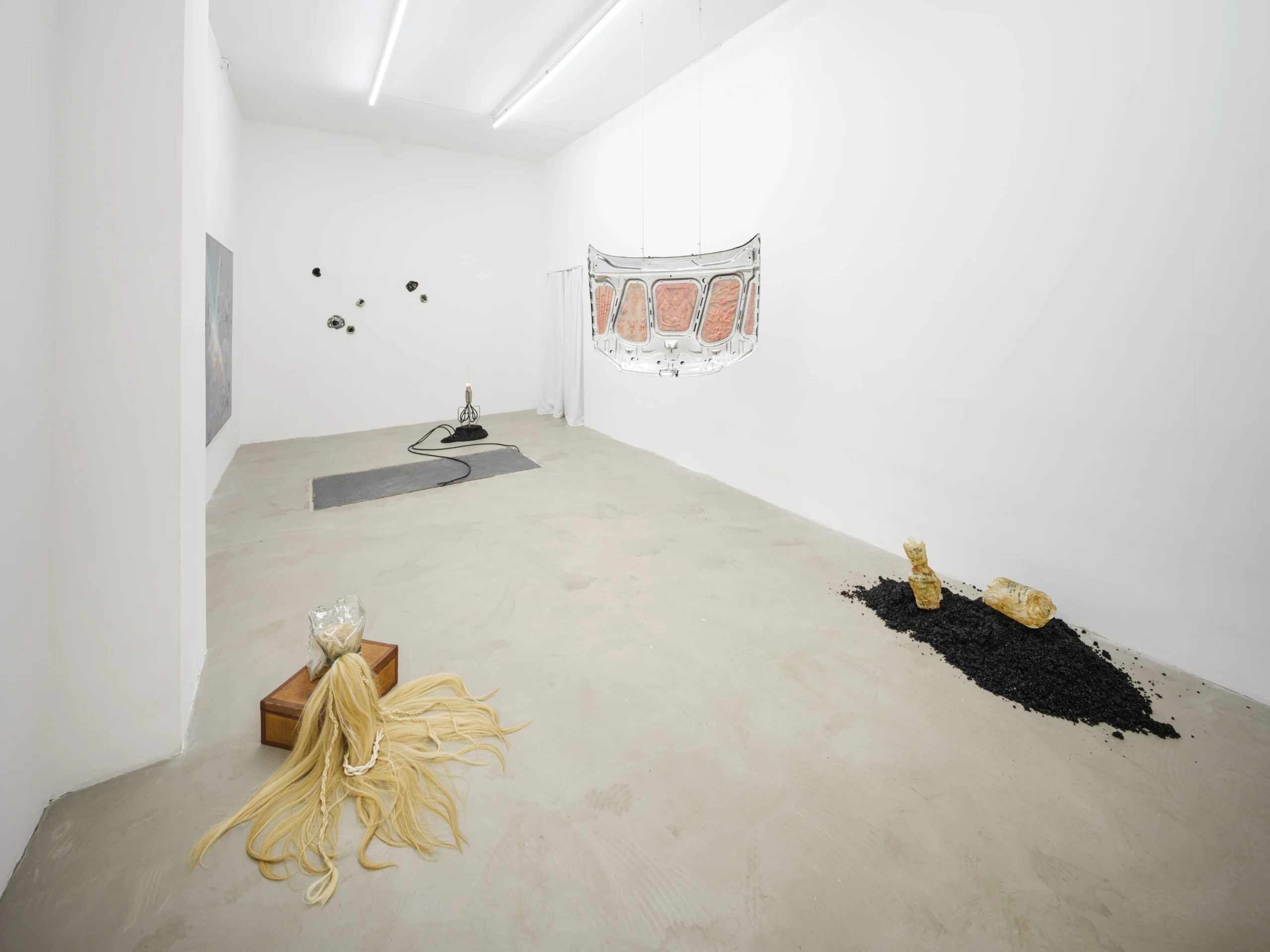
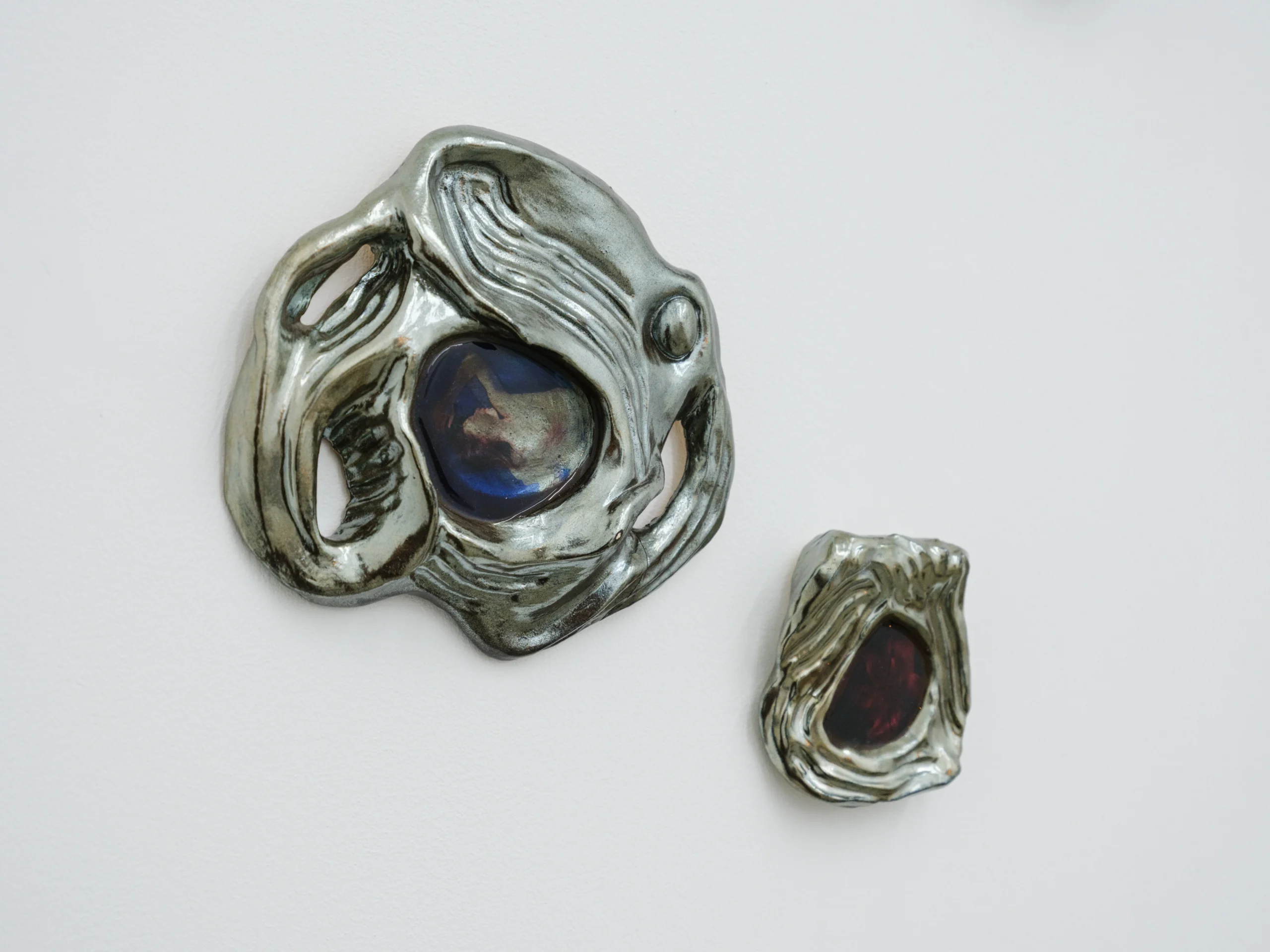
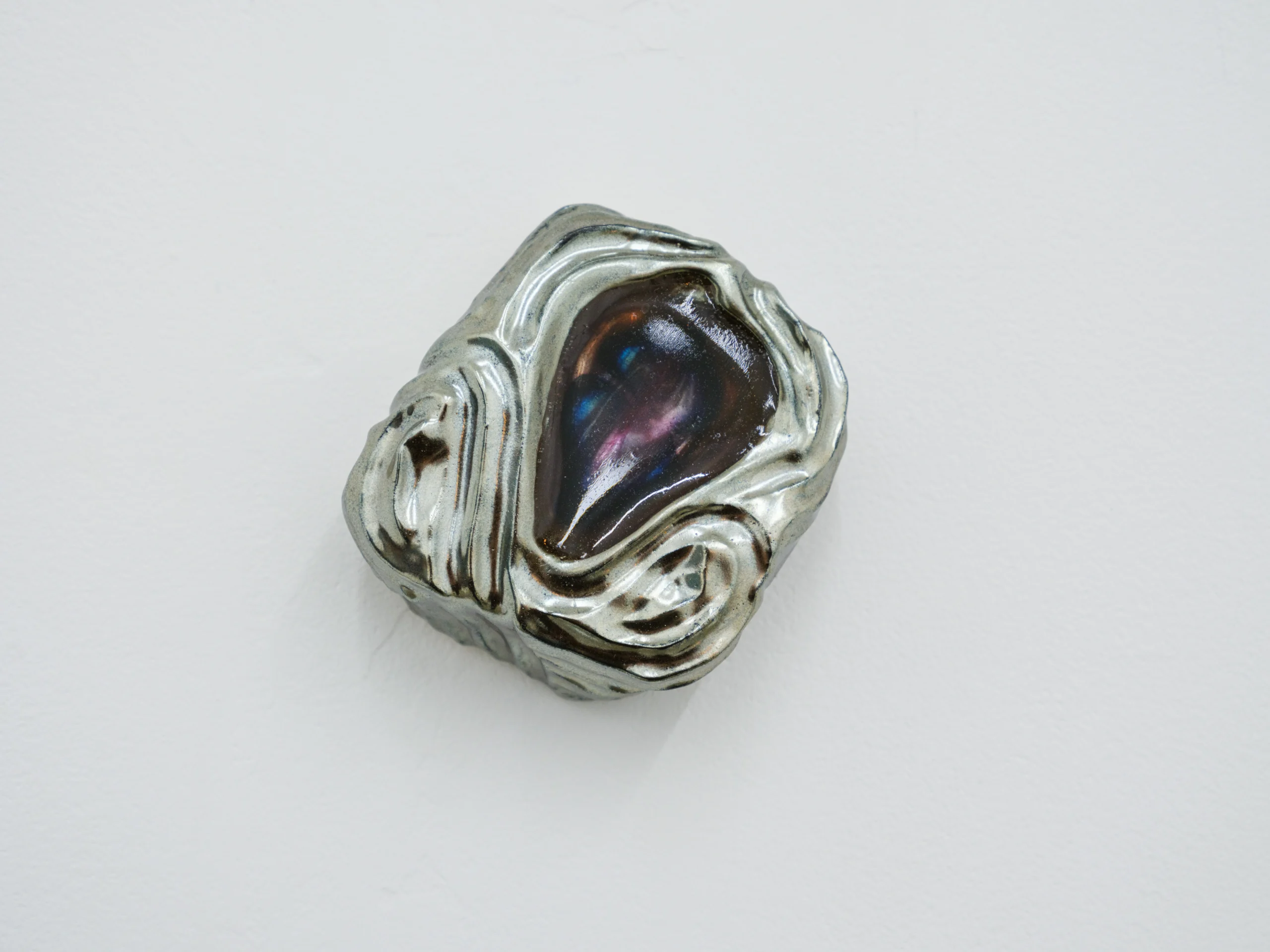
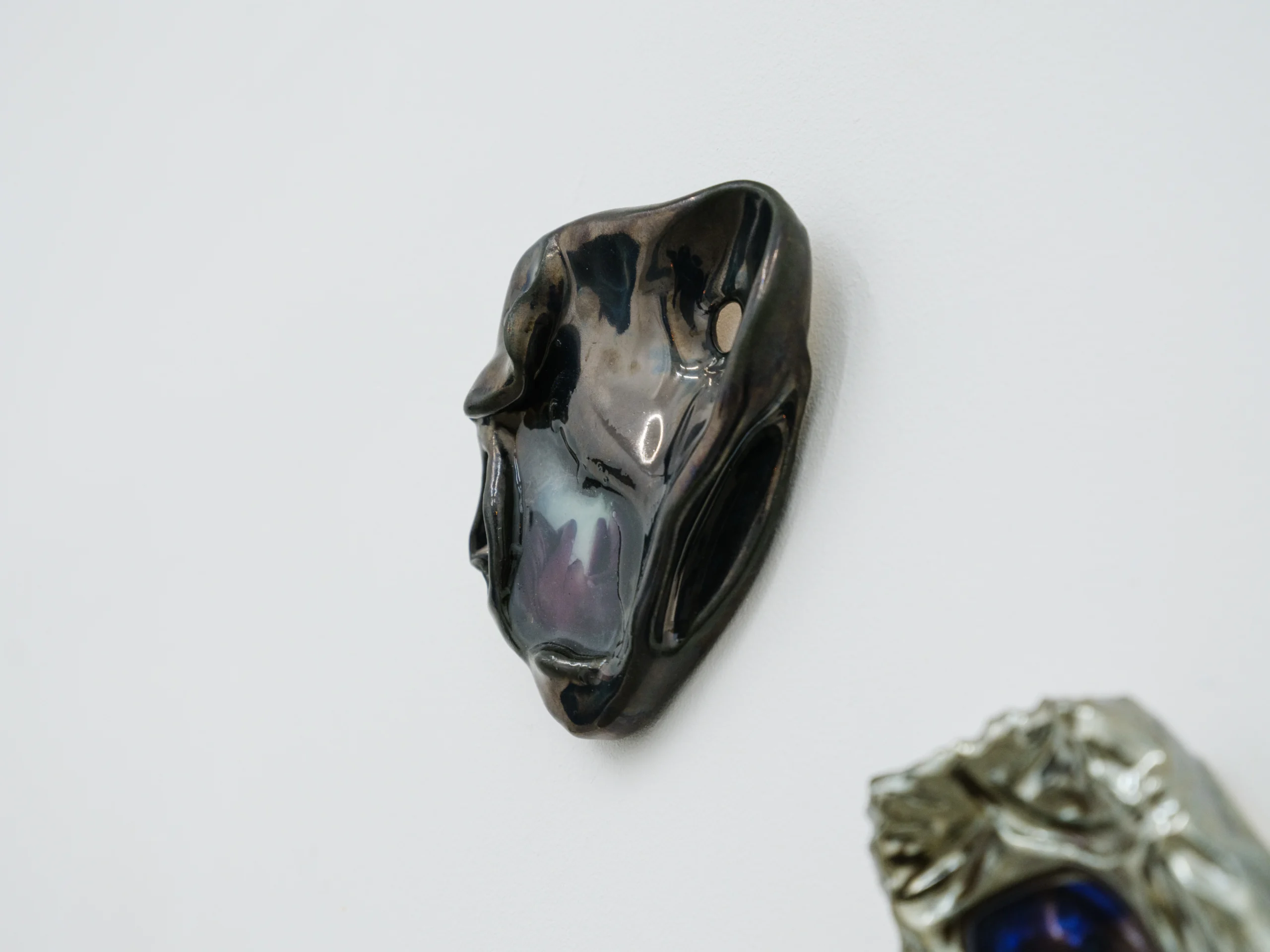
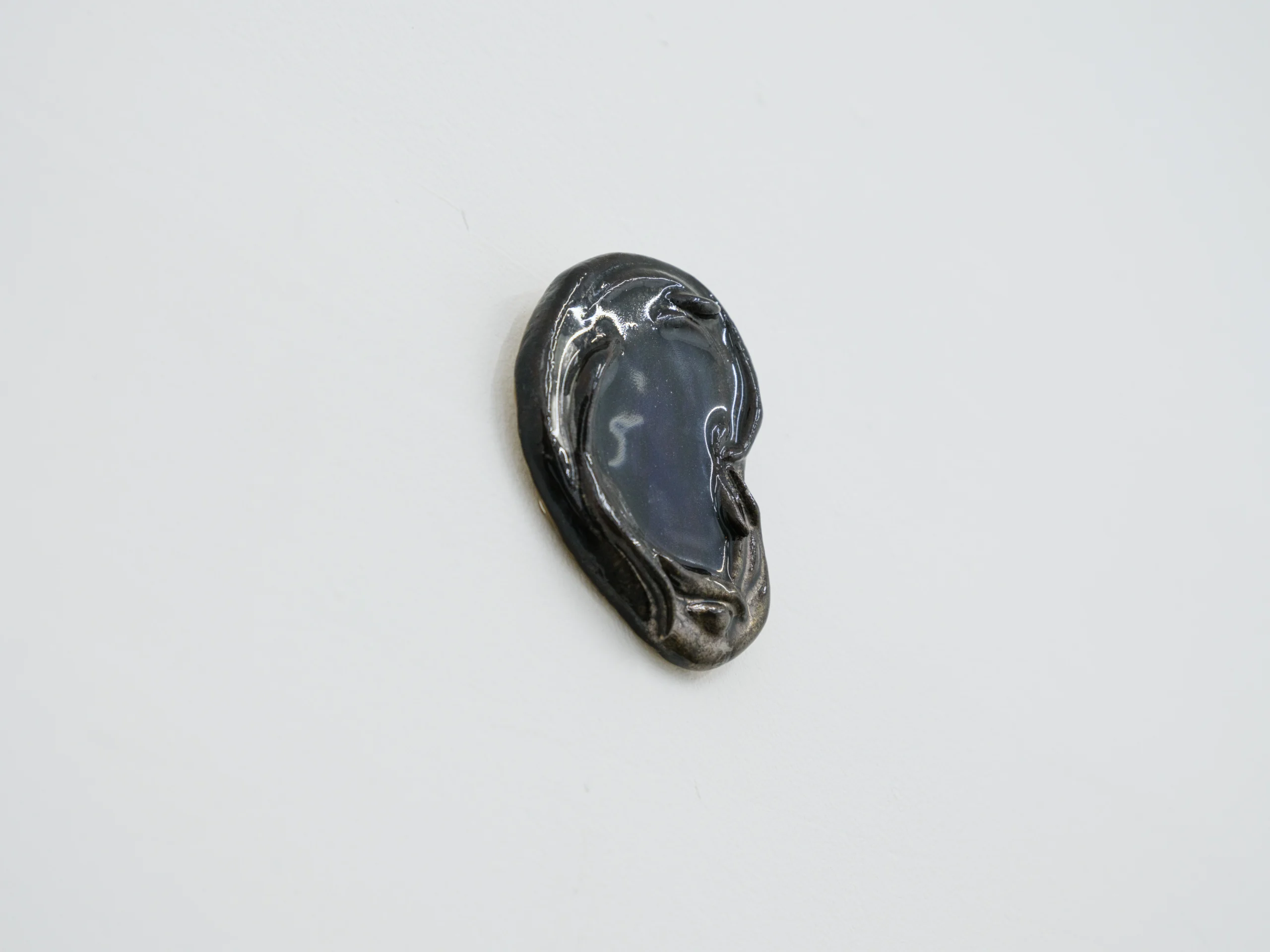
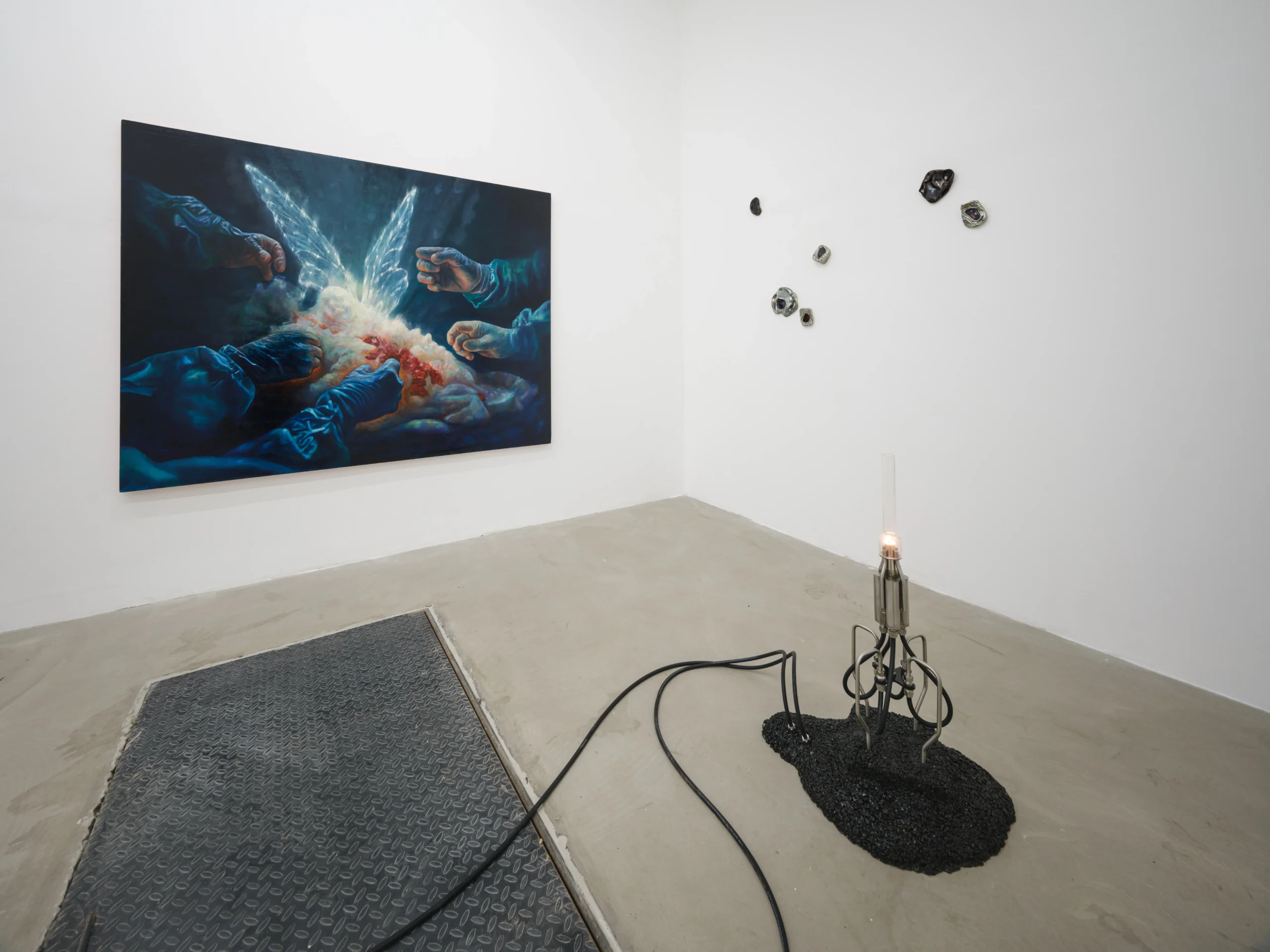
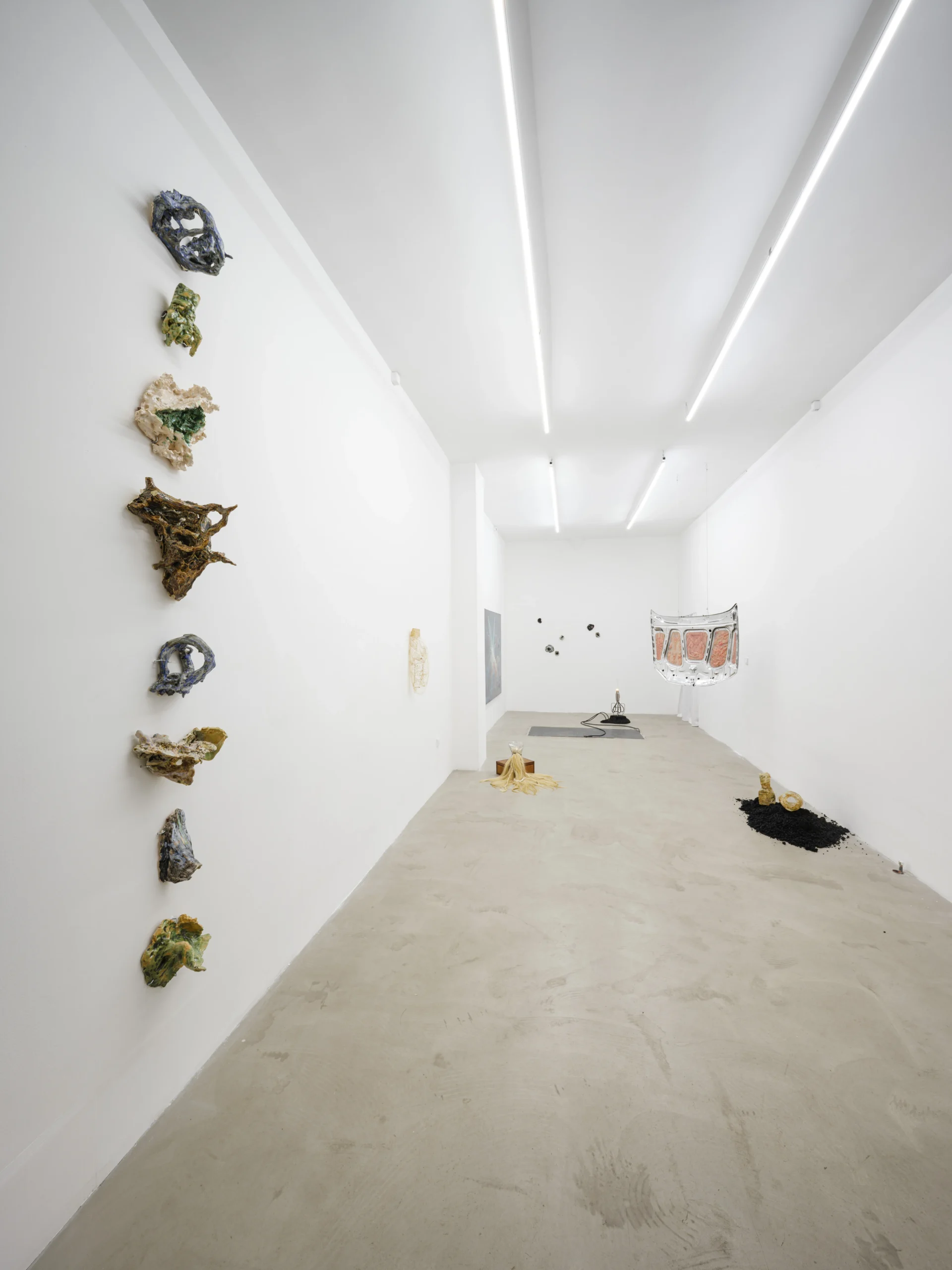
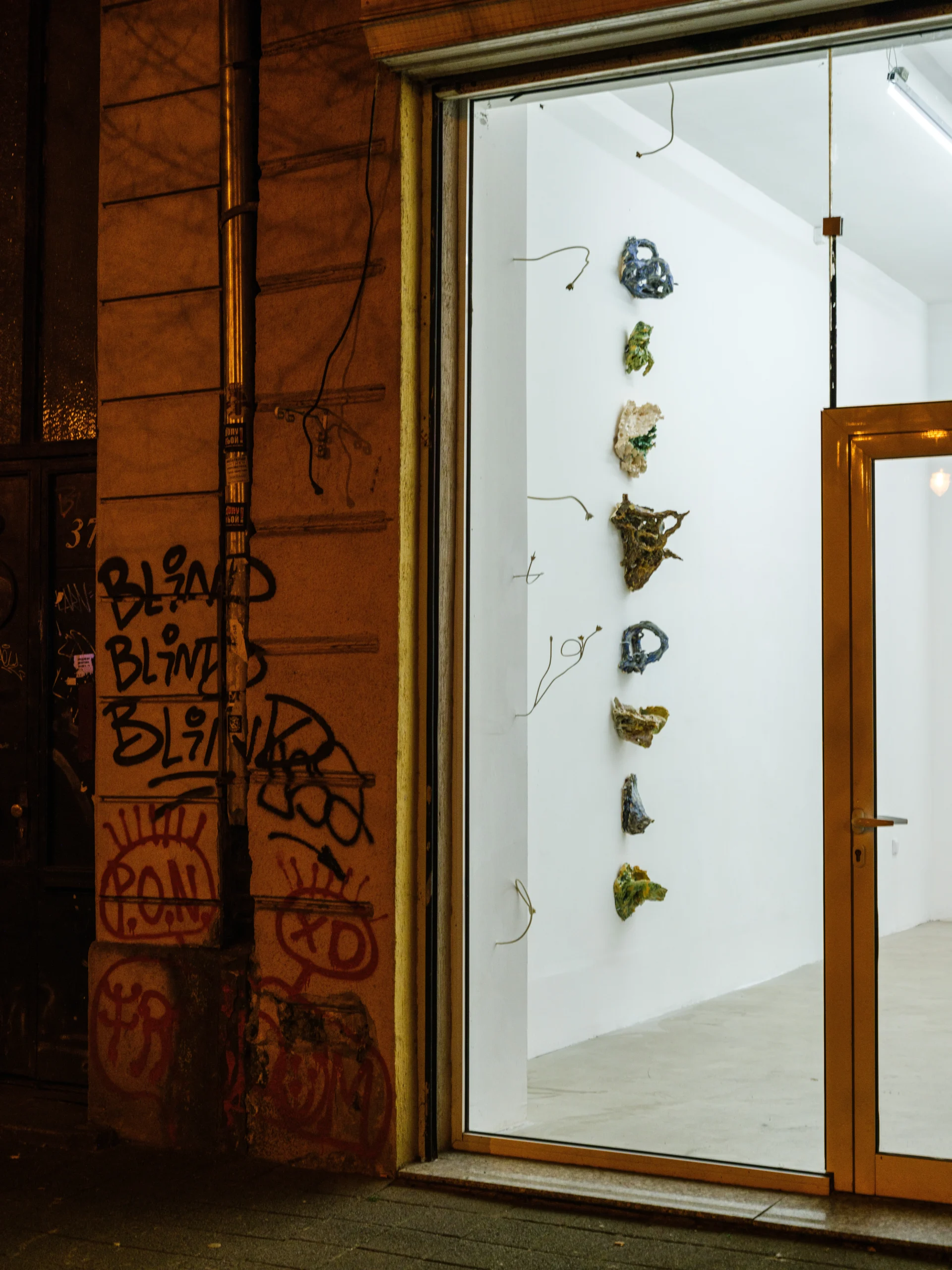
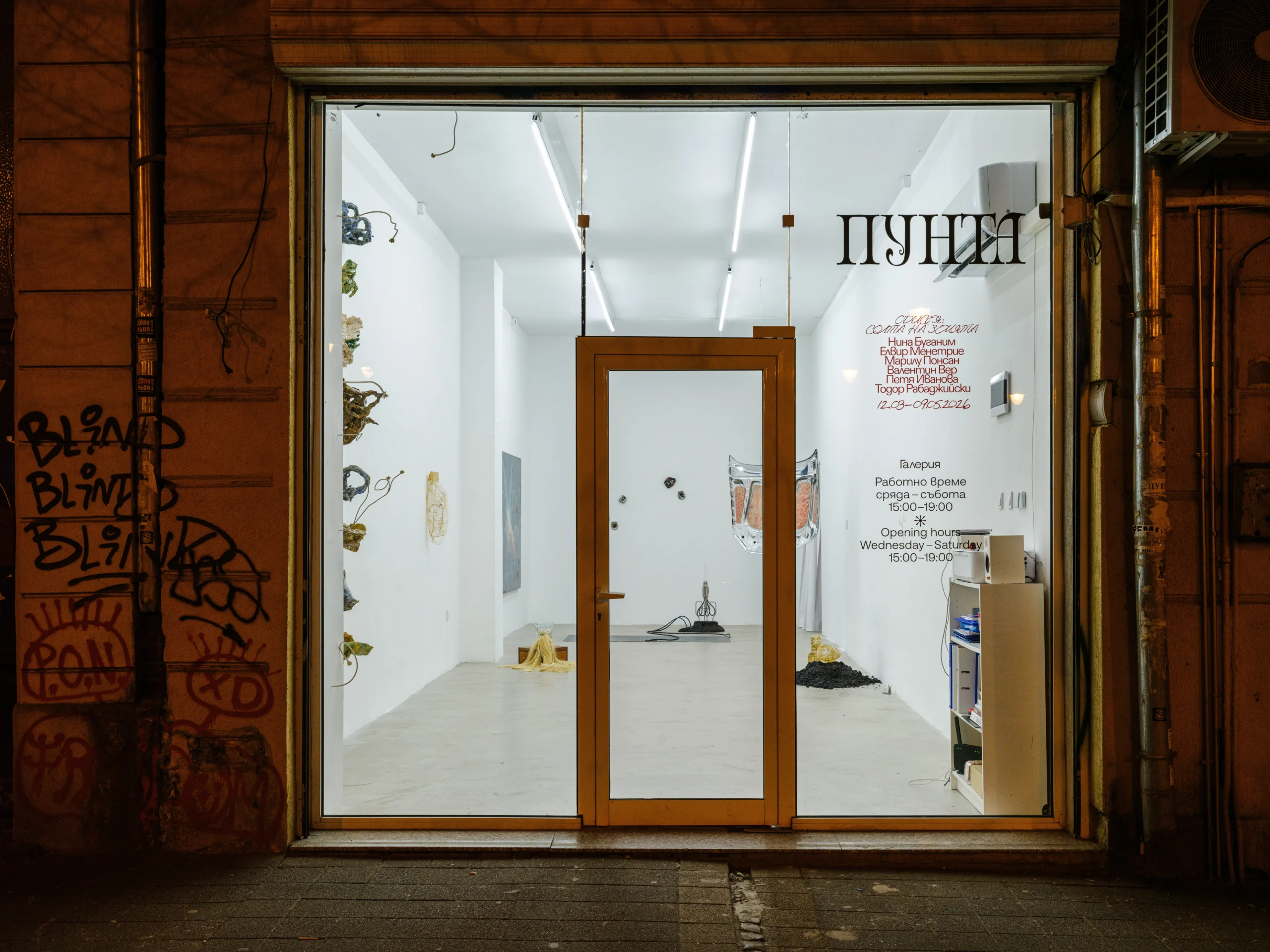
“Odyssea – The Song of the Sirens and the Salt of the Earth” unfolds in two interrelated parts that trace transformation, identity, and the future of society. The exhibition was created in 2024 and first presented at the Spiaggia Libera gallery in Marseille and in Paris exploring different dimensions of contemporary existence through symbols such as the sea and the salt, which intertwine the past, present, and future.
***
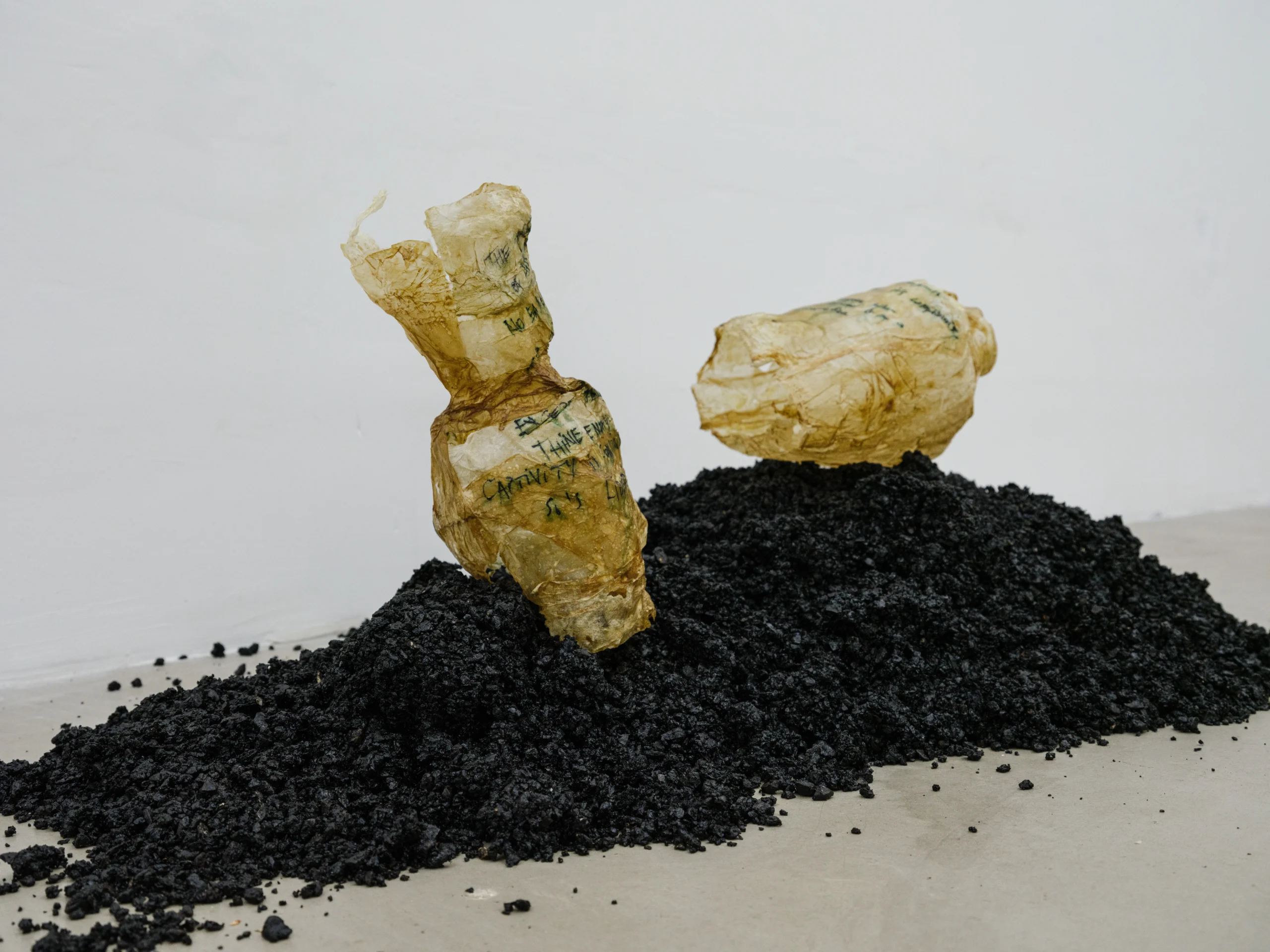
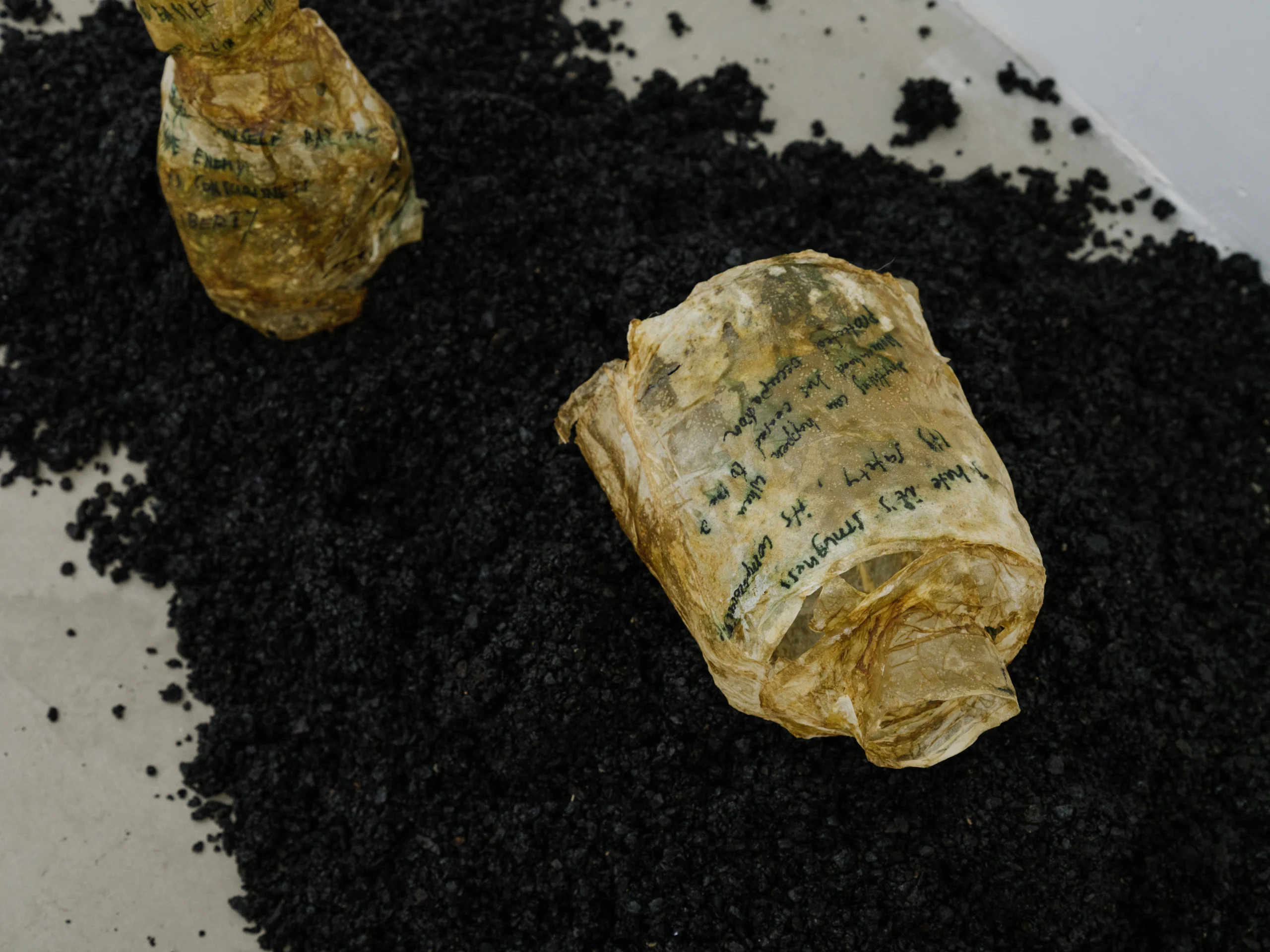
After a phantasmagorical journey from the ocean depths to earth’s surface, from mythical fish-woman to emancipated contemporary figure during “Odyssea – The Song of the Sirens” (presented at the Buna festival in Varna), a nebulous post-capitalist world now emerges, inhabited by creatures seeking change. “The Salt of the Earth” thus proposes a different temporality, one beyond linear history – a narrative of anticipation. Salt, known for its corrosive and purifying properties, materializes here as piles of charred debris through which the artists’ works unfold.
***
So, how do we imagine the future?
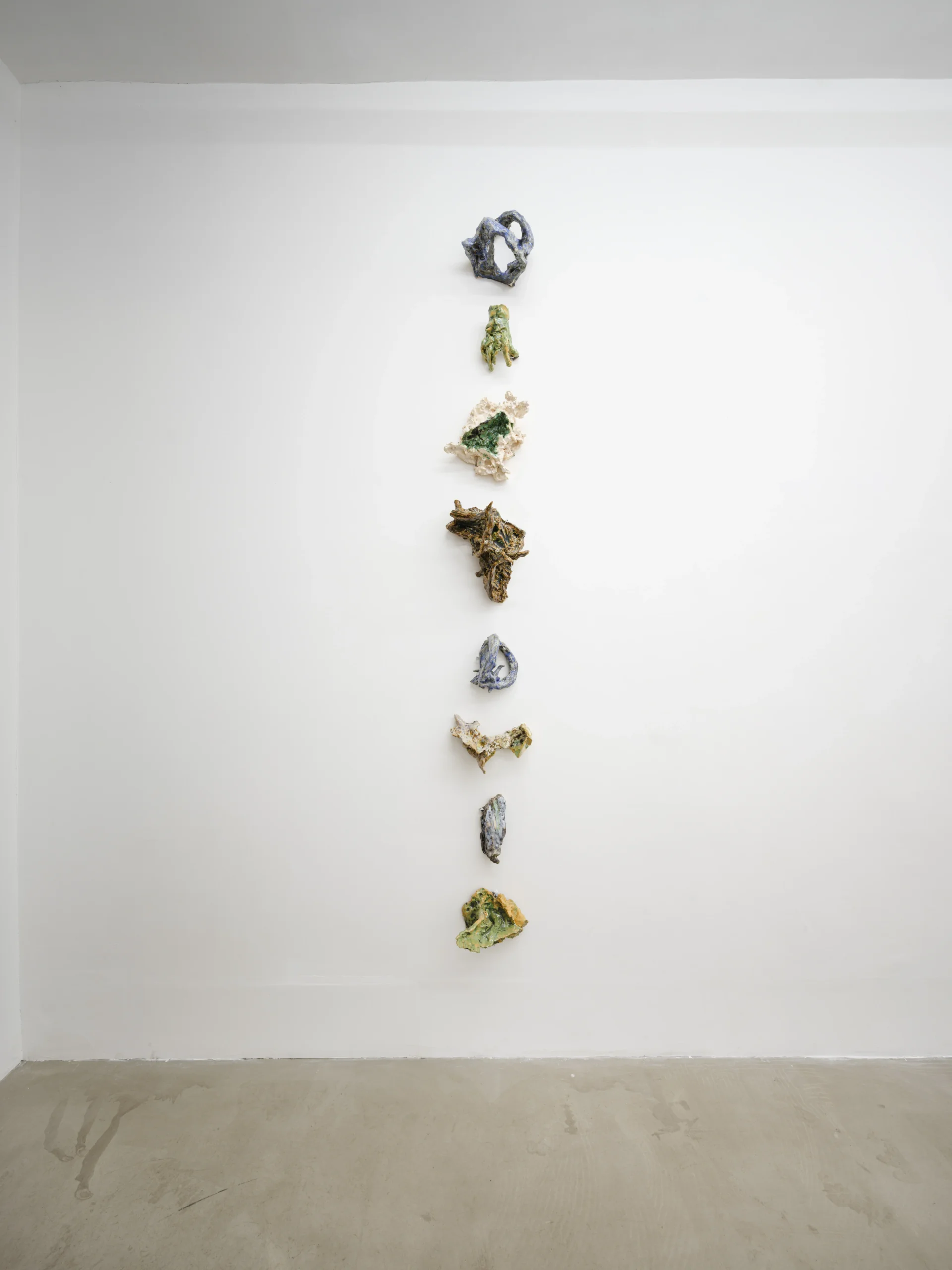
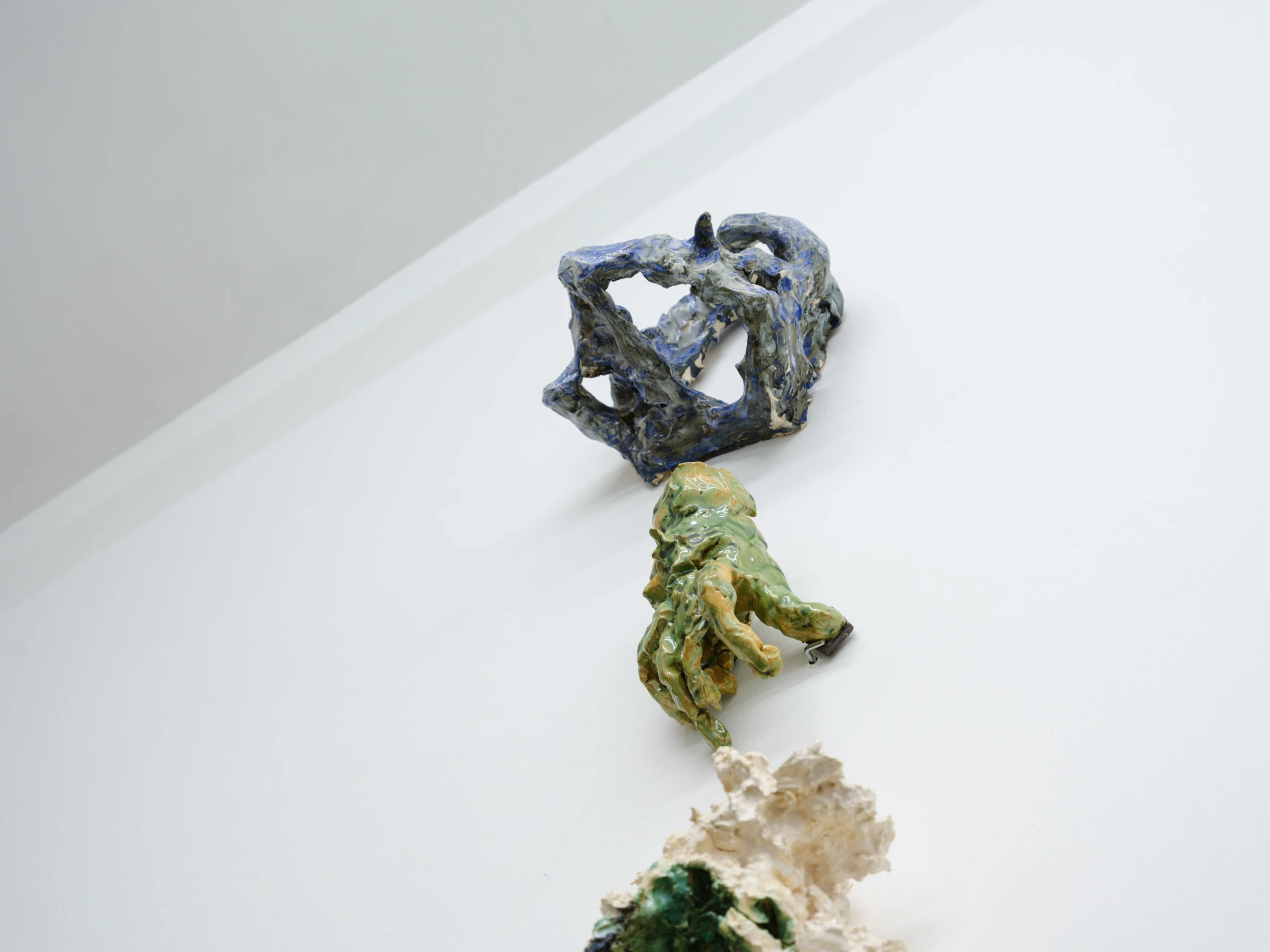
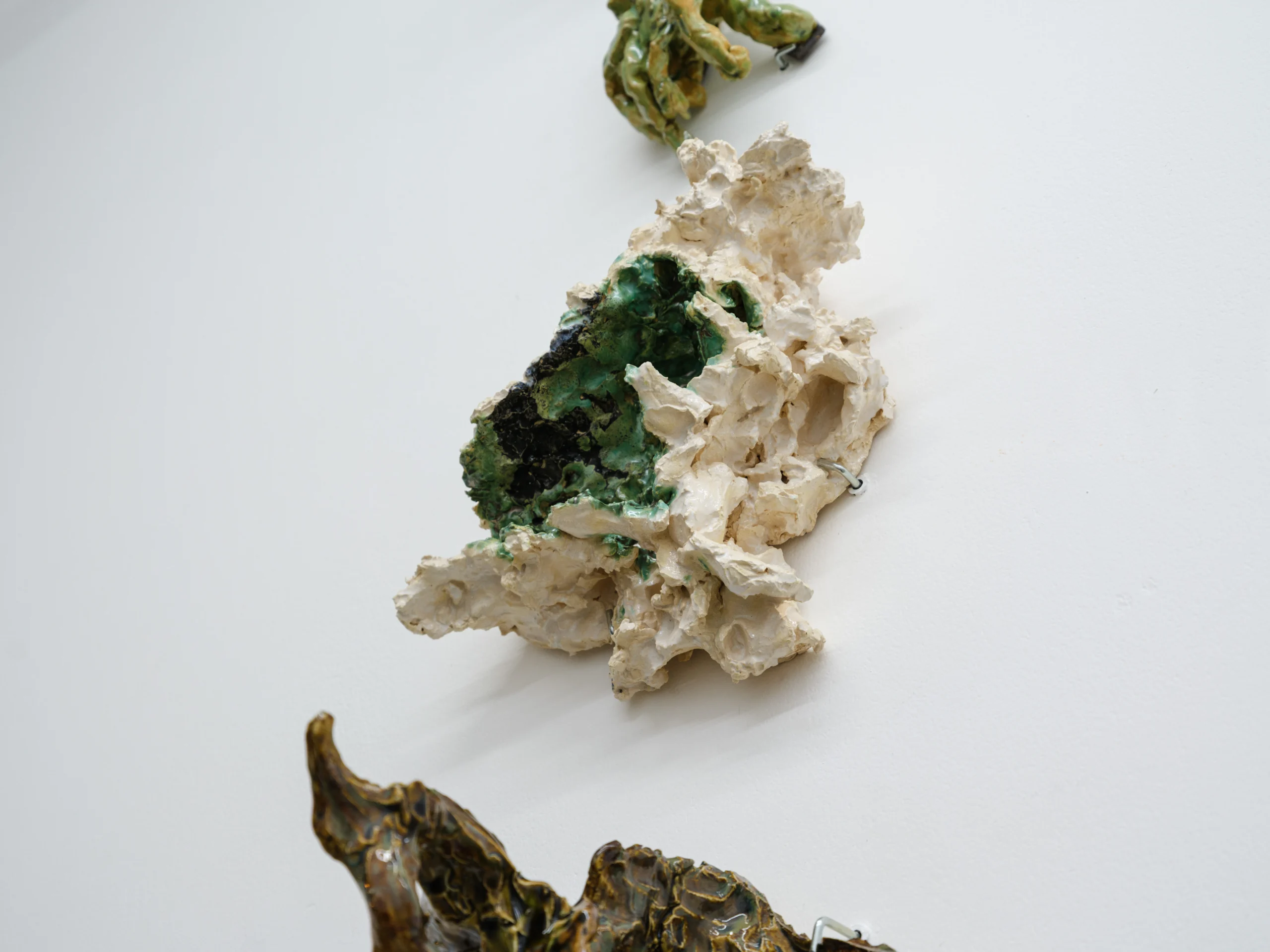
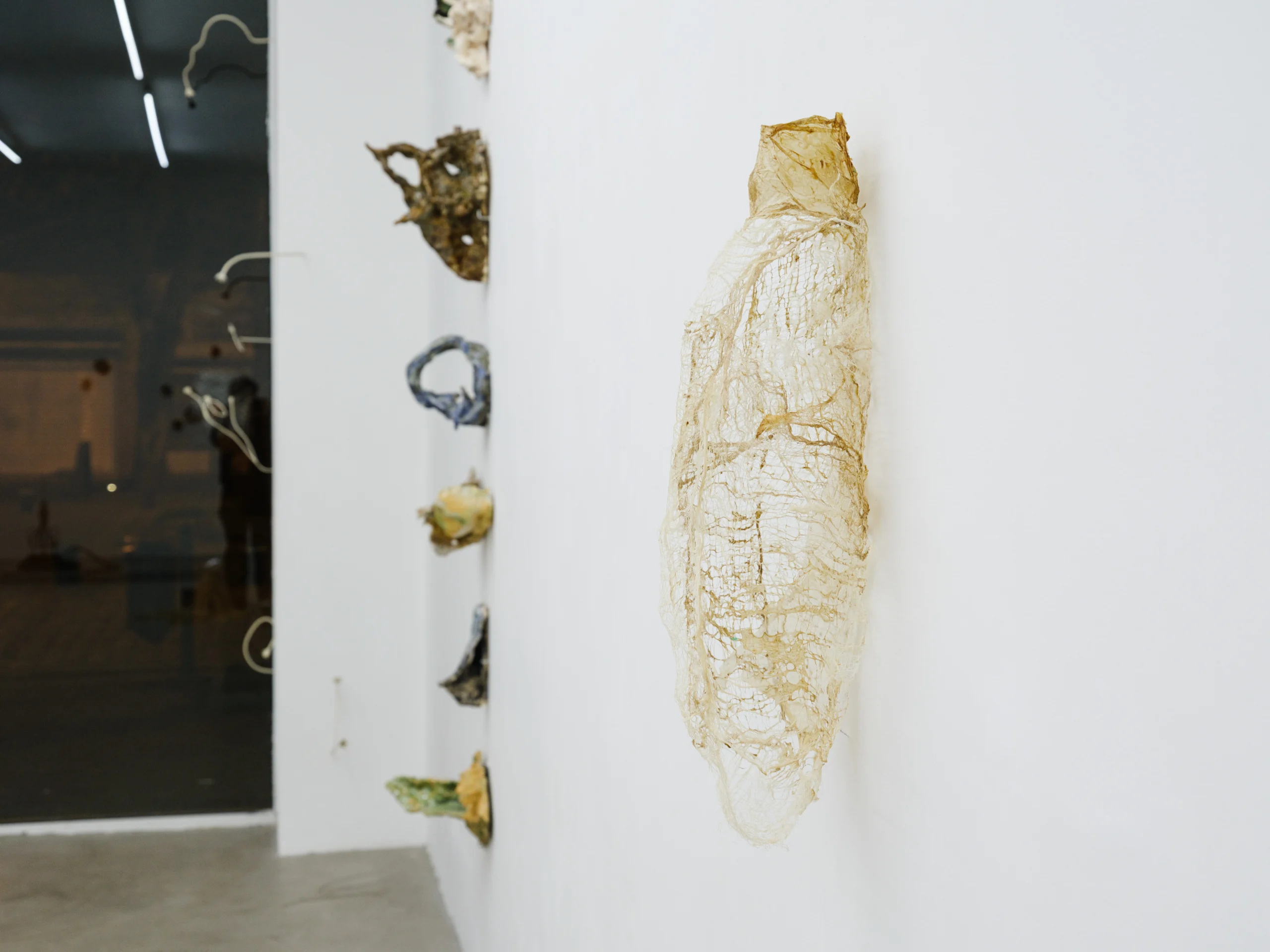
Within PUNTA gallery, two directions surface. The first one concerns the individual’s innate connection to the organic world, a return to biomatter and a rethinking of human progress.This appears in the works of Todor Rabadzhiyski, in which the visual language of raw nature—mud, roots, and mold—undergoes metamorphoses. From abstract forms to human body parts and back, his works oscillate between order and chaos, gesturing towards life’s beginning and the inevitable return to the soil/to earth, the cycle starting again.
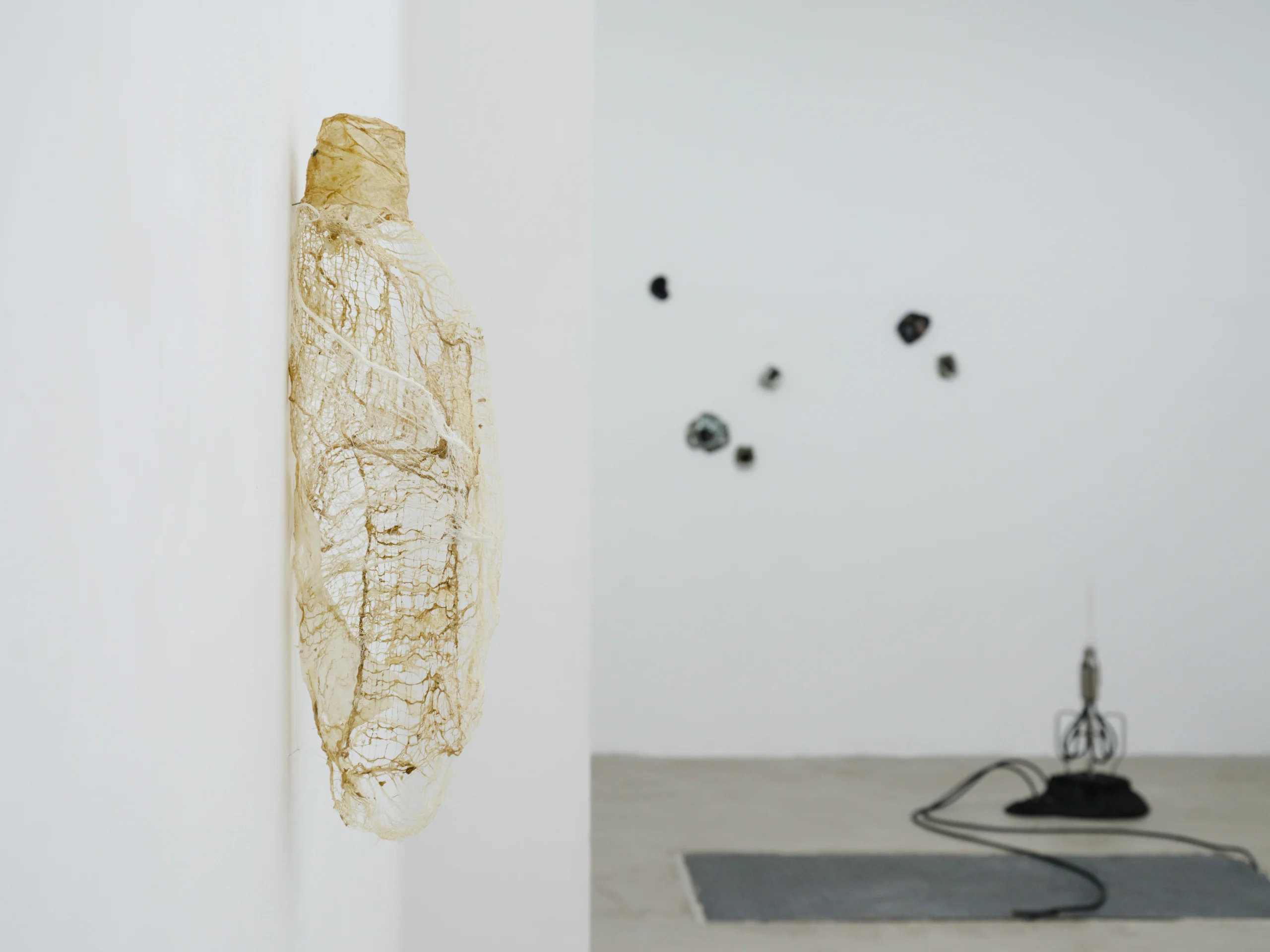
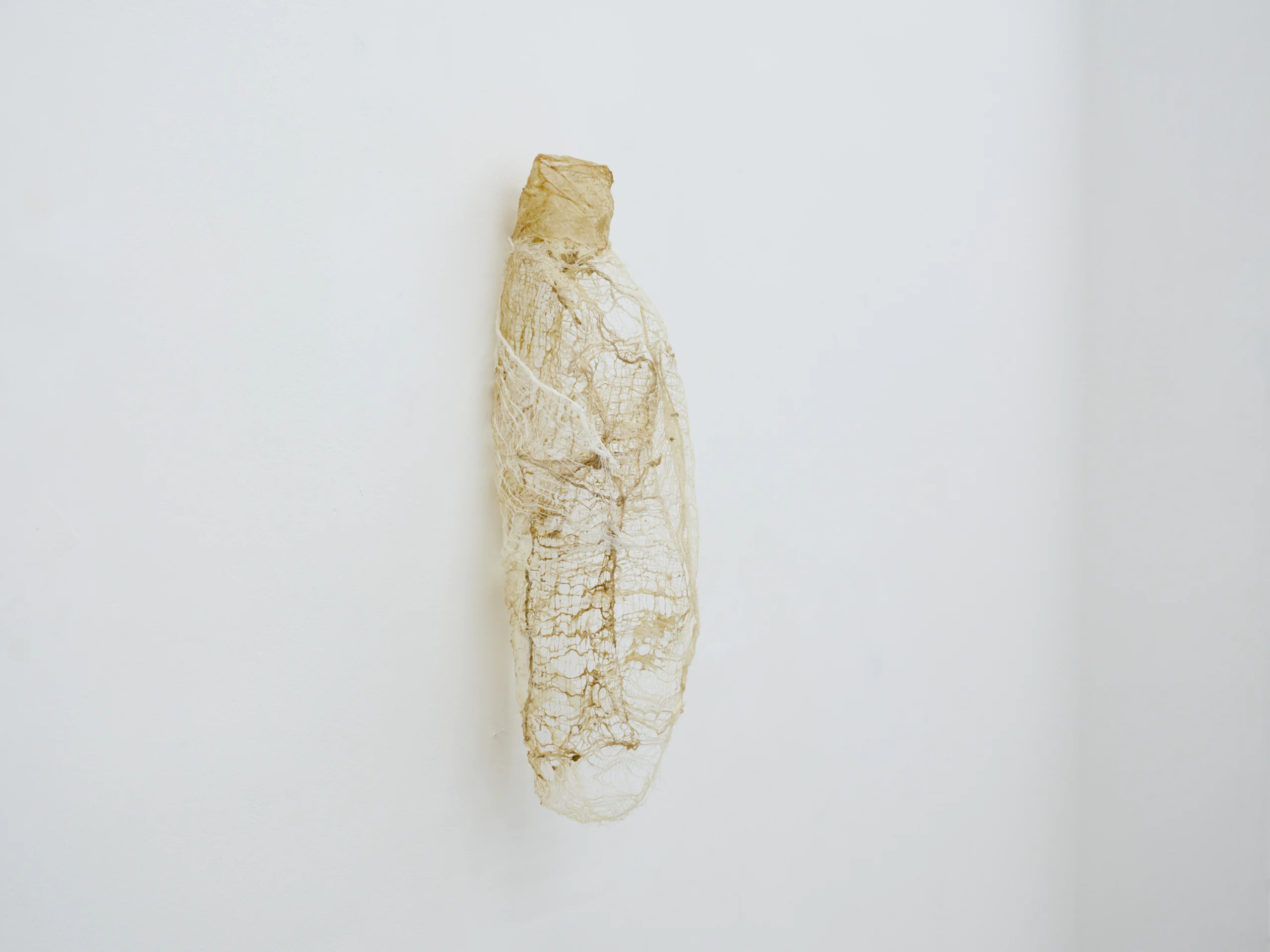
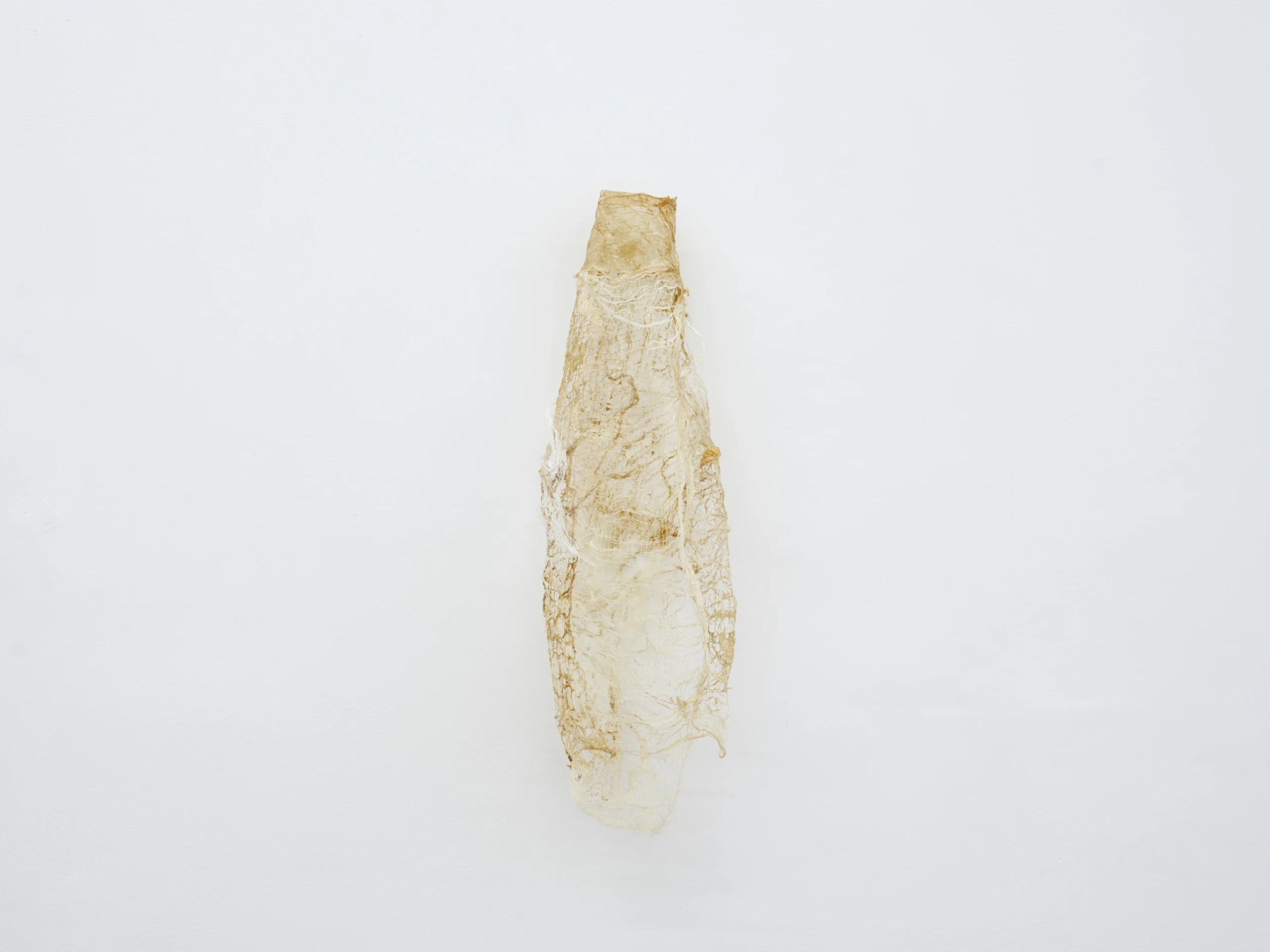
Petja Ivanova presents amphorae—storage containers. The artist works with new technology in which biological waste from insects – chitin,the second most common polymer – creates new fabrics that can be used in medicine, including medical gauze. In this alchemical alloy, arthropod shells transform into instruments of care, offering a rethinking of the patriarchal idea of human evolution. Wasn’t the first object of human evolution precisely a container?
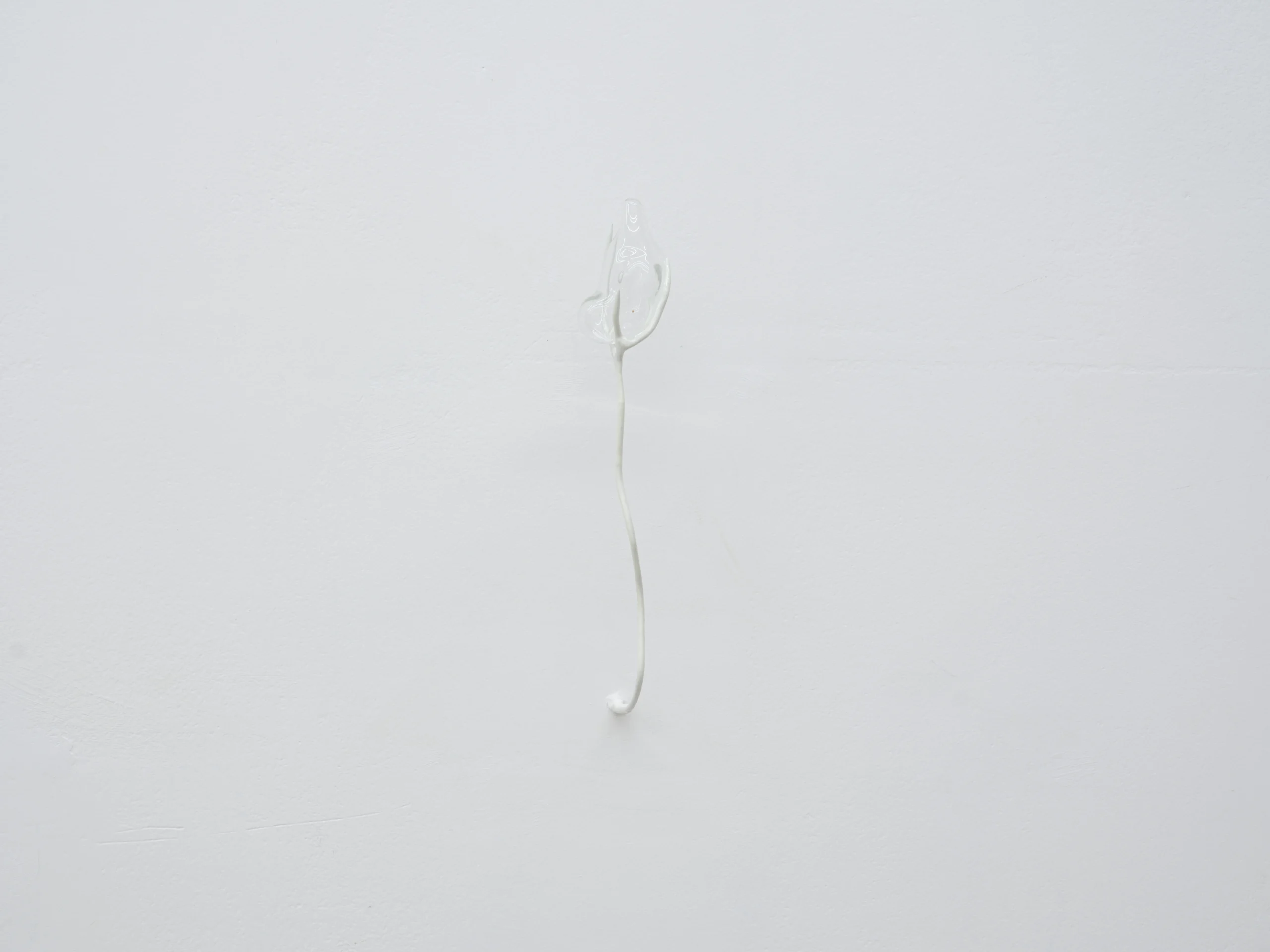
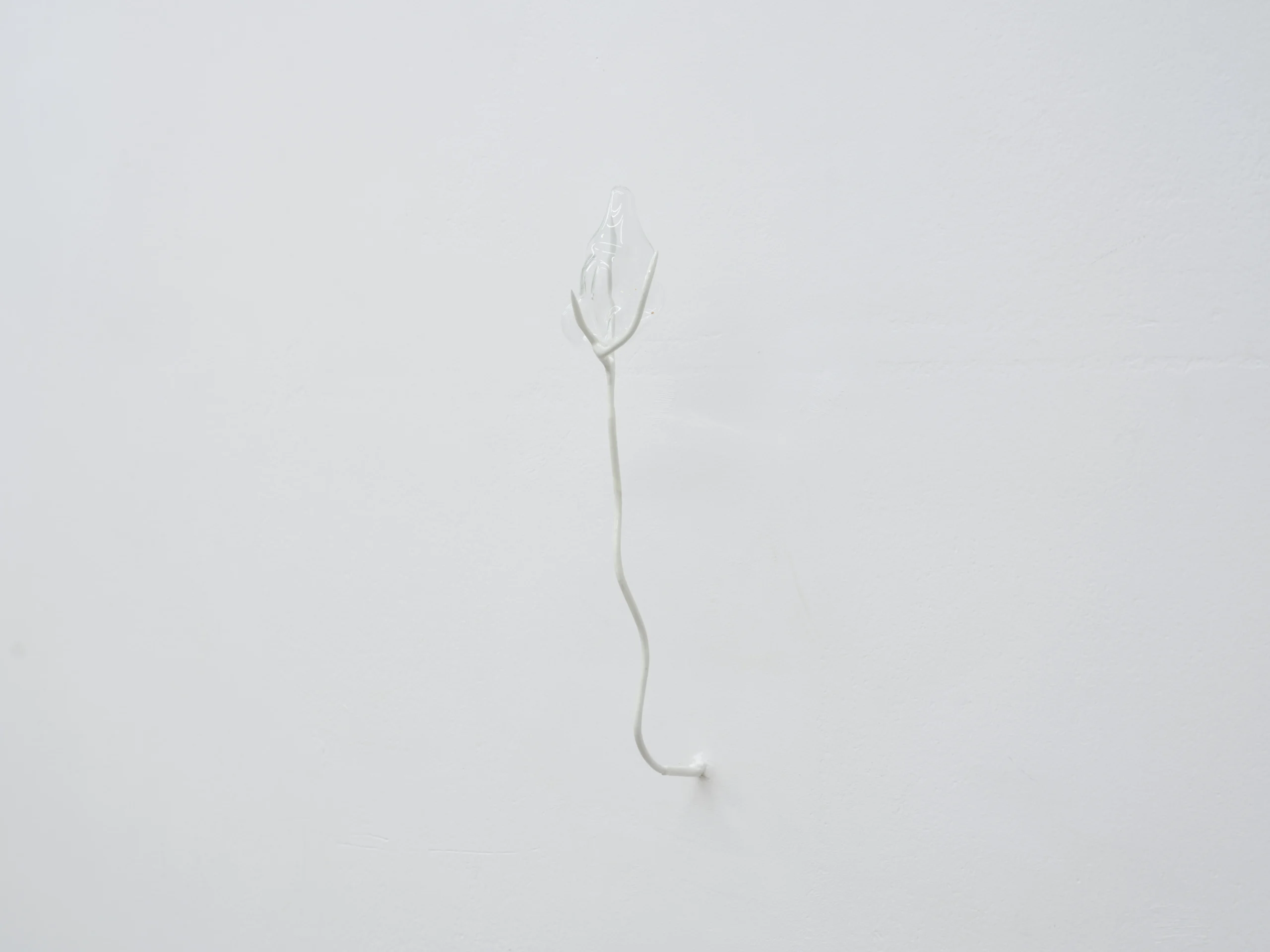
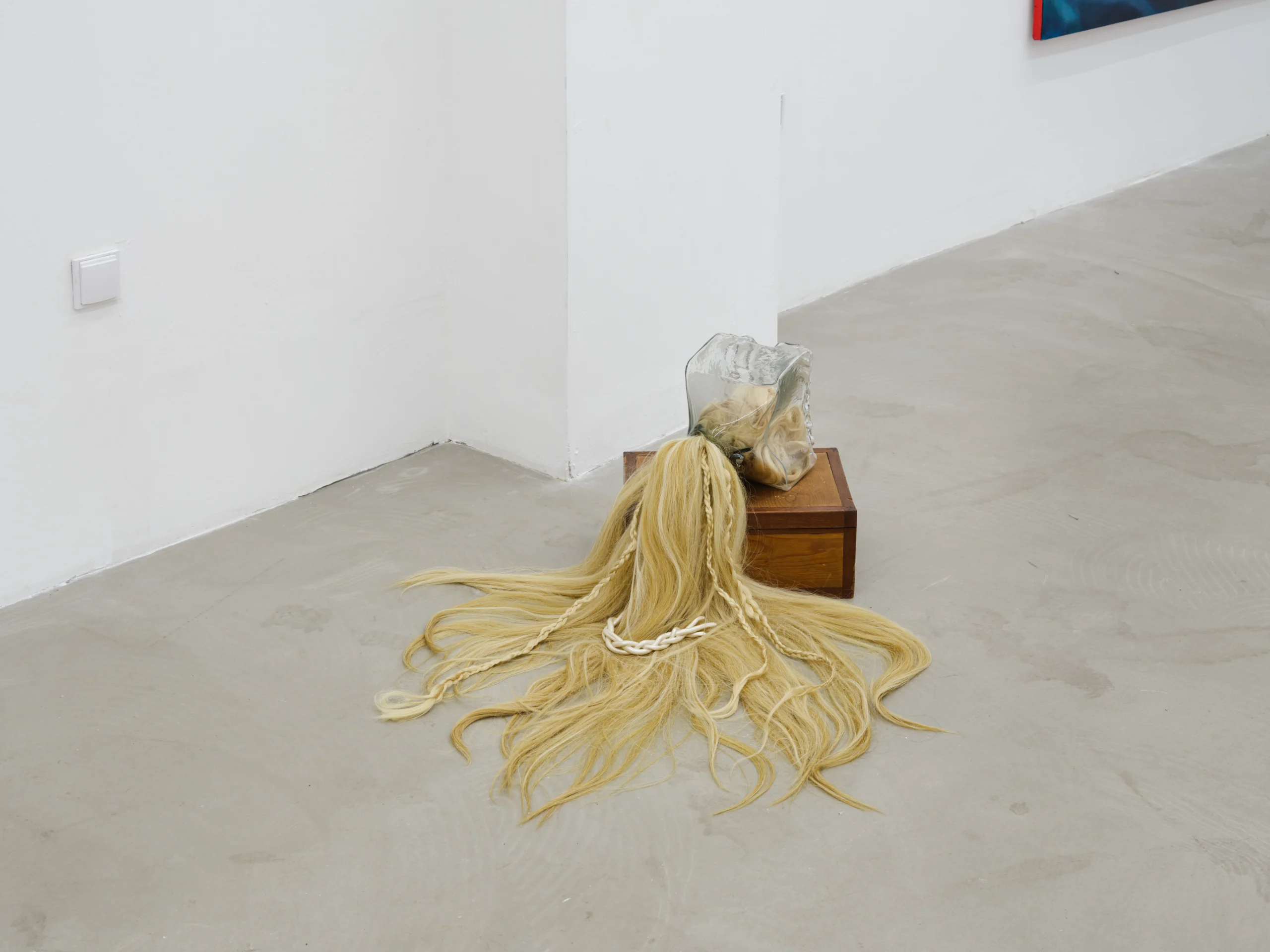
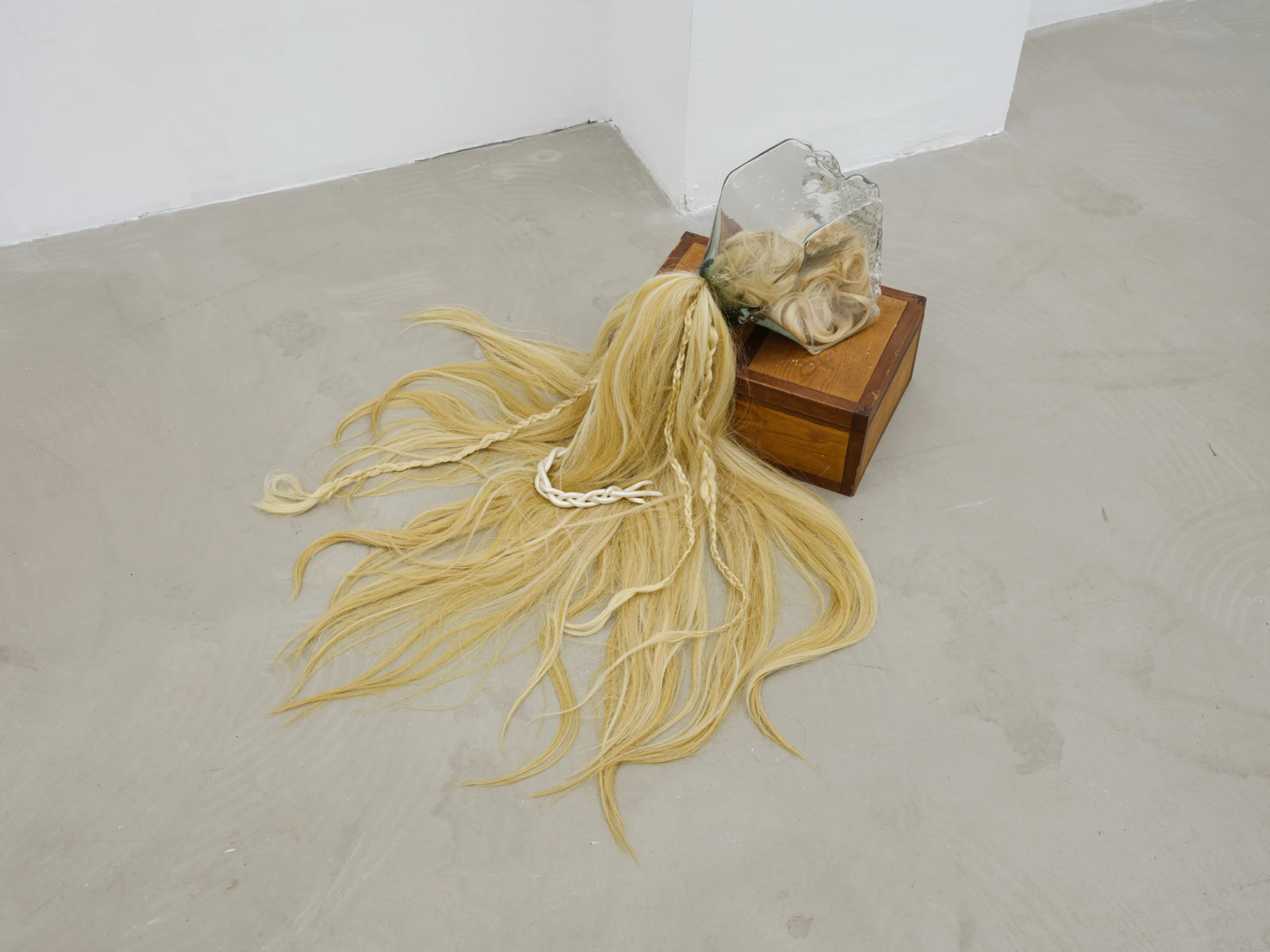
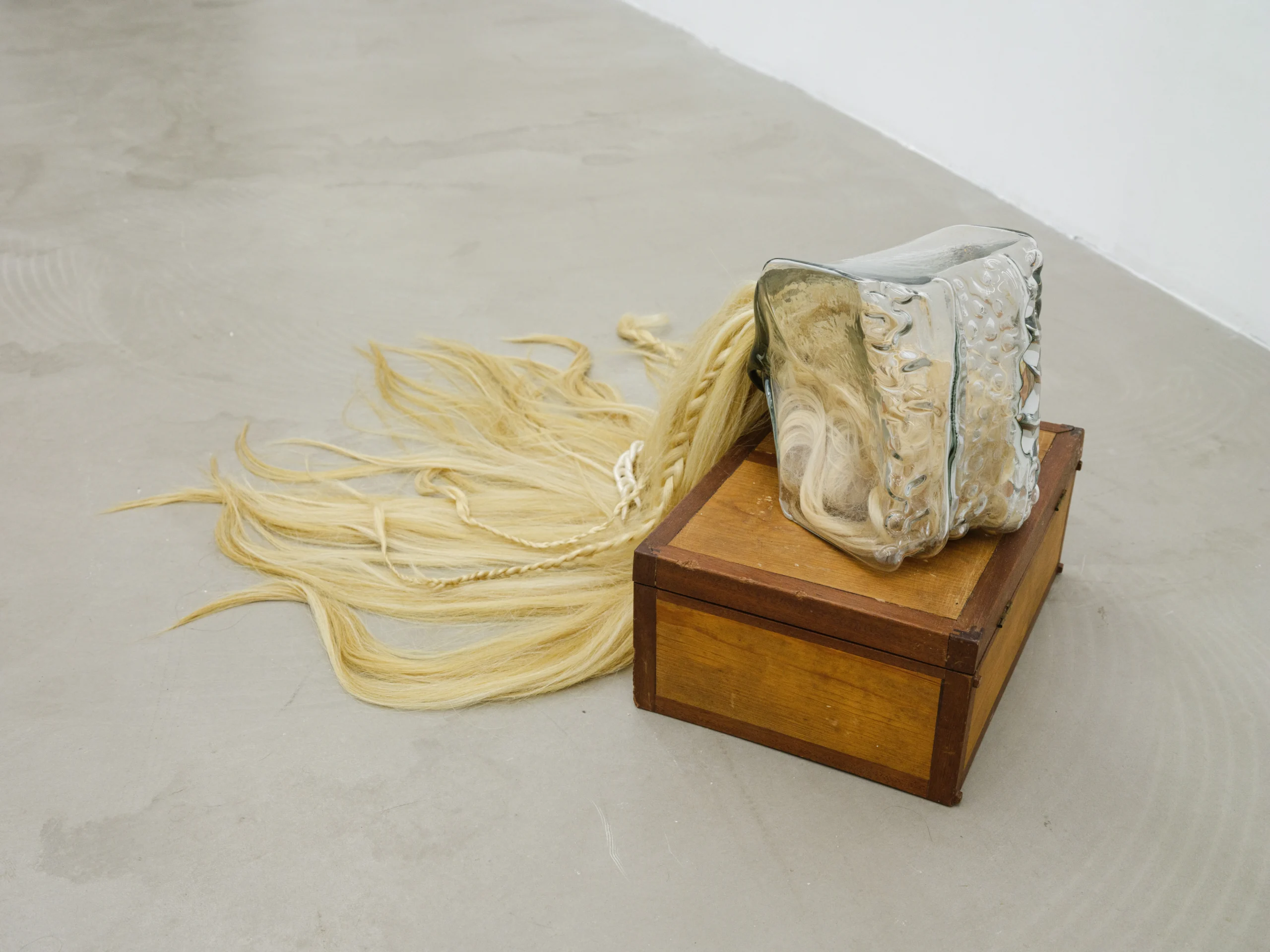
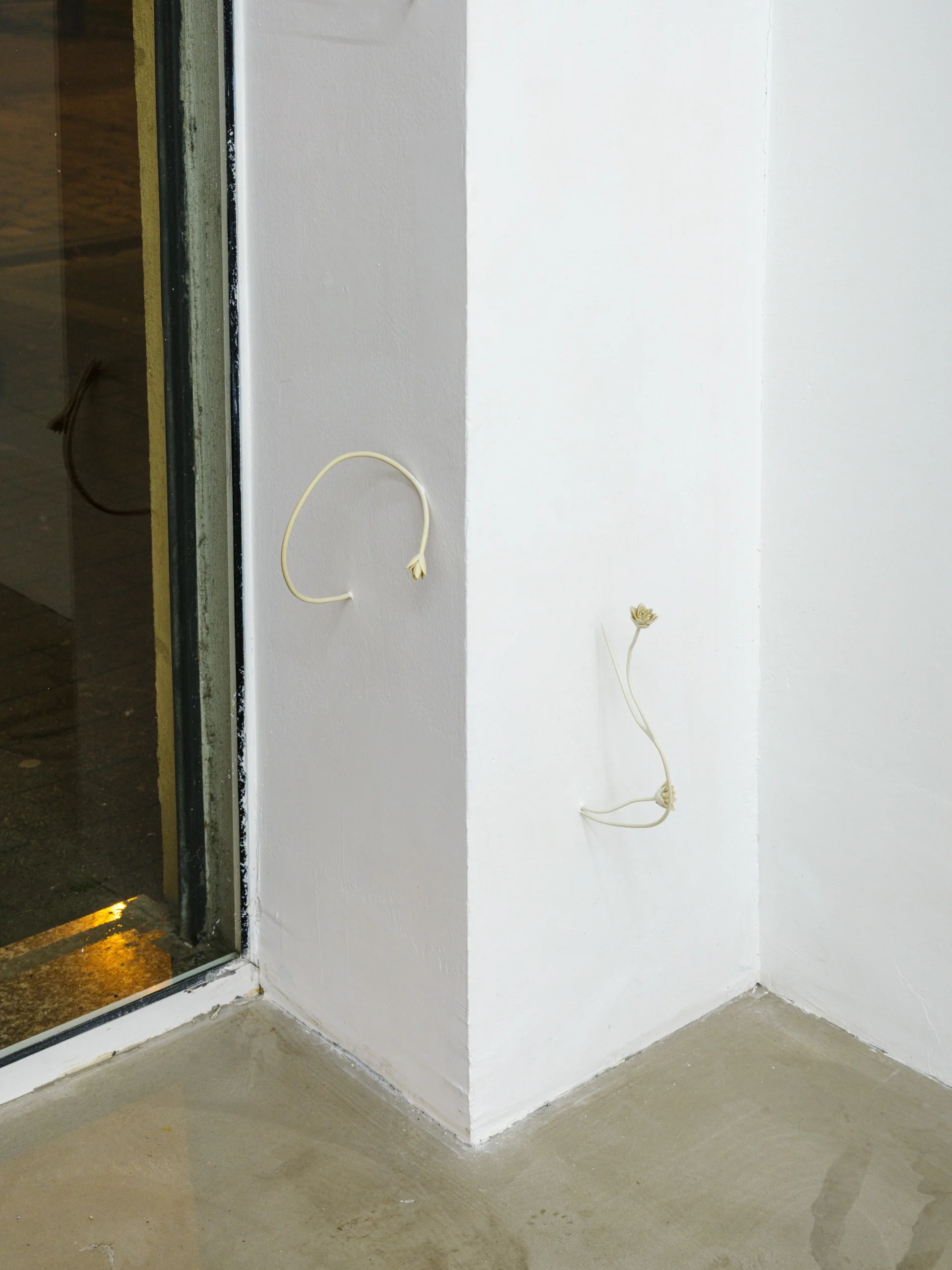
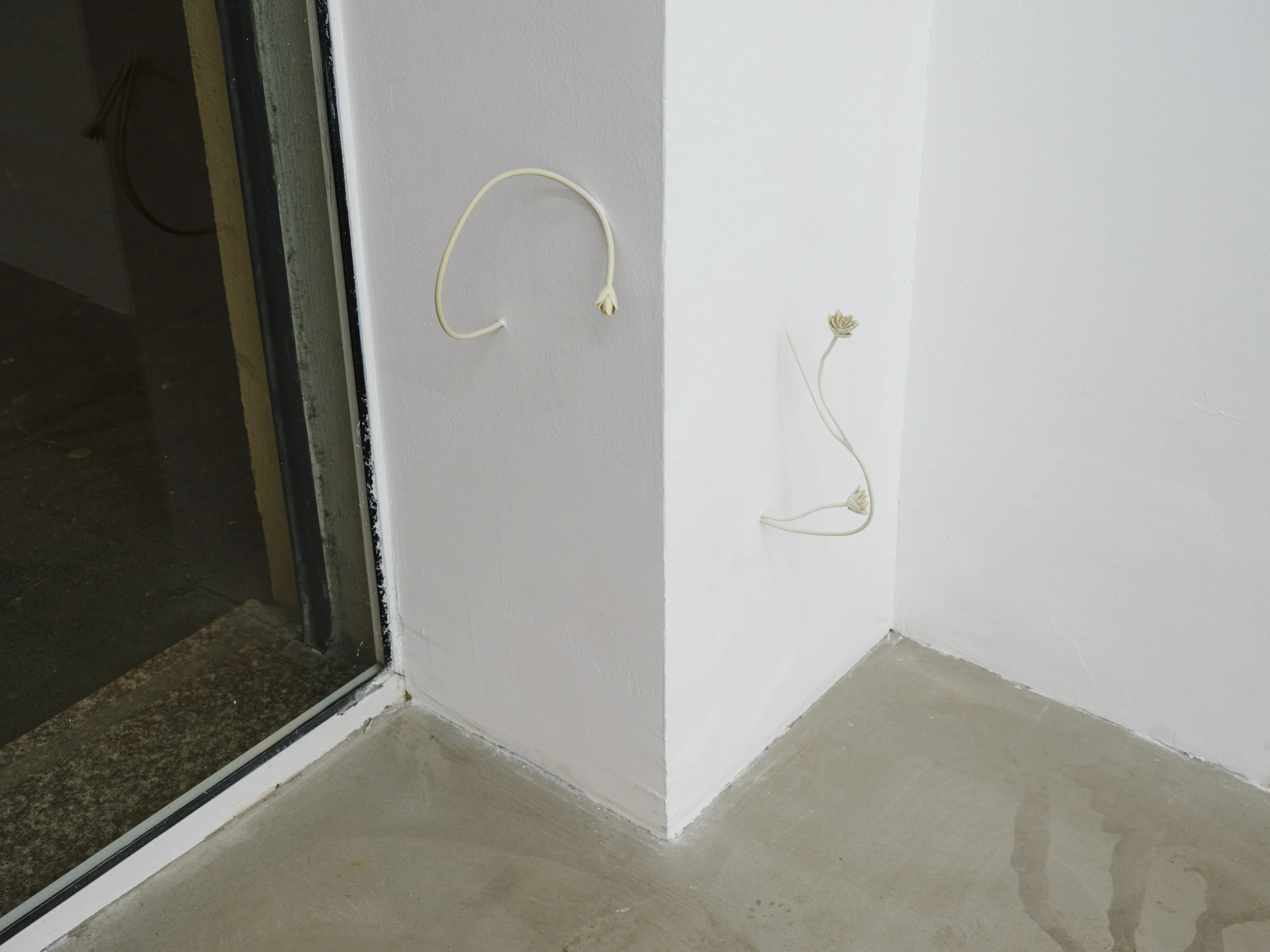
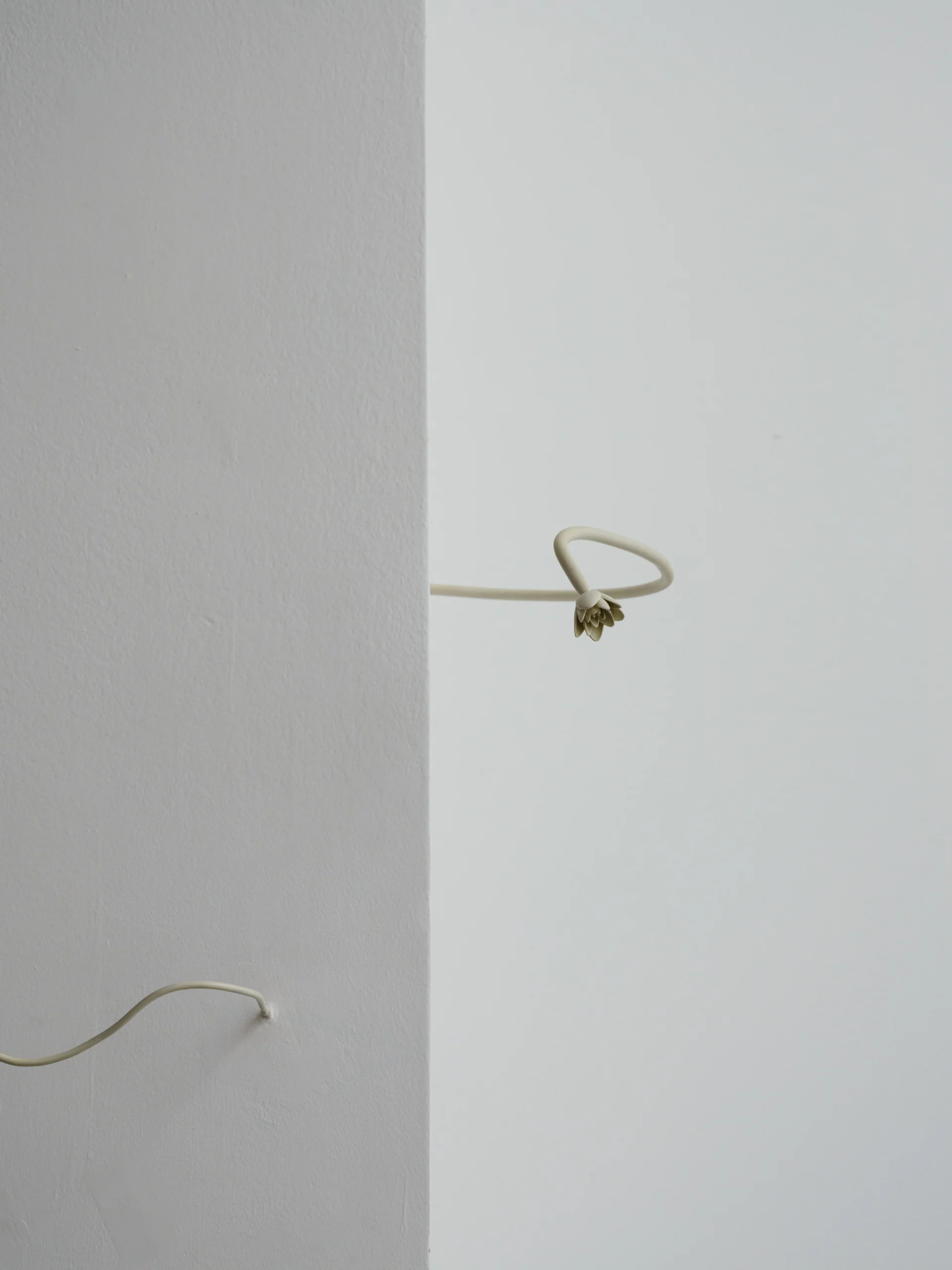
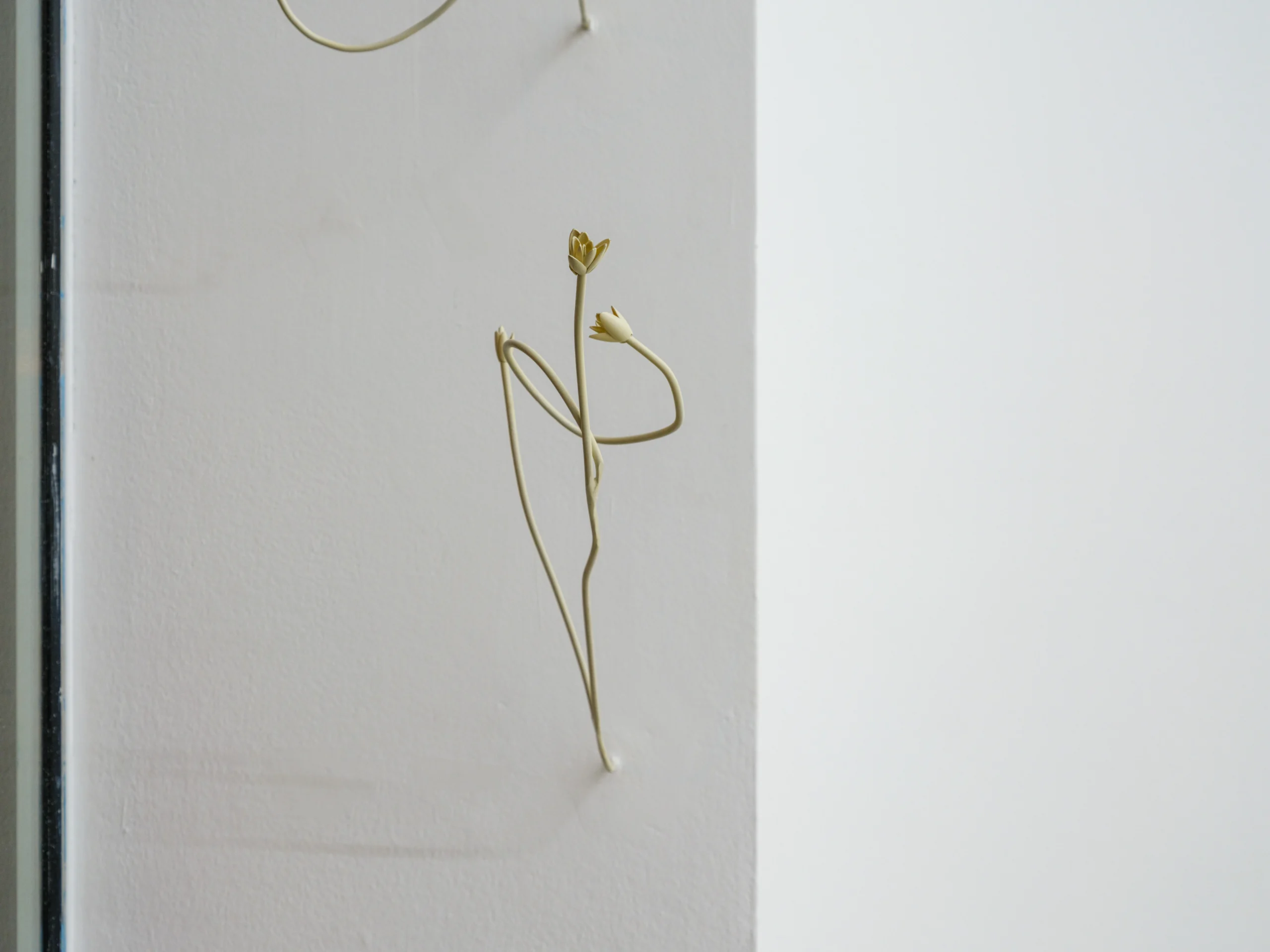
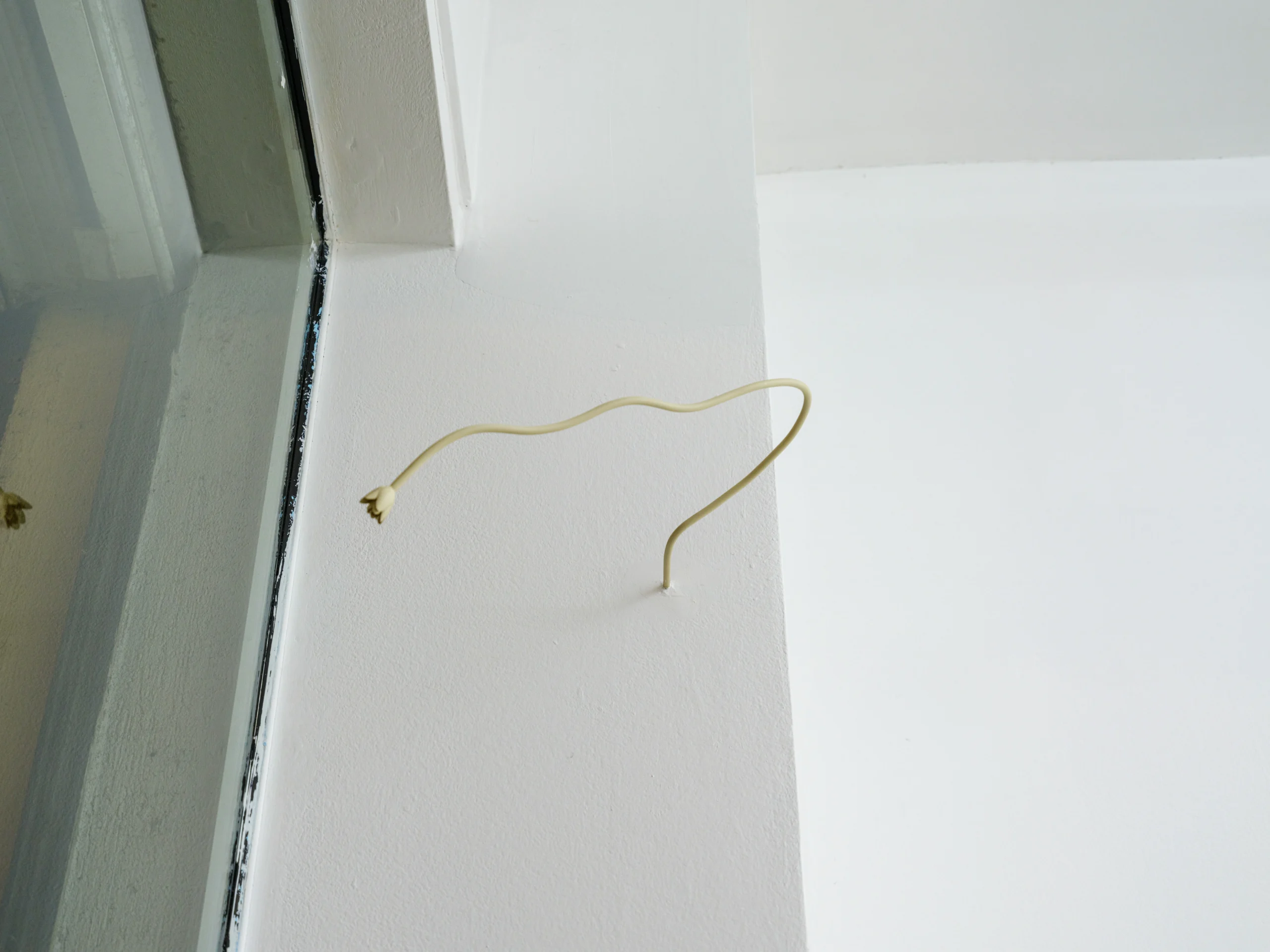
Gradually, the works transition into the fluid realm of softness and violence. Nina Buganim’s series addresses the conflicting position of women in modern society, as they gain power. This process, still subject to too many uncertainties and tensions, manifests here in the series “Belles plantes” – roses with petals made of artificial nails evokes women’s tenderness but also their capacity for self-defence, that inseparable duality women must apparently master to function in contemporary society . The work “I’ve always dreamed of being blonde” engages in the clichéd image of the blonde, embodying desires, fantasies and society’s anxieties about female bodies. Will this image ever be emancipated? When will the blonde take control of her own narrative?
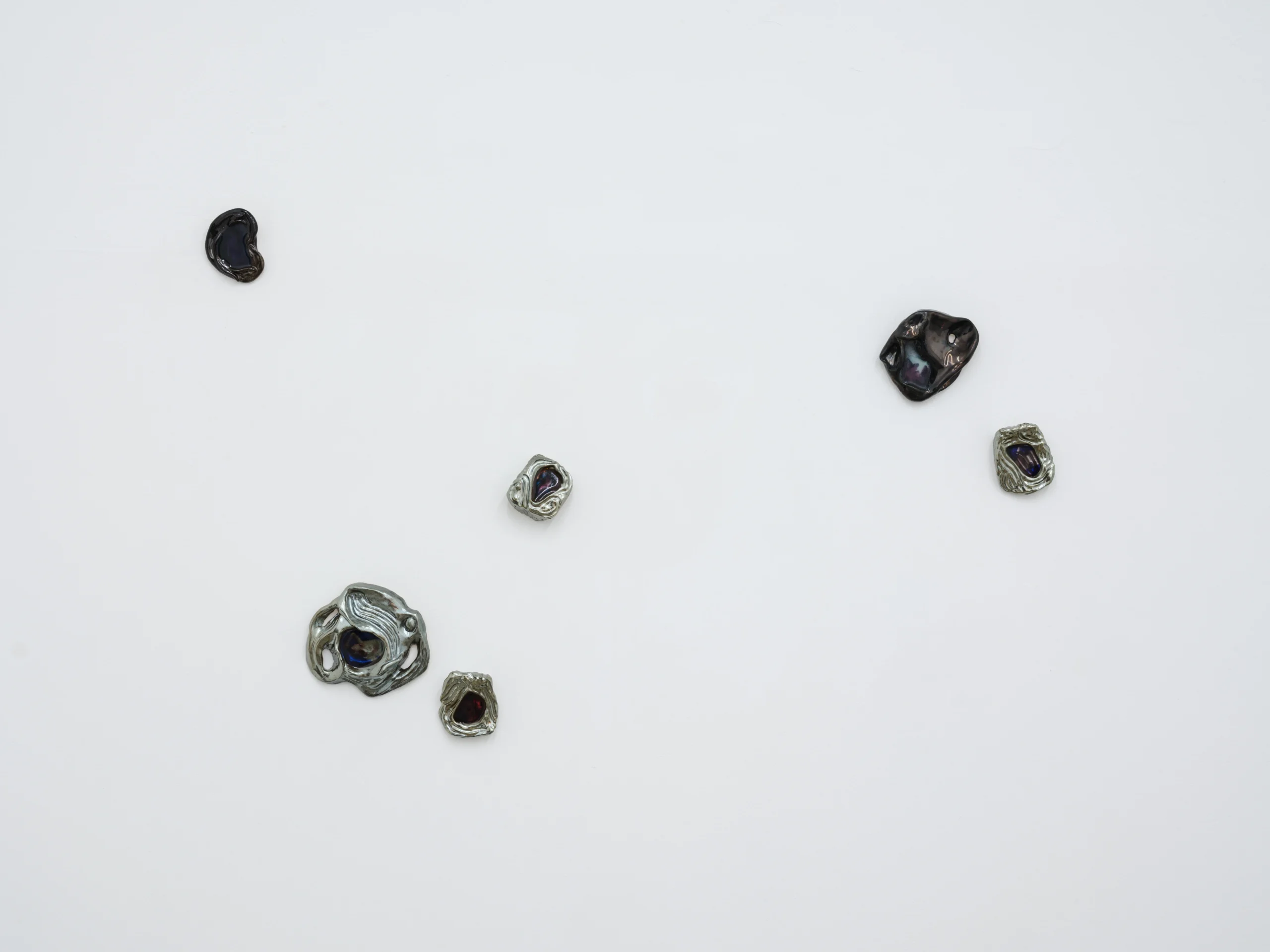
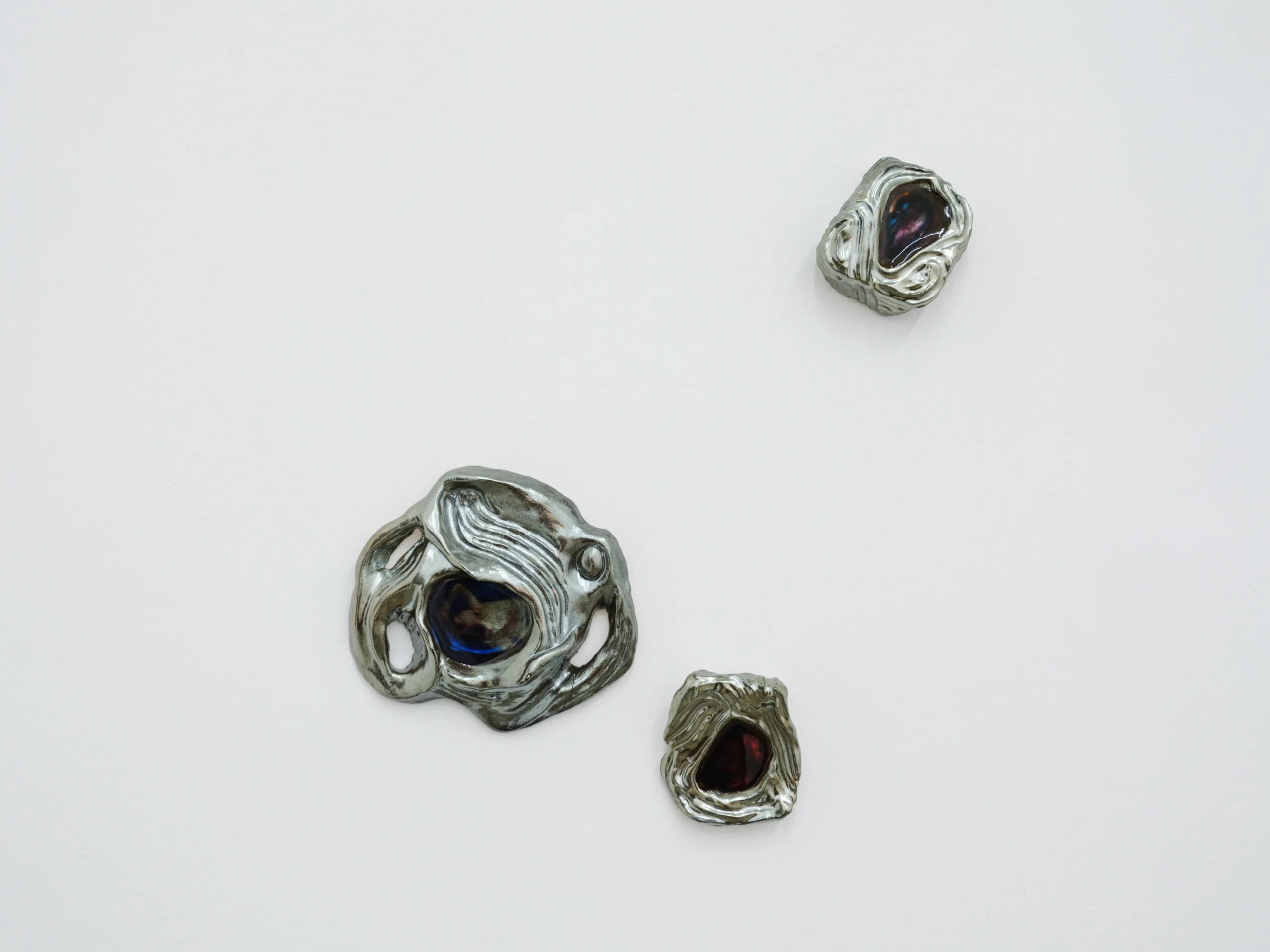
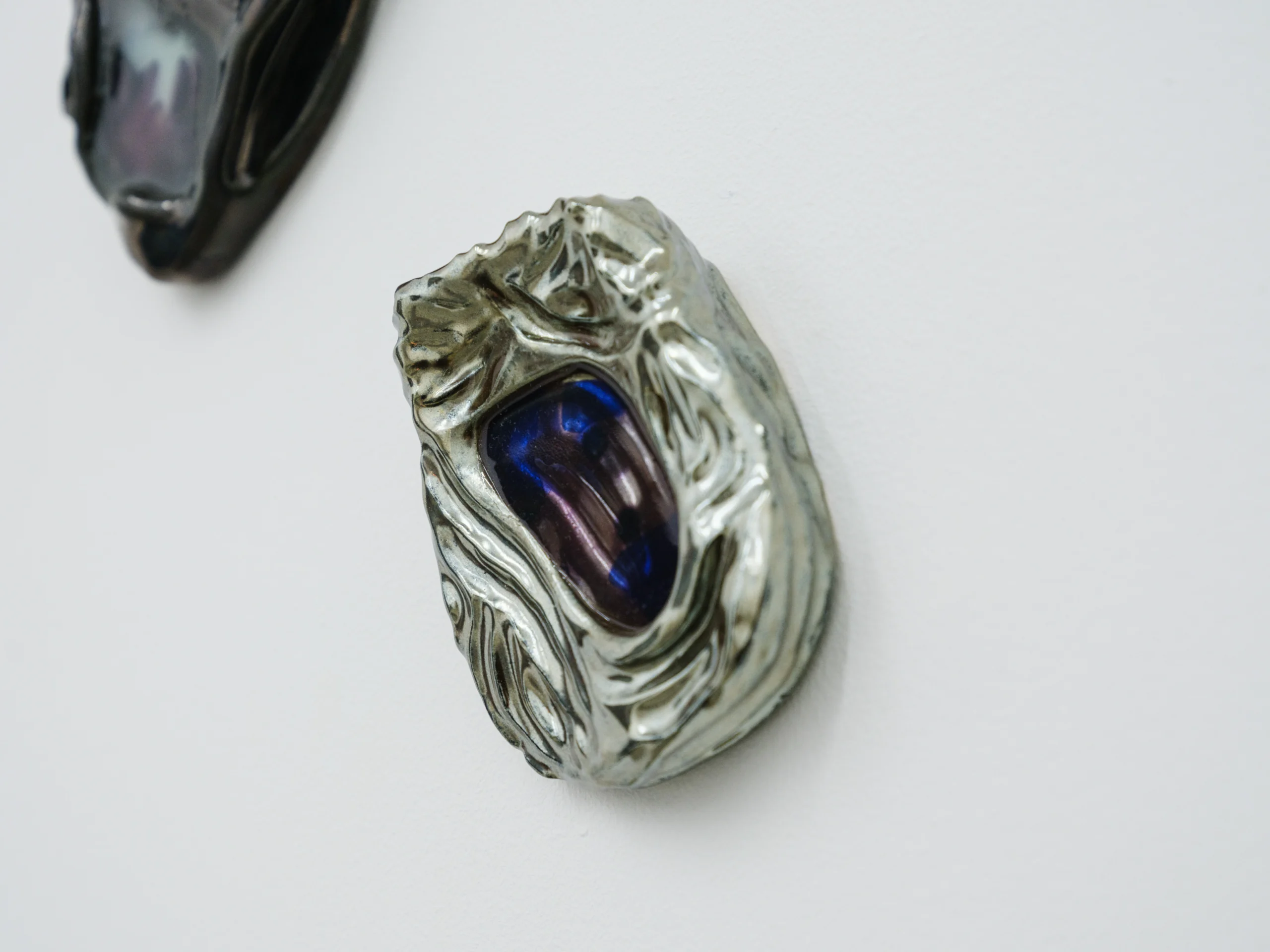
The female body is strongly present in Marilou Poncin’s works, where moments of introspection, solitude, and contemplation mark the intimate space of the contemporary woman. Captured in forms reminiscent of seashells, the works reference the exhibition’s origin —the mythical figure of the siren and the contradictions with which she is burdened. As containers for the female soul or temporary portals to her inner world, the works present an almost voyeuristic perspective, raising the question: what has changed in women’s condition over the past centuries?
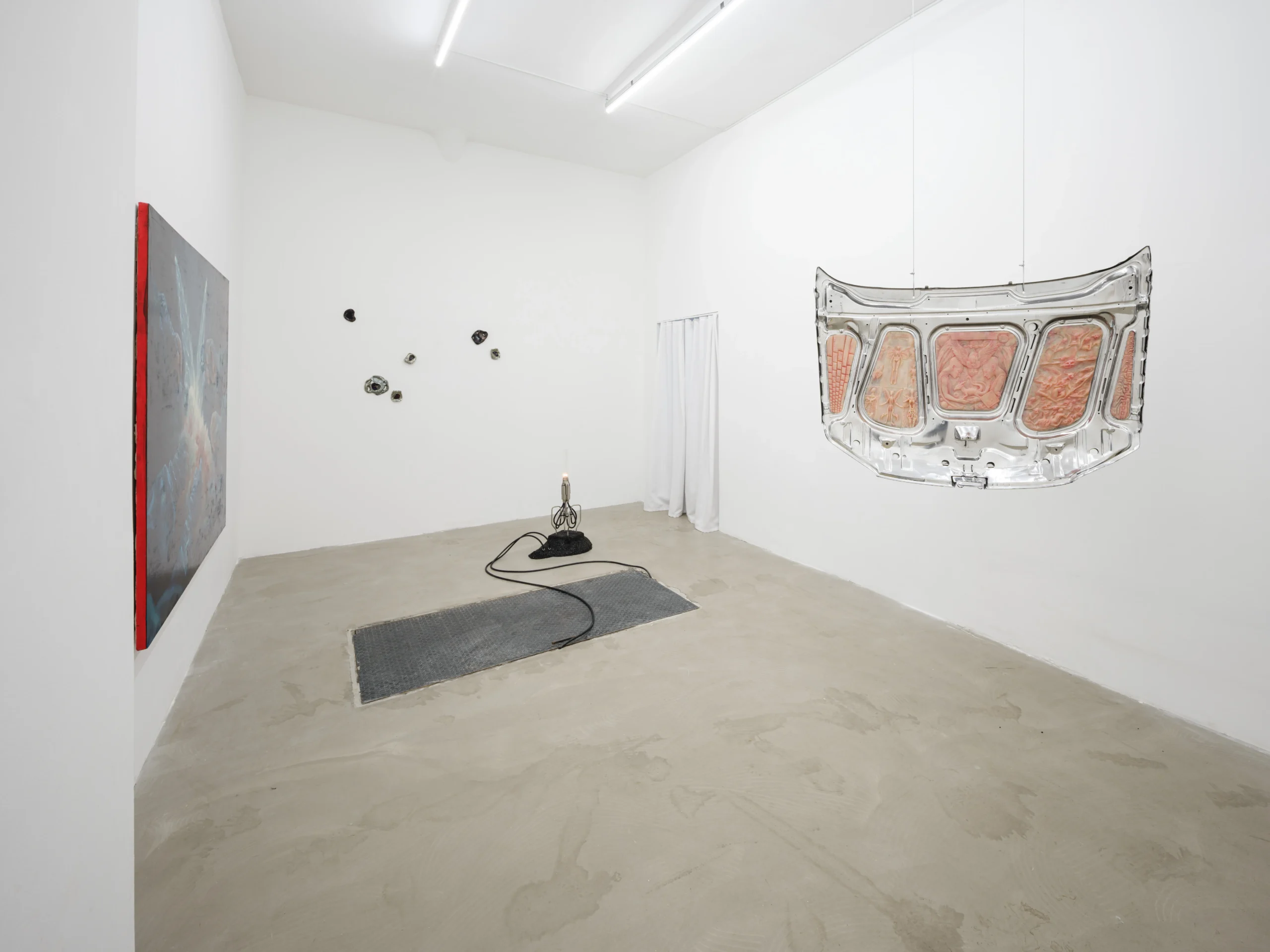
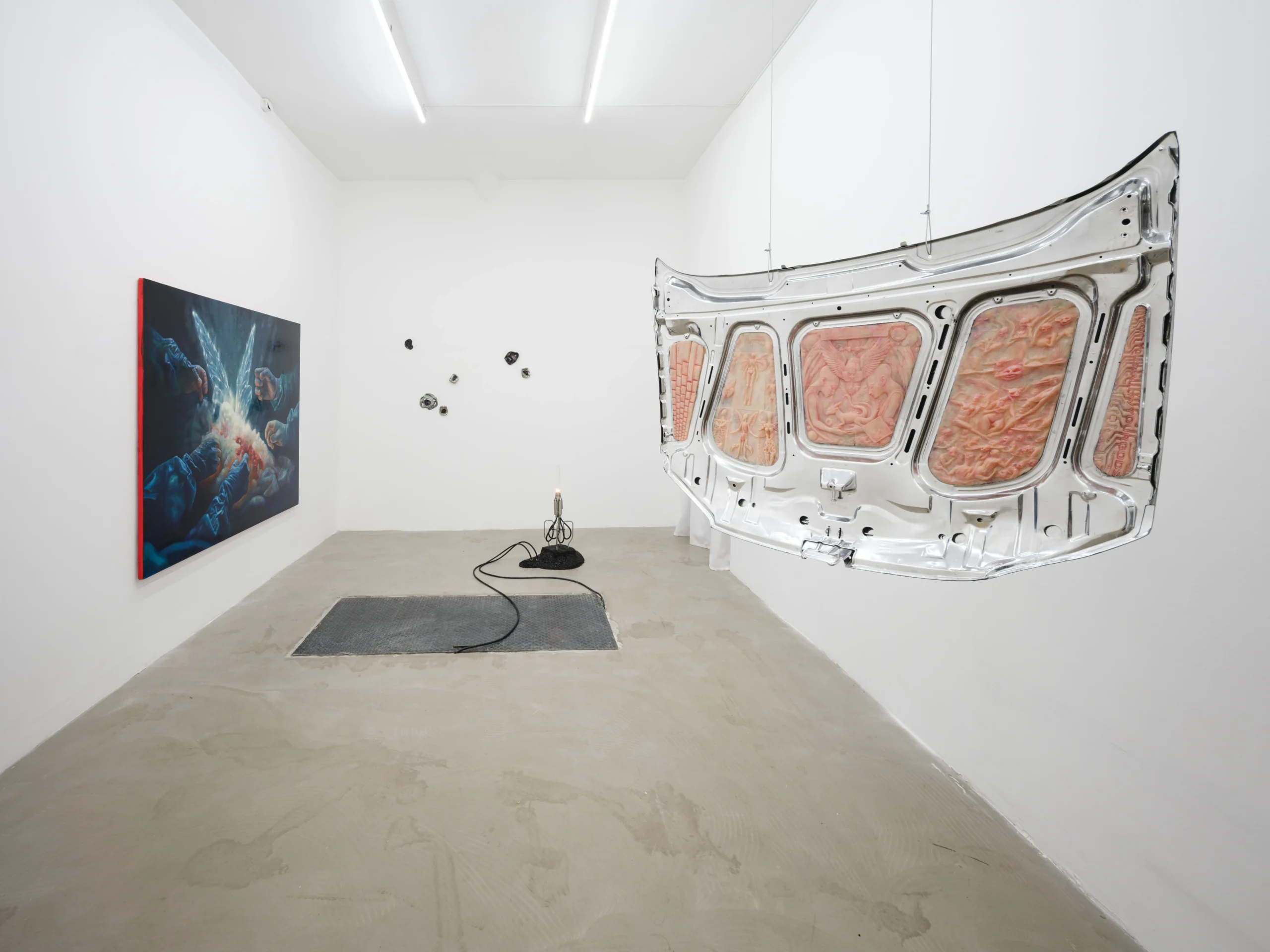
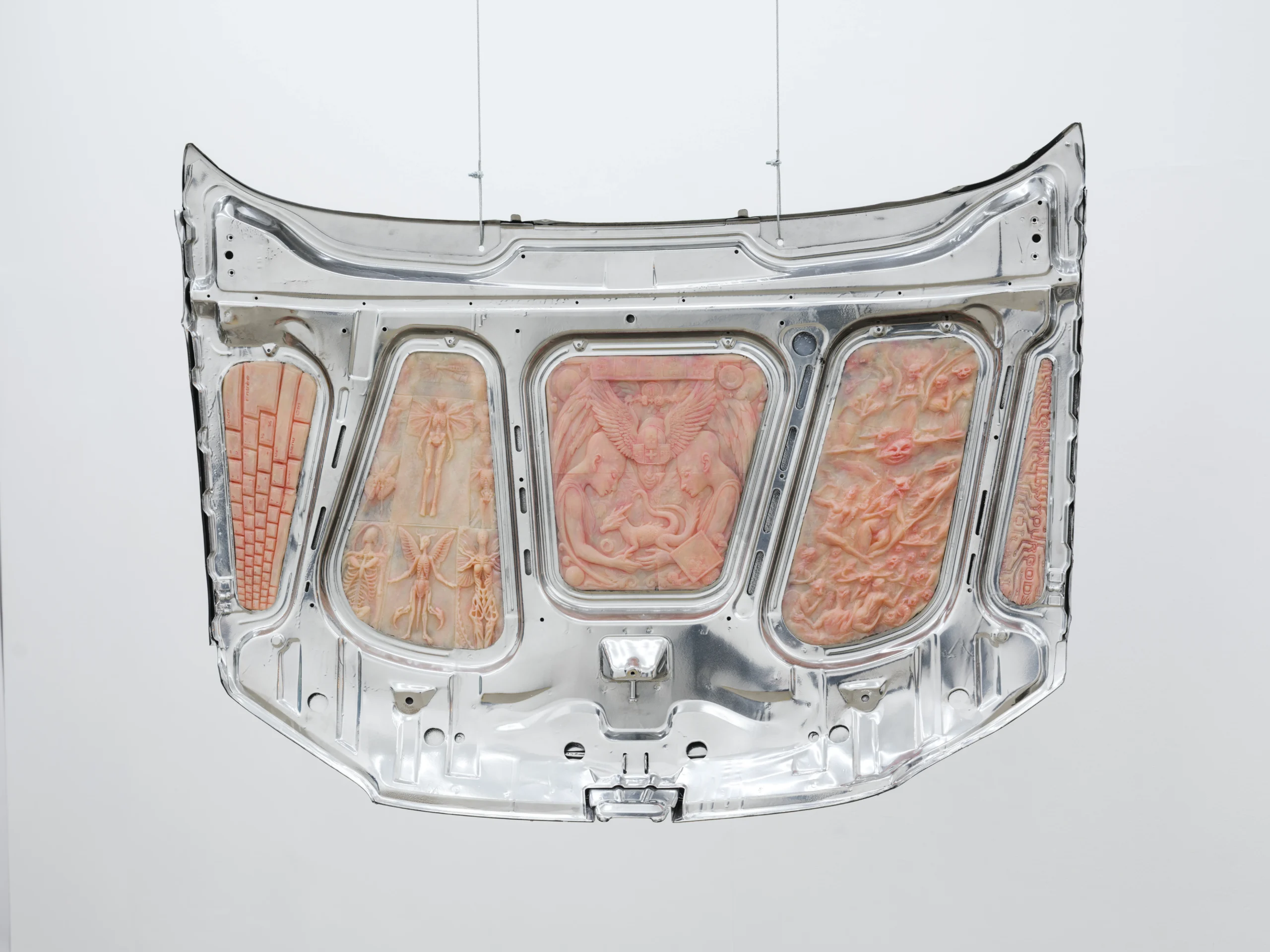
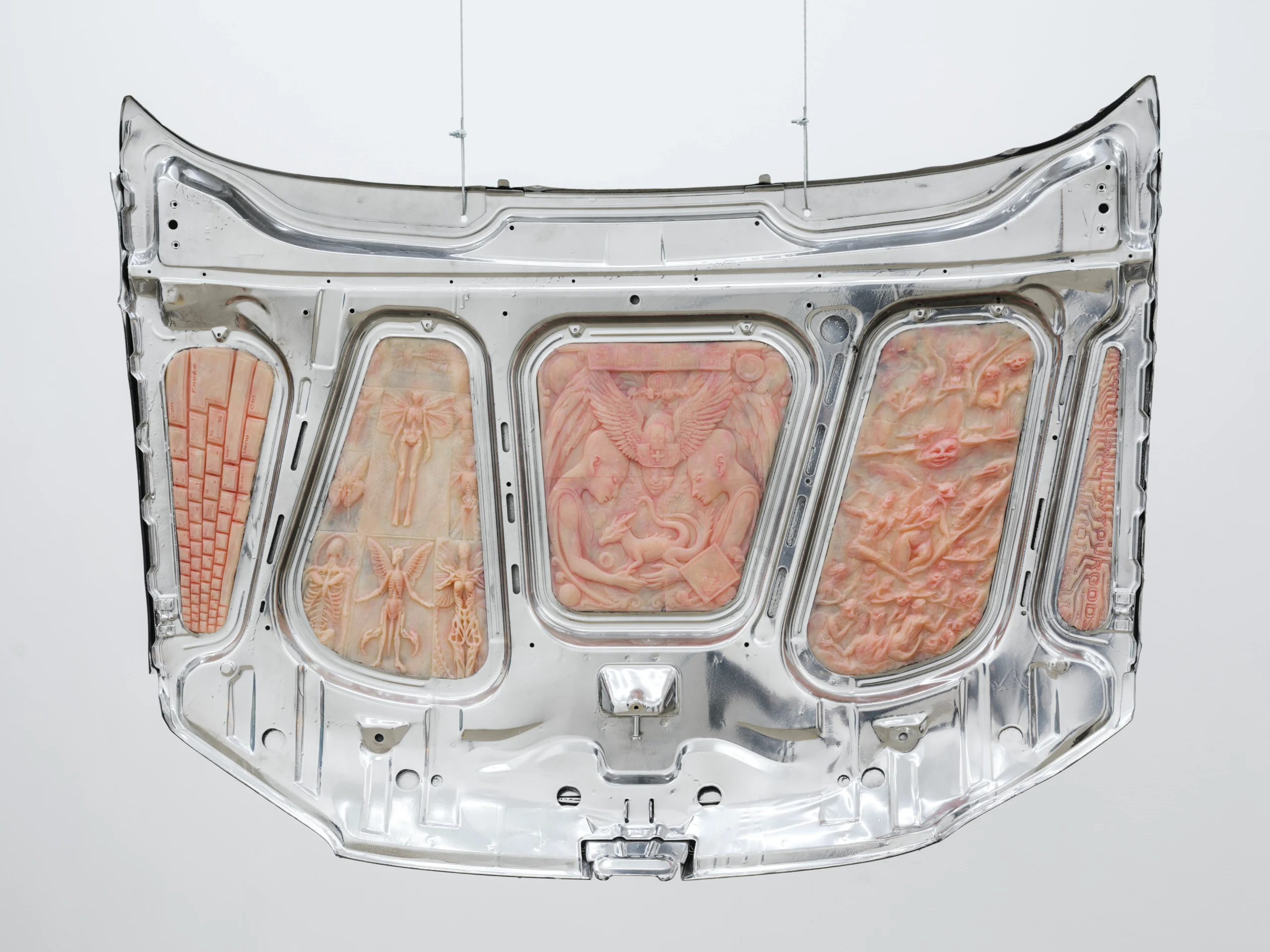
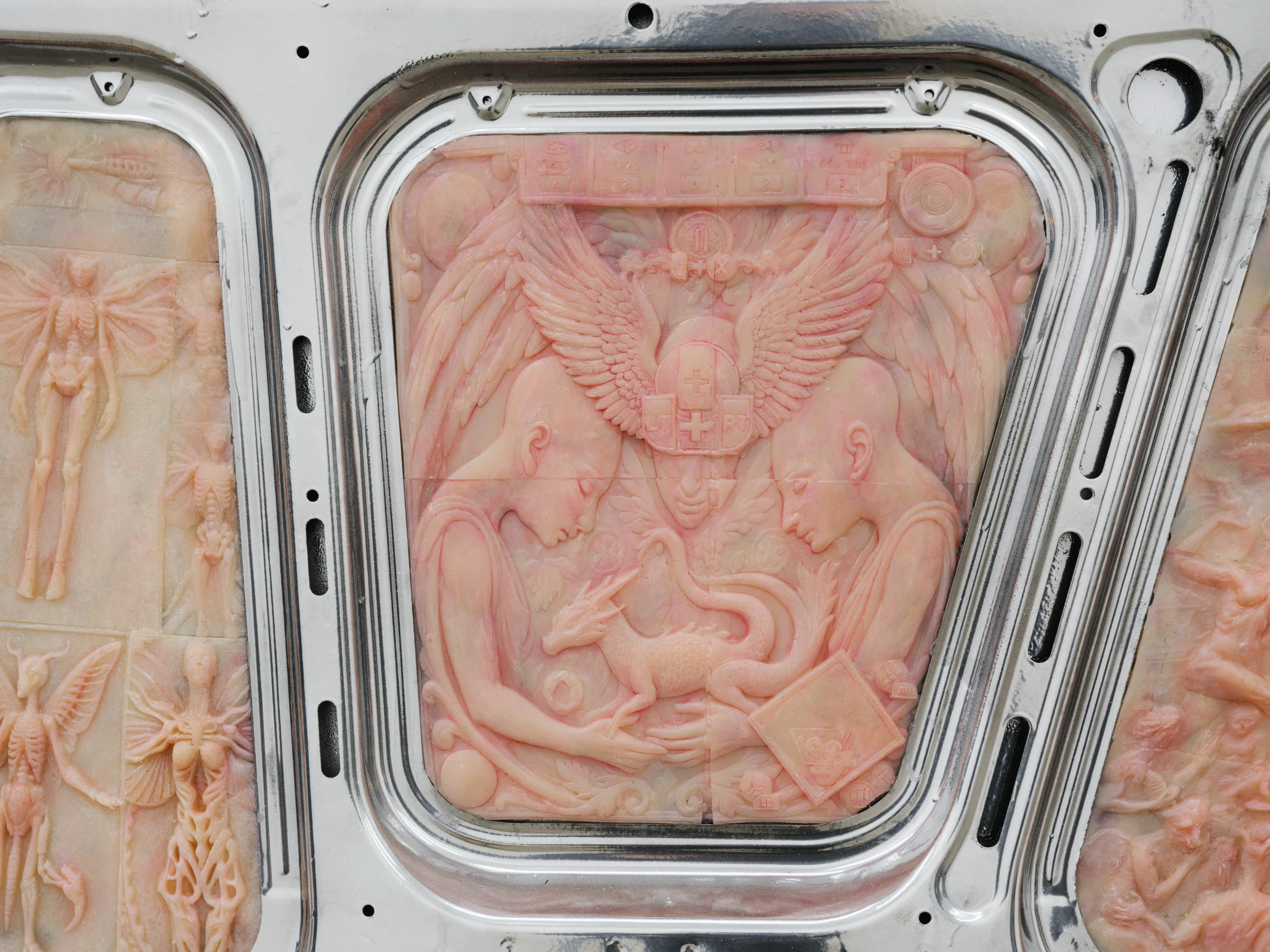
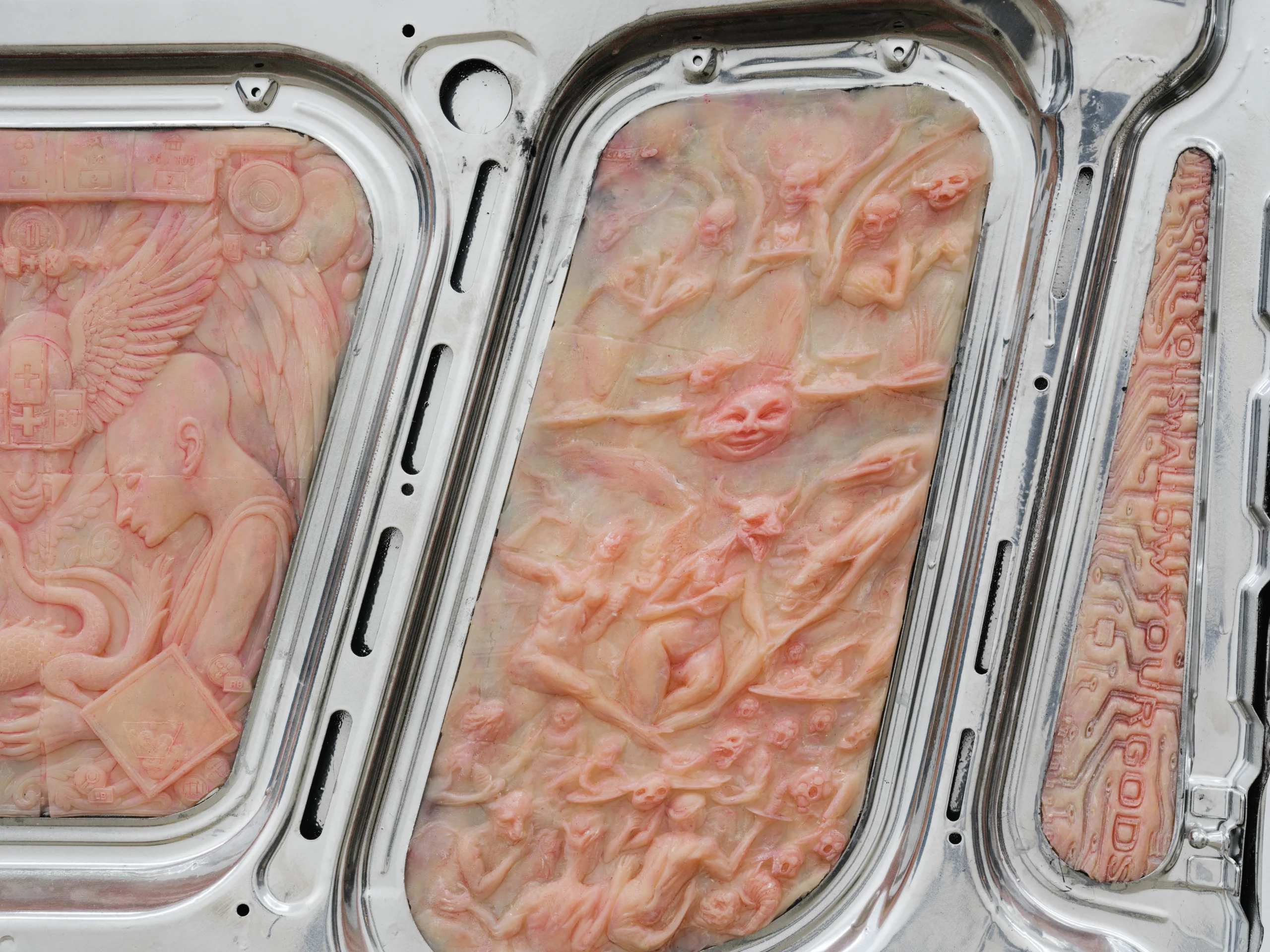
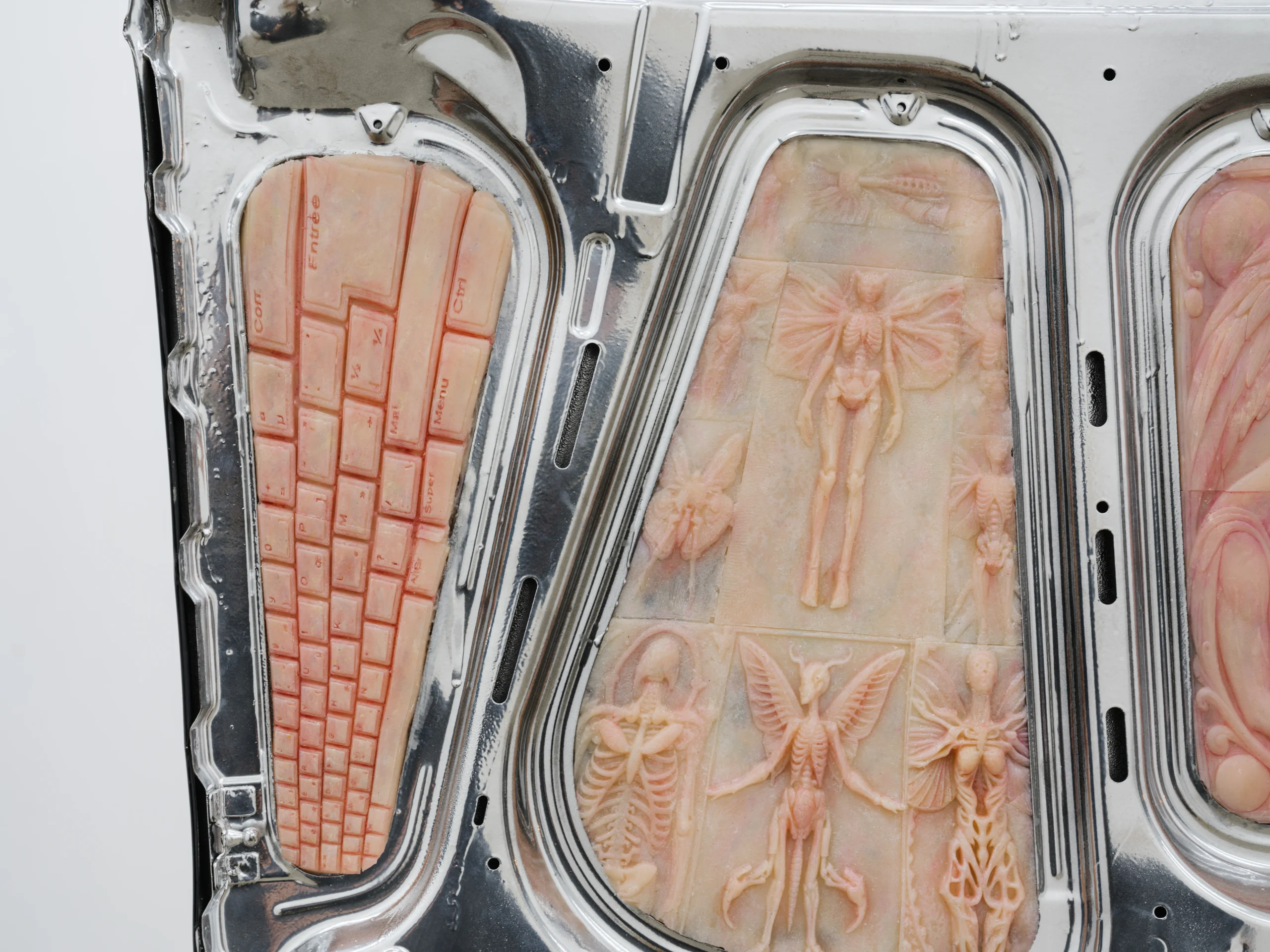
Elvire Ménétrier’s latex bas-reliefs suggest the texture of flesh and surgical materials. Within the frame of a damaged and restored car hood, five scenes narrate different historical moments or phenomena. Each one is designed from a different perspective, as the viewer must shift their position to see each scene properly, making it impossible to grasp the entire composition at once. As a whole, the piece functions as an allegory of creation containing its own destruction, unfolding across several scientific, computational, and sacred registers.
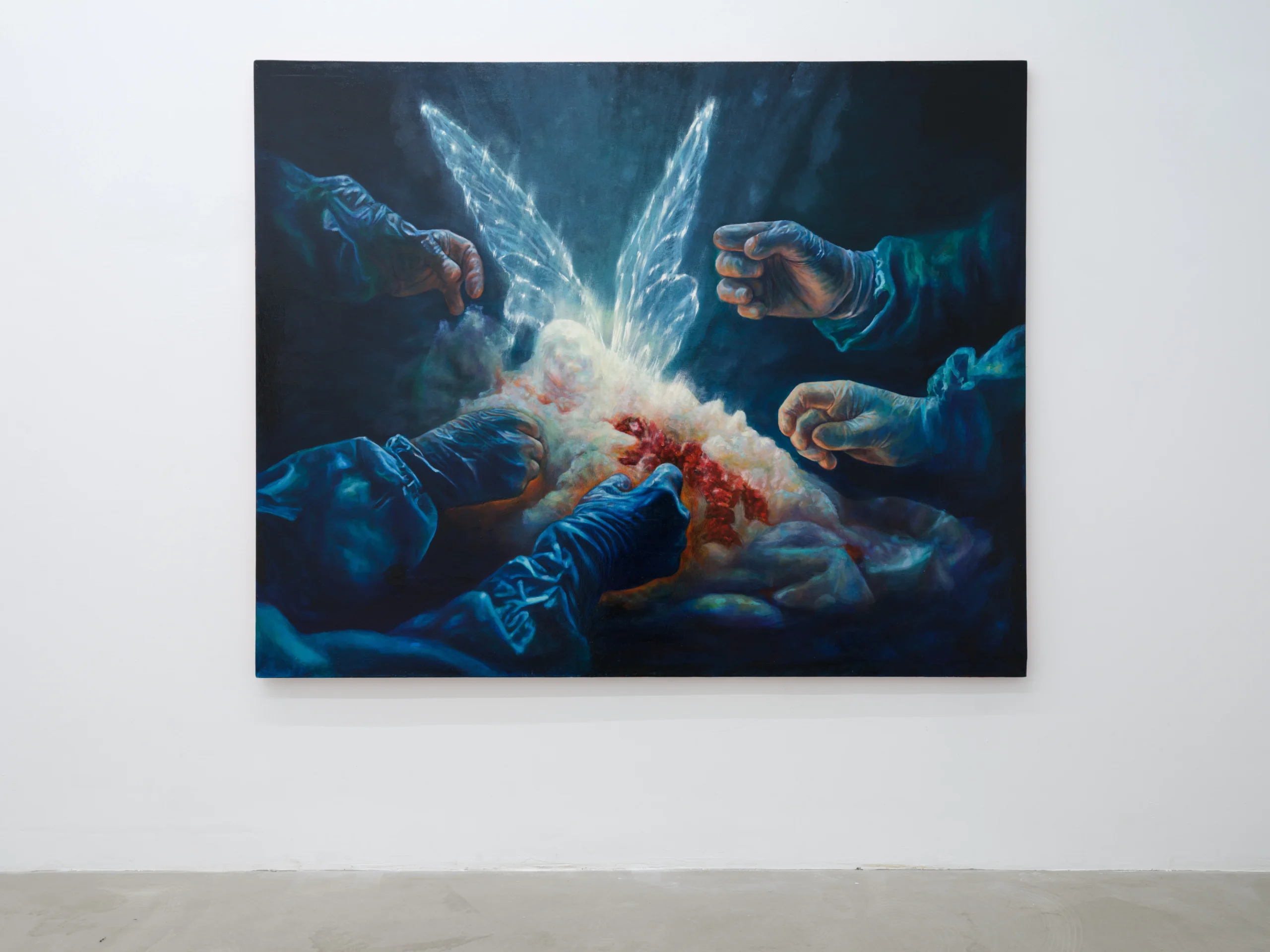
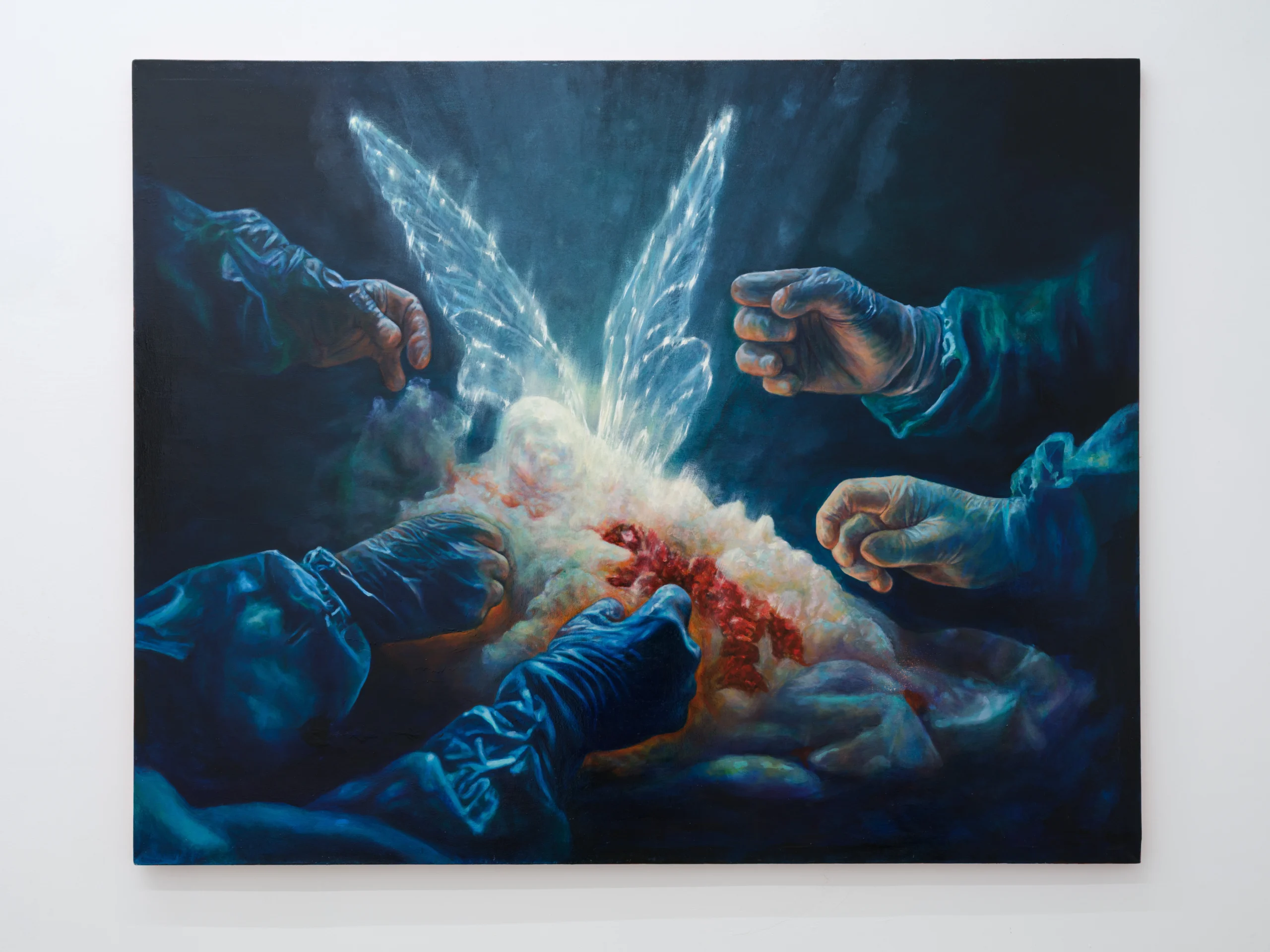
Beside it, a large-scale painting depicts a critical scene: gloved hands approach a luminous winged creature, a fairy with a vaporous body and exposed organs. The scientific hands have lost their dissection instruments: are they searching for magic or constructing it? For the red of the organs, the artist creates pigment with her own blood (with help from a doctor friend). For the fairy’s light, she uses silver white, a lead-based pigment, now banned for its toxicity. The two elements, iron and blood, mix to create the creature, with the risk that one will deteriorate the other. Thus, the painting speaks of traumatic memory, searching the organs of an intangible story for evidence, creating fairies to talk about monsters.
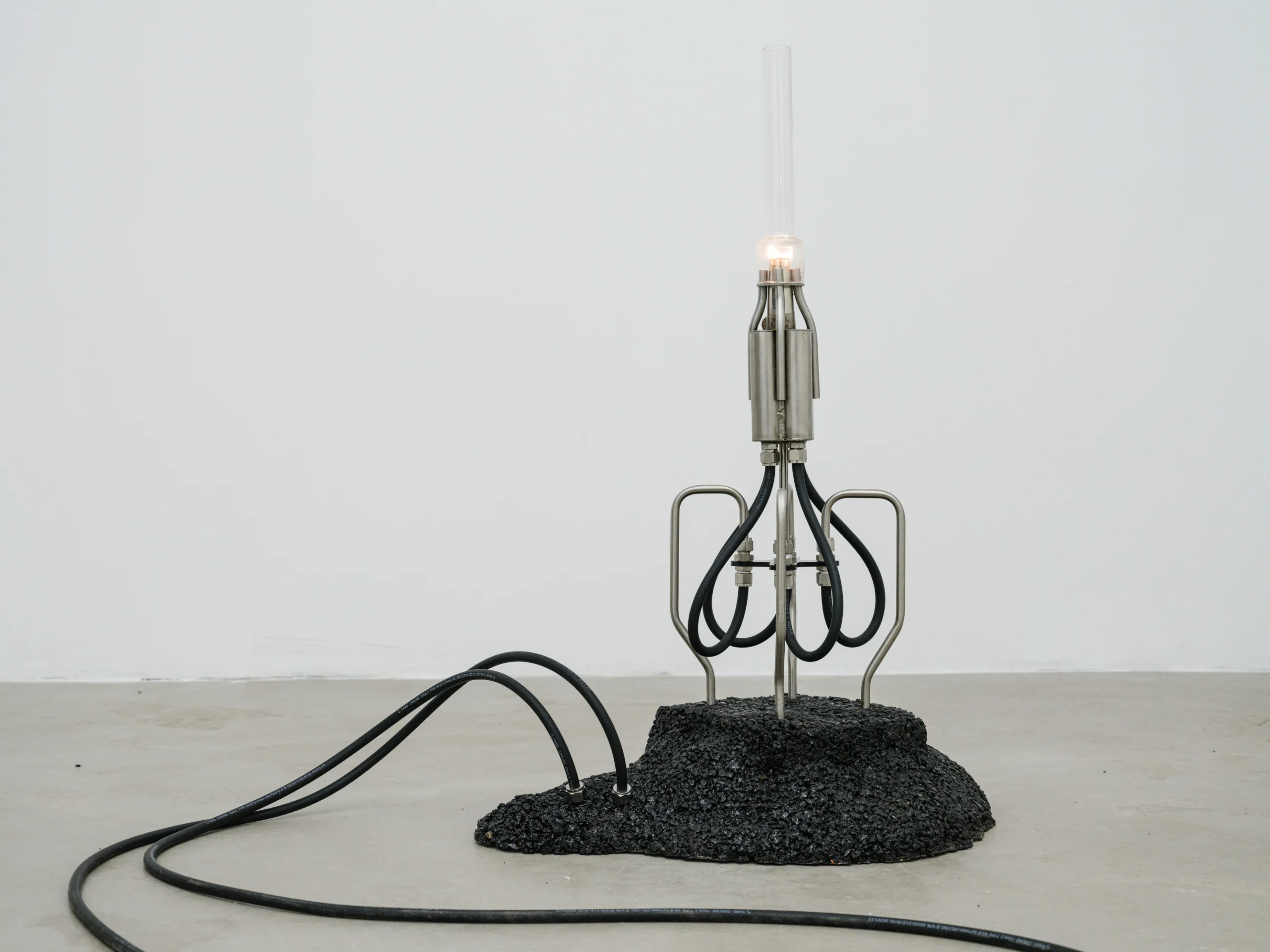
Valentin Vert’s oil lamp conveys formal ambivalence between an ancient mechanism from the era of working-class mines and a futuristic device with unknowable properties. Through its industrial character and technical presence, it becomes a conductor of buried histories, prompting reflection on the future of fossil fuels and the inevitable combustion of the earth. Naphtex is a combination of the Greek word naphtha (bitumen and its derivatives), and narthex, a Mediterranean plant from the Prometheus myth. It was from the hollow of this dried stem that Prometheus stole Zeus’ divine fire to give to mankind. Suggesting a close parallel between hydrocarbons and sacred fire, Naphtex draws on Prometheus to question our relationship with technological progress and time.
The exhibition deals with earth’s surface, but also its depths—from organic matter transformed into fossil fuels or innovative fabrics; through the plant world and the female body whose symbols weave through thousands of years of human history, to dystopian models of social interaction. And so, though built on the remains of the past world, it contains the secret element from Pandora’s box: hope.
Bringing together technology and earth, the human body and social relations, the exhibition opens up a space for reflection, connecting artists from different countries and contexts. And yet, questions about resources, their exploitation, and their relationship to our contemporary existence feel increasingly urgent. They connect the daily lives and imaginations of artists in Marseille, Sofia, Berlin; the shores of the Mediterranean and the stalls of the Women’s Market. It is precisely this awareness of interconnectedness that underpins the Bulgarian-French collaboration Odyssea.
On the ashes of our past, mutated bodies sprout in the process of development, seemingly foreshadowing the future of humanity, thus ending the second act of “Odyssea.”
***
Funded under the project National Recovery and Resilience Plan – NextGenerationEU, Component “Social Inclusion,” Investment 6: “Development of the Cultural and Creative Sectors.”