


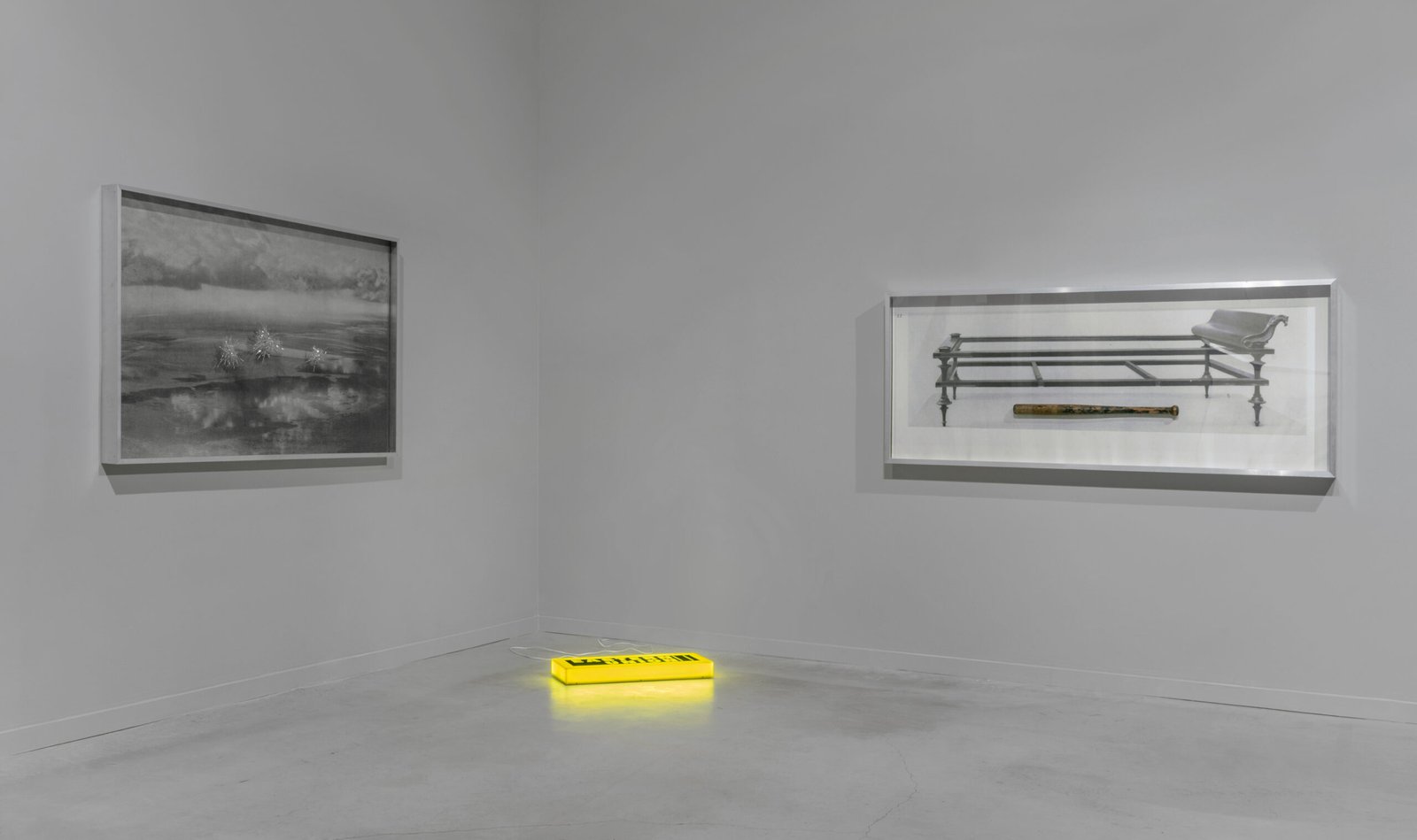
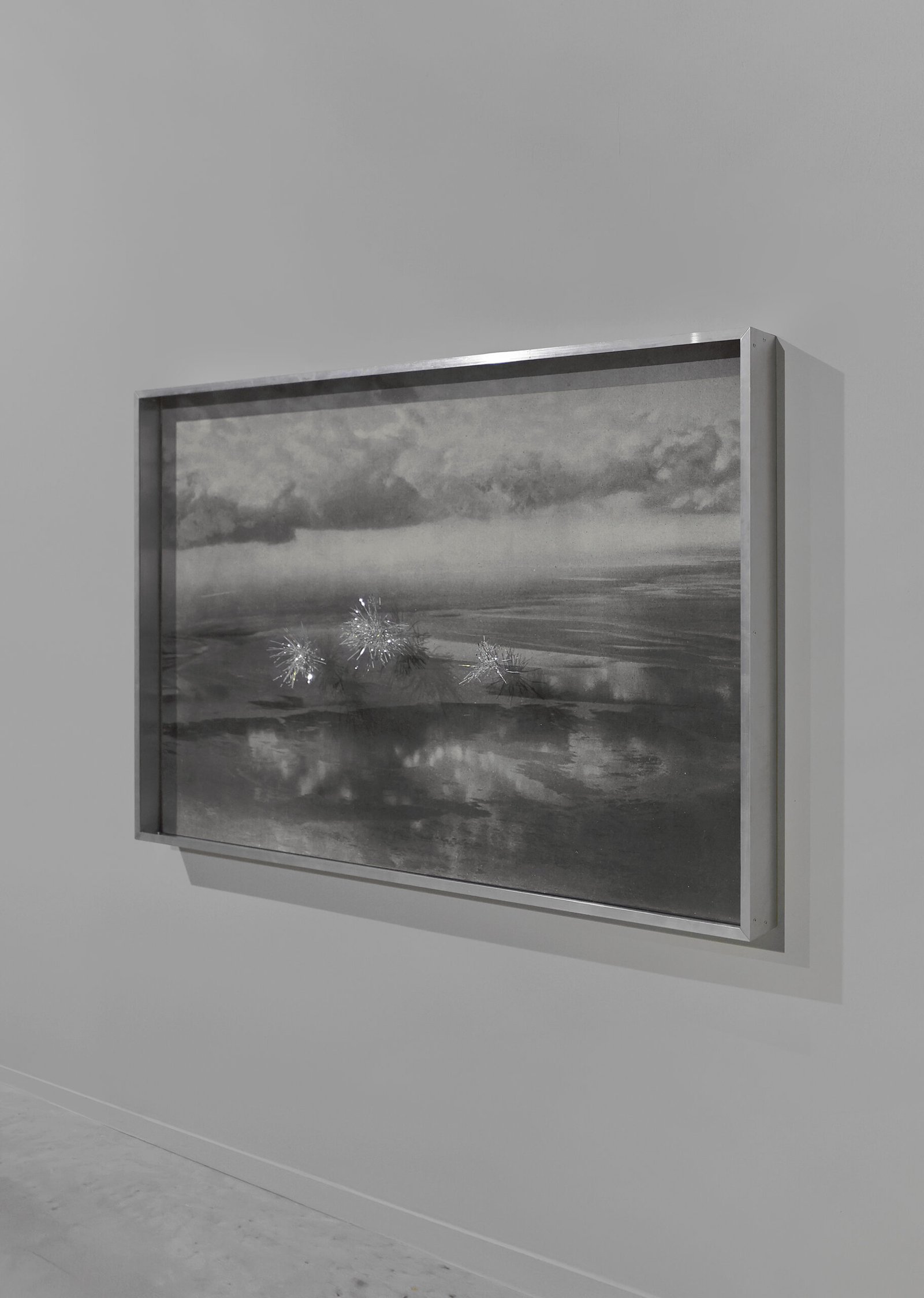
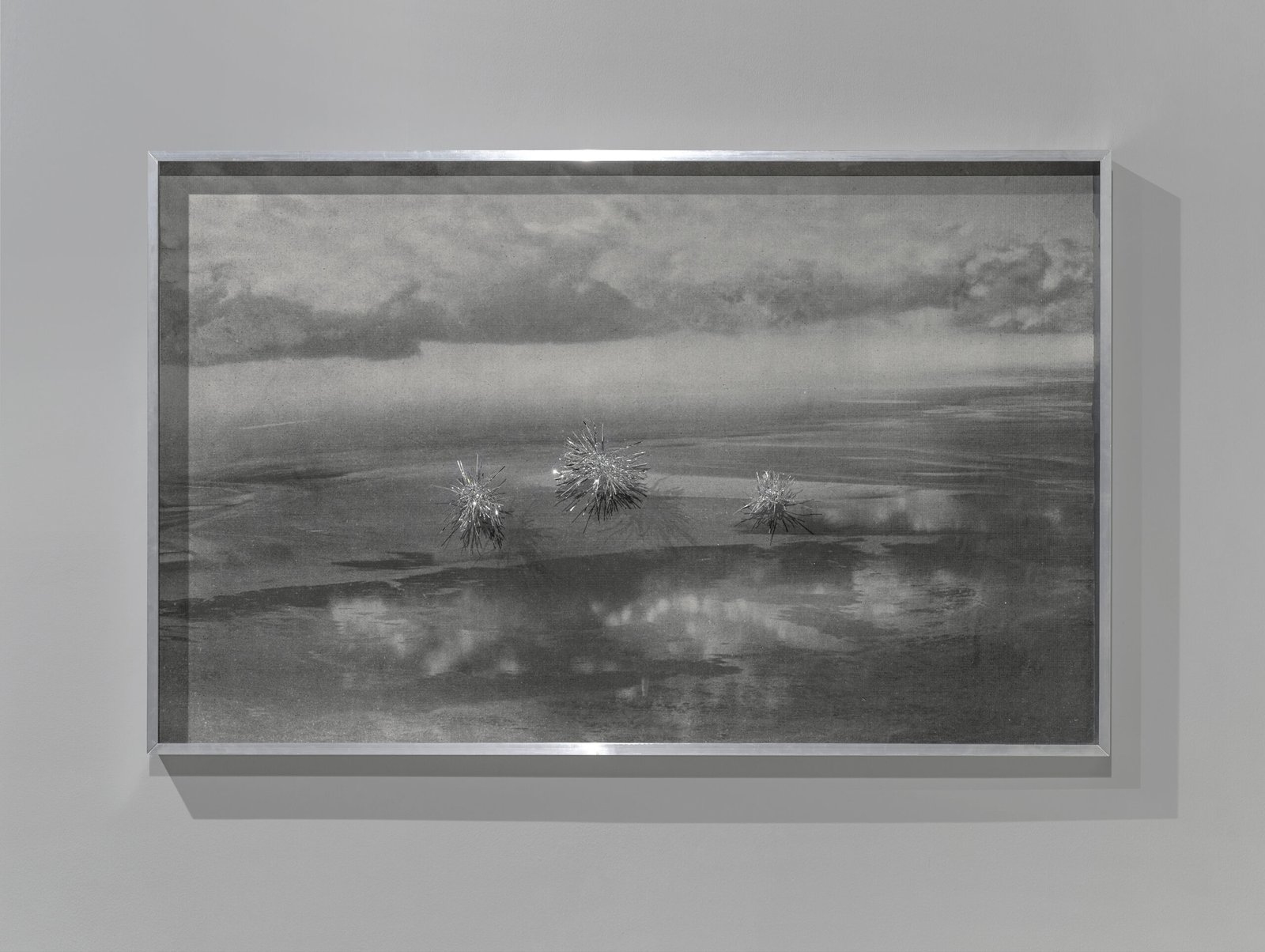


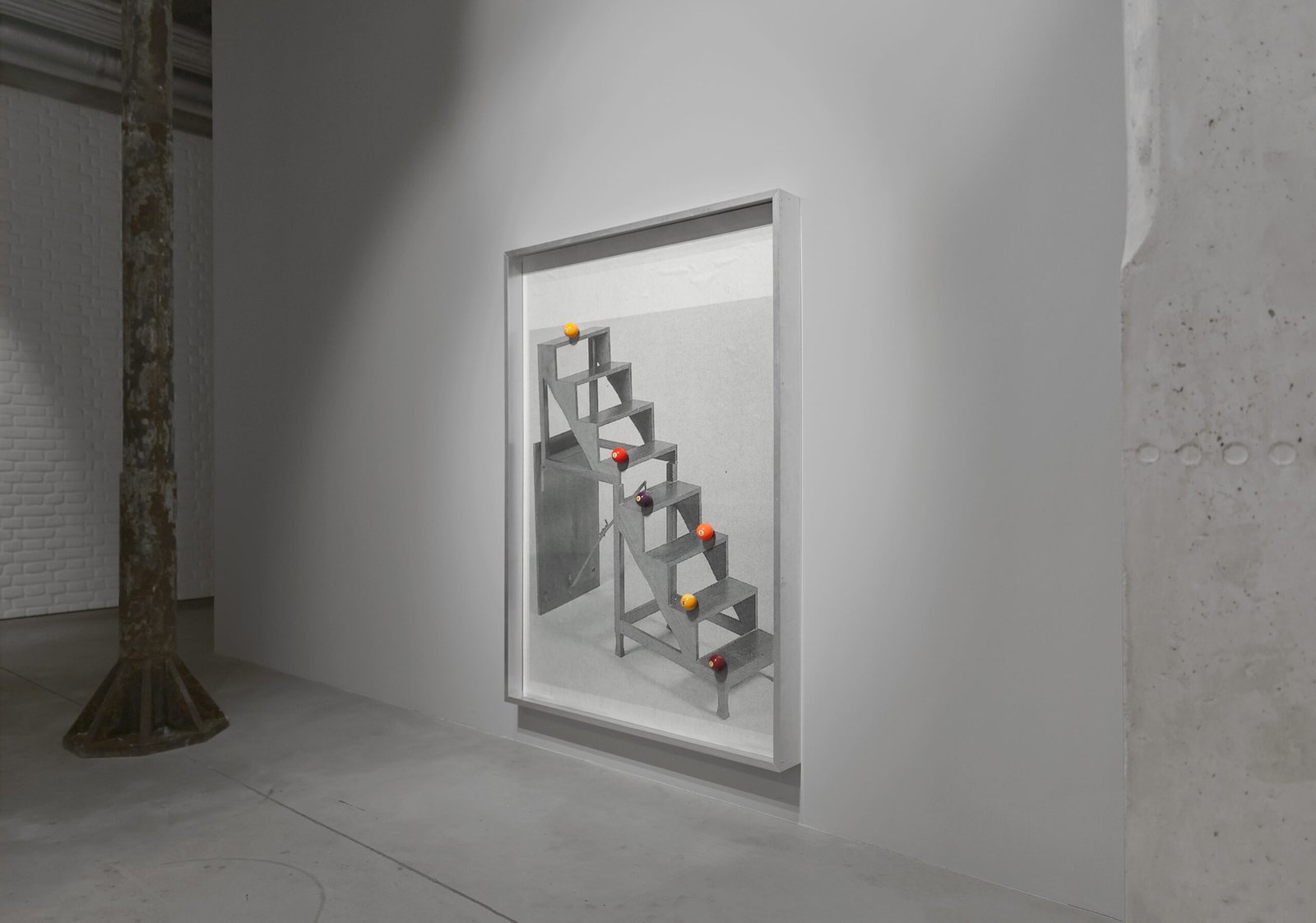
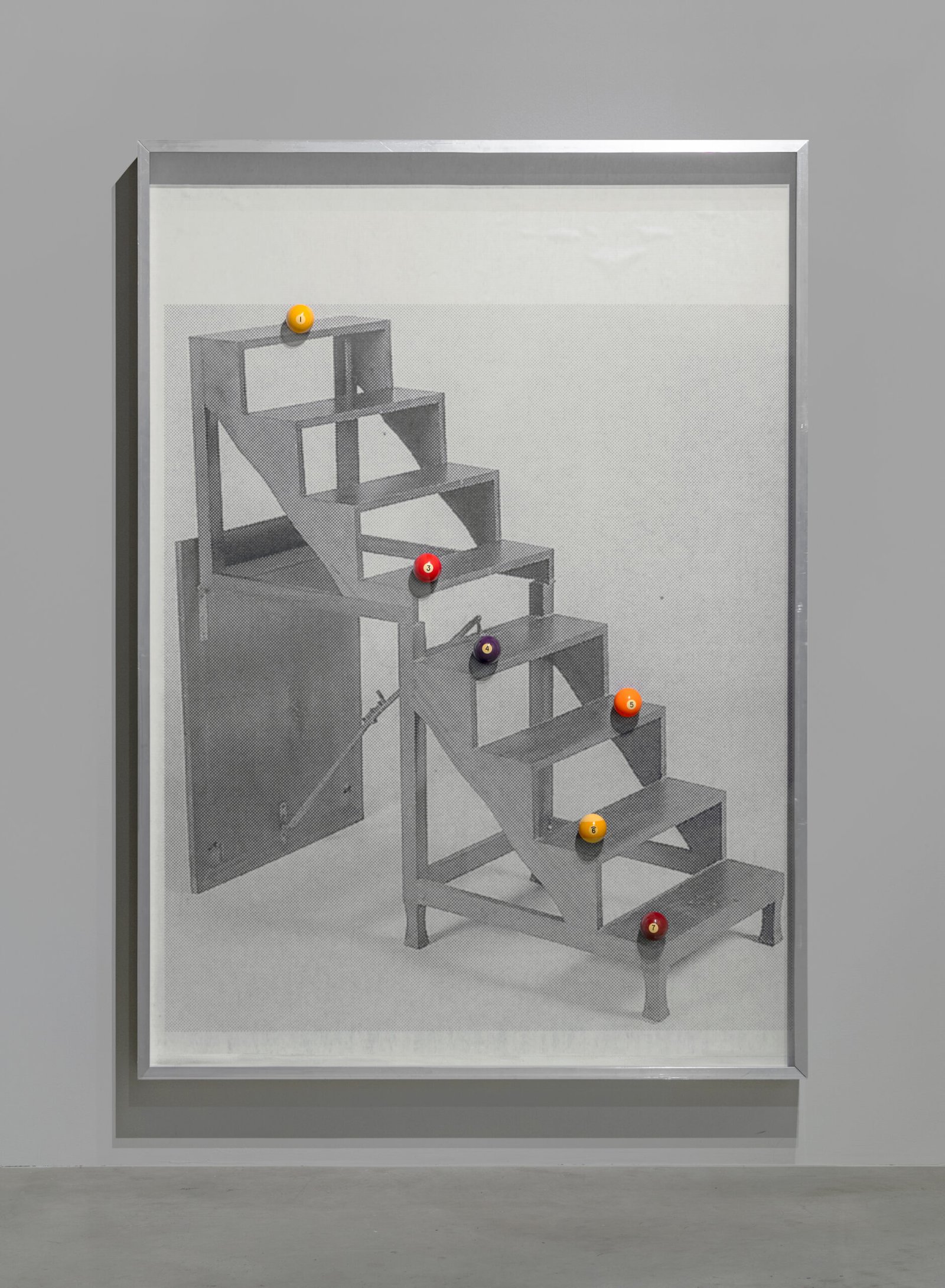
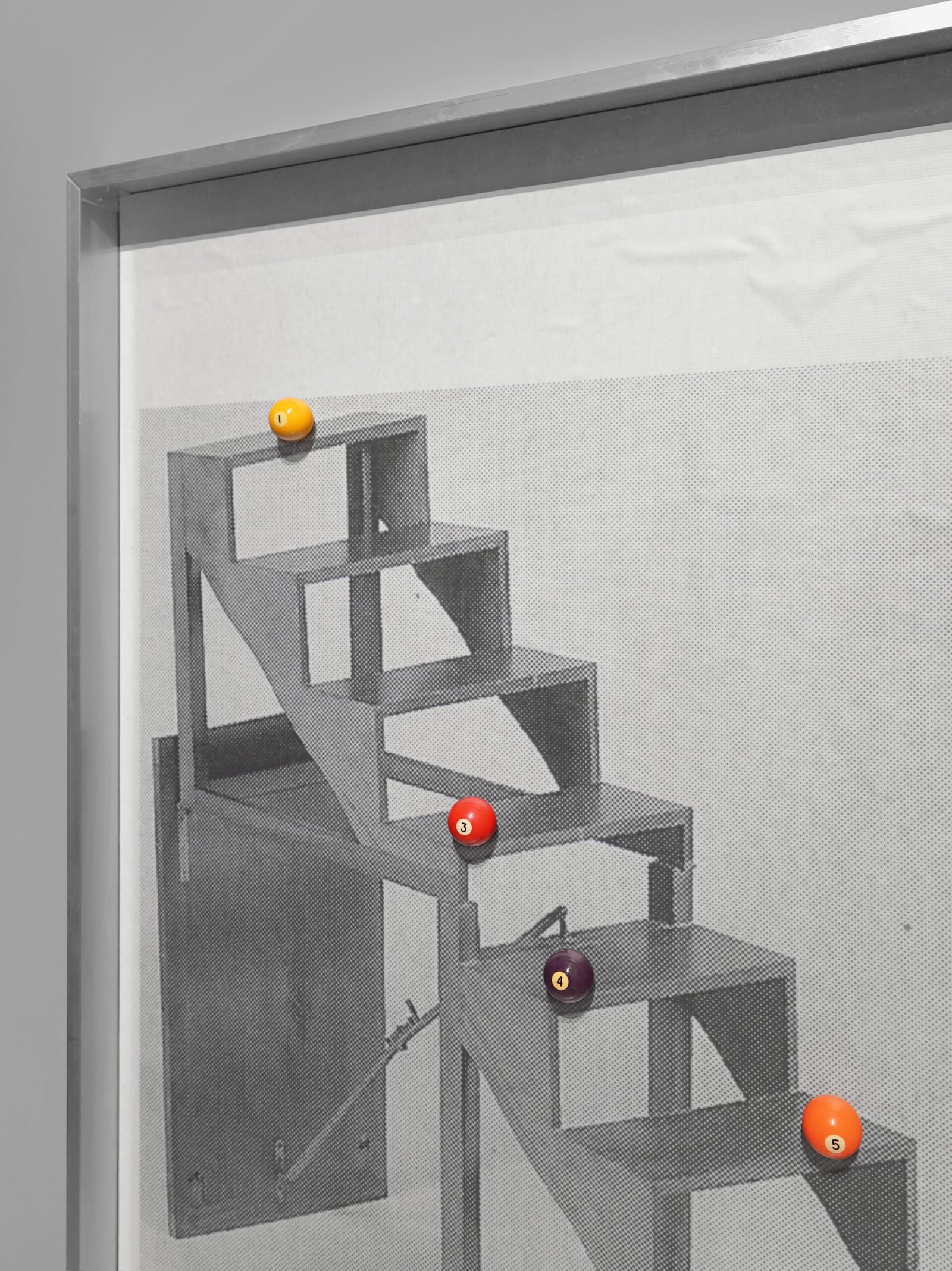
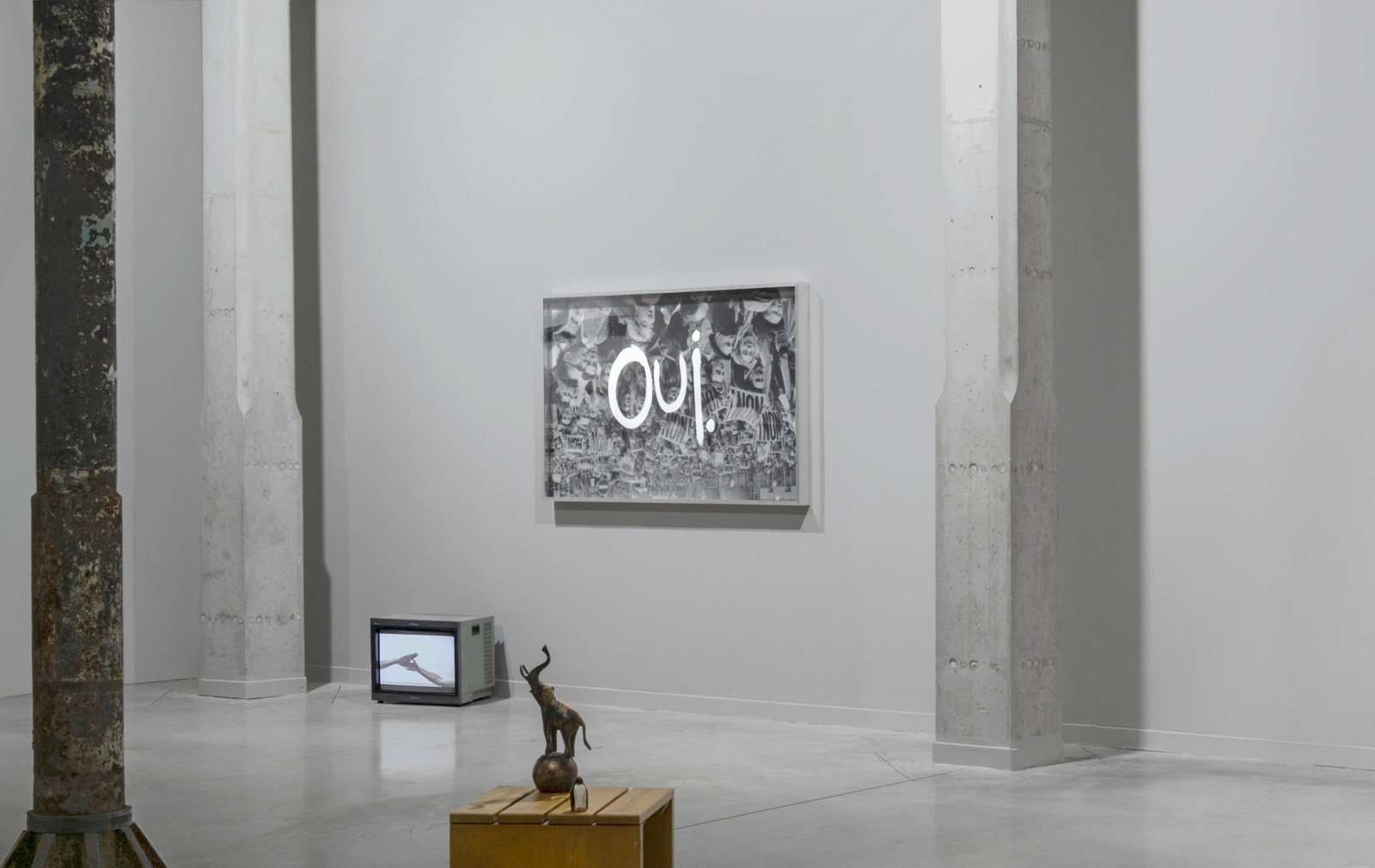
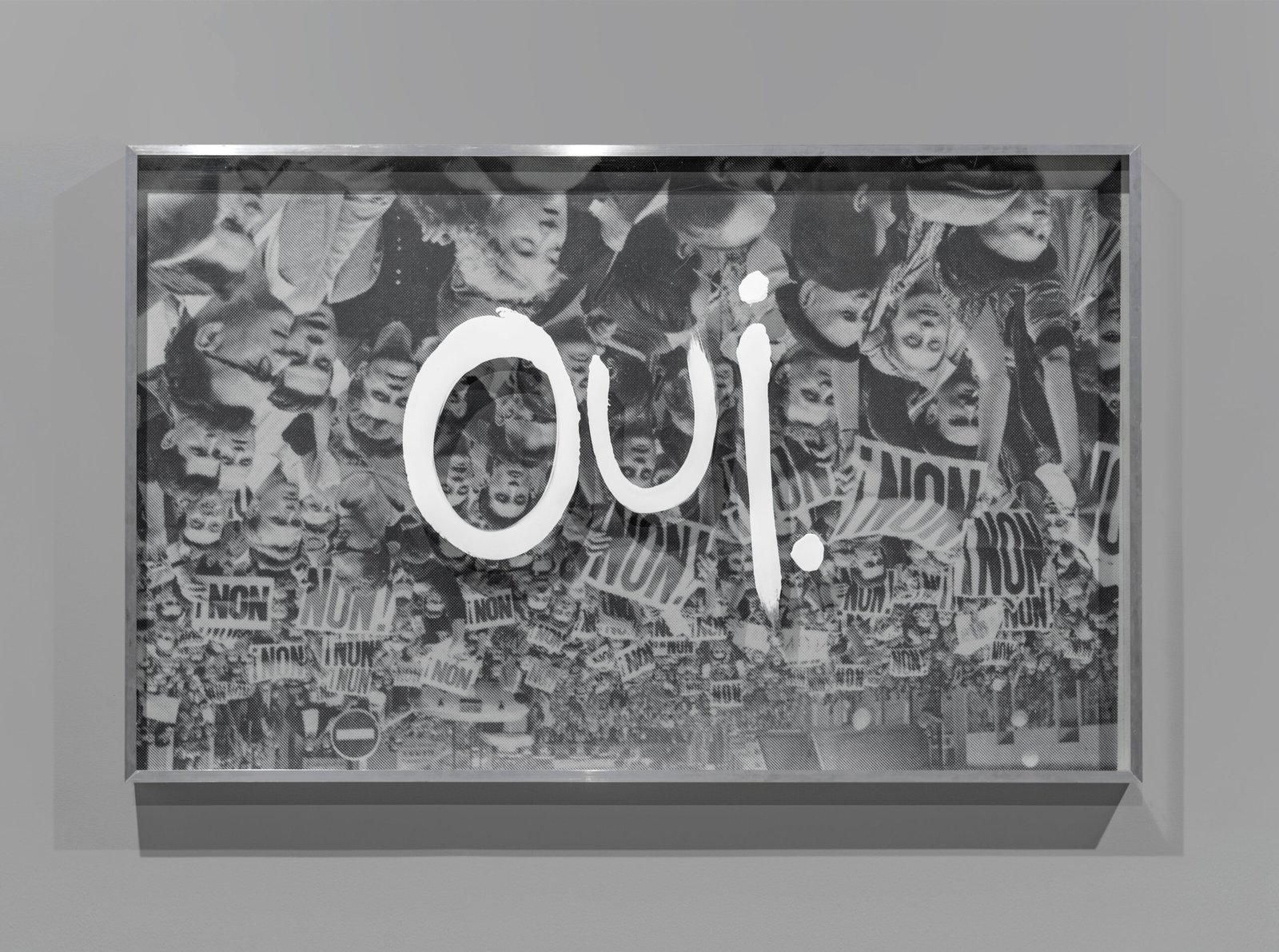
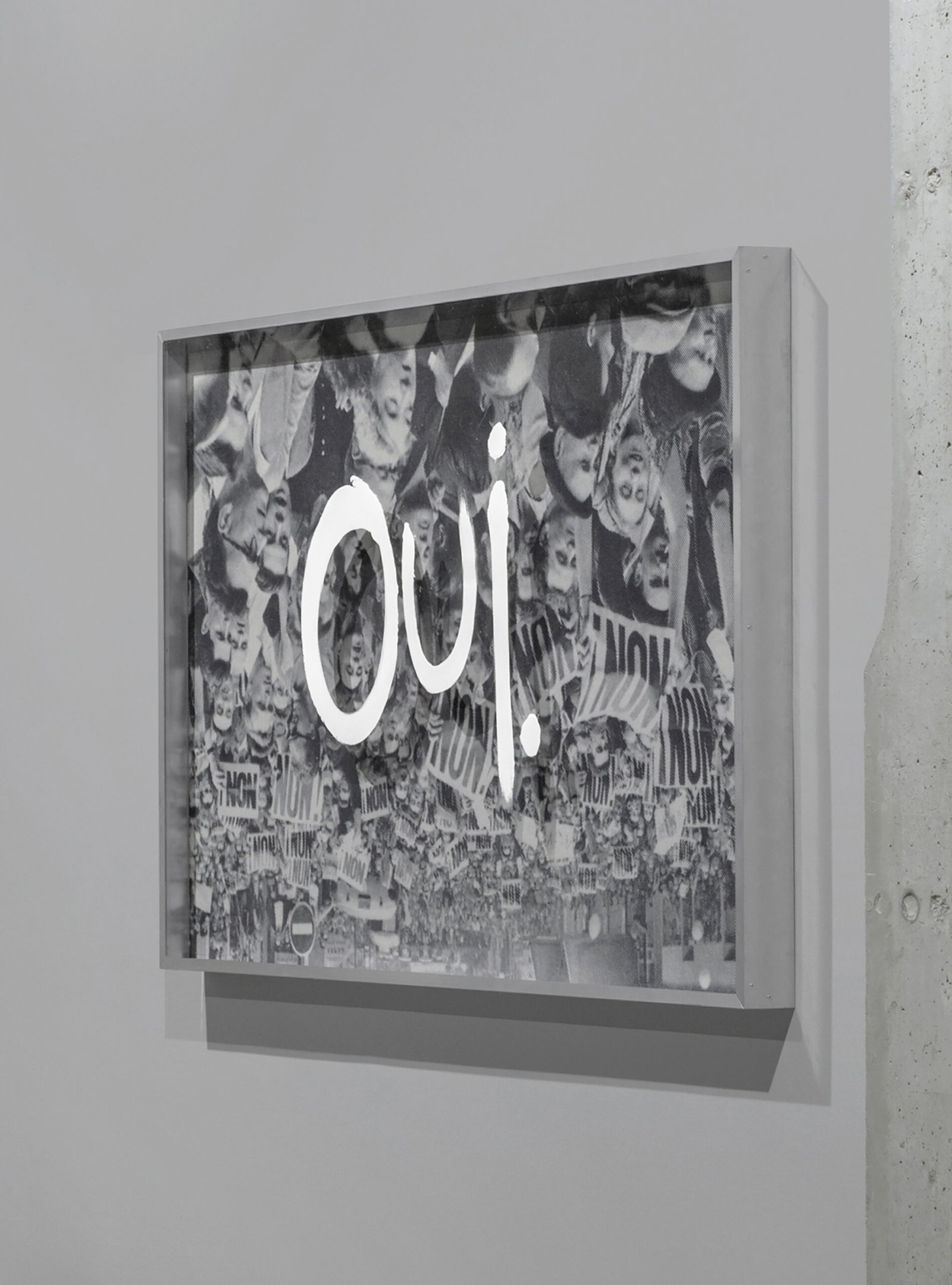




Andreea Anghel’s exhibition “The Blind Man” treats the archive as a living, creative process. Its title alludes to the 1917 Dadaist magazine “The Blind Man”, founded in New York by Marcel Duchamp, Henri-Pierre Roché and Beatrice Wood. Yet the exhibition is not a continuation of Dadaism. Anghel does not quote history; instead, she draws on her long-standing practice of reading and interpreting the images and objects she has gathered. At 66P she updates the magazine’s symbolic title, infusing it with her own interpretation.
The central theme is ideological blindness – an inner mechanism that enables one to see only what is convenient. It bears no relation to sensory impairment. In Anghel’s narrative, the deliberately blind person may provoke contempt in relation to their surroundings or rise to become a powerful political figure. The works seek to capture this internal contradiction and reveal its impact on social situations.
The exhibition leads us into two intertwined narratives about Anghel’s practice.
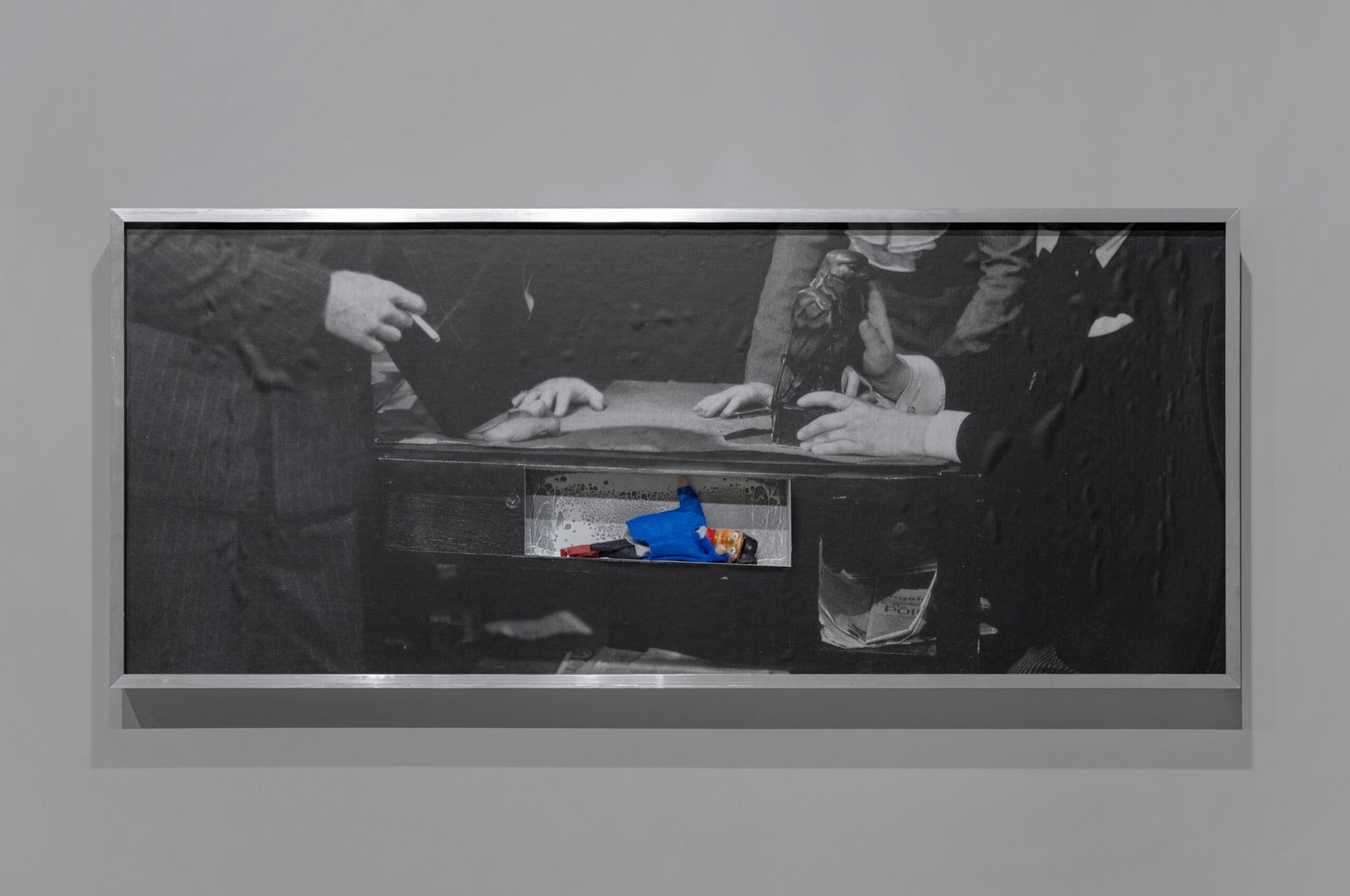
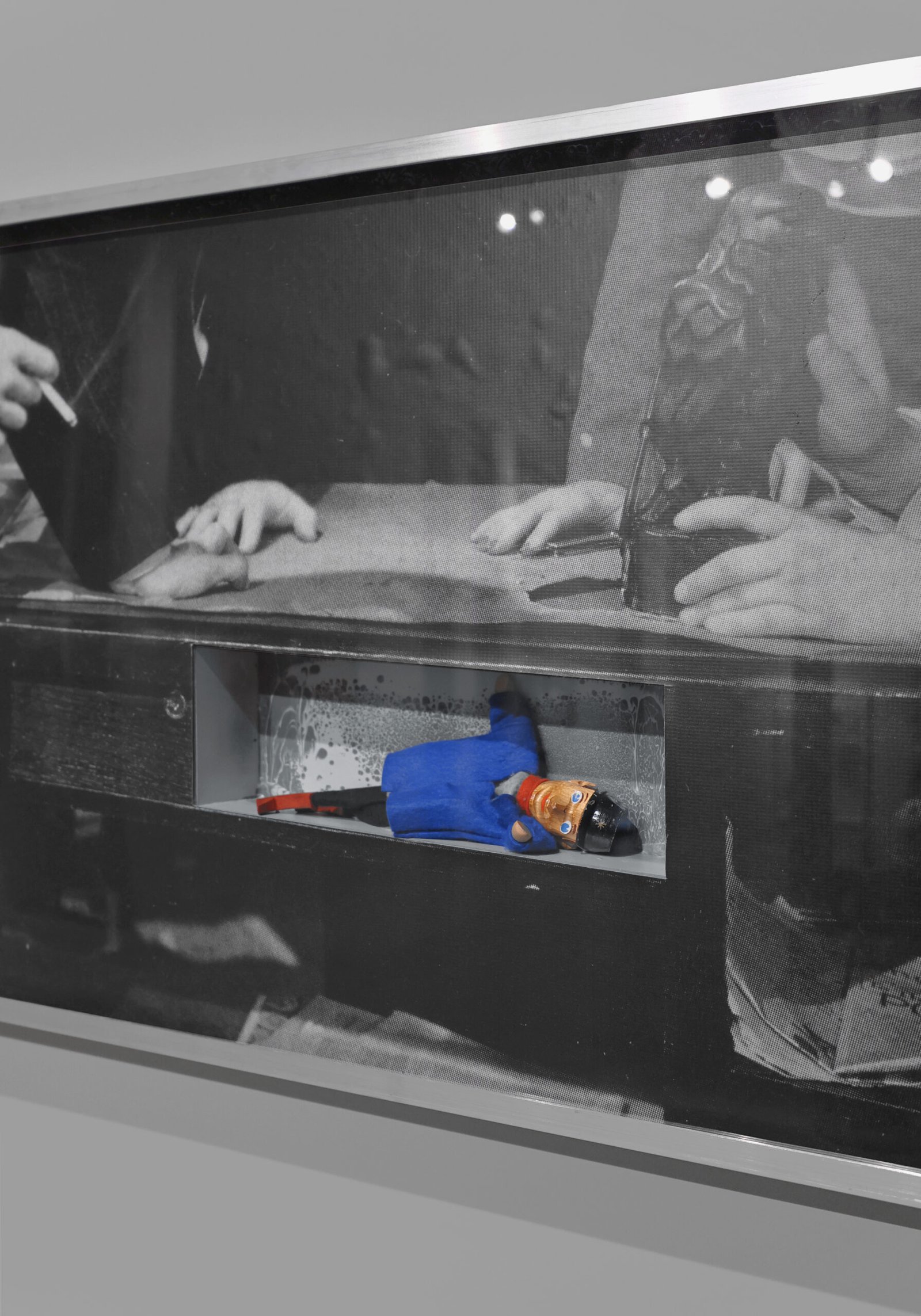
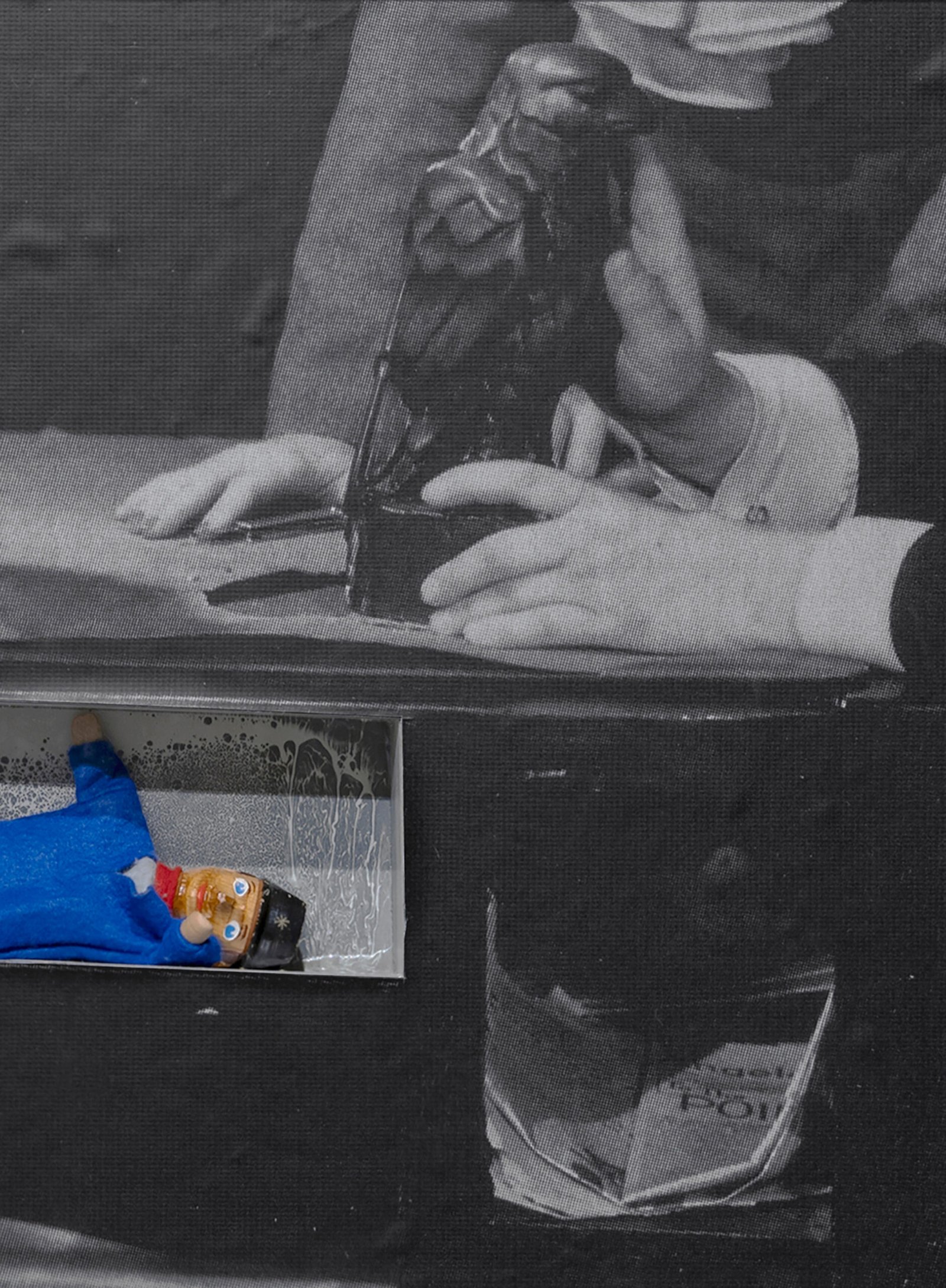
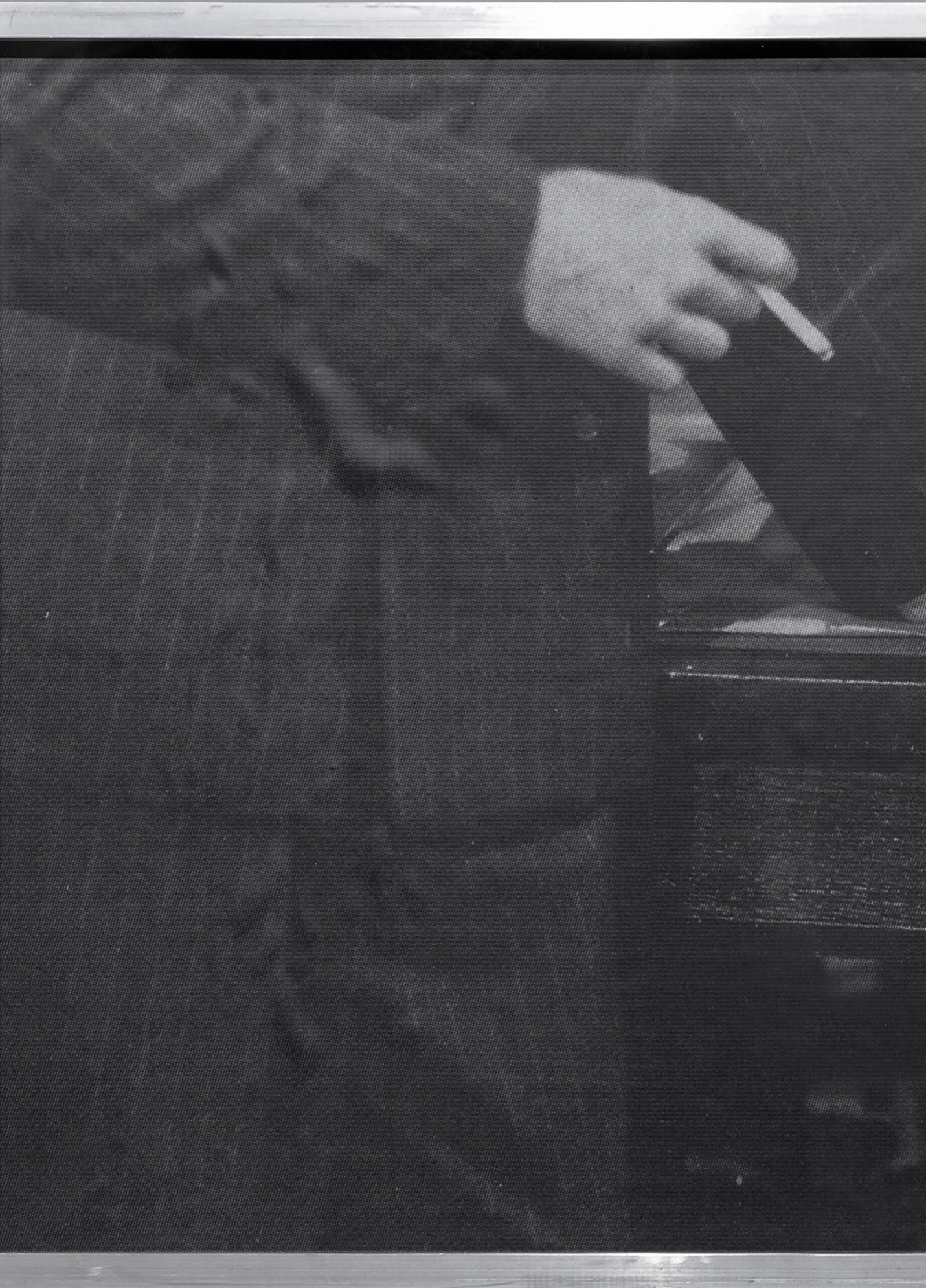
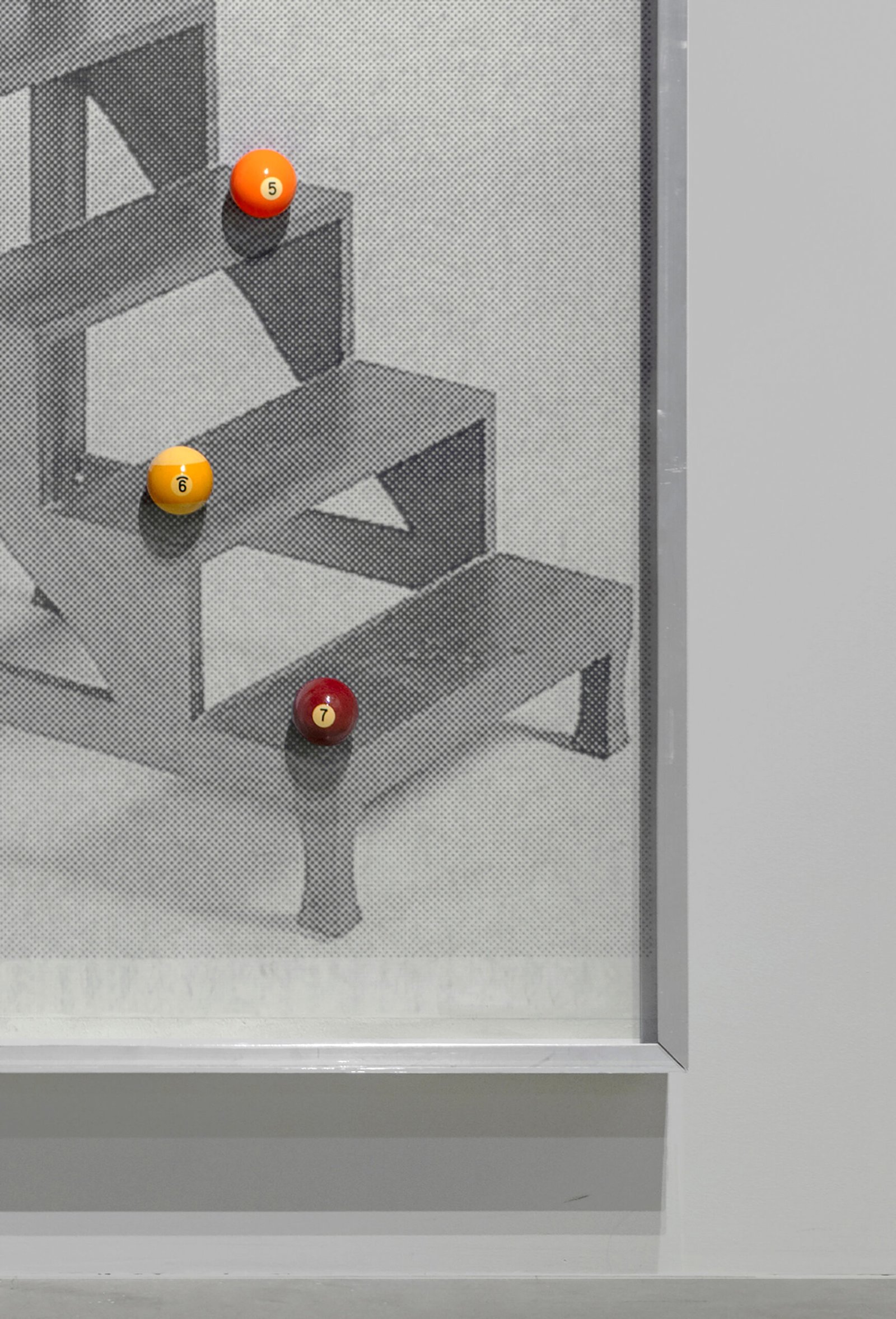
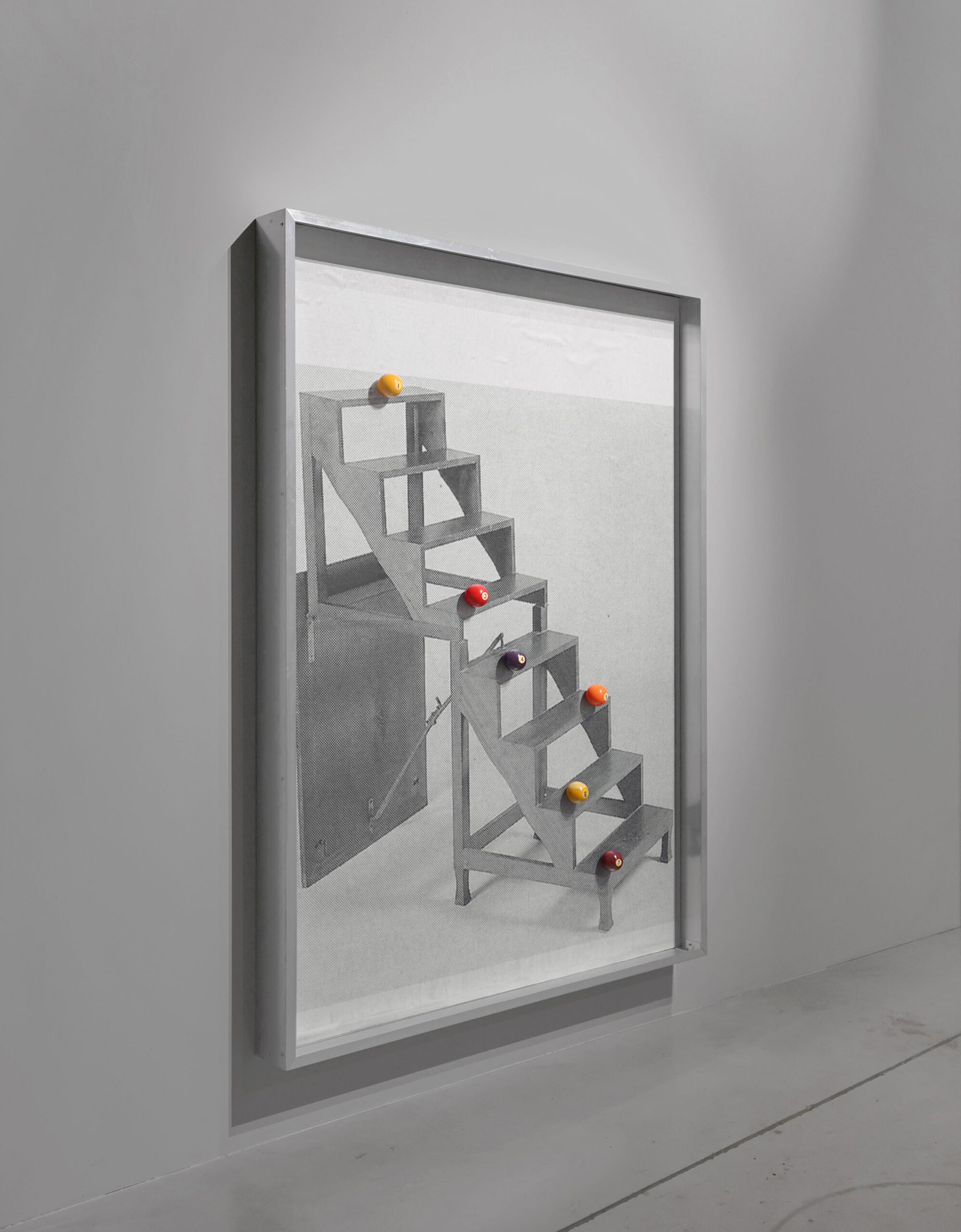
The first is a presentation of scans collected over many years. Removed from their original contexts and incorporated into the works, they include images from books on various subjects, originating from different countries and found at different moments. The Romanian artist draws inspiration from Aby Warburg’s Mnemosyne Atlas, which traced the migration of images and metaphors through time and space, and examined how gestures and emotions reflect the underlying psychology of an era. Warburg bridged high and popular culture – from Albrecht Dürer’s paintings to golf advertisements – challenging purely stylistic analysis. Anghel works differently. Her archive is multilingual and multi-contextual, yet free of hierarchy. She gives form, but does not impose meaning. Any object may become a symbol, bound only by imagination and association.
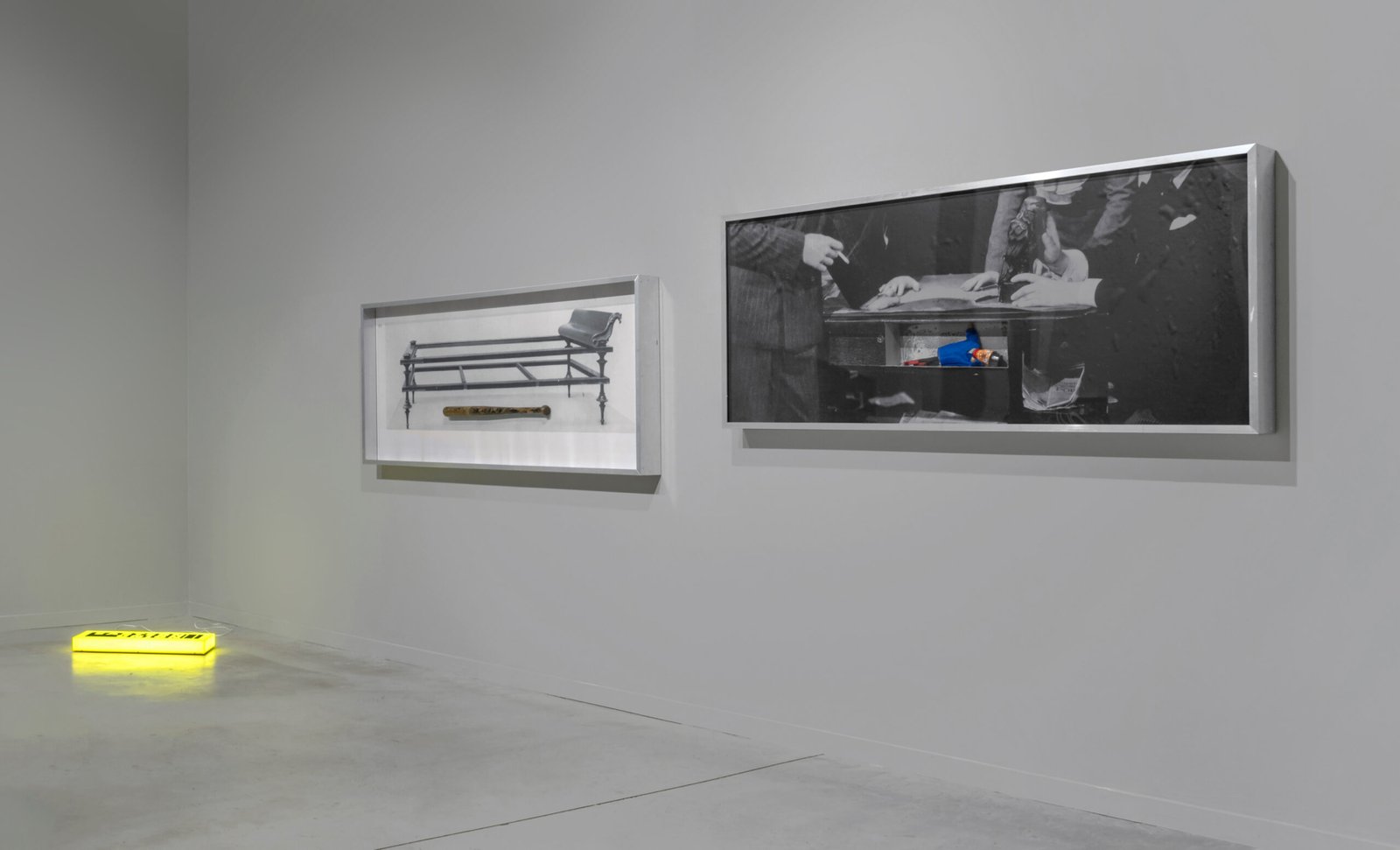
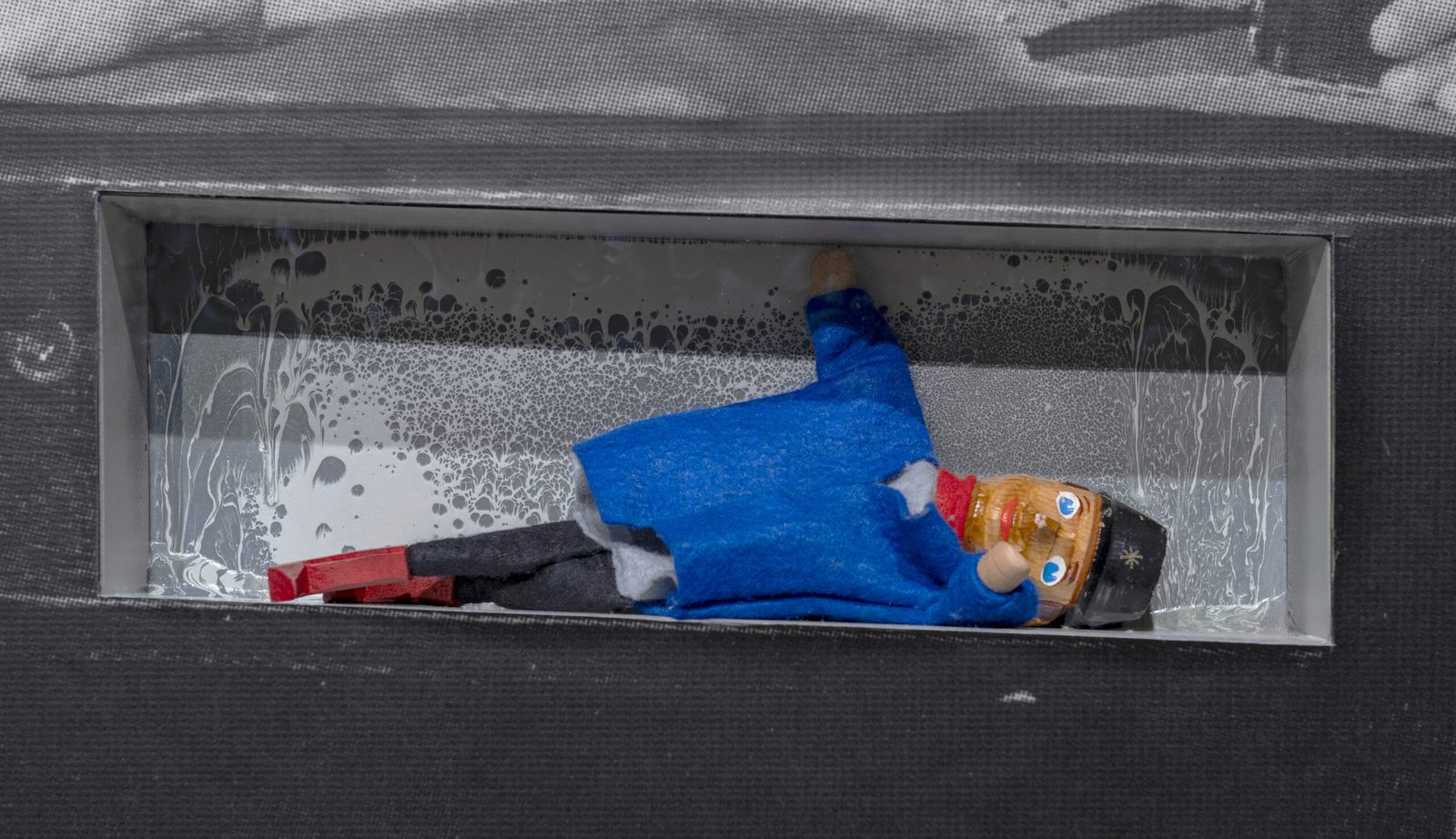
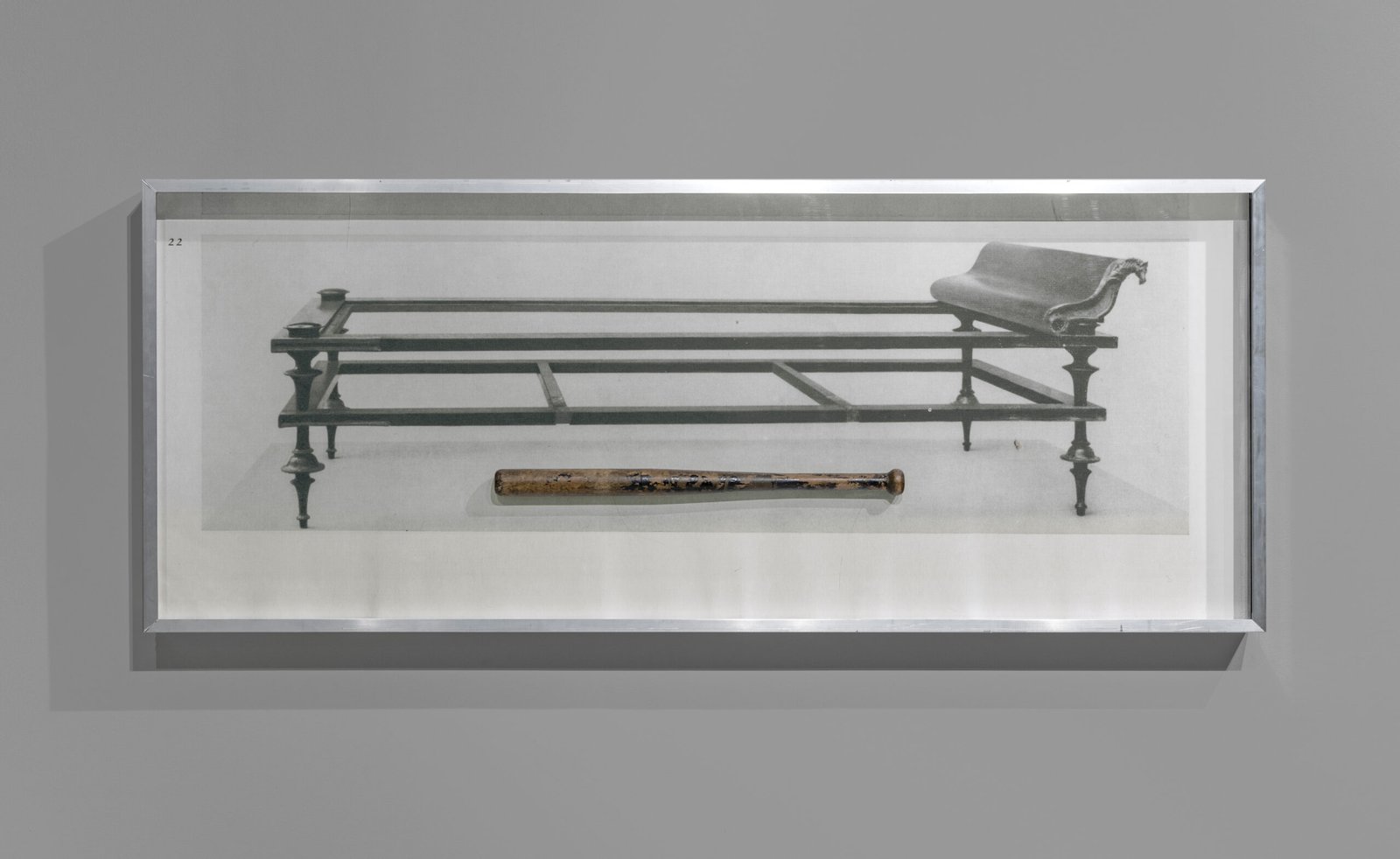
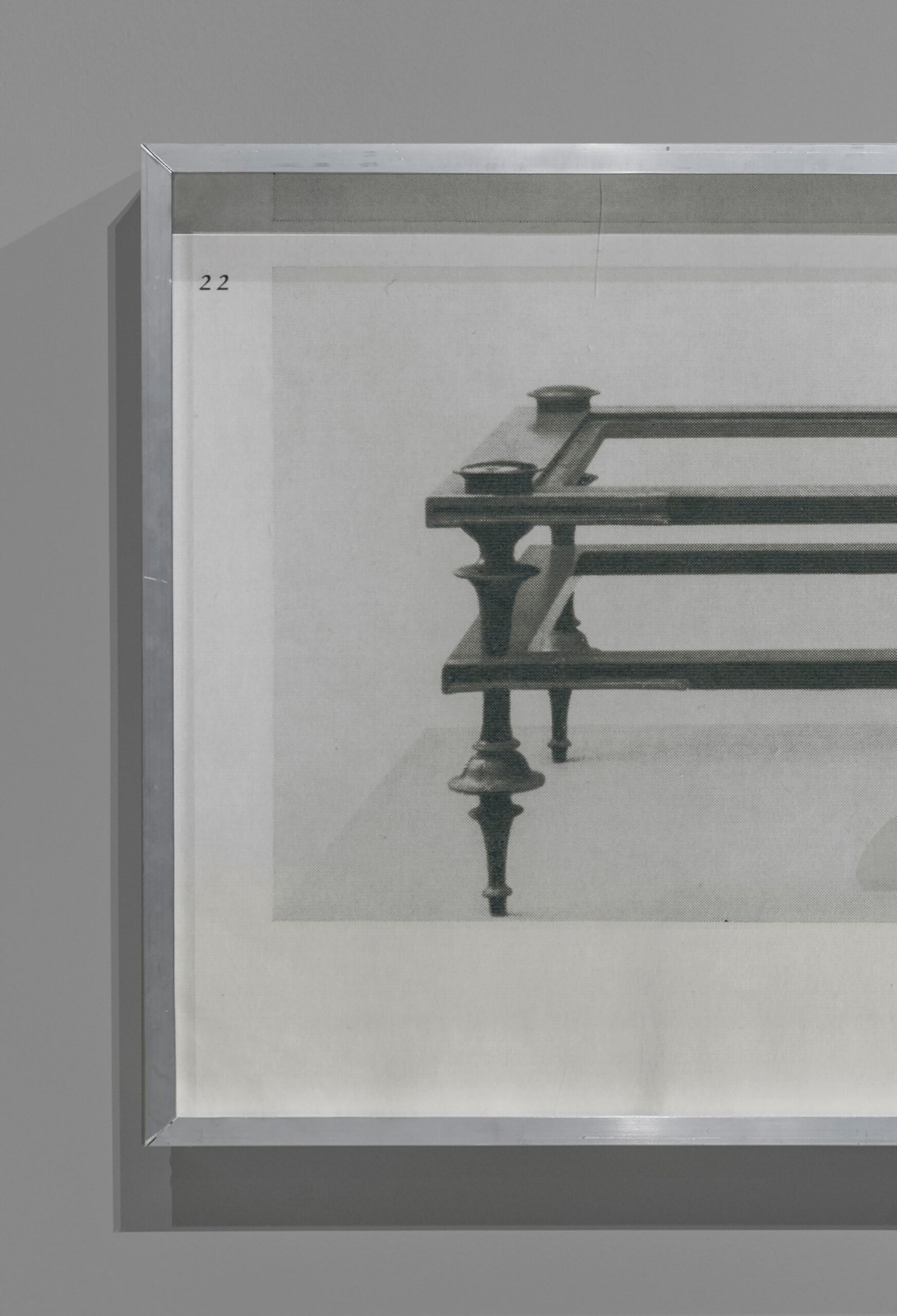
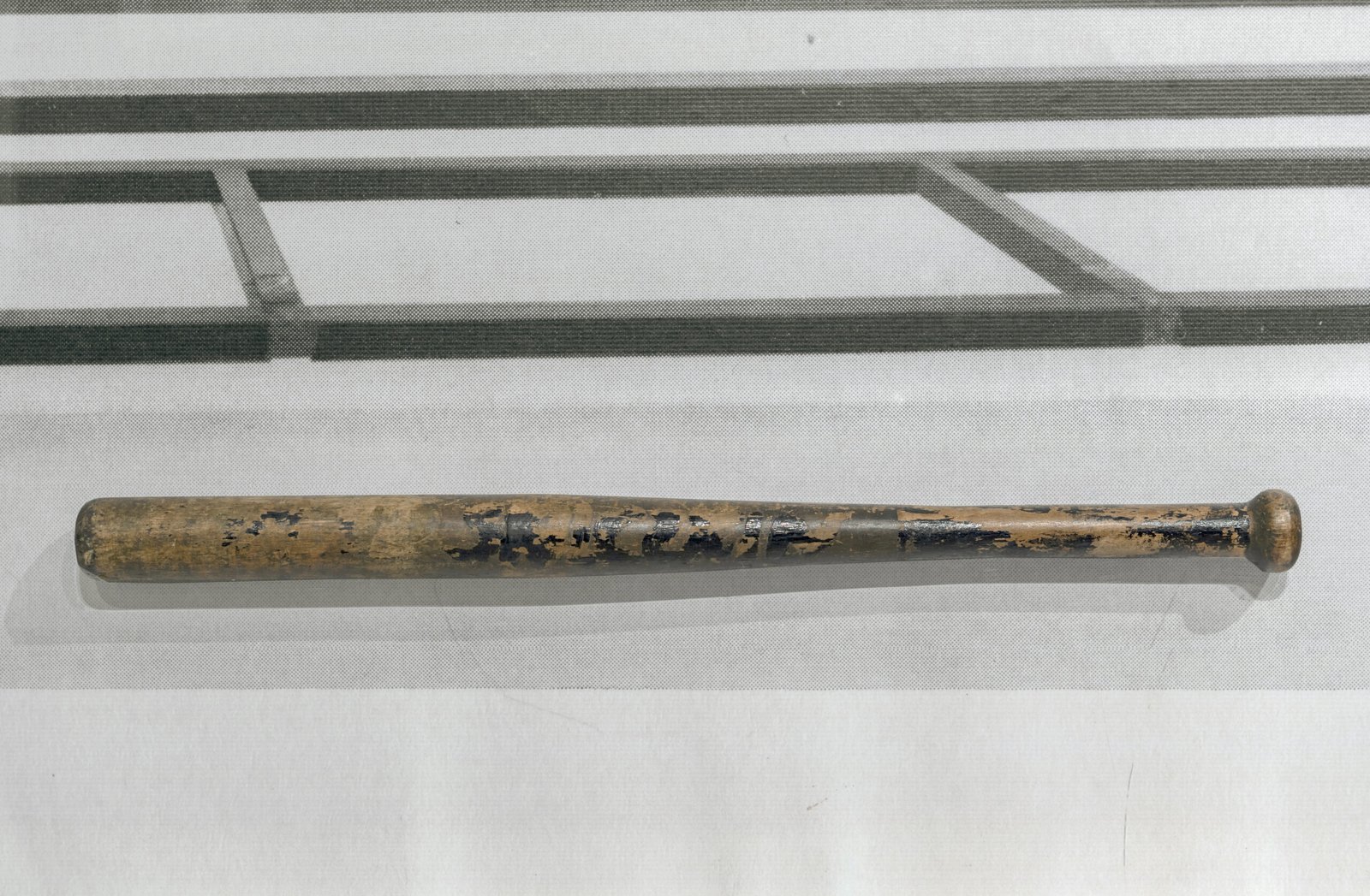
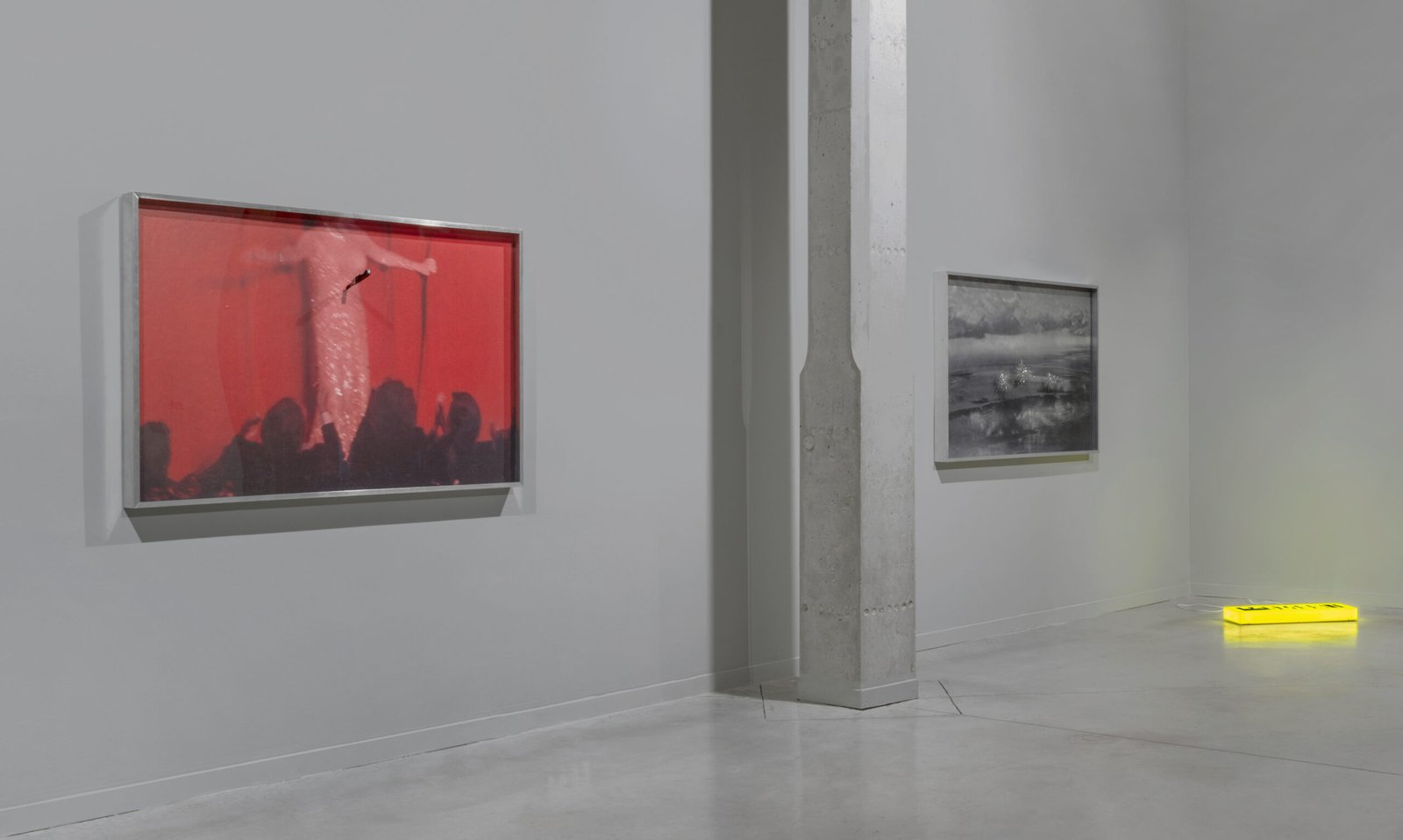
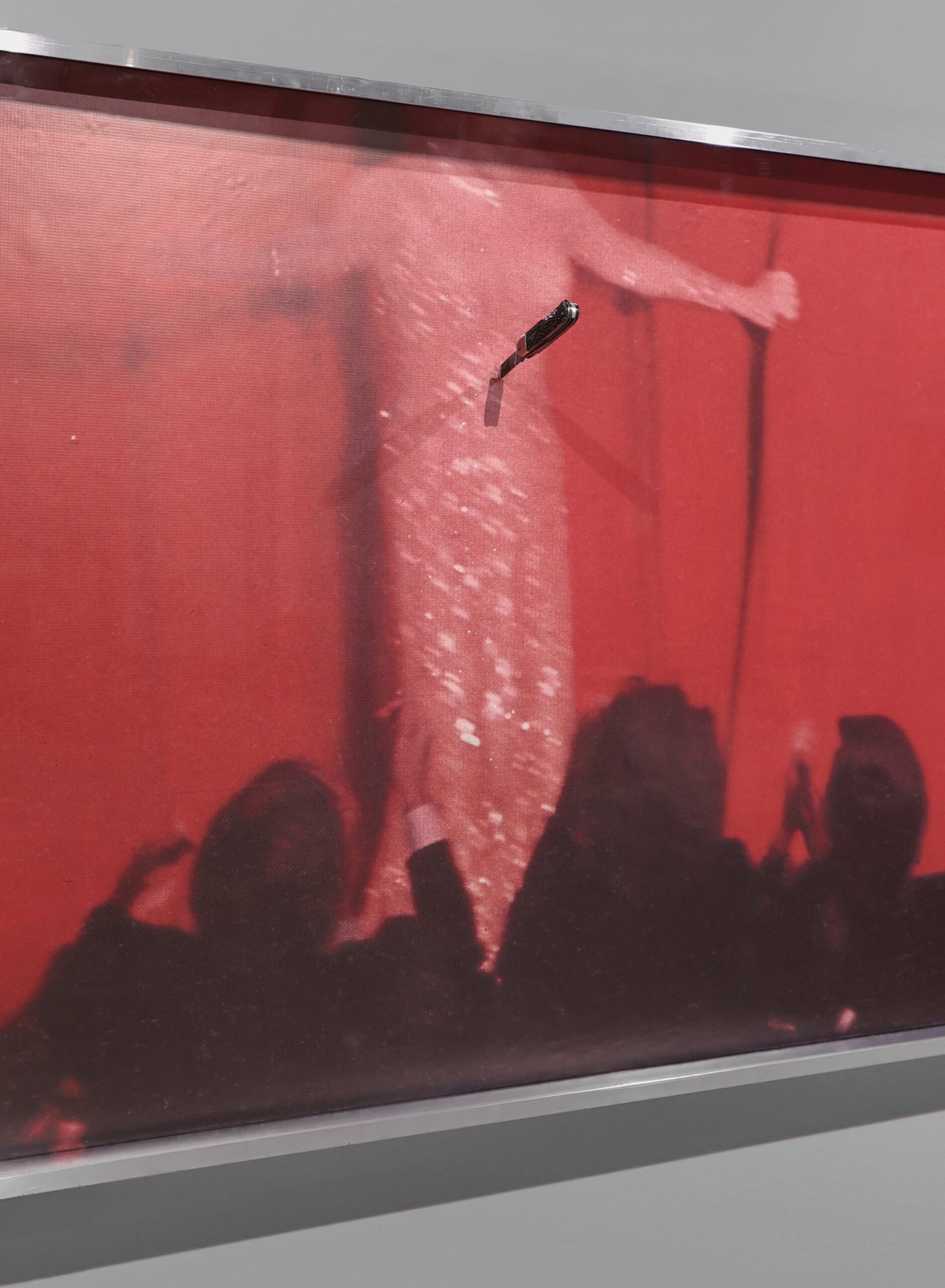
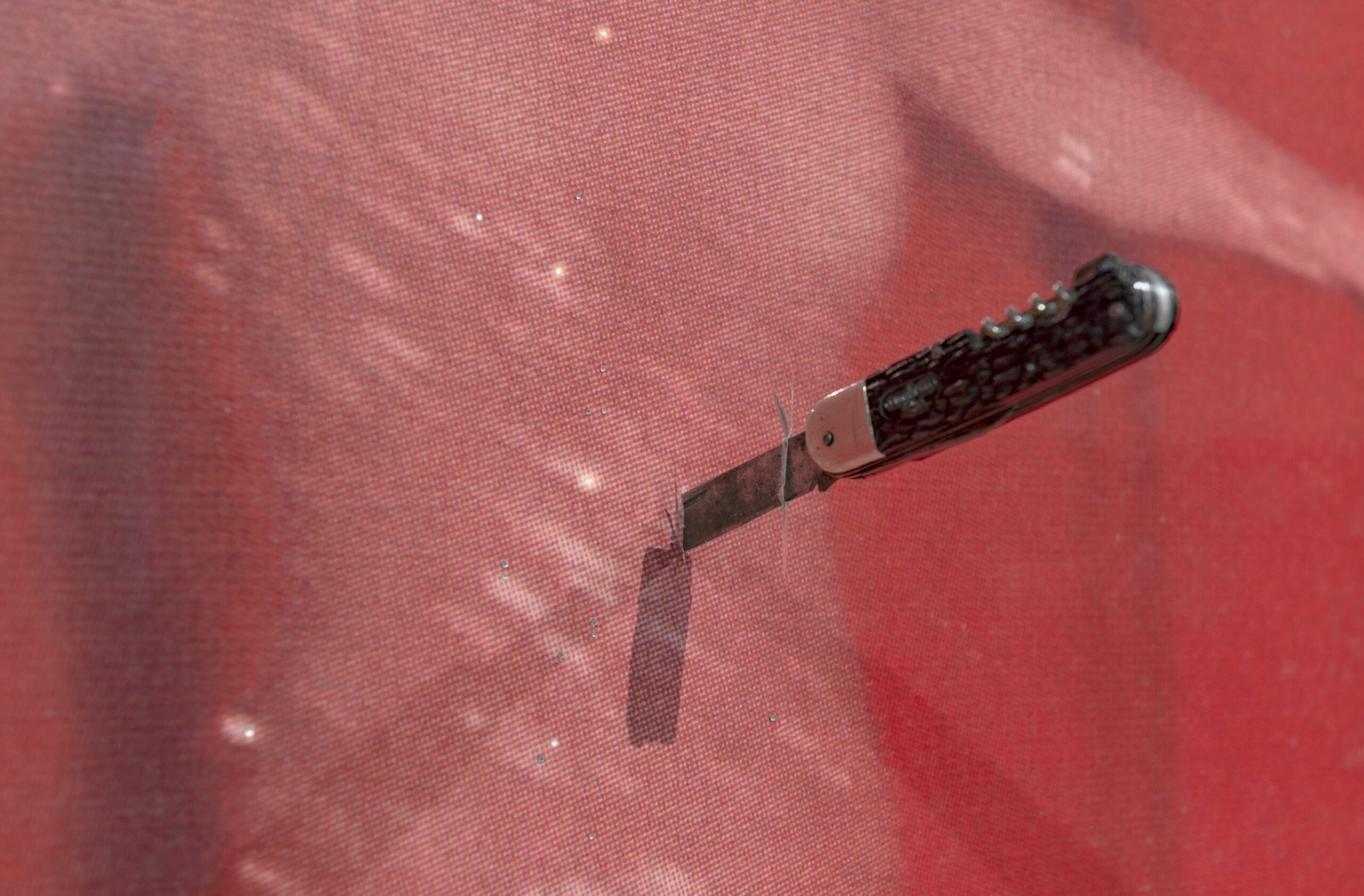
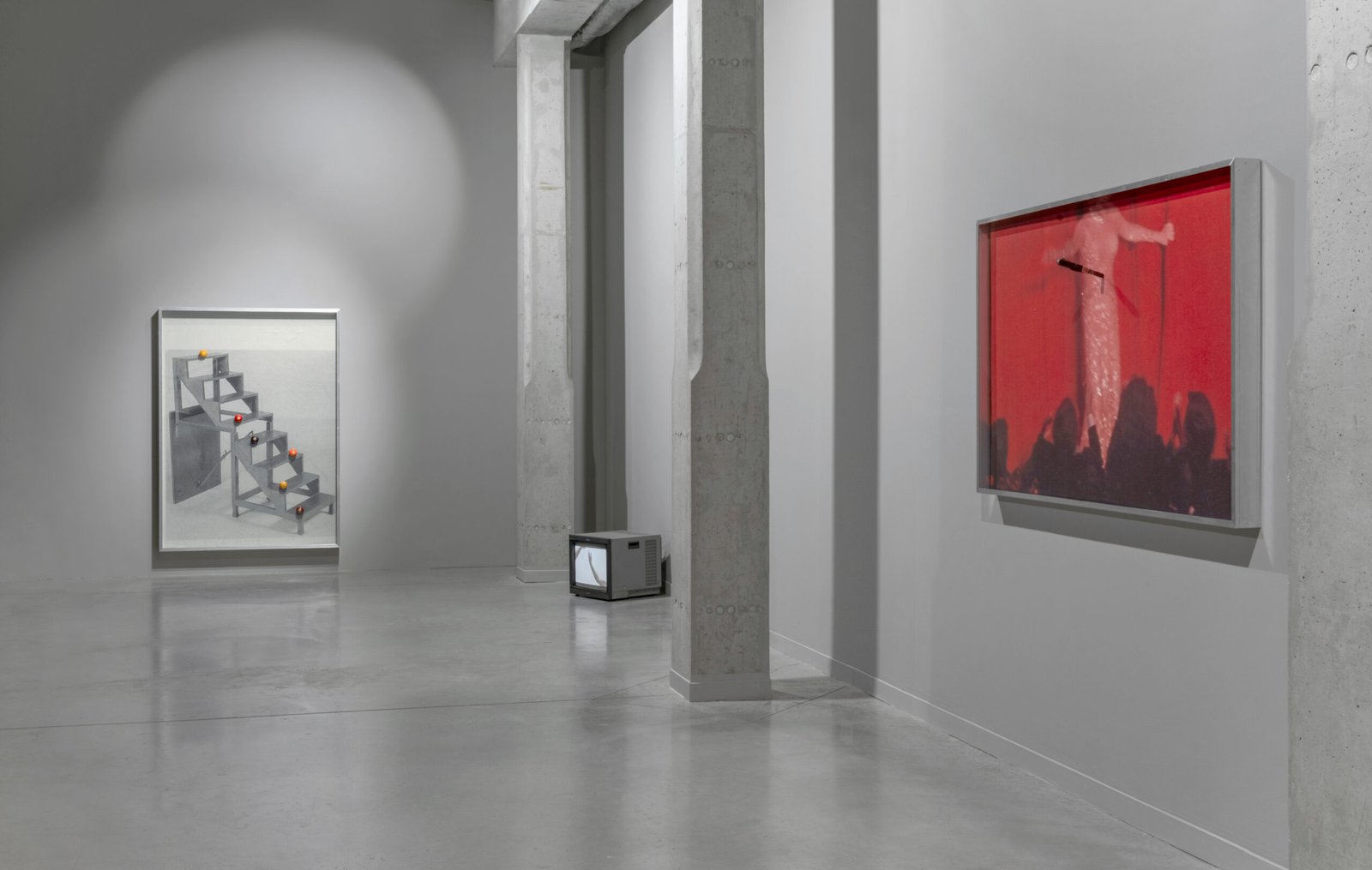
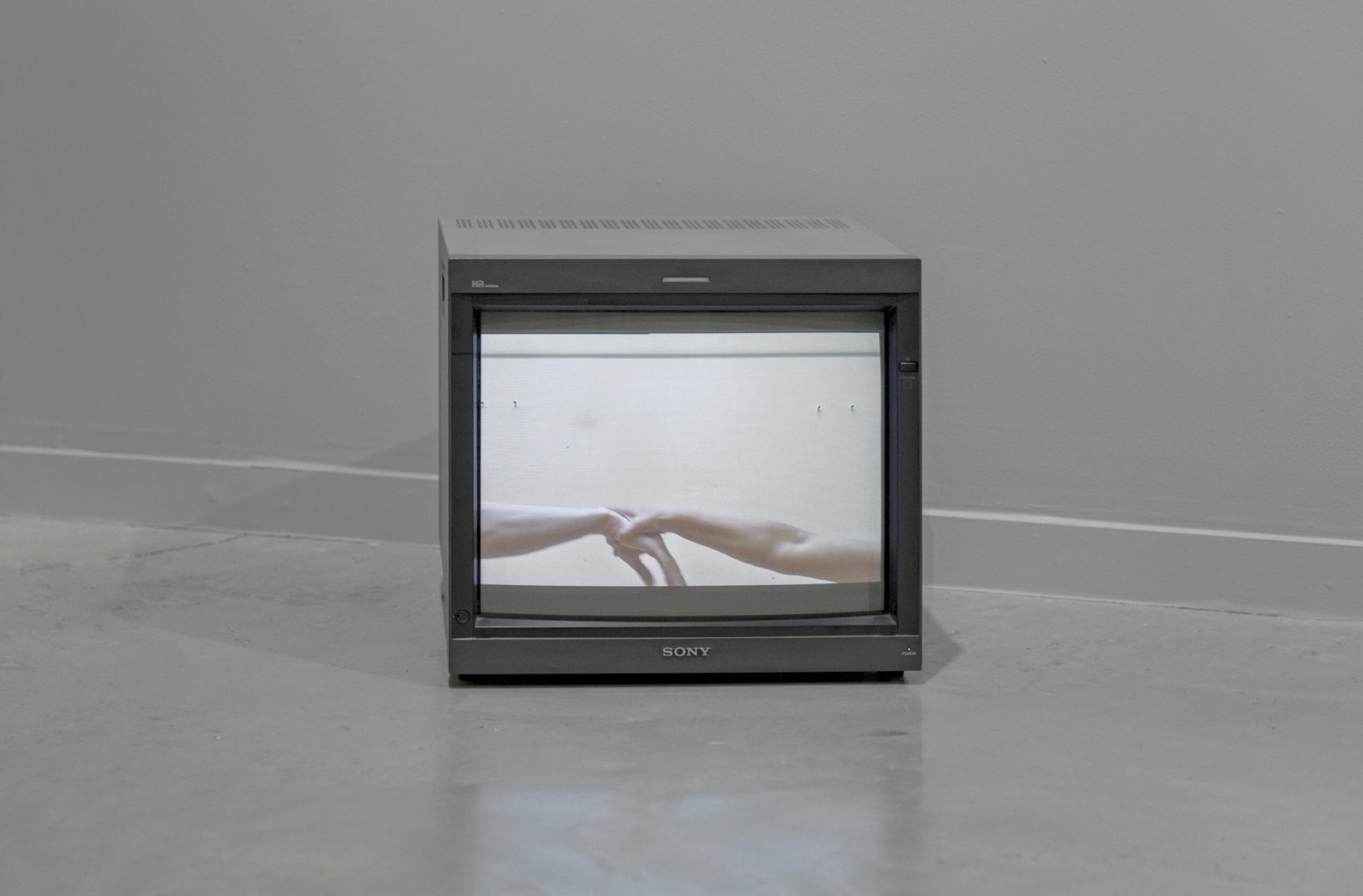
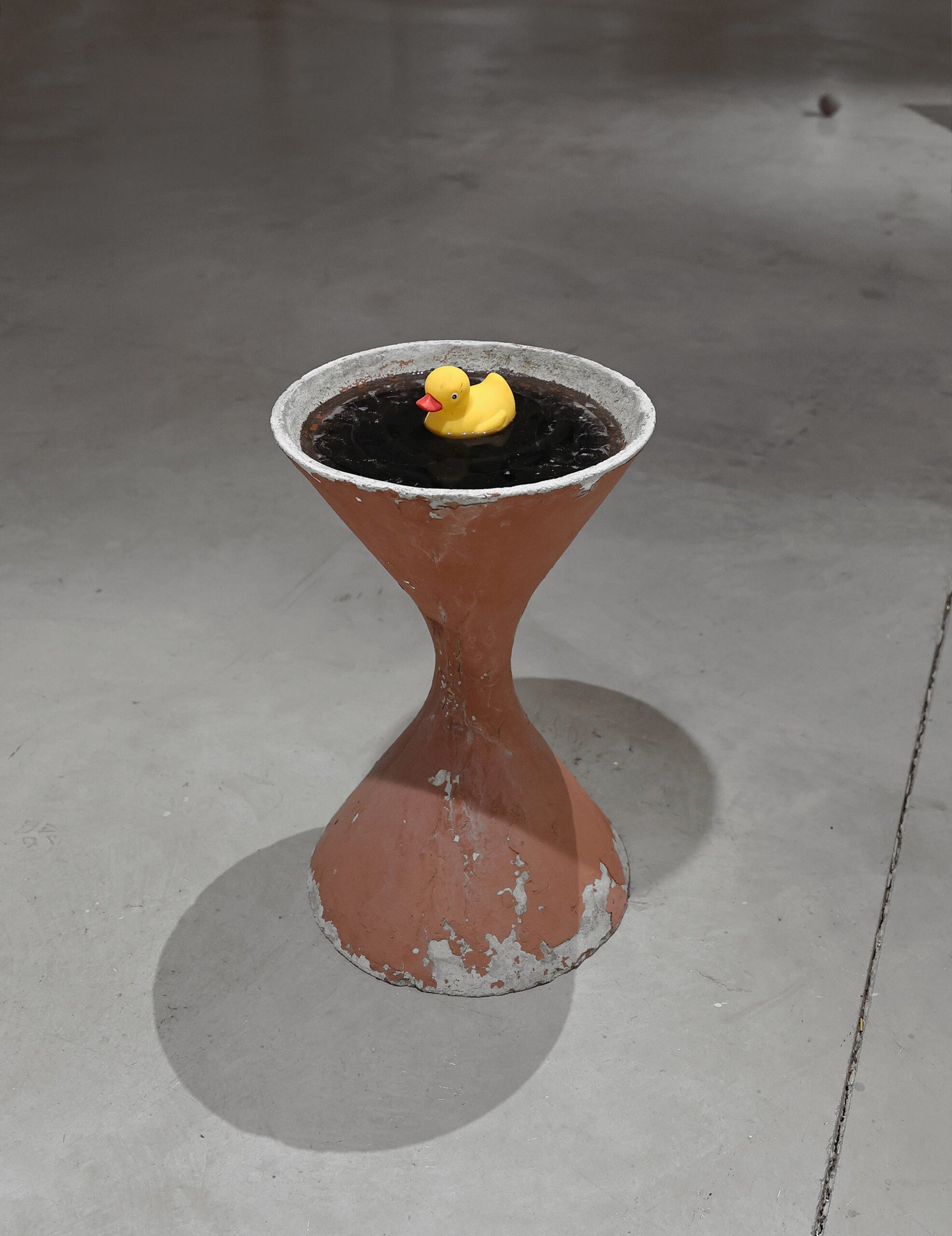
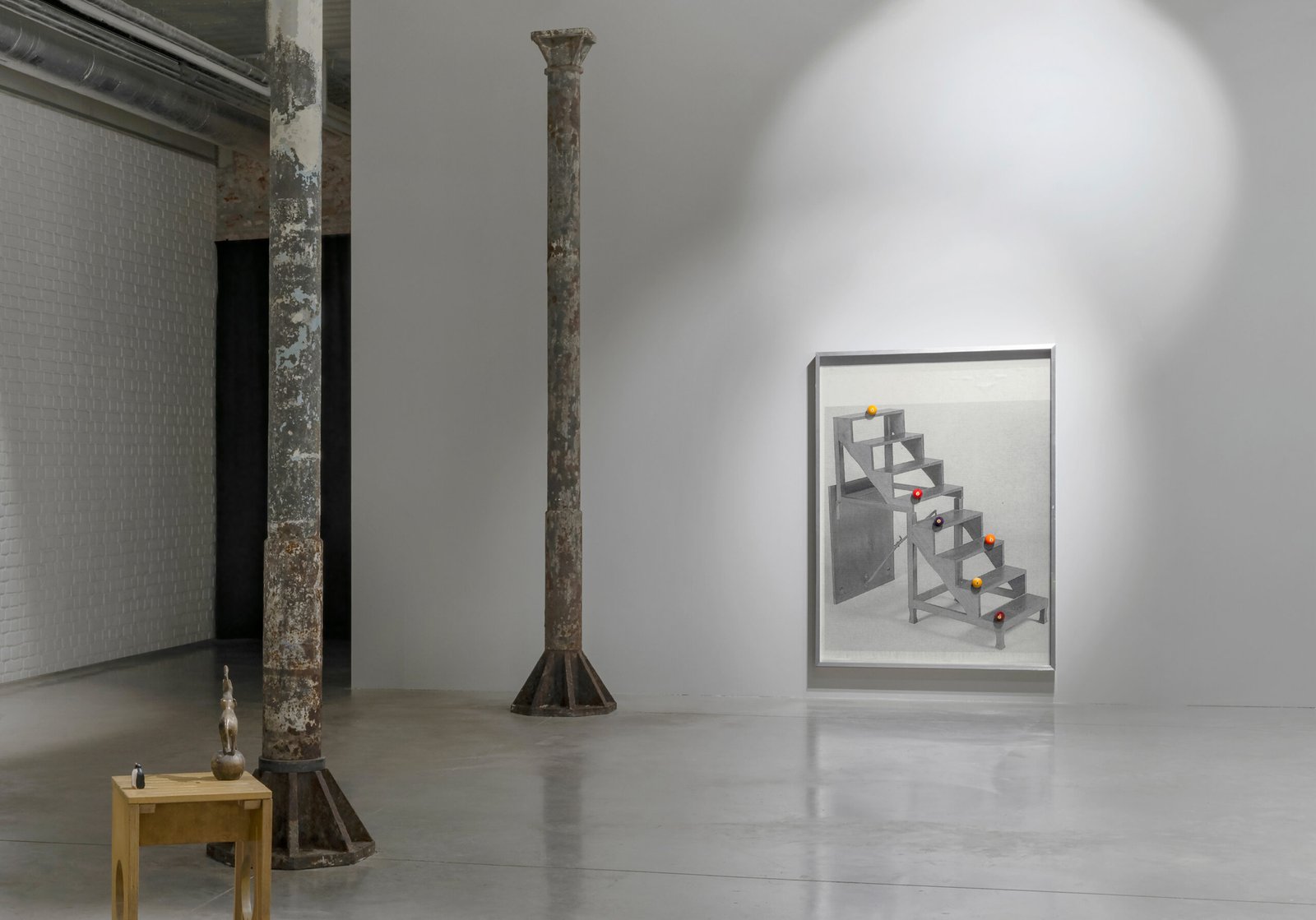
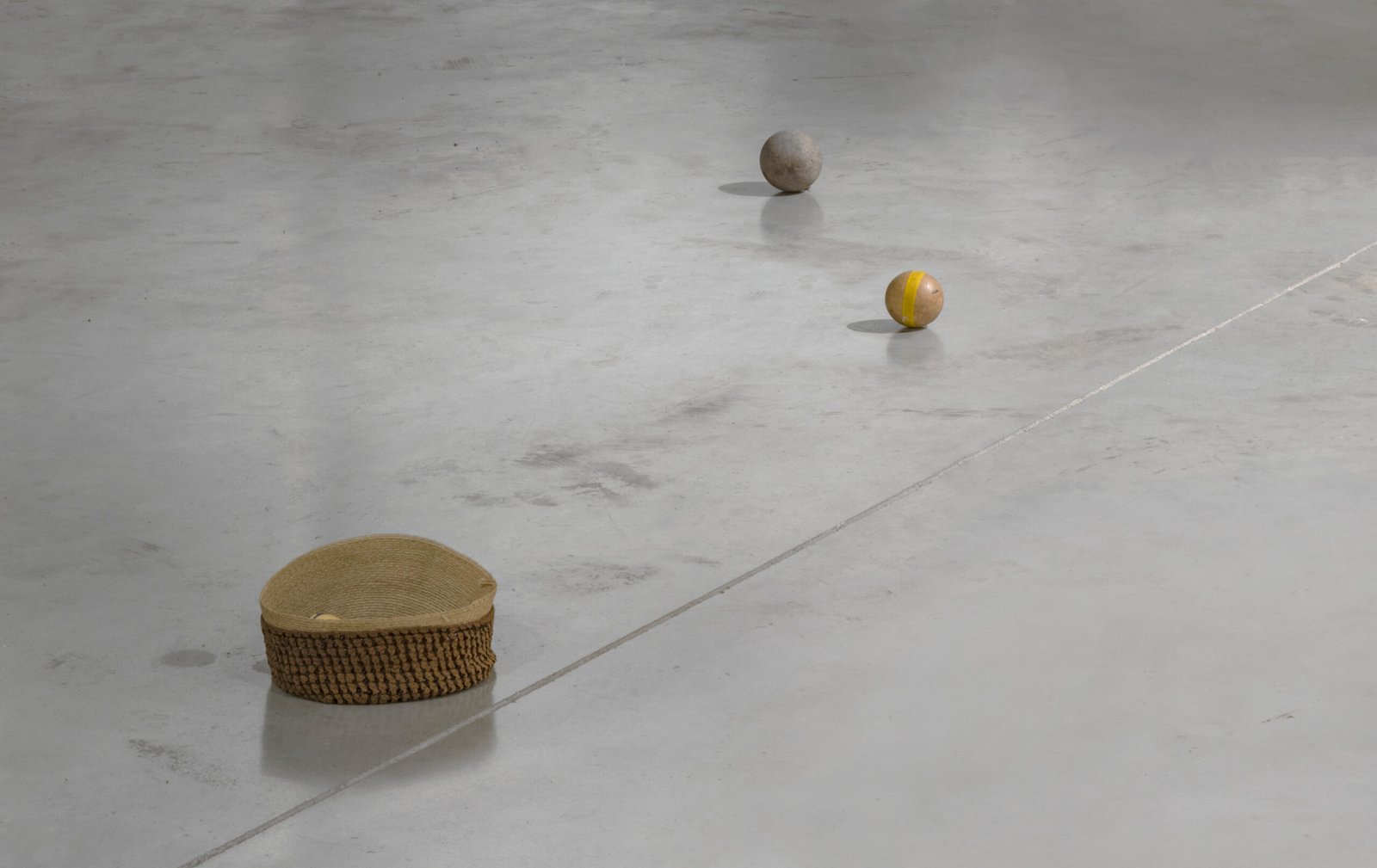
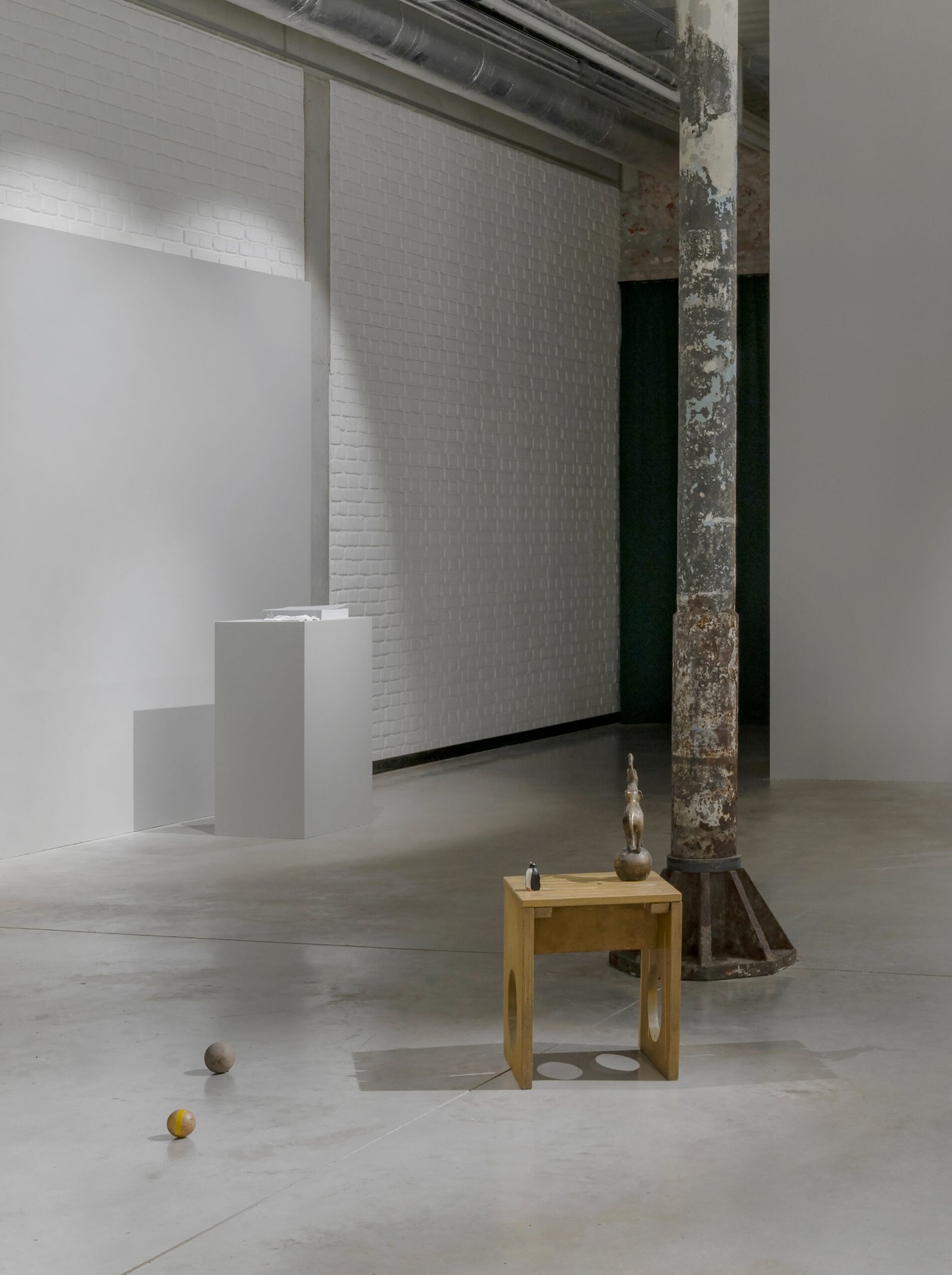
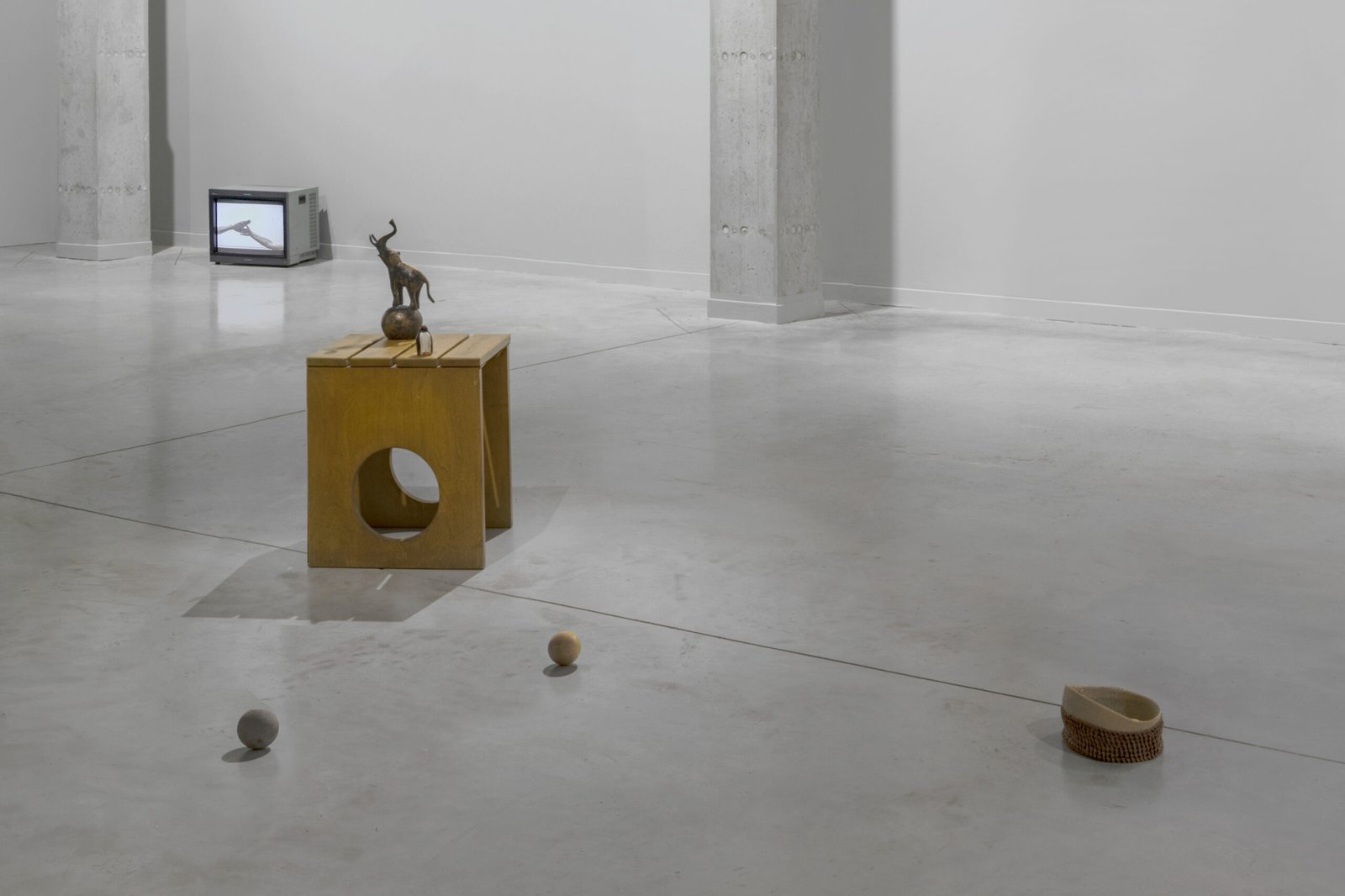
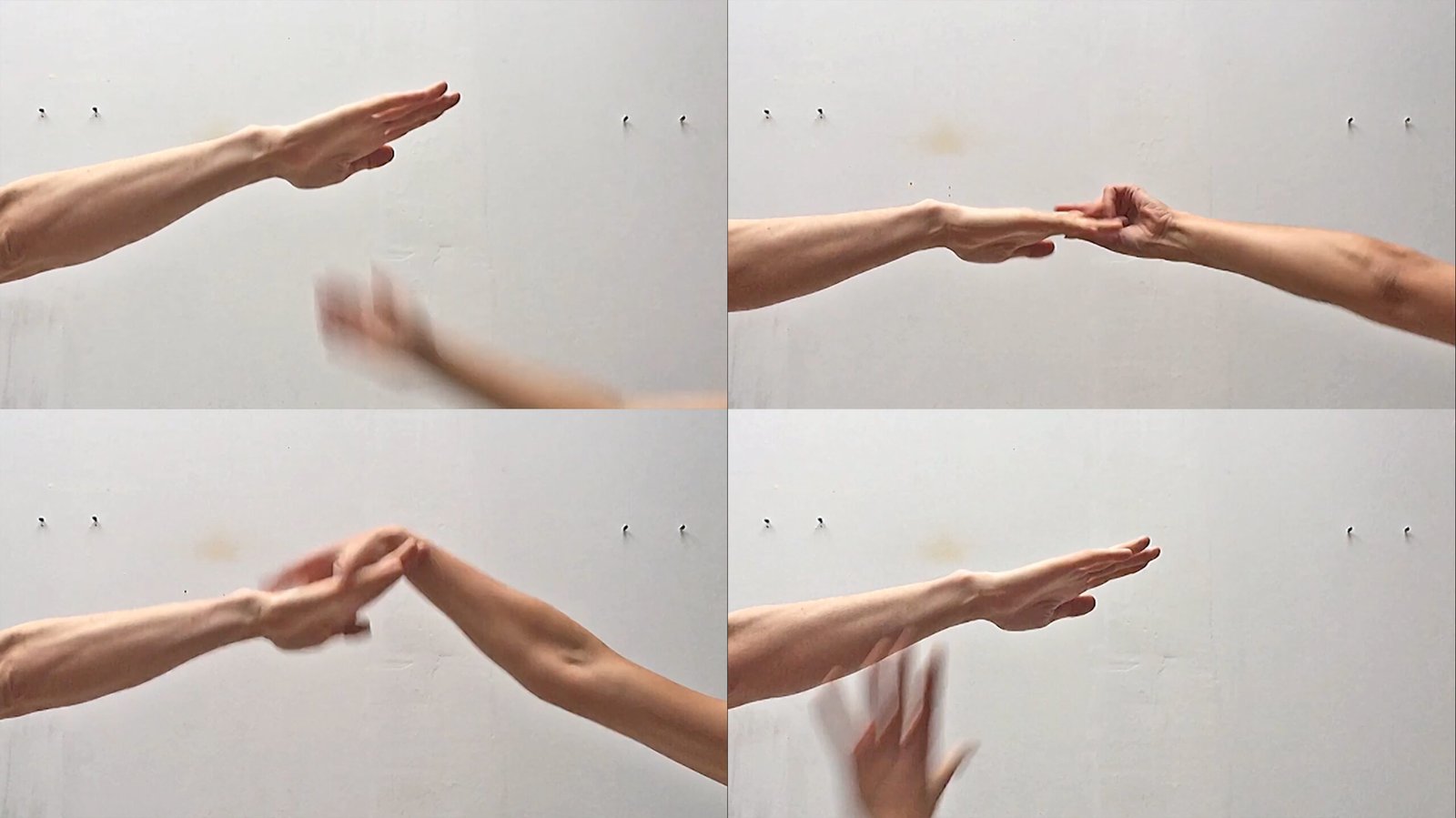
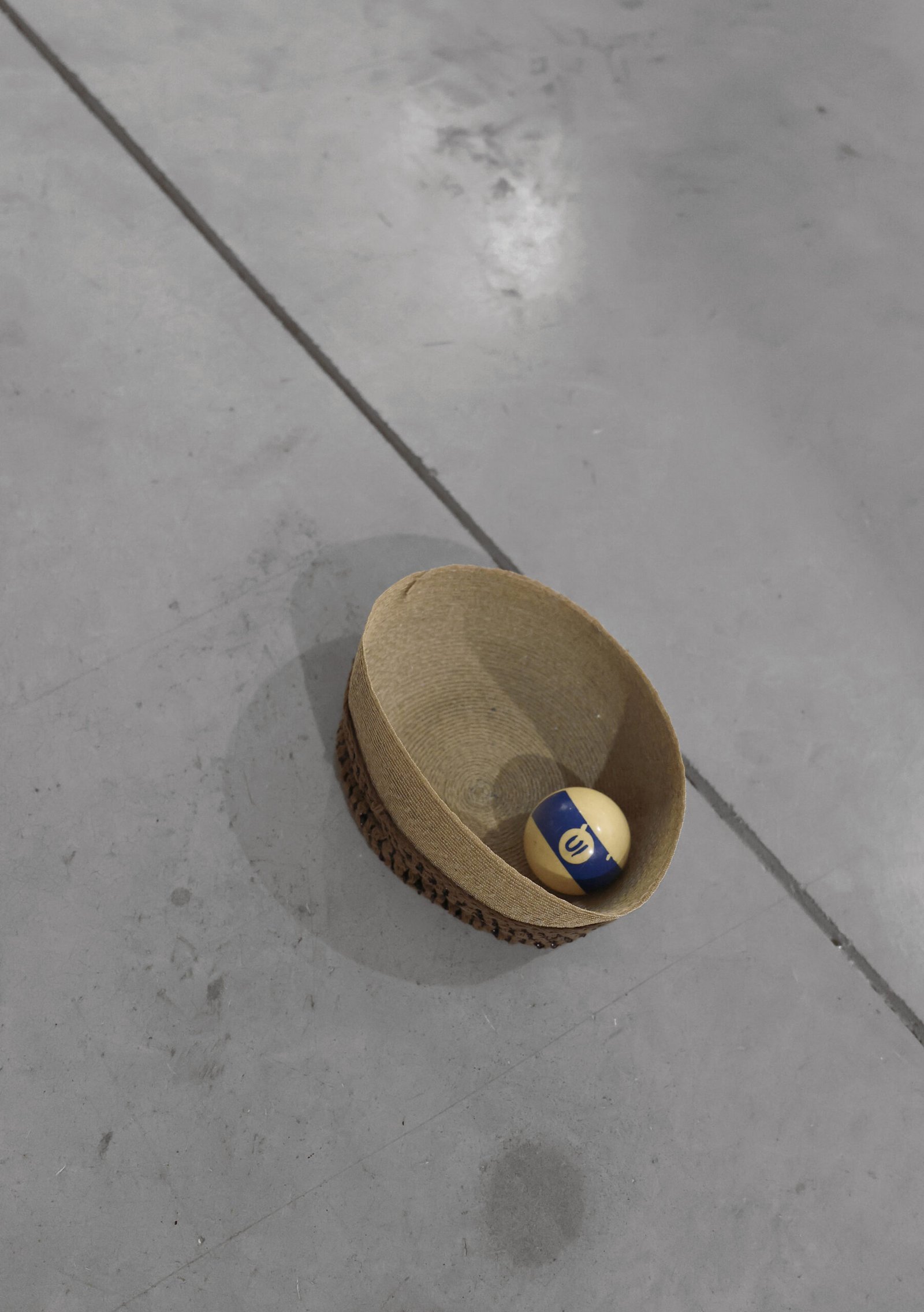
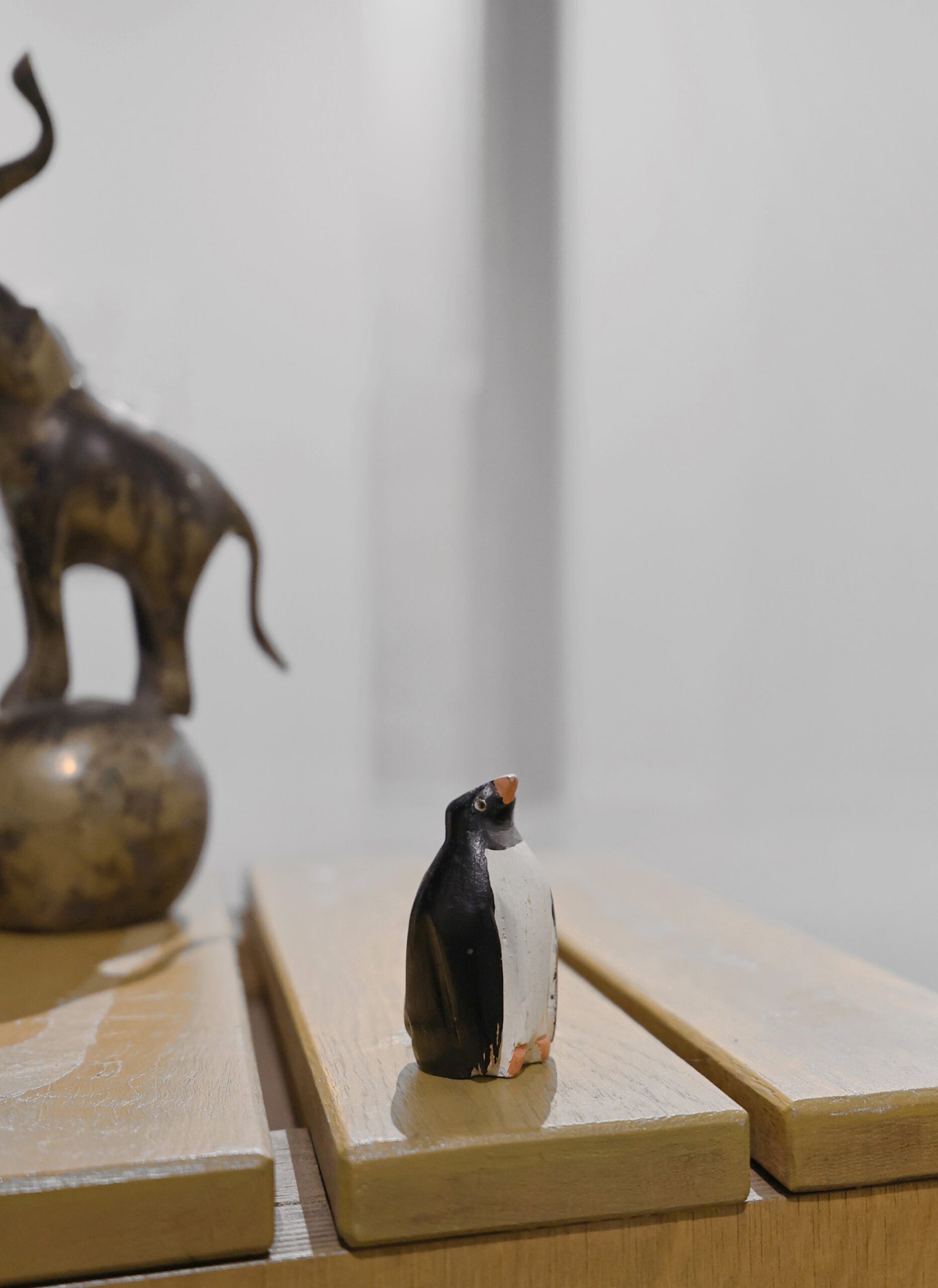
The second narrative unfolds through the choreography of the exposition: through newly created display cases and previously made installation objects that Anghel arranges in a deliberate constellation. Together, these elements offer insight into her thinking process. It is worth noting that every element of The Blind Man operates simultaneously as a commentary on the private and the public. Two neighbouring display cases illustrate this duality. The artwork entitled Vessel addresses the fear circulating within the public sphere – how political and social power structures employ images to shape collective imagination, and how moral blindness becomes one of the fundamental mechanisms of authority. Those who construct dominant narratives often choose to look away from suffering. Women who occupy public roles are particularly exposed: their bodies and images become targets of judgement. The knife piercing the display, lodged in the chest of an enigmatic figure, symbolises this exposure. Cold, sharp, situated at eye level, it appears as a trophy, as evidence, as an instrument – and fetish of power. It becomes a metaphor for both symbolic and physical male violence directed towards women in public life. By contrast, Love transports us into the domestic sphere, where violence remains largely unseen. The bed – associated with intimacy and affection – conceals a baseball bat beneath its hollowed-out frame, a symbol rooted in control, territoriality and a sense of ownership. Anghel does not accuse; she has no expectations. Instead, she asks how we perceive and interpret anomalies.
The viewer is not a passive observer but an active participant: entering the constellation, shifting elements, composing their own sequences. In this way The Blind Man extends beyond the gallery space, as evidenced by additional conceptual notes.
PS. The second issue of “The Blind Man” will appear as soon as YOU have sent sufficient material for it – this functions as the exhibition’s subtitle. We, the viewers who make the pictures, we are and remain The Blind Man. – a quotation from Kant After Duchamp (MIT Press, 1996), serving as an invitation to active participation in a “game”.
PPS. The curatorial statement is accompanied by Andreea Anghel’s original notes and stream-of-consciousness jottings. These function as a commentary on the works, adding yet another layer to the dialogue between the public and the private within the context of artistic practice. For the artist, they are a way of constructing an immersive world.
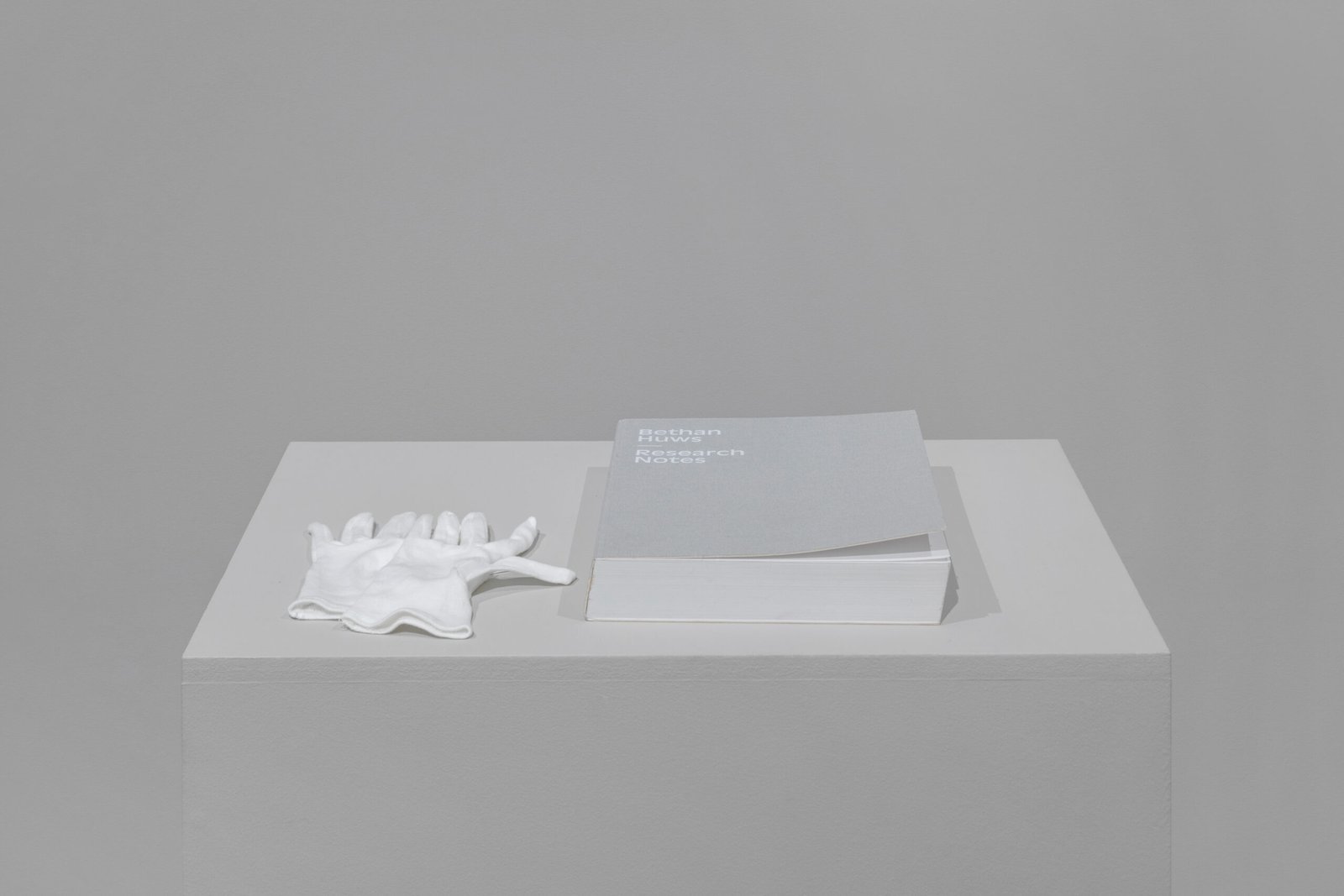
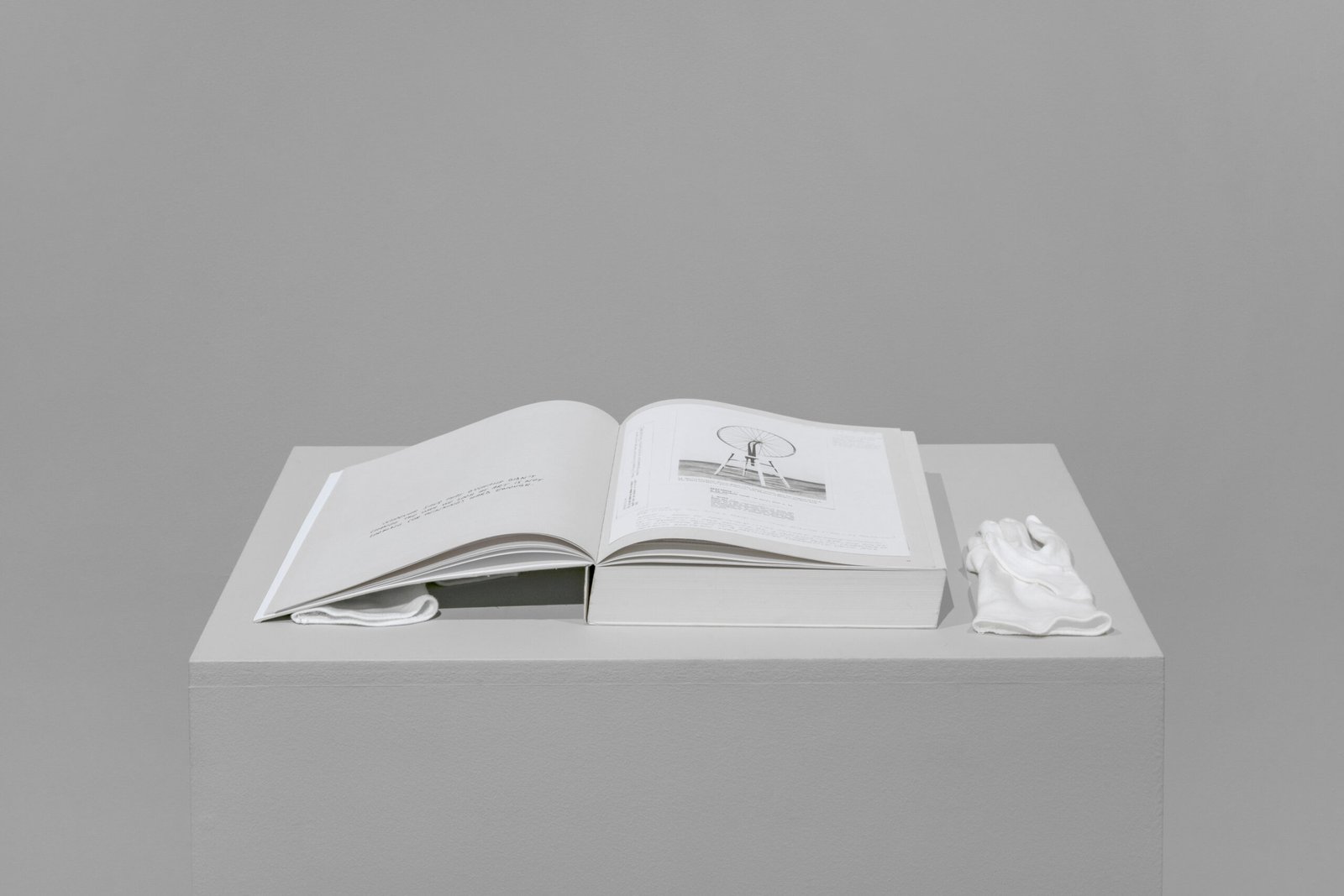
PPPS. The exhibition acquires an additional dimension through an experimental dialogue between artists. Anghel was invited by the curator to respond to the research archive of another artist, Bethan Huws, who herself undertook extensive artistic research on Marcel Duchamp. This unusual correspondence forms an open experiment in which two perspectives on archival practice intertwine to create a new narrative. It echoes the invitation to send materials to the second issue of The Blind Man. The book, together with its commentary, becomes an integral part of the exhibition.
_________________________________________Text by Paulina Brelińska-Garsztka.
__________________________________________________________________________________________
My body is a vessel. Full of blood, full of hope, full of medicated bliss.
My body is a vessel. Full of water, full of semen, full of love.
My body is a vessel. Full of tears, full of joy, full of fear.
My body is an object of desire.
My body is an object of hate.
My body is not yours.
My body is not mine.
__________________________________________________________________________________________
We’d rather be entertained than taken care of.
__________________________________________________________________________________________
Given the slight (yet noticeable) shift in Polish society – as well as other established economies worldwide – in the past few years, one encounters very few obstacles in figuring out what can be defined as a possible source of the problem, namely the unequal flow of capital and what kind of consequences this has in the long term, the most obvious one being nazism with a spray tan that’s just the right shade for social media.
While most turn to activism and grassroots methods so as to counter these symptoms, we propose a simple choreography of dissent, to be performed in a public setting by whomever should circumstances require, as a way of honouring the late socialist playwright and poet Bertolt Brecht’s words as well as embodying a performative piece without inherent market value.
To quote Brecht:
‘’Those who are against fascism without being against capitalism, who lament only the barbarism that comes out of barbarism, are people who want to eat the veal without slaughtering the calf.’’
__________________________________________________________________________________________
From Wikipedia:
_____________
Extinction (in evolution) is the termination of an organism by the death of its last member. A taxon may become functionally extinct before the death of its last member if it loses the capacity to reproduce and recover. As a species’ potential range may be very large, determining this moment is difficult, and is usually done retrospectively. This difficulty leads to phenomena such as Lazarus taxa, where a species presumed extinct abruptly “reappears” (typically in the fossil record) after a period of apparent absence.
Extinction (in psychology) refers to the gradual decrease and possible elimination of a learned behavior. This behavioral phenomenon can be observed in both operantly conditioned and classically conditioned behavior. When operant behavior that has been previously reinforced no longer produces reinforcing consequences, the behavior gradually returns to operant levels (to the frequency of the behavior previous to learning, which may or may not be zero).
In classical conditioning, when a conditioned stimulus is presented alone, so that it no longer predicts the coming of the unconditioned stimulus, conditioned responding gradually stops. For example, after Pavlov’s dog was conditioned to salivate at the sound of a metronome, it eventually stopped salivating to the metronome after the metronome had been sounded repeatedly but no food came.
In operant conditioning, when a conditioned response is no longer reinforced, the rate of conditioned responding decreases. An example of this would be when a child misbehaves to gain attention. When attention is no longer provided for the misbehavior, the misbehavior will decrease or cease.
Classical conditioning
Learning extinction can also occur in a classical conditioning paradigm. In this model, a neutral cue or context can come to elicit a conditioned response when it is paired with an unconditioned stimulus. An unconditioned stimulus is one that naturally and automatically triggers a certain behavioral response. A certain stimulus or environment can become a conditioned cue or a conditioned context, respectively, when paired with an unconditioned stimulus. An example of this process is a fear conditioning paradigm using a mouse. In this instance, a tone paired with a mild foot shock can become a conditioned cue, eliciting a fear response when presented alone in the future. In the same way, the context in which a foot shock is received such as a chamber with certain dimensions and a certain odor can elicit the same fear response when the mouse is placed back in that chamber in the absence of the foot shock.
In this paradigm, extinction occurs when the animal is re-exposed to the conditioned cue or conditioned context in the absence of the unconditioned stimulus. As the animal learns that the cue or context no longer predicts the coming of the unconditioned stimulus, conditioned responding gradually decreases, or extinguishes.
Extinction Burst
While extinction, when implemented consistently over time, results in the eventual decrease of the undesired behaviour, in the short term the subject might exhibit what is called an extinction burst. An extinction burst will often occur when the extinction procedure has just begun. This usually consists of a sudden and temporary increase in the response’s frequency, followed by the eventual decline and extinction of the behaviour targeted for elimination. Novel behaviour, or emotional responses or aggressive behaviour, may also occur.
For example, a pigeon has been reinforced to peck an electronic button. During its training history, every time the pigeon pecked the button, it would have received a small amount of bird seed as a reinforcer. Thus, whenever the bird is hungry, it will peck the button to receive food. However, if the button were to be turned off, the hungry pigeon will first try pecking the button just as it has in the past. When no food is forthcoming, the bird will likely try repeatedly. After a period of frantic activity, in which their pecking behaviour yields no result, the pigeon’s pecking will decrease in frequency.
Although not explained by reinforcement theory, the extinction burst can be understood using control theory. In perceptual control theory, the degree of output involved in any action is proportional to the discrepancy between the reference value (desired rate of reward in the operant paradigm) and the current input. Thus, when reward is removed, the discrepancy increases, and the output is increased. In the long term, ‘reorganisation’, the learning algorithm of control theory, would adapt the control system such that output is reduced.
The evolutionary advantage of this extinction burst is clear. In a natural environment, an animal that persists in a learned behaviour, despite not resulting in immediate reinforcement, might still have a chance of producing reinforcing consequences if the animal tries again. This animal would be at an advantage over another animal that gives up too easily.
Despite the name, however, not every explosive reaction to adverse stimuli subsides to extinction. Indeed, a small minority of individuals persist in their reaction indefinitely.
__________________________________________________________________________________________
Emotional violence, the kind where your hair’s falling out in clumps and you can’t sleep due to all the stress and you go into full-on panic mode when you hear the key in the door, where your kids are doing poorly in school because daddy liked to drink and mommy likes to take it out on you. (But he said he’s sorry!!)( He said it’s gonna be different from now on…) You’re all alone in a big city and the last time you spoke to your mother was 10 years ago. It gets lonely doesn’t it?
and-
You, hating the other because your friends tell you they do. Them, hating you for what their kin went through. Bodies and minds remember, you see, intergenerational trauma seeps through the soil like an oil spill, suffocating any living thing it covers. Political violence arises from fear and from needs not being met. Did you know that when temperatures go up instances where protests erupt become more common? No slow-boiling frogs here, we’ll be going down with a bang, baby… At some point our cognitive function will begin to decline as a result of the atmosphere heating up and us inhaling all of it, one dirty microparticle at a time. That we might get to a point in the future where our collective knowledge might become inaccessible because we’ll be too stupid to understand seems to confound most. And so I must ask: do you know that people might think you’re ludicrous for stating the above, that you’re a killjoy? Do you even care?
and-
Trickle-down economics is, in itself, a form of violence, most self-aware people know this already. Perpetrated by those maladapted weirdos (read: psychopaths) buying up posh underground bunkers and pristine plots of land in New Zealand because they know they’ll need it when it gets too hot to breathe and they’ll come knocking down fences. The ones who have conditioned you like a dog, to alter your already-meagre life for a like. The last time society had seen an improvement in their overall quality of life compared to their parents was the Boomer generation (OK, Boomer!). Since then, the rope has been gradually tightened around our necks. A game that’s been rigged all along, ever since we’ve begun playing it. Consent means coercion. Dogs will fight for the last bone. A blue pill or a red pill will not treat the underlying cause of disease, it will simply offer a welcome distraction.
and then what? 🙂
__________________________________________________________________________________________
● Scene from a recruitment office: ●
Sweating bodies moving in unison, a never-ending line in the middle of a desert of men and women who, as a means to make ends meet, have decided to become an extension of the regime. They fear the physical, sedentary as they are, out of breath as soon as the stopwatch ticks to ten. Their fears are unfounded, though; the most important skillset today is the ability to disregard the Other, to pull the trigger when instructed. Almost all pass, except for a young man born with no hands.
__________________________________________________________________________________________
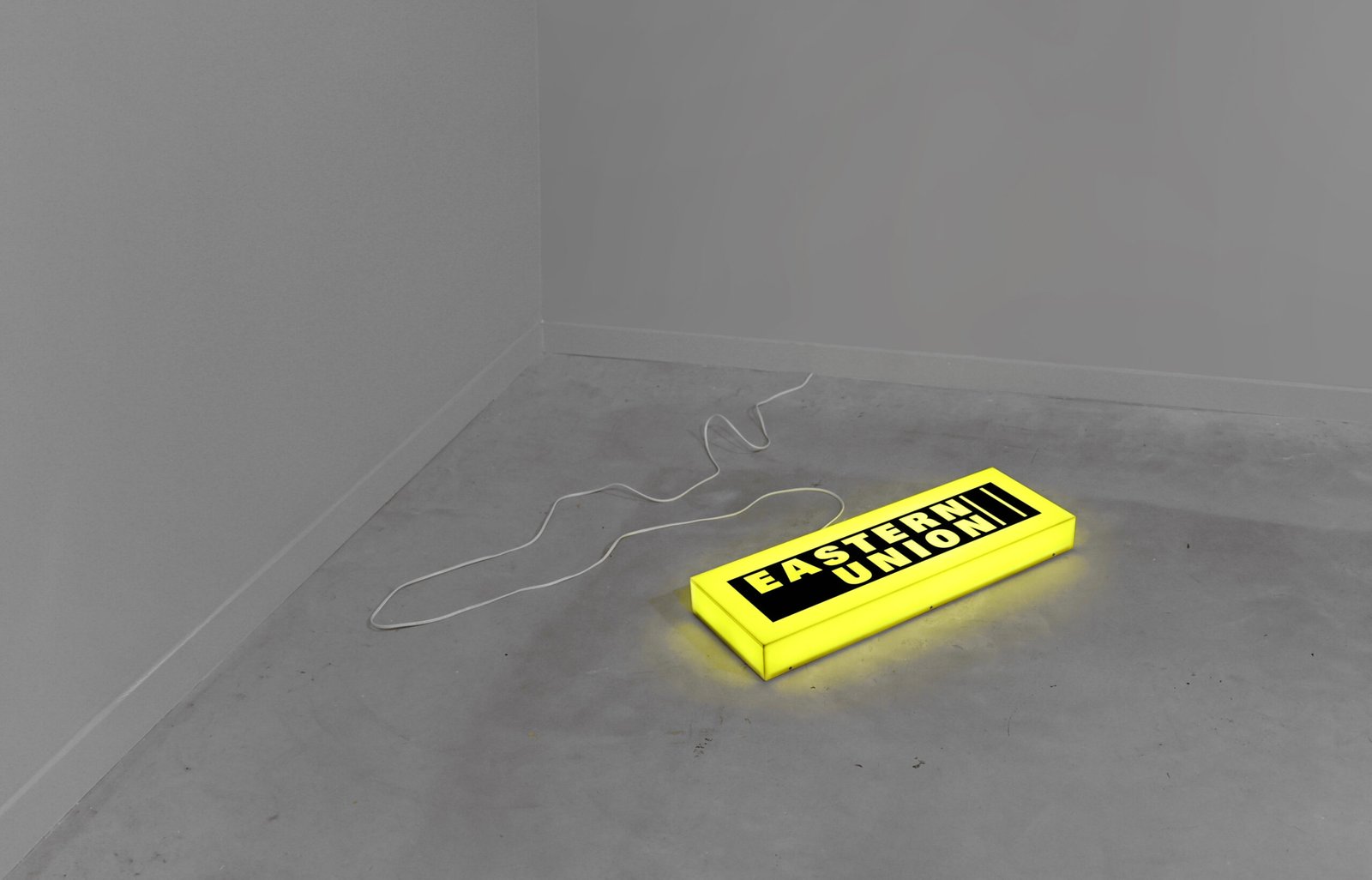
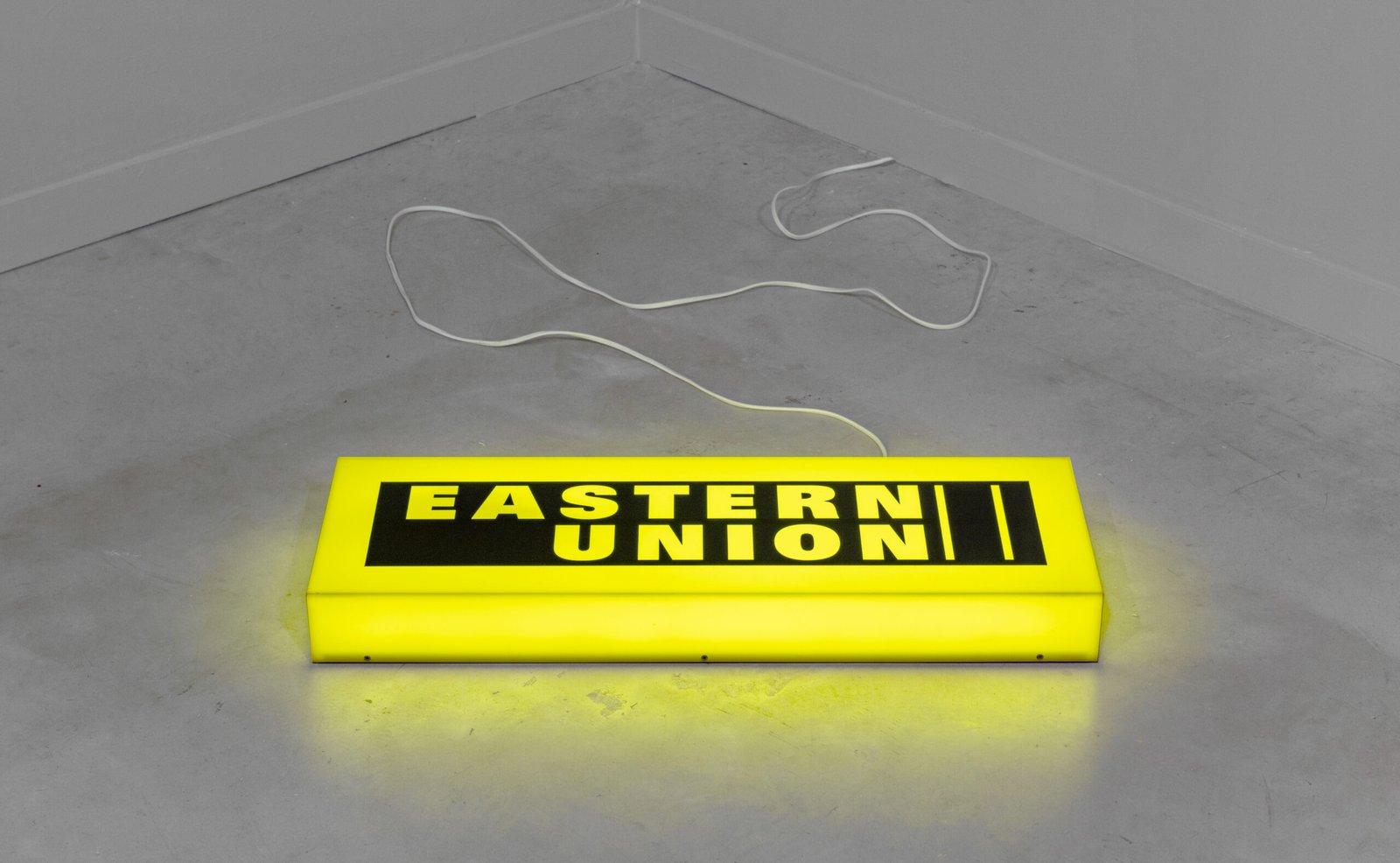
What seldom gets discussed in countries with high GDP is the way in which capital and generated wealth flow out of them, my focus being on two phenomena significant to two opposing social statuses: the upper class dislocates and disrupts markets by purchasing real estate in foreign countries, transforming dwellings and potential homes into hollowed-out investments; the lower class usually finds itself being employed by the former in a country foreign to them. This is the economic refugee. The glowing marquee shown here (Moving Money for Better) is an attempt at subversively nodding at a phenomenon that is widespread in Eastern Europe, particularly in the former Communist bloc, in which alienated workers move accumulated capital by means of international money transferring services either to families left back home or as an investment into their own existing or future real estate which will, just as in places like London, never get to be called or used as a home.
__________________________________________________________________________________________
(The firebombing of Hamburg vs. The Blitz)
(Dresden vs. Desert Storm)
(Gaza vs. Hiroshima)
– Why do we condone one while looking scornfully upon the other?
– Because the victor gets to decide how history is written.
__________________________________________________________________________________________
From The Guardian (18.11.2025):
___________________________
In his quarterly letter to Palatir shareholders (Q4 2024), Alex Karp referenced the political scientist Samuel Huntington’s belief that “the rise of the west was not made possible ‘by the superiority of its ideas or values or religion … but rather by its superiority in applying organised violence’.”
__________________________________________________________________________________________
Rank (definitions from Oxford Languages):
__________________________________
● a position in the hierarchy of the armed forces.
“an army officer of high rank”
● a position within the hierarchy of an organization or society.
“only two cabinet members had held ministerial rank before”
● high social position.
“persons of rank and breeding”
● a single line of soldiers or police officers drawn up abreast.
“they were drawn up outside their barracks in long ranks”
● the people belonging to or constituting a group or class.
“the ranks of Britain’s unemployed”
● give (someone or something) a rank or place within a grading system.
“students ranked the samples in order of preference”
● have a specified rank or place within a grading system.
“he now ranks third in America”
● having a foul or offensive smell.
“breathing rank air”
● very unpleasant.
“the tea at work is nice but the coffee’s pretty rank”
● (especially of something bad or deficient) complete and utter (used for emphasis).
“rank stupidity”
● information retrieval:
“A majority of search engines use ranking algorithms to provide users with accurate and relevant results.”
● advance in an organization by one’s own efforts.
“he rose through the ranks to become managing director”
● take unfair advantage of one’s seniority.
“someone pulled rank and took my place”
__________________________________________________________________________________________
Excerpt of Disney’s script for The Lion King (1994):
_________________________________________
Cut to a frontal shot of Pride Rock, with Mufasa and Simba sitting side by side on the summit, which is lit by the rising sun, as the music swells.
Mufasa
Look, Simba. [Cut to a back shot of Mufasa and Simba sitting side by side on the summit of Pride Rock, silhouetted by the distant rising sun.] Everything the light touches is our kingdom.
Simba
Wow.
The camera slowly begins to swivel around Mufasa and Simba to show their faces.
Mufasa
A king’s time as ruler rises and falls like the sun. One day, Simba, the sun will set on my time here [Cut to a frontal shot of Simba looking up at Mufasa reverently.] and will rise with you [Mufasa bends his head into frame so that he is almost at eye level with Simba.] as the new king.
Cut to a wide back shot of Mufasa and Simba sitting side by side on the summit of Pride Rock, with the entirety of the Pride Lands spread out before them and the sun rising in the distance.
Simba
And this’ll all be mine?
Simba begins to stride along the edge of the summit of Pride Rock.
Mufasa
Everything.
Cut to a back shot of Simba striding along the edge of the summit of Pride Rock; the camera follows him, revealing a strangely shadowy landscape in the distance.
Simba
Everything the light touches. [Simba sits. He looks over his shoulder, in the direction of Mufasa.] What about that shadowy place?
Mufasa
[from off-screen] That’s beyond our borders. [Cut to a frontal shot of Mufasa and Simba, with Mufasa approaching Simba from behind.] You must never go there, Simba.
Simba
But I thought a king can do whatever he wants.
Mufasa smiles. He turns and walks away.
_________________________________________Text (unless otherwise mentioned): Andreea Anghel