


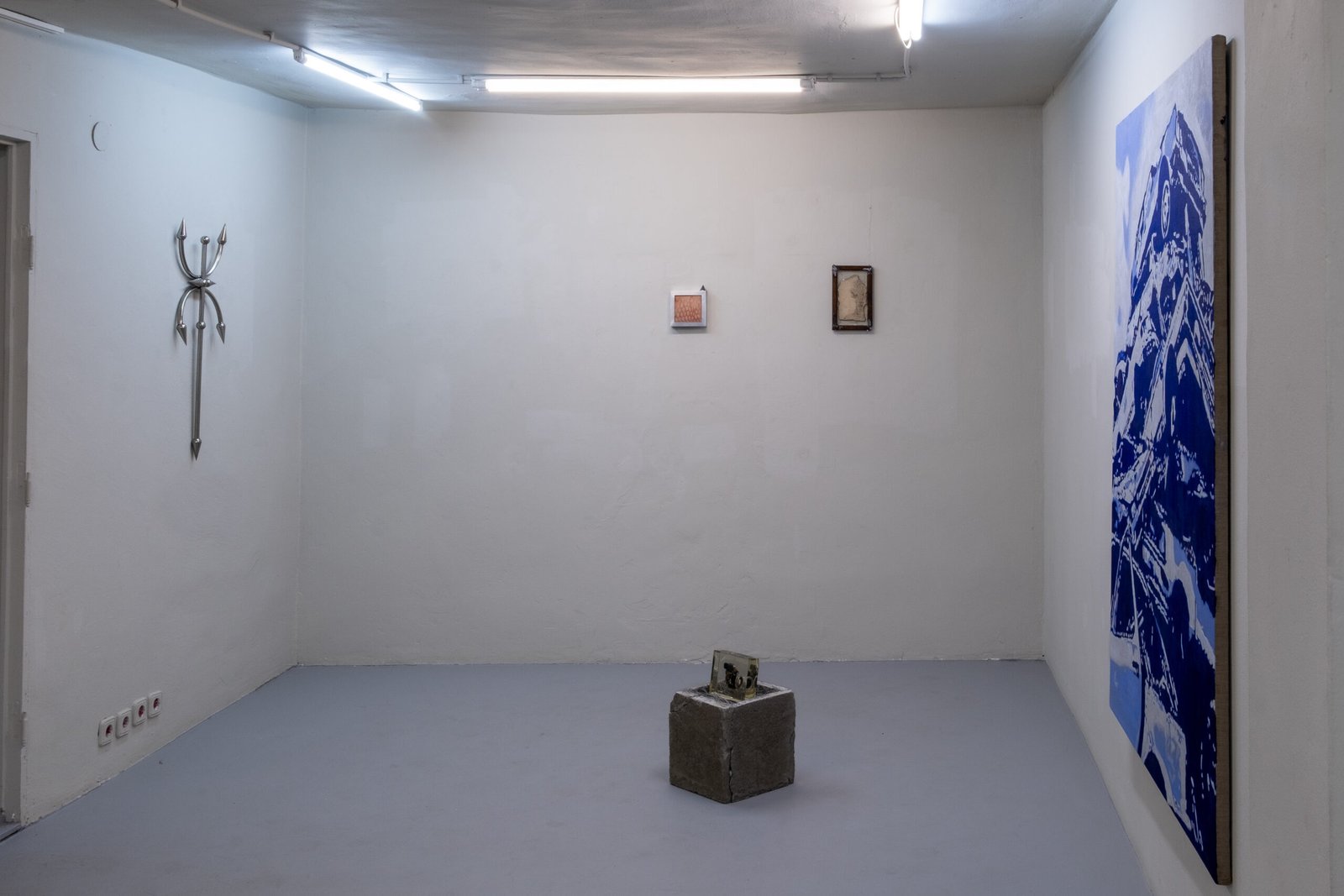
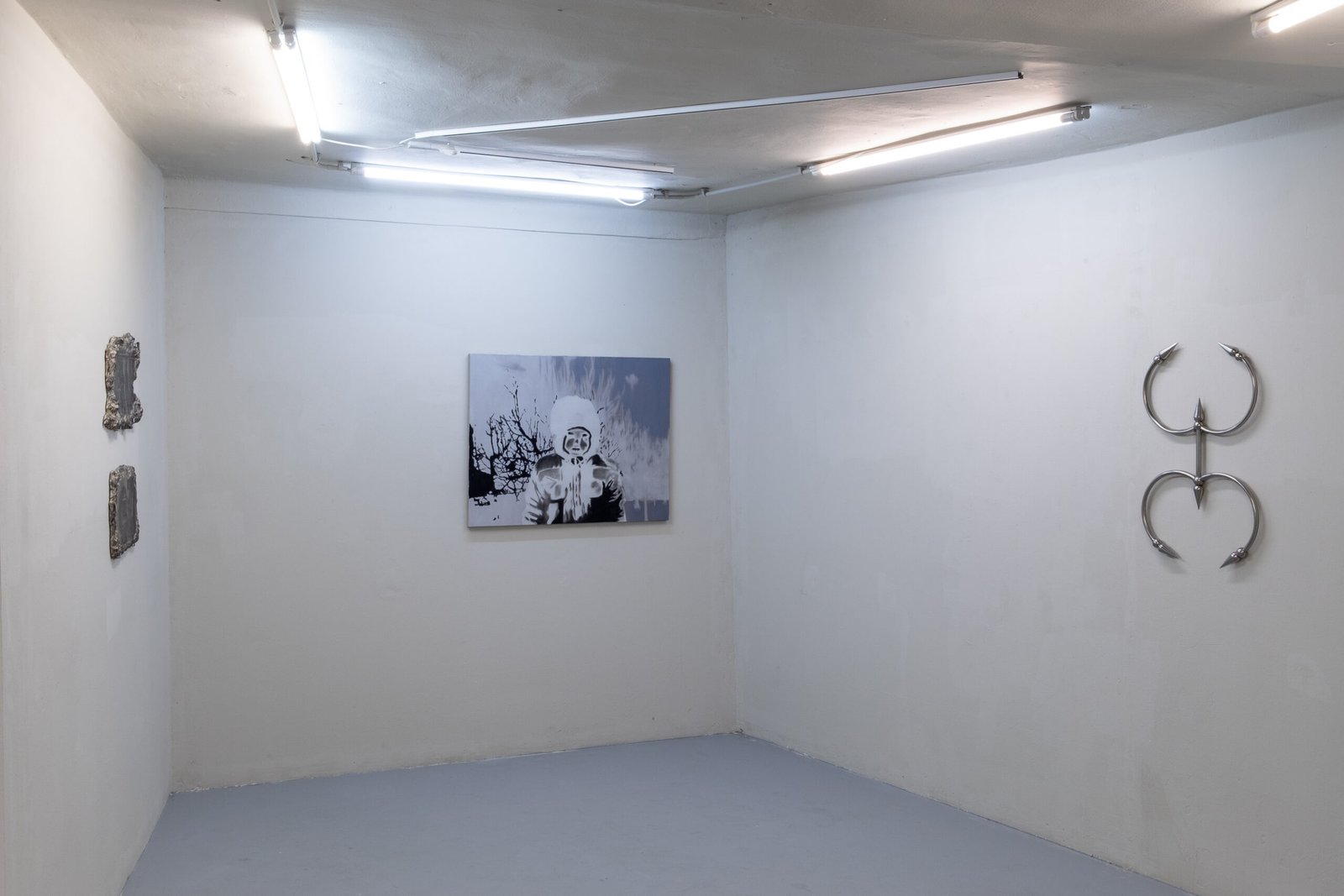
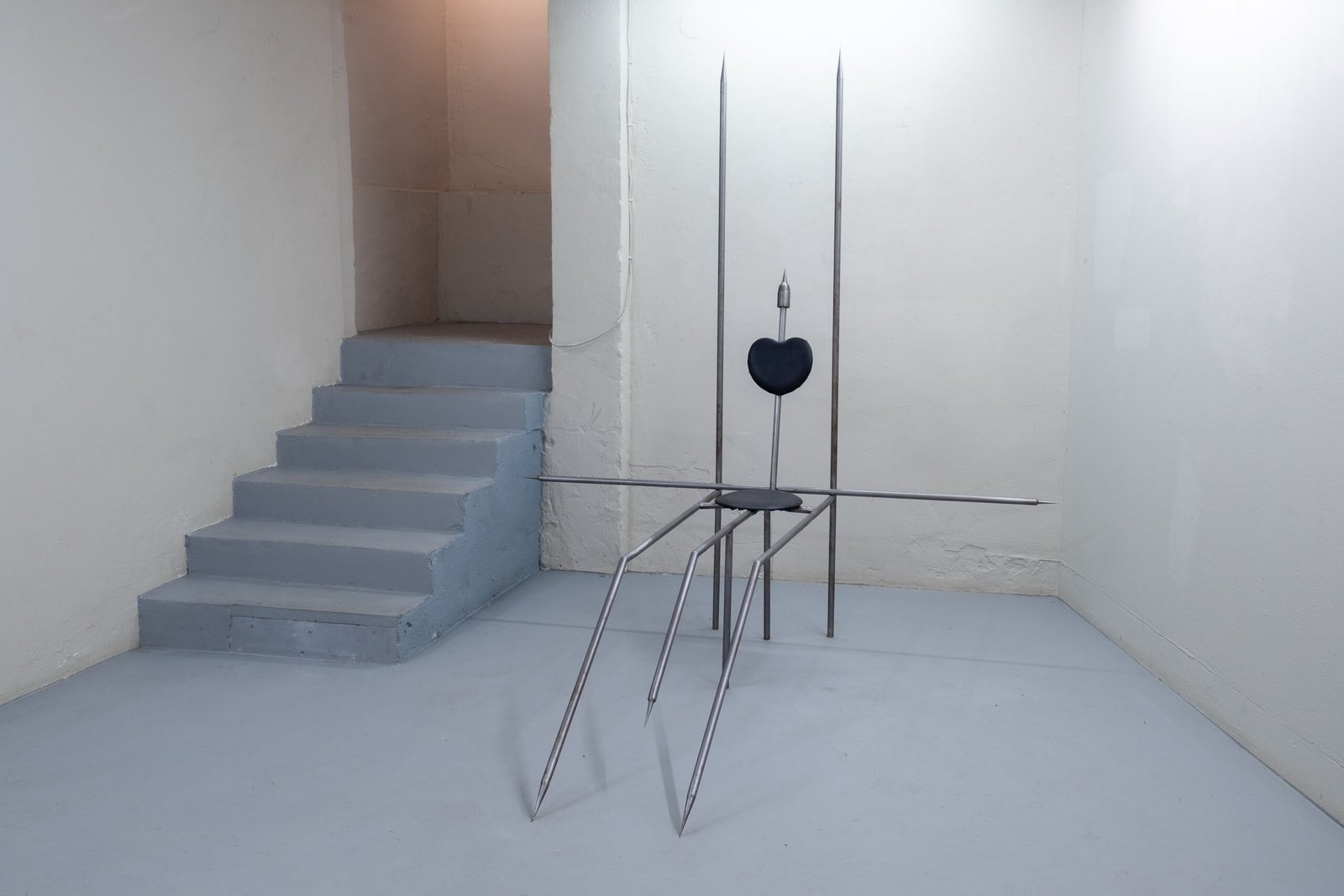
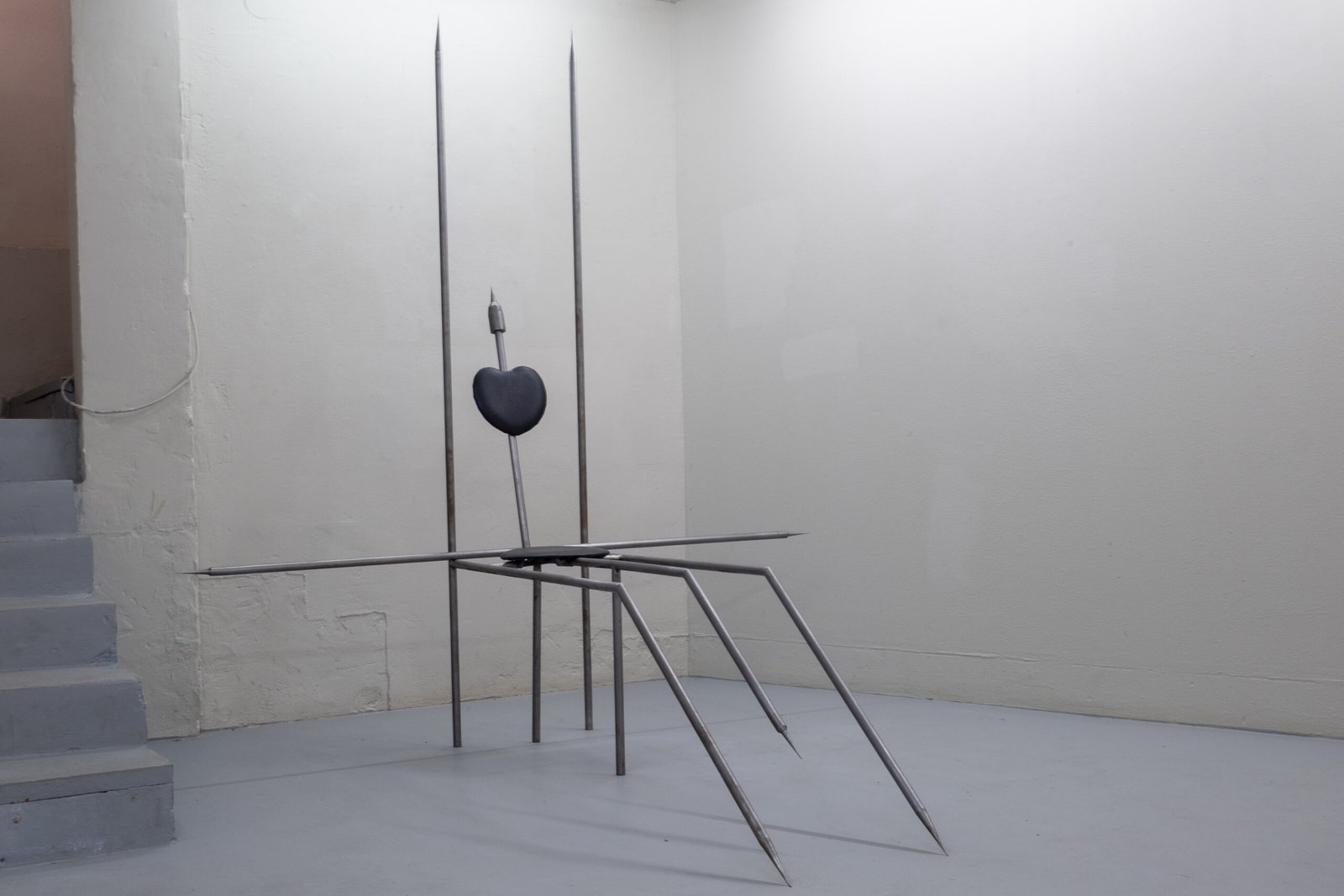
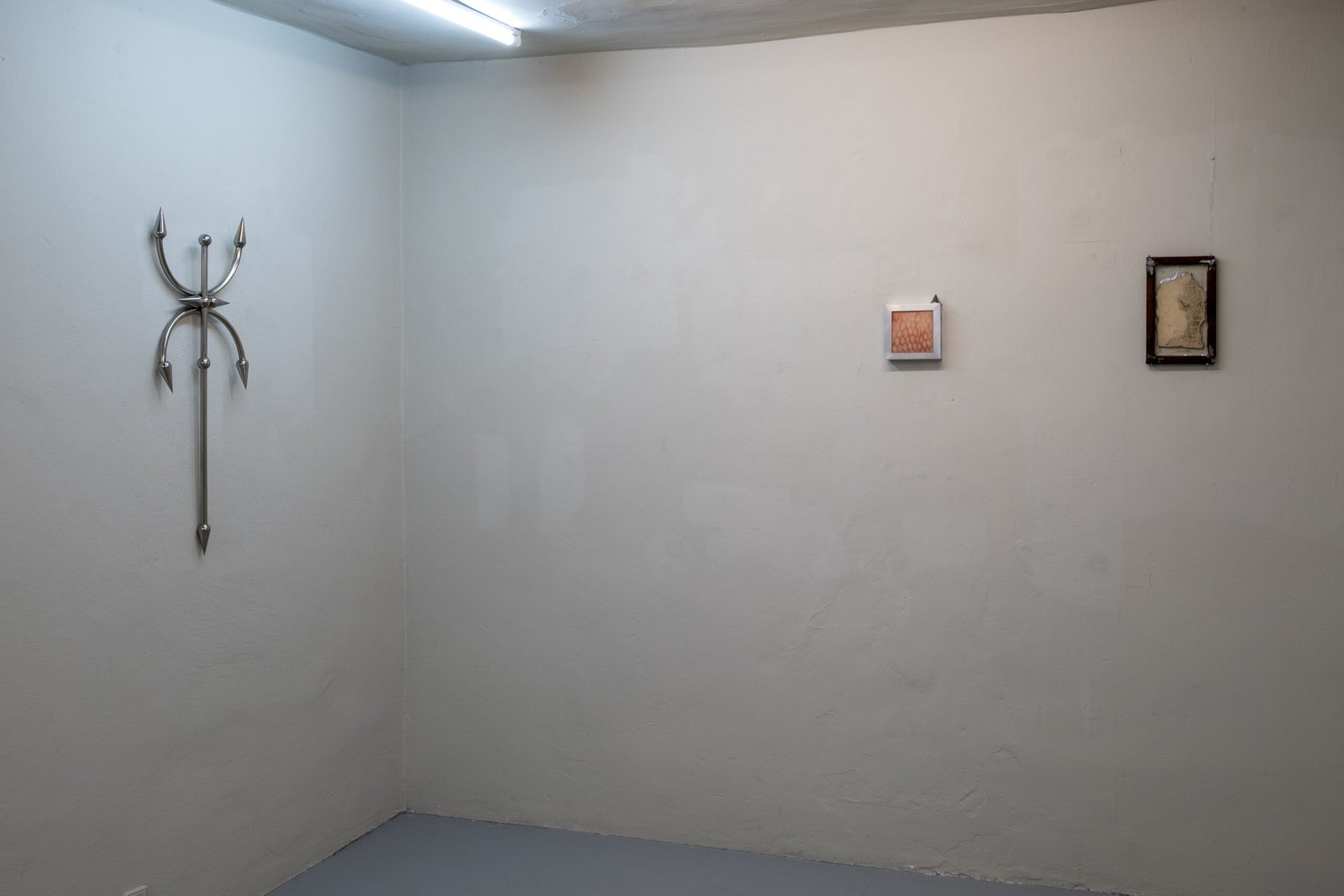
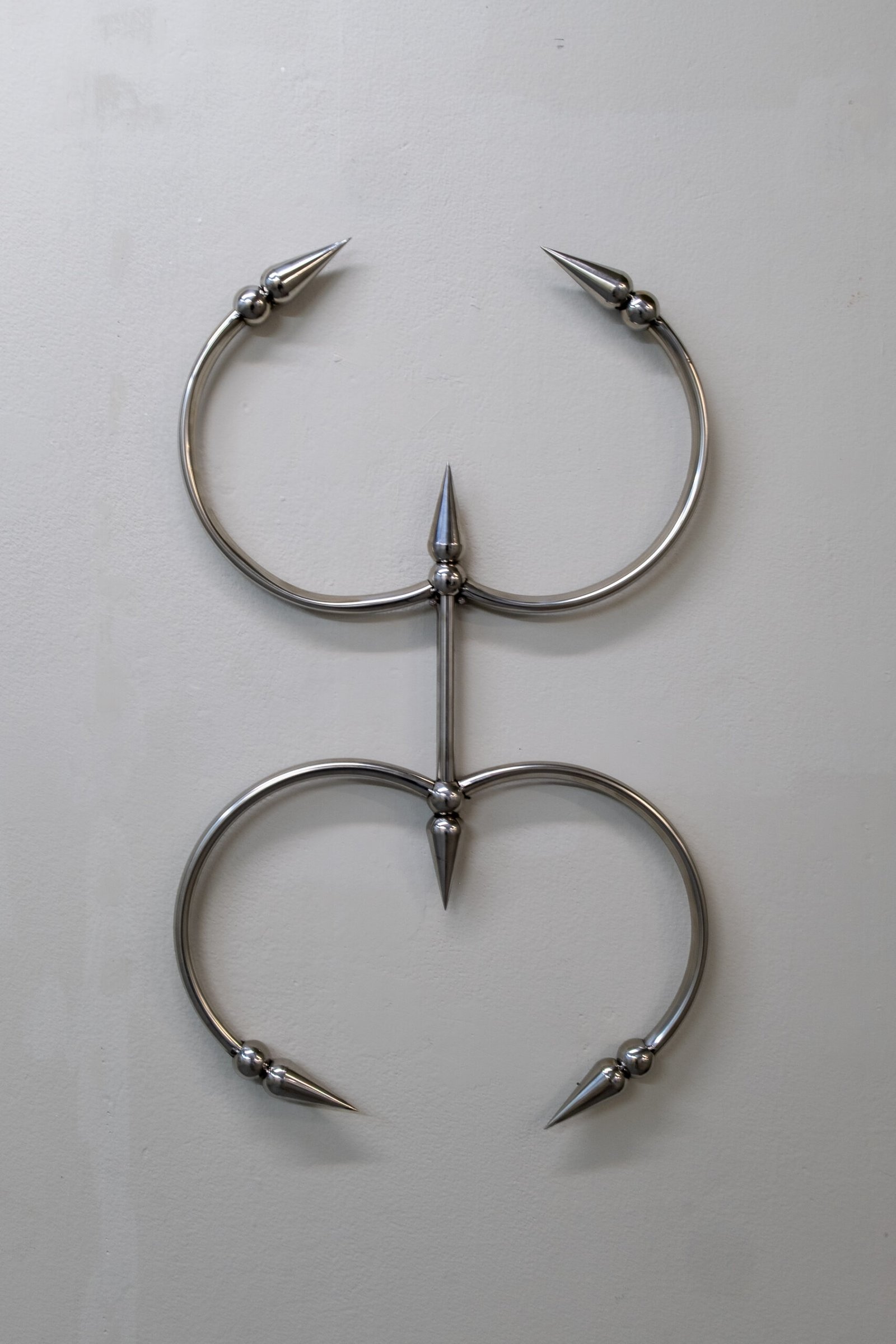
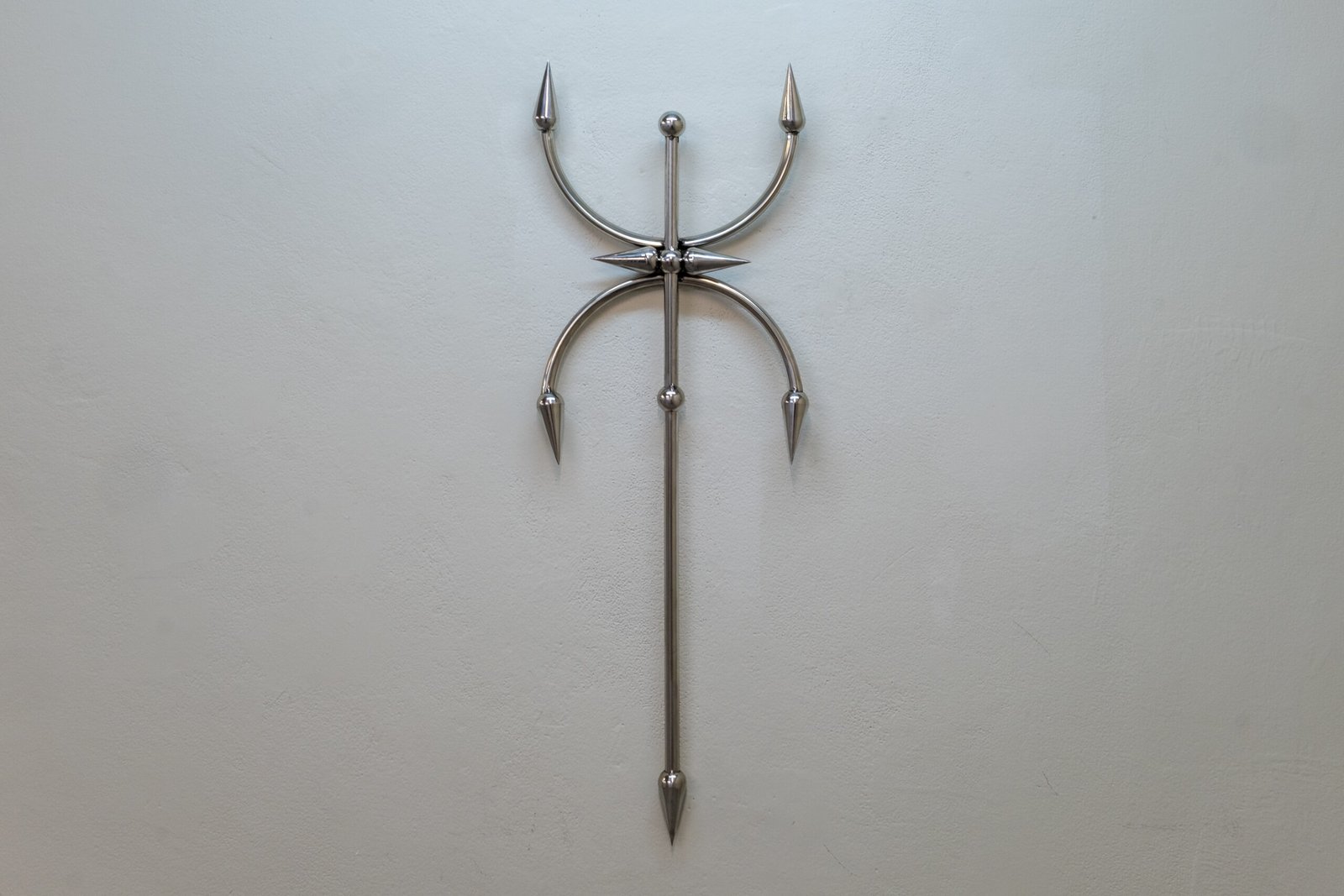
What’s left of the body when it reveals itself only through images, objects, and the structures that shape it? It can hardly be separated from the infrastructures it inhabits, carrying the traces of the systems it has moved through. Throughout the exhibition, stainless steel objects act as
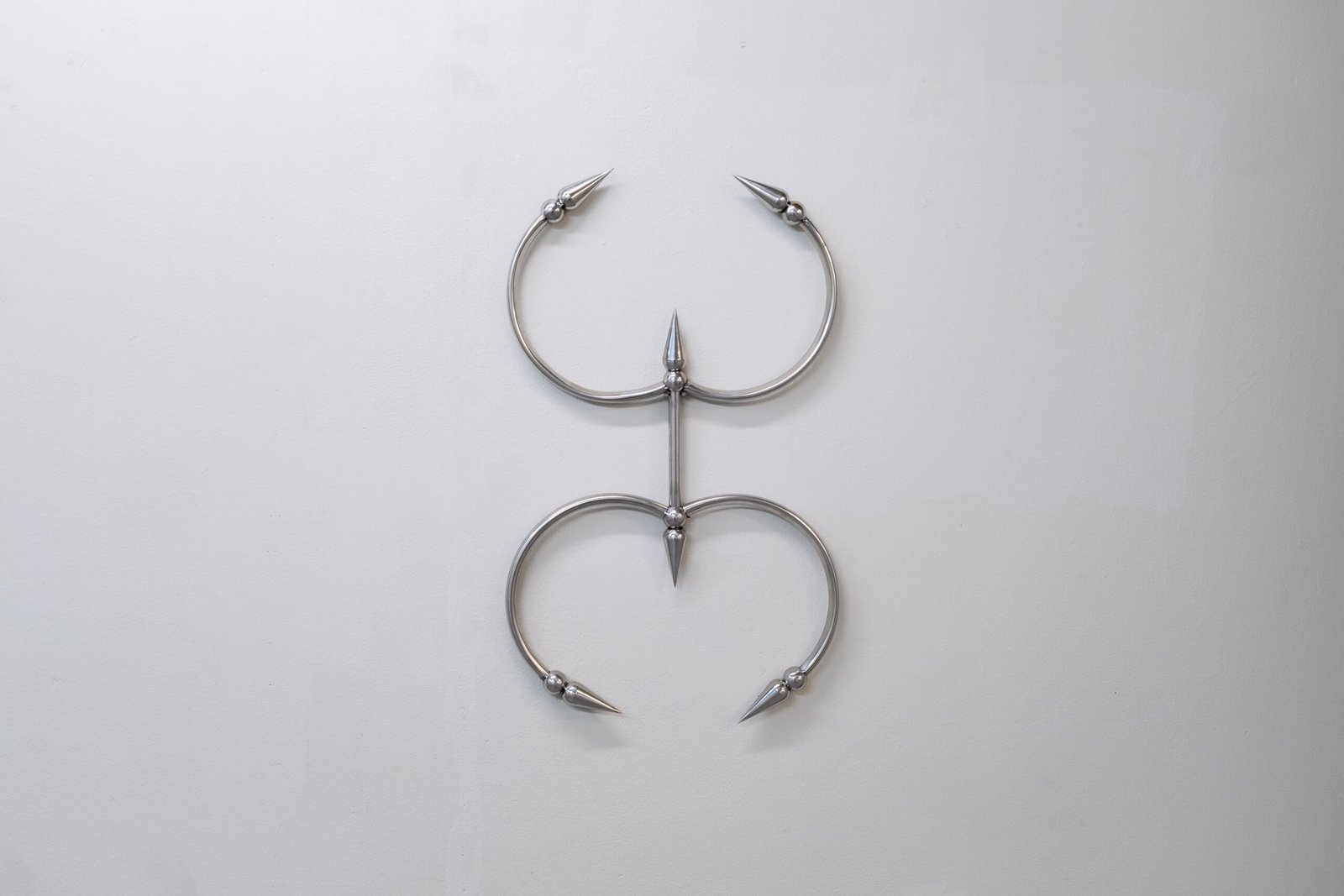
shields that both protect and expose a vulnerable body, while post-industrial landscapes from the Valea Jiului situate it within an environment marked by the decline of the mining sector.
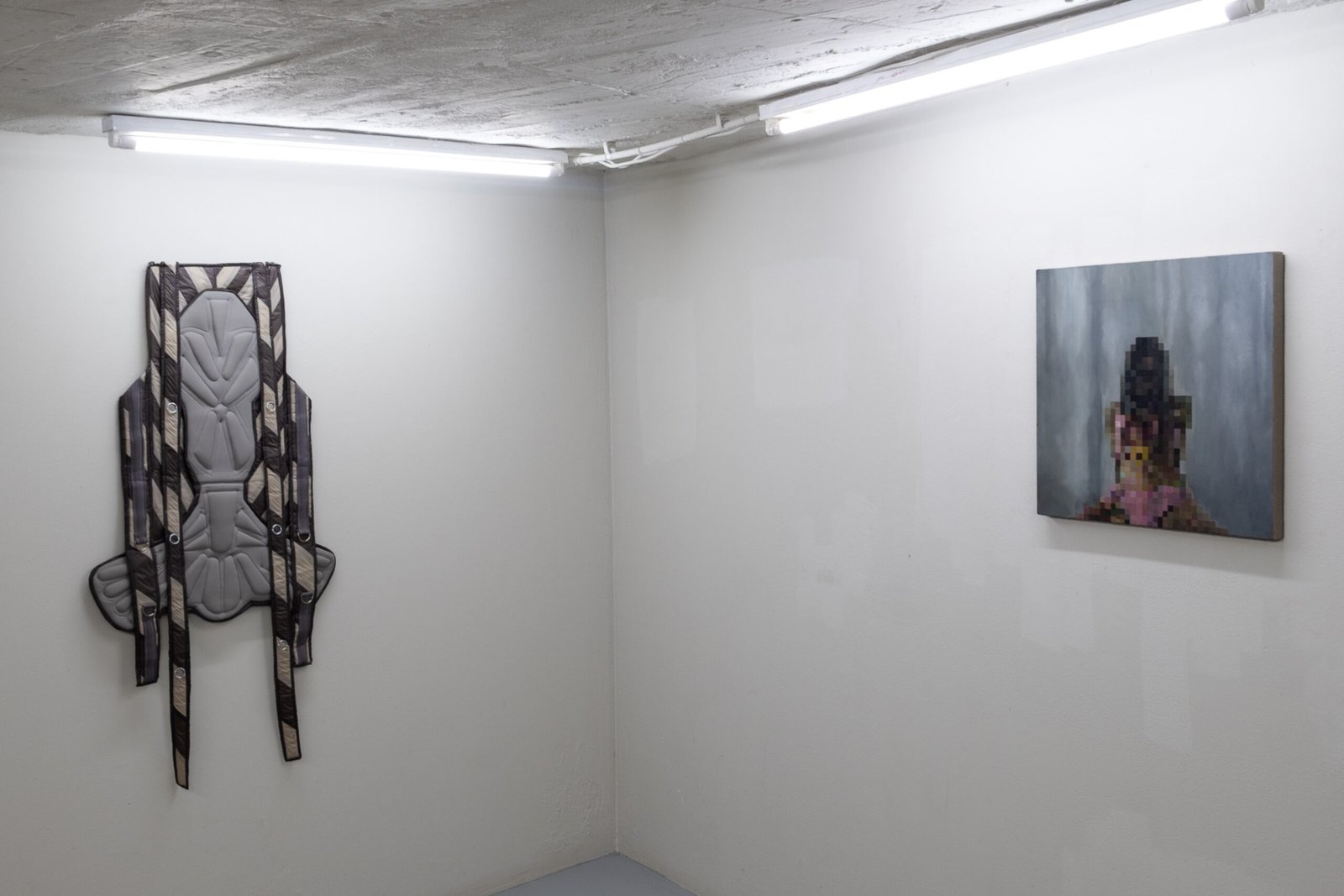
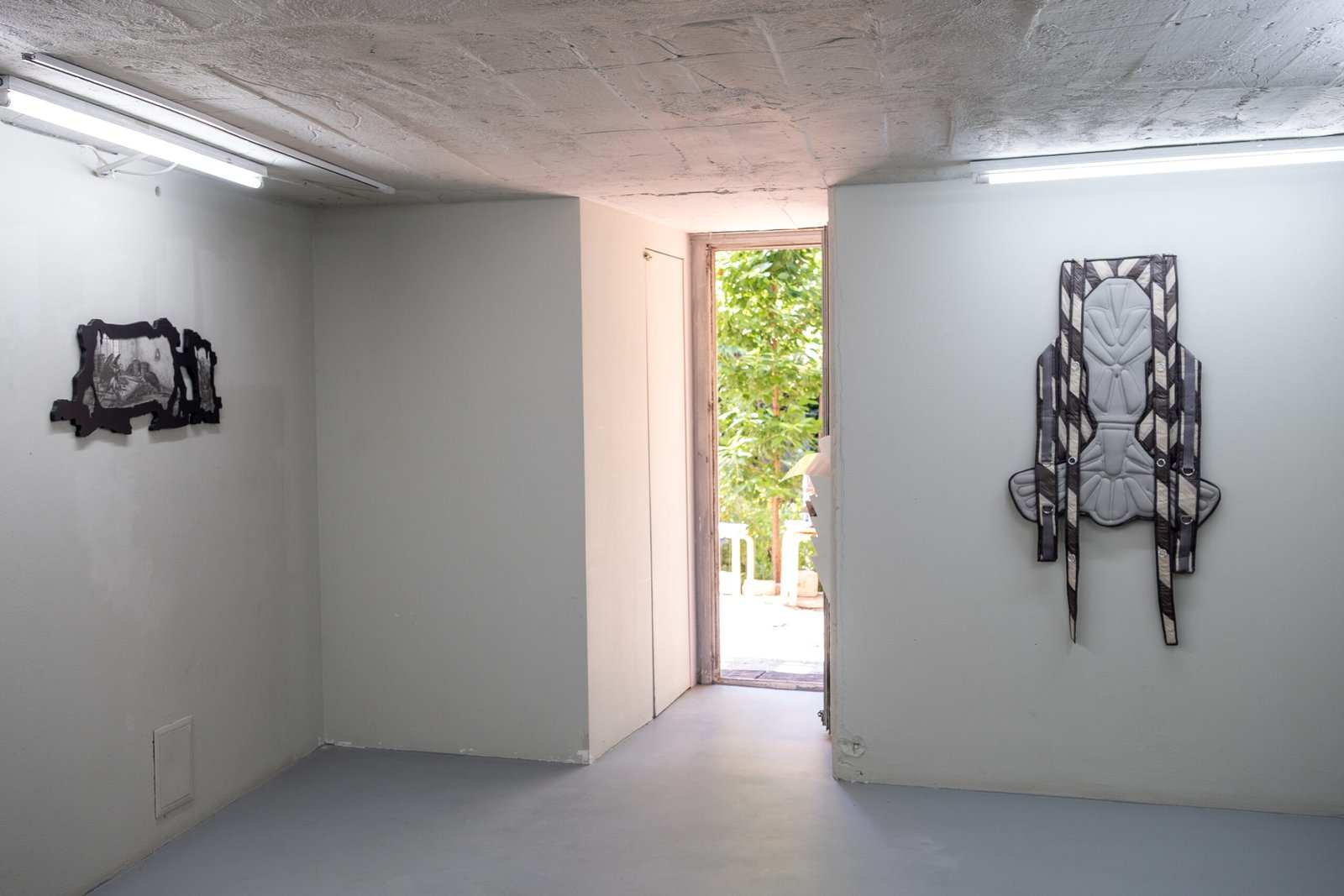
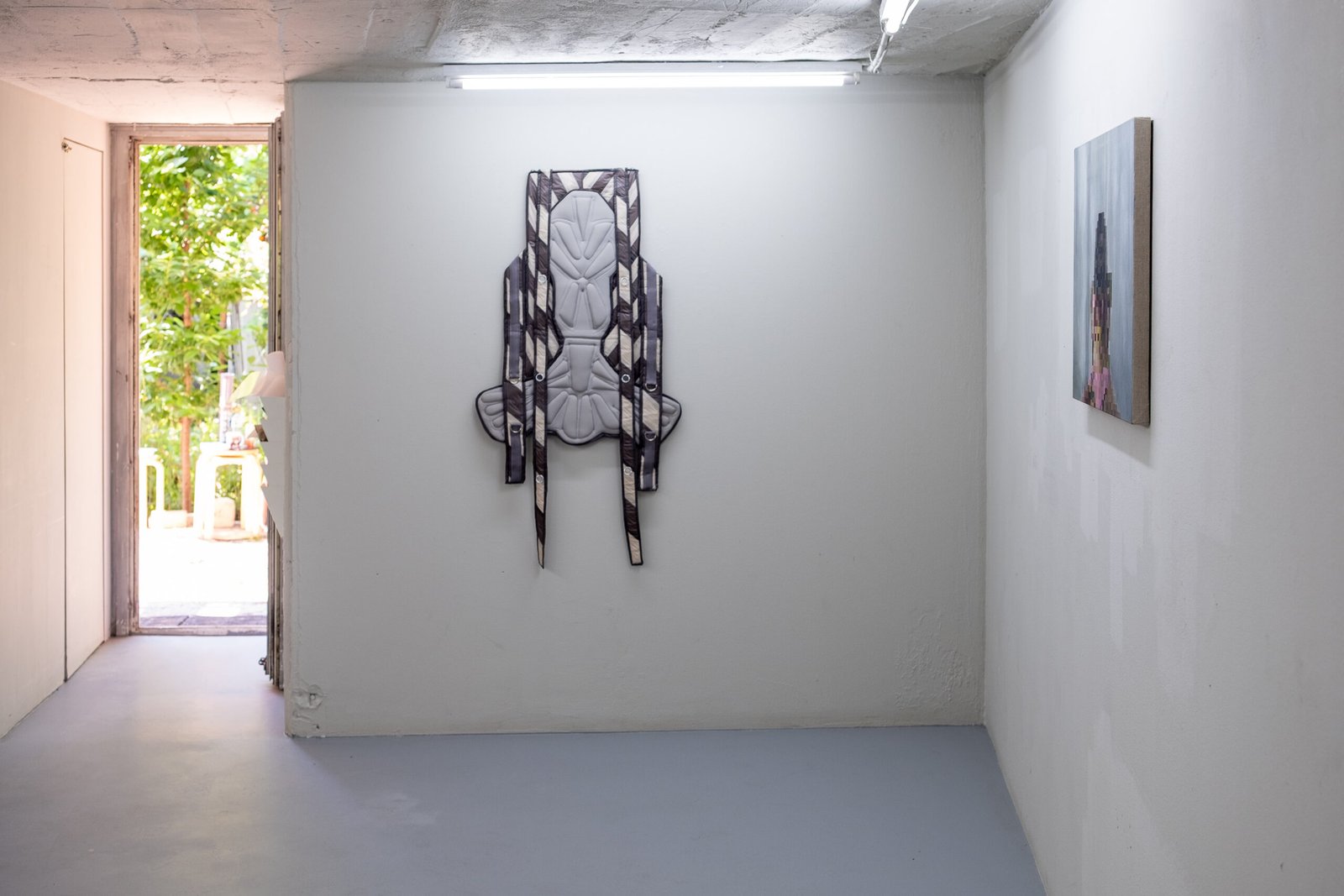
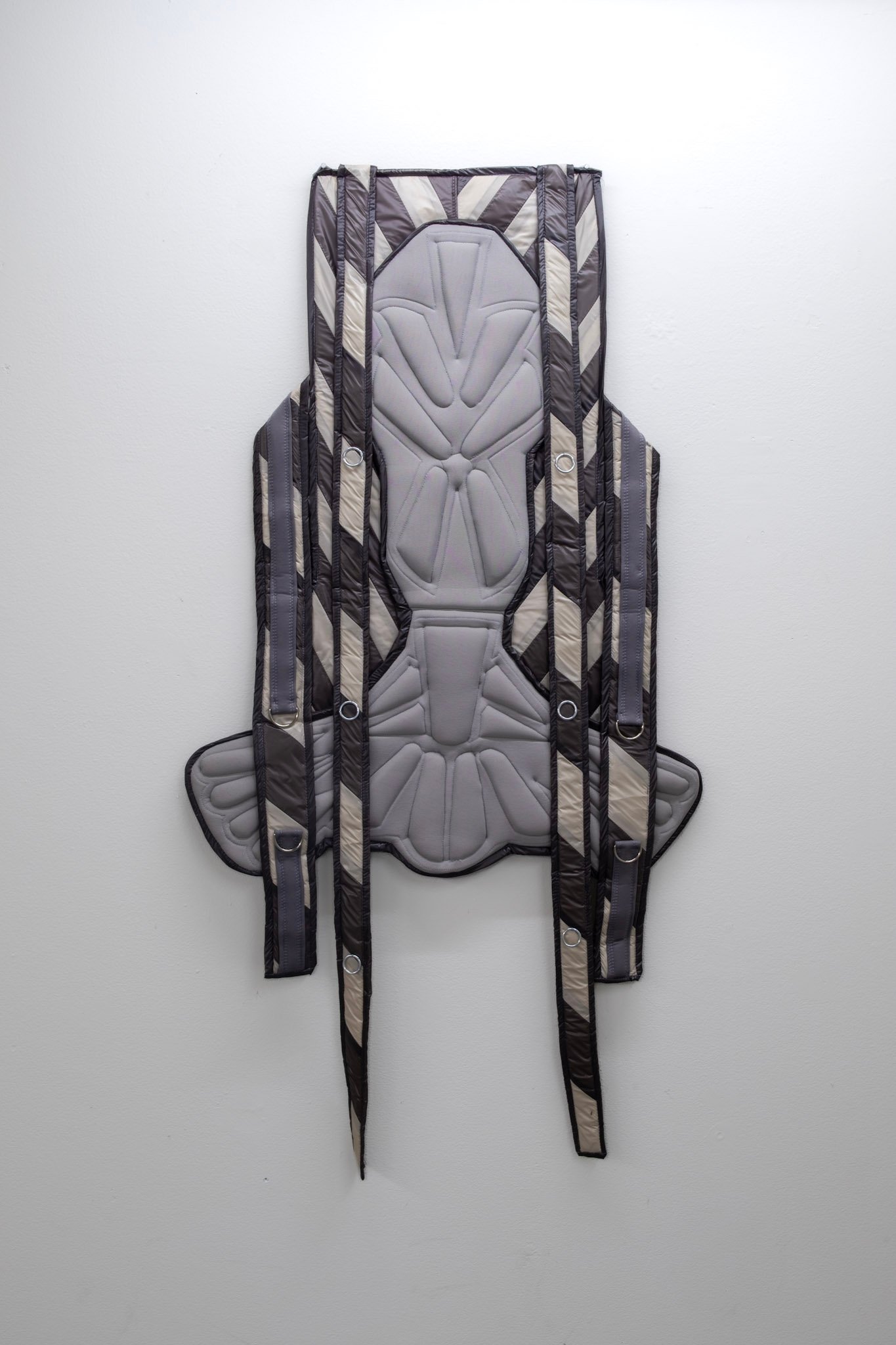
In the artworks, the body is approached from multiple perspectives—as a carrier of the traces left by the systems that surround it, or through the objects that retain the imprint of its encounters. Using soft, ergonomic textile surfaces and glossy stainless steel, Giulia Crețulescu reflects on a body driven by optimisation and efficiency. Her sculptural objects blur the boundaries between body and object, reflecting on the desire to optimise, protect, and discipline the body, while revealing the fragile tension between resilience and vulnerability.
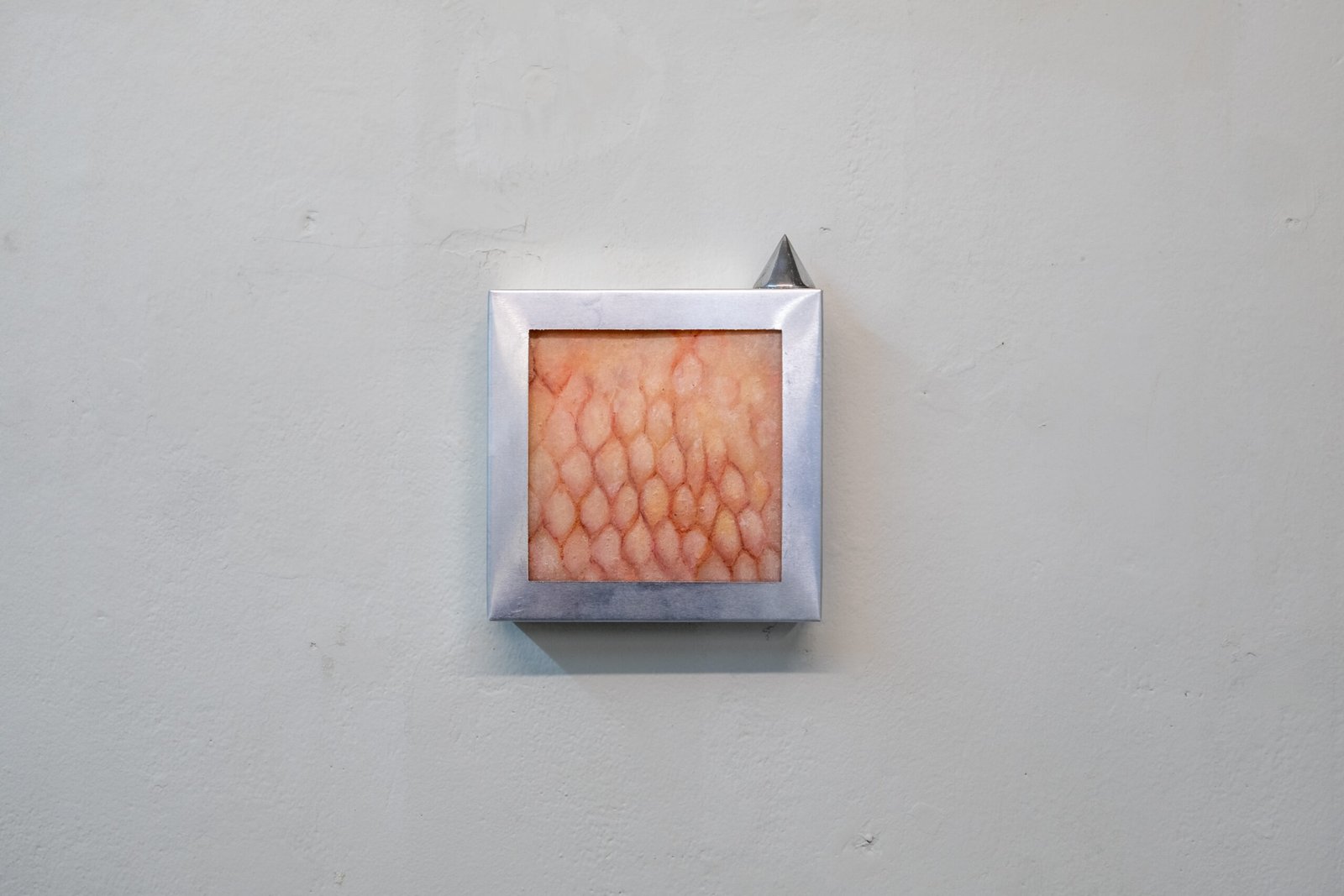
Ana Ionescu takes a deeply personal approach, exploring the body from the inside out and treating the skin as both material and interface. Drawing from everyday urban structures—sharp fences, grooming tools, and familiar domestic forms—she reveals the fragile tension between
bodily vulnerability and the environments that continuously shape our movements and perception.
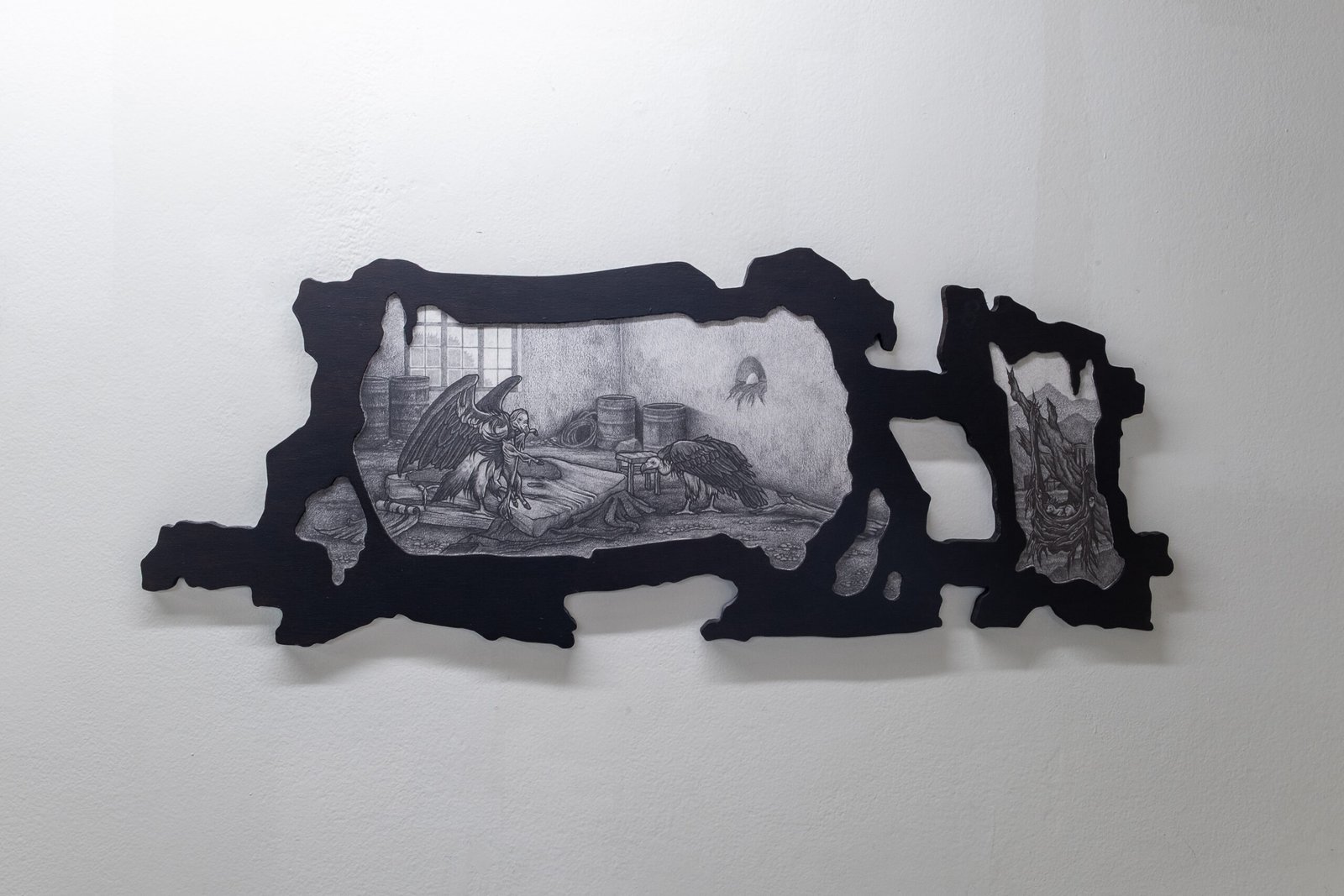
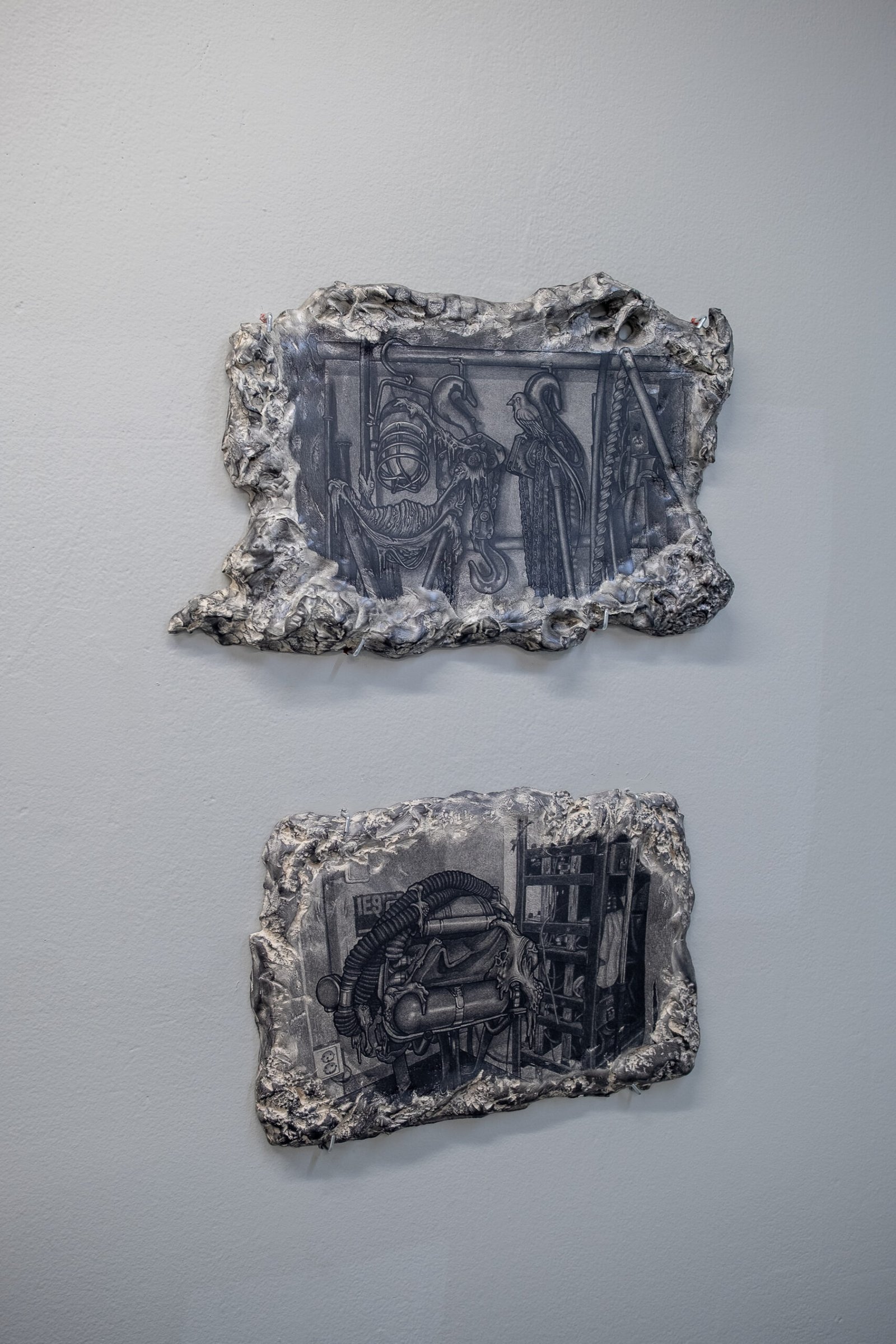
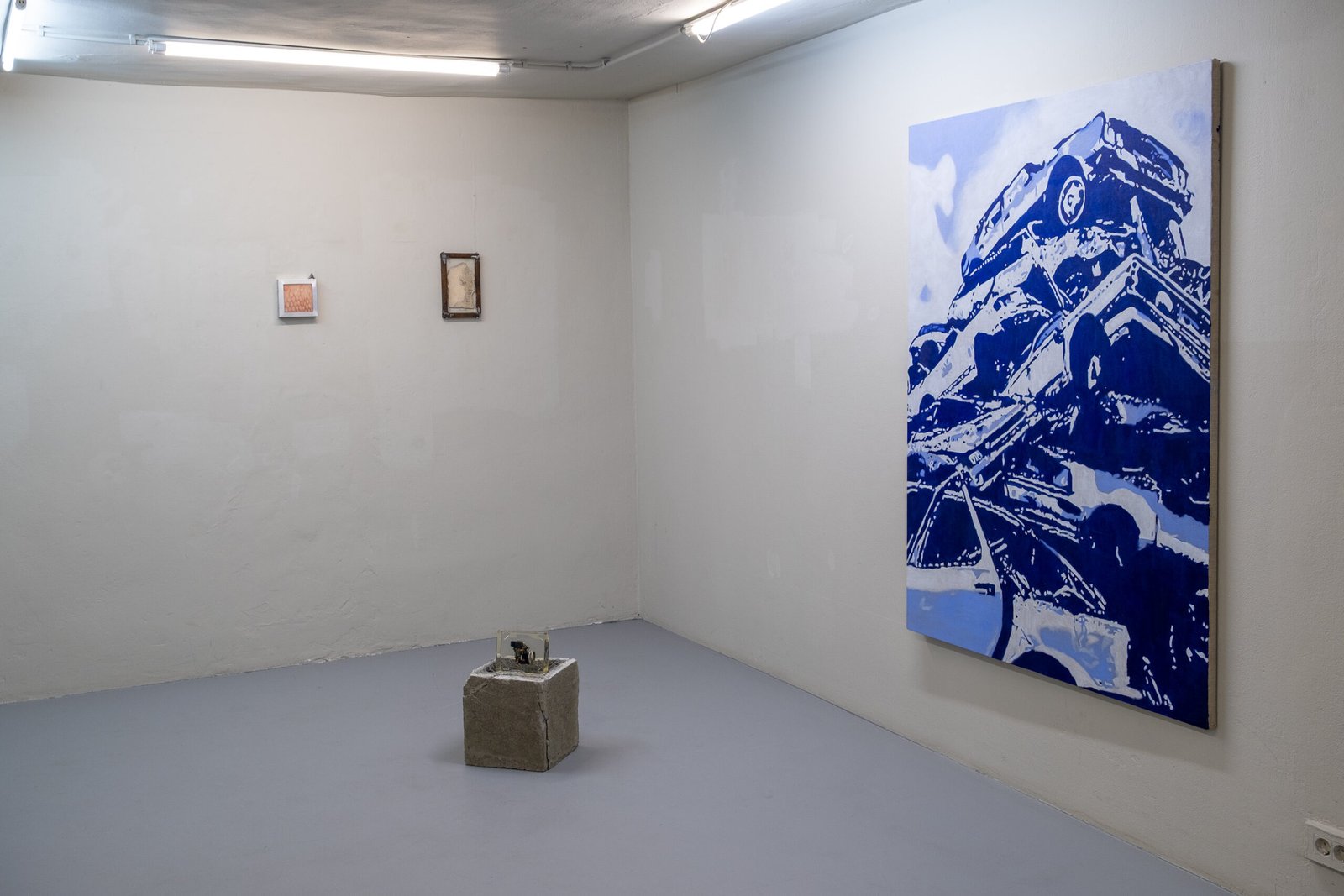
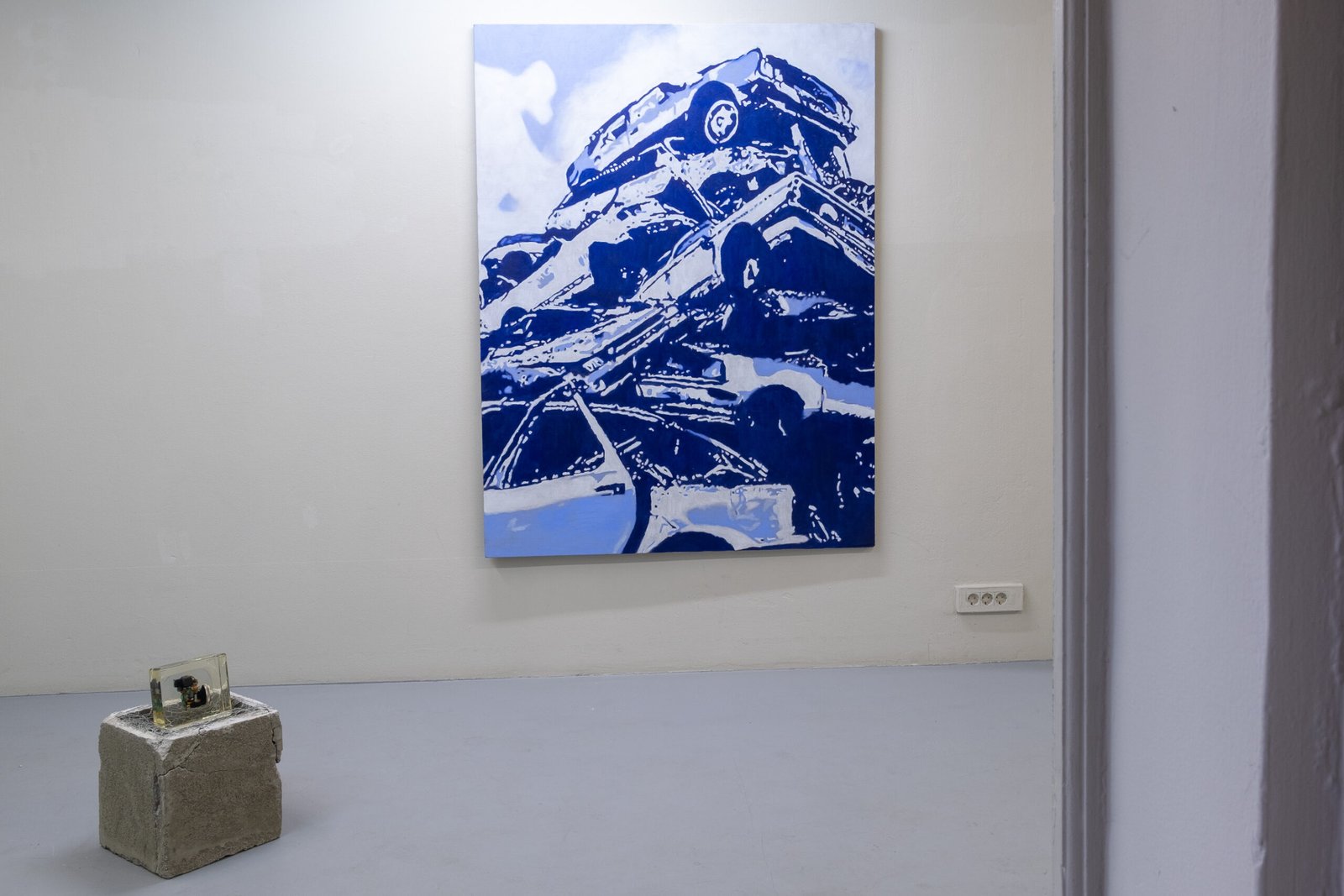
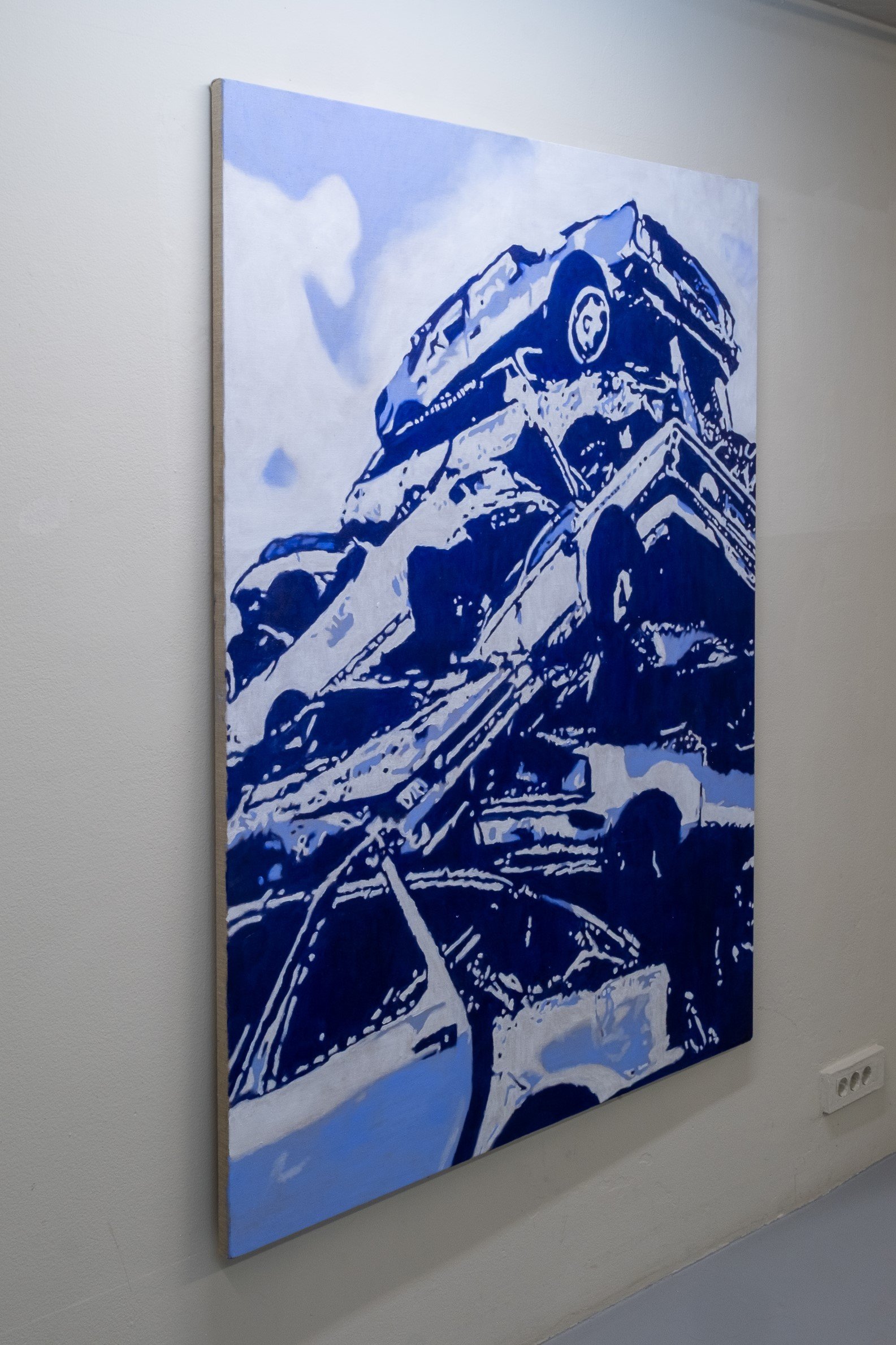
David Pricob returns to the post-industrial landscapes of Valea Jiului, where abandoned mines, factories, and industrial structures become witnesses to absent bodies and forgotten forms of labour. Gradually reclaimed by birds of prey, these landscapes evoke post-apocalyptic scenarios familiar from video games and comics, while preserving the memory of communities once defined by industrial life.
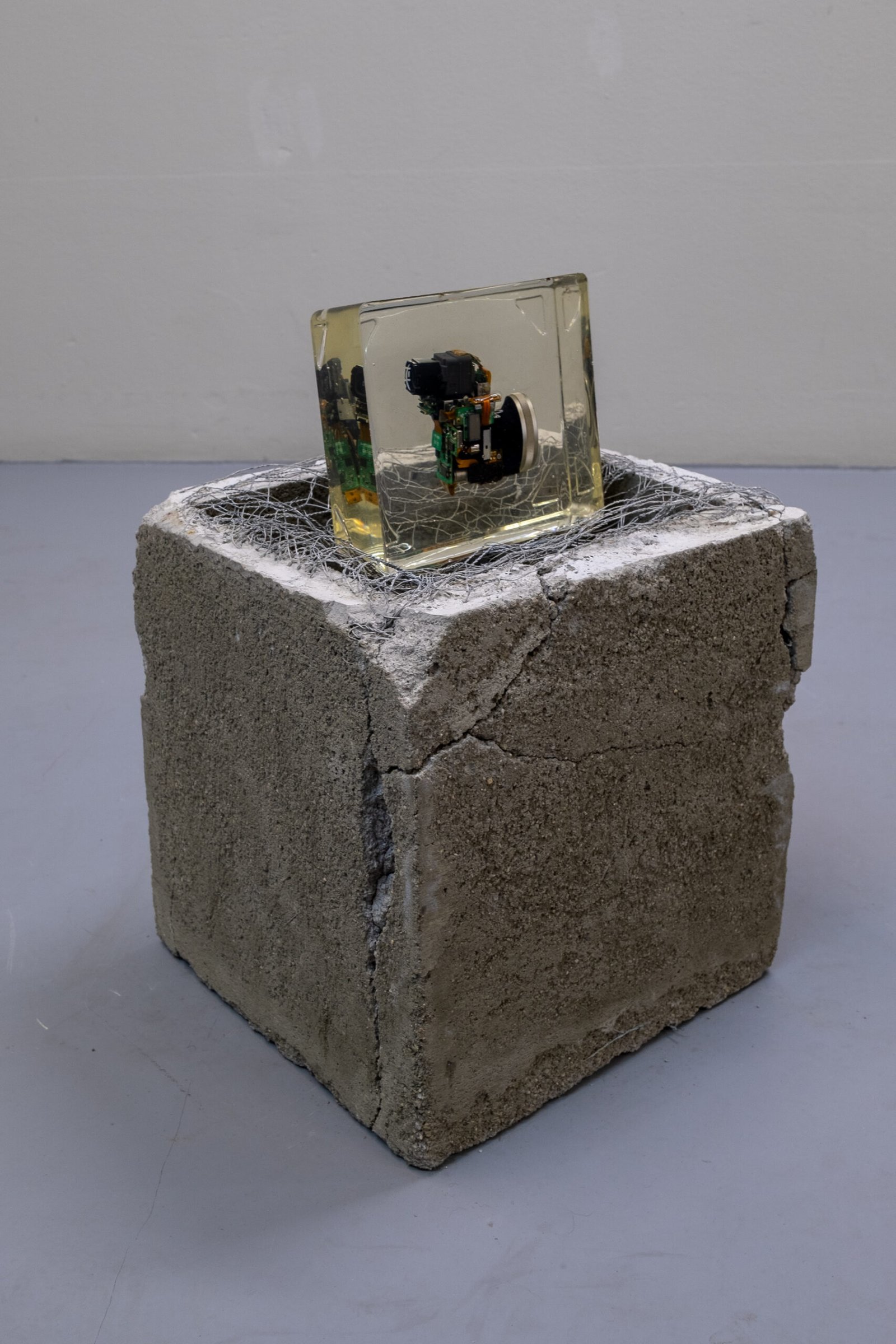
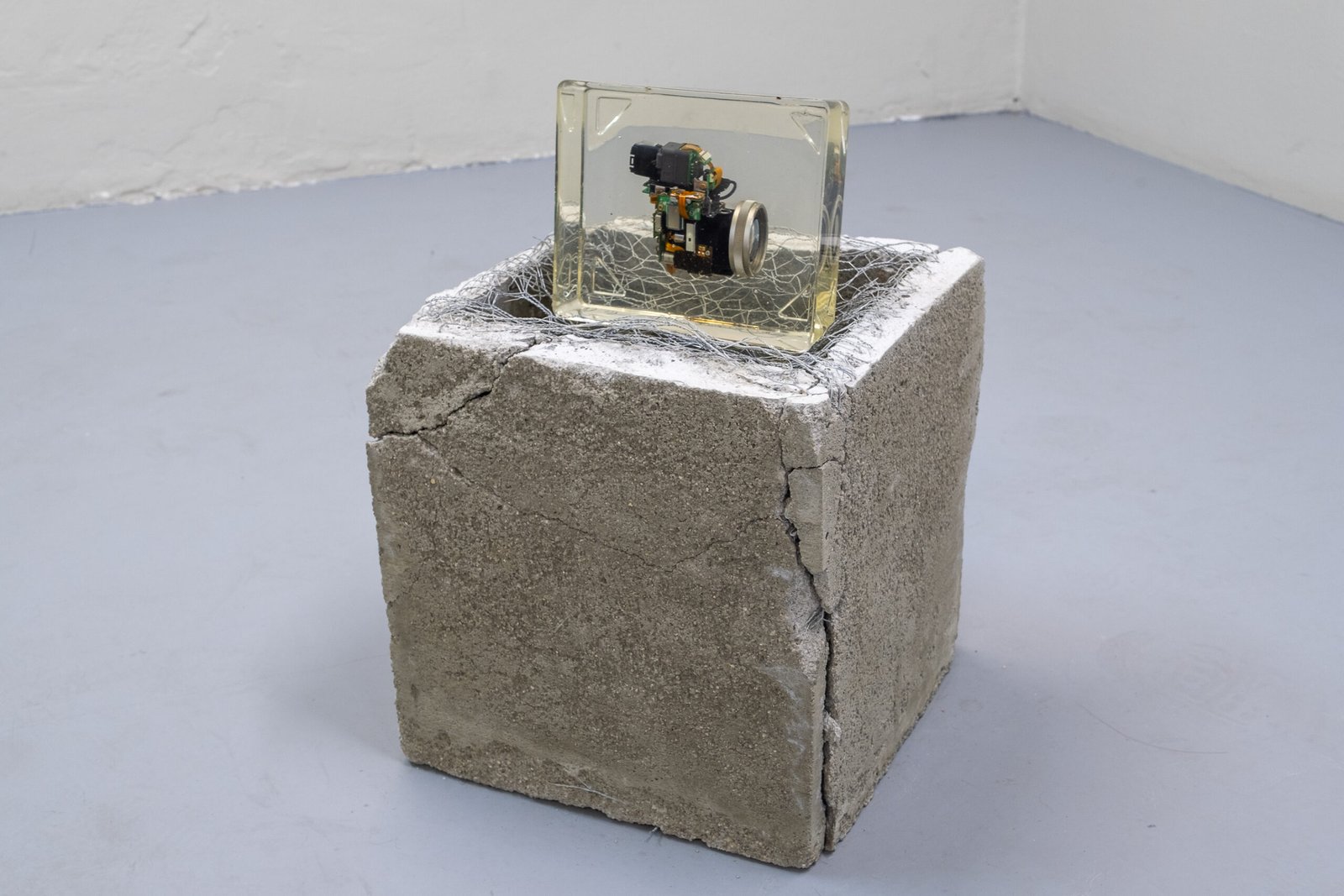
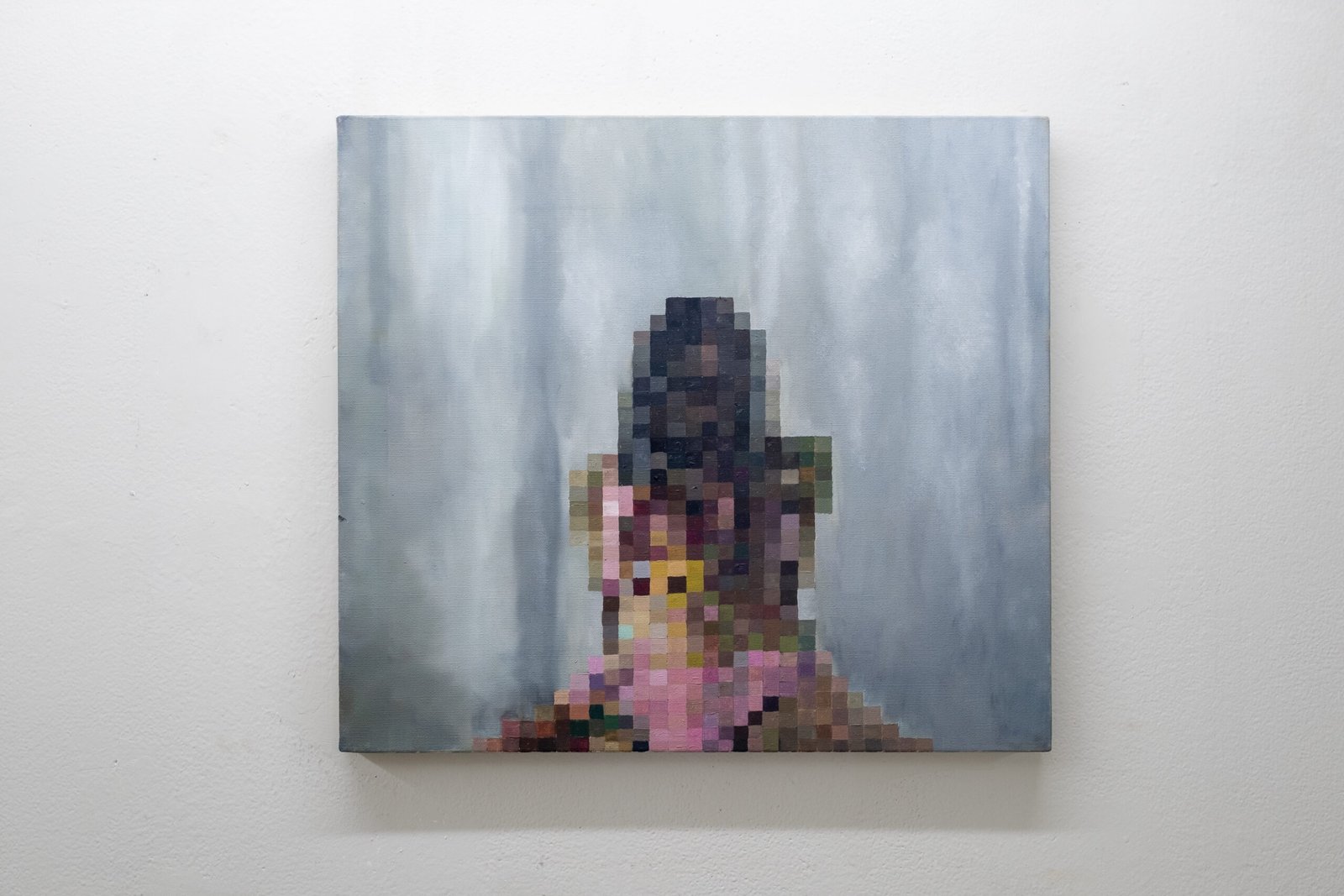
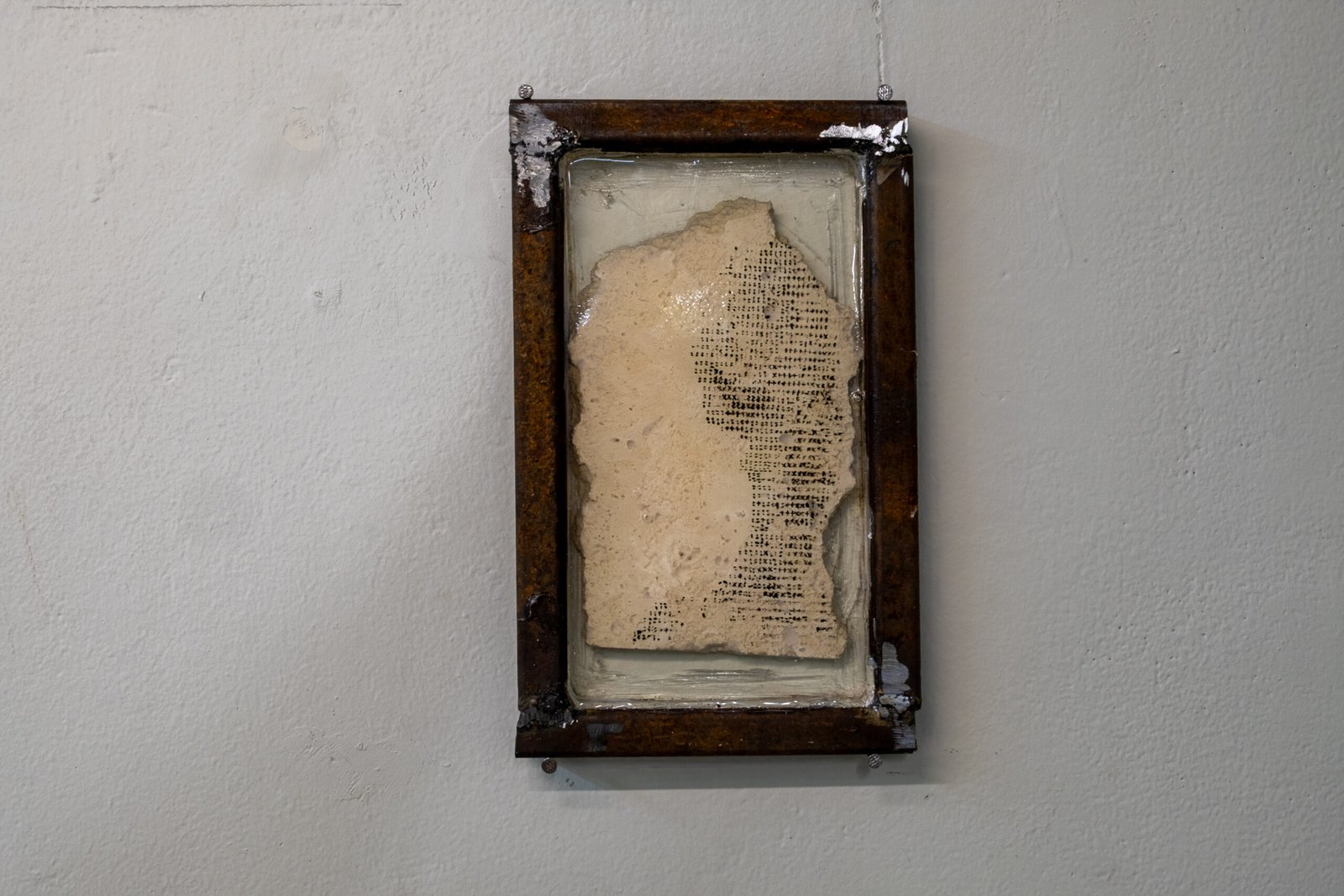
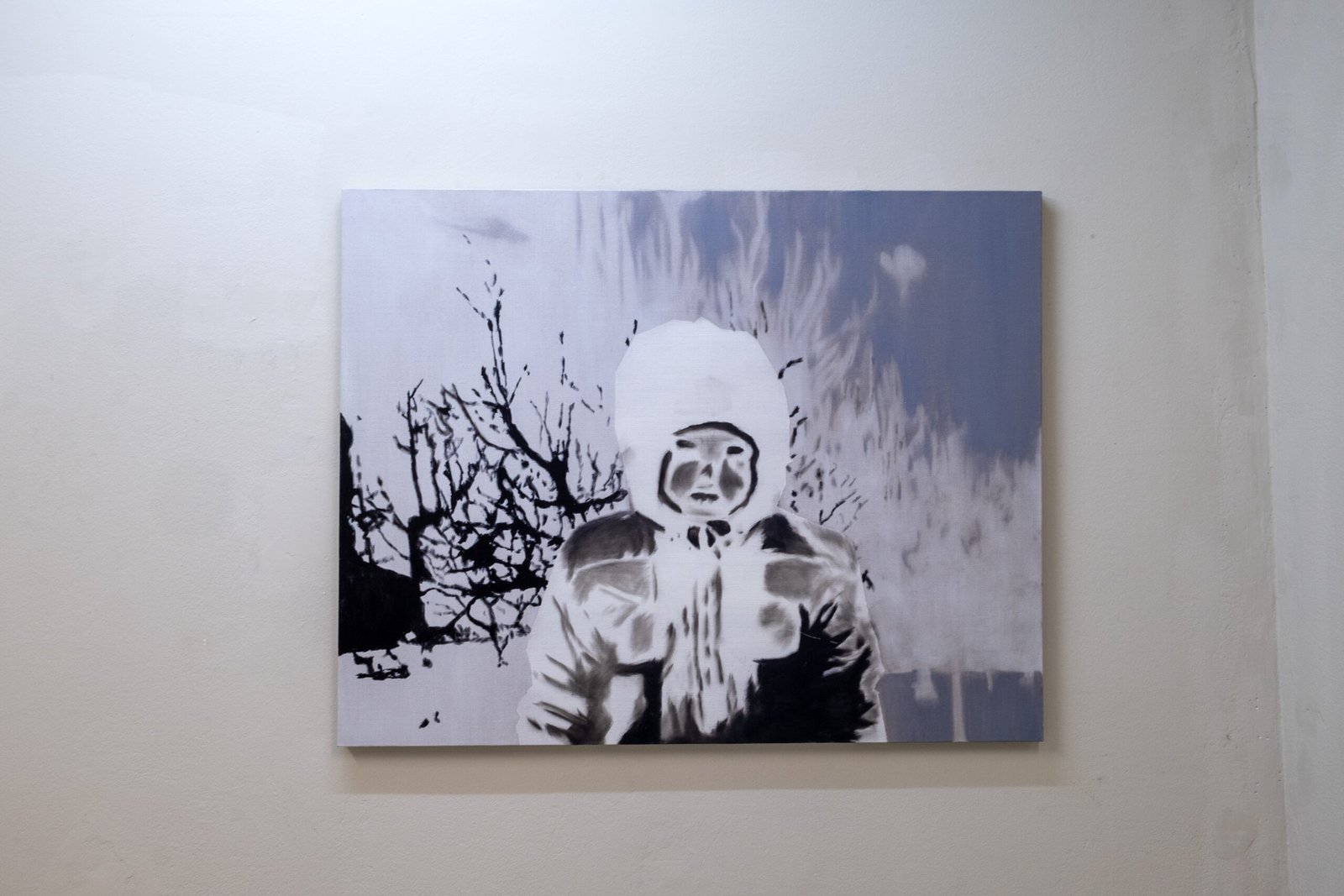
In Petru Cruceru’s paintings and epoxy objects, the body is rarely encountered directly. Instead, it emerges through acts of mediation—a frozen VHS camera lens, pixelated figures, or images reconstructed through fragments of pop culture and personal memory. His works reflect on how contemporary perception is shaped through images that are continuously reproduced, transformed, and remembered.
Underneath All Traces of Comfort brings together artworks that navigate the shifting boundaries between body and object while reflecting on the ways bodies are formed and exposed through their relationship with the infrastructures that surround them. Rather than treating the body as an isolated entity, the artists approach it as something continuously shaped through its encounters with places, objects, and images, moving between personal histories and collective environments.