


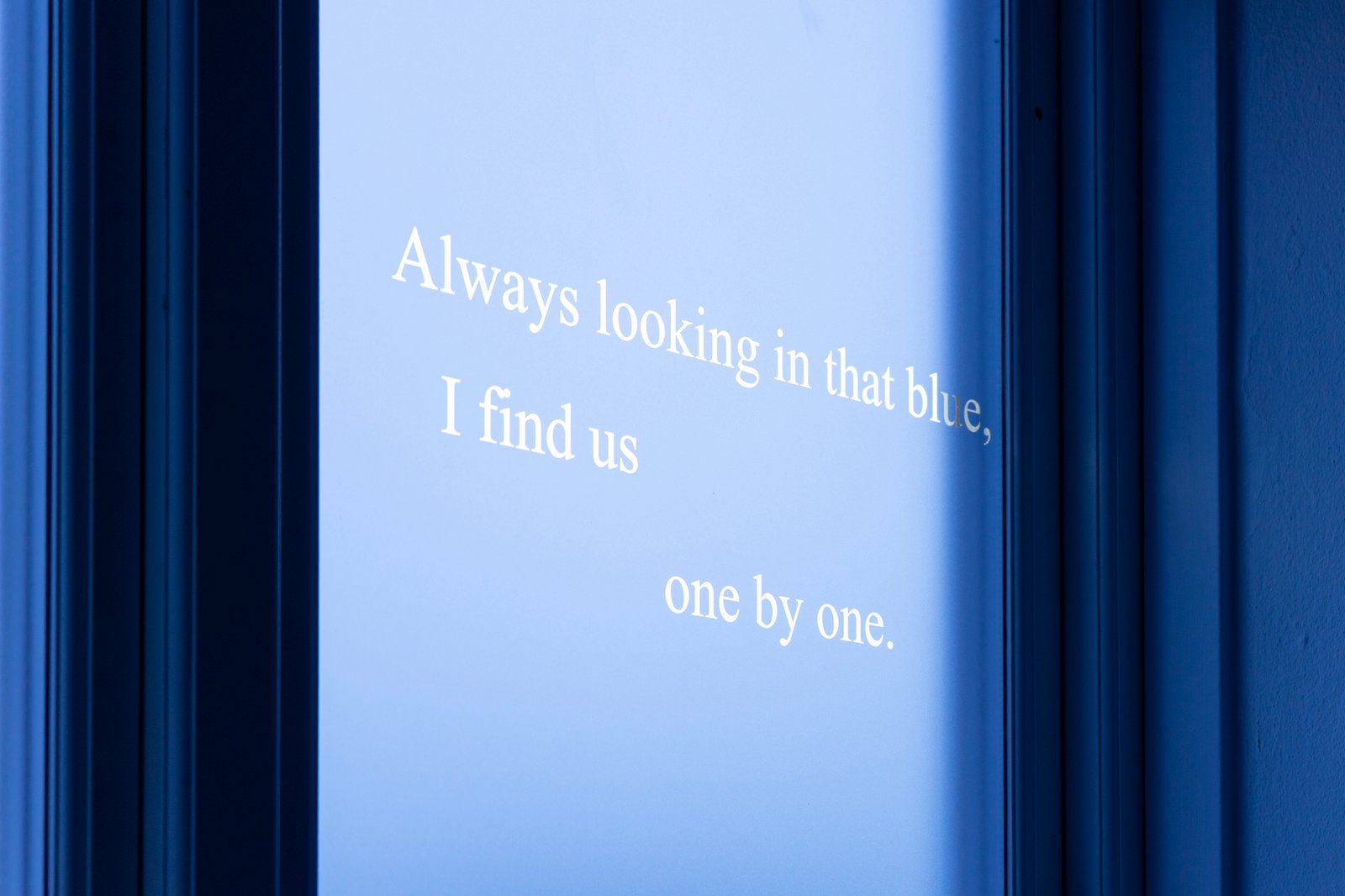
‘The earth is trembling’, observed Martinique-born writer and thinker Édouard Glissant.* ‘Today, the world is unpredictable and in such a world, utopia is necessary’, he continued. The exhibition takes off from here, presenting works by artists, Alberta Whittle, Felix Gmelin, and Frida Orupabo. In this world of unrest and friction, it asks how resistance takes form, moves, and persists over time. Embracing a Glissantian approach it accepts the ongoing rumbling as a matter of fact, and presses on what it means to live, think, and act within it.
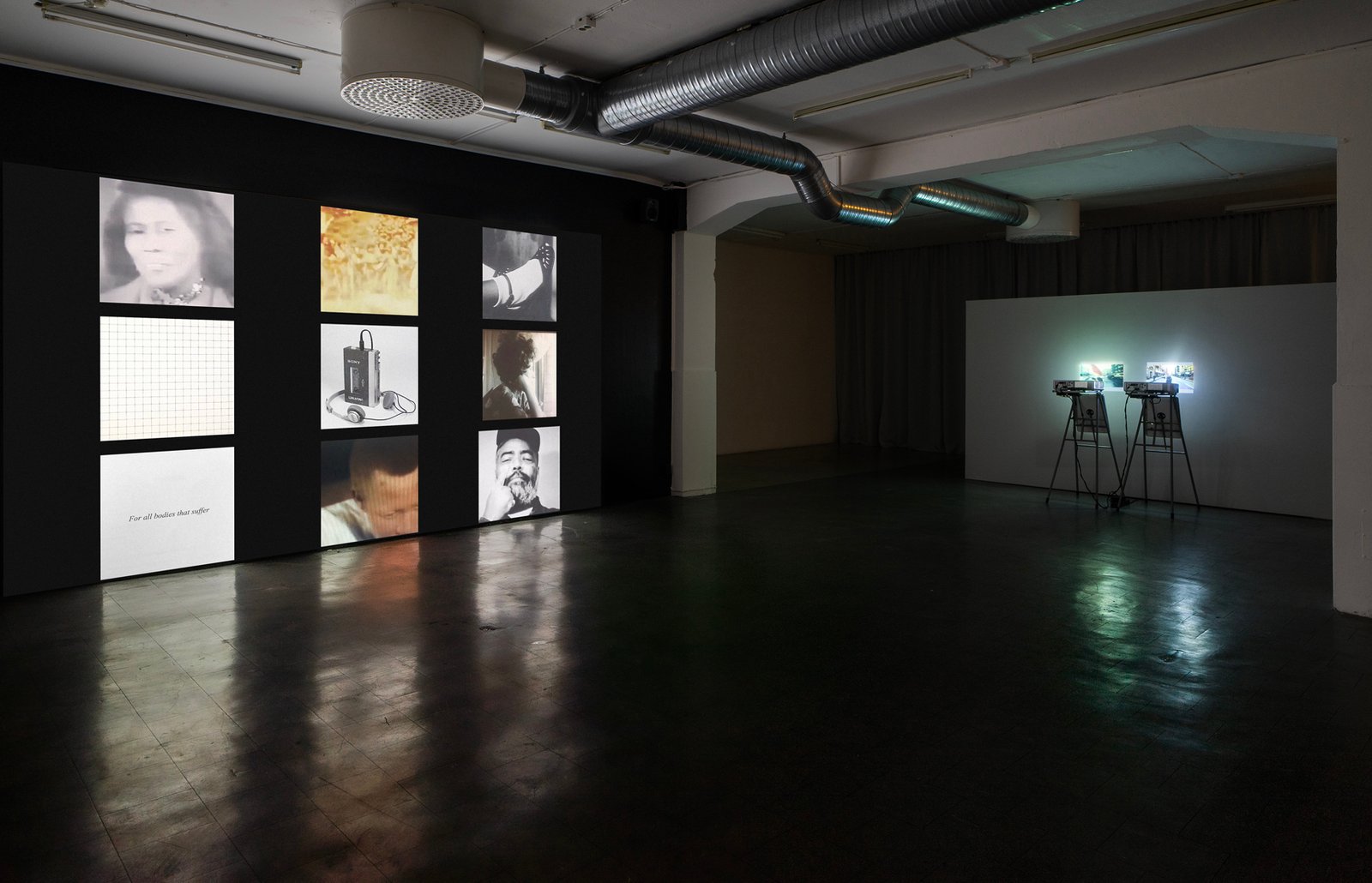
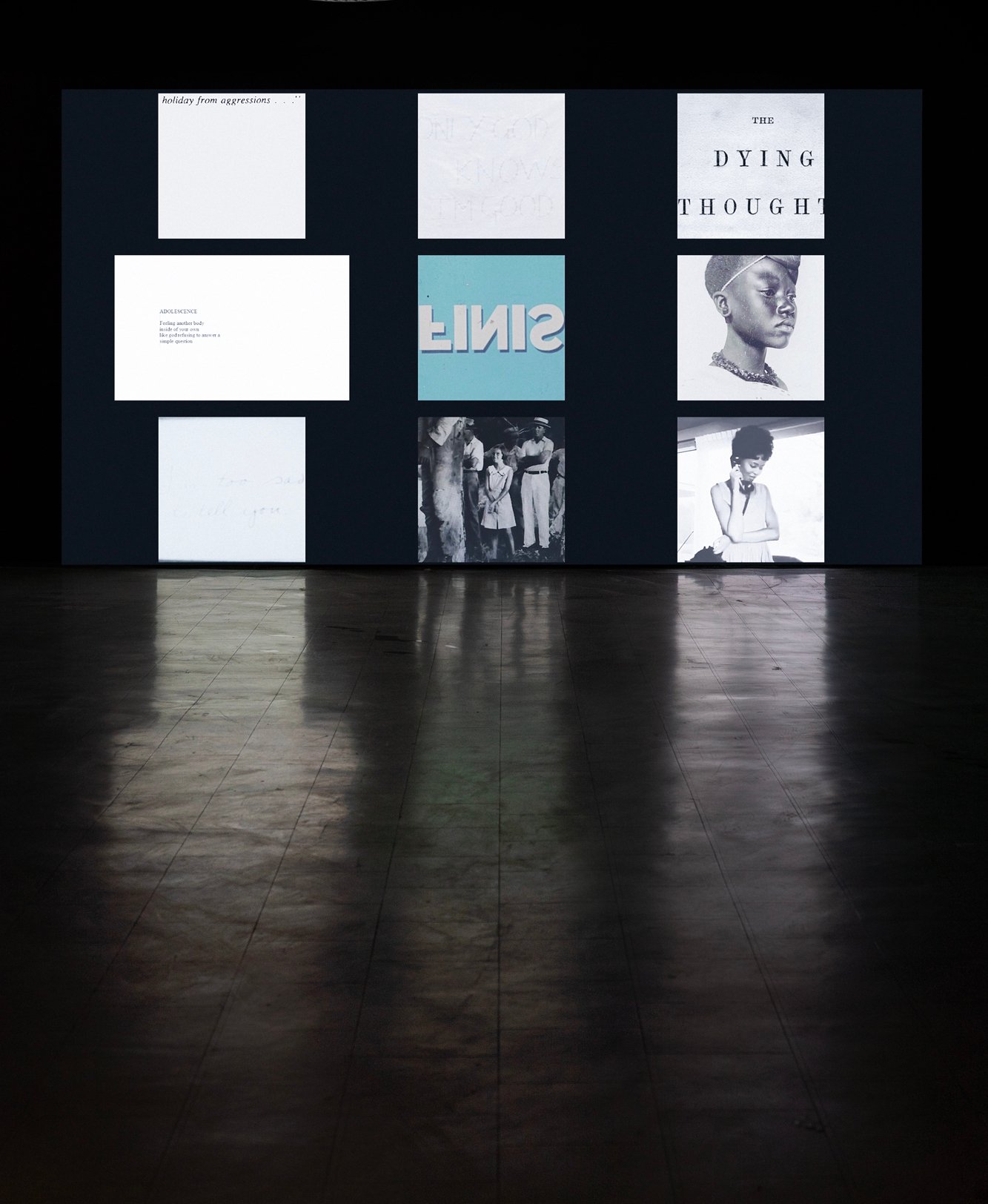
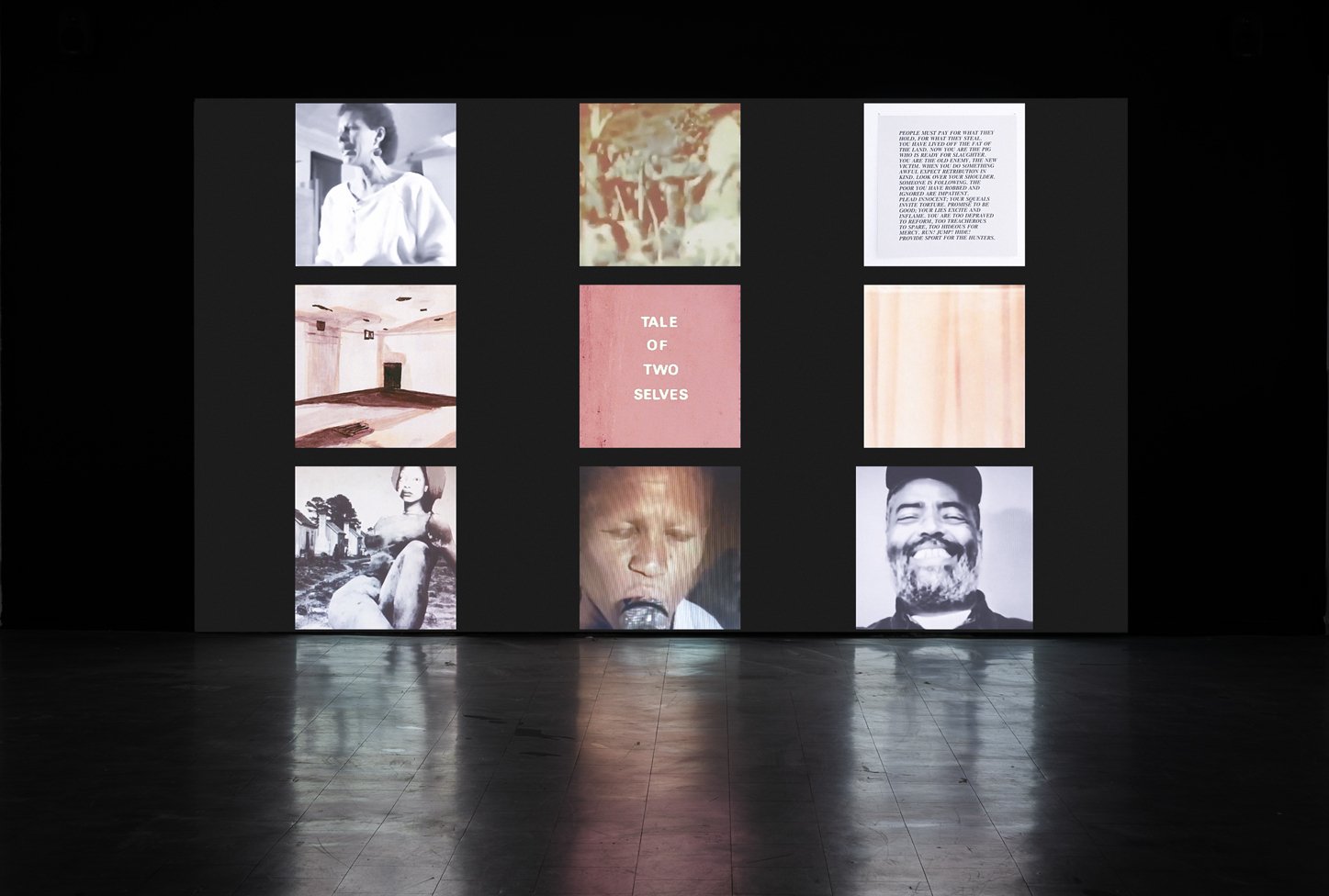
Frida Orupabo’s nine-channel video installation glares at the viewer in a constant loop. Disarming still and moving images sourced from various archives by the artist flash in a choreographed cacophony. In one clip, we hear the words, ‘somebody almost walked off wid alla my stuff… stealing my stuff from me don’t make it yours, it makes it stolen’. The words delivered by Alfre Woodard in Ntozake Shange’s choreopoem, “For Colored Girls Who Have Considered Suicide/ When the Rainbow Is Enuf. In another”, In another, “i am tired of god,” scribbled in jarring, childlike handwriting in red ink, flickers and disappears. Elsewhere, the cover of The Roots’ 1999 album “Things Fall Apart”, itself drawn from an image of the 1964 Bedford-Stuyvesant riots in Brooklyn, appears like an apparition.
Orupabo’s “Untitled” (2018) unfurls violences and absurdities thrown at Black life from police brutality, to invasive medical procedures carried out in the name of science, and forced baptism on Indigenous lands. Rather than hiding away this darkness she pulls it to the surface, calling for public reckoning of the tremblement. She brings together discomfort and release, at times with a grave sense of humour, because what can you do?
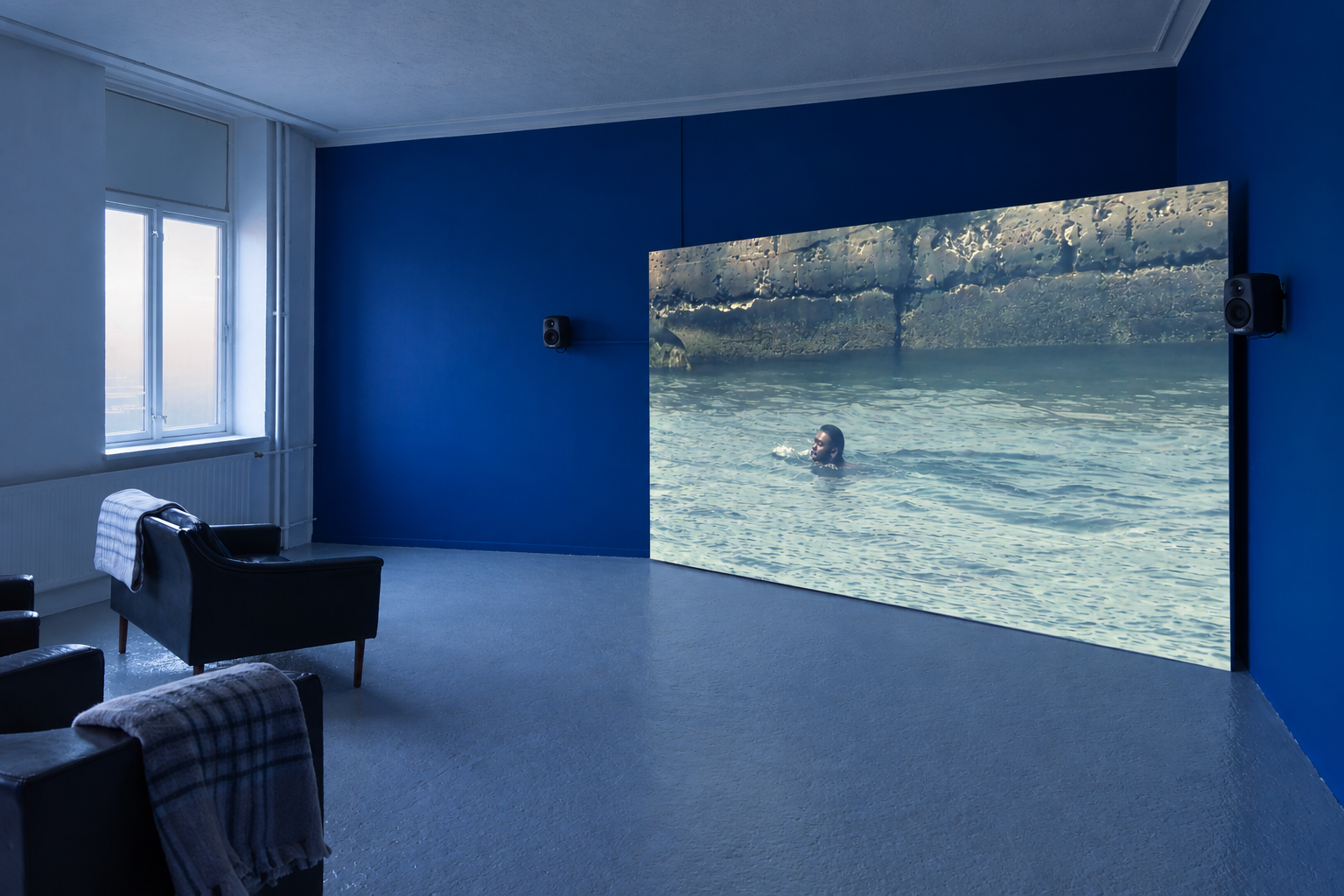
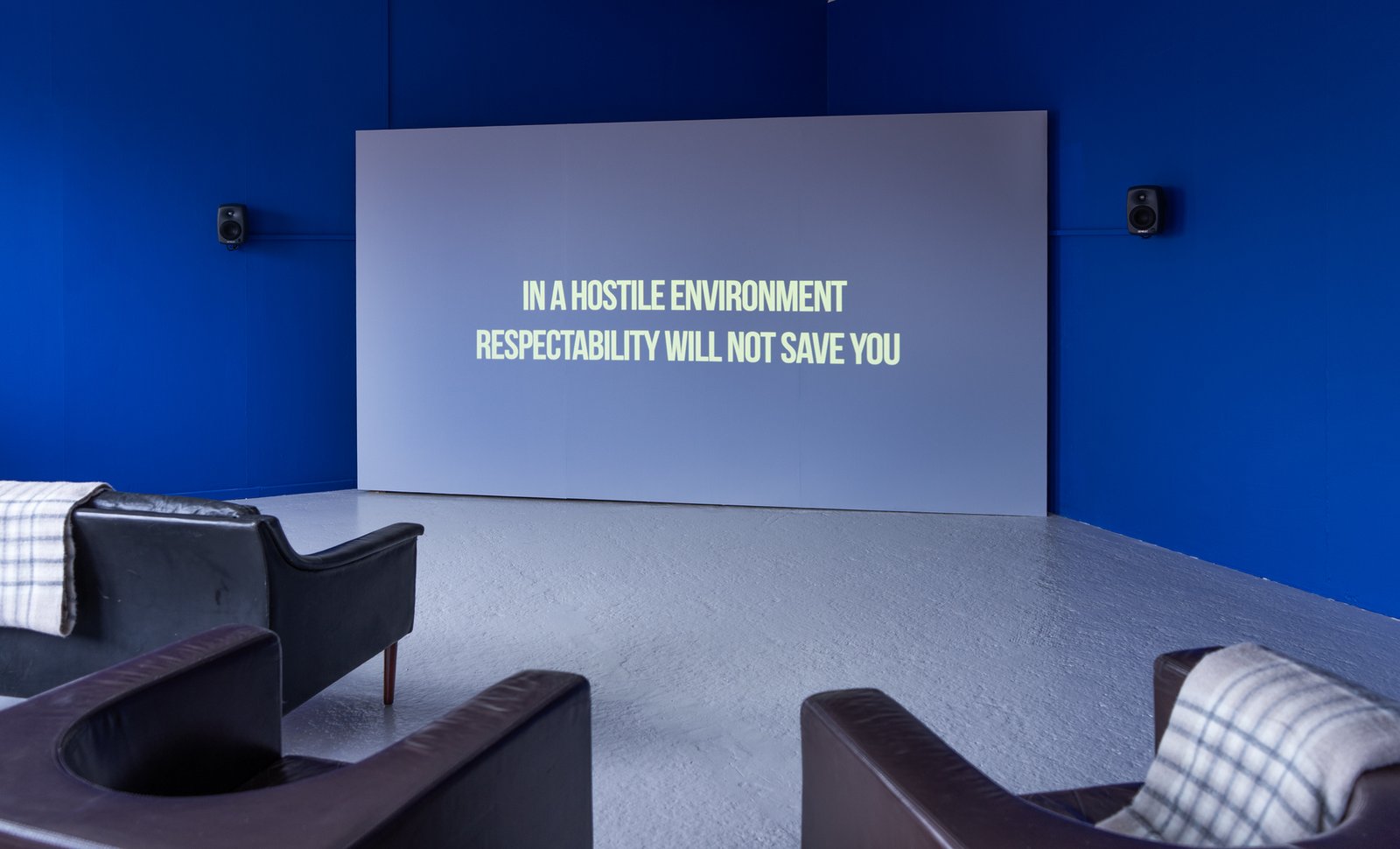
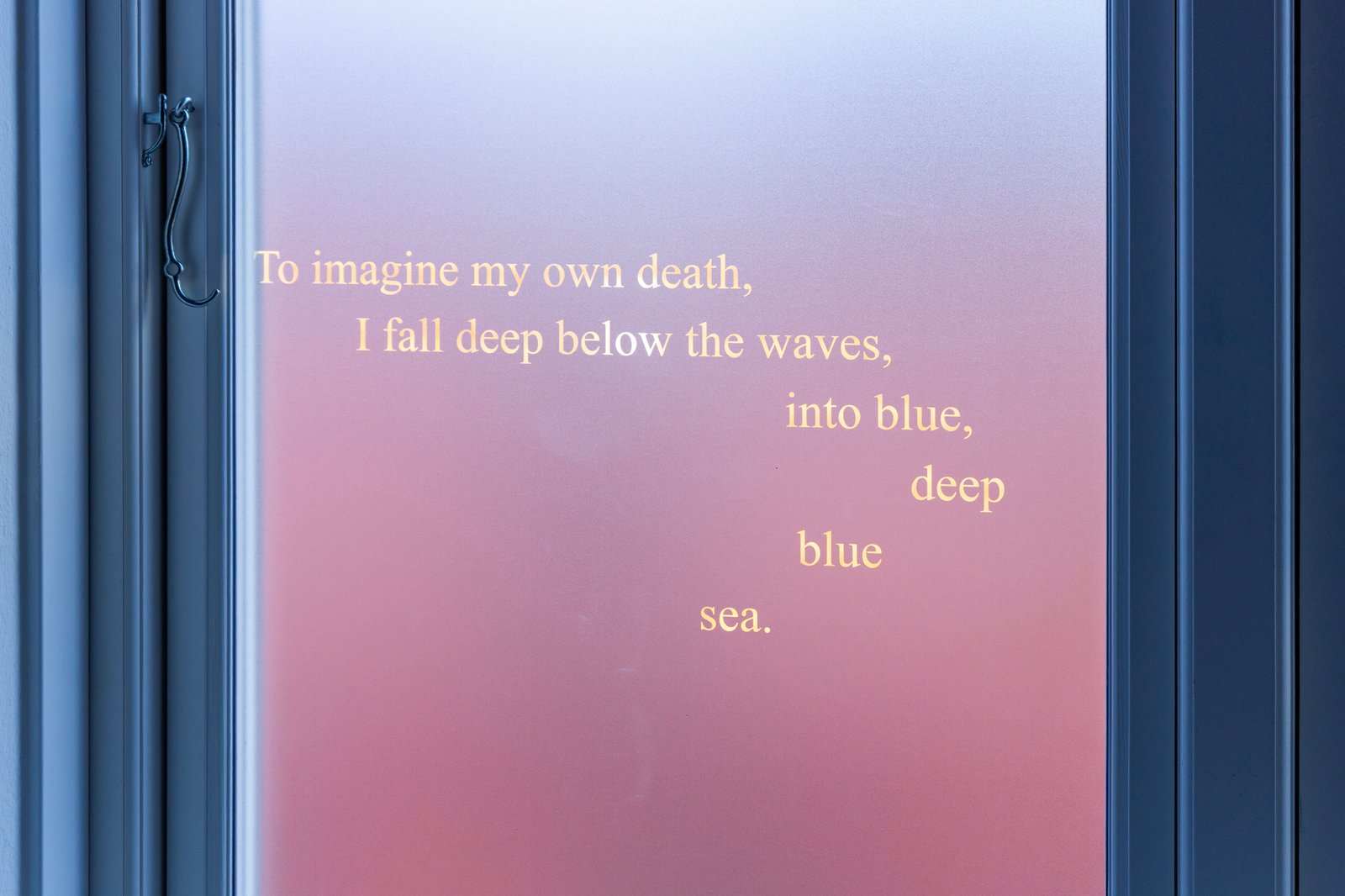
Alberta Whittle’s “What Sound Does The Black Atlantic Make?” (2019) unravels the colonial legacy of the North British Rubber Company, turning towards the ocean as a site of memory. The company’s most well-known product was the Wellington boot, and it is recorded that the factory produced 1,185,036 pairs for the British Army during the First World War. Whittle draws connections between the material histories of the factory and the wider networks of colonialism, capitalism and extraction. What is seemingly distant becomes entangled in a web of violent circulation of matter, commodities, and human life across the Atlantic. What Sound Does The Black Atlantic Make? is a composition of words, sounds, images, and archival footage, floating on waves. The artist transports the viewer across time, place, and geography. She leads us through a difficult past, while also bringing us into ongoing frictions including migration. In one scene, the artist performs a rendition of “Deep Blue Sea” by blues, jazz and folk singer Odetta Holmes, further deepening the work’s meditative register as a requiem.
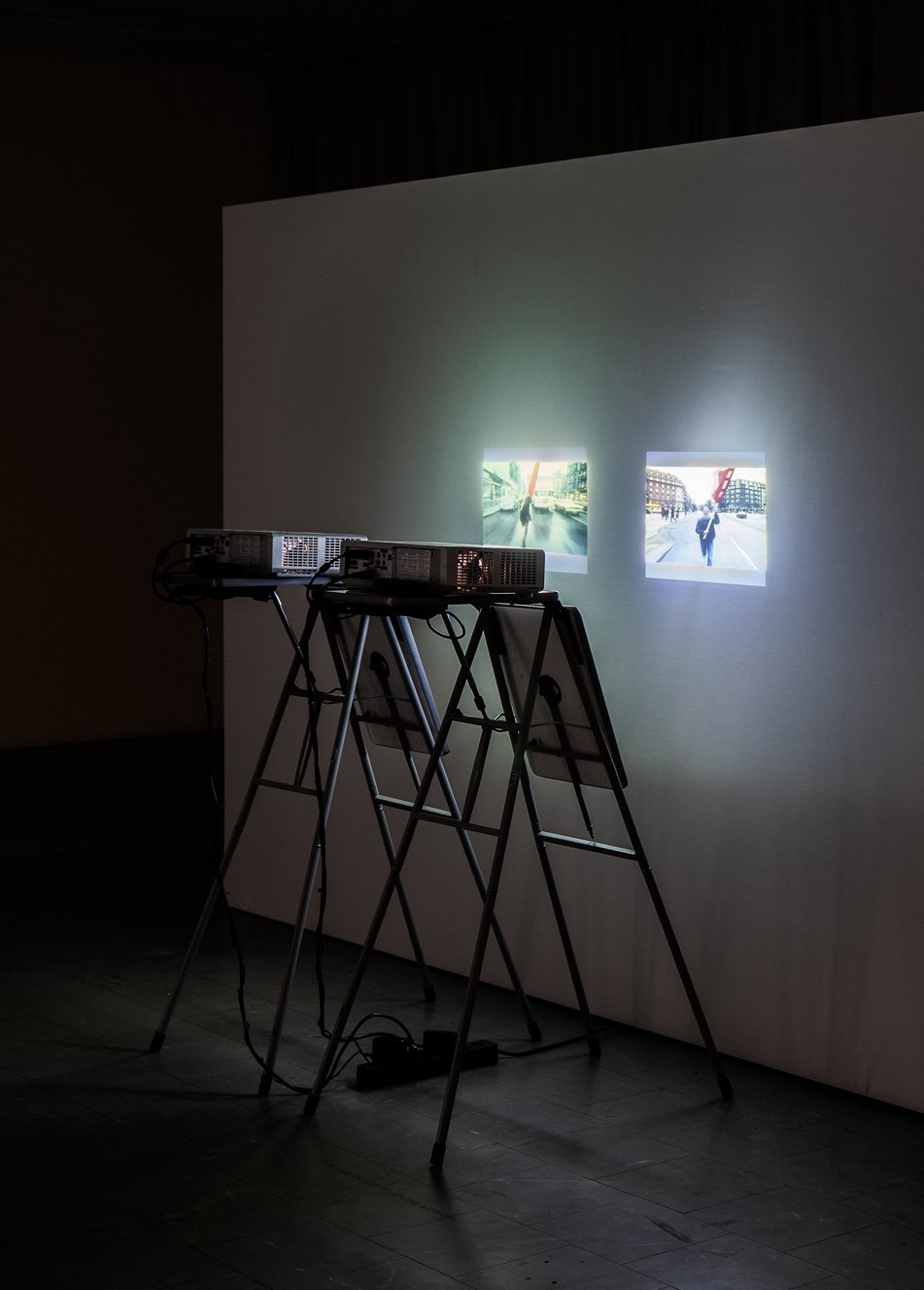
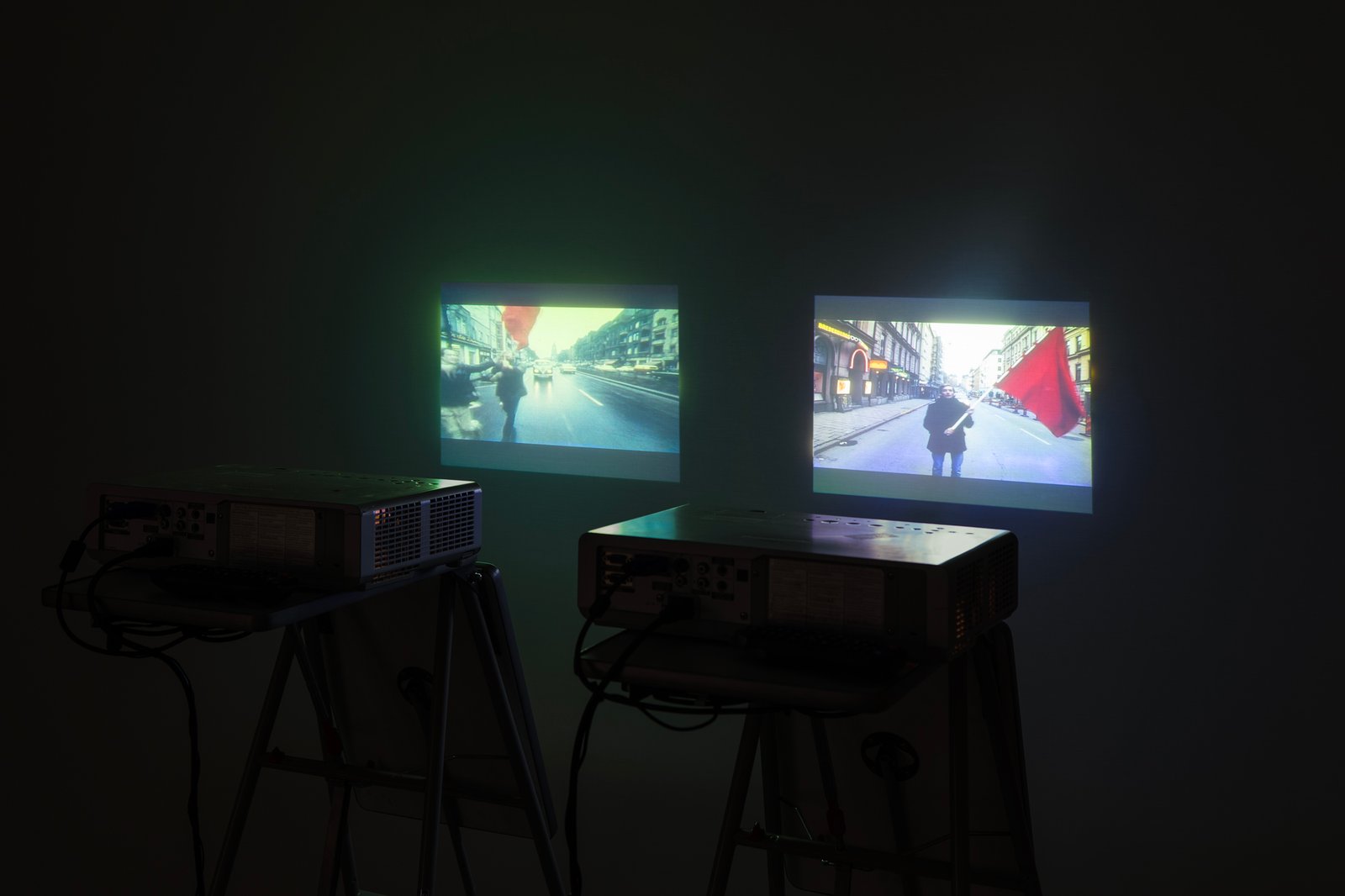
At the heart of Felix Gmelin’s “Farbtest, Die Rote Fahne II” (2002) (Color Test, The Red Flag II) is the question: can a political gesture be inherited? What survives, is it its conviction, its image, its choreography, or simply its memory? Gmelin uses reenactment to examine former political movements, particularly traces of 1960s radicalism. He restages Gerd Conradt’s 1968 video, shot with his father Otto F. Gmelin and his students, with his own years later in Sweden at the turn of the millennium. The recordings are exhibited as a cohesive installation, side by side, in contrasting symbiosis.
Conradt’s video of the students’ revolutionary protest culminates inside West Berlin’s Schöneberger Rathaus, a site popularised by John F. Kennedy’s famous 1963 “Ich bin ein Berliner” (I am a Berliner) speech. Felix Gmelin’s reenactment, by contrast, ends at Stockholm City Hall. In the former, the red flag appears on the balcony as a victorious gesture; in the latter, that moment is absent. It is precisely these gaps between different acts of rebellion that fascinate the artist, the attempt to understand what ideology means in practice, and what happens when the same line of action is repeated.
Glissant’s trembling thinking runs through the exhibition as a way of facing systems of terror. To tremble is not to remain still, but to move, to respond, to act, and to open toward what might be possible. The exhibition follows this movement tethering itself in anti-imperial thought and reaching for potentiality through artistic gesture.
Curator: Tawanda Appiah
*Édouard Glissant & Hans Ulrich Obrist, The Archipelago Conversations (2021).