


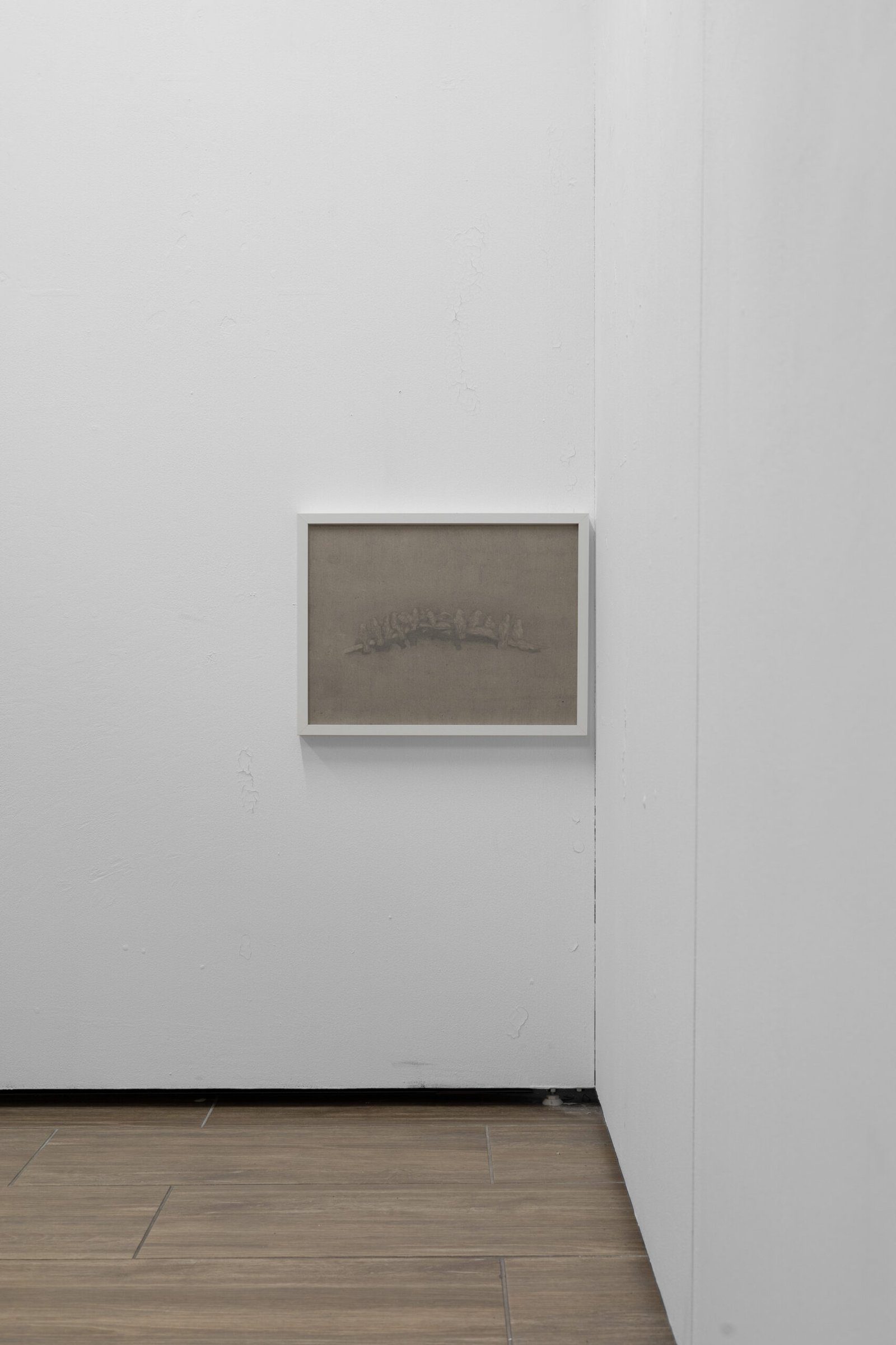
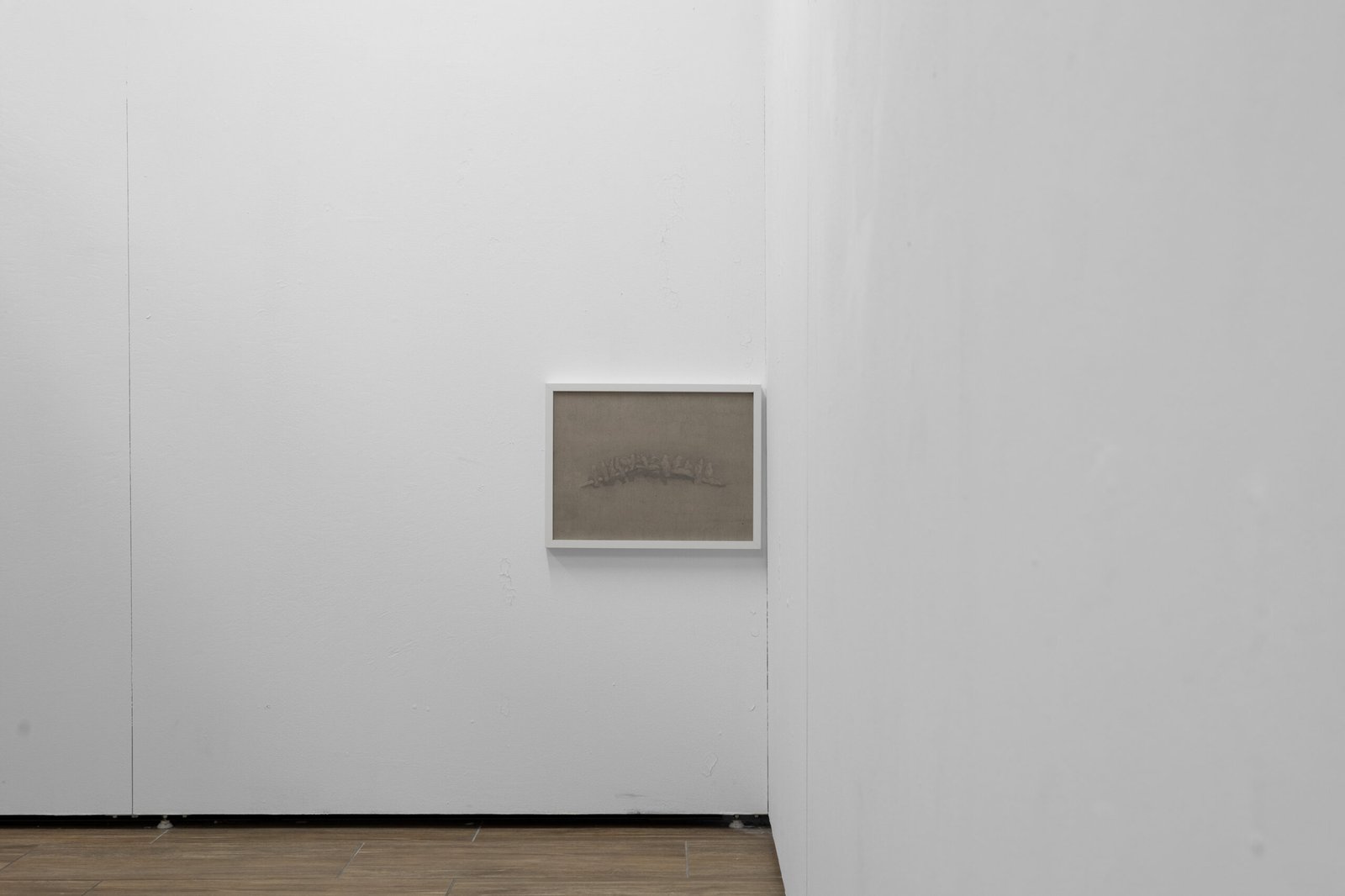
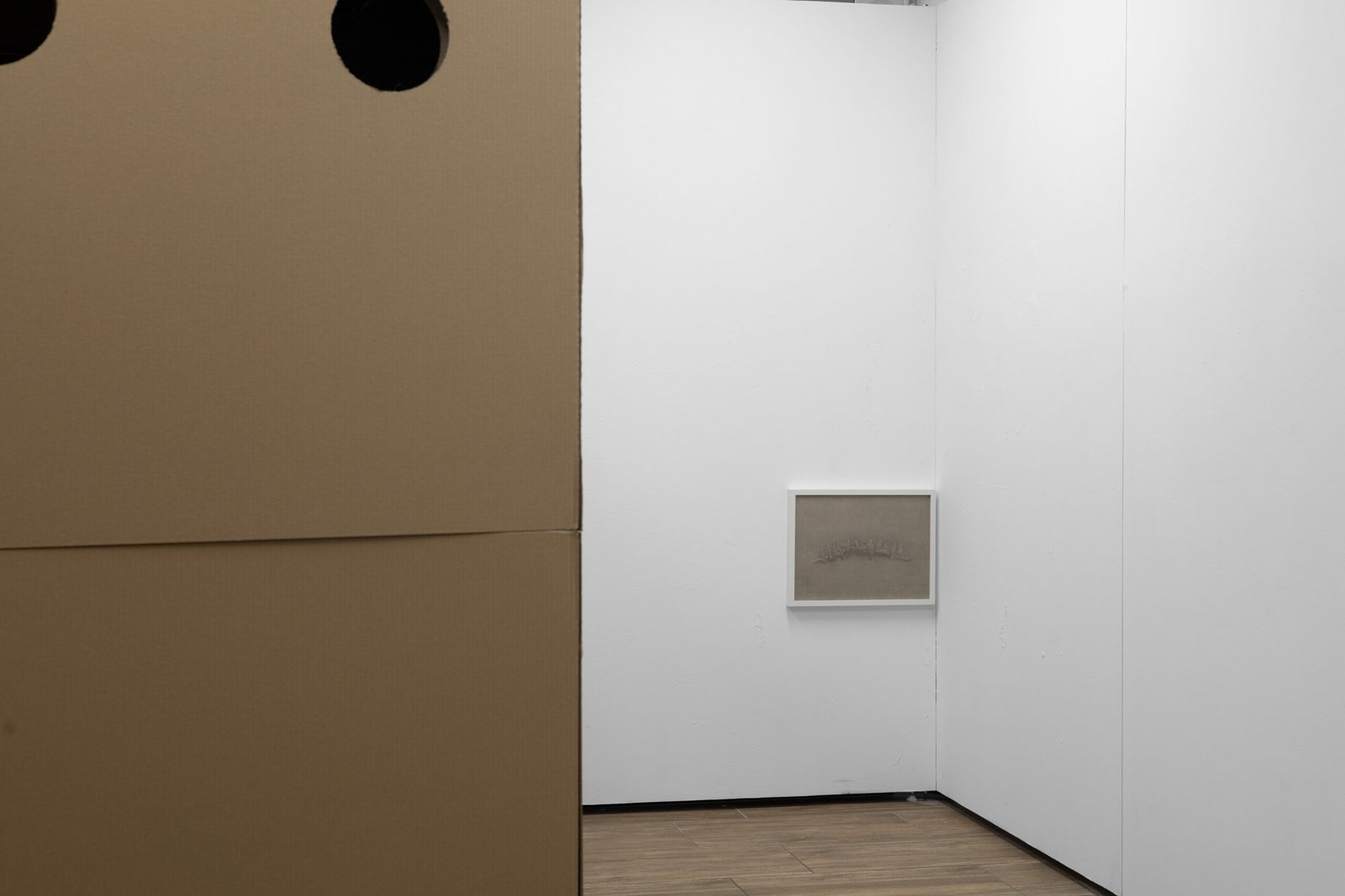
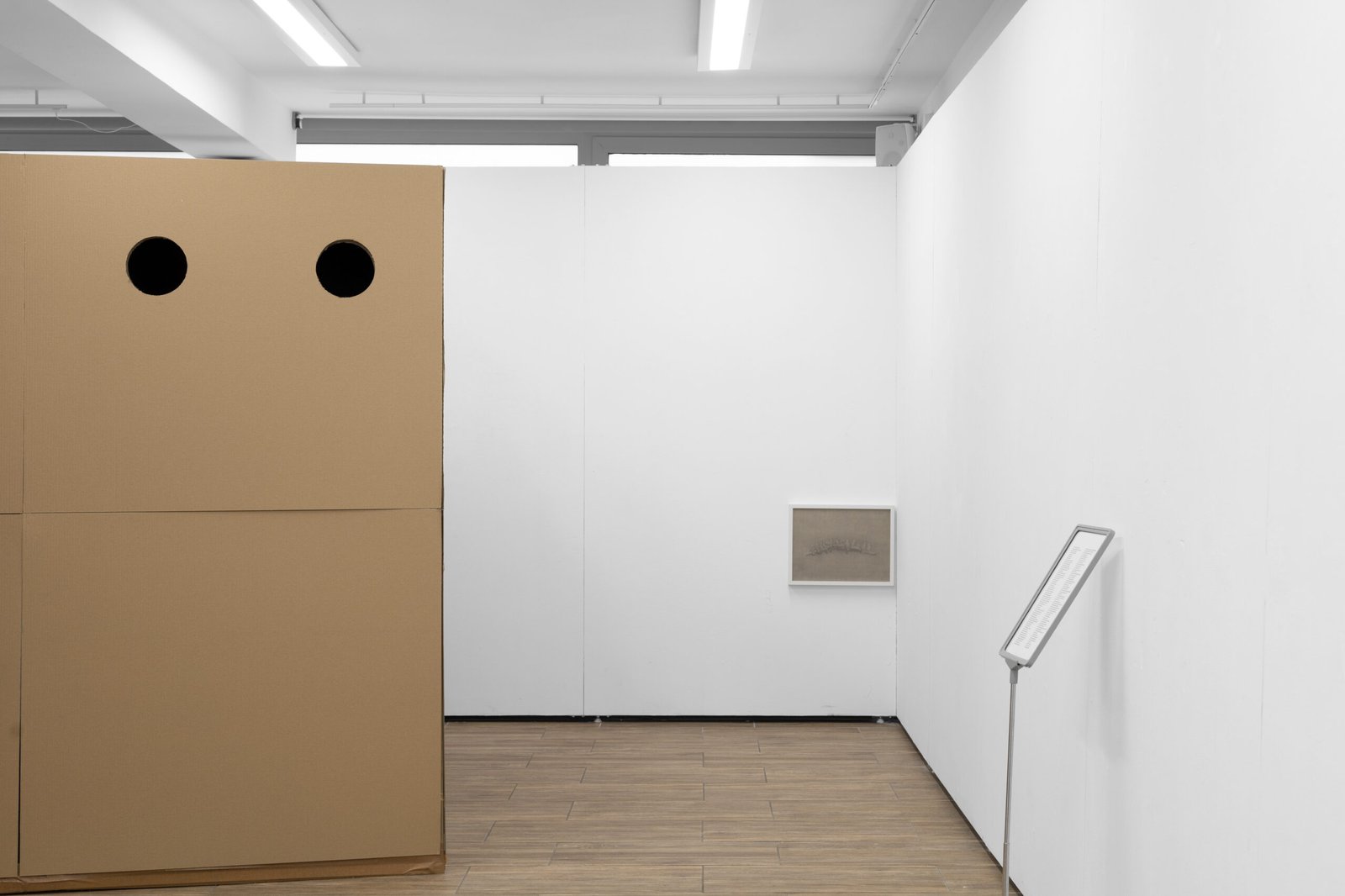
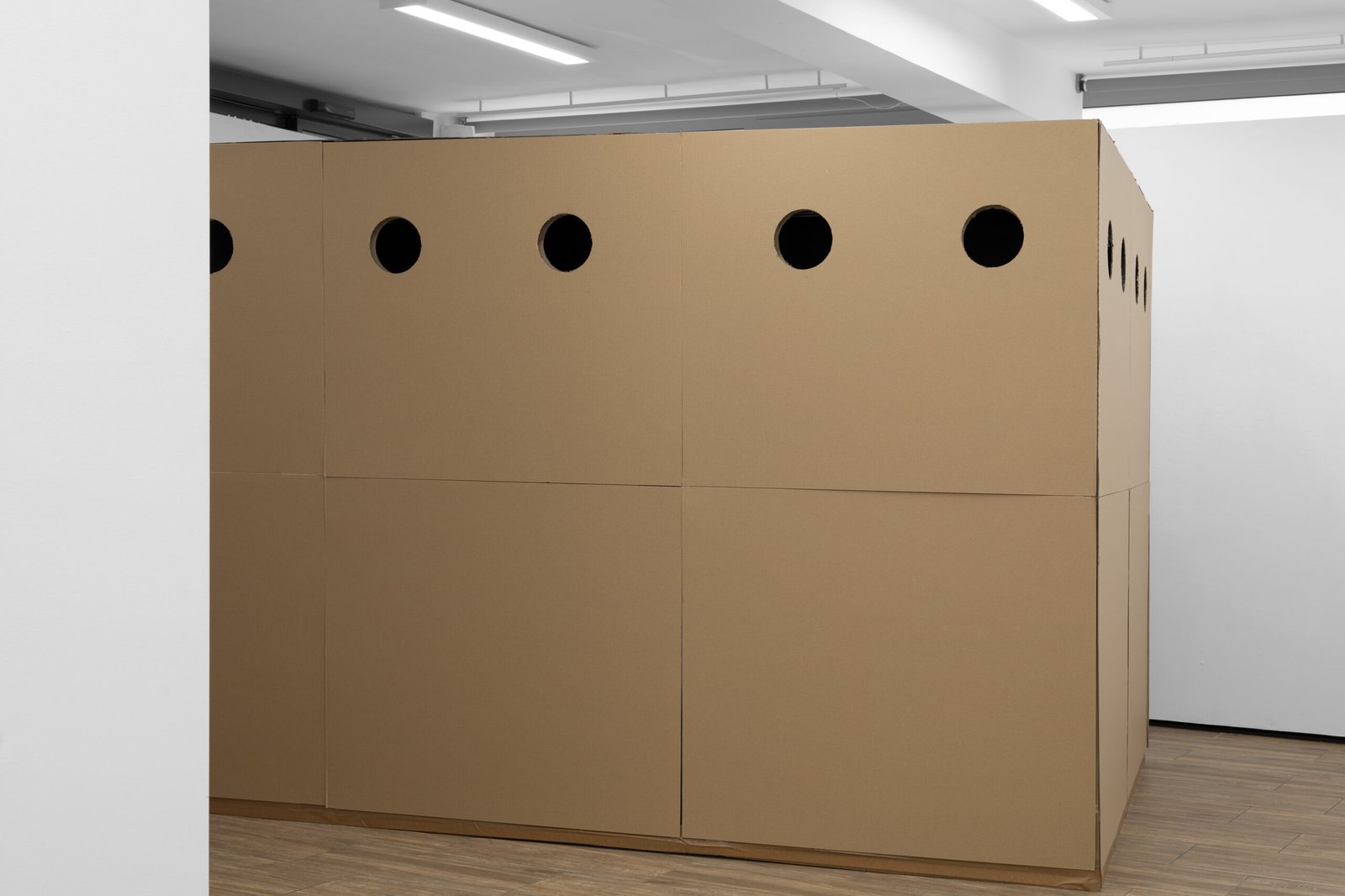
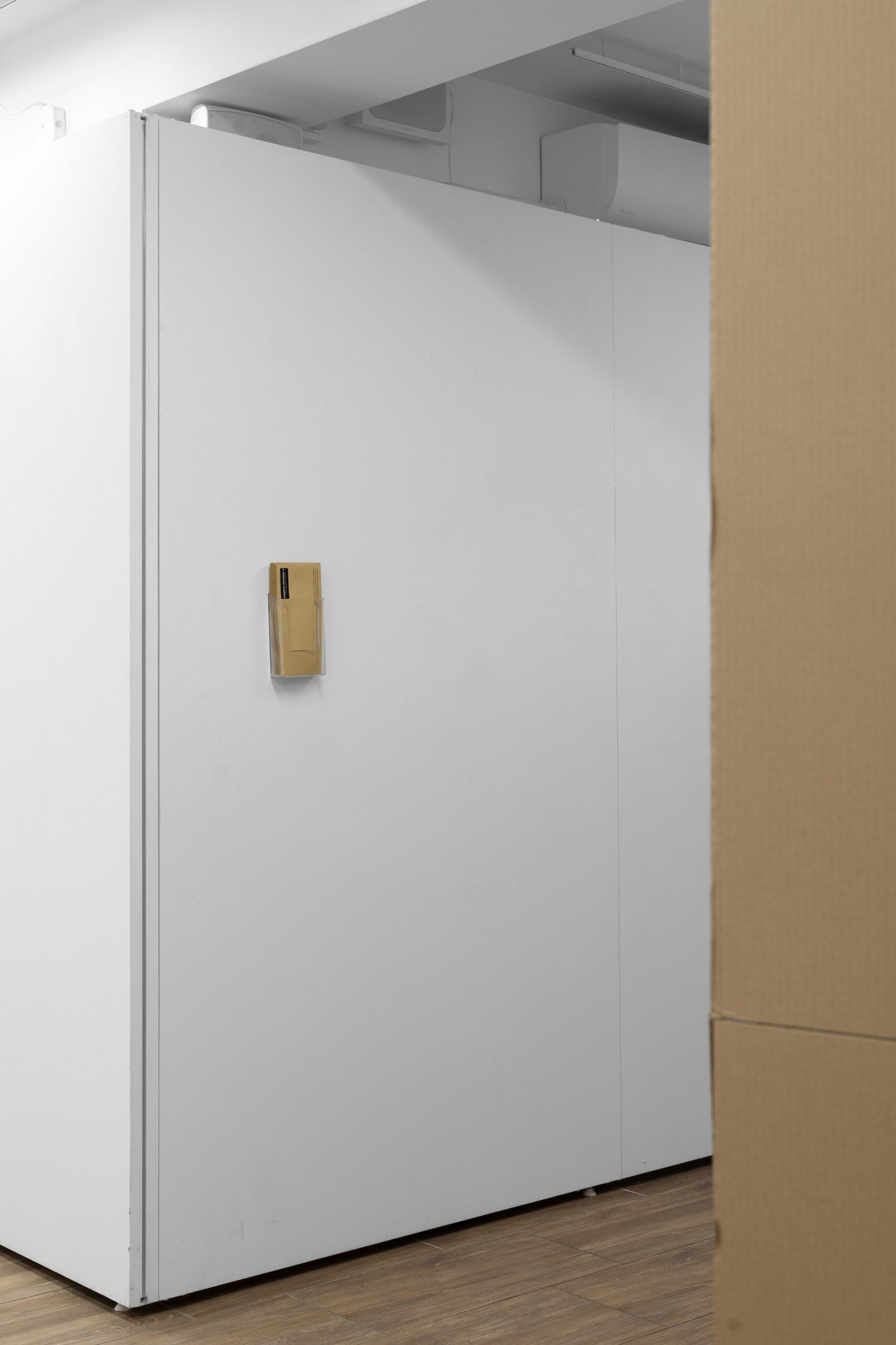
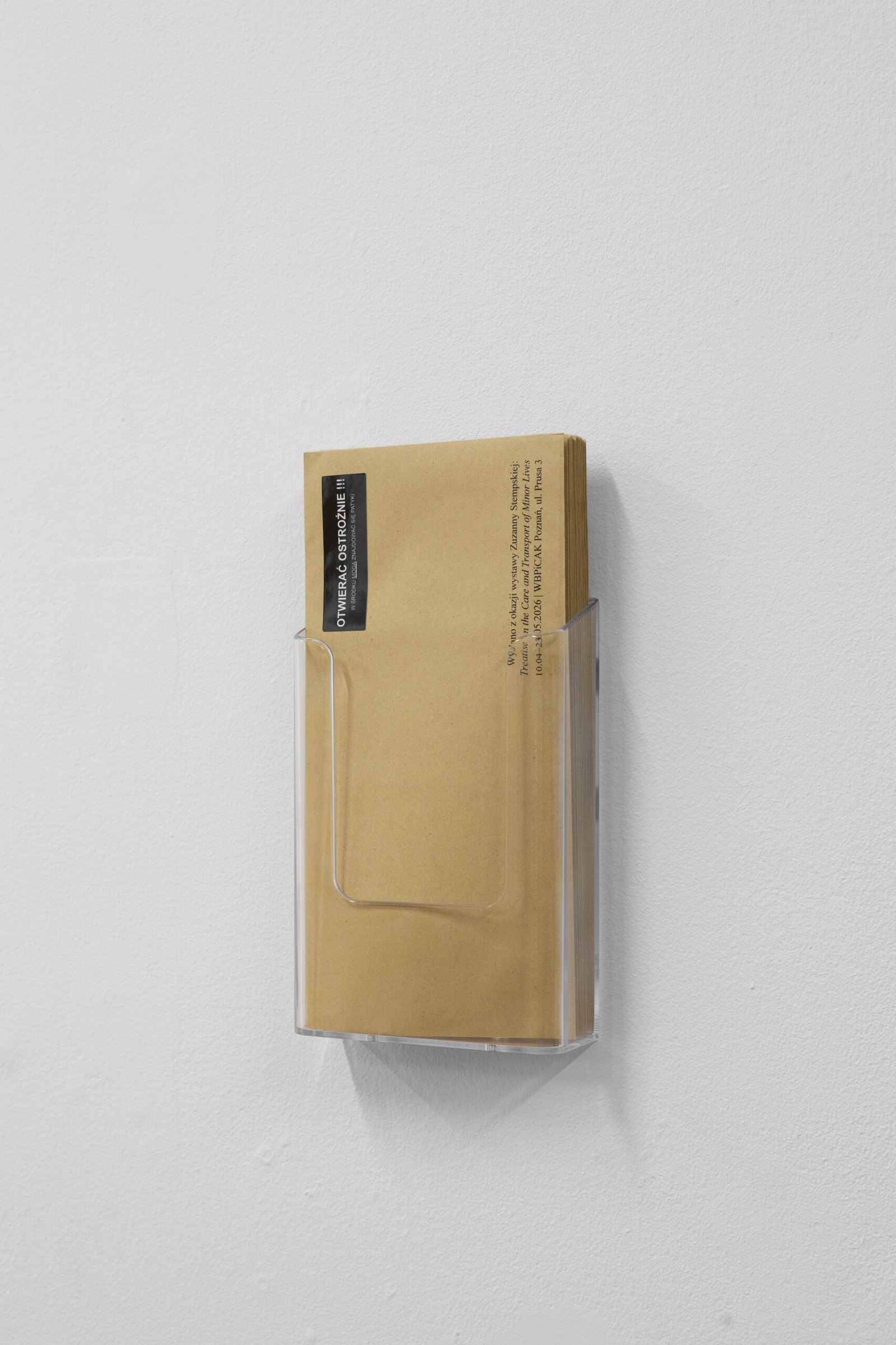
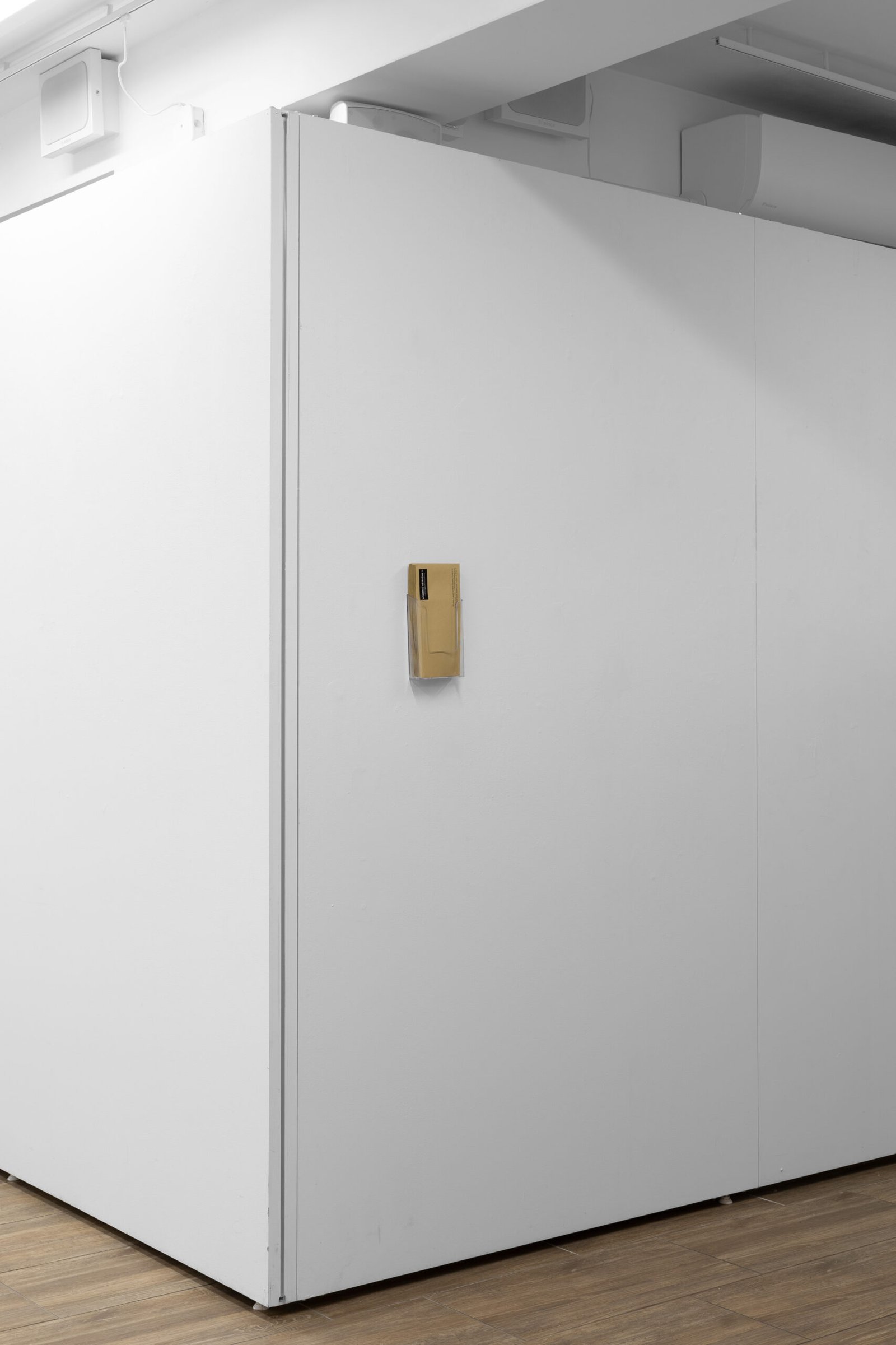

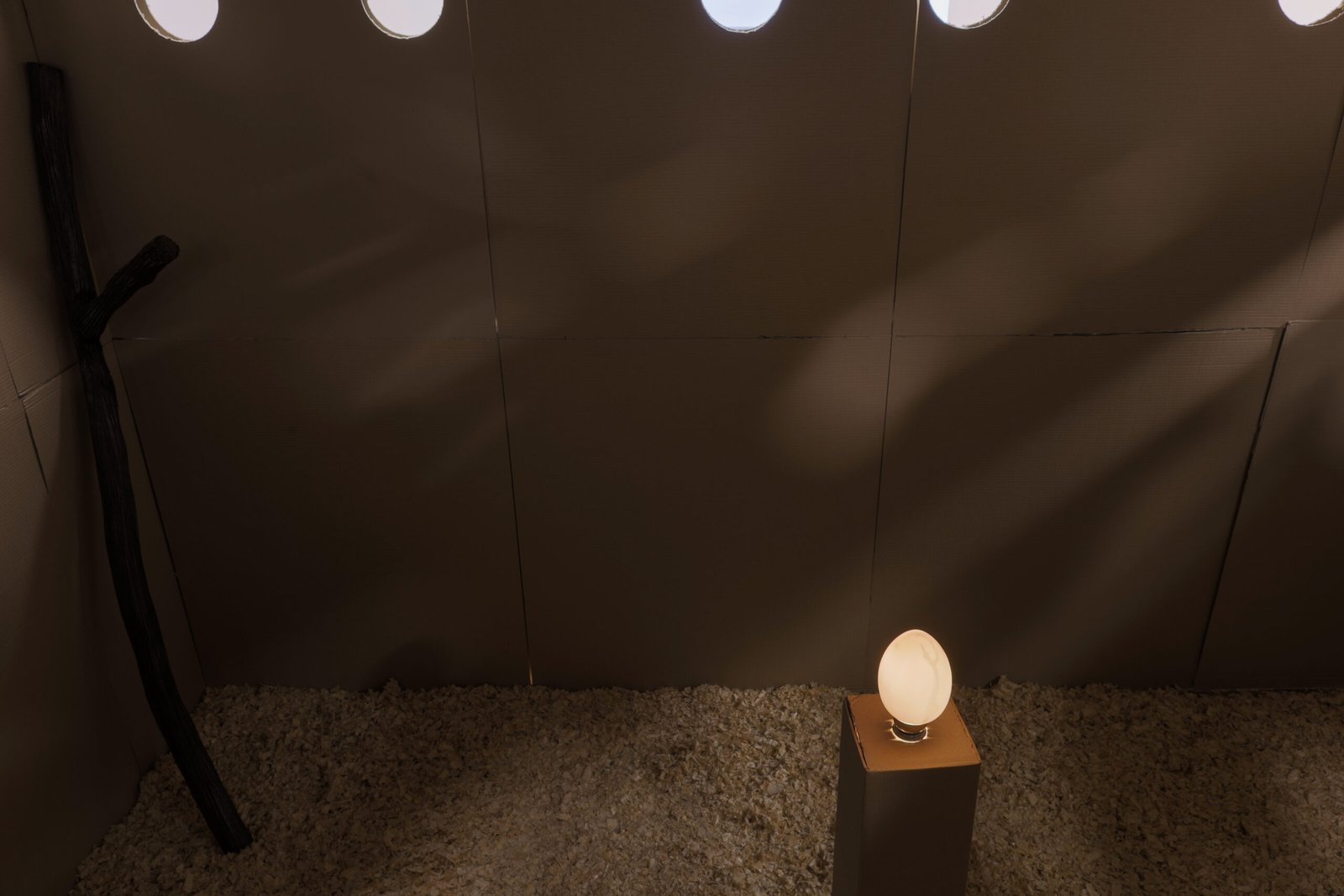


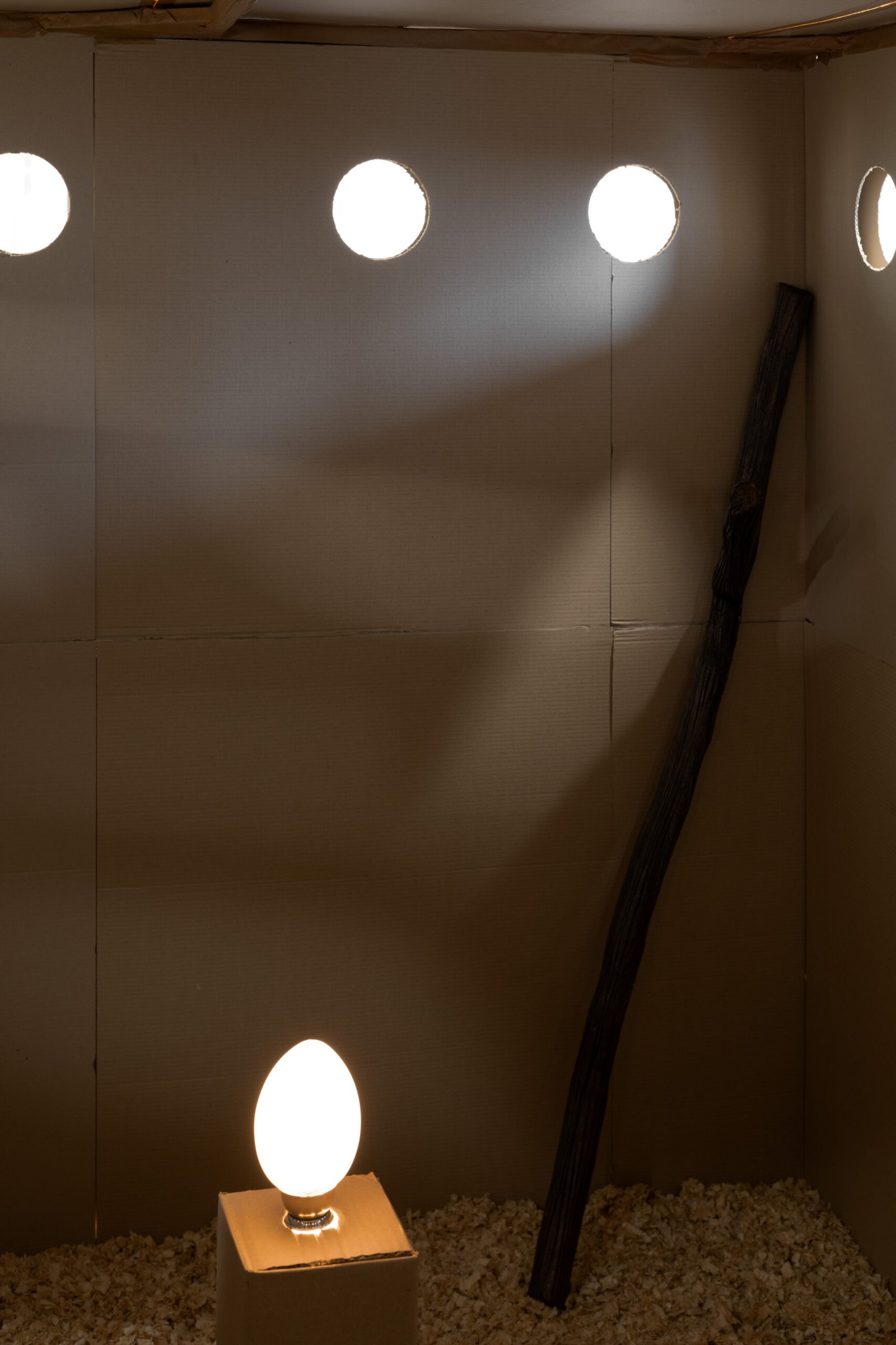
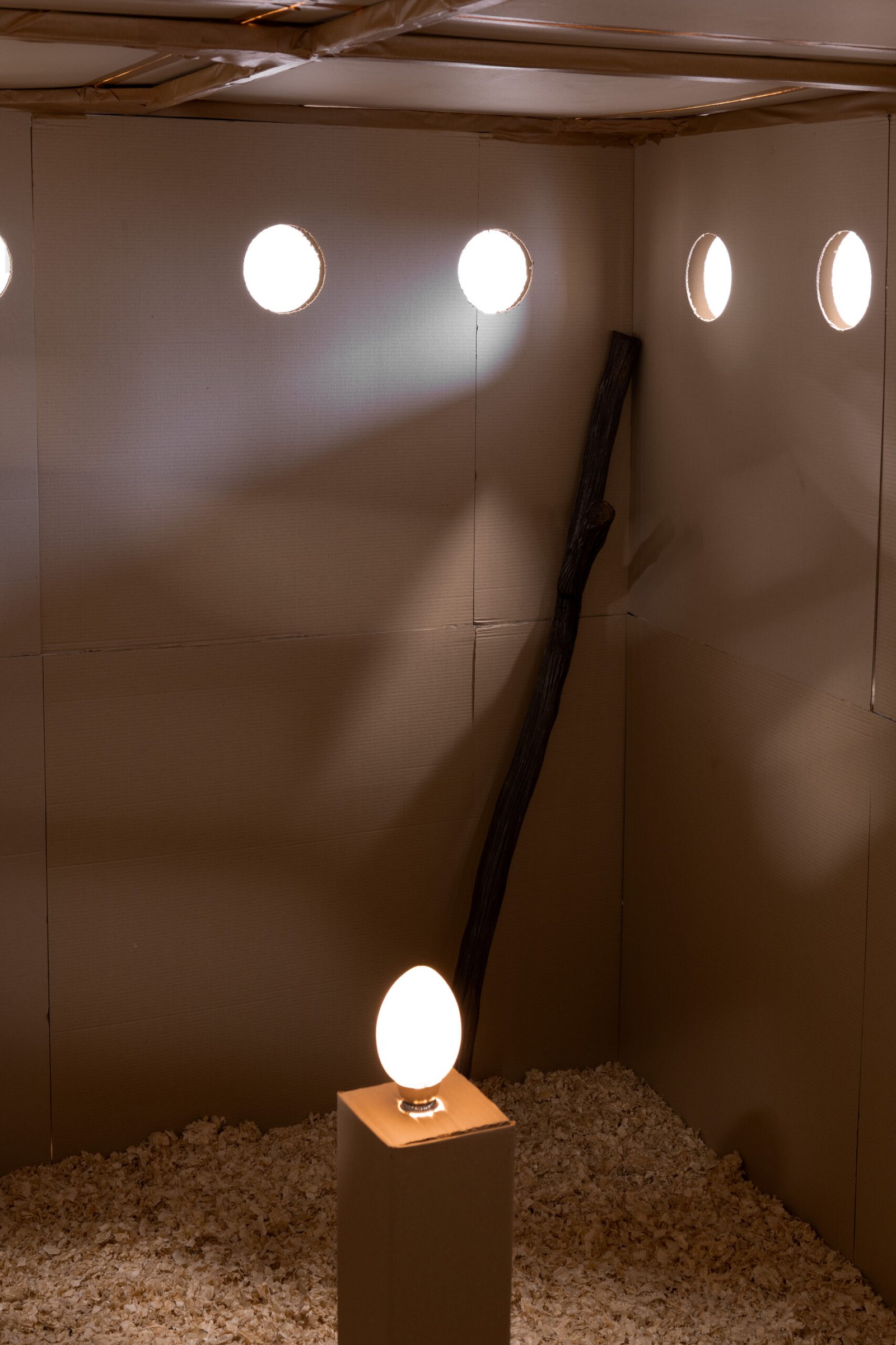
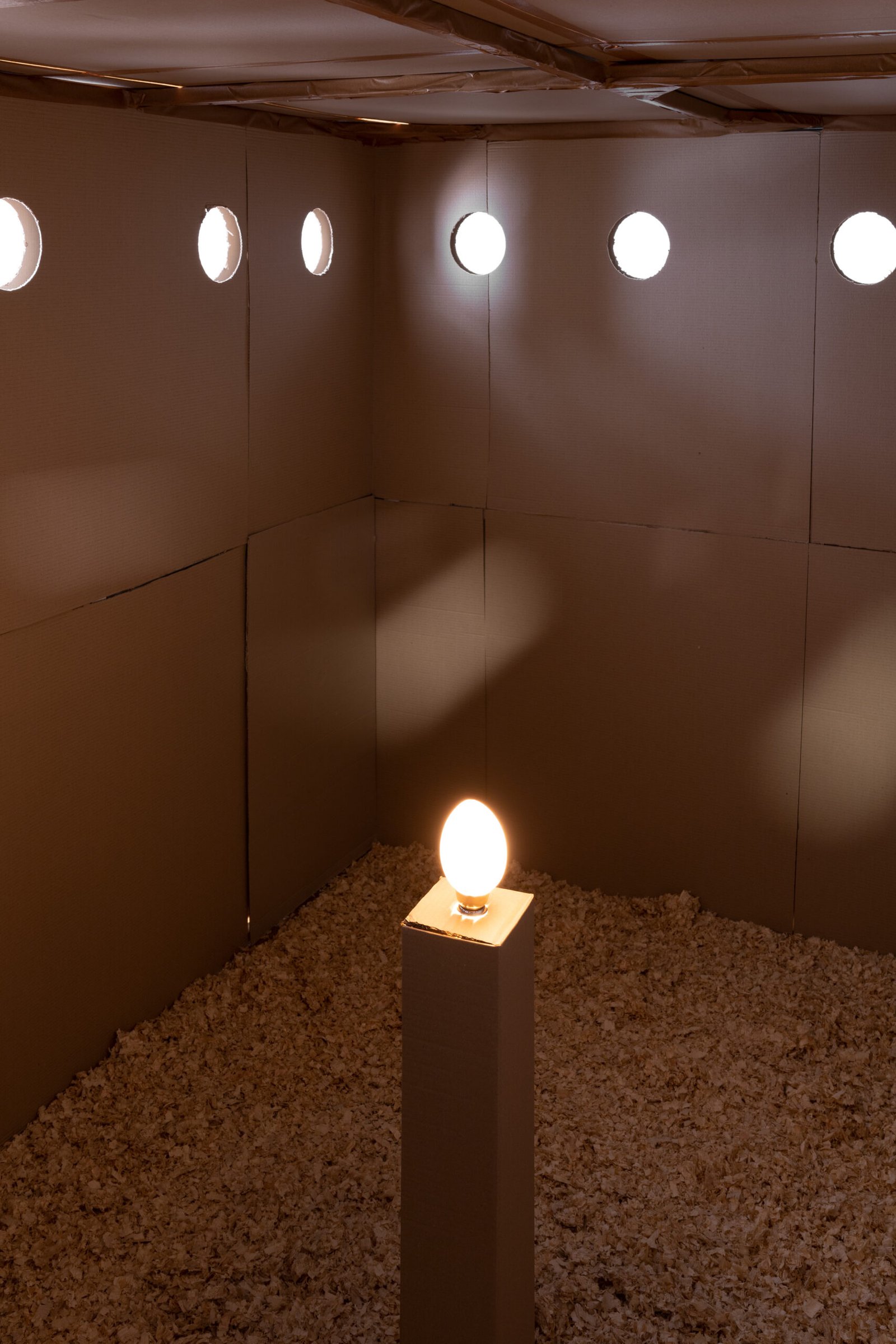
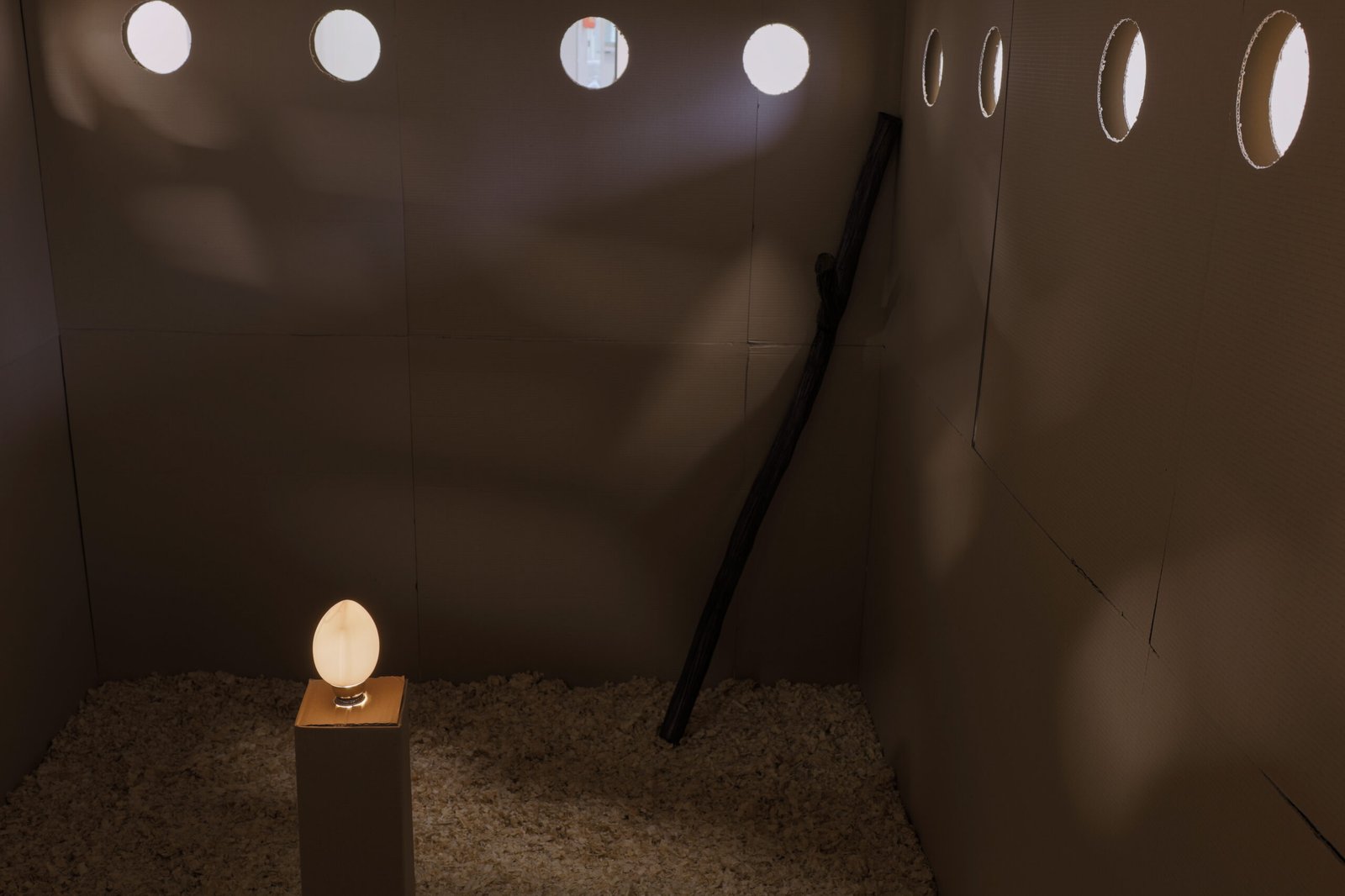
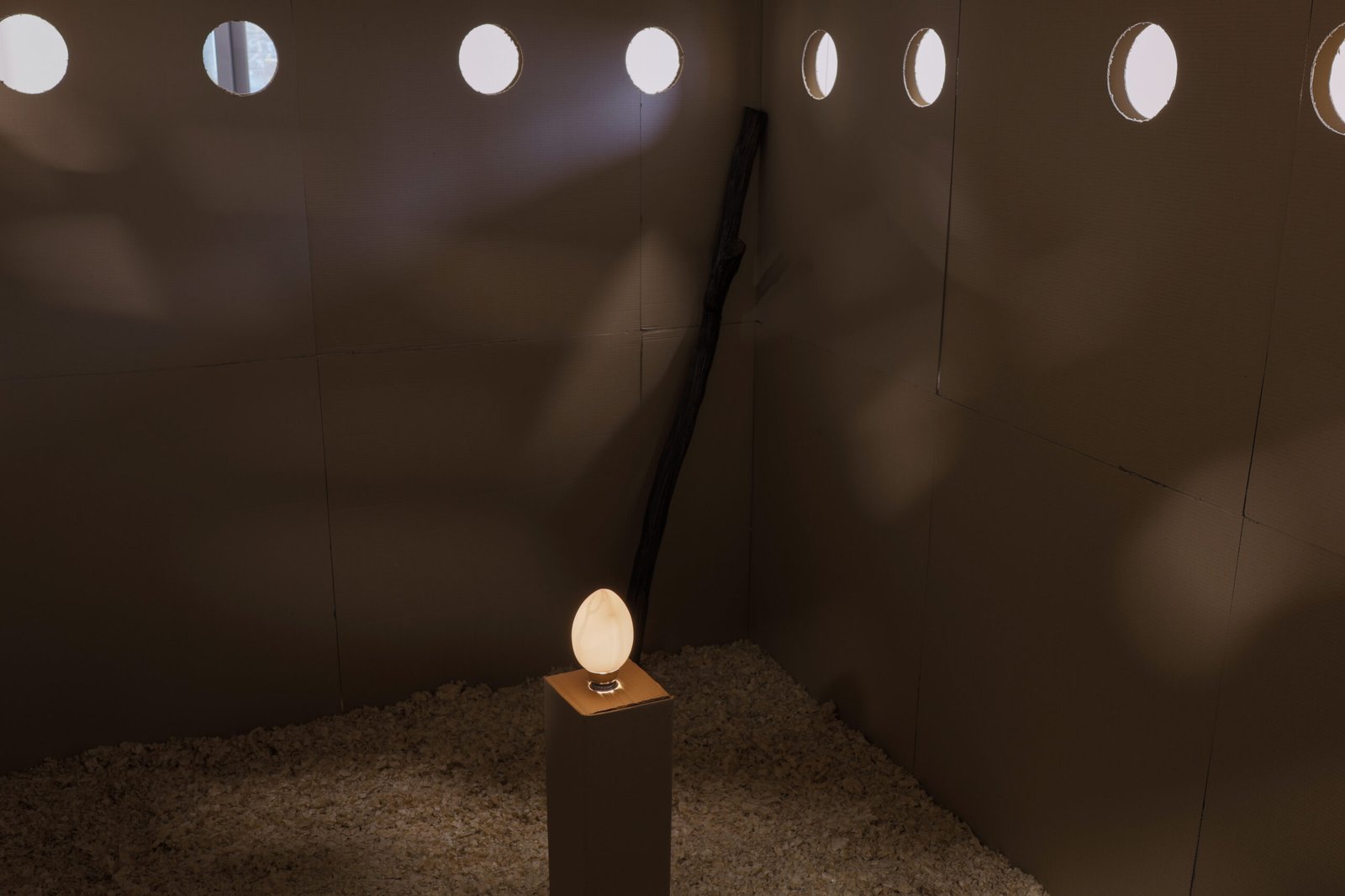
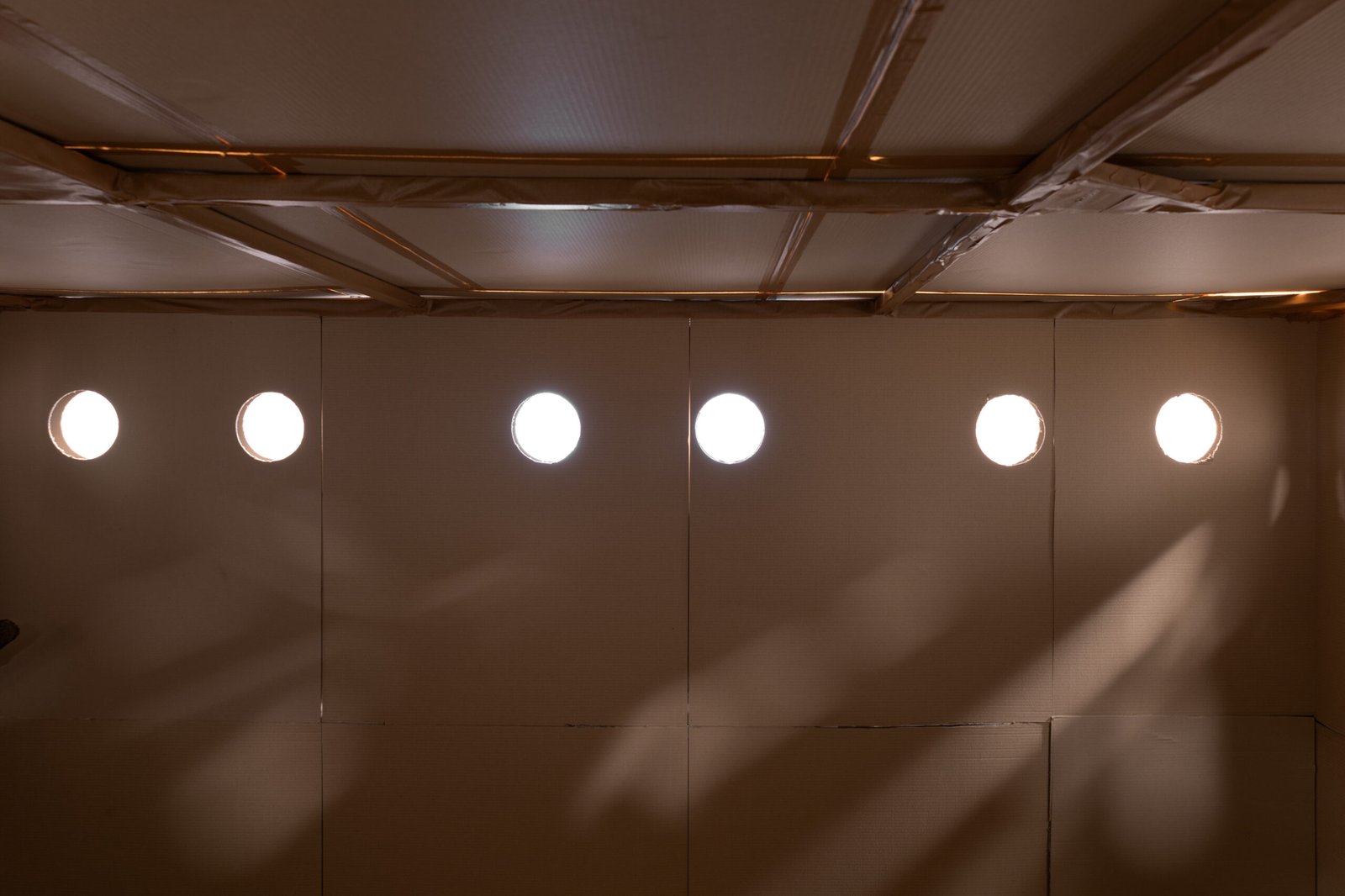
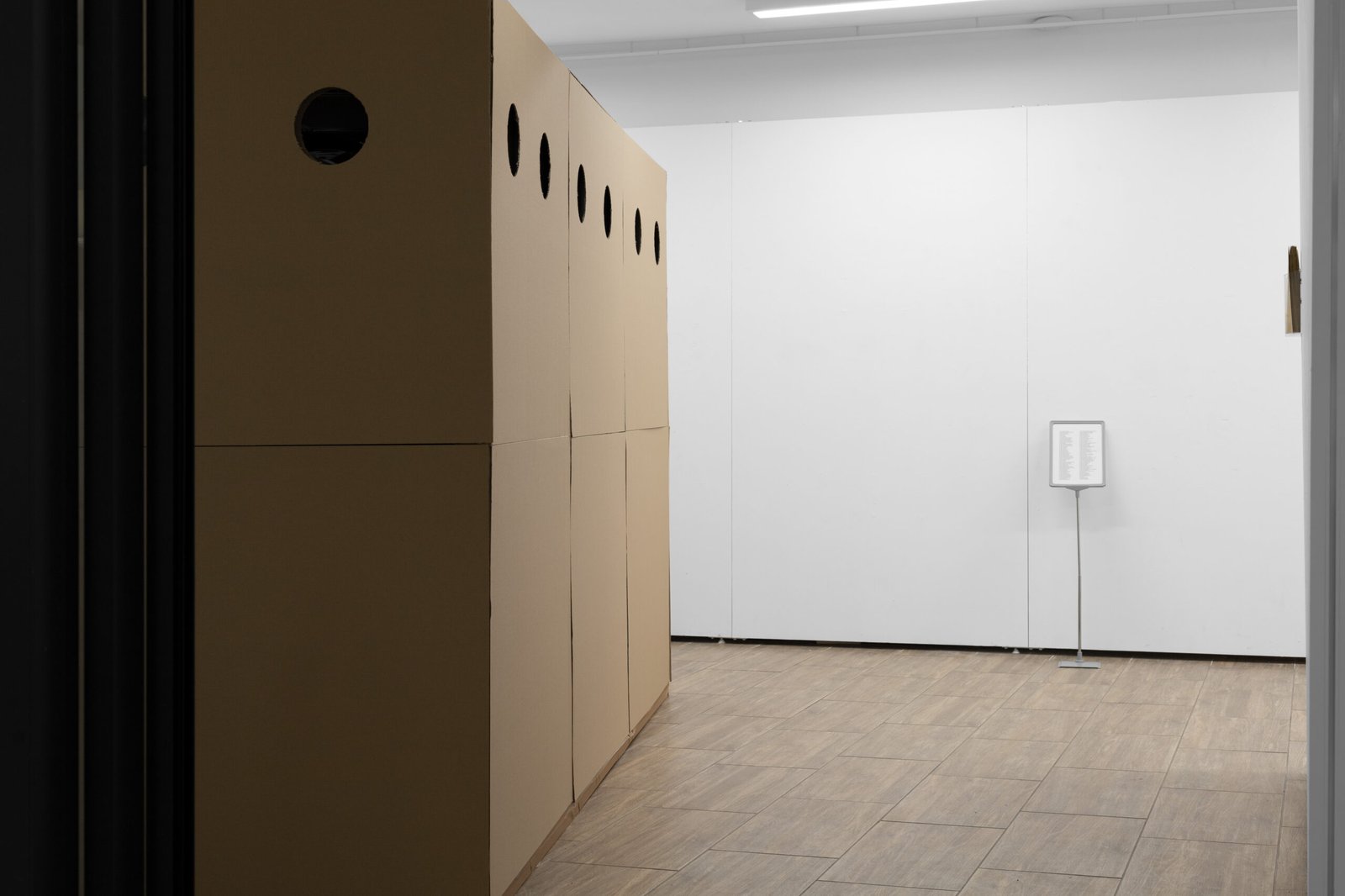

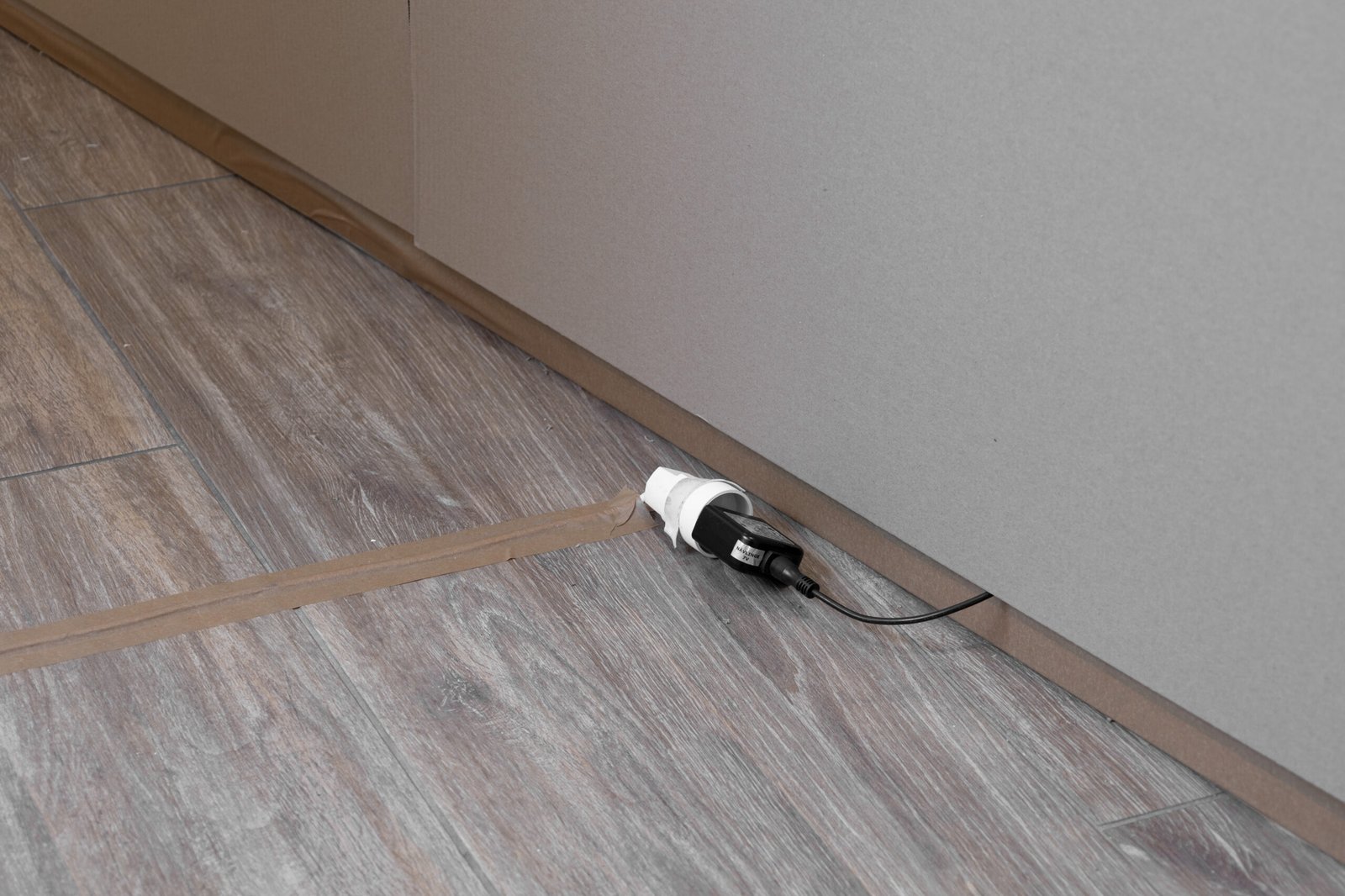
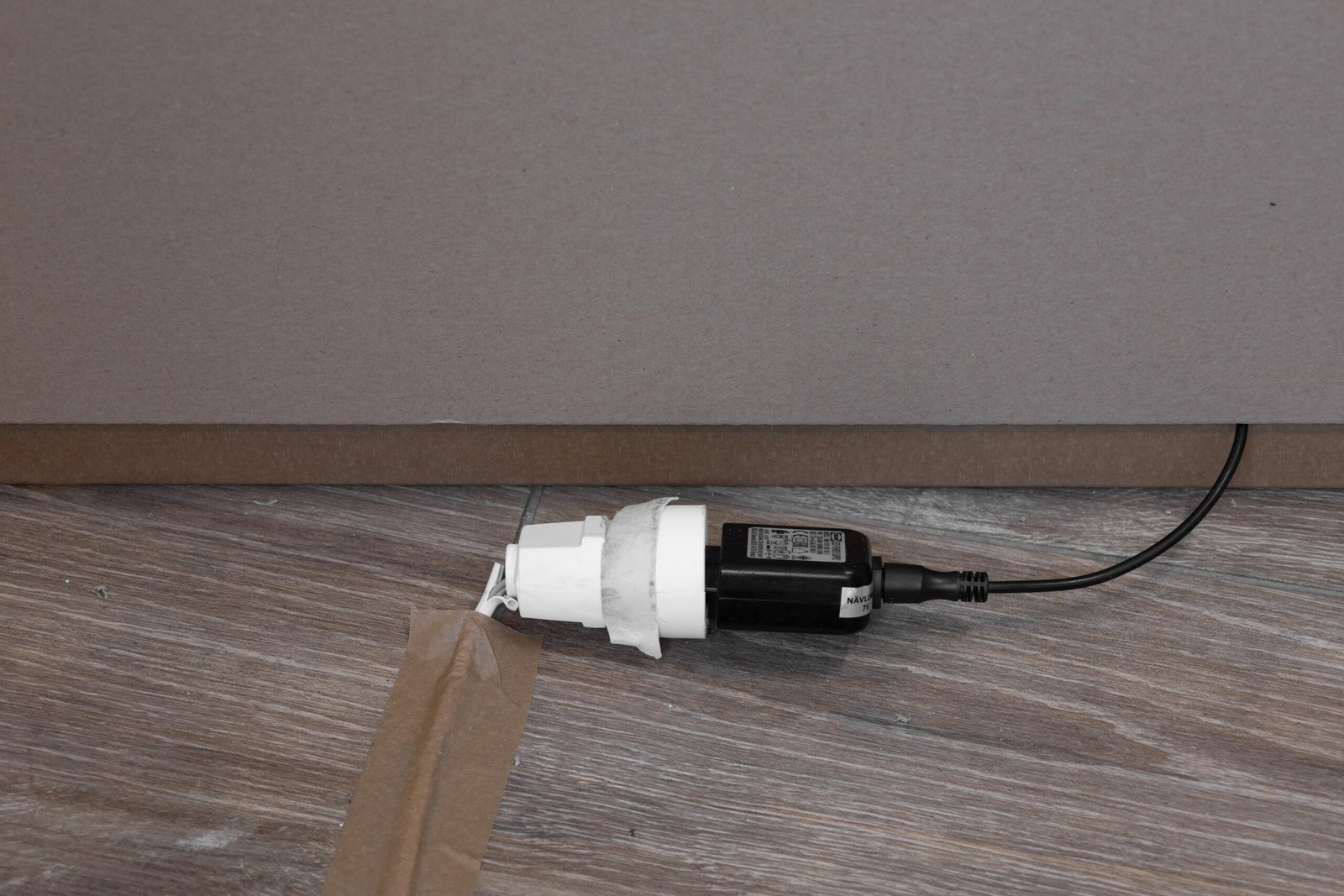
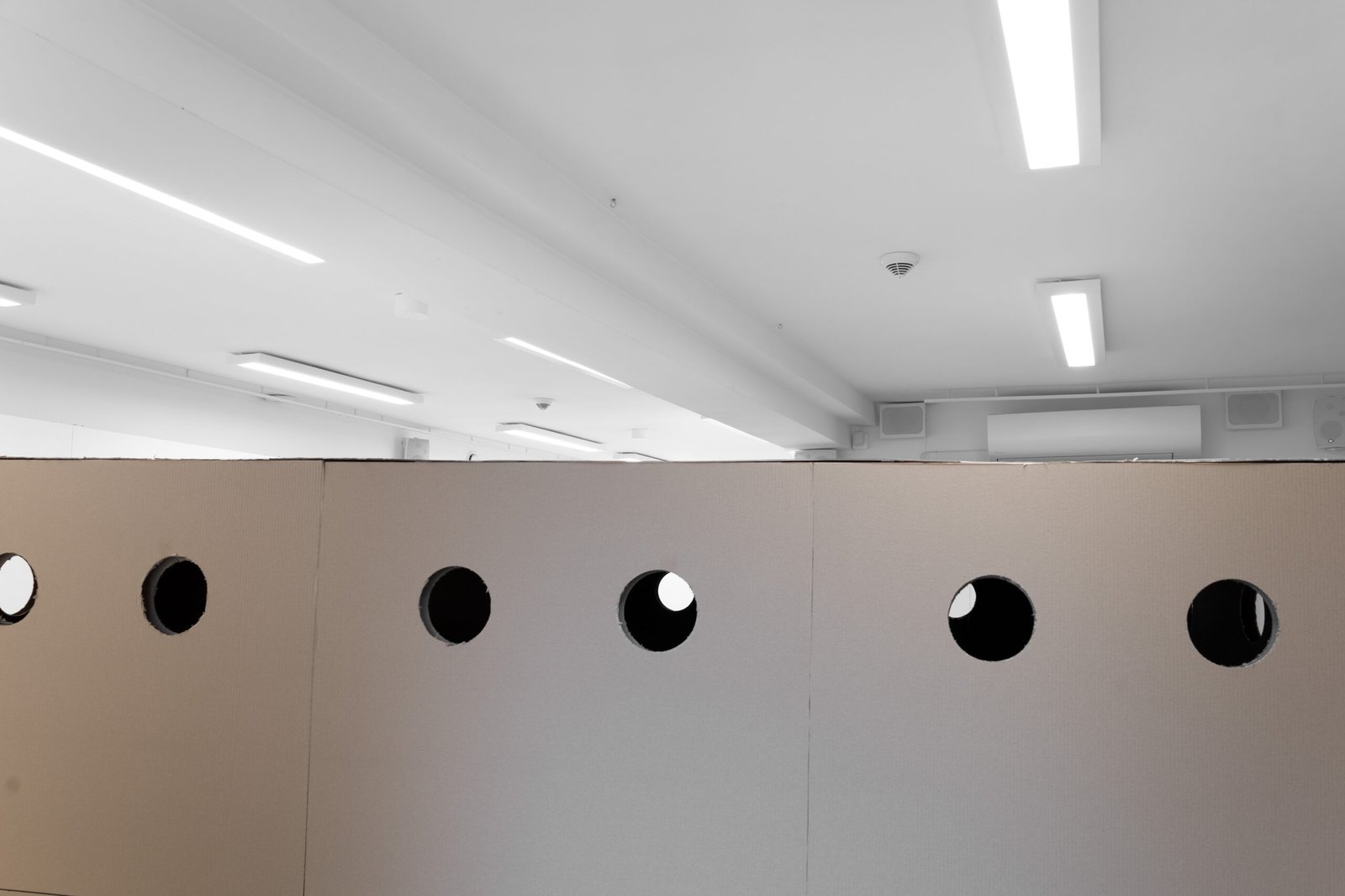
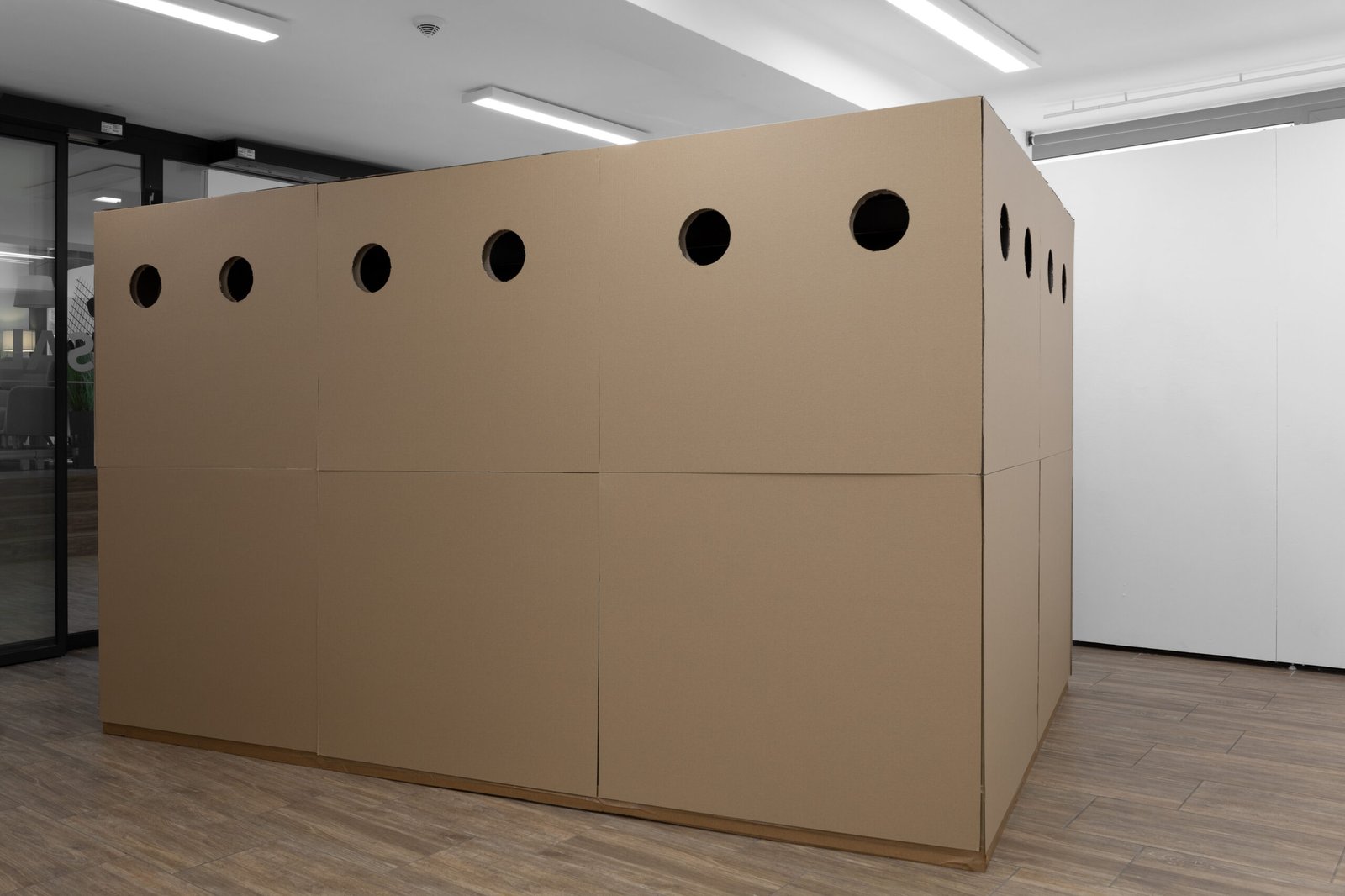
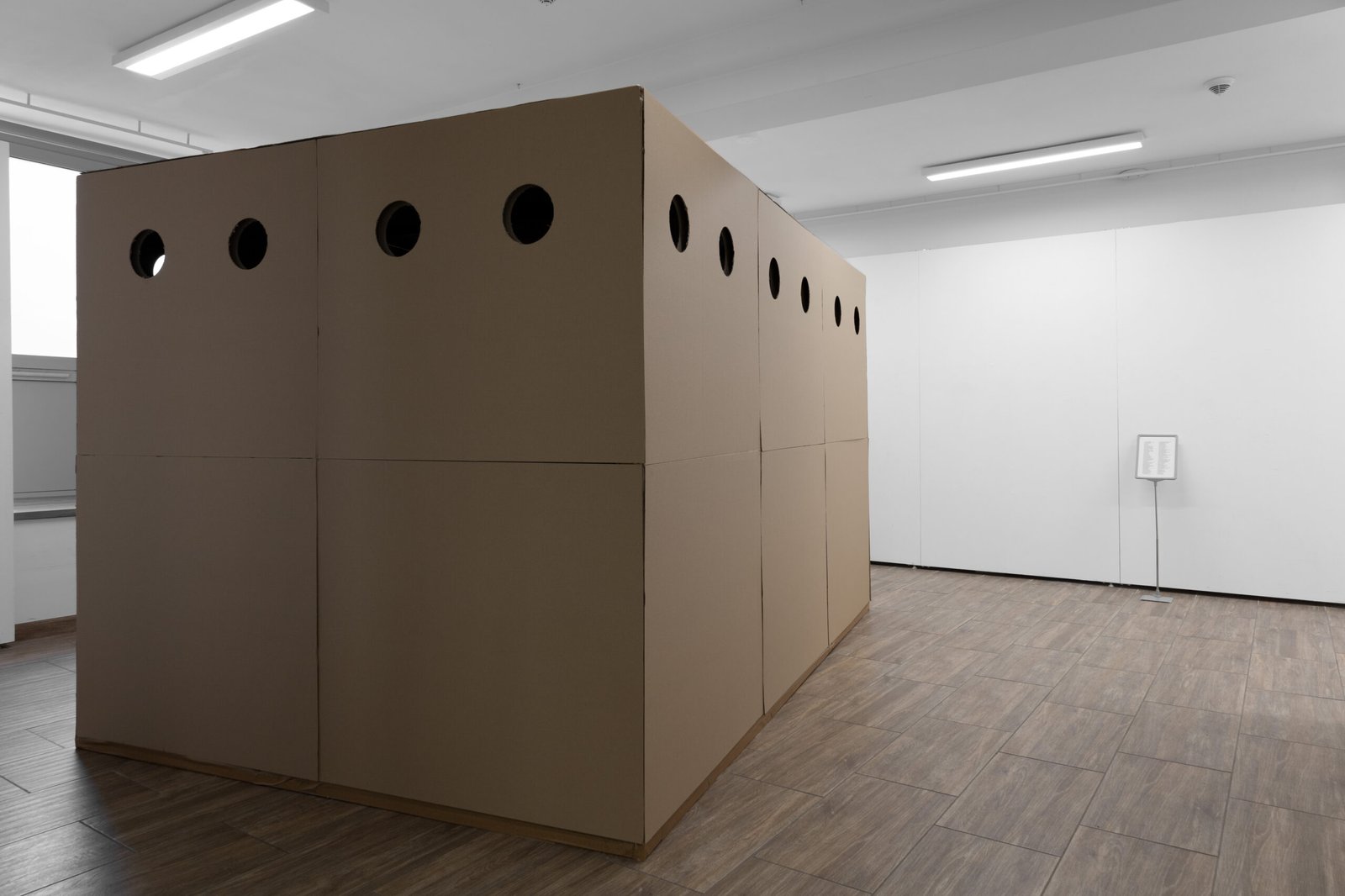
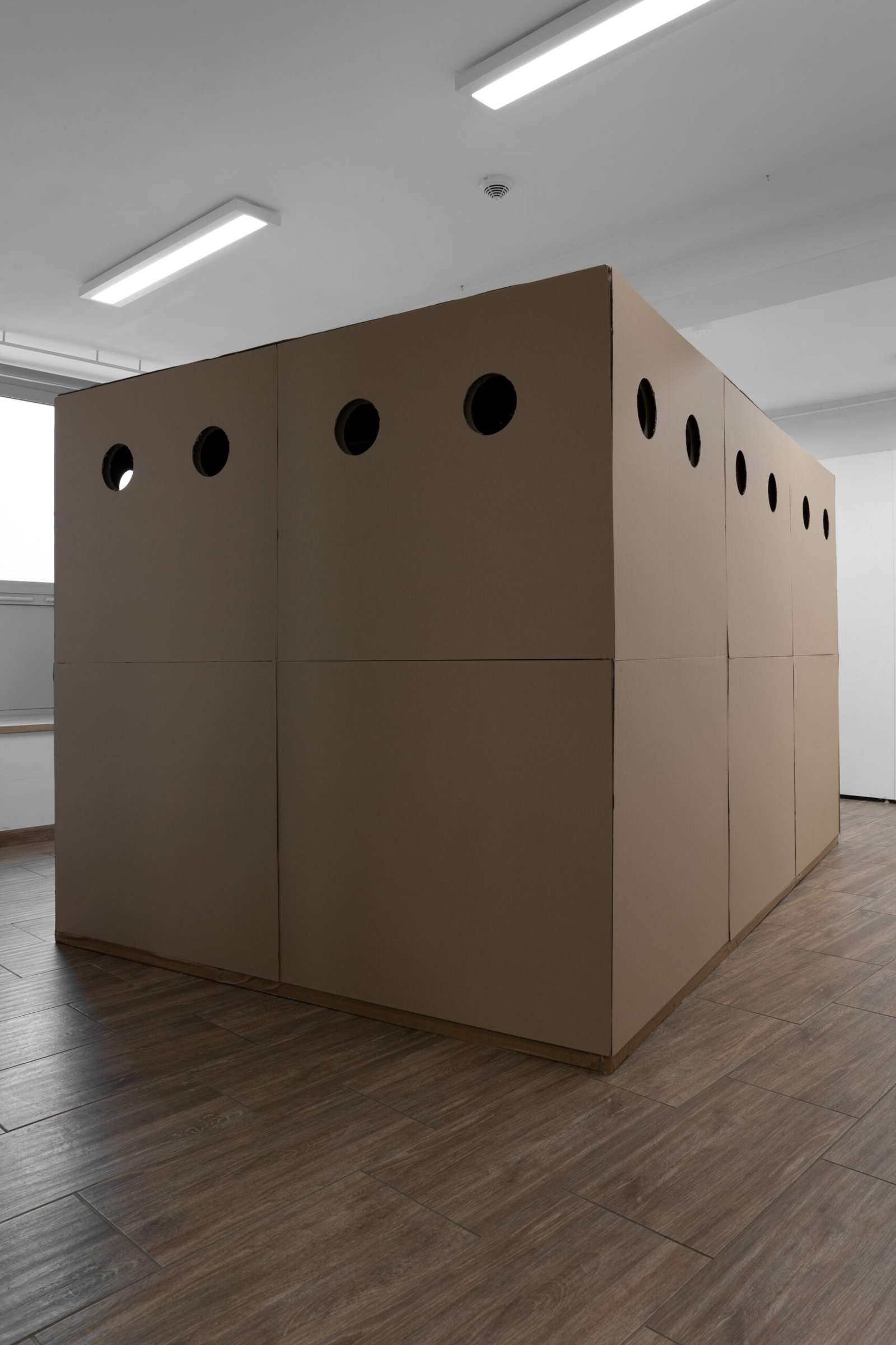
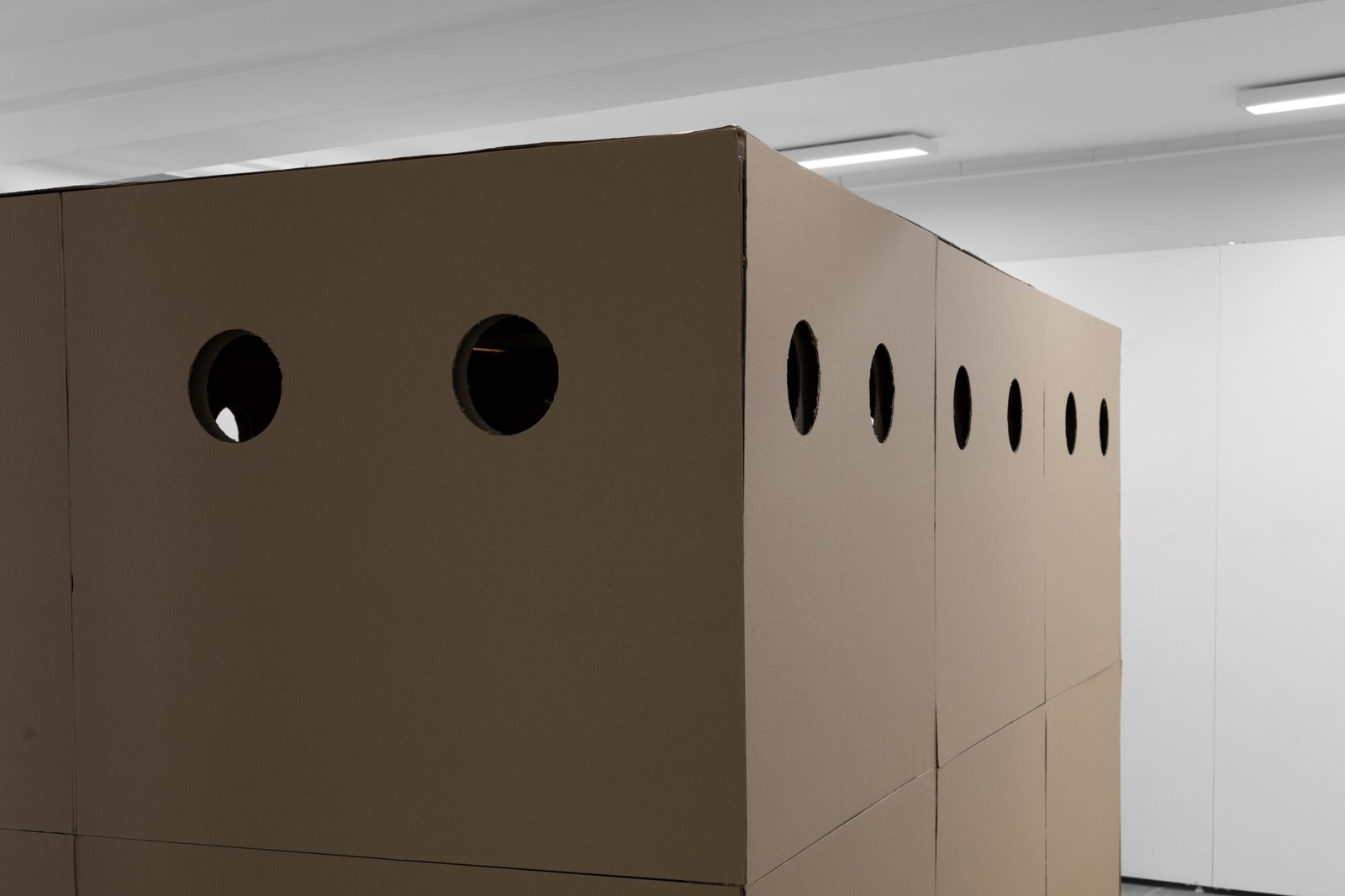
Entering this order, it’s difficult to clearly define its nature. The scale shifts, and reality seems to curl inward, leaving only what’s necessary. One feels as if one is in a transitional state, one that serves not for permanent exhibition, but for a brief presence “in between.” Time doesn’t unfold linearly here; rather, it thickens and settles, allowing attention to be focused on what usually remains on the margins. What was stable and obvious begins to function differently—elements previously treated as auxiliary matter or background are shifted into a field of intense attention.
The contemporary phase of art, defined by Jerzy Ludwiński as the processual construction of mental structures, finds its realization here on a 1:1 scale. In line with Stephen Wright’s postulate of “low ontological intensity,” the large-scale form in the exhibition space infiltrates the logistical order, abandoning representation in favor of a real-world establishment of the transport situation. This presence, however, isn’t for visual dominance, but rather for marking a physical boundary, forcing a strategy of “using the interstices.”
The key point of this operation is the radical recontextualization of the phenomenon of birth. It is removed from the framework of biological determinism and transferred to the realm of technical verification and conceptual incubation. Here, the phenomenon of birth does not take the form of a single event; it becomes an extended process that can continue, regress, and remain open-ended. The technical procedure of x-raying, imitating the diagnostics of vitality, does not serve to confirm the facts of nature but is a gesture of the ontological establishment of the subject. This is the moment when dead matter, removed from mass and the natural cycle of decay, acquires the status of an entity requiring special visibility.
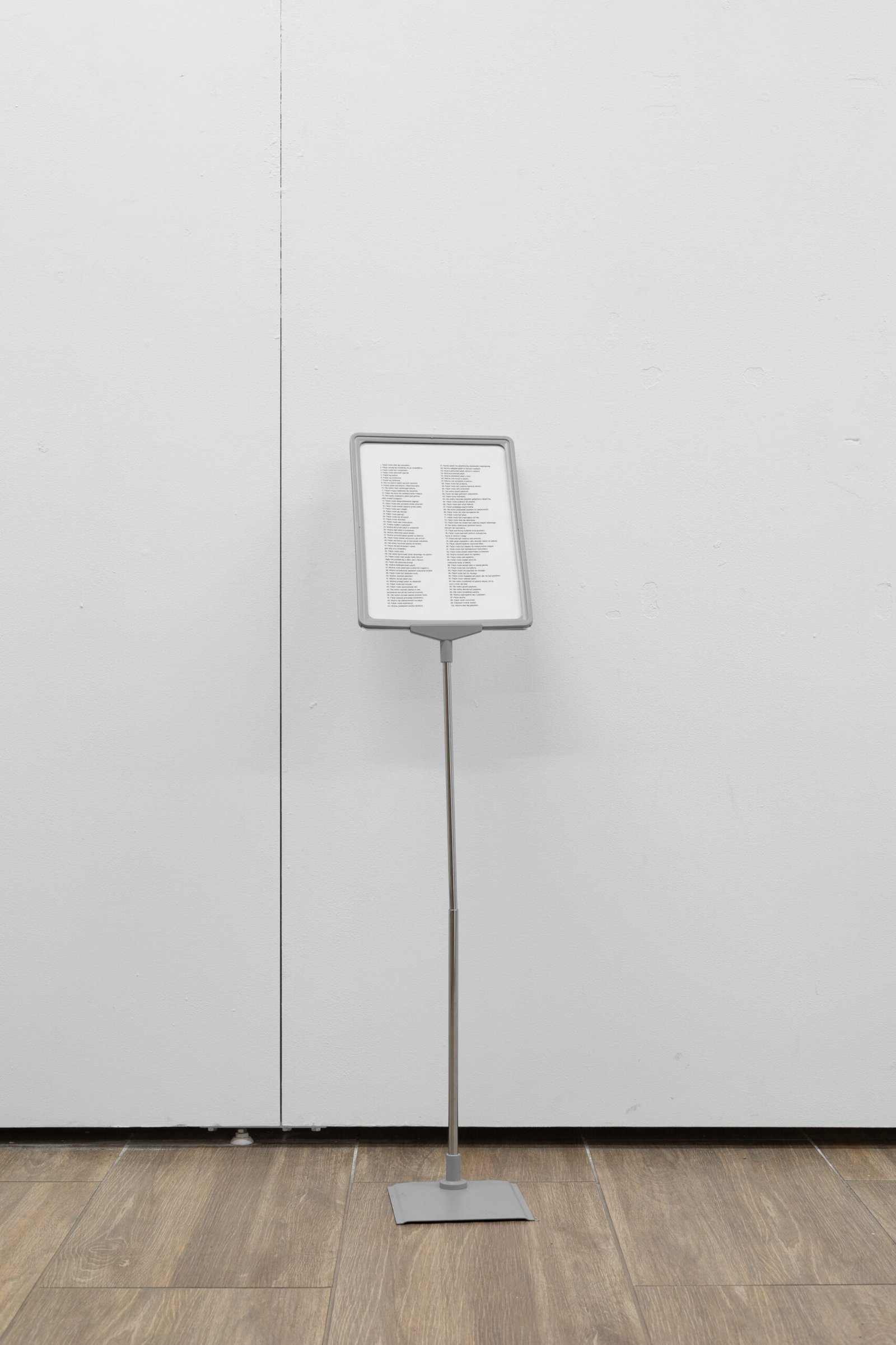
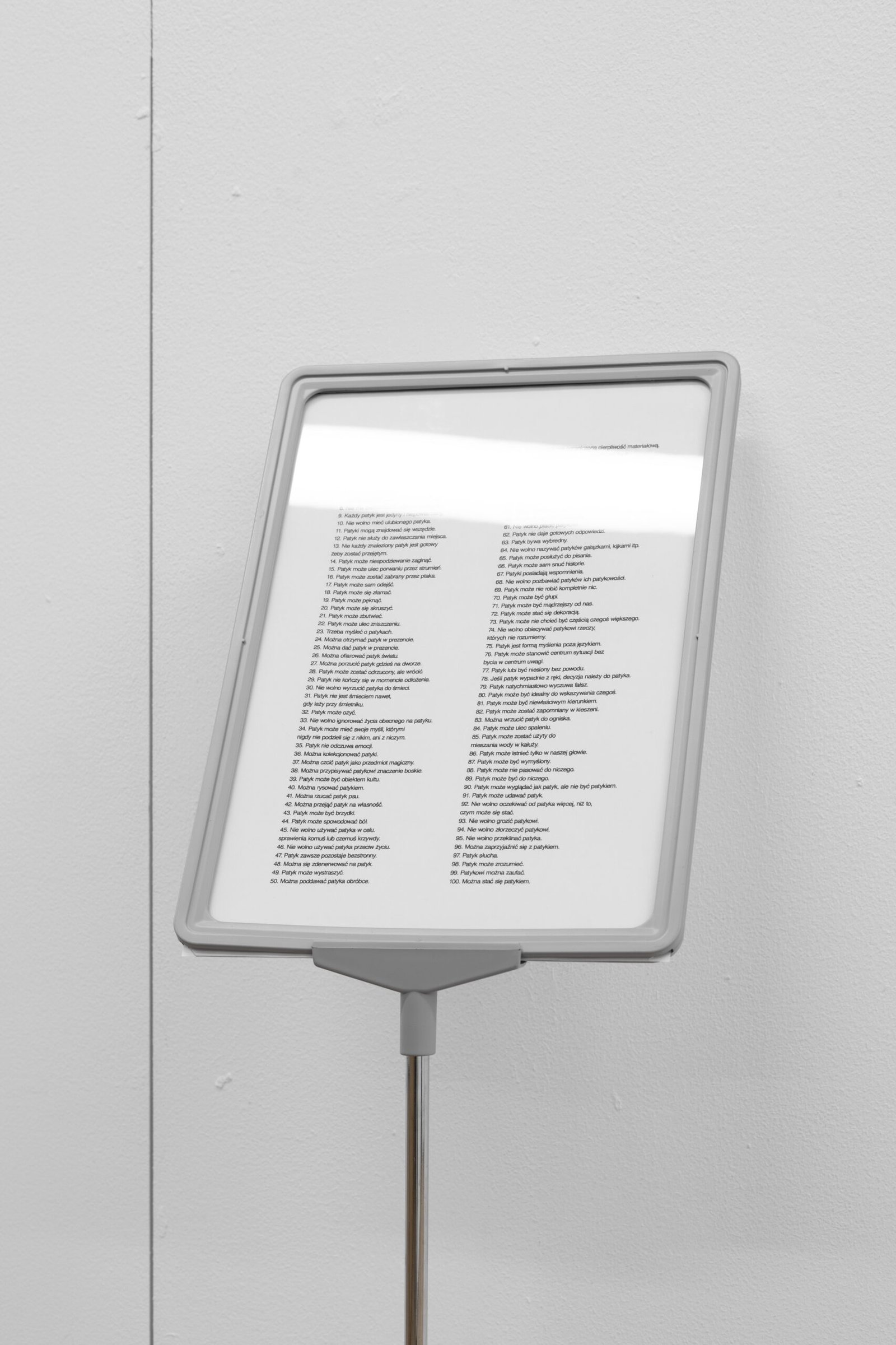
At the same time, the presence of an autonomous code of rules embedded in the commercial exhibition system introduces a rigorous order into the affective sphere. Regulations cease to explain and begin to establish the conditions of co-presence; they become a place where smaller entities can exist as possibilities, not functions. Language loses its role of pure description in favor of agency—it creates a framework within which the peripheral and negligible are incorporated into the high-intensity circuit of attention. Ultimately, Treatise on the Care and Transport of Minor Lives reveals itself as a movement of meaning occurring in the interstices of reality, where the omitted is incorporated for the first time into the high-intensity circuit of attention, and transportation becomes a radical shift within the very hierarchy of visibility.