


The Brazilian Pavilion and the Danger of Playing It Safe
Rachel Cecília de Oliveira and Flávia Virgínia from pó de crítica Published 07/10/2026
Rachel Cecília de Oliveira and Flávia Virgínia from pó de crítica
Published 07/10/2026
Originally published in pó de crítica in Portuguese on 19 August 2026 under the title “O Pavilhão do Brasil e o perigo de não correr riscos.”
How much danger can an exhibition called Comigo ninguém pode— “Don’t Mess with Me”—contain? The question may sound provocative, but it became the measure by which we approached the Brazilian Pavilion at the 61st Venice Biennale. The plant that gives the exhibition its name (also known as Dieffenbachia or “dumb cane plant”) is ubiquitous in Brazilian homes and gardens, where it is associated with protection, strength, and the ability to ward off negative energies. Yet its ornamental appearance coexists with a very real toxicity: protection and danger inhabit the same leaf.
It is precisely from this ambivalence that Diane Lima, curator of the Brazilian Pavilion, sets out to bring the practices of Rosana Paulino and Adriana Varejão into proximity, proposing an exhibition shaped by spirituality, nature, metamorphosis, and the wounds left by the colonial experience. The encounter promised friction. What we found in Venice, however, was an exhibition whose strength lies above all in the already established power of the works and the artists themselves. At the same time, the risk announced by the title appears domesticated by a cautious installation, one that often comes remarkably close to the experience of visiting a commercial gallery.
Comigo ninguém pode brings together a team composed entirely of women and marks the first time a Black woman, Diane Lima, has curated the Brazilian Pavilion. Born in Mundo Novo, Bahia, in 1986, Lima has built an important body of work around anticolonial curatorial practices and Black feminism in Brazil. Alongside Grada Kilomba, Hélio Menezes, and Manuel Borja-Villel, she was part of the curatorial collective behind the 35th São Paulo Biennial, choreographies of the impossible, held in 2023 and organized through a horizontal working model without a chief curator. In Venice, she collaborated with Daniela Thomas on the exhibition design, Giovanna Querido as curatorial assistant, and Andrea Pinheiro, president of FundaçãoBienal de São Paulo, as commissioner.
To shape the exhibition, Lima chose two artists whose practices span almost four decades and whose careers are firmly established both in Brazil and internationally. Rosana Paulino has produced a body of work fundamental to thinking through race, gender, memory, science, and colonial violence in Brazil. Adriana Varejão, meanwhile, has developed an immediately recognizable visual language in which painting, architecture, tiles, flesh, and imagery from colonial history repeatedly intersect. Bringing them together means placing two exceptionally powerful artistic worlds in proximity and confronting the challenge of making two such clearly defined practices produce something new through that encounter.
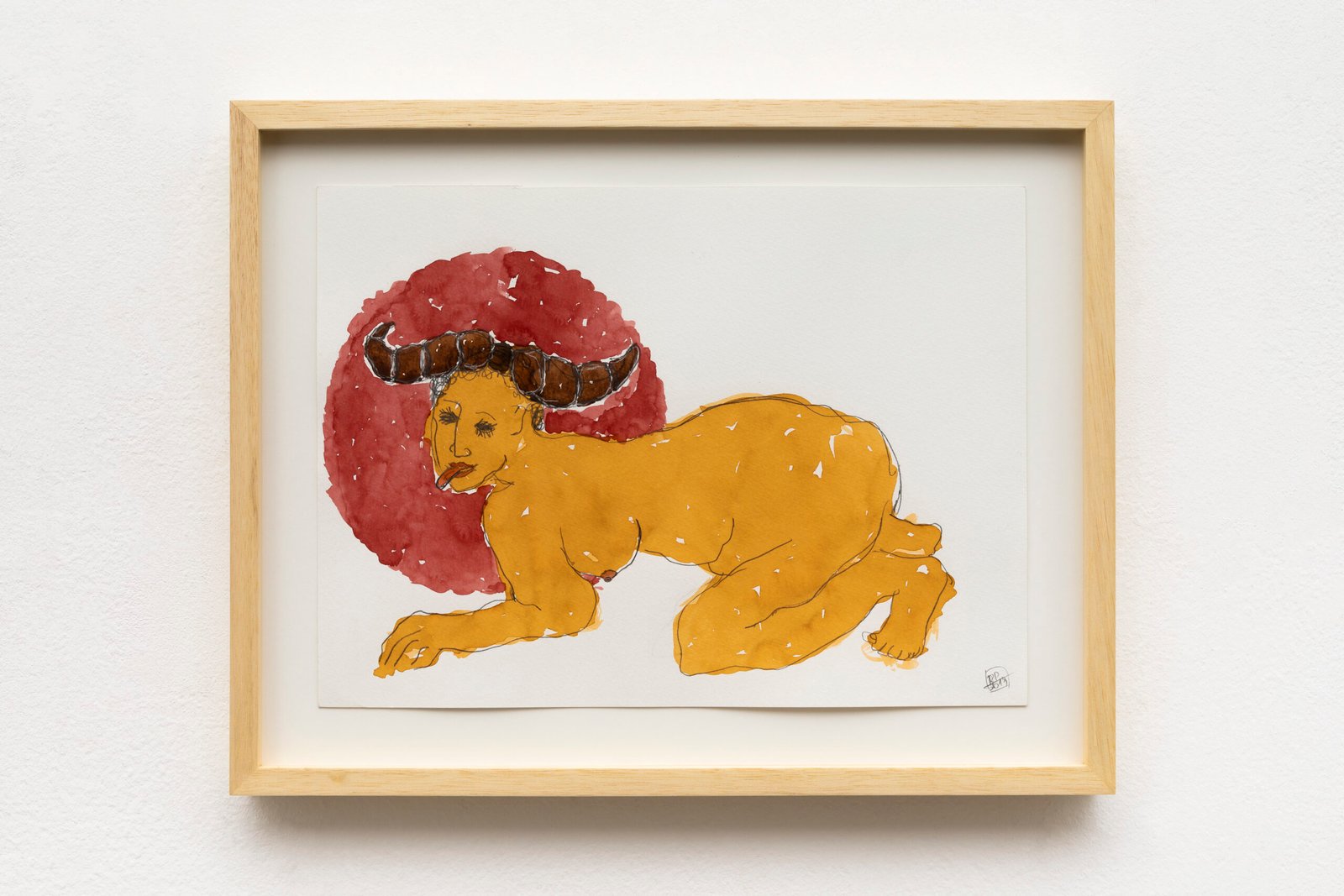
Rosana Paulino from the series Female Buffalo, 2019, watercolor and graphite on paper © Rosana Paulino. Photo: EstudioEmObra
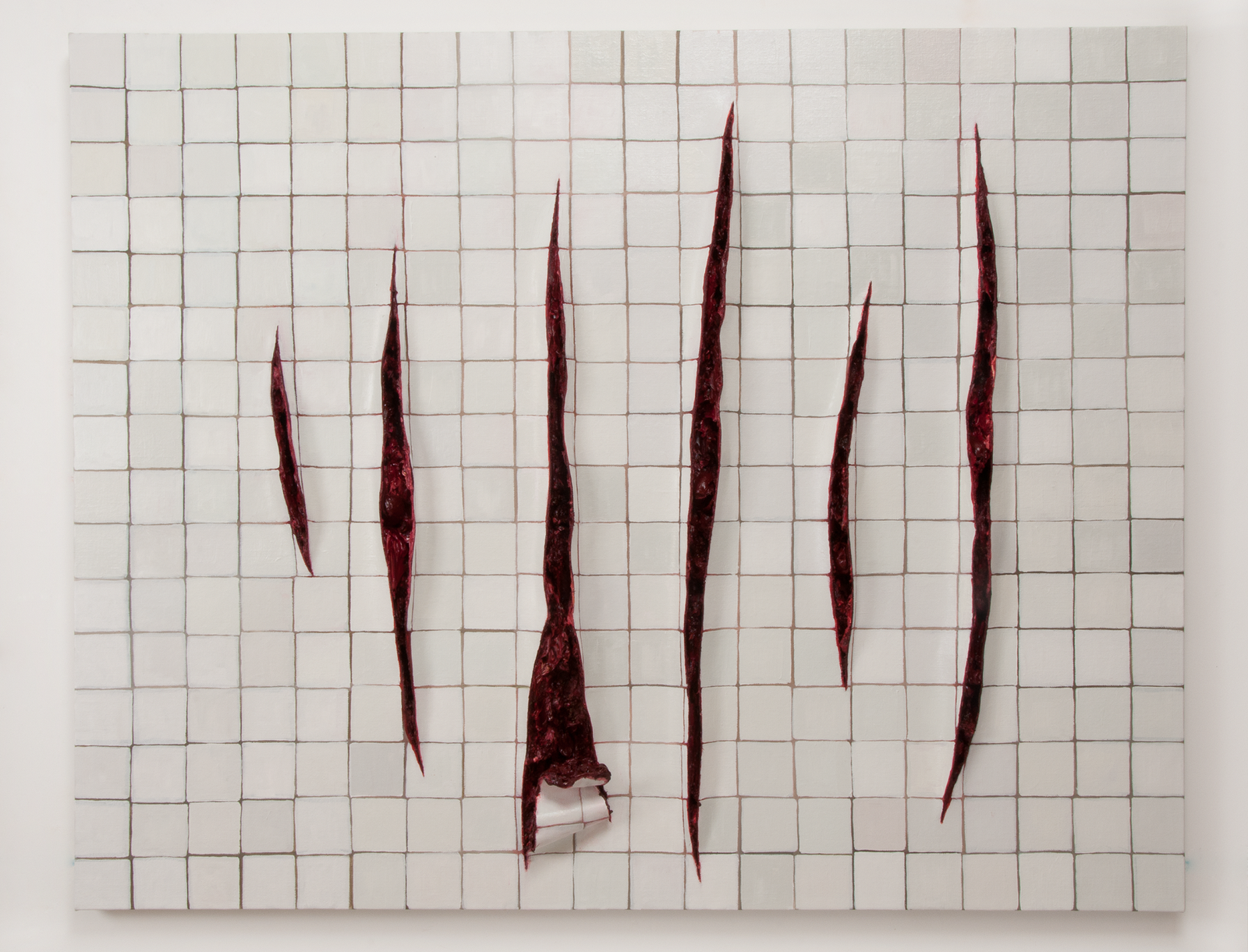
Adriana Varejão, Wall with Incisions à la Fontana (Istanbul), 2011, oil on canvas and polyurethane on aluminum and wood support © Adriana Varejão. Photo: Vicente de Mello
Although national pavilions operate with curatorial autonomy from the international exhibition, FundaçãoBienal de São Paulo announced the Brazilian project by highlighting its affinity with the proposition developed by Koyo Kouoh. Both invoke ideas of frequency, sensation, spirituality, nature, harmony, dissonance, imagination, and forms of knowledge that can displace an exclusively rational relationship with the world.
Diane Lima takes that affinity further by presenting Comigo ninguém pode as an experience capable of connecting visitors to a frequency in which the transcendent manifests itself within the visible. Nature and spirituality emerge as paths through which memory might be reconstructed, while magical, fantastical, and celestial beings participate in a rewriting of colonial wounds. In the curatorial discourse, the exhibition therefore takes on an energetic dimension: the encounter between the artists is meant to exceed the sum of their works and constitute a field of relations and sensations, approaching the experience of a single large-scale installation. Perhaps it is precisely because of this promise that the plant chosen as the exhibition’s title offers such a seductive image for the project. It makes us ask how its ambivalence, its simultaneous promise of protection and toxicity, actually passes through the experience of the exhibition.
Standing before the pavilion, the title establishes an expectation of what an encounter between Paulino and Varejão might produce. If the comigo-ninguém-pode plant contains a contradiction within a single leaf, the question is whether the exhibition design can preserve something of that ambivalence: whether it can bring the two artists together without merely accommodating them; allow one language to place the other under pressure; and make room for something less predictable to emerge from their coexistence. It was this possibility of proximity, with all the friction and transformation it might entail, that made us enter the pavilion expecting, in some sense, to touch the plant.
During our visit, however, the experience was quite different. Comigo ninguém pode is a technically precise exhibition composed of individually powerful works, while its spatial organization preserves a fairly conventional relationship between artwork, architecture, and viewer. This matters all the more because FundaçãoBienal describes the exhibition design as an intervention capable of challenging the pavilion’s modernist architecture. Moreover, Varejão has said that she conceived works in direct dialogue with the building, making it an active component of the work. There was, then, a promise that both the space and the experience of moving through it would be transformed. The installation fulfills that promise only partially.
Rather than destabilizing the modernist pavilion, the interventions give it even greater presence. Its exposed concrete, the large beam cutting across the building, its symmetry, its light, and the weight of its volumes lend the works an almost cathedral-like solemnity. The building frames, elevates, and consecrates them, leaving the impression that what might have become material to be contaminated by the works instead serves as an altar for them.
This relationship becomes particularly interesting when we consider the historical moment the building belongs to. Inaugurated in 1964, the pavilion dates from a period when Brazilian modern architecture had already achieved international recognition, and when industrialization and modernization occupied a central place in the image the country projected of itself. That same period, however, also contained very different disputes over what a modern Brazilian culture might mean. In Bahia, for instance, Lina Bo Bardi was studying popular objects, craft techniques, and artisanal modes of production as possible sources for an industrial design that could emerge from the country’s own material conditions. The tension between the modern and the popular was therefore already embedded in Brazilian culture.
This history makes the pavilion particularly fertile ground for Comigo ninguém pode. In 2026, ceramics, sewing, botany, religiosity, Black memory, and popular forms of knowledge enter this modernist building, elements historically subjected to hierarchies separating fine art from craft, popular culture from legitimate knowledge. The exhibition could turn this encounter into friction between competing projects of Brazil.
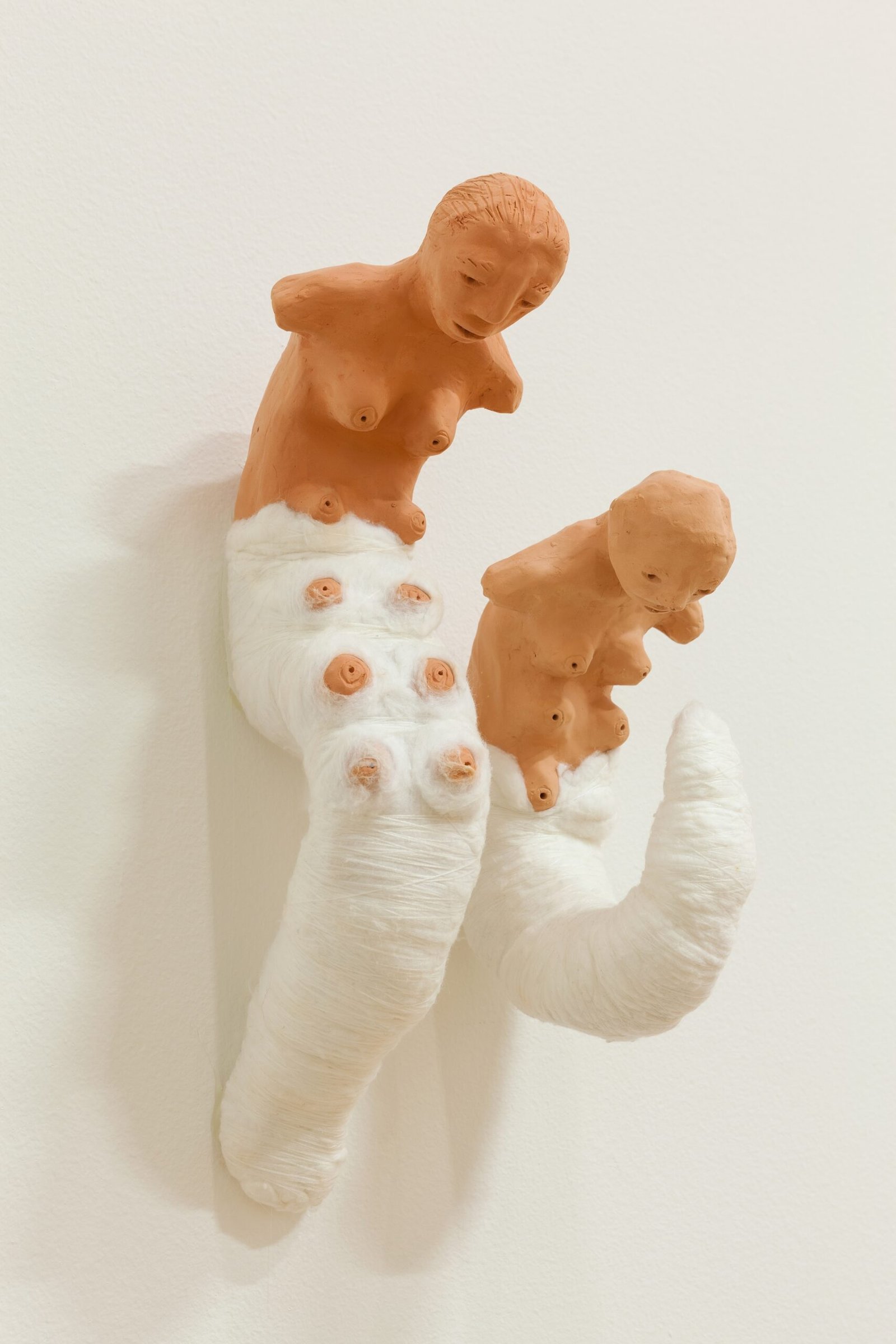
Women Weavers, 2003, faiance, terracota, cotton and synthetic thread, © Rosana Paulino. Acervo Biblioteca de Artes Visuais | Pinacoteca de São Paulo. Photo: Isabella Matheus
During our visit, however, that tension rarely penetrates deeply into the structure of the building. The architecture receives the works and grants them monumentality while preserving its own authority. There is an important distinction here between occupying an architecture and putting that architecture under pressure. Comigo ninguém pode does the former extremely well. The latter remains a possibility.
There is, however, one moment when the exhibition comes much closer to fulfilling its promise of turning the pavilion itself into an active part of the spatial experience. Aracnes, a work first made by Rosana Paulino in 1996 and expanded specifically for Venice, extends through the pavilion from the outdoor area and grows, in the second gallery, around a reinforced-concrete structure with exposed beams. The installation brings together images of Black women drawn from colonial records and threads that spread through the space like a web. Its monumental expansion also responds to an issue that emerged during installation: the disparity in scale between the two artists’ works required solutions that brought them into closer spatial relation.
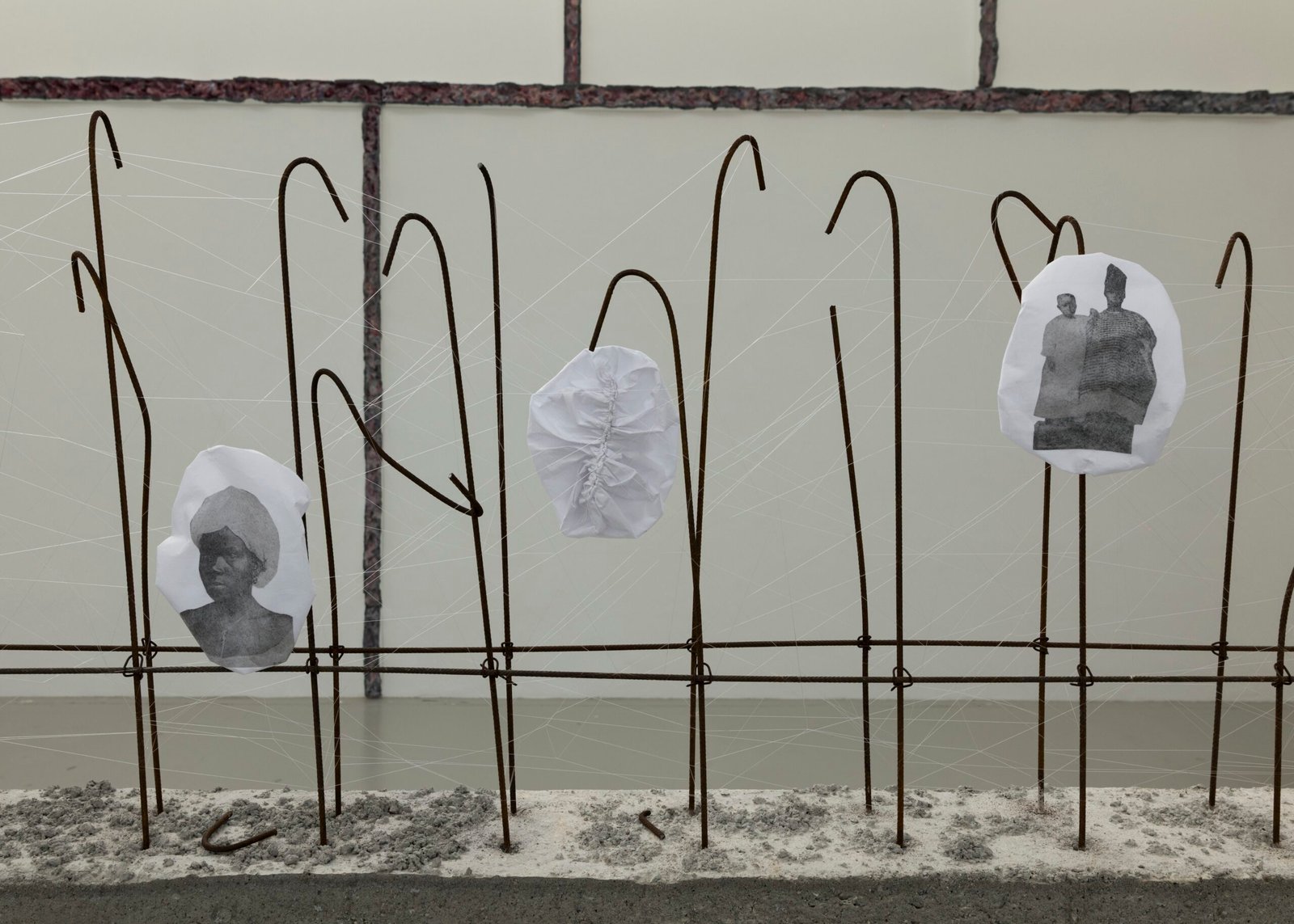
Rosana Paulino, Aracnes, 1996-2026, Photo credits: Rafa Jacinto / FundaçãoBienal de São Paulo
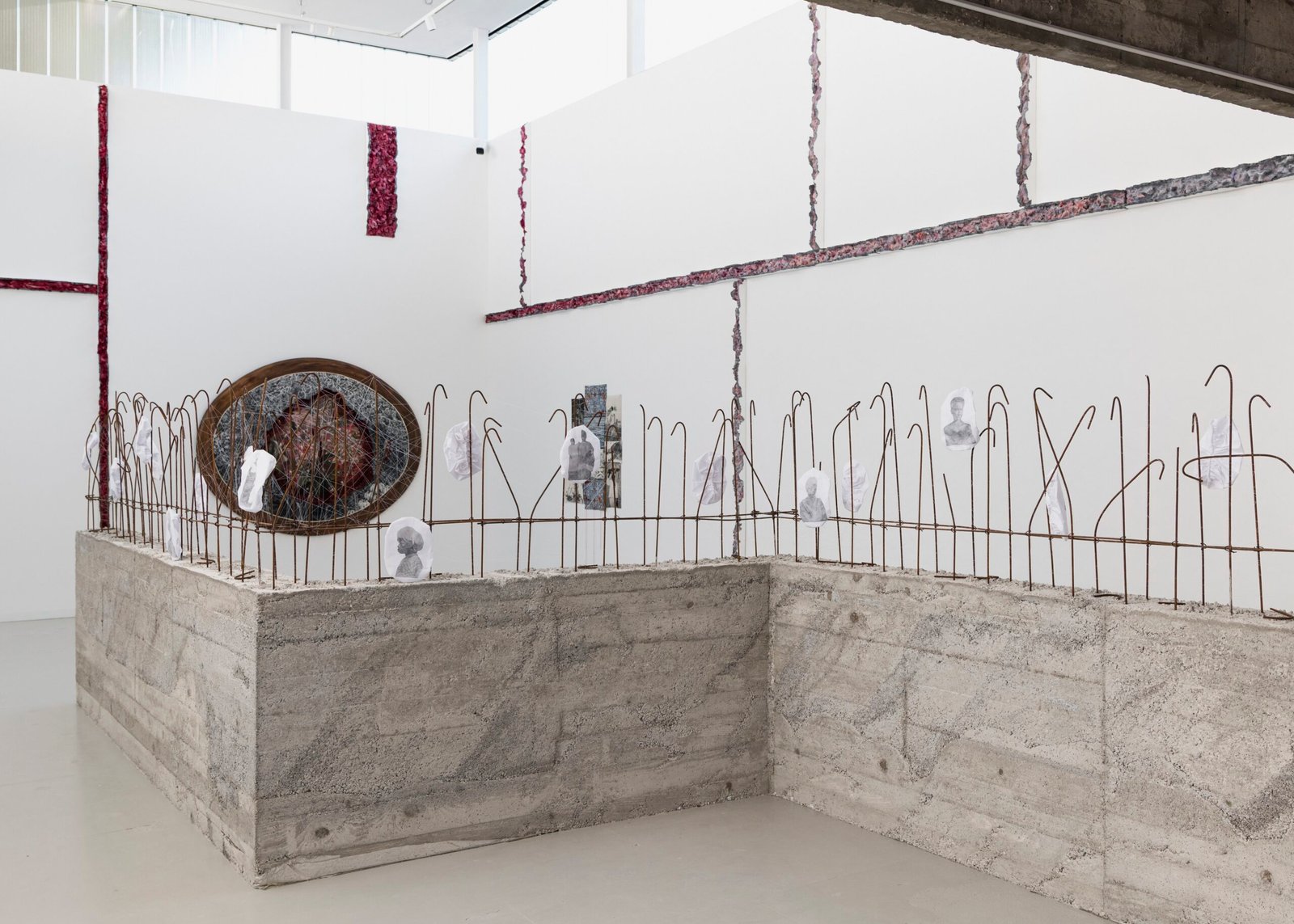
Installation view of the Brazilian Pavilion at the 61st International Art Exhibition. Photo credits: Rafa Jacinto / FundaçãoBienal de São Paulo
Here, Comigo ninguém pode most forcefully realizes its promise of bringing artwork and architecture into an active spatial relationship. The structure interrupts the order of the building and places an obstacle in the visitor’s path, bringing the concrete of the work into friction with the modernist concrete surrounding it. For a few moments, the building ceases to function as a frame and becomes an active participant in the tension the exhibition proposes. Something similar happens with the wounds Adriana Varejão spreads across the walls, as though the pavilion’s own surface might crack open and expose what its monumental appearance seeks to contain.
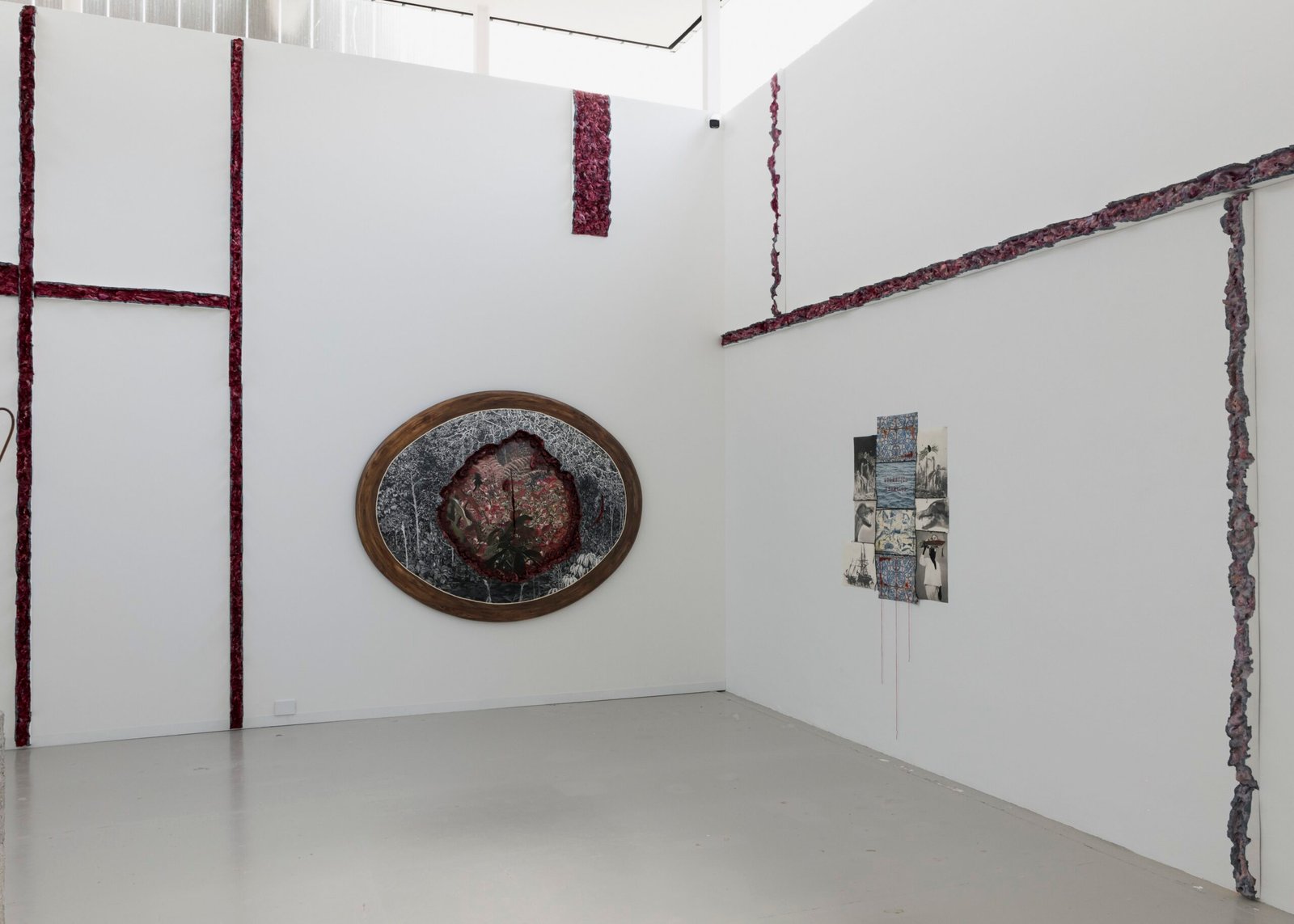
Installation view of the Brazilian Pavilion at the 61st International Art Exhibition — La Biennale di Venezia. Photo credits: Rafa Jacinto / FundaçãoBienal de São Paulo
These interventions, however, coexist with a predominance of works installed conventionally on the walls, quickly returning the viewer to a familiar, frontal relationship with the art. The moments in which architecture and artworks appear to contaminate one another therefore remain exceptions within an exhibition design that, taken as a whole, retains the building as a monumental support and ultimately reasserts its authority.
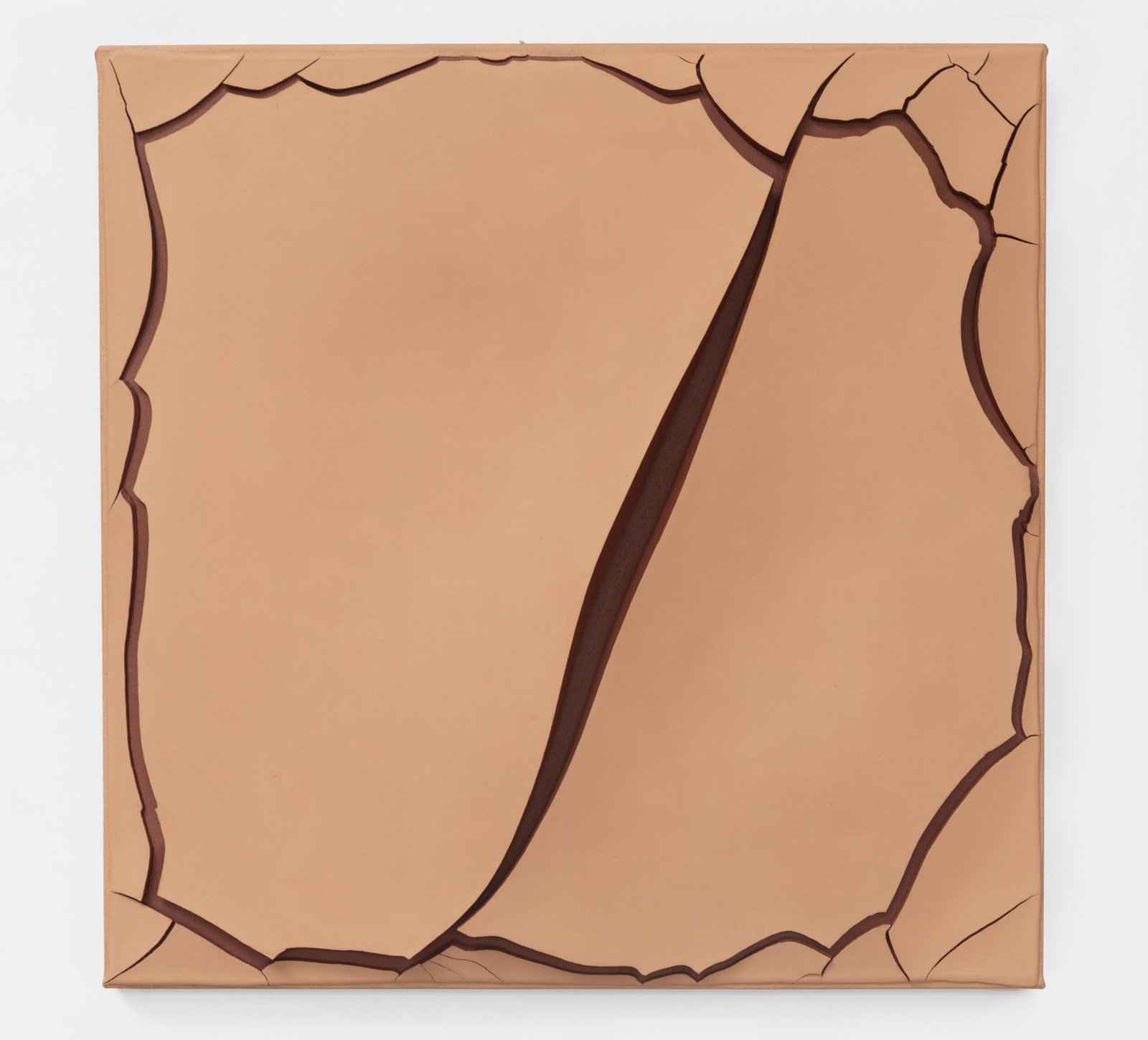
Adriana Varejão, Maragogipinho Monochrome, 2025, oil and plaster on canvas © Adriana Varejão. Photo: Vicente de Mello
The same problem emerges in the relationship between the two artists. Varejão and Paulino arrive at the project with such fully developed visual languages that each work quickly returns to its own genealogy. The sense is that one practice rarely passes through or destabilizes the other. The exhibition promises harmony and dissonance, but what it offers above all is an exceptionally well-resolved coexistence, leaving little space for improvisation or for whatever might arise unexpectedly from the encounter.
In place of the third thing implied by the idea of composition, we encounter two extraordinarily recognizable artists articulated through a curatorial framework that knows exactly where their practices converge. This may be why the exhibition sometimes feels like a dual retrospective. Flesh, the colonial wound, botany, memory, violence, spirituality, and reparation construct a common vocabulary. Yet the spatial experience rarely produces relationships that escape this interpretive field, which has largely been established in advance. The plant begins to trouble us again. The comigo-ninguém-pode appears ornamental until someone comes too close, when its toxicity reveals itself. The pavilion produces the inverse effect: the closer we get, the less dangerous it becomes, as we increasingly encounter what the international art world has already learned to recognize in Rosana Paulino and Adriana Varejão.
That sense of security acquires another layer when we consider the positions the two artists occupy within the art system. In an essay published in The Art Journal, Stephanie Brady Cummings draws attention to an asymmetry seldom addressed in the reception of the pavilion. Adriana Varejão, represented by Gagosian and Victoria Miro, holds the record for a work selling for US$1.8 million at auction, with approximately US$15.3 million in cumulative public sales. Rosana Paulino has achieved extraordinary institutional circulation, with works held in collections including MoMA, Tate, and Centre Pompidou, while her presence on the secondary market remains significantly smaller.
These numbers tell us very little about the artistic value of the works and a great deal about the systems that assign value to them. Paulino and Varejão arrive in Venice with equally substantial and widely recognized careers, yet they have been incorporated into the mechanisms of market valuation in markedly different ways. If Comigo ninguém pode brings the two artists together as interlocutors within a shared history, perhaps it would also have been worth moving closer to this difference, making visible the structures that allowed practices of such significance to acquire such different commercial positions.
The question matters even more because a national pavilion carries an old and still remarkably effective fiction: the idea that artists, artworks, and discourses can occupy a building and, for a few months, offer some possible image of a country. Diane Lima herself acknowledges that working within this format confronts the project with a dilemma she describes as a “crisis of representation,” leading the team to ask which Brazil is being presented and how its history might be retold from perspectives capable of accounting for its complexity. The exhibition thus clearly attempts to multiply the viewpoints from which the country can be imagined: bringing together two distinct female perspectives and allowing Brazil to emerge, as the curator proposes, somewhere between reflection and shadow rather than settling into a single version of itself.
Comigo ninguém pode responds to this crisis by presenting an image of Brazil that is female, Black, shaped by colonial experience, spirituality, nature, and popular forms of knowledge. This image carries enormous significance in the face of an official history so often constructed through the erasure of precisely these subjects. At the same time, another question emerges once a counternarrative reaches the institutional center and becomes part of the image the country itself chooses to project.
Perhaps this is where the real danger of taking too few risks becomes visible. Comigo ninguém pode chooses a plant as its image whose force lies precisely in the impossibility of separating protection from toxicity. Yet it constructs a representation of Brazil in which tensions are acknowledged, organized, and to a considerable degree pacified. The pavilion speaks the language of In Minor Keys when it turns to spirituality, nature, multiple forms of knowledge, and the possibility of imagining other worlds. What is missing is a willingness to let that language contaminate the form of the exhibition itself, to unsettle the architecture, the encounter between the artists, and even the image of Brazil being constructed there. Perhaps touching the comigo-ninguém-pode would mean precisely this: leaving the pavilion less protected by what we already know and more exposed to whatever the exhibition might still be capable of putting at risk.
Edited in English by Dobroslawa Nowak