

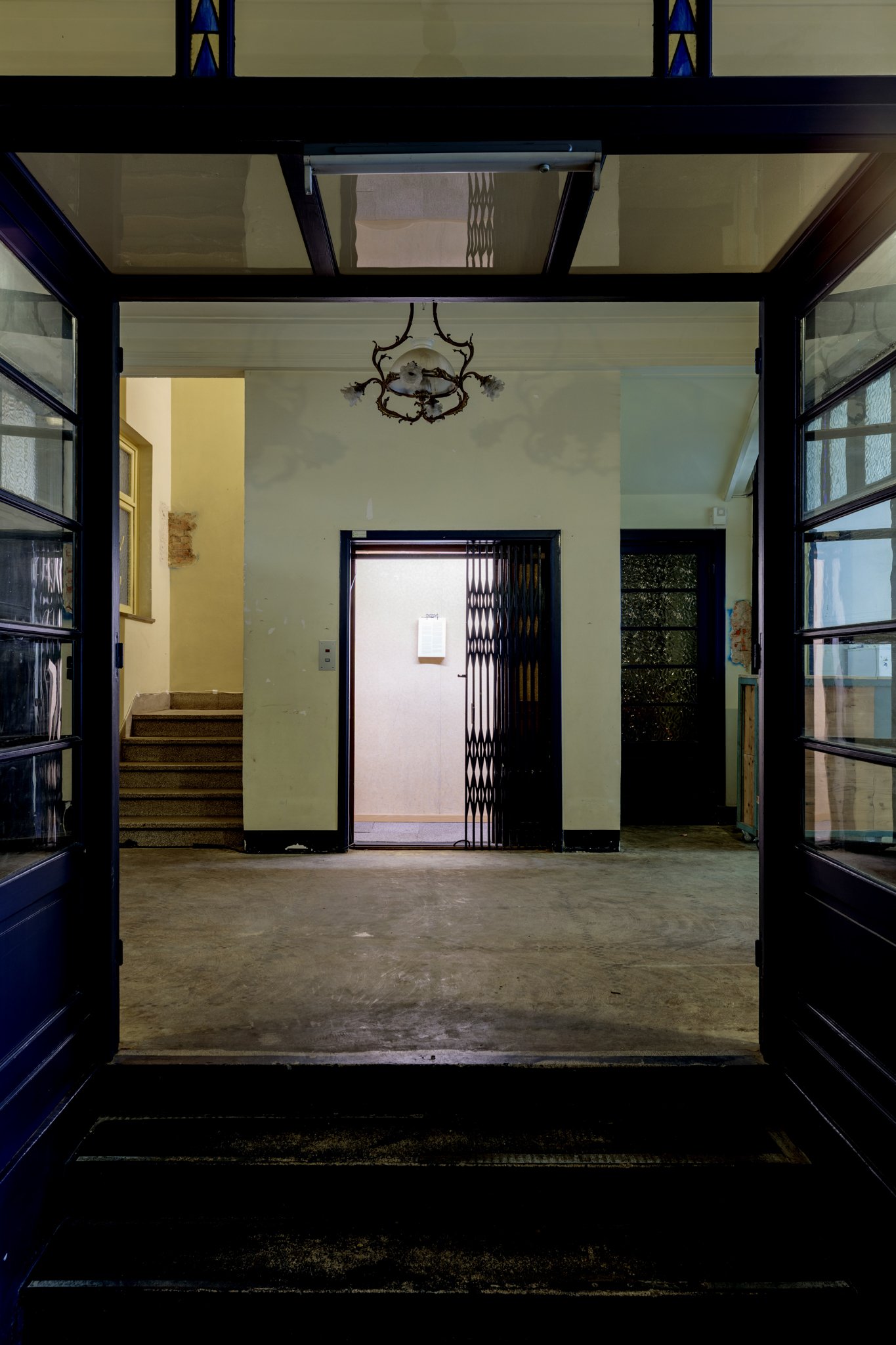
Solid Air is an exhibition by Leto Keunen, Adèle Sweetlove and Iana De Rop, presenting a joint installation, individual works and an edition. Although air might often appear as the most neutral condition of a room, this exhibition approaches it as a system that is shared, but never equally distributed. The spaces in between become a way of reading this condition, asking how the interior becomes desirable, and at what cost. What has to be filtered, or even decimated in the process?
Even the most domestic spaces are organised by powers that dictate who or what may enter, what must be kept out, what deserves attention and what should remain unnoticed. They are shaped by a choreography of permissions and exclusions. They teach us where to stand and what to look at, how to move and what to ignore. They enact a politics of attention in which some presences are welcomed and others deemed intolerable.
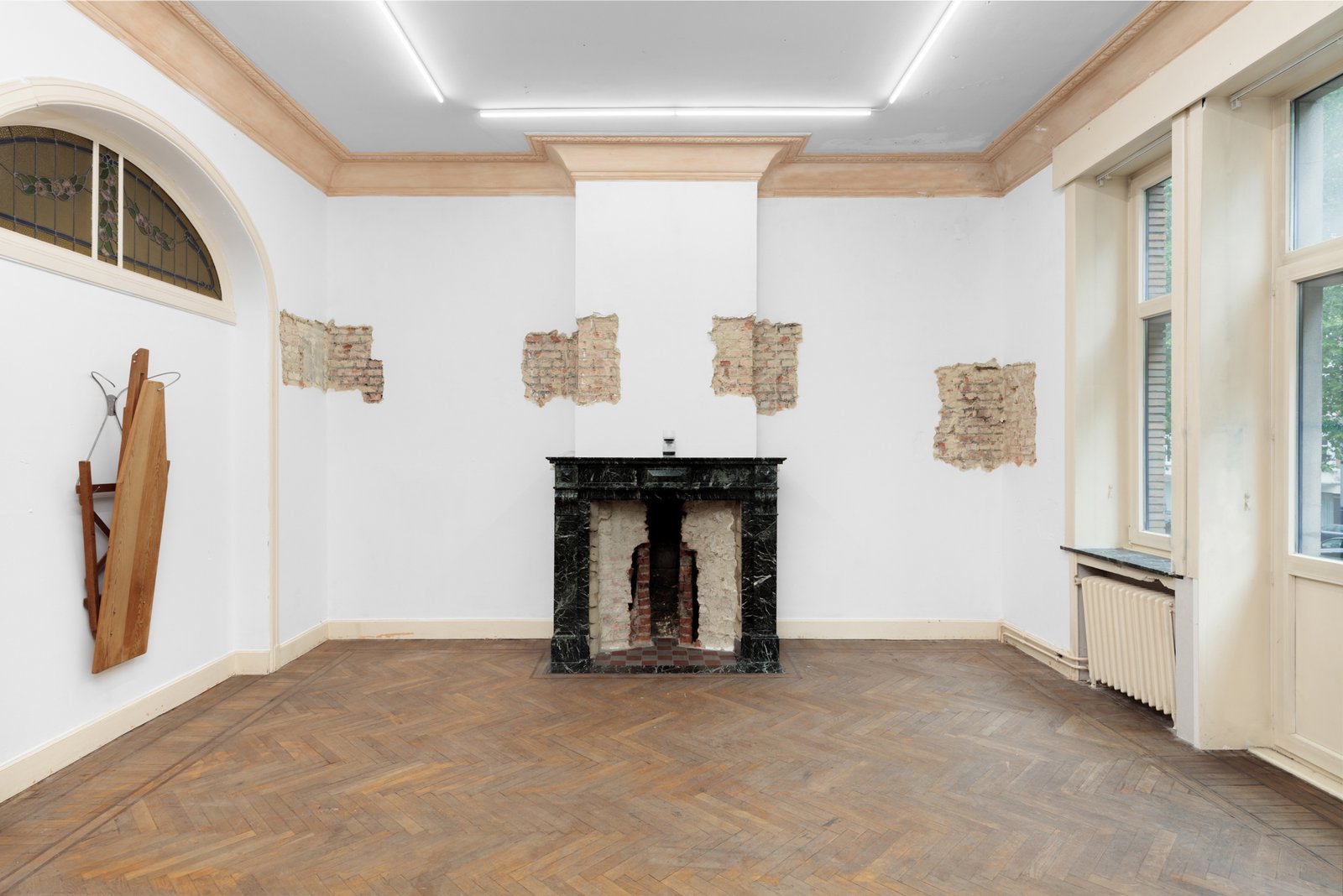
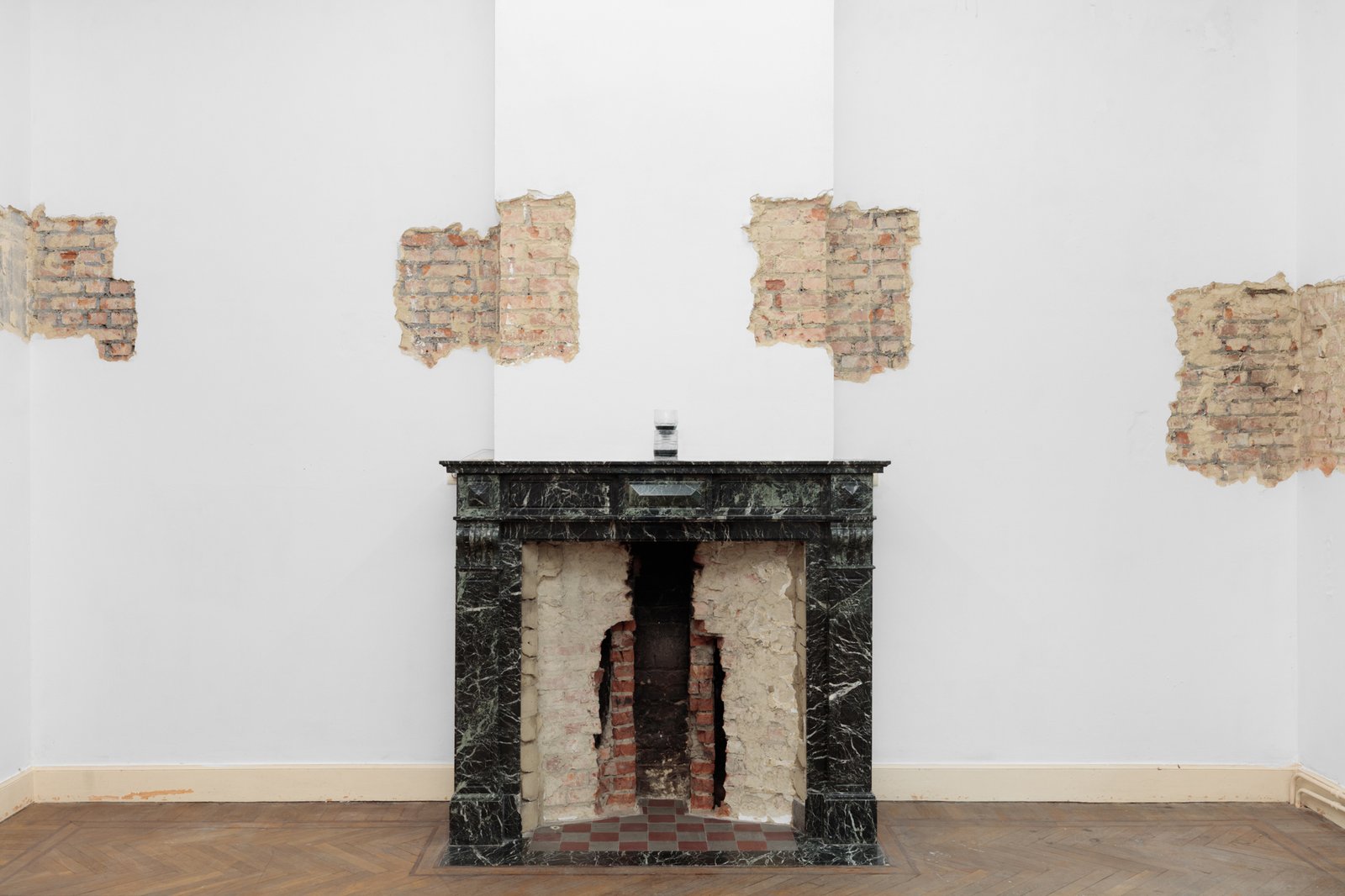
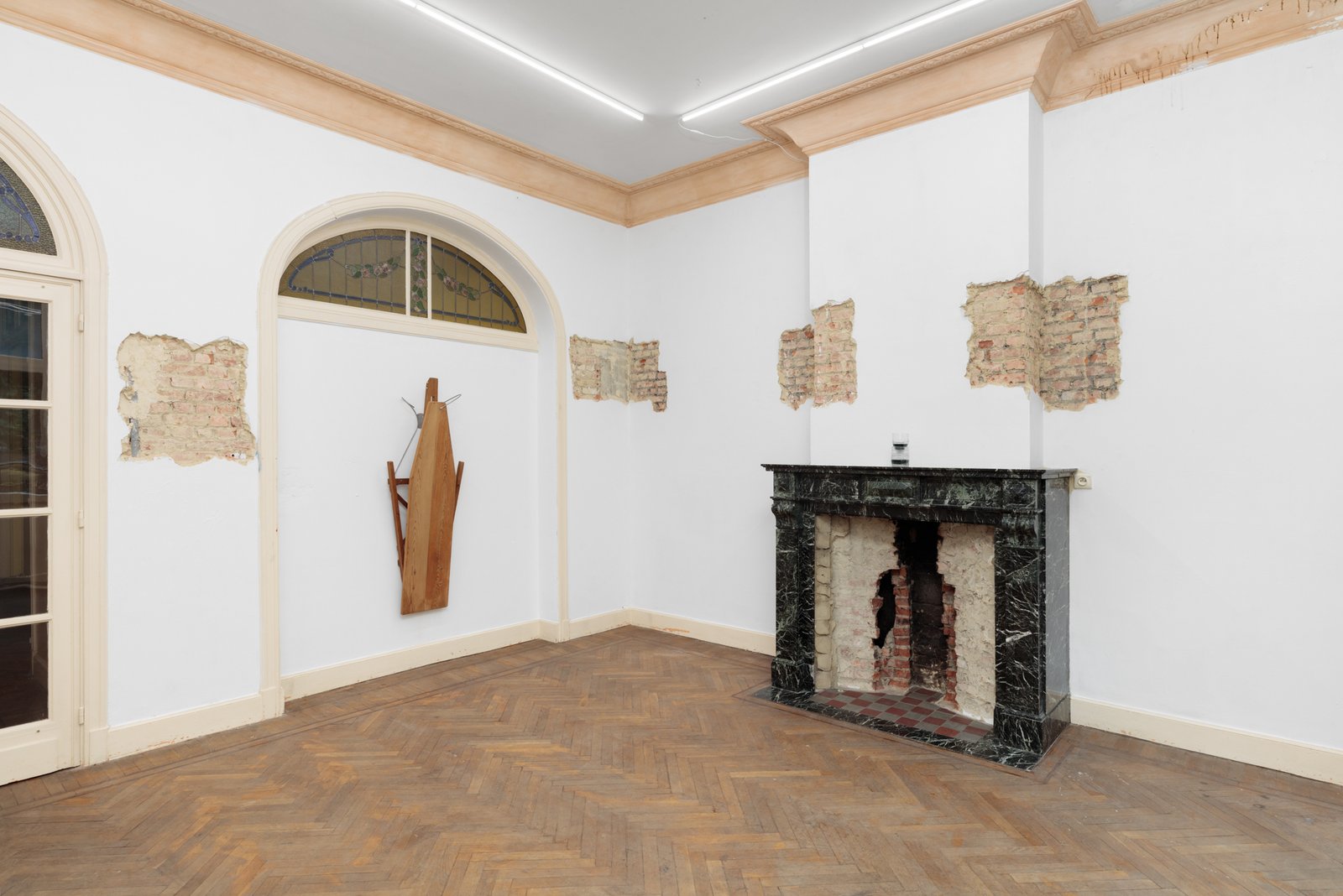
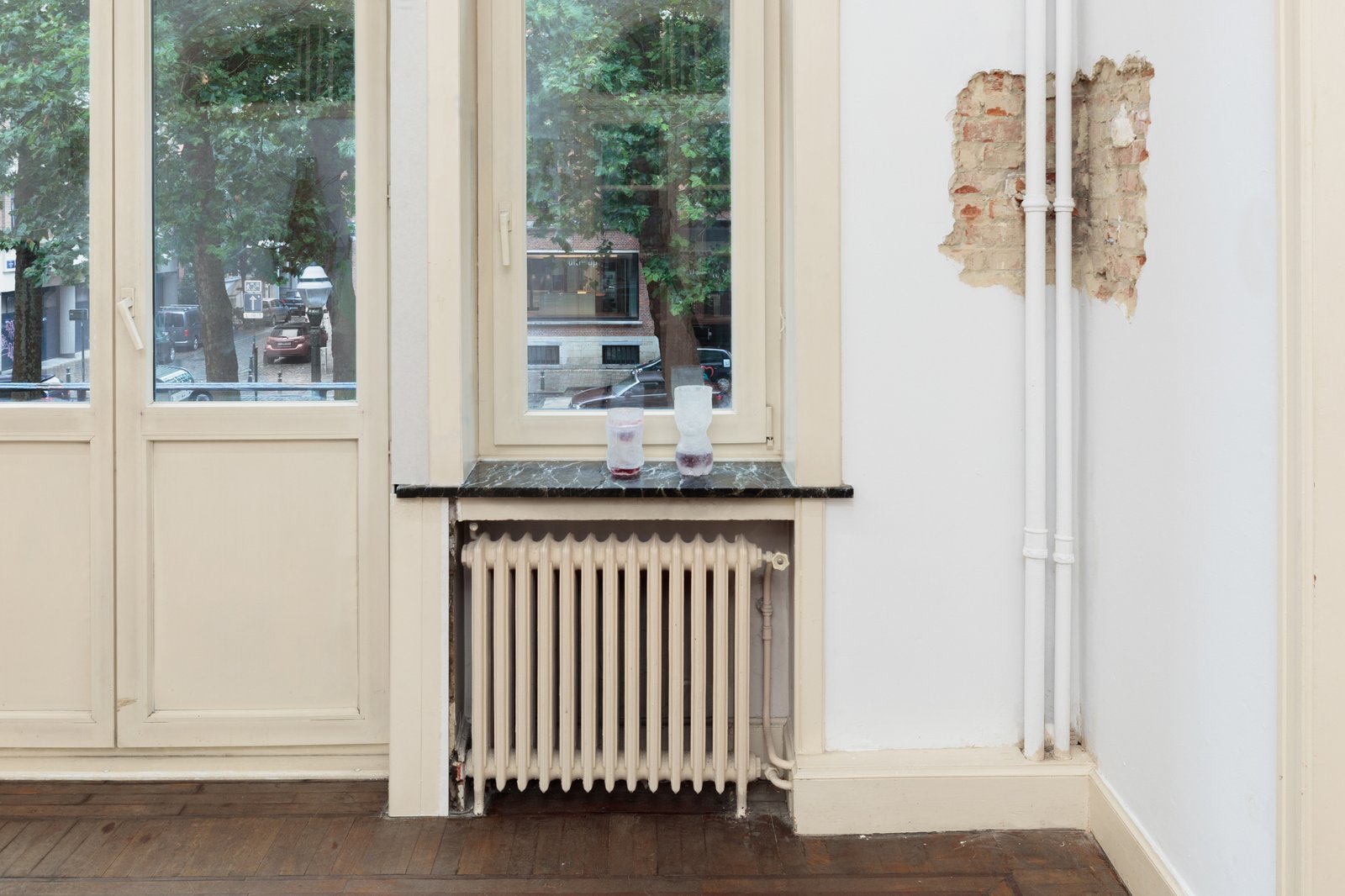
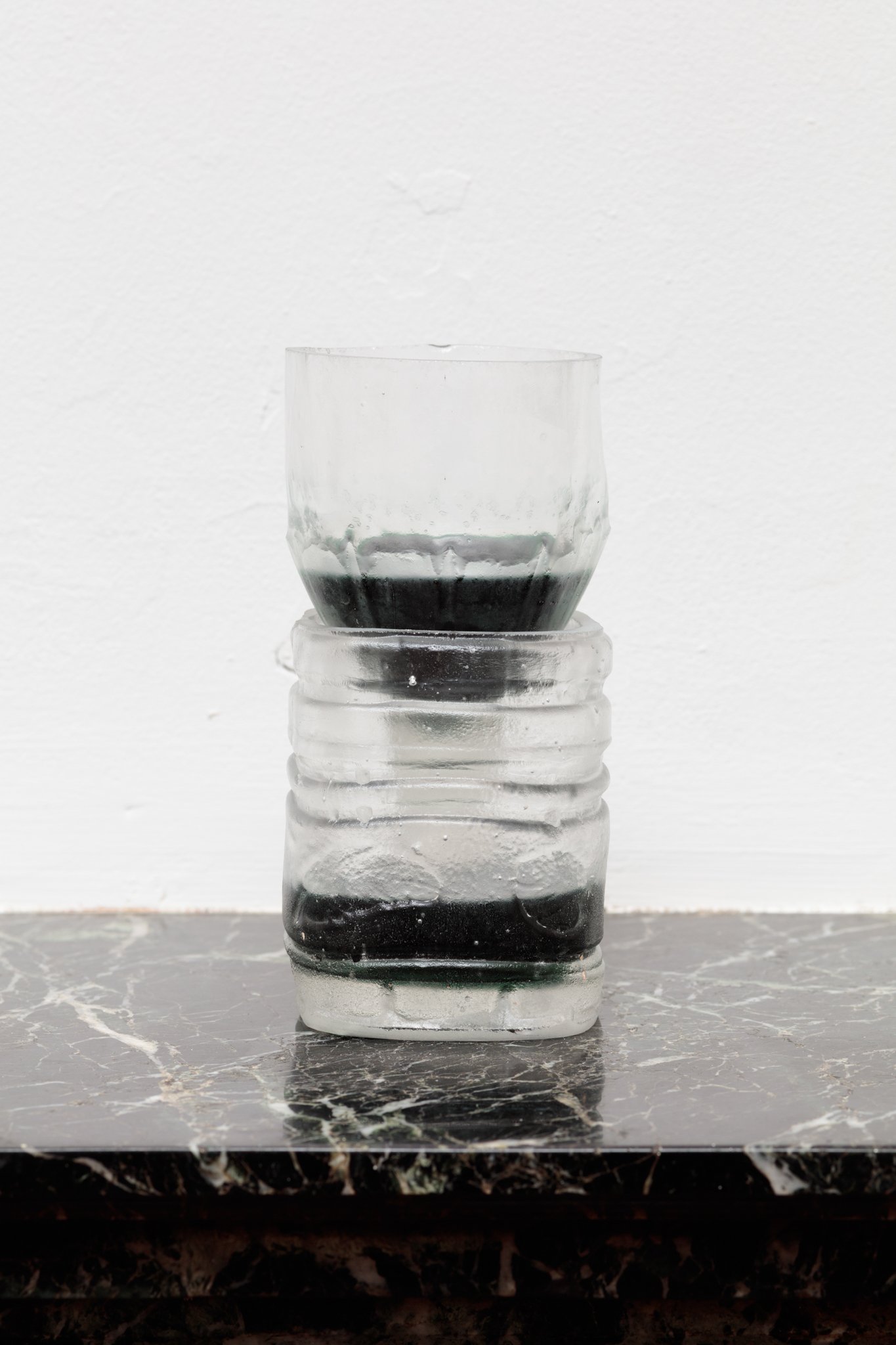
What appears as care for the domestic environment may also contain a violence toward everything that disturbs it. Adèle Sweetlove’s (2) Zoete Inval (2026) reinterprets improvised insect traps made from plastic soda bottles, inverted and filled with sweet liquid to lure insects inside. Sweetlove translates this ordinary device into cast glass, holding on to the recognizable logic of the trap, but making its surface slightly frosted and translucent. Placed on a marble mantelpiece and one of the windowsills, the objects no longer look like traps at first. They resemble perfume bottles, cosmetic containers or decorative vessels. She does not hide the violence, but she shows how easily it can be aestheticised and celebrated, how seductive it can become.
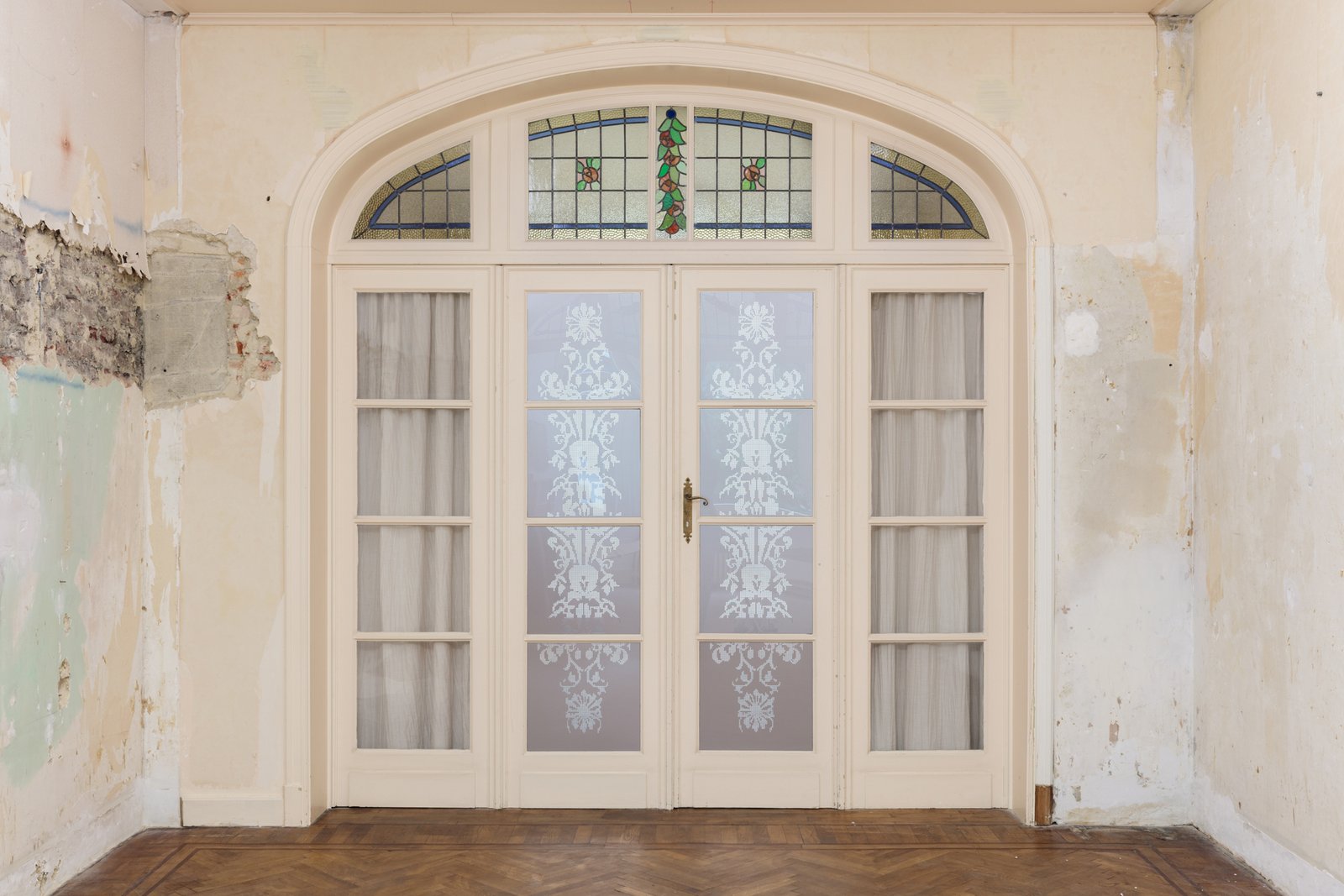
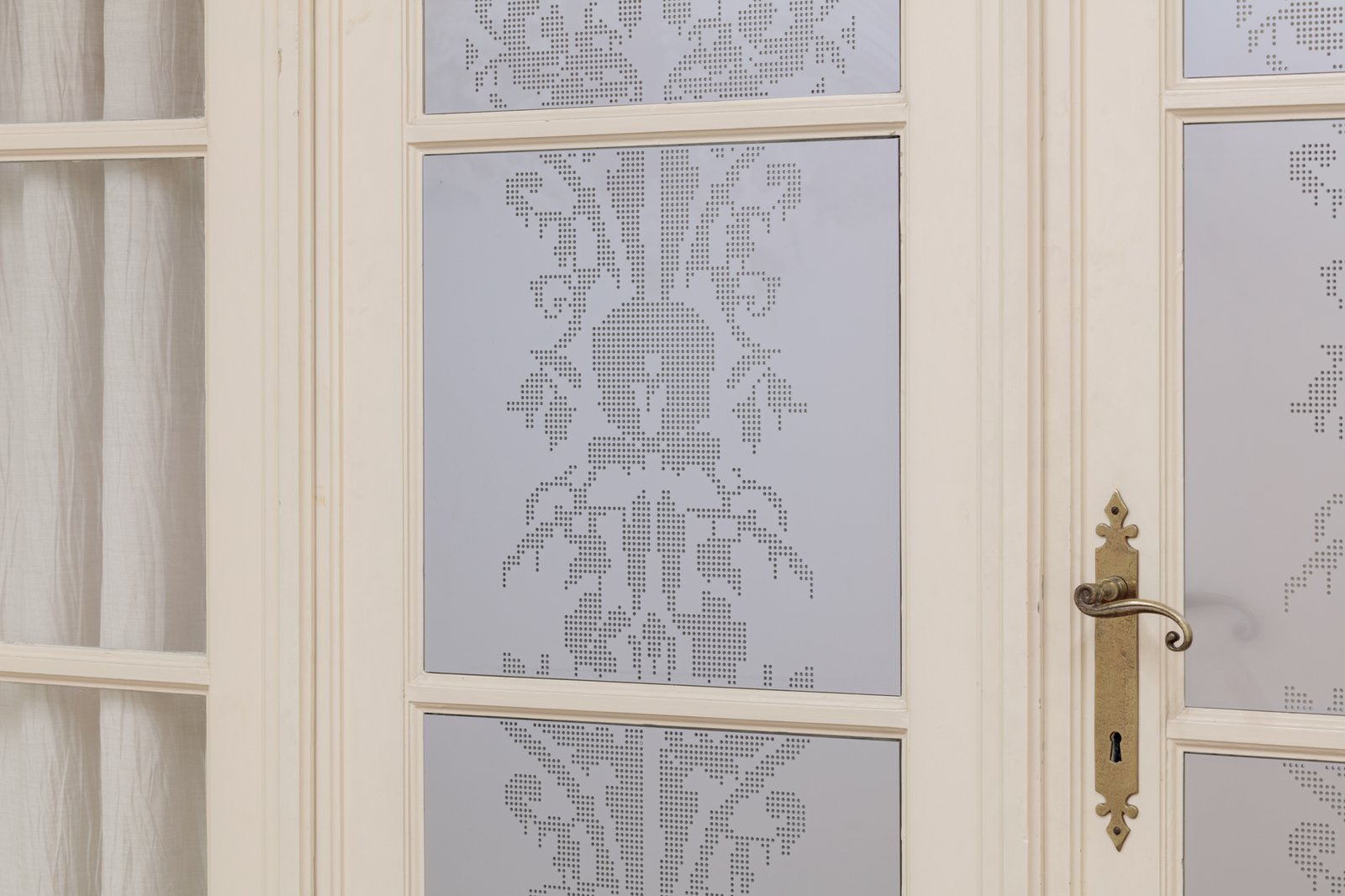
In (6) Honeysuckle & Tulip (1876) (2026), Sweetlove reinterprets a motif from William Morris’s wallpaper design Honeysuckle & Tulip from 1876, a decorative pattern popularized in the Victorian interior, where floral wallpaper hid arsenic within the home.
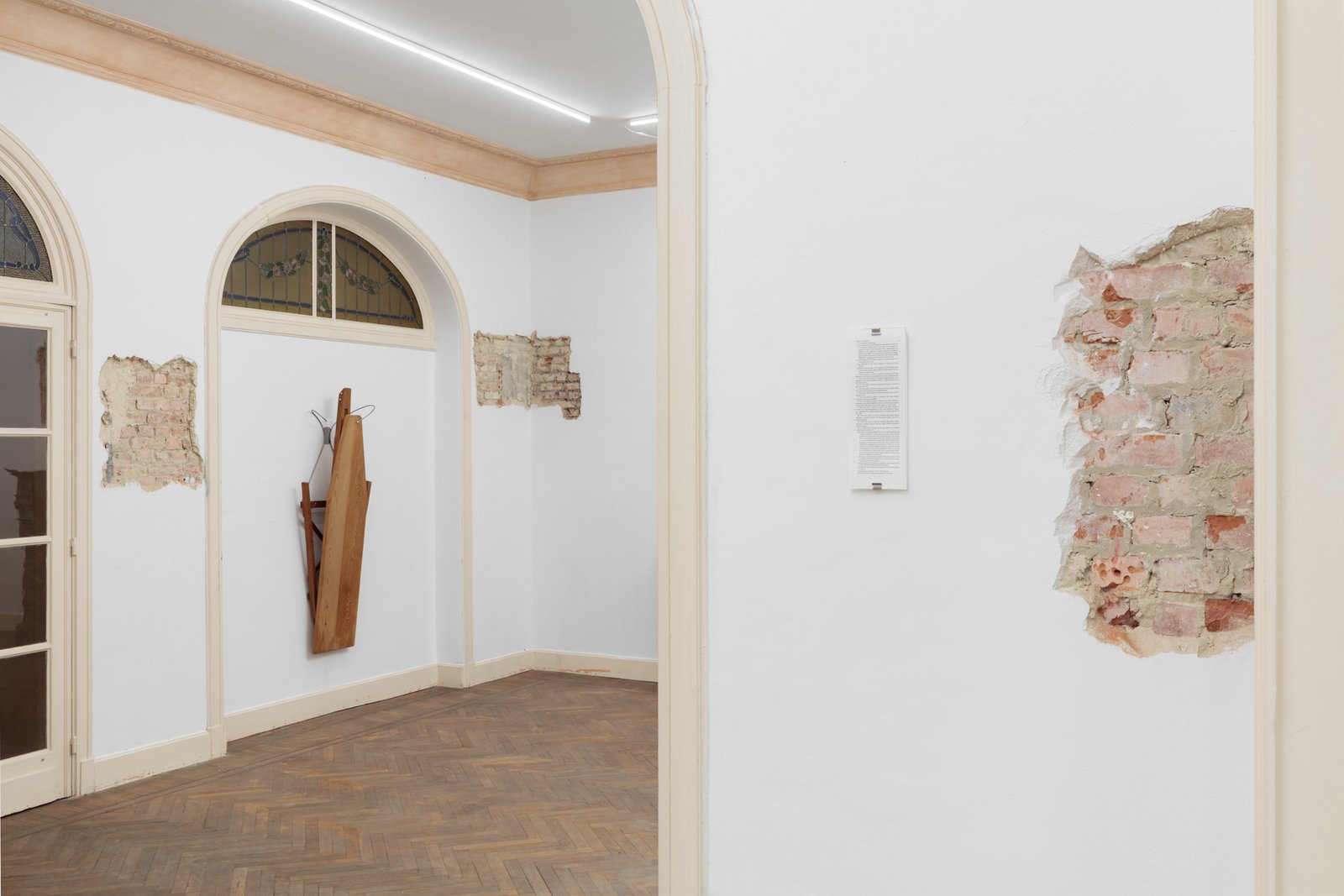
Sweetlove translates these florals into a system of perforations cut into metallic acrylic; an image of nature, but in a way that has been flattened, repeated and technically processed. The outside is welcomed on the condition that it no longer behaves like itself. The perforations are based on the exterior filter of a Dyson air purifier. Through these, air can move between the exhibition space and an adjacent enclosed room.
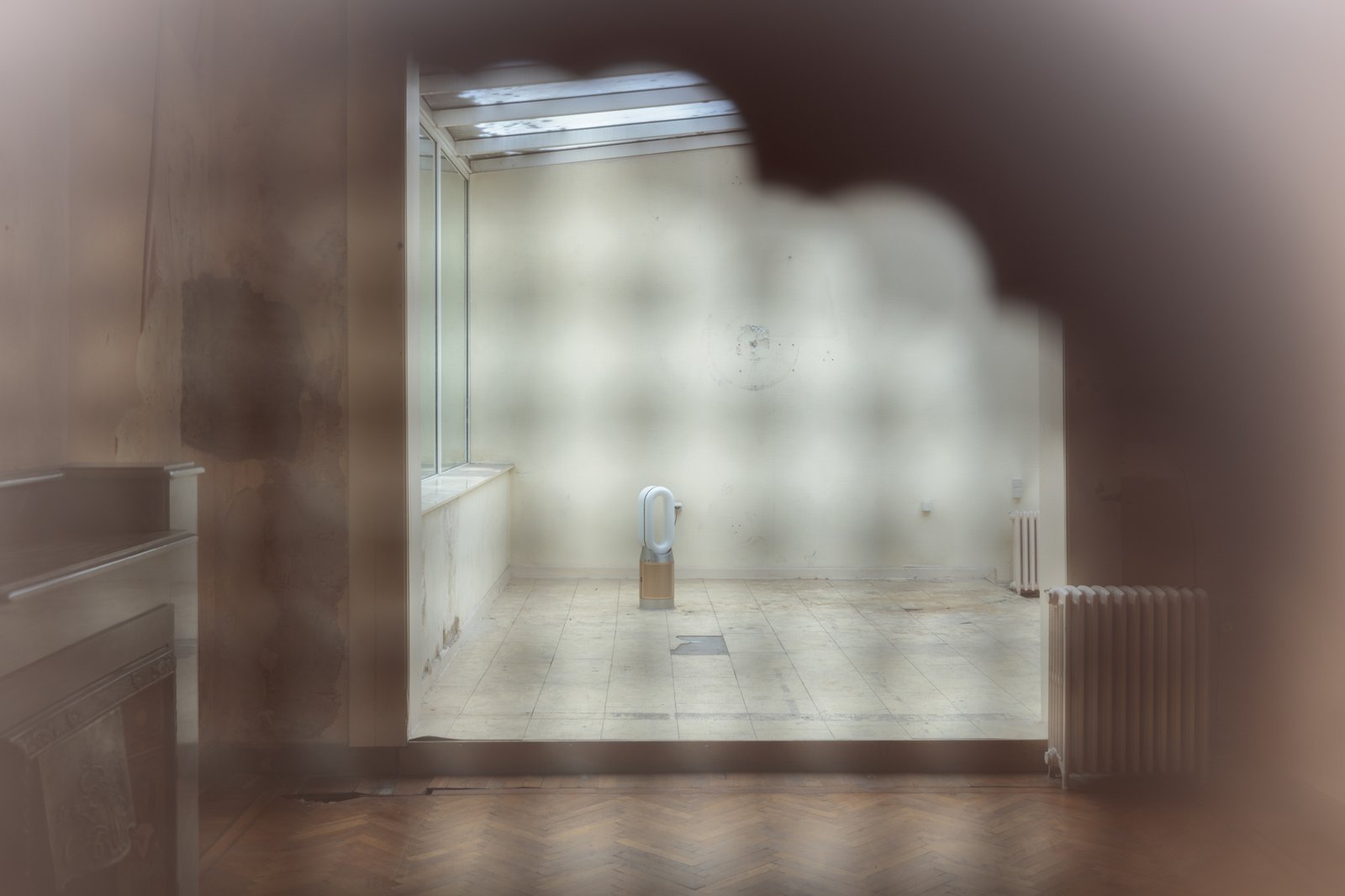
On the other side, (7) Dyson Purifier Hot+Cool HP1 (2026) continuously filters the air in a space where mold has permanently infested the walls. The work interacts with a room that is stubbornly being cleaned but will never be restored to its original state. The attempt to purify the air becomes a repeated, hopeless, and possibly endless action.
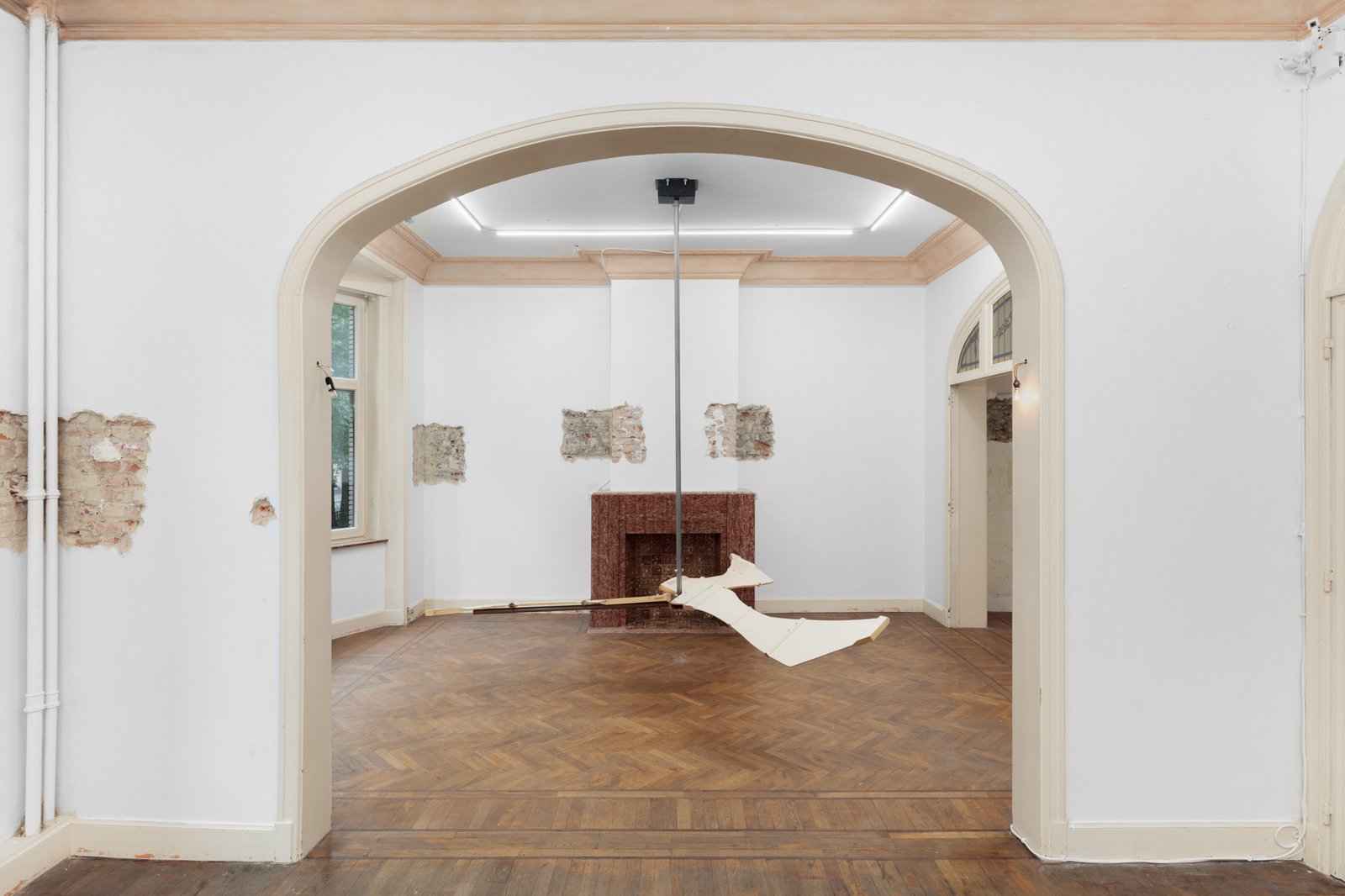
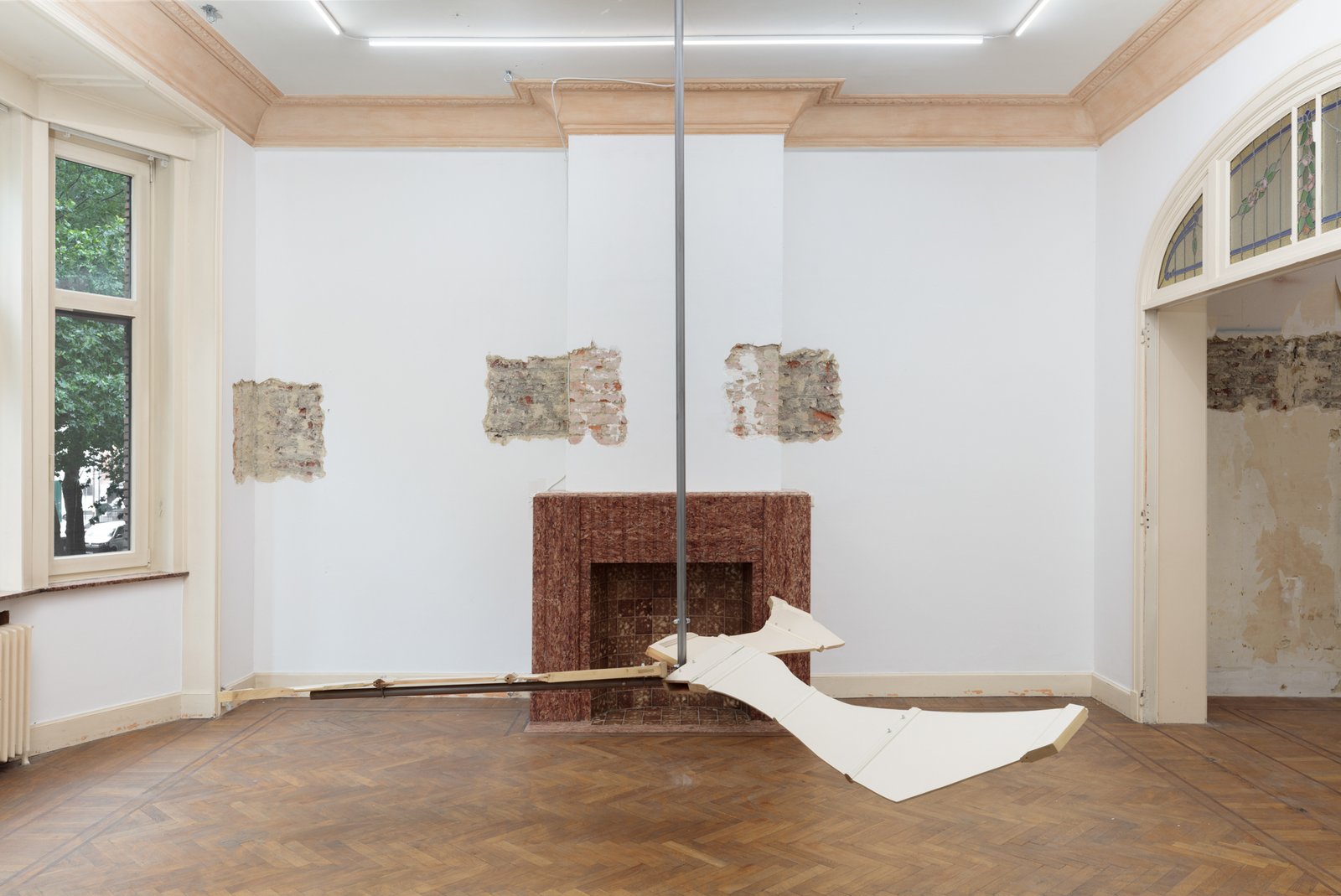
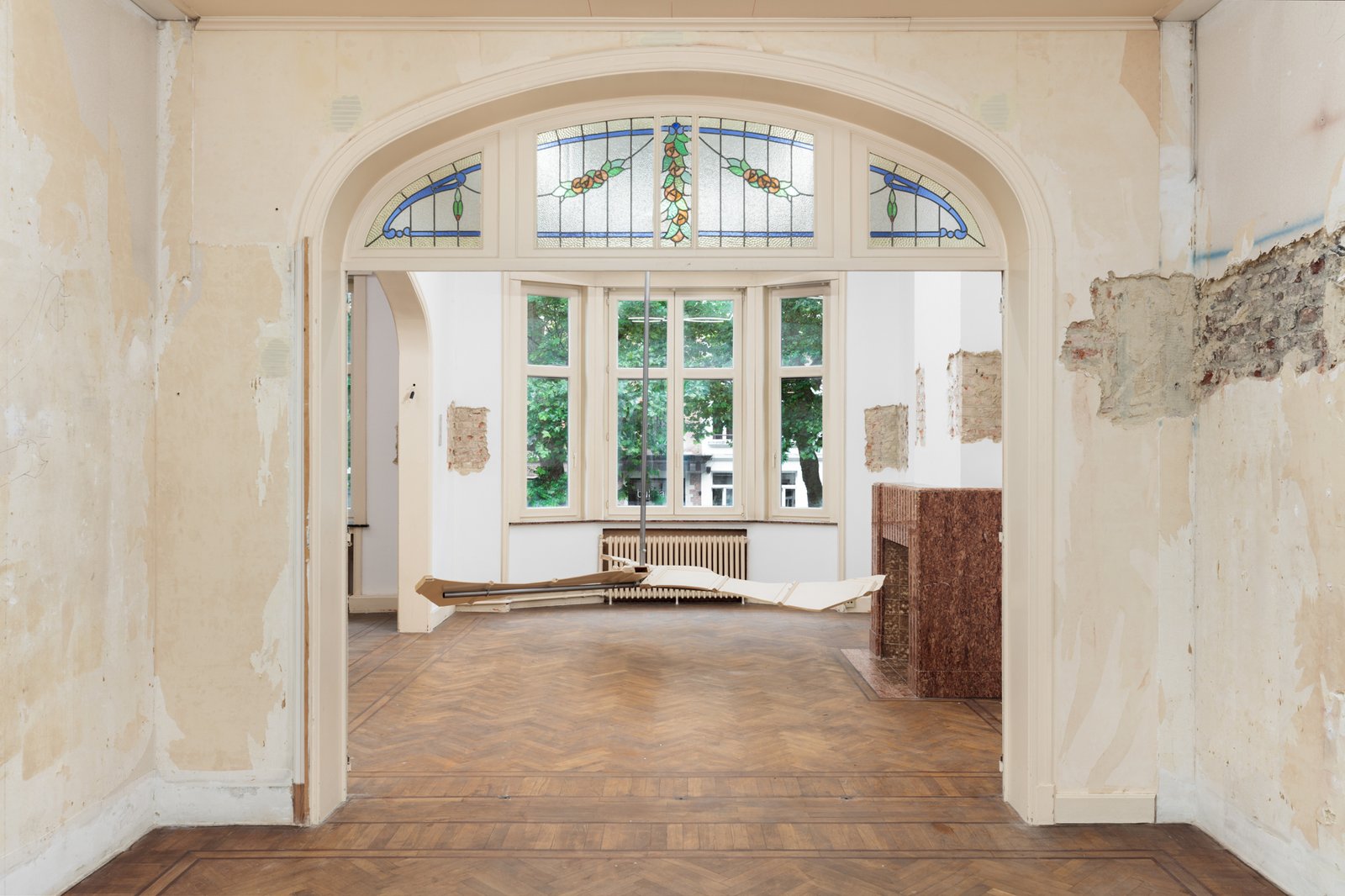
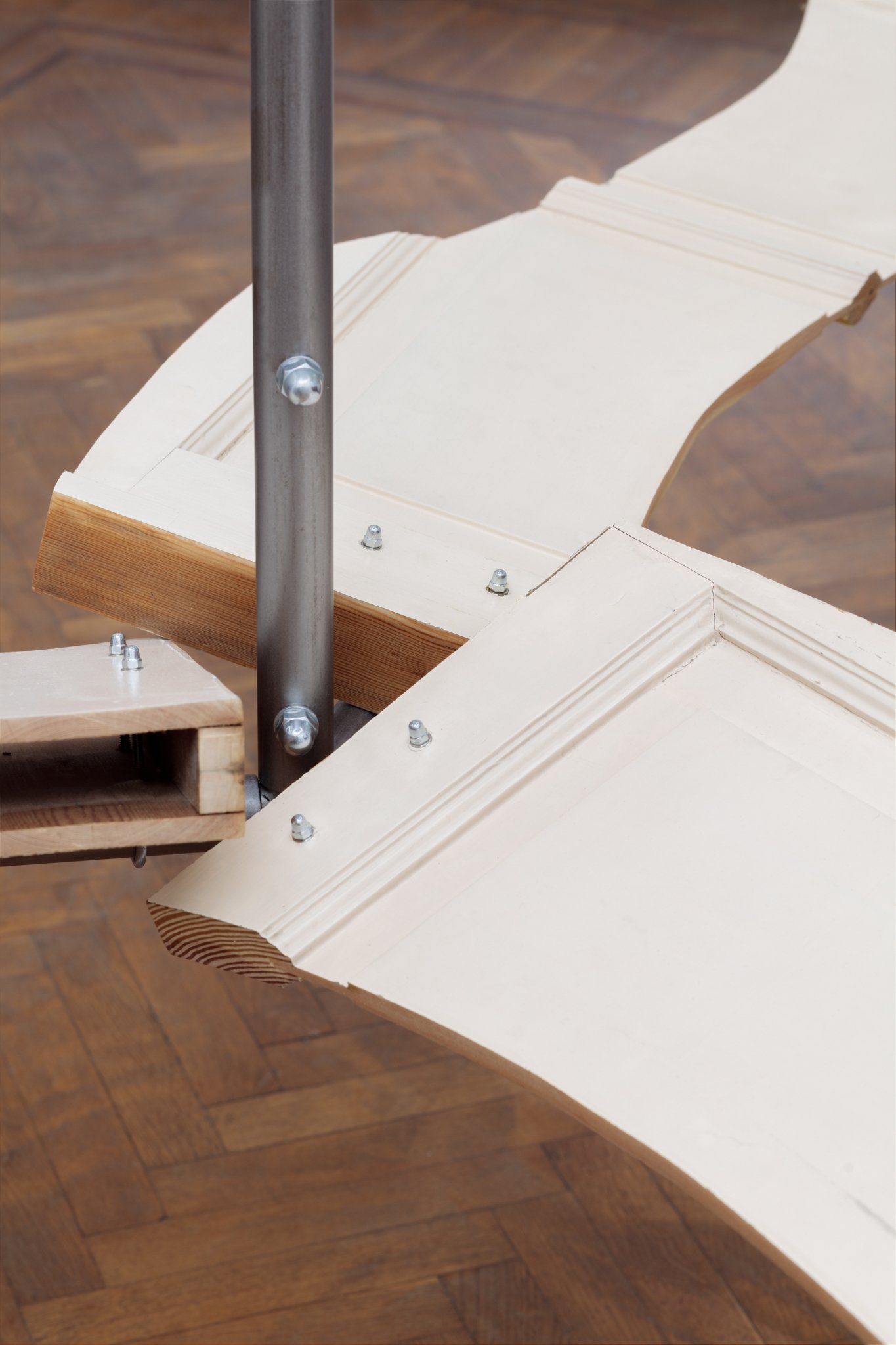
(3) Ceiling fan (2026) by Adèle Sweetlove, Iana De Rop and Leto Keunen enlarges a familiar fan until it recalls the elegance of windmills seen from a distance, but also the shift that occurs when such a structure is encountered up close. Air is redirected and redistributed through the turning of the blades, directing the viewer to notice how space itself choreographs its occupants, how it is able to produce delay and establish a tempo. The air remains invisible, but the body feels its instructions.
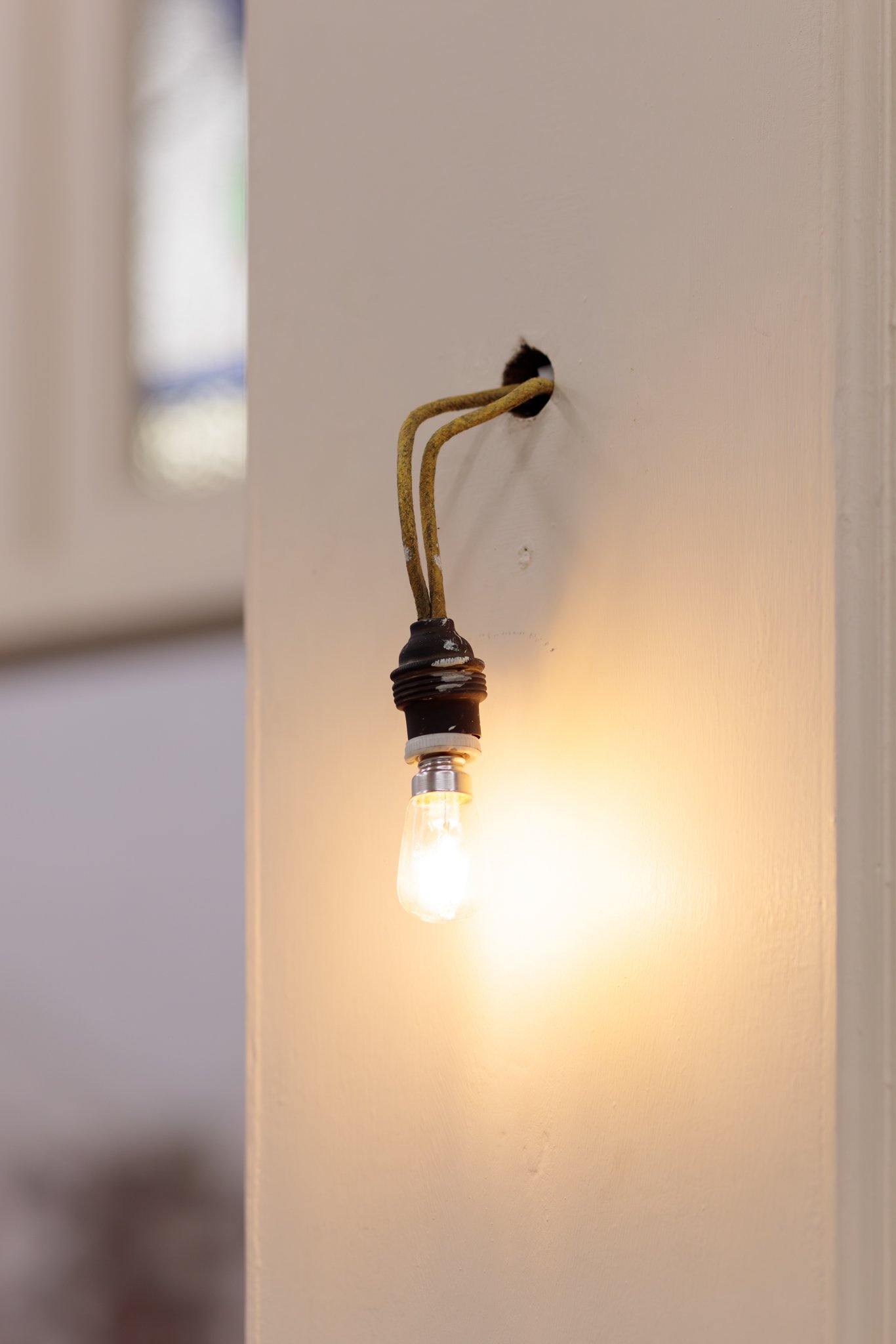
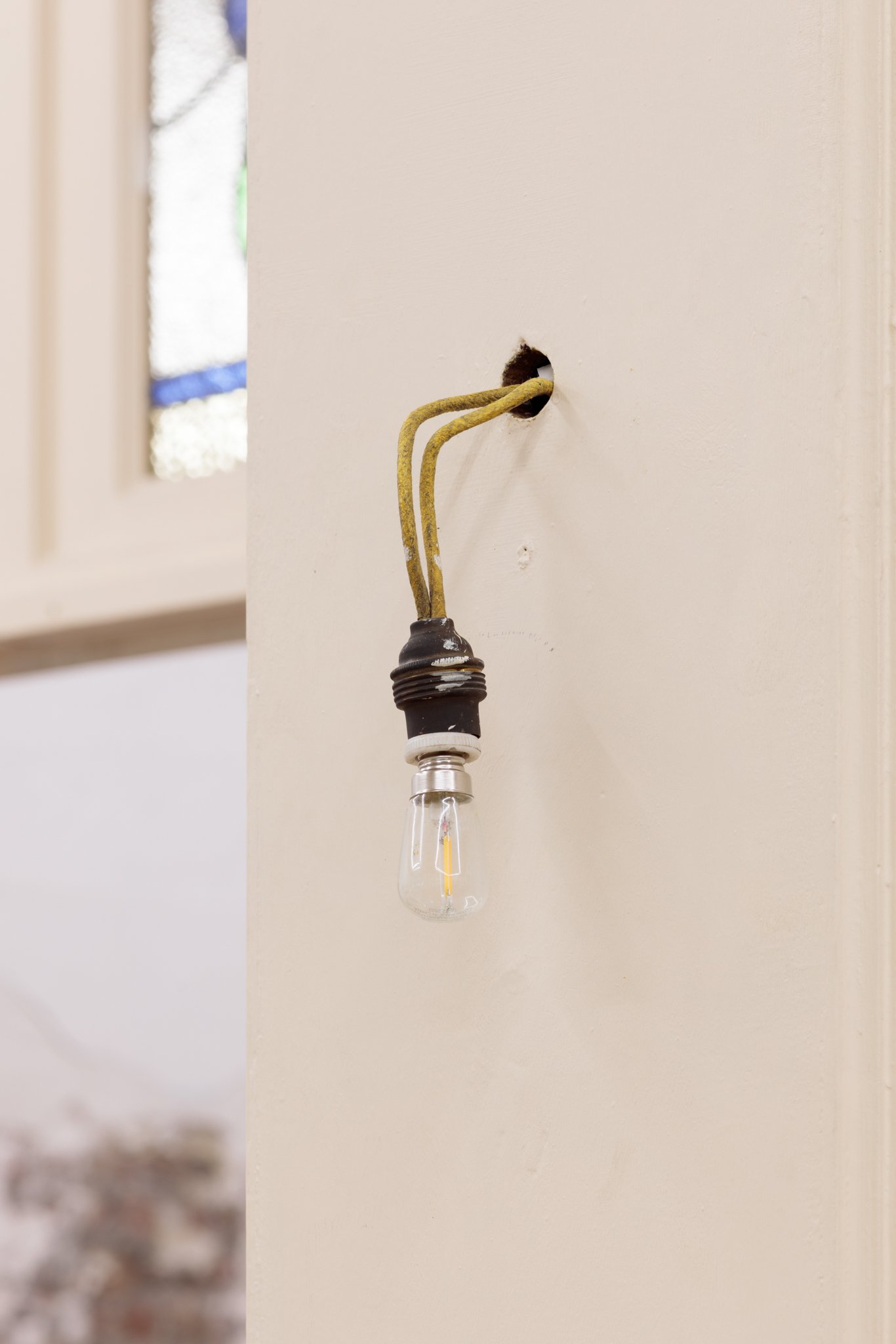
Iana De Rop’s (4) Pacer (2026) becomes a device that organises the very attention of the viewer. The work activates an existing wall lamp, reacting to the number of bodies present in the room. This information is translated into a variable BPM system. As more or fewer visitors enter the space, the rhythm of the light changes. The lamp becomes a measuring device, a signal. It makes the room aware of itself.
In 24/7: Late Capitalism and the Ends of Sleep (2013), Jonathan Crary describes a culture in which bodies are kept available through continuous signals, light and stimulation. Yves Citton’s The Ecology of Attention (2017) shifts this notion away from the individual and toward the environments that organise what can be perceived. De Rop’s work makes this environmental production of attention tangible. The viewer has no choice, the room modulates the available supply.
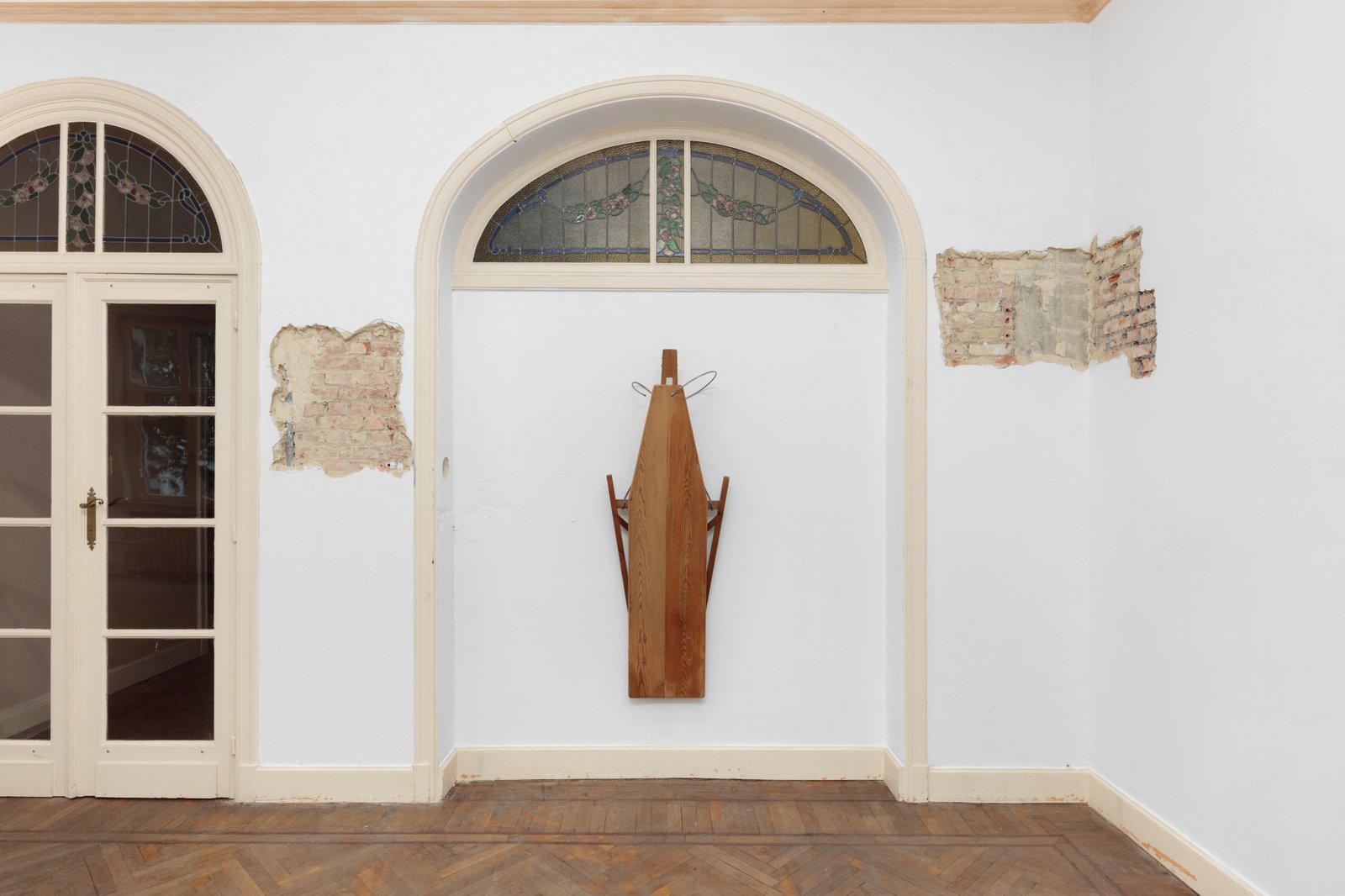
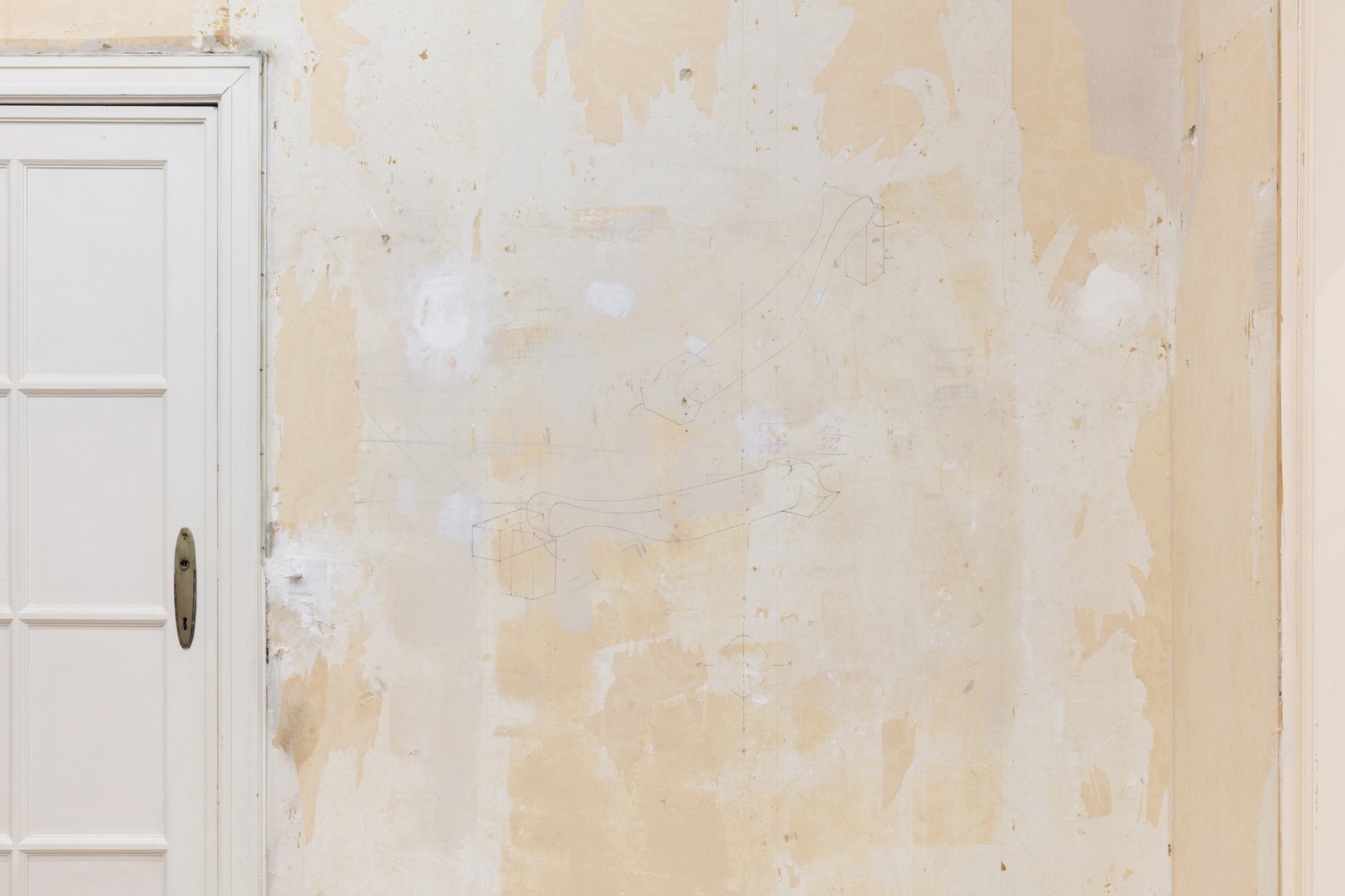
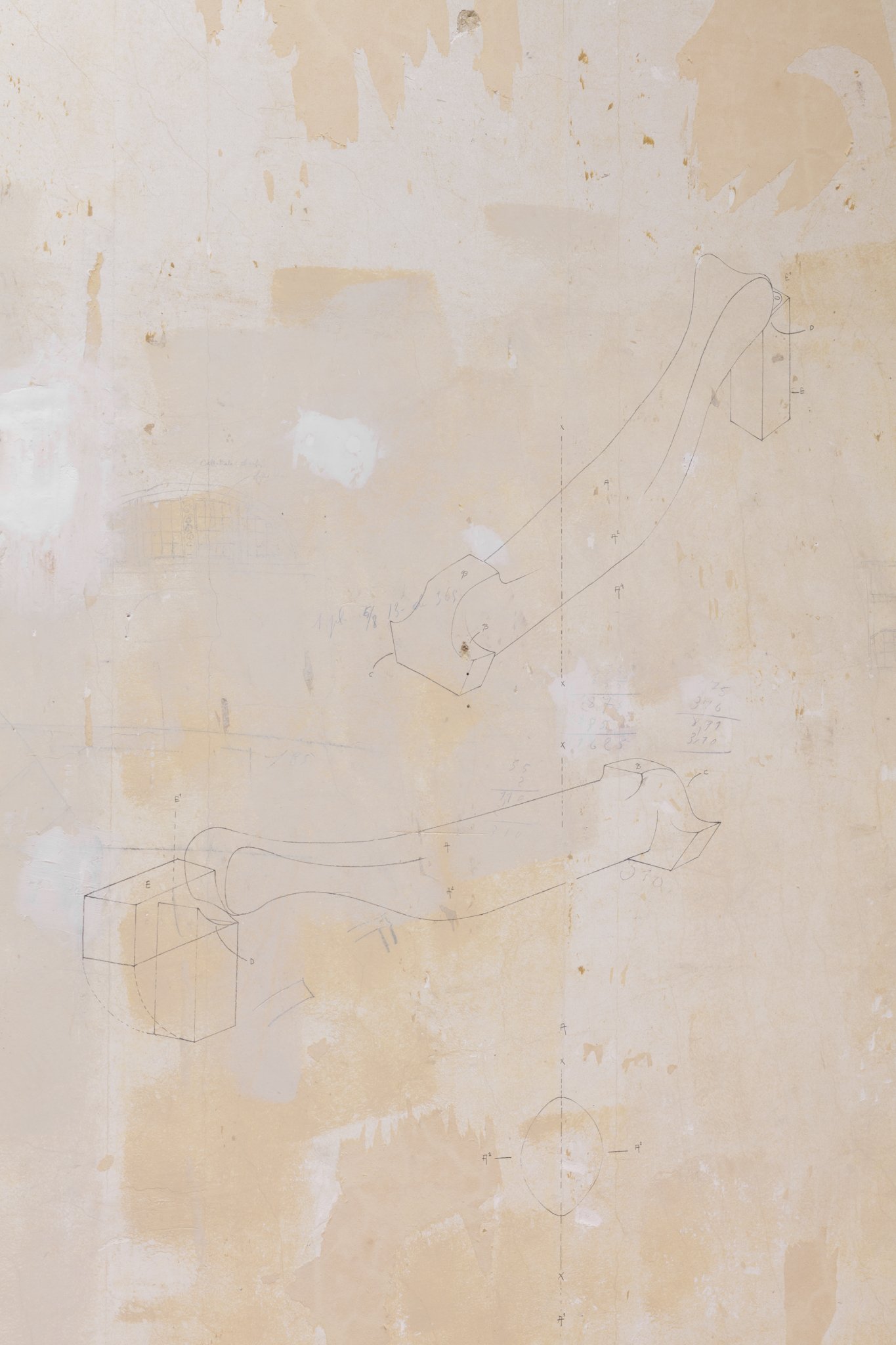
In (1) Wire rack for mounting an iron (2026), and (5) Sleeve Board (2026) by Leto Keunen, the artist presents a wooden ironing board hanging on a steel structure, a small printed patent fragment, and a pencil drawing made directly on the space’s wall. Patent drawings isolate objects in order to define them. They tell us what an object is, what it does, how its parts relate, but never in relation to the environments they are intended for. They become hermetically isolated in order to understand and capture them to the fullest extent, but fail to do so while trying. In this case, it describes the rack in a similar way as a body. It speaks of a torso, arms and legs, a structure that supports another structure. A simple household aid is given anatomy. It does not explain how to iron. It explains how ironing equipment is held in a state of non-use.
Joseph Grigely’s Exhibition Prosthetics (2010), details how captions and exhibition texts are understood as prosthetic devices that guide interpretation by reducing any form of ambiguity. In Keunen’s work, the patent can be read in a similar way, it accompanies and extends the object, supports it, but ultimately, also limits or even disciplines it.
Solid Air asks what kinds of environments we learn to want, and what forms of life, labour and attention are displaced in order to sustain them. To breathe is shared, but the conditions of breathing are not. Air as pleasure, air as infrastructure, air as commodity, air as a fragile common condition that is continuously claimed, but also withheld.