




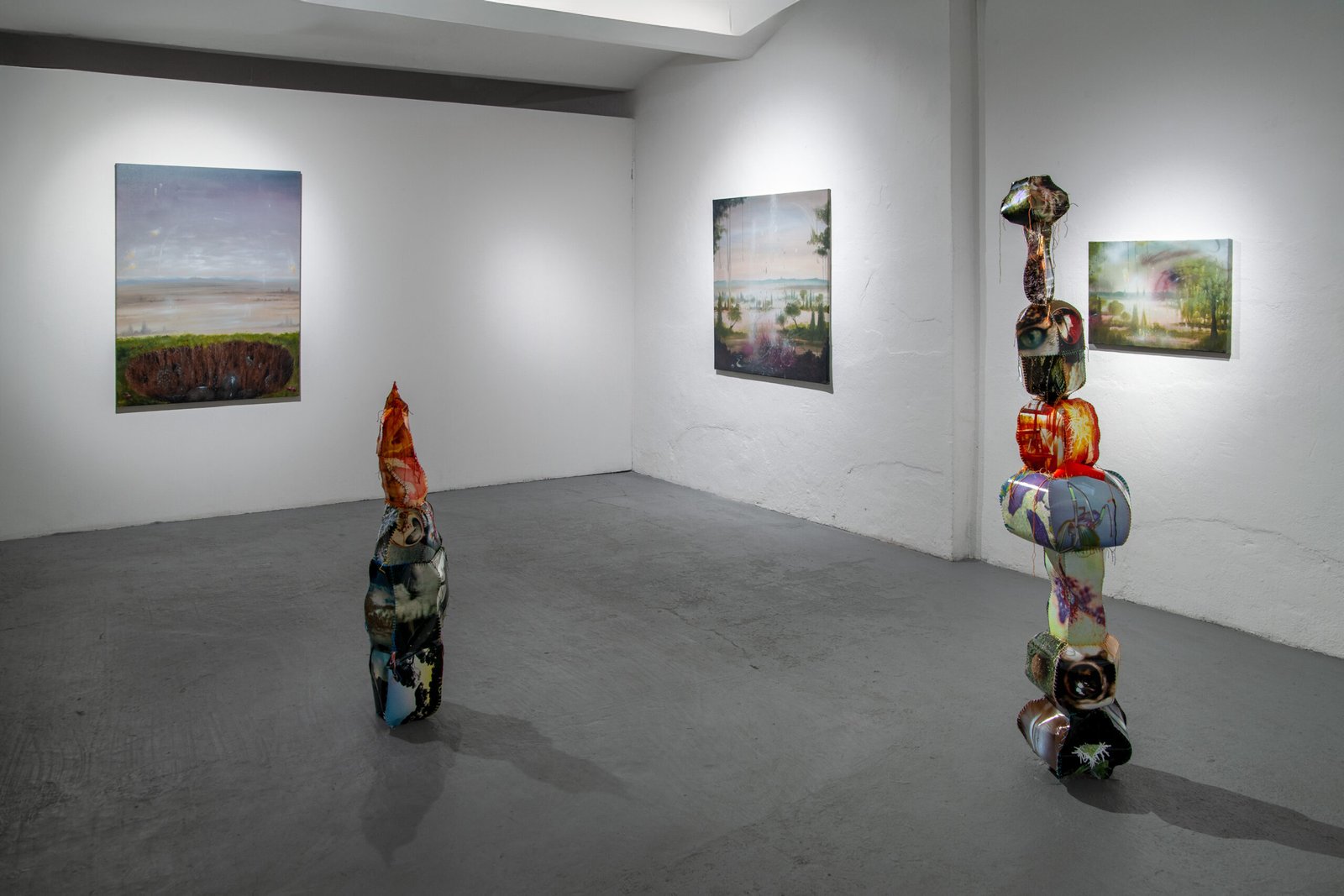
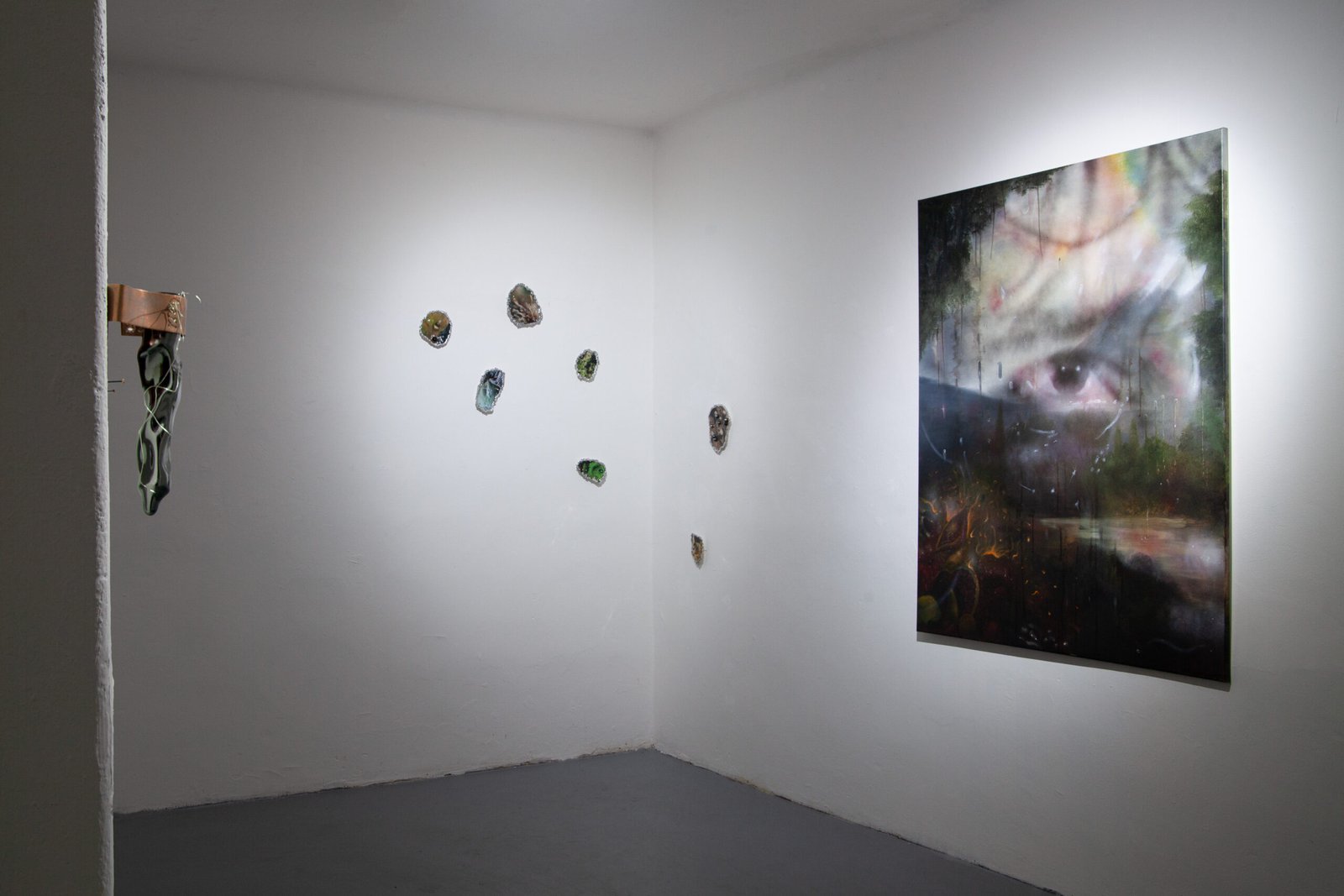
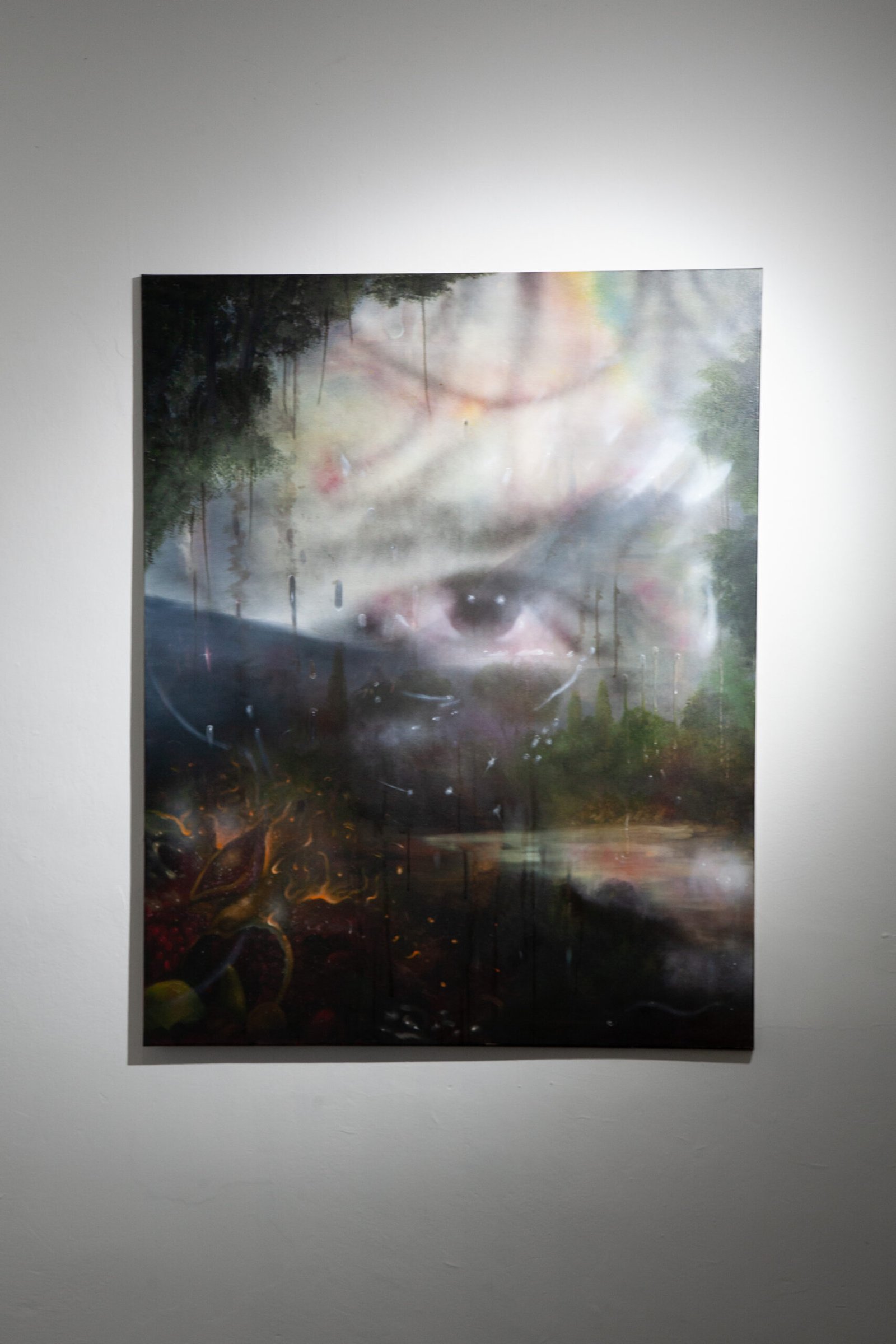
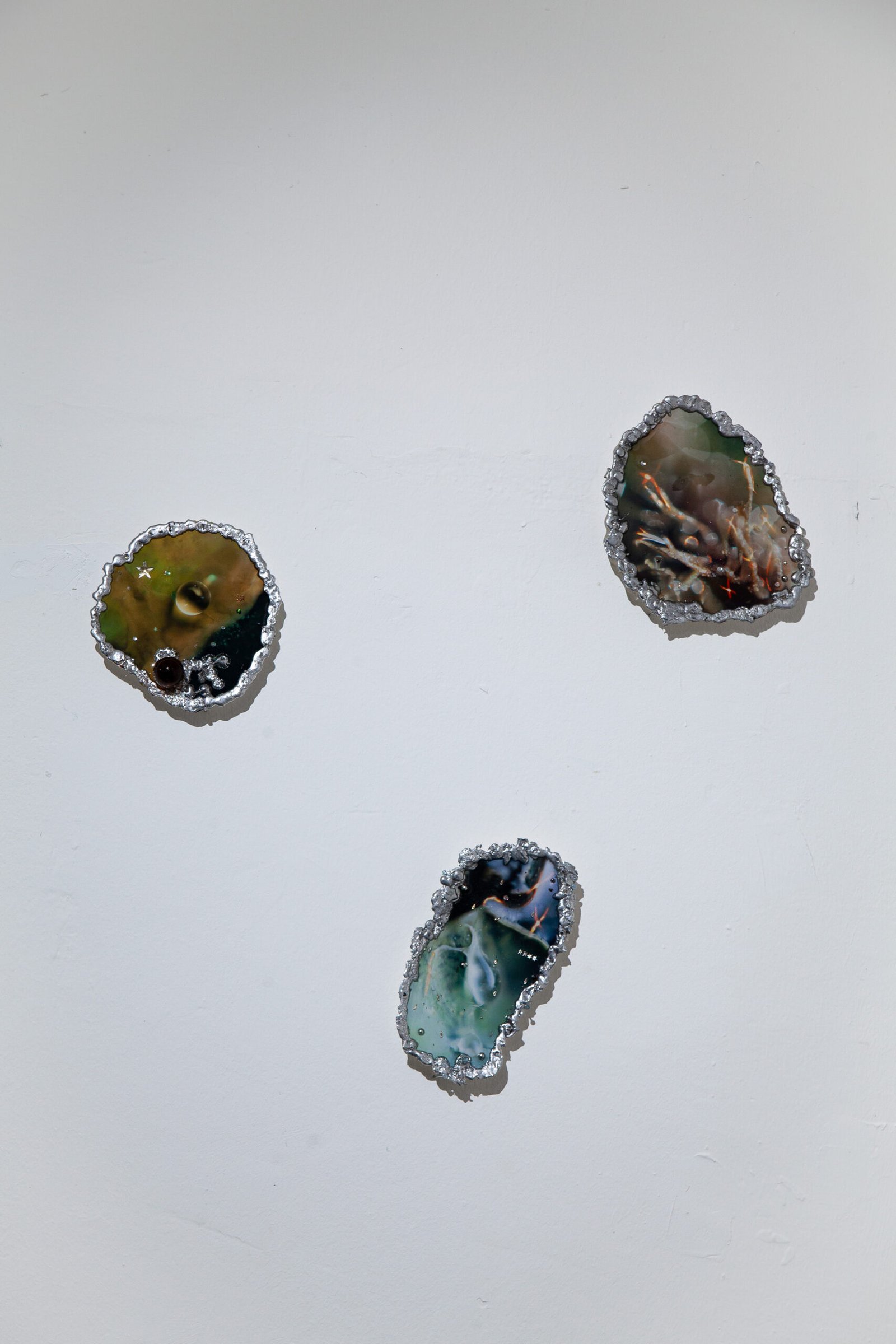
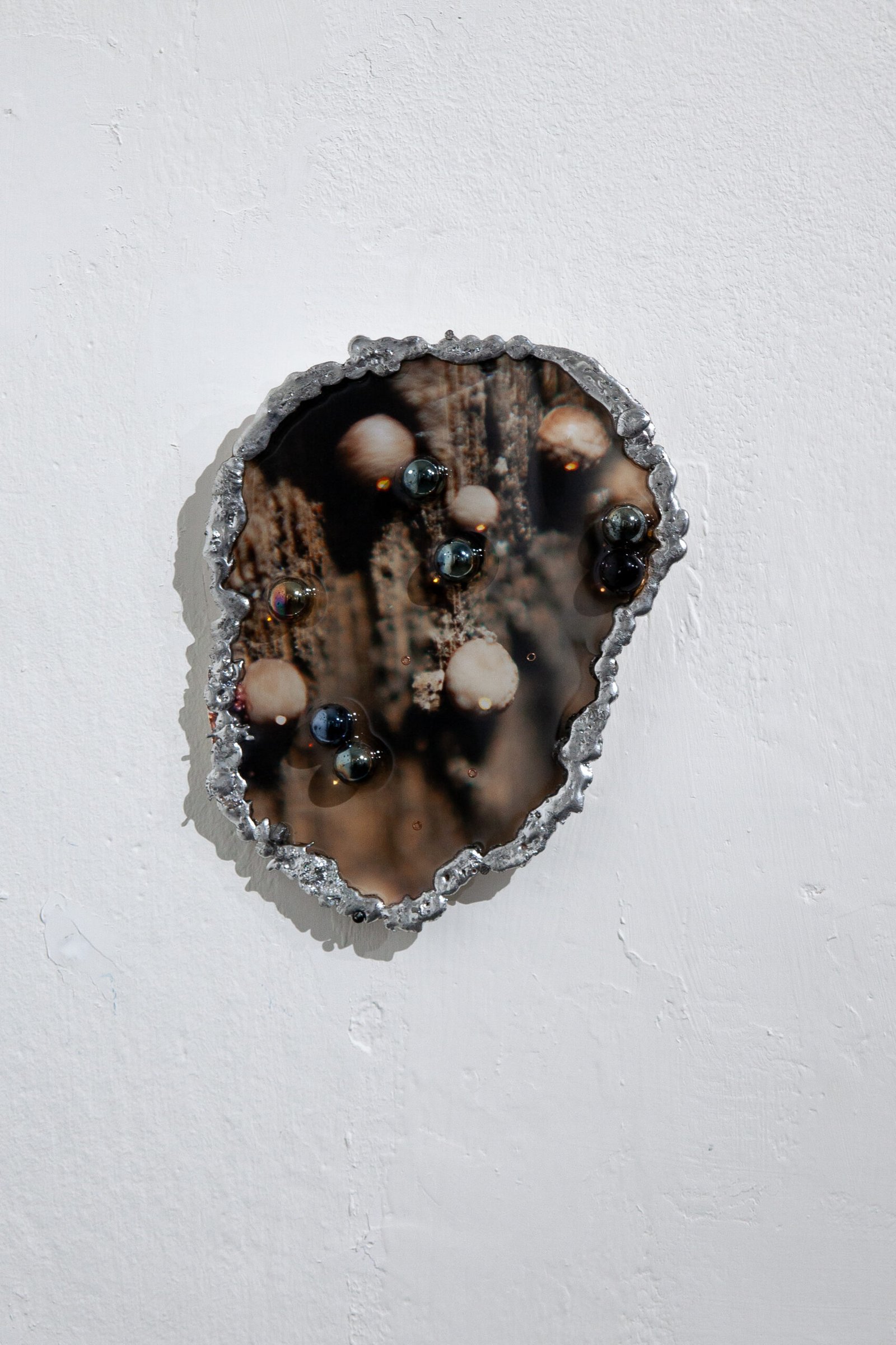

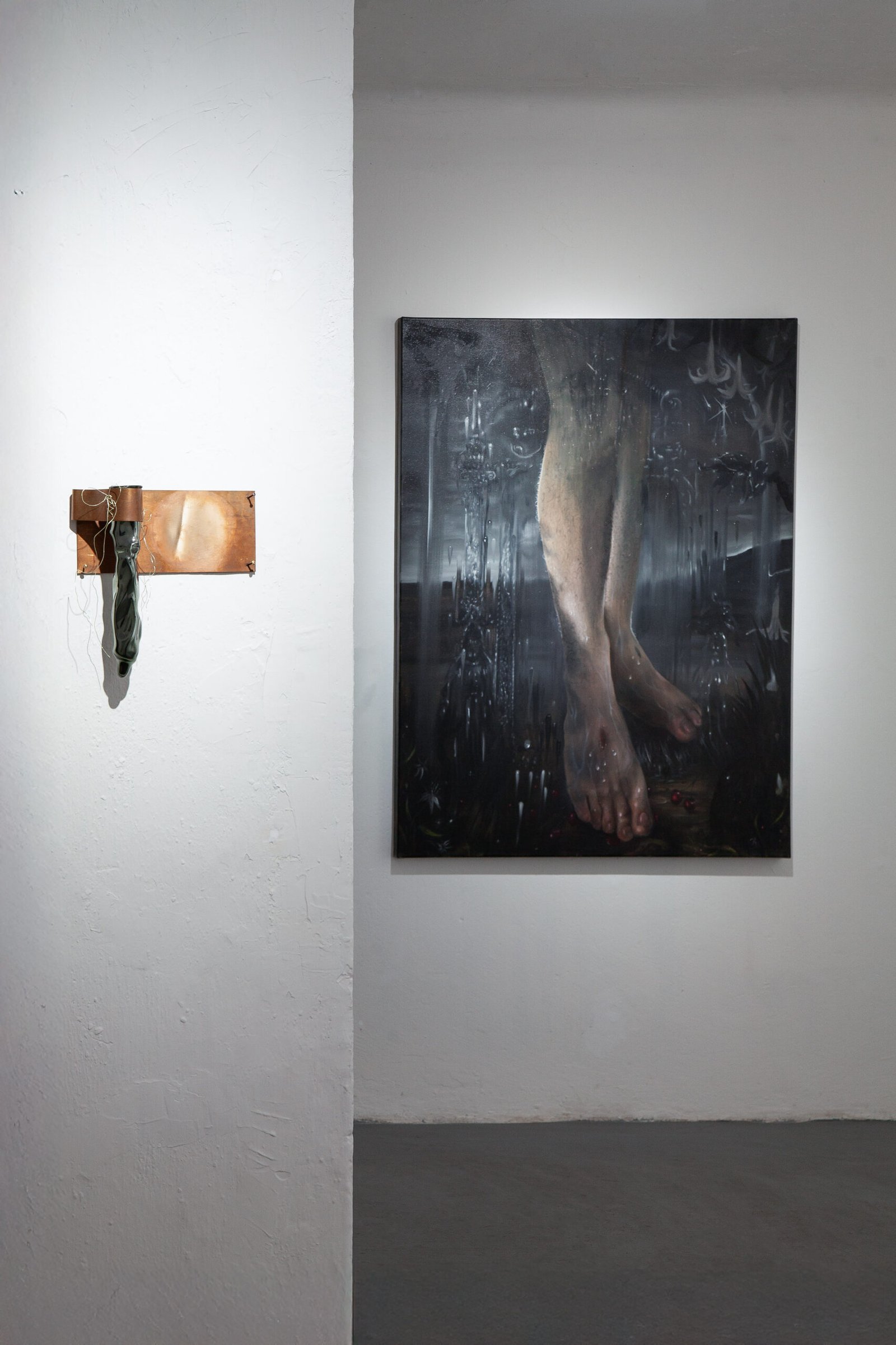
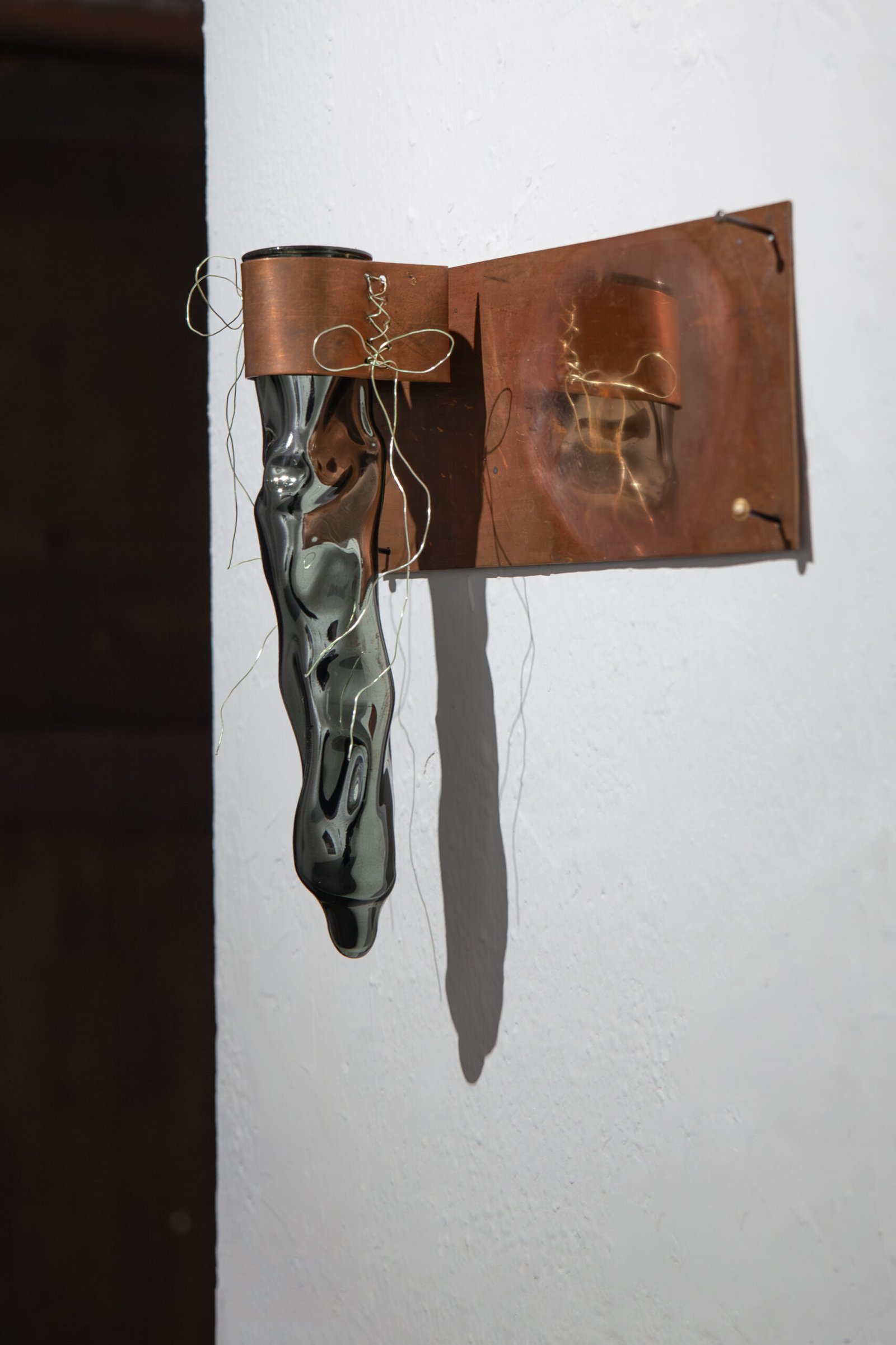
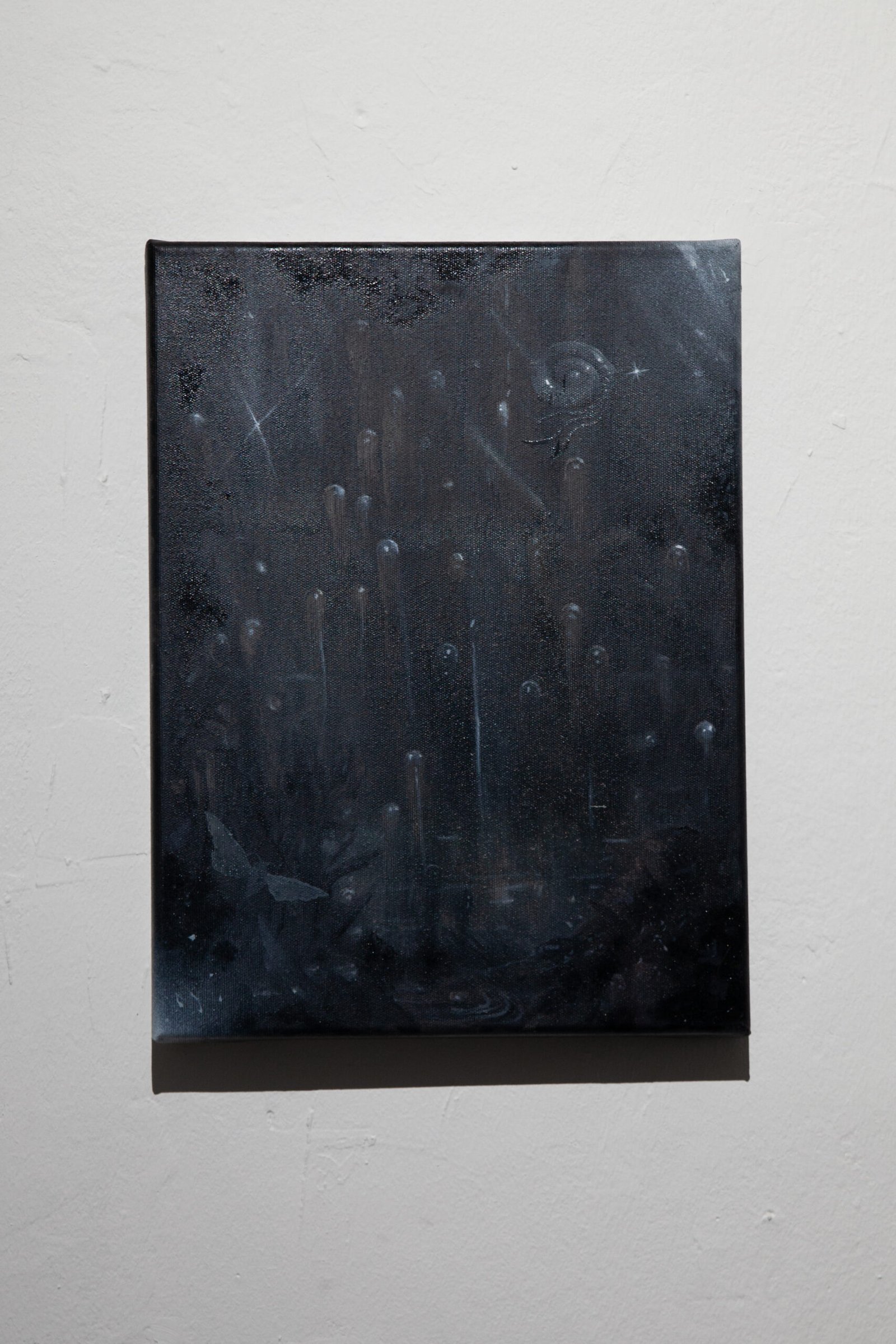
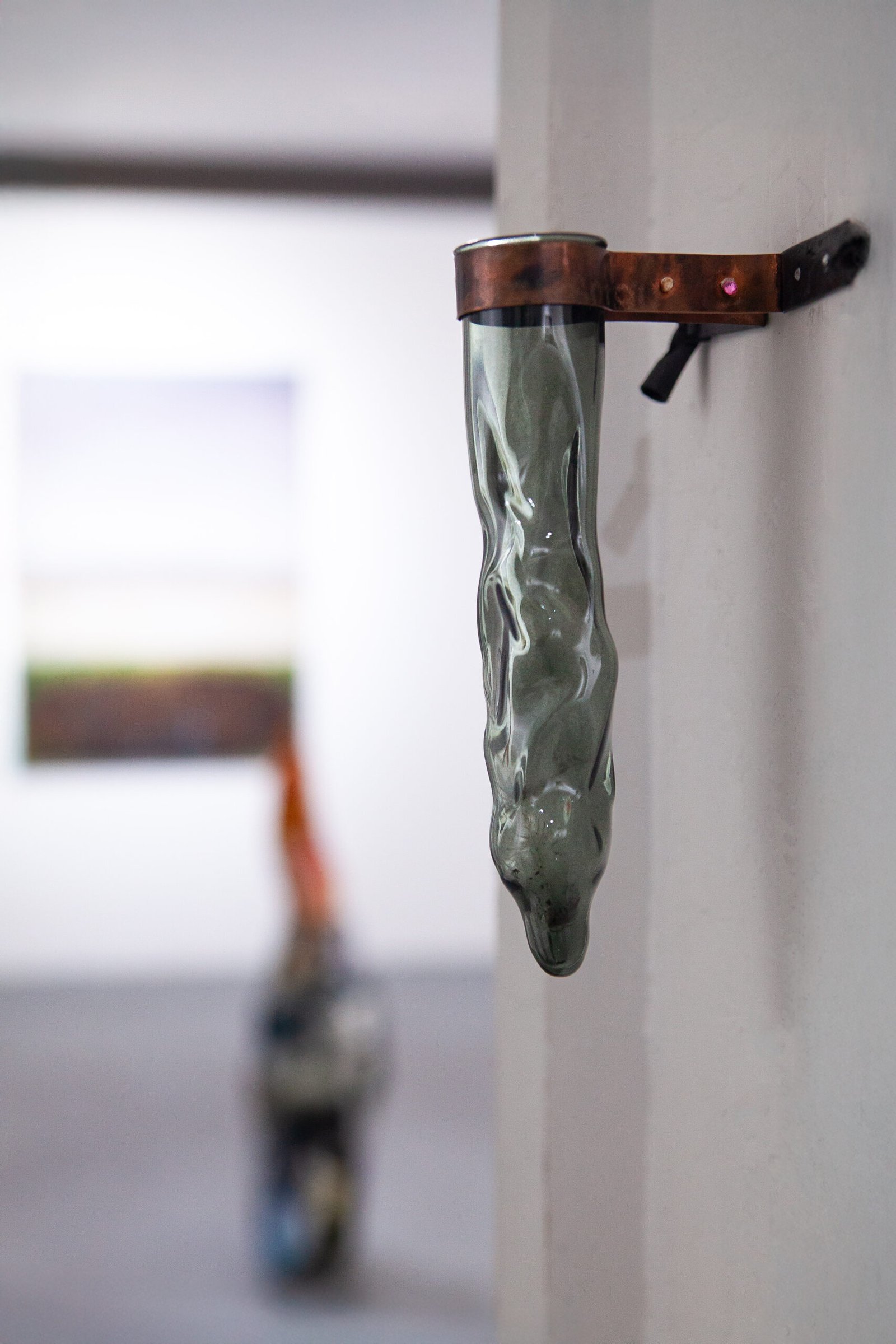
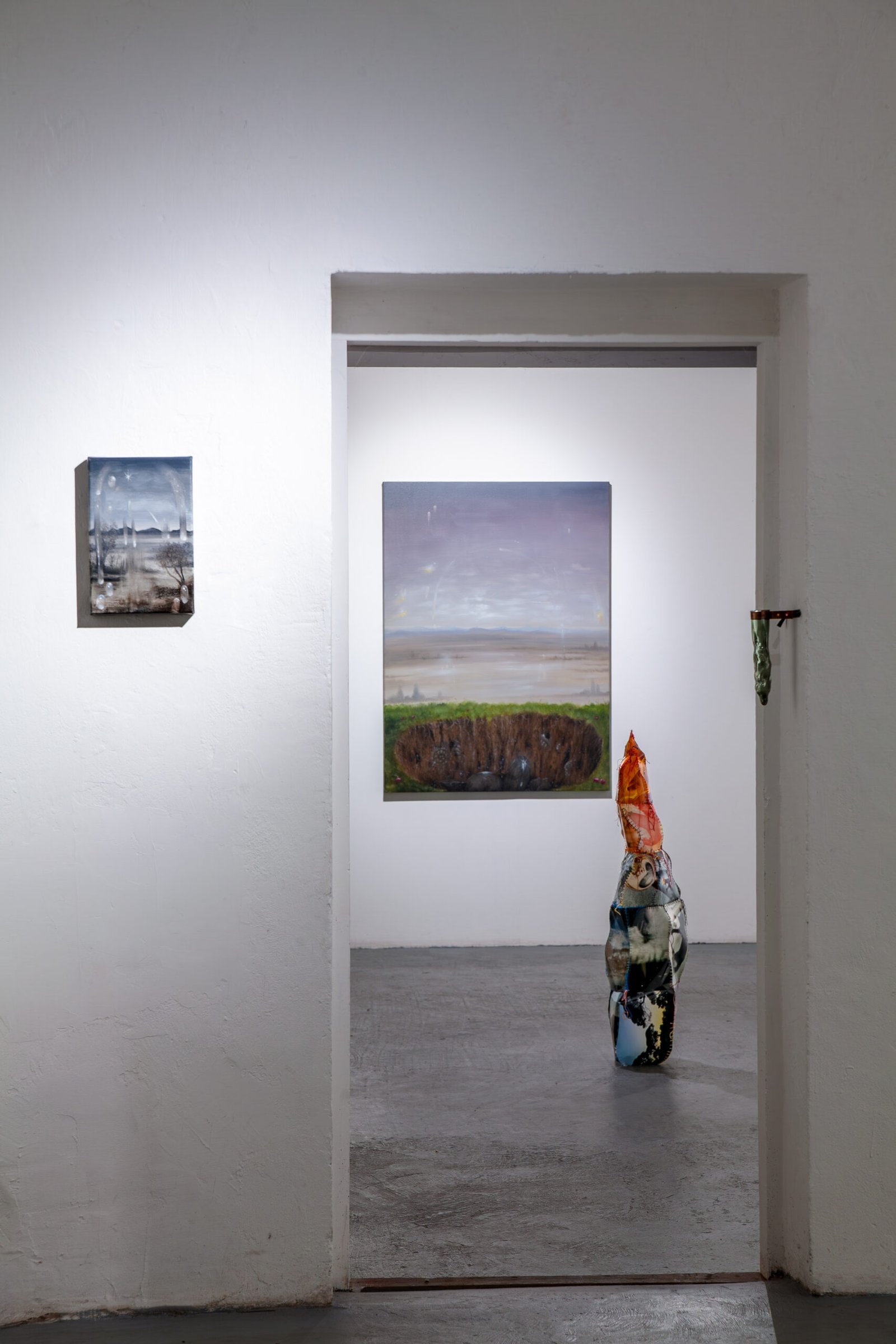
The Skin of Memory exhibition outlines the fragile boundary between surface and carnality, where the image itself reveals and conceals what lies beneath. Here, the surface is not just an imaginary skin that can be pierced, but an unstable plane where desire, memory, and the impermanence of the body meet. Anna-Marie Berdychová’s photographs glide across its smooth surface, which she then transforms into sculptural objects, and Paweł Sobczak’s evocative paintings play with the tension between traditional perspective depth and flattening. Together, their works offer speculation on how emotional experiences can distort the reconstruction of the past and transform the perception of one’s own identity.
So what happens when we let ourselves be guided by the delicate web of sensations and look beneath the surface of things? The exhibition shows us a way to think about the intensity of affective flow that shapes and fulfills life. Reflecting on affects does not mean imprisoning them in a goose march of words, but rather letting ourselves be carried away by the flow of emotions in art, which condition the construction of narratives and at the same time touch us on a personal and political level. As theorist Sarah Ahmed writes, emotions “stick” and bind us to objects, people, and stories, shaping the contours of what we remember and who we become. Through these bonds, desire guides us and gives direction to our movement in the world.
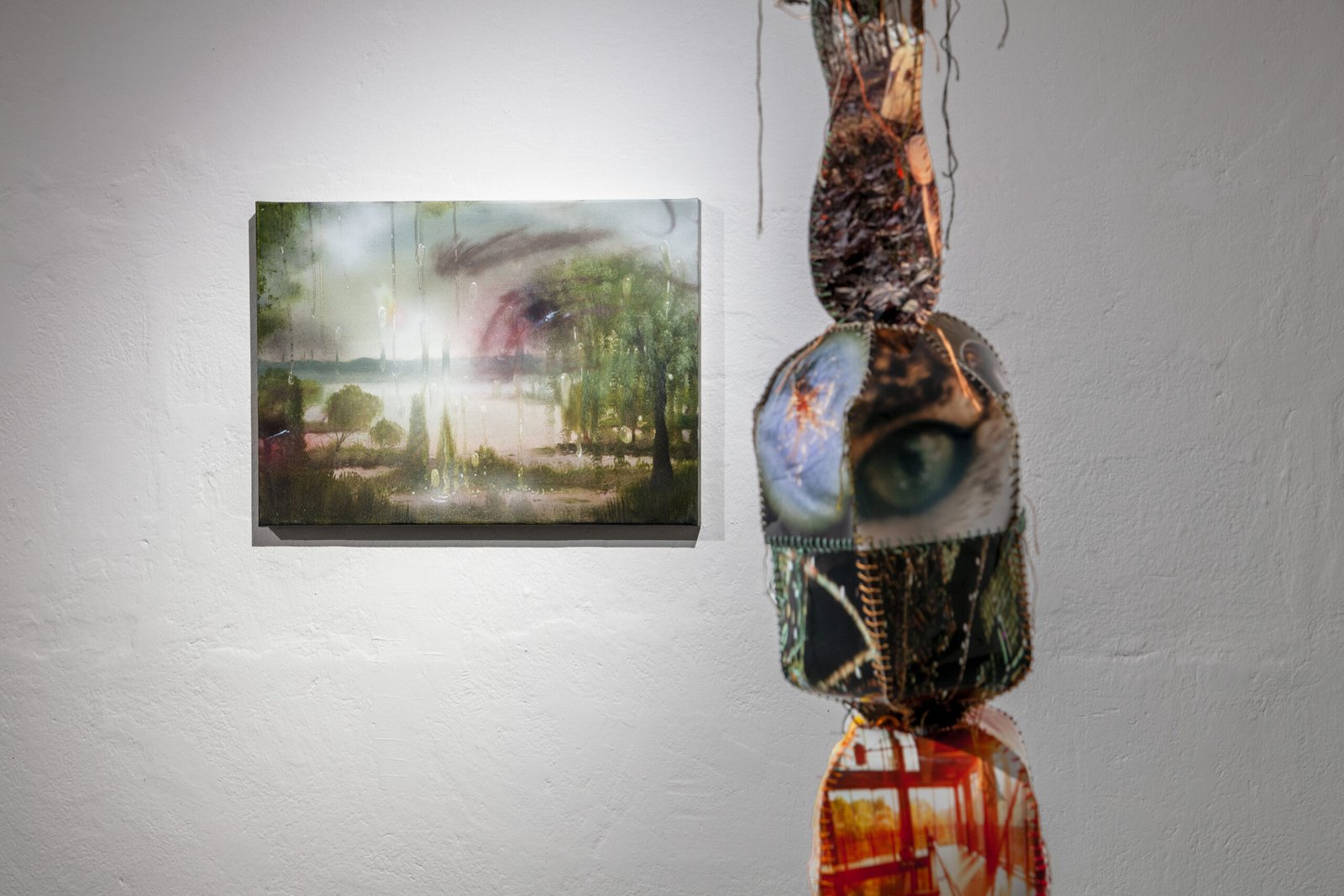
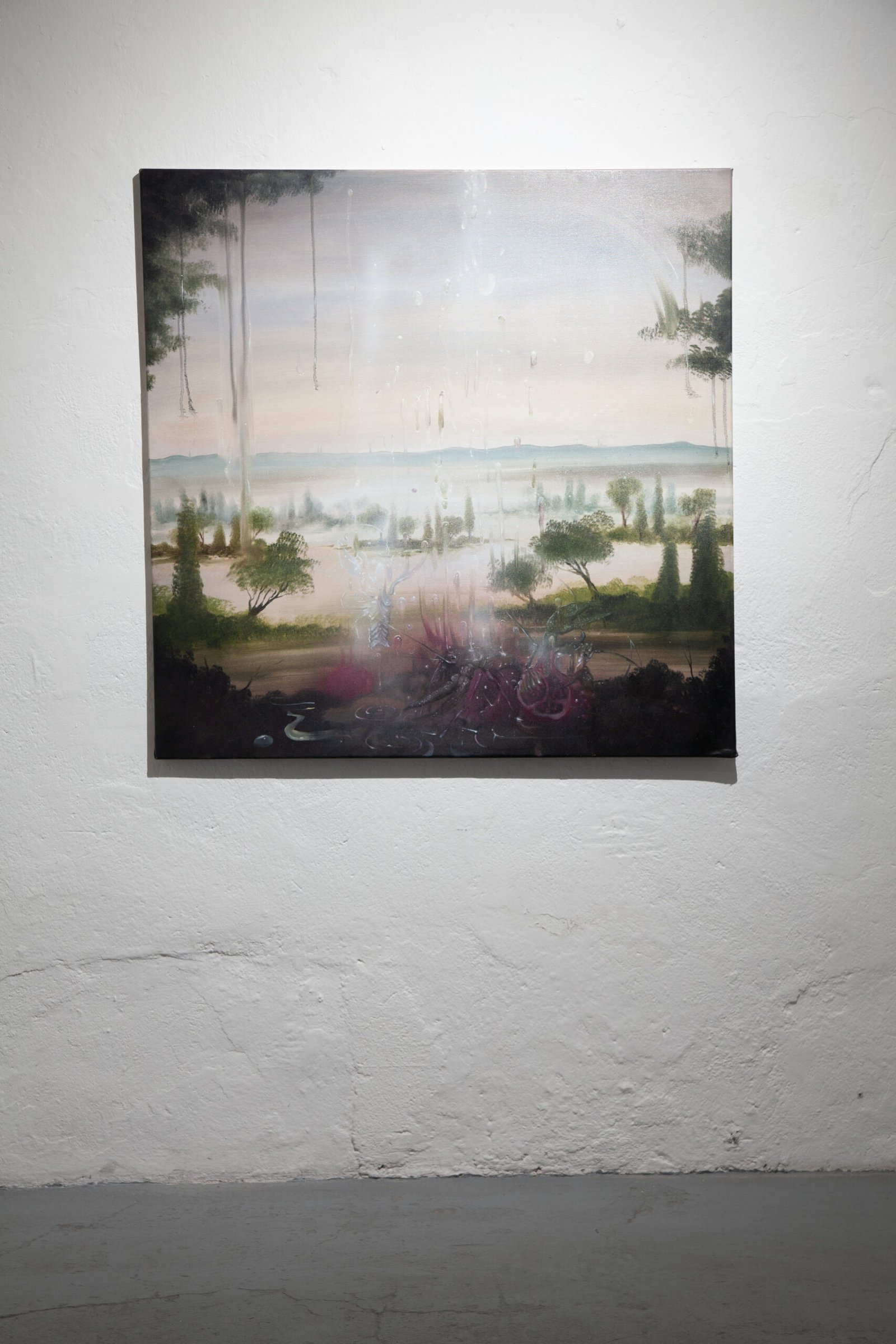
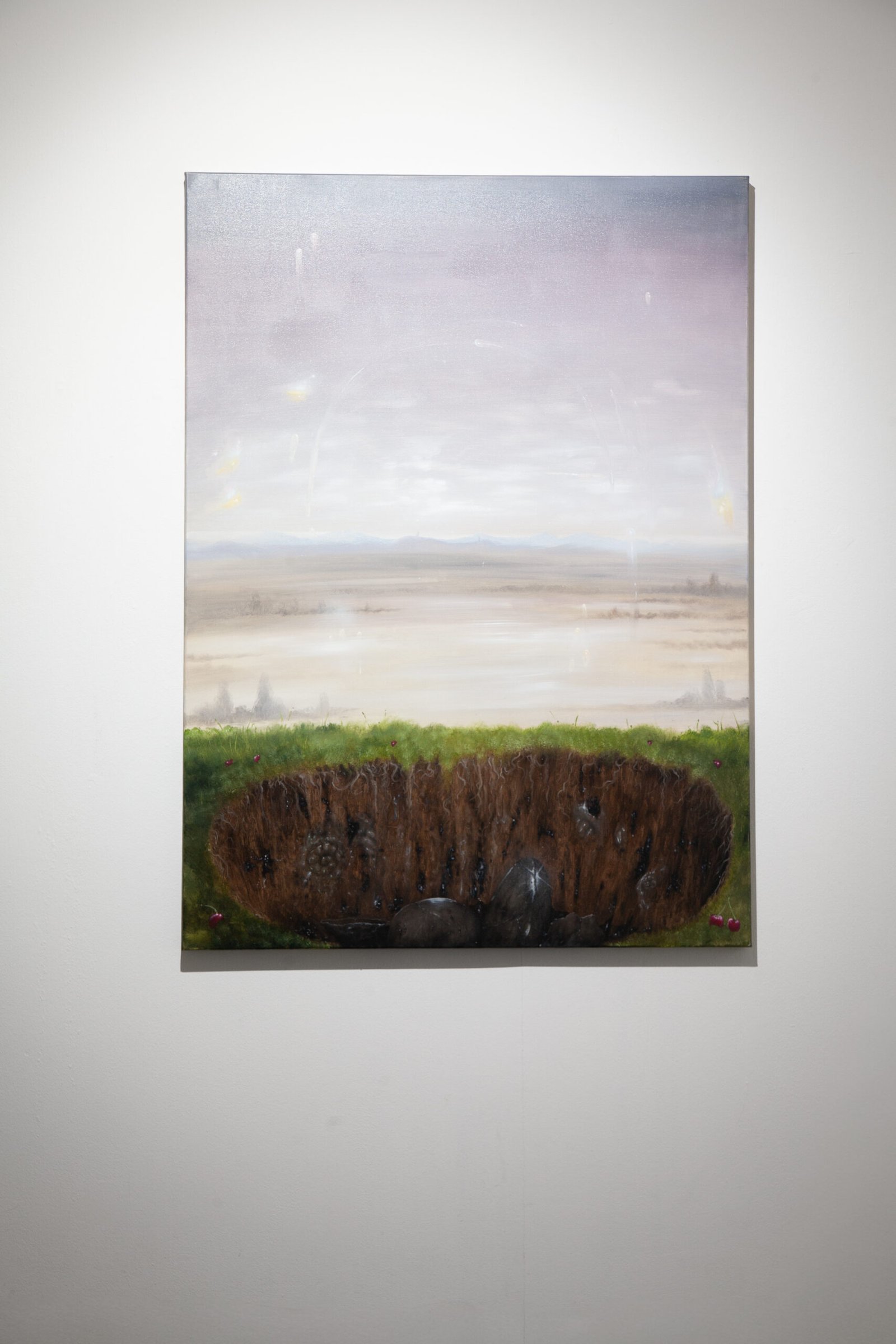
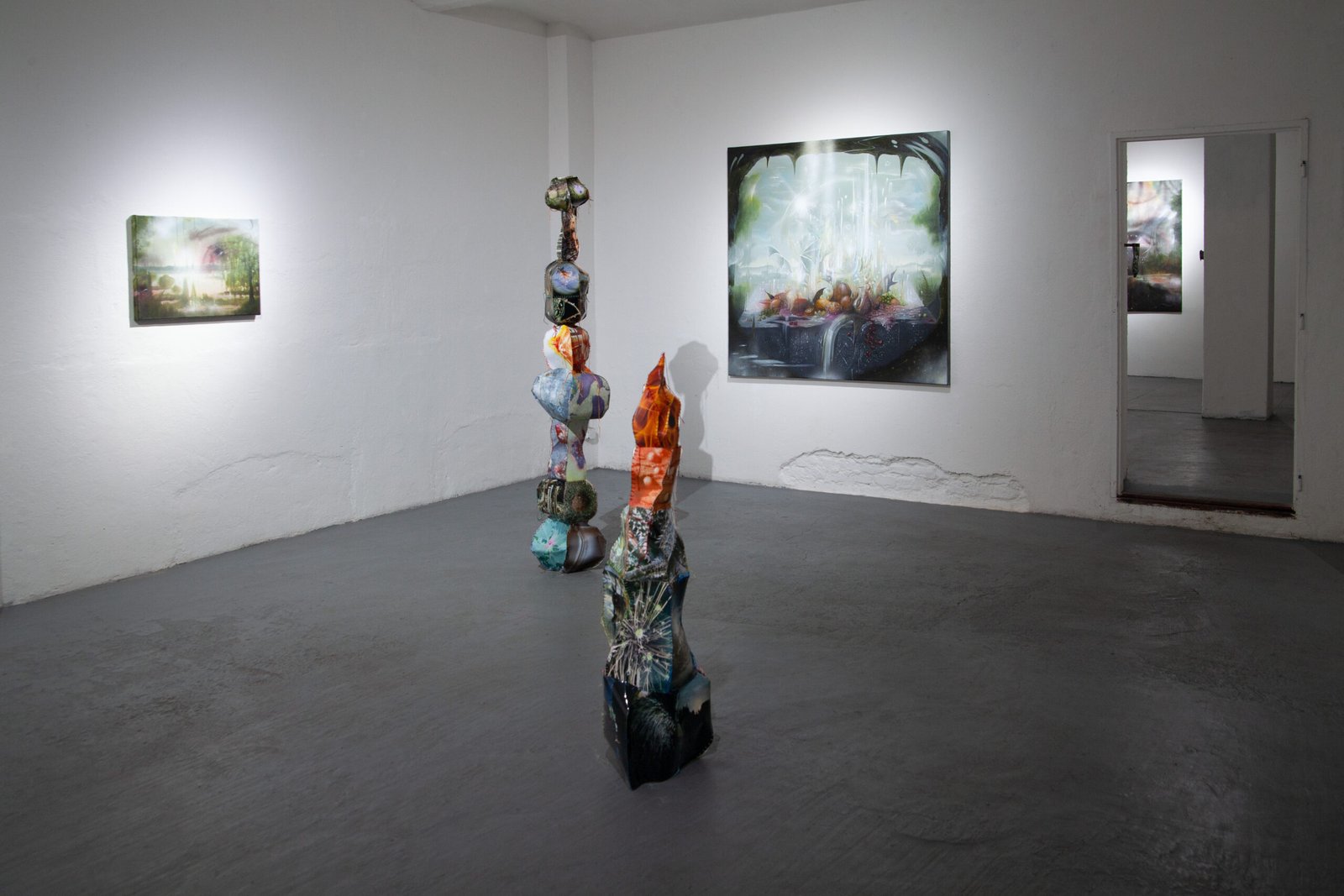
Droplets or tears, flowing upwards in defiance of gravity in places on Paweł Sobczak’s paintings, suggest, according to the author, a movement against the flow of time, which also forms the thematic basis of his paintings. In the spirit of L. B. Alberti, he builds so-called “windows to the world,” glimpses into Renaissance landscapes, complemented by a series of altars collapsing under the weight of pomegranates, cherries, and gradually rotting tropical fruit. In doing so, he not only returns to the popular memento mori motif from the Dutch still life tradition, but also personifies something deeper that touches on the affective field spread between words and the body, the individual and collective memory. He reverses the derogatory adjective “fruity” and appropriates it in order to redirect queer desire, which he also infects with traditional Christian iconography (e.g., in the paintings Trampling Cherry Blossoms and the Disappearing Retable, 2025, and Rainbow Boy, 2024) to emphasize the fragility of non-heteronormative sensibility within the conservative political atmosphere of contemporary Poland.
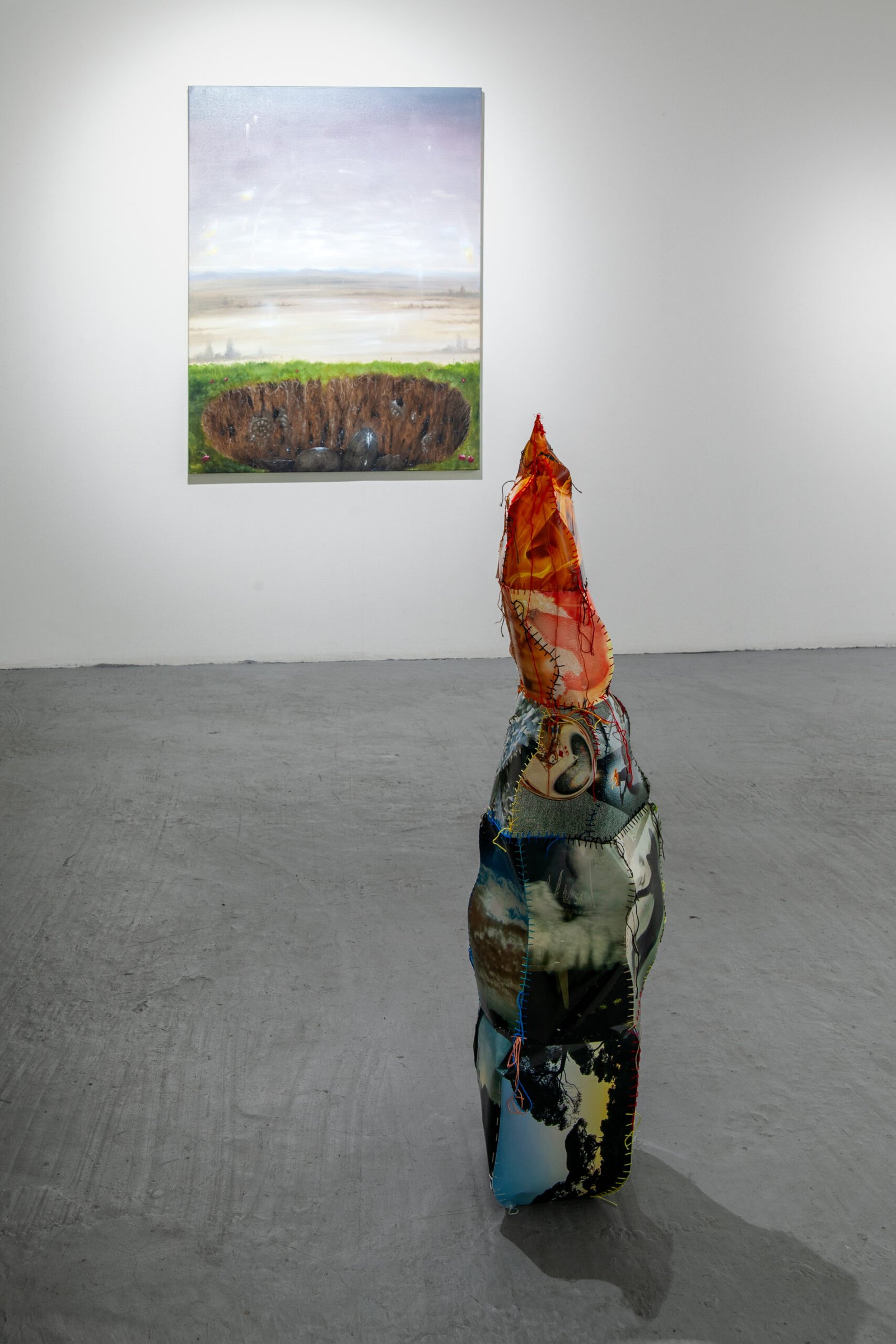
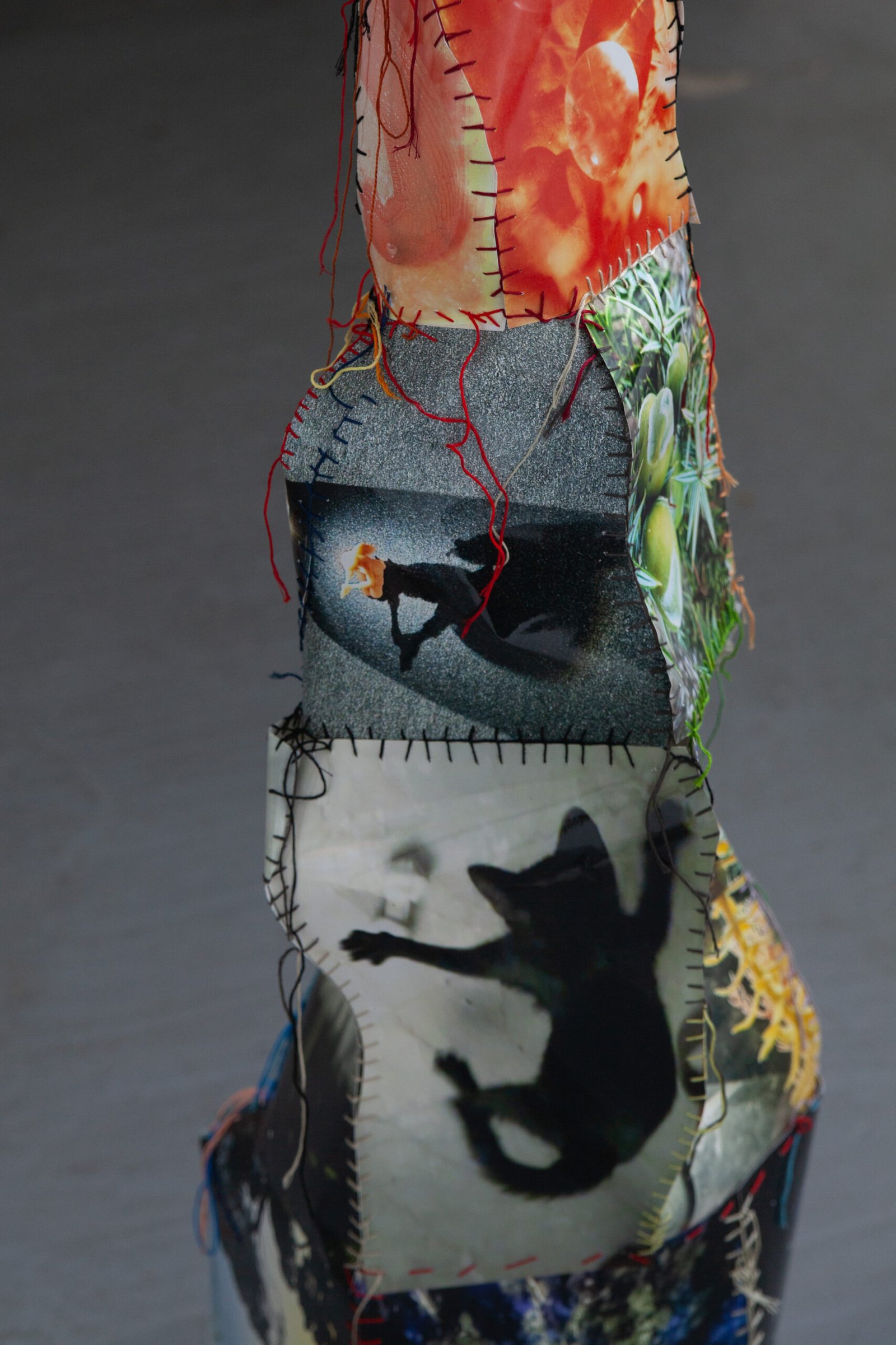
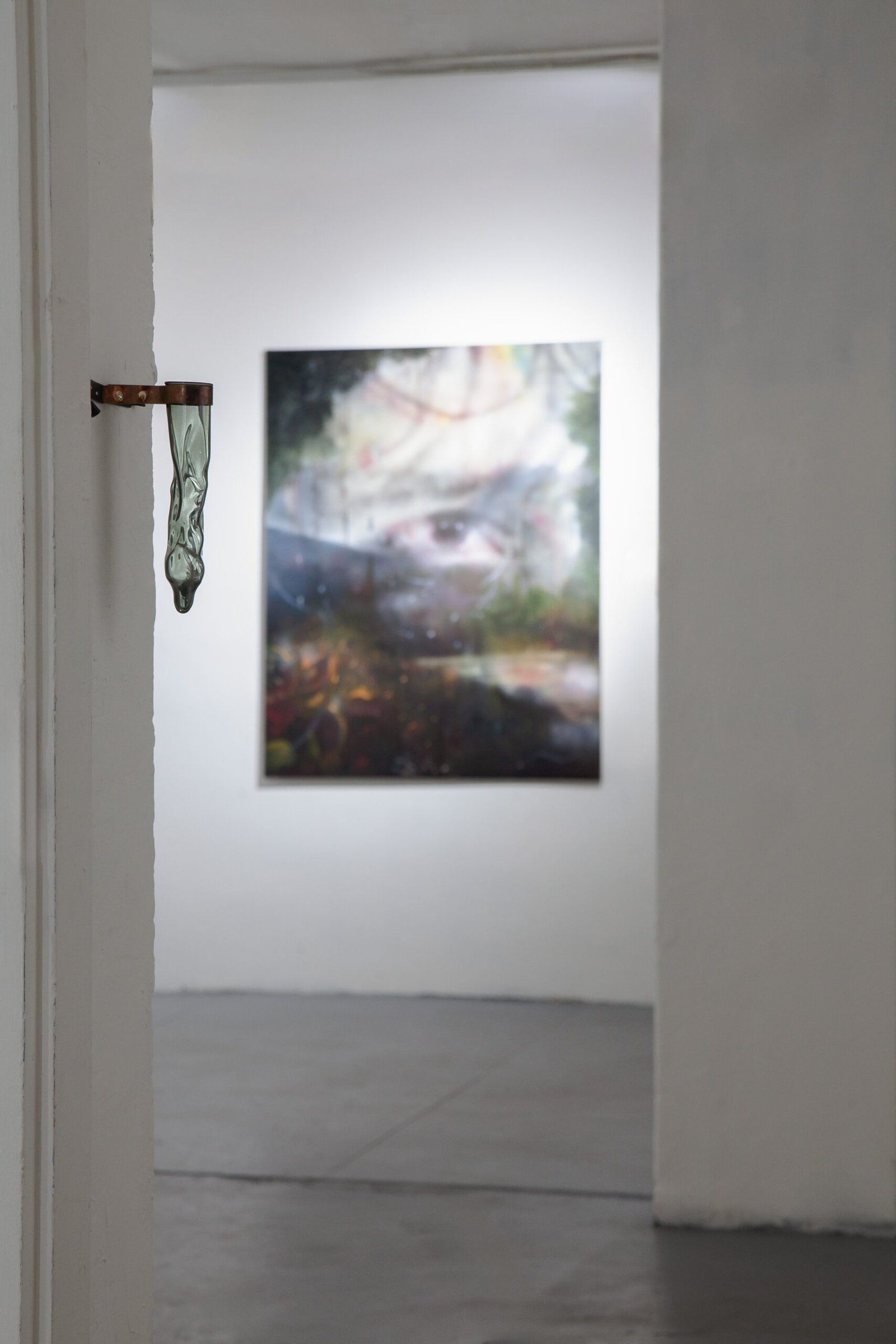
Images of transience or the threat of the collapse of existing structures also appear in Anna-Marie Berdychová’s series of wall objects, collectively titled Hardboil (2023–2025), in which she turns to the techniques of (posthumous) Victorian photography—records of the decomposition of organic matter in nature, swamps, and decay are sealed together with found objects in small relief boxes of frozen time in a process of chemical degradation. The subtle reflections of objects, which merely chain a delicate shimmer on the horizon of Sobczak’s paintings, point to the erotic aspect of subliminal desire that navigates the flow of intensities within the affective economy. This determines which memories and associated emotions are mobilized and become more dominant, while others are marginalized, influencing the way we construct our collective and, subsequently, our own identity. This is also embodied by a pair of sculptures entitled Tower (2025), which draw on the tradition of DIY souvenir boxes made from stapled postcards. Marginal diary memories and flashbacks from everyday life, woven into organic totems, open an imaginary gateway to a world in which we are constantly struggling for memory and for who constructs history.