


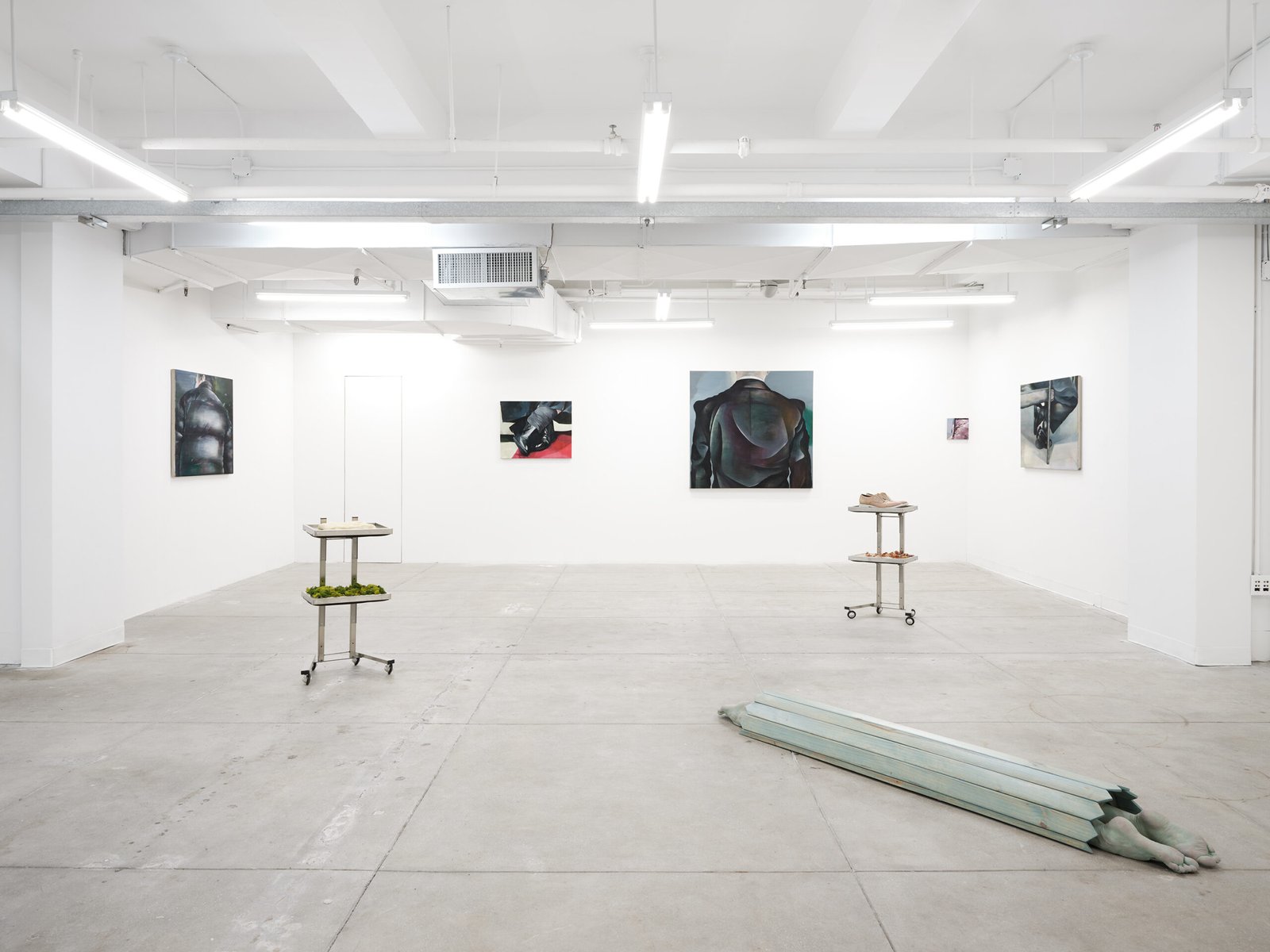
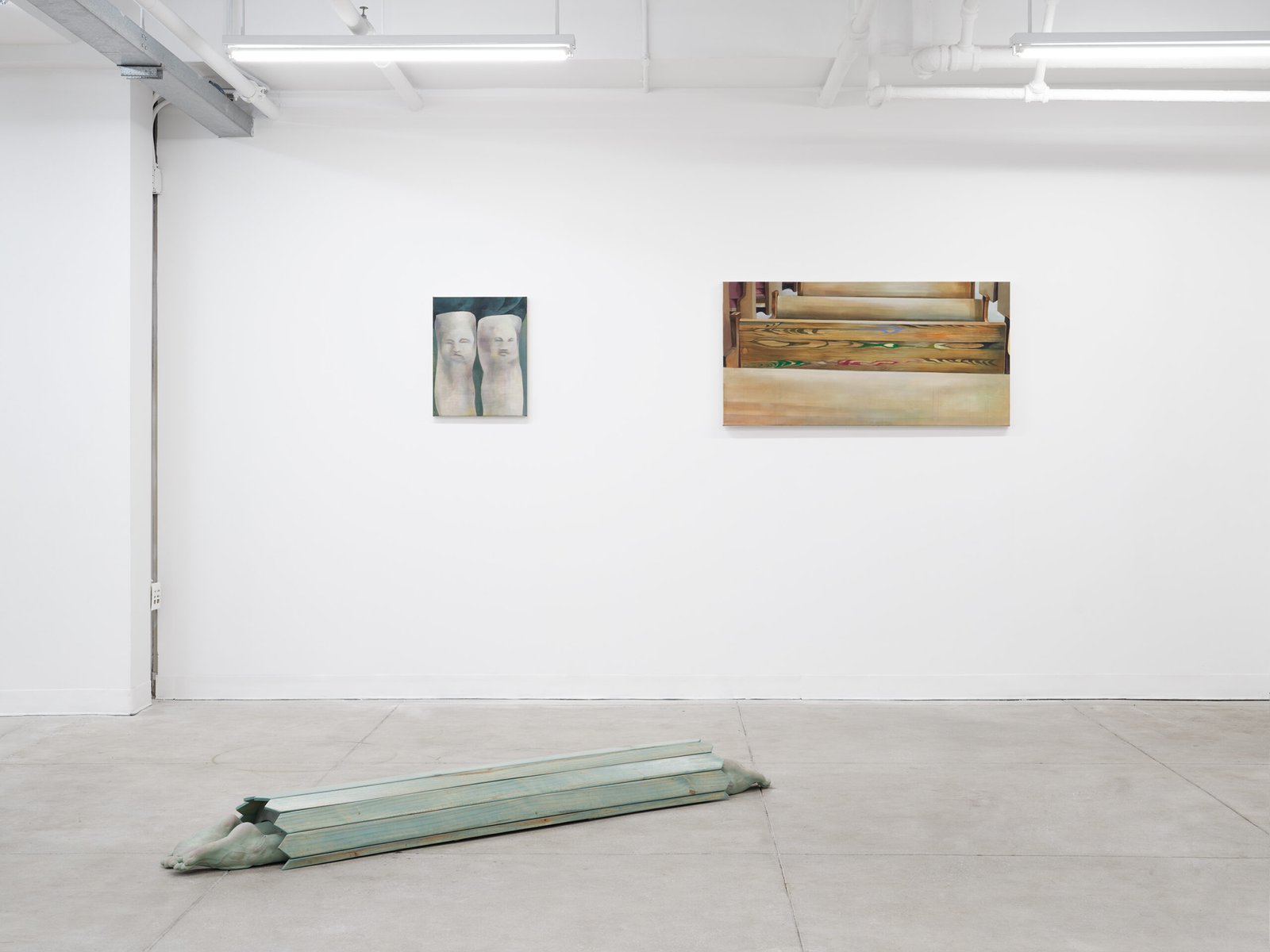
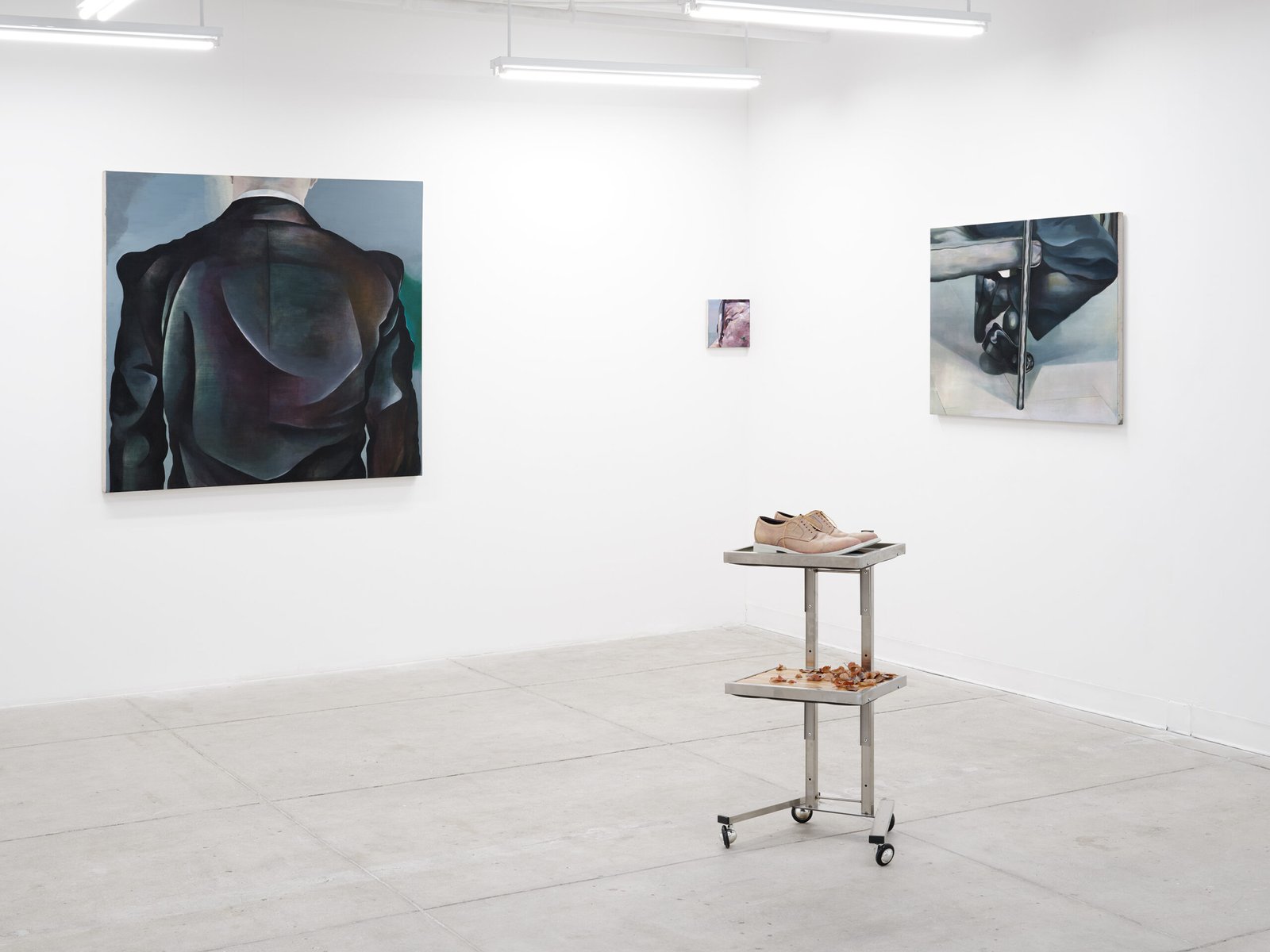
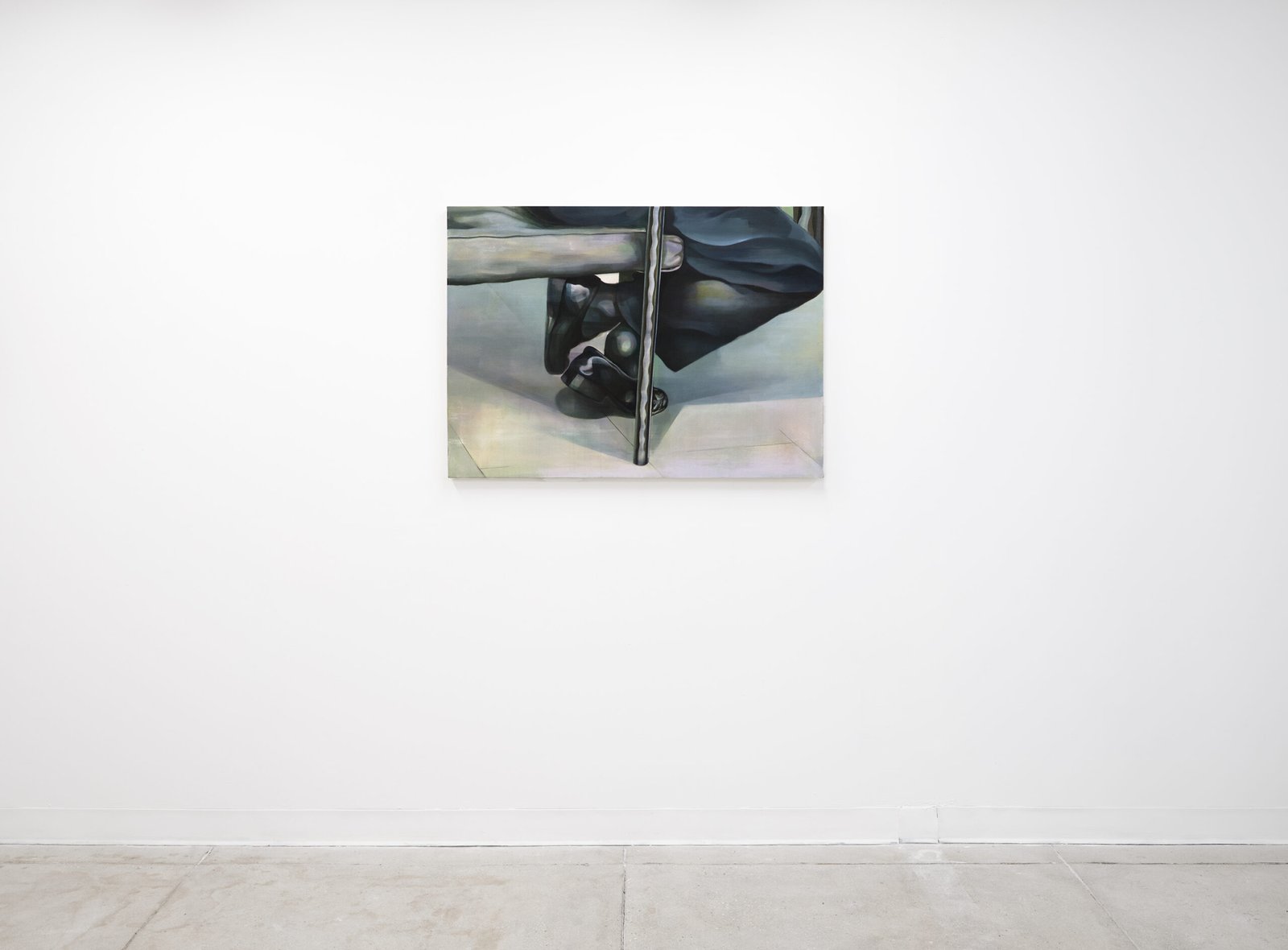
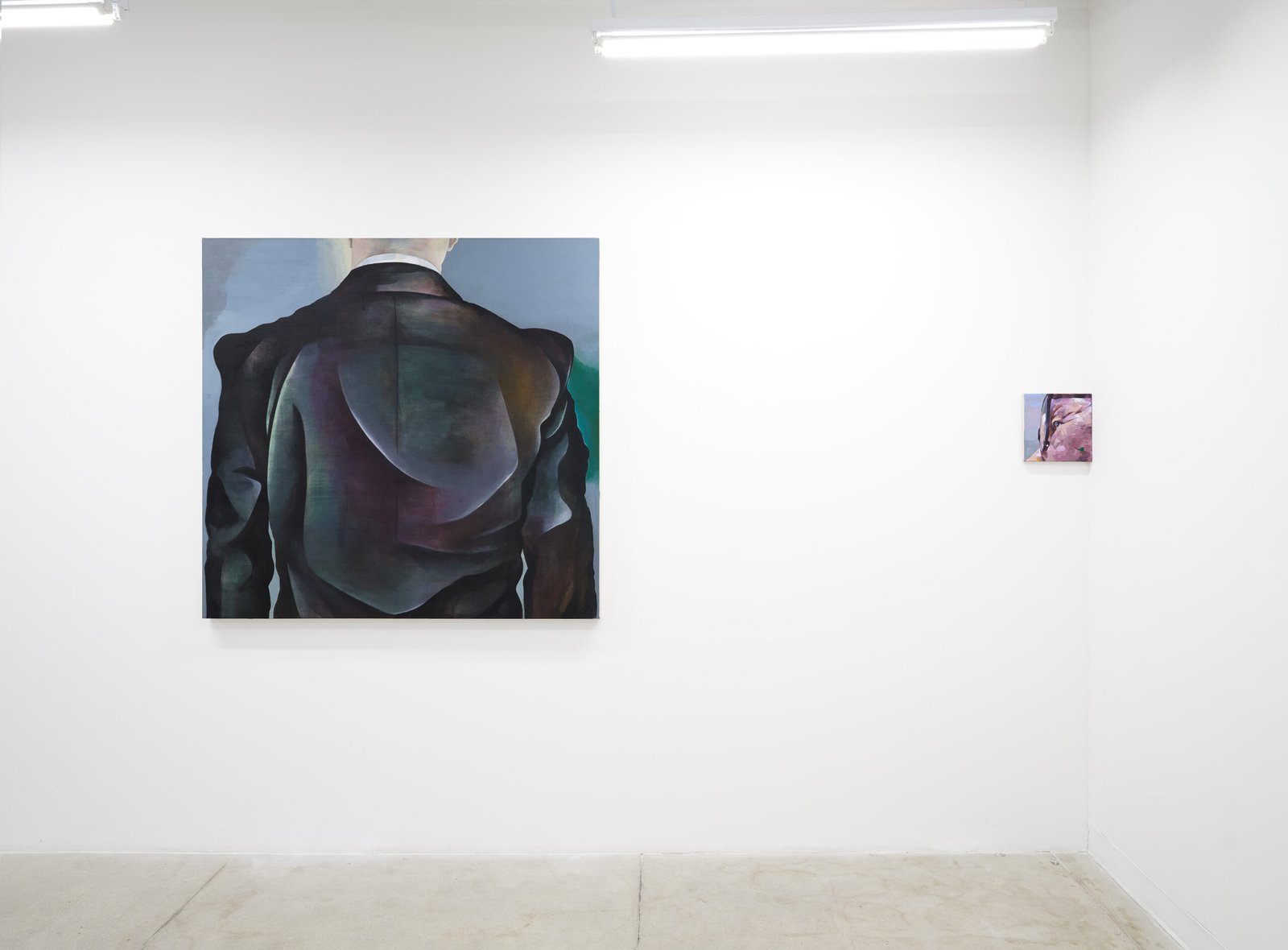
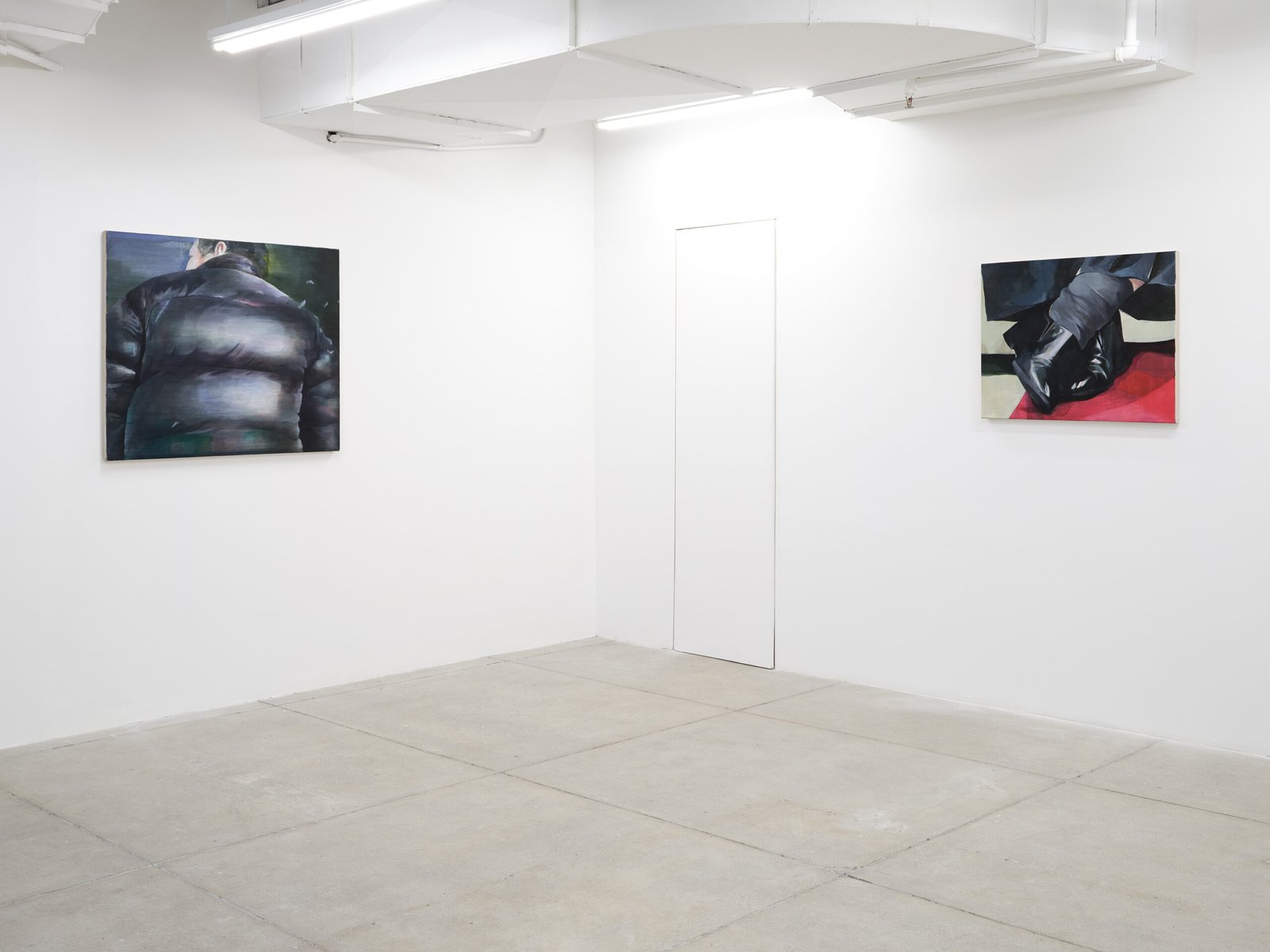
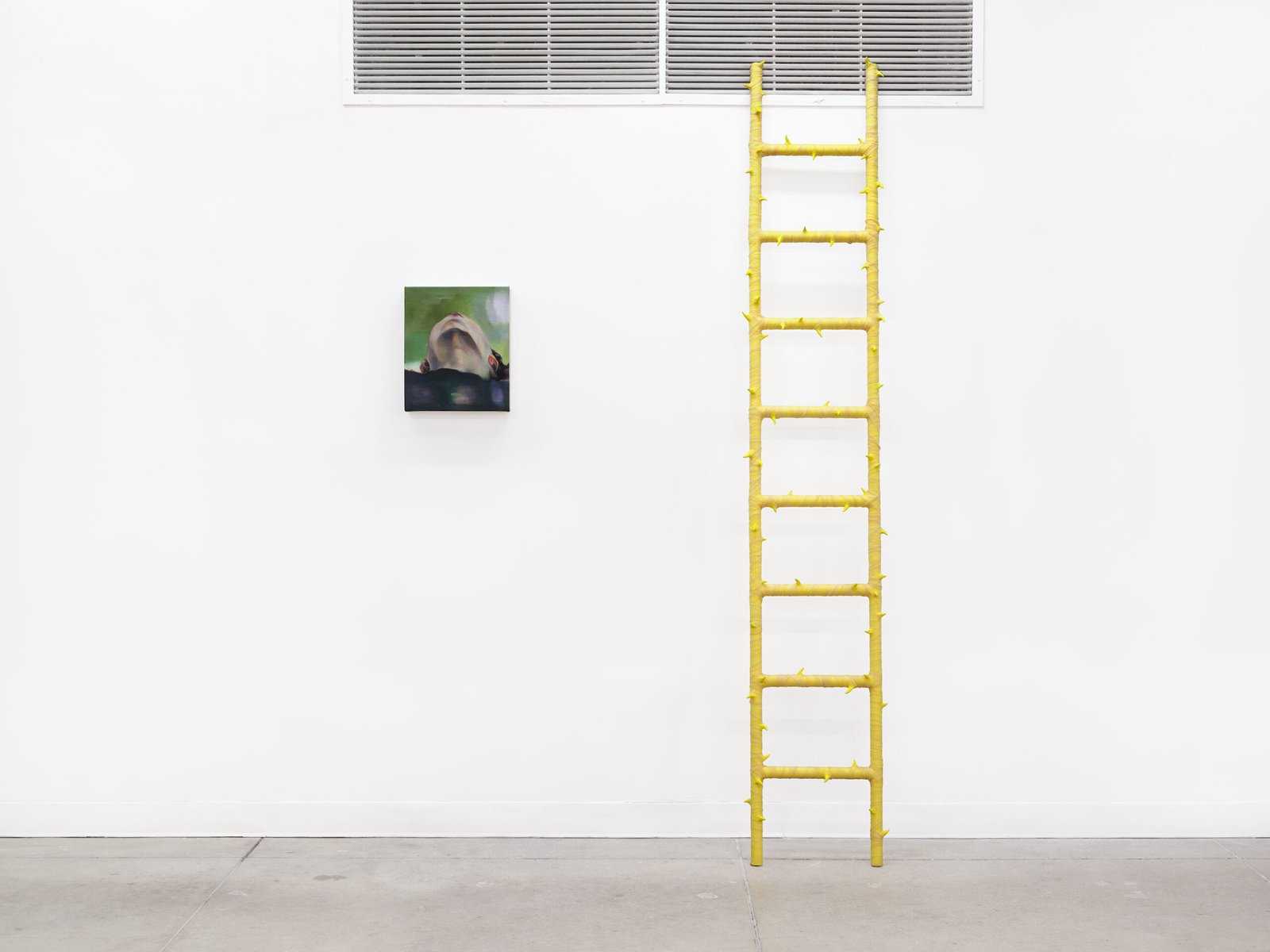
In both In June Park’s paintings and Andrius Alvarez-Backus’s sculptures, fragments of daily life appear out of context, evoking both recognition and uncertainty. Body parts and household objects become self-contained artifacts–details that might otherwise be lost amid the noise of overstimulation. In retraining our focus onto an unseen whole, the specificity of which ultimately gives way to indeterminacy, the artists reenact an increasingly familiar tension: the pull between the human desire for intimacy and a cultural drift toward impermanence.
If the blend of realism and abstraction in “Ordinary Permanence” captures a certain contemporary psychology, it is one that Park and Alvarez-Backus know intimately. As students of Columbia’s MFA program, from which they both graduated earlier this year, the uncertainty that marks every young artist’s life was intensified by an atmosphere of political unrest and institutional upheaval.
If their practices are any indication, they chose to take inspiration from past generations understated social commentary rather than the overwhelming microcosm of the present. Alvarez-Backus’s minimalism and modest materials recall queer, multidisciplinary artists such as Robert Gober, Félix González-Torres, and Harmony Hammond. Park, meanwhile, cites a range of postwar influences–from the abstraction of Gerhard Richter to the cool formalism of the Pictures Generation–bridging intense gestures with photographic detachment.
Though the works feel urgent and contemporary, traces of autobiography subtly emerge. Alvarez-Backus, raised in a family of doctors and nurses, reimagines the theme of caregiving through found objects and generative processes like casting and woodworking. His “failed” forms–a wax shirt, cadaver-like dress shoes–strip away functionality to reveal new emotional and aesthetic dimensions. Each object reasserts itself as something organic yet invented.
Park’s paintings, by contrast, render fragments of urban life in prismatic close-up. Having moved from Incheon, South Korea, to Santiago, Chile, at age nine–where his father worked in a shoe factory–Park infuses cosmopolitan uniformity with warm-blooded detail. Though shoes, coats, and eyewear recur as motifs, he resists the notion of autobiography. Instead, filtered through radiant shifts of light and color, Park’s cropped compositions elevate the mundane to the near-celestial.
Placed alongside Alvarez-Backus’s embodied sculptures, Park’s paintings extend an invitation to intimacy. The dialogue between the two bodies of work surfaced organically. In preparing for the exhibition on an accelerated timeline, echoes and cross-references emerged in real time: Alvarez-Backus unearthed a set of medical trays after seeing the metallic surfaces in Park’s studio, while Park’s painting of a church pew mirrored the wood surfaces in Alvarez-Backus’s recent pieces.
Their duo show thus becomes an experiment in shared sensibility–perhaps a breaking-out of sensorial isolation. For viewers accustomed to the constant pulse of overstimulation, the quiet charge of visual intimacy these works offer may feel revelatory. Despite belonging to a generation often defined by impermanence and individualism, Park and Alvarez-Backus remind us that even fleeting connections leave a lasting impression.
– Samuel Anderson