


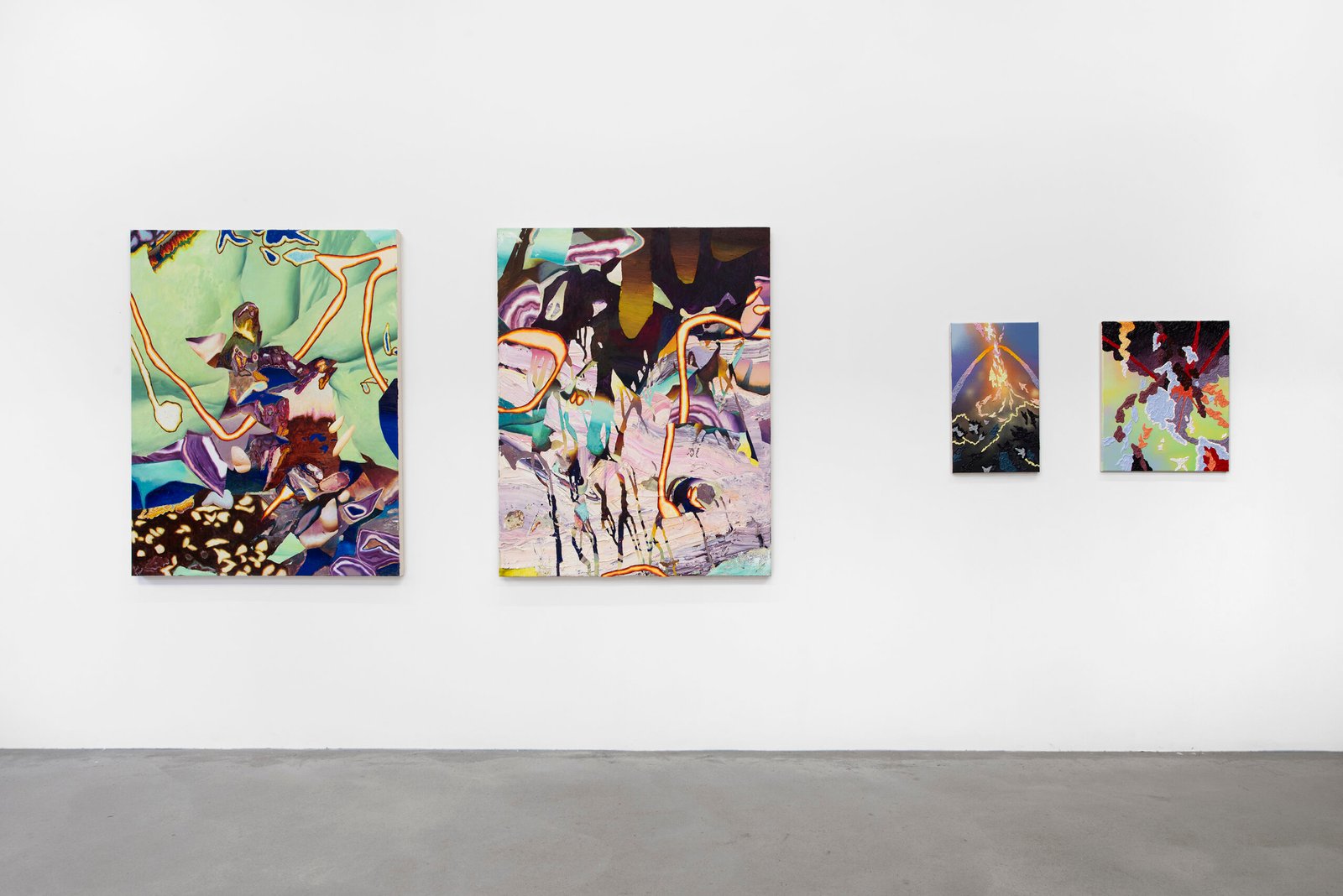
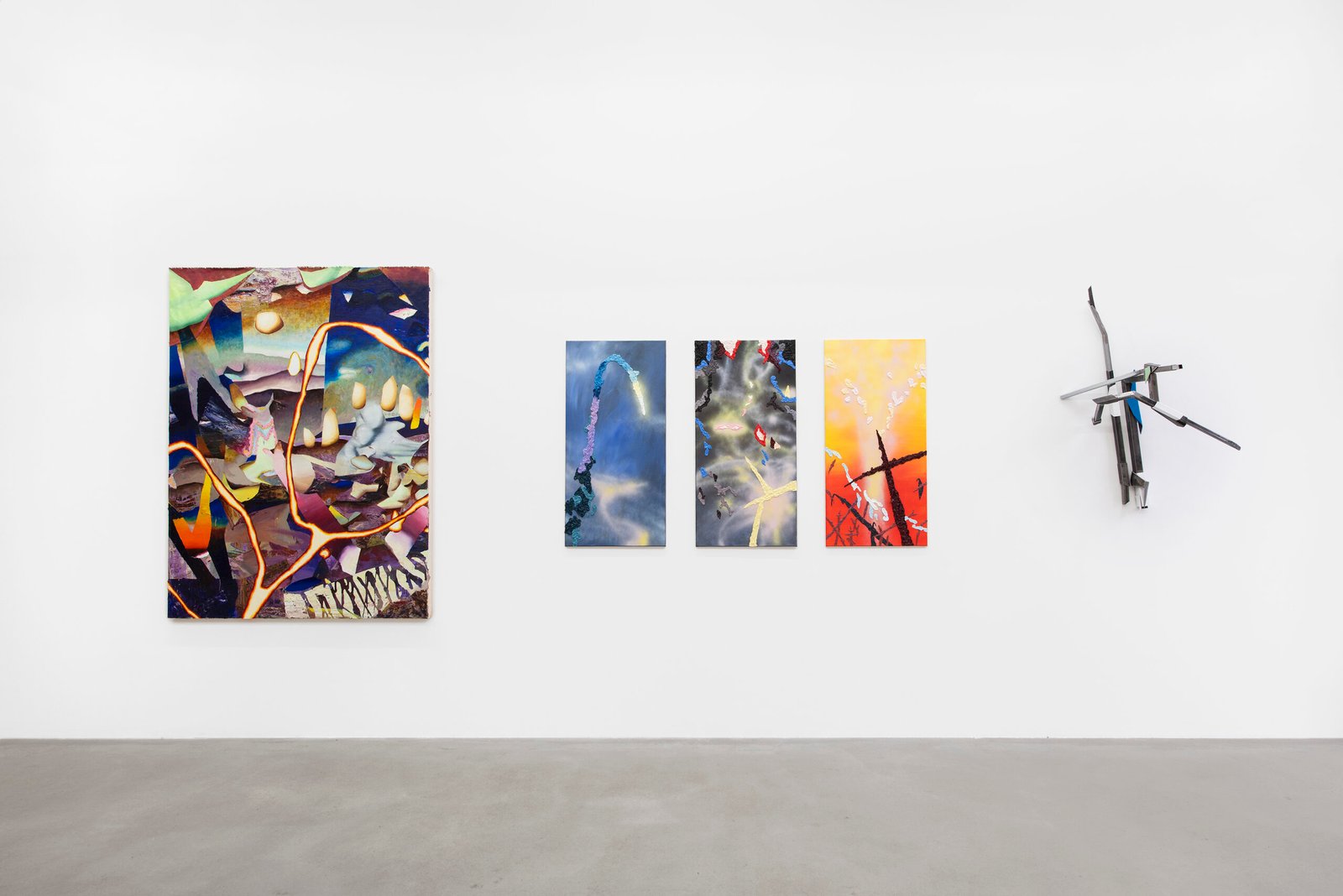
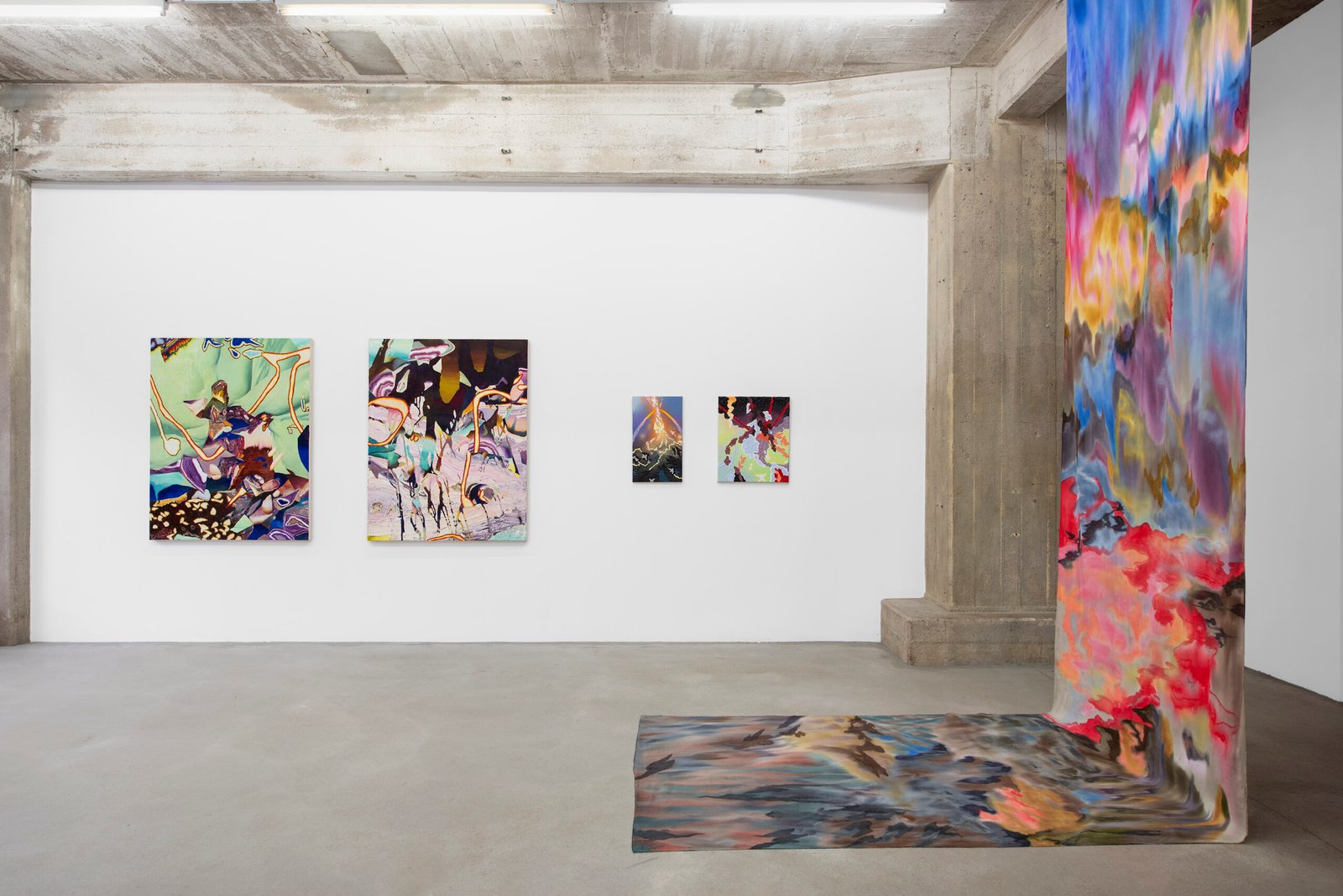
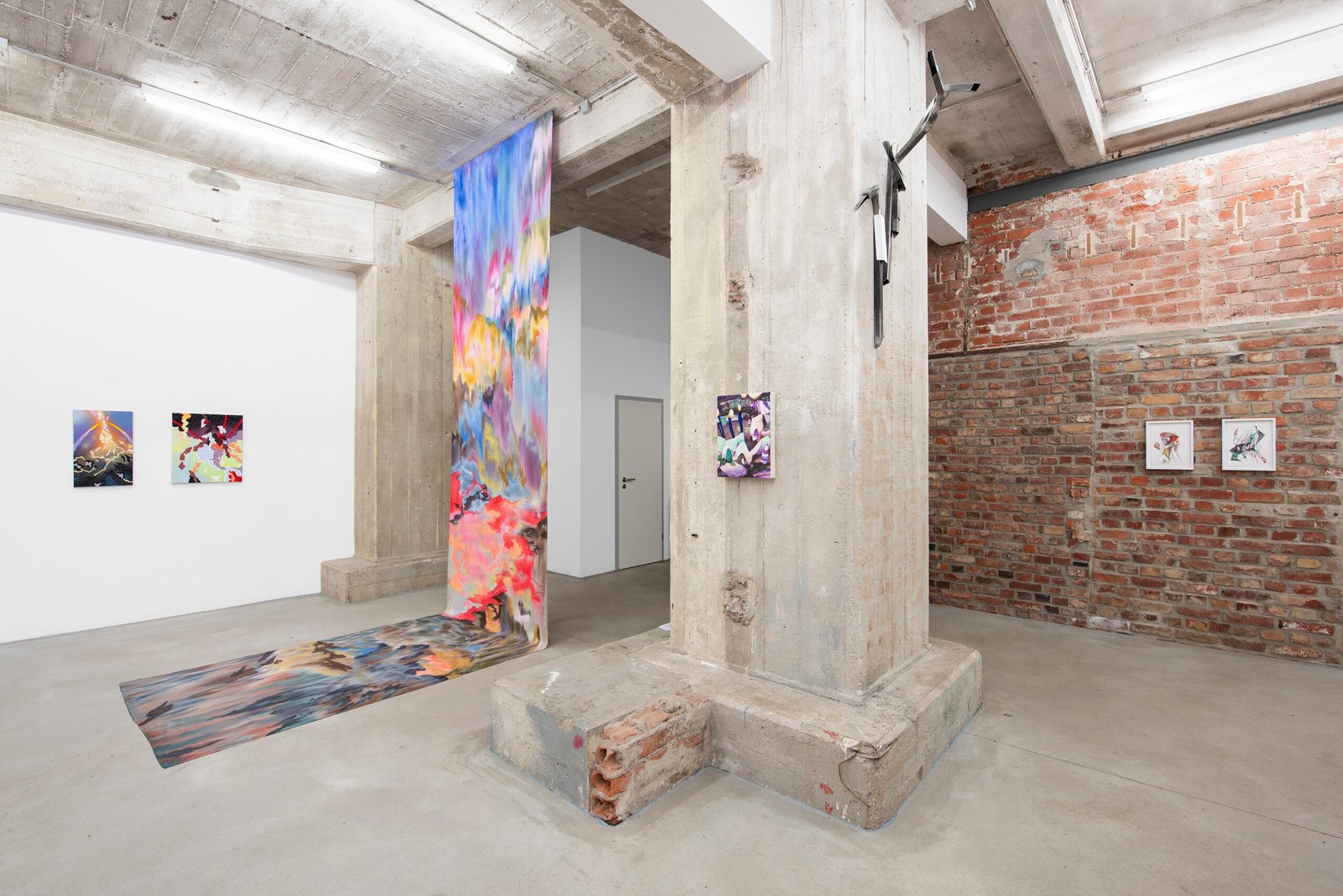
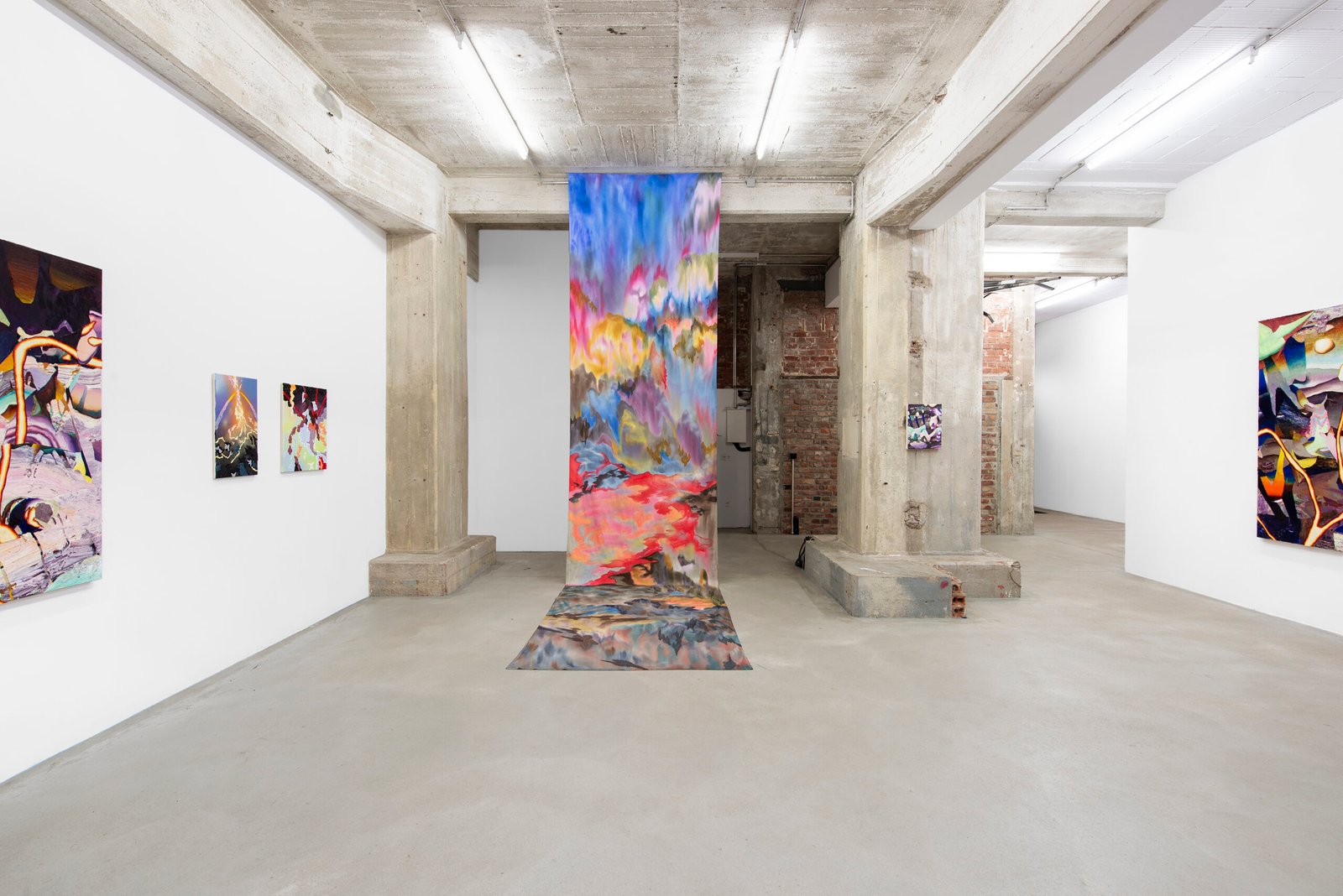
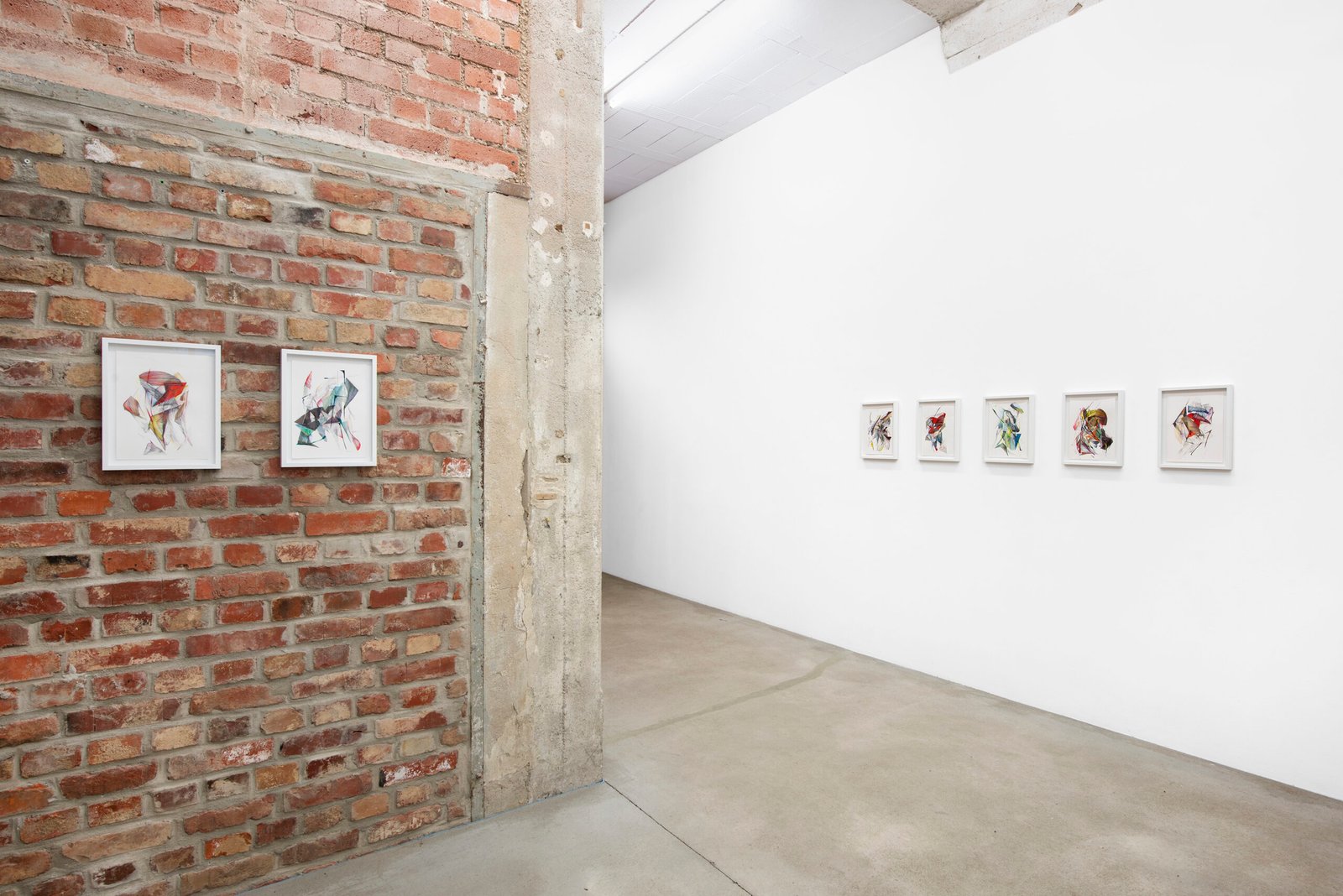
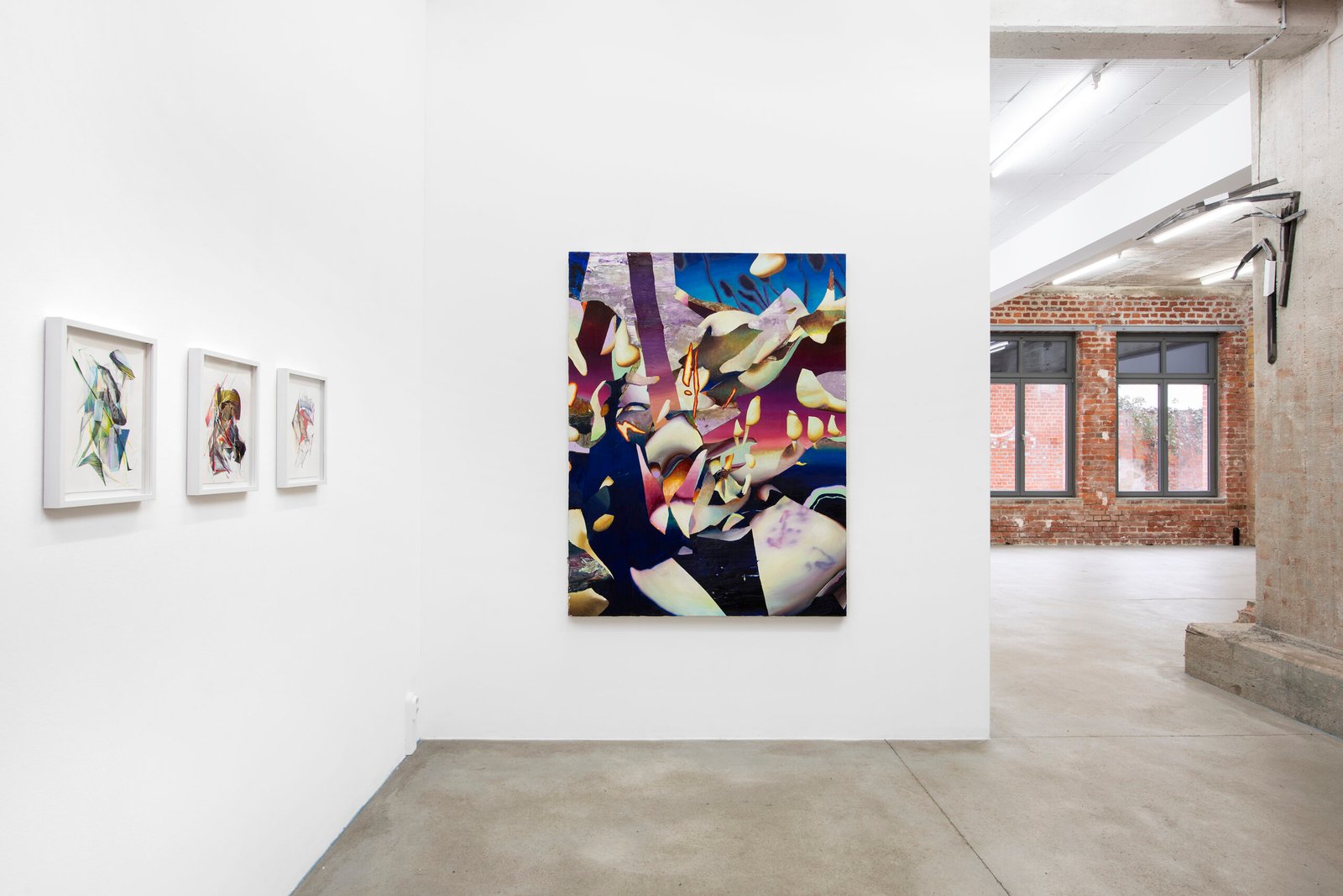
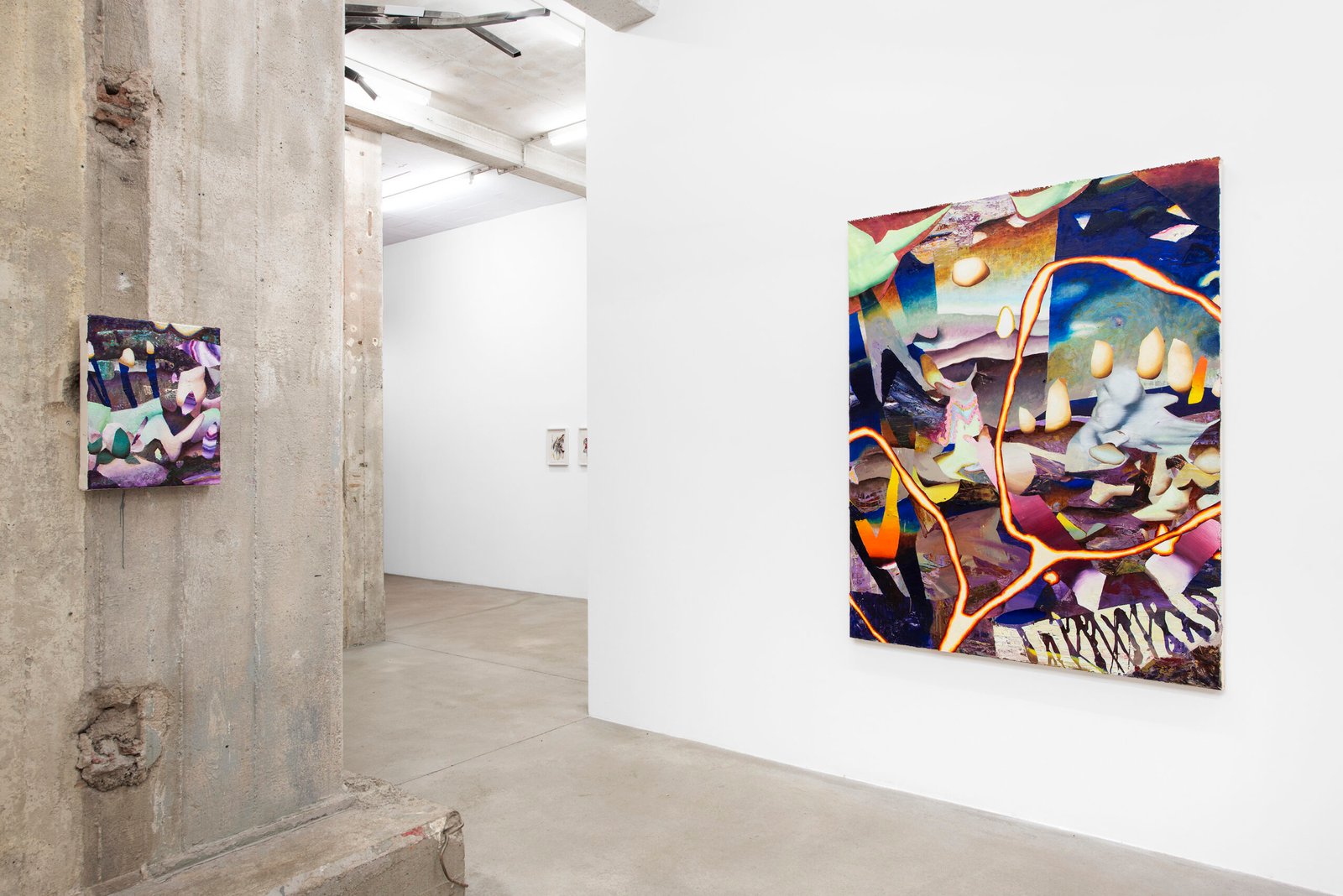
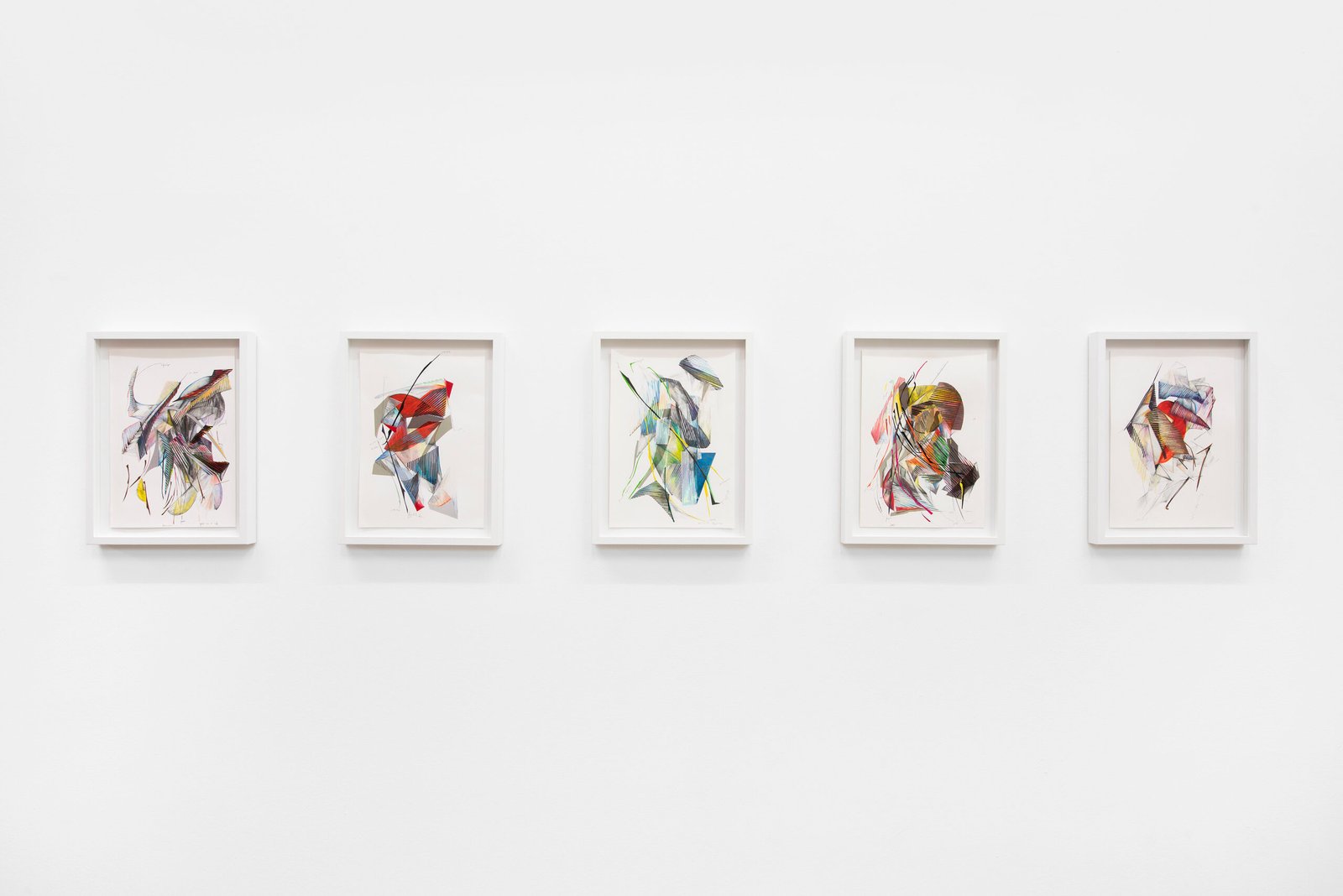
With Nothing Here Is Stable, Raw Lemon Gallery presents a group exhibition in which instability is understood not as an exceptional state, but as a fundamental artistic attitude. The title refers to a present in which fixed orders, unambiguous meanings, and stable forms are becoming increasingly fragile.
Instead of focusing on permanence and completion, the works presented concentrate on transitions, shifts, and processual states in which form, material, and perception are subject to constant change.
The exhibition brings together works by Jakob Scheidt, Justyna Janetzek, and Maria Bayer, whose artistic positions deal in different ways with the concept of
openness, changeability, and the conscious renunciation of unambiguous settings. There is agreement that artistic practice should be viewed as a dynamic system. The view is taken that form arises from relationship, friction, and process and always remains negotiable. Stability does not manifest itself as a goal or ideal, but as a temporary aspect within a continuous development process. This exhibition takes the view that instability should not be seen as a deficit or loss, but as a productive prerequisite for transformation, sensitization, and reorientation.
The artistic works enable the experience of spaces in which uncertainty,
ambivalence, and complexity are not resolved but consciously allowed to exist.
An intermediate state manifests itself, characterized by the interdependence of structure and dissolution, control and openness, image, body, and space. An intermediate state manifests itself, characterized by the interdependence of structure and dissolution, control and openness, as well as image, body, and space.
This creates a perception that can be described as processual and situational.
Jakob Scheidt, born in Schwäbisch Gmünd in 2002, lives and works in Hamburg.
Since 2024, he has been studying at the University of Fine Arts Hamburg in the class of Prof. Anselm Reyle. In his paintings, Scheidt develops an evocative abstract visual language that is influenced by both contemporary visual culture and the history of painting. history of painting. Central points of reference in his work are late medieval landscape depictions, Mannerism, and surrealist pictorial approaches.
The investigation of canonized pictorial structures and motifs takes place in their inner logic, whereby these are broken up and alienated in a process-oriented approach. Through the use of spray paints, spatula techniques, latex Through the use of spray paints, palette knife techniques, latex masking, and glued-on pieces of canvas, a biomorphic, multi-layered formal vocabulary emerges that eludes unambiguous interpretations and remains deliberately fragmented. In this context, perception manifests itself as an unstable process that oscillates between historical reference and contemporary image production.
Justyna Janetzek’s works address instability on a structural, temporal, and perceptual level. In her modular steel sculptures, which are connected by plug-in systems and magnetic connections, stability becomes something relational: form arises from connection, but remains changeable at any time. Parallel to this, her drawings unfold a fragile, almost sculptural presence. Lines are set, Parallel to this, her drawings unfold a fragile, almost sculptural presence.
Lines are drawn, lost, and meet again; surfaces tilt, break open, and reconnect. Time is not viewed as a linear process, but as an intertwined process of memory, present, and perception. The traces of decisions, corrections, and movements made during the creative process remain visible, making this process itself an integral part of the works. Stability manifests itself in the connection between the individual elements, but the works remain open to change.
The traces of decisions, corrections, and movements made during the creative process remain visible, making this process itself an integral part of the works. In this context, stability manifests itself as a temporary state that is continuously reforming at the moment of viewing. Justyna Jenetzek lives and works in Düsseldorf.
She has also realized numerous art-in-architecture projects. Justyna Jenetzek lives and works in Düsseldorf. In addition, she realizes numerous art-in-architecture projects. Maria Bayer’s expansive textile works and paintings dominate the exhibition with their striking physical and atmospheric presence. The fabrics overlap and condense into complex, landscape-like structures,
unfolding a flowing yet tense style. The intuitively placed, jagged forms merge to form planes that oscillate between abstraction and figuration. In individual works, echoes of human and animal forms manifest themselves, without, however, solidifying into clear figures.
Bright, exaggerated colors create seductive yet threatening pictorial spaces that oscillate between maximalism and dystopian exaggeration. The individual elements stand side by side as equals, competing for attention and transforming the space itself into an active, dynamic structure. Maria Bayer lives and works in Leipzig, where she attends Ivana de Vivanco’s class at the Academy of Fine Arts.