


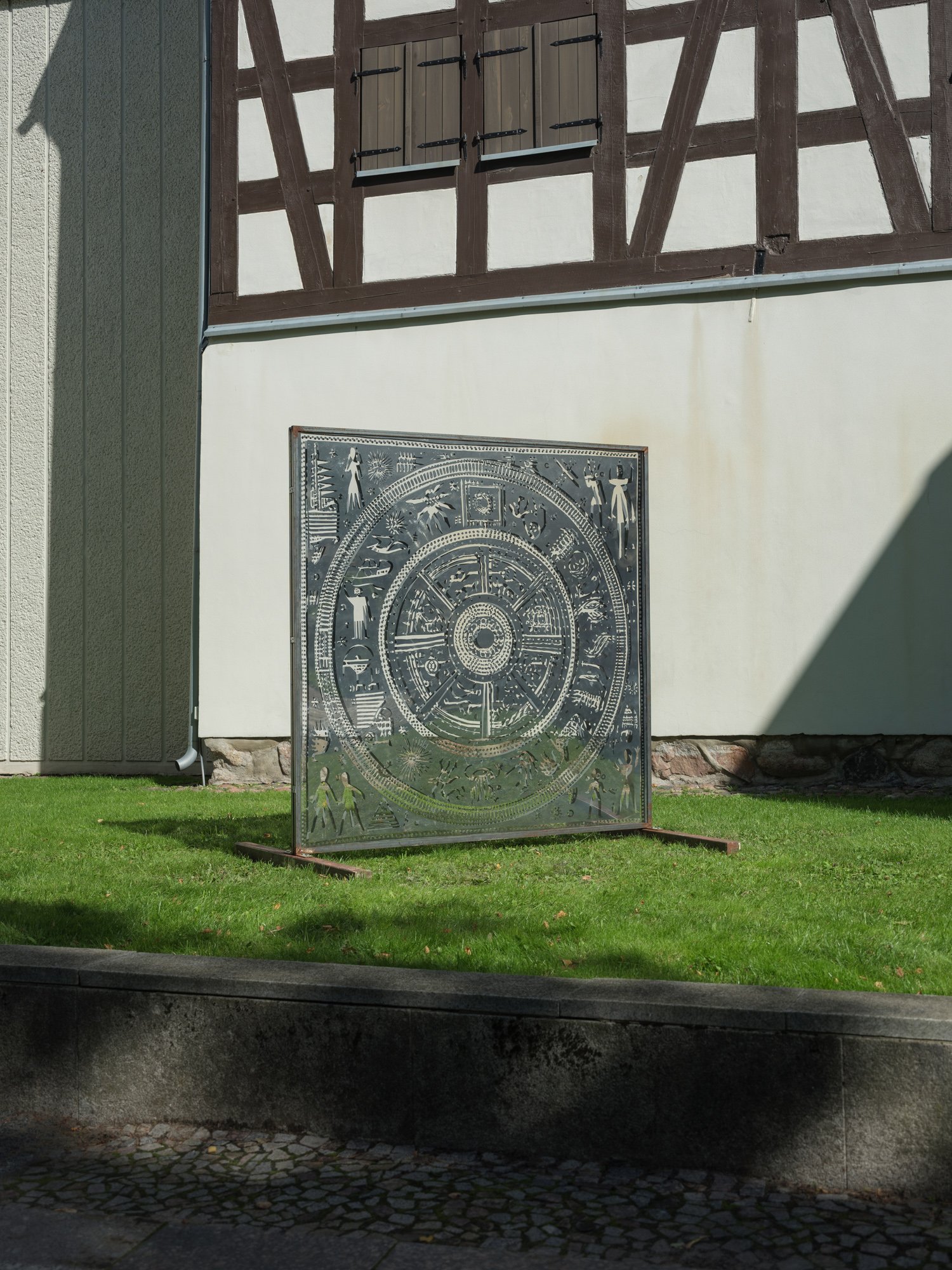
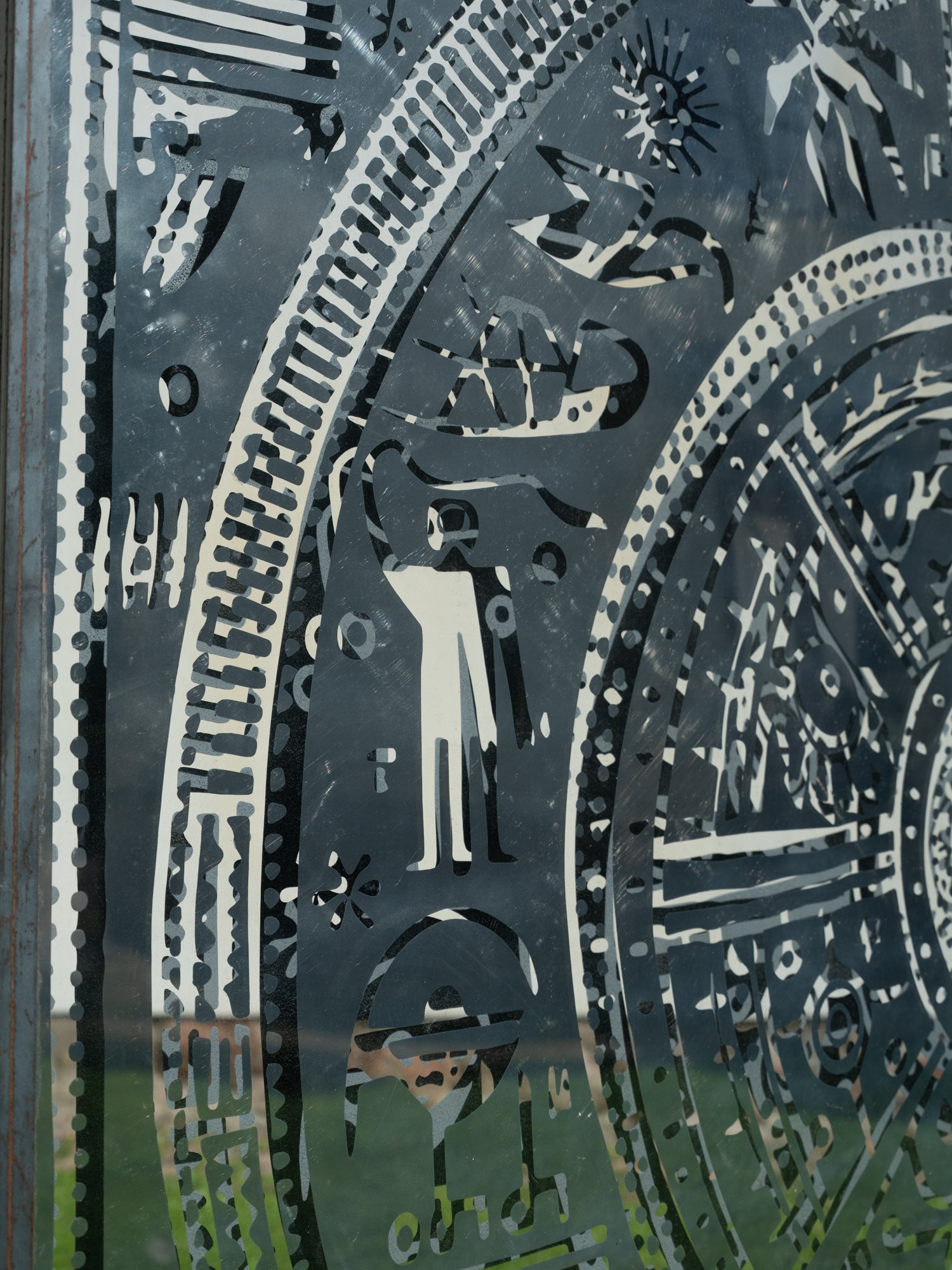
What remains in a city when its inhabitants, landscape, purpose, or even the place itself changes? Can a solar eclipse cause a fire while at the same time bringing nature back to life? Can the loss of ancestral islands become a form of ‘productive’ mourning?
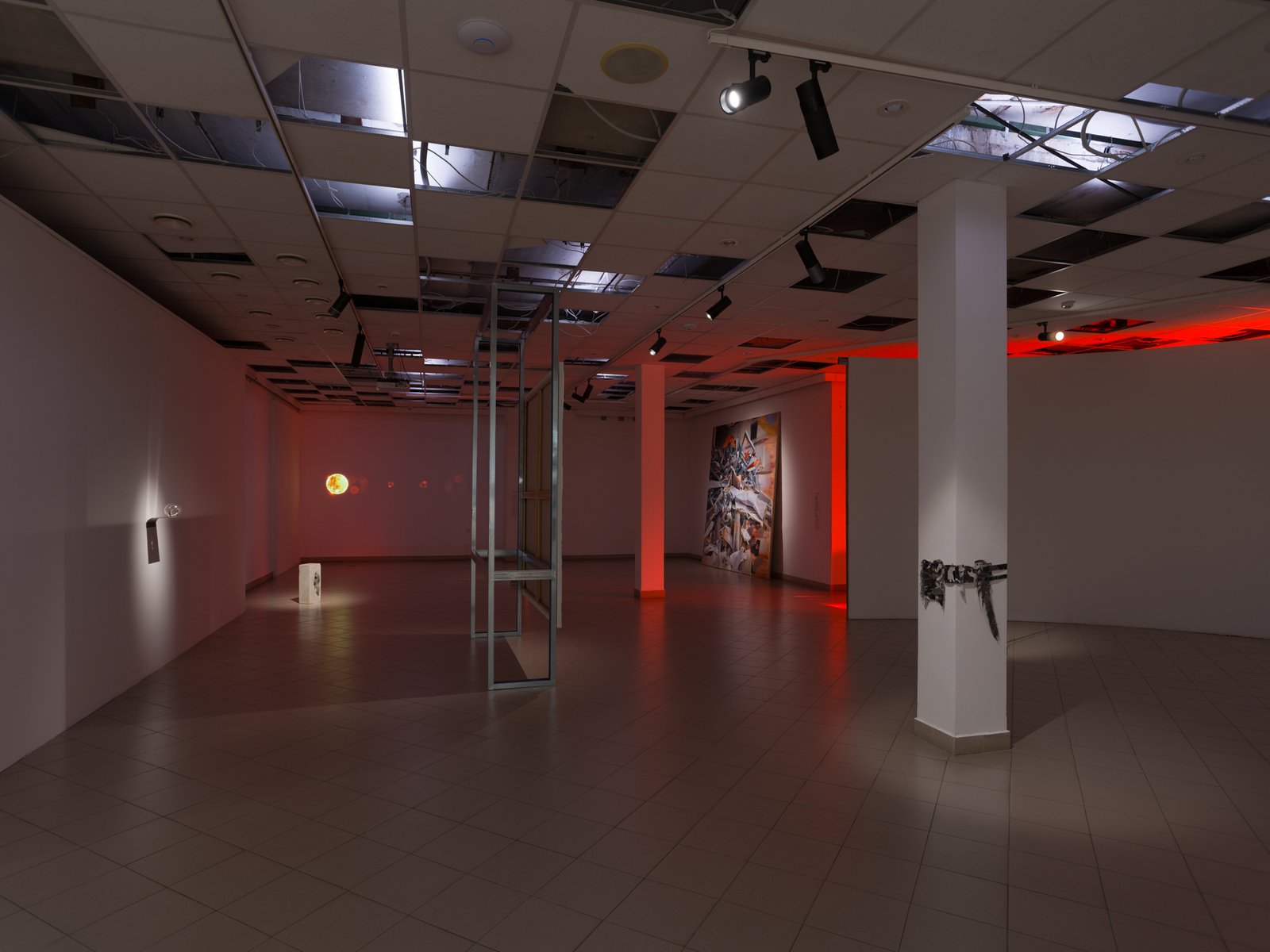
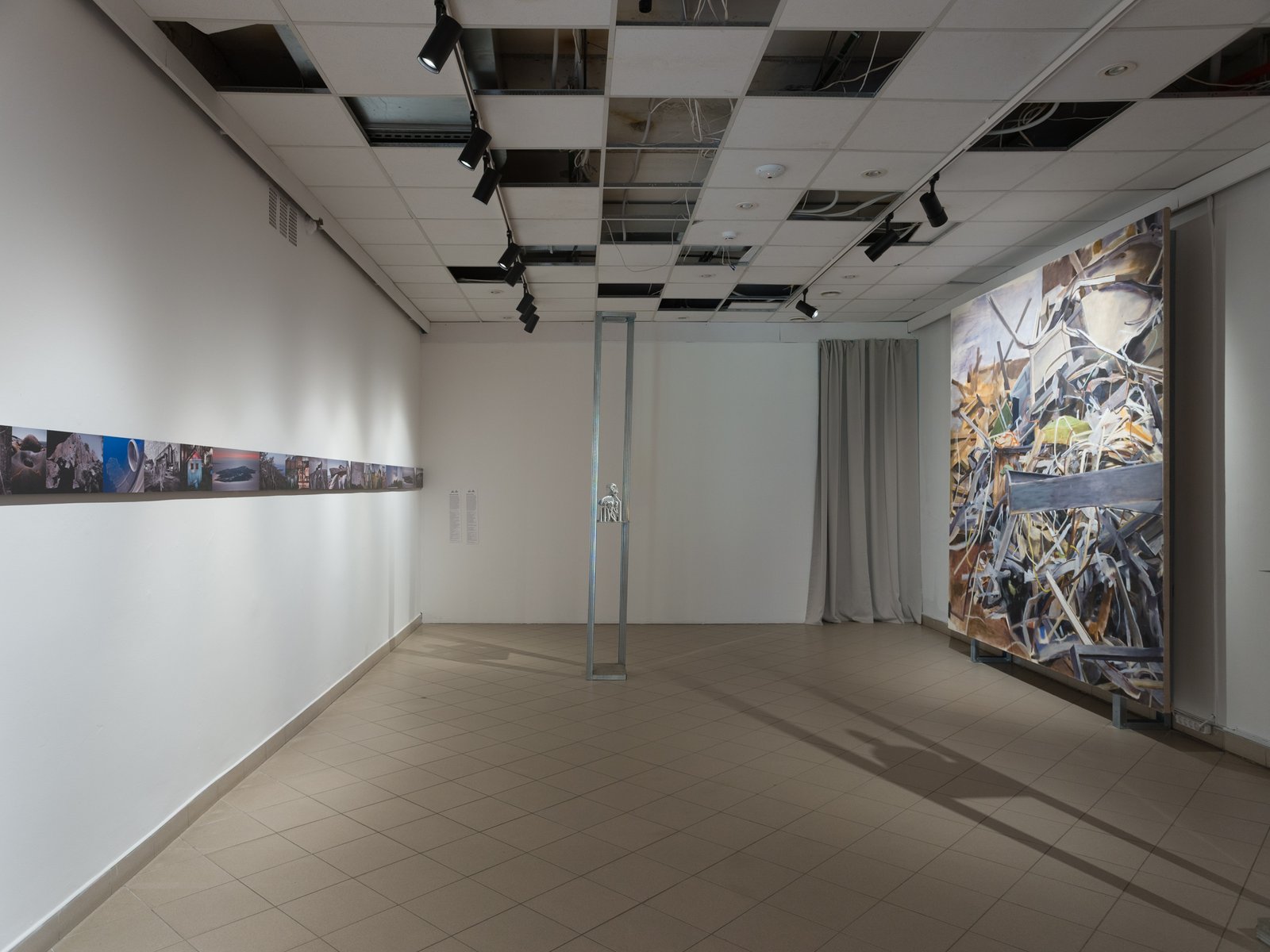
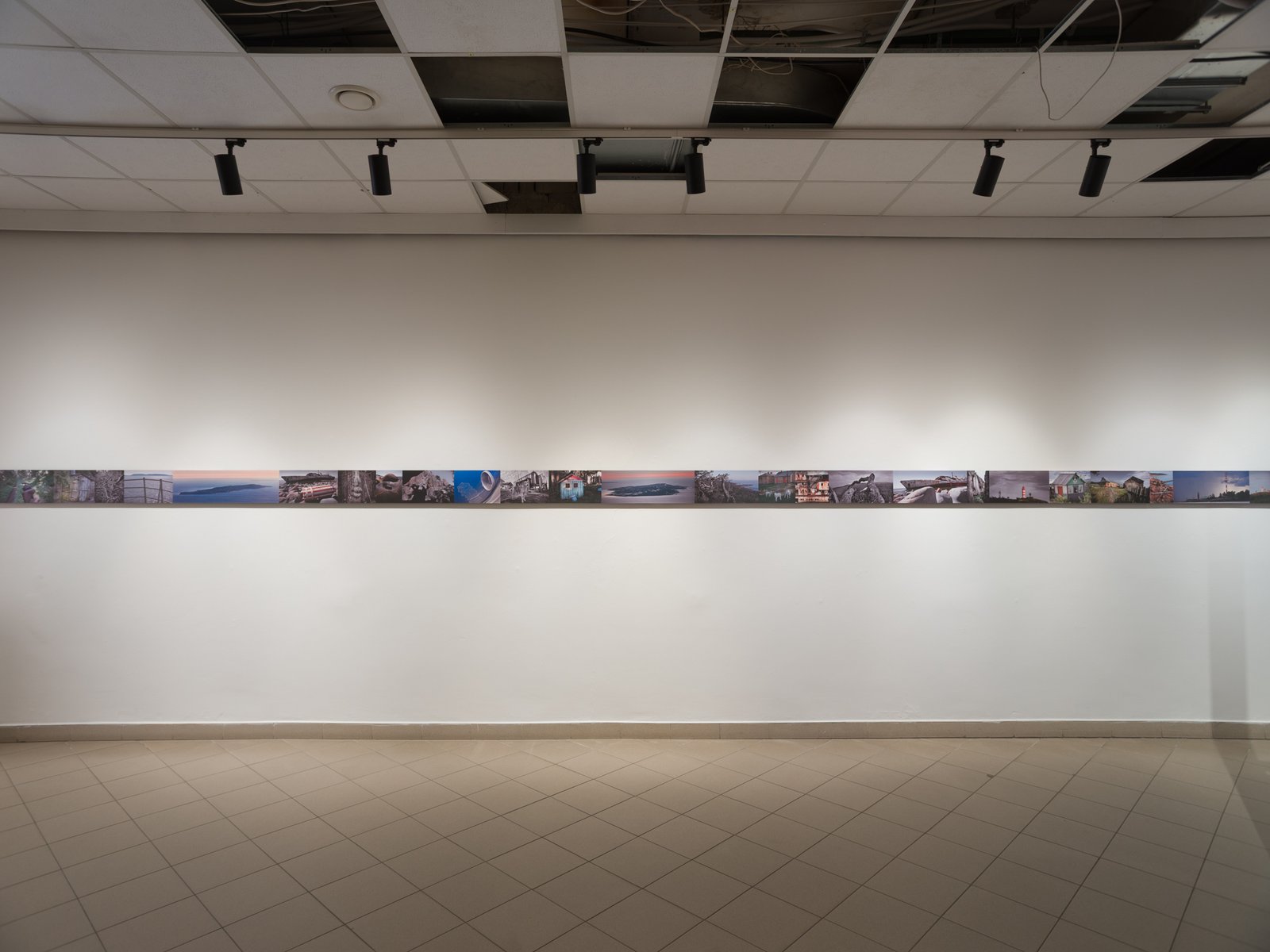
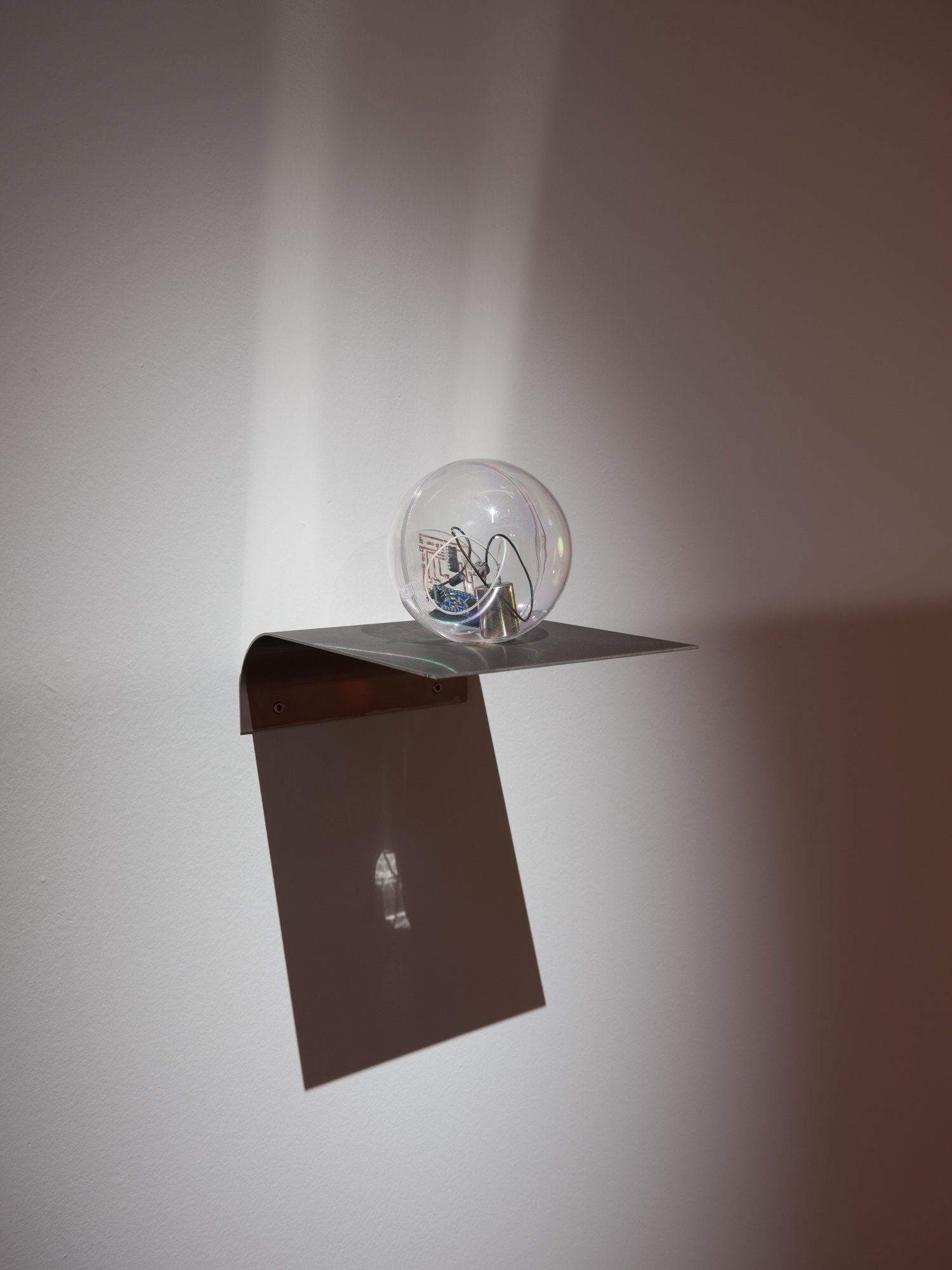
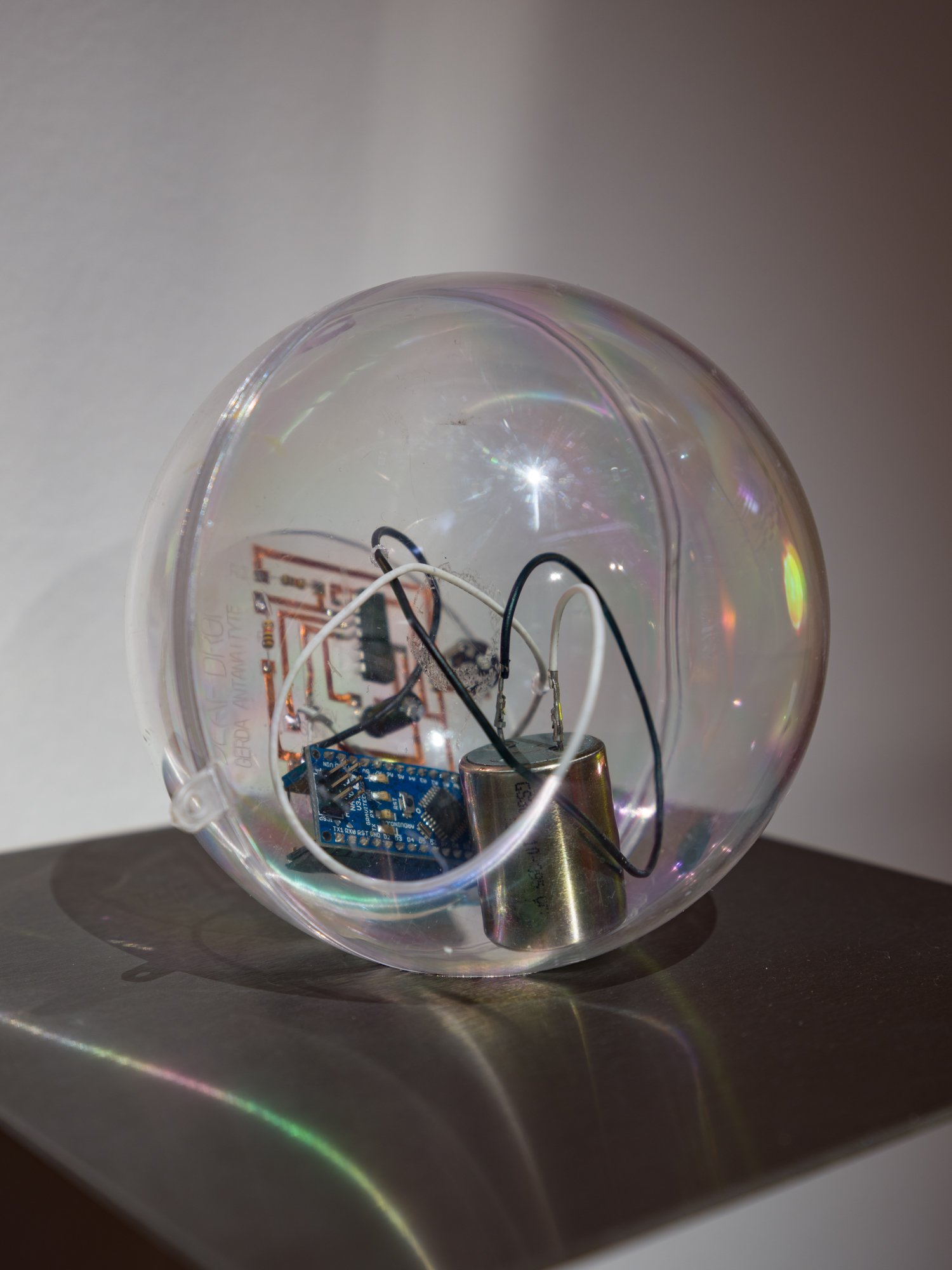
Noise Portals is an attempt to bring together two very different ports – Klaipėda in Lithuania and Kotka in Finland – which emerge as changing spaces where noise alternates with the silence of loss. These dissimilar yet kindred Baltic Sea ports are connected not only by their geographical location, but also by a complex geography of memory. On Kotka’s horizon remain traces of the lost islands of the Gulf of Finland, while in Klaipėda there is a rupture in the continuity of its population and urban history. These losses remain present today in the landscape, buildings, and memories. The philosopher Andreas Huyssen argues that ‘cities and buildings can be read as spatial palimpsests, in which time becomes visible through what has remained, been altered, or erased.’ The exhibition therefore functions as a kind of urban palimpsest – a space in which one layer is never completely erased by another. Here, the city becomes a dynamic backdrop where erasures, additions, collapses, noise, as well as new beginnings or the revival of old heritage, leave their traces.
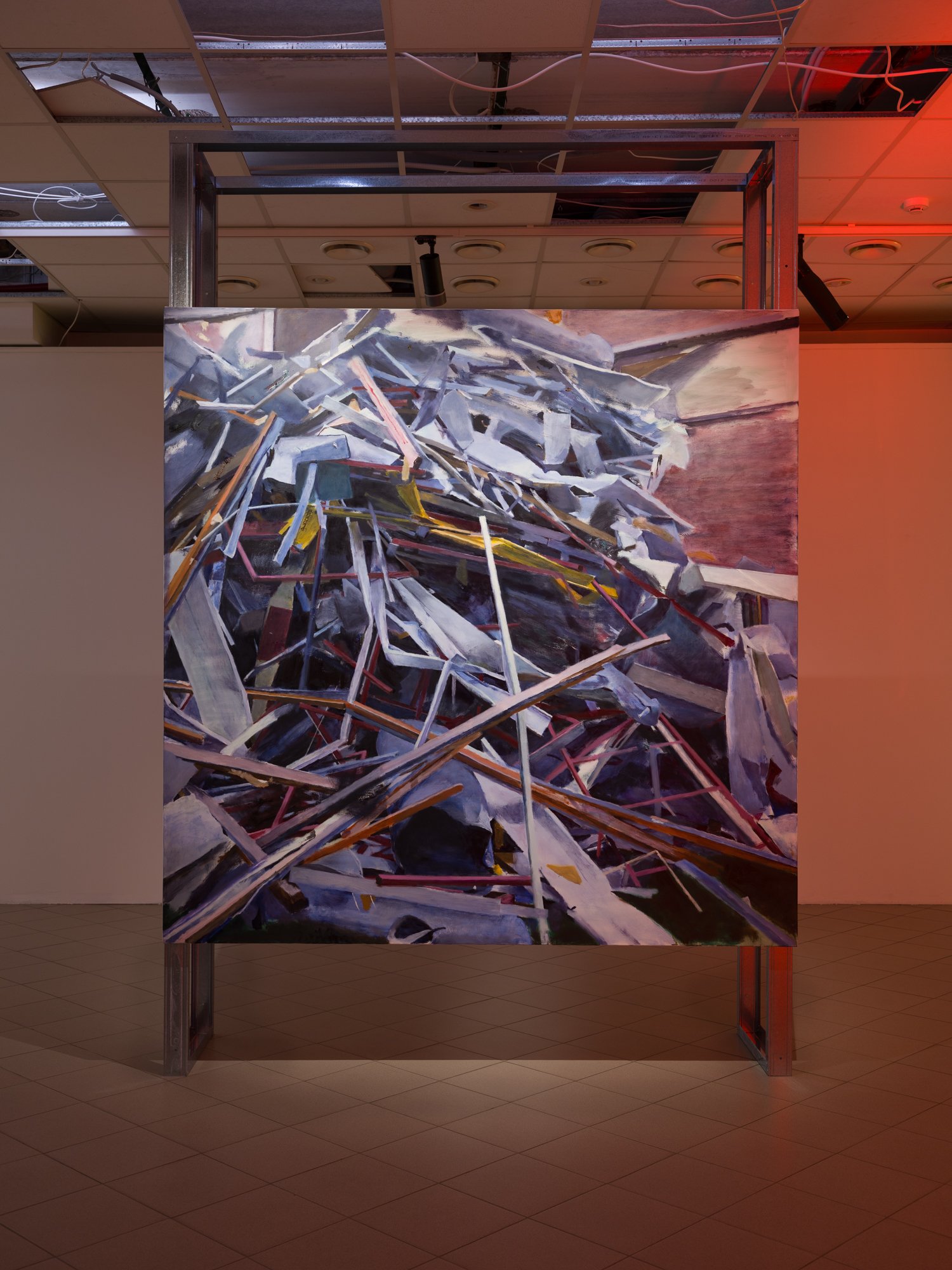
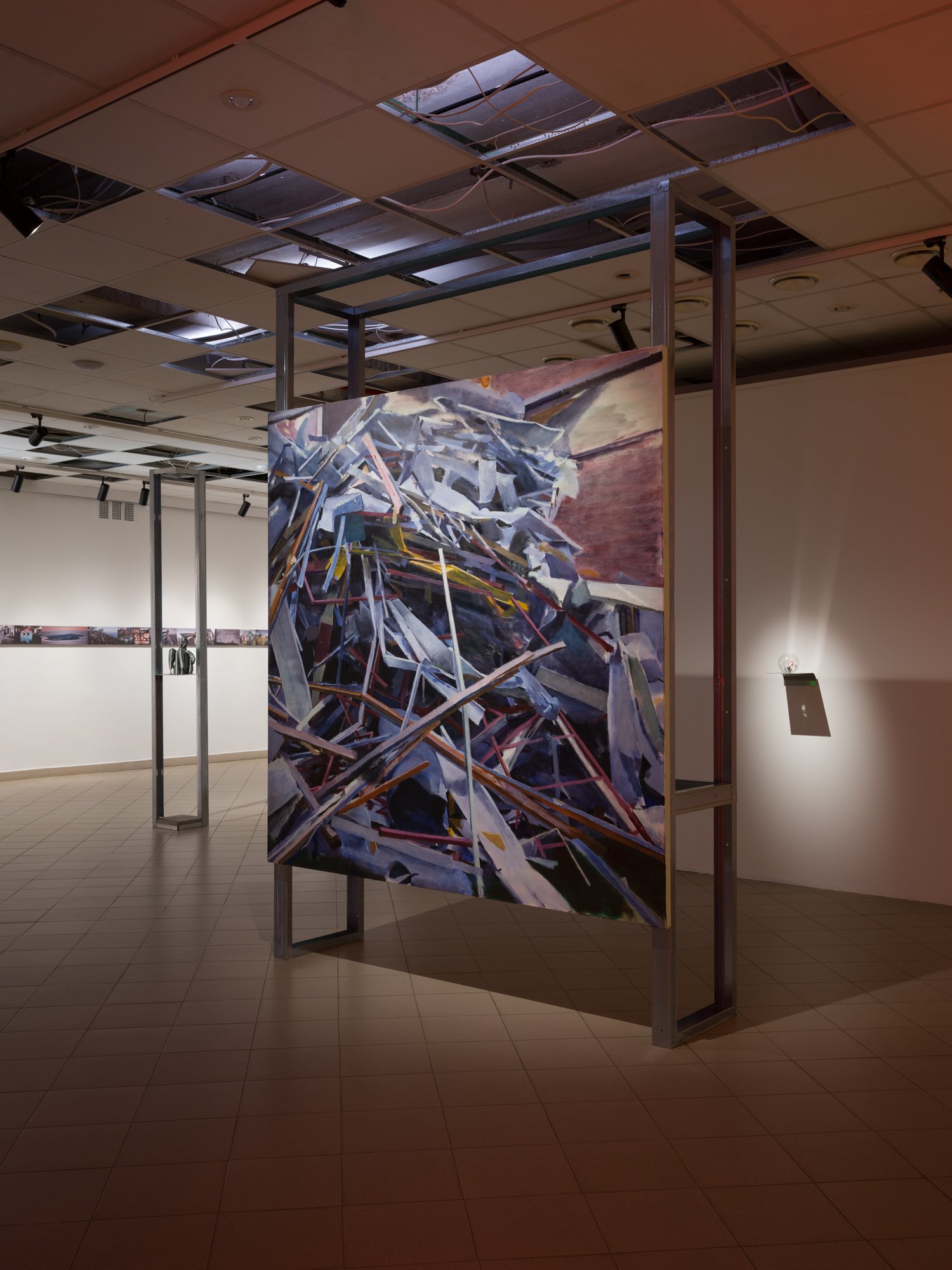
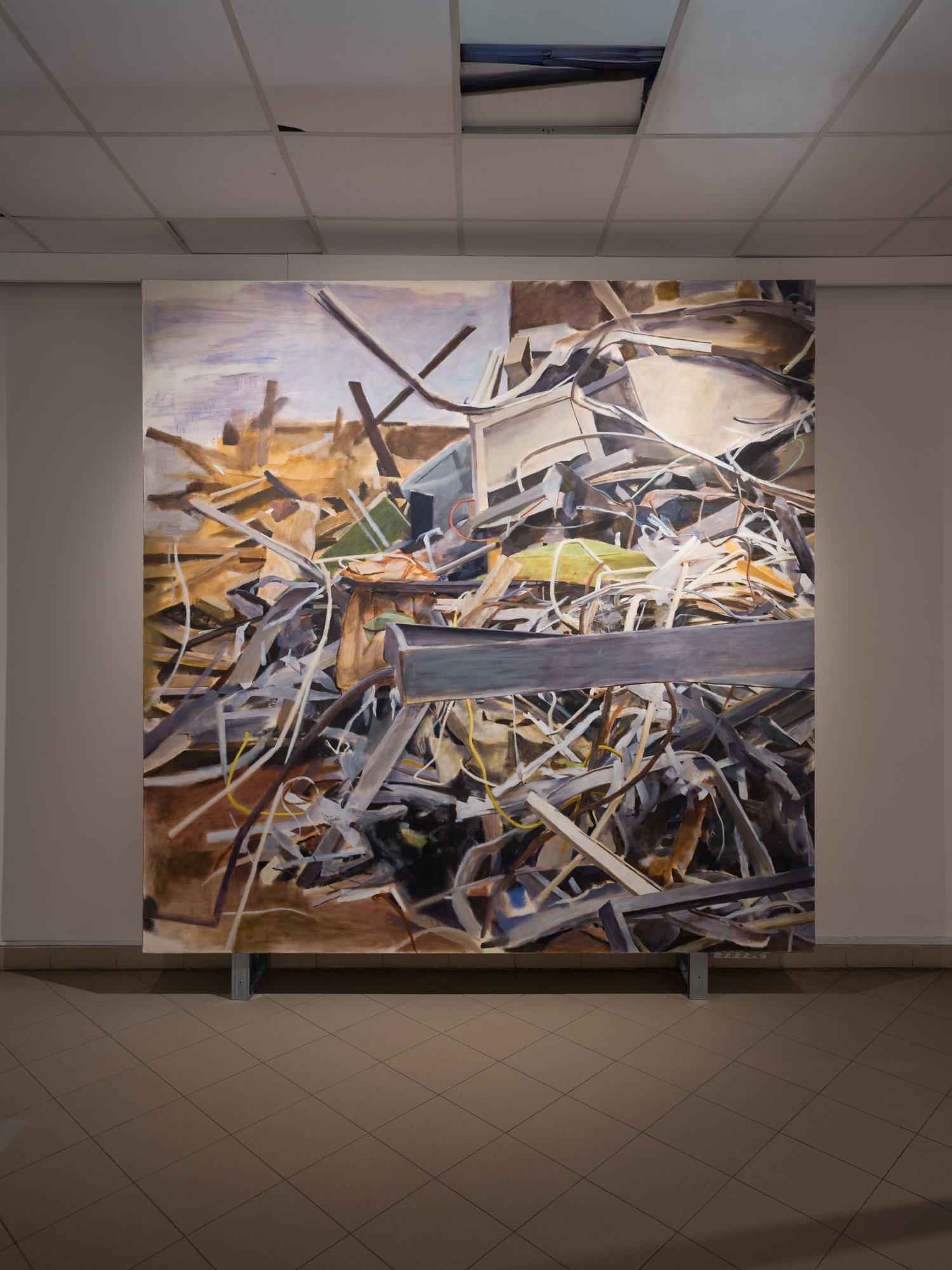
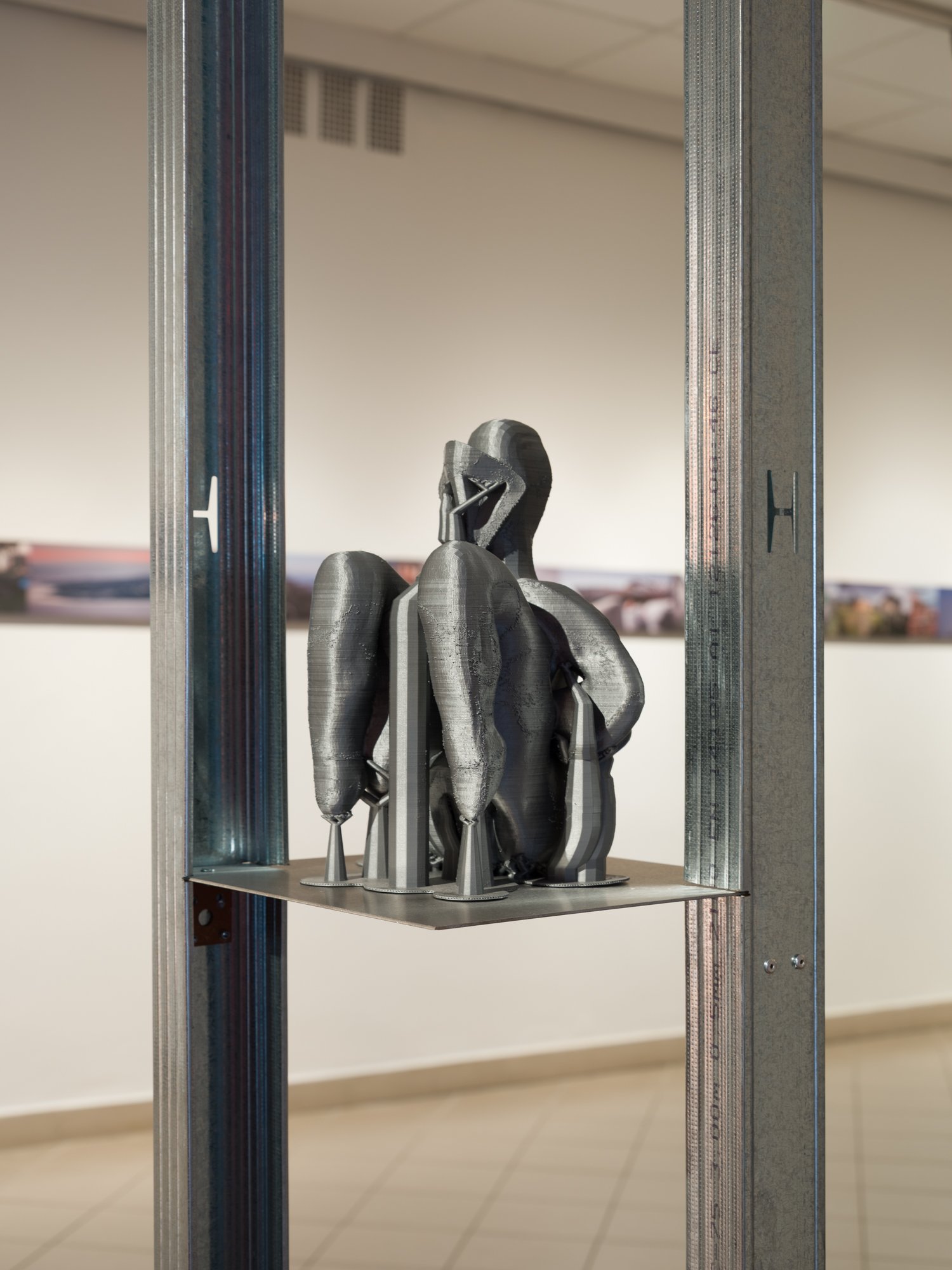
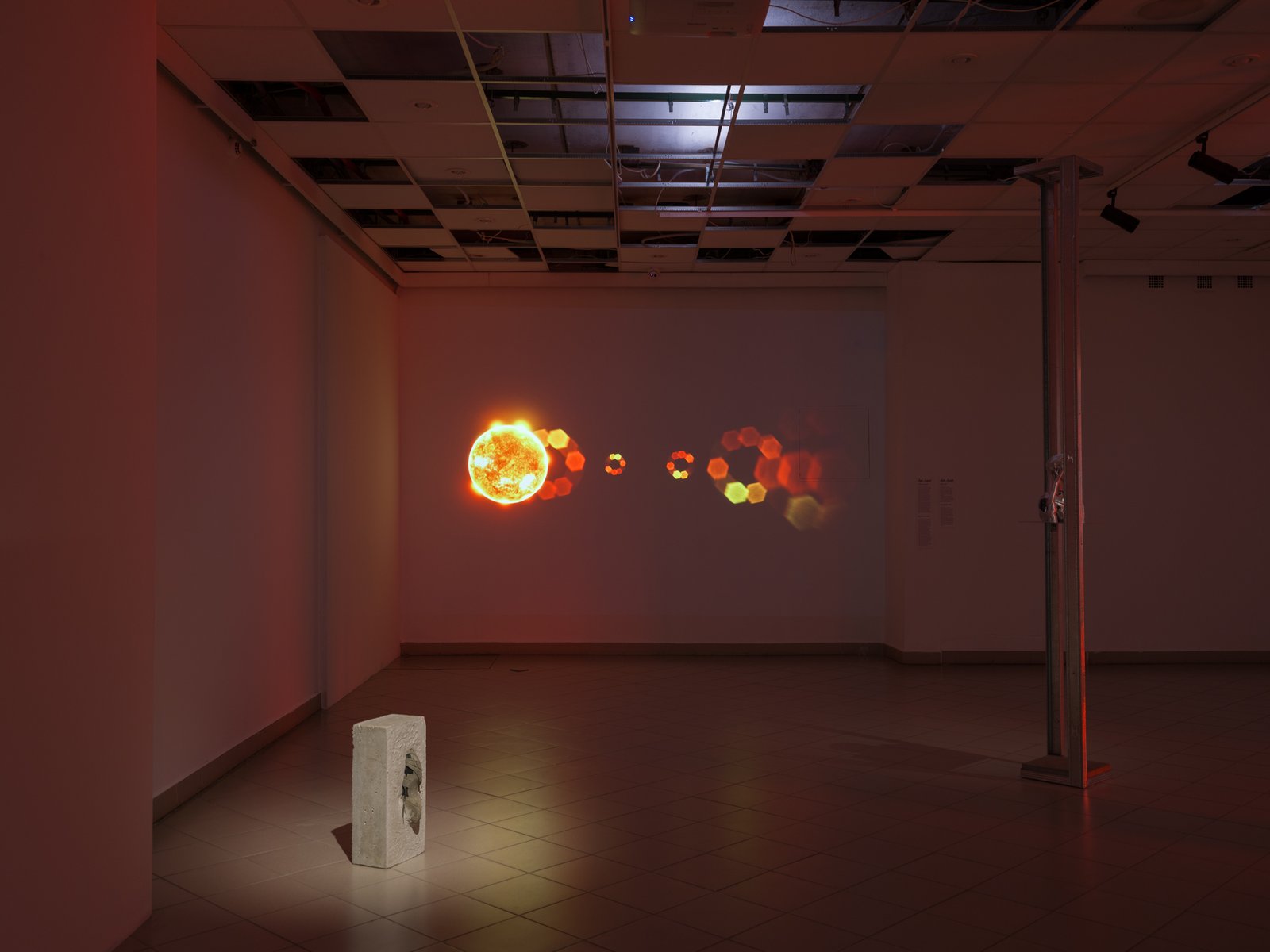
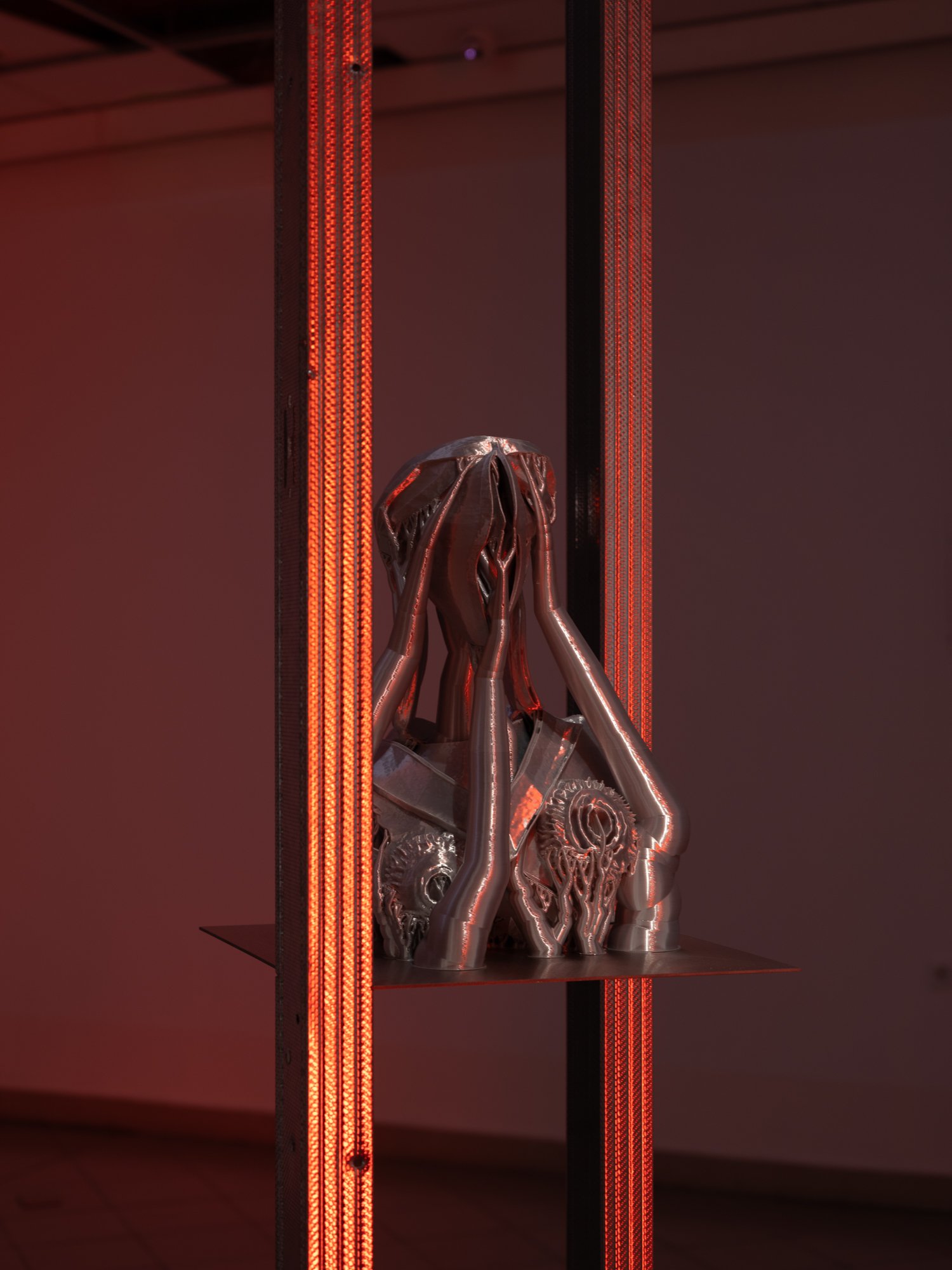
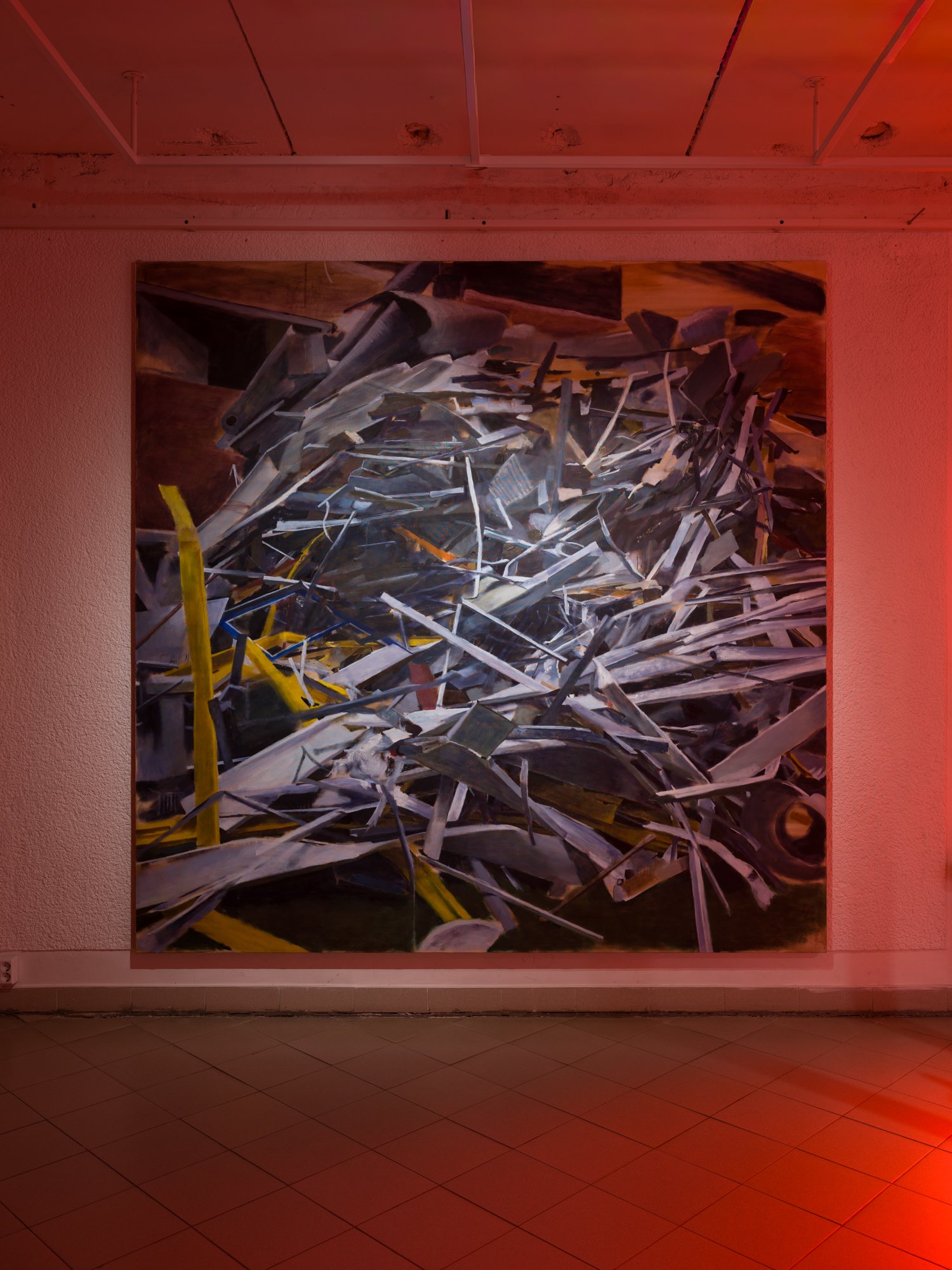
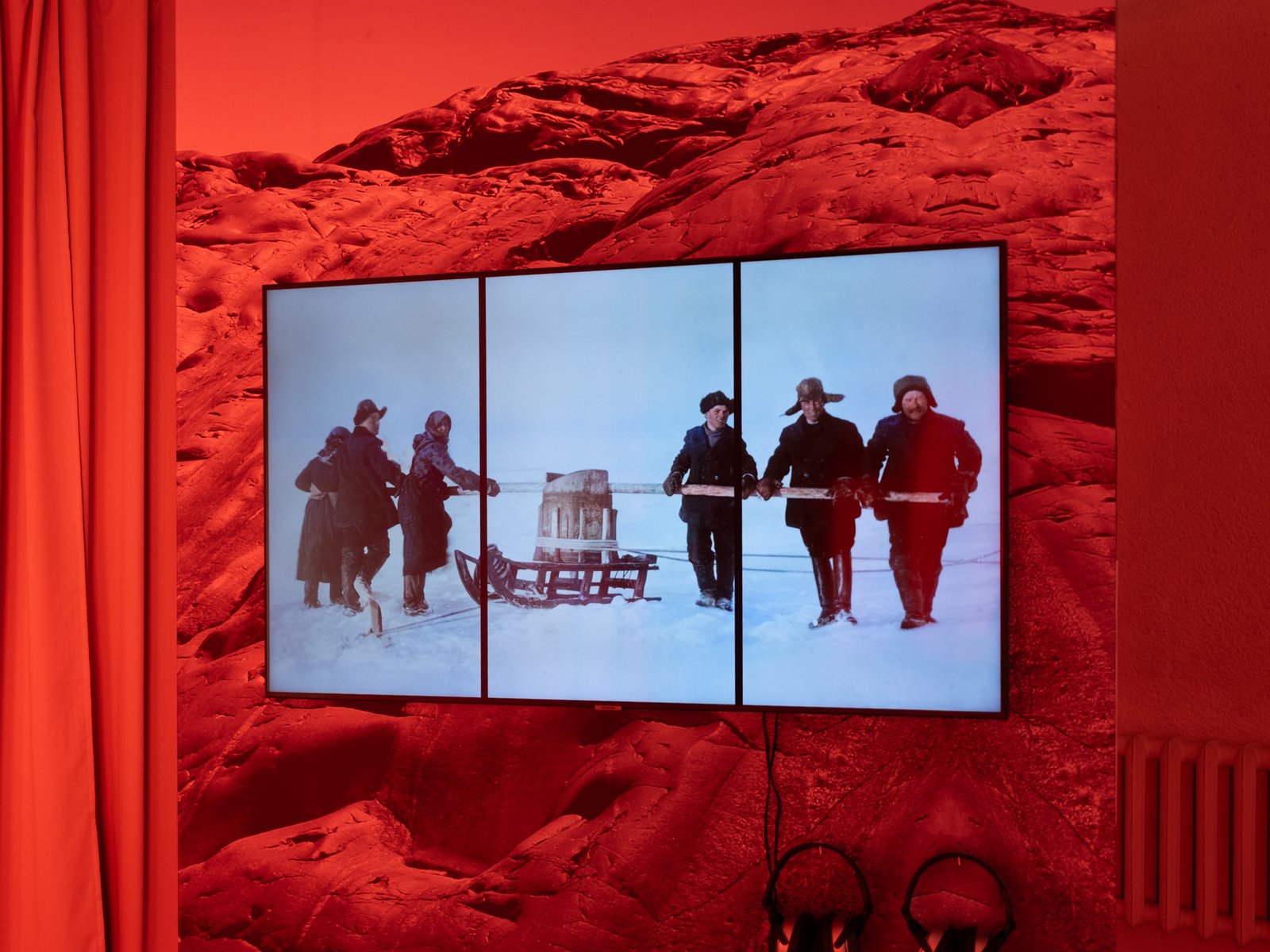
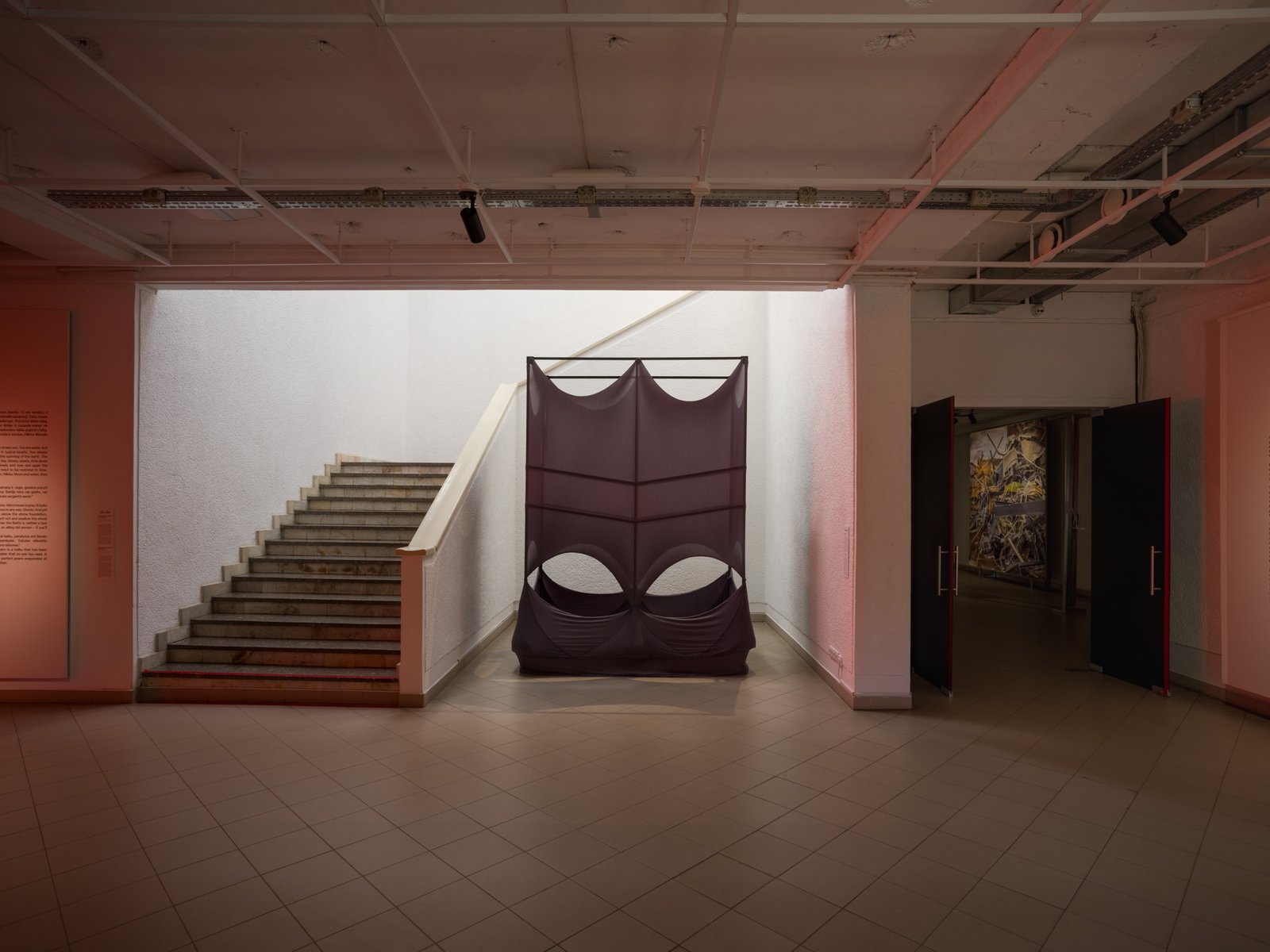
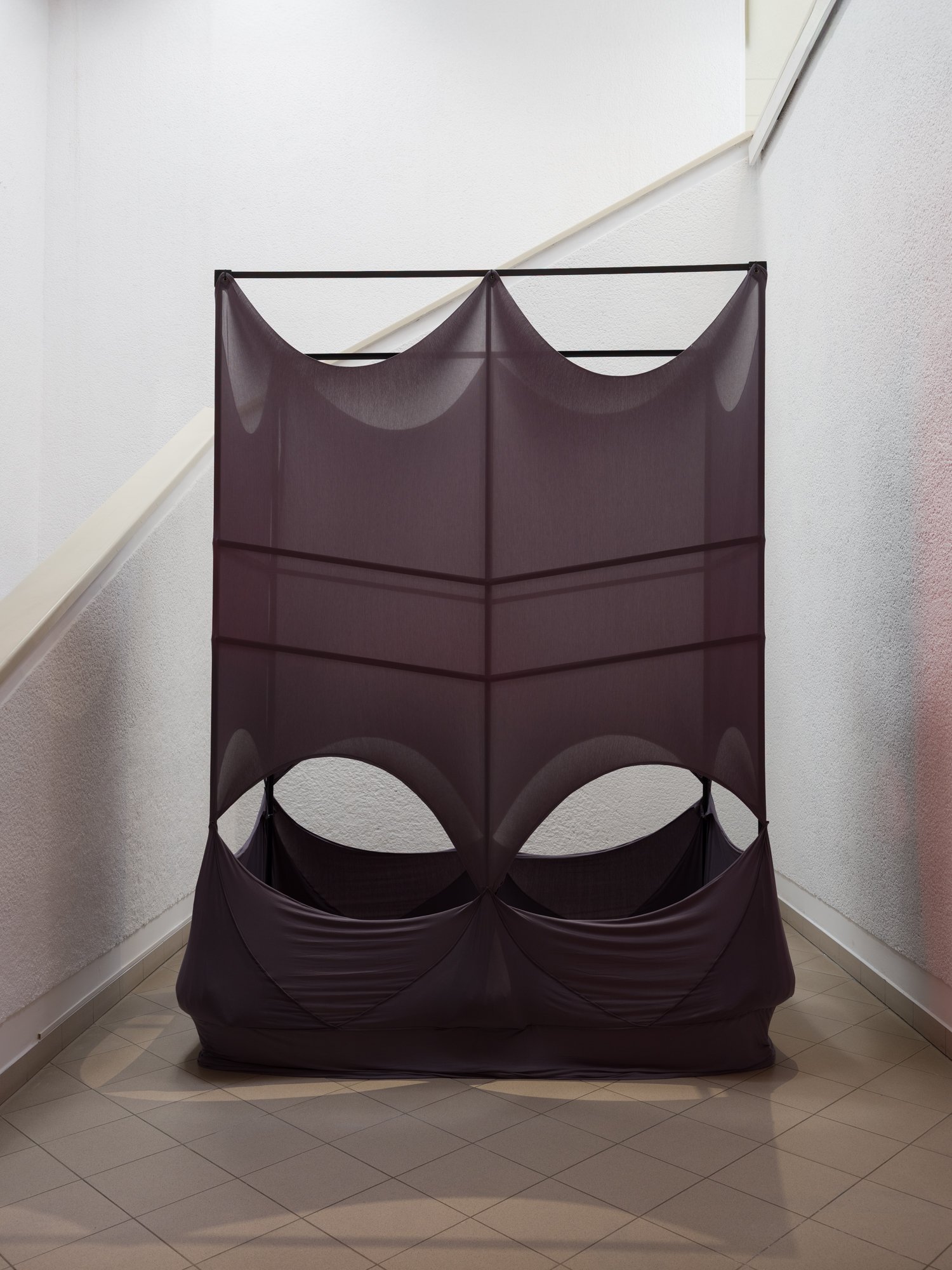
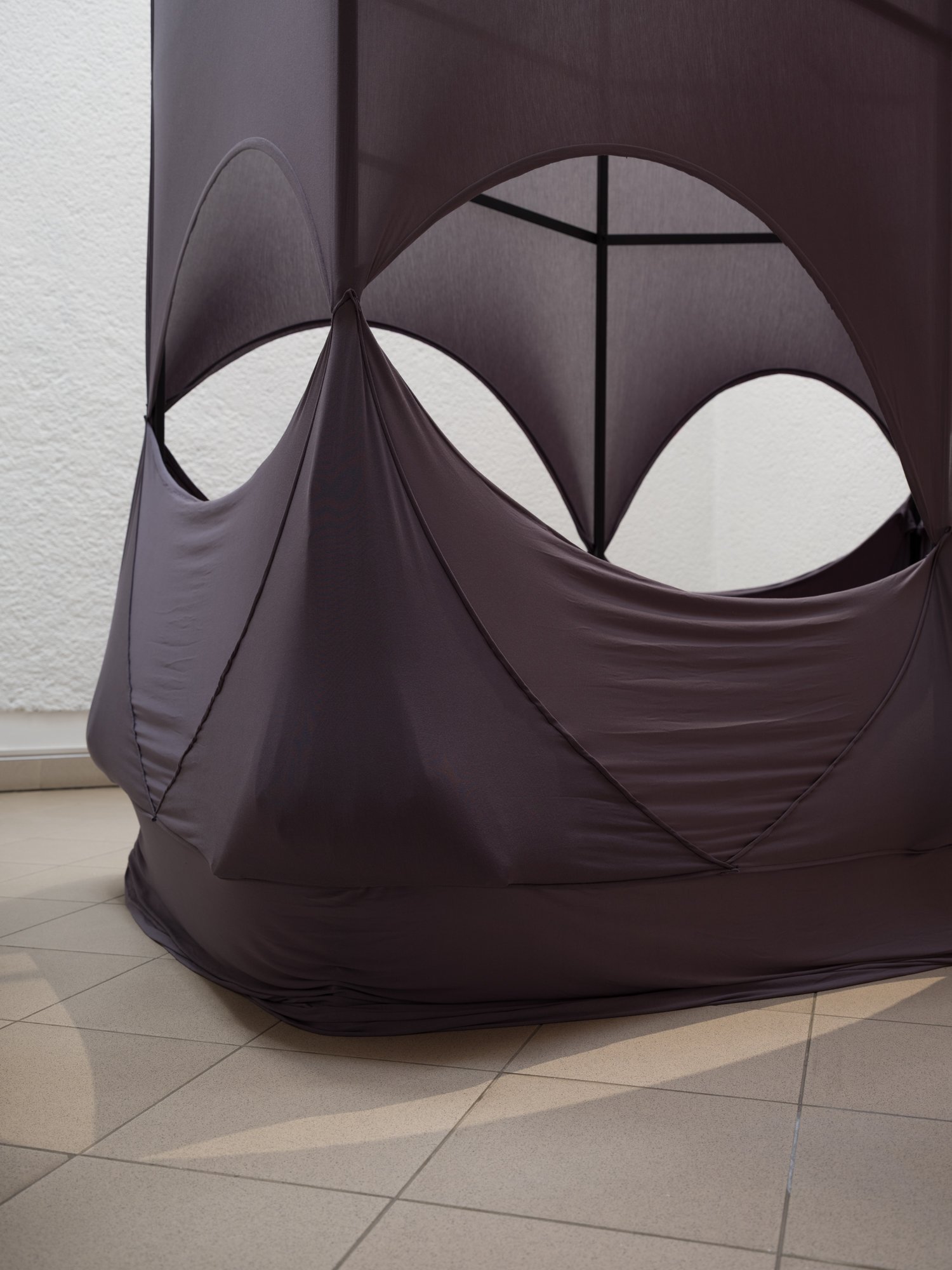
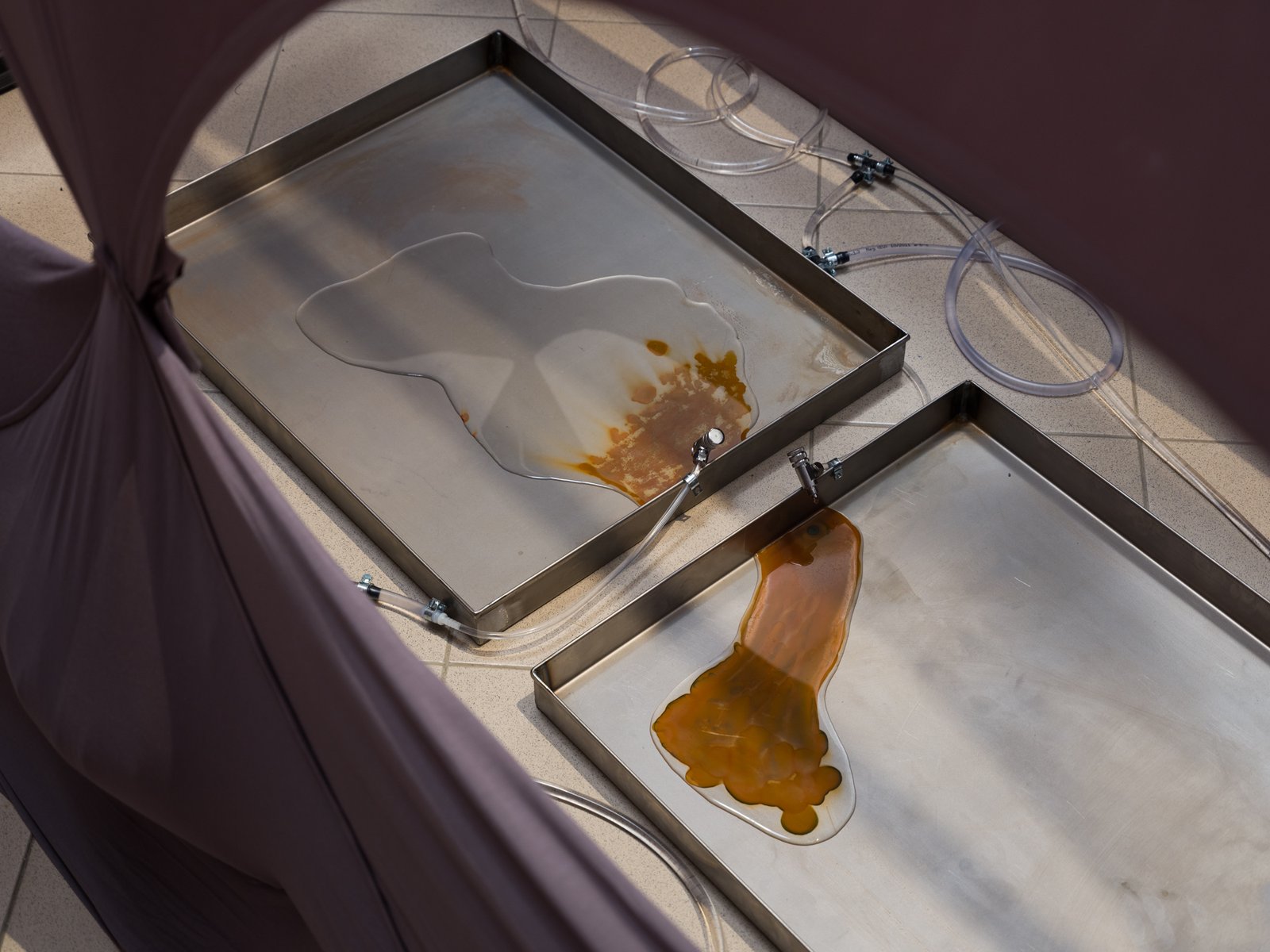
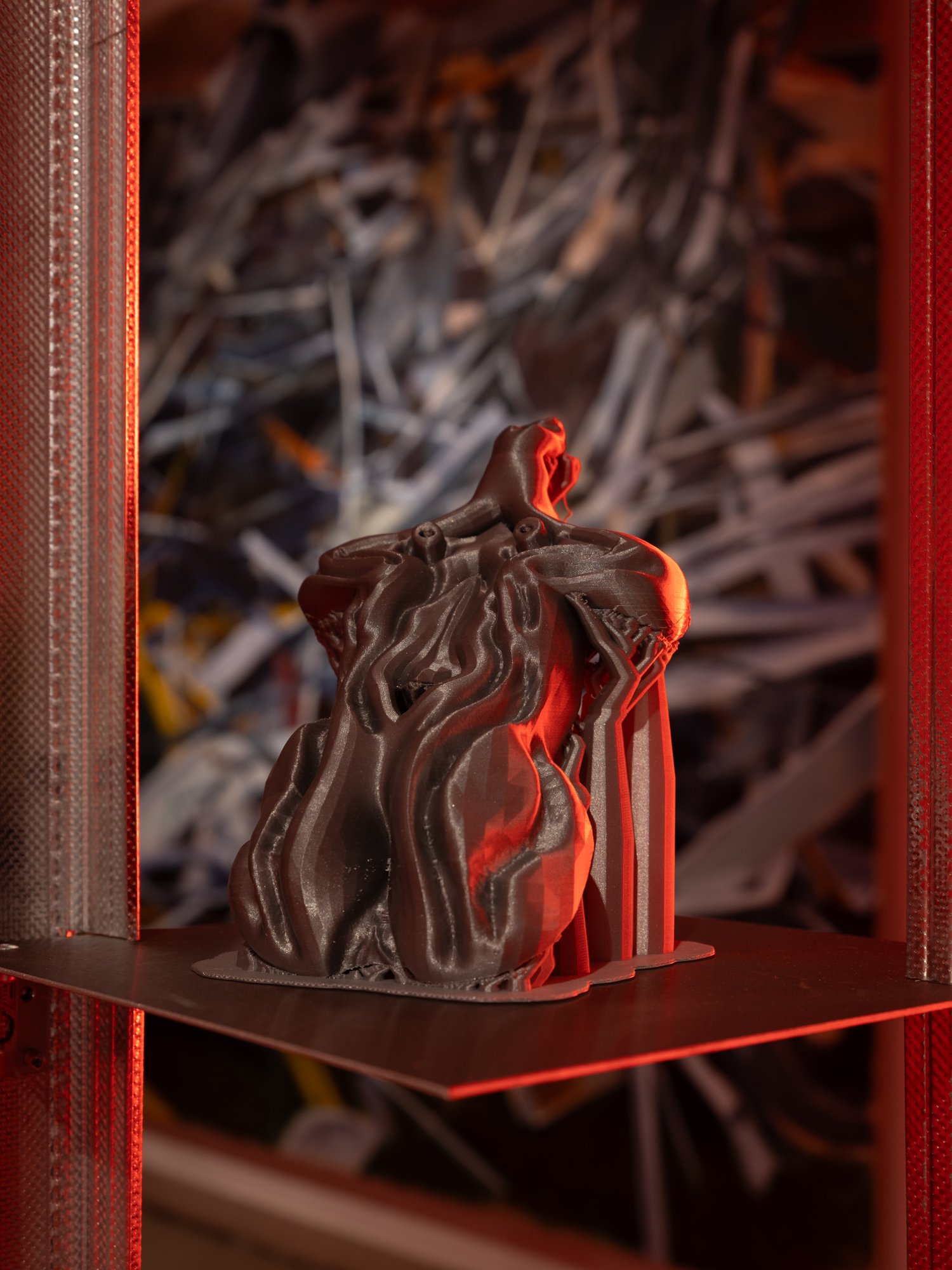
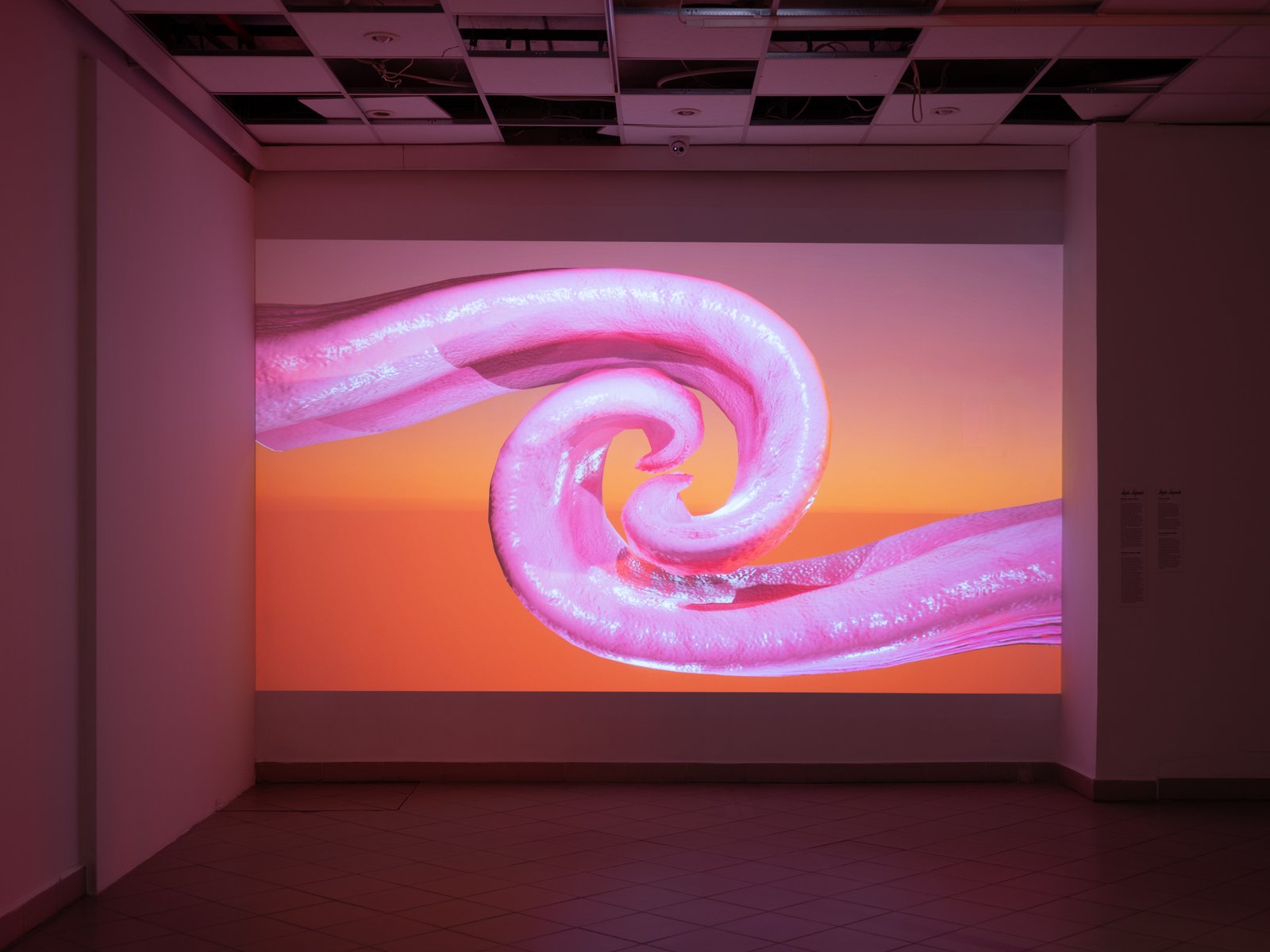
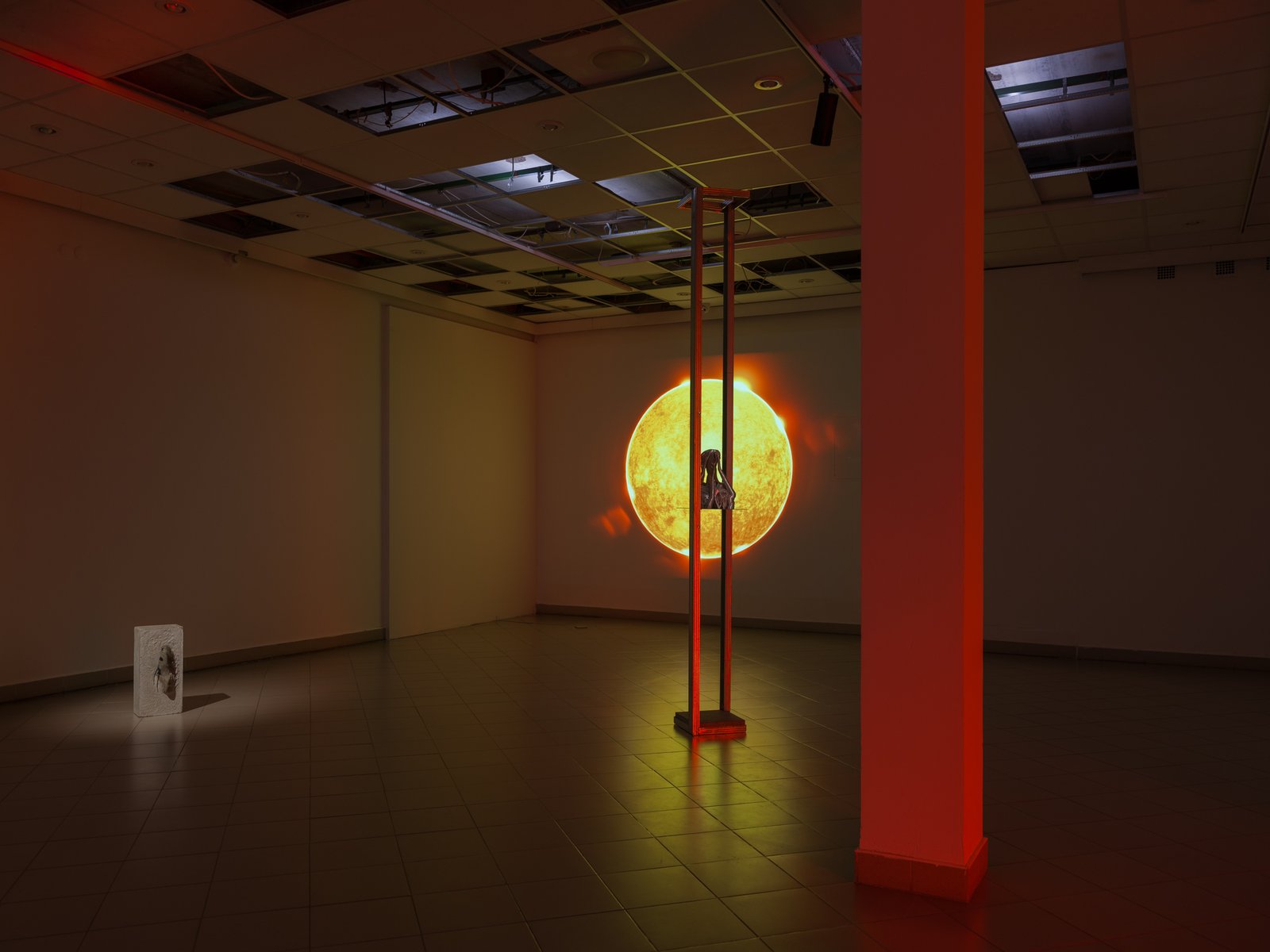
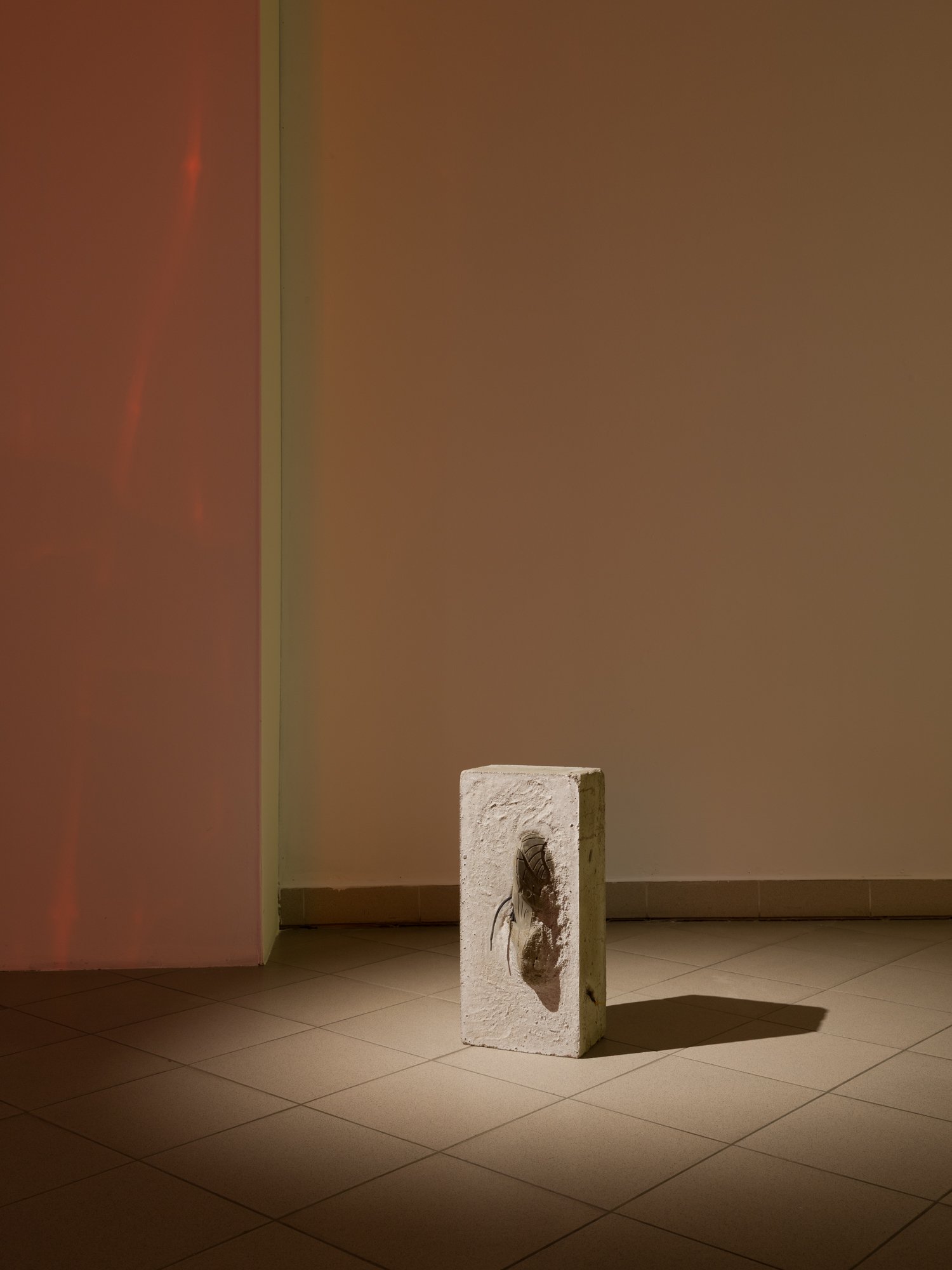
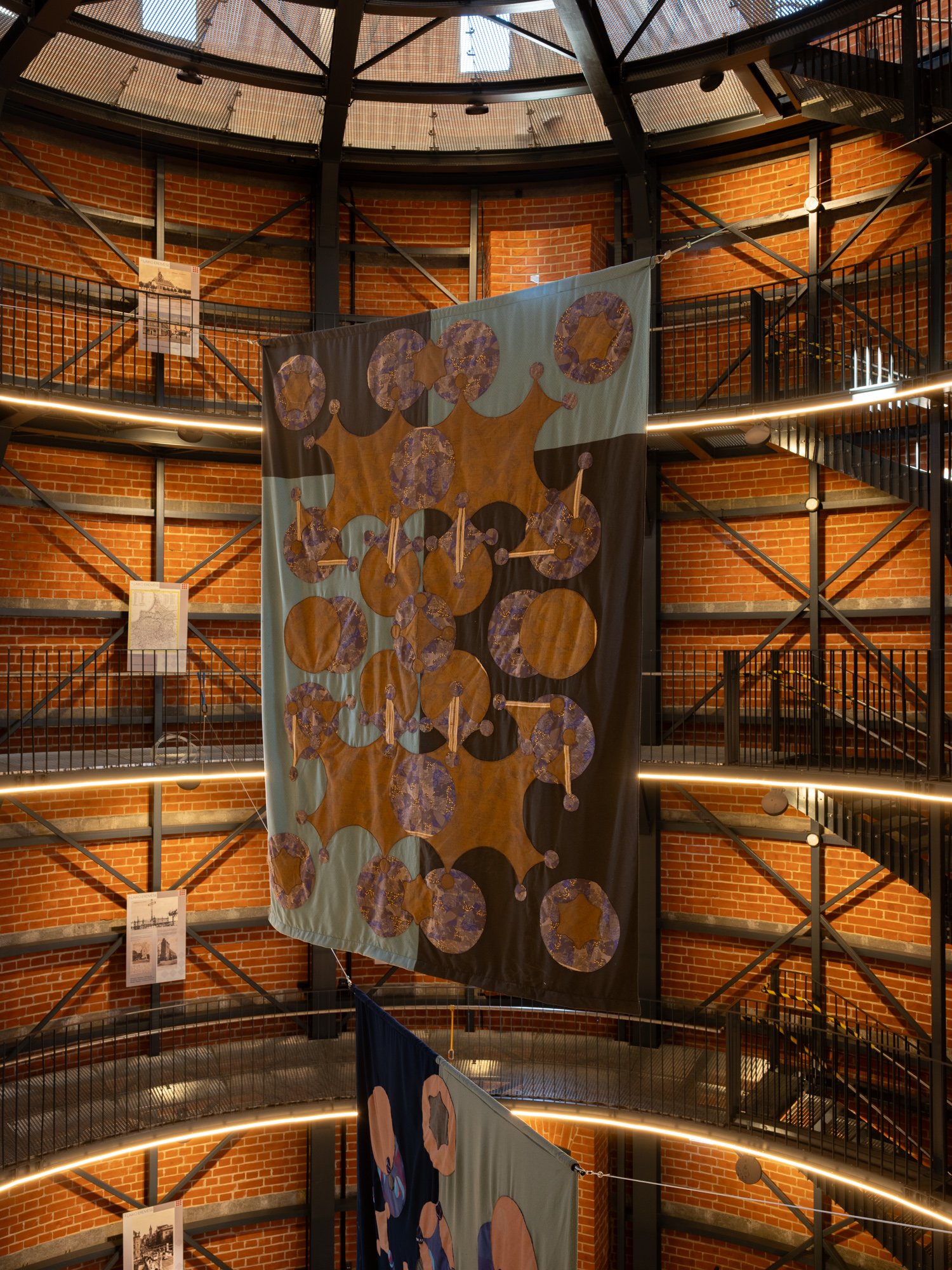
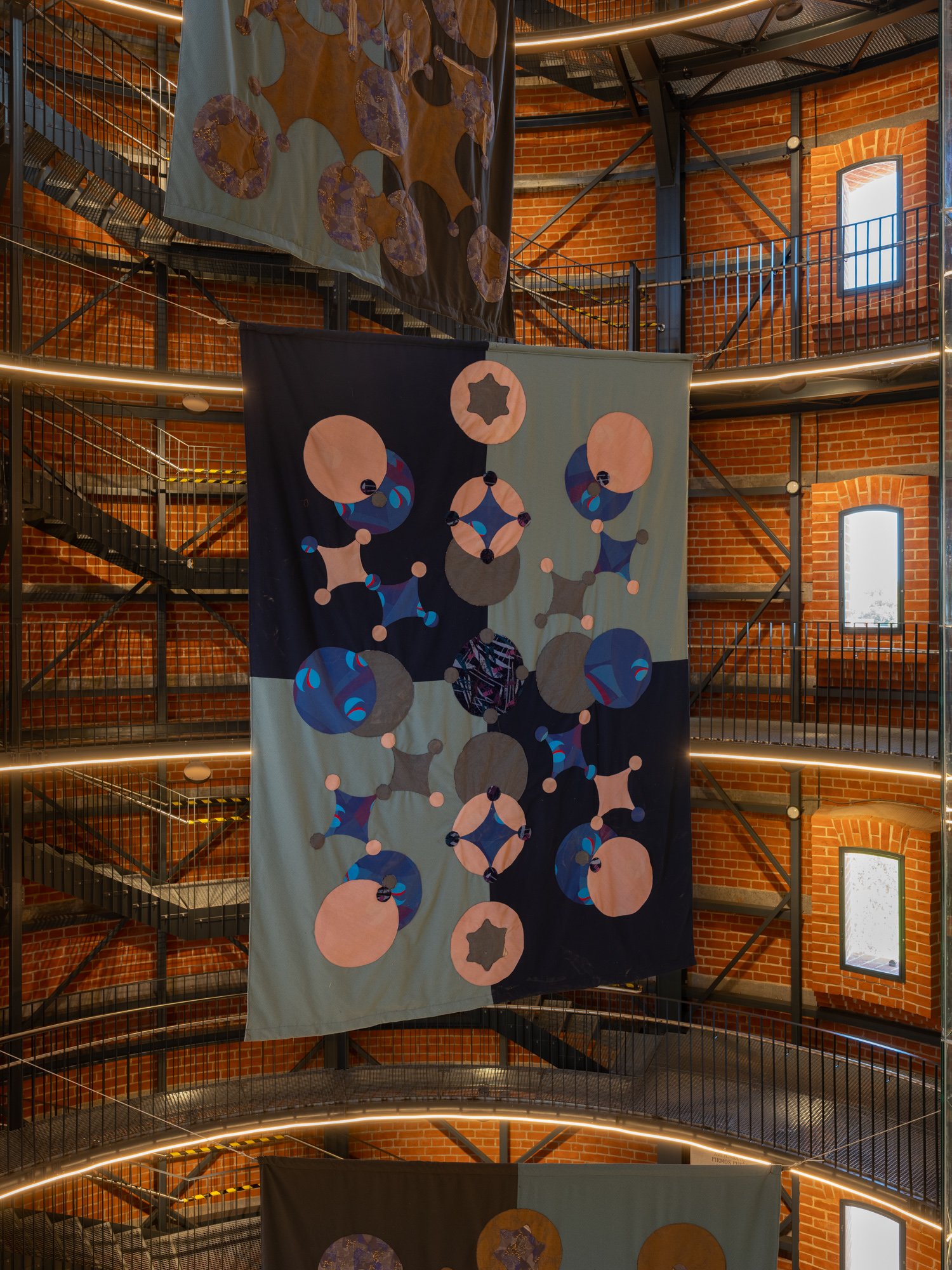
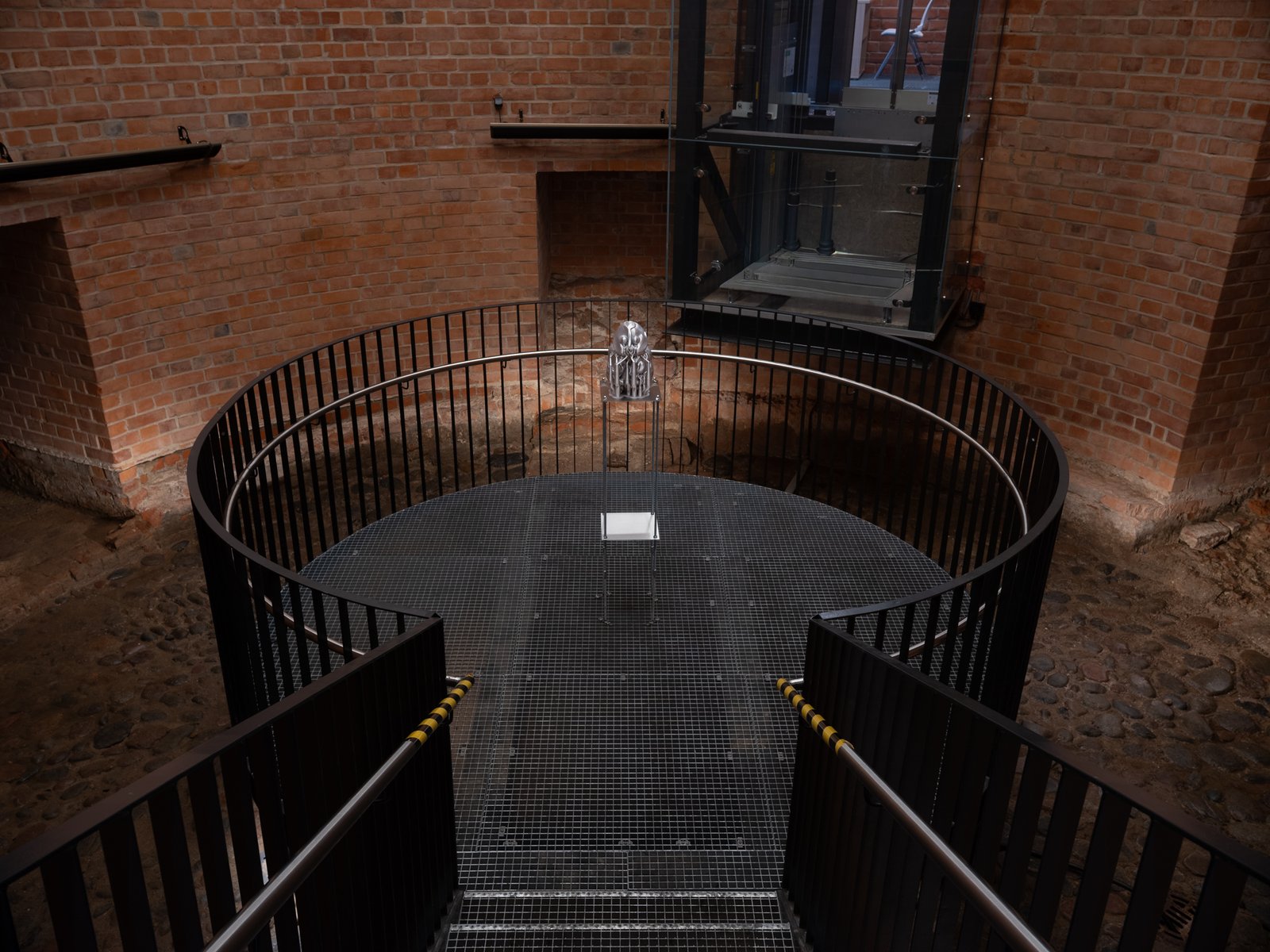
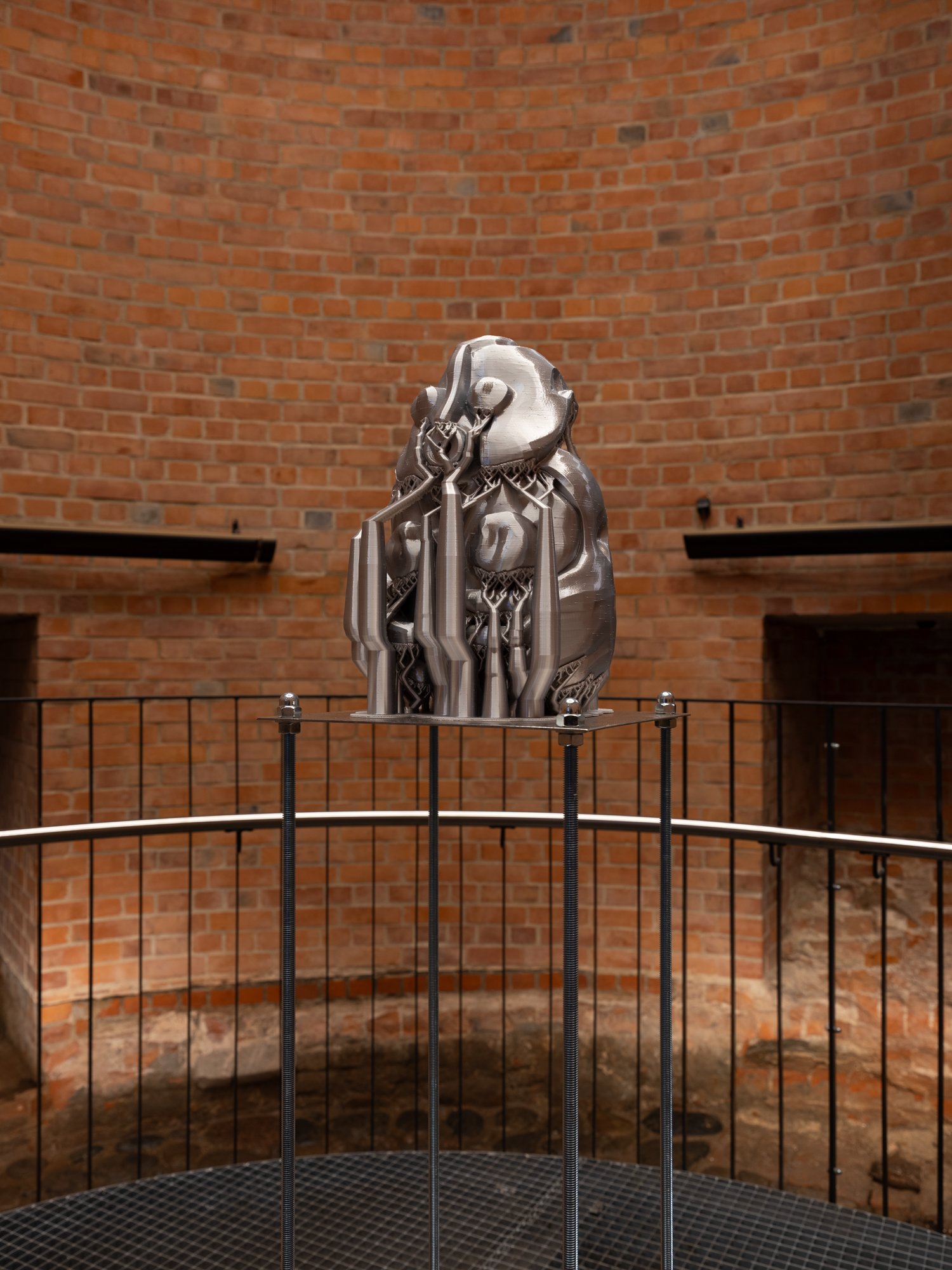
In the life of cities, and ports in particular, two states are constantly in tension. One is silence and stillness, emerging from what can no longer be recovered. This silence and stillness appear in Finnish artist Juha Metso’s photographs of Kotka’s lost islands, where the landscape becomes a witness to loss. It is a silence that is not emptiness, but rather a sensitive remainder of former lives, places and their memories. The other side of these images is the anxiety and sadness that accompany the loss of territories and lives. Meanwhile, in the works of Finnish painter Thomas Nyquist, accumulations of ruins, construction materials and waste become more than images of decay. His Stairs (Odesa) II (2026) depicts the remains of a building destroyed during Russia’s aggression in Odessa. For Nyquist, the ruins become a form of resistance – as if they were material from which another form might emerge, suggesting that loss is not only an ending, but also an opportunity to rethink the city. This transformation continues in Donatas Norušis’s Skintight. Over the course of the exhibition, the work slowly and irreversibly changes: the fabric loses its original form, water drains from it, and the resulting deformation becomes a memory of a weight that has disappeared. Memory and the future come together in Ervinas Faktūra’s works Moonlight and Mist. Žara, created for the tower of Klaipėda Castle Museum, speaks of a place that has been destroyed, burned and rebuilt over centuries. Ūkas offers another way of looking. Here, clarity continually gives way to intuition, while the work itself becomes a membrane between the city, memory and an almost hypnotic imagination.
Situated in the historic Klaipėda Castle Museum tower and the KKKC Exhibition Palace, the works of Brigita Kasperaitė and Ervinas Faktūra can be understood as guardians and witnesses of these places: one awaiting renovation and transformation, the other echoing the past through its new architecture.
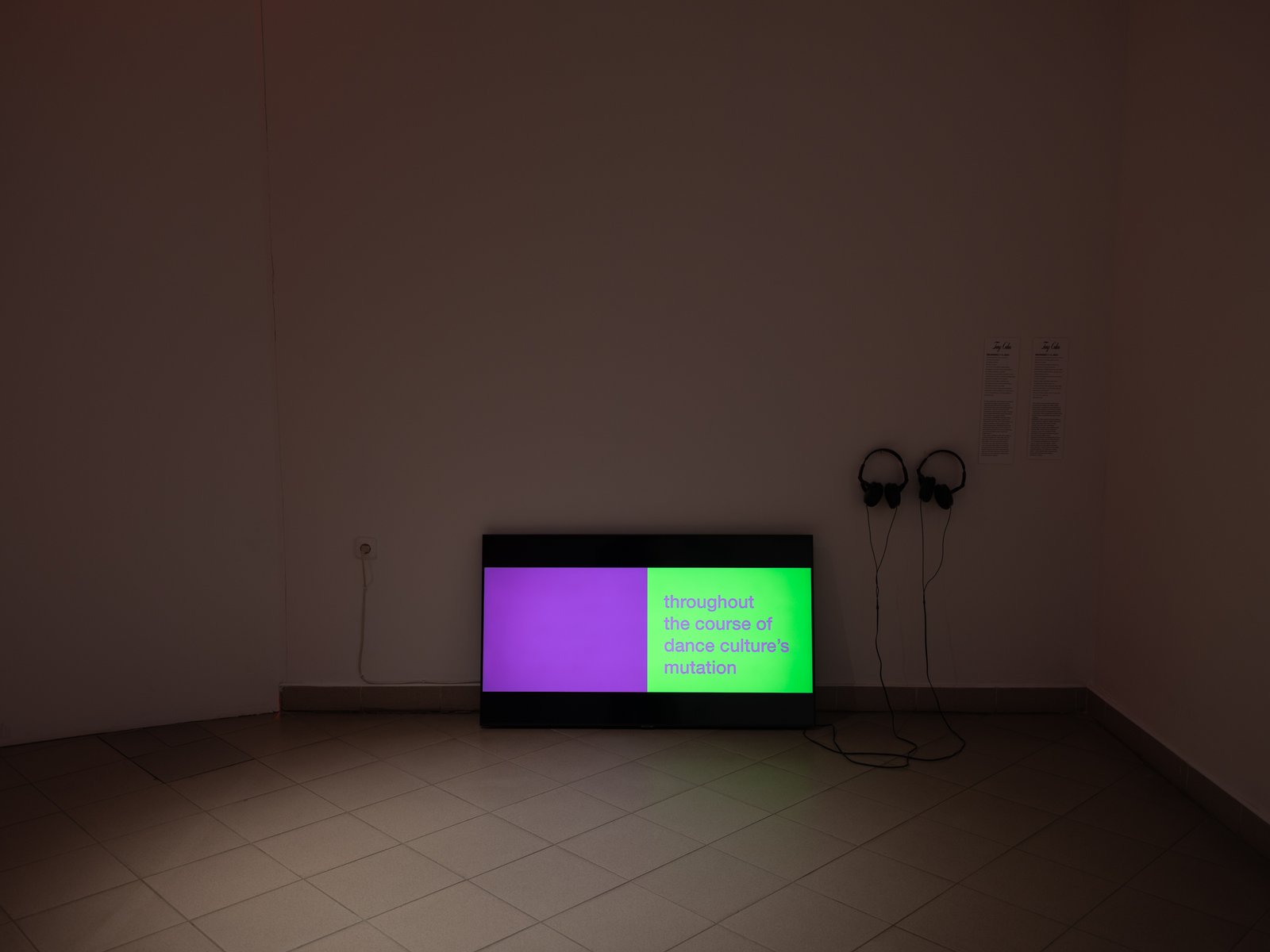
The past is animated through the recent history of Klaipėda’s alternative culture and rave scene. In the works of Dijuotė Žilytė, Tony Cokes, and others, nightlife, the body, rhythm and togetherness emerge both as a sonic experience and as a form of urban time – a moment when music, club culture and young people create entirely new forms of community and new experiences of the city.
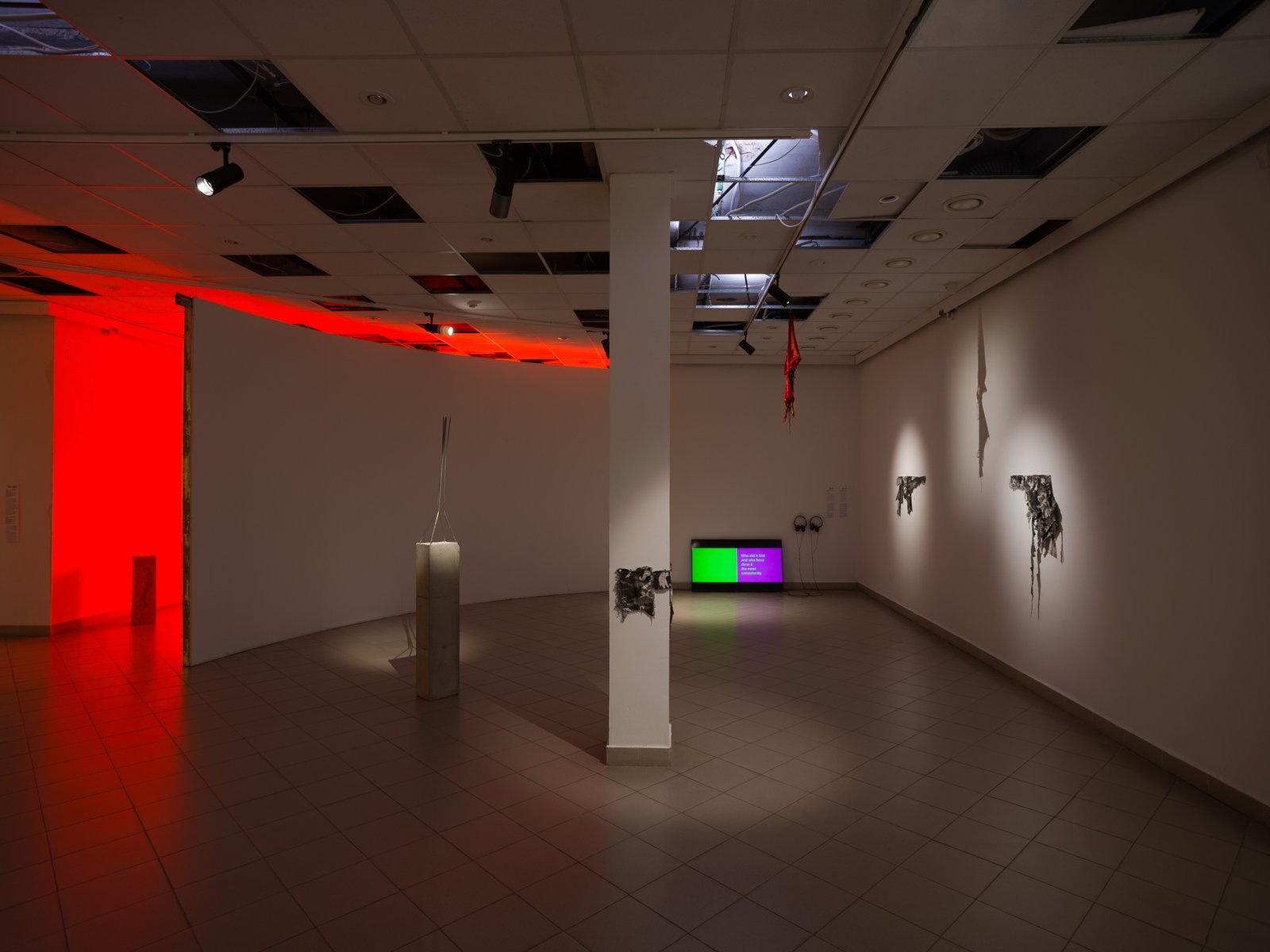
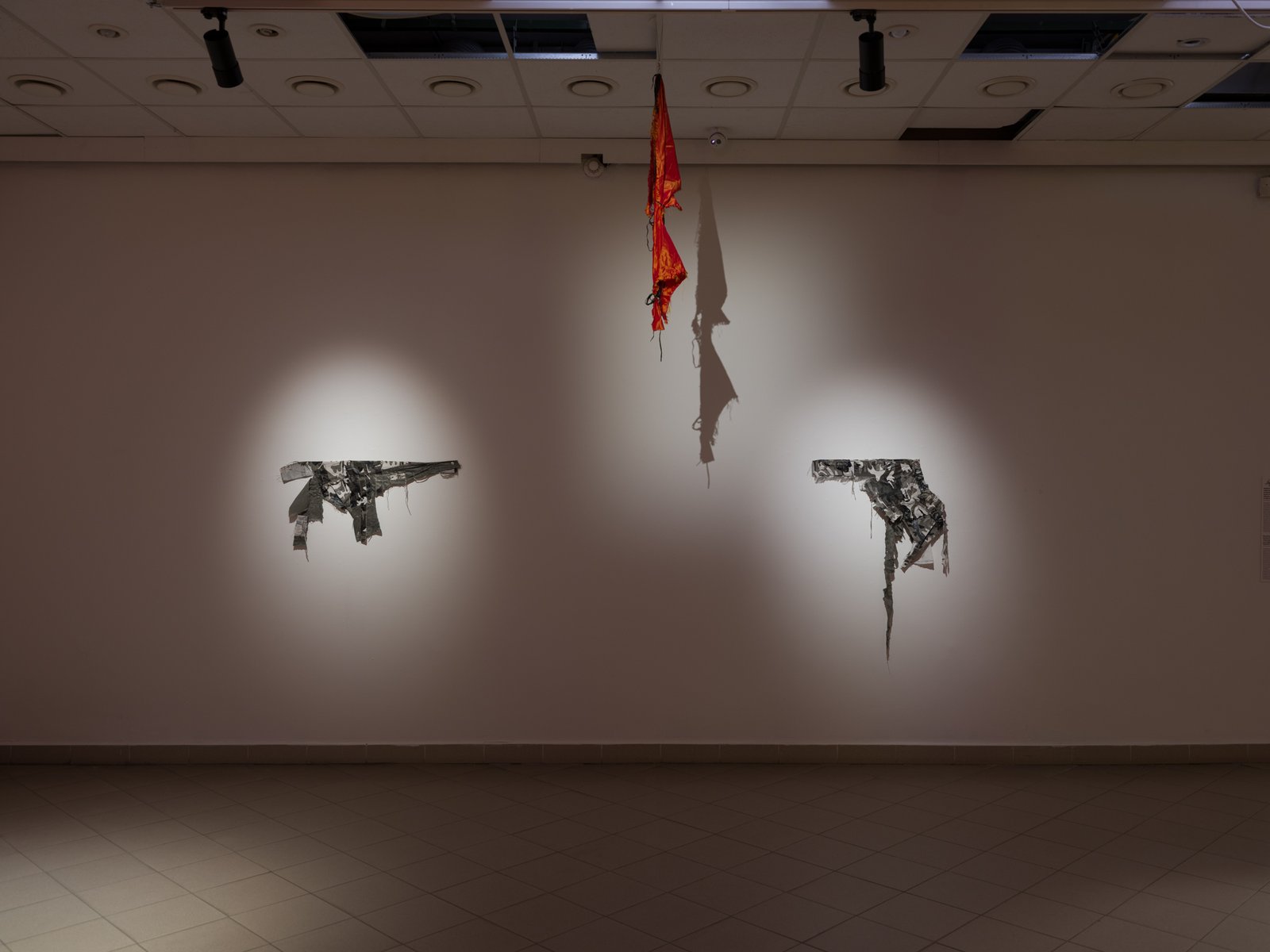
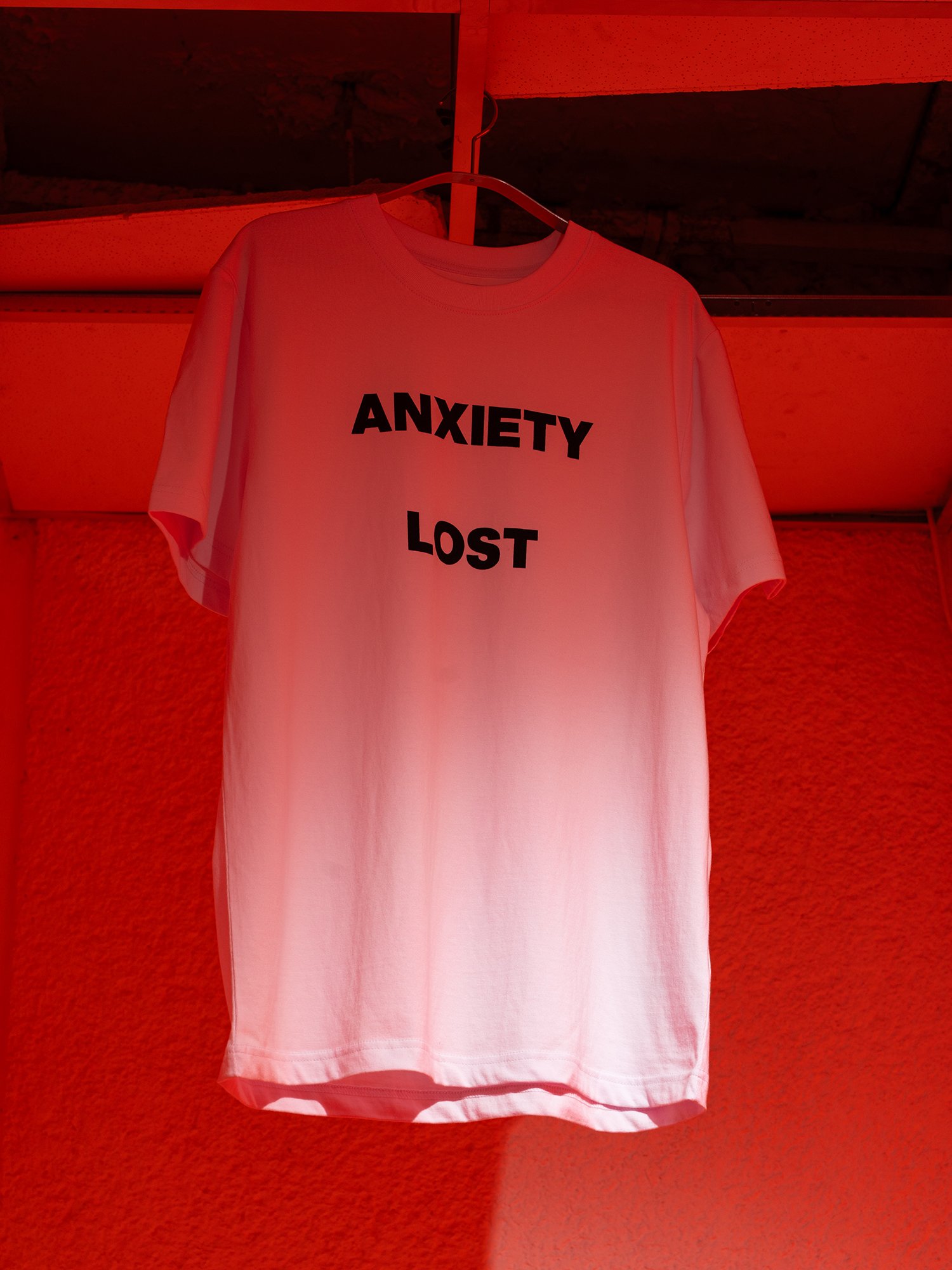
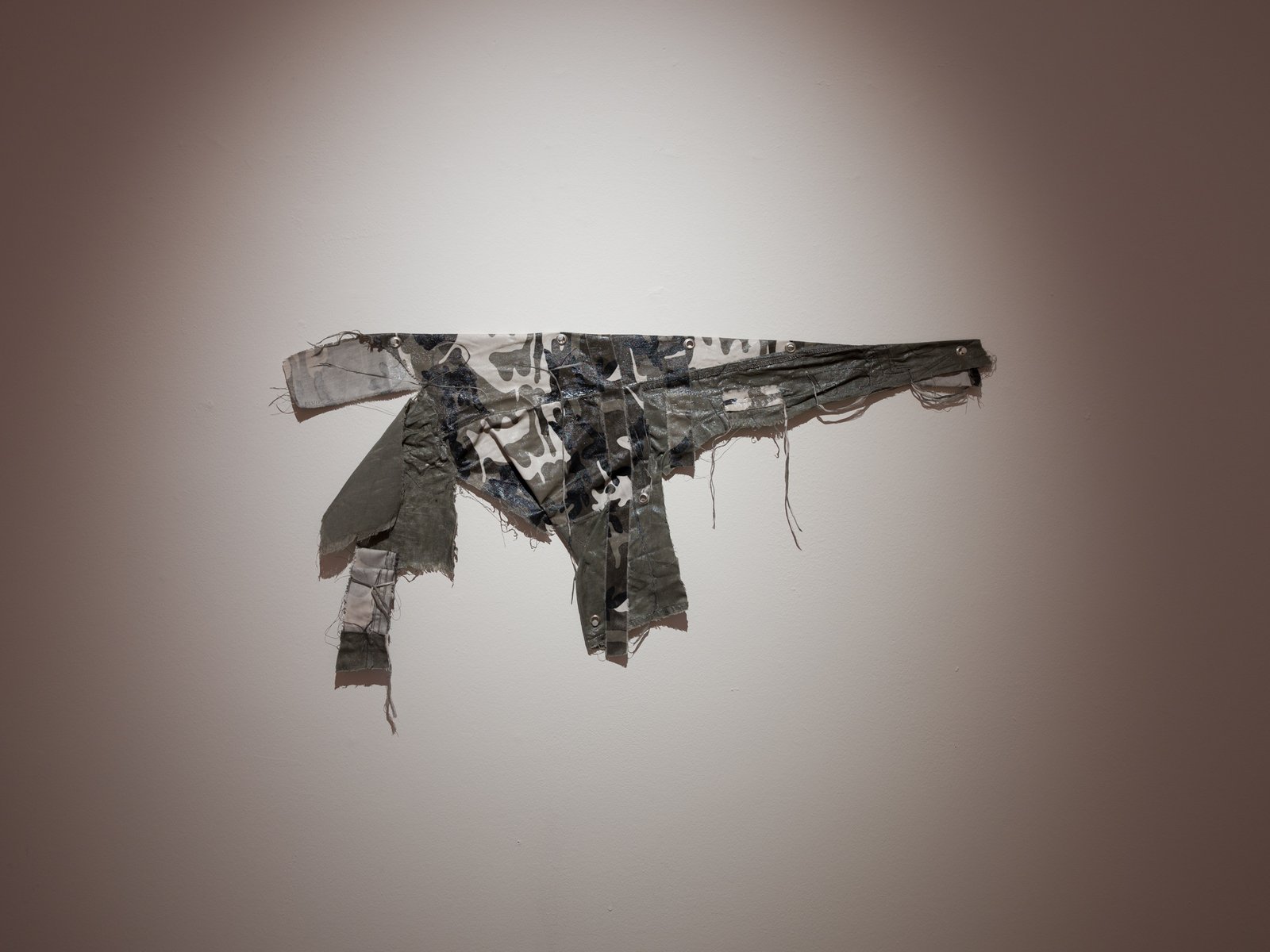
Alongside the losses and transformations of the landscape and the city, the exhibition also turns to the ecological vulnerability produced by urban transformation. In Finnish playwright Pipsa Lonka’s play These Little Town Blues Are Melting Away, what is lost is not only territory, but also a way of life, a community and a familiar relationship with the environment. Rising waters signal a transformation that humans can no longer fully control. This tension continues in the signs of metallisation and anxiety on Jurga Sako’s Anxiety Lost T-shirt, while the works Krišjānis Elviks created during his HIAP residency on Suomenlinna island near Helsinki transfer rage and inner noise into second-hand textiles.
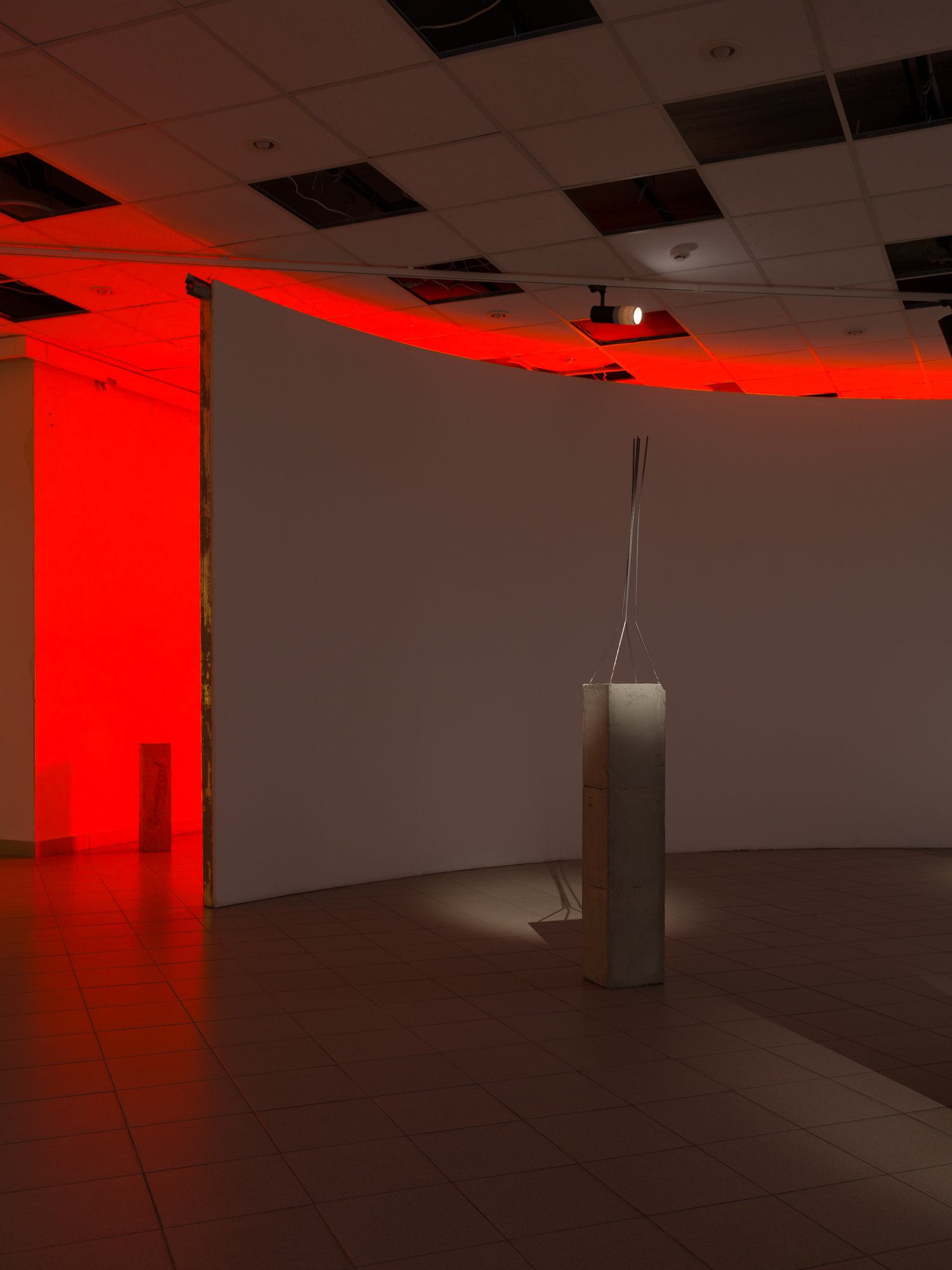
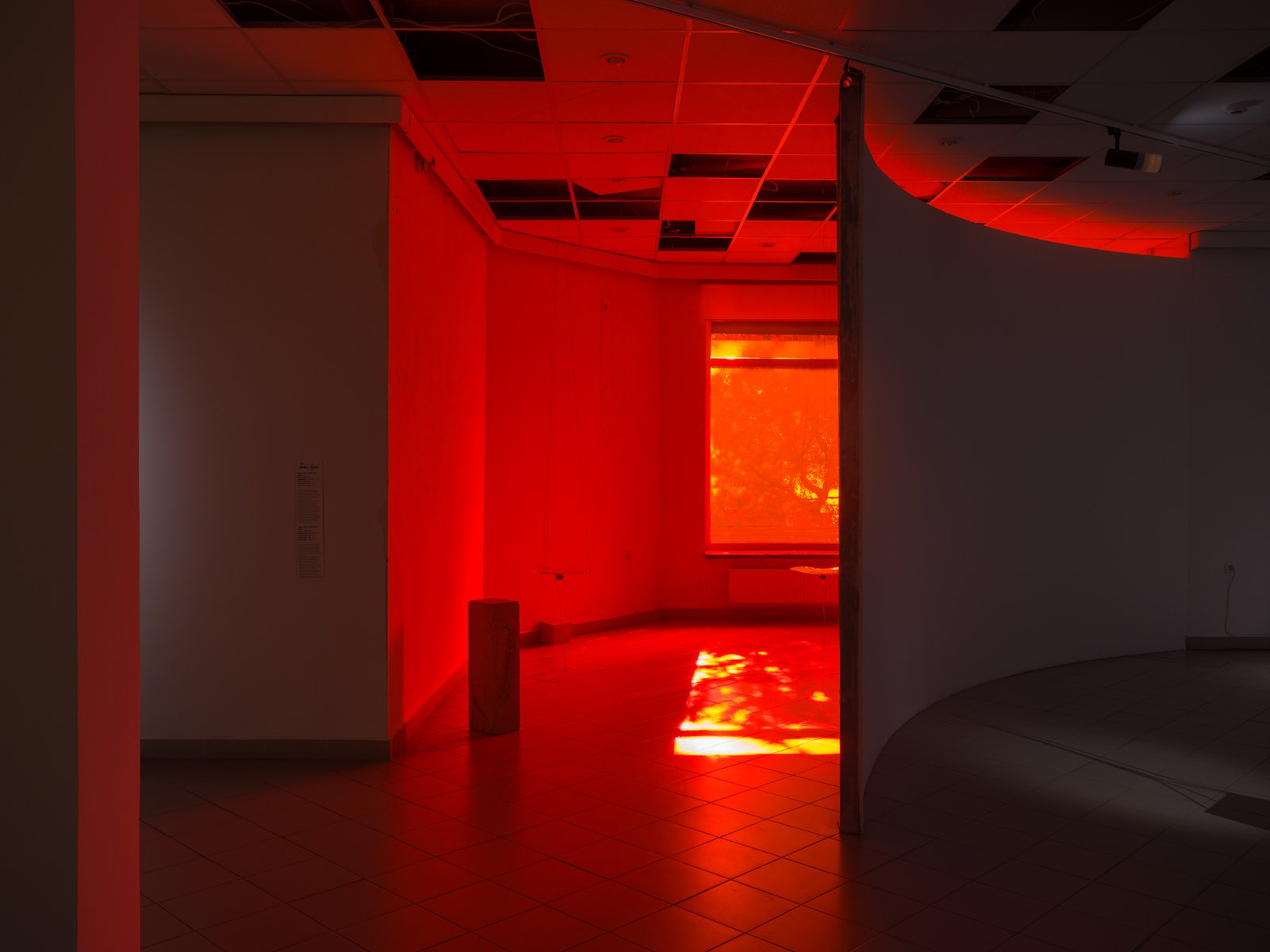
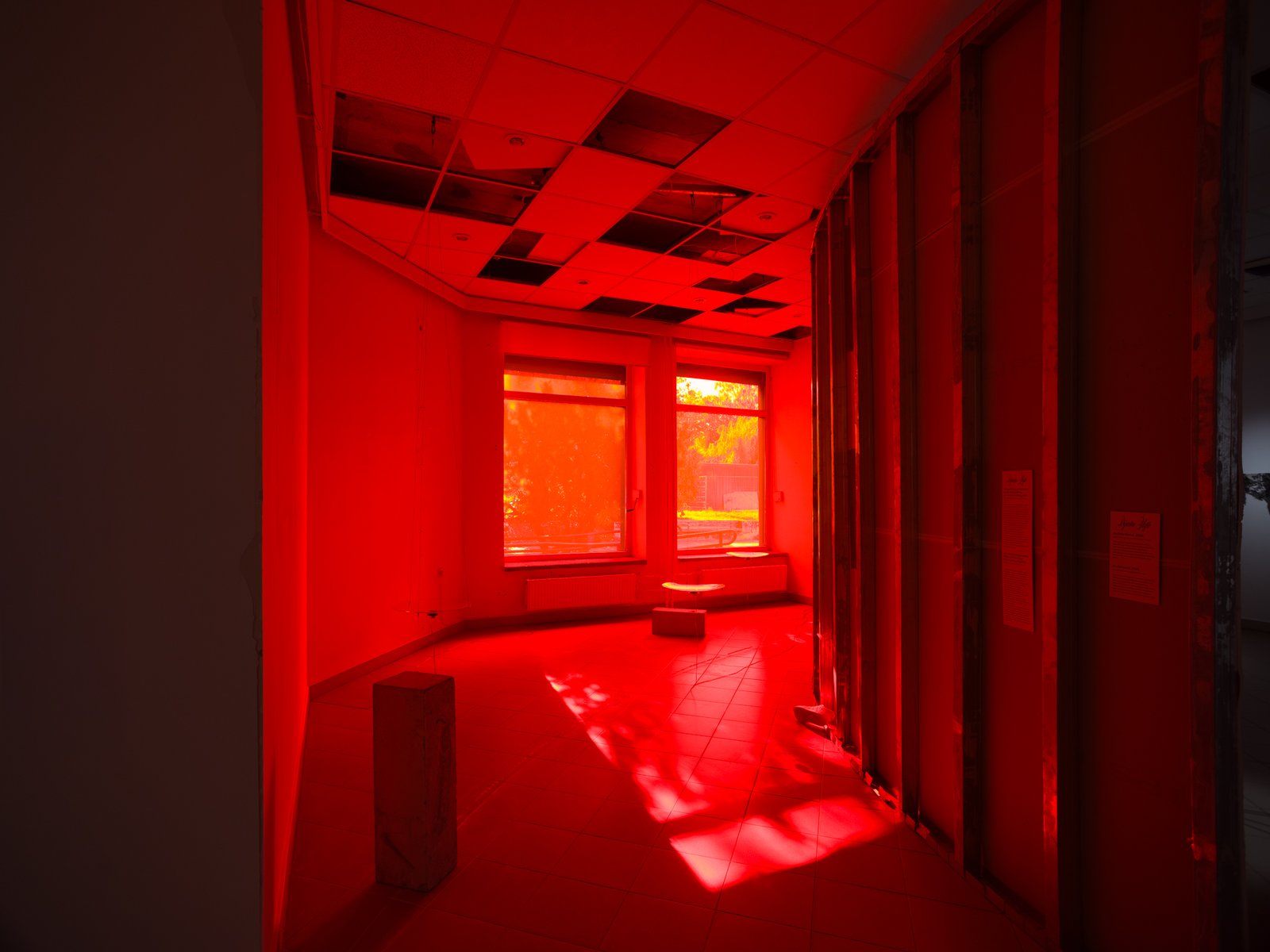
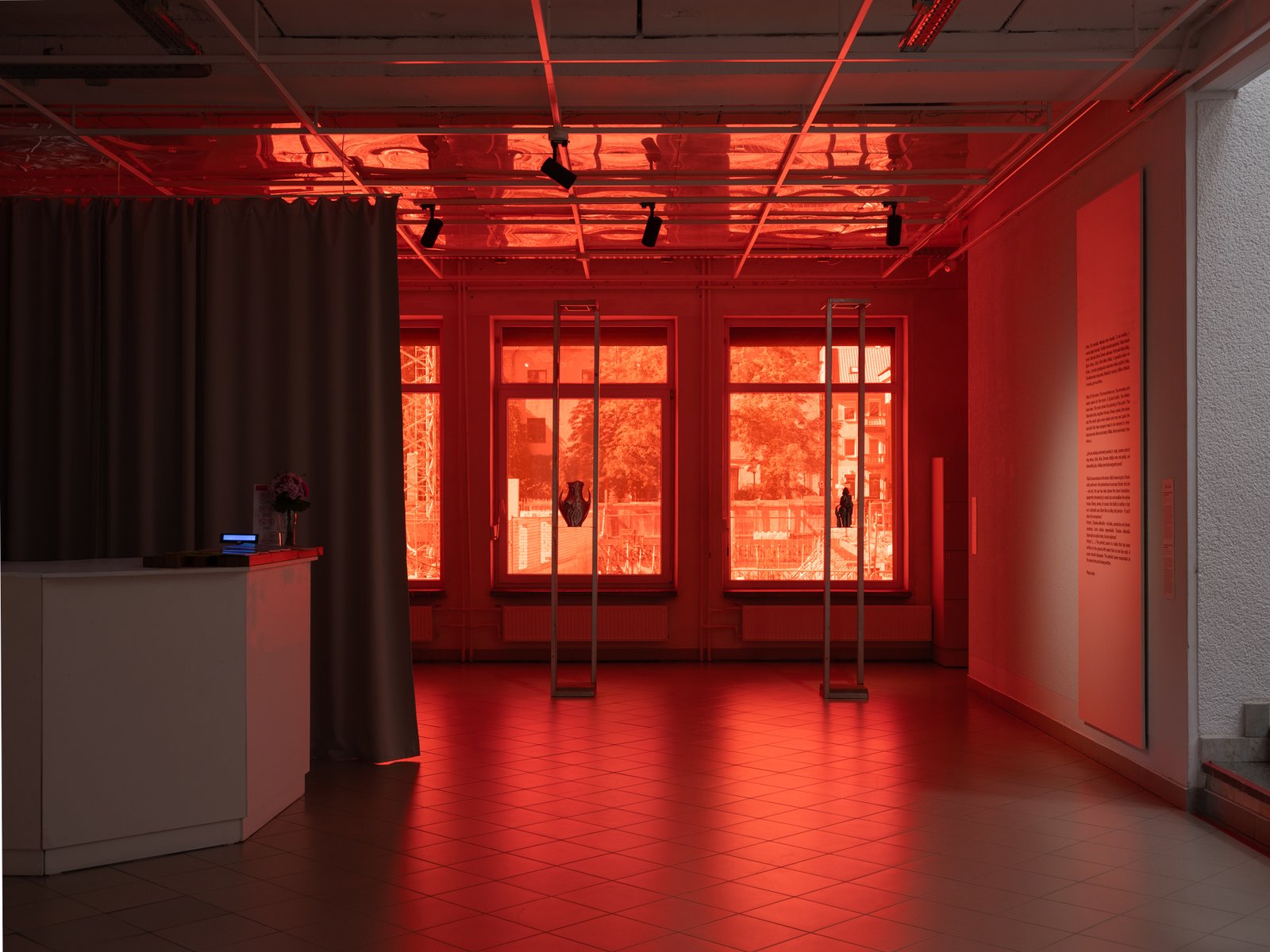
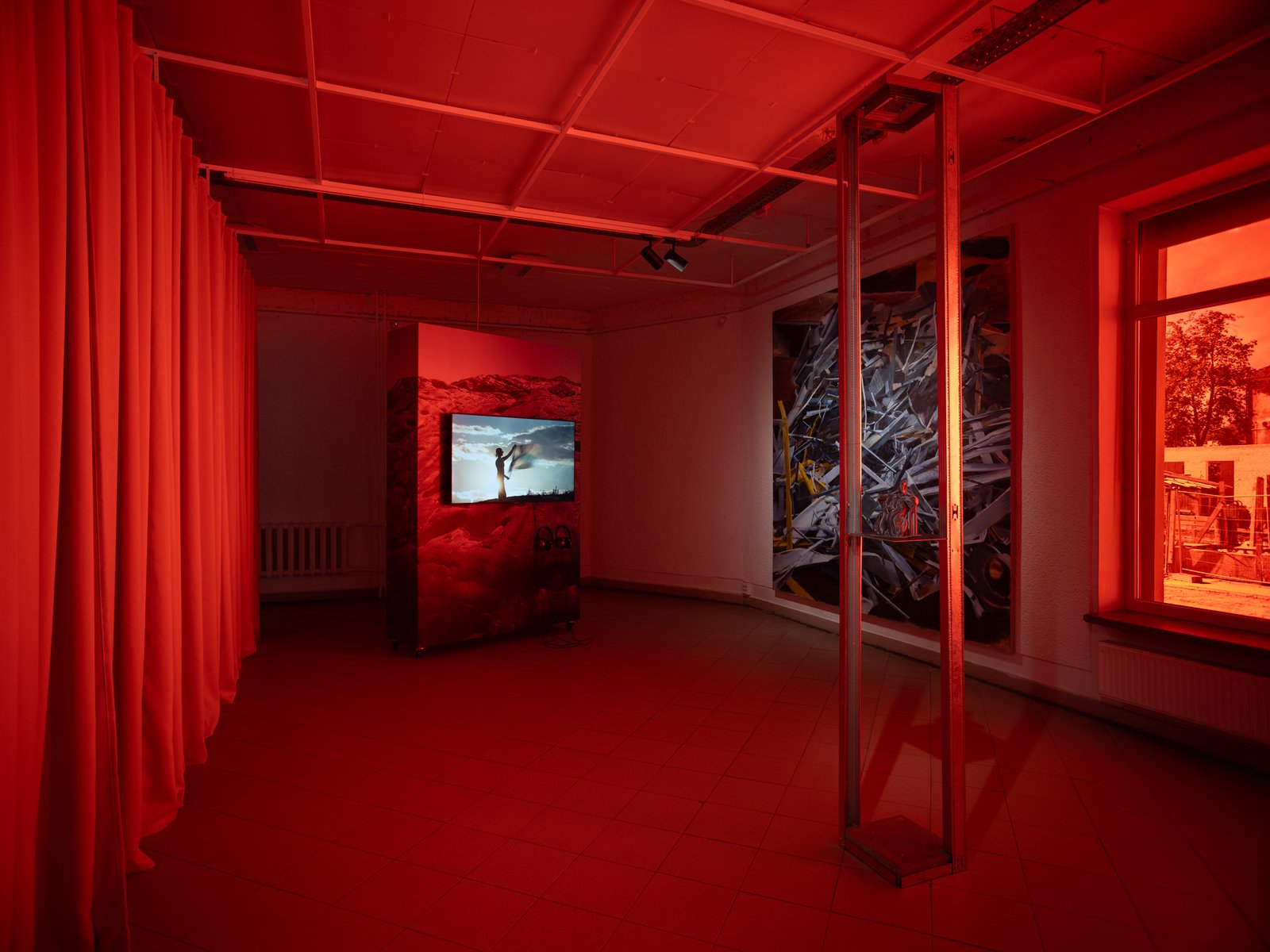
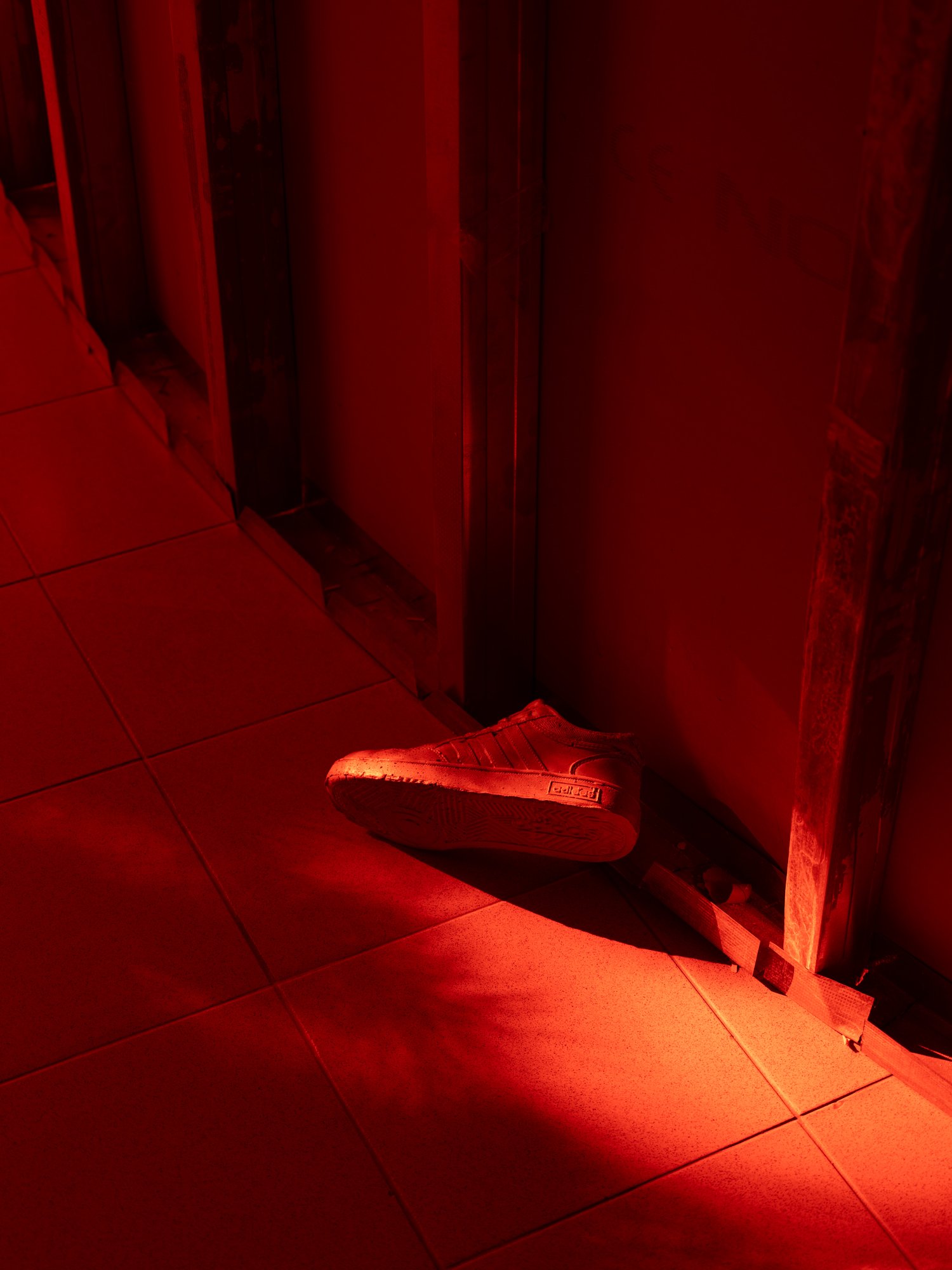
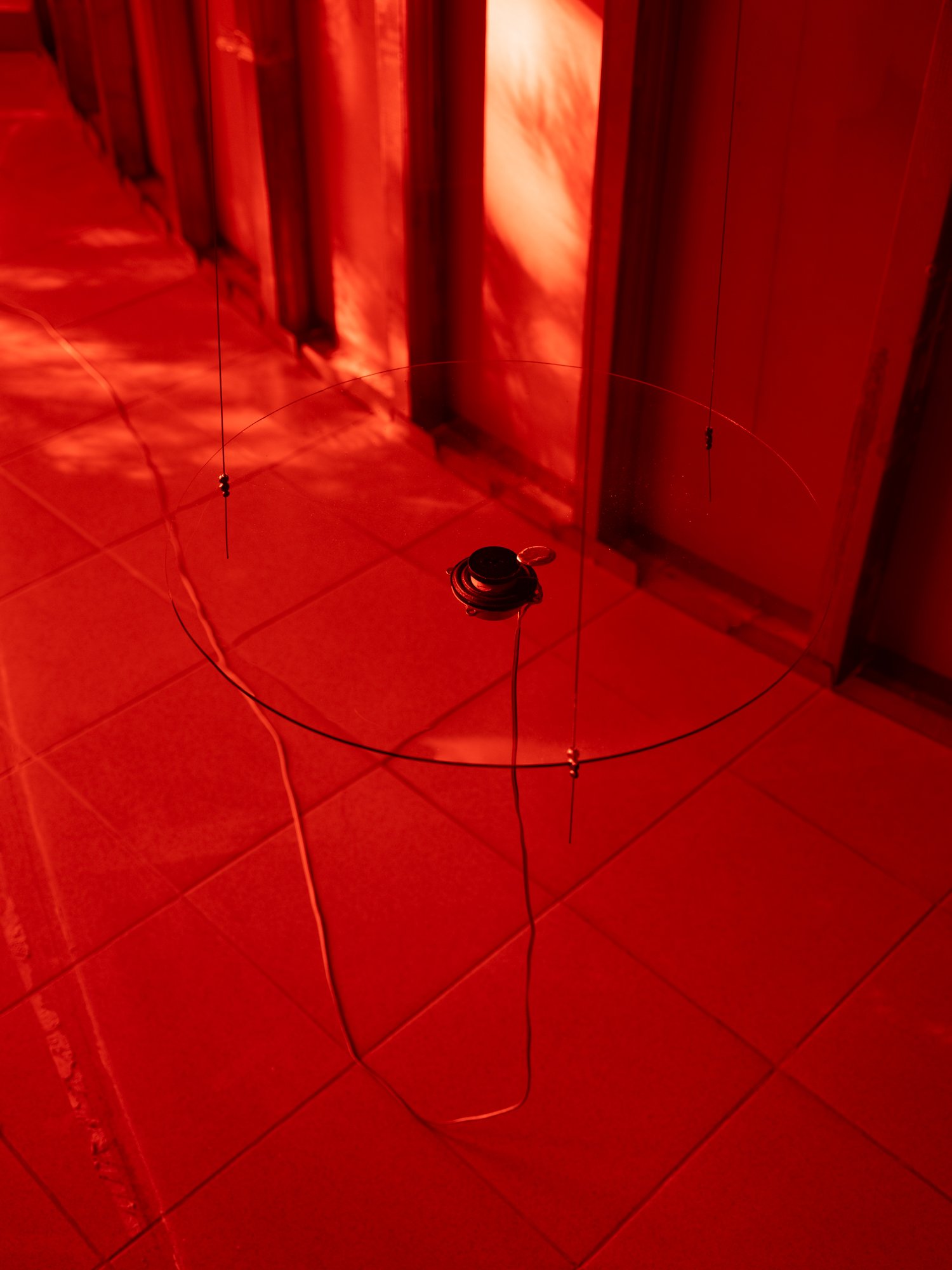
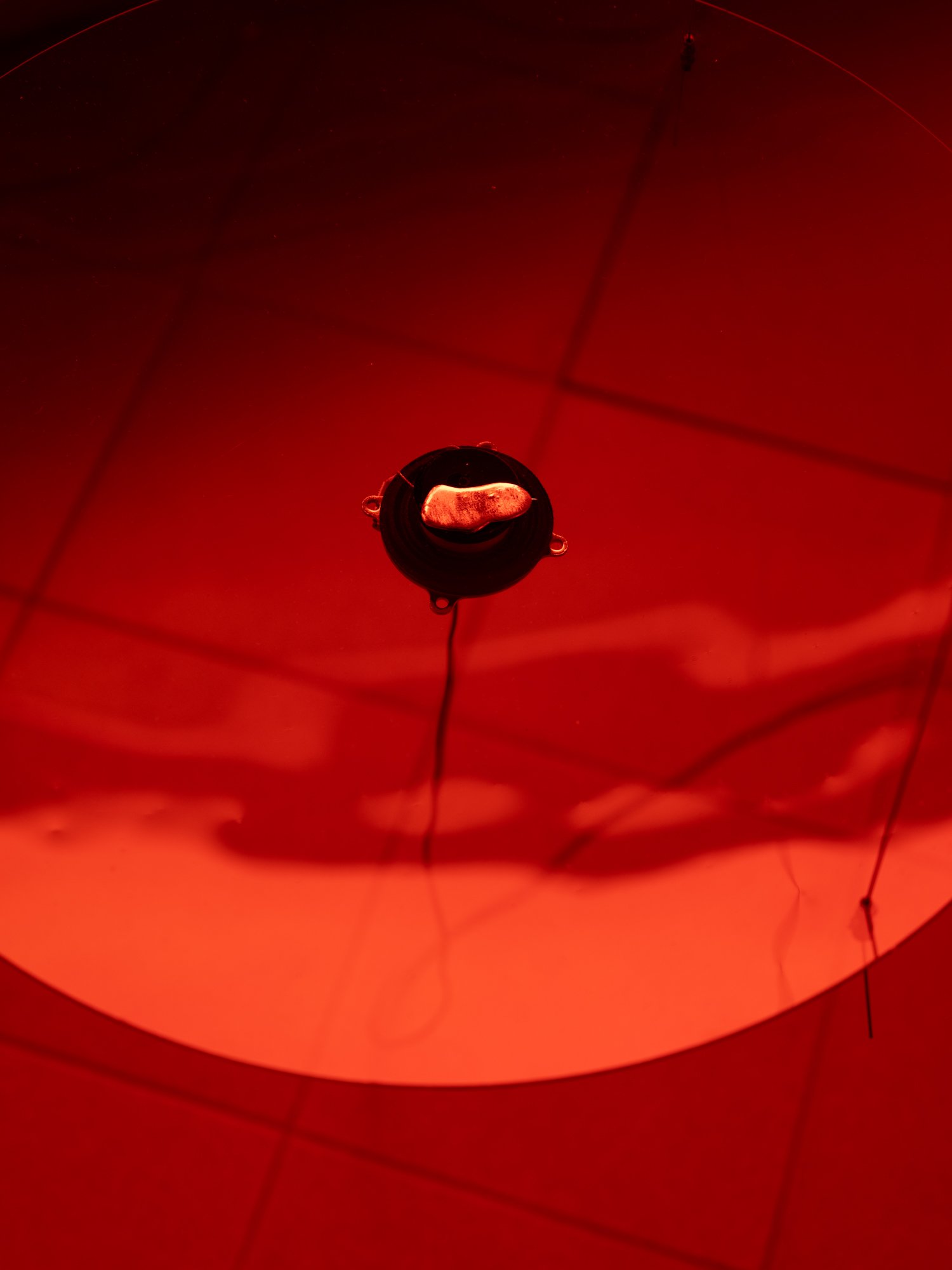
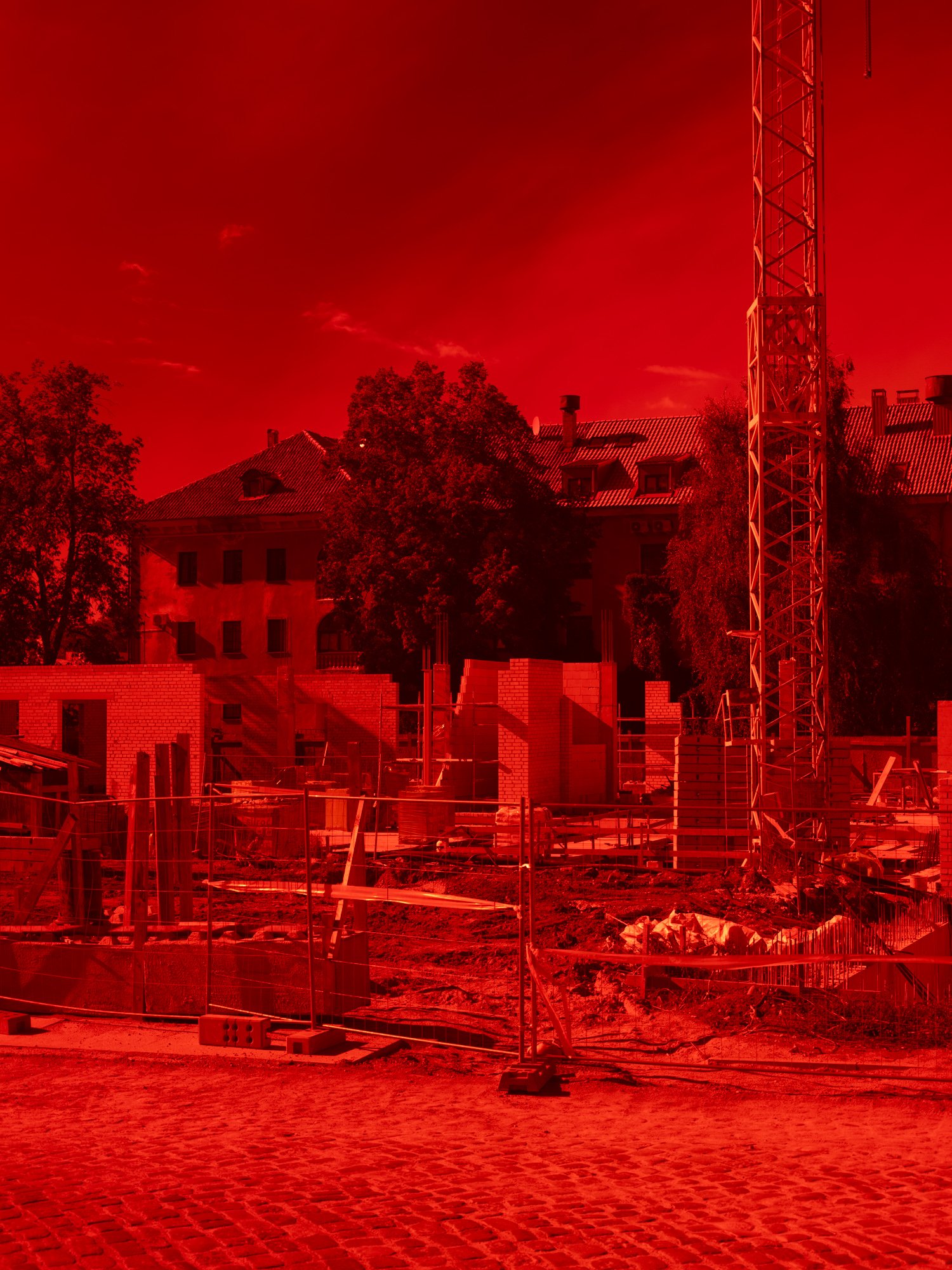
Both Klaipėda and Kotka are inseparable from the sea, the port, former military sites, construction and an ever-changing landscape. Brigita Kasperaitė, the exhibition architect, attaches the veil of ‘liminal dystopia’ to this transformational landscape. Her red filters frame the view like an image still developing – as if in a darkroom within the exhibition – while simultaneously directing our attention from the inside out, towards the cityscape of Klaipėda and its noise.