

Architecture has long served as a means of organizing behaviour, directing the movement of bodies
long before the subject consciously registers the rules governing them. In everyday life, this logic
operates on a micro-scale: through partitions, designated routes, restricted spaces, and the spatial
organization of institutions. Control does not necessarily require visibility or force; it can emerge
simply through the way a space is arranged.
The exhibition, continuing the MMM series, approaches space as precisely this form of behavioural
organization. Here, personal space is reconstructed according to the logic of an anonymous
administrative procedure. Its boundaries are designated, movement is directed, and the range of
possible actions is outlined in advance. Yet, the nature of this coercion is entirely stripped of the
previous century’s totalitarian pathos. Order exists primarily as a form to be followed.
The reference to MMM does not return the exhibition simply to the history of Russia’s “wild
capitalism” of the 1990s—originally the country’s most notorious Ponzi scheme, which later re
emerged as an international online financial network operating through cryptocurrency. What
matters here is not the figure of its founder, nor the specific historical backdrop of post-Soviet
transition, but the condition of collective participation in a system whose internal mechanisms are
inherently opaque to its participants. MMM becomes a template for a mechanism familiar to
humanity long before financial pyramids: the promise of certainty is accepted in exchange for trust
in something that cannot be fully verified or understood.This process operates independently of
naivety or absolute faith. It produces a paradoxical contradiction: the subject’s pursuit of personal
control is enacted through the voluntary surrender of control to the outside. It is enough to accept a
prescribed way of acting because it temporarily makes uncertainty more manageable.
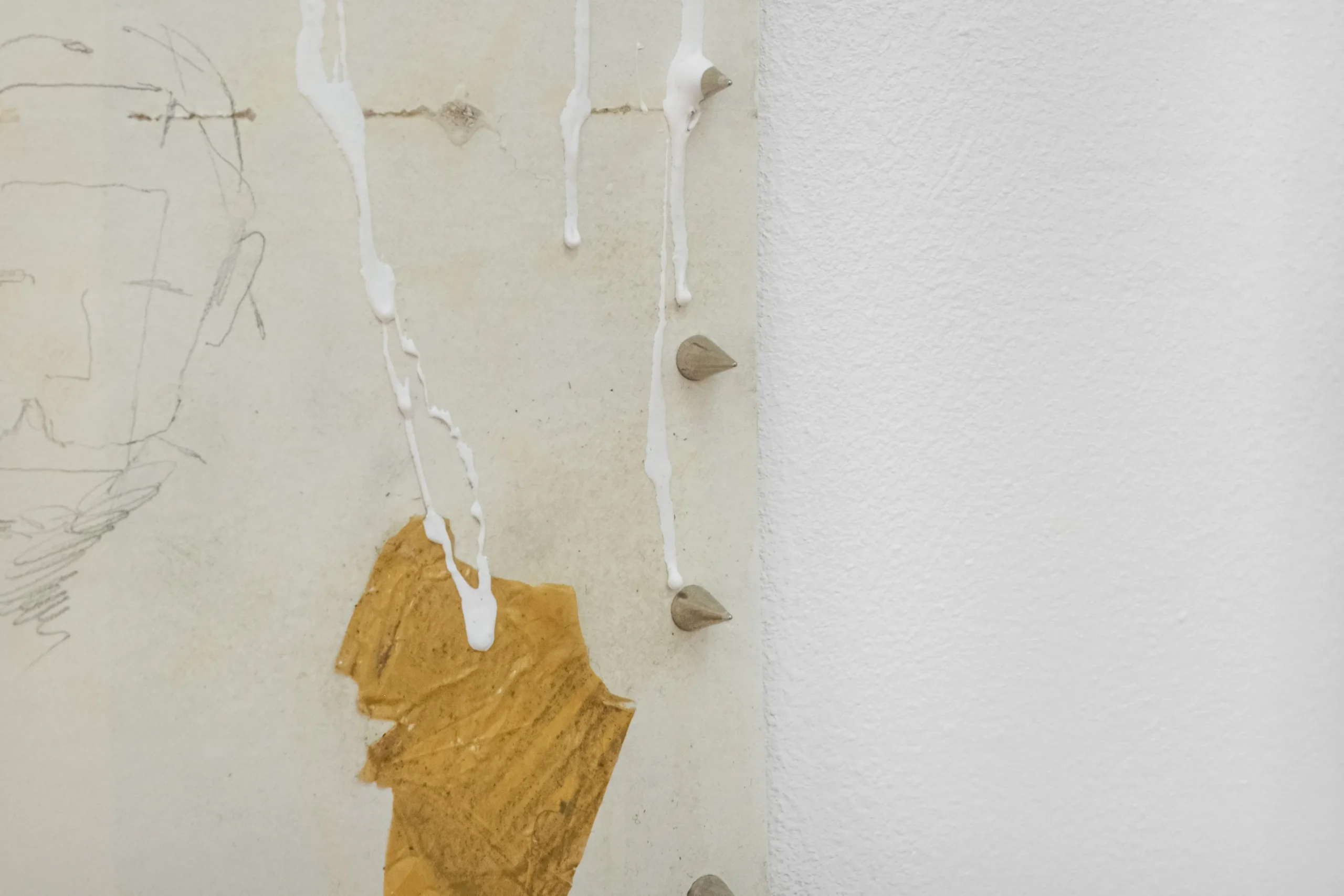
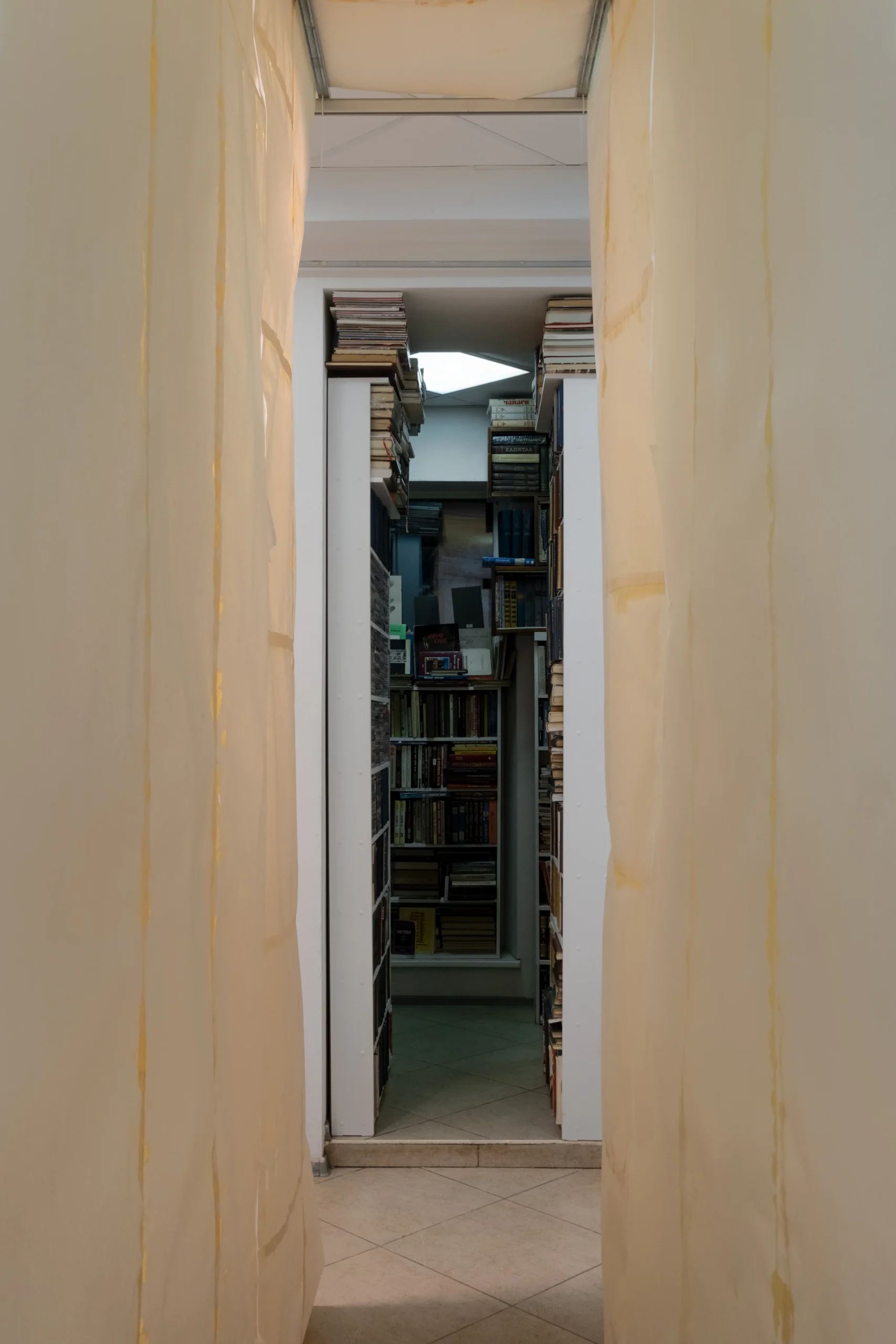
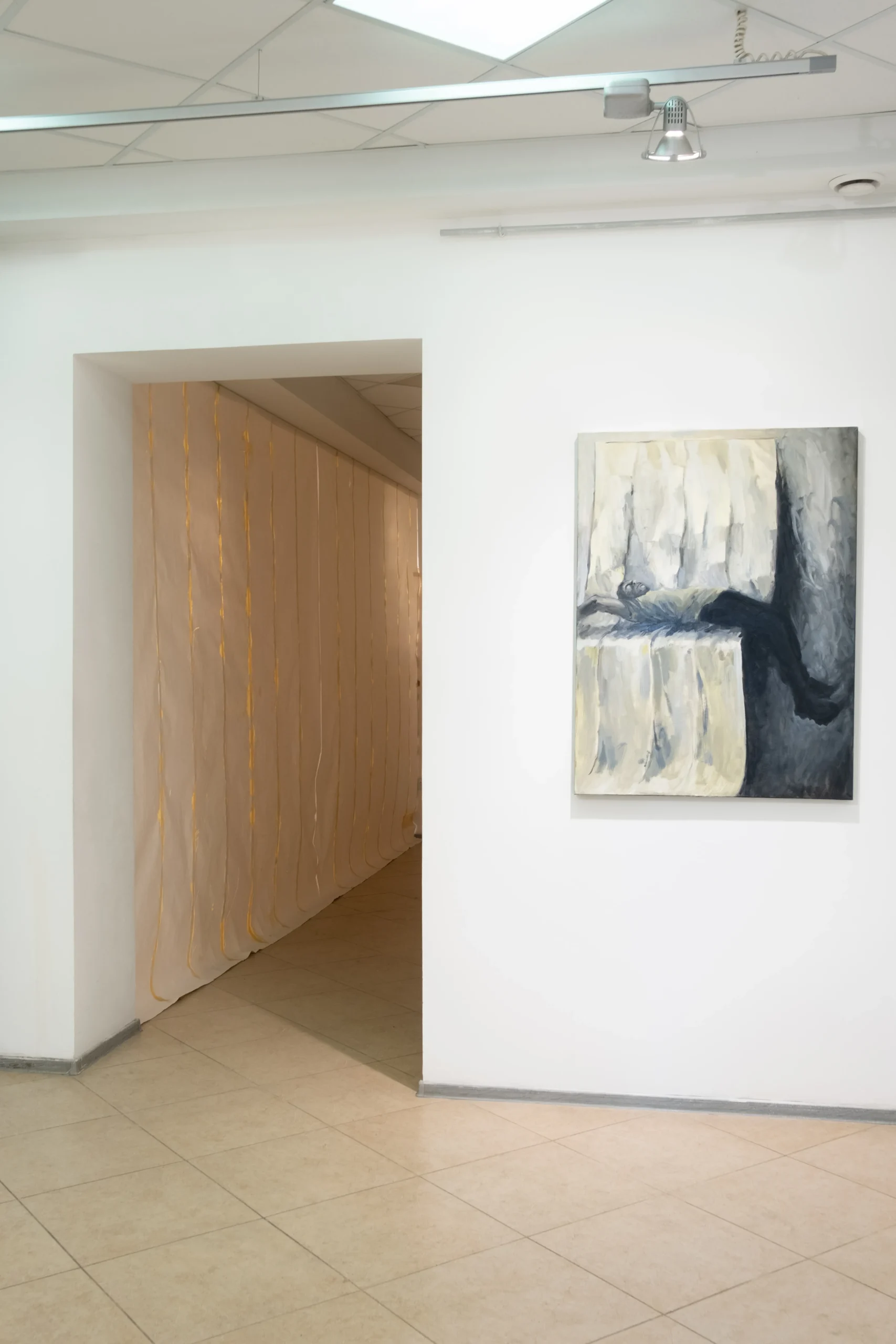
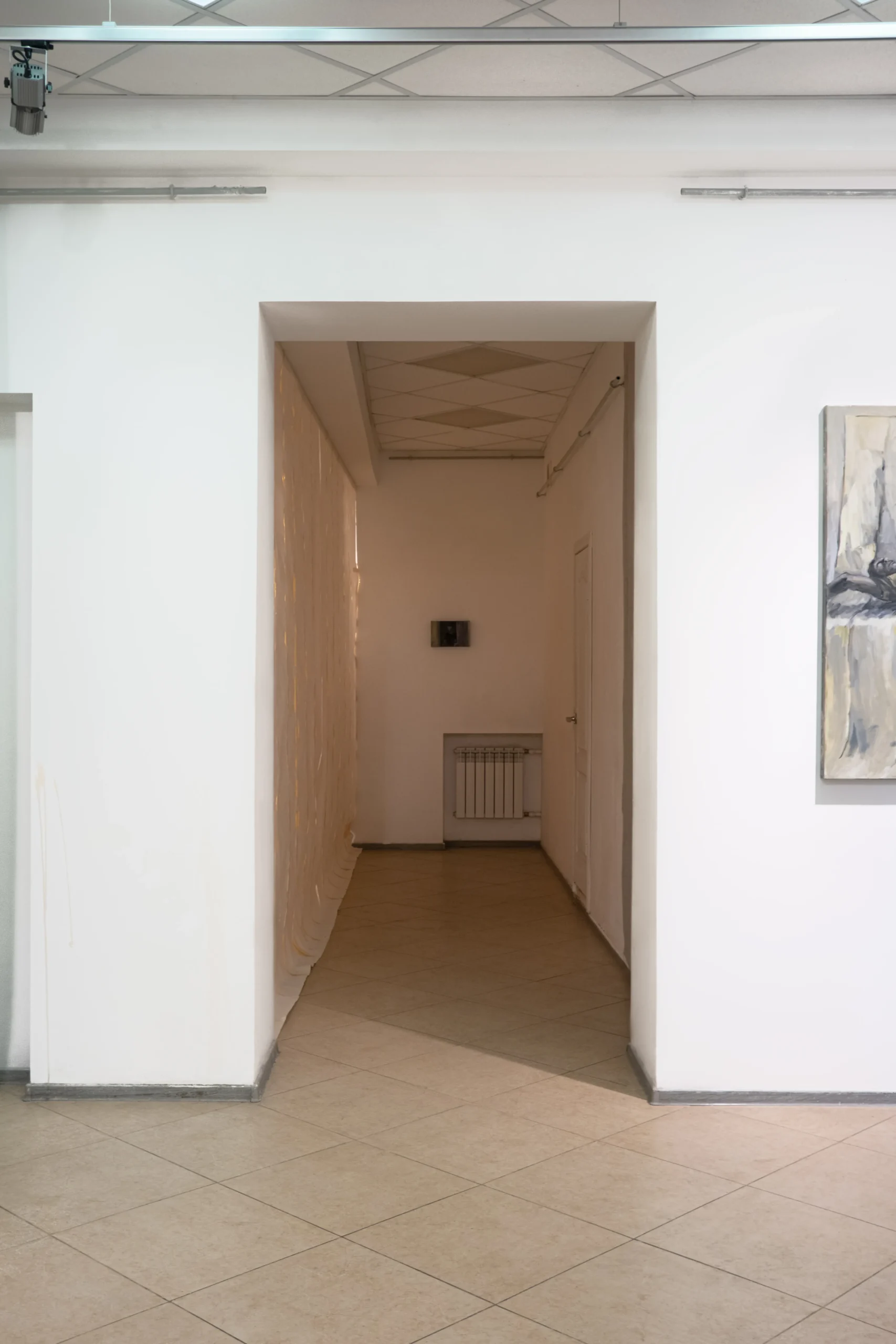
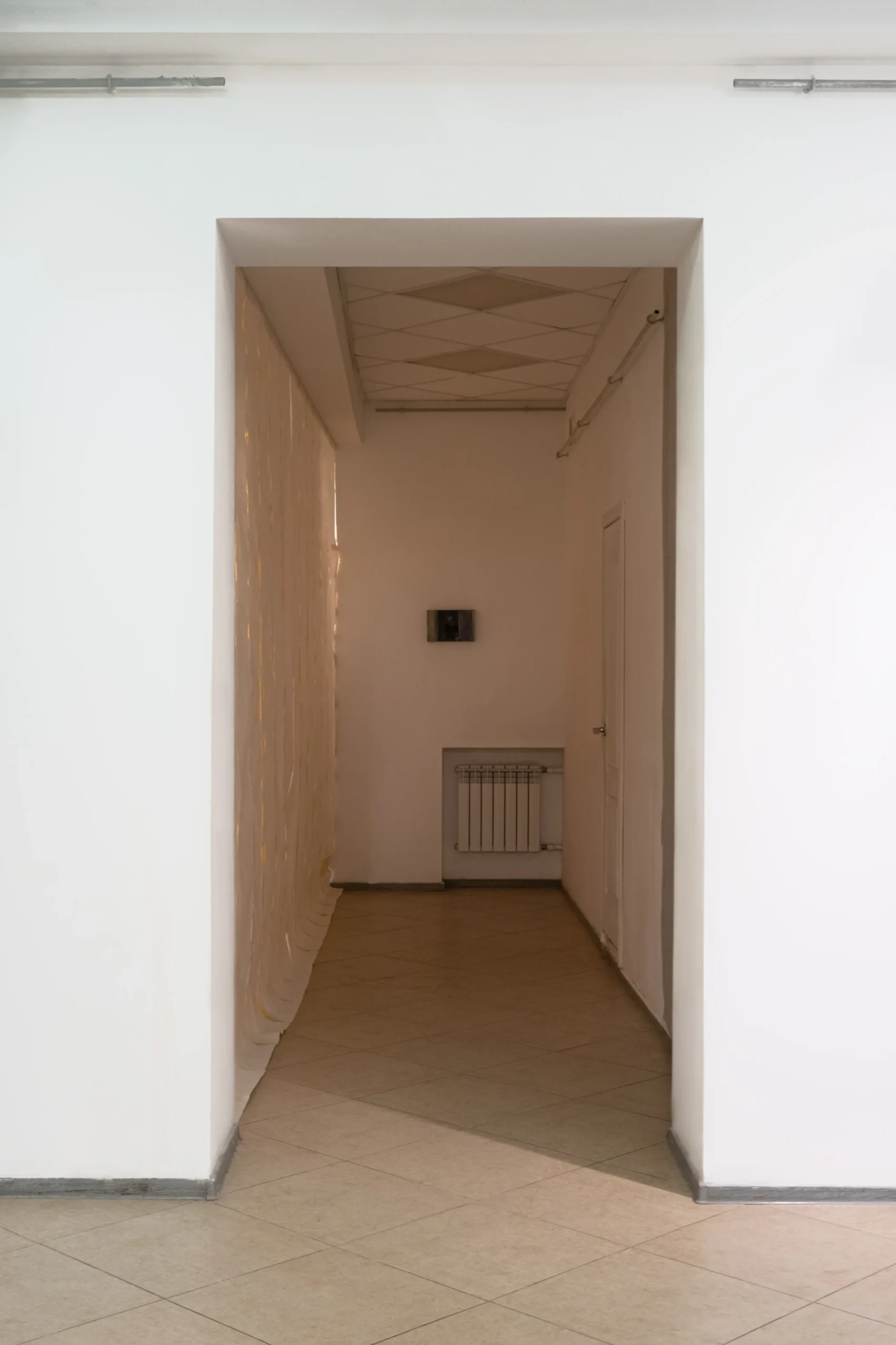
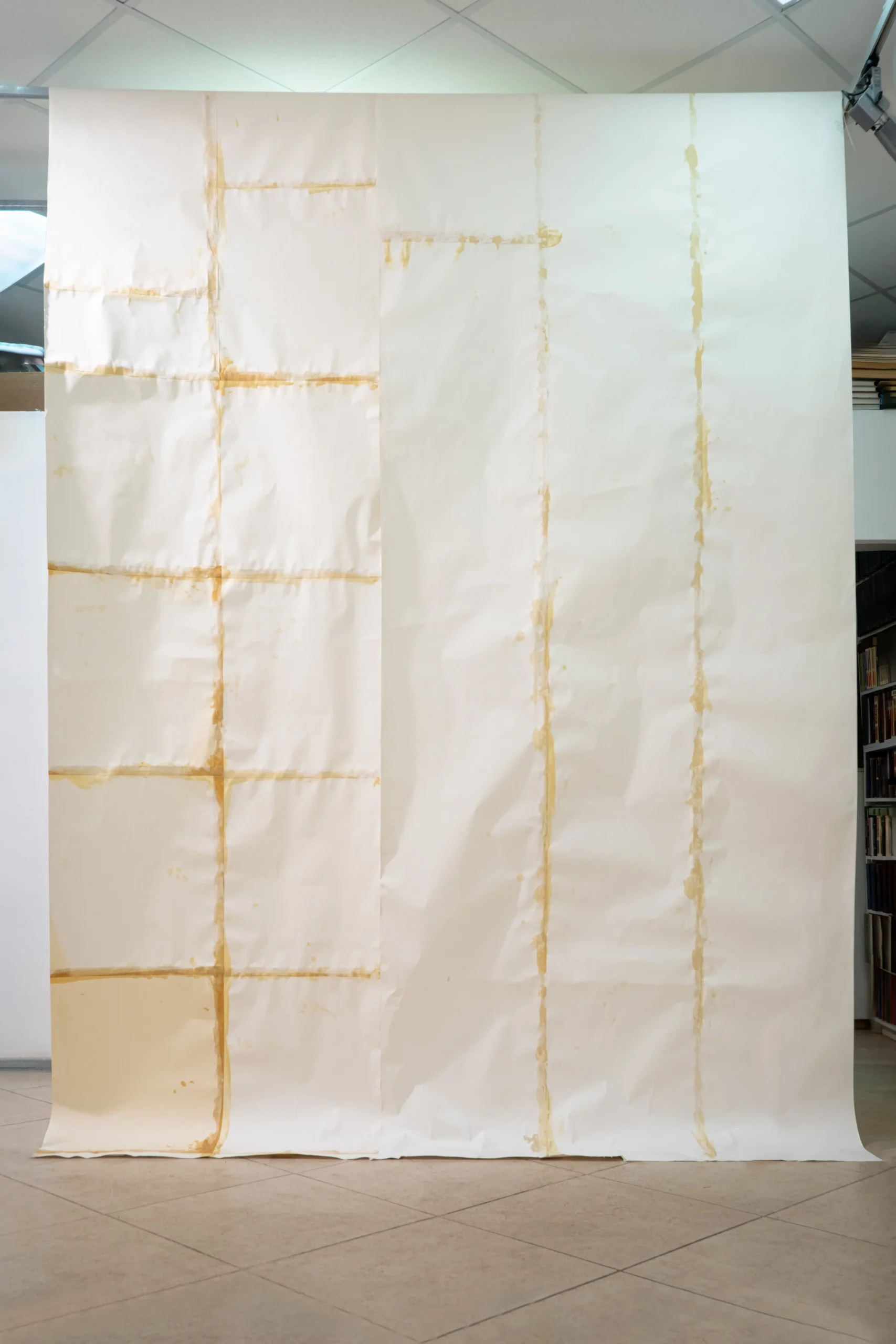
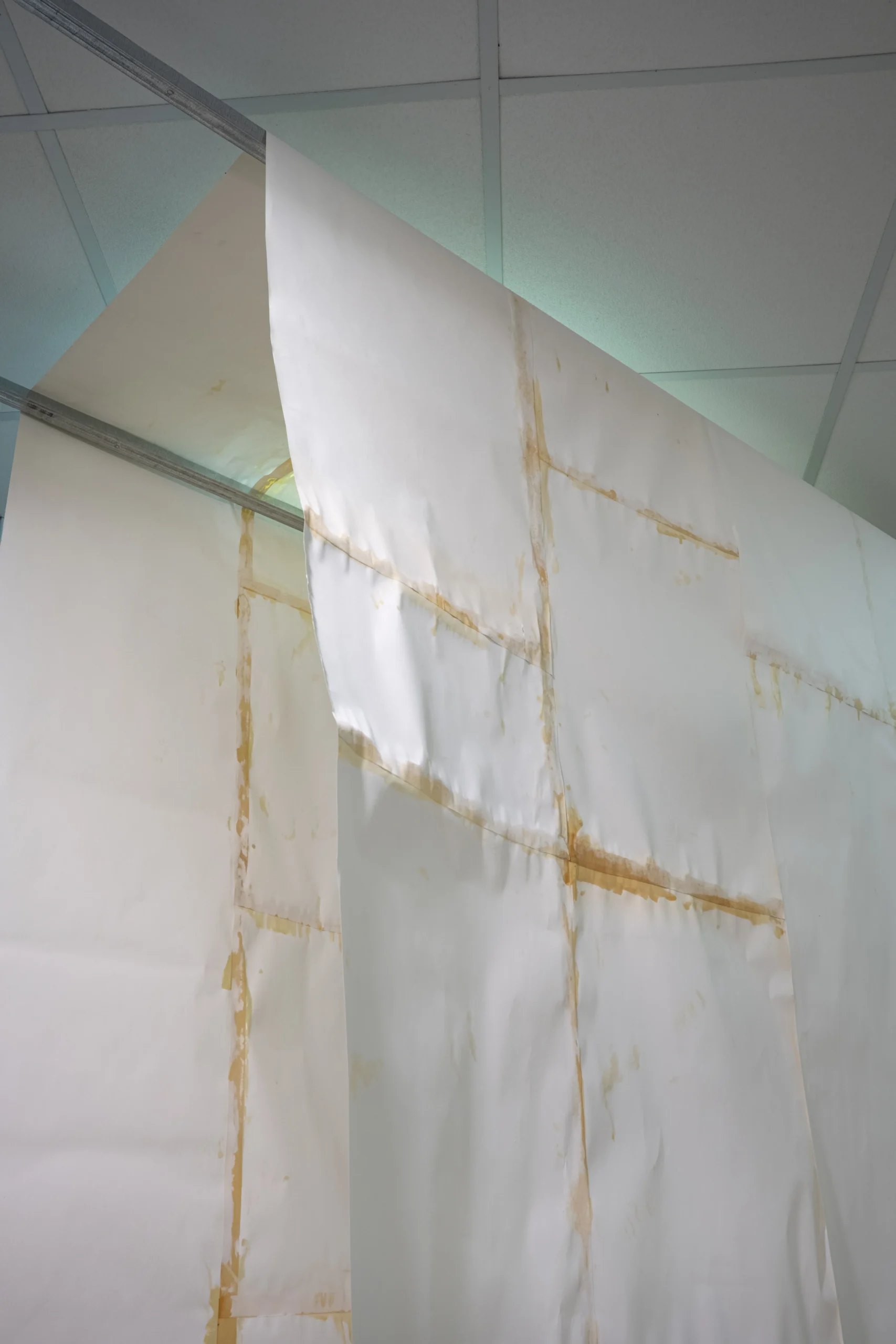
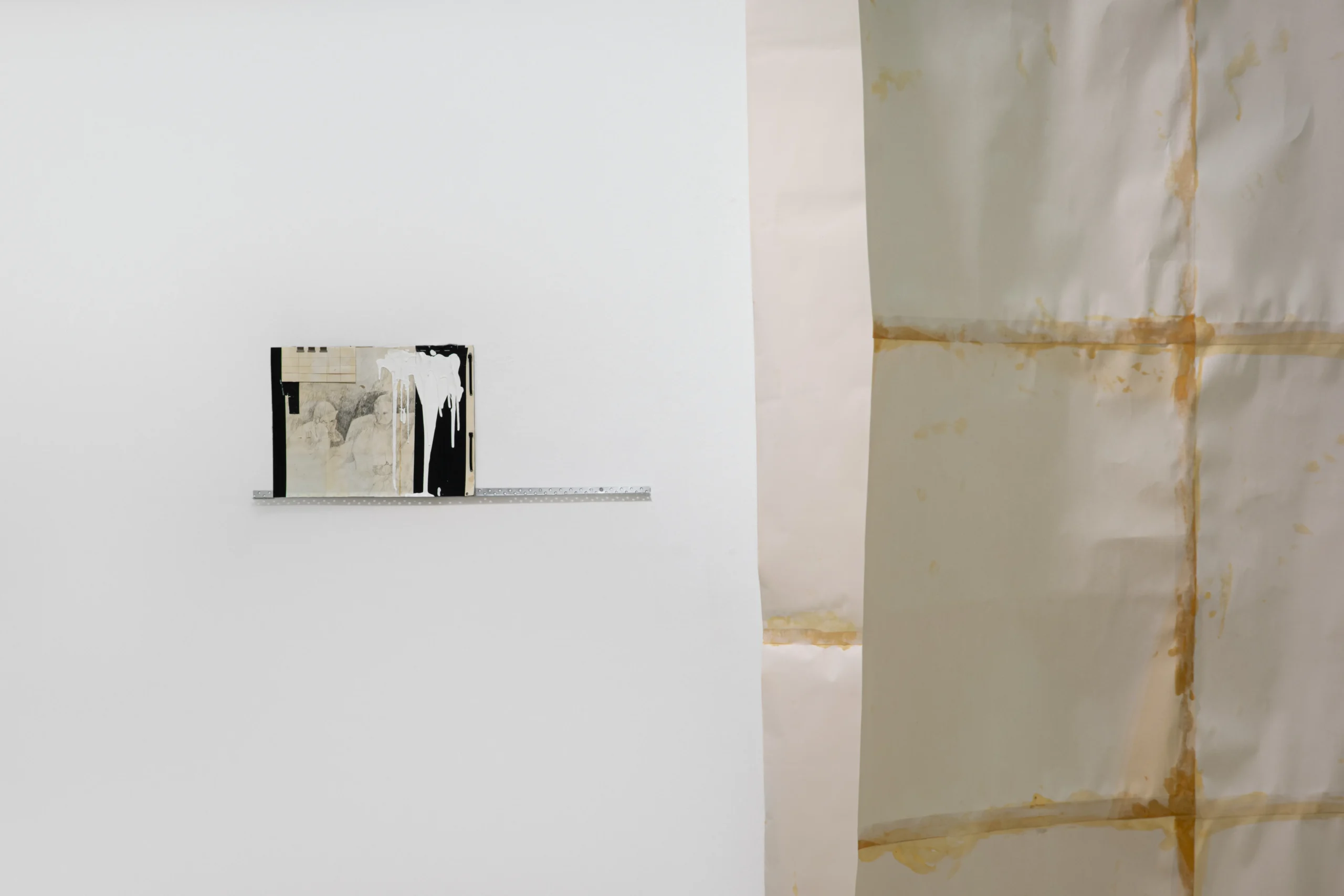
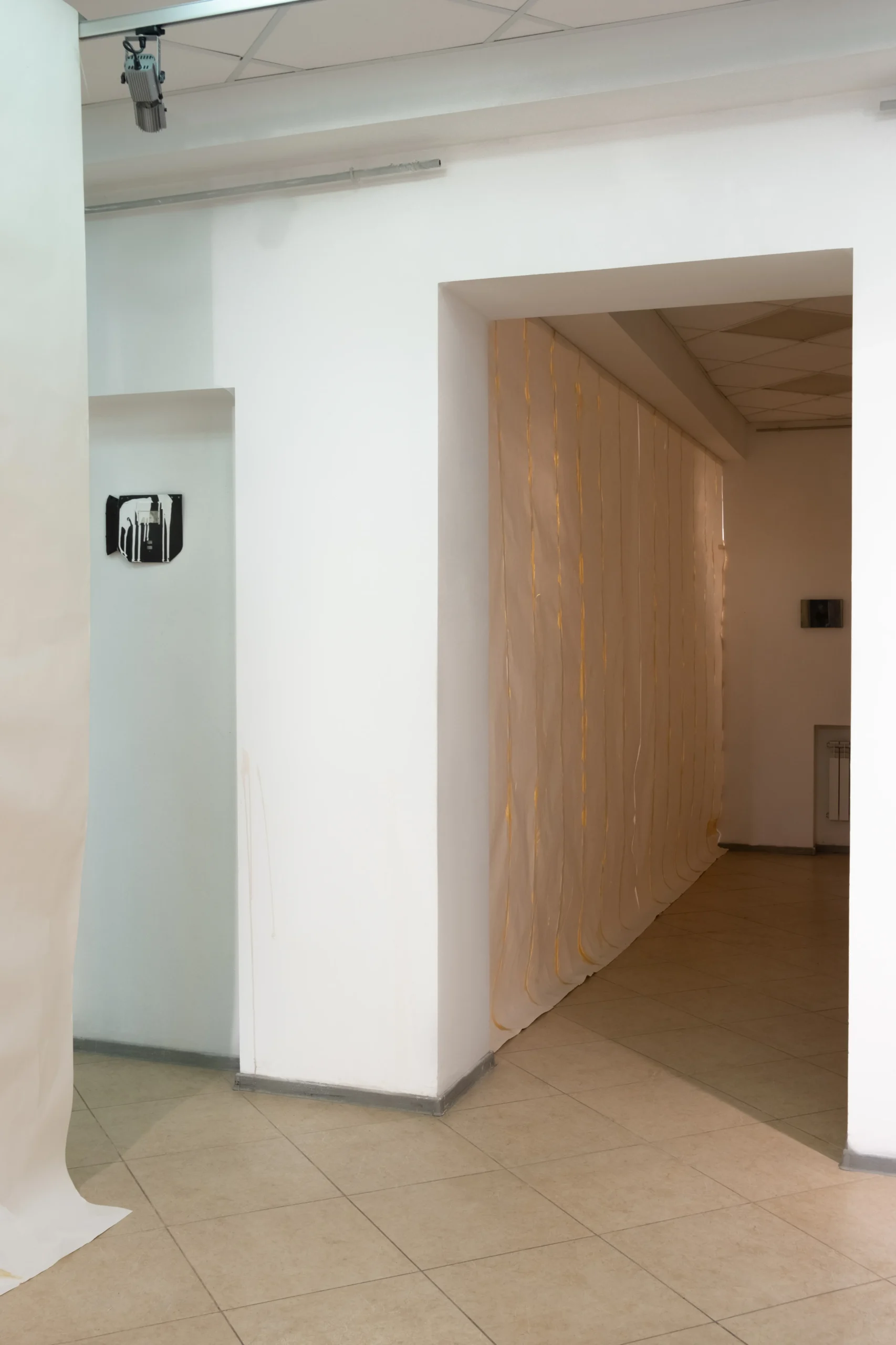
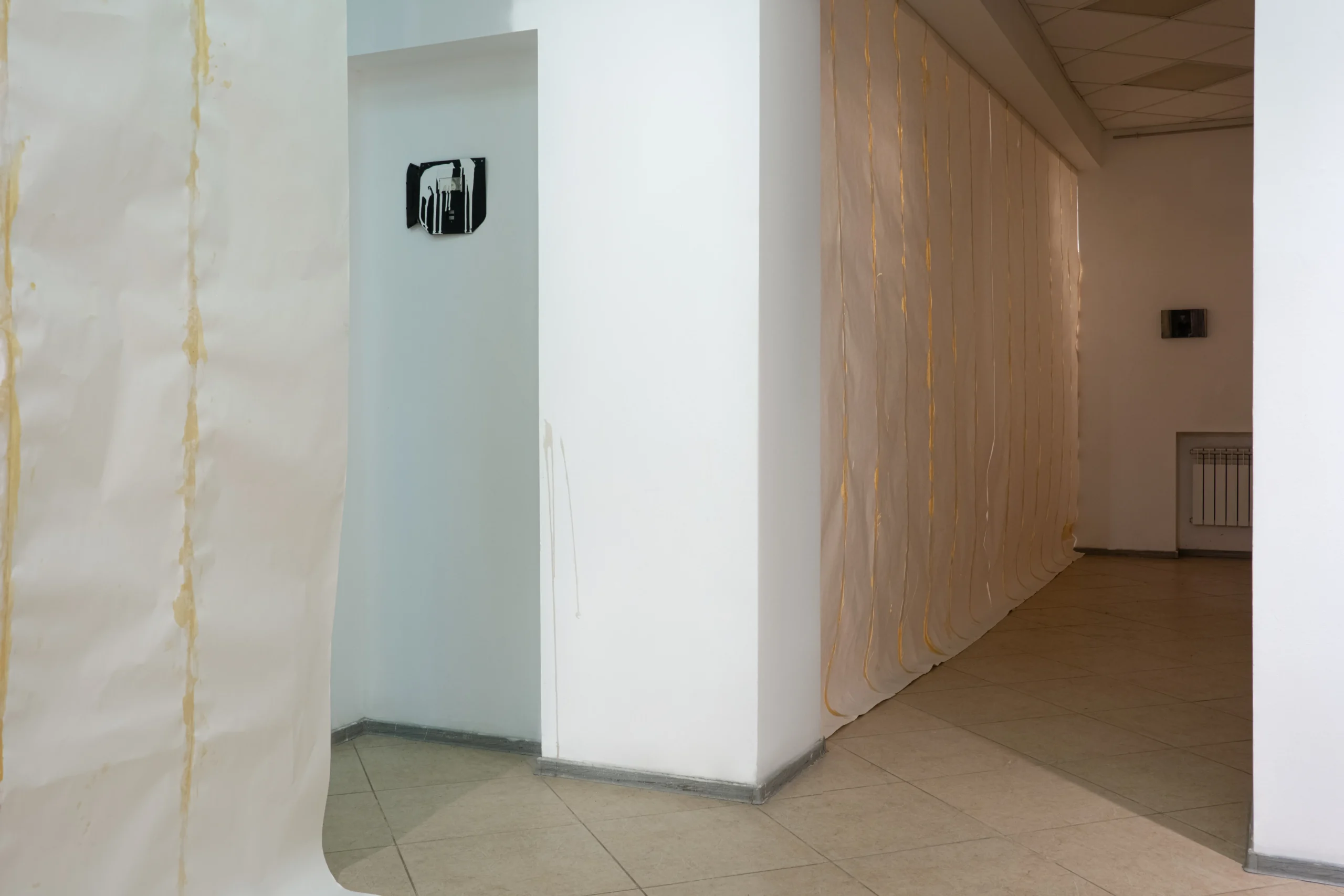
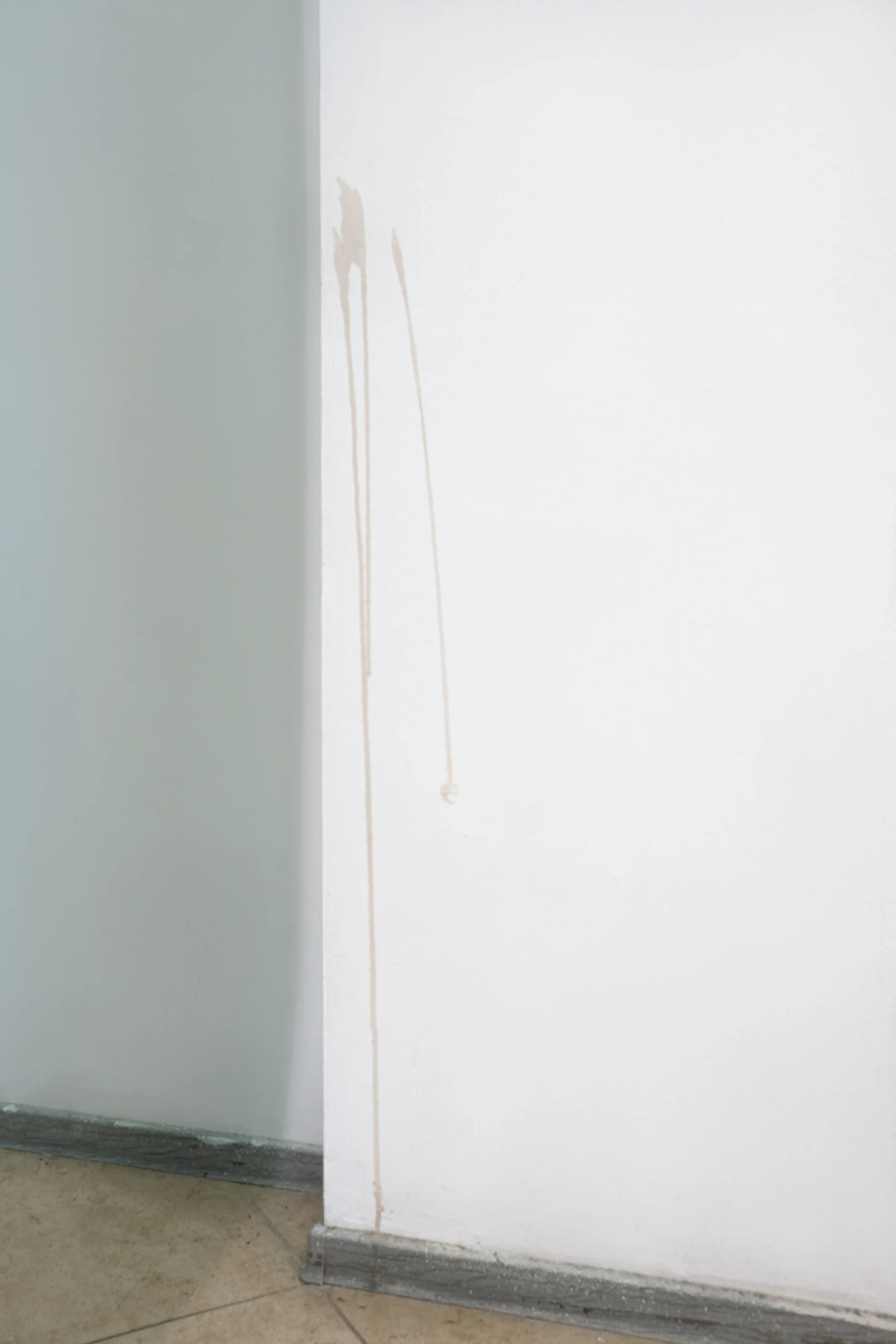
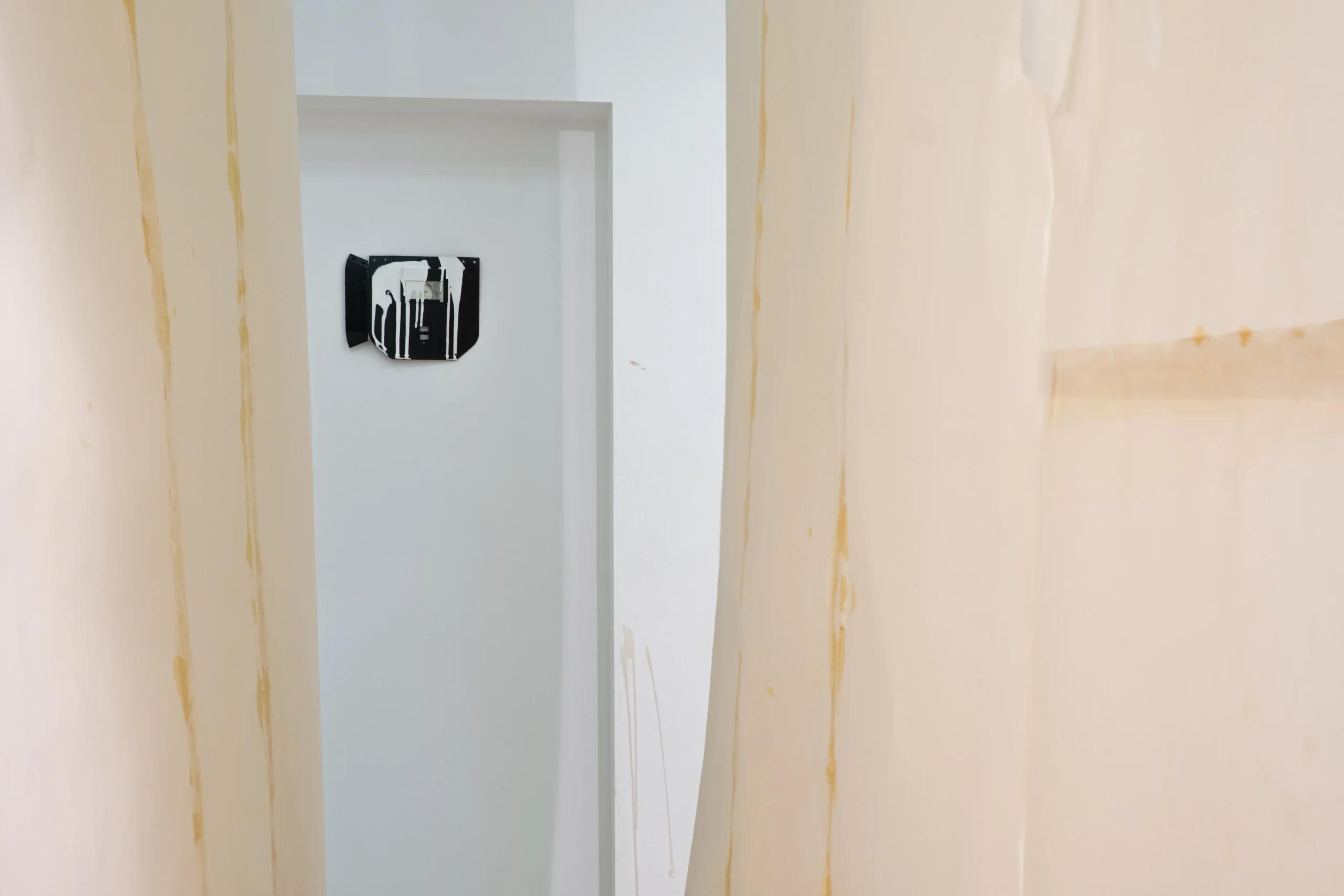
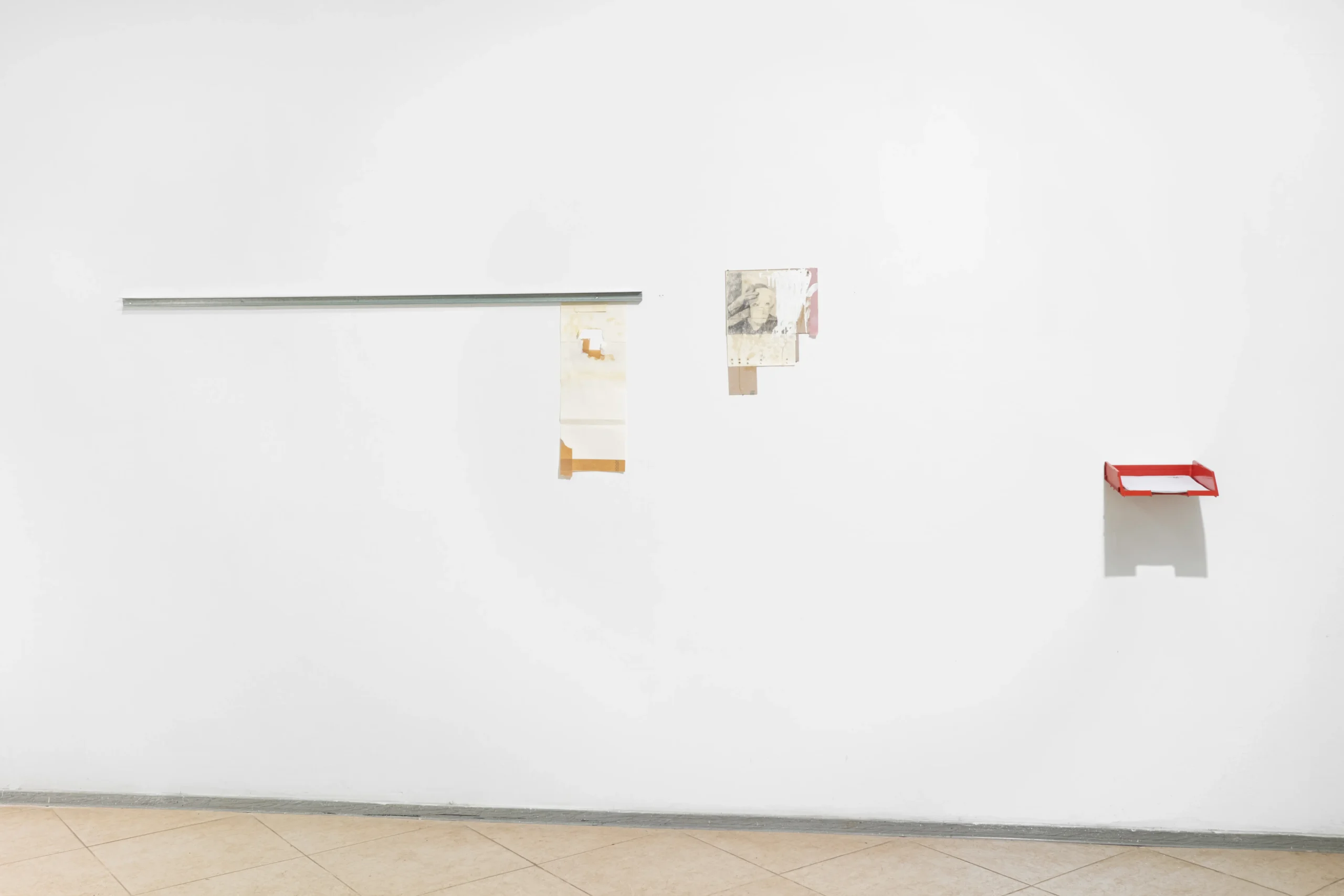
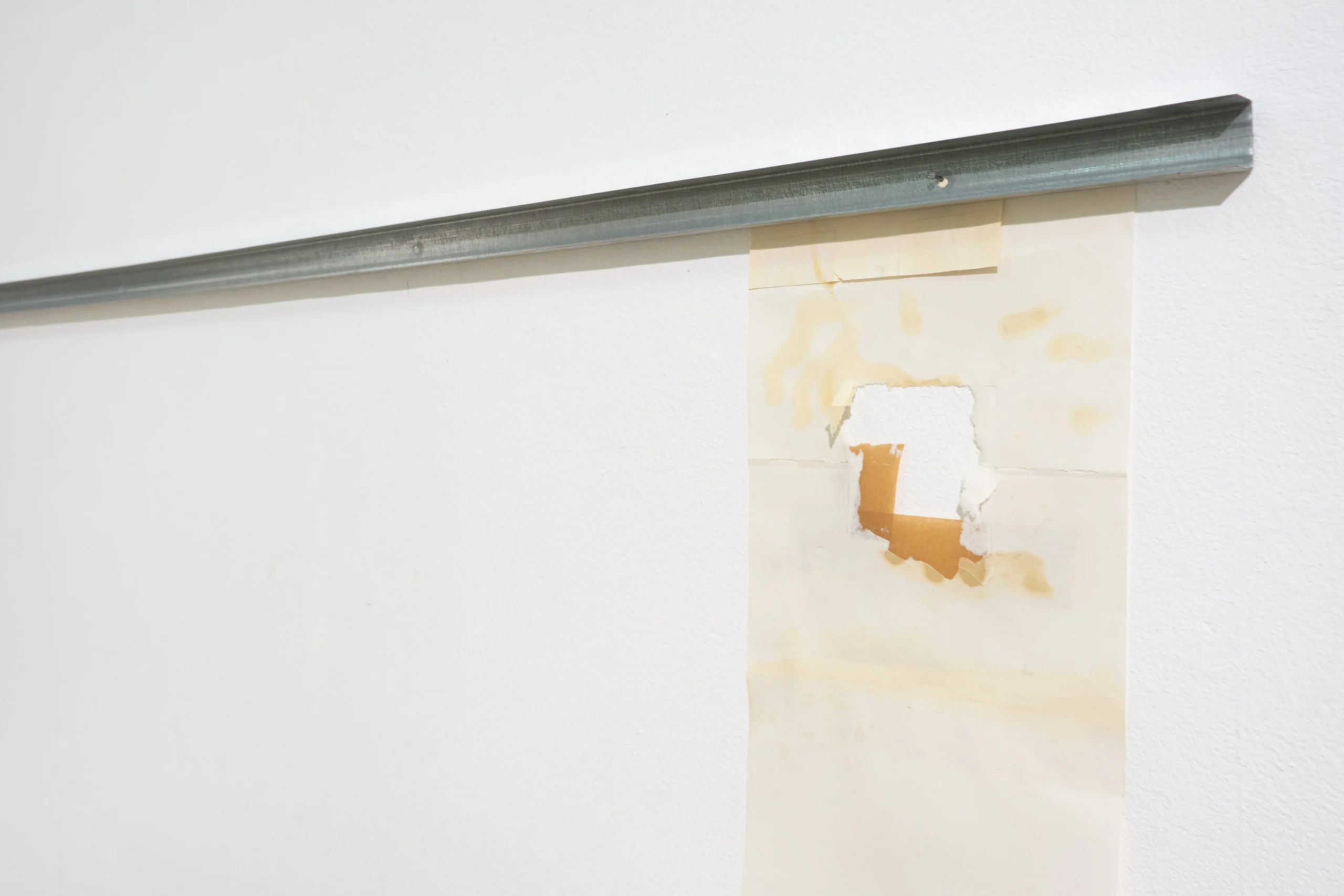
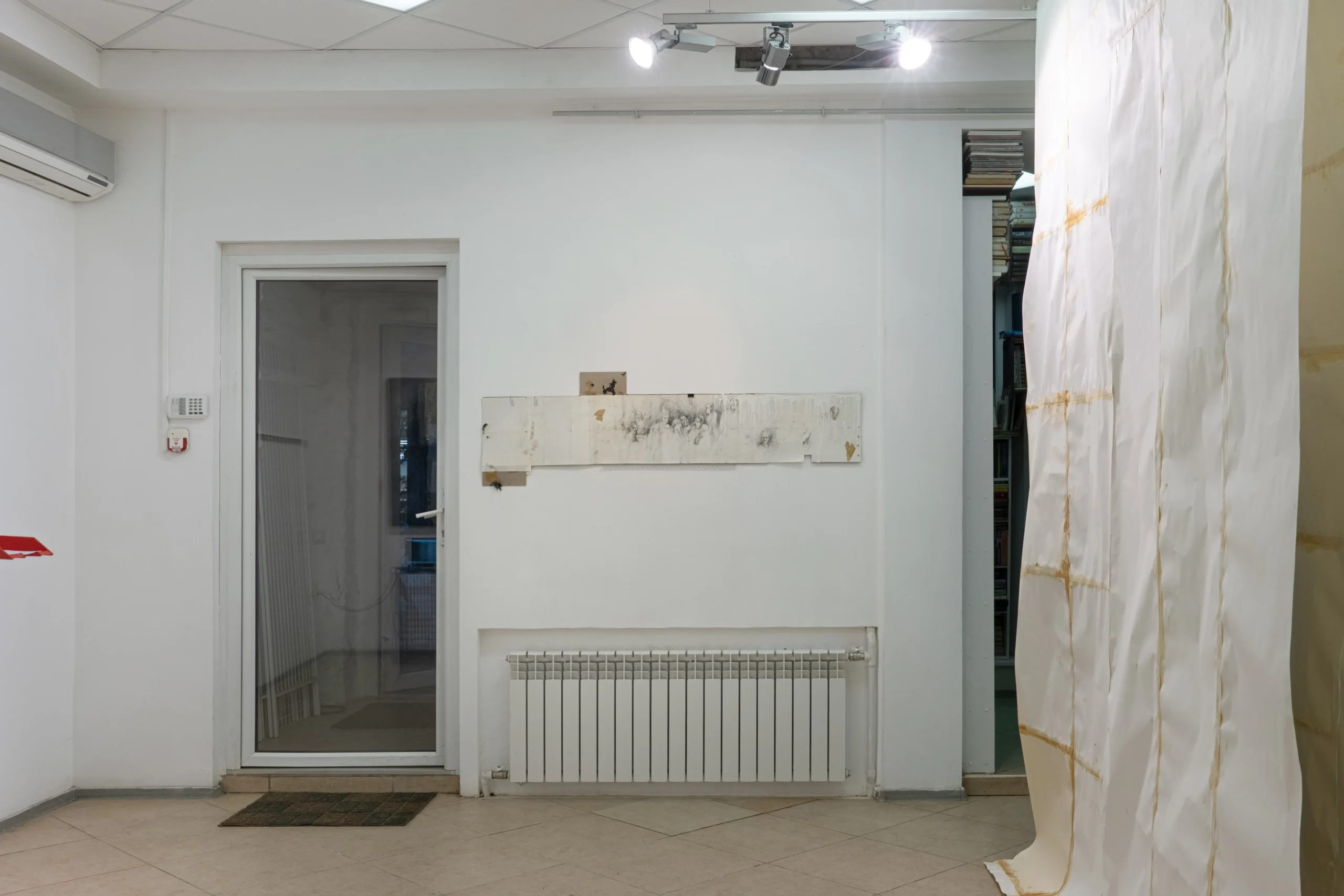
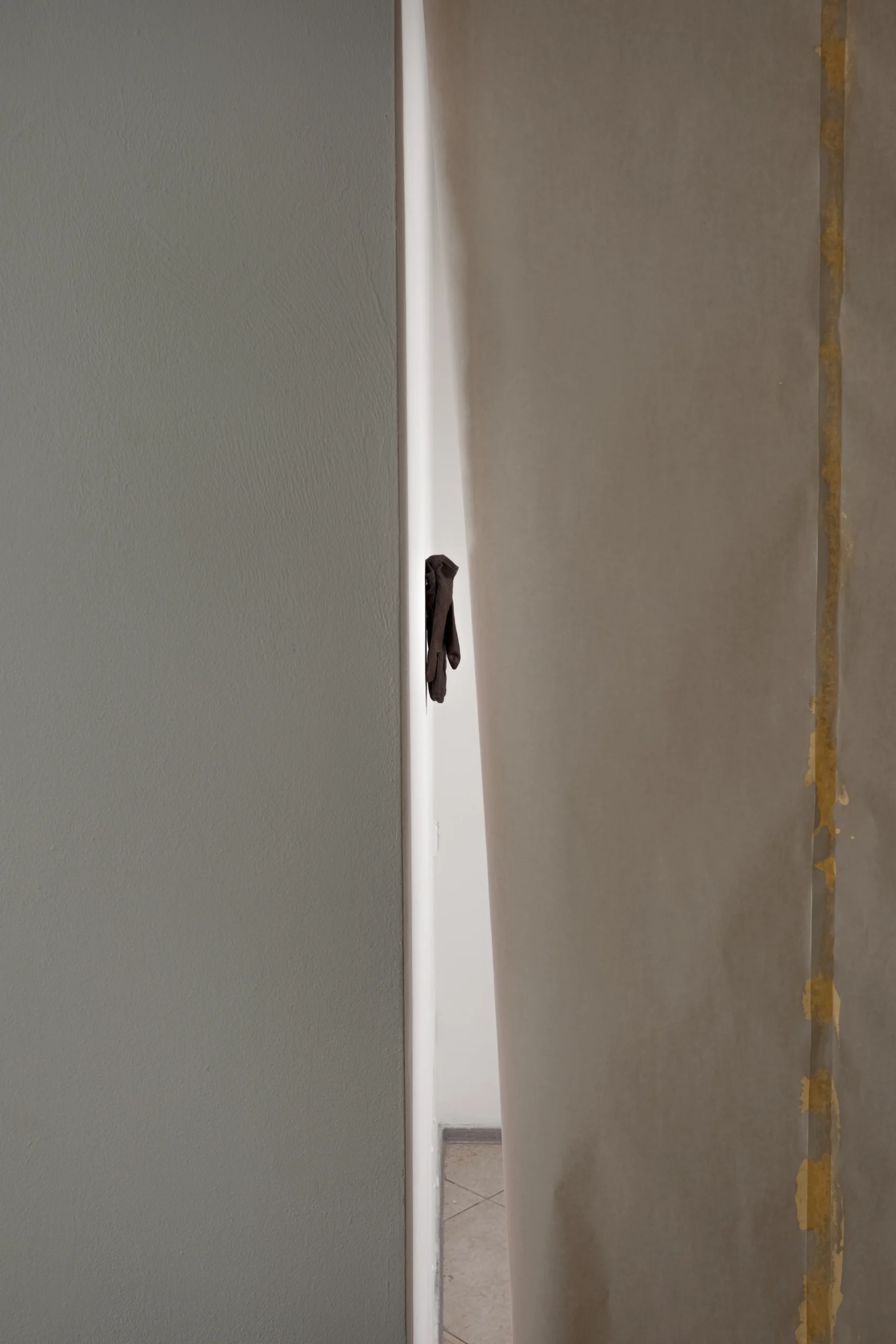
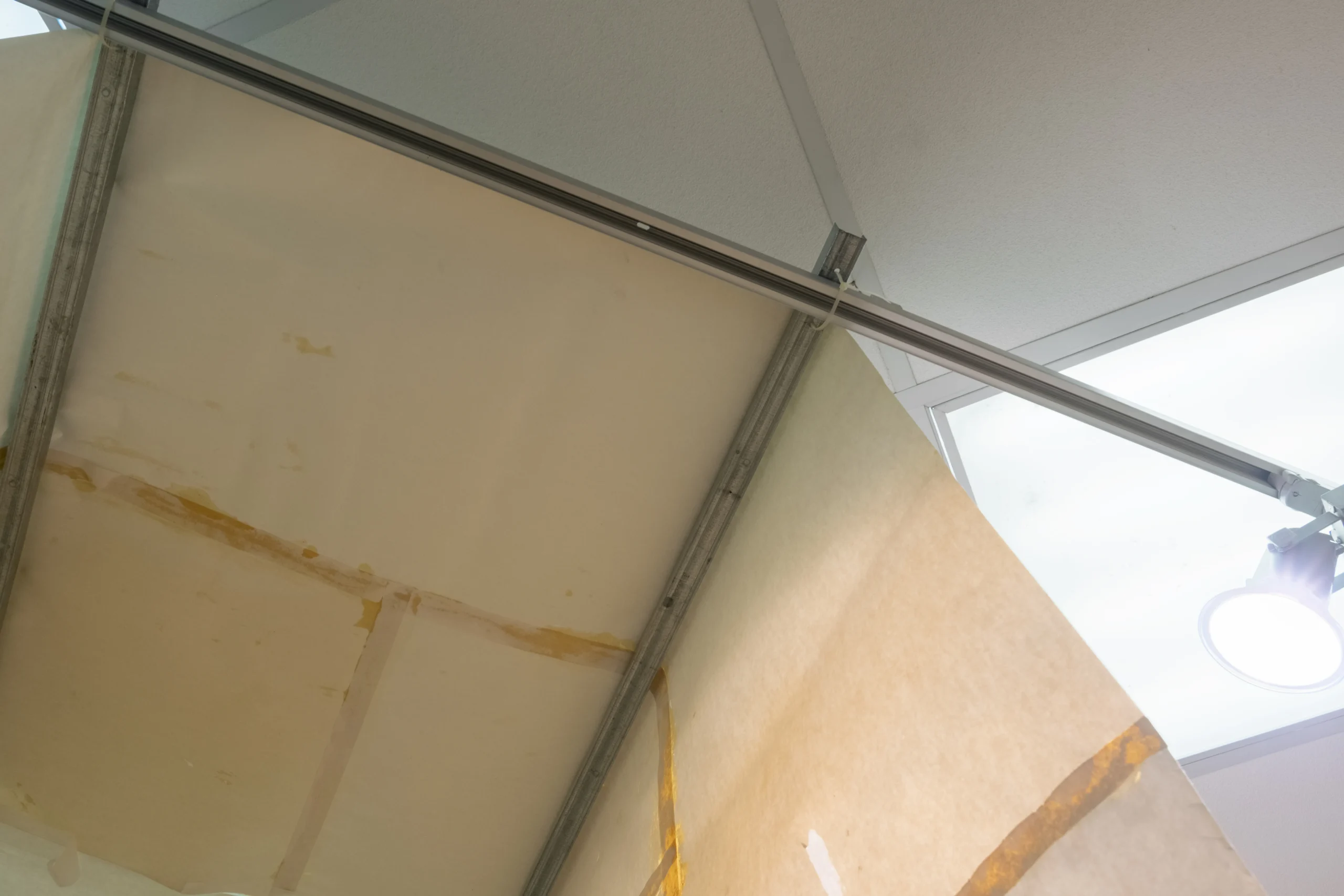
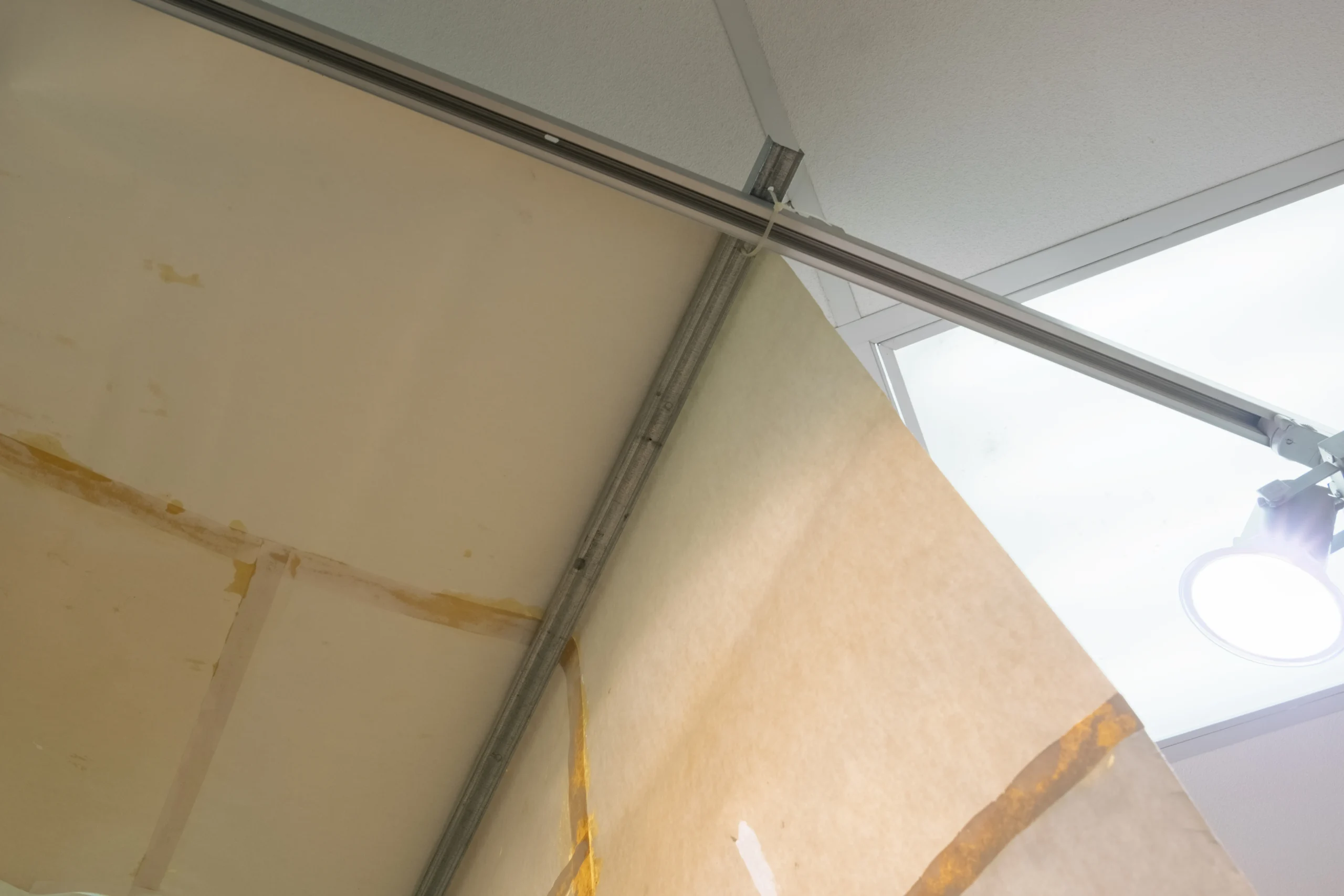
The exhibition’s material environment mirrors this very logic. Partitions constructed from glued
paper simulate an infrastructure of control that is simultaneously persuasive and ephemeral. The
contemporary mechanics of enforcement do not require monumentalism or structural permanence
to remain effective. While its boundaries are completely visible, their systemic origin and purpose
remain entirely obscure. The material tasked with stabilizing order concurrently exposes its
immanent vulnerability. Paper—the foundational medium of bureaucratic oppression, archival
fixation, and administrative accounting—becomes autonomous here, transmuting into phantasmal
architectural planes.
The Money Changer emerges as a mediator—an agent who executes transactions without
necessarily controlling their parameters or consequences. The Money Changer’s function is to
sustain pure circulation, performing a permanent conversion of signs into signs, thereby masking the
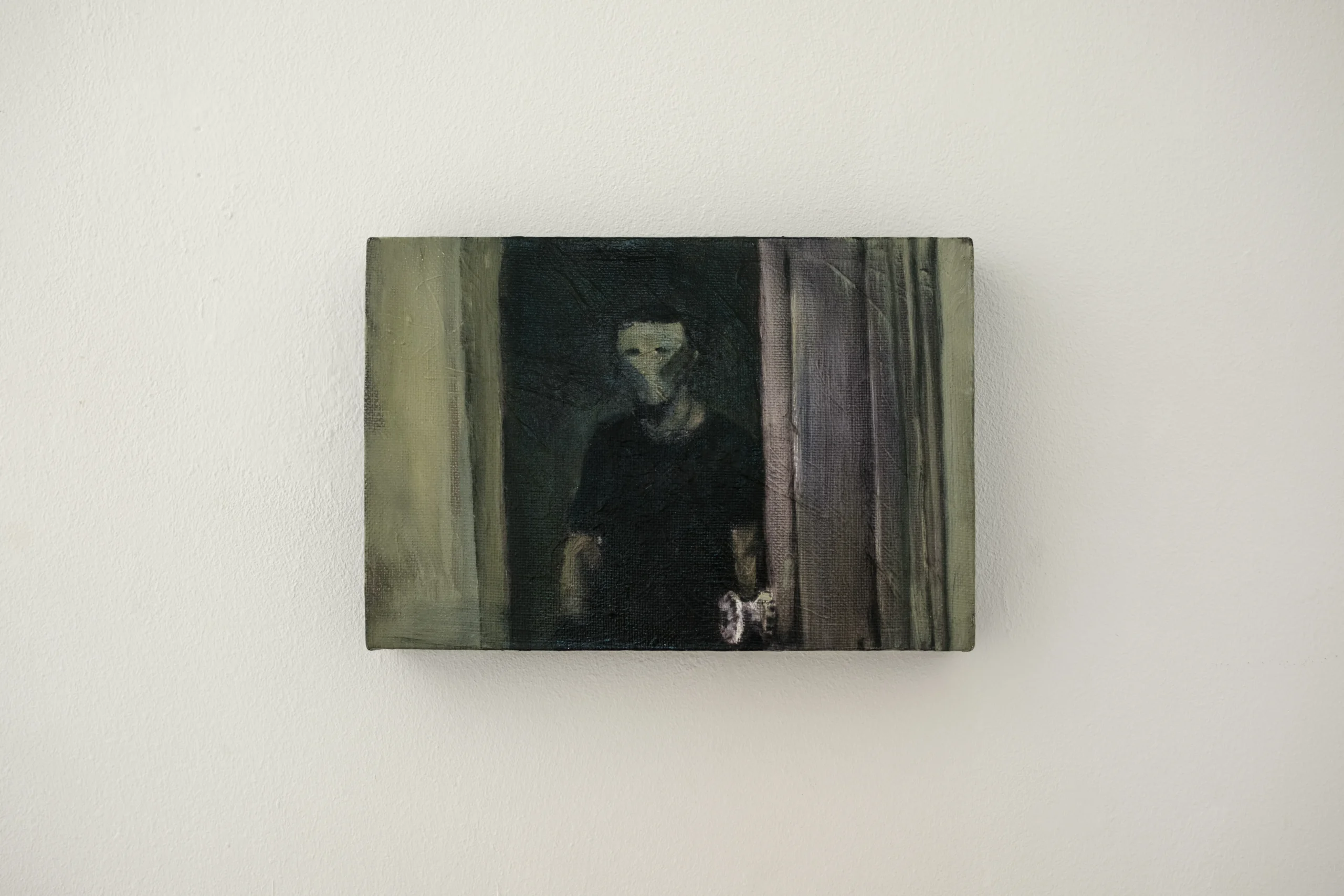
structural vacuum at the core. In turn, the Mask manifests not a classical romantic concealment of a
true identity, but a radical erasure of the subject. It functions as a professional interface, a role
indispensable for operating within the prescribed configuration. Consequently, it becomes
impossible to definitively demarcate the boundary between the architect of the rules and the
submissive executor; both parties end up trapped within the semiotic regime of the infrastructure.
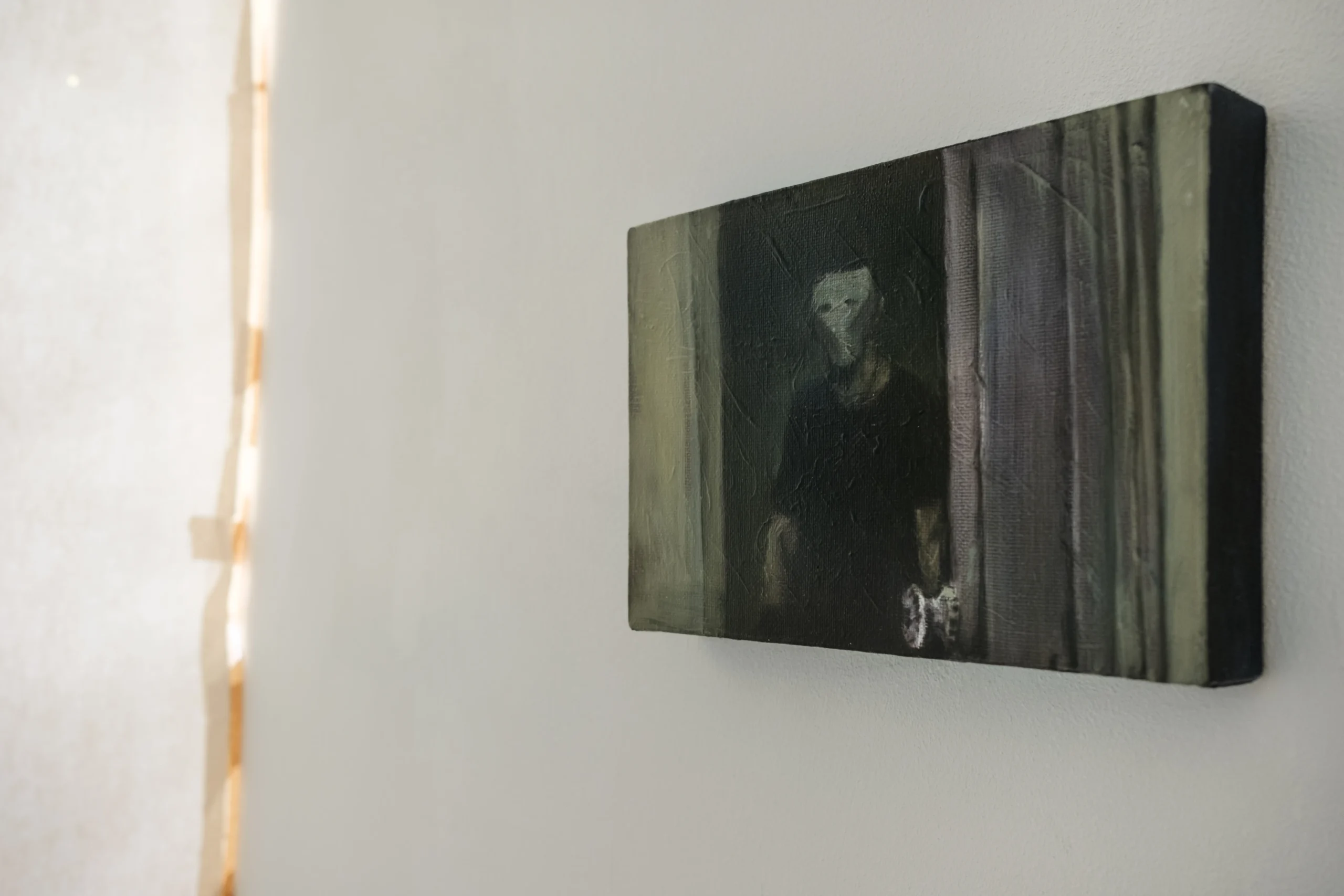
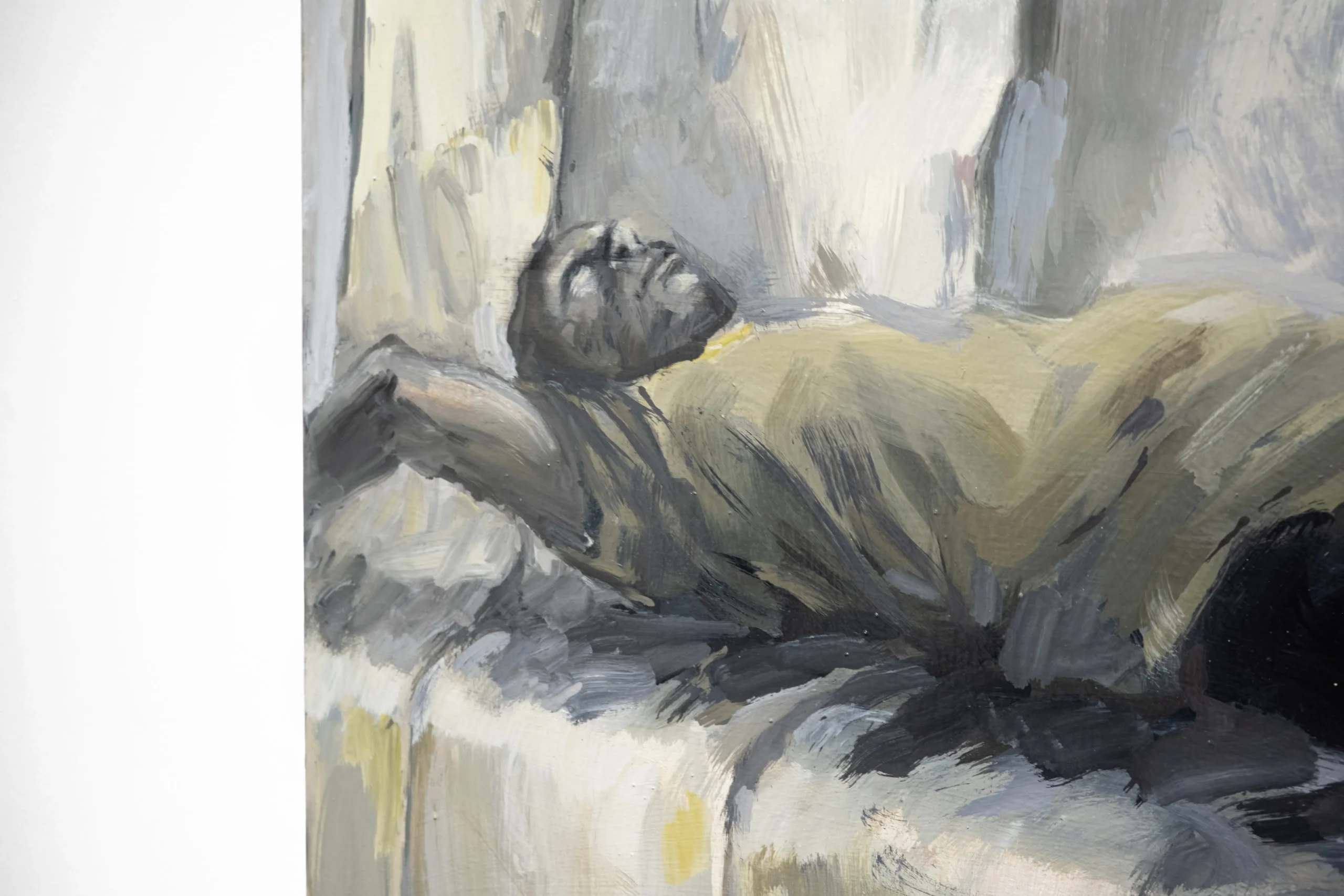
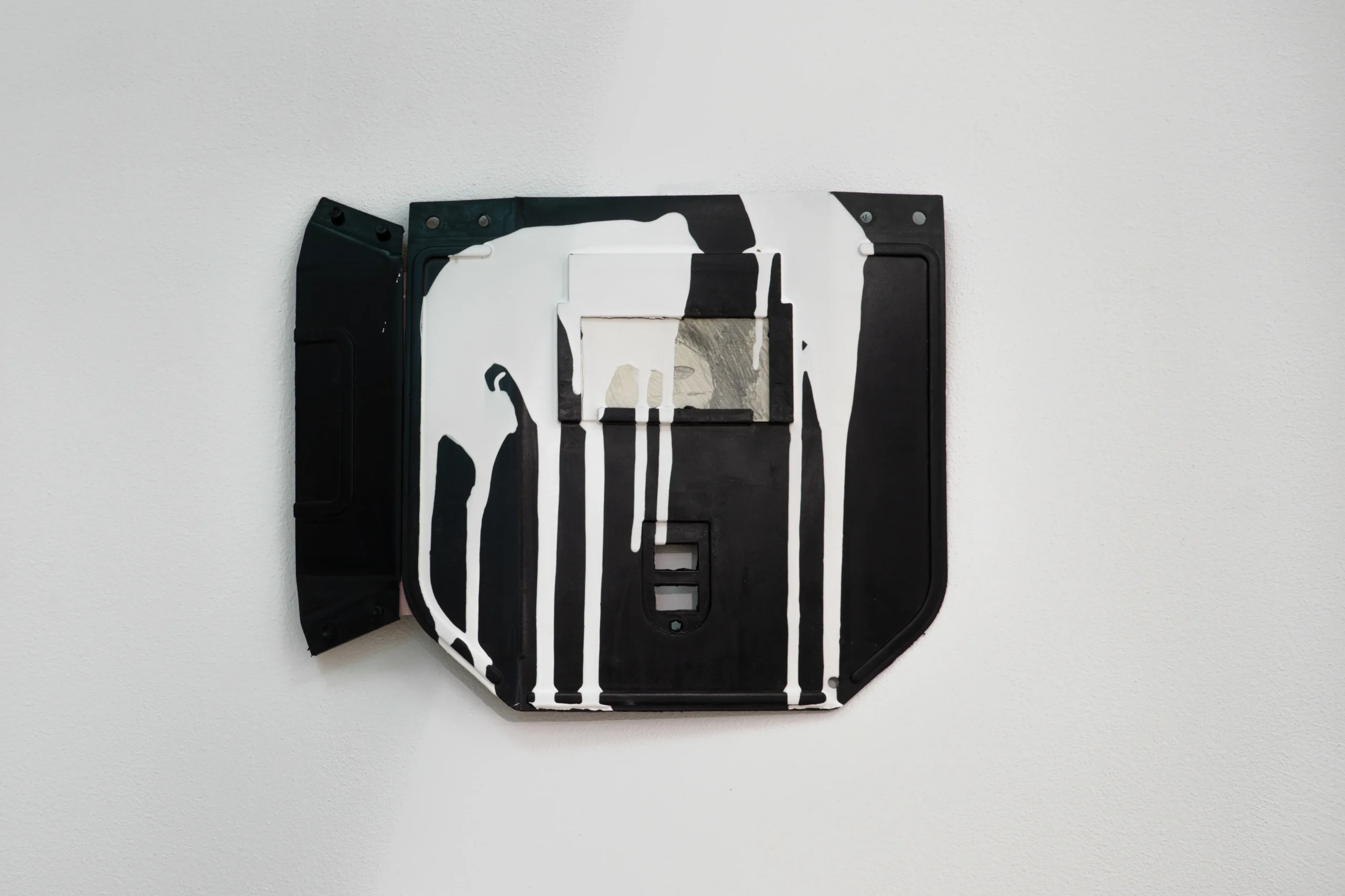
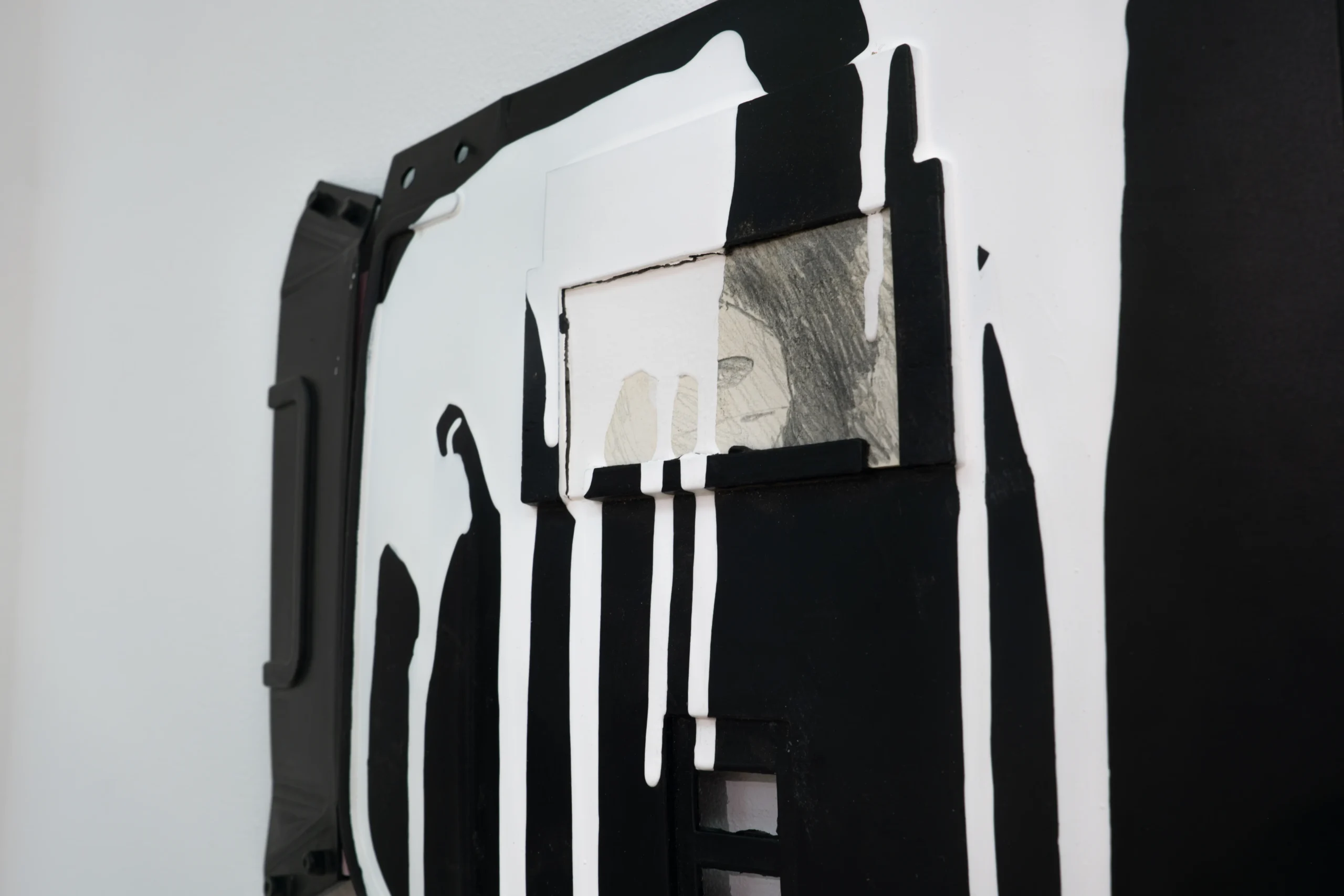
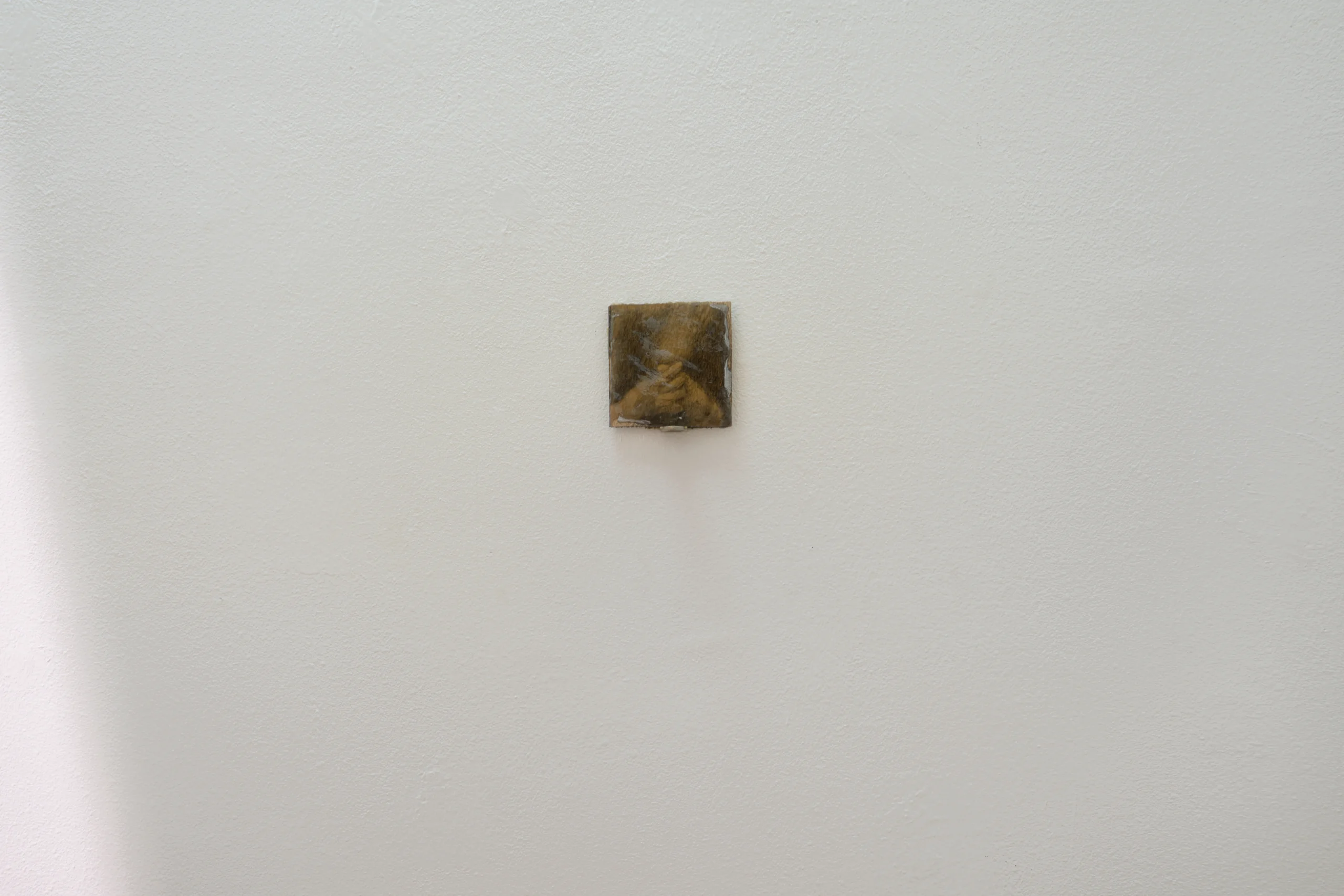
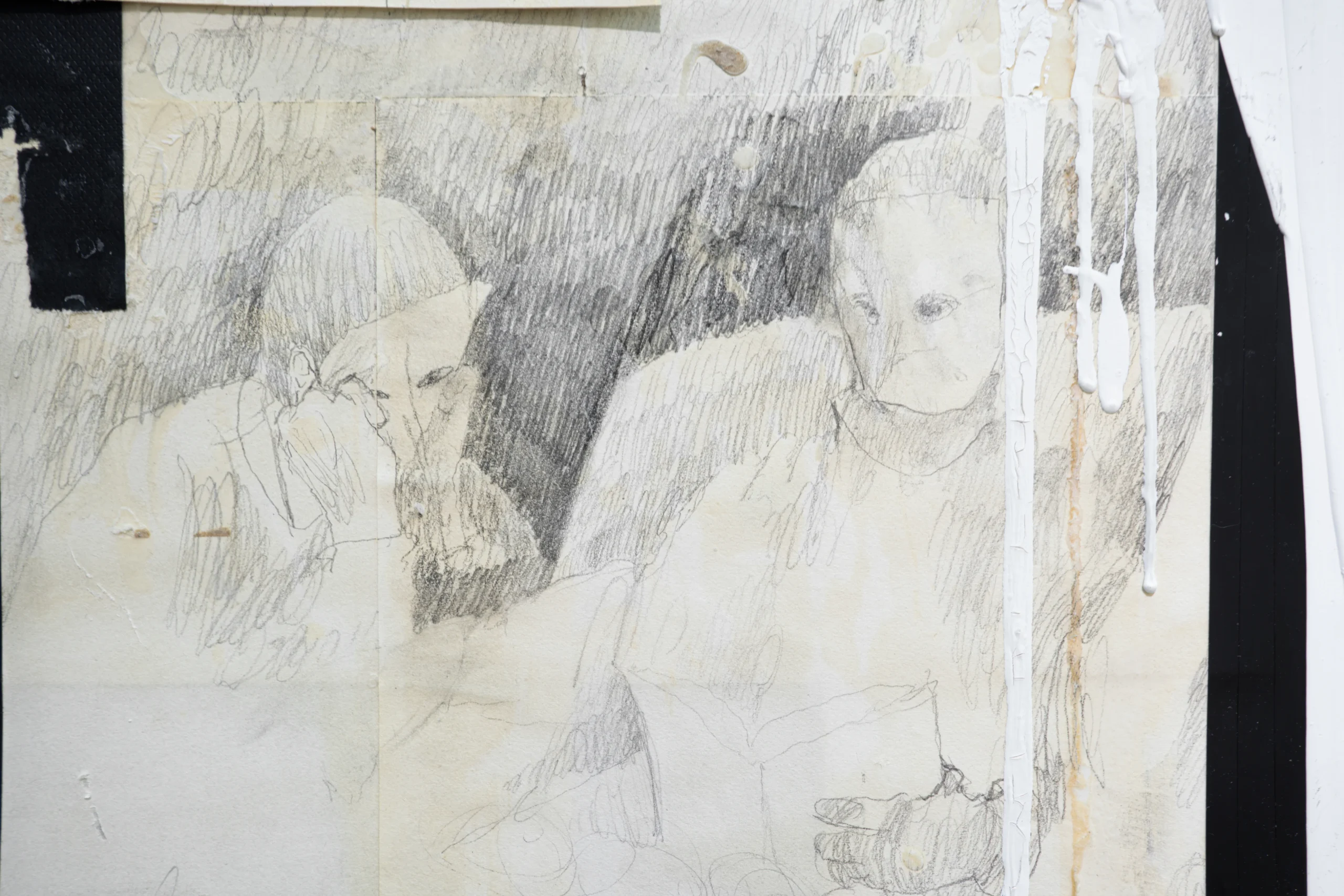
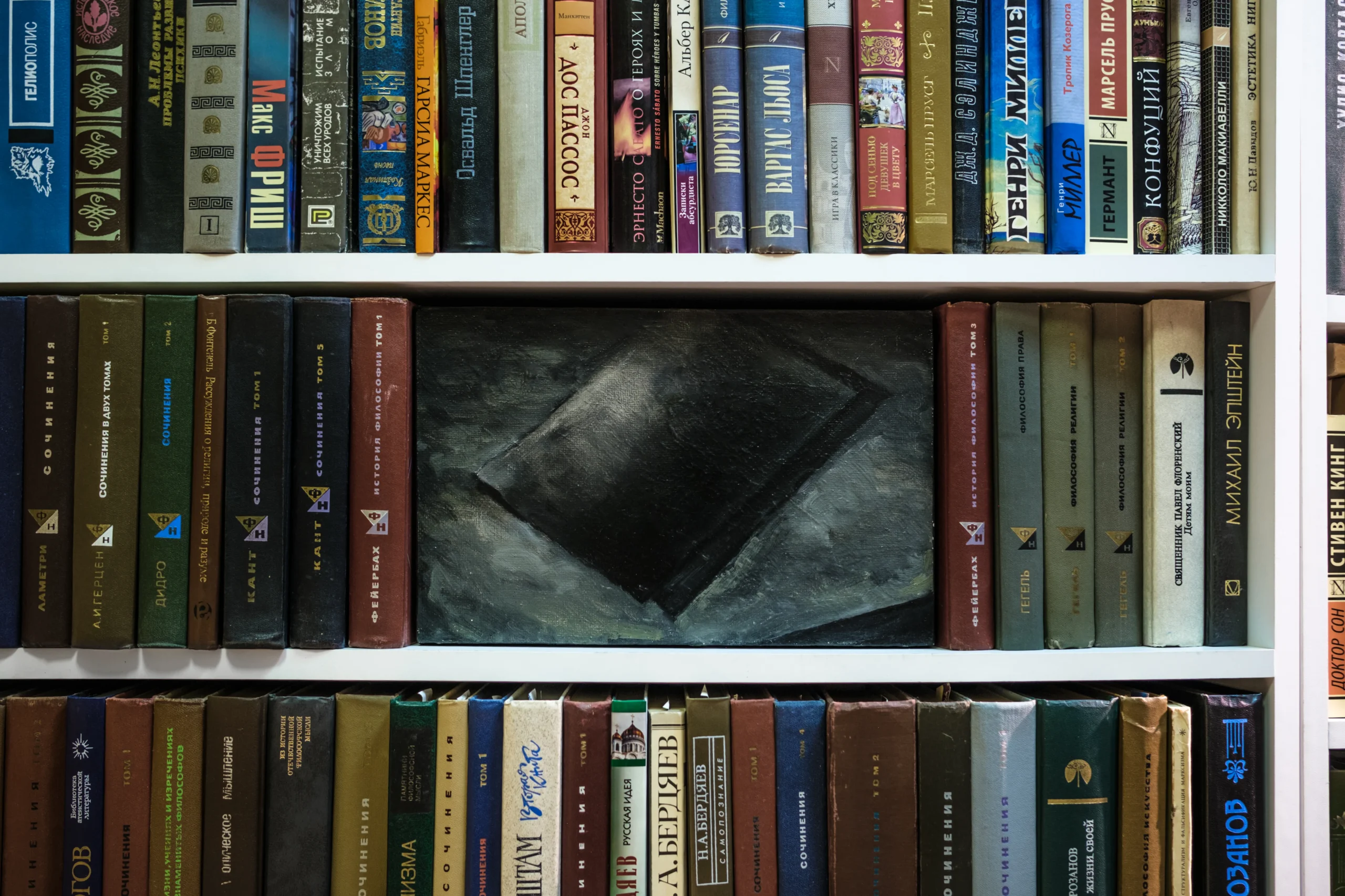
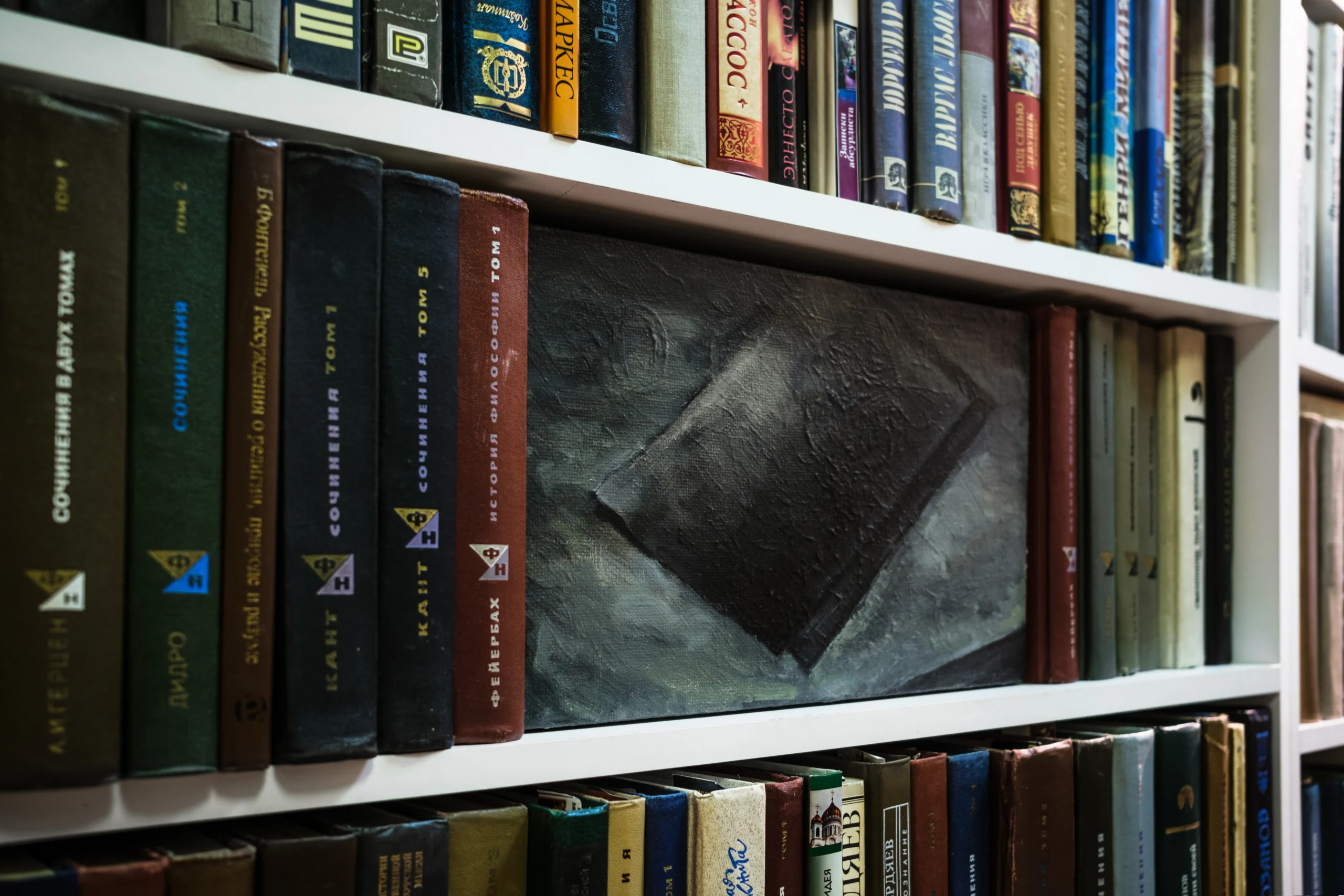
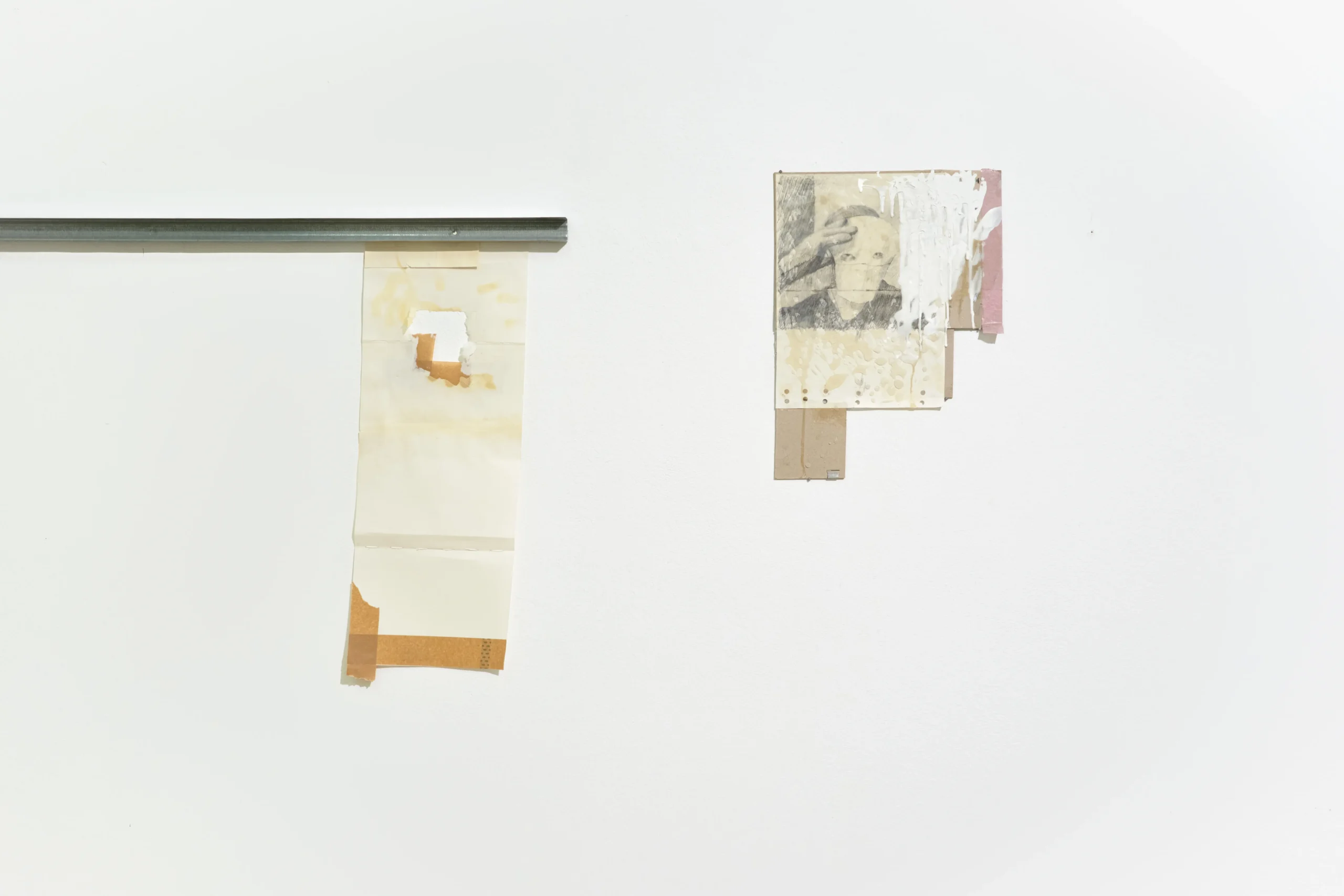
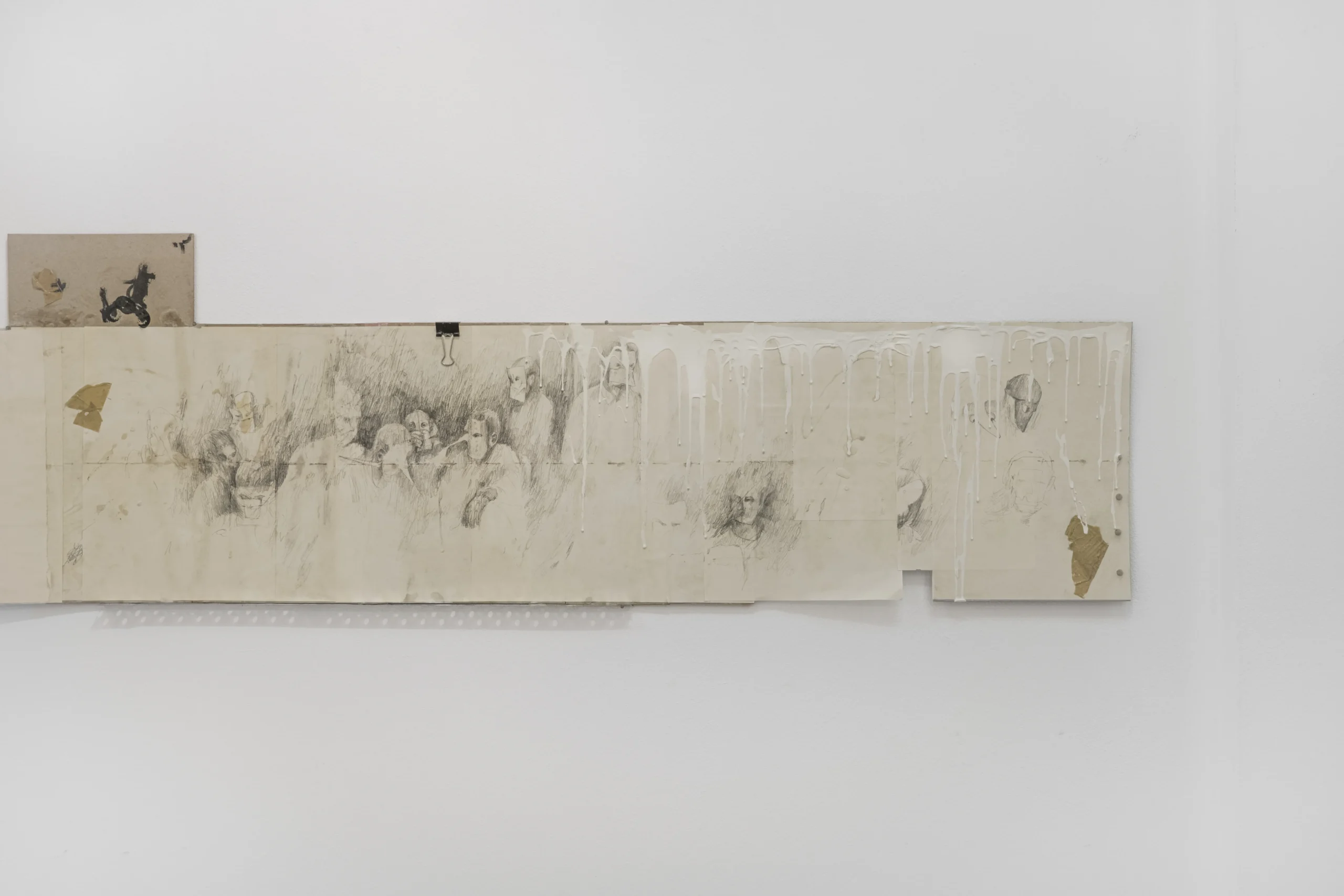
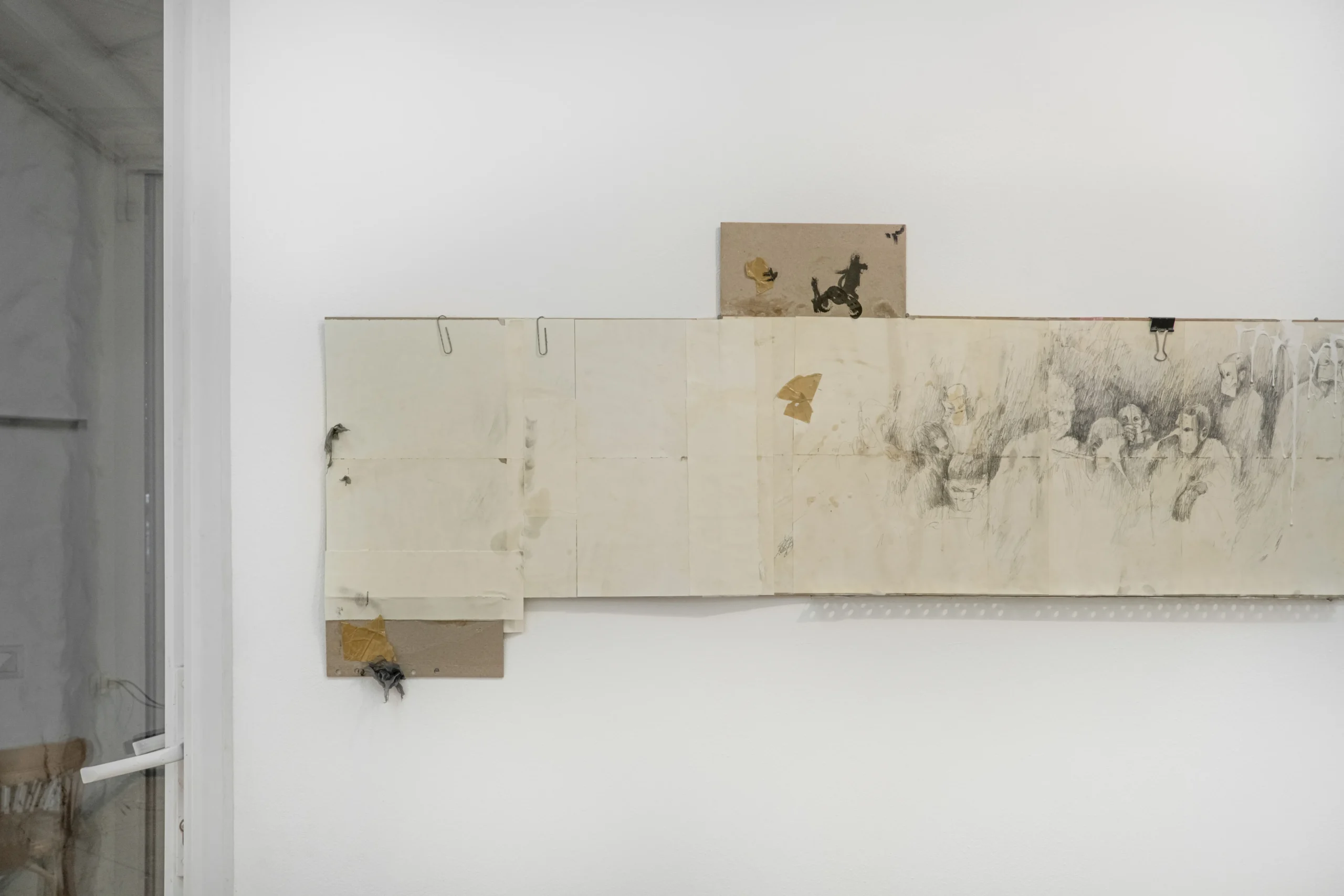
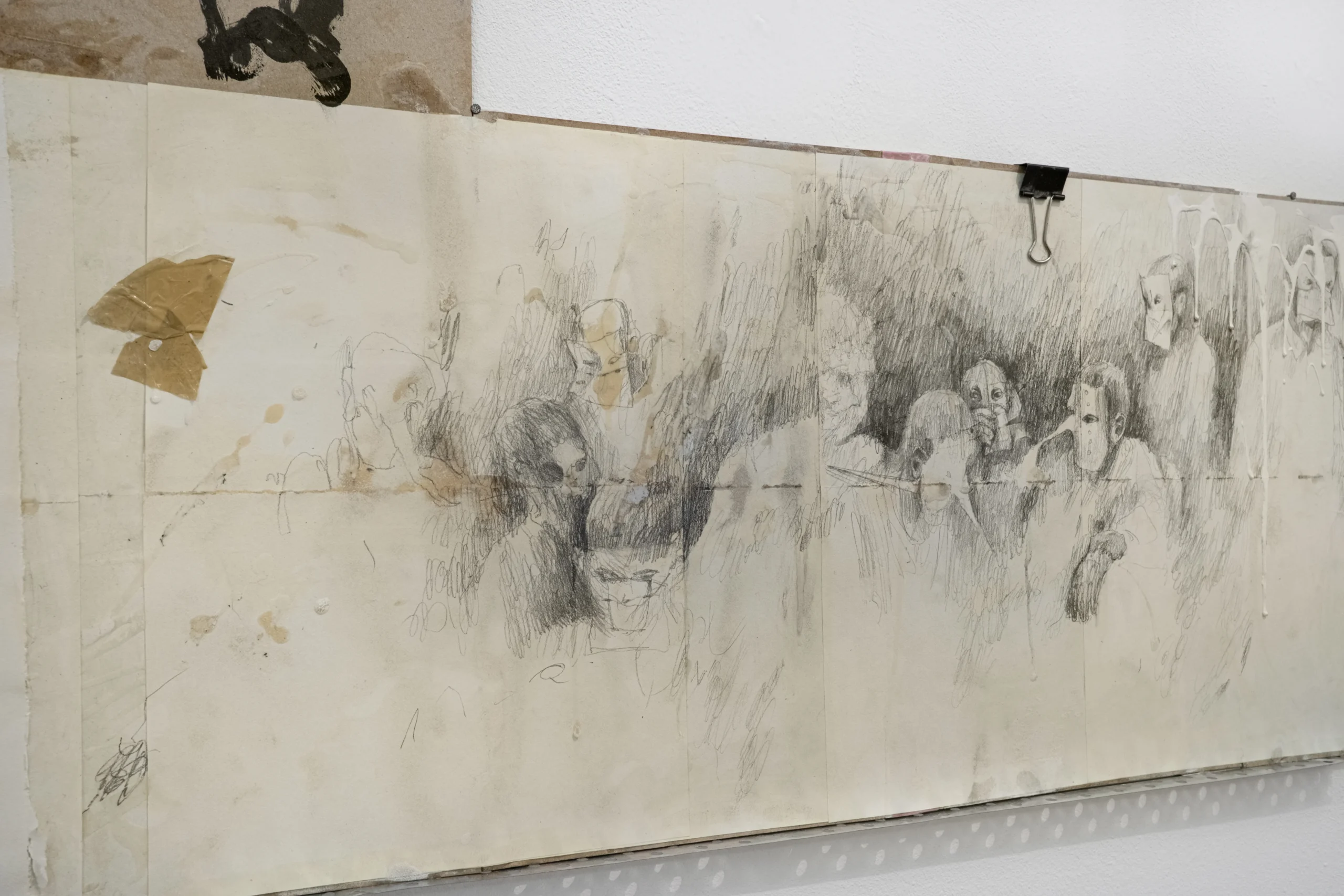
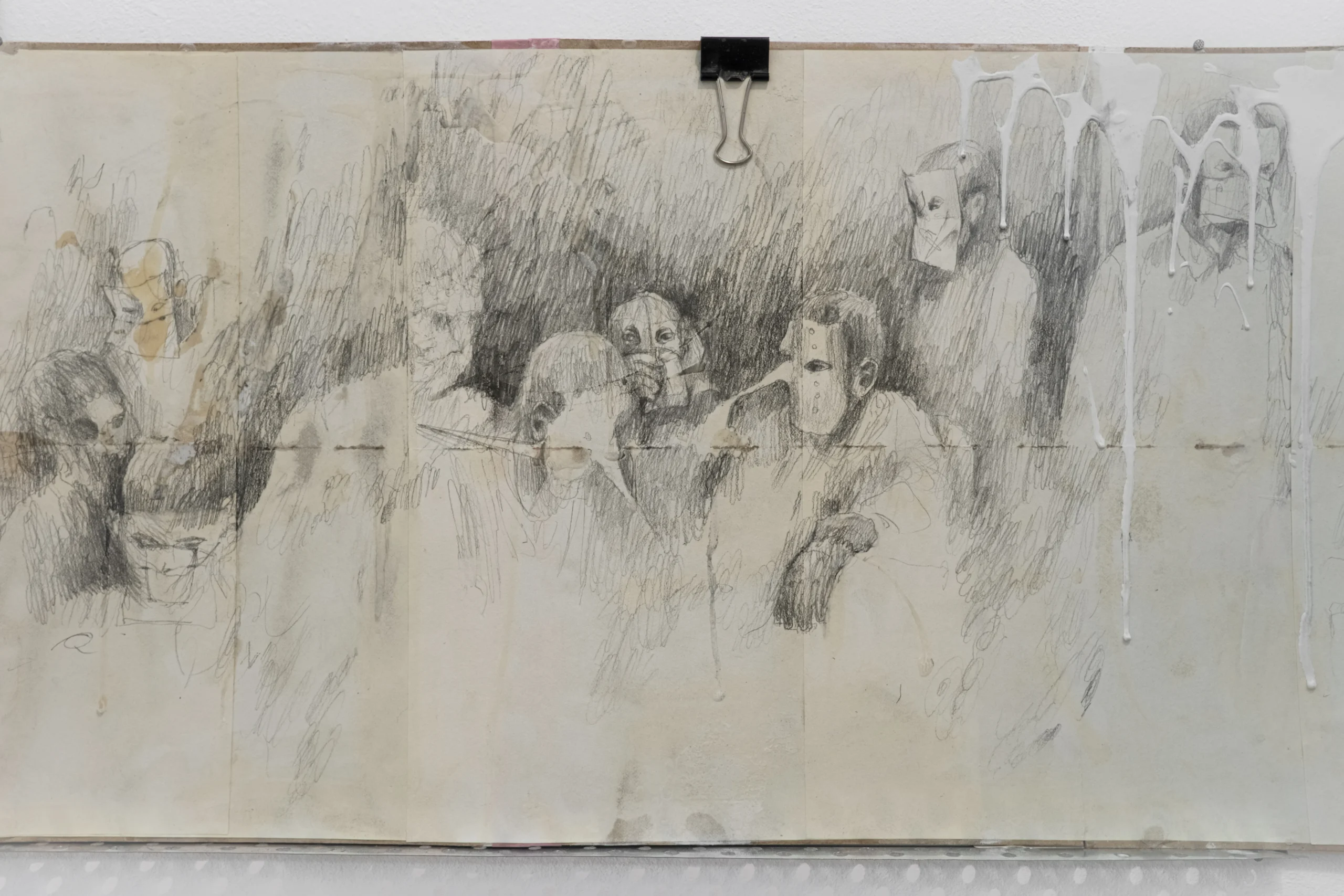
The visual foundation of the exhibition — paintings and graphic works derived from staged
photography — suspends this uncertainty at the level of the scene itself. Within these works, space
appears concurrently organized and undergoing decay, as if formatted by an internal law that can
no longer be reconstructed. The human figures appear fluid and shifting, lacking rigid contours and
captured mid-performance of a forgotten ritual. In the search for the reverse side of control, its
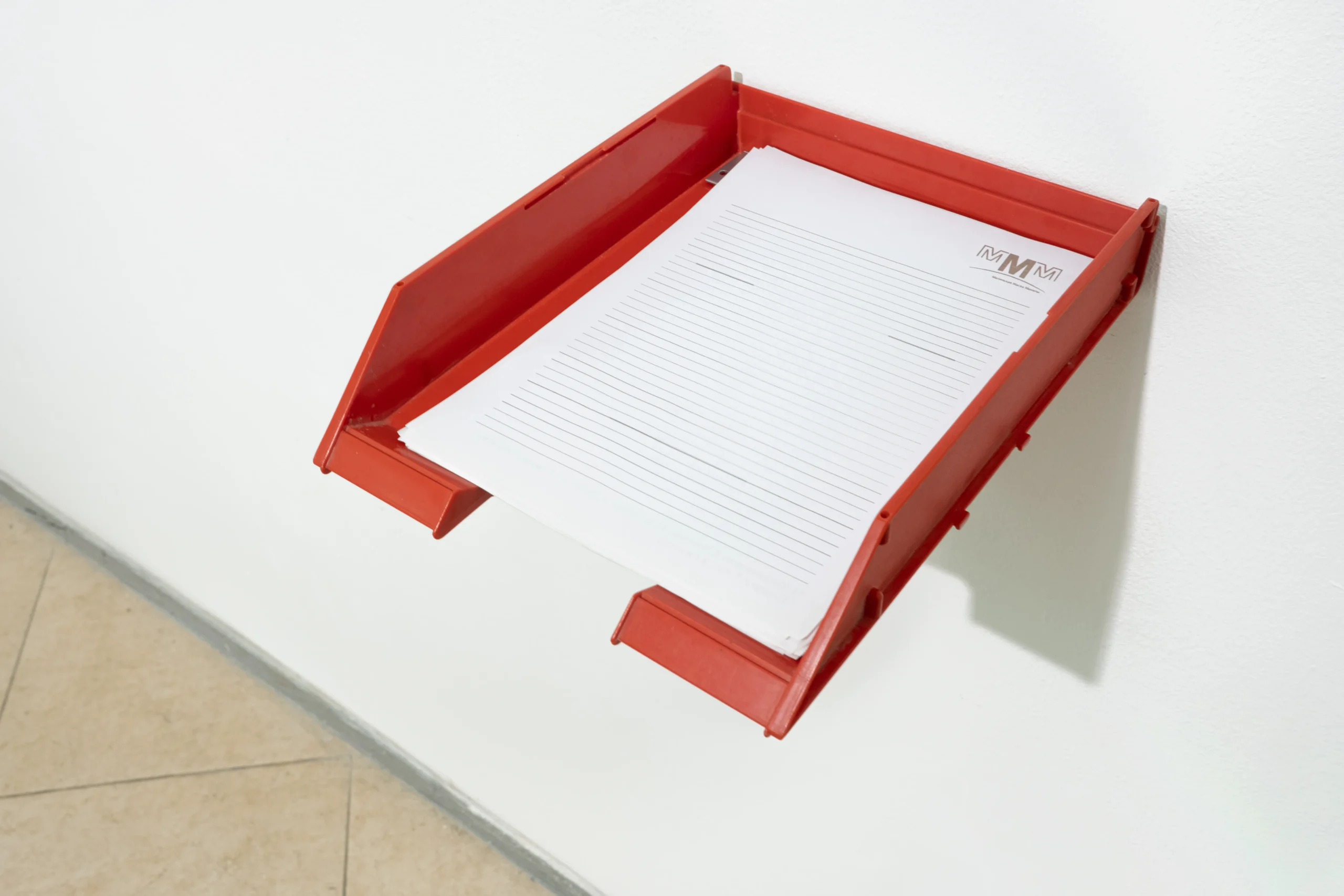
makeshift, rudimentary nature is abruptly exposed — its reliance on paperclips, adhesive tape, and
our collective readiness to follow the rules. The project maps a permanent oscillation between
structure and chaos, a state wherein uncertainty ceases to be a systemic glitch and becomes its
default operating condition.
Special thanks to Ilya Polovina