


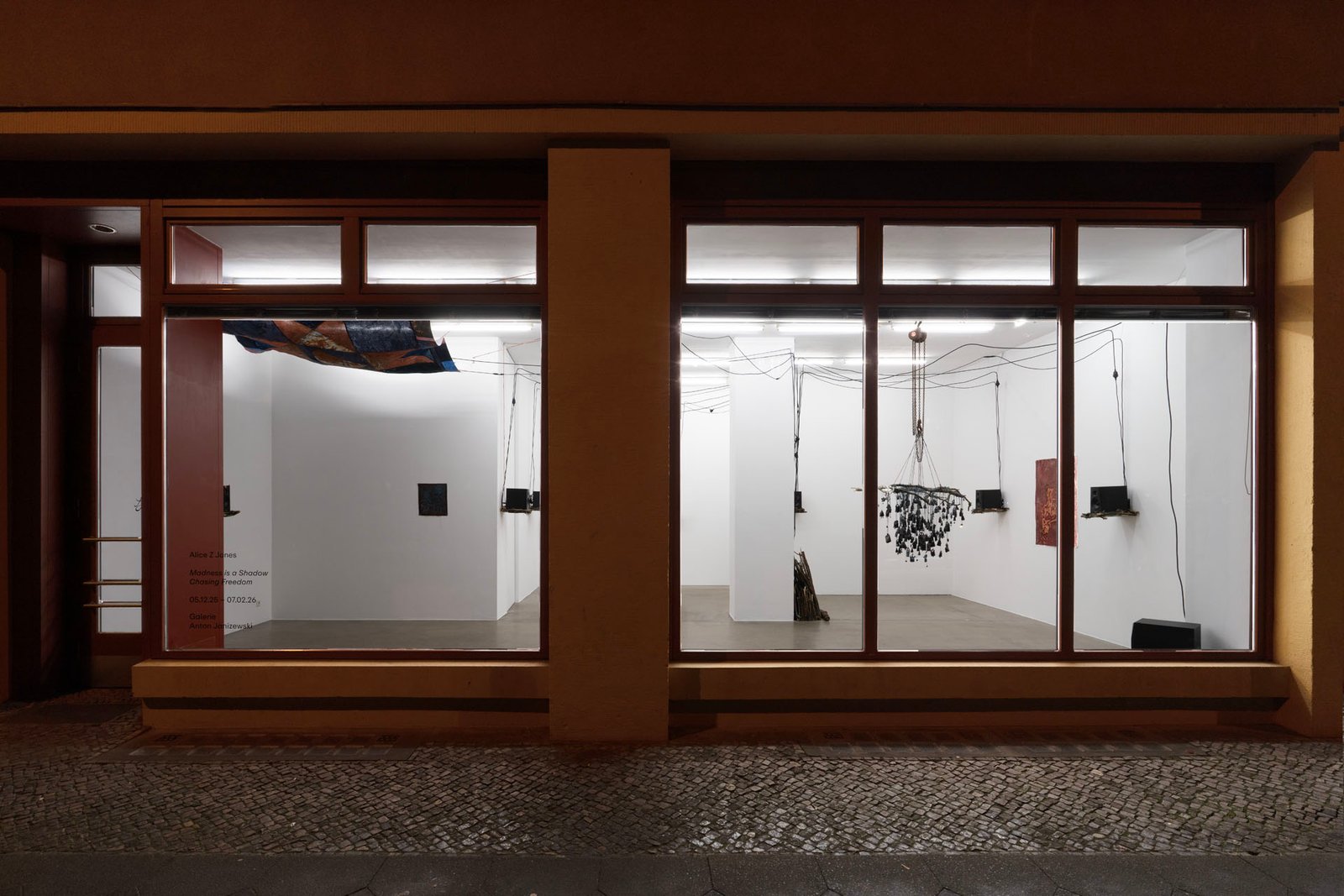
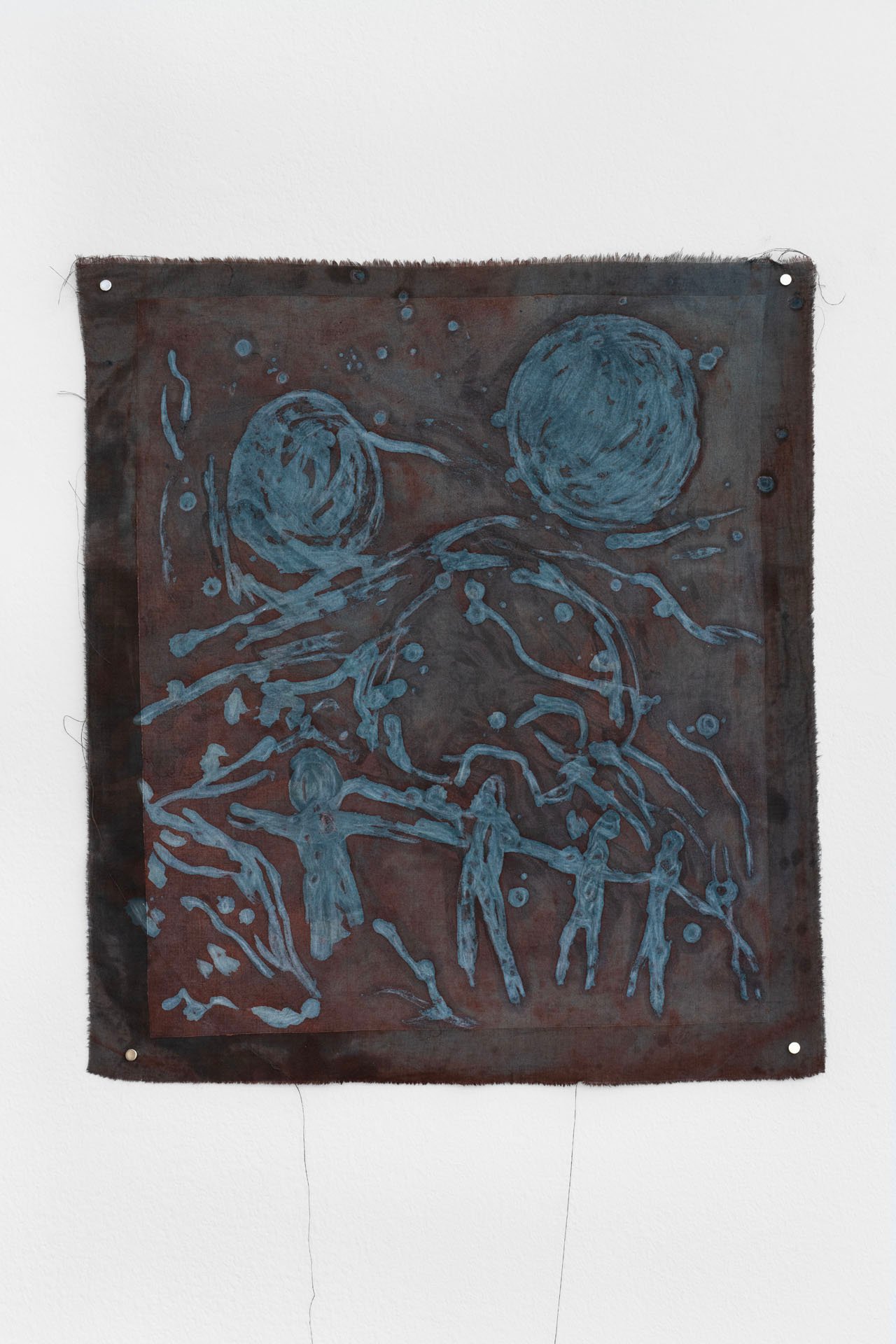
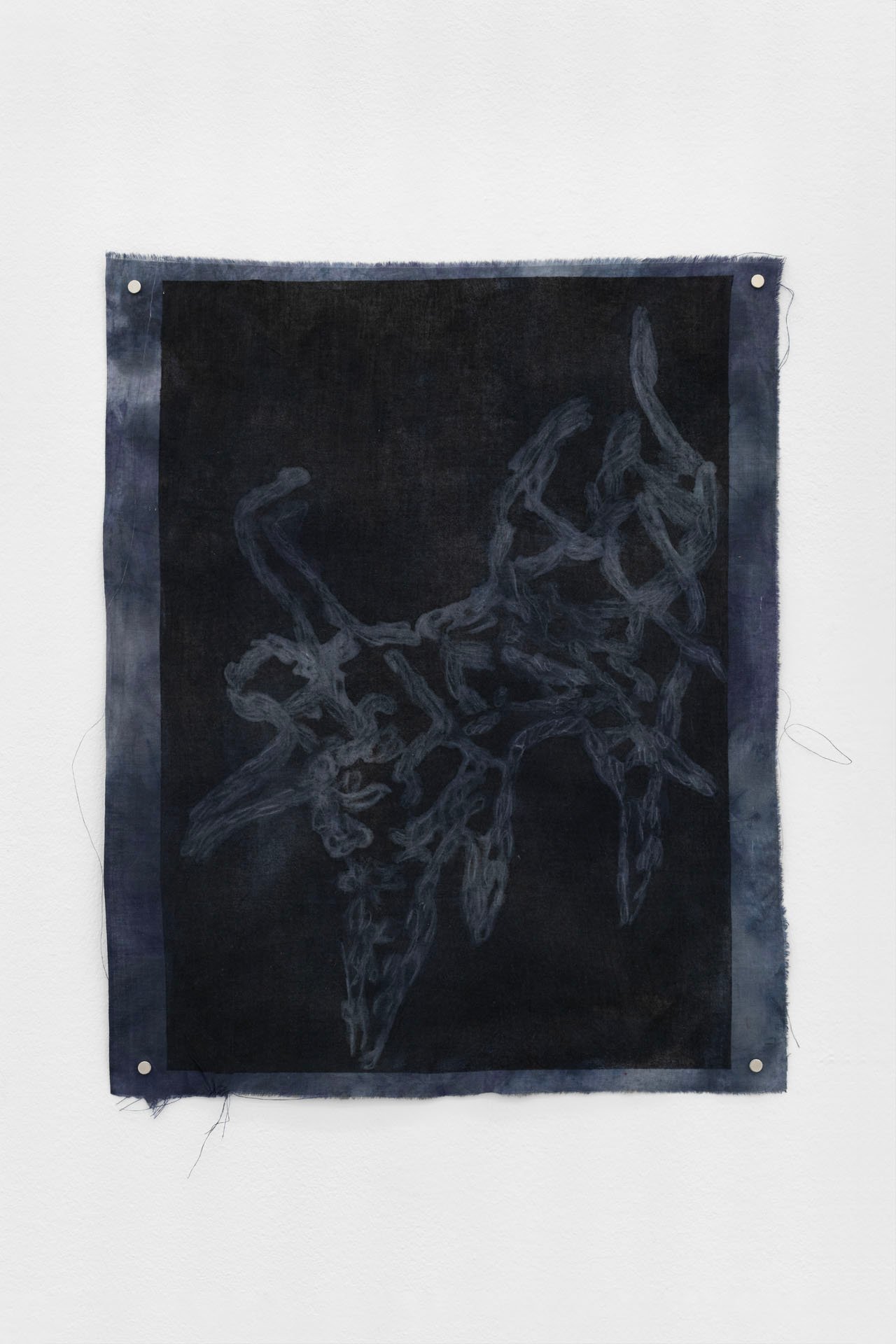
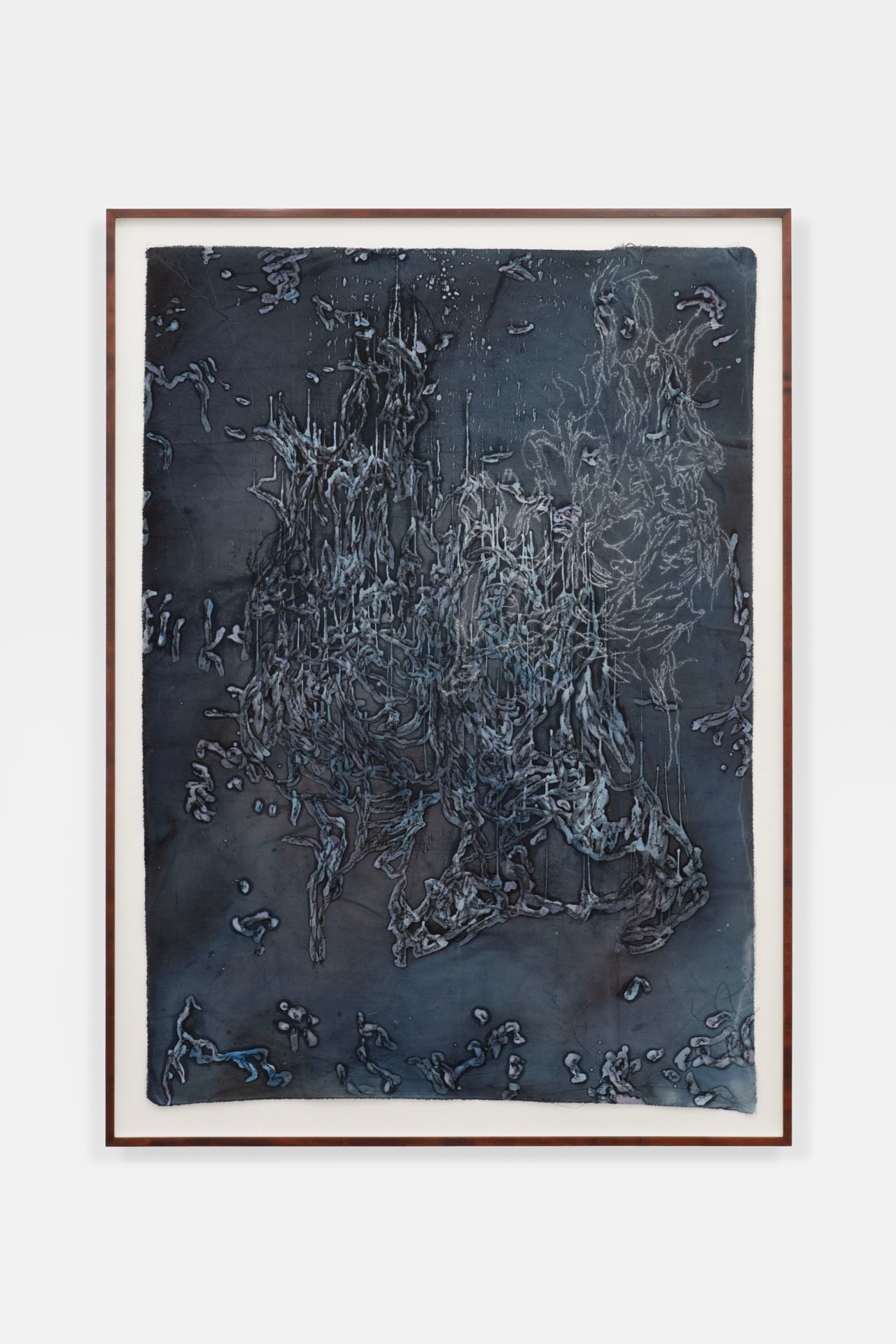
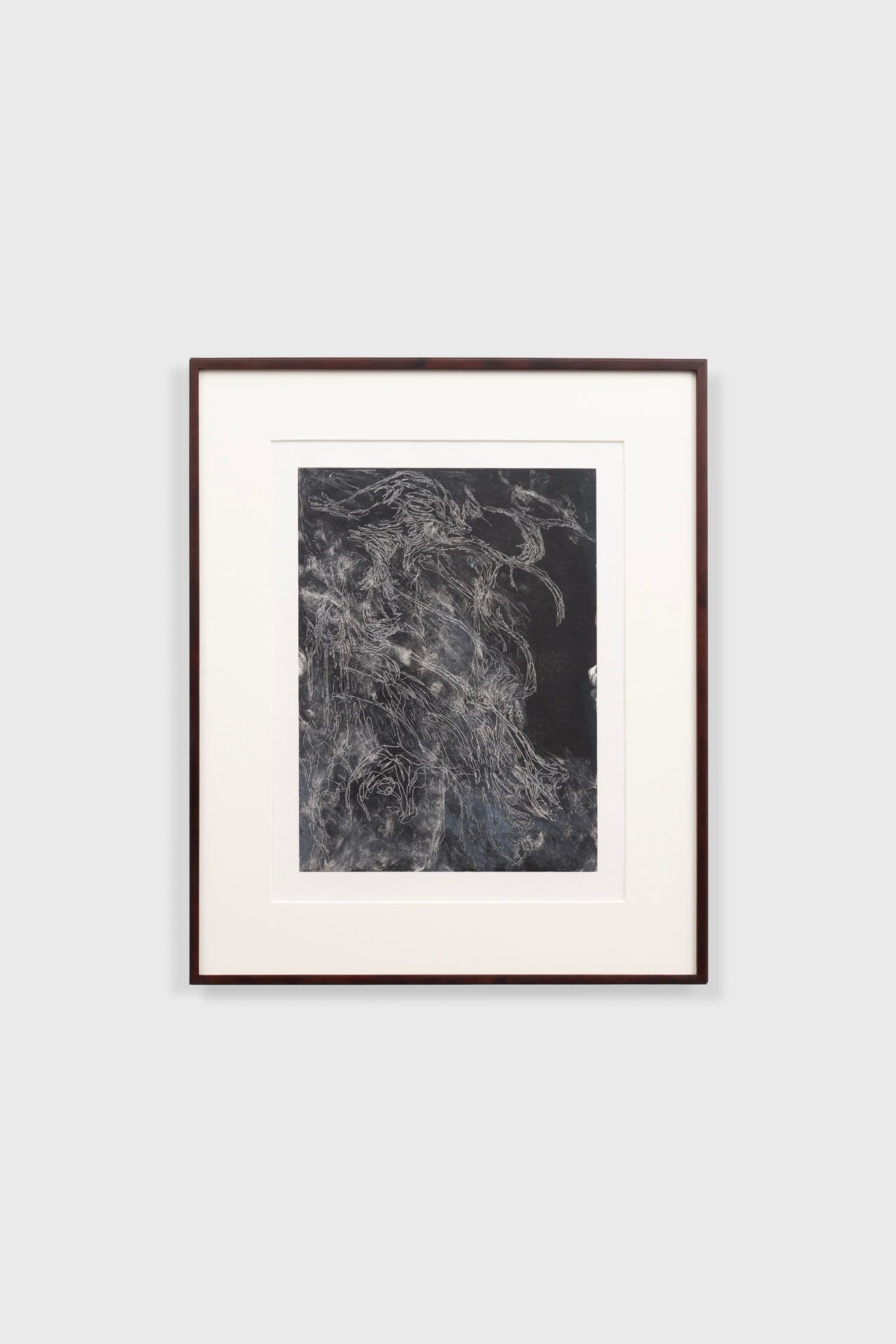
To enter Madness is a Shadow Chasing Freedom is to cross into a zone where sound, textile, clay, and salt gather not as mediums but as cosmologies—improvised, diasporic, and insistently porous. Alice Z Jones constructs the exhibition through an acute awareness of how artistic practice is not merely a site of production but a terrain of wake work, to borrow from Christina Sharpe’s lexicon: a process of tending to, and being in ceremony with Black life in the wake of slavery and histories of systemic violence.
Affirming that writing is inseparable from her making, Jones signals a commitment to an embodied research throughout the exhibition presented at Anton Janizewski, following her graduation from the MA in Fine Arts at the University of the Arts Berlin. Her background in languages (German and Russian), coupled with her British-Jamaican upbringing, generates a linguistic multiplicity that shapes her understanding of text, sound, and object as co-constitutive.
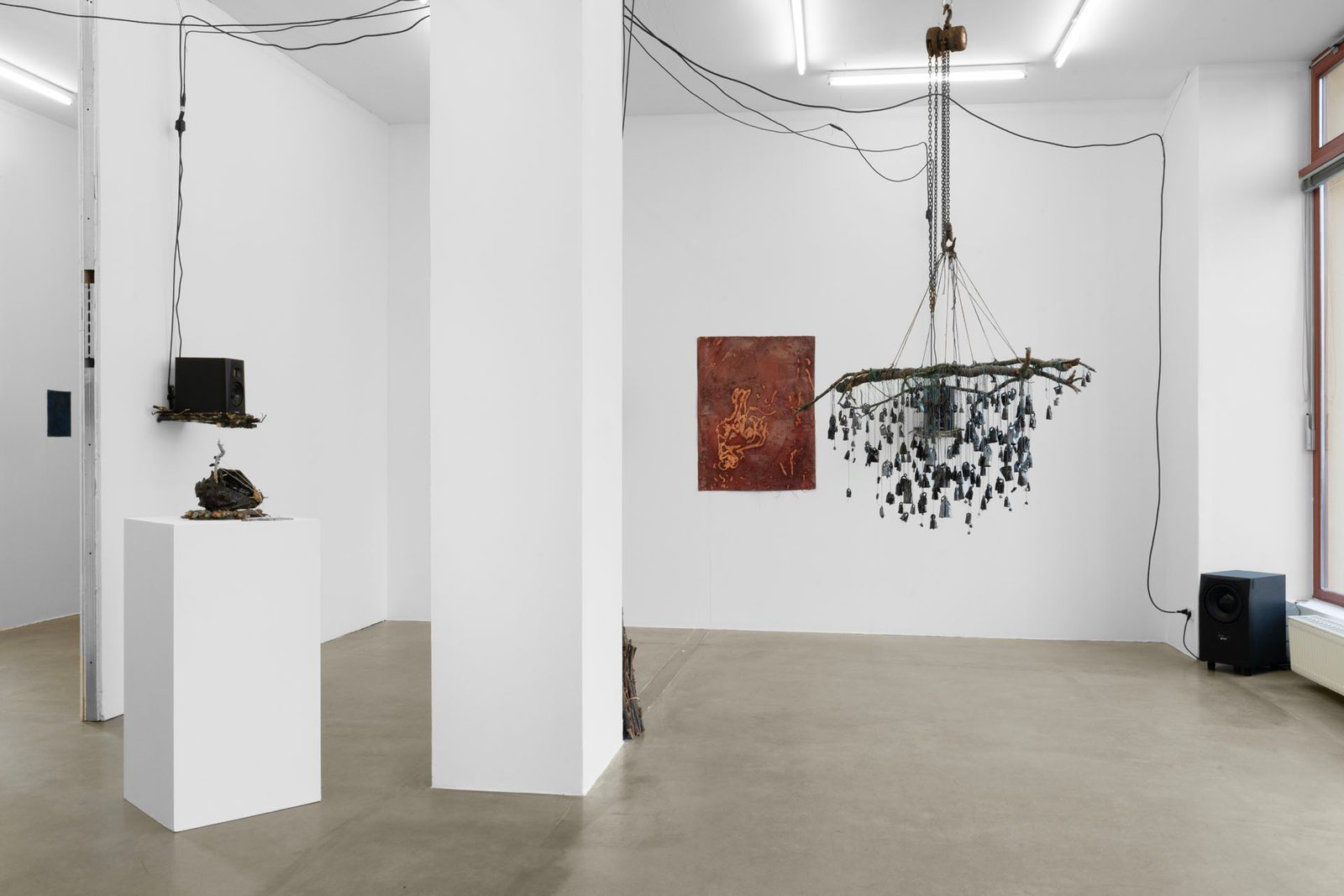
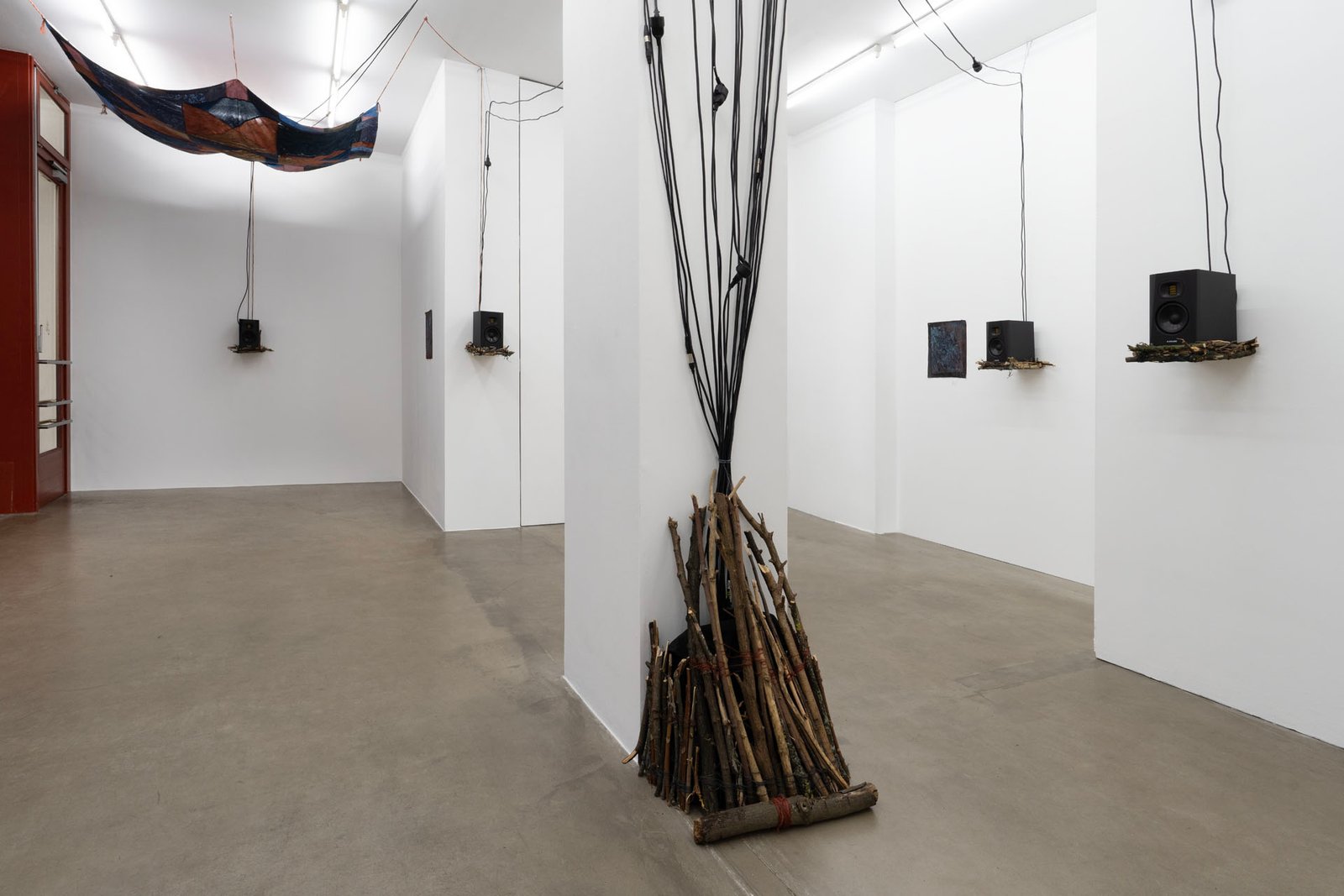
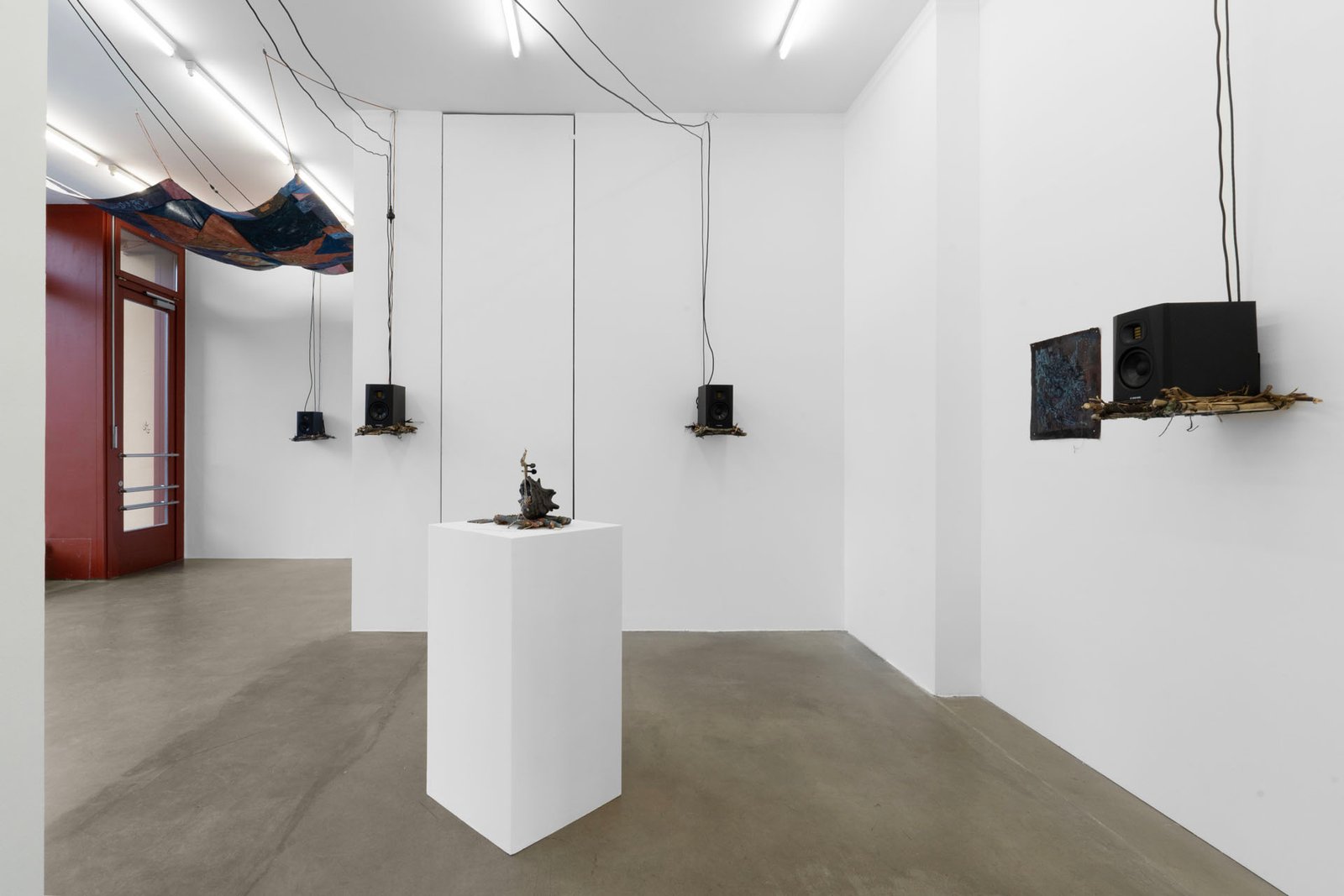
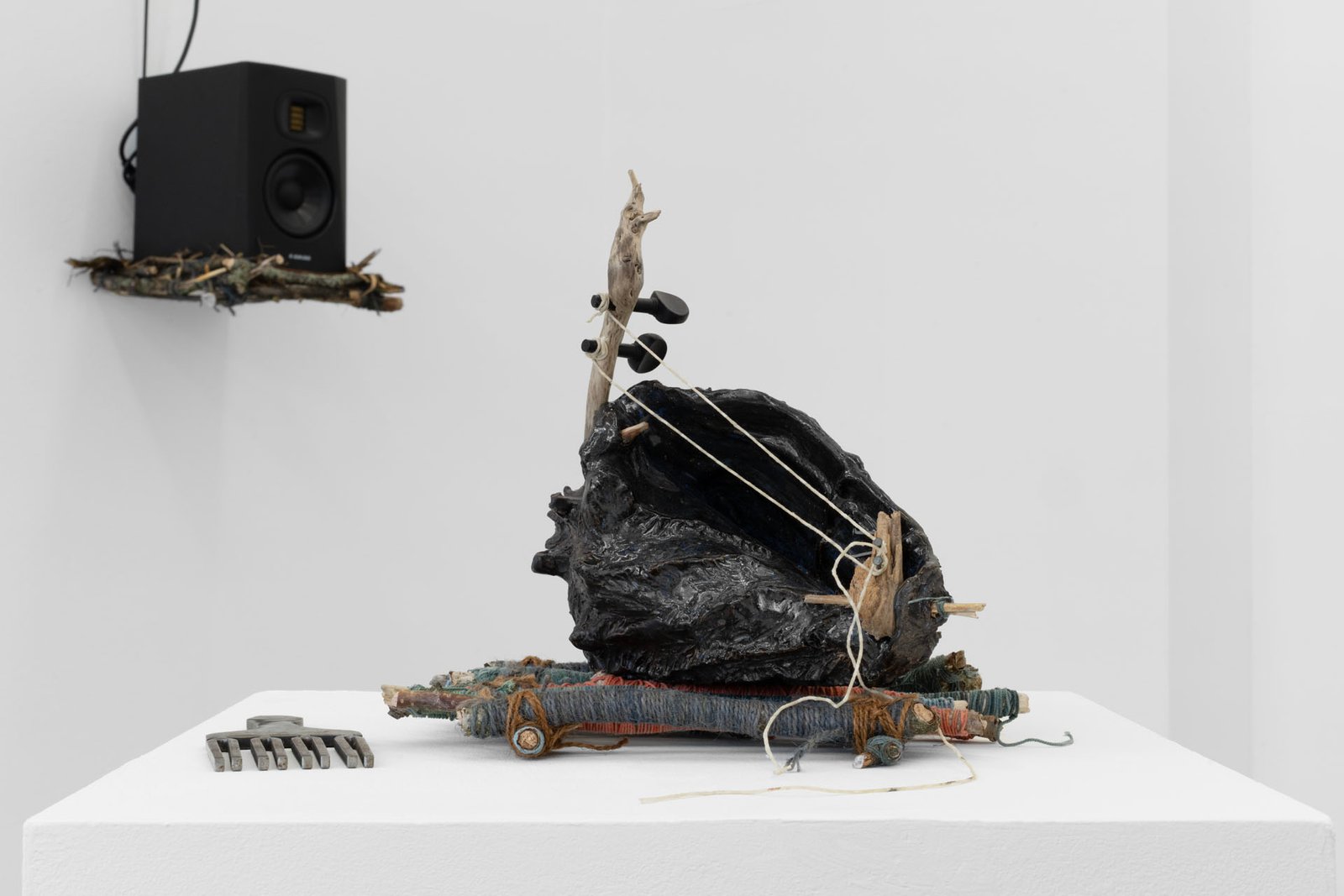
At the centre of the exhibition is The 9th Requiem (Aspiration), a spatial sound composition that explores tuning, attuning, breath, and listening—sonic practices that function as conduits for remembrance. The work is composed of nine channels arranged as an immersive field— sound moves through the room in slow, tidal circulations. This spatial composition is fundamental: tones drift, approach, recede, and cross one another without settling, creating a choreography of proximity and distance that mirrors the fluctuating cadence of breath. Built from layers of improvisational recordings using classical (cello, flute), folk (harmonica, panpipe), and instruments made by the artist (tuning fork, shell, voice, bells). Among these instruments is a rusted tuning fork, sounding outside the 440 Hz grid, which creates a xenharmonic field where tones hover and resist resolution. The work’s nine-channel form extends from Nine-Night, the Jamaican wake tradition with Akan roots, where the dead are honoured through stories, hymns, and gathering over nine nights to support the transition of the spirit. Like Christina Sharpe’s theorisation of the wake, Jones treats funerary rituals not as stabilising practices but as portals through which the living and the dead move without hierarchy. Surrounding this sonic architecture is a set of textile works that channel pre-industrial cloth traditions—through wax resist, hand-dyeing, salt crystallisation, and stitching—as a material vocabulary of mourning.
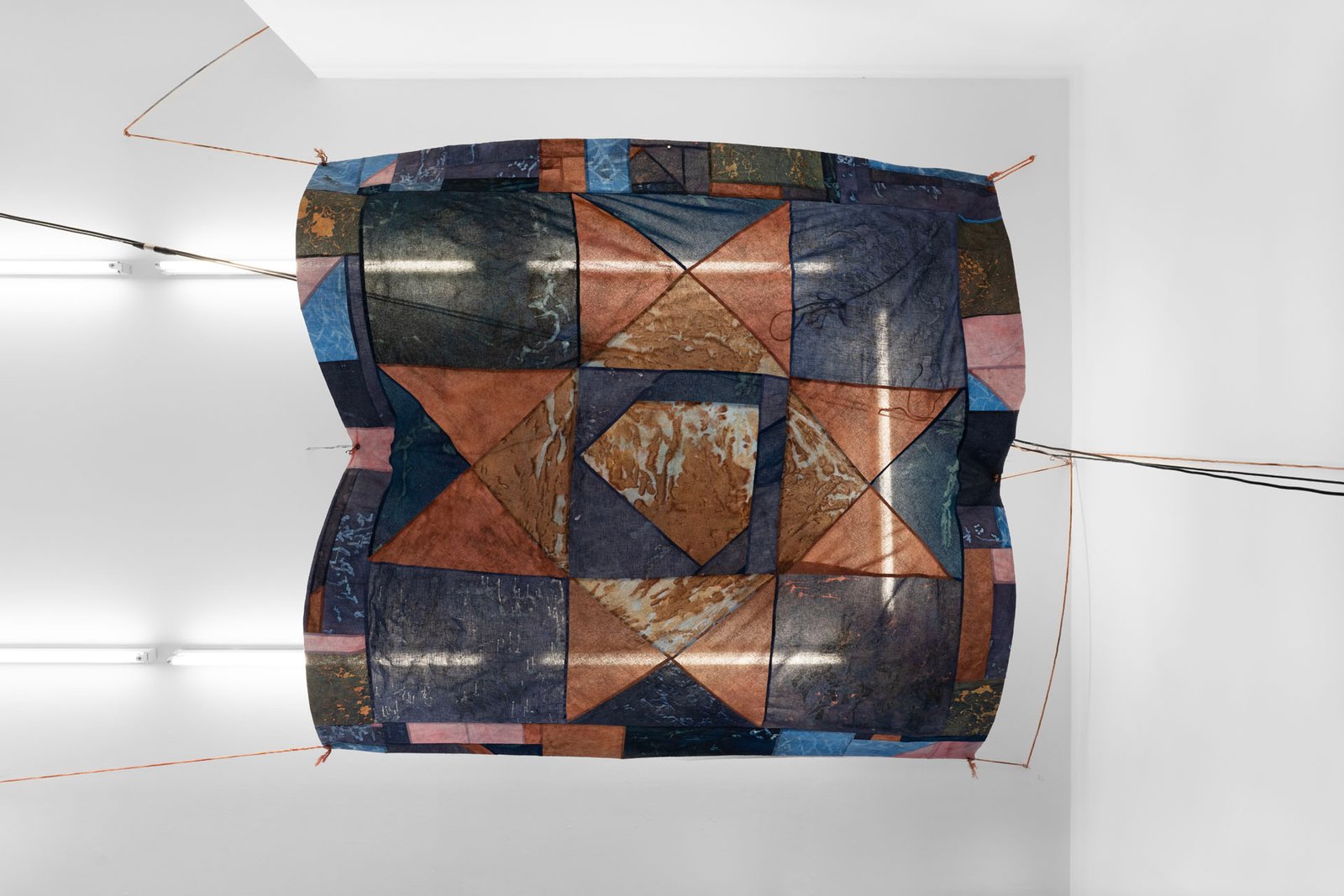
Anchoring the exhibition is Evening Star (Supernova), a quilt co-created with Jones’s mother, Gloria Pottinger. Formed from lived-in fabrics passed between them—an exchange the artist likens to a shared working practice—the work invokes American novelist Alice Walker’s question: What did it mean for a Black woman to be an artist in our grandmothers’ time? Drawing from matrilineal currents of quilting, the artist and her mother recall, among others, the visual vernacular of Gee’s Bend, a rural southern Alabama community whose quilts emerged in the 19th century from necessity and accumulated into an expressive language. Rooted in a history in which quilts were not only forms of care but, a means of survival, enslaved women of Gee’s Bend pieced scraps and worn fabrics to endure cold nights, gathering their families against violence and deprivation. Folding together Adire dyeing, batik, and the improvisational geometries of Gee’s Bend, Evening Star (Supernova) becomes an invocation, a mother’s garden re-entered through cloth.
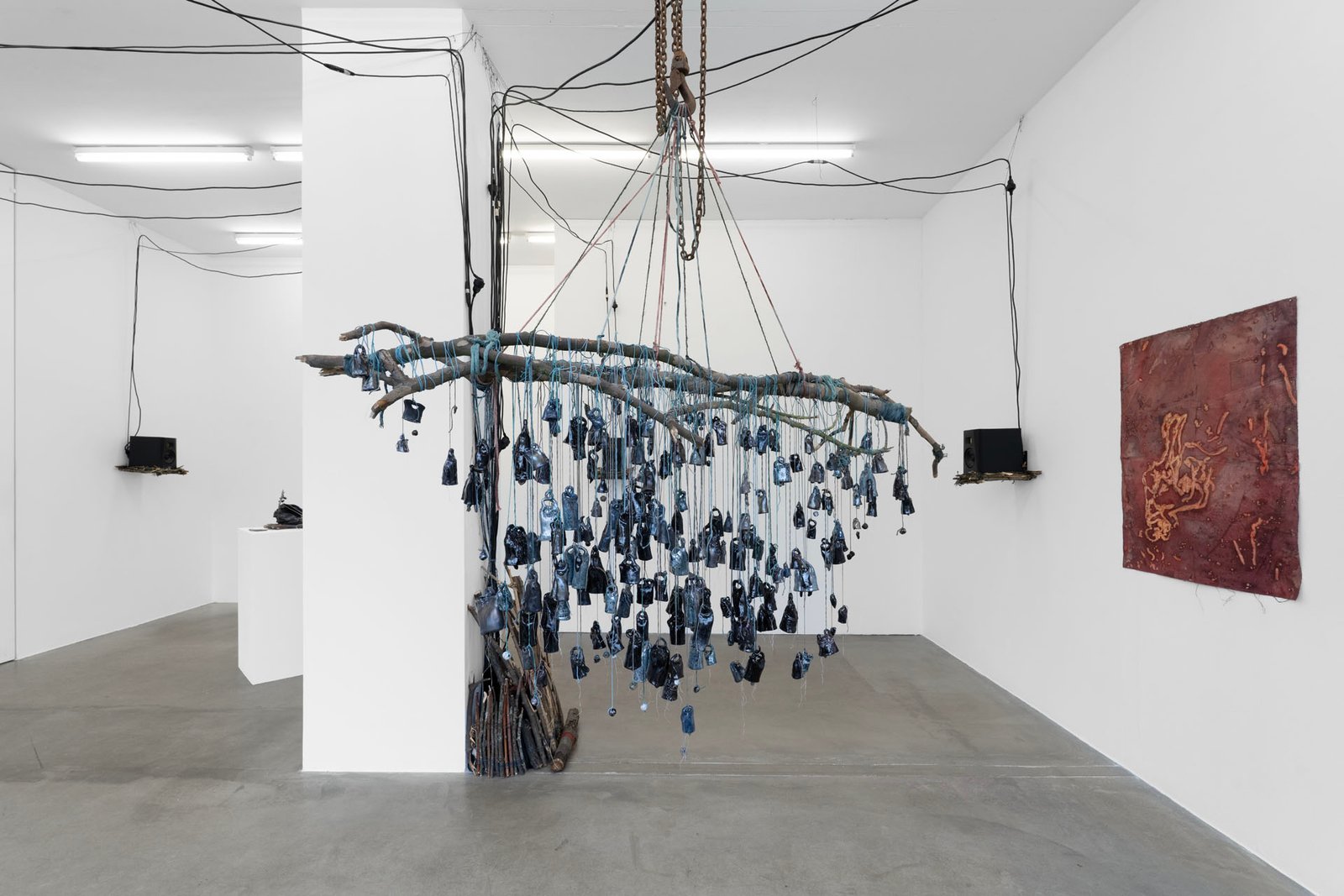
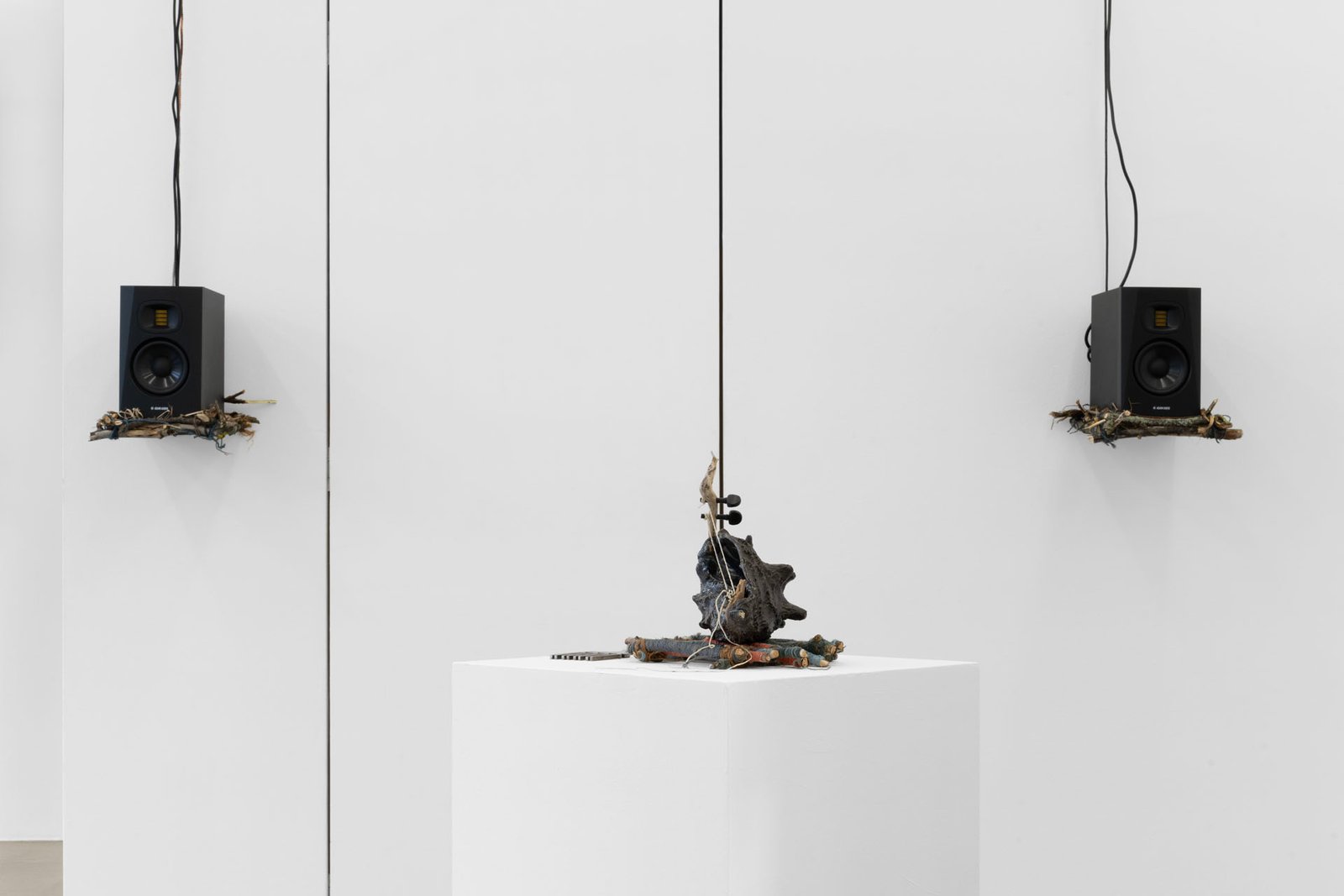
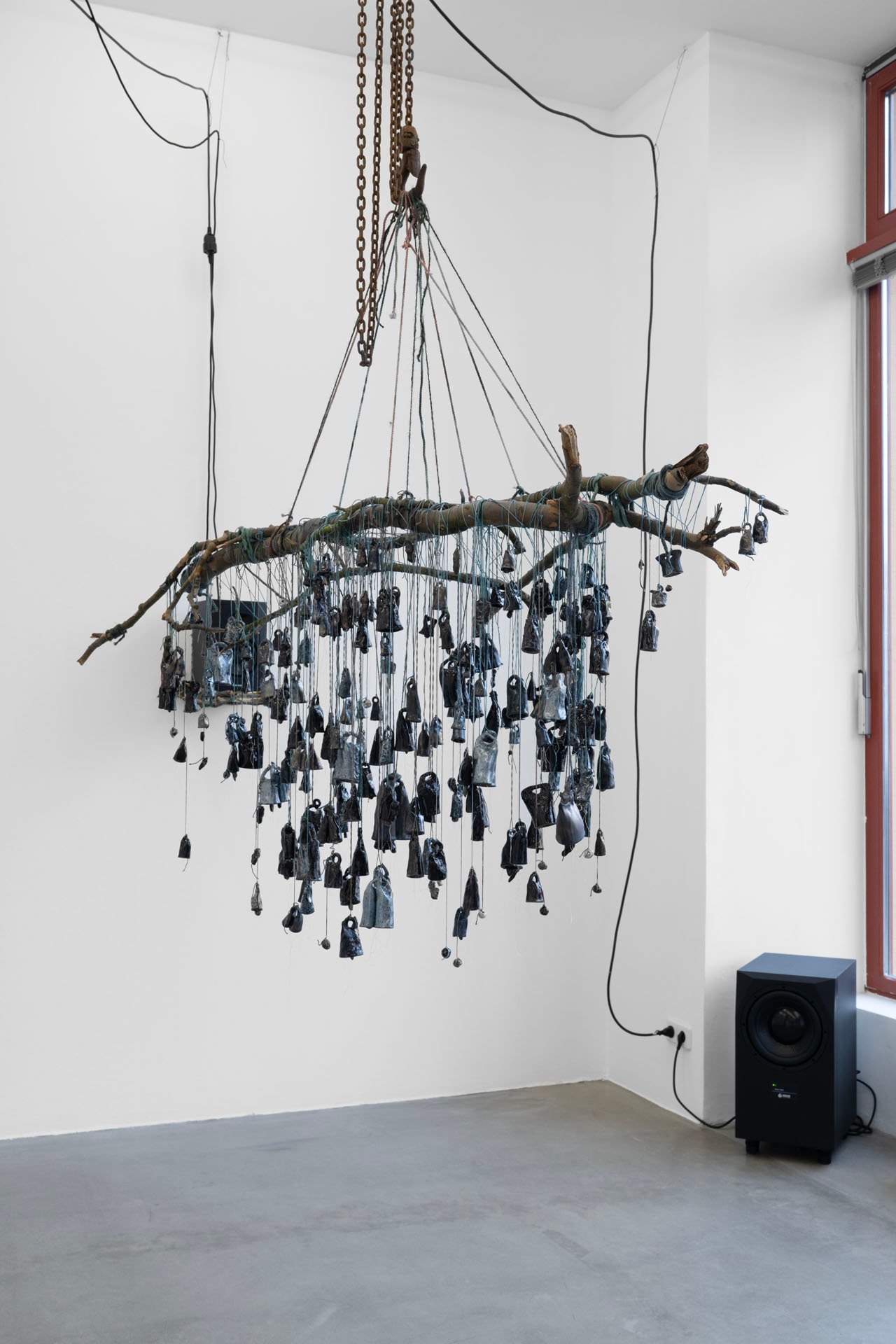
Umbratiles (the bells that did not ring) suspends ceramic bells from storm-fallen branches, referencing a dense and often violent history. In colonial contexts, bronze bells accrued the weight of what R. Murray Schafer calls “Western offensiveness”: the missionary bell, the plantation bell, the slave bell—devices that regulated labour, enforced surveillance, and marked out hierarchies of life and death. Their material histories carry further violences: bells melted into cannons, cannons recast back into bells, their forms repeatedly folded into the machinery of war, punishment, and discipline. By shaping more than two hundred unsung bells, Jones turns toward the silence surrounding these instruments and their residues. Working from personal losses and from the structural violences that gather within Germany, Jones listens to what Kevin Quashie names the quiet—the interior, tender, and sovereign aspects of Black life.
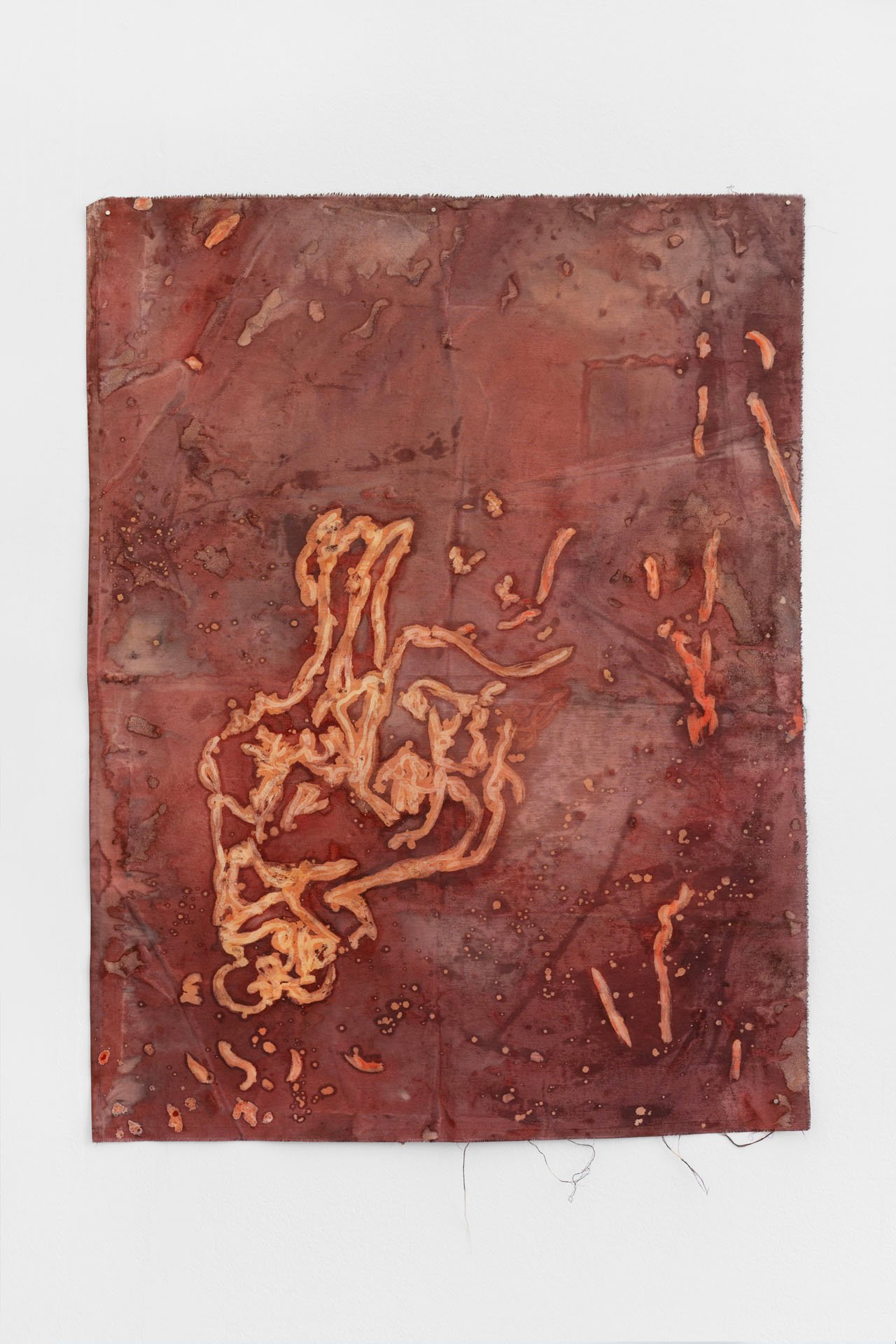
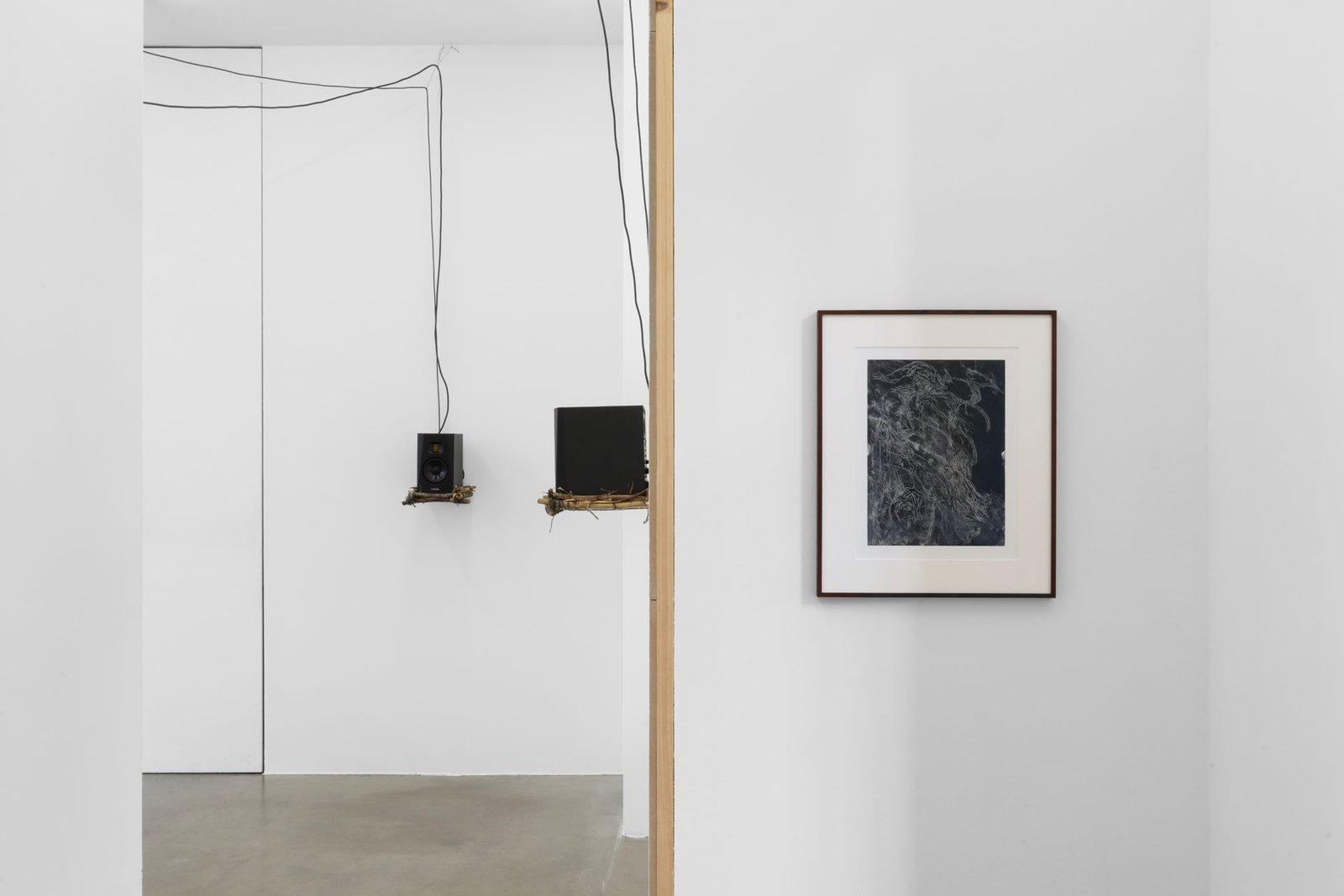
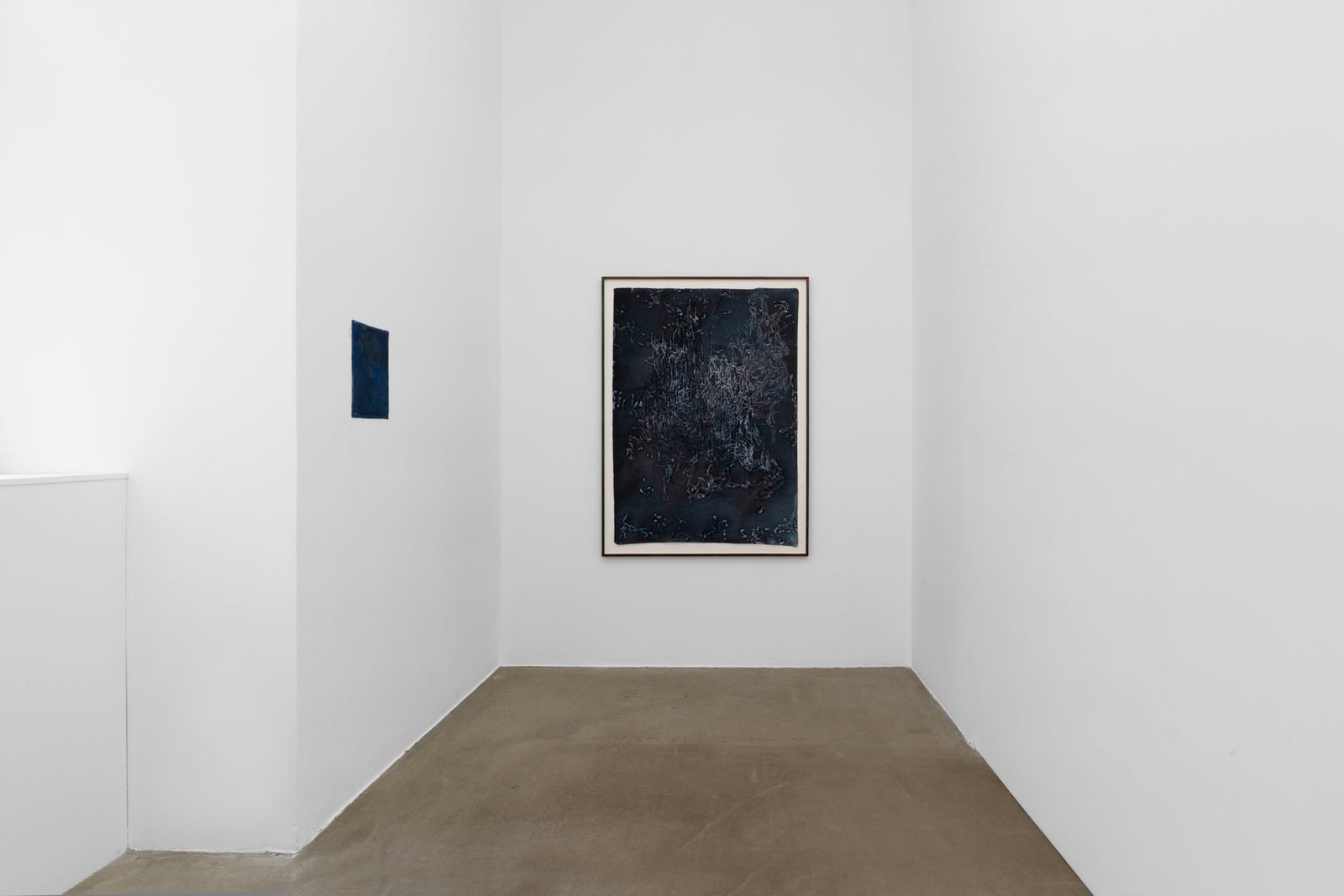
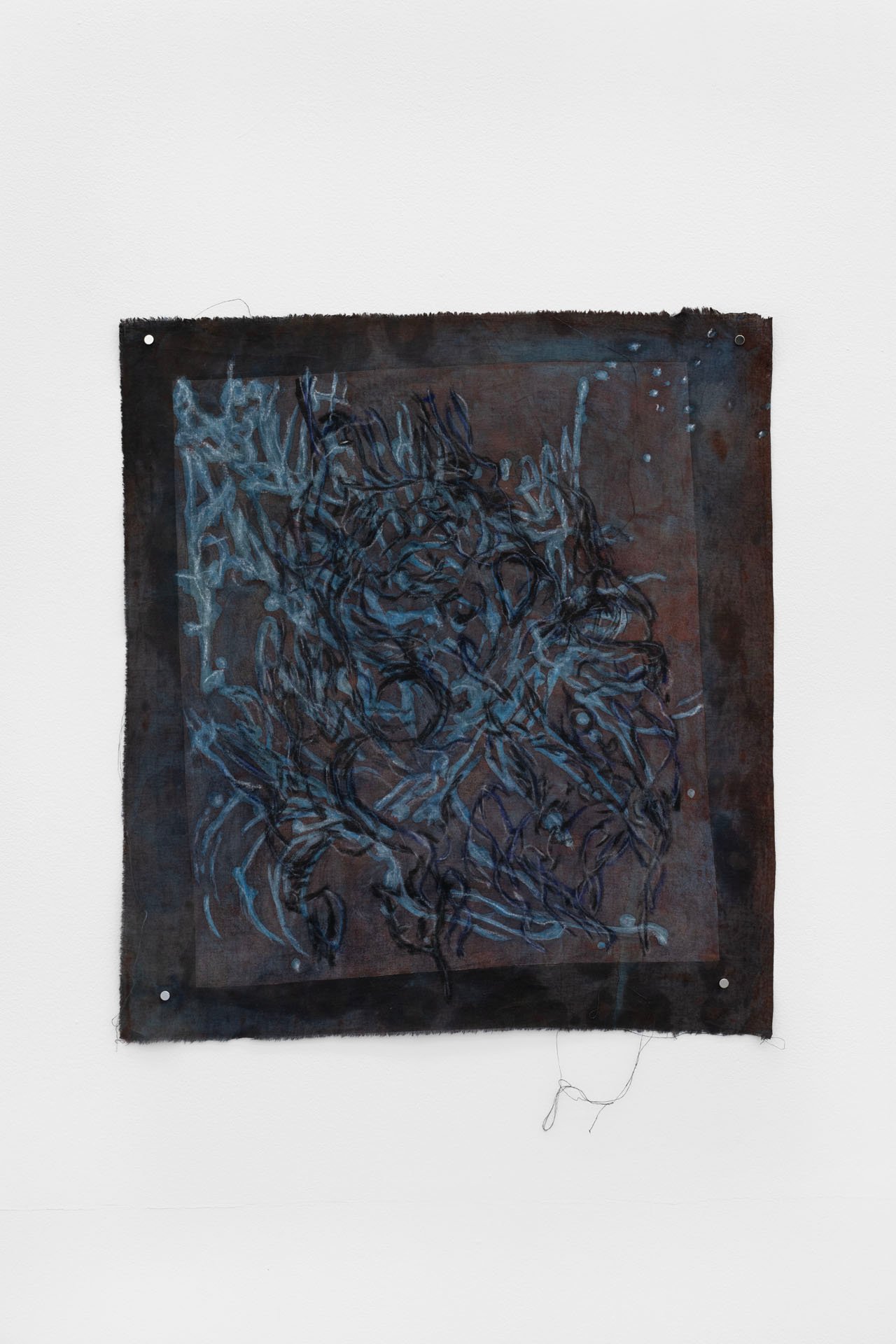
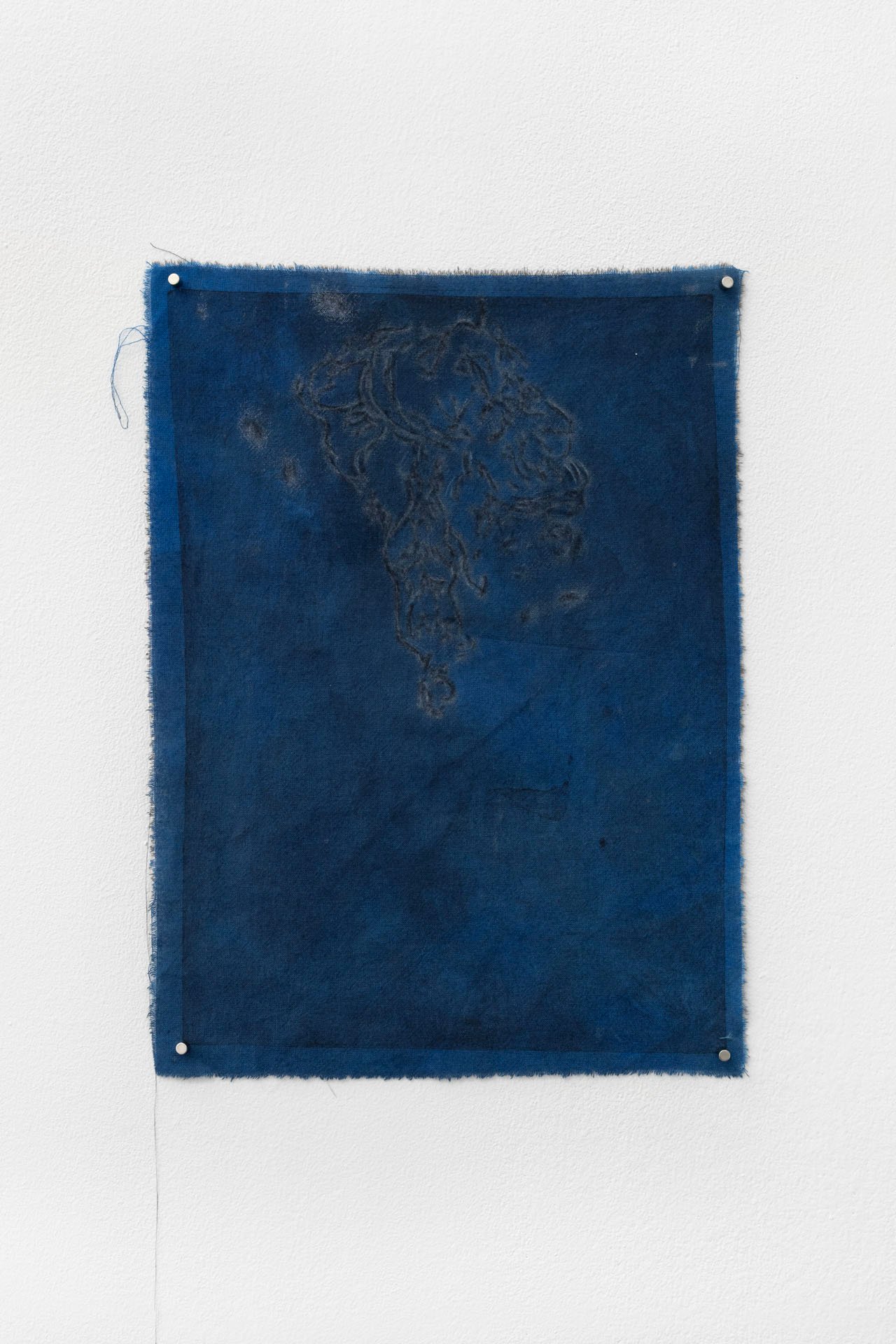
Nearby, The Queen Conch reimagines the ceremonial shell, which has been endangered through economies of extraction—principally those of tourism—in the Caribbean Sea and adjacent waters. Cast in clay, its resonance curls inward, becoming a vessel for cultural languages endangered or suppressed. It gestures toward Safiya Sinclair’s “wild conch-shell dialect,” an image of voice folded tightly against worldly refusals. Jones’ shell is not a relic but a container of submerged tongues and ritual histories that persist despite erasure. In wall works Wide Sargasso Sea (the 2nd Fire) and Humming Eternal Warmth (a Night for Leaving a Vast Beginning), salt dries into constellations across earth-toned cloth, recalling Caribbean atmospheres. Their titles echo Dominican-born novelist Jean Rhys, speaking through an archipelagic set of literary references. Smaller textile works intensify this sensorial field. Other Stars Will Sing, Salt Sweat, Ravenous Dark compresses gravure, dye, salt, and oil into a dense emotional geology, a minor cosmos shaped by labour’s moisture and touch. The Cry Takes Root, nearly translucent, traces grief’s slow infiltration of the body through pencil flickers and faint washes. Double-Edged Fantasy (SN2023zkd) repurposes a bedsheet into a palimpsest of gestures and pressure marks. Two further wall works, Silver is the Moon I Swallowed (i) and (ii), meditate on internal luminosity. In (i), chalk and pigment glow softly, as if light has been metabolised. In (ii), the glow crystallises into a gravure print.
Across Madness is a Shadow Chasing Freedom, Jones assembles a grammar of grief that is never solitary. Her mourning intertwines with that of her cohort, her community, her mother, and a broader diaspora subjected to overlapping losses. Each breath, gesture, dyed cloth, formed clay, or suspended bell, bears the imprint of attentive and repeated labour. Mourning becomes a form of making, and making a form of staying with the dead. In this space, the dead are neither abstracted nor sanctified; they remain present, breathing through the shifting seam of a quilt. Her work extends this companionship to the viewer: an invitation not to consume grief but to inhabit it.
In memory of Heiko Thandeka Ncube.
– Naima Hassan
Realized with kind support from Adam Audio, Berlin, Germany