


“In me everything is already flowing…” – Luce Irigaray
The movement of water is determined by the body that contains it. From transportation, drainage, and energy-generating systems of pipes, dams, and catchments to the porous aqua-ecological boundaries established by beaches, coastlines, and riverbeds, water circulates perpetually through the infrastructures of our manmade and natural environments. We do not always see where the water goes, but we know these cycles of absorption and release: the trickling, the flooding, the rippling, the pour, the churn, the drip, the gush.
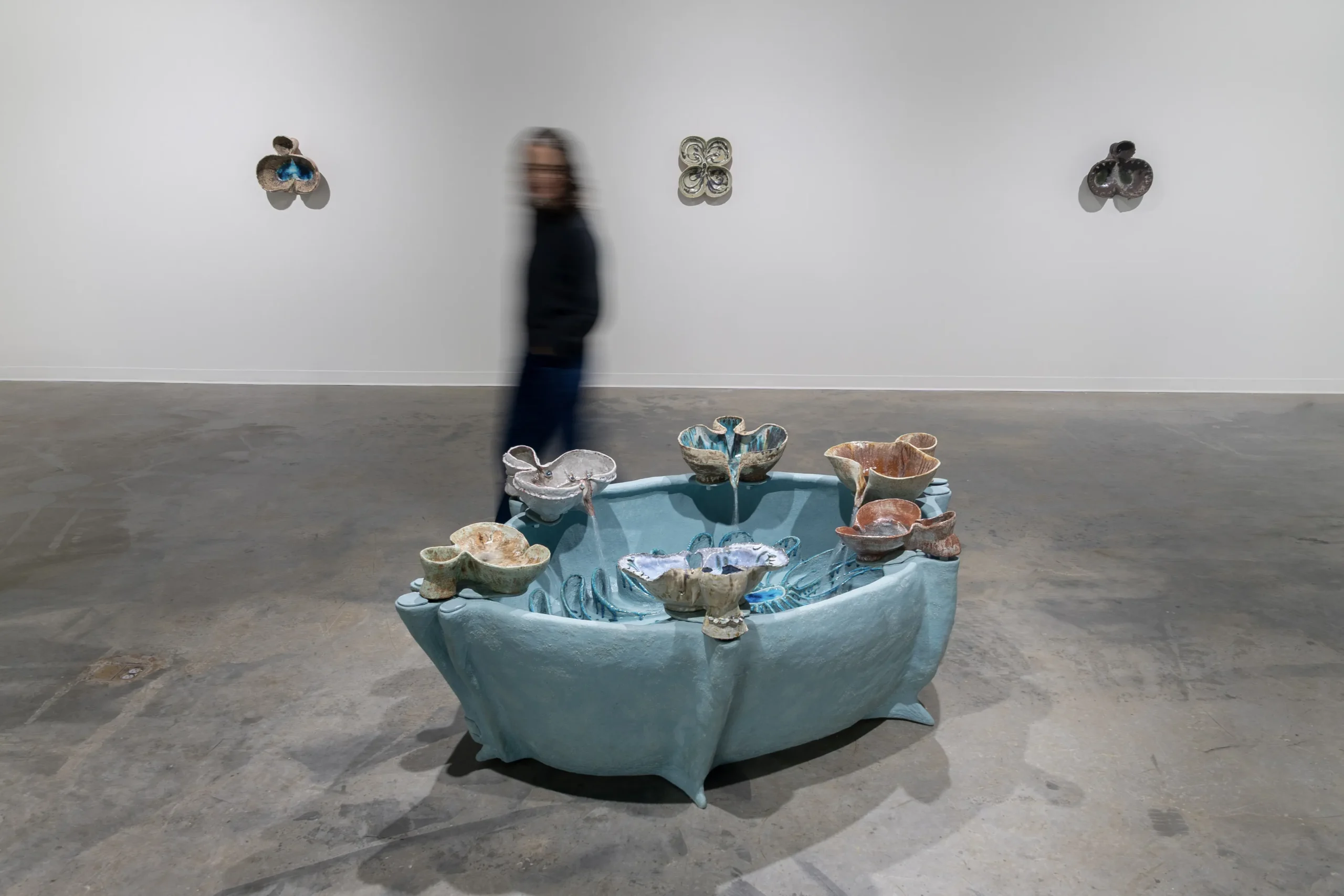
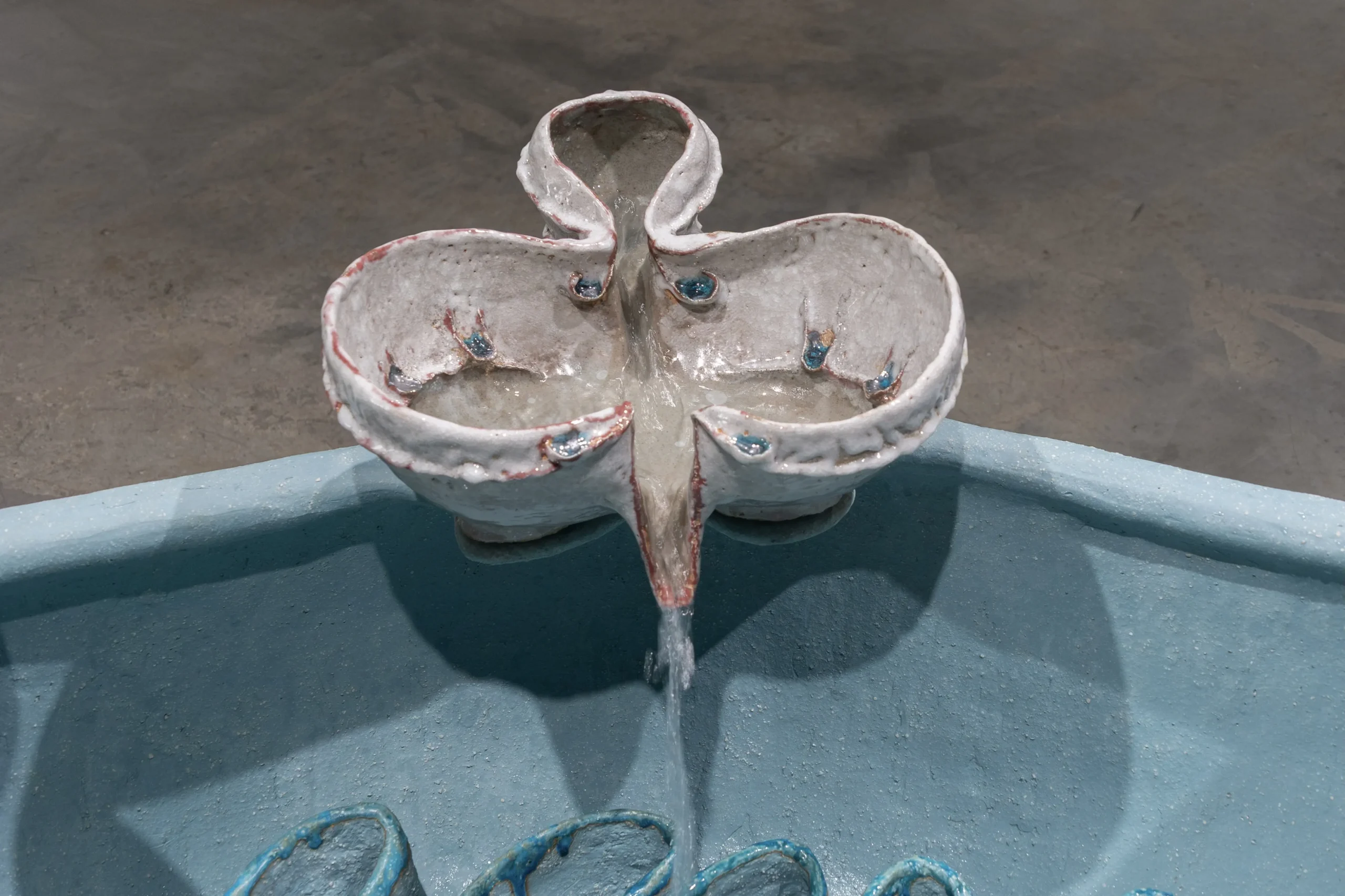
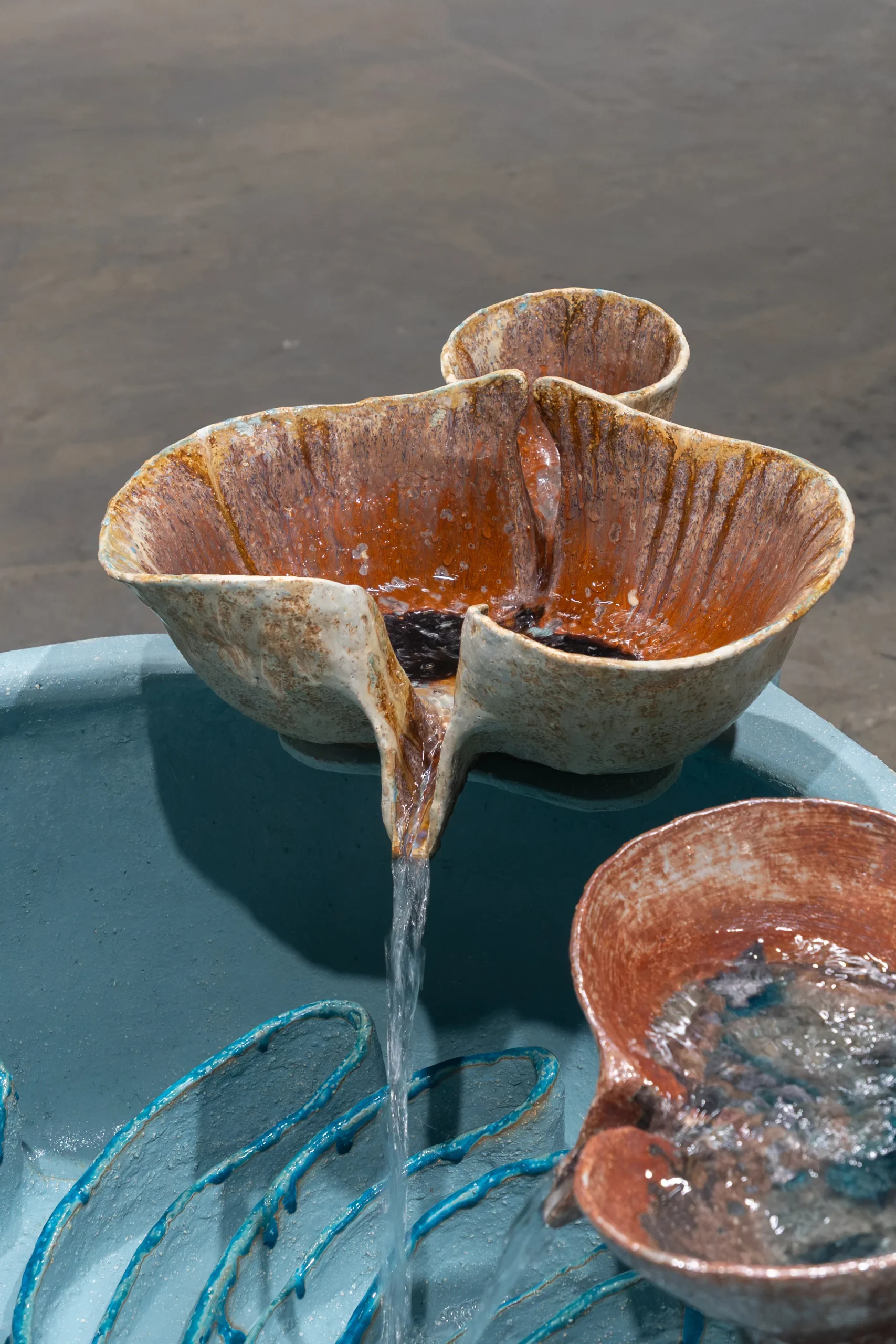
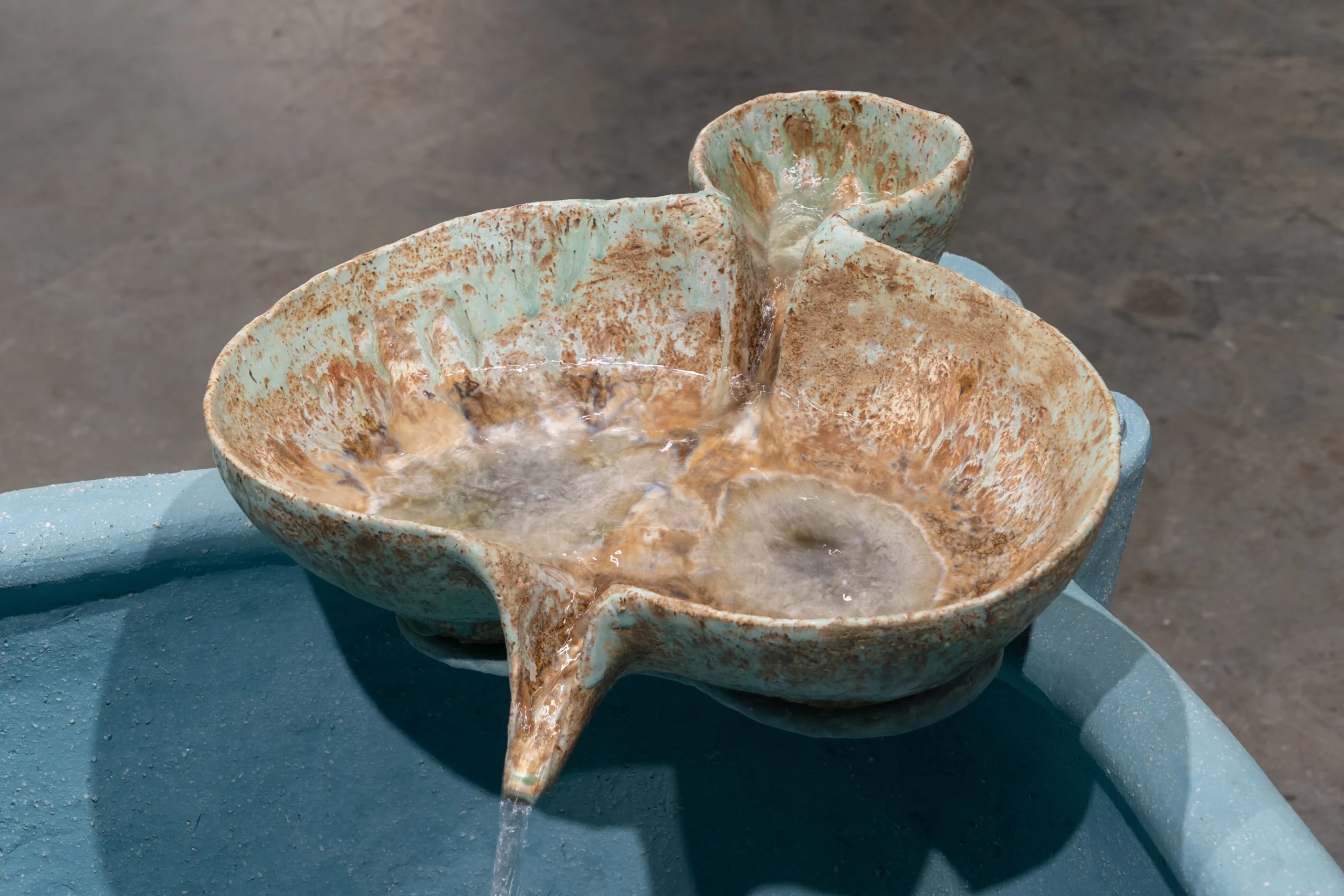
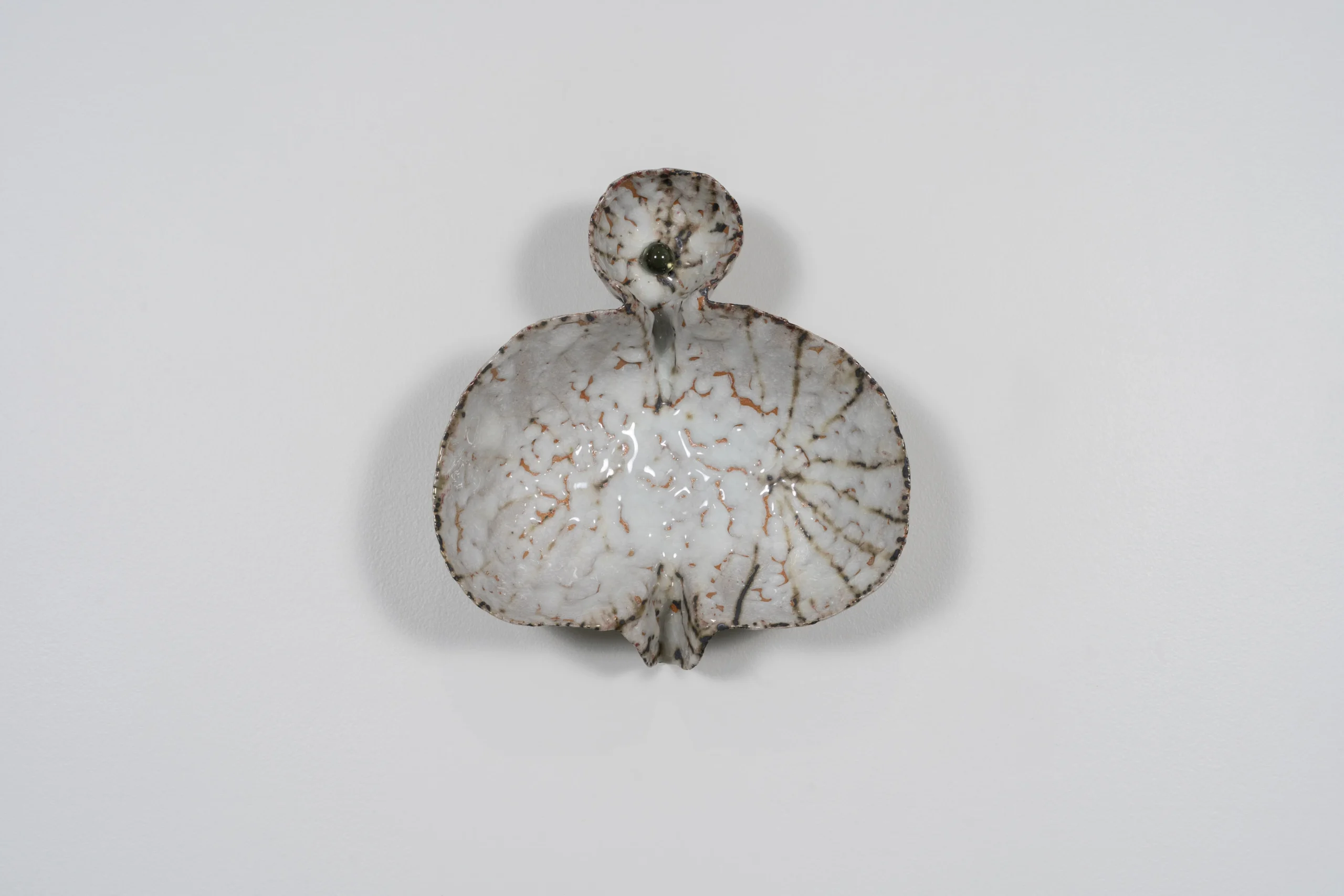
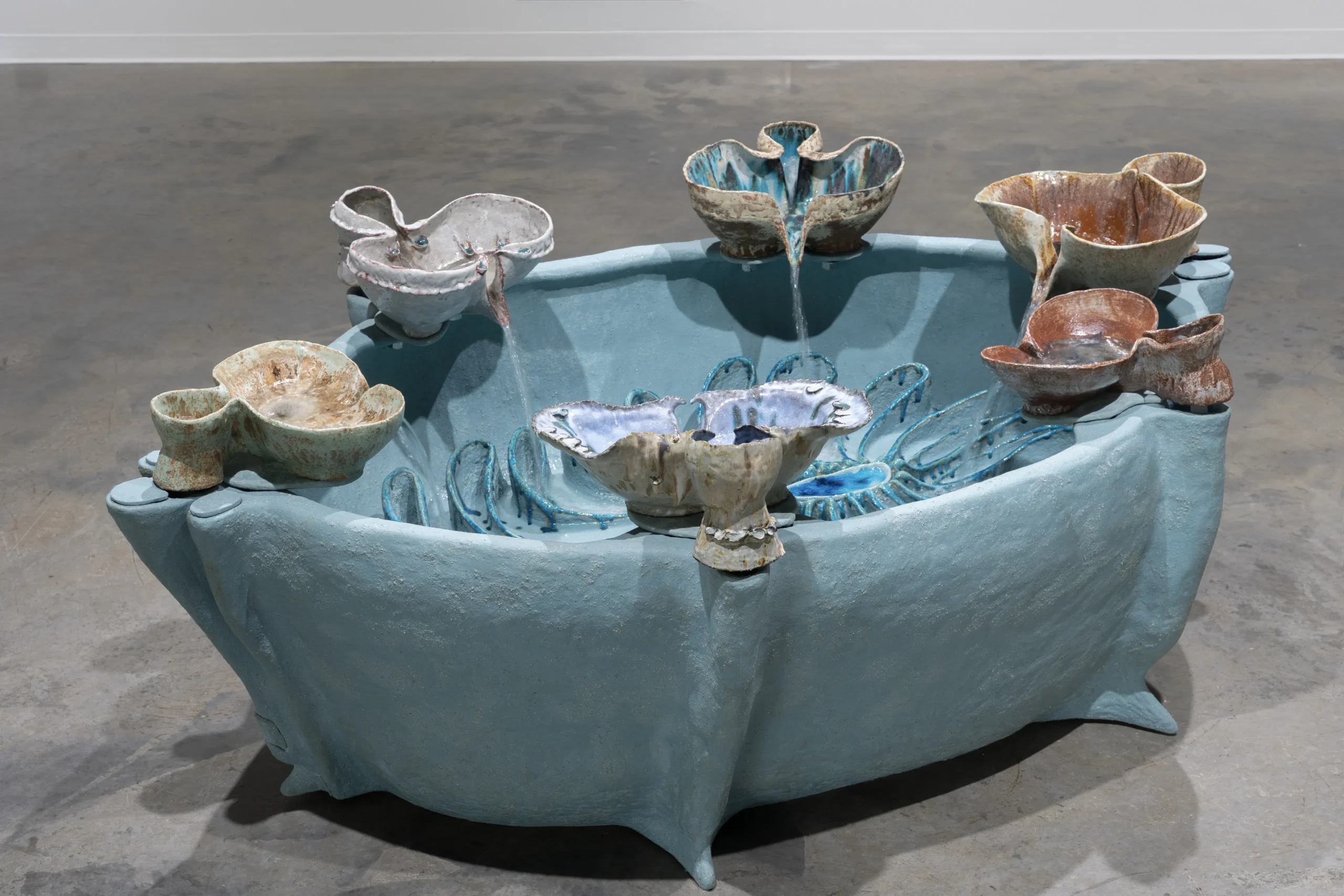
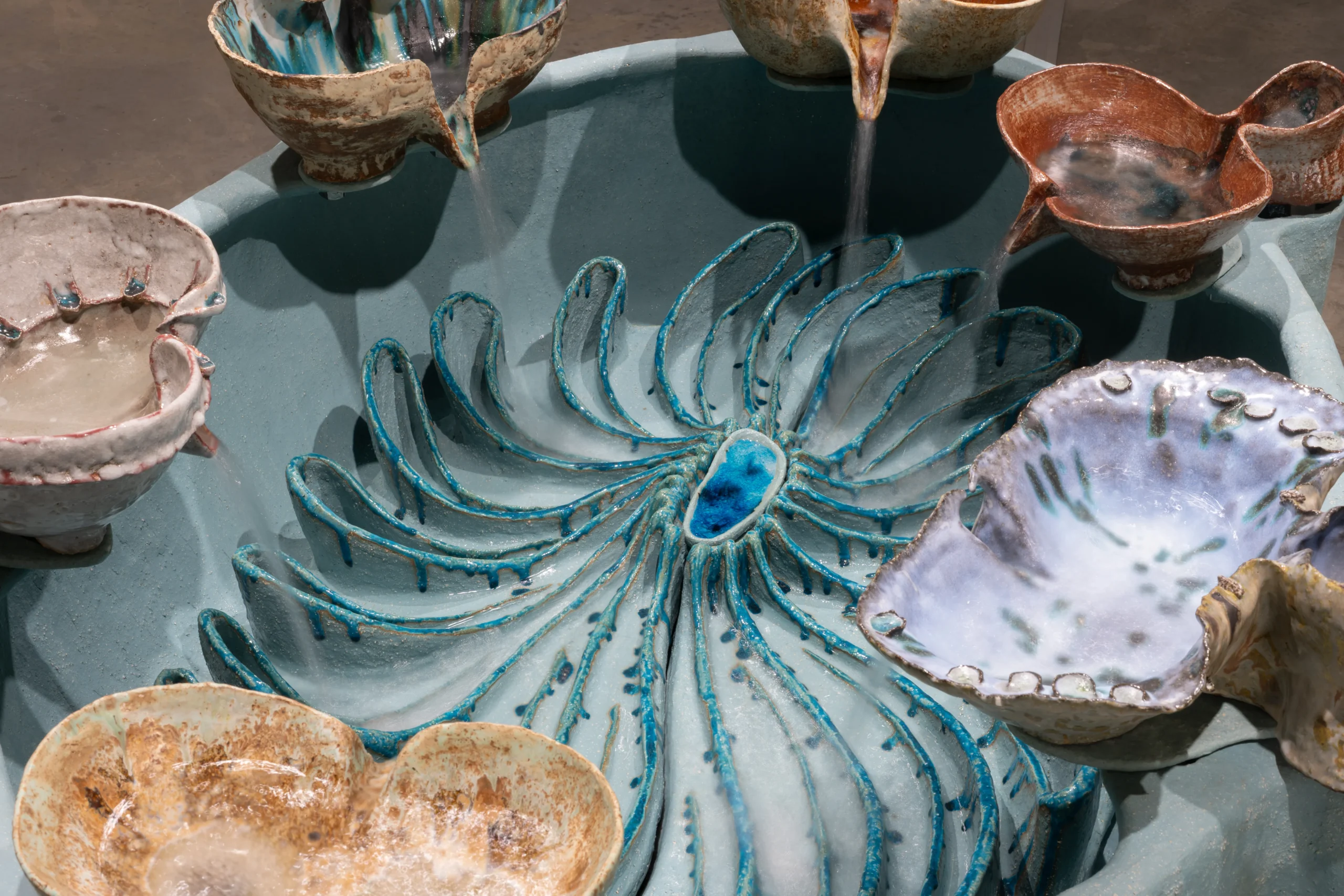
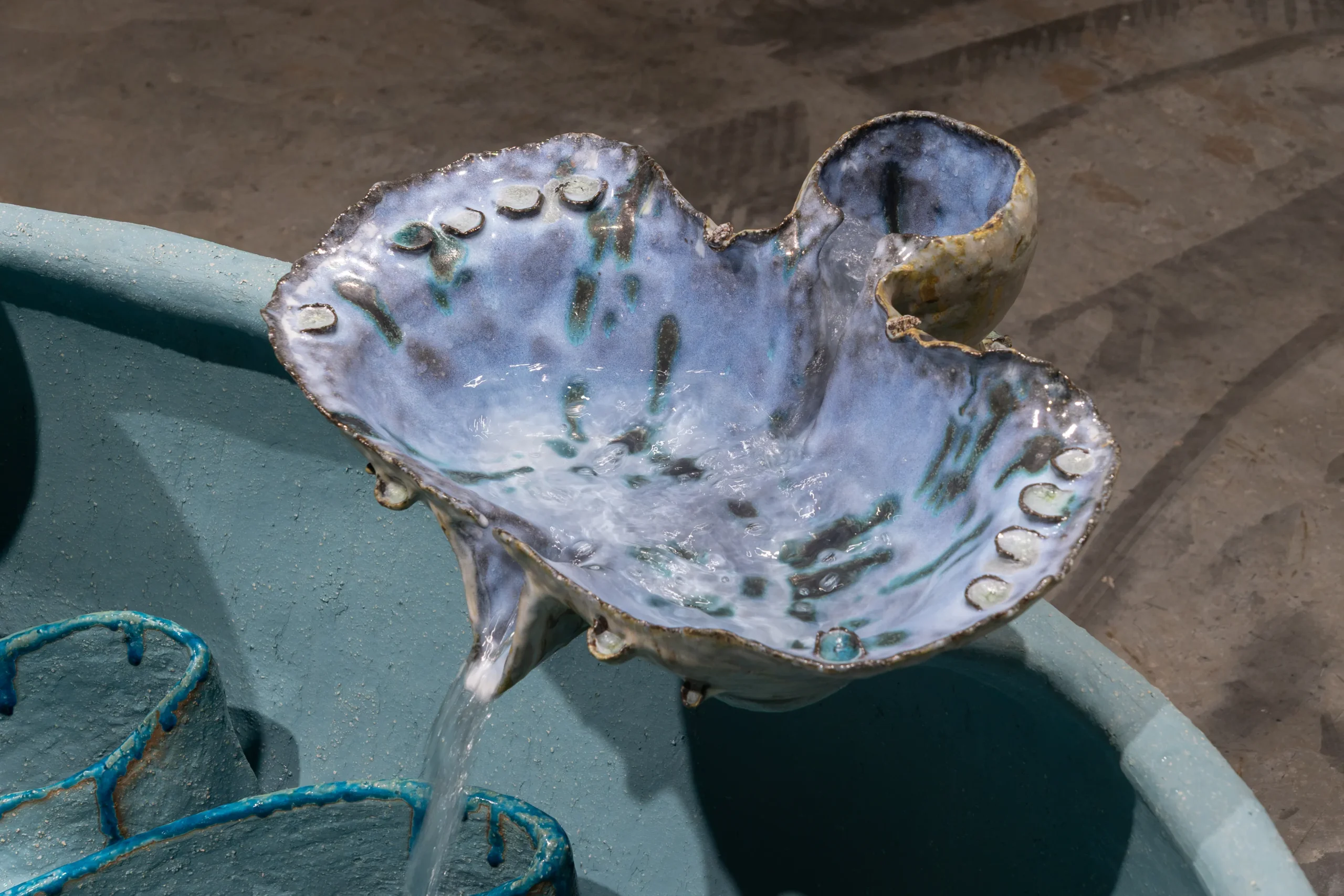
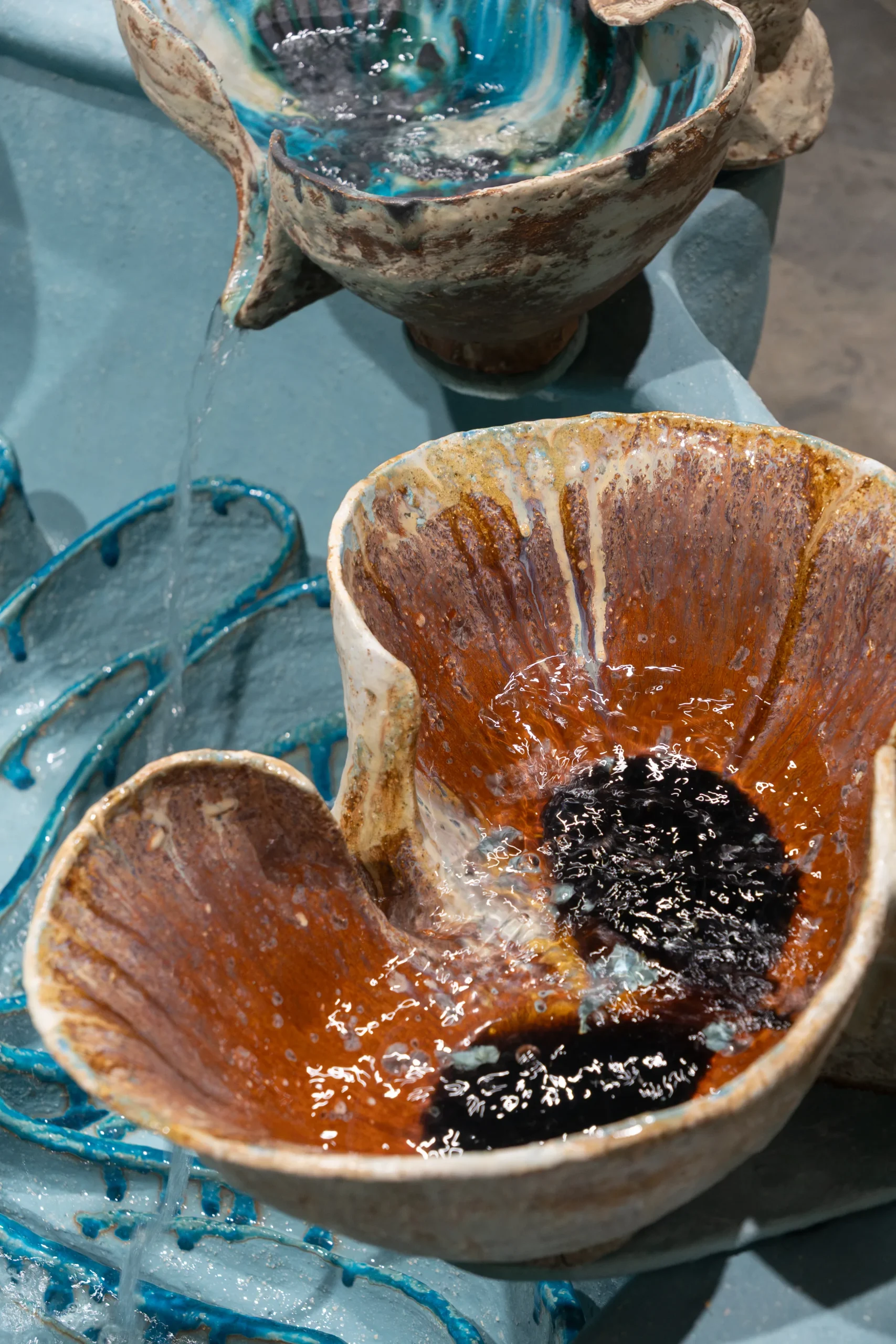
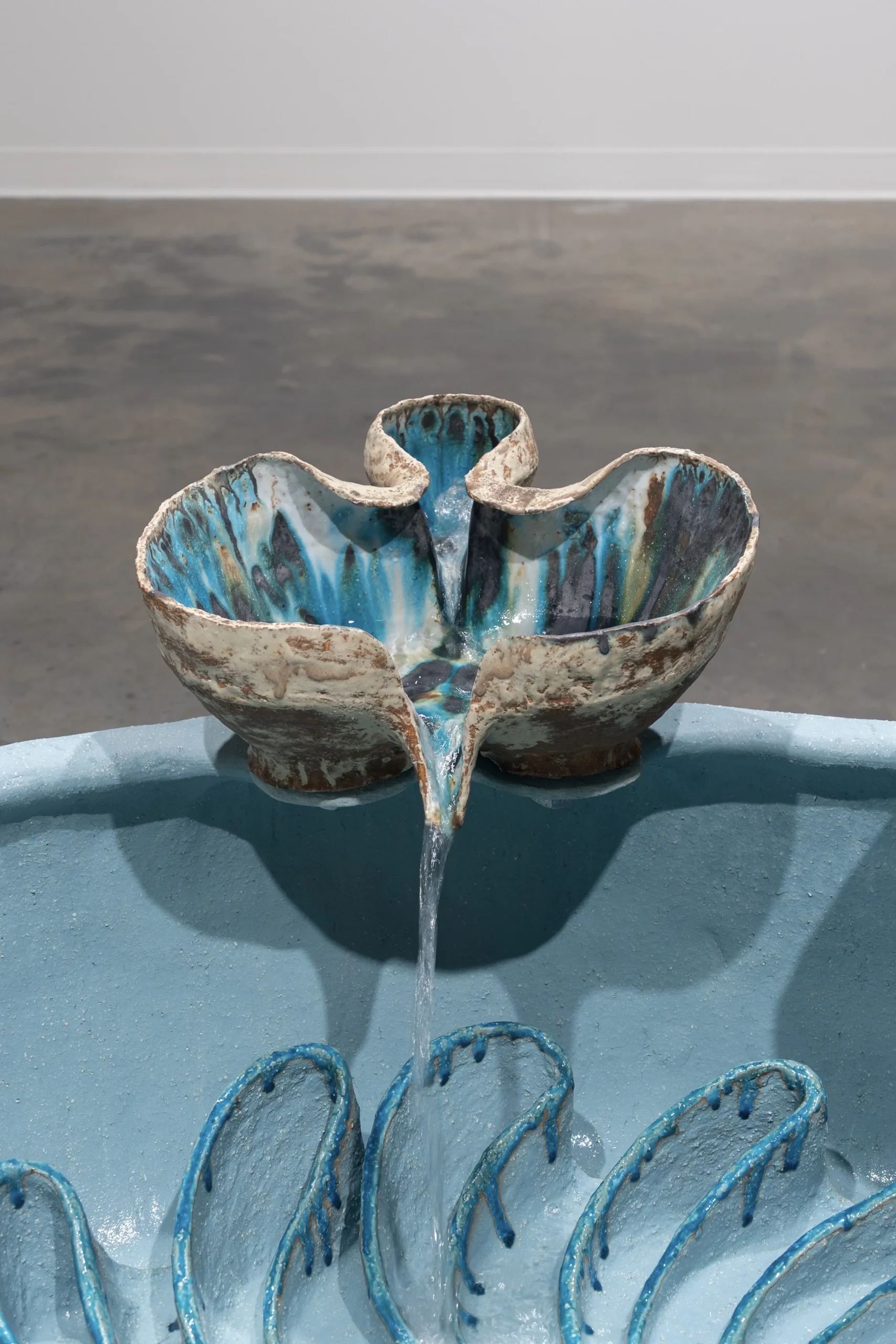
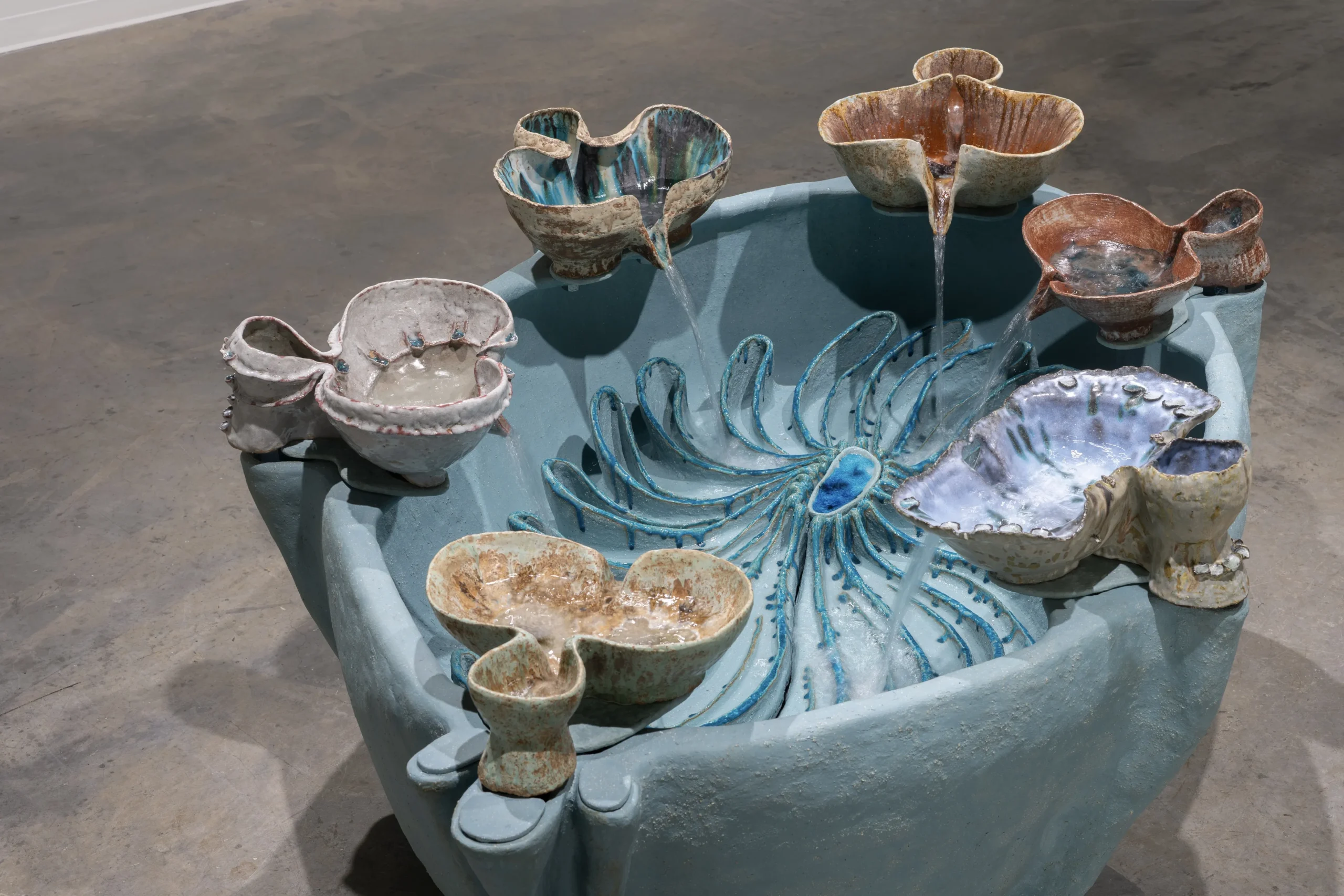
Sasha Fishman’s My Lungs (2026) embodies these hydro-logics of circulation. One’s first encounter with the sculpture is not its sight—an oviform droplet of haint blue blooming from the gallery floor—but its sound. A pulsating symphony of water floods the space with fluid frictions of polyphonic resonance. The ceramic fountain generates these rhythmic frequencies through a biodynamic construction of perpetual cycling. Water pumps up into six lobed flowform basins, clinging to the side of the fountain with a creaturely organicism, before cascading into the fountain’s petaloid core. A closer look into these smaller flowforms reveals a unique reconfiguration of water’s circularity: small vortices lapping back into themselves, producing oroborous-like figures of eight spilling into a choreographed dance of aquatic infinity. Stay with the sculpture’s sensorium for a moment longer and the water’s pulsations begin to mirror fluctuations of breath.
My Lungs blooms from a lineage spanning centuries of human waterworks design. The basin’s central spiral mimics Parisian storm drains, its depth reflects the bathtub-like forms of Roman fountains, and its undulating curvatures resemble those of Ottoman-era public water fountains. Yet Fishman also embues the fountain’s construction with influences from the more-than-human world. The radial array of ridges that emanate out from the bottom of the fountain echo the olfactory rosettes of sturgeons studied by Fishman. These nasal organs shape how the fish navigate through water, adapting to the aquatic conditions of the sturgeons’ habitat as they grow so they can sense food and find spawning sites through the movement of chemicals in currents. Perhaps one can understand the queer wetware of My Lungs as an enlivened hybrid of the human and the marine, a waterwork materialized from the ebb and flow of natural processes and manmade mechanisms.
In the 1970s, British sculptor John Wilkes began experimenting with a type of vessel design which could channel water into whirlpools of molecular revitalization. Inspired by “the great in-breathing motion” of ocean tides and his observations of rivers’ meandering momentum, Wilkes believed that attuning to these rhythms could activate water’s latent potential for cleansing and energizing. Wilkes named his resulting ovoid-shaped creation the Flowform, serving both as an artwork and a technology. “Moving water is inseparable from surface,” writes Wilkes, “It either influences surfaces over which it flows or is influenced by them…and creates surfaces within its own volume.” Successful fabrication of flowforms requires great attentiveness to the vessel’s surfaces. The right sculptural proportions—from the flowform’s narrow entrance and exit channels to the height and slope of its oscillating walls—dictate how the water will oscillate when it is pumped into the fountain, generating enough resistance through pivoting movement to induce the circular rhythms of folding into itself. Fishman’s fascination with vortexes also led her to the theories and inventions of twentieth century Austrian naturalist Viktor Schauberger, who believed that vortexing water enhanced its oxygenation and enabled its energization. Today, flowforms available for commercial purchase are marketed as aesthetically pleasing, eco-friendly systems of water purification and revitalization. While claims of flowforms’ cleansing and energizing properties remain heavily disputed, Fishman embraces the fluid power of the vessels’ spiritual and scientific ambiguity.
My Lungs represents an important evolution in the artist’s eco-sculptural practice. Building on her previous work in fountain-building and biomaterials, this piece reflects Fishman’s continued fascination with aquatic systems of energy exchange. Her hydrological sculptures take up questions around toxicity, entropy, care, capture, and fluidity. This curiosity has led Fishman to experiment with living substrates such as fish skin, hagfish slime, and mycelium as well as kinetic structures derived from marine aquaculture such as salmon ladders and fish cannons, tracing humanity’s past and present obsession with controlling, transporting, and harnessing water from the ecosystemic down to the bodily scale.
Fishman’s practice operates between craft and creative science. Her process is driven by a deep commitment to hands-on research, often taking her out of the artist’s studio to sites such as industrial fisheries, marine science labs, and institutional archives—including the collections of John Wilkes and his contemporaries, as well as to the home of Viktor Schauberger’s grandson, who continues to preserve and share his family’s research into vortex energies. Fishman’s sculptures become portals for making sense of the mytho-scientific histories and speculative futures of these aquatic worlds.
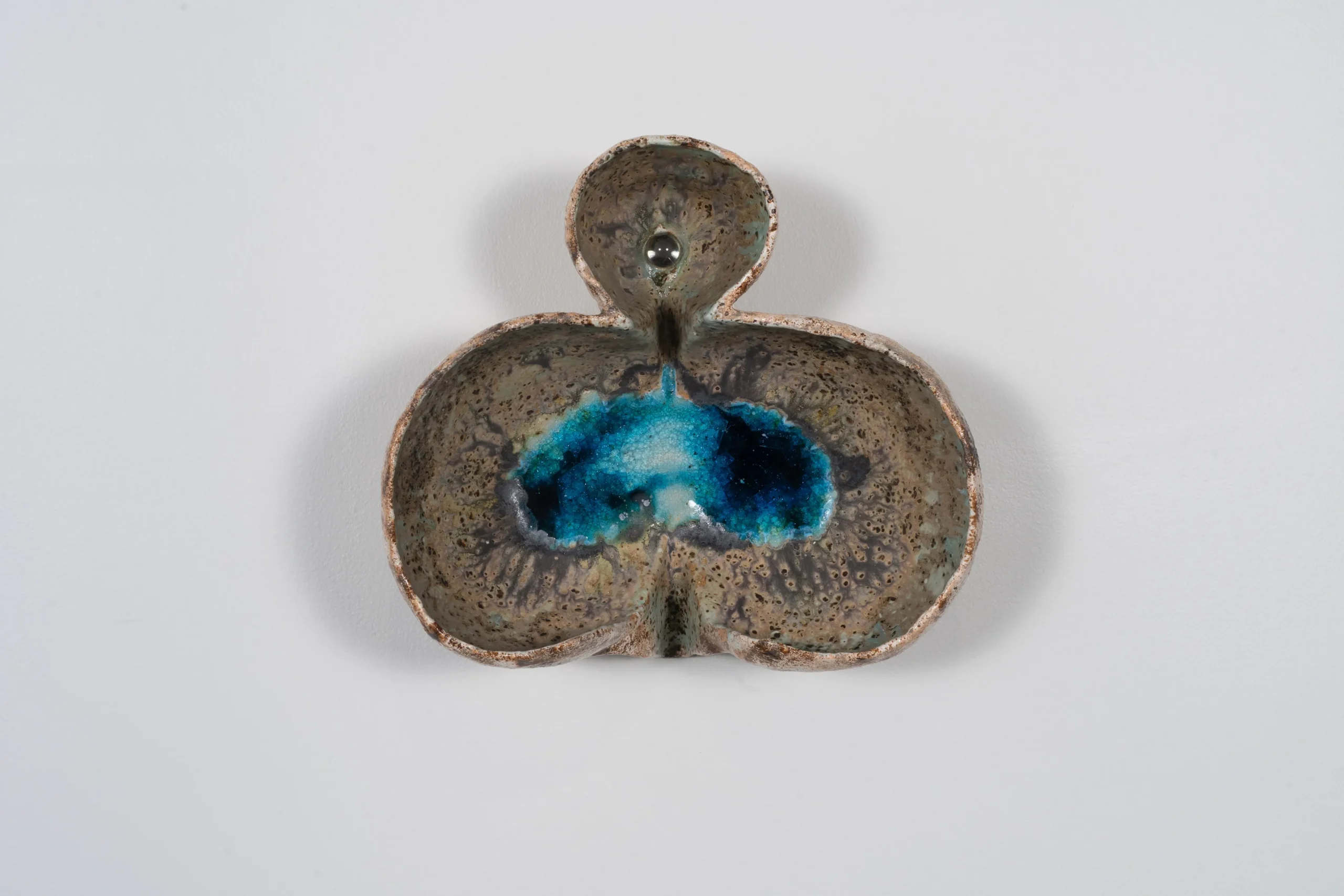
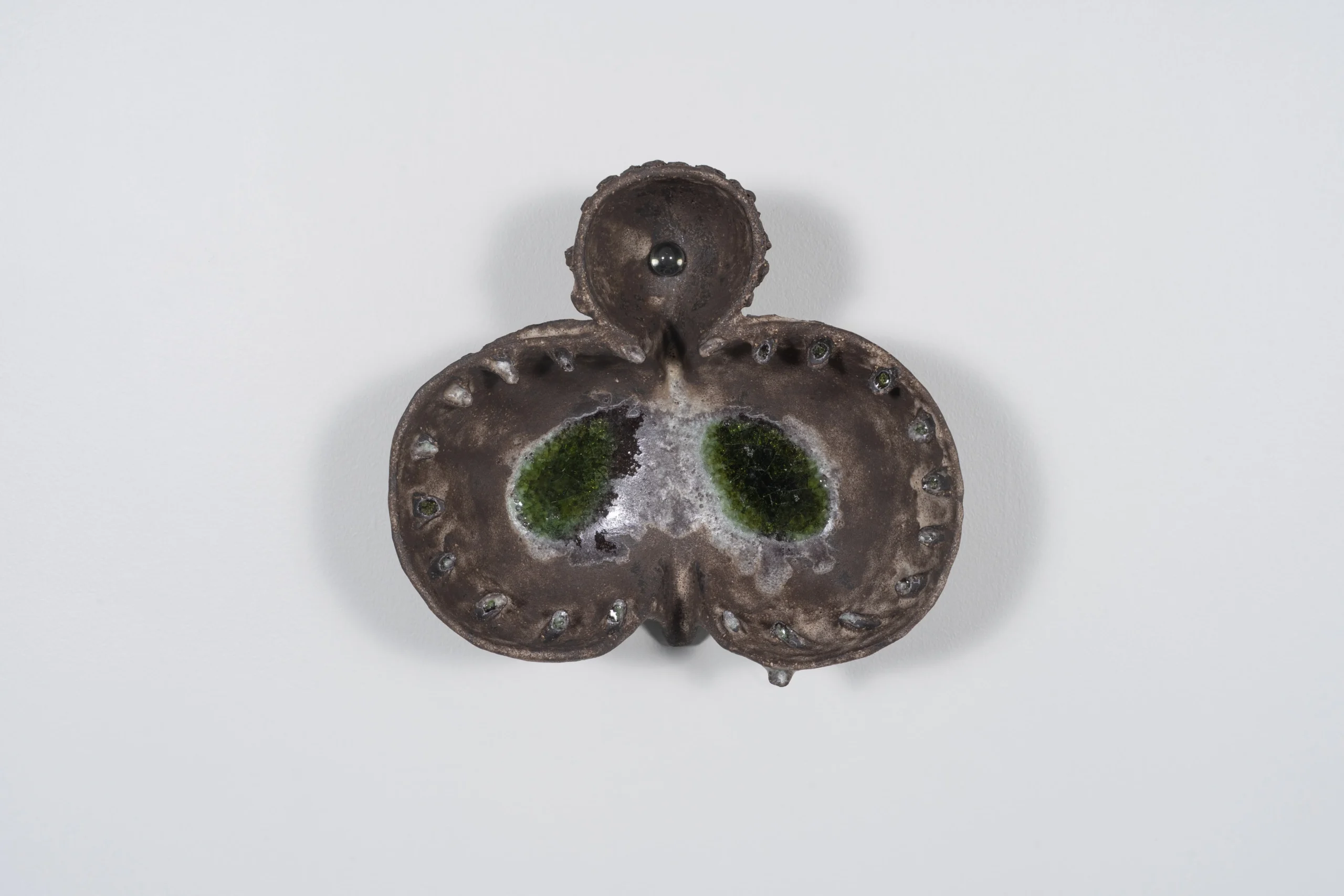
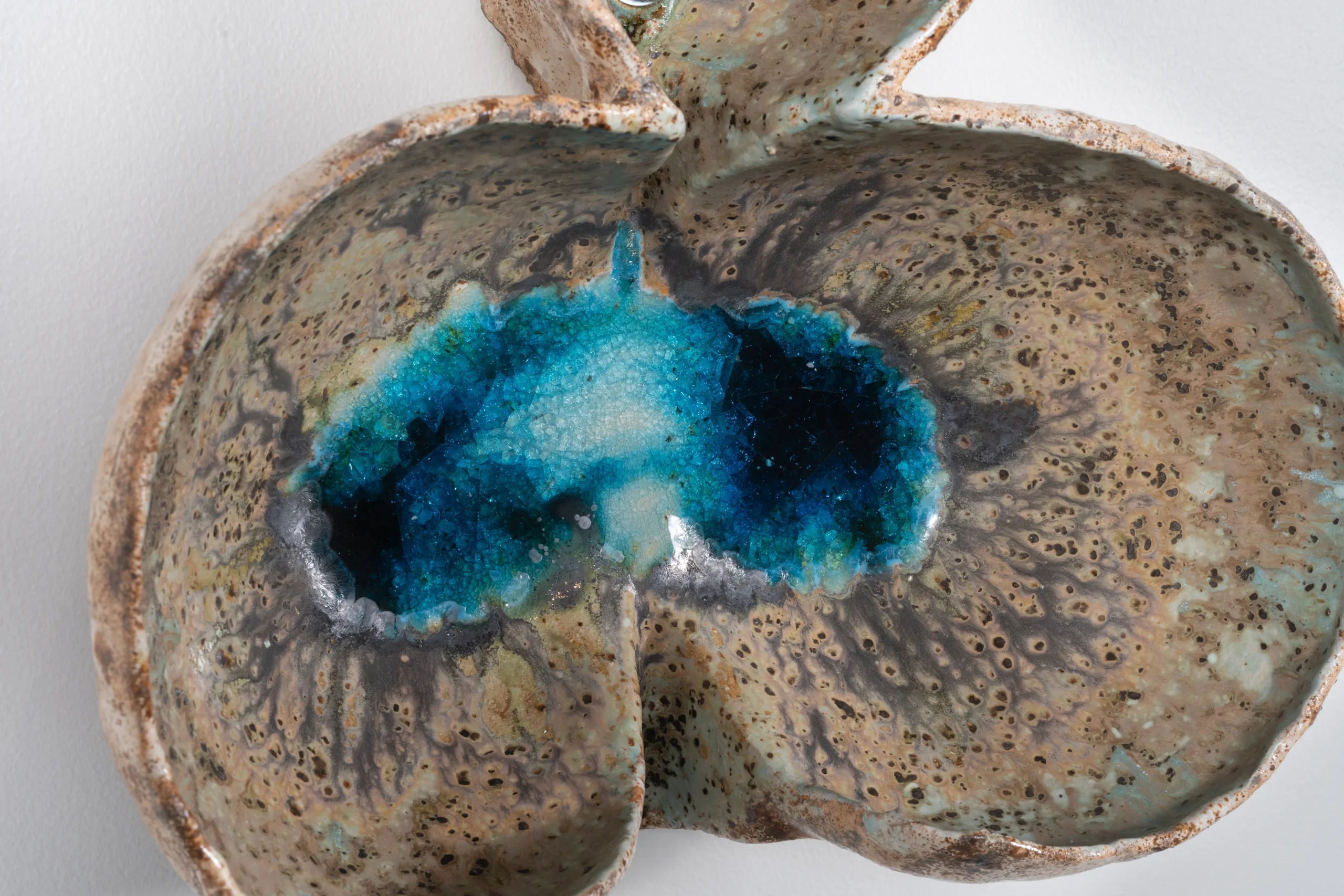
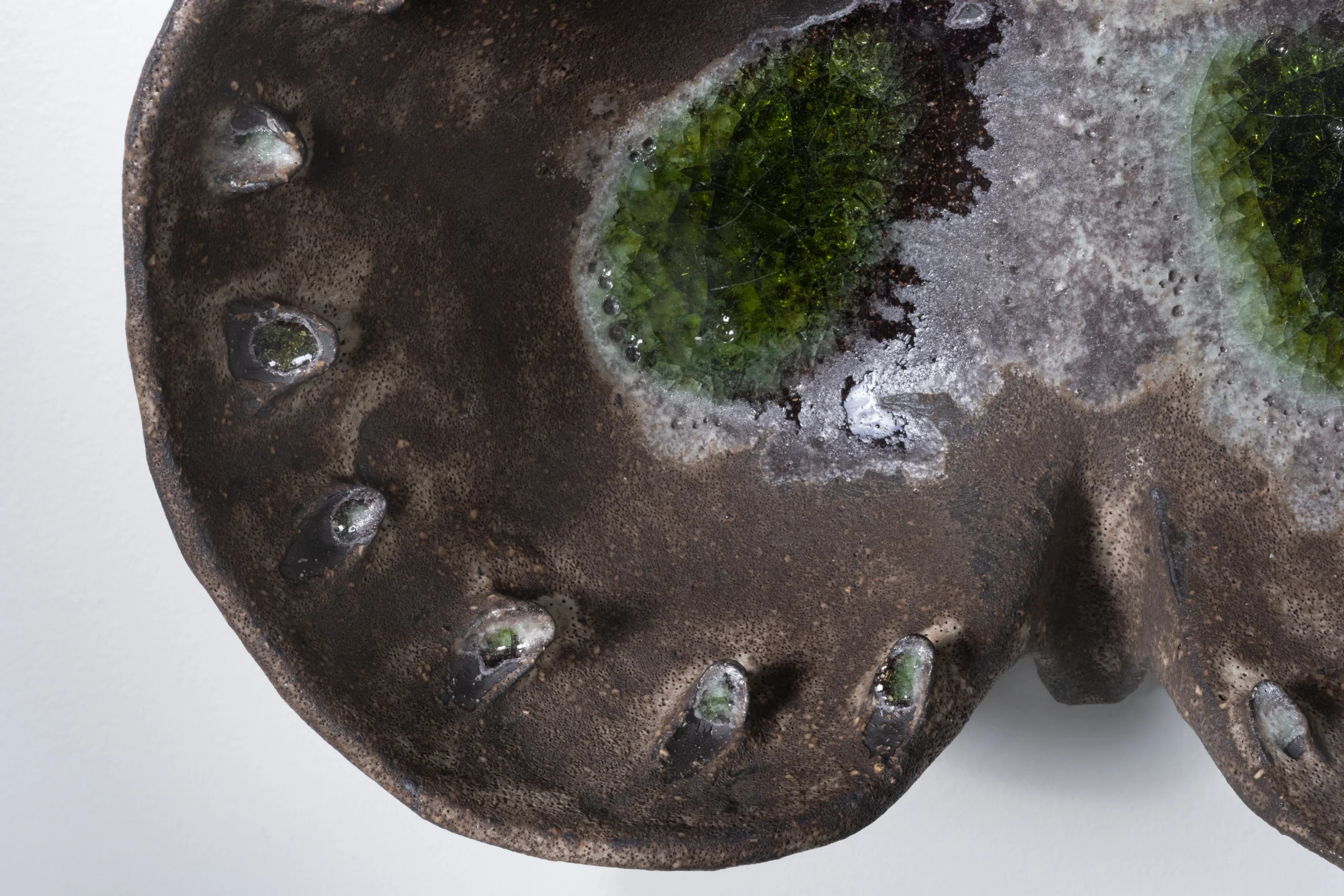
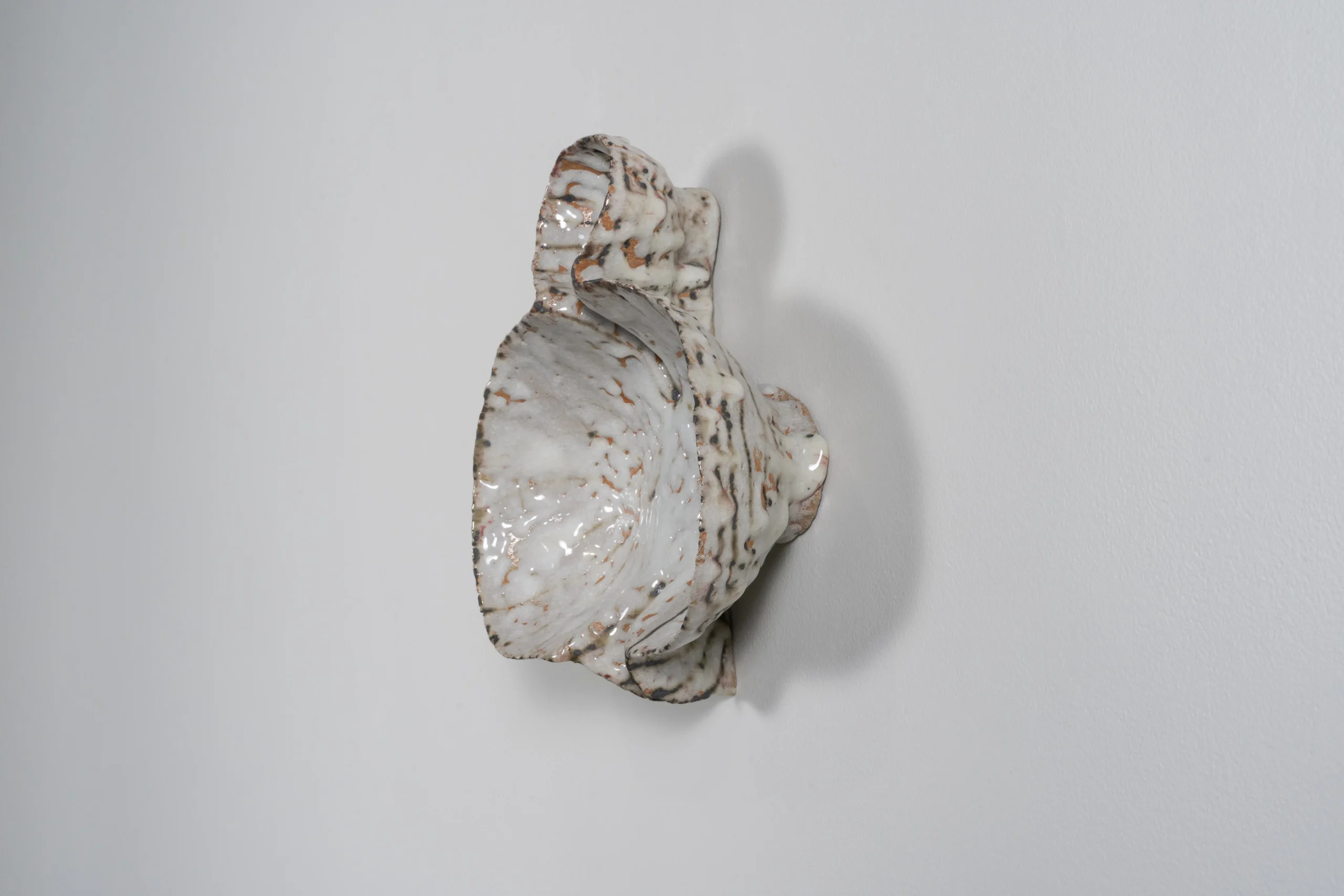
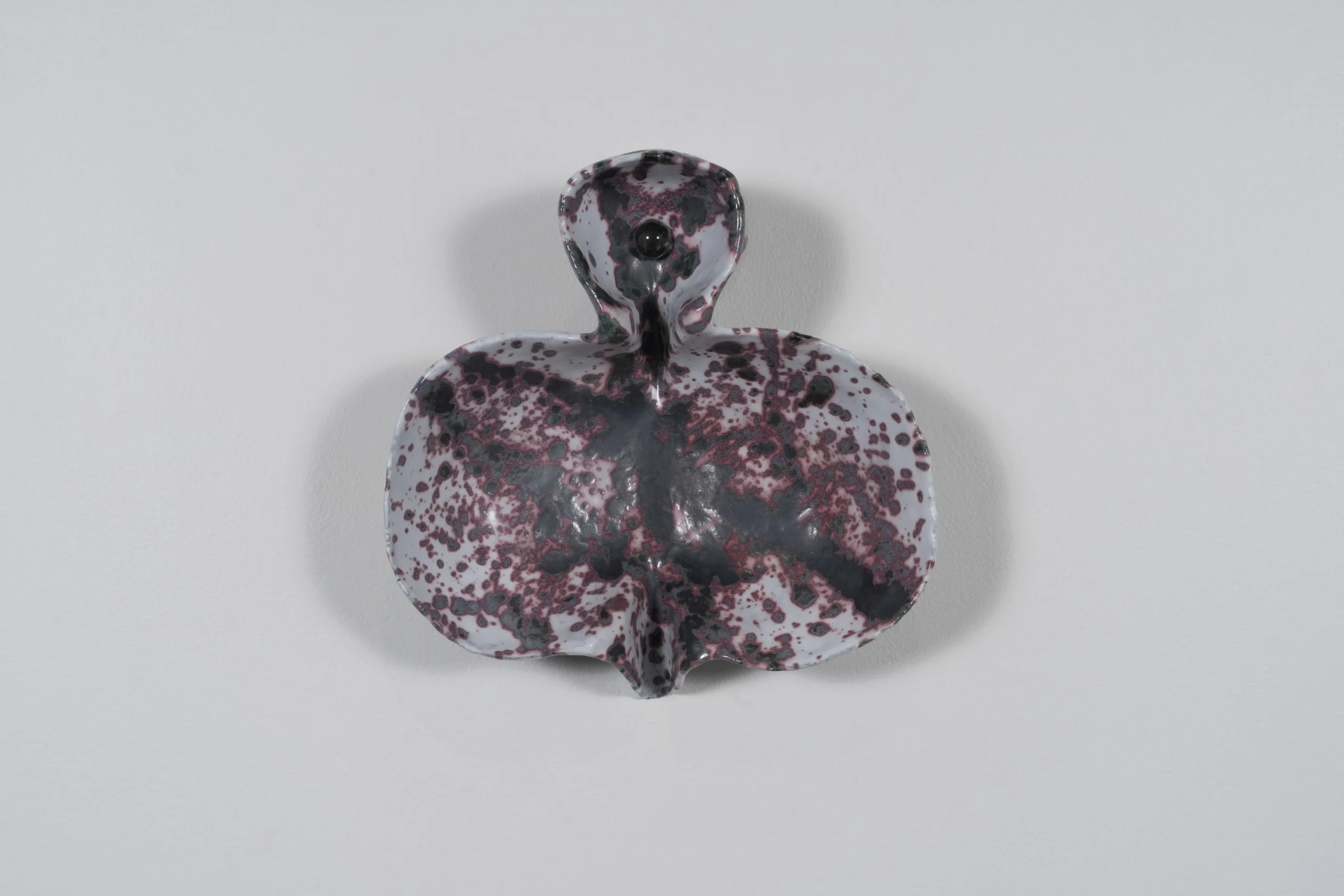
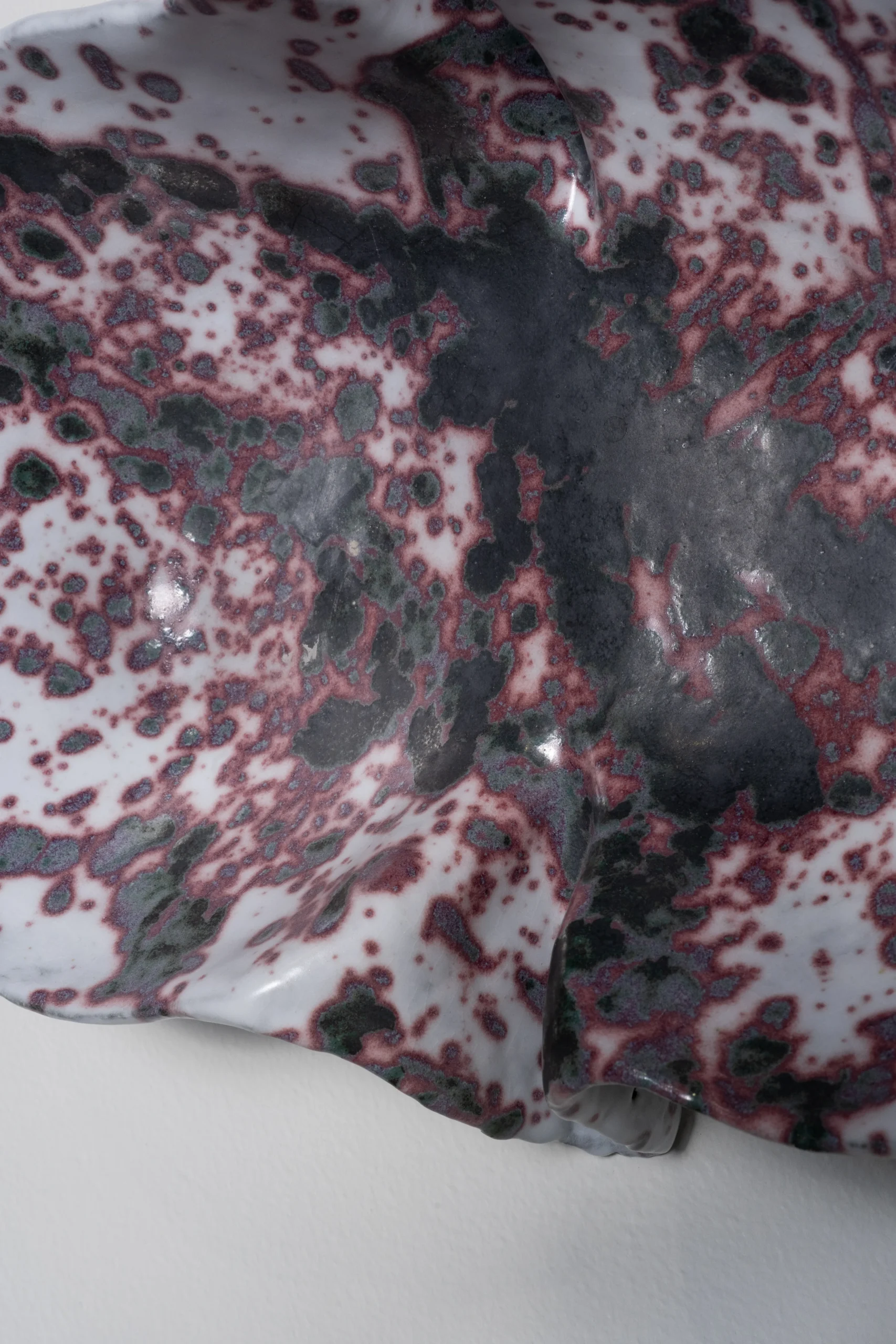
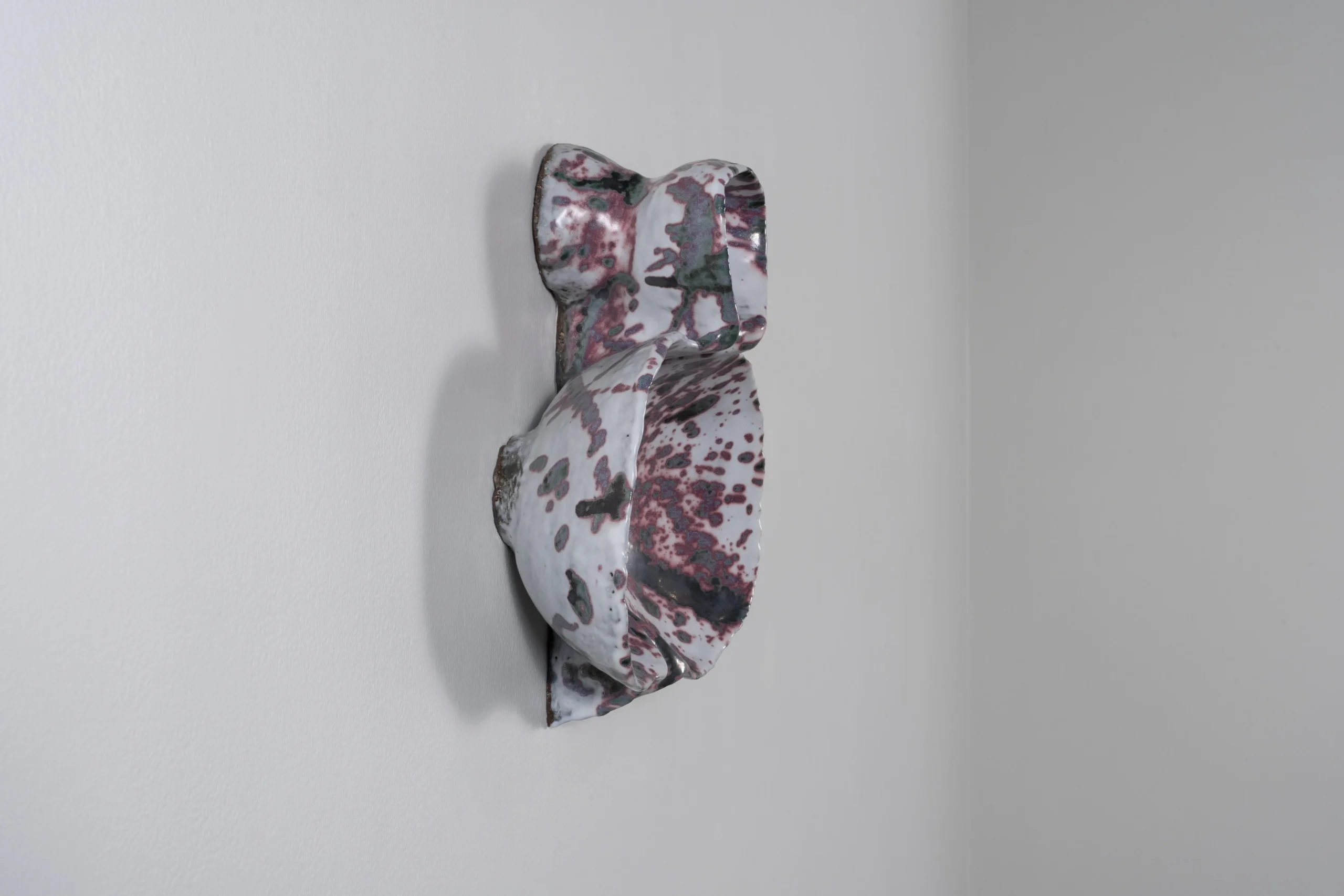
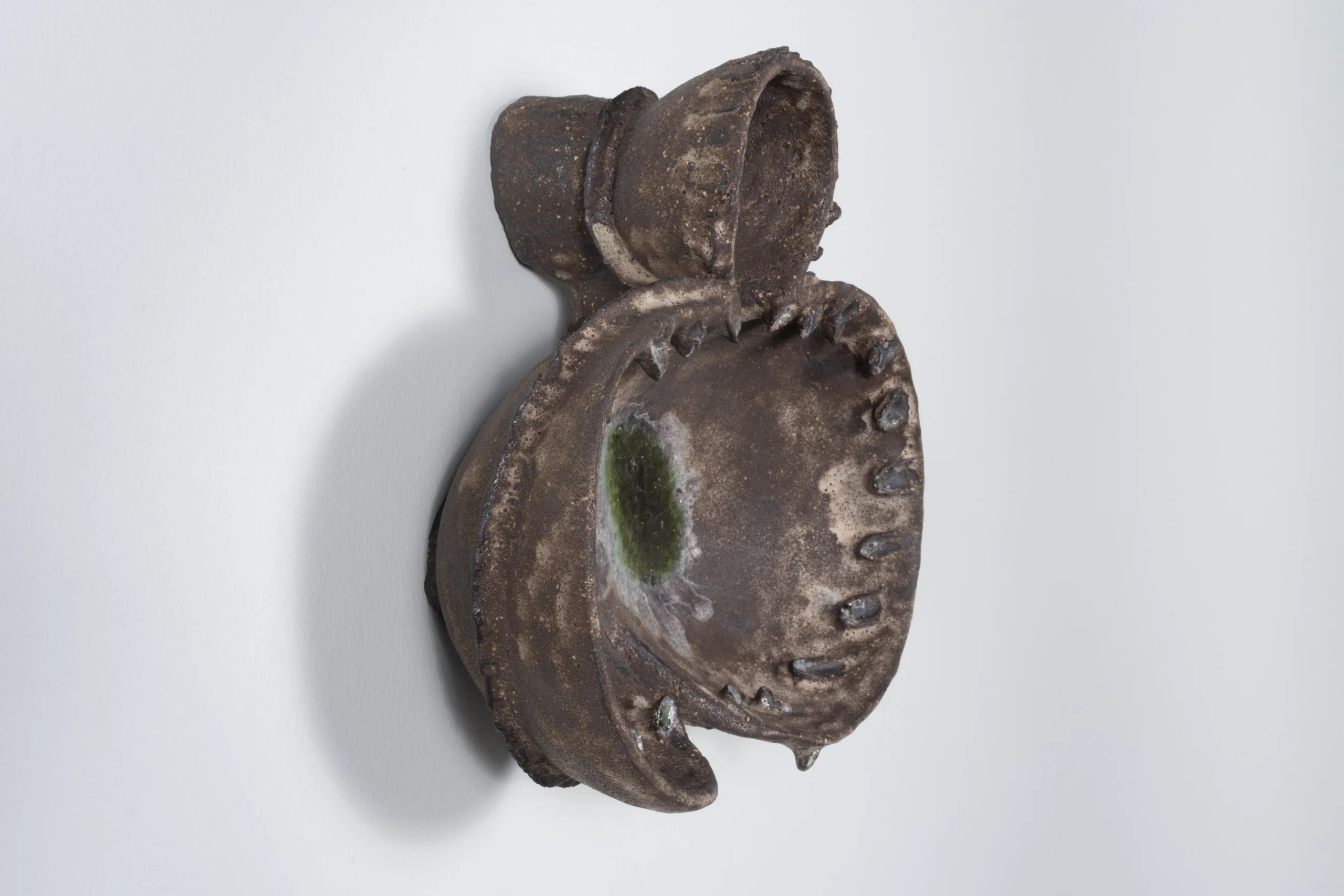
Sasha Fishman created My Lungs during an artist residency at the European Ceramic Work Centre in Oisterwijk, The Netherlands. While there, Fishman engaged with the physicality of making, pounding and shaping the flowforms and fountain basin from clay with forceful precision until they achieved the correct configuration for their rhythmic movement. Sculpting My Lungs required deep attentiveness to her materials, but also an acceptance of indeterminate outcomes inherent to ceramics. Fishman developed and tested her own mixtures of glaze for the project, incorporated blue pigment into the clay body, and experimented with oxygen reduction and high-firing techniques to draw out unique color combinations and create a fountain durable enough for outdoor display. Fishman’s alchemical transformations through heat, clay, and glass parallel the flowform’s energetic activations of water. Like the challenge of quantifying the flowforms’ purification benefits, the ceramicist’s craft is realized through lived experience, intuitive feeling, and unpredictable outcomes. Even with her extensive understanding of stoneware’s chemical processes and glaze formulas, Fishman cannot ever fully know what will occur to her fountain in the dynamic atmosphere of the kiln. My Lungs materializes what is unseen. Just as Wilkes once described water in a 1994 article as “a mediating organ,” Fishman’s fountain acts as a bodily conduit for these unresolvable questions, a sculpture enriched with a vitality produced through circulations of the unknowable.
In her essay, “Hydrofeminism: Or, On Becoming a Body of Water,” ecofeminist theorist Astrida Neimanis observes that, as watery beings, “We take in the world…and send it flooding back out again.” Sasha Fishman’s My Lungs engages with this acqueous transcorporality through the fountain’s form. By externalizing the hidden systems of liquid circulation that move into, through, and out of our bodies, Fishman explores water’s potential as a transformative force from the metabolic intimacy of our organs to planetary flows of biomatter. Whether or not viewers believe that flowforms are real purification devices or the product of psuedoscienfiic experience is not Fishman’s concern. The artist’s sculpture embraces a hydro-logic of amphibious ambiguity, flowing forever in between.
My Lungs lives and breathes uncertainty. Fishman’s sculpture invites a reckoning with water’s fluid politics: how its metamorphic liquidity absorbs our histories, generates and sustains life, gets exploited and consumed into scarcity, weaponized as a resource, utilized as a tool for survival. The fountain embodies water’s capacities for adaptation and resilience, reminding us that water will always find a way—and so will we. My Lungs emerges from a somewhere saturated with energetic possibility, between hard science and soft spirit.