

We’re pleased to present a solo exhibition by Jilaine Jones (b. 1959 in London, UK; lives and works in New Haven, CT, USA), marking the artist’s first exhibition with the gallery and her first in Germany.
The exhibition brings together a focused group of sculptures and intimate reliefs that unfold through close looking – works that do not announce themselves loudly, but instead gather intensity the longer one spends with them.
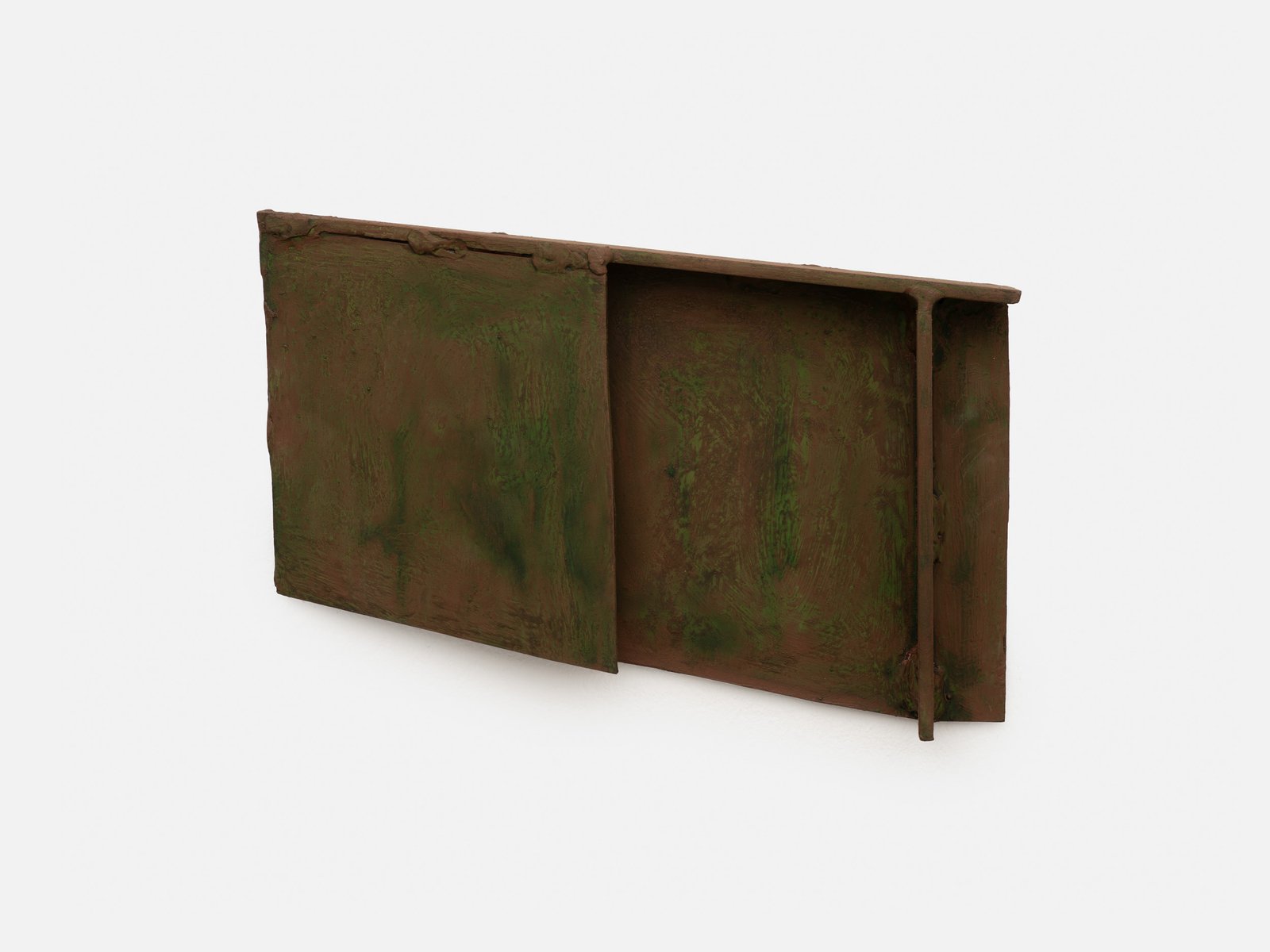
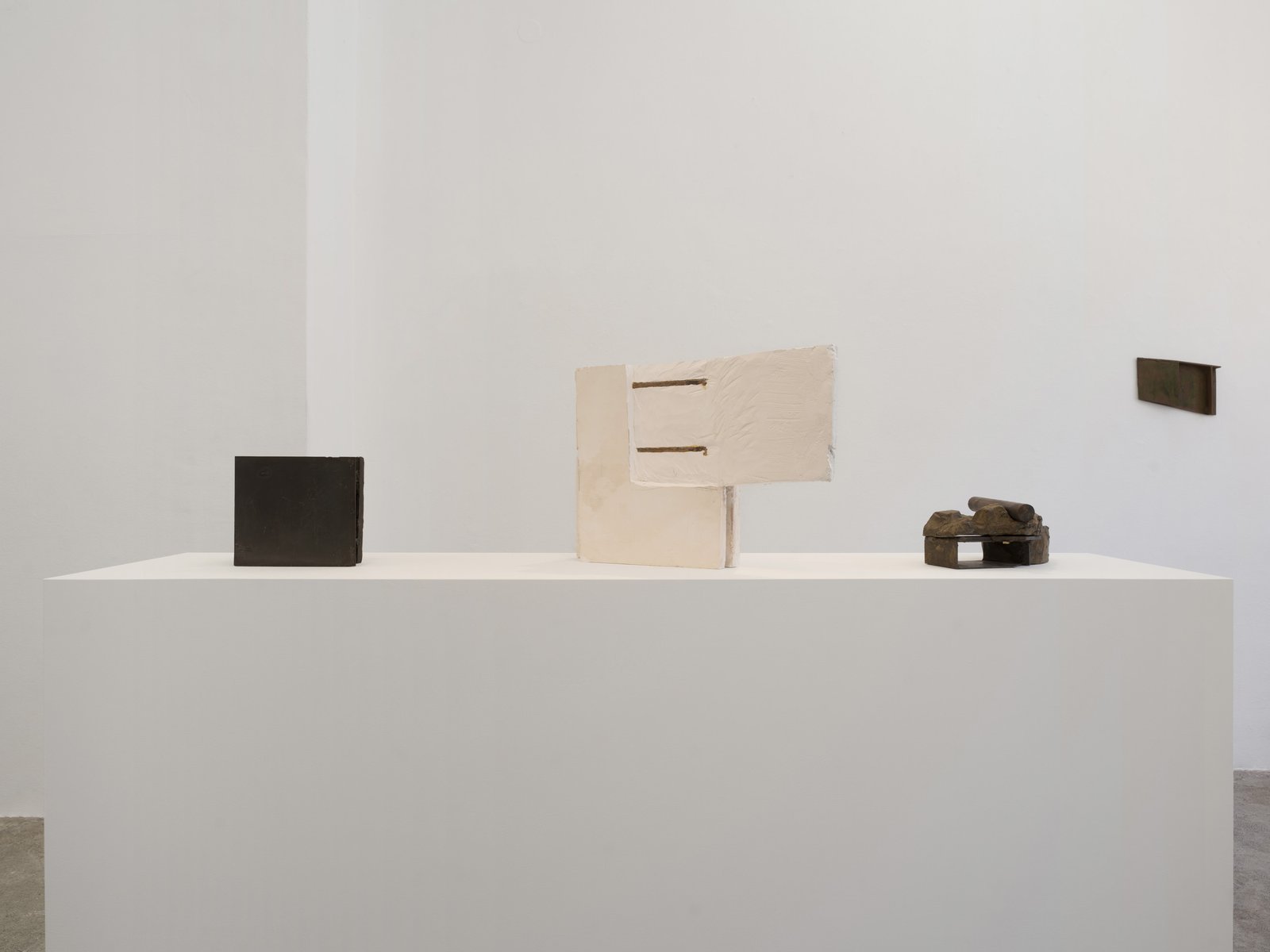
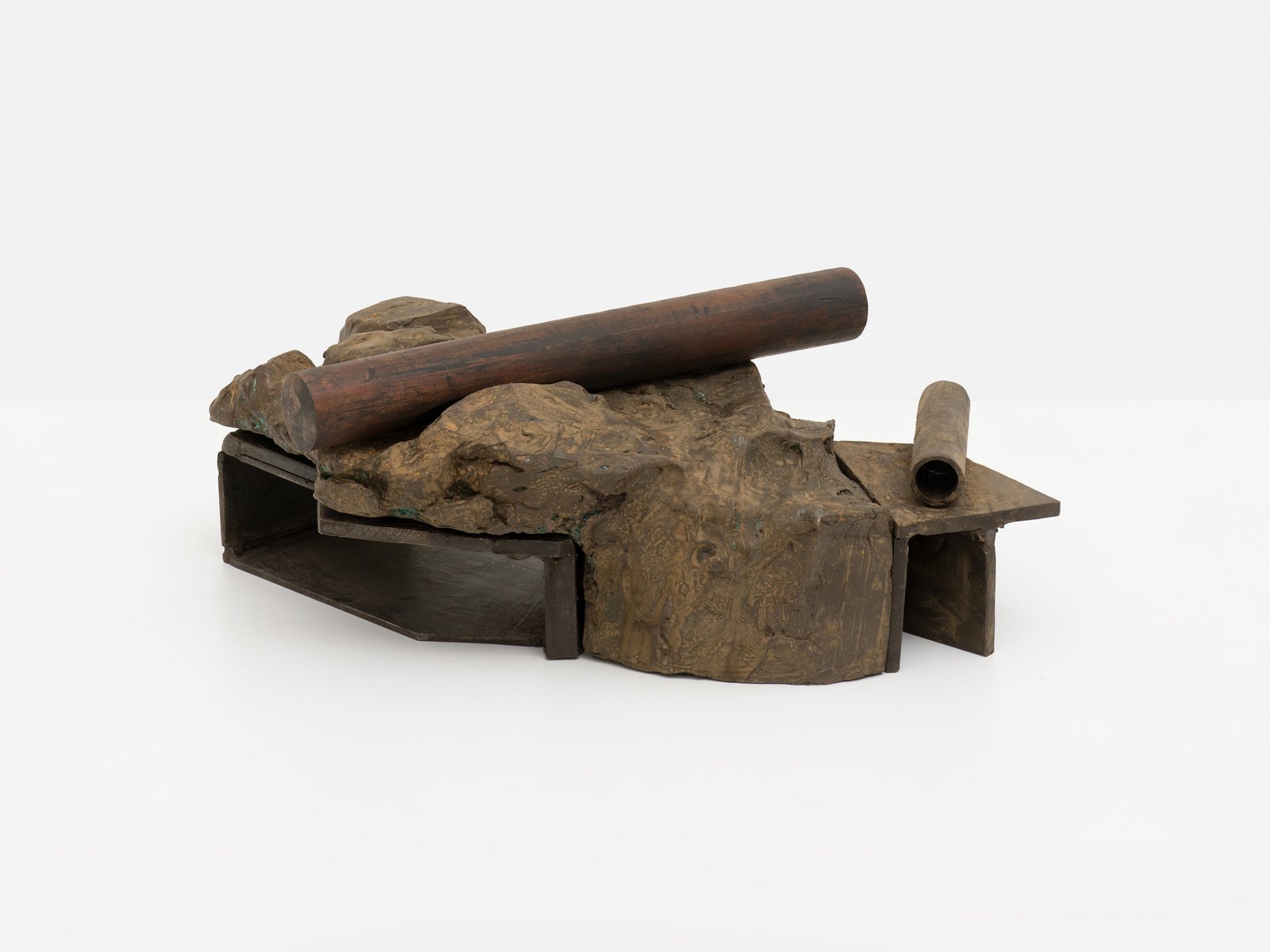
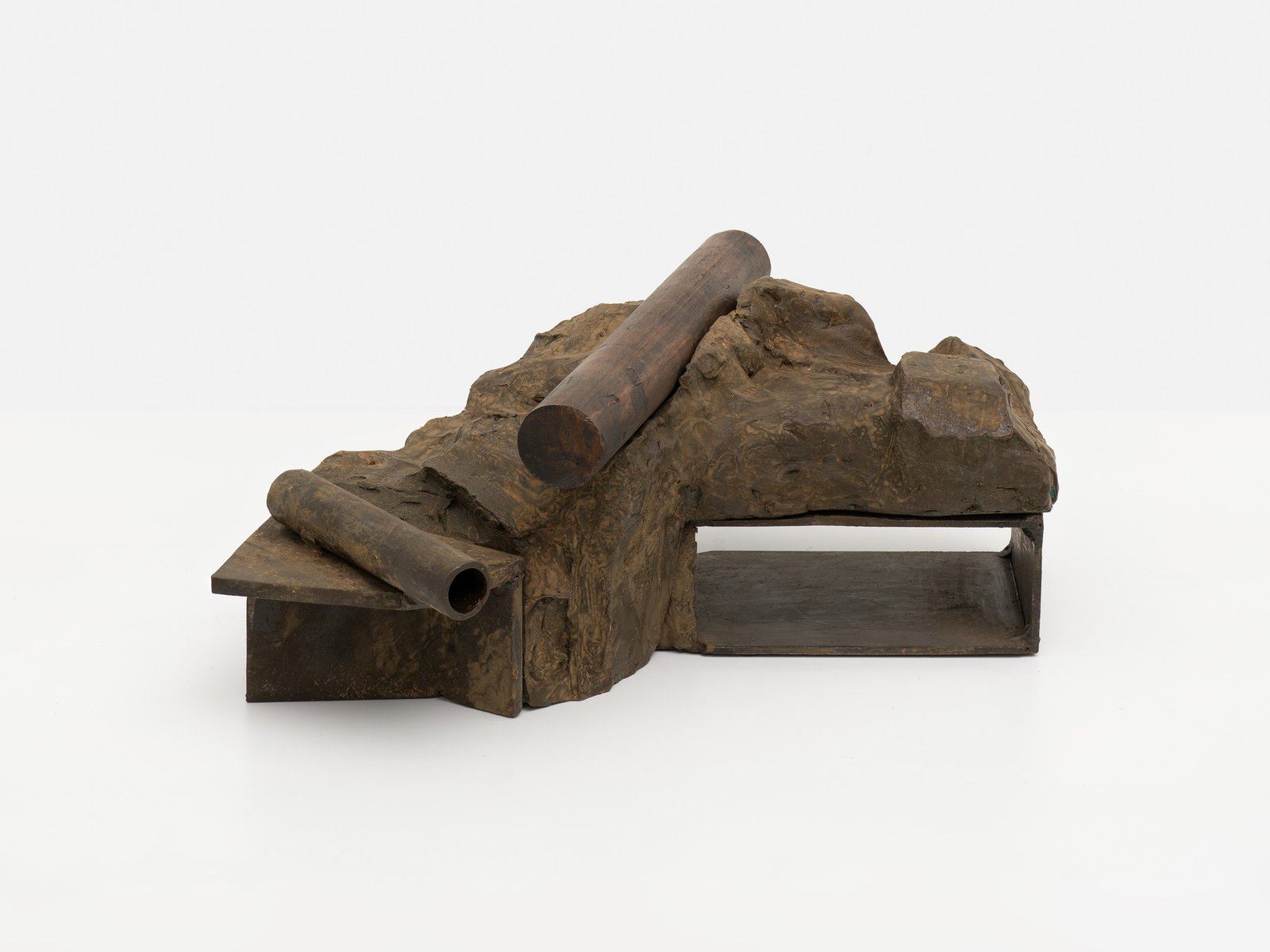
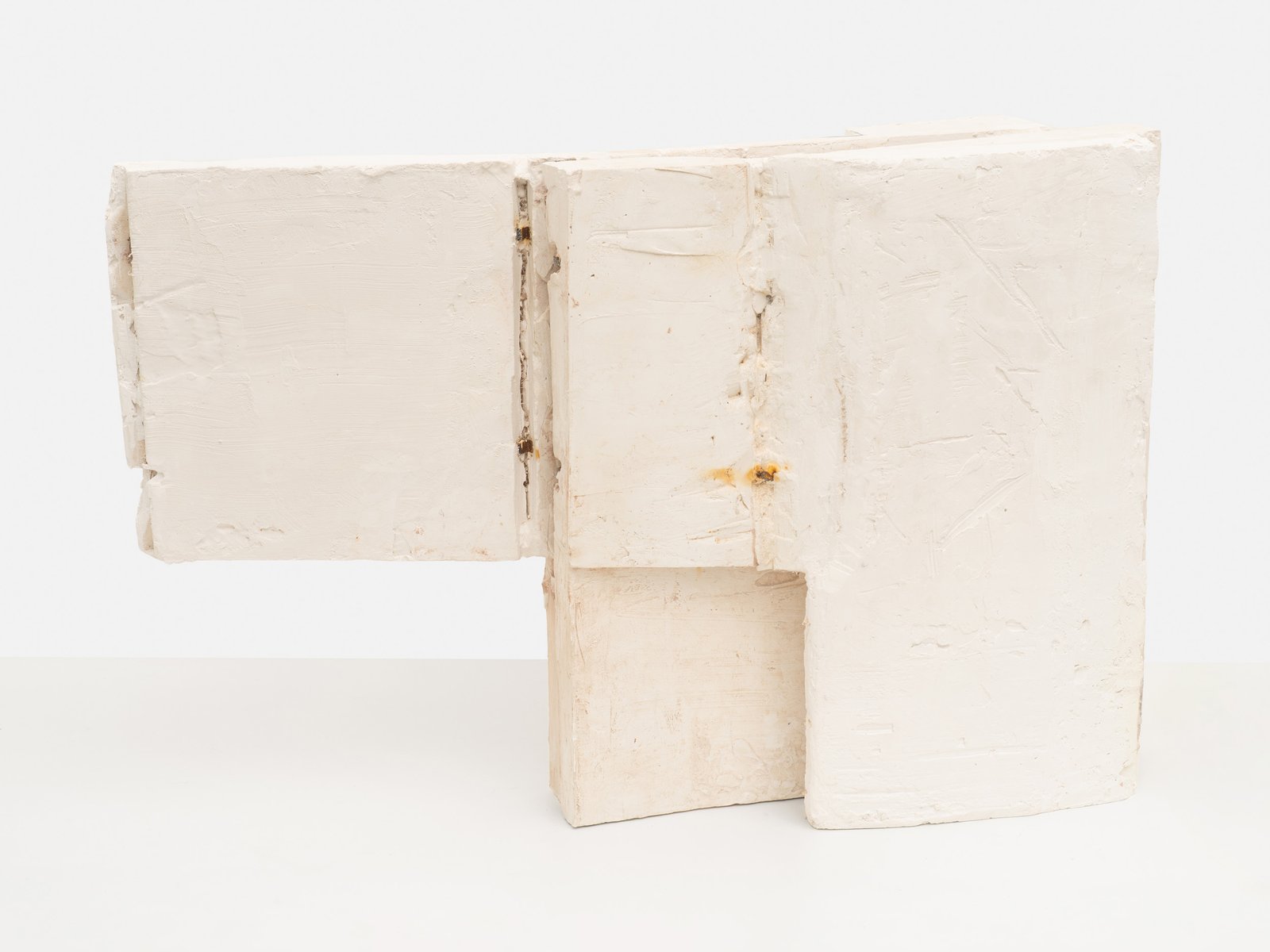
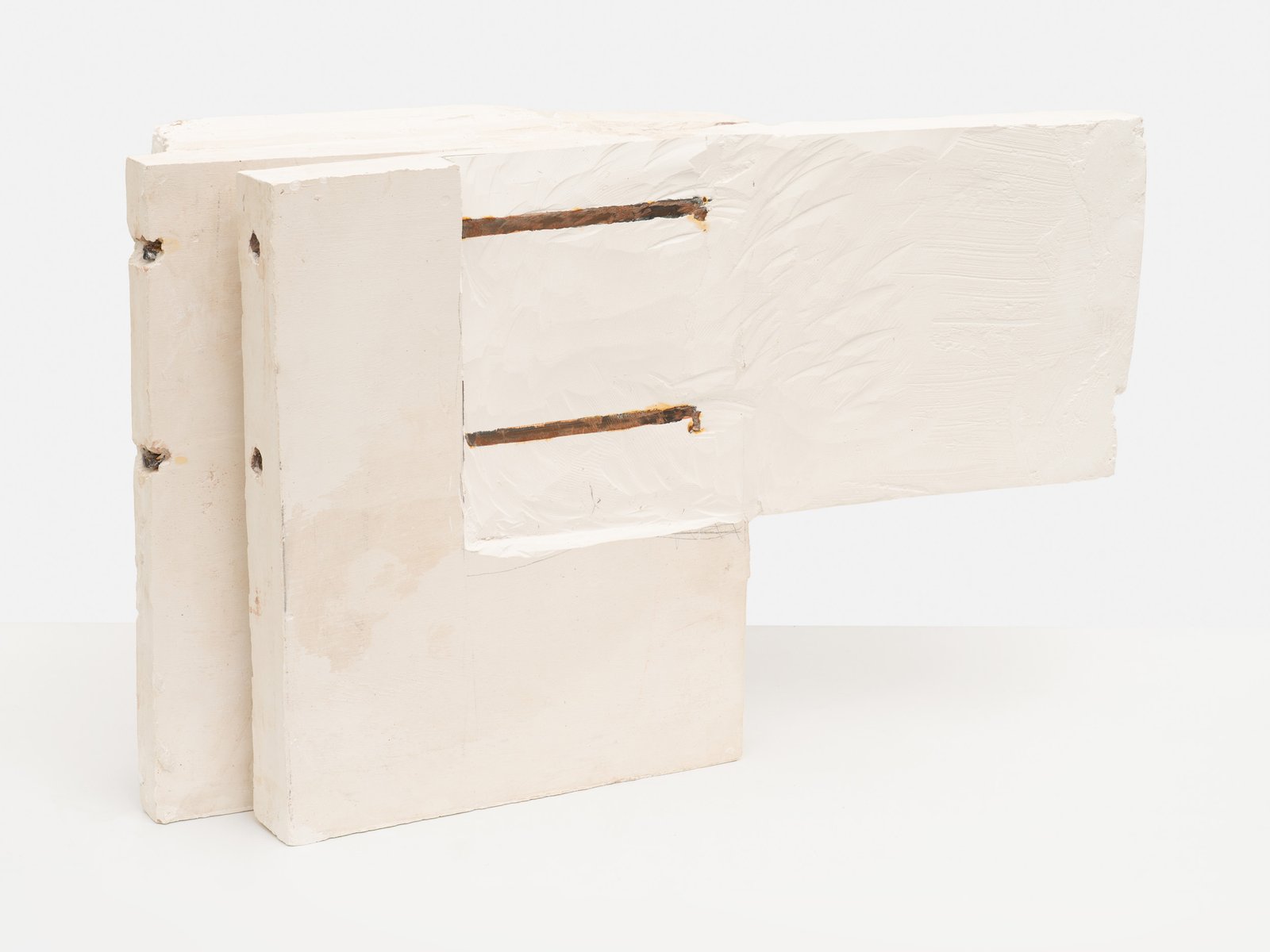
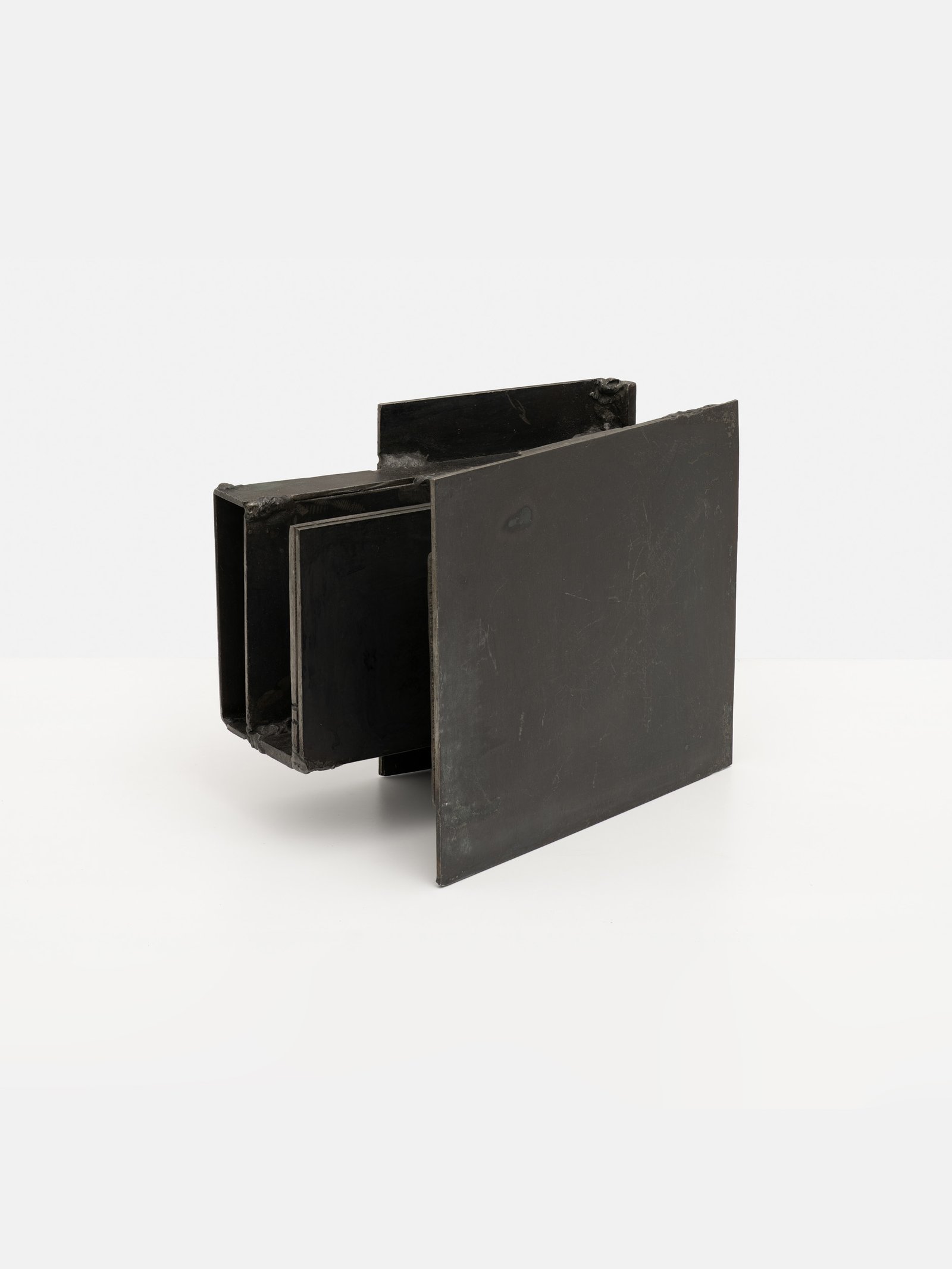
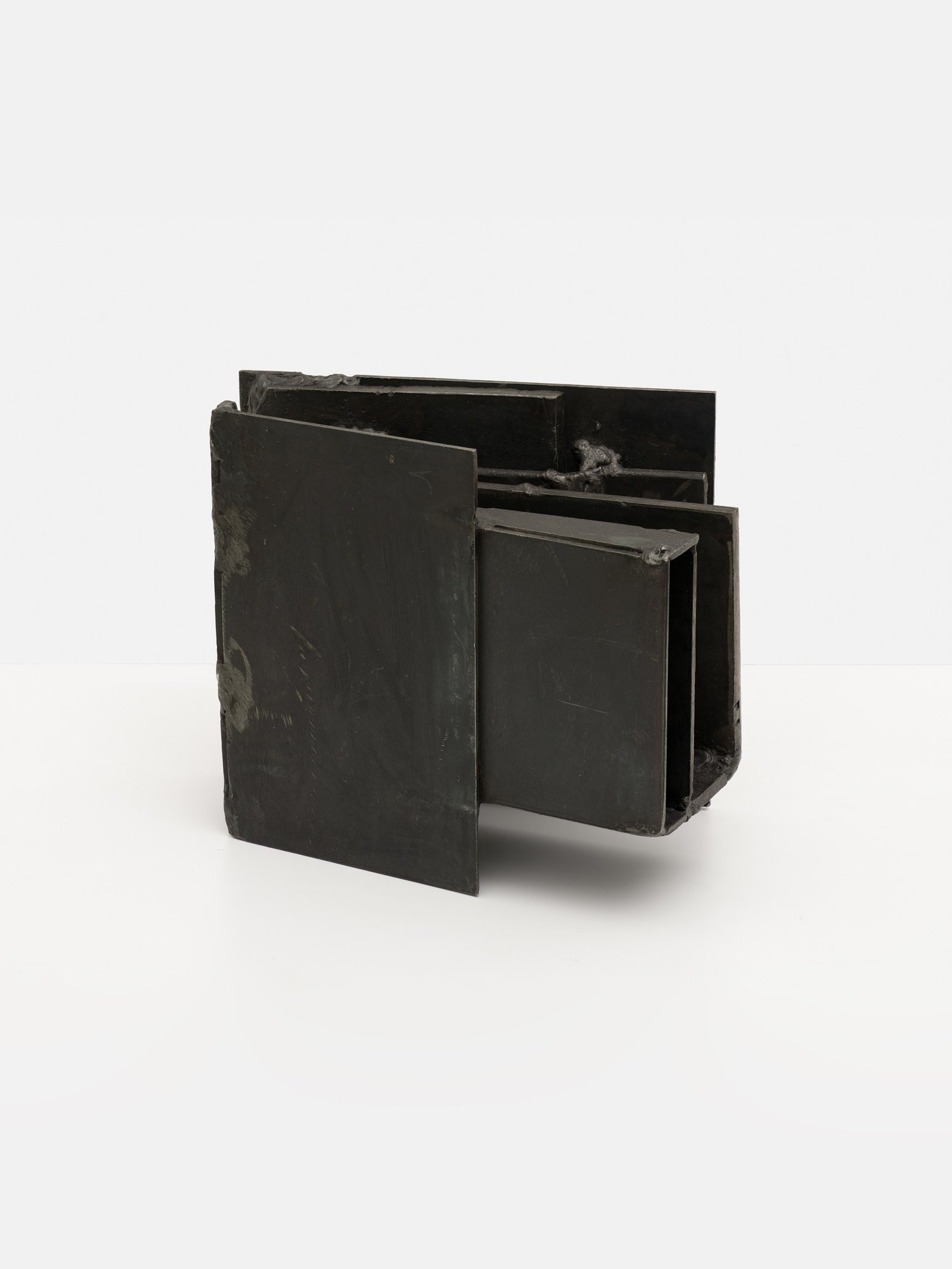
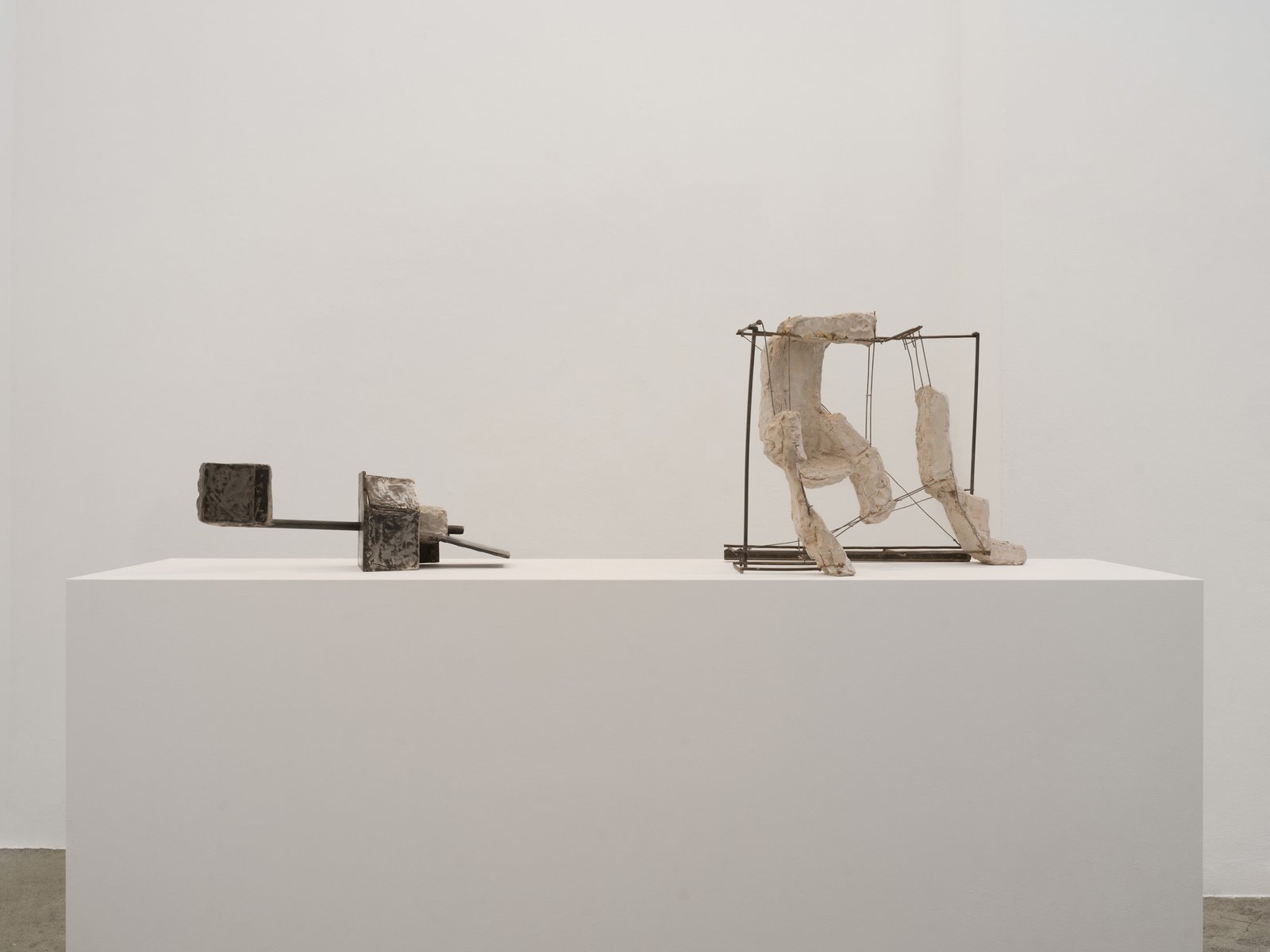
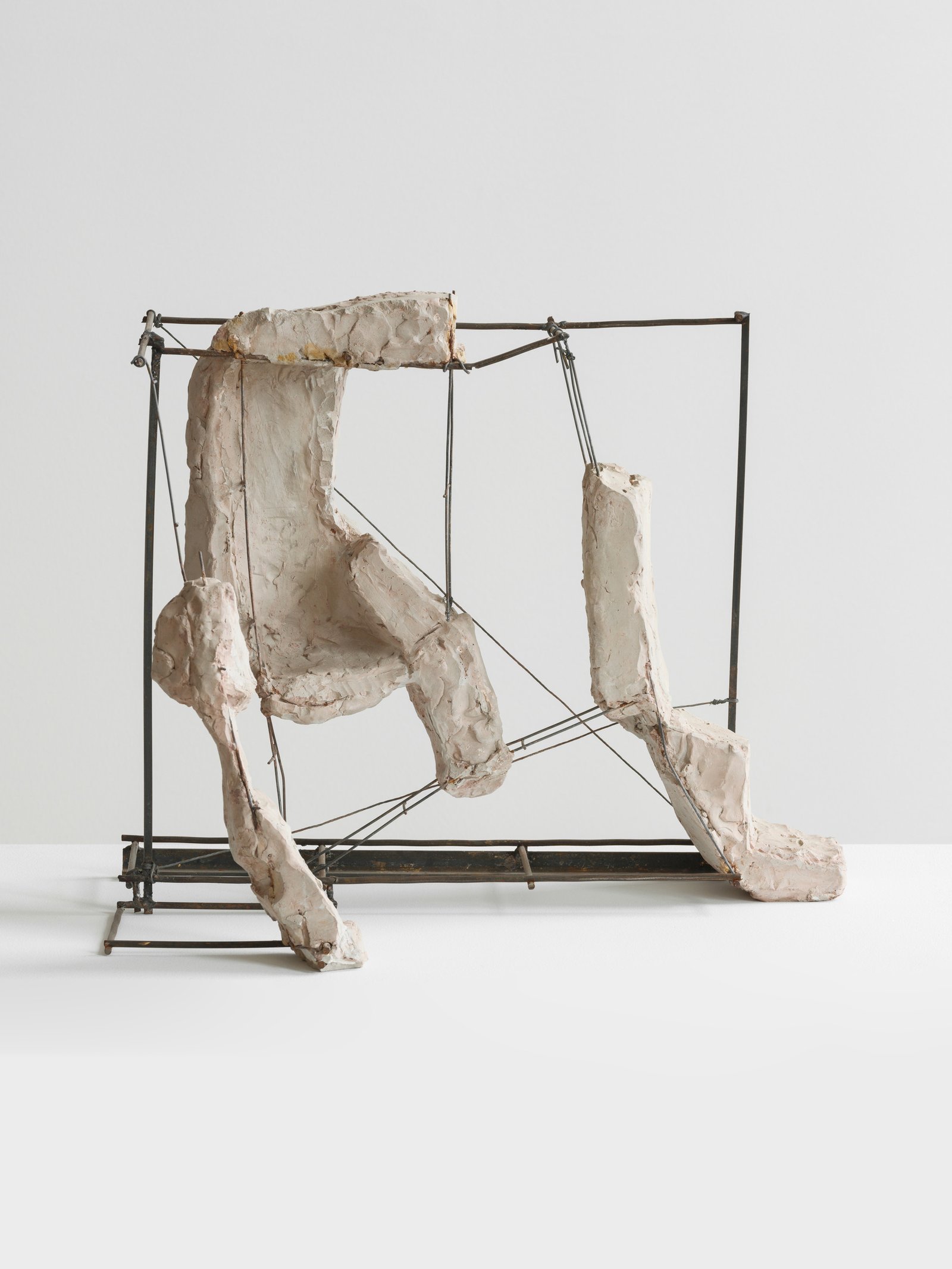
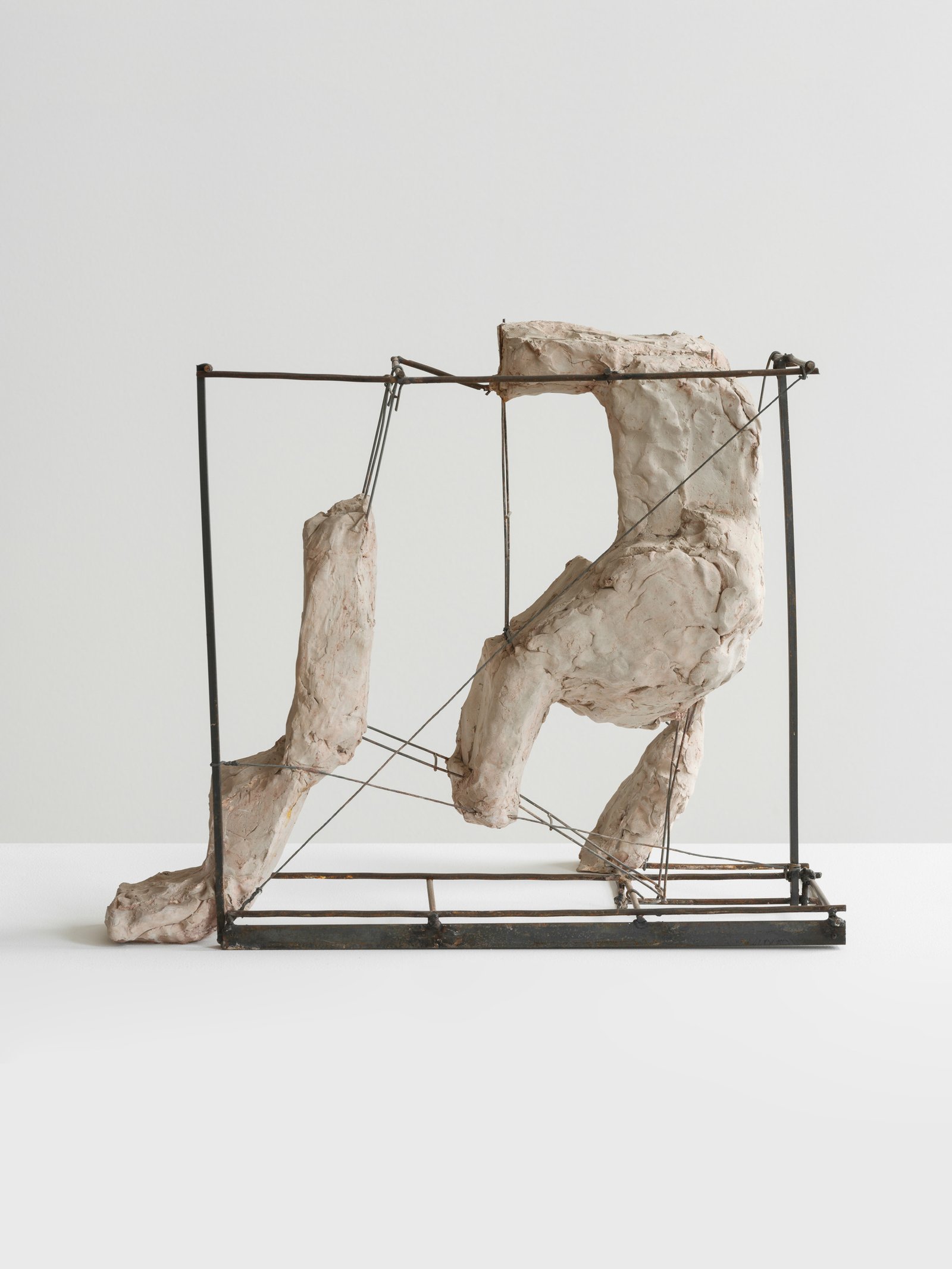
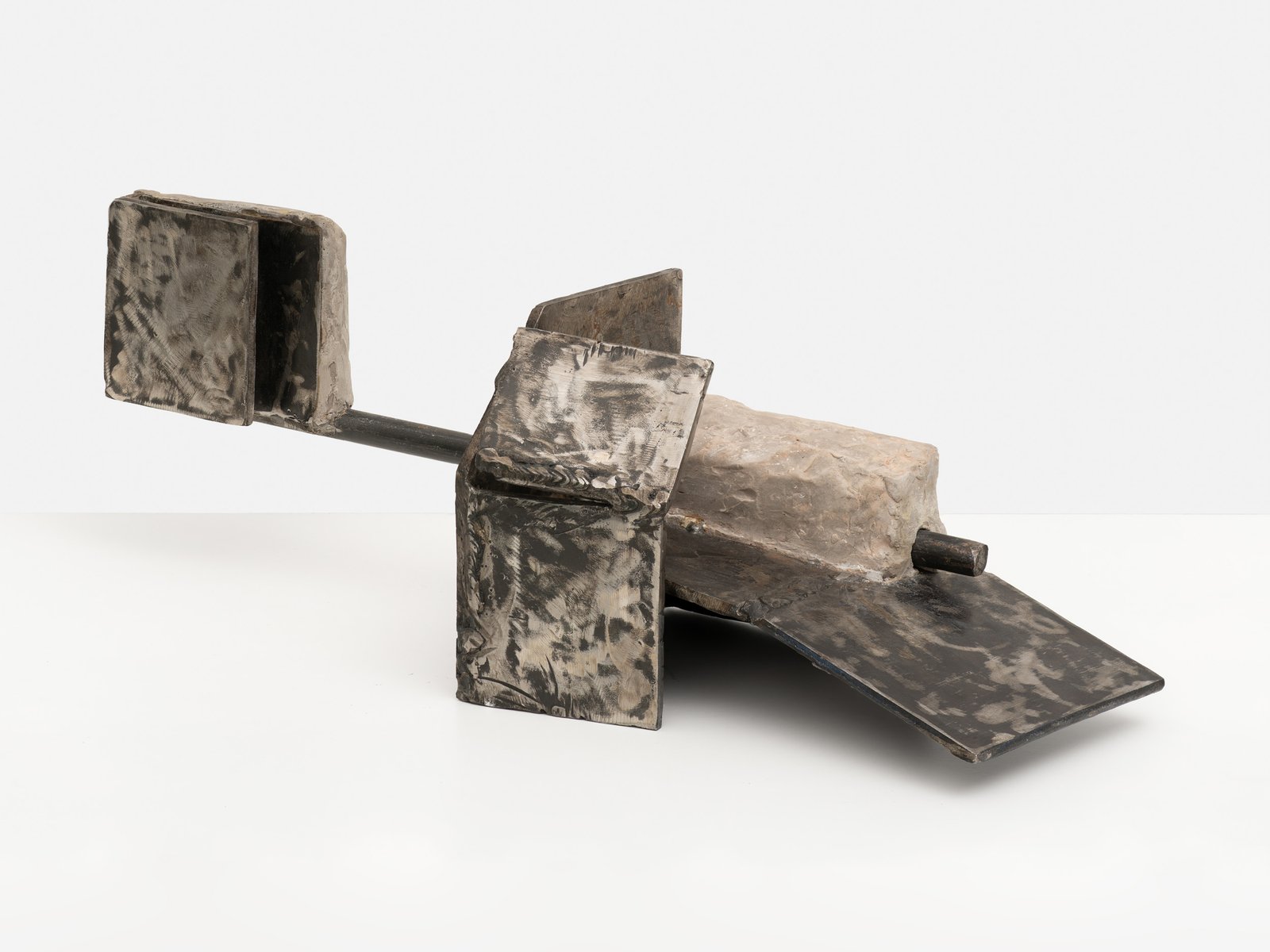
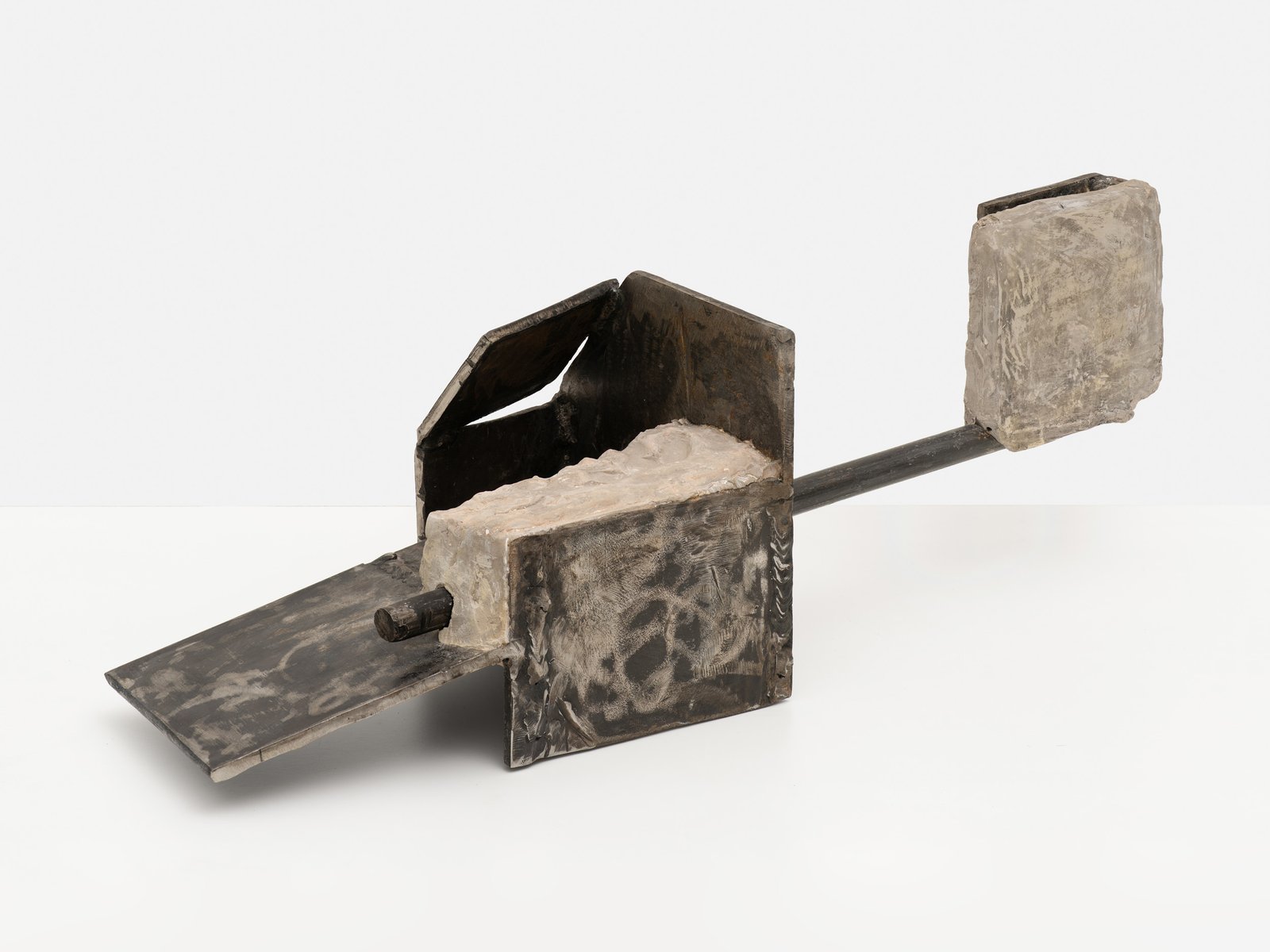
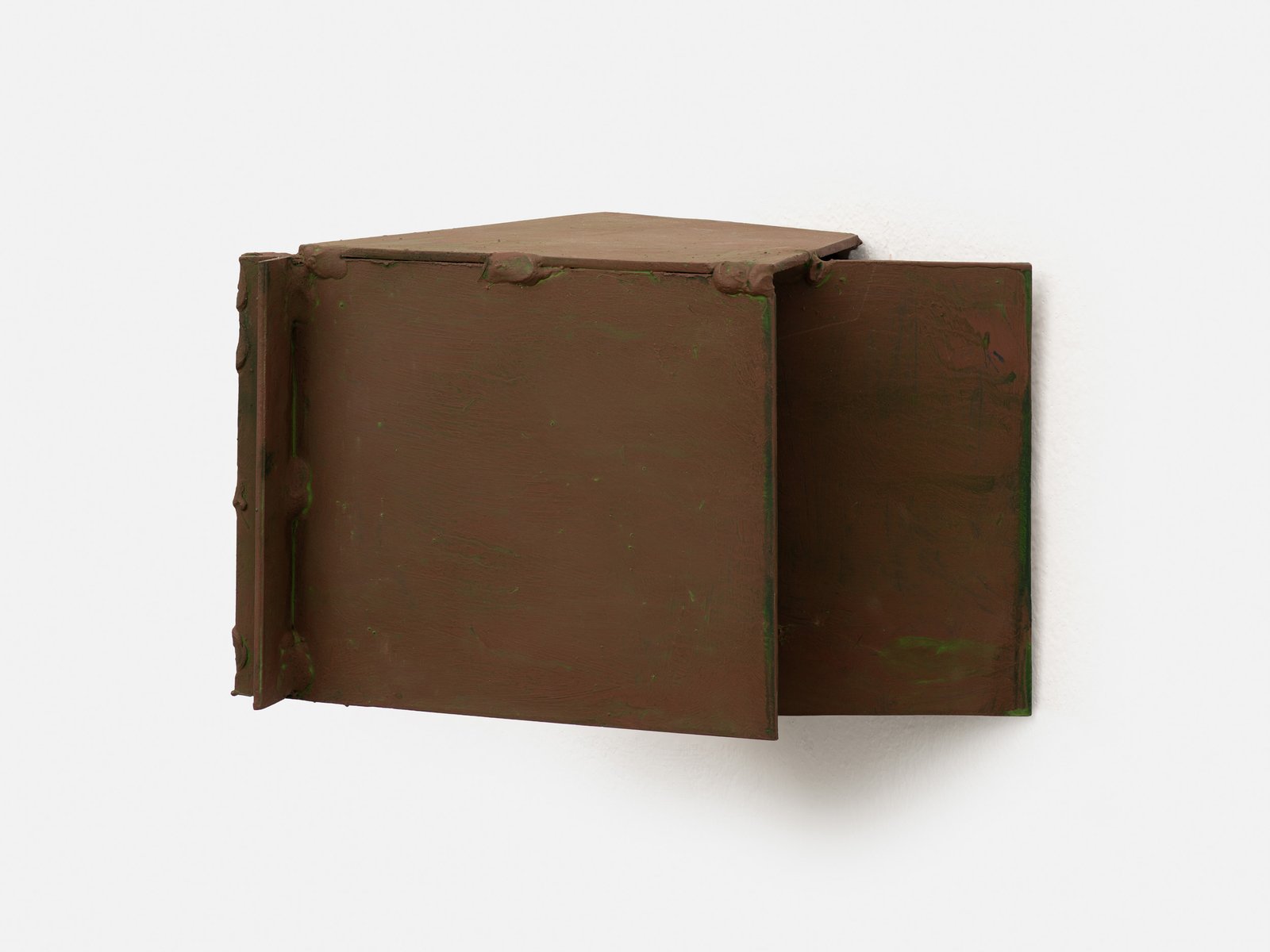
When looking at Jones’ sculptures, you encounter structures that feel caught mid-adjustment. Planes lean into one another, a slab presses against a pitched surface, a dark metal sheet braces a dense, pale mass. Nothing appears fixed beyond doubt. Each element seems to test its own stability, as if balance were an ongoing negotiation rather than a settled fact.
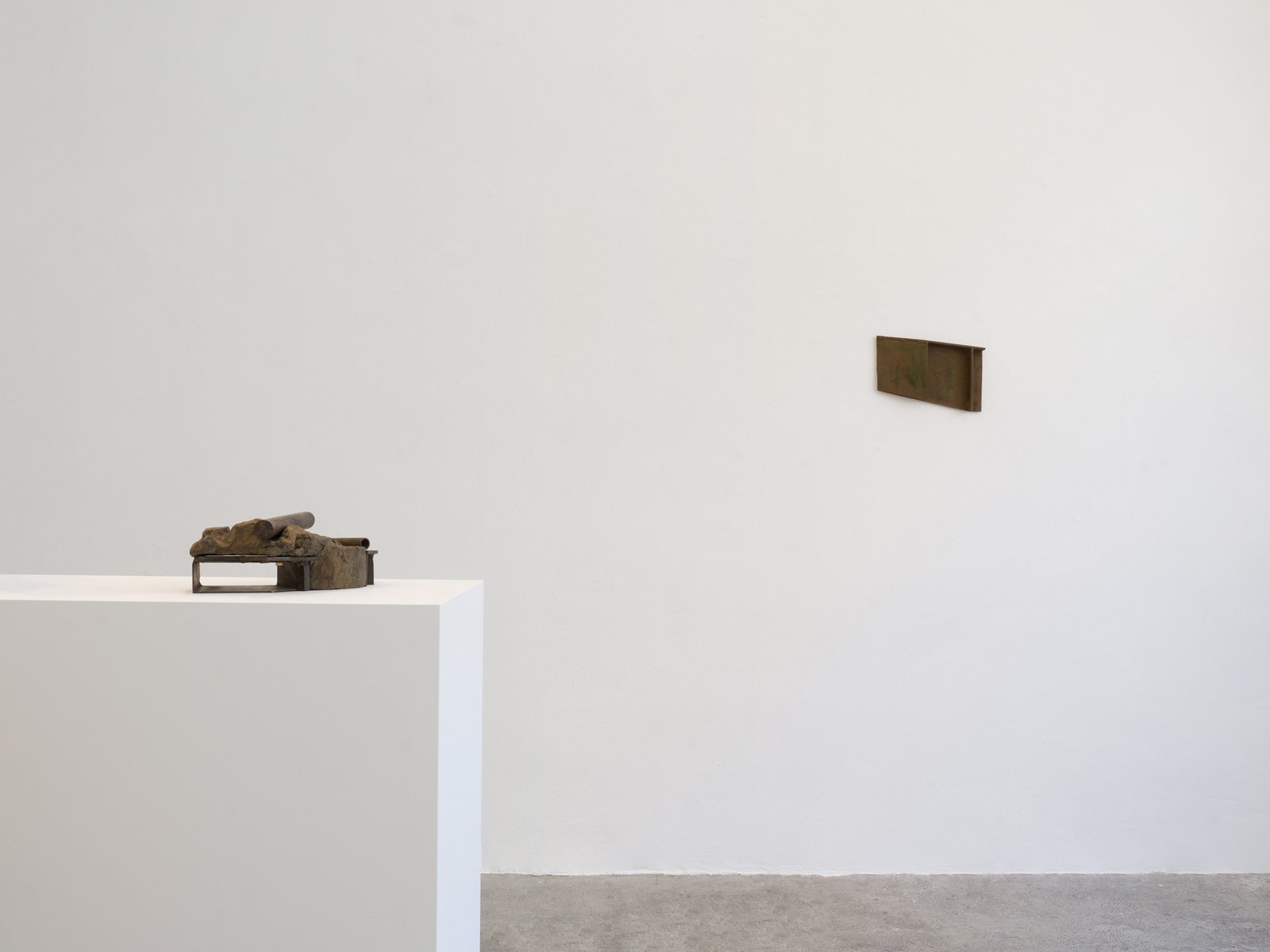
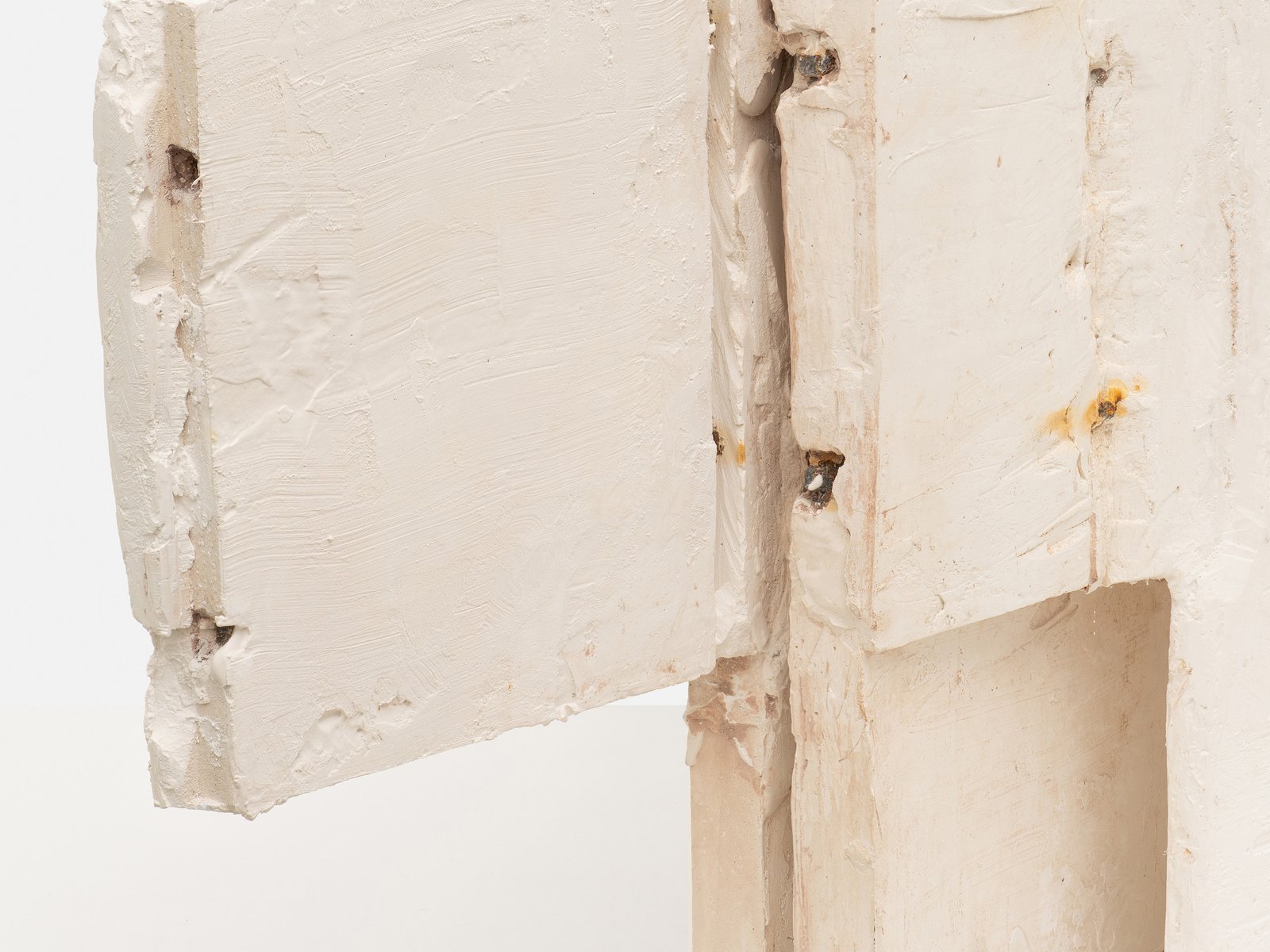
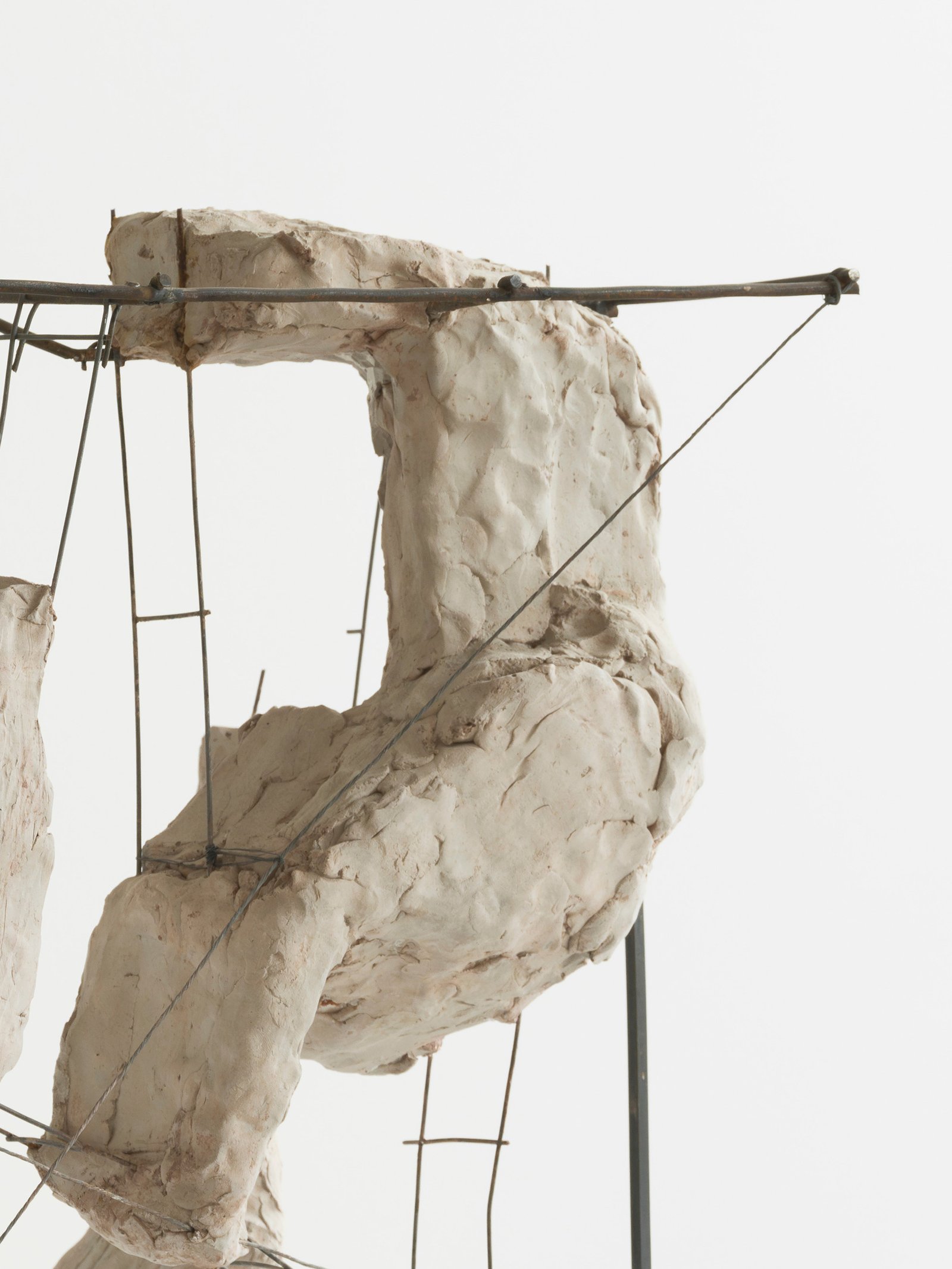
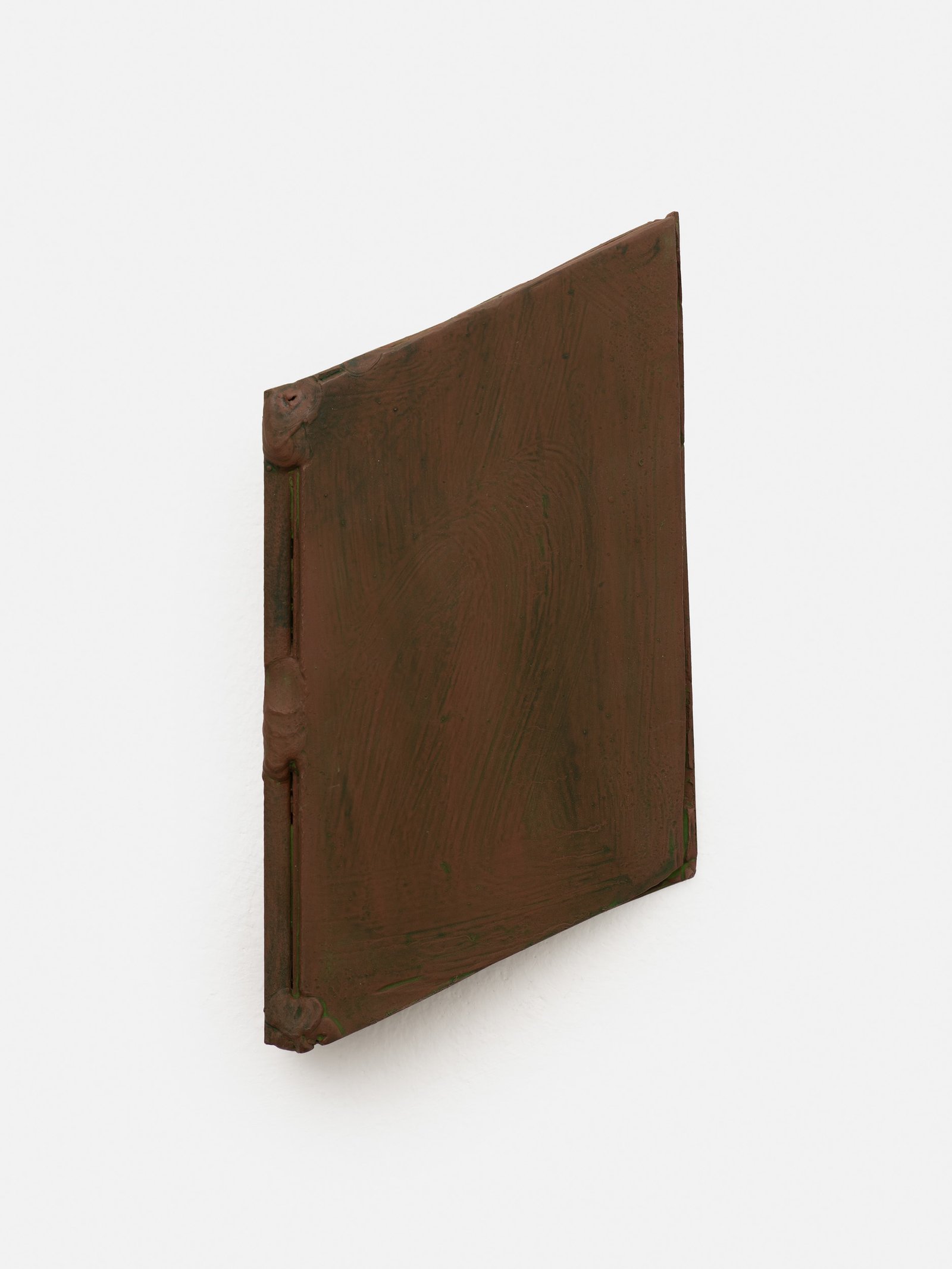
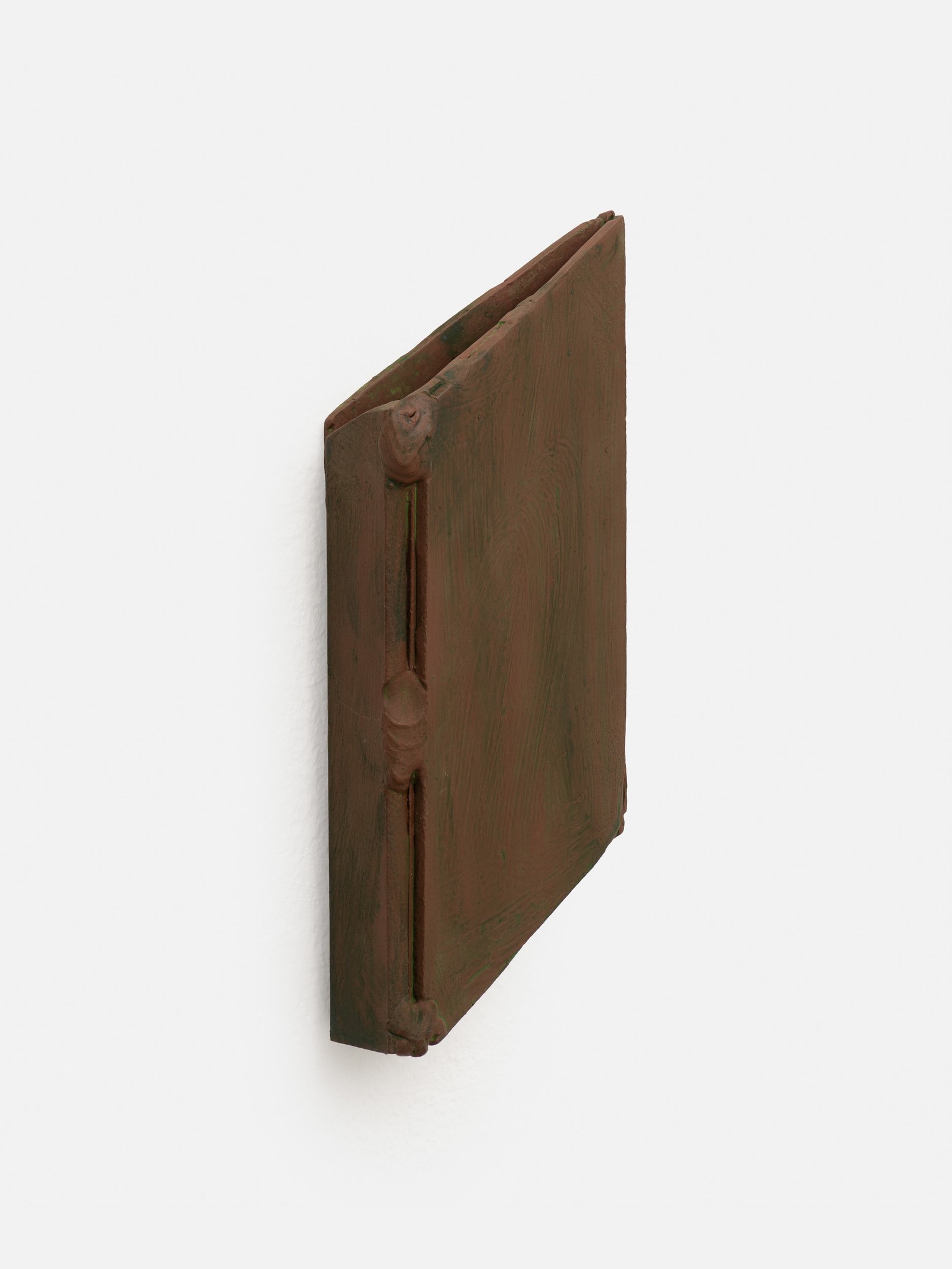
Their scale is disarming. These are not preparatory models for something monumental; they are complete in their modest dimensions. You find yourself stepping closer, bending slightly, tracking the seams where materials meet. Surfaces bear the trace of handling – scuffed metal, compressed plaster, edges that feel worked rather than machined. What initially reads as austere abstraction slowly reveals a charged interiority.
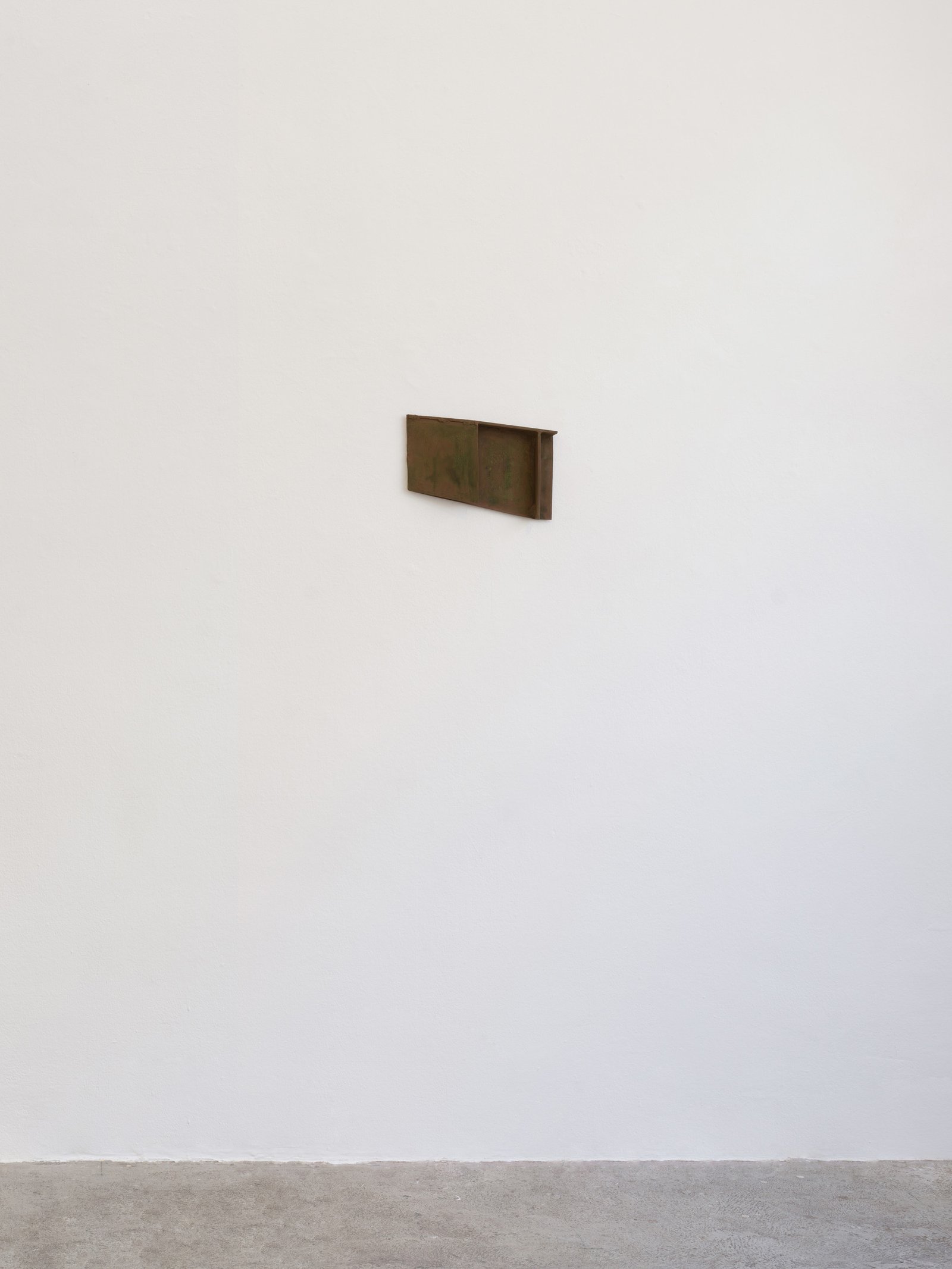
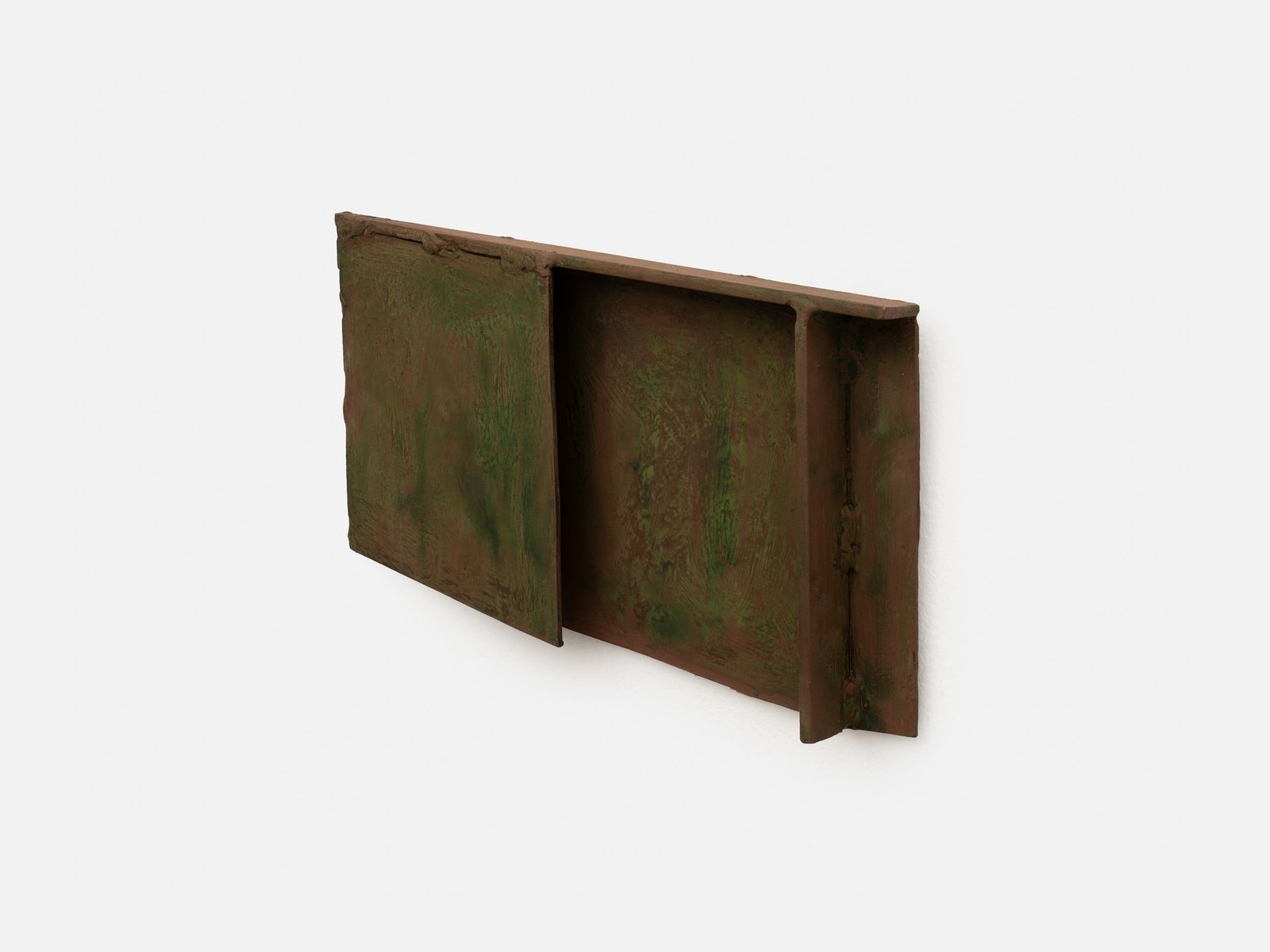
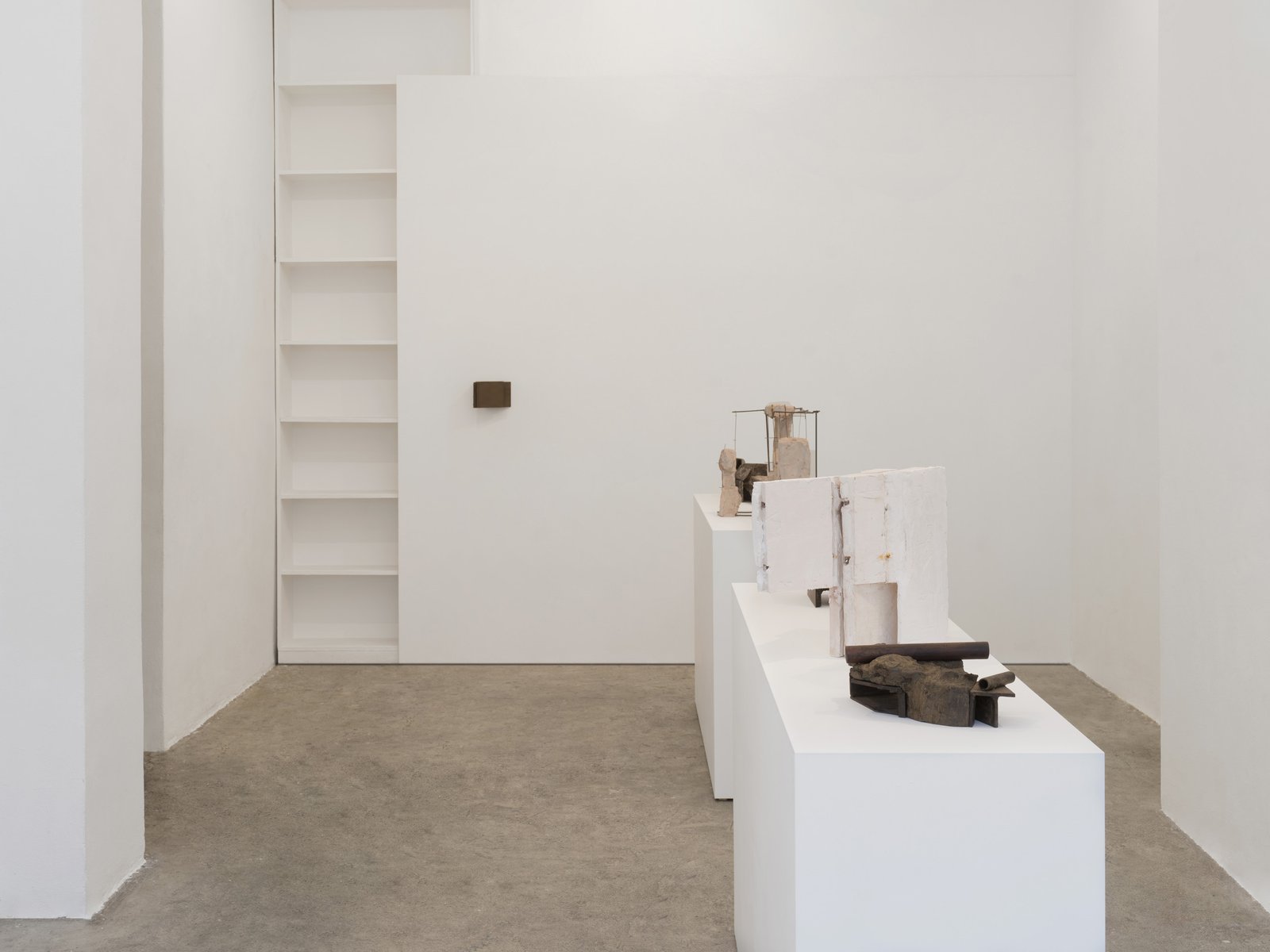
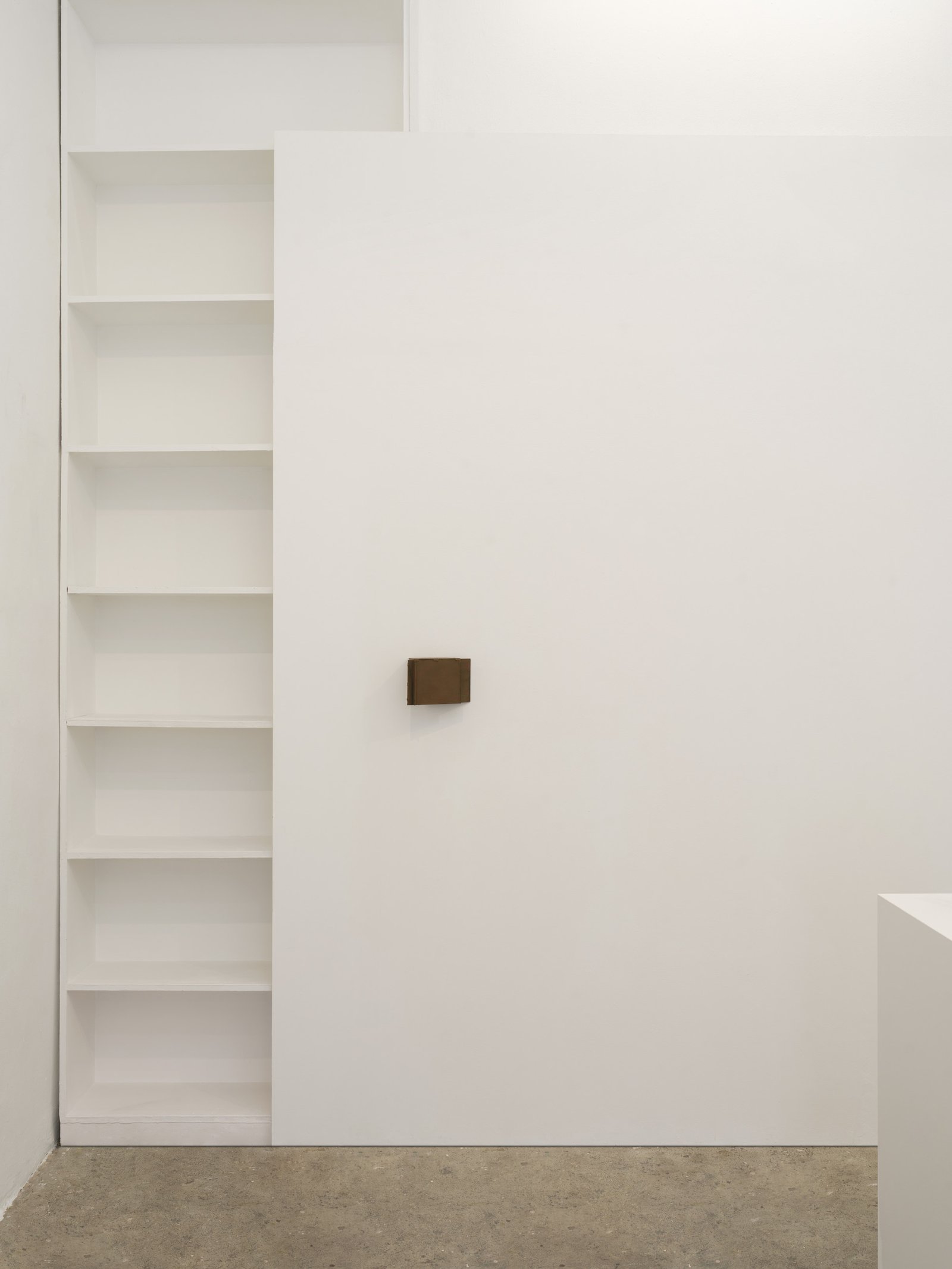
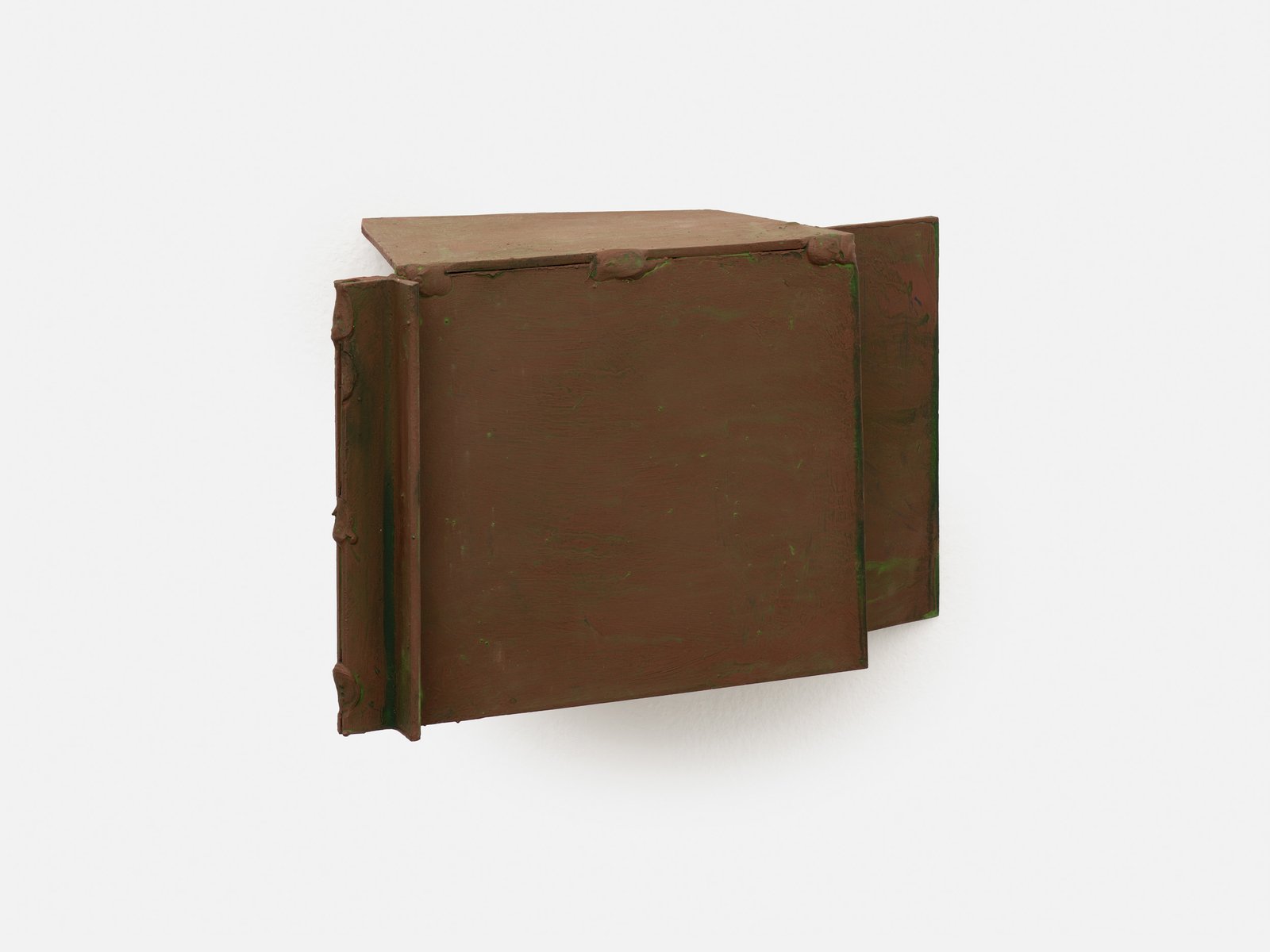
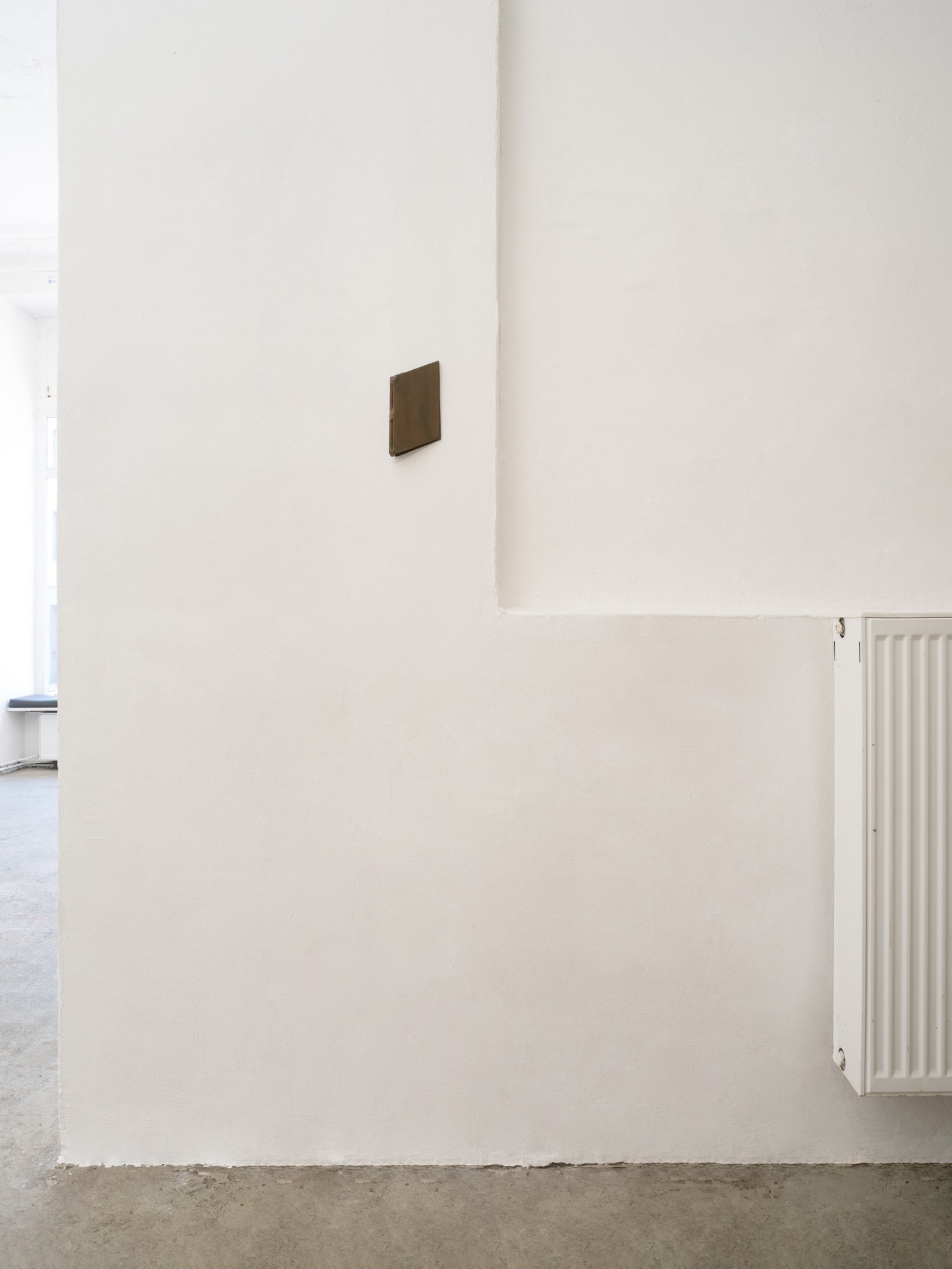
The wall reliefs extend this sensation. They do not lie flat or resolve into pure geometry; instead, they tilt and project subtly into the room, activating the wall as a site of tension. When standing before them, you become aware of your own body in relation to theirs – the slight forward lean required to see into a shadowed recess, the sideways shift to understand how one plane overlaps another.
Throughout the exhibition, structure operates as both form and metaphor. A roof-like angle suggests shelter while exposing emptiness beneath. A rod piercing a block reads simultaneously as reinforcement and intrusion. Weight is palpable; gravity feels present. Yet there is also a surprising tenderness in how these elements rely on one another. Support and strain coexist.
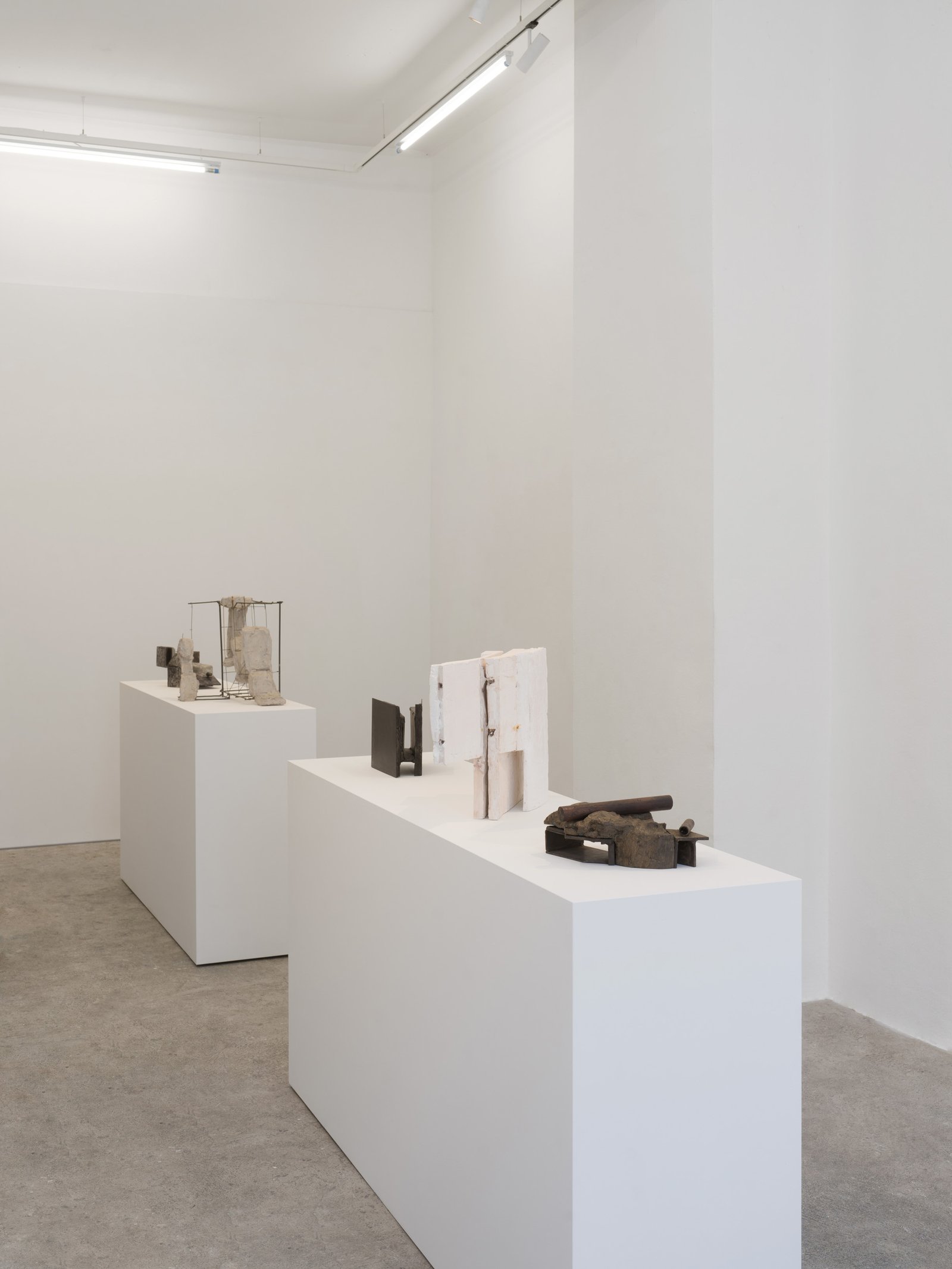
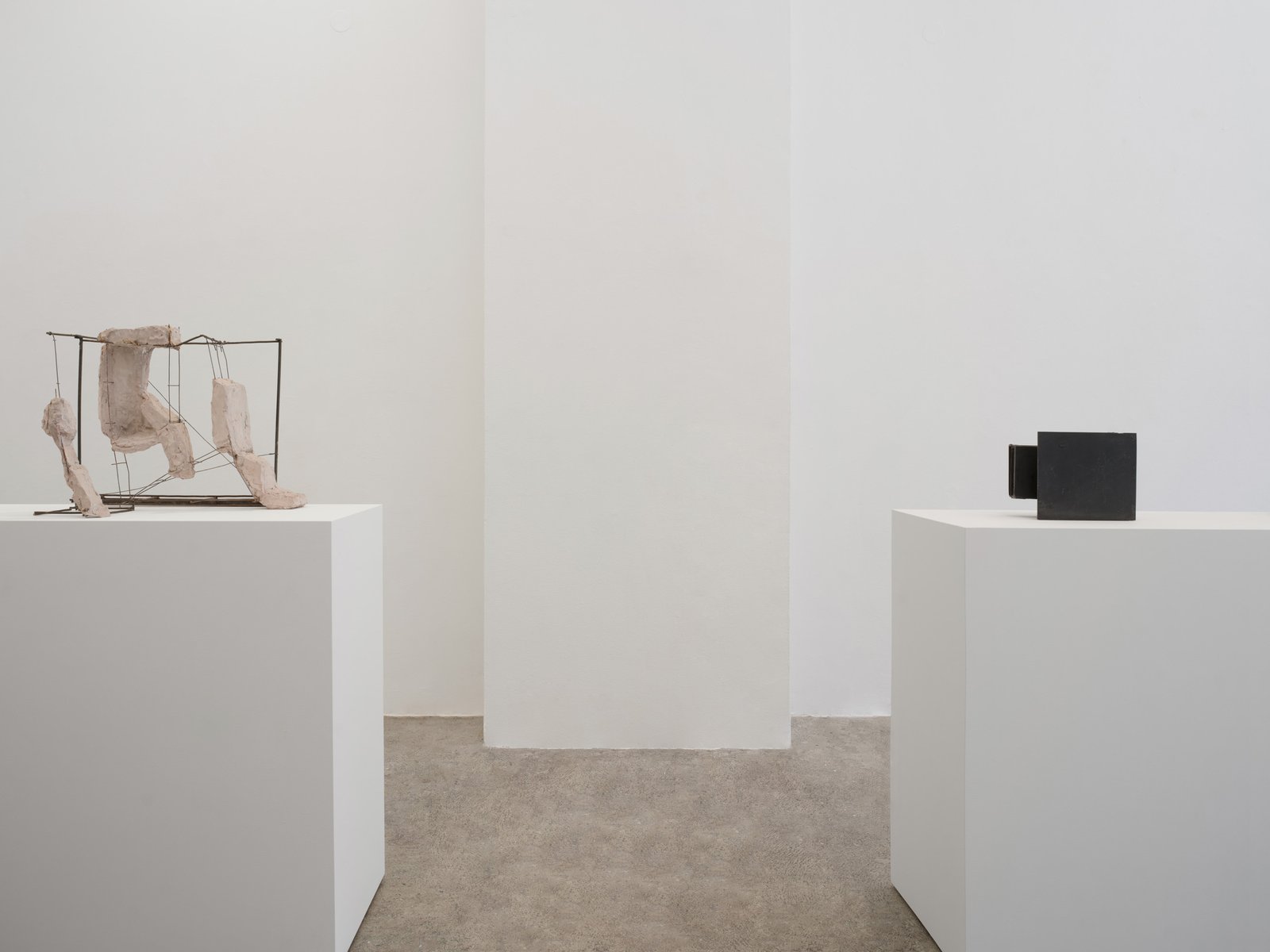
Installed at Super Super Markt, the works form a dispersed constellation across pedestals and walls, allowing space between them to resonate. Moving through the gallery, viewers may sense that each sculpture compresses an architectural impulse into something intimate – an exterior form that quietly registers internal states. The sculptures seem less like objects to be viewed than situations to be entered.
Jones continues to refine a language in which abstraction carries emotional consequence without illustration. When looking at these works, one does not decode a narrative so much as inhabit a condition: of balance held, of pressure absorbed, of structures that endure precisely because they seek to emulate a dynamic flux.