


Turning points and milestones often present themselves as decisive moments, yet they remain, in many ways, constructed illusions; markers imposed onto the continuous flow of experience. A visit, an arrival, a final breath: a person reaches a grandfather, and he dies on the spot. Was he waiting for her, or did the moment itself produce its own inevitability? Such paradoxes echo the sensibility explored by Alanis Morissette in Ironic, a song that captured the contradictions and quiet absurdities surrounding the turn of the millennium. The crossing into a new era, so monumental in anticipation, but ultimately revealed as both meaningful and negligible, just another day following the last.
It is within this tension between significance and arbitrariness that Martina Quesada’s practice unfolds. Her work interrogates the systems by which we measure, structure, and contain experience, whether through geometry, repetition, or the implied boundaries of the grid. Turning points, like the frameworks that support them, become permeable. Limits shift according to their own conceivability.
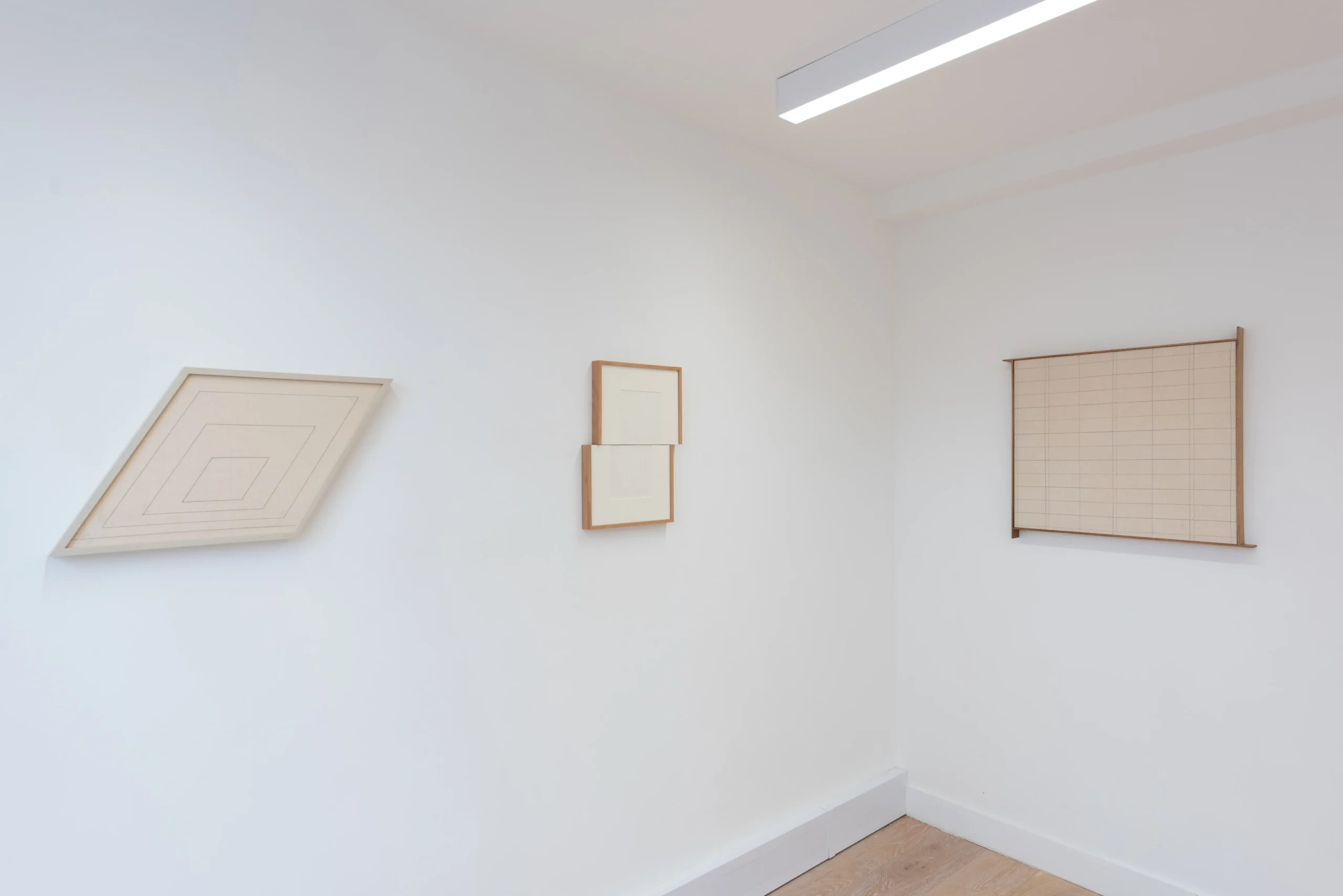
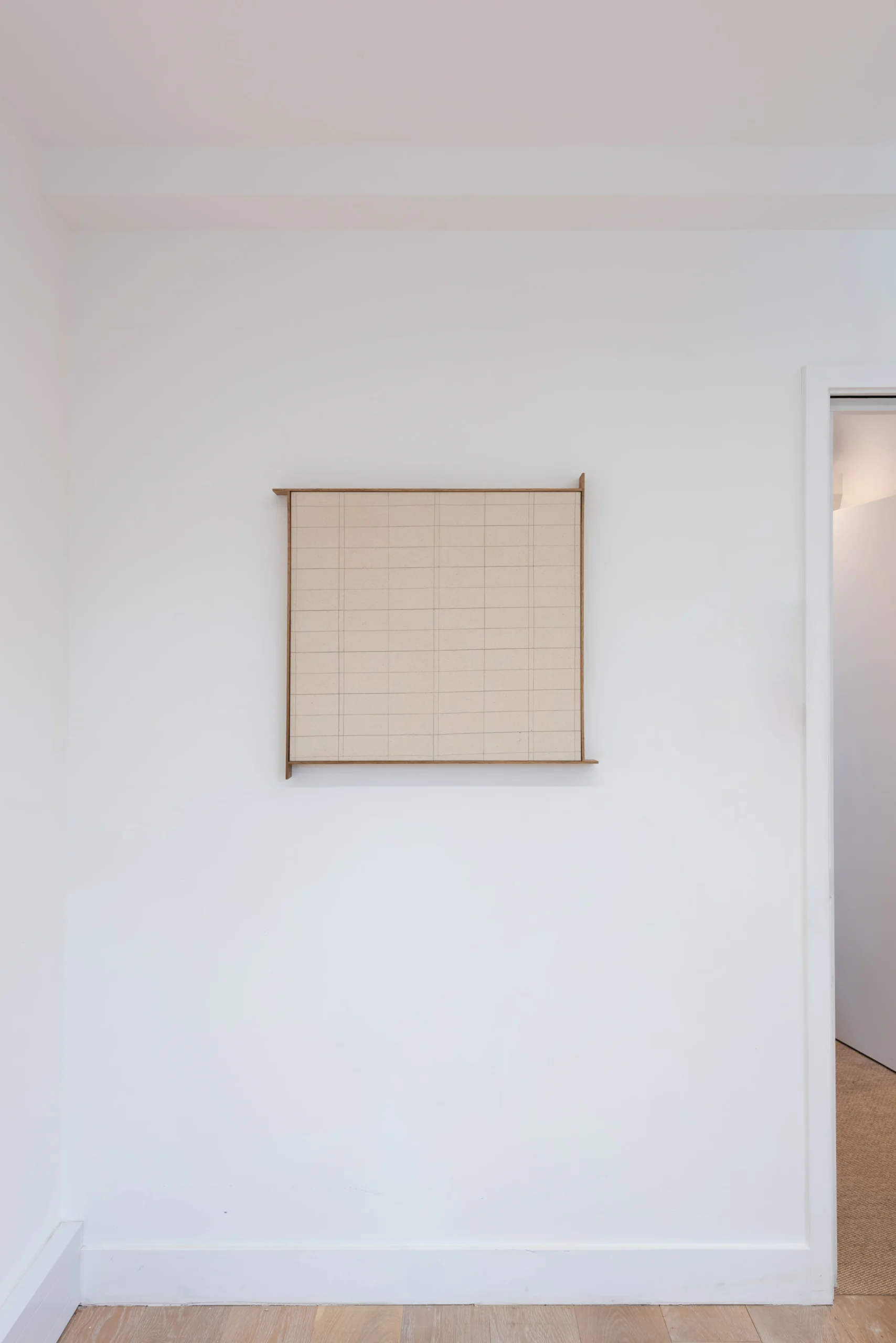
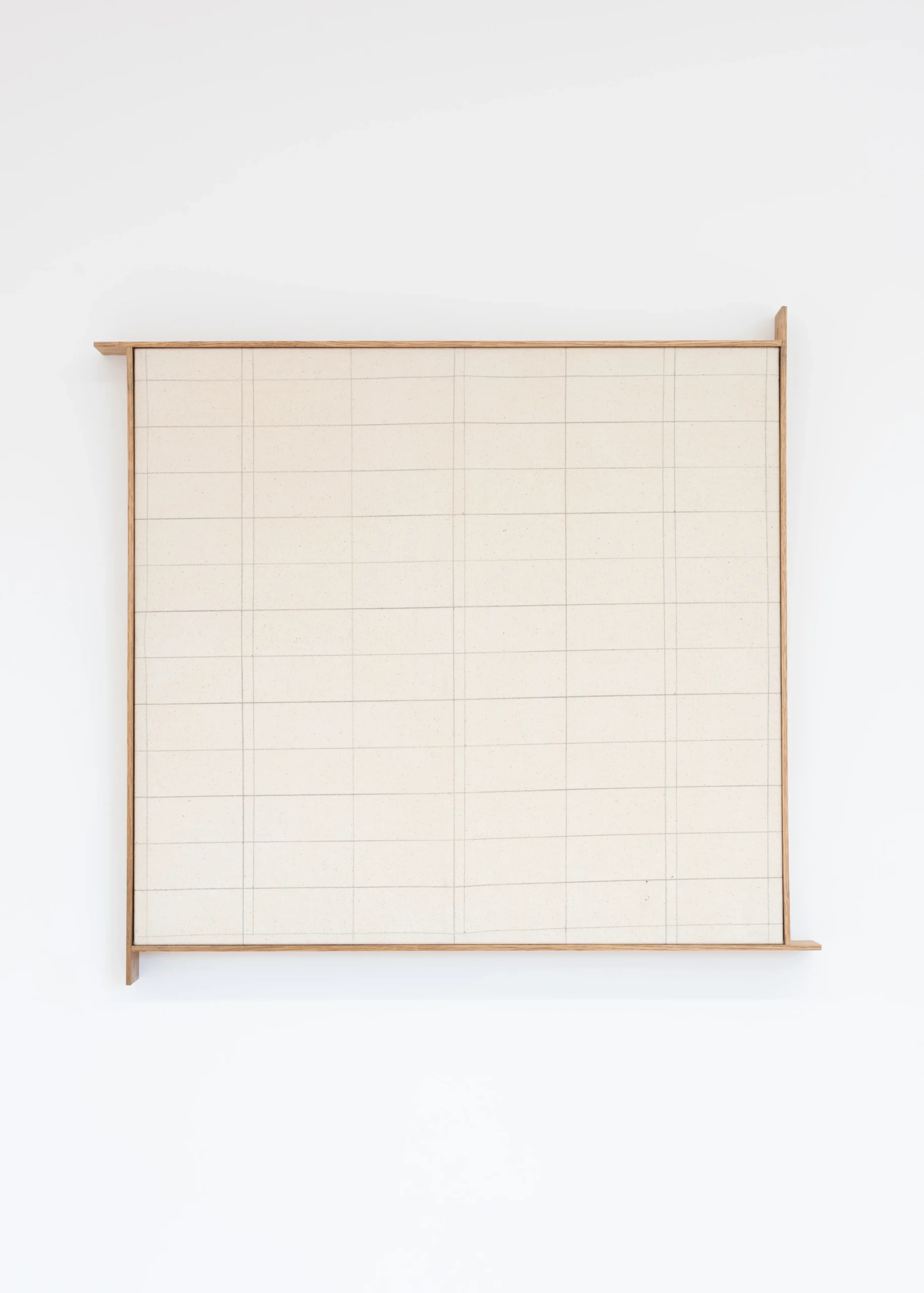
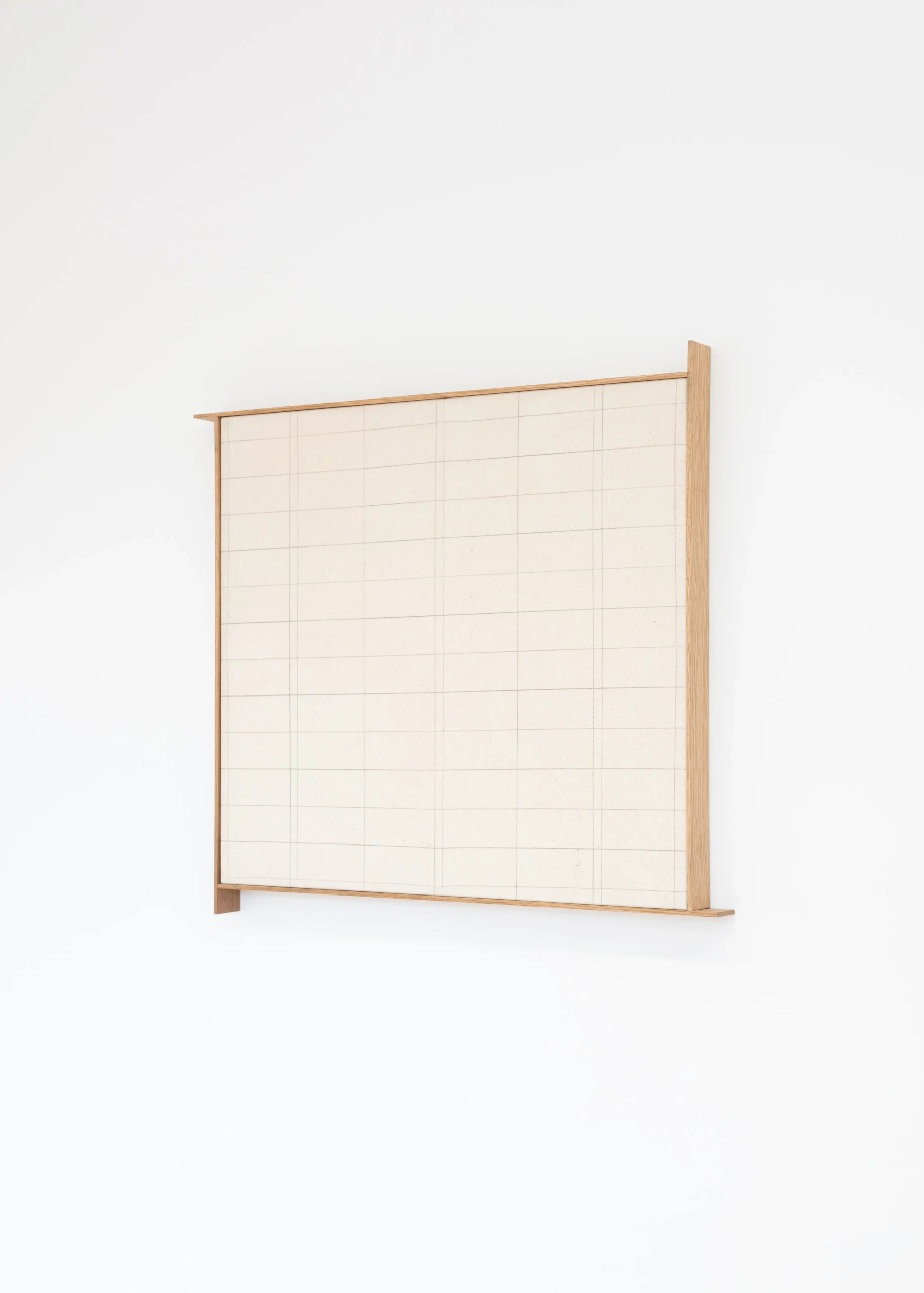
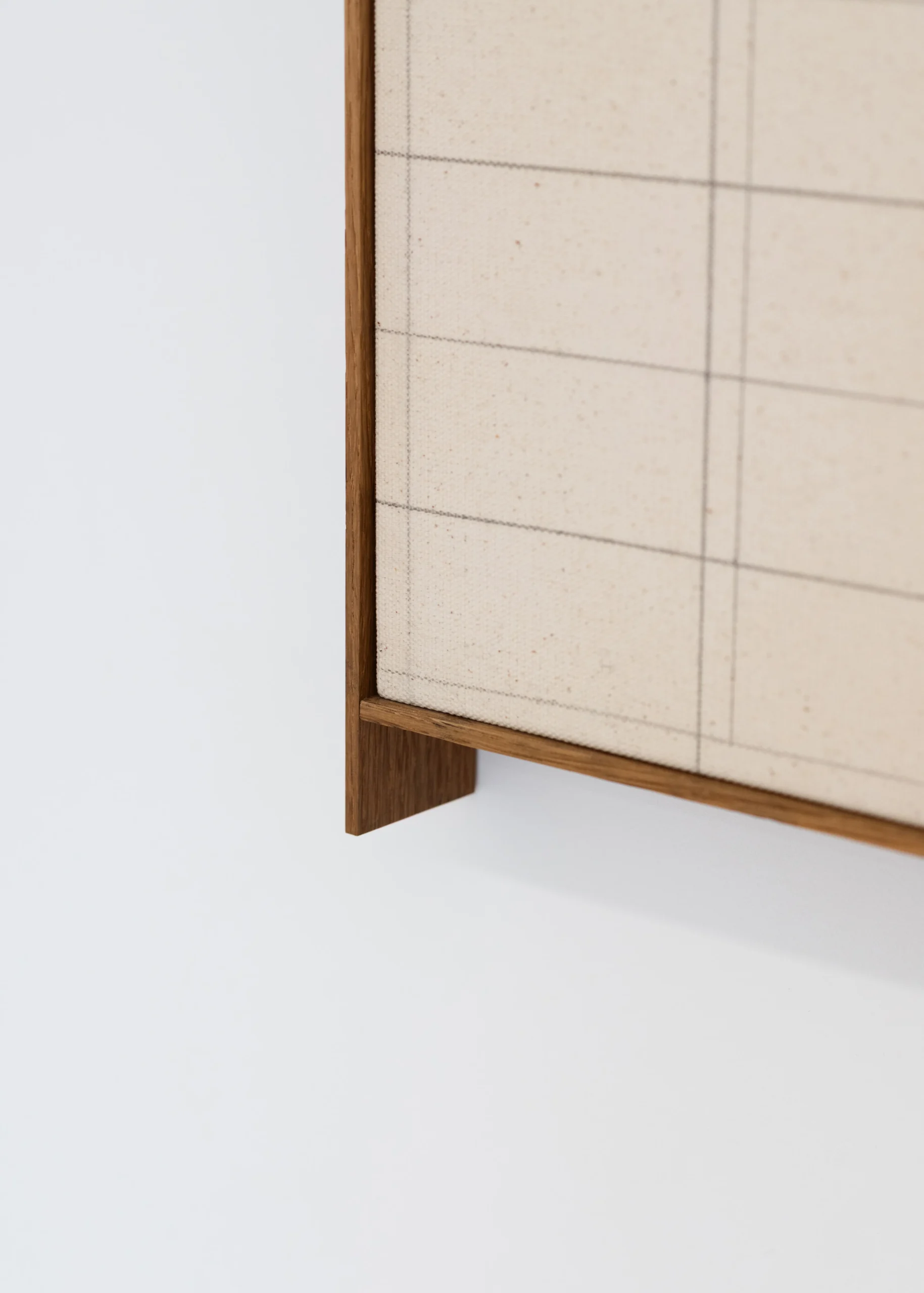
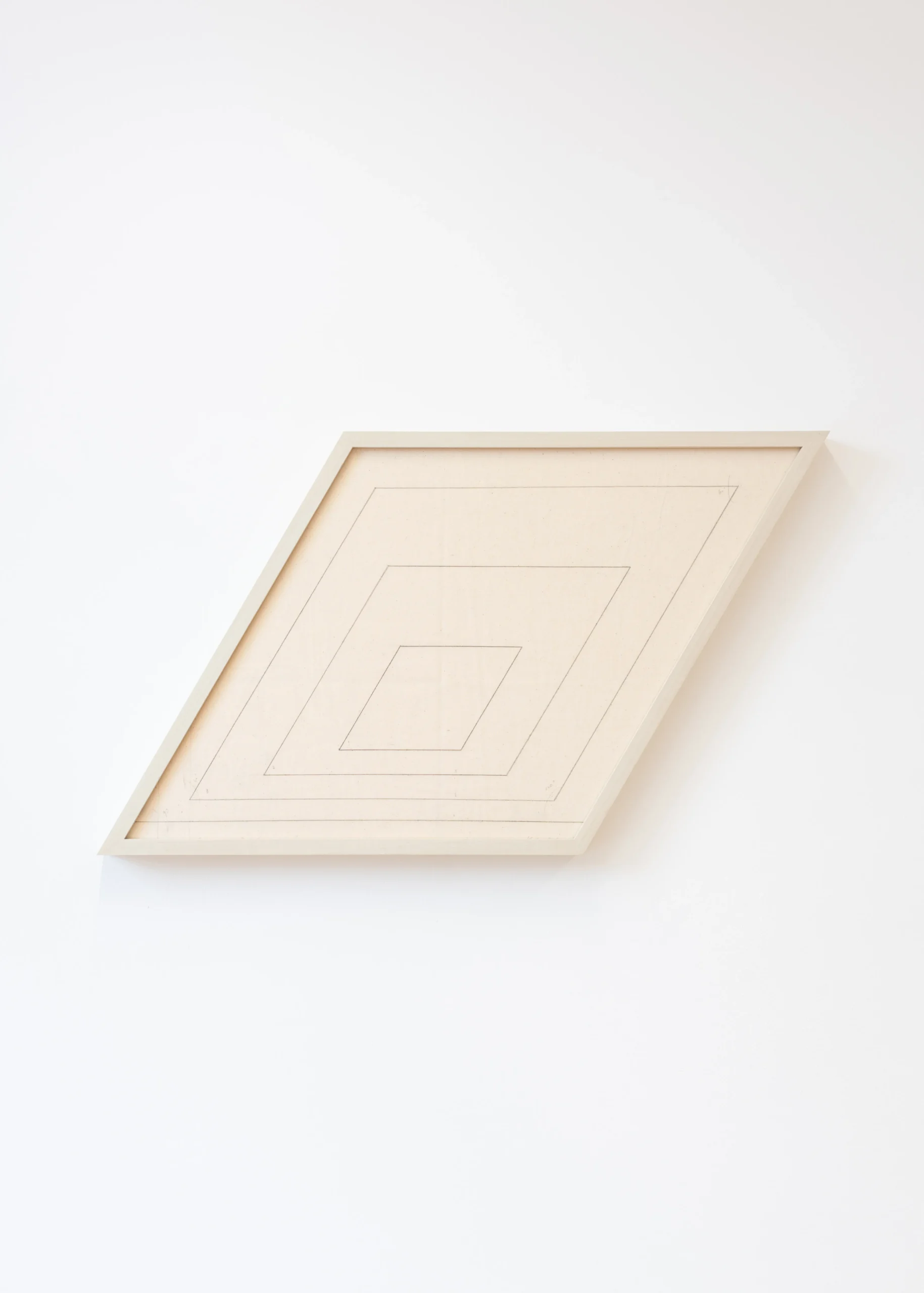
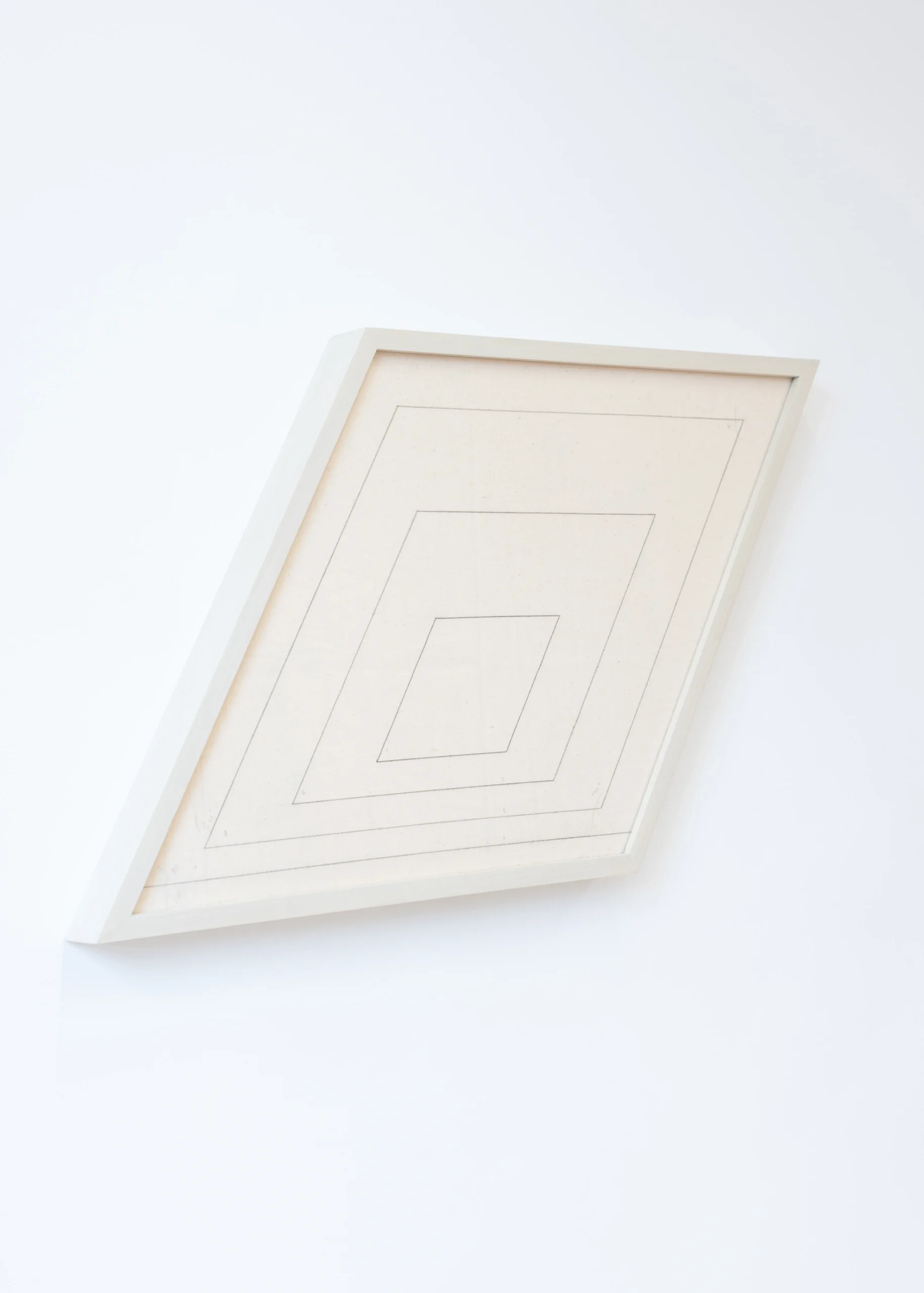
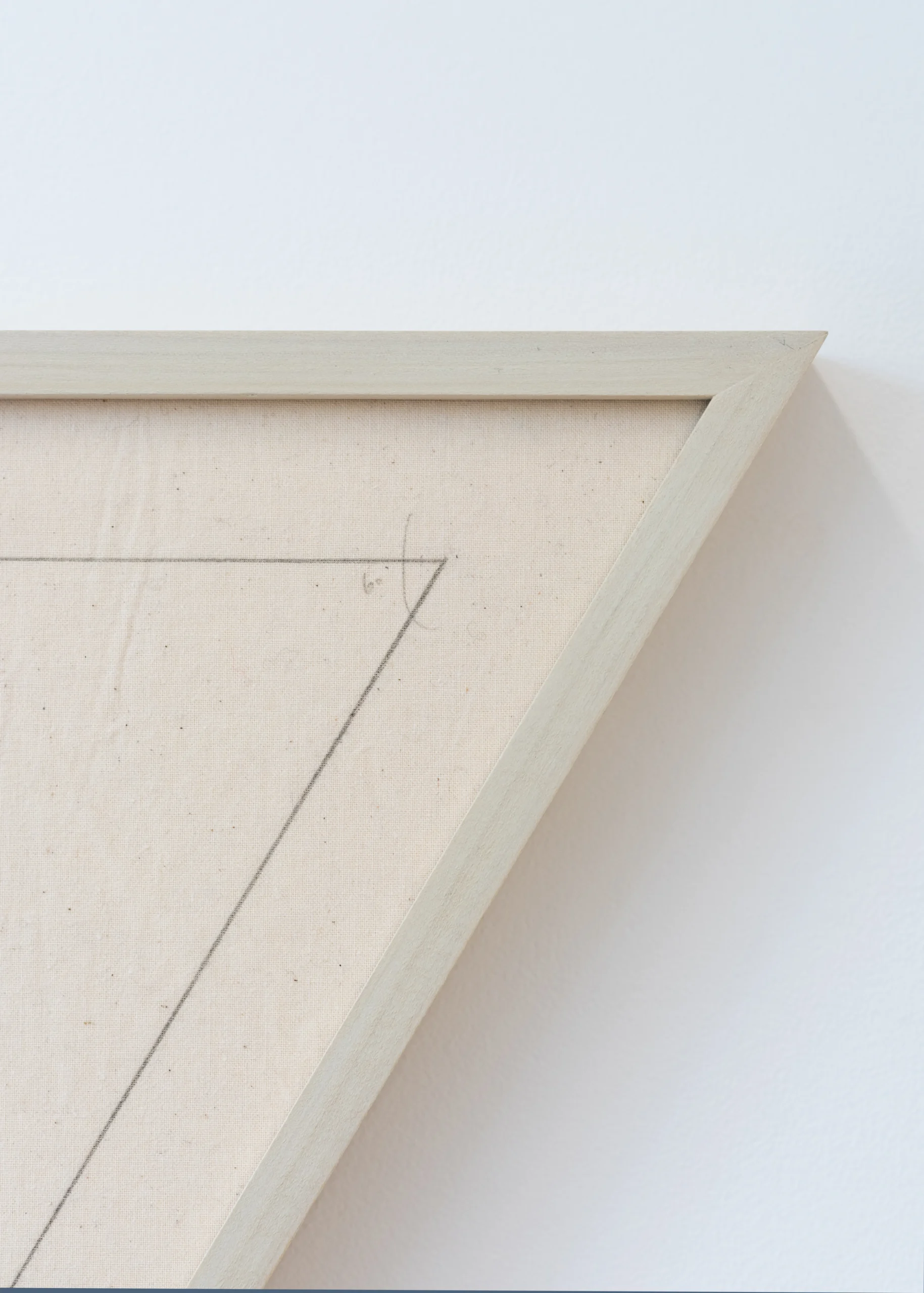
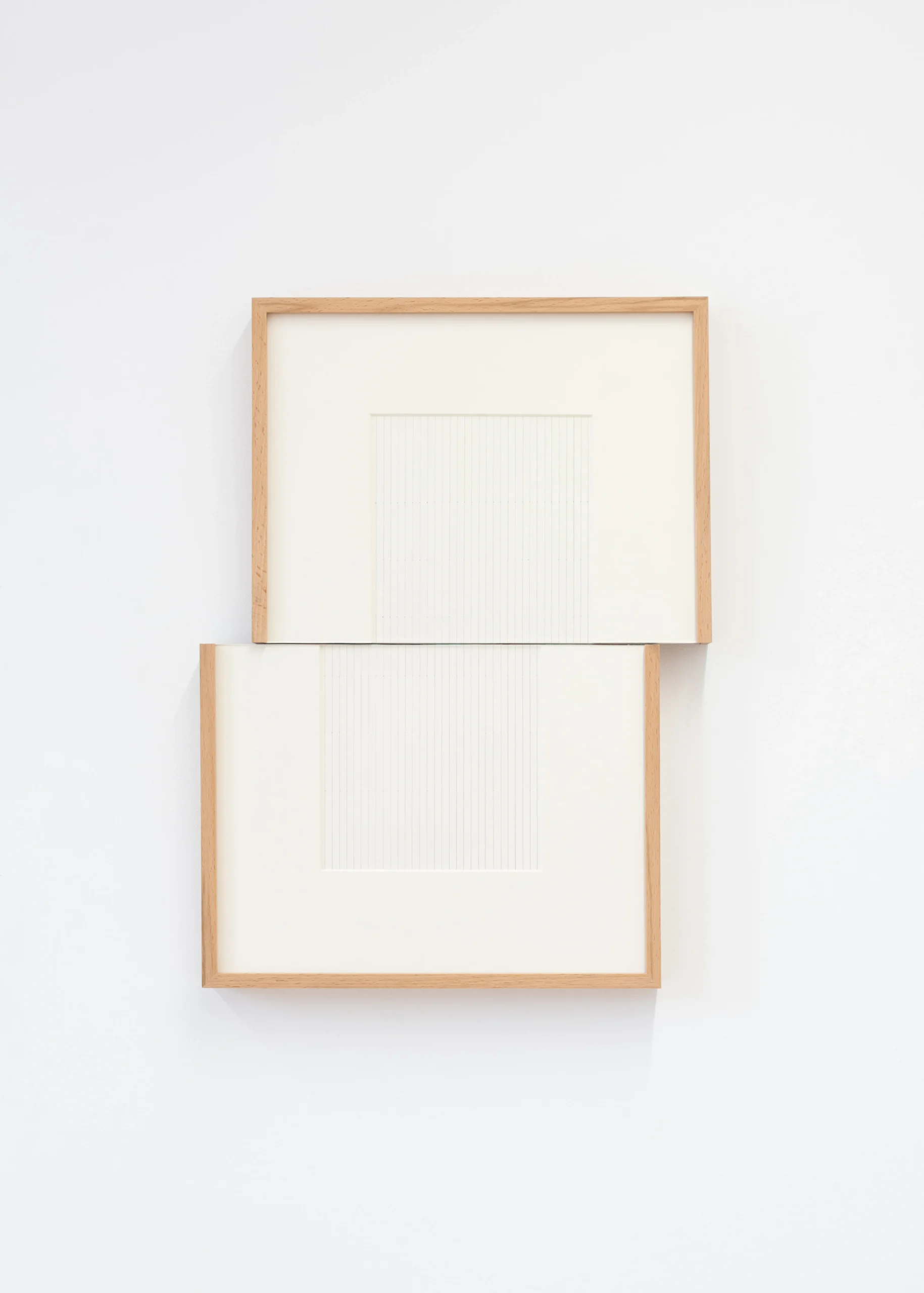
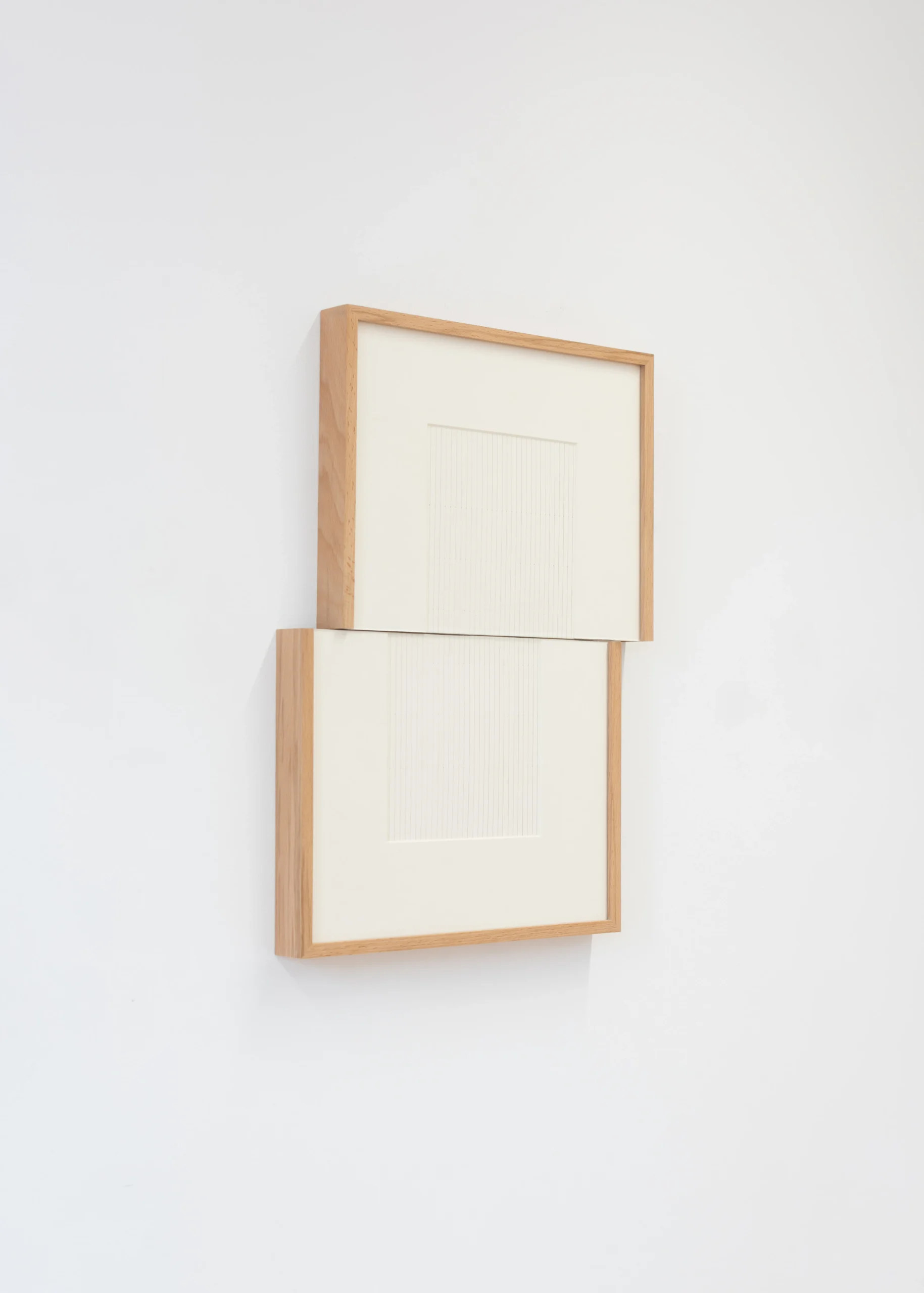
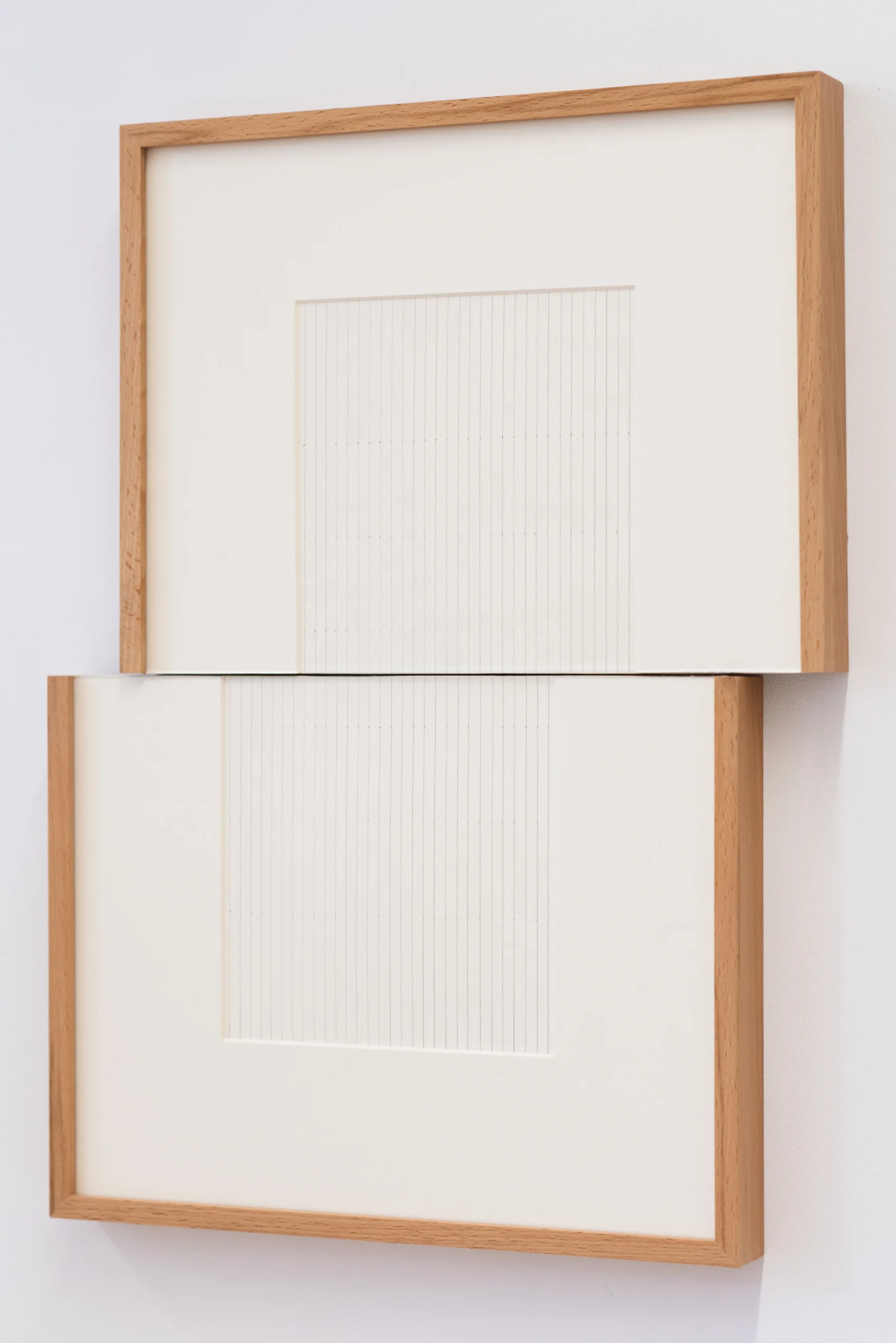
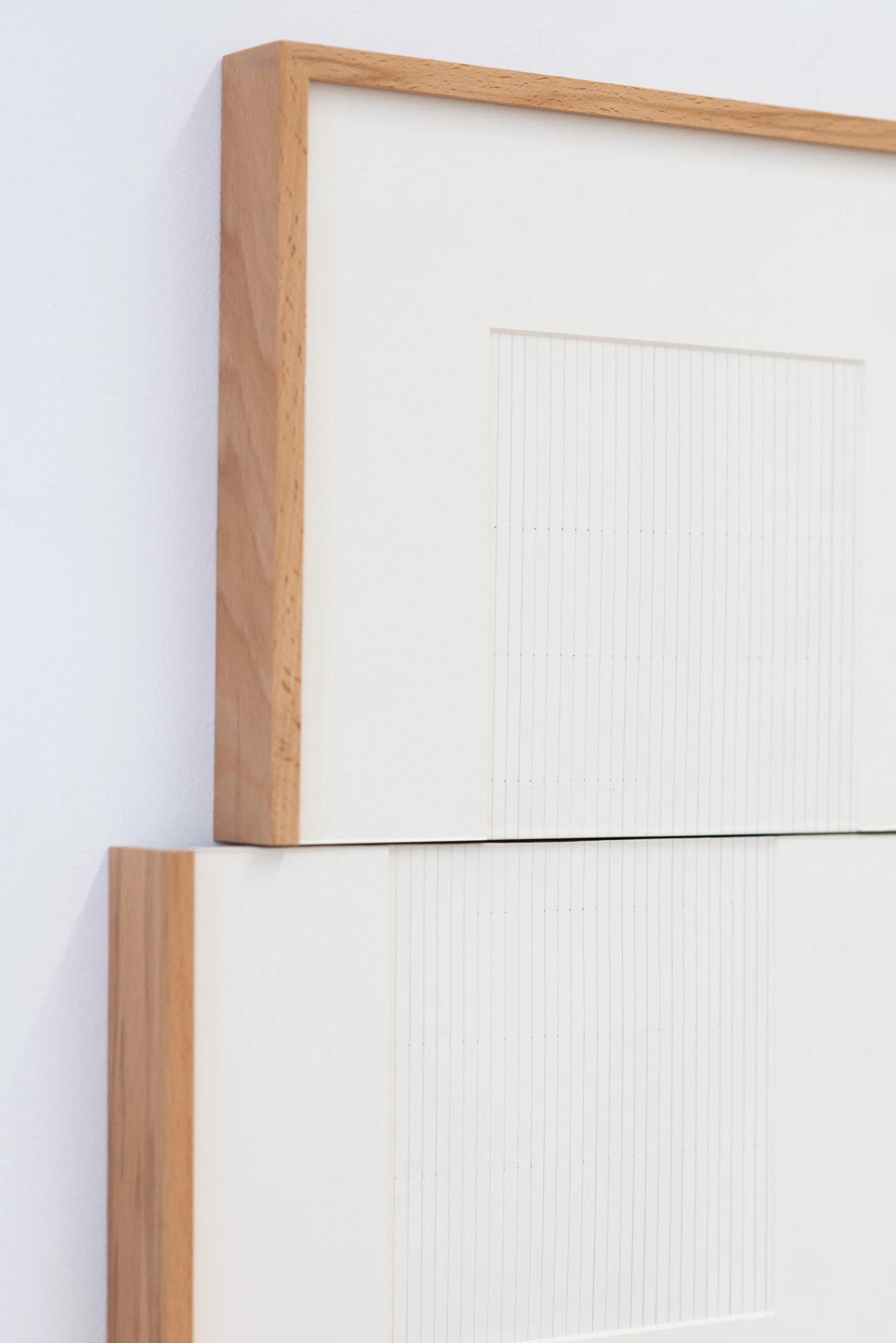
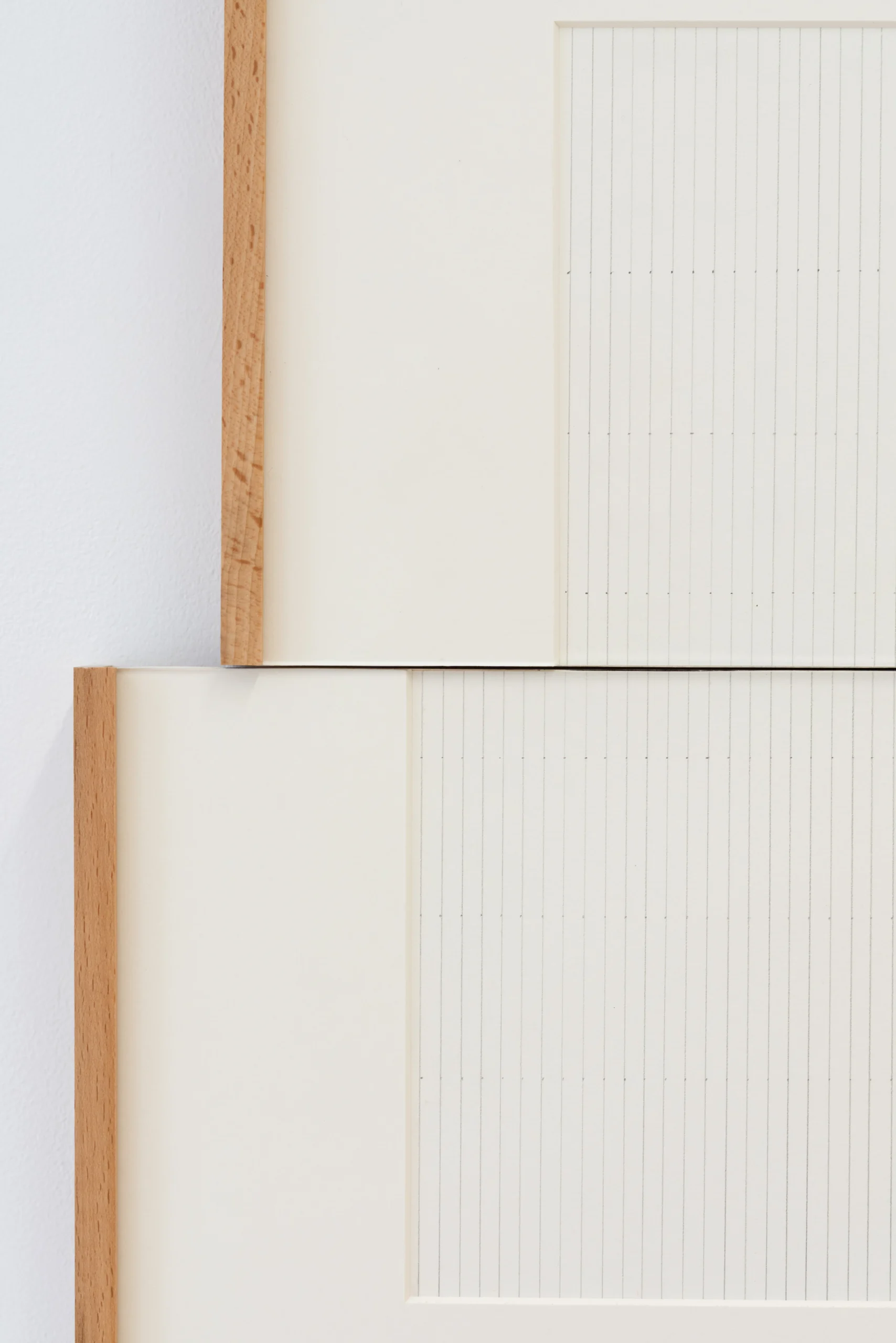
Drawing from a lineage that includes Josef Albers and Agnes Martin, Quesada engages with abstraction not as a fixed language but as an evolving field. If Albers’ work remains recognisable even when stripped of its defining elements, and Martin’s gestures seem to extend beyond the canvas into an infinite register, Quesada situates herself at the threshold where such legacies begin to fracture. The grid (a long a symbol of order and rationality) splits, destabilises, and renegotiates its own terms.
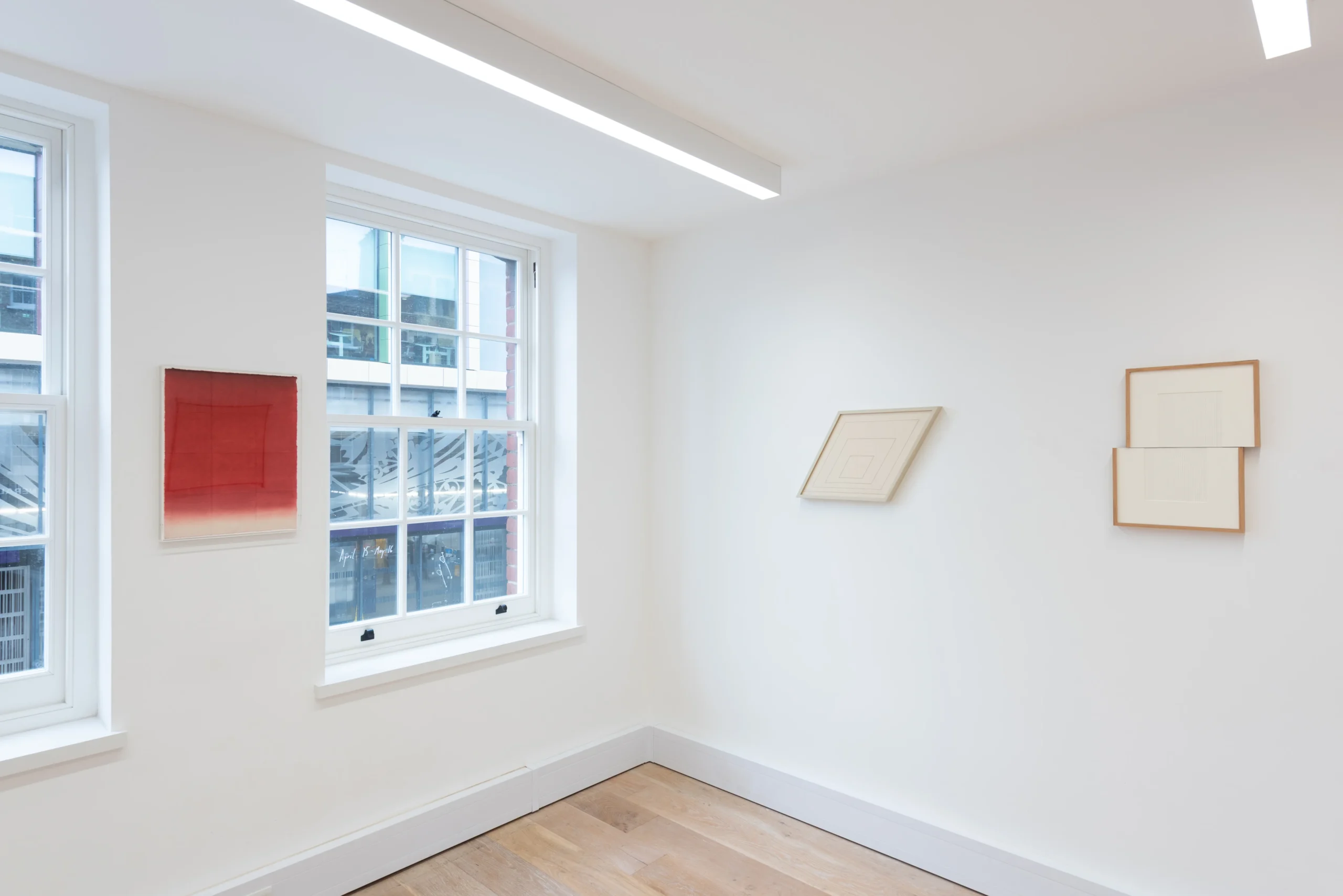
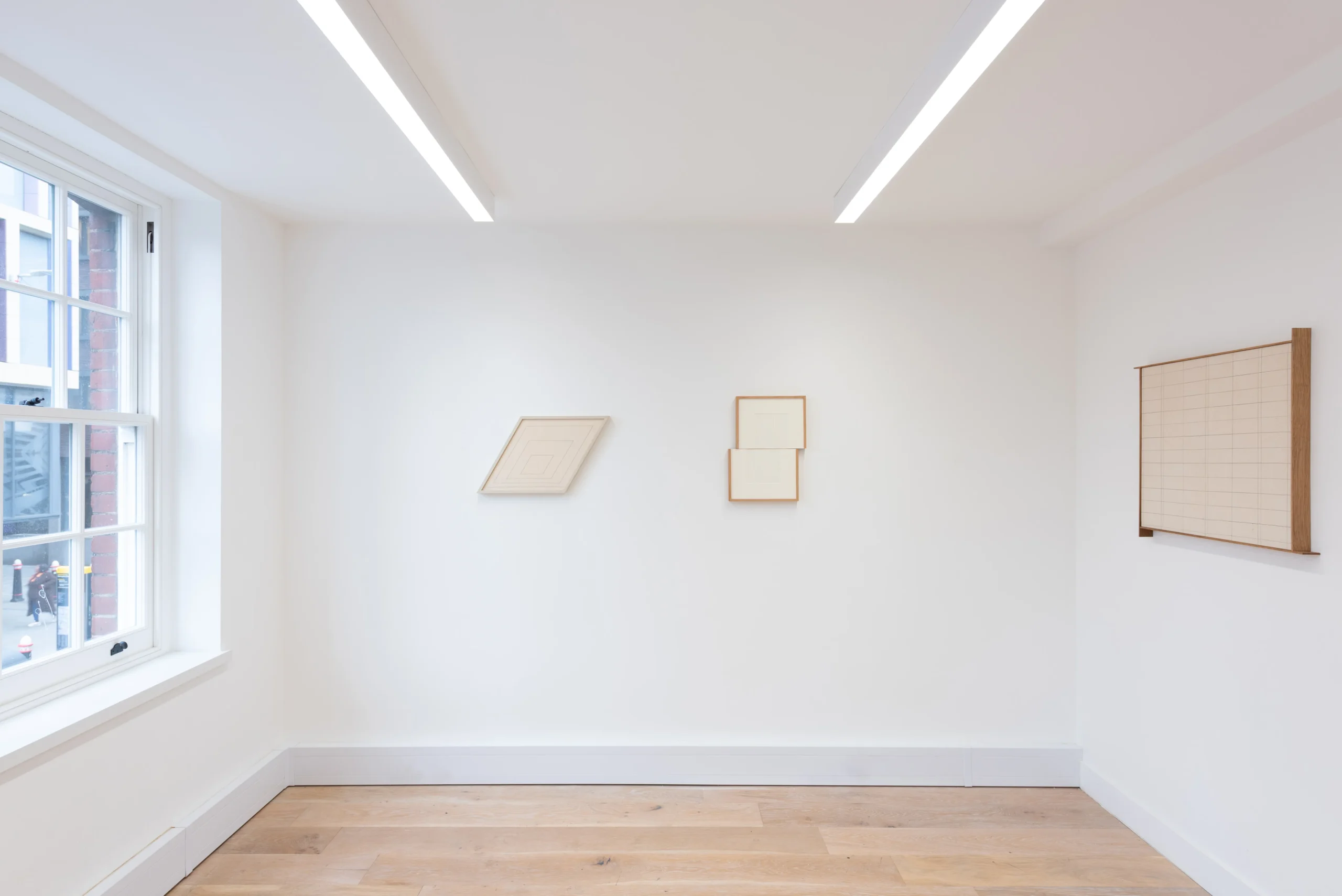
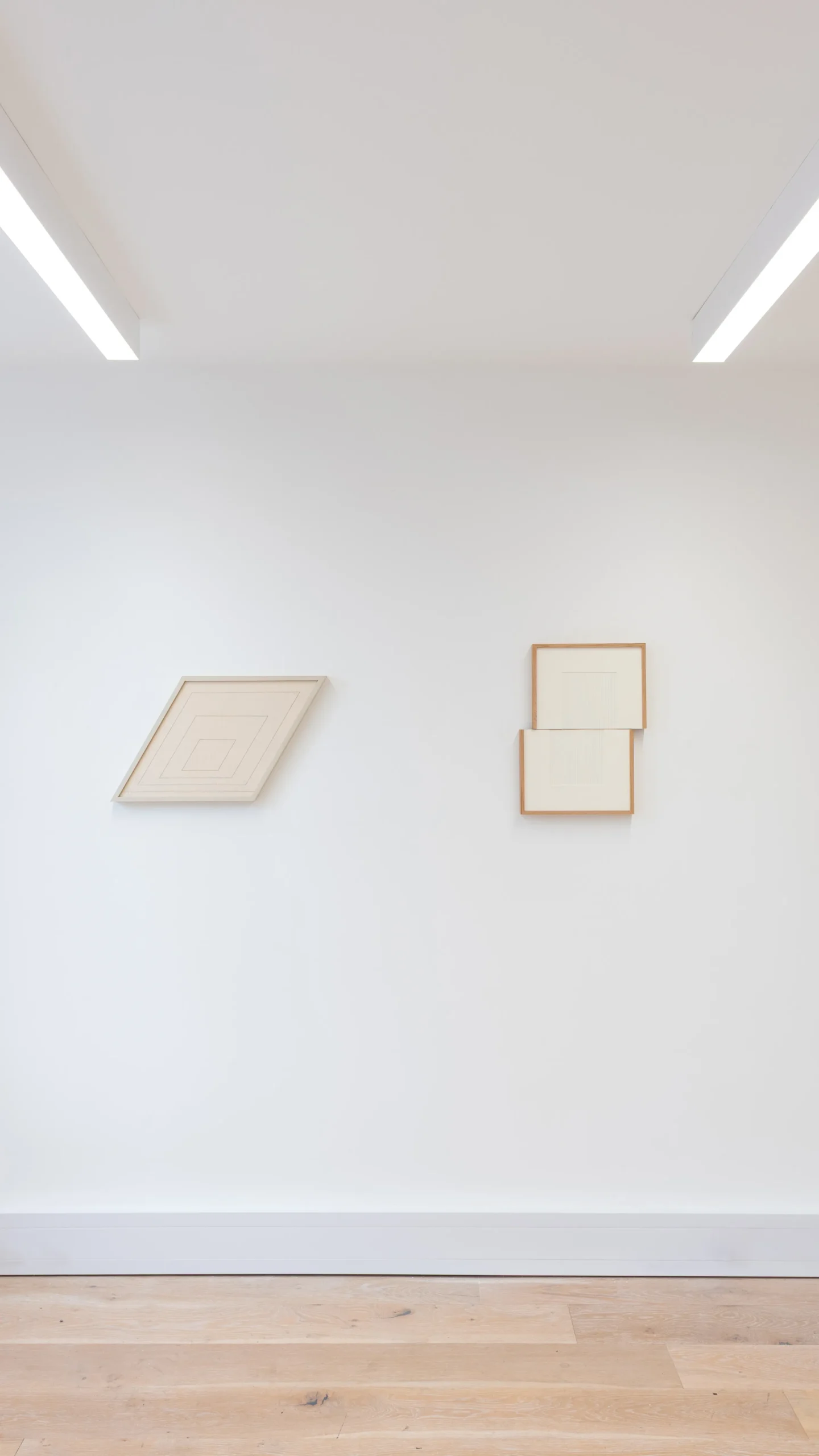
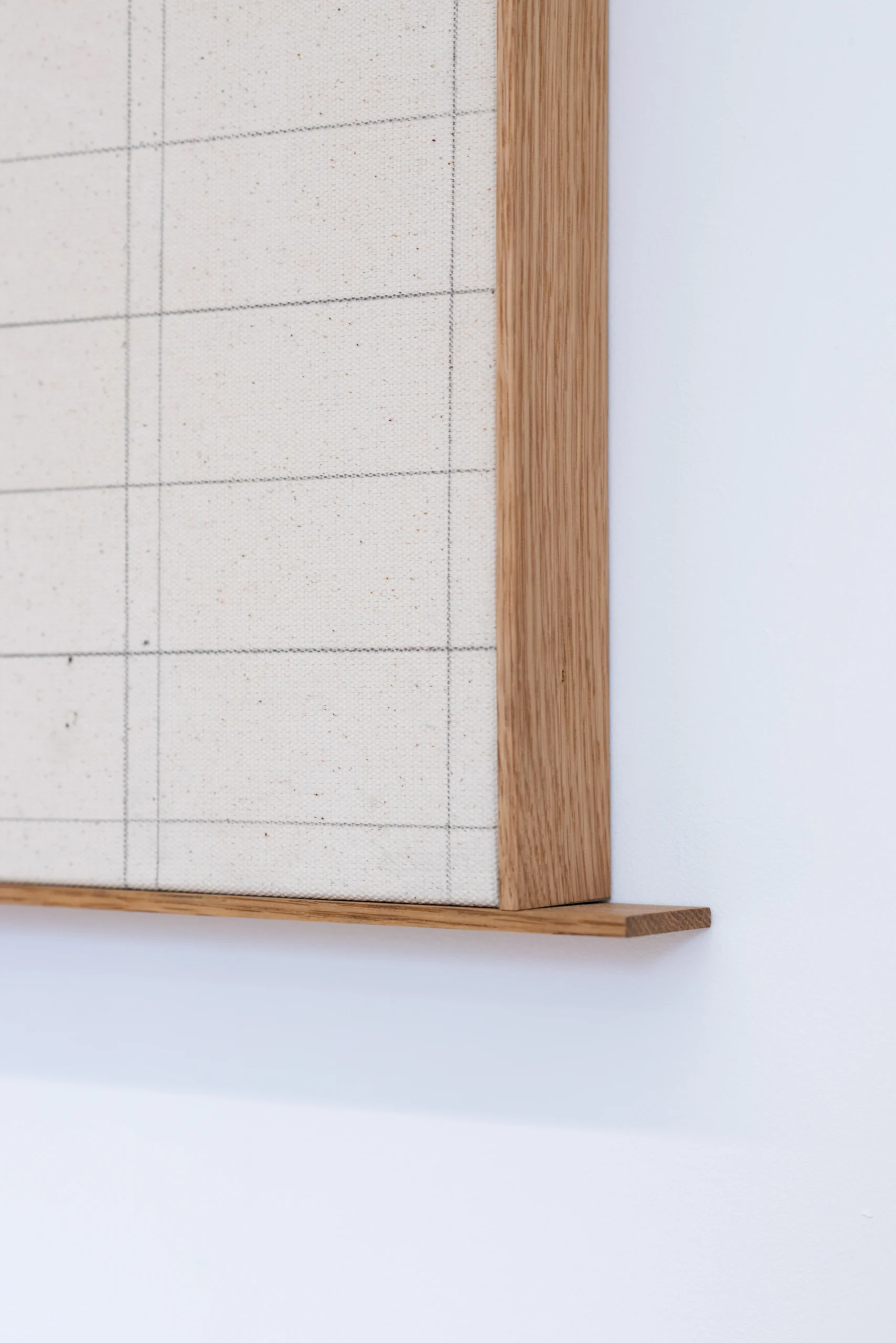
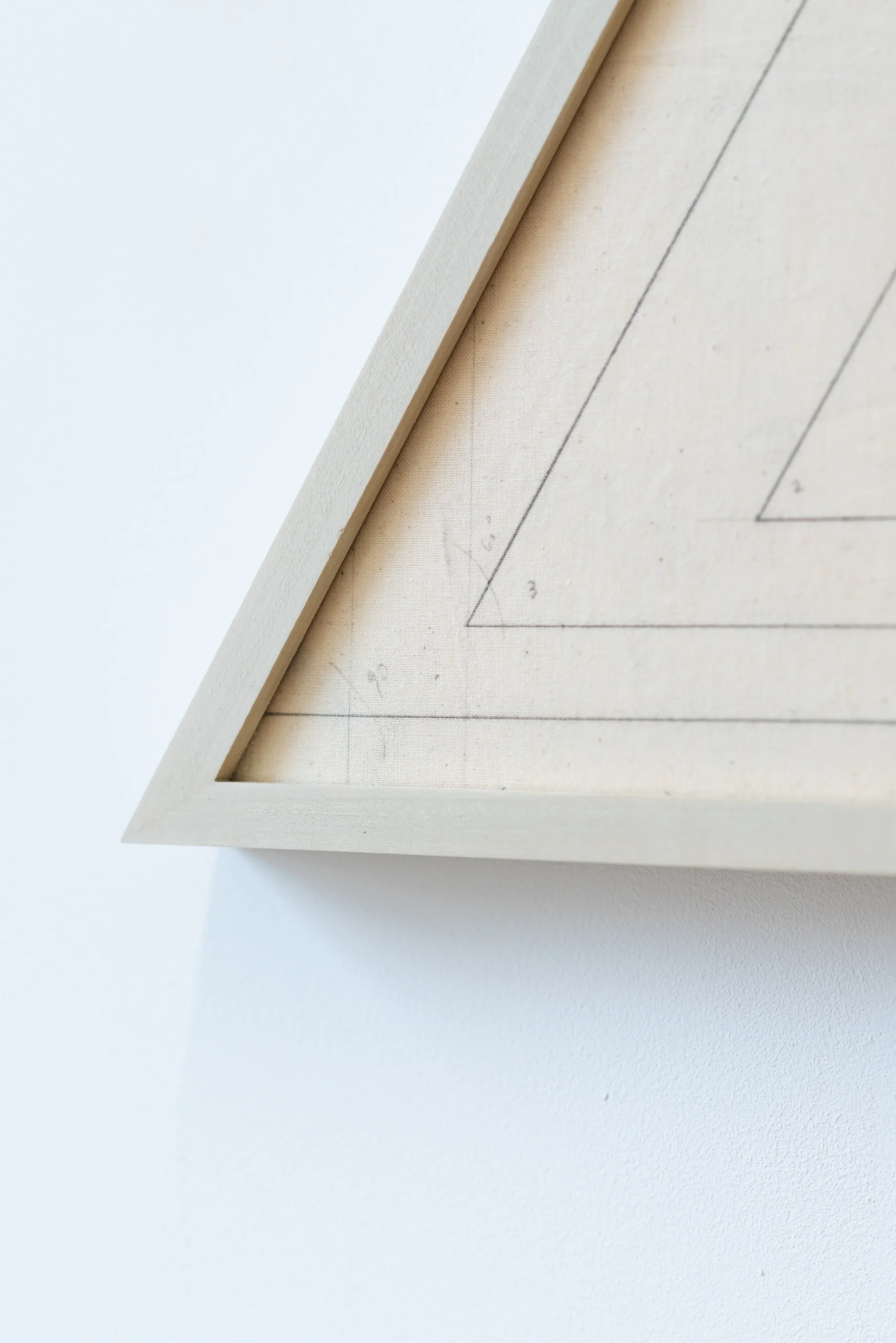
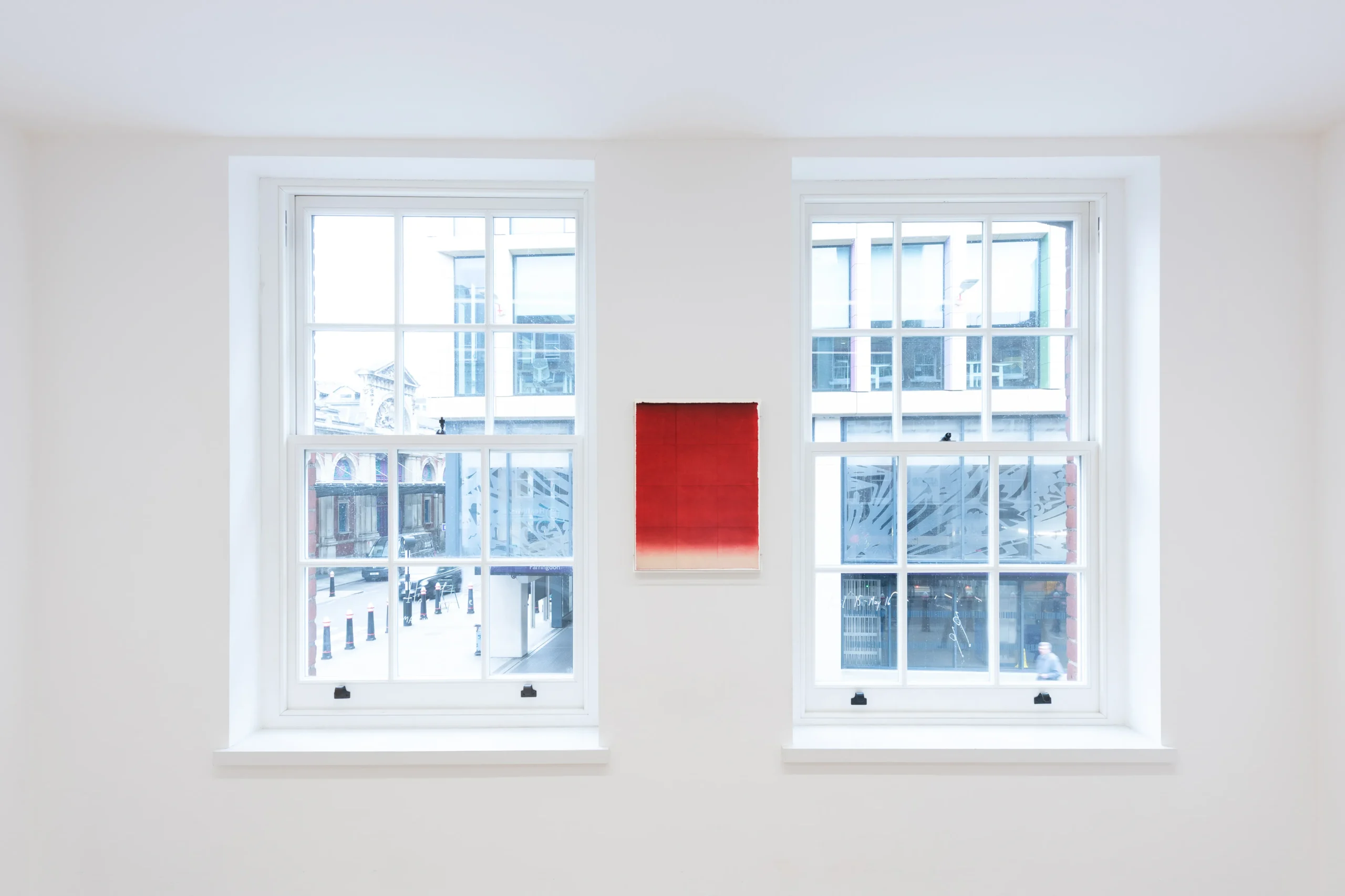
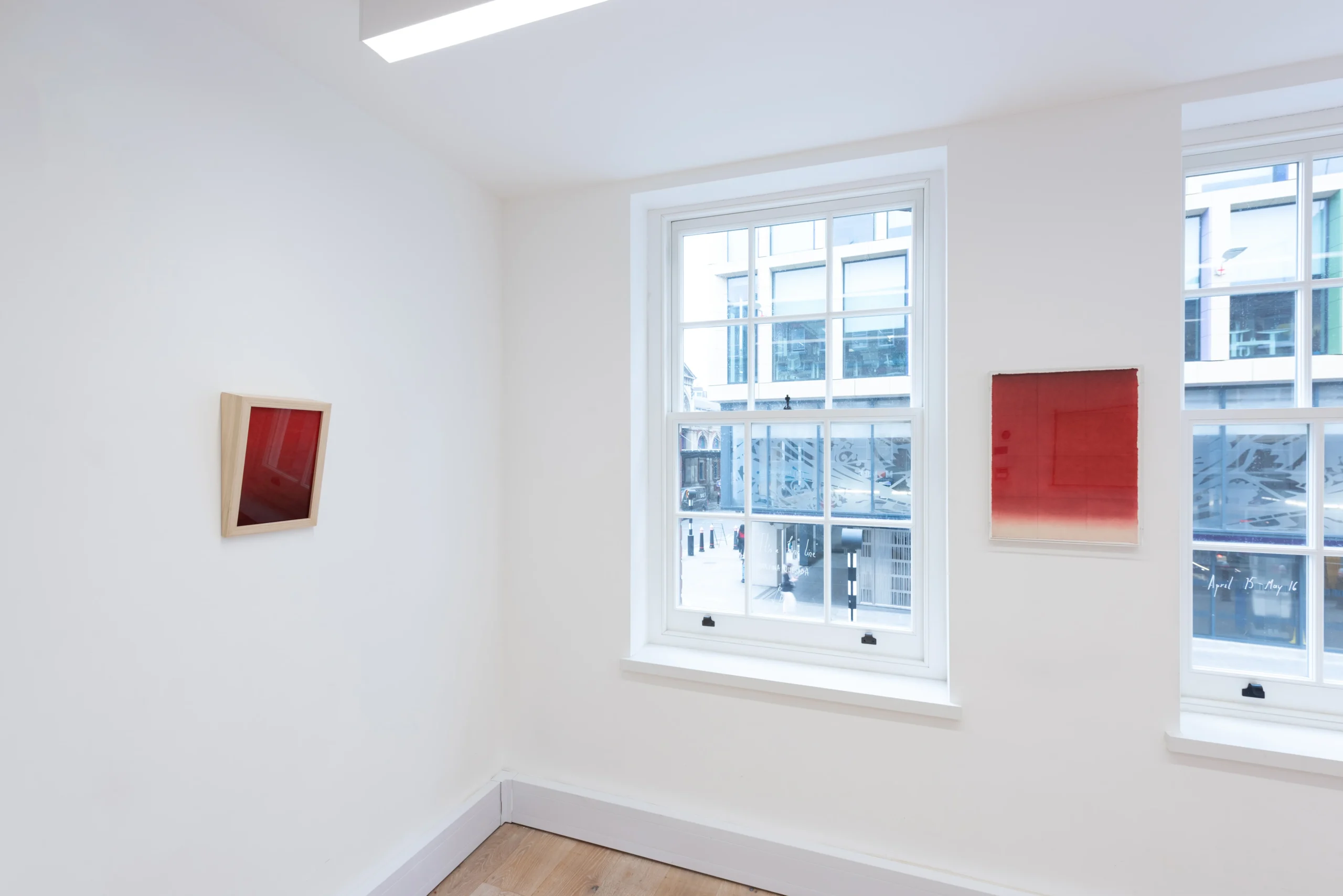
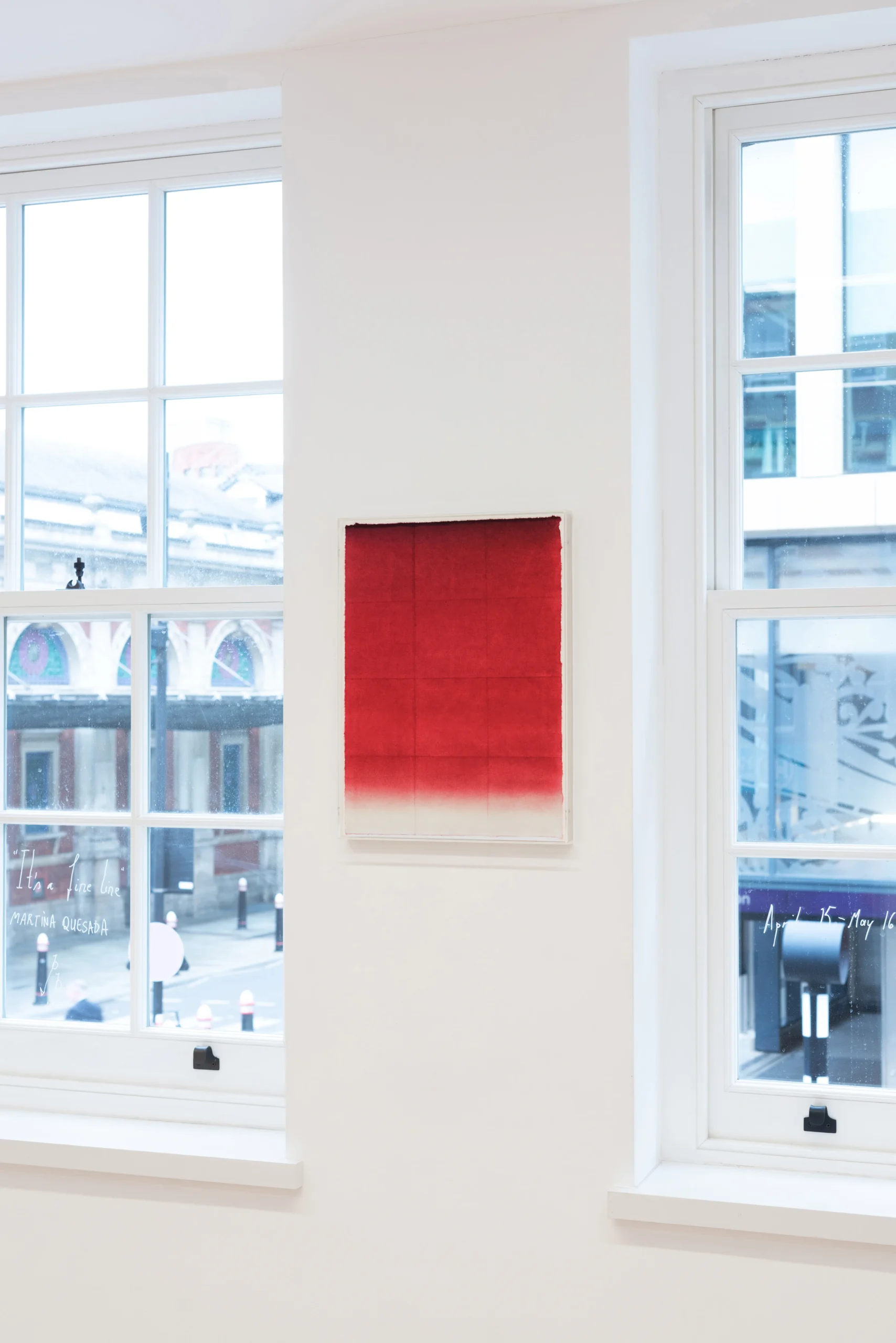
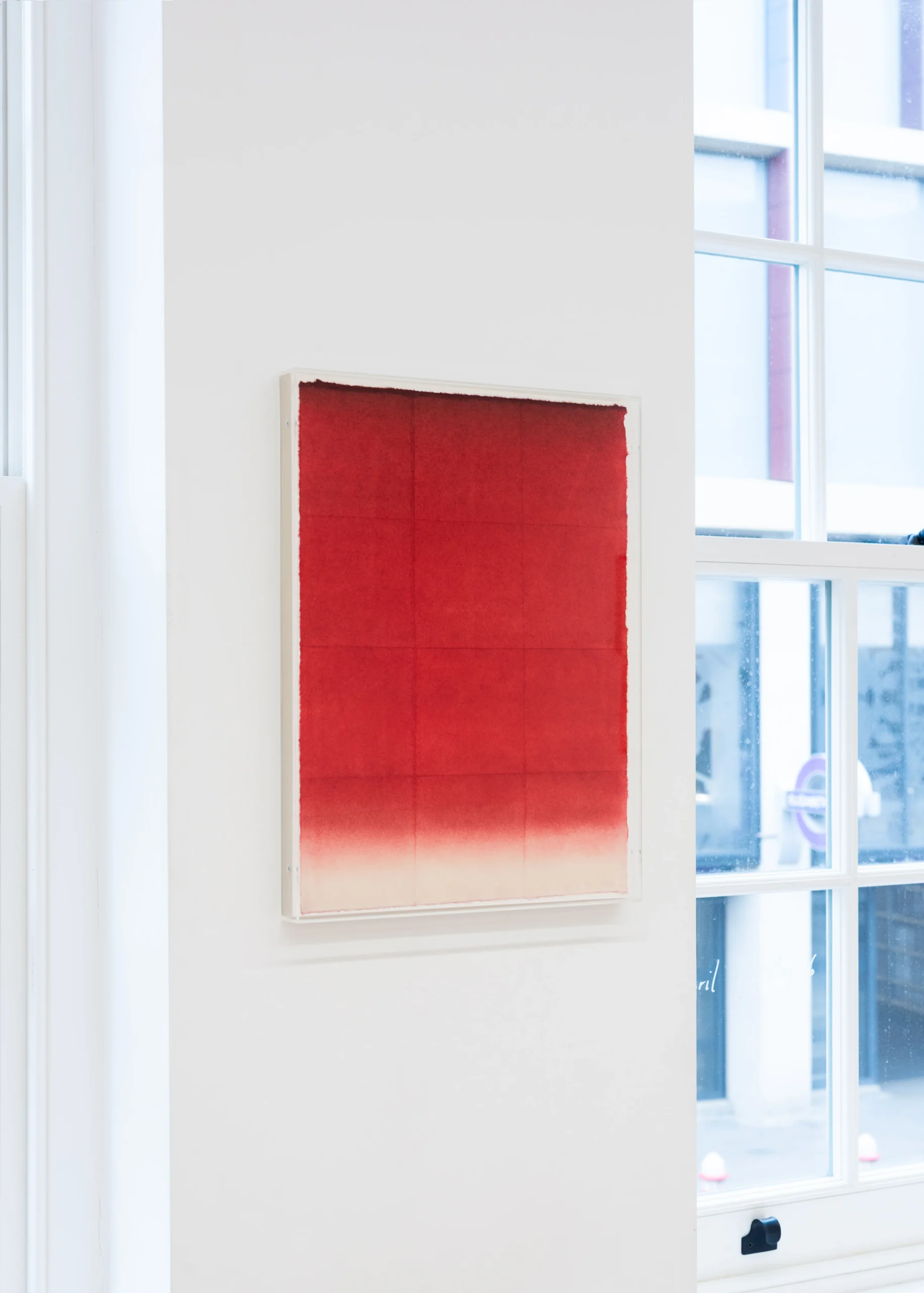
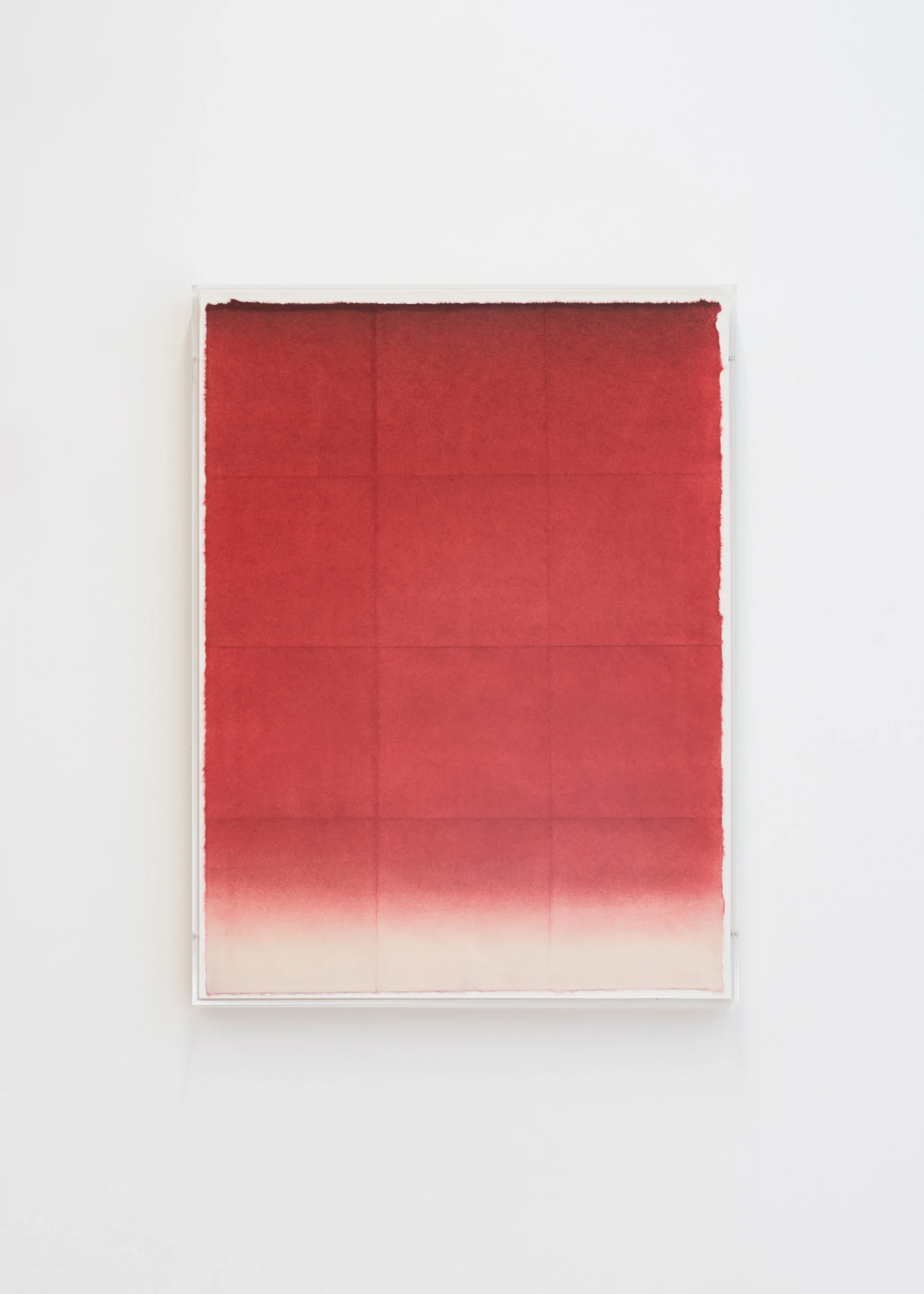
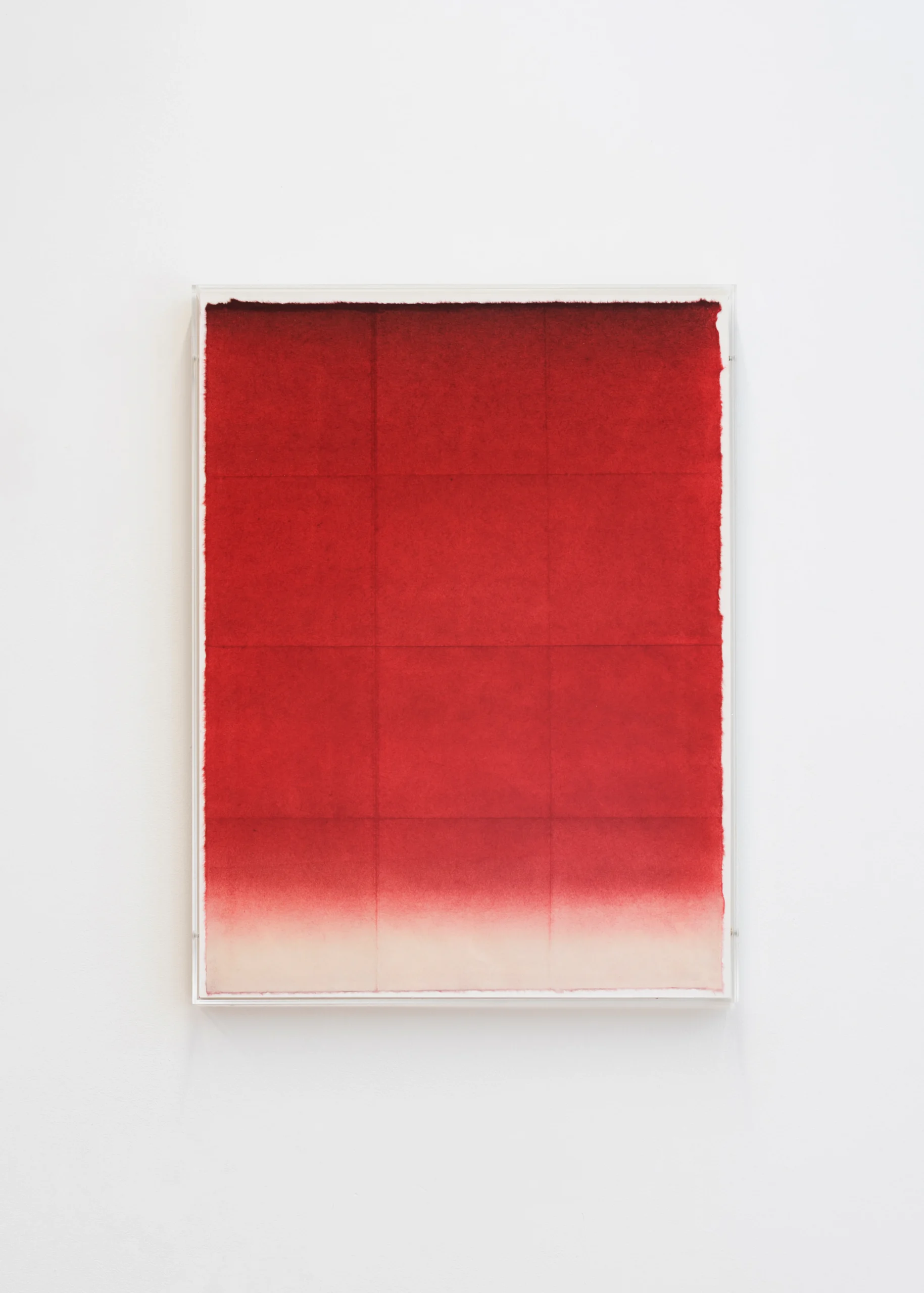
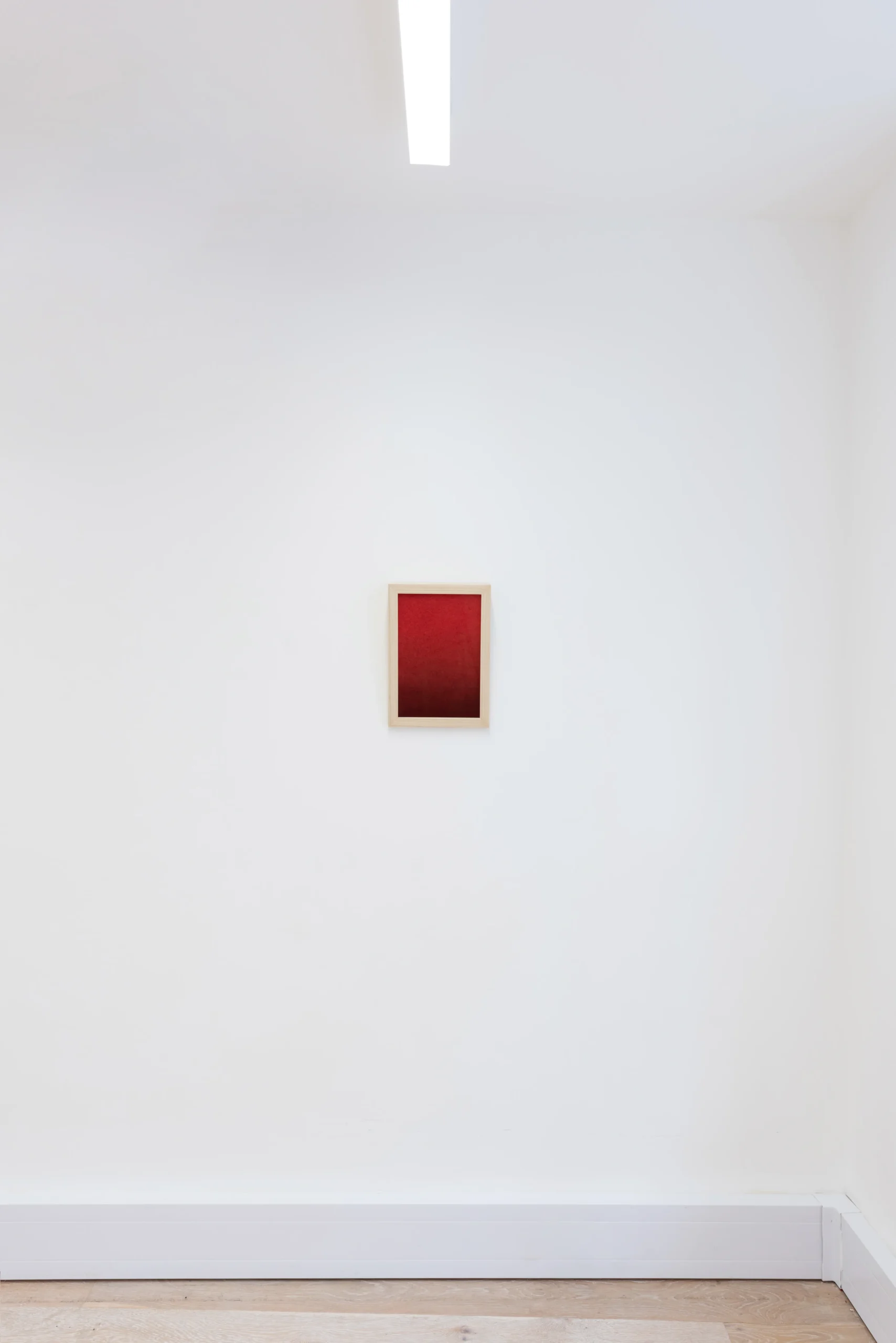
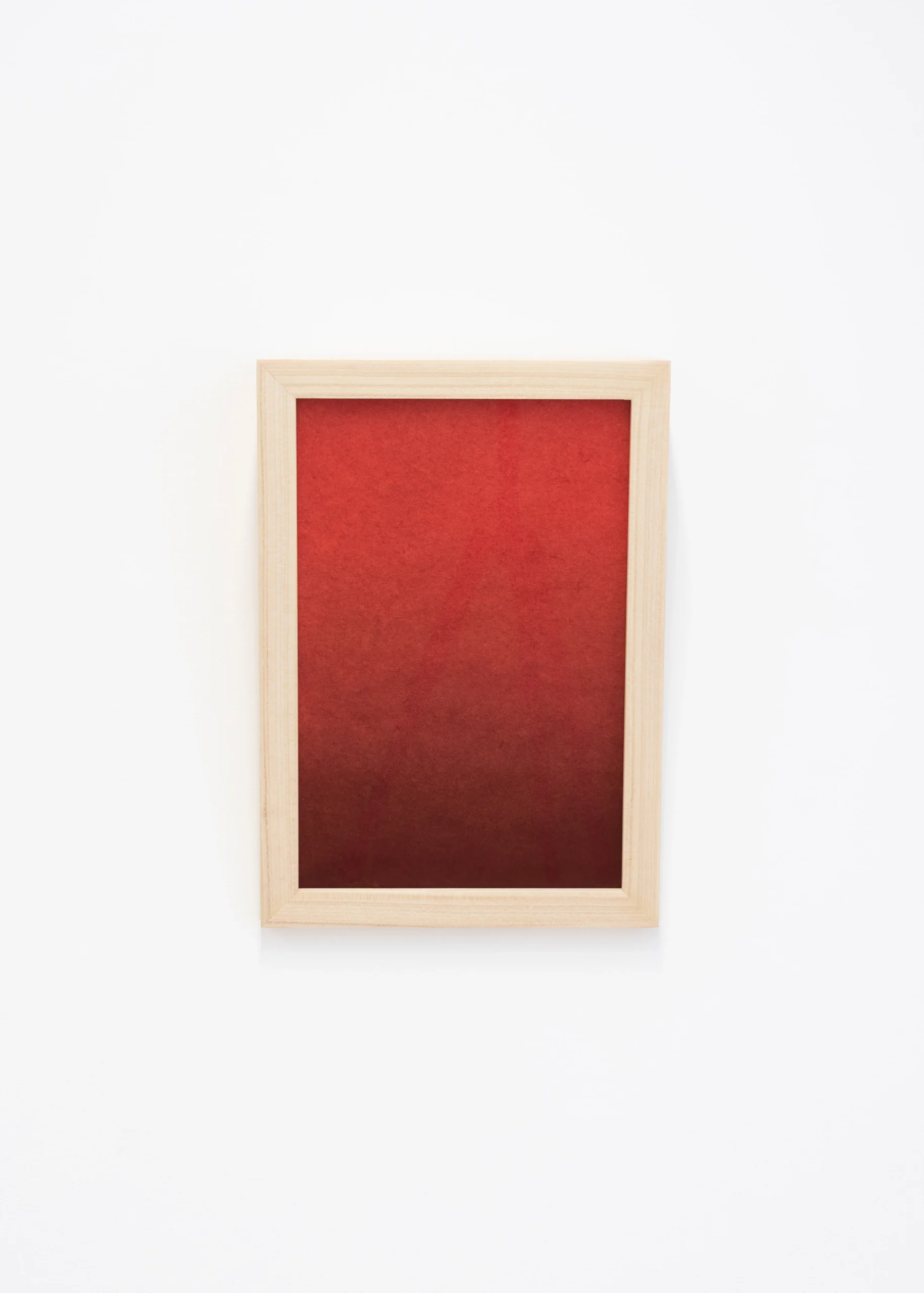
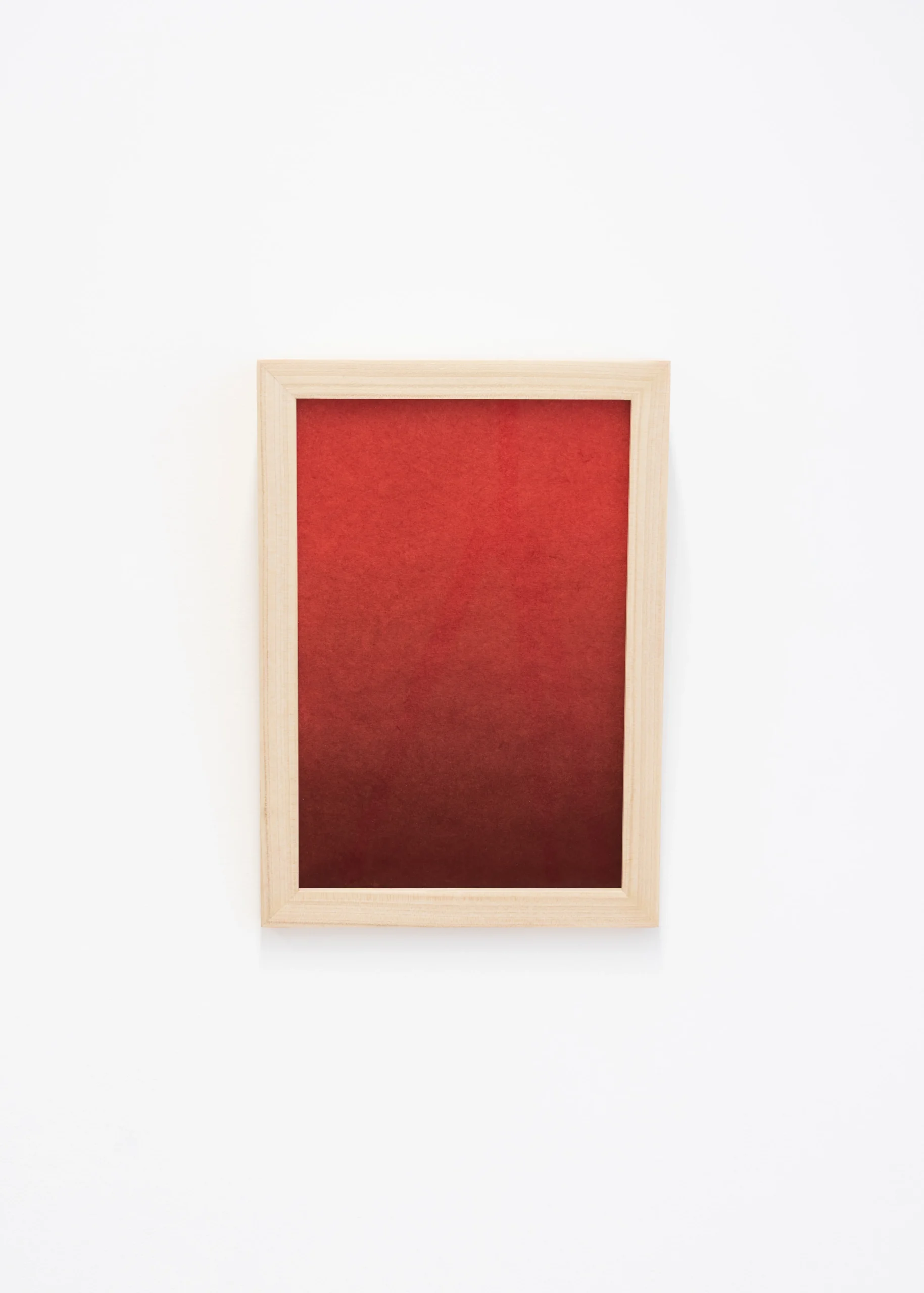
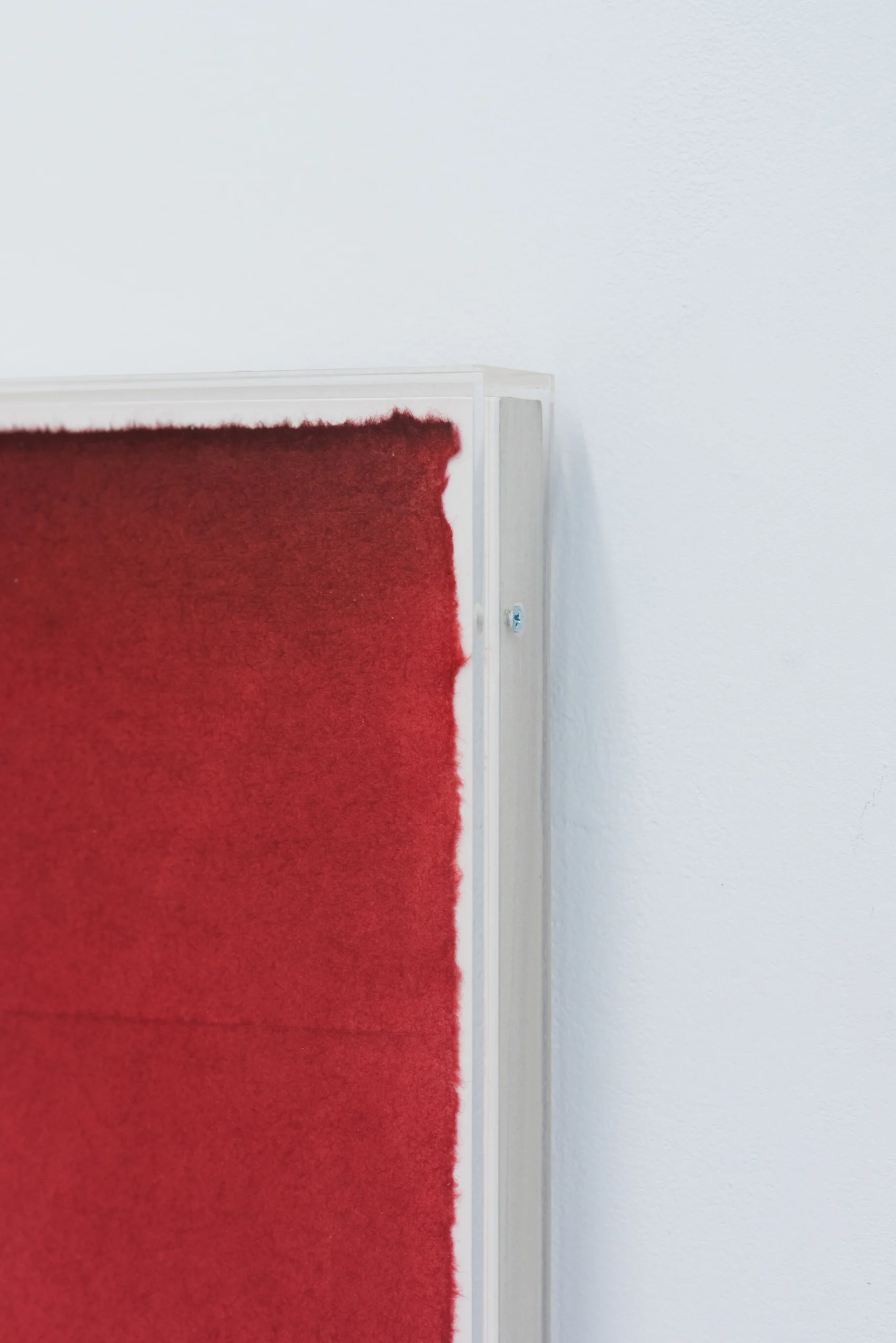
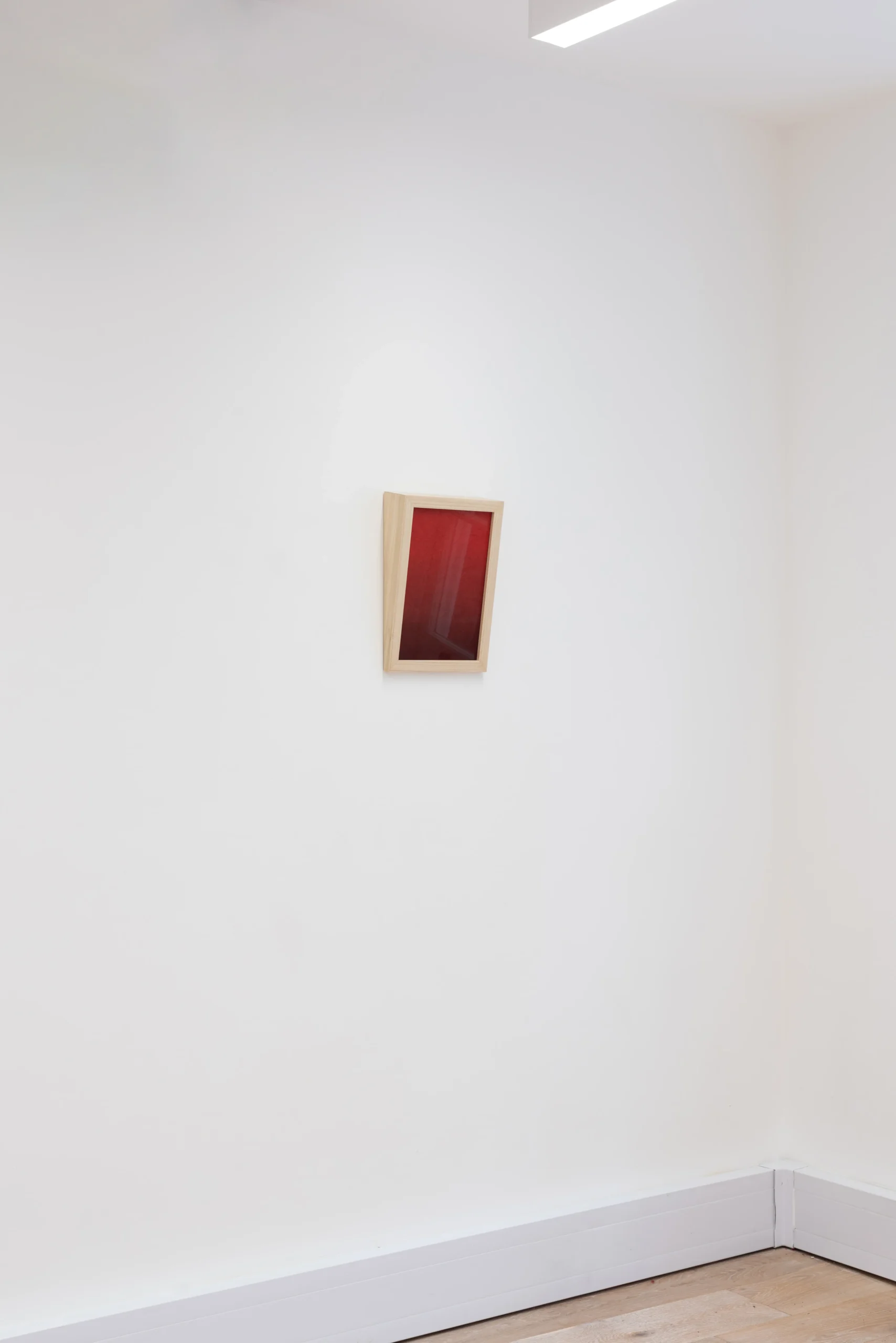
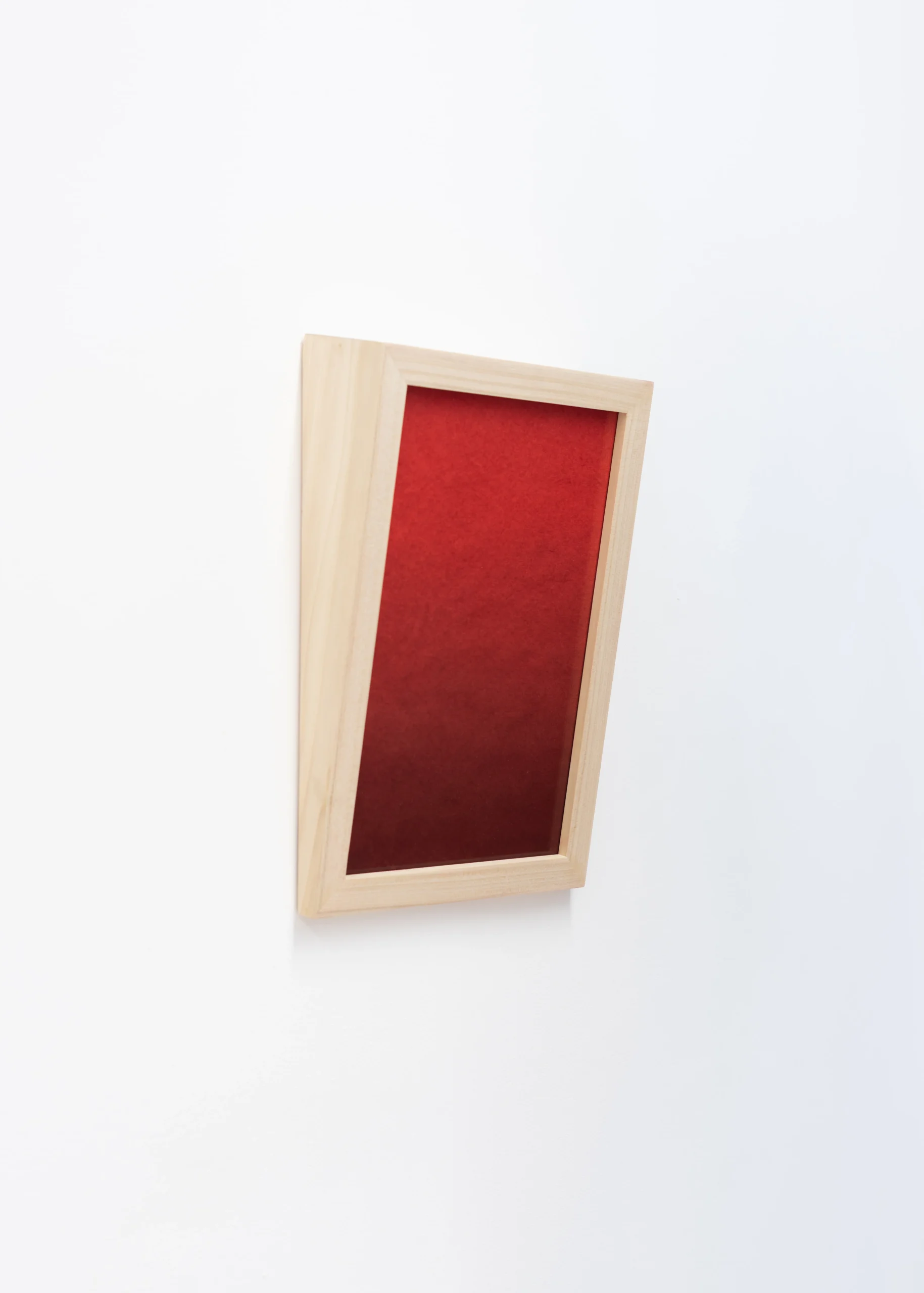
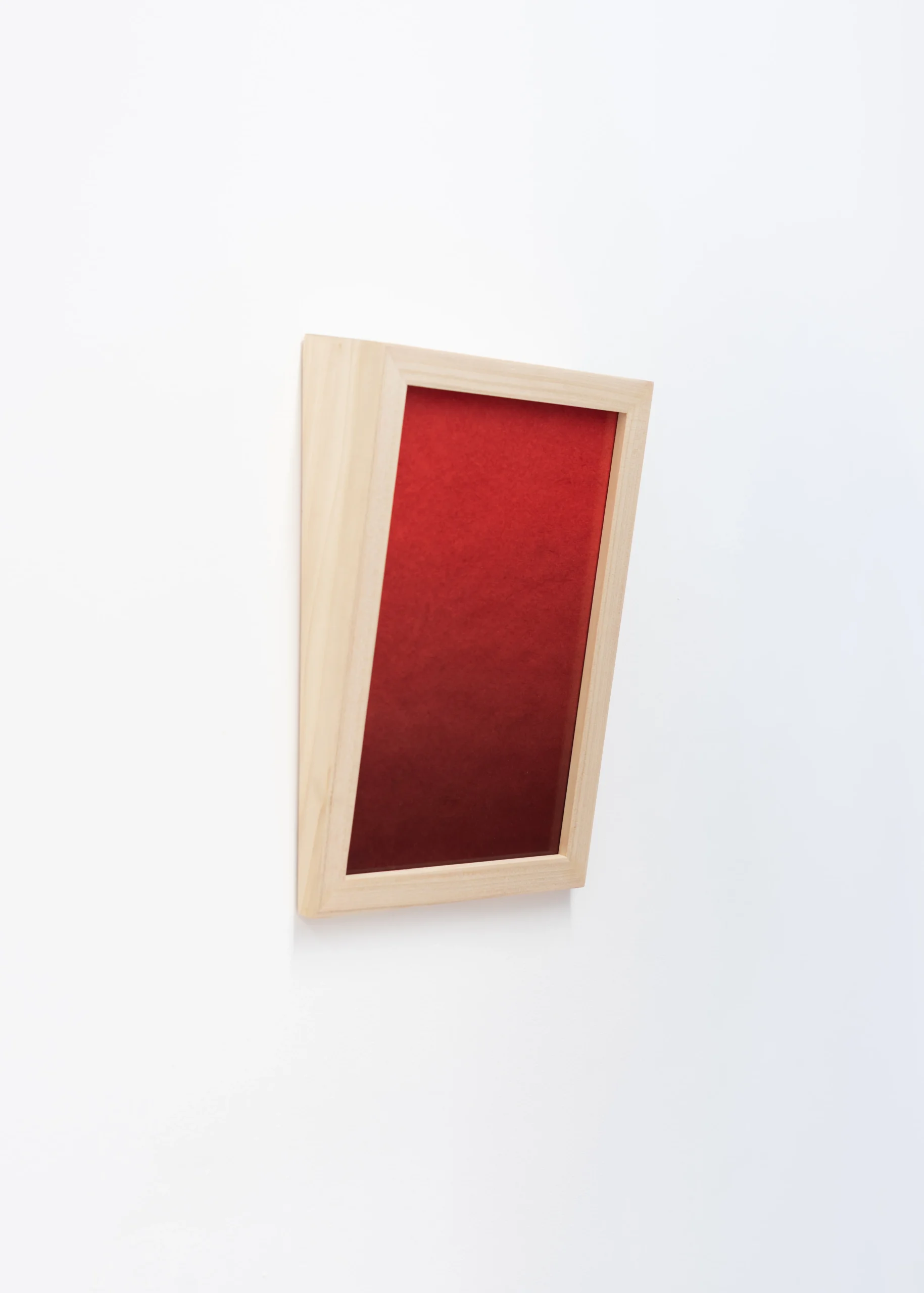
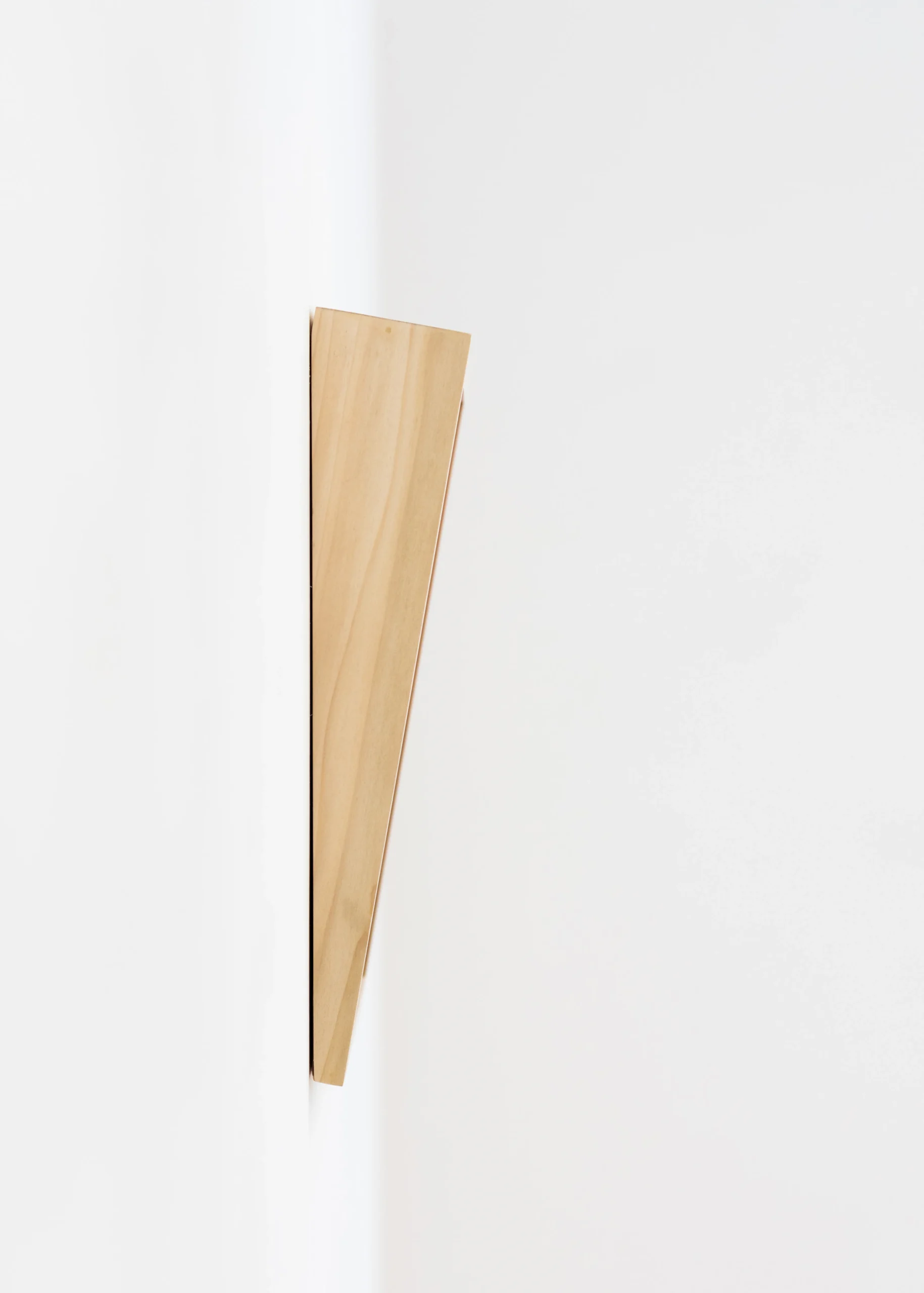
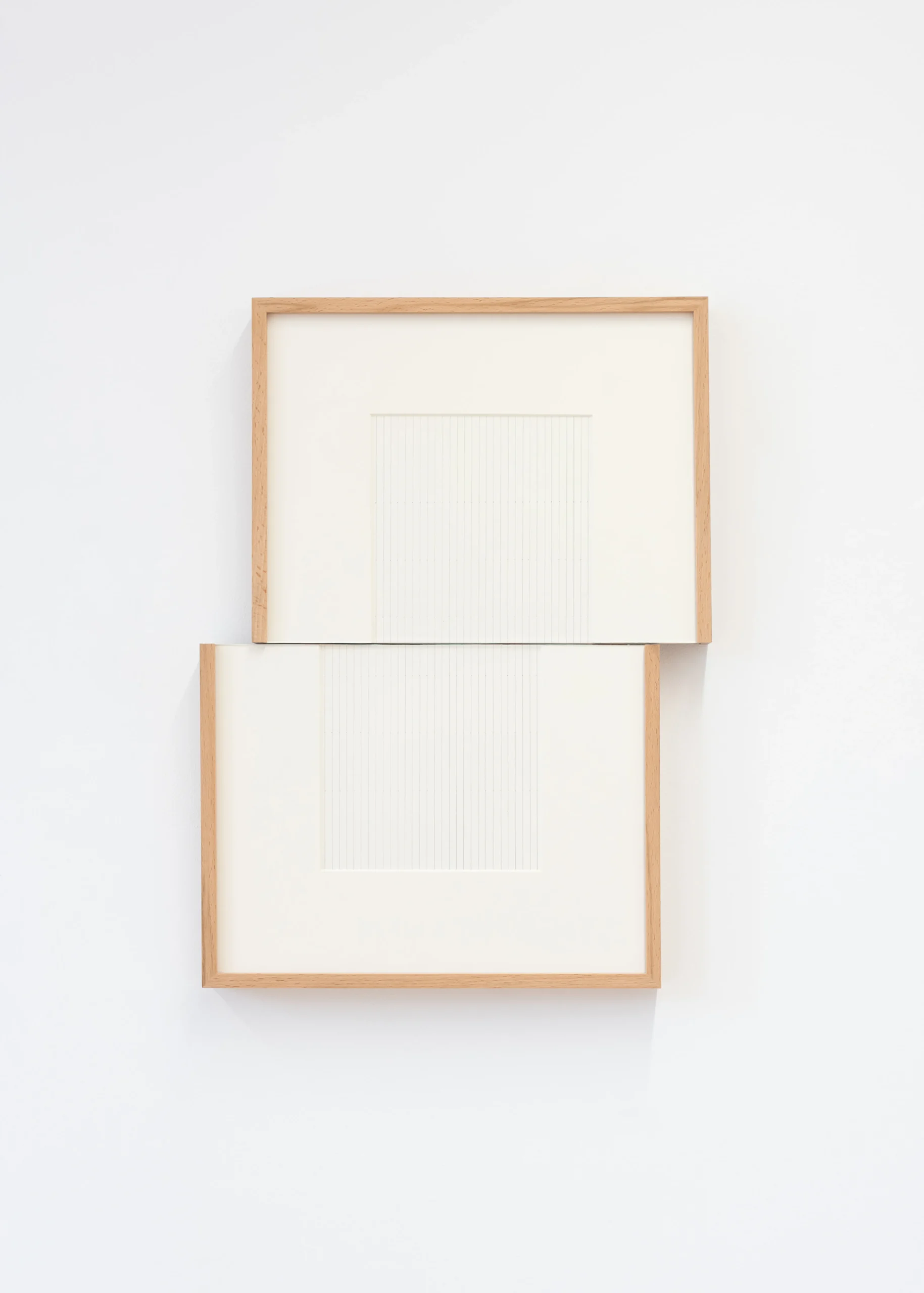
Across the works presented in this exhibition, structures appear both asserted and undone. Grids and diagrams are visibly interrupted as their internal logic gives way to uncertainty. In contrast, a dense, unapologetic red emerges as a counterforce: materially present, insistent, and irreducible. This pigment-based red resists containment, as though it might slip beyond the surface that, like a sand clock, might drop the pigments out of its shell. The central piece in the show reveals subtle folds and disruptions that hover between the deliberate and the accidental; gestures that may equally evoke a constructed form or an intimate trace, like a folded letter mistaken for an emotional outpouring.
Marking her third solo exhibition in the UK and her second with the gallery, Quesada’s presentation offers a concise yet incisive engagement with forms that have long been accepted as stable. Her work approaches the inherited language of geometric abstraction not to reject it, but to reopen it, testing its limits and extending its possibilities. This trajectory continues in her forthcoming solo exhibition at MACBA, Buenos Aires, where scale will further amplify these investigations.
Hovering between precision and ambiguity, Quesada’s works occupy a space where order and disruption, intention and accident, structure and emotion, remain unresolved. As in life, where meaning is shaped through shared experiences, narratives, and rituals, the act of stepping slightly outside these frameworks does not result in disorientation, but in transformation. What emerges is not a loss of structure, but its reinvention.