


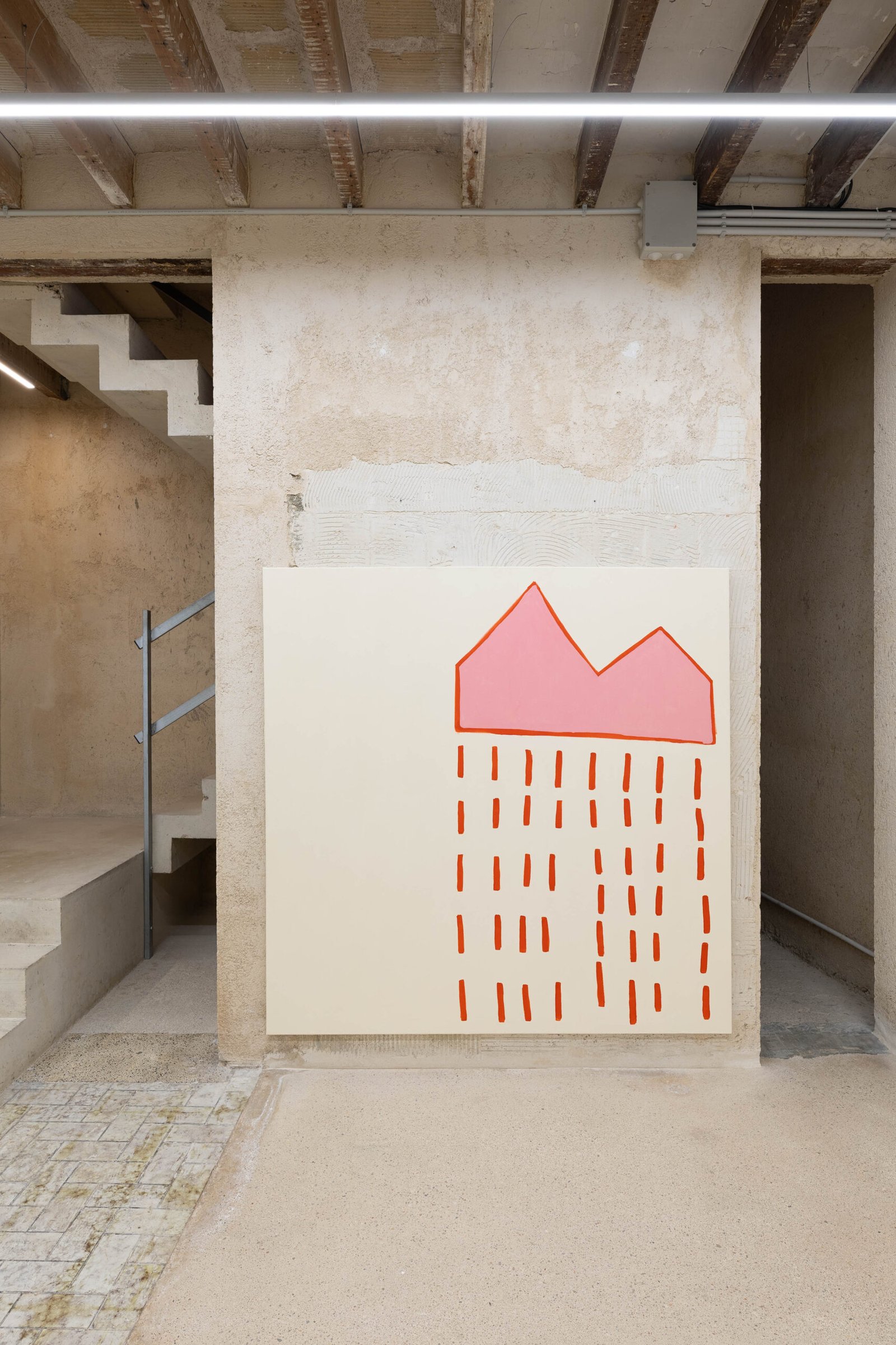
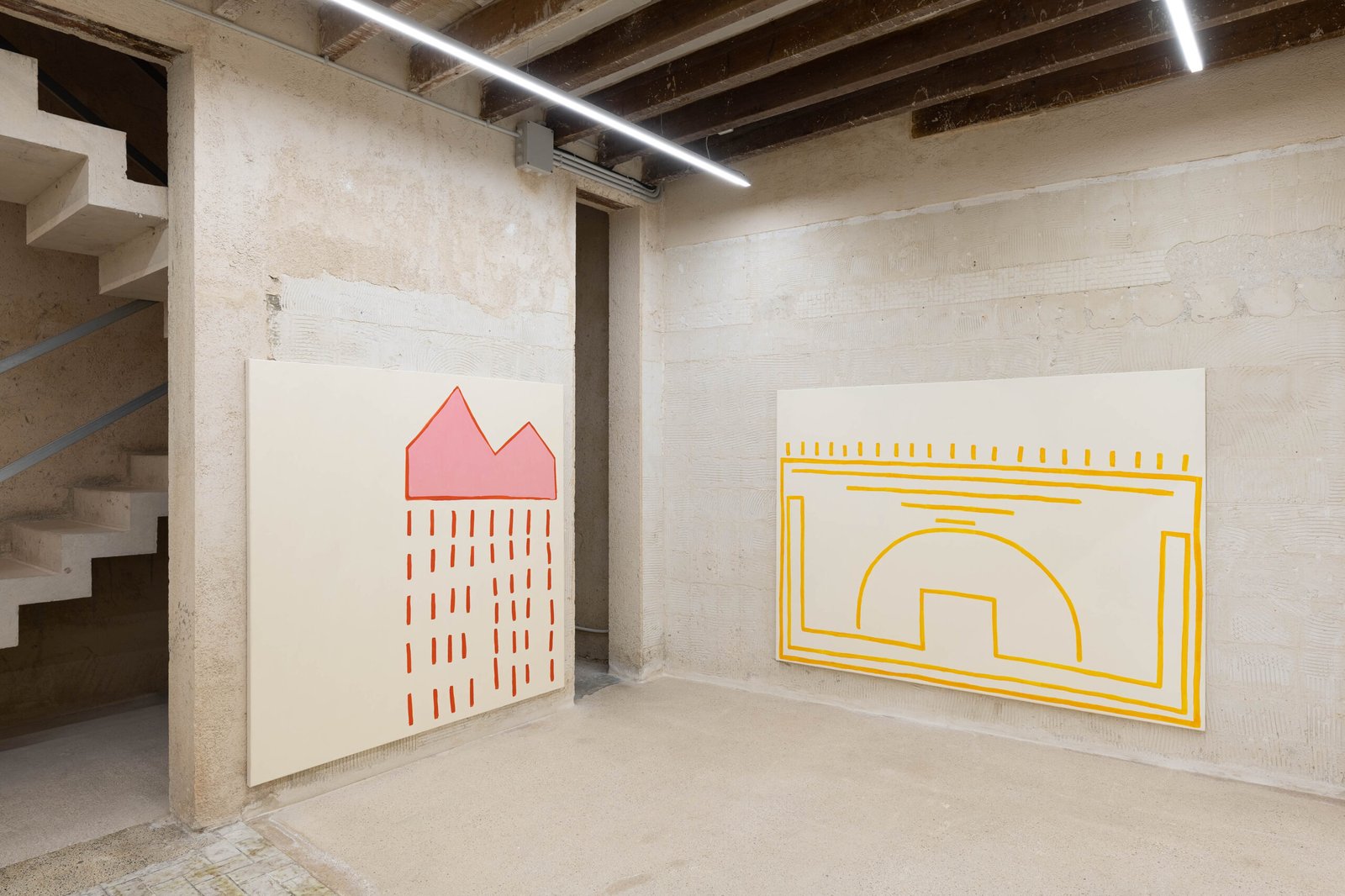
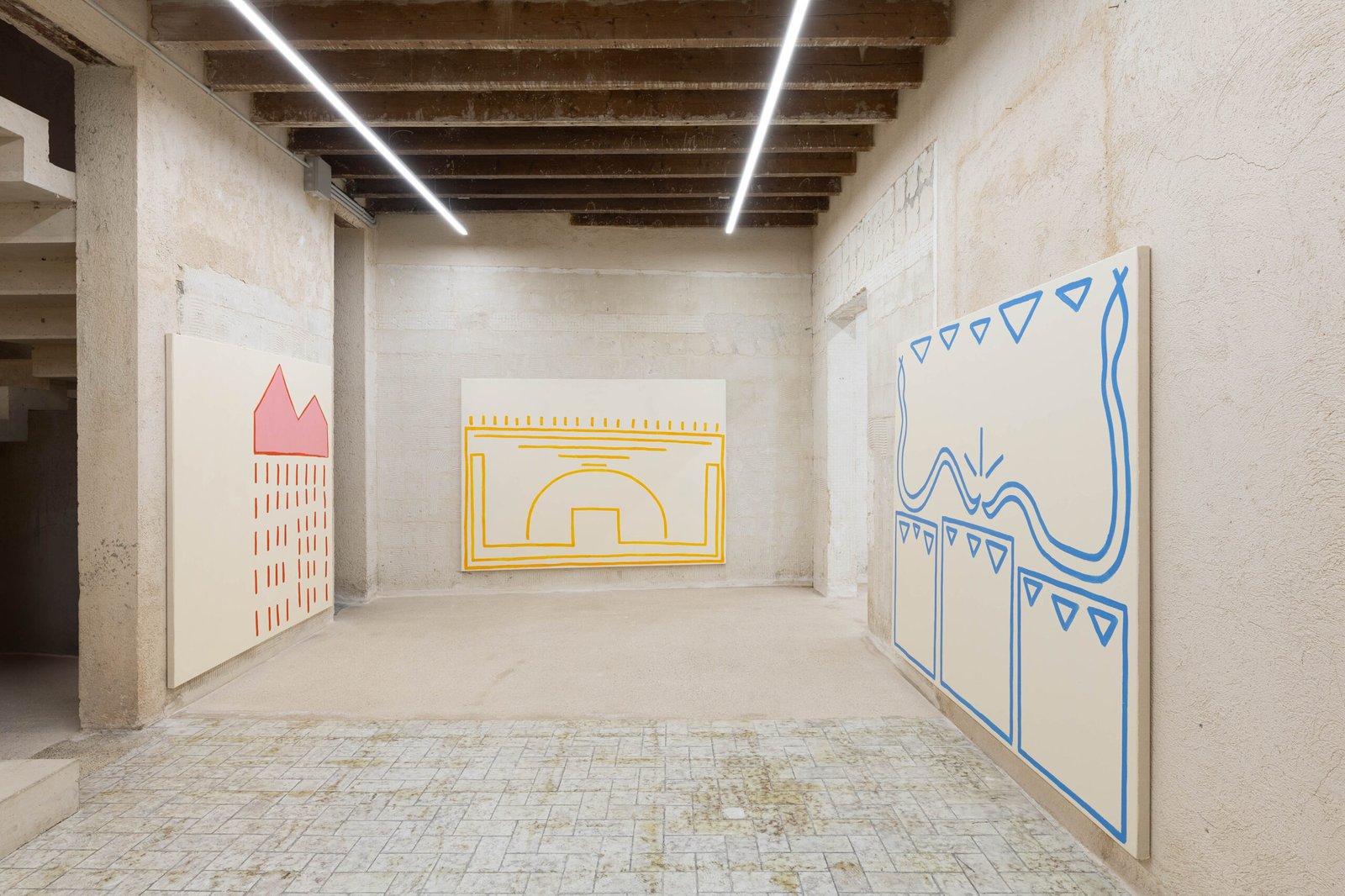
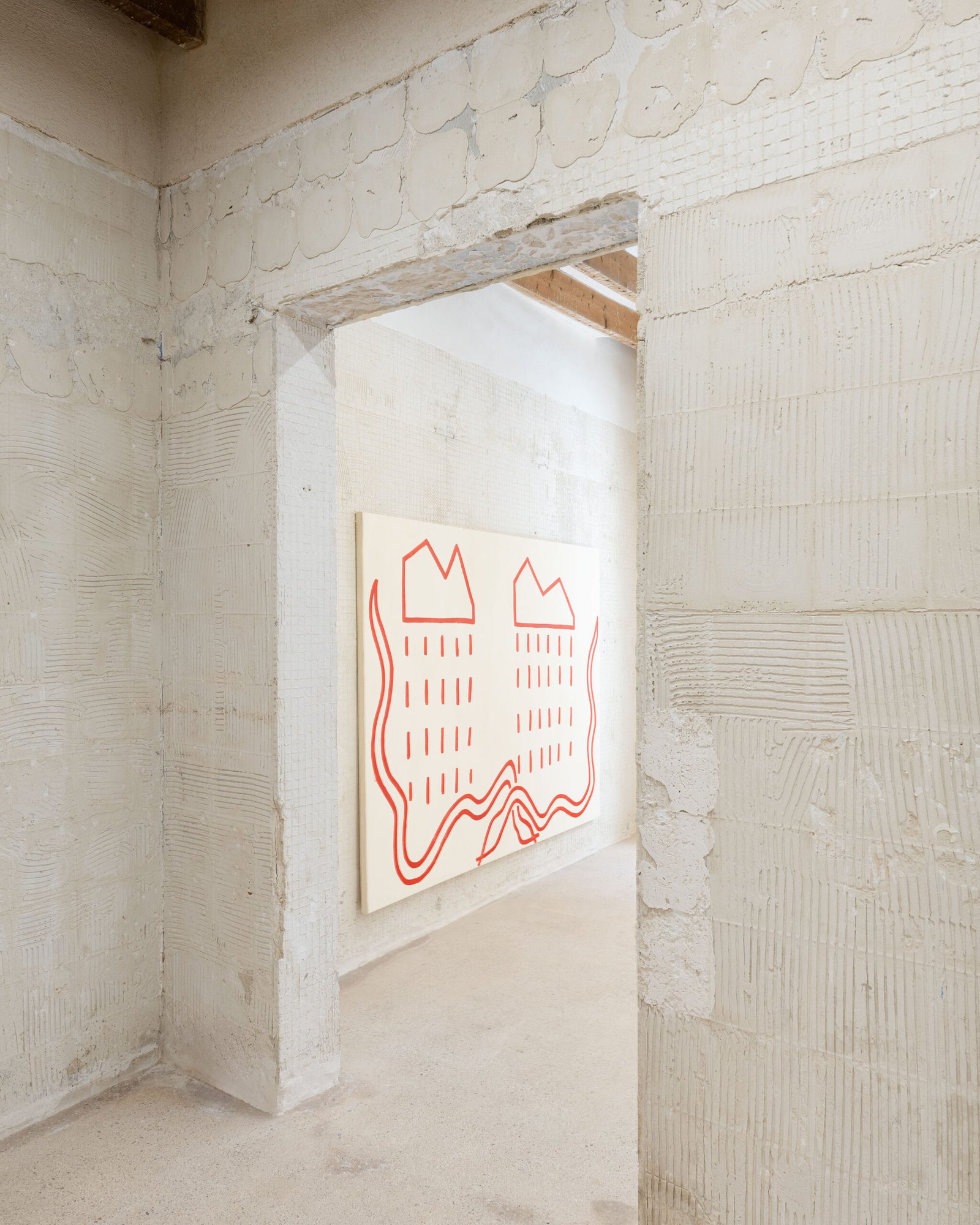
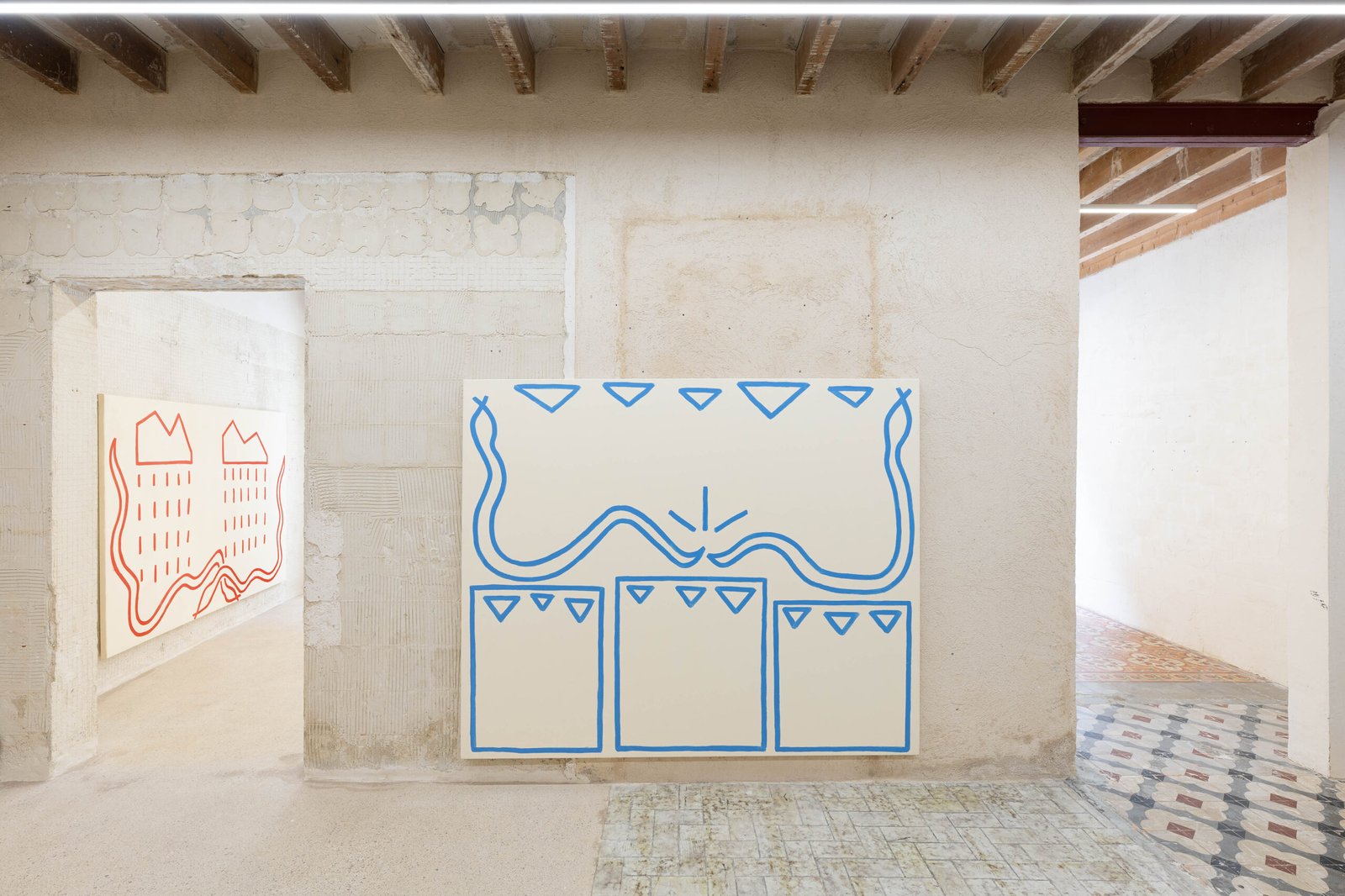
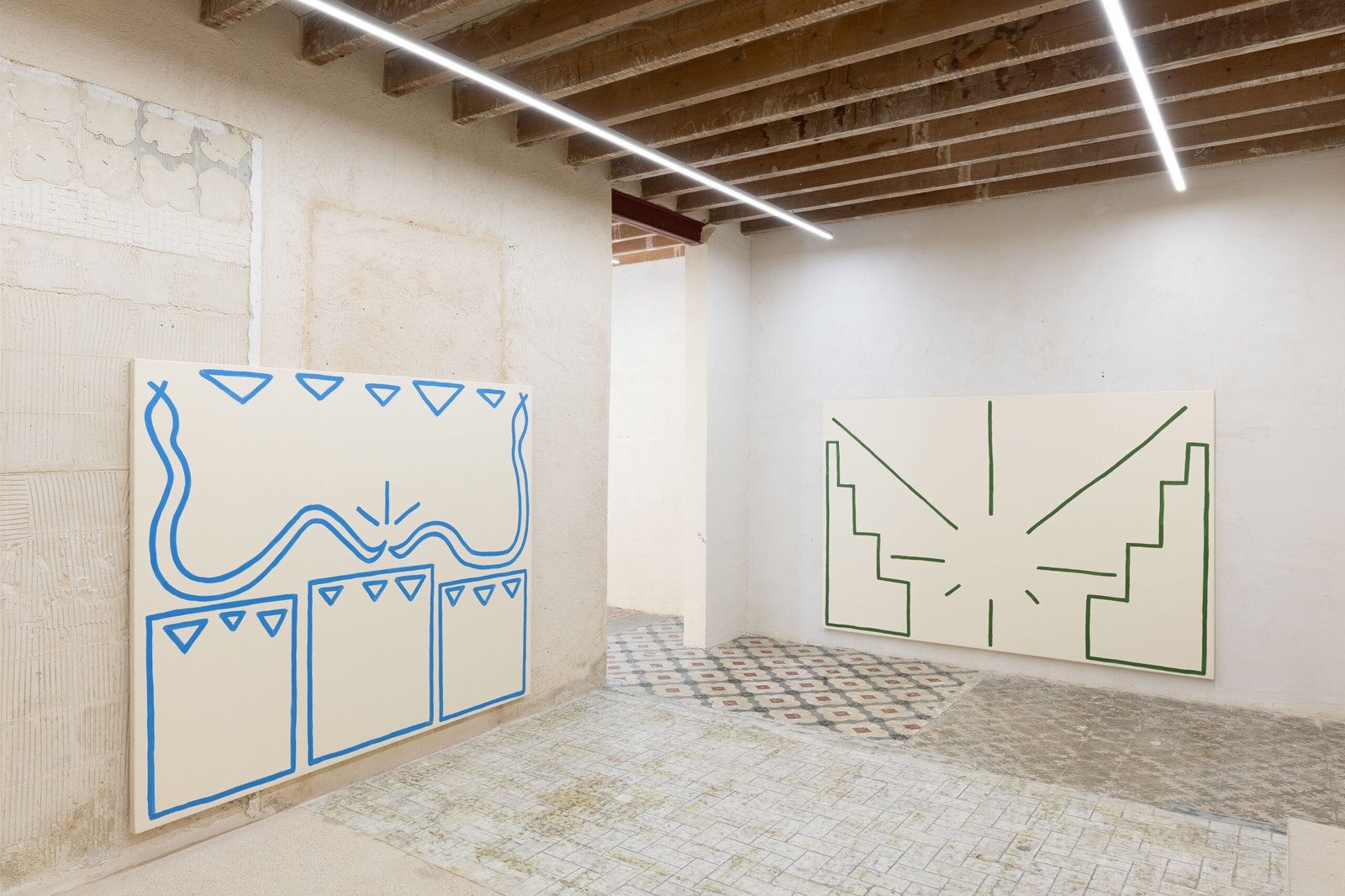
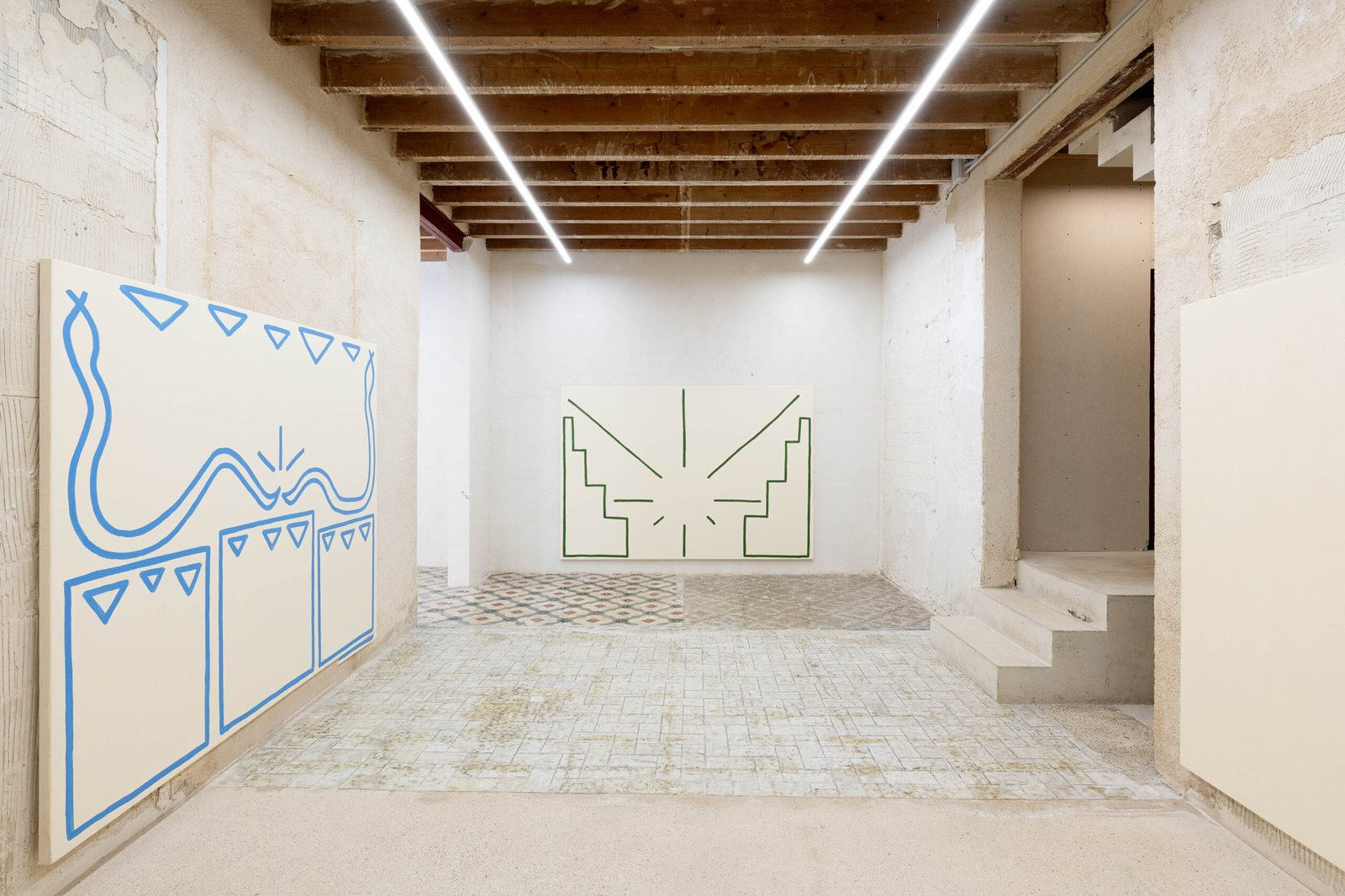
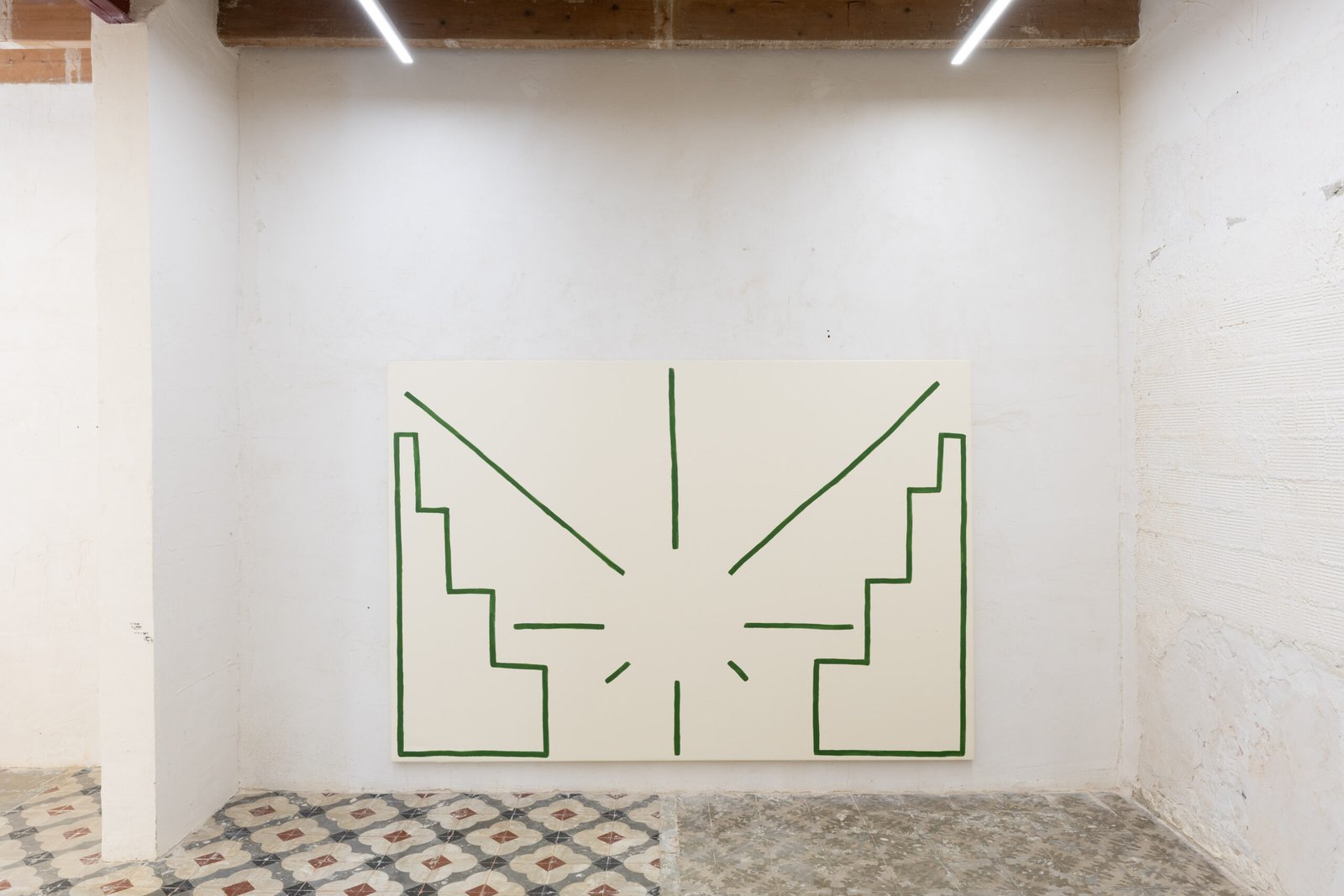
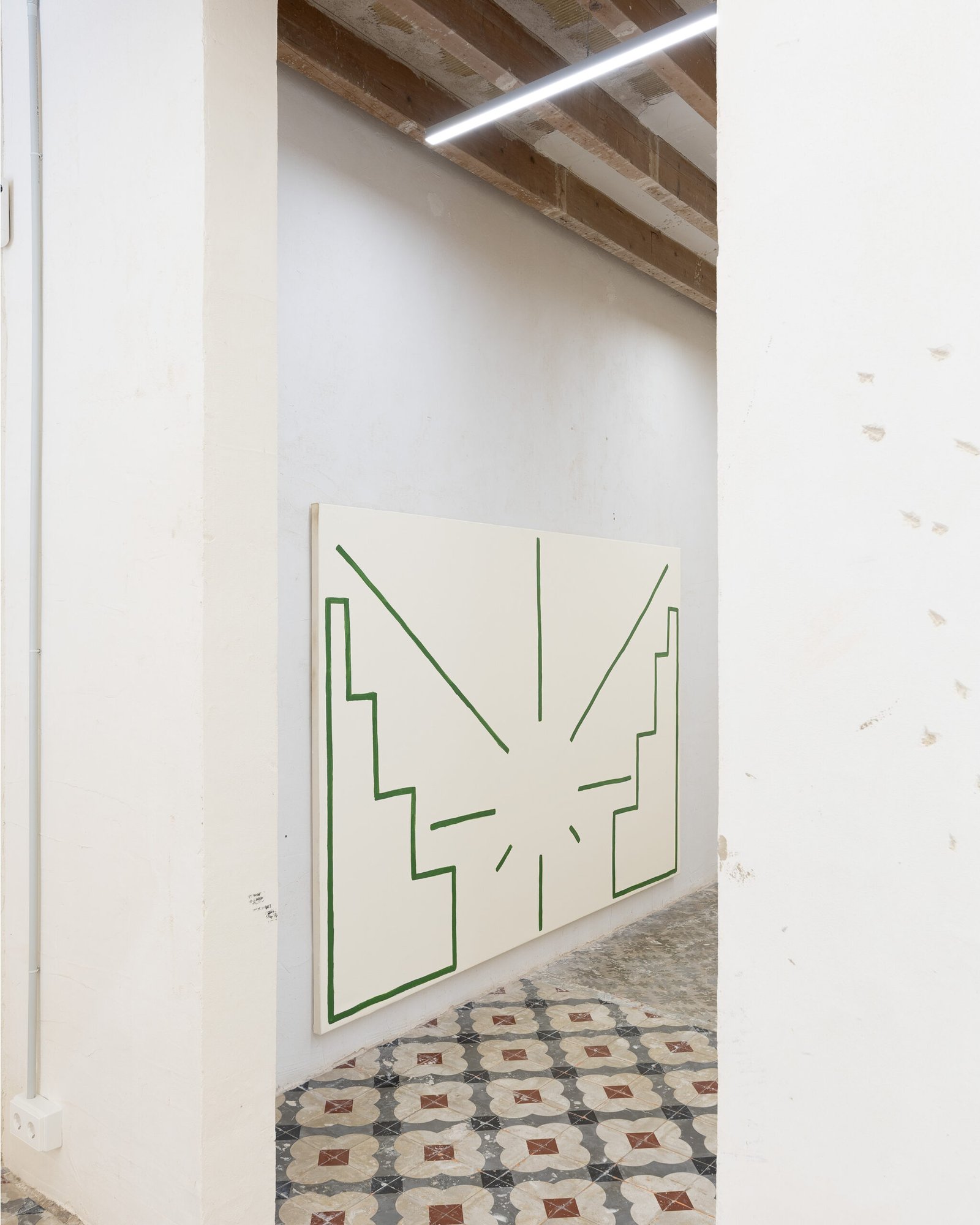
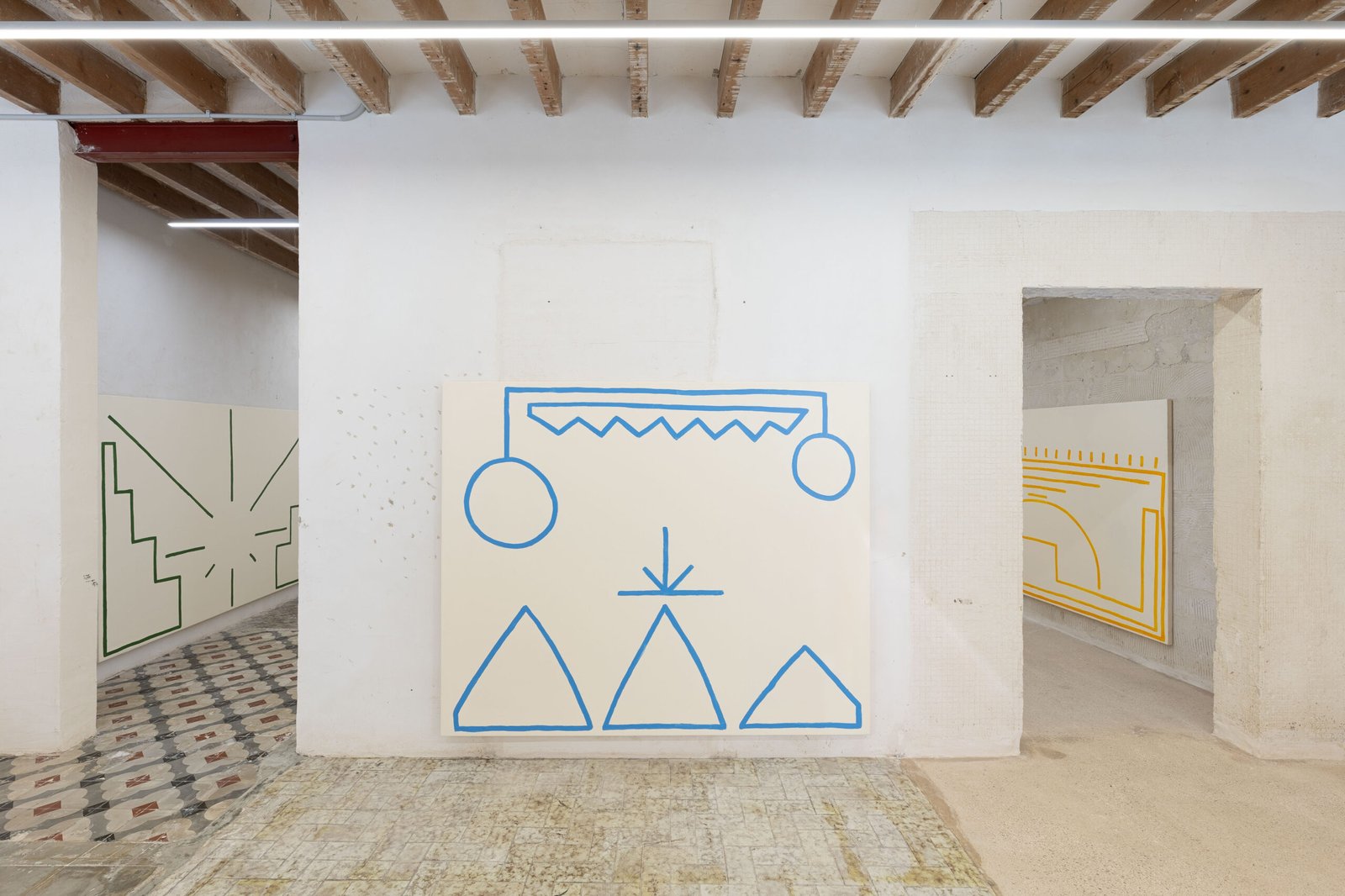
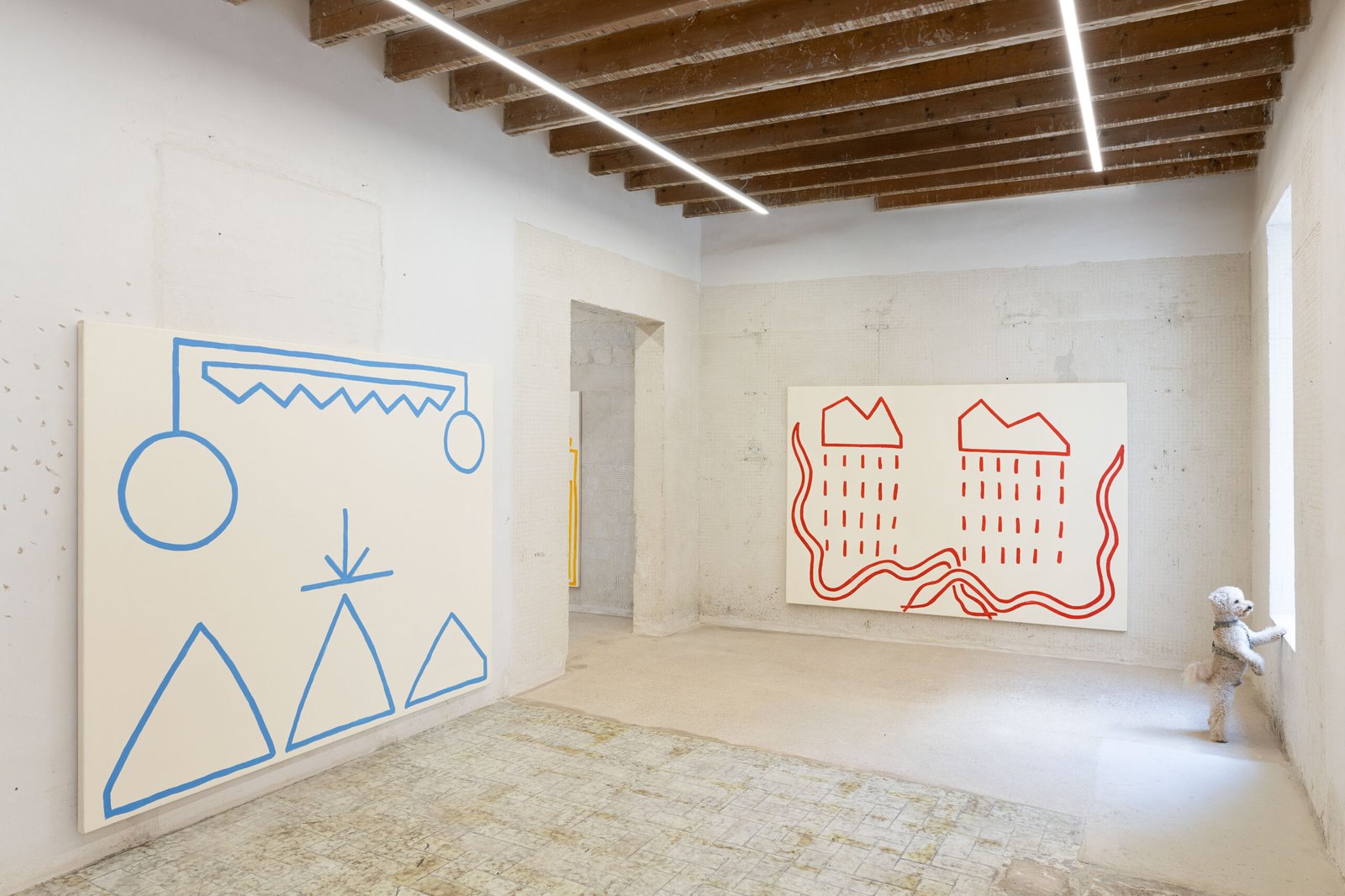
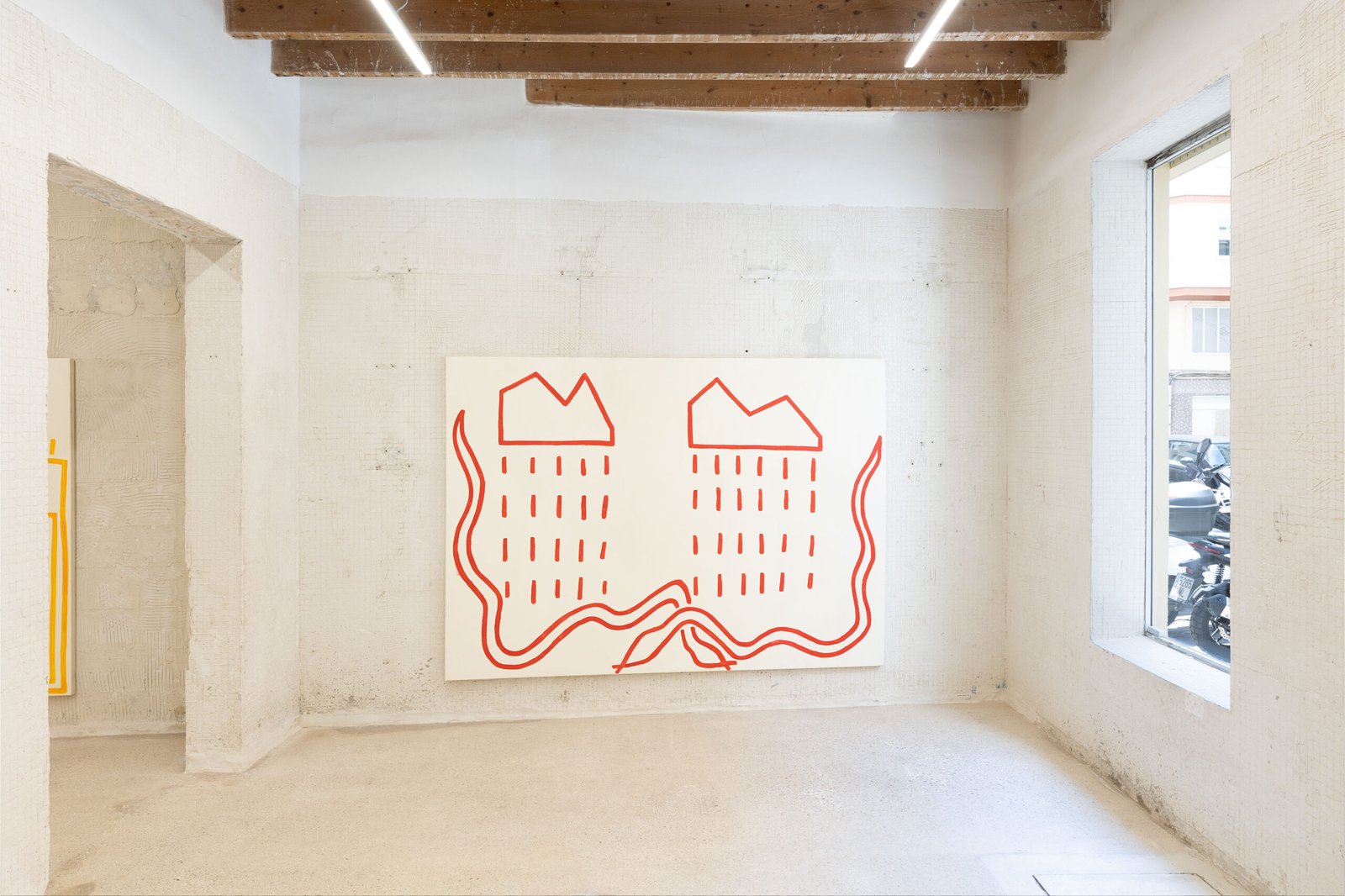
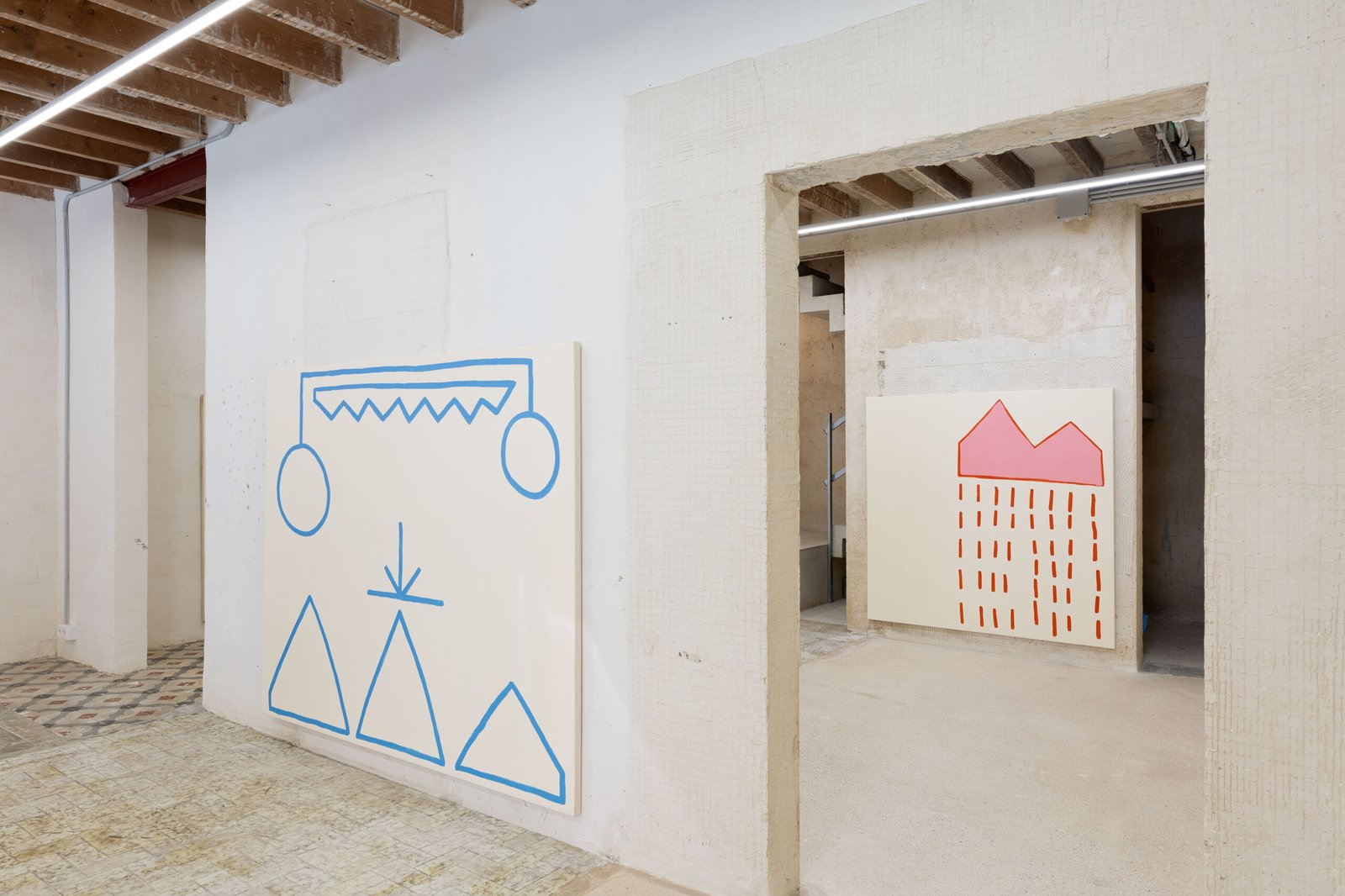
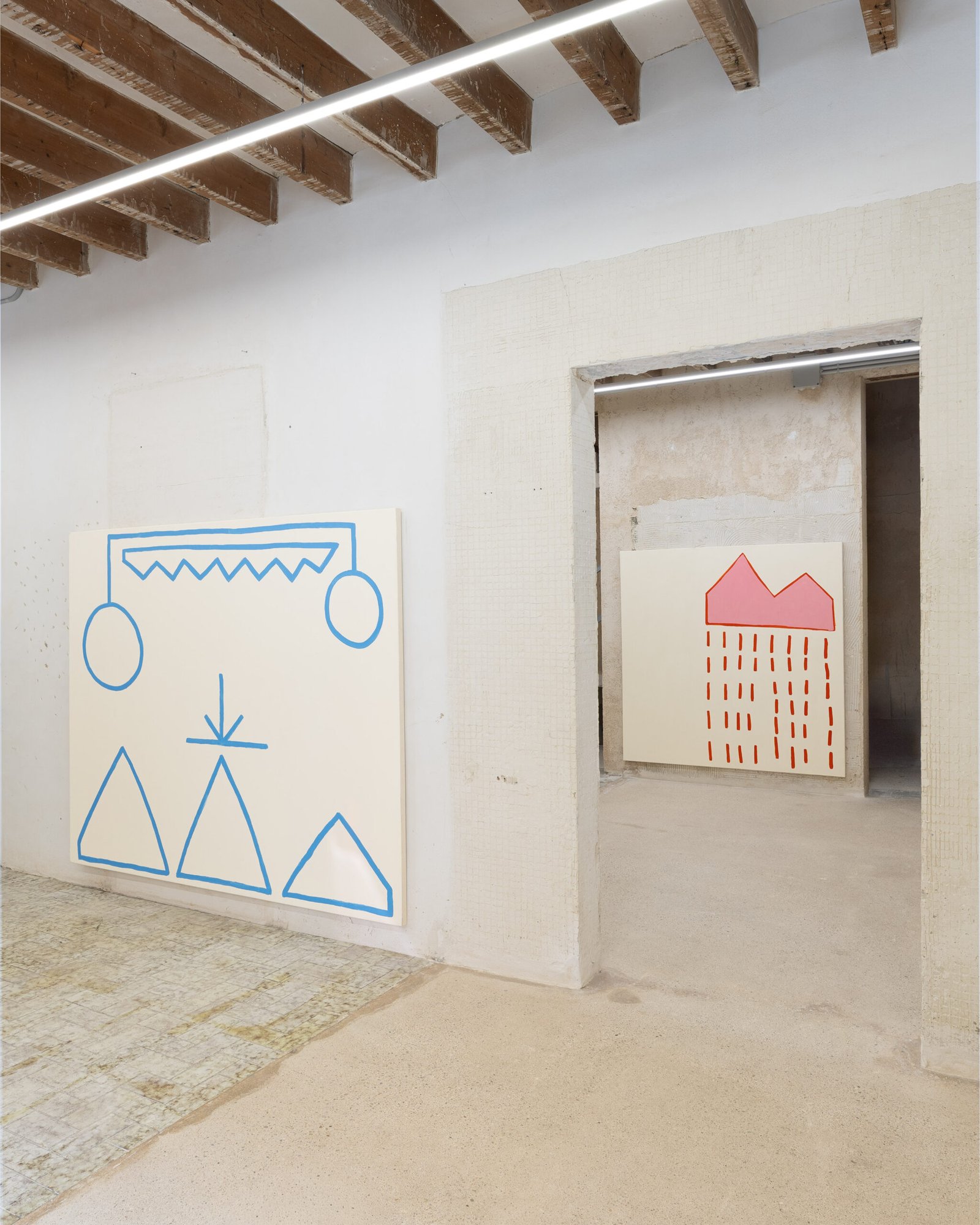
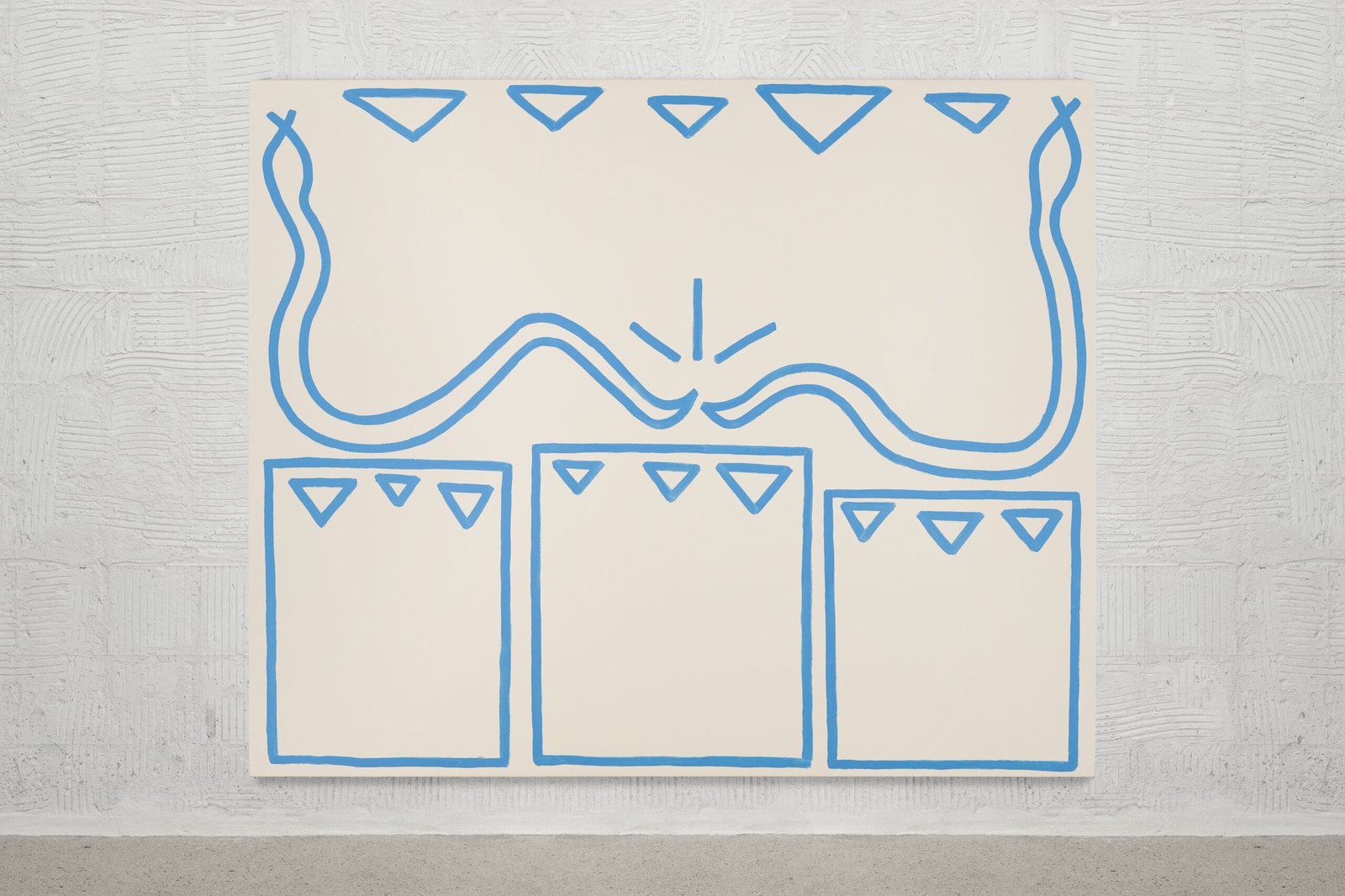
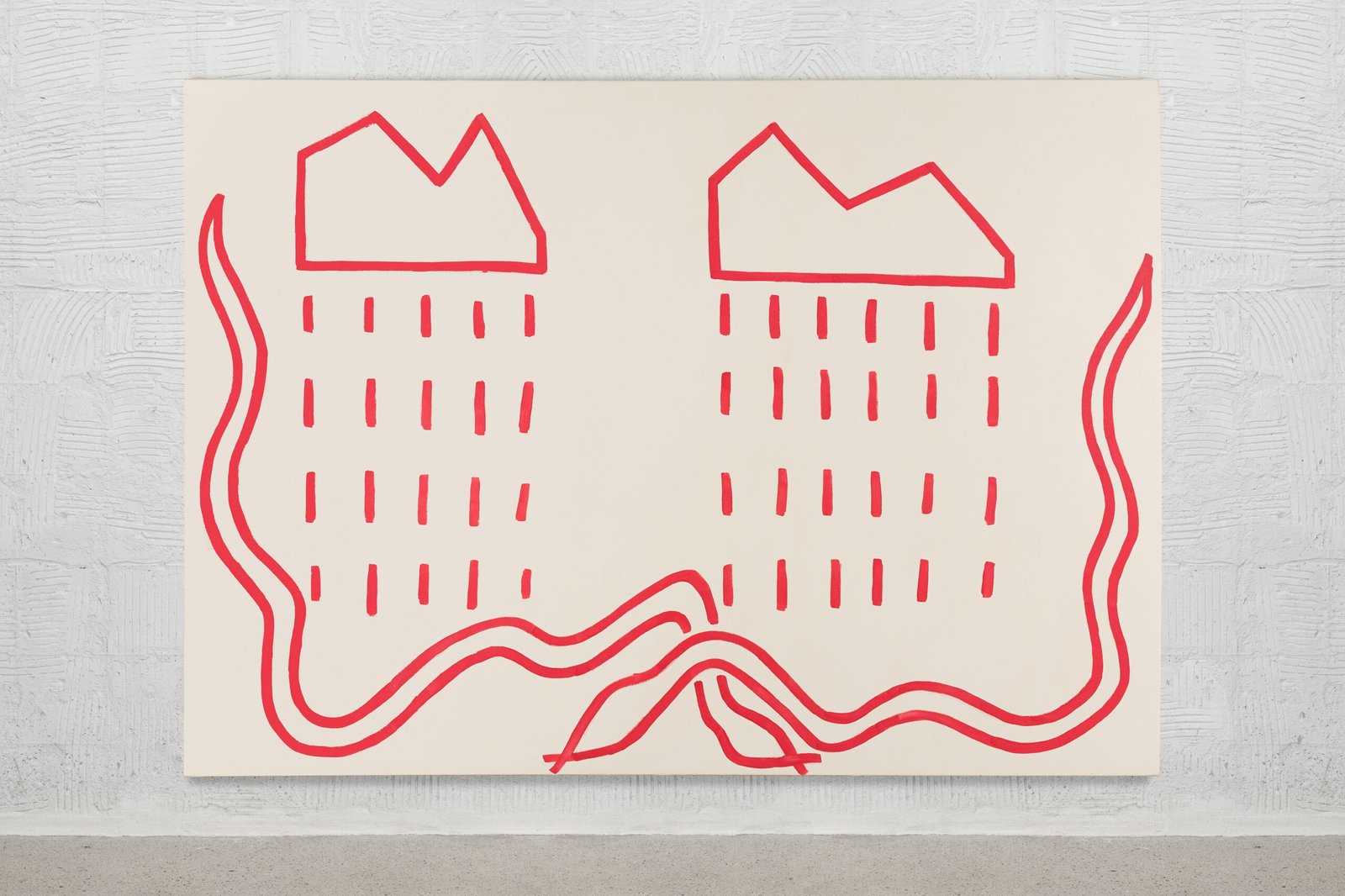
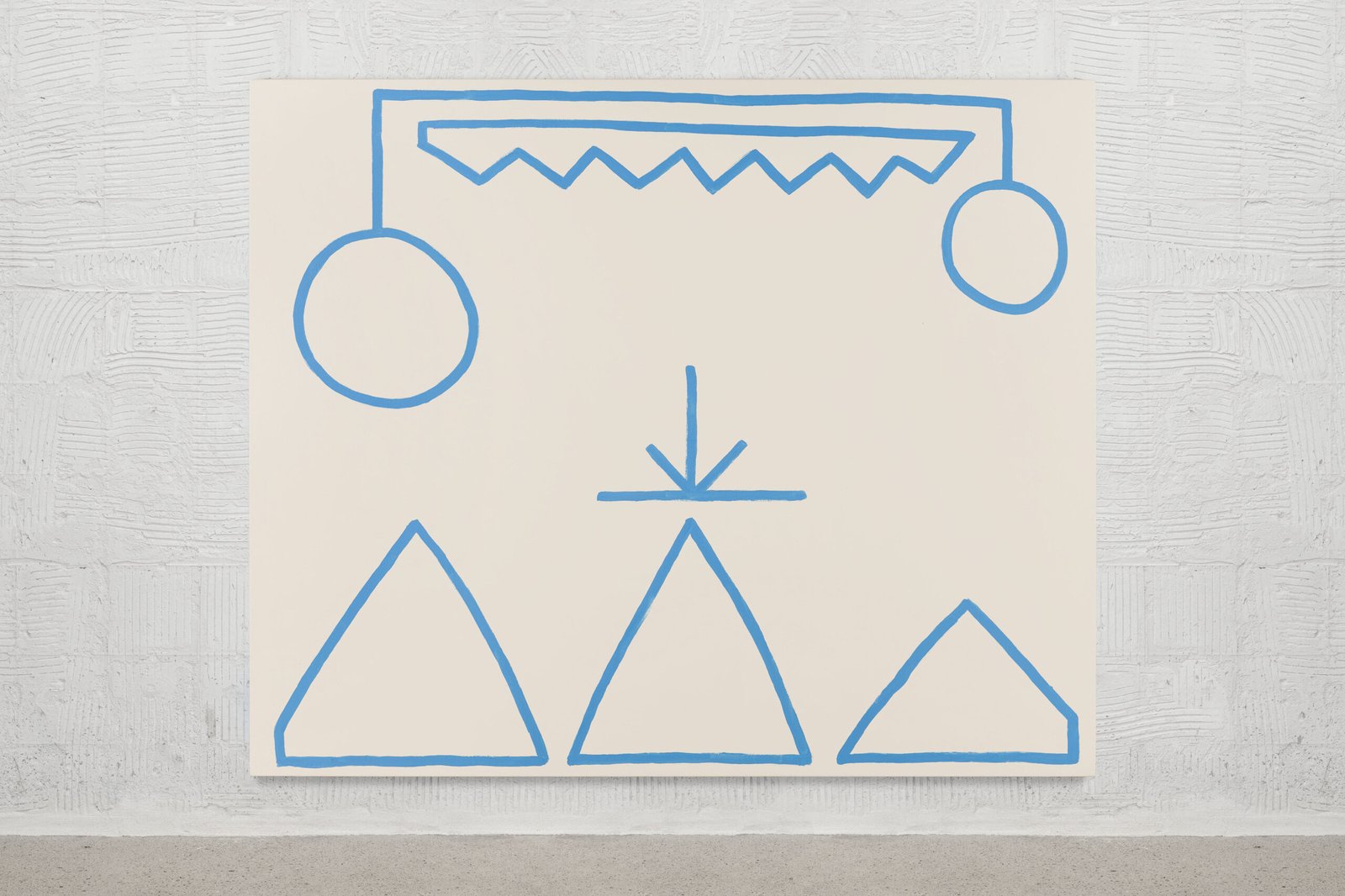
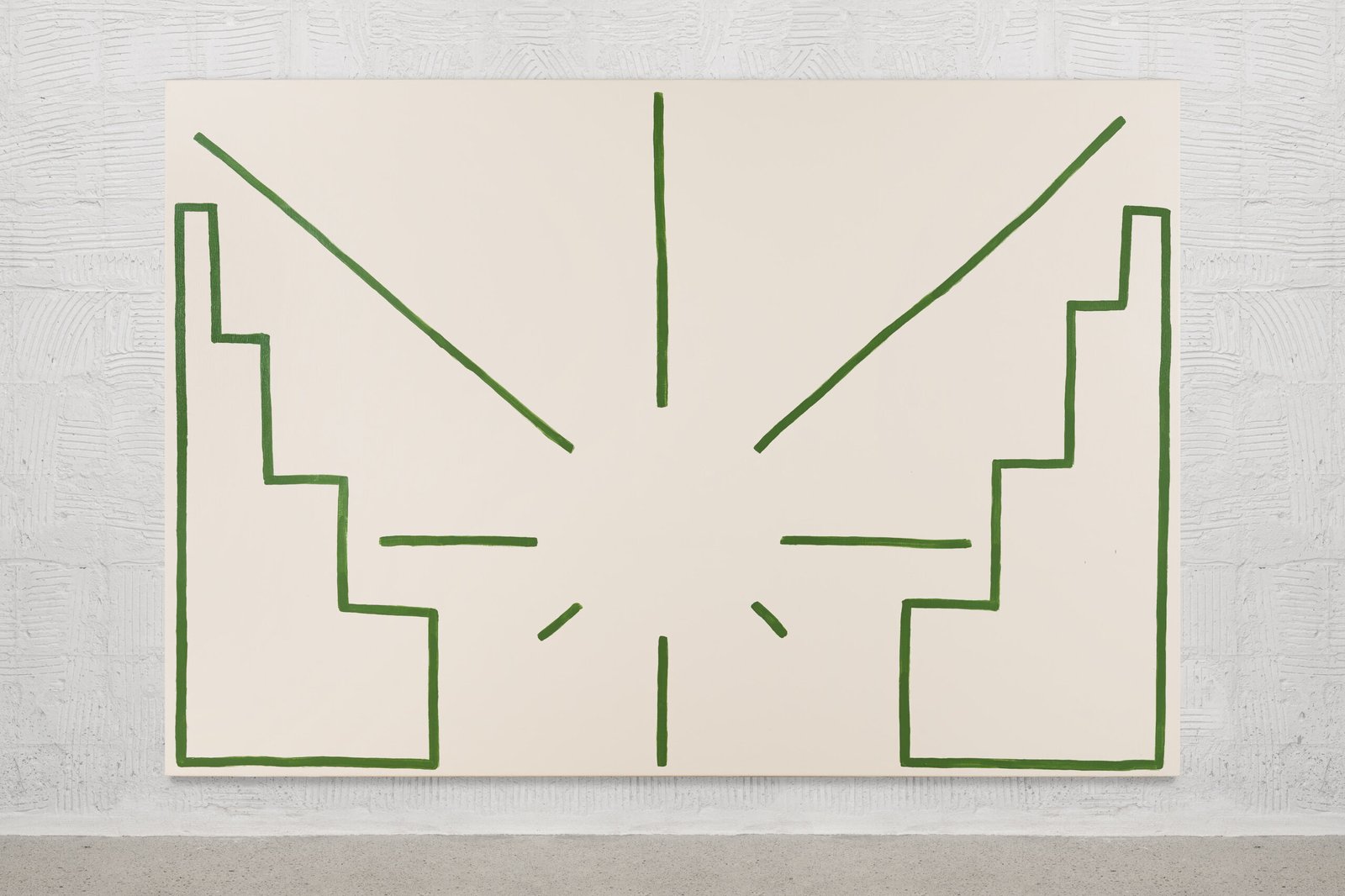
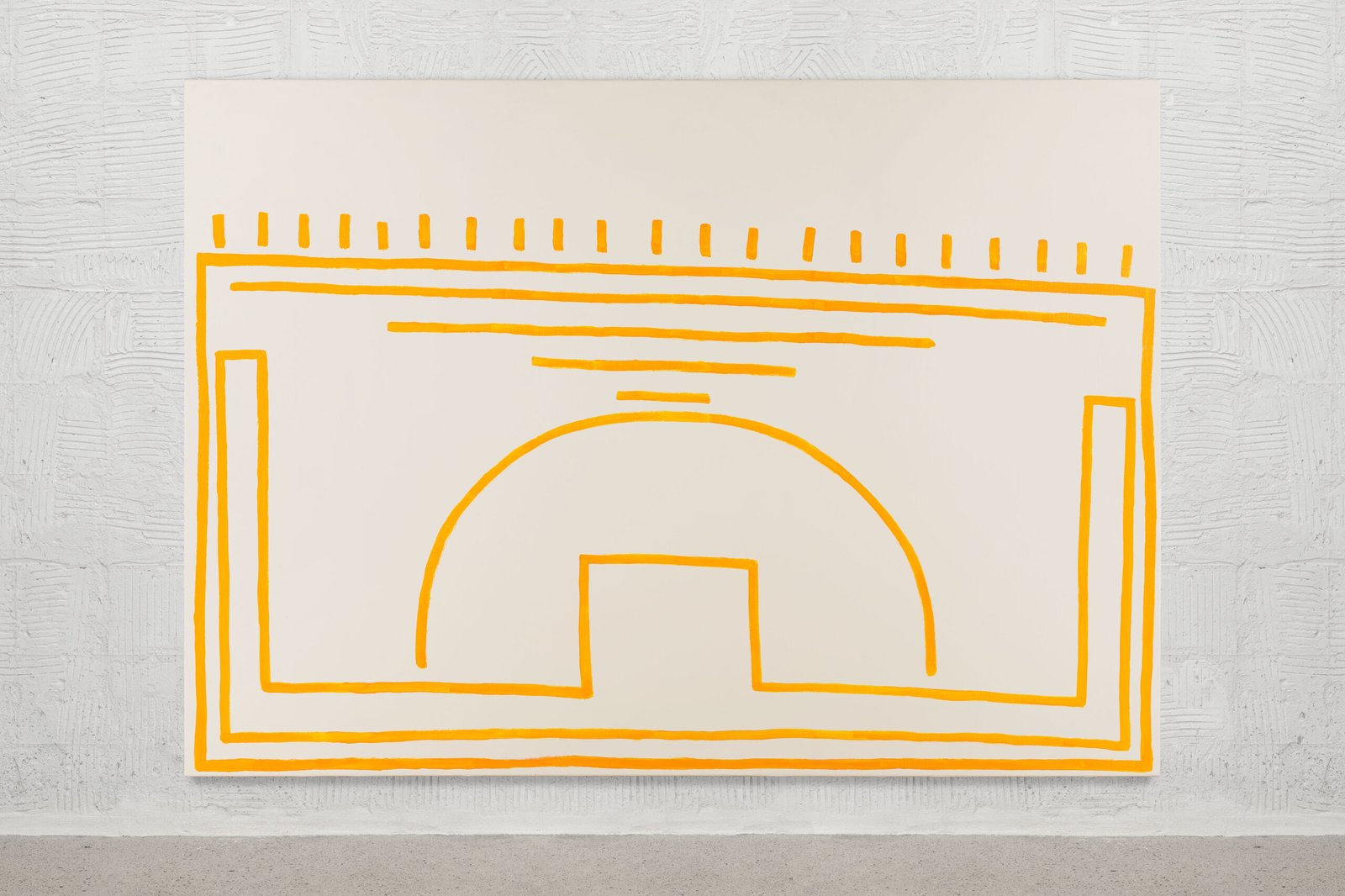
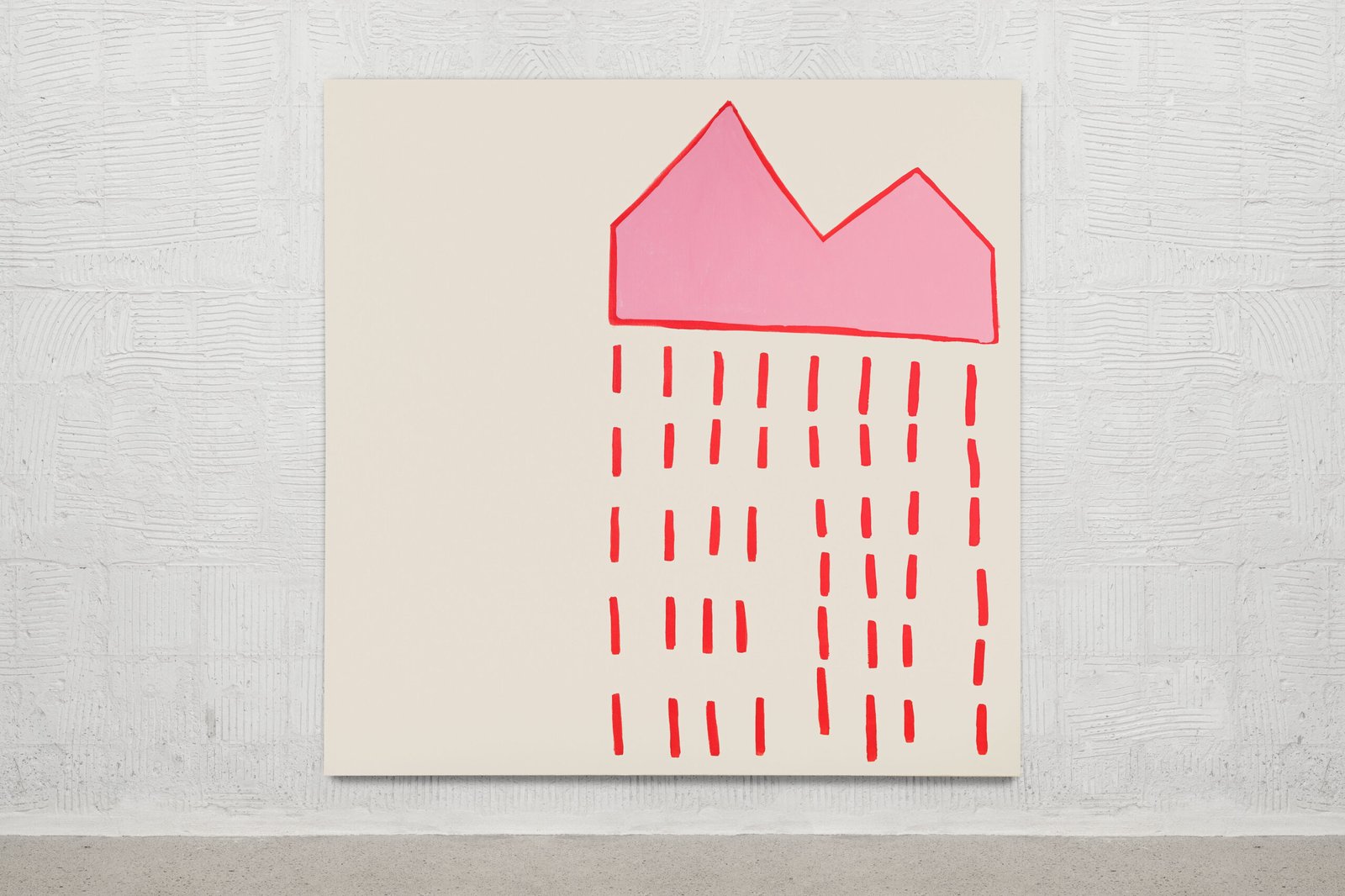
Two winding serpents, a house-cloud, red rain falling like code. Across fields of white, circles appear as lights or moons, triangles as mountains or temples. Moving between pictogram and fable, Stephen Felton’s paintings seem to draw on the ritual imagery of ancient worlds.
Yet their point of departure lies elsewhere: in the mystery of Renaissance painting, where an image can open onto something beyond.
His scenes often unfold between sky and earth. Rain, water and serpents pass between them, linking what appears above with what waits below. The white surface becomes a field of brightness, while rays of colour concentrate light into something close to an apparition.
In Felton’s paintings, this sense of wonder is condensed into just a few signs, each holding more than it shows. Writing on his work, Andrew Berardini draws an analogy with a landscape seen from an airplane window: distant and flattened, almost unreal, yet still containing all the weight and detail of the world below — trees, streets, buildings, even that bubble gum fallen to the bottom of the bottom drawer. “Out of sight, perhaps, but not out of mind. It’s all there — almost all of it — beneath the skinny line of that surface.”
Something similar happens materially in Felton’s process. He tries to make each image in one direct gesture. If it does not convey what he is seeking, he covers it with seven layers of white paint and begins again. A single work may therefore hold several hidden images beneath the final form.
In Felton’s work, what remains visible extends beyond itself. It is deepened by what has been covered over, by what each painting leaves open to the imagination, and by the relations between one work and another, keeping the mystery alive.
Text: Madi Canals