


4,096 × a Feeling
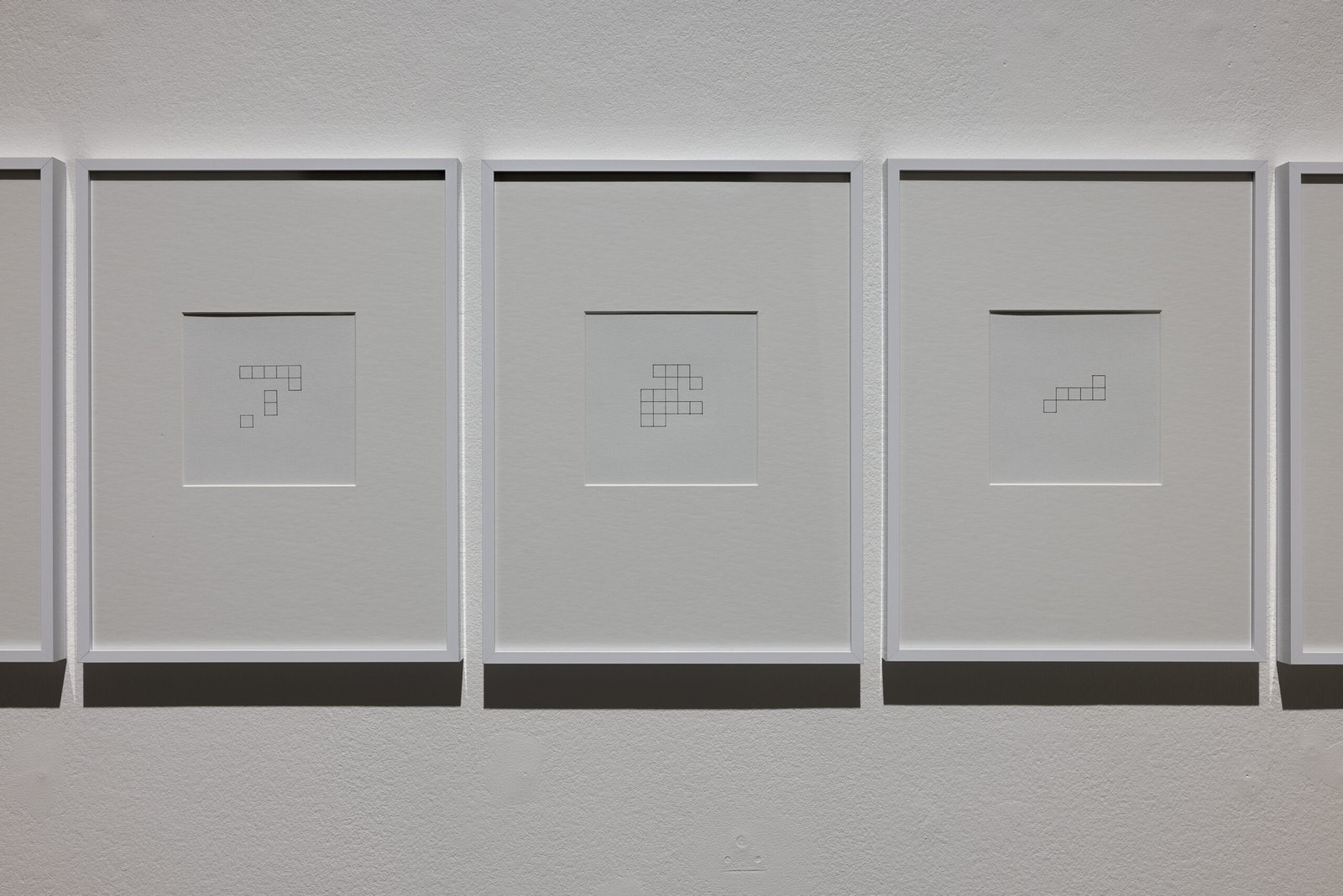
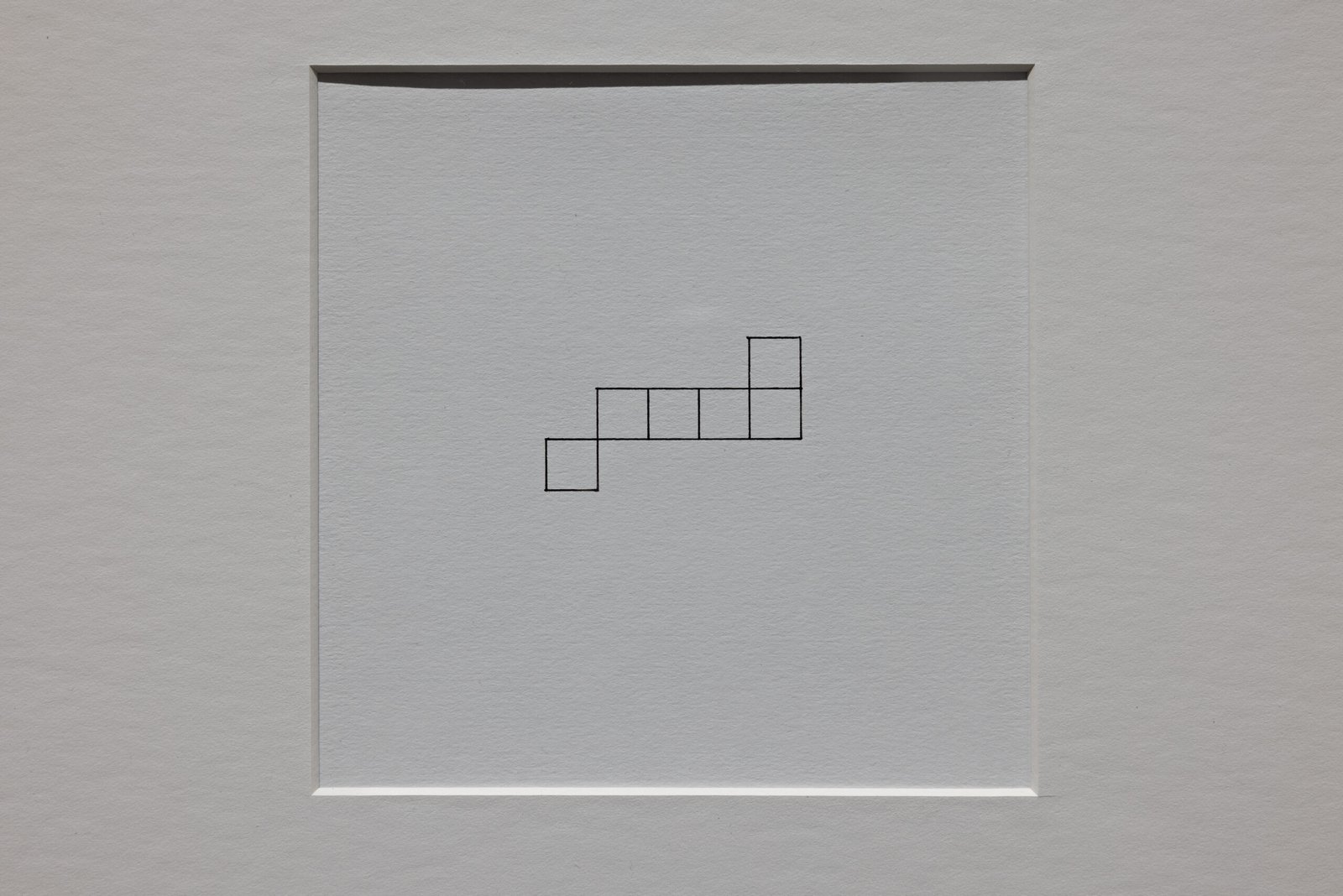
For some time now, the core of Tuomas Linna’s artistic practice has been shaped by various mathematical systems, processes of measurement, and structural frameworks that determine the form of the work. Linna has noted that repetition and enumeration function as calm¬ing and stabilising working methods for him, while at the same time constituting an integral part of the content of the works themselves. I have previously written about Linna’s works Birds [1] (2024) and Distance Piece [2] (2024), reflecting on the sense of security produced by repetition and formulae, as well as on our impulse to observe, organise, and classify—our desire to make sense of a chaotic world.
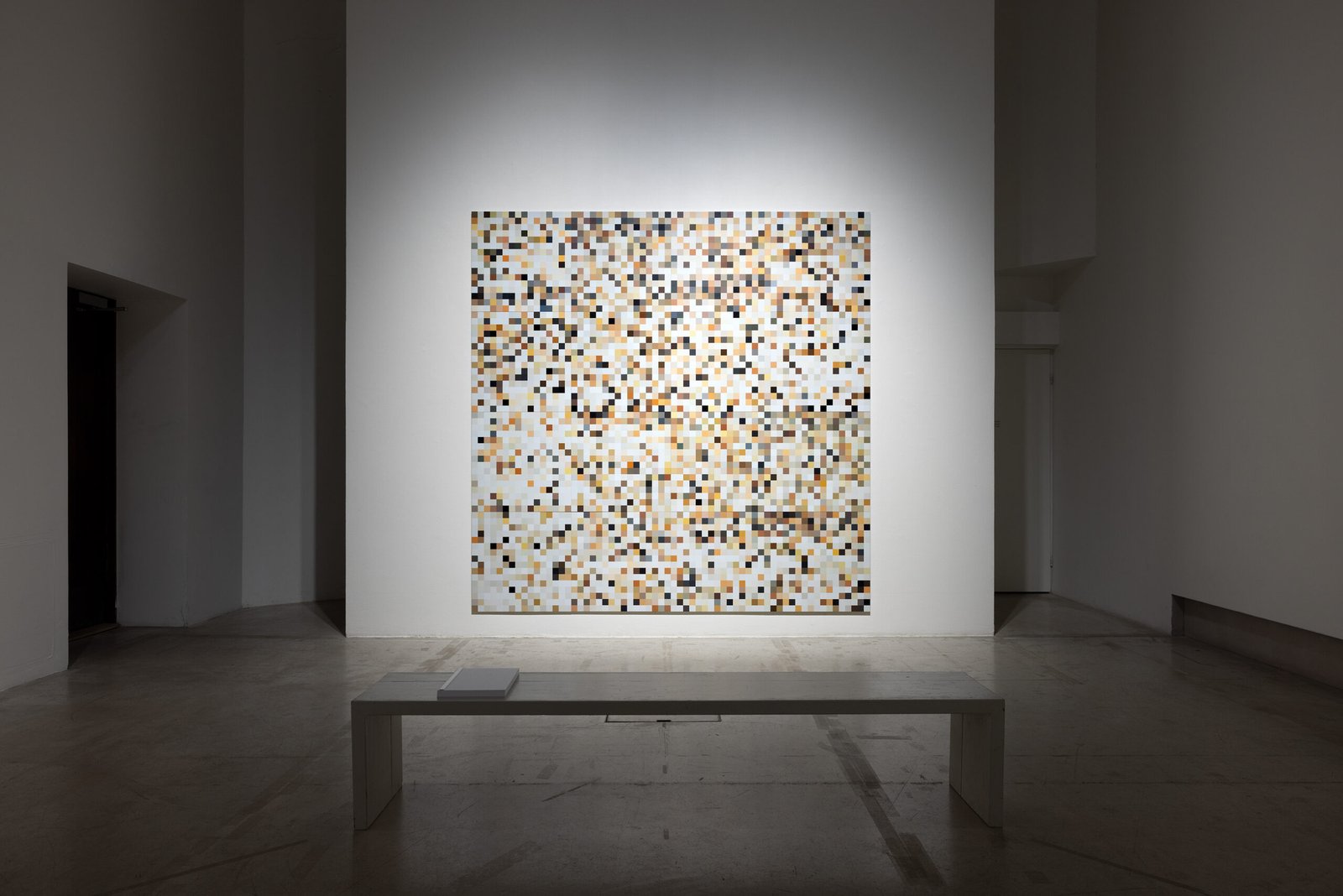
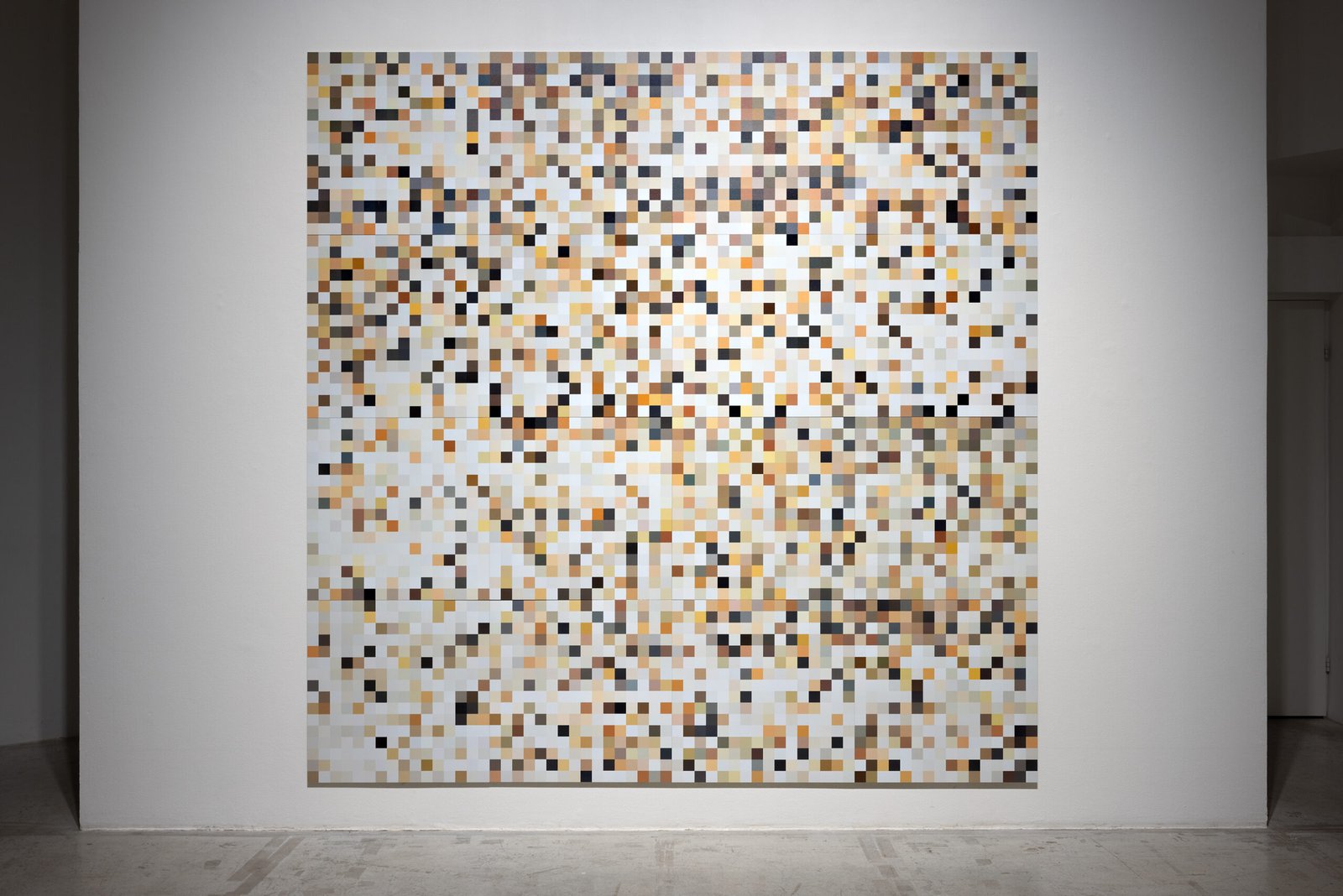
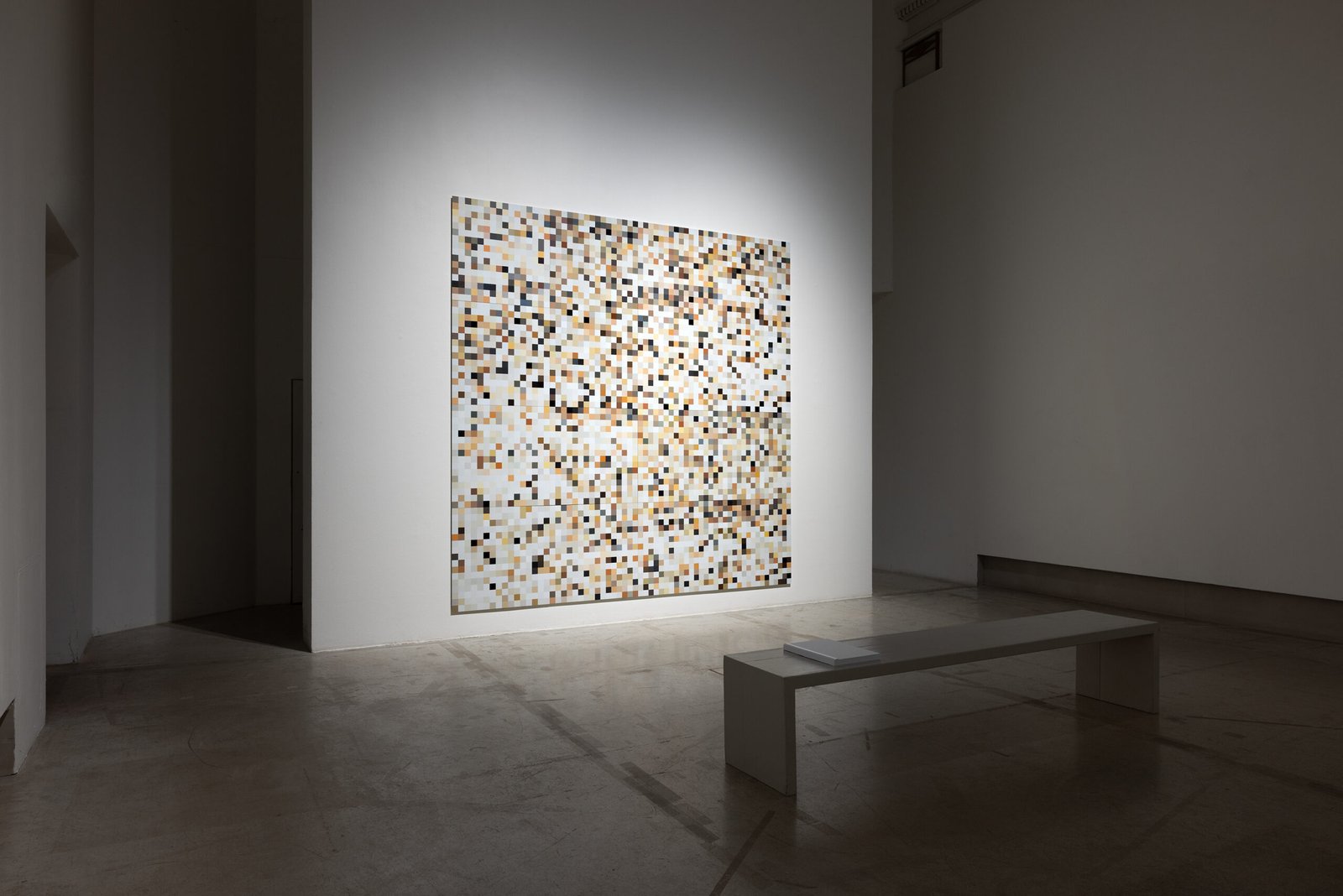
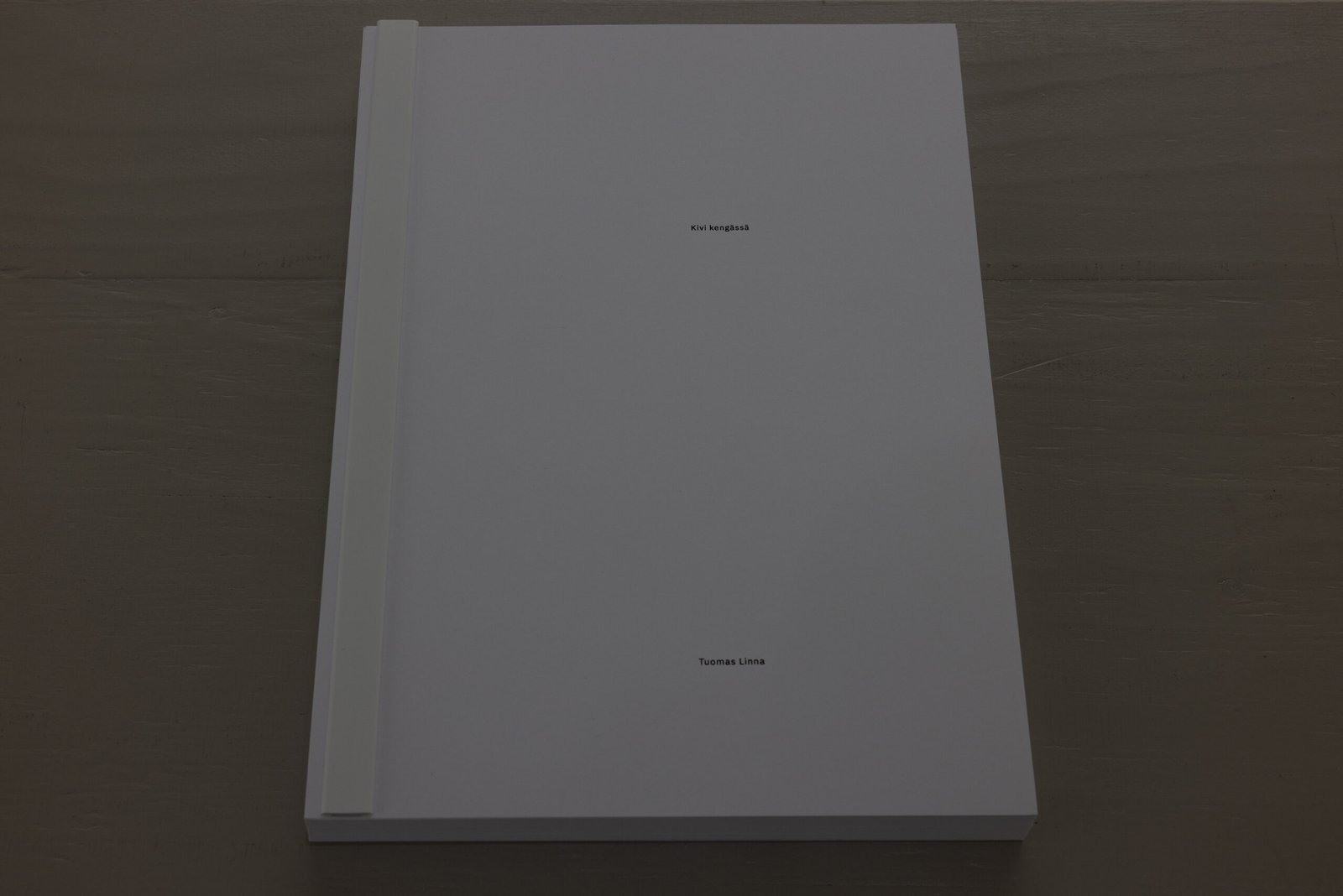
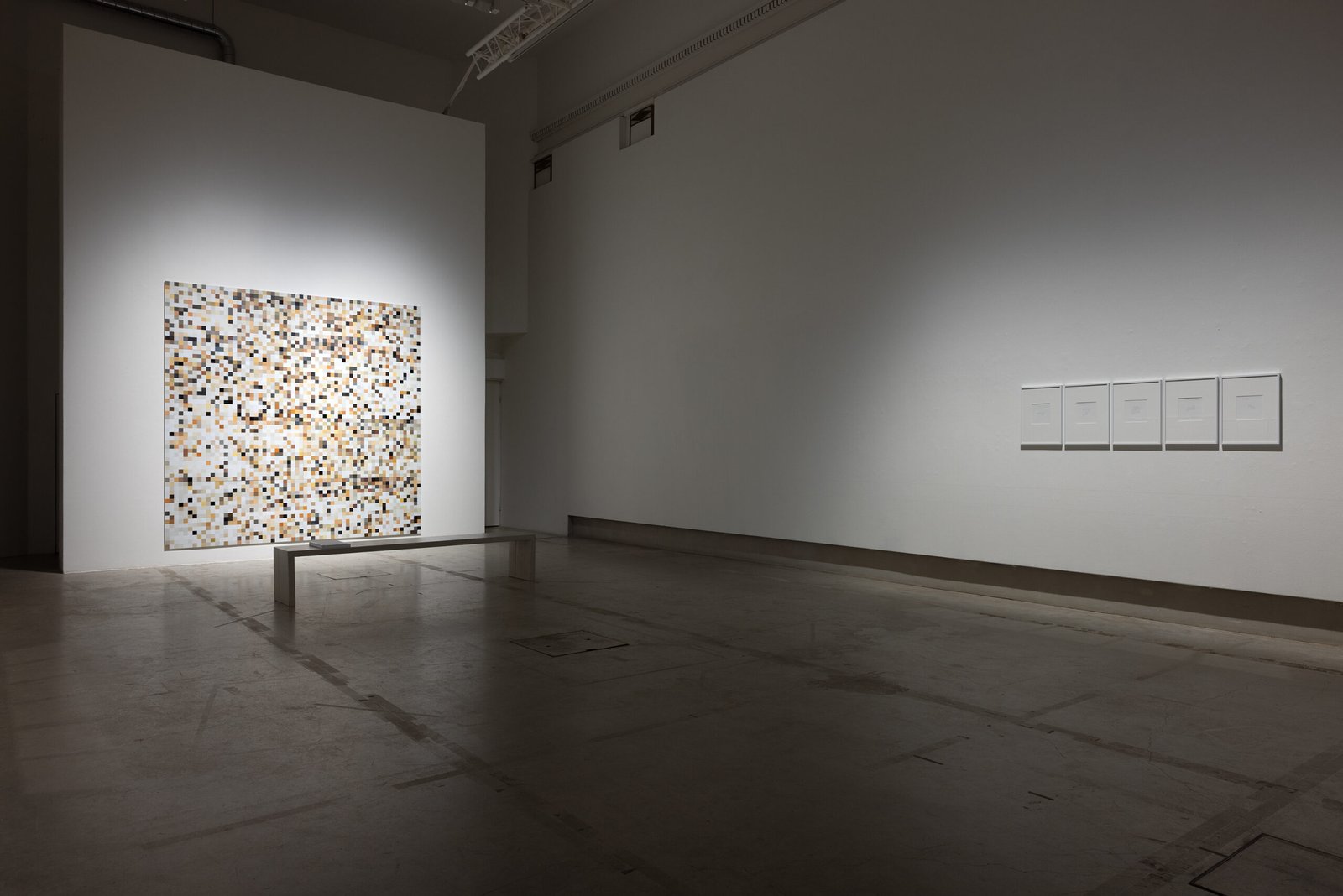
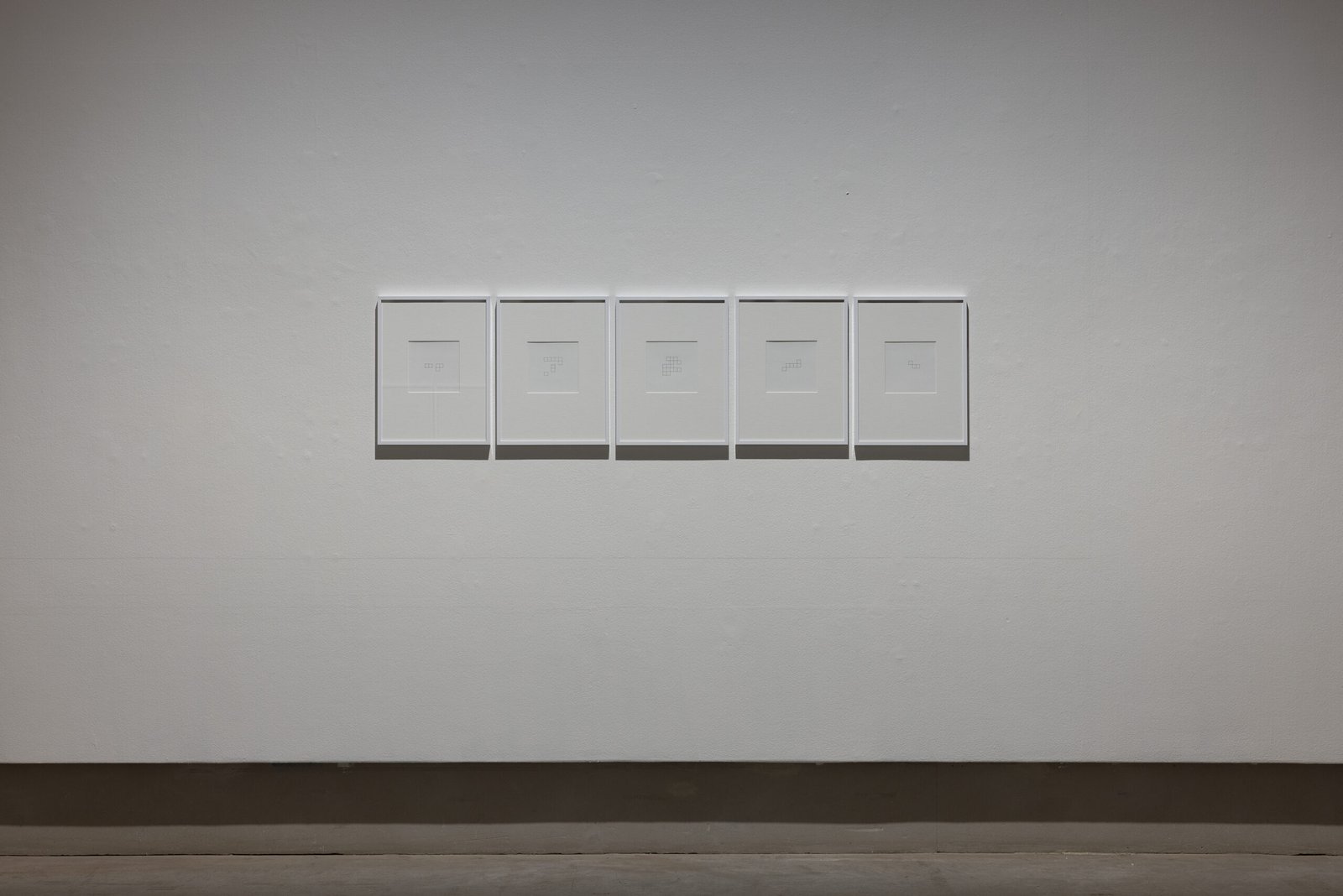
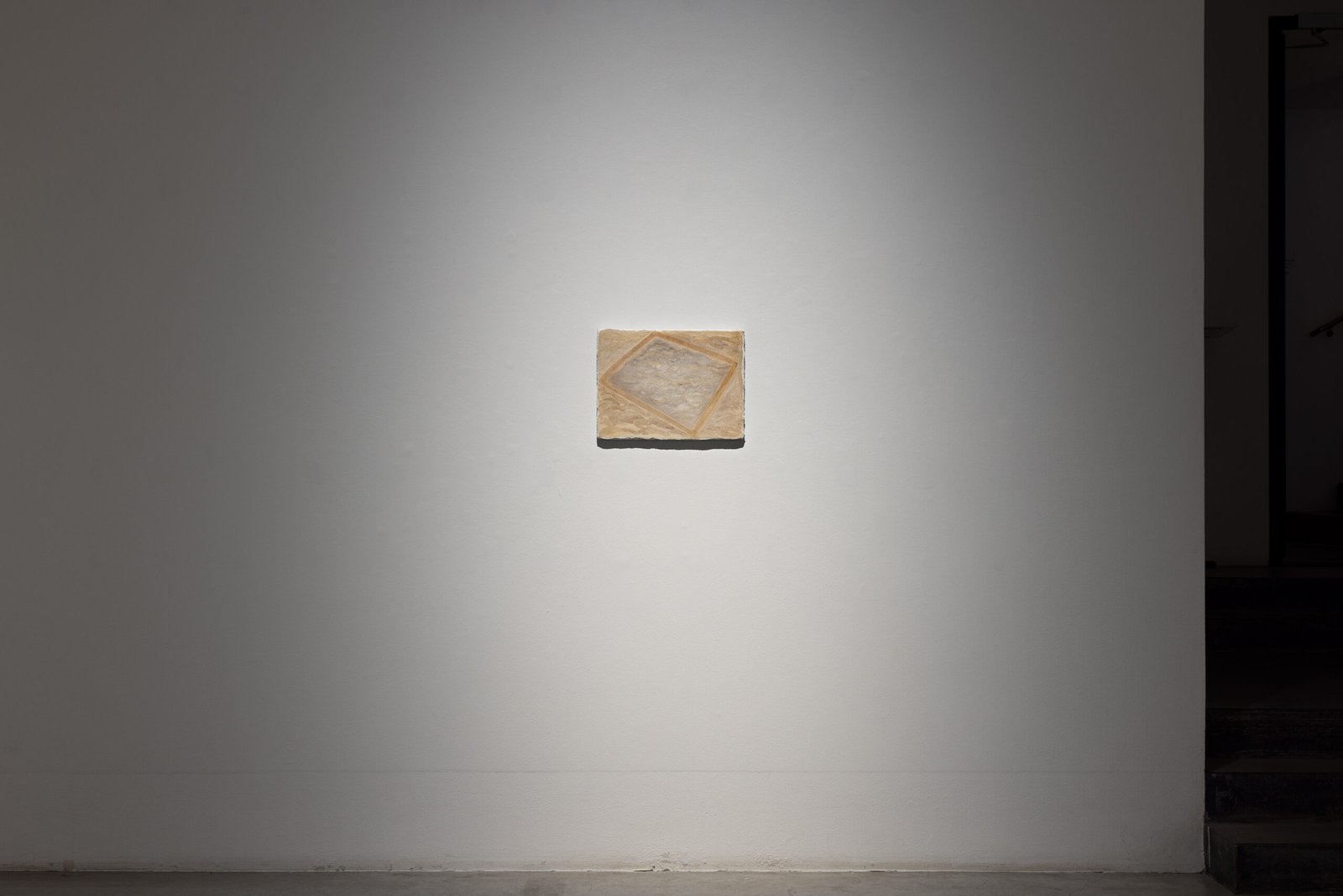
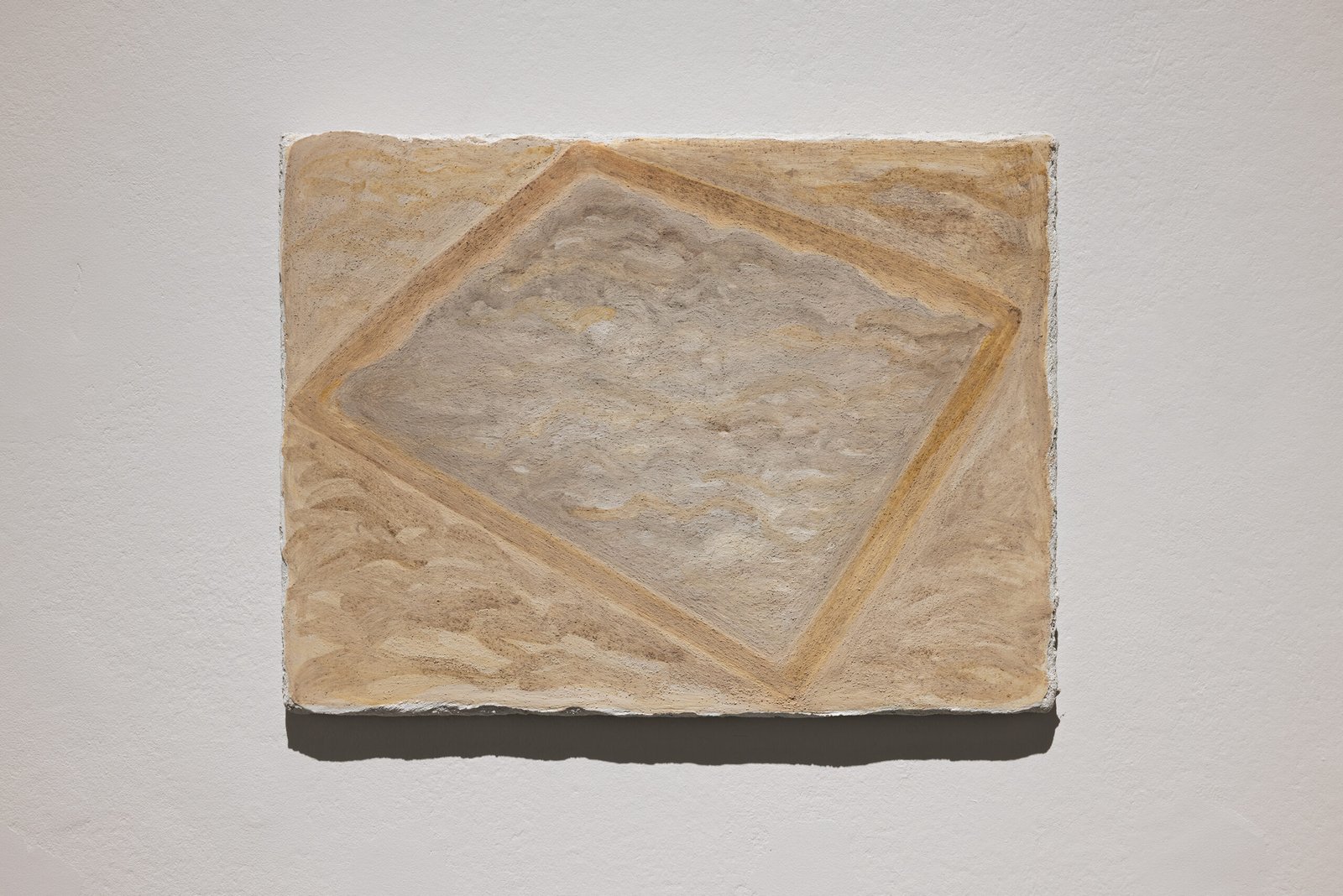
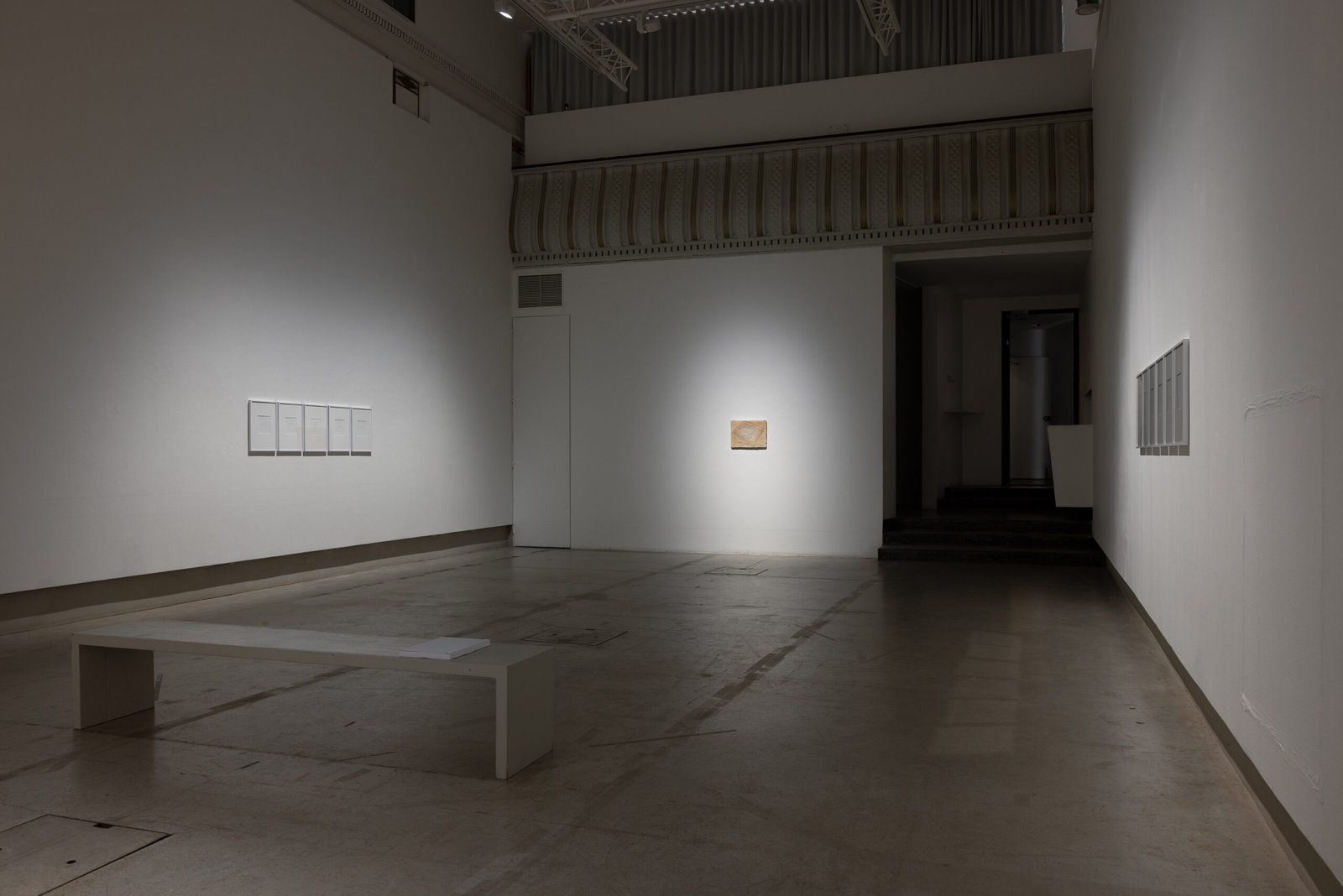
Linna’s most recent work, Kivi kengässä (2026), incorporates many elements familiar from his earlier practice. In addition to devising a structural system that shapes the form and logic of the work, Linna once again adopts a perspective that draws attention to small, seemingly insignificant details. This time, he takes the idea to an extreme by focusing on grains of sand. The work continues Linna’s characteristic restrained and controlled visual language, yet when encountering this latest piece, his practice appears simultaneously sharpened and expanded. Alongside the controlled structure, emotions and humour increasingly begin to surface. Or perhaps these have been its concerns all along.
For some time, Linna and I have maintained a correspondence that is regular in its irregularity, and he now writes to tell me that he is irritated. Various matters—both trivial and more substantial—annoy him, at times even provoking anger. One point of departure for Kivi kengässä was the grains of sand that remain in shoes after time spent outdoors and inevitably find their way onto the hallway floor following visits to the playground. Linna recounts how he began collecting these grains of sand in a plastic container, which was eventually forgotten in the hallway and left there to gather dust for almost a year. This, too, is irritating.
Yet amid these everyday frustrations, the seed of the work begins to take shape. Linna mentions Gerhard Richter’s idea of a logical numerical sequence, which has served as one of the conceptual and visual starting points for the work. Richter’s (1932–) abstract colour chart paintings from the 1960s and 1970s culminated in 4096 Farben (1974), a work composed of 1,024 distinct colour shades, each repeated four times. Richter had been interested in industrially produced ready-made paints since the 1960s and understood them primarily as commercial products, the composition of which was determined by chance in his colour chart paintings. By the 1970s, Richter had developed a mathematical system for his paintings that aimed to present all existing colour shades within a single work. The system began with the three primary colours and grey, and by modifying these through equal chromatic intervals allowed for an ongoing differentiation of colour—effectively ad infinitum. [3]
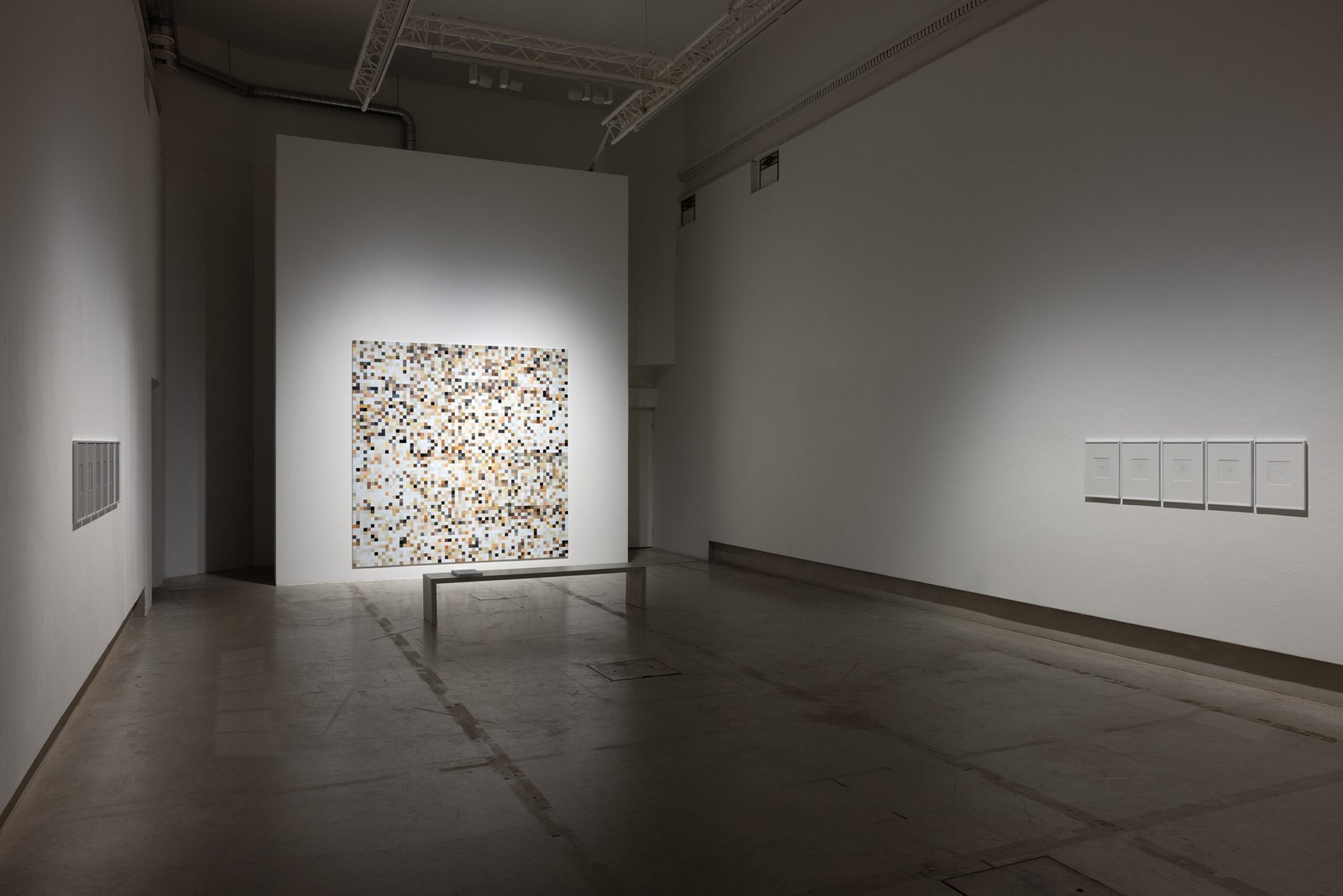
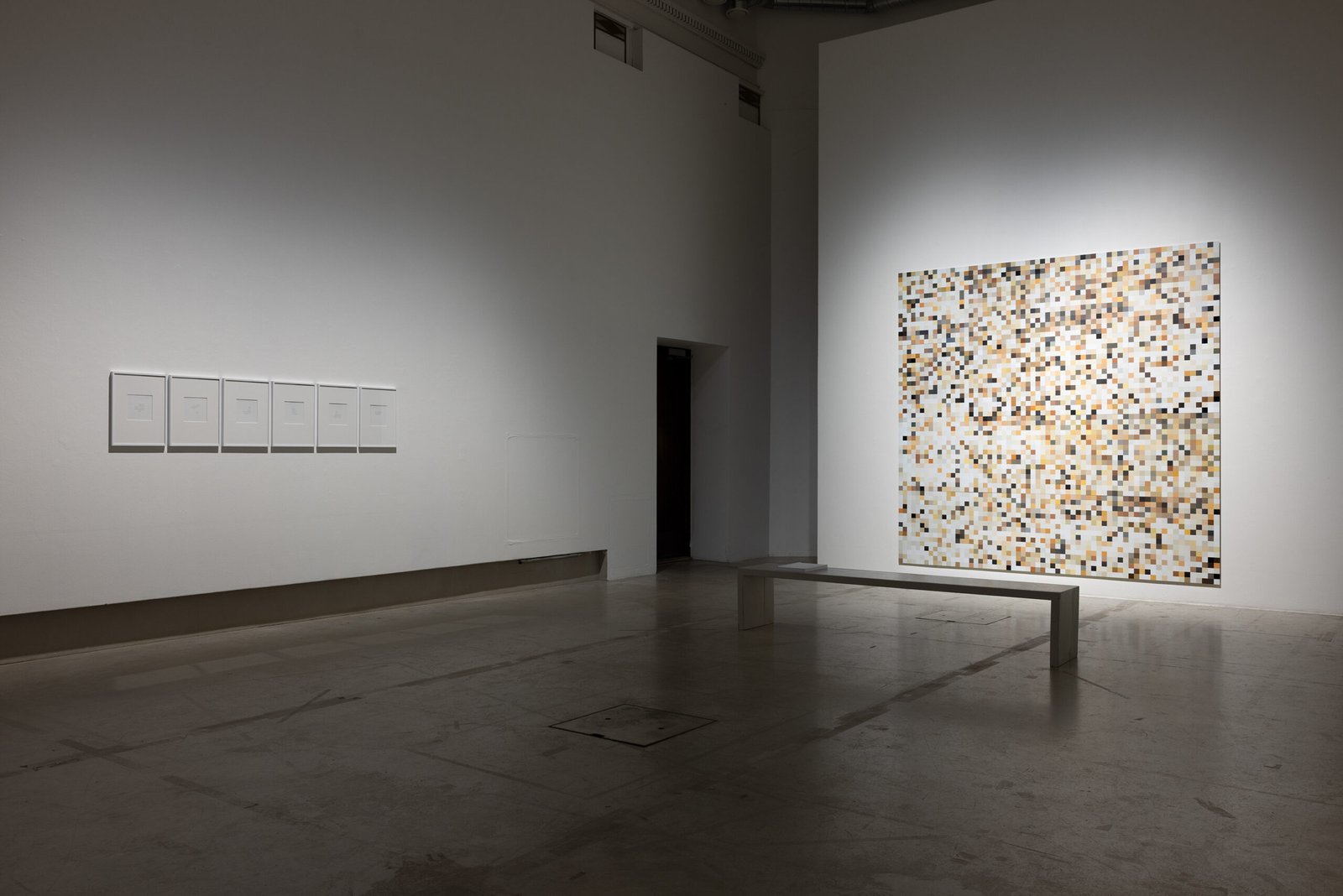
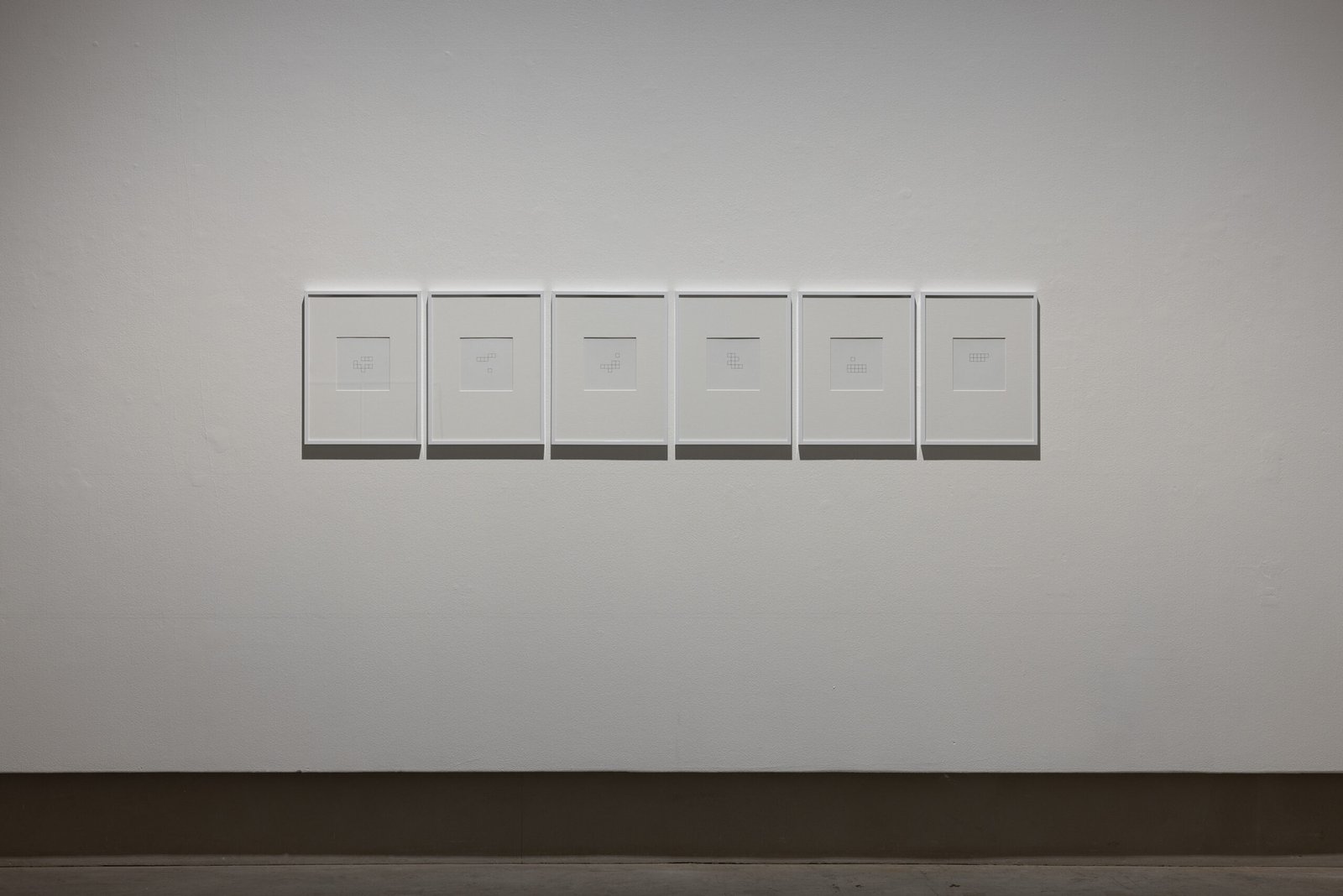
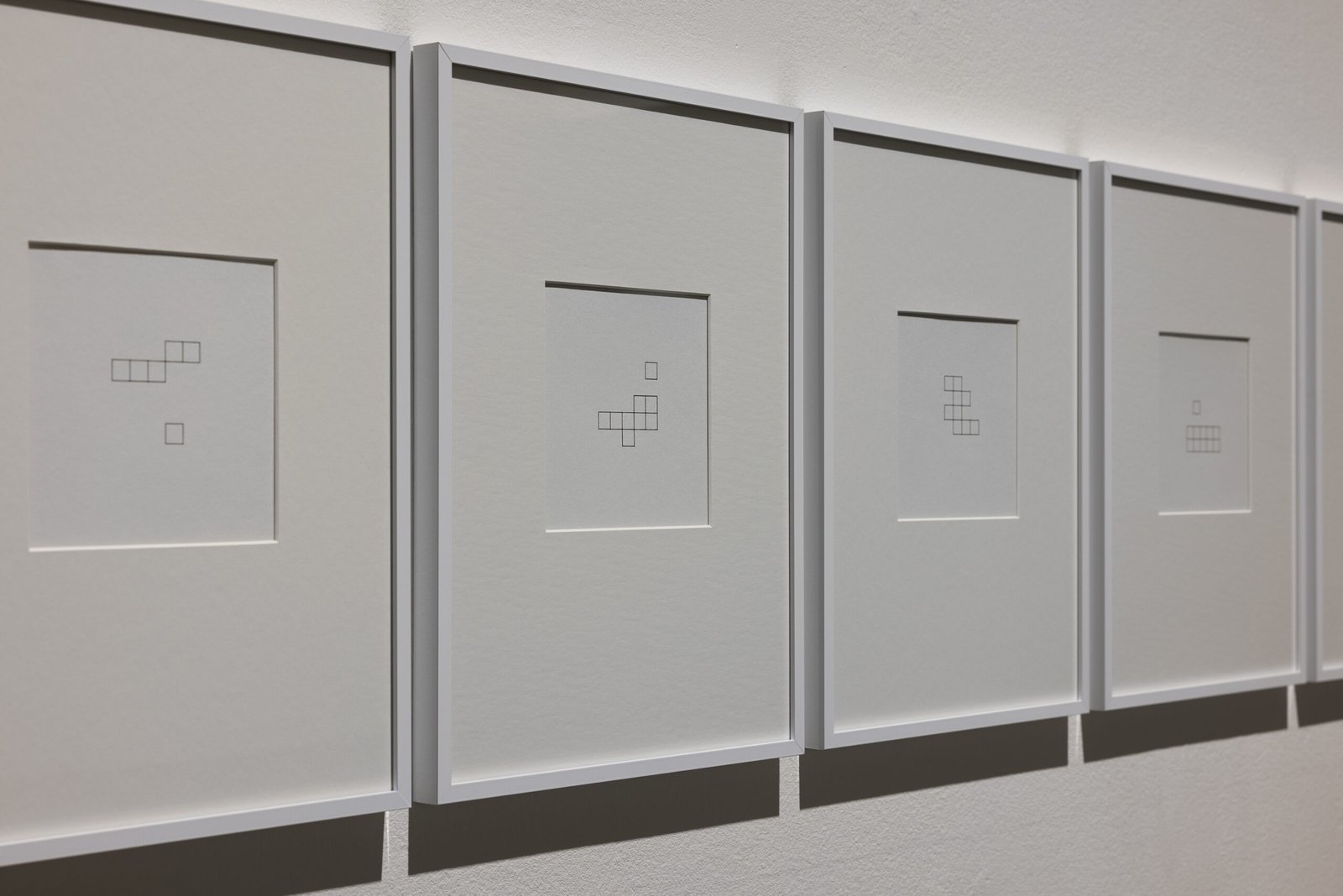
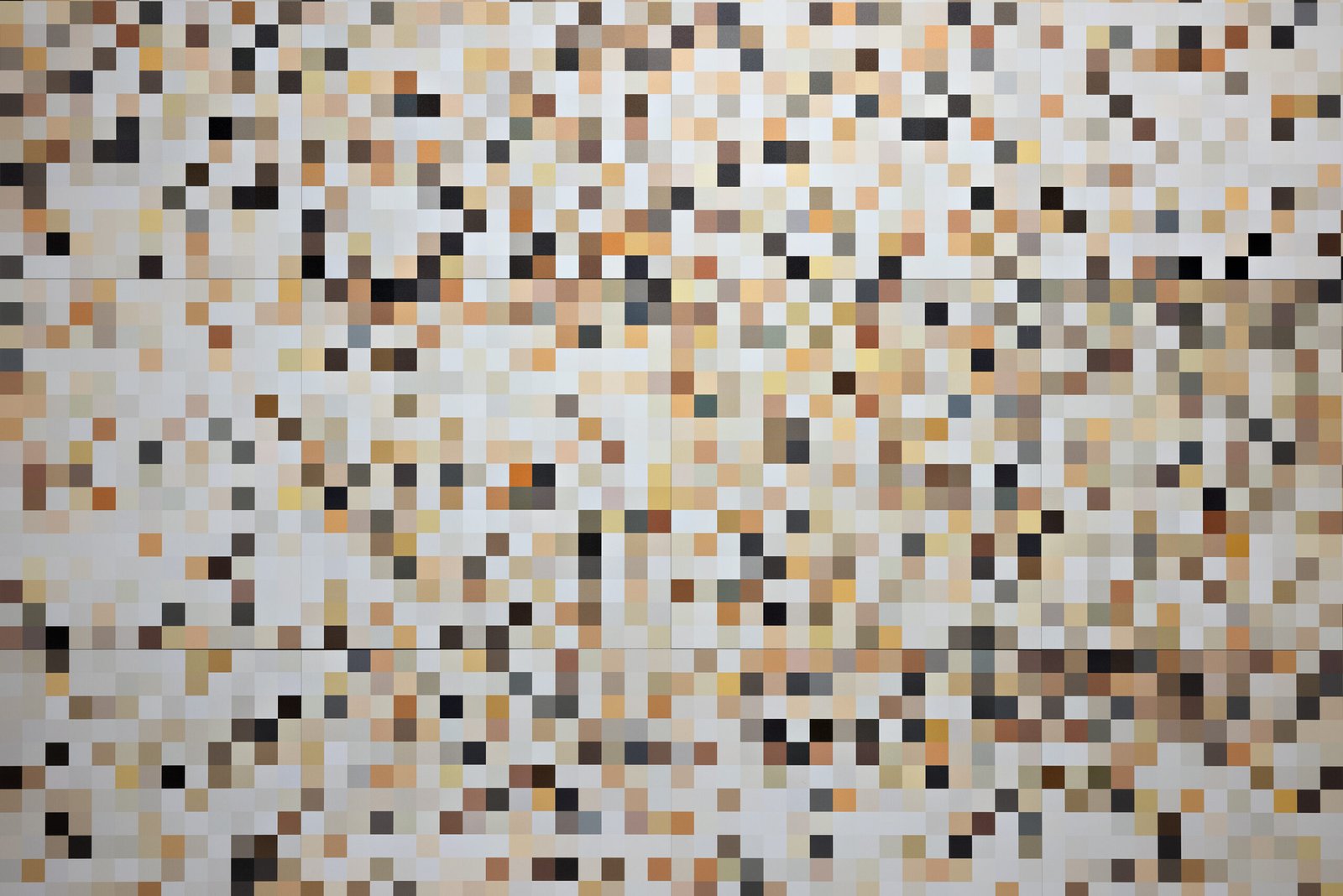
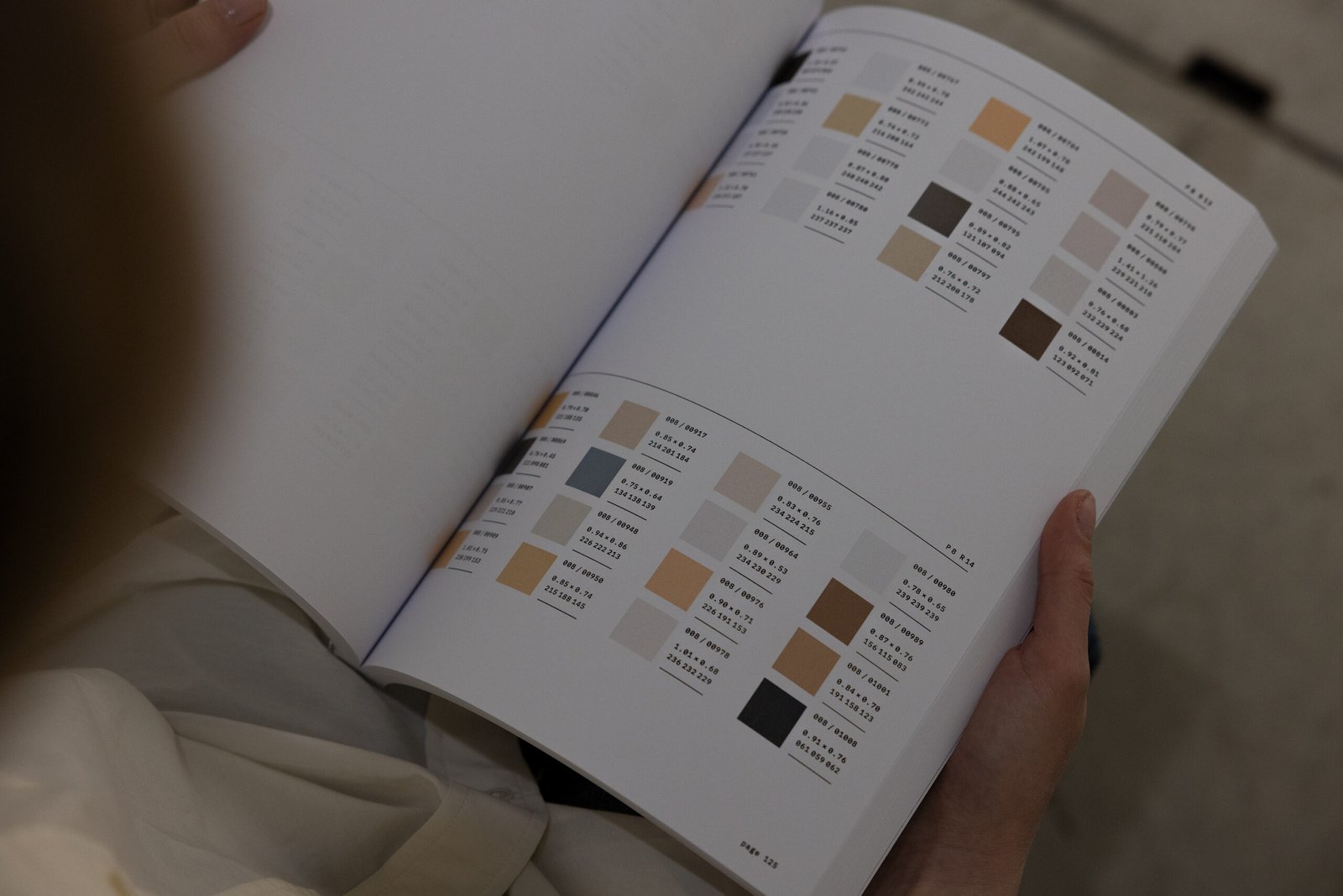
The mathematical formula underpinning Richter’s work is the sequence: 4 × 4 = 16 × 4 = 64 × 4 = 256 × 4 = 1,024. Linna builds on this sequence in Kivi kengässä, arriving at a realisation in which all elements of the work are in logical relation to one another. For the work, Linna collected stones and grains of sand over the course of sixteen separate outings, measuring and photographing them all (a total of 36,478 items). From each outing, he selected photographs of the 256 largest stones and grains for inclusion in the final work. What we see are the central pixels of these colour photographs, presented as 4 × 4 cm squares. Altogether, the work thus offers a representation of 4,096 stones and grains of sand (16 × 256 = 4,096).
Richter’s colour chart paintings have been interpreted as addressing questions internal to painting as well as participating in postwar debates on the meaning and function of abstract art. [4] What Richter’s and Linna’s practices share thematically are questions of chance, seriality, and infinity, yet they diverge in terms of authorship. Whereas the authorial presence in Richter’s works is effaced or even anonymous—with assistants also involved in the execution of the paintings—Linna’s works often carry an autofictional narrator who appears to be the artist himself. This layer of narrative and personal voice creates an intriguing friction with the works’ clinically restrained visual appearance and with the quantitative, quasi-scientific procedures they evoke, in which a predetermined method (a numerical sequence, the largest stones, the central pixel) is used to address a research question: What is rubbing? What irritates?
Unlike science, which strives toward objectivity, subjectivity is typically both present and visible in art. Within the expansive freedom of artistic practice, there is an infinite number of choices left to the artist, and these decisions inevitably disclose something about the maker. In Linna’s work, some of these choices are outsourced to a mathematical sequence, yet the narrator’s voice reintroduces subjectivity and provides a human scale, and anchors the work in a specific time and place.
The narrator’s voice is also present in the publication, whose form and mode of presentation Linna has sought beyond the field of art, drawing inspiration from scientific traditions. He cites the colour nomenclature developed by the German geologist Abraham Gottlob Werner (1749–1817), created to establish a standardised means of describing the visual properties of minerals. The Scottish botanical illustrator Patrick Syme (1774–1845) further developed Werner’s taxonomy by adding colours, and the system was published in 1814 under the title Werner’s Nomenclature of Colours. [5] From Werner, an associative chain leads not only to the construction of systematic structures once again, but also to stones as material entities and to the millions of years embedded within them. Infinitesimally small grains of sand existed on this planet long before us and will persist long after we are gone.
Linna’s work can also be read as an attempt to anchor fleeting, repetitive moments in a material that endures. Seen through this lens, the work unfolds almost as an abstract yet documentary photograph, capturing moments in the sandbox, acts of play, the warmth of sunlight on one’s back, or the annoyance provoked by the mess brought indoors—transposed into a form that allows life to be viewed from a slight distance. From this position, a middle-aged, Espoo-based, and socially privileged father can begin to reflect on both his own circumstances and the limitations of his time and existence. Ultimately, the work does not seem to centre on the perfection of a mathematical formula or on repetition itself, nor even on the irritating grain of sand, but rather on an attempt to grasp the absurdity of the world—and to smile at it, and at one’s own moments of frustration.
Milja Liimatainen
Curator, Art historian
[1] Milja Liimatainen, Among unpredictabilities, 2022. Birds, self-published artist book by Tuomas Linna.
[2] Milja Liimatainen, Ready steady roll repeat, 2024. Distance Piece, self-published artist book by Tuomas Linna.
[3] See Mark Godfrey, 2023. 4096 Farben. https://www.sothebys.com/en/articles/4096-farben (Accessed 18.4.2026). For further discussion of Richter’s approach to colour, see also Benjamin H. D. Buchloh, 2012. The Chance Ornament: Aphorisms on Gerhard Richter’s Abstractions. Artforum February 2012, Vol. 50, No. 6. https://www.artforum.com/features/the-chance-ornament-aphorisms-on-gerhard-richters-abstractions-199354/ (Accessed 19.4.2026)
[4] Godfrey, 2023.
[5] Sam Dolbear, Werner’s Nomenclature of Colours (1814). The Public Domain Review. https://publicdomainreview.org/collection/werner-s-nomenclature-of-colours-1814/ (Accessed 19.4.2026).