


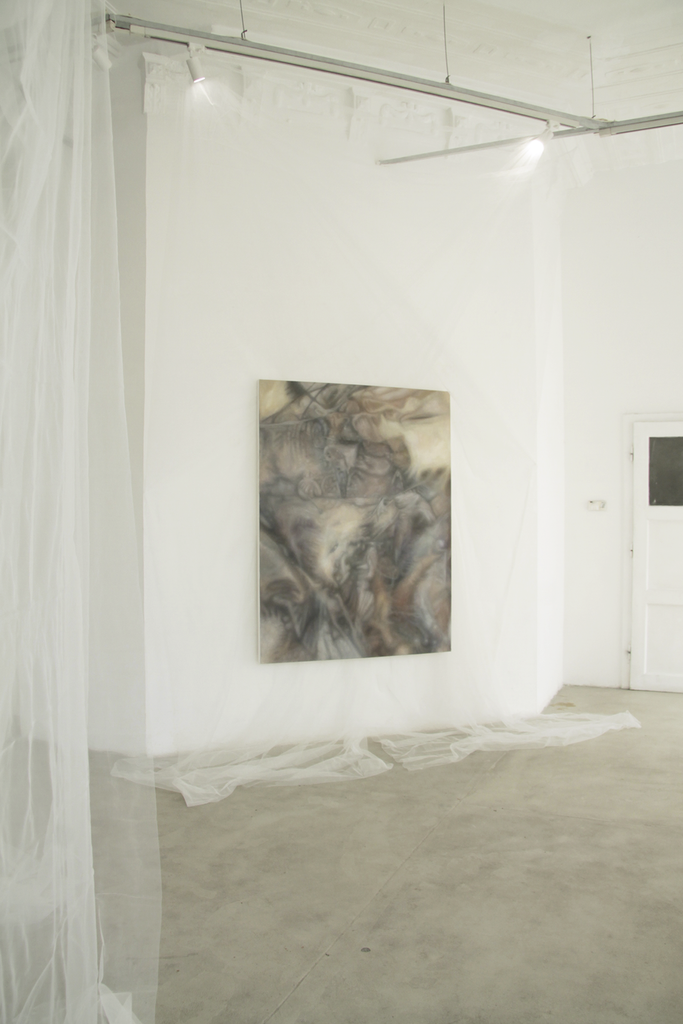
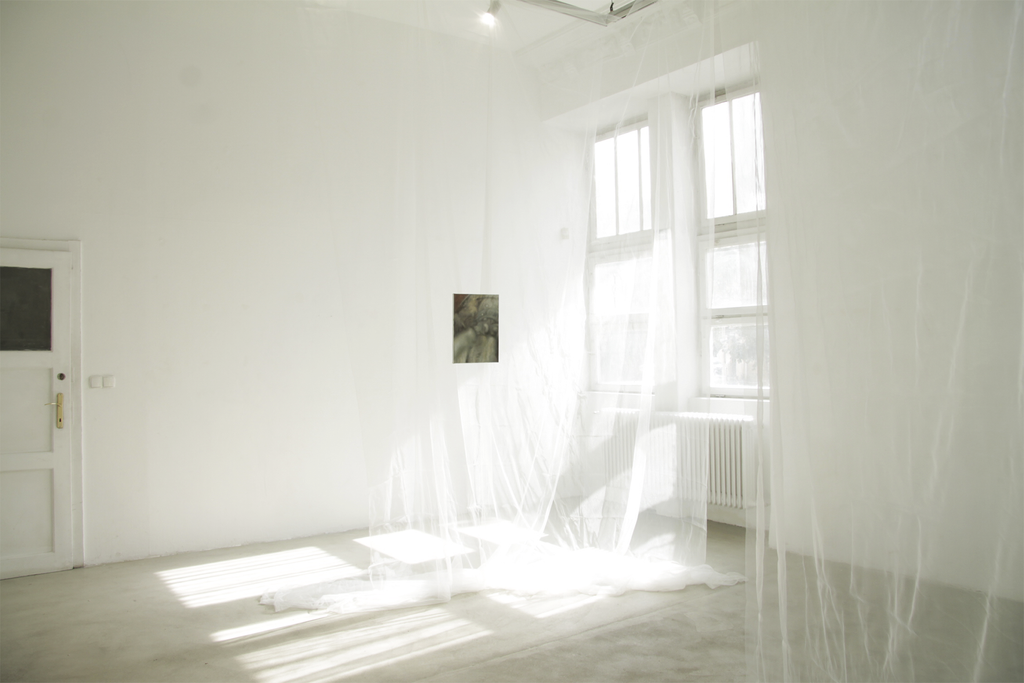
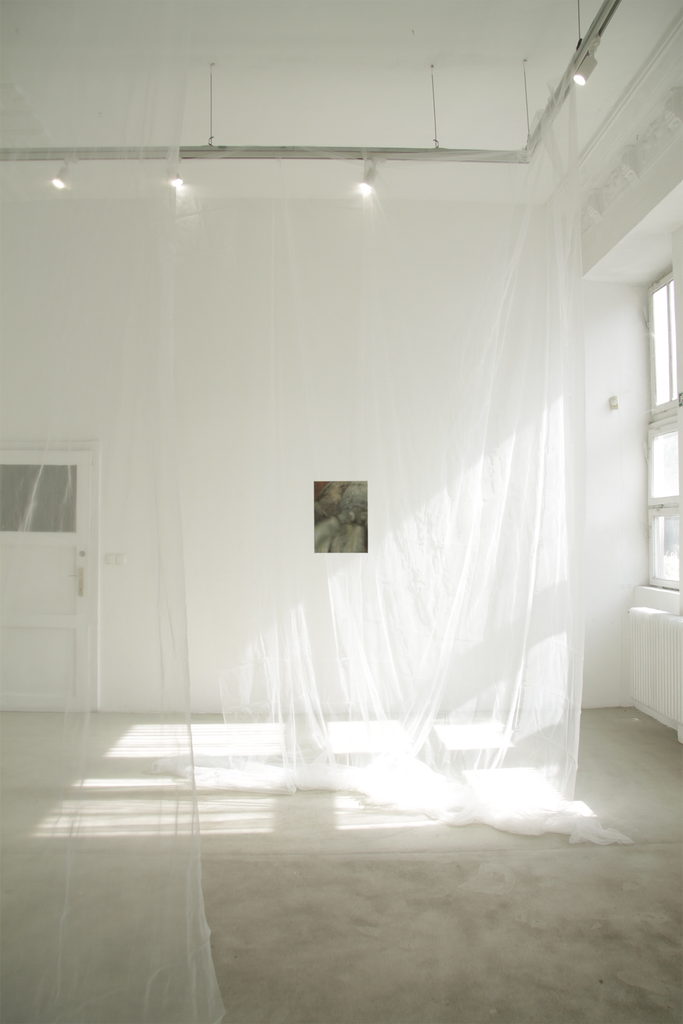
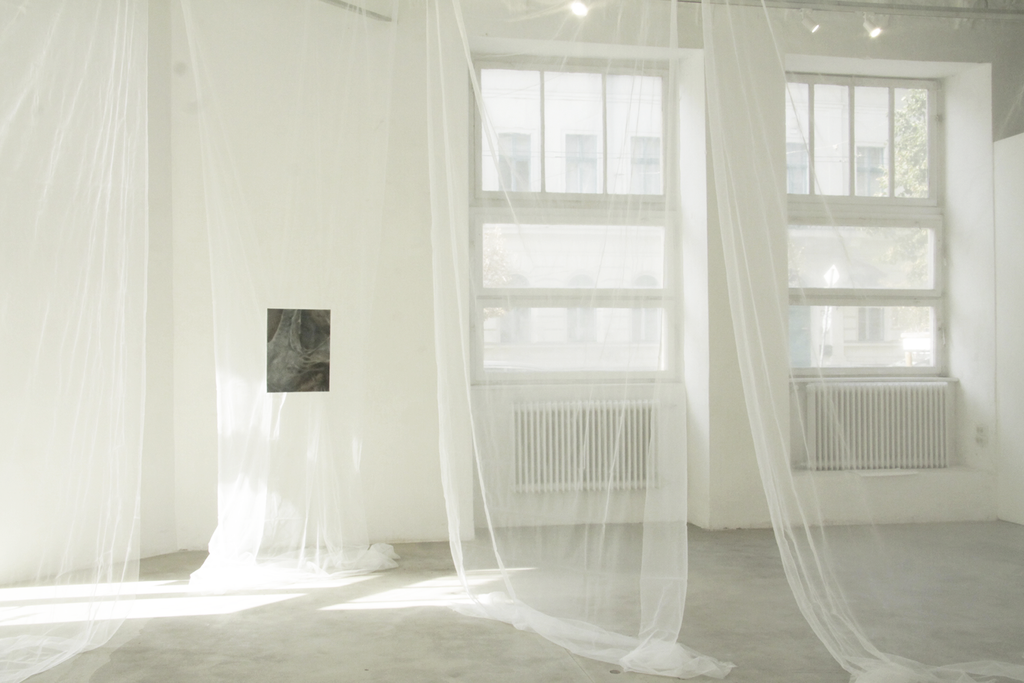
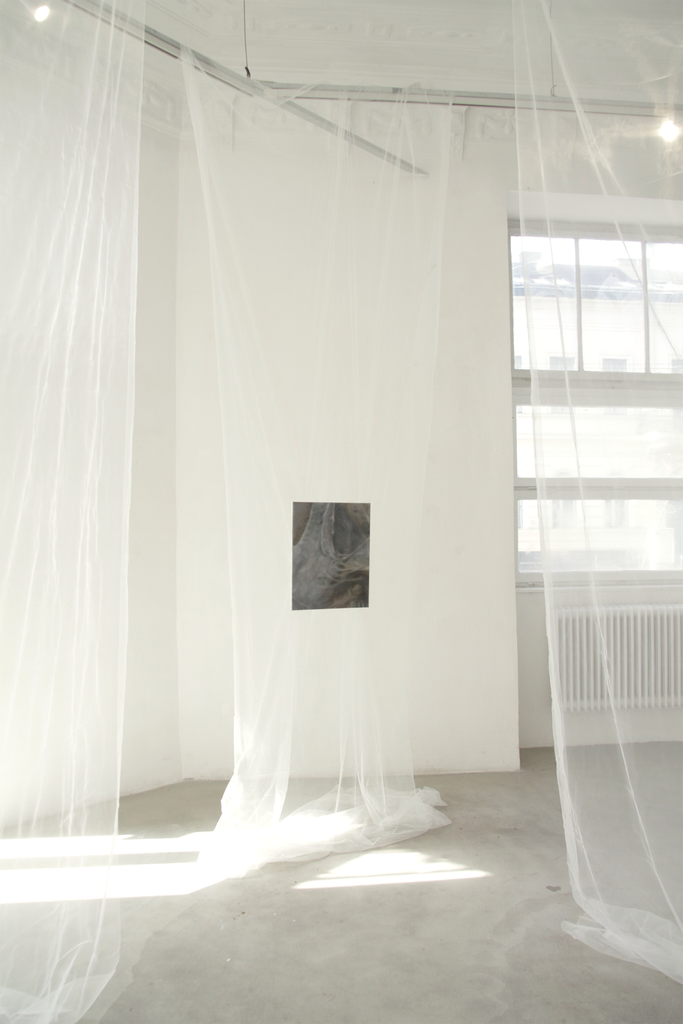
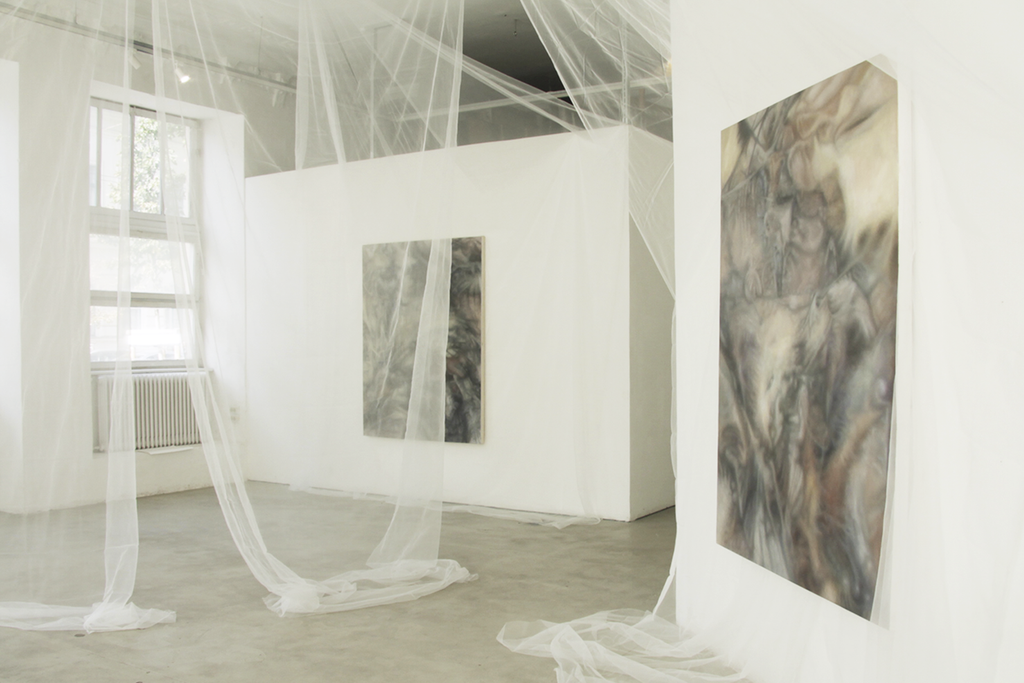
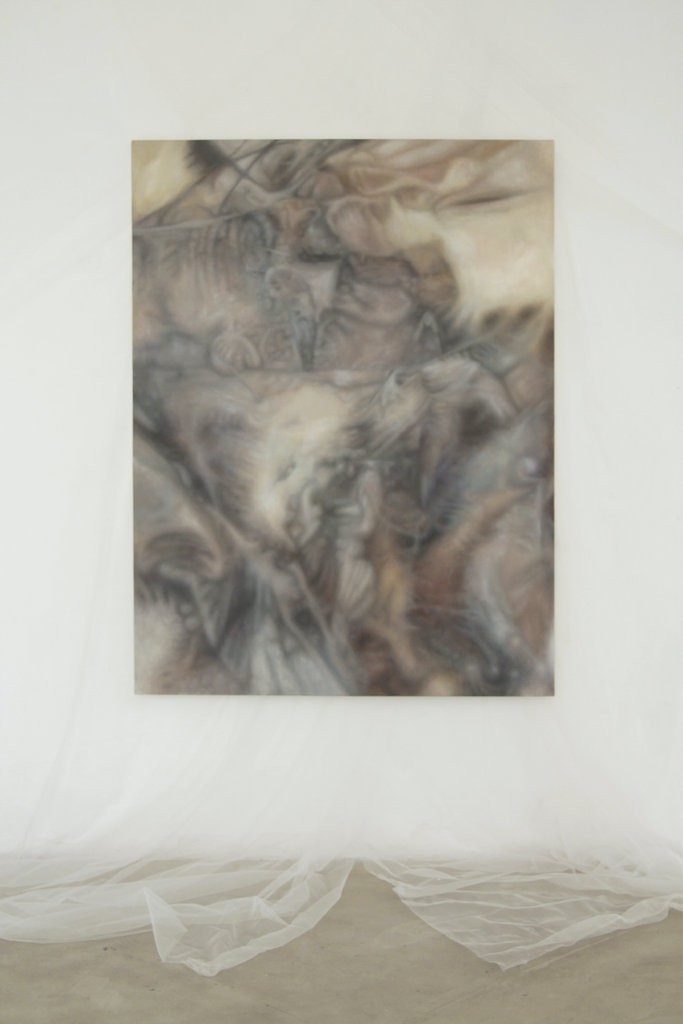
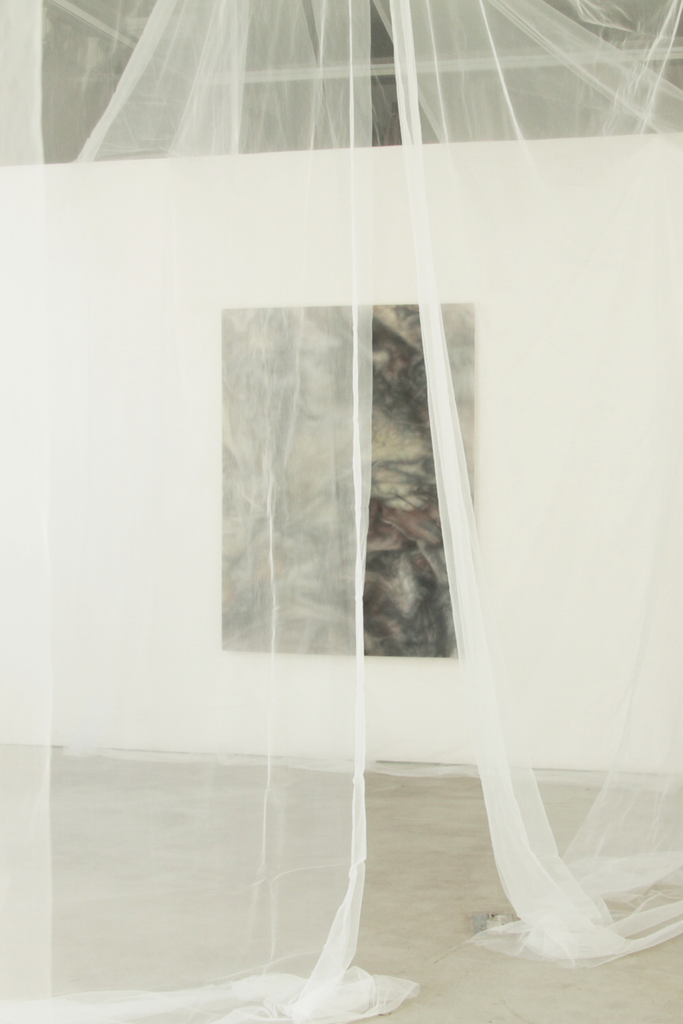
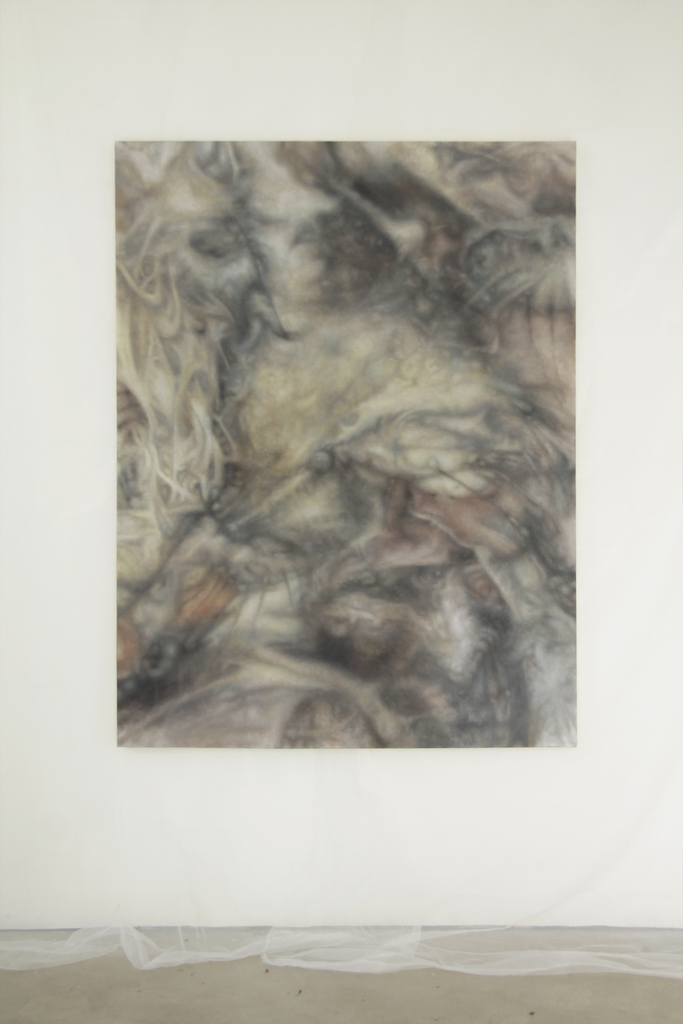
Gombos Lilla’s exhibition ENMESHED presents works created during a two-month residency at the Studio of Young Artists’ Association (FKSE). The exhibition features a series of oil paintings entitled Musca Domestica – the Latin name for the common housefly. Gombos places these familiar, everyday creatures at the centre of the series, creatures that tend to evoke the same associations: they buzz, land on our food, get in the way, and we try to get rid of them. Flies have become such a familiar part of our surroundings that we may no longer even think of them as animals. After all, how else could it seem so self-evident that a fly swatter is a household item?
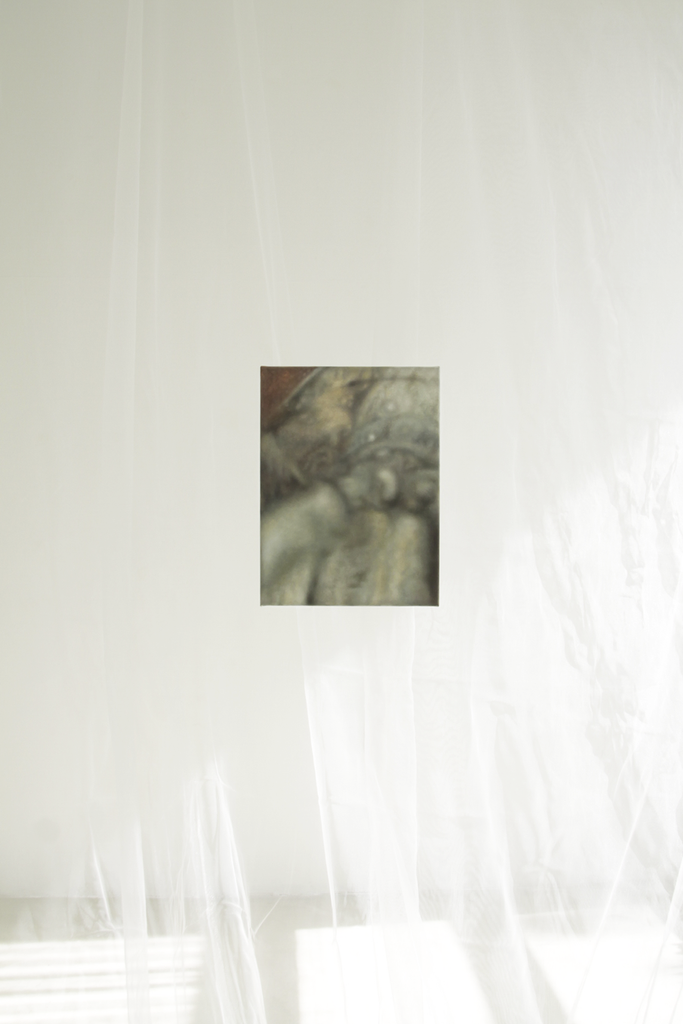
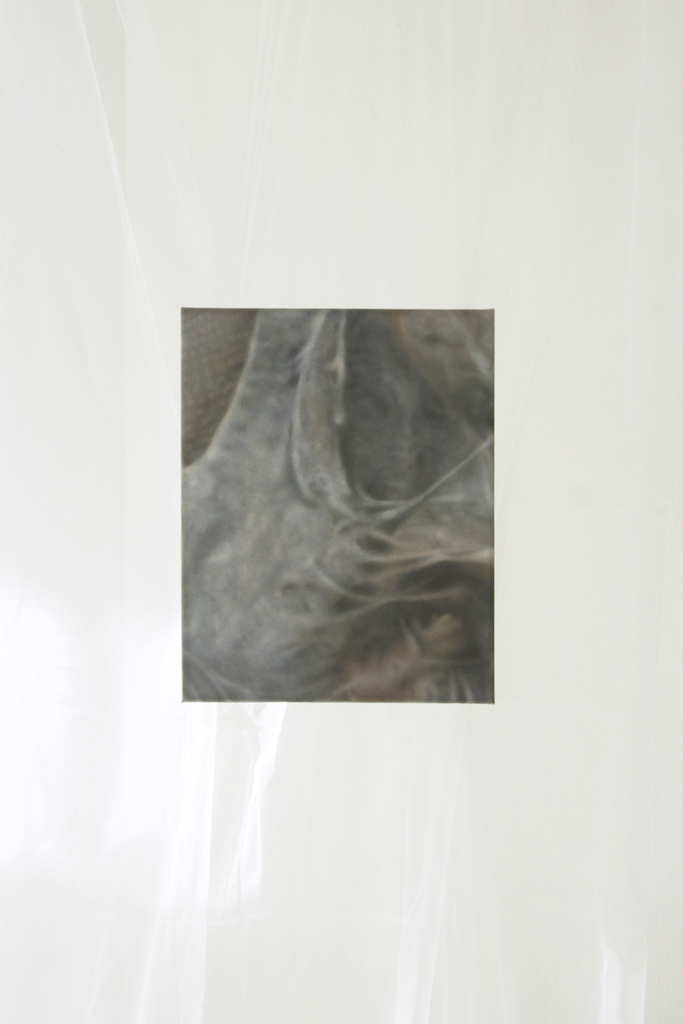
The series takes photographs of flies as its starting point. The artist enlarged the images until the recognisable form of the animal almost completely dissolved, transforming into textured, abstract structures. Gombos further develops these surfaces through translucent, finely layered applications of paint. The fly thus becomes simultaneously larger and more difficult to recognise: while enlargement brings it closer to the gaze, it also distances it visually from the image through which we normally identify it.
The research accompanying the works also extended to the role of insect screens. The artist examined advertising images in which these screens appear not merely as a means of protection against insects, but as an element of the orderly, safe, and perfect home.
In his essay Why Look at Animals?, John Berger examines how the relationship between humans and animals was radically transformed by industrialisation and modern urban life. Animals were gradually displaced from humans’ everyday surroundings, while their images and representations became part of consumer culture. Gombos Lilla’s works make visible an everyday yet largely unrecognised consequence of this transformed relationship.
The paintings in the Musca Domestica series turn this familiar relationship on its head. Here, the fly is not an unwanted nuisance, but a monumental, sensual, and almost tangible presence. The paintings compel the gaze to linger on what we would normally brush away instinctively – and in doing so, make visible the boundary we tend to take for granted between the human and the non-human world.