





El fondo del aire
Manuela García, with an intervention by Giuseppe De Mattia
Curated by Vasco Forconi and Marco Valtierra
The exhibition opens as a collective conversation around the real and its frictions with imagination, becoming a reflection on processes of cultural translation and the diverse imaginaries of the south between the Mediterranean and Latin America.
Within and around the space of Toast, two contrasting movements take shape: one of ascent, the castle in the air suggested by Manuela García, and another of grounding in the earth, proposed in counterpoint by Giuseppe De Mattia.
Manuela García’s practice starts from an unsettling premise: what we recognize as space is in fact configured from a series of sedimented perceptual habits. Space appears here as a field in constant friction, traversed by relations between bodies, materials, and modes of perception that never fully settle. Structures reveal their fragility, forms lose their apparent solidity, and perception becomes aware of its own conditions.
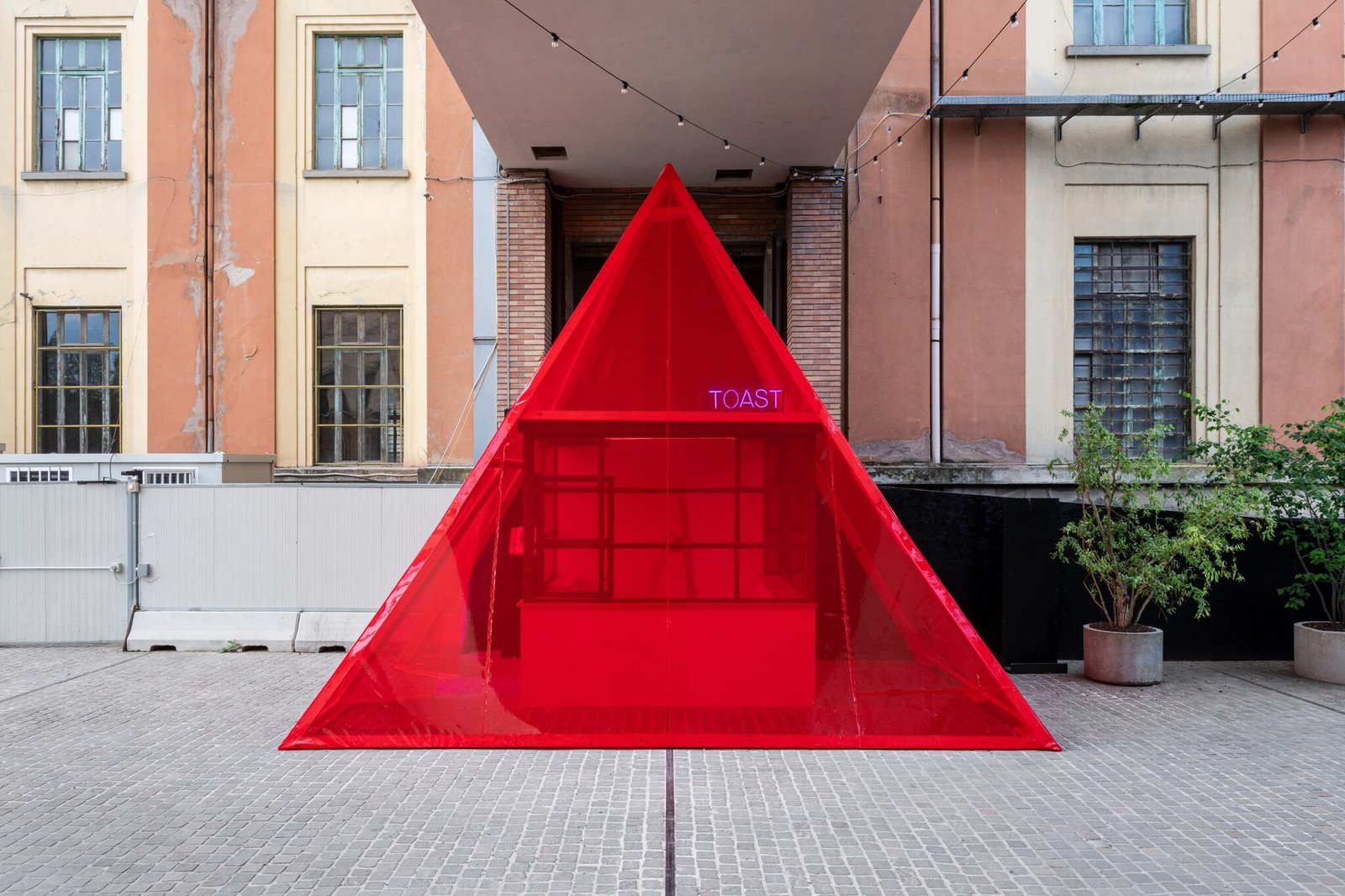
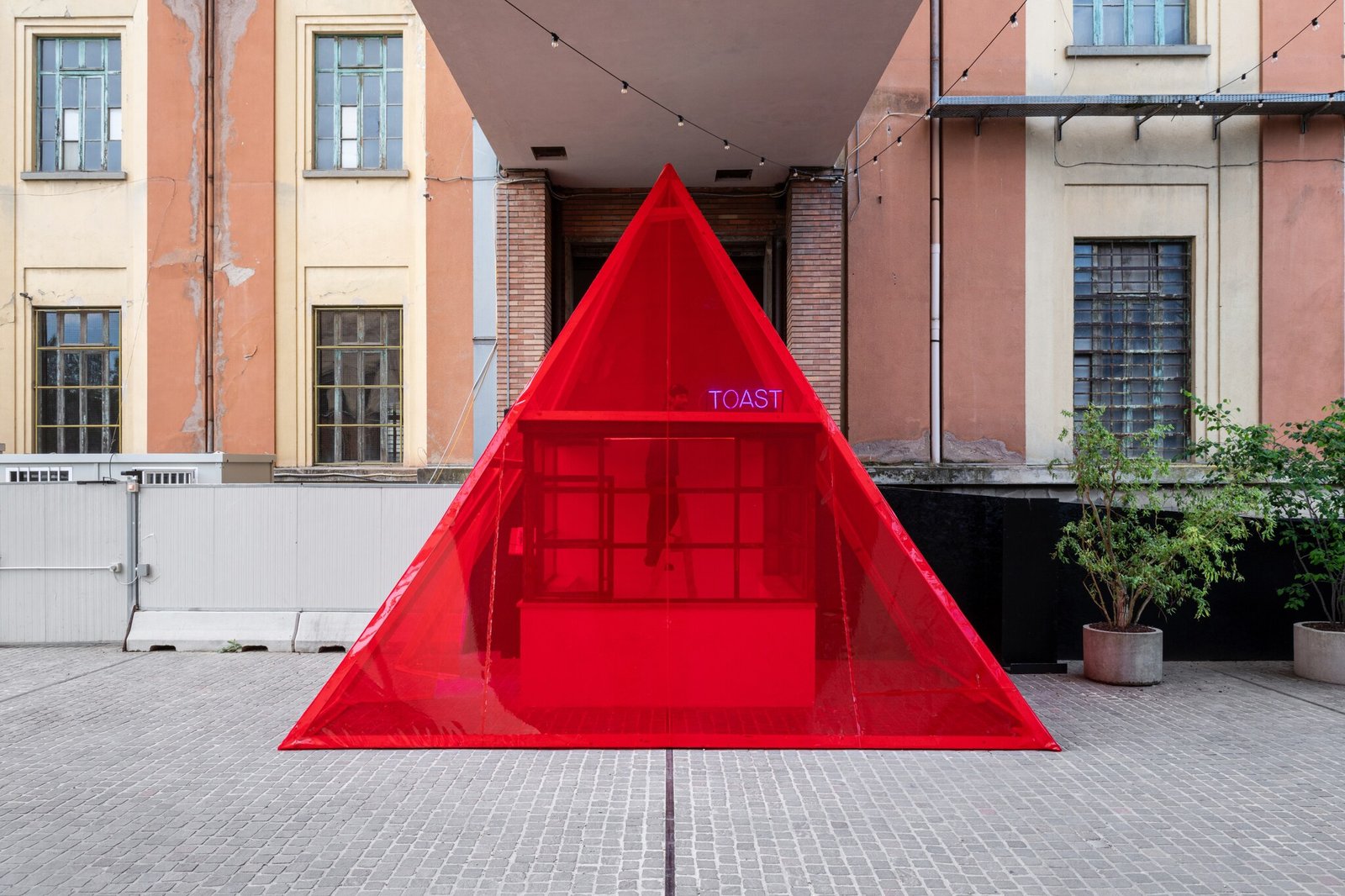
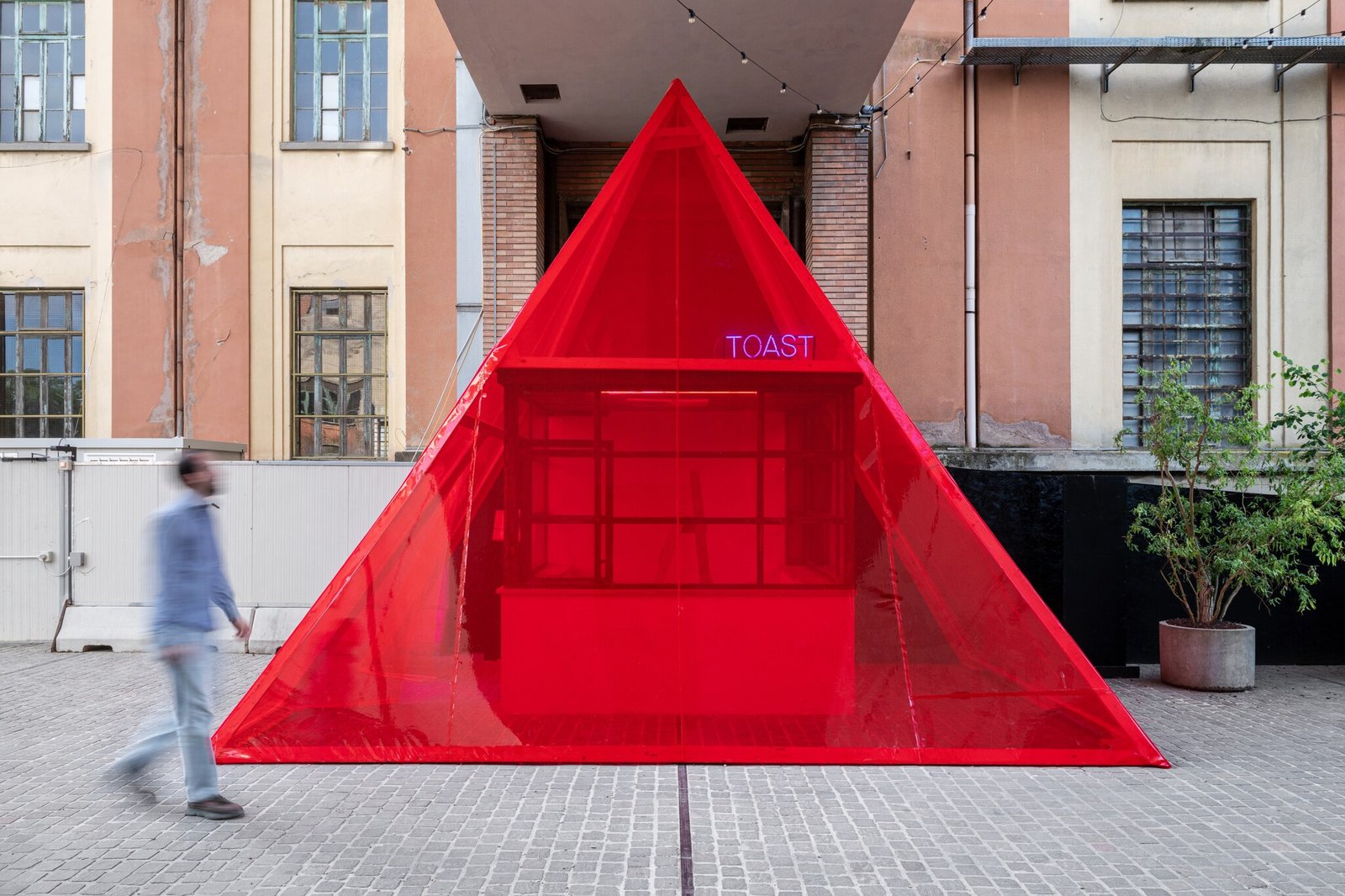
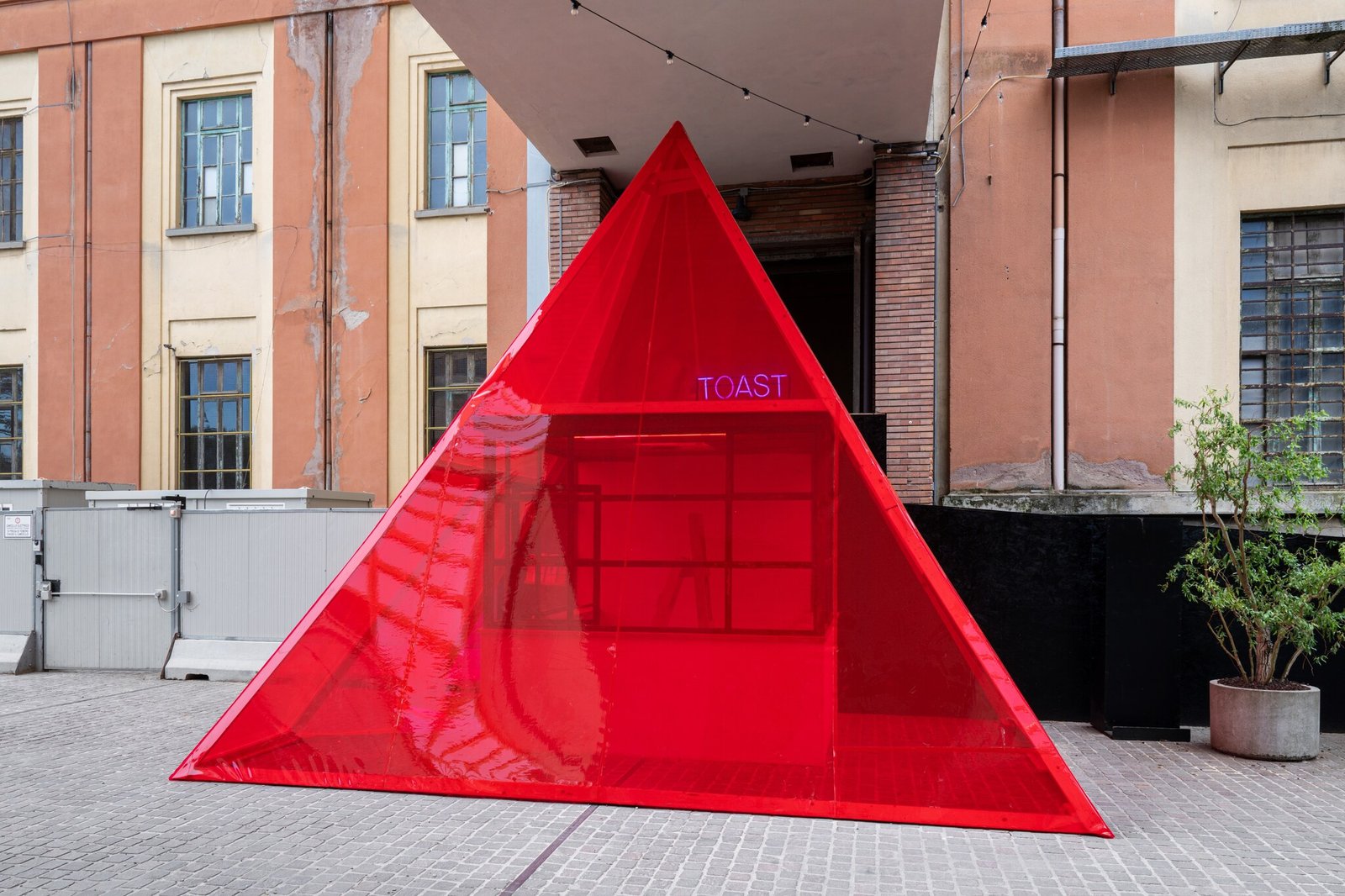
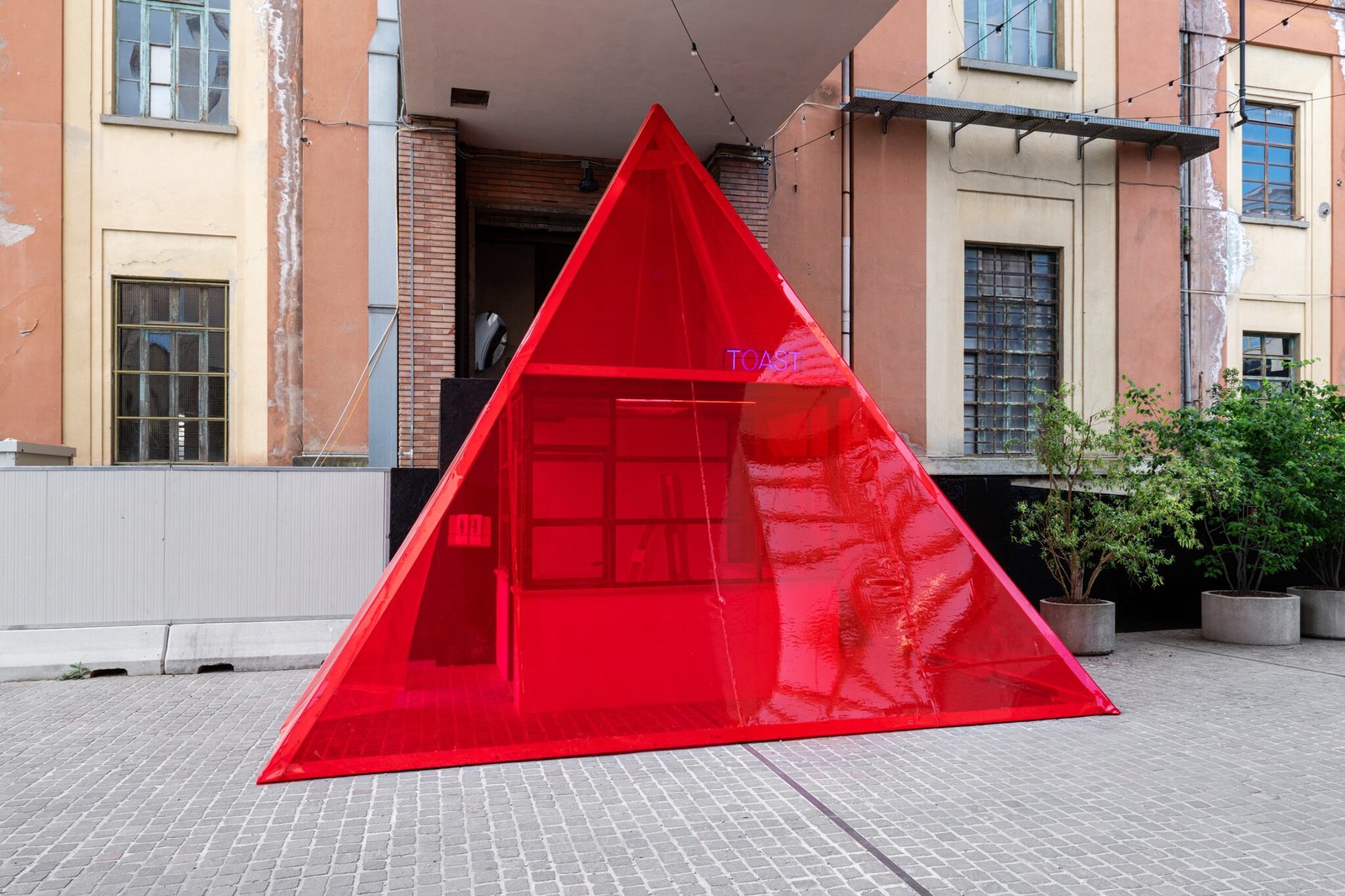
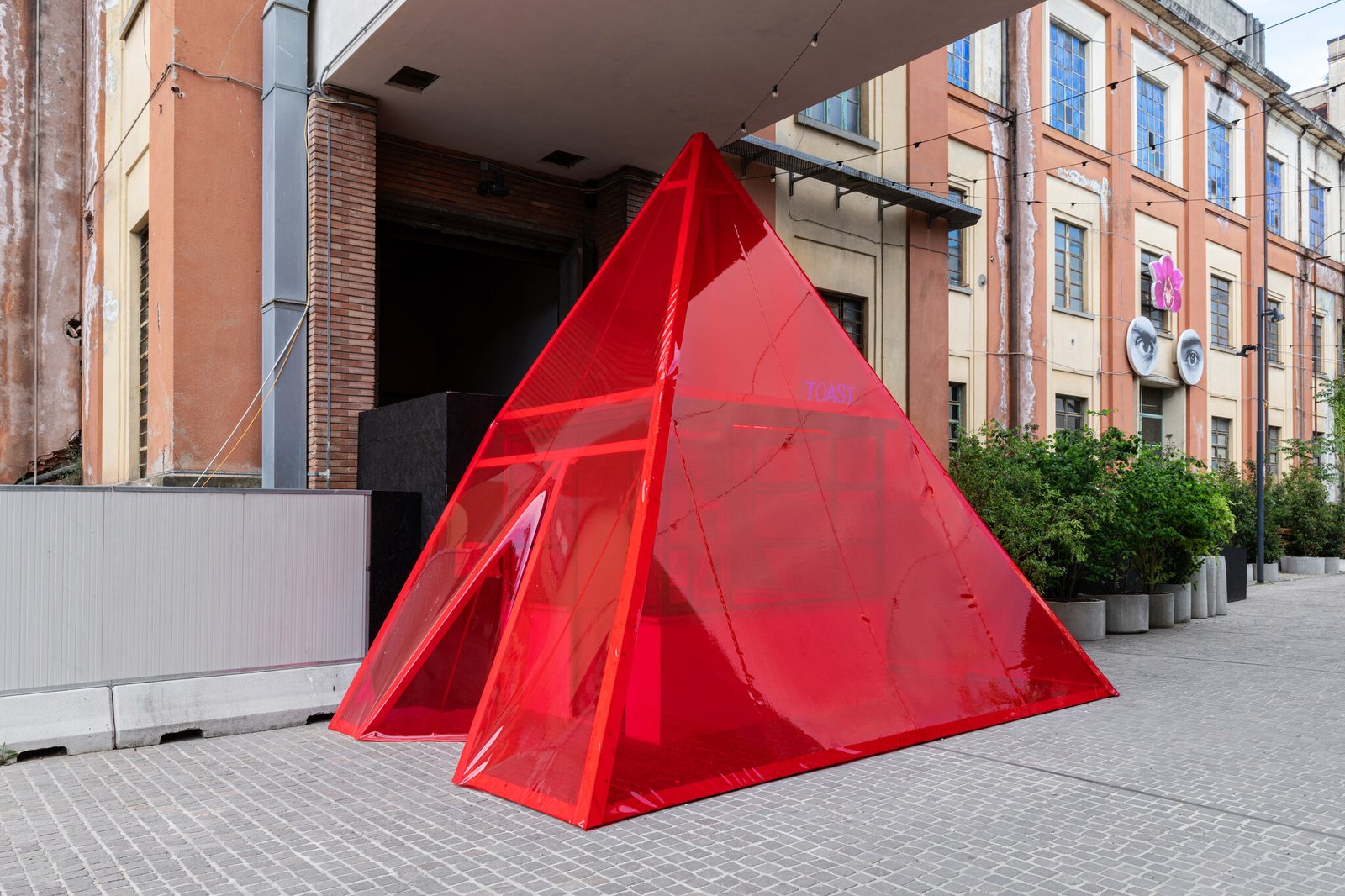
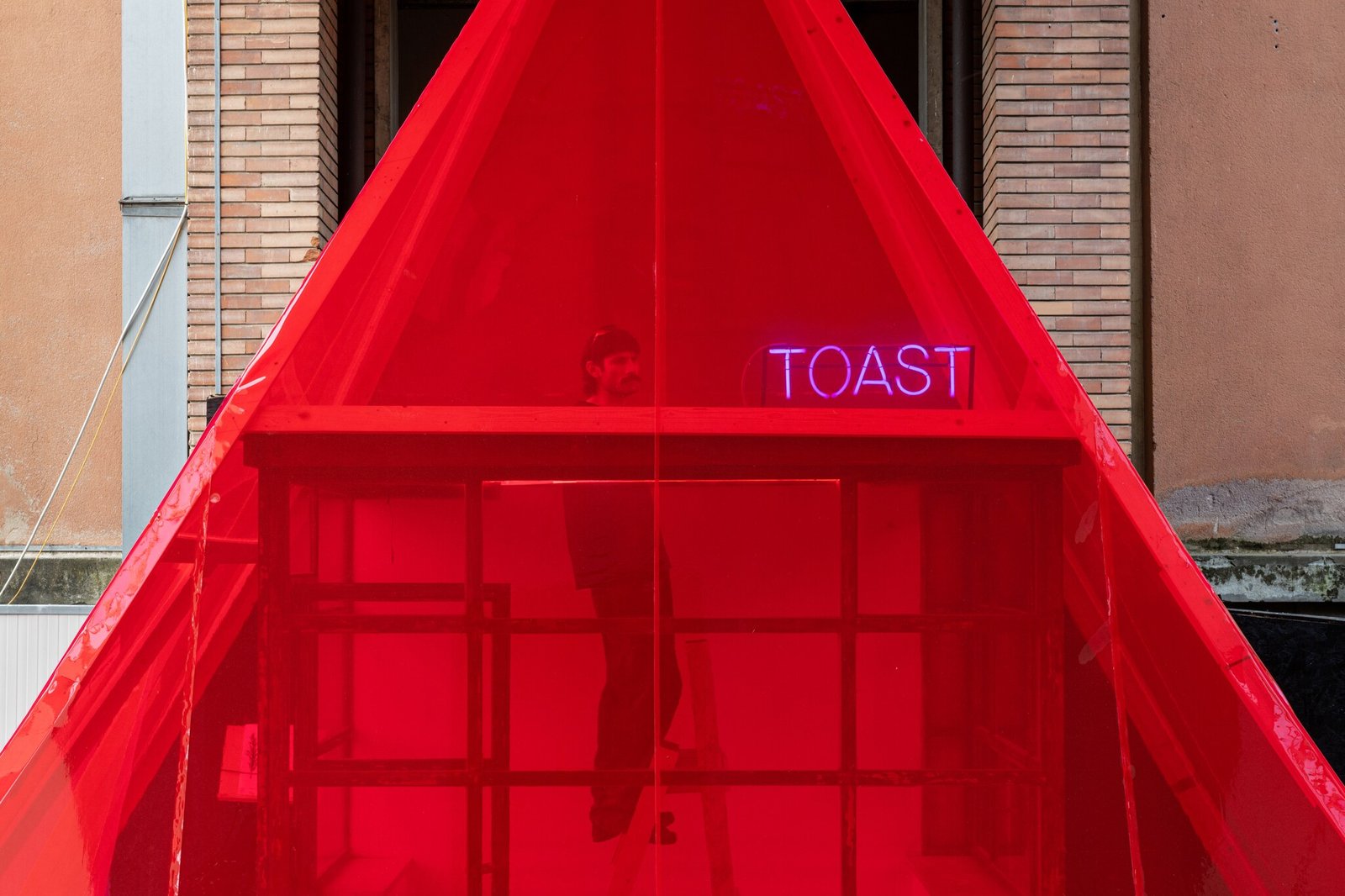
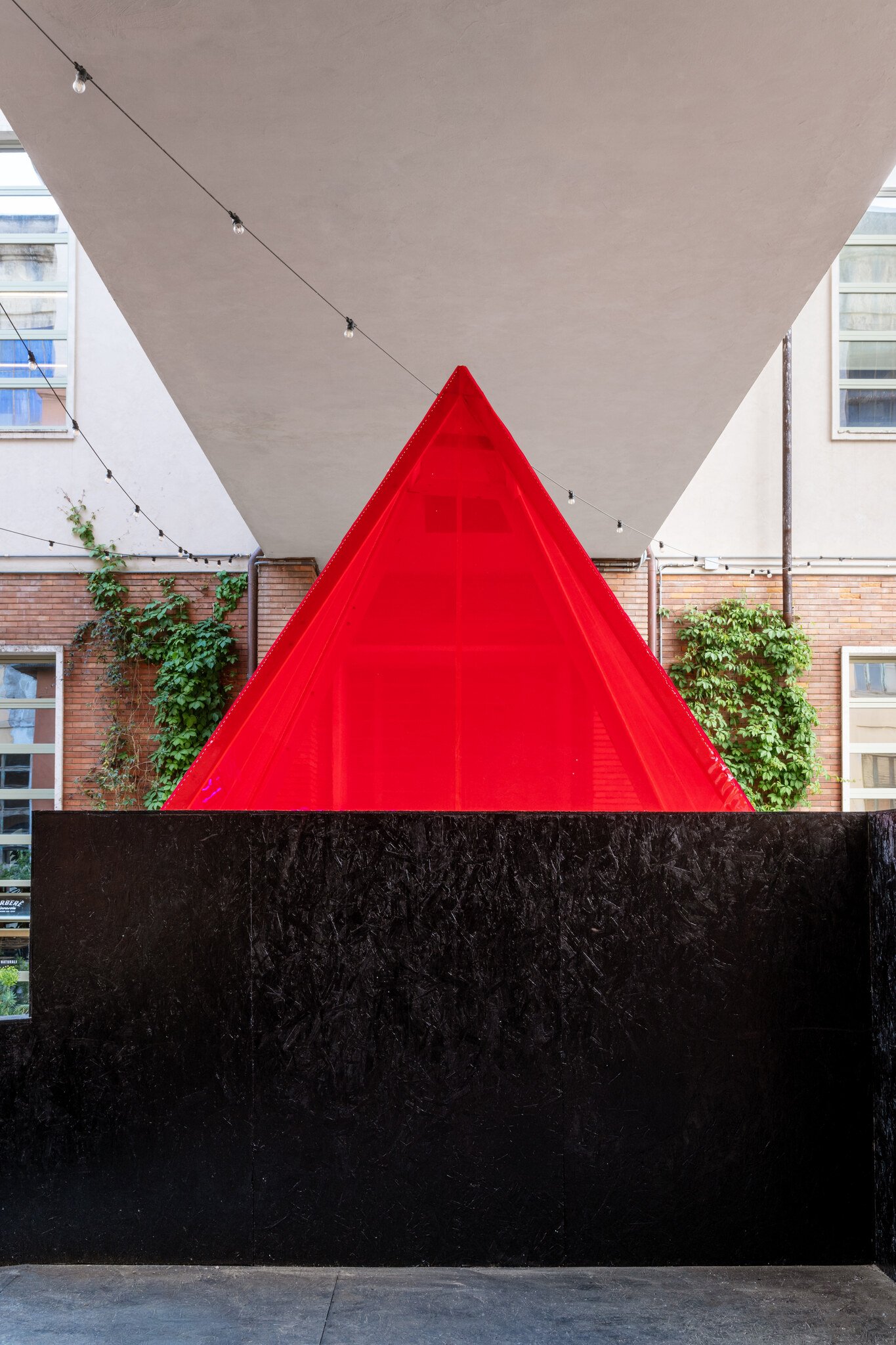
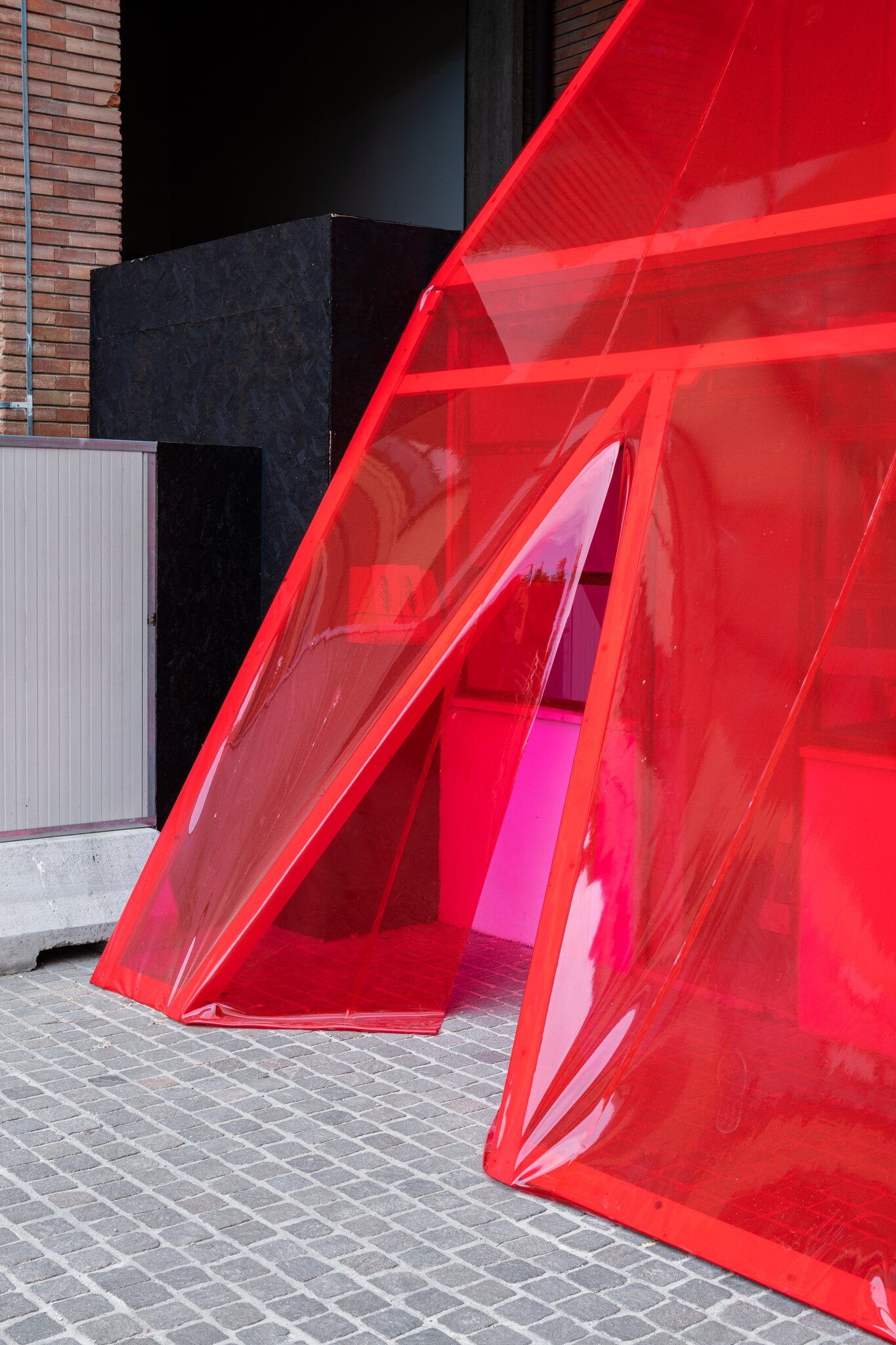
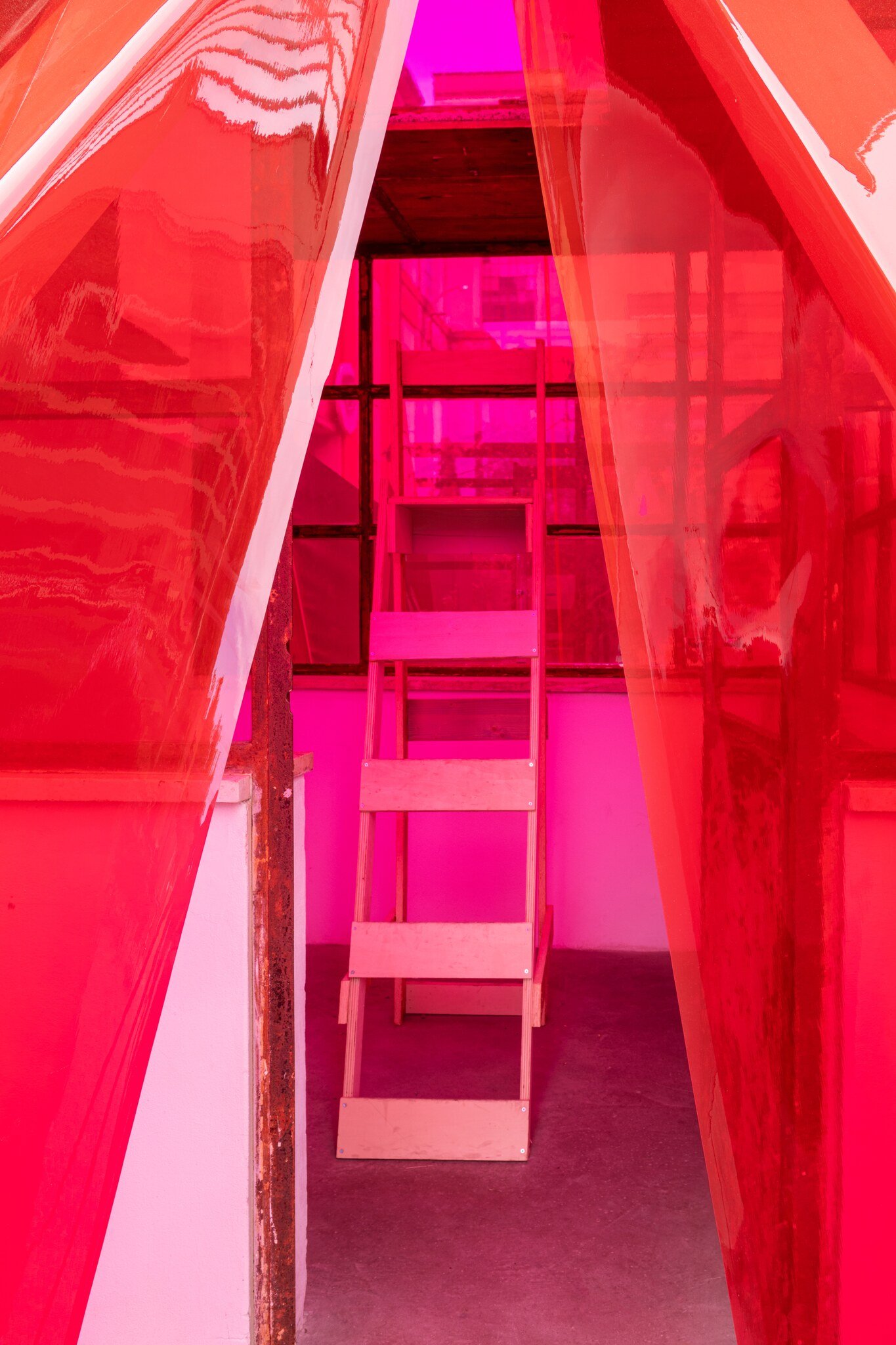
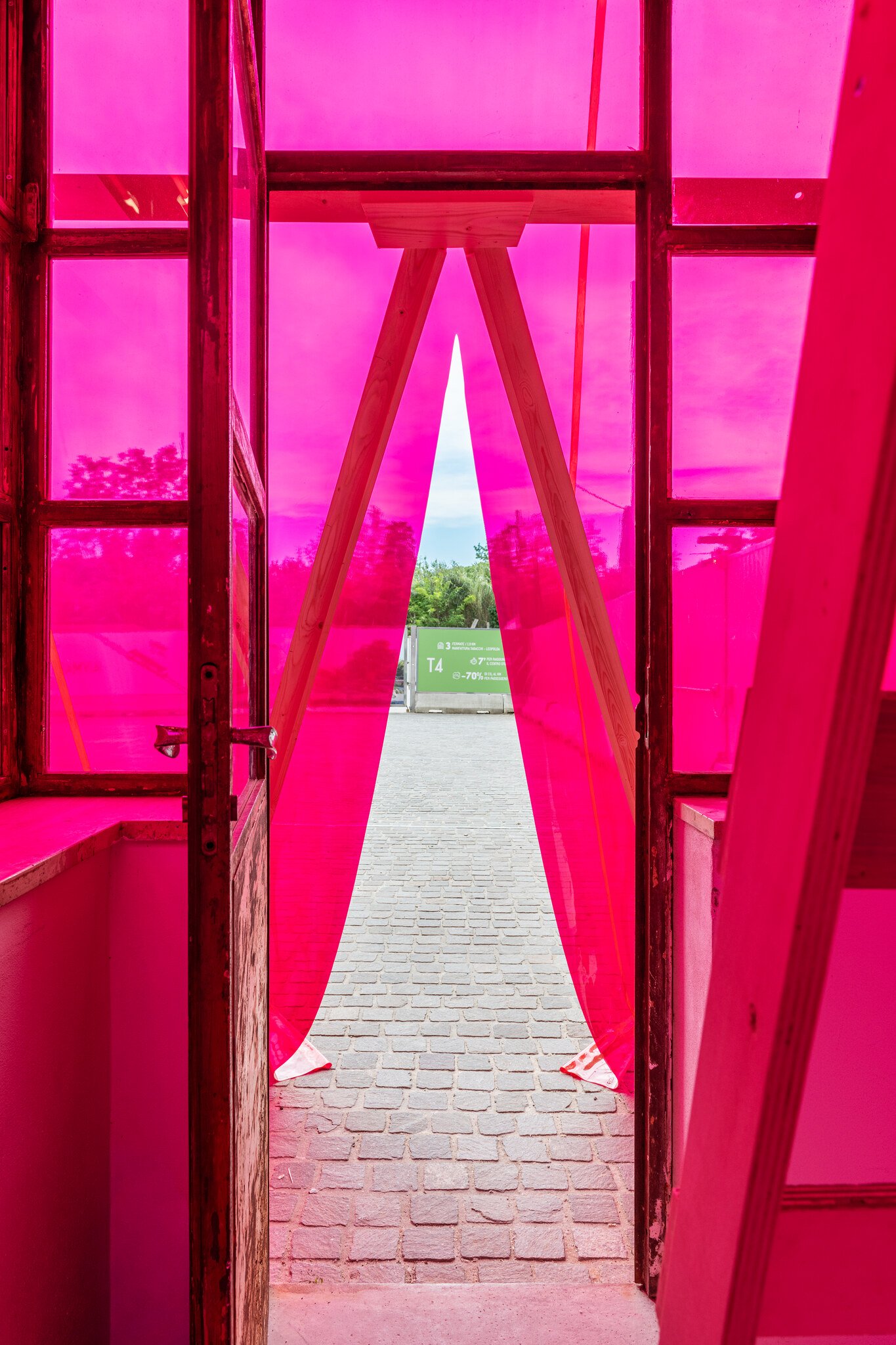
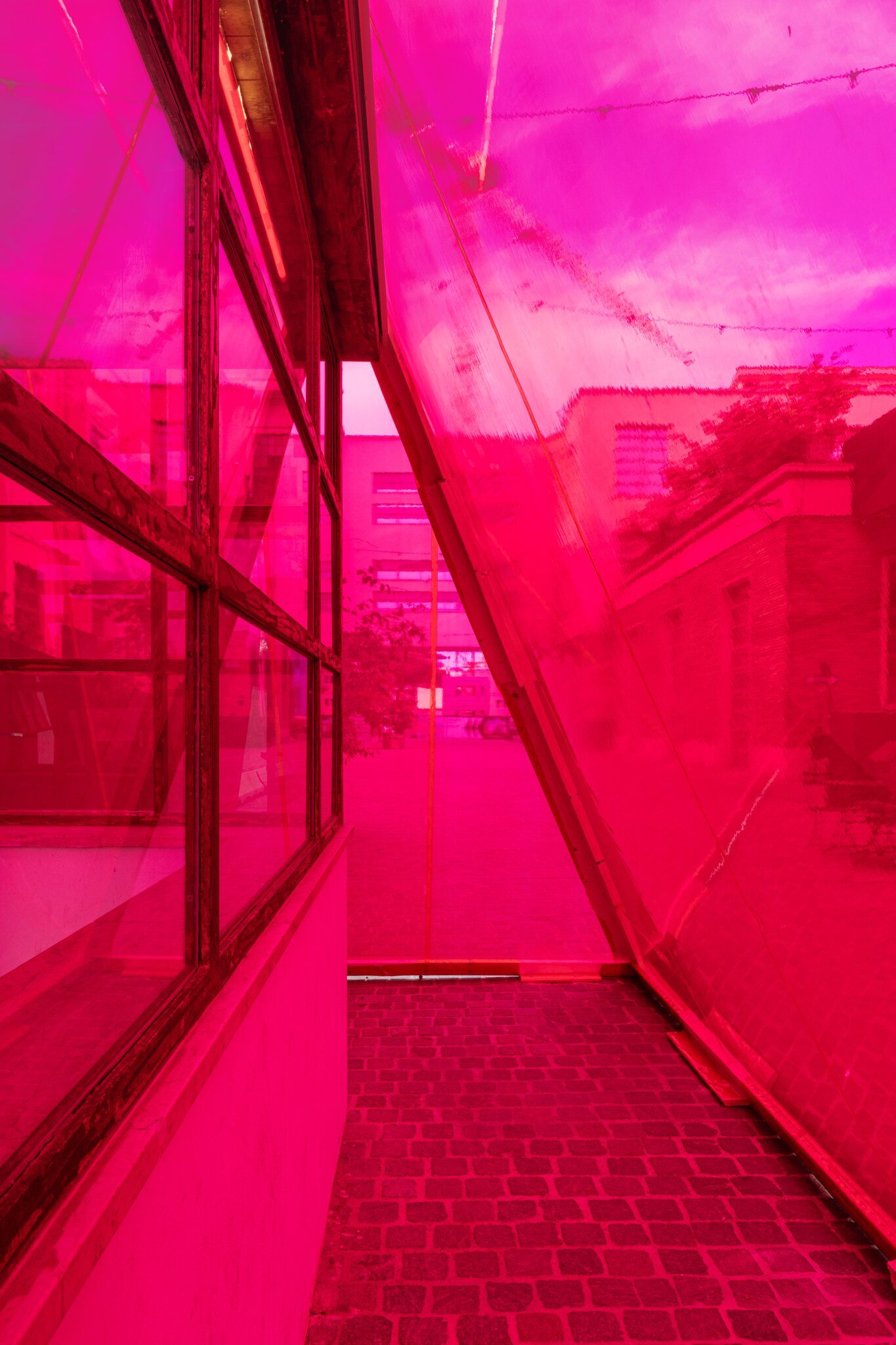
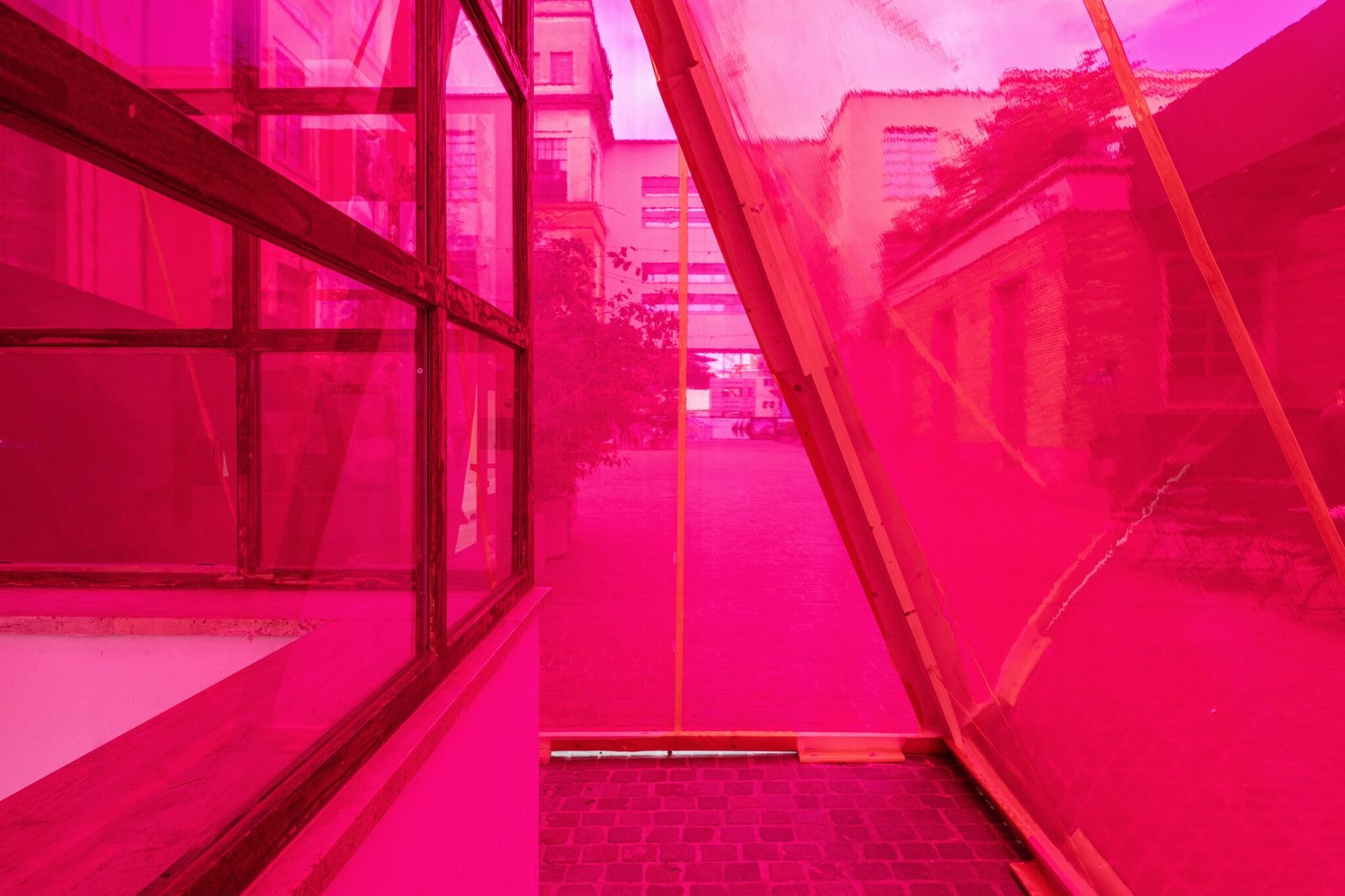
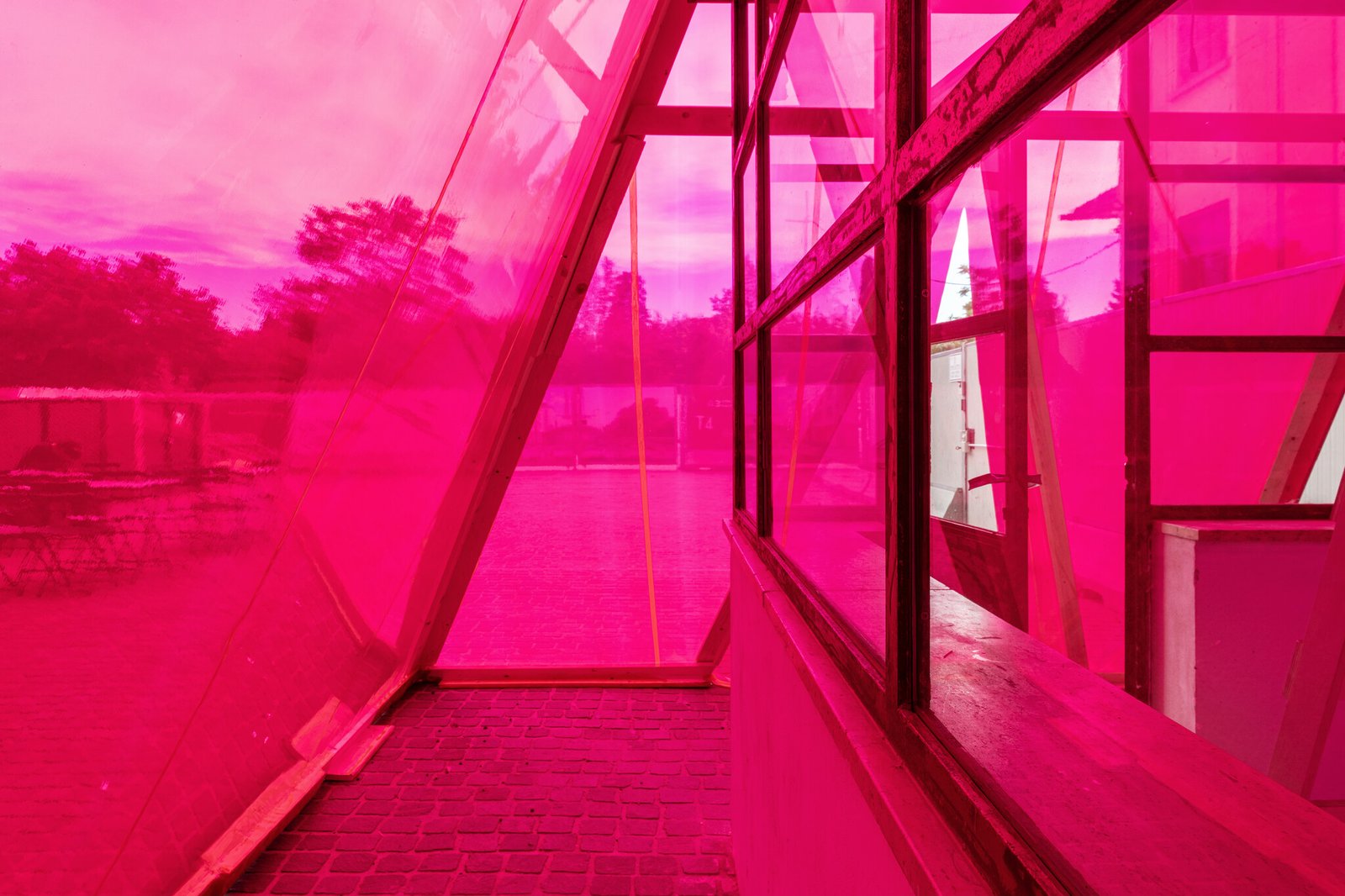
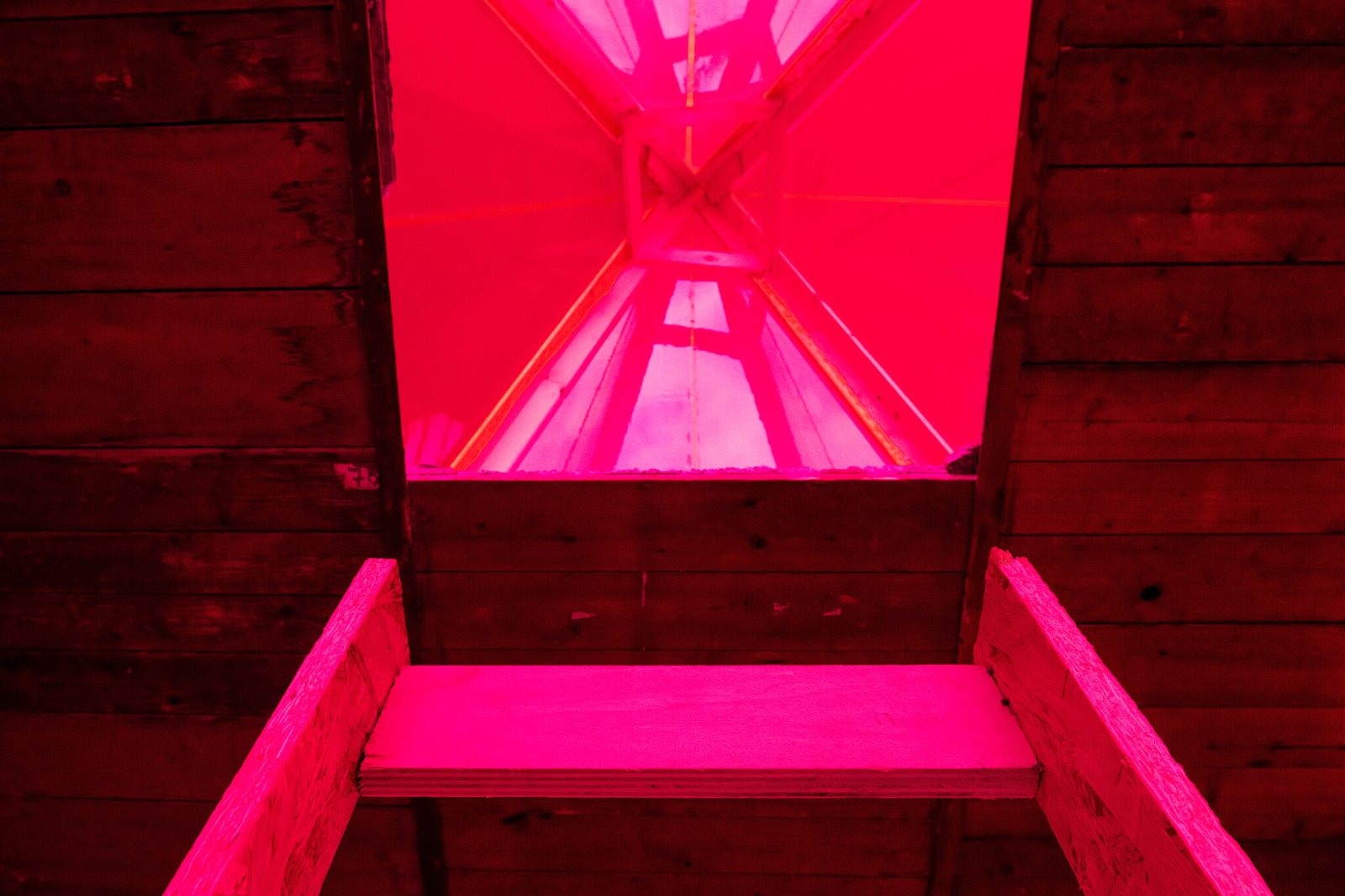
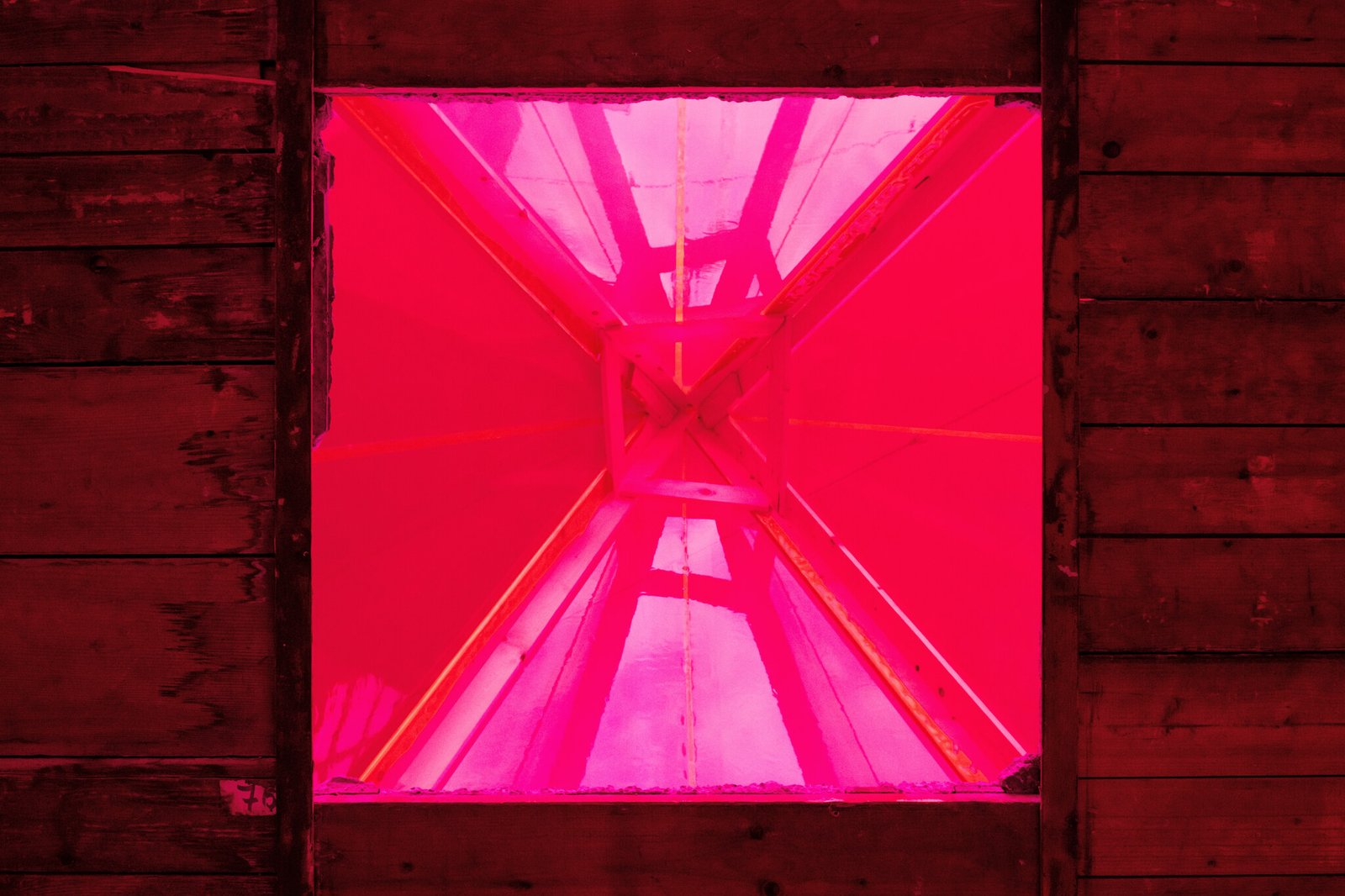
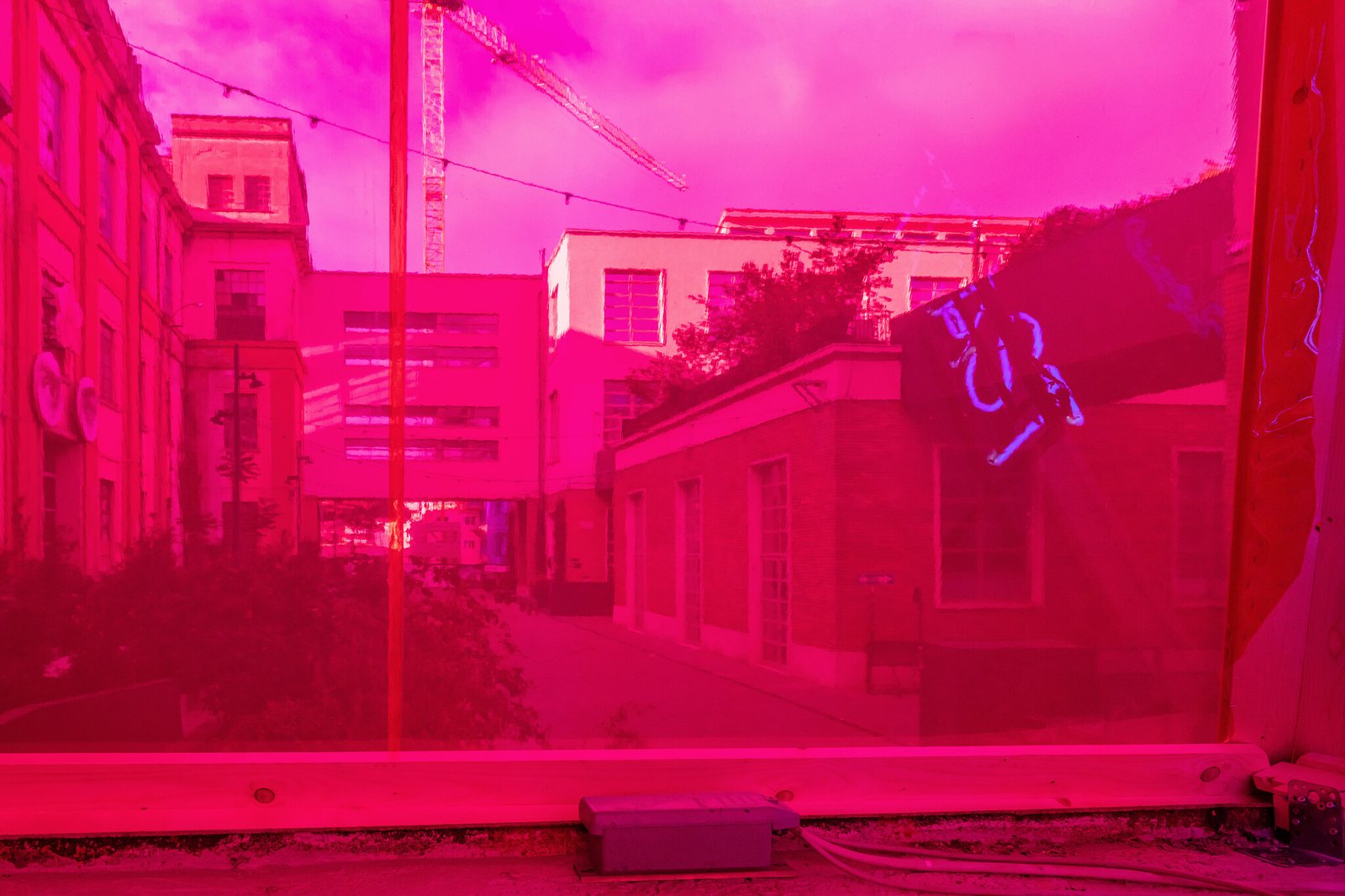
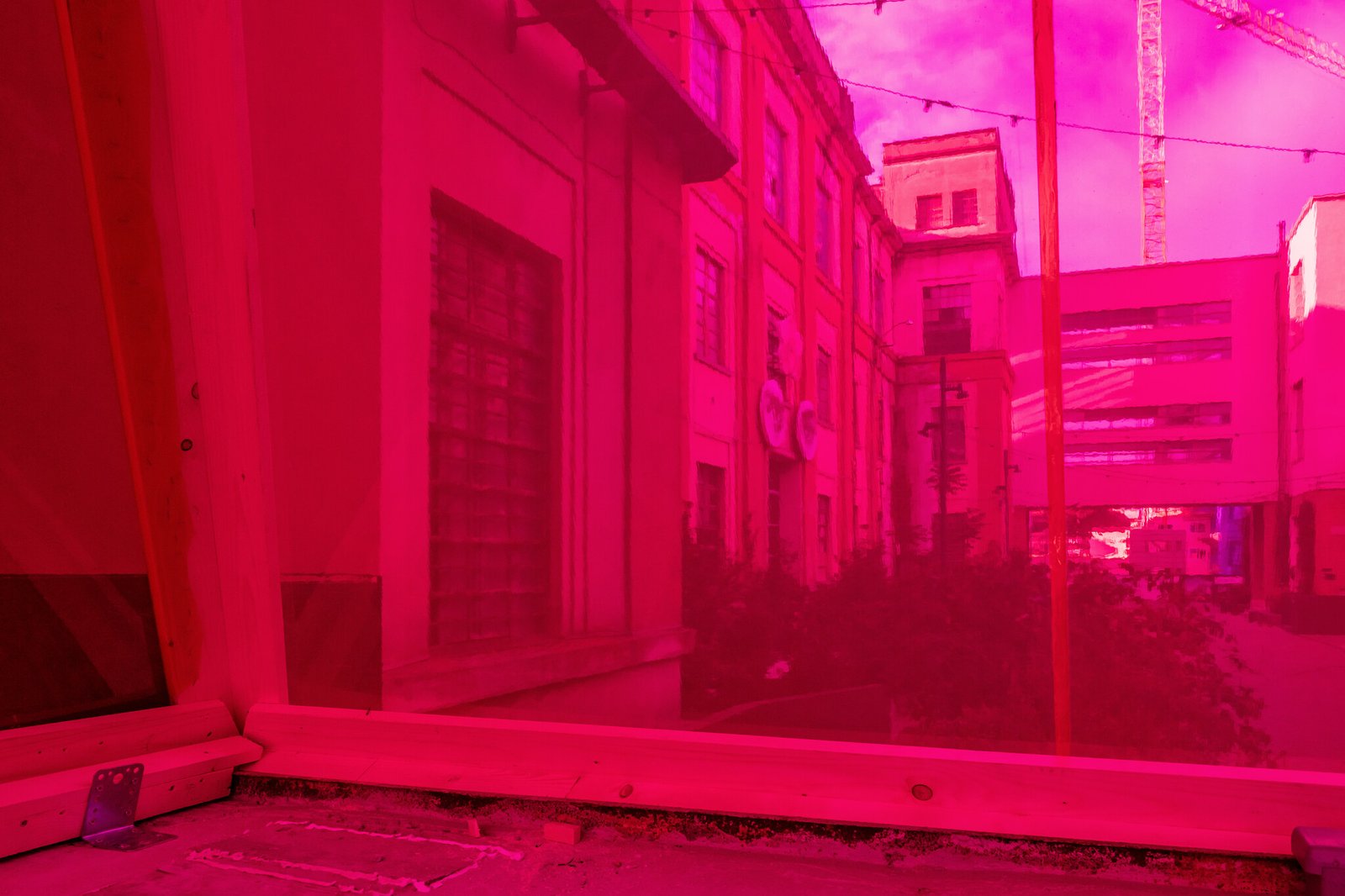
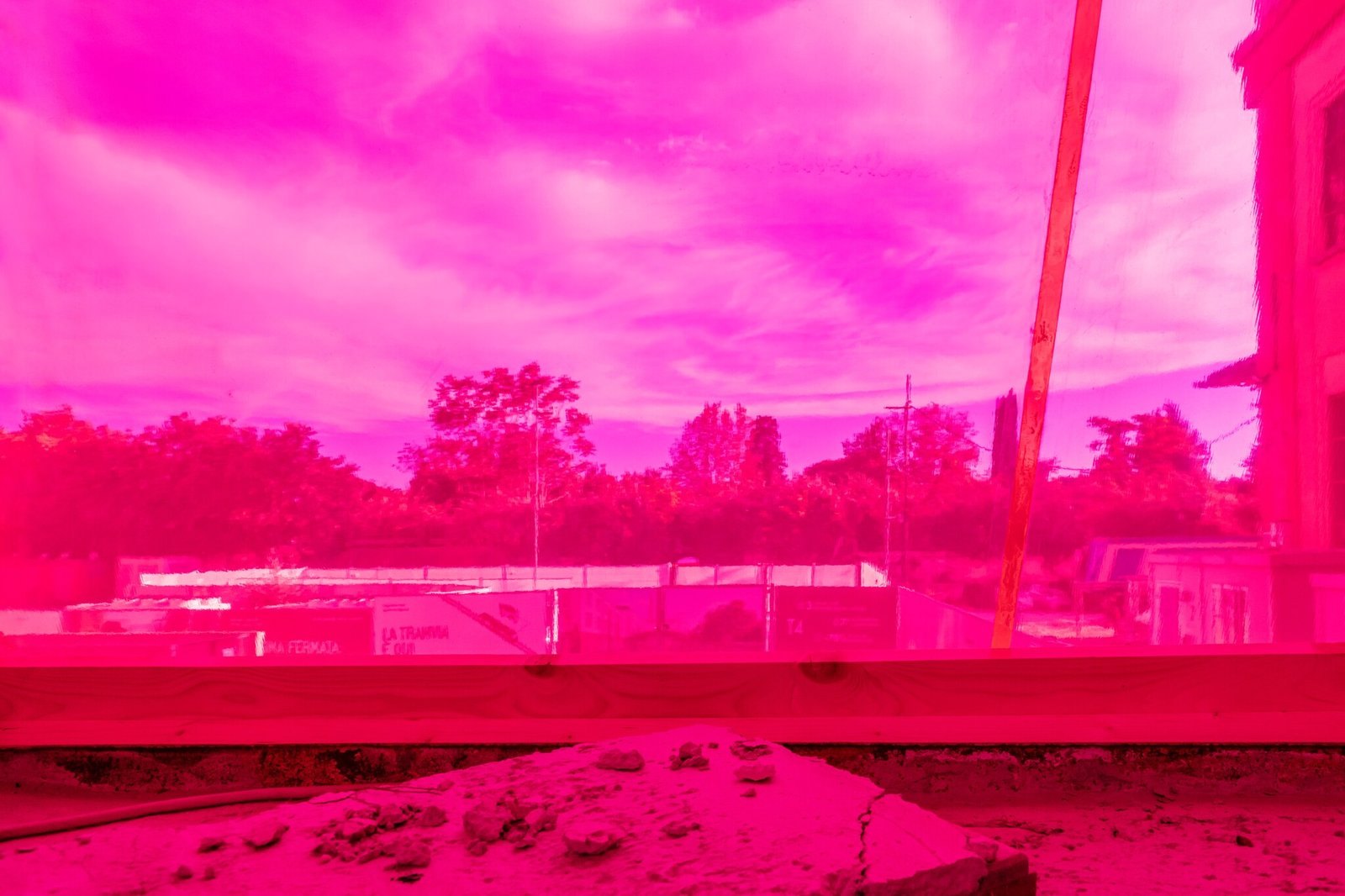
“El fondo del aire” inscribes itself precisely within this investigation. The piece —a pyramid of translucent red plastic— takes up a form charged with history and subjects it to a process of destabilization. The pyramid, associated with ideas of permanence and hierarchy, appears here light, translucent, pierced by light. In the logic of abstraction, the triangle emerges as a figure that reorganizes the square, contains it, and displaces it. The structure proposes an enveloping experience: a volume that can be inhabited, a contained air that rises toward its vertex. Within that interior, a concrete experience of spatial imagination takes shape.
This triangle is red, red as the most intense color of intellectual fulguration. In the words of Georges Didi-Huberman: “How can we forget that the background of our body is red? That blood, its vital principle, is also its colored inner atmosphere? That red is the color-pain of Imagination, our commons?” Red as the autonomous fire that leads us to construct ideas that may or may not become reality, to think in possibilities, to encompass a diverse world in continuous movement.
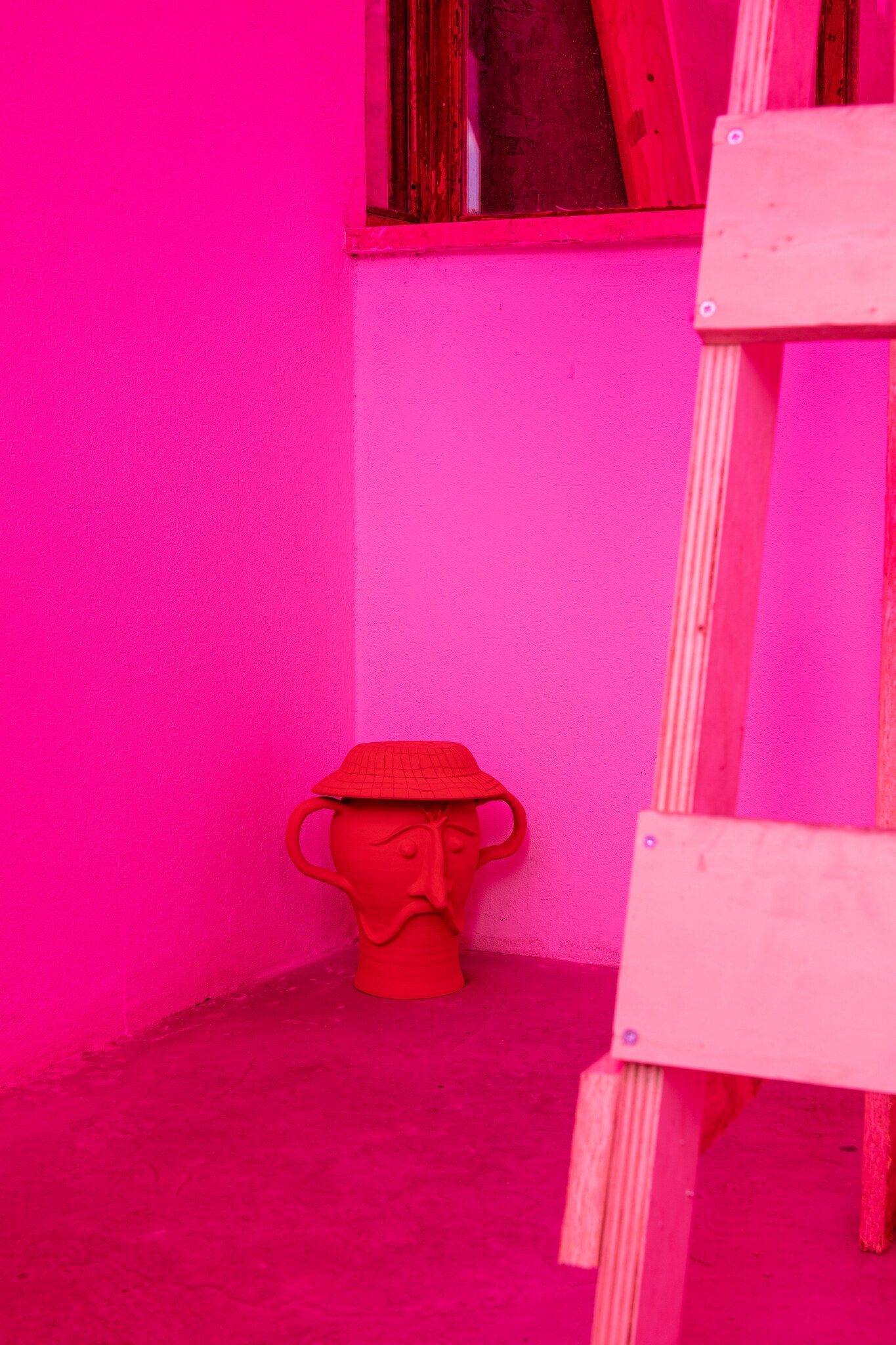
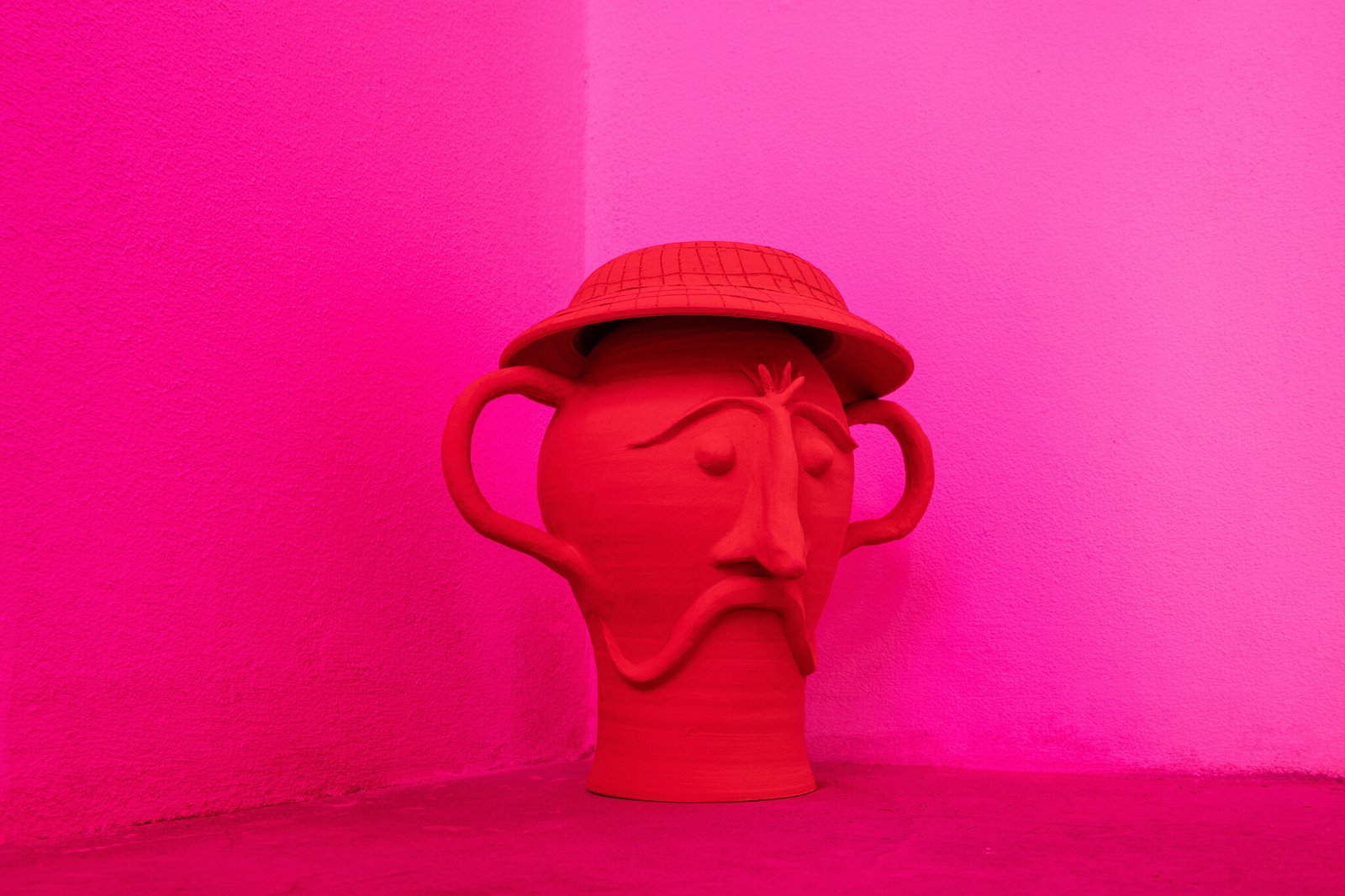
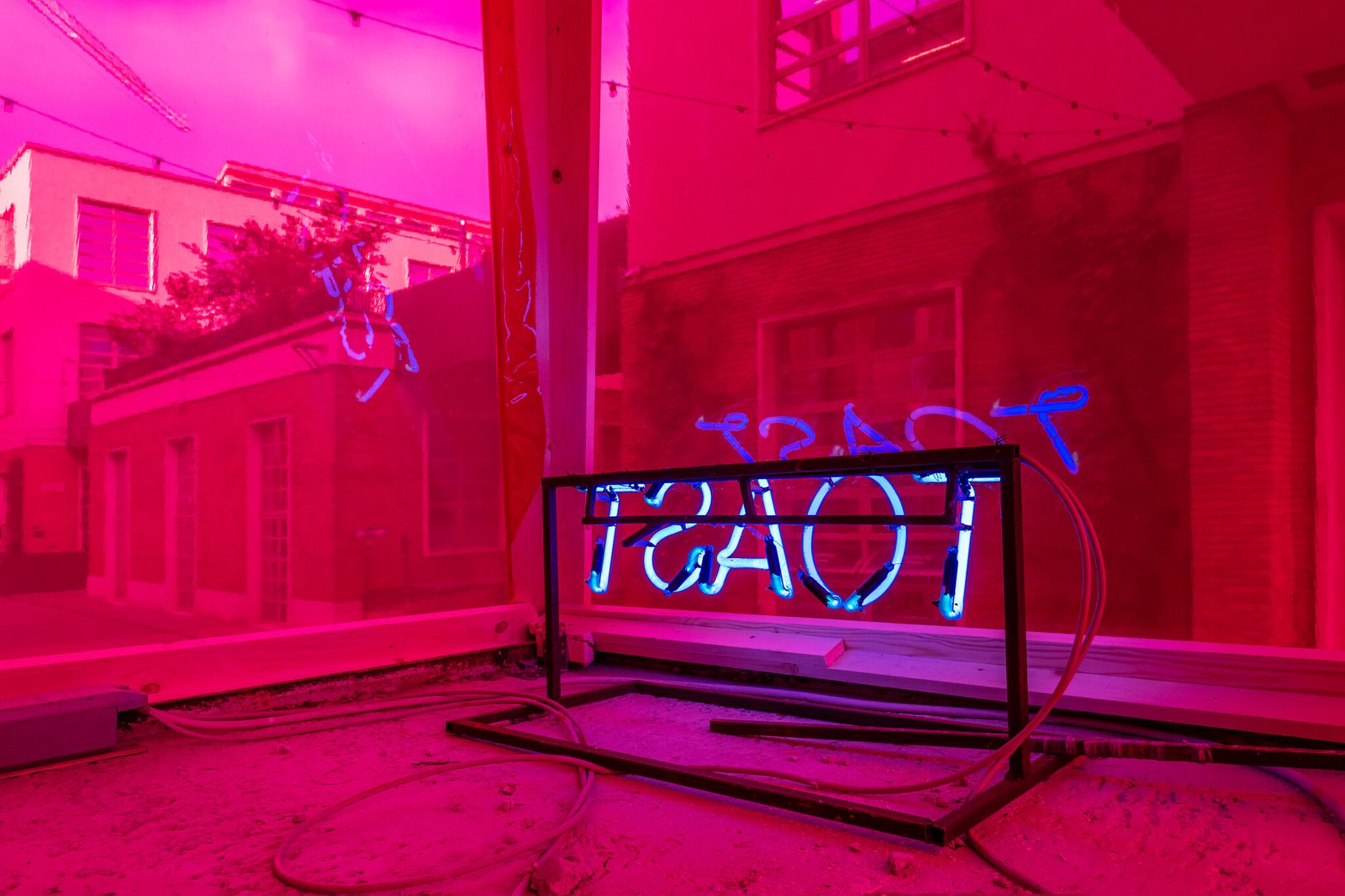
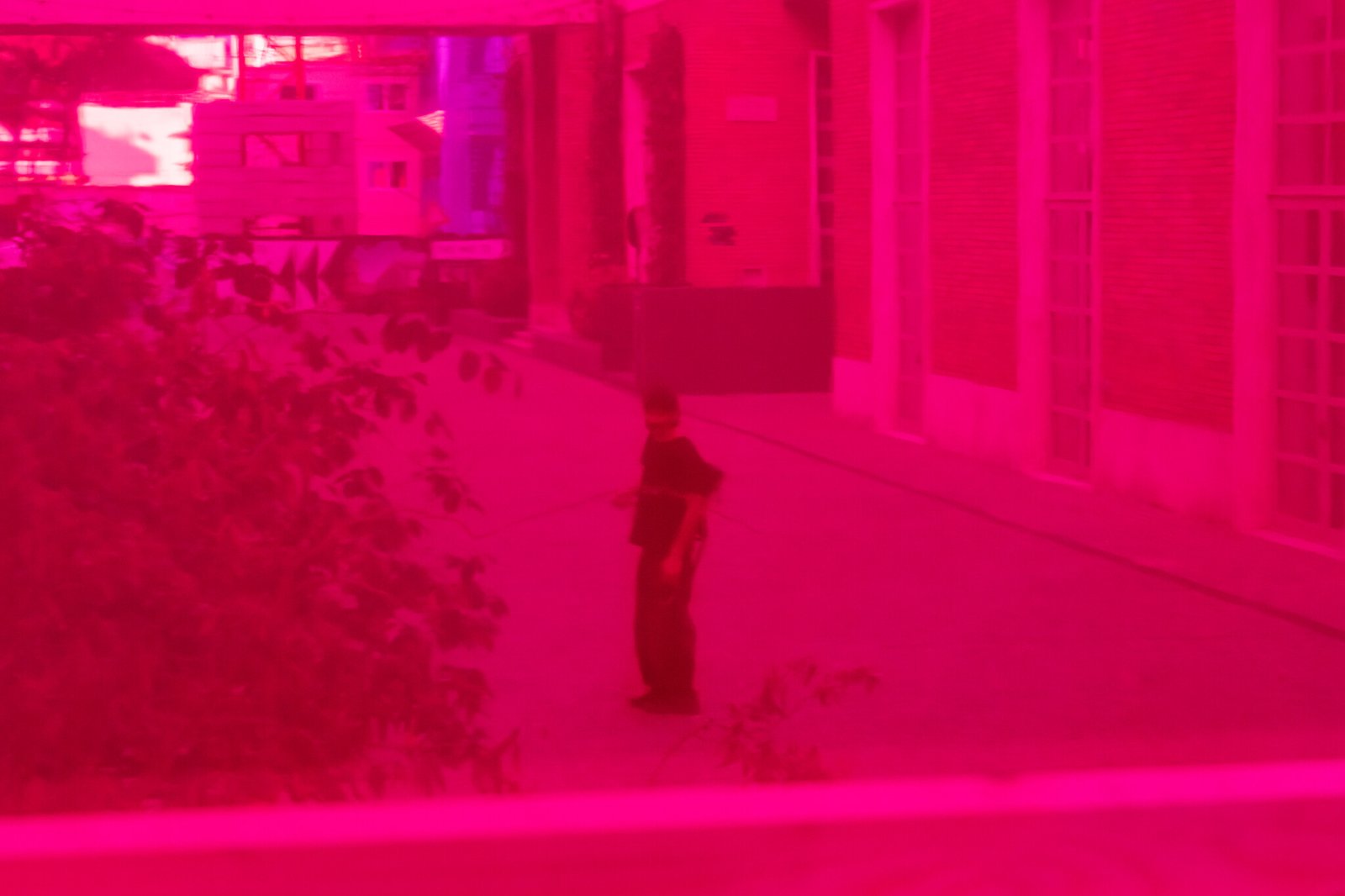
It is inside the square, incorporated into the pyramid, that Giuseppe De Mattia’s work is found, a dialectical response to the proposal of abstraction offered by Manuela García. Concretizio Romero inhabits the red atmosphere of the pyramid; he is a tragicomic character. We find him planted in the earth, his face restless, his head smoking from the effort of concretion he imposes upon himself. Coming closer, one perceives that he gives off a delicate fragrance of rosemary, an essence associated in various cultures with concentration.
However, far from remaining fixed at opposite poles, both works begin to shift. García’s gesture, oriented toward the immaterial and the perceptual, acquires an inescapable sculptural forcefulness; while De Mattia’s figure, clinging to the earth and to the effort of concretion, seems to overflow into its own thought, its smoking head hinting at a form of dissolution. In this exchange, the abstract becomes dense and the concrete becomes unstable. It is in that tension —never fully resolved— where both practices find a point of contact: a space in which form and idea affect one another, continually displacing their own limits. Only in the imagination is there room for the idea of the interminable.
*
The exhibition activates an exchange between two exhibition spaces, Toast Project (Florence, Italy) and Espacio Cabeza (Guadalajara, Mexico), through two new productions by Manuela García (Mexico City, 1982) and Giuseppe De Mattia (Bari, 1980).
In autumn 2026 the project will continue at Espacio Cabeza with a second chapter of the exhibition, which will host a new production by Giuseppe De Mattia in dialogue with an intervention by Manuela García.