
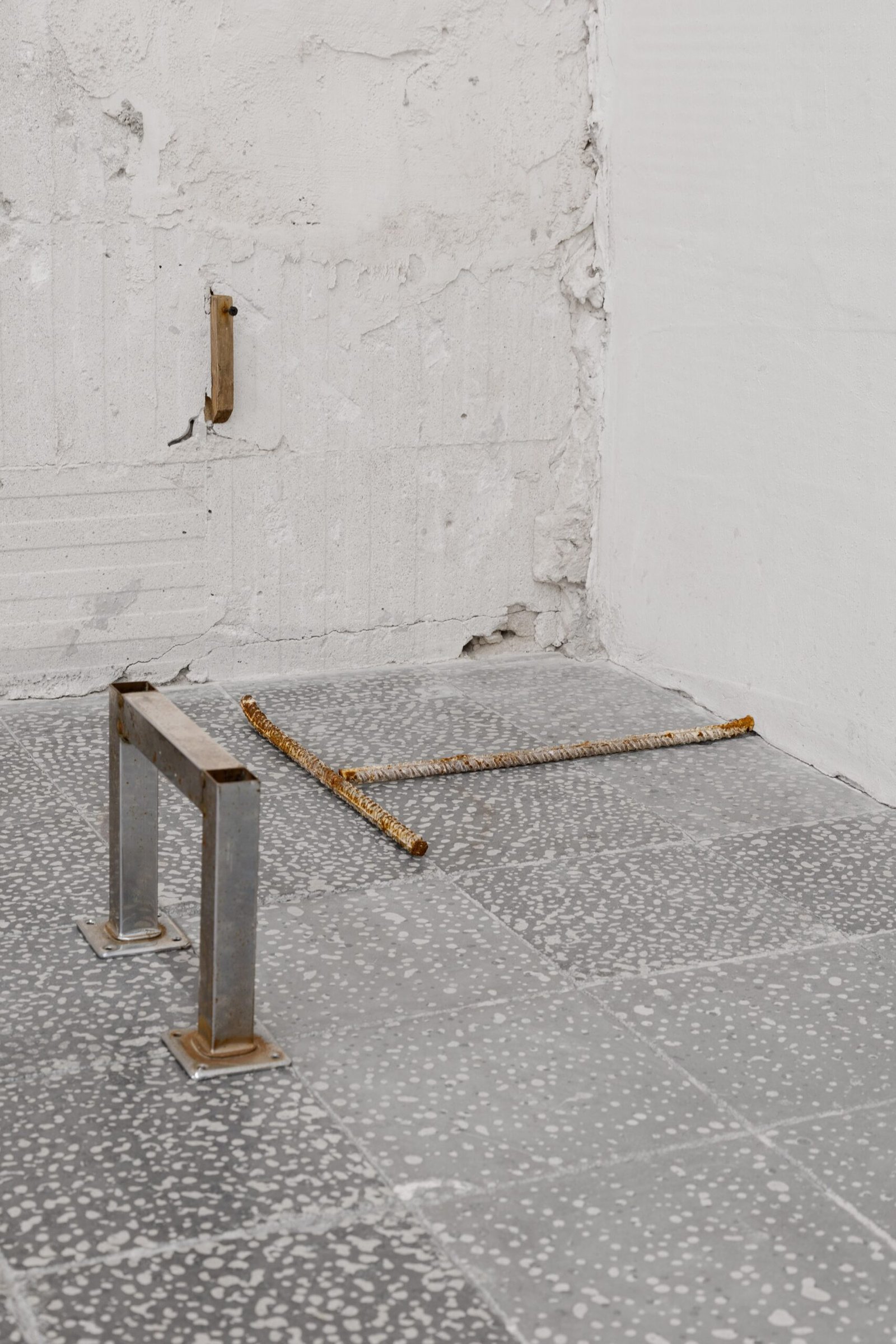
For Erris Huigens, a work begins not as an image but as an action. A gesture that extends into space and quietly reorganises how we experience it.
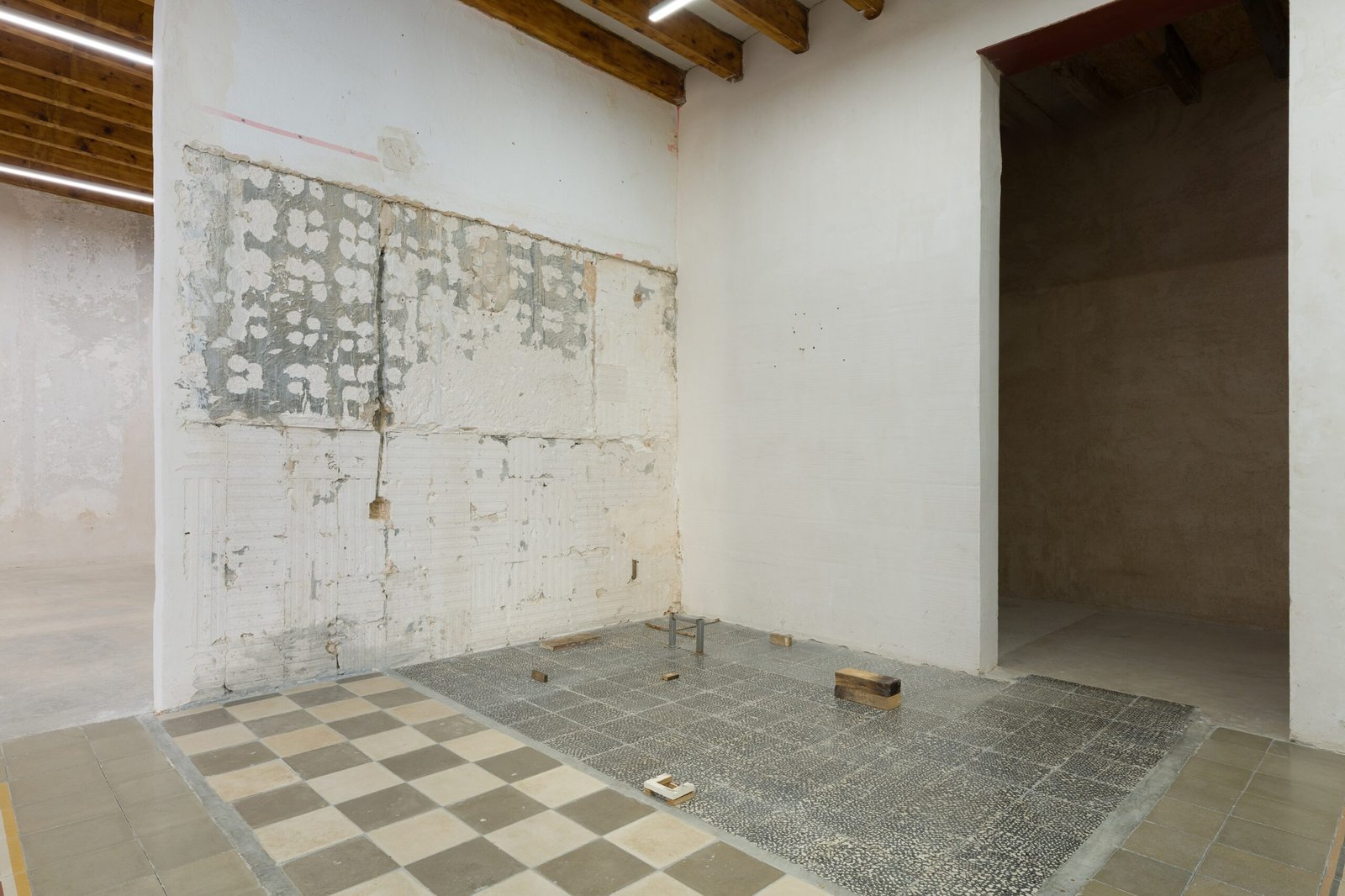
Coming from derelict industrial buildings as his usual “canvas”, Huigens works with surfaces marked by time: walls that carry the slow accumulation of weather, use and neglect. The geometric forms he introduces do not correct; they activate. A single line, a cut, a minimal gesture can make the space reorganise itself around it: an eroded wall becomes a textured background, a surface that starts to read as image.
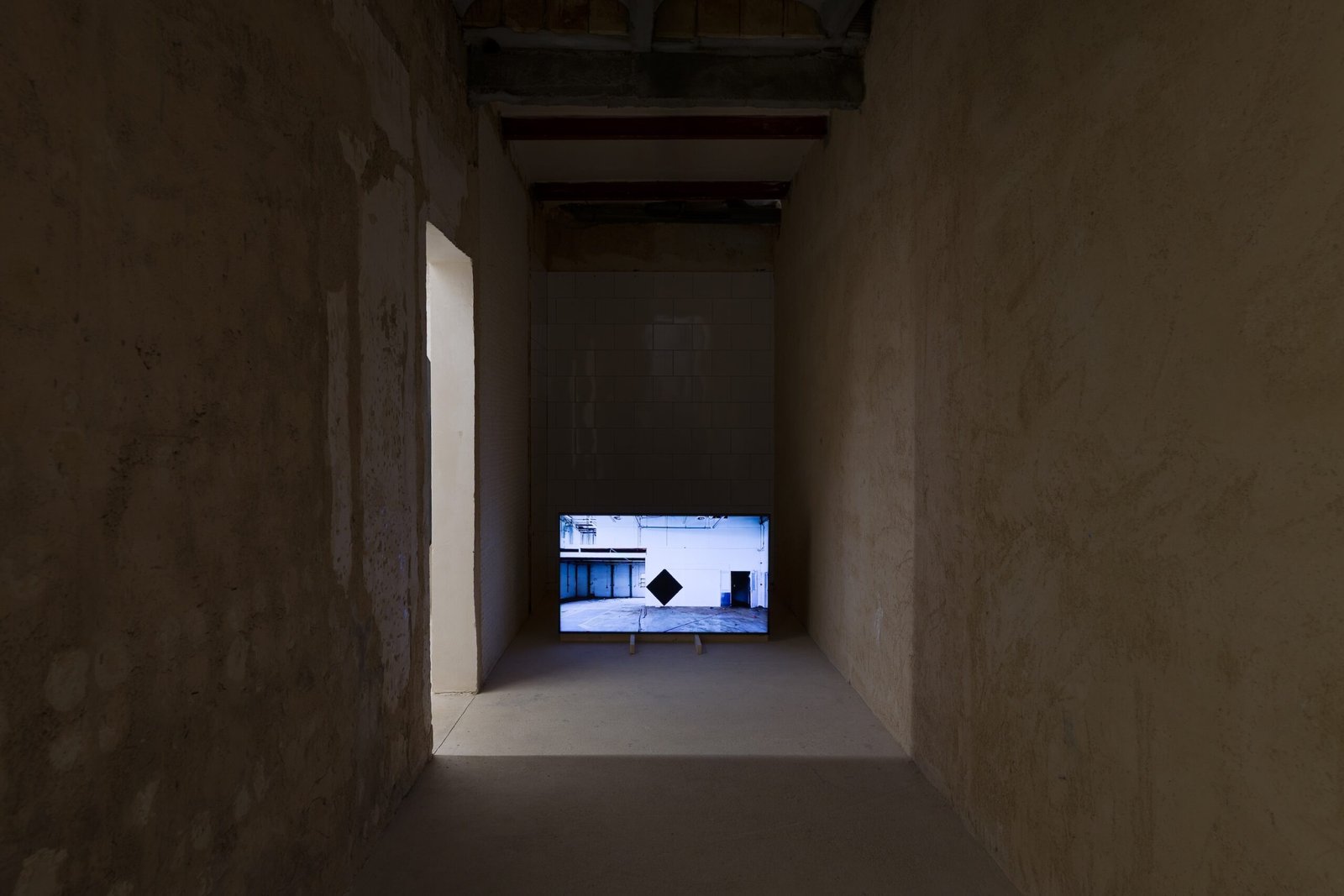
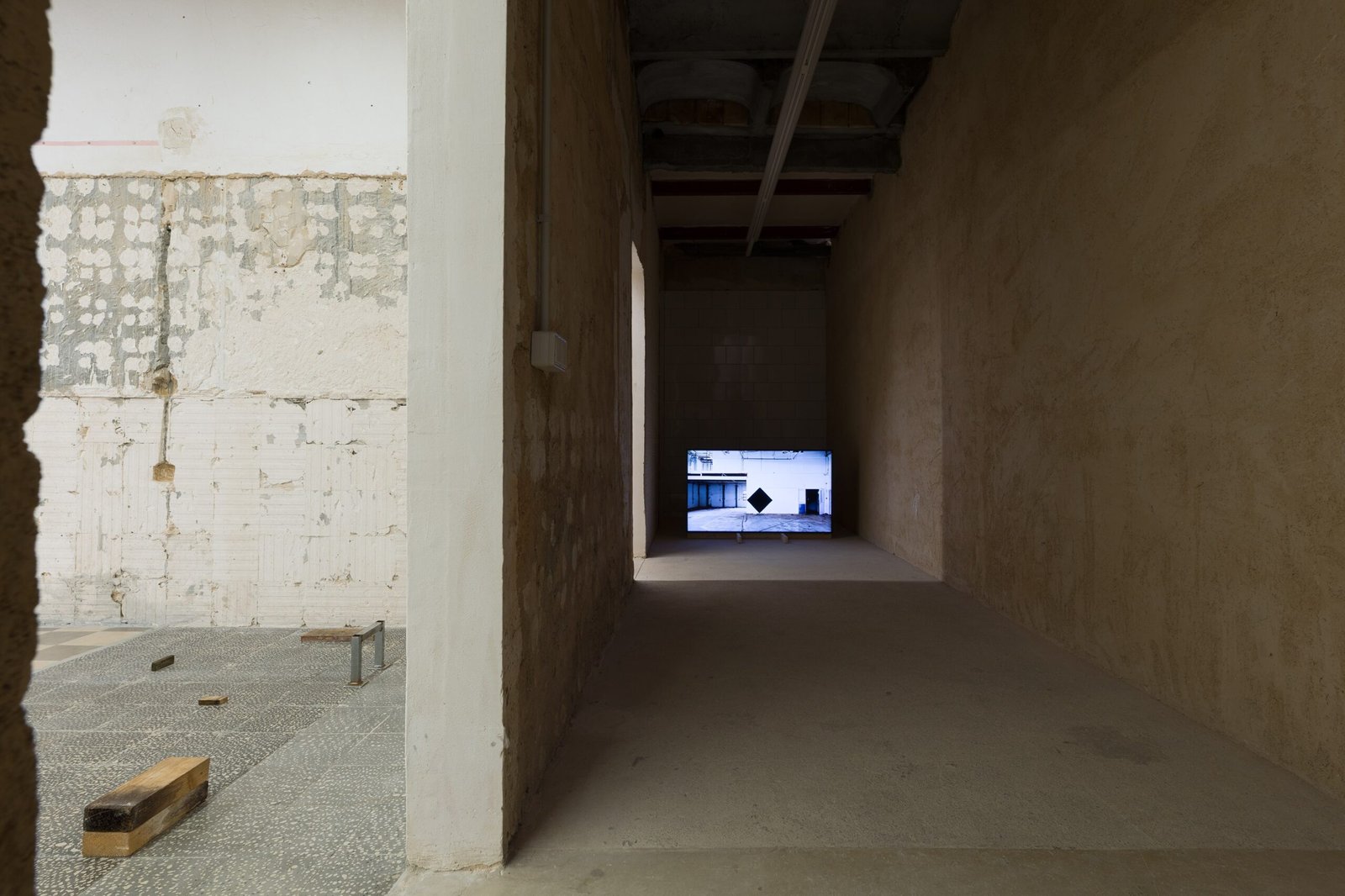
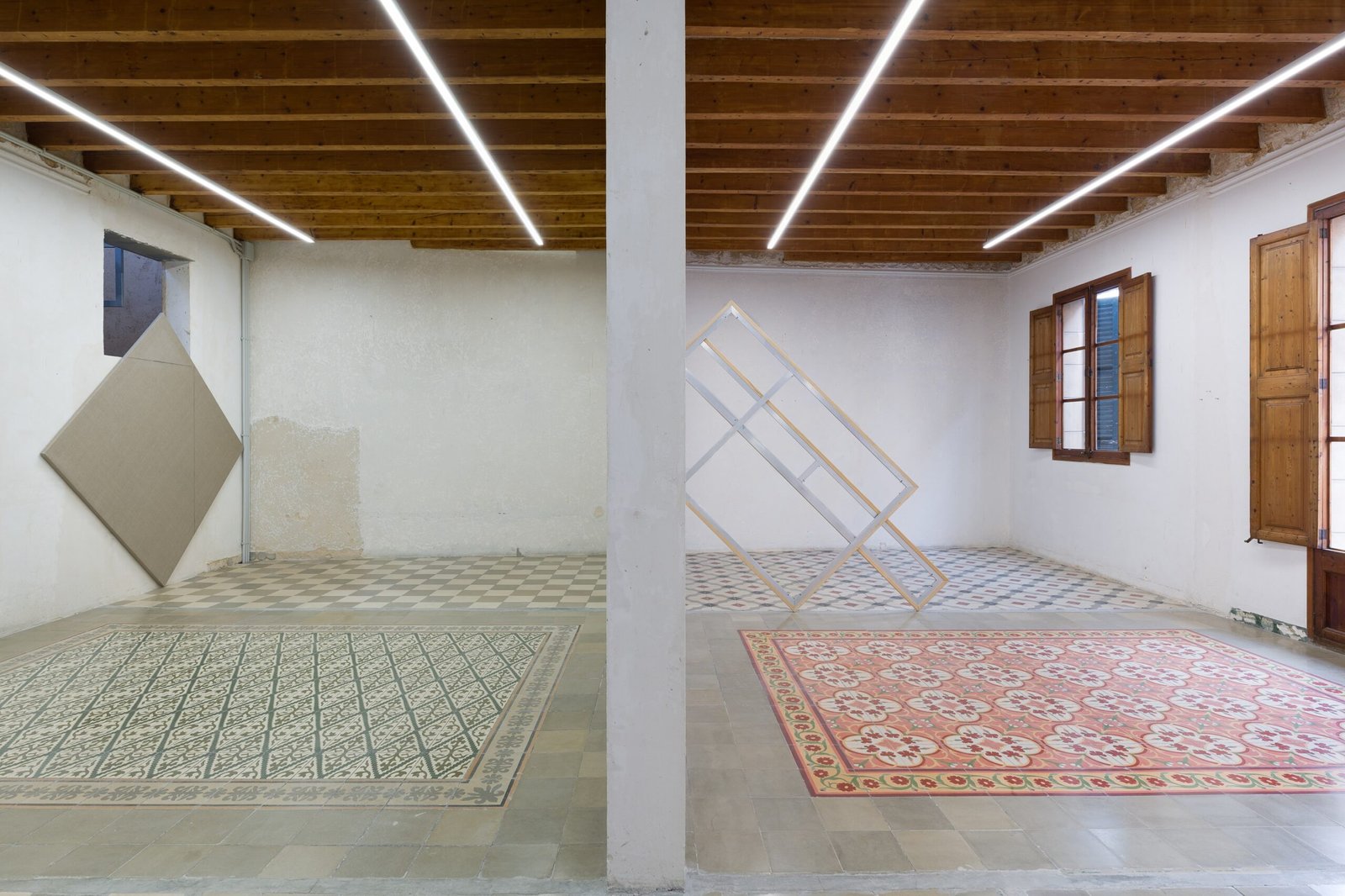
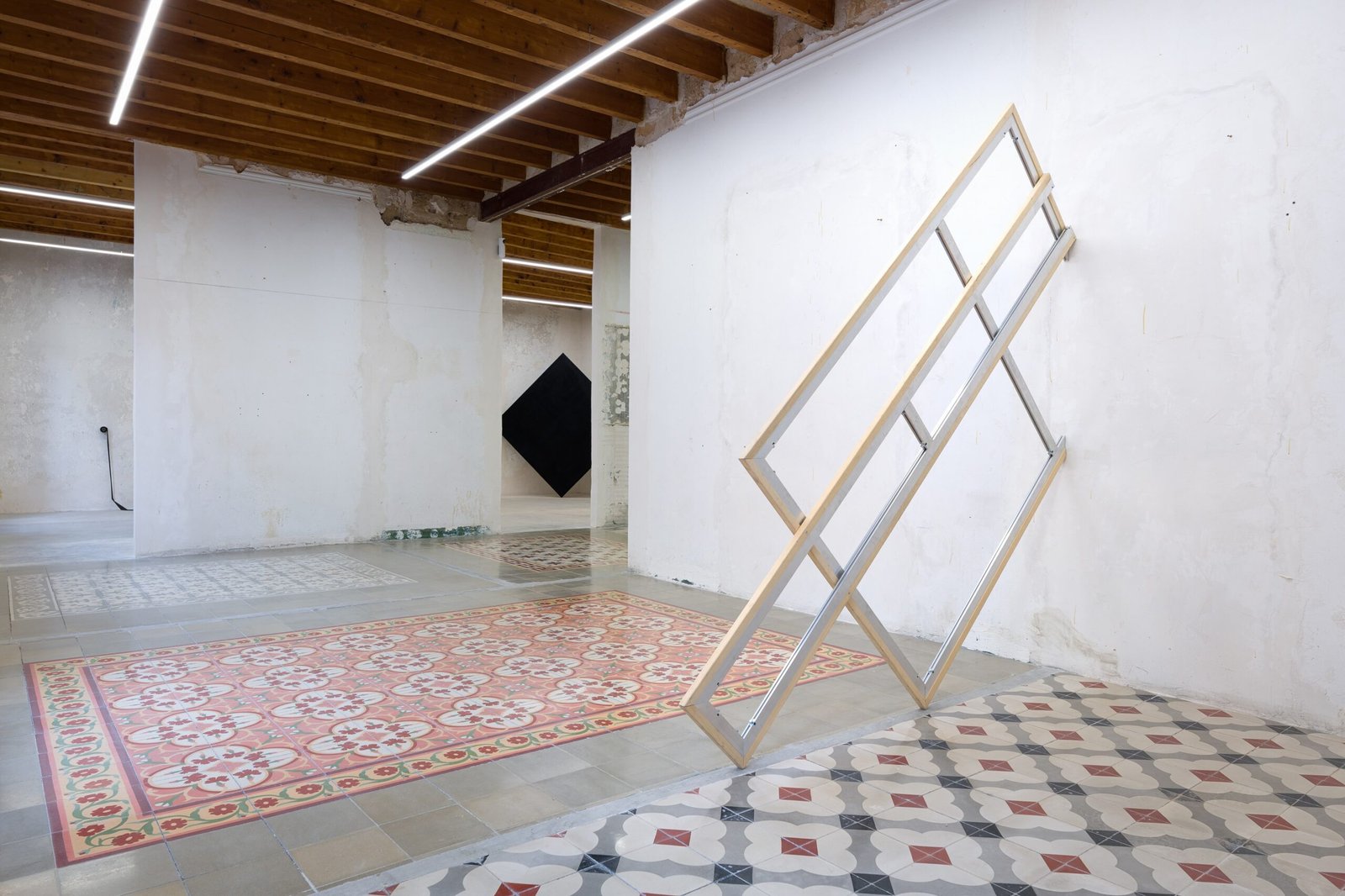
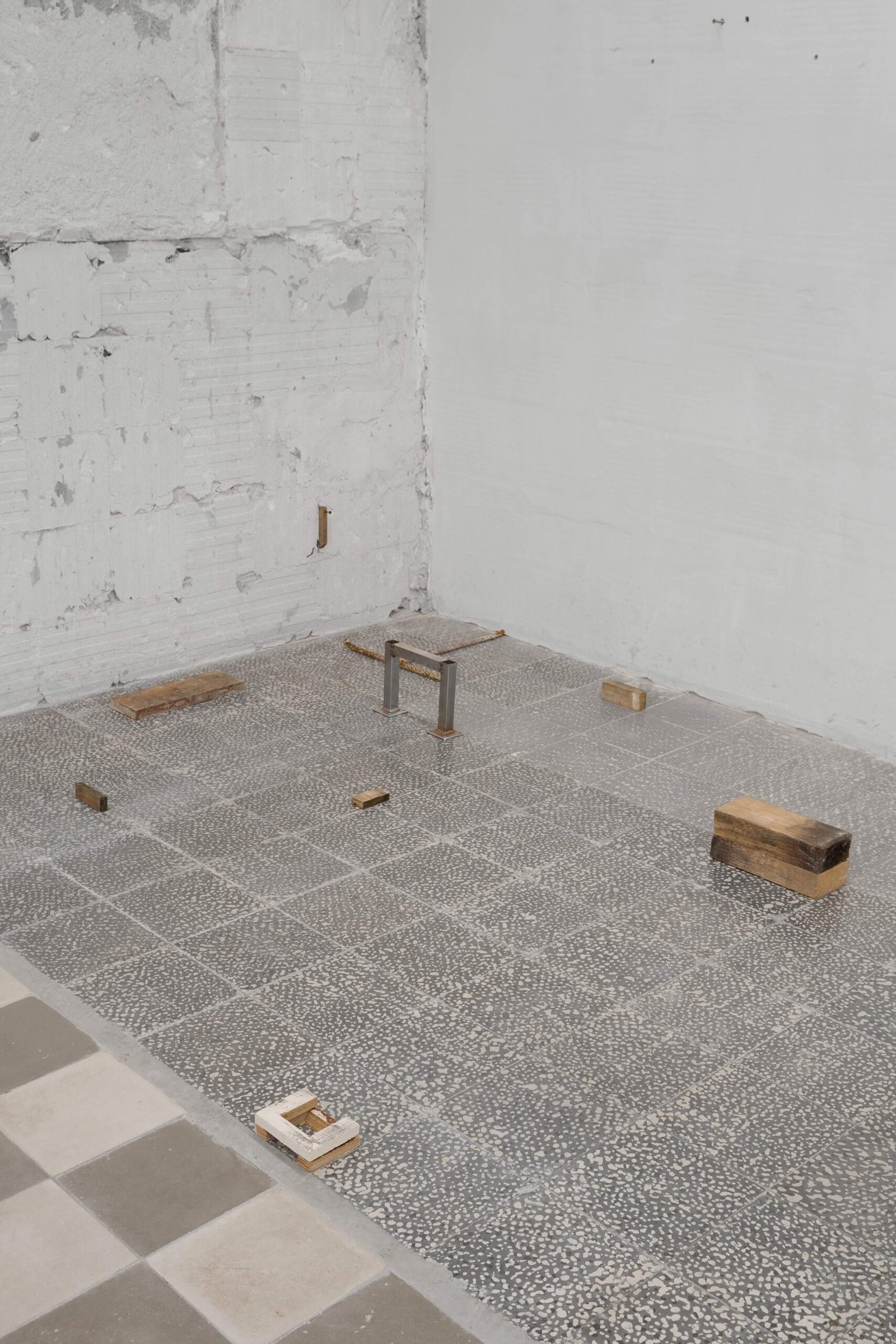
Here, the conditions are different. This is not an abandoned building nor a white cube gallery. It moves between those two worlds: a gallery that has held on to its layers and its irregularities, the quiet traces of previous histories. In this in-between state, Huigens shifts the focus: the aim is no longer to transform the space, but to bring attention to the act of making itself, to that early, physical negotiation in which the work begins to take shape within the architecture.
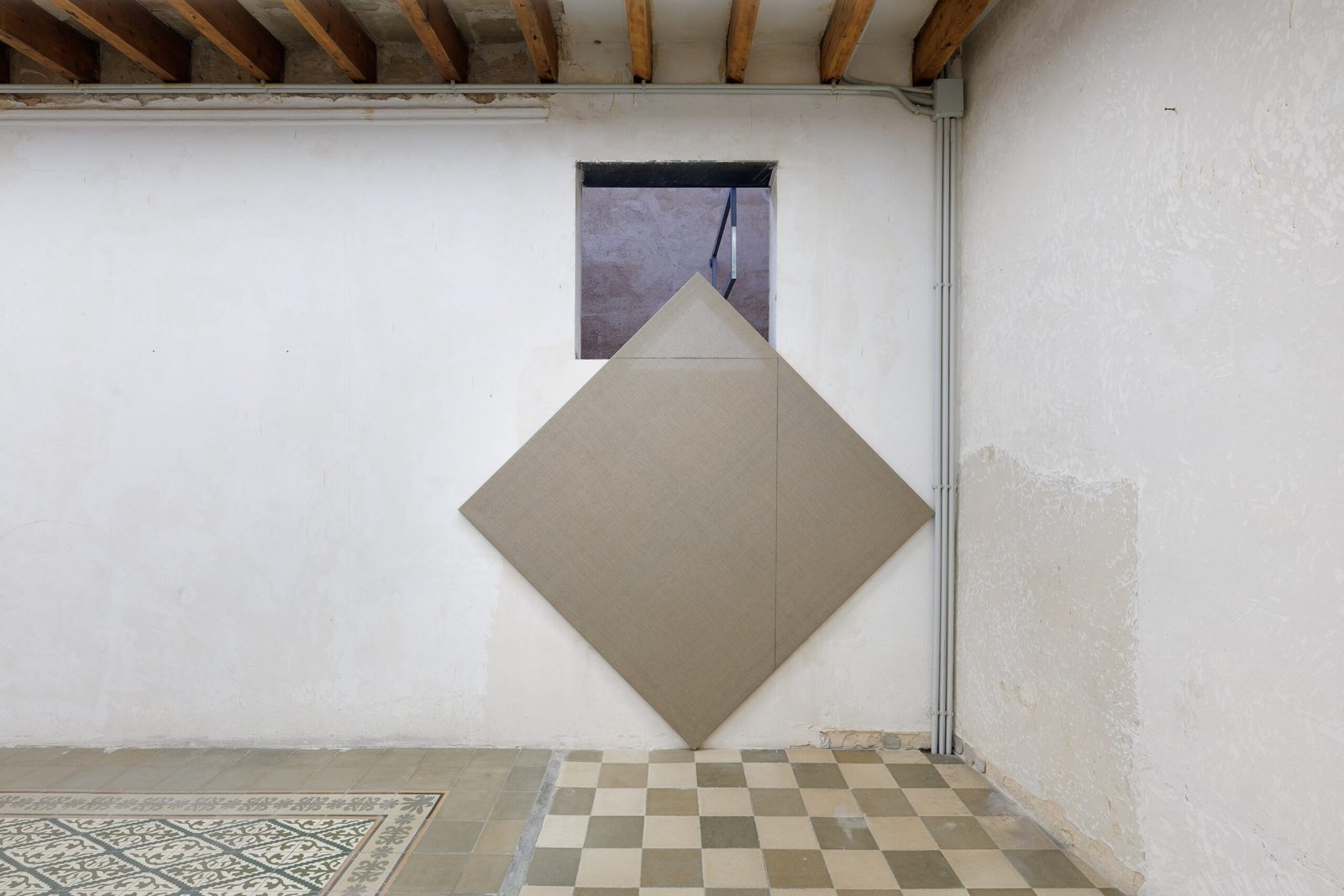
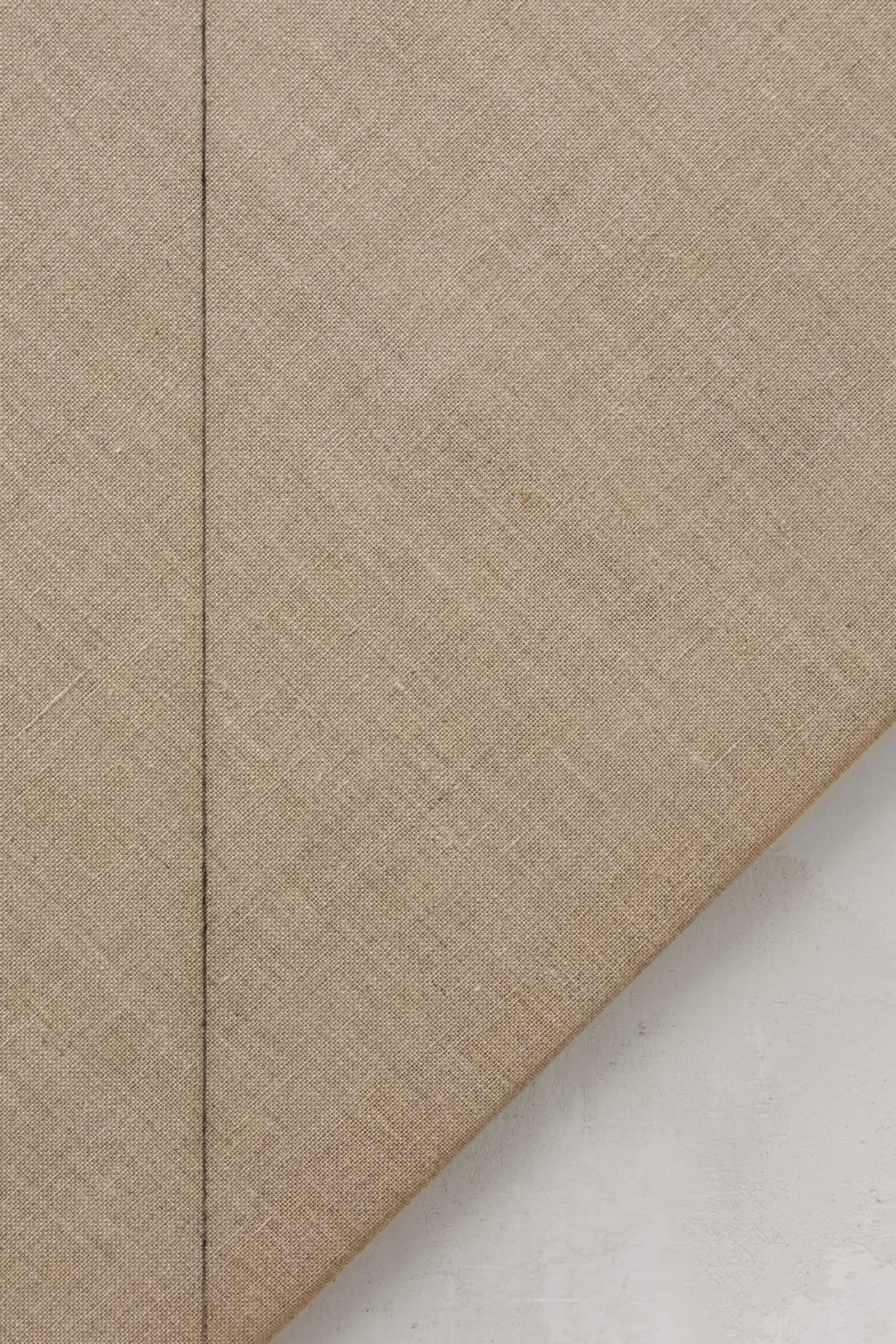
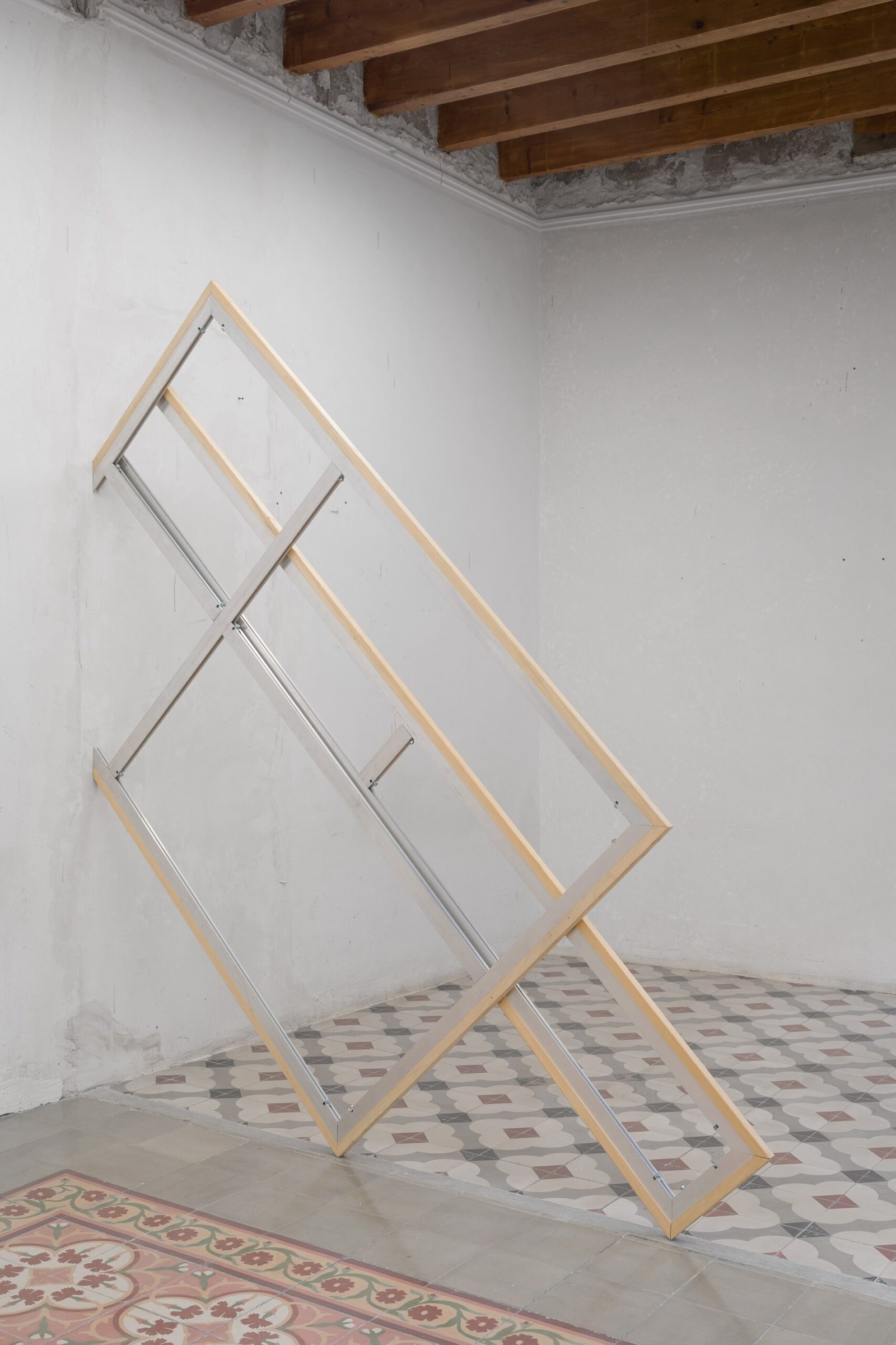
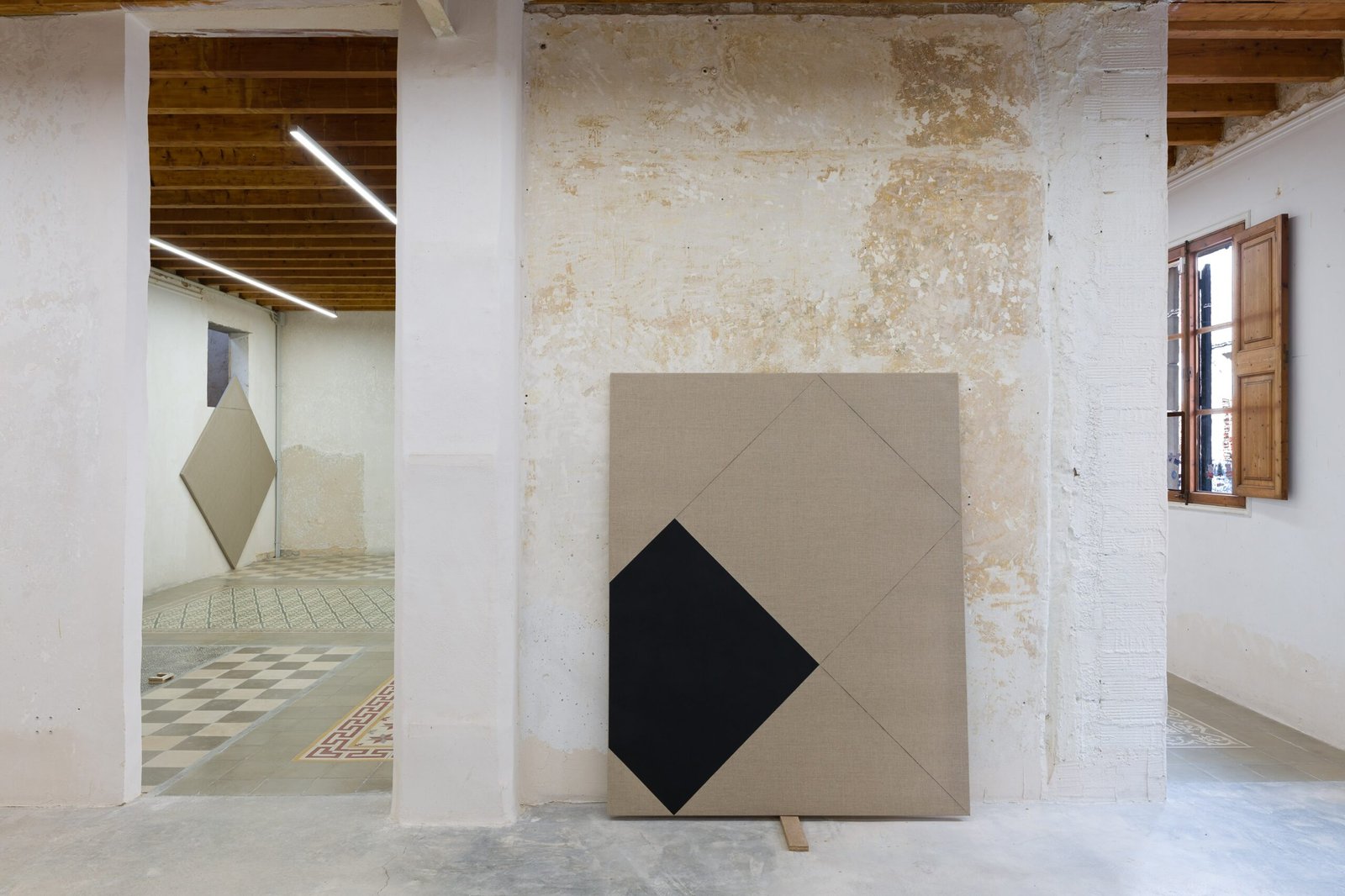
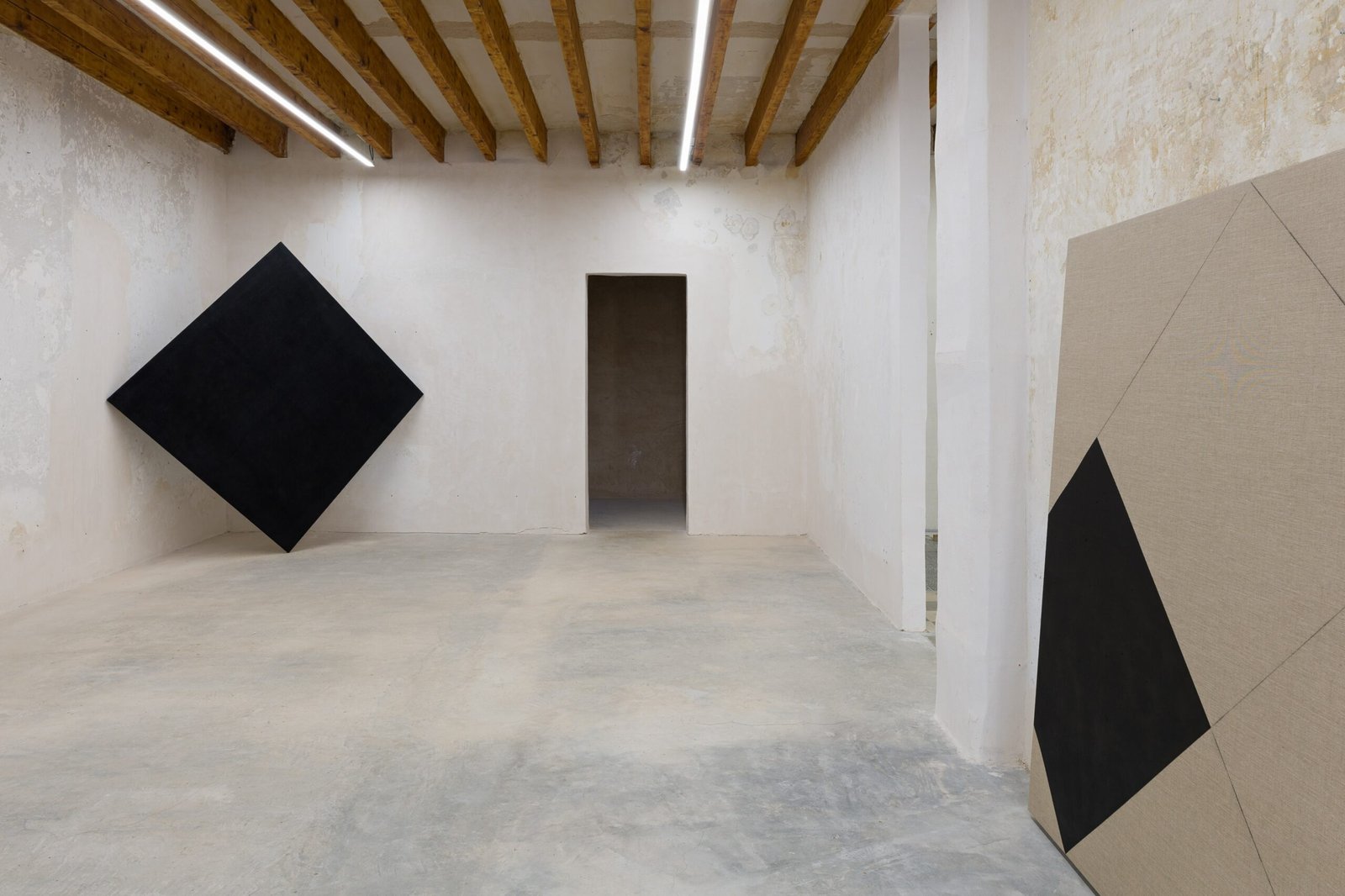
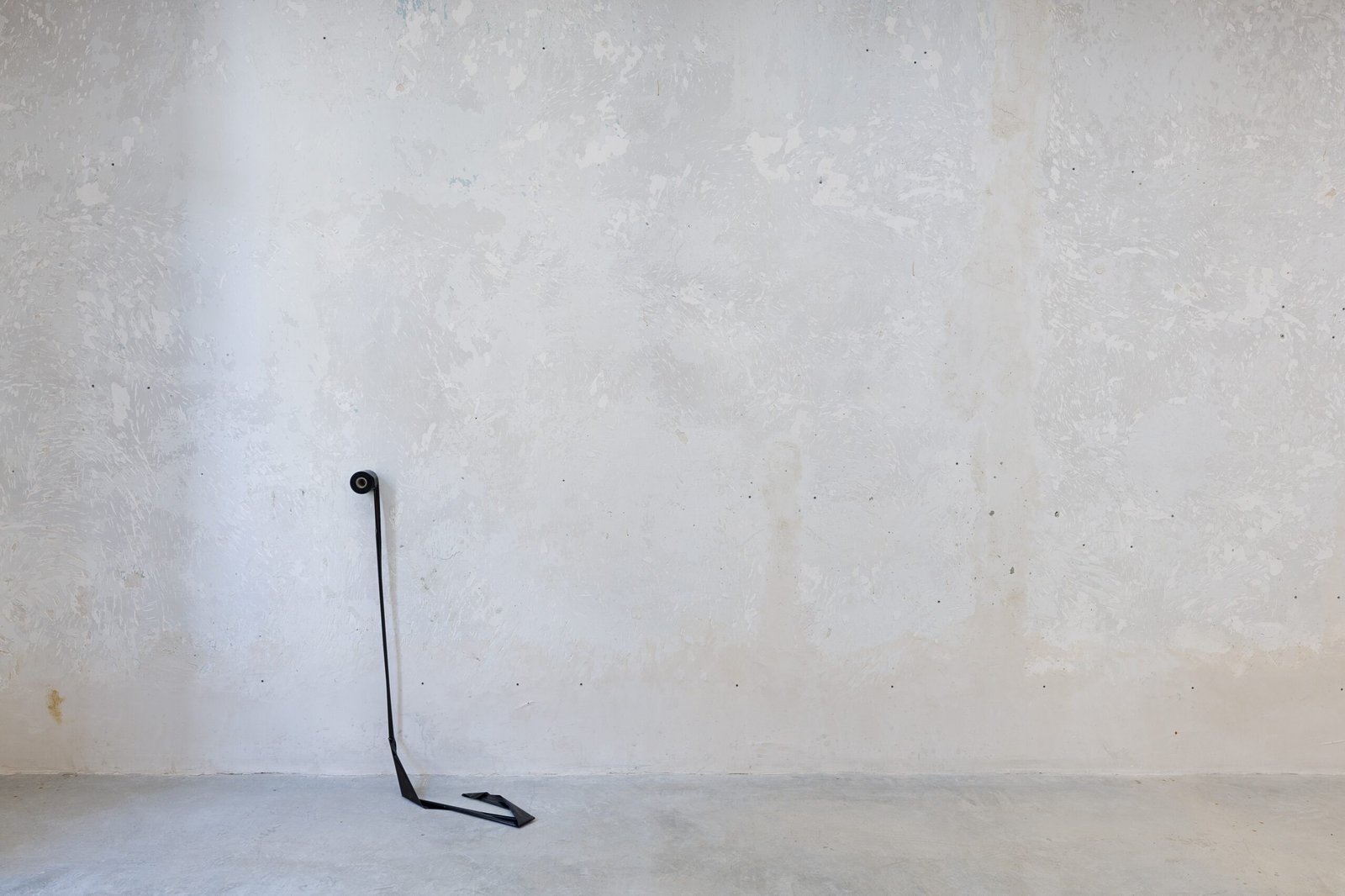
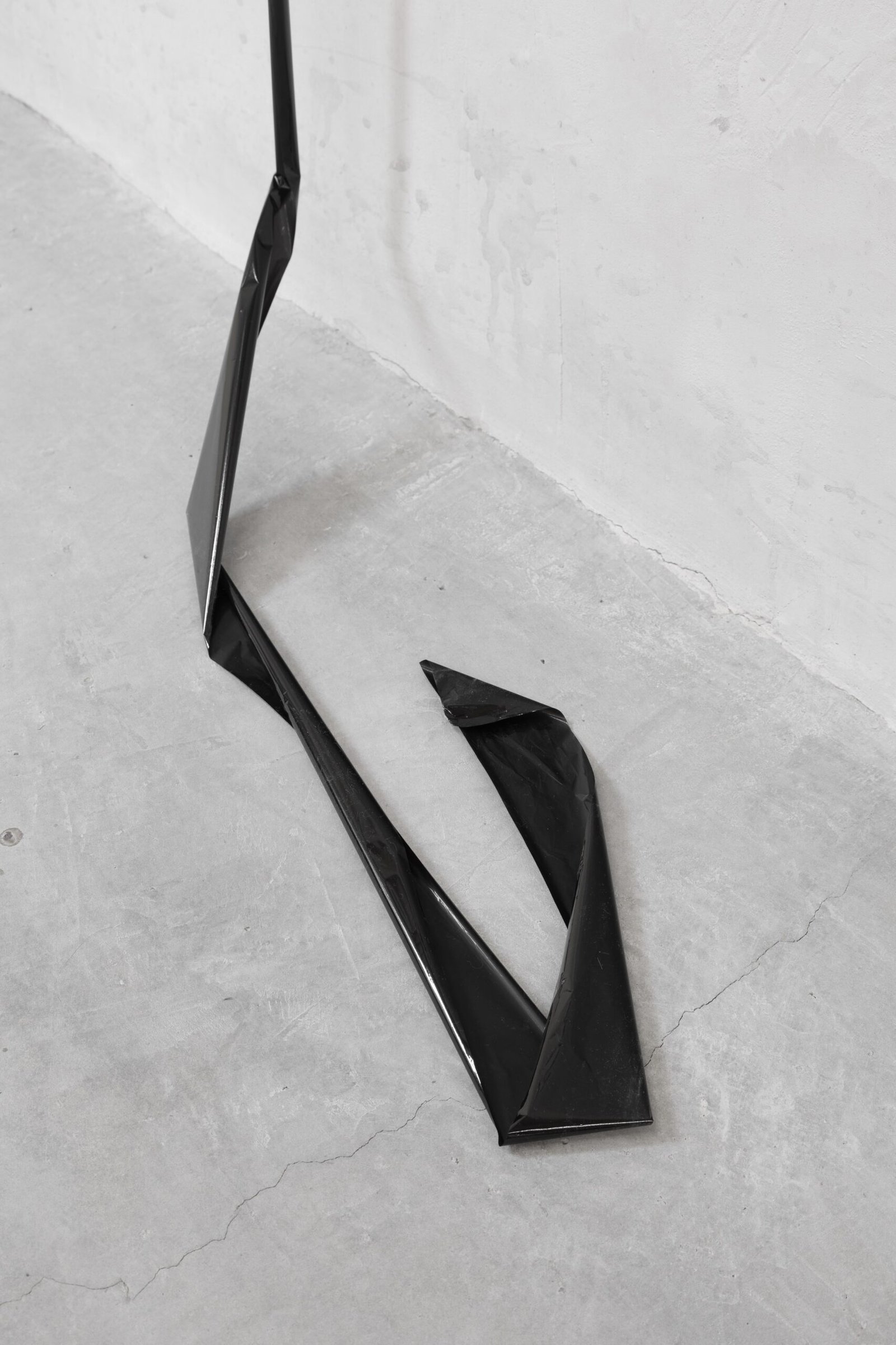
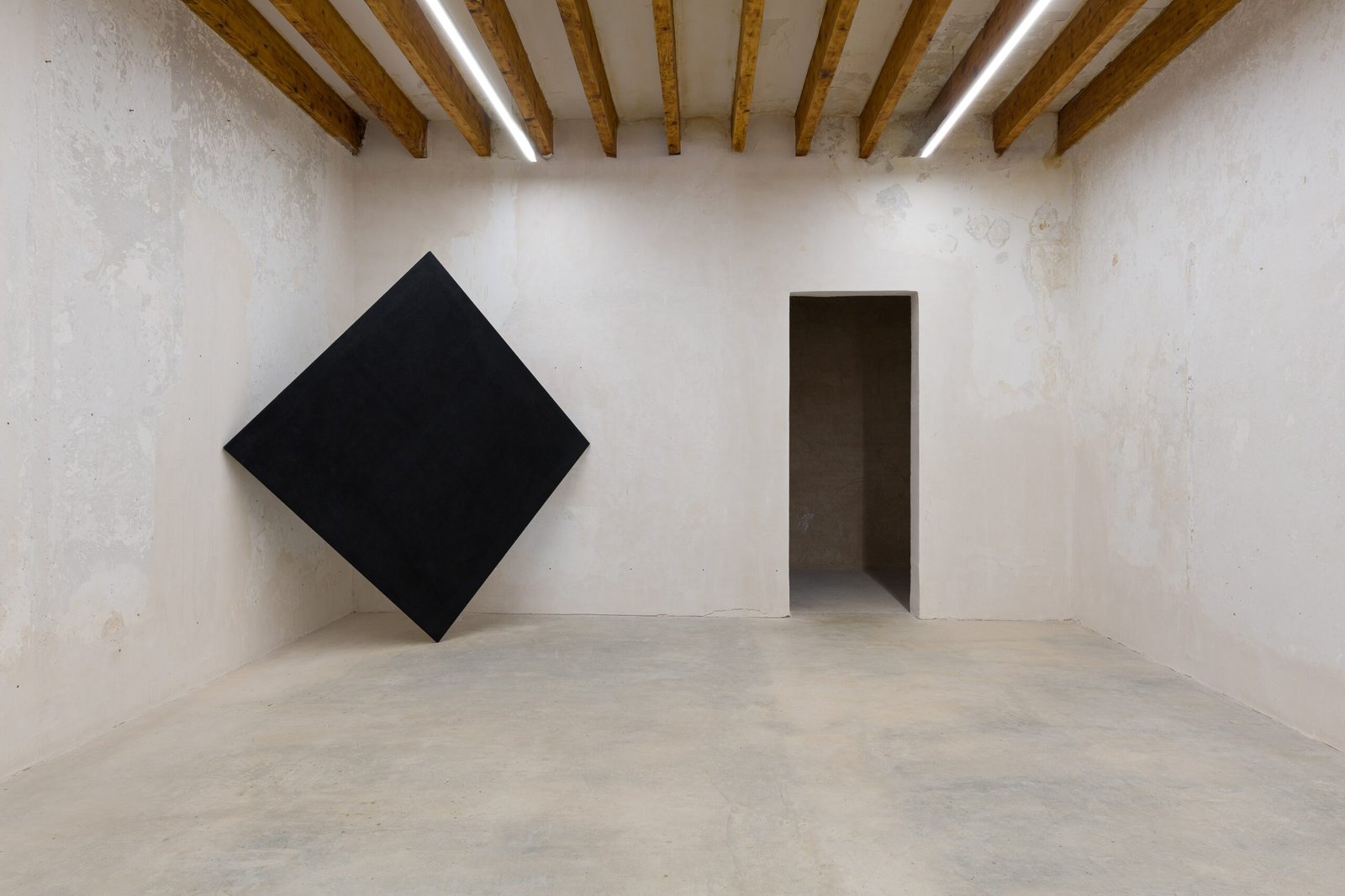
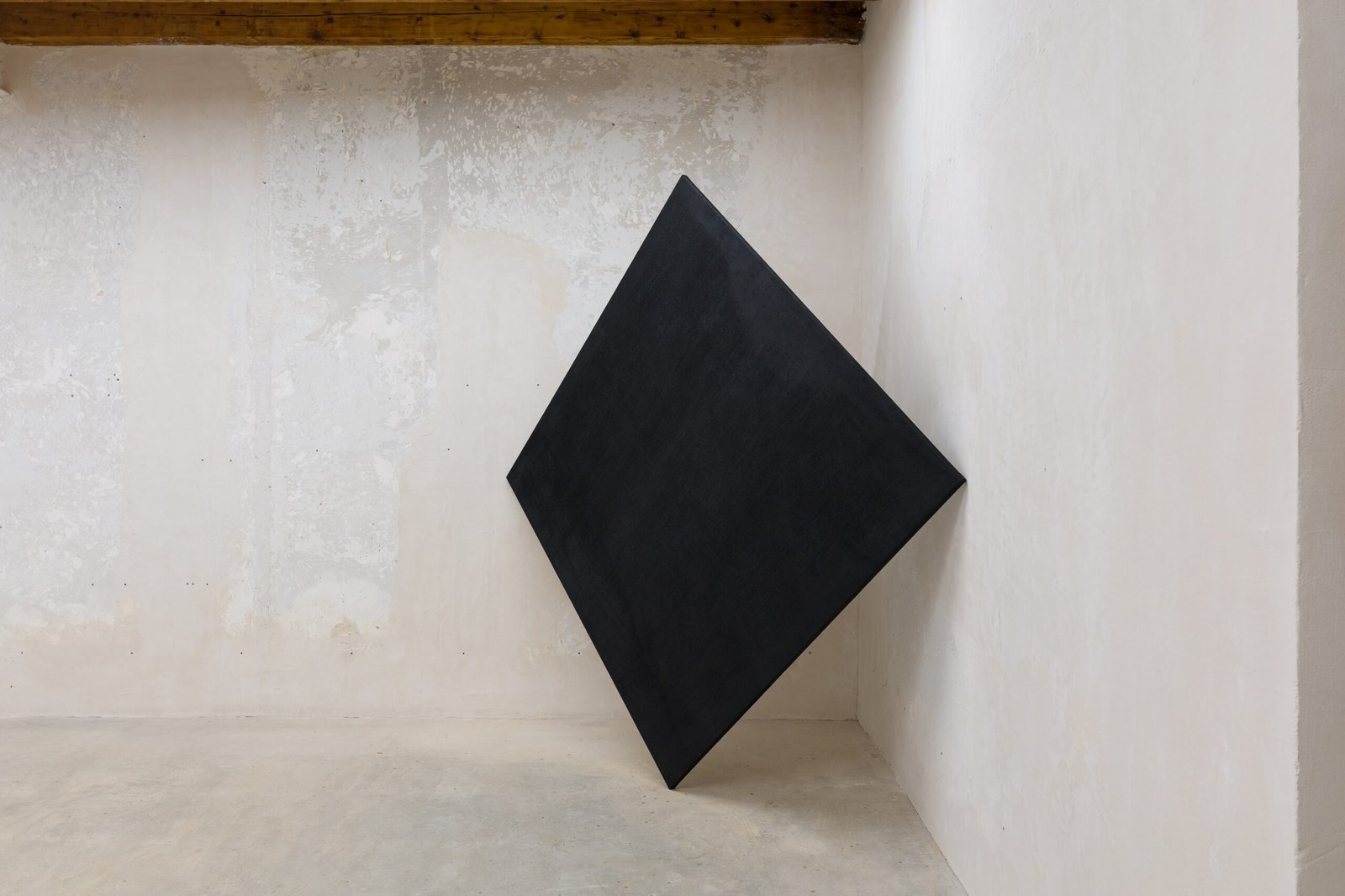
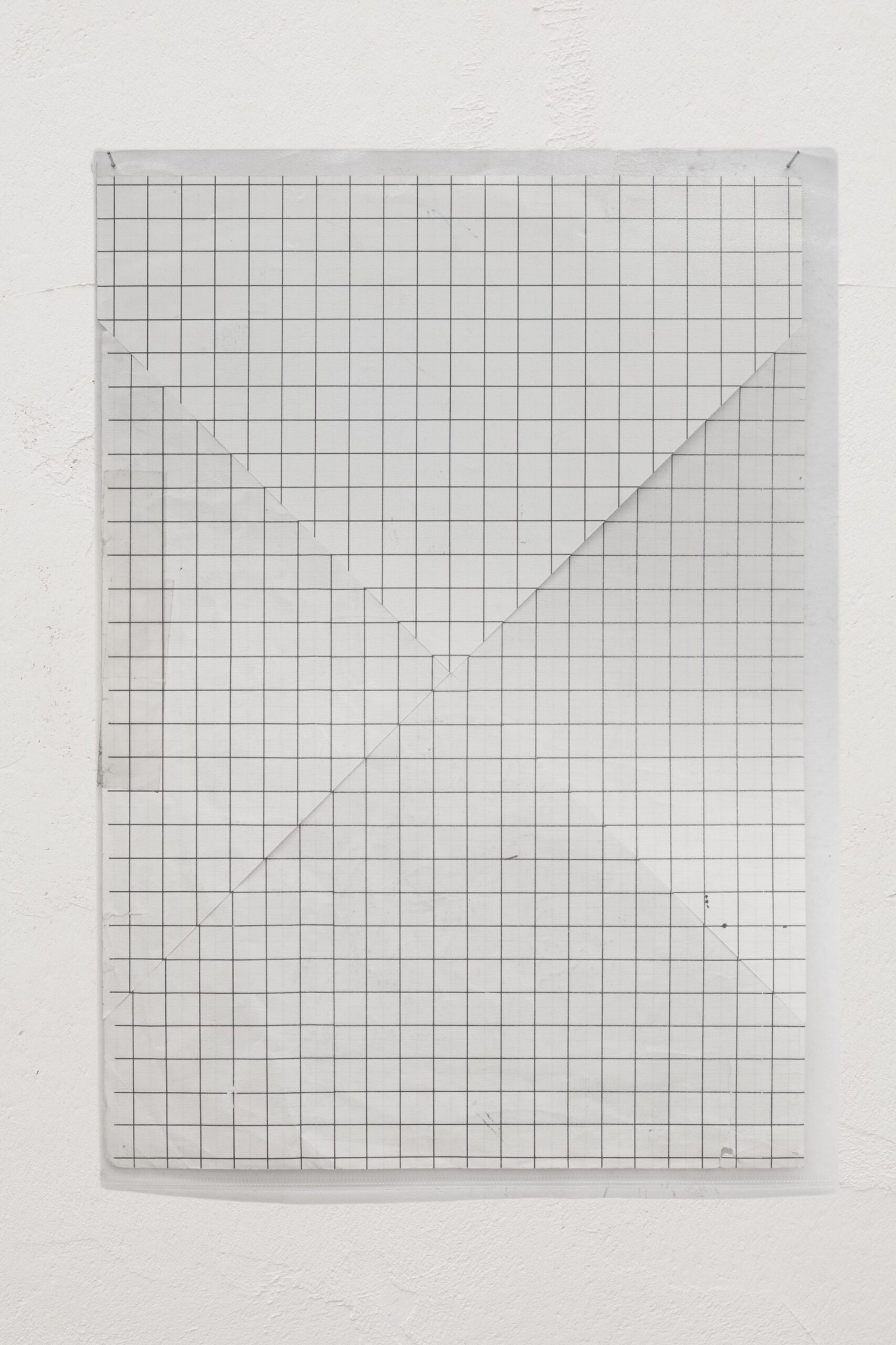
Unable to paint directly on the walls, he allows the gesture to come off the surface. He works with the basic elements of canvas-painting, though not to produce images. Instead, these elements become provisional structures: forms still taking shape, carrying the memory of cuts, weight and pressure. Each decision — where a line stops, where a surface bends— carries a physical tension.
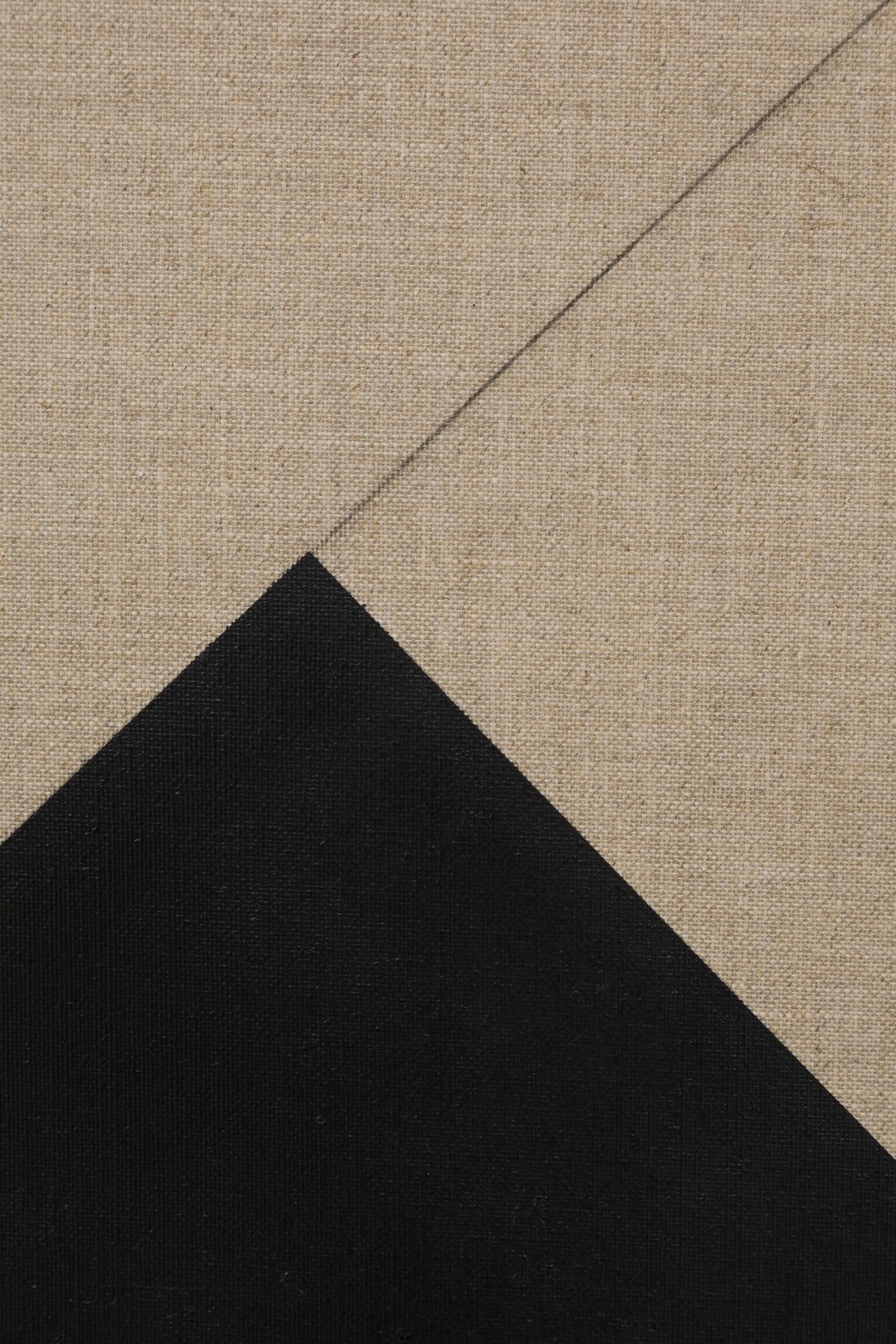
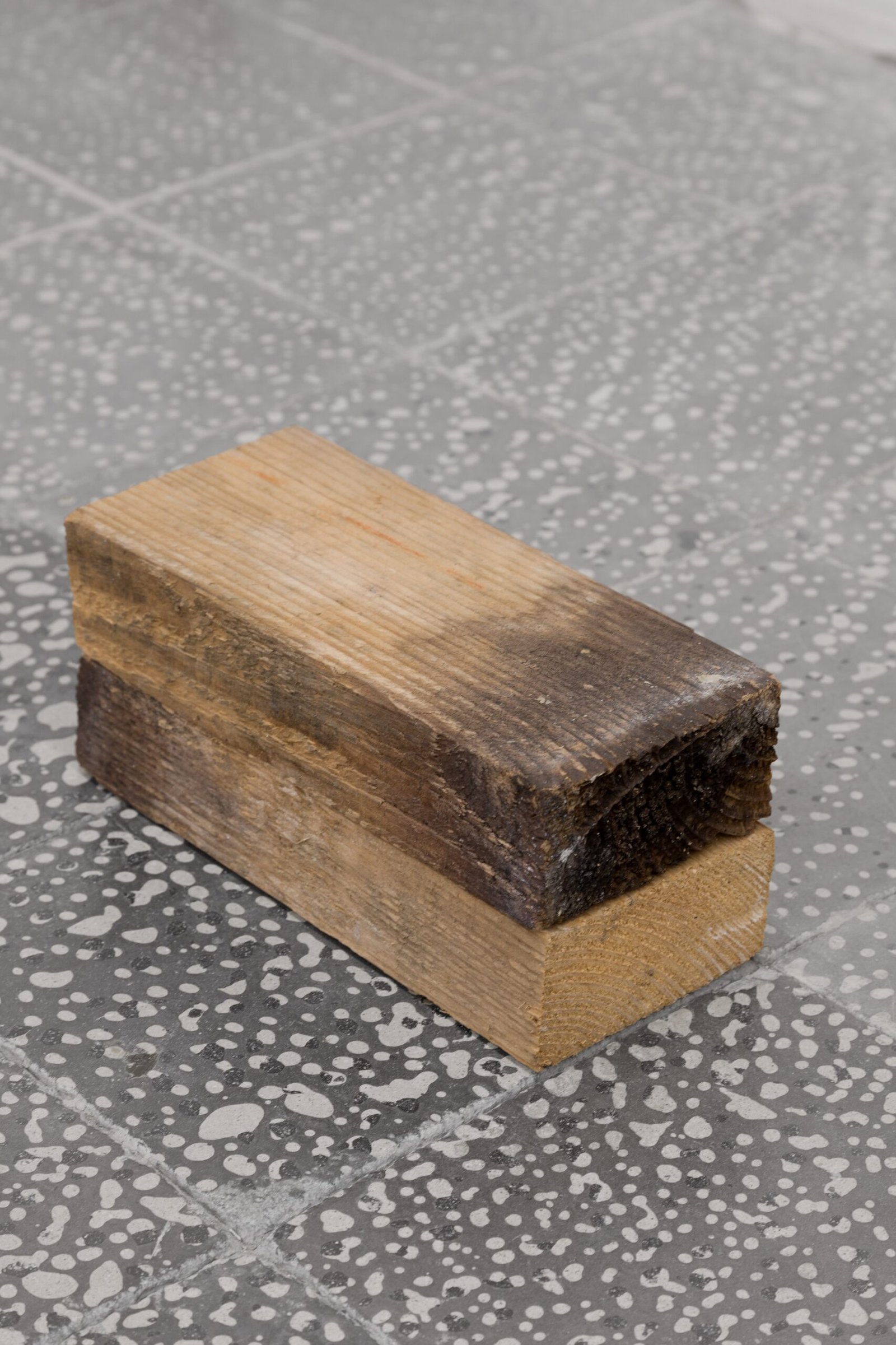
Within this arrangement, a singular black element acts as a point of gravity. Everything else remains in a raw state, not fixed but in transition, shaped by the materials themselves: aluminium, linen, wood. These works do not seek to resolve the space; they activate it through a dialogue between object and architecture. In that openness lies curiosity: a willingness to let the work reveal what it might become.
Text by: Madi Canals