

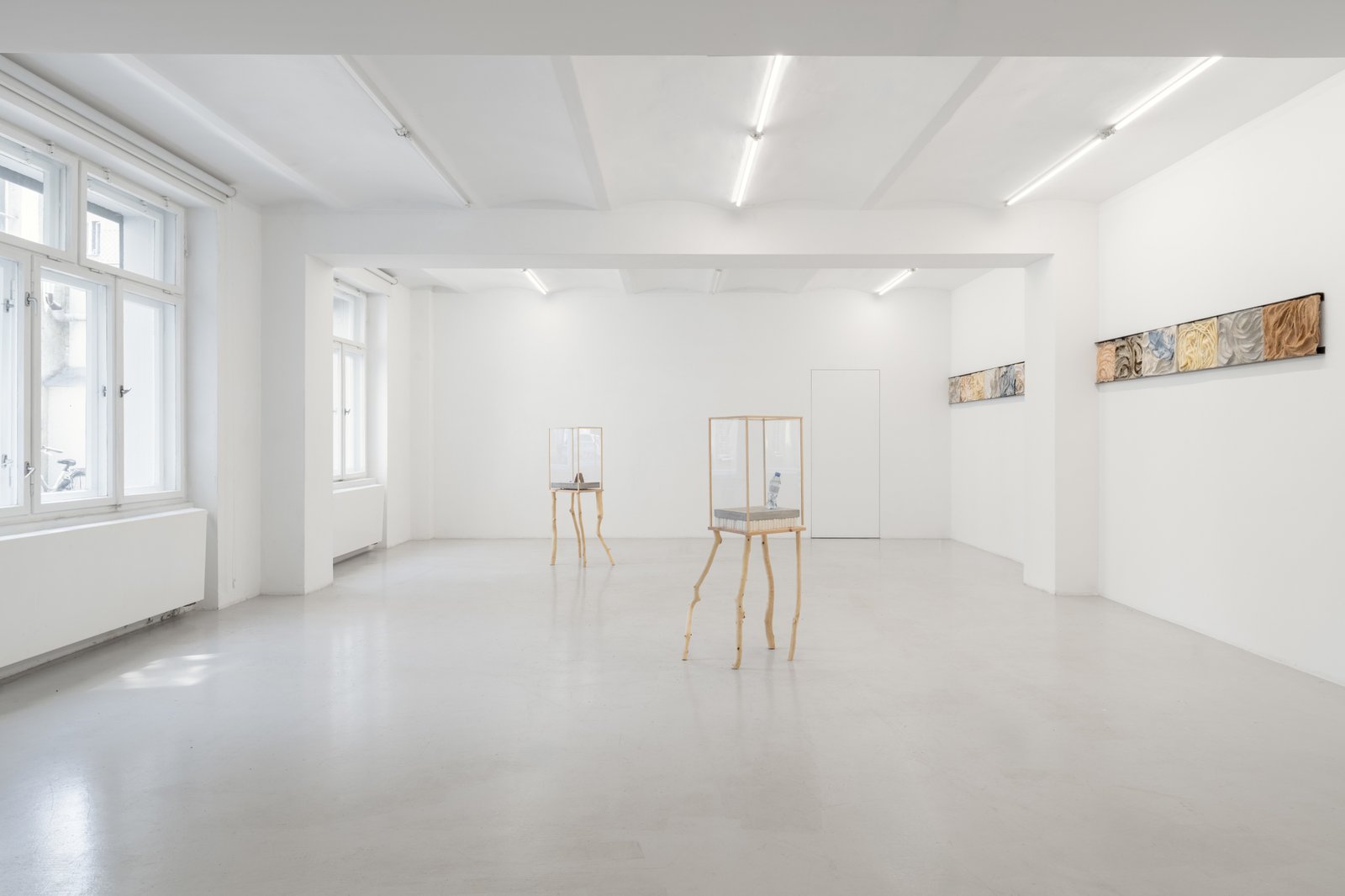
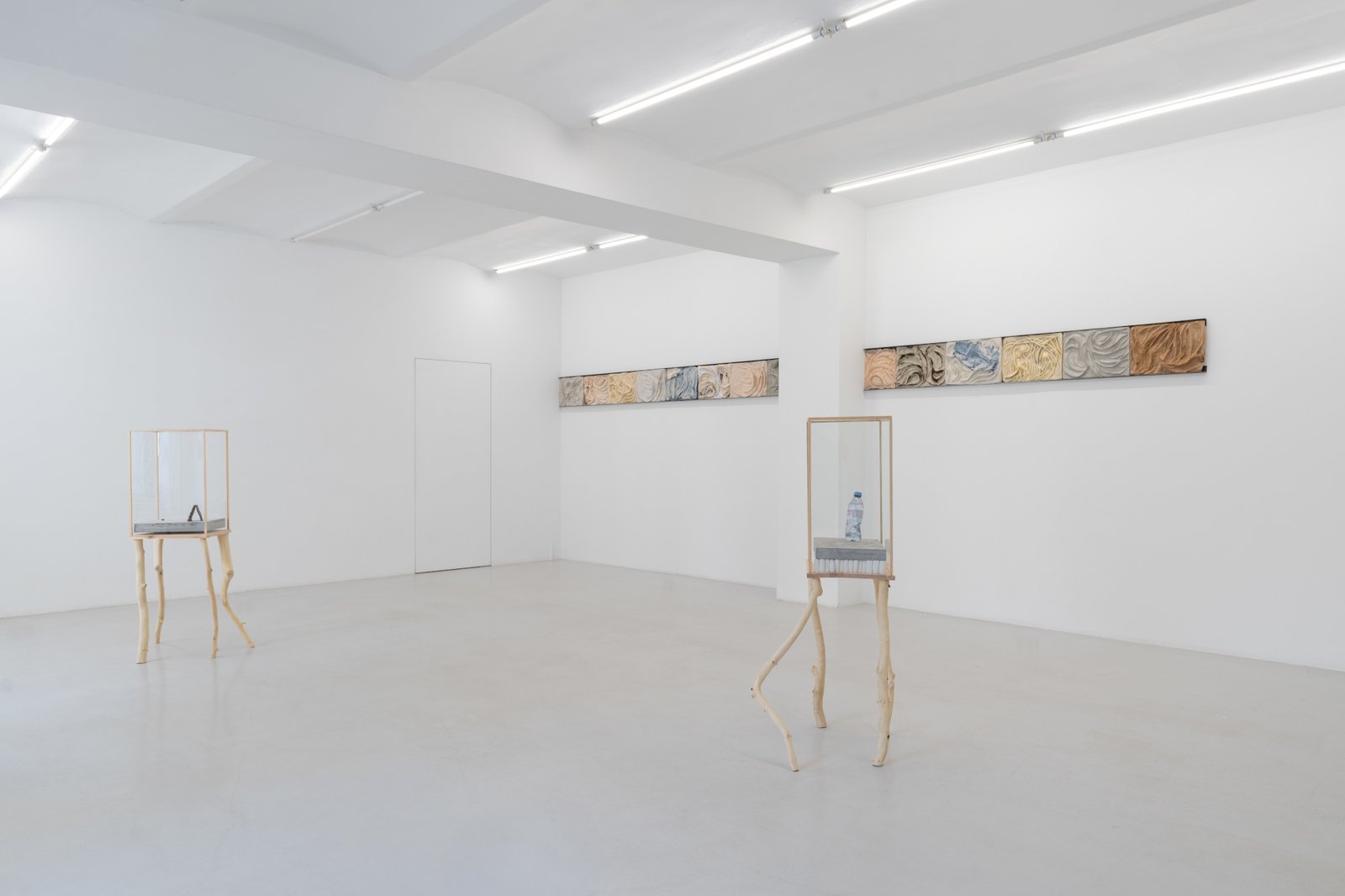
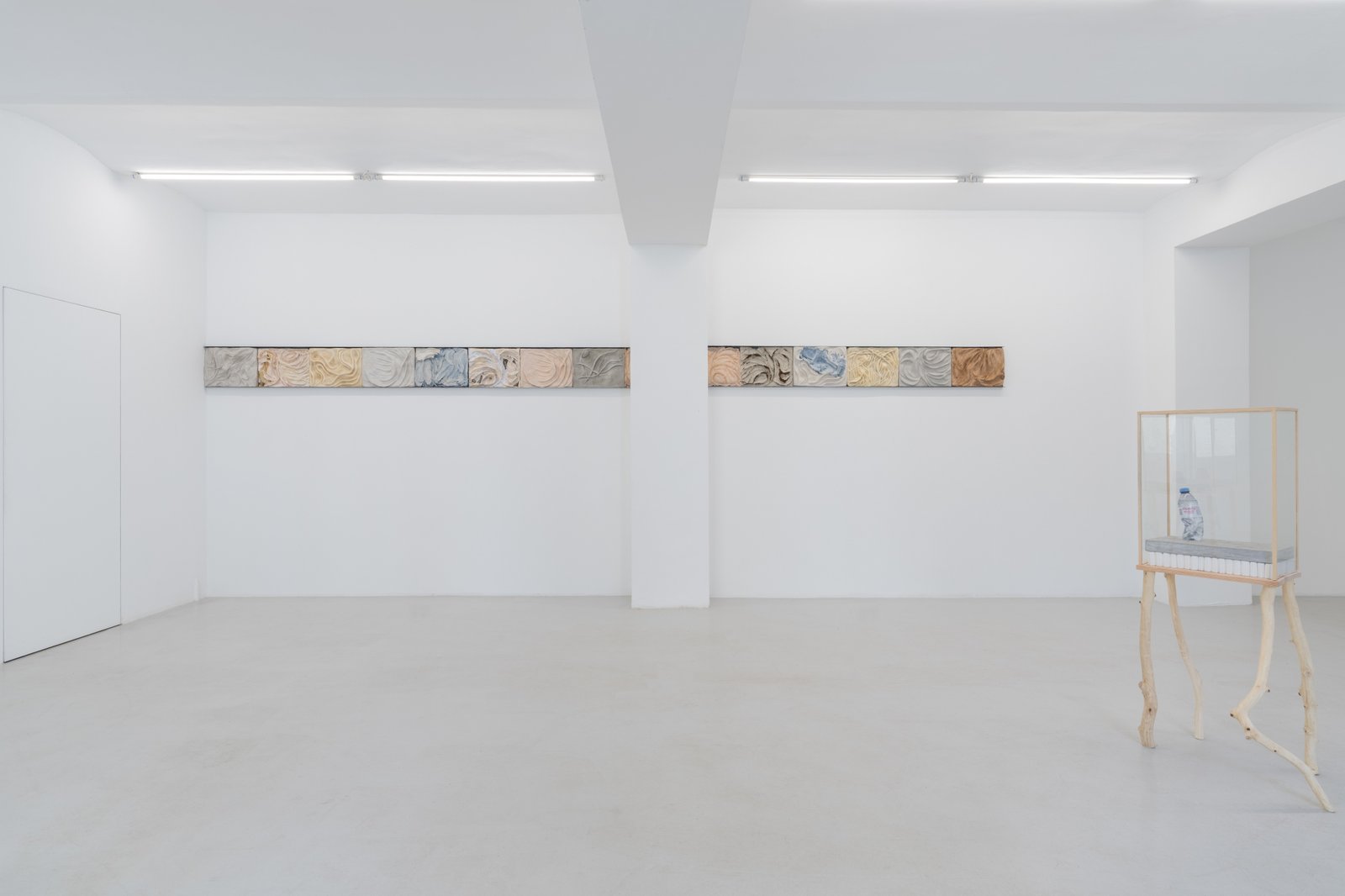
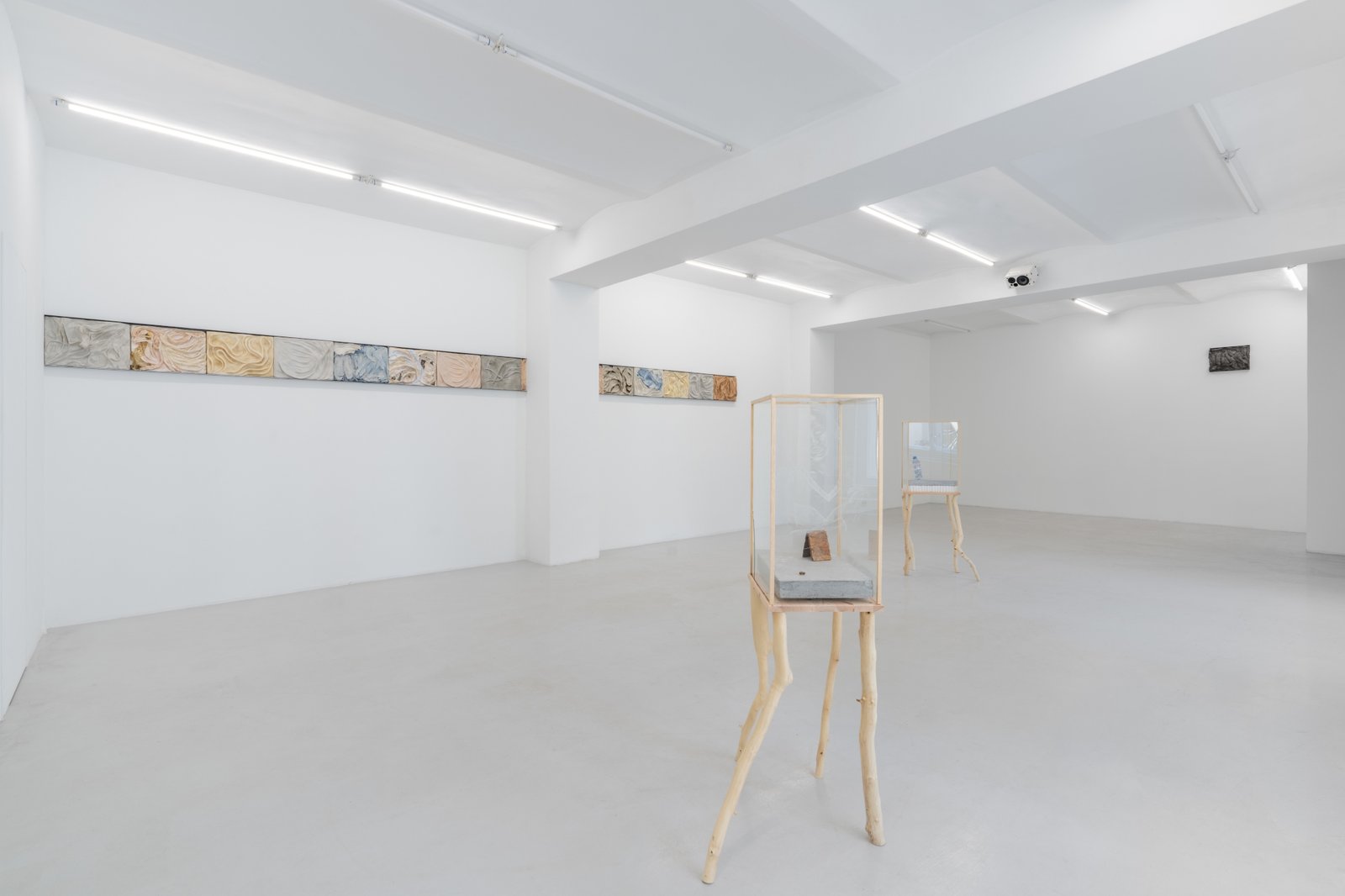
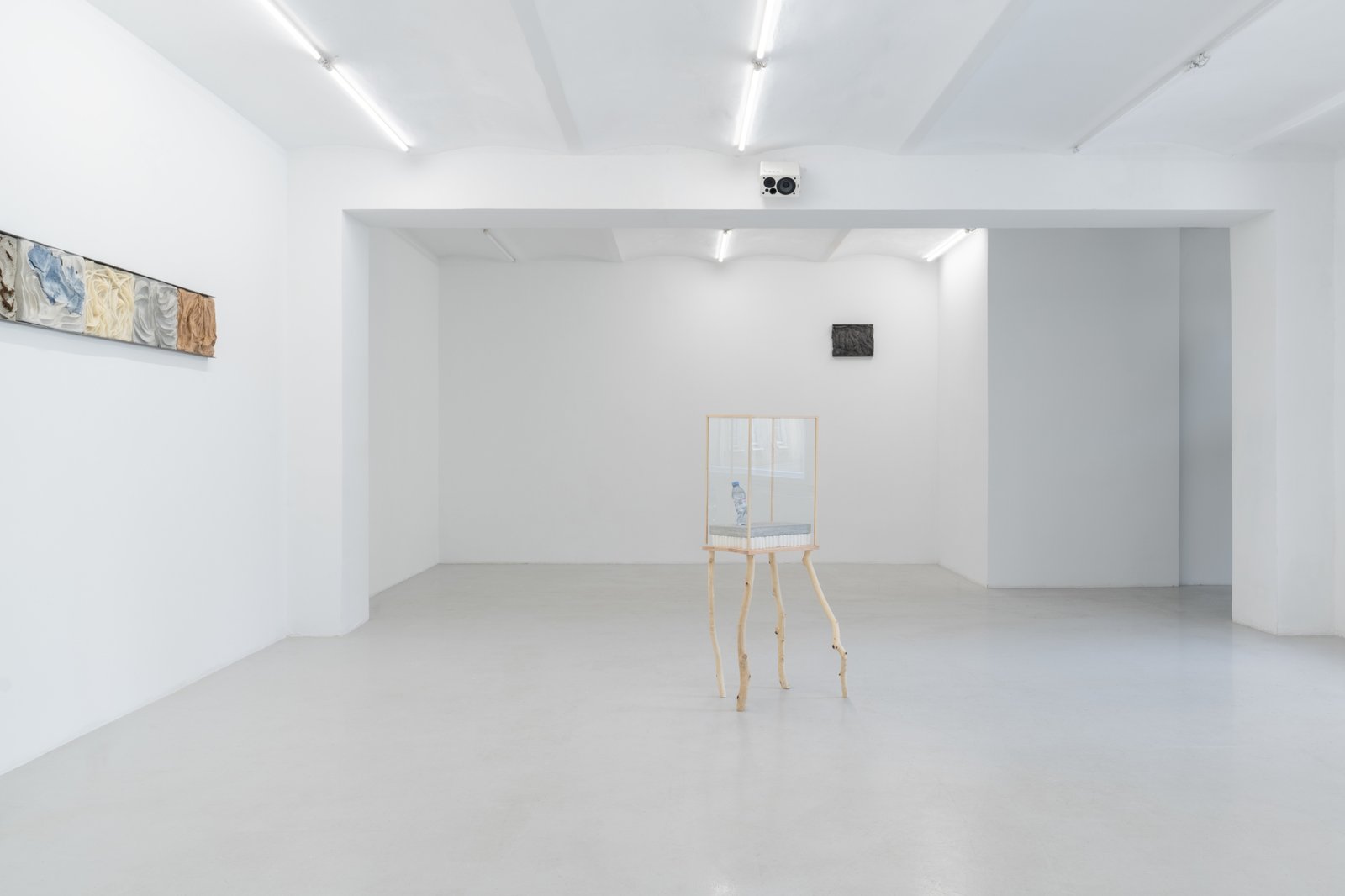
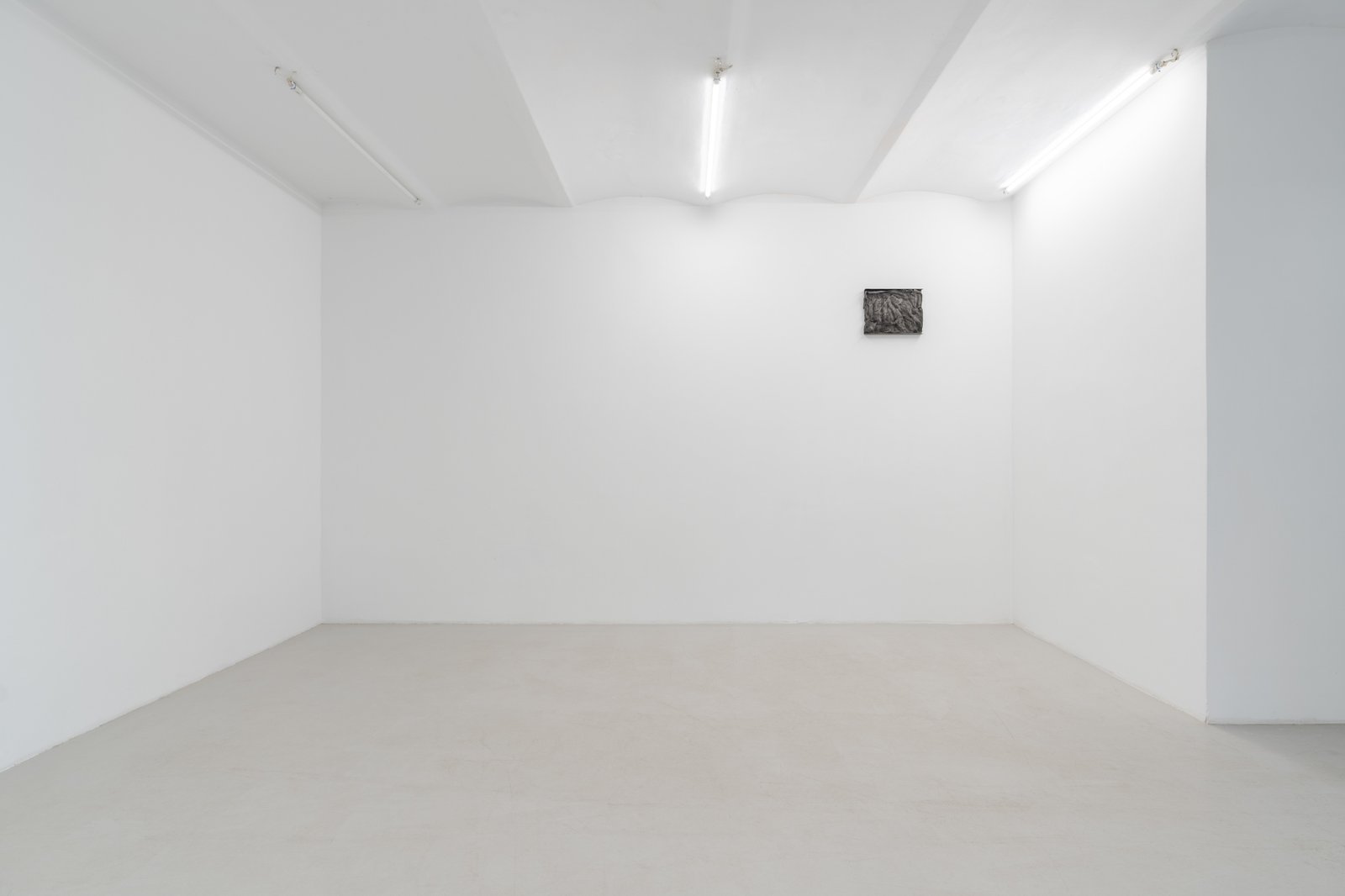
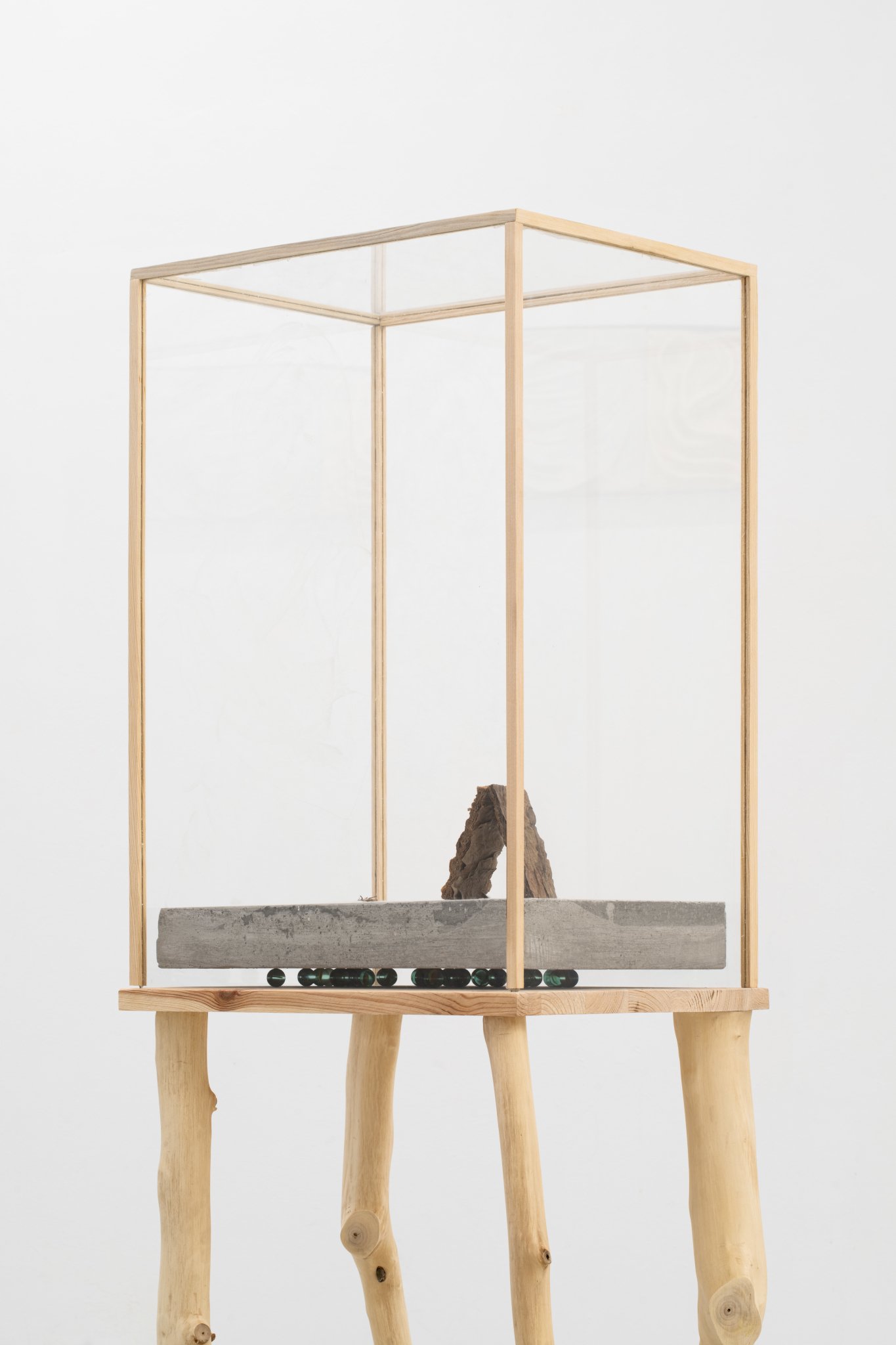
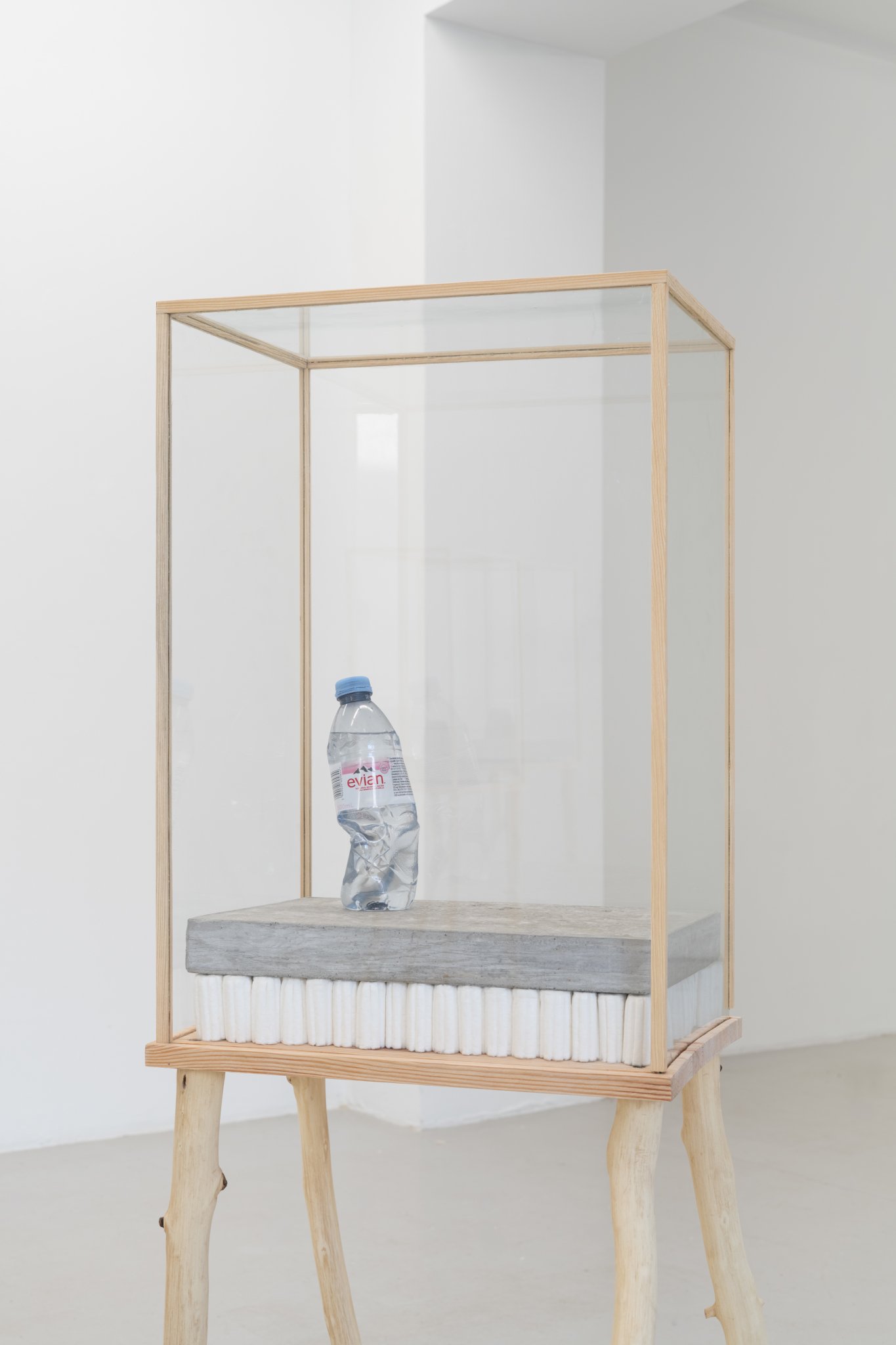
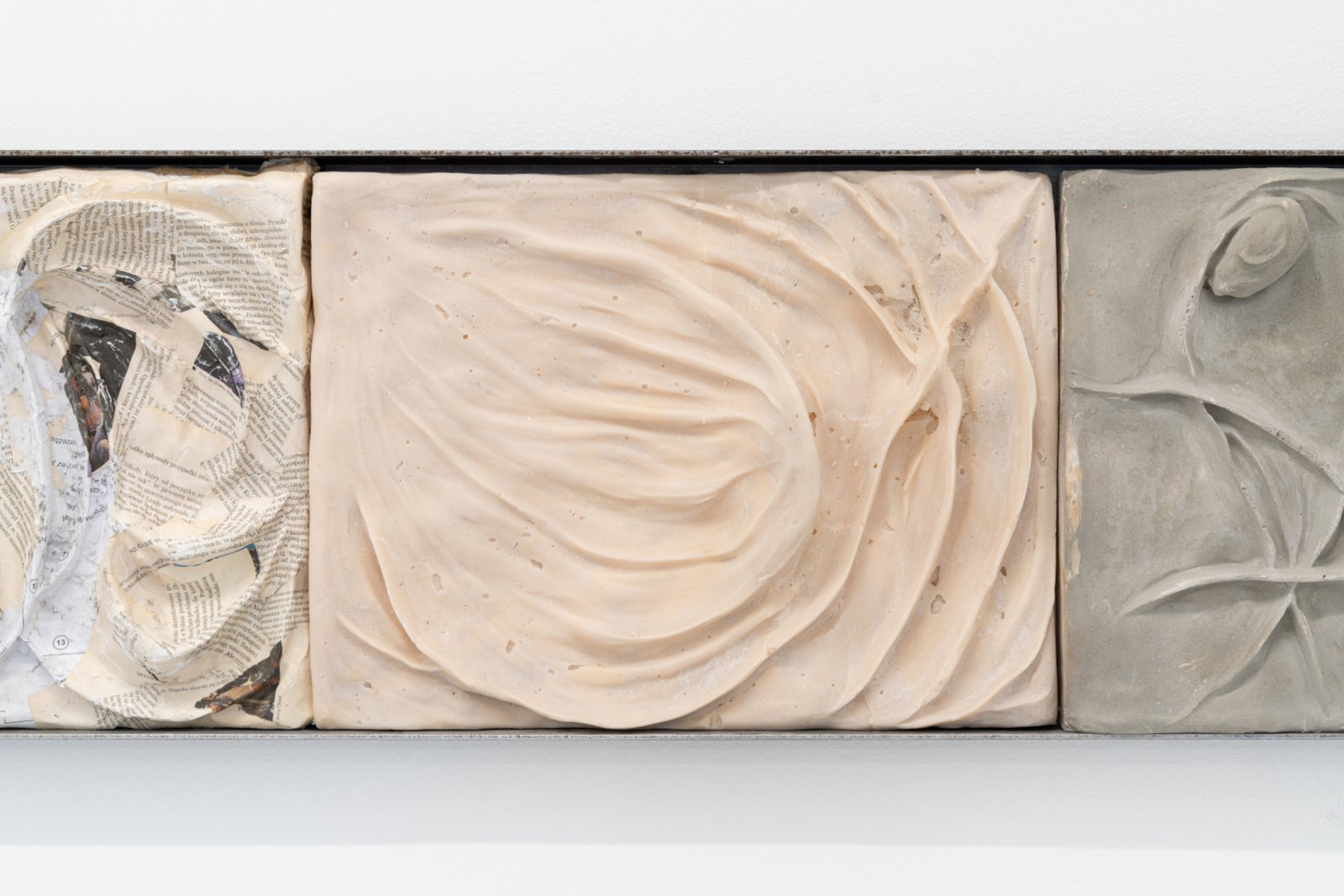
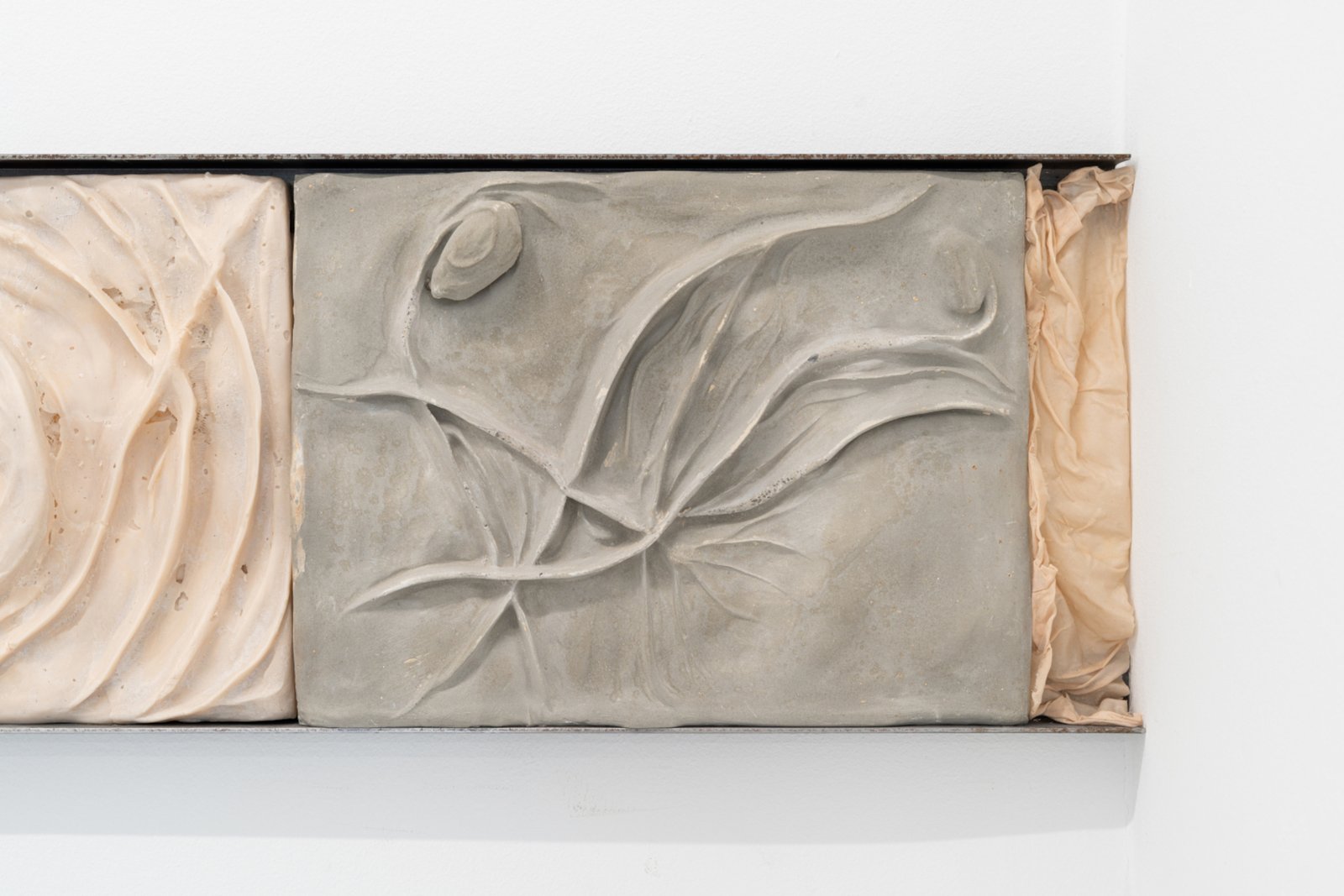
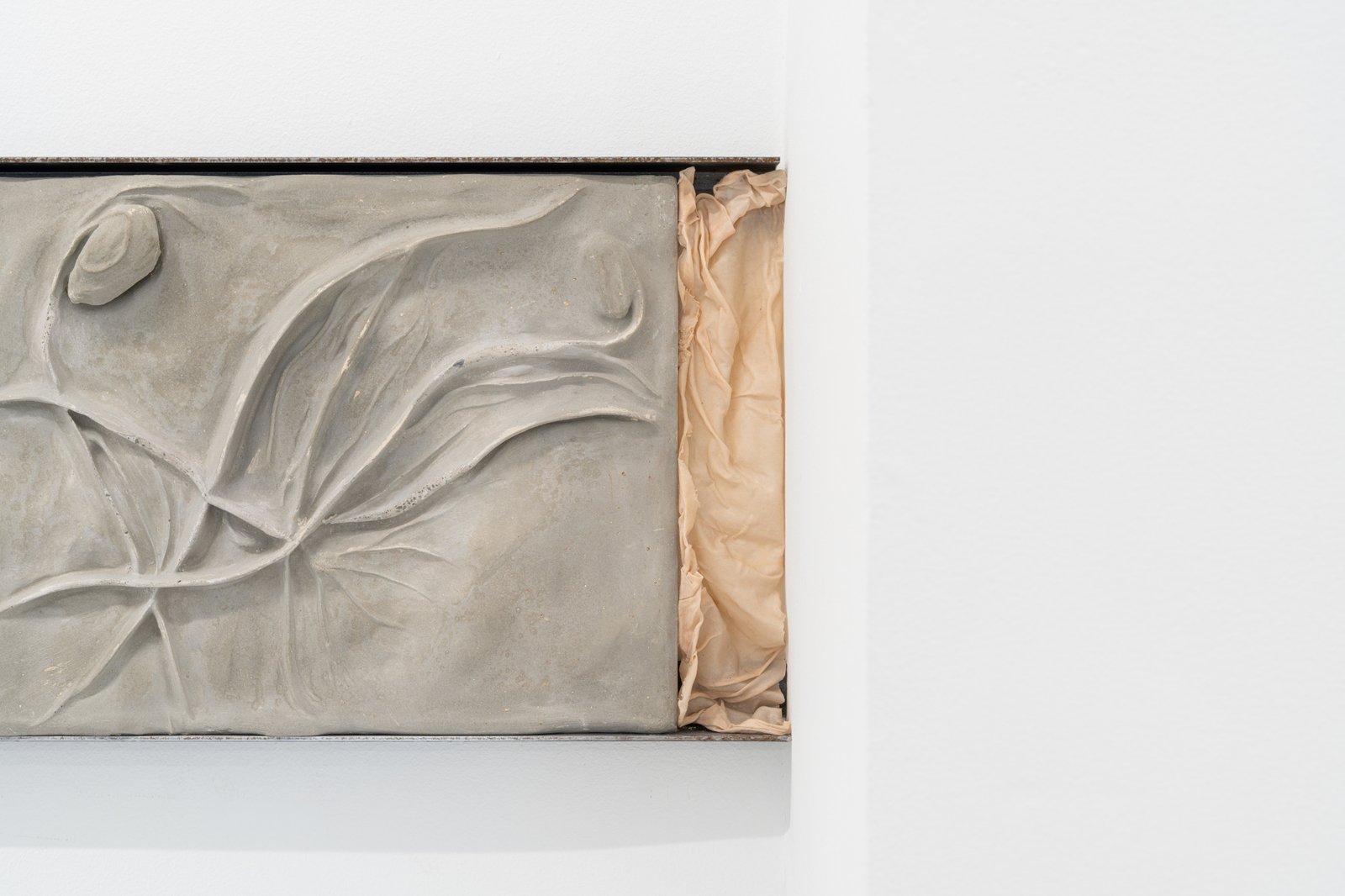
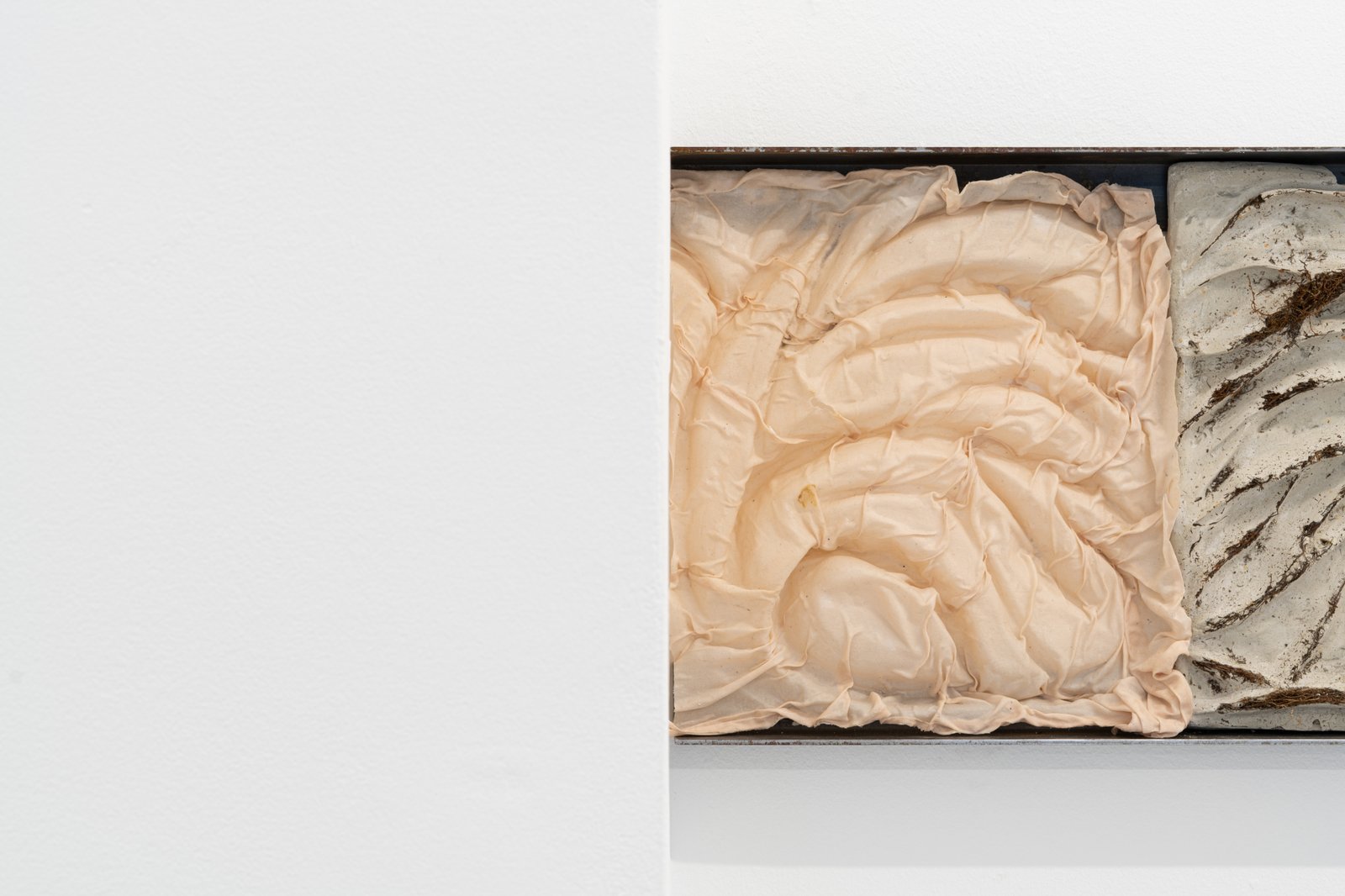
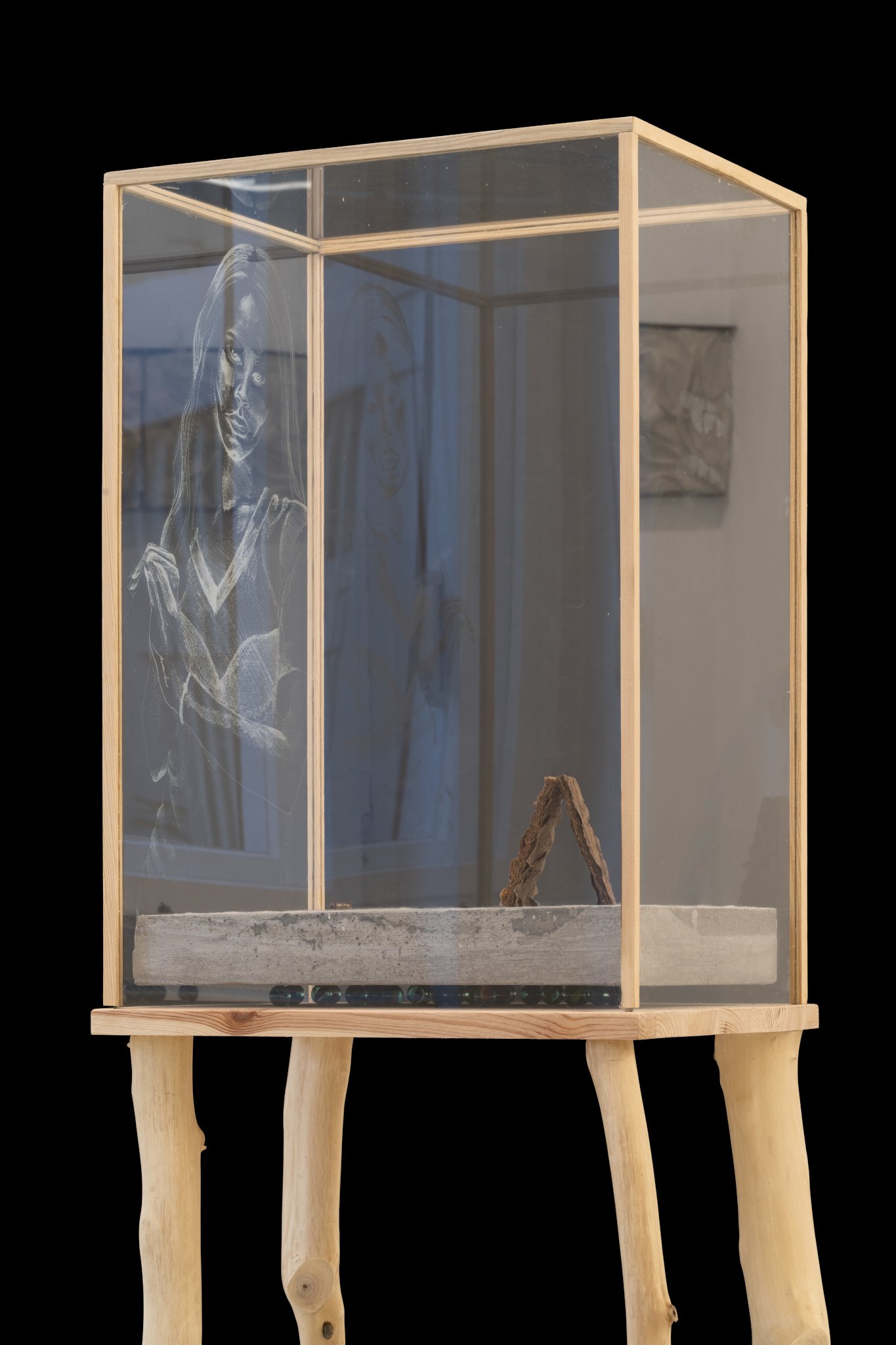
According to Agnieszka Topolska, matter is never neutral—it always carries traces of previous transformations. In the final days of installing the exhibition Call It Fate, Call It Karma, a crushed Evian water bottle was placed beneath a glass cloche, displayed on four polished rods. At the same time, it could just as easily have been a Lidl-brand Saguaro bottle, whose packaging subordinates the user to its own unpleasant sensory qualities in exchange for a low price, or a Fiji bottle, which evokes afterimages of low-quality 3D renders, seapunk dreams, and some vaguely defined pain.¹
By displaying the object in a showcase, the exhibition leaves us with questions about the production of synthetic, mediated experiences imposed by the logic of perpetual growth. Premium water promises consumers a high-quality beverage squeezed straight from the Alps. Embedded within this promise is the figure of Tiqqun’s Young-Girl.
Preliminary Materials for a Theory of the Young-Girl (1999) by the French collective Tiqqun is both an experimental manifesto and a schizophrenic social diagnosis. Here, the Young-Girl is a metaphor that extends beyond associations with girlhood: she is the model citizen and the product of consumer society—the Young-Girl seduces exclusively through consumption. It is not a specific person or demographic group, but a structure of subjectivity that capitalism has actively produced since the First World War as a response to the threat of revolution: a hidden war in which social forces manufacture conformity and normality, enacted the moment we become the Young-Girl.
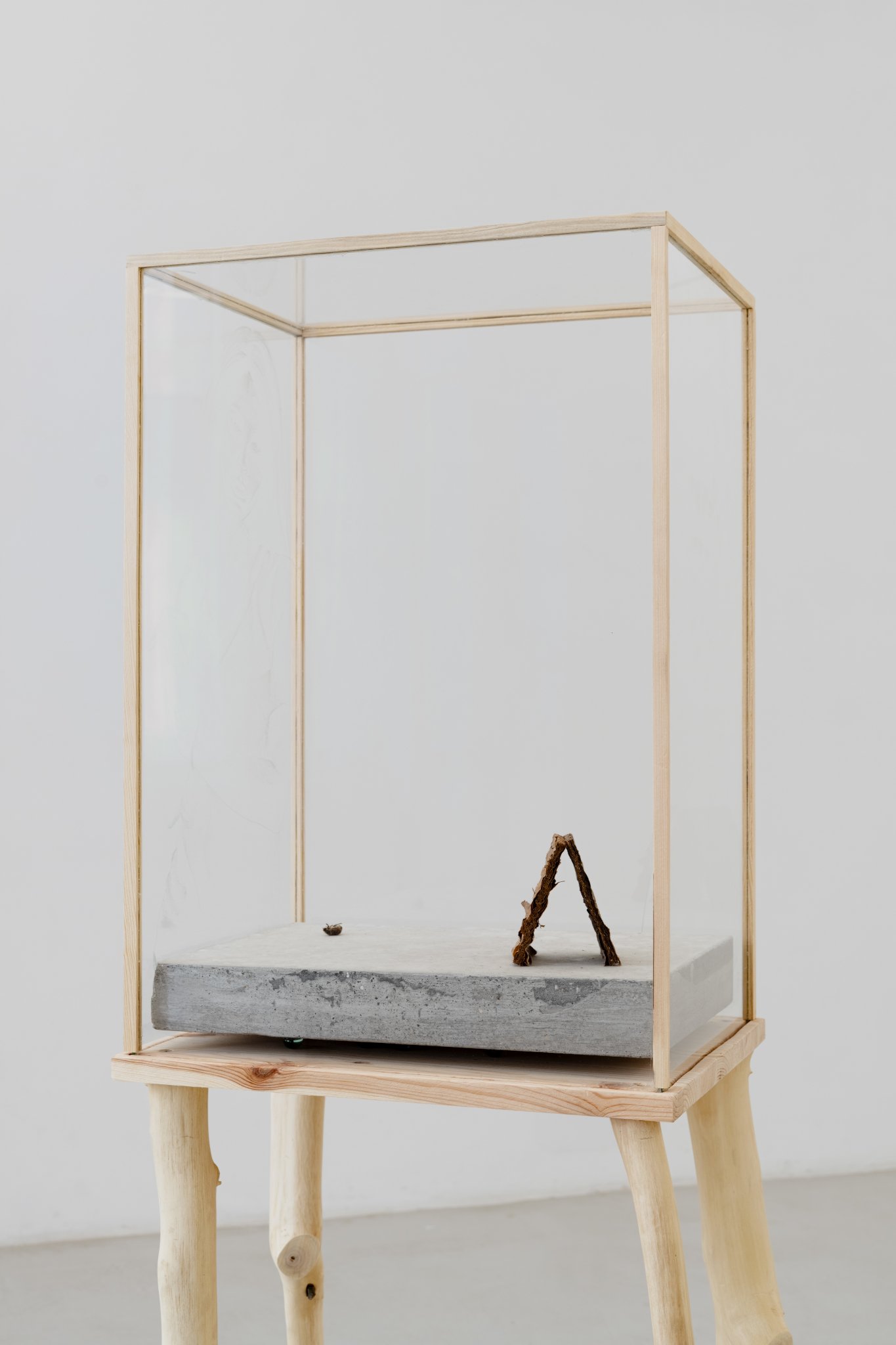
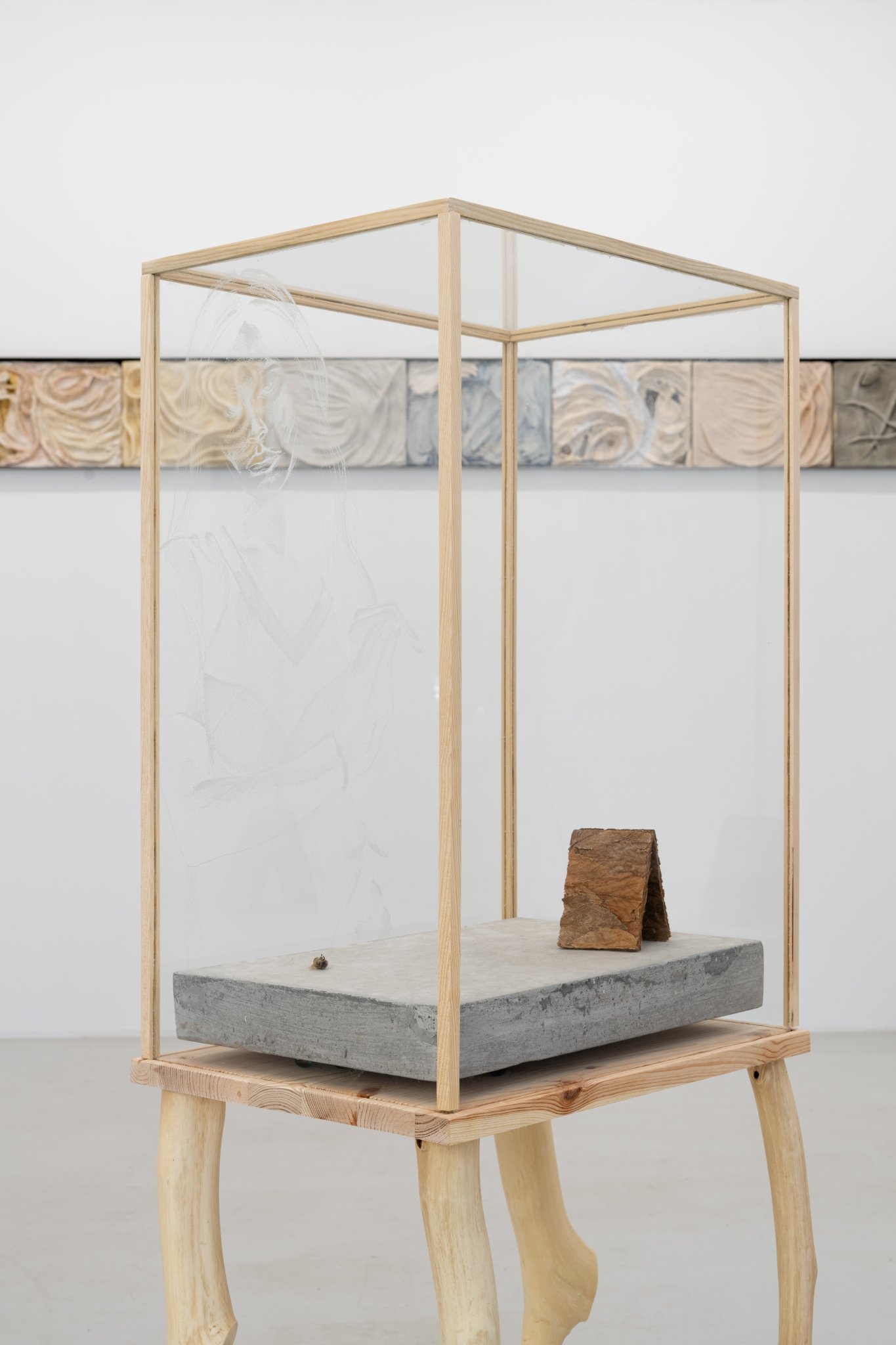
The two glass cloches placed at the center of the gallery refer to Sylvia Plath, an author whose image has become inseparably entangled with the widespread association of girlhood as something produced. Plath describes the experience of femininity as a branching fig tree, each fruit offering a different future: a famous poet, a happy wife, a brilliant professor, a lover, a traveler. The protagonist sits paralyzed and starving because she cannot choose any of the figs. Choosing one means losing all the others—the figs fall one by one and rot at her feet during the suspension before a decision is made.
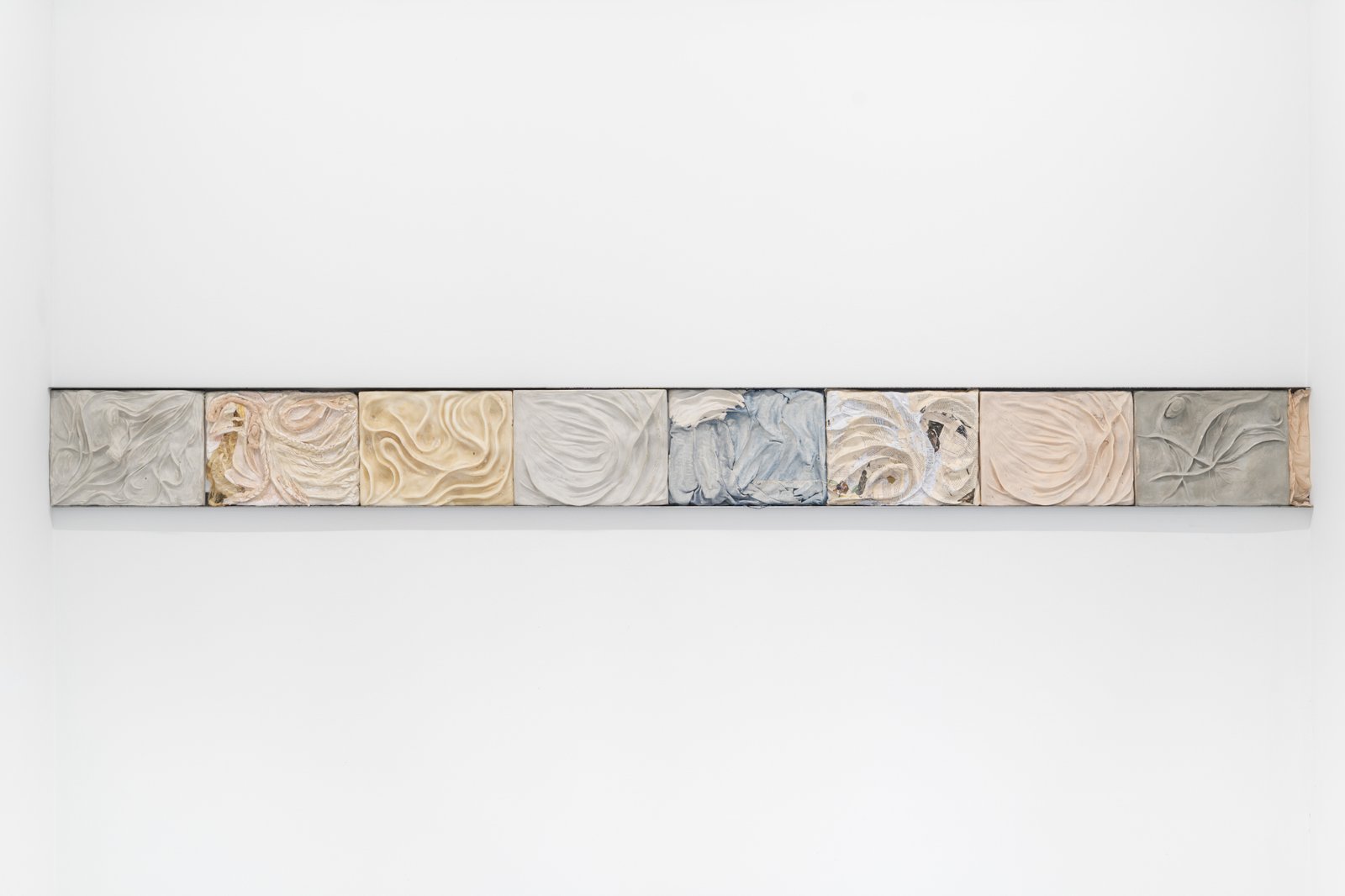
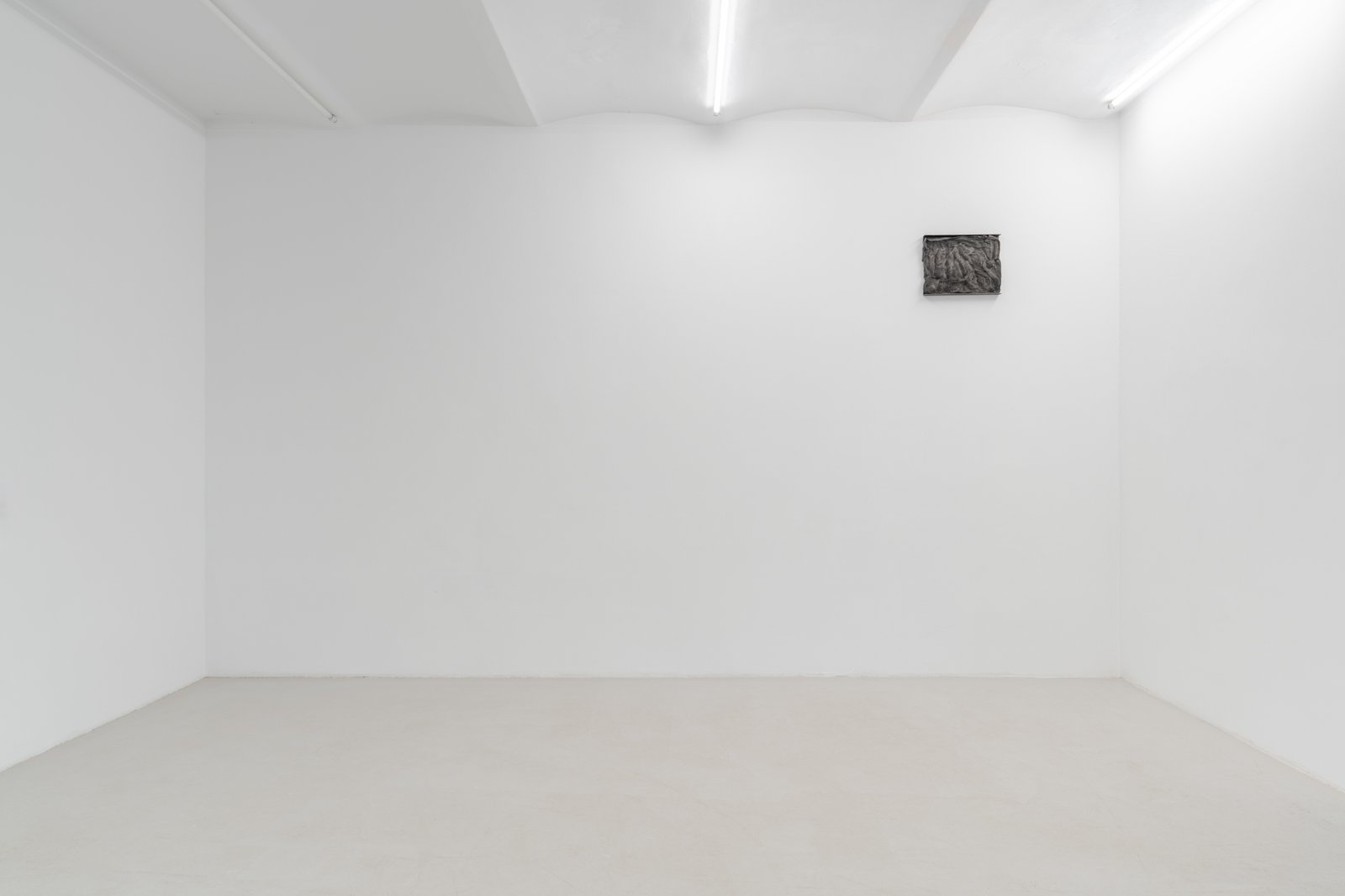
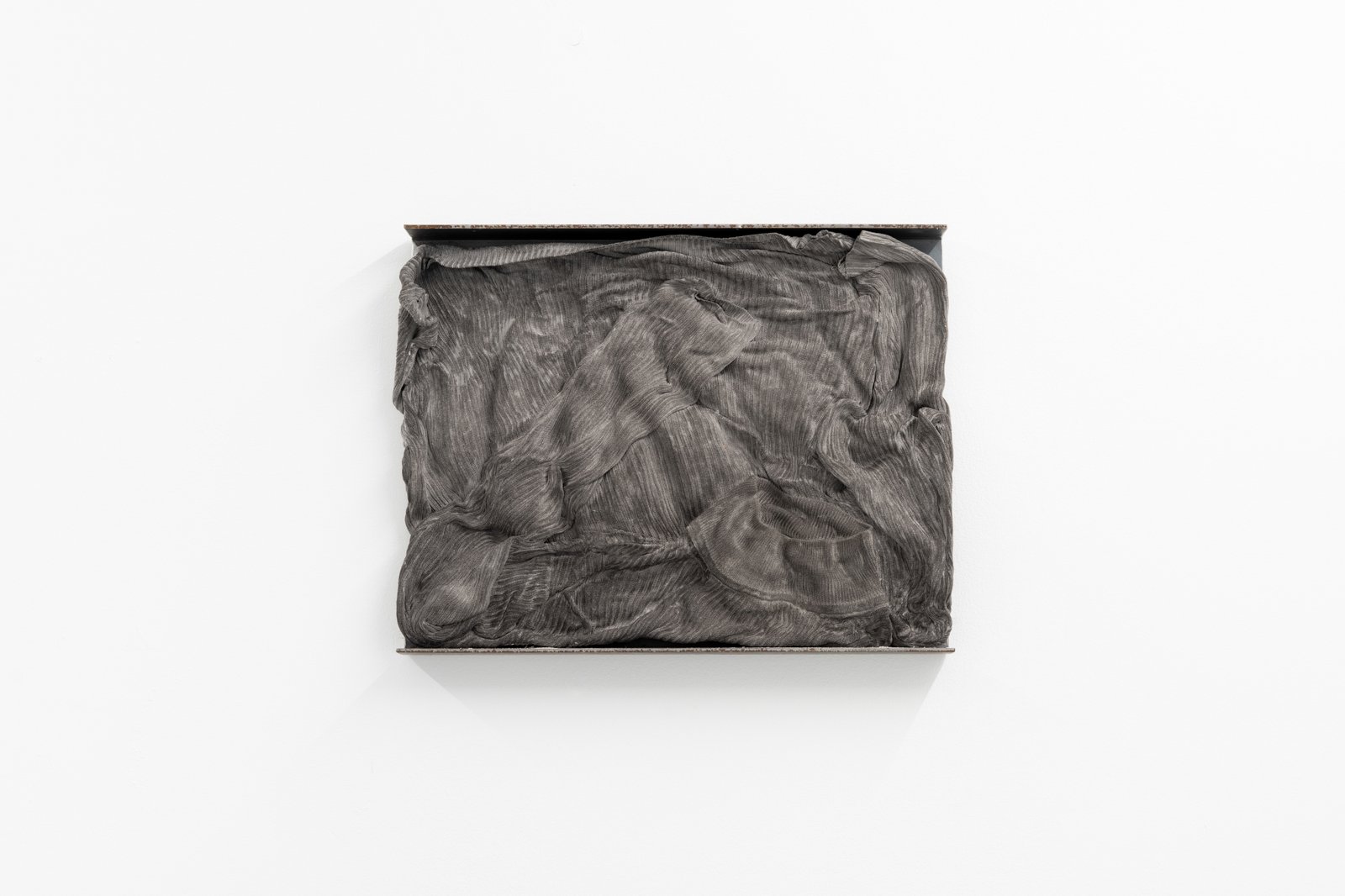
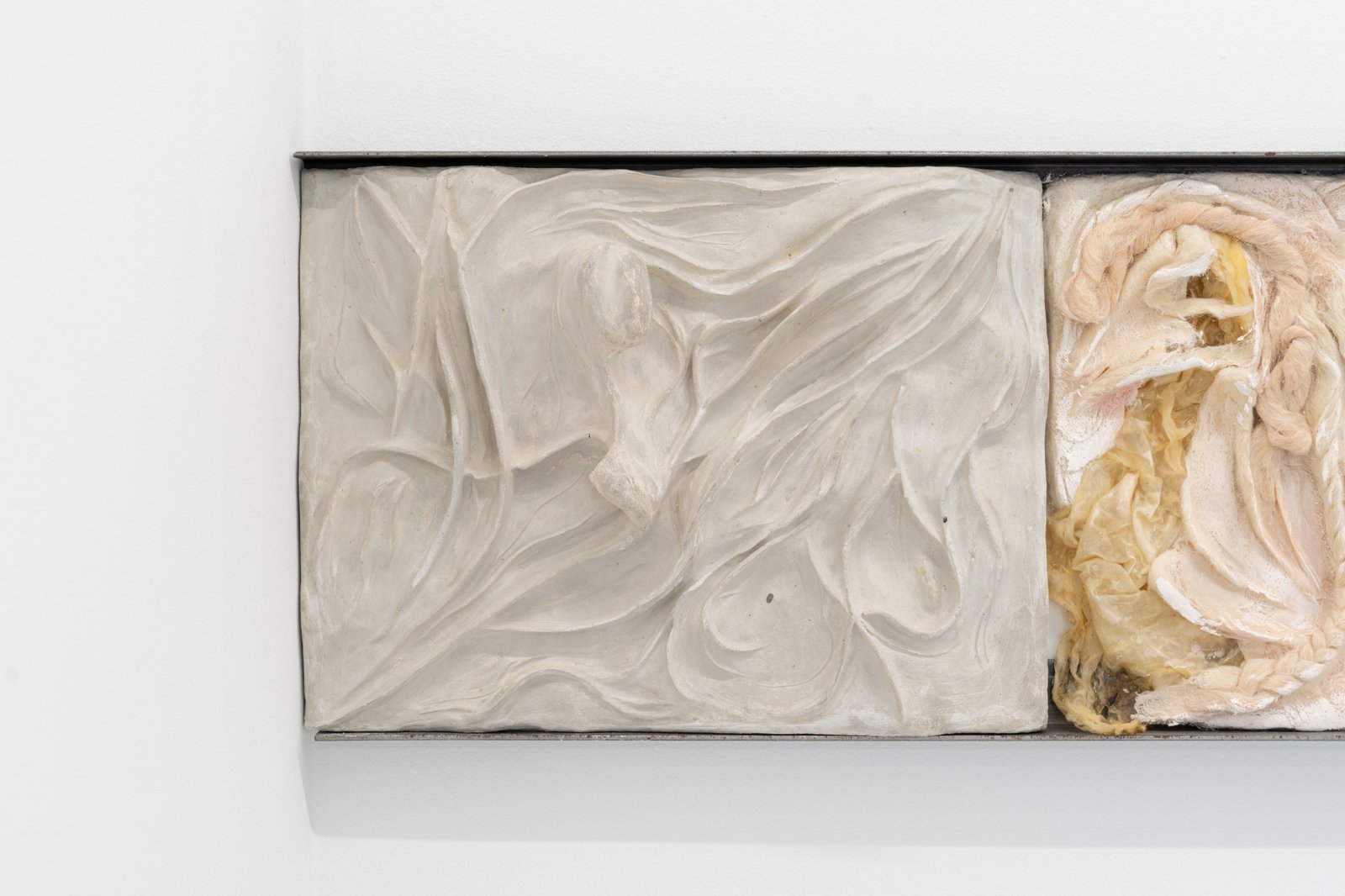
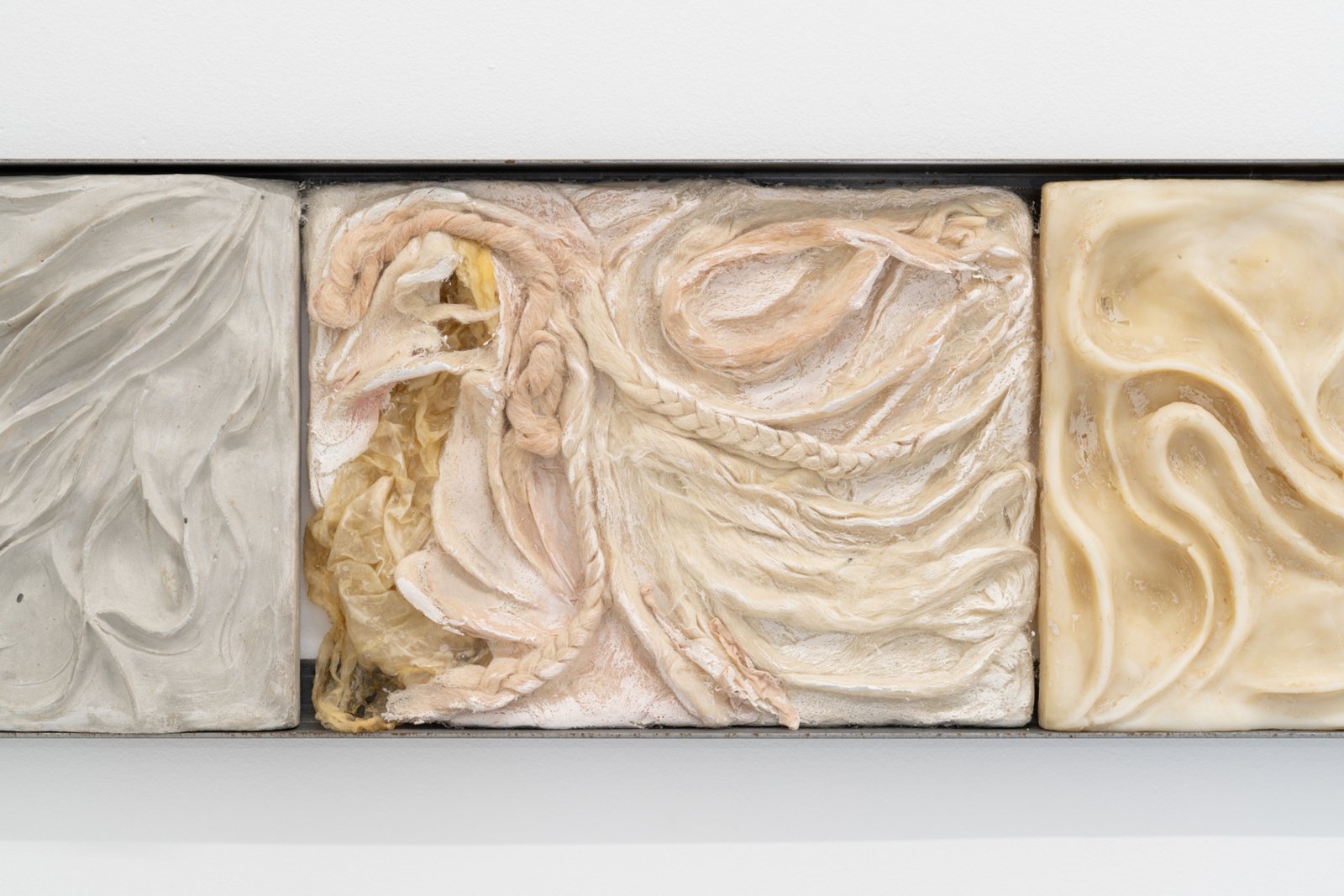
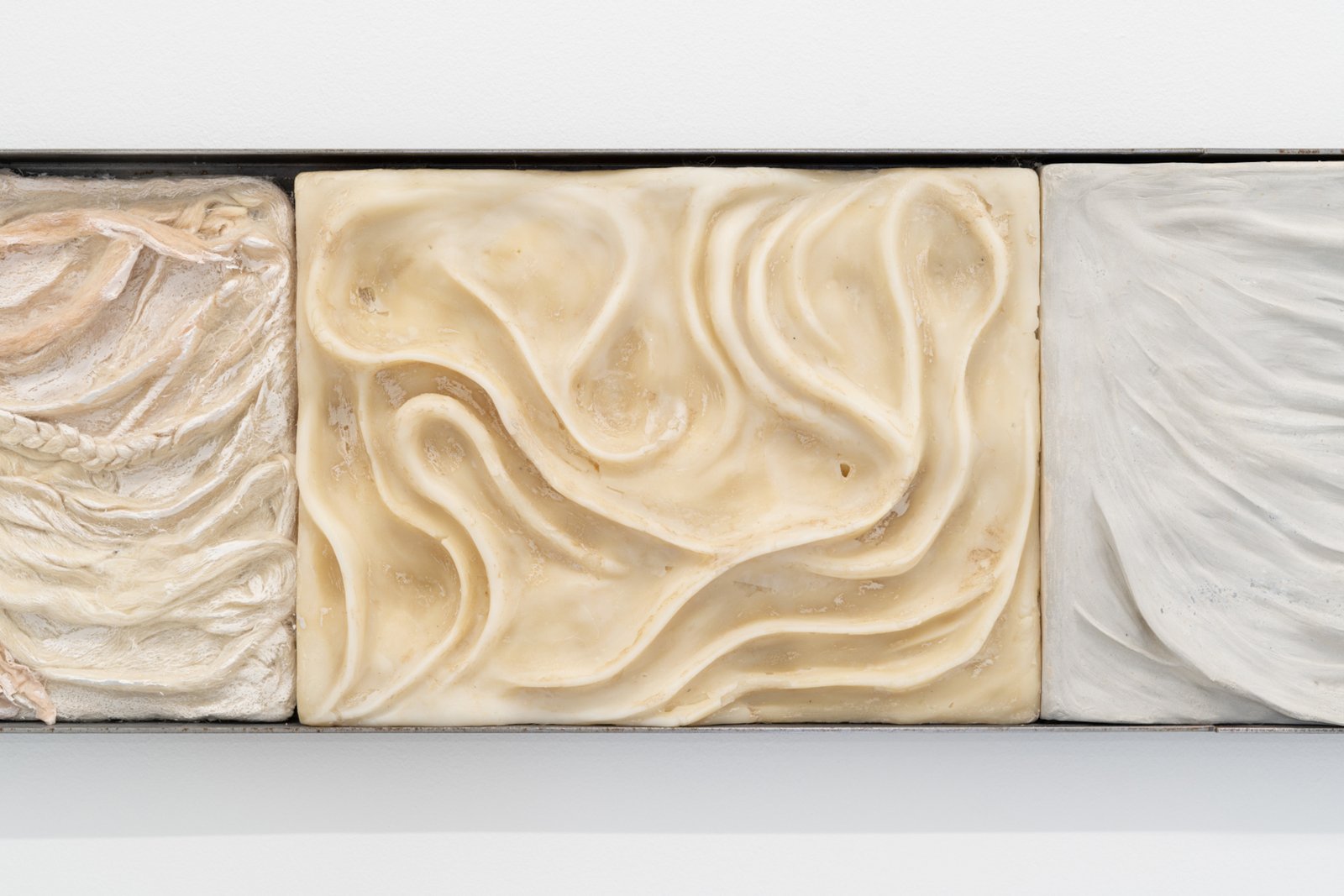
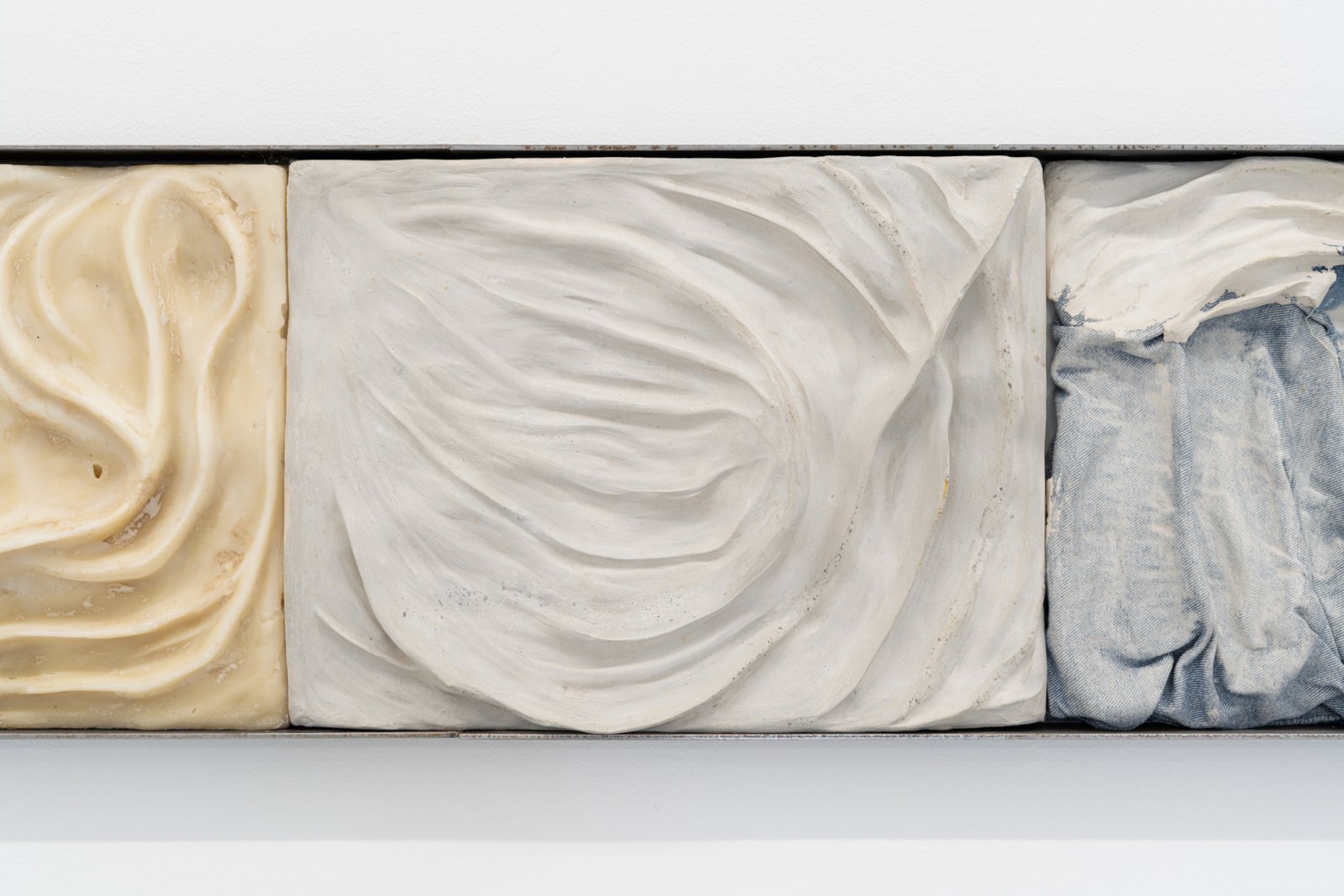
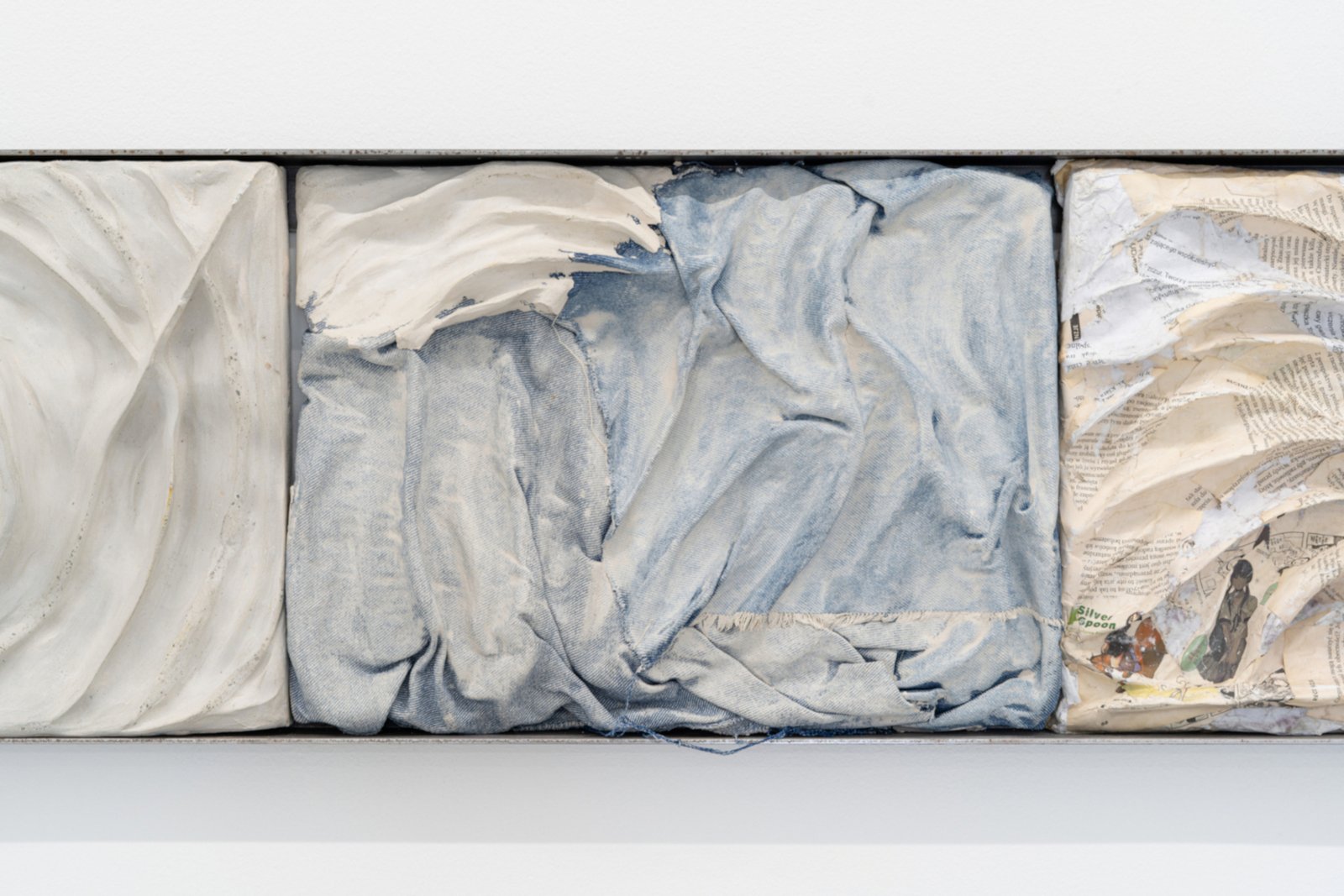
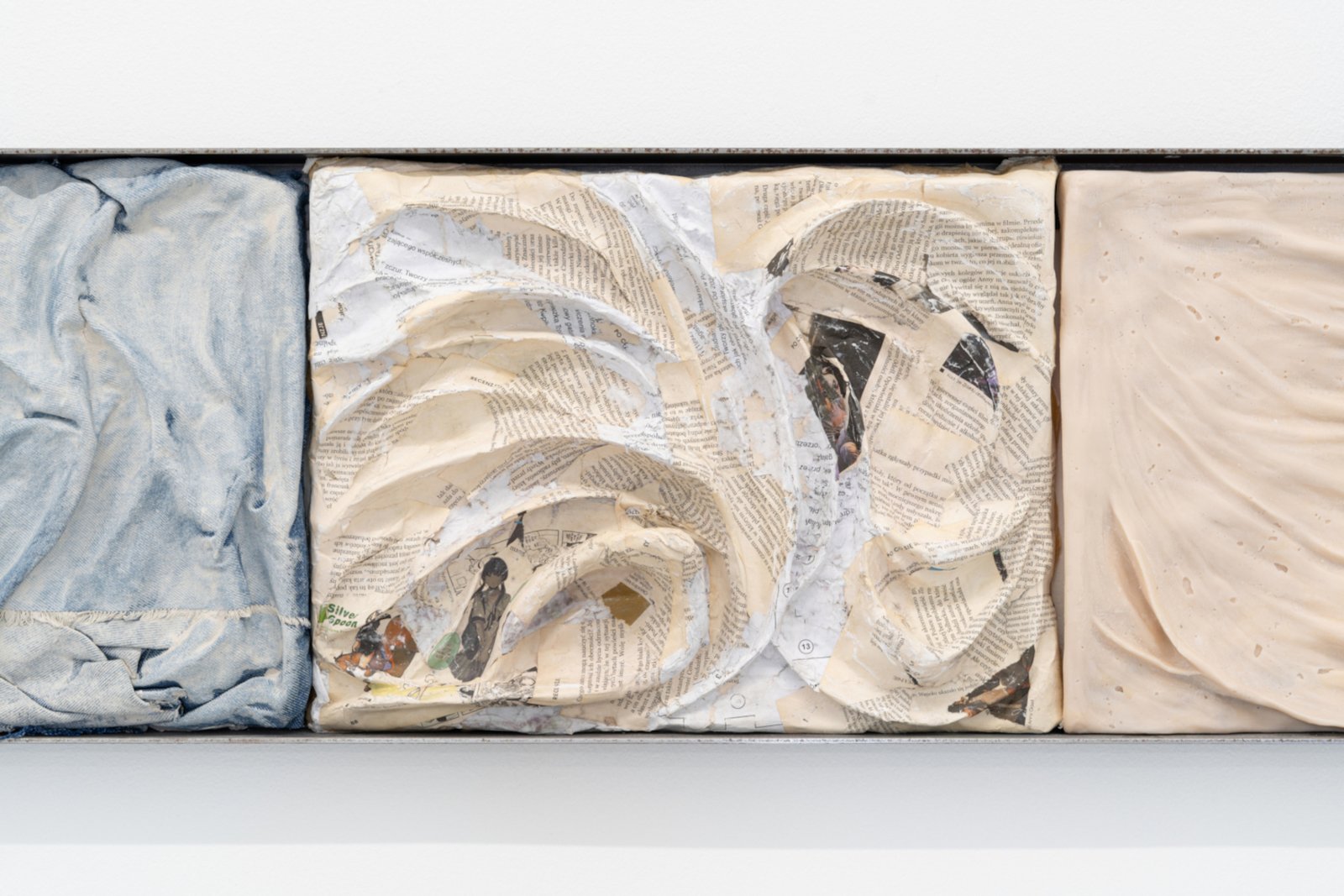
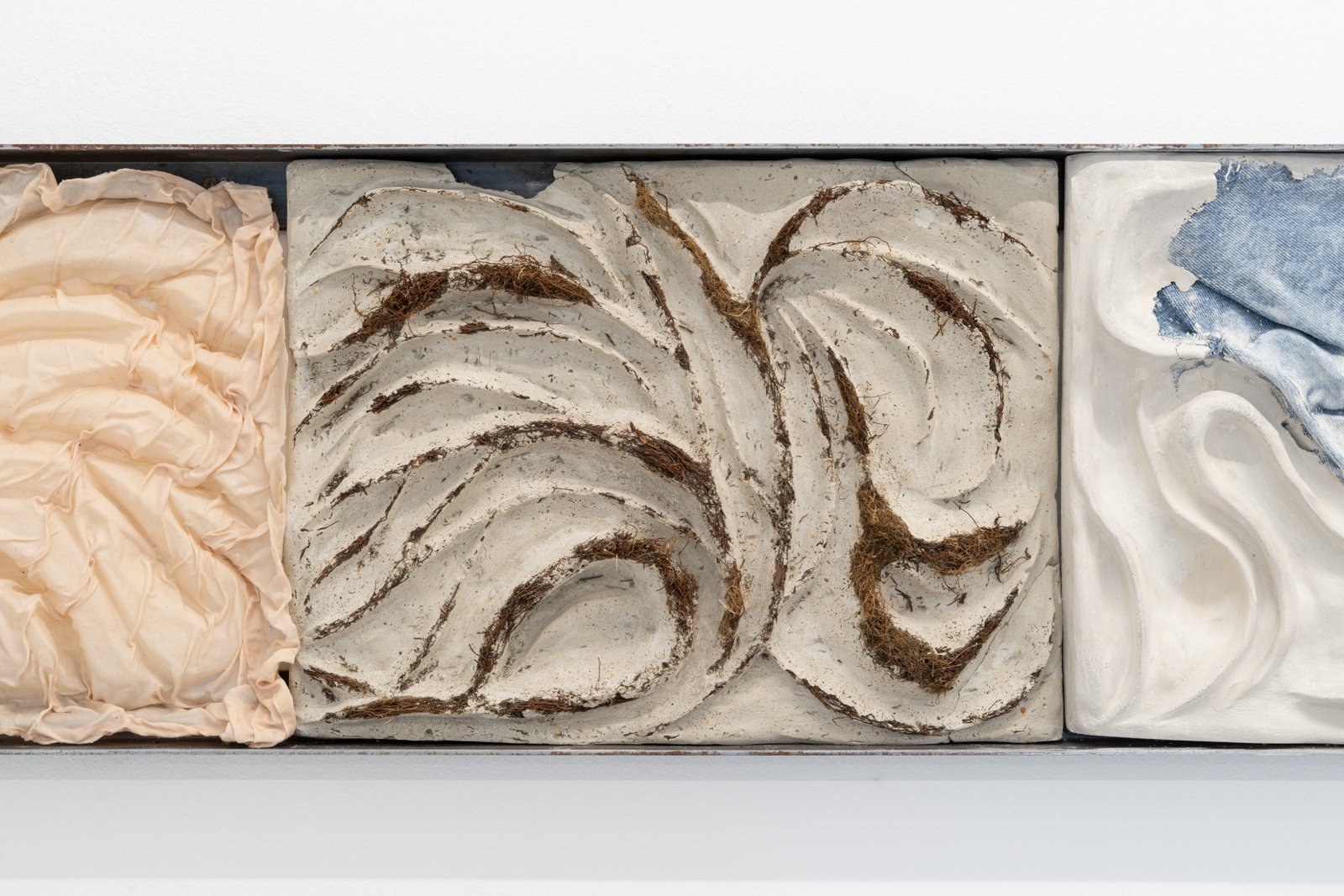
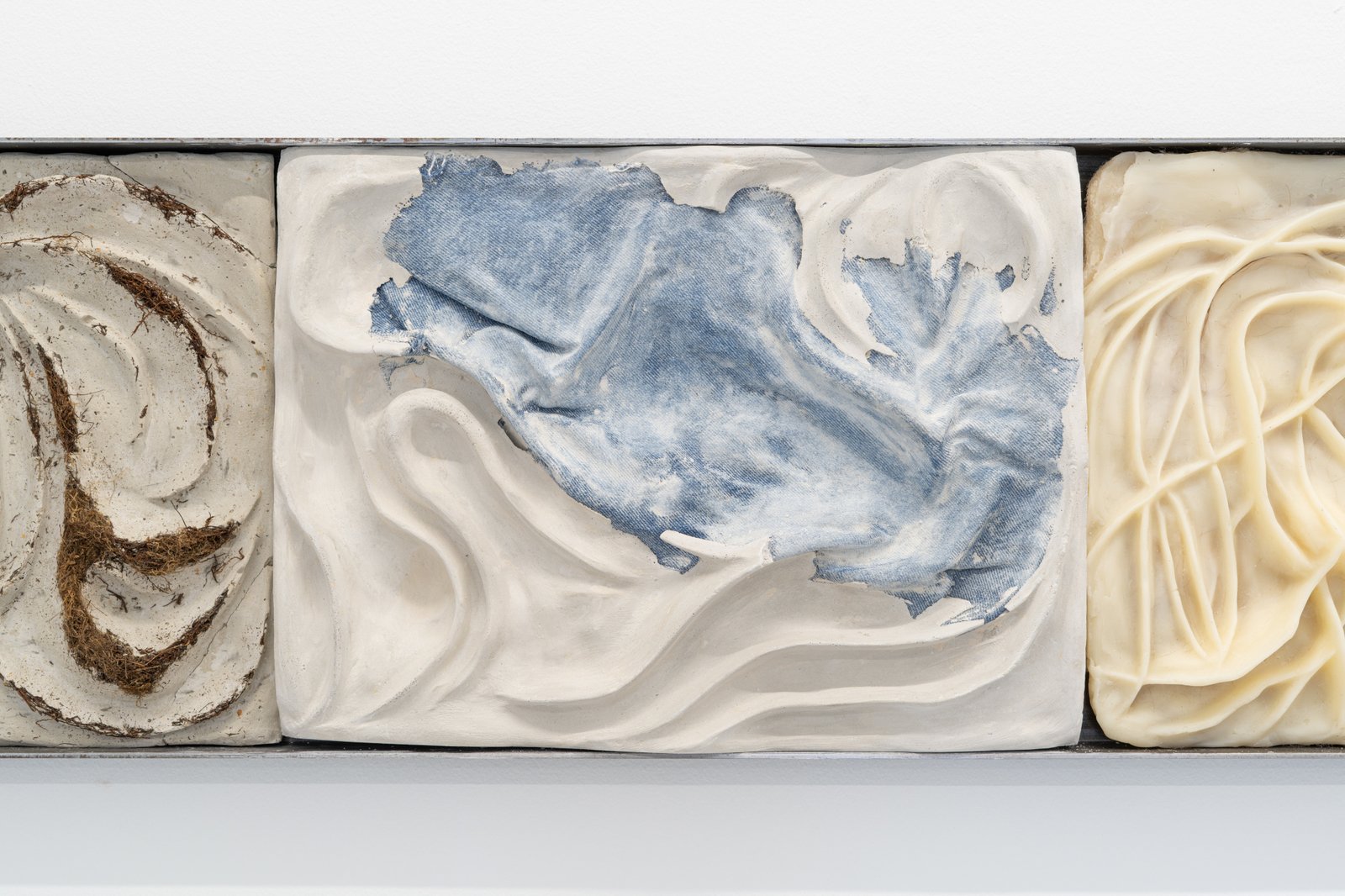
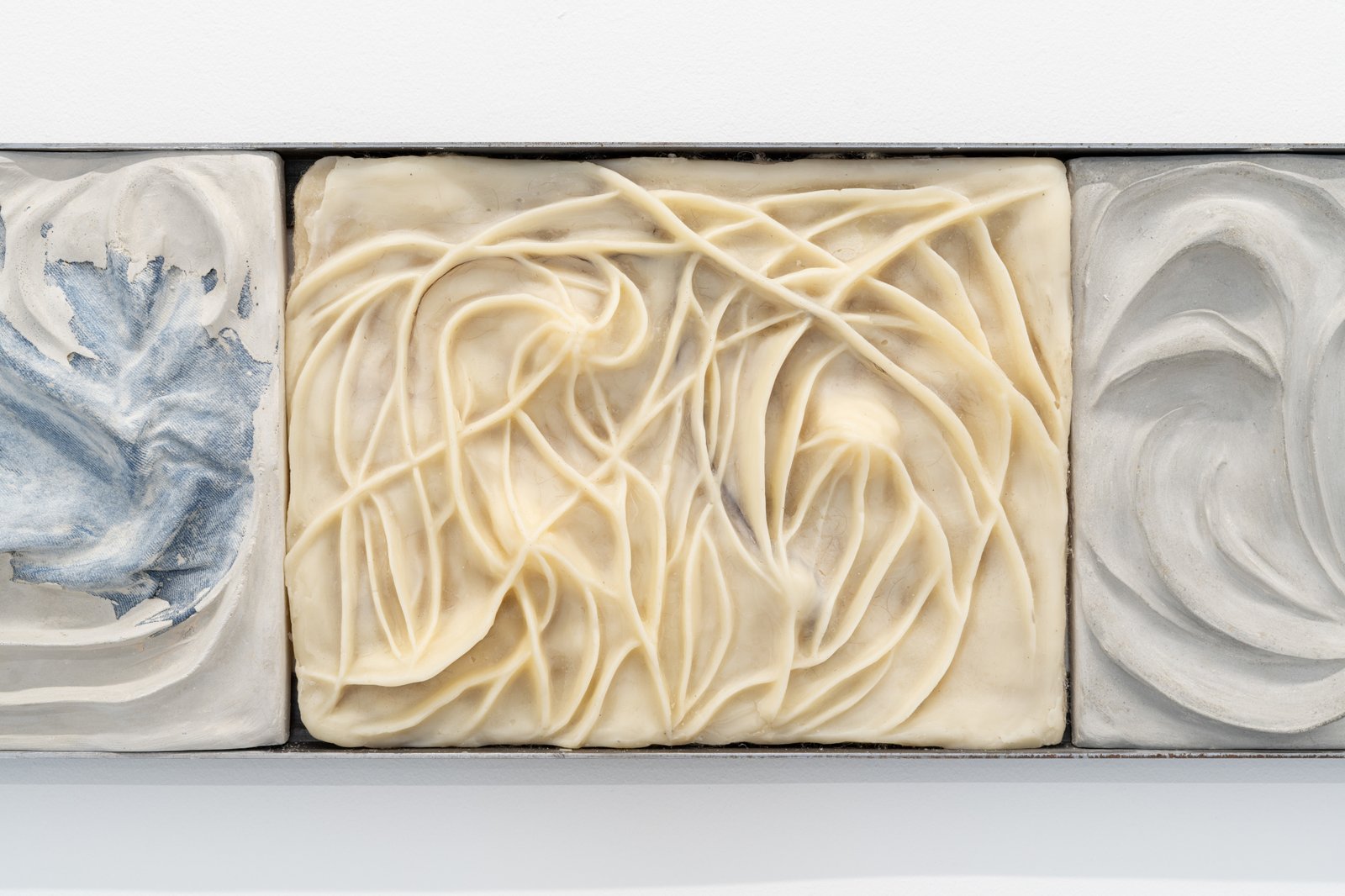
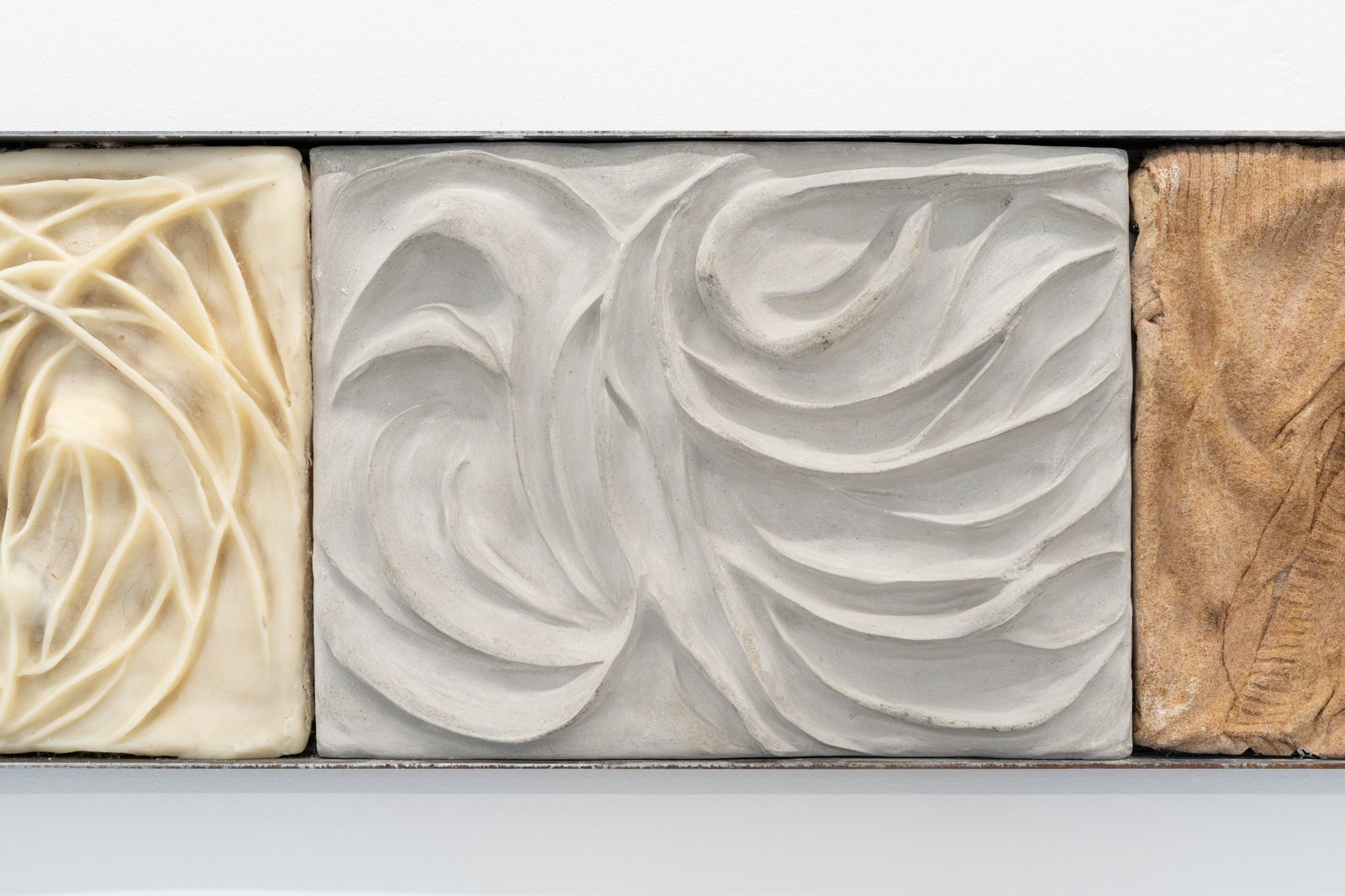
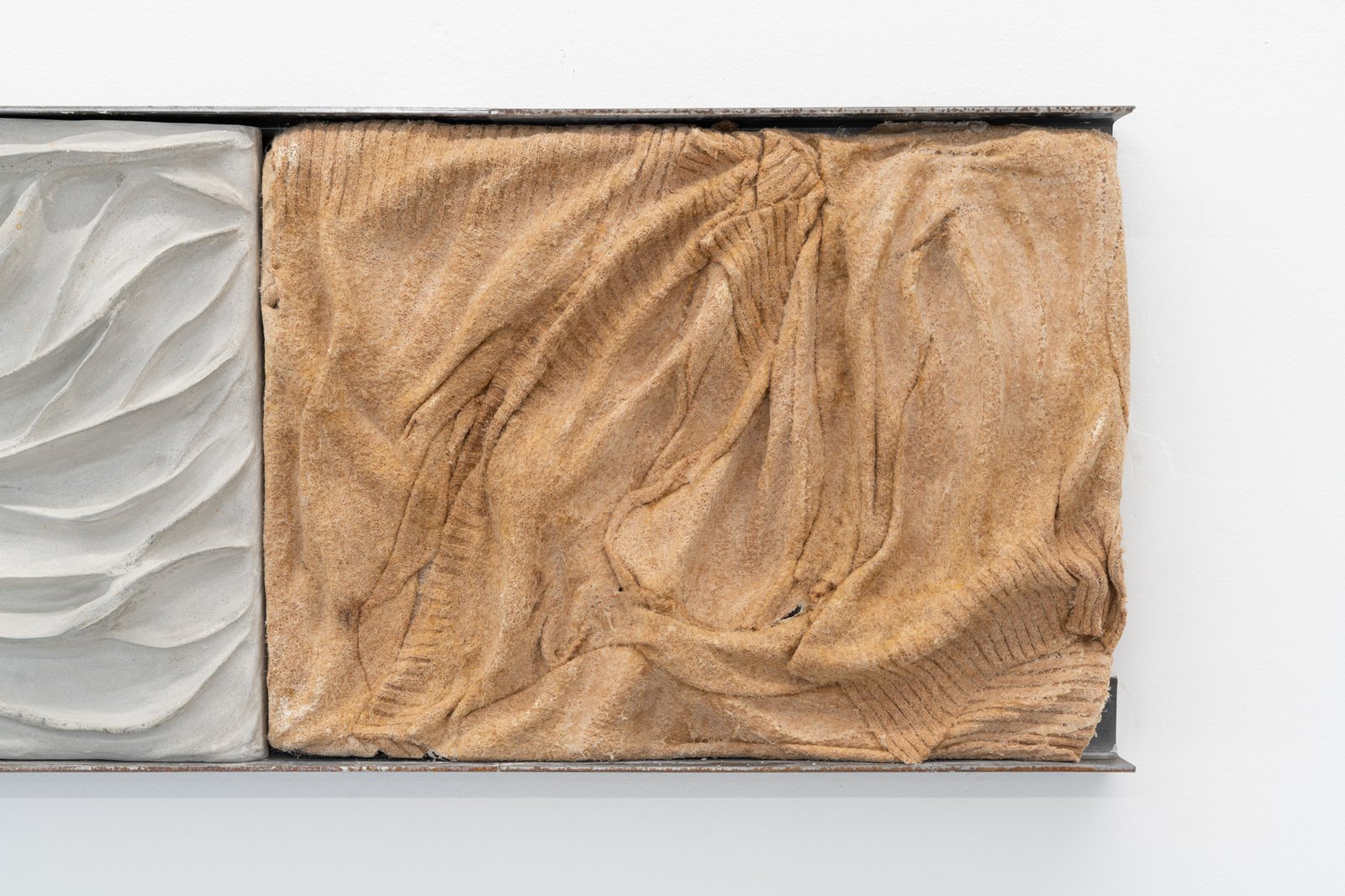
Topolska works with materiality in order to ask how transformations affect tissues and structures. She takes into account the forces that constrain and shape plaster, wax, and silicone, testing their susceptibility to the gesture of crushing—a gesture that returns encapsulated in the form of a block filled with a chosen substance. Crumpled laundry on a young girl’s bed, a nervous gesture while waiting for further news, repetition dictating the rhythm of deformations, reconstructing a product from memory, difference and similarity, vulnerability to time and temperature—the artist subjects matter to the test of mechanical labor, like a factory product, yet without the participation of optimizing procedures, relying instead on a dialogue with a network of associations.
This test was undertaken in a moment suspended between tension and relief, without a directed intention, yet speaking through muscle memory—in the flows, bulges, and indentations preserved in the material.
“Can I waste all your time here on the sidewalk? / Can I stand in your light just for a while?” — The Strokes, “Call It Fate, Call It Karma”
Meaning emerges through difference. In the repetition visible throughout the cycle Call It Fate, Call It Karma, what resonates is that which cannot be optimized—the labor of the hands without an orientation toward profit. Any attempt to produce meaning would draw this labor into yet another stage of machine logic, but this is neither prescribed nor forbidden: we may rely on our own reserves of energy.
In the space of Skala, we choose to sit down beside Topolska on the sidewalk—together with the hauntological figures of Julian Casablancas (2013) and Lana Del Rey (2014)—to pause in opposition to the momentum of the production line, thinking about the fragility of matter, nostalgia, and a certain anxiety about what is about to happen.
¹ “Shawty I’ma do things that you ain’t never did / Finna wake up next to you in my crib / ’Cause I’ma make you hurt / I’ma, I’ma make you hurt / I’ma make you hurt” — Jonathan Leandoer, “Hurt” (2013)
Text: Lena Peplińska