

BRUT
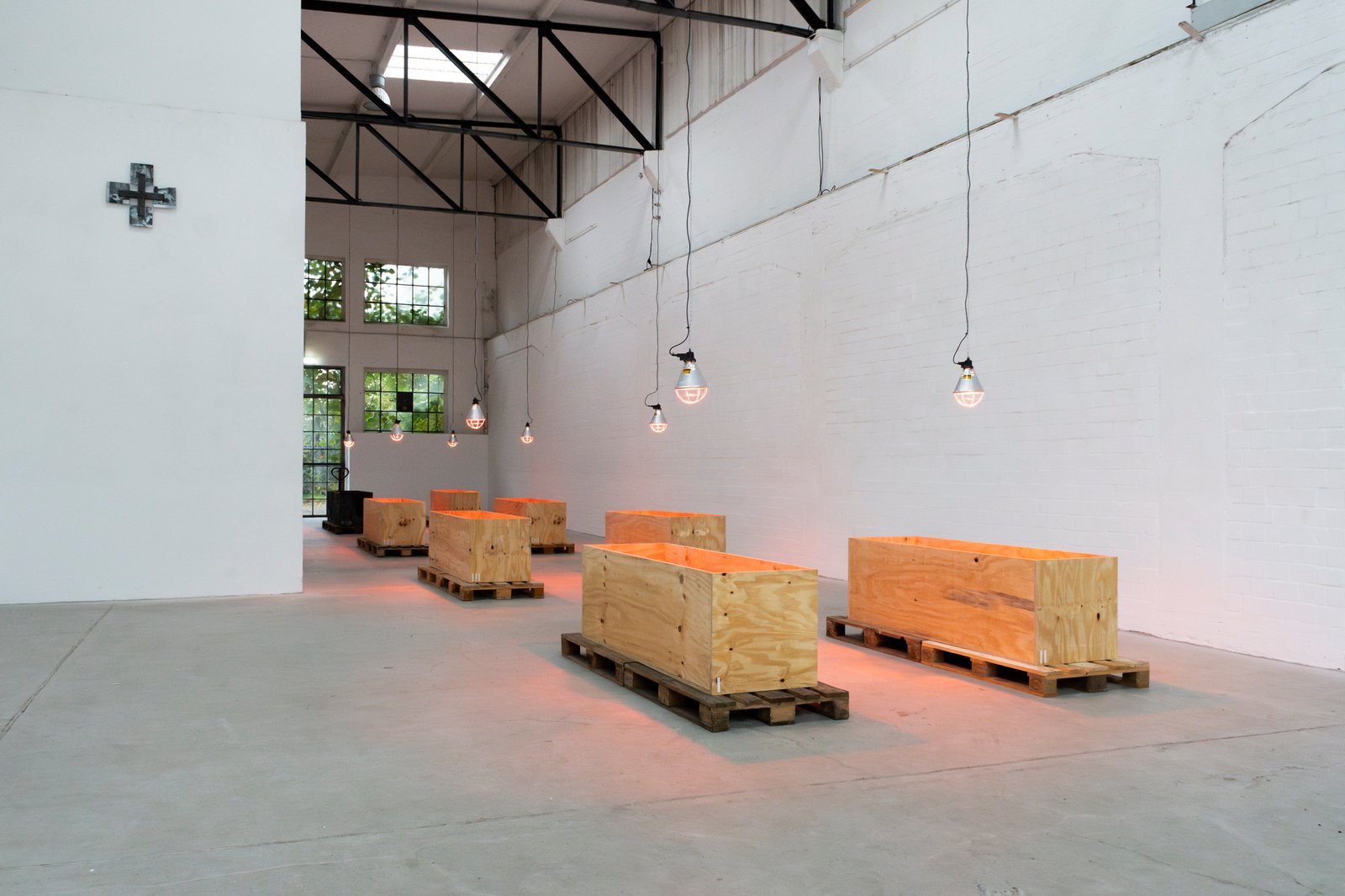
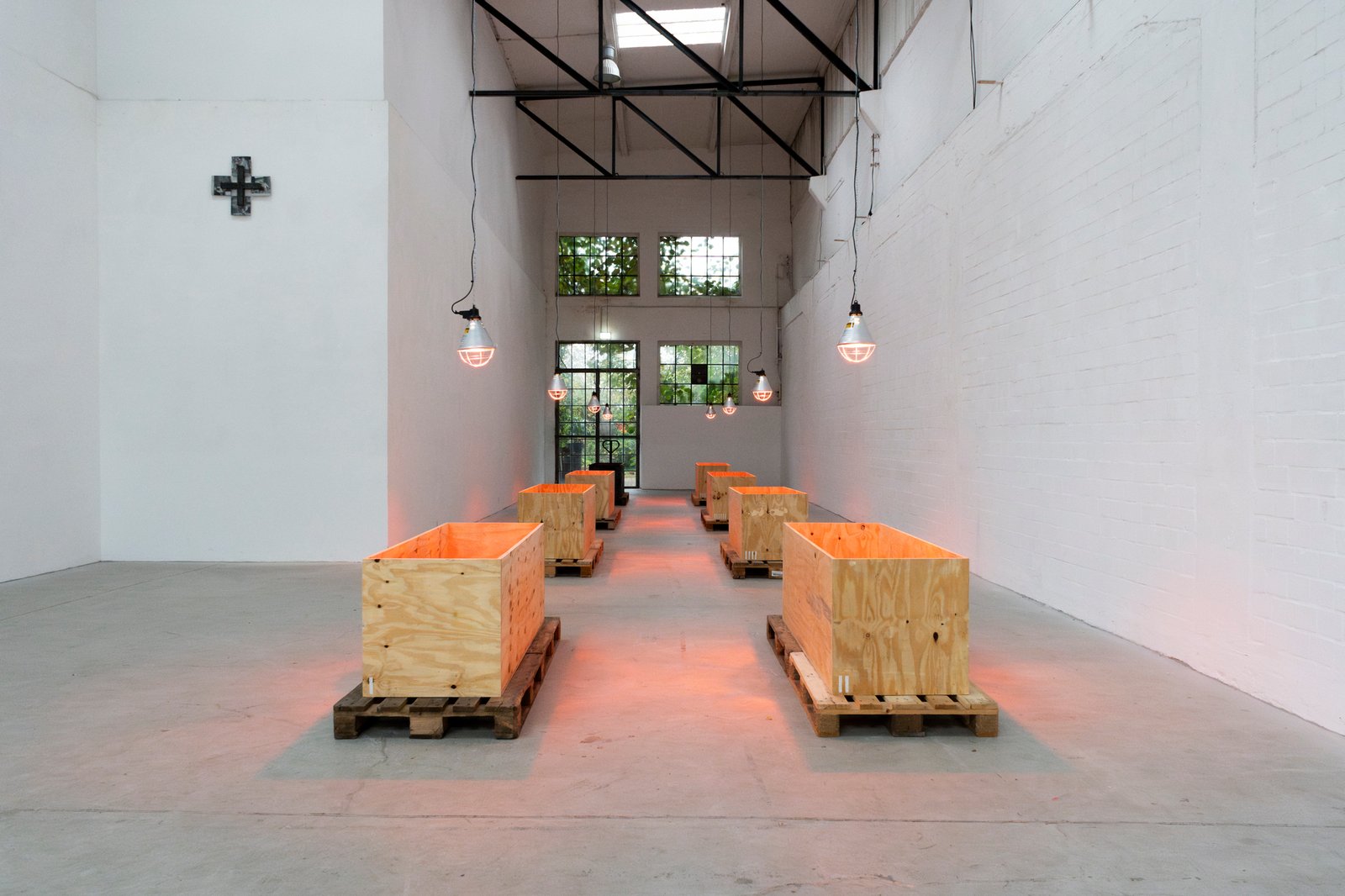
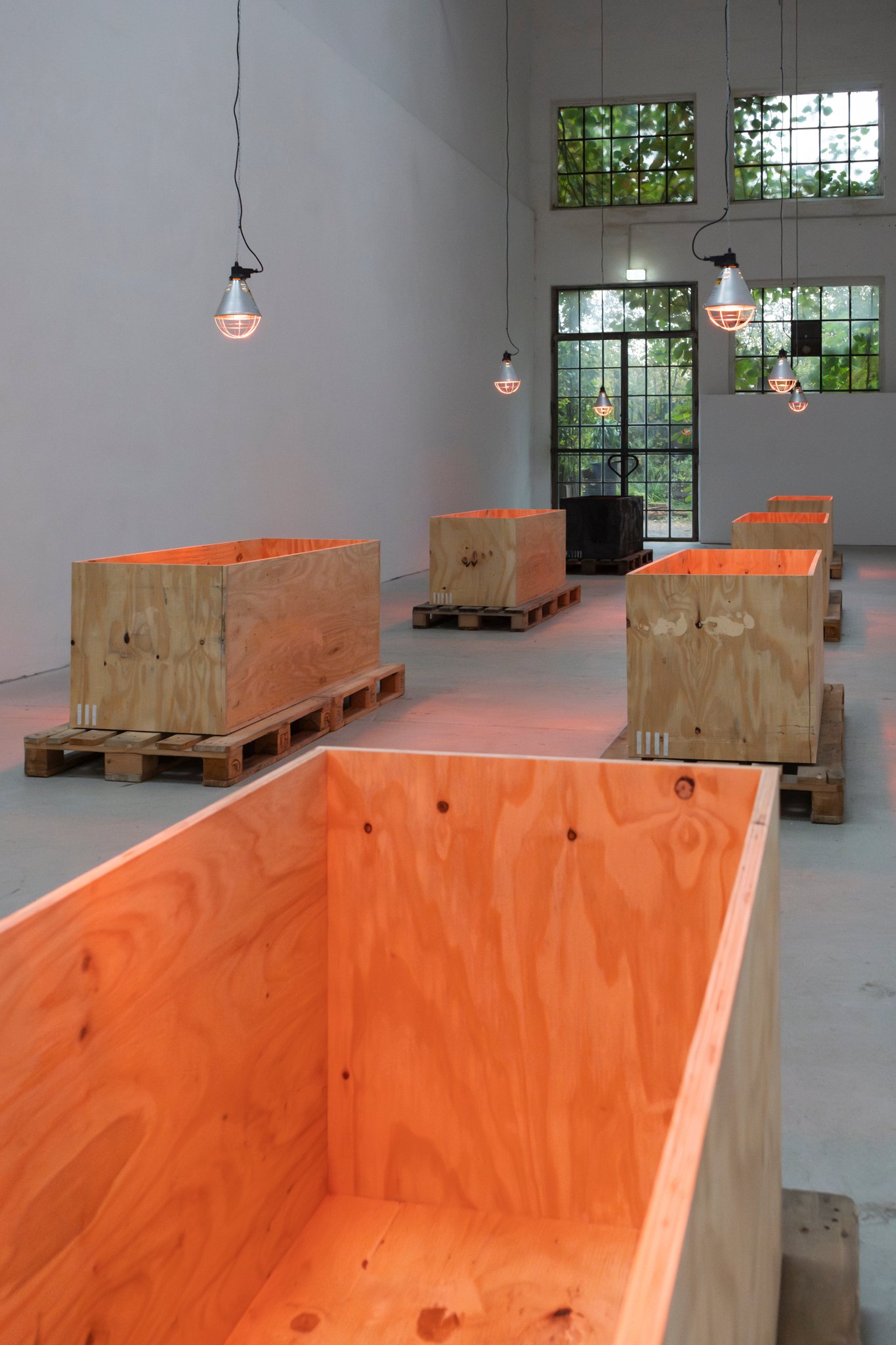
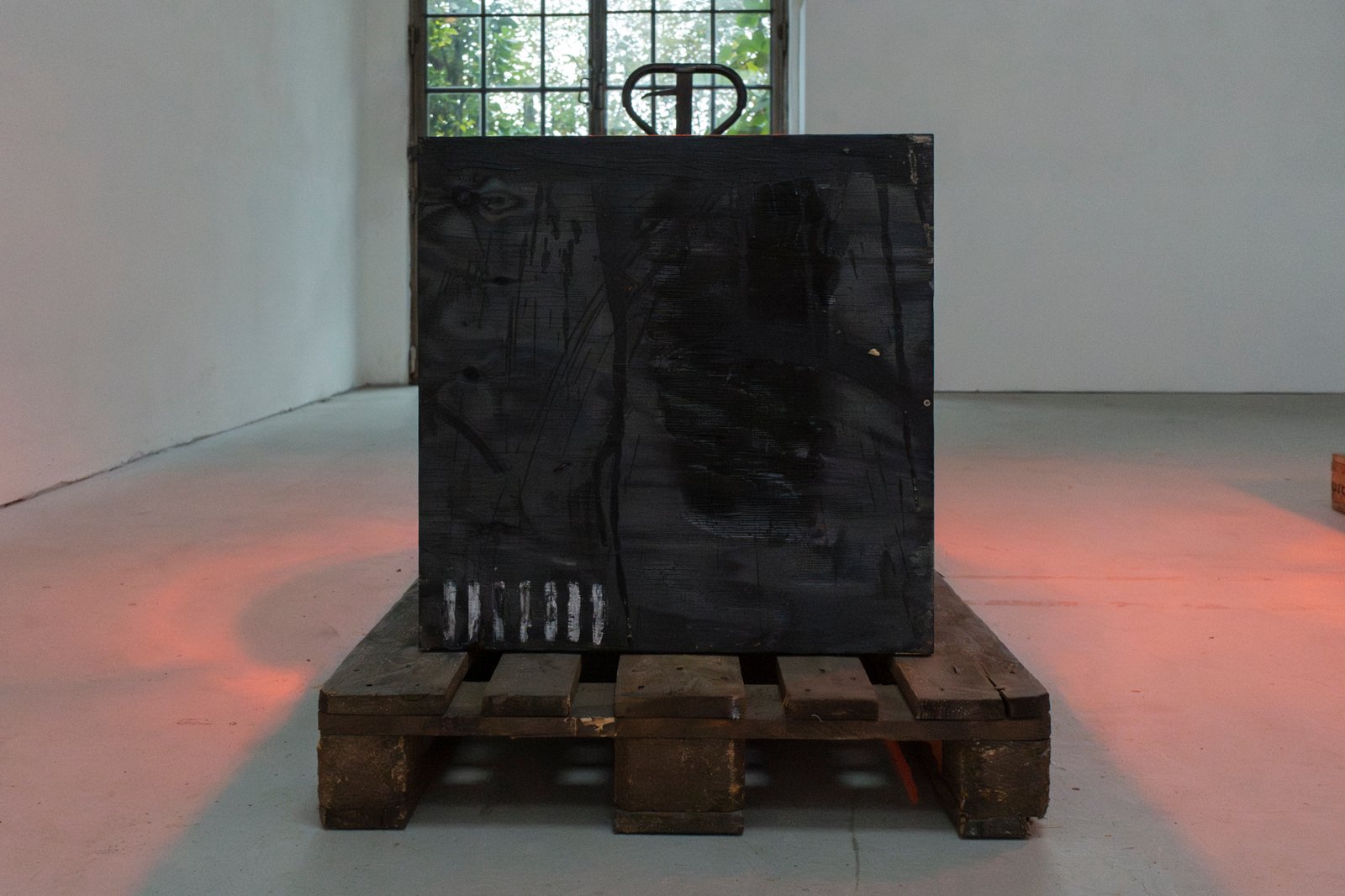
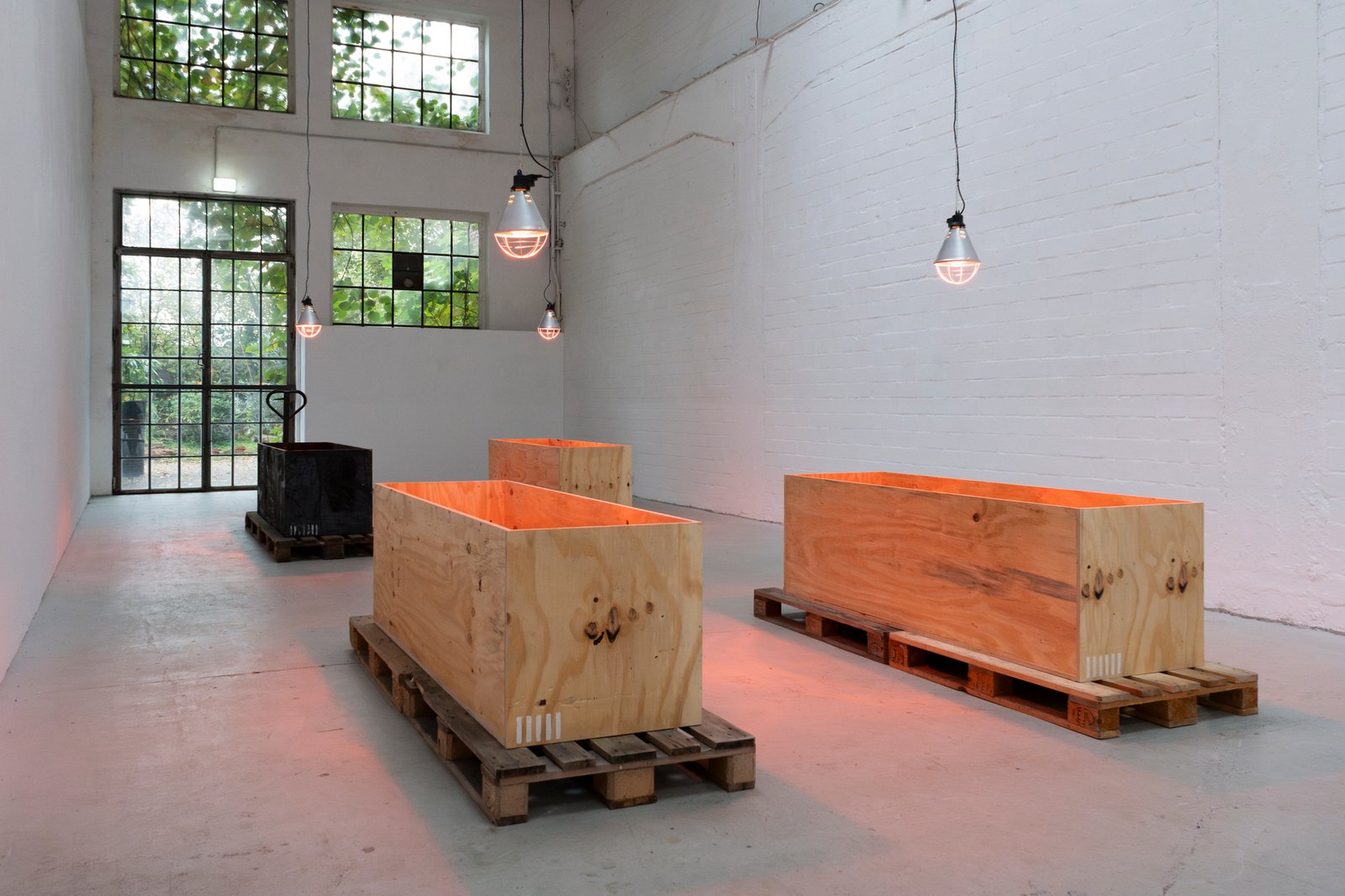
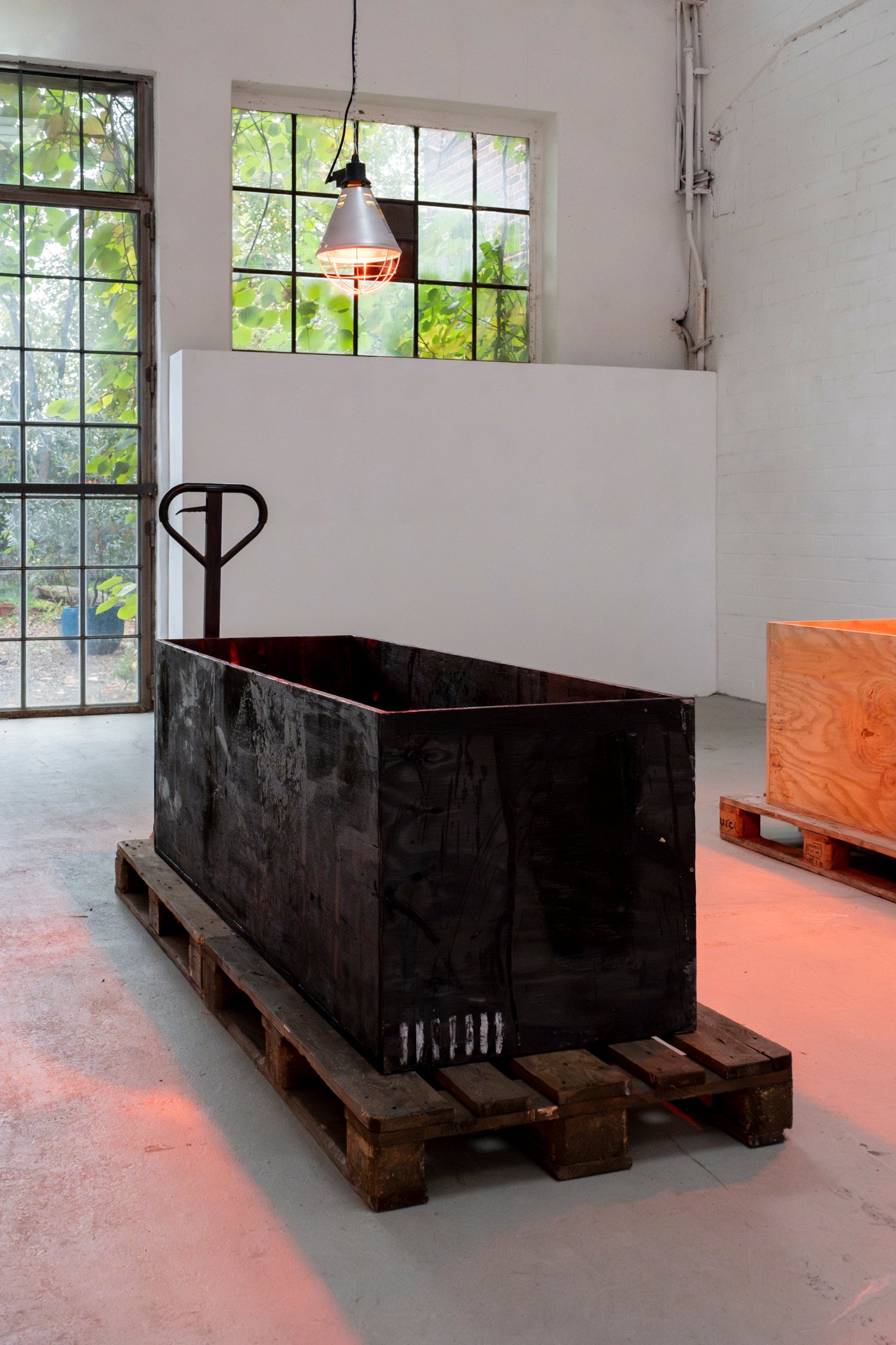
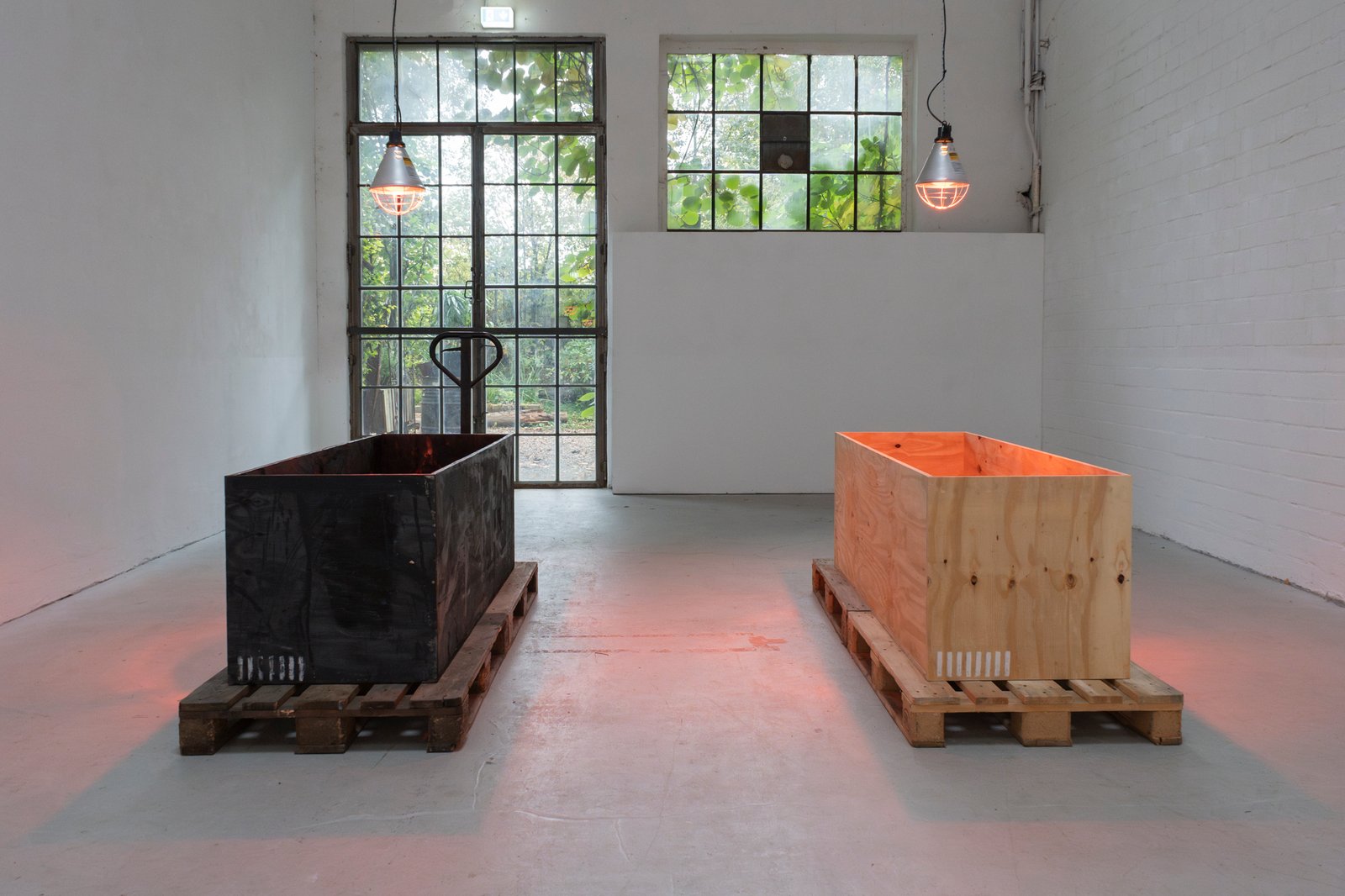
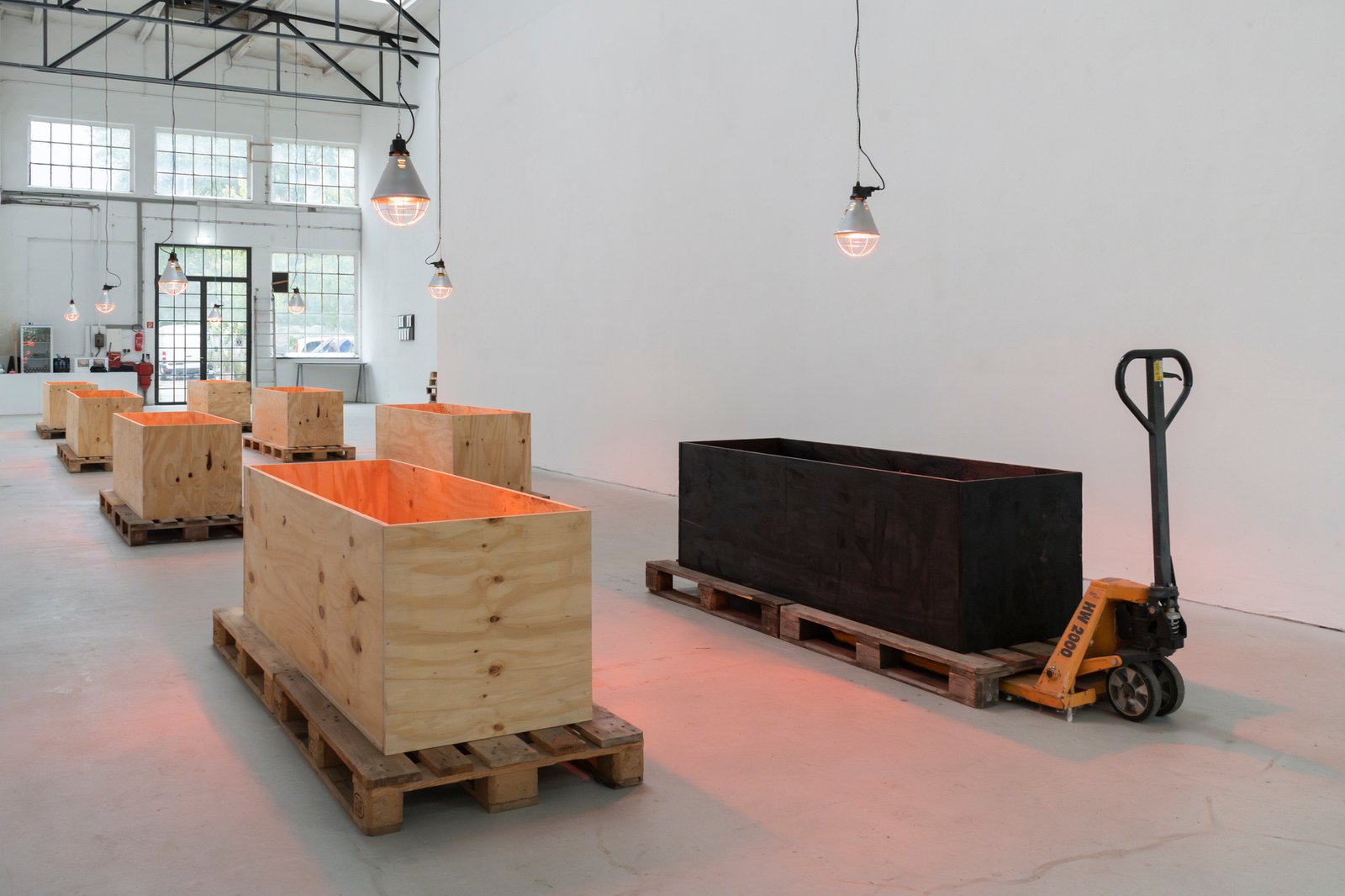
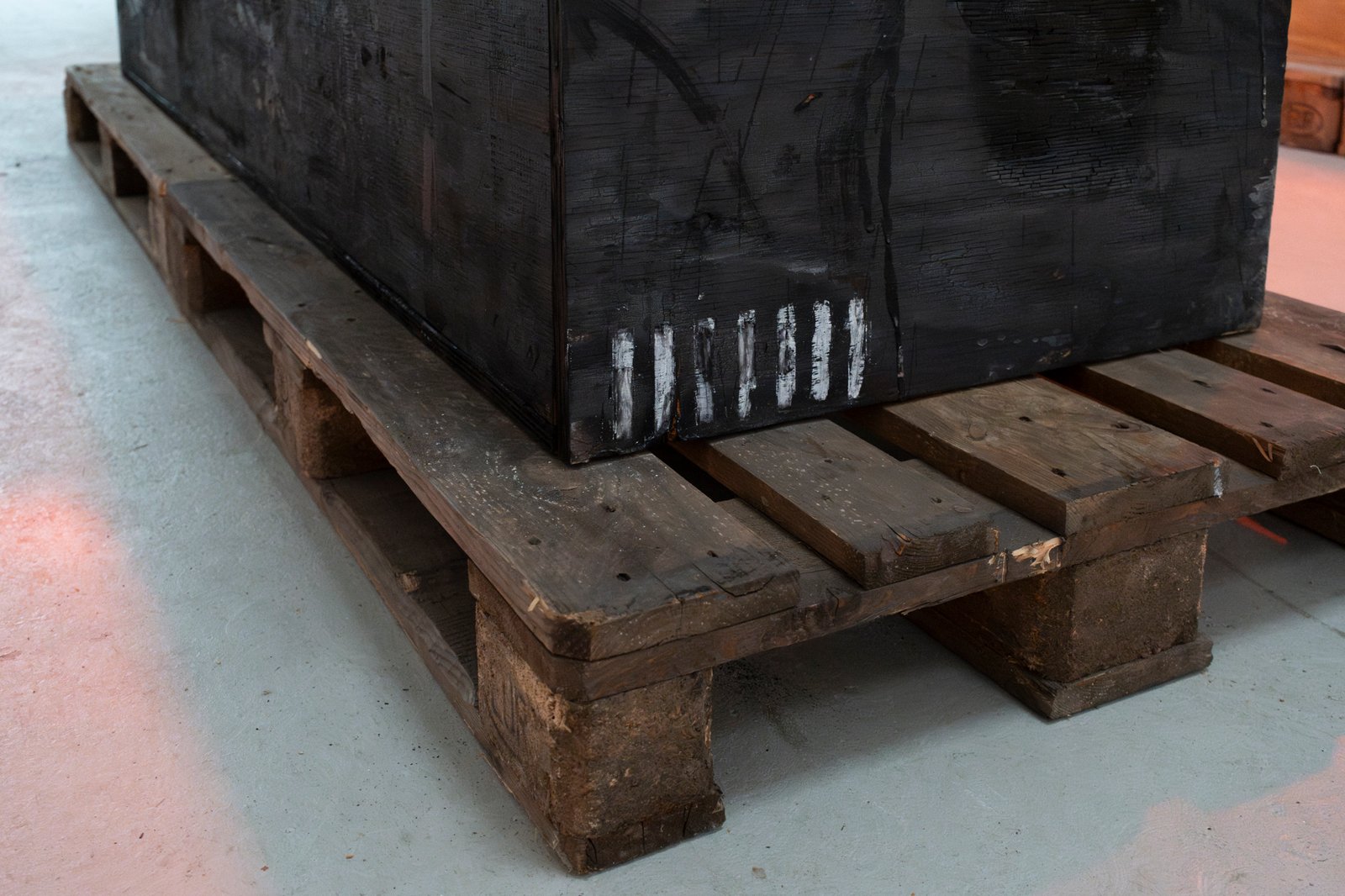
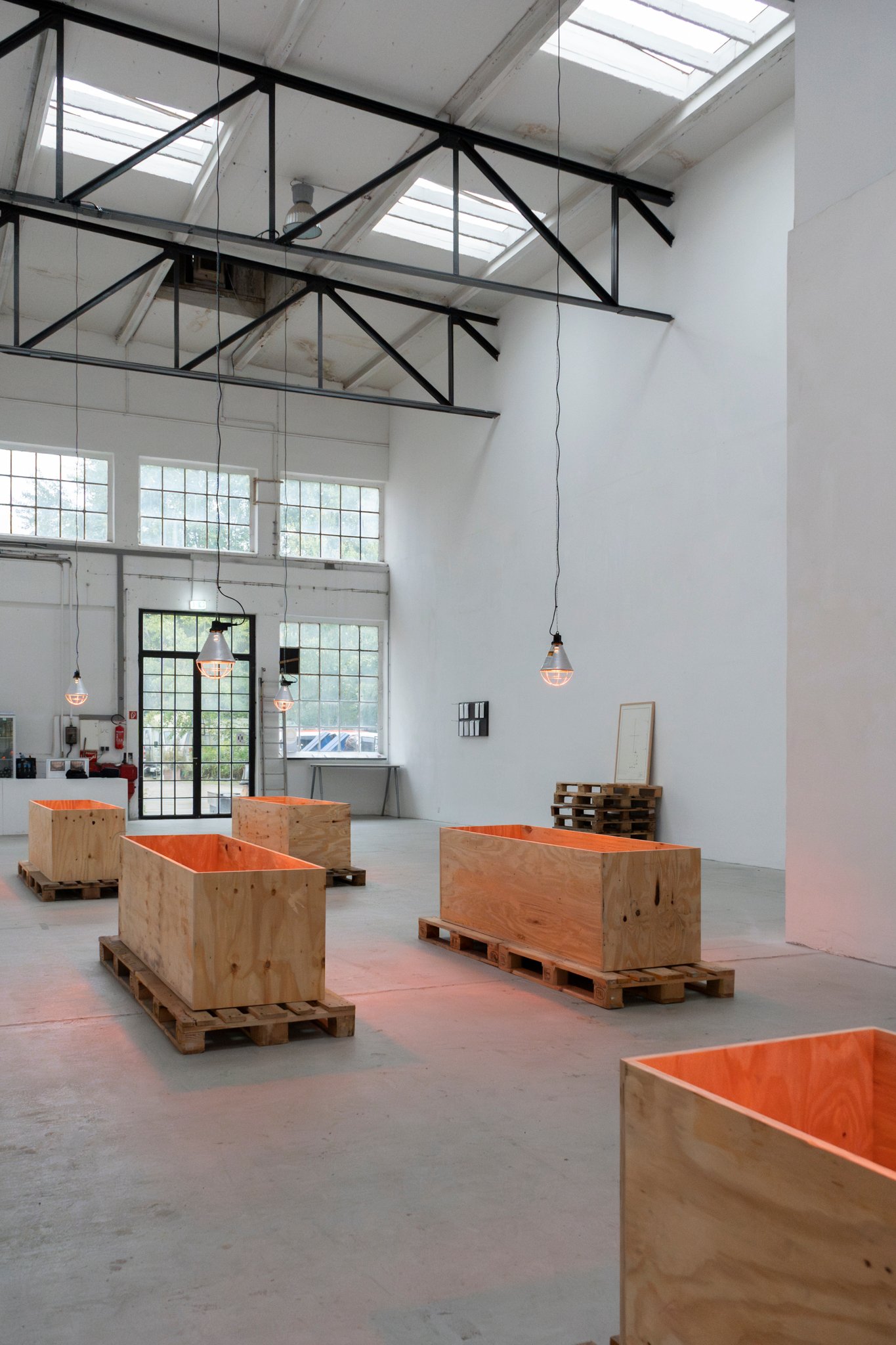
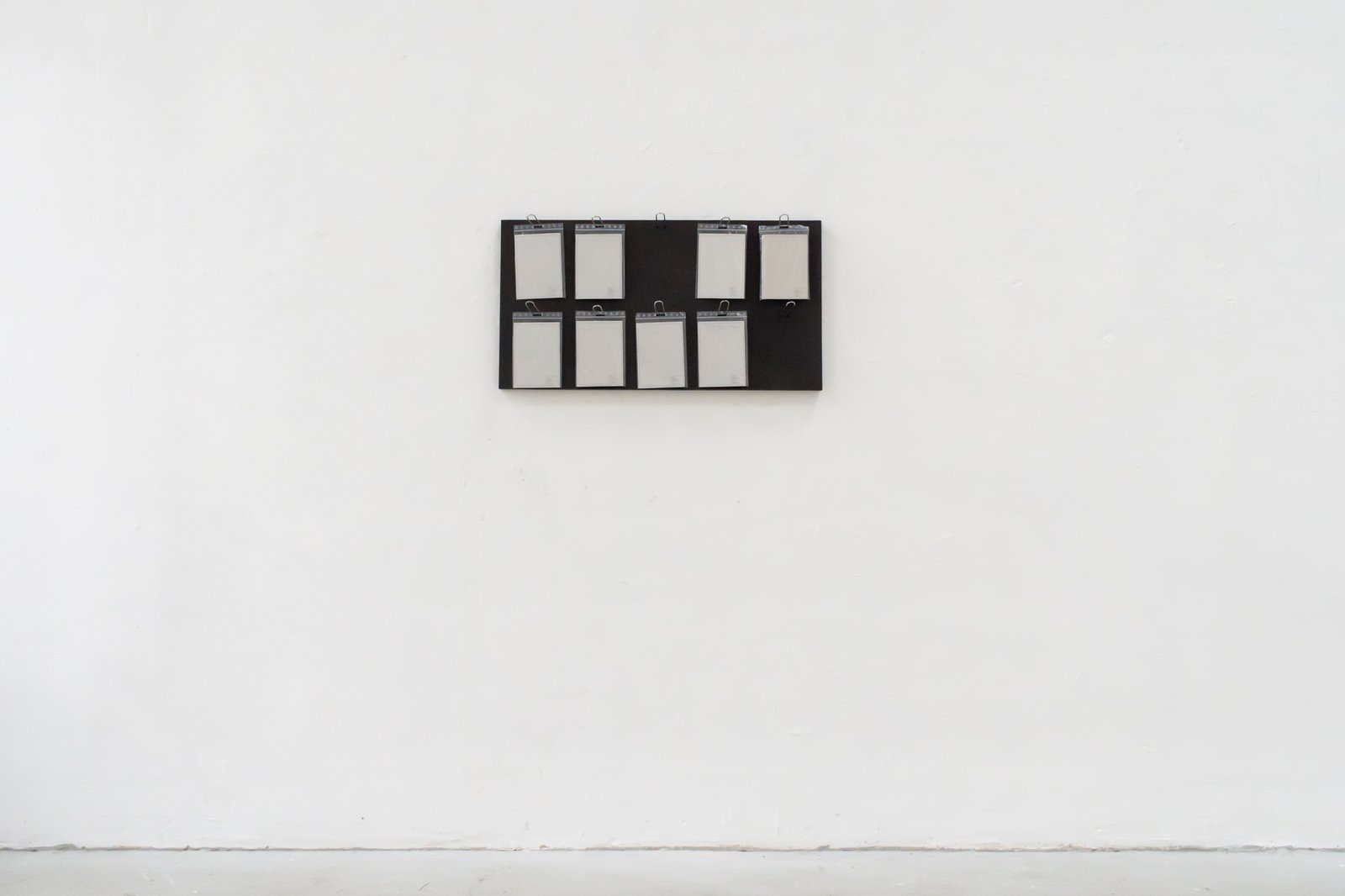
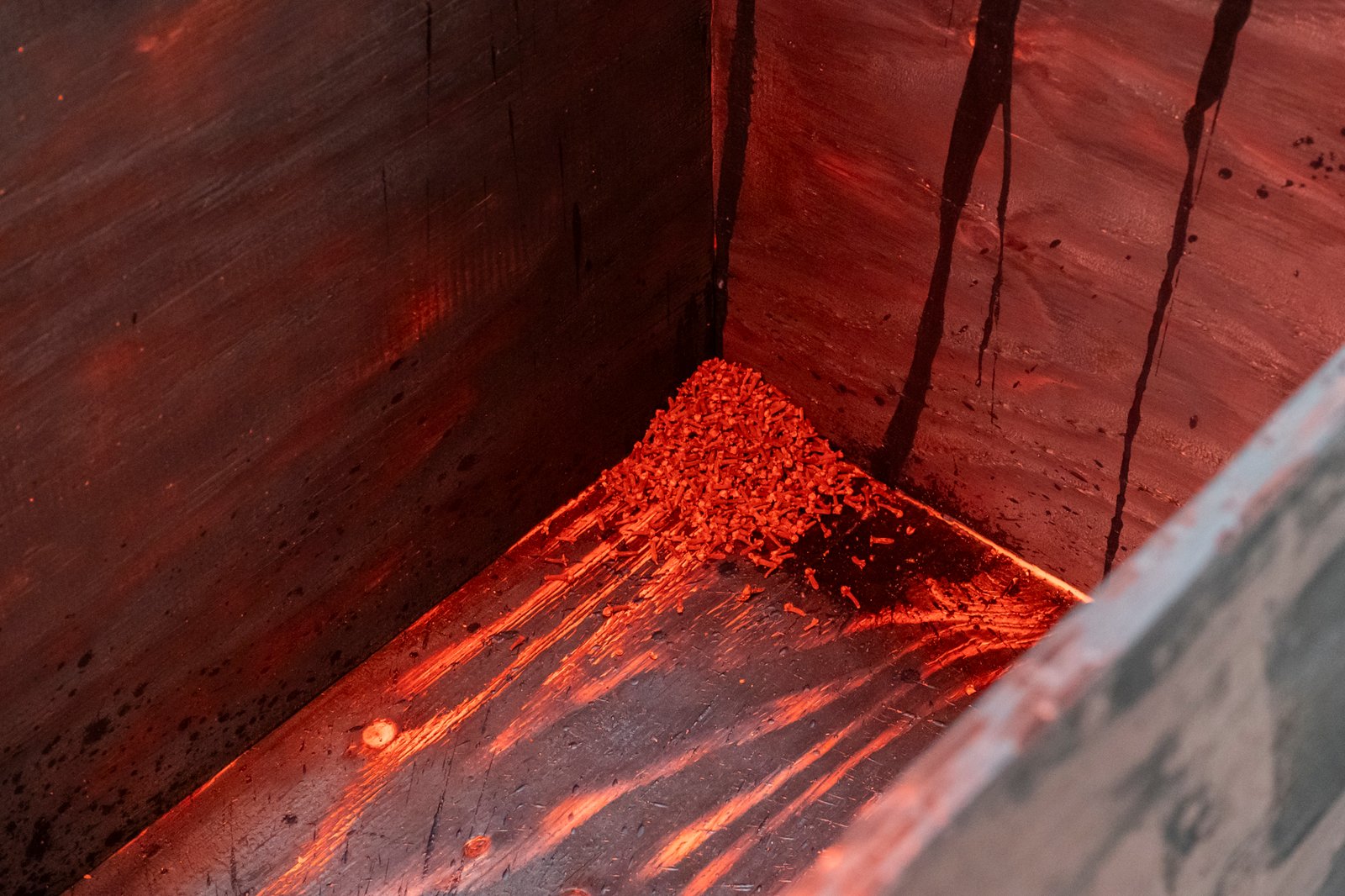
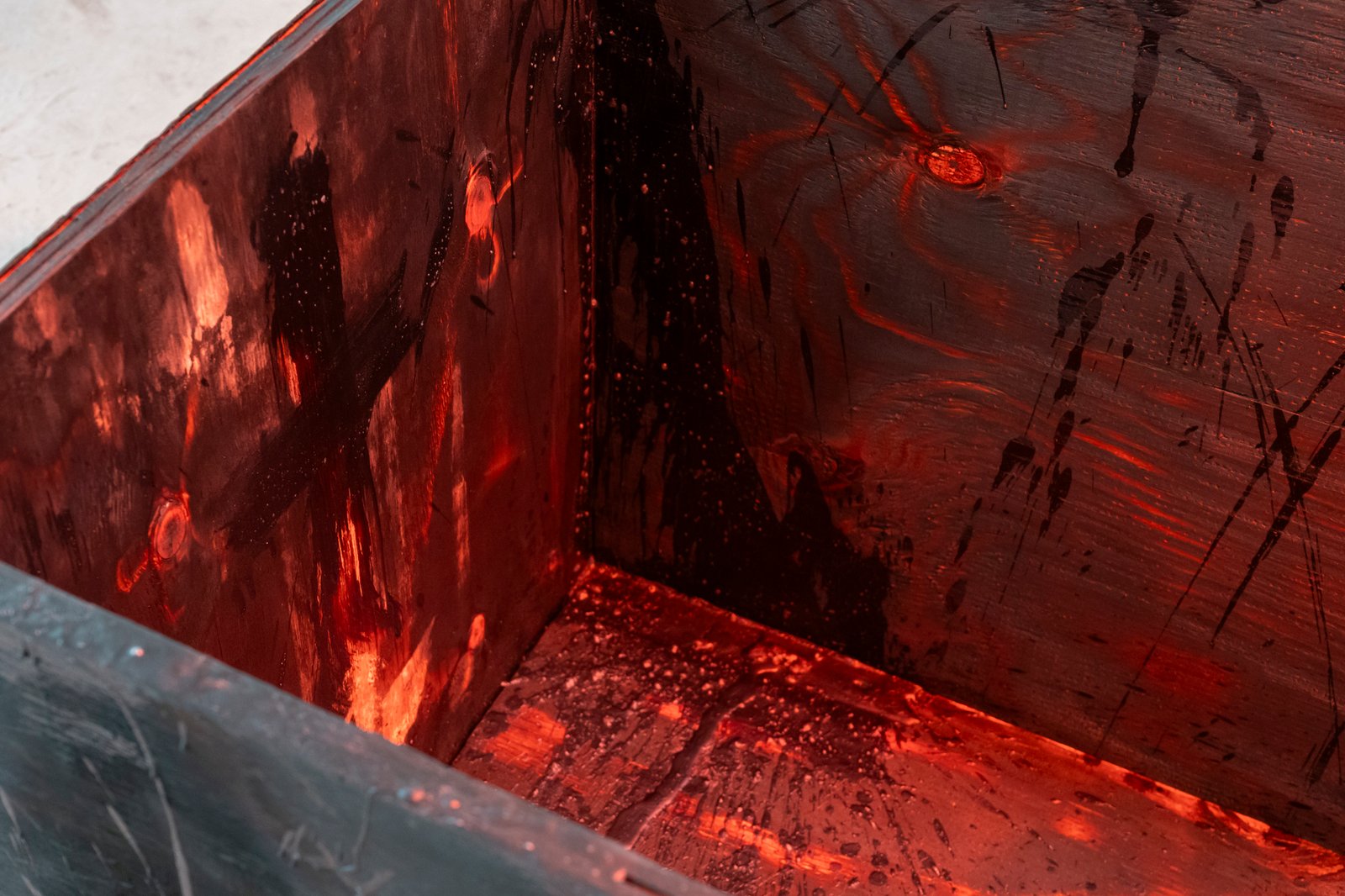
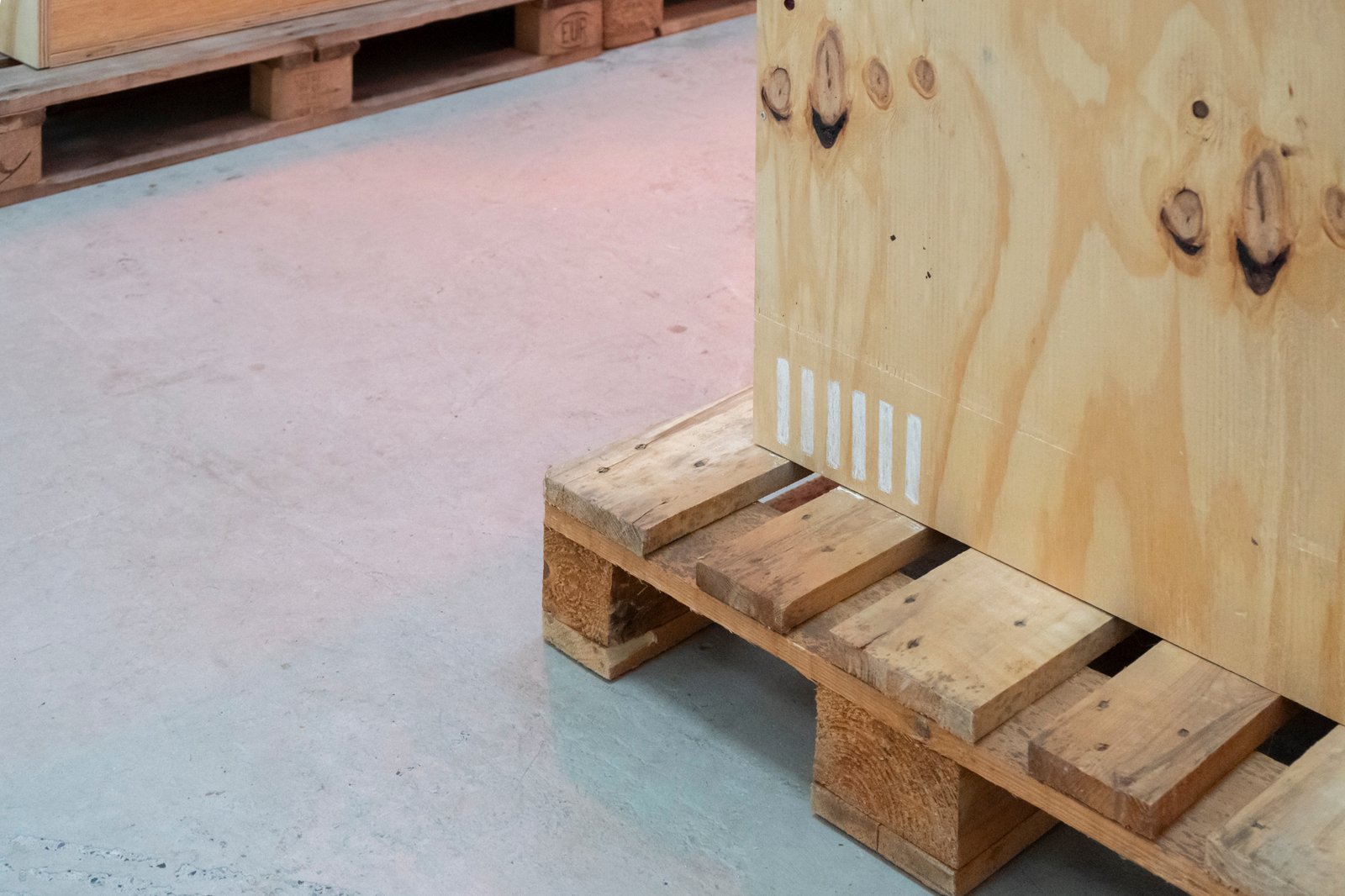
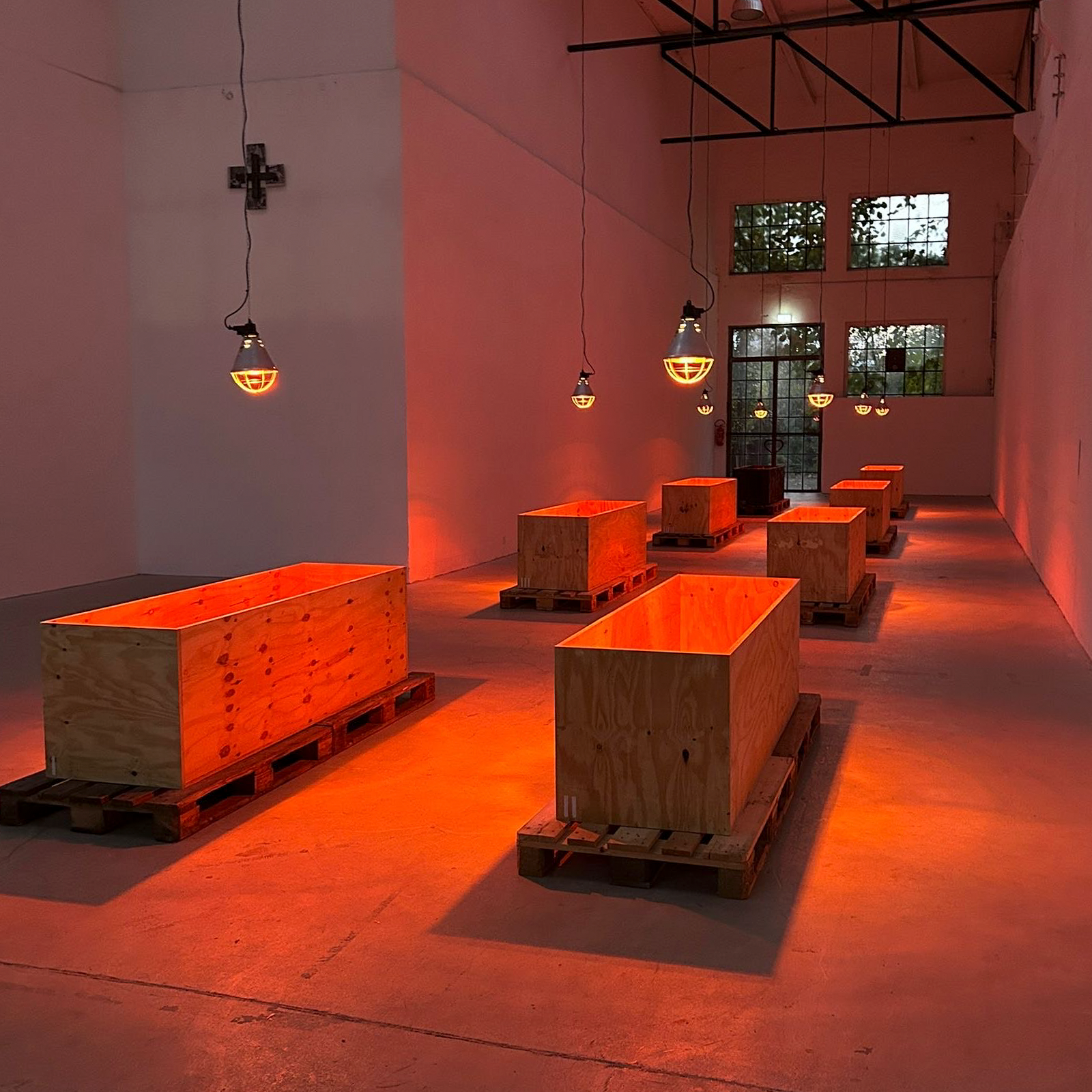
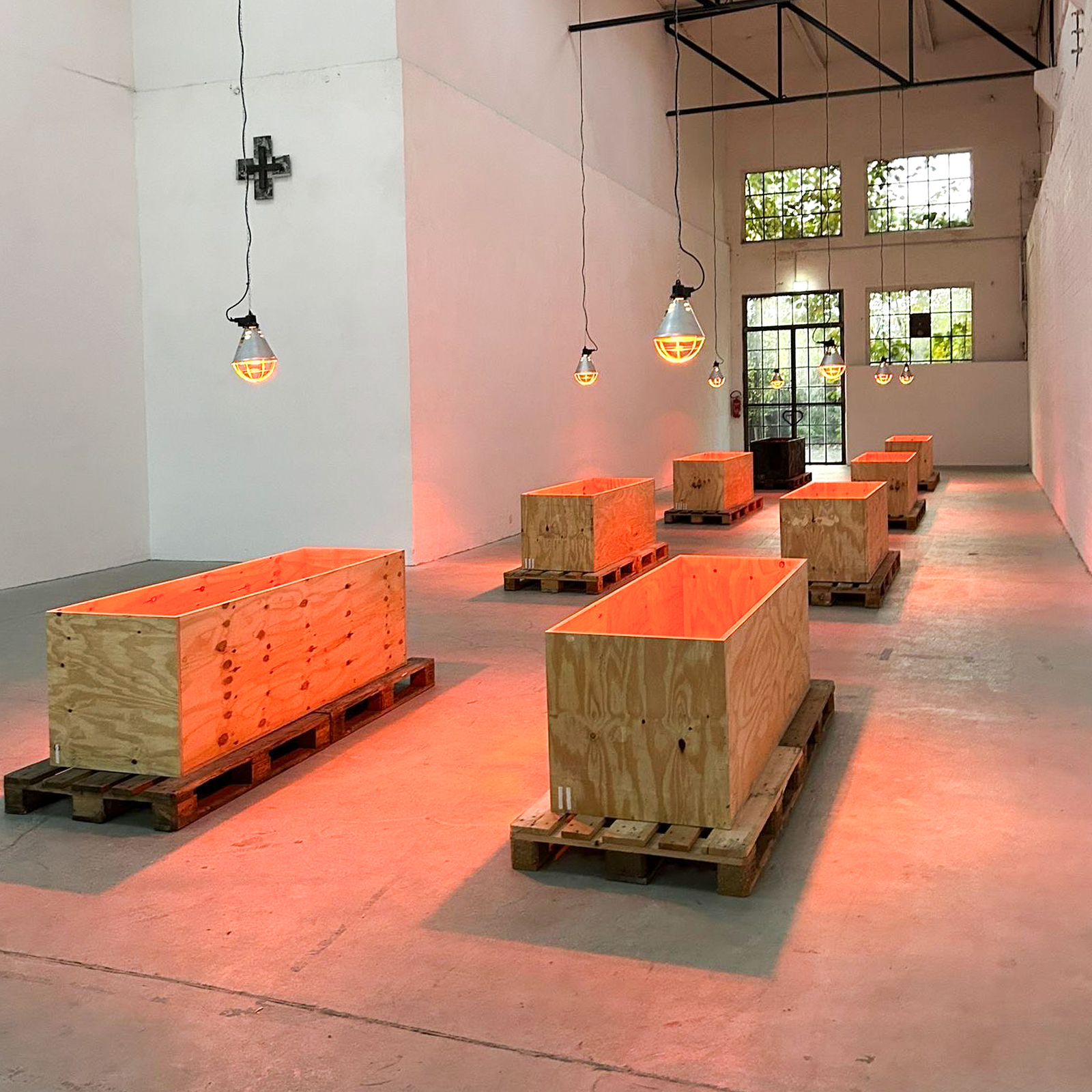
Eight wooden crates, open at the top, stand on pallets, each illuminated by an infrared lamp. One of the crates, burned and preserved with wax and cloves—almost embalmed—breaks the order. It lingers between destruction and healing. The work includes a catalog that serves as both a construction and operating manual. Eight copies hang on the wall, one for each crate. The language of technical precision (“Caution! Cut edges can be dangerous.”) tips into the poetic as soon as it is read in the context of art. The viewer is invited to become an accomplice, to understand the construction plan as a gesture—as an invitation to participate in a philosophy that makes the process of creation itself the subject.
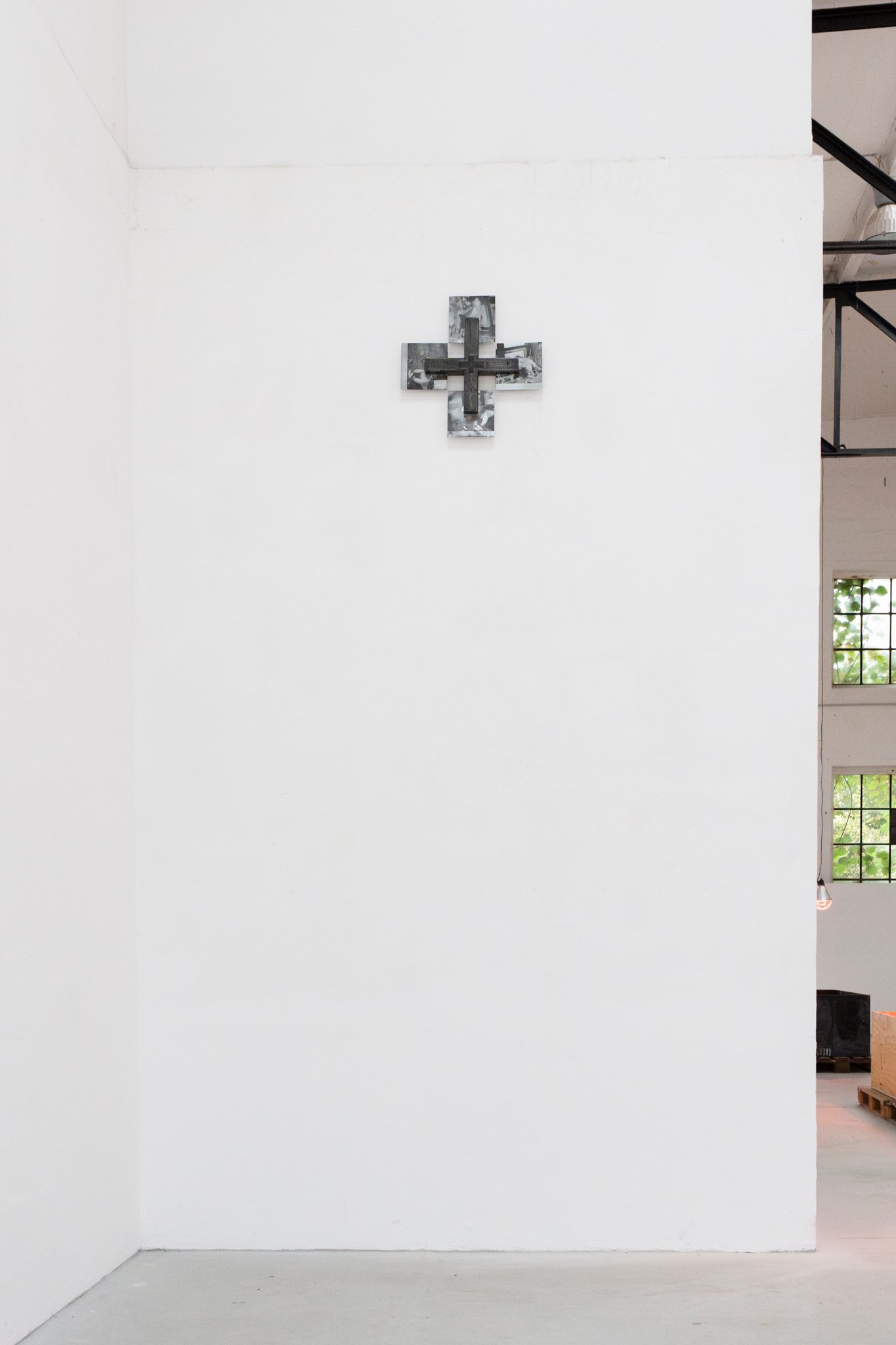
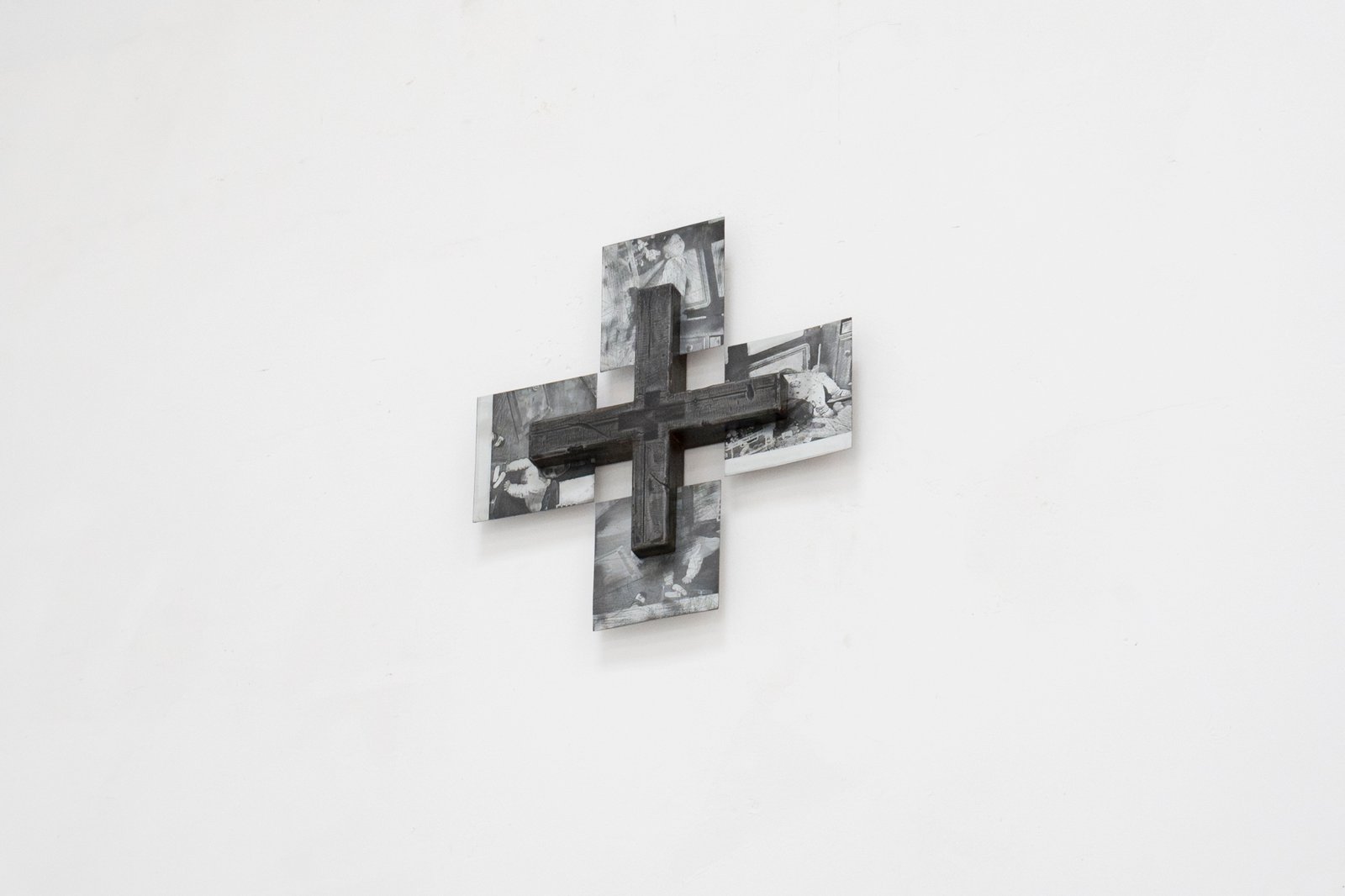
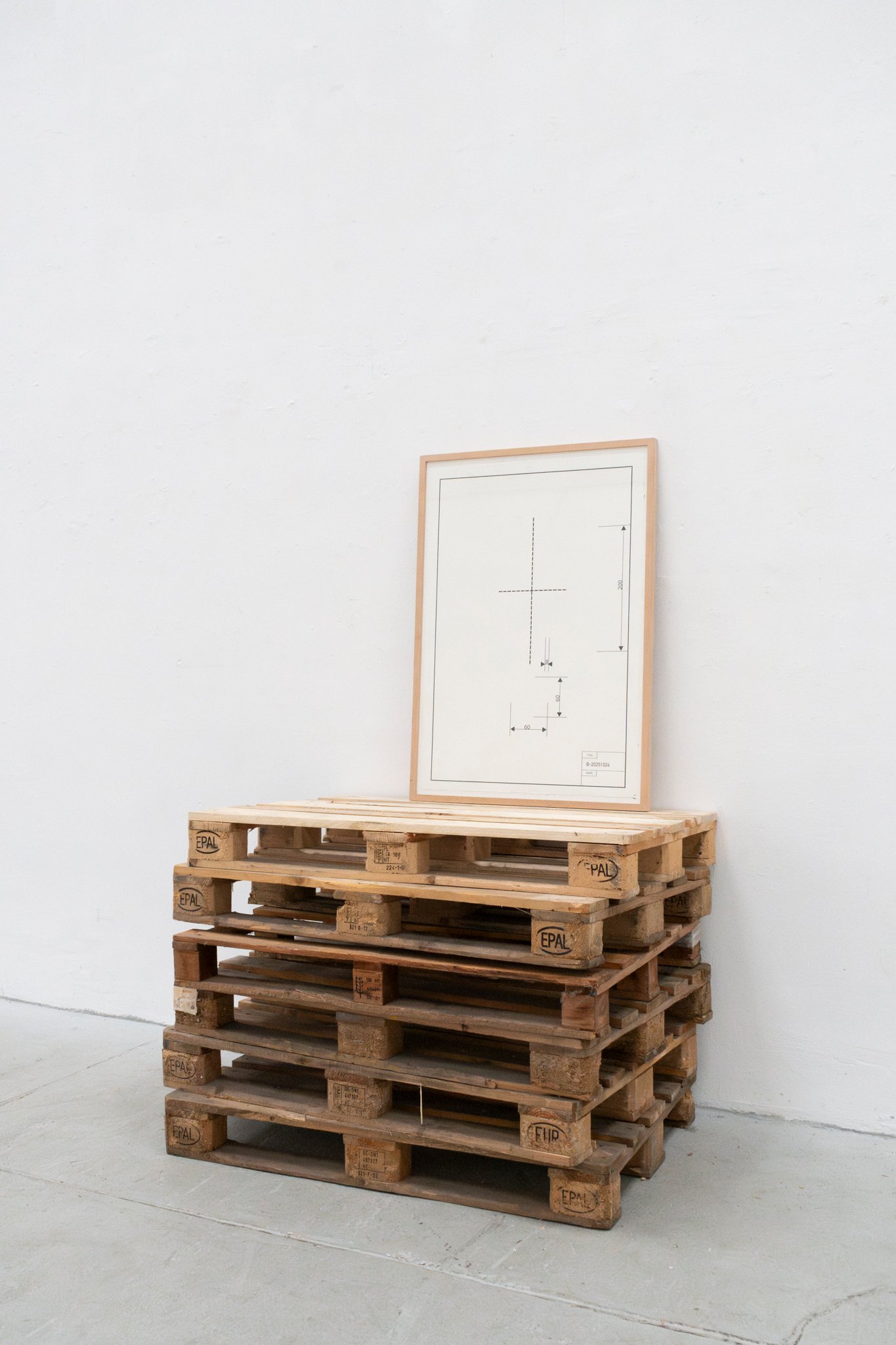
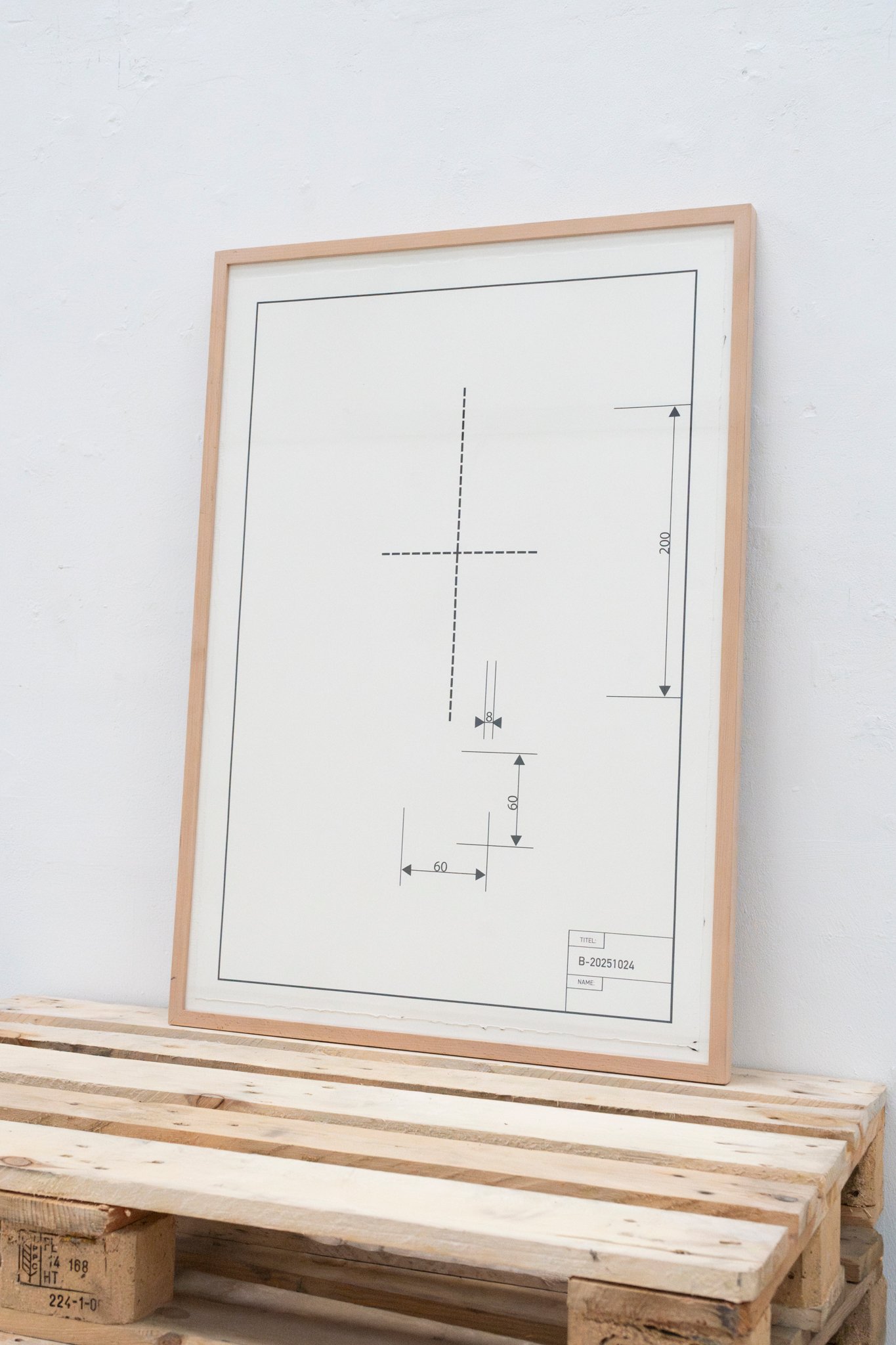
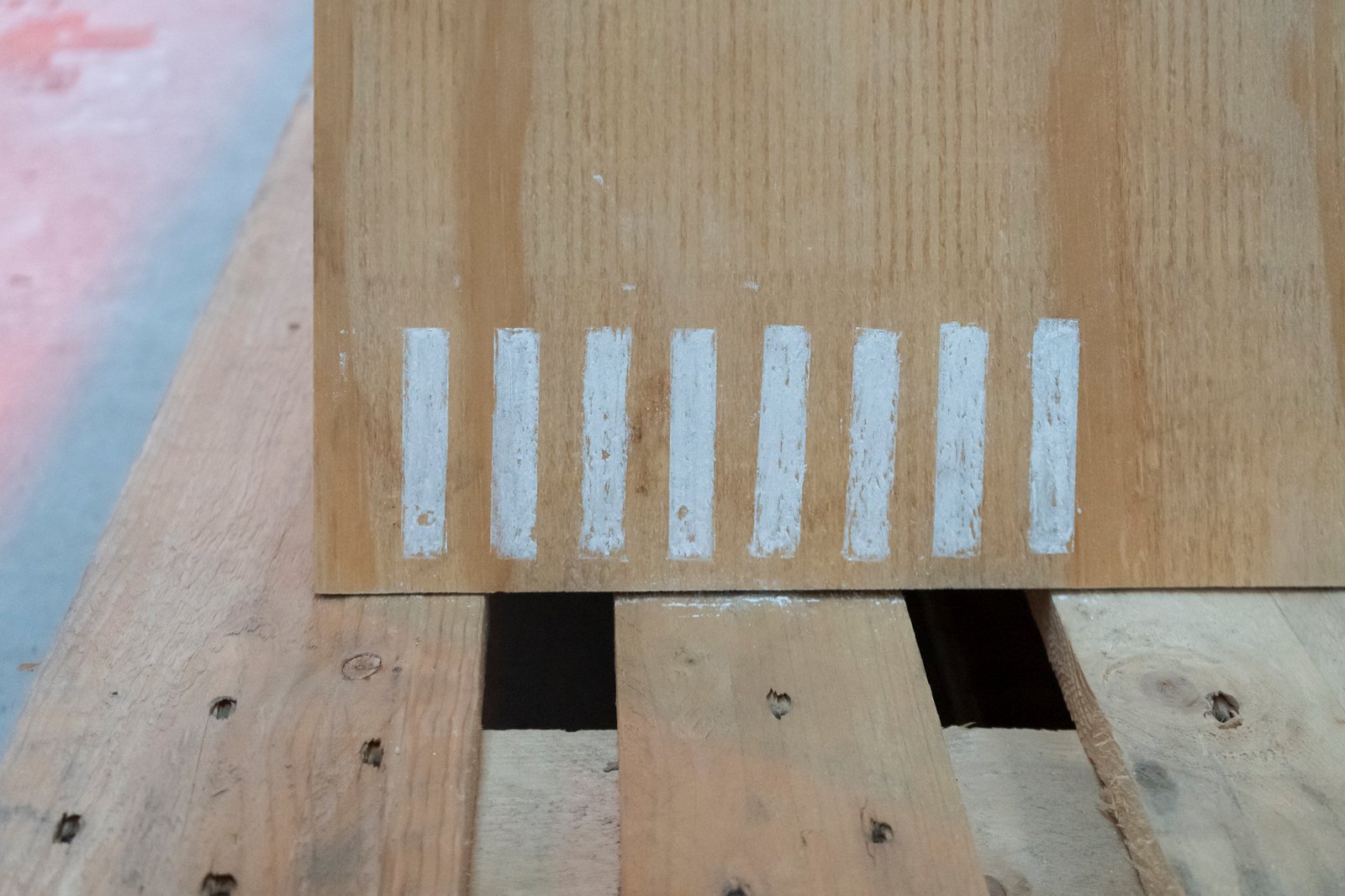
The atmosphere of the installation extends beyond its industrial character. A small crucifix with etched photographs of children, mounted high on the front wing of the exhibition, amplifies the ambivalence. The photographs show children: who they are, what their significance is, whether they are siblings of the artist—all this remains open to interpretation. This element oscillates between coldness and hope, between childlike humor and a sense of community. A technical drawing on pallets marks the dimensions and axes of symmetry of the crates, yet the described object itself is absent. The crate, a vehicle for a philosophical idea, is transformed into intellectual material through this graphic: a representation of a form that thinks more than it shows. The work adopts the language of production in order to question it. Its clear systematic structure generates not certainty, but tension.
The crates are reminiscent of incubators, coffins, or experimental setups, of places where life takes shape or perishes. The uniformity alludes to the principle of repetition, while the warmth of the lamps suggests a fragile vitality: the beginning, the first breath, the glimmer of consciousness. At its core lies the idea that we must outwit our own individuality in order to exist as a collective, to form unity. We all begin under the same conditions. This unity is not a natural law, as in Stoicism or ancient conceptions of the cycle, but a social and spiritual task. It questions the permanence of togetherness beyond the boundaries of life. A family grave, Fey writes in reference to collective unity after death, is not a tragedy, but a potential to carry unity into eternity. It is too easy to cling to the notion that everything surrounding the grave is about nothingness. But it is precisely this aura that must be sublimated. The ideal of collectivity becomes the agent of our self. Therein lies a great idea: to explore peace together in the end. In a time when individuality is often placed above community, the family grave serves as a reminder that no one has died alone. It is less a farewell than a reunion, a collective consciousness that appears fragmentary in life, but complete in death. The idea of the family grave is not an escape from death, but a conscious turning toward life, toward a togetherness that endures beyond physical decay.
Thus, the installation refers not only to a human biological impulse, but to a form of collective reproduction—factory-like, repeatable, anonymous. It is not a reflection of life, but a metaphor for its conditions: protection and dependence, energy and exhaustion. “The world is not just a space, but a task,” Fey writes in BRUT. The work translates this sentence into a spatial experience. It demands not a response, but attention. Between warmth and cold, technology and ritual, object and idea, a silent drama unfolds: that of life producing itself. The space becomes a mirror of responsibility, an invitation to continue constructing the world we see.