


Within the flow of events and algorithmic interactions, thinking—along with actions and environments—breaks apart into
fragments of better and worse days, of energy and numbness, of temporal traces of attraction as well as frustration. Once
the necessity of existing within an unstable environment is accepted, and the possibility of failure and nonconformity is
acknowledged, these fragments can nonetheless grow stronger, forming constellations capable of endurance and
resistance.
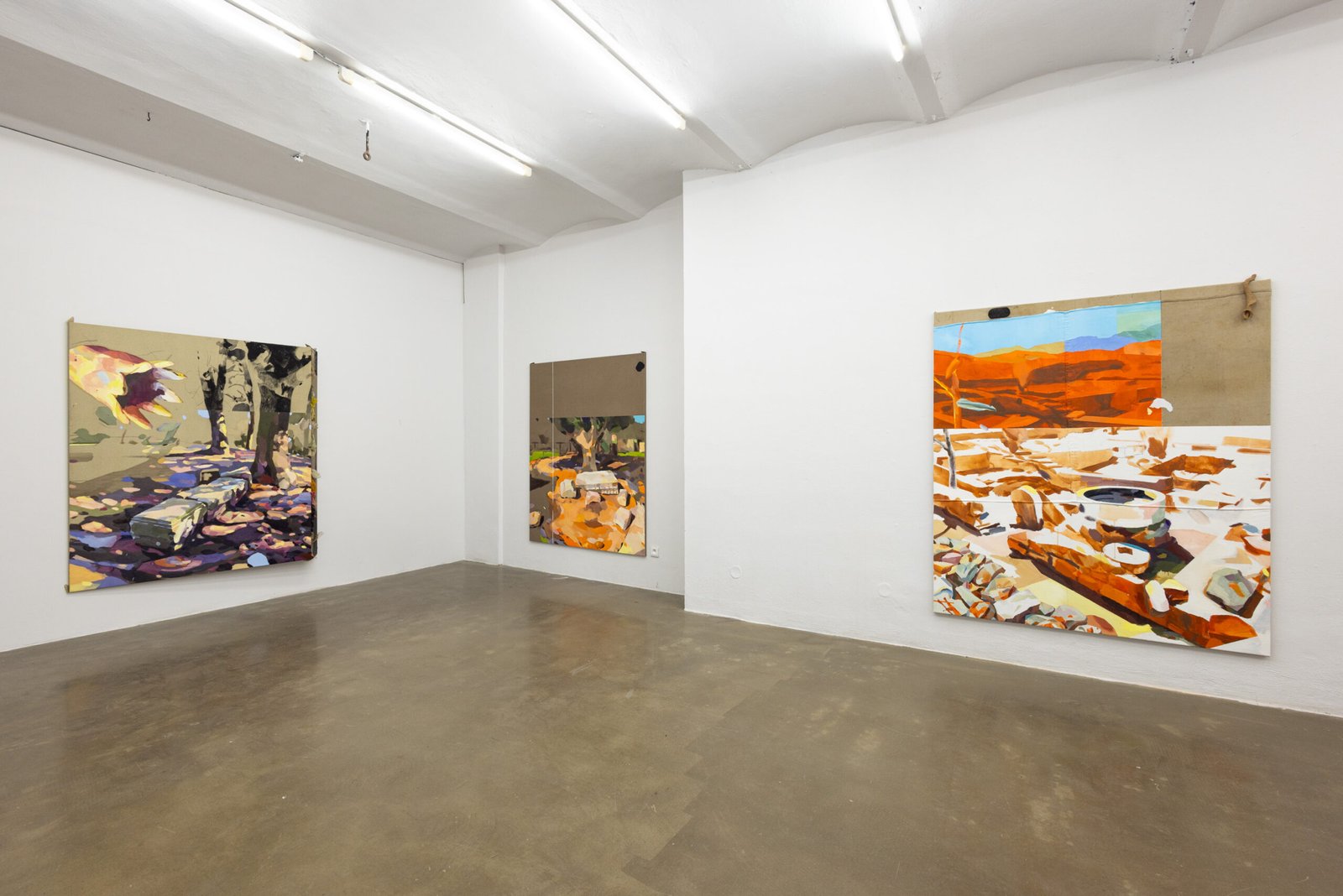
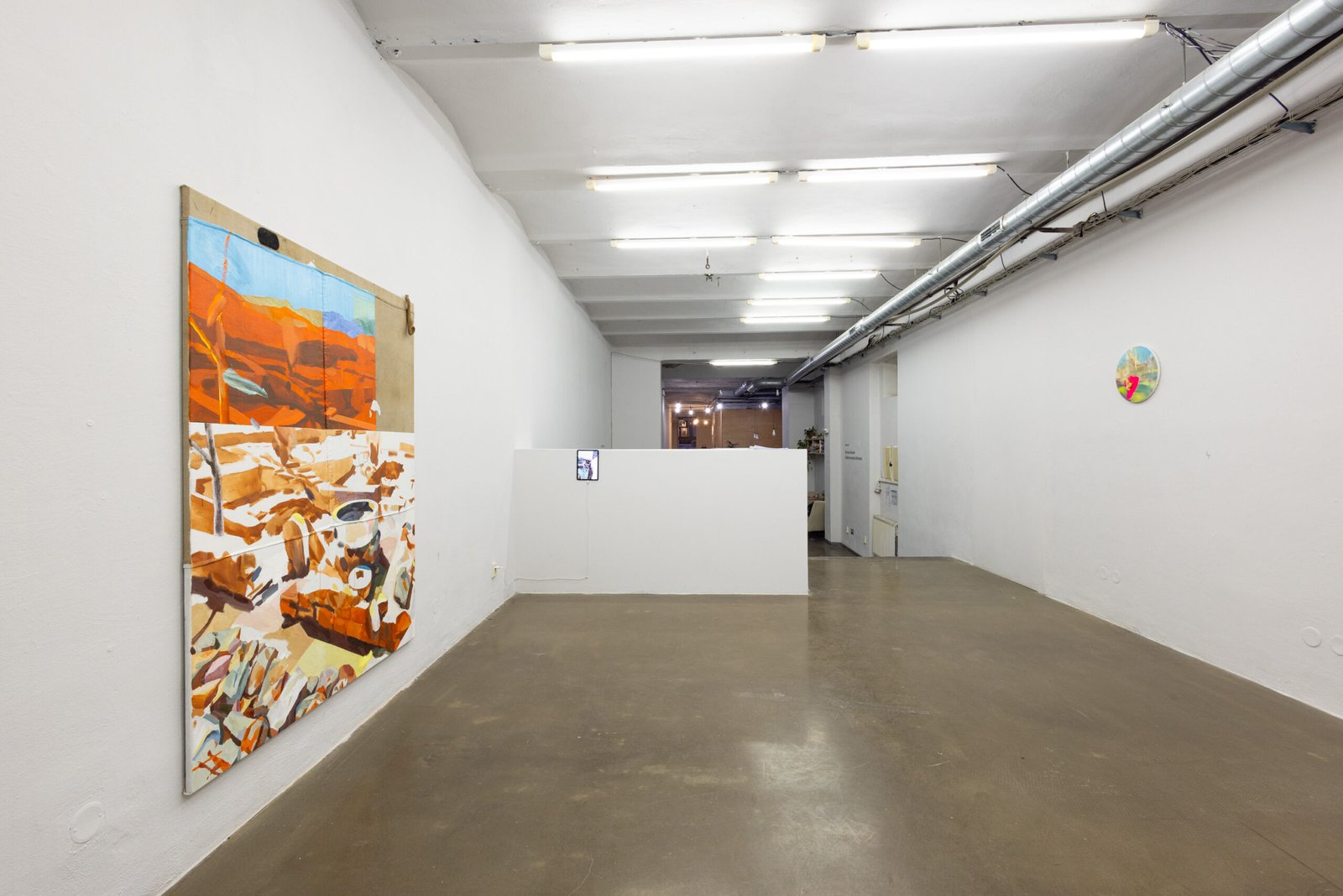
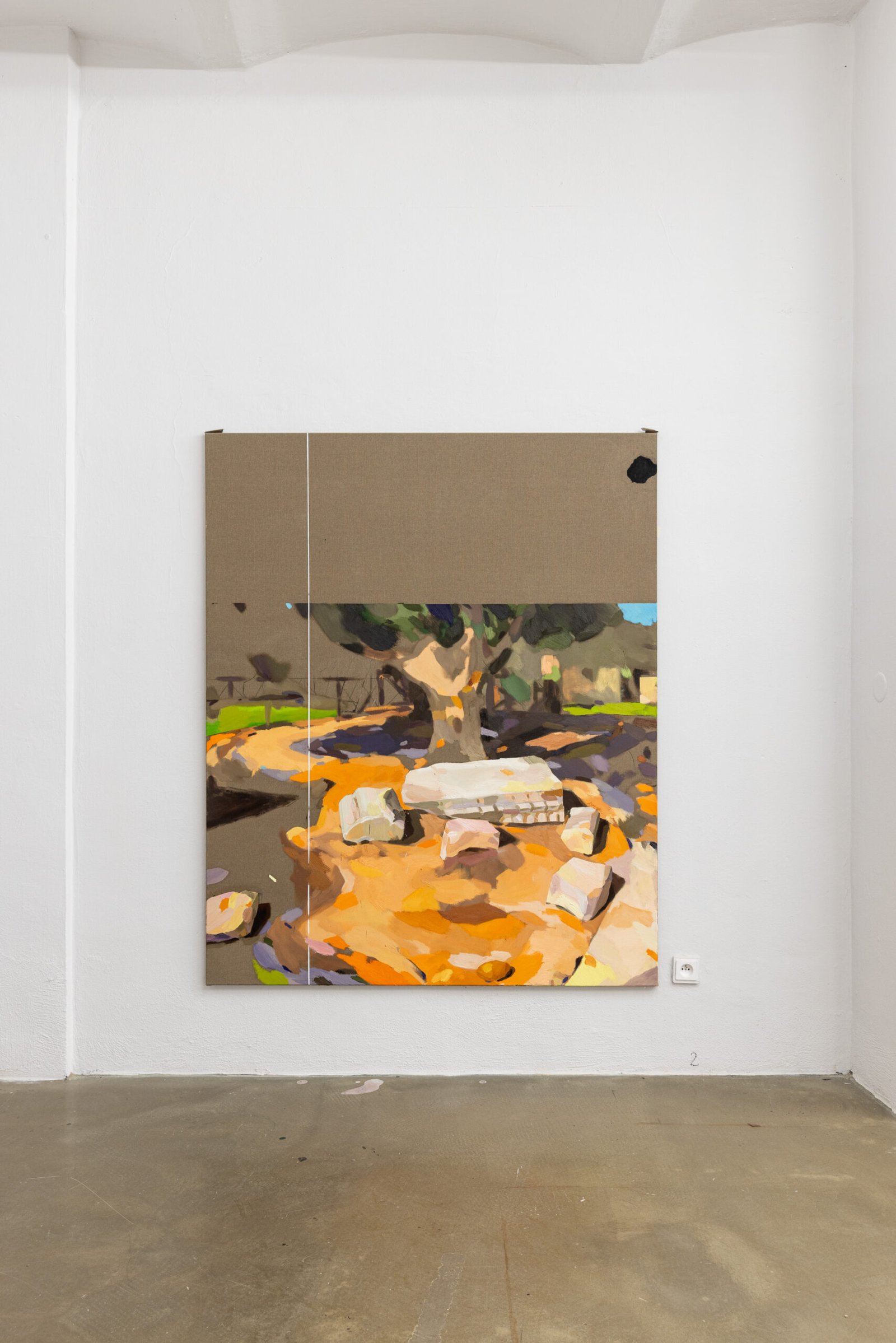
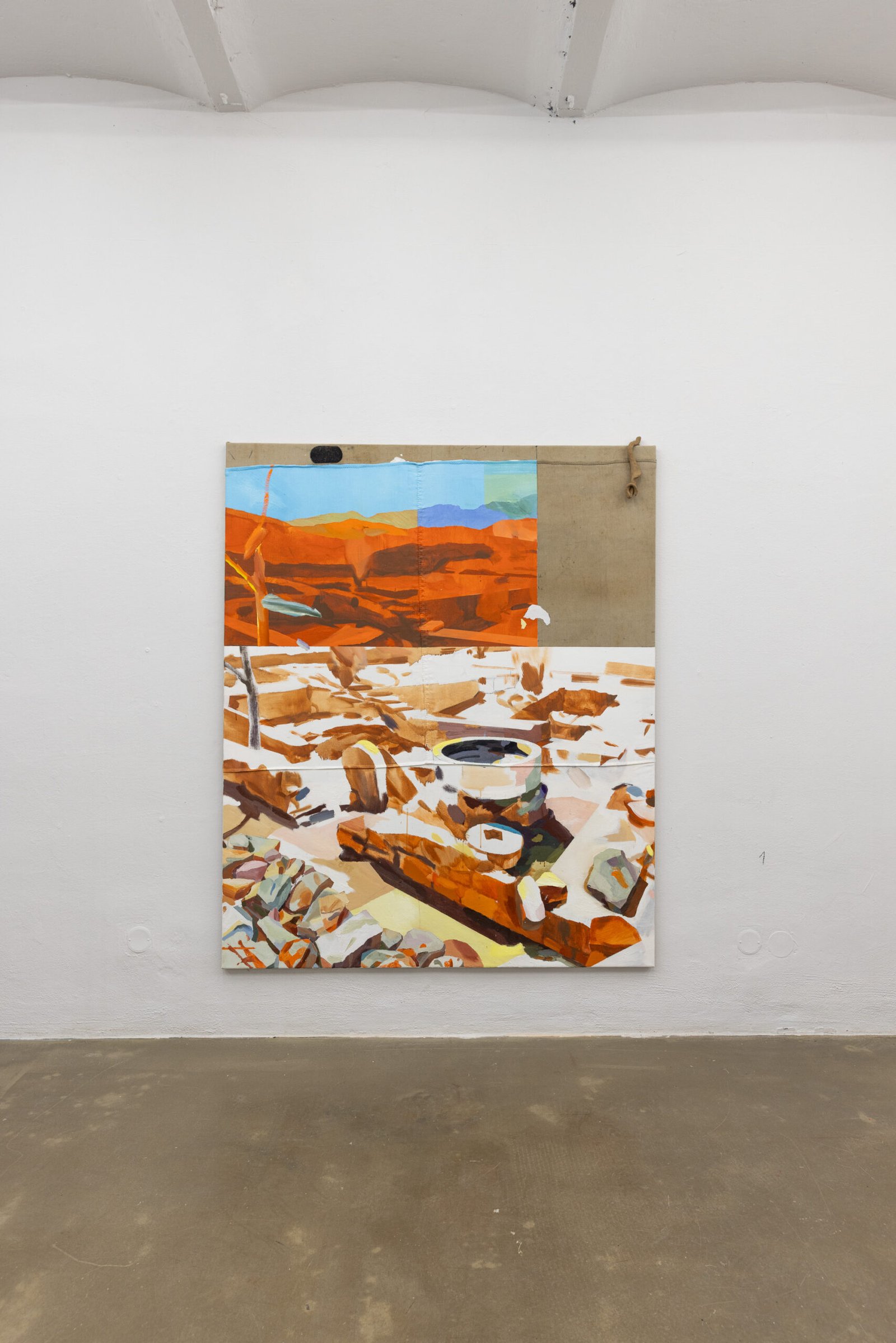
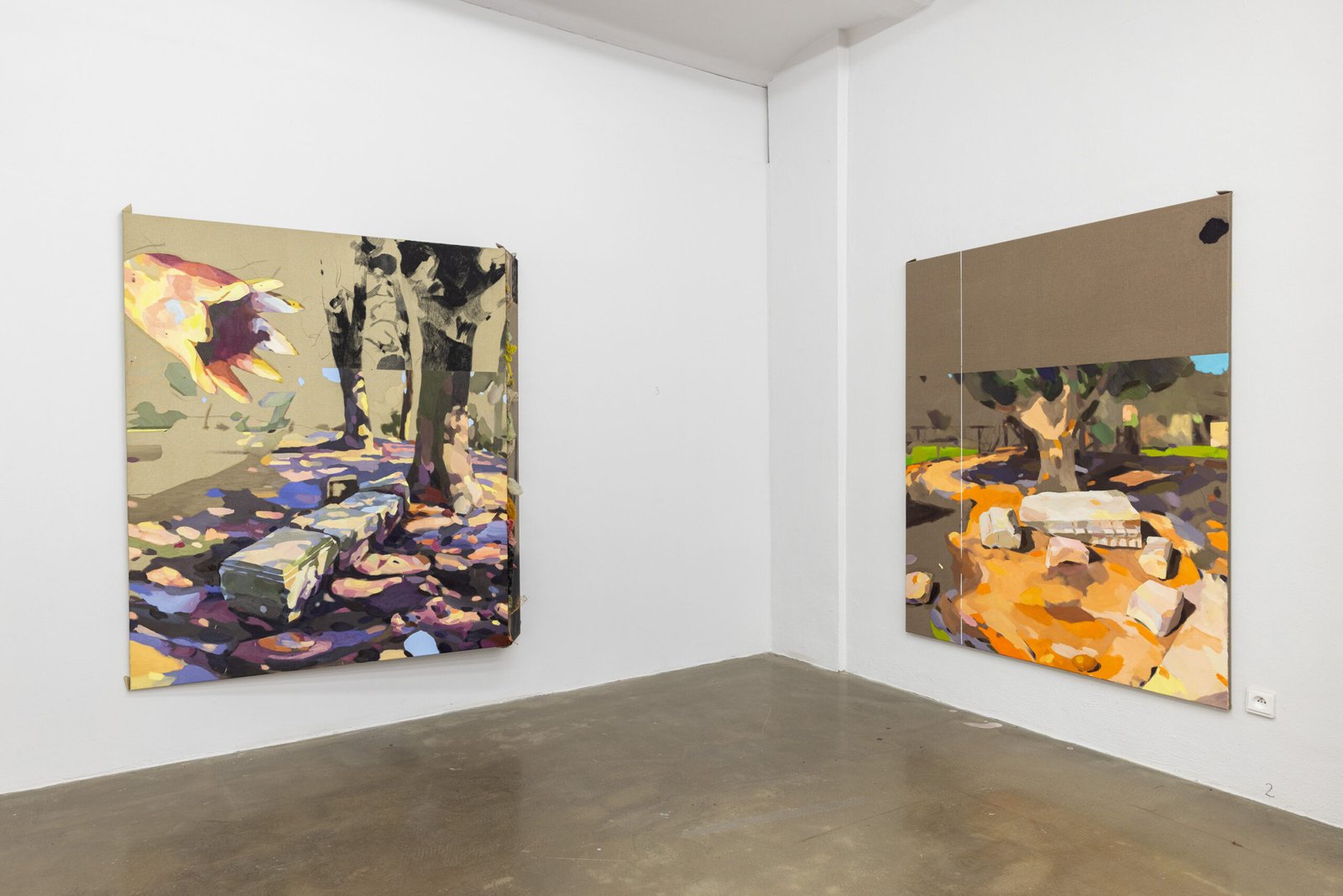
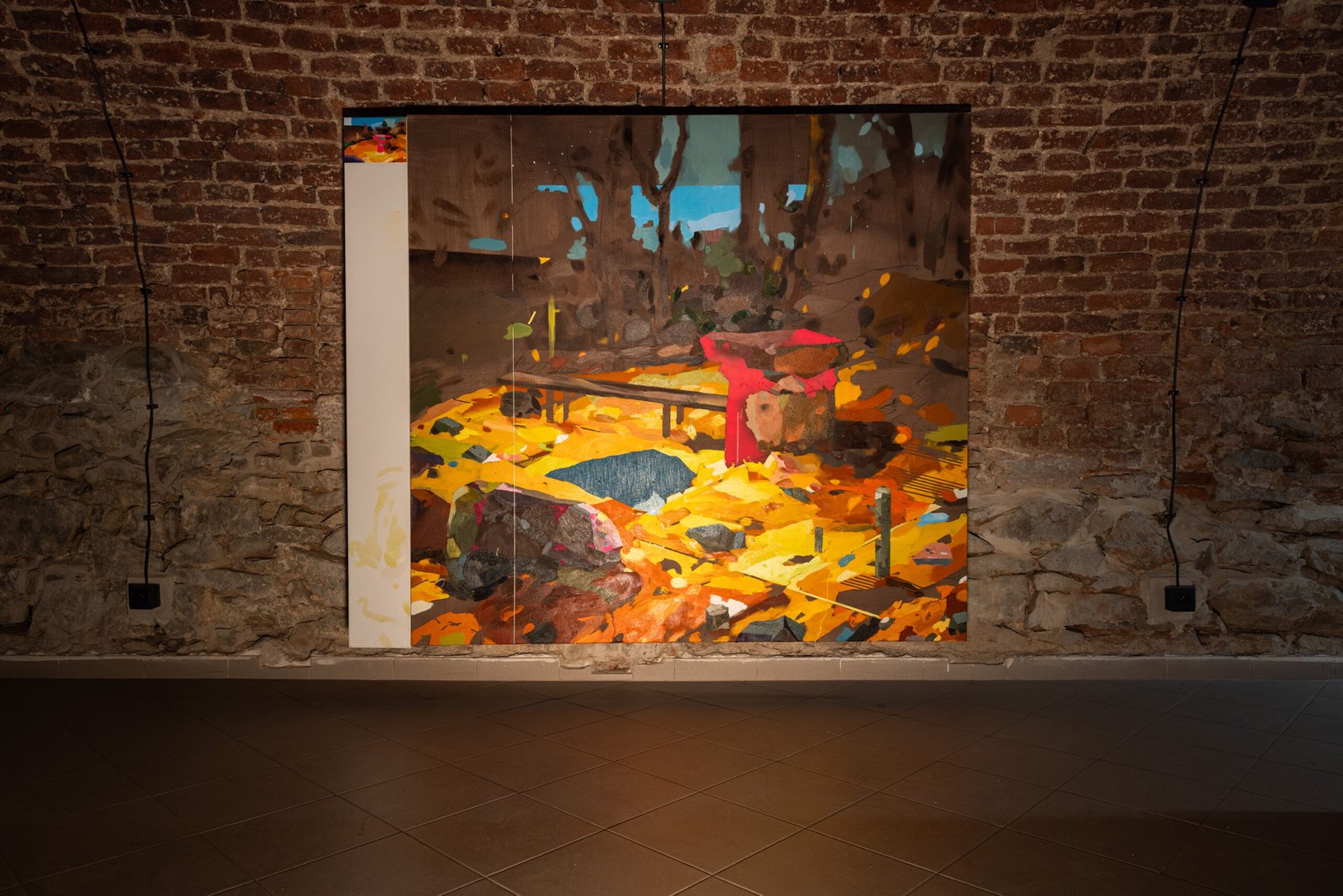
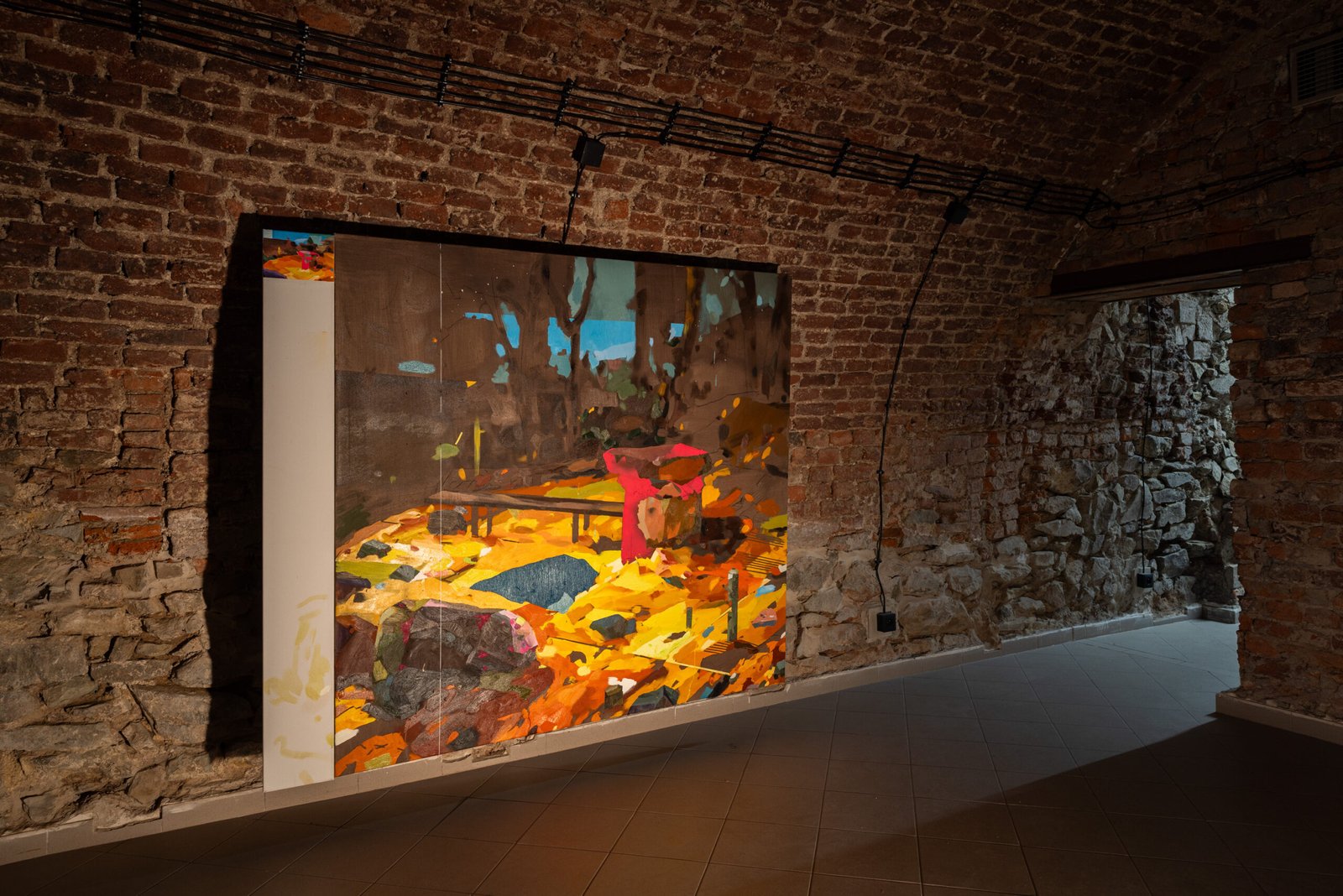
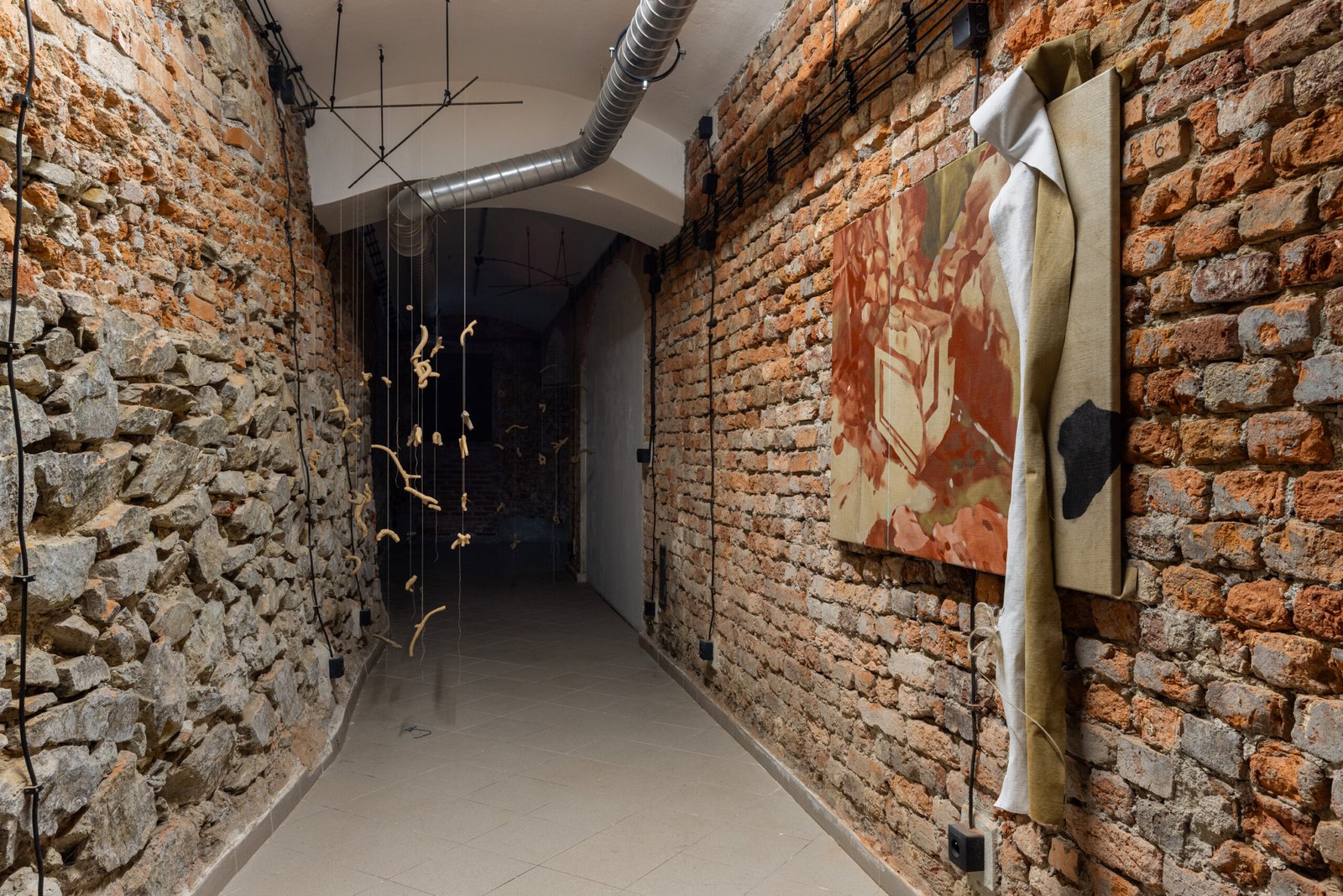
The exhibition documents the ongoing research of visual artist Michaela Šuranská, whose work focuses on the
topographical elements of landscape, its micro-components, as well as the interstitial spaces of original
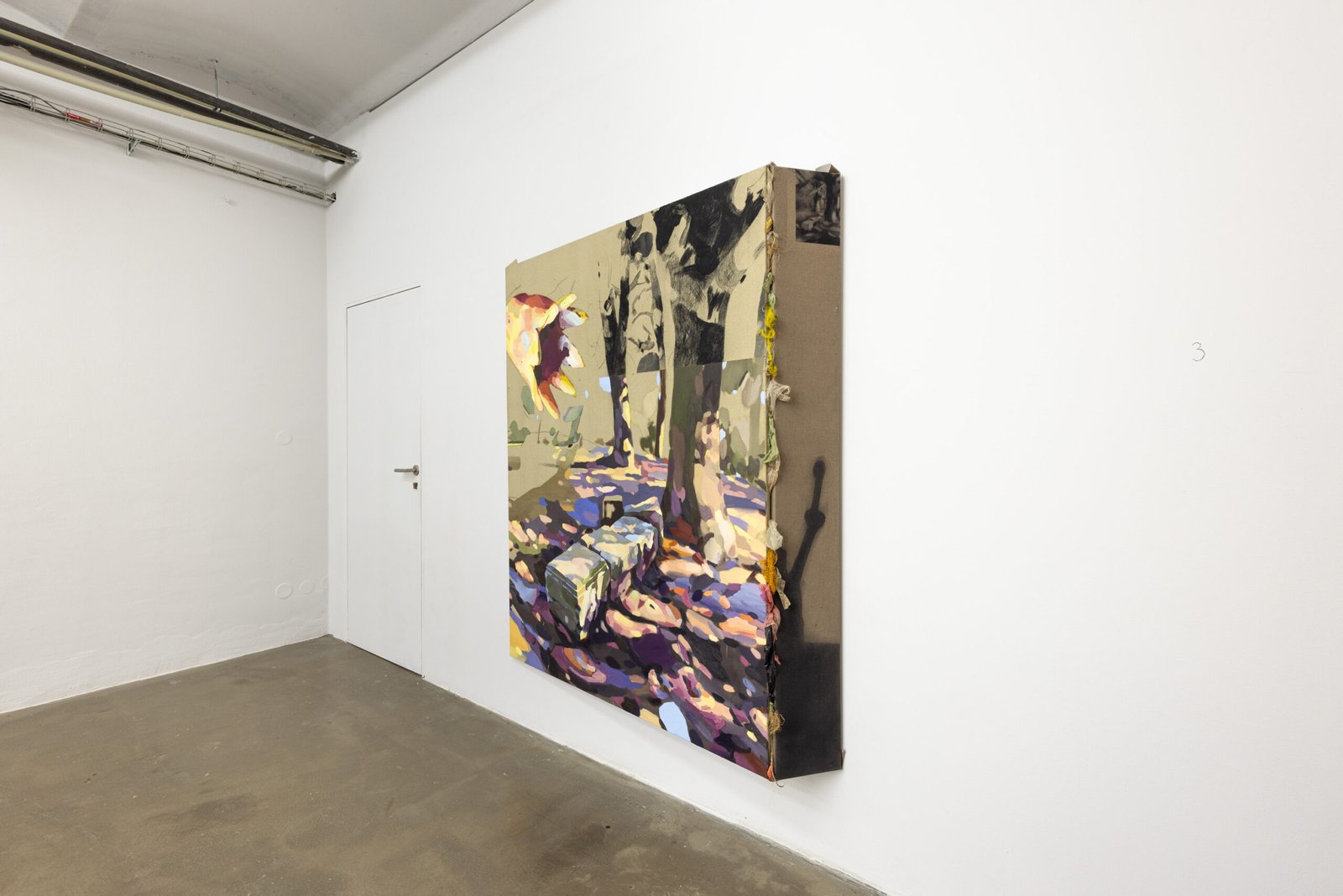
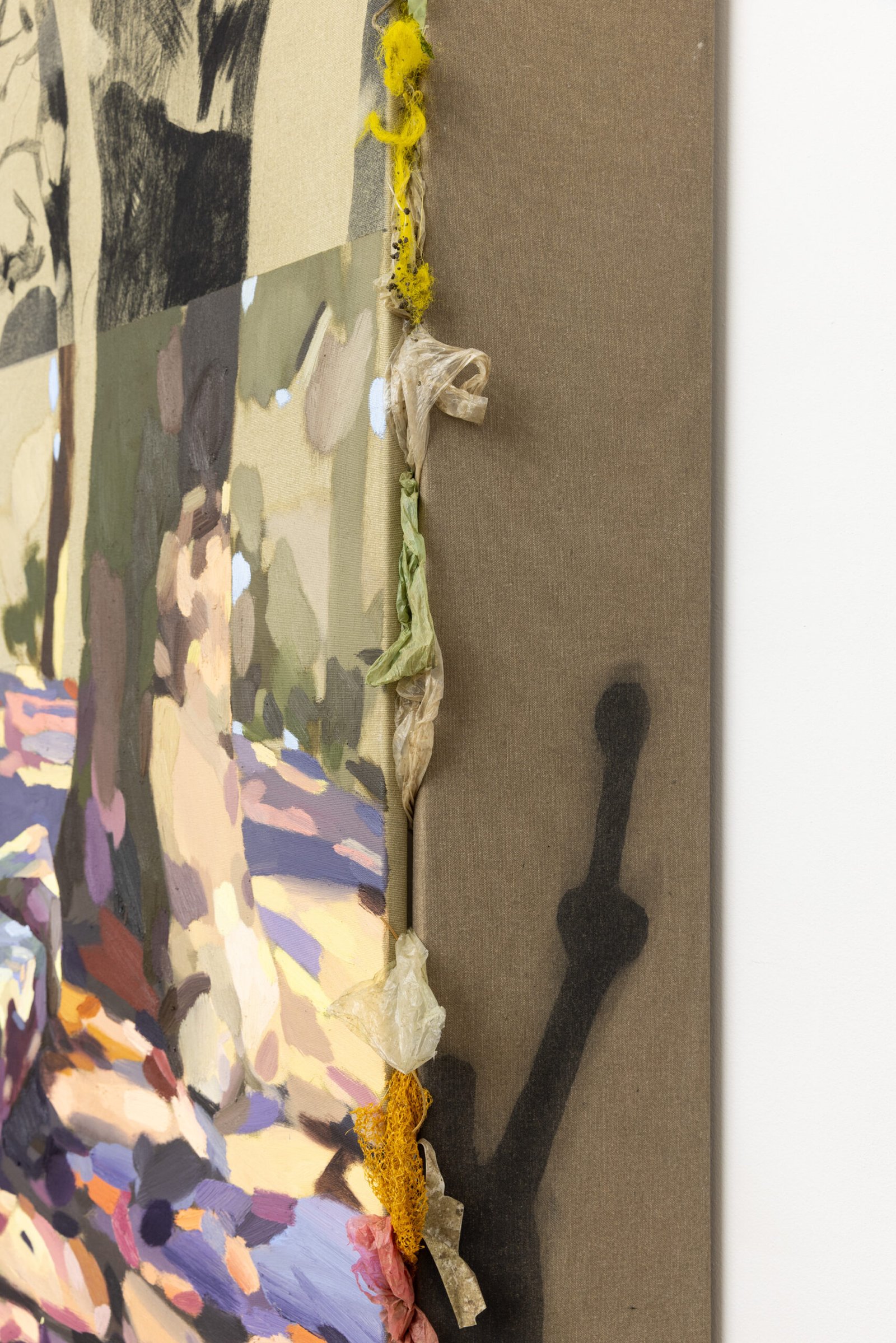
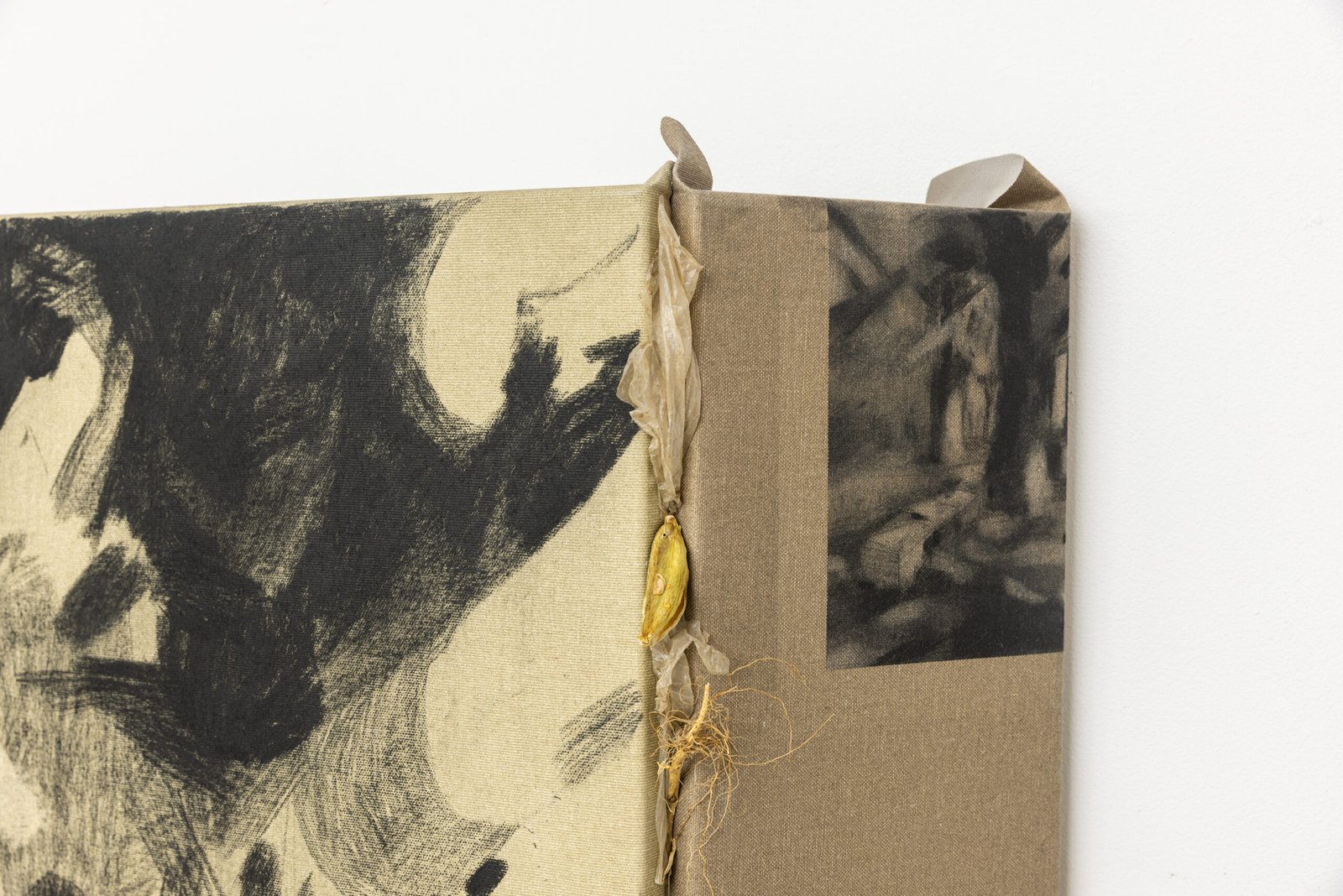
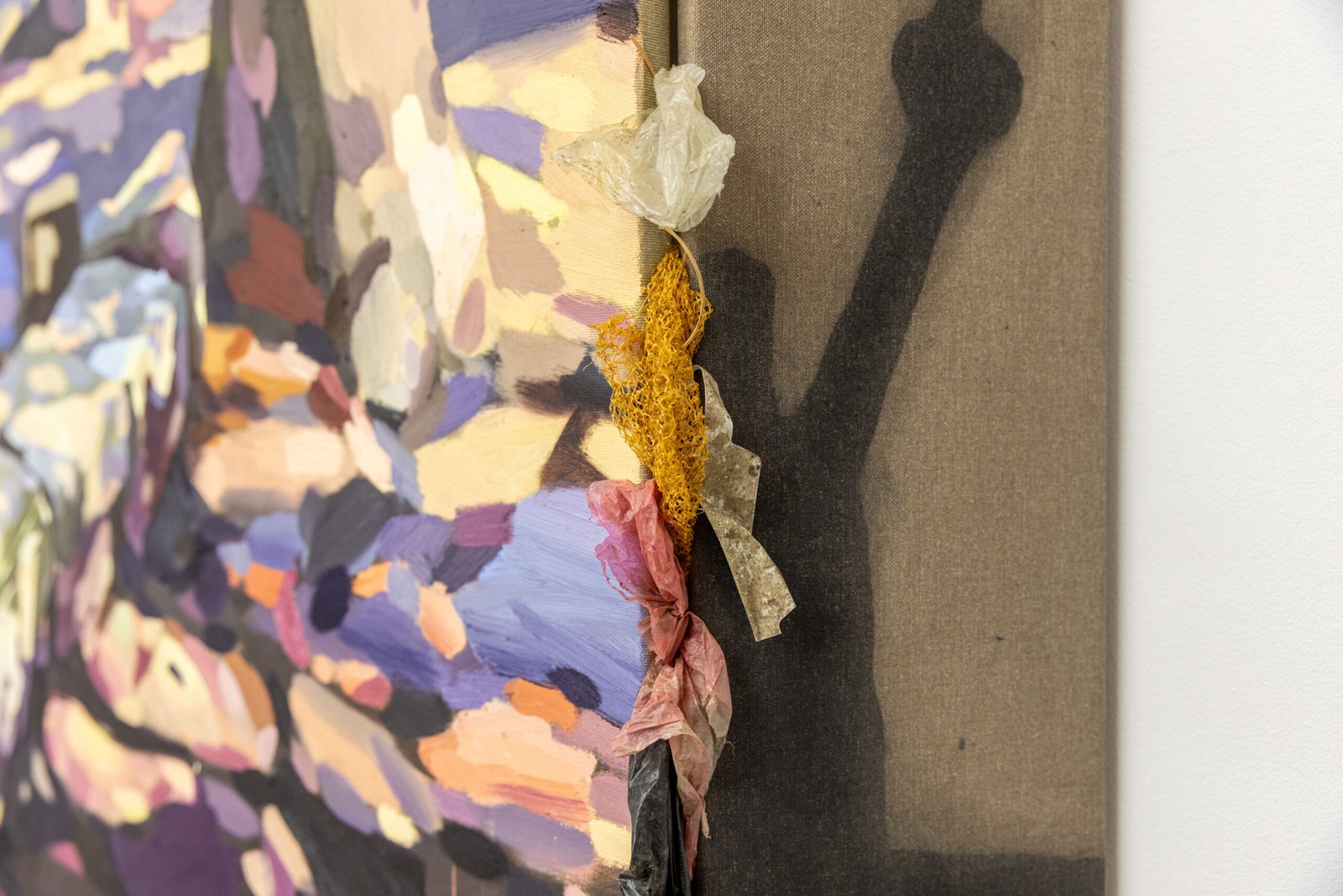
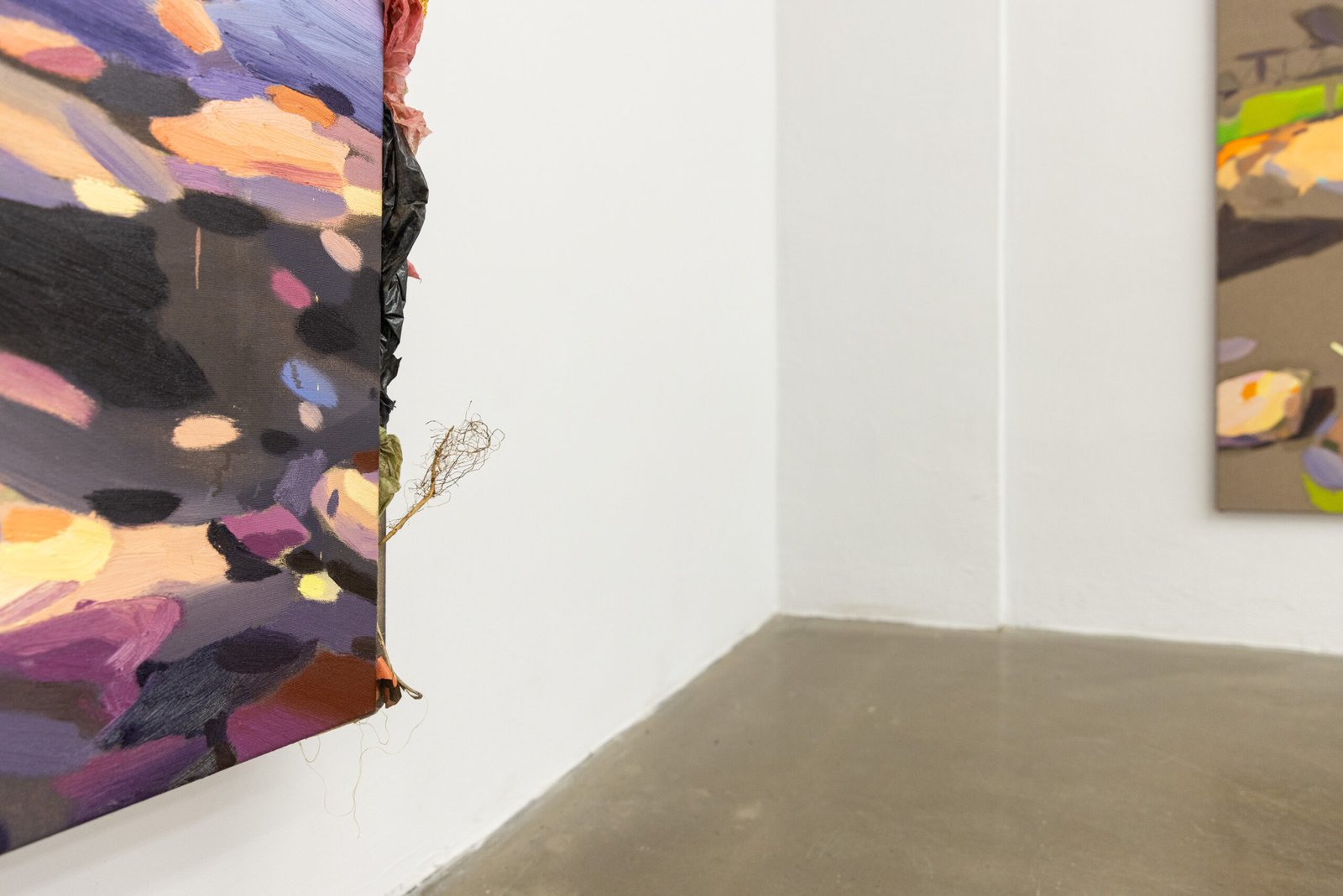
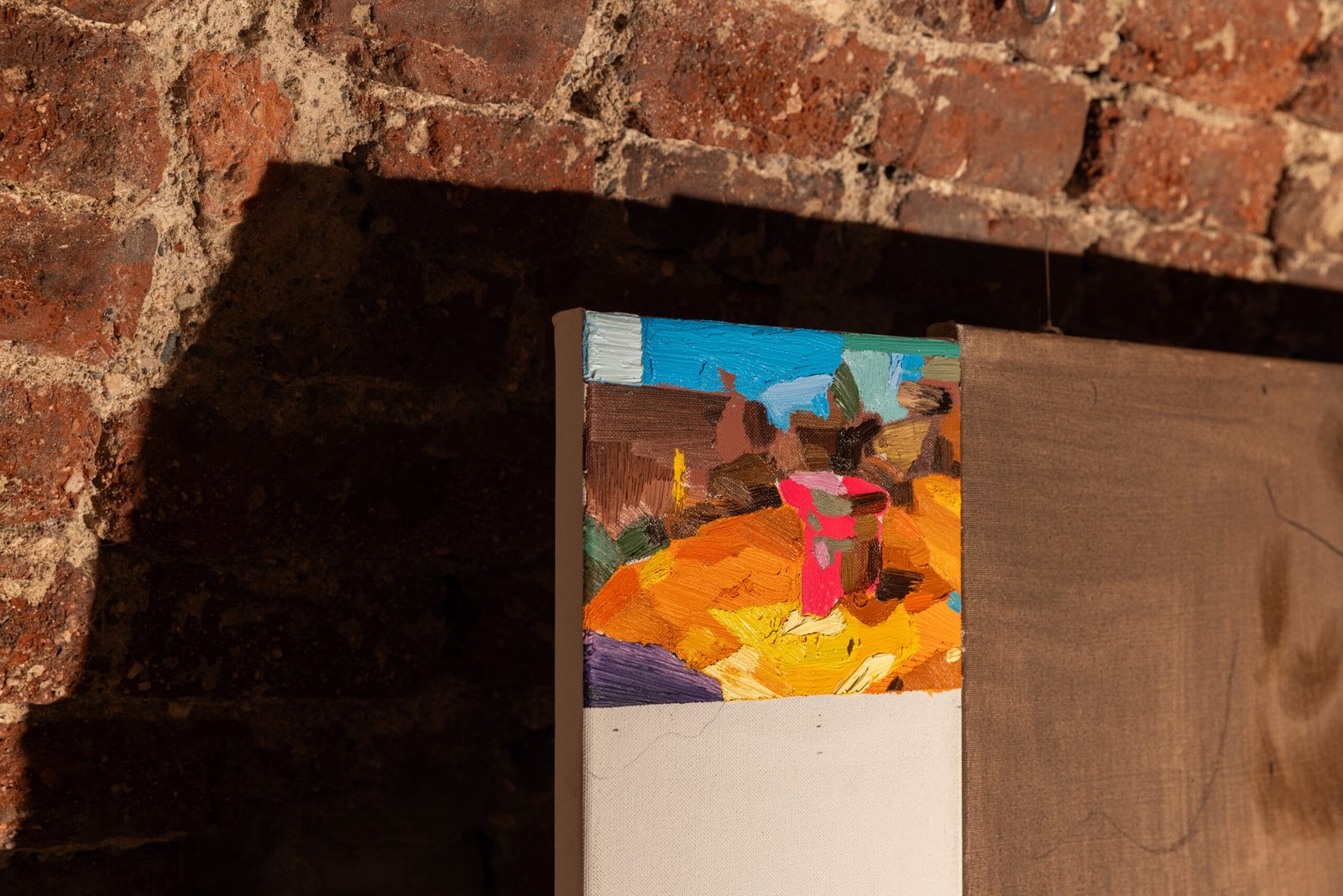
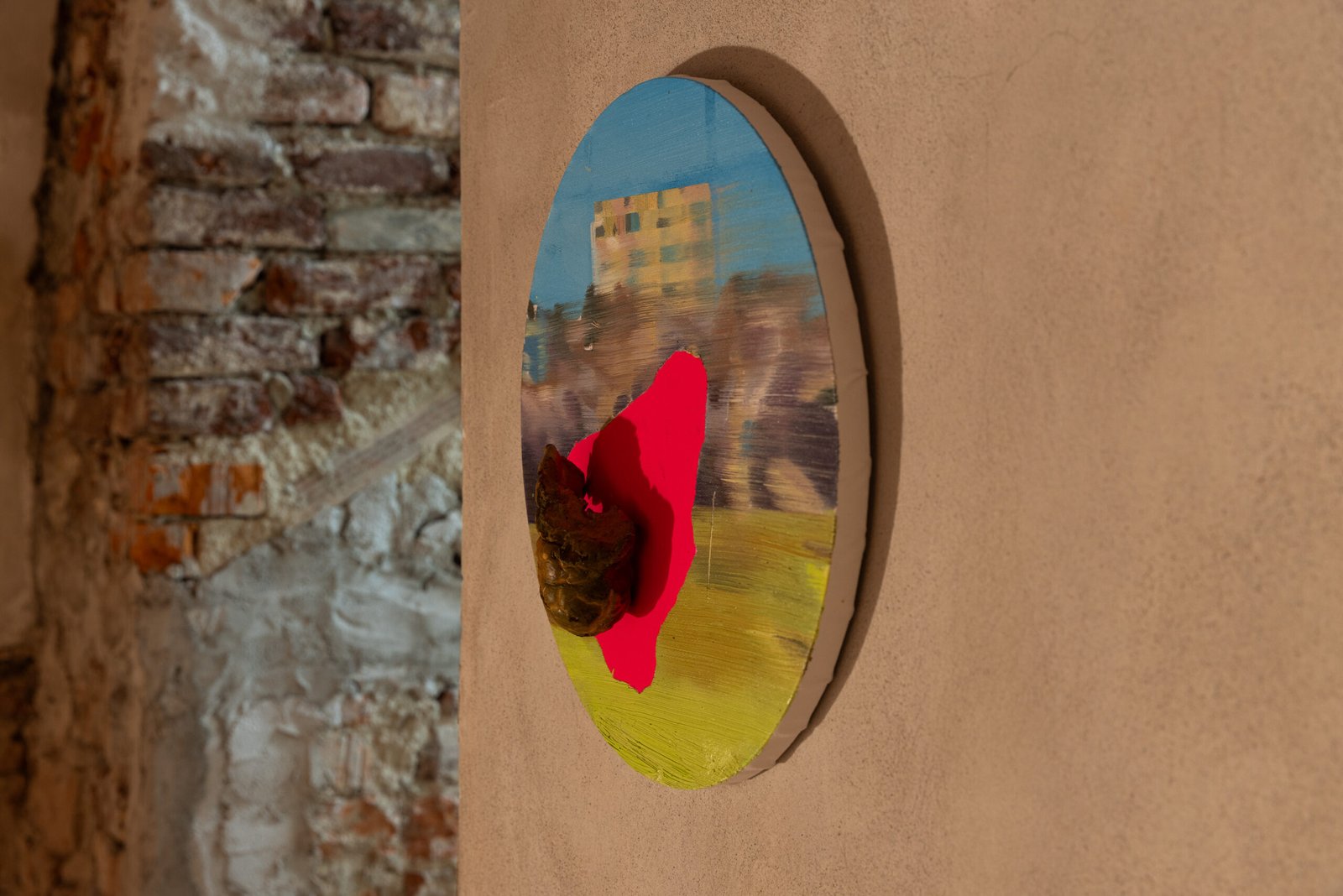
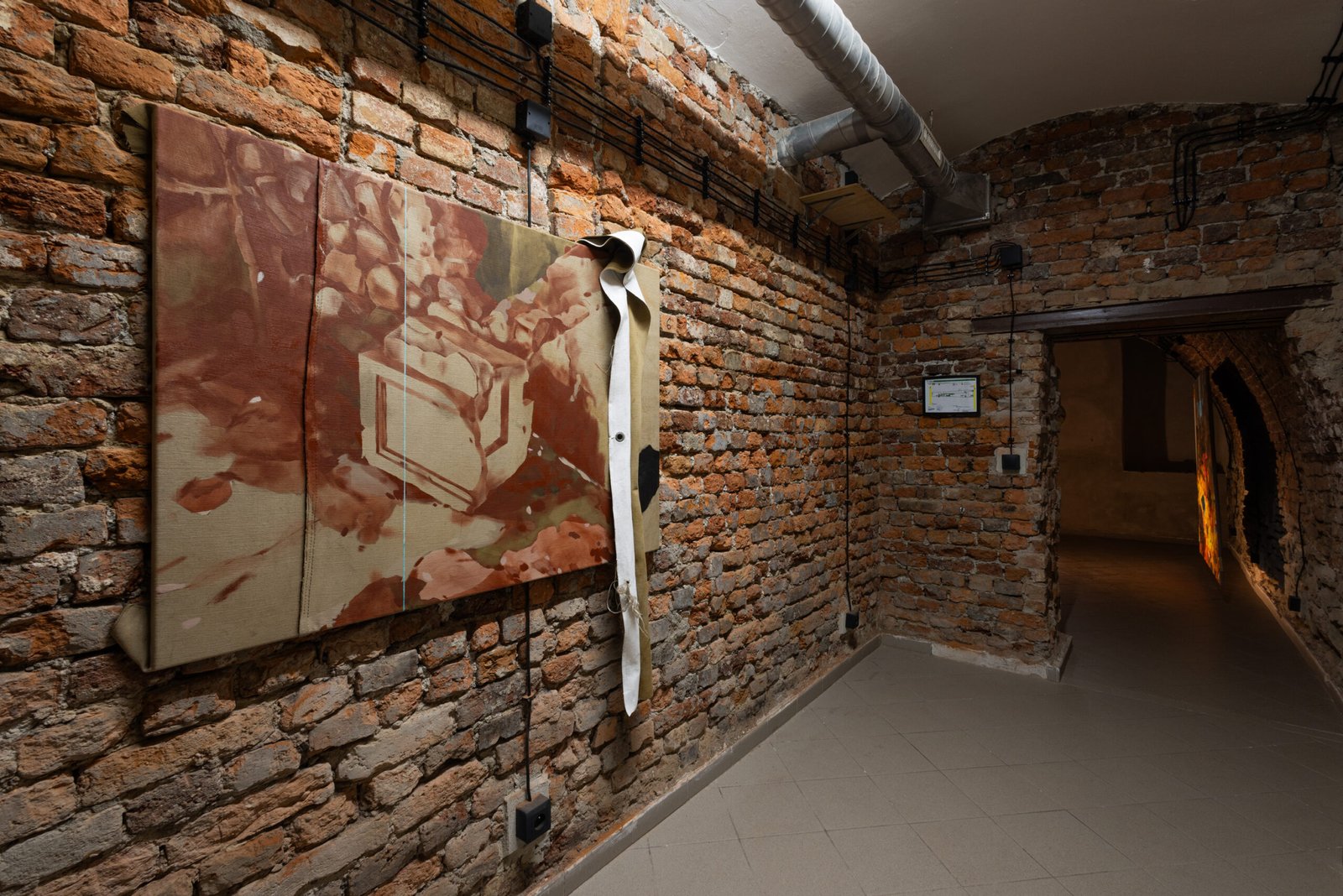
architectures. The paintings become individual objects: they are dismantled and re-formed, extending into other
media. Within their bodies, sediments and ruins of specific sites and temporalities accumulate, collide, collaborate,
and at times negate one another. These works offer a space for searching, losing oneself, and rediscovering
elements of a fragmented, daily-saturated mind—one that operates with attentiveness toward seemingly
purposeless fragments and waste. In their abstracted form, such elements gain significance without the need for
precise definition or categorisation. They generate narratives about the value of entities, memory, and corporeality
beyond human-defined and habitual modes of perception.
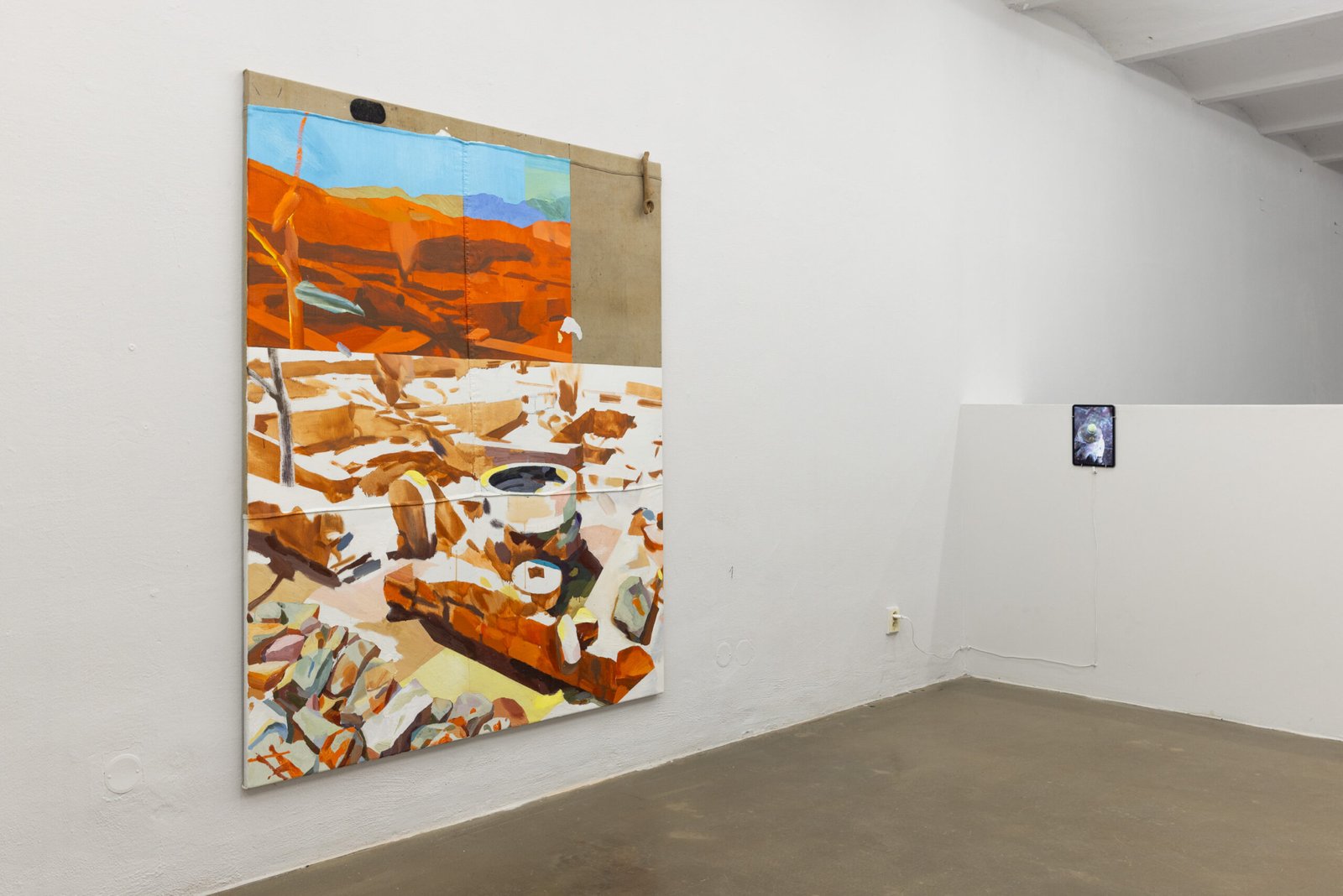
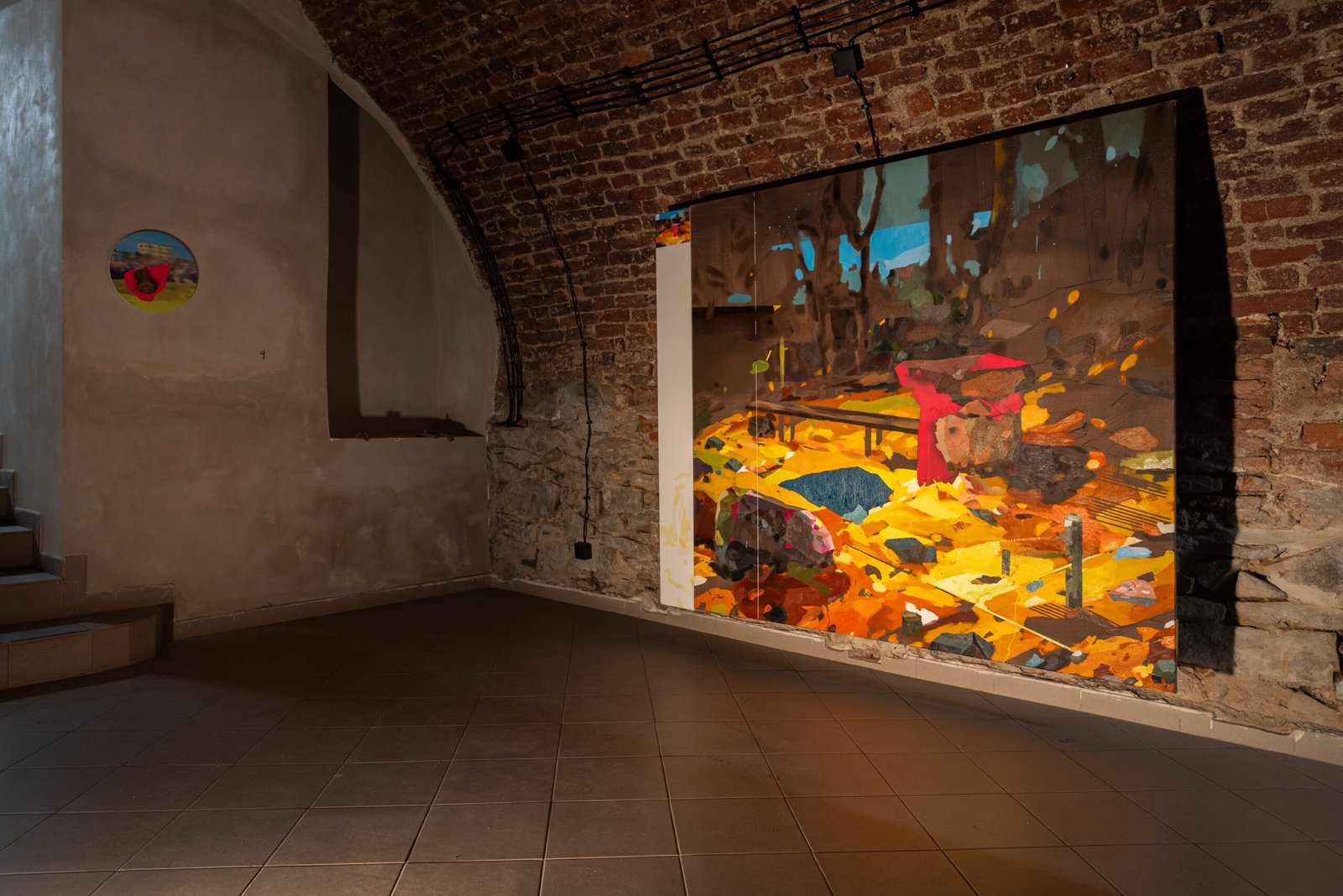
The first layer of the exhibition engages with the motif—the archetype—of ruins as a constantly present aspect of her
works and of Šuranská’s broader artistic approach. In conventional understandings, ruins—objects of historical value
primarily associated with architecture—are often read through decay, nostalgia, memory, and related associations (1).
The artist however, addresses a wider spectrum of landscapes shaped by human activity. Working with the concept
of the “taskscape,” she shifts the meaning of ruins, of the sites themselves, and of the terrain. Drawing on landscape
anthropology, she examines its elements in an almost archaeological manner. She transforms and formally as well as
conceptually reinterprets remnants and fragments of archetypal structures—floors, traces of dwellings, and
buildings that, over time, have lost their original, often aesthetic, functions. This analytical and partially exact
approach, informed by scientific methodology, is also embedded in the painting process itself: records of
architectural structures and their original materials are combined with elements reminiscent of cartography—
networks resembling construction drawings or map grids.
At a certain moment, however, a rupture occurs. A pause, and simultaneously a renewed movement. Meaning relinquishes
its long-term stability; lines intermingle, and the senses abandon the premise of a scientific or academic approach shaped
by formal painterly training.
The ruin continues to decompose, yet it remains present. It hybridises nostalgia, time, and memory, while retaining an
awareness of its own materiality. A body.
Its body is exhausted by years of labour—by external forces and internal tensions that recall the purpose, the function, and
the very essence of its emergence and existence.
And yet, the ruin breathes. Its particles become new sensory agents; matter awakens a potential once considered depleted.
It is no longer a reference to a redundant, once human-shaped form disrupting the forest ecosystem. Instead, it becomes
part of organic and inorganic processes and communities, generating newly present time-spaces—non-places—heterotopias
—dystopias—situations.
In Vibrant Matter (2), Jane Bennett describes waste and various fragments as forms of agency capable of acting despite
their banality and origins. These particles—things and remnants that once formed parts of the ecosystems of living
organisms or of urban environments—retain their identity even in a state of gradual decay. They are able to generate
both productive and toxic relations and to attract human attention. They form lively material configurations; within
their apparent passivity and disintegration lies the potential for communication and the emergence of new
interactions—movements.
Matter and waste—modes of thinking and fragments of perception that attempt to grasp the technologically shaped
components of everyday life—are inscribed into another layer of the exhibition. This layer establishes a counterpoint while
simultaneously entering into dialogue with the first, exact and sharp layer.
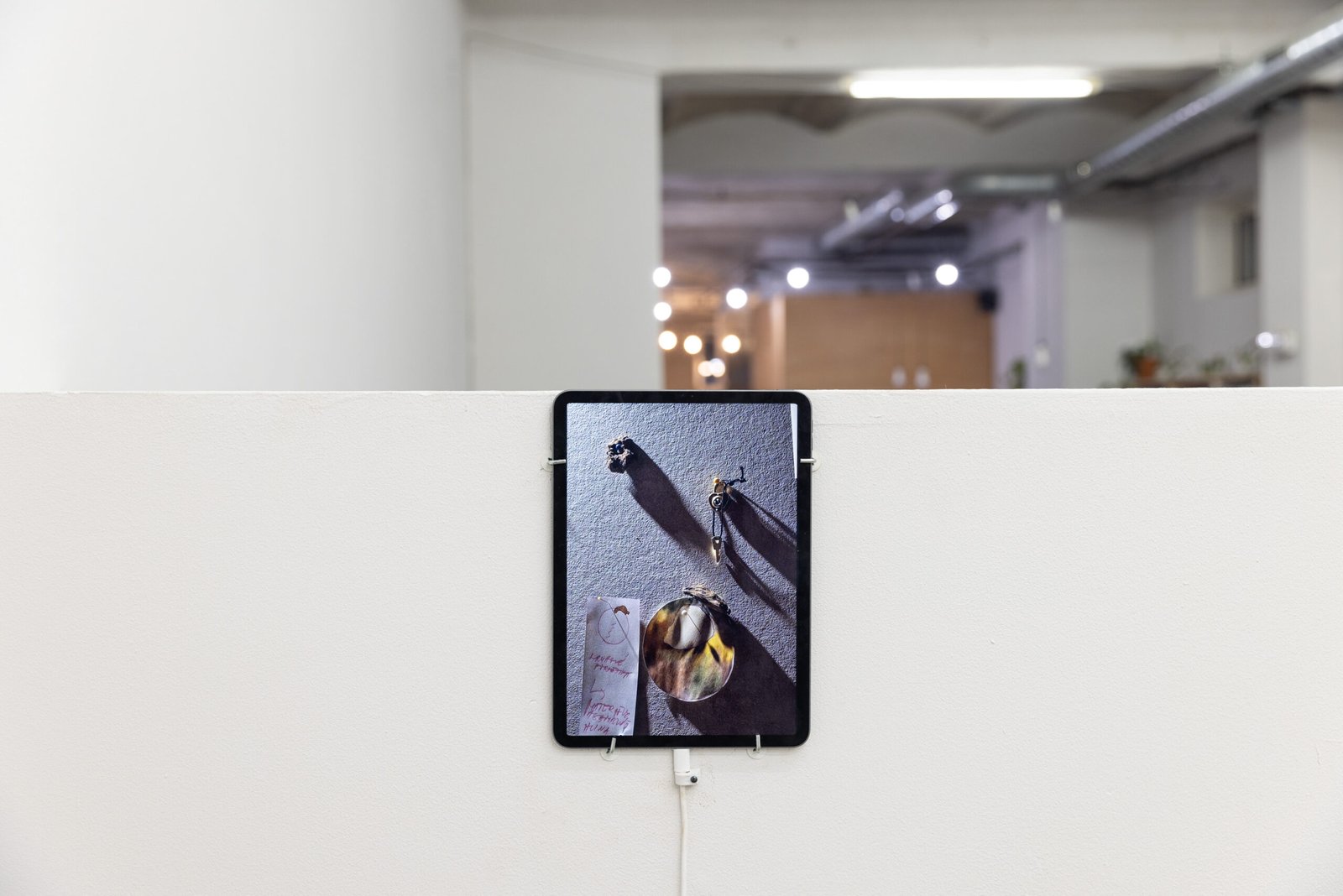
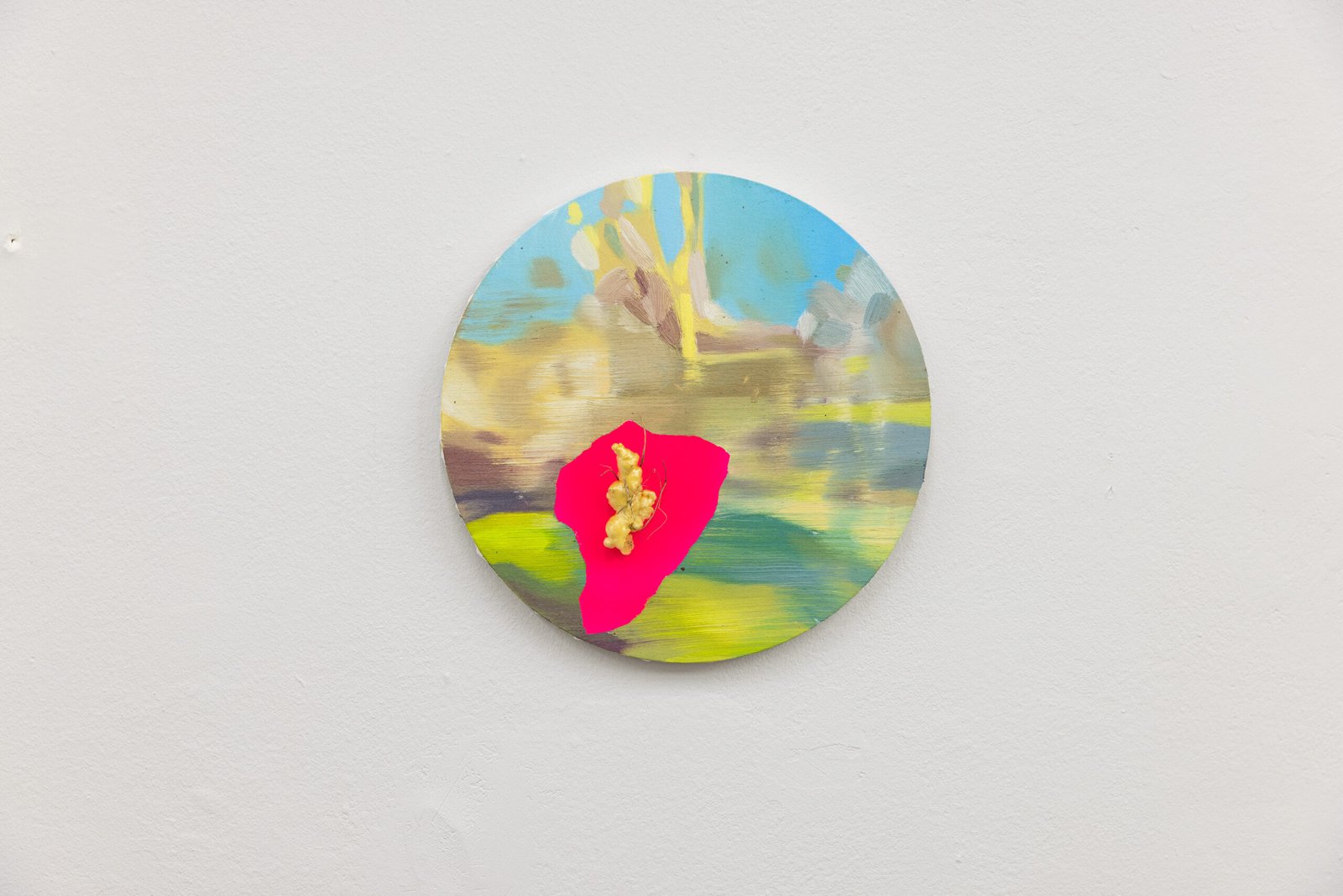
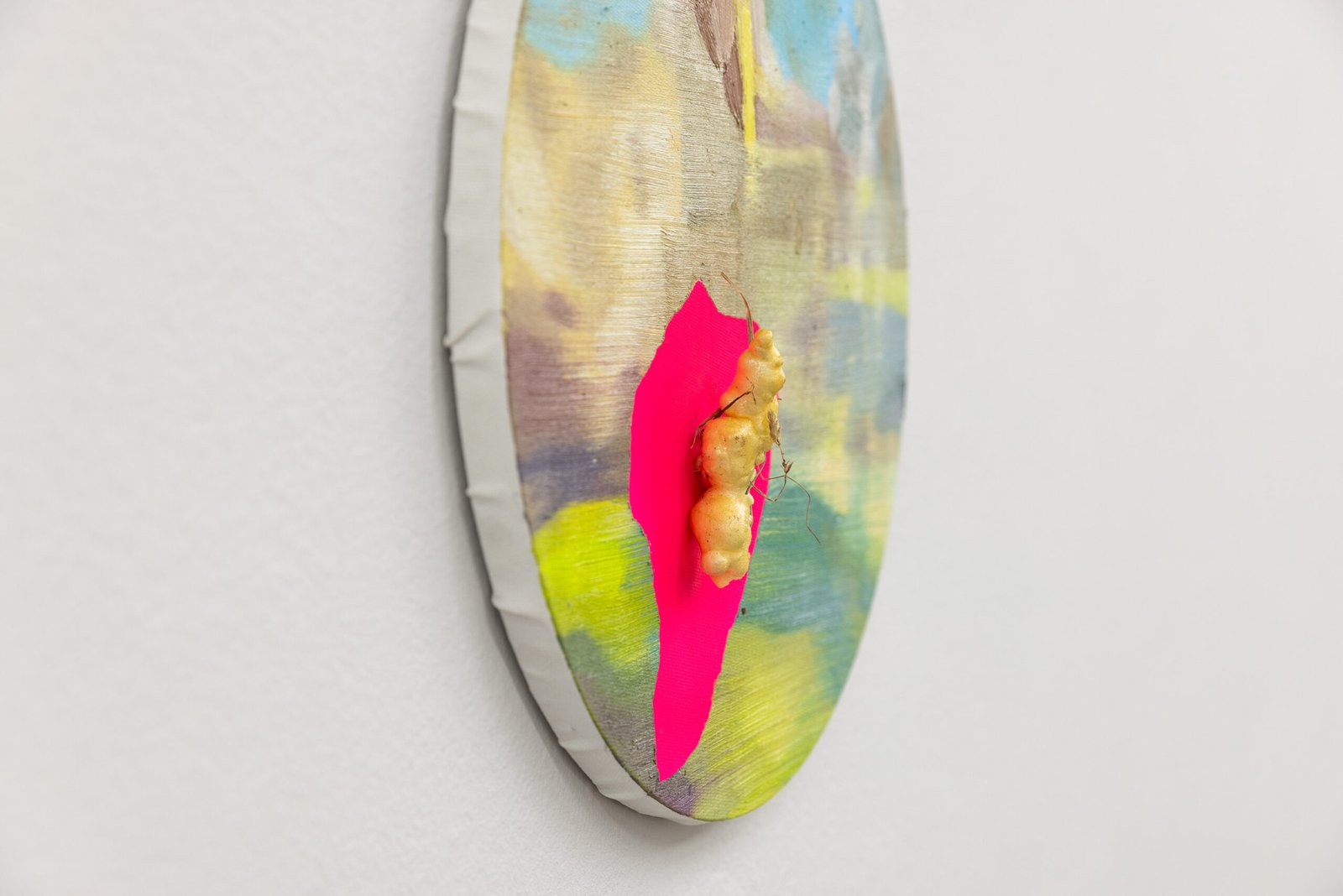
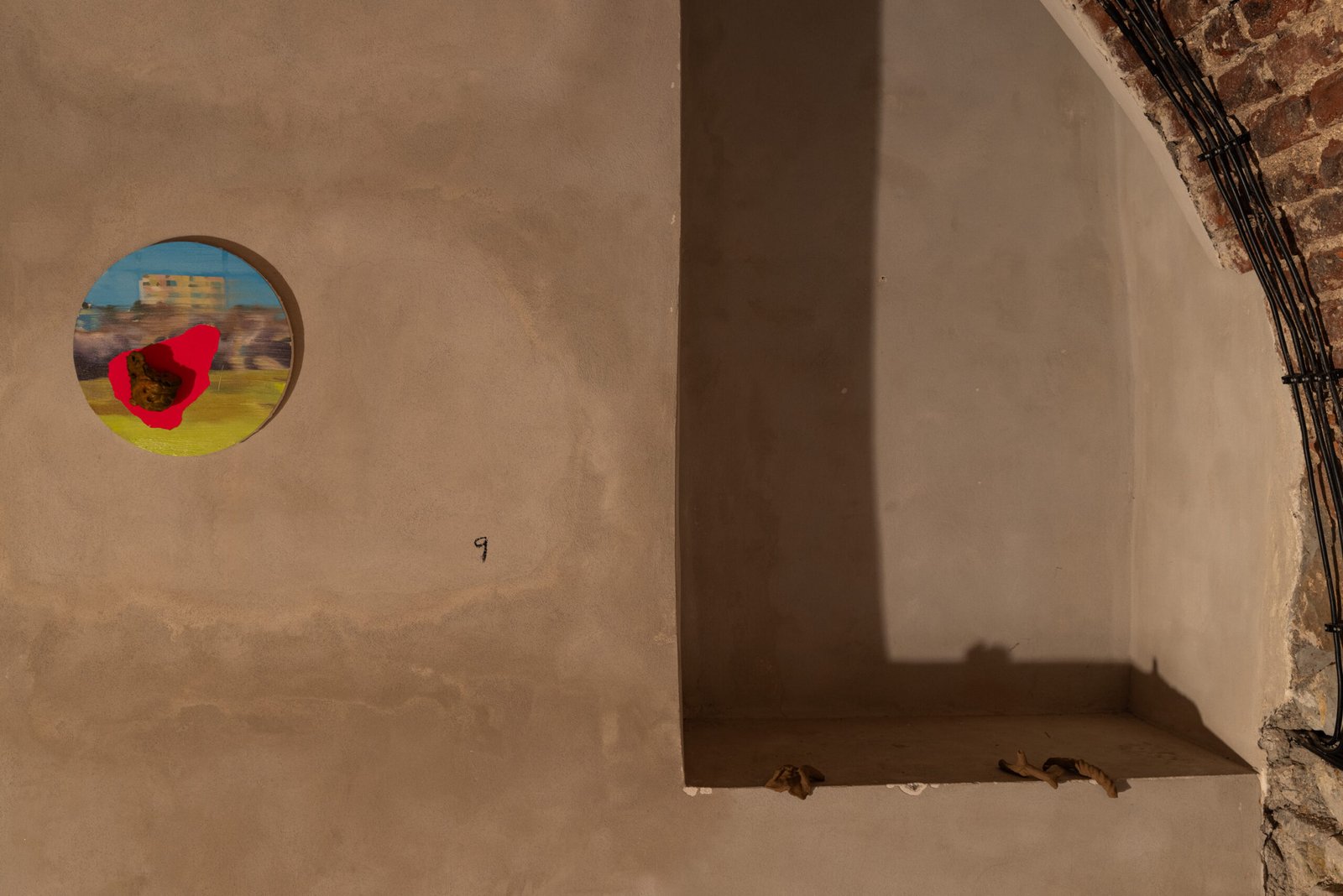
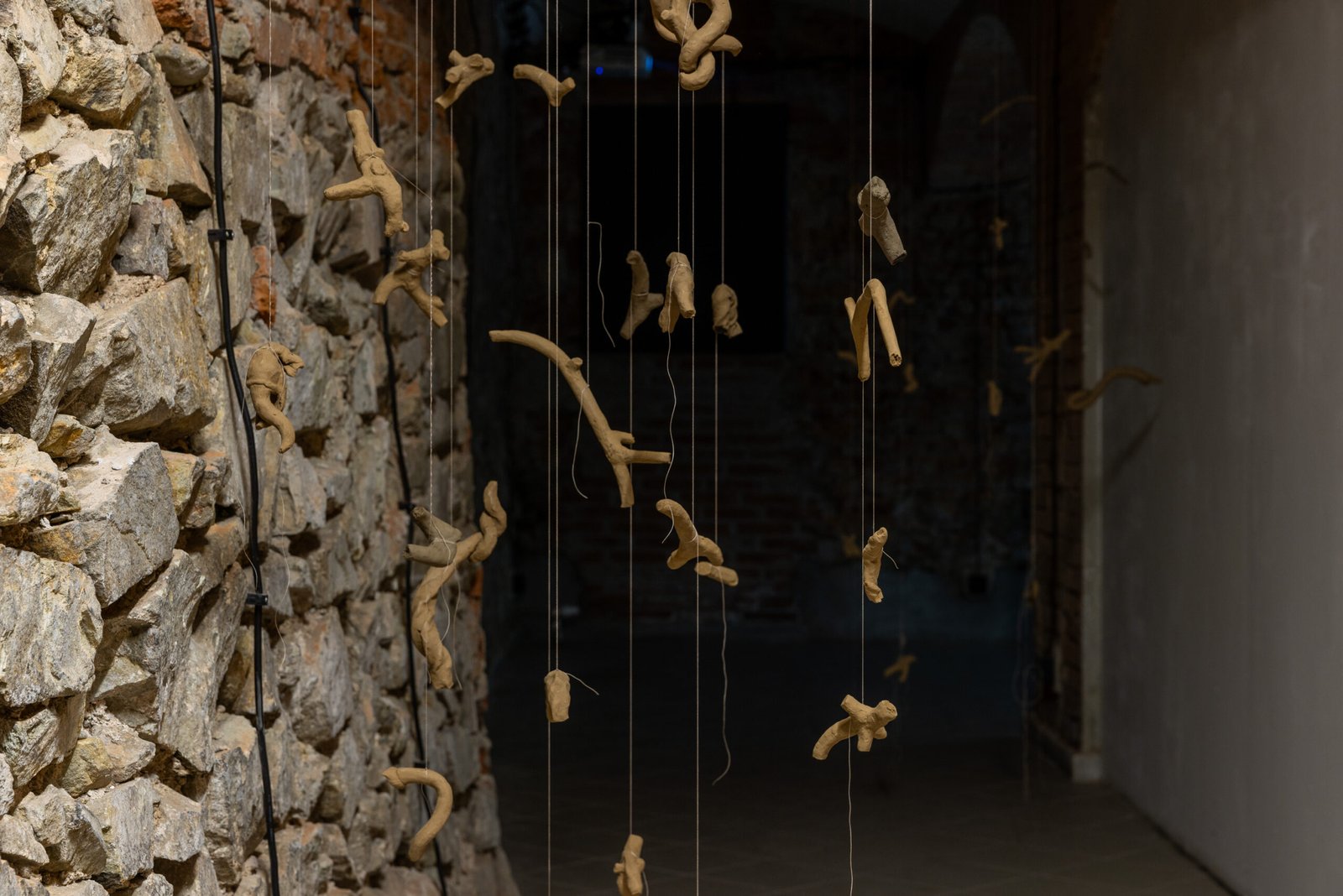
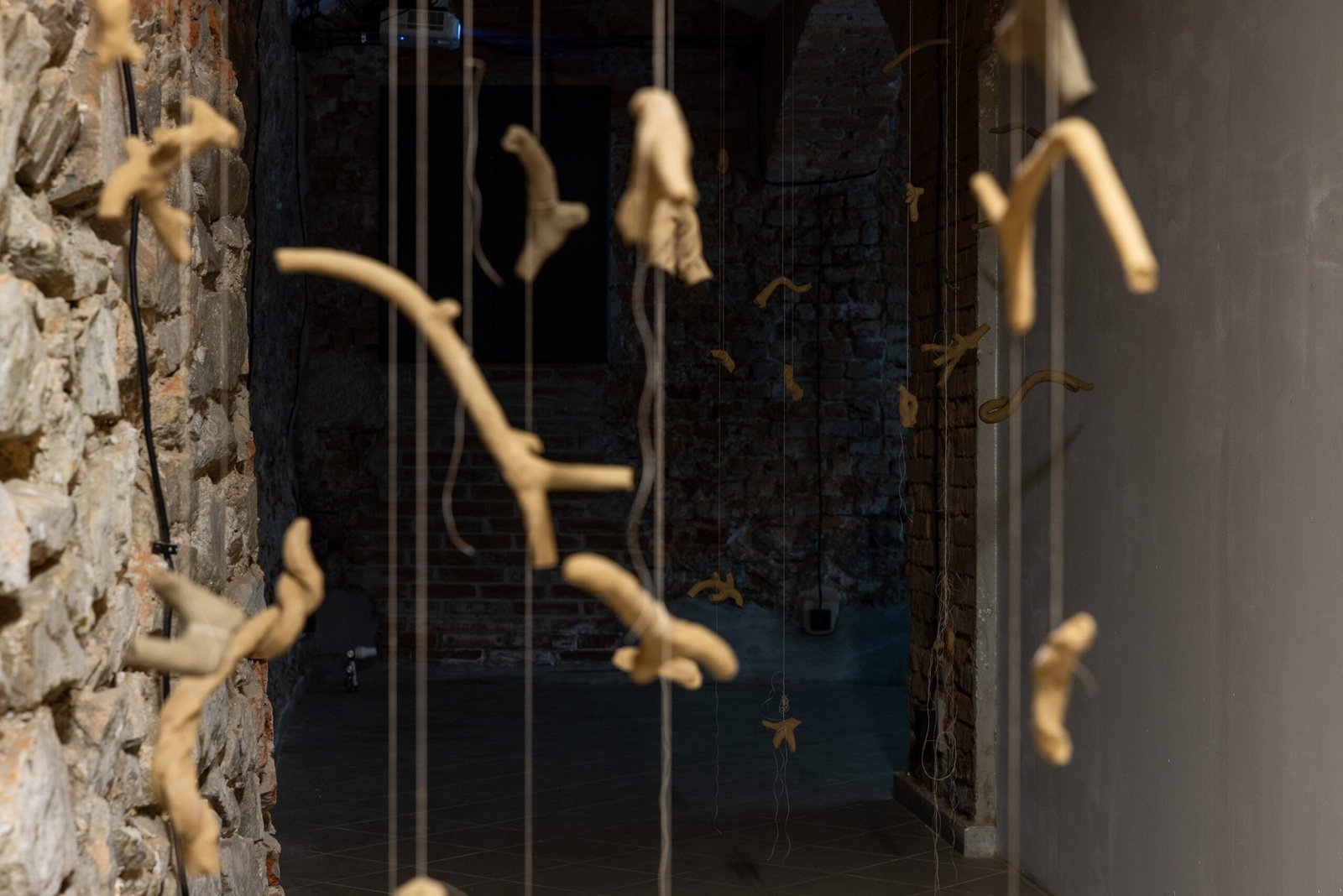
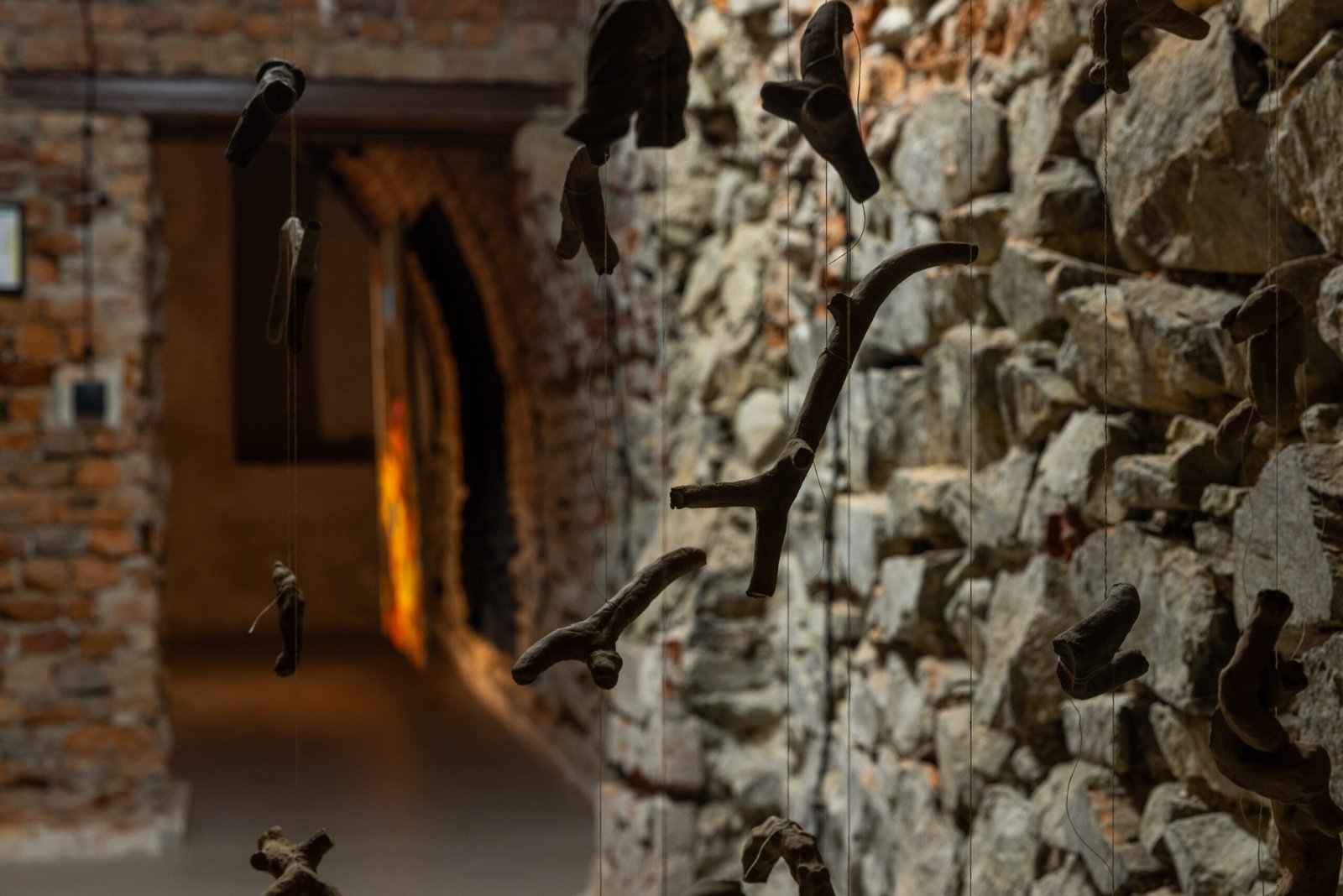
It is alive and fluid, composed of rounded forms, imperfect, imprecise, and nonconforming. The image disintegrates, yet this
is not merely a process of deconstruction followed by hybrid assemblages of signs. Instead, it becomes part of the tense
processes of both the present and the past, affirming the possibility of transcending power structures, materiality, and even
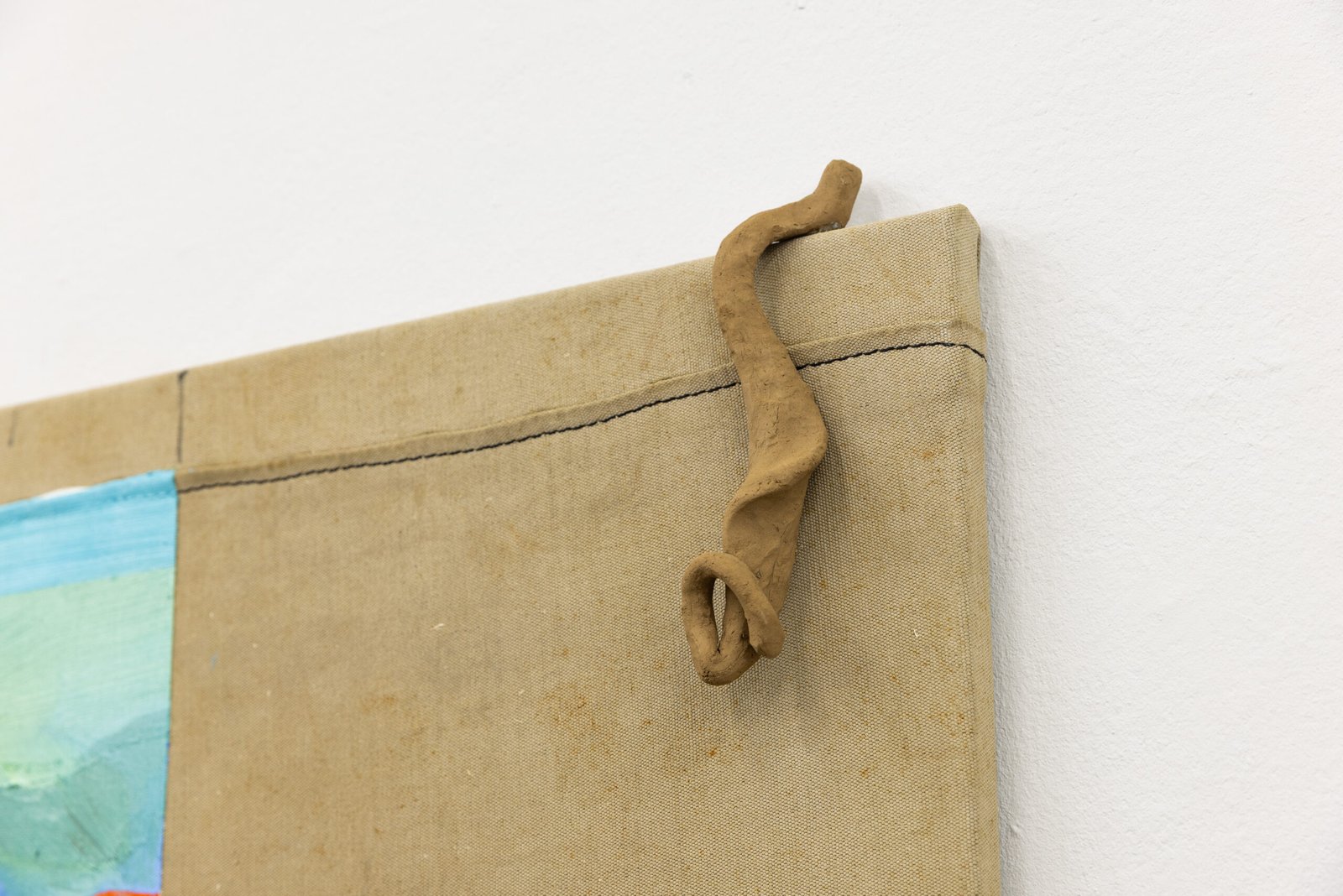
the very definition of painting. Paintings transform into objects; their surfaces and structures abandon unified form and
shape. Clay, as well as banal products of human and more-than-human activity, acquire the status of active co-authorship
within the artistic process. Every element carries meaning.
Together—and even in their smallest components—they form active relationships: artistic, planetary, mental; relationships
that are not unequivocally positive. They are however, deeply intertwined, generating new connections, environments, and
possibilities of life, striving for a coexistence shaped by continual negotiation. Layers of new ruins, which no longer need to
represent history or time-tested material objects, communicate with the ephemerality of perception, energy, and memory.
They coexist within ecosystems that may be judged as insignificant or irritating and uncomfortable—yet they allow these
conditions to be perceived and acknowledged.
In Staying with the Trouble: Making Kin in the Chthulucene (3), as well as in Donna Haraway’s broader thinking, fragments
of stories and shards of thought are understood as the foundation of an ethical and political discourse that should
not proceed from a closed or idealised whole. Particles of the material world carry the memory of past decisions and
intertwine with biological and social life, producing hybrid forms of existence. Their connections are fragile,
temporary, and mutable.
This is not about creation or construction that would replicate the pressures of producing new content and performance,
but about testing the meaningfulness of leaving origins intact, of contemplation and coexistence—processes that cannot
function without mutual, often critical, dialogue.
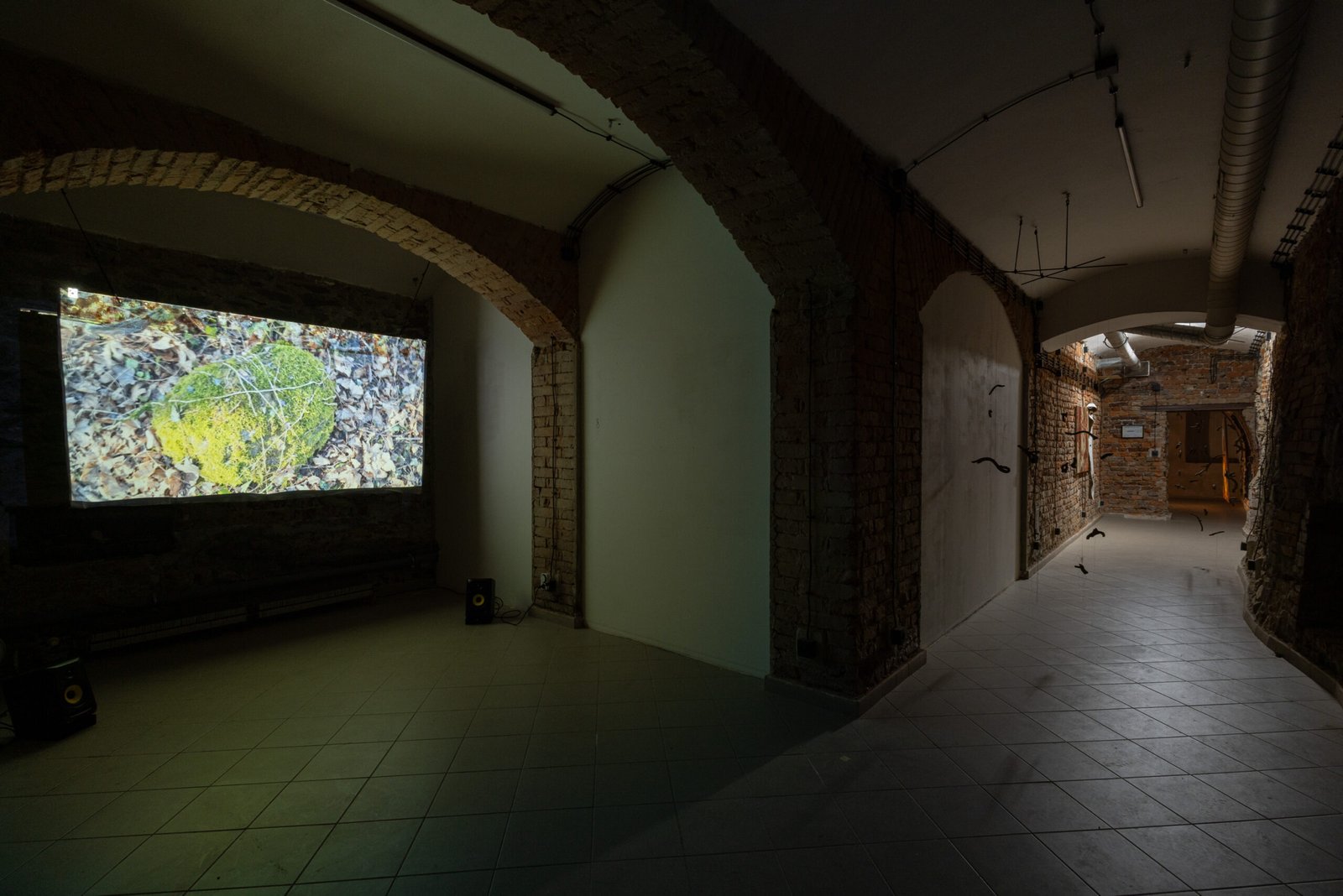
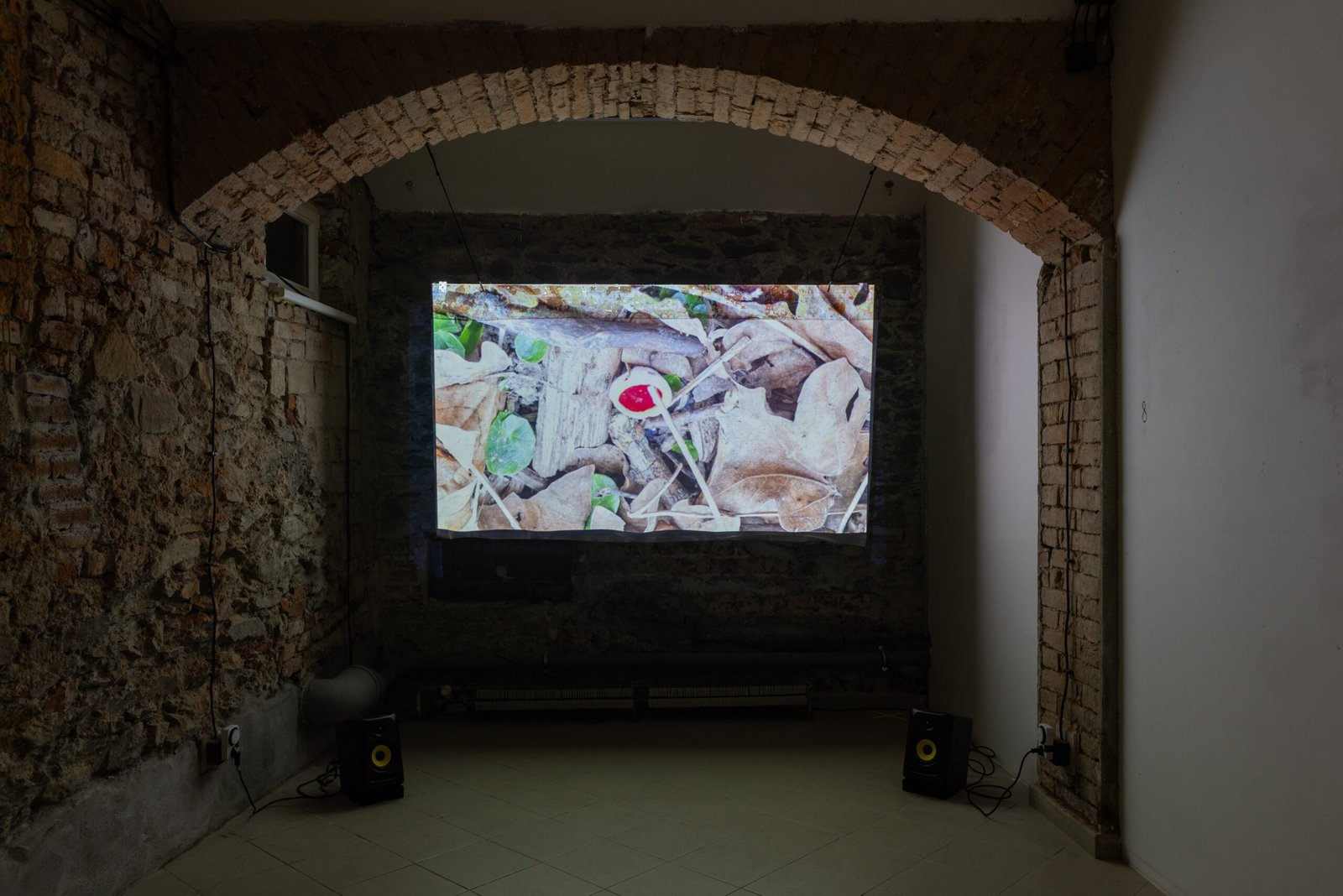
The final layer of the exhibition works with the accumulation of sensations, with the disintegration and reassembly of
attention and materials, and with sensitivity toward entities, organisms, as well as places and their narratives. It
materialises entanglements of global and personal crises, alongside the artist’s continuous investigation into the
medium of painting itself and its status. Interconnected environments thus oscillate at the edges of everyday
pressures and challenges, seek meaning in banality, release the tension of instrumentality, and acknowledge the
importance of disrupting hierarchies at an interspecies level.
Here, thinking and perception in the process of fragmentation do not become failure or excess, but rather a way of
experiencing exhaustion, a form of care for fragile meanings without a claim to perfection, and at the same time a rejection
of totality and the structures of linearity.
(1) Further elaboration on the theme of ruins and their interpretation within their historical context can be found, for example, in Georg Simmel’s essay The Ruin, published in 1959. See Georg Simmel,“The Ruin,” in Essays on Sociology, Philosophy and Aesthetics, ed. Kurt H. Wolff (New York: Harper & Row, 1959), 259–266.
(2) Jane Bennett, Vibrant Matter: A Political Ecology of Things (Durham, NC: Duke University Press, 2010).
(3) Donna J. Haraway, Staying with the Trouble: Making Kin in the Chthulucene, trans. Jan Škrob (Prague: Utopia libri, 2025).
Michaela Šuranská
Michaela Šuranská graduated from the Academy of Arts in Banská Bystrica, specialising in painting, where she
completed her doctoral studies in 2023. Her dissertation, Diverzita foriem maľovaného obrazu (The Diversity of Forms
of the Painted Image), was presented as the exhibition Of Other Traces at the Central Slovak Gallery in Banská
Bystrica (2023). She received second prize in the Painting of the Year competition organised by the VÚB Bank
Foundation (2023) and regularly participates in both group and solo exhibitions.
Her exhibition projects include Tektoniká at EQO – Space of Interactive Culture (2023), the group exhibition Nature
(at) Work – Príroda pri práci at the Regional Gallery in Prešov (2024), and the project Of Previous and Next Spaces at
Nástupiště 1–12 in Topoľčany (2021–2022). In 2025, her work was presented in several solo exhibitions, including
Stopy záhonov, prekročené polia (Municipal Gallery Rimavská Sobota), Odseknuté Vytrhnuté (A7 Gallery), and Líščie
diery (FlatGallery).
She is a co-founder of Rozkvet Gallery in Banská Bystrica, where she also works as a curator. She additionally
collaborates with Schemnitz Gallery in Banská Štiavnica. Her artistic practice expands the field of painting by
combining traditional painting techniques with field research and the deconstruction of the pictorial surface. Her
analytical approach often translates natural environments into the plane and form of the artwork, drawing inspiration
from disciplines such as archaeology and anthropology, which she transforms through subjective artistic research.