









Among the criteria used to determine what makes flamenco what it is and where it comes from, there are considerations of a social, historical, territorial, biological, and ethnic nature. Its origins are mysterious, but its identity is clear. Although its branches extend in multiple, slightly different directions, the set of practices and expressions that inhabit this denomination follow a lineage and share an undeniable destiny. Its sameness is obvious, even as it is impossible to trace back. Flamenco, as a field of study, presents definitional difficulties—just as art does. Taxonomies, in any discipline, are applications of order to a mass that appears to be connected by certain points, which the system that arranges them turns into common characteristics, and therefore into ways of understanding the elements that make up its categories.
The family tree is the diagram of the science of ancestry, an attempt to fix the evolution of things—families, races, knowledge—in a linear, historical, cumulative, and hierarchical way. In the roots, origins are incalculable and linked to the earth*, to the enigmatic motives that make beings grow. In the branches, possibilities open up, heterogeneity arises, and mixture with external agents occurs. The pure form of the tree becomes distorted: to maintain the archetypal silhouette, pruning is required—a blade that cuts off deviating branches and prevents deformation. With the insertion of a graft, a tree can bear lemons and oranges at the same time: still belonging to the citrus family, it can suddenly become a lemon tree, an orange tree, and both trees at once.
The logic of flamenco is a strict yet porous system, which sets limits and categories upon a mud of unfathomable yet undeniable origin—of malleable character and oral tradition—slippery to academic bias. The canons (the “palos”, the “cantes”, the modalities, the verses that repeat within them) are of lineages and influences studied from different perspectives and under different lenses, producing conclusions that sometimes coincide and sometimes differ. Its manifestations (the singing, the dance, the ritual, and the multiple cultural forms within or adjacent to what we outline as flamenco) and its modes of identification are expressions of individual and collective beings that persist and mutate in equal measure.
Taxonomy is nothing more than the science of understanding—the art of systematizing. The logic of a system is the order we spread over the chaos present in all things. Víctor Jaenada finds a mirror in the logic of flamenco, because he operates with the awareness that his action is a reproduction of all preceding gestures—all that has been painted, all that has been said about what has been painted—while also appearing as a new genetic combination: belonging to the impossible tree of the genealogy of art. To act is always to act within certain limits, within structures in which the singular appears at a given moment, like the “cantaor”’s own voice rising when he shapes the verses according to his own emotion and experience—and thereby altering the listeners’ understanding who, with that particular cry, form a new notion of what flamenco is, and opening possibilities for the “cantaores” who will later come to use his expression as part of a constantly renewed tradition.
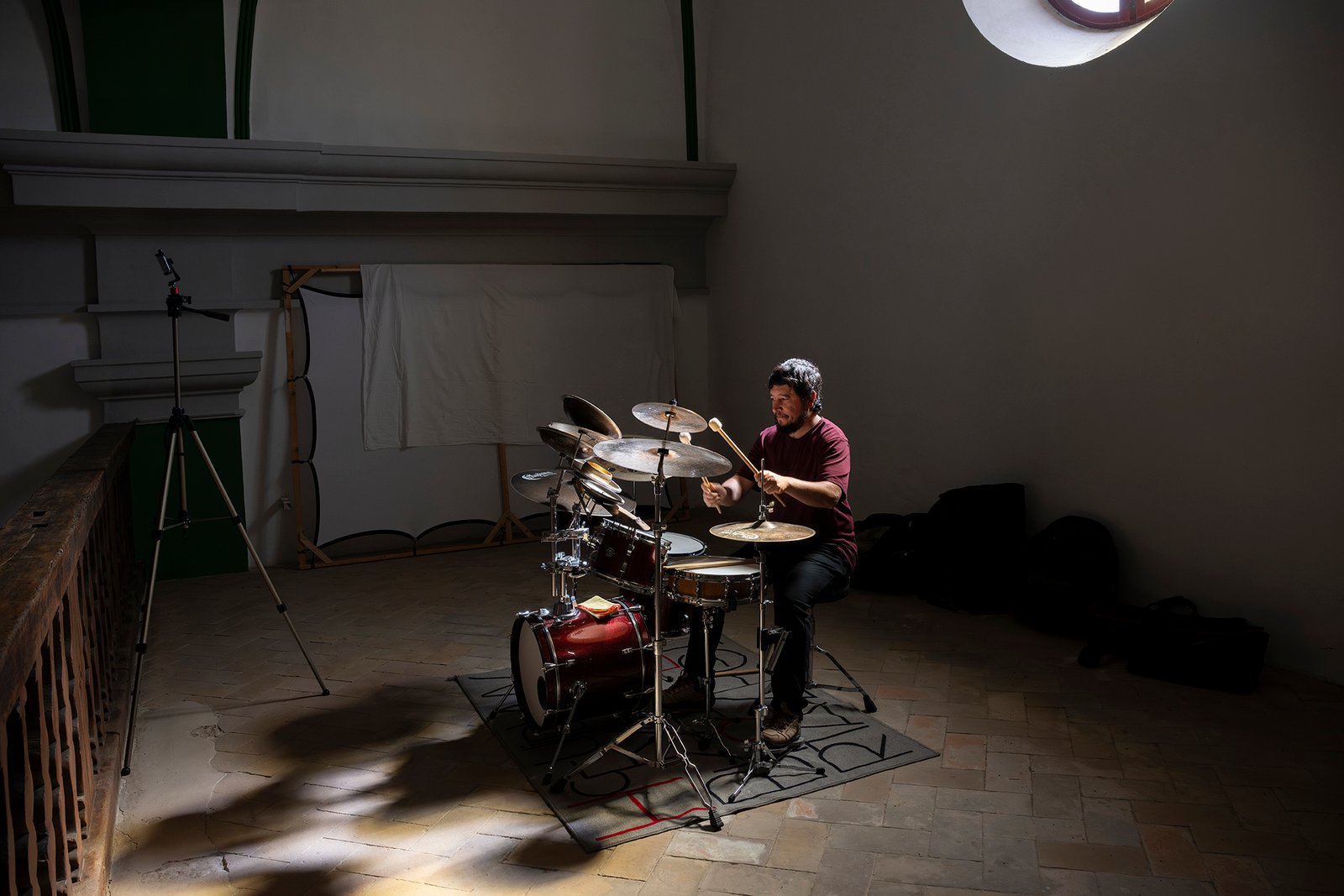
The plasticity of flamenco, or plastic flamenco, or art as song — are ways of speaking about the discipline that is built through its making. A methodology in motion, it is made by performing the renewal of the very system that defines it, infinitely, up to the present. The dialogue that arises by incorporating all voices in the act of finding one’s own voice exists in life and art just as it does in the transition within flamenco “from “mimicry” (the representation of another’s personality, while maintaining one’s own) to “ilinx”, or the loss of one’s own personality—letting it drift and savoring the feeling of being guided, dominated, possessed by external forces—until the moment one decides to end the consented confusion,**” in the intoxicating effect of the search for ecstasy and balance through practice.
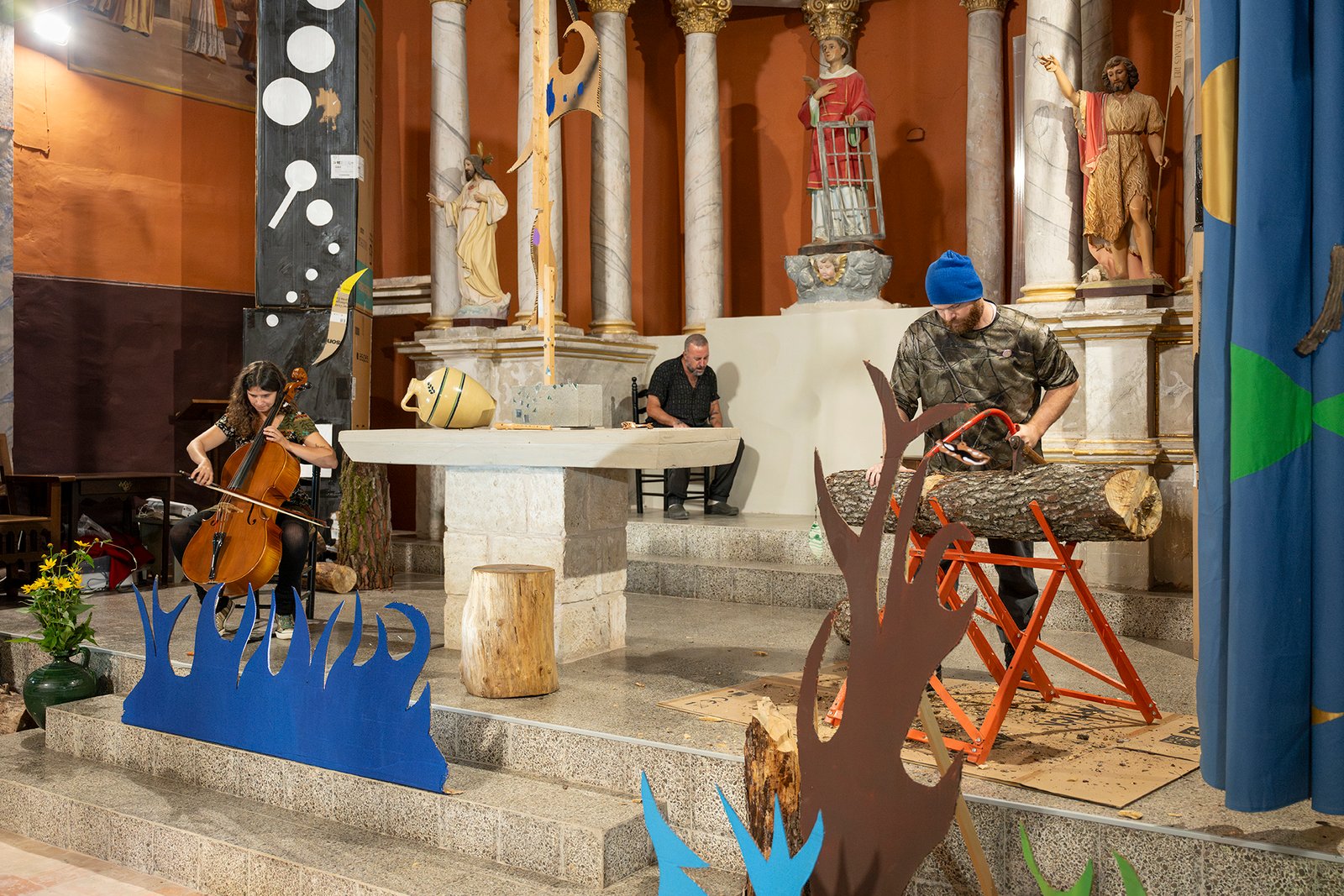
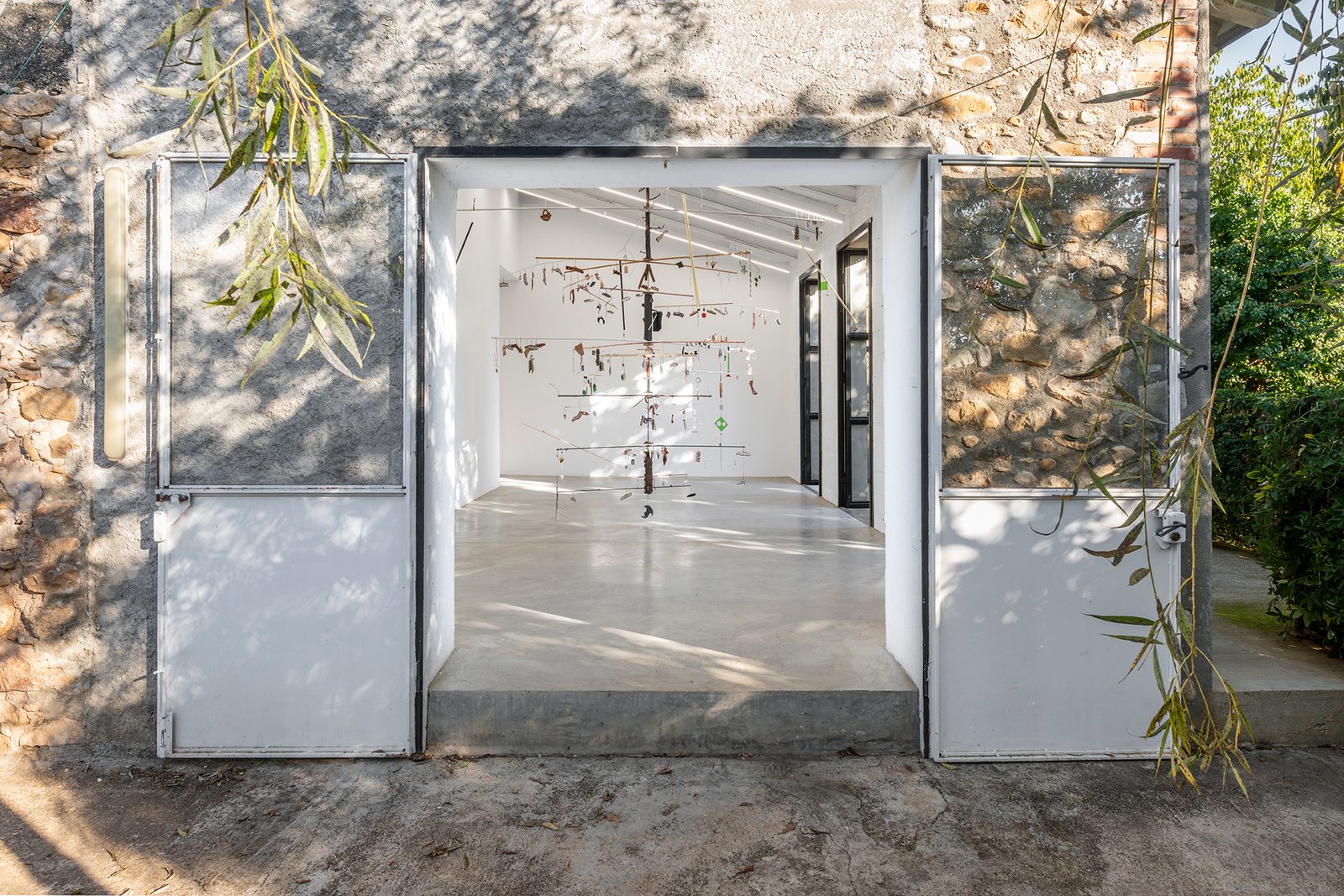
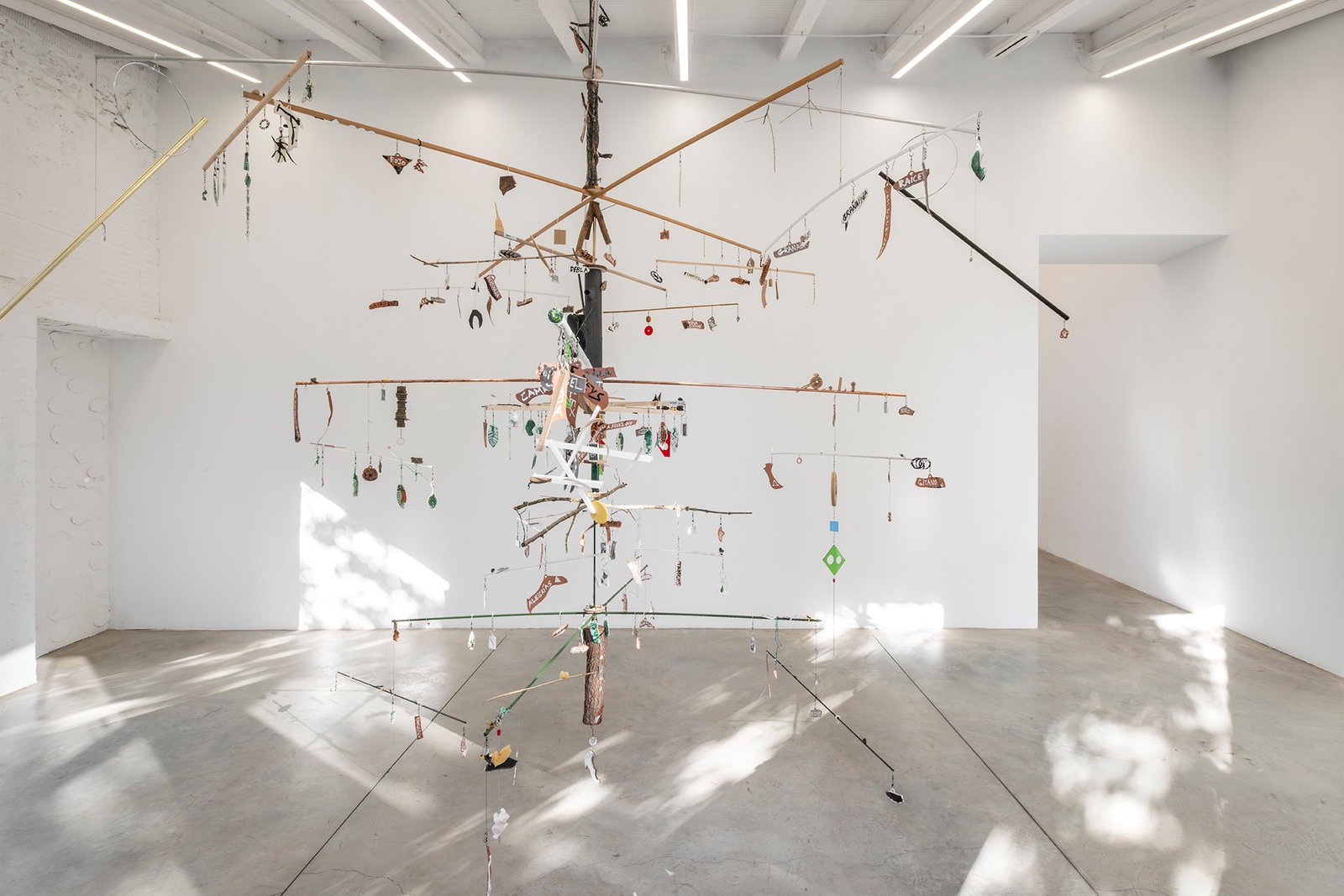
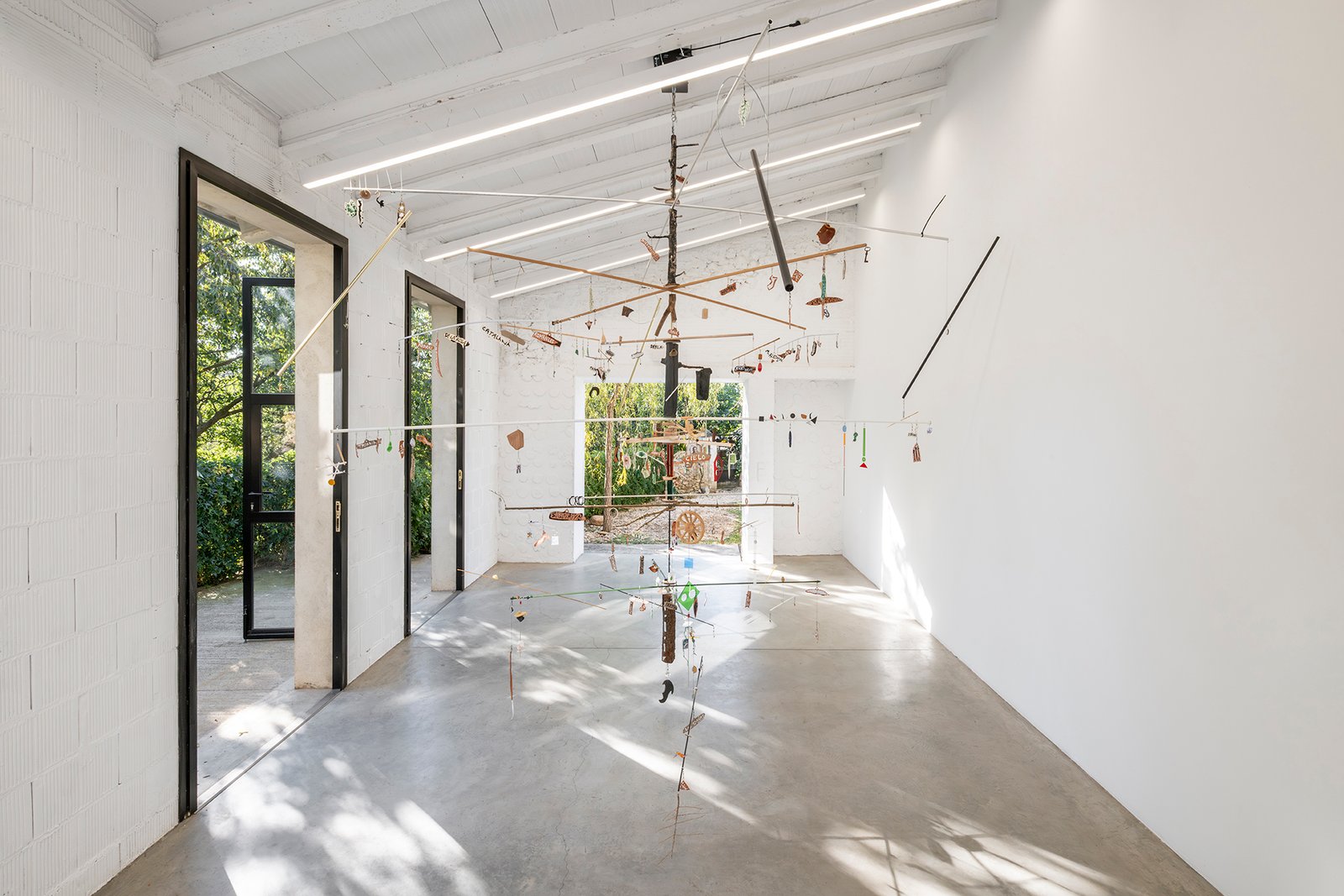
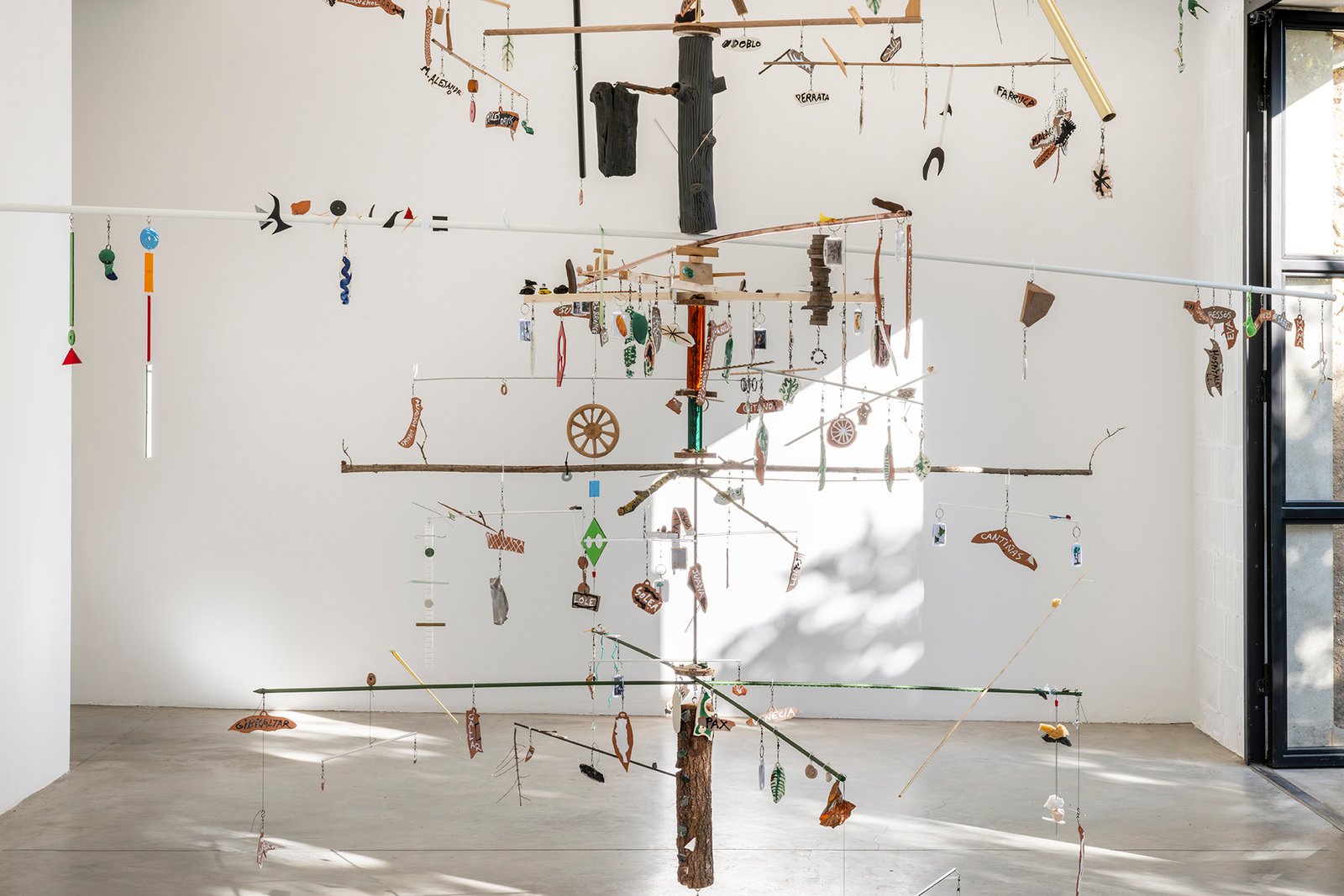
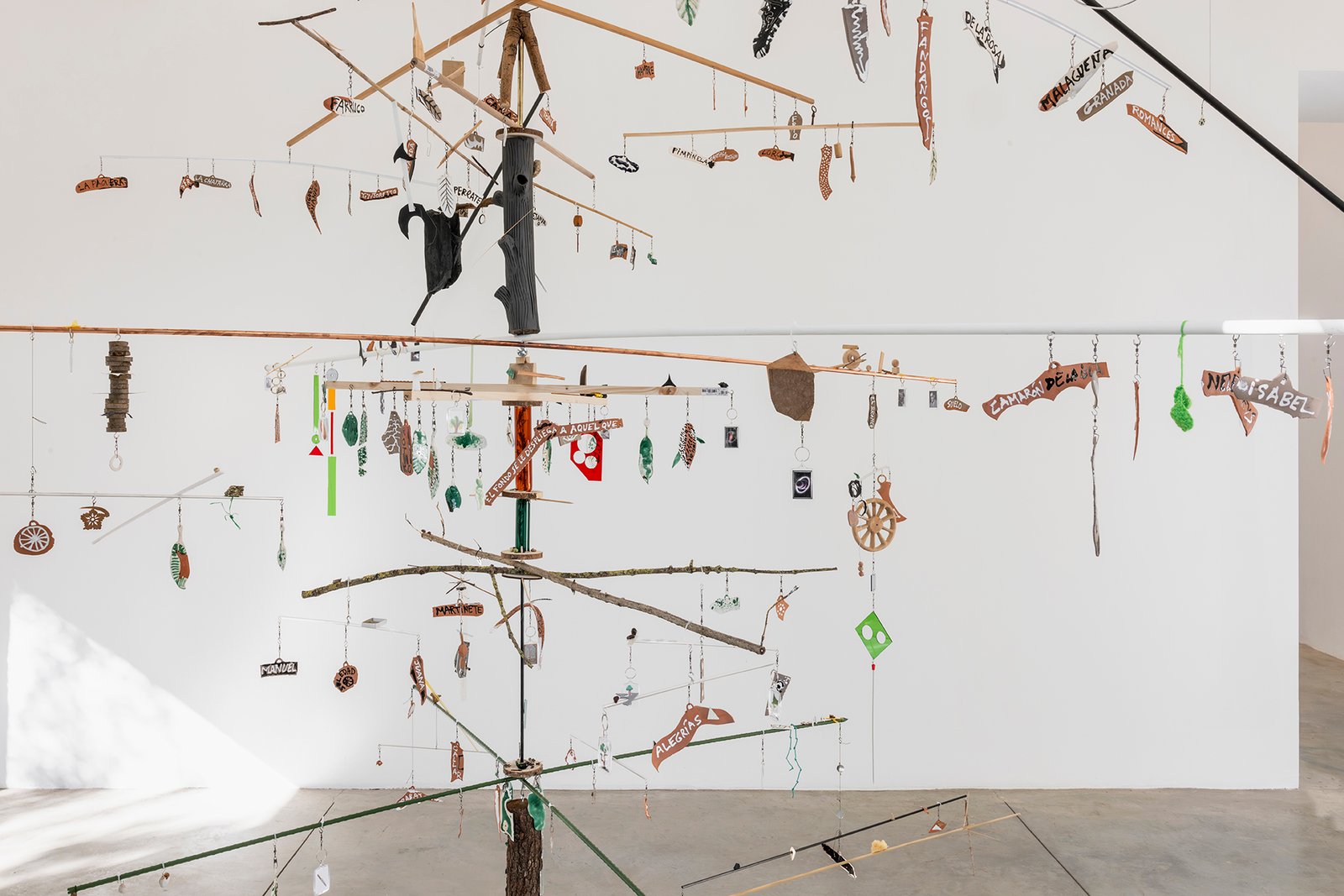
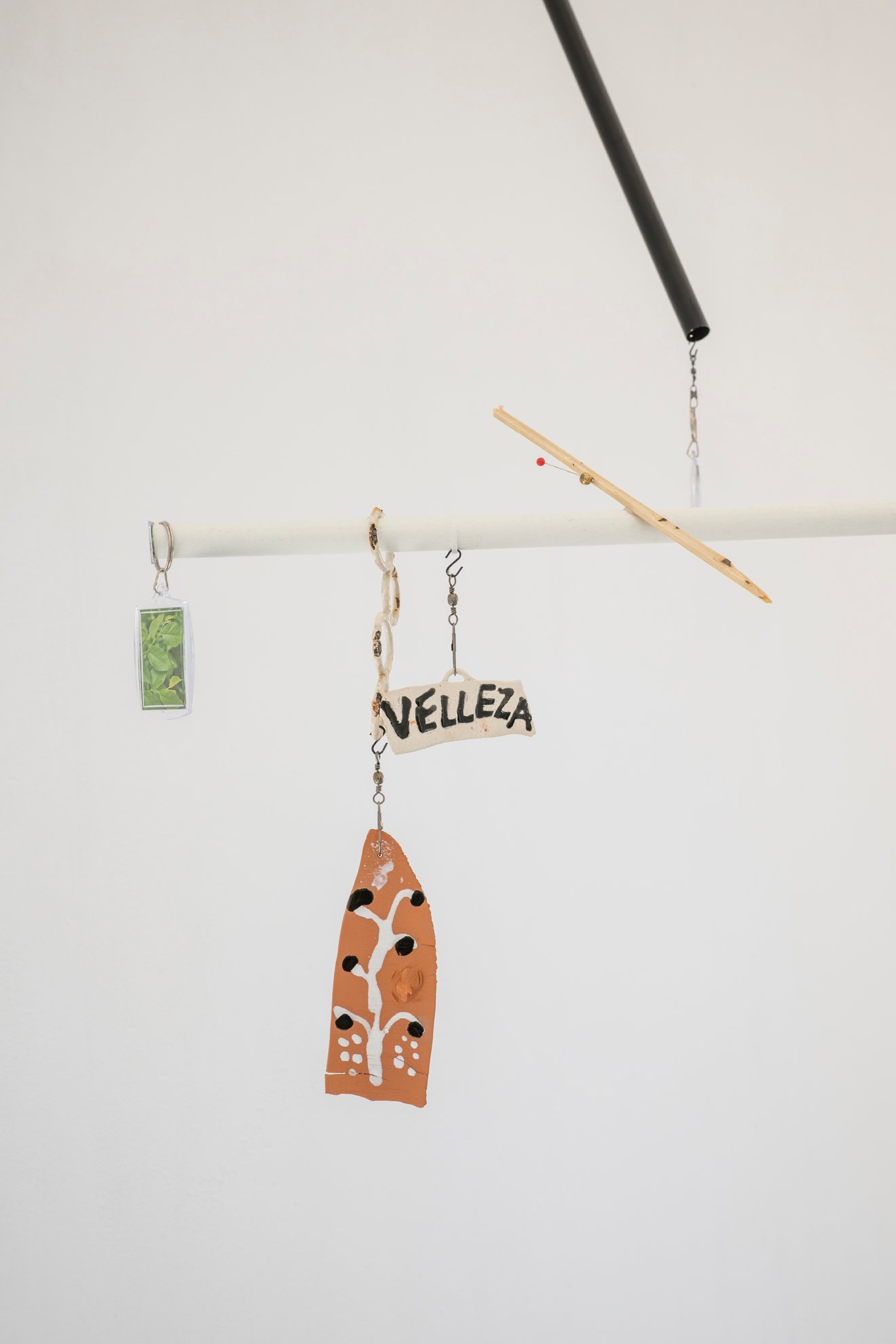
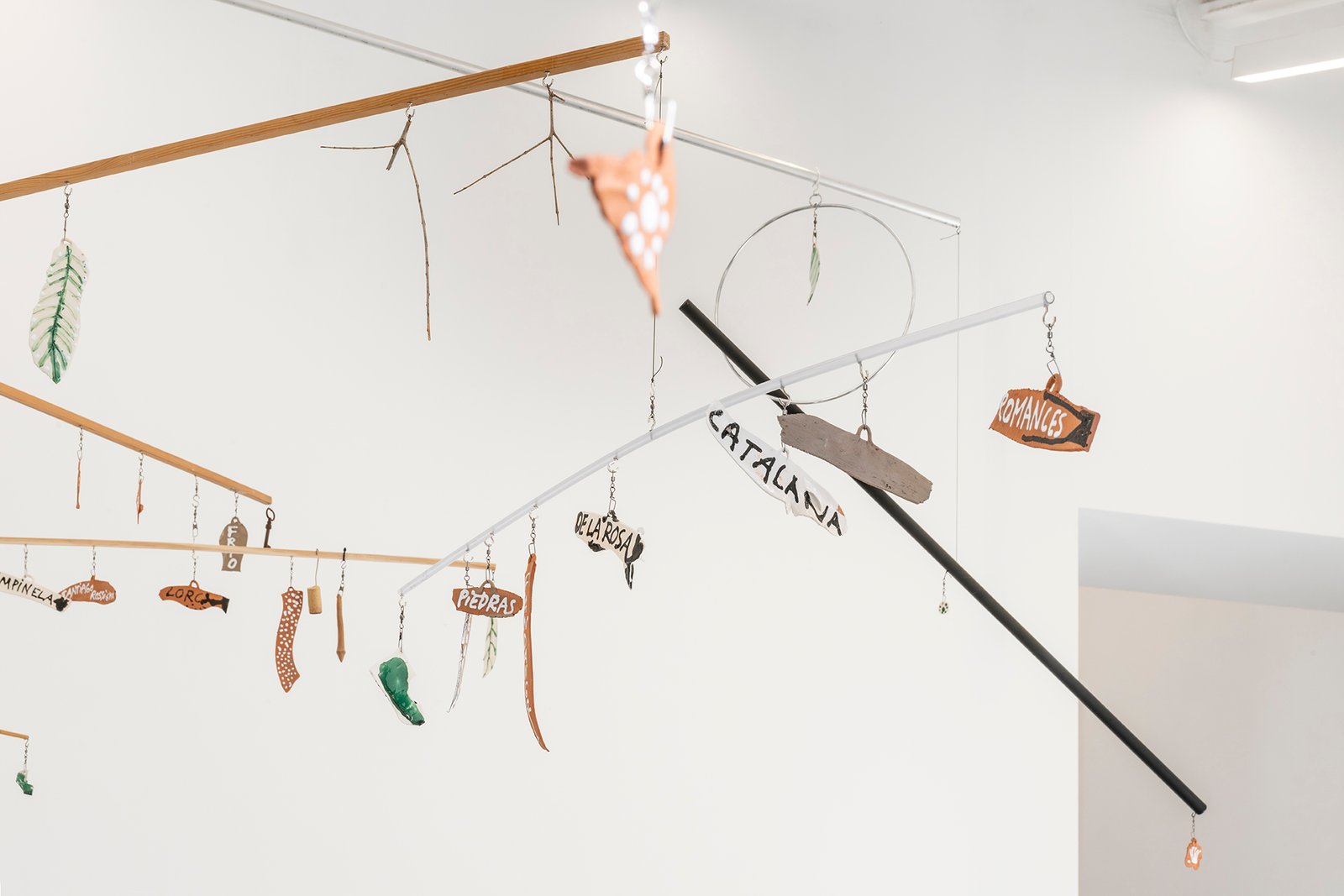
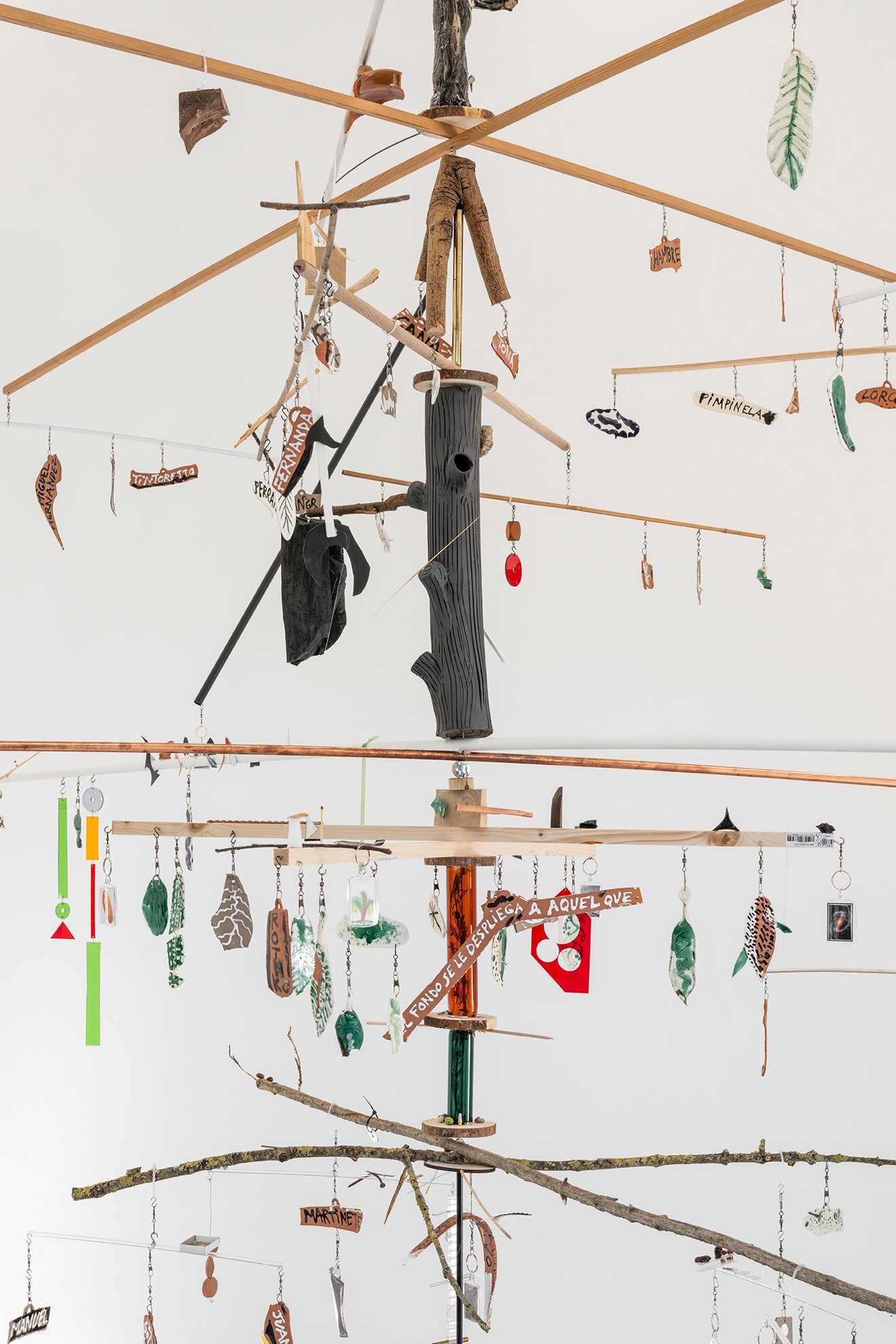
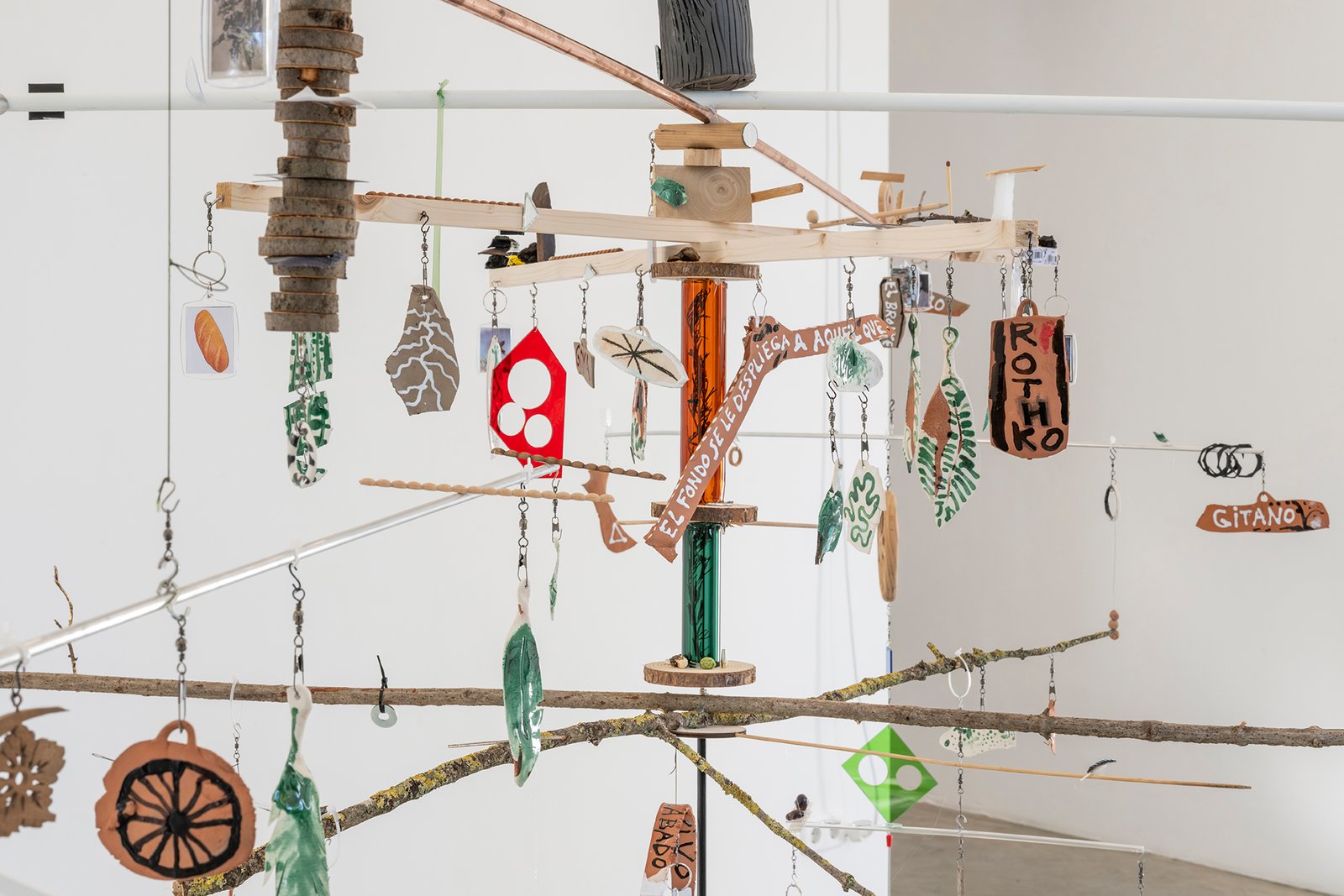
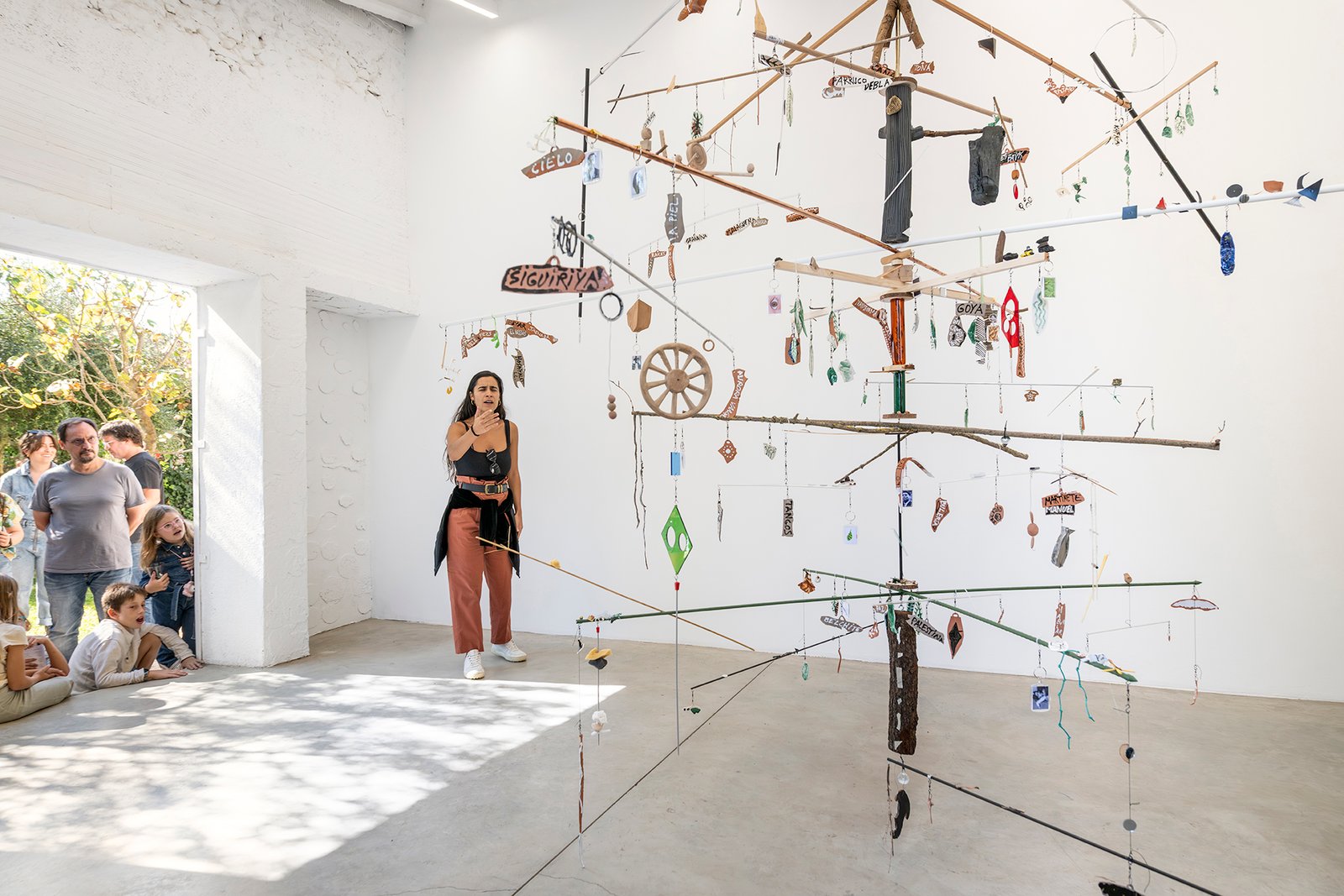
Jaenada’s balance is a mobile made of a twisting trunk, spun in complex filigree. The inverted tree turns classification upside down and inside out, stops functioning, and becomes suspension. It moves by a motor—a delicate machine that, like a windmill, drags curious findings in its circular path. Hanging like leaves are hundreds of objects of different categories: organic, artificial, sticks, glass, ceramic tags, trunks, mirrors, beehives, wasps, keychains, metal tubes, common words, proper names, and carved wood***. It moves because definitions are never fixed—because depending on where you look at the tree from, it shows you one face or another of its passage through time: typologies or people, a swarm of footnotes. Trees made of glass, trees made of metal, trees made of clay, trees made of tree.
— Sira Pizà, October 2025
*In Feet Against Geography, Notes on Flamenco in its Passage through Portbou, Ed. Athenaica, 2021, p. 174, Pedro G. Romero discusses George Didi-Huberman’s analysis of the earth churned by the dancer’s feet, referencing Walter Benjamin. Earth “(…) which is made of nothing but scattered vestiges, broken fossils, accumulated filth, mixed remains of destruction, sedimented memories, displaced sediments, decomposed corpses each in its own way, worms active underground, the filthy work of germination and putrefaction, and, ultimately, impurity par excellence. If cante jondo is a song of the earth, it is above all the song of that very impurity.
** Ricardo Molina quotes R. Caillois in Theory of Games, in his book Mysteries of Flamenco Art. Essay of an anthropological interpretation, Ed. Sagitario, 1967. p.66.
*** As in Borges’ classic, which contains the absurdity of the taxonomic enterprise, The Analytical Language of John Wilkins in Other Inquisitions, Buenos Aires, Sur, 1952: “These ambiguities, redundancies, and deficiencies are reminiscent of those that Dr. Franz Kuhn attributes to a certain Chinese encyclopedia entitled Celestial Emporium of Benevolent Knowledge. In its remote pages it is written that animals are divided into: a. belonging to the Emperor b. embalmed c. tame d. piglets e. mermaids f. fabulous g. stray dogs h. included in this classification i. that are agitated like madmen j. innumerable k. drawn with a very fine camel-hair brush l. et cetera m. that have just broken the vase n. that from afar look like flies.”