

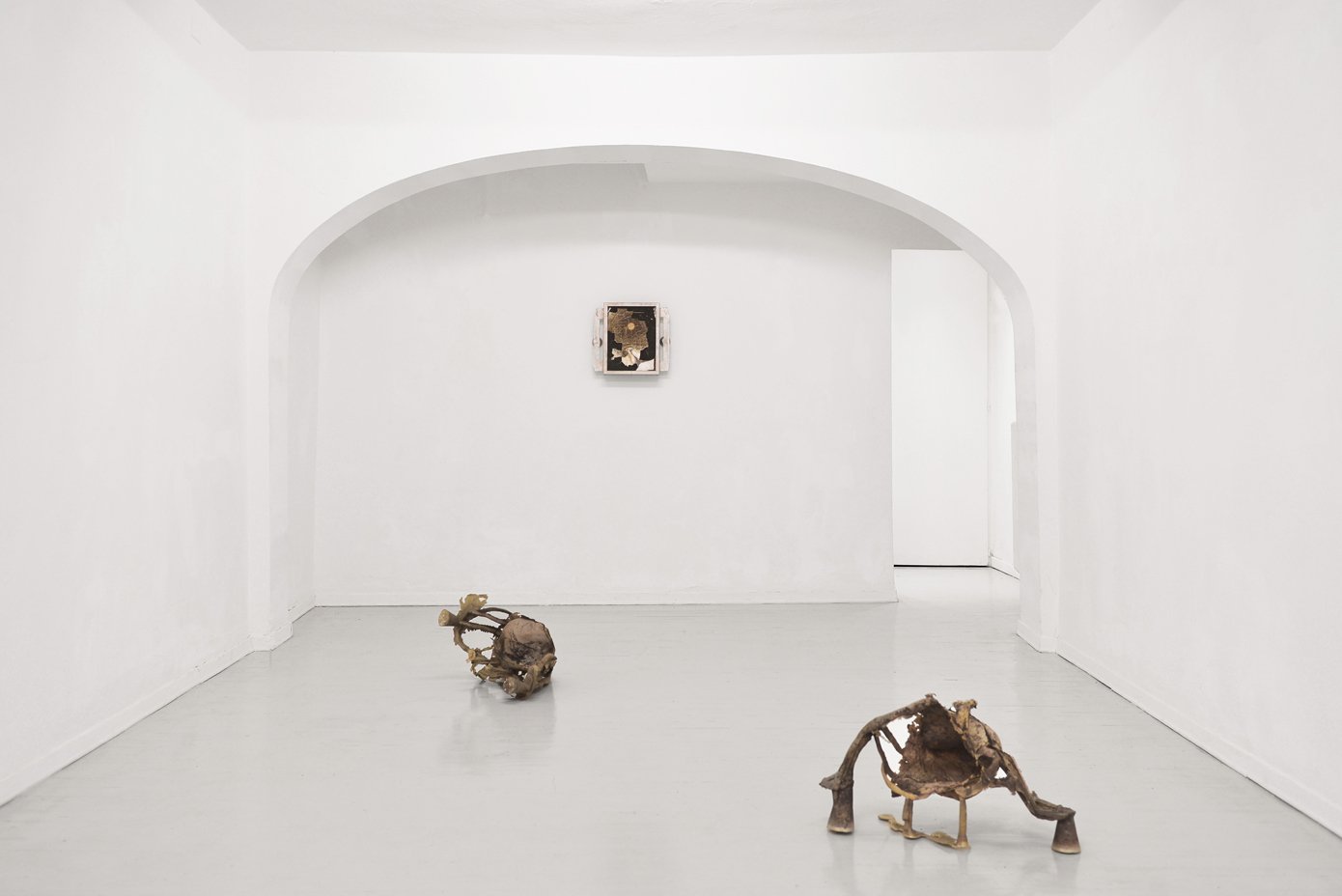
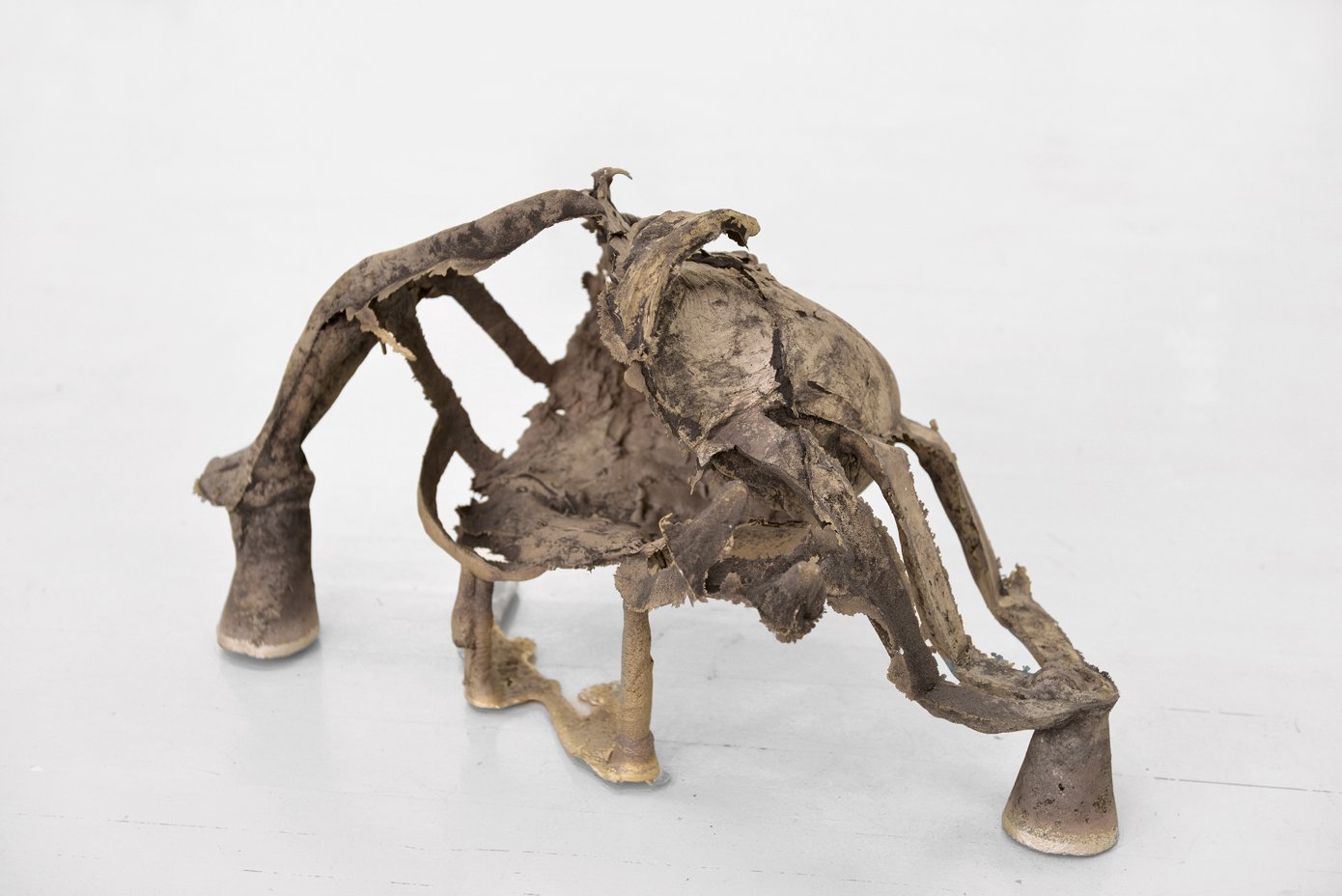
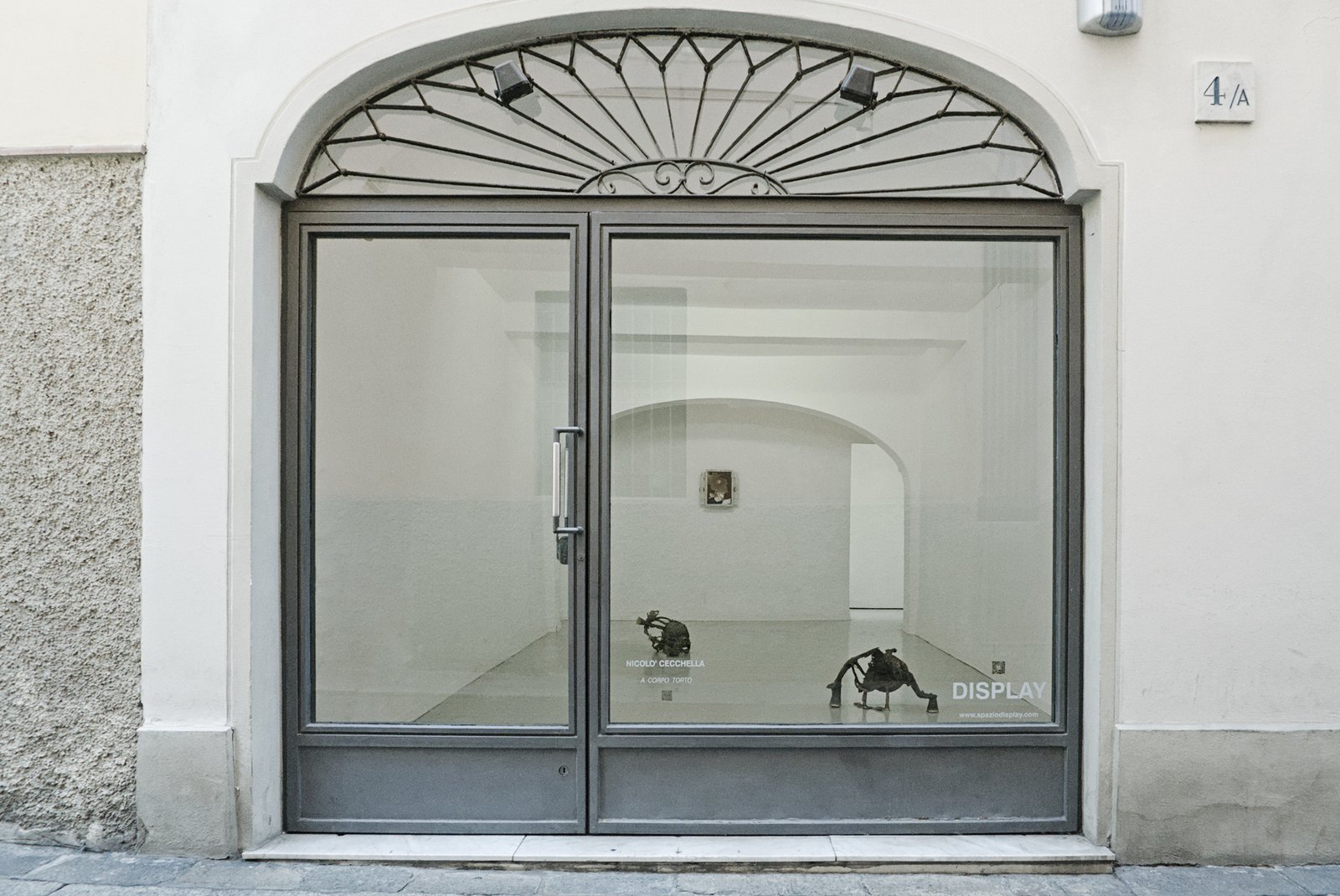
Voids, transparencies and reflections, burns. Forms of an exposed body, a twisted body offered up to the world. Nicolò Cecchella’s work stems from the perception of a reality now reduced to tatters, from which he gathers traces and fragments and fuses into the dense, living matter of things.
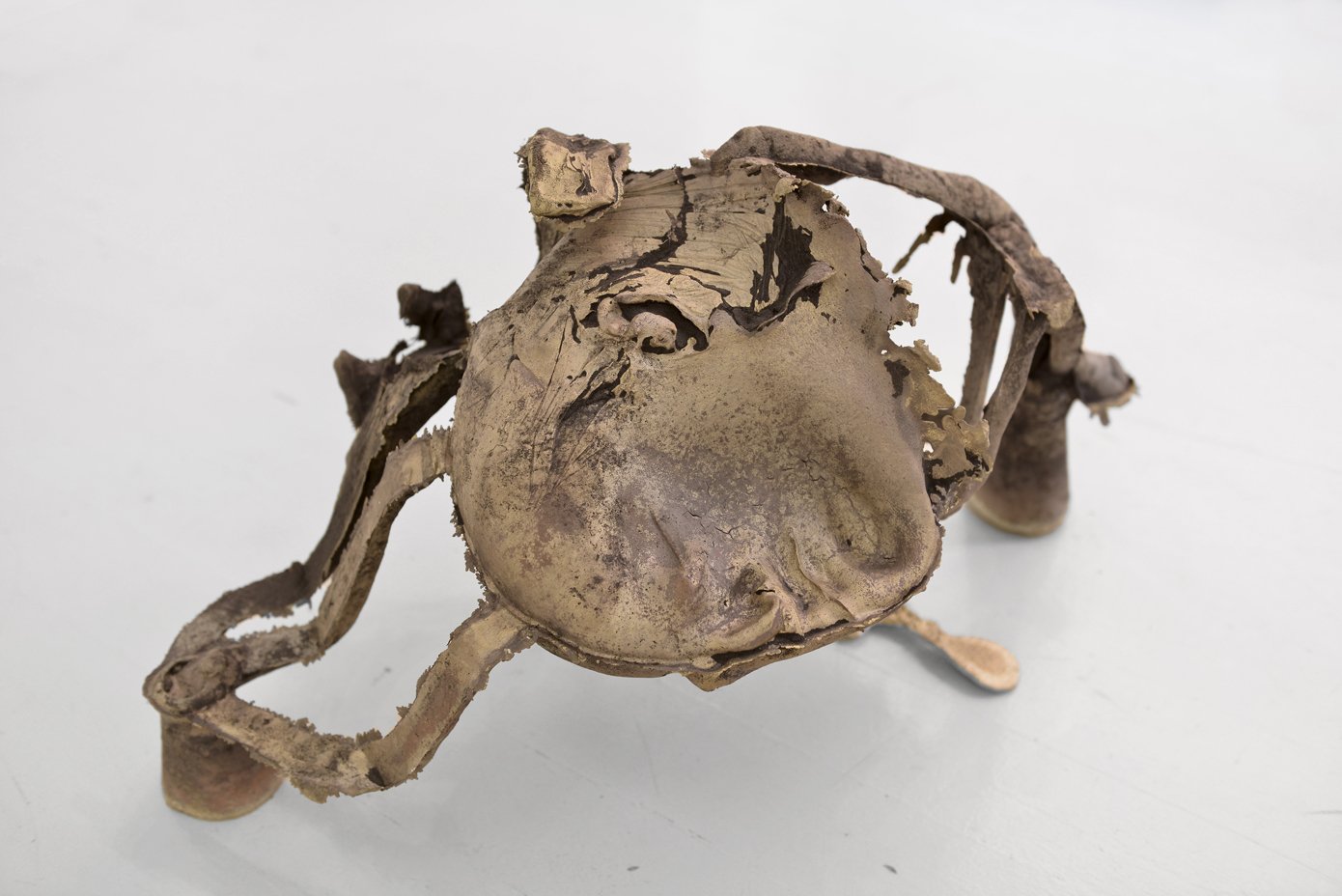
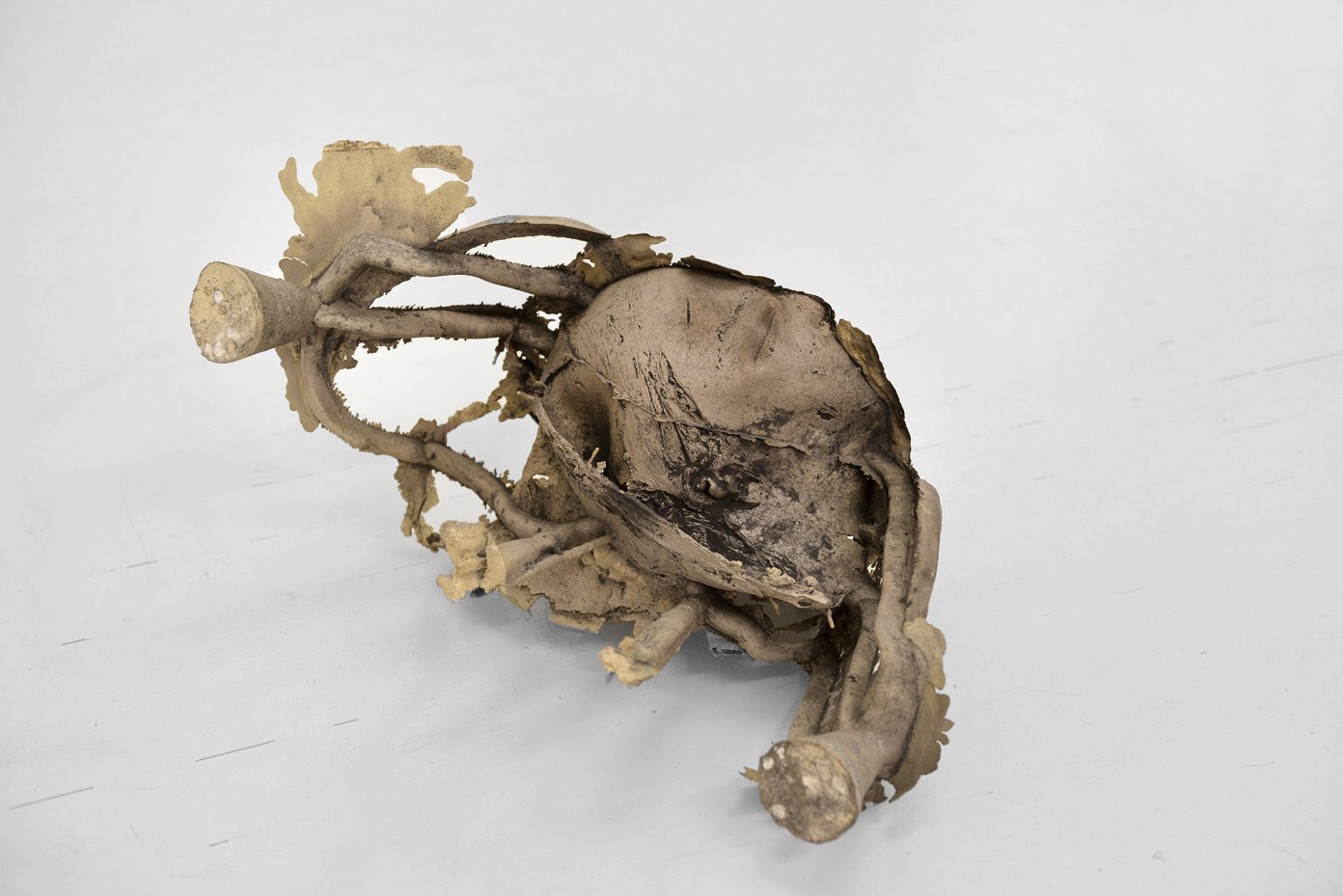
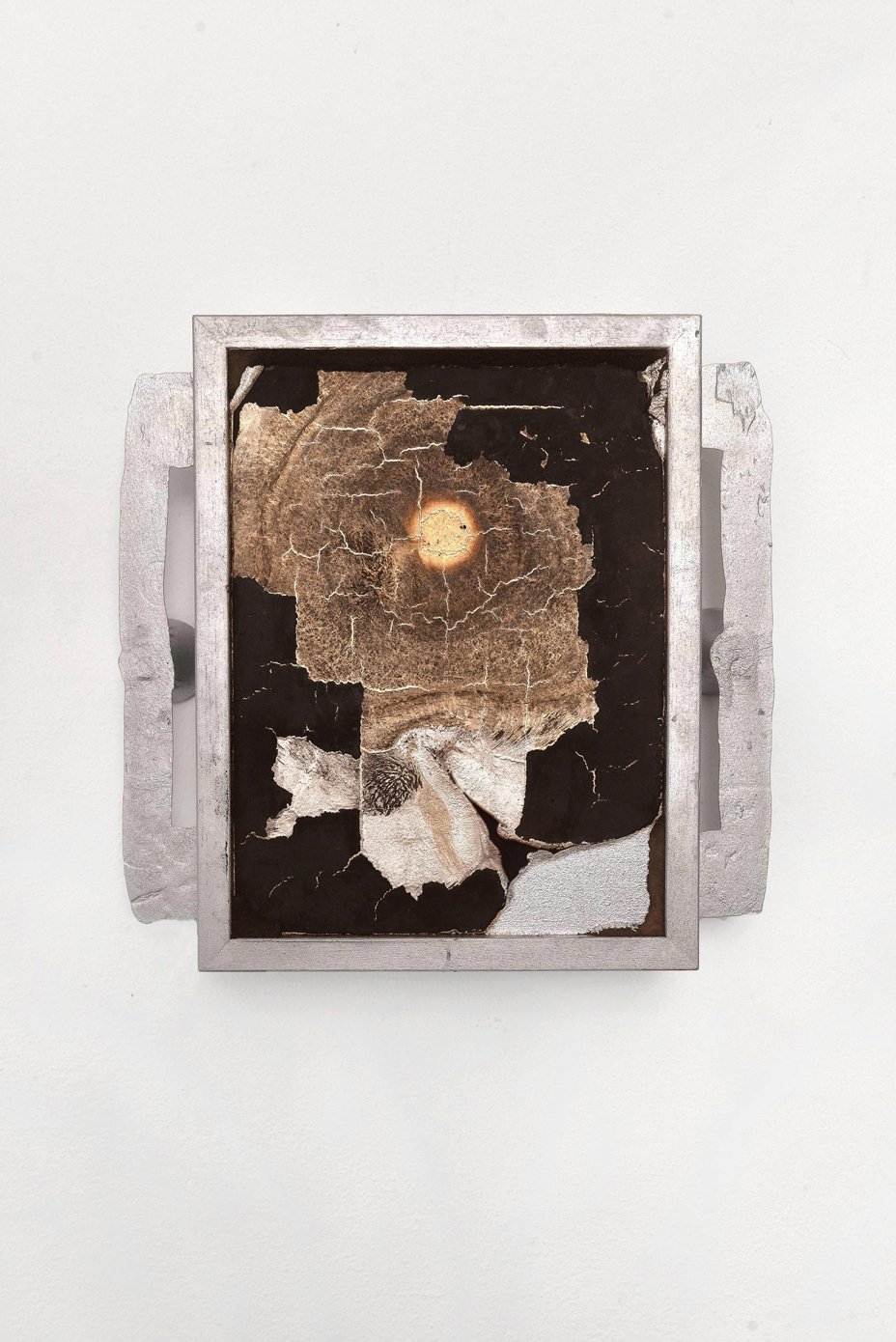
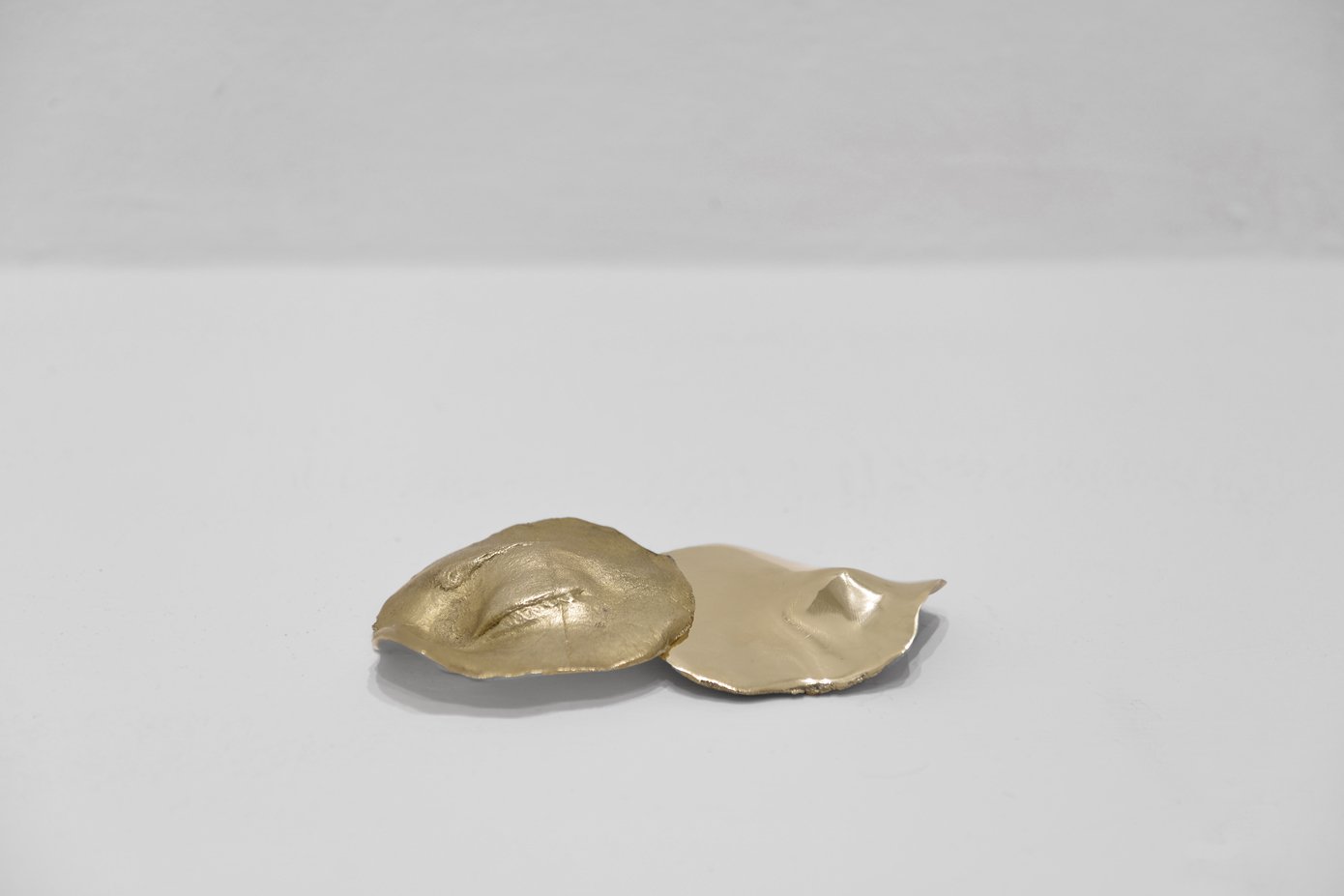
An open brass head revealing its soul is accompanied by two shattered eyes which are closed — they are casts of the artist’s own eyes — while the film of a photograph burns like skin and shrivels into aluminum, silicon, and other charred residues. Taken together, Cecchella’s works explore the same research around the blind spot of the image where the real and its projection blend together as they touch, blurring the distinction between the phenomenal and visible dimension of perception and what instead lies latent, born within the inner gaze: neither surreal nor unreal, but rather interreal.
Art, and sculpture more than any other practice, has traditionally conceived form as the moment in which matter either comes to fulfilment or falls apart. Cecchella’s work seems to stay at an earlier, unstable stage of morphogenesis, lingering on the brief instant in which form does not yet fully coincide with itself, but continues to be in motion and to manifest its own becoming. Through the casting of his own body and through burn marks which evoke alchemical incendiary transformations, the artist brings matter to a state of radical permeability and opacity. The internal and external dimension merge into a zone of mutual contamination. Restless figures emerge, retaining the residual heat of their own dissolution, like the memory of a previous life. Yet for Cecchella, casting is not an act of replication or conservation of the body, rather it lies in its dissemination. What remains of the body are fragments persisting beyond their own matrix, like phantom limbs. Once severed from the face to which they belonged, these eyes which are now closed become autonomous presences, emancipated from the world of the visible; the “extruded” head suggests that decapitation may be, at once, a loss and an eternalization of thought. Thus, the body, scattered in its own fragments, proliferates into a narrative and symbolic plurality, like matter re-emerging from its own collapse.
Cecchella therefore imposes gaze’s theoretical torsions: he traces a path per visibilia ad invisibilia, in which only by overturning one’s gaze of the world — a world that the artist ruminates and regurgitates into the work like a chewed mouthful — does it become possible to see inside the surface, to flay the skin of the real. But the gaze is inside things, / looking for the peel among the pulp (“Ma lo sguardo è dentro le cose, / a cercarvi la buccia tra la polpa” – P. Bigongiari, Non so, 1952): his endoscopic gaze appears to be an intrusion, allowing the body to enter and re-emerge within the work through casts, fusions and fissures.
As in a shifting of perspectives, reality folds inward and matter continues to become itself eternally.
In his work Salons, Giorgio Manganelli writes of an “archive of the body” and the minute, analytical violence of those “men of blades and pincers” who dig, probe, and understand — not in order to save the body from its dissipation, but to pursue within it what neither dies nor lives: the mute structure from which the viscera remain suspended, together with “the skin, a skillful and elegant adornment.” Similarly, Cecchella appears to me as a man of blades and pincers, as I approach his works, I see anatomical fragments renewed through the plasticity of a hybrid, ambiguous nature. These works are inner frameworks of the body, survivals of what would otherwise decay. They are witnesses, archives, impressionable surfaces. Or perhaps nothing more than the frayed edge along where matter and body itself trace their being in the world.
___
Nicolò Cecchella (Reggio Emilia, 1985) develops an artistic research on the dynamics of representation, exploring identity, the body and human presence in relation to natural and organic environments. His work moves across sculpture, photography, video and installation, using trace, imprint and casting to investigate the body as a phenomenological measure between the self and the world, and as a possible origin of the visible.
Recent solo and group exhibitions include: Through the Floods, Collezione Maramotti, Reggio Emilia, 2024–2025; Faventia. Ceramica italiana contemporanea, Building Gallery, Milan, 2024; La continuazione degli occhi, Artcurial Italy, Milan, 2024; Il fil rouge da Piero Manzoni a oggi, Museo della Stampa, Soncino, Cremona, 2023; Una sola traccia opposta alla luce, Opificio Vaccari, Sarzana, 2022; Trees and Leaves, Galleria del Cembalo, Palazzo Borghese, Rome. Cecchella is a founding member of Teatro Sociale di Gualtieri
Recent publications and presentations include contributions by Giorgio Vallortigara, Chiara Portesine, Valerio Magrelli, Silvia Bre, Andrea Cortellessa, Victor Stoichita, Elio Grazioli, Giorgio Verzotti, Angela Madesani, and Andrea Tinterri. These include Through the Floods, Collezione Maramotti / Quodlibet, 2025; Prima Ustione, Segnature, 2025; Rilievi, Marinotti Edizioni, 2025; La continuazione degli occhi, Artcurial, 2024; Il fil rouge da Piero Manzoni a oggi, Museo della Stampa Soncino, 2023; and Nove racconti tra arte e fotografia, Silvana Editoriale, 2021.