


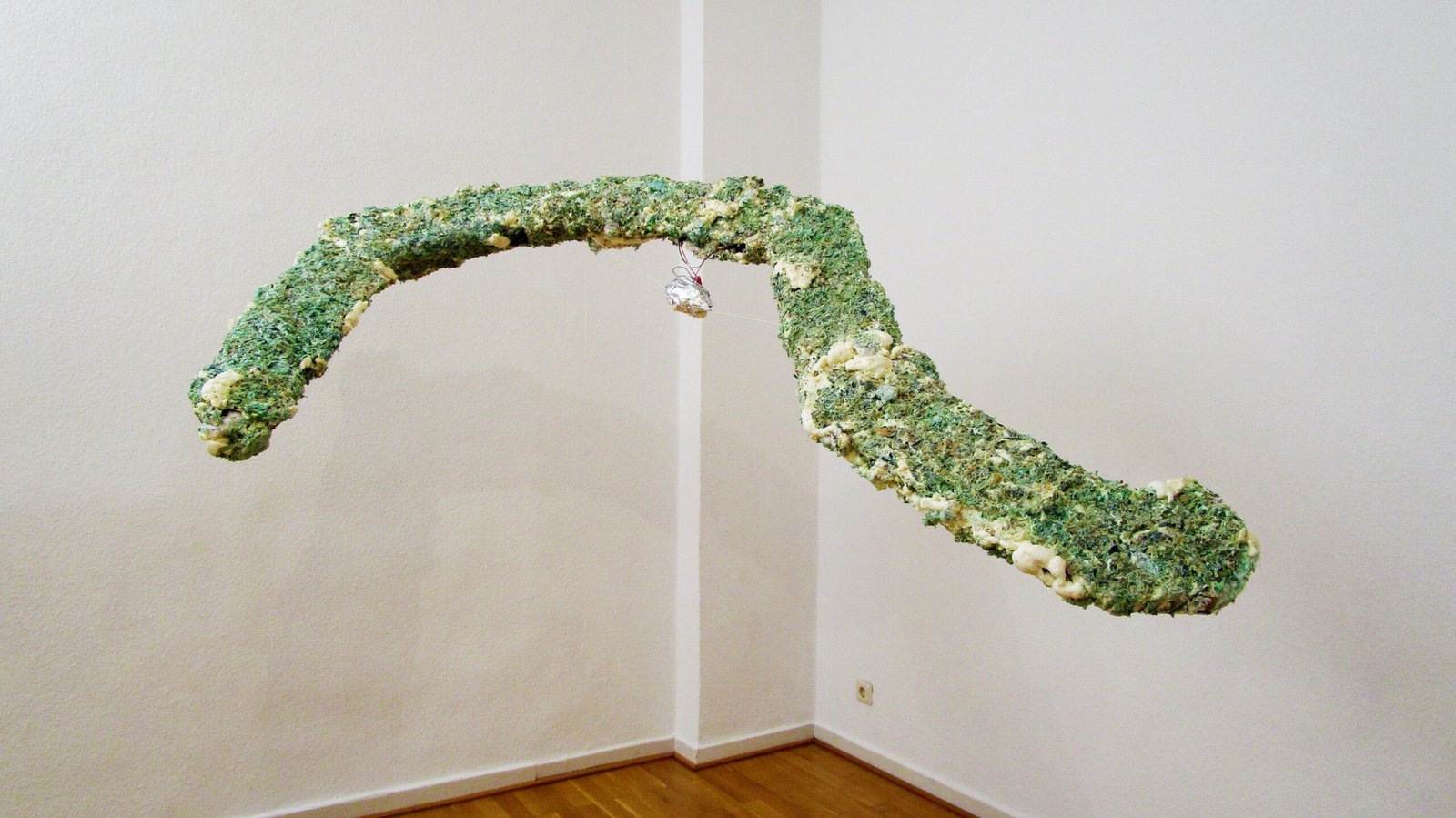
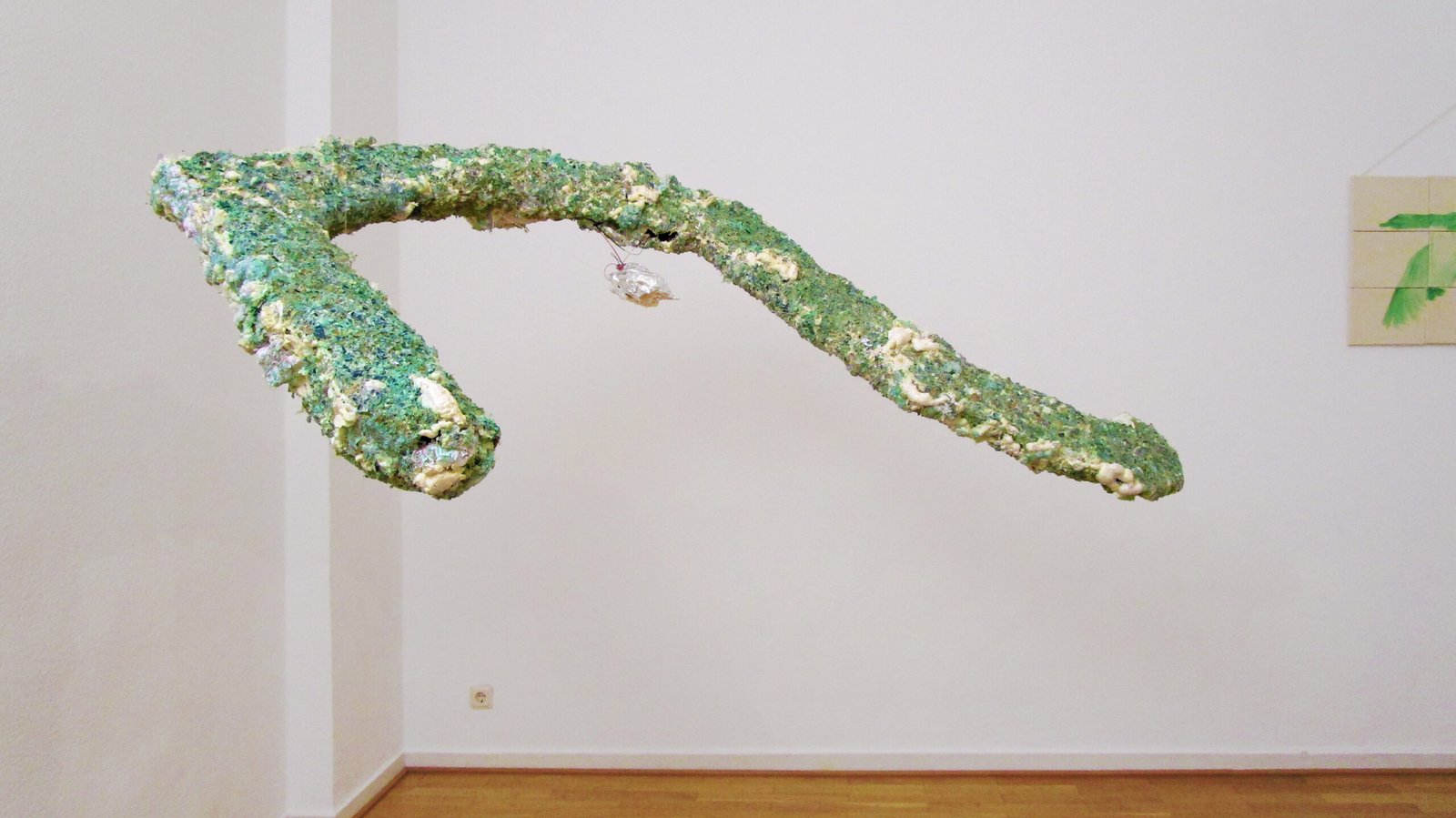
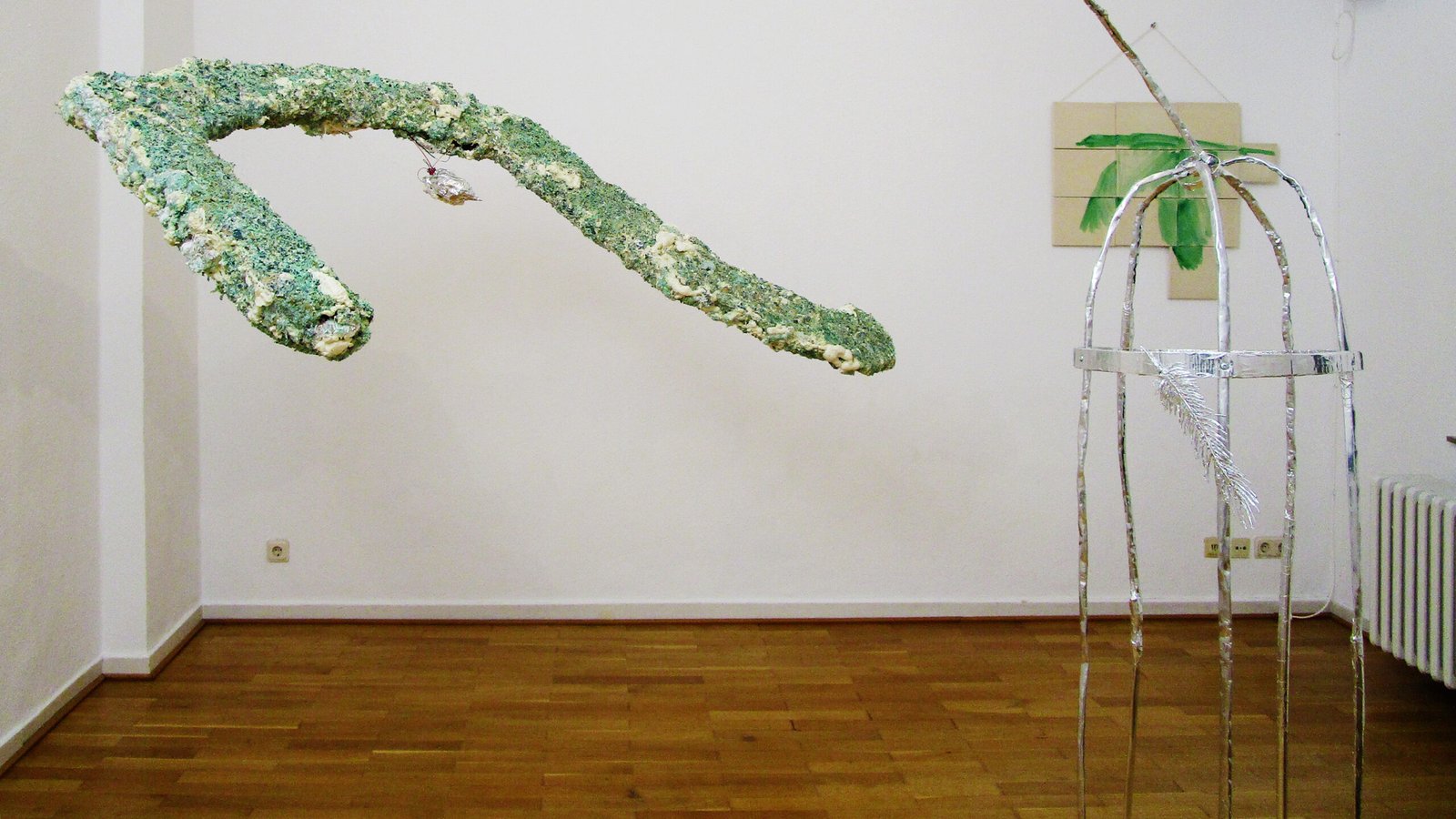

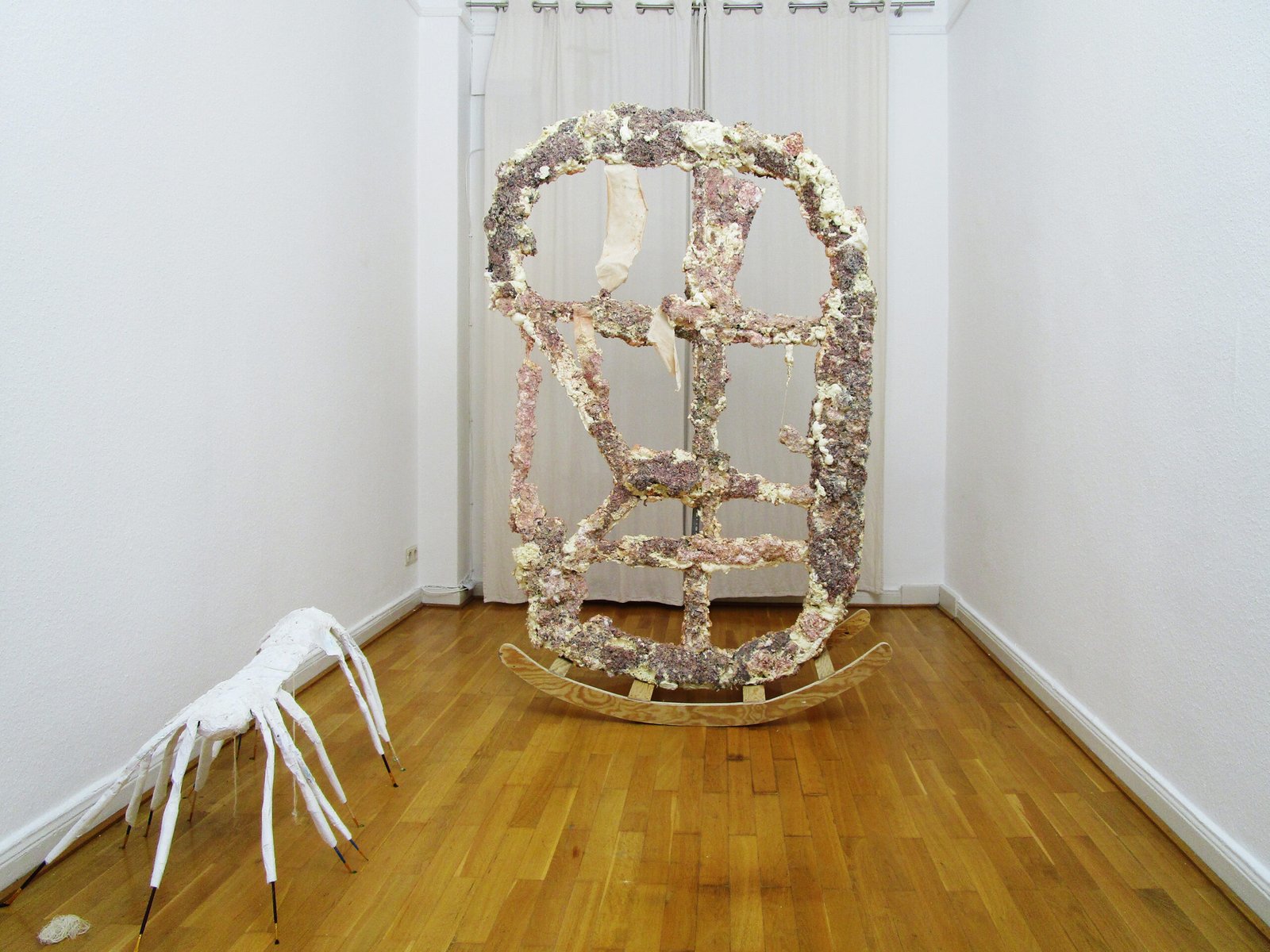
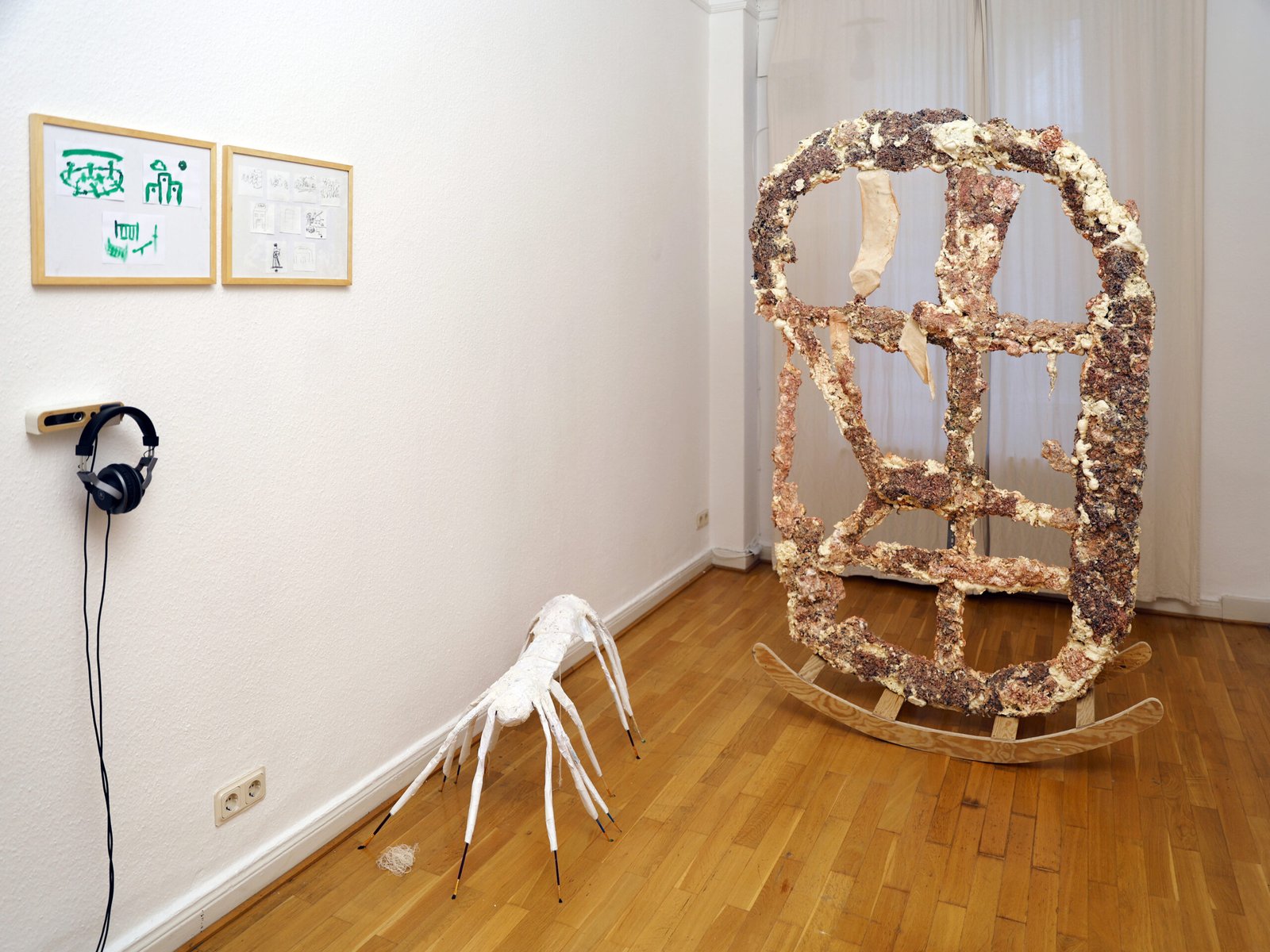
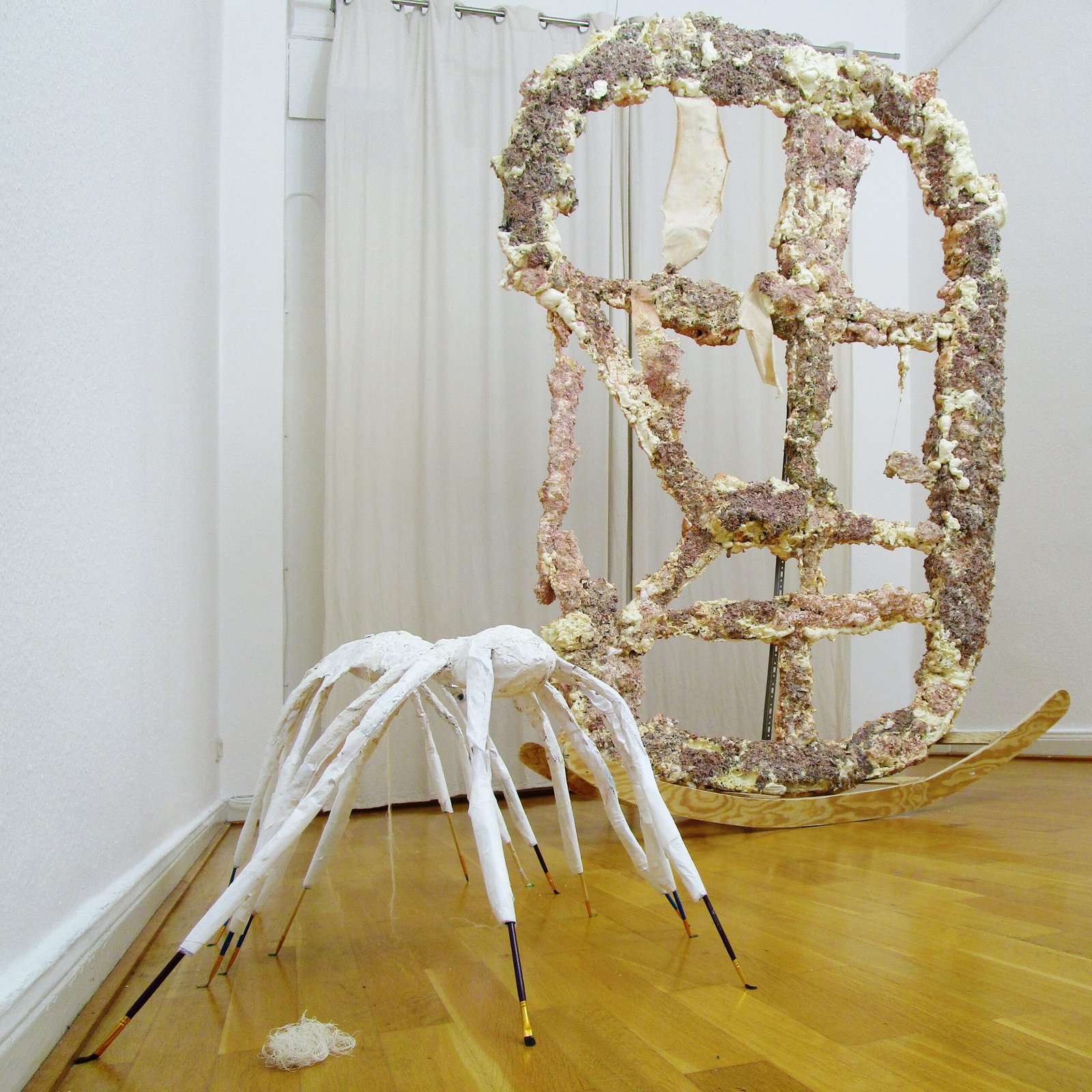
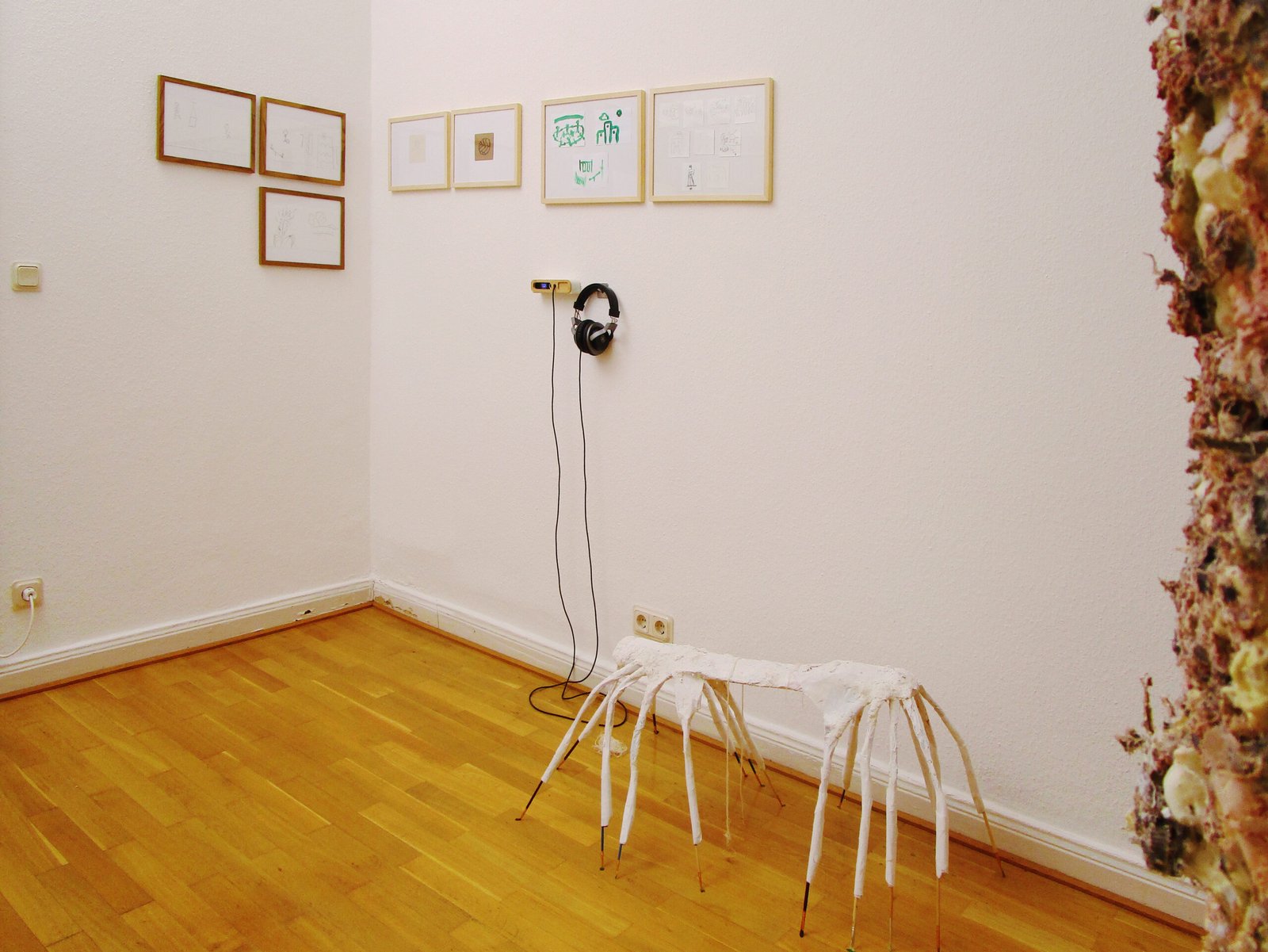

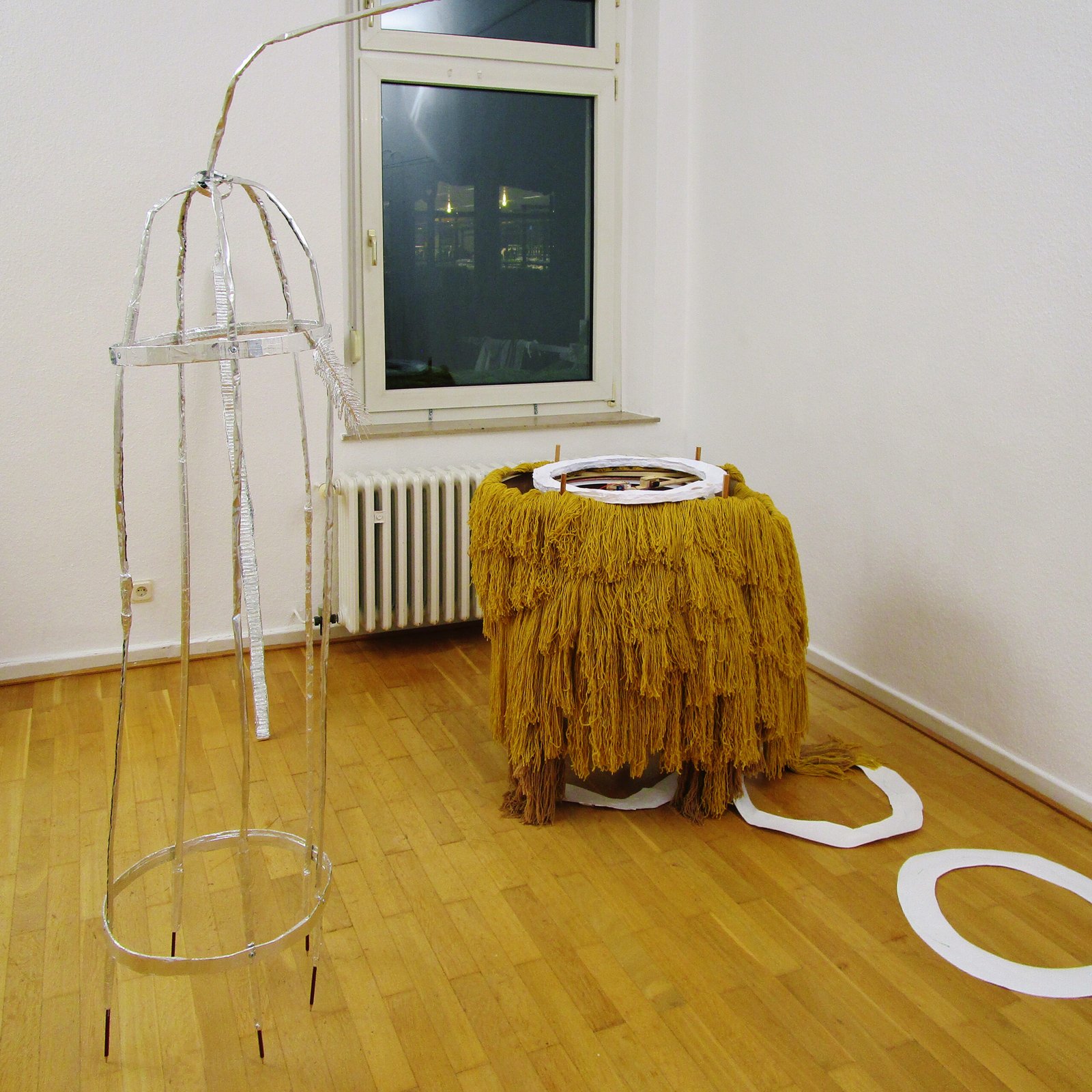
This exhibition presents the interdisciplinary work of Hyeonyoung Lee, developed during her residency at Kunsthaus Mitte Oberhausen in late 2025. Exploring the boundary between the visible and the audible, Lee transforms the art house into a living, breathing entity. The project follows the poetic premise: “If this house were alive and capable of movement, would it stay or move away?”.
The exhibition features Lee’s signature concepts: “Soundmalerei” (Sound Painting) and “Schredderte Malerei” (Shredded Painting). In a unique process of transformation, Lee destroys her previous paintings with a shredder and reconstructs the fragments into new, sculptural forms. Simultaneously, she captures the acoustic traces—the sounds of brushes hitting the canvas or pencils scratching the surface—to create “acoustic images” that trigger individual visual imaginations in the viewer’s mind.
A central highlight is the “Oberhausen Orchester,” an orchestral sound painting created in collaboration with the citizens of Oberhausen. By recording the sounds of residents drawing their personal memories of the city, Lee composes a multi-sensory symphony. Through kinetic objects and immersive sounds, the exhibition invites visitors to find something “lost” or “flown away” within themselves, offering a profound reflection on life and vitality.
Back Room (Small Room):
“Oberhausen Orchestra”
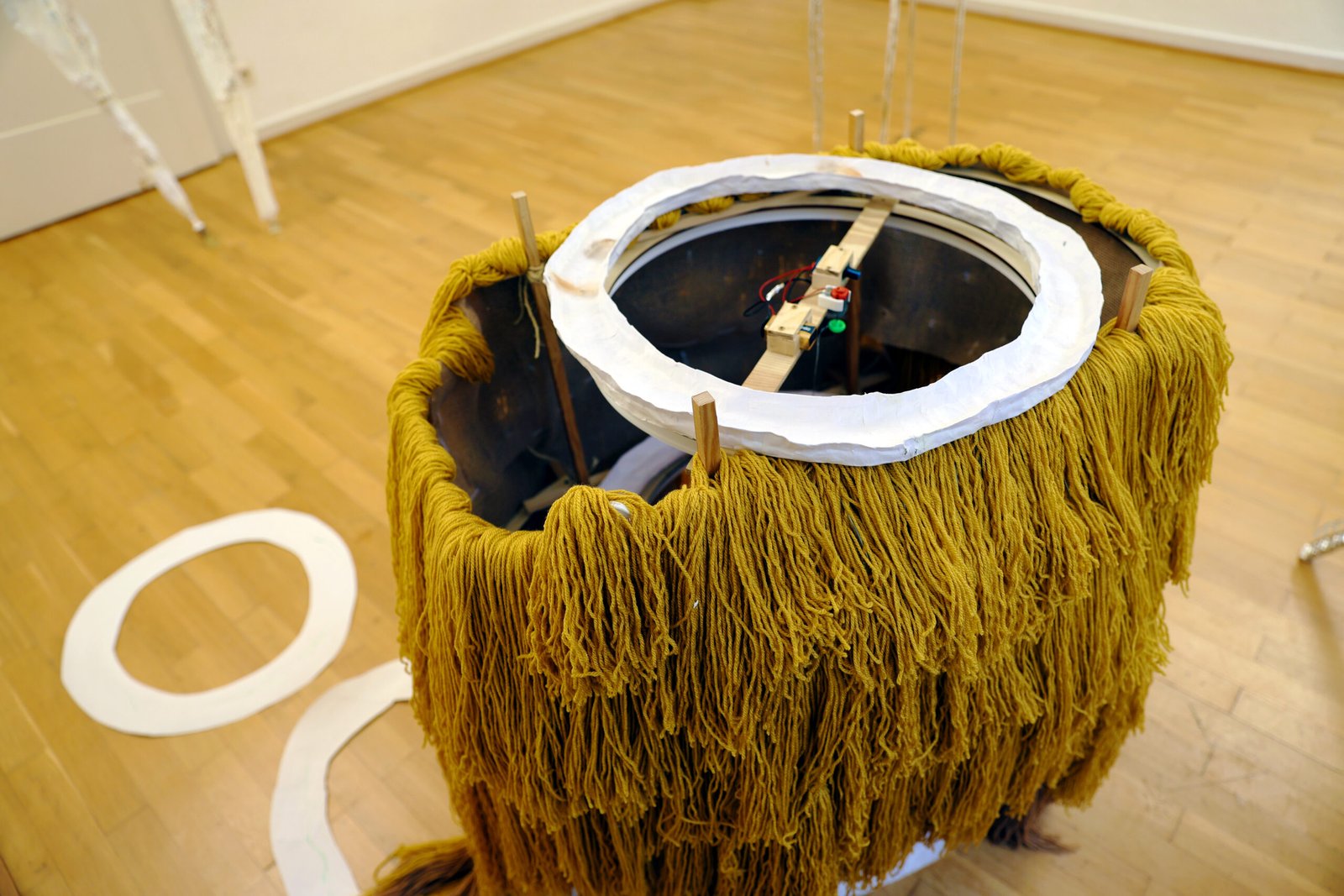
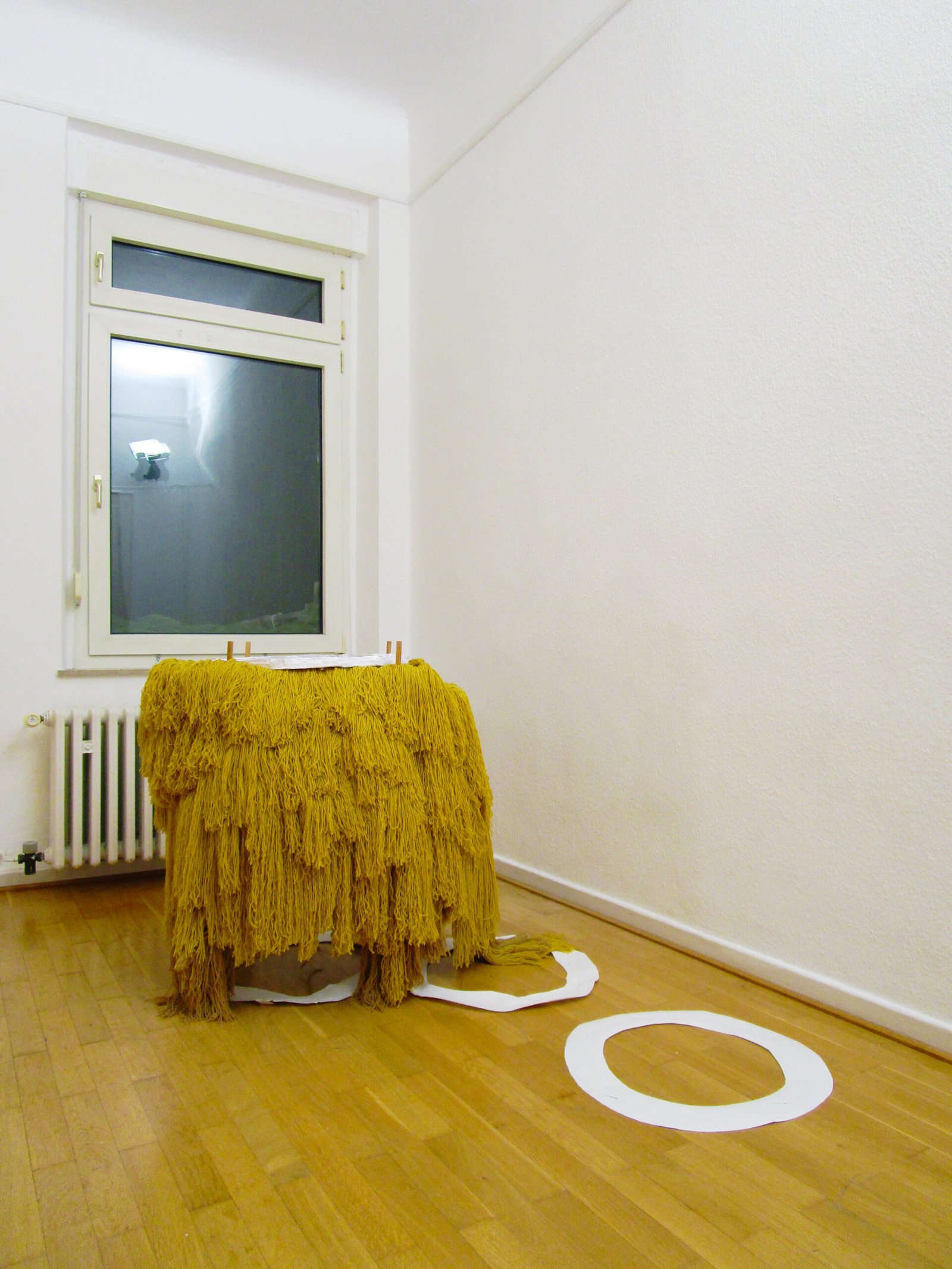
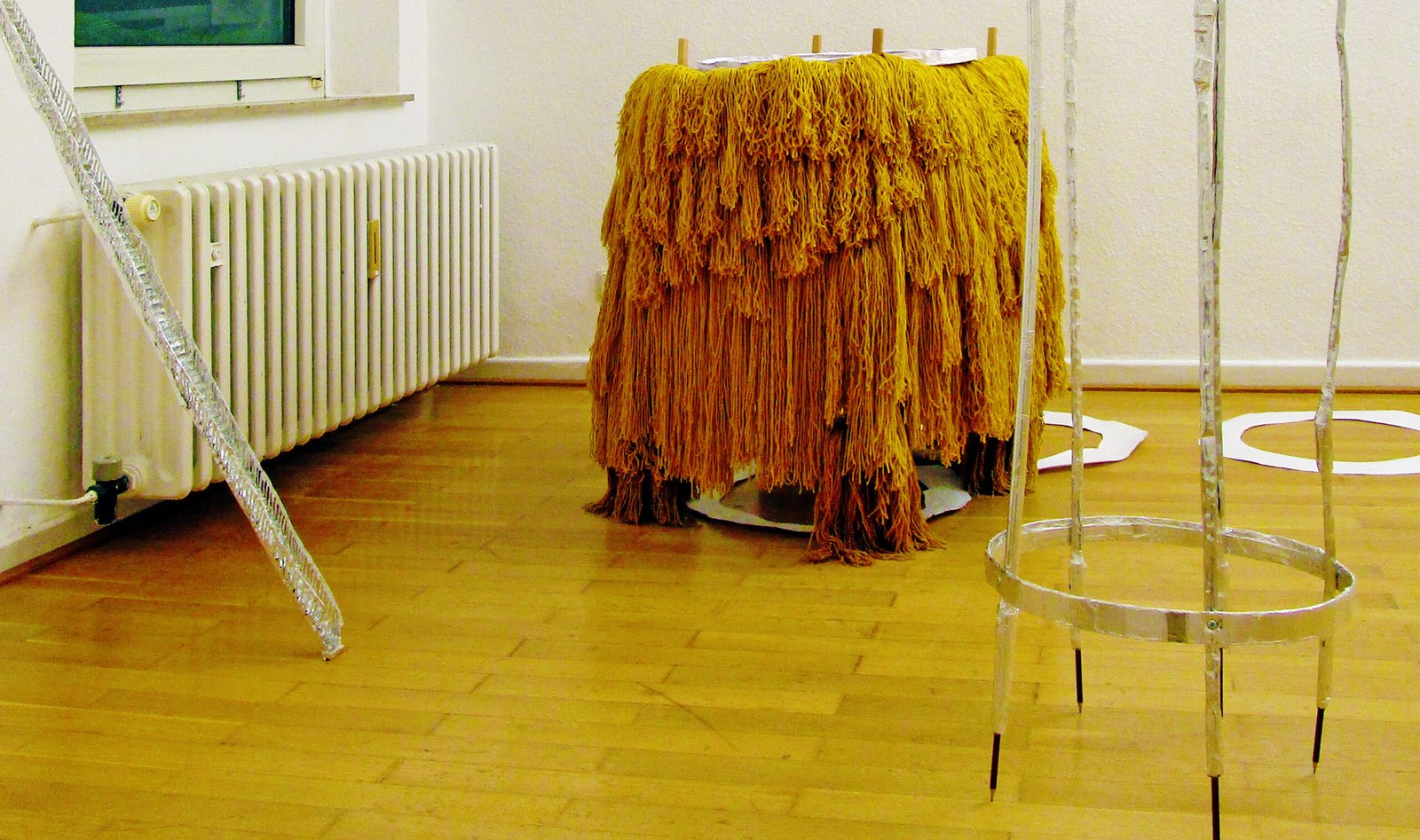
The everyday life of the city finds expression in the sound painting work Oberhausen Orchestra. In cafés, on the streets, and inside the Kunsthaus, local residents were asked about their personal memories of Oberhausen and invited to create a drawing in response. The sounds produced while drawing were recorded. Memories, drawings, and acoustic traces each form instruments and notations within the Oberhausen Orchestra.
* Soundmalerei (Soundpainting) *
The concept of Soundmalerei (sound painting) emerged from the observation that each viewer develops an individual interpretation when looking at a painting. In this approach, the sounds generated during the process of painting are recorded, collected from different works, and recomposed into an acoustic image. Listeners hear this sound and form their own internal visual images. This mode of reception points to a fundamental parallel with the perception of painting and the phenomena it evokes.
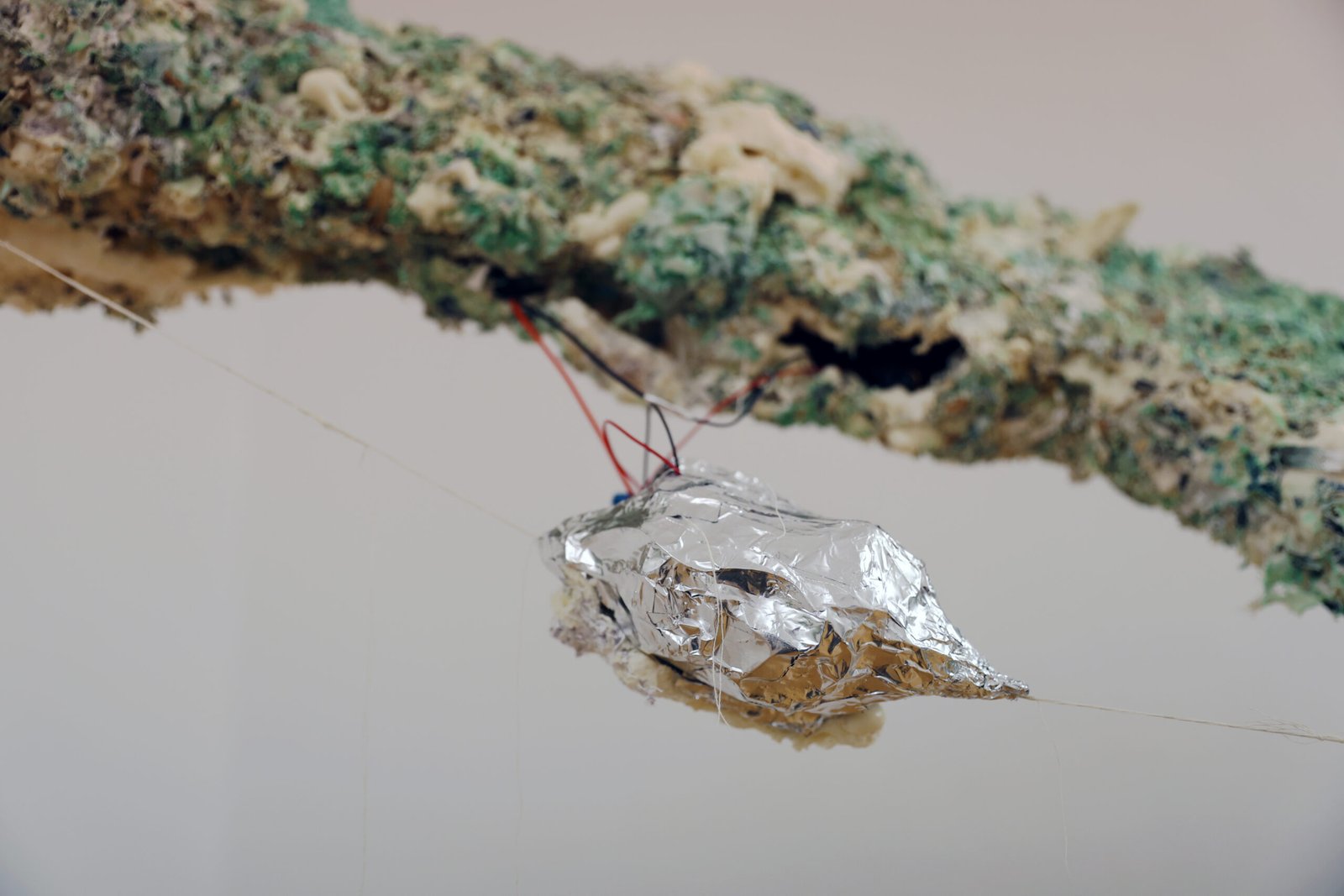
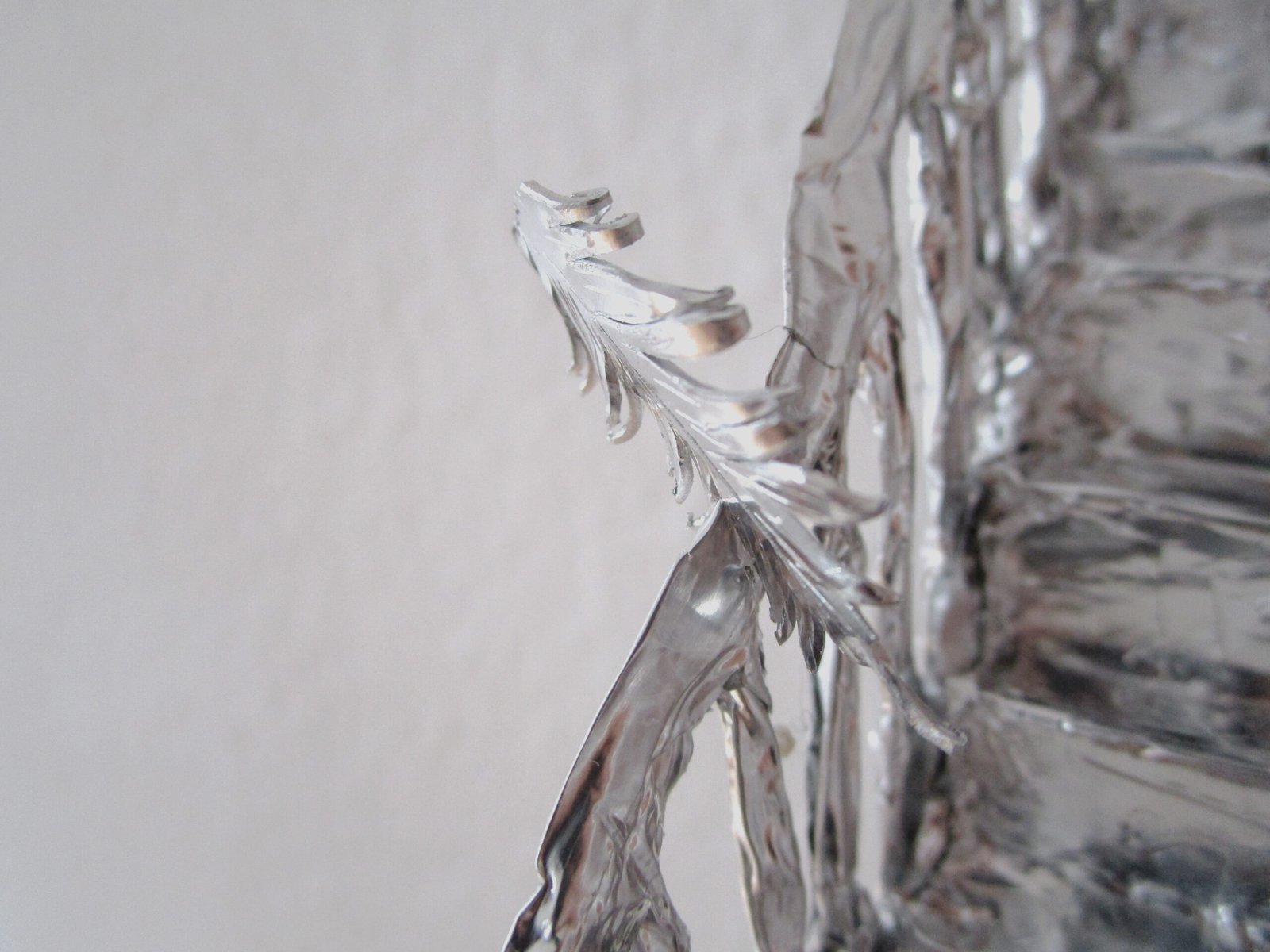
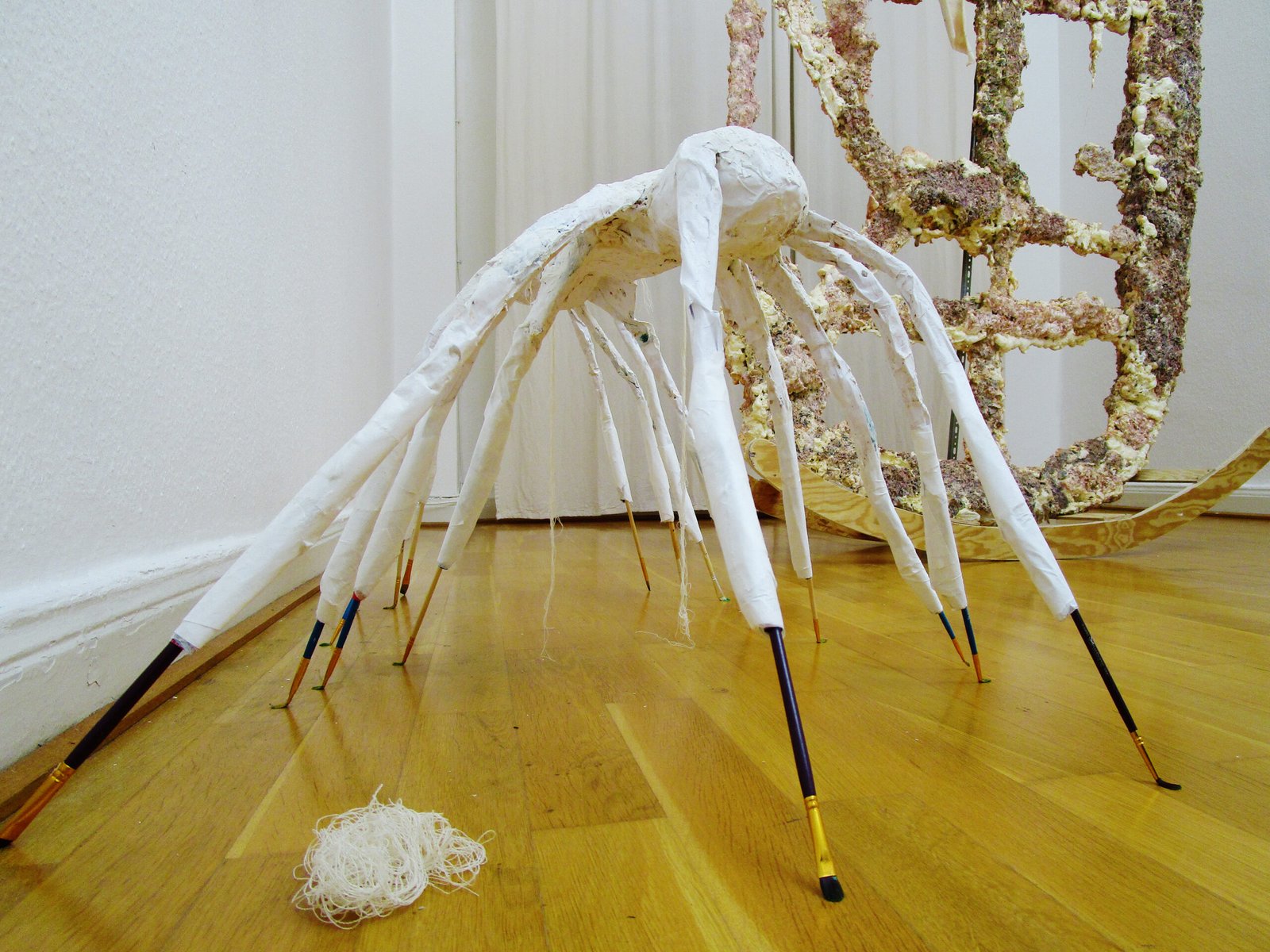
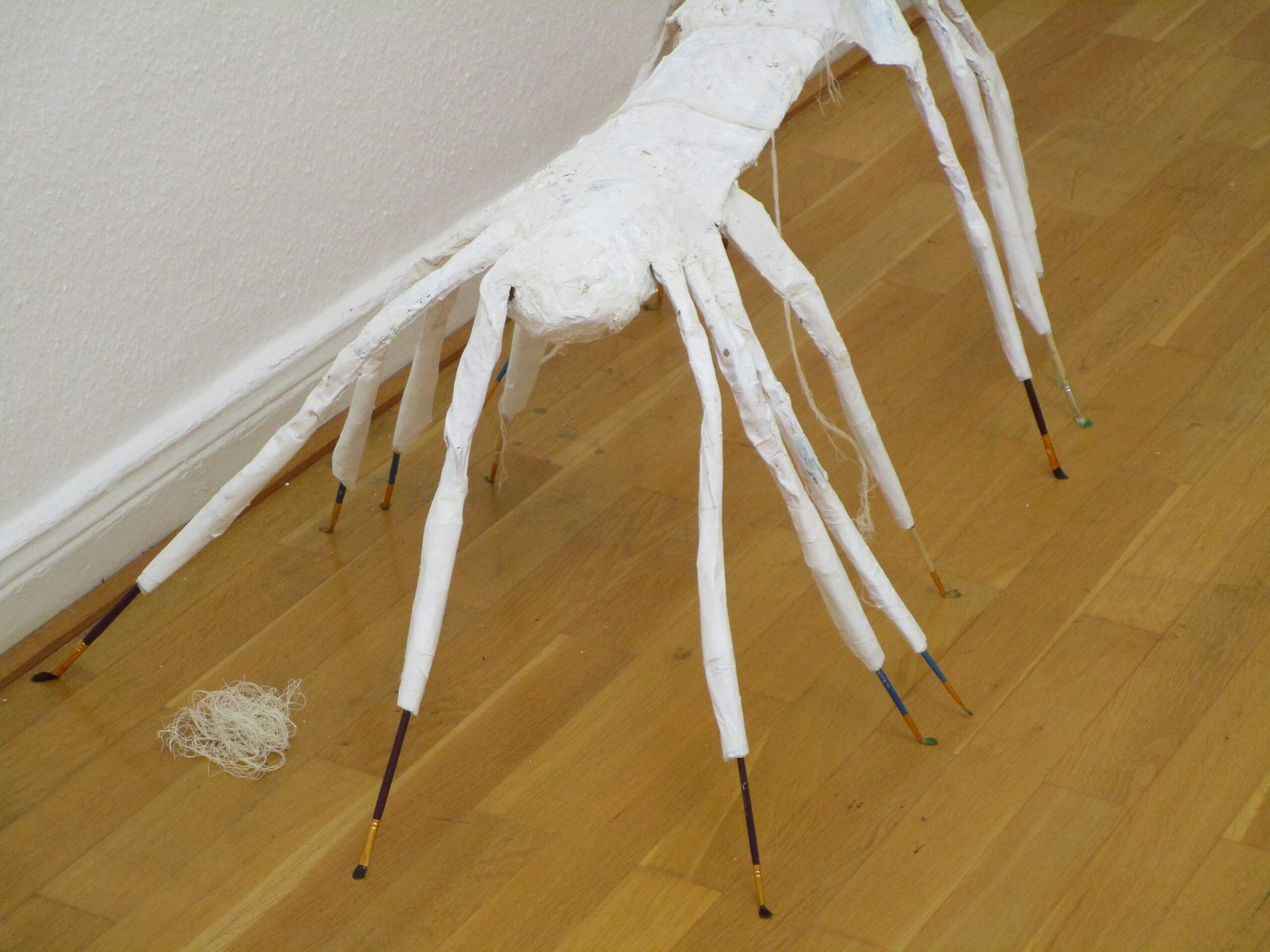
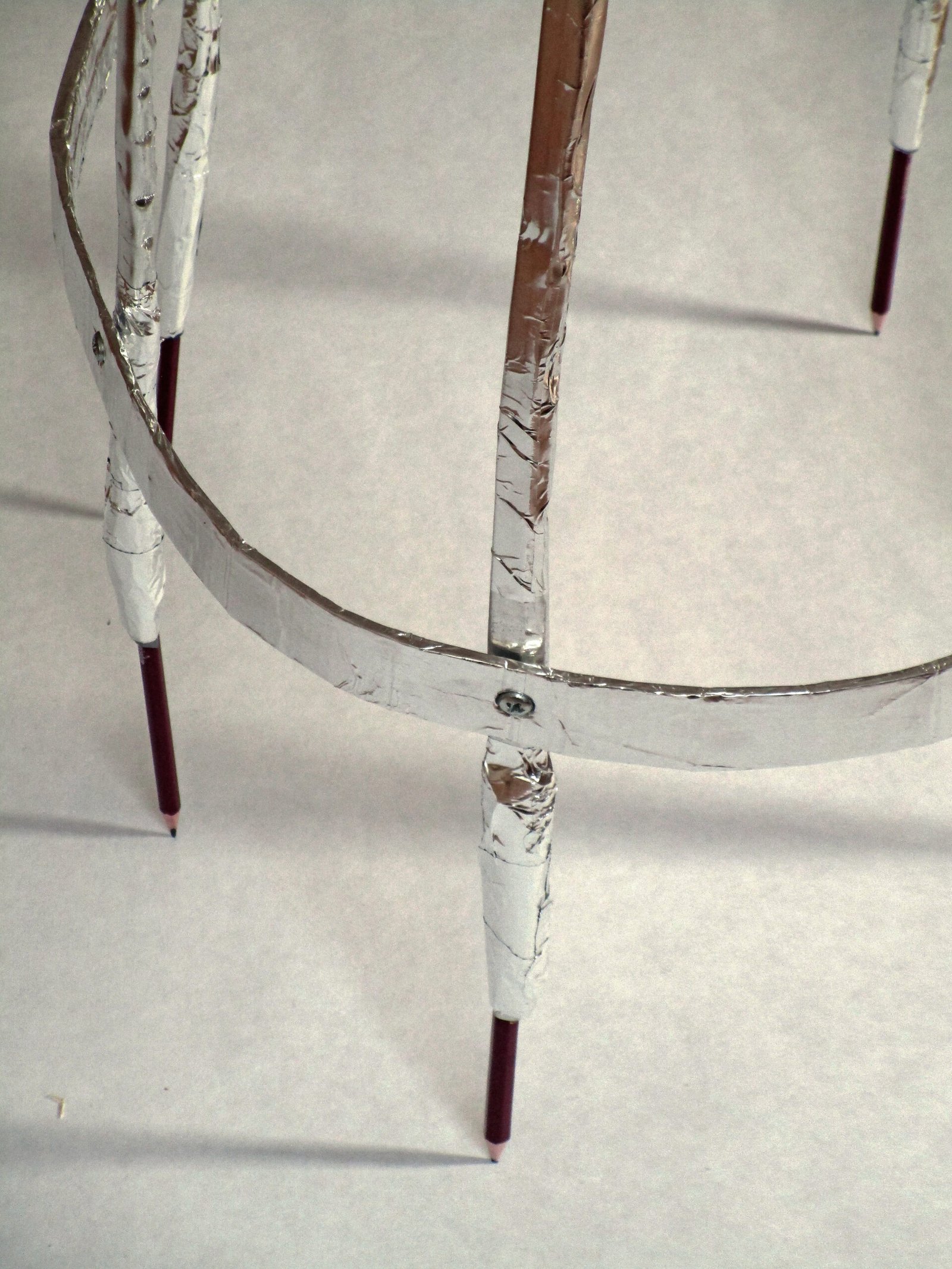
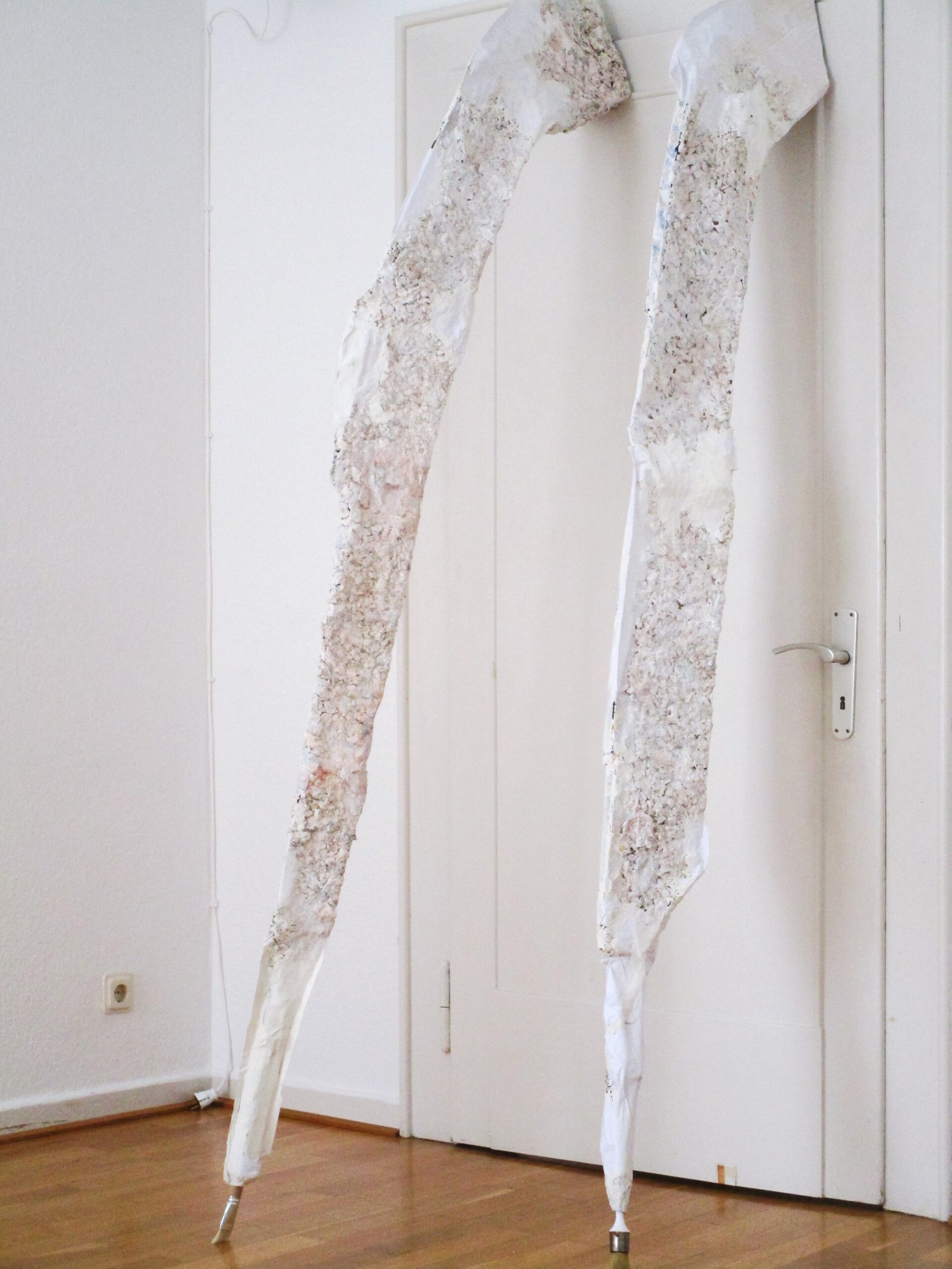
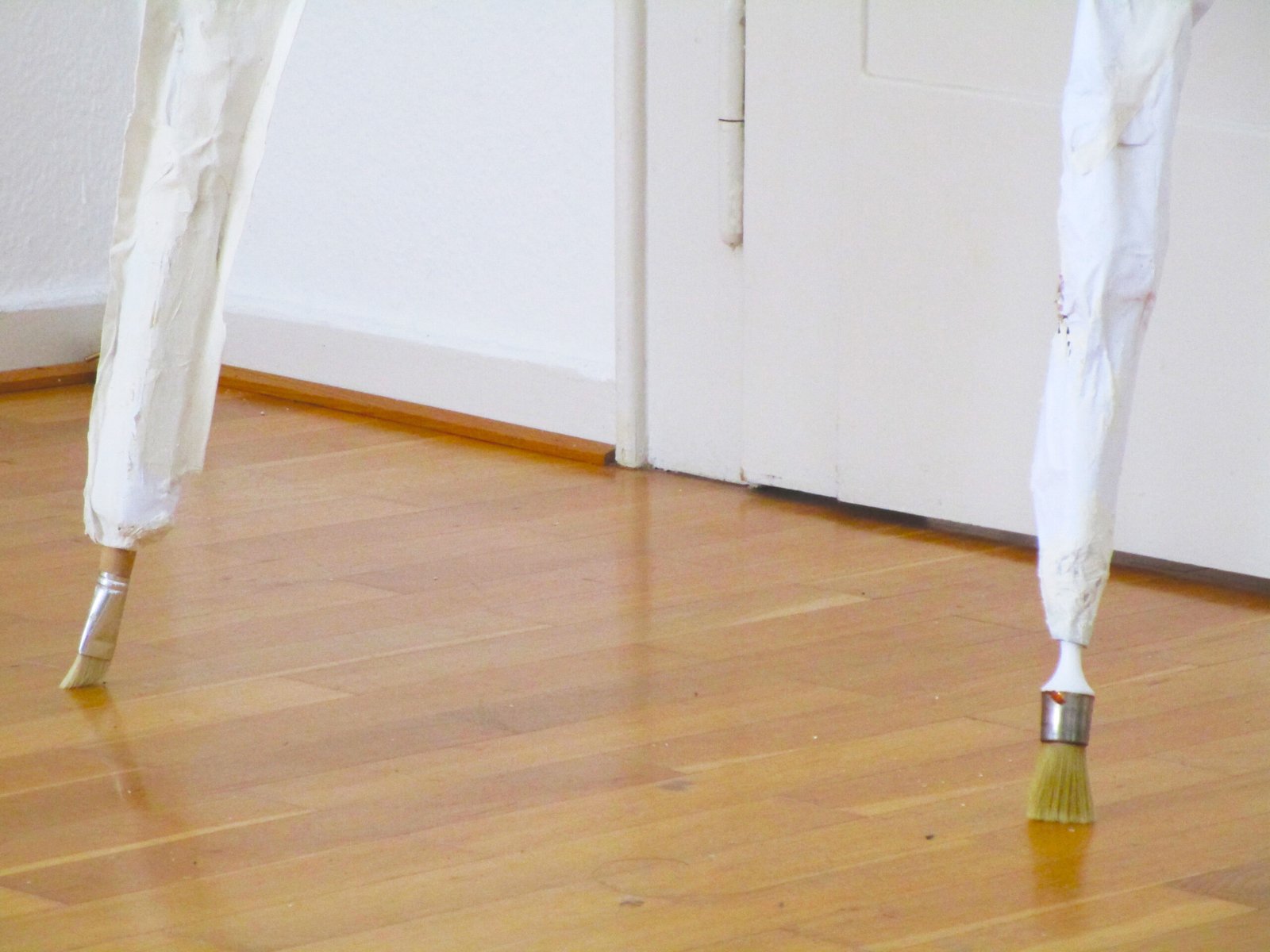
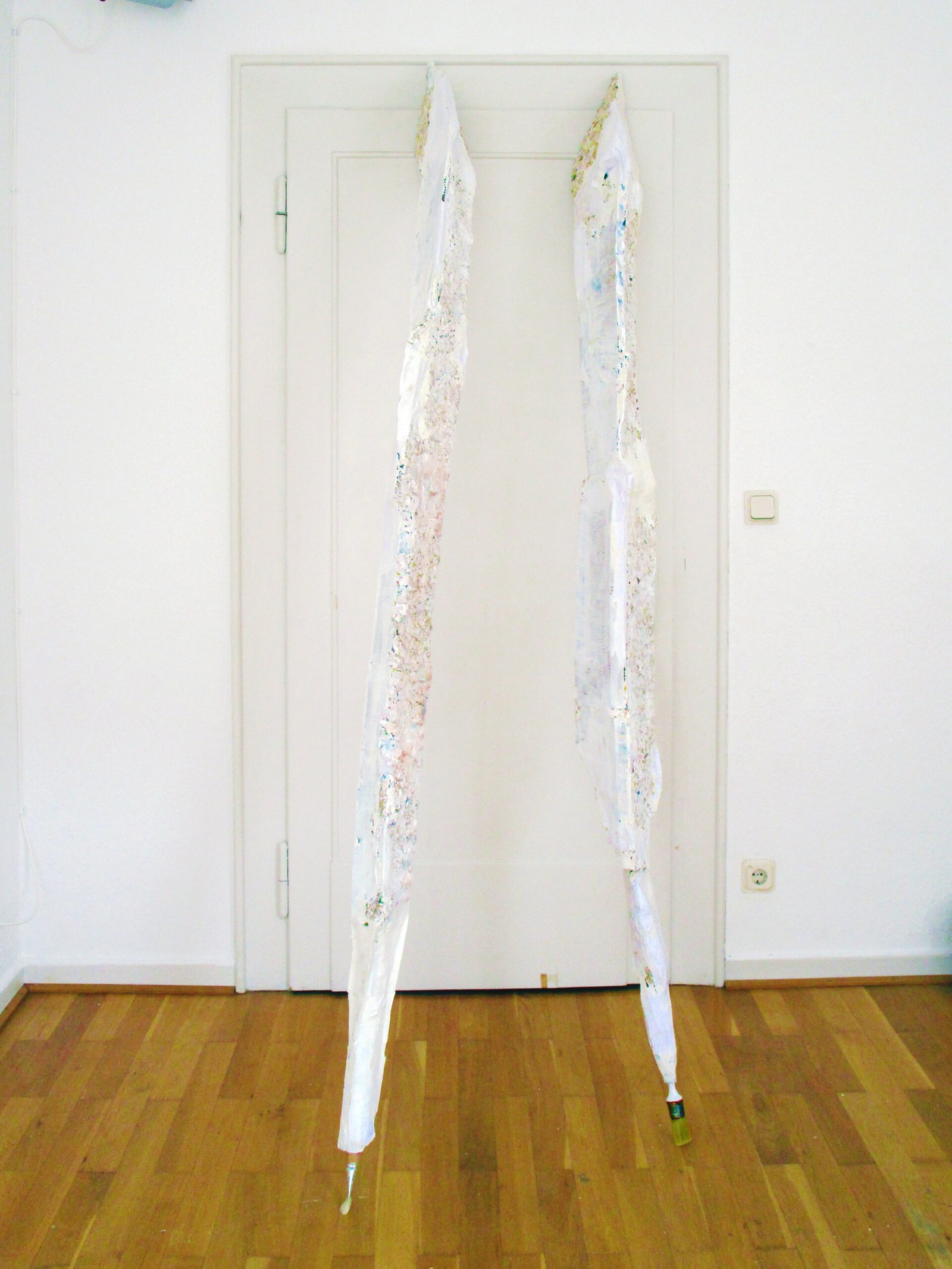
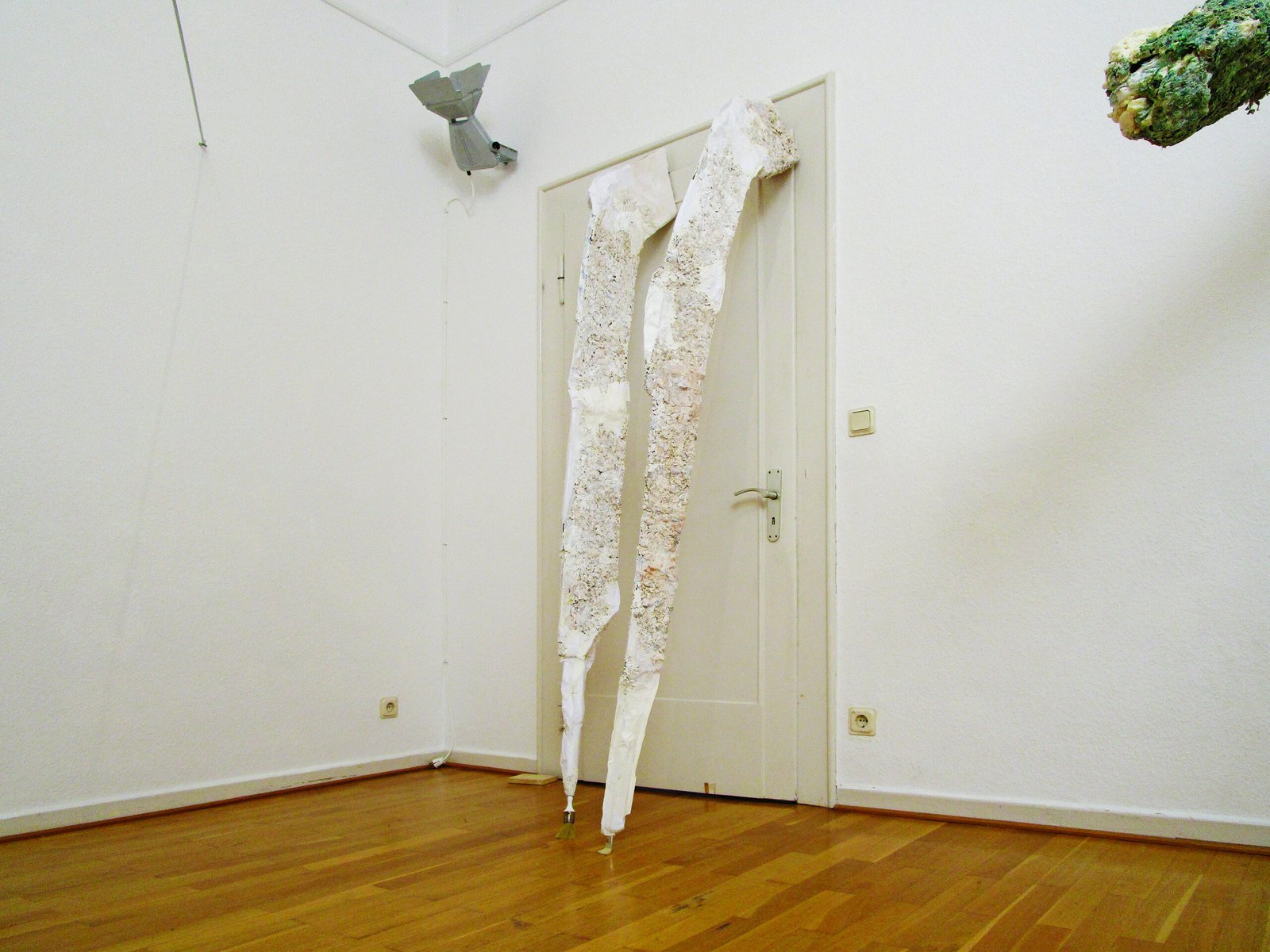
In the sound painting works, sounds produced by specially designed and built instruments are also used. The works presented in this exhibition are based on paintings created in the past, which were subsequently transferred into new forms through processes of destruction and transformation, including shredding. The movements of the transformed sculptures generate abstract sounds that translate painterly brushstrokes into lines,
dots, and surfaces. These sounds also form the acoustic components of the Oberhausen Orchestra.
In the work The Unhearable Ear, groping and hesitant movements produce sounds corresponding to the drawing of lines, while in Time of Evolution, sounds become audible that replicate the point-like gestures of brush application. Throughout the exhibition, all
objects are organically interconnected. The line-sounds generated by the works from The Lost Bird in the Living Room also flow into the Oberhausen Orchestra as instrumental sounds. In this way, painting—disassembled and recondensed—spreads through the space as audible painting and as visible sound.
Living Room:
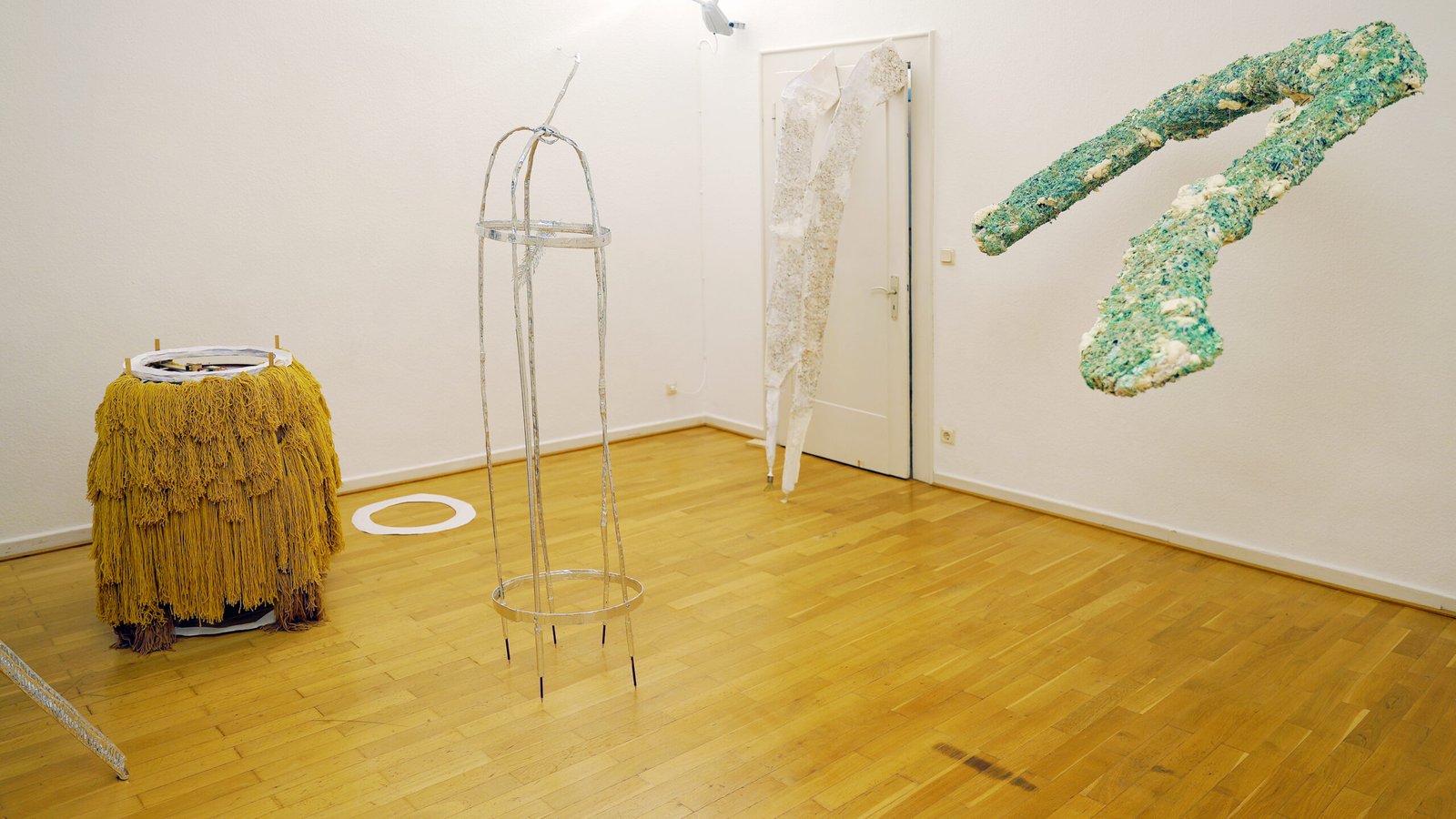
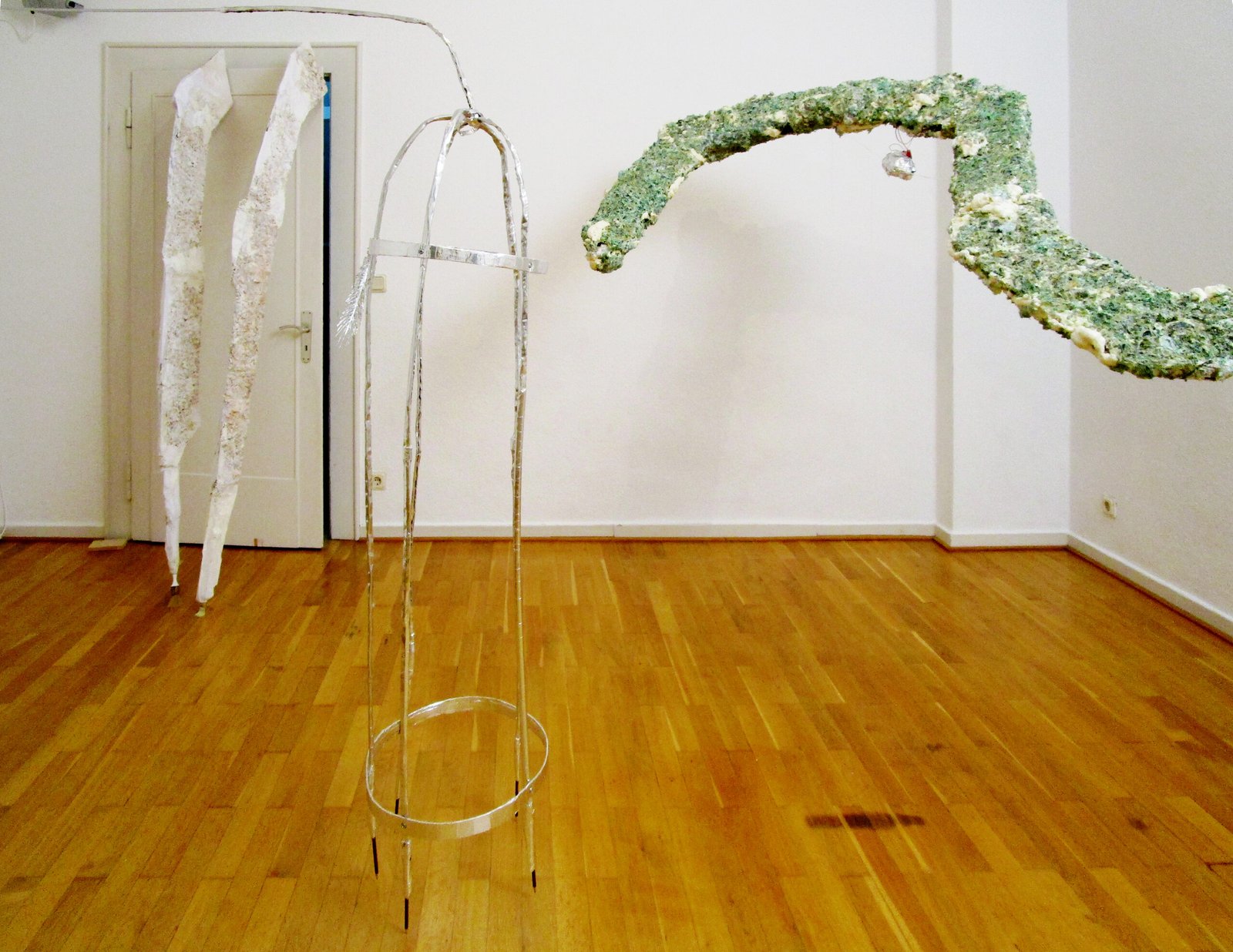
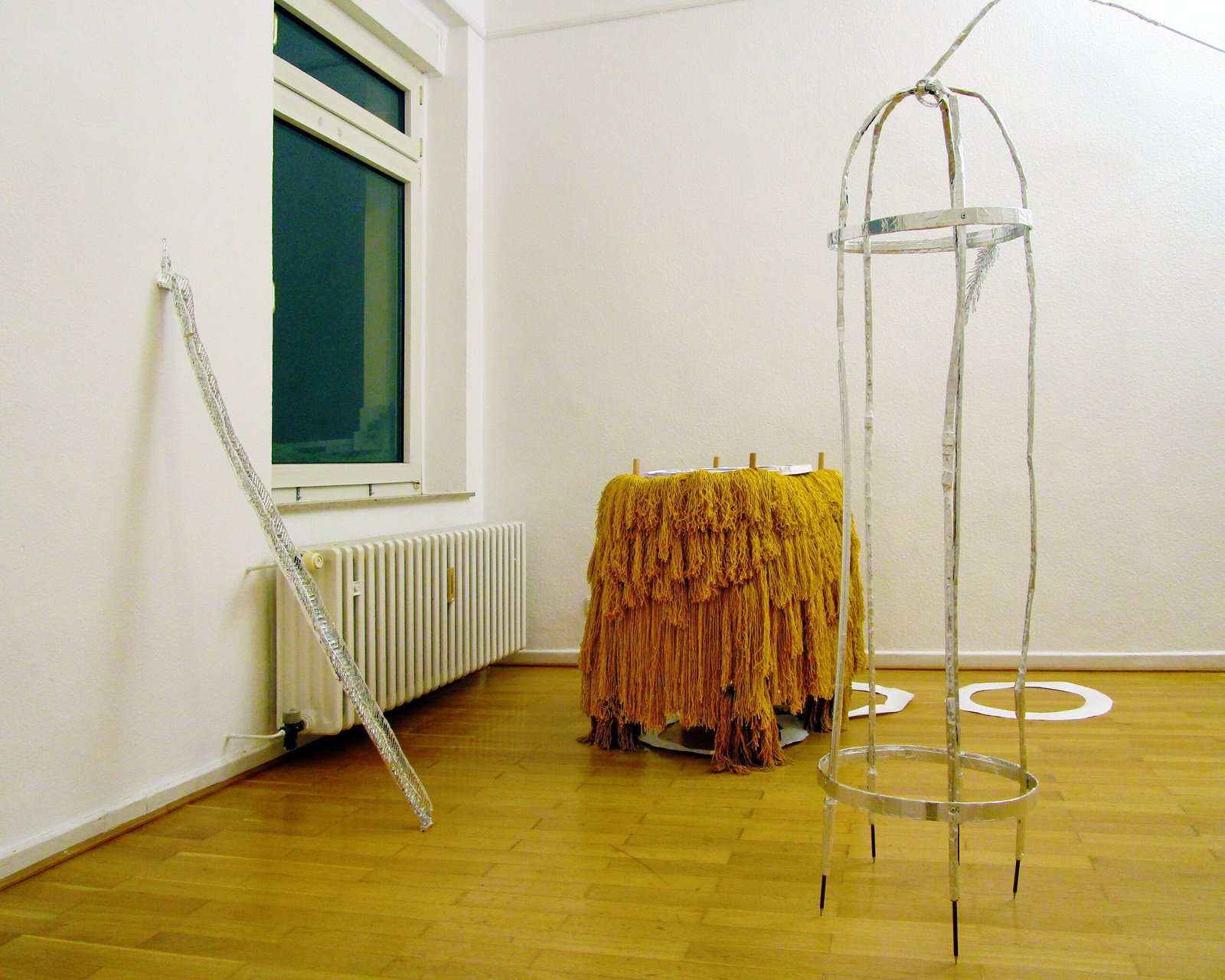
During the residency at Kunsthaus Oberhausen, the building itself became a mutable counterpart. Everyday
events within the house made it appear as a moving, almost living body. From this emerged the question of whether such a house, if capable of movement, would remain in place or set itself in motion.
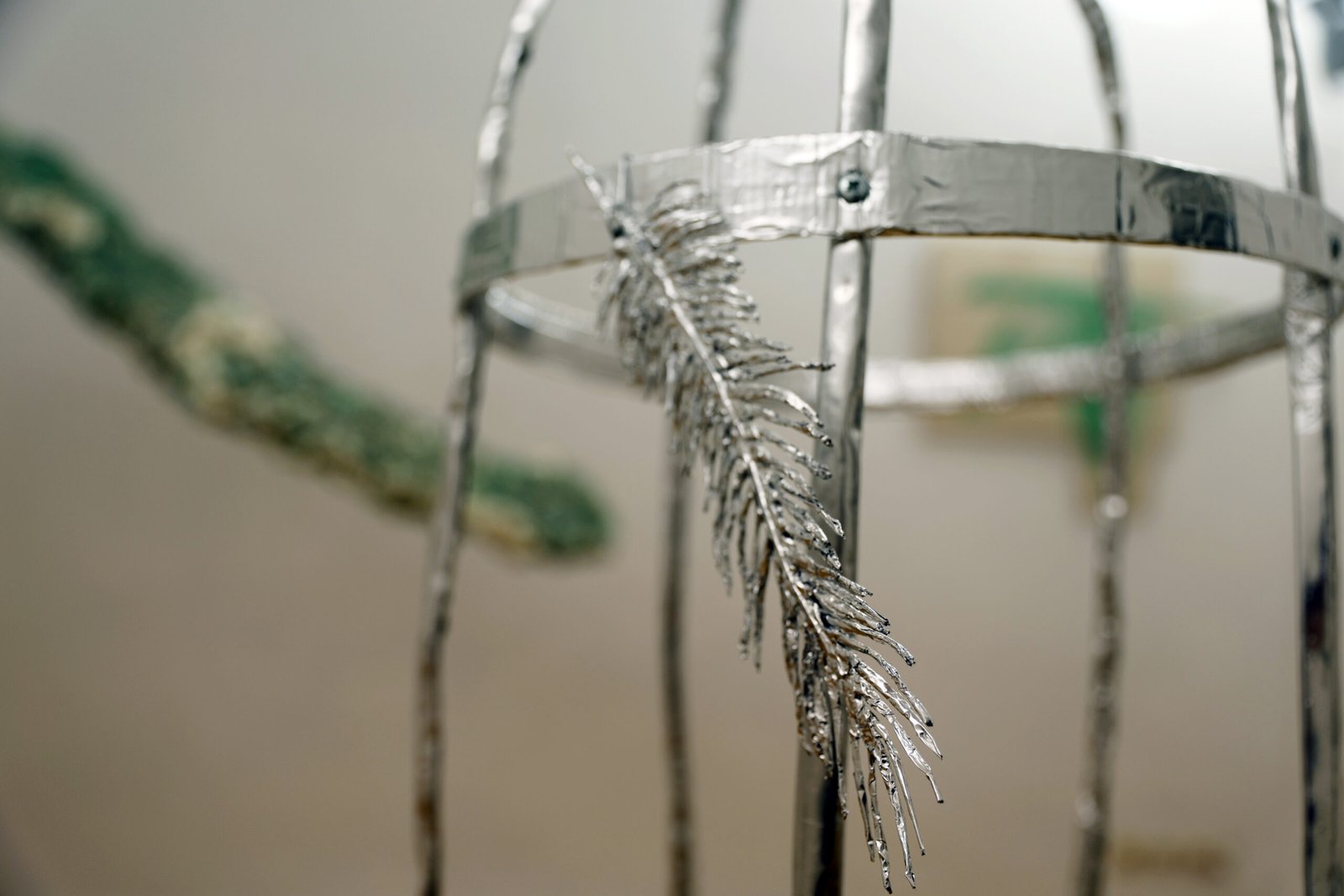
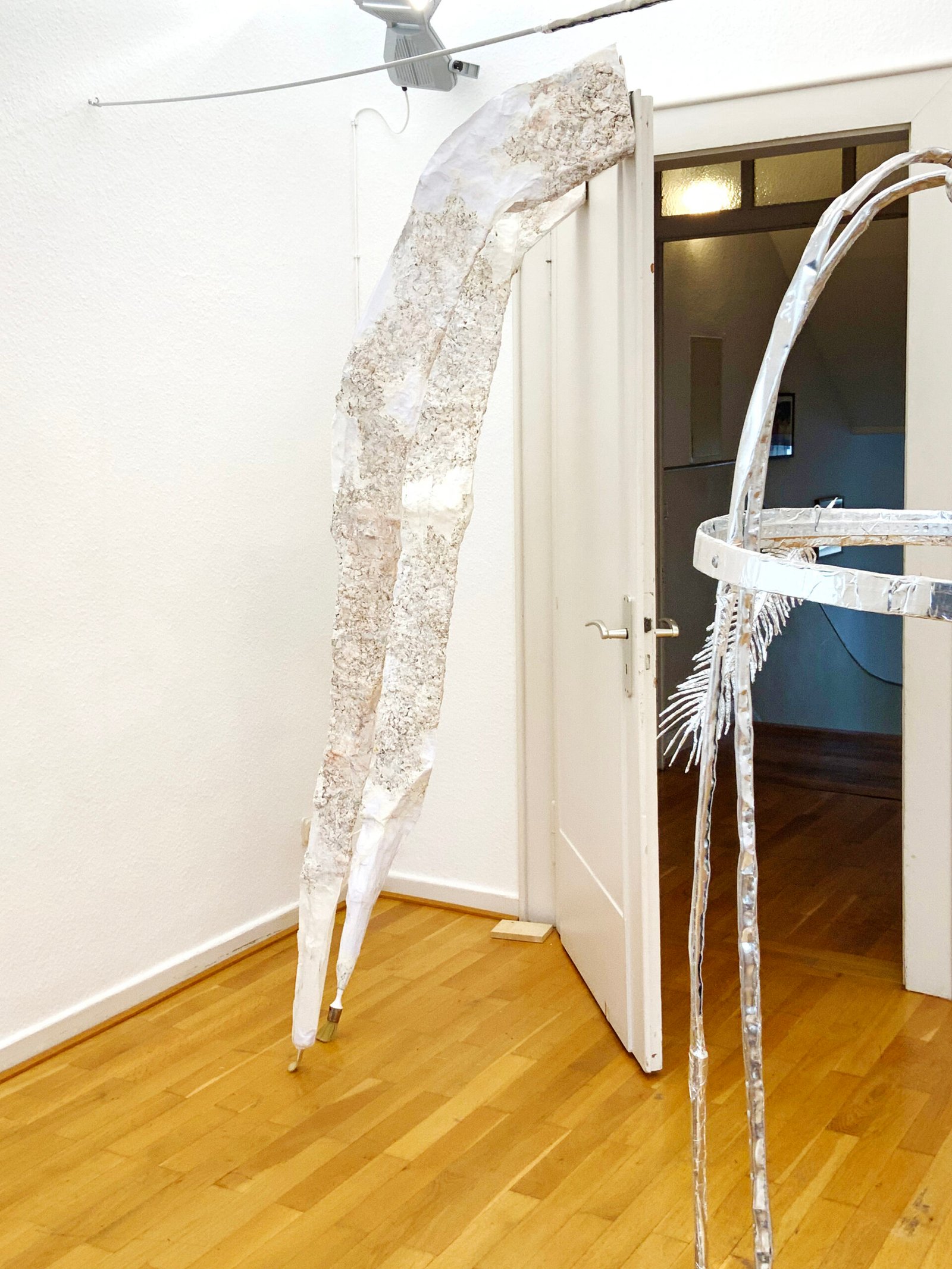
This idea forms the starting point for the work The Lost Bird. The individual objects function as extensions of the house: like outstretched limbs, they seem to search for a part that has departed like a bird. The movements of these objects draw lines that can be understood as the visualization of an invisible language of the building.
To listen to the “Oberhausen Orchestra,”visit the link: https://soundcloud.com/hyeonyoung-lee-394926876/oberhausen-orchestra
The author of the critical essay: Dr. Christina Irrgang @christinairrgang