

Emil Walde moves at the intersection of sculpture and installation, between materiality and meaning. The starting point of his work is the industrially manufactured object – metal hooks, wires, screws, or technical components – whose original function he questions and transfers into new aesthetic and spatial contexts.
At the core of Walde’s artistic practice lies a precise observation of material. His works are not mere arrangements of found objects but the result of a transformative process in which function, meaning, and corporeality are renegotiated. Space itself does not serve as a neutral backdrop but as an active resonating body in which the material unfolds its new identity.
Metal pipes, industrial components, or architectural fragments are not used merely as formal elements; they are interrogated and reformulated in their physical, historical, and aesthetic dimensions. Through appropriation, decontextualization, and condensation, Walde creates expansive installations that push material to its structural and conceptual limits. Between stability and fragility, function and fiction, fields of tension emerge that activate space as a dialogical counterpart.
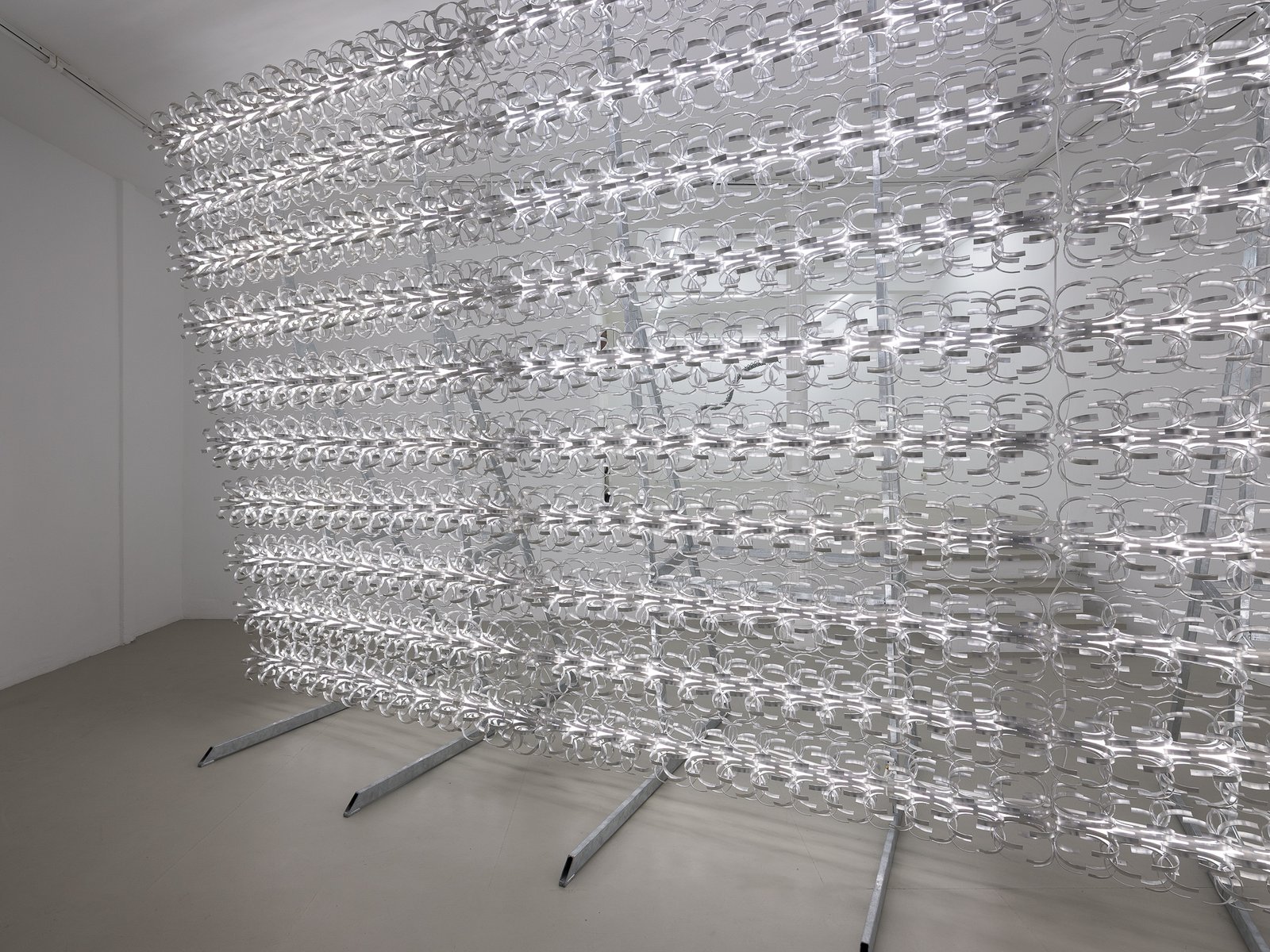
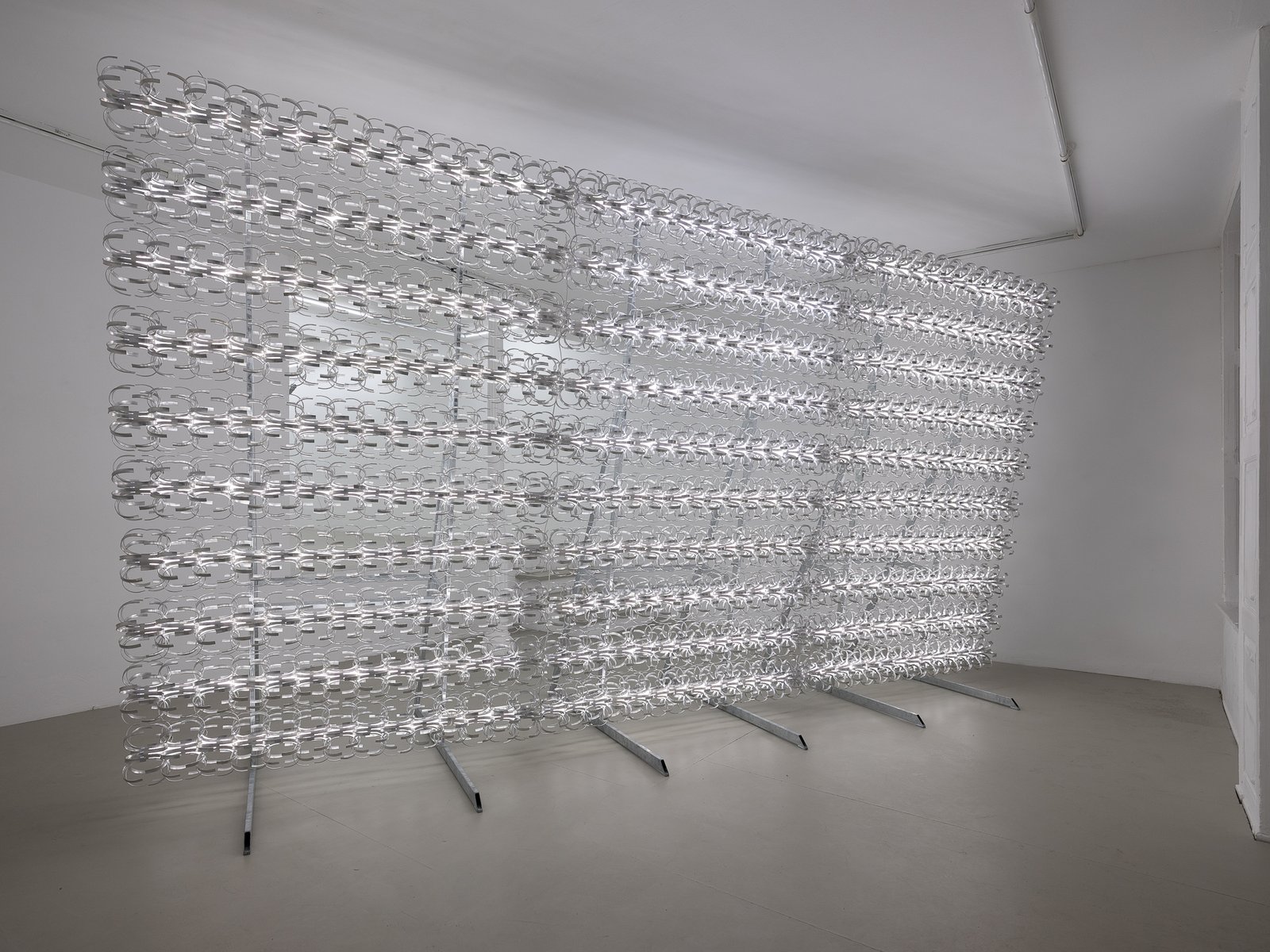
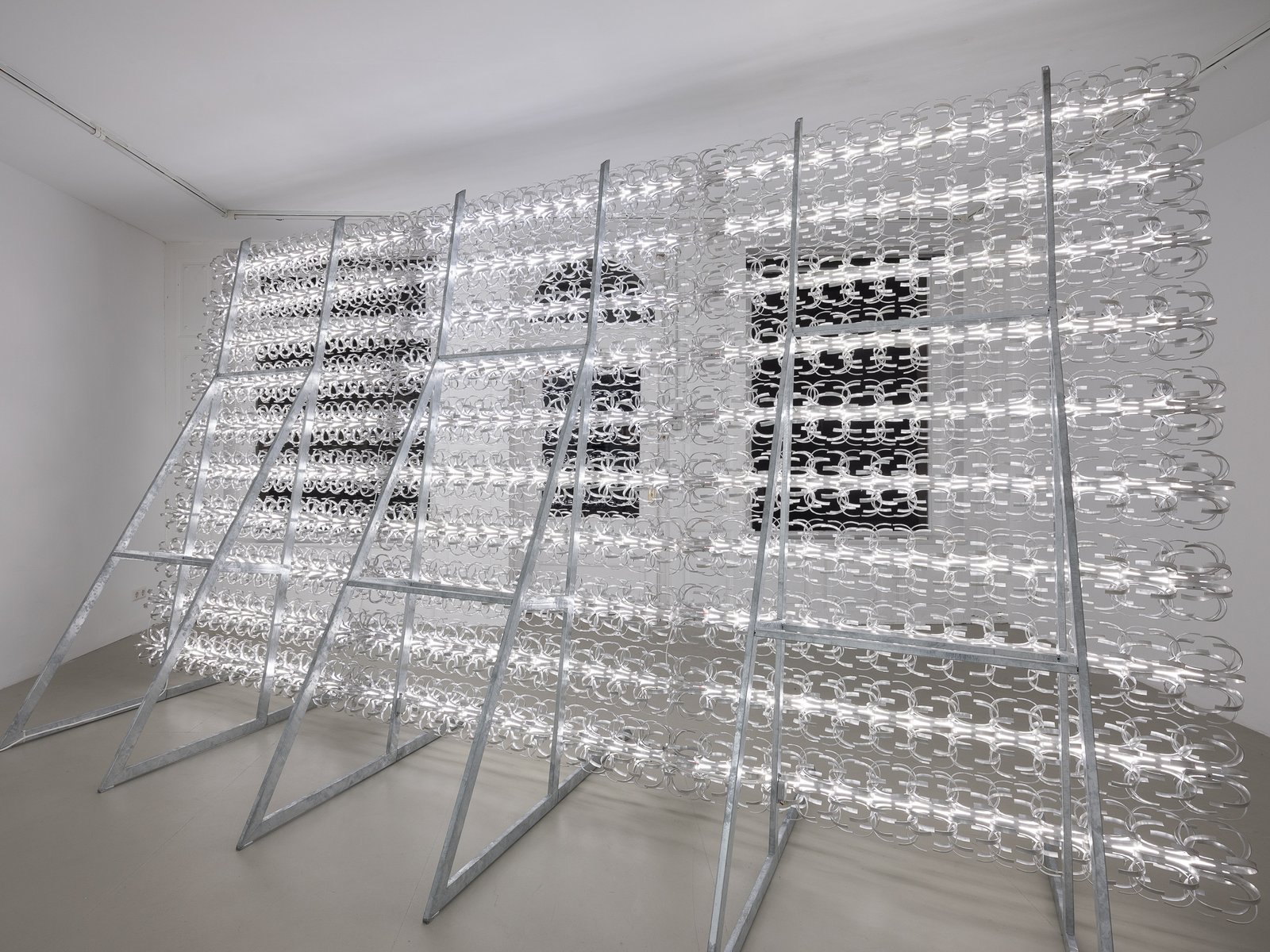
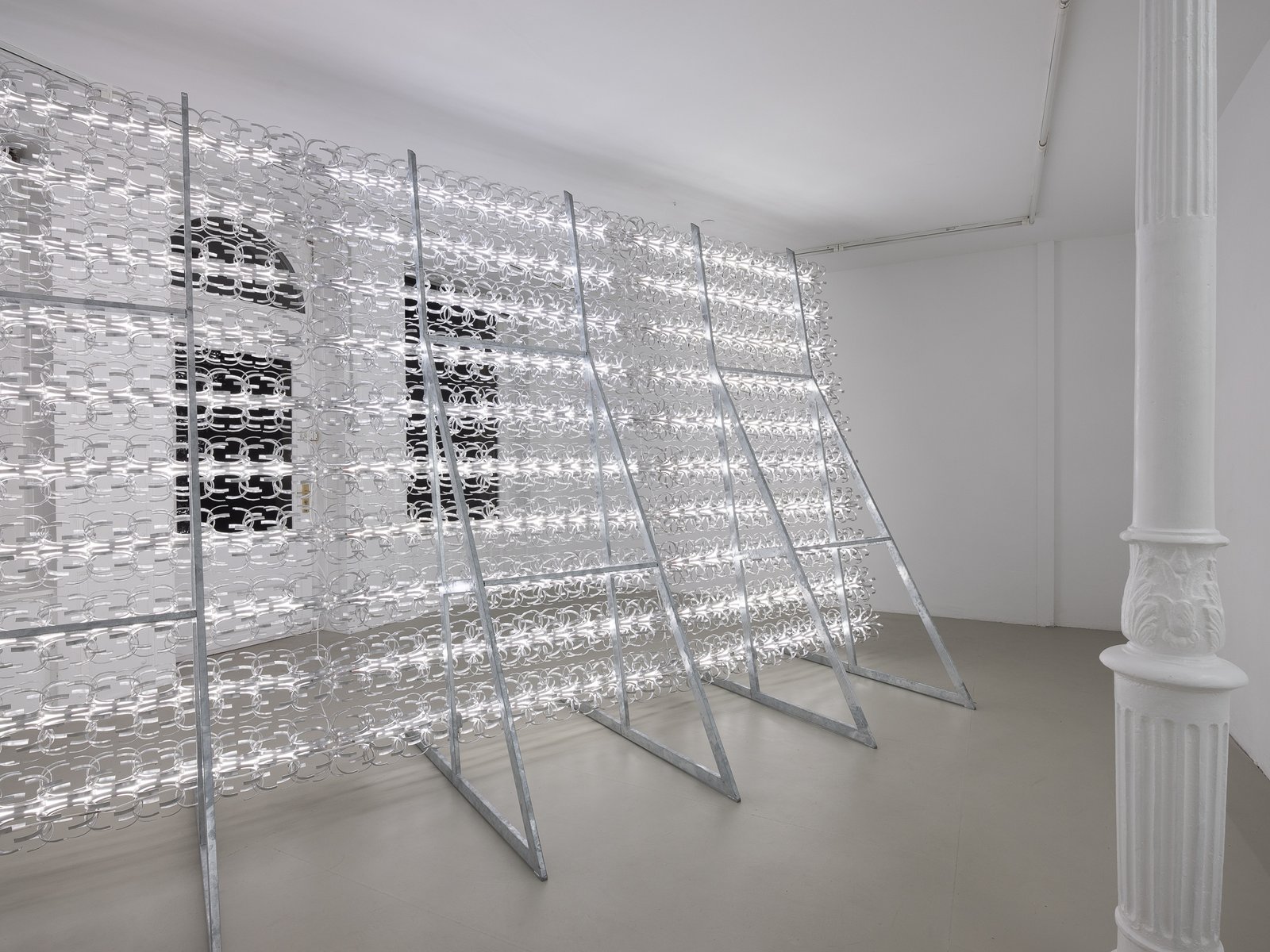
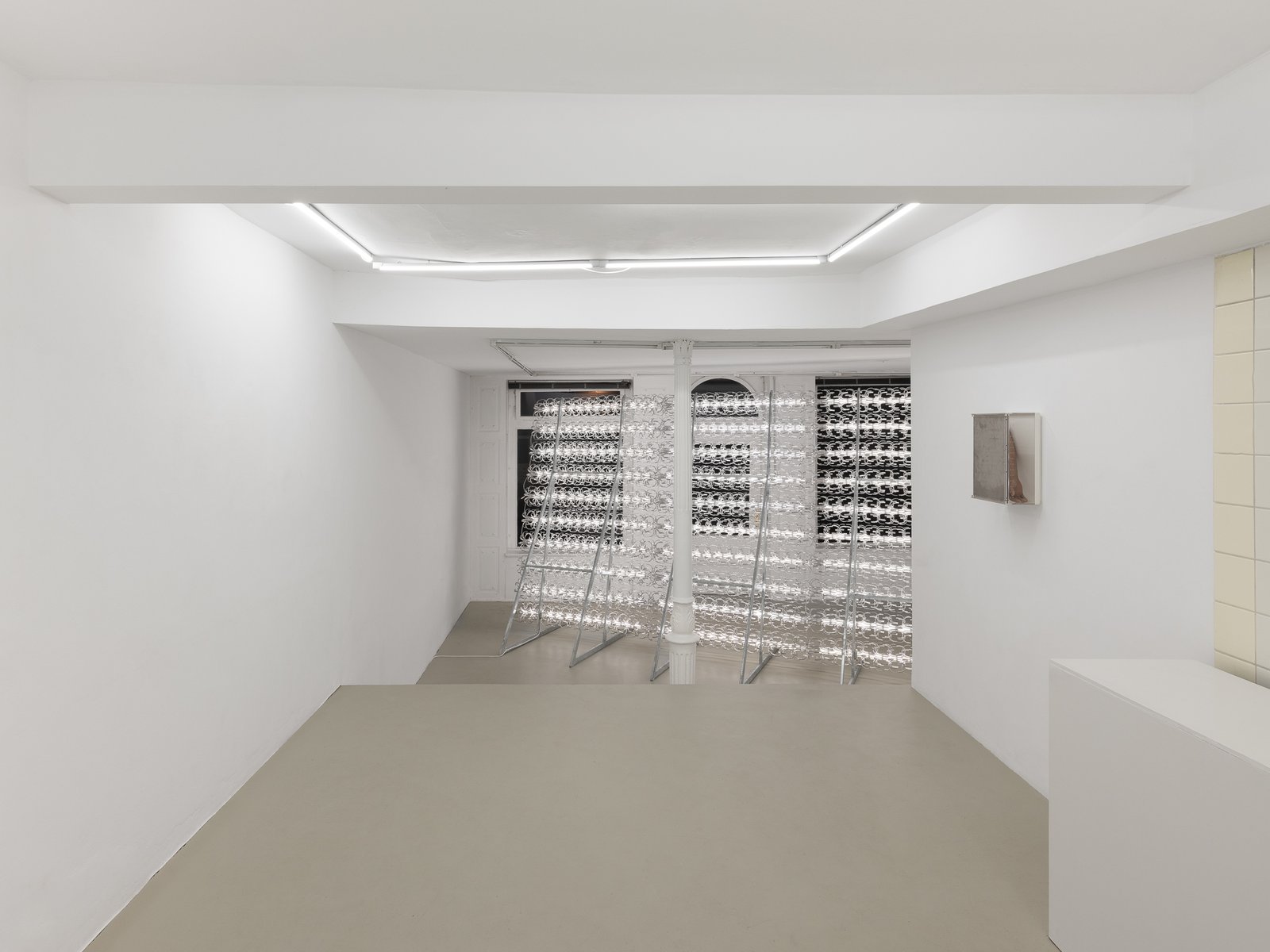
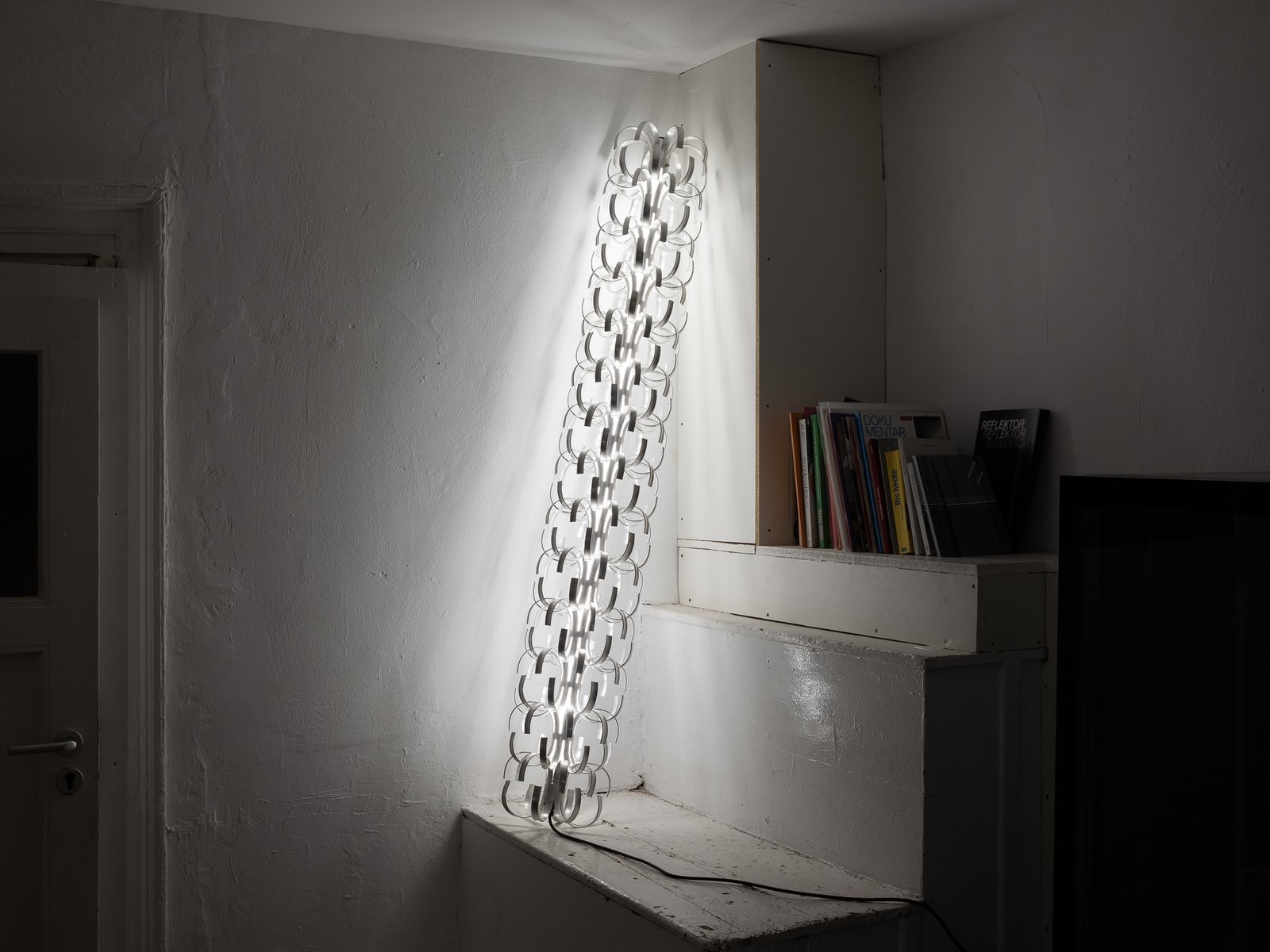
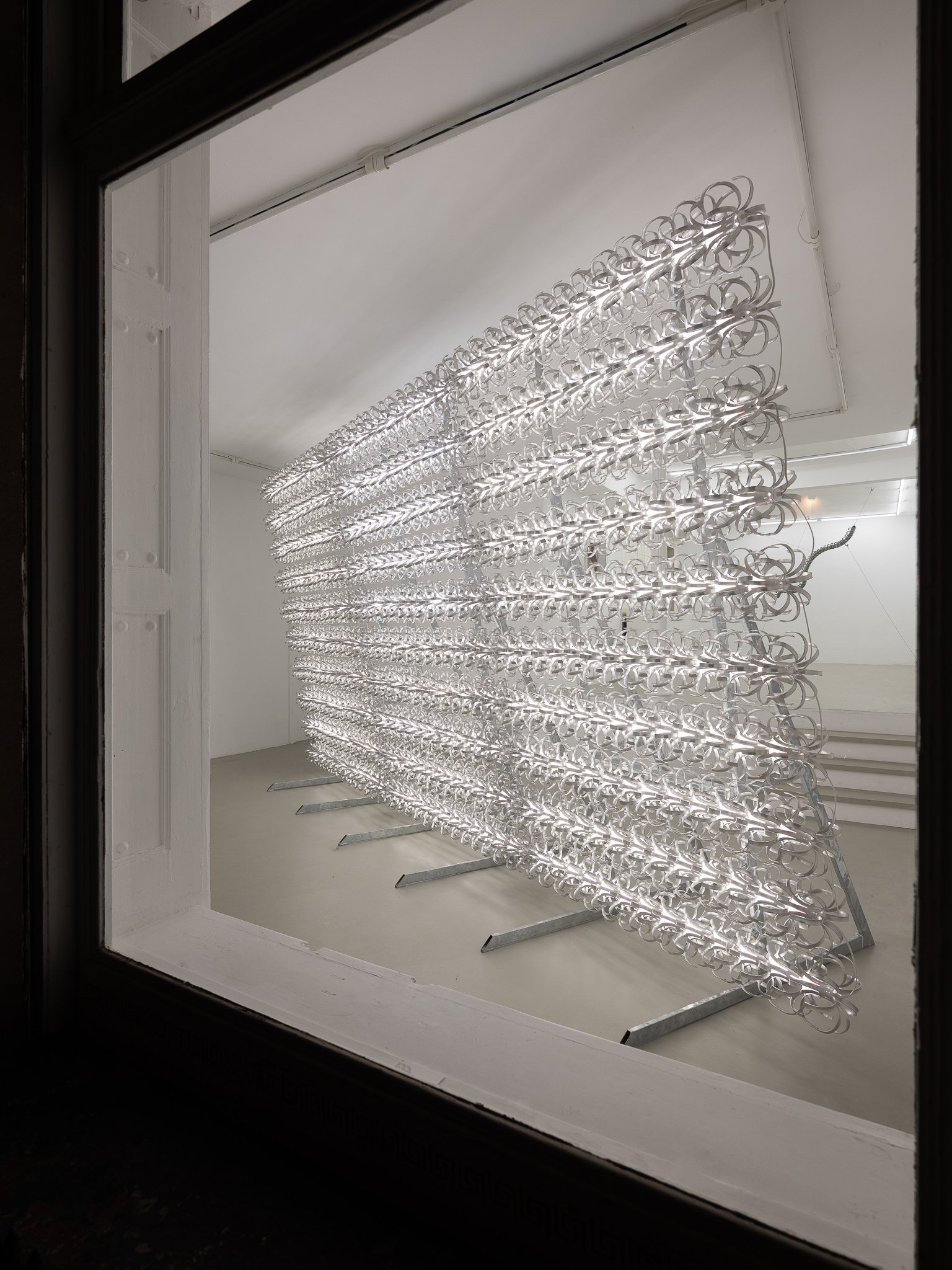
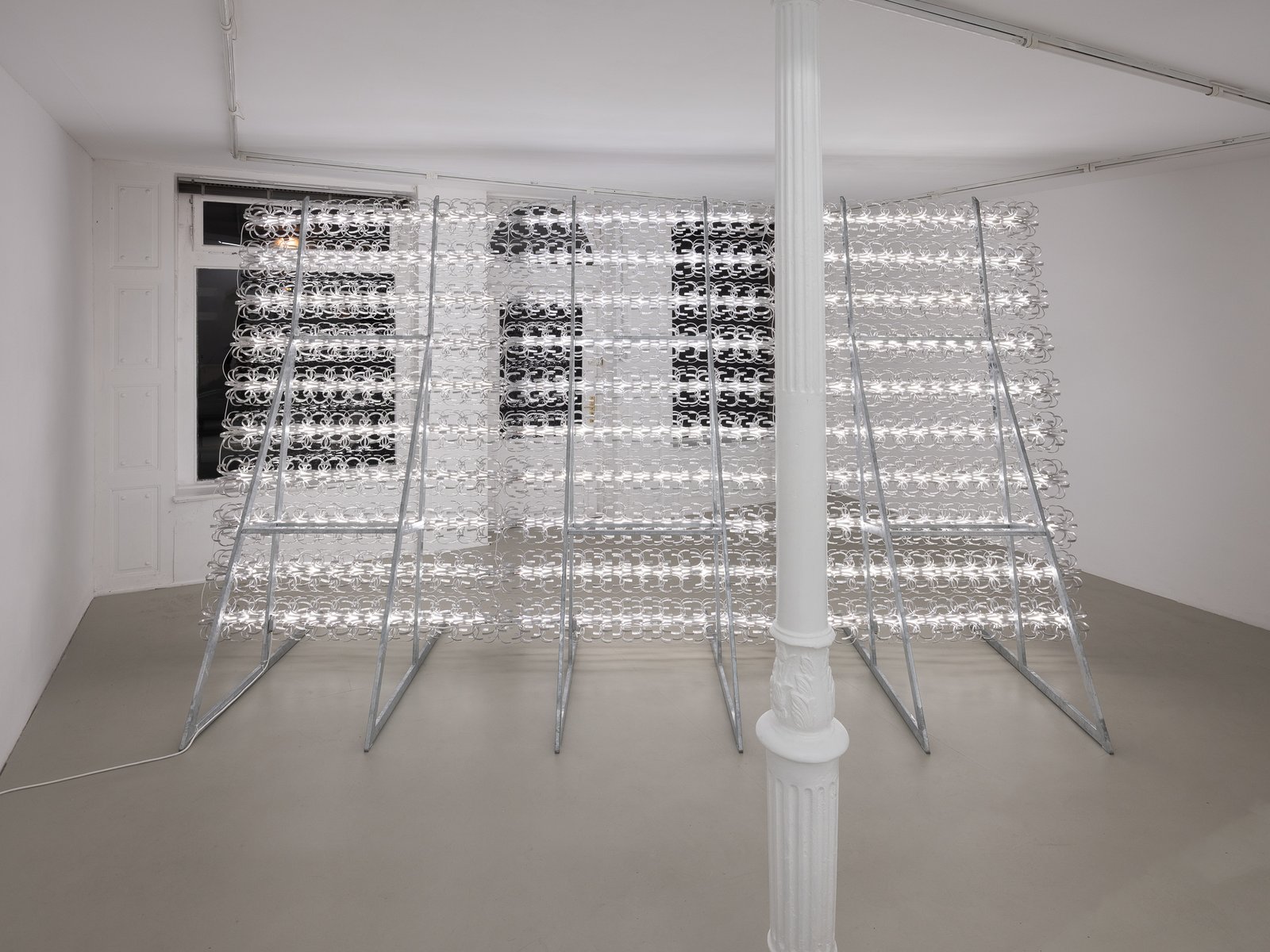
In “Gatekeeper”, Walde transforms an open wall structure made of aluminum elements into a luminous gate between spaces. The ends, fanning out into almost floral forms, are backlit by bright light that models their surfaces and casts reflections into the surrounding space. The original material—once intended for protection and defense—becomes a symbol of transition: between limitation and transparency, between barrier and invitation.
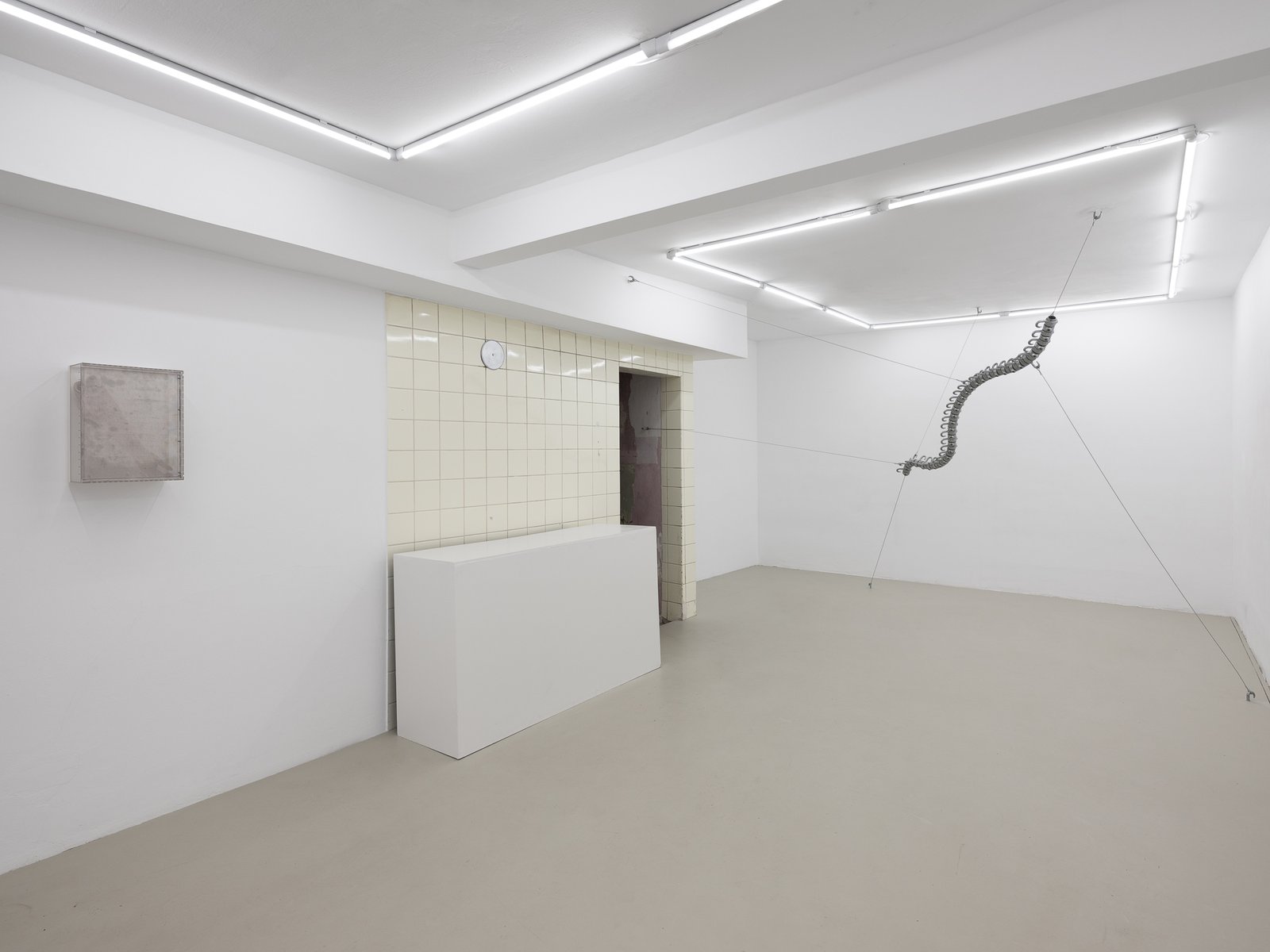
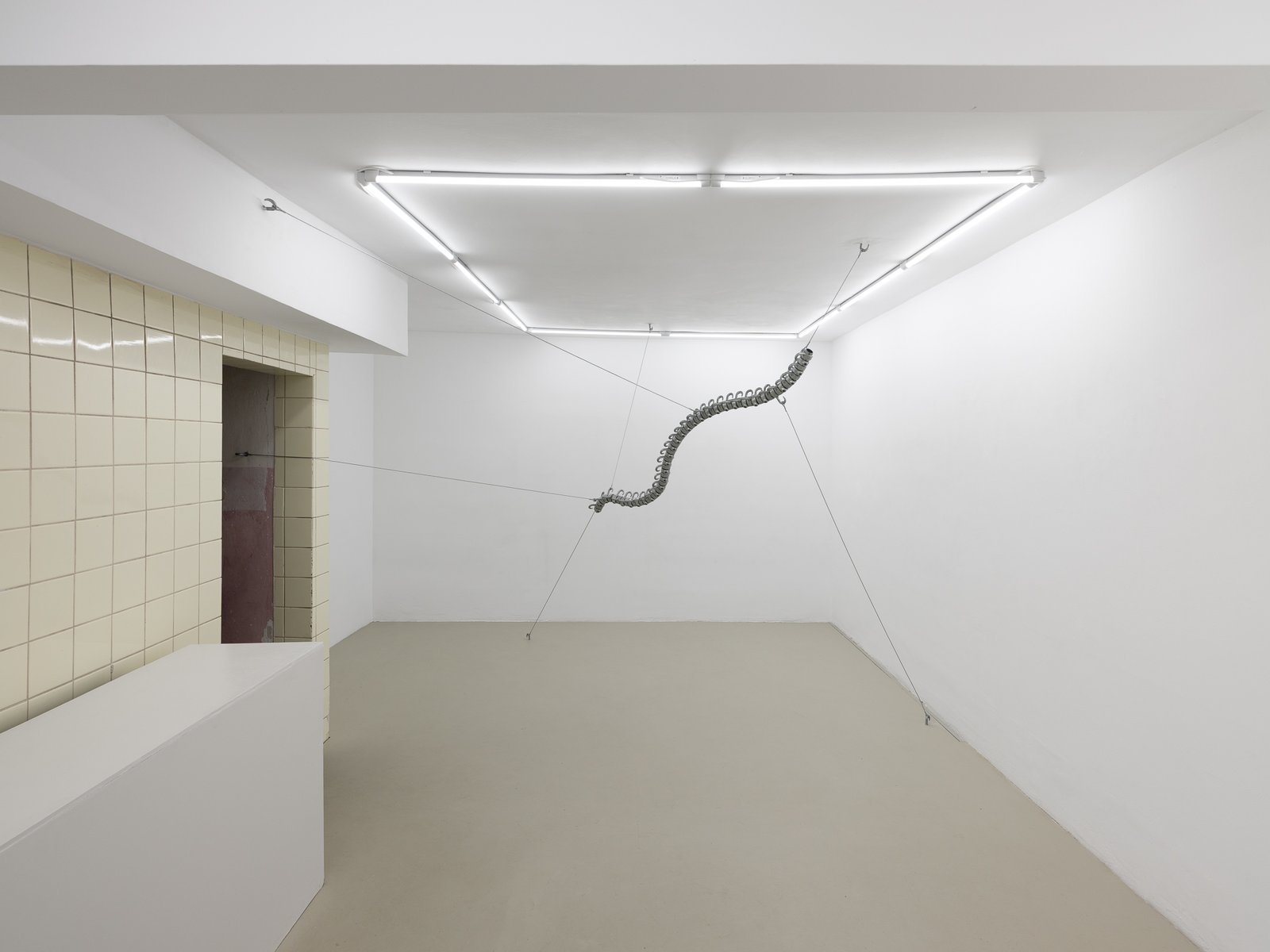
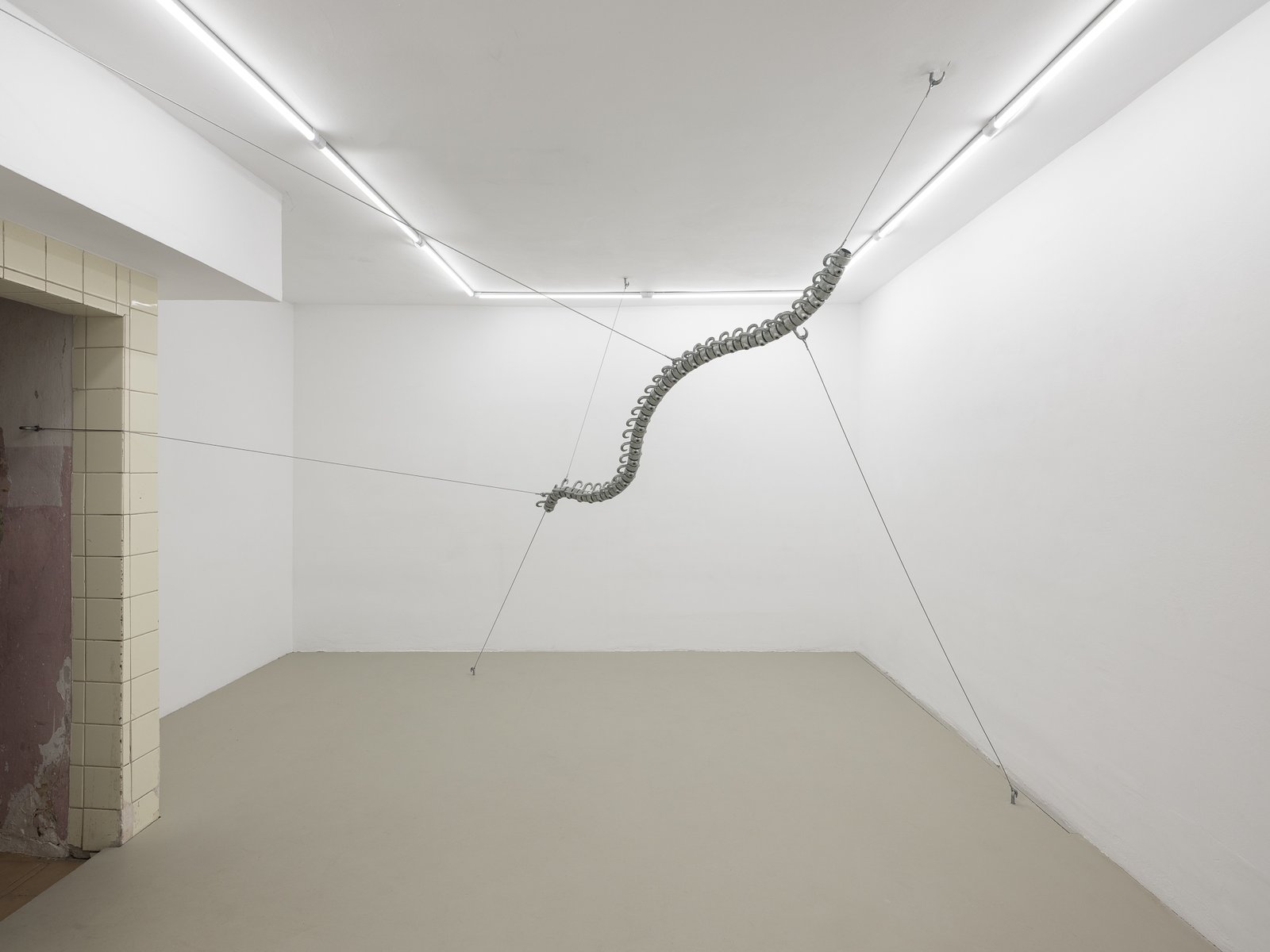
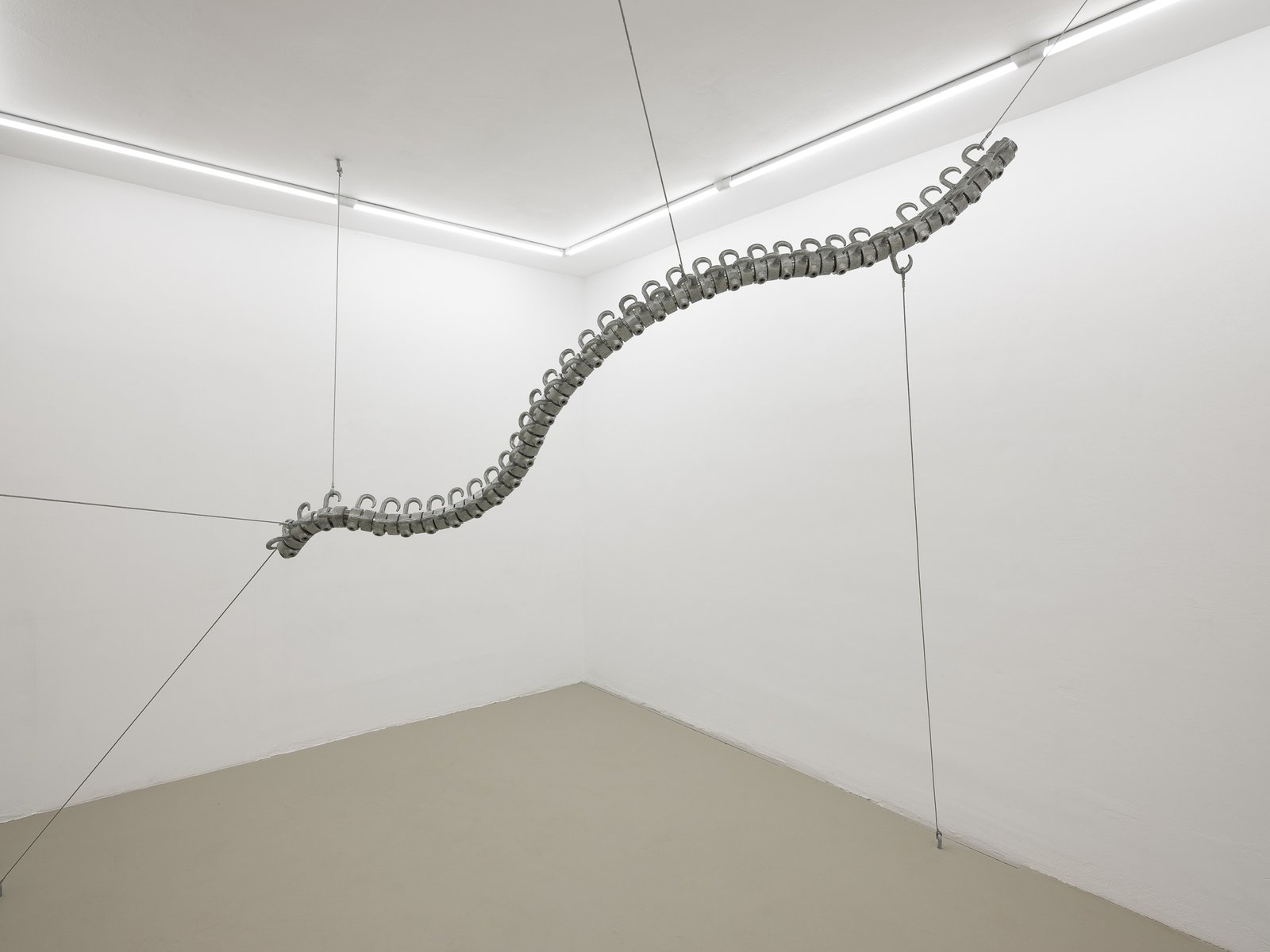
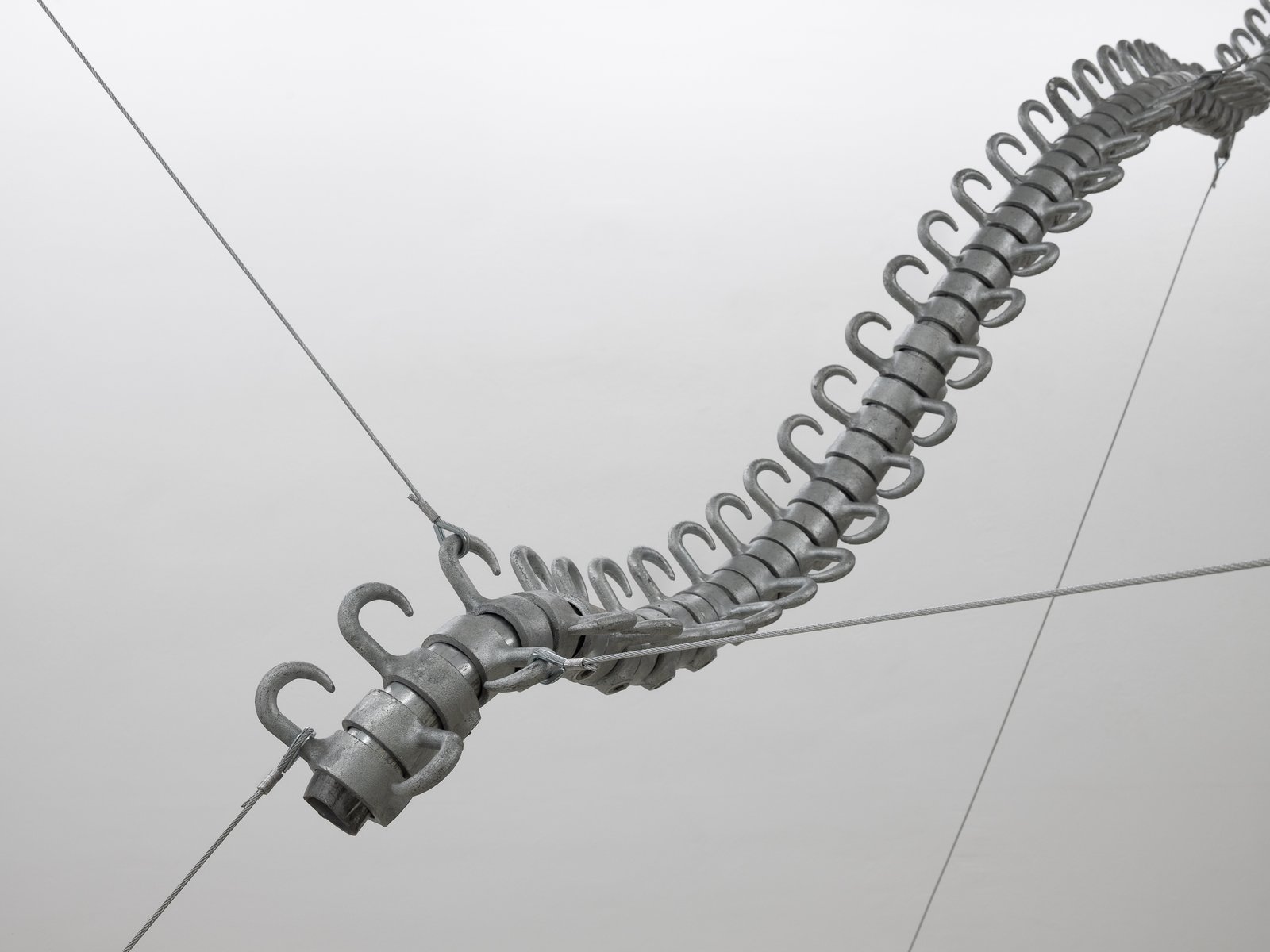
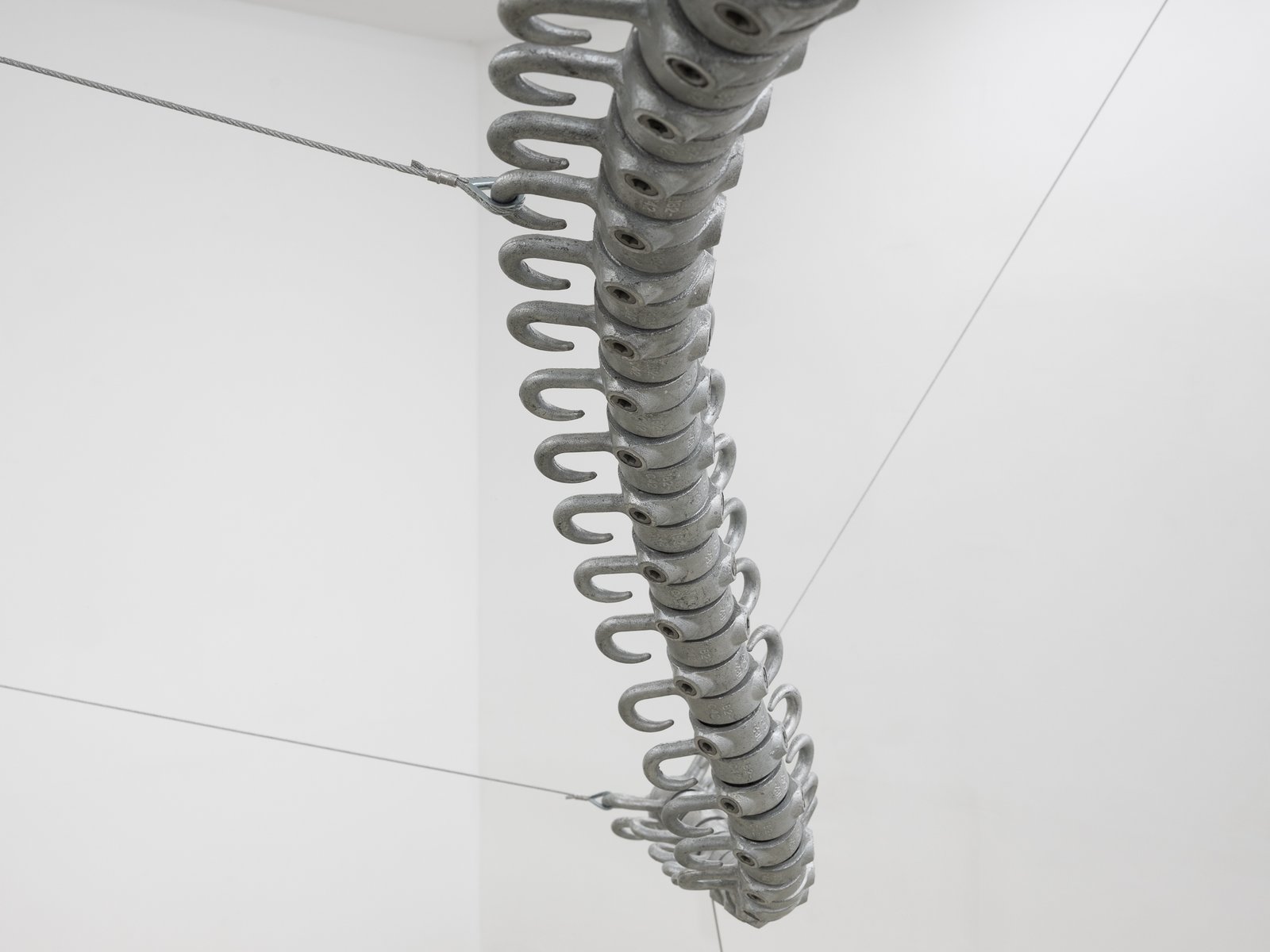
The work “Unicorn” also plays with transformation and shifting meaning. From simple clamping hooks, Walde forms a monumental spine whose number of “vertebrae” corresponds to that of the human backbone. Suspended freely in space, the sculpture oscillates between organic association and technical coldness – a fossil relic and a cybernetic backbone at once. The banal connecting element becomes a metaphor for strain, stability, and fragility, for a metallic spine that appears both dystopian and deeply human.
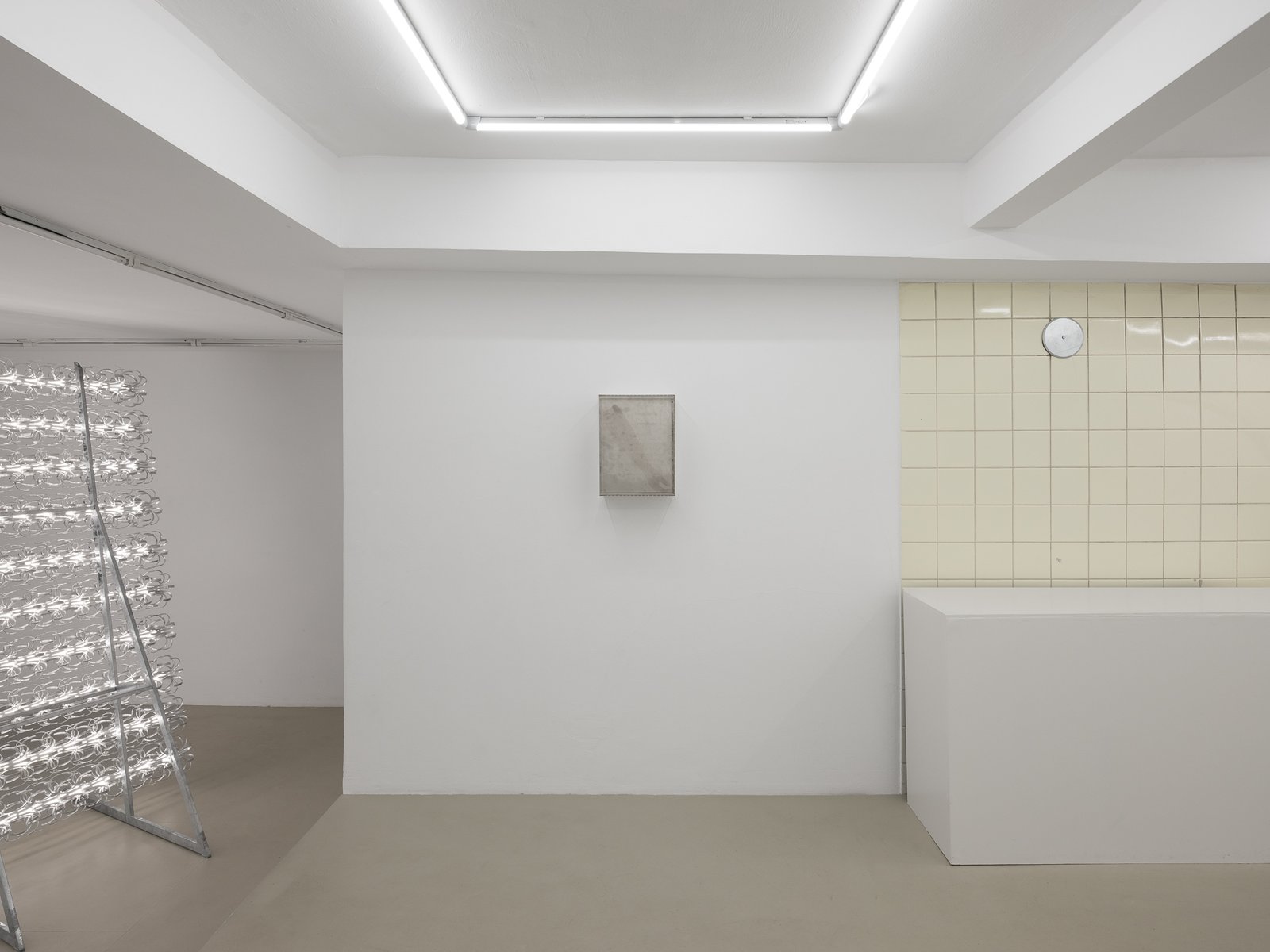
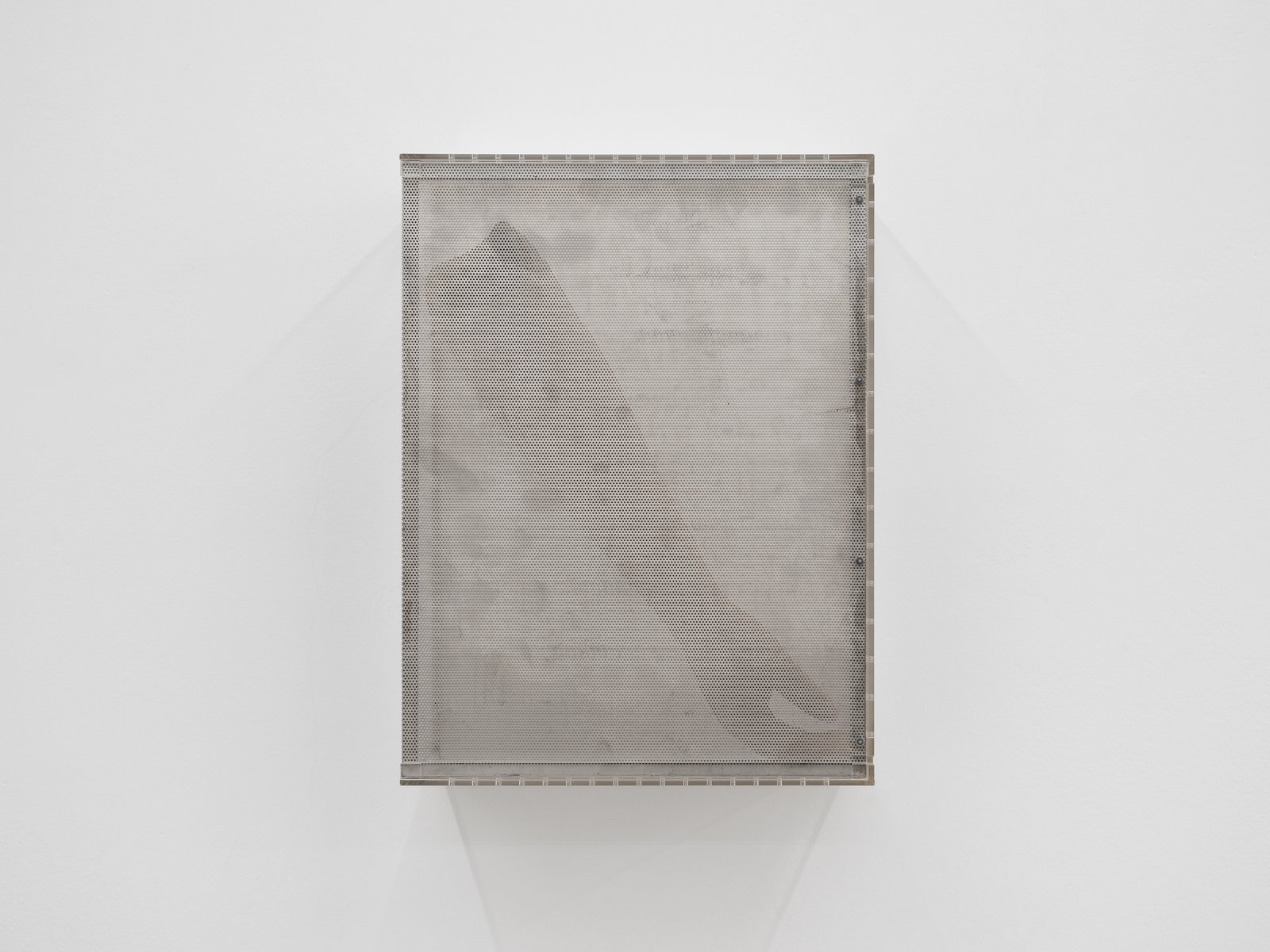
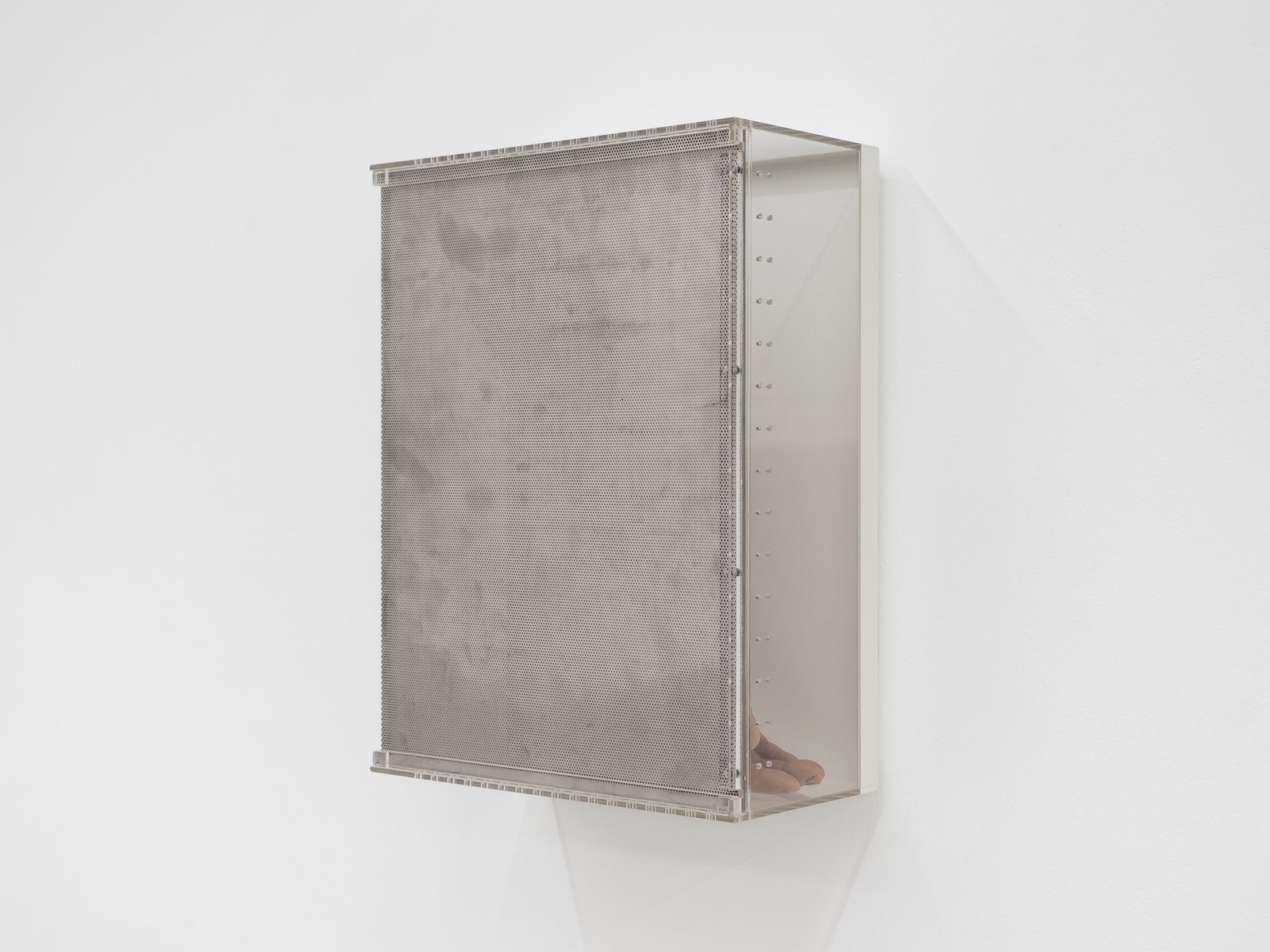
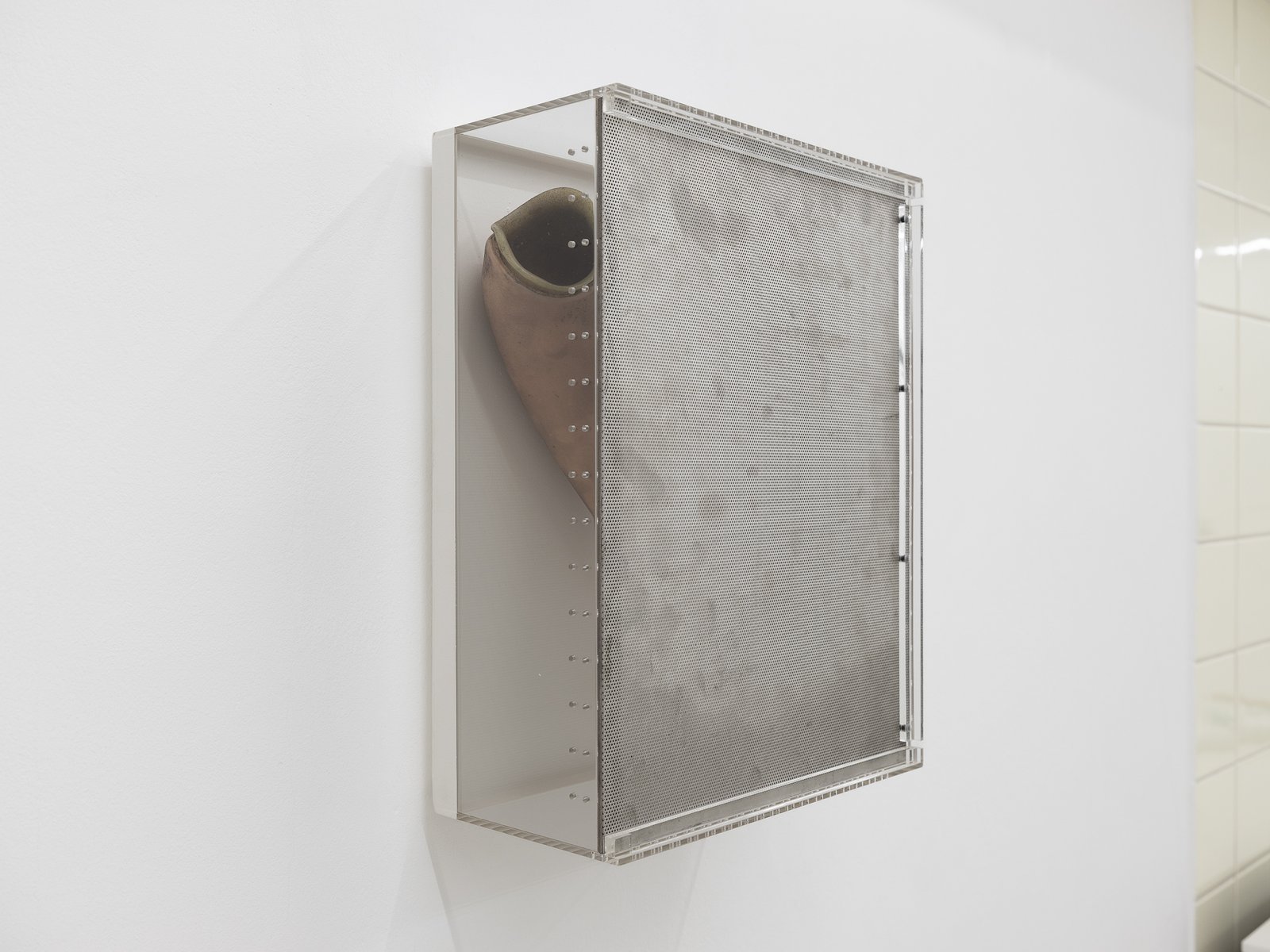
In “Beauty Box”, Walde addresses the idea of the prosthesis – as an aid that embodies both visibility and invisibility. The prosthesis is installed within a box, protected yet exposed, while a metallic screen guides the viewer’s gaze and enforces a deliberate, almost intimate act of looking. Here, the seemingly functional becomes a poetic object of contemplation – a reflection on vulnerability, beauty, and identity.
Text: Mara Sporn