




Collagen is a valuable resource: the body’s most abundant protein. Amino acids are bound together in a triple helix forming an elastic structure that holds us together with a degree of pliancy, like a flexible filament woven through our skeletons and flesh. The word itself stems from the Greek for glue creation: kolla. The substance is generative (gen), healing, and strong. It constitutes our skin, fascia, bones, hearts, joints, ligaments, and tendons. Extracted through an ancient process of boiling from animal skins, it can also serve to preserve and hold together various utensils or add tensile strength to objects that require flexibility and absorption.
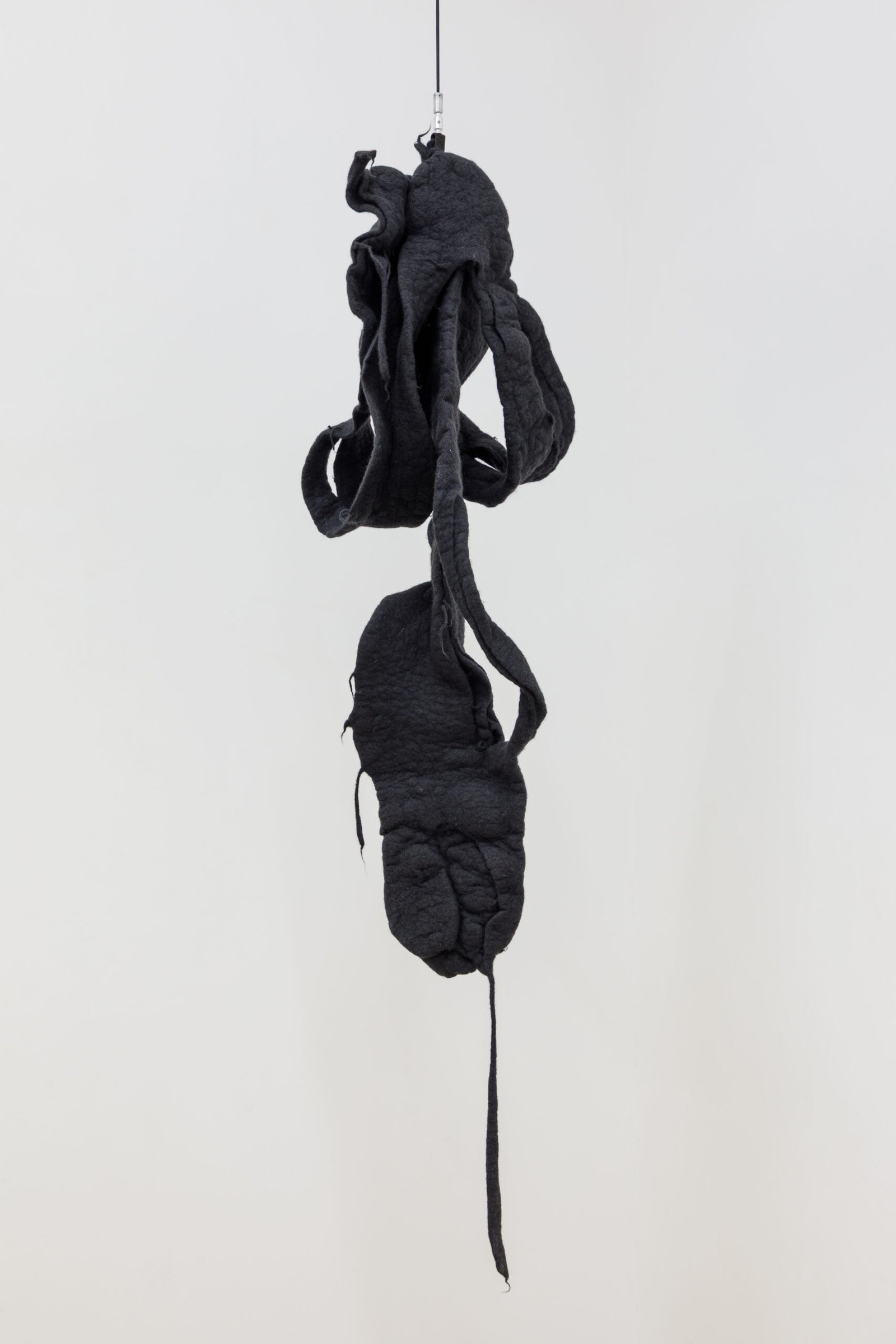
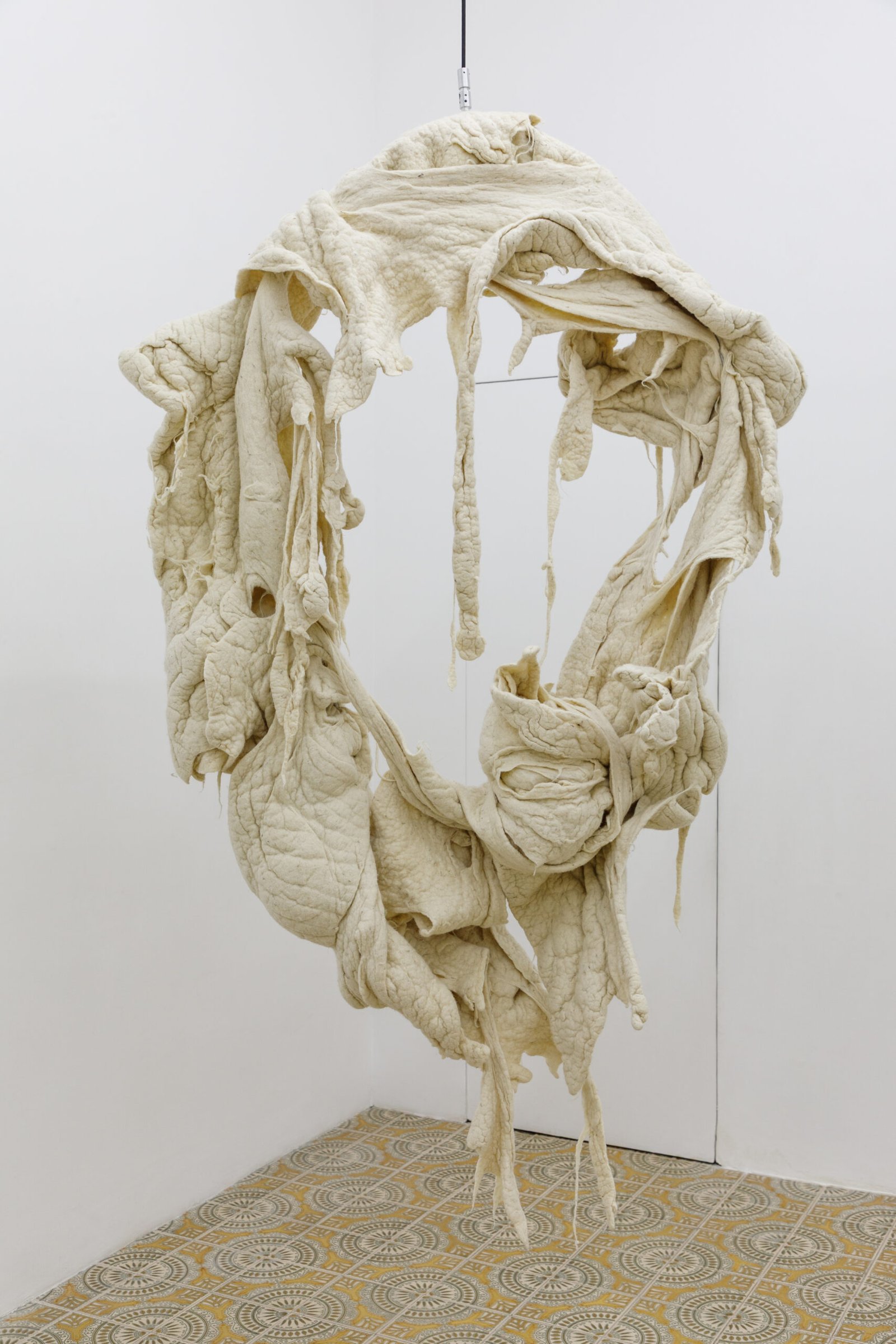
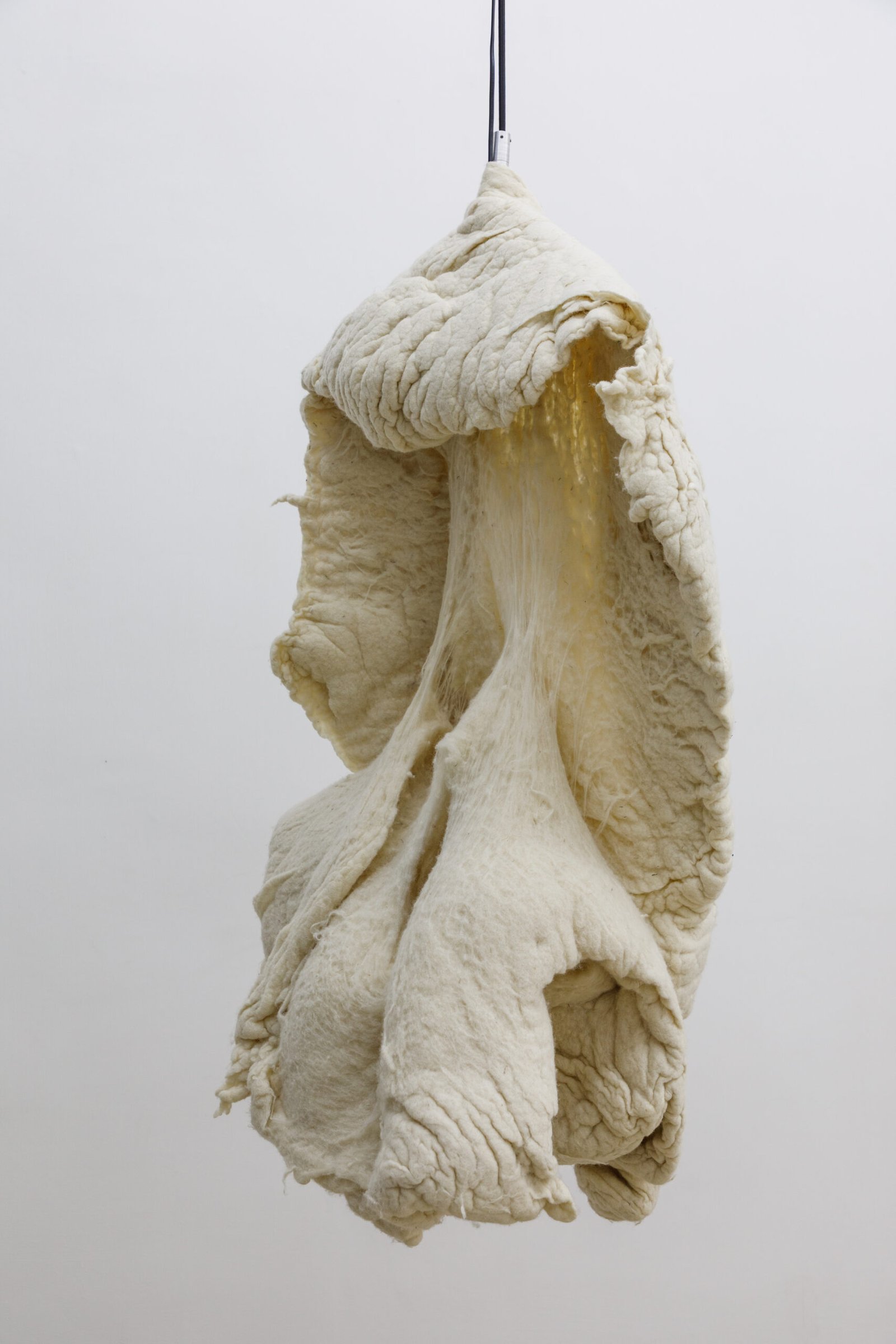
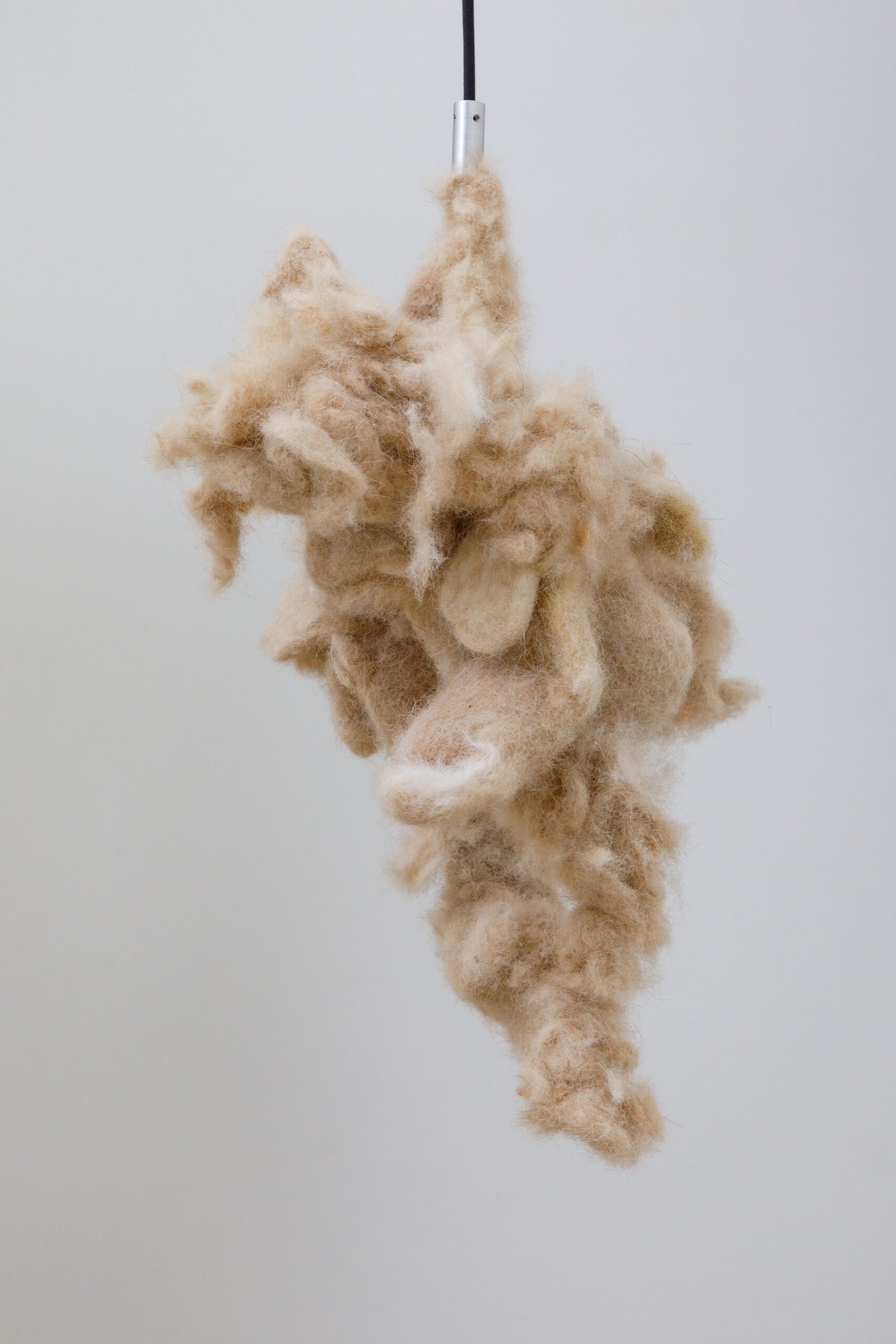
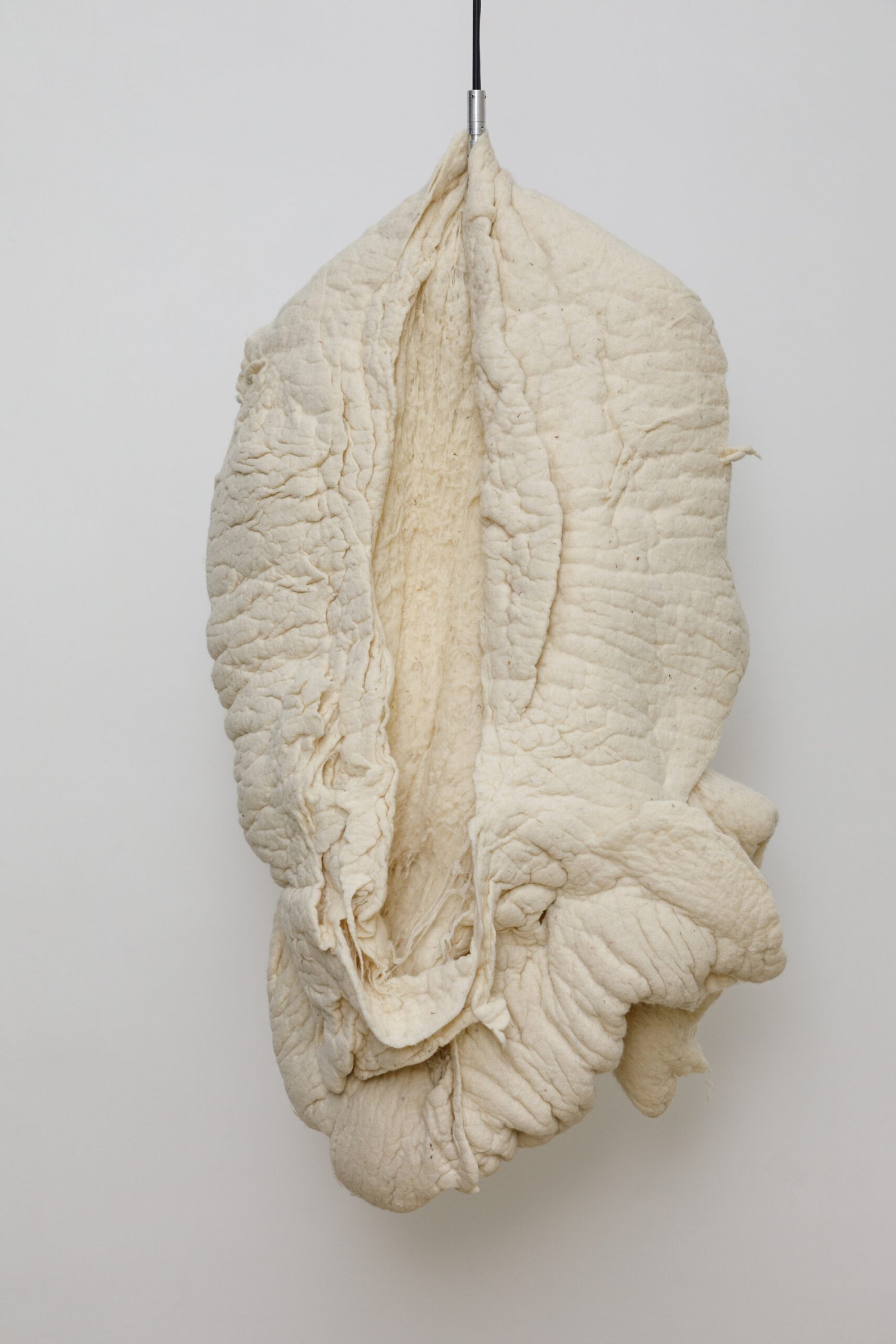
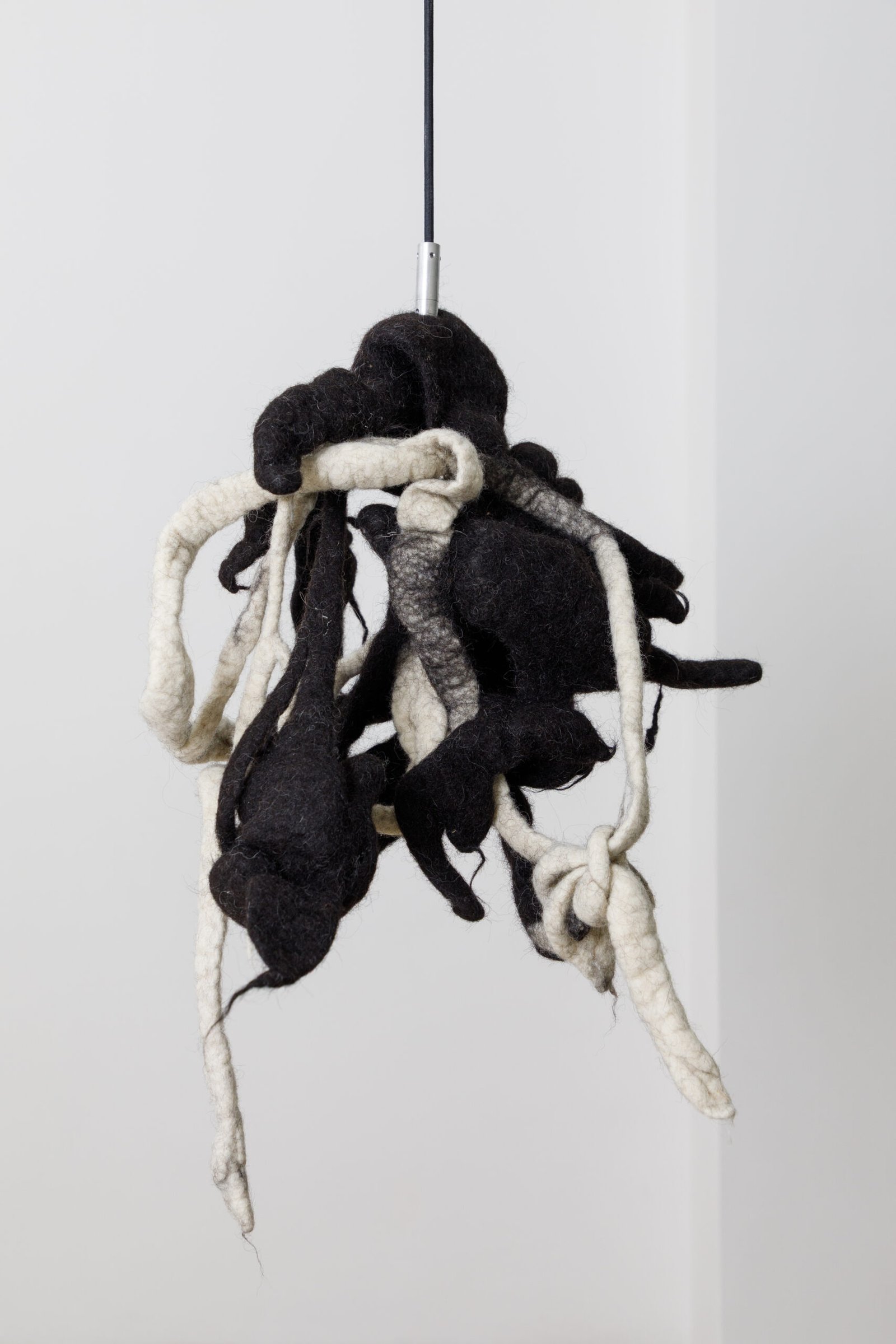
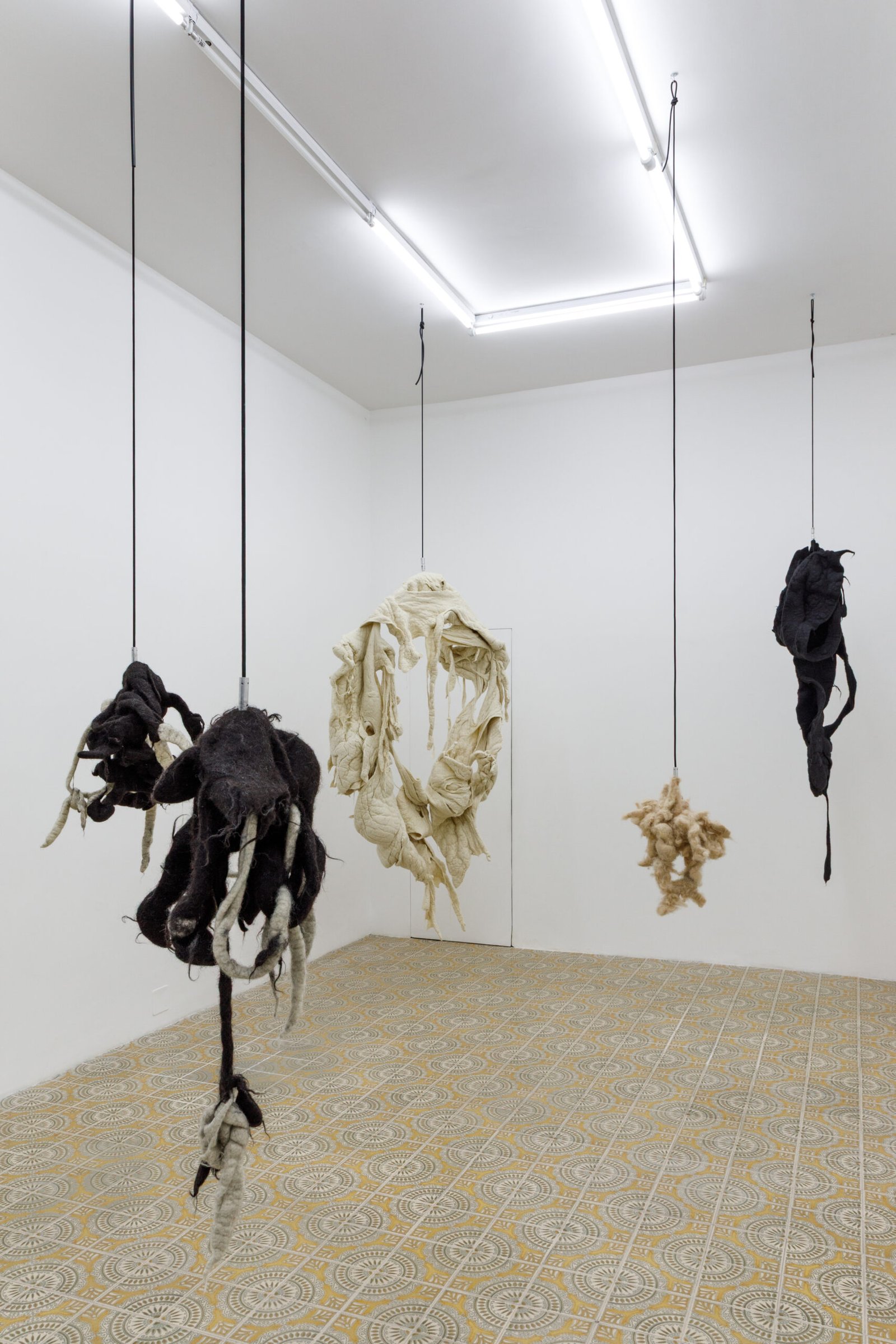
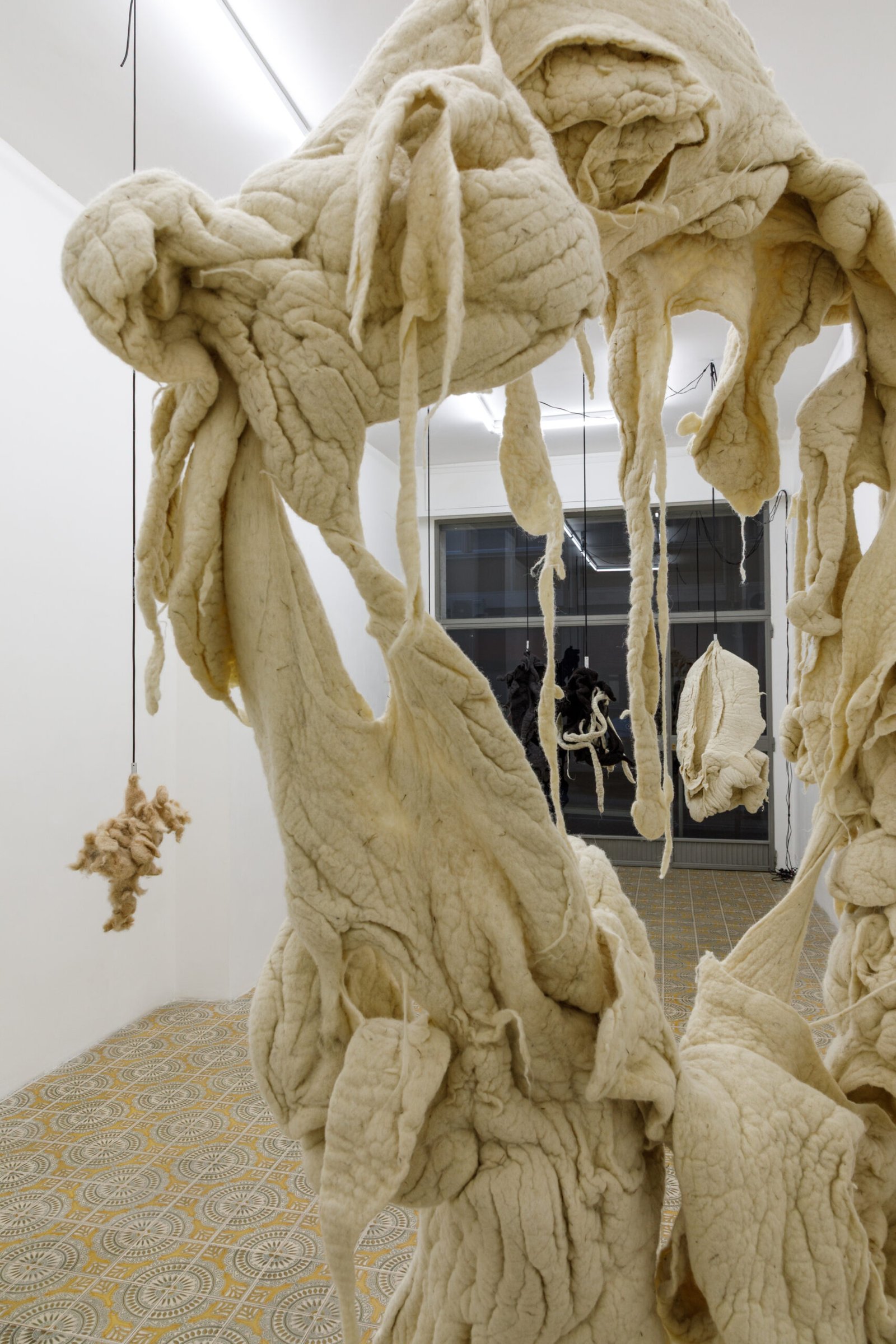
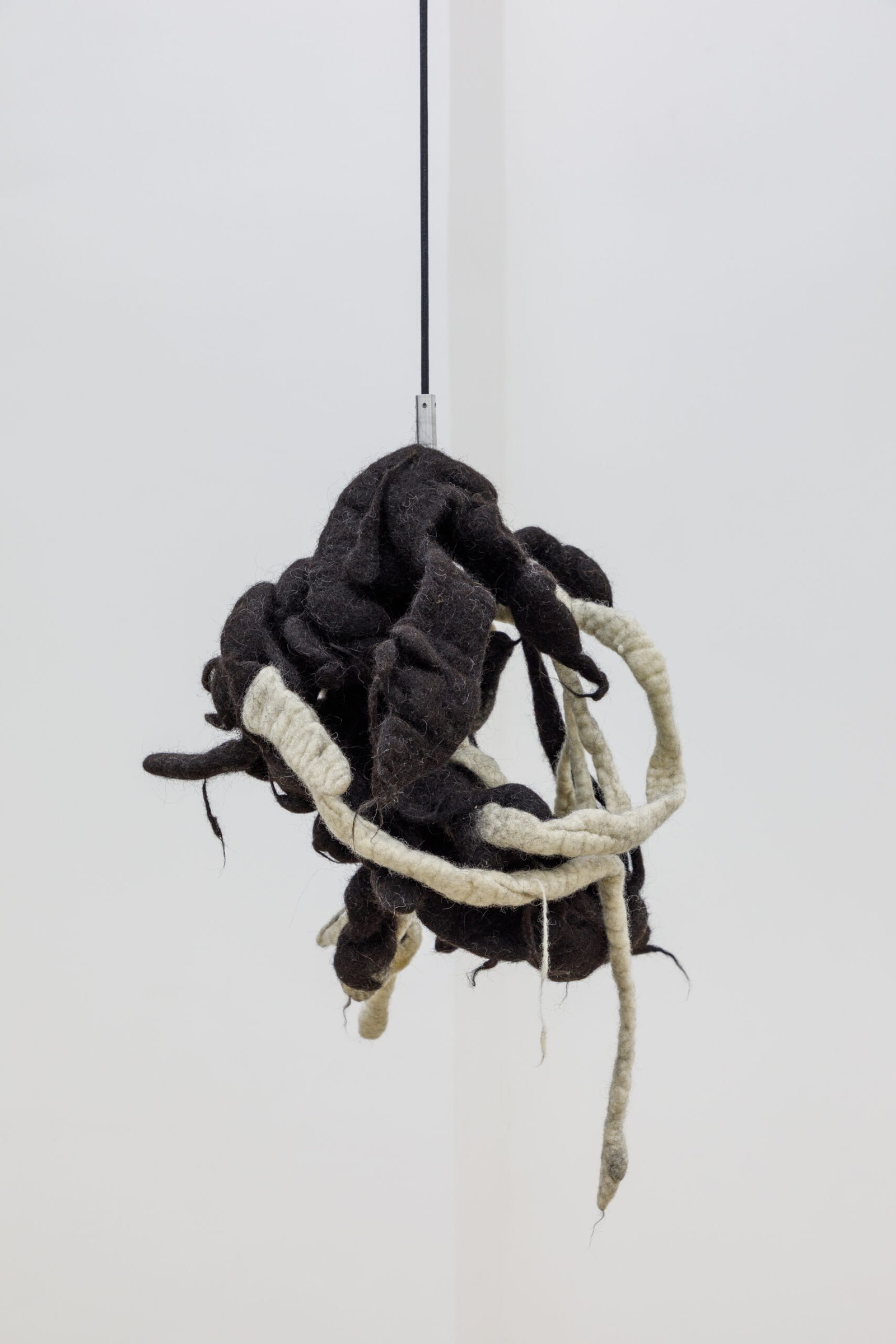
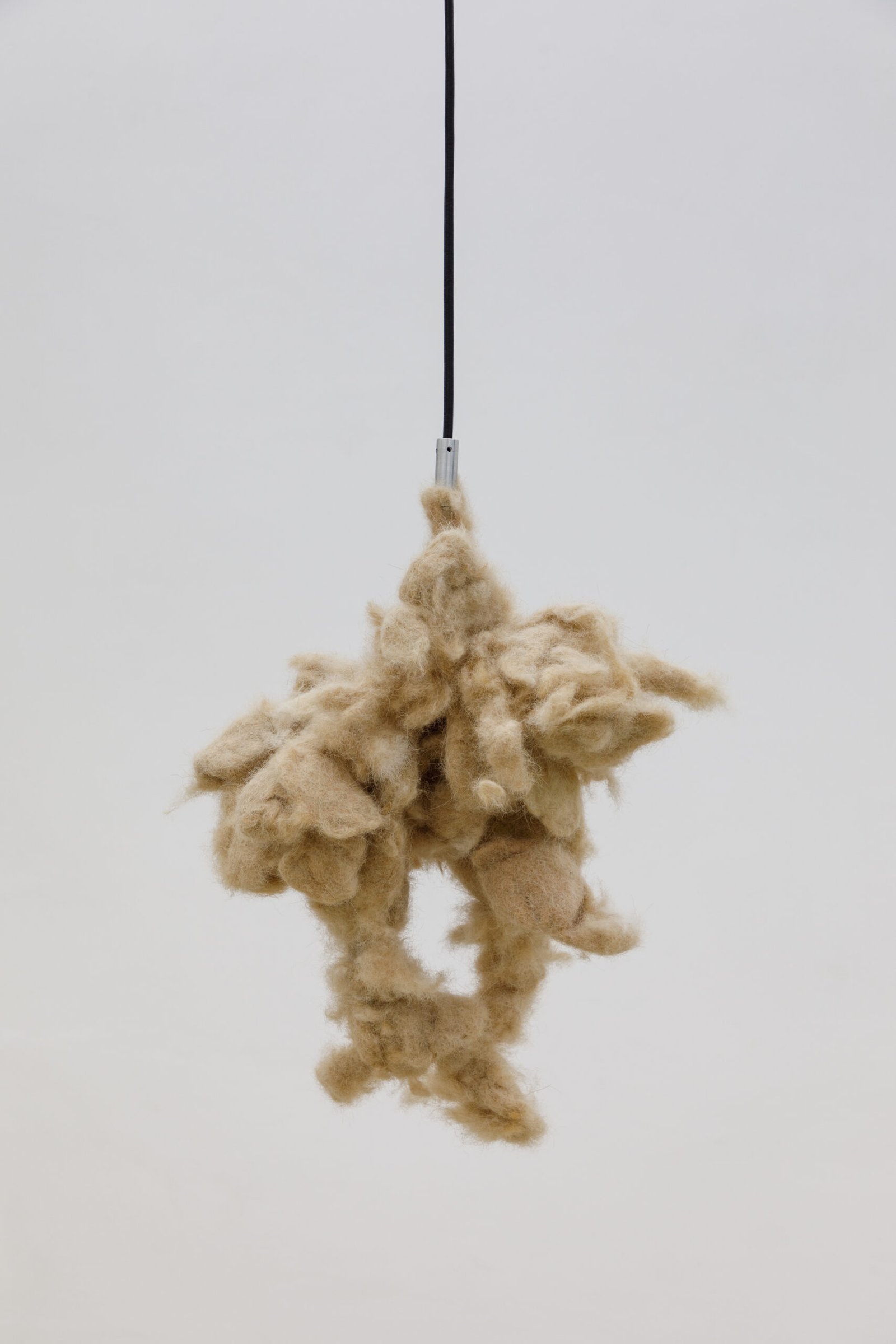
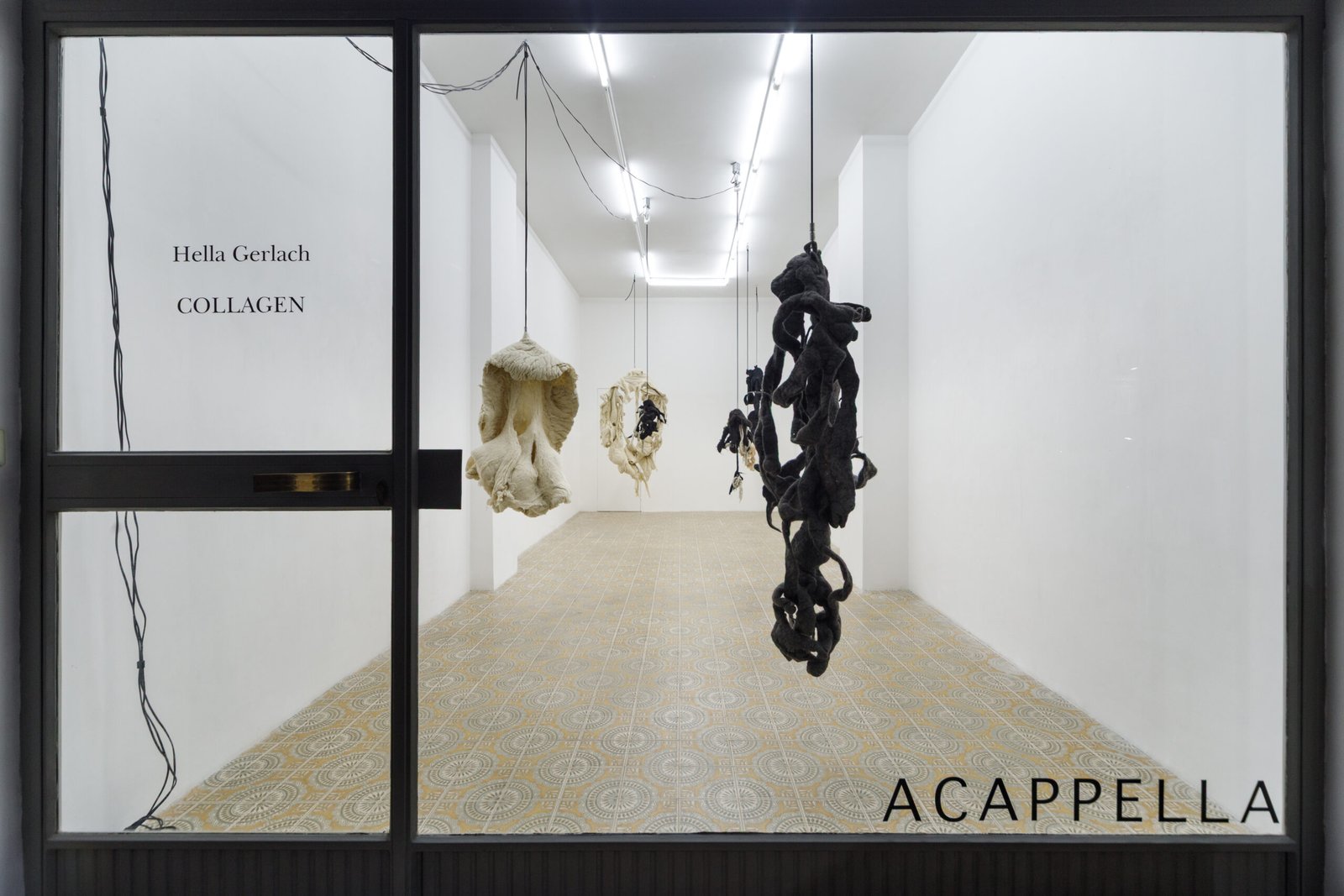
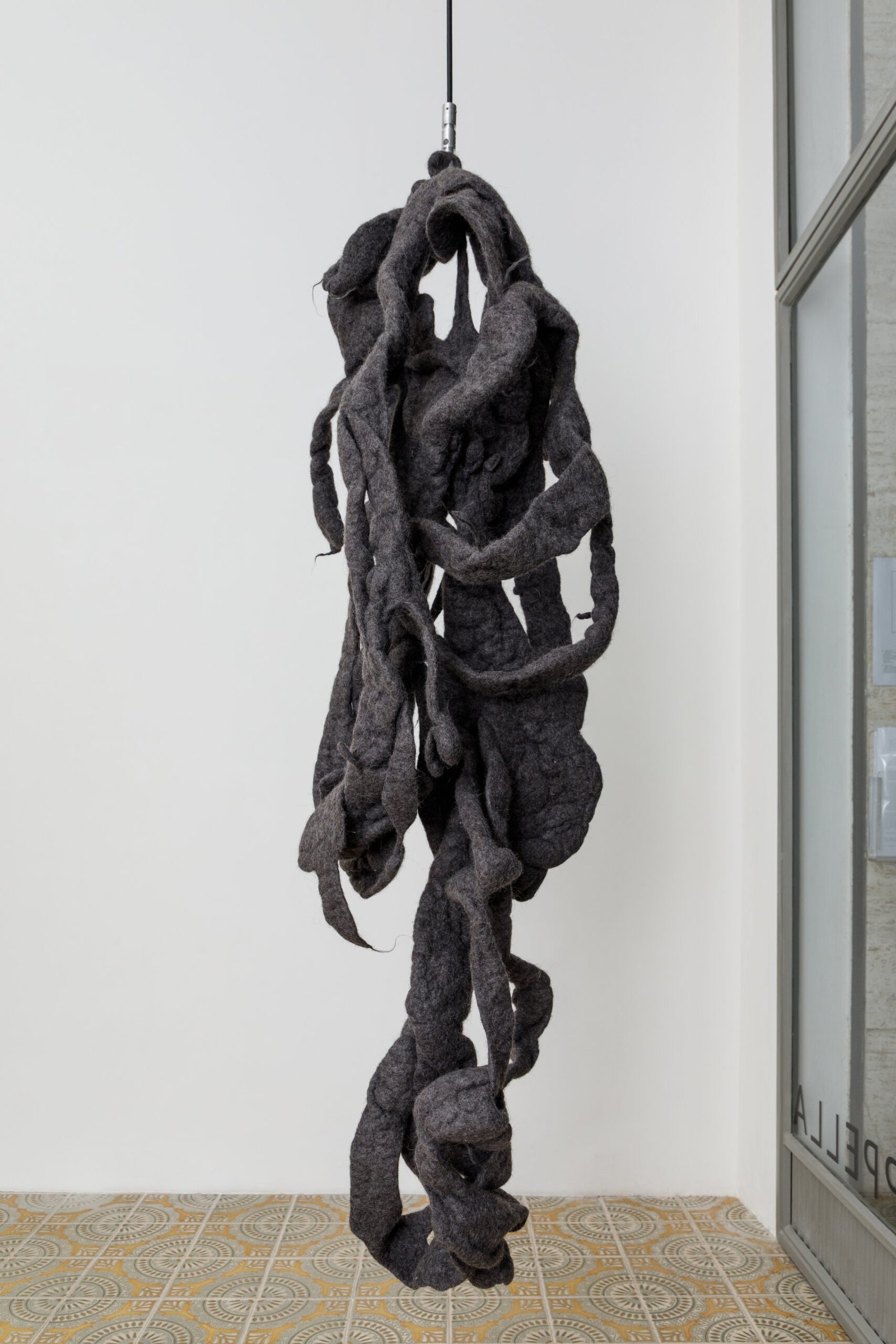
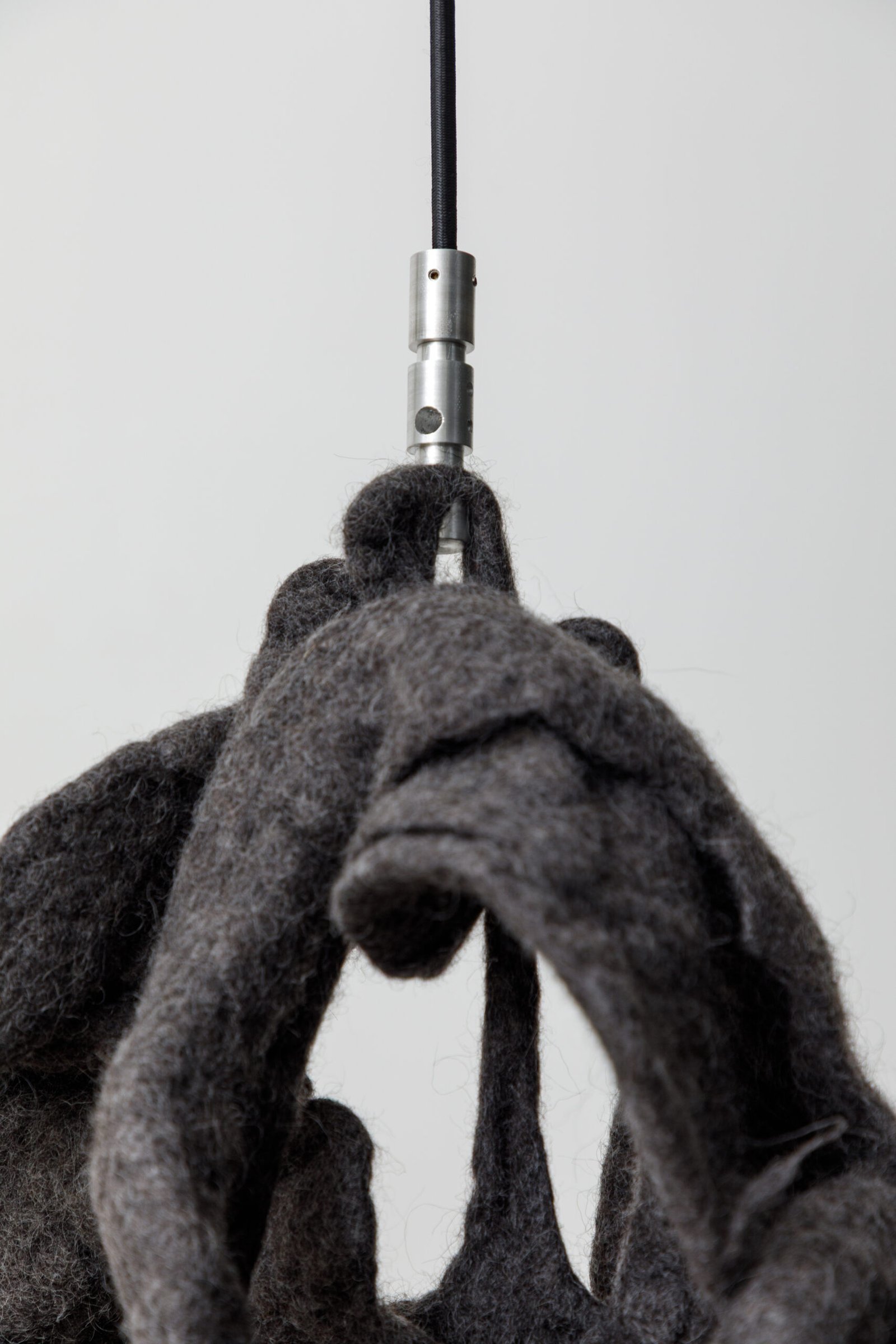
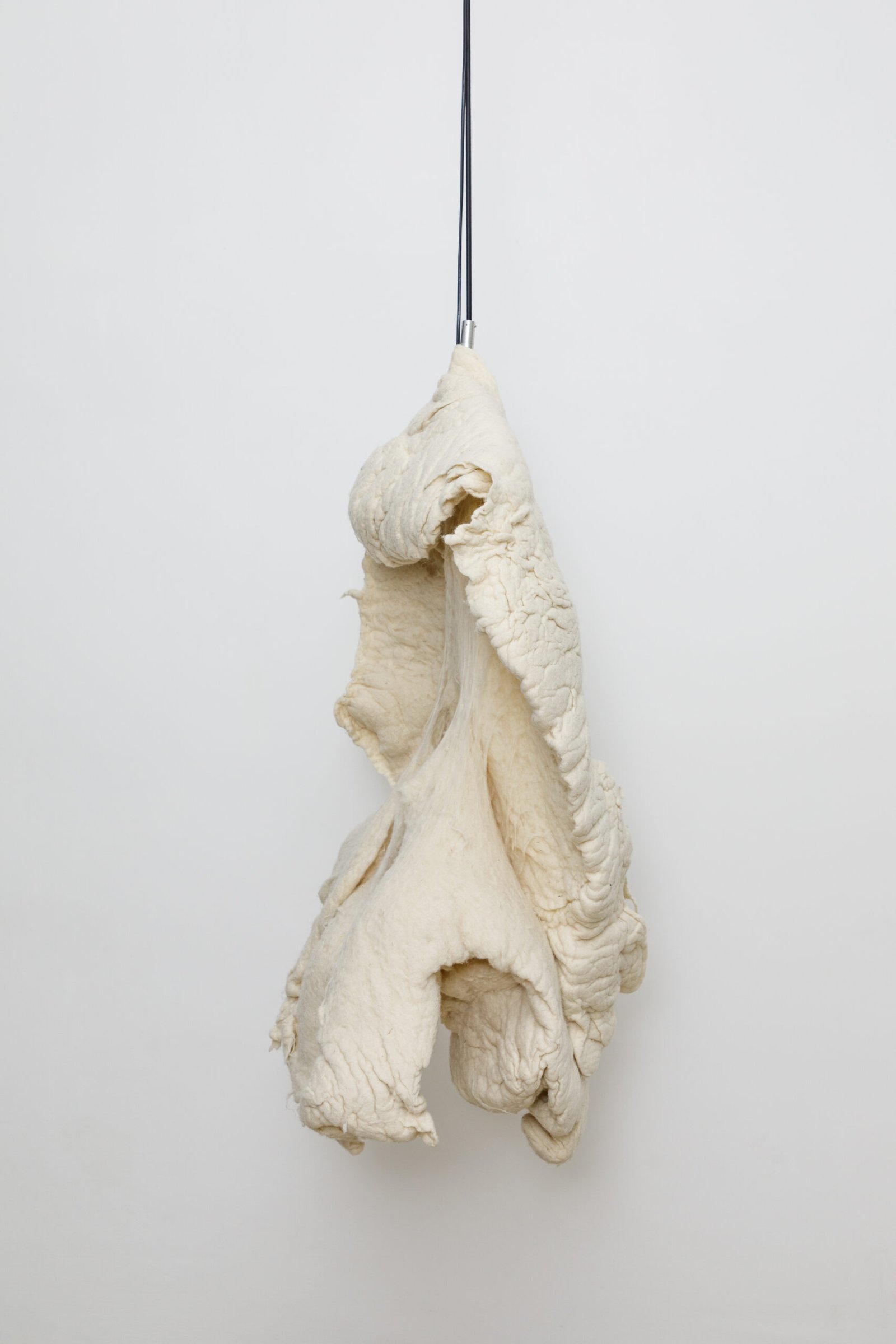
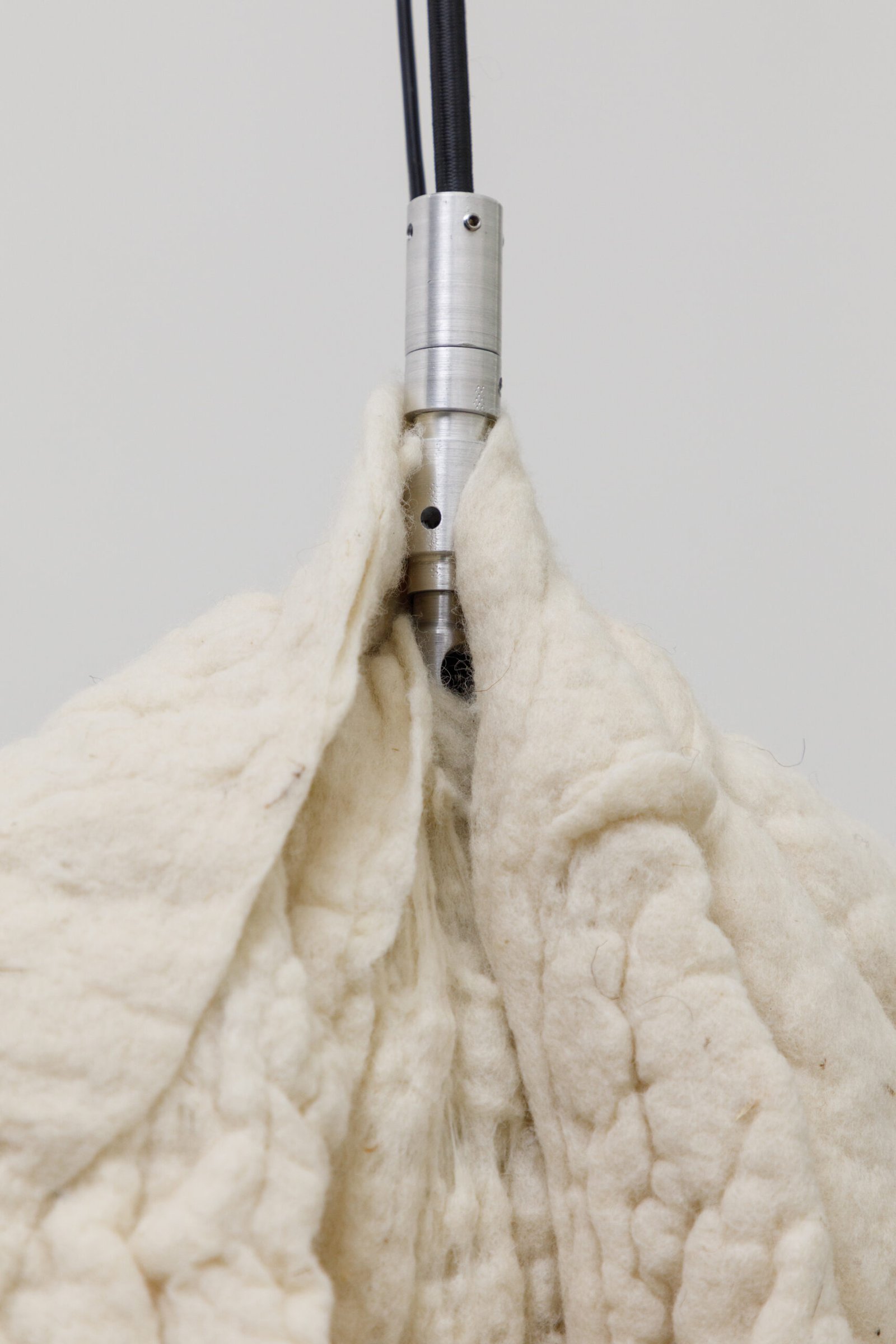
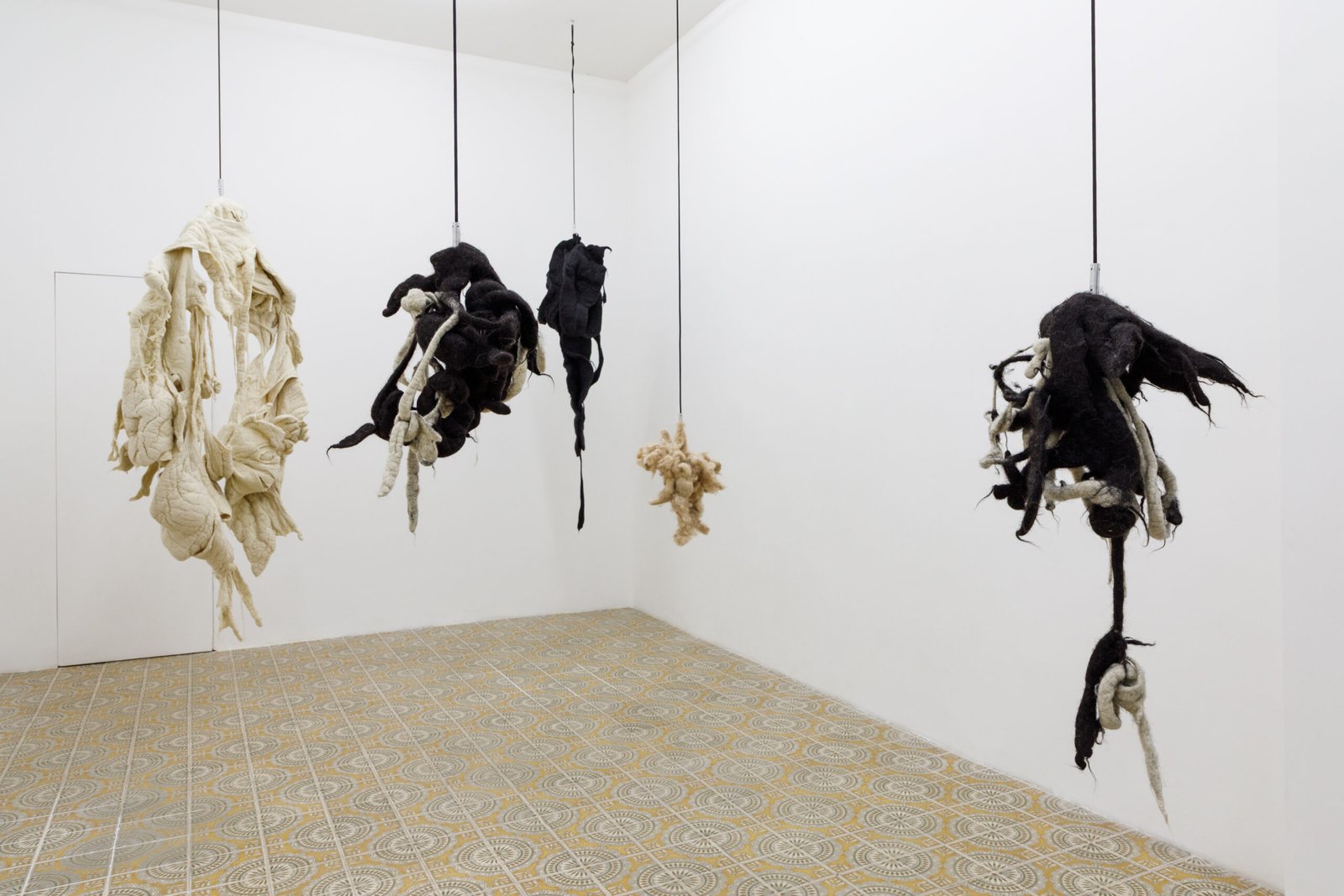
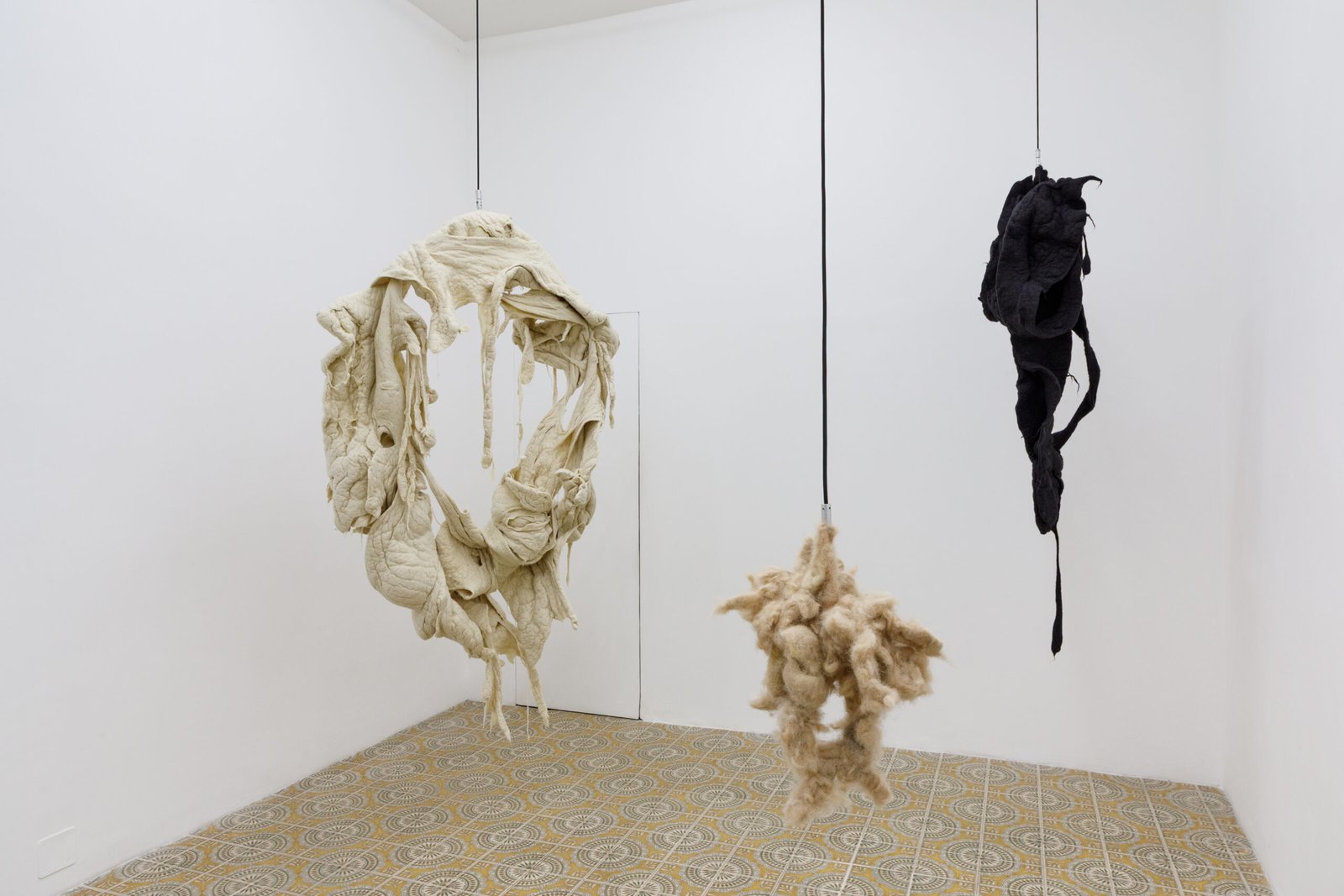
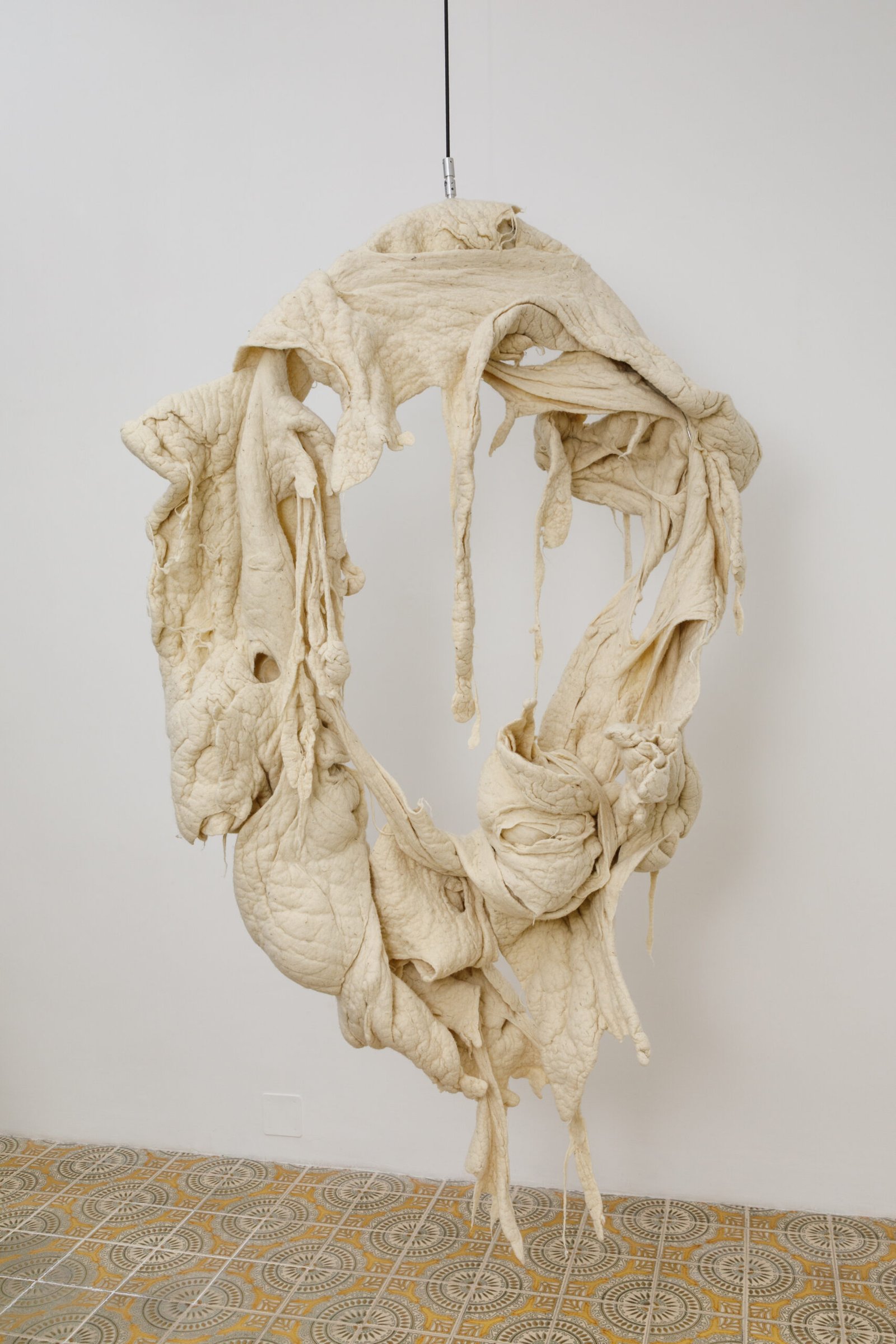
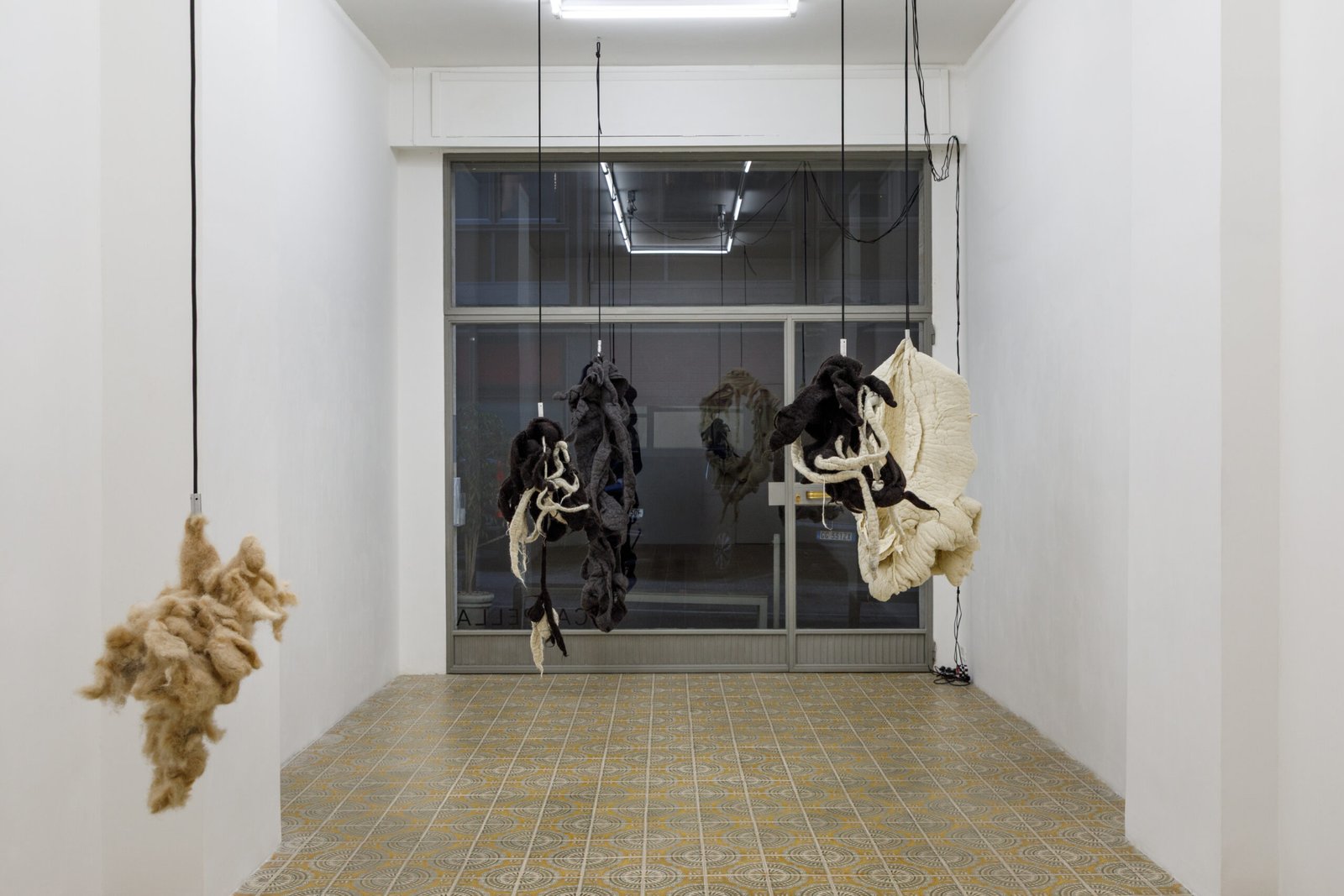
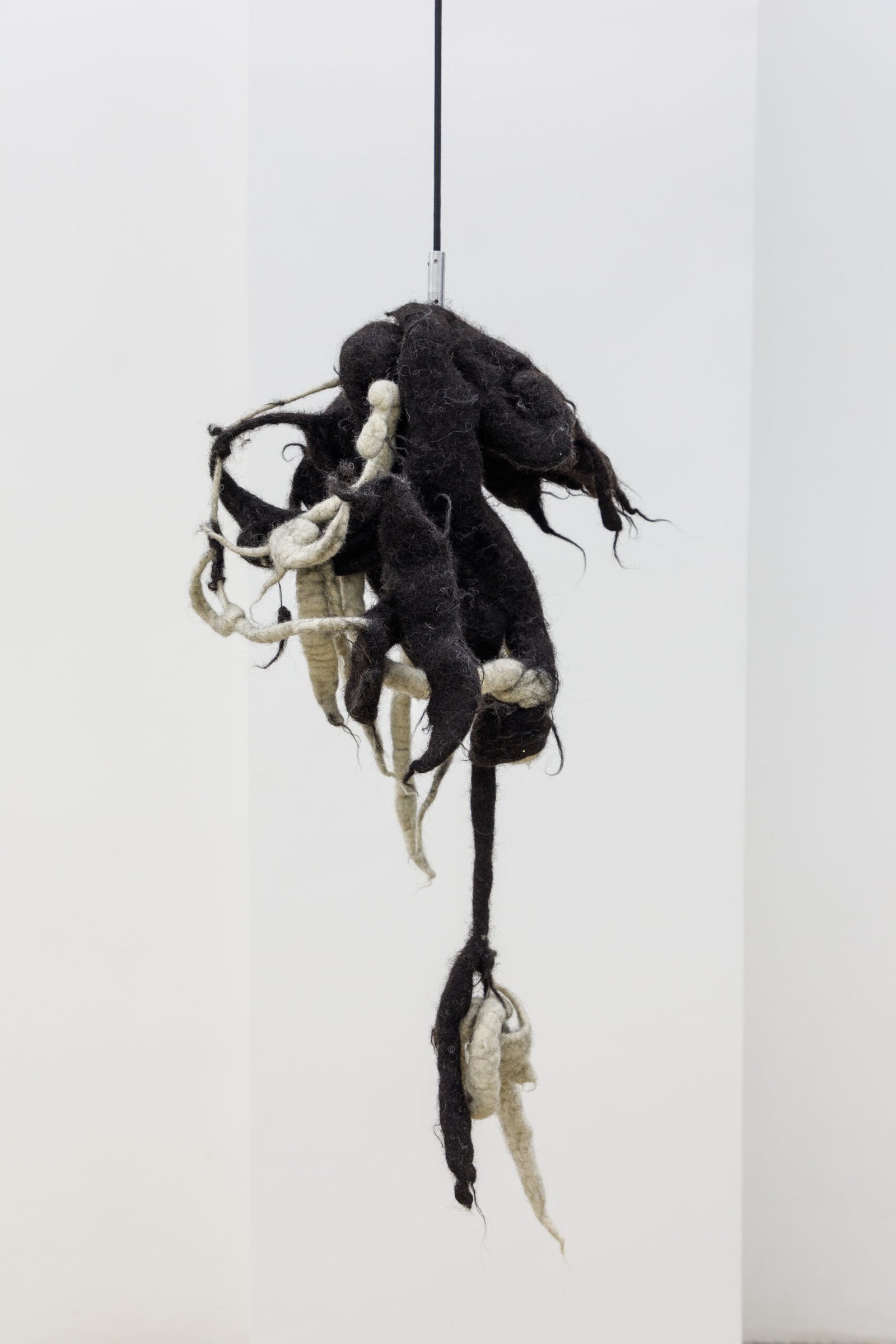
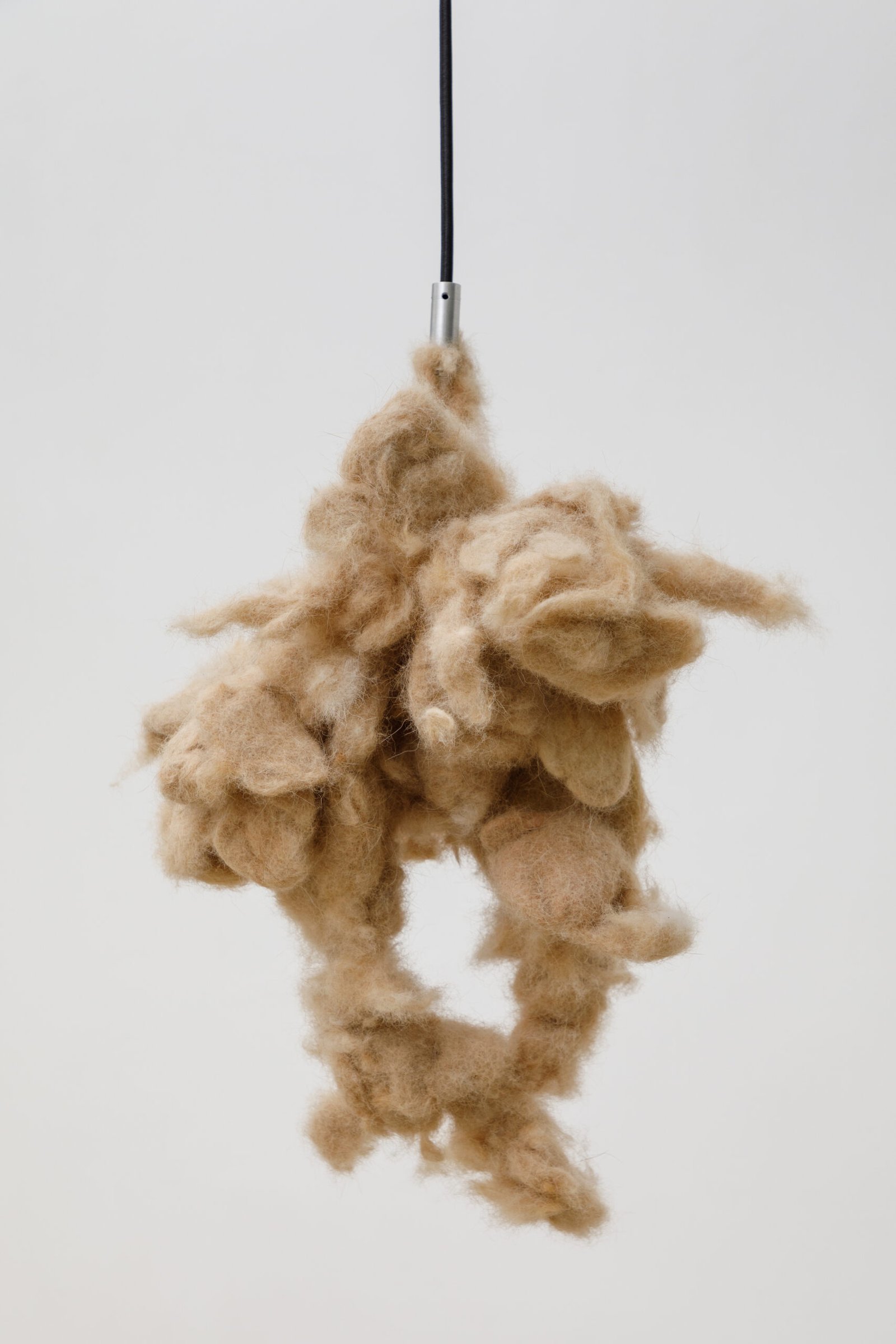
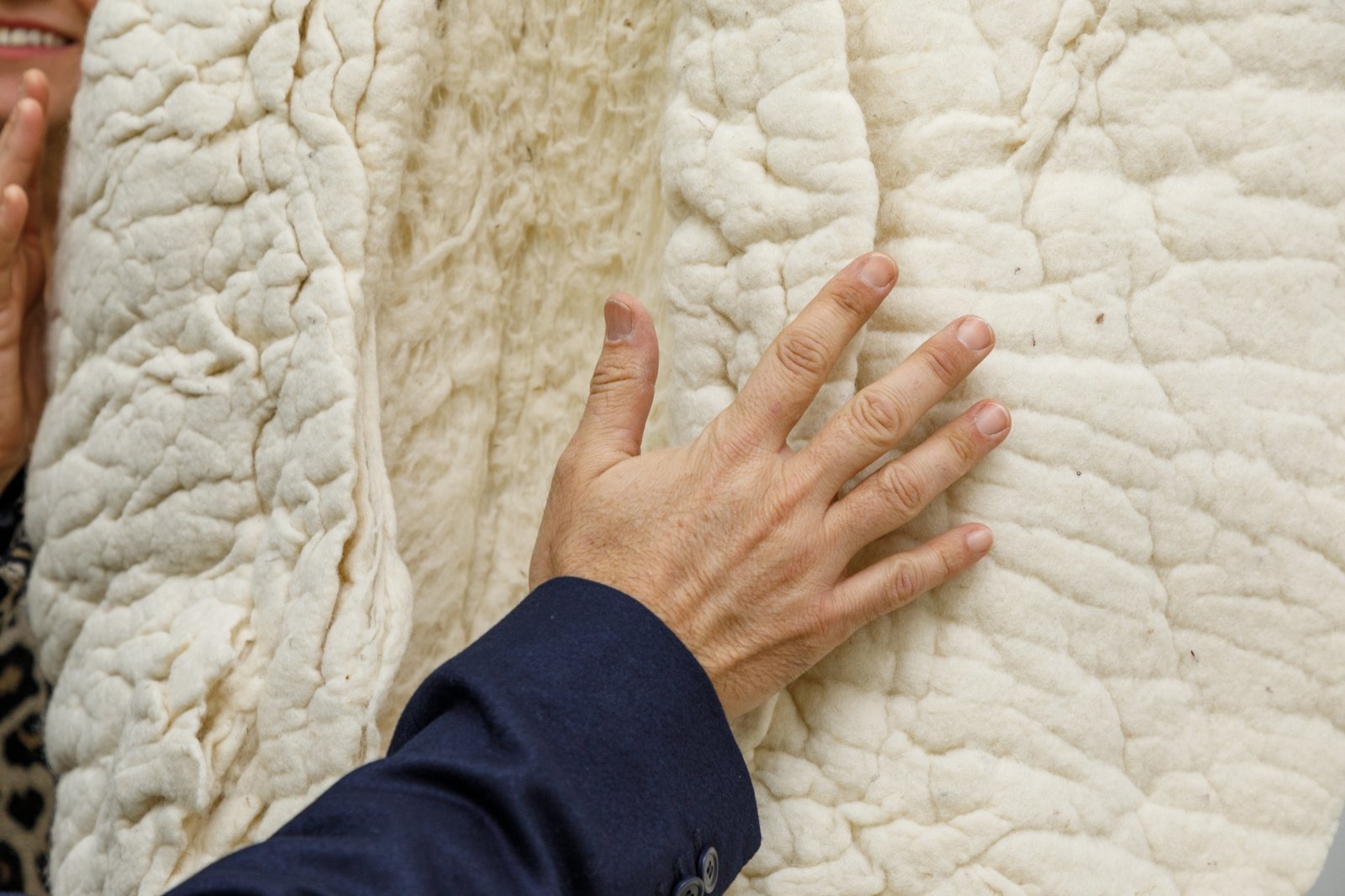
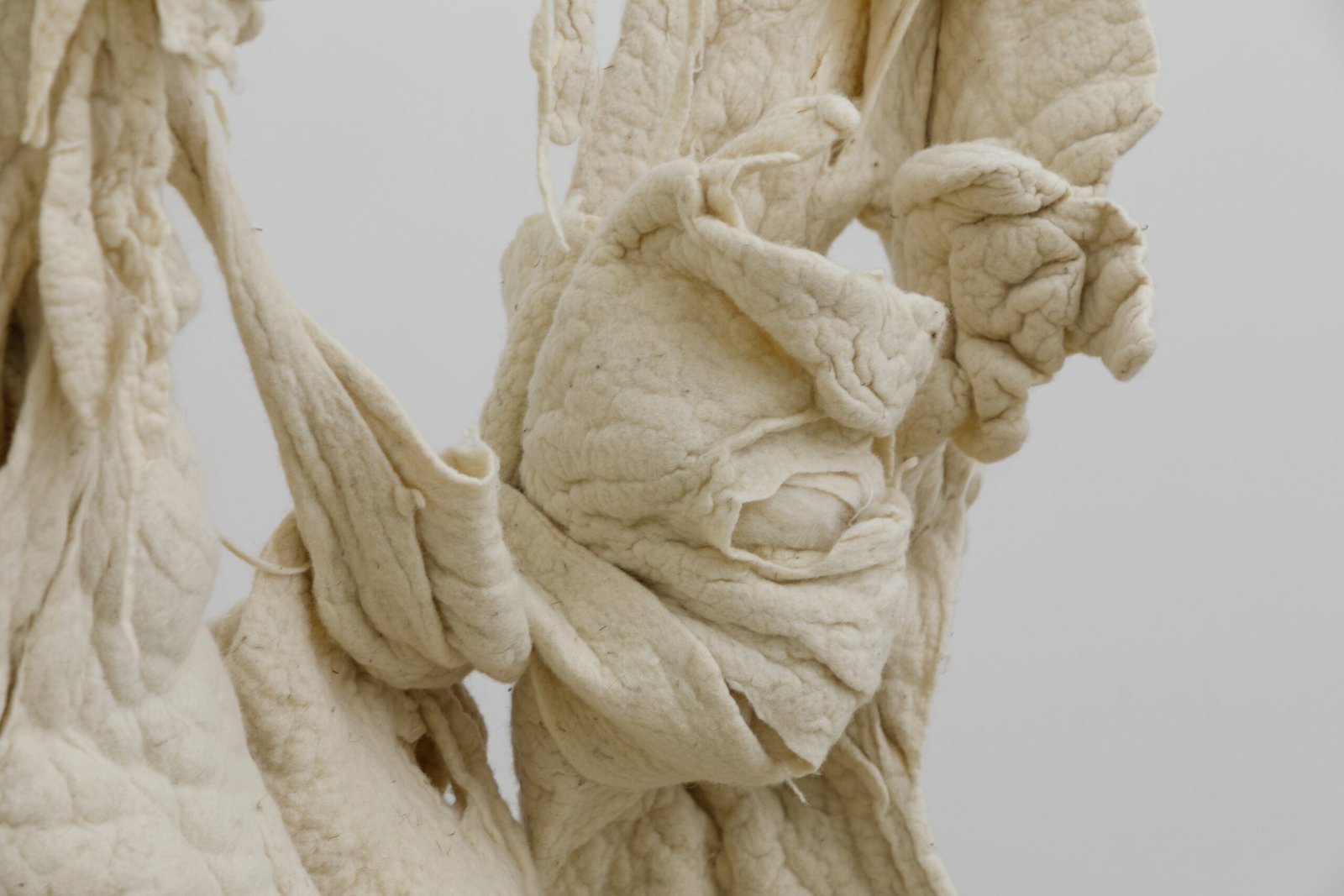
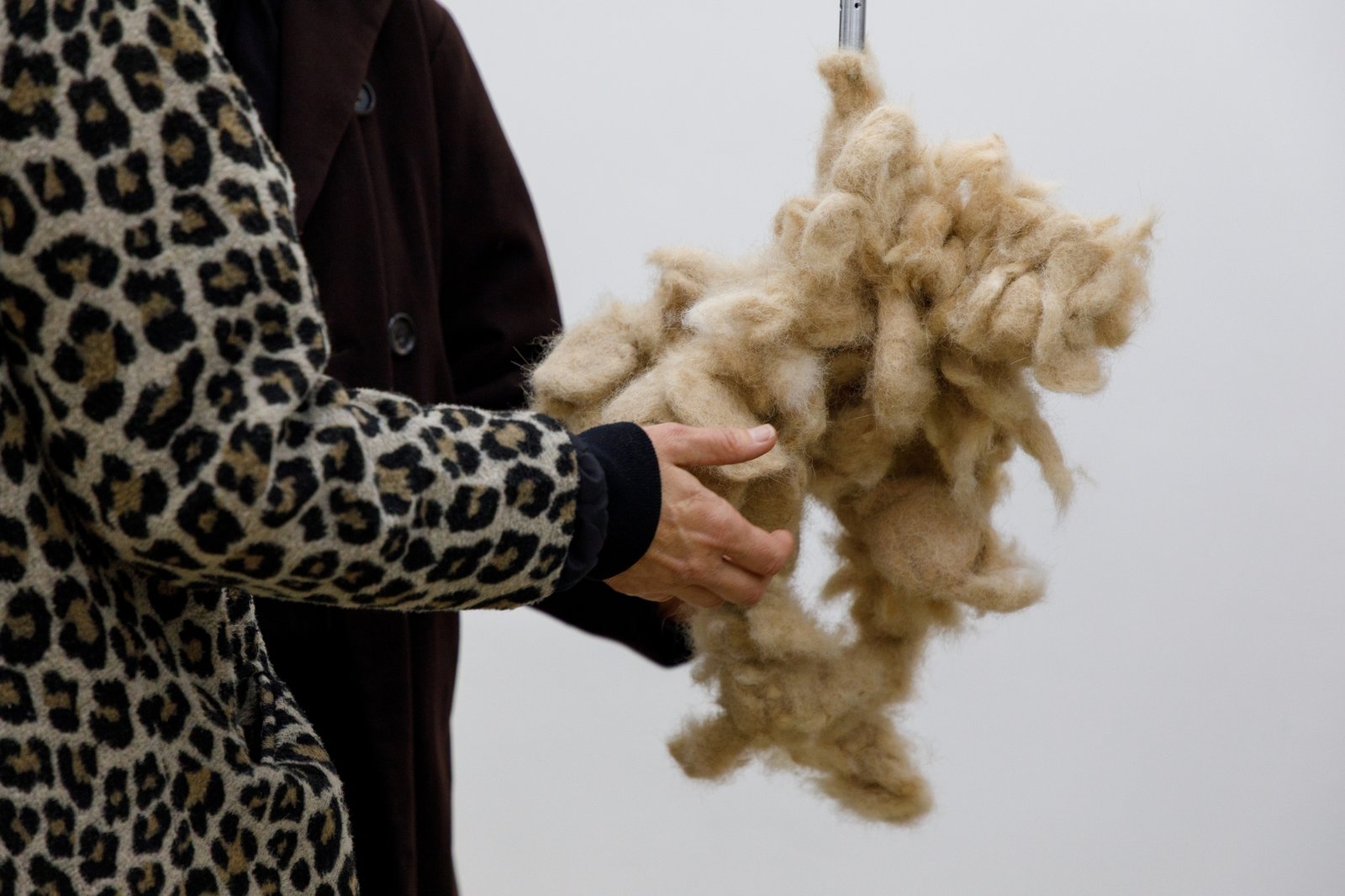
Hella Gerlach’s fifth exhibition at Acappella takes Collagen as its title and leitmotif. A group of recent works hangs from the ceiling. Like felted innards, appendages and bodily tissue, they sway and swing from metal fixtures and elastic bands. They move when we approach them, responding to our presence. These dangling tissues also move without us: spinning and twisting or even reacting to one another through smart-learning implants and joints that teach them to dance together like a swirling helix. These are hybrid structures: fleshy and corporeal, but also sometimes carrying non-biological implants. Hovering ambivalently between body and technology, they offer both possibility and vulnerability. Their differently colored forms are comprised of folds and stringy interwoven skeins of wool, which the artist has processed into felt, sculpting them in a manner that resembles intestines, or inflated microscopic views of tissue. Some of these furry bodies are made of wool sheered from llamas in a community petting zoo, where animals and humans gather: the artist, her child, and Andor the llama; Schnitzel the cashmere sheep or Joseph, a Japanese Shiba Inu dog. This tissue is simultaneously highly abstract and deeply material; different kinds of bodies assembling. It is not the connective tissue of anyone in particular, but stands in for tissue in general: it is a connective, colla-gen-ic substance that points to a pulling together, an outward-reaching and enveloping force that implies a conjoining of limbs, substances, body parts, or disparate systems and networks. Like a collage, they bring structural associations together. At the same time, this collagenic structure is always in flux. These bodies can change and morph over time; they move and encourage us to think of how change might occur through touch, a sense that grows from haptic connections and tactile transfer. This bodywork is something the artist practices in her own daily life, using touch to communicate with her child who cannot speak, and with her mother, who has a cochlear implant. Touch reaches across generations, presence, and absence. Gerlach invites us to touch her works too. Acappella’s Clara and Corrado have received tactile instructions for use from the artist and can pass them along, like a chain of communication, so the objects become agents that bring together artist, audience, and gallerist over time. The instructions will be passed along only through the act of touching rather than speaking: a silent and sensual moment of tactile communication that is frequently used to teach awareness and bodily perception.
These objects may be abstract in their conceptual reach, but they are materially present and specific. Heated and washed into form, dyed particular colors (like those of wooly llamas or friends’ dogs), sculpted and shaped, they mingle with us in space. Bodyworkers helping patients with their posture sometimes suggest imagining a string running from the feet on the ground, through the legs and spine, then out the top of the head toward the sky and stars. This string is intended to connect the parts of body and align them upward. Gerlach’s connective tissues also hang together on an elastic string. But they hover downward, swinging, drooping, and swaying on an adaptive vector that spins the beholder into its woolly orbit. Their forms indicate that they have been touched and pulled into place. Their textures invite touch, addressing sensations of tactility and warmth through their fuzziness. This touch is at once conceptual and physical: A type of binding like a connective tissue, a generative glue that holds together, inside out.
Sasha Rossman