


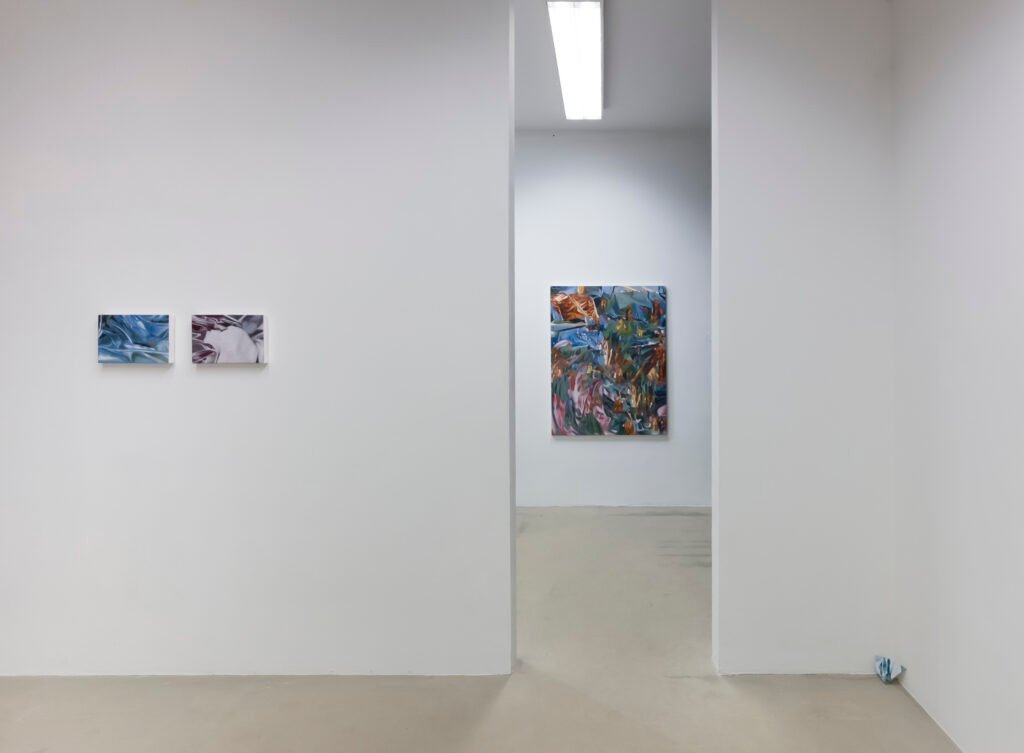
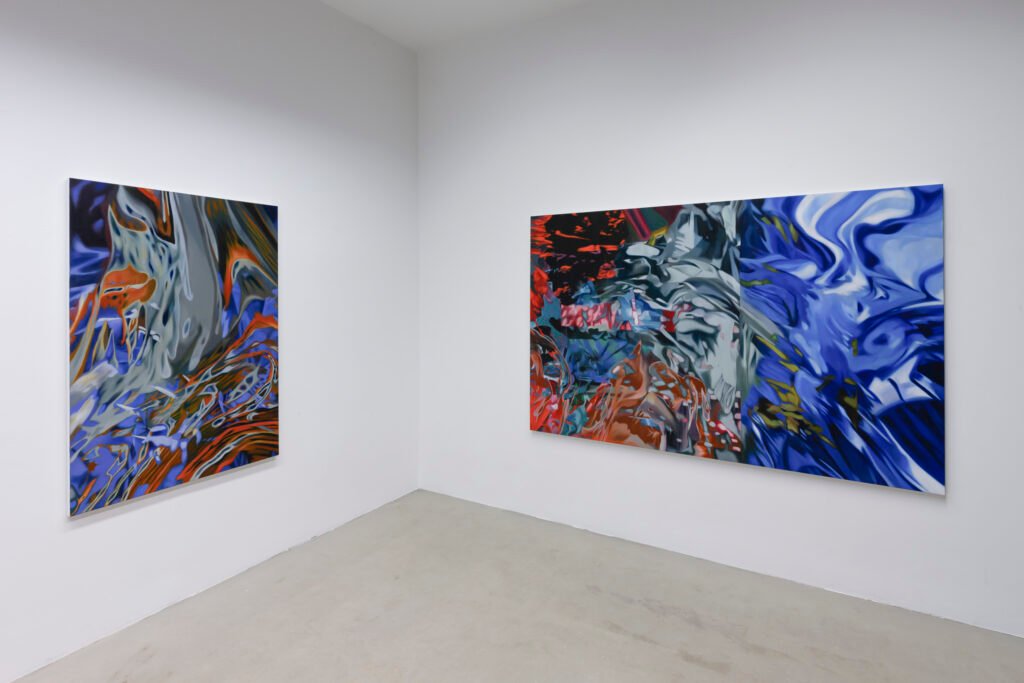
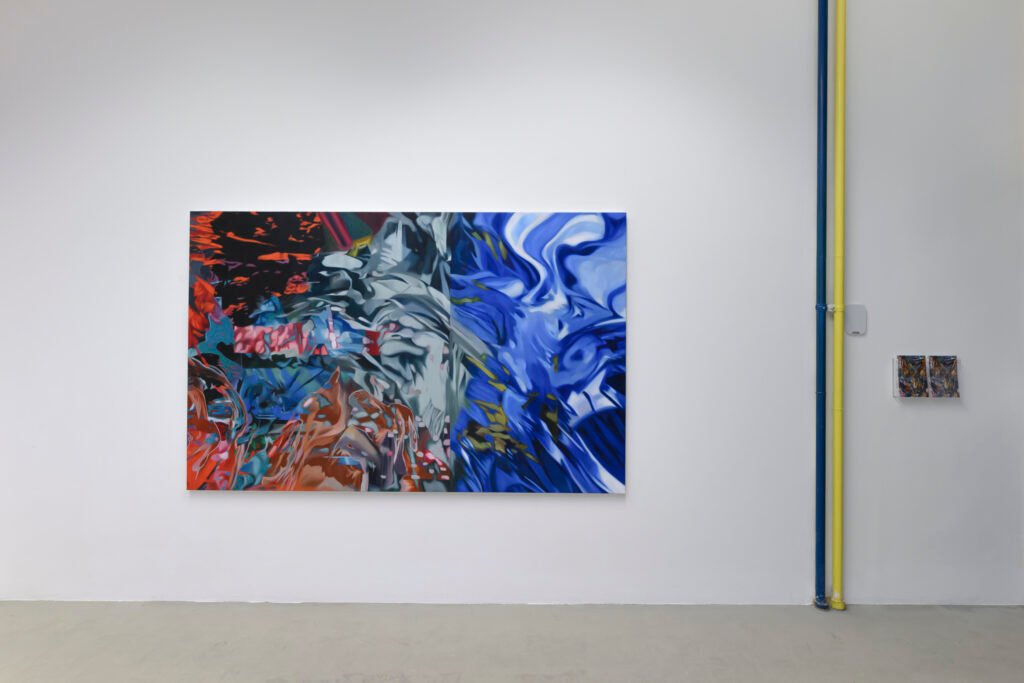
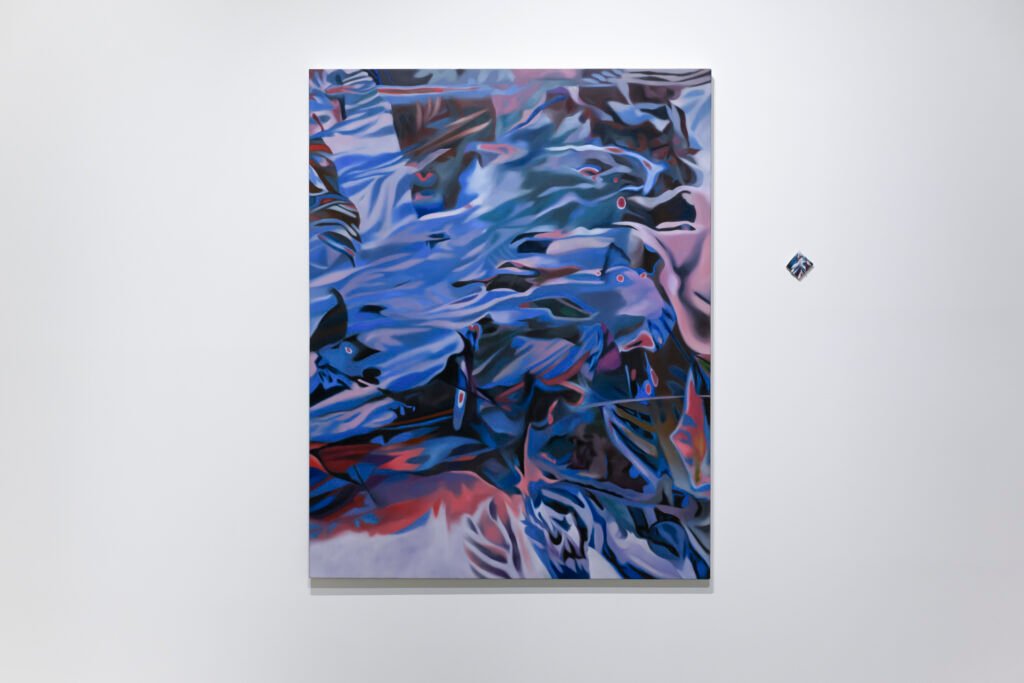
In the present, we will search in vain for a reliable sense of safety and predictability. With every step of progress, new burdens arise—burdens that can be observed as a form of causality akin to an everyday version of Everett’s many-worlds interpretation. With each new object, event, or change, reality splits into infinite possibilities of existence that delineate our choices and paths. Younger generations have not grown up with a sense of guaranteed events; every part of what once constituted self-evident milestones of life has been called into question.
One way of seeking security lies in the accumulation of objects. Even when this does not develop into a pathological disorder that overwhelms living spaces, the gathering of clothes, books, clippings, and other items provides a sense of protection, for at least these cannot be immediately taken from us. In this way, we create a safe space for ourselves, where objects and information are always within reach. A similar mentality often accompanies the obsessive collecting of digital data, which can accumulate endlessly in cyberspace and, at least spatially, does not burden us. Nevertheless, it leaves its trace on the environment and inevitably functions as a signpost of the collective psyche. The goal remains the same: storage, accessibility, and the feeling that our existence is safeguarded and verified by material and visual remnants—and thus perhaps also affirmed as meaningful.
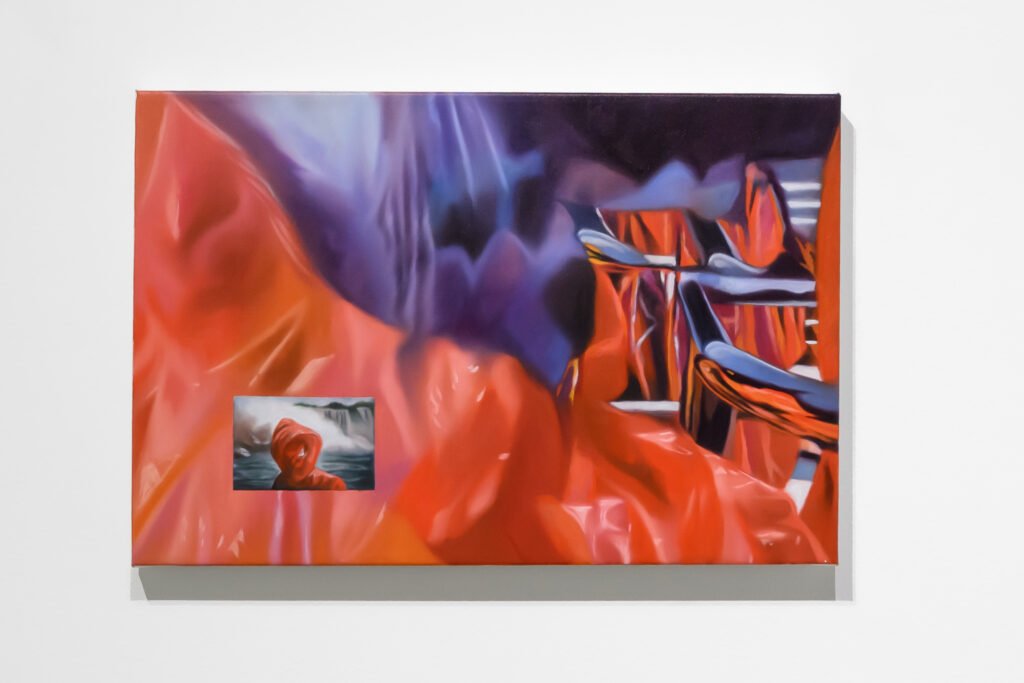
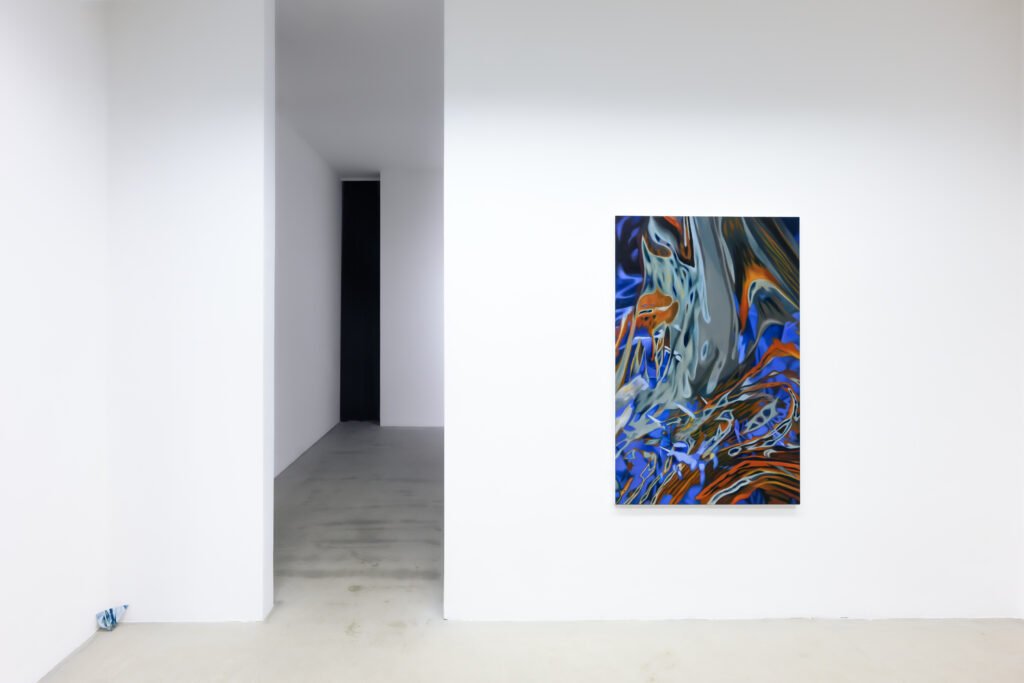
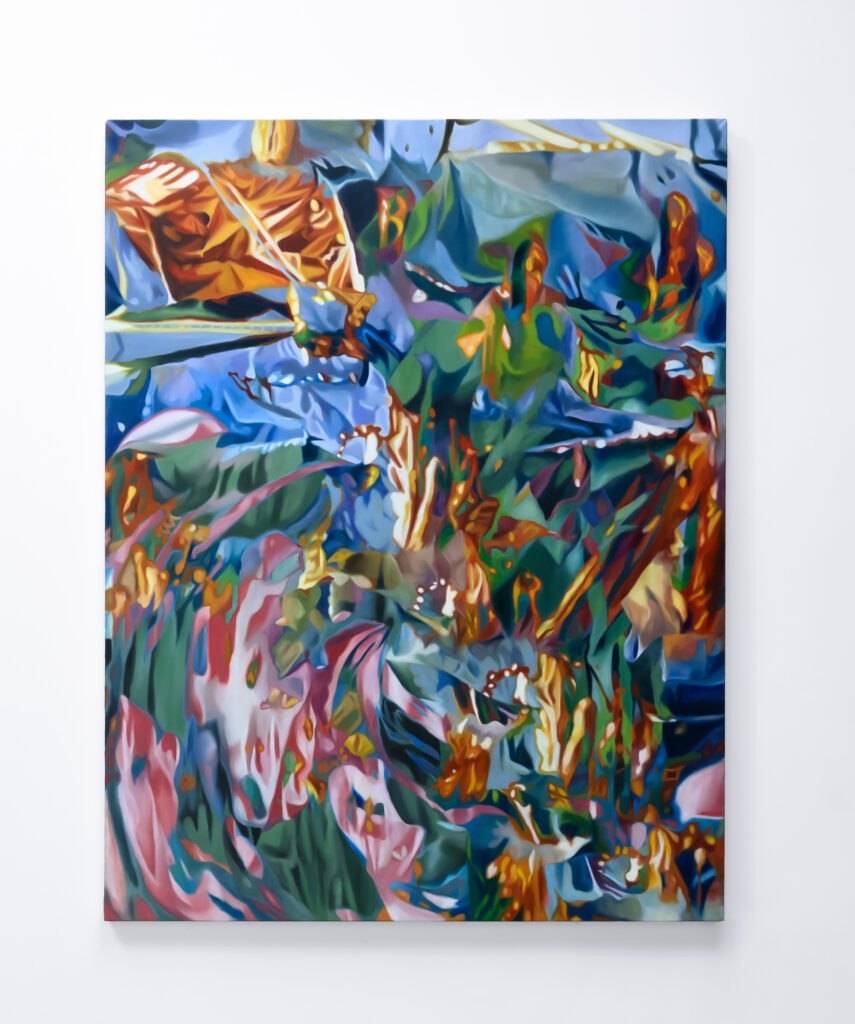
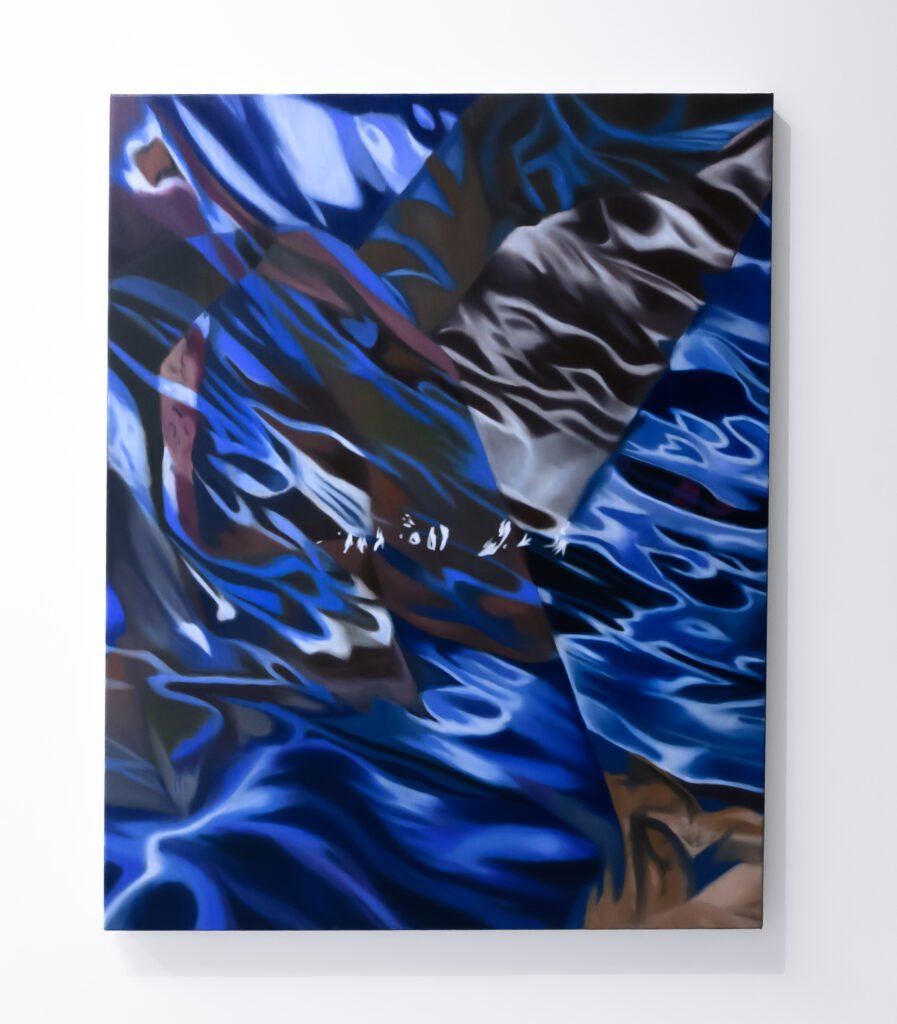
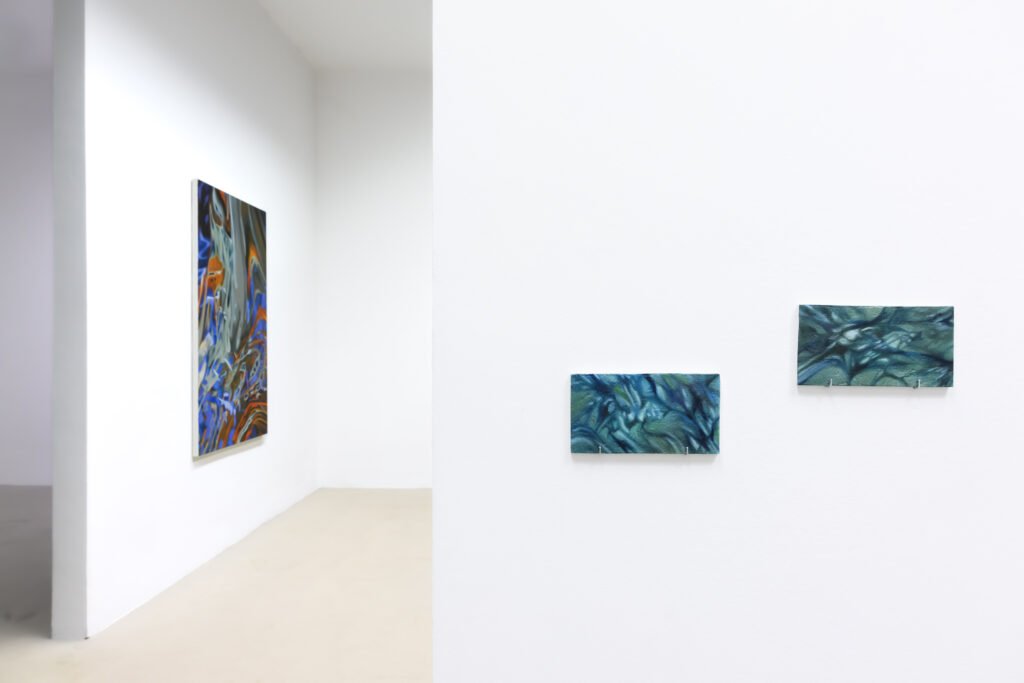
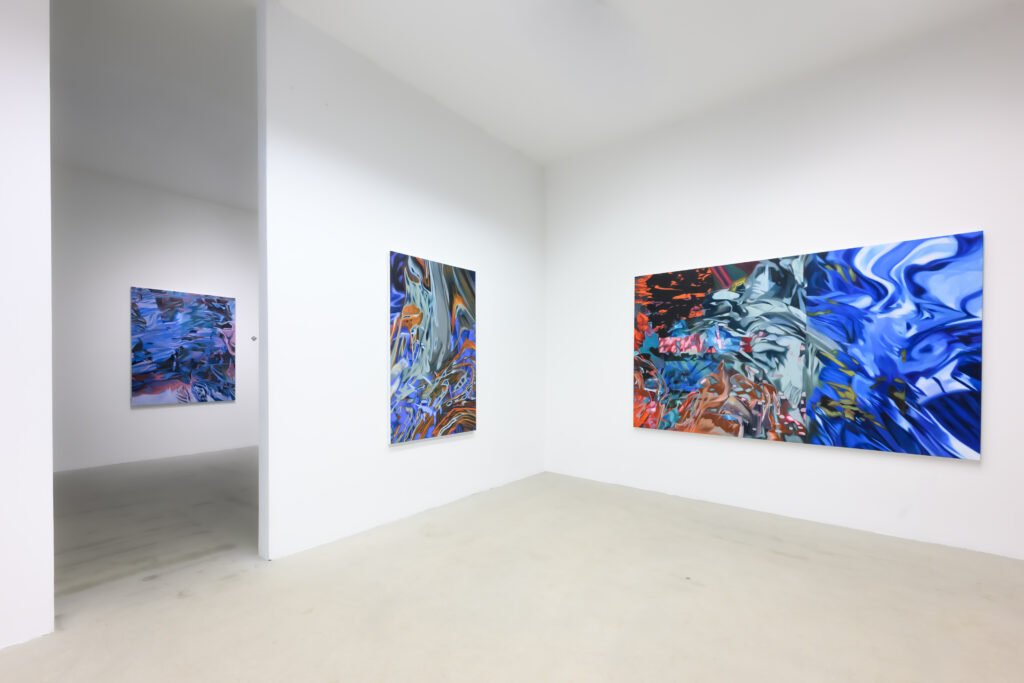
What, then, should be done with the burden of material necessity? Neža Perovšek approaches this question through her artistic practice with the mindset of an archivist. Through a critical re-evaluation of her physical and social surroundings, she first transforms the photographic evidence of her existence into digital layers, alters their forms, and then, through painterly intervention, creates soft, fluid abstractions that nevertheless retain traces of boundaries, indicating the distinctiveness of the combined elements.
While in previous projects with a similar conceptual foundation she also drew on impersonal photographs and images, this time she focuses primarily on her personal archive, which gains meaning and purpose through the act of assemblage, thereby creating an abstract image of accumulated experience. Her works can be approached as enigmas: within their unrecognizable realities lie the artist’s past, her experiences, and the world she observes and records. The paintings thus also articulate the flexibility of memory.
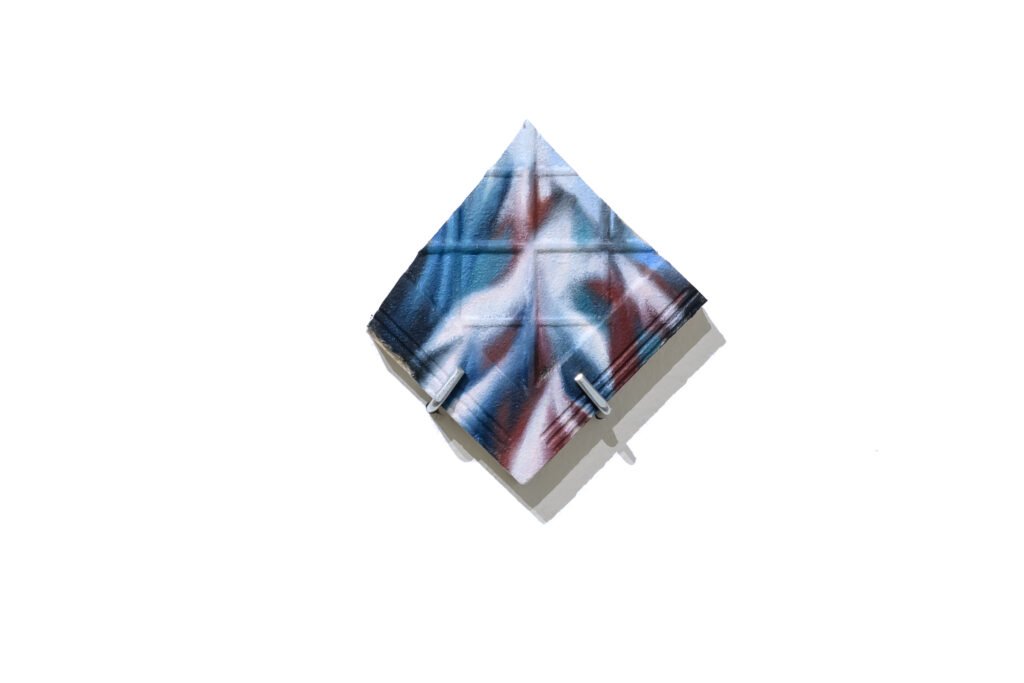
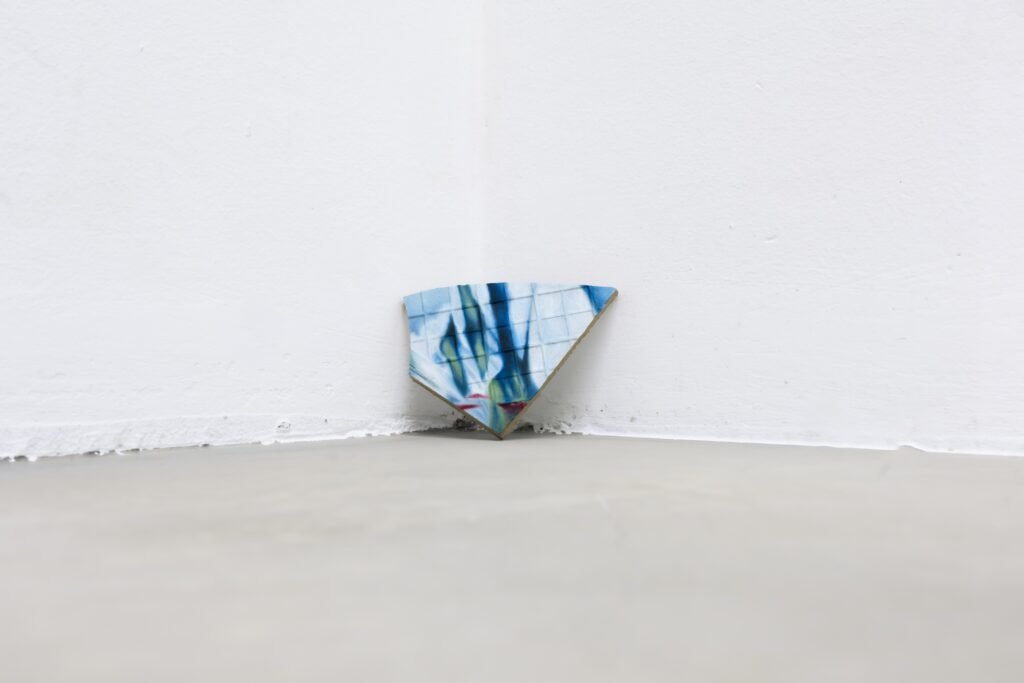
The tangible world, the images we collect with the desire to remember and preserve—inevitably undergoes metamorphosis over time, and life itself is consequently perceived through ever-changing prisms. The awareness of digital disturbance, or the glitch, evoked by the paintings, can also be understood as an exercise in letting go, for it is precisely the image of disruption that reminds us of the illusory nature of permanence. Perovšek’s process could be described as a transition from dematerialization to re-materialization, which, through the emergence of new forms, emphasizes the fundamental mutability of existence and, in its final image, incorporates numerous subtle environmental impulses. She avoids the pressures of perfectionism demanded by her chosen painting technique by presenting painted fragments of ceramic tiles. In doing so, she introduces her work for the first time into dialogue with a distinctive ready-made object—a gesture that unites the fundamental contemplation of object preservation with the desire to sustain the lightness of creation. The precise and deliberate paintings, presented on small ceramic tiles, merge with traces of an almost childlike urge for creativity, stripped of ambition, and conceptually recall the impulse to paint found stones or the walls of one’s room.
The titles of the artworks may appear arbitrary, yet they directly relate to the process of studying human archives. Through the visual merging of multiple pre-existing fragments of life, the artist incorporates remembered verses, expressions, and her own writings into the titles, thus gently entering the realm of socially engaged art—an engagement whose power lies precisely in its subtlety, as social commentary appears mainly as a reflection of external influences on personal life. In this way, the paintings of Neža Perovšek fully realize their intention: the transformation of excess into heightened awareness, with an emphasis on self-awareness.
Sara Nuša Golob Grabner, curator