


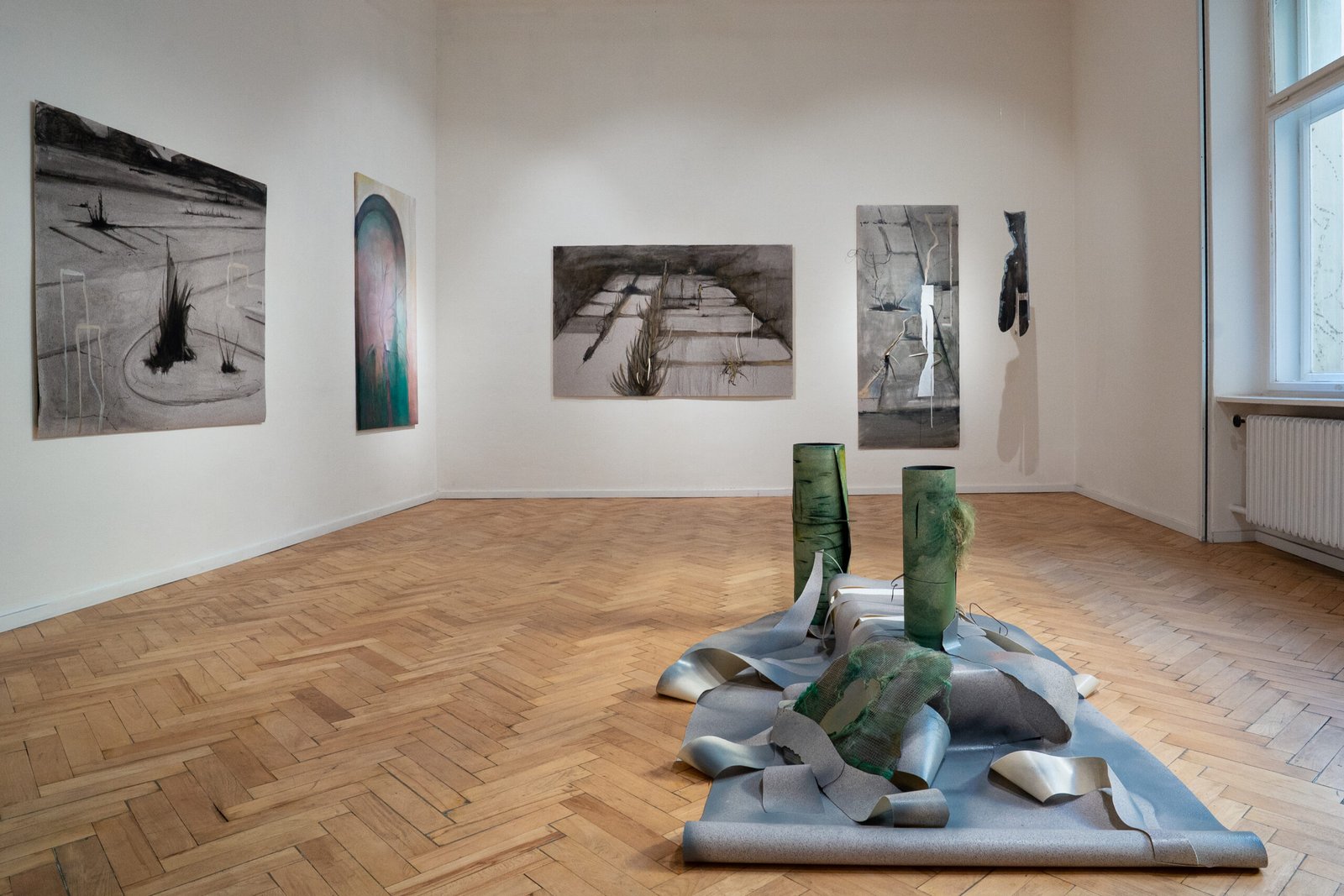
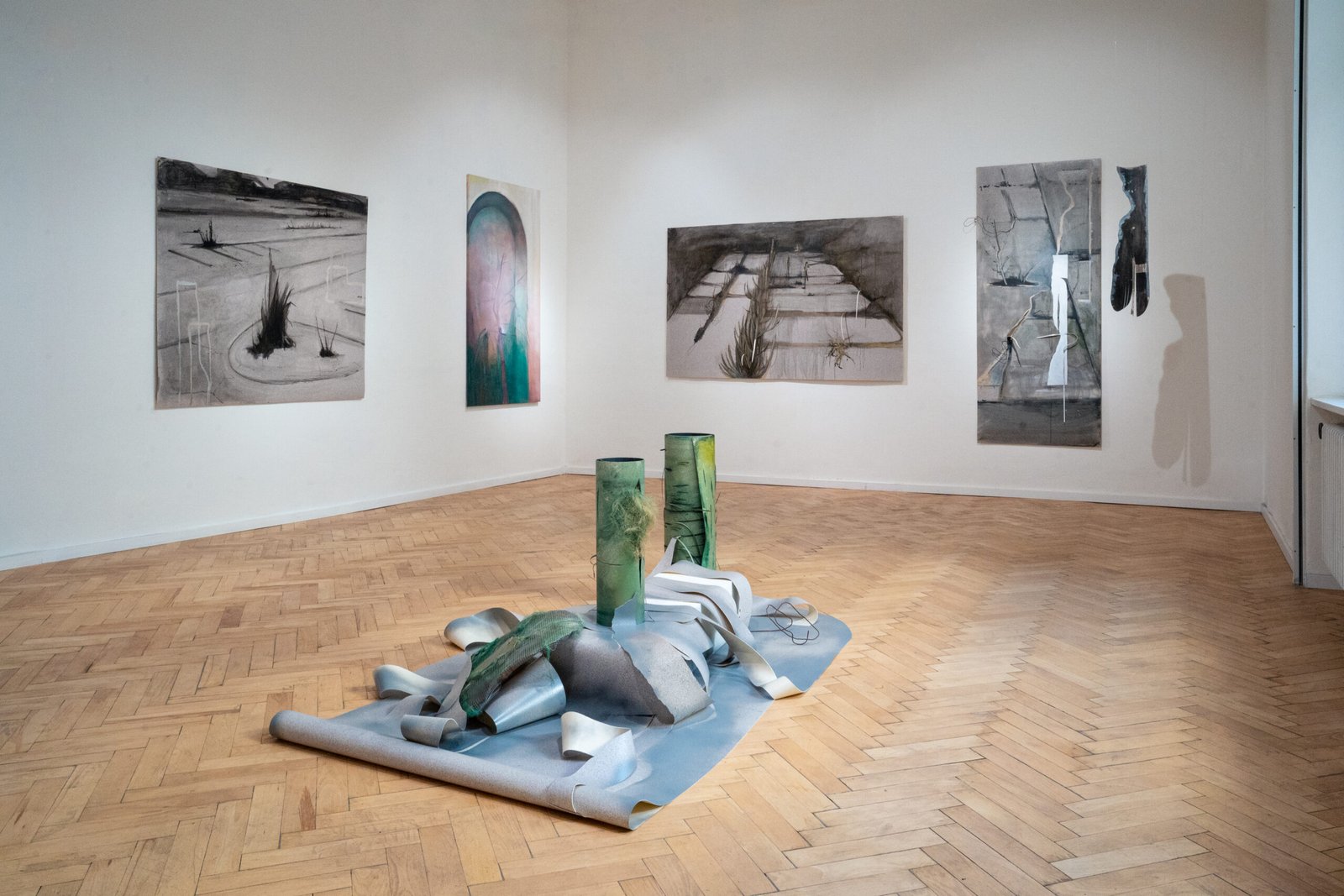
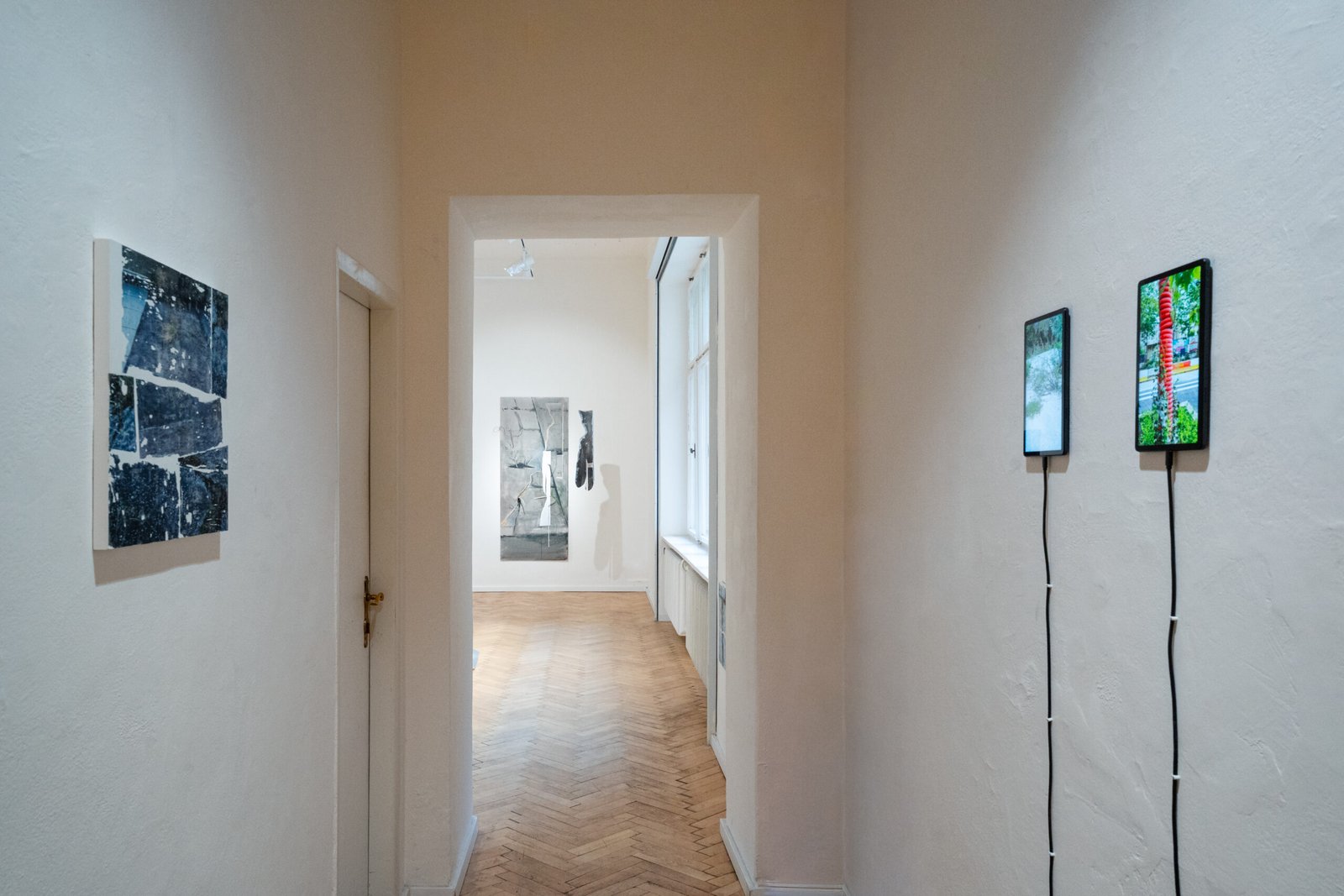
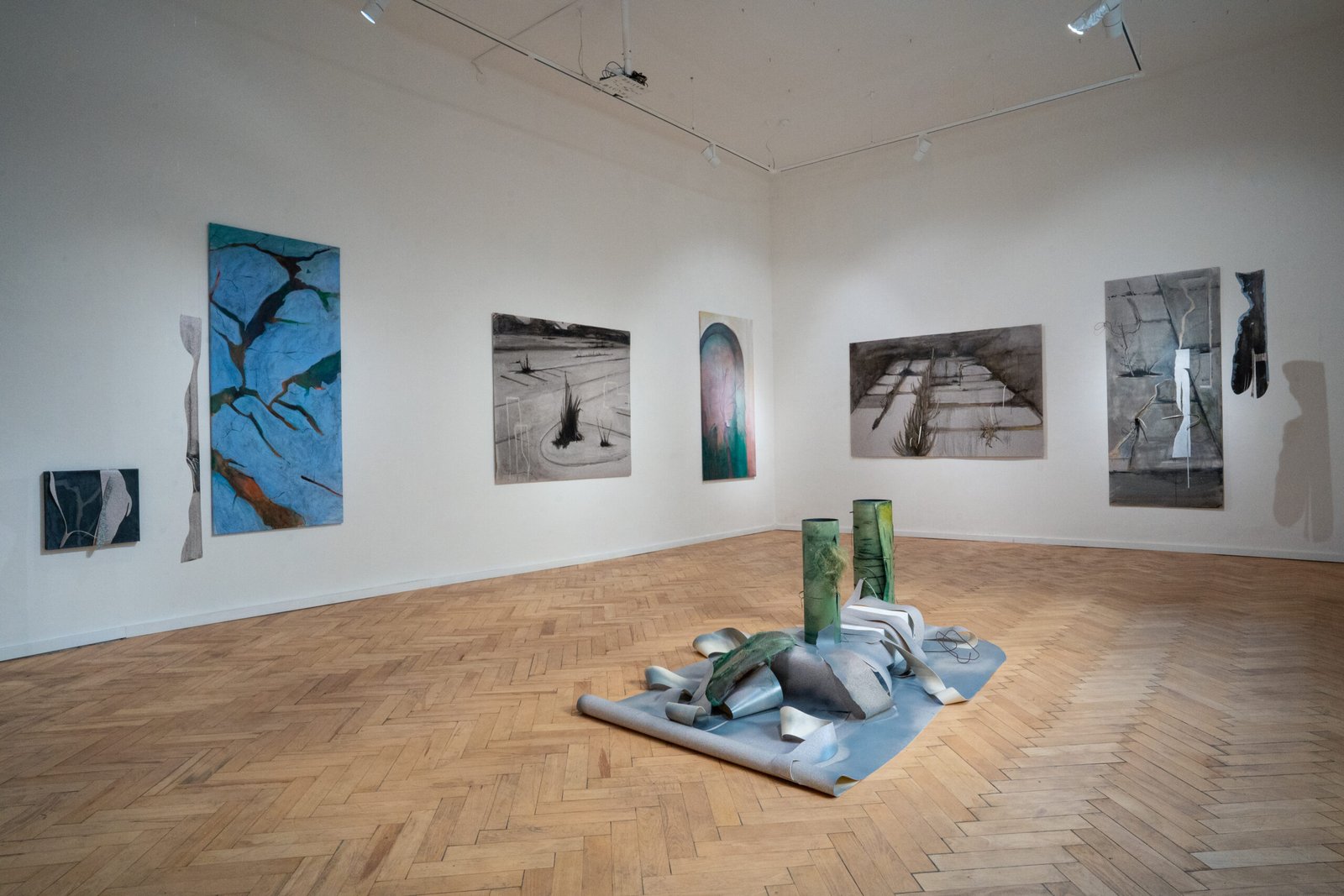
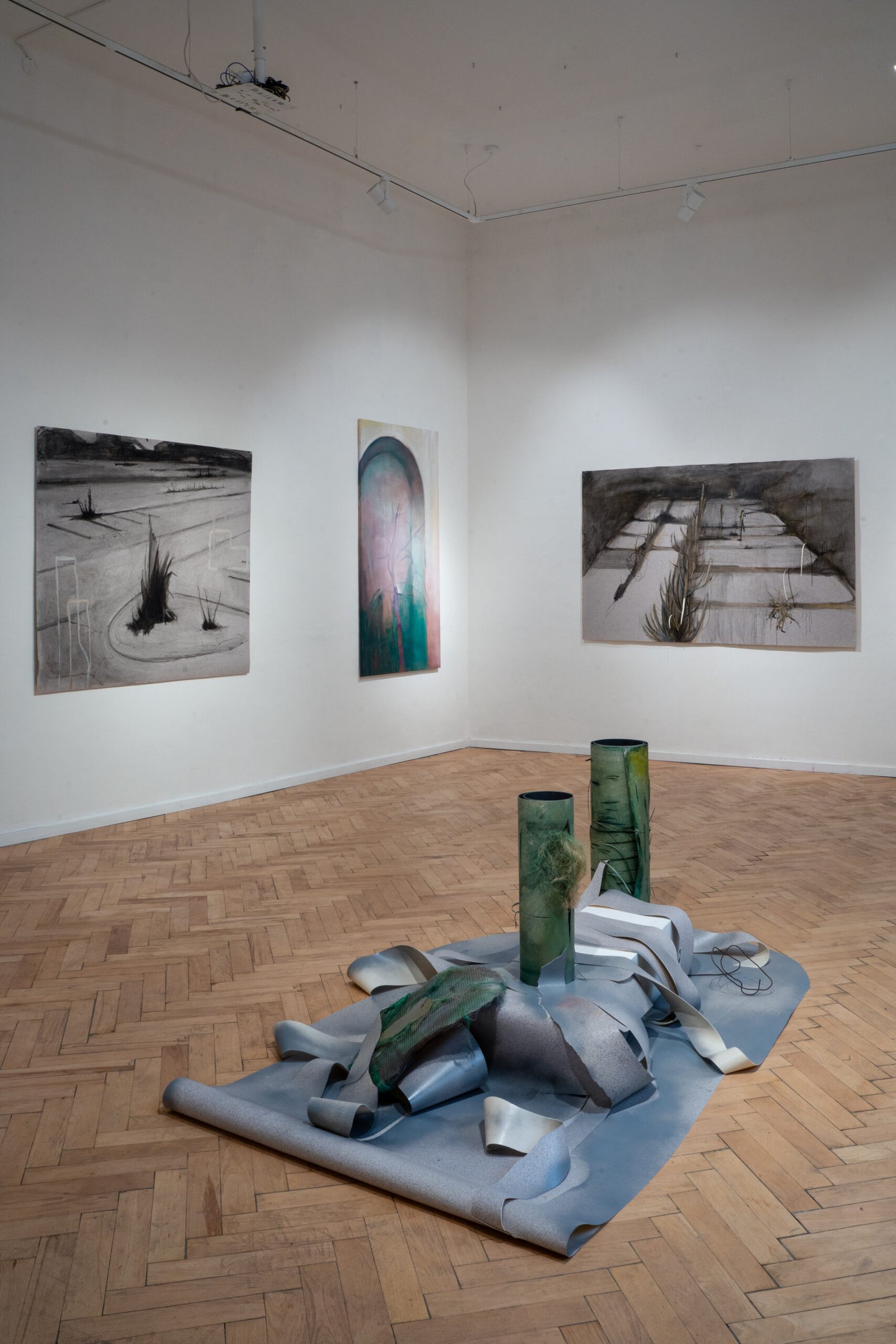
The gallery environment is being transformed into a location of disrupting structures explicitly imposed by humans, crossing media boundaries, and searching for a redefinition of approaches to organic and synthetic entities—plants and places. The communication of materials and perspectives in Ľudmila H. Machová’s installation reinvigorates the seemingly inactive, uninteresting, and unseen. The silence is filled with the courage of weeds, plants surviving in scarcity, species that have adapted to life in chemically polluted, nutrient-poor, and aesthetically non-conformist spaces—non-places in cities, cracks, landfills, or old squares covered in concrete. These types of flora – synanthropic plants, but also some self-sown and invasive species – can, through their presence in the urban structure, create opportunities for the emergence of life and safe shelter for other organisms. It is precisely in the disruptions of maintained areas or in old corners awaiting renovation – the weaknesses of perfection – that the courage to think and new forms of coexistence can be born.
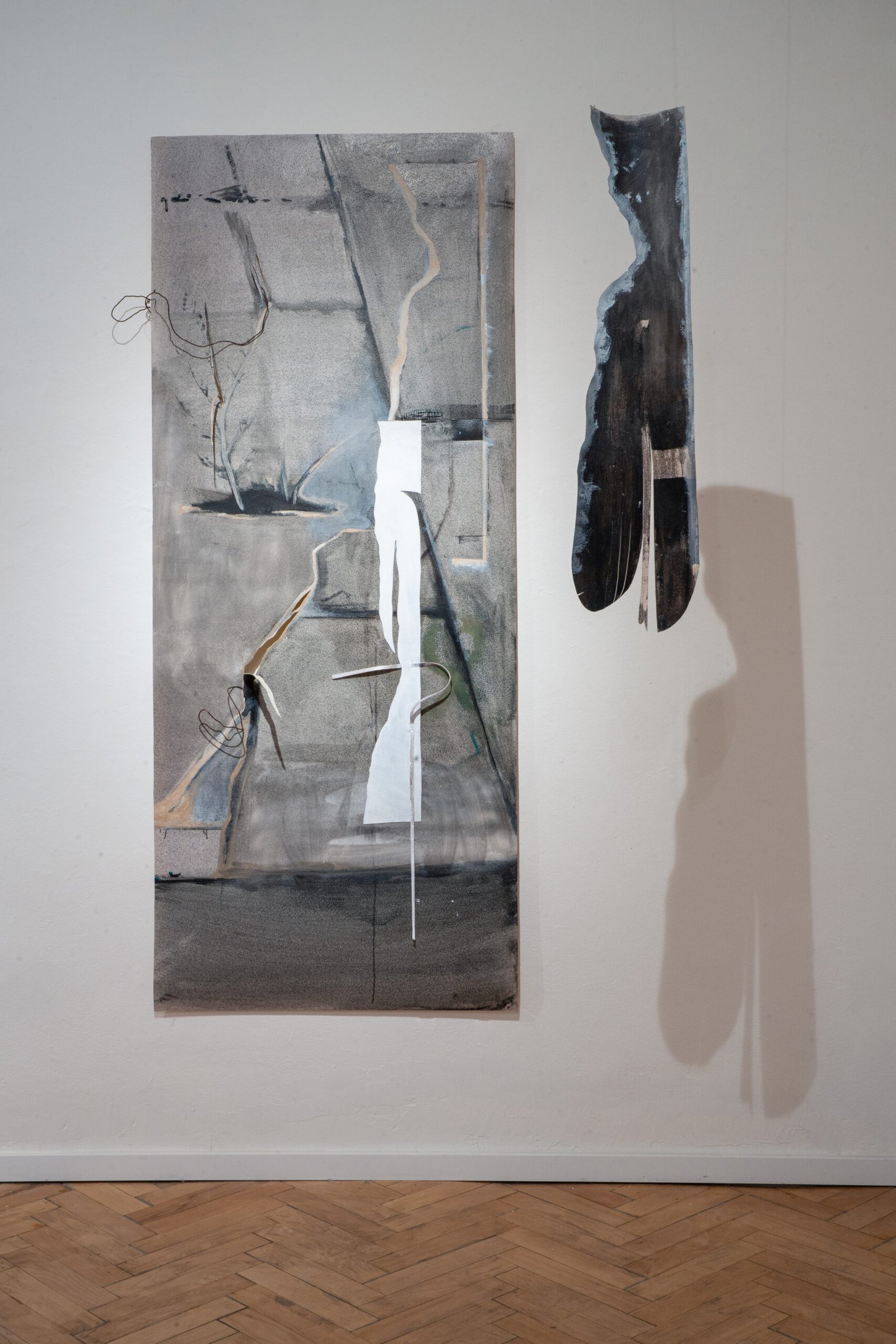
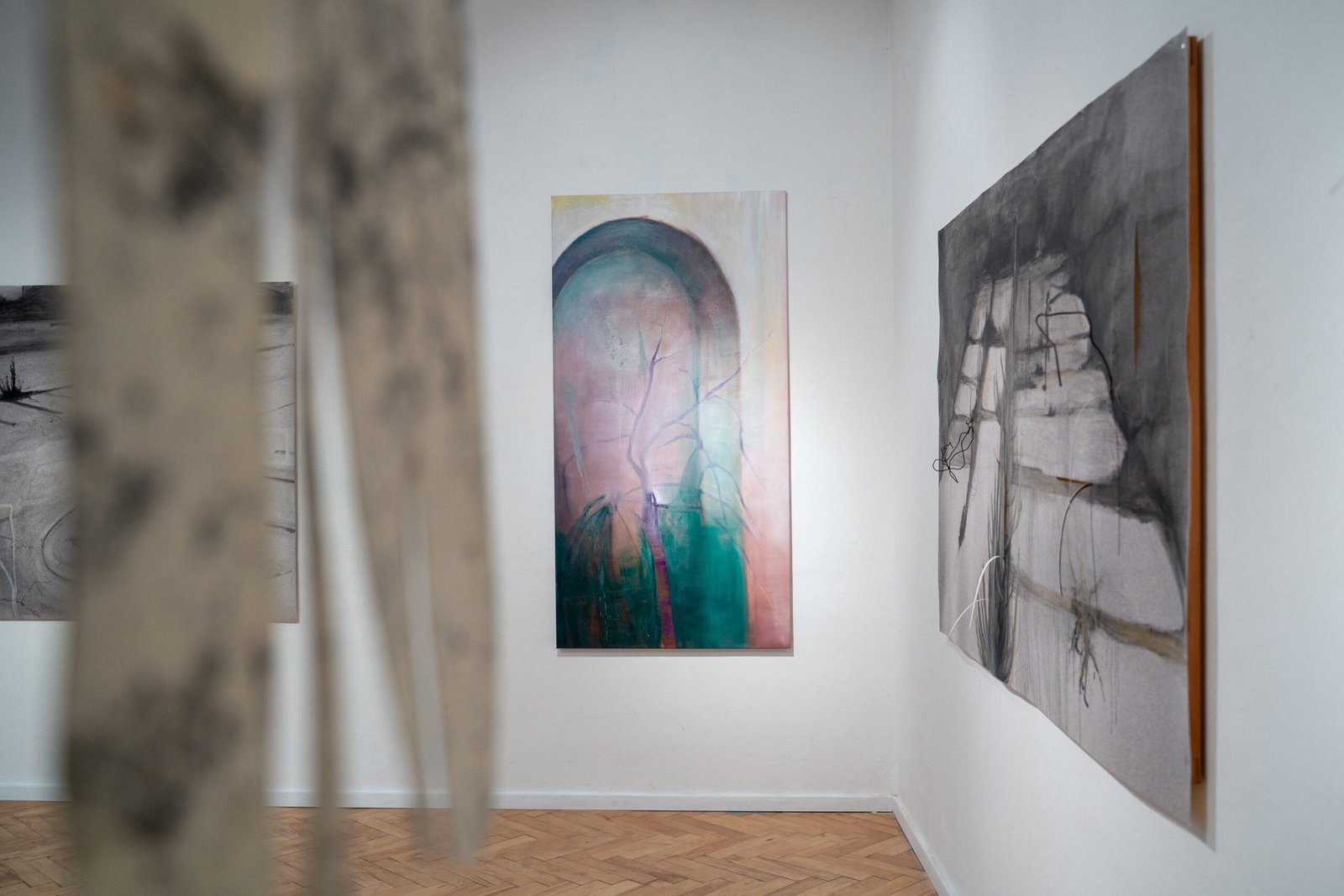
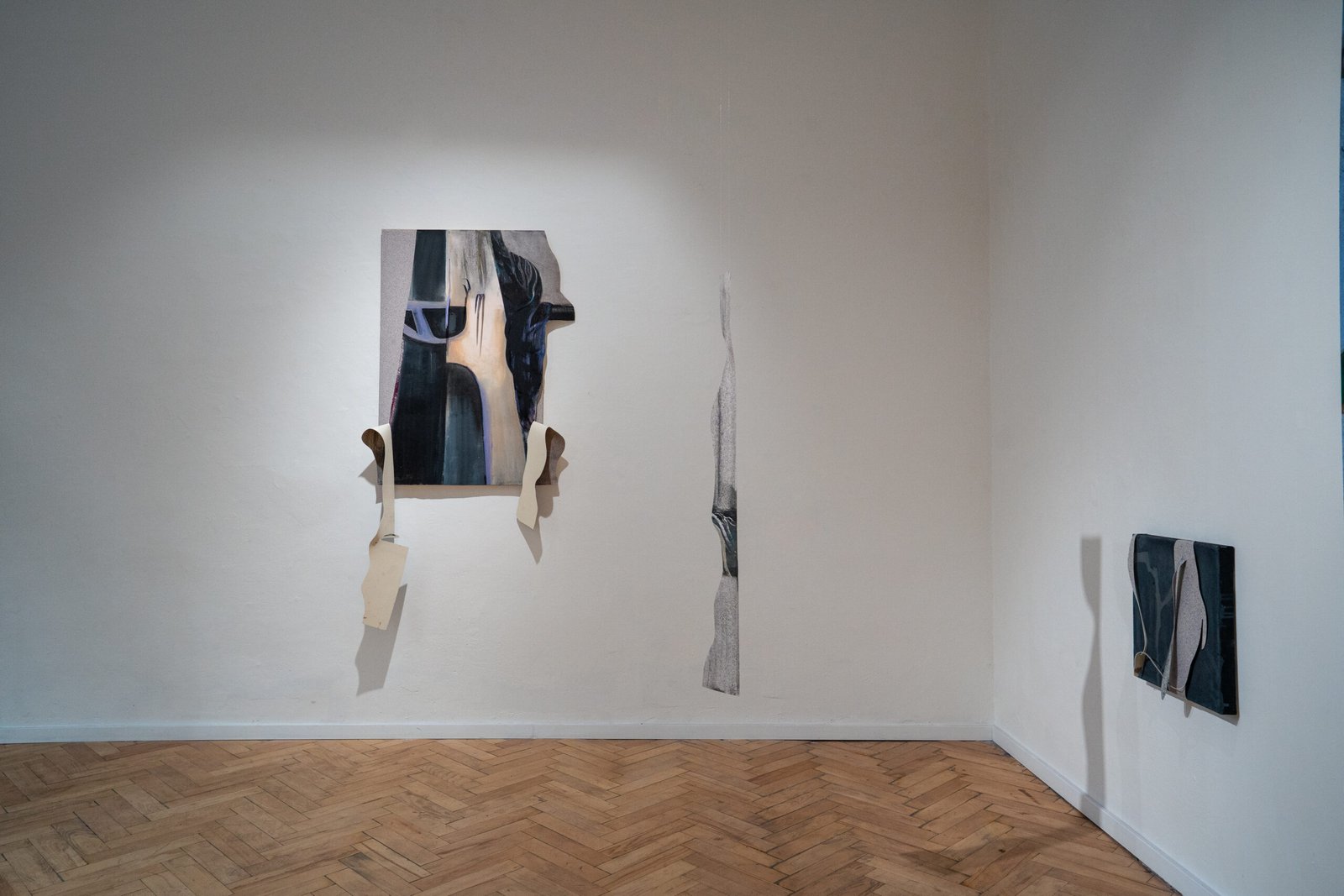
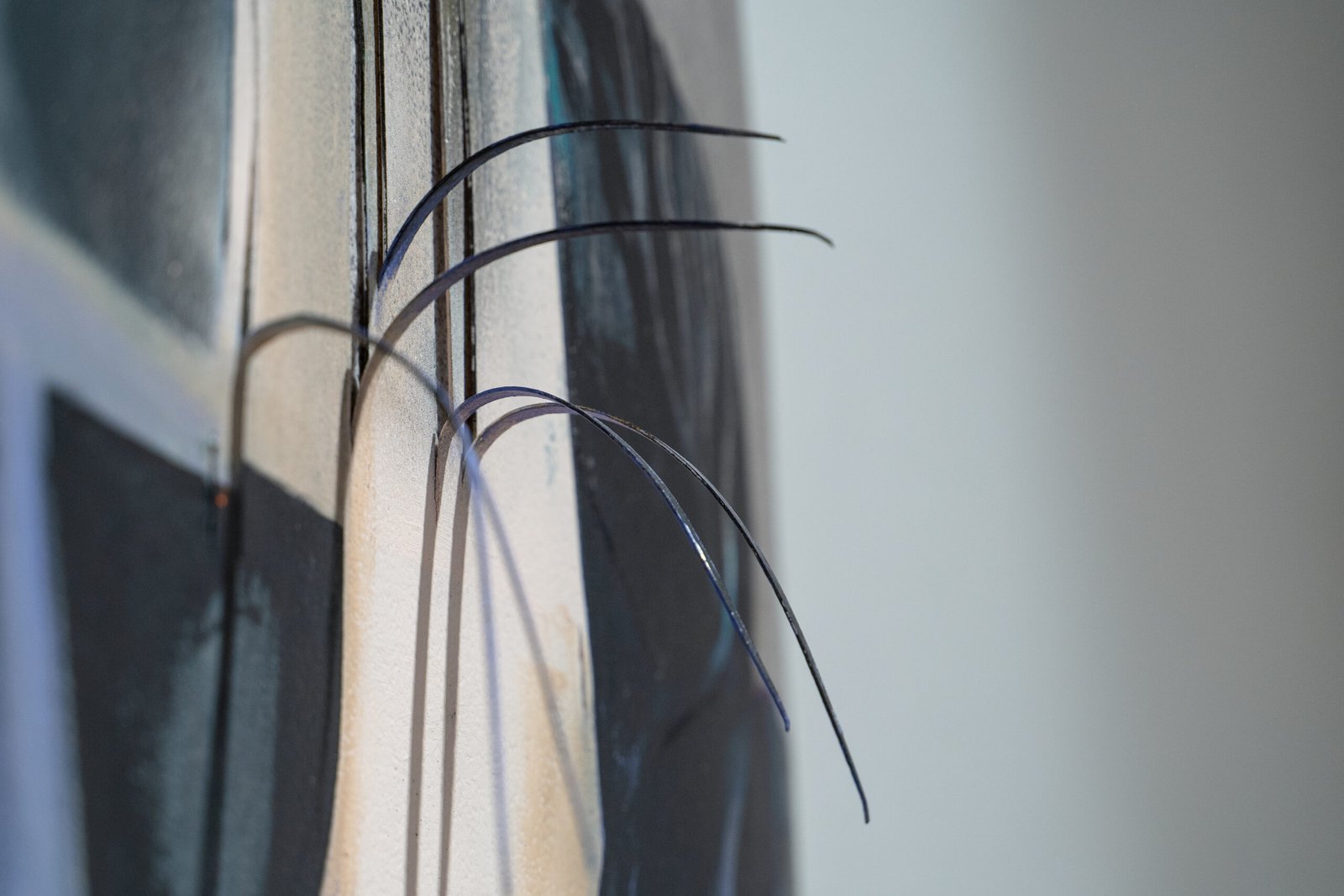
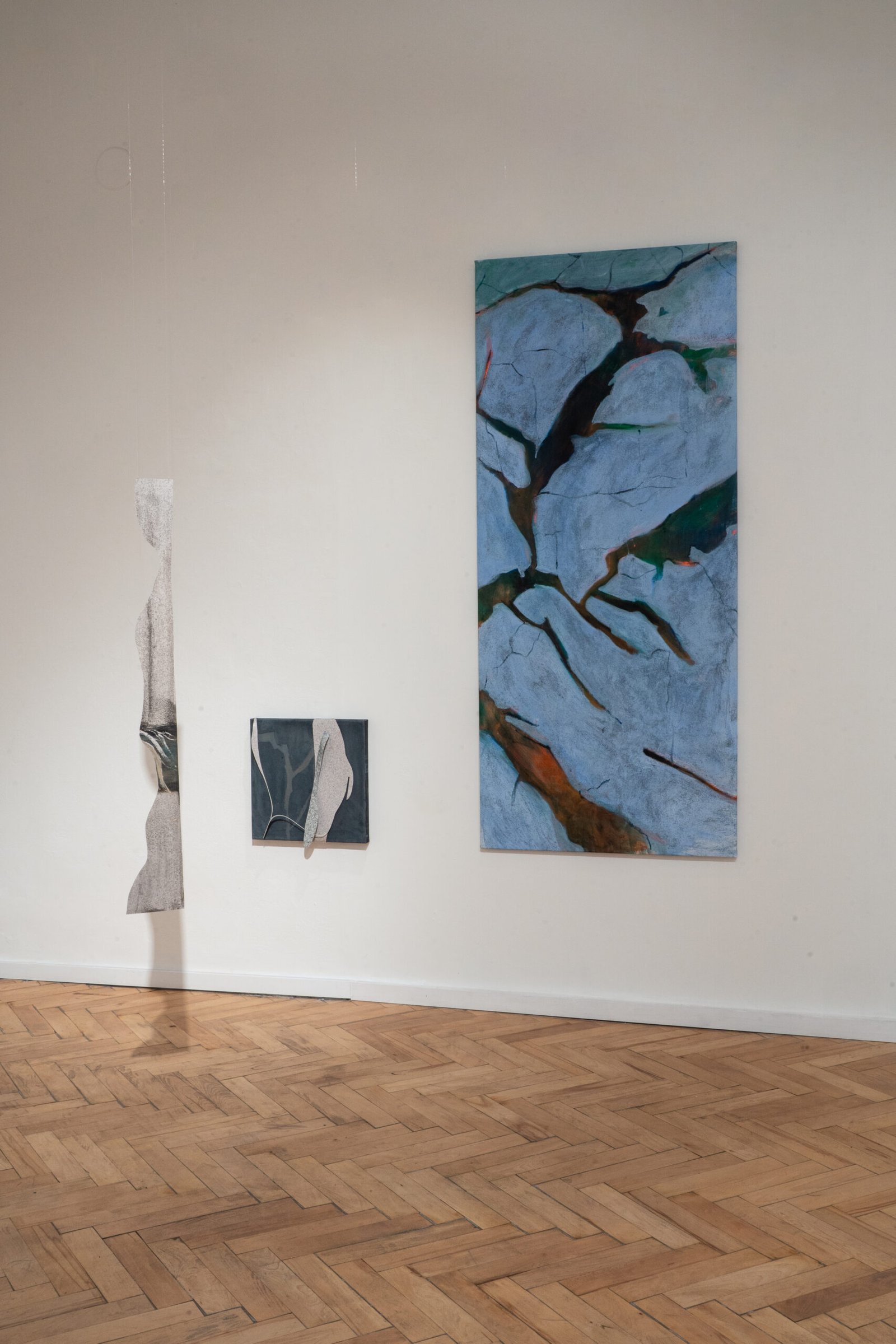
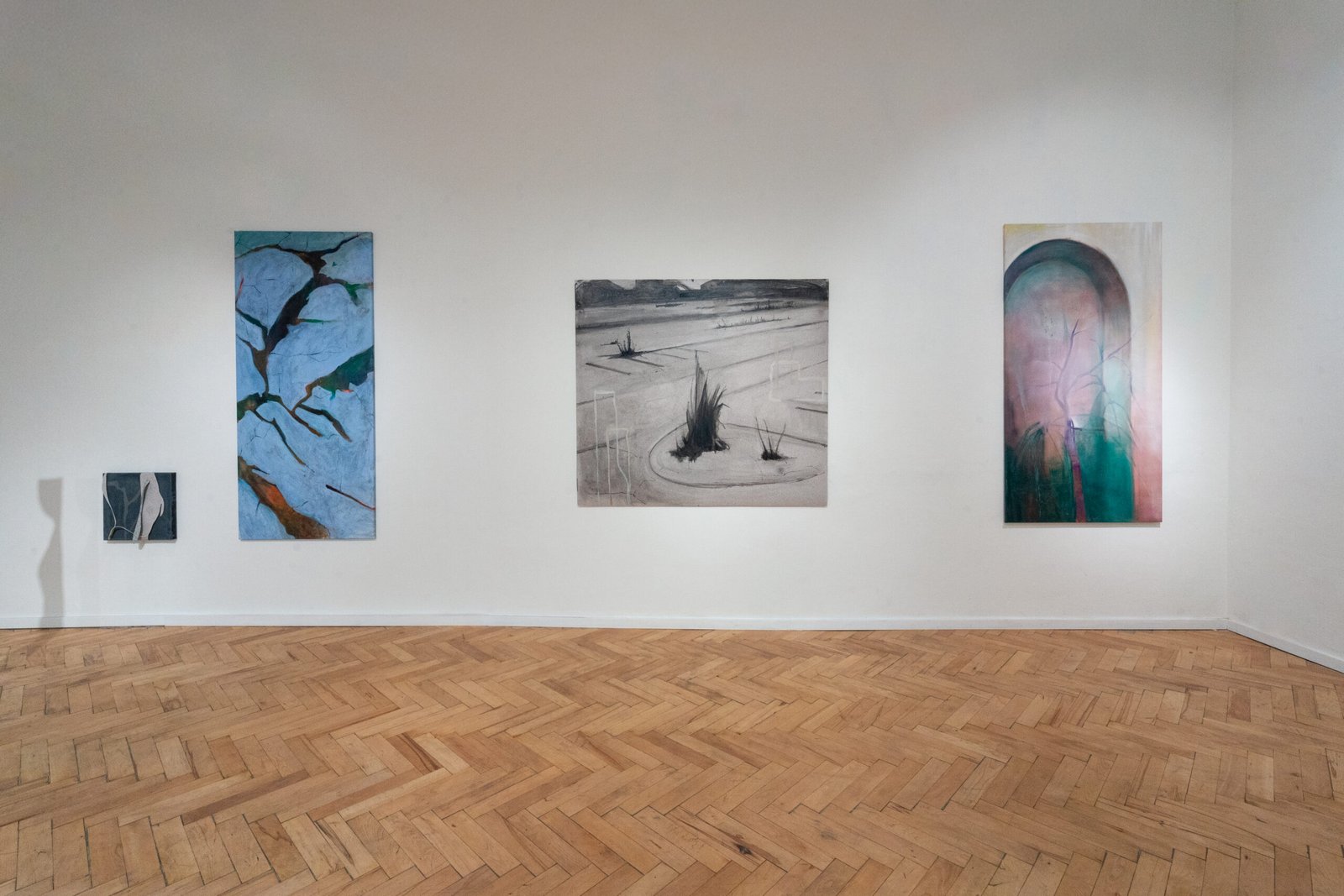
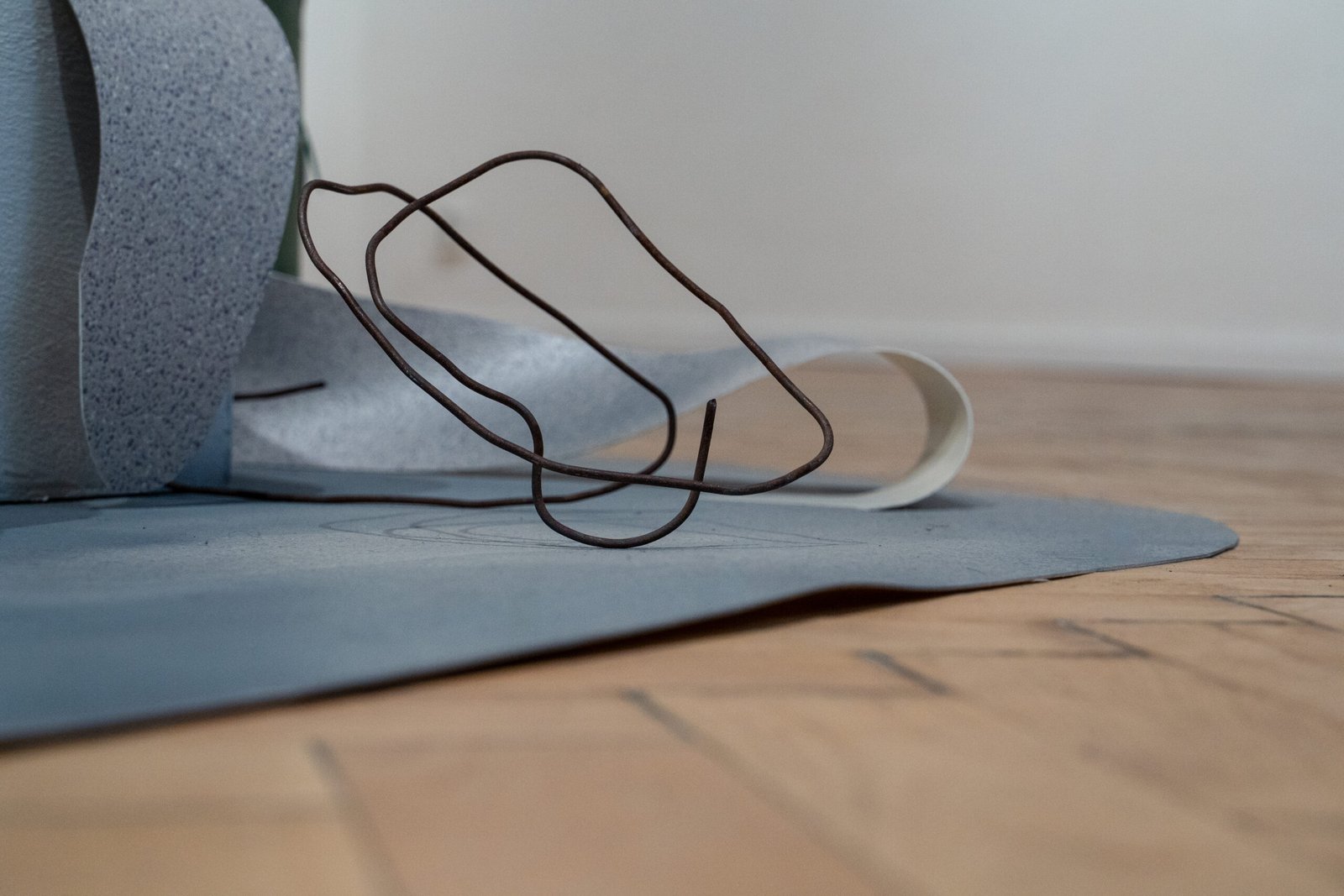
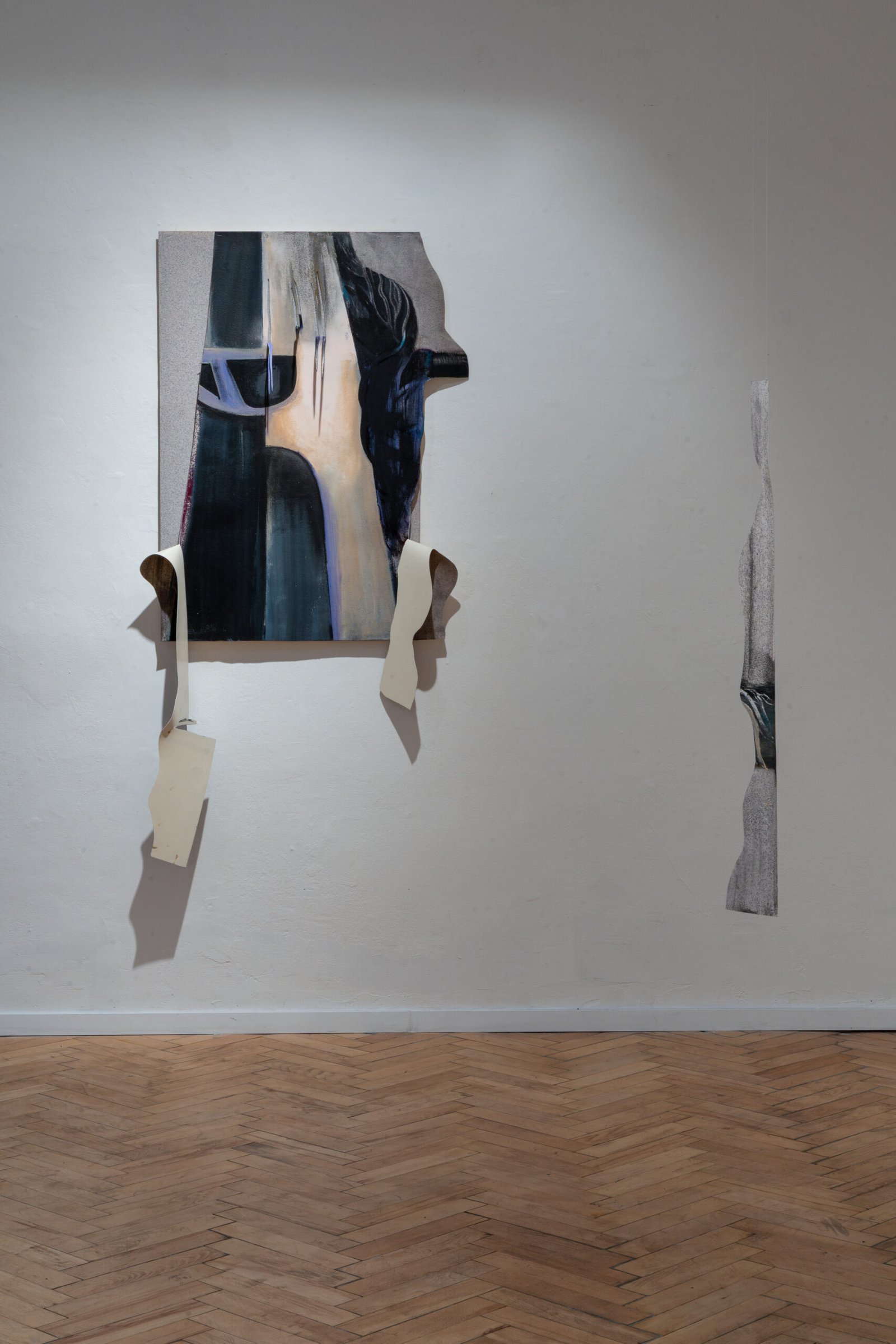
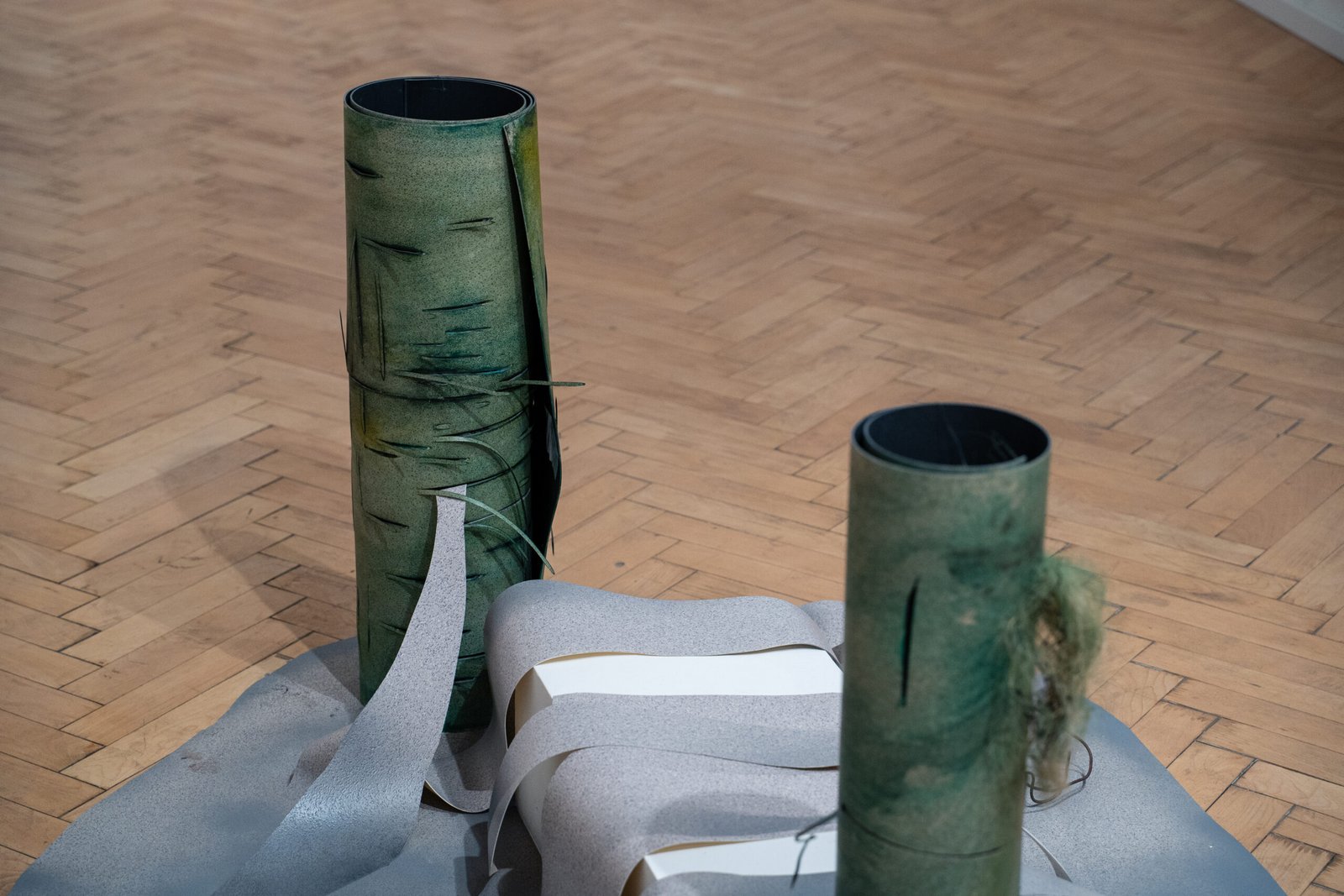
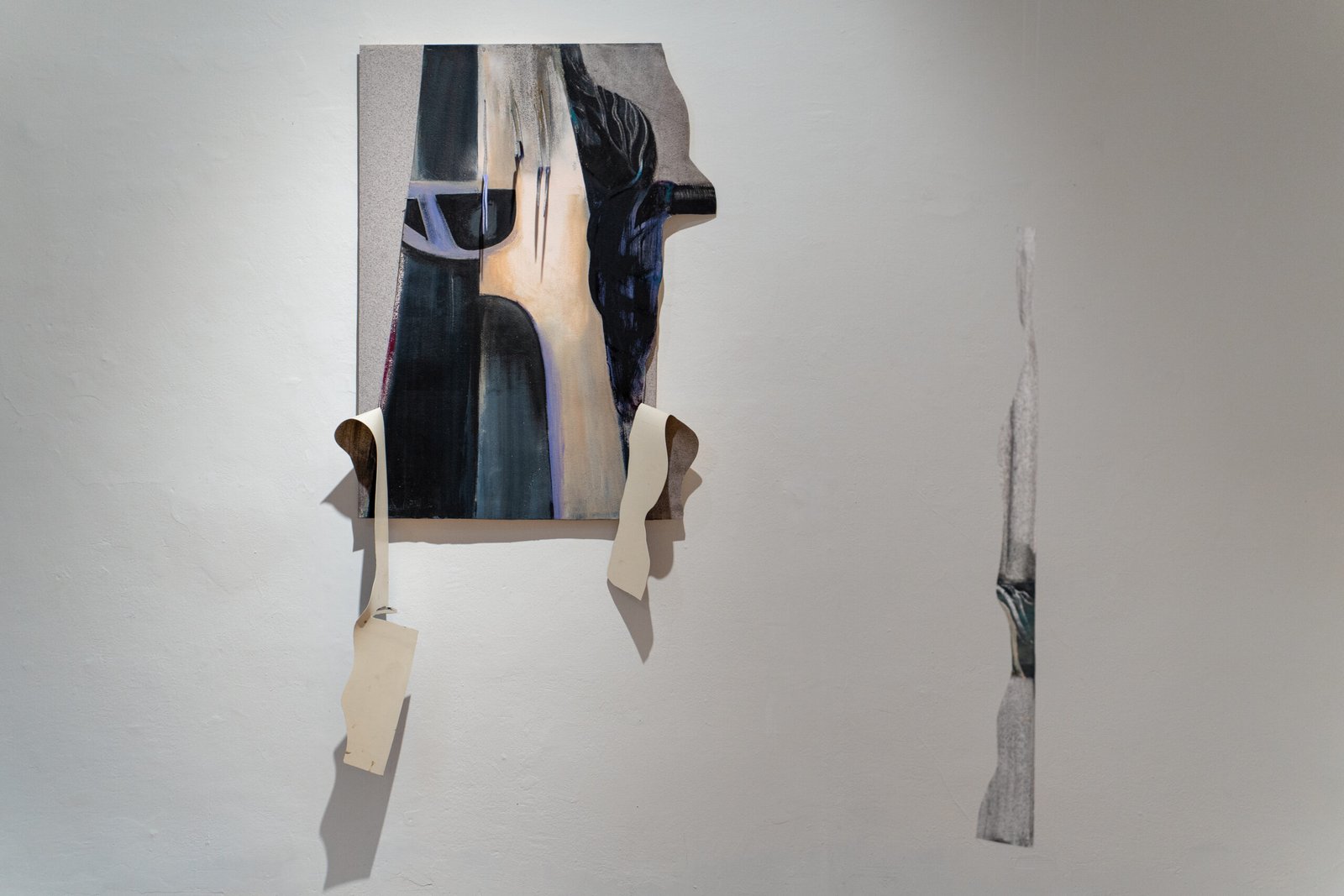
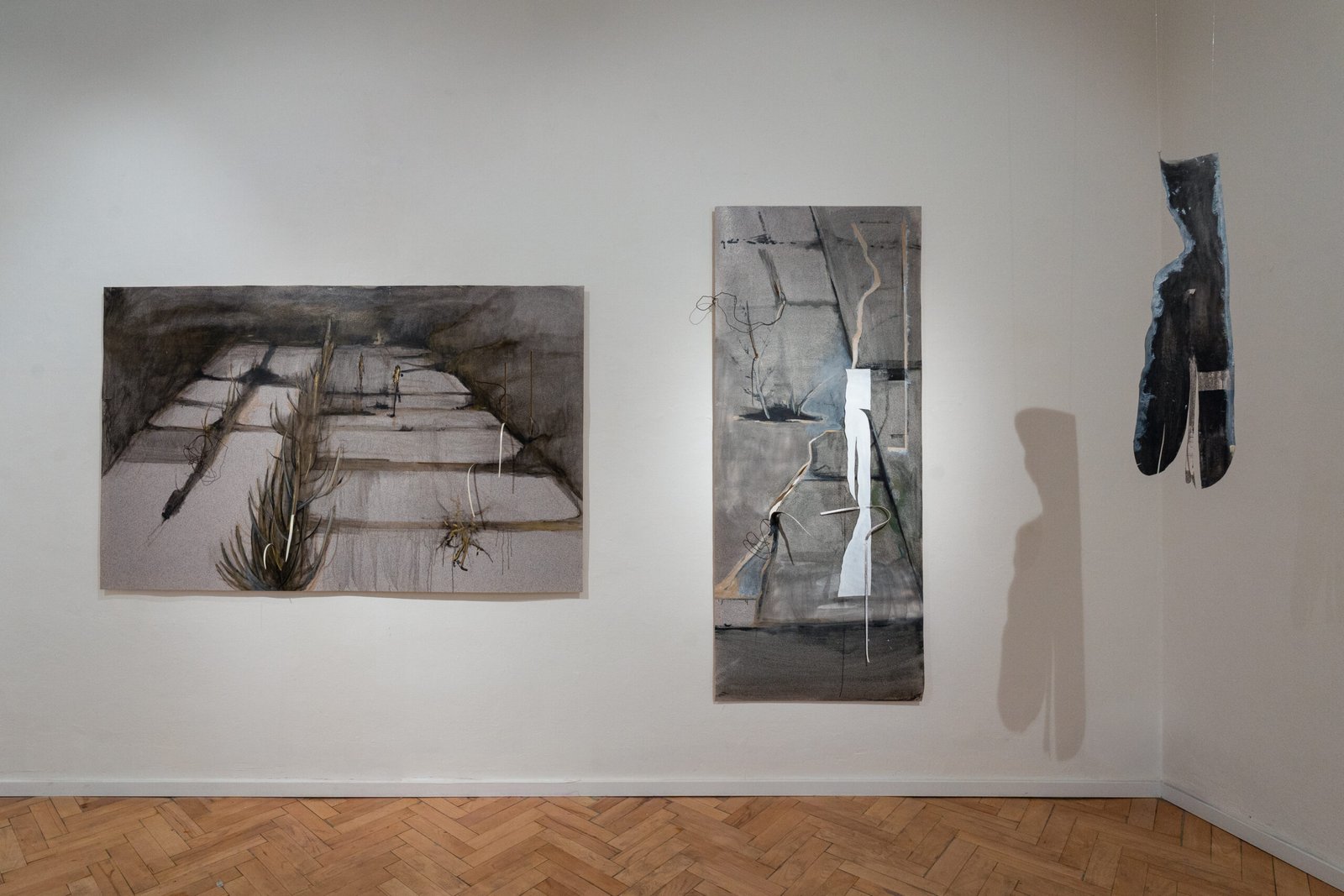
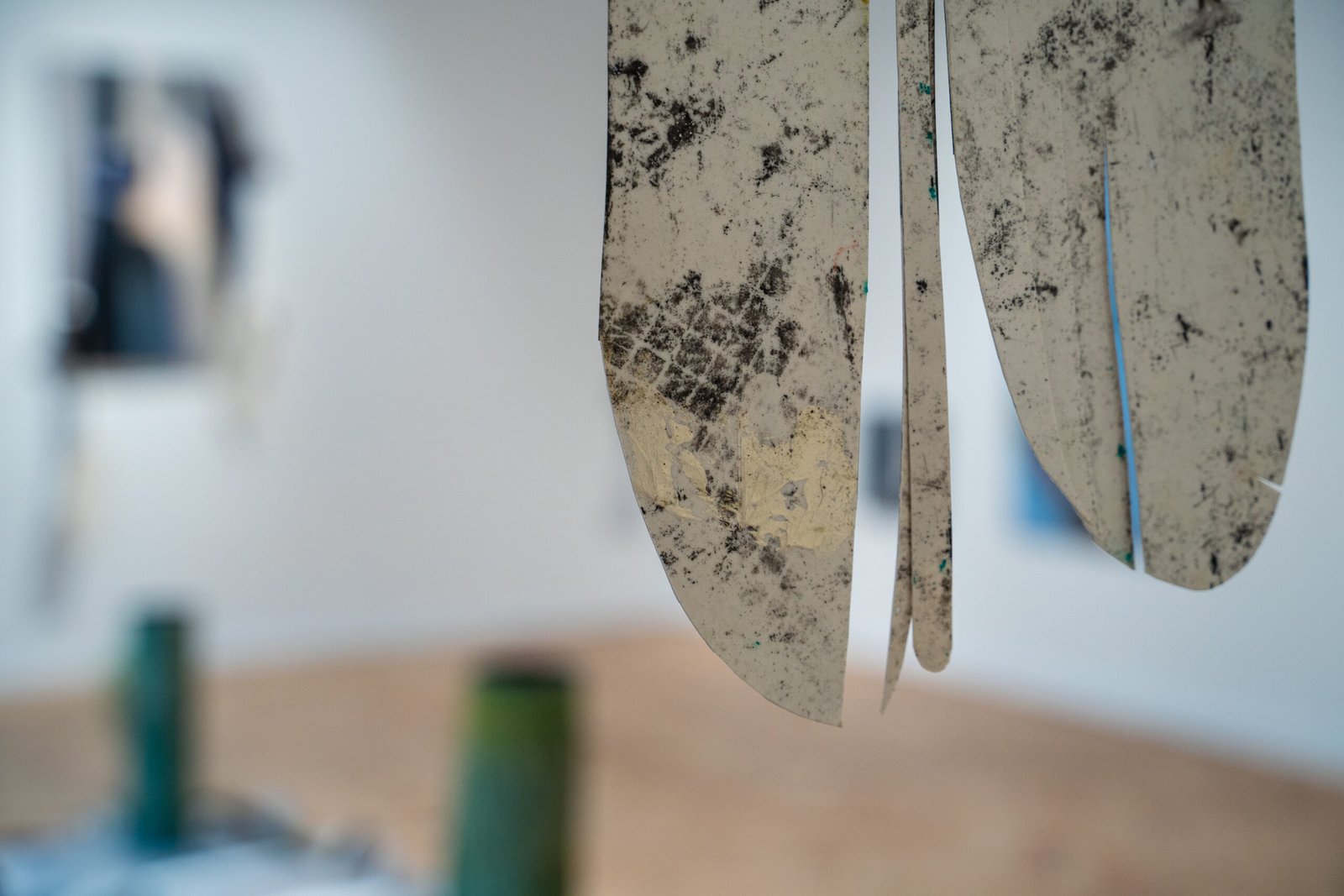
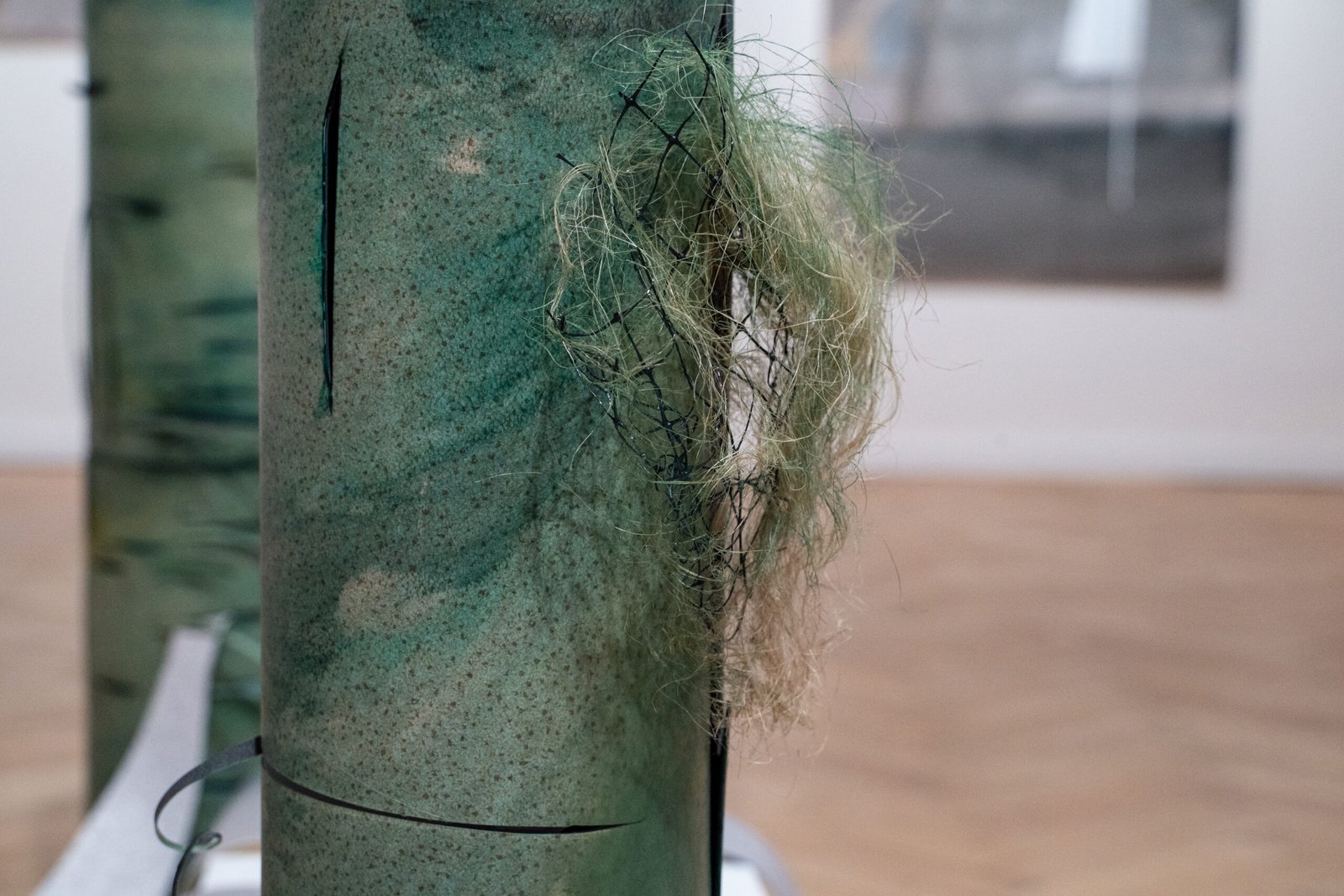
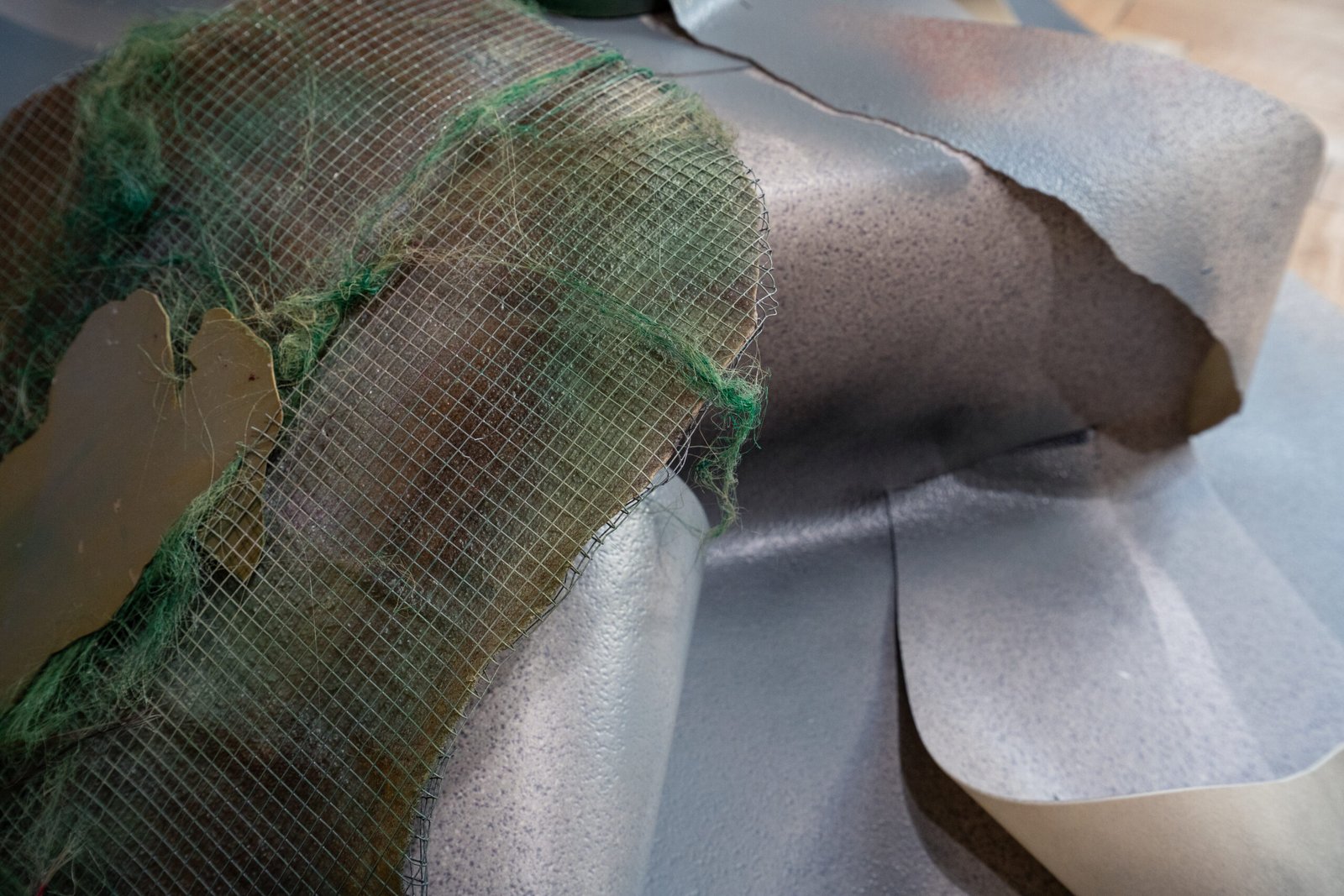
The plant’s determination to resist and disrupt order or utopian visions of urban plans and man-made power structures is transformed into exhibition space through painting. The author disrupts the rectangular surface of the painting, cuts and layers the underlying material, which is linoleum, and transfers the pictorial elements into physical matter. As in earlier works by the author, the expanded paintings retain the status of oil or acrylic paintings. The objects—hybrid sculptures—oscillate on the border between the organic and the artificial, growing, flourishing, and simultaneously disappearing. With their physicality, they construct situations that challenge dichotomies and partnerships – they twist sprouts of synthetic roots, recalling their floral, organic origins, and cooperate with each other even in separate elementary particles. Natural and artificial materials (plastic, linoleum) or wire are interconnected in new, speculative forms of contrast and symbiosis – their harmony is a constant negotiation – a coexistence that, like any other, is not without conflict and doubt. The installation thus forms narratives of interaction and tension, disrupting the principles of hierarchy, which could be reminiscent of the concept of Temporary Autonomous Zones, the interaction and recontextualization of the original states of the materials, media, and plants, their play and rivalry.
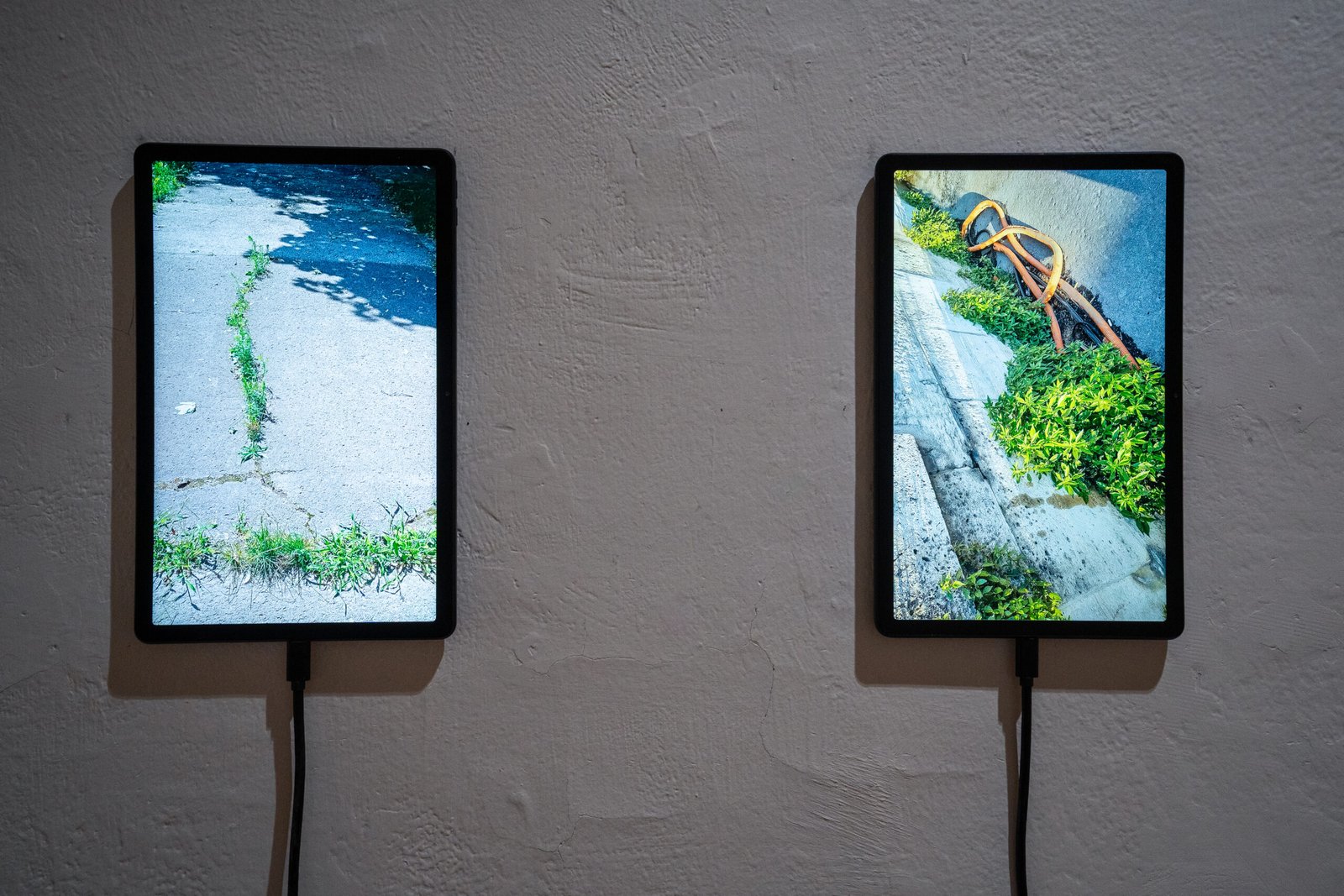
Another medium present in the exhibition is photography, which serves as a kind of digital archive and visual agent. The photographic collection and archiving of records of the research process, which Ľudmila H. Machová began during her residency in downtown of Paris in 2024, formed the foundation for paintings, objects, and their synthesis and modification in terms of both content and form. These photographs capture islands of flourishing life and unplanned vegetal agency in otherwise strictly maintained urban spaces and streets or on concrete surfaces that have lost their social significance over time. The form of the photographs, a medium systematically present in the author’s work in various forms, refers in the current presentation (digital photographs on tablets) to their origin – the recording of authentic reality with a smartphone camera – and at the same time to the research process, which continues even after the end of the residency in the home environment of Bratislava’s city districts.
Ľudmila H. Machová has long been exploring these specific spaces – cracks and crevices in walls and sidewalks, but also concrete surfaces with disturbed structures – squares created in the past regime, which still resemble empty concrete fields. Other sites she has studied include problematic “omitted” locations in the context of urbanism – road junctions, street edges, and unfinished interventions in the ground (once landscape) surface, which, together with their inhabitants – synanthropic plants and other weeds – do not fit into the schemes of stylized gardens or parkscapes. Their transformation within the gallery space creates a new zone, an environment – the overlooked becomes visible and important in symbiotic forms of paintings and objects. The new entities are active creators of situations – micro-scenes coexisting in the architecture of the exhibition space. The dichotomy of turbulent situations, often absurd or surreal, but still carrying certain forms of specificity, reflects the tension between the organic and the synthetic, while at the same time seeking to disrupt and suppress this polarity.
The imaginative and physical spaces of the exhibition become a zone of timeless presence and hybridized past, but they also consider a possible future—fragile, empathetic, bold, and contaminated by many influences. The exhibition disrupts the discursive frameworks of imagination and calls for sensitivity in reevaluating the stereotypes of schematized assumptions. It also invites us into a territory of research and documentation, but also of the creation of worlds and media inhabited by the agency of creatures and contrasting friendships, breaking free from the frameworks of categorization of plant species or the surface of the medium of painting, or the division of the origin and meaning of “organic” materials and inhabited, heterotopic and “appropriated” spaces.
Ľudmila Hubová Machová (*1990) studied painting at the Academy of Fine Arts and Design in Bratislava, completed an exchange program at the University of Porto, Faculty of Fine Arts in Portugal, and a residency in Paris at the Cité internationale des Arts (2024) under the auspices of VŠVU/AFAD. In 2017 and 2018, she was a finalist for the VÚB Foundation Award. She regularly participates in group exhibitions in Slovakia and abroad. Her solo projects include exhibitions at the Medium Gallery in Bratislava, the P.M. Bohúň Gallery in Liptovský Mikuláš, the Municipal Gallery in Rimavská Sobota, the Nitra Gallery, and the Basement Studio in Olomouc. Her works, rooted in the medium of painting, naturally transform into multi-media installations. Through expanded forms of images, photographs, and sound recordings, she explores the boundaries of landscape areas and urban environments, as well as the relationships between organic plant bodies and synthetic materials. Ľudmila H. Machová’s projects thus oscillate between the imagination of stimulating environments of hybrid forms of entities—objects, images, shapes, and meanings—while also opening up a discourse on the coexistence of plant species, overlooked spaces, and human (de)structured forms of perception.