


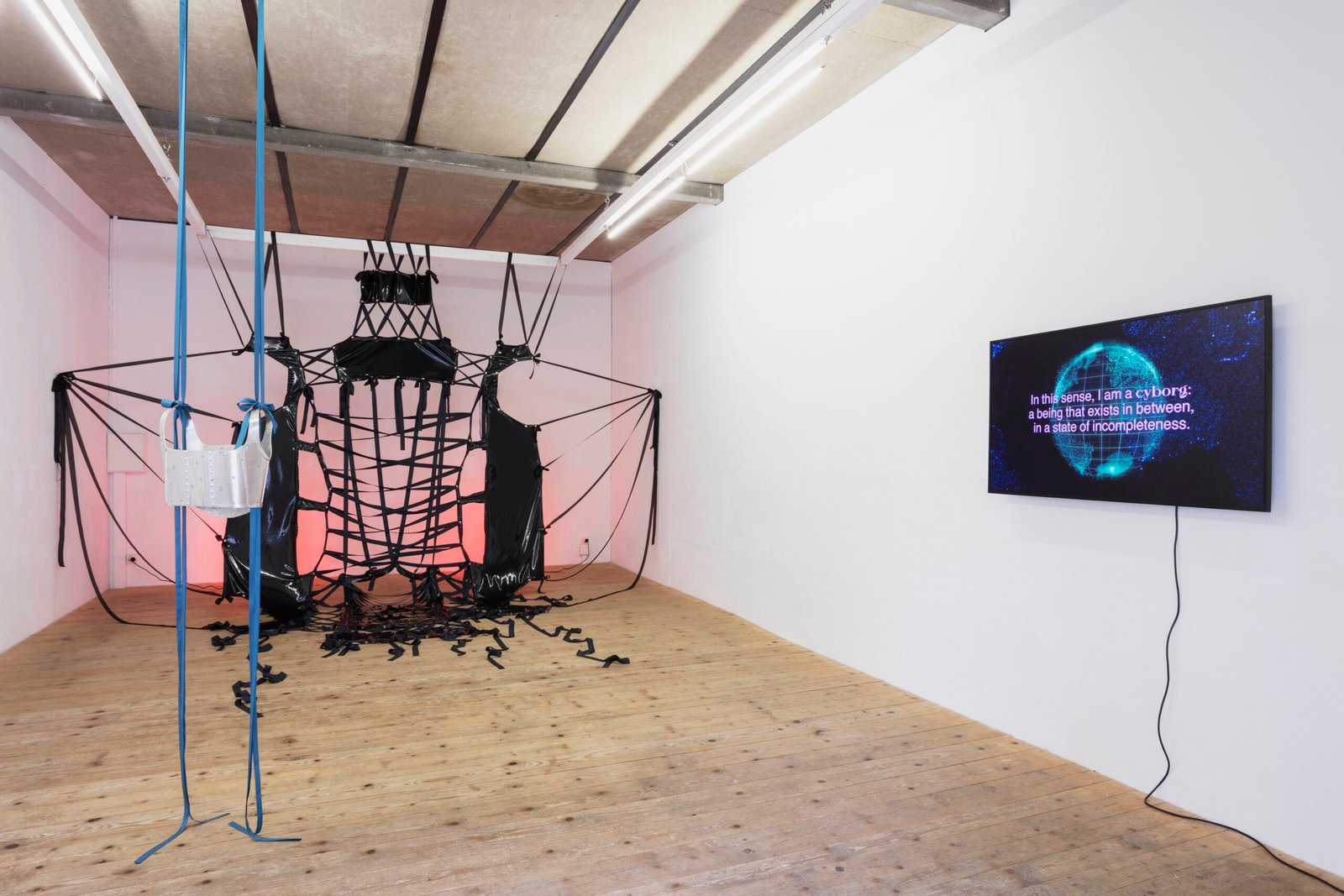
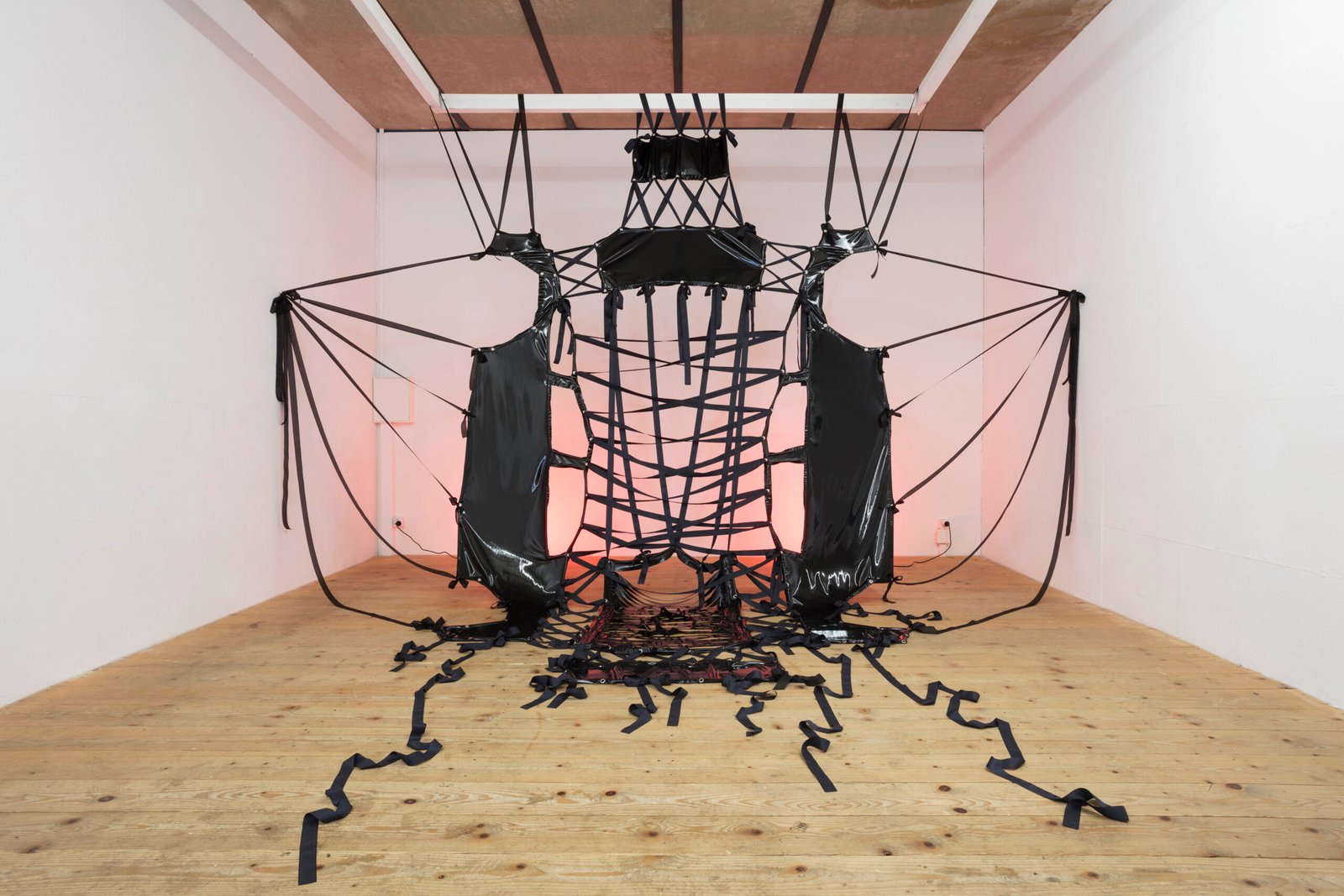
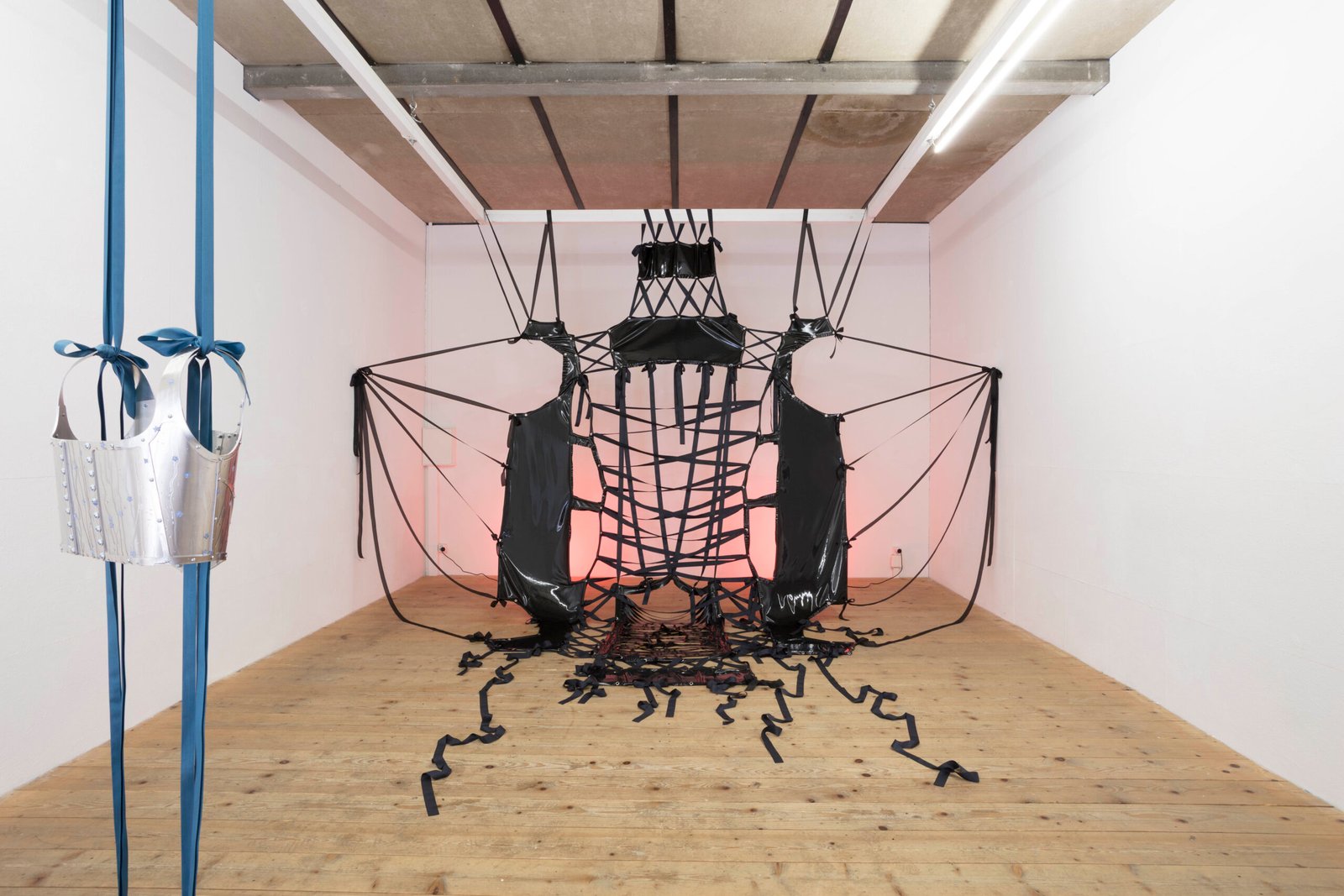
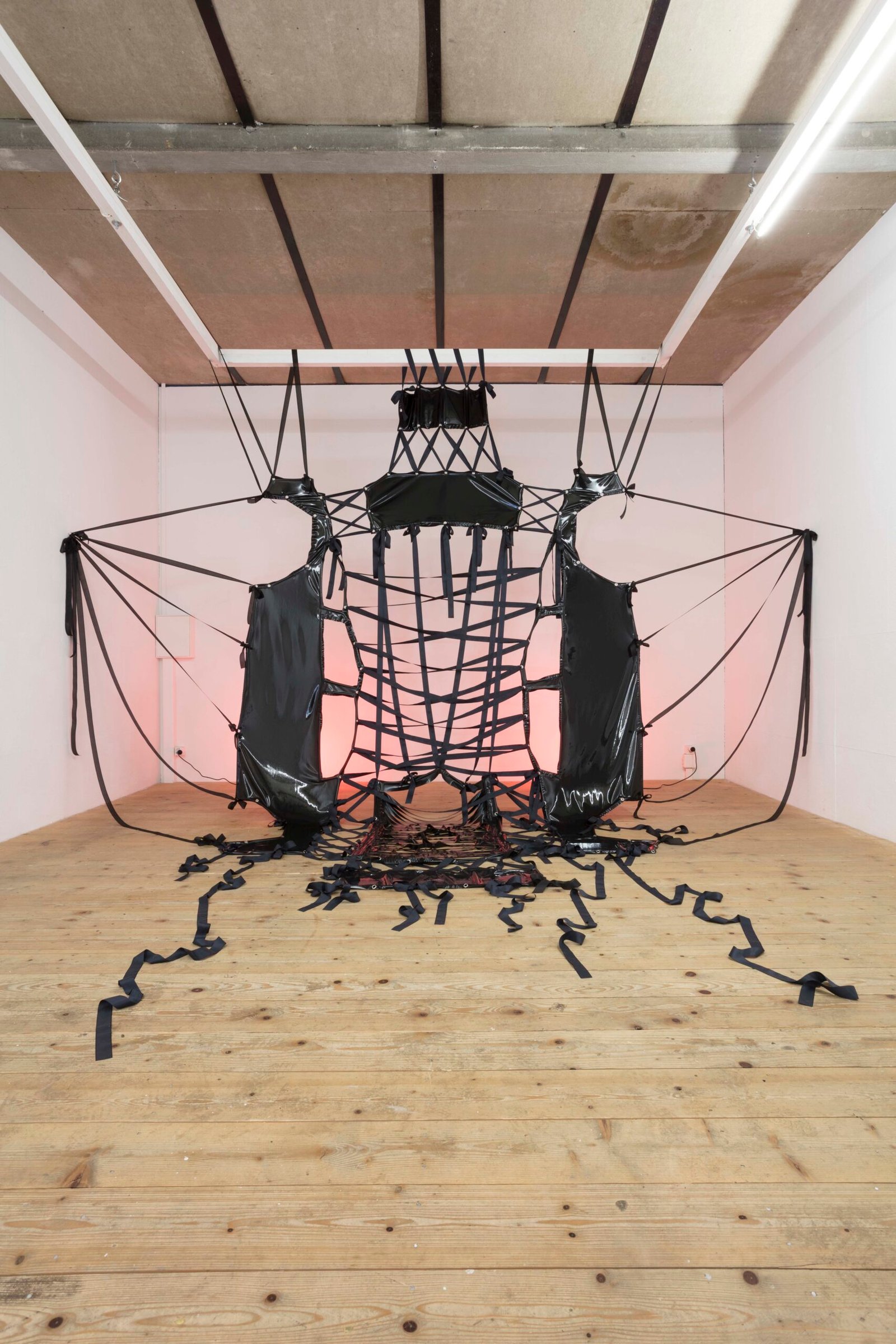
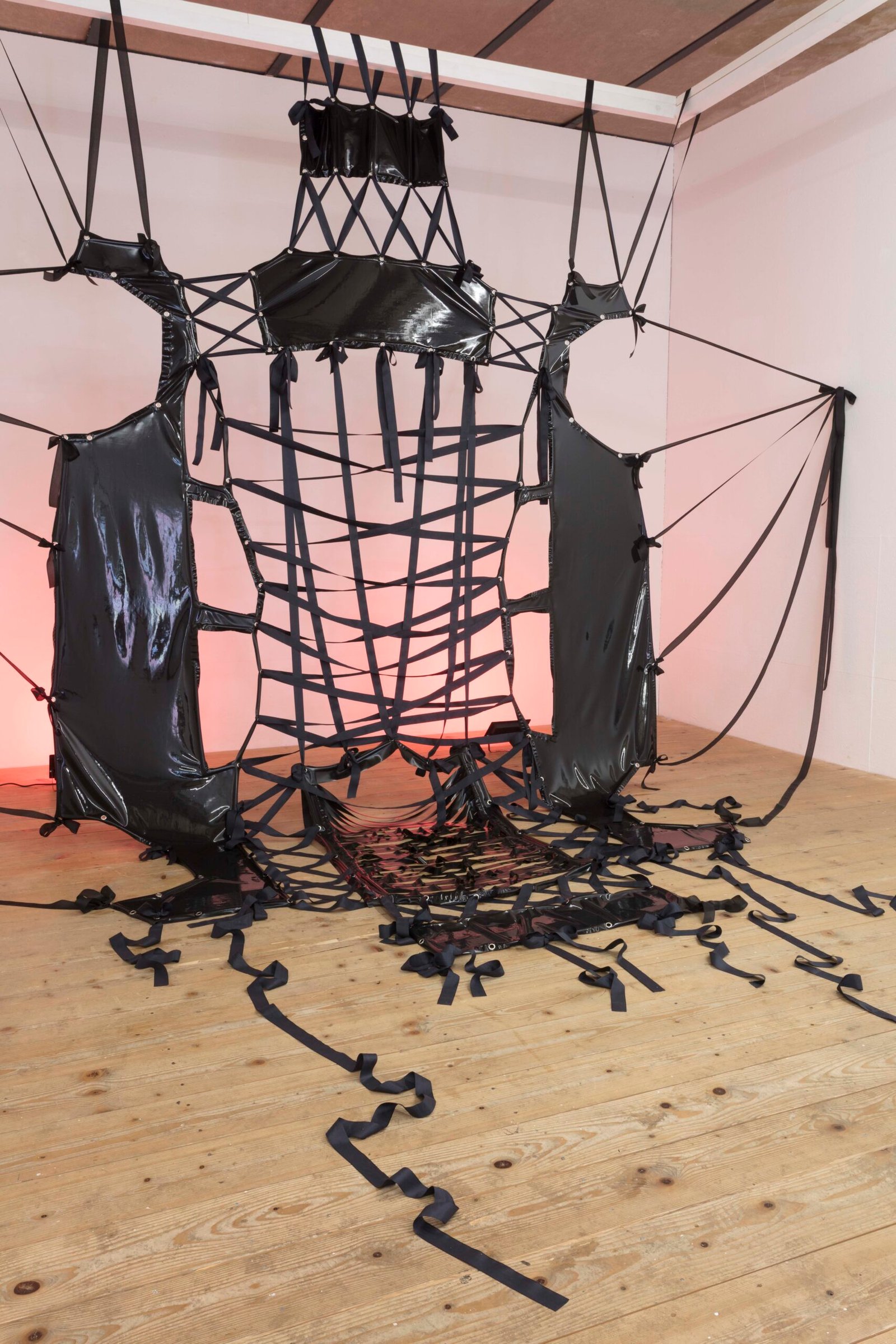
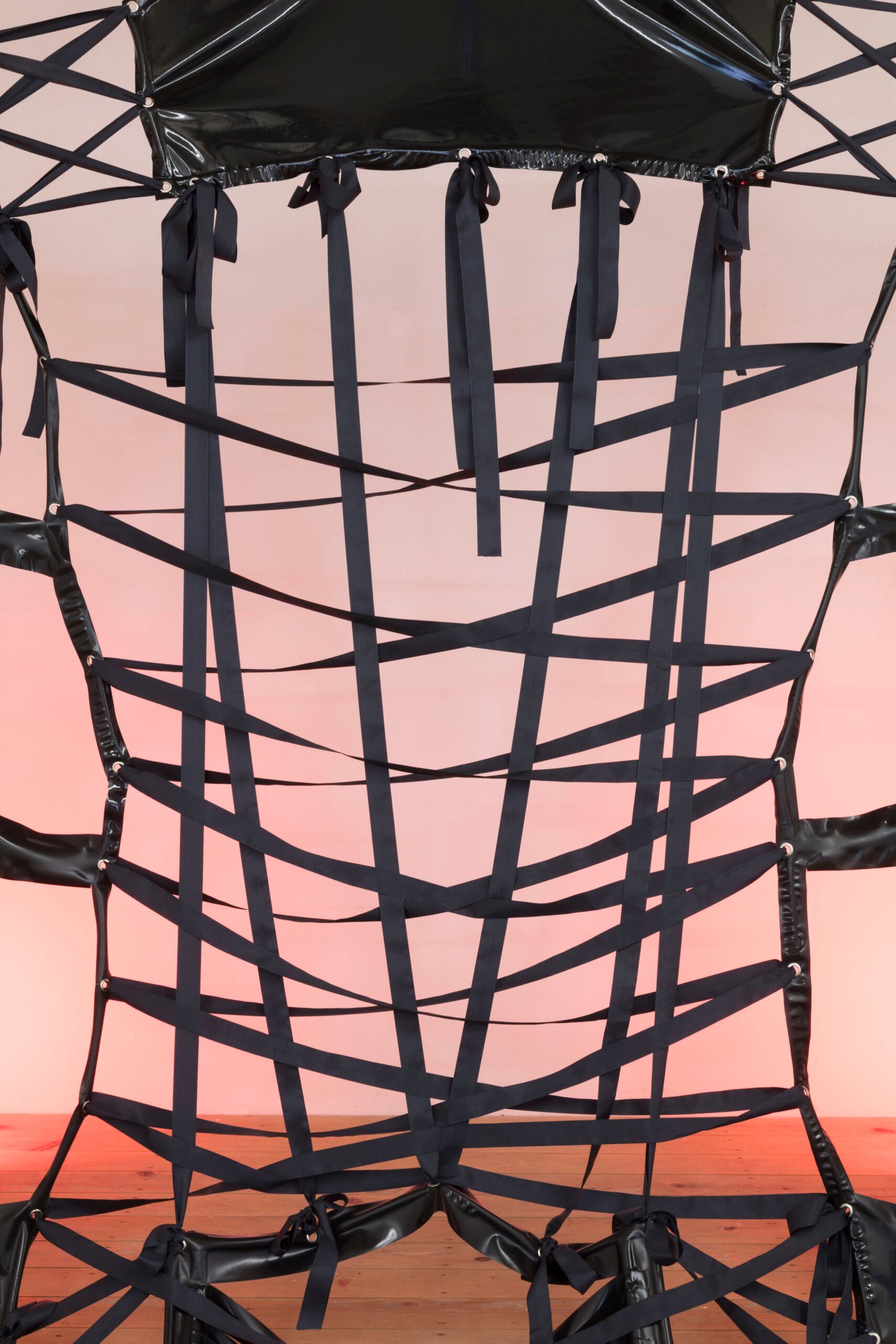
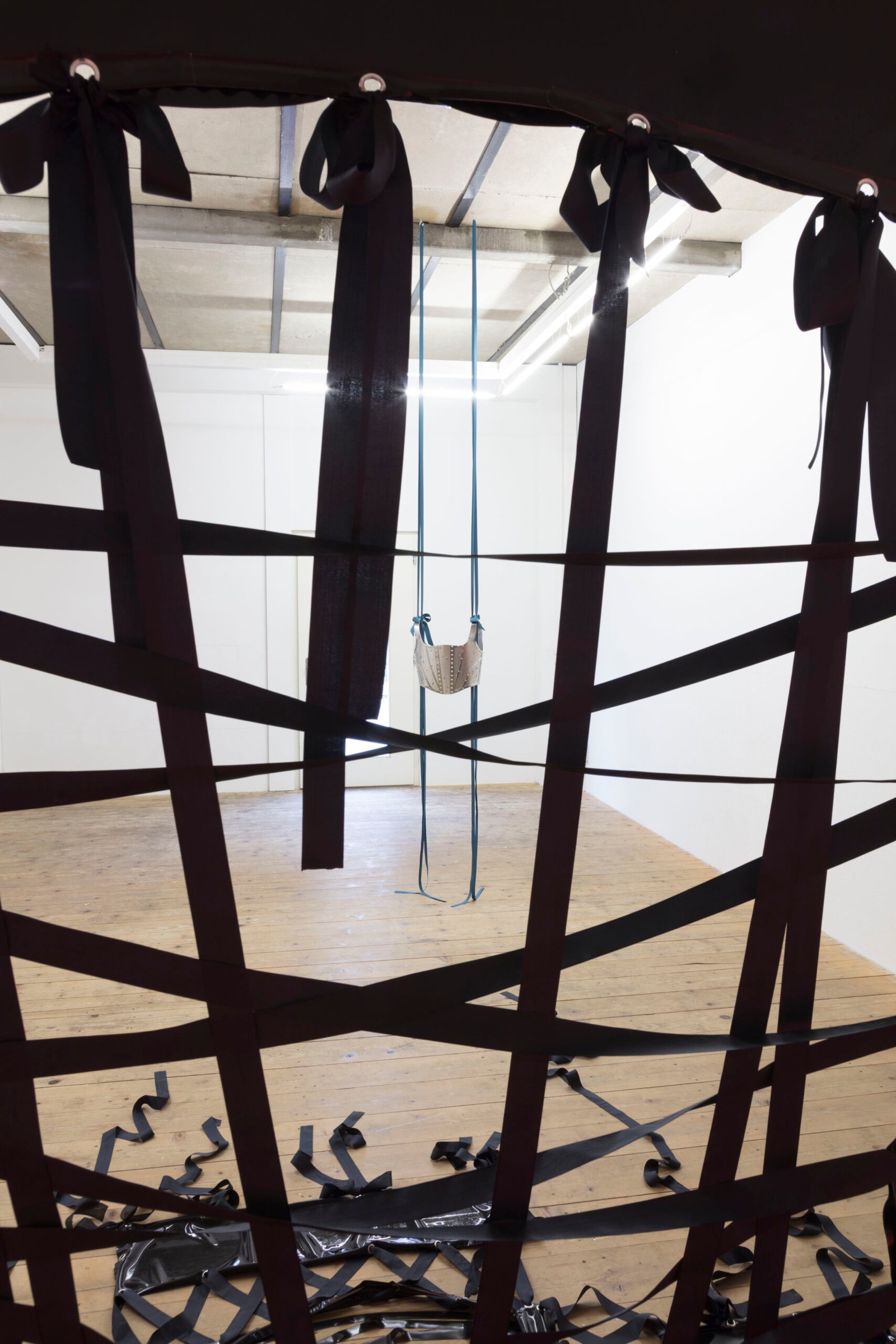
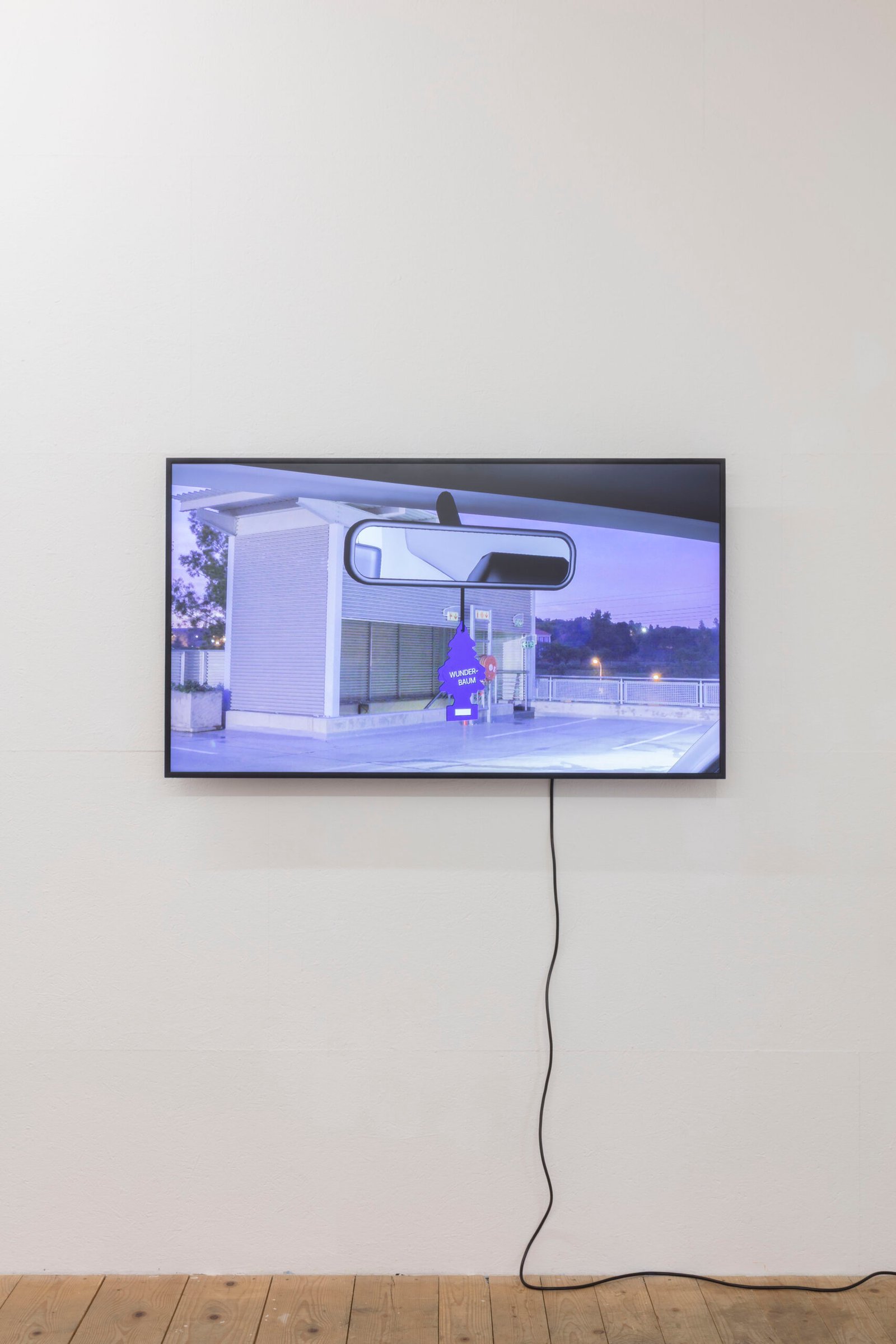
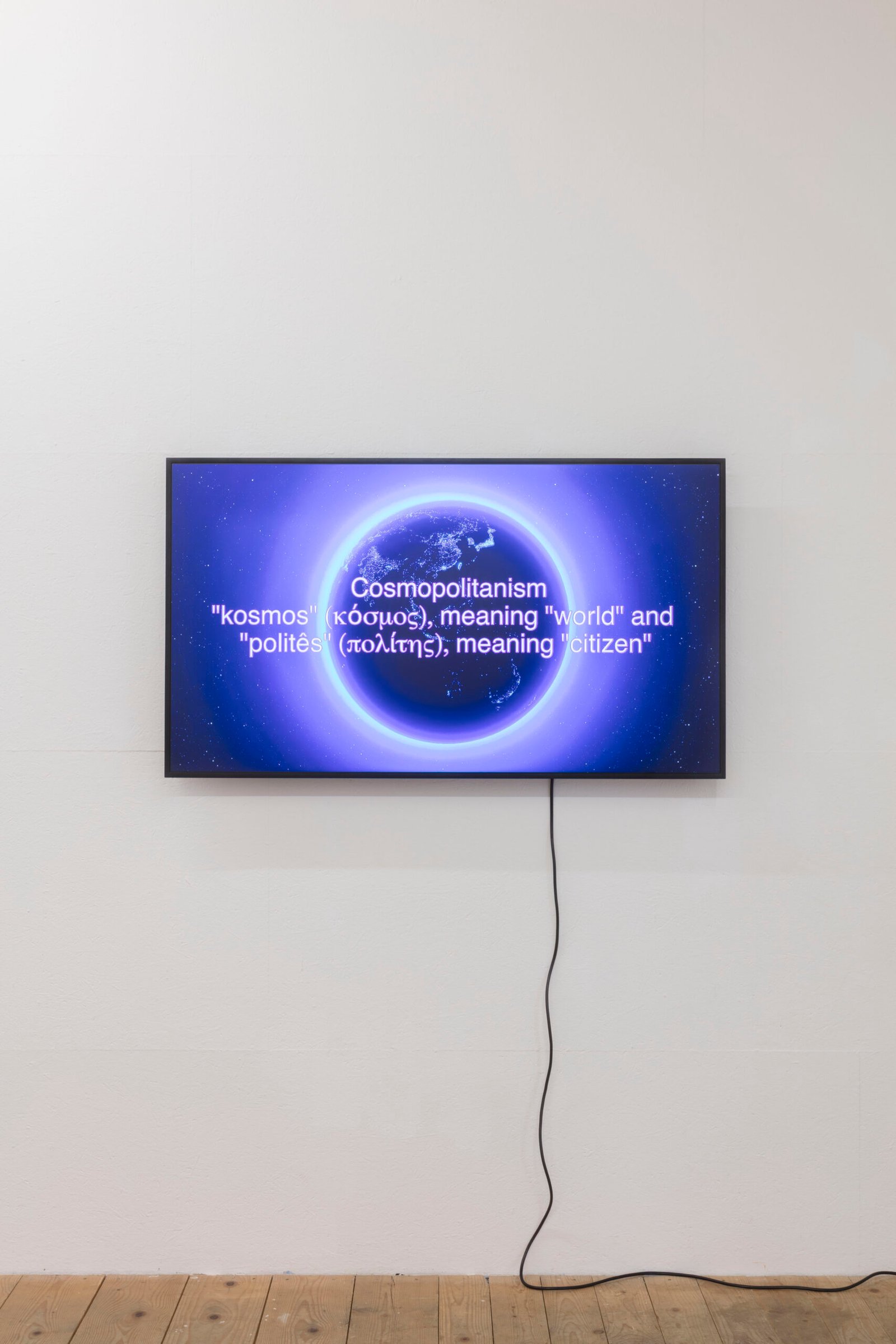
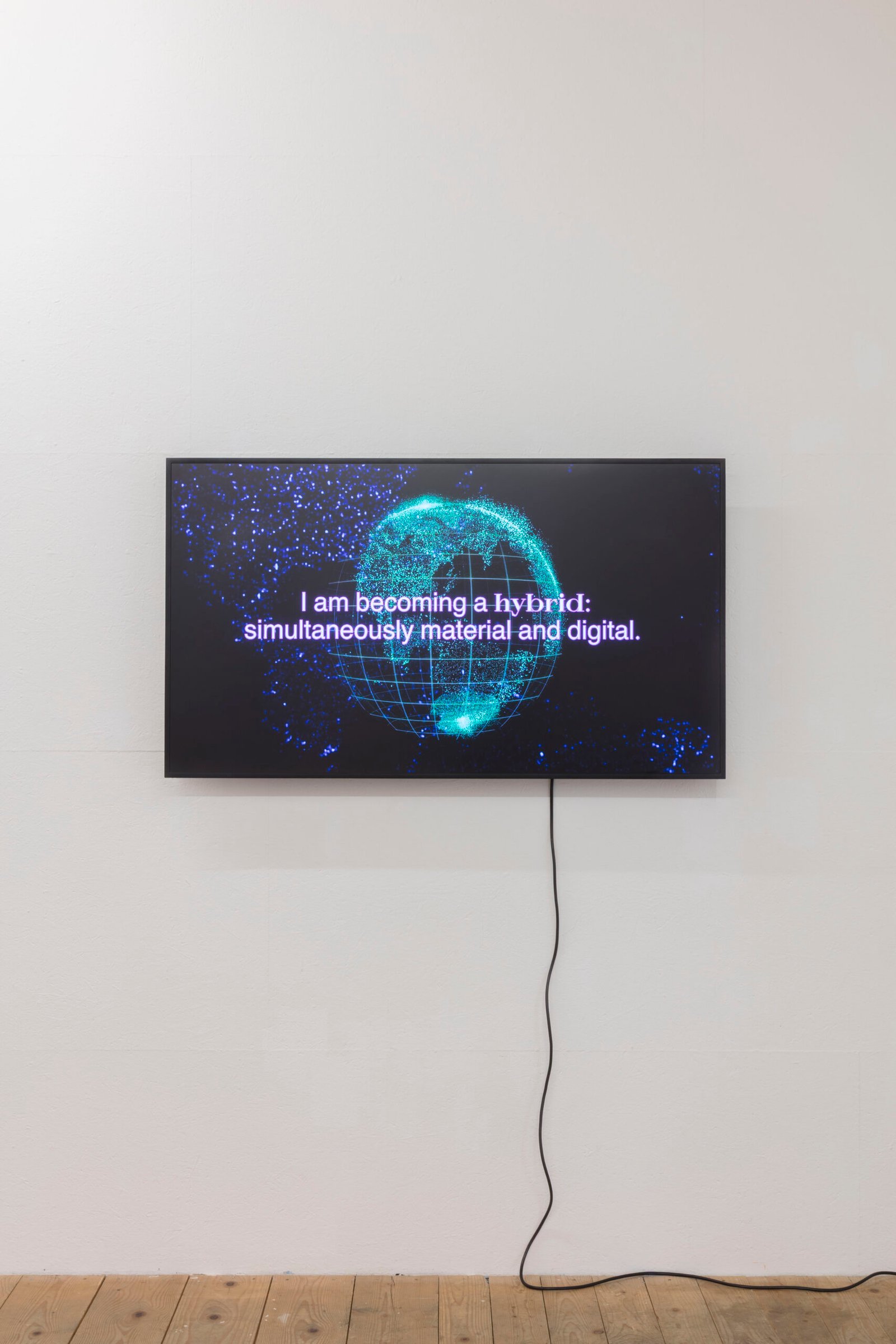
The deconstructed Tesla Cybertruck – an icon of apocalyptic capitalist enthusiasm for technology- hangs expansively in shiny black latex like a corset in sic! Elephanthouse. Red-hot lights reinforce the dystopian vision of a post-apocalyptic world. Inspired by Blade Runner and posthuman life on Mars, Elon Musk developed the final stage of the SUV as a bulletproof fortress on wheels, a mobile panic room against invading hordes. But what is staged as the triumphant body armour of an exclusive global elite loses its hardness in Anna Raczyńska’s (*1990, Poland) work: soft latex transforms the “Kollapsmaschine” (2025) into skin—vulnerable, breathing, porous. Judith Butler writes – not only referring to male subjectivities – in The Psychic Life of Power (1997): “The repressive law is not external to the libido that it represses, but the repressive law represses to the extent that repression becomes a libidinal activity.” This mechanism is directly linked to the Marxist concept of “commodity fetishism”: the car appears not only as a means of transport, but also as a magically charged object that obscures social power relations and at the same time becomes libidinously charged. With the materiality of latex, the artist, who lives and works in Leipzig, takes up this dual movement: it is skin-like, vulnerable, and erotic, but at the same time a fetish material that evokes associations of restriction, coercion, and discipline. In Raczyńska’s Cybertruck, hardness and softness, oppression and lust, physicality and fetishism, consumption and violence are condensed into a multi-layered whole.
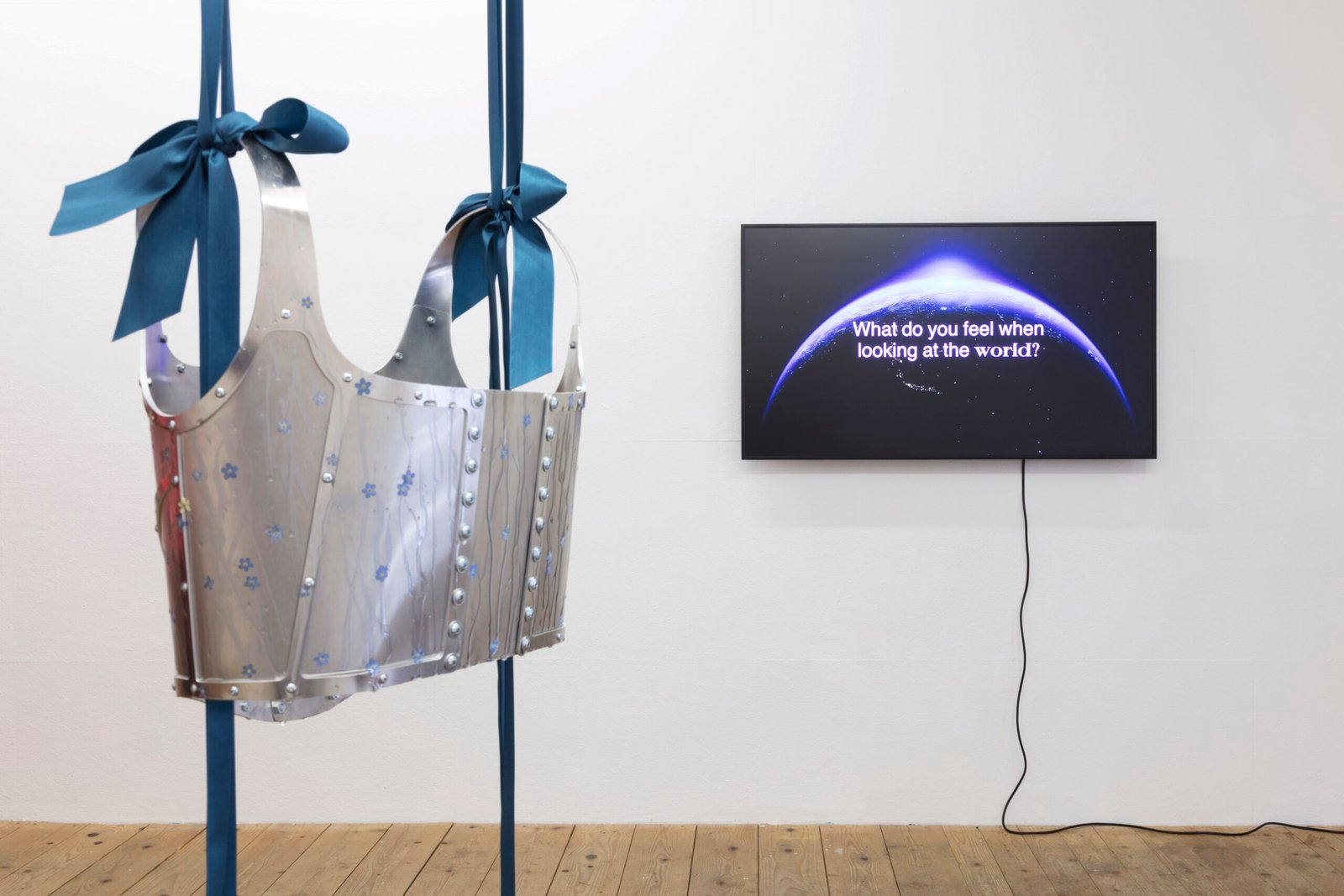
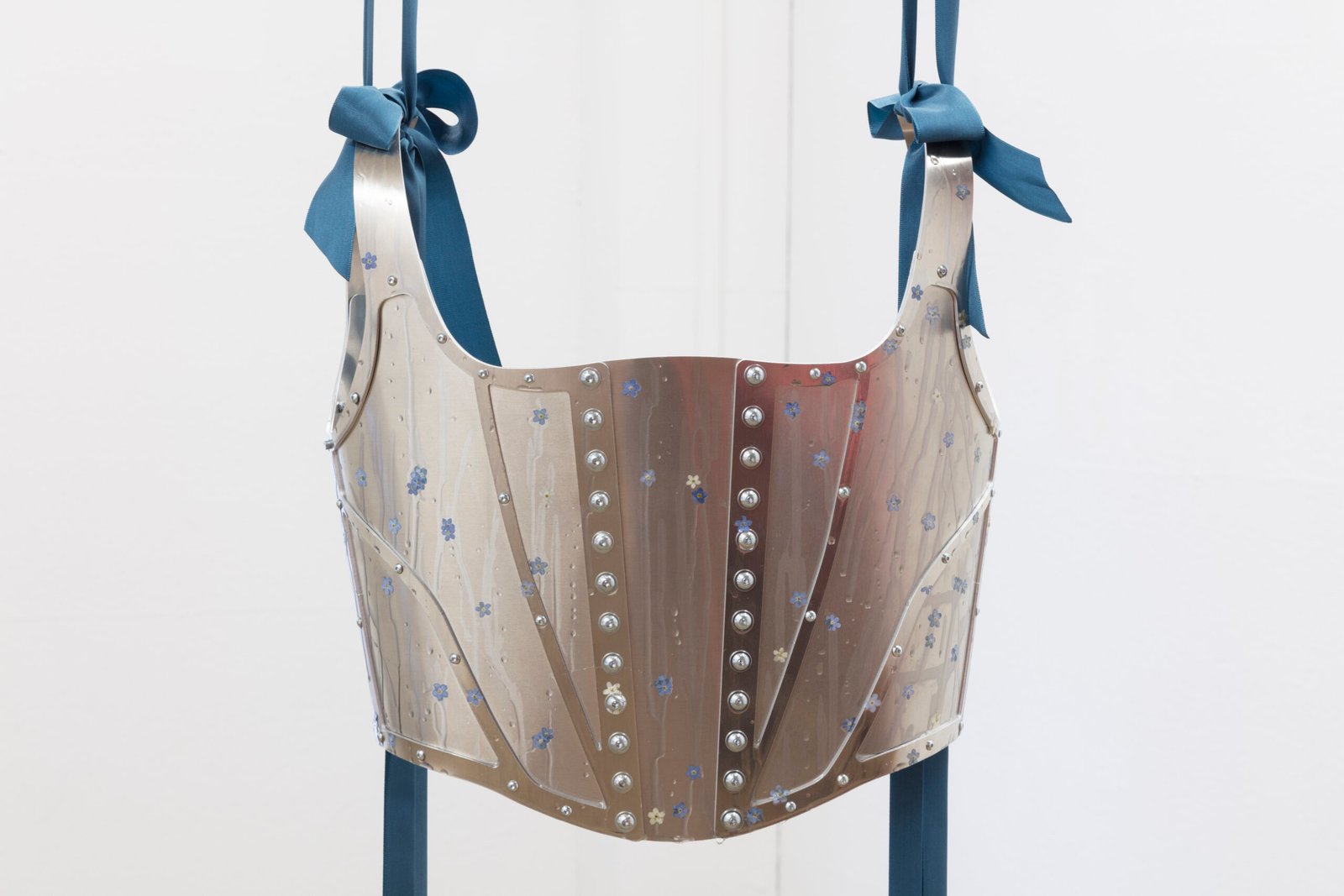
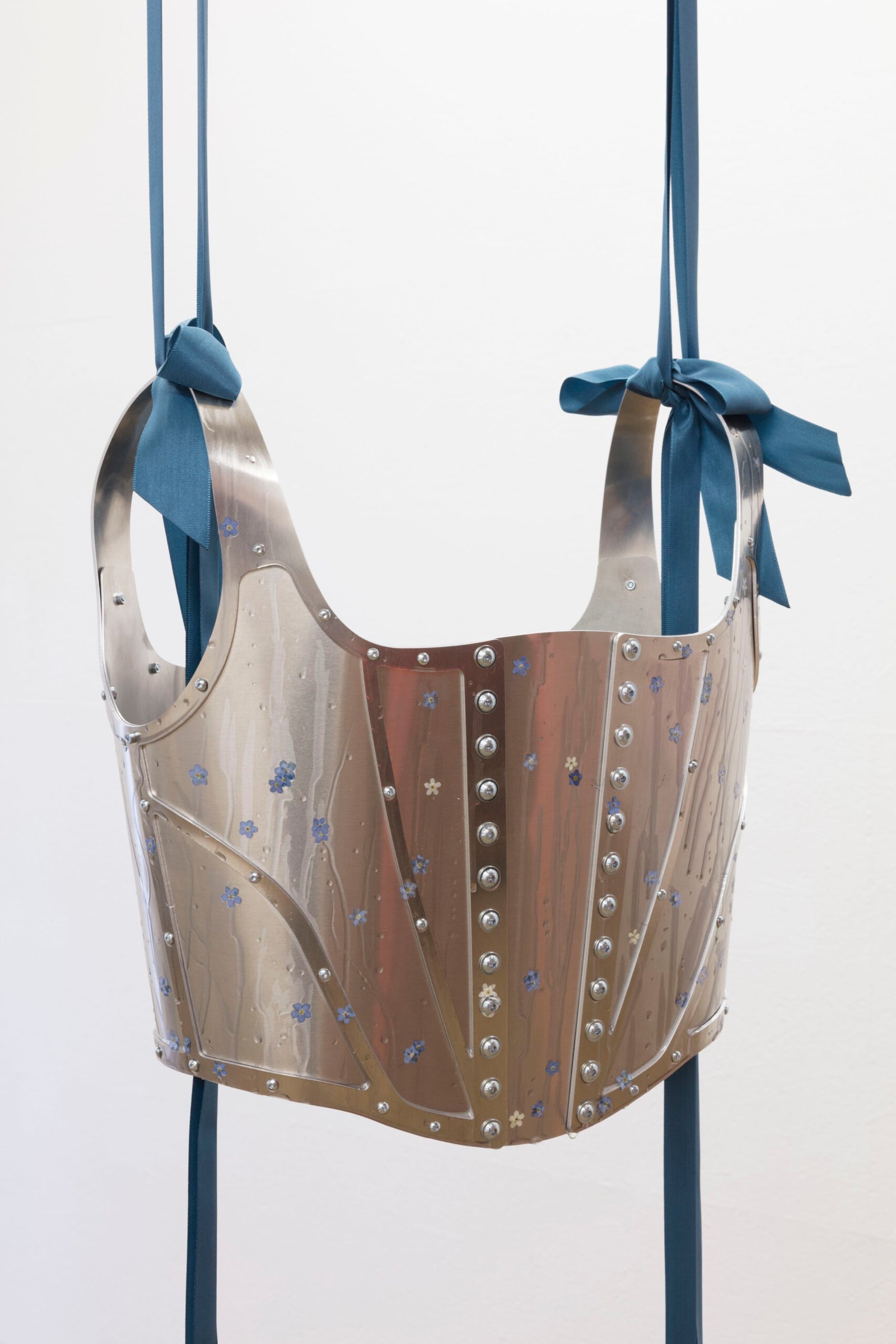
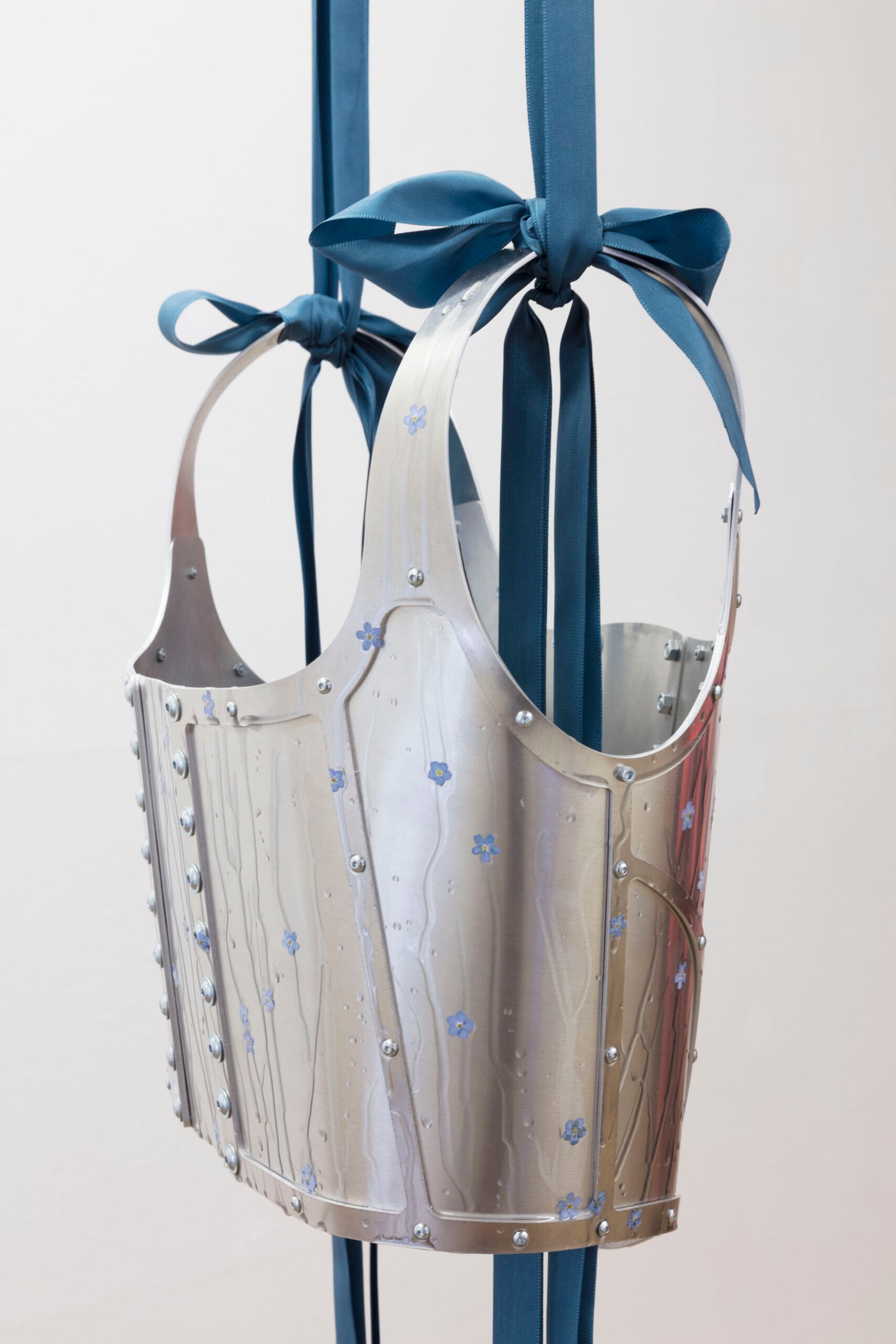
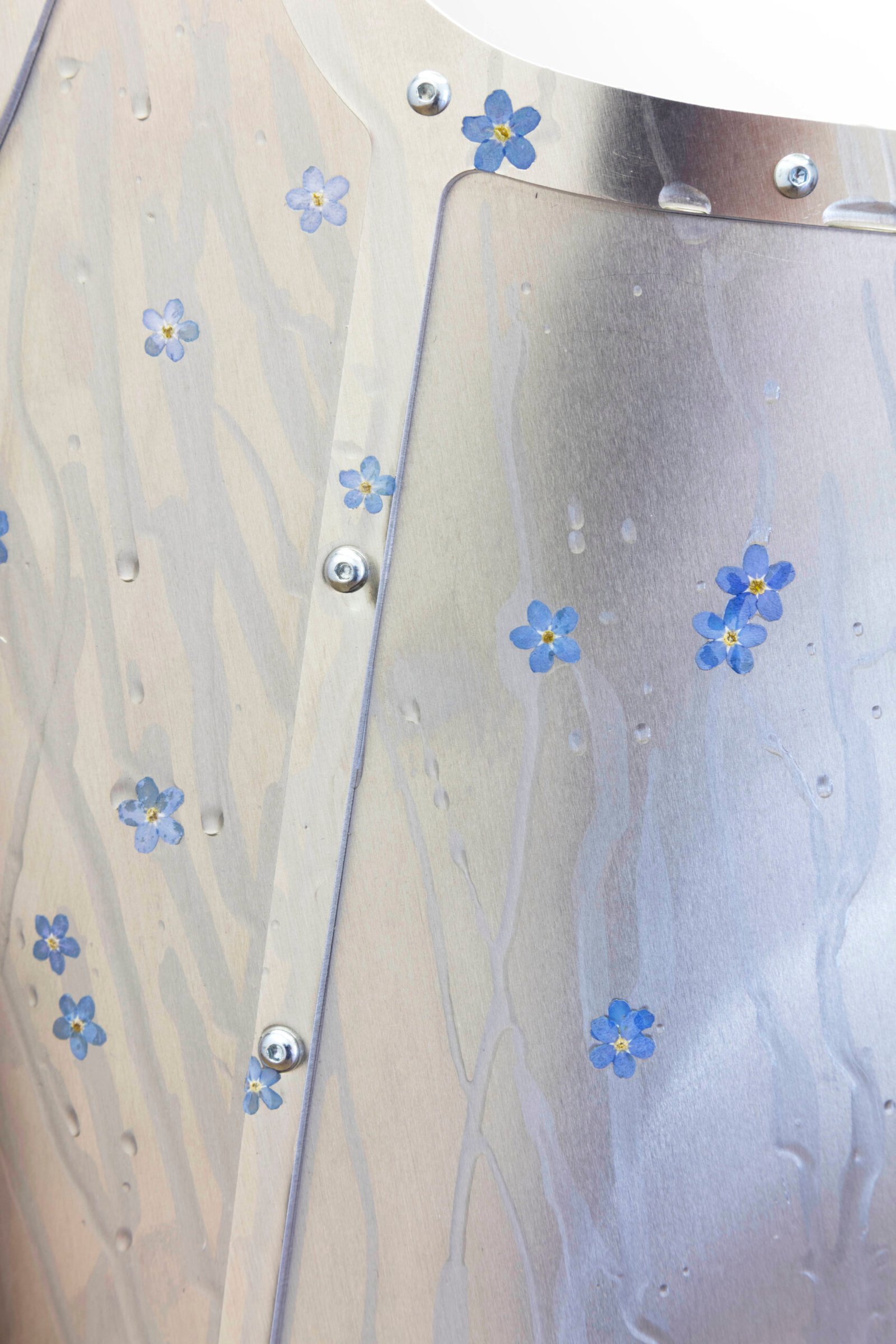
In her second sculptural object, “Soft Burden, Hard Shell” (2025), Raczyńska also intertwines corsets and armour, as well as dualisms of softness and hardness, nature and technology, femininity and masculinity, to create a complex non-binary entity. The corset armour hangs in the room as if it had just been pulled out of the river—or lowered from the sky—on long sky-blue fabric loops. Covered with forget-me-not flowers preserved in epoxy resin, it looks as if water is still flowing down its shiny, smooth surface. According to legend, a knight picked the flower on the riverbank, fell into the water, and cried out to his beloved as he drowned: “Forget me not!” This tale of loyalty, loss, and memory is combined in Raczyńska’s work to create a ghostly hybrid object that makes armour tangible not as triumph and separation, but as a protective shell of memory and vulnerability.
Michel Rebosura @mirebo