


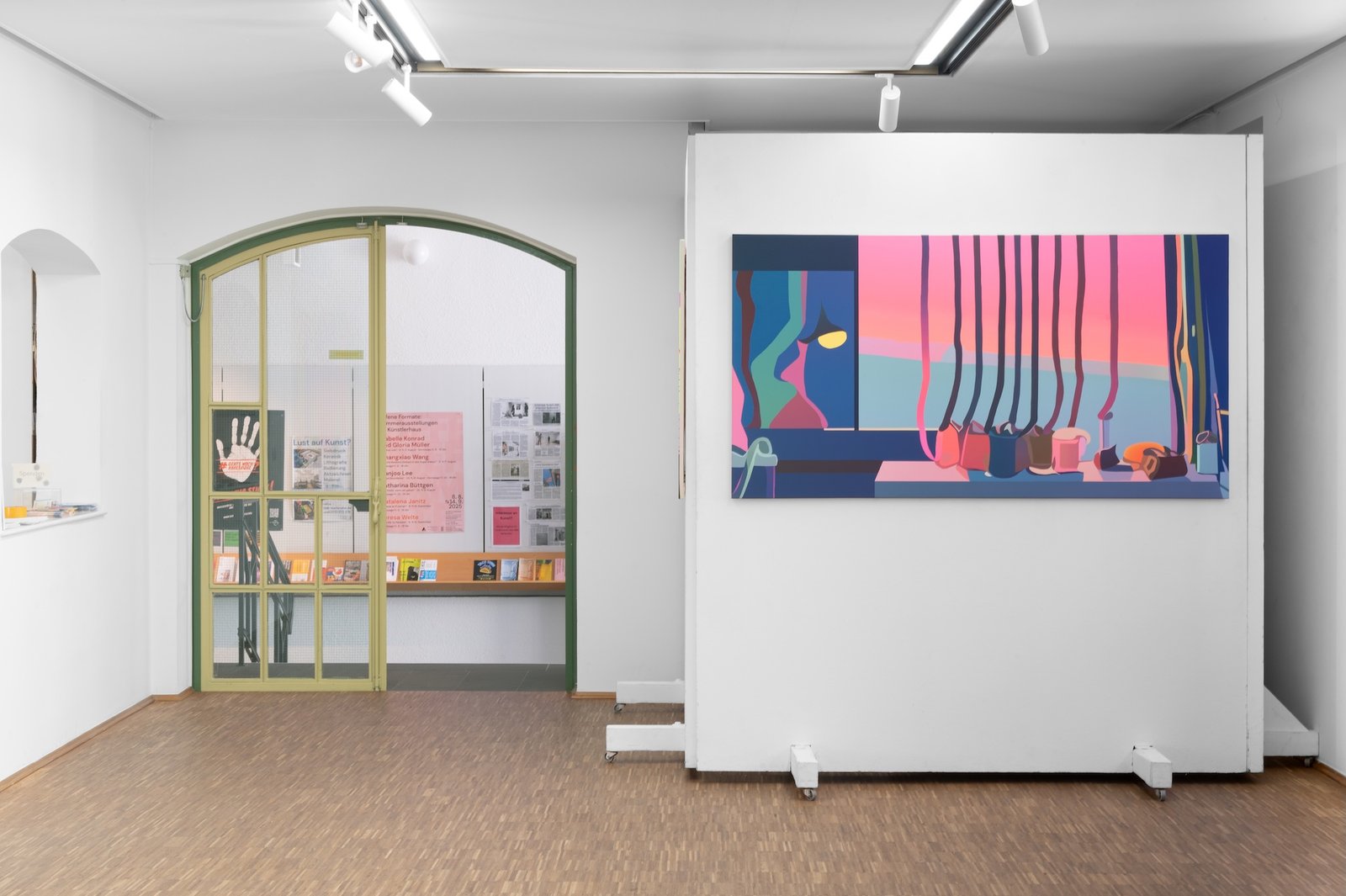
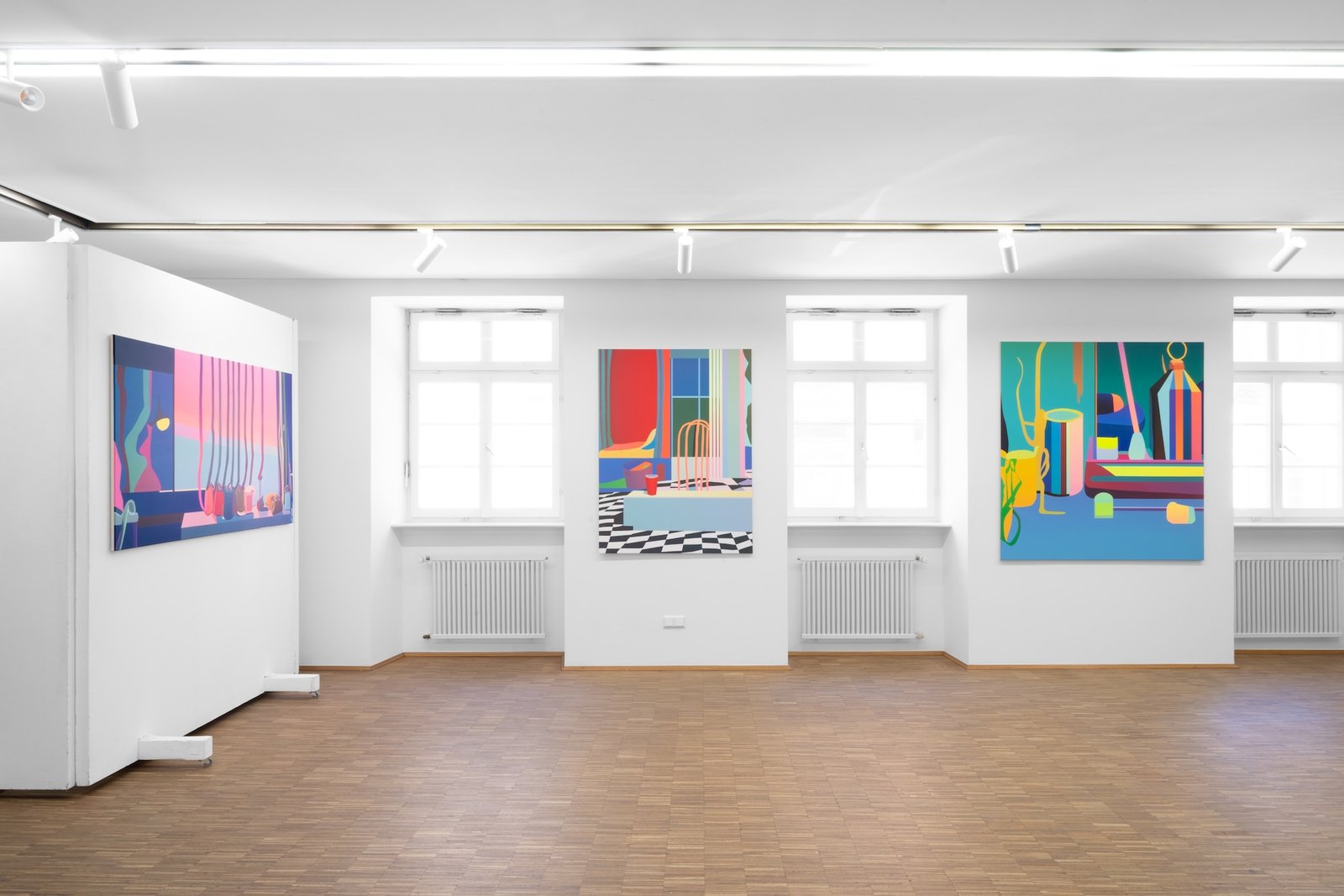
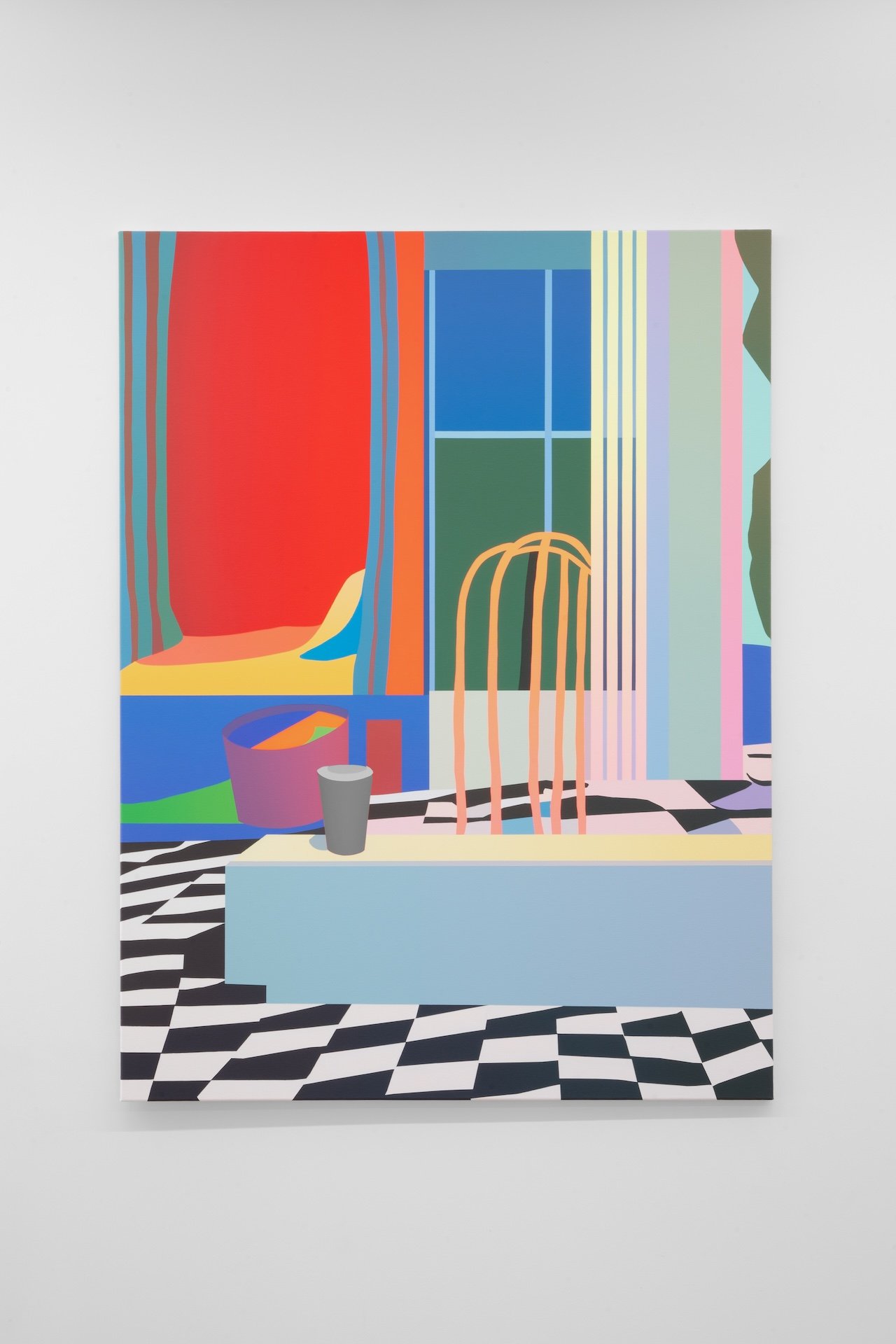
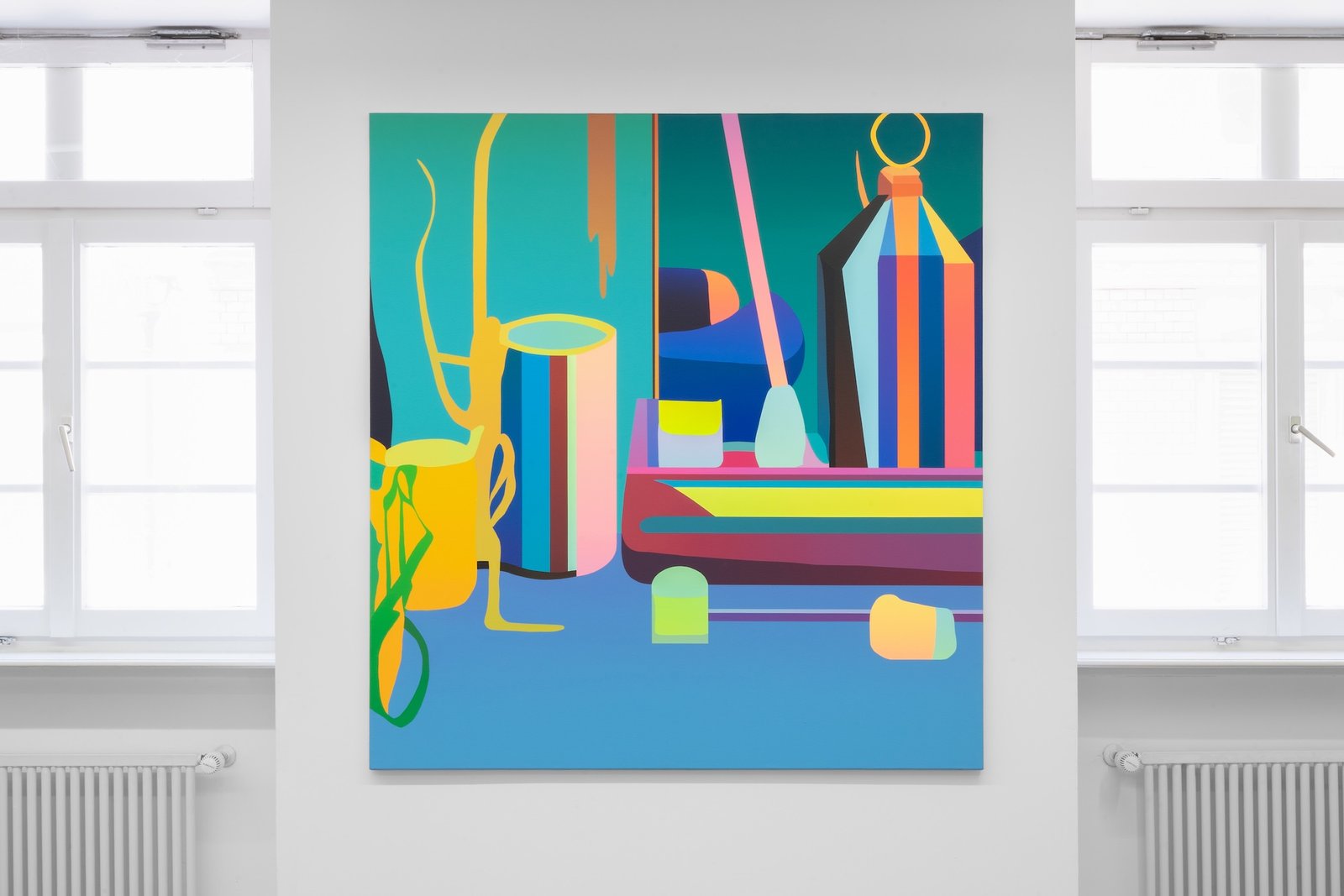
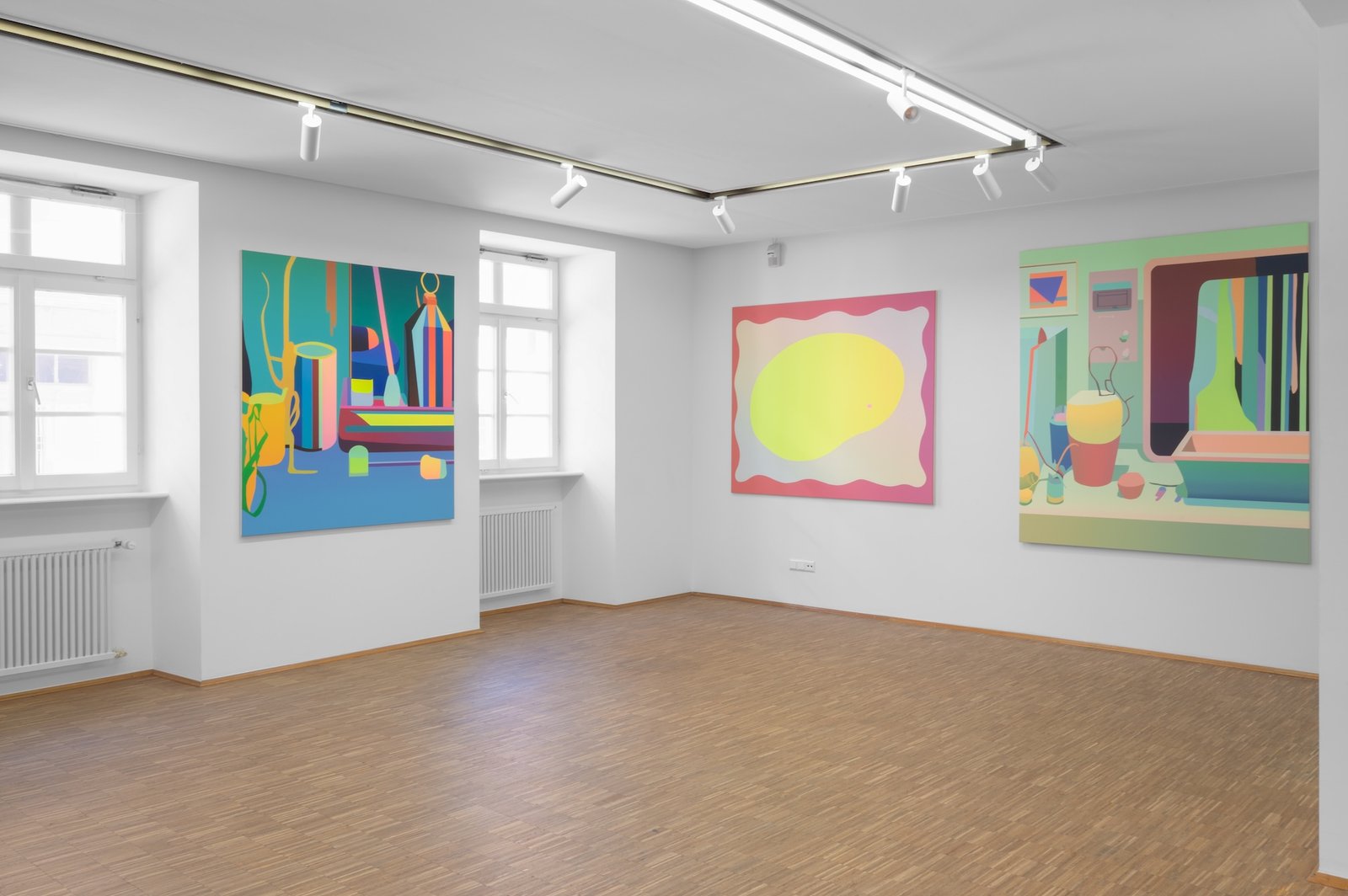
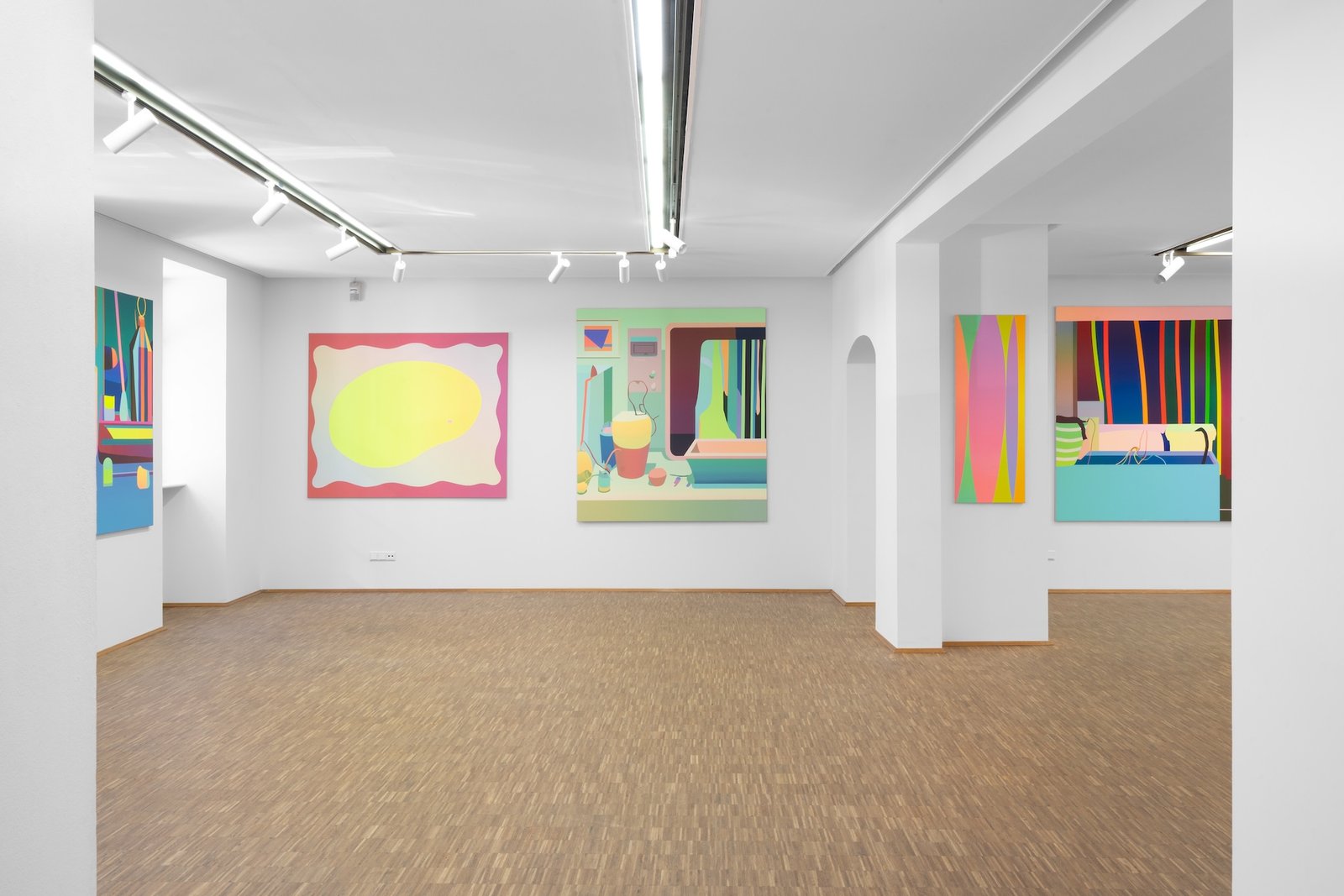
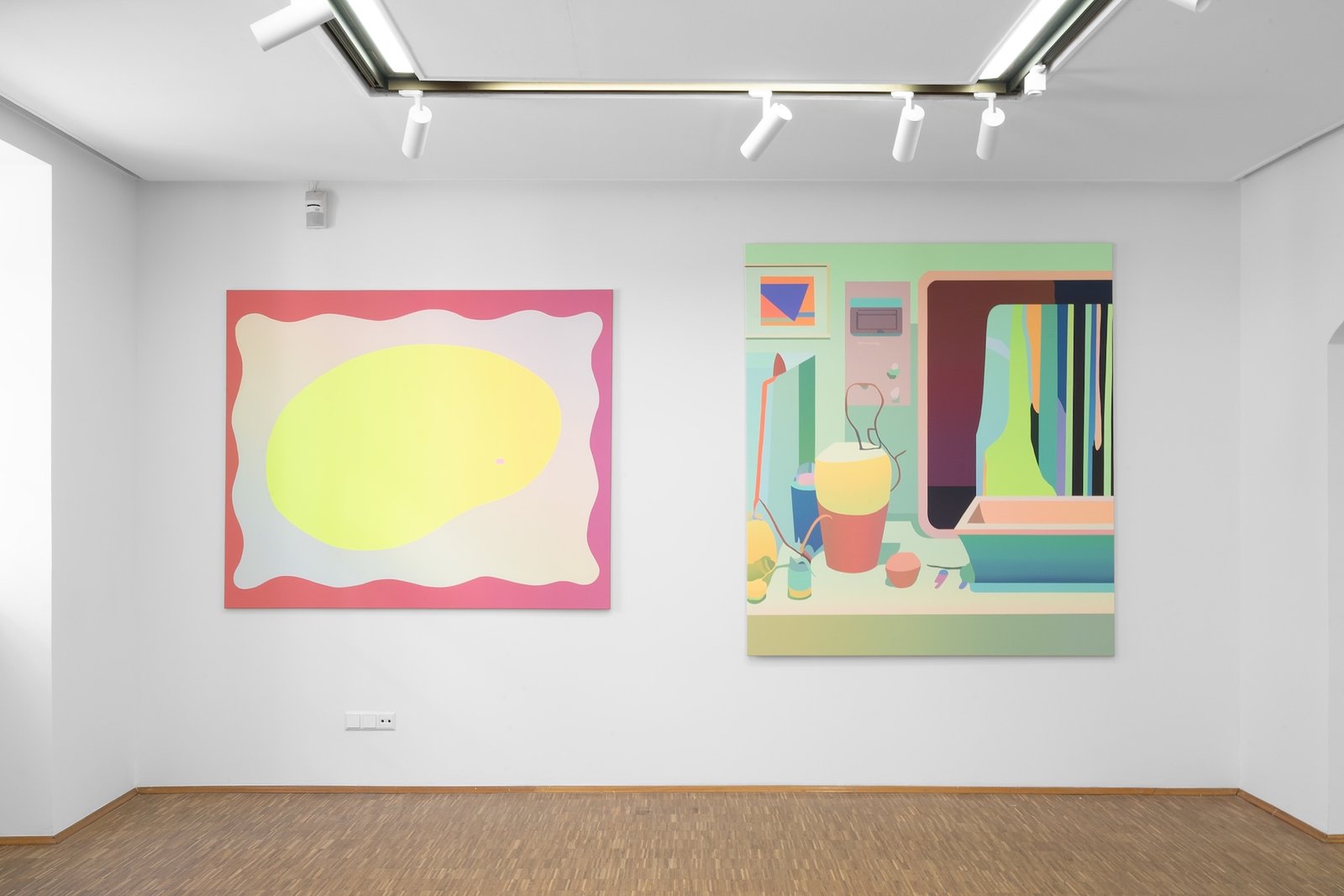
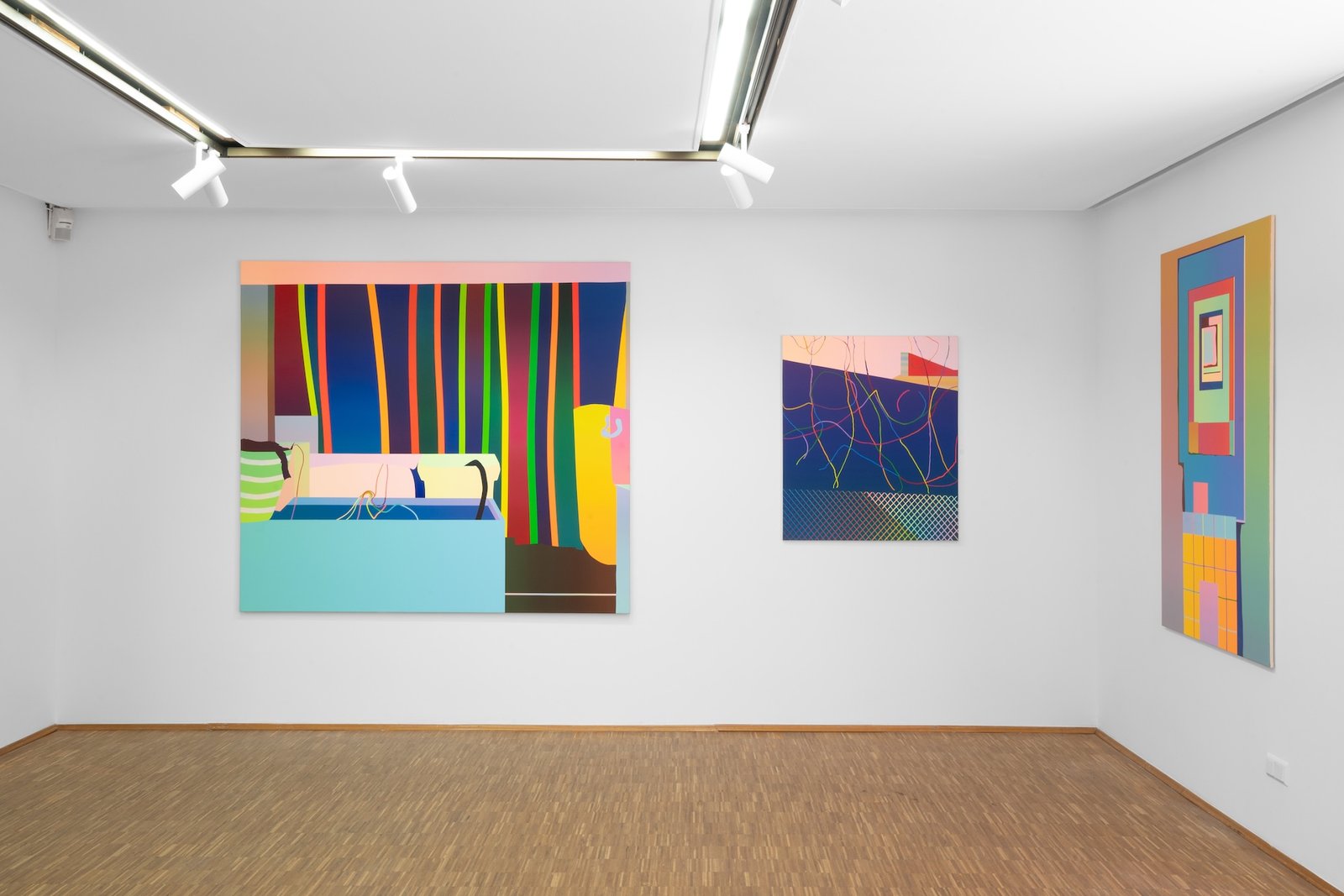
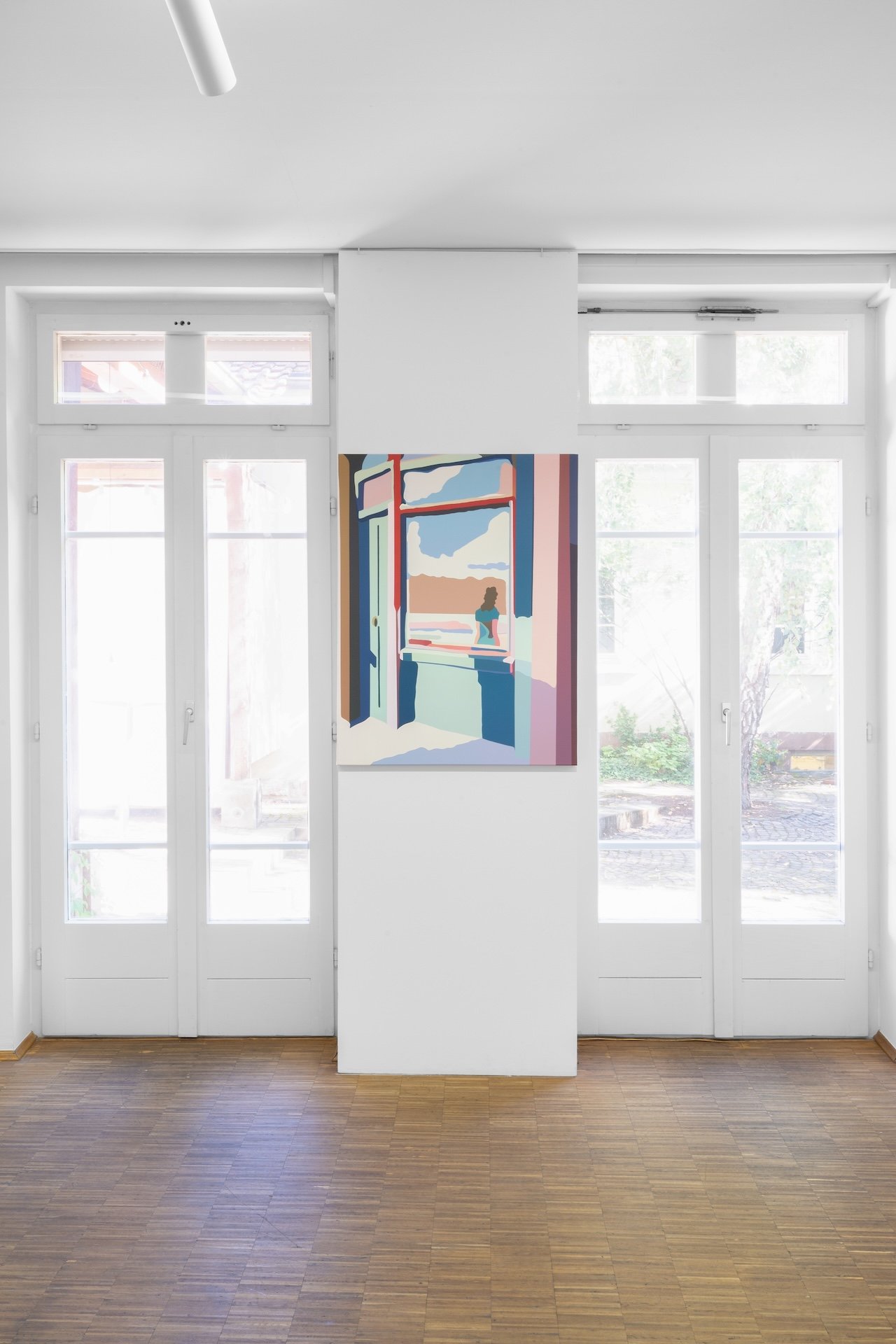
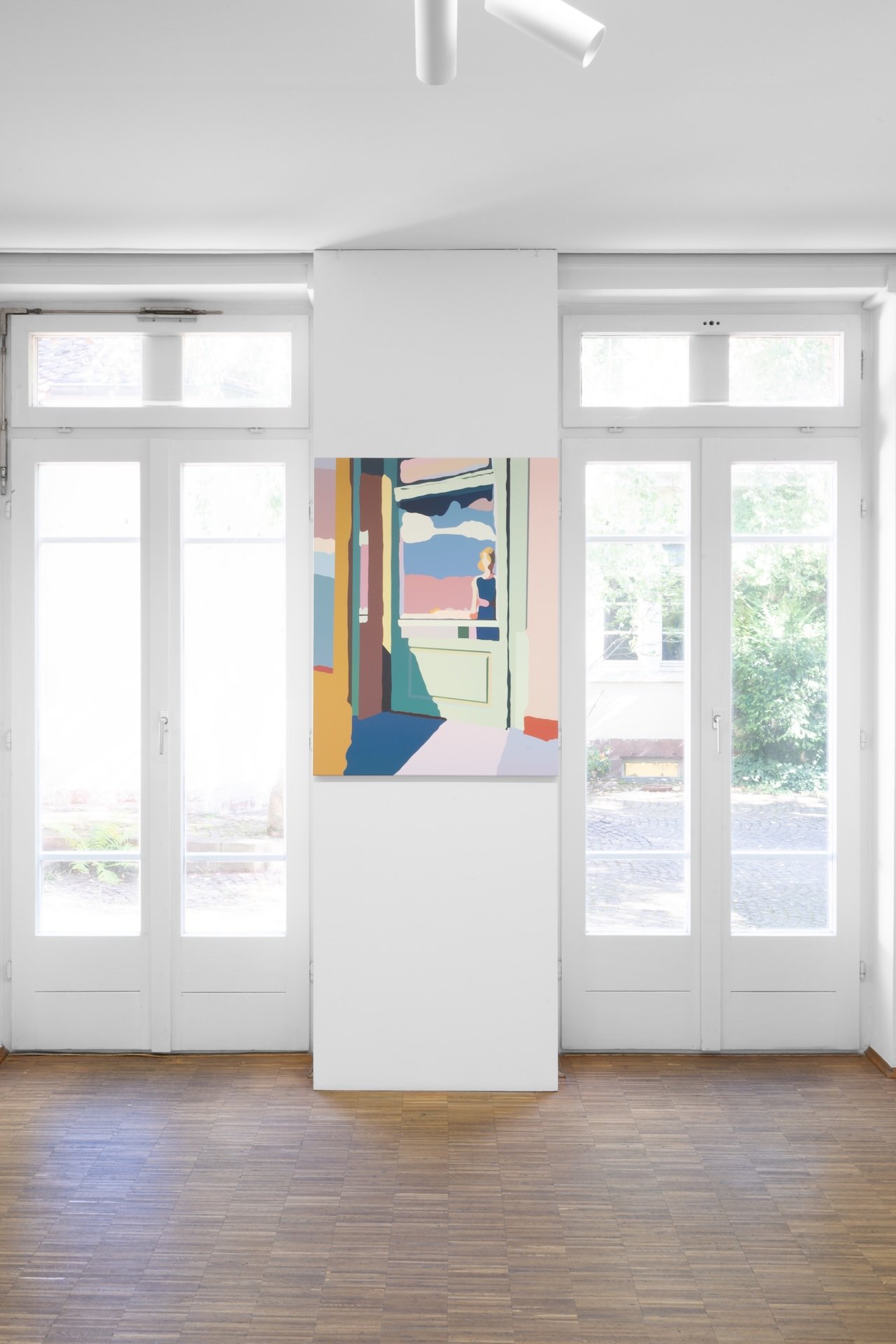
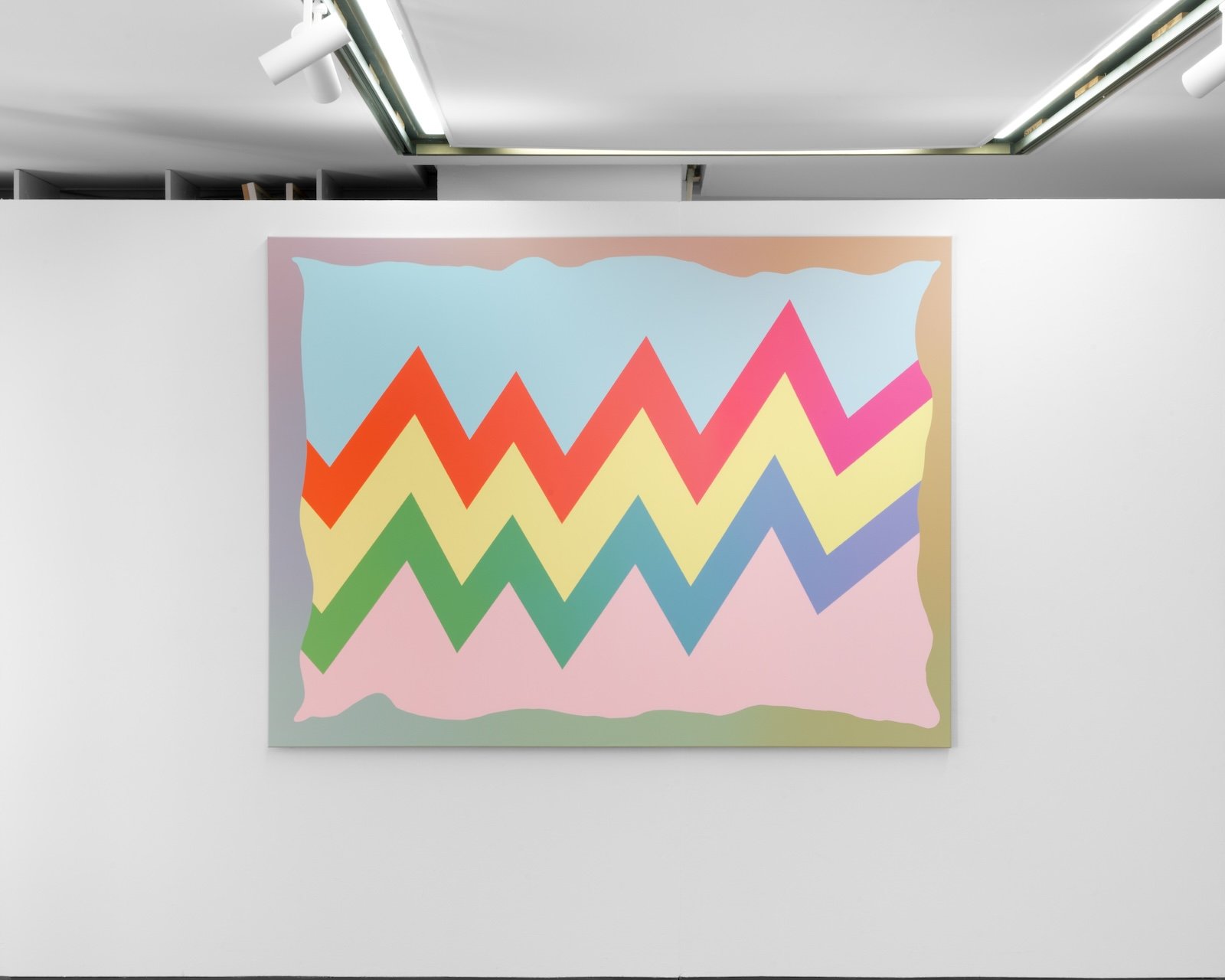
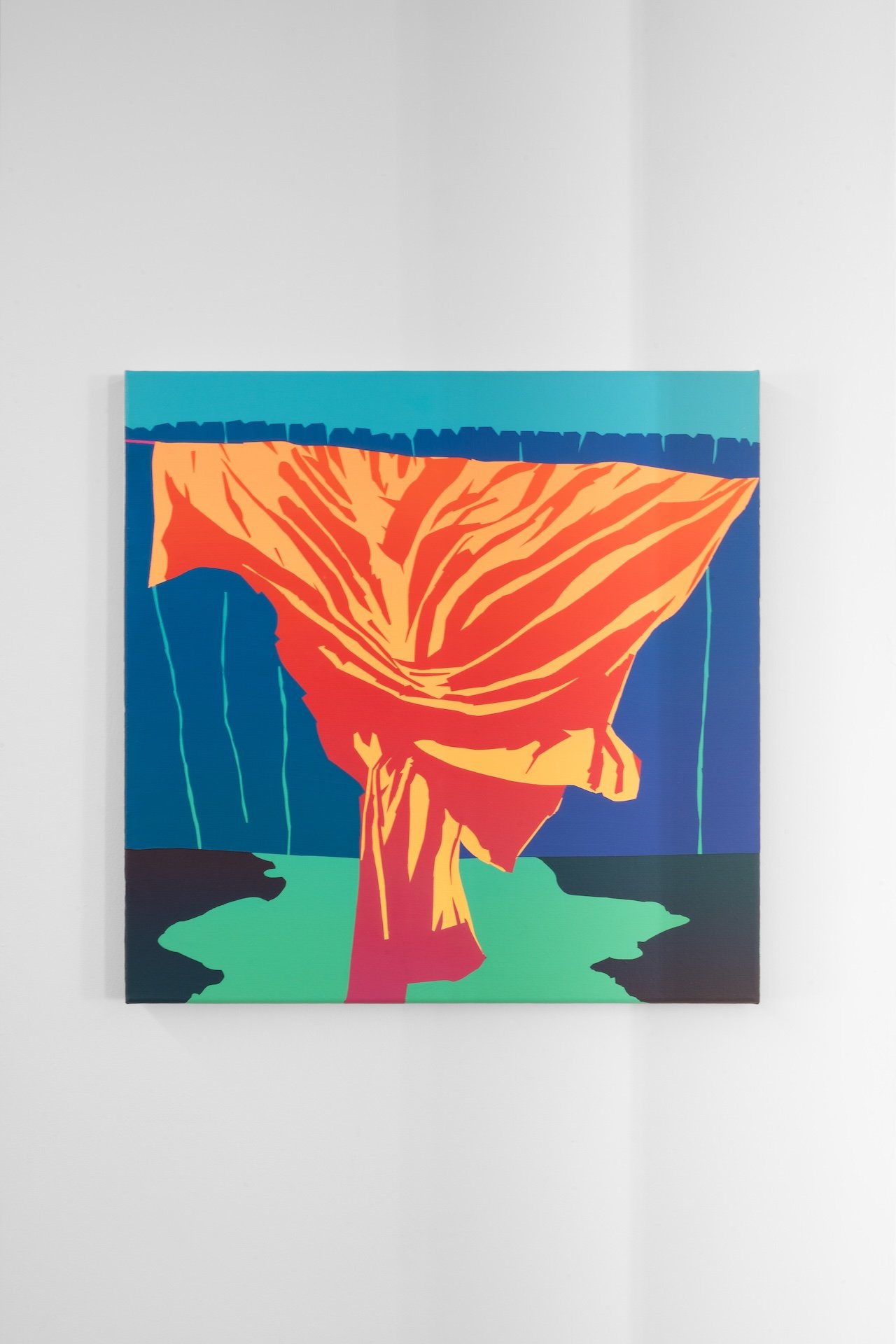
The title of the Exhibition (translation: Some Sweets Stick to the Eyes) refers to an experience oscillating between perception, memory, and effect. Here, color appears not merely as a visual phenomenon, but as a carrier of impressions that take hold. For color perception is shaped not only by light and surface, but also by stored images and emotional responses—it is always also memory. The metaphor of the sticky candy points to this lingering: to color combinations and surface stimuli that cling to the gaze and leave traces beyond seeing. Thus, our sense of color is embedded in a feedback loop in which perception, memory, and imagination repeatedly intermingle.
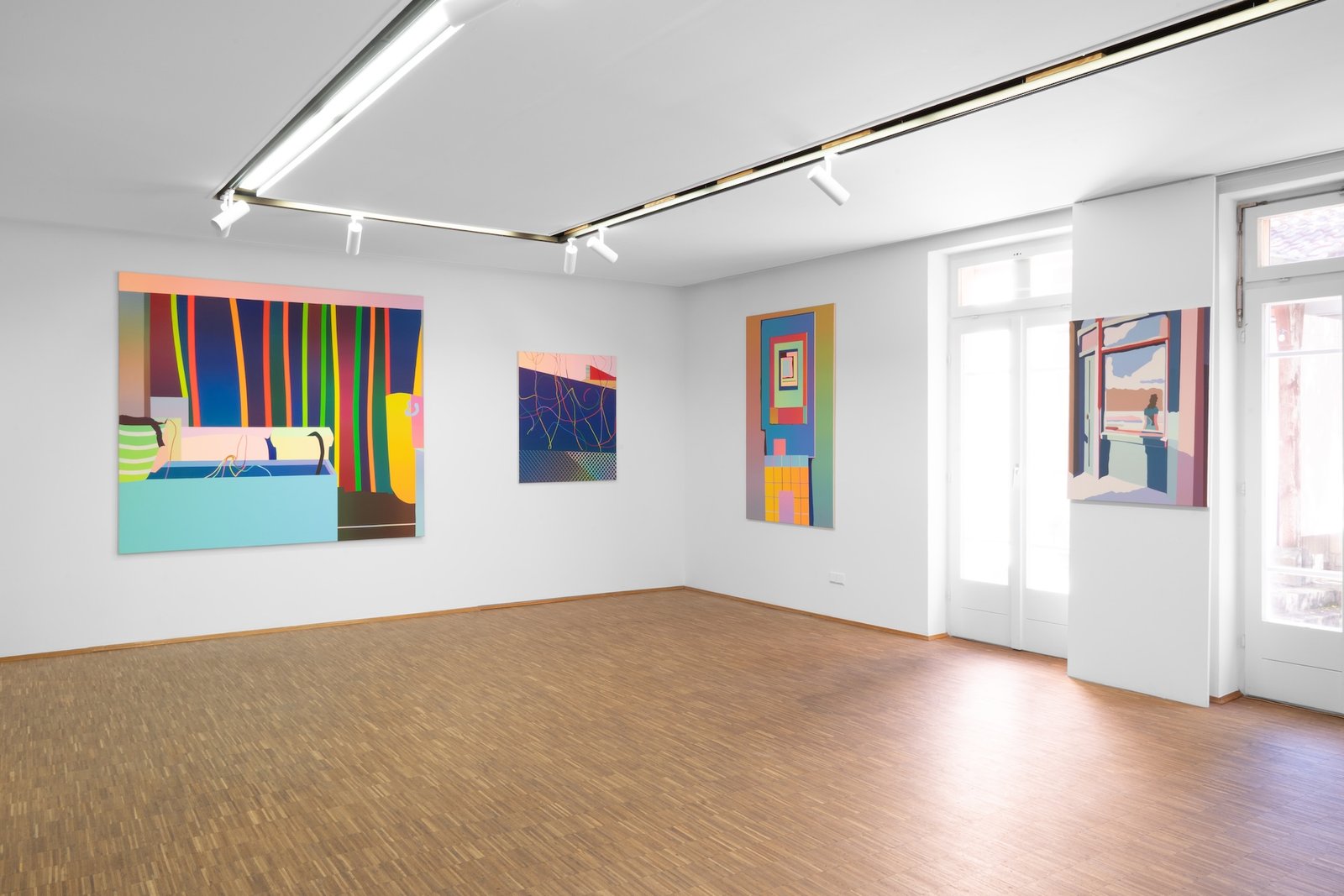
“Manche Bonbons bleiben in den Augen kleben” brings together a selection of works by Changxiao Wang from recent years, exploring what images trigger in the eye and in memory.
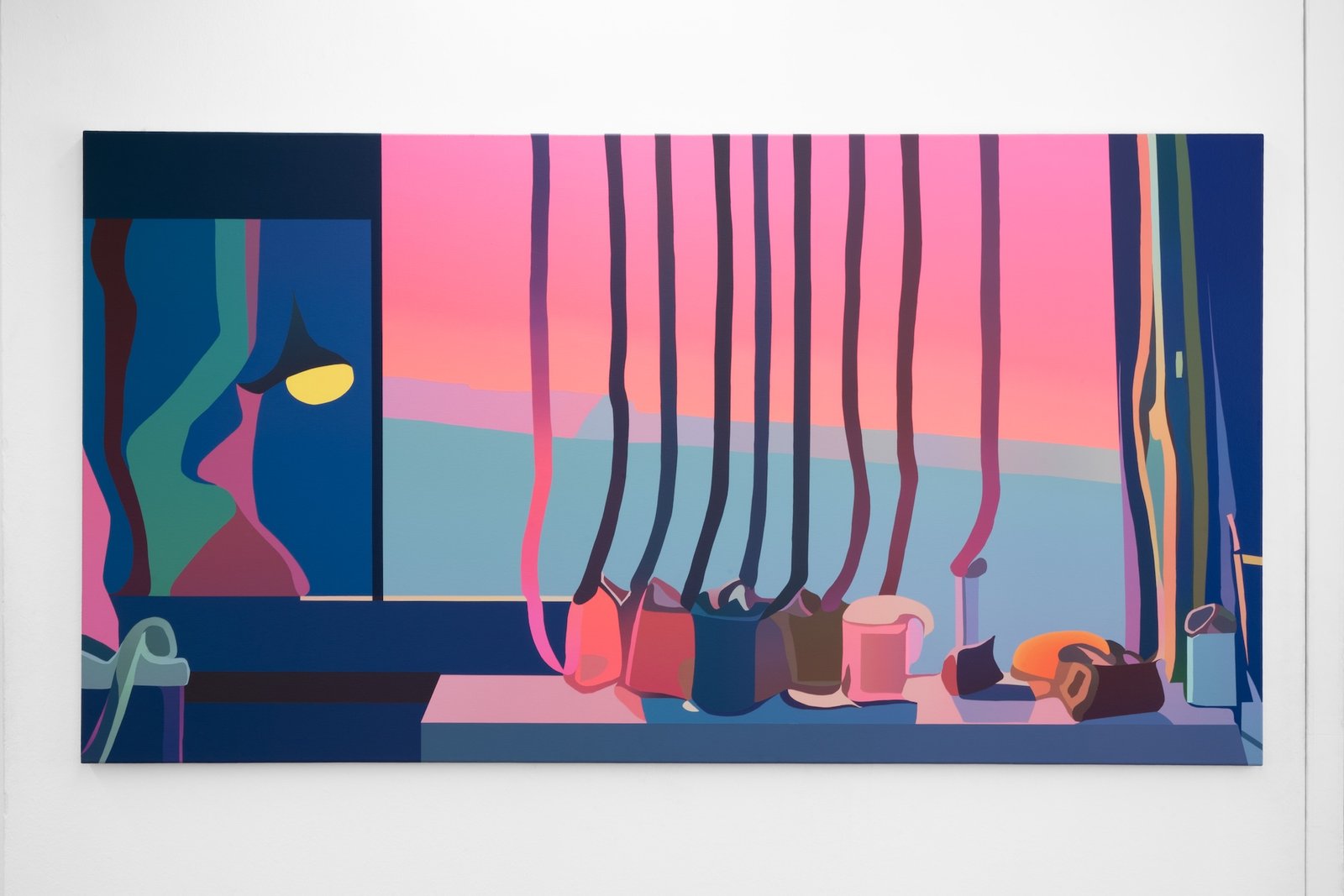
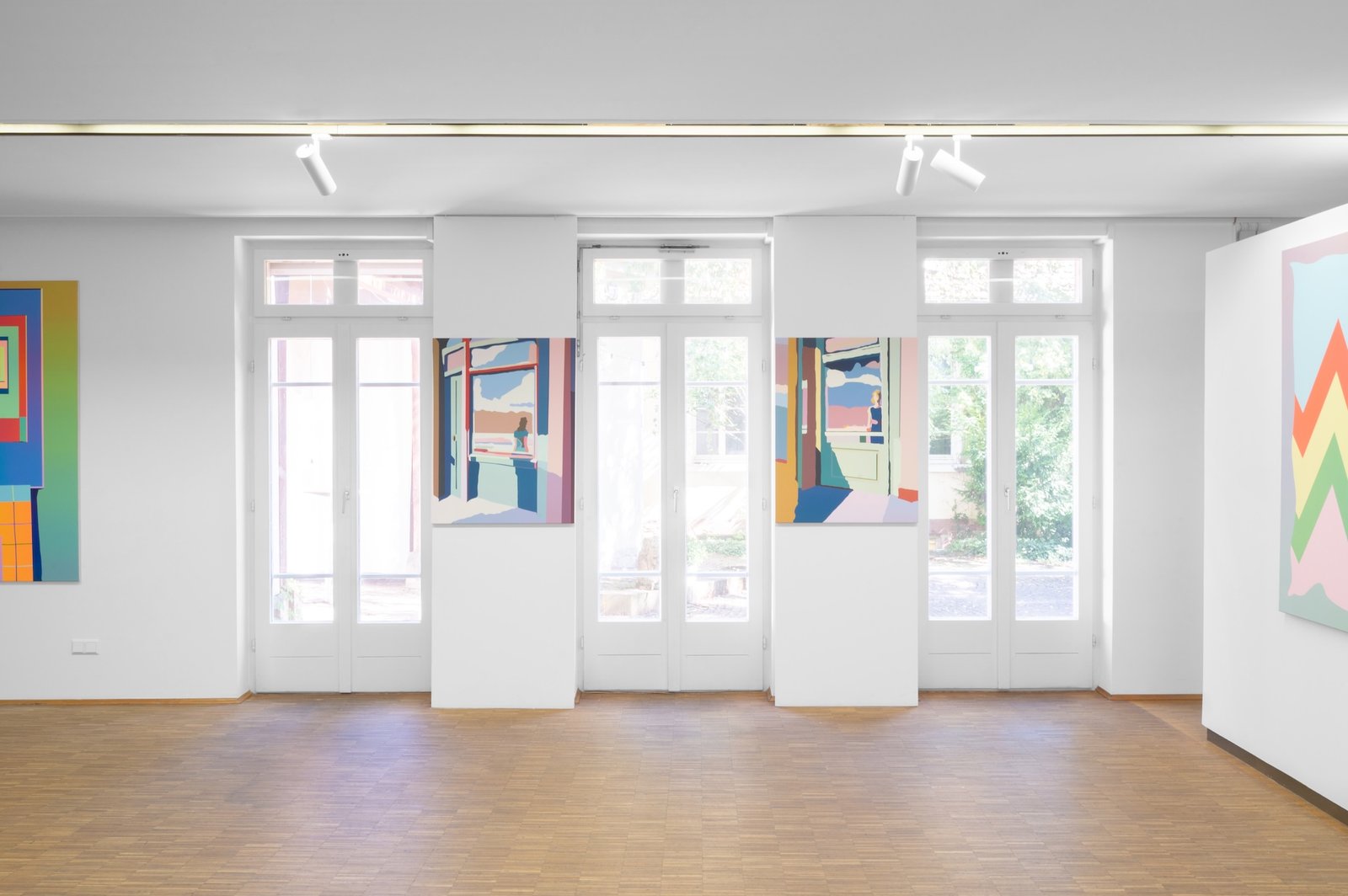
Observation precedes the act of painting, when something catches the artist’s eye—often something ordinary, often incidental. A look into his catalogue reveals a strong interest in fragmentary urban scenes and domestic interiors, where fleeting atmospheres of light are decisive. These moments begin with being captured on a smartphone. Wang uses snapshots as raw material for his paintings. Yet what finally appears on the canvas has clearly loosened itself from its original references. Representation recedes, giving way to a multi-layered painterly process of transformation.
In working with digital images, Wang first converts his photographs into grayscale, reducing them to pure tonal values and carefully adjusting the contrasts. In this way, a structural framework of light and dark emerges—a visual skeleton that preserves from the original motif only the play of light. By detaching the image from its real-life colors, Wang gains complete freedom in his choice of palette: his own chromatic composition becomes the true bearer of mood.
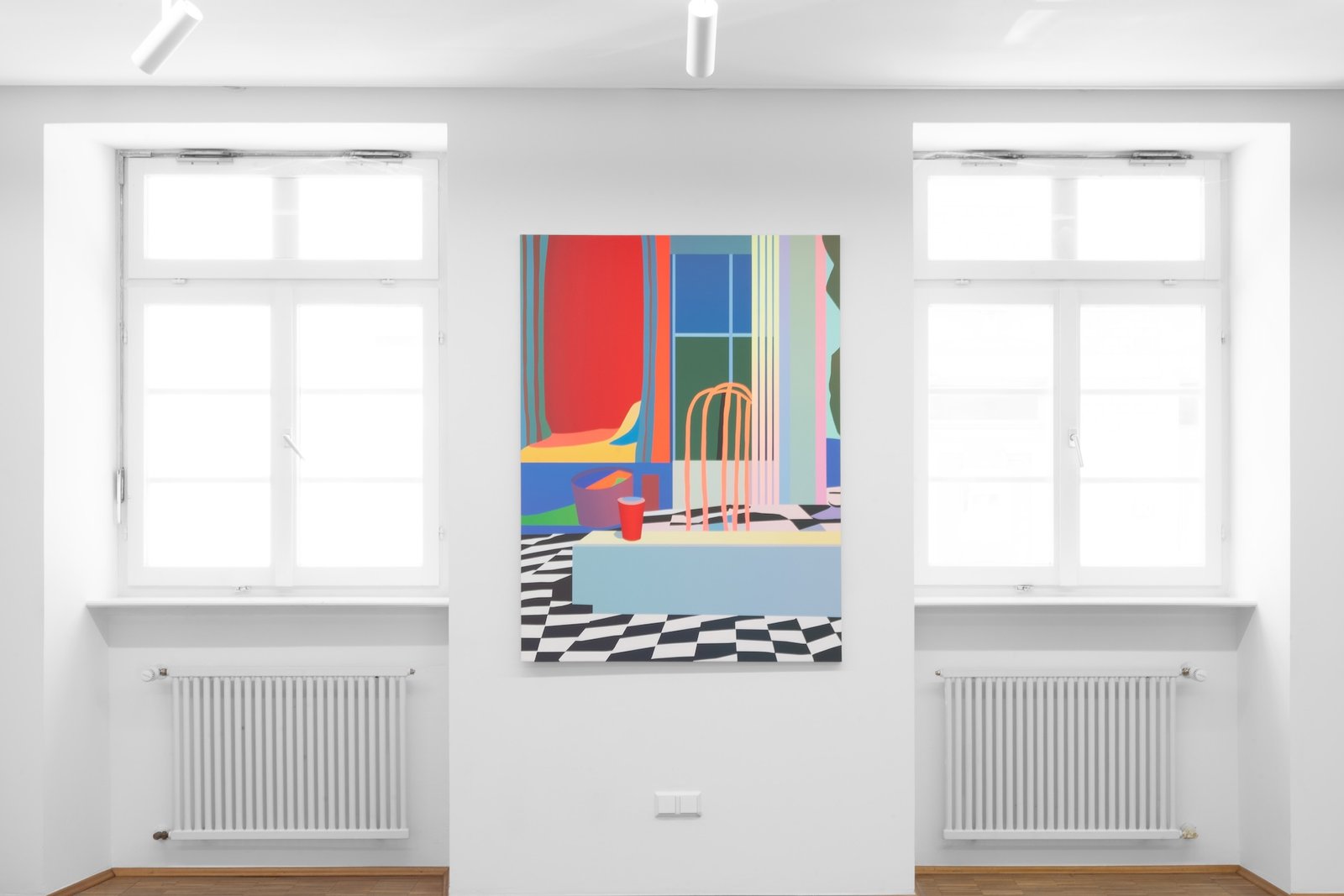
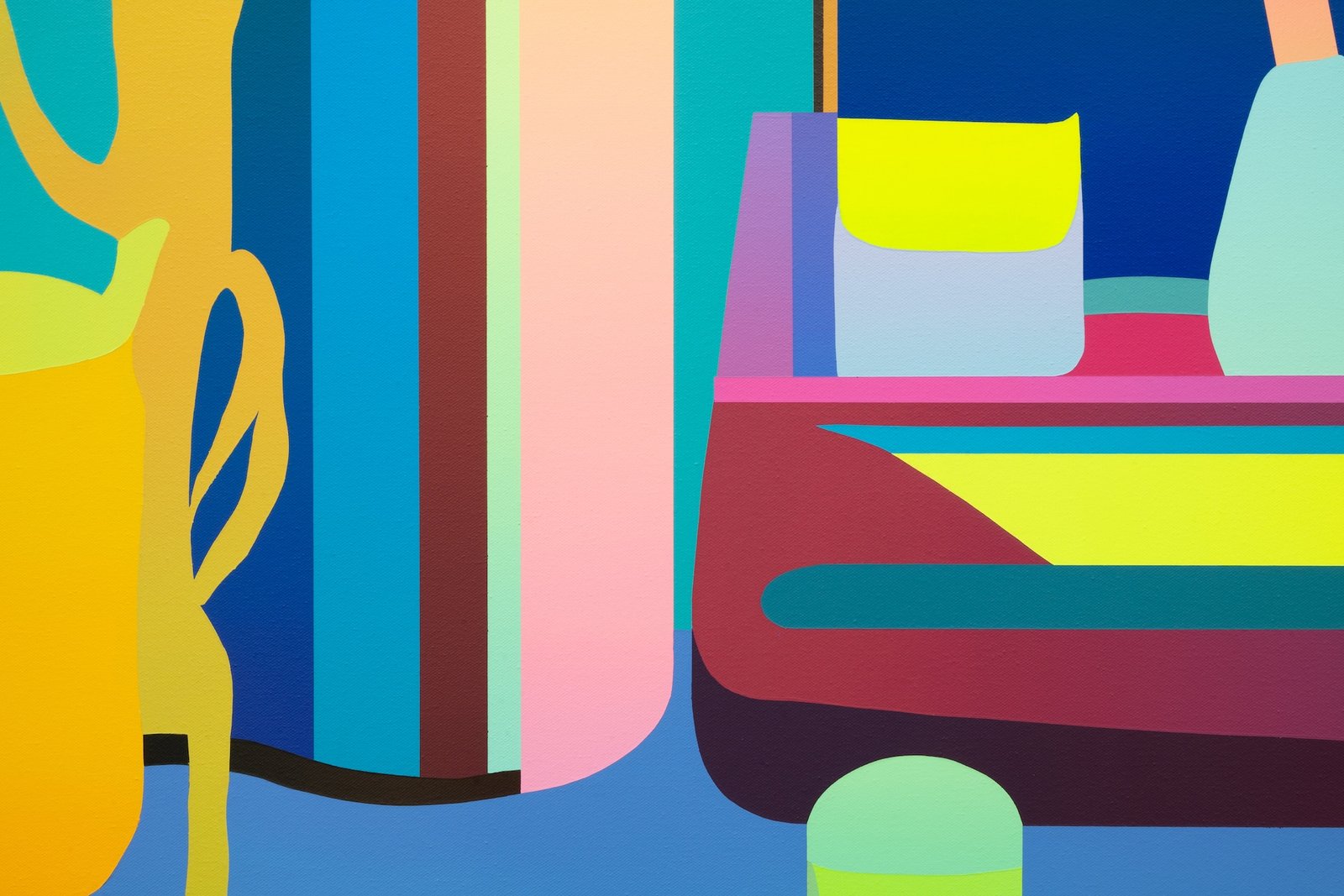
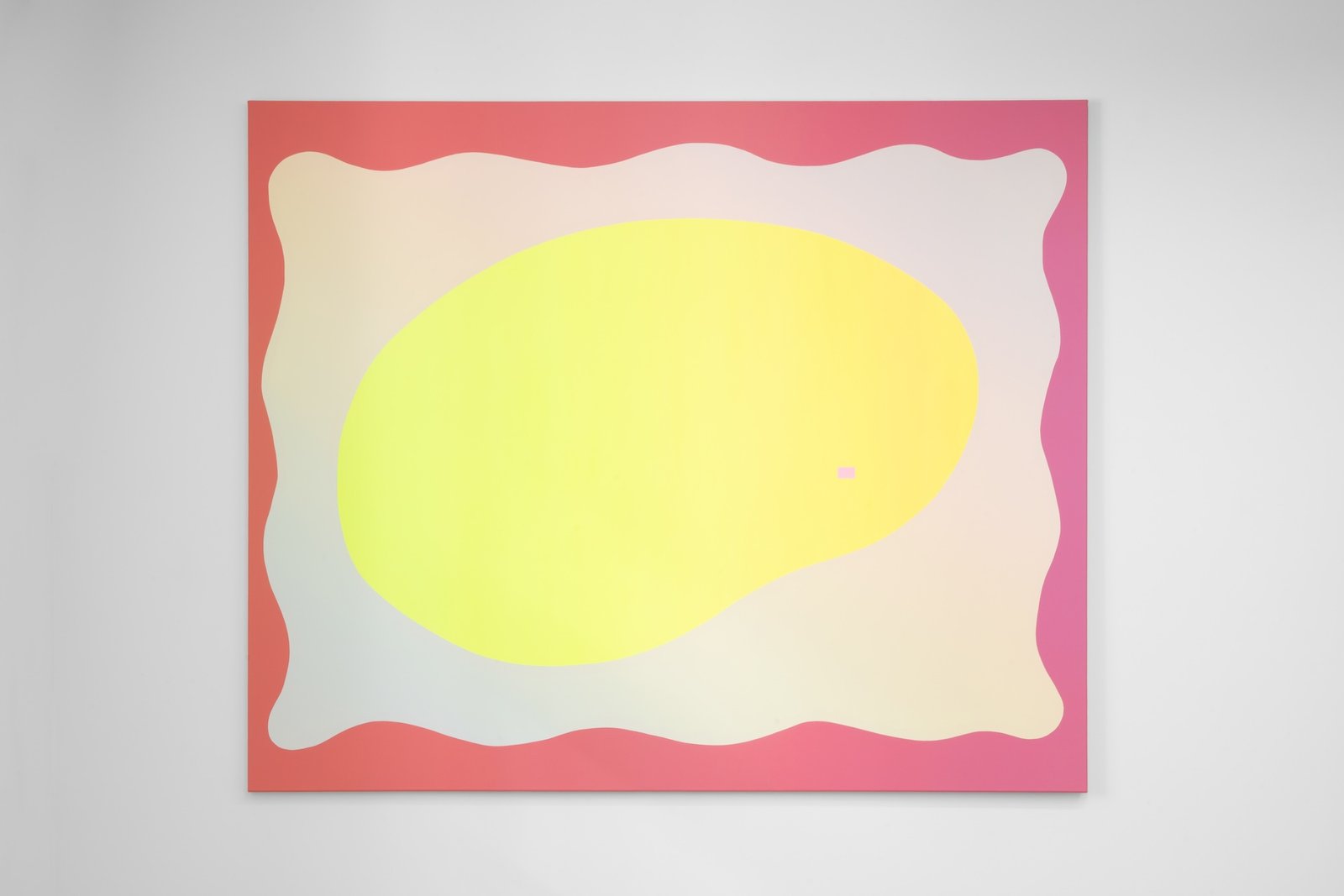
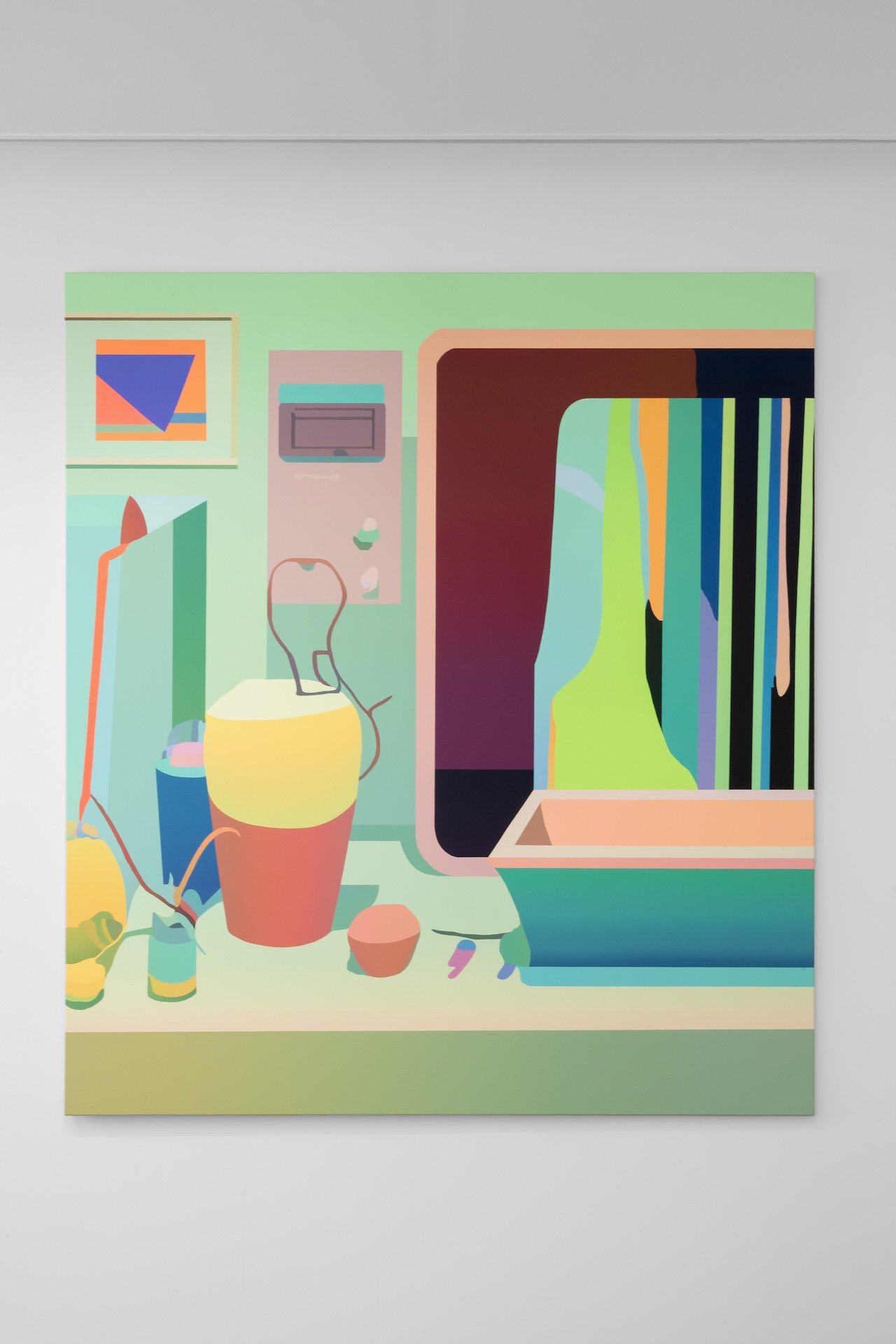
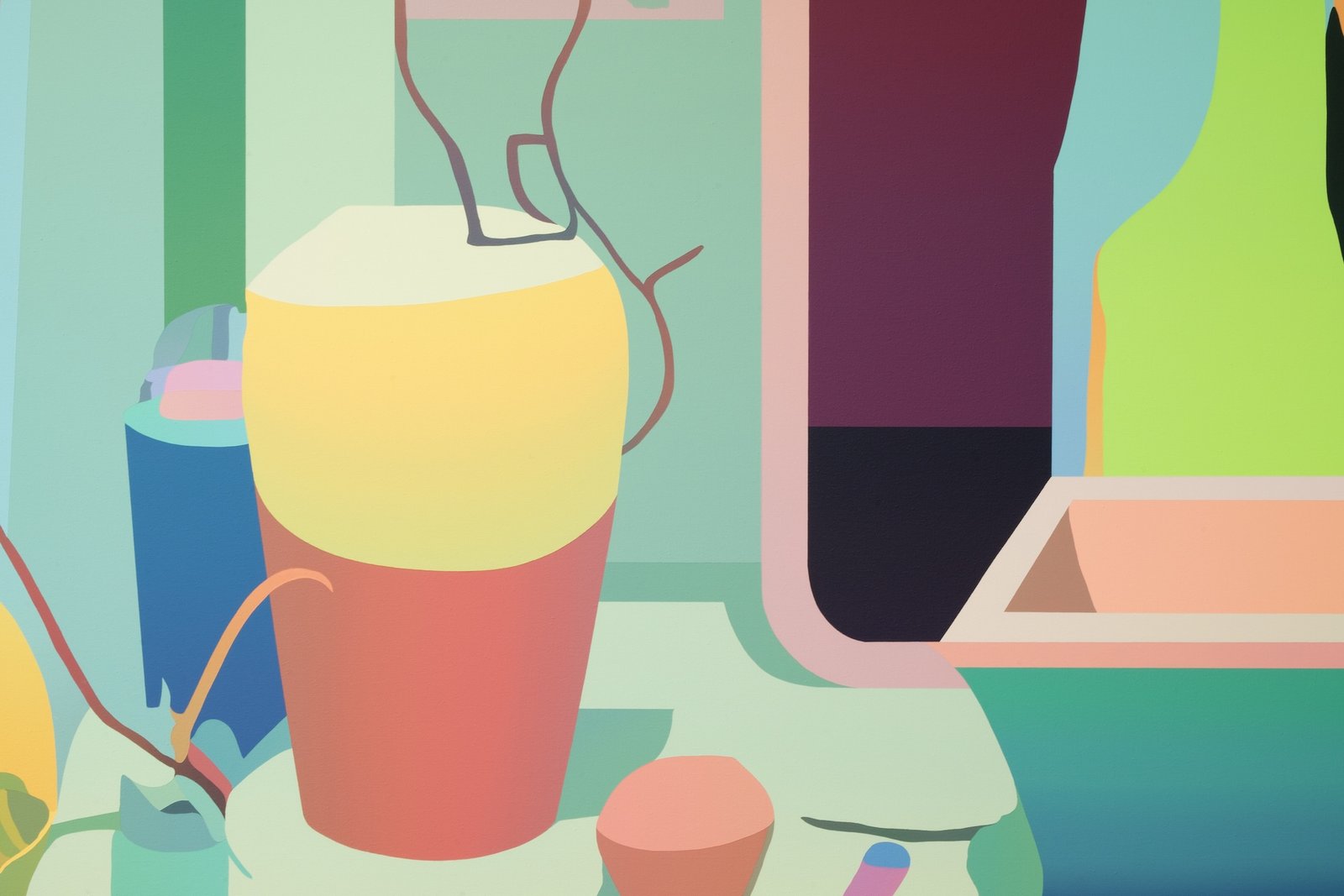
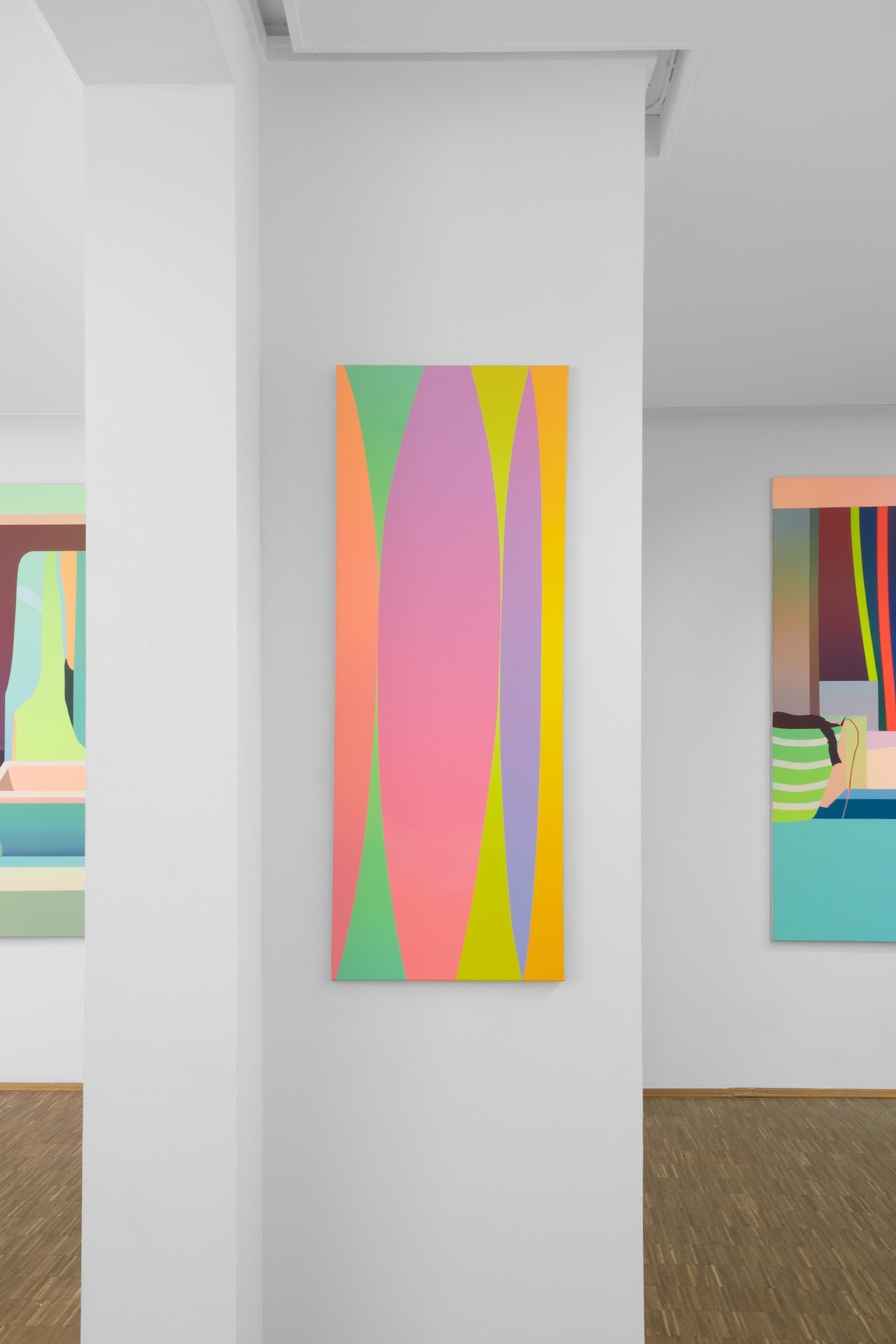
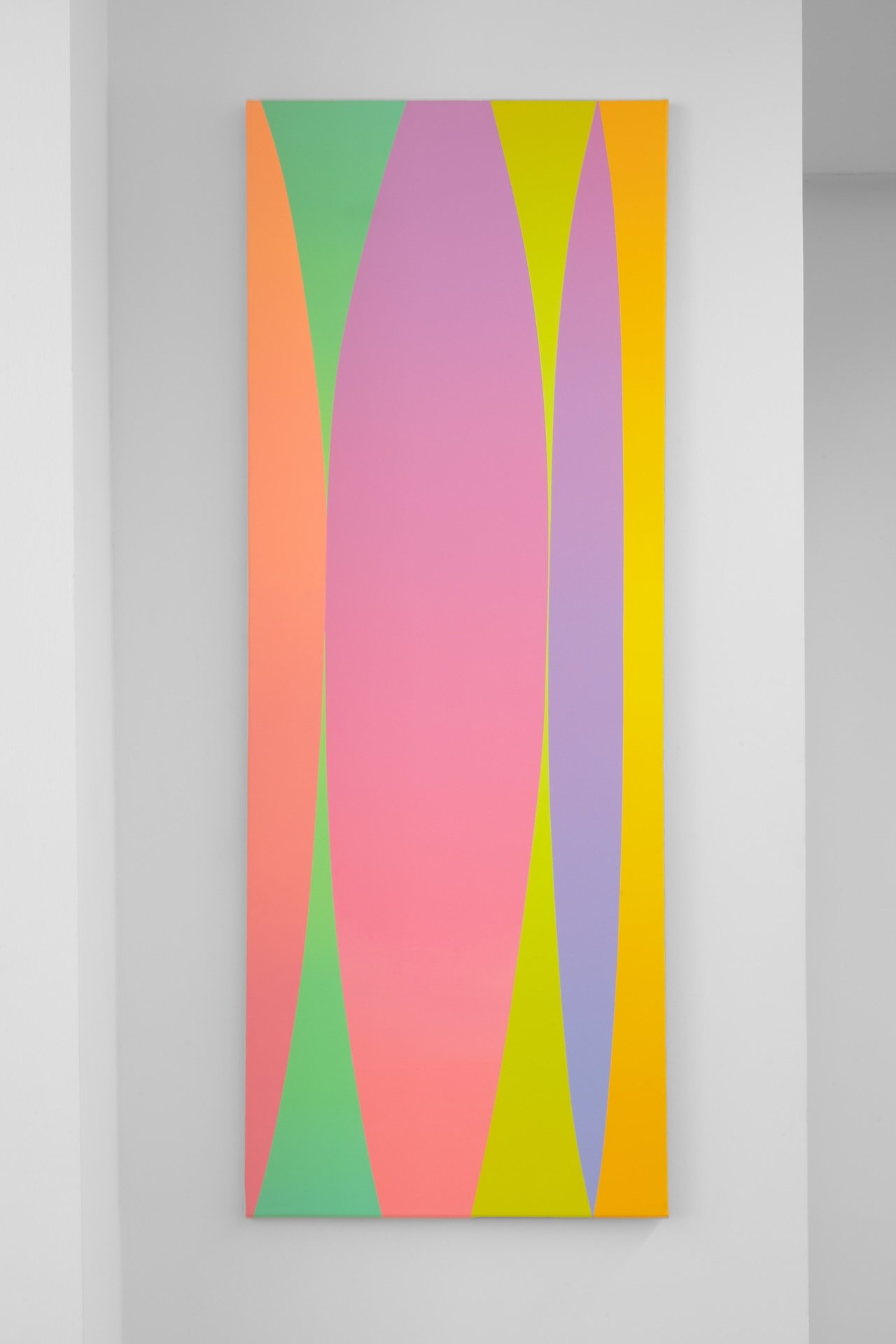
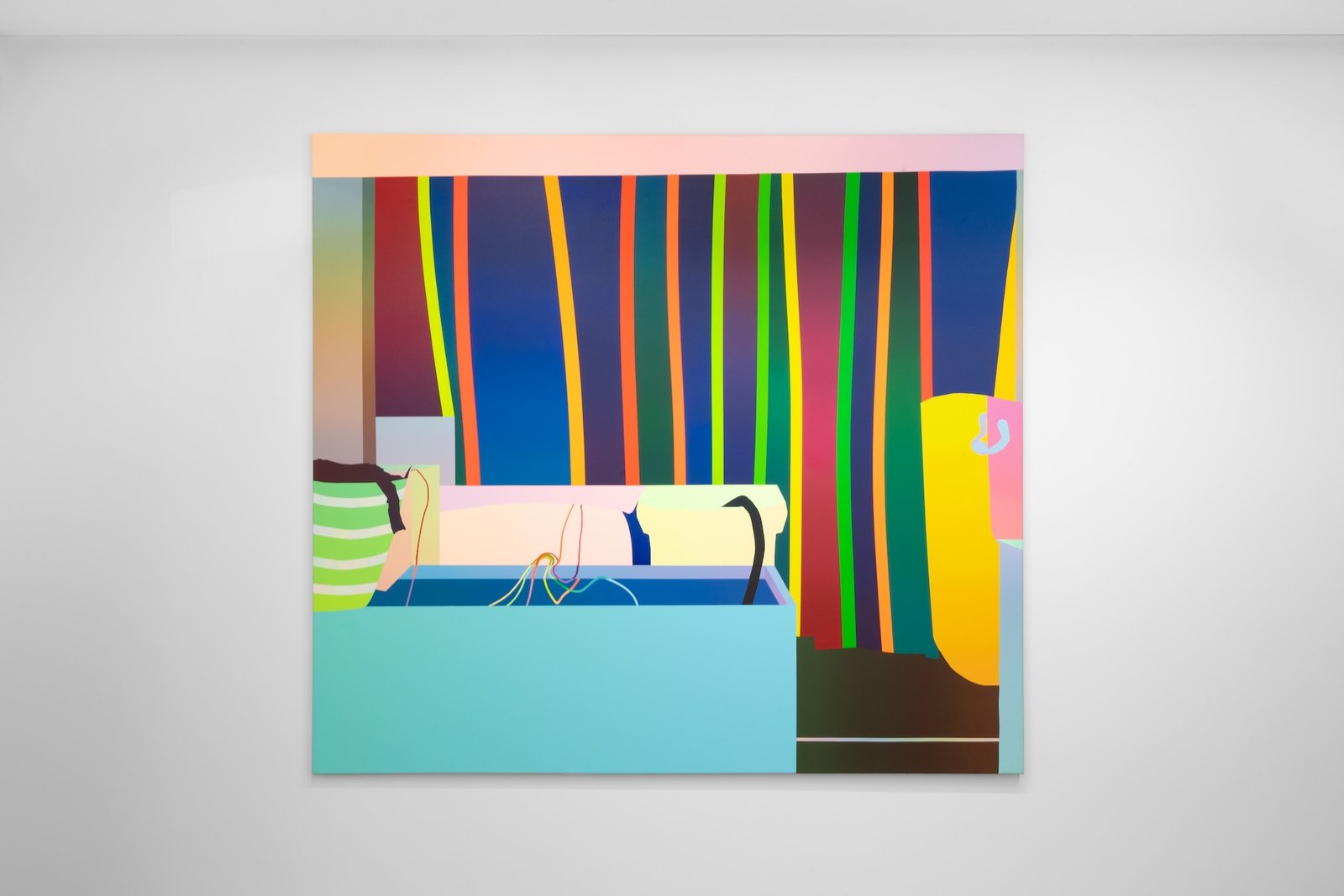
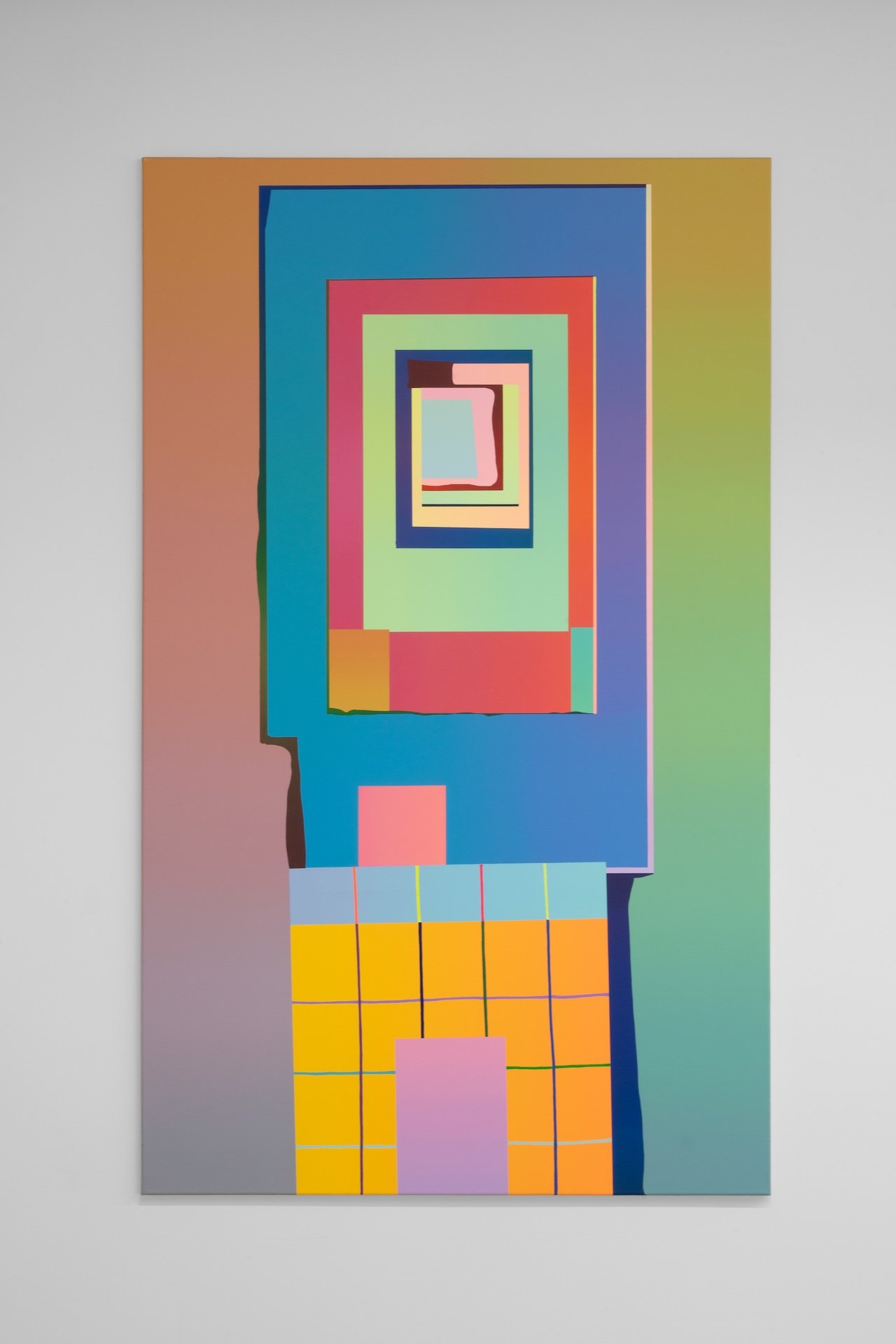
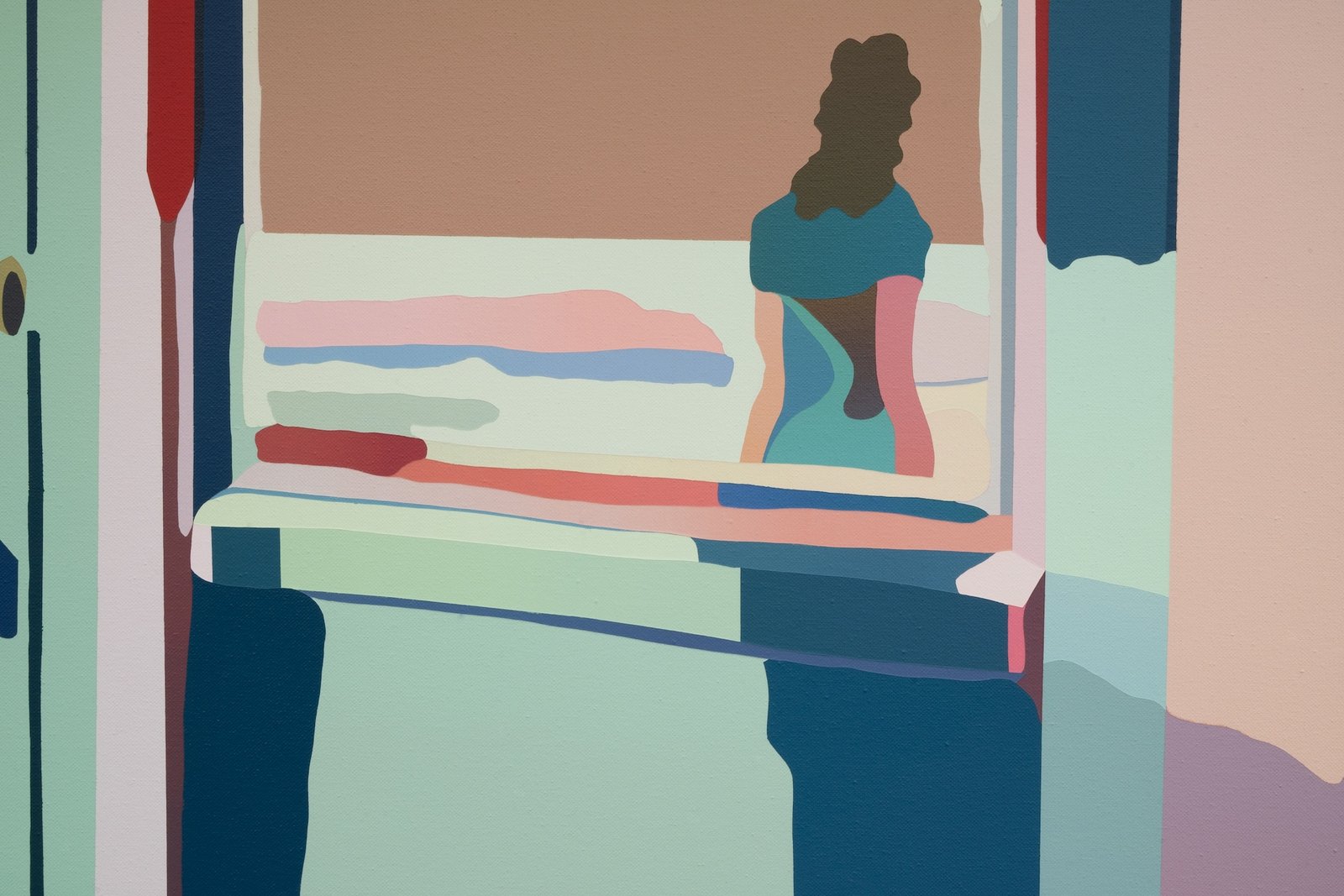
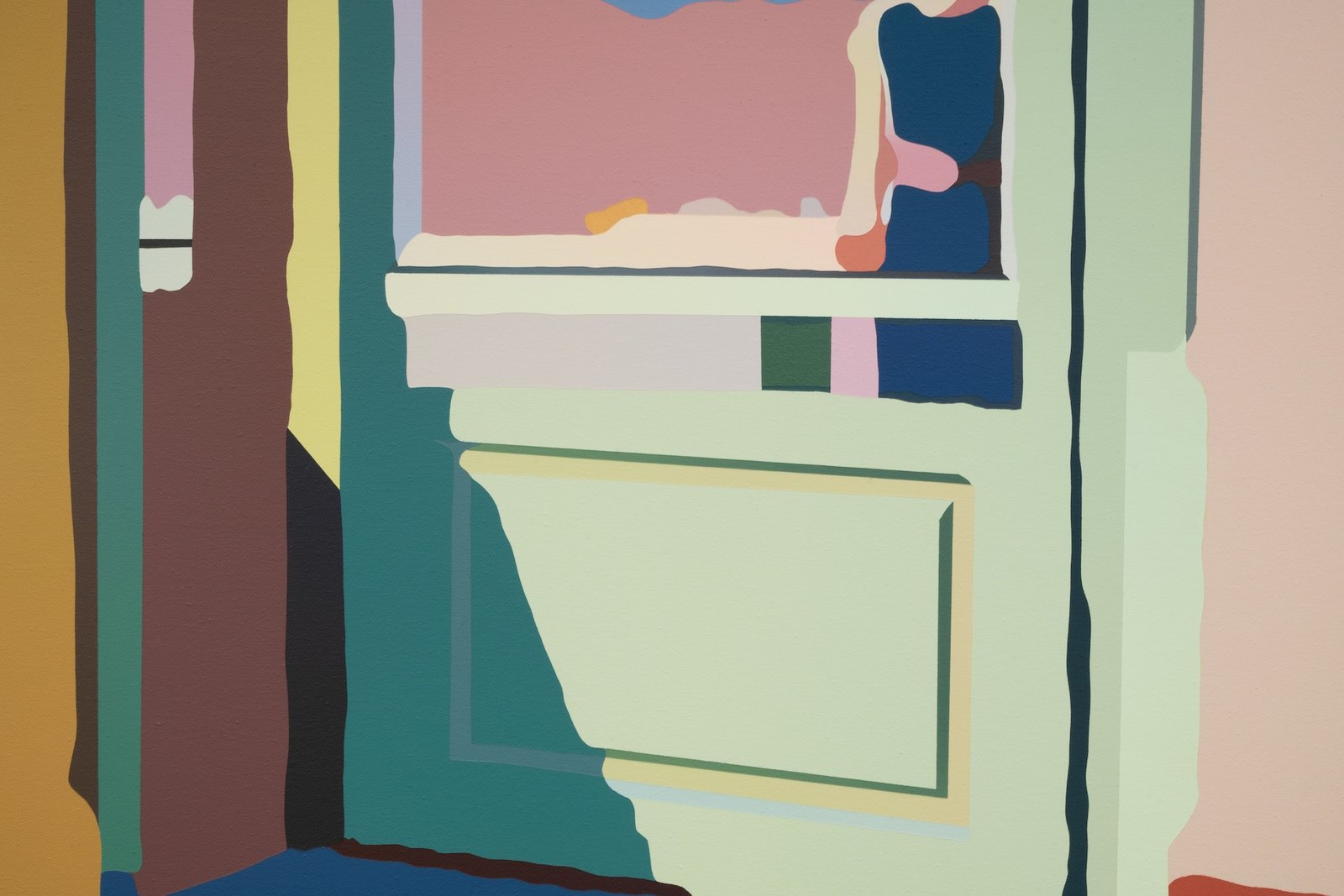
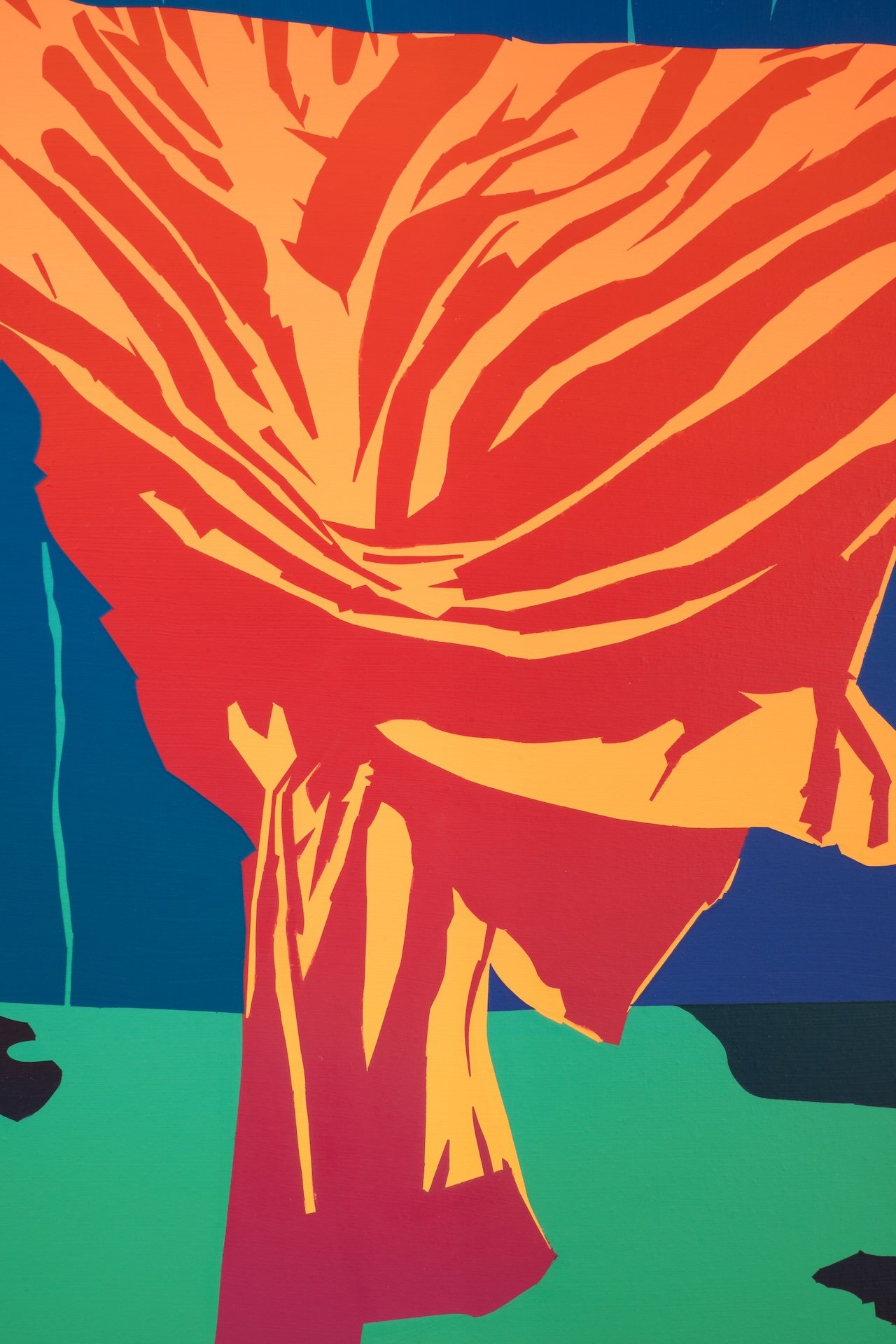
In recent years, this has developed into a distinctive visual language based on a finely tuned repertoire of color contrasts. Crucial here is the combinatory use of soft gradients—warm to cold, light to dark (and vice versa)—within the color fields. At their points of contact, however, sharp contours are employed to clearly define each form. Despite the sometimes intense contrasts and flickering gradients, a remarkable balance persists—owed to both composition and the everyday motifs. Even if one could at times speak of a “retinal intoxication,” Wang’s painting does not seek to overwhelm; rather, it points back to perception itself, inevitably shaped by the mood-altering power of color and light.
The painting process unfolds step by step. The canvas is divided into geometric sections, each masked with tape and filled in slowly, sequentially, with acrylic paint. The artist employs a refined brush technique to generate delicate gradients. Each masked shape thus acquires its own progression, its own temperature, its own time and mood. Wang describes this as a balancing act between feeling and construction—that is, between intuition and system. The composition develops layer by layer; with each successive coat, the legibility shifts. The figurative element lingers only as a trace, losing its fixity in favor of an open, abstracting pictorial language.
This tension between figuration and abstraction becomes especially apparent in the “Spielzeug” (Toys) series: the silhouettes vaguely recall real objects—boxes, tables, windows, plastic figures—yet nothing can be identified with certainty. A minimal sense of space is suggested, but at the same time destabilized by intense fields of color. This ambivalent legibility generates a productive unease: the paintings resist immediate categorization and instead demand slow looking. Wang himself speaks of questioning modes of seeing—what we think we recognize, and the inner image-archives we draw upon in doing so.
With this series, the artist recalls his childhood in China. The title refers to memories of brightly colored plastic toys, whose colors seemed to glow all the more intensely the cheaper they were. Color, Wang suggests, holds a special place in memory, for it touches us directly, evokes feelings, and is capable of reawakening them. Like a smell that suddenly transports us back to early childhood, color can return us to particular states of mind or entire worlds.
These color worlds—like color experience in general—are profoundly subjective: they are lived, not known. And yet, certain perceptions of color seem to follow archetypal patterns. Black carries the night within it; red warns, beckons, signals. Such meanings are rooted both in biological rhythms—the alternation of day and night, the shifting light at different hours—and in personal memories that link colors with feelings and experiences. One might say that colors generate their own realities—realities that begin with seeing, but extend much deeper. They open a space in which vision and memory can hardly be separated.
This leads to a question: How much of what we see truly belongs to the moment, and how much arises from within ourselves?
(translated from German)