



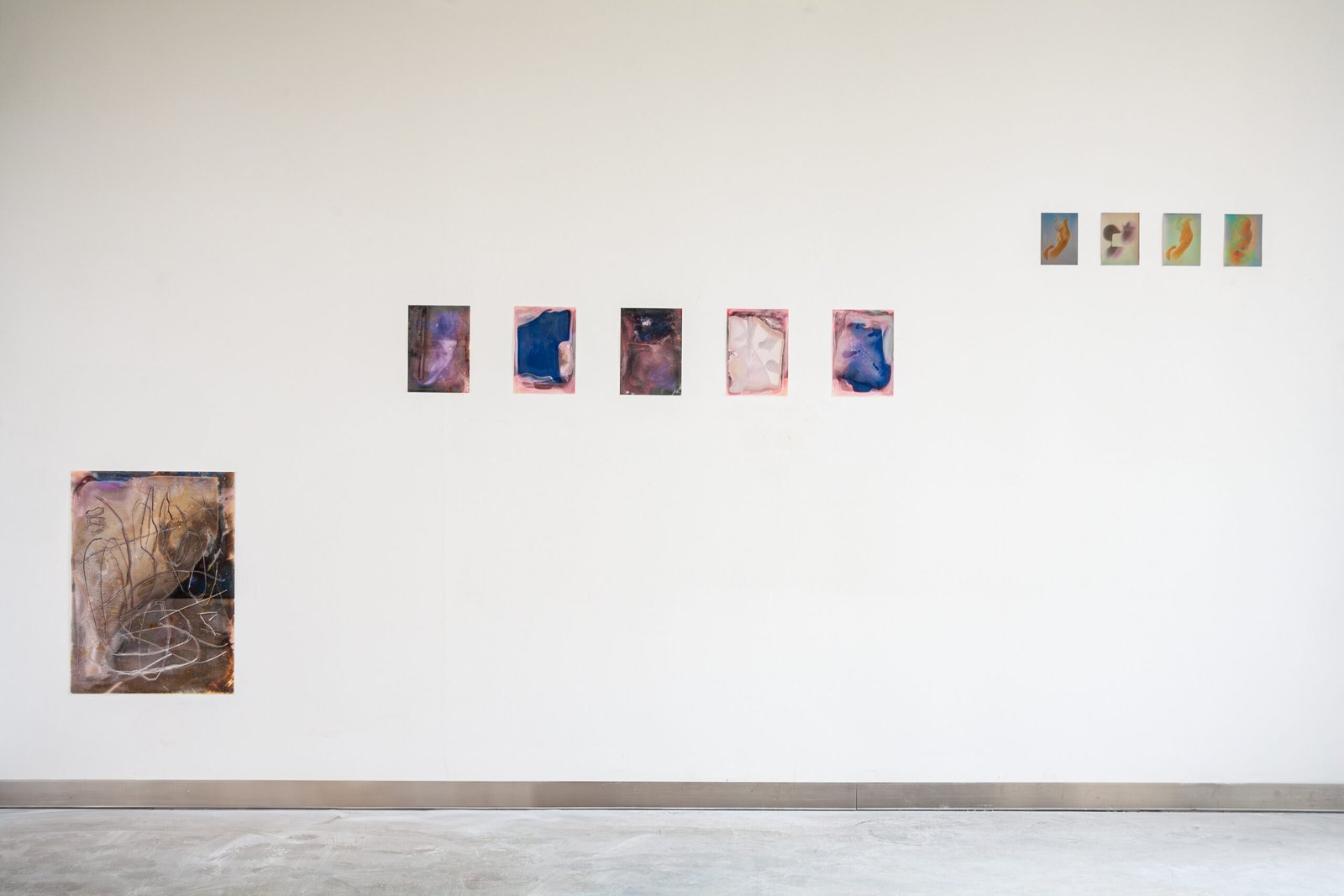


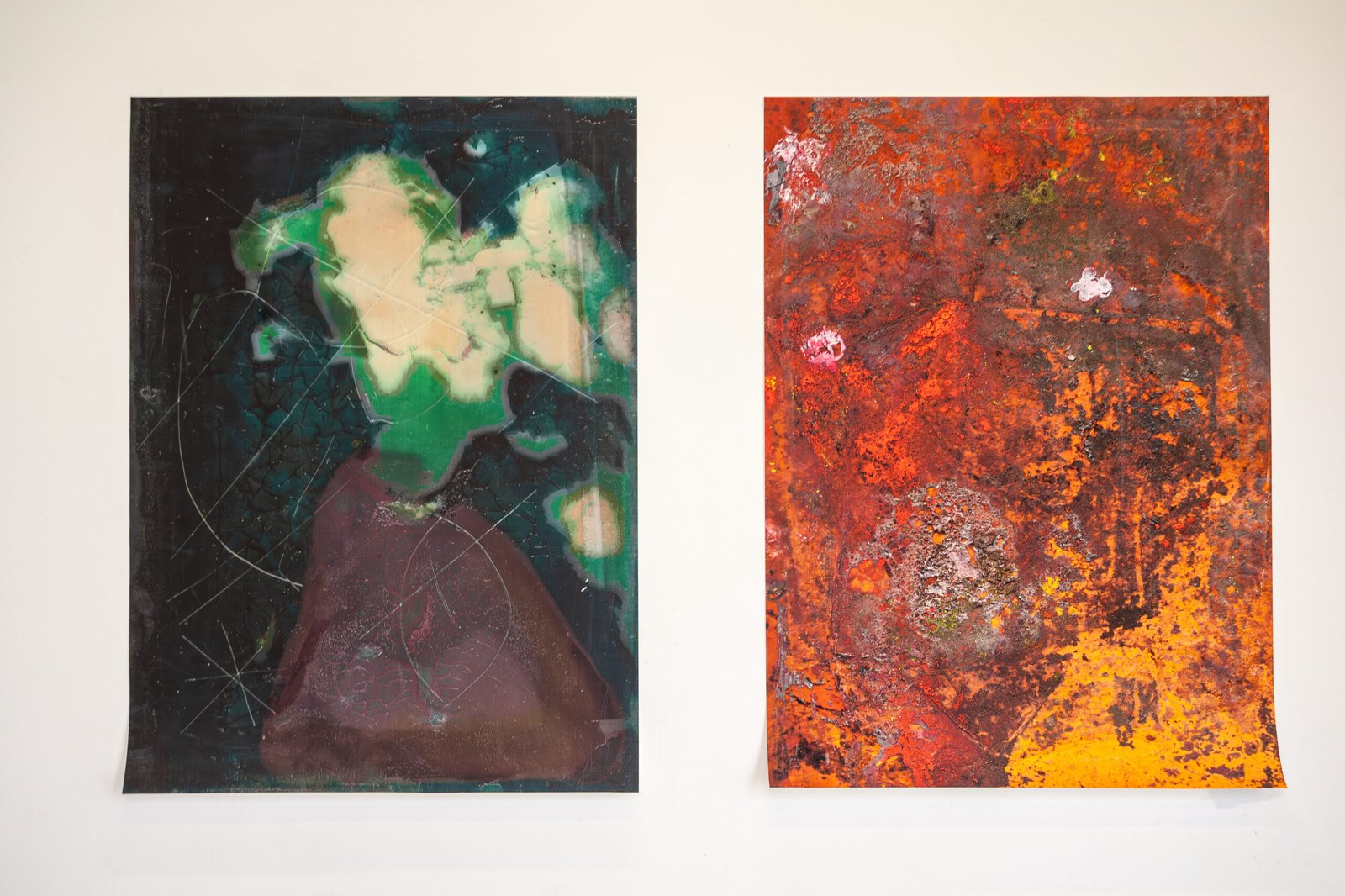

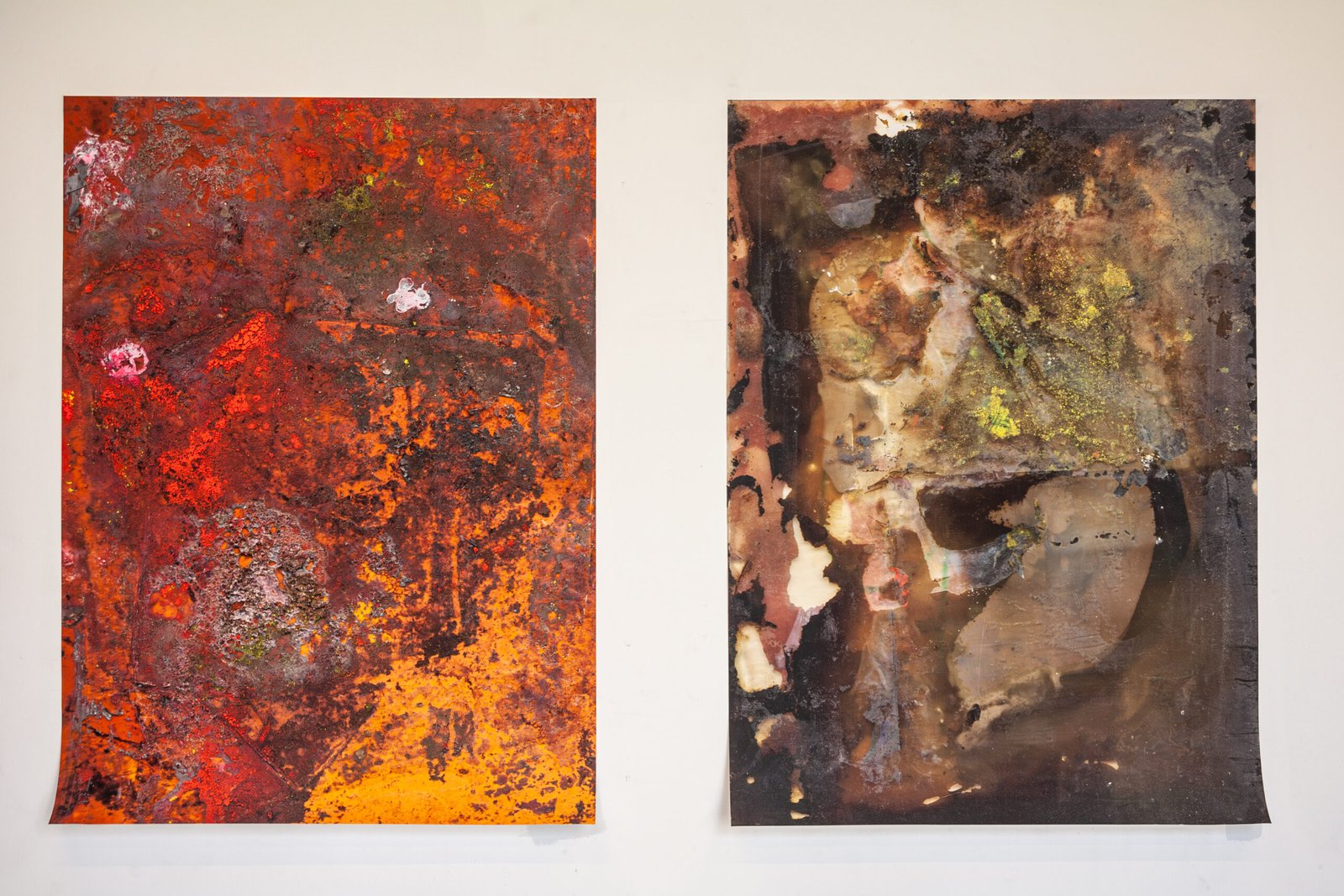

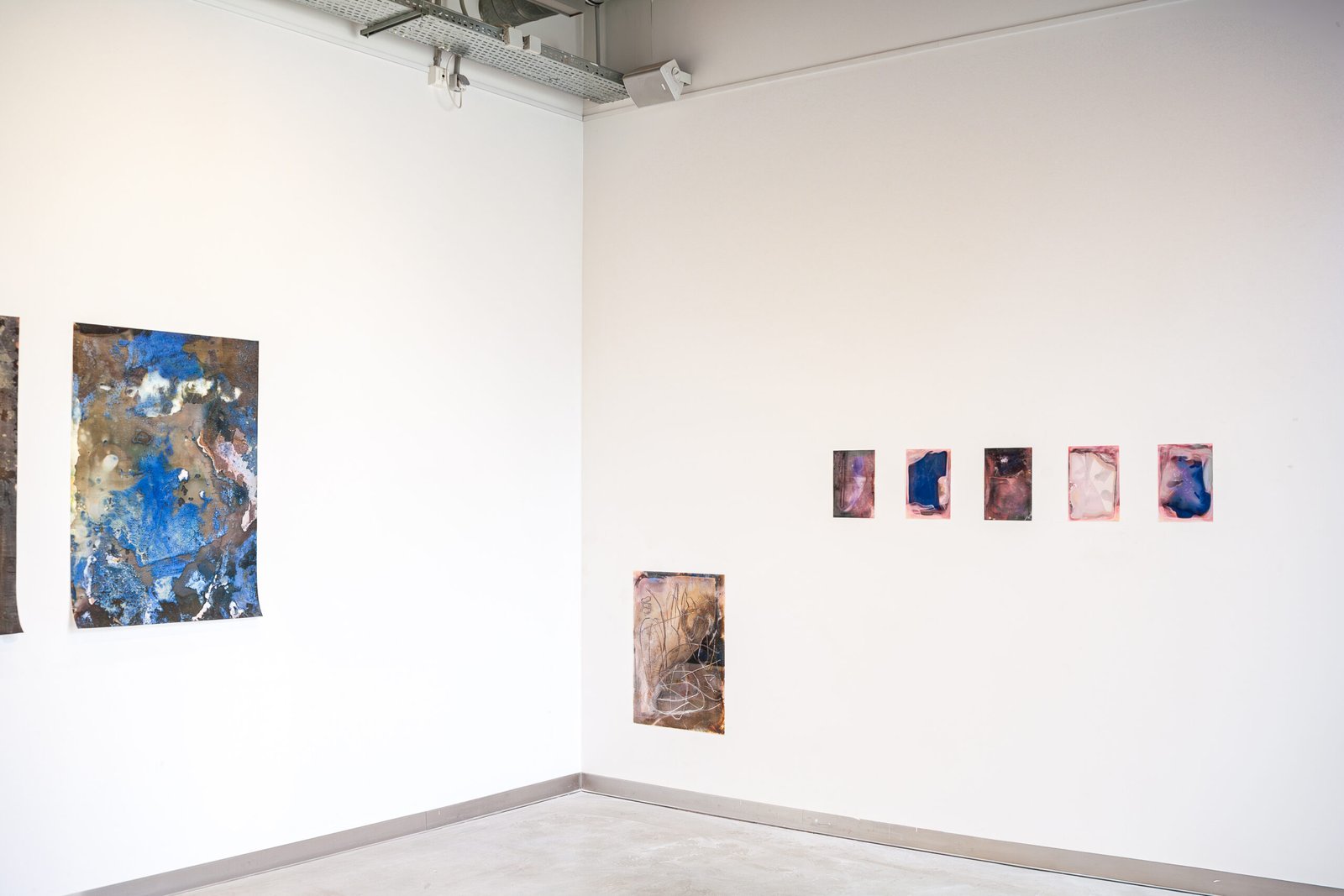
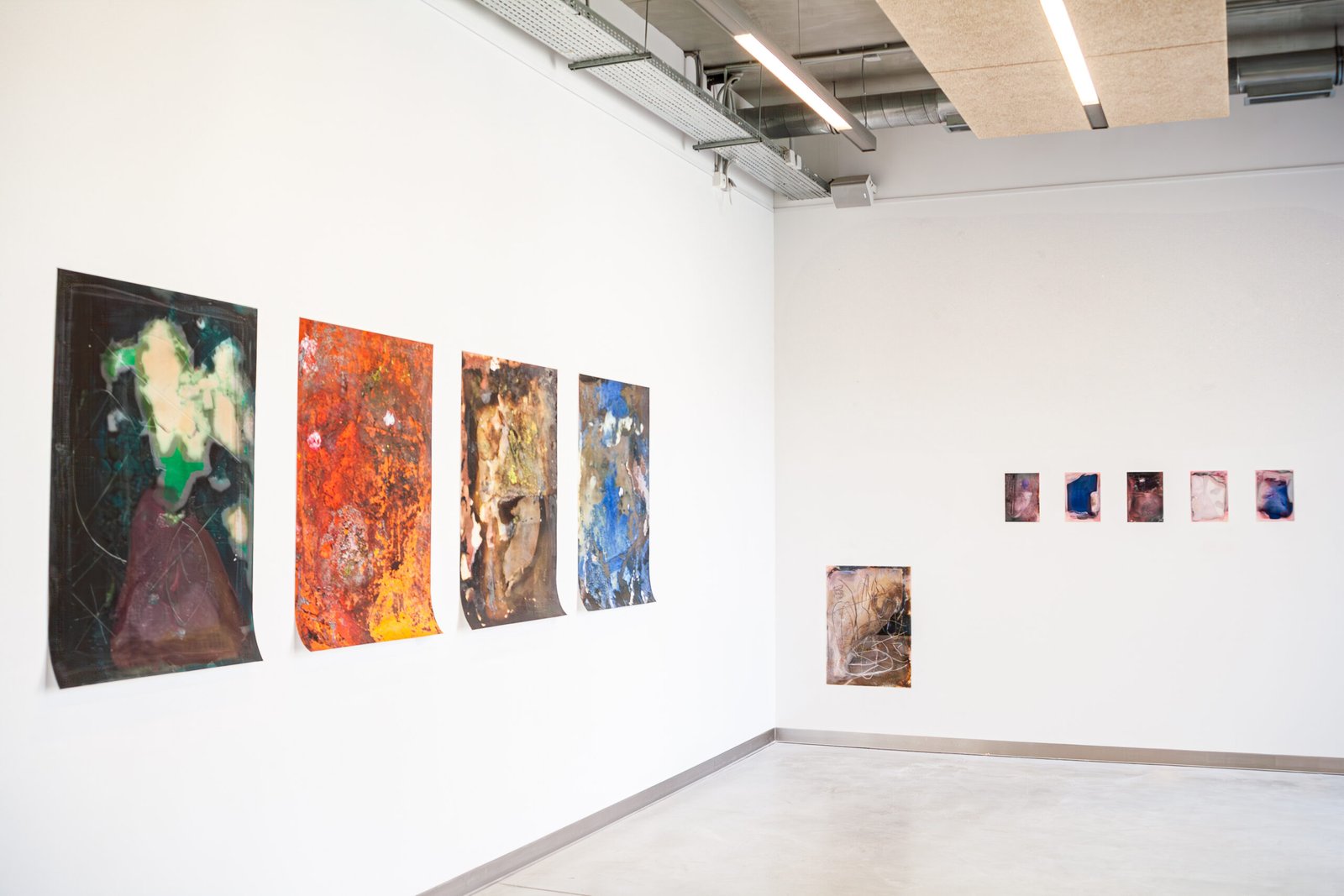


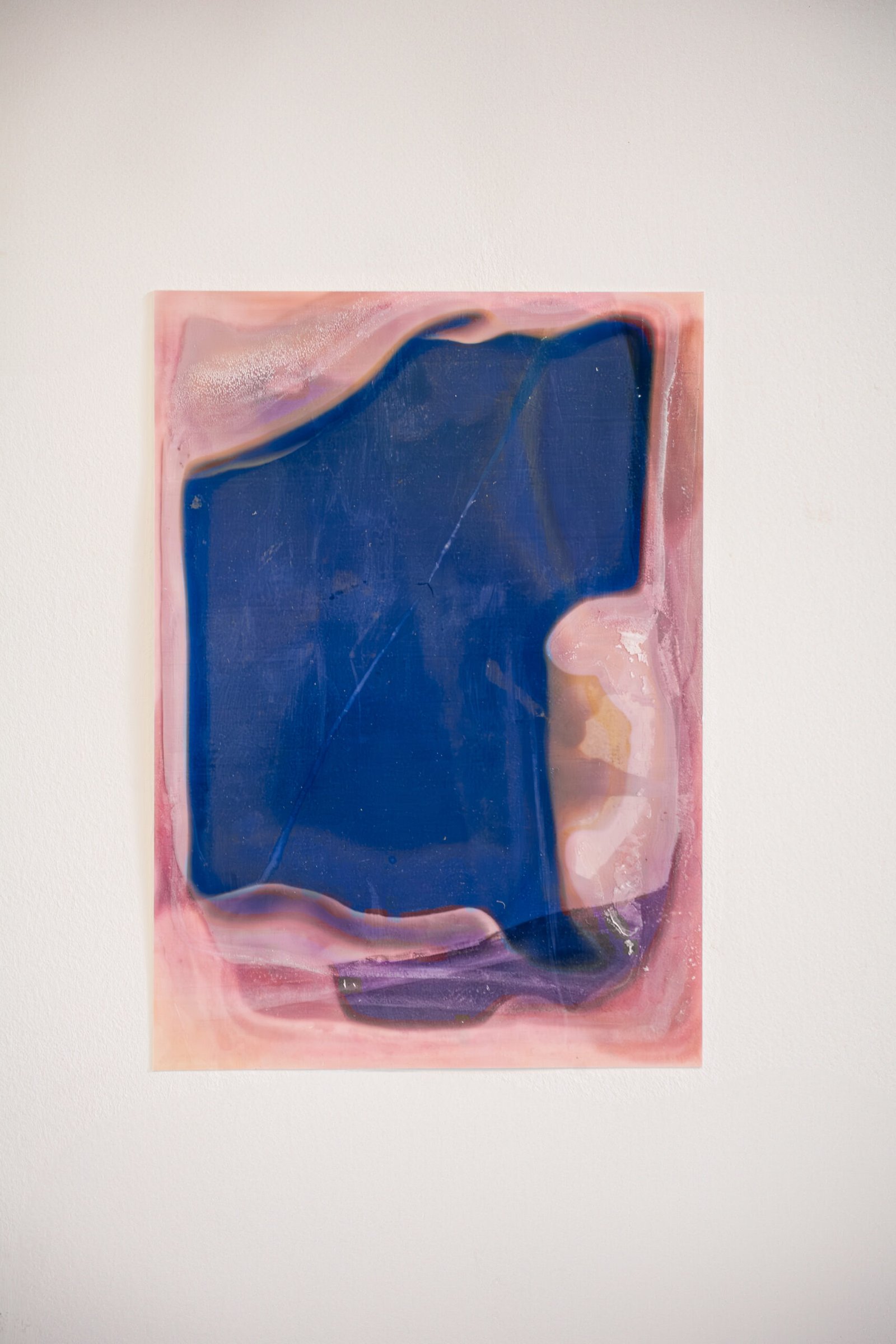
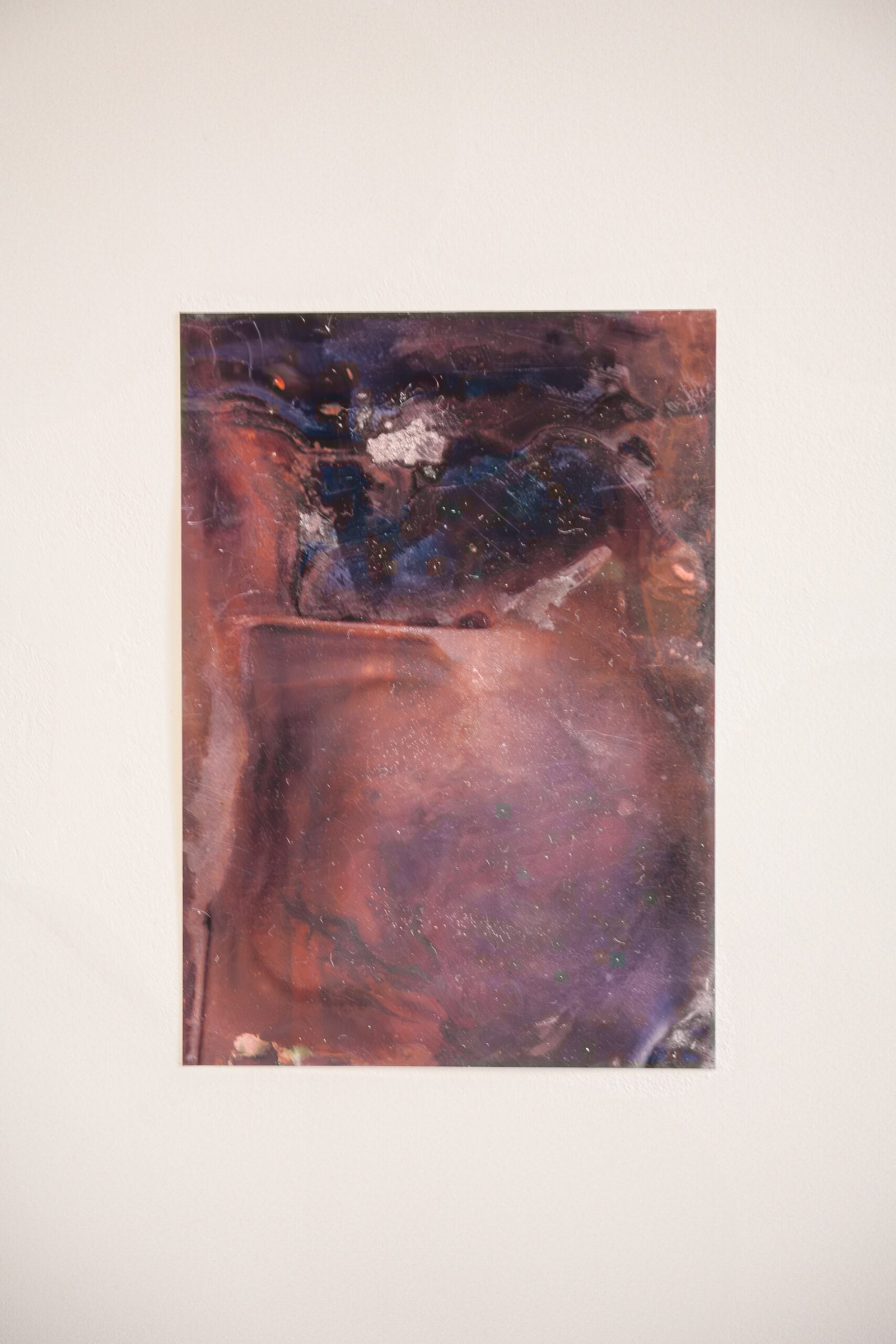
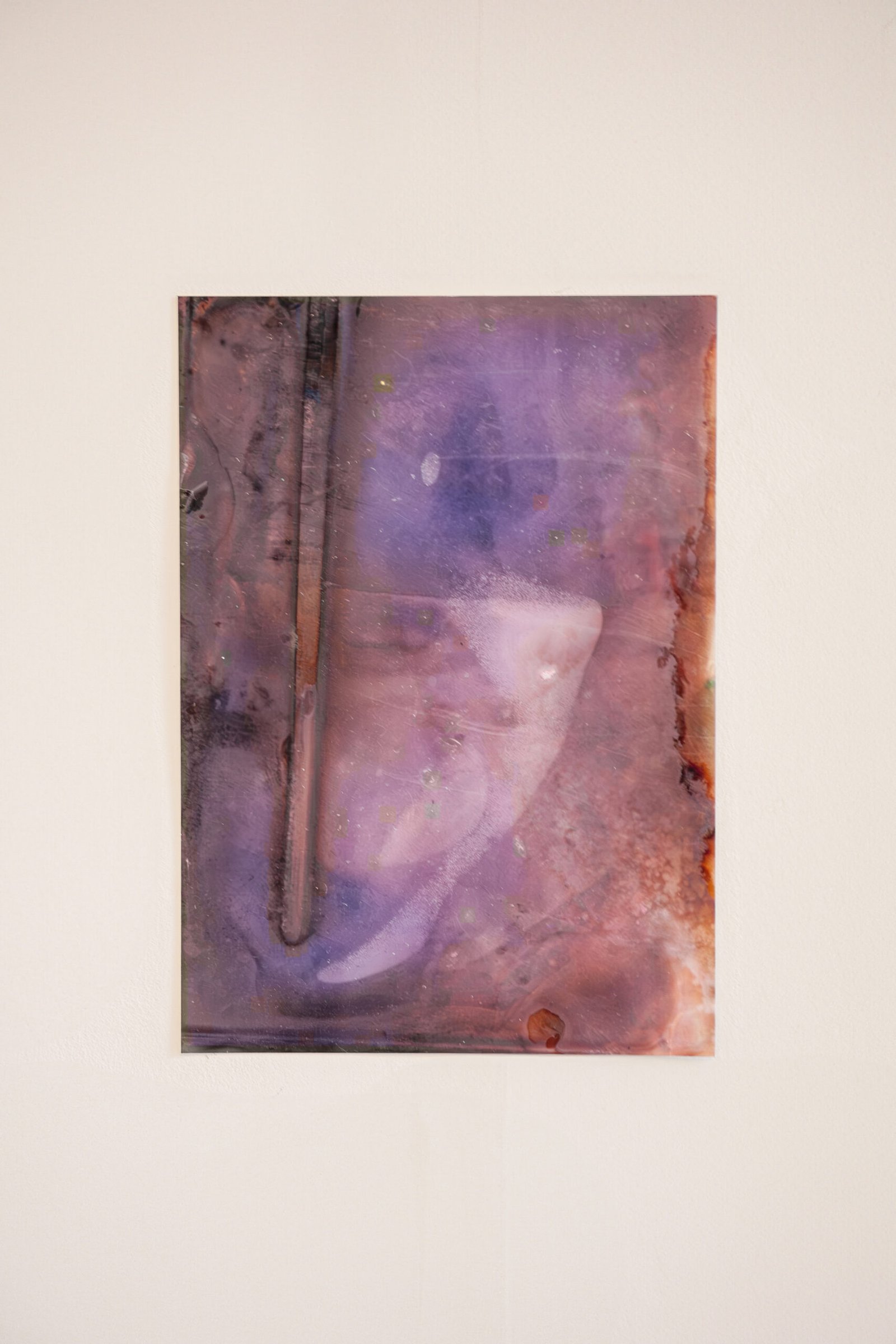

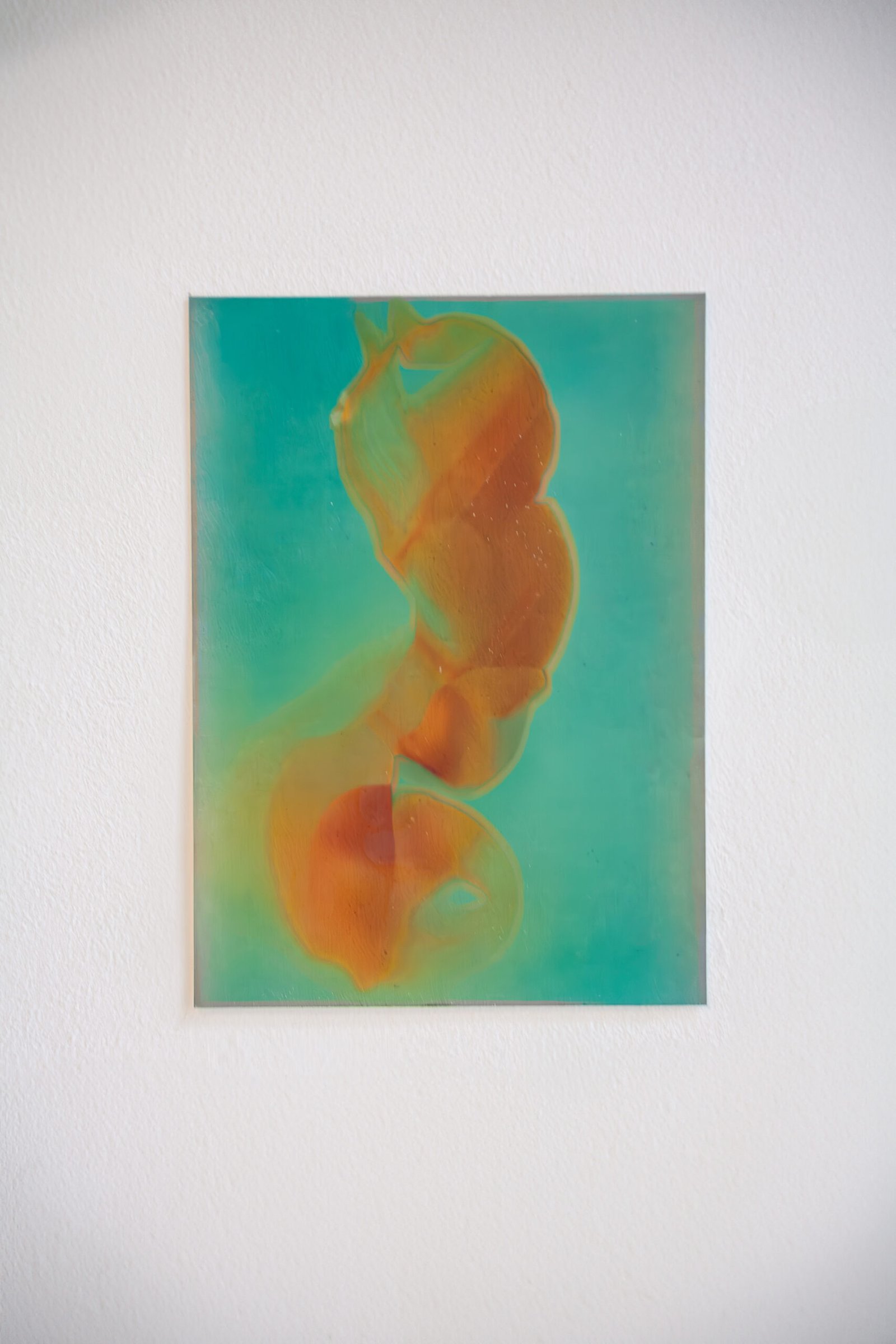
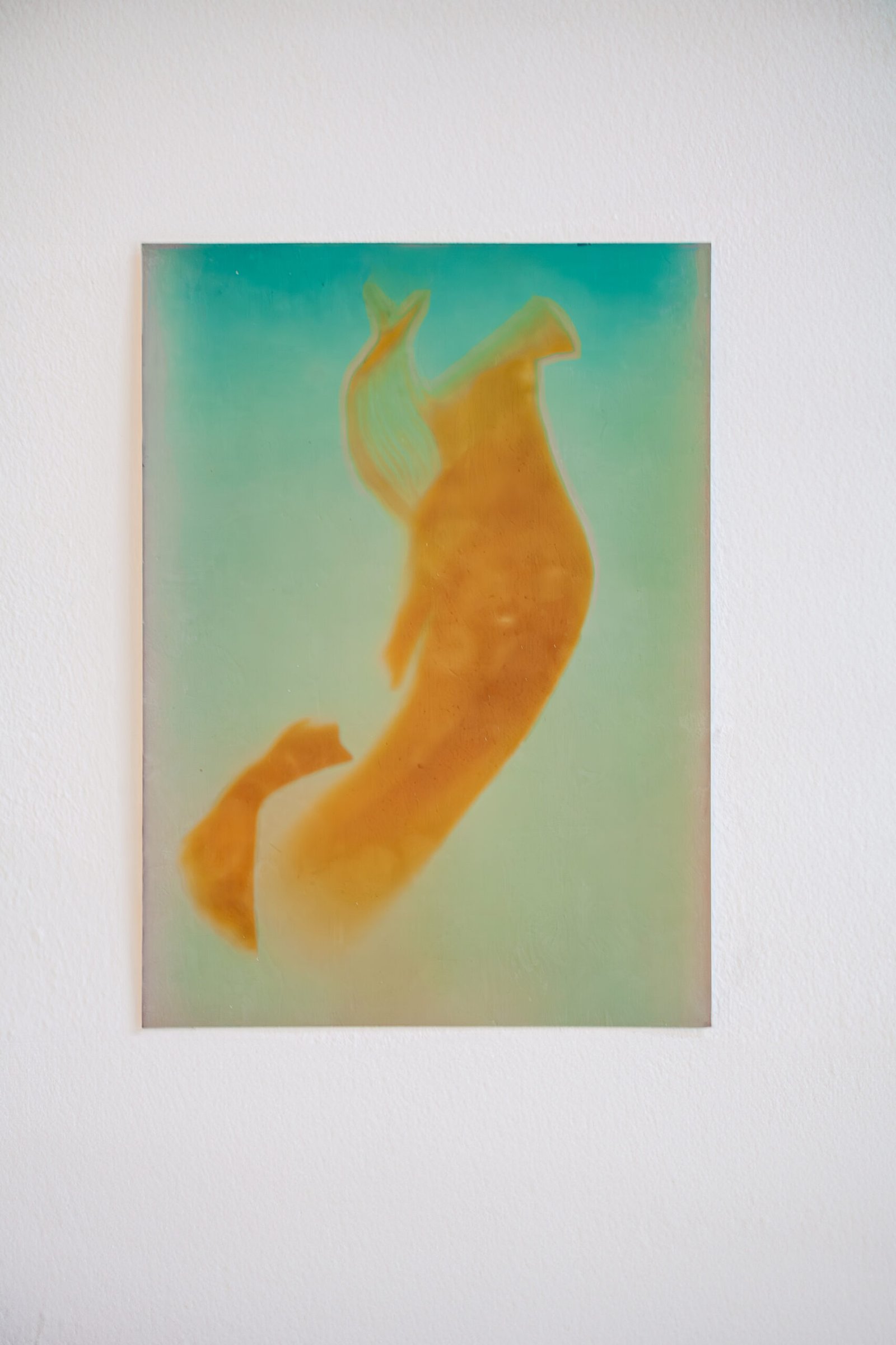


Caverna Lumina is a photographic project investigating the collapse of the image—as surface, material, and epistemic structure. The works emerge through a hybrid process involving hand-coated silver gelatin paper, expired emulsions, pigment sedimentation, scanning interference, and thermal degradation. These are not photographs in the conventional sense, but chemical fossils, where visibility erodes and material insists on its own logic.
Each piece resists symbolic reading. They do not depict but record: dust, fractures, corrosion, chromatic migration. The image becomes a residue—an entropic field where photographic presence is suspended, not fixed. The surface functions as a host for instability: light fails, heat writes, pigment bleeds. What remains is a memory of contact rather than representation.
Developed over several months, the works were created on reclaimed glass plates—some over 40 years old—coated by hand with cyanotype, bichromate gum, and organic pigment. Exposed without a camera, under unstable conditions (condensation, heat, freezing), the plates underwent a slow metabolic transformation. Some plates were thermally shocked at over 300°C, forcing the emulsion to crack and blister, creating scorched memory objects that resist repetition or editing.
The installation—originally presented at Magdalena Abakanowicz University of the Arts in Poznań—comprised large-format prints mounted directly on bare wall. No frames, no distancing devices. Just surface. Just trace. Just collapse.
Caverna Lumina reframes photography not as vision, but as corrosion; not as image, but as residue; not as presence, but as disappearance.