





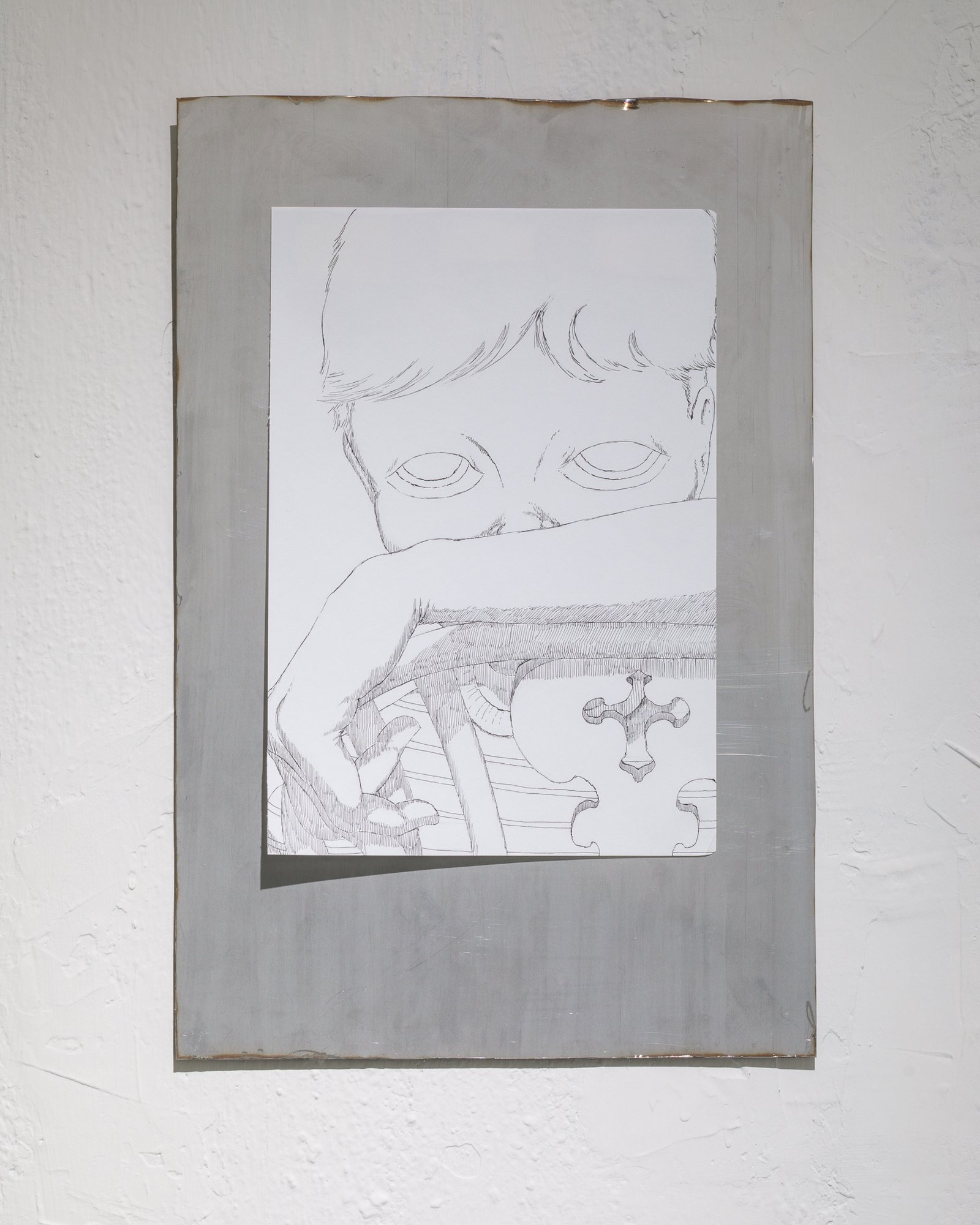

„Don’t you dare go hollow.” — Laurentius of the Great Swamp
„Still (…) there is room in the bag of stars.“ — Ursula K. Le Guin
The tension and switching between forgetting and remembering flickers through the joint exhibition by Gregory Nachmanovich and Adam Žufníček with the intensity of a CRT monitor’s glow and the warmth of
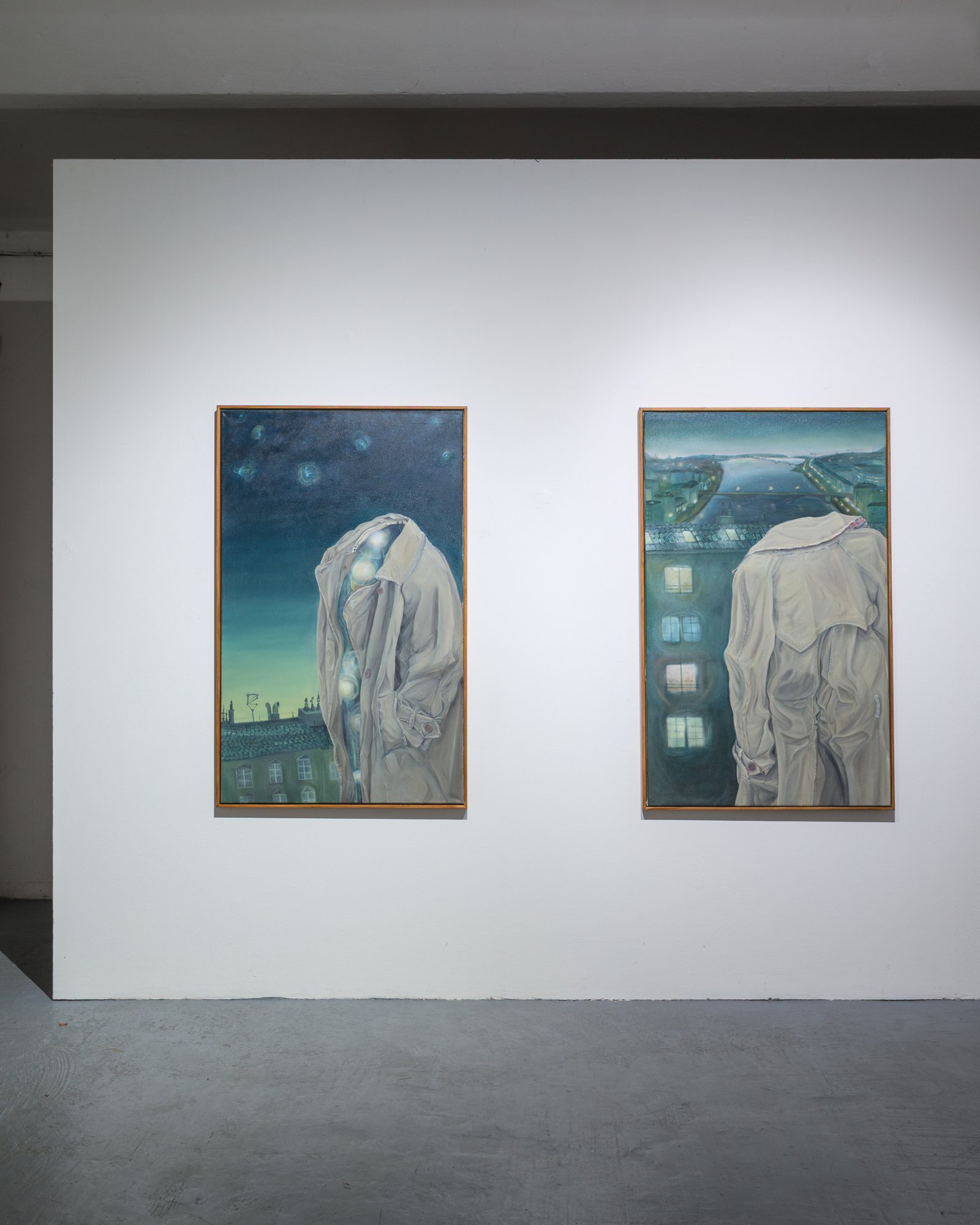
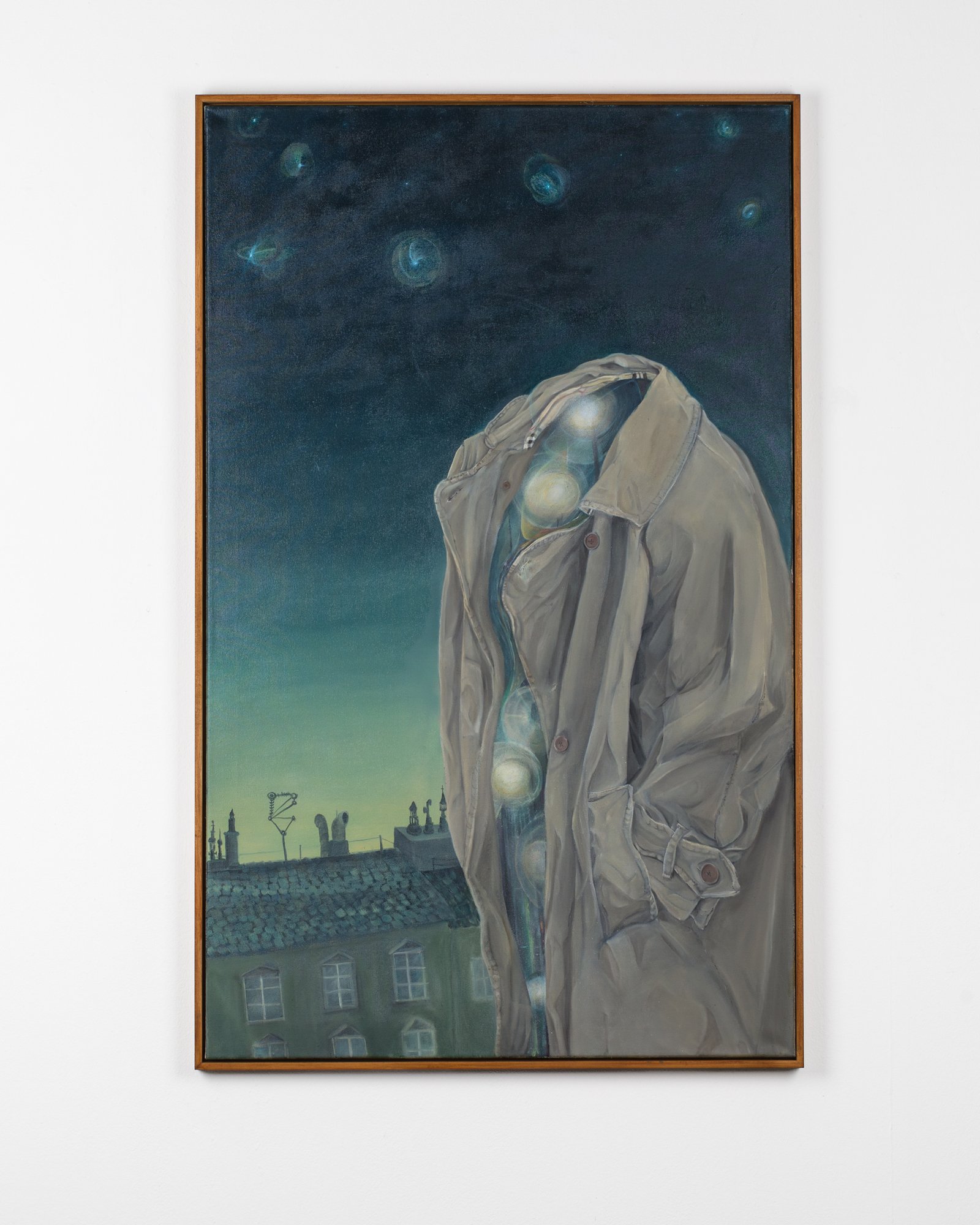
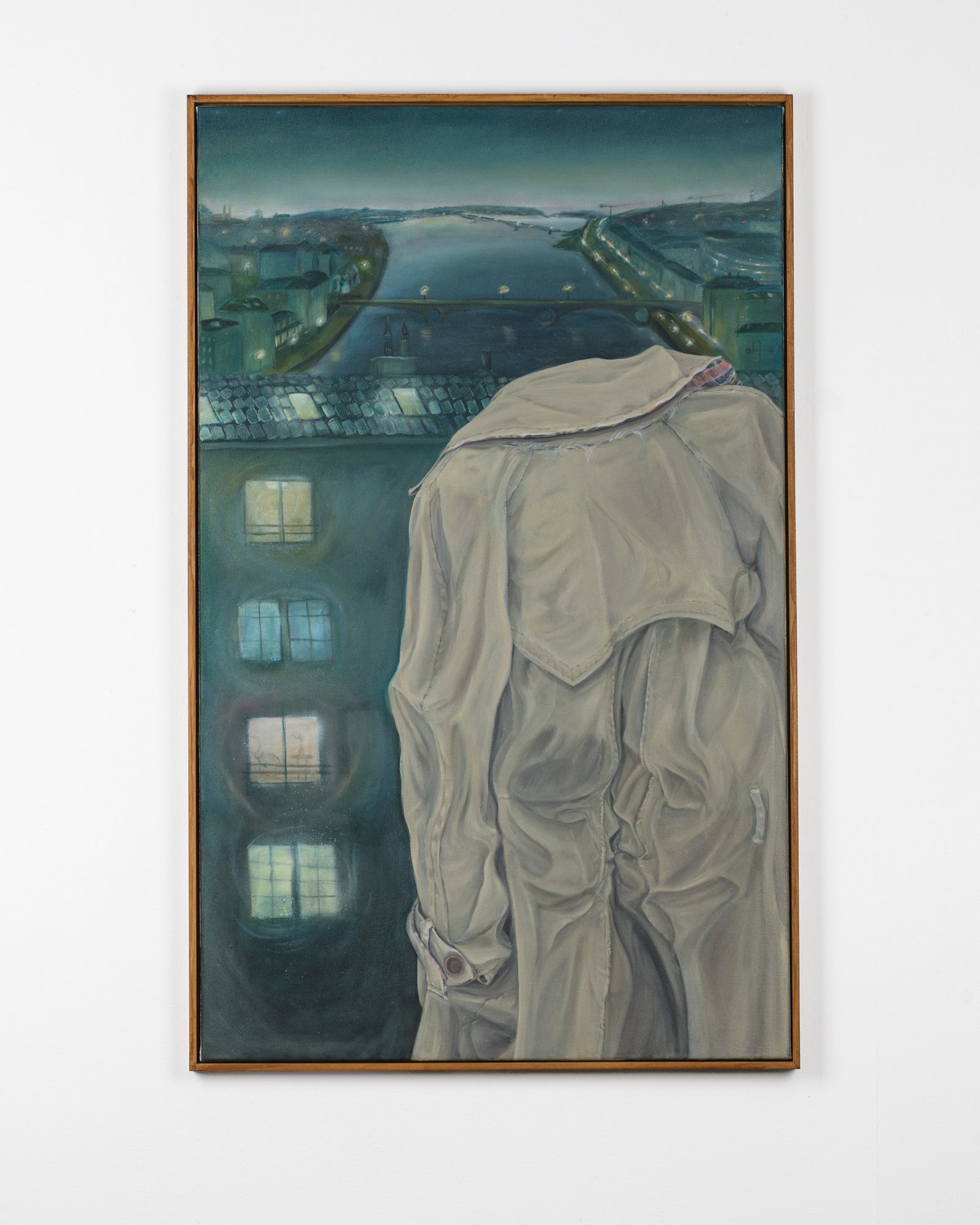
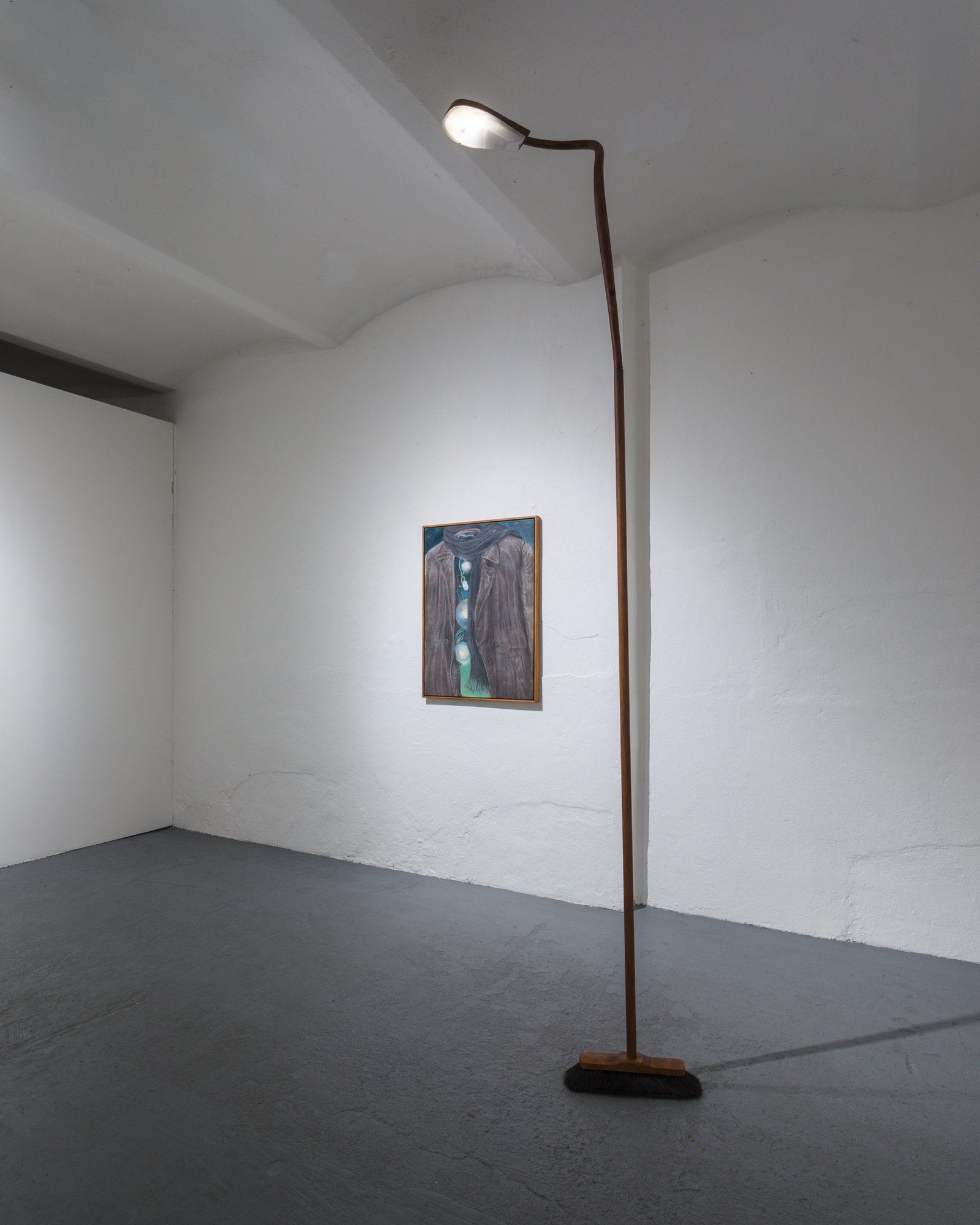
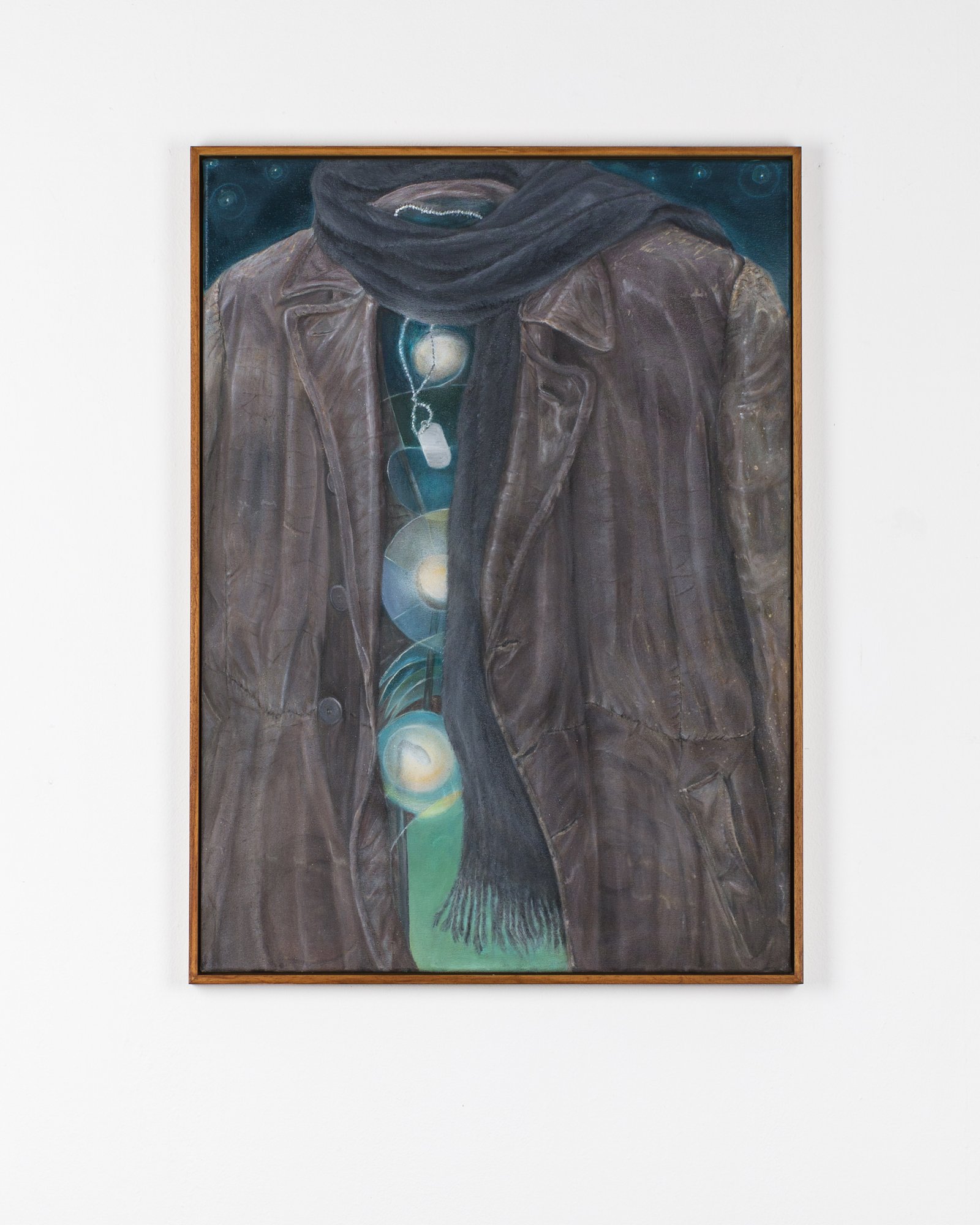
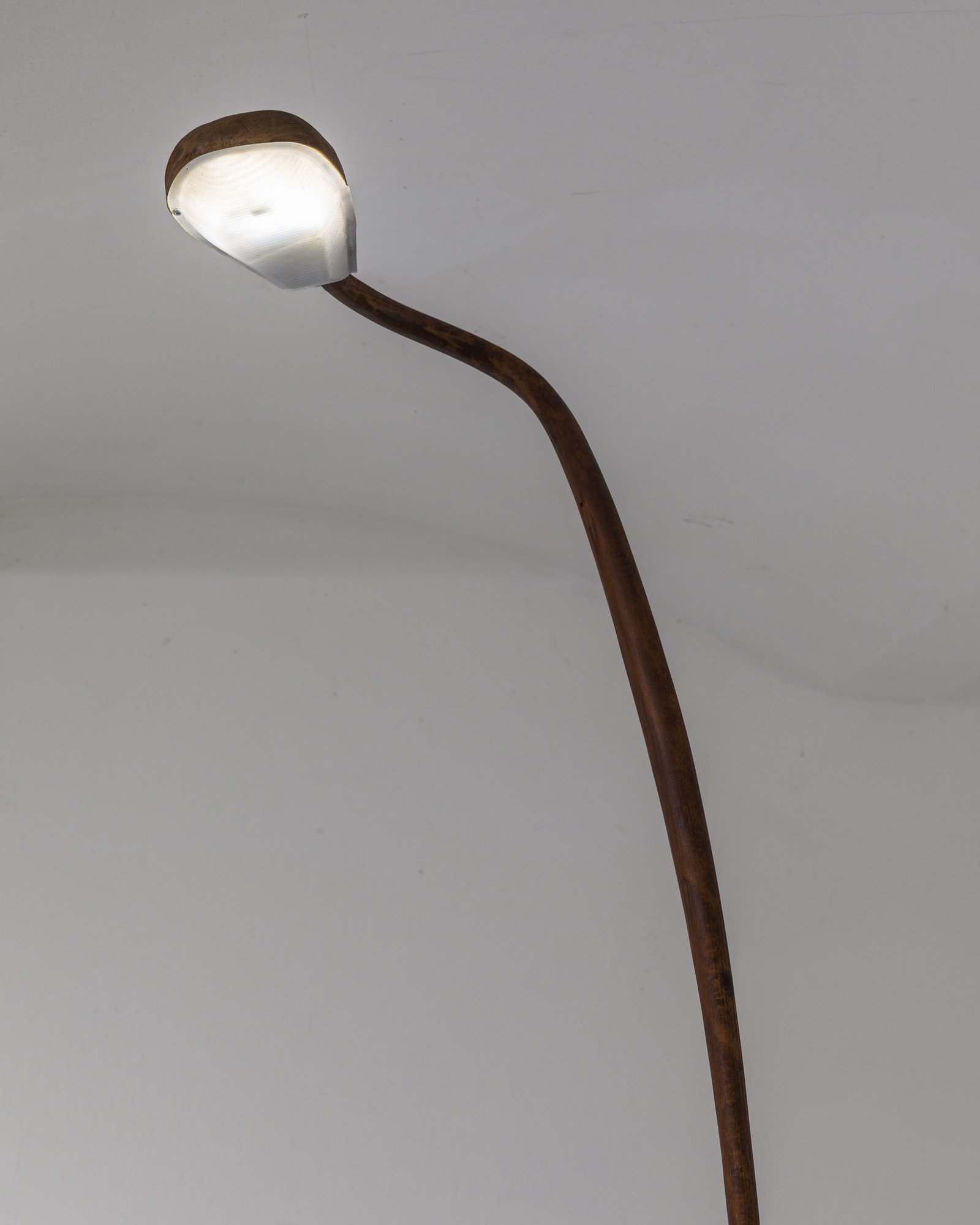
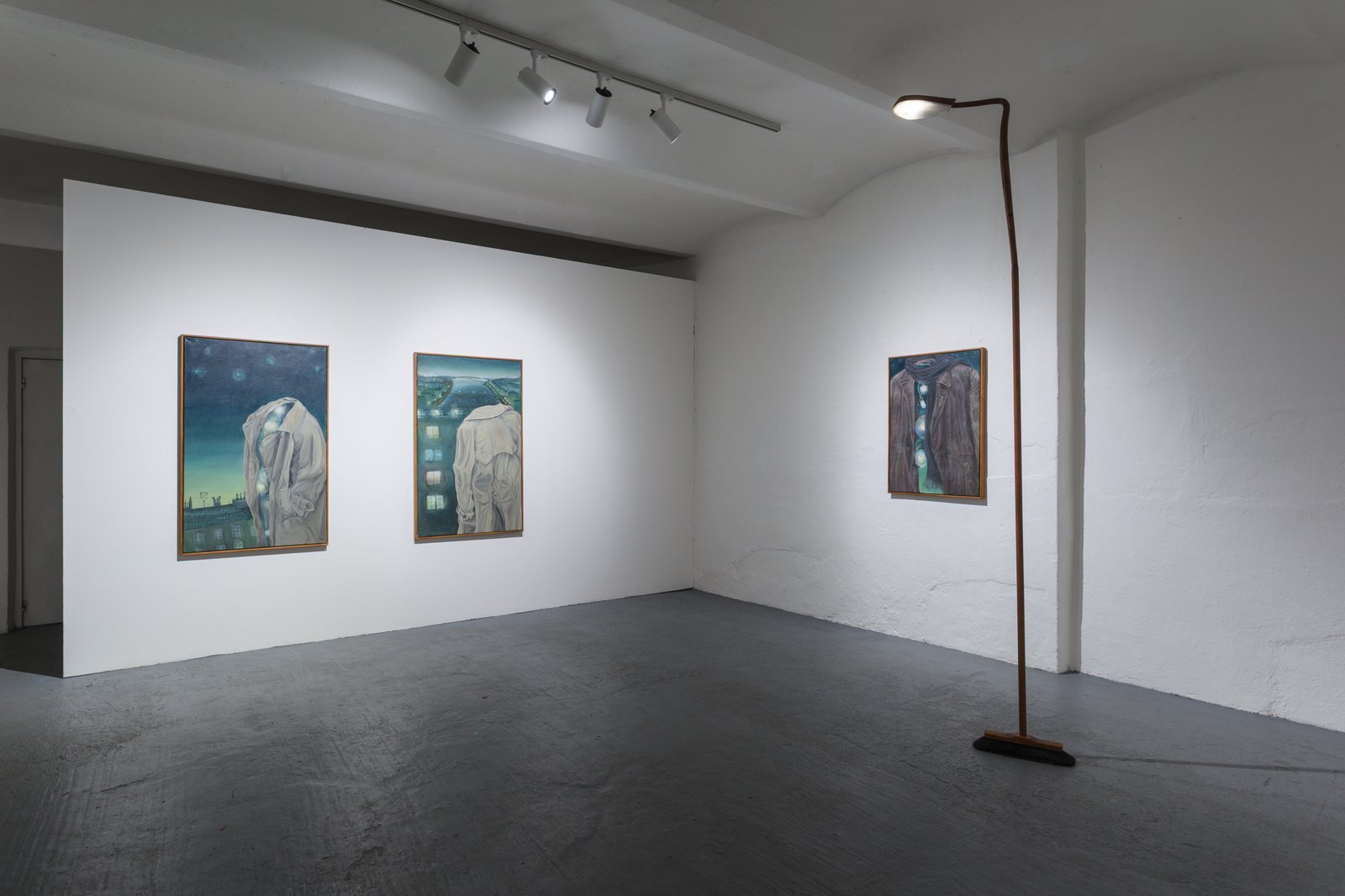
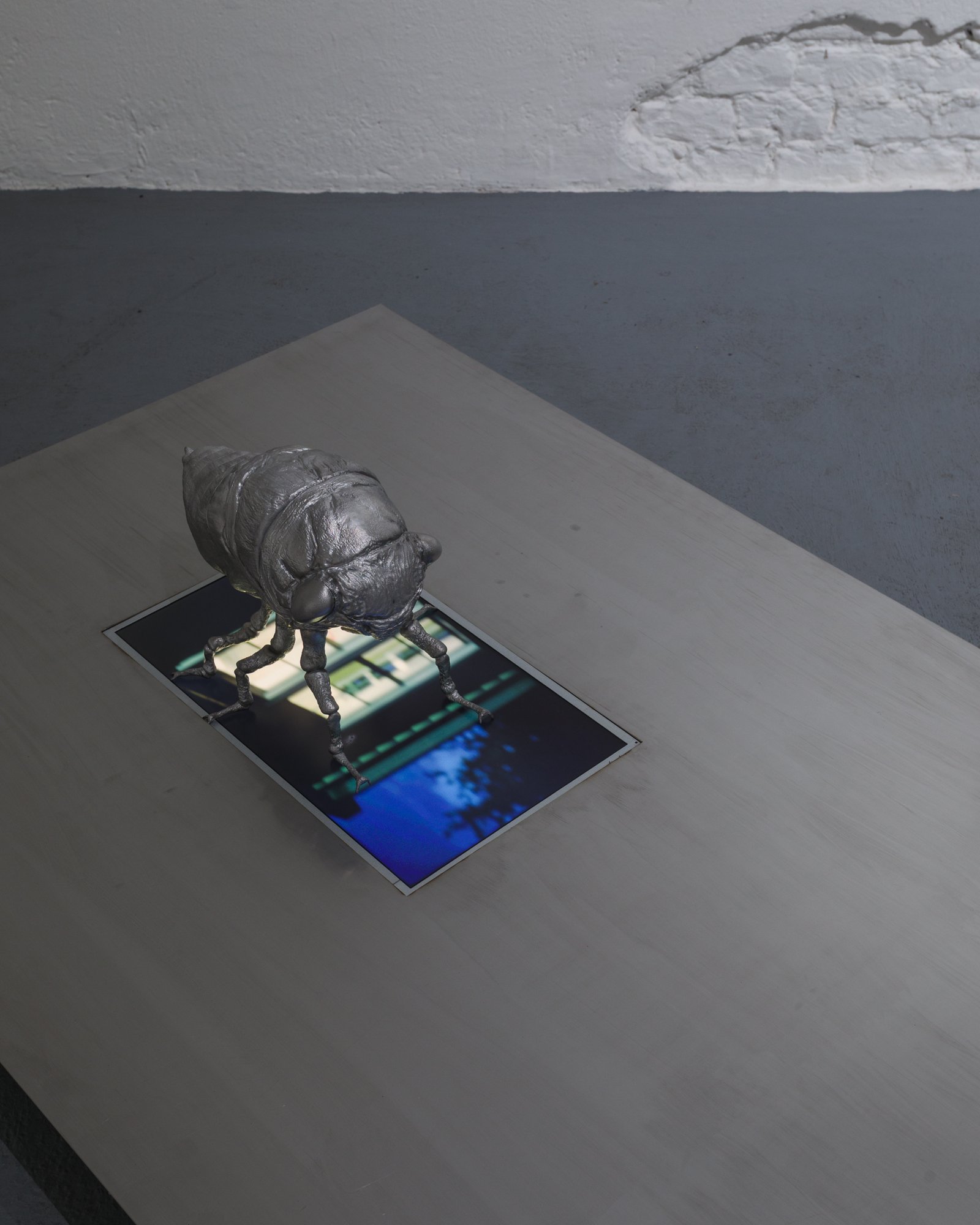
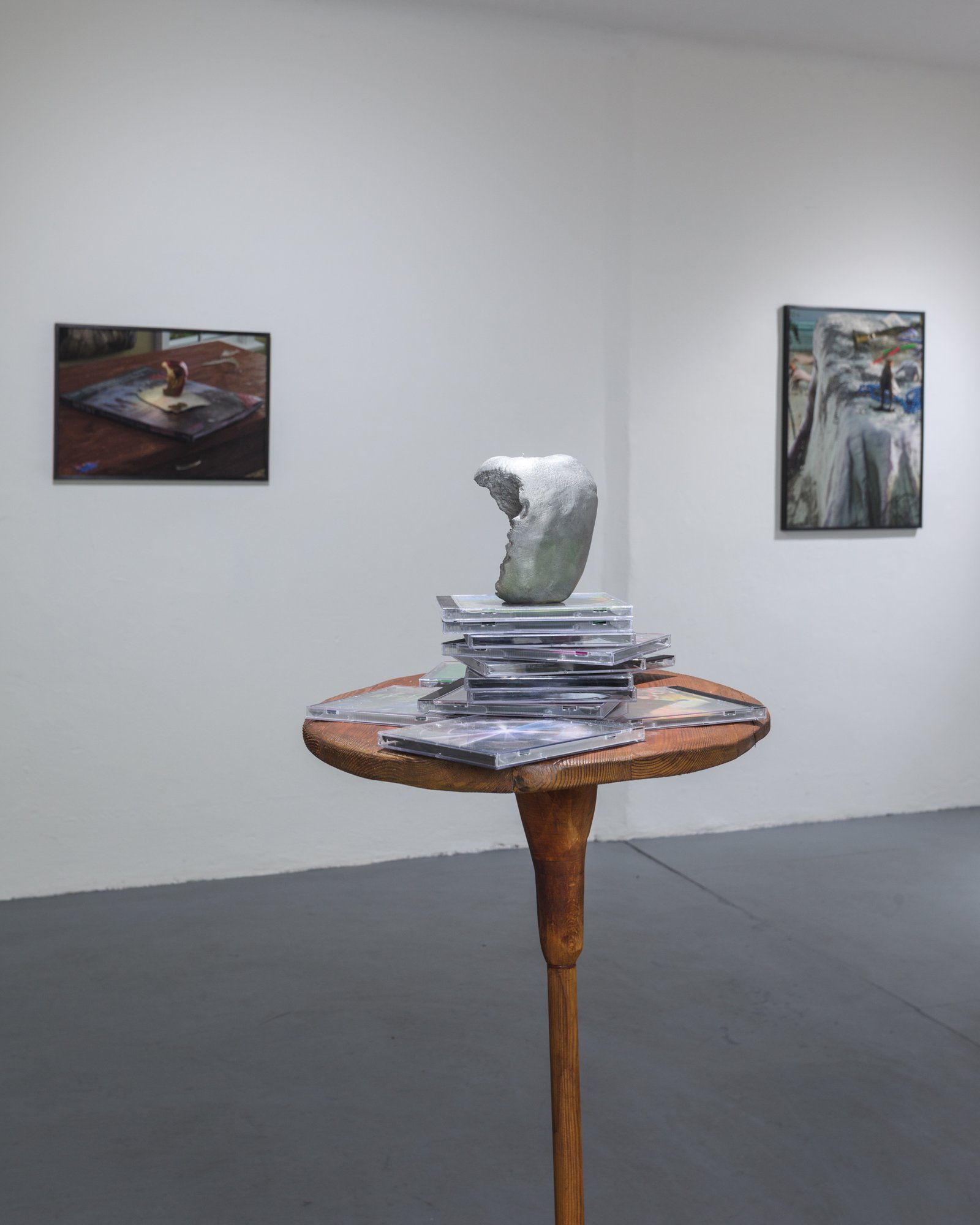
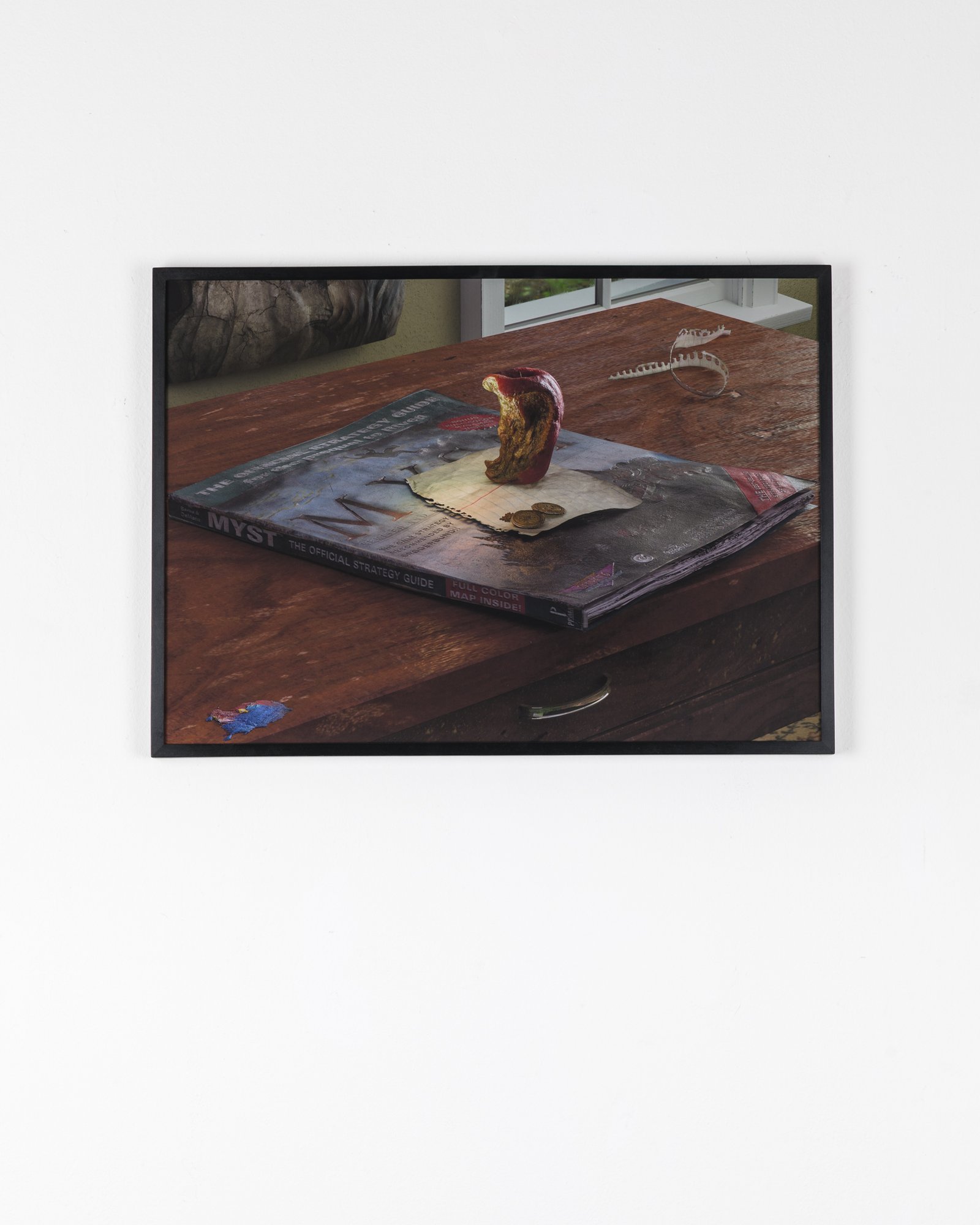
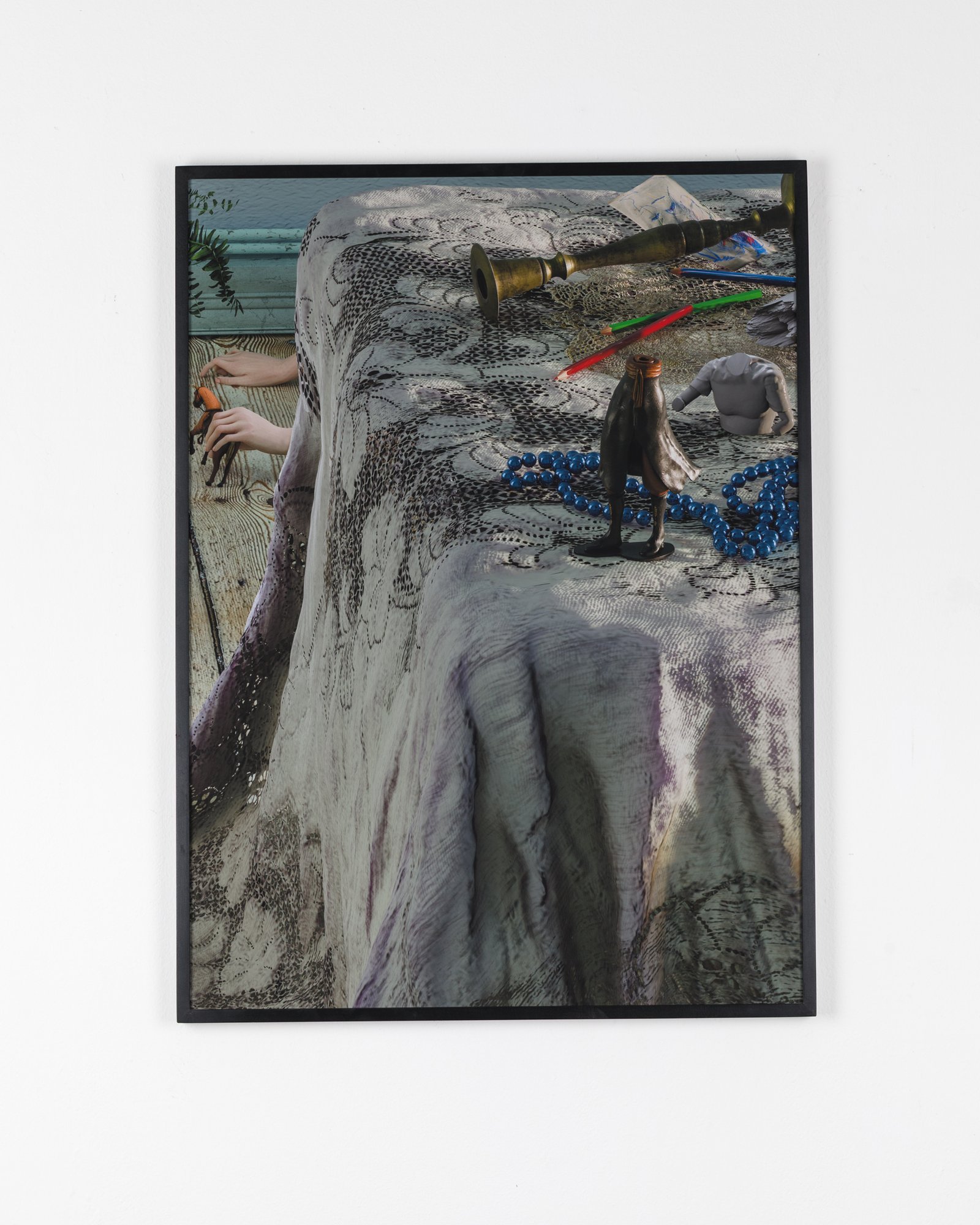
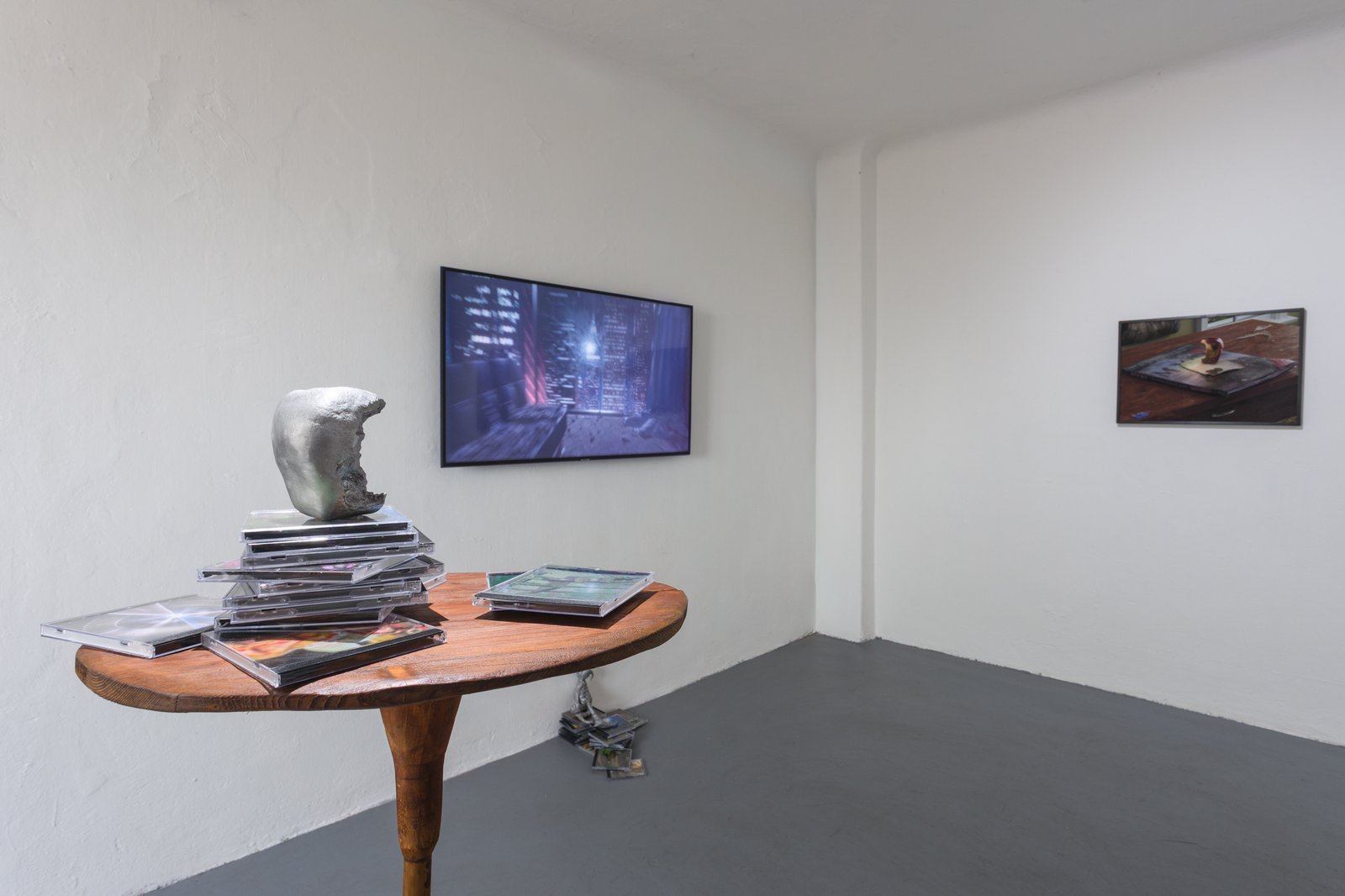
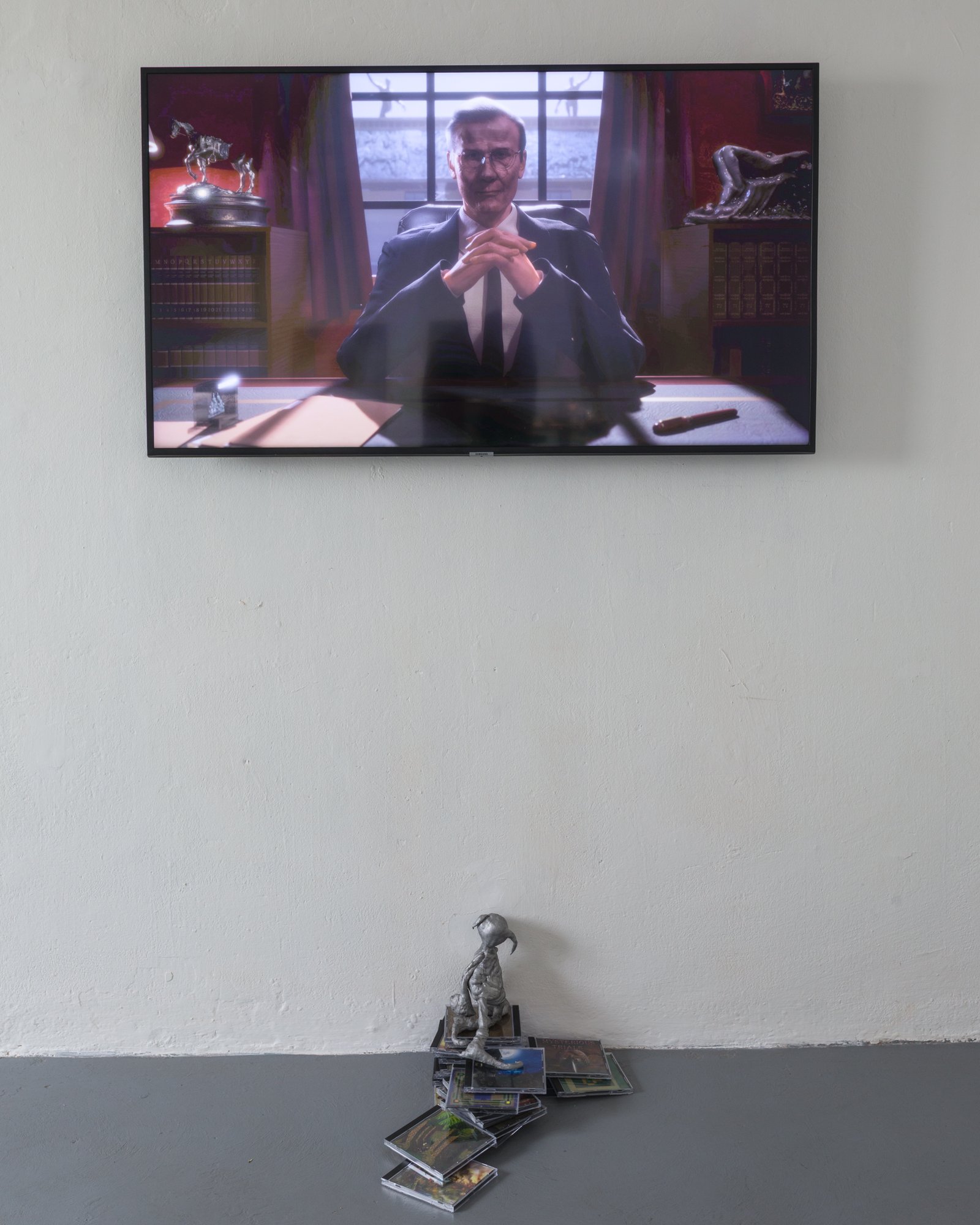
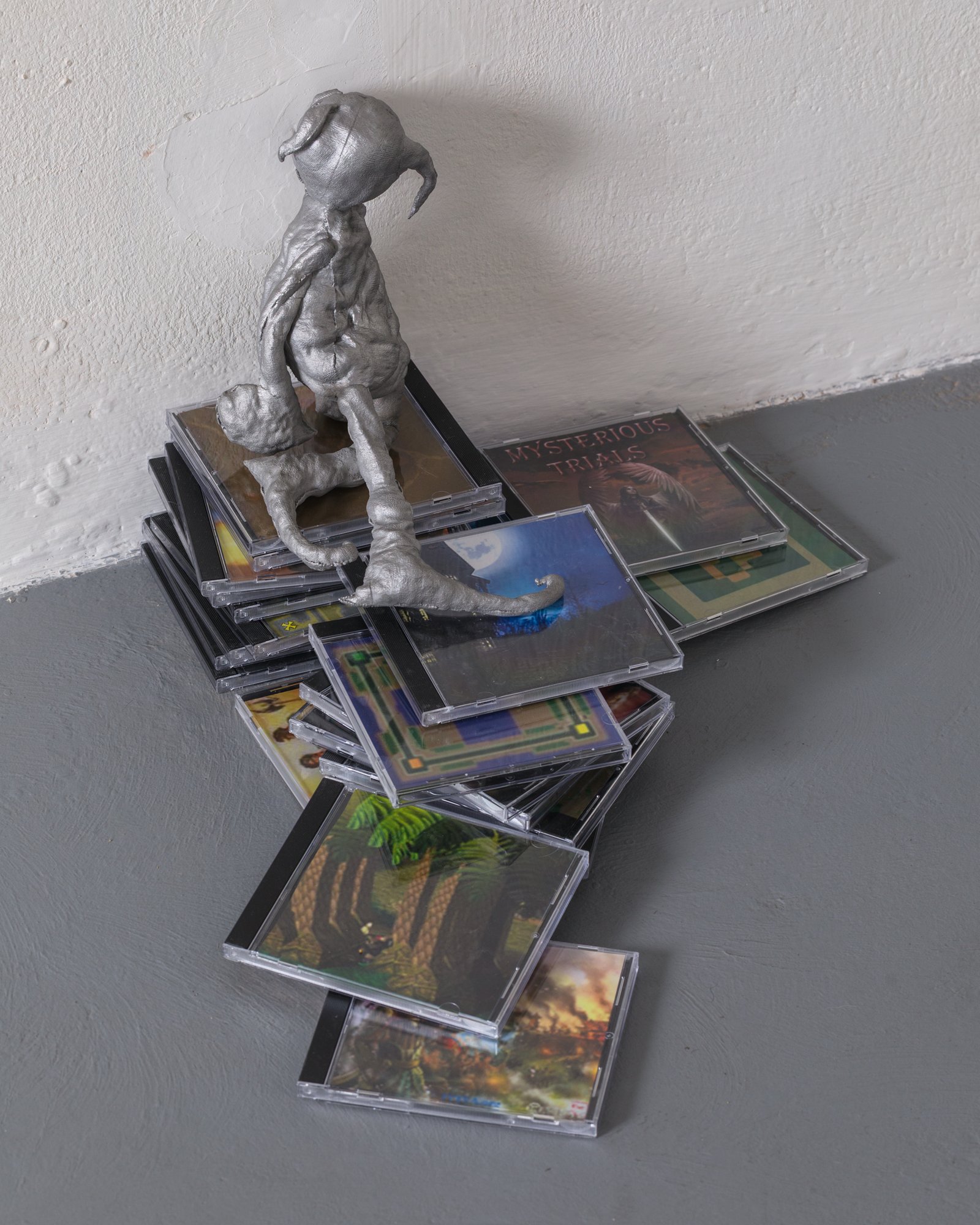
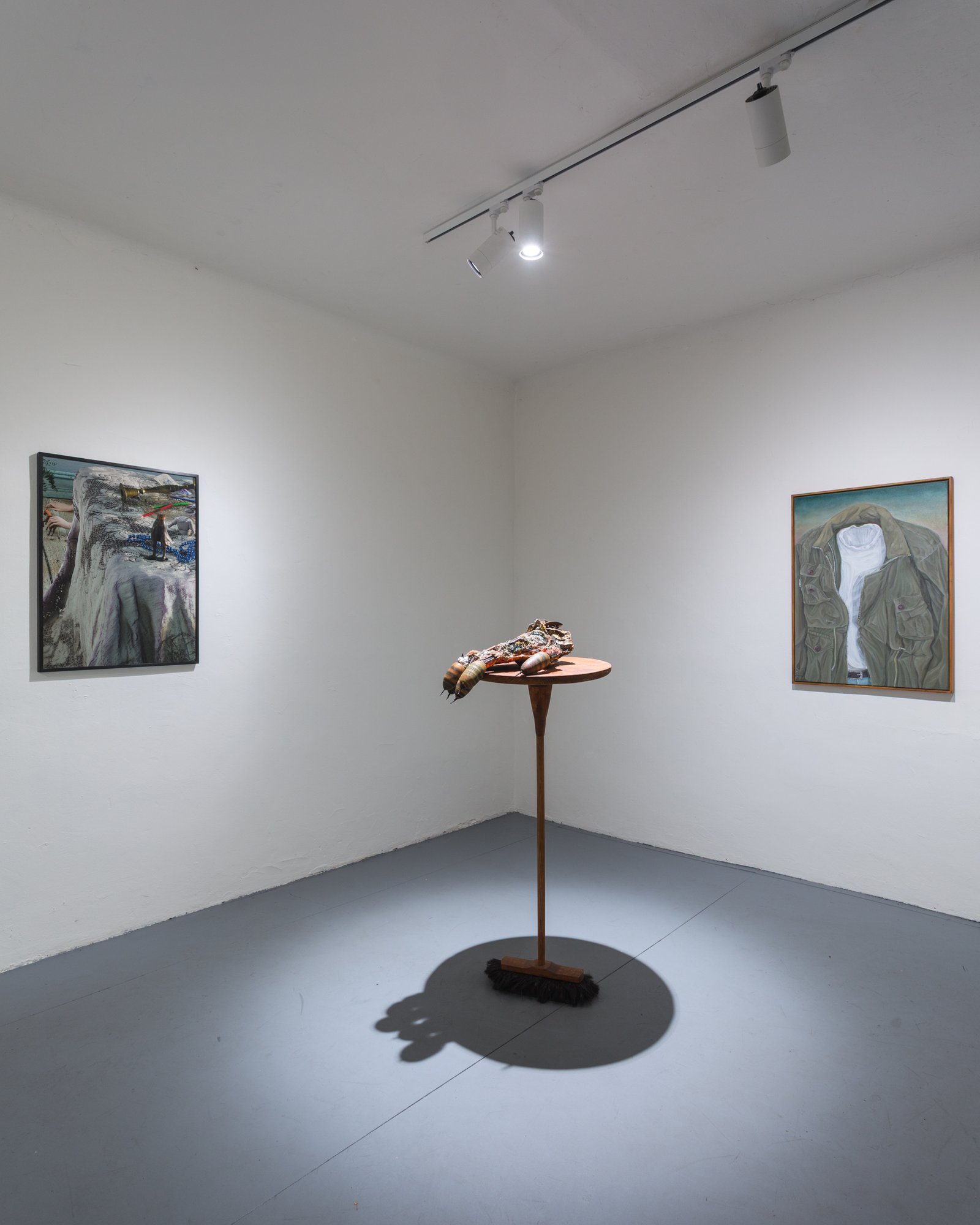
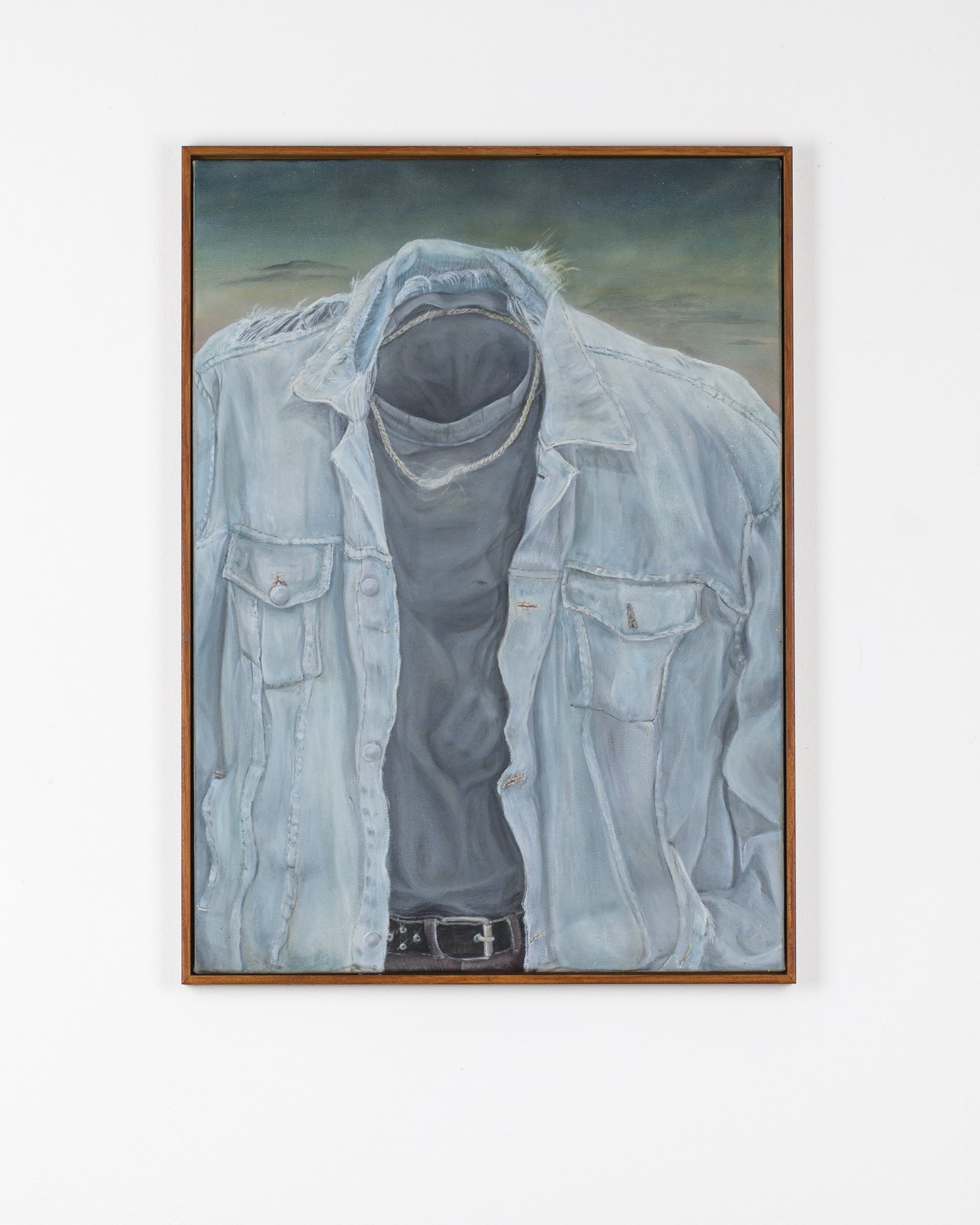
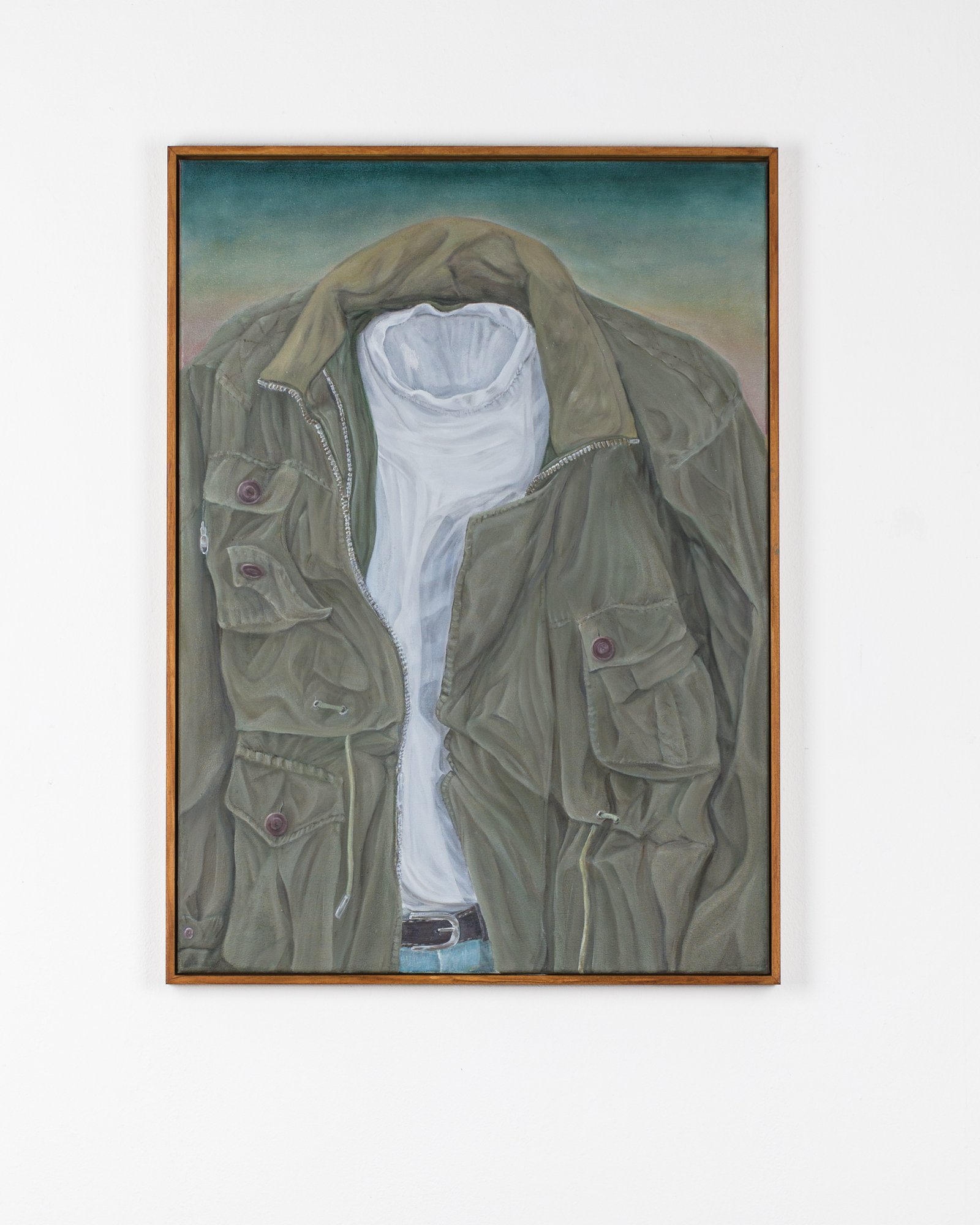
a street lamp’s arc light. The form of personal memories and the resonance of cultural memory shift in the exhibition Hollows as the pixelated surfaces become blurred, etching into the folds of worn clothing as if into the features of a face wrinkled by age. The landscapes of childhood and fantastical worlds in Gregory Nachmanovich’s videos, objects and still lifes evoke a sense of sublime wonder, not only at CGI architecture and nature, but also at the overcoming of technical limitations through the use of video game techniques. Beneath the rendered surfaces, however, the surprisingly symmetrical foundations of the high fantasy genre and the masculine political imagination of the far right shine through. He weaves these manifestos sensitively and subtly into nostalgic narratives, without trivialising them or imposing a didactic framework. Adam Žufníček, by contrast, has developed his characteristic series of hybrid ‘brooms’ into carpenter-crafted and decoratively finished pedestals for scrappunk objects. In these works, psychedelia and pop-cultural mysticism intertwine with DIY playfulness and the humorous sting of the memetic hive mind. Equally important to his body of work, however, are his recent paintings, in which he ventures into the more meditative waters of metropolitan embankments and gentrified harbours. A distinctive tribute to the Skupina 42 (1940’s Czech artistic collective) and the painter František Hudeček is the placement of night-time walkers, weighed down by history, within a darkened urban panorama. Both of these approaches are also linked by a sculptural interpretation of street lighting made from pieces of bent furniture.
***
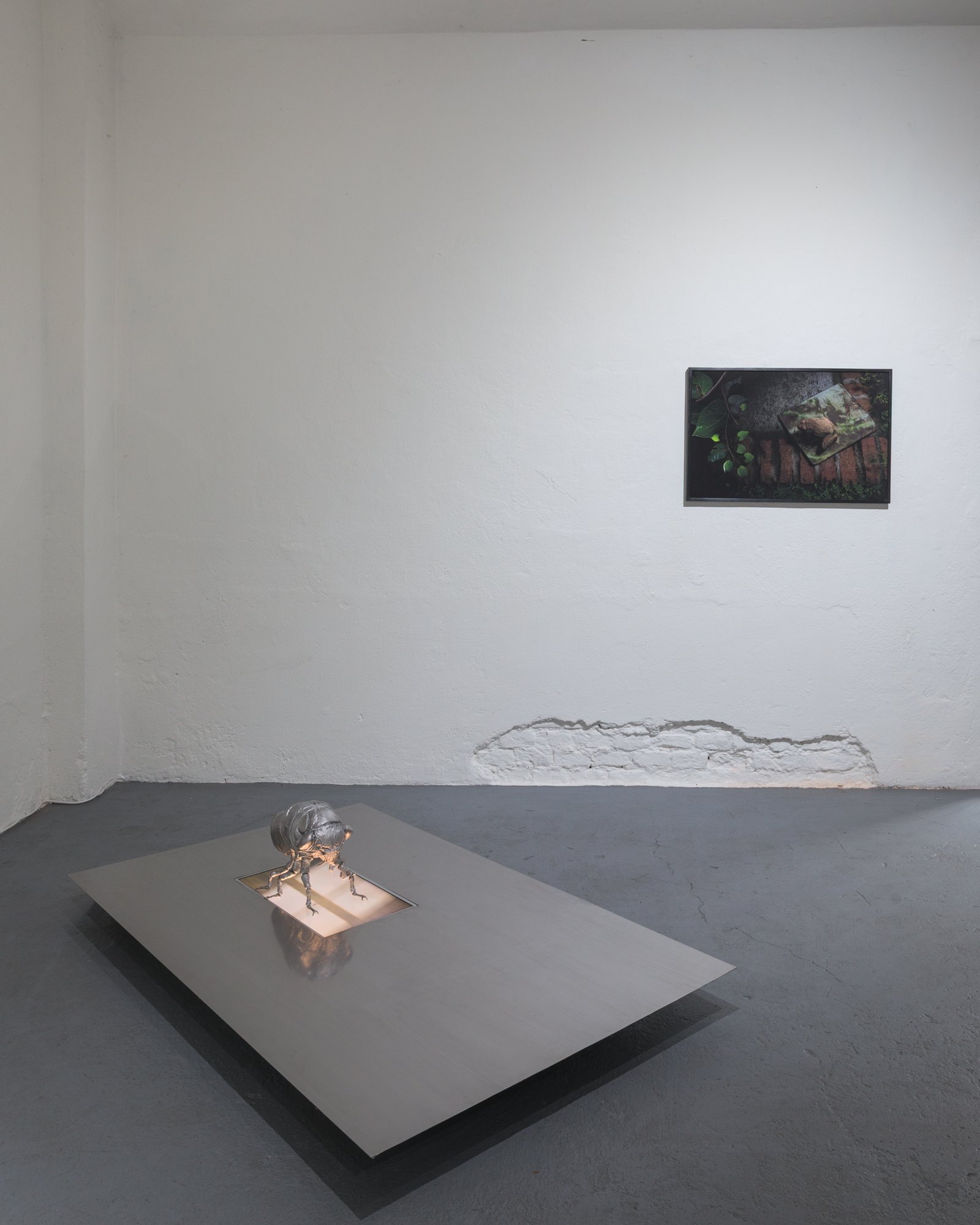
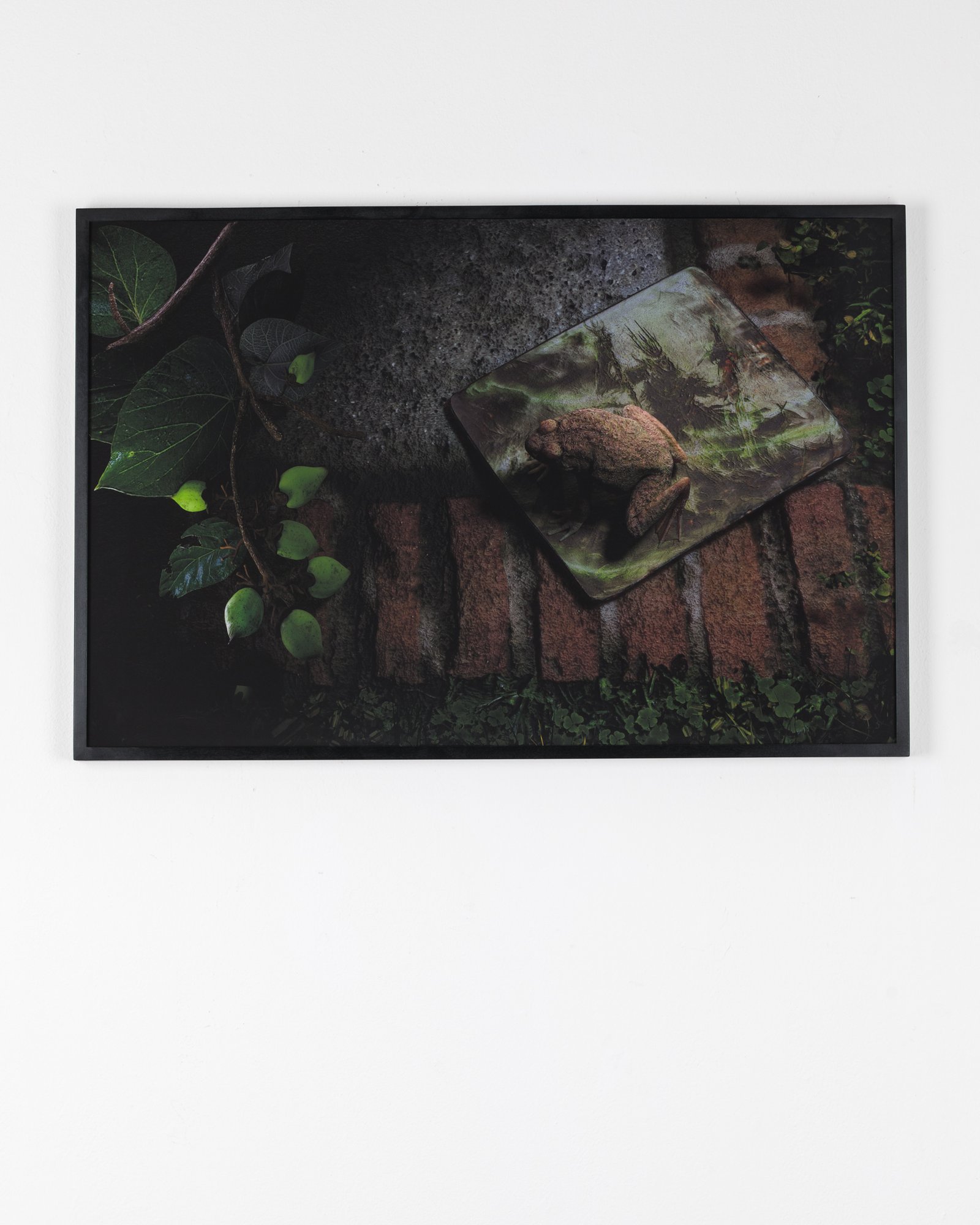
Gregory Nachmanovich’s interest in the common elements between right-wing authoritarian thought and the medievalist aesthetic of contemporary fantasy is mediated by a perspective that is both rendered and nostalgic. Whether it’s millennial imagery borrowed from games like Warcraft III and epic CRPGs, or the covers of physical copies of fictional titles hand-crafted by the artist or his brother. Gregory Nachmanovich’s frog, perched on a mouse pad featuring a motif from the imperial fantasy world of Warhammer, doesn’t necessarily have to be named Pepe to serve as a reminder of both the conscious and hidden sources of masculine fantasies. It is no coincidence that the behemoths of the military-industrial complex borrow names from Tolkien’s universe, such as Palantir and Anduril. Wagnerian connotations associated with the contemporary form of fantasy are so influential today that even curator Hans-Ulrich Obrist did not hesitate to compare the Japanese epic fantasy RPG Elden Ring to the fulfillment of dreams of a Gesamtkunstwerk. This framing can also be traced in Gregory Nachmanovich’s video Mannheim, which materializes his own childhood memories, fairy-tale scenes, and surreal sequences alongside a frantic effort to realize our own desires and achieve our dream version of ourselves.
Adam Žufníček’s nocturnal paintings, featuring hollow figures of nighttime pedestrians, focus on the intricately rendered surfaces and cuts of jackets and coats. Through their serial nature, they can evoke the impression of a frozen frame in motion, or, when combined with Gregory Nachmanovich’s 3D animations, they resemble customizable “skins” or an overview of “builds” in a role-playing game. The anonymous figures wandering across the canvases are highly reminiscent of the dandyish “artificialization” of the body. In this case, this extends to the very edge of its dematerialization or reduction to hollow shapes blending into the surrounding space. It is difficult to imagine a night walker without streetlights. Even modern flânerie arose both directly in connection with the emergence of the “leisure class” and the invention of the storefront window, followed by the architecture of shopping arcades. A fit check is also unthinkable without the technological infrastructure and the management of the attention economy. More important to Adam Žufníček, however, are the personal stories imprinted on inherited coats. When Ursula K. Le Guin proposes her Theory of Fiction as Tote Bags, she refers to Virginia Woolf’s thesis on narrative botulism — in simple terms, the concept of the story’s protagonist as an empty vessel or bottle. This carrier-ness then points to a preference for everyday experiences, collecting and sharing of small stories, “how people relate to everything else in this vast stack, this belly of the universe.” The hollow insides of nighttime walkers thus blend directly with the night sky full of stars and the reflections of fluorescent lights. A sort of “jacketism-coatism” resonates here, seemingly ill-fitting, with deep pockets. Fictional worlds become layered like a well-worn, donated jacket, which we can then pass on to someone else.
What happens when you wake up one day in a body that doesn’t belong to you?