


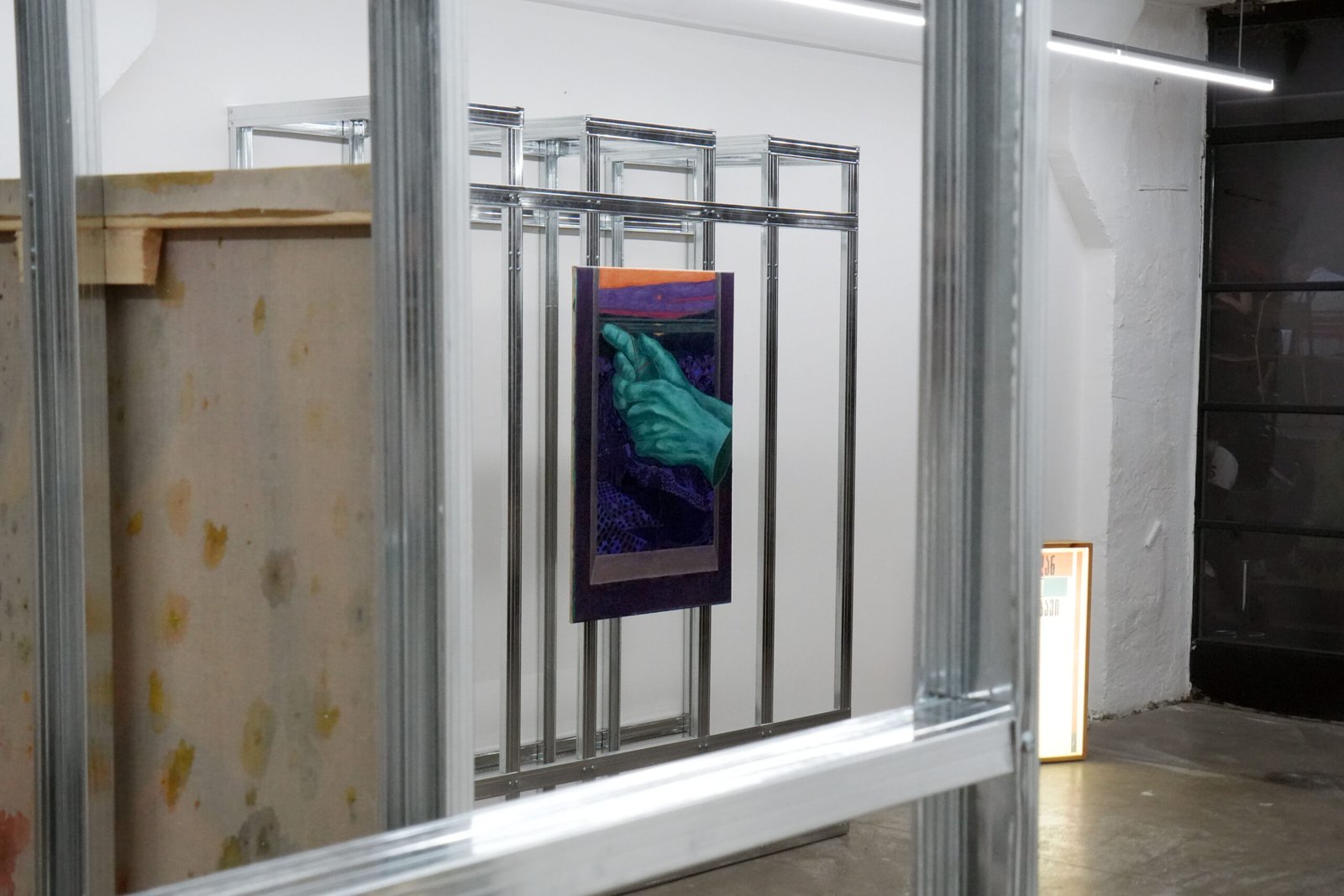
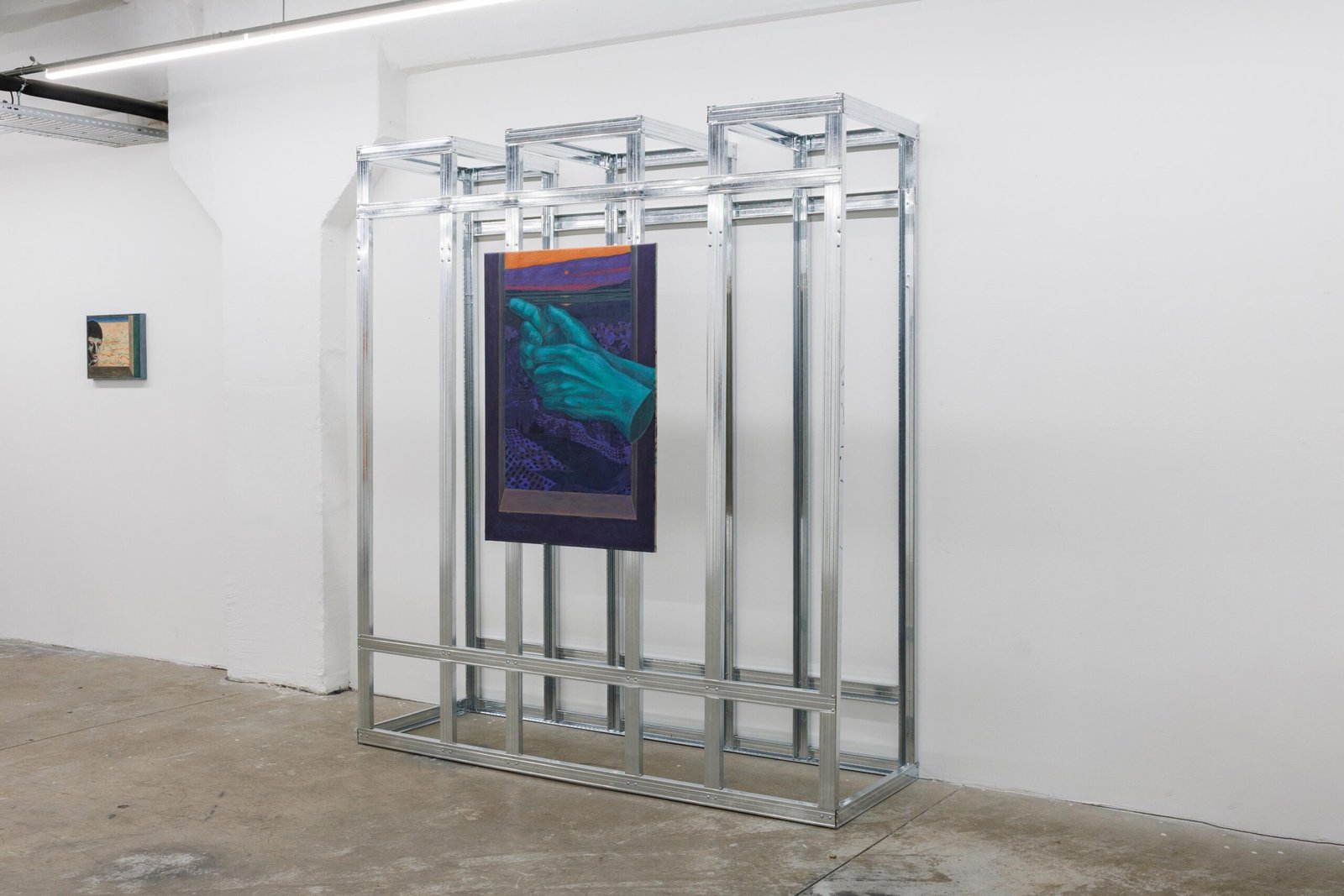
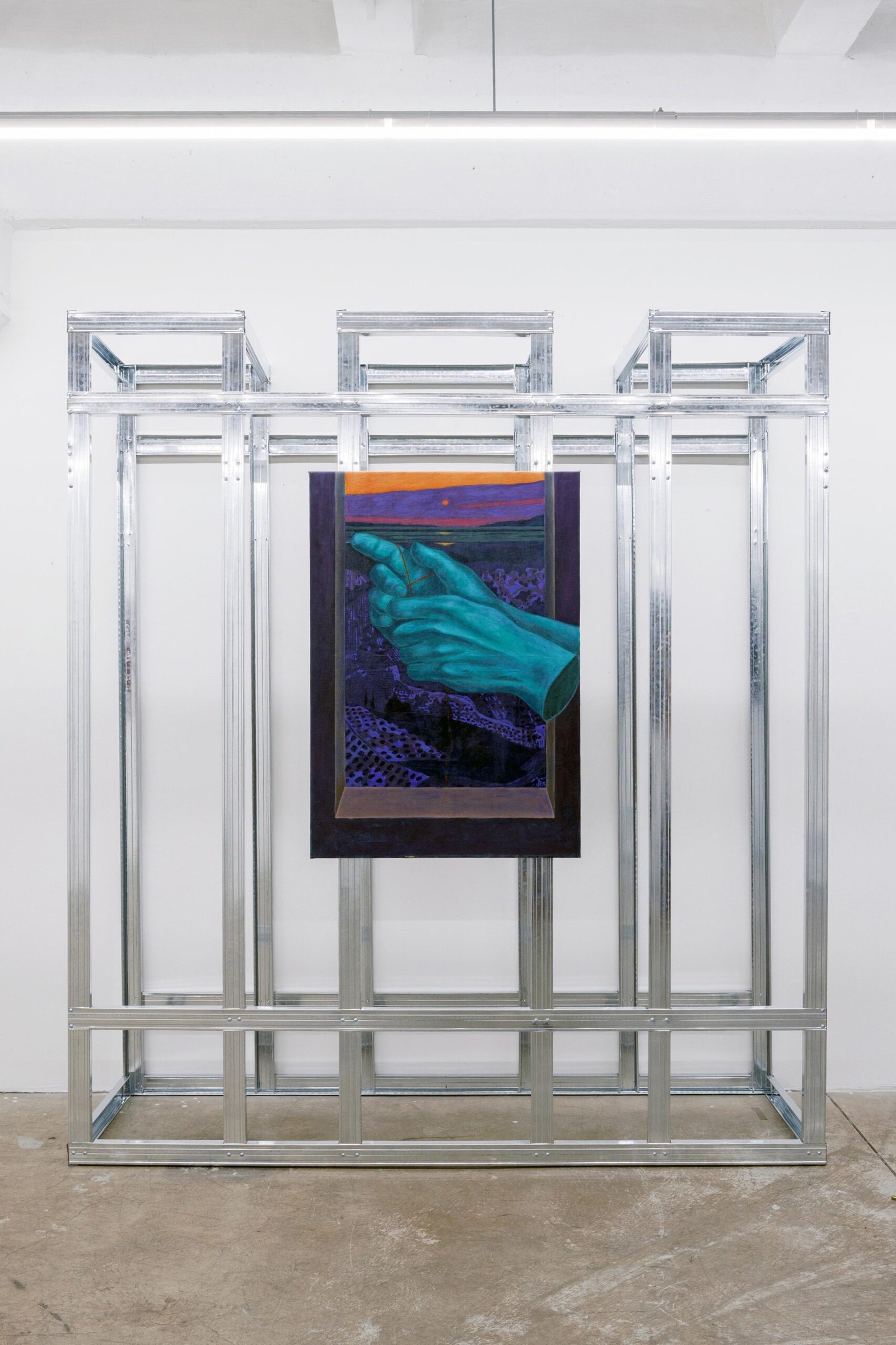
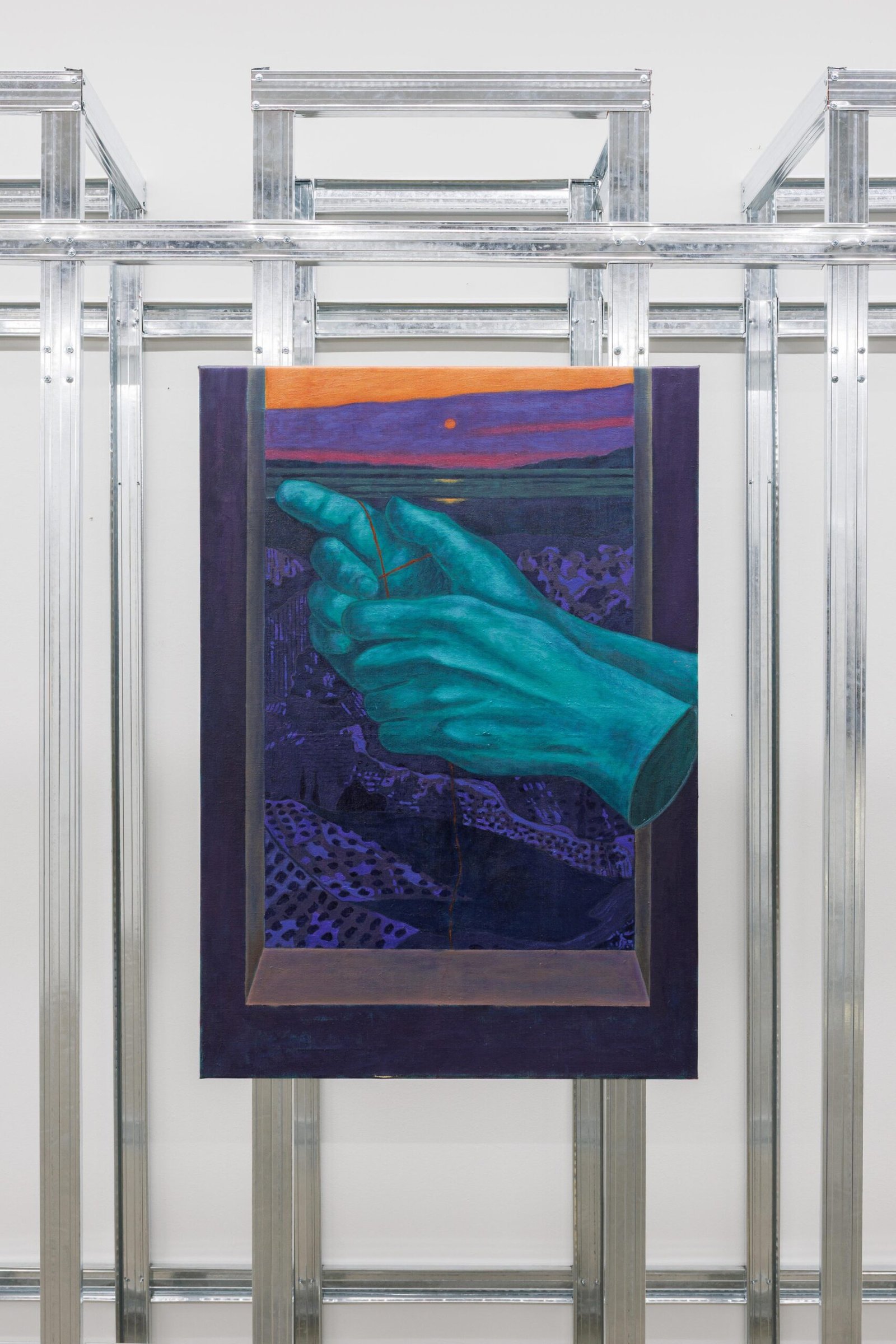
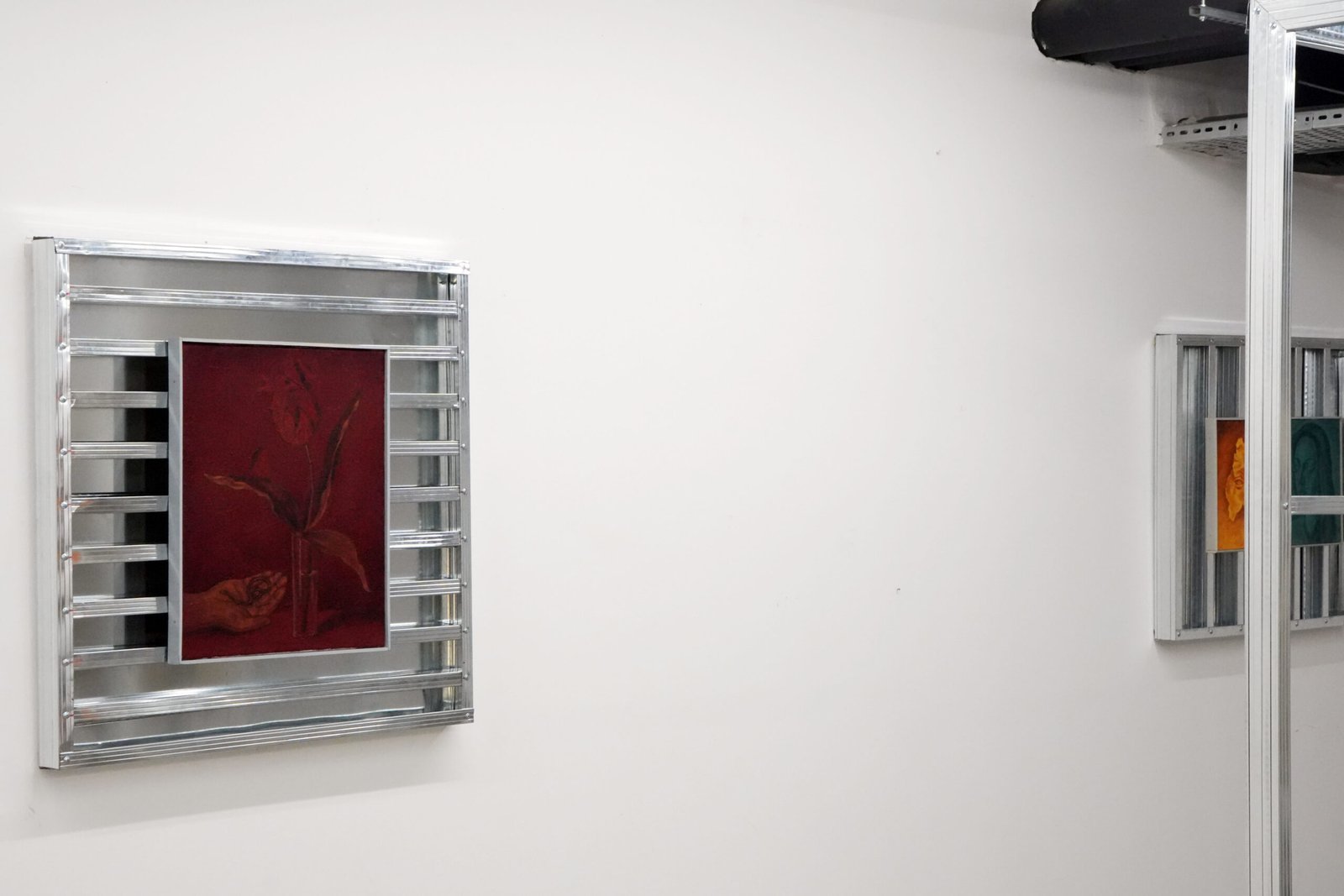
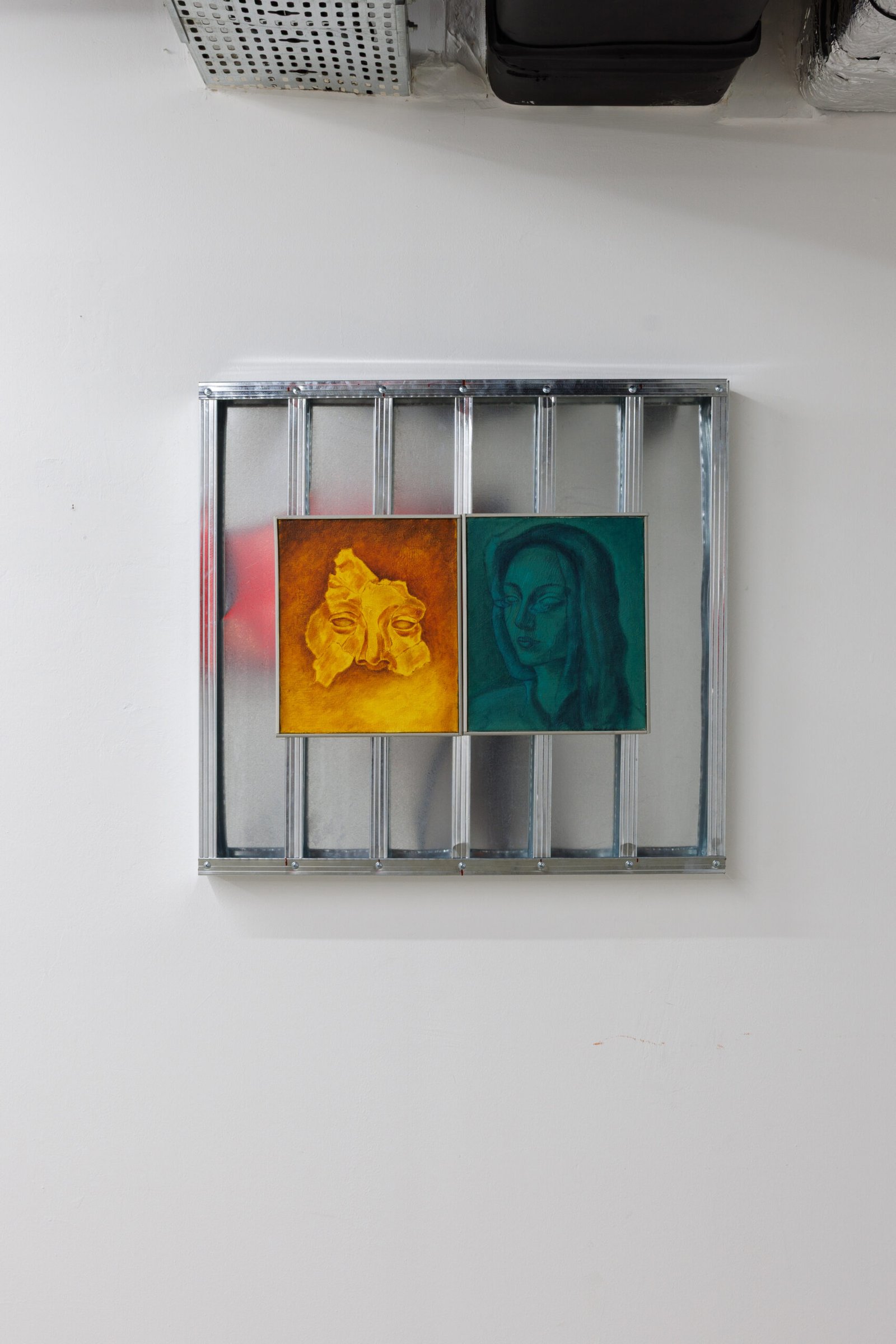
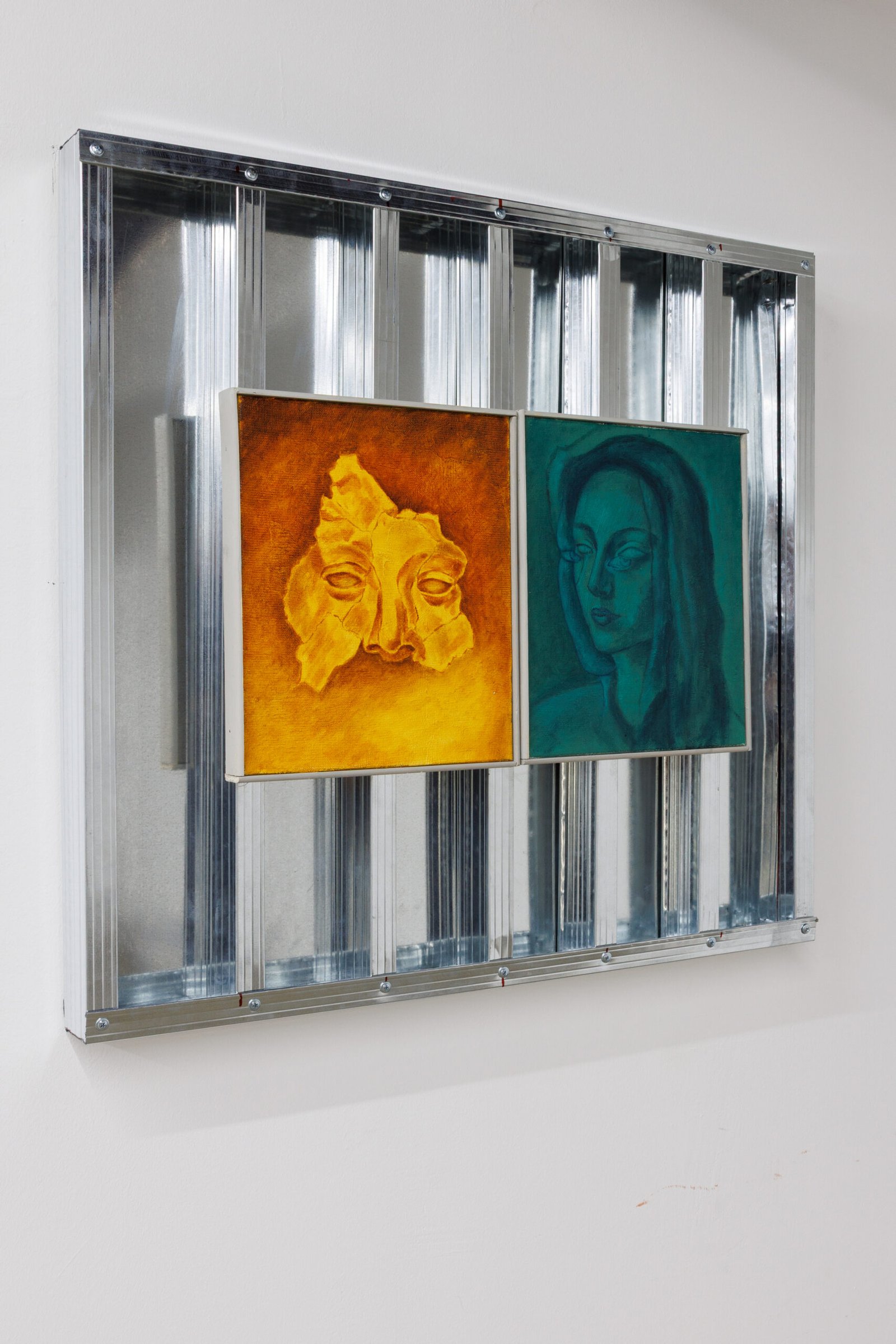
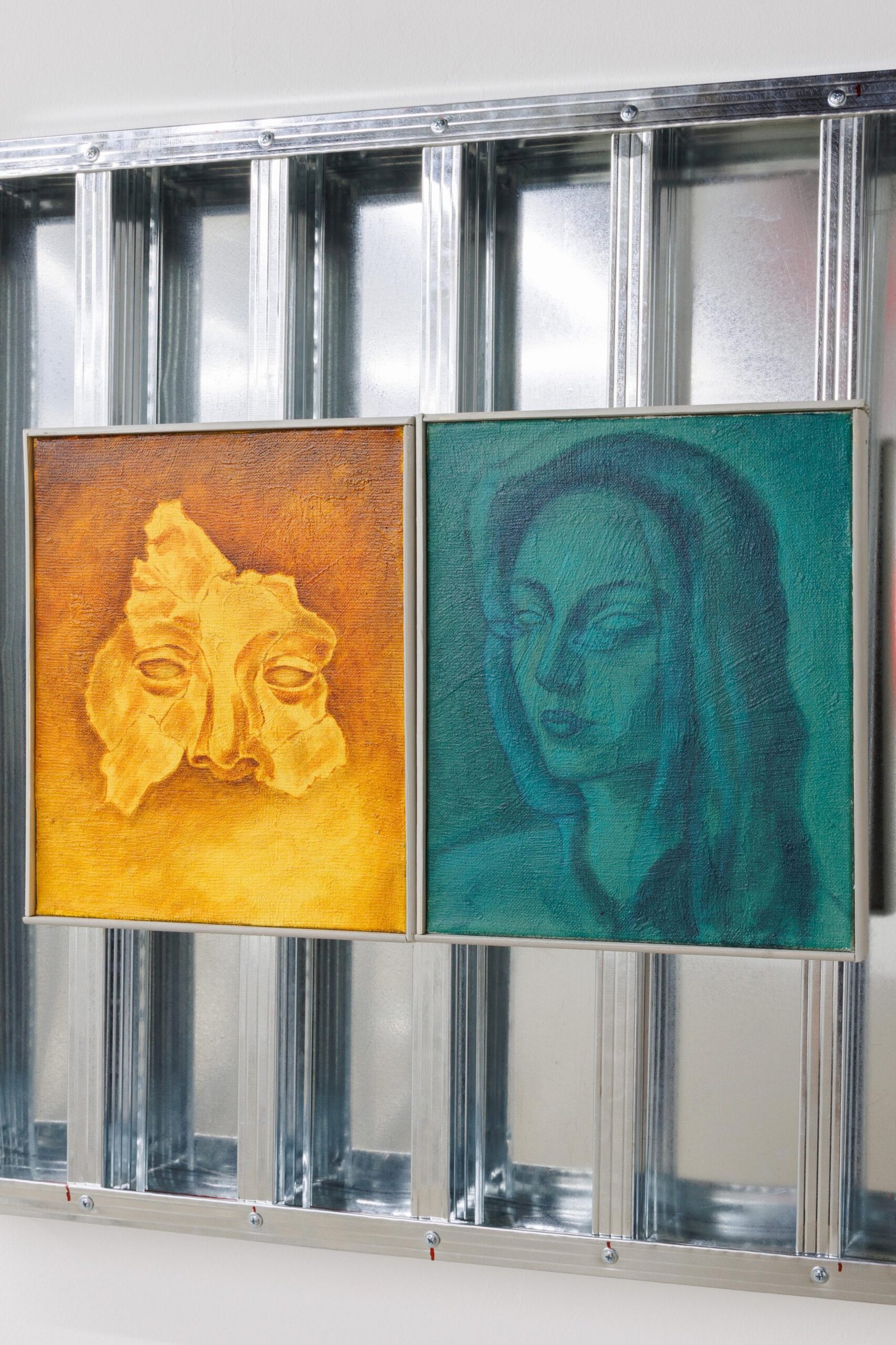
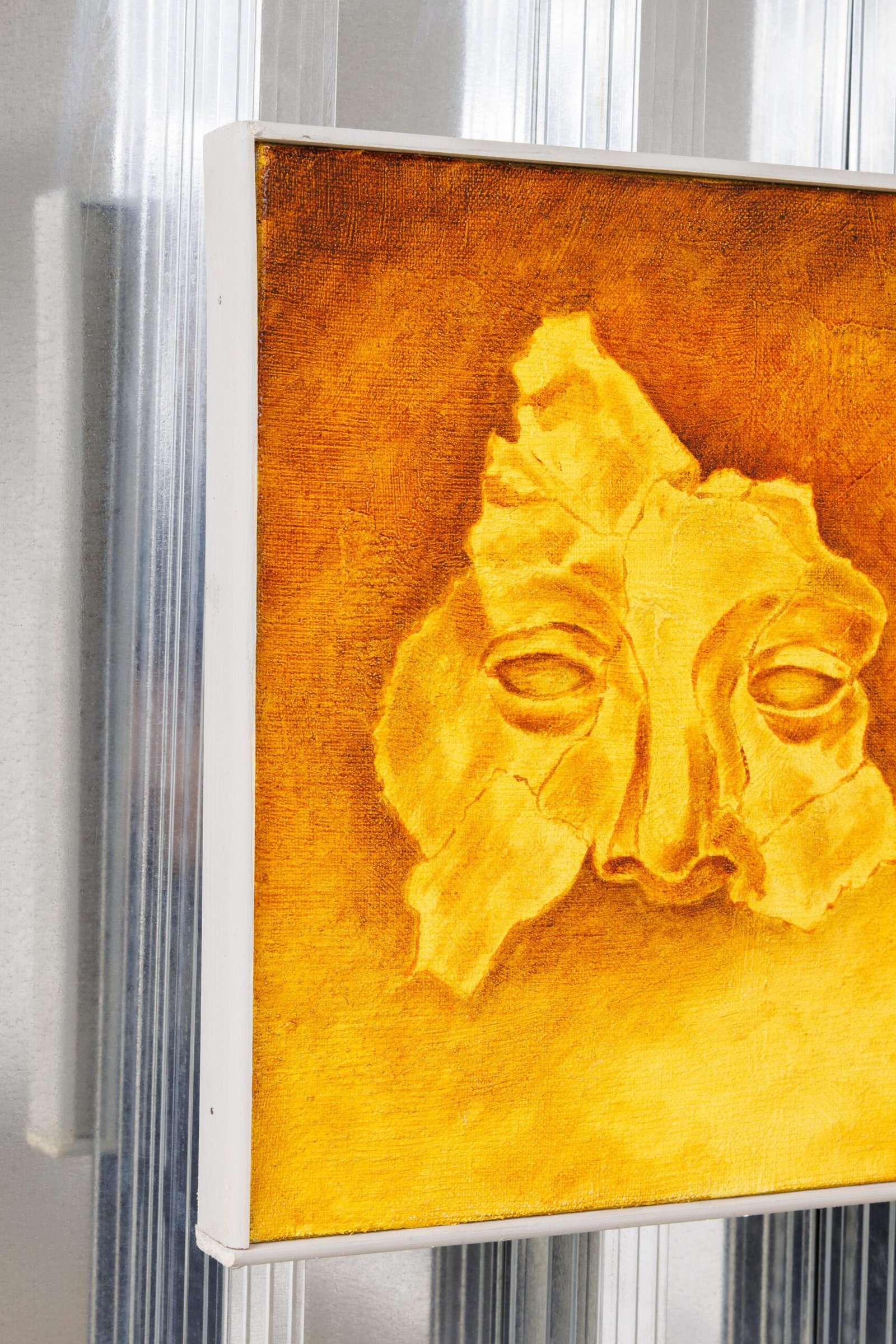
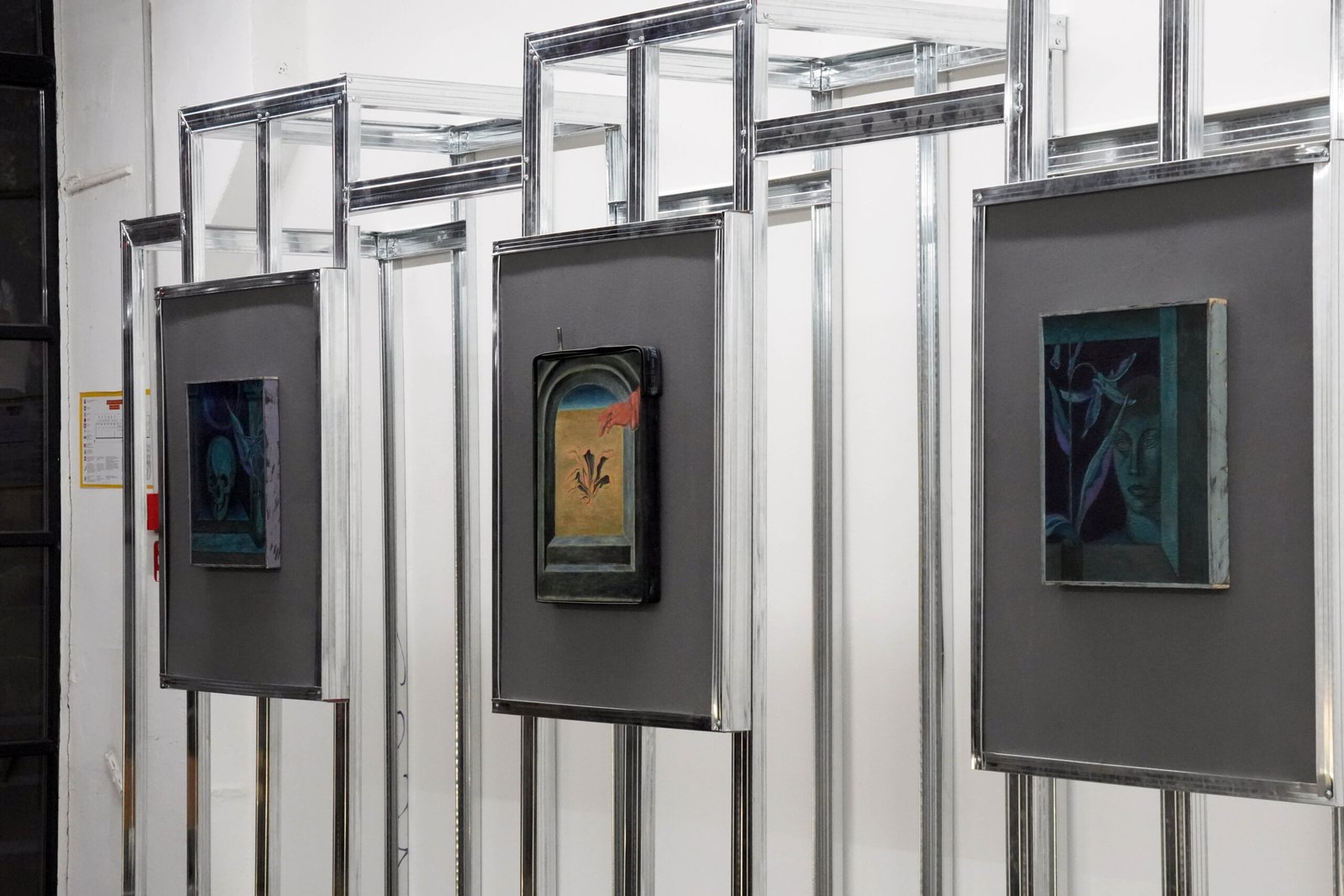
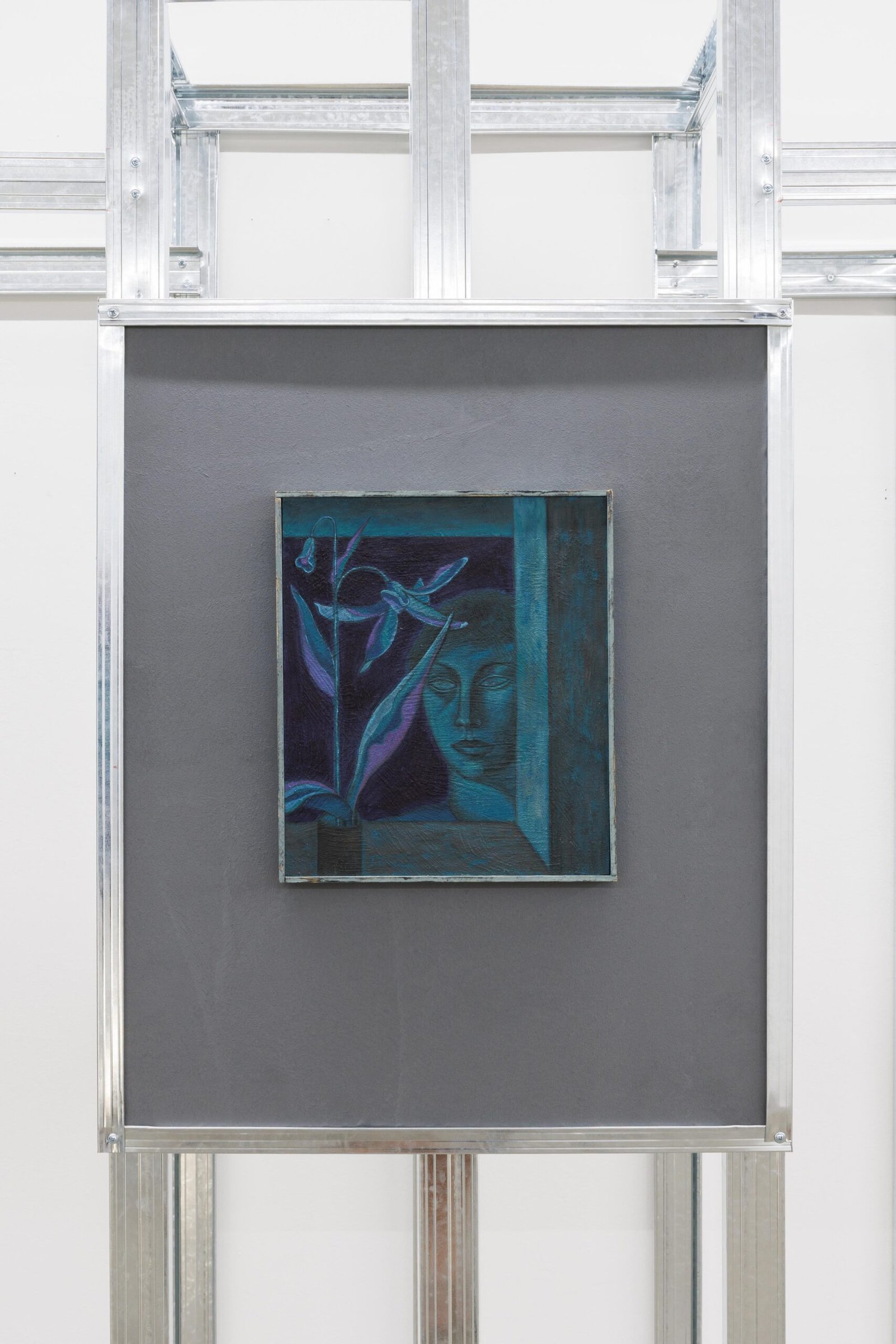
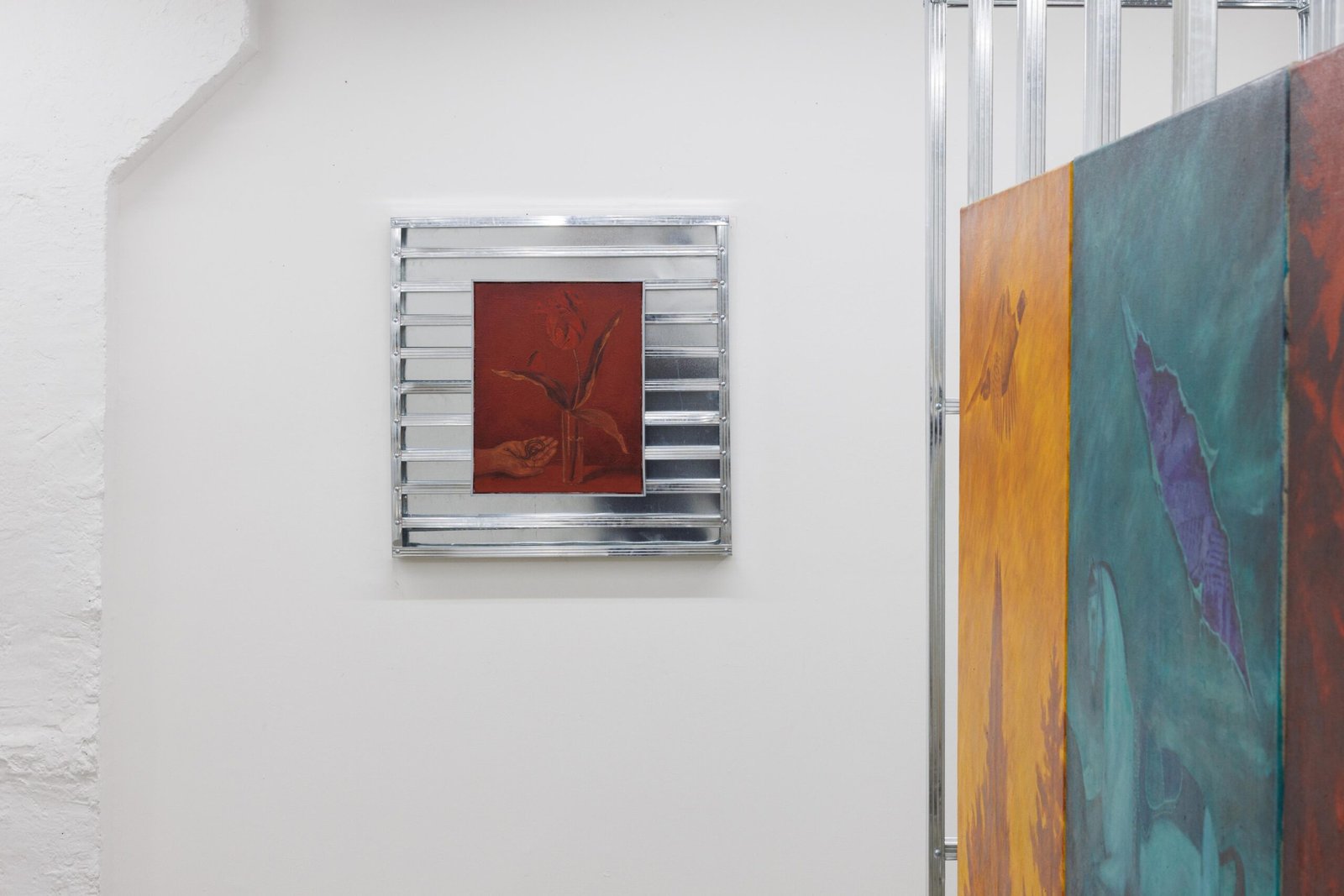
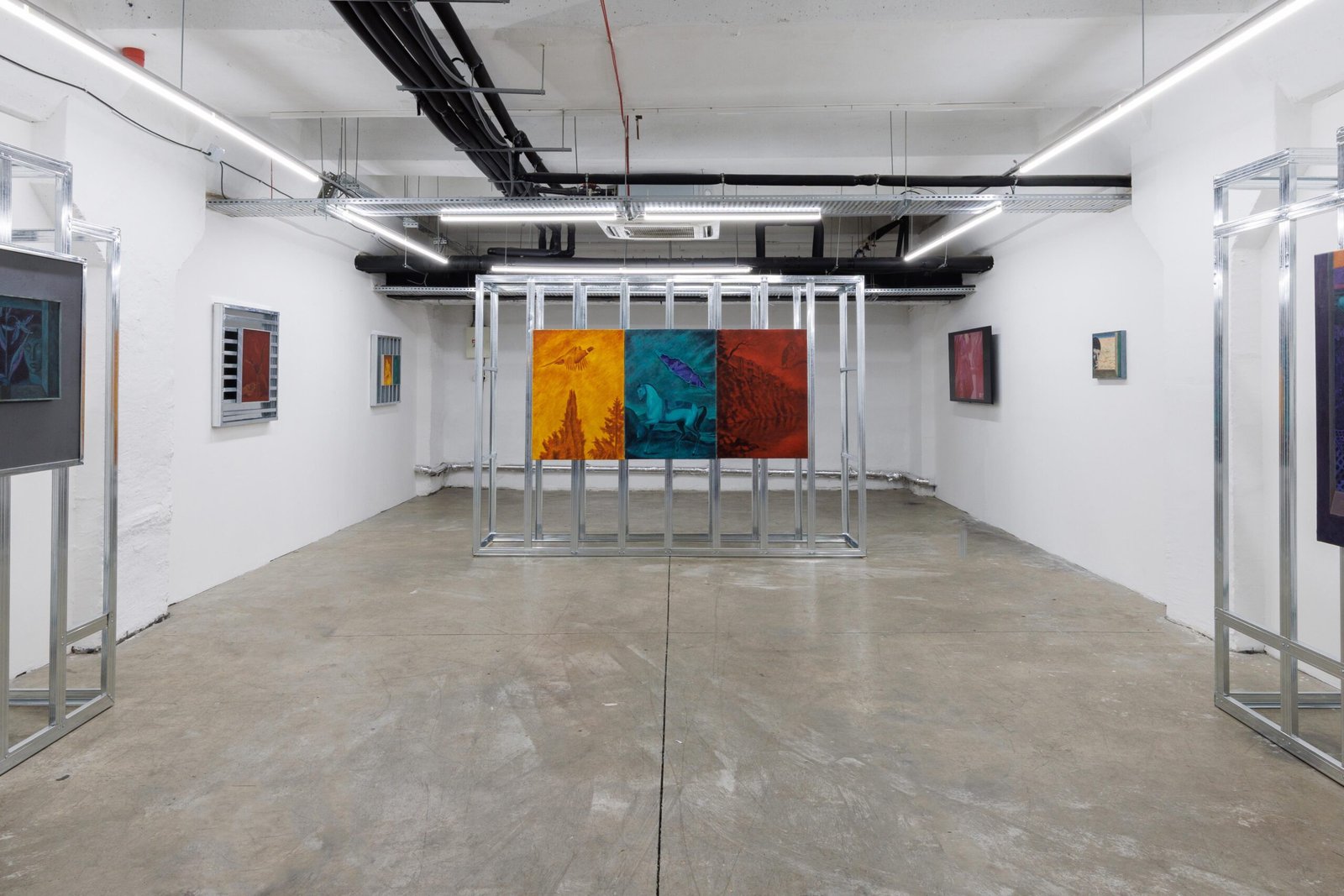
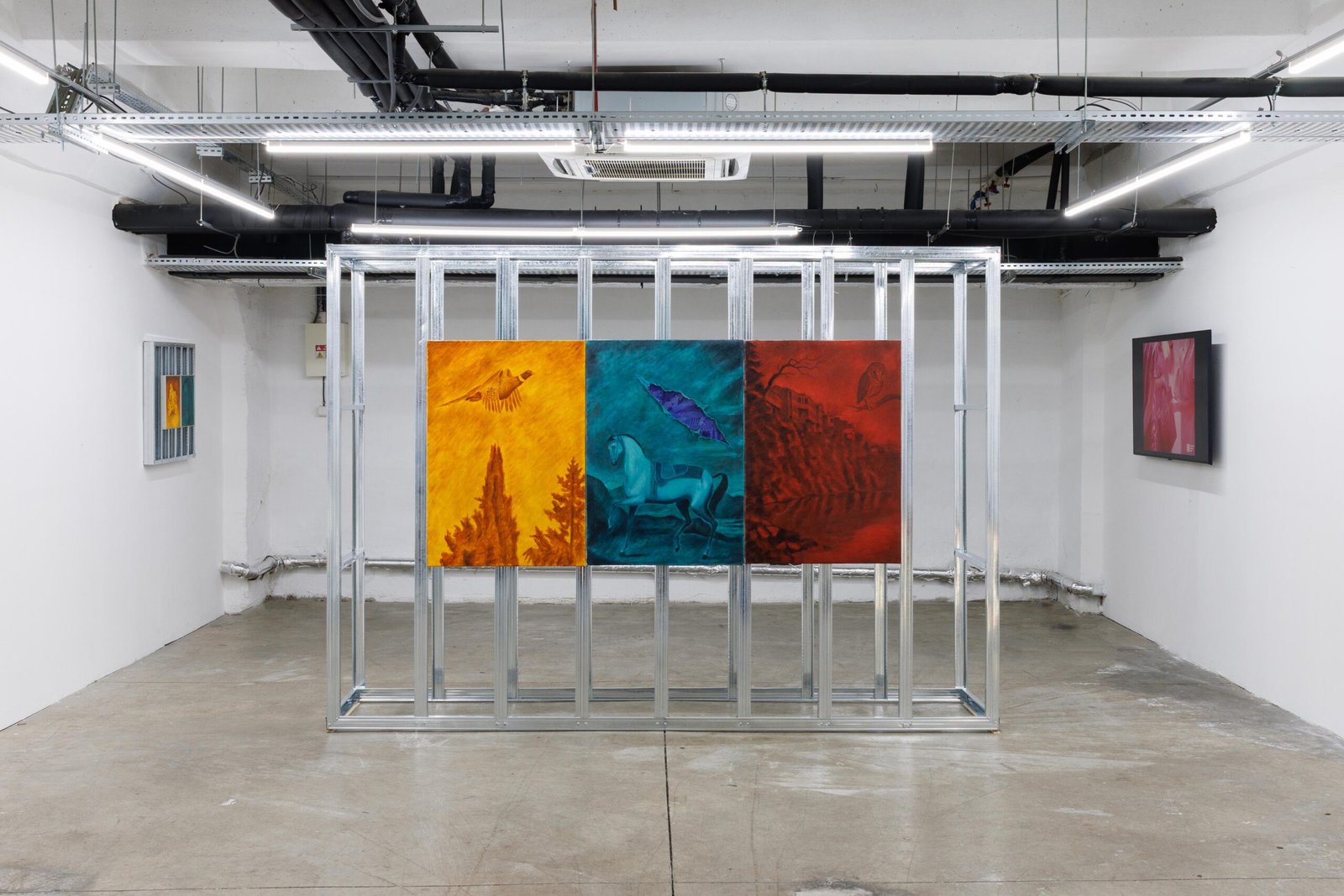
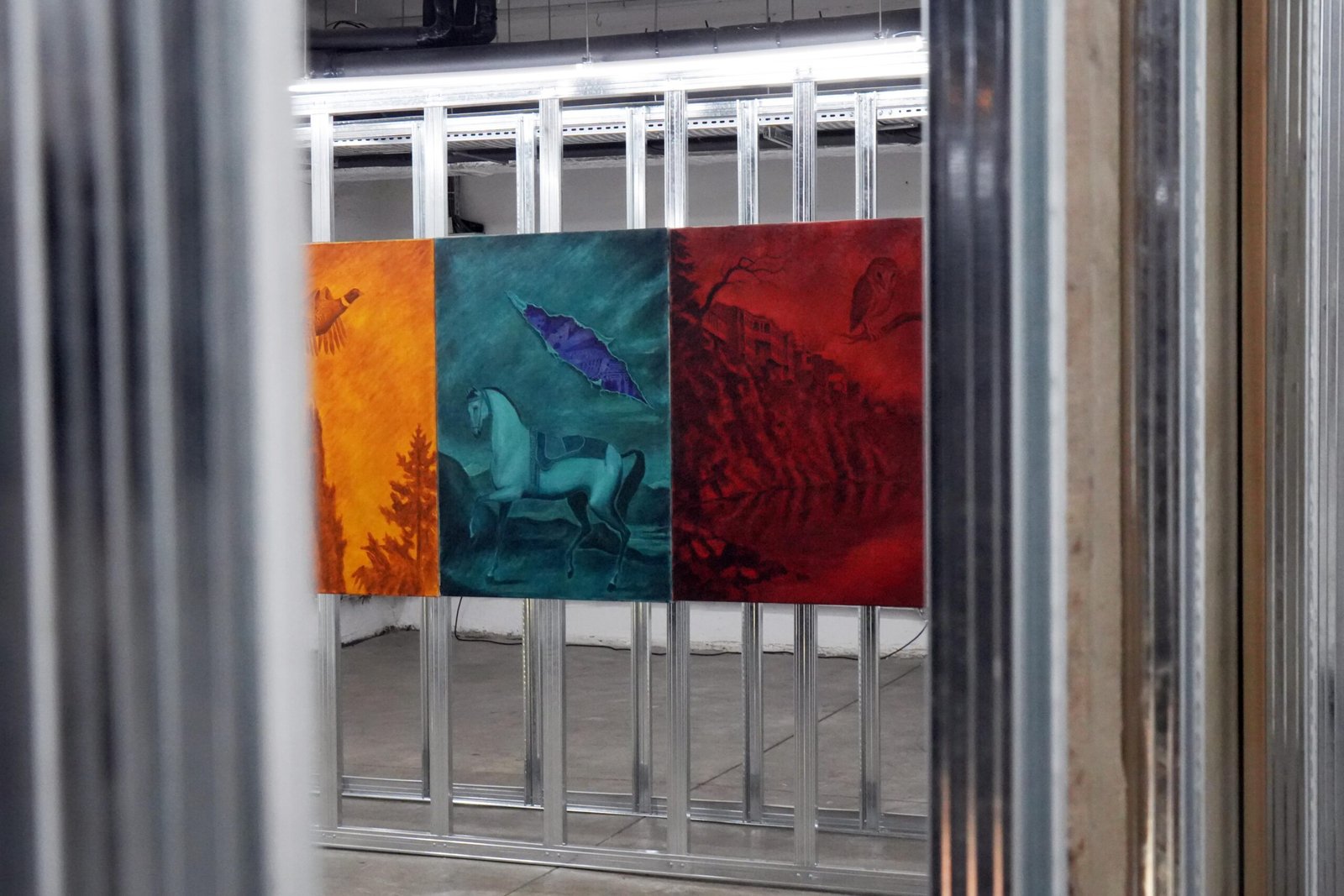
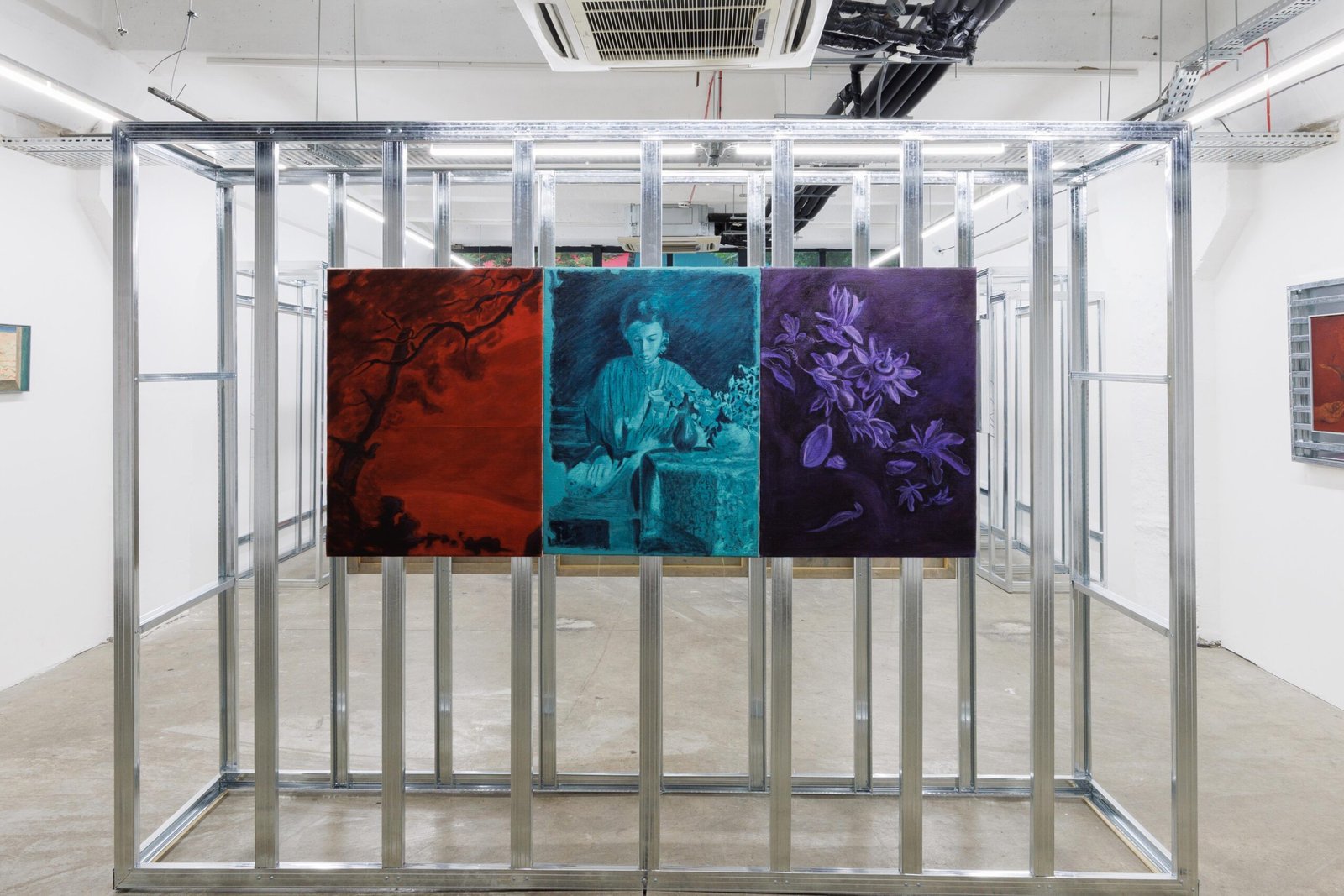
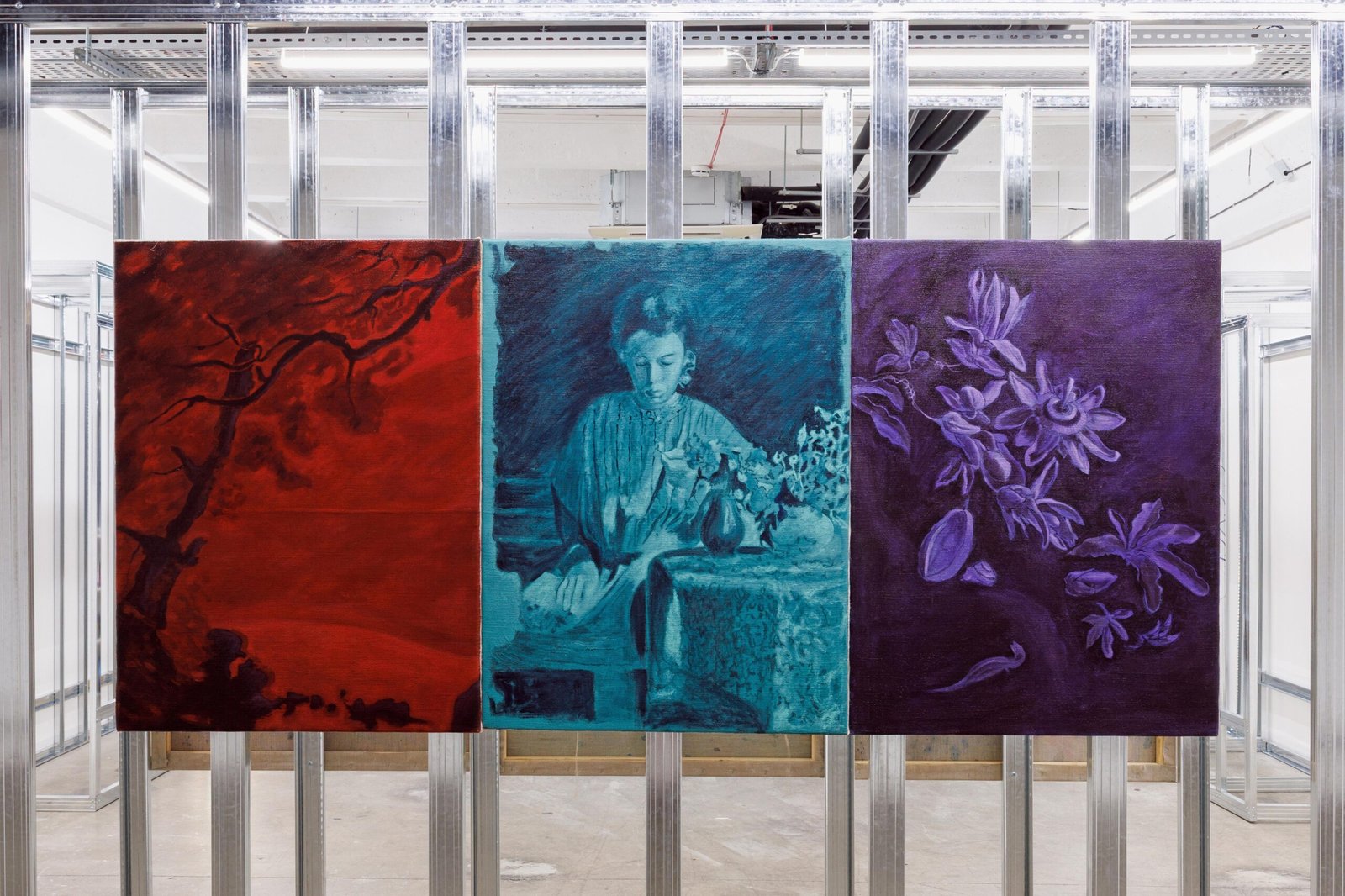
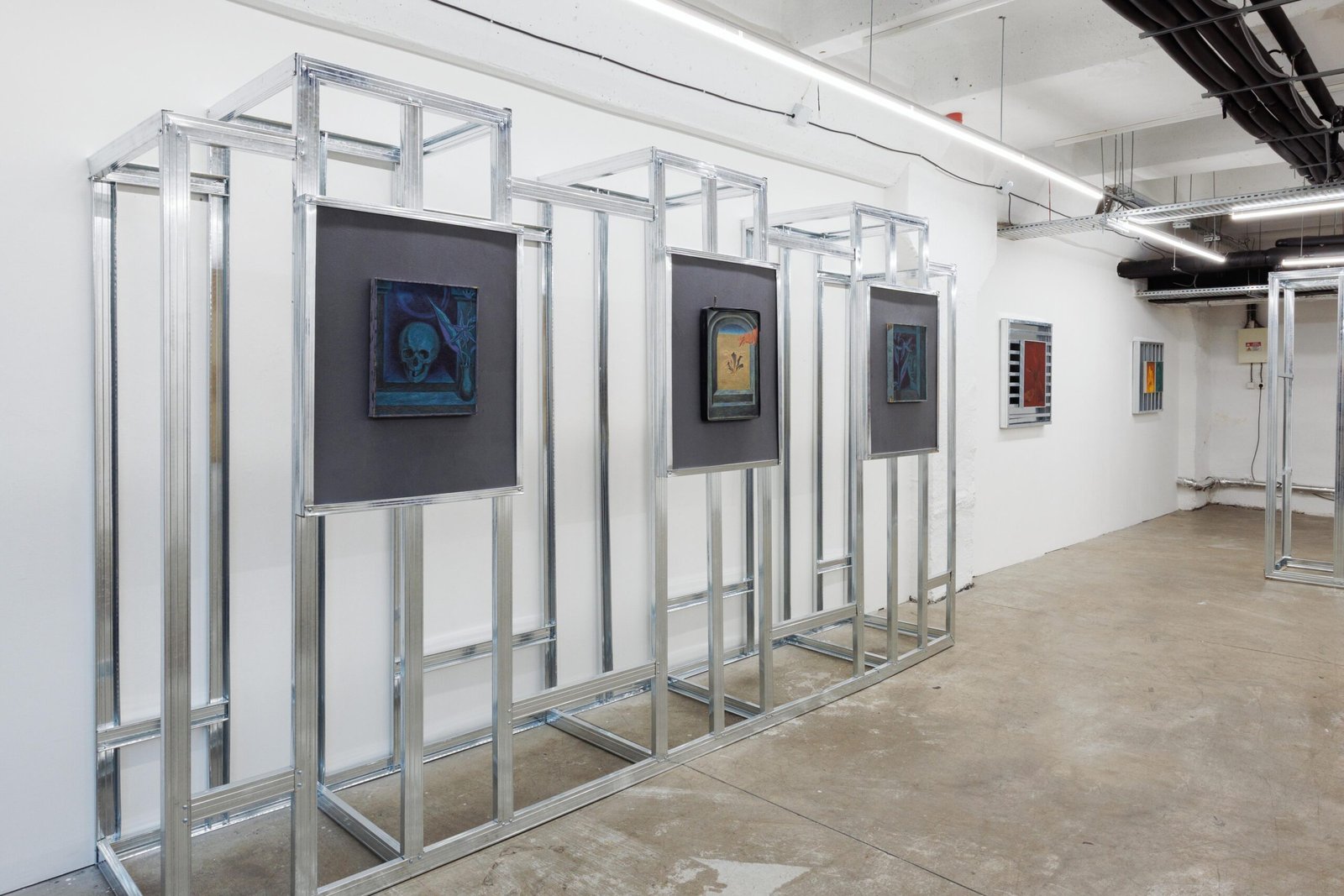
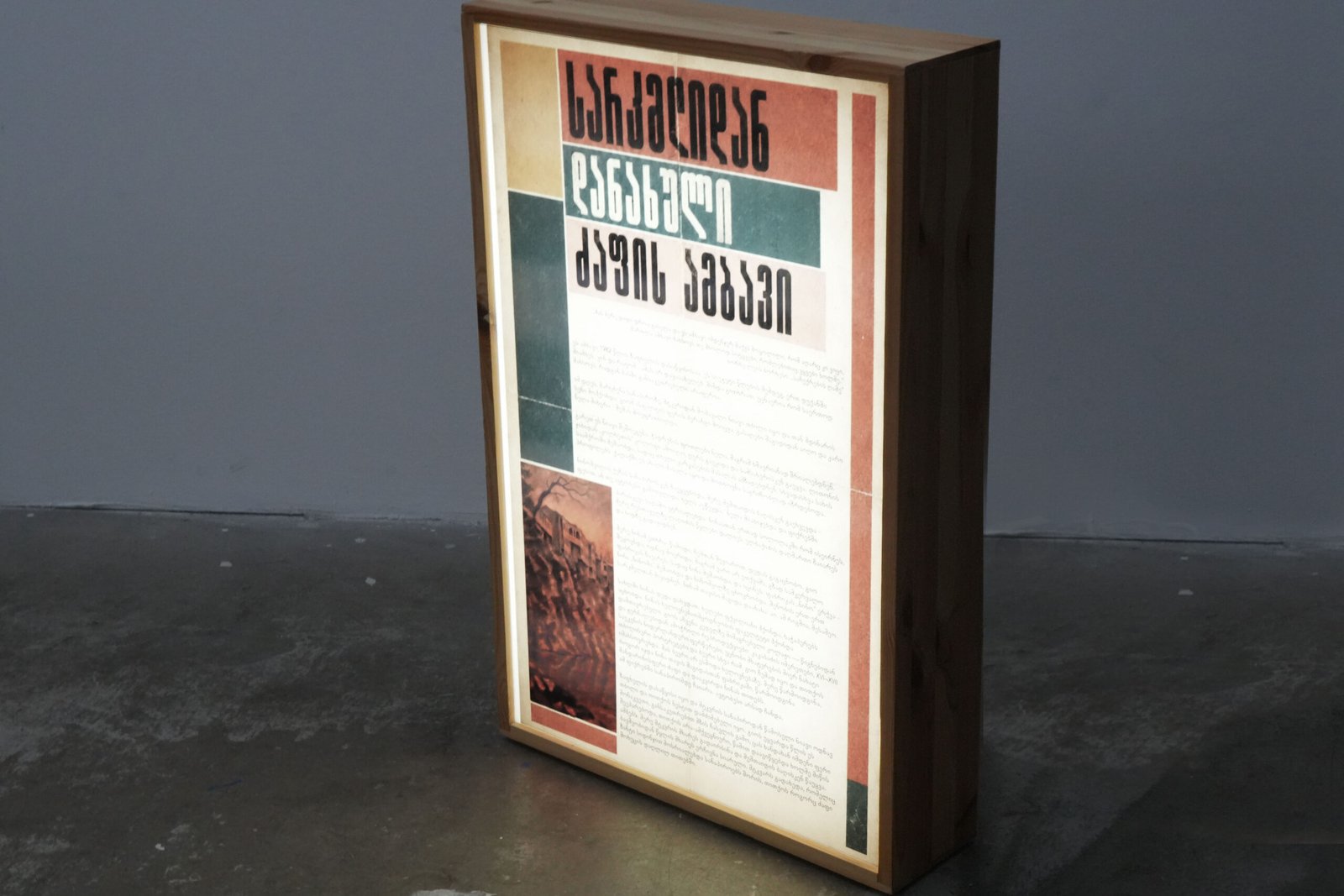
The Why Not Gallery is pleased to present Erekle Chinchilakashvili’s first solo exhibition at the gallery, The Story of a Thread Seen Through the Window.
The gallery’s new venue at Fabrika Tbilisi serves as the point of departure for the artist’s research. Drawing on the history of the complex – formerly the “Nino” sewing factory, which operated here in the 1970s and 80s. The artist embarks on an exploration that extends through the urban fabric of Ninoshvili Street and across Tbilisi more broadly. He superimposes familiar city views, recurring architectural forms, and everyday symbols with a sense of reminiscence: the distance often associated with emigration, which lends these memories a heightened emotional resonance. Ordinary details become highlighted, and fragments of visual memory, once taken for granted are transformed into poignant markers of belonging, longing, and identity.
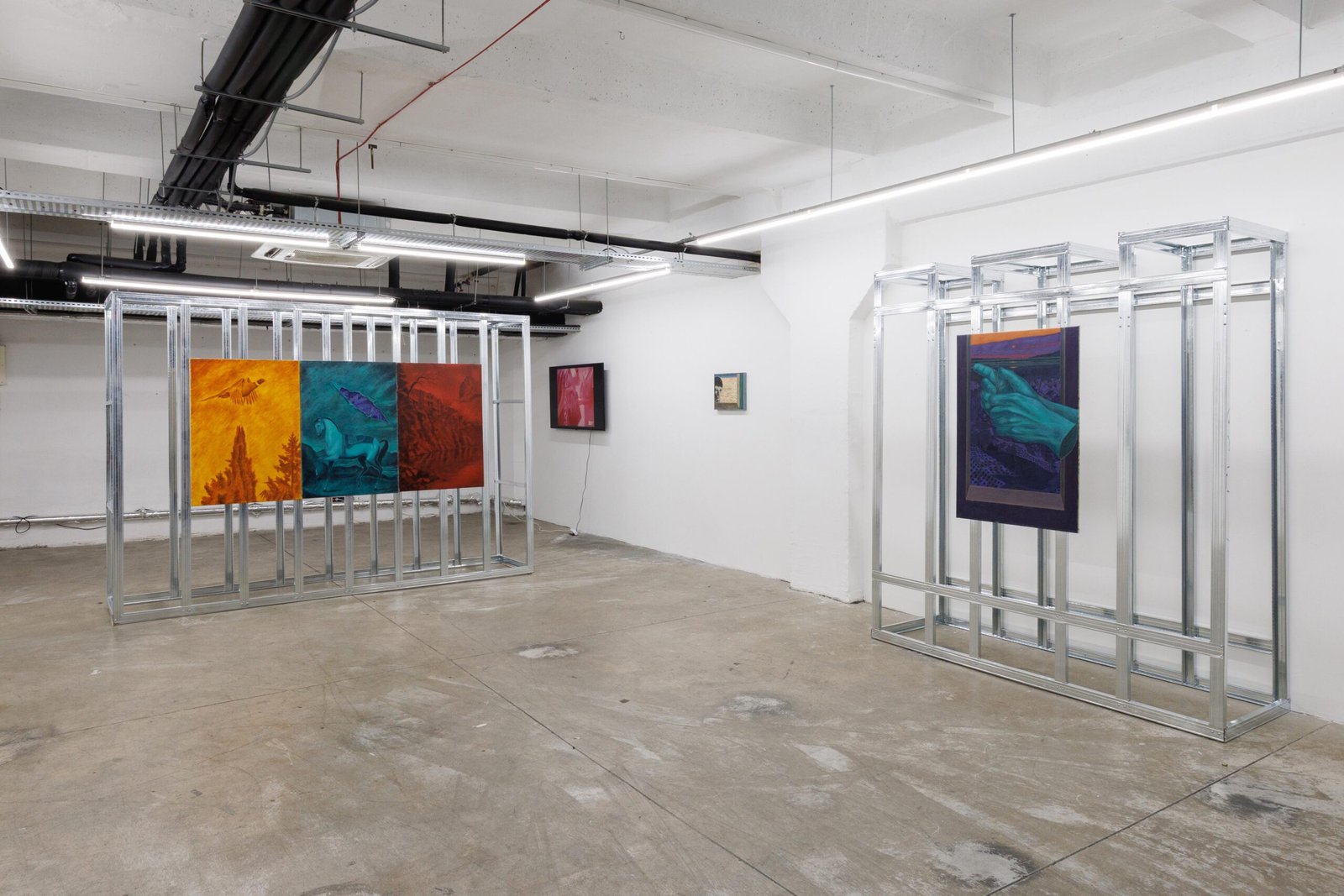
The narrative is loosely based on the artist’s literary sketch, centered on two fictional characters whose story unfolds throughout the space. Conceived as a multilayered environment, the exhibition brings together painting, spatial installation, text, and video essay in a complex interplay of media. Rather than occupying fixed hierarchical roles, primary and secondary elements continuously shift and overlap, informing and enriching one another.
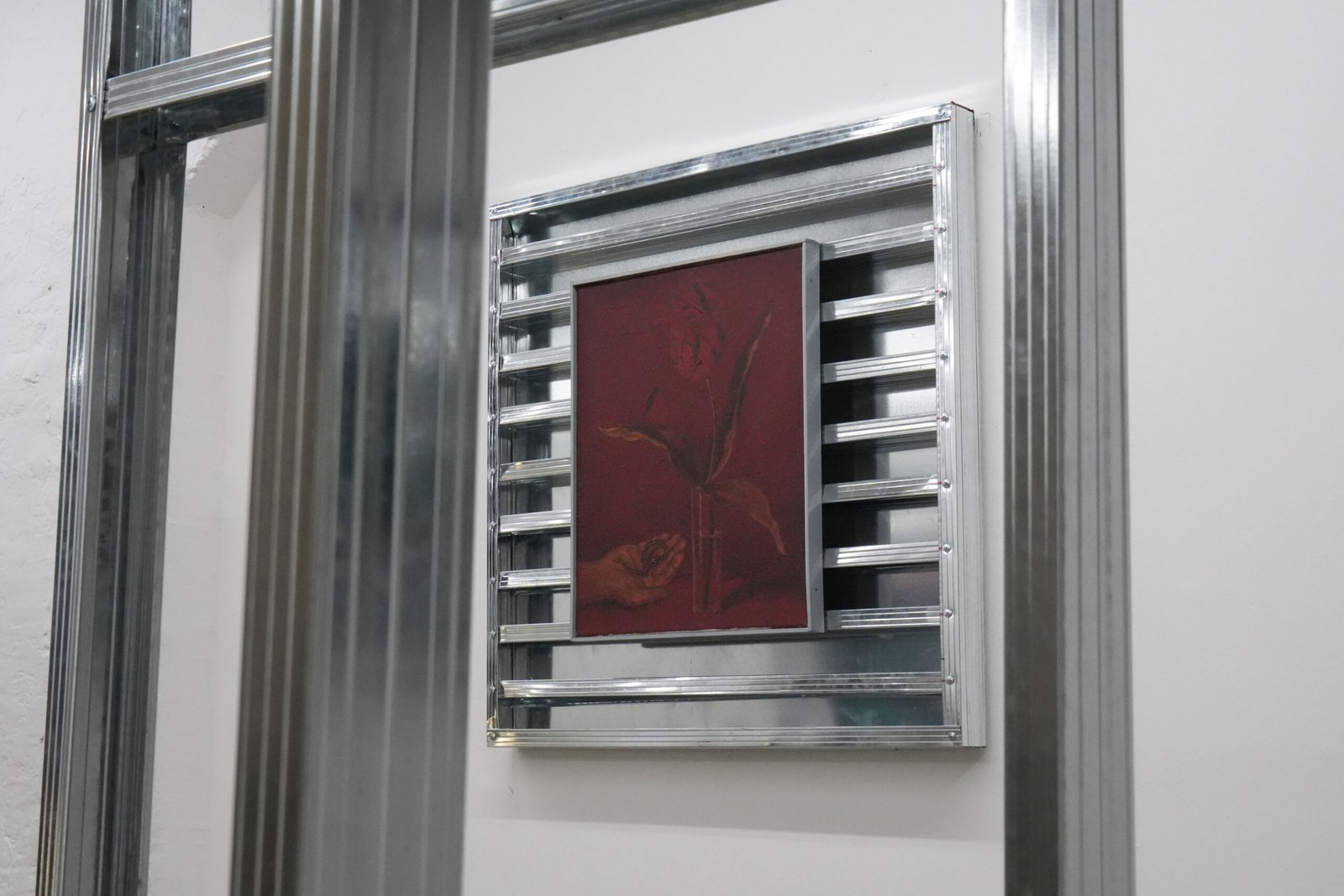
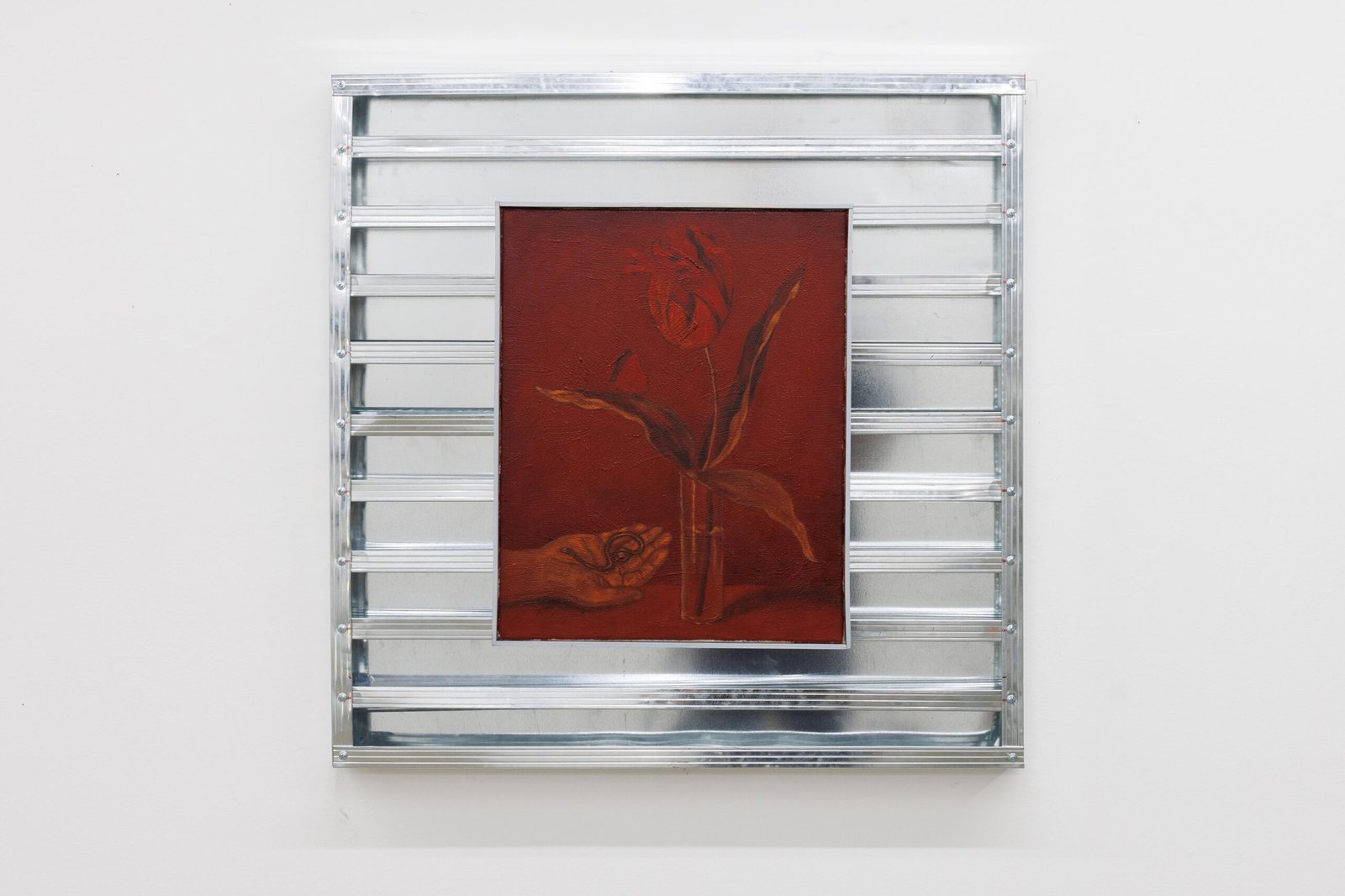
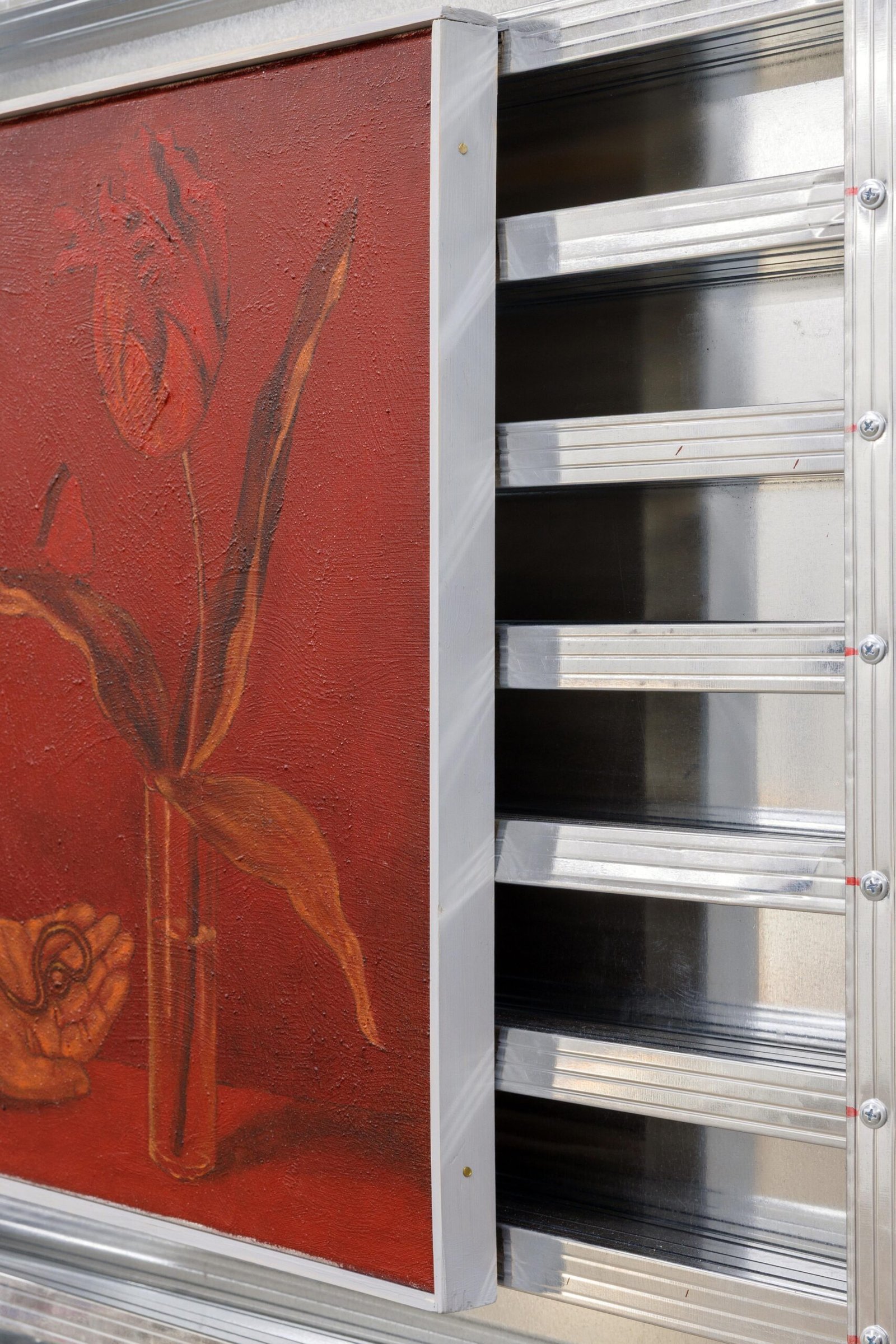
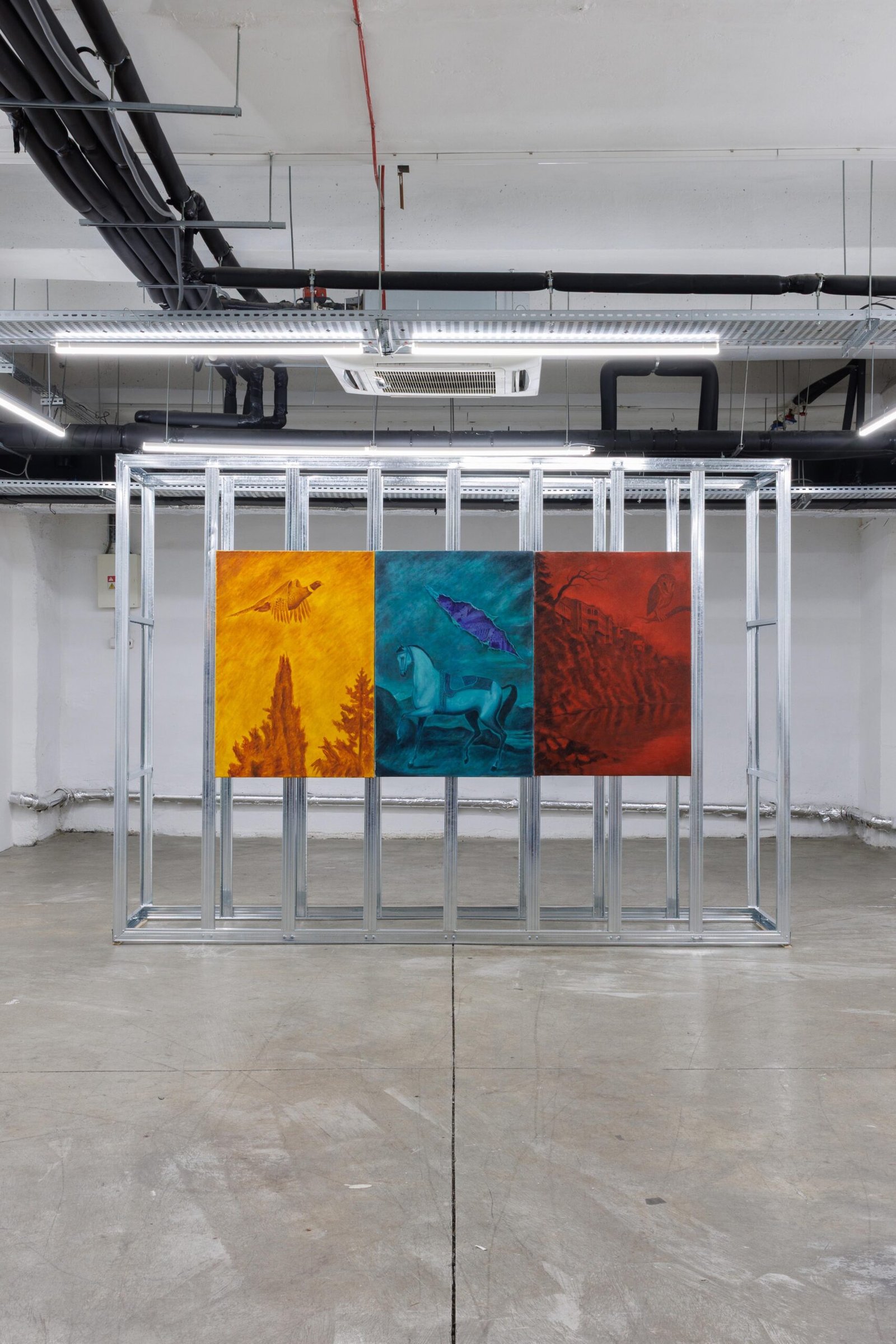
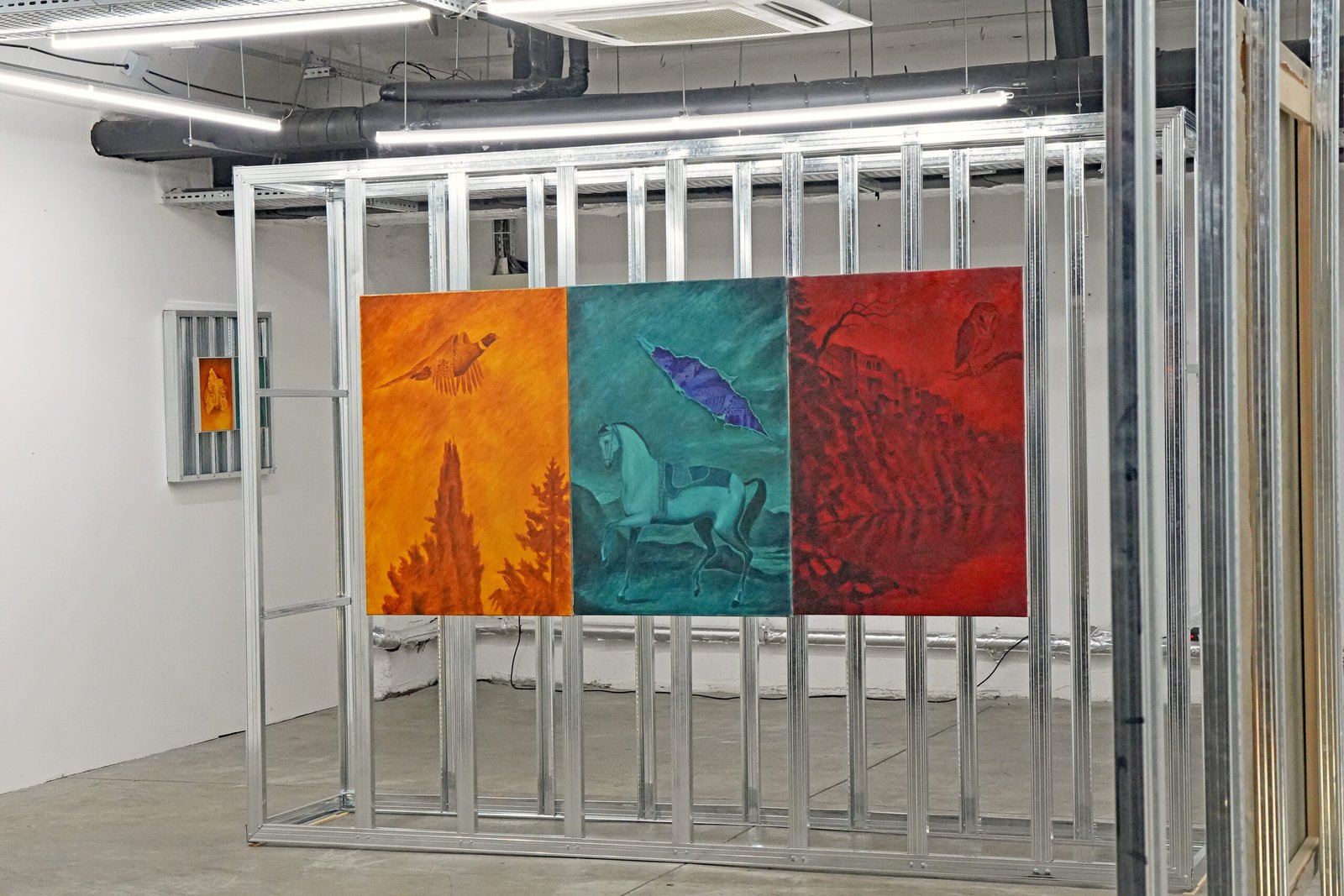
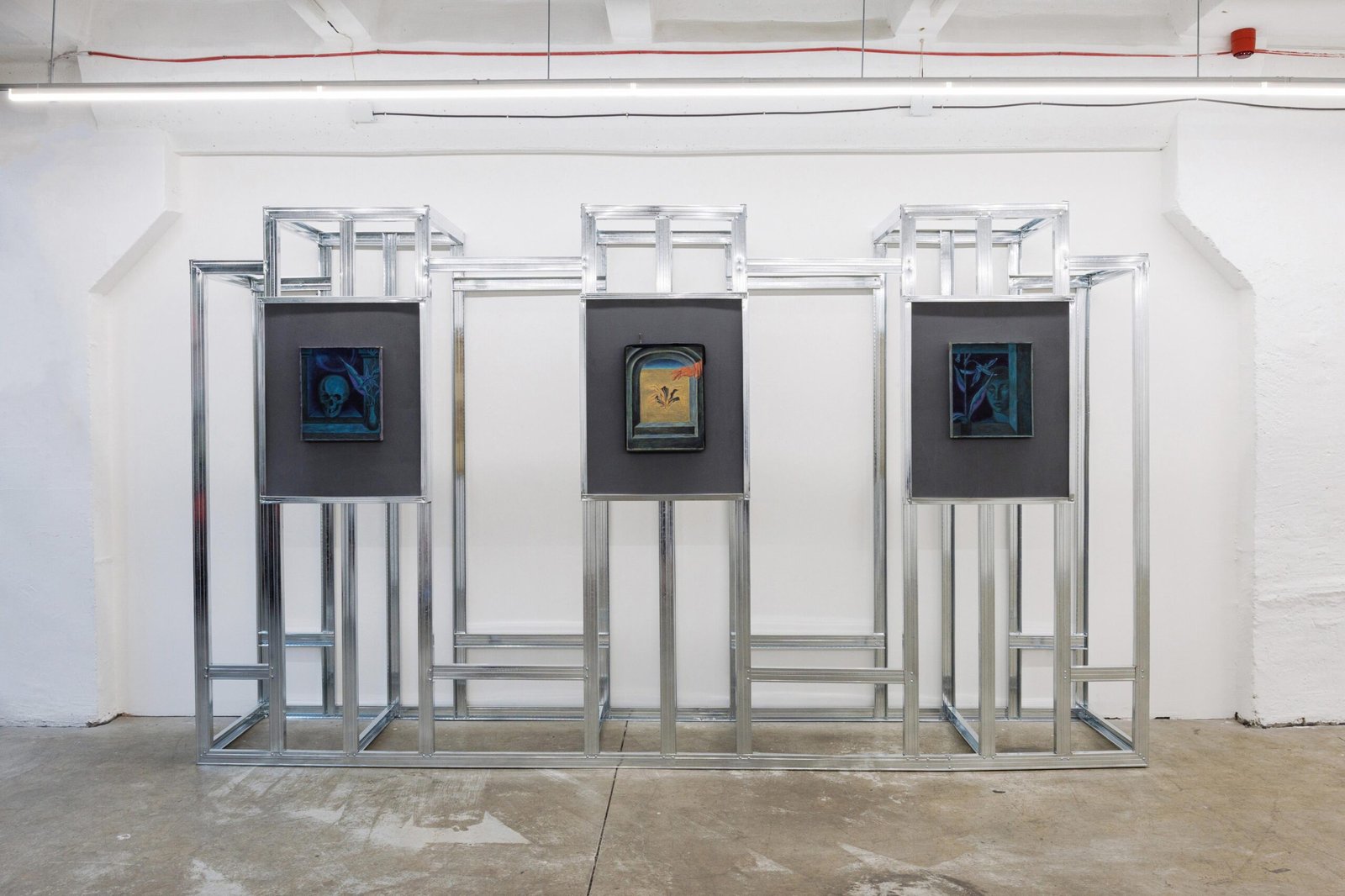
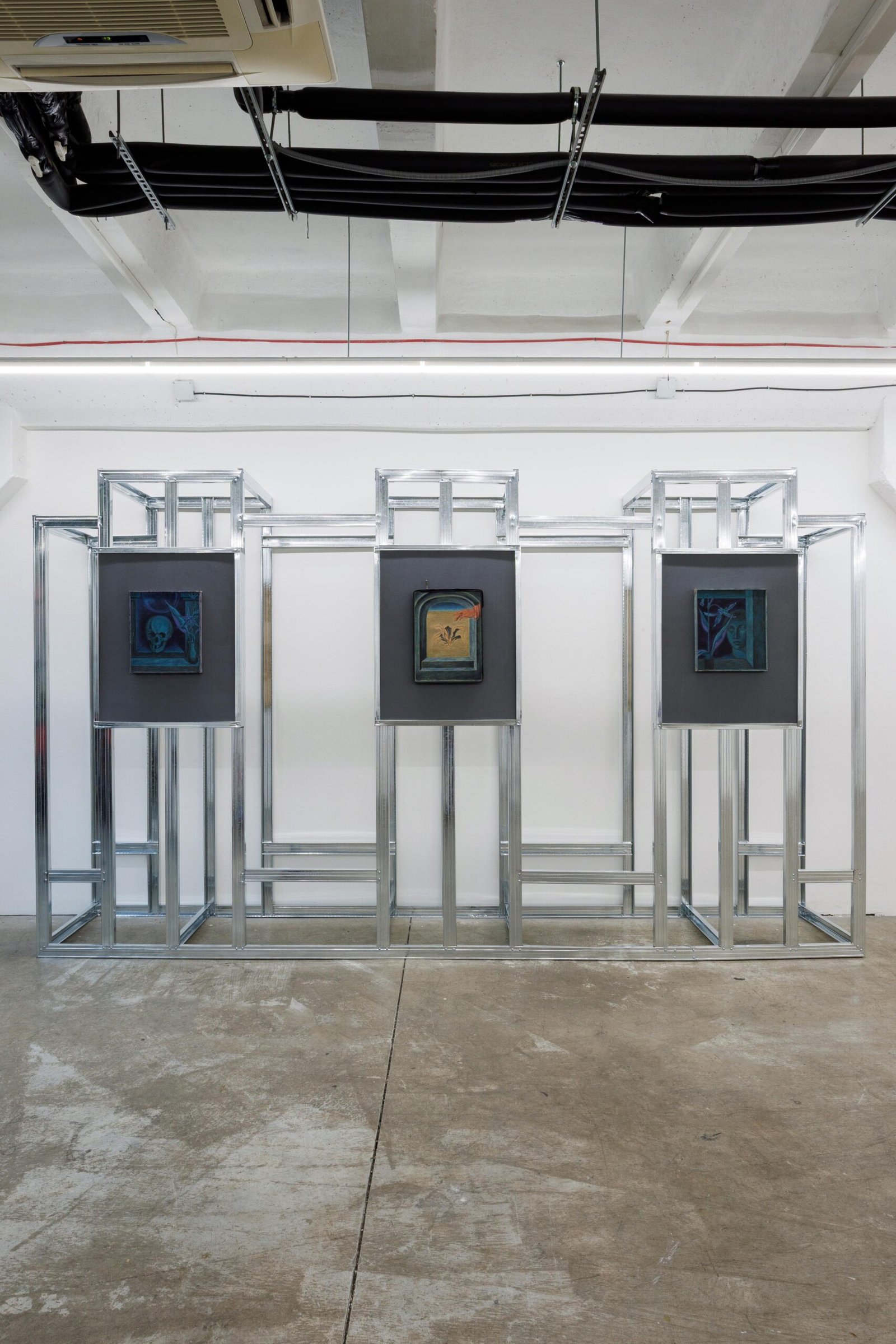
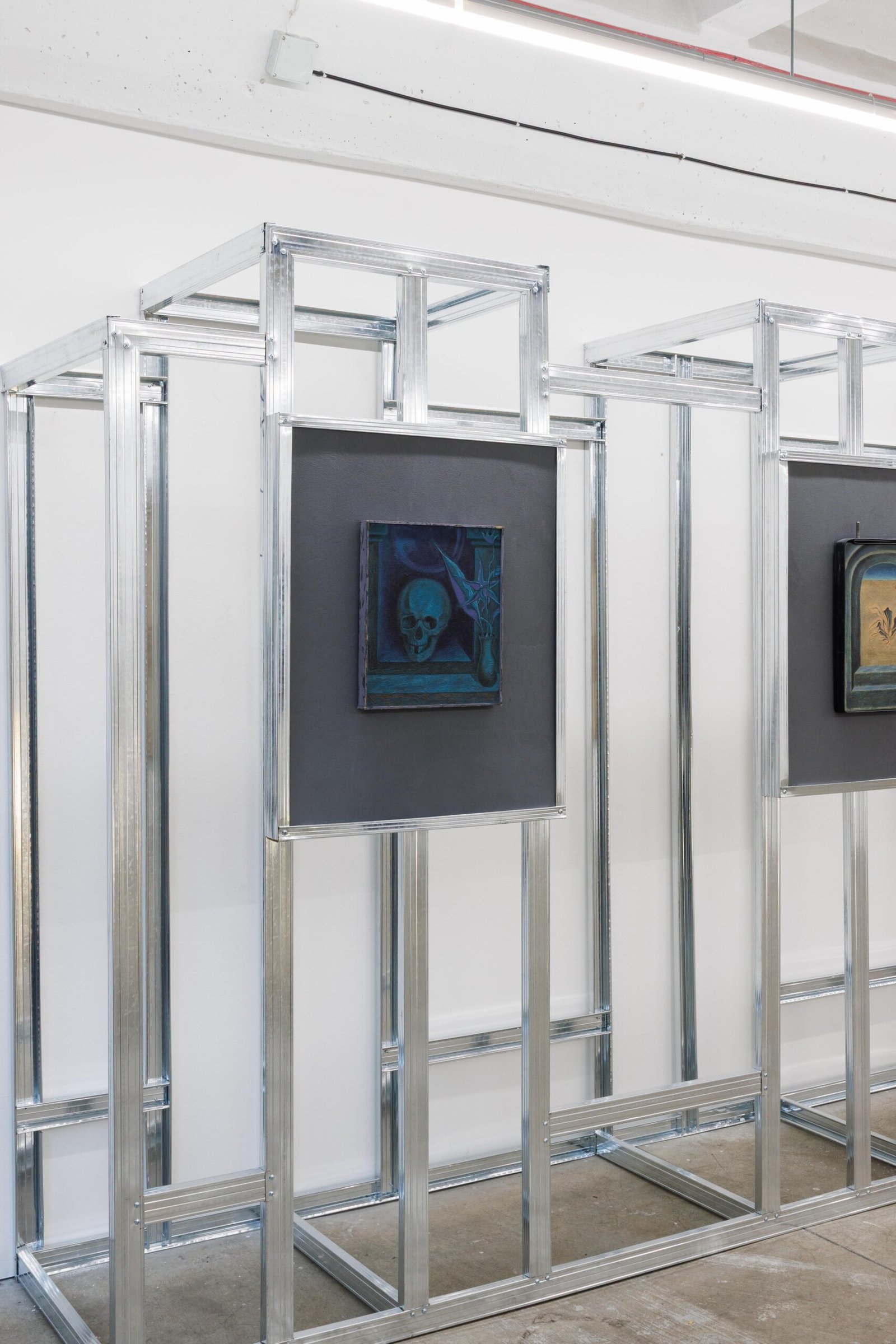
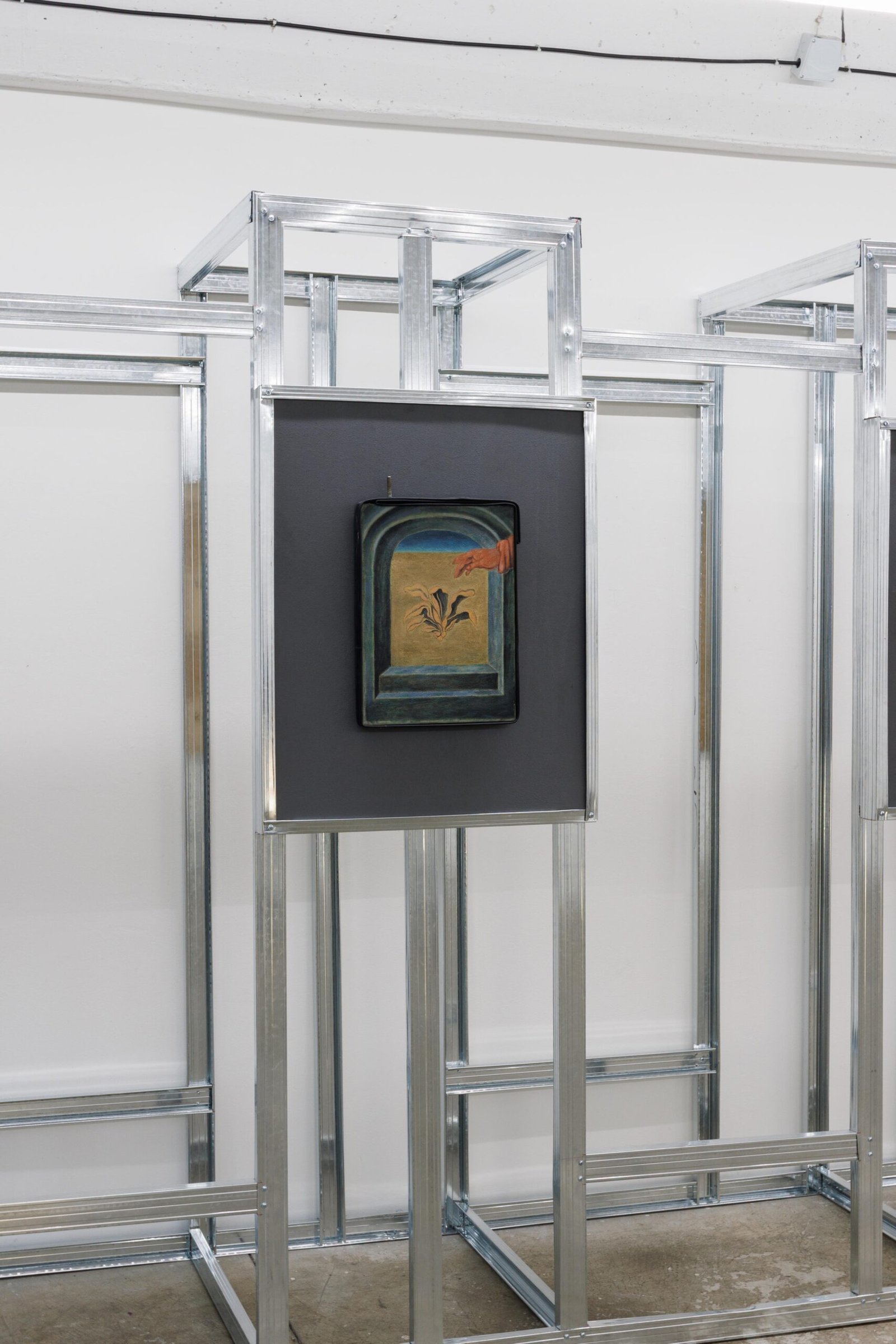
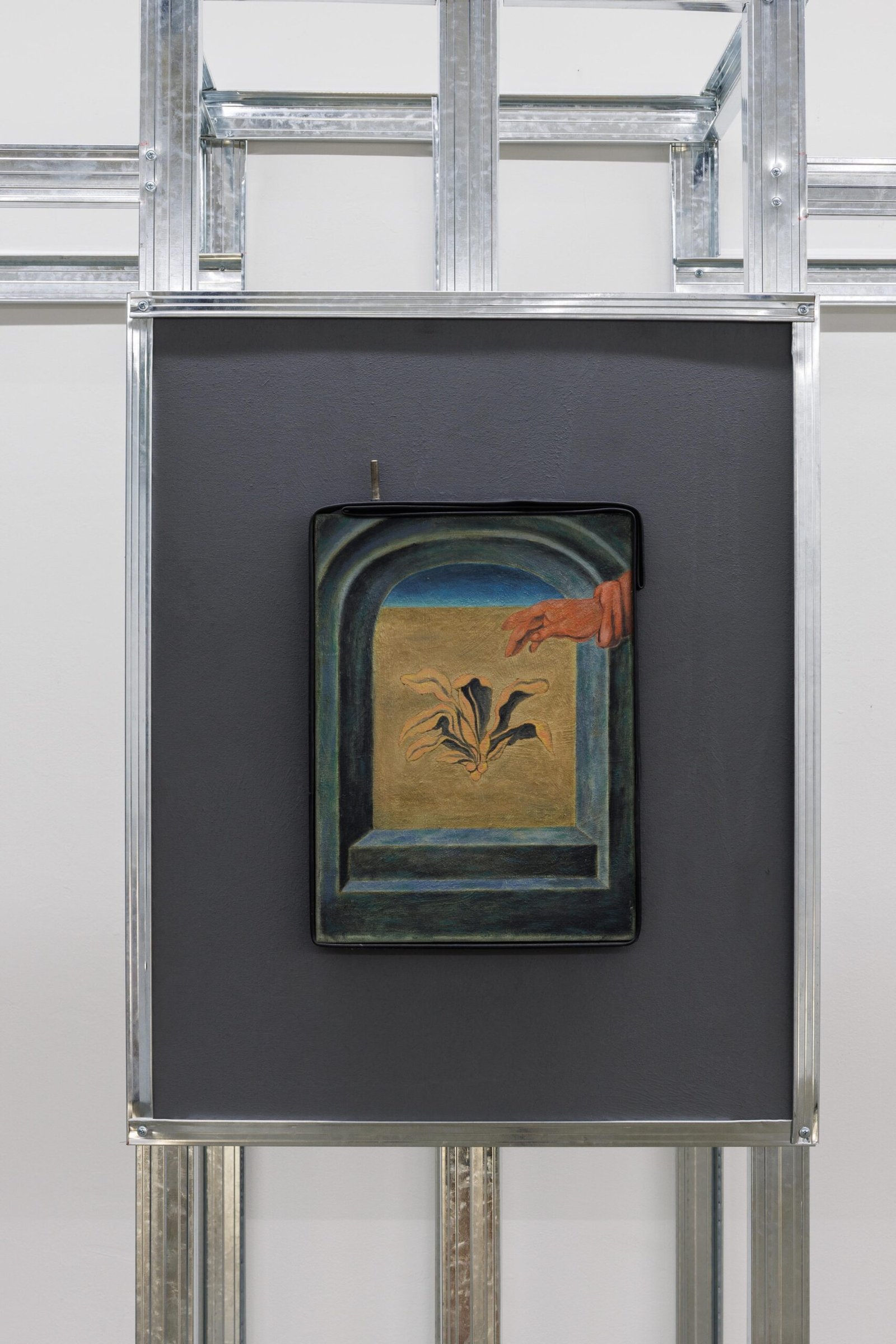
The metal-frame installation, which lends the paintings a sculptural dimension, acts as the first point of encounter with the space. It opens up a wide range of interpretations – from church altarpieces and architectural fragments to the improvised, DIY renovation aesthetic so characteristic of Tbilisi – while underscoring the artist’s growing engagement with space and his desire to push painting beyond the confines of the picture plane. Functioning as both display apparatus and conceptual device, the structure operates as a grid: a quasi-scientific framework through which memories, emotions, and visual references are organized, compartmentalized, and examined. Its skeletal geometry evokes unfinished architecture, urban construction, and archival systems, transforming the exhibition into a space where images are suspended between personal recollection and collective history.
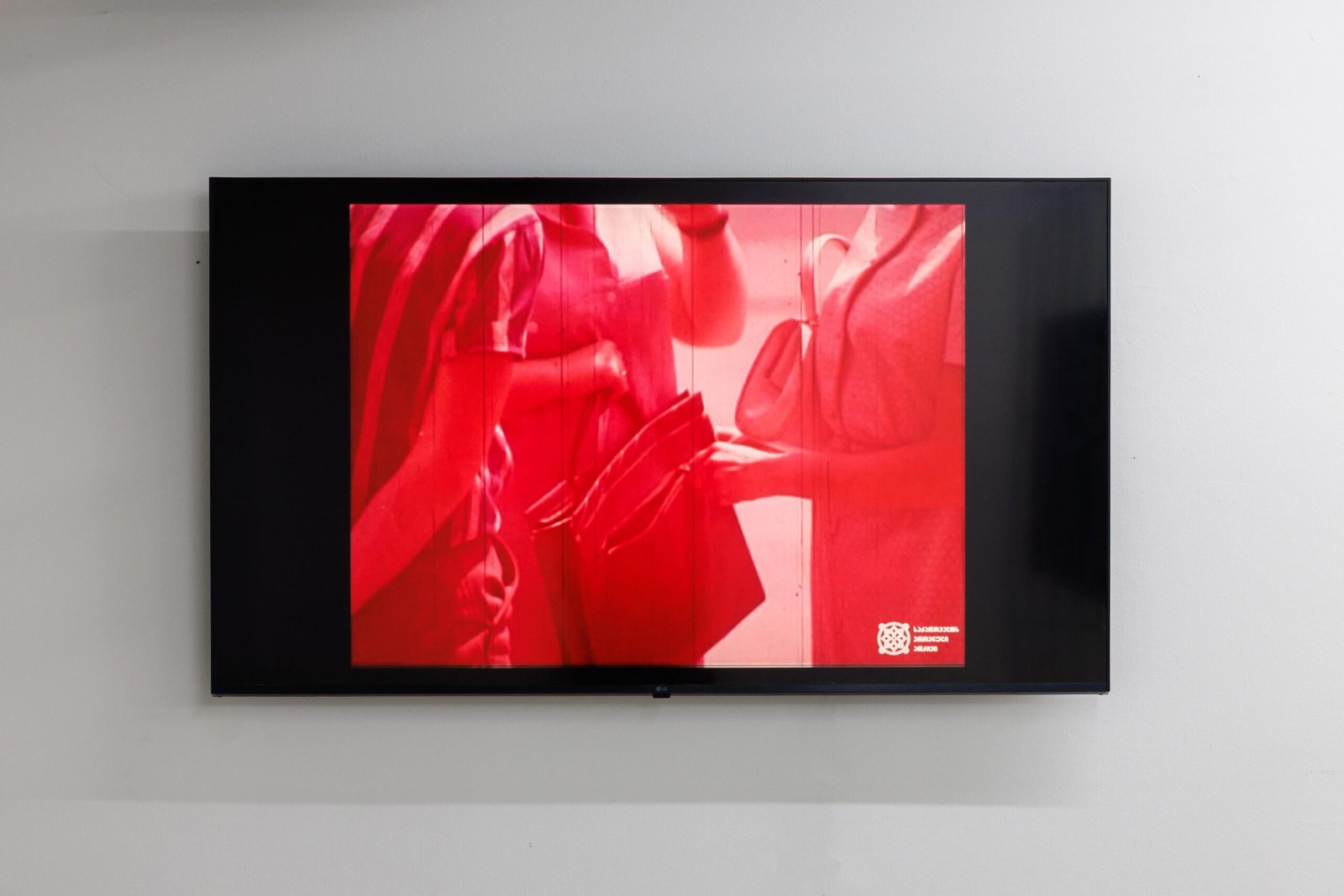
The video essay, constructed from footage of 1970s and 80s television and Otar Ioseliani’s short film “Sapovnela”, sourced from the National Archives of Georgia, acts as a backdrop – not immediately visible, yet heard the moment one enters the space. Its soundtrack further blurs temporal boundaries: Georgian music of the period is interwoven with compositions by contemporary musicians VAZHMARR and TeTe Noise, creating a layered acoustic landscape in which different historical moments converge. The archival imagery of a familiar, everyday Tbilisi gradually loses its documentary coherence, dissolving into a dreamlike and at times surreal visual narrative. Images of the city drift between archival record and subjective recollection, between memory and imagination.
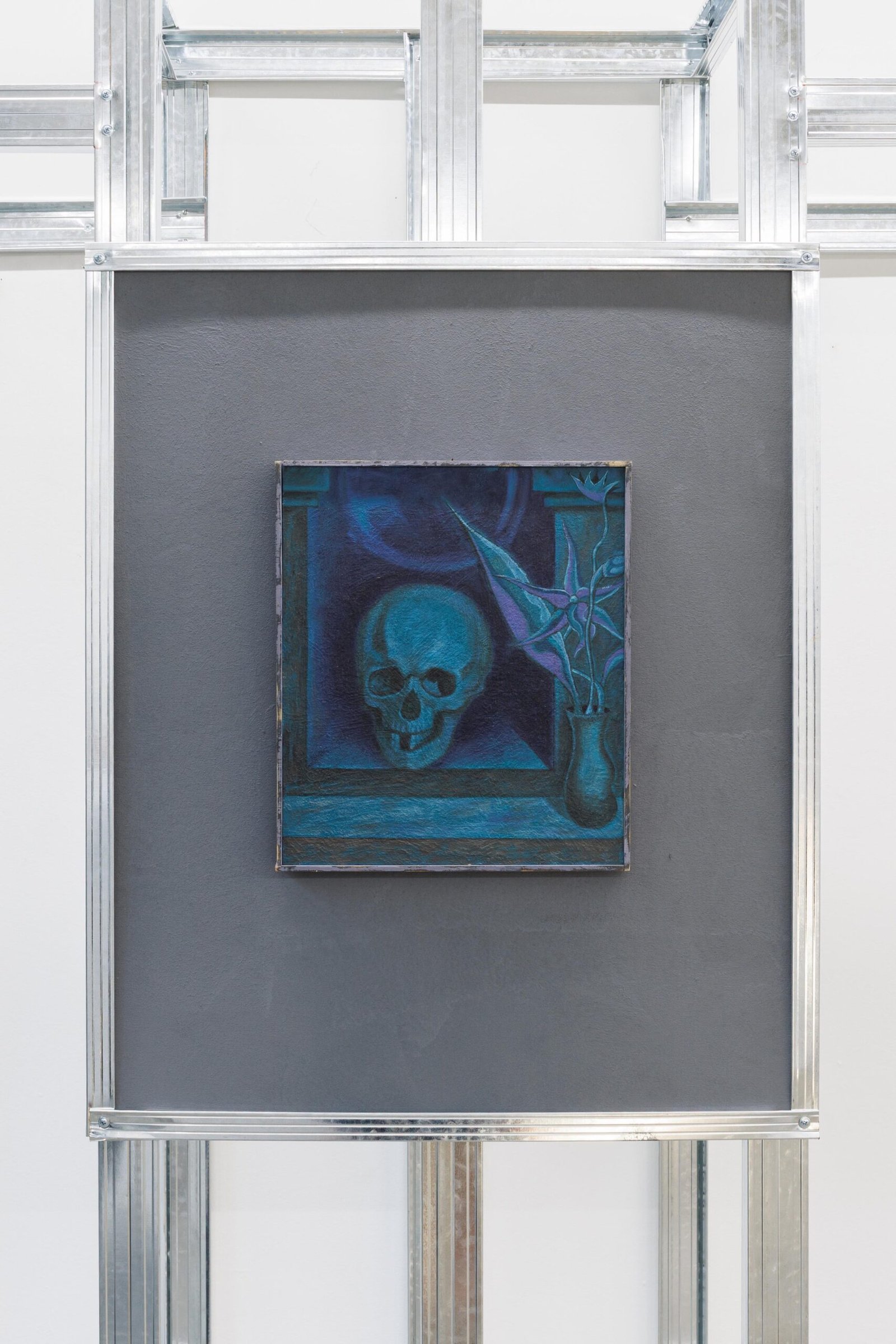
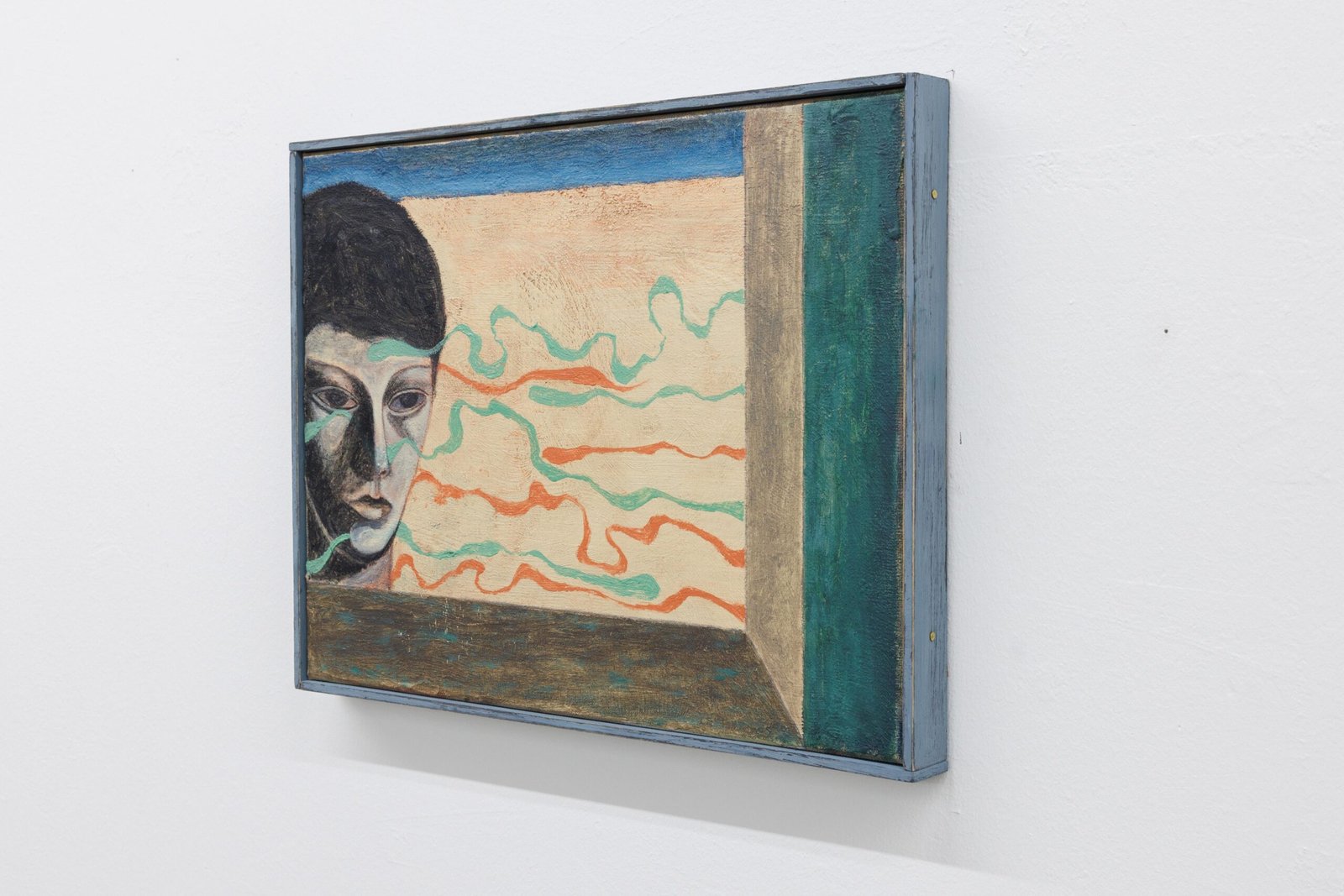
With this exhibition, Chinchilakashvili continues his ongoing research into how images from art history shape subjective perception across time and space. Referencing a breadth of visual sources – the medieval frescoes of David Gareji, the Tbilisi Portrait School, the figurative work of David Kakabadze – he examines how historical images endure and transform. The Phasianus colchicus recurs as a symbol of the city’s mythological and urban memory. He poses open-ended questions: how do we encounter historical images today? What relationships exist between the symbols of the past and the visual culture of the present? Rather than reproducing historical motifs directly, he filters them through his own visual and emotional sensibility, transforming them into new forms informed by personal narrative, memory, and lived experience. The resulting paintings become sites where collective cultural memory and individual perception converge, allowing historical images to acquire renewed meaning.
Much like a thread passing through fabric, the exhibition moves fluidly between reality and fiction, personal recollection and collective history – across different immoralities, fictional characters, architectural spaces, urban memories, and artistic media. Disparate references and experiences are stitched into coherent yet open-ended narratives, inviting viewers to trace their own pathways through the work.
Erekle Chinchilakashvili (b. 1992, Tbilisi) is a multidisciplinary artist-researcher based in Budapest. He is currently completing his Doctorate in Artistic Research at the Hungarian University of Fine Arts, a Master’s degree in Scenography, and a Bachelor’s degree in Art History & Theory at the Tbilisi State Academy of Arts.
Working across painting, installation, and video, Chinchilakashvili explores the fluid boundary between reality and imagination and the fragility, flux, and transformation of human perception. His practice interrogates the construction of individual and collective memory, its role in shaping cultural identity, and its entanglement with social and cultural anthropology. He is interested in memory as something alive – restructuring itself as we change, and in how collective memory continues to live inside contemporary painting, both the wider memory we share as a species and the local memory fields of specific communities.
By appropriating and transforming inherited images and personal visual material, he constructs emotional, memory-saturated spaces that confront the viewer and hold the potential for transformative experience. Alongside painting, he works in installation, assembling paintings, sculptures, dry plants, steel, and found objects into spatial environments that extend the logic of painting into three dimensions – treating individual paintings not as self-contained images but as nodes within a larger memory-space.
Chinchilakashvili is currently a Lecturer at Budapest Metropolitan University and has previously taught at the Hungarian University of Fine Arts and the Tbilisi State Academy of Arts.
He has exhibited widely across Europe, including the solo exhibitions The Lingering Presence, tranzit.hu, Budapest (2025); Flashback Game, Dobozi 21, Budapest (2023); In a Puddle of Rust, a Faded Memory Drips, Experimental Space Szövetség, Budapest (2023); and Shadows, Cypresses, and a Lost Sense of Immanence, 1515 Lincoln Gallery, Oklahoma City (2022); the duo exhibition Slow Sun, The Why Not Gallery, Tbilisi (2024); and group exhibitions including Nothing Goes According to the Plan, Hannah Kreile Projects, Paris (2024) and Vessels, Cabin Gallery, Berlin (2024).
His work is held in the collection of the Krupa Art Foundation, Wrocław; and private collections across Europe, Middle East, Asia and the United States.