


“The path is not a line connecting points,
but a line along which life is lived.”[1]
I. Paths
Everything begins with walking. Steps leave traces on the ground: they were among
the earliest aesthetic gestures. Architect and theorist of walking Francesco Careri[2]
has shown how, from the first paths that inscribed a certain order onto territories of
chaos to walking understood as an artistic practice, a discontinuous line unfolds
across millennia.
The relationship between journey and artistic practice is complex. On the one hand,
it may be understood as an end in itself: a lived line. On the other, it may form an
experiential archive that later finds other ways of being told. But how are one’s own
steps to be translated? The journey becomes a way of being in the world, connecting
us with memories, stories, and fictions.
In this way, Marco Bizzarri has traversed northern Chile, wandering through the
Humboldt Archipelago and the region of Los Choros. He has retraced his steps
many times, encountering new places, each marked by industrial history and the role
of mining in Chile. These extractive practices have shaped the landscape of the
region, modelling not only its physical appearance but also its more subtle
constitution: that which cannot be seen…
During these journeys, the artist has recorded his findings with a camera, along with
a series of geographical and climatic conditions. Returning to these places, a form of
attention emerges that sharpens over time, gradually settling into a photographic
archive built over the years. Perhaps images, like landscapes, undergo their own
processes of sedimentation.
II. Atmospheres
Something lingers in the air. A fine dust, produced by mining, remains suspended.
Extractive activity has shaped the landscape’s physical form and its conditions of
visibility. The dust persists. It speaks of what remains, and of what has already
slipped away. Omnipresent yet not always visible, it reveals itself when light touches
it.
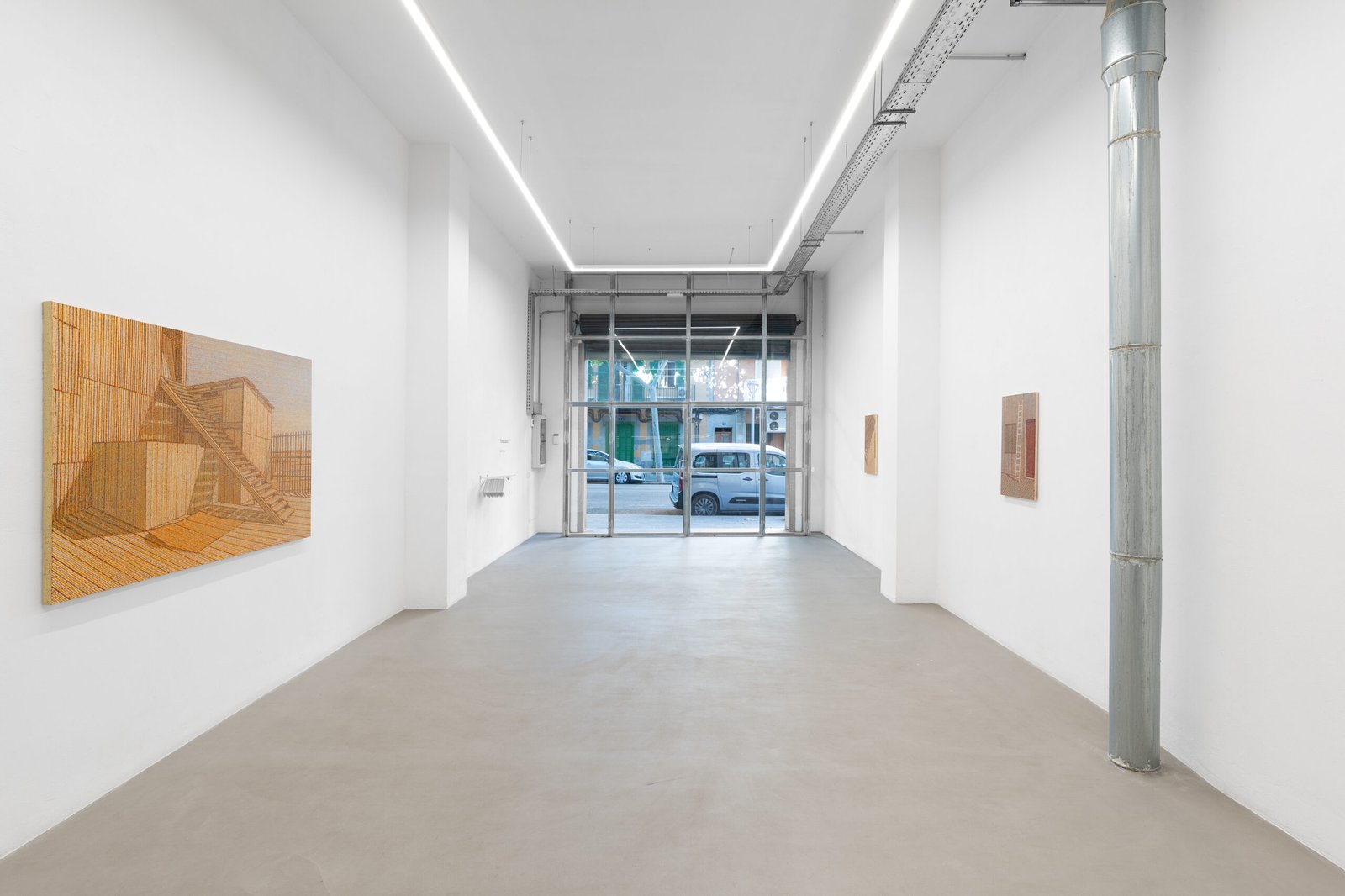
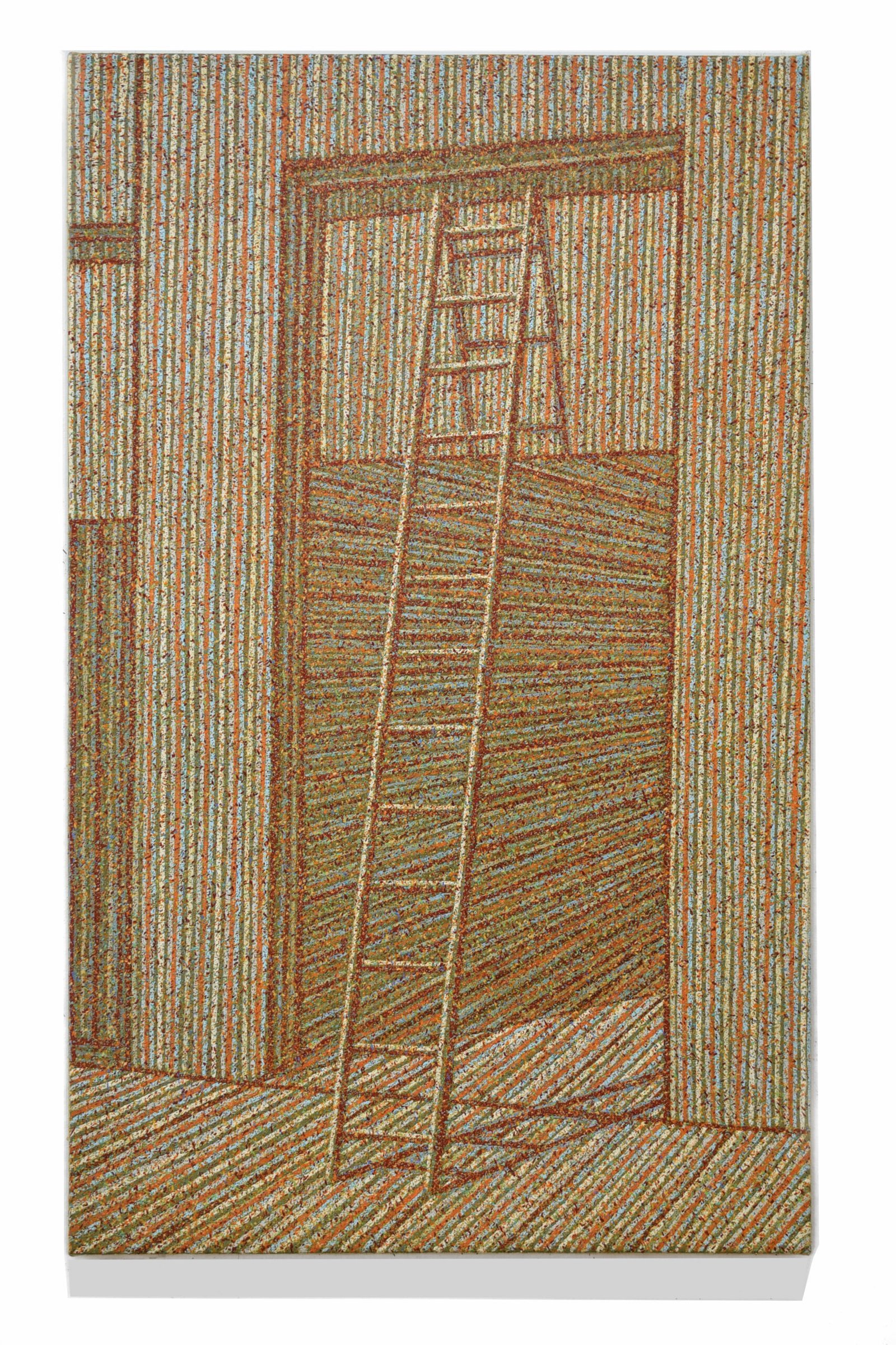
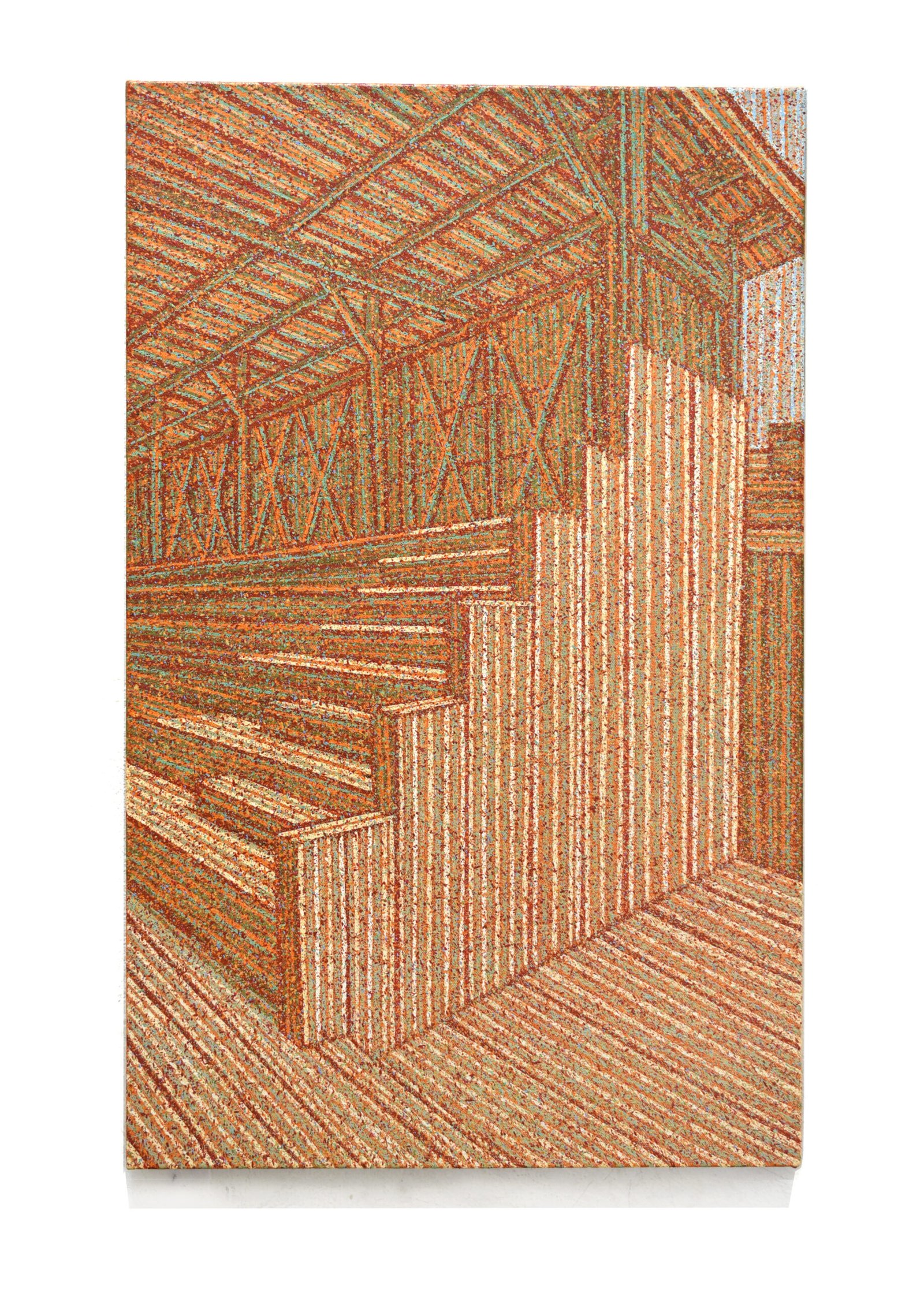
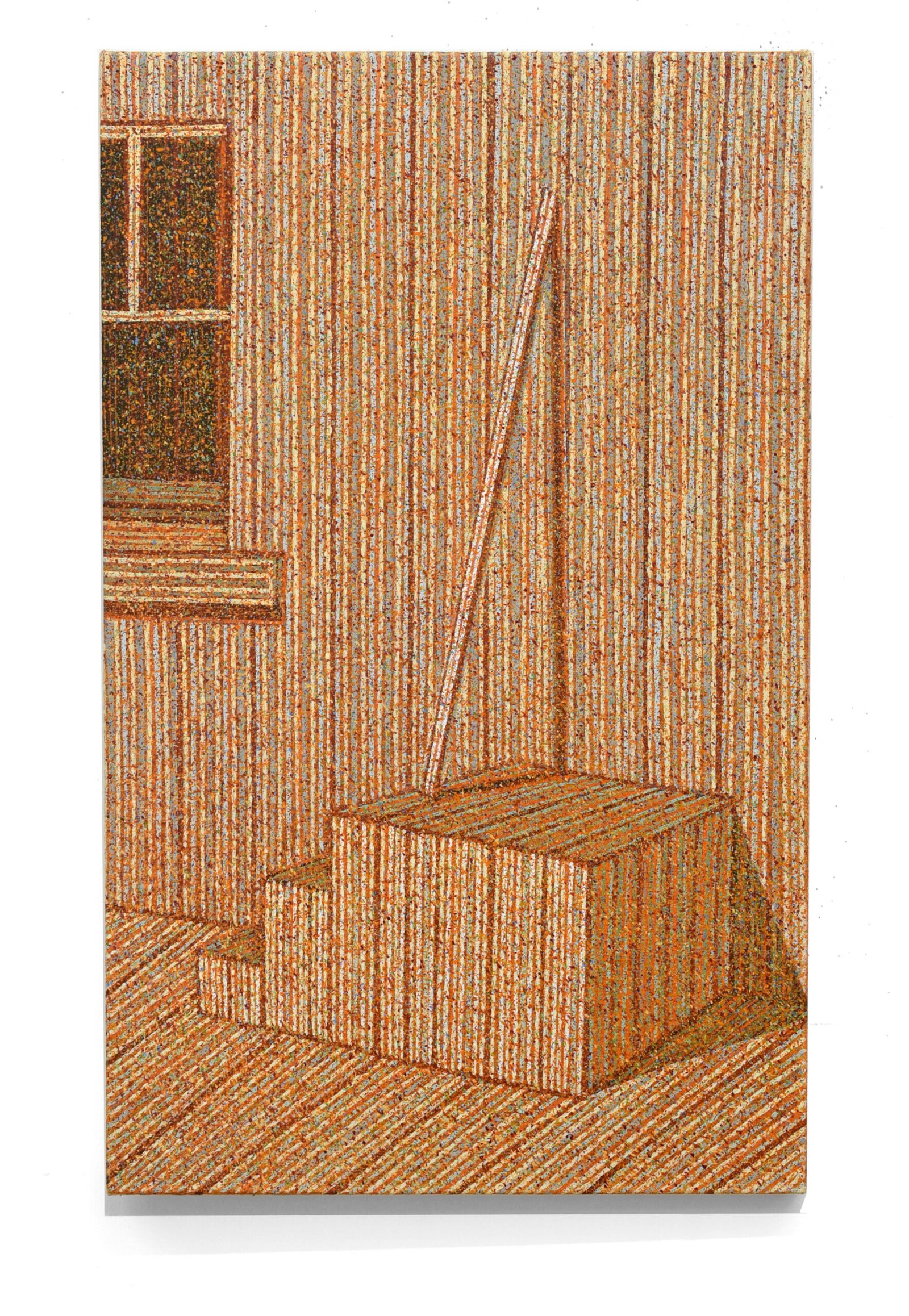
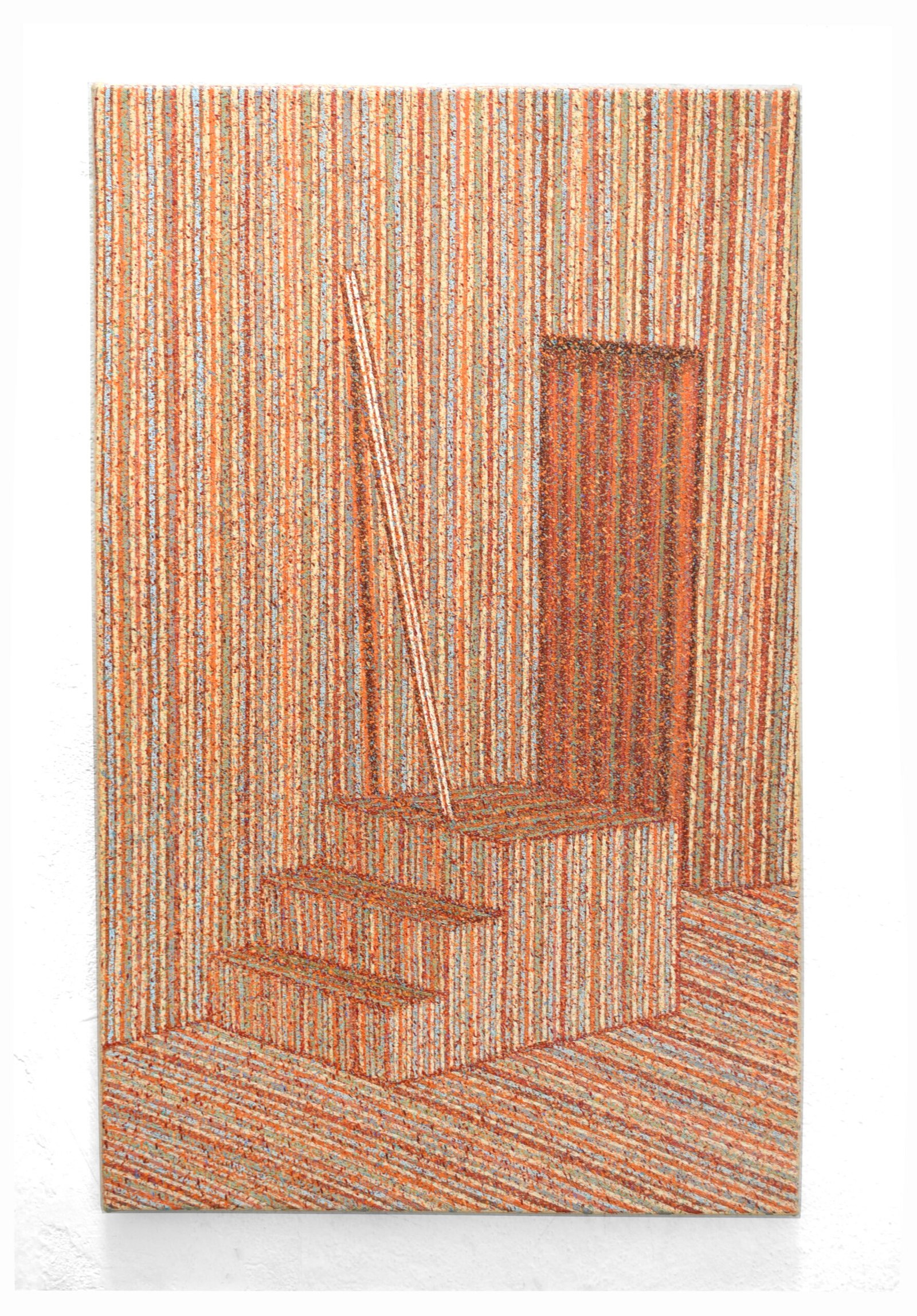
In Bizzarri’s photographs and paintings, light is a force that strikes directly and
persistently. It moves across surfaces, traverses space, and renders visible what
would otherwise remain hidden. It reveals a dusty atmosphere, abandoned spaces,
and the ruins of extractive industry. Under these specific atmospheric conditions,
painting unfolds as a problem of representation.
The photographic images gathered during these journeys act as points of departure
that trigger the pictorial process. Here, his practice resonates with what Allan
Sekula[3] described as a form of knowledge linked to the archive, in which the
accumulation of images does not lead to a totality but to an open constellation of
relations that shifts over time, like a map in progress. Through layers, veils, and
controlled drips, the surface of the canvas acquires a density and a temporality that
resonate with those of the territory.
III. Lines
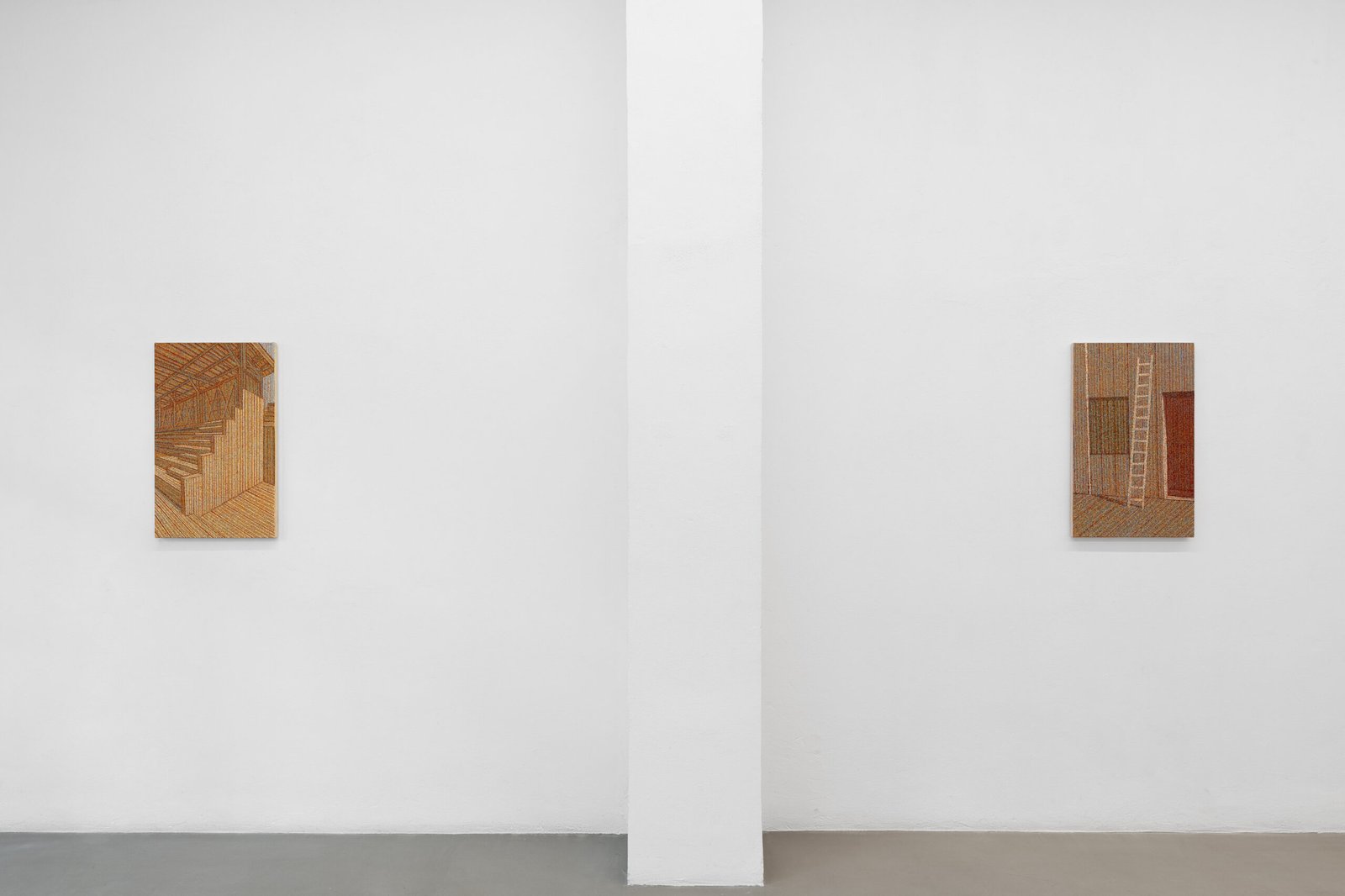
The line runs through the process insistently. It appears in repeated paths and in the
traces left by movement. Over time, Marco has developed a specific technique tied
to the line and its capacity to generate pictorial space. A controlled dripping follows,
shaping the atmosphere of the image. It is a slow process, built up in layers, as if the
canvas itself were accumulating memory. Each line becomes an invitation to enter
the painting and remain there for a while, attempting to reconstruct a place.
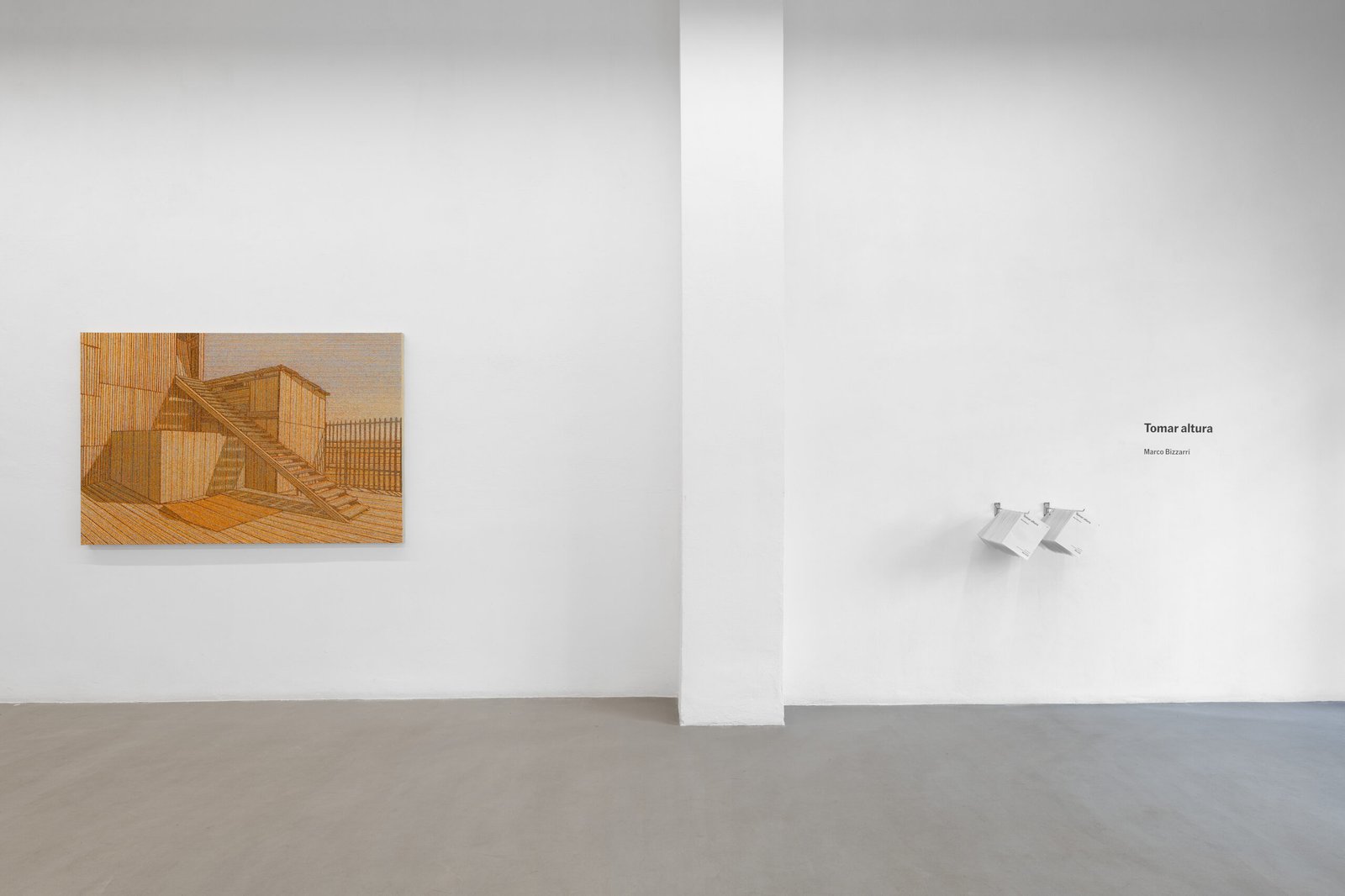
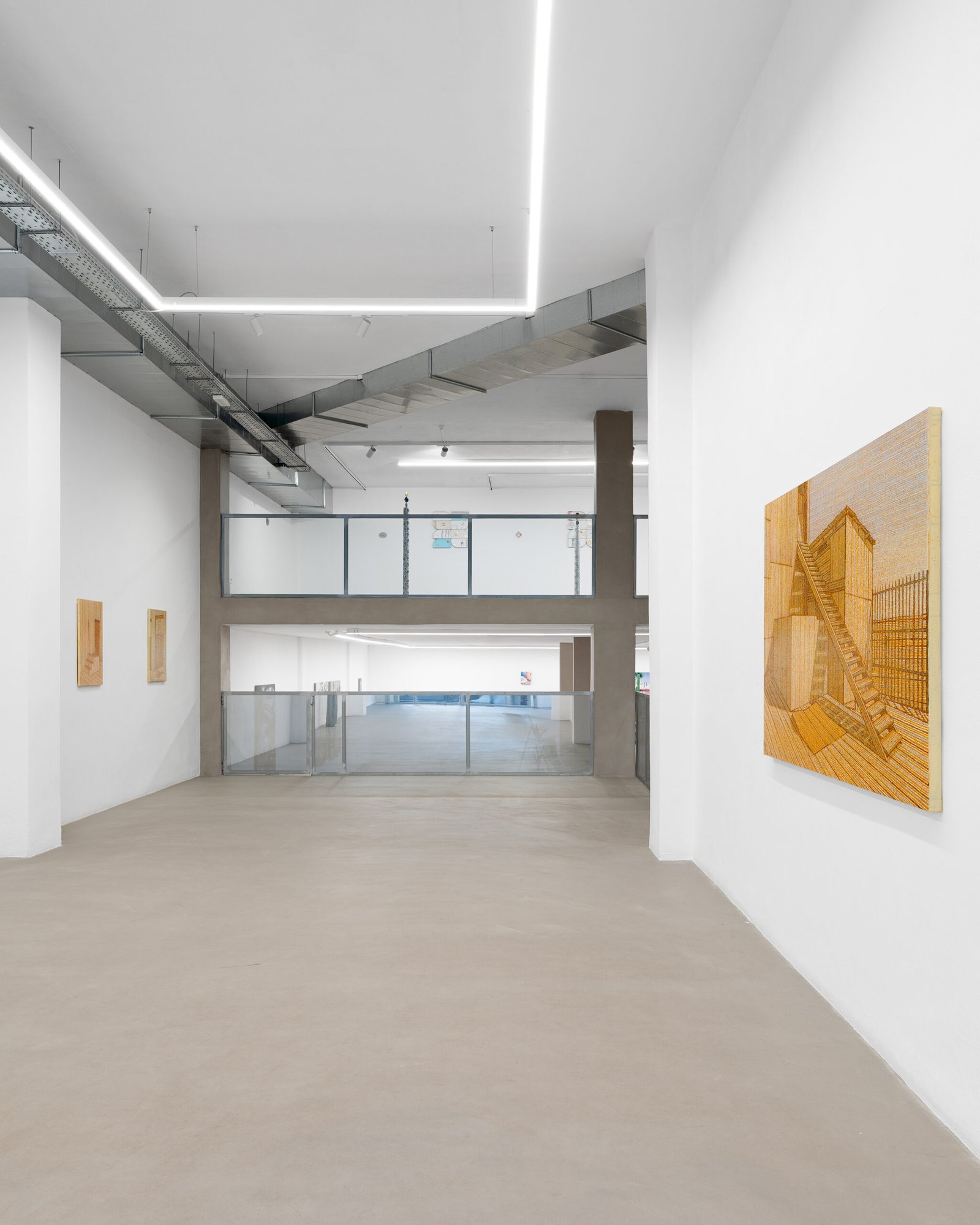
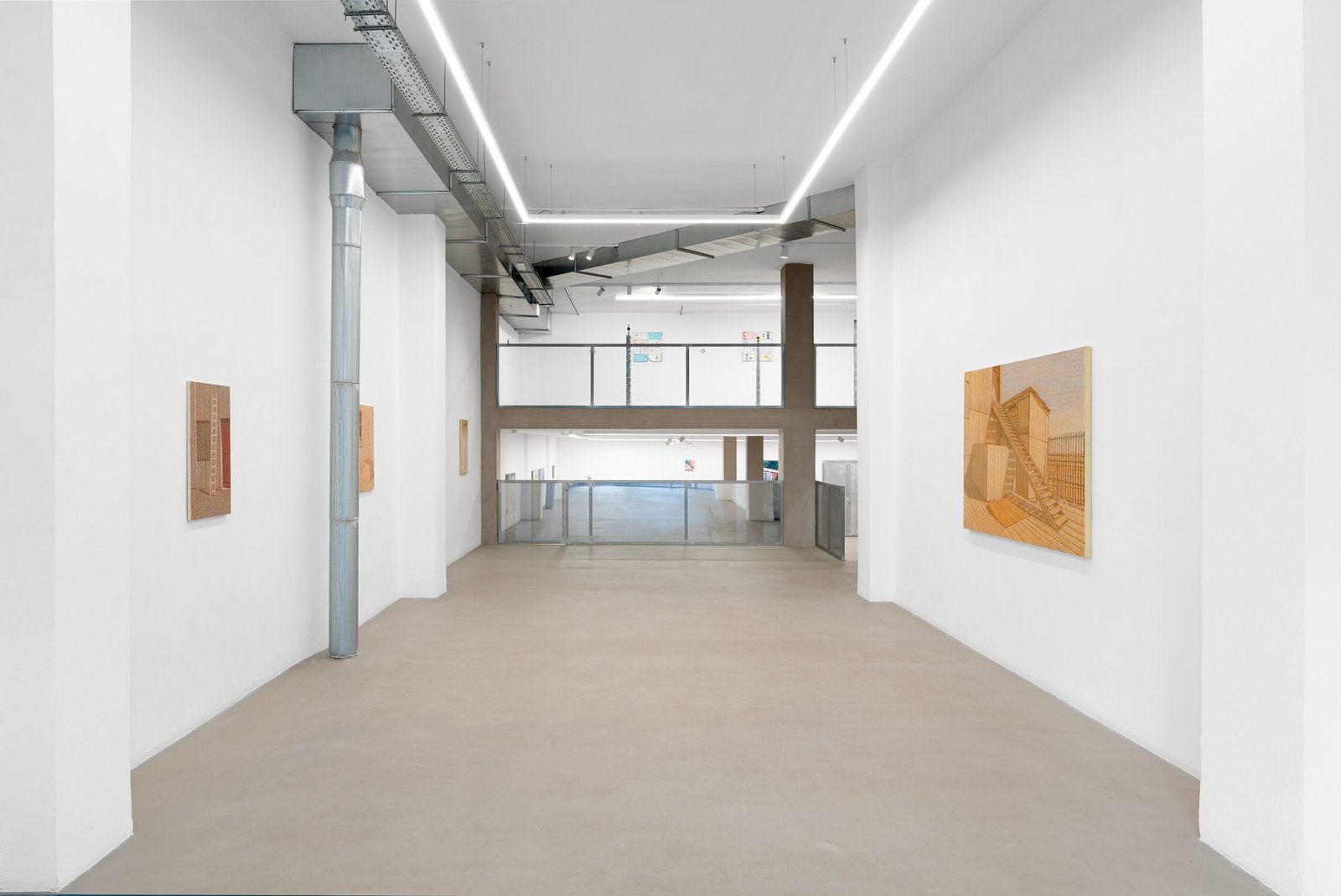
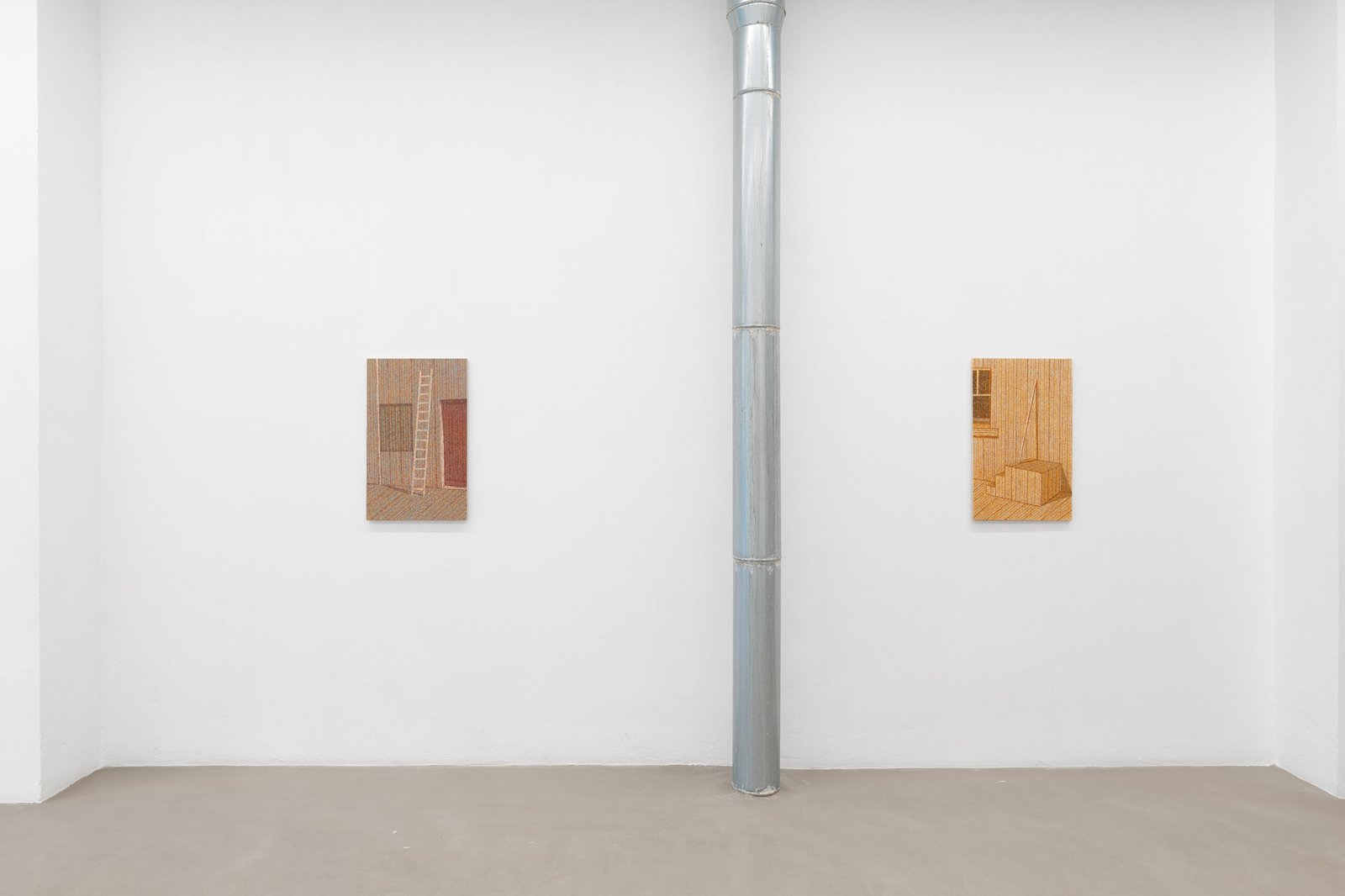
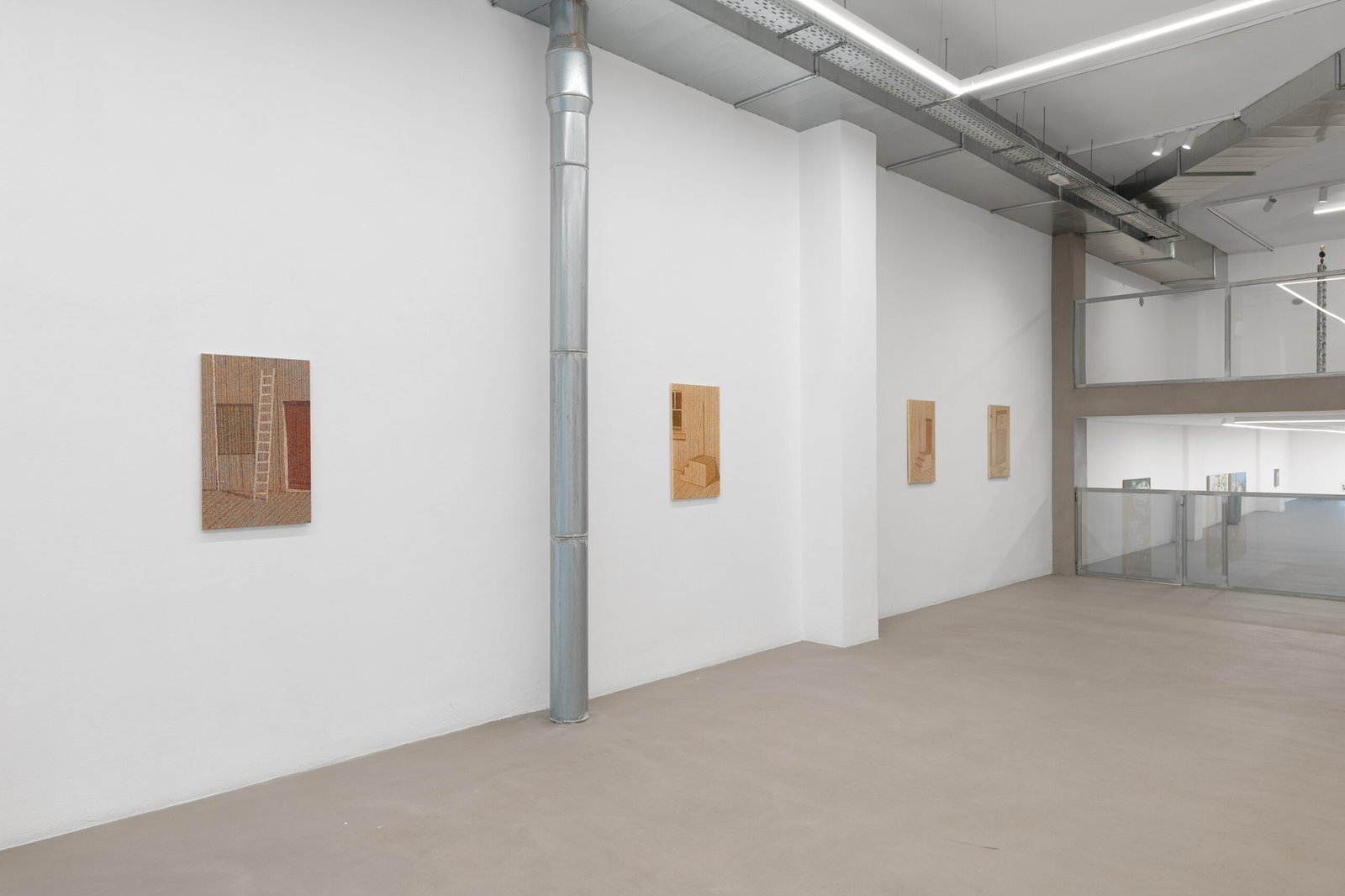
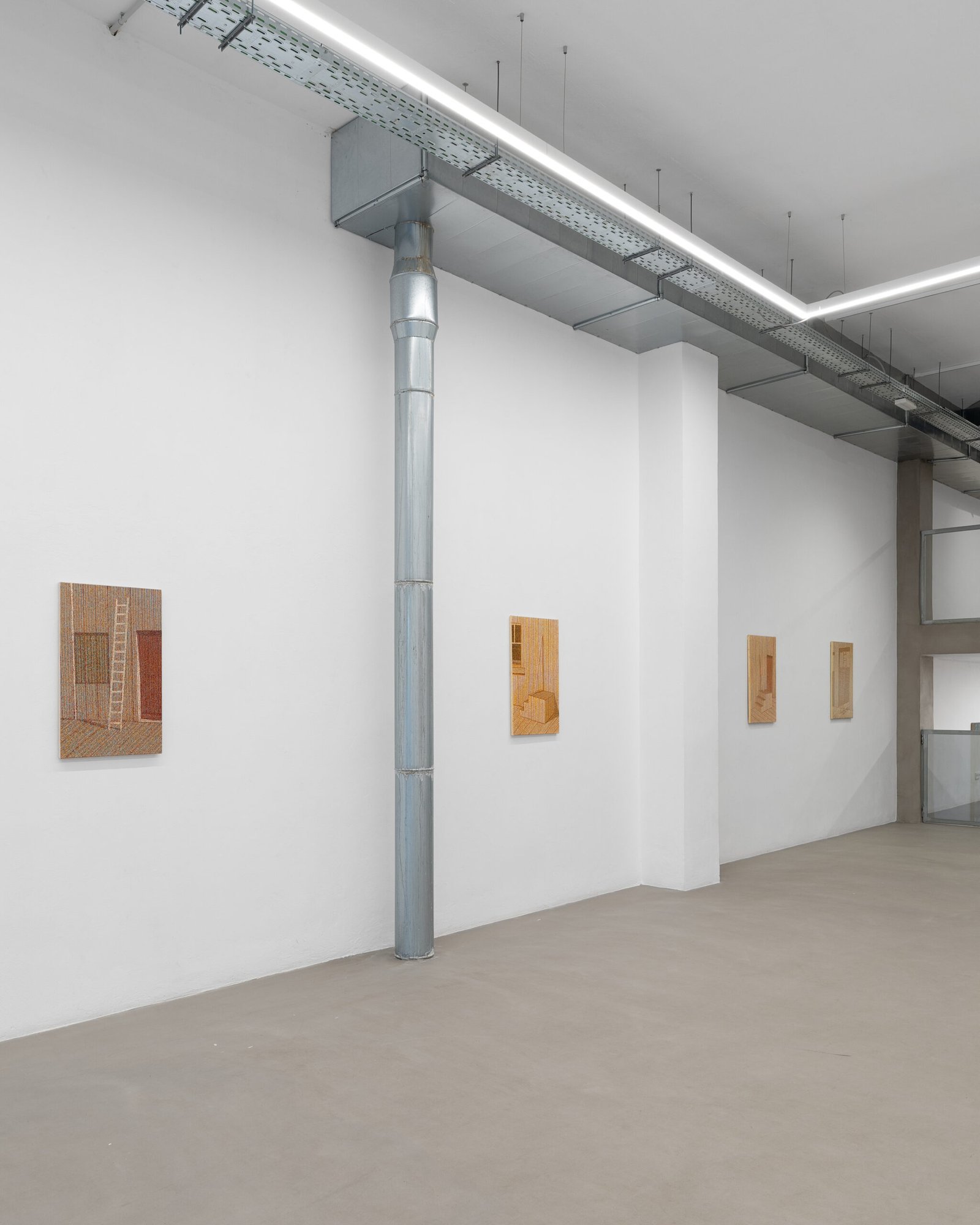
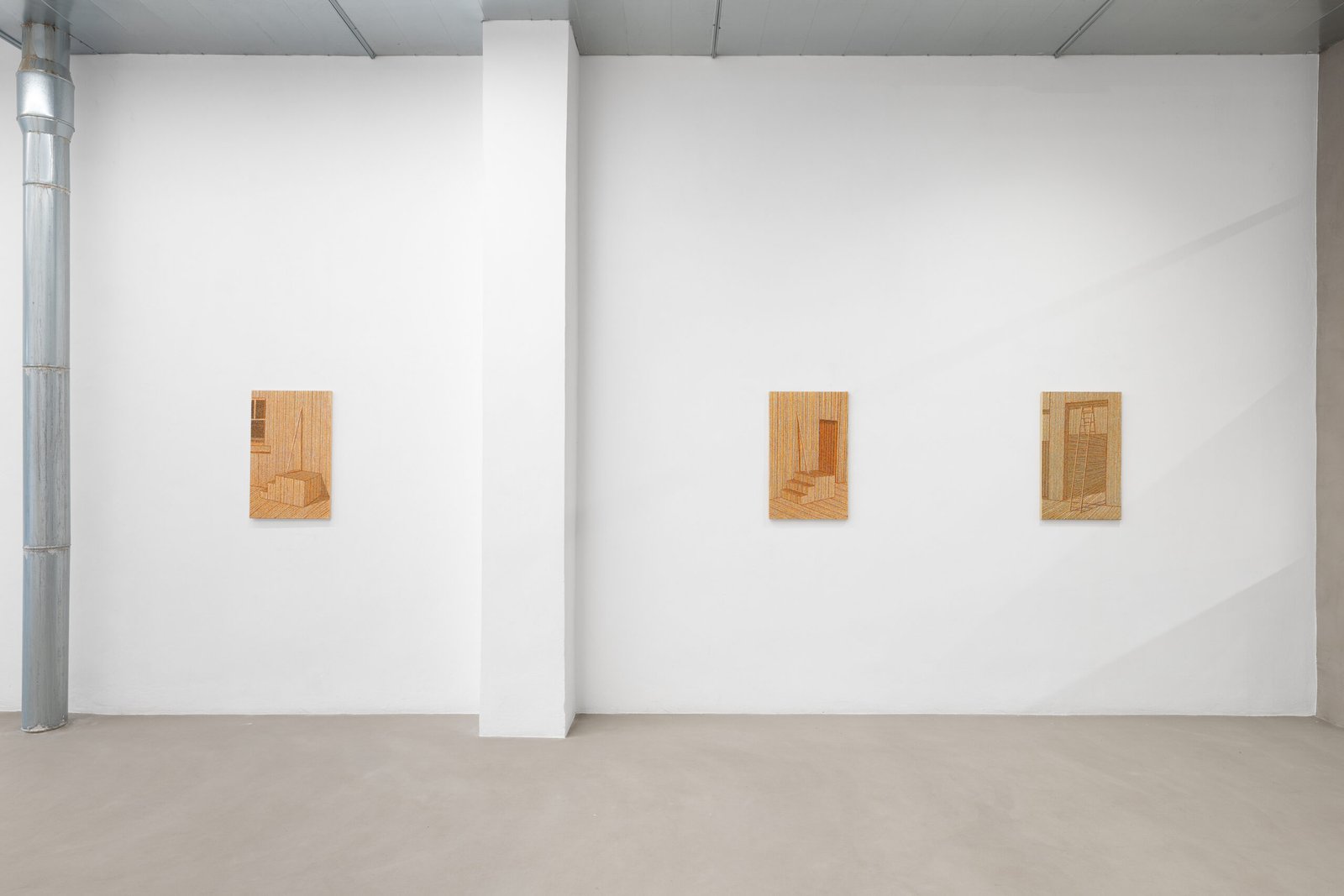
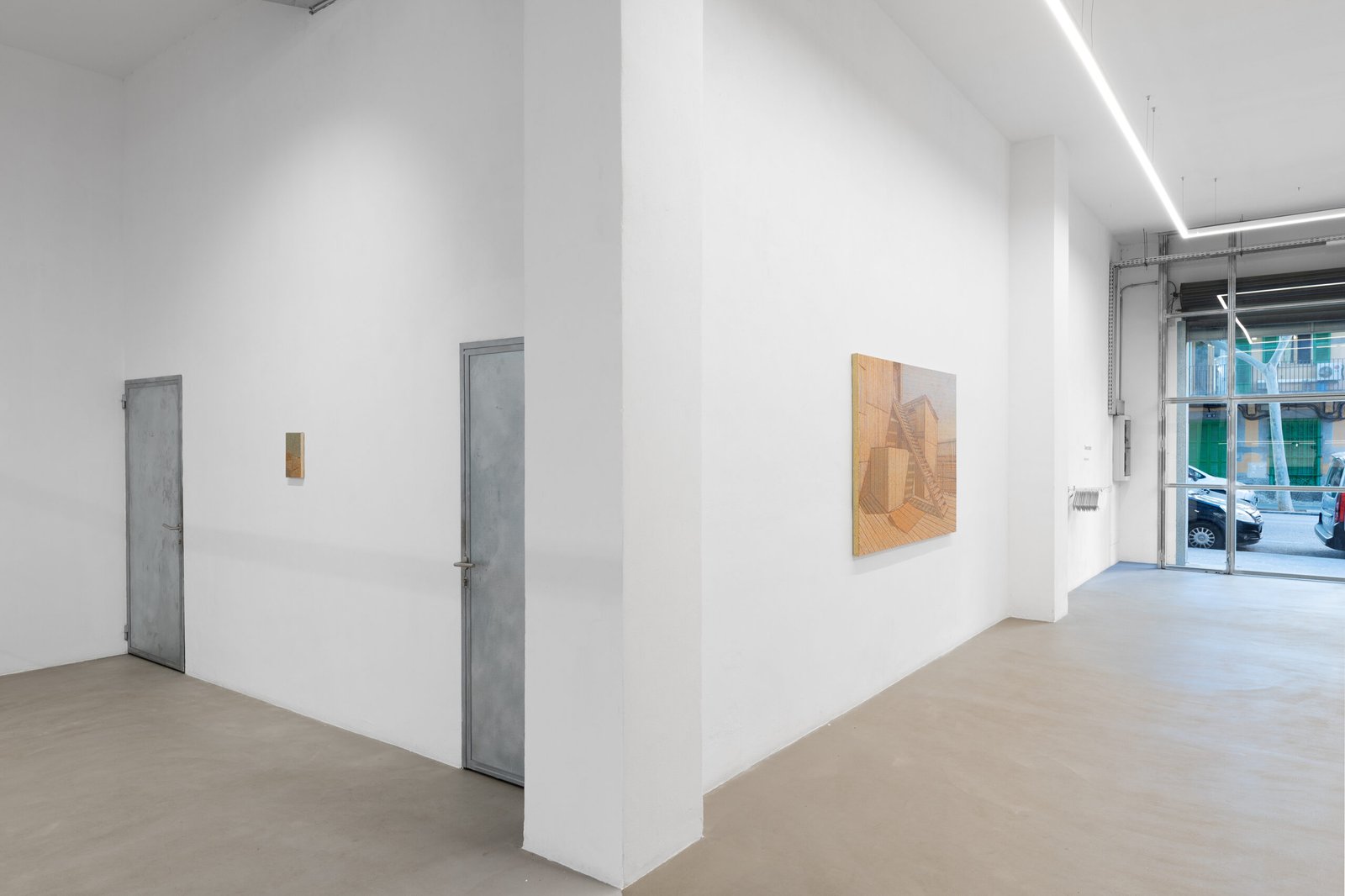
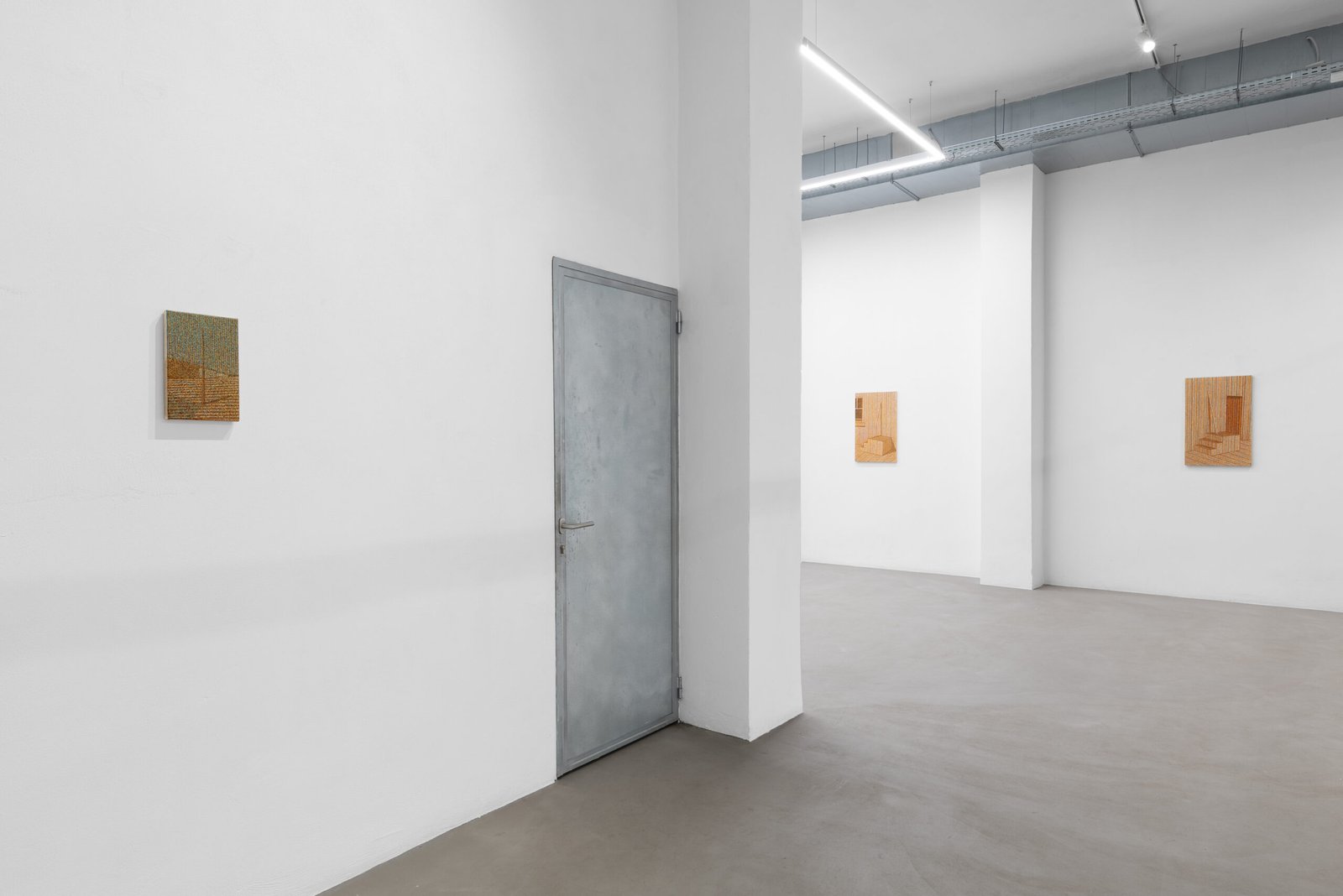
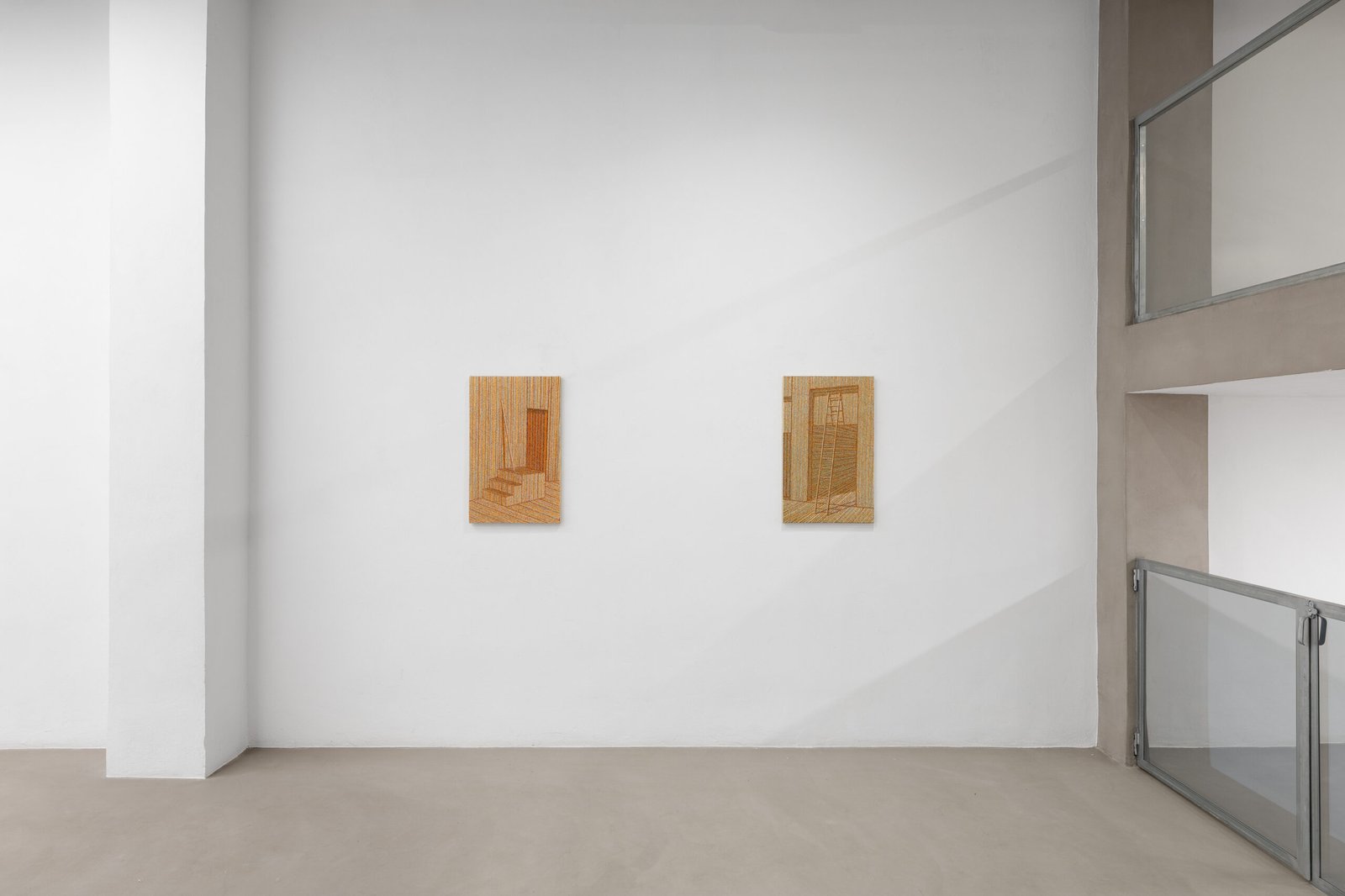
All the images in this exhibition share a recurring element: the presence of
staircases. They appear in industrial contexts, isolated and without a clear function.
They are a metaphor for height, for that which we sense but cannot fully see… they
carry a spiritual dimension. The staircases point toward the possibility of collapse,
but also reveal the fragility and strange beauty of the provisional structures we build.
Taking height here means placing oneself before the ephemeral condition of
everything that surrounds us.
The landscapes in which these staircases stand share that same entropic drift.
These industrial environments can be understood through what Robert Smithson[4]
described as “ruins in reverse”: structures whose temporality is uncertain, as if they
belonged neither entirely to the past nor to the future. The staircases lead nowhere.
Yet they suggest the possibility of an elevation within those questions that remain
unanswered.
To remain suspended, like dust in the landscape.
Esmeralda Gómez Galera.
[1]
Ingold, Tim. Lines: A Brief History. London: Routledge, 2007.
[2 ]Careri, Francesco. Walkscapes: Walking as an Aesthetic Practice. Barcelona: Gustavo
Gili, 2002.
[3] Sekula, Allan. “The Body and the Archive.” October 39 (Winter 1986): 3–64.
[4] Smithson, Robert. “A Tour of the Monuments of Passaic, New Jersey.” Artforum,
December 1967.