


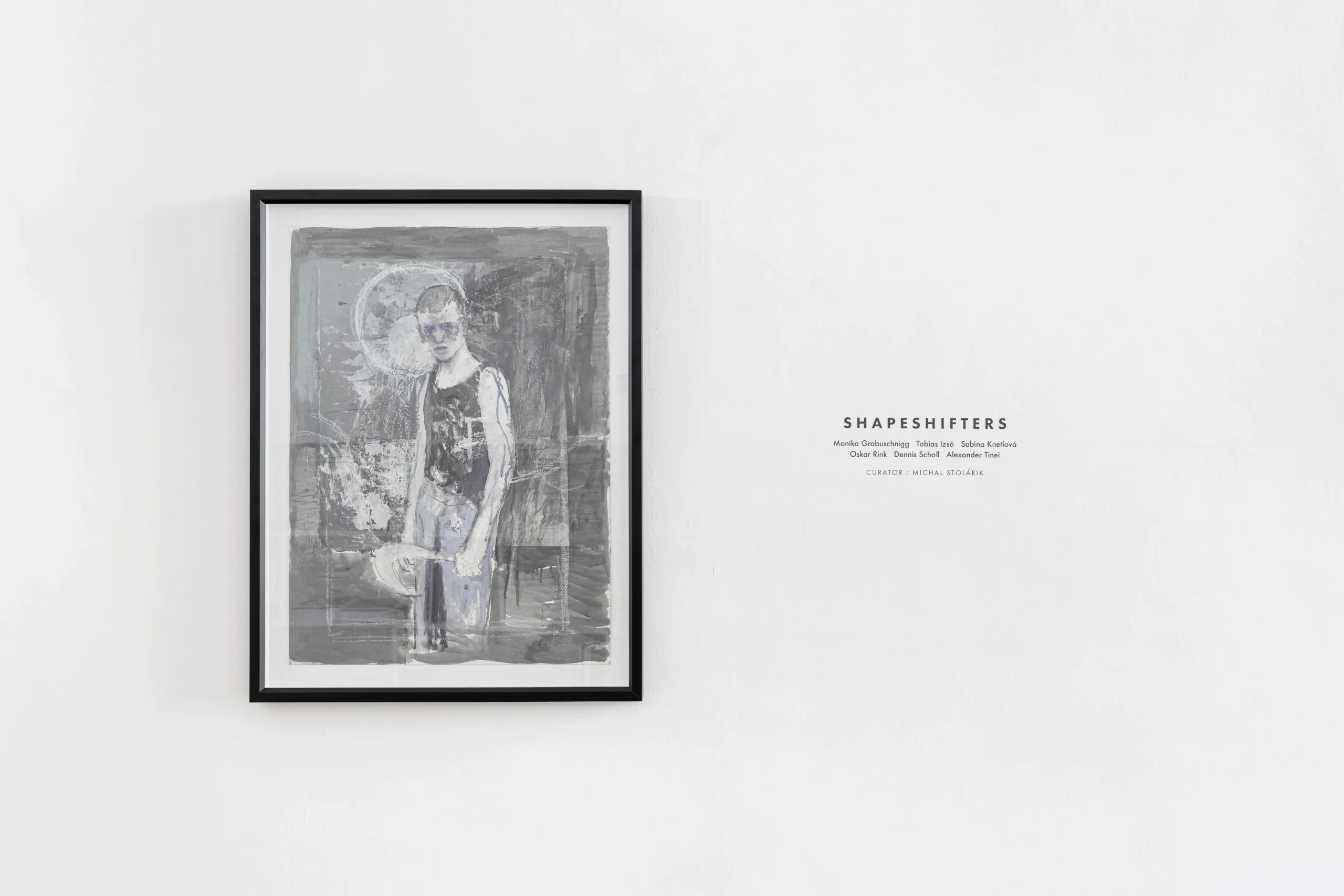
Shapeshifters
Monika Grabuschnigg, Tobias Izsó, Sabina Knetlová,
Oskar Rink, Dennis Scholl, Alexander Tinei
Curator: Michal Stolárik
The obsession with altering identity, appearance, or destiny has long defined the human condition. We gravitate towards myths of vampires, werewolves, and other creatures that transcend human boundaries—as if reality itself were inherently insufficient. It is not always an attempt to escape the facts; it is also an articulation of the desire for metamorphosis and the potential to become an alternate self. Today’s modes of transformation have moved beyond niche and bizarre subcultures and increasingly into a broader spectrum of social meanings. These shifts now function as masks, adaptive tools, survival strategies, and means of self-improvement or self-expression. This drive towards shapeshifting remains an enduring facet of our existence.
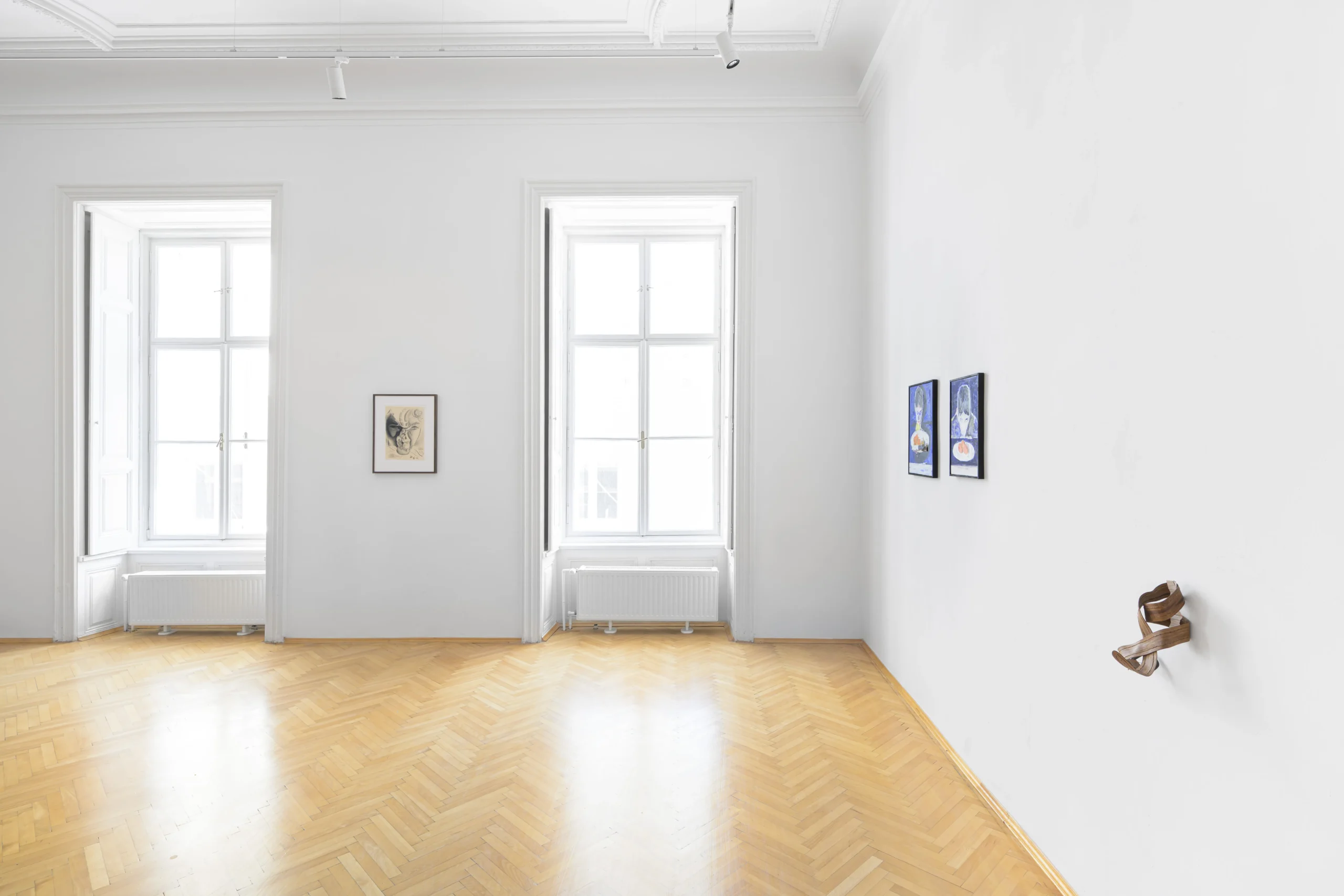
Drawing on mythology, folklore, and popular culture, as well as on moments when the boundaries between the human and non-human, the spiritual and material, and the object and organism dissolve, the group exhibition Shapeshifters brings together artists across generations from Austria, Hungary, Germany, and the Czech Republic. Despite their disparate materials and visual outputs, these artists’ conceptual approaches are anchored in a shared interest in (in)stability, temporality, metamorphosis, and temporary forms of existence. Rather than presenting closed narratives or fixed identities, the exhibition prioritises states of transition and flux. It offers a broad media spectrum—from oil painting and works on paper to ceramic and concrete, wooden sculptures and readymades—where the materials themselves function as both symbols and agents of transformation.
The exhibition brings together two distinct yet equally important narratives. One is driven by figuration, the other by objects, yet both carry equal weight in shaping the whole. We observe figures that change, mutate, and resist simple categorisation, as well as objects that take on a life of their own, acquiring autonomy and new meanings. The figurative scenes engage with both personal and collective mythology, emphasising symbolism and metaphorical layers. They raise questions about identity and unstable psychological states—in a constant process of transformation, shaped by history, memory, or individual experience. Those scenes inhabit an in-between space where they become something or someone else. On the other hand, there are works that appropriate the forms of everyday household objects. Through the artist’s intervention and recontextualization, they change, come to life, acquire anthropomorphic qualities, and become carriers of themes linked to human experience. What at first glance seems intimately familiar transforms into something ambiguous, unsettling, and open to new interpretation.
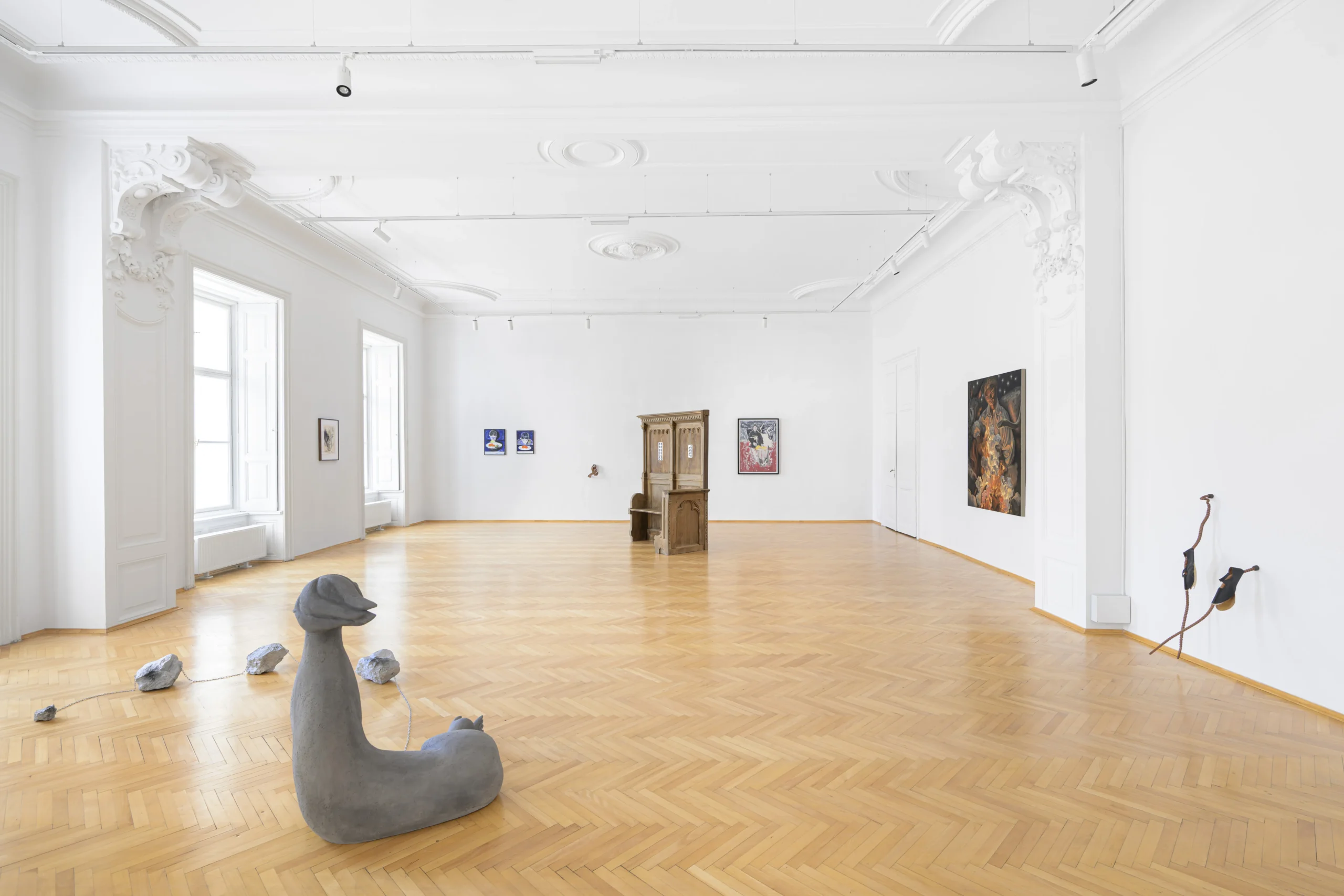
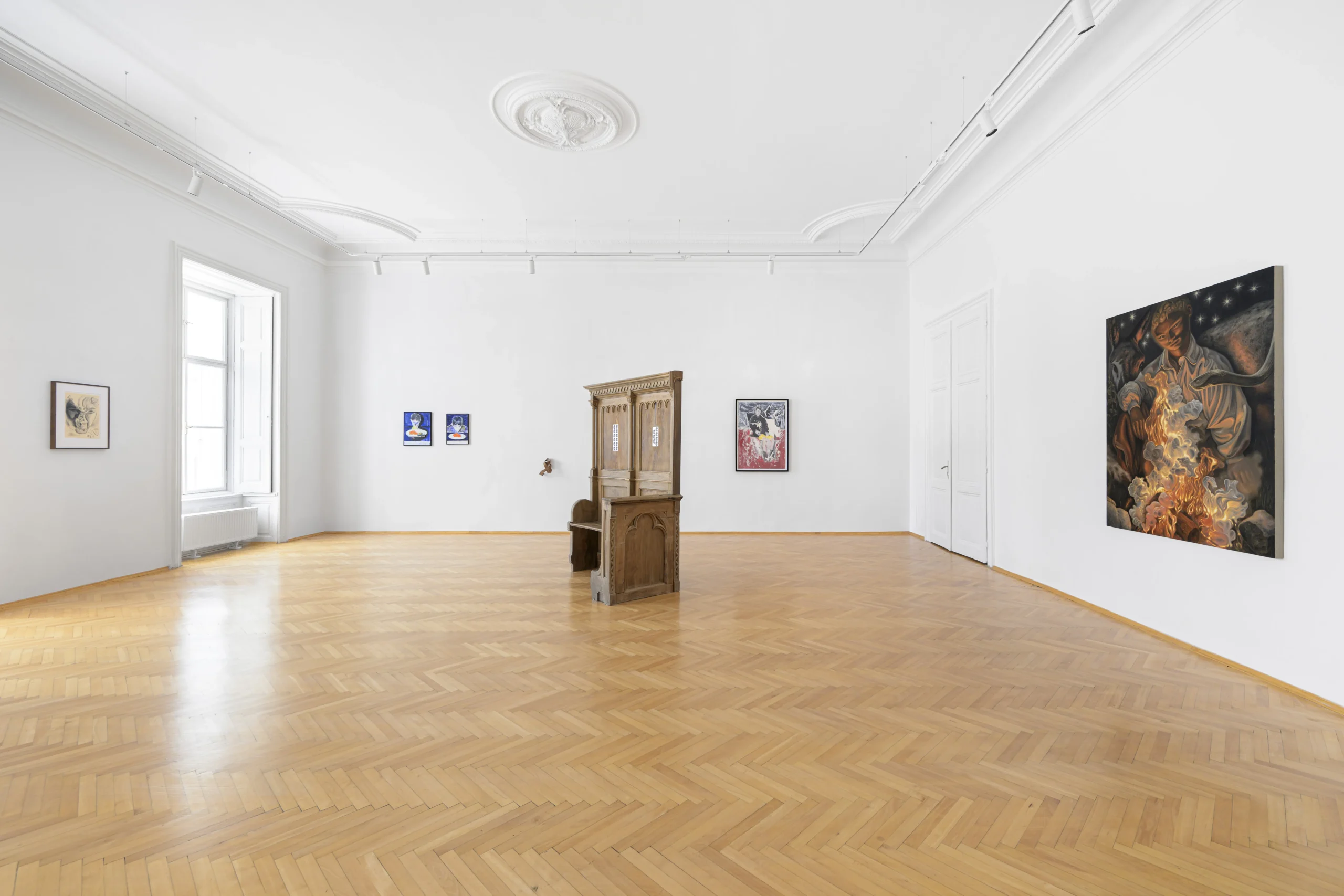
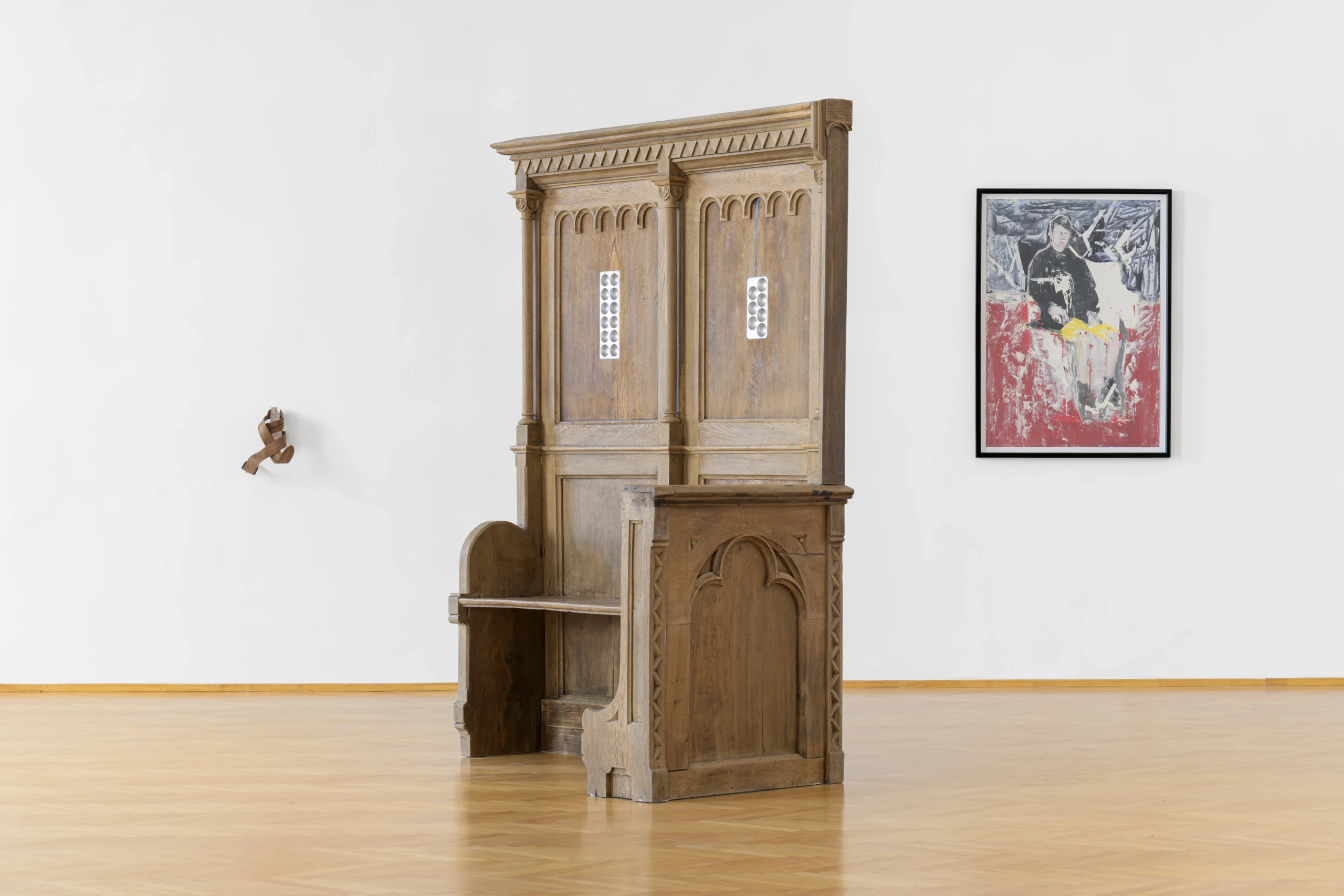
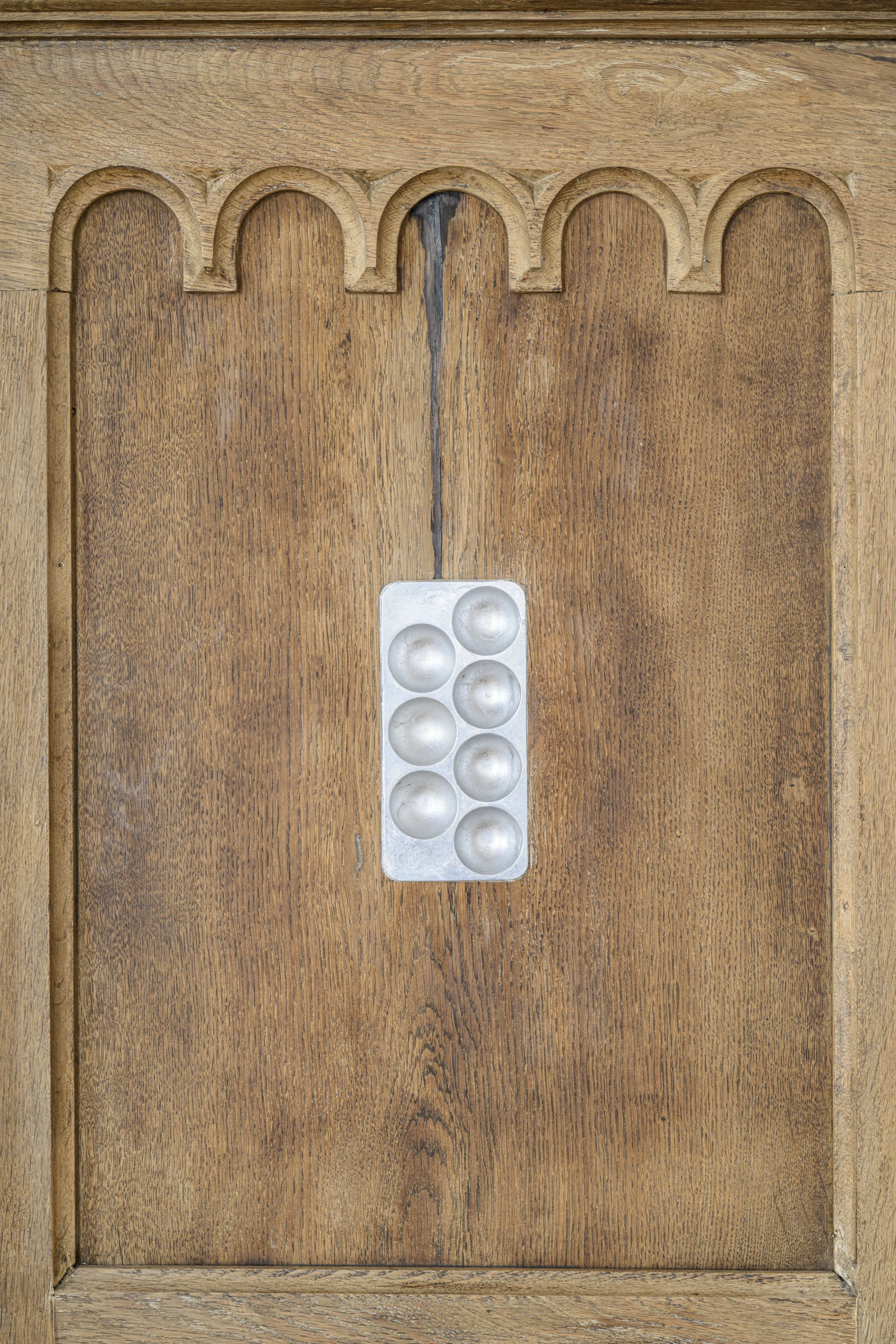
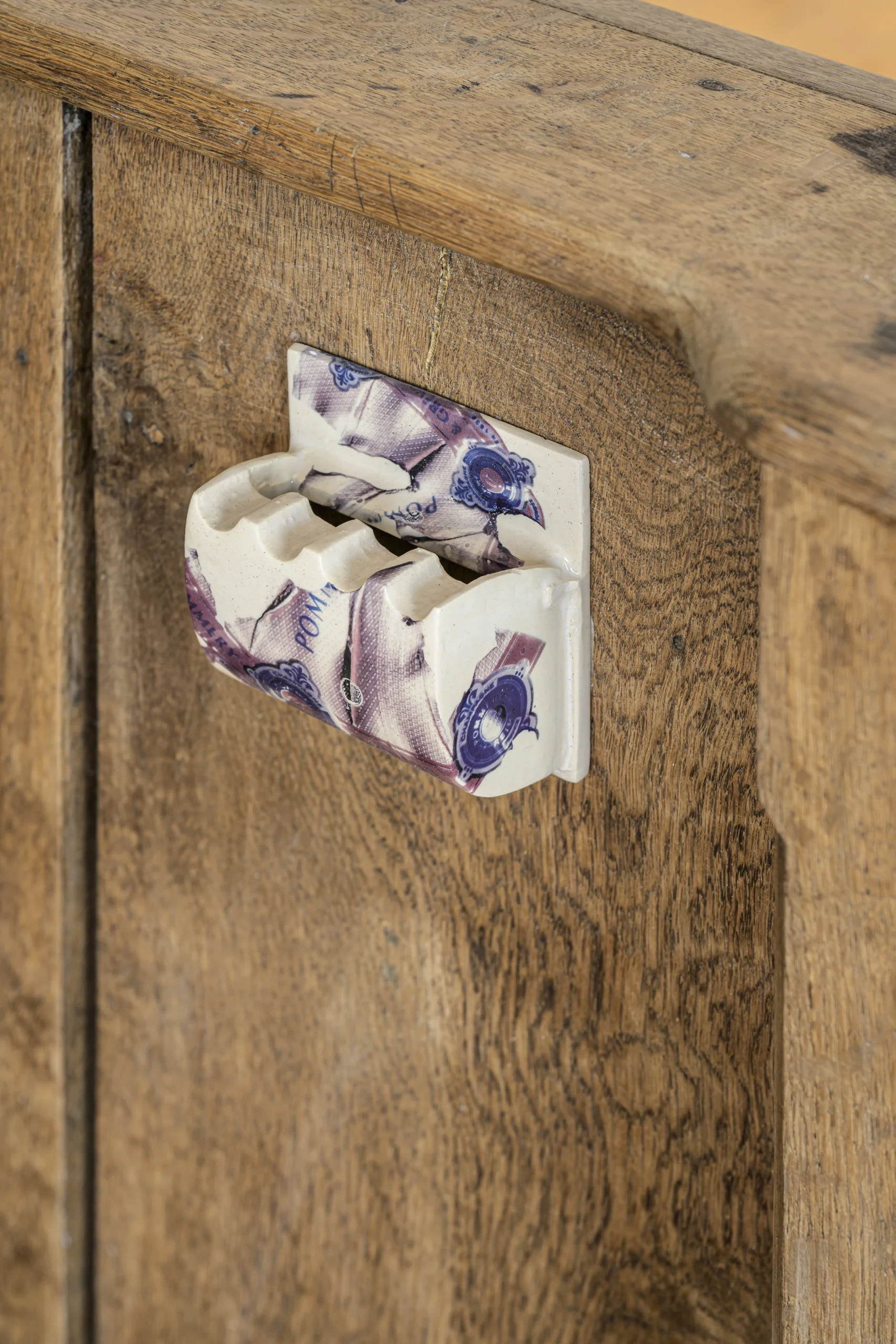
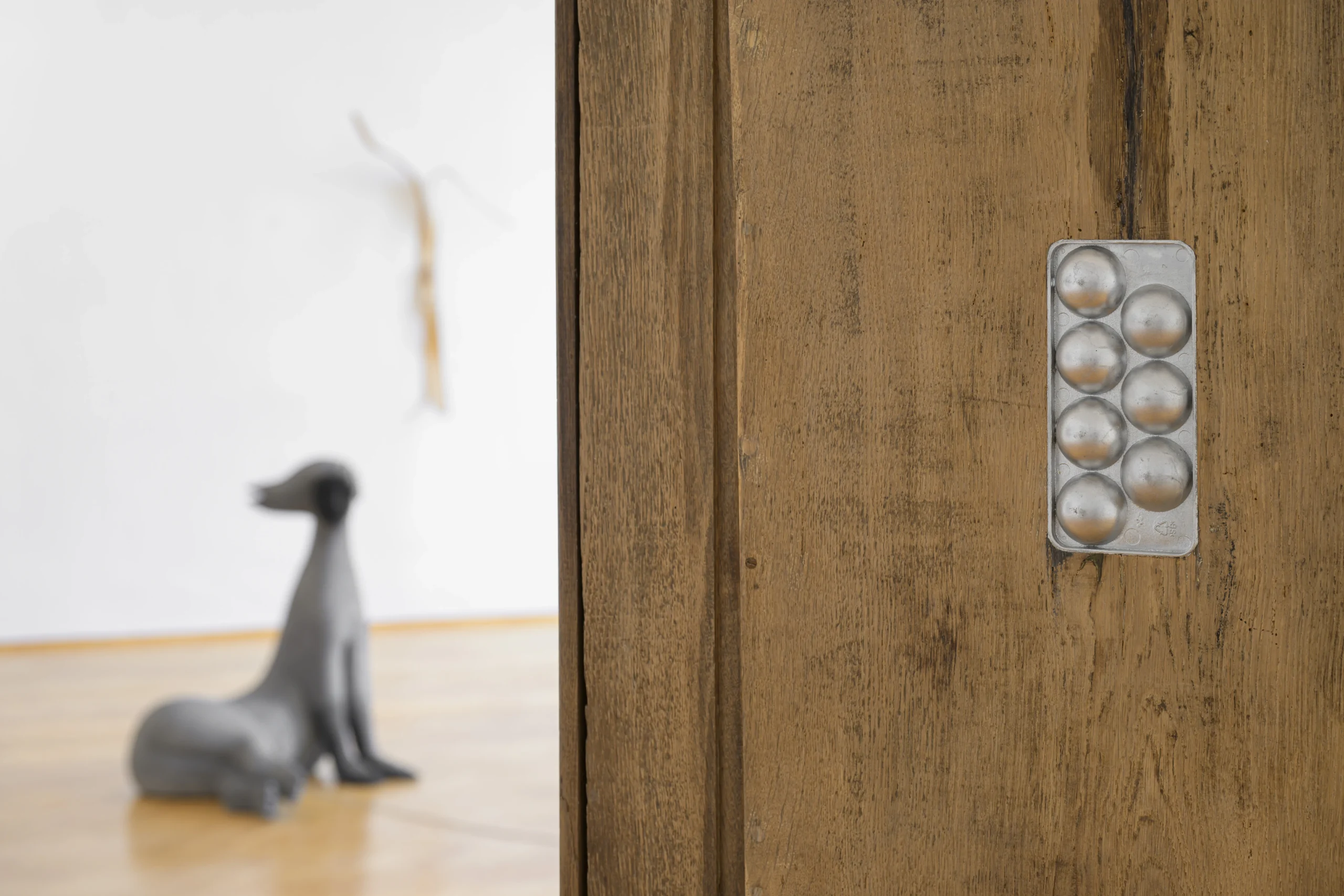
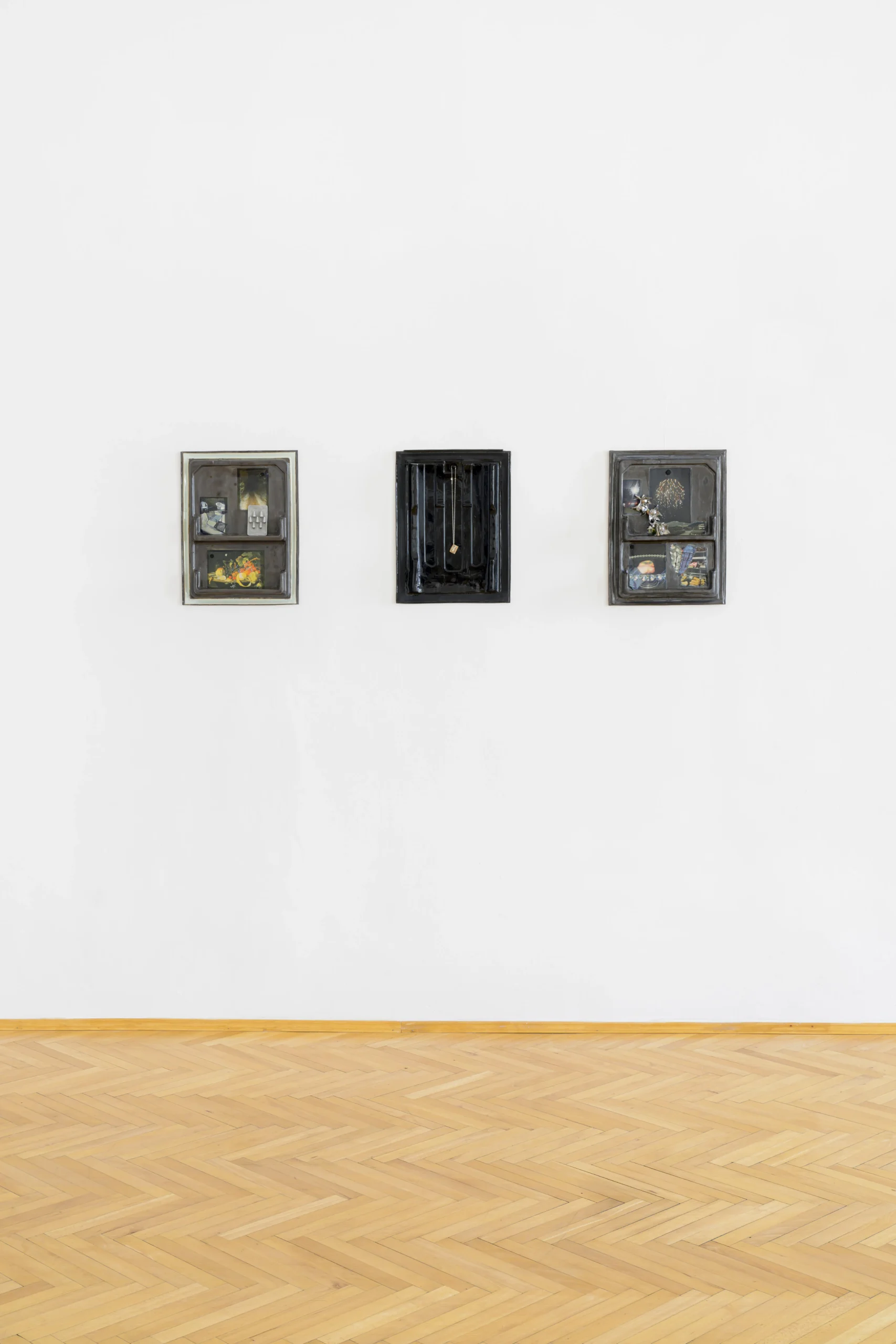
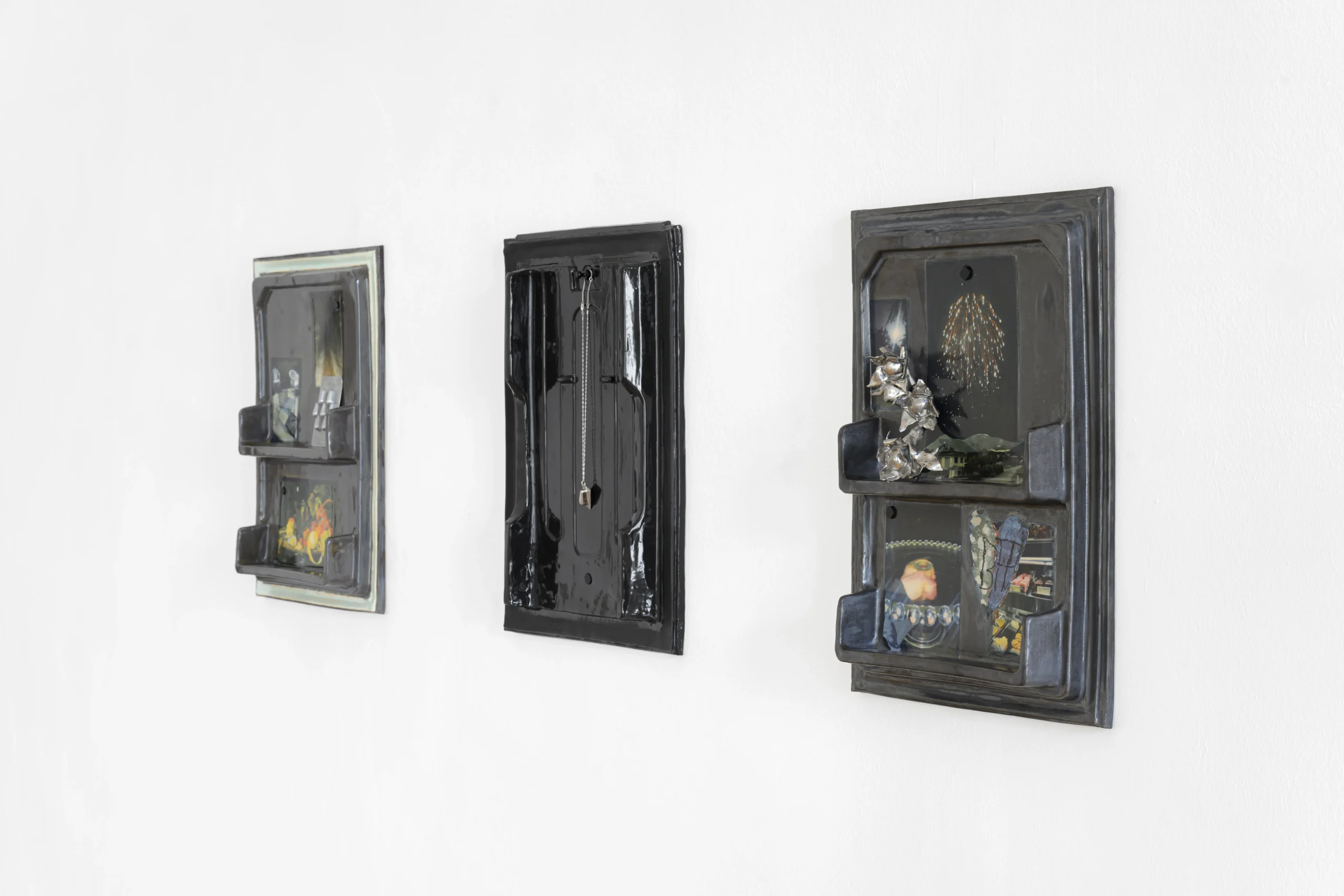
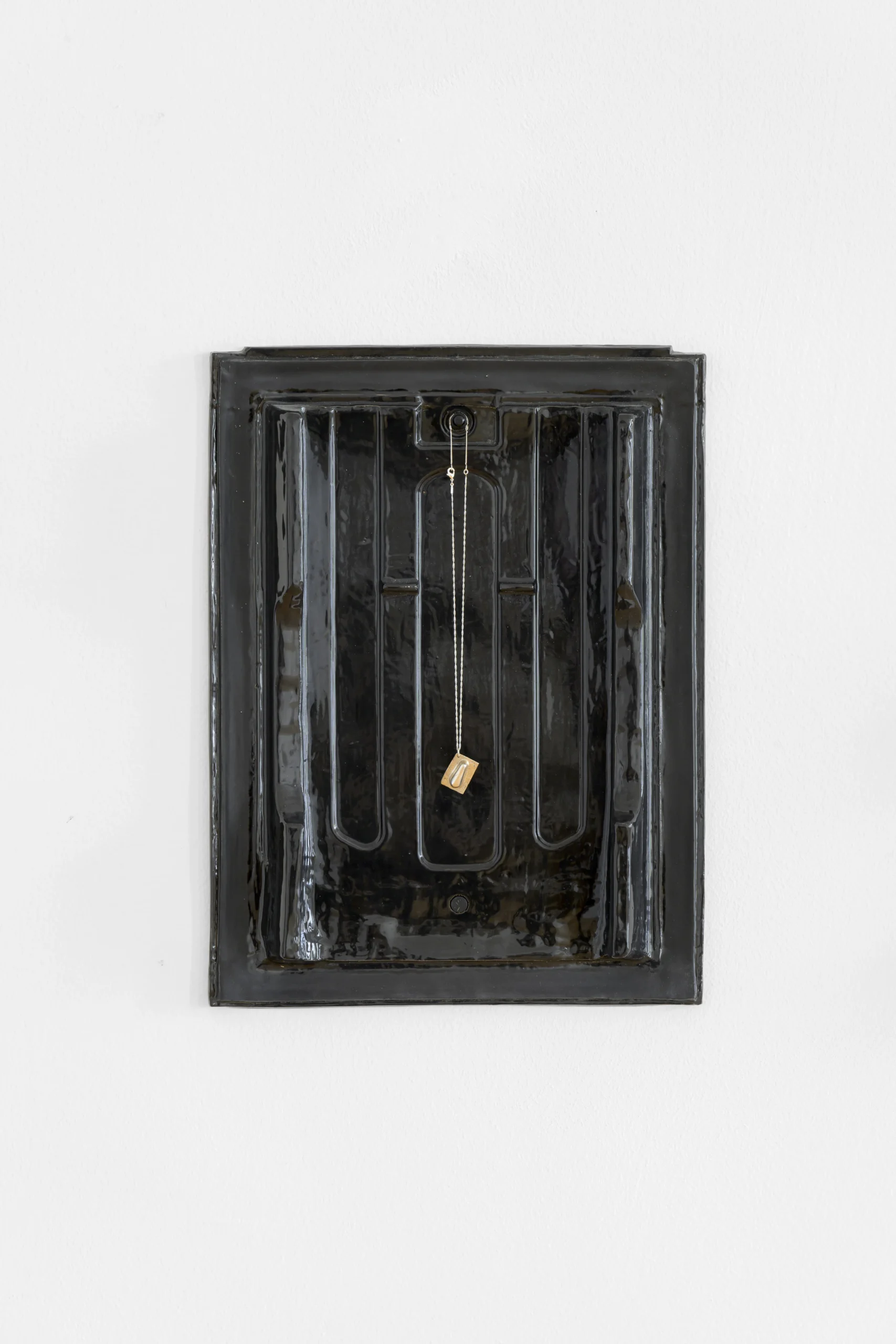
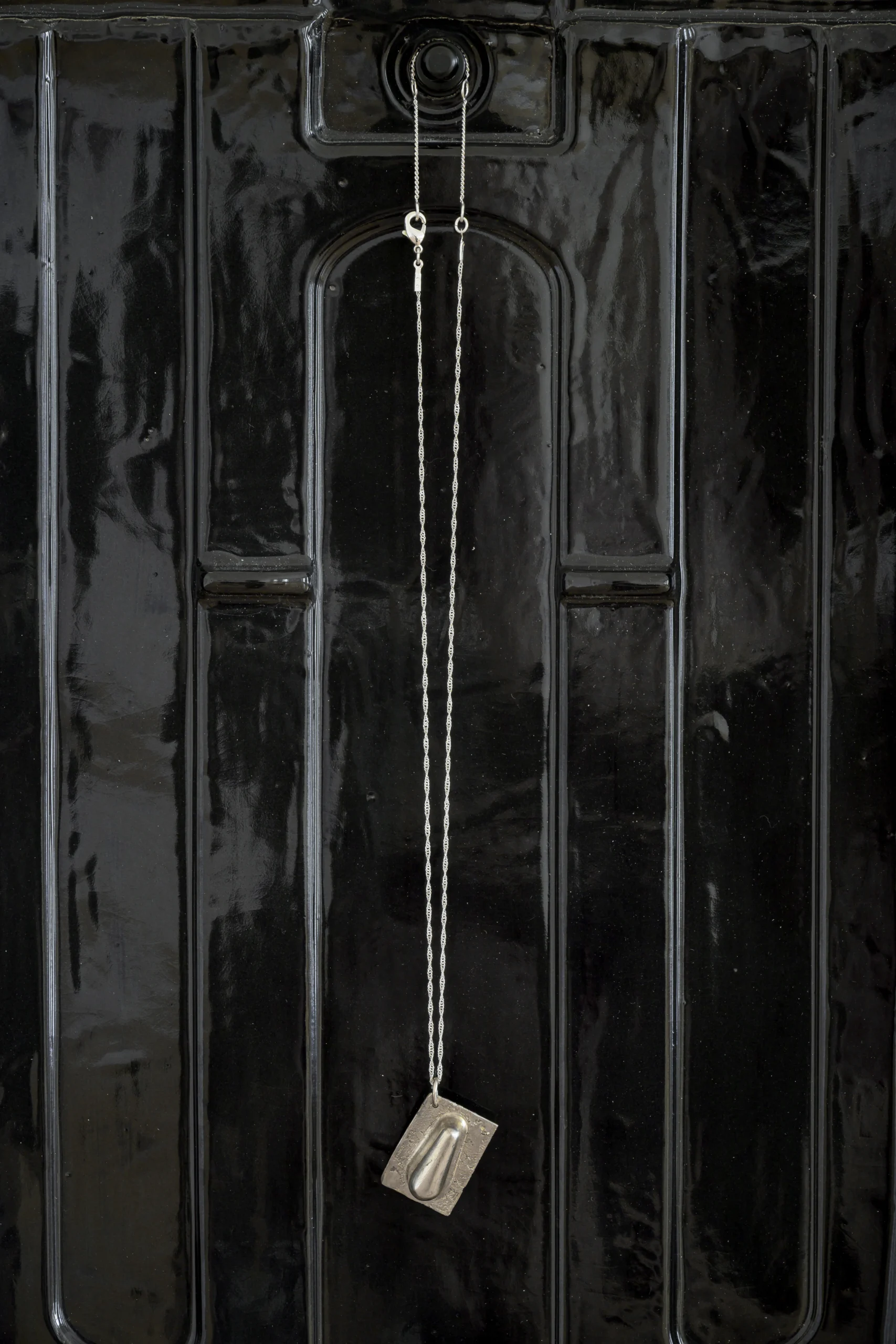
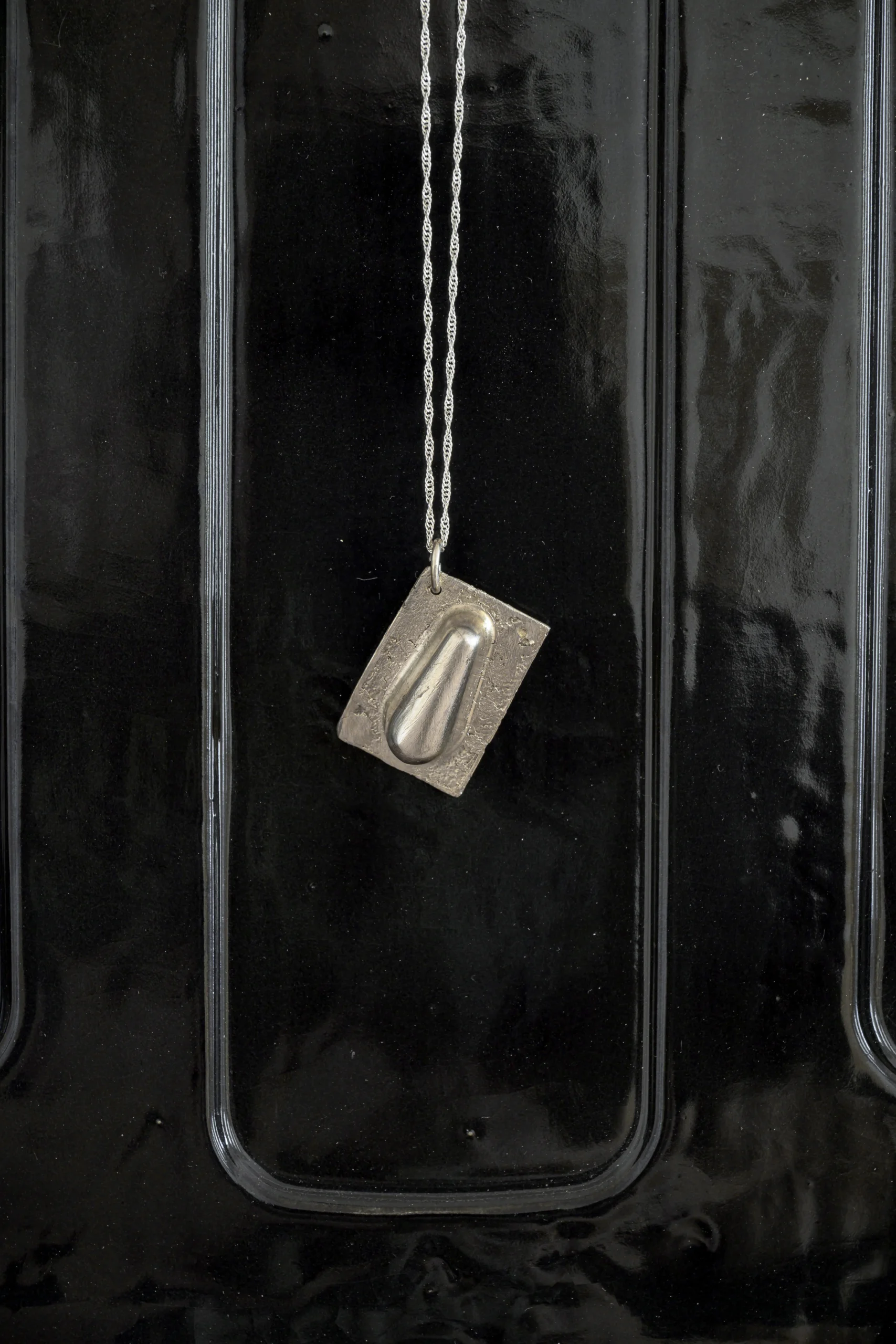
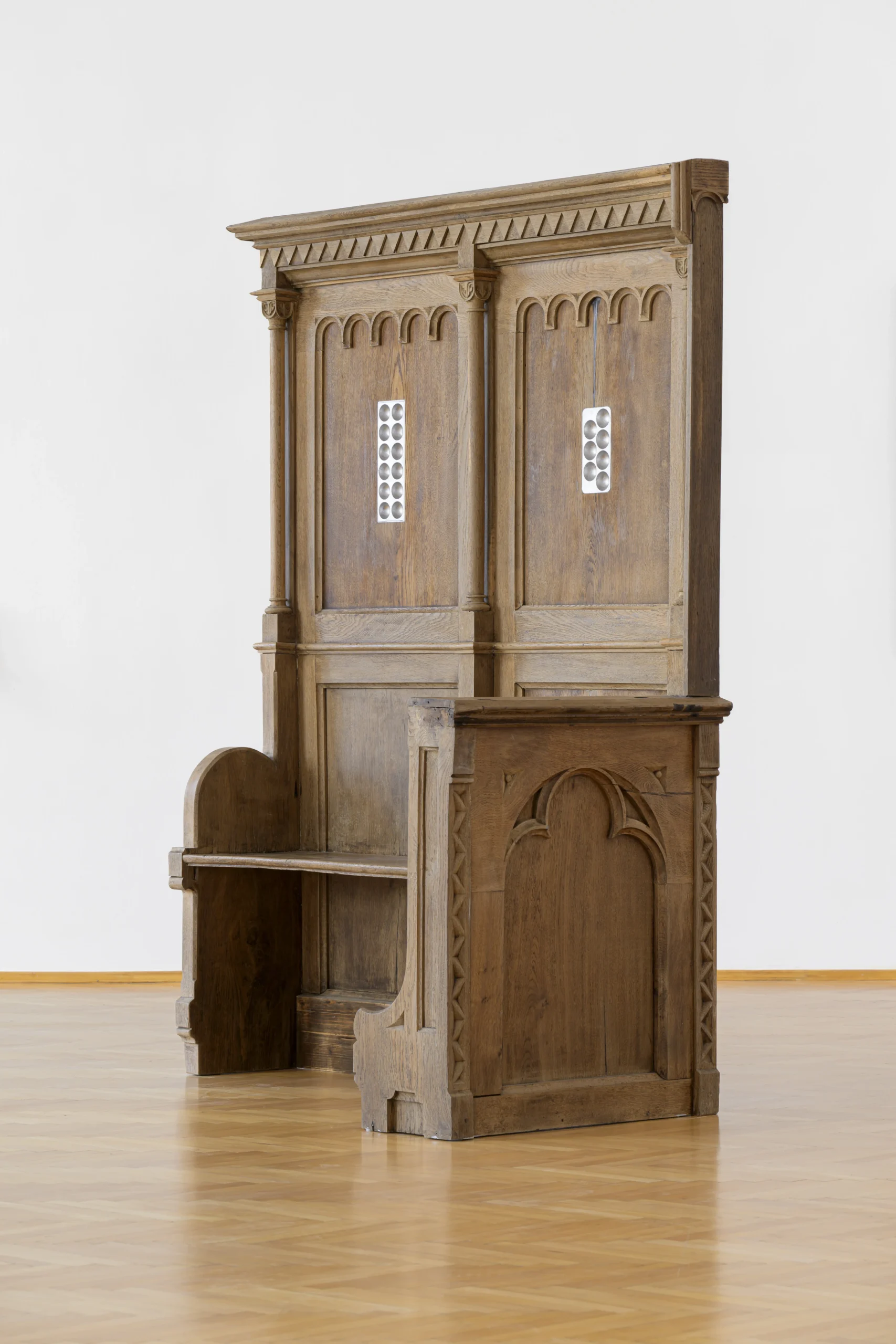
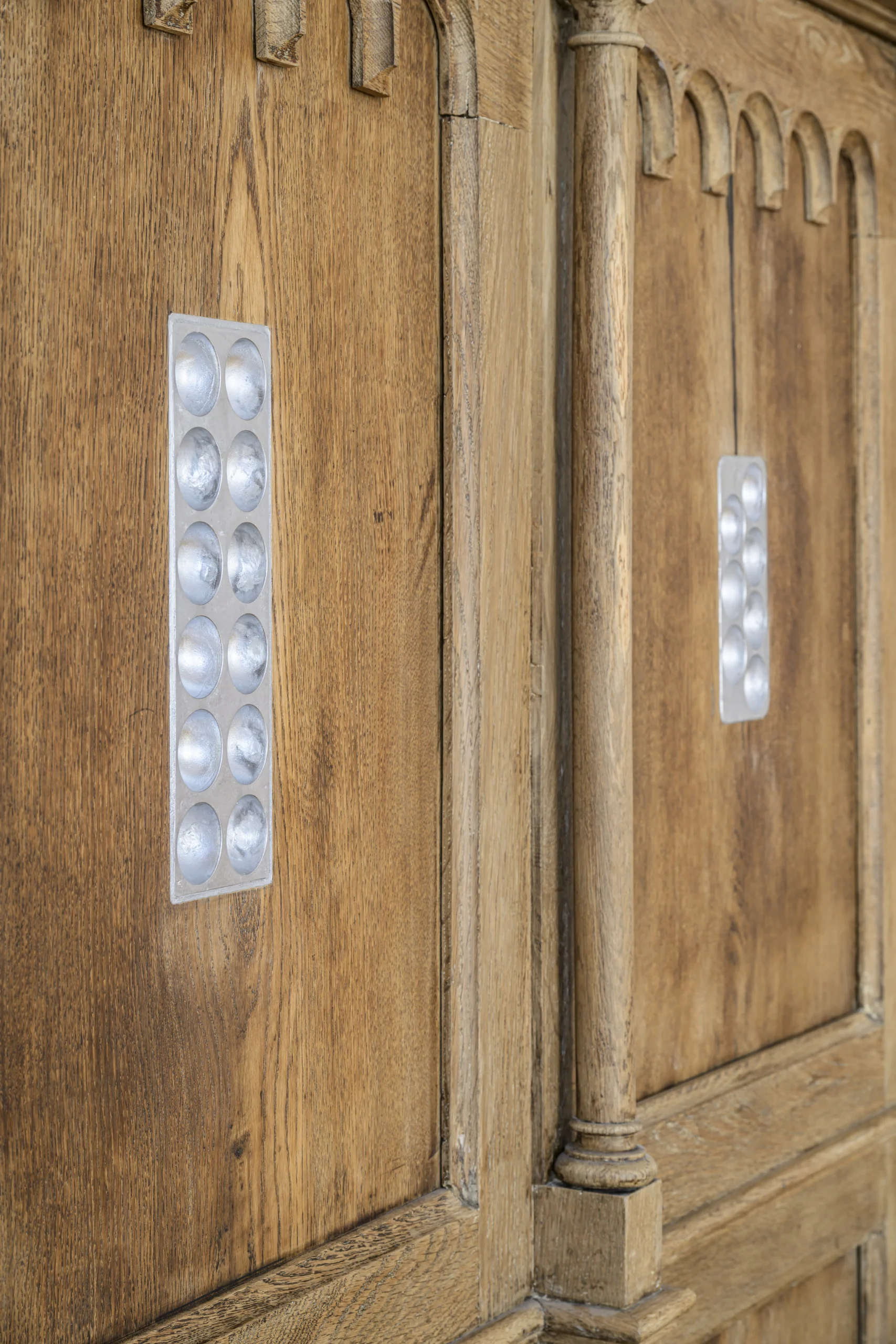
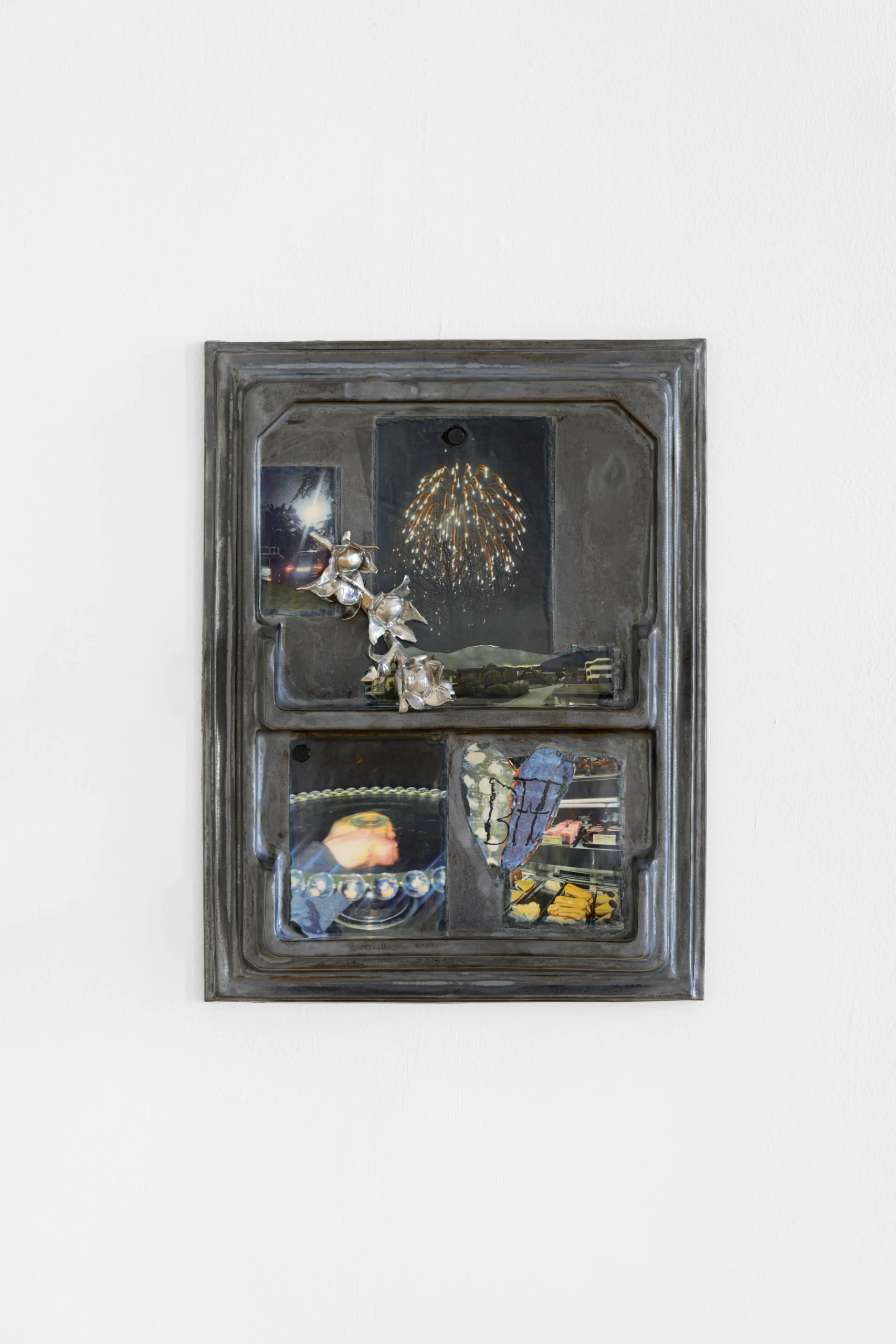
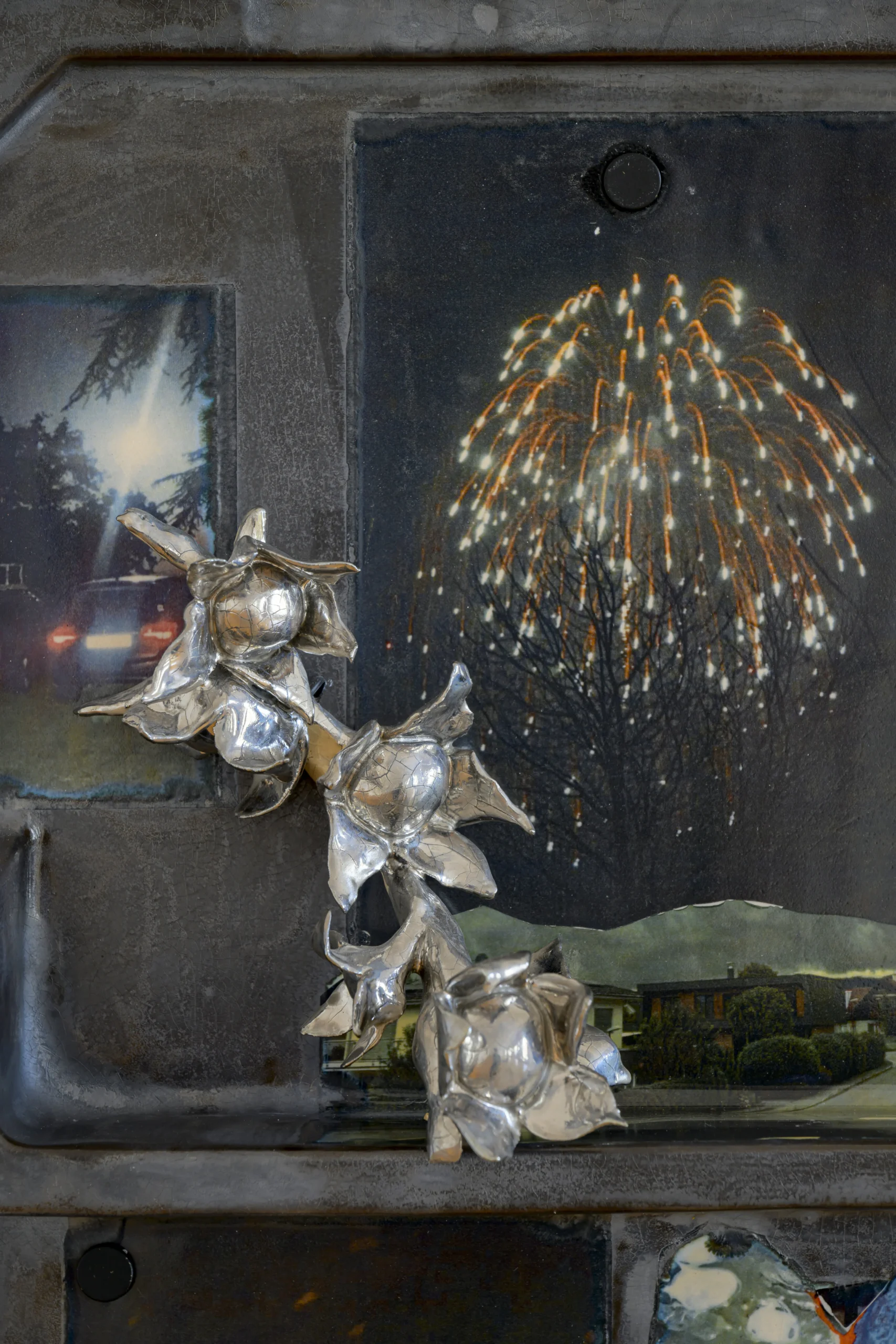
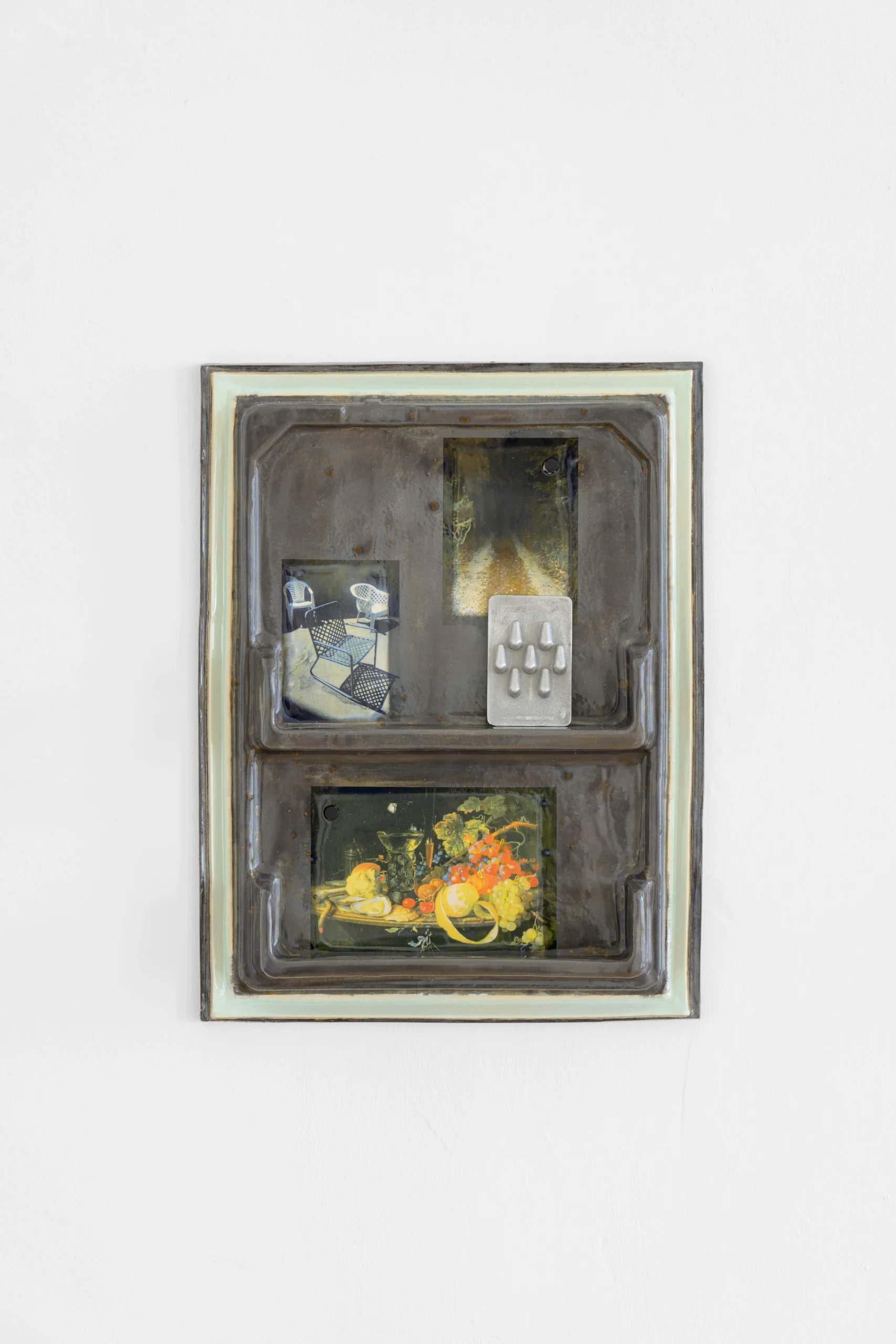
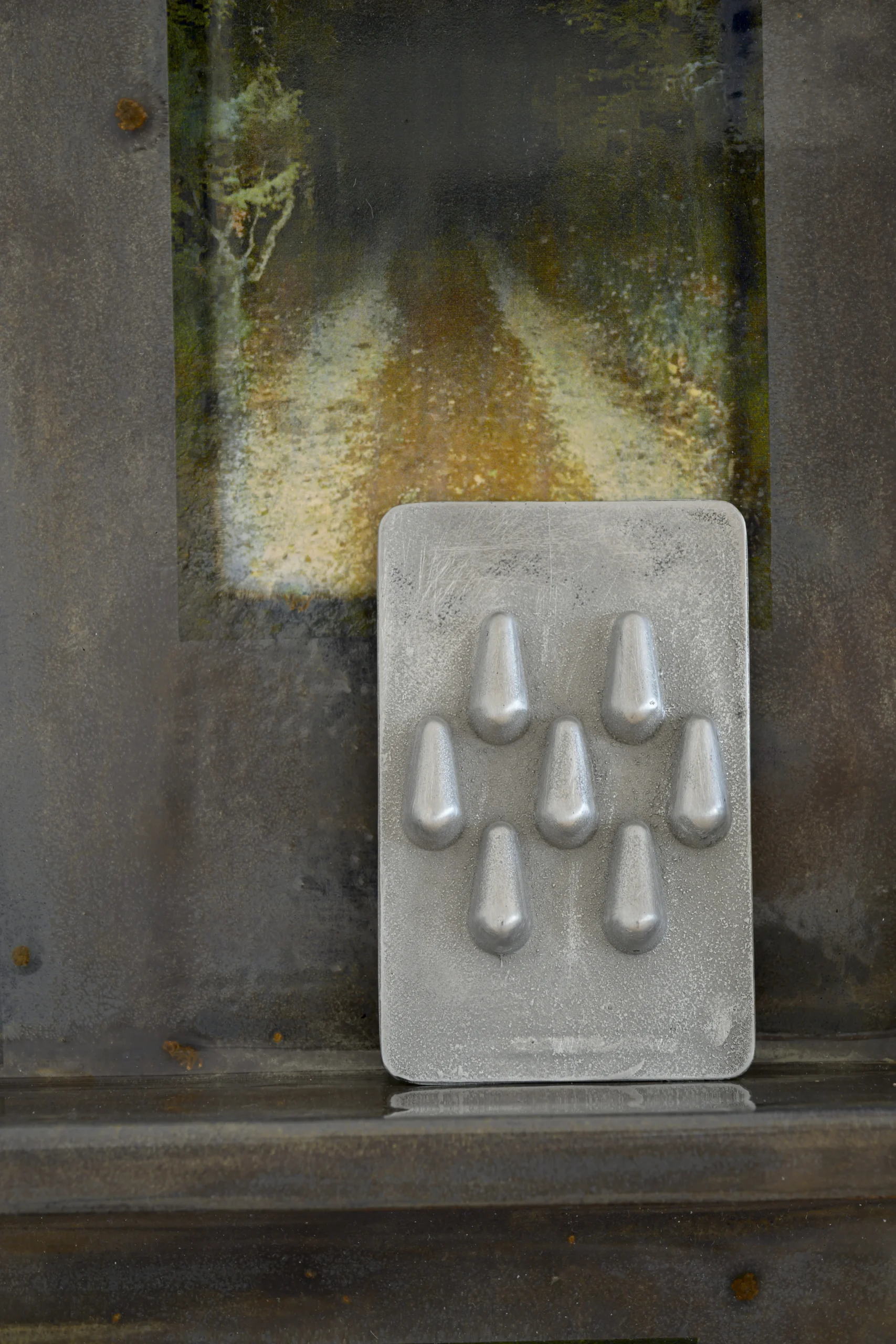
The works of Monika Grabuschnigg (b. 1987, Feldkirch; lives in Berlin), set against a backdrop of sadness and melancholy, explore the principles of transformation, ageing, and the effort to halt or optimise these processes. The artist examines the human condition through everyday objects placed in new contexts. Her current series of ceramic objects, Cold Storage, is inspired by the motif of the refrigerator. Through her eyes, the refrigerator is not only a place to slow the decay of food or to store medications; it is also a personal archive, a curated, intimate space offering a glimpse into an individual. She combines ceramic casts of refrigerator doors with photographs from her own archive or with packaging of pharmaceutical and cosmetic products. The object Bench (Egg Trays) (2024), which combines a wooden readymade pew with ceramic and aluminium casts, also engages with the theme of transience and absence. The object, which traditionally evokes spirituality, purification, sin or hope, is transformed into a reminder of something missing from its place. At the same time, the bench bears visible traces of use and wear, thus becoming a metaphorical monument to ageing and transformation.
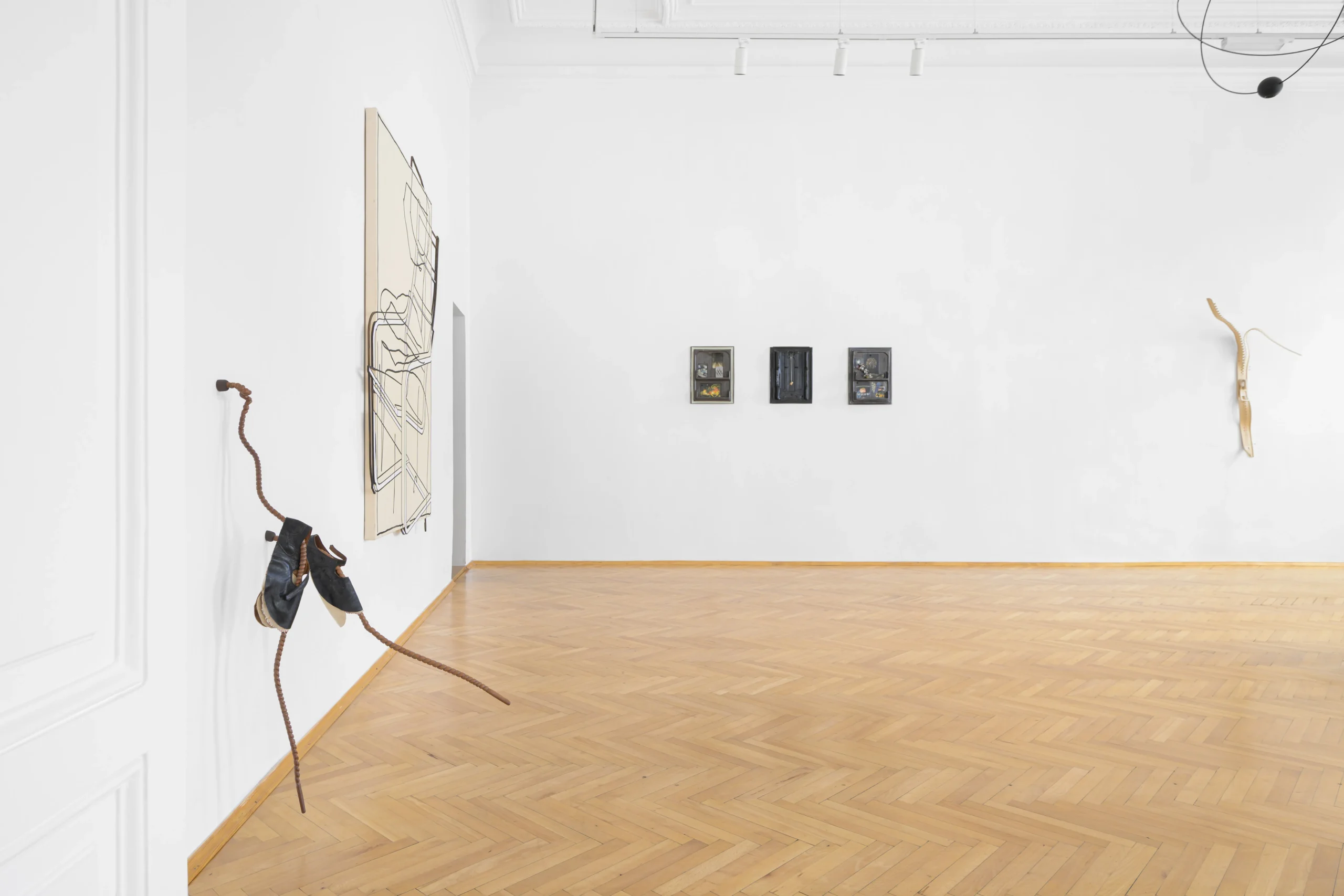
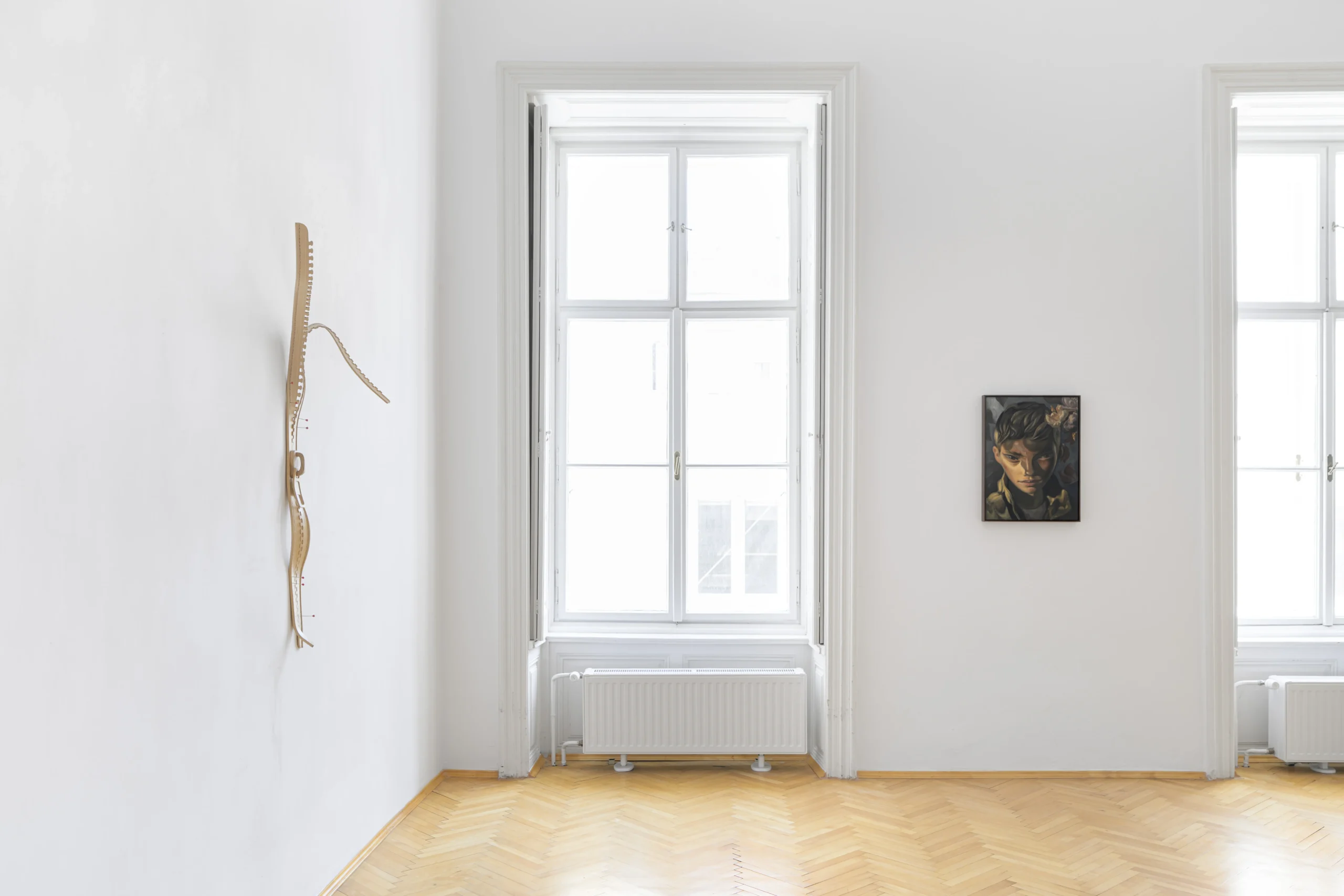
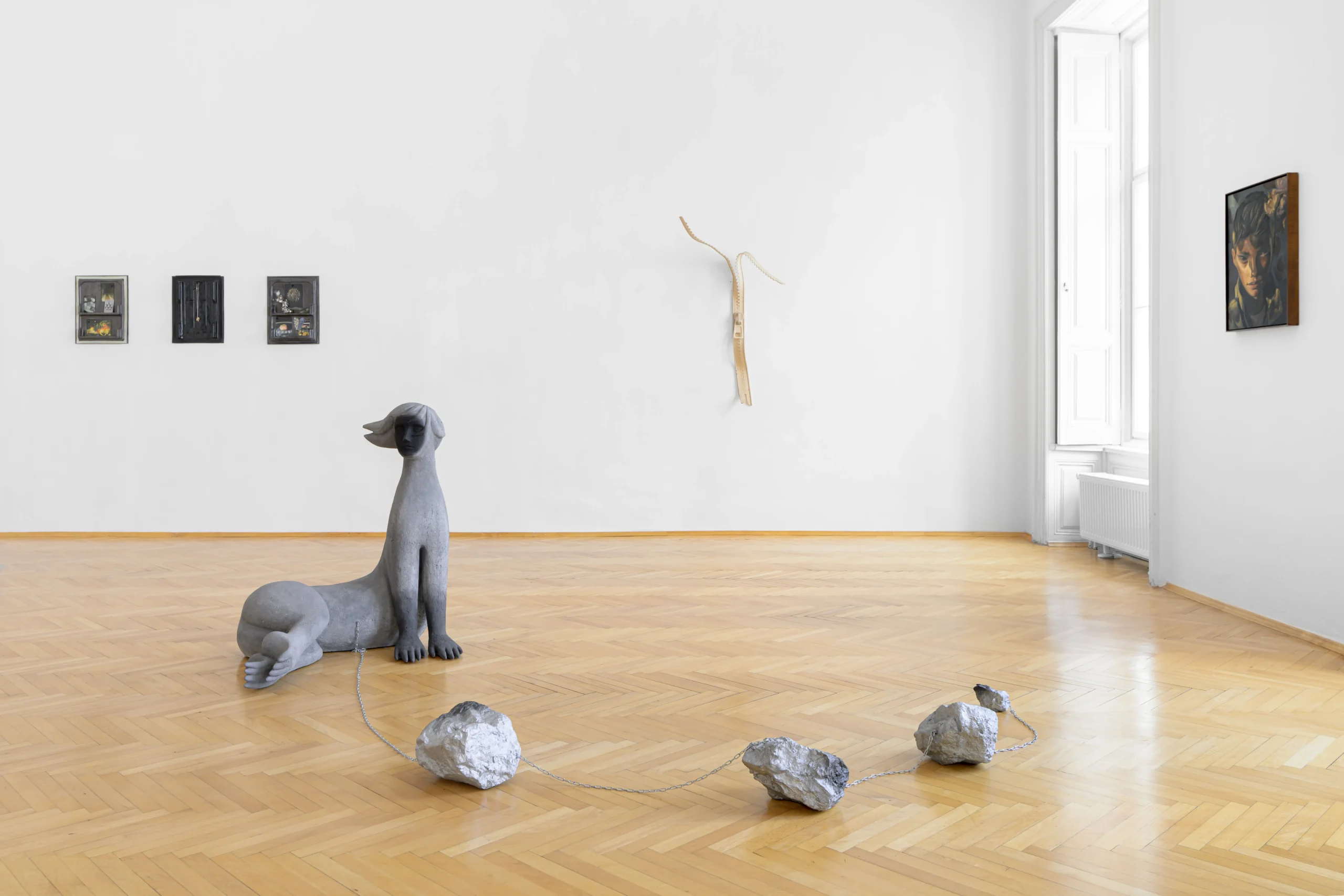
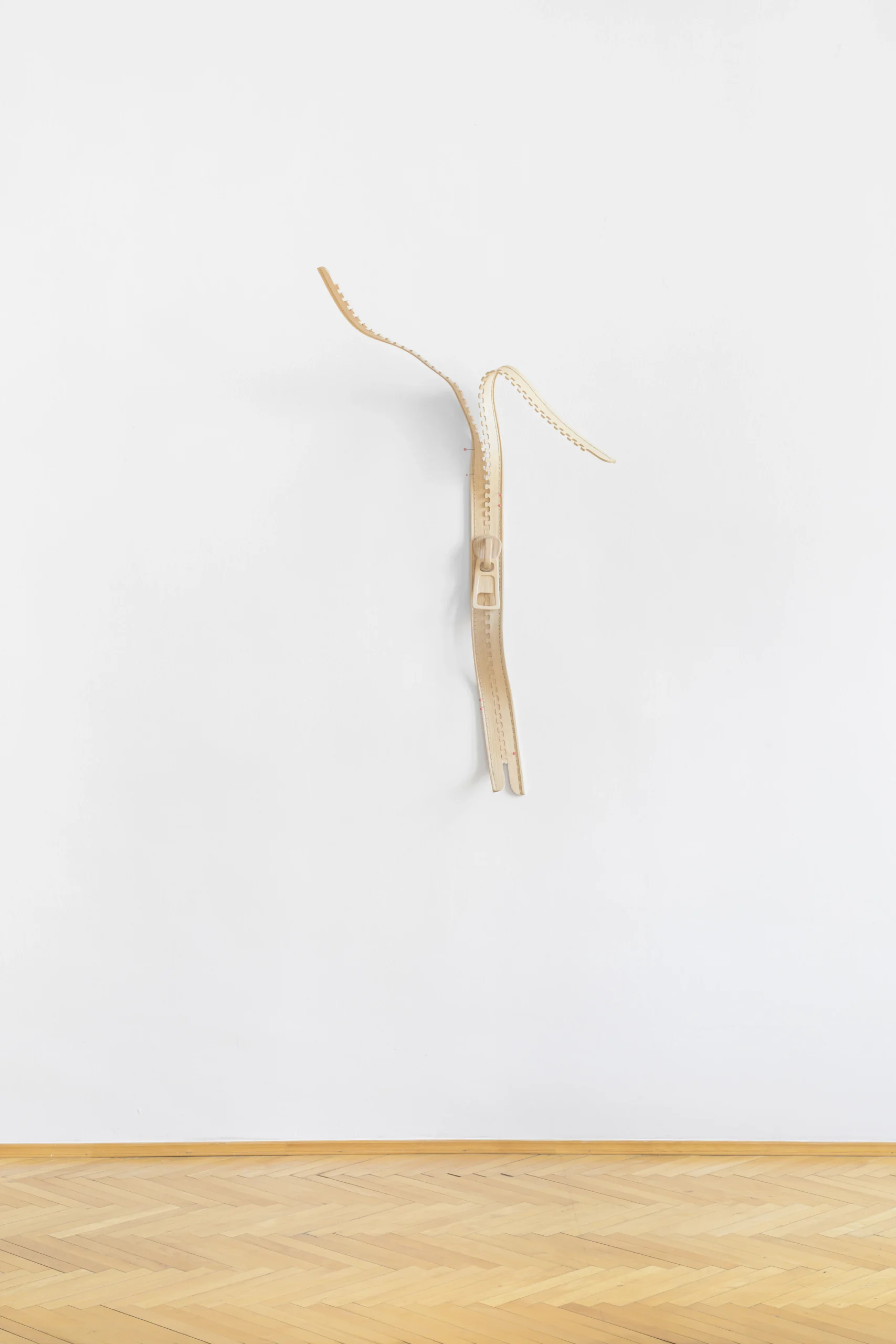
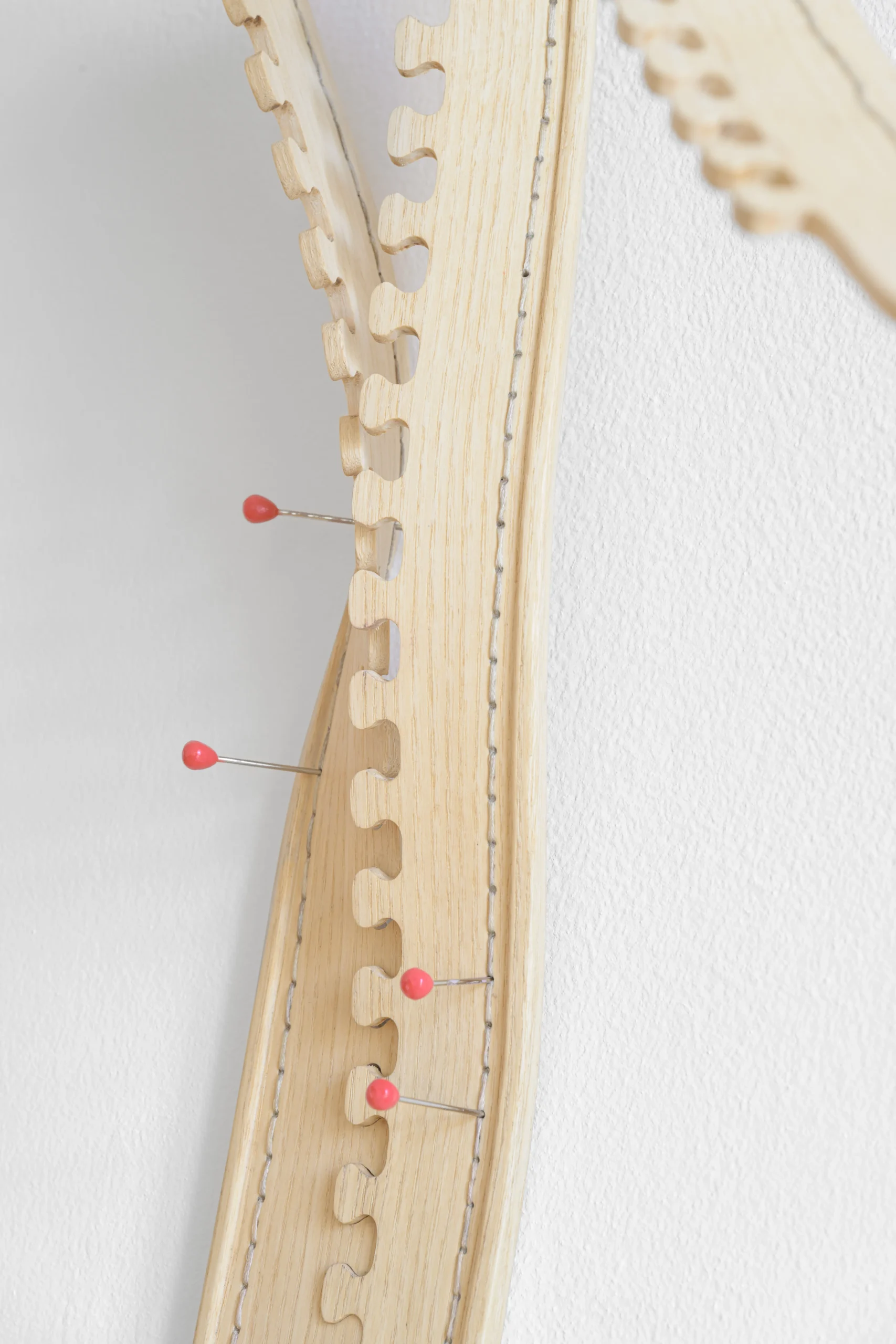
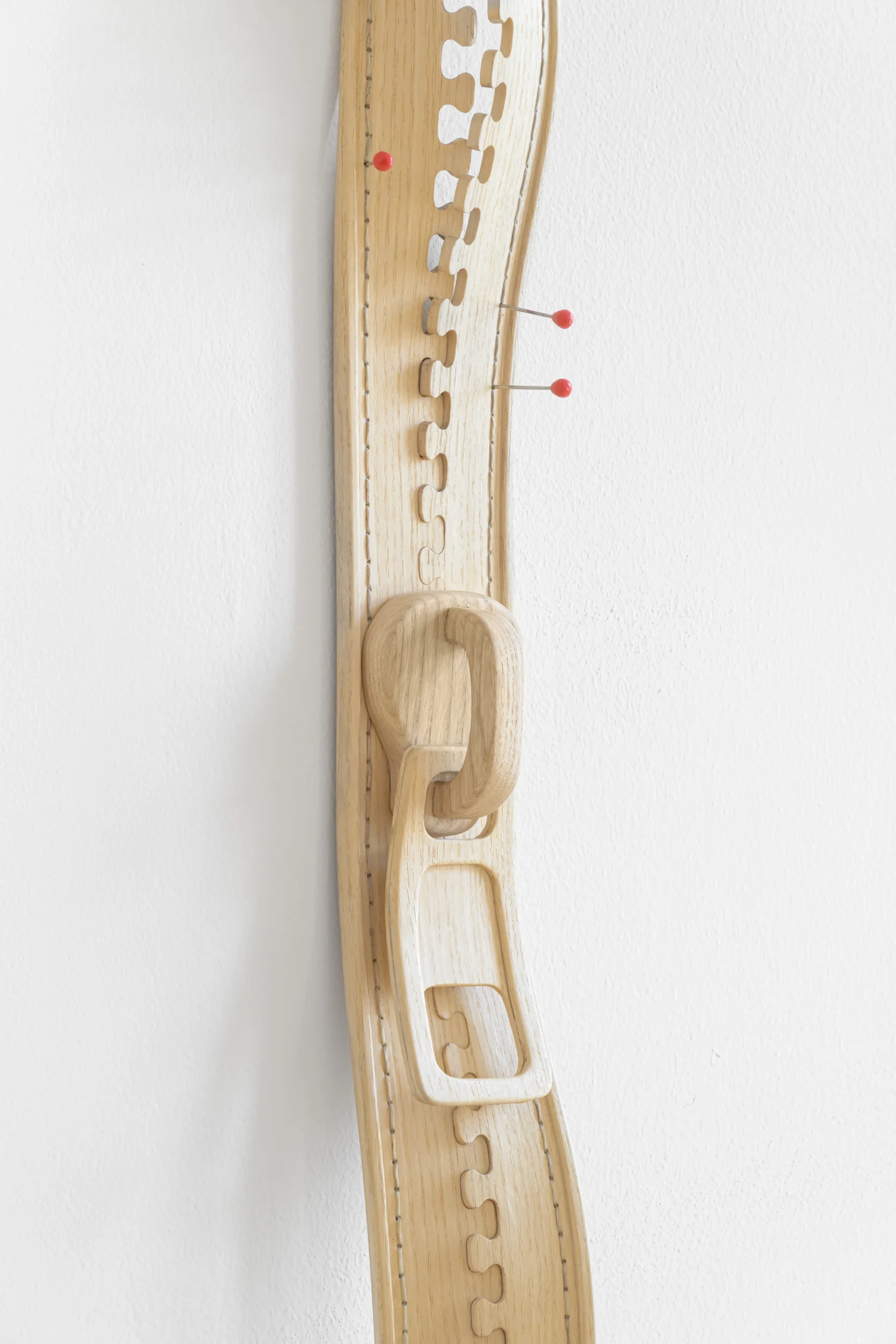
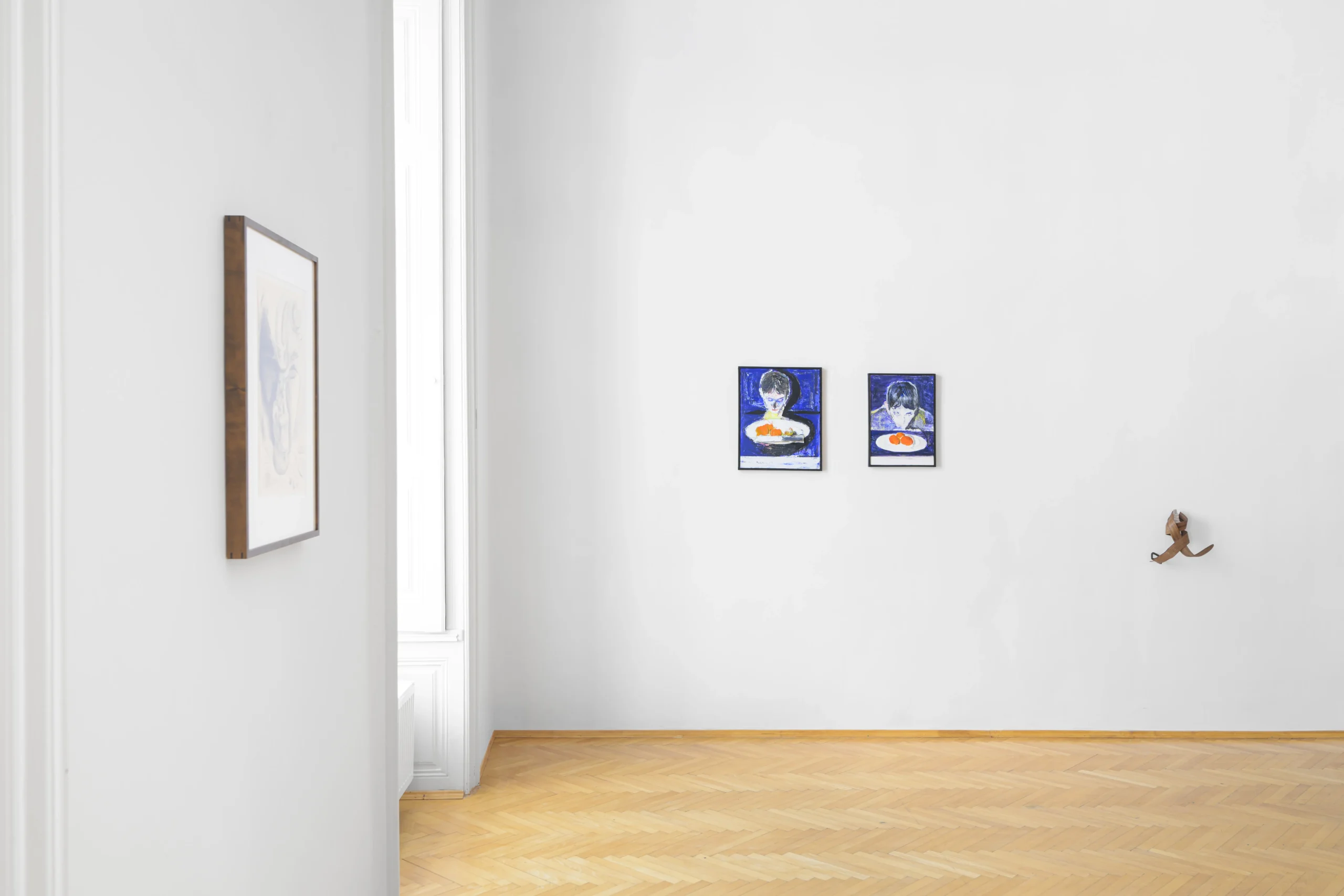
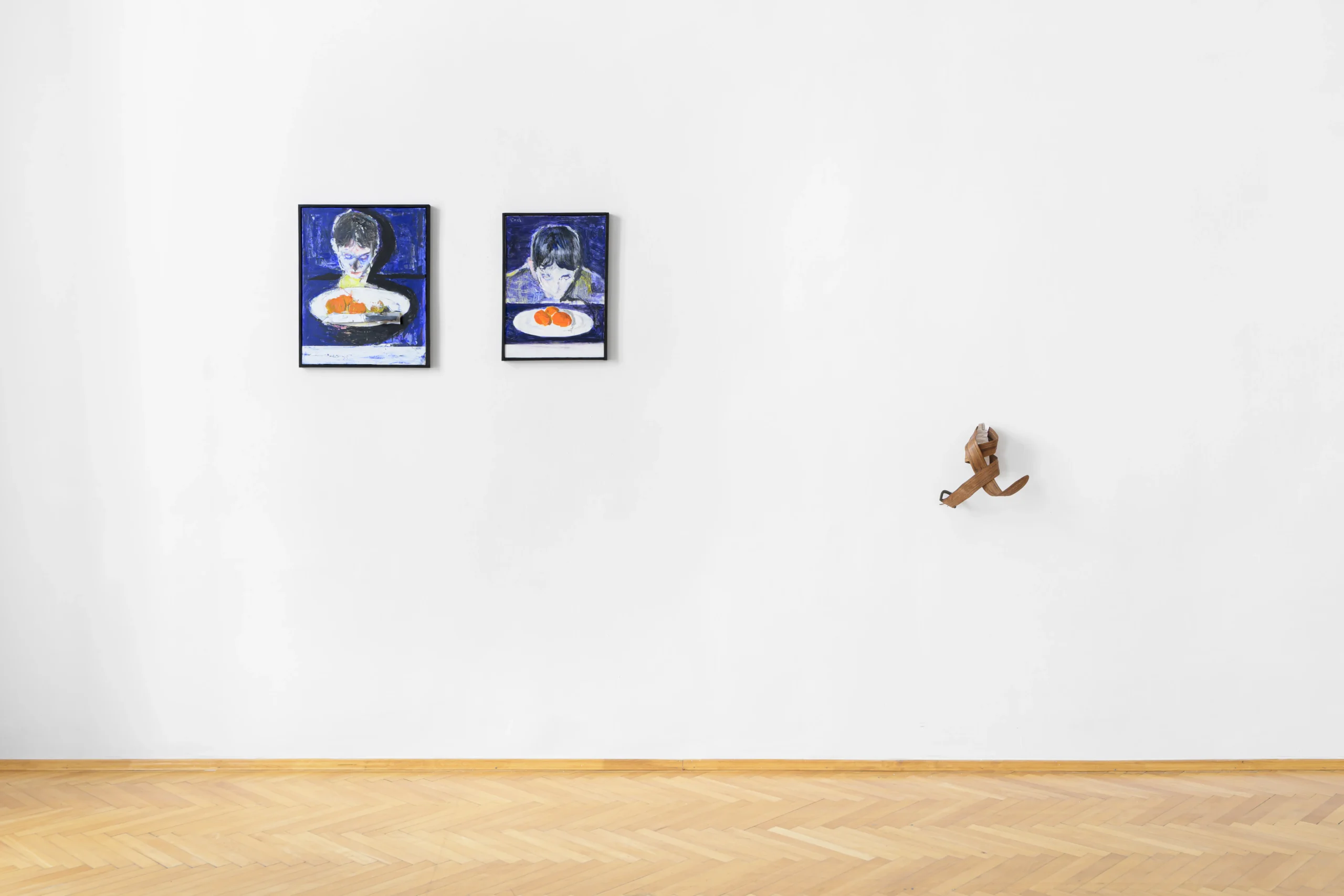
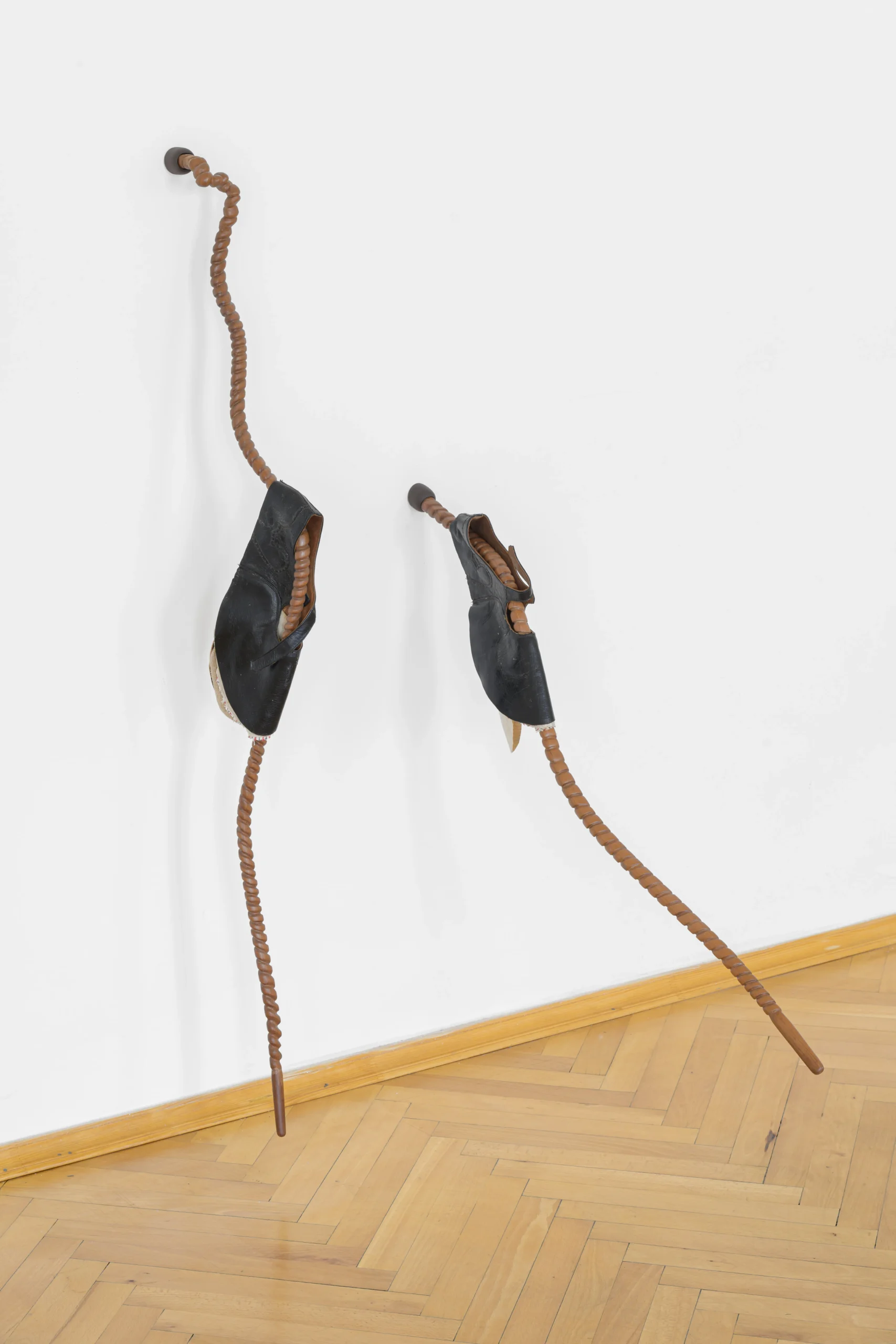
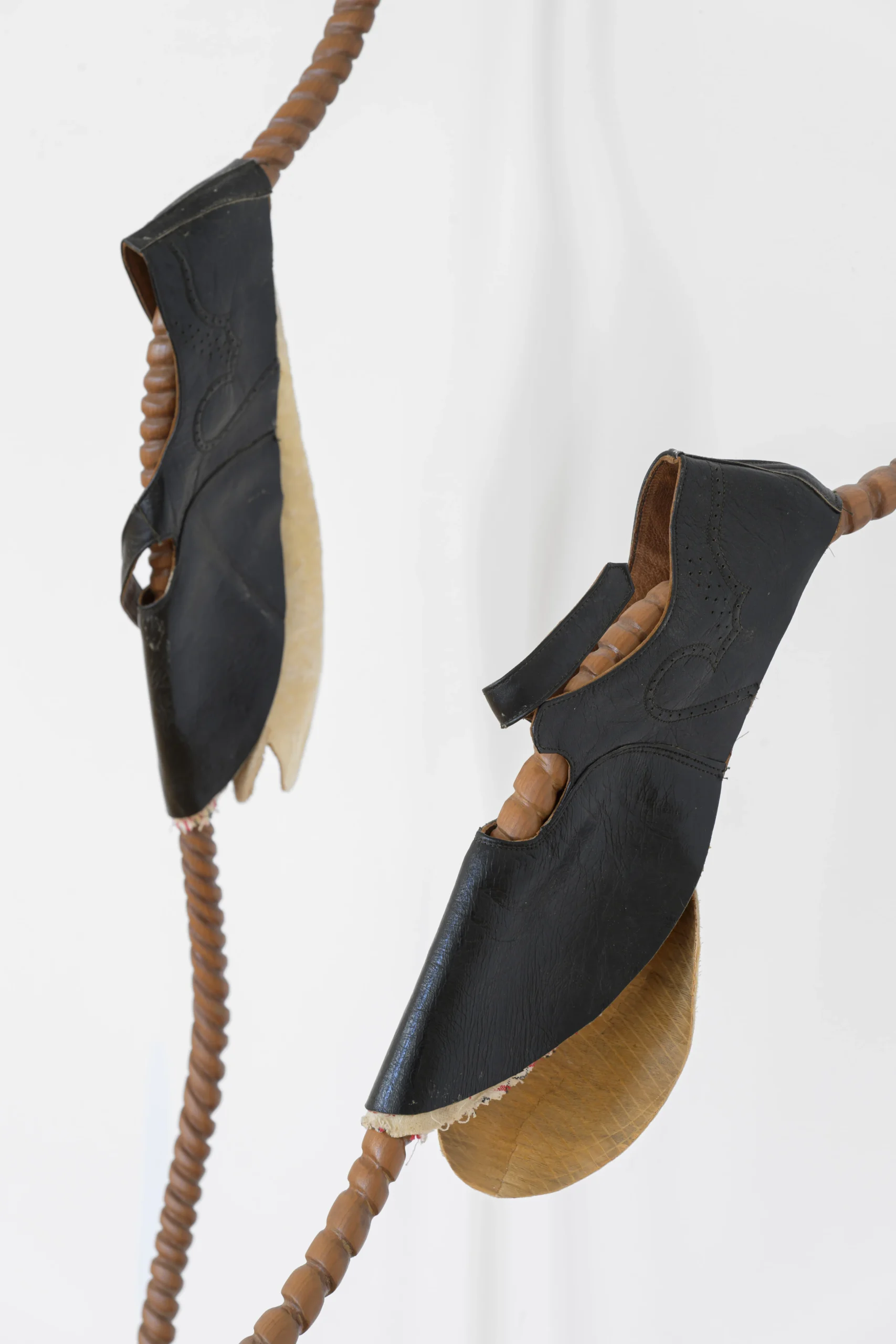
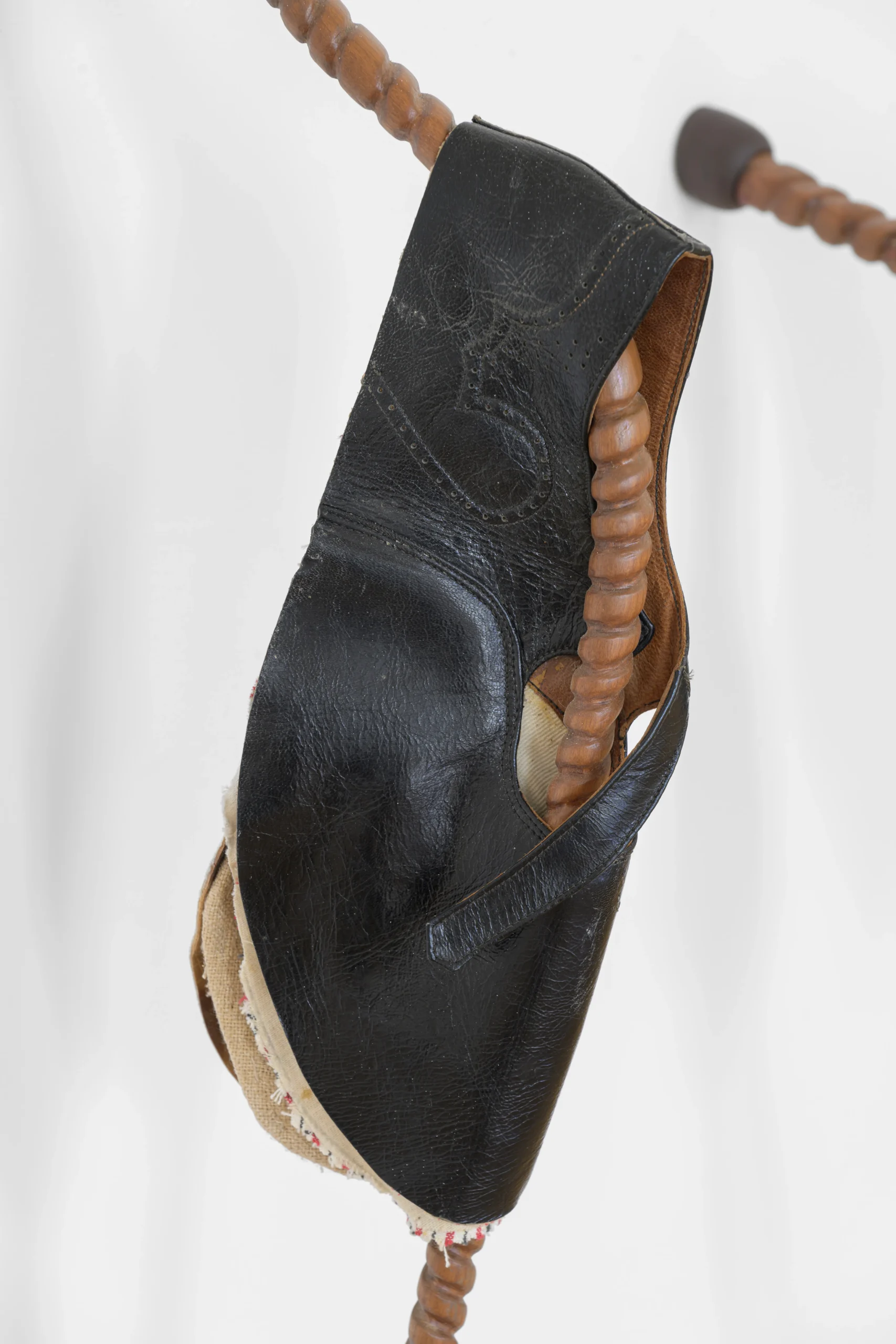
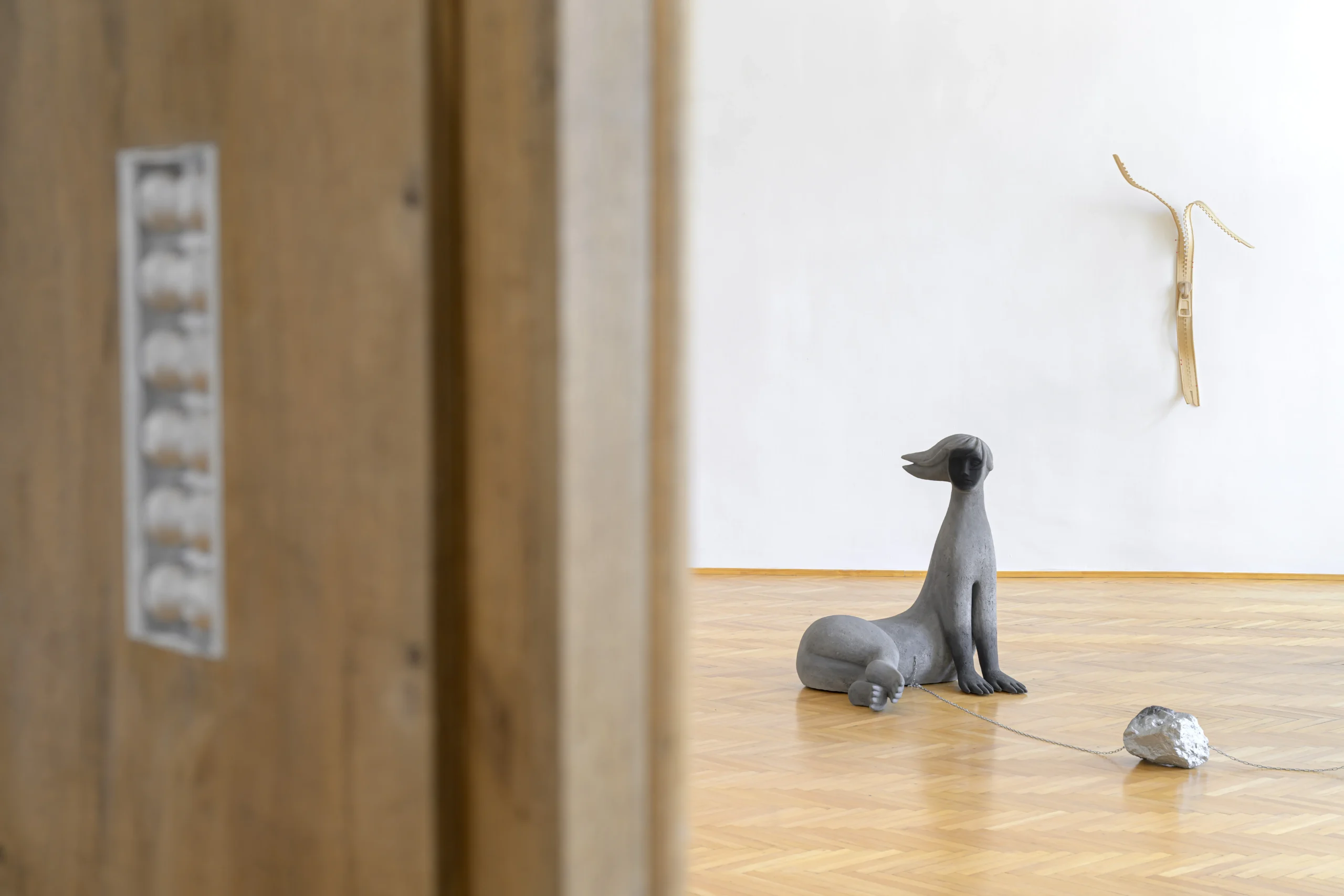
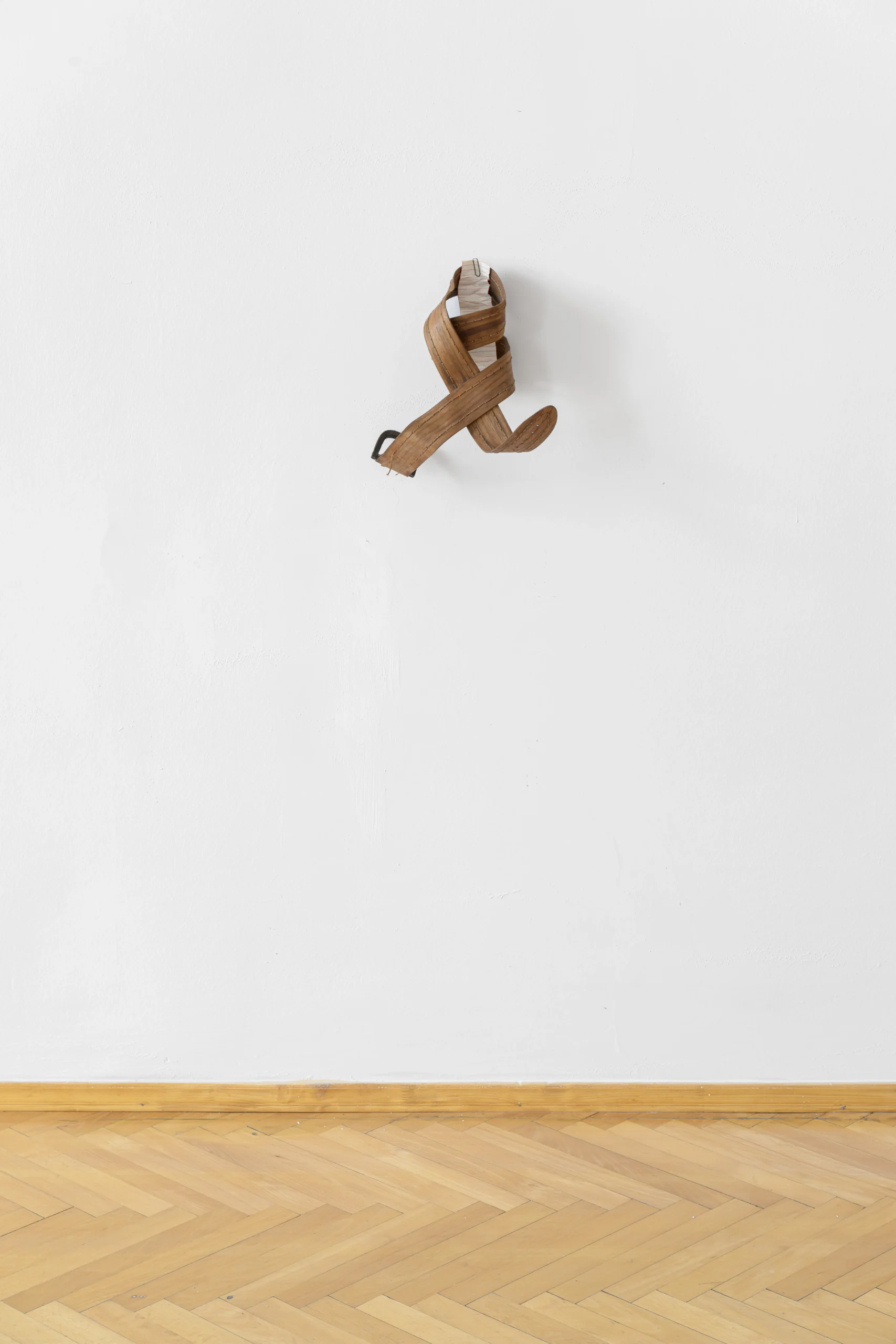
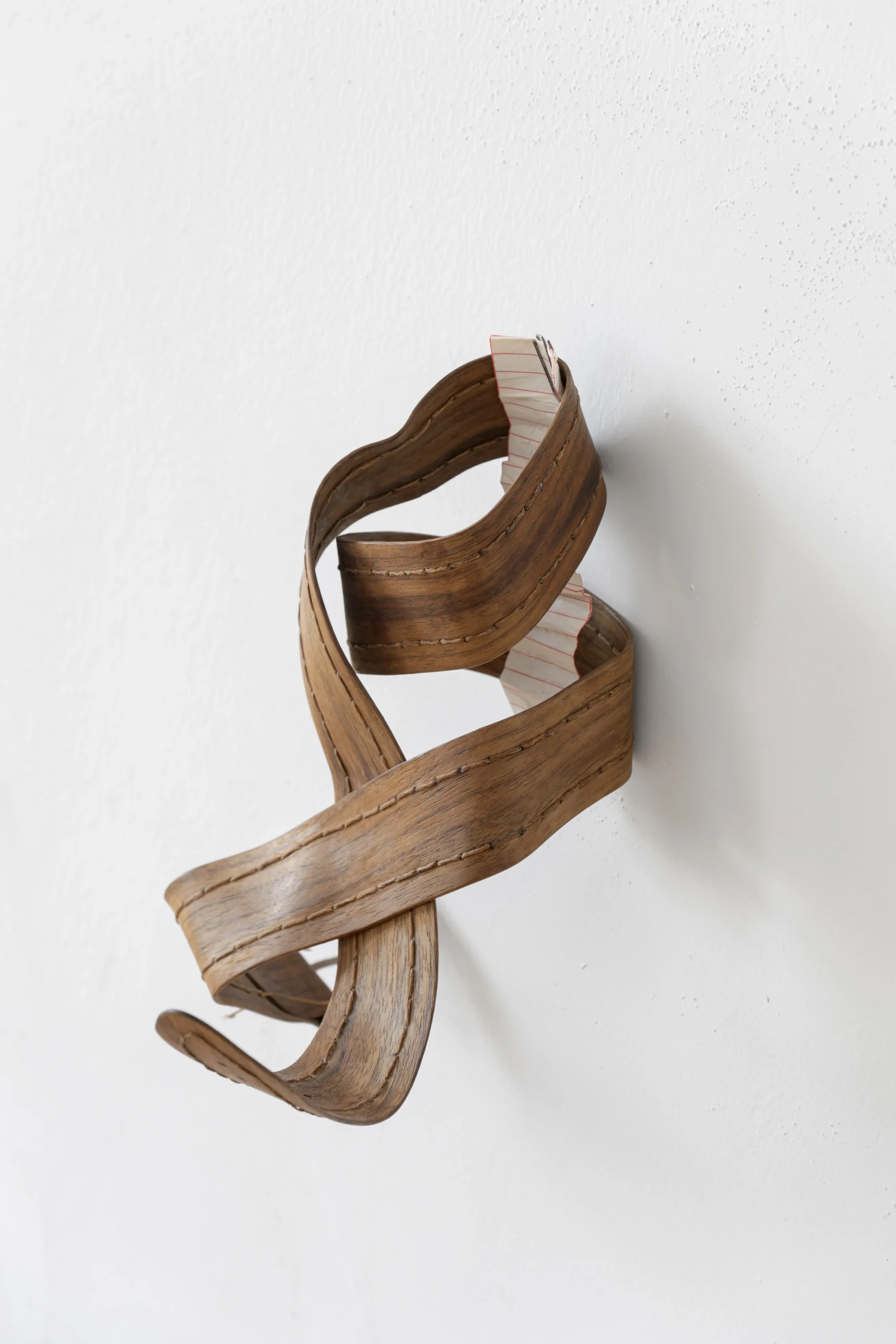
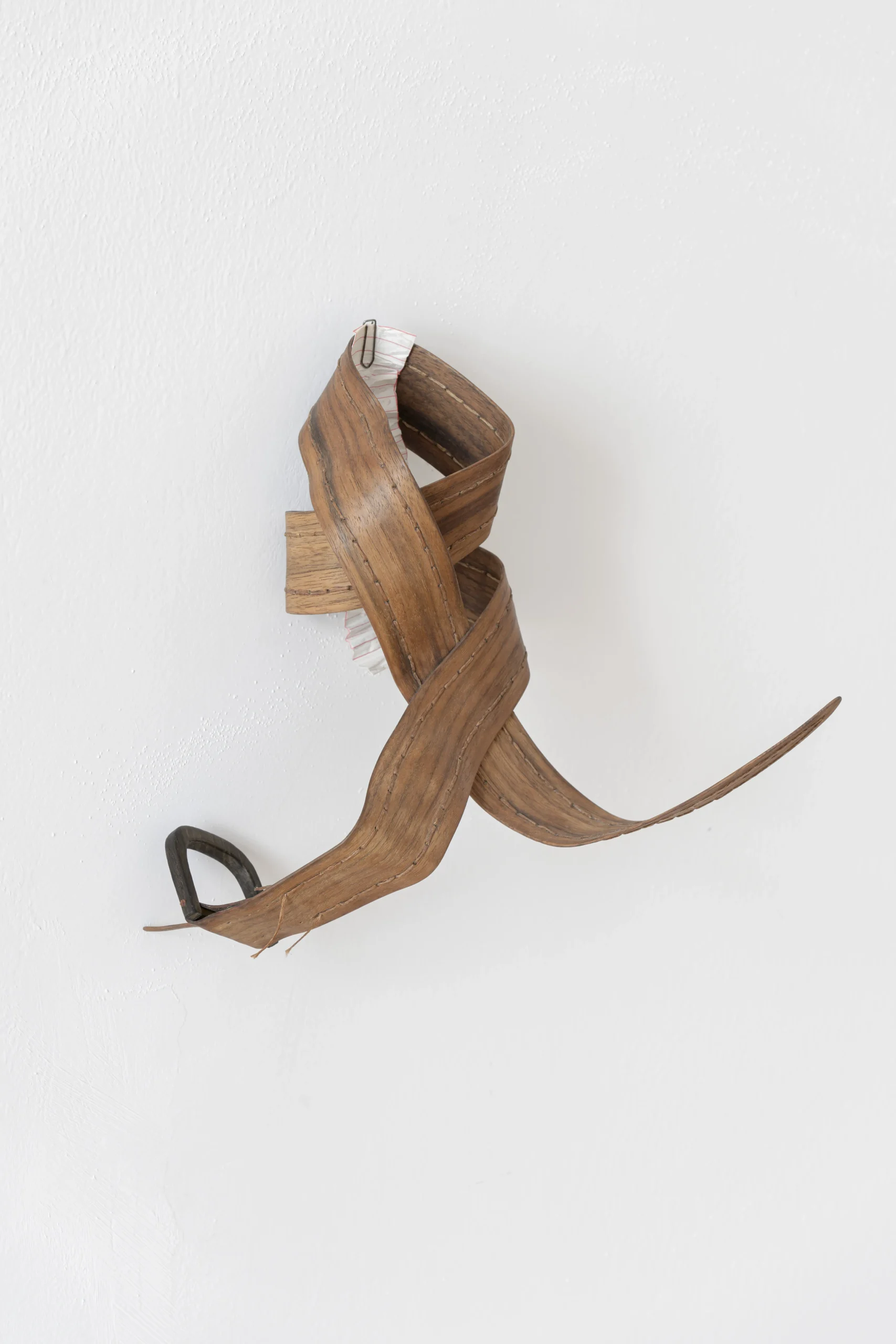
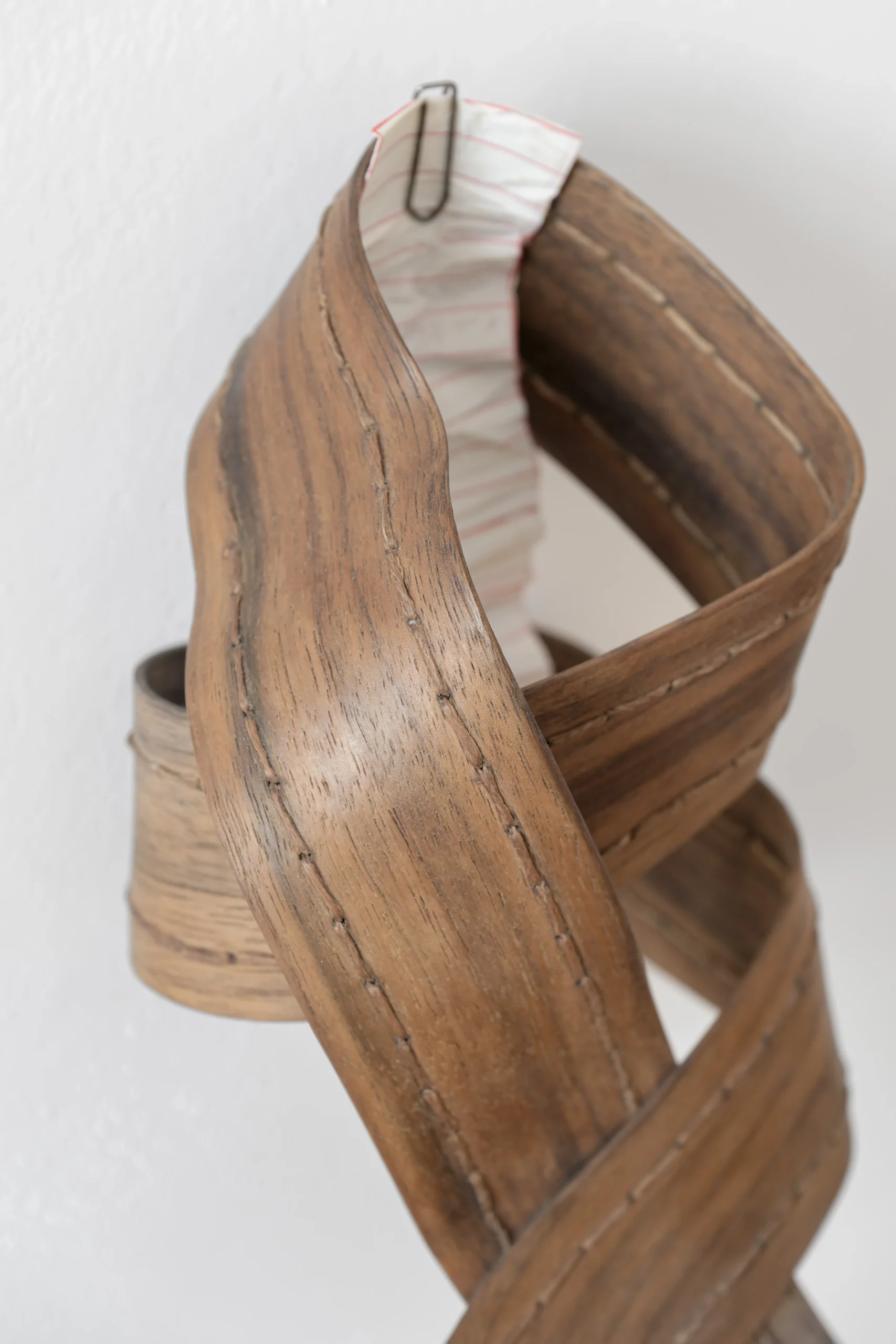
Tobias Izsó (b. 1997, Vienna) works across a range of technological and media approaches, recently focusing primarily on sculpture and installation. As a sensitive observer of his immediate environment, he transforms and recontextualises everyday objects, including pieces of clothing or furniture, into surreal, even slightly troubling forms. What is intimately familiar is transformed by the artist’s reinterpretation into something unstable and hybrid. Izsó’s wooden objects gradually develop their own autonomy; their materiality, static form, and original function all change. We observe a belt, frozen in space, concealing a ‘cheat sheet’, a childish transgression folded quietly into bourgeois society. Even shoelaces and monumental zippers transform, grow, and come to life, spreading out like organic systems that evoke intimacy and moments of vulnerability. Undeniably, Izsó’s objects are influenced by the aesthetics of traditional Viennese café interiors; they systematically subvert expectations associated with their materials or social attributes.
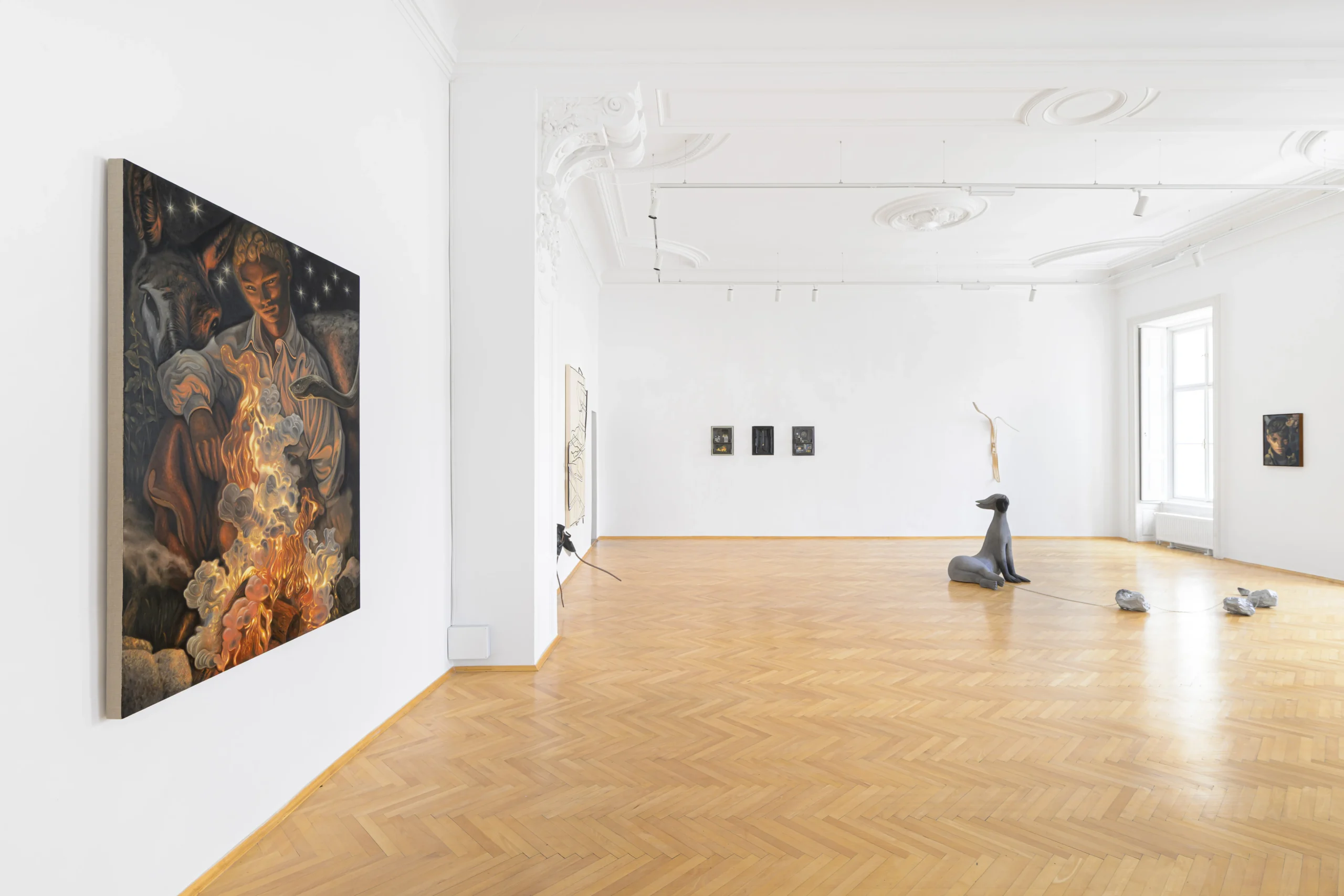
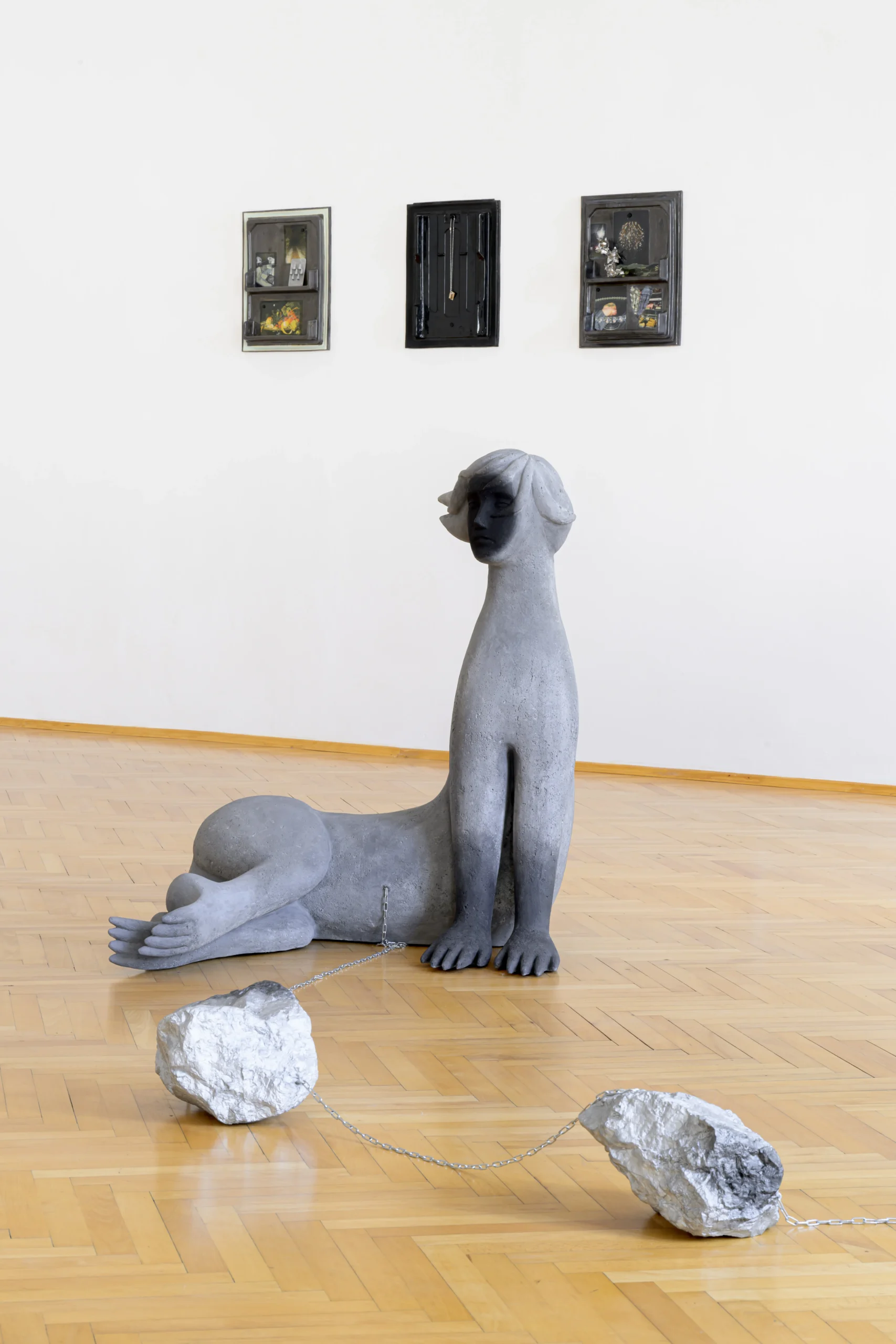
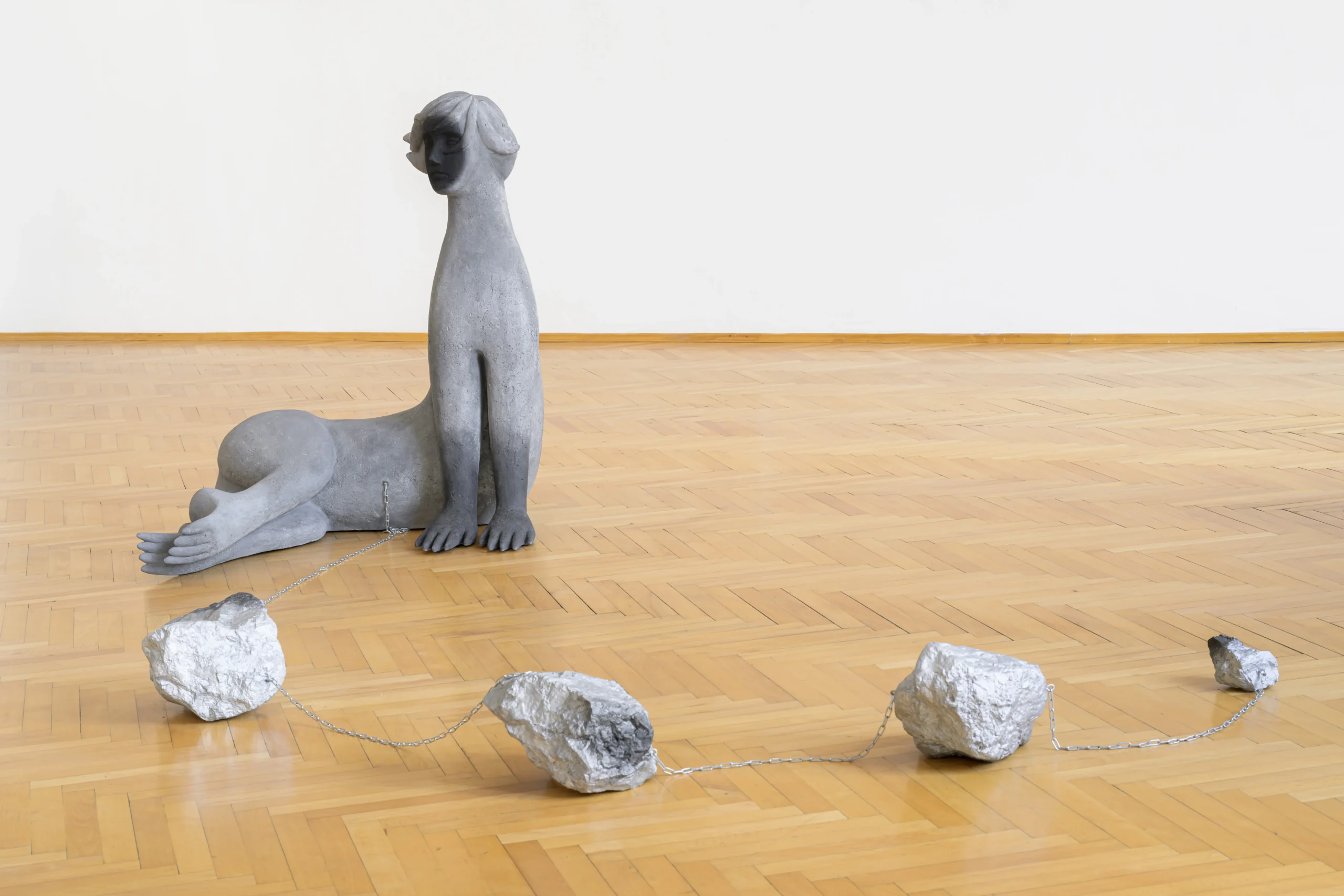
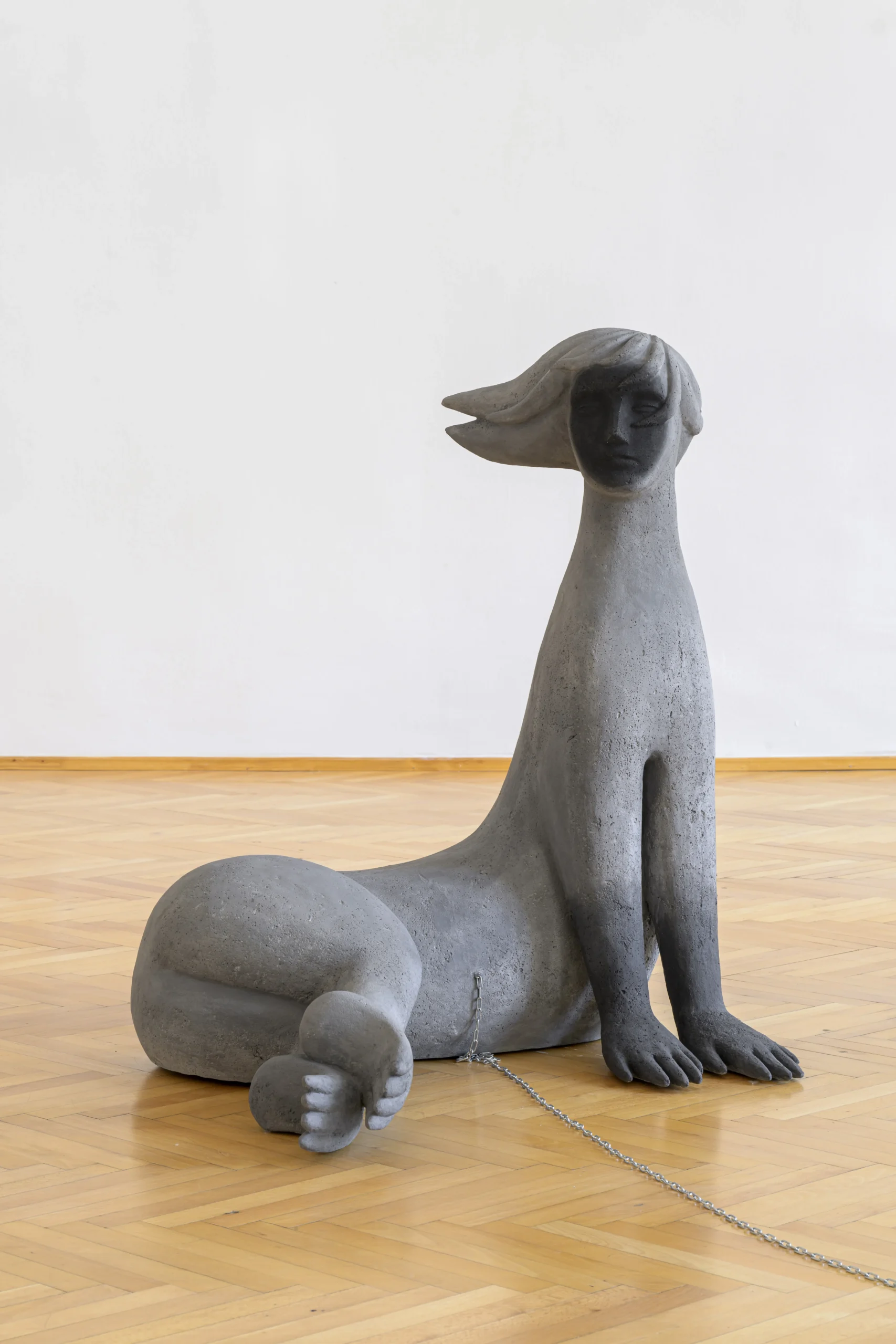
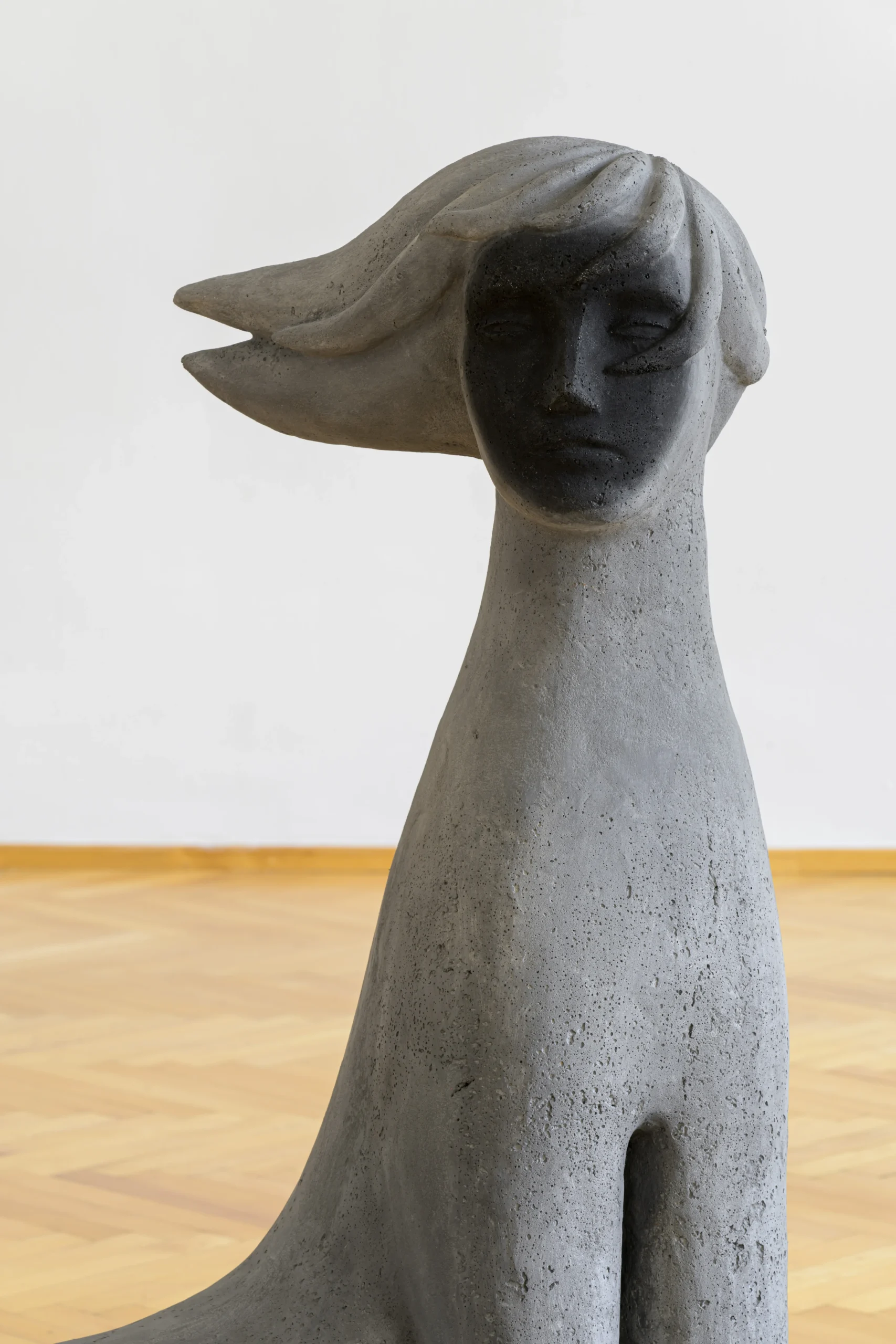
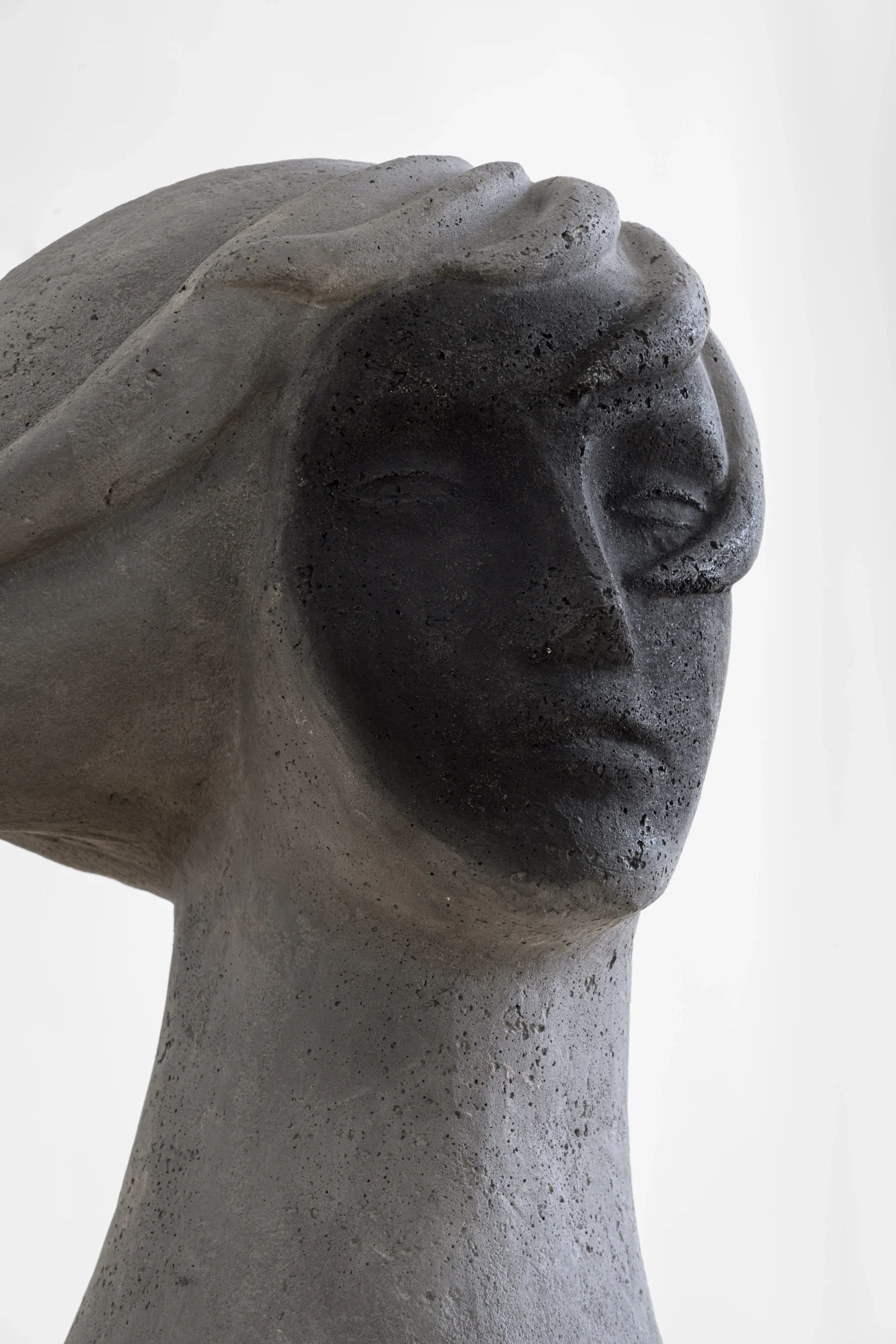
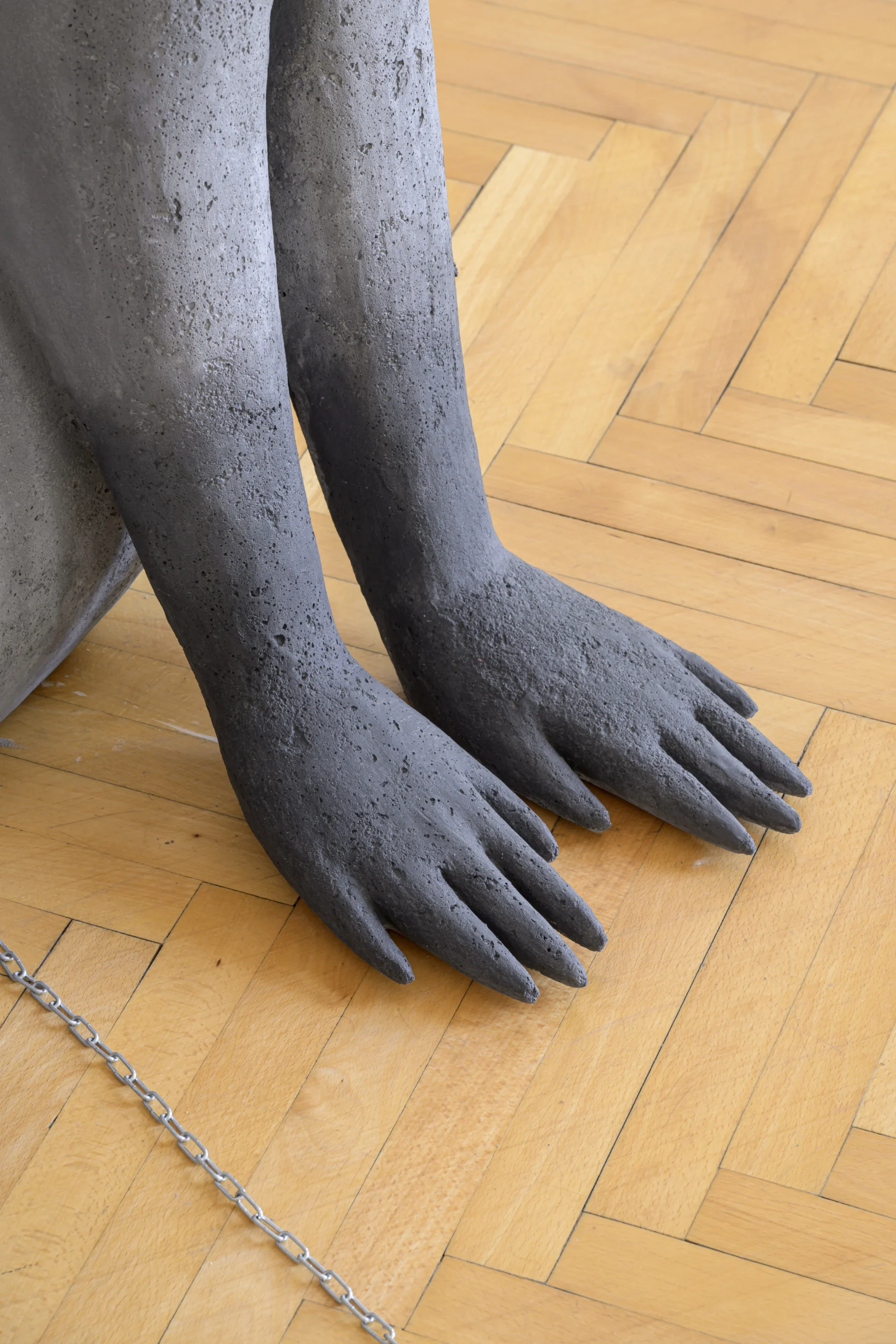
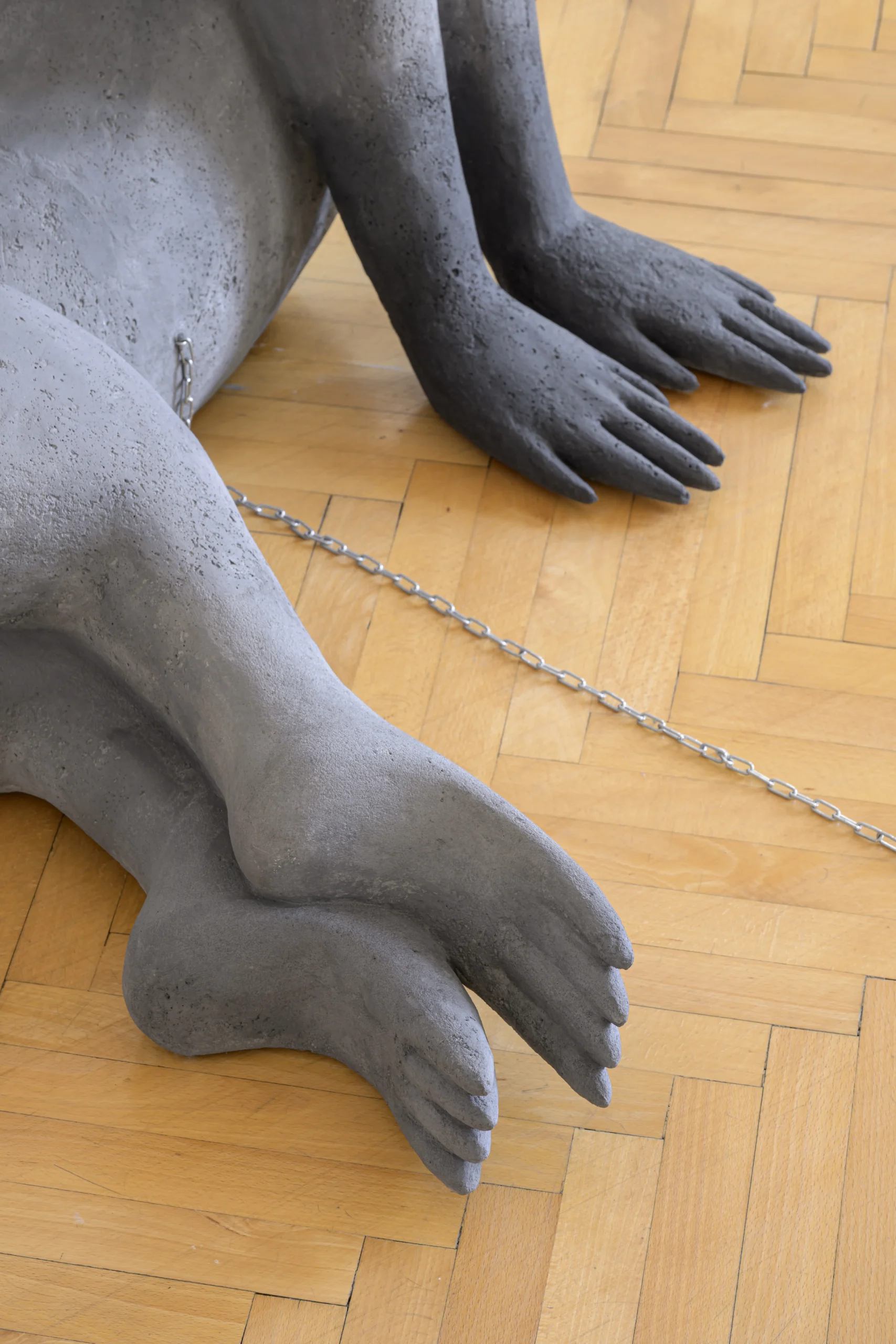
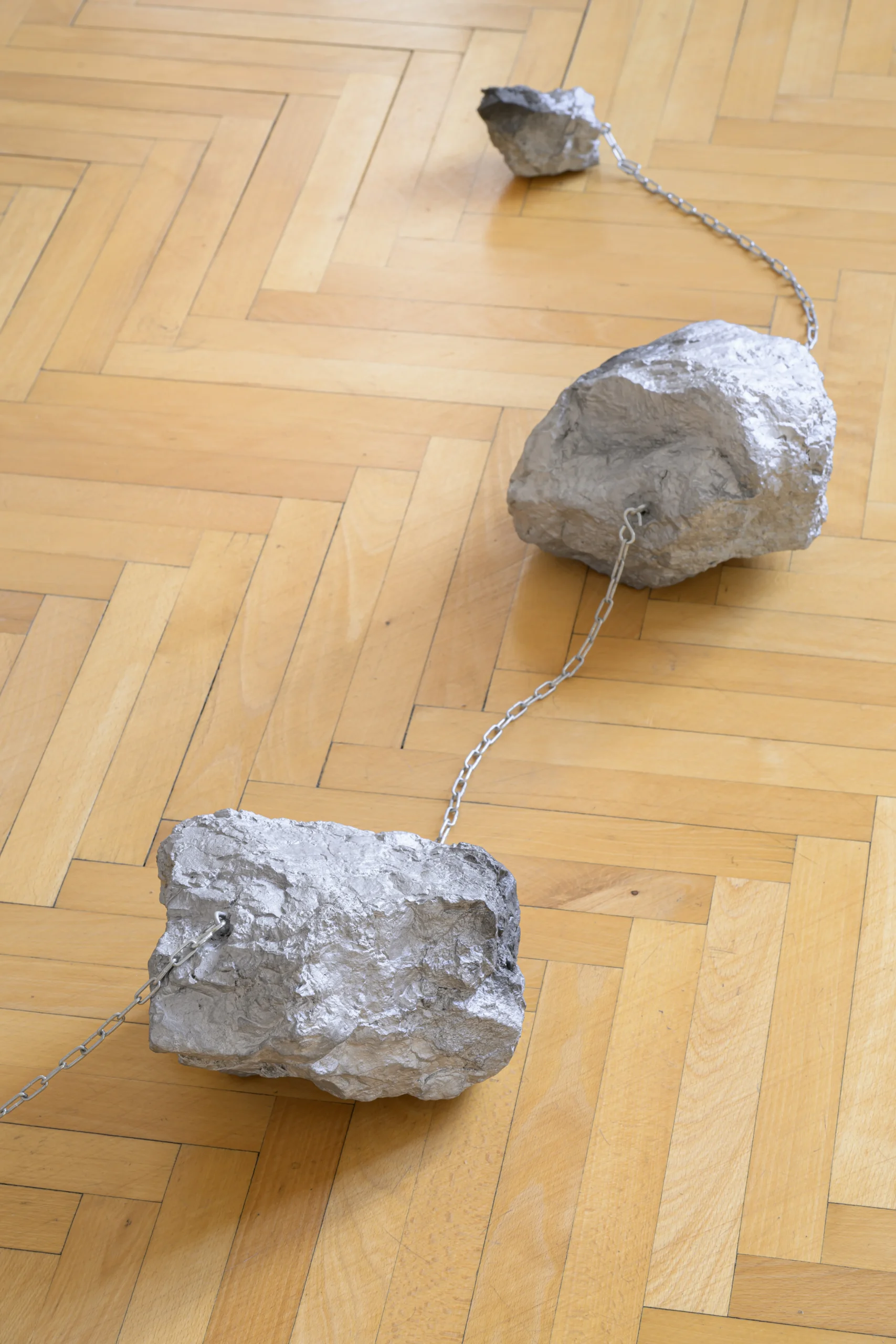
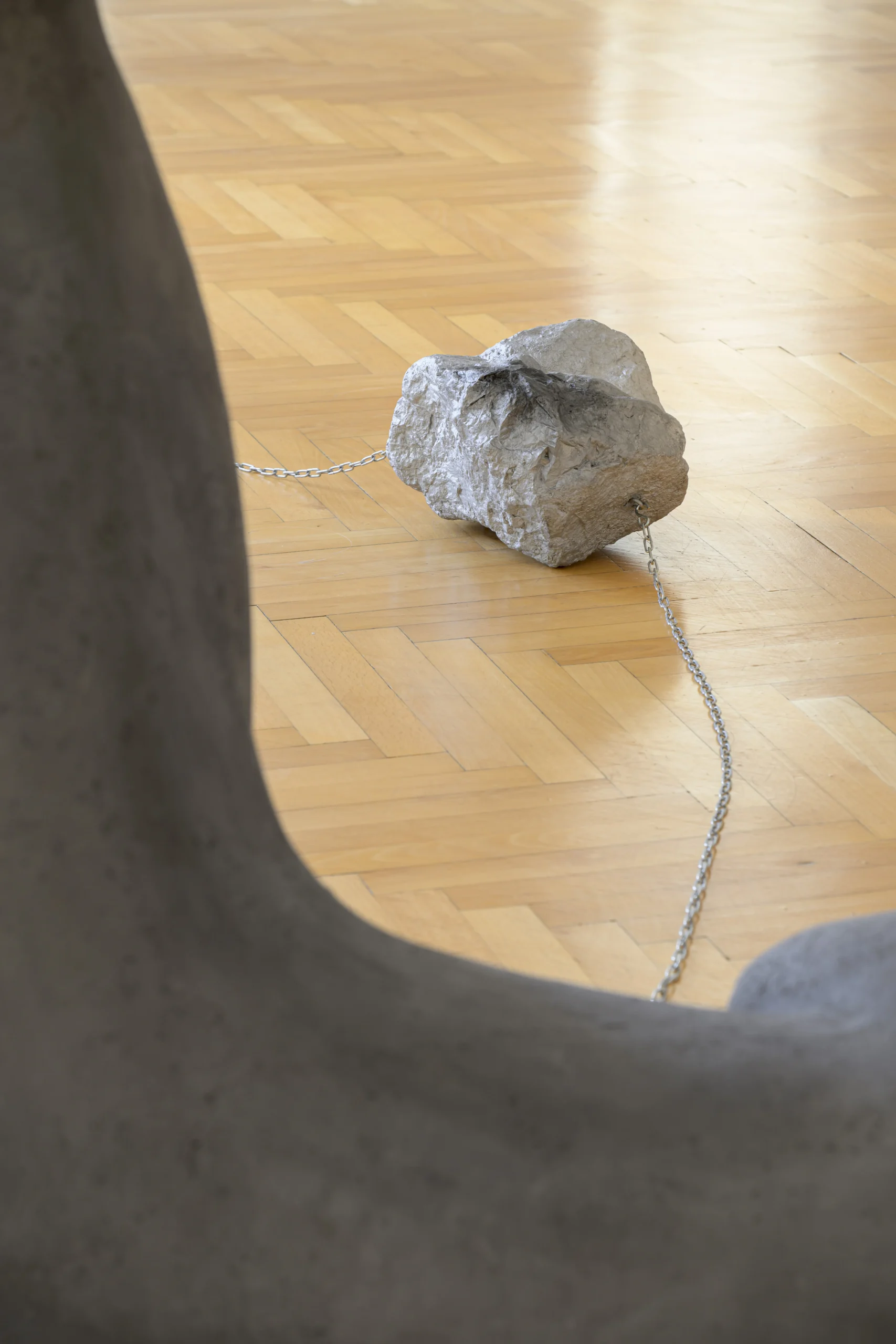
The works of Sabina Knetlová (b. 1996, Jaroměř; lives in Ostrava) depict stylised figures that straddle the boundaries between mythological, human and animal forms. Her striking concrete sculptures, punctuated by coloured segments, draw on the formal principles of modernist sculpture while evoking archaic, almost ritualistic objects from an indeterminate past. The Weight of Past Decisions (2026) presents Knetlová’s characteristic hybrid human-animal figure—lying on the ground, bound by a chain and weighed down by stones. This simple yet powerful symbolism addresses the burden of the past, the irreversible, and physical and psychological experiences. In her recent work, a more literal approach to portraiture—previously absent—enters the artist’s oeuvre. These figures thus introduce a more personal dimension, utilising self-portraiture to explore further psychological layers.
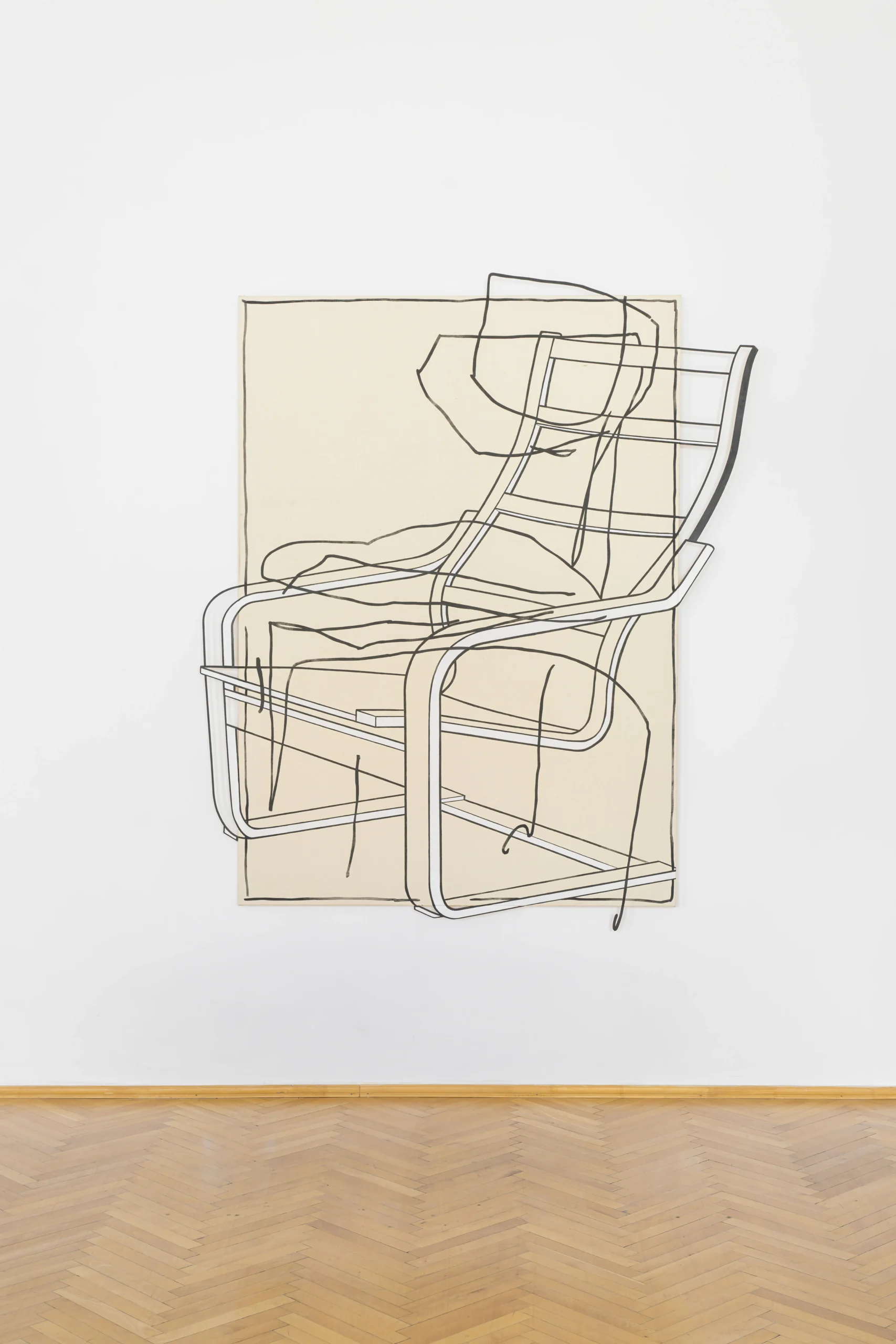
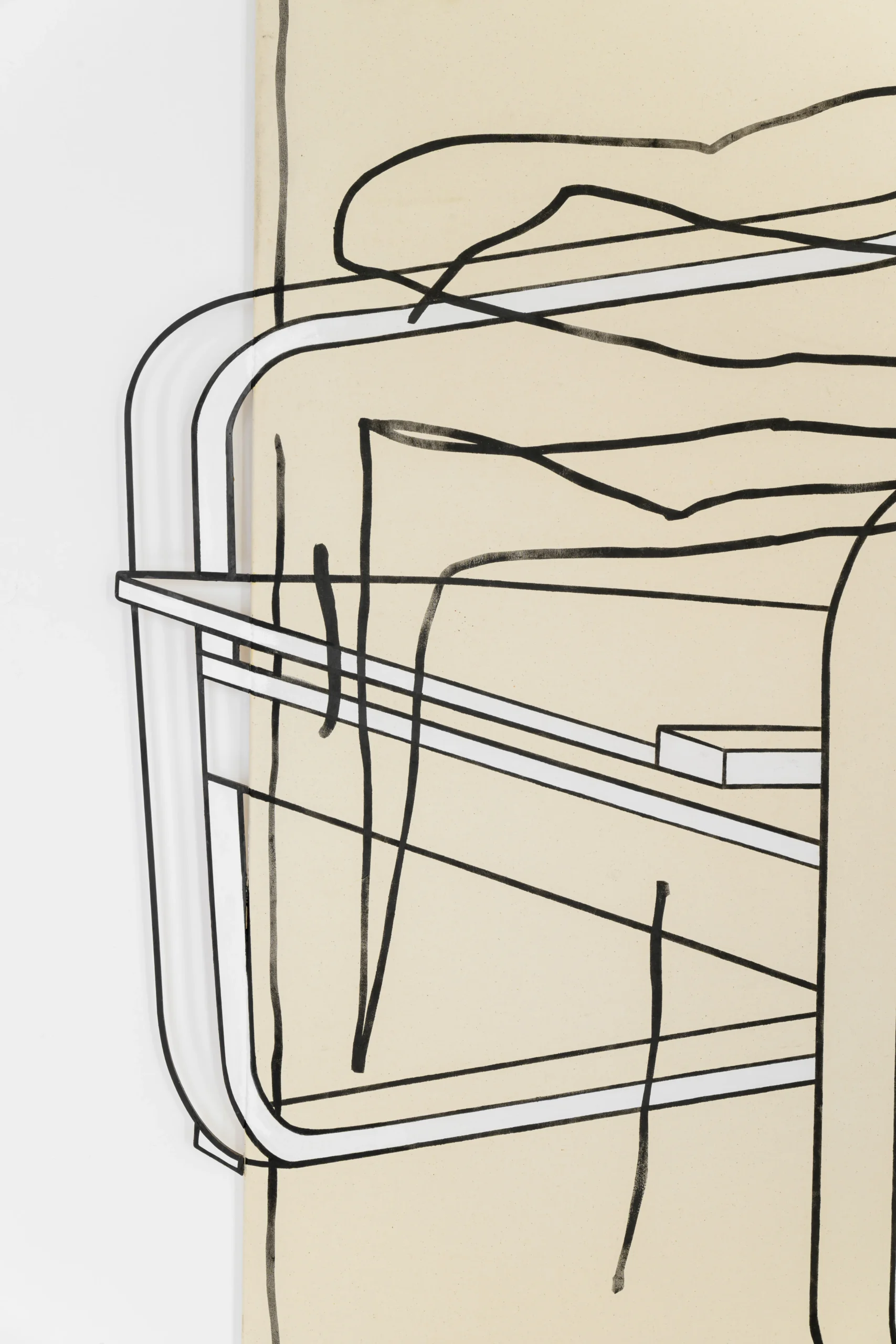
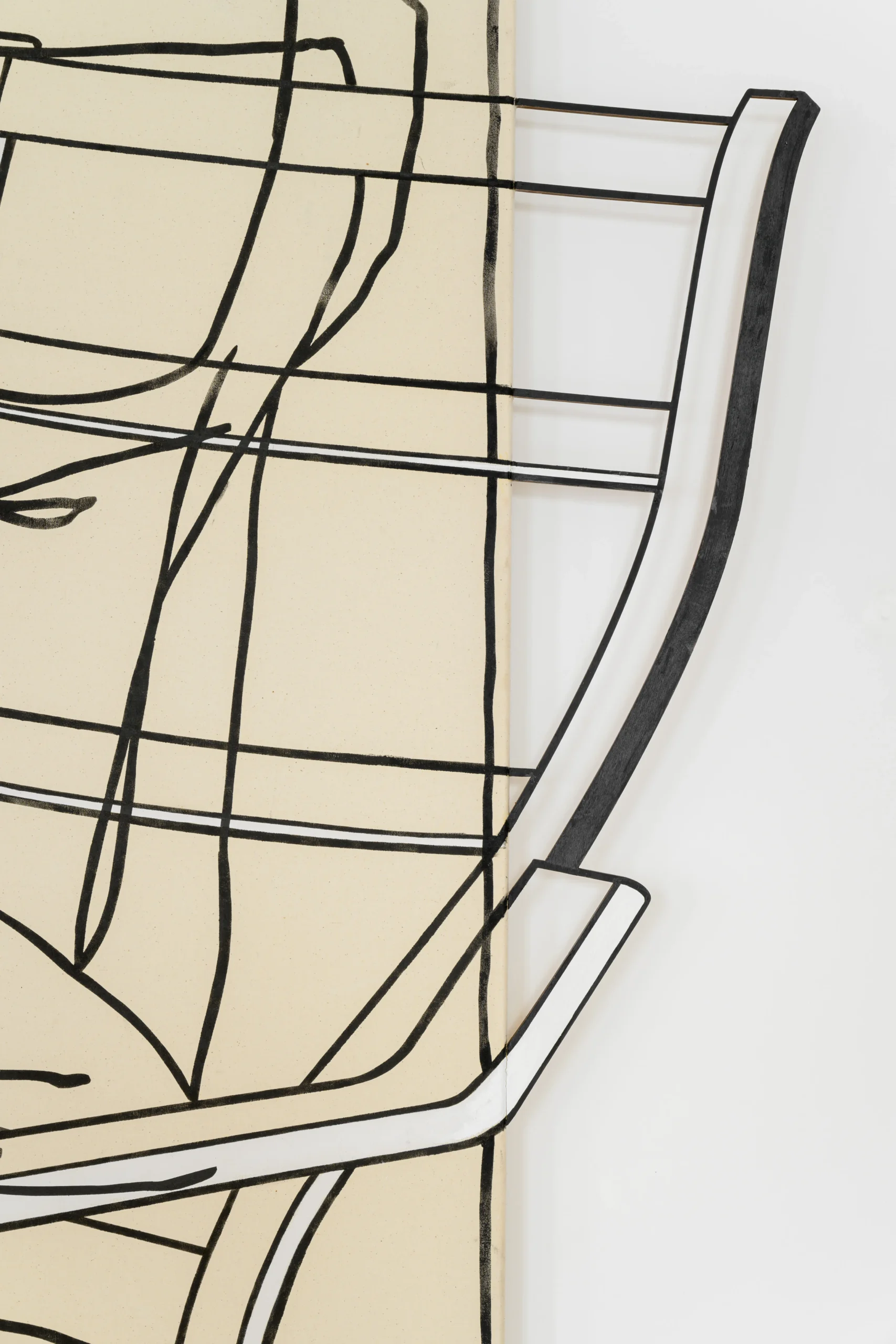
There are no attempts to replicate reality in the stylised chairs on the unvarnished natural canvases by German artist Oskar Rink (b. 1980, Leipzig); they are neither banal still lifes nor design objects. They symbolise portraits of loved ones and preserve traces of the people who once used them, recalling the situations they experienced and the experiences that shaped the artist and accompanied her through various moments in her life. The minimalist work CR5 (Babo) (2022) formally oscillates between image and object, transcending both the semantic and physical space of the frame. In a simplified, almost sketch-like form, she depicts a chair by a well-known Swedish company. To her, it becomes a symbol of dependence and a false sense of intimacy. What appears to be comfort, control, or friendship is, in reality, only a fleeting illusion that quickly crumbles. The artist’s complete series presents various forms of seating furniture, all united by precise work in oil paint on raw canvas. Brushstrokes go beyond the surface; they seamlessly rise and step out from it, extending into the space in the form of carved wooden structures.
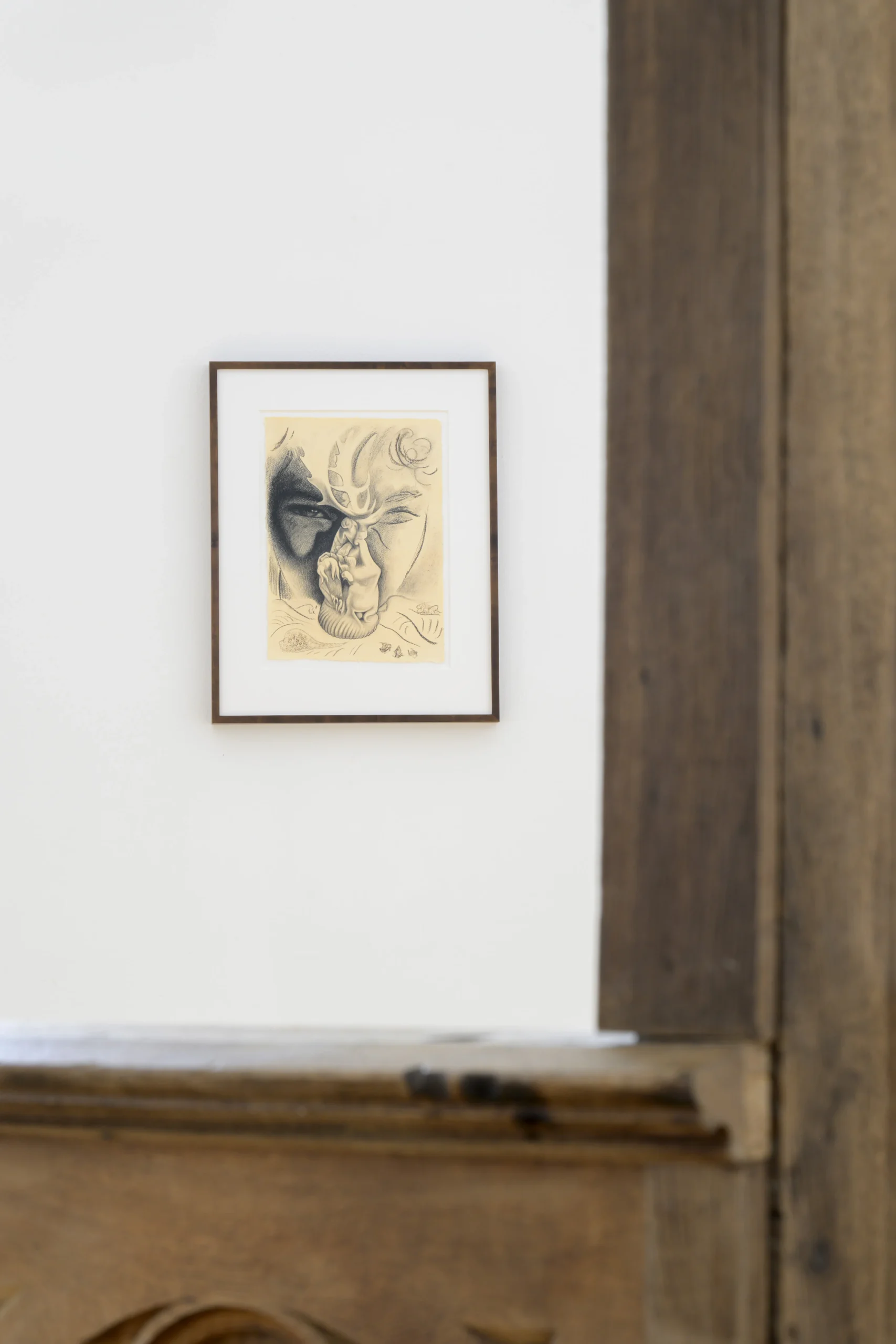
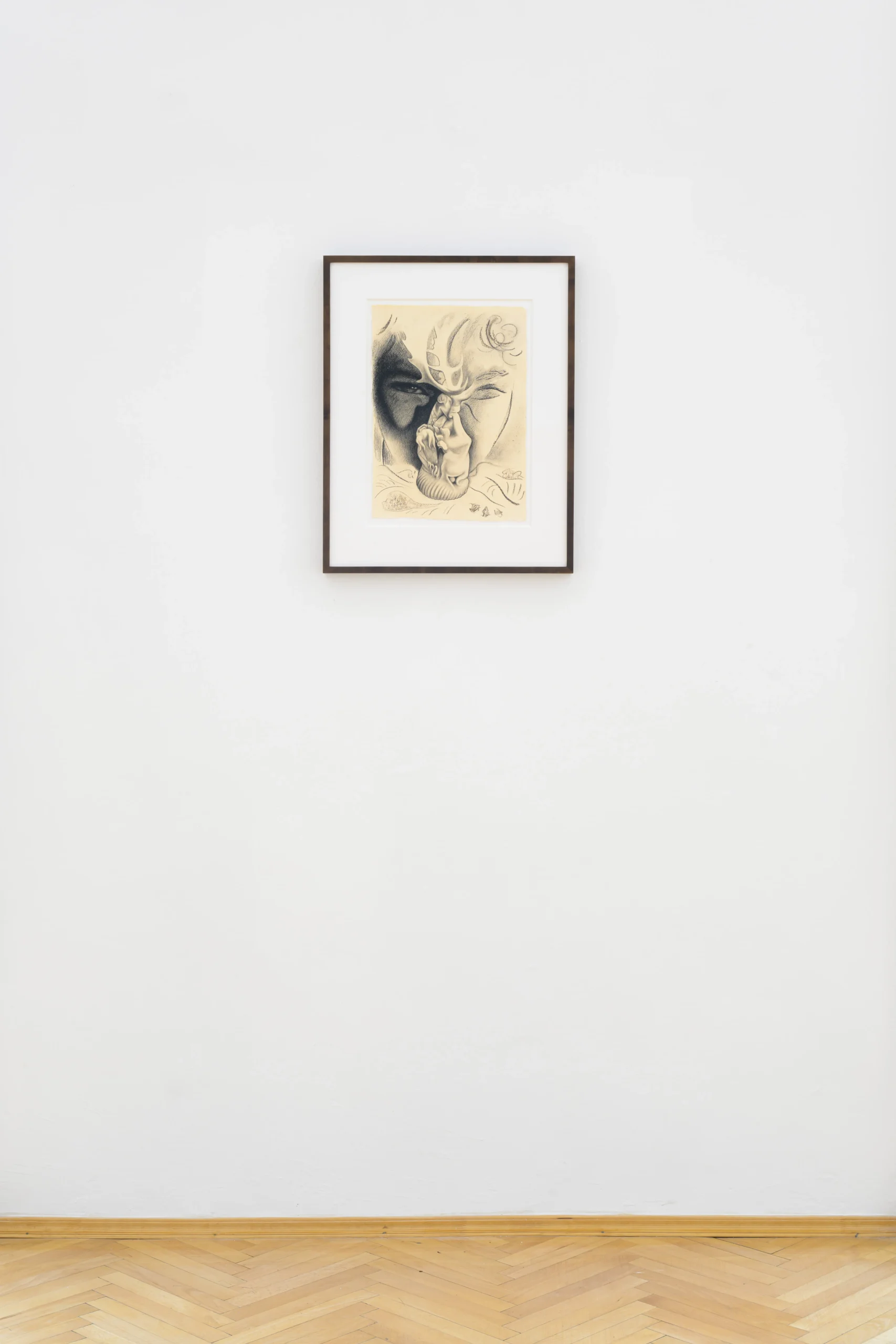
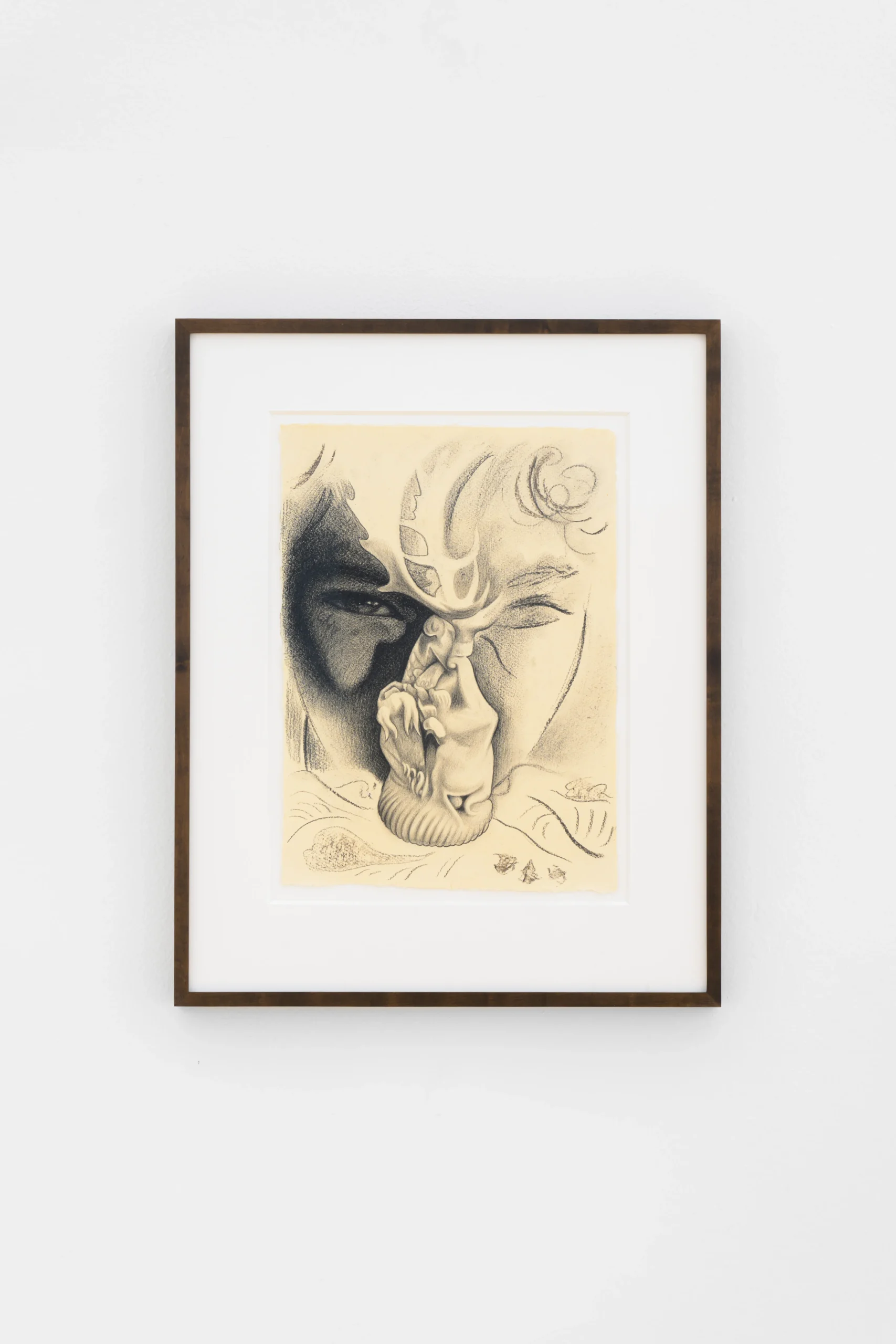
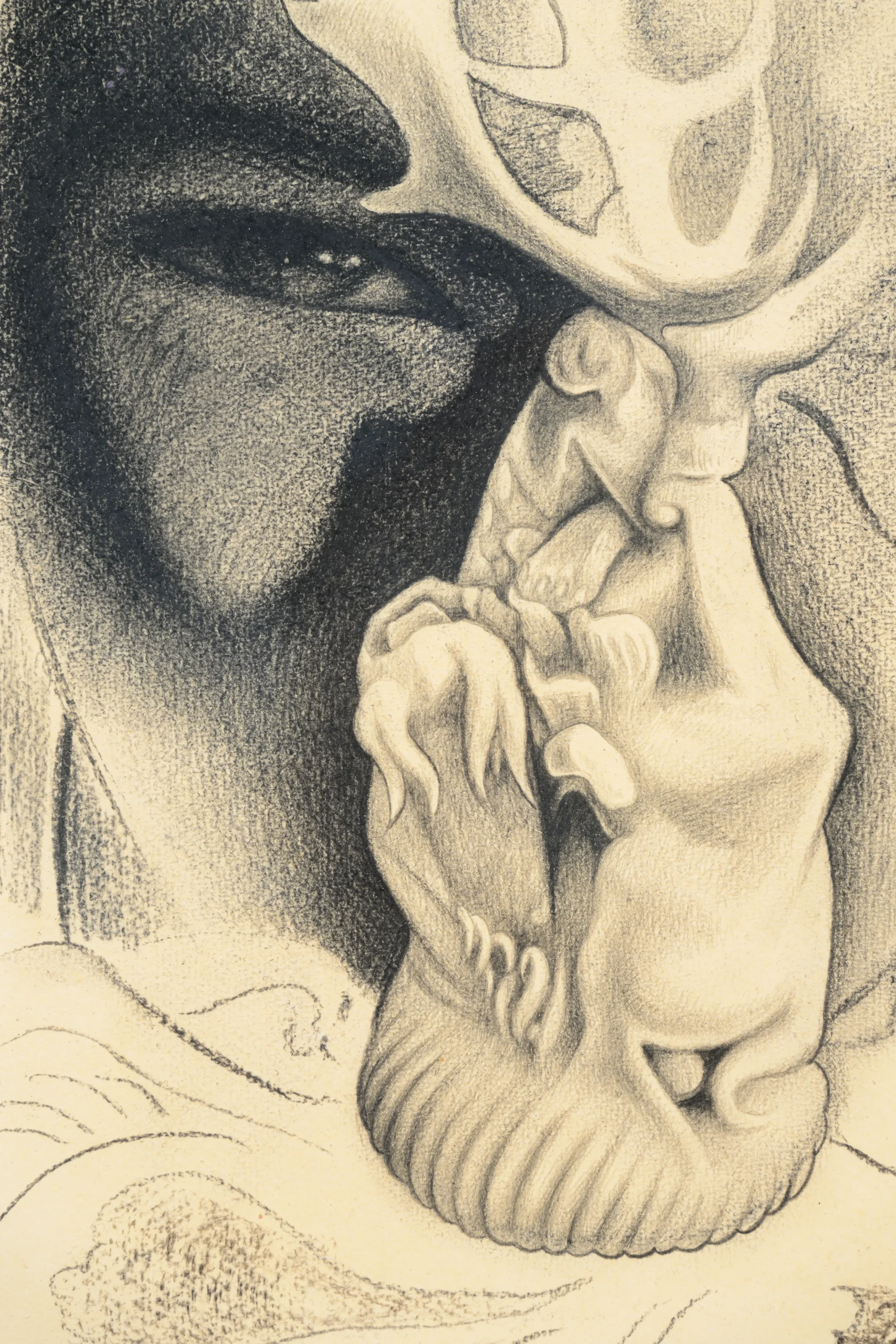
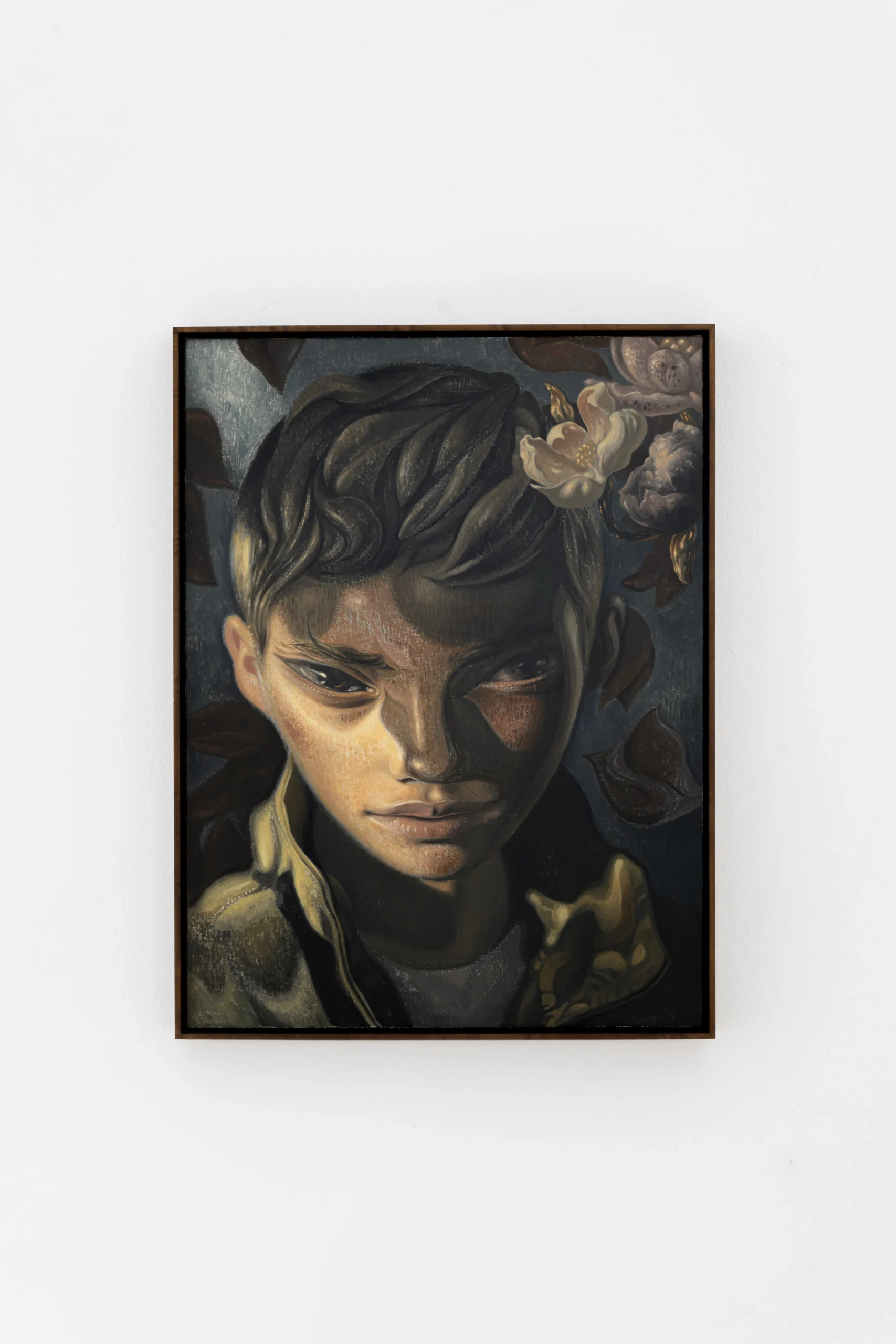
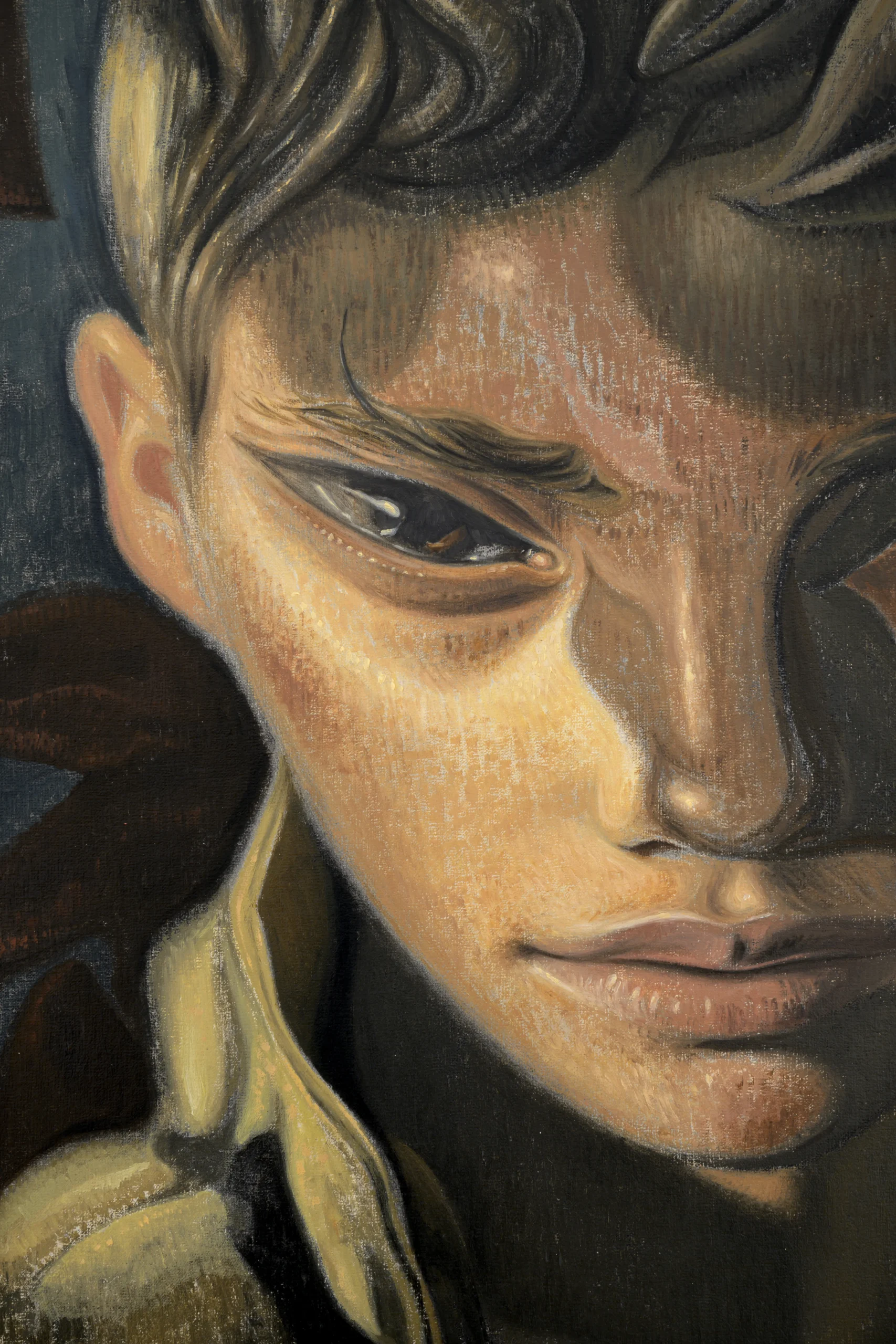
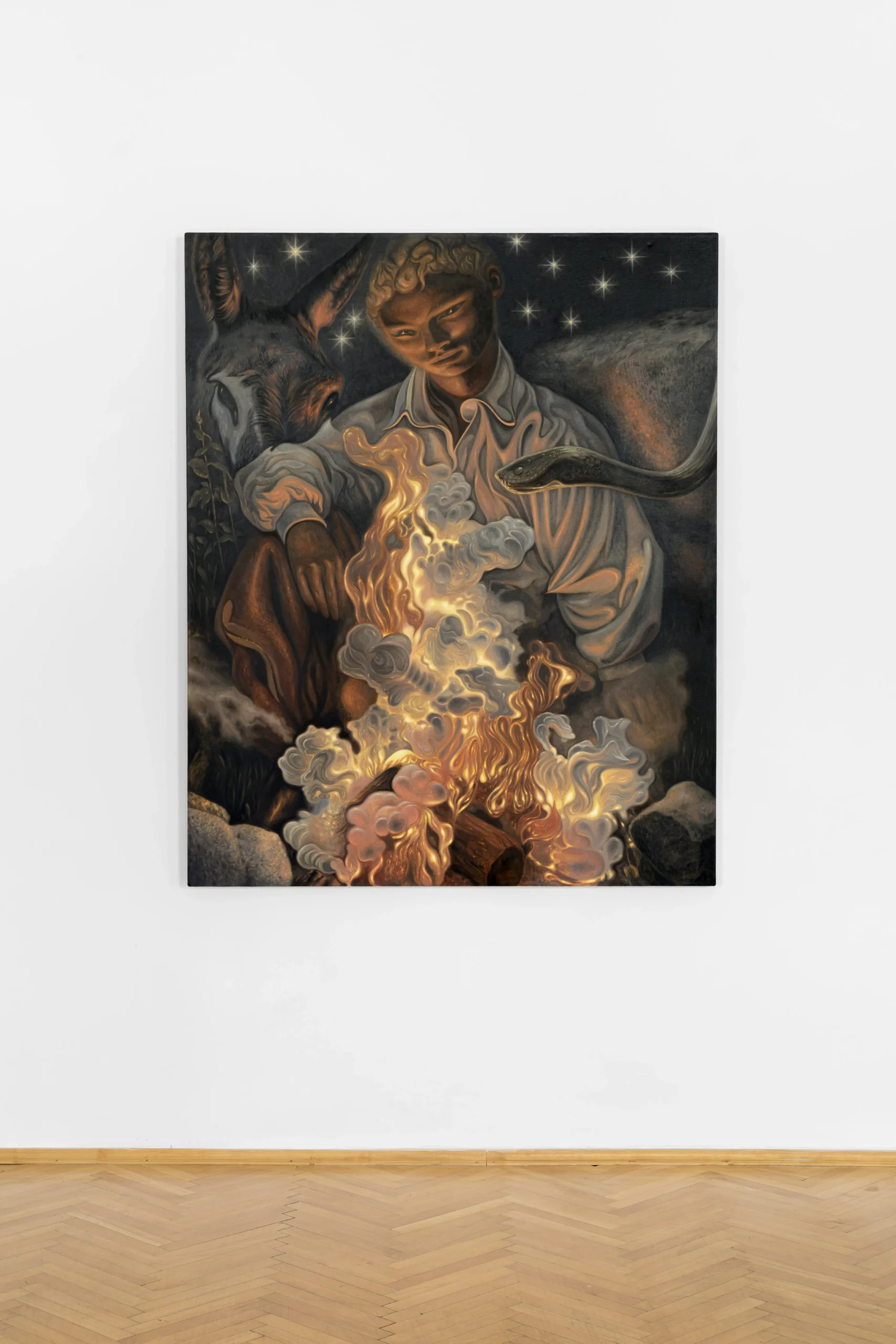
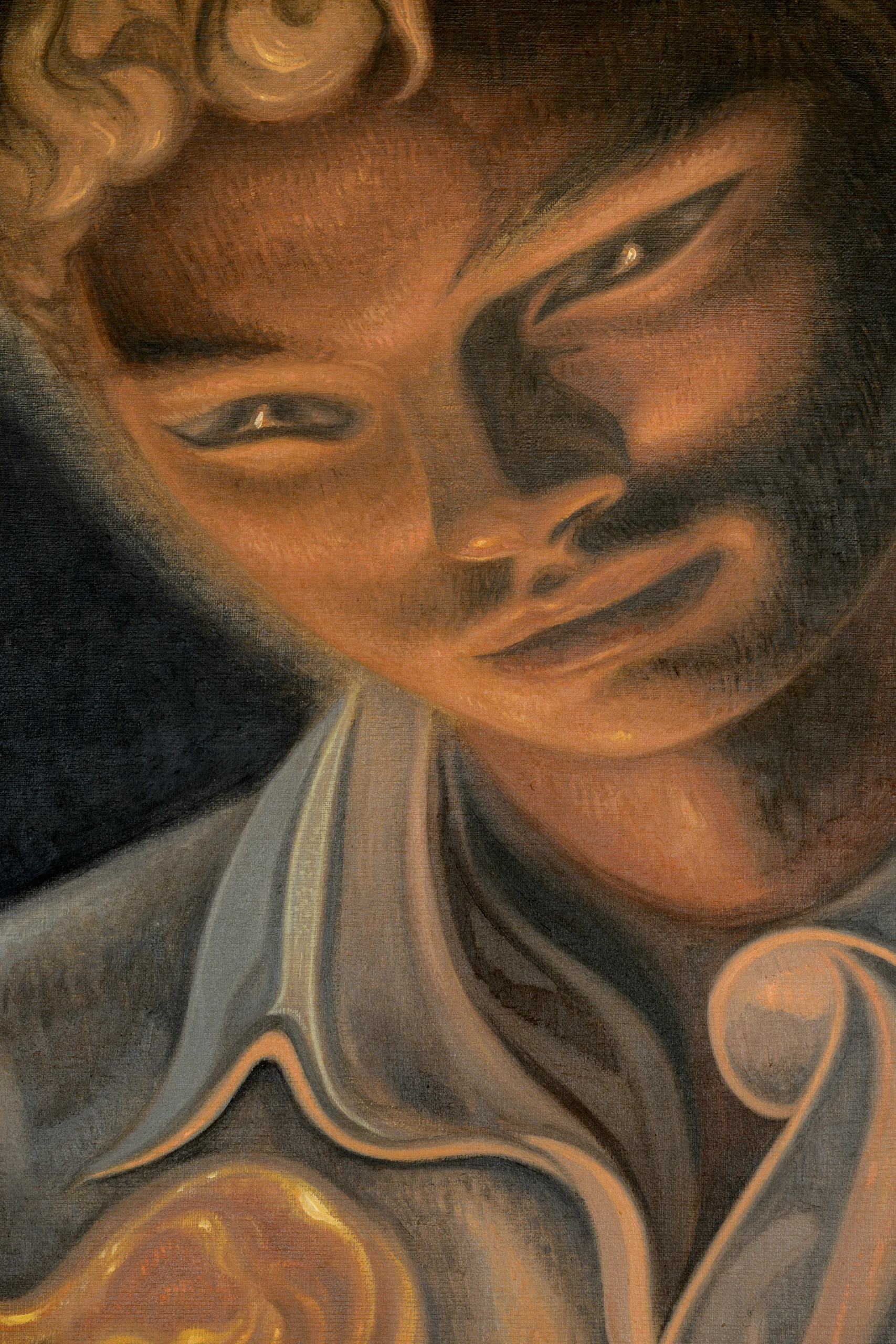
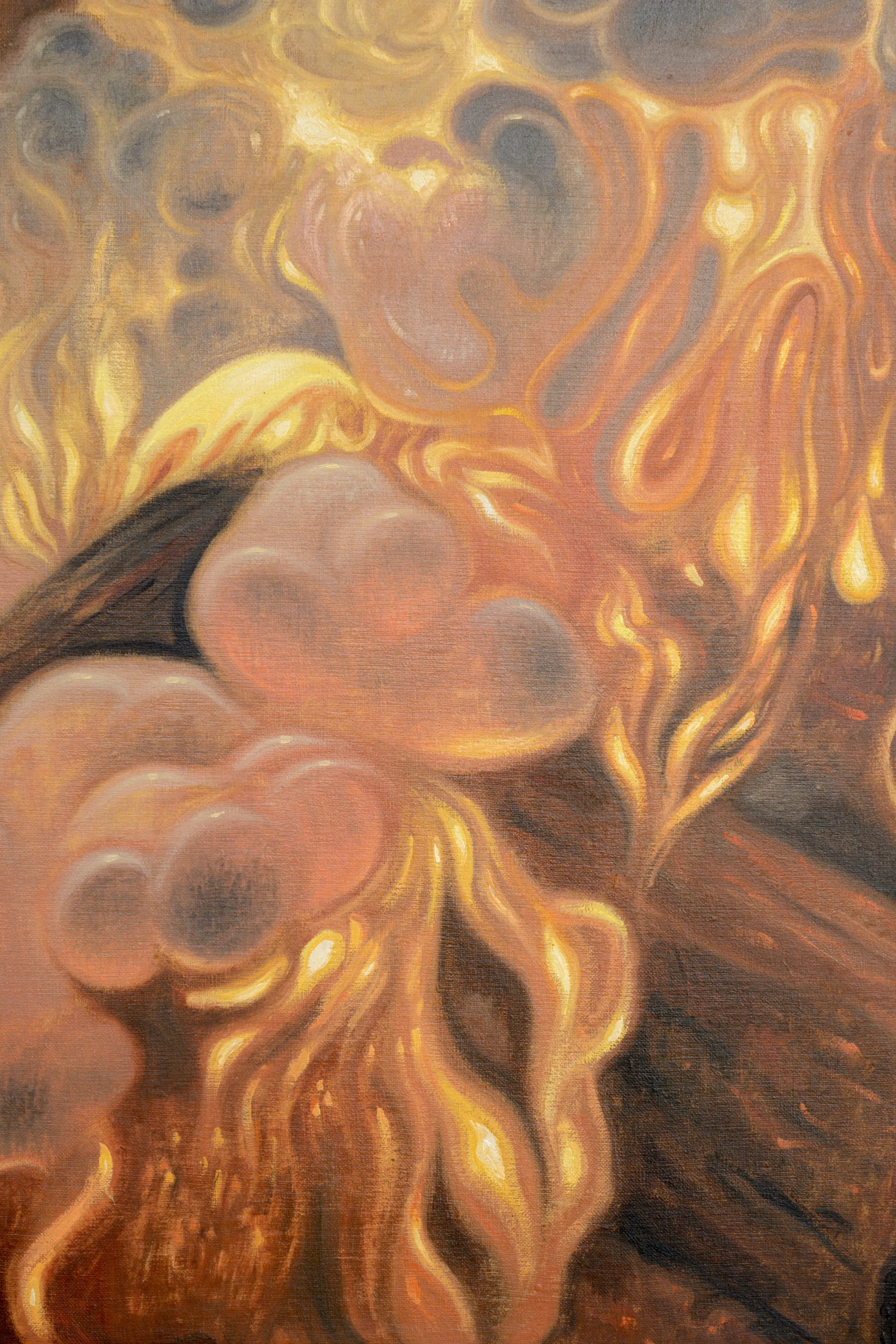
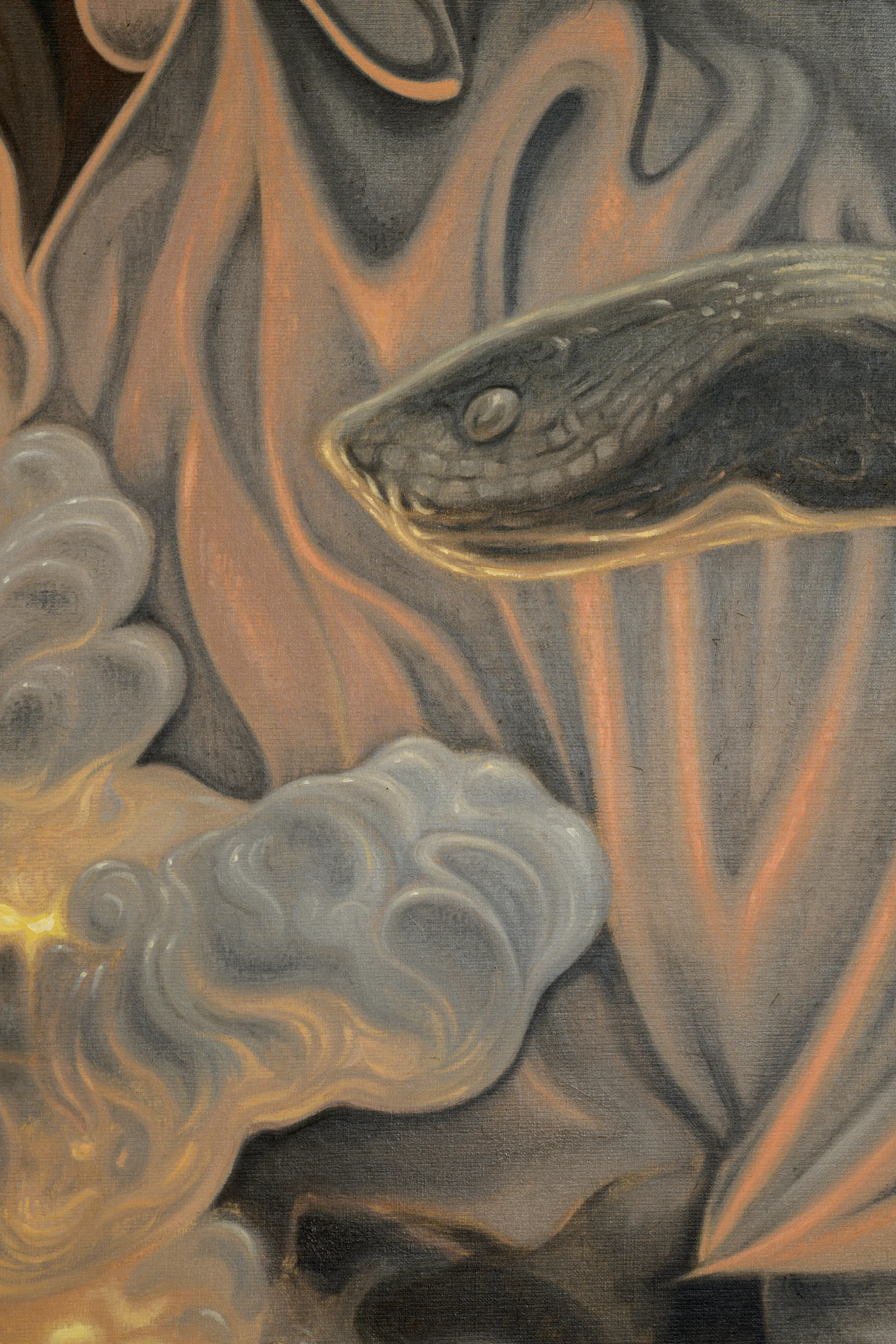
The visual worlds of Dennis Scholl (b. 1980, Hünfeld; lives in Berlin) interweave motifs from traditional mythology and Christian iconography with elements of sci-fi and surrealism. His visually captivating paintings and drawings depict figures, animals, and fragments of landscapes in a seemingly harmonious coexistence. Upon closer inspection, the scenes begin to unravel, revealing disquieting, and at times even disturbing, situations. Scholl constructs visual narratives through symbolism and metaphor, working with traditional archetypes and transposing them into a contemporary context. In his works, melancholy intertwines with tension, beauty with brutality, and tenderness with violence. The beings exist on the border between the human and the inhuman, as if they belonged to a world that is intimately familiar to us yet fundamentally alien. A recurring motif is the figure of a shepherd accompanied by a stubborn yet humble donkey and a snake—a symbol of transformation, temptation, and periodicity. Together, they observe one of the central elements—fire, a mutable entity, a source of both light and danger, which attracts and threatens at the same time. The theme of transformation is also linked to the drawing Aktaion (2023), inspired by Greek mythology and the story of a hunter who disturbs the goddess Artemis while she bathes. She transforms him into a stag, who is then torn apart by his own dogs. The myth of Actaeon functions here as an extreme form of transformation, not of choice but as a result of punishment.
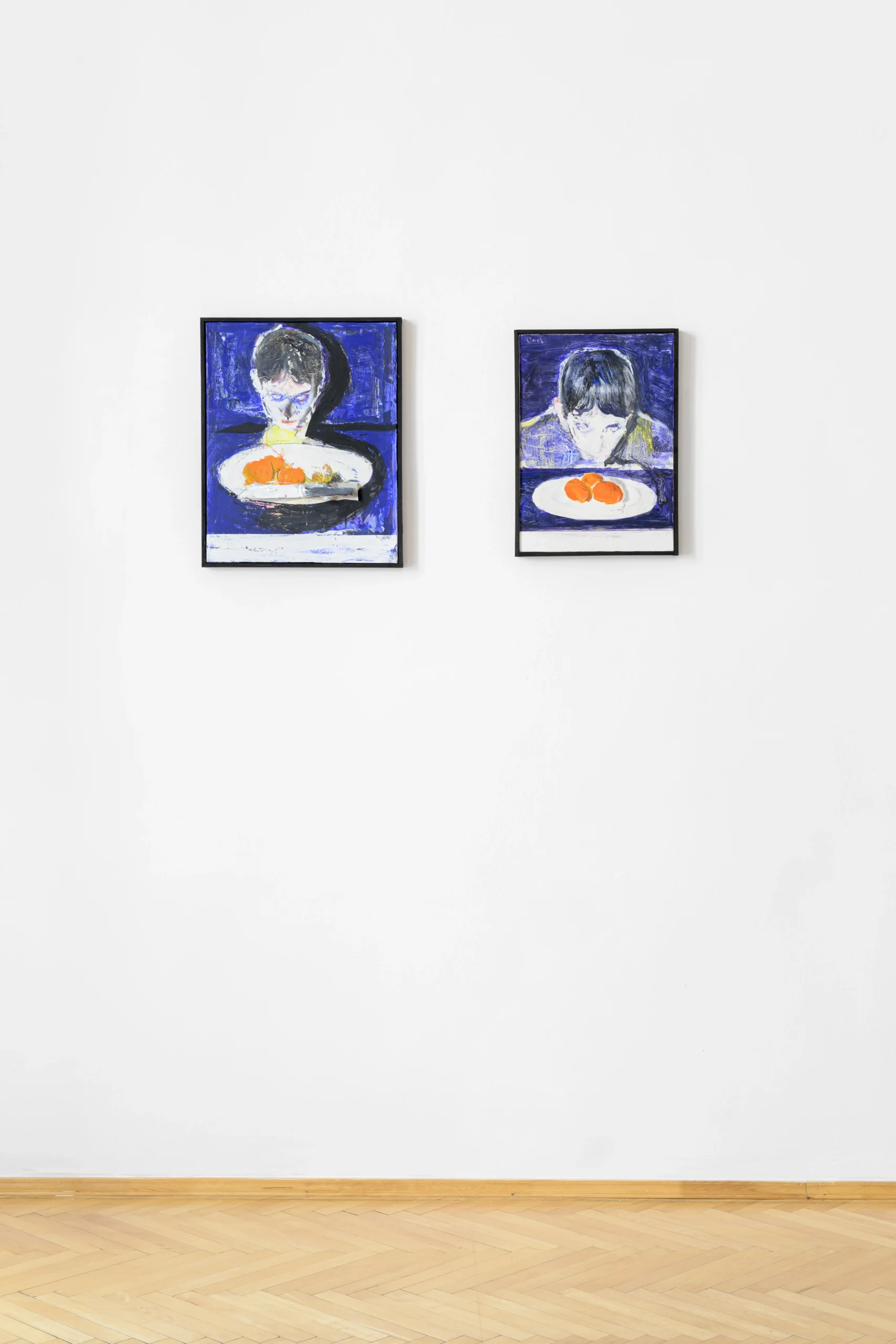
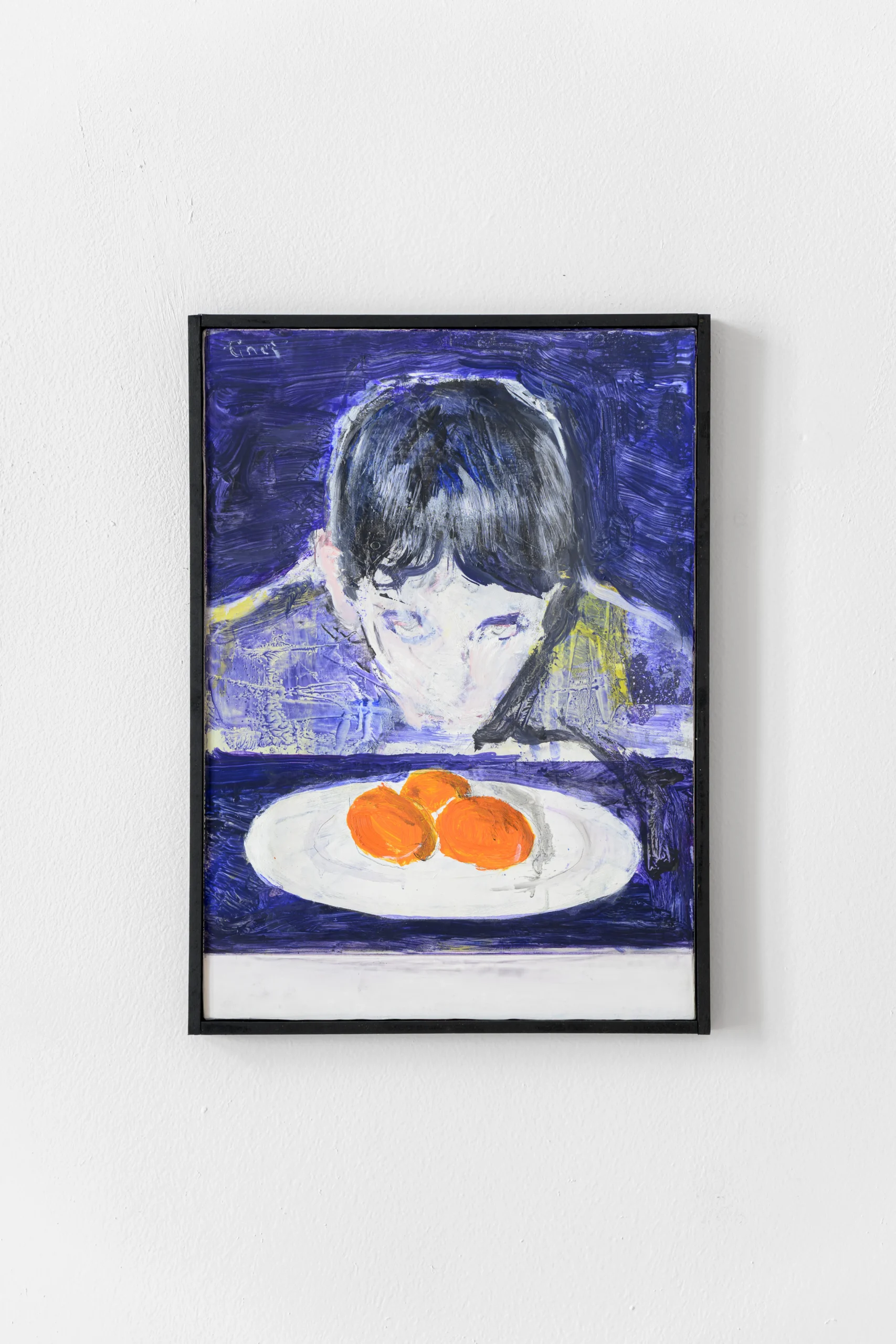
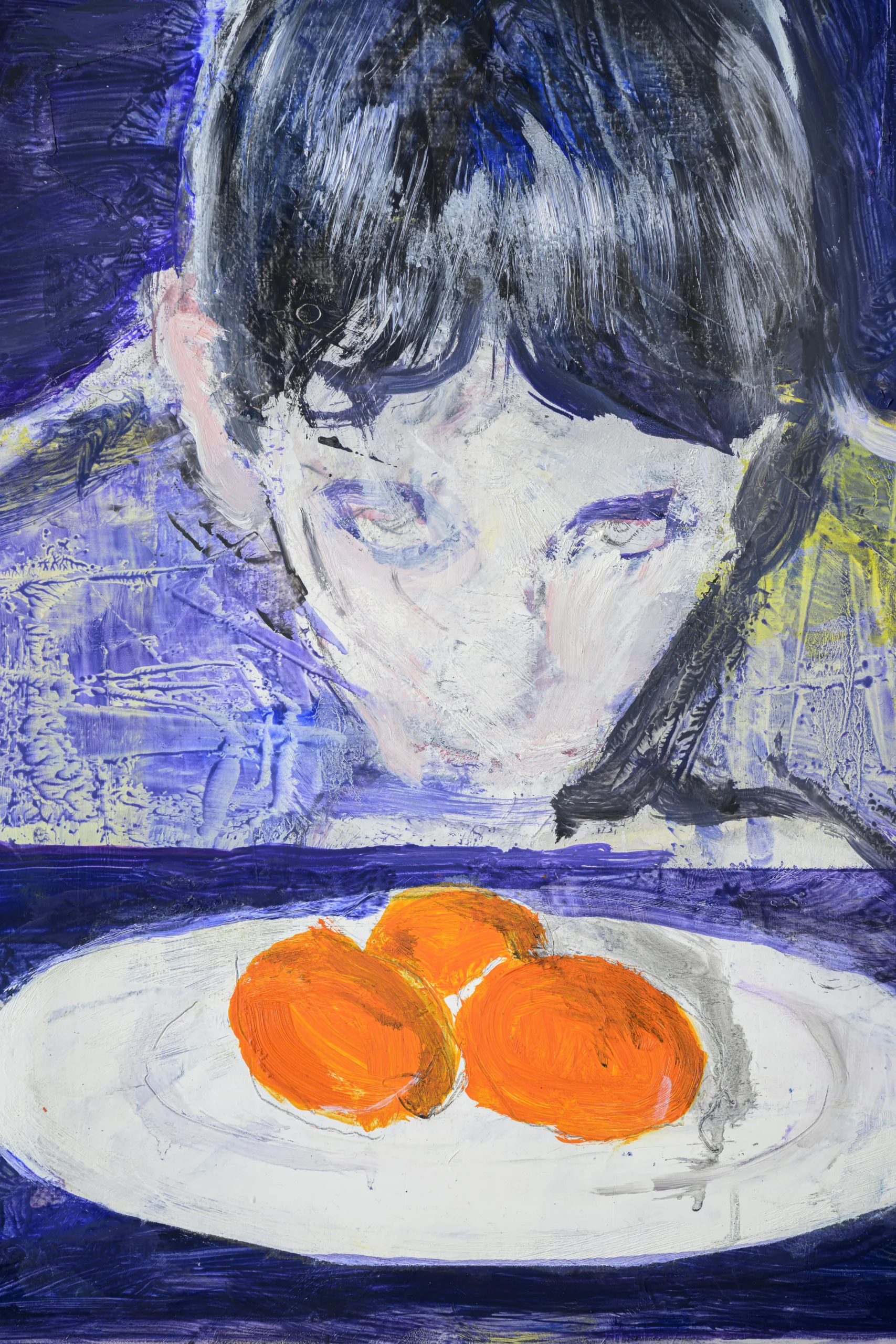
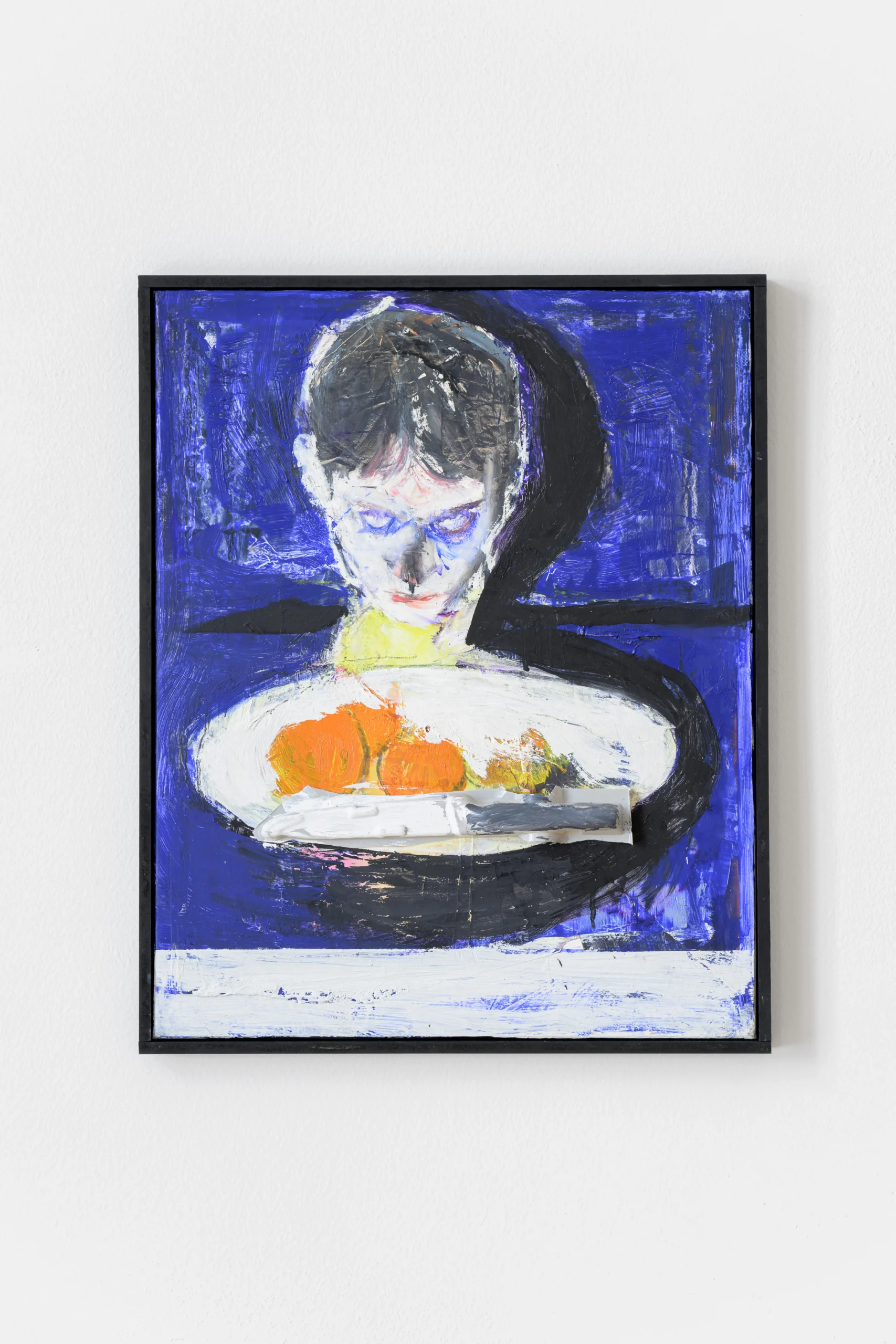
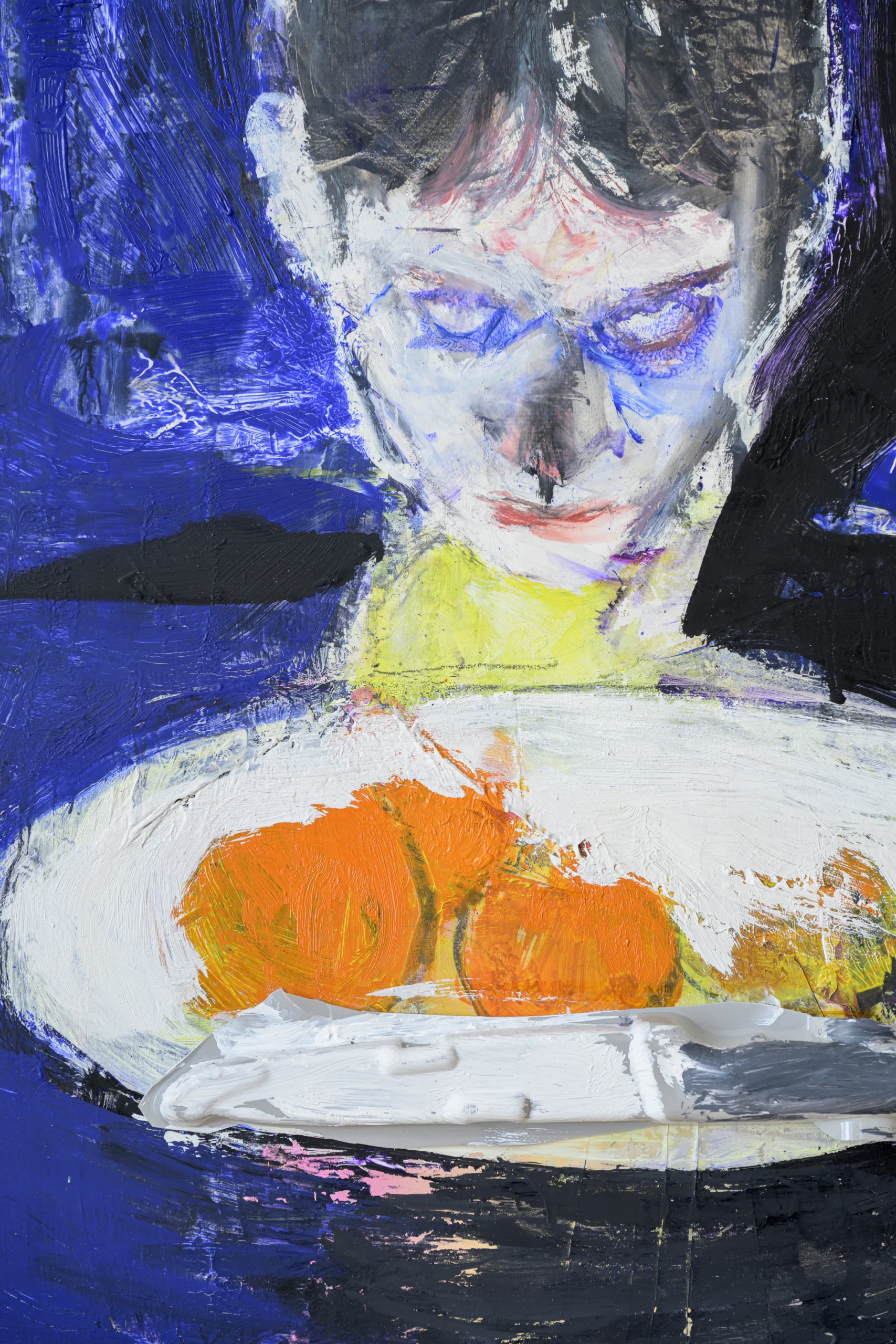
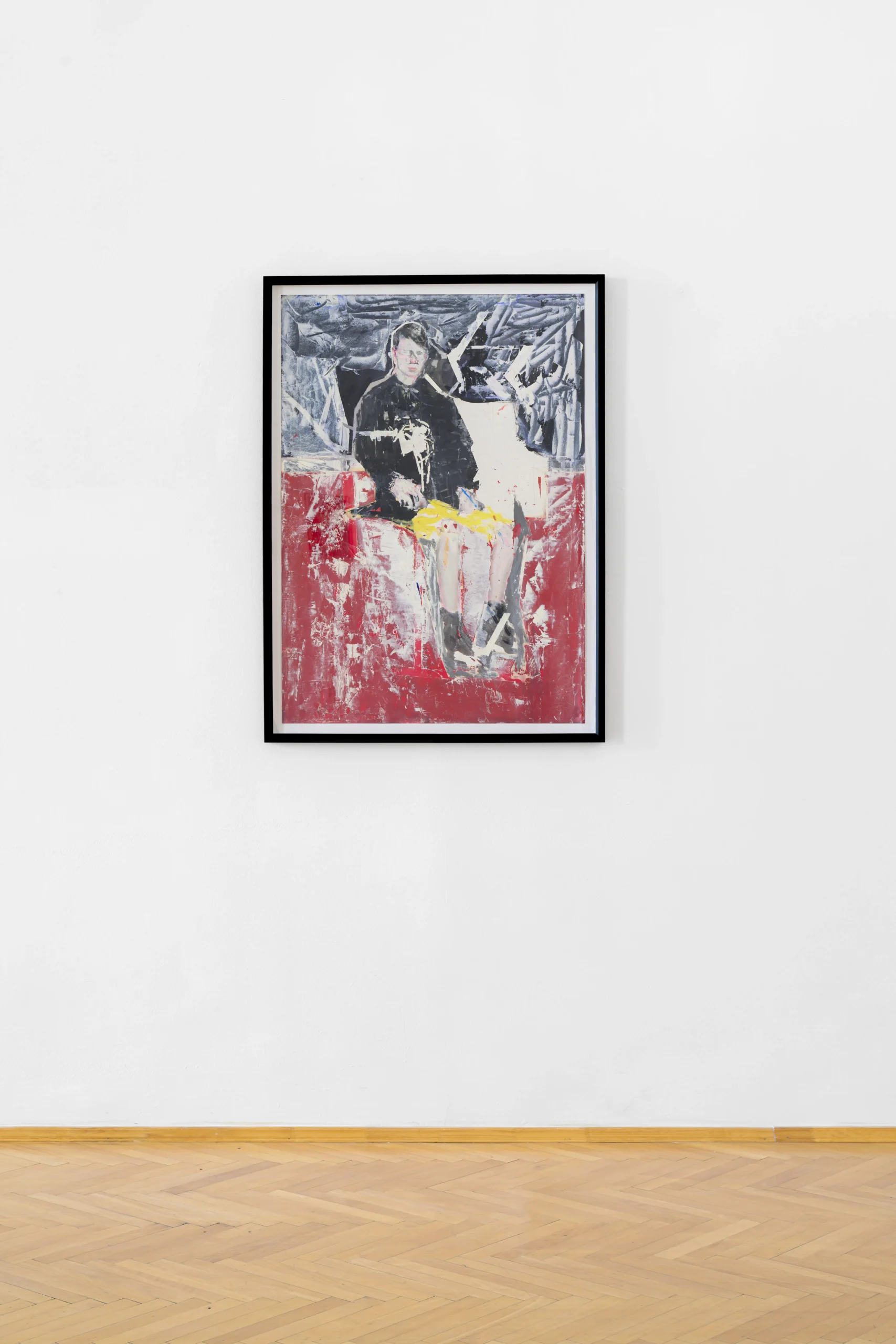
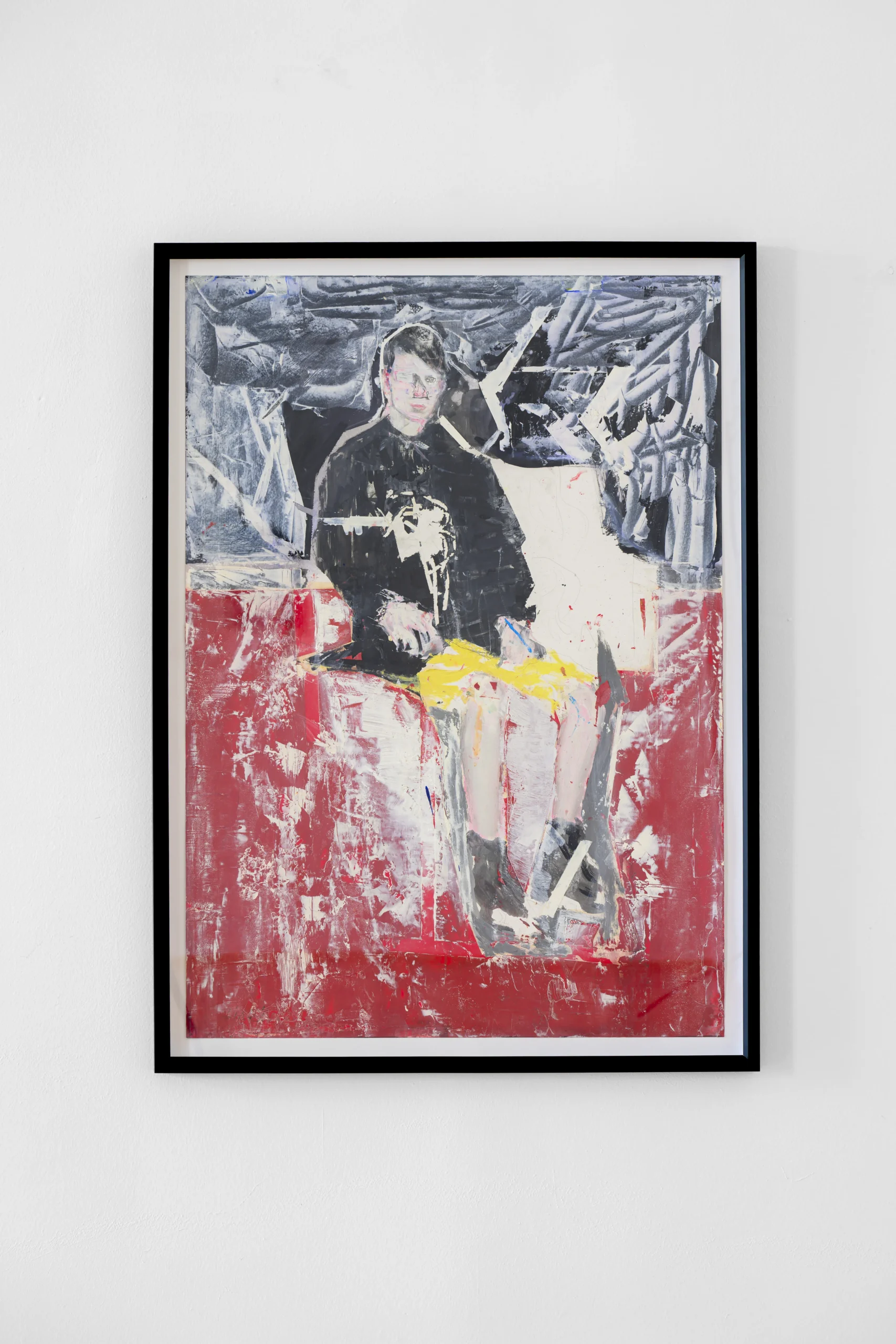
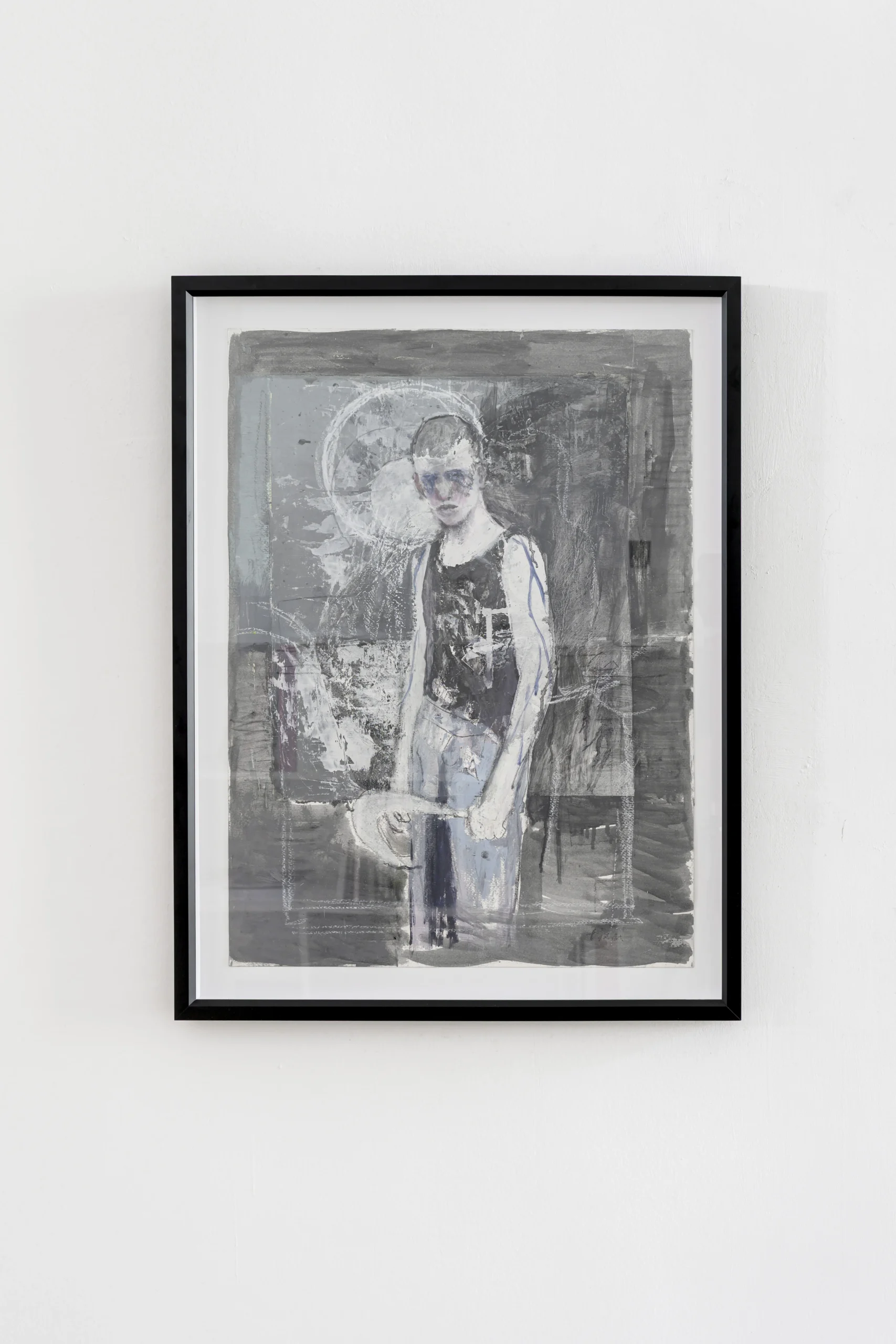
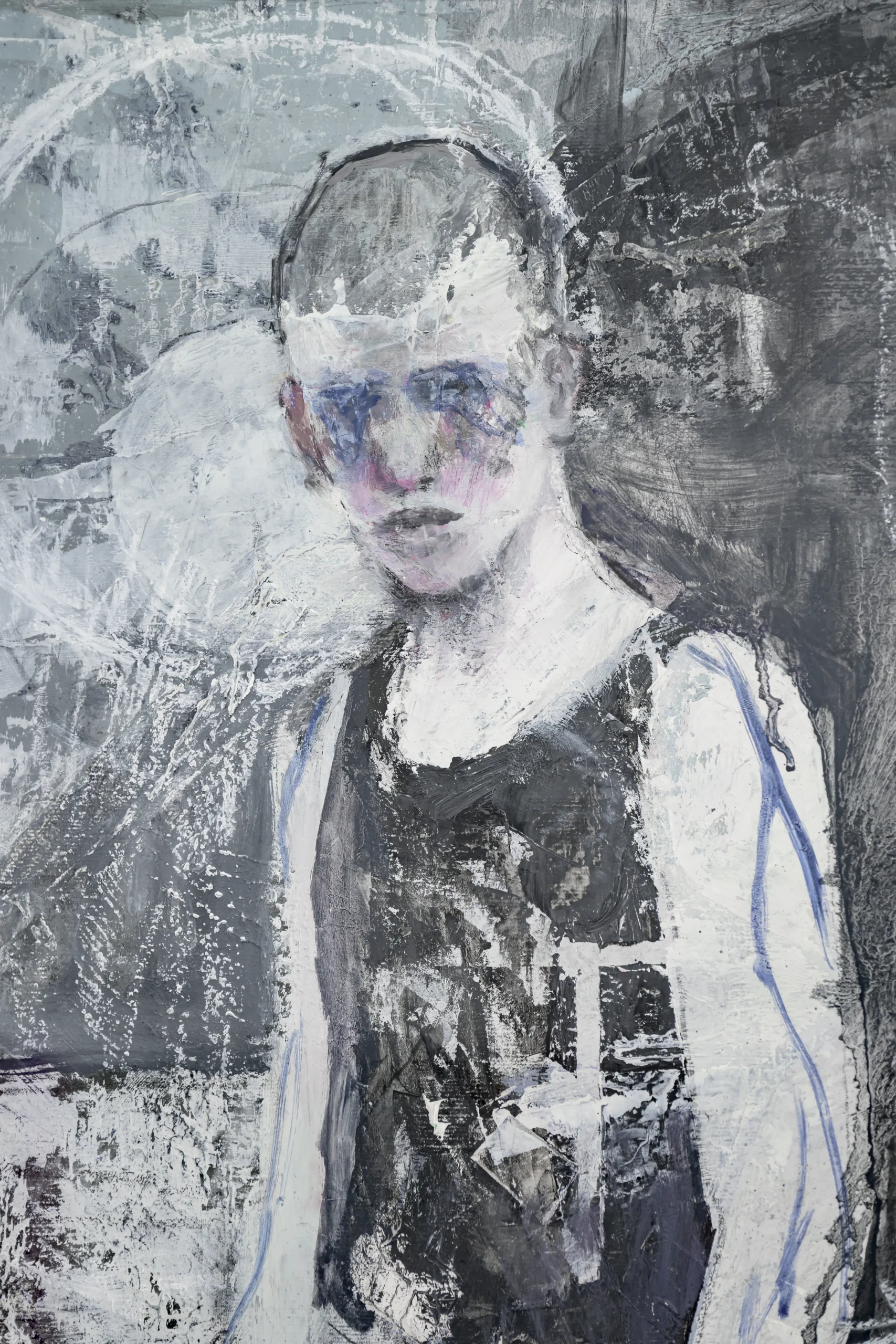
The works of Alexander Tinei (b. 1967, Căușeni; lives in Budapest) present a distinctive personal mythology that is not based on direct narratives, but rather on psychological explorations into the minds of those depicted—or into our own minds as we observe them. Emotional portraits and complex figurative compositions—based on found anonymous photographic sources—exist in an inhospitable timelessness. Much like the artist’s painting practice, which is based on the constant repainting, layering, and editing of the image, his works persist in a state of flux—somewhere between reality and dream, concrete details and abstraction. Fragmentary elements and a sense of incompleteness create an atmosphere of instability in which the image never definitively closes. Although we do not know the past or the identity of Tinei’s characters, this ambiguity opens up space for interpretation while reinforcing their universal, even archetypal, dimension.
– Michal Stolárik